


Abstract
Background: Evidence regarding laser therapy for acute incisional pain after cesarean section (CS) remains inconclusive, with individual trials reporting inconsistent findings. This study presents the first meta-analysis to systematically evaluate the efficacy and safety of laser therapy for postoperative pain following CS. Methods: Five databases were searched through July 2026 for randomized controlled trials (RCTs) evaluating laser therapy after CS. The primary outcome was pain intensity; secondary outcomes included time to first analgesic request, total analgesic consumption, scar outcomes, maternal prolactin level, and adverse events. Standardized mean differences (SMDs), mean differences (MDs), and risk ratios (RRs), with 95% confidence intervals (CIs), were pooled using random-effects models. Results: Eight RCTs involving 670 women were included. Laser therapy was associated with significant reduction in postoperative pain at 24 h (SMD: −0.95, 95% CI [−1.35, −0.55], p < 0.001, I2 = 44.27%) and at 48 h (SMD: −0.71, 95% CI [−1.01, −0.41], p < 0.001, I2 = 0%). Exploratory analyses suggested a longer time to first analgesic request (MD: 118.05 min, 95% CI [78.37, 157.74], p < 0.001, I2 = 97.10%) and lower total postoperative analgesic consumption (SMD: −2.18, 95% CI [−3.41, −0.96], p < 0.001, I2 = 93.83%) with laser therapy compared with control. However, each analysis included only two trials and demonstrated substantial heterogeneity, limiting confidence in these findings. There were no significant differences in Vancouver Scar Scale scores (p = 0.15), proportion of patients requesting any analgesia (p = 0.11), or adverse events (p = 0.45). Conclusions: This meta-analysis suggests that laser therapy may reduce acute incisional pain and analgesic requirements during the first 48 h after CS. However, substantial heterogeneity and limited evidence preclude conclusive recommendations. Larger, standardized RCTs are required to confirm efficacy, establish optimal treatment protocols, and clarify long-term benefits and safety.
1. Introduction
Cesarean section (CS) is one of the most common surgical procedures performed worldwide [1,2]. Although often necessary and lifesaving, CS is associated with postoperative morbidity [2]. Acute incisional pain is one of the most frequent and debilitating early complications after CS [3]. If not adequately managed, this pain can severely impair early mobilization, breastfeeding, maternal–infant bonding, sleep, self-care, and functional recovery [3]. Also, severe early postoperative pain may increase the risk of developing persistent postsurgical pain and lead to poorer long-term postpartum recovery [4,5].
The multimodal analgesia approach is the standard of care for post-CS pain management [6]. Commonly used pharmacological agents include acetaminophen, non-steroidal anti-inflammatory drugs (NSAIDs), and opioids when required for breakthrough pain [6,7]. Conventional approaches are generally effective but may be limited by side effects, specific contraindications, breastfeeding-related cautions, and limited healthcare access [8]. Hence, methods to reduce analgesia and opioid use are becoming more relevant in contemporary obstetrics, encouraging the investigation of safe, low-cost, and non-invasive adjuvant interventions [9].
Laser therapy is a non-thermal light therapy that has been investigated for its ability to modulate pain, reduce inflammation, and stimulate tissue repair [10]. Laser therapy can modulate inflammatory mediators, enhance local microcirculation, stimulate fibroblast activity to promote organized collagen synthesis, and decrease nociceptive signaling [11,12]. Connecting these effects to CS incision pain and wound healing makes laser therapy a plausible and promising approach to the postoperative care following CS. Several randomized controlled trials (RCTs) have evaluated laser therapy applied directly to the CS incision or the surrounding wound area [13,14,15,16,17,18,19,20]. However, while their findings are promising, they remain inconsistent, and differences in laser parameters, treatment protocols, and follow-up duration make the overall effect uncertain [13,14,15,16,17,18,19,20].
To our knowledge, no focused systematic review and meta-analysis has synthesized evidence of RCTs on laser therapy specifically after CS. Accordingly, this review aimed to evaluate the efficacy and safety of postoperative laser therapy for pain, analgesic requirements, and wound or scar recovery after CS.
2. Methods
2.1. Protocol Registration
Ethical approval was not required because this study involved only the analysis of previously published literature. The study design and reporting adhered to the Preferred Reporting Items for Systematic Reviews and Meta-Analyses (PRISMA) guidelines [21] and the Cochrane Handbook for Systematic Reviews of Interventions. This research was prospectively registered with the International Prospective Register of Systematic Reviews (PROSPERO) (identifier: CRD420261504418). Table S1 shows the PRISMA checklist.
2.2. Data Sources and Search Strategy
We performed a systematic literature search across five electronic databases (PubMed, Web of Science, CENTRAL, Scopus, and Embase) on 4 July 2026. The search strategy combined terms related to CS, cesarean wound or scar pain, and laser-based interventions. No restrictions based on country, publication year, or language were applied. The detailed search strategies and search outputs for each database are provided in Table S2. Additional searches included manual screening of the reference lists of eligible studies and targeted searches of Google Scholar to identify potentially missed trials.
2.3. Eligibility Criteria
We included RCTs based on the following PICO framework. The (P) population comprised postpartum women who underwent CS and received postoperative care for the cesarean wound. The (I) intervention was active non-ablative laser therapy applied to the recent cesarean incision or surrounding wound area, including low-level or high-power laser therapy, irrespective of wavelength, dose, energy density, number of treatment sessions, or timing of treatment initiation. The (C) comparators included sham or placebo laser, no laser therapy, standard postoperative care, or medical treatment alone. The primary (O) outcome was postoperative cesarean wound or incisional pain intensity measured 24 or 48 h after CS, irrespective of the pain assessment scale used. Pain outcomes assessed at other postoperative time points were also considered eligible but were summarized qualitatively when the timing of assessment was not sufficiently comparable for quantitative synthesis. Secondary (O) outcomes included requests for postoperative analgesia, time to first analgesic request, total postoperative analgesic consumption, wound or scar quality assessed using the Vancouver Scar Scale, quality of life or satisfaction outcomes when available, maternal prolactin levels, and adverse events.
We excluded non-randomized studies, observational studies, conference abstracts, protocols, reviews, editorials, animal studies, and studies without a direct eligible comparator. When trials included more than one eligible active laser arm, these arms were combined into a single laser therapy group when clinically appropriate. Similarly, when trials included more than one eligible control arm, such as sham laser and no-laser controls, the control arms were combined to yield a single independent comparison.
2.4. Study Selection
Study selection was conducted using Covidence software (Veritas Health Innovation, Melbourne, Australia). Following duplicate removal, at least two independent reviewers screened records in two stages: first by title and abstract, and then by full text for potentially eligible studies. Disagreements regarding eligibility were resolved through discussion and consensus among the reviewers.
2.5. Data Extraction
A standardized Excel extraction form was developed and pilot-tested using a subset of eligible studies. Extracted data were grouped into three main categories. First, the study characteristics included author, year, country, study design, trial setting, total sample size, CS type or timing after CS at enrolment, laser device and modality, wavelength, power, energy density or dose, treatment site, number and timing of sessions, co-interventions, control intervention, primary outcome, and follow-up duration. Second, the baseline participant characteristics included age, gestational age, body mass index, gravidity, parity, diabetes status, smoking status, and baseline wound or pain status when reported. Third, the outcome data included all primary and secondary outcomes described above, including postoperative pain scores, analgesia request, time to first analgesic request, total analgesic consumption, Vancouver Scar Scale, quality-of-life or satisfaction outcomes, and adverse events.
Data extraction was performed independently by at least two reviewers, and discrepancies were resolved by discussion or consultation with a third reviewer. Dichotomous outcomes were extracted as the number of events and the total number of randomized or analyzed participants. Continuous outcomes were extracted as means and standard deviations (SDs). When means and SDs were not directly reported, standard conversion methods were applied. Outcomes reported as medians and interquartile ranges were converted to means and SDs using the methods of Wan et al. [22]. When studies reported 95% confidence intervals (CIs) around a mean without SDs, SDs were calculated algebraically from the confidence interval limits according to the Cochrane Handbook for Systematic Reviews of Interventions [23].
2.6. Risk of Bias and Certainty of Evidence
The risk of bias for each included RCT was independently assessed by at least two reviewers using the revised Cochrane Risk of Bias 2 (RoB 2) tool [24]. The assessment considered bias arising from the randomization process, deviations from intended interventions, missing outcome data, measurement of the outcome, and selection of the reported result. Disagreements were resolved through discussion and consensus.
The certainty of evidence for each major outcome was evaluated using the Grading of Recommendations Assessment, Development and Evaluation (GRADE) framework [25]. The certainty of evidence was rated across the domains of risk of bias, inconsistency, indirectness, imprecision, and publication bias. All judgments were justified and documented. Any discrepancies were resolved by discussion or consultation with a third reviewer.
2.7. Statistical Analysis
All statistical analyses were performed using Stata/MP software, version 19 (StataCorp LLC, College Station, TX, USA), for Windows. Dichotomous outcomes were analyzed using risk ratios (RRs). For dichotomous outcomes with zero events, a continuity correction of 0.5 was applied. Continuous outcomes were analyzed using mean differences (MDs) when outcomes were reported on the same scale. Hedges’ g standardized mean differences (SMDs) were used when clinically similar continuous outcomes were reported using different scales. All effect estimates were reported with 95% CIs. For postoperative pain, quantitative syntheses were performed separately for assessments at 24 and 48 h after CS. Pain measurements obtained at other postoperative time points were not pooled when assessment timing differed substantially among studies and were instead summarized qualitatively. This approach was used to avoid combining pain outcomes measured at clinically distinct stages of postoperative recovery. Random-effects models using restricted maximum likelihood estimation (REML) were applied as the primary analytical approach to account for expected clinical and methodological heterogeneity across the included trials. Statistical heterogeneity was assessed using the Chi-squared test and quantified using the I2 statistic. Substantial heterogeneity was defined as a Chi-squared p-value < 0.10 or an I2 value > 50%.
When sufficient data were available, subgroup analyses were conducted by laser type and by the timing of treatment initiation after CS. Tests for subgroup differences were used to assess whether the pooled effect differed across prespecified subgroups. In cases of substantial heterogeneity, leave-one-out sensitivity analysis was conducted to explore the influence of individual studies on the pooled estimate. Galbraith plots were also used, when applicable, to visually assess the contribution of individual studies to between-study heterogeneity. Publication bias was not assessed because all meta-analyzed outcomes included fewer than 10 trials [26].
3. Results
3.1. Search Results and Study Selection
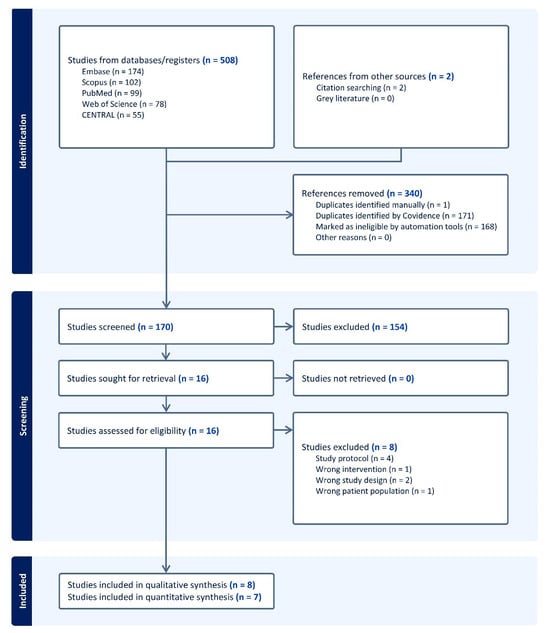
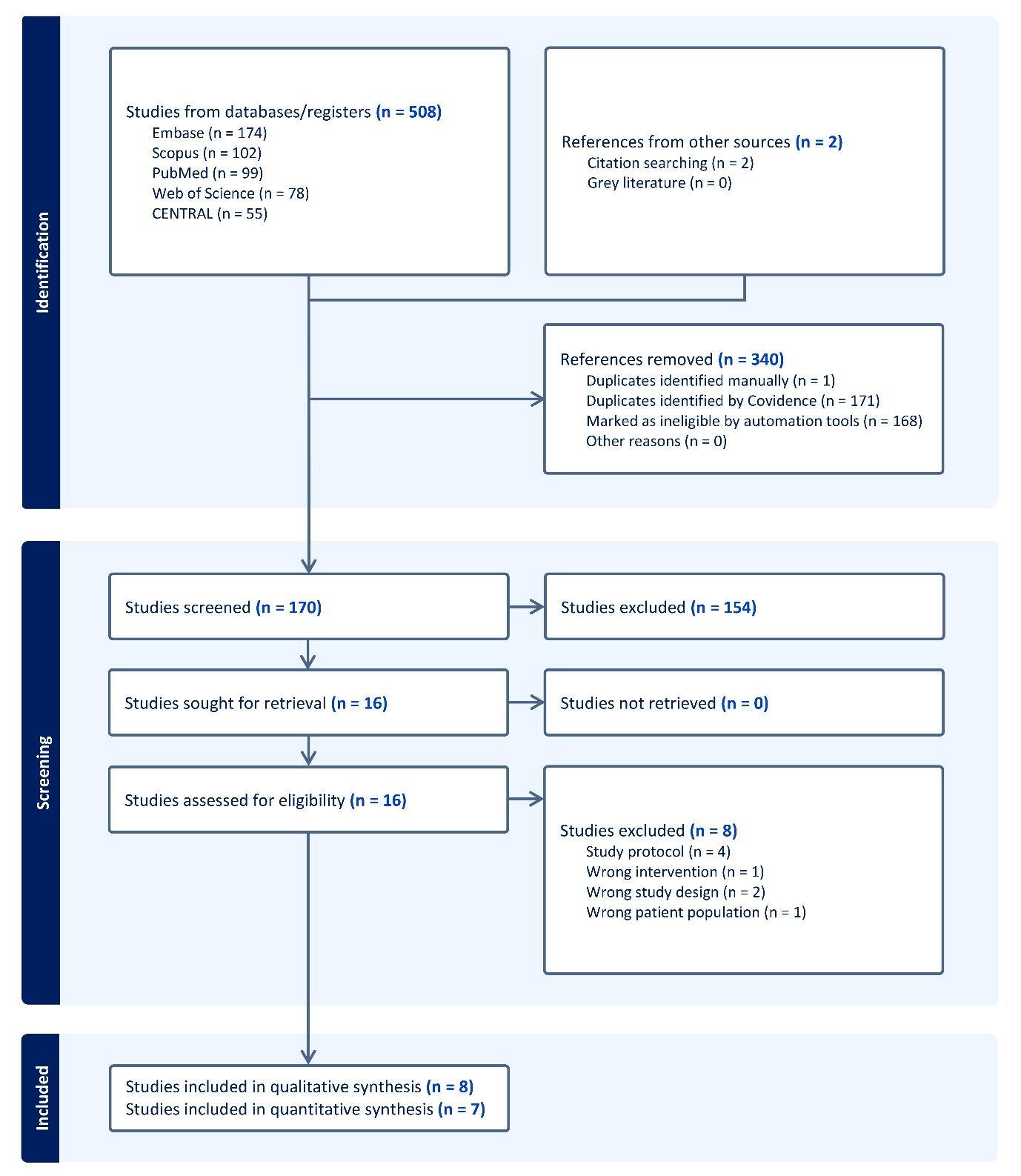
A total of 510 records were identified through the literature search, including 508 retrieved from five databases and two identified through citation searching. Before screening, 340 references were removed, including 172 duplicates and 168 records marked as ineligible by automation tools. The 168 records were classified as ineligible using Covidence’s built-in machine-learning-based automated screening function. This automated classification was used to facilitate screening, and the screening process was subsequently verified by the review team; no potentially eligible study was identified among the records excluded by automation. The remaining 170 records were screened, of which 154 were excluded after failing to meet the inclusion criteria. Sixteen full-text reports were assessed for eligibility, and eight were excluded for various reasons (Table S3). Finally, eight trials were included in the qualitative synthesis [13,14,15,16,17,18,19,20], of which six were included in the quantitative synthesis [14,15,16,17,19,20] (Figure 1).
Figure 1.
PRISMA flow chart of the study screening and selection process.
3.2. Characteristics of Included Studies
Eight RCTs, involving 670 patients, were included in this review [13,14,15,16,17,18,19,20]. Four trials were conducted in Iran, two in Brazil, and two in Egypt. All trials enrolled postpartum women after elective CS. A key characteristic of the included evidence was the difference in the laser modality and application protocol, ranging from low-level laser therapy using red or infrared wavelengths to high-level laser therapy. Laser was applied either immediately after wound closure or during the early postoperative period, with treatment schedules ranging from a single session to repeated sessions over several days or weeks. Comparator arms involved sham laser, placebo/off-laser application, or standard postoperative care. Follow-up duration ranged from early postoperative assessments within 24–48 h to longer wound and scar evaluations extending up to six months. Detailed study designs and baseline participant characteristics are summarized in Table 1 and Table 2, respectively. In the study by Kahkhaie et al. [17], laser power density was inconsistently reported as 2 W/cm2 in the Methods section and 4 W/cm2 in the Abstract, Discussion, and Conclusion. We extracted 4 W/cm2 as the more consistently reported value, although this discrepancy could not be definitively resolved.
Table 1.
Summary characteristics of the included RCTs.
Table 2.
Baseline characteristics of the participants.
3.3. Summary of Risk of Bias and Certainty of Evidence
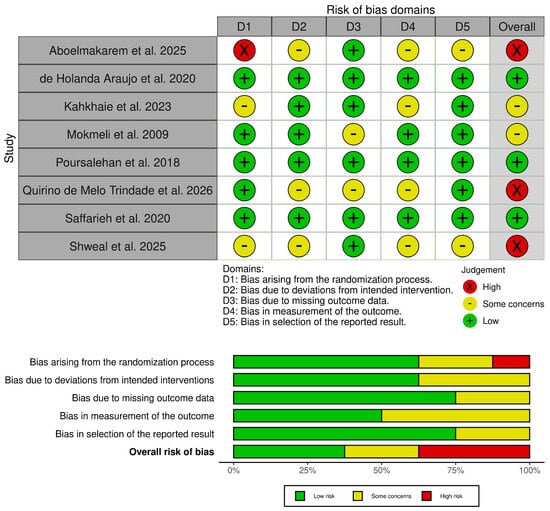
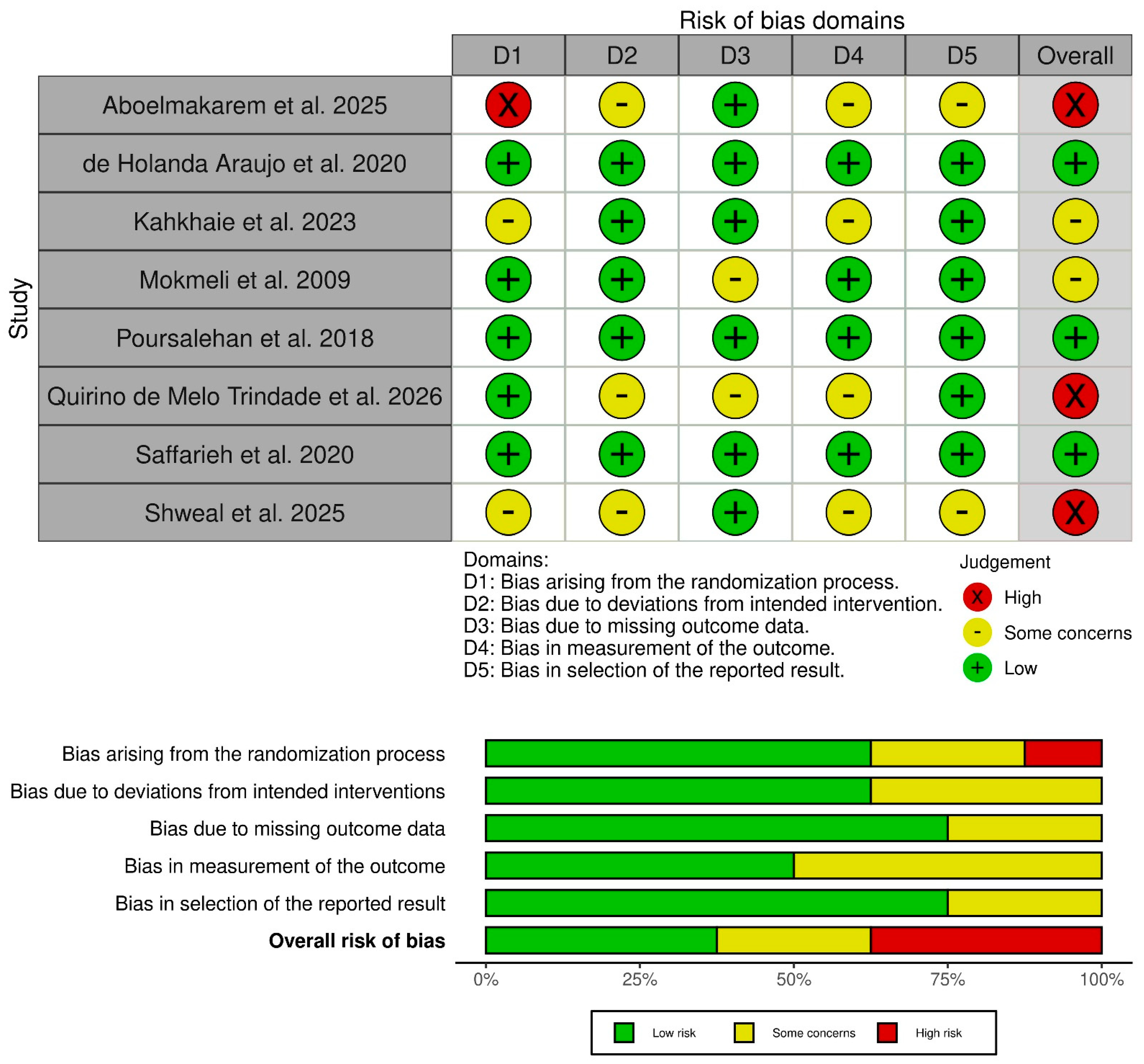
Among the included RCTs, three trials were judged to have a low overall risk of bias [14,19,20], two trials raised some concerns [17,18], and three trials showed a high overall risk of bias [13,15,16] (Figure 2).
Figure 2.
Quality assessment of risk of bias in the included RCTs using the RoB 2 tool [13,14,15,16,17,18,19,20].
The certainty of evidence ranged from moderate to very low. Moderate-certainty evidence supported reductions in pain at 24 and 48 h, while evidence for time to first analgesic request, total analgesic consumption, scar outcomes, and adverse events was very low. Evidence for any analgesia request was rated low. Overall, confidence in most estimates was limited by risk of bias, heterogeneity, and imprecision, warranting cautious interpretation. The detailed GRADE certainty of evidence assessment is outlined in Table 3.
Table 3.
GRADE evidence profile.
3.4. Primary Outcome: Pain
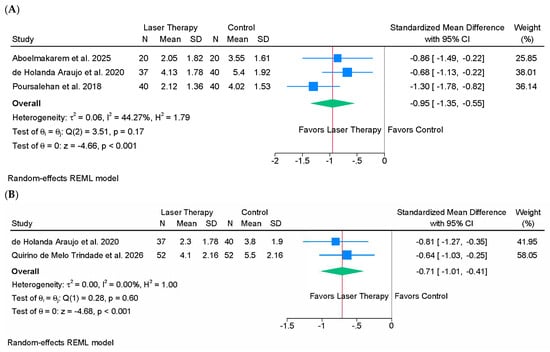
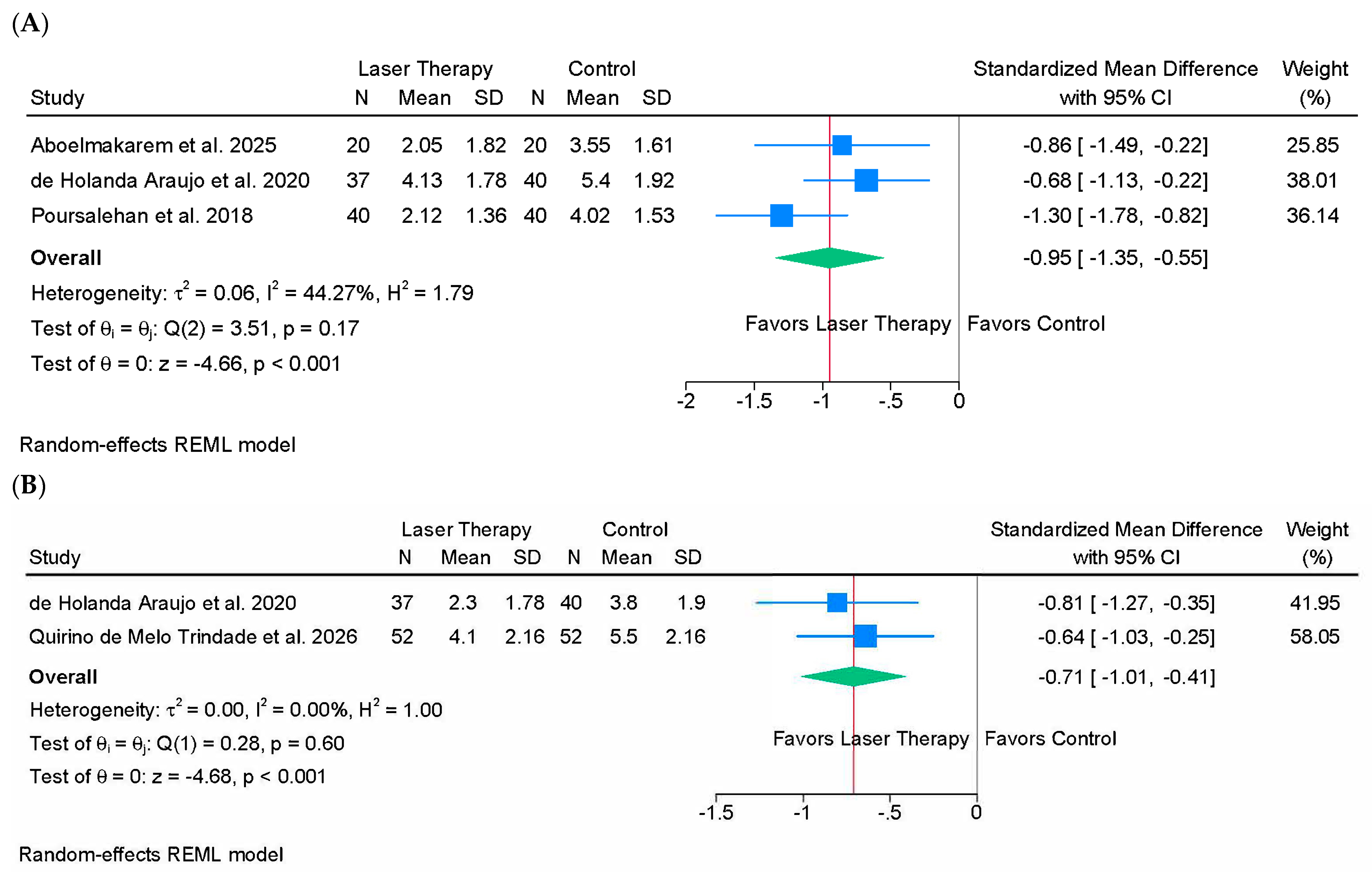
Laser therapy was associated with significant reduction in postoperative pain at 24 h (SMD: −0.95, 95% CI [−1.35, −0.55], p < 0.001, I2 = 44.27%) (Figure 3A) and at 48 h (SMD: −0.71, 95% CI [−1.01, −0.41], p < 0.001, I2 = 0%) (Figure 3B). Other studies assessed postoperative pain at different time points and were therefore not quantitatively pooled. Kahkhaie et al. [17] assessed pain using a 10-point VAS ranging from 1 to 10 and reported significantly lower pain scores in the laser group than in the control group on postoperative day 3 (5.15 ± 1.67 vs. 9.17 ± 1.31), day 7 (2.26 ± 1.46 vs. 5.97 ± 1.24), day 14 (1.36 ± 1.17 vs. 4.01 ± 1.41), and 6 weeks after surgery (0.44 ± 0.62 vs. 2.25 ± 1.07; all p < 0.001). Saffarieh et al. [14] assessed pain using an 11-point VAS ranging from 0 (no pain) to 10 (severe pain) and reported significantly lower pain scores in the laser group than in the control group on postoperative day 5 (4.15 ± 0.84 vs. 5.61 ± 1.33) and day 10 (1.43 ± 0.66 vs. 2.51 ± 1.00; all p < 0.0001). Shweal et al. [13] also assessed postoperative pain using a 10-point VAS and reported lower pain scores in the laser group than in the control group (2.36 ± 0.70 vs. 5.89 ± 0.82, p = 0.001); however, the timing of pain assessment was not clearly specified, but likely postoperative day 4.
Figure 3.
Forest plots comparing laser therapy with control for postoperative pain outcomes at (A) 24 h and (B) 48 h [15,16,19,20].
3.5. Secondary Outcomes
3.5.1. Analgesia Requirement
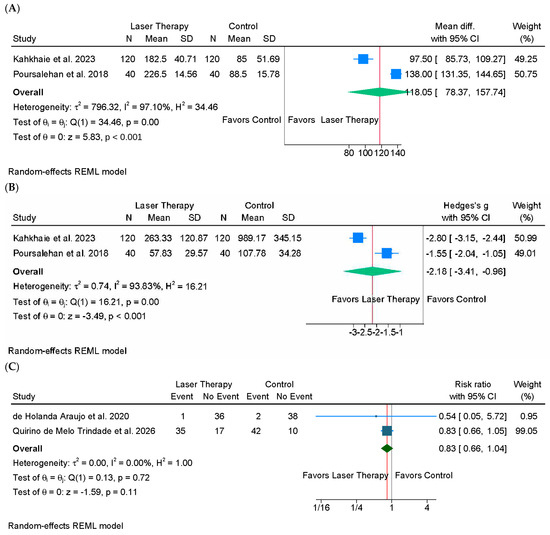
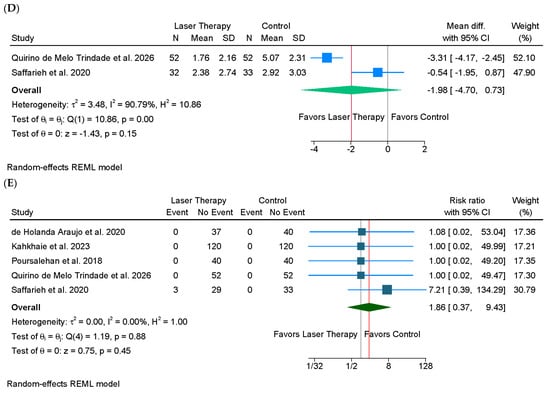
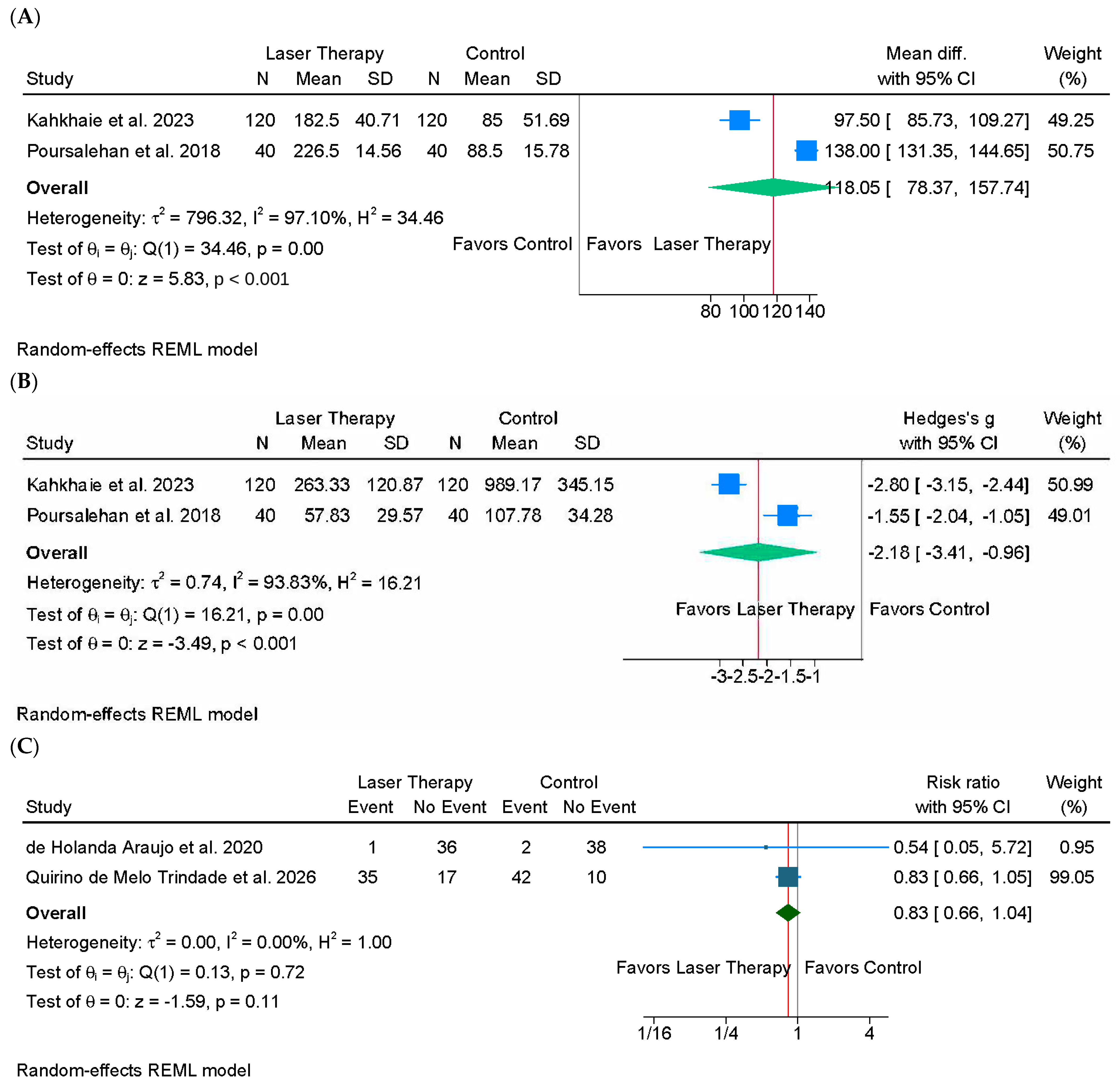
Exploratory analyses suggested that laser therapy may prolong the time to first analgesic request compared with control (MD: 118.05 min, 95% CI [78.37, 157.74], p < 0.001, I2 = 97.10%) (Figure 4A) and reduce total postoperative analgesic consumption (SMD: −2.18, 95% CI [−3.41, −0.96], p < 0.001, I2 = 93.83%) (Figure 4B). However, both analyses included only two trials and demonstrated substantial heterogeneity, warranting cautious interpretation. However, there was no significant difference between both groups in the proportion of patients requesting any analgesia (RR: 0.83, 95% CI [0.66, 1.04], p = 0.11, I2 = 0%) (Figure 4C).
Figure 4.
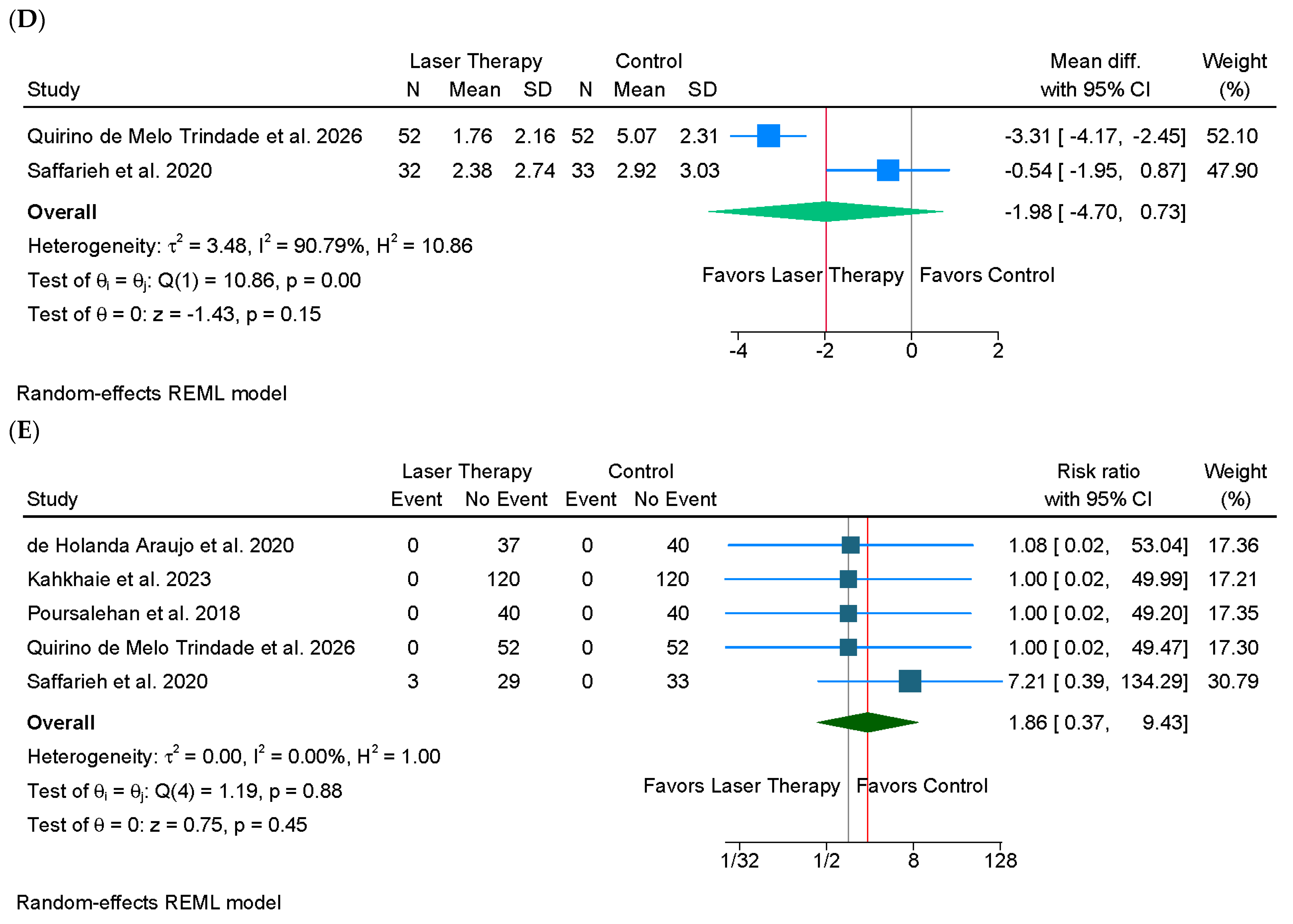
Forest plots comparing laser therapy with control for secondary efficacy and safety outcomes: (A) mean time to first analgesic request, (B) mean total postoperative analgesic dose, (C) rate of any analgesic request, (D) mean Vancouver Scar Scale score, and (E) rate of adverse events [14,15,17,19,20].
3.5.2. Wound Healing and Scar Characteristics
There was no significant difference between both groups in the Vancouver scar scale (MD: −1.98, 95% CI [−4.70, 0.73], p = 0.15, I2 = 90.79%) (Figure 4D). Also, Quirino de Melo Trindade et al. reported domain-specific assessment, showing improvements in vascularity and pliability, with no significant differences in scar thickness or pigmentation [15]. In contrast, Saffarieh et al. found no significant differences between groups in vascularity, pigmentation, pliability, and height domains [14]. Additionally, Kahkhaie et al. reported a significantly shorter time to suture removal in the laser group (p < 0.001) [17].
3.5.3. Safety
There was no significant difference between laser therapy and control in adverse events (RR: 1.86, 95% CI [0.37, 9.43], p = 0.45, I2 = 0%) (Figure 4E). Saffarieh et al. reported itching in three women receiving laser therapy compared with none in the control group [14].
3.5.4. Maternal and Endocrine Outcomes
Mokmeli et al. investigated the effects of combined local and intravenous low-level laser therapy on maternal prolactin secretion and lactation. On postoperative day 3, mean serum prolactin was numerically higher in the laser group than in the control group (333.57 ± 103.40 vs. 303.00 ± 71.06 µg/L); however, this difference was not statistically significant (p = 0.205) [18]. Also, Shweal et al. assessed serum cortisol as an exploratory biomarker of the postoperative stress response. Serum cortisol decreased significantly from baseline in both groups, but the post-treatment level was significantly lower in the laser group than in the control group [13].
4. Discussion
4.1. Summary of Principal Findings
This systematic review and meta-analysis synthesized eight RCTs and 670 patients evaluating laser therapy after CS. Laser therapy was associated with lower postoperative pain at 24 and 48 h. Other studies also reported significant reductions in postoperative pain at different time points, although the heterogeneity in assessment timing precluded quantitative pooling. It also prolonged the time to the first analgesic request and reduced total postoperative analgesic consumption. Still, laser therapy did not significantly reduce the proportion of women who requested any analgesia, improve the pooled Vancouver Scar Scale score, or increase the risk of adverse events, though these findings should be interpreted cautiously. The certainty of these findings varied: evidence for pain at 24 and 48 h was graded as moderate, whereas evidence for time to first analgesia, total analgesic dose, scar quality, and adverse events was low or very low.
4.2. Interpretation of Findings
The reductions in pain at 24 h and at 48 h are clinically relevant because the first two postoperative days are often the most painful period of maternal recovery. During this interval, women are expected to start breastfeeding, care for their newborn, and regain a degree of independence despite having undergone major abdominal surgery. Poorly controlled pain can interfere with each of these activities and is associated with impaired mobility, sleep, mood, and functional recovery [27,28]. Observational evidence has also shown that severe acute postpartum pain is associated with subsequent persistent pain [28,29]. Accordingly, the consistent alleviation of pain with laser therapy after 24 and 48 h is encouraging.
The standardized effects also require careful clinical interpretation. Although the pooled effects at 24 and 48 h were statistically significant, statistical significance does not necessarily indicate a clinically important reduction in pain. SMDs do not directly represent change on a familiar pain scale and may be influenced by differences in outcome measurement and variability across studies [30]. Where individual trials reported pain outcomes on interpretable scales, the magnitude of the between-group differences should be considered in relation to commonly used thresholds for clinically meaningful pain improvement. However, differences in pain scales, baseline pain severity, assessment timing, and reporting methods limit the application of a single minimal clinically important difference across all included trials [31,32]. Accordingly, the present findings provide evidence of a reduction in postoperative pain but do not establish that the magnitude of benefit consistently exceeded a patient-important threshold in all studies. Future trials should report absolute between-group differences alongside standardized effect estimates and the proportion of participants achieving clinically meaningful pain reduction.
Furthermore, laser therapy prolonged the time to first analgesic request by approximately 118 min and reduced total postoperative analgesic dose. These outcomes suggest that the intervention may not only change pain ratings but also influence medication requirements. Such an effect would be clinically attractive within contemporary enhanced-recovery pathways, which prioritize scheduled non-opioid analgesics, limited rescue opioids, early mobilization, and preservation of maternal alertness and function [6,33,34]. Concerns about unnecessary opioid exposure and unused postdischarge medication have further strengthened interest in opioid-sparing strategies after cesarean delivery [35,36].
However, only two trials contributed to each of the time-to-analgesia and total-dose analyses, and heterogeneity exceeded 90%. The studies differed in rescue thresholds, background analgesics, dose measurement, and treatment schedules [17,19]. The large standardized reduction in total analgesic dose may therefore reflect benefit, but it may also partly reflect differences in how analgesia was administered and recorded. The lack of a significant reduction in analgesic requests reinforces this uncertainty. Laser therapy, therefore, could delay the first request or reduce repeated dosing without preventing women from requesting at least one analgesic, as a binary endpoint ignores information about timing, frequency, and cumulative exposure and may be less sensitive than total consumption. Still, because each analysis was based on only two trials and heterogeneity exceeded 90%, these findings should be considered exploratory and hypothesis-generating rather than evidence of an established analgesic-sparing effect. The observed prolongation of time to first analgesic request and reduction in cumulative analgesic consumption warrant confirmation in adequately powered trials using standardized background analgesia, rescue criteria, and methods of reporting analgesic consumption.
Moreover, evidence for wound and scar recovery was less convincing than evidence for pain. The pooled Vancouver Scar Scale score did not differ significantly between the laser therapy and control groups, and the included trials yielded conflicting results for its subscales. This may be because scar remodeling continues for months, and assessment at 48 h largely reflects acute wound inflammation rather than the scar’s final appearance or mechanical behavior. The Vancouver Scar Scale was originally developed for burn scars and evaluates pigmentation, vascularity, pliability, and height [37]. However, it is commonly used in surgical research; still, it does not fully capture patient-reported symptoms, cosmetic satisfaction, pain, or functional restriction [38,39]. Moreover, assessments performed within 24–48 h after cesarean section primarily reflect early wound healing rather than definitive scar formation or remodeling. Scar characteristics evolve over substantially longer periods, and early VSS scores may therefore have limited relevance to long-term scar outcomes. Future trials should incorporate validated patient-reported scar assessment tools alongside clinician-assessed measures and extend follow-up sufficiently to capture the scar remodeling phase. Reviews of scar-measurement instruments have indicated variability in reliability and responsiveness, especially when scales are applied outside their original setting [38,39]. Earlier research has suggested that laser therapy may promote aspects of tissue repair, but they have also shown significant variation across wound types and doses [40,41,42,43]. Similarly, trials of photobiomodulation for perineal pain and episiotomy healing have produced mixed results, with some reporting little or no improvement despite plausible biological mechanisms [44,45,46]. Accordingly, the current evidence supports an analgesic effect more clearly than a scar-modifying effect.
The findings on wound and scar recovery should also be considered within the broader literature on adjunctive regenerative approaches after cesarean section. Recent evidence on platelet-rich plasma (PRP) provides complementary context, with a 2026 systematic review and meta-analysis of five RCTs reporting improvements in patient- and clinician-assessed scar quality and early wound inflammation, although early postoperative pain was not significantly reduced [47]. A 2025 randomized pilot trial similarly reported favorable scar outcomes with intraoperative PRP, particularly at 40 days [48]. These findings suggest that regenerative strategies may have potential for improving post-cesarean wound and scar healing, but the available evidence remains limited and heterogeneous. Importantly, this literature does not provide evidence regarding the efficacy of laser therapy itself; rather, it highlights the need for longer follow-up and standardized assessment when evaluating interventions targeting cesarean wound and scar recovery.
4.3. Strengths and Limitations
This review has several strengths: it focused specifically on randomized evidence, searched multiple databases and other sources, evaluated time-specific pain outcomes, and incorporated both efficacy and safety endpoints. Risk of bias was assessed using RoB 2, and the certainty of evidence was formally rated using GRADE. Random-effects models were appropriate given the expected clinical diversity, while leave-one-out, Galbraith, and subgroup analyses helped explore the high heterogeneity.
Nevertheless, our results remain limited by the following: first, only eight trials were eligible; some outcomes were based on two studies; and five trials were judged to have either some concerns or a high overall risk of bias. Second, pain was particularly vulnerable to performance and detection bias when sham procedures and blinding could be inadequate. Third, treatment protocols varied, and the reporting of laser parameters was sometimes incomplete or inconsistent. Specifically, wavelength, power, energy density, treatment frequency, and timing differed across trials, which may have contributed to clinical heterogeneity and limited the extent to which the pooled effects can be attributed to a specific laser regimen. Fourth, pain outcomes were assessed at different postoperative time points across trials. To address this clinical heterogeneity, we restricted quantitative synthesis of pain to the more comparable 24- and 48-h assessments and summarized outcomes at other time points qualitatively. Fifth, only two trials contributed to each of the analyses of time to first analgesic request and total analgesic consumption, and both analyses demonstrated substantial heterogeneity, limiting the precision and interpretability of these findings. In addition, background analgesic regimens, rescue thresholds, and methods of measuring total analgesic consumption were not standardized across trials. Sixth, included trials were conducted in a limited number of countries and largely enrolled women undergoing elective CS under spinal anesthesia, which may restrict the generalizability of our findings to emergency procedures, general anesthesia, complicated pregnancies, or women with comorbidities. Finally, publication bias could not be formally assessed because fewer than ten studies contributed to each meta-analysis.
4.4. Implications for Clinical Practice and Future Research
Clinically, laser therapy can be viewed as a potential adjunct to, rather than a substitute for, established multimodal analgesia. Current recommendations support neuraxial opioids where appropriate, scheduled acetaminophen and non-steroidal anti-inflammatory drugs, and rescue opioids for breakthrough pain, alongside early feeding, mobilization, breastfeeding support, and patient-centered discharge planning [6,33,34]. A non-invasive intervention that reduces pain without causing sedation or systemic drug exposure would be attractive when medication options are limited by intolerance or contraindications. Still, implementation would require access to a suitable device, trained personnel, protective equipment, infection-control procedures, and time for repeated treatments. The intervention may be more feasible when a short, standardized protocol is shown to work than when several sessions over multiple days are required. No economic analyses were available to determine whether equipment and staffing costs can be offset by lower medication use, shorter recovery, or improved patient experience.
Future trials should be multicenter, adequately powered, and sham-controlled whenever possible. The intervention itself should be described using established laser-reporting recommendations and the TIDieR checklist so that effective protocols can be reproduced rather than approximated [49]. Trials should use common assessment time points (6, 12, 24, and 48 h) and report pain at rest and during movement. Analgesic use should be presented by drug class, timing, number of rescue doses, and, when appropriate, standardized equivalent dose. Finally, direct comparisons of a standardized low-level protocol with a standardized high-power protocol may clarify whether the laser power provides additional benefit.
5. Conclusions
Laser therapy appears to reduce early pain after CS and may delay the first analgesic request and decrease cumulative analgesic use. The most consistent quantitative evidence was observed at 24 and 48 h, while pain outcomes assessed at other postoperative time points were heterogeneous and were therefore summarized qualitatively rather than pooled. The evidence is most promising for pain during the first 48 h, whereas the optimal treatment protocol and any benefit for wound or scar recovery remain uncertain. The findings for time to first analgesic request and cumulative analgesic consumption were based on only two trials with substantial heterogeneity and should therefore be considered exploratory and hypothesis-generating rather than evidence of an established analgesic-sparing effect. Given the low or very low certainty of evidence for several outcomes and the risk of bias in some included trials, these findings should be interpreted cautiously. No clear safety signal was detected, but the available trials were too small to exclude uncommon harm. Laser therapy should therefore remain an adjunctive intervention to, rather than a replacement for, standard multimodal analgesia until larger, methodologically rigorous trials establish a reproducible protocol and clarify its clinically meaningful benefits and longer-term effects on wound and scar recovery.
Supplementary Materials
The following supporting information can be downloaded at https://www.mdpi.com/article/10.3390/healthcare14213647/s1: Table S1: The PRISMA 2020 checklist; Table S2: Search strategy; Table S3: Excluded records during full-text screening.
Author Contributions
Conceptualization: A.A.-Z., H.G.H.B., and A.M.A.; Methodology: A.A.-Z., H.G.H.B., L.M.M., S.O.A., D.M.A. (Dhoha M. Altamimi), D.M.A. (Dema M. AlAnezi), R.Y.A., and A.M.A.; Formal analysis: A.A.-Z. and A.M.A.; Software: A.M.A.; Validation: A.A.-Z., B.A.B.N., and A.M.A.; Investigation: H.G.H.B., L.M.M., S.O.A., D.M.A. (Dhoha M. Altamimi), D.M.A. (Dema M. AlAnezi), B.A.B.N., and A.M.A.; Data curation: R.Y.A., B.A.B.N., D.M.A. (Dhoha M. Altamimi), and D.M.A. (Dema M. AlAnezi); Resources: A.A.-Z. and A.M.A.; Visualization: A.A.-Z. and A.M.A.; Supervision: A.M.A.; Project administration: A.A.-Z. and A.M.A.; Writing—original draft preparation: A.A.-Z., H.G.H.B., L.M.M., S.O.A., and D.M.A. (Dhoha M. Altamimi); Writing—review and editing (including editorial and intellectual content): All authors. All authors have read and agreed to the published version of the manuscript.
Funding
We received no funding for this study.
Institutional Review Board Statement
Not applicable.
Informed Consent Statement
Not applicable.
Data Availability Statement
No new data were created or analyzed in this study. All data are provided in the manuscript and its related Supplementary Materials.
Acknowledgments
The authors report that no artificial intelligence tools were used in any stage of the study.
Conflicts of Interest
The authors declare no conflicts of interest.
References
- Boerma, T.; Ronsmans, C.; Melesse, D.Y.; Barros, A.J.D.; Barros, F.C.; Juan, L.; Moller, A.-B.; Say, L.; Hosseinpoor, A.R.; Yi, M.; et al. Global epidemiology of use of and disparities in caesarean sections. Lancet 2018, 392, 1341–1348. [Google Scholar] [CrossRef] [Scilit]
- Albarqouni, L.; Abukmail, E.; MohammedAli, M.; Elejla, S.; Abuelazm, M.; Shaikhkhalil, H.; Pathirana, T.; Palagama, S.; Effa, E.; Ochodo, E.; et al. Low-value surgical procedures in low- and middle-income countries: A systematic scoping review. JAMA Netw. Open 2023, 6, e2342215. [Google Scholar] [CrossRef] [Scilit]
- Demilew, B.C.; Zurbachew, N.; Getachew, N.; Mekete, G.; Lema, D.T. Prevalence and associated factors of postoperative acute pain for mothers who gave birth with cesarean section: A systematic review and meta-analysis. Pain Manag. Nurs. 2024, 25, e452–e464. [Google Scholar] [CrossRef] [Scilit]
- Jin, J.; Peng, L.; Chen, Q.; Zhang, D.; Ren, L.; Qin, P.; Min, S. Prevalence and risk factors for chronic pain following cesarean section: A prospective study. BMC Anesthesiol. 2016, 16, 99. [Google Scholar] [CrossRef] [Scilit]
- Weibel, S.; Neubert, K.; Jelting, Y.; Meissner, W.; Wöckel, A.; Roewer, N.; Kranke, P. Incidence and severity of chronic pain after caesarean section: A systematic review with meta-analysis. Eur. J. Anaesthesiol. 2016, 33, 853–865. [Google Scholar] [CrossRef] [Scilit]
- Macones, G.A.; Caughey, A.B.; Wood, S.L.; Wrench, I.J.; Huang, J.; Norman, M.; Pettersson, K.; Fawcett, W.J.; Shalabi, M.M.; Metcalfe, A.; et al. Guidelines for postoperative care in cesarean delivery: Enhanced Recovery After Surgery (ERAS) Society recommendations (part 3). Am. J. Obstet. Gynecol. 2019, 221, 247.e1–247.e9. [Google Scholar] [CrossRef] [Scilit]
- Crowe, G.; Atterton, B.; Roofthooft, E.; Joshi, G.P.; Rawal, N.; Wu, C.; Sauter, A.R.; Bonnet, M.-P.; Lucas, D.N.; Van de Velde, M.; et al. Pain management after elective caesarean section under neuraxial anaesthesia: An updated systematic review and procedure-specific postoperative pain management (PROSPECT) recommendations. Anaesthesia 2026, 81, 819–839. [Google Scholar] [CrossRef] [Scilit]
- Lavoie, A.; Toledo, P. Multimodal postcesarean delivery analgesia. Clin. Perinatol. 2013, 40, 443–455. [Google Scholar] [CrossRef] [Scilit]
- Lim, G.; Carvalho, B.; George, R.B.; Bateman, B.T.; Brummett, C.M.; Ip, V.H.; Landau, R.; Osmundson, S.; Raymond, B.; Richebe, P.; et al. Consensus statement on pain management for pregnant patients with opioid use disorder from the Society for Obstetric Anesthesia and Perinatology, Society for Maternal-Fetal Medicine, and American Society of Regional Anesthesia and Pain Medicine. Am. J. Obstet. Gynecol. 2025, 233, B1–B29. [Google Scholar] [CrossRef] [Scilit]
- Cotler, H.B.; Chow, R.T.; Hamblin, M.R.; Carroll, J. The use of low level laser therapy (LLLT) for musculoskeletal pain. MOJ Orthop. Rheumatol. 2015, 2, 00068. [Google Scholar] [CrossRef] [Scilit]
- Tamimi, R.; Benisi, S.Z.; Boroujeni, M.E.; Torkamani, M.J. Review on the molecular mechanisms of low-level laser therapy: Gene expression and signaling pathways. Lasers Med. Sci. 2025, 40, 160. [Google Scholar] [CrossRef] [Scilit]
- Wickenheisser, V.A.; Zywot, E.M.; Rabjohns, E.M.; Lee, H.H.; Lawrence, D.S.; Tarrant, T.K. Laser light therapy in inflammatory, musculoskeletal, and autoimmune disease. Curr. Allergy Asthma Rep. 2019, 19, 37. [Google Scholar] [CrossRef] [Scilit]
- Shweal, A.I.; Awad, M.A.; El Refaye, G.E.; Gabr, A.A.; Mahmoud, M.A. Effect of high level laser therapy on postoperative cesarean section incisional pain. Benha Int. J. Phys. Ther. 2025, 3, 121–130. [Google Scholar] [CrossRef] [Scilit]
- Saffarieh, E.; Nassiri, S.; Pazoki, R.; Vakili, M.R.; Mirmohammadkhani, M. Effects of performing low-level laser on cesarean section scar. Crescent J. Med. Biol. Sci. 2020, 7, 47–53. [Google Scholar]
- Quirino de Melo Trindade, M.L.; Delgado, A.; Miranda de Alencar, Y.; Eduarda da Silva, Y.; da Conceição Silveira, M.E.; Lemos, A. Effectiveness of low-level laser therapy compared to standard postoperative care on pain intensity and cesarean section wound healing in the immediate postoperative period: A randomized clinical trial. Lasers Med. Sci. 2026, 41, 130. [Google Scholar] [CrossRef] [Scilit]
- Aboelmakarem, M.H.; Bleedy, N.K.; Elhosary, E.A.; Lotfy, S.; Abdelnour, H.; Elshamy, F.F. Effect of high power laser on post operative pain and quality of life after cesarean section. Int. J. Multiphysics 2025, 19, 81–88. [Google Scholar]
- Kahkhaie, L.R.; Keikhaie, K.R.; Nasab, A.A.; Zhaleh, M.R.K. Low-level laser therapy effects on reducing surgical complications and wound infection after cesarean section. Maedica 2023, 18, 426–431. [Google Scholar] [CrossRef] [Scilit]
- Mokmeli, S.; Khazemikho, N.; Niromanesh, S.; Vatankhah, Z. The application of low-level laser therapy after cesarean section does not compromise blood prolactin levels and lactation status. Photomed. Laser Surg. 2009, 27, 509–512. [Google Scholar] [CrossRef] [Scilit]
- Poursalehan, S.; Nesioonpour, S.; Akhondzadeh, R.; Mokmeli, S. The effect of low-level laser on postoperative pain after elective cesarean section. Anesth. Pain Med. 2018, 8, e84195. [Google Scholar] [CrossRef] [Scilit]
- de Holanda Araujo, A.M.P.; de Sena, K.R.R.; da Silva Filho, E.M.; Pegado, R.; Micussi, M.T.A.B.C. Low-level laser therapy improves pain in postcesarean section: A randomized clinical trial. Lasers Med. Sci. 2020, 35, 1095–1102. [Google Scholar] [CrossRef] [Scilit]
- Page, M.J.; McKenzie, J.E.; Bossuyt, P.M.; Boutron, I.; Hoffmann, T.C.; Mulrow, C.D.; Shamseer, L.; Tetzlaff, J.M.; Akl, E.A.; Brennan, S.E.; et al. The PRISMA 2020 statement: An updated guideline for reporting systematic reviews. BMJ 2021, 372, n71. [Google Scholar] [CrossRef] [Scilit]
- Wan, X.; Wang, W.; Liu, J.; Tong, T. Estimating the sample mean and standard deviation from the sample size, median, range and/or interquartile range. BMC Med. Res. Methodol. 2014, 14, 135. [Google Scholar] [CrossRef] [Scilit]
- Higgins, J.P.T.; Li, T.; Deeks, J.J. Choosing effect measures and computing estimates of effect. In Cochrane Handbook for Systematic Reviews of Interventions, 2nd ed.; Higgins, J.P.T., Thomas, J., Chandler, J., Cumpston, M., Li, T., Page, M.J., Welch, V.A., Eds.; John Wiley & Sons: Chichester, UK, 2019; pp. 143–176. [Google Scholar] [CrossRef] [Scilit]
- Sterne, J.A.C.; Savović, J.; Page, M.J.; Elbers, R.G.; Blencowe, N.S.; Boutron, I.; Cates, C.J.; Cheng, H.Y.; Corbett, M.S.; Eldridge, S.M.; et al. RoB 2: A revised tool for assessing risk of bias in randomised trials. BMJ 2019, 366, l4898. [Google Scholar] [CrossRef] [Scilit]
- Guyatt, G.H.; Oxman, A.D.; Vist, G.E.; Kunz, R.; Falck-Ytter, Y.; Alonso-Coello, P.; Schünemann, H.J. GRADE: An emerging consensus on rating quality of evidence and strength of recommendations. BMJ 2008, 336, 924–926. [Google Scholar] [CrossRef] [Scilit]
- Lin, L.; Chu, H. Quantifying publication bias in meta-analysis. Biometrics 2018, 74, 785–794. [Google Scholar] [CrossRef] [Scilit]
- Marcus, H.; Gerbershagen, H.J.; Peelen, L.M.; Aduckathil, S.; Kappen, T.; Kalkman, C.; Meissner, W.; Stamer, U. Quality of pain treatment after caesarean section: Results of a multicentre cohort study. Eur. J. Pain 2015, 19, 929–939. [Google Scholar] [CrossRef] [Scilit]
- Nikolajsen, L.; Sørensen, H.C.; Jensen, T.S.; Kehlet, H. Chronic pain following Caesarean section. Acta Anaesthesiol. Scand. 2004, 48, 111–116. [Google Scholar] [CrossRef] [Scilit]
- Kainu, J.P.; Halmesmäki, E.; Korttila, K.T.; Sarvela, P.J. Persistent pain after cesarean delivery and vaginal delivery: A prospective cohort study. Anesth. Analg. 2016, 123, 1535–1545. [Google Scholar] [CrossRef] [Scilit]
- Wewege, M.A.; Jones, M.D.; Williams, S.A.; Kamper, S.J.; McAuley, J.H. Rescaling pain intensity measures for meta-analyses of analgesic medicines for low back pain appears justified: An empirical examination from randomised trials. BMC Med. Res. Methodol. 2022, 22, 285. [Google Scholar] [CrossRef] [Scilit]
- Farrar, J.T.; Young, J.P.; LaMoreaux, L.; Werth, J.L.; Poole, R.M. Clinical importance of changes in chronic pain intensity measured on an 11-point numerical pain rating scale. Pain 2001, 94, 149–158. [Google Scholar] [CrossRef] [Scilit]
- Dworkin, R.H.; Turk, D.C.; Wyrwich, K.W.; Beaton, D.; Cleeland, C.S.; Farrar, J.T.; Haythornthwaite, J.A.; Jensen, M.P.; Kerns, R.D.; Ader, D.N.; et al. Interpreting the clinical importance of treatment outcomes in chronic pain clinical trials: IMMPACT recommendations. J. Pain 2008, 9, 105–121. [Google Scholar] [CrossRef] [Scilit]
- Bollag, L.; Lim, G.; Sultan, P.; Habib, A.S.; Landau, R.; Zakowski, M.; Tiouririne, M.; Bhambhani, S.; Carvalho, B. Society for Obstetric Anesthesia and Perinatology: Consensus statement and recommendations for enhanced recovery after cesarean. Anesth. Analg. 2021, 132, 1362–1377. [Google Scholar] [CrossRef] [Scilit]
- Sutton, C.D.; Carvalho, B. Optimal pain management after cesarean delivery. Anesthesiol. Clin. 2017, 35, 107–124. [Google Scholar] [CrossRef] [Scilit]
- Osmundson, S.S.; Schornack, L.A.; Grasch, J.L.; Zuckerwise, L.C.; Young, J.L.; Richardson, M.G. Postdischarge opioid use after cesarean delivery. Obstet. Gynecol. 2017, 130, 36–41. [Google Scholar] [CrossRef] [Scilit]
- Bateman, B.T.; Cole, N.M.; Maeda, A.; Burns, S.M.; Houle, T.T.; Huybrechts, K.F.; Clancy, C.R.B.; Hopp, S.B.M.; Ecker, J.L.; Ende, H.; et al. Patterns of opioid prescription and use after cesarean delivery. Obstet. Gynecol. 2017, 130, 29–35. [Google Scholar] [CrossRef] [Scilit]
- Sullivan, T.; Smith, J.; Kermode, J.; McIver, E.; Courtemanche, D.J. Rating the burn scar. J. Burn Care Rehabil. 1990, 11, 256–260. [Google Scholar] [CrossRef] [Scilit]
- Fearmonti, R.; Bond, J.; Erdmann, D.; Levinson, H. A review of scar scales and scar measuring devices. Eplasty 2010, 10, e43. [Google Scholar]
- Vercelli, S.; Ferriero, G.; Sartorio, F.; Stissi, V.; Franchignoni, F. How to assess postsurgical scars: A review of outcome measures. Disabil. Rehabil. 2009, 31, 2055–2063. [Google Scholar] [CrossRef] [Scilit]
- de Paiva Carvalho, R.L.; Alcântara, P.S.; Kamamoto, F.; Cressoni, M.D.C.; Casarotto, R.A. Effects of low-level laser therapy on pain and scar formation after inguinal herniation surgery: A randomized controlled single-blind study. Photomed. Laser Surg. 2010, 28, 417–422. [Google Scholar] [CrossRef] [Scilit]
- Hopkins, J.T.; McLoda, T.A.; Seegmiller, J.G.; Baxter, G.D. Low-level laser therapy facilitates superficial wound healing in humans: A triple-blind, sham-controlled study. J. Athl. Train. 2004, 39, 223–229. [Google Scholar]
- Fulop, A.M.; Dhimmer, S.; Deluca, J.R.; Johanson, D.D.; Lenz, R.V.; Patel, K.B.; Douris, P.C.; Enwemeka, C.S. A meta-analysis of the efficacy of phototherapy in tissue repair. Photomed. Laser Surg. 2009, 27, 695–702. [Google Scholar] [CrossRef] [Scilit]
- Woodruff, L.D.; Bounkeo, J.M.; Brannon, W.M.; Dawes, K.S.; Barham, C.D.; Waddell, D.L.; Enwemeka, C.S. The efficacy of laser therapy in wound repair: A meta-analysis of the literature. Photomed. Laser Surg. 2004, 22, 241–247. [Google Scholar] [CrossRef] [Scilit]
- Santos, J.d.O.; Oliveira, S.M.J.V.d.; Nobre, M.R.C.; Aranha, A.C.C.; Alvarenga, M.B. A randomised clinical trial of the effect of low-level laser therapy for perineal pain and healing after episiotomy: A pilot study. Midwifery 2012, 28, e653–e659. [Google Scholar] [CrossRef] [Scilit]
- Santos, J.d.O.; de Oliveira, S.M.J.V.; da Silva, F.M.B.; Nobre, M.R.C.; Osava, R.H.; Riesco, M.L.G. Low-level laser therapy for pain relief after episiotomy: A double-blind randomised clinical trial. J. Clin. Nurs. 2012, 21, 3513–3522. [Google Scholar] [CrossRef] [Scilit]
- Alvarenga, M.B.; de Oliveira, S.M.J.V.; Francisco, A.A.; da Silva, F.M.B.; Sousa, M.; Nobre, M.R. Effect of low-level laser therapy on pain and perineal healing after episiotomy: A triple-blind randomized controlled trial. Lasers Surg. Med. 2017, 49, 181–188. [Google Scholar] [CrossRef] [Scilit]
- Brezeanu, A.M.; Brezeanu, D.; Tica, V.I. Platelet-rich plasma for wound healing and scar outcomes after cesarean section: A systematic review and meta-analysis. Healthcare 2026, 14, 2108. [Google Scholar] [CrossRef] [Scilit]
- Brezeanu, A.M.; Brezeanu, D.; Tica, V.I. Intraoperative platelet-rich plasma (PRP) for post-cesarean scar healing: A single-center randomized controlled pilot study. Healthcare 2025, 13, 2928. [Google Scholar] [CrossRef] [Scilit]
- Jenkins, P.A.; Carroll, J.D. How to report low-level laser therapy (LLLT)/photomedicine dose and beam parameters in clinical and laboratory studies. Photomed. Laser Surg. 2011, 29, 785–787. [Google Scholar] [CrossRef] [Scilit]

Disclaimer/Publisher’s Note: The statements, opinions and data contained in all publications are solely those of the individual author(s) and contributor(s) and not of MDPI and/or the editor(s). MDPI and/or the editor(s) disclaim responsibility for any injury to people or property resulting from any ideas, methods, instructions or products referred to in the content. |
© 2026 by the authors. Licensee MDPI, Basel, Switzerland. This article is an open access article distributed under the terms and conditions of the Creative Commons Attribution (CC BY) license.