


Highlights
What are the main findings?
- •
- Stigma and discrimination were associated with adverse mental health outcomes among Brazilian youth, with the most consistent evidence relating to depressive symptoms and depression; most estimates derived from mixed adolescent and young-adult samples.
- •
- Qualitative evidence identified stigma-related barriers to help-seeking, disclosure, diagnostic processes, and engagement with mental health care.
What are the implications of the main findings?
- •
- Stigma-informed approaches may support earlier engagement with mental health care among youth exposed to racial, sexual orientation, or gender identity discrimination, although their effectiveness requires evaluation.
- •
- Major evidence gaps remain, including limited longitudinal research, culturally validated stigma measures, and representation from Brazil’s North and Midwest regions.
Abstract
Background/Objectives: To map mental illness-related stigma and identity-based stigma and discrimination in relation to depression, anxiety, and mental health care processes among Brazilian youth. Methods: This scoping review followed PRISMA-ScR guidelines and the Arksey and O’Malley framework. PubMed/MEDLINE, Scopus, SciELO, LILACS, and CAPES were searched for studies examining stigma in relation to depression, anxiety, mental health outcomes, or care-related processes among Brazilian children and adolescents. Mixed adolescent and young-adult samples were included when they contained adolescents within the target age range. Results: Seven studies met the inclusion criteria. Stigma was identified across four domains: public, structural, self-, and courtesy stigma. Perceived discrimination was associated with major depression (aPR = 2.00, 95% CI 1.37–2.97) and severe depressive symptoms (aOR = 1.71, 95% CI 1.23–2.38) in studies examining racial discrimination and discrimination affecting sexual and gender minority youth. These estimates were derived from samples that included young adults. Qualitative evidence linked stigma to symptom concealment, barriers to help-seeking and diagnostic processes, and difficulties engaging with care. Evidence was limited by predominantly cross-sectional and qualitative designs, uneven geographic representation across Brazil, and a lack of culturally validated stigma measures. Conclusions: Stigma appears to be a multi-level factor associated with adverse mental health outcomes and with reported barriers across the mental health care pathway among Brazilian youth. Stigma-informed approaches may support earlier engagement with care among marginalized youth, but their effectiveness remains to be evaluated.
1. Introduction
Adolescent depression and anxiety are among the leading causes of disability worldwide, with early onset frequently associated with persistent impairments in social, academic, and functional outcomes [1,2]. In low- and middle-income countries (LMICs), including Brazil, these conditions are further shaped by profound socioeconomic inequalities and uneven access to mental health services within public health systems [3,4]. While the burden of these disorders is well documented, less attention has been given to the mechanisms through which social disadvantage contributes to adverse mental health outcomes and disrupted care trajectories [5].
Stigma is conceptualized as a social process in which labeling, stereotyping, separation, status loss, and discrimination converge within unequal power relations [6]. In this review, stigma encompasses both mental illness-related stigma and discrimination based on marginalized social identities, including race, sexual orientation, and gender identity. Stigma has been increasingly recognized as a key factor in this process, operating across individual and institutional levels to influence mental health outcomes and engagement with care [6,7]. International evidence suggests that stigma is associated with greater symptom severity, reduced help-seeking, and poorer treatment engagement among adolescents [8,9]. Fear of social rejection, ridicule, and labeling may further discourage disclosure, promote symptom concealment, and reduce help-seeking among adolescents [9,10,11,12].
Beyond individual experiences, stigma also operates at a structural level, shaping access to care and exposure to stress [7,13]. In Latin American settings, these processes are further influenced by cultural dynamics such as familial secrecy and stigma by association, which shape how mental illness is interpreted, managed, and often concealed within family systems [5].
In Brazil, the literature has extensively documented the role of broader social determinants, including violence, racism, and socioeconomic inequality, in shaping youth mental health [14,15]. However, stigma has often been treated as an implicit or secondary construct rather than as a distinct pathway linking social inequities to adverse mental health outcomes. This gap is further reinforced by what we characterize as a measurement gap reflecting the limited availability of culturally validated instruments capable of capturing local linguistic and conceptual distinctions, such as the differentiation between “preconceito” (prejudice) and “estigma” (stigma) [3,16]. As a result, robust indicators for monitoring stigma and informing policy remain limited.
To address these gaps, this scoping review aims to map mental illness-related stigma and identity-based stigma and discrimination associated with depression and anxiety among children and adolescents in Brazil. Specifically, it maps the evidence on associations between stigma and clinical outcomes, including symptom severity and suicidality, as well as care-related processes such as help-seeking, diagnosis, access, and engagement with care. By synthesizing national evidence and situating it within the broader international literature, this review aims to identify context-specific challenges and shared patterns, contributing to a broader understanding of stigma and mental health inequities among Brazilian adolescents.
2. Materials and Methods
2.1. Study Design
This scoping review was conducted in accordance with the methodological framework proposed by Arksey and O’Malley [17], further refined by Levac et al. [18], and reported following the Preferred Reporting Items for Systematic Reviews and Meta-Analyses Extension for Scoping Reviews (PRISMA-ScR) guidelines [19]. The objective was to map mental illness-related and identity-based stigma and discrimination associated with depression and anxiety among Brazilian youth, examining mental health outcomes and care-related processes. A predefined review protocol specifying eligibility criteria, search strategies, and data extraction domains was deposited on the Open Science Framework (OSF; registration: zr29e) on 12 April 2026, before the initial database search exports. Formal registration was initiated on 13 April 2026, preceding the start of study screening on 14 April 2026. The registration was approved on 16 April 2026 under a time-limited embargo, which ended on 30 June 2026 (https://osf.io/zr29e accessed on 13 October 2026).
2.2. Eligibility Criteria and Types of Evidence Sources
Eligibility criteria were defined using the Population–Concept–Context (PCC) framework. The population included children and adolescents under 18 years of age residing in Brazil. Studies with mixed adolescent and young-adult samples were also eligible when they included adolescents within the target age range; adult-only populations were excluded. When age-stratified results were unavailable, findings from the full analytic sample were extracted as reported in the original study. The concept encompassed mental illness-related stigma and identity-based stigma or discrimination (e.g., racial, sexual orientation, and gender identity), examined in relation to depression, anxiety, associated outcomes such as suicidality, or care-related processes including help-seeking, access, diagnosis, treatment, and engagement. The context encompassed studies conducted in Brazil across community, educational, and healthcare settings, including both public and private health services and all geographic regions.
Eligible studies included quantitative observational designs (cross-sectional, cohort, and retrospective analyses), qualitative studies, mixed-methods studies, and intervention studies related to diagnostic pathways or provider training. We searched for grey literature (e.g., theses and dissertations) but found no relevant studies. We excluded studies not conducted in Brazil; prevalence-only studies without information on diagnostic pathways or care processes; genetic or neurobiological studies; intervention trials unrelated to diagnosis or care; and review articles, which were used only for contextual comparison. Articles published in English, Portuguese, or Spanish were considered eligible.
2.3. Information Sources and Search Strategy
A comprehensive literature search was conducted in the following electronic databases: PubMed/MEDLINE, Scopus, SciELO, and LILACS (via the Biblioteca Virtual em Saúde—BVS), as well as CAPES for grey literature. The search strategies used free-text terms across databases, supplemented by MeSH terms in PubMed, related to stigma, depression, anxiety, children and adolescents, and Brazil. The full search strategies for all databases are provided in Supplementary Annex I.
2.4. Study Selection
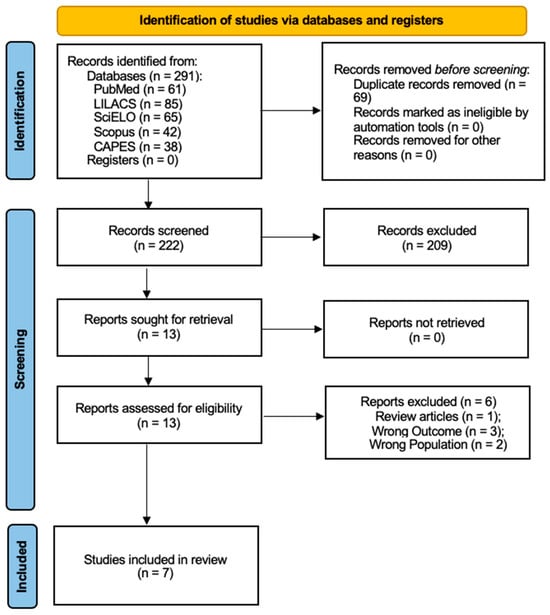
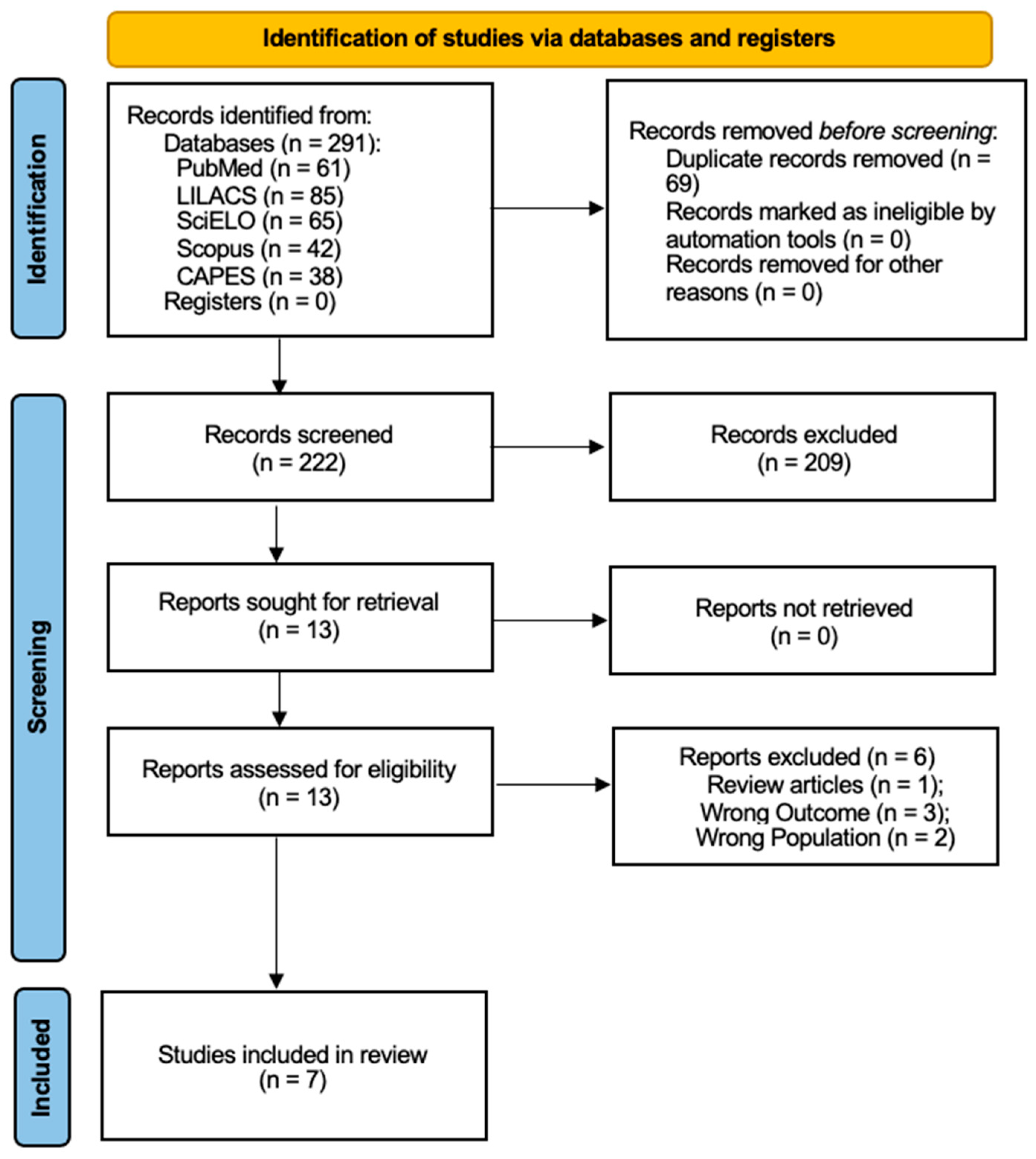
All identified records were exported to reference management software Zotero (version 9.0.6), and duplicates were removed prior to screening. Titles, abstracts, and full texts were independently screened by two reviewers (B.T.S. and M.E.O.H.). Discrepancies were resolved through discussion, and when consensus was not achieved, a third reviewer (M.G.C.F.) adjudicated. The study selection process is presented in the PRISMA-ScR flow diagram. The initial database searches were conducted on 12 April 2026; complementary searches of Scopus and CAPES were conducted on 25 August 2026 to broaden database coverage and identify the potentially relevant grey literature. These complementary searches were not specified in the registered protocol and are reported as a deviation; their records are included in the PRISMA-ScR flow diagram (Figure 1), and they yielded no additional eligible studies.
Figure 1.
PRISMA-ScR flow diagram of the study selection process.
2.5. Data Extraction
Data were extracted using a standardized form. Extracted items included study characteristics (authors, year of publication, journal, study design, and sample size), geographic region, and demographic variables such as age, sex distribution, socioeconomic indicators (e.g., public vs. private healthcare use), parental education, and race/ethnicity, when available. Exposure variables included population and setting, types of stigma identified, primary stigma type, conceptualization or definition of stigma, and measurement tools used. Outcome variables included mental health outcomes (depression, anxiety, and suicidality), severity or clinical scores when reported, health system or coverage characteristics, and key findings regarding the association between stigma, clinical outcomes, and care-related processes.
Data were extracted by B.T.S. and verified by M.E.O.H. Stigma categories were assigned using a deductive approach based on predefined categories (public, structural, self-, and courtesy stigma), with study-specific findings examined for correspondence with each category. Structural stigma was distinguished from public stigma by its association with institutional practices, policies, or systemic barriers rather than interpersonal attitudes or discrimination. Differences in interpretation were resolved through discussion and consensus, with third-reviewer adjudication when necessary. Findings were synthesized narratively by stigma type, mental health outcomes, and care-related processes.
2.6. Methodological Appraisal
Methodological appraisal was conducted by B.T.S. using design-specific Joanna Briggs Institute (JBI) critical appraisal tools. Cross-sectional studies were assessed using the JBI Critical Appraisal Tool for Analytical Cross-sectional Studies [20], with judgments reported by domain as low, high, or unclear risk of bias. Qualitative studies were assessed using the JBI Critical Appraisal Checklist for Qualitative Research [21], with individual criteria rated as Yes, No, Unclear, or Not applicable. No numerical scores or percentage-based overall quality ratings were calculated. Detailed appraisal results are provided in Supplementary Annex II and Supplementary Tables S1, S1a and S1b.
An exploratory evidence strength appraisal was also conducted to support interpretation of the heterogeneous evidence across outcome domains. Evidence strength was considered narratively according to the evidence base, methodological limitations, consistency, directness, and evidence breadth. The appraisal framework and outcome-specific rationale are provided in Supplementary Annex III and Supplementary Table S2.
3. Results
3.1. Study Characteristics
The evidence base for this scoping review comprised seven studies with heterogeneous designs, including cross-sectional (N = 4) [3,16,22,23] and qualitative studies (N = 3) [10,24,25]. As detailed in Table 1, the included studies encompassed diverse populations, including school-based adolescents, transgender and non-binary youth, adolescent men who have sex with men (aMSM), and clinical samples of adolescents with major depressive disorder or suicide attempts.
Table 1.
Detailed characteristics of included studies.
Sample sizes ranged from small qualitative samples (N = 8) [10] to large cross-sectional samples (N = 1170) [16]. Geographically, the studies primarily focused on the South and Southeast, with additional coverage of the Northeast and one nationwide study. None specifically focused on the North or Midwest.
Among the included studies, quantitative evidence was primarily derived from larger cross-sectional samples [3,23], whereas the remaining studies provided qualitative or smaller-scale quantitative data, contributing mainly to contextual and care-related insights.
3.2. Types and Measurement of Stigma
Using the predefined deductive framework, stigma-related findings from the included studies were classified into four types: public, structural, self-stigma, and courtesy stigma (Table 2); these categories were not necessarily used by the original studies. Experiences of interpersonal discrimination or stigmatization were identified across the included studies, although the underlying reasons and assessment methods varied. Self-stigma was reported in five studies [3,10,22,24,25], particularly in relation to the internalization of mental health labels or gender-based stigma. Structural stigma was described in relation to institutional barriers, including racial discrimination affecting access to social and financial services and employment opportunities [23], and legal or systemic obstacles affecting transgender youth [22]. Qualitative evidence also identified courtesy stigma, referring to the social burden or stigma experienced by family members of affected adolescents [10,24].
Table 2.
Stigma mapping and categorization of included studies.
Although all four stigma types were represented, their measurement and reporting varied across studies. Public stigma was the most frequently assigned category, while structural and self-stigma were more often inferred from reported experiences of discrimination or internalization processes. Importantly, the included studies examined both mental illness-related stigma and identity-based discrimination, which represent distinct but potentially overlapping phenomena.
The included studies can be further distinguished according to the focus of stigma or discrimination examined. Mental illness-related stigma was primarily addressed in studies 3 (Collins et al. [24]) and 7 (Viduani et al. [10]), particularly in relation to diagnostic labeling, disclosure, and help-seeking. Study 4 (Martins et al. [25]) addressed both mental health-related experiences and discrimination linked to marginalized identities. In contrast, studies 1 (Bittencourt et al. [16]), 2 (Chinazzo et al. [22]), 5 (Medeiros et al. [3]), and 6 (Santana et al. [23]) primarily examined interpersonal discrimination or stigma associated with social identities, including race, sexual orientation, and gender identity. This distinction concerns the focus of the exposure examined and is separate from the classification of stigma types presented in Table 2.
3.3. Stigma and Mental Health Outcomes
The included studies examined stigma and discrimination in relation to depression, anxiety, and suicidality (Table 3); quantitative associations were reported for depressive outcomes and suicidality, whereas anxiety was addressed only in qualitative studies. Perceived racial discrimination was associated with a higher prevalence of major depression (adjusted prevalence ratio [aPR] = 2.00; 95% CI: 1.37–2.97) [23]. Among adolescent men who have sex with men and adolescent transgender women, high-frequency (versus low-frequency) discrimination based on sexual orientation or gender identity, classified through latent class analysis of 15 indicators, was associated with severe depressive symptoms (adjusted Odds Ratio [aOR] = 1.71; 95% CI: 1.23–2.38) [3]. Separately, suicidal ideation was reported by 72.3% of transgender and non-binary participants in Chinazzo et al. [22]. This figure describes the sample and does not represent an association with discrimination; in that study, discrimination was not independently associated with suicidality after adjustment, whereas deprivation and depressive symptoms remained significant predictors [22].
Table 3.
Associations between stigma, mental health outcomes, and care pathways.
Qualitative studies further described experiences linking peer-based discrimination to clinically significant distress, including reports of “intense distress” and hospitalization [25]. Overall, these findings were primarily derived from cross-sectional analyses, with effect estimates concentrated in a limited number of large-scale studies.
The magnitude of associations varied according to population characteristics and type of stigma exposure. Quantitative evidence was predominantly derived from studies examining discrimination-related stigma, particularly racial discrimination and discrimination based on sexual orientation or gender identity; differences in magnitude across exposures could not be formally compared. In contrast, qualitative studies provided insight into lived experiences of stigma, linking interpersonal discrimination to emotional distress, hospitalization, and suicidal behavior, although without quantifiable effect estimates.
3.4. Stigma and Mental Health Care Processes
The included qualitative studies described stigma-related barriers at multiple stages of the mental health care pathway (Table 3). Stigma was identified as a barrier to initial help-seeking and as a factor affecting diagnostic processes and disclosure [10,24,25]. Qualitative findings described a “secrecy” barrier, whereby adolescents may conceal symptoms to avoid being labeled “crazy” or “abnormal” [24].
Limited disclosure may also complicate recognition of acute mental health needs. In one qualitative study, 6 of 12 adolescents did not seek immediate hospital care following a suicide attempt; a direct link between this finding and stigma was not established [25].
Overall, evidence related to care pathways was limited to three qualitative studies, which described barriers involving help-seeking, diagnostic disclosure, and engagement with care across clinical and community settings. Across studies, stigma-related barriers were reported particularly in symptom recognition, disclosure, and engagement with care. Two of these studies [10,24] were conducted in Porto Alegre by overlapping research teams; because participant-level linkage was not reported, overlap between samples cannot be excluded, and their findings were not treated as independent confirmations.
3.5. Stigma Among Marginalized Populations
Stigma-related experiences were prominently reported among marginalized groups, including Black/Pardo youth and LGBTQ+ populations [3,22,23]. The included studies encompassed diverse socioeconomic and demographic profiles across educational, community, and healthcare settings (Table 1 and Table 3).
A limited number of studies have described the presence of multiple forms of stigma, including racial, regional, and gender-based discrimination [23,25]. These findings suggest that stigma exposures may overlap across social identities, although evidence on their combined effects on mental health outcomes remains limited.
3.6. Methodological Appraisal and Evidence Strength
The exploratory evidence strength appraisal indicated limited evidence strength for depressive outcomes, as well as for anxiety, help-seeking and care engagement, suicidality, and diagnostic processes and disclosure (Supplementary Table S2 and Supplementary Annex III). For depressive outcomes, only two studies reported adjusted effect estimates, both concerning identity-based discrimination rather than mental illness-related stigma. These judgments reflect methodological limitations, consistency, directness, and evidence breadth and do not represent formal GRADE certainty-of-evidence ratings.
Methodological appraisal identified selection concerns in three of four cross-sectional studies. Santana et al. [23] had the greatest number of high-risk domain judgments, involving selection and allocation, exposure classification, and outcome measurement. This warrants particular caution when interpreting its reported association between racial discrimination and major depression. Among qualitative studies, the main recurring limitation was insufficient researcher reflexivity in two studies (Supplementary Annex II and Tables S1, S1a and S1b).
3.7. Evidence Gaps
Several gaps in the literature were identified. The evidence base was limited by the predominance of cross-sectional and qualitative designs, which restrict causal inference. There was also an imbalance in study contributions, with a small number of large quantitative studies accounting for most effect estimates, while the remaining evidence was derived from smaller or qualitative samples.
A lack of standardized and culturally validated instruments to measure stigma among Brazilian youth was observed, with only one identified tool specifically addressing racial discrimination. In addition, geographic coverage was uneven, with no identified studies specifically focusing on the North or Midwest.
No included study evaluated interventions targeting stigma in relation to mental health care processes or examined its impact longitudinally across the care continuum, although intervention trials unrelated to diagnosis or care were outside the eligibility criteria of this review. Evidence on the integration of stigma into mental health care models and policies remains limited. Additional details of the evidence strength appraisal are provided in Supplementary Table S2 and Supplementary Annex III, with extended comparative analyses of previous reviews [14,15,26] presented in Supplementary Tables S3 and S4.
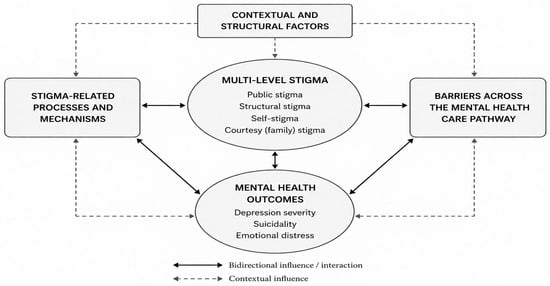
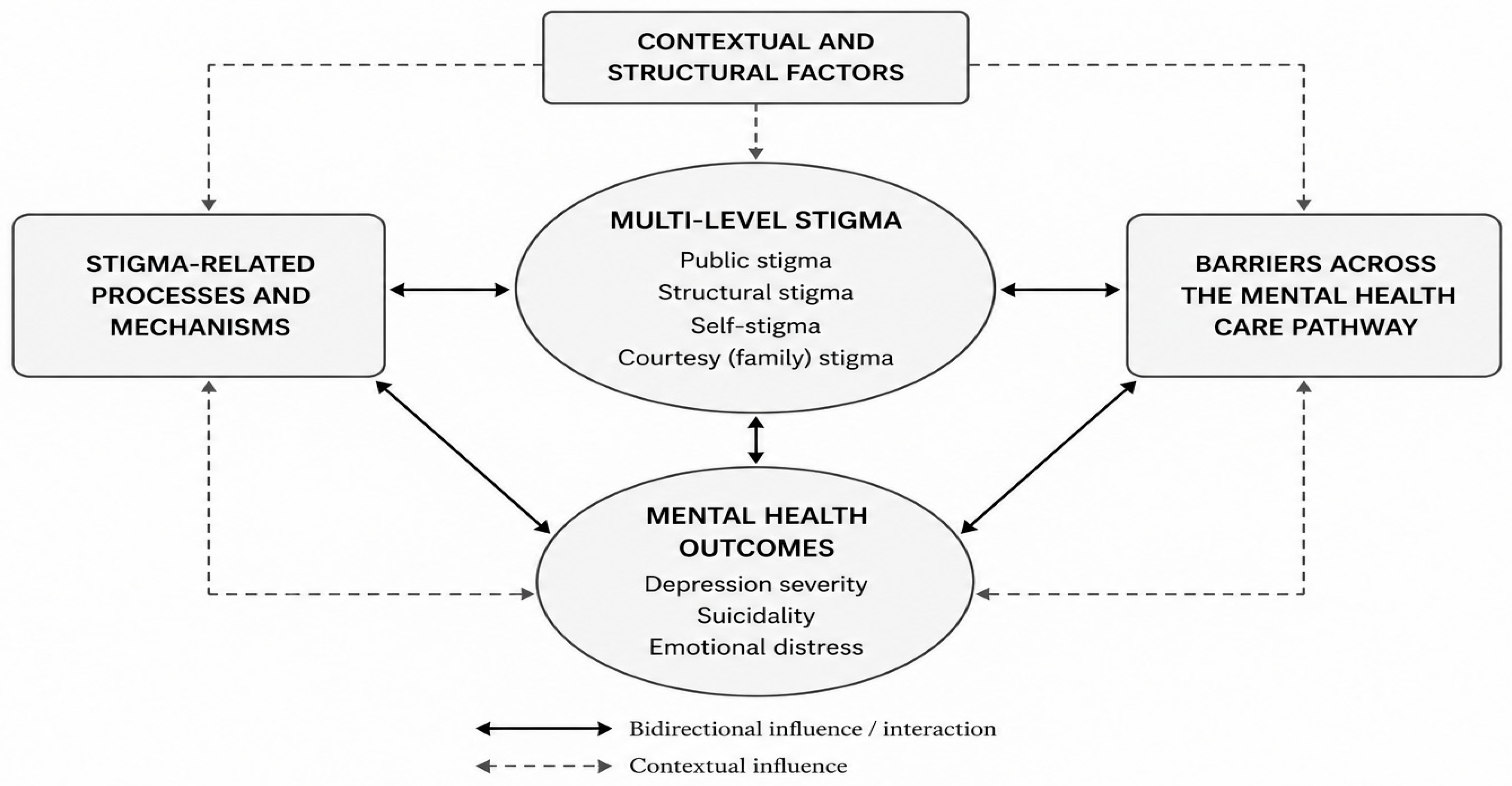
Based on the findings of this review, we propose a hypothetical conceptual model illustrating potential relationships between multi-level stigma, mental health outcomes, and barriers across the adolescent mental health care pathway (Figure 2). The bidirectional arrows represent proposed interactions rather than empirically established causal relationships.
Figure 2.
Authors’ proposed hypothetical conceptual model illustrating potential relationships between multi-level stigma, mental health outcomes, and barriers across the mental health care pathway among Brazilian youth.
4. Discussion
This scoping review examined mental illness-related stigma and identity-based stigma and discrimination in relation to depression, anxiety, and mental health care processes among Brazilian youth, highlighting their relevance across multiple levels. While previous Brazilian studies have largely addressed stigma within broader discussions of social determinants of youth mental health, the present review brings together evidence on stigma as a multi-level construct associated with both clinical outcomes and care-related processes [15]. Our findings indicate that stigma and discrimination were associated with depressive outcomes, whereas associations with suicidality were not consistently retained after adjustment; qualitative studies also reported barriers to help-seeking, diagnostic processes and disclosure, and engagement with care. In particular, a small qualitative pilot study [10] highlights the potential role of “diagnostic stigma”, whereby receiving a mental health diagnosis may trigger self-stigma and “label avoidance,” potentially creating barriers to care engagement within the Brazilian health system [10,14].
These findings are broadly consistent with international and Latin American literature (Table S4) linking stigma to reduced help-seeking, poorer treatment adherence, and adverse psychosocial outcomes among children and adolescents [5,8,9,27]. However, while recent international reviews have increasingly incorporated structural dimensions of stigma and discrimination pathways [28,29], the Brazilian evidence synthesized in this review highlights reported barriers to care, including symptom concealment, delayed help-seeking, and difficulties accessing services. “Secrecy” emerged as a recurrent mechanism through which adolescents may avoid disclosure to protect themselves and their families from stigmatization and was described in contexts of delayed presentation and crisis-stage care, including suicide attempts [24,25]. These dynamics may present challenges for stigma-sensitive, community-based care within Brazil’s Psychosocial Care Network (RAPS), particularly in a health system marked by persistent regional inequalities [4,7,30].
A major challenge identified in this review relates to the limited availability of culturally validated stigma measures for Brazilian youth. Some studies relied on internationally developed instruments, which may not fully capture local distinctions between “estigma,” “preconceito,” and discrimination [3,16]. This measurement gap may limit the development of robust indicators for monitoring stigma and evaluating adolescent mental health policies within the Brazilian Unified Health System (SUS).
Our findings indicate that structural stigma and identity-based discrimination are relevant to mental health inequities among Brazilian adolescents marginalized by race, sexual orientation, or gender identity [3,22,23], although no included study examined their combined (intersectional) effects. The absence of studies from the North and Midwest also highlights geographic gaps in the evidence.
These findings are consistent with emerging international literature on structural stigma, although such inequities may be amplified in middle-income settings characterized by persistent social and regional disparities [5,28]. Together, the evidence suggests that addressing stigma in Brazil requires not only interpersonal interventions, but also equity-oriented policies and structural changes within mental health systems that may reduce barriers to care for marginalized youth.
4.1. Implications for Policy and Clinical Practice
Efforts to improve adolescent mental health outcomes in Brazil should address stigma across multiple levels, including structural barriers within the Psychosocial Care Network (RAPS), mental health literacy, and stigma-sensitive clinical practices.
These findings suggest that stigma-informed care may help address barriers to help-seeking, diagnosis, and treatment engagement, although the effectiveness of such approaches requires further investigation. This may include: (1) reducing stigma associated with receiving a mental health diagnosis in early care settings; (2) implementing inclusive and culturally sensitive care practices within specialized services, particularly for marginalized groups; and (3) strengthening school-based mental health literacy initiatives to address peer-related stigma.
These proposals should be regarded as hypotheses to be tested in intervention studies, including whether such approaches support earlier engagement with care and reduce diagnostic delays.
4.2. Limitations
This review has several limitations. The available evidence was predominantly cross-sectional and qualitative, limiting causal inference. In addition, the lack of standardized and culturally validated instruments for measuring stigma among Brazilian youth limits comparability across studies. A key challenge relates to the conceptual and linguistic overlap surrounding stigma in the Brazilian context, including the overlap between terms such as “preconceito,” “discriminação,” and “estigma” [3,16]. This measurement gap may contribute to underestimation of stigma-related outcomes and limit the development of robust indicators for policy evaluation. Furthermore, the majority of included studies comprised mixed adolescent and young-adult samples extending beyond the target age range, and age-stratified findings were not consistently available. Consequently, some extracted estimates reflect the full analytic samples and cannot be attributed exclusively to participants aged ≤17 years. The available studies also provided insufficient subgroup-specific evidence concerning Indigenous adolescents, rural populations, and adolescents with disabilities, limiting conclusions for these groups. Although children were eligible, no included study focused specifically on children, and the findings therefore primarily reflect adolescents and young adults. Two studies [16,23] were published before the establishment of the Psychosocial Care Network (RAPS) in 2011 [30]; their findings may not reflect the current organization of care, and interpretation of evidence collected across different periods warrants caution. In most quantitative studies, stigma or discrimination was examined as one of several exposures rather than as the primary construct. Methodological appraisal was conducted by a single reviewer. Finally, PsycINFO, Embase, and Web of Science were not searched, and reference lists were not hand-searched; additional terms (e.g., bullying or suicidality) might also have identified further studies.
4.3. Future Directions
Future studies should prioritize longitudinal designs, culturally adapted stigma measures, and interventions targeting stigma reduction across school, family, and healthcare settings. Additional studies from underrepresented Brazilian regions are needed.
5. Conclusions
This scoping review suggests that multi-level stigma is associated with adverse mental health outcomes, particularly depressive distress, while qualitative evidence identifies perceived barriers to help-seeking, diagnosis, disclosure, and care engagement among Brazilian youth. These associations occur within broader social inequalities involving race, socioeconomic disadvantage, sexual orientation, gender identity, and unequal access to healthcare. Integrating stigma-informed and equity-oriented approaches into the Psychosocial Care Network (RAPS) may support earlier engagement and recognition of mental health needs among marginalized youth, a hypothesis that requires evaluation. Despite the limited evidence base, these findings underscore the need for longitudinal research and culturally validated stigma measures to inform more equitable adolescent mental health policies in Brazil.
Supplementary Materials
The following supporting information can be downloaded at https://www.mdpi.com/article/10.3390/healthcare14213616/s1, Supplementary File S1: Search Strategies; Supplementary File S2: Narrative Summary of Methodological Appraisal and Risk of Bias; Supplementary Fele S3: Exploratory Appraisal of Evidence Strength; Supplementary Table S1. Methodological Appraisal of Included Studies; Supplementary Table S1a: JBI Risk-of-Bias Assessment for Analytical Cross-sectional Studies; Supplementary Table S1b: Detailed JBI Critical Appraisal Checklist for Qualitative Research; Supplementary Table S2: Exploratory Evidence Strength Profile; Supplementary Table S3: Comparisons with Previous Reviews about Stigma in Brazil; Supplementary Table S4: Comparative Synthesis of Stigma Constructs and Mechanisms Across Previous Reviews.
Author Contributions
Conceptualization, B.T.S., M.G.C.d.F. and M.L.C.; methodology, B.T.S., M.G.C.d.F., M.E.O.H. and M.L.C.; investigation, B.T.S., M.G.C.d.F., M.E.O.H. and M.L.C.; writing—original draft preparation, B.T.S., M.G.C.d.F. and M.L.C.; writing—review and editing, B.T.S., M.G.C.d.F., M.E.O.H., T.S.B., V.F. and M.L.C.; supervision and validation, M.L.C. All authors have read and agreed to the published version of the manuscript.
Funding
This research was funded by Coordenação de Aperfeiçoamento de Pessoal de Nível Superior (CAPES; Finance Code 001) and by a project approved by the Conselho Estadual dos Direitos da Criança e do Adolescente (CEDCA), funded through the Fundo Estadual para a Infância e Adolescência do Paraná (FIA-PR), Brazil. The CEDCA/FIA-PR funding does not have a specific grant number to report.
Institutional Review Board Statement
Not applicable.
Informed Consent Statement
Not applicable.
Data Availability Statement
No new data were created or analyzed in this study. Data sharing is not applicable to this article.
Acknowledgments
The authors acknowledge the institutional support of the Instituto de Pesquisa Pelé Pequeno Príncipe and the Associação Hospitalar de Proteção à Infância Dr. Raul Carneiro. During the preparation of this manuscript, the authors used ChatGPT (GPT-6; OpenAI) to assist with language refinement. The tool was not used to generate or analyze research data, perform the literature search, select studies, conduct methodological appraisal, or draw scientific conclusions. All AI-assisted content was critically reviewed, verified, and edited by the authors, who take full responsibility for the accuracy and integrity of the final manuscript.
Conflicts of Interest
The authors declare no conflicts of interest.
References
- Shorey, S.; Ng, E.D.; Wong, C.H.J. Global Prevalence of Depression and Elevated Depressive Symptoms among Adolescents: A Systematic Review and Meta-Analysis. Br. J. Clin. Psychol. 2022, 61, 287–305. [Google Scholar] [CrossRef] [Scilit] [PubMed]
- Tian, J.; Yan, N.; Hu, X.; Tian, S.; Wang, Y.; Mackay, L.E.; Luo, Y.; Wang, Y.; Wang, Y.; Liu, Y.; et al. Global Burden of Mental Disorders among Adolescents and Young Adults, 1990-2021: A Systematic Analysis of the Global Burden of Diseases Study 2021. Gen. Psychiatry 2025, 38, e102278. [Google Scholar] [CrossRef] [Scilit] [PubMed]
- de Medeiros, D.S.; Magno, L.; Crosland Guimarães, M.D.; Grangeiro, A.; Eustorgio Filho, M.; Soares, F.; Greco, D.; Westin, M.; Ferraz, D.; Zucchi, E.M.; et al. Violence, Discrimination, and High Levels of Symptoms of Depression Among Adolescent Men Who Have Sex With Men and Transgender Women in Brazil. J. Adolesc. Health 2023, 73, S19–S25. [Google Scholar] [CrossRef] [Scilit] [PubMed]
- Ribeiro, J.M.; Moreira, M.R.; Ouverney, A.M.; Pinto, L.F.; Silva, C.M.F.P.D. Federalism and Health Policy in Brazil: Institutional Features and Regional Inequalities. Ciênc. Saúde Colet. 2018, 23, 1777–1789. [Google Scholar] [CrossRef] [Scilit] [PubMed]
- Mascayano, F.; Tapia, T.; Schilling, S.; Alvarado, R.; Tapia, E.; Lips, W.; Yang, L.H. Stigma toward Mental Illness in Latin America and the Caribbean: A Systematic Review. Rev. Bras. Psychiatry 2016, 38, 73–85. [Google Scholar] [CrossRef] [Scilit] [PubMed]
- Link, B.G.; Phelan, J.C. Conceptualizing Stigma. Annu. Rev. Sociol. 2001, 27, 363–385. [Google Scholar] [CrossRef] [Scilit]
- Thornicroft, G.; Sunkel, C.; Alikhon Aliev, A.; Baker, S.; Brohan, E.; El Chammay, R.; Davies, K.; Demissie, M.; Duncan, J.; Fekadu, W.; et al. The Lancet Commission on Ending Stigma and Discrimination in Mental Health. Lancet 2022, 400, 1438–1480. [Google Scholar] [CrossRef] [Scilit] [PubMed]
- Chukwuma, O.V.; Ezeani, E.I.; Fatoye, E.O.; Benjamin, J.; Okobi, O.E.; Nwume, C.G.; Egberuare, E.N. A Systematic Review of the Effect of Stigmatization on Psychiatric Illness Outcomes. Cureus 2024, 16, e62642. [Google Scholar] [CrossRef] [Scilit] [PubMed]
- Kaushik, A.; Kostaki, E.; Kyriakopoulos, M. The Stigma of Mental Illness in Children and Adolescents: A Systematic Review. Psychiatry Res. 2016, 243, 469–494. [Google Scholar] [CrossRef] [Scilit] [PubMed]
- Viduani, A.; Benetti, S.; Petresco, S.; Piccin, J.; Velazquez, B.; Fisher, H.L.; Mondelli, V.; Kohrt, B.A.; Kieling, C. The Experience of Receiving a Diagnosis of Depression in Adolescence: A Pilot Qualitative Study in Brazil. Clin. Child Psychol. Psychiatry 2022, 27, 598–612. [Google Scholar] [CrossRef] [Scilit] [PubMed]
- Albuquerque, S.; Carvalho, A.; de Sousa, B.; da Costa, L.P.; Beato, A. Decoding Prejudice: Understanding Patterns of Adolescent Mental Health Stigma. J. Clin. Med. 2025, 14, 1394. [Google Scholar] [CrossRef] [Scilit] [PubMed]
- Austin, L.J.; Browne, R.K.; Carreiro, M.; Larson, A.G.; Khreizat, I.; de Jonckheere, M.; Schwartz, S.E.O. It Makes Them Want to Suffer in Silence Rather Than Risk Facing Ridicule: Youth Perspectives on Mental Health Stigma. Youth Soc. 2025, 57, 30–55. [Google Scholar] [CrossRef] [Scilit]
- Bolster-Foucault, C.; Ho Mi Fane, B.; Blair, A. Structural Determinants of Stigma across Health and Social Conditions: A Rapid Review and Conceptual Framework to Guide Future Research and Intervention. Health Promot. Chronic Dis. Prev. Can. 2021, 41, 85–115. [Google Scholar] [CrossRef] [Scilit] [PubMed]
- Araújo, M.A.; de Matos, L.S.P.; Mendes, A.C.V.; Saraiva, E.C.A.; Vieira, M.O.D.; Paulo, C.V.A.; Kennedy, R.; Nogueira, G.N.; Gonçalves, R.F. Impactos Do Estigma Social à Depressão No Contexto Brasileiro: Revisão de Literatura. Rev. Foco 2025, 18, e7901. [Google Scholar] [CrossRef] [Scilit]
- Marchionatti, L.E.; Campello, A.C.; Veronesi, J.A.; Ziebold, C.; Tonon, A.C.; Casella, C.B.; Schafer, J.L.; Madyun, A.N.; Caye, A.; Kieling, C.; et al. The Science of Child and Adolescent Mental Health in Brazil: A Nationwide Systematic Review and Compendium of Evidence-Based Resources. BMJ Glob. Health 2026, 11, e018542. [Google Scholar] [CrossRef] [Scilit] [PubMed]
- Bittencourt, A.A.; Aerts, D.R.G.d.C.; Alves, G.G.; Palazzo, L.; Monteiro, L.; Vieira, P.C.; Freddo, S.L. Feelings of discrimination among students: Prevalence and associated factors. Rev. Saúde Pública 2009, 43, 236–245. [Google Scholar] [CrossRef] [Scilit] [PubMed][Green Version]
- Arksey, H.; O’Malley, L. Scoping Studies: Towards a Methodological Framework. Int. J. Soc. Res. Methodol. 2005, 8, 19–32. [Google Scholar] [CrossRef] [Scilit]
- Levac, D.; Colquhoun, H.; O’Brien, K.K. Scoping Studies: Advancing the Methodology. Implement. Sci. 2010, 5, 69. [Google Scholar] [CrossRef] [Scilit] [PubMed]
- Tricco, A.C.; Lillie, E.; Zarin, W.; O’Brien, K.K.; Colquhoun, H.; Levac, D.; Moher, D.; Peters, M.D.J.; Horsley, T.; Weeks, L.; et al. PRISMA Extension for Scoping Reviews (PRISMA-ScR): Checklist and Explanation. Ann. Intern. Med. 2018, 169, 467–473. [Google Scholar] [CrossRef] [Scilit] [PubMed]
- Barker, T.H.; Hasanoff, S.; Aromataris, E.; Stone, J.C.; Leonardi-Bee, J.; Sears, K. The Revised JBI Critical Appraisal Tool for the Assessment of Risk of Bias for Analytical Cross-Sectional Studies. JBI Evid. Synth. 2026, 24, 401–408. [Google Scholar] [CrossRef] [Scilit] [PubMed]
- Lockwood, C.; Munn, Z.; Porritt, K. Qualitative Research Synthesis: Methodological Guidance for Systematic Reviewers Utilizing Meta-Aggregation. Int. J. Evid.-Based Healthc. 2015, 13, 179–187. [Google Scholar] [CrossRef] [Scilit] [PubMed]
- Chinazzo, Í.R.; Fontanari, A.M.V.; Costa, A.B.; Lobato, M.I.R. Factors Associated with Suicidal Ideation and Suicide Attempt in Brazilian Transgender Youth. Int. J. Environ. Res. Public Health 2023, 20, 3215. [Google Scholar] [CrossRef] [Scilit] [PubMed]
- Santana, V.; Almeida-Filho, N.; Roberts, R.; Cooper, S.P. Skin Colour, Perception of Racism and Depression among Adolescents in Urban Brazil. Child Adolesc. Ment. Health 2007, 12, 125–131. [Google Scholar] [CrossRef] [Scilit] [PubMed]
- Collins, S.A.; Ottman, K.; Bohara, J.; Neupane, V.; Viduani, A.; Benetti, S.; Martini, T.; Buchweitz, C.; Momodu, O.; Adewuya, A.O.; et al. Barriers and Facilitators to Identifying Depression in Adolescents: A Cross-Cultural Qualitative Study in Brazil, Nepal, and Nigeria. PLoS Ment. Health 2024, 1, e0000209. [Google Scholar] [CrossRef] [Scilit] [PubMed]
- Martins, L.Y.; Domingos, T.d.S.; Avezani, A.C.F.; Monteiro, R.L.; de Sousa, G.S. Knowing to care: Life stories of adolescent survivors of suicide attempts in a Brazilian metropolis. Rev. Esc. Enferm. USP 2026, 60, e20250287. [Google Scholar] [CrossRef] [Scilit] [PubMed]
- Melo, V.L.C.; Serra, P.J.; Cunha, C.F. Obesidade infantile—Impactos psicossociais. Rev. Méd. Minas Gerais 2010, 20, 367–370. [Google Scholar]
- Ferrie, J.; Miller, H.; Hunter, S.C. Psychosocial Outcomes of Mental Illness Stigma in Children and Adolescents: A Mixed-Methods Systematic Review. Child. Youth Serv. Rev. 2020, 113, 104961. [Google Scholar] [CrossRef] [Scilit]
- Elizalde-Resano, C.; Reparaz, C.; Ochoa-Linacero, B. Mental Health Stigma in Adolescents: A Scoping Review. Psychol. Soc. Educ. 2025, 17, 76–85. [Google Scholar] [CrossRef] [Scilit]
- Kågström, A.; Guerrero, Z.; Aliev, A.A.; Tomášková, H.; Rüsch, N.; Ouali, U.; Thornicroft, G.; Sartorius, N.; Winkler, P. Mental Health Stigma and Its Consequences: A Systematic Scoping Review of Pathways to Discrimination and Adverse Outcomes. eClinicalMedicine 2025, 89, 103588. [Google Scholar] [CrossRef] [Scilit] [PubMed]
- Brasil. Ministério da Saúde. Portaria nº 3.088, de 23 de dezembro de 2011. Institui a Rede de Atenção Psicossocial Para Pessoas Com Sofrimento ou Transtorno Mental e Com Necessidades Decorrentes do Uso de Crack, Álcool e Outras Drogas, no Âmbito do SISTEMA Único de Saúde (SUS). Diário Oficial da União, 23 December 2011.

Disclaimer/Publisher’s Note: The statements, opinions and data contained in all publications are solely those of the individual author(s) and contributor(s) and not of MDPI and/or the editor(s). MDPI and/or the editor(s) disclaim responsibility for any injury to people or property resulting from any ideas, methods, instructions or products referred to in the content. |
© 2026 by the authors. Licensee MDPI, Basel, Switzerland. This article is an open access article distributed under the terms and conditions of the Creative Commons Attribution (CC BY) license.