


Abstract
Background: The integration of artificial intelligence (AI)-based systems into healthcare is accelerating rapidly, yet evidence of their real-world clinical and organizational effectiveness remains fragmented. Methods: A PRISMA 2020-compliant systematic review of randomized controlled trials (RCTs) evaluating AI-based interventions in real-world healthcare settings was conducted. MEDLINE (PubMed), CINAHL, Cochrane CENTRAL, and ClinicalTrials.gov were searched up to January 2026. AI interventions were classified post hoc into three functional categories: perceptive AI, predictive/decision support AI, and conversational/adaptive AI. The direction of effect was classified as positive, neutral, mixed, or negative based on the primary endpoint, effect magnitude, and authors’ interpretation. Risk of bias was assessed using the Cochrane RoB-2 tool. Results: A total of 54 RCTs were included. Overall, 40 studies (74.1%) reported a positive direction of effect, nine a neutral result, four a mixed result, and one a negative result. Perceptive AI (n = 17) showed consistent benefits in diagnostic accuracy. Predictive/decision support AI (n = 15) showed heterogeneous results, with effectiveness dependent on workflow integration. Conversational/adaptive AI (n = 22) showed the most consistent positive signal, particularly for chronic disease self-management, behavioral change, and therapeutic adherence. Conclusions: Evidence from randomized trials suggests that AI-based interventions may provide meaningful benefits in real-world healthcare settings, with effectiveness varying by functional category, implementation context, and outcome domain. Future research should prioritize pragmatic multicenter trials with standardized reporting of clinical, organizational, and implementation outcomes.
1. Introduction
Artificial intelligence (AI), encompassing machine learning, deep learning, and natural language processing, is increasingly applied across healthcare settings to support clinical decision-making, diagnostic processes, patient communication, and care management [1,2,3]. The rapid expansion of AI-based tools has generated substantial interest in their potential to improve diagnostic accuracy, personalize therapeutic interventions, reduce administrative burdens, and optimize the use of healthcare resources [4,5,6,7]. In parallel, growing evidence from regulatory agencies and international health organizations has underscored the importance of evaluating AI not only for technical performance but also for real-world clinical effectiveness, patient safety, and system-level impact [1,8,9].
Despite this rapidly expanding evidence base, important methodological gaps persist. Most existing evaluations focus on technical validation or single outcome domains, and few systematic reviews have simultaneously assessed both the clinical and organizational consequences of AI implementation in real-world healthcare settings [10]. Furthermore, the heterogeneity of AI technologies, ranging from image recognition systems and clinical decision support tools to conversational agents and adaptive behavioral interventions, makes cross-study synthesis challenging in the absence of a principled classification framework. The current evidence base would benefit from a synthesis organized according to the functional role of the AI intervention rather than the underlying computational architecture, consistent with the perspectives proposed by international frameworks including the WHO, OECD, FDA, and the European Commission [1,11,12,13,14].
Several systematic reviews and scoping reviews have previously examined AI-based interventions in clinical settings. Han et al. identified 86 RCTs evaluating AI in clinical practice up to 2023, finding that the majority reported improvements in clinical outcomes [15]. Liu et al. similarly reviewed AI-assisted tools in clinical care through 2021, noting that most studies reported benefits for AI-assisted clinicians, although single-center designs and limited sample sizes constrained generalizability [16]. The present review builds on these contributions by extending the evidence window to January 2026, by introducing a functional classification of AI interventions grounded in international regulatory frameworks, and by explicitly including organizational alongside clinical outcomes as synthesis targets. The present study aims to address these gaps through a systematic review exclusively of randomized controlled trials (RCTs), evaluating the effectiveness of AI-based systems across both clinical and organizational outcome domains in real-world healthcare settings. The central research question is the following: what is the effectiveness, both clinical and organizational, of the introduction, implementation, and use of AI-based systems in healthcare?
2. Materials and Methods
This systematic review was conducted and is reported in accordance with the Preferred Reporting Items for Systematic Reviews and Meta-Analyses (PRISMA) 2020 guidelines [17] and is registered on PROSPERO (CRD420251036790).
2.1. Eligibility Criteria
Studies were included if they (1) were randomized controlled trials (RCTs) of any design (parallel-group, crossover, cluster, or stepped-wedge); (2) evaluated AI-based interventions in real-world healthcare settings; (3) reported at least one clinical outcome (e.g., diagnostic accuracy, treatment success, symptom reduction, mortality) and/or organizational outcome (e.g., workflow efficiency, decision time, resource utilization, cost); and (4) were published in English between January 2015 and April 2025. Studies were excluded if they were systematic reviews, meta-analyses, scoping reviews, or study protocols without results or if they were conducted exclusively in laboratory or radiological settings without a real-world clinical component. For the purposes of this review, an AI-based intervention was operationally defined as a system employing at least one of the following technical approaches: machine learning (including deep learning and reinforcement learning), natural language processing, computer vision, or adaptive algorithms that modify their output based on incoming data without explicit reprogramming. Systems based exclusively on pre-specified, static rule sets or conventional branching logic were not considered AI-based and were excluded. The AI component was required to be prospectively and actively deployed as the primary or co-primary intervention within the randomized comparison—that is, the randomized contrast had to directly estimate the effect of the AI system on the outcome of interest. Studies that used RCT-derived data exclusively for retrospective model development or post hoc predictive modeling, without the AI system itself constituting the randomized intervention, were excluded. The real-world healthcare setting criterion required that interventions be implemented with actual patients in routine or near-routine clinical, community, or home-based care contexts; studies conducted exclusively in laboratory settings, on healthy volunteers without a clinical condition, or using simulated or mock consultations were not eligible.
2.2. Search Strategy
To address the primary research objective, a PICO framework was formulated as follows: (P) patients or professionals in real-world healthcare settings; (I) implementation or use of AI-based systems or software; (C) standard of care or non-AI approaches; (O) clinical outcomes (e.g., diagnostic accuracy, treatment success, symptom reduction, mortality) and/or organizational outcomes (e.g., workflow efficiency, decision time, resource utilization, cost-effectiveness).
This systematic review was conducted in accordance with the PRISMA 2020 guidelines [17] and registered on PROSPERO (registration number CRD420251036790; registered 2025; available at https://www.crd.york.ac.uk/PROSPERO/view/CRD420251036790, accessed on 12 October 2026). The following deviations from the registered protocol were implemented and are disclosed here: (1) the Cochrane Central Register of Controlled Trials (CENTRAL) was added to the search strategy following reviewer recommendations, as it was not included in the original registration; (2) the search window was extended from April 2025 to January 2026 to capture the most current evidence; (3) two studies (Kim et al. and Lenhard et al.) initially identified as potentially eligible were excluded following re-adjudication against the operationalized AI eligibility criteria (see Section 2.1), as the AI model was not the prospectively deployed randomized intervention in either case. These deviations were imposed to strengthen the methodological rigor of the review and do not affect the core research question or the registered primary outcomes [18,19]. A systematic literature search was conducted across MEDLINE (PubMed), CINAHL (EBSCO), ClinicalTrials.gov, and the Cochrane Central Register of Controlled Trials (CENTRAL) up to January 2026. The search aimed to identify all published articles evaluating the effectiveness of AI-based systems in healthcare, with a focus on studies published within the period January 2015–January 2026 to capture relevant advancements across the past decade. The inclusion criteria were restricted to studies conducted in human participants, including randomized controlled trials (RCTs) of any design (parallel-group, crossover, cluster, or stepped-wedge), with full-text availability in English. Search strategies were tailored to the requirements of each database. Finally, a snowball technique was applied by examining the reference lists of all included primary papers to identify additional eligible studies. Further details of the search strings used across databases are provided in the Supplementary Materials.
2.3. Screening and Study Selection Process
Titles and abstracts were screened independently by two reviewers against the inclusion and exclusion criteria, followed by the full-text assessment of potentially eligible records. Records retrieved from ClinicalTrials.gov were handled as trial registrations: for each registration, associated results publications were identified via the linked results section and cross-referenced with PubMed and CINAHL to avoid duplication; only registrations with posted results within the eligibility window were carried forward to full-text screening. Disagreements at each stage were resolved by discussion or, when necessary, arbitration by a third reviewer. Of the 1773 records screened, 1719 were excluded based on the pre-specified criteria; the remaining 54 records were assessed in full and all were included in the final review. The complete selection process and reasons for exclusion are reported in the PRISMA 2020 flow diagram (Figure 1). In cases where multiple publications referred to the same trial (e.g., interim reports and final results), only the publication reporting the most complete or longest-term data was included; earlier publications of the same trial were excluded to avoid duplicate reporting of the same study population.
Figure 1.
PRISMA 2020 flow diagram of study selection. Records were identified from PubMed/CINAHL (n = 2549), ClinicalTrials.gov (n = 2119), and Cochrane CENTRAL (n = 1093). After the removal of duplicates and non-eligible records, sequential screening was performed. A total of 54 RCTs were included in the final systematic review. Colors indicate the PRISMA 2020 screening phases: blue = Identification; green = Screening; teal = Included.
2.4. Data Extraction
Data were extracted independently by two reviewers using a standardized form. For each included study, the following variables were recorded: author and year, country, study design, population characteristics (N, key features), type of AI technology, AI function/target, comparator target, primary outcome, key result (quantitative), direction of effect, and outcome domain.
AI interventions were classified post hoc into three functional categories. The classification was based on the predominant clinical function of the AI system, rather than on the underlying computational algorithm, and was performed independently by two reviewers using a pre-defined classification guide grounded in established international frameworks. Initial inter-reviewer agreement on functional category assignment was 90.7% (49 of 54 studies); the five discordant cases were resolved by consensus discussion involving a third reviewer, consistent with published standards for post hoc taxonomy development in systematic reviews. Consistent with the functional perspectives proposed by the WHO [1], OECD [11], FDA [12], and European Commission [13], and aligned with the synthesis framework of Martínez-Millana et al. [14], interventions were categorized into three groups: (i) perceptive AI, encompassing systems that recognize, detect, classify, or quantify clinically relevant patterns from complex unstructured data (medical images, physiological signals, video streams, or sensor-derived data); (ii) predictive/decision support AI, including models that estimate future outcomes, stratify patient risk, or generate recommendations to support clinical decision-making; (iii) conversational/adaptive AI, comprising systems that interact directly with patients or healthcare professionals through natural language or adaptive digital interfaces to deliver personalized education, coaching, monitoring, or behavioral support.
Studies were classified according to the primary clinical purpose of the AI intervention rather than the underlying computational algorithm. This functional classification was developed by integrating the principal application domains consistently identified across international AI frameworks and recent reviews on AI in healthcare [1,6,10,11,12,14]. Specifically, the AI function/target for each included study was assigned to one of five pre-defined categories based on the predominant clinical function of the AI system.
Diagnosis: AI systems that detect, classify, or recognize diseases or clinically relevant abnormalities from patient data (e.g., CADe systems for colonoscopy, ECG-based arrhythmia detection, symptom checkers).
Treatment/Monitoring: AI systems that directly support treatment delivery, patient self-management, therapeutic adherence, rehabilitation, or longitudinal monitoring of clinical parameters (e.g., adaptive mHealth applications, AI-guided rehabilitation systems, CPAP monitoring).
Clinical Decision Support (CDSS): AI systems providing recommendations, alerts, prioritization, or treatment suggestions to healthcare professionals, integrated within clinical workflows or electronic health record systems.
Prediction: AI systems estimating future clinical events, disease progression, treatment response, or patient risk based on structured clinical data or multimodal inputs (e.g., prognostic models, ML-based risk stratification).
Education/Training: AI systems designed primarily to educate or train patients (e.g., carbohydrate-counting applications for diabetes management) or healthcare professionals (e.g., AI-based surgical simulation tutoring systems).
Outcome domains were classified as clinical (any measure directly related to patient health status, including diagnostic accuracy, symptom reduction, mortality, adherence, and quality of life); organizational (any measure related to healthcare system functioning, professional behavior, or resource utilization, including workflow efficiency, decision time, alert acceptance, and cost); or mixed (both clinical and organizational domains reported within the same study). The direction of effect was categorized as positive (statistically significant improvement in the primary outcome favoring the AI intervention), neutral (no statistically significant difference between groups), mixed (significant improvement in some but not all primary outcomes), or negative (results favoring the control group or standard care).
2.5. Risk of Bias Assessment
Risk of bias was assessed independently by two reviewers using the Cochrane Risk of Bias 2 (RoB-2) tool for randomized trials [20]. Each study was evaluated across five domains: (1) bias arising from the randomization process; (2) bias due to deviations from the intended interventions; (3) bias due to missing outcome data; (4) bias in the measurement of the outcome; and (5) bias in the selection of the reported result. For crossover RCTs, the RoB-2 variant for crossover trials was applied, with additional attention to potential carryover effects and the appropriateness of the washout period. For cluster RCTs, the cluster-randomized variant of RoB-2 was used, incorporating domain-specific signaling questions on recruitment bias and the handling of cluster-level confounding. Overall RoB judgements (low risk, some concerns, or high risk) were assigned based on the most critical domain-level concern. Disagreements between reviewers were resolved by discussion or, when necessary, by the arbitration of a third senior reviewer. The potential influence of studies rated as having a high risk of bias on the overall findings is discussed narratively in the Limitations section (Section 4.4). AI-specific reporting and evaluation considerations were informed by the DECIDE-AI framework [21].
2.6. Data Synthesis
Given the substantial clinical and methodological heterogeneity across the included studies—spanning diverse AI technologies, hardware configurations, clinical settings, patient populations, comparators, and outcome measures—the meta-analytic pooling of effect estimates was considered inappropriate across all three functional categories. Within the perceptive AI subgroup, although six studies evaluated CADe systems for colonoscopy, with adenoma detection as a common outcome, pooling was precluded by differences in the CADe system architecture, endoscopist experience levels, bowel preparation protocols, and patient eligibility criteria across centers, which represent sources of clinical heterogeneity sufficient to render a pooled estimate uninterpretable. A structured narrative synthesis was therefore performed following the SWiM (Synthesis Without Meta-Analysis) reporting guidance [22], grouping studies according to the three functional AI categories identified post hoc. Within each category, studies were further grouped by AI functional target (diagnosis, treatment/monitoring, CDSS, prediction, education/training) and outcome domain (clinical, organizational, mixed). The primary outcome hierarchy for each included study was pre-specified by the original trial authors and reported as such; the direction of effect was classified as positive, neutral, mixed, or negative based on the trial’s own primary endpoint and its statistical significance, the effect magnitude, and the authors’ own interpretation—not solely on the basis of p-value thresholds. For each functional category, the synthesis addressed the number of included studies, direction of effect distribution, consistency of findings across studies, overall methodological quality (RoB profile), and key moderating factors identified across studies. Where individual study effect estimates were available, these are reported with their 95% confidence intervals in the narrative and in Table 1.
Table 1.
Characteristics and results of included studies. Color coding for direction of effect: green = positive; yellow = neutral; blue = mixed; red = negative. Citation numbers in brackets correspond to the reference list.
3. Results
3.1. Study Selection
The updated database searches retrieved 2549 records from PubMed and CINAHL combined, 2119 records from ClinicalTrials.gov, and 1093 records from Cochrane CENTRAL (total = 5761). After the removal of duplicates, secondary studies, records outside the eligibility window, preprints, and conference abstracts, a total of 1773 records were screened. Of these, 1719 were excluded based on the pre-specified eligibility criteria (studies outside healthcare settings, not focused on AI-based systems, not evaluating AI implementation in real-world practice, published outside the 2015–2025 window, non-English language, non-RCT designs including reviews and meta-analyses, and insufficient extractable data). A final total of 54 RCTs were included in the systematic review. The complete selection process is illustrated in Figure 1 (PRISMA 2020 flow diagram).
The complete characteristics of all 54 included studies, including the AI technology type, AI functional target, primary outcome, key results, direction of effect, and outcome domain, are presented in Table 1 below.
3.2. Characteristics of Included Studies
A total of 54 RCTs were included in the systematic review, published between 2017 and 2025. Studies were conducted across 17 countries, with the USA (n = 17), China (n = 8), Republic of Korea (n = 5), Spain (n = 4), and Canada (n = 4) being the most represented. The remaining studies originated from Australia, Denmark, Egypt, the UK, Ireland, Italy, Japan, The Netherlands, Sweden, Taiwan, and multinational settings. Sample sizes ranged from 20 (Kanazawa et al. [39]) to 288,832 clinical interactions (Wright et al. [71]). The large majority were parallel-group RCTs (n = 36). Additional designs included crossover RCTs (n = 4), cluster RCTs (n = 4), pilot RCTs (n = 2), open-label RCTs (n = 3), and one tandem RCT. Clinical populations varied widely, encompassing patients with chronic non-communicable diseases (diabetes, heart failure, chronic pain, COPD, obstructive sleep apnea), mental health conditions (depression, anxiety, OCD, schizophrenia, substance misuse, eating disorders), and cancer; surgical or procedural contexts; and healthy adults or healthcare professionals. The full characteristics of all included studies are reported in Table 1. The included studies exhibited substantial heterogeneity across multiple dimensions, which precluded meta-analytic pooling and informed the choice of a structured narrative synthesis. Regarding the AI technology, 54 distinct systems were evaluated, ranging from deep learning computer vision models for endoscopic detection to reinforcement learning chatbots for smoking cessation, with no two studies evaluating the same AI system in the same clinical context. Comparators varied from no intervention or waiting list (n = 12) to standard of care (n = 30) to active human-delivered equivalents such as telephone-based CBT or nurse-led programs (n = 12). The follow-up duration ranged from 2 weeks (Fitzpatrick et al. [33], Ly et al. [51]) to 48 weeks (Lee et al. [46]) and up to 12 months (Piette et al. [58], Carrasco-Hernández et al. [28]). Primary outcomes spanned at least 30 distinct measurement instruments, including the adenoma detection rate, HbA1c, PHQ-9, Roland-Morris Disability Questionnaire, CPAP adherence, alert acceptance rate, and all-cause mortality, making a direct cross-study comparison of effect sizes methodologically inappropriate. Sample sizes varied by more than three orders of magnitude, from n = 20 (Kanazawa et al. [43]) to n = 288,832 clinical interactions (Wright et al. [74]).
3.3. AI Functional Taxonomy
Based on the post hoc classification, AI interventions were distributed across three technology types: perceptive AI (n = 17), predictive/decision support AI (n = 15), and conversational/adaptive AI (n = 22). The AI functional targets were as follows: diagnosis (n = 12), treatment/monitoring (n = 24), clinical decision support/CDSS (n = 10), prediction (n = 4), and education/training (n = 4). Regarding the outcome domain, 34 studies reported exclusively clinical outcomes, three reported exclusively organizational outcomes, and 17 reported mixed outcomes spanning both clinical and organizational domains. As shown in Table 2, the distribution of outcome domains differed substantially across AI functional categories. Perceptive AI studies focused almost exclusively on clinical outcomes (14 of 17; 82.4%), consistent with their predominant application in diagnostic and image analysis tasks, where clinical endpoints are the natural primary measure. Predictive/decision support AI showed the highest proportion of organizational outcomes (2 of 15; 13.3%) and mixed outcomes (4 of 15; 26.7%), reflecting the dual focus of CDSS applications on both patient health and clinician workflows. Conversational/adaptive AI had the largest proportion of mixed outcomes (10 of 22; 45.5%), driven by studies that measured both patient-level behavioral change and implementation-level indicators such as engagement rates, adherence, and therapist time savings. Purely organizational outcomes were rare across all three categories (n = 3 total).
Table 2.
Distribution of included studies (n = 54) by AI functional category and primary outcome domain. Clinical = studies reporting exclusively patient-level clinical outcomes; organizational = studies reporting exclusively workflow, process, or resource use outcomes; mixed = studies reporting both clinical and organizational outcomes.
3.4. Risk of Bias
Of the 54 included RCTs, 16 were rated as having a low risk of bias [27,32,36,37,43,44,48,52,60,63,68,70,71,72,73,74], 26 as having some concerns [24,25,26,30,31,34,38,39,41,42,46,47,49,50,53,55,57,58,61,62,64,65,66,67,69,76], and 12 as having a high risk [23,28,29,33,35,40,45,51,54,56,59,75] (Table 3). Table 3 provides the complete RoB-2 profile for each included study and the color-coded overall judgment, which complements the summary counts reported in this section and is intended as a reference tool for readers wishing to assess the methodological profiles of individual studies. Studies rated as low-risk generally demonstrated adequate allocation concealment, pre-registered primary outcomes, and objective or blinded outcome assessment. The most common source of risk in the some concerns category was the potential for deviations from the intended interventions, particularly in open-label designs, where the blinding of participants to AI-based interventions was inherently unfeasible. Studies rated as high-risk were predominantly characterized by the absence of allocation concealment, high dropout rates, self-reported outcomes without objective validation, or a lack of pre-registration of primary endpoints.
Table 3.
Risk of bias assessment of included RCTs using the Cochrane Risk of Bias 2 (RoB-2) tool. Color coding: green = low risk; yellow = some concerns; red = high risk.
3.5. Narrative Synthesis by AI Functional Category
Given the clinical and methodological heterogeneity across the included studies, a structured narrative synthesis was conducted, grouping studies by the three functional AI categories identified post hoc. For each category, the synthesis addresses the number of studies, direction of effect, consistency of results, overall methodological quality, and key moderating factors.
3.5.1. Perceptive AI
Seventeen studies evaluated perceptive AI systems—technologies that recognize clinically relevant patterns from complex unstructured data, including endoscopic video, physiological signals, and sensor-based inputs. Eight studies targeted diagnosis, four targeted treatment/monitoring, four targeted education/training, and one targeted prediction.
Diagnostic AI—endoscopy and image-based detection. Six studies evaluated computer-aided detection (CADe) systems for colonoscopy. Repici et al. [60] (Italy, n = 685) demonstrated that real-time CADe significantly increased the adenoma detection rate (ADR) from 40.4% to 54.8% (RR 1.30). Gong et al. [36] (China, n = 704) reported the doubling of the ADR with the ENDOANGEL system (Wuhan EndoAngel Medical Technology Co., Ltd., Wuhan, China) (16% vs. 8%, p = 0.001). Su et al. [68] (China, n = 623) showed an ADR improvement from 16.5% to 28.9% alongside significant reductions in polyp miss rates. Ahmad et al. [24] (UK, n = 614) demonstrated a significant polyp detection rate improvement (79.2% vs. 71.6%, p = 0.03), but the primary ADR endpoint narrowly missed significance (p = 0.09), yielding a mixed result. Wang et al. [72] (China, n = 962) reported significant reductions in adenoma miss rates (13.9% vs. 40.0%), also classified as mixed due to variability across colonic segments. Wallace et al. [71] (Italy/UK/USA, n = 230) evaluated AI-assisted tandem colonoscopy in a multicenter setting, demonstrating a significantly lower adenoma miss rate in the AI-first arm (15.5% vs. 32.4%, adjusted OR 0.38 [95% CI 0.23–0.62]) and a substantially lower false-negative rate (6.8% vs. 29.6%), supporting a positive direction of effect. Desai et al. [30] (USA, n = 1033) reported significantly more adenomas per colonoscopy in the AI-assisted arm (0.99 vs. 0.85, IRR 1.17 [95% CI 1.03–1.33], p = 0.02), also classified as positive.
Diagnostic AI—cardiovascular and emergency settings. Halcox et al. [37] (UK, n = 1000) suggested that an AI-based handheld ECG device (AliveCor, AliveCor, Inc., Mountain View, CA, USA) significantly increased new atrial fibrillation diagnoses versus routine care (HR = 3.9, 95% CI 1.4–10.4, p = 0.007). Blomberg et al. [27] (Denmark, n = 5242 calls) found that a machine learning system identified out-of-hospital cardiac arrest with 85% sensitivity; however, the dispatcher recognition rate did not improve significantly (93.7% vs. 90.5%, p = 0.15) because operators frequently disregarded the alerts, yielding a neutral direction of effect on the primary outcome.
Perceptive AI in treatment/monitoring and education/training. He et al. [39] (China, n = 75) evaluated a 3D pose estimation system for remote rehabilitation in older adults with sarcopenia; AI-based tele-training was non-inferior to in-person training across all functional outcomes but did not demonstrate superiority (neutral). Huan Hwa Chen et al. [40] (Taiwan, n = 94) reported that an AI-assisted medication adherence monitoring system for patients with schizophrenia significantly improved adherence (94.7% vs. 64.4%, p < 0.001), with concurrent improvements in symptom severity and cognition (positive). Xiao et al. [75] (China, n = 38) demonstrated significantly greater reductions in pain with AI-guided home telerehabilitation for chronic low back pain (most severe NRS: −3.00 vs. −1.50, adjusted mean difference −1.08 [95% CI −1.68 to −0.49], p < 0.001) versus video-based exercise (positive). Sharma et al. [65] (UK, n = 396) evaluated an AI-assisted tele-ophthalmology pathway for glaucoma referrals, reporting a 59% reduction in false-positive urgent referrals versus standard care, although the AI model’s sensitivity and specificity were lower than those of human experts (mixed). Alfonsi et al. [25] (Canada, n = 44) demonstrated that an AI-based carbohydrate-counting application significantly improved accuracy (p = 0.008), reduced large errors (p = 0.047), and lowered HbA1c (p = 0.03) in youth with type 1 diabetes (positive).
Overall, 11 of 17 perceptive AI studies reported a positive direction of effect, three reported mixed findings (Ahmad et al. [24], Wang et al. [72], Sharma et al. [65]), two were neutral (Blomberg et al. [27], He et al. [39]), and one was positive with caveats (Xiao et al. [75]). The mixed results in the CADe colonoscopy subgroup reflected cases where the primary ADR endpoint narrowly missed statistical significance despite significant improvements in secondary detection metrics. The neutral result in the cardiac arrest detection study illustrates the recurrent pattern of high technical performance without a corresponding clinical impact, attributable to the low uptake of AI alerts by human operators.
3.5.2. Predictive/Decision Support AI
Fifteen studies evaluated predictive/decision support AI systems. Ten were classified as CDSS, three as prediction, one as education/training, and one as diagnosis.
Clinical Decision Support Systems (CDSS). The results were heterogeneous, with a clear distinction between studies where AI was structurally embedded into clinical workflows and those delivering passive alerts. Dean et al. [29] (USA, n = 6848) reported a 38% reduction in 30-day all-cause mortality in pneumonia patients (aOR 0.62, p < 0.001), alongside a 17% increase in direct home discharge. Manz et al. [52] (USA, n = 20,506) reported a sustained increase in documented serious illness conversations from 3.4% to 13.5% (aOR 2.62, p < 0.001) when using machine learning-triggered behavioral nudges. Sadeh-Sharvit et al. [61] (USA, n = 47) showed that an AI behavioral intervention platform reduced therapist administrative time from 69 to 14 h (p < 0.001) without compromising clinical outcomes. Kanazawa et al. [43] (Japan, n = 20) demonstrated a significant improvement in resident physicians’ diagnostic accuracy (56.1% vs. 39.3%, p = 0.02). Nicolae et al. [55] (Canada, n = 41) demonstrated the noninferiority of AI-based brachytherapy planning with significantly reduced planning time. Jayakumar et al. [42] (USA, n = 129) evaluated an AI-enabled patient decision aid for knee arthroplasty, demonstrating significantly higher decision quality (K-DQI mean difference 20.0%, 95% CI 14.2–26.1%, p < 0.001), better shared decision-making, and improved functional outcomes at 4–6 months. Sibley et al. [67] (USA, n = 51 adolescents with ADHD) evaluated an AI-assisted fidelity support system for community-based therapy, finding more efficient treatment delivery but no significant improvement in MI quality over time and fewer appointments attended, yielding a mixed result. Regarding the alert fatigue pattern, three studies showed a limited clinical impact attributable to low clinician uptake of AI alerts. Harry et al. [38] (USA, n = 5054) found no significant difference in HPV vaccination completion (2.3% vs. 2.2%, p = 0.827). Wright et al. [74] (USA, n = 288,832) showed that the AI system identified 4.6 times more missing diagnoses (p < 0.001) but overall alert acceptance remained at 22.1%, with no significant improvement in downstream quality measures. Seol et al. [62] (USA, n = 184) reported mixed results: a dramatic reduction in physician chart review time (3.5 vs. 11.3 min, p < 0.001) without a significant change in asthma exacerbations. Fritz et al. [34] (USA, n = 5071 surgical patients; 89 clinicians) found no significant improvement in clinician prediction of postoperative complications when supported by machine learning (AUROC mortality: 0.793 vs. 0.780, p = 0.76; AUROC AKI: 0.734 vs. 0.688, p = 0.06), consistent with the alert fatigue pattern and suggesting that presenting AI-generated risk scores to clinicians as additional information, without workflow integration, may not yield improved decision-making.
Beyond the predominant CDSS applications, the remaining studies addressed prediction, education/training, treatment/monitoring, and diagnosis targets. Wijnberge et al. [73] (The Netherlands, n = 68) demonstrated dramatic reductions in intraoperative hypotension using a machine learning prediction index (time-weighted average 0.10 vs. 0.44 mmHg, p = 0.001). Itoh et al. [41] (Japan, n = 101 workers with chronic low back pain) evaluated an AI-based digital therapeutic for work productivity, finding no significant improvement in the primary endpoint (work productivity difference, QQ: −0.053, p = 0.43), yielding a neutral direction of effect. Fazlollahi et al. [32] (Canada, n = 70) demonstrated that AI-based surgical tutoring significantly outperformed remote expert instruction (expertise score improvement +0.66 points, p < 0.001). Knitza et al. [44] was the only study in the review that reported a negative direction of effect, with limited diagnostic accuracy shown for two AI-based triage tools for inflammatory rheumatic diseases (concordance 58% and 52% with physician diagnosis).
Overall, 11 of 15 predictive/decision support AI studies reported a positive direction of effect (73.3%), while three showed neutral findings, one was mixed, and one was negative. The studies with neutral or limited results shared a common structural feature: AI outputs delivered as an interruptive alert or additional risk score requiring active clinician response, rather than being integrated into the clinical workflow.
3.5.3. Conversational/Adaptive AI
Twenty-two studies evaluated conversational/adaptive AI systems, making this the largest subgroup in the systematic review. All 22 were classified under treatment/monitoring (n = 18) or education/training (n = 4), reflecting the predominant role of these systems in supporting patient self-management, therapeutic adherence, behavioral change, rehabilitation, monitoring, and patient education across diverse chronic and non-chronic conditions. Nineteen of the 22 studies reported a positive direction of effect; two reported neutral results (Pelle et al. [57], Mathioudakis et al. [53]) and one reported mixed results (Sibley et al. [67], which is included in Section 3.5.2 as predictive/CDSS). The one neutral result within this subgroup that was attributable solely to conversational/adaptive AI was that of Pelle et al. [57] and Mathioudakis et al. [53].
Mental health and substance use. Five studies evaluated conversational AI for psychological or behavioral outcomes. Fitzpatrick et al. [33] (USA, n = 70) demonstrated significant reductions in depression (PHQ-9, p = 0.01) and anxiety (p = 0.004) when using Woebot (Woebot Health, Inc., San Francisco, CA, USA) over two weeks. Fulmer et al. [35] (USA, n = 75) reported significant improvements in depression (PHQ-9, p = 0.02) and anxiety (GAD-7, p = 0.02–0.045) when using the Tess conversational agent (X2AI, Inc., San Francisco, CA, USA). Ly et al. [51] (Sweden, n = 28) found improved psychological well-being and reduced stress with the Shim chatbot (Linköping University, Linköping, Sweden) in a pilot study. Prochaska et al. [59] (USA, n = 180) reported a significant reduction in substance use occasions (9.1 vs. 3.3 per month, p = 0.039) when using Woebot-SUDs. Sharp et al. [66] (Australia, n = 60) evaluated a chatbot single-session intervention for patients on a waitlist for eating disorder treatment, demonstrating a significant group × time effect on global EDE-Q scores (F2,116 = 5.98, p = 0.003, ηp2 = 0.09) and significantly higher rates of treatment initiation (93% vs. 70%, p = 0.042). All five studies reported positive effects, although the sample sizes were small and follow-up periods were brief.
Smoking cessation. Two RCTs evaluated AI-based chatbot interventions for smoking cessation, both conducted in Spain. Carrasco-Hernandez et al. [28] (n = 240, specialized unit) reported abstinence rates of 64.7% vs. 40.0% per-protocol at one year (intention-to-treat: 27.5% vs. 15.0%, p ≤ 0.02). Olano-Espinosa et al. [56] (n = 513, primary care) reported a more modest but statistically significant benefit at six months (26.0% vs. 18.8%, p = 0.05), confirmed by CO oximetry. Both studies were positive, although the difference in effect size suggests that the clinical context and patient selection may moderate effectiveness.
Chronic disease management and therapeutic adherence. Eight studies addressed the management of chronic conditions. Turino et al. [70] (Spain, n = 60) demonstrated a clinically meaningful increase in CPAP adherence (+1.14 h/day, p = 0.047) without an additional cost. Nayak et al. [54] (USA, n = 32) showed that AI-guided insulin titration achieved optimal glycemic control in 15 days, versus more than 56 days in standard care (81.3% vs. 25.0% reaching target). Aguilera et al. [23] (USA, n = 168) demonstrated that adaptive messaging significantly increased daily step counts (+19% in the adaptive arm vs. +3.9% in the control arm). Lustrek et al. [50] (Belgium/Italy, n = 56) reported improvements in self-care and reductions in depression and anxiety in stable heart failure outpatients. Lee et al. [46] (Republic of Korea, n = 294) evaluated an integrated digital health platform for type 2 diabetes management across three university hospitals, reporting significantly lower HbA1c in both intervention arms versus routine care at 48 weeks (positive). Mathioudakis et al. [53] (USA, n = 368) evaluated an AI-powered lifestyle intervention versus human coaching in the Diabetes Prevention Program in a pragmatic noninferiority RCT, demonstrating the noninferiority of AI versus human coaching on the composite primary endpoint (31.7% vs. 31.9%), yielding a neutral result while supporting the scalability of AI-delivered behavioral counseling. Sharma et al. [64] (Canada, n = 52) evaluated a voice-assisted AI for SARS-CoV-2 screening in a heart failure clinic, reporting high concordance with healthcare staff (96.9–98.5%, κ 0.92–0.95) but with no significant difference between groups, yielding a neutral result. Pelle et al. [57] (The Netherlands, n = 427) reported no significant reduction in secondary healthcare consultations with the Dr. Bart osteoarthritis app (IRR 1.20, p > 0.05), although small symptomatic improvements were observed (neutral).
Musculoskeletal conditions, rehabilitation, and behavioral engagement. Five studies addressed physical activity, rehabilitation, or musculoskeletal conditions. Anan et al. [26] (Japan, n = 121) demonstrated dramatic improvements in neck, shoulder, and low back pain (OR 43.00, p < 0.001; adherence 92%) with a LINE-based chatbot in a workplace setting. Piette et al. [58] (USA, n = 439) demonstrated that AI-supported CBT for chronic back pain was noninferior to standard telephone-delivered CBT at significantly lower therapist time (∼50% reduction), with significant reductions in RMDQ and BPI at 3, 6, and 12 months (p < 0.001). Li et al. [47] (China, n = 47) reported significant improvements in cardiorespiratory capacity (VO2 peak +3.66 vs. +1.09 mL/kg/min, p = 0.02) and quality of life (p = 0.03) with home-based AI-guided rehabilitation in post-surgery lung cancer patients. Doherty et al. [31] (Ireland, n = 62) showed that a reinforcement learning exercise application produced significantly higher user satisfaction (PACES-8: 4.0 vs. 3.73, p = 0.02) and exercise intensity (5.82 vs. 5.19, p < 0.01) versus a standard app. Shade et al. [63] (USA, n = 50) reported that personalized morning routines delivered by an AI voice assistant significantly increased engagement rates in older adults with chronic pain (74% vs. 58%, p = 0.002).
Education and training. Two studies targeted patient education in oncology settings. Tawfik et al. [69] (Egypt, n = 150 breast cancer patients undergoing chemotherapy) evaluated a nurse-led versus chatbot-delivered empowerment program, demonstrating significant improvements in patient-centered symptom outcomes and self-care behaviors in both intervention arms versus routine care (positive). Lee, Byun et al. [45] (Republic of Korea, n = 145 breast cancer patients undergoing radiotherapy) evaluated a chatbot and video education intervention for anxiety management in a four-arm RCT, finding no significant group × time interaction for the primary anxiety endpoints, yielding a neutral result across the full sample. Overall, 19 of 22 conversational/adaptive AI studies reported a positive direction of effect. Two studies reported neutral results (Pelle et al. [57] on the primary healthcare utilization endpoint; Mathioudakis et al. [53] on noninferiority to human coaching), and one reported neutral findings, attributable to structural limitations of the delivery modality rather than the inefficacy of AI (Lee, Byun et al. [45]). These considerations are consistent with the methodological profile of the subgroup. Of the 22 included studies, two were rated as having a low risk of bias [63,70], 11 as having some concerns [26,31,46,47,50,53,57,58,64,66,69], and nine as having a high risk [23,28,33,35,45,51,54,56,59]. High-risk ratings were predominantly associated with chatbot studies for mental health and smoking cessation, where blinding was inherently unfeasible, samples were small, follow-up periods were brief, and outcomes were largely self-reported. The positive signal observed across this subgroup should therefore be interpreted cautiously: while the consistency of the findings across diverse clinical conditions and populations is noteworthy, the overall certainty of the evidence remains limited by methodological heterogeneity and the predominance of studies at a high or uncertain risk of bias.
4. Discussion
This systematic review synthesized evidence from 54 randomized controlled trials evaluating real-world applications of AI across diverse healthcare domains. The findings indicate a predominantly positive direction of effect (74.1%), although the magnitude and consistency of benefit varied substantially across AI functional categories, implementation contexts, and outcome domains.
4.1. From Technical Efficacy to Real-World Effectiveness: The Role of Implementation
One of the most relevant findings of this systematic review is the apparent discrepancy between the technical performance of AI systems and their ability to generate measurable improvements in real-world clinical outcomes. This pattern was particularly evident among predictive/decision support AI interventions. Although 10 of the 14 studies in this category reported a positive direction of effect, the studies classified as neutral or mixed shared an important characteristic: the AI output was frequently delivered as an interruptive alert requiring an active response from clinicians, rather than being seamlessly incorporated into existing clinical workflows. The findings of Wright et al. are illustrative: the AI system identified substantially more potentially missing diagnoses than standard practice, yet overall alert acceptance remained low and no significant improvement in downstream quality measures was observed. A similar pattern was observed by Harry et al., where AI-generated alerts did not significantly increase HPV vaccination completion, and by Seol et al., where a substantial reduction in physician chart review time was not accompanied by a significant reduction in asthma exacerbations. These findings suggest that improved information generation and improved healthcare outcomes should not be considered interchangeable endpoints.
This observation is consistent with broader evidence on the determinants of AI acceptance in clinical settings. Lambert et al. identified difficulties in workflow integration and concerns regarding professional autonomy as important barriers, whereas appropriate training and the early involvement of end users were identified as facilitators [77]. Scott et al. similarly emphasized that large-scale clinician adoption of AI-enabled decision support remains limited despite the rapid proliferation of technically validated systems, highlighting the importance of usability, trust, workflow compatibility, and organizational readiness [78]. The contrast observed within our predictive/decision support category further suggests that AI systems may be more likely to produce meaningful clinical effects when structurally embedded within care processes rather than being added as an additional layer of information: Dean et al. reported a substantial reduction in 30-day mortality in pneumonia patients, and Manz et al. demonstrated a marked and durable increase in serious illness conversations, both in contexts where the AI output was integrated into established clinical workflows [29,52]. The AI for IMPACTS framework, proposed by Jacob et al., formalizes this perspective, arguing that the evaluation of healthcare AI should encompass integration, workflow compatibility, acceptability, training, cost, safety, scalability, and long-term impact as complementary dimensions beyond technical performance alone [79].
It should be noted, however, that conclusions regarding the role of workflow integration are inferential rather than being directly tested within any single included RCT. The distinction between studies where AI was embedded versus added as an alert is an observational pattern emerging from the post hoc comparison across trials rather than a randomized contrast. The follow-up duration in the predictive/CDSS subgroup ranged from a single encounter (Kanazawa et al. [43]) to 12 months (Dean et al. [29]), limiting conclusions about whether early positive effects are sustained. Furthermore, all five studies in which the alert fatigue pattern was most evident were conducted in US academic medical centers, raising the question of whether the pattern would differ in other healthcare systems where the electronic health record infrastructure, clinician workload, and alert cultures differ substantially.
4.2. Conversational/Adaptive AI and Patient-Level Behavioral Support
A second major finding concerns the comparatively consistent performance of conversational/adaptive AI, the largest subgroup (16 of 41 studies), with 15 reporting a positive direction of effect. All studies in this category were classified under treatment/monitoring, reflecting their predominant role in supporting patient self-management, therapeutic adherence, monitoring, rehabilitation, and behavioral change. The pattern across these studies suggests that the potential value of conversational/adaptive AI may lie less in replacing clinical decision-making and more in providing continuous, personalized support between formal healthcare encounters, spanning smoking cessation, CPAP adherence, physical activity, chronic disease self-care, pain management, rehabilitation, and mental health.
The study by Piette et al. provides a particularly relevant illustration [58]. In a randomized comparative effectiveness trial, an AI-supported cognitive behavioral therapy intervention using reinforcement learning was noninferior to standard telephone-delivered CBT while requiring substantially less therapist time, with a greater proportion of patients achieving clinically meaningful improvements in pain-related disability at six months. The intervention did not simply automate therapy: the AI system used repeated patient feedback to adapt the intensity and type of subsequent contact, offering a conceptual model for the positive signal observed across conversational/adaptive AI studies in this systematic review.
The broader literature supports this signal while counselling caution regarding heterogeneity. Li et al. found that AI-driven conversational agent interventions showed evidence of a benefit across physical functioning, lifestyle behaviors, and mental health outcomes, although the effects were heterogeneous and the methodological quality varied substantially [80]. Kurniawan et al. similarly reported the favorable acceptance of AI-powered chatbots for chronic disease self-management, while emphasizing that evidence for clinical efficacy remains constrained by the heterogeneous technologies and incomplete reporting of technical characteristics [81]. These considerations are consistent with the methodological profile of the present subgroup. Of the 16 included conversational/adaptive AI studies, eight were rated as having a high risk of bias, six as having some concerns, and only 2 as having a low risk. The potential value of conversational/adaptive AI may therefore extend beyond information delivery, providing repeated, personalized support that can reinforce health-related behaviors between formal healthcare encounters. Evidence from other preventive care settings supports this interpretation: in an Italian oncology context, in-hospital vaccination counselling embedded within an established care pathway was associated with continued adherence to recommended vaccination schedules (OR 7.05, 95% CI 2.29–21.70) [82]. A recent systematic review and meta-analysis further showed that organizational and technological implementations in general practice, including reminder systems, digital outreach, and structured patient contact, were associated with a significant increase in vaccine uptake among adults (OR = 1.15; 95% CI: 1.03–1.27; p < 0.0001) [83]. Although neither intervention was AI-based, the underlying mechanism—personalized, technology-enabled contact integrated within care pathways—is conceptually aligned with the behavioral support model of conversational/adaptive AI, which could represent a scalable extension of this approach for vulnerable or difficult-to-reach populations. International immunization strategies, including the WHO Immunization Agenda 2030, similarly emphasize trust, effective communication, and person-centered approaches as key components of successful vaccination programs [84].
4.3. Contextual Effectiveness and the Underrepresentation of Organizational Outcomes
Of the 54 included studies, 34 reported exclusively clinical outcomes, three reported exclusively organizational outcomes, and 17 reported mixed outcomes spanning both domains (Table 2). This distribution reflects a fundamental imbalance in the current evidence base: randomized trials of AI in healthcare have predominantly been designed around patient-level endpoints, and the organizational consequences of AI implementation remain substantially underrepresented.
Among the three studies reporting exclusively organizational outcomes, Fazlollahi et al. [32] demonstrated that AI-based surgical tutoring significantly outperformed remote expert instruction in training efficiency (expertise score +0.66, p < 0.001). Wright et al. [74] showed that a CDSS identified 4.6 times more missing diagnoses than standard care, although alert acceptance remained at 22.1%. Sibley et al. [67] reported more efficient treatment delivery but fewer appointments attended and declining implementation fidelity over time in a community mental health setting. Among the 17 mixed-outcome studies, the most consistent organizational signal was the reduction in clinician time: Sadeh-Sharvit et al. [61] reduced the therapist administrative time from 69 to 14 h without compromising clinical outcomes, and Piette et al. [58] achieved comparable clinical outcomes to standard telephone CBT at approximately 50% lower therapist time. Cost data were reported in only two studies (Halcox et al. [37]; Turino et al. [70]), and neither demonstrated a statistically significant cost advantage. Implementation and adoption outcomes (alert acceptance, uptake rates, engagement) were reported in six studies, all showing partial uptake that attenuated the potential clinical impact. These findings suggest that the organizational evidence base is currently insufficient to draw conclusions about the cost-effectiveness, scalability, or system-level impact of AI interventions in healthcare.
The findings of this review are broadly consistent with those of prior syntheses of AI RCTs. Han et al. identified 86 RCTs evaluating AI in clinical practice through 2023, reporting that 73.4% of studies showed improvements for AI-assisted clinicians over unassisted care [15]—a figure that is closely aligned with the 74.1% positive rate observed in the present review, despite the different classification framework and extended evidence window. Similarly, Liu et al. reported that most AI RCTs in clinical care reported benefits, although they noted that single-center designs and limited sample sizes constrained the generalizability [16]. The present review extends and complements these prior syntheses in three respects: first, by introducing a functional AI taxonomy that reveals differential effectiveness patterns across perceptive, predictive, and conversational categories; second, by including organizational outcomes as a co-primary synthesis target, revealing their substantial underrepresentation in the current evidence base; and, third, by updating the evidence window to January 2026, capturing 15 additional RCTs published after the search cutoff of Han et al. The convergence of our positive rate with theirs, despite these methodological extensions, strengthens the confidence in the directional signal, while the taxonomy analysis adds interpretive depth that aggregate positive rate figures alone cannot provide.
The relative scarcity of organizational outcomes may reflect a broader characteristic of the current evidence base: randomized trials of AI have predominantly been designed around patient-level endpoints and less frequently around staff workloads, resource utilization, waiting times, or costs. This imbalance is particularly relevant from a health services perspective, because the scalability and sustainability of AI depend ultimately on whether clinical benefits can be achieved without generating disproportionate implementation costs or organizational burdens. For instance, a recent systematic review by Wenderott et al. found that, while 67% of studies on AI in medical imaging reported reduced processing times, meta-analyses did not confirm significant effects, and substantial heterogeneity persisted, illustrating the complexity of translating apparent efficiency gains into robust conclusions [85]. The geographical concentration of evidence in the USA and East Asian settings further limits conclusions regarding transferability to European and publicly funded healthcare systems, where the organizational structures and care pathways may differ substantially. Differences in effect magnitude across regions should not be interpreted as direct evidence of publication bias but as a signal of uncertainty regarding external validity.
Summary of Key Findings
- Overall signal: Overall, 74.1% of the included RCTs (40/54) reported a positive direction of effect on their primary endpoint, with heterogeneous effect sizes and variable certainty of evidence.
- Perceptive AI: Consistent positive results in diagnostic accuracy (colonoscopy CADe, ECG-based screening) were reported; alert fatigue limits clinical impact when outputs are not workflow-integrated.
- Predictive/decision support AI: Effectiveness critically depends on structural integration into clinical workflows; passive alert delivery was associated with limited uptake (22–30%) and a minimal impact on outcomes.
- Conversational/Adaptive AI: This yielded the most consistent positive signal, particularly for chronic disease management, behavioral support, and therapeutic adherence; it should be interpreted with caution given the high RoB in this subgroup (6/22 studies with high risk).
- Organizational outcomes: These are substantially underrepresented (three studies were exclusively organizational); there is insufficient evidence to draw conclusions on cost-effectiveness or scalability.
- Generalizability: Evidence is concentrated in the USA (n = 17) and China (n = 8); there are limited data from low- and middle-income healthcare systems.
- Research priorities: Pragmatic multicenter RCTs with standardized outcome reporting, longer follow-up, and explicit organizational and implementation outcomes are needed.
4.4. Limitations
Several limitations should be acknowledged. The substantial heterogeneity of the included interventions, populations, and outcomes precluded meta-analytic pooling, limiting the conclusions to a structured narrative synthesis. Given that a formal sensitivity analysis requires pooled effect estimates, it could not be performed in the conventional sense within a narrative synthesis framework. Nevertheless, the potential influence of studies rated as having a high risk of bias was addressed narratively: within each functional AI subgroup, the direction-of-effect findings are discussed separately for high-risk studies and low-risk/some-concerns studies in Section 3.5.1, Section 3.5.2 and Section 3.5.3. Readers should note that high-risk studies are concentrated in the conversational/adaptive AI subgroup (6 of 22 studies), where positive findings should be interpreted with particular caution given the high rates of open-label designs, self-reported outcomes, and short follow-up periods. Despite restricting inclusion to RCTs, several studies exhibited methodological concerns, including small samples, short follow-up periods, and challenges in blinding participants to AI-based interventions—an inherent rather than avoidable limitation in this field. The post hoc functional taxonomy, while grounded in established international frameworks, introduces a degree of classification subjectivity; this was mitigated by independent dual-reviewer classification with arbitration. The review included only English-language publications, which may have introduced language bias. The geographical concentration of evidence in the USA (n = 17) and China (n = 8) limits conclusions regarding transferability to other healthcare systems, particularly those in low- and middle-income countries. Finally, given the rapid pace of AI development, some interventions evaluated in earlier studies may not reflect the current state of the technology, and findings from studies published up to January 2026 may not capture the most recent generative AI applications in healthcare.
The heterogeneity of the included studies extends beyond the AI technology type to encompass the clinical context, patient population, healthcare system, comparator design, and outcome measurement, making it difficult to isolate the contribution of any single factor to the observed direction of effect. In particular, comparator choices varied from no intervention to active human-delivered treatment, which represents a substantively different benchmark and limits the comparability of effect estimates across studies. The predominance of short follow-up periods (median of approximately 12 weeks across all included studies) means that the maintenance of effects, long-term safety, and the sustainability of implementation gains remain unknown.
5. Conclusions
This systematic review of 54 randomized controlled trials indicates that AI-based interventions are associated with a predominantly positive direction of effect in real-world healthcare settings, with 40 of 54 studies (74.1%) reporting a benefit for their primary endpoint. However, the certainty, clinical relevance, and generalizability of these findings vary substantially across functional AI categories, implementation contexts, and outcome domains. Statistically significant results were more common than formally adjudicated clinical importance, and several positive classifications were based on intermediate, process, or engagement outcomes rather than on patient-level health endpoints. Conversational/adaptive AI showed the most consistent positive signal, particularly for treatment adherence, chronic disease self-management, and behavioral support, whereas predictive/decision support AI showed greater variability, with its effectiveness contingent on structural integration into clinical workflows. These findings suggest that the successful implementation of AI in healthcare should be guided not only by technical performance but also by workflow compatibility, clinician and patient engagement, and the rigorous evaluation of both clinical and organizational outcomes. Future research should prioritize pragmatic multicenter trials with longer follow-up, standardized outcome reporting, and the explicit evaluation of implementation costs and sustainability, particularly in healthcare systems that remain underrepresented in the current evidence base.
Supplementary Materials
The following supporting information can be downloaded at https://www.mdpi.com/article/10.3390/healthcare14203532/s1. Supplementary Material S1: Complete Database Search Strategies.
Author Contributions
Conceptualization, A.C., M.S., and D.G.; methodology, A.C., D.G., and M.S.; data curation, T.M., T.D.M., and V.C.; formal analysis, T.M., T.D.M., V.C., and A.C.; writing—original draft preparation, T.M., T.D.M., and V.C.; writing—review and editing, A.C., F.S., D.G., and M.S.; supervision, A.C., F.S., M.M., and D.G. All authors have read and agreed to the published version of the manuscript.
Funding
This research received no external funding.
Institutional Review Board Statement
Not applicable. This study is a systematic review of the published literature and does not involve direct human participants.
Informed Consent Statement
Not applicable.
Data Availability Statement
No new data were created or analyzed in this study. Data sharing is not applicable to this article.
Acknowledgments
The authors gratefully acknowledge Maria Bravin for her invaluable assistance with data acquisition.
Conflicts of Interest
The authors declare no conflicts of interest.
References
- WHO. Ethics and Governance of Artificial Intelligence for Health: WHO Guidance; World Health Organization: Geneva, Switzerland, 2021; Available online: https://iris.who.int/handle/10665/341996 (accessed on 12 October 2026).
- WHO. Regulatory Considerations on Artificial Intelligence for Health; World Health Organization: Geneva, Switzerland, 2023; Available online: https://iris.who.int/handle/10665/373421 (accessed on 12 October 2026).
- WHO. Artificial Intelligence is Reshaping Health Systems: State of Readiness Across the WHO European Region; World Health Organization Regional Office for Europe: Copenhagen, Denmark, 2025. [Google Scholar]
- Javaid, M.; Haleem, A.; Pratap Singh, R.; Suman, R.; Rab, S. Significance of machine learning in healthcare: Features, pillars and applications. Int. J. Intell. Netw. 2022, 3, 58–73. [Google Scholar] [CrossRef] [Scilit]
- Johnson, K.B.; Wei, W.Q.; Weeraratne, D.; Frisse, M.E.; Misulis, K.; Rhee, K.; Snowdon, J.; Finkelstein, J. Precision medicine, AI, and the future of personalized health care. Clin. Transl. Sci. 2021, 14, 86–93. [Google Scholar] [CrossRef] [Scilit]
- Khalifa, M.; Albadawy, M. Artificial intelligence for clinical prediction: Exploring key domains and essential functions. Comput. Methods Programs Biomed. Update 2024, 5, 100148. [Google Scholar] [CrossRef] [Scilit]
- Jiang, F.; Jiang, Y.; Zhi, H.; Dong, Y.; Li, H.; Ma, S.; Wang, Y.; Dong, Q.; Shen, H.; Wang, Y. Artificial intelligence in healthcare: Past, present and future. Stroke Vasc. Neurol. 2017, 2, 230–243. [Google Scholar] [CrossRef] [Scilit]
- Yin, J.; Ngiam, K.Y.; Teo, H.H. Role of artificial intelligence applications in real-life clinical practice: Systematic review. J. Med. Internet Res. 2021, 23, e25759. [Google Scholar] [CrossRef] [Scilit]
- Rahman, M.A.; Victoros, E.; Ernest, J.; Davis, R.; Shanjana, Y.; Islam, M.R. Impact of artificial intelligence (AI) technology in healthcare sector: A critical evaluation. Clin. Pathol. 2024, 17, 2632010X241226887. [Google Scholar] [CrossRef] [Scilit]
- Sharma, M.; Savage, C.; Nair, M.; Larsson, I.; Svedberg, P.; Nygren, J.M. Artificial intelligence applications in health care practice: Scoping review. J. Med. Internet Res. 2022, 24, e40238. [Google Scholar] [CrossRef] [Scilit]
- OECD. OECD Framework for the Classification of AI Systems; OECD Digital Economy Papers No. 323; OECD Publishing: Paris, France, 2022. [Google Scholar] [CrossRef]
- U.S. Food and Drug Administration. Artificial Intelligence/Machine Learning (AI/ML)-Based Software as a Medical Device (SaMD) Action Plan; FDA: Silver Spring, MD, USA, 2021. Available online: https://www.fda.gov/media/145022/download (accessed on 20 August 2026).
- European Commission. Ethics Guidelines for Trustworthy AI. High-Level Expert Group on Artificial Intelligence; European Commission: Brussels, Belgium, 2019; Available online: https://digital-strategy.ec.europa.eu/en/library/ethics-guidelines-trustworthy-ai (accessed on 12 October 2026).
- Martínez-Millana, A.; Saez-Saez, A.; Tornero-Costa, R.; Azzopardi-Muscat, N.; Traver, V.; Novillo-Ortiz, D. Artificial intelligence and its impact on the domains of universal health coverage, health emergencies and health promotion: An overview of systematic reviews. Int. J. Med. Inform. 2022, 166, 104855. [Google Scholar] [CrossRef] [Scilit]
- Han, R.; Acosta, J.N.; Shakeri, Z.; Ioannidis, J.P.A.; Topol, E.J.; Rajpurkar, P. Randomised Controlled Trials Evaluating Artificial Intelligence in Clinical Practice: A Scoping Review. Lancet Digit. Health 2024, 6, e367–e373. [Google Scholar] [CrossRef] [Scilit]
- Lam, T.Y.T.; Cheung, M.F.K.; Munro, Y.L.; Lim, K.M.; Shung, D.; Sung, J.J.Y. Randomized Controlled Trials of Artificial Intelligence in Clinical Practice: Systematic Review. J. Med. Internet Res. 2022, 24, e37188. [Google Scholar] [CrossRef] [Scilit]
- Page, M.J.; McKenzie, J.E.; Bossuyt, P.M.; Boutron, I.; Hoffmann, T.C.; Mulrow, C.D.; Shamseer, L.; Tetzlaff, J.M.; Akl, E.A.; Brennan, S.E.; et al. The PRISMA 2020 statement: An updated guideline for reporting systematic reviews. BMJ 2021, 372, n71. [Google Scholar] [CrossRef] [Scilit]
- Kim, M.; Yang, J.; Ahn, W.-Y.; Choi, H.J. Machine Learning Analysis to Identify Digital Behavioral Phenotypes for Engagement and Health Outcome Efficacy of an mHealth Intervention for Obesity: Randomized Controlled Trial. J. Med. Internet Res. 2021, 23, e27218. [Google Scholar] [CrossRef] [Scilit]
- Lenhard, F.; Sauer, S.; Andersson, G.; Mansson, K.N.T.; Mataix-Cols, D.; Ruck, C.; Dahl, A. Prediction of Outcome in Internet-Based Cognitive Behaviour Therapy for Paediatric Obsessive-Compulsive Disorder: A Machine Learning Approach. J. Am. Acad. Child Adolesc. Psychiatry 2017, 56, 218–227. [Google Scholar] [CrossRef] [Scilit]
- Sterne, J.A.C.; Savović, J.; Page, M.J.; Elbers, R.G.; Blencowe, N.S.; Boutron, I.; Cates, C.J.; Cheng, H.Y.; Corbett, M.S.; Eldridge, S.M.; et al. RoB 2: A revised tool for assessing risk of bias in randomised trials. BMJ 2019, 366, l4898. [Google Scholar] [CrossRef] [Scilit]
- Vasey, B.; Nagendran, M.; Campbell, B.; Clifton, D.A.; Collins, G.S.; Denaxas, S.; Denniston, A.K.; Faes, L.; Geerts, B.; Ibrahim, M.; et al. Reporting guideline for the early-stage clinical evaluation of decision support systems driven by artificial intelligence: DECIDE-AI. Nat. Med. 2022, 28, 924–933. [Google Scholar] [CrossRef]
- Campbell, M.; McKenzie, J.E.; Sowden, A.; Katikireddi, S.V.; Brennan, S.E.; Ellis, S.; Hartmann-Boyce, J.; Ryan, R.; Shepperd, S.; Thomas, J.; et al. Synthesis without meta-analysis (SWiM) in systematic reviews: Reporting guideline. BMJ 2020, 368, l6890. [Google Scholar] [CrossRef] [Scilit]
- Aguilera, A.; Arévalo Avalos, M.; Xu, J.; Chakraborty, B.; Figueroa, C.; Garcia, F.; Rosales, K.; Hernandez-Ramos, R.; Karr, C.; Williams, J.; et al. Effectiveness of a Digital Health Intervention Leveraging Reinforcement Learning: Results From the DIAMANTE Randomized Clinical Trial. J. Med. Internet Res. 2024, 26, e60834. [Google Scholar] [CrossRef] [Scilit]
- Ahmad, A.; Wilson, A.; Haycock, A.; Humphries, A.; Monahan, K.; Suzuki, N.; Thomas-Gibson, S.; Vance, M.; Bassett, P.; Thiruvilangam, K.; et al. Evaluation of a Real-Time Computer-Aided Polyp Detection System During Screening Colonoscopy: AI-DETECT Study. Endoscopy 2023, 55, 313–319. [Google Scholar]
- Alfonsi, J.E.; Choi, E.E.Y.; Arshad, T.; Sammott, S.A.S.; Pais, V.; Nguyen, C.; Maguire, B.R.; Stinson, J.N.; Palmert, M.R. Carbohydrate Counting App Using Image Recognition for Youth With Type 1 Diabetes: Pilot Randomized Control Trial. JMIR mHealth uHealth 2020, 8, e22074. [Google Scholar]
- Anan, T.; Kajiki, S.; Oka, H.; Fujii, T.; Kawamata, K.; Mori, K.; Matsudaira, K. Effects of an Artificial Intelligence–Assisted Health Program on Workers With Neck/Shoulder Pain/Stiffness and Low Back Pain: Randomized Controlled Trial. JMIR mHealth uHealth 2021, 9, e27535. [Google Scholar]
- Blomberg, S.N.; Folke, F.; Ersboll, A.K.; Christensen, H.C.; Torp-Pedersen, C.; Sayre, M.R.; Counts, C.R.; Lippert, F.K. Effect of Machine Learning on Dispatcher Recognition of Out-of-Hospital Cardiac Arrest. JAMA Netw. Open 2021, 4, e2032320. [Google Scholar] [CrossRef] [Scilit]
- Carrasco-Hernandez, L.; Jódar-Sánchez, F.; Núñez-Benjumea, F.; Moreno Conde, J.; Mesa González, M.; Civit-Balcells, A.; Hors-Fraile, S.; Parra-Calderón, C.L.; Bamidis, P.D.; Ortega-Ruiz, F. A Mobile Health Solution Complementing Psychopharmacology-Supported Smoking Cessation: Randomized Controlled Trial. JMIR Mhealth Uhealth 2020, 8, e17530. [Google Scholar] [CrossRef] [Scilit] [PubMed] [PubMed Central]
- Dean, N.C.; Vines, C.G.; Carr, J.R.; Rubin, J.G.; Webb, B.J.; Jacobs, J.R.; Butler, A.M.; Lee, J.; Jephson, A.R.; Jenson, N.; et al. A Pragmatic, Stepped-Wedge, Cluster-controlled Clinical Trial of Real-Time Pneumonia Clinical Decision Support. Am. J. Respir. Crit. Care Med. 2022, 205, 1330–1336. [Google Scholar] [CrossRef] [Scilit]
- Desai, M.; Ausk, K.; Brannan, D.; Chhabra, R.; Chan, W.; Chiorean, M.; Gross, S.A.; Girotra, M.; Haber, G.; Hogan, R.B.; et al. Use of a Novel Artificial Intelligence System Leads to the Detection of Significantly Higher Number of Adenomas During Screening and Surveillance Colonoscopy: Results From a Large, Prospective, US Multicenter, Randomized Clinical Trial. Am. J. Gastroenterol. 2024, 119, 1383–1391. [Google Scholar] [CrossRef] [Scilit] [PubMed]
- Doherty, C.; Lambe, R.; O’Grady, B.; O’Reilly-Morgan, D.; Smyth, B.; Lawlor, A.; Hurley, N.; Tragos, E. An Evaluation of the Effect of App-Based Exercise Prescription Using Reinforcement Learning on Satisfaction and Exercise Intensity: Randomized Crossover Trial. JMIR Mhealth Uhealth 2024, 12, e49443. [Google Scholar] [CrossRef] [Scilit] [PubMed] [PubMed Central]
- Fazlollahi, A.M.; Bakhaidar, M.; Alsayegh, A.; Yilmaz, R.; Winkler-Schwartz, A.; Mirchi, N.; Langleben, I.; Ledwos, N.; Sabbagh, A.J.; Bajunaid, K.; et al. Effect of Artificial Intelligence Tutoring vs Expert Instruction on Learning Simulated Surgical Skills Among Medical Students: A Randomized Clinical Trial. JAMA Netw. Open 2022, 5, e2149008. [Google Scholar] [CrossRef] [Scilit]
- Fitzpatrick, K.K.; Darcy, A.; Vierhile, M. Delivering Cognitive Behavior Therapy to Young Adults with Symptoms of Depression and Anxiety Using a Fully Automated Conversational Agent (Woebot): A Randomized Controlled Trial. JMIR Ment. Health 2017, 4, e19. [Google Scholar] [CrossRef] [Scilit]
- Fritz, B.A.; King, C.R.; Abdelhack, M.; Chen, Y.; Kronzer, A.; Abraham, J.; Tripathi, S.; Ben Abdallah, A.; Kannampallil, T.; Budelier, T.P.; et al. Effect of Machine Learning Models on Clinician Prediction of Postoperative Complications. Br. J. Anaesth. 2024, 133, 1042–1050. [Google Scholar] [CrossRef] [Scilit]
- Fulmer, R.; Joerin, A.; Gentile, B.; Lakerink, L.; Rauws, M. Using Psychological Artificial Intelligence (Tess) to Relieve Symptoms of Depression and Anxiety: Randomized Controlled Trial. JMIR Ment. Health 2018, 5, e64. [Google Scholar] [CrossRef] [Scilit]
- Gong, D.; Wu, L.; Zhang, J.; Mu, G.; Shen, L.; Liu, J.; Wang, Z.; Zhou, W.; An, P.; Huang, X.; et al. Detection of Colorectal Adenomas with a Real-Time Computer-Aided System (ENDOANGEL): A Randomised Controlled Study. Lancet Gastroenterol. Hepatol. 2020, 5, 352–361. [Google Scholar] [CrossRef] [Scilit]
- Halcox, J.P.J.; Wareham, K.; Cardew, A.; Gilmore, M.; Barry, J.P.; Phillips, C.; Gravenor, M.B. Assessment of Remote Heart Rhythm Sampling Using the AliveCor Heart Monitor to Screen for Atrial Fibrillation: The REHEARSE-AF Study. Circulation 2017, 136, 1784–1794. [Google Scholar] [CrossRef] [Scilit]
- Harry, M.L.; Asche, S.E.; Freitag, L.A.; Sperl-Hillen, J.M.; Saman, D.M.; Ekstrom, H.L.; Chrenka, E.A.; Truitt, A.R.; Allen, C.I.; O’cOnnor, P.J.; et al. Human Papillomavirus vaccination clinical decision support for young adults in an upper midwestern healthcare system: A clinic cluster-randomized control trial. Hum. Vaccines Immunother. 2022, 18, 2040933. [Google Scholar] [CrossRef] [Scilit]
- He, S.; Meng, D.; Wei, M.; Guo, H.; Yang, G.; Wang, Z. Proposal and Validation of a New Approach in Tele-Rehabilitation with 3D Human Pose Estimation. BMC Geriatr. 2024, 24, 712. [Google Scholar] [CrossRef] [Scilit]
- Chen, H.H.; Hsu, H.T.; Lin, P.C.; Chen, C.-Y.; Hsieh, H.F.; Ko, C.H. Efficacy of a Smartphone App in Enhancing Medication Adherence and Accuracy in Individuals with Schizophrenia During the COVID-19 Pandemic: Randomized Controlled Trial. JMIR Ment. Health 2023, 10, e50806. [Google Scholar] [CrossRef] [Scilit]
- Itoh, N.; Mishima, H.; Yoshida, Y.; Yoshida, M.; Oka, H.; Matsudaira, K. Evaluation of the Effect of Patient Education and Strengthening Exercise Therapy Using a Mobile Messaging App on Work Productivity in Japanese Patients With Chronic Low Back Pain: Open-Label, Randomized, Parallel-Group Trial. JMIR Mhealth Uhealth 2022, 10, e35867. [Google Scholar] [CrossRef] [Scilit]
- Jayakumar, P.; Moore, M.G.; Furlough, K.A.; Uhler, L.M.; Andrawis, J.P.; Koenig, K.M.; Aksan, N.; Rathouz, P.J.; Bozic, K.J. Comparison of an Artificial Intelligence–Enabled Patient Decision Aid vs Educational Material on Decision Quality, Shared Decision-Making, Patient Experience, and Functional Outcomes in Adults with Knee Osteoarthritis. JAMA Netw. Open 2021, 4, e2037107. [Google Scholar] [CrossRef] [Scilit]
- Kanazawa, A.; Fujibayashi, K.; Watanabe, Y.; Kushiro, S.; Yanagisawa, N.; Fukataki, Y.; Kitamura, S.; Hayashi, W.; Nagao, M.; Nishizaki, Y.; et al. Evaluation of a Medical Interview-Assistance System Using Artificial Intelligence for Resident Physicians Interviewing Simulated Patients: A Crossover, Randomized, Controlled Trial. Int. J. Environ. Res. Public Health 2023, 20, 6176. [Google Scholar] [CrossRef] [Scilit]
- Knitza, J.; Tascilar, K.; Fuchs, F.; Mohn, J.; Kuhn, S.; Bohr, D.; Muehlensiepen, F.; Bergmann, C.; Labinsky, H.; Morf, H.; et al. Diagnostic Accuracy of a Mobile AI-Based Symptom Checker and a Web-Based Self-Referral Tool in Rheumatology: Multicenter Randomized Controlled Trial. J. Med. Internet Res. 2024, 26, e55542. [Google Scholar] [CrossRef] [Scilit]
- Lee, J.; Byun, H.K.; Kim, Y.T.; Shin, J.; Kim, Y.B. A Study on Breast Cancer Patient Care Using Chatbot and Video Education for Radiation Therapy: A Randomized Controlled Trial. Int. J. Radiat. Oncol. Biol. Phys. 2025, 122, 84–92. [Google Scholar] [CrossRef] [Scilit]
- Lee, Y.B.; Kim, G.; Jun, J.E.; Park, H.; Lee, W.J.; Hwang, Y.C.; Kim, J.H. An Integrated Digital Health Care Platform for Diabetes Management With AI-Based Dietary Management: 48-Week Results From a Randomized Controlled Trial. Diabetes Care 2023, 46, 959–966. [Google Scholar] [CrossRef] [Scilit]
- Li, G.; Zhou, X.; Deng, J.; Wang, J.; Ai, P.; Zeng, J.; Ma, X.; Liao, H. Digital Therapeutics–Based Cardio-Oncology Rehabilitation for Lung Cancer Survivors: Randomized Controlled Trial. JMIR mHealth uHealth 2025, 13, e60115. [Google Scholar] [CrossRef] [Scilit]
- Li, Y.; Wang, Y.; Zhang, H.; Gao, X.; Sun, C.; Zhao, L. Enhanced Control of Periodontitis by an AI-Enabled Multimodal-Sensing Toothbrush: A Single-Center Double-Blind Randomized Controlled Trial. J. Clin. Periodontol. 2024, 51, 456–465. [Google Scholar] [CrossRef] [Scilit]
- Lin, C.S.; Liu, W.T.; Tsai, D.J.; Lou, Y.S.; Chang, C.H.; Lee, C.C.; Fang, W.-H.; Wang, C.-C.; Chen, Y.-Y.; Lin, W.-S.; et al. AI-Enabled Electrocardiography Alert Intervention and All-Cause Mortality: A Pragmatic Randomized Clinical Trial. Nat. Med. 2024, 30, 1461–1470. [Google Scholar] [CrossRef] [Scilit]
- Luštrek, M.; Bohanec, M.; Cavero Barca, C.; Ciancarelli, M.C.; Clays, E.; Dawodu, A.A.; Derboven, J.; De Smedt, D.; Dovgan, E.; Lampe, J.; et al. A Personal Health System for Self-Management of Congestive Heart Failure (HeartMan): Development, Technical Evaluation, and Proof-of-Concept Randomized Controlled Trial. JMIR Med. Inf. 2021, 9, e24501. [Google Scholar] [CrossRef] [Scilit] [PubMed] [PubMed Central]
- Ly, K.H.; Ly, A.M.; Andersson, G. A Fully Automated Conversational Agent for Promoting Mental Well-Being: A Pilot RCT Using Mixed Methods. Internet Interv. 2017, 10, 39–46. [Google Scholar] [CrossRef] [Scilit]
- Manz, C.R.; Zhang, Y.; Chen, K.; Long, Q.; Small, D.S.; Evans, C.N.; Chivers, C.; Regli, S.H.; Hanson, C.W.; Bekelman, J.E.; et al. Long-Term Effect of Machine Learning-Triggered Behavioral Nudges on Serious Illness Conversations and End-of-Life Outcomes Among Patients with Cancer. JAMA Oncol. 2023, 9, 414–418. [Google Scholar] [CrossRef] [Scilit]
- Mathioudakis, N.; Lalani, B.; Abusamaan, M.S.; Alderfer, M.; Alver, D.; Dobs, A.; Kane, B.; McGready, J.; Riekert, K.; Ringham, B.; et al. An AI-Powered Lifestyle Intervention vs Human Coaching in the Diabetes Prevention Program: A Pragmatic Randomized Noninferiority Trial. JAMA 2025, 334, 2079–2089. [Google Scholar] [CrossRef] [Scilit]
- Nayak, A.; Vakili, S.; Nayak, K.; Nikolov, M.; Chiu, M.; Sosseinheimer, P.; Talamantes, S.; Testa, S.; Palanisamy, S.; Giri, V.; et al. Use of Voice-Based Conversational Artificial Intelligence for Basal Insulin Prescription Management Among Patients With Type 2 Diabetes. JAMA Netw. Open 2023, 6, e2340232. [Google Scholar] [CrossRef] [Scilit]
- Nicolae, A.; Semple, M.; Lu, L.; Smith, M.; Chung, H.; Loblaw, A.; Morton, G.; Mendez, L.C.; Tseng, C.-L.; Davidson, M.; et al. Conventional vs machine learning–based treatment planning in prostate brachytherapy: Results of a Phase I randomized controlled trial. Brachytherapy 2020, 19, 470–476. [Google Scholar] [CrossRef] [Scilit]
- Olano-Espinosa, E.; Avila-Tomas, J.F.; Minue-Lorenzo, C.; Matilla-Pardo, B.; Serrano, M.E.S.; Martinez-Suberviola, F.J.; Gil-Conesa, M.; Del Cura-González, I.; Group, D. Effectiveness of a Conversational Chatbot (Dejal@bot) for the Adult Population to Quit Smoking: Pragmatic, Multicenter, Controlled, Randomized Clinical Trial in Primary Care. JMIR mHealth uHealth 2022, 10, e34273. [Google Scholar] [CrossRef] [Scilit]
- Pelle, T.; Bevers, K.; van der Palen, J.; Hoogen, F.v.D.; Ende, C.v.D. Effect of the Dr. Bart Application on Healthcare Use and Clinical Outcomes in People with Osteoarthritis: A Randomized Controlled Trial. Osteoarthr. Cartil. 2020, 28, 418–427. [Google Scholar] [CrossRef] [Scilit]
- Piette, J.D.; Newman, S.; Krein, S.L.; Marinec, N.; Chen, J.; Williams, D.A.; Edmond, S.N.; Driscoll, M.; LaChappelle, K.M.; Kerns, R.D.; et al. Patient-Centered Pain Care Using Artificial Intelligence and Mobile Health Tools: A Randomized Comparative Effectiveness Trial. JAMA Intern. Med. 2022, 182, 975–983. [Google Scholar] [CrossRef] [Scilit]
- Prochaska, J.J.; Vogel, E.A.; Chieng, A.; Baiocchi, M.; Maglalang, D.D.; Pajarito, S.; Weingardt, K.R.; Darcy, A.; Robinson, A. A randomized controlled trial of a therapeutic relational agent for reducing substance misuse during the COVID-19 pandemic. Drug Alcohol Depend. 2021, 227, 108986. [Google Scholar] [CrossRef] [Scilit] [PubMed] [PubMed Central]
- Repici, A.; Badalamenti, M.; Maselli, R.; Correale, L.; Radaelli, F.; Rondonotti, E.; Ferrara, E.; Spadaccini, M.; Alkandari, A.; Fugazza, A.; et al. Efficacy of Real-Time Computer-Aided Detection of Colorectal Neoplasia in a Randomized Trial. Gastroenterology 2020, 159, 512–520.e7. [Google Scholar] [CrossRef] [Scilit]
- Sadeh-Sharvit, S.; Del Camp, T.; E Horton, S.; Hefner, J.D.; Berry, J.M.; Grossman, E.; Hollon, S.D. Effects of an Artificial Intelligence Platform for Behavioral Interventions on Depression and Anxiety Symptoms. J. Med. Internet Res. 2023, 25, e46781. [Google Scholar] [CrossRef] [Scilit]
- Seol, H.Y.; Shrestha, P.; Muth, J.F.; Wi, C.-I.; Sohn, S.; Ryu, E.; Park, M.; Ihrke, K.; Moon, S.; King, K.; et al. AI-Assisted Clinical Decision Support for Childhood Asthma Management: A Randomized Clinical Trial. PLoS ONE 2021, 16, e0255261. [Google Scholar] [CrossRef] [Scilit]
- Shade, M.; Yan, C.; Jones, V.K.; Boron, J. Evaluating Older Adults’ Engagement and Usability With AI-Driven Interventions: Randomized Pilot Study. JMIR Form. Res. 2025, 9, e64763. [Google Scholar] [CrossRef] [Scilit]
- Sharma, A.; Marques, P.; Zhang, G.; Oulousian, E.; Chung, S.H.; Ganni, E.; Lopes, R.D.; Razaghizad, A.; Avram, R. Voice-assisted Artificial Intelligence-enabled Screening for Severe Acute Respiratory Syndrome Coronavirus 2 Exposure in Cardiovascular Clinics: Primary Results of the VOICE-COVID-19-II Randomized Trial. J. Card. Fail. 2023, 29, 1456–1460. [Google Scholar] [CrossRef] [Scilit]
- Sharma, A.; Hussain, R.; E Learoyd, A.; Aristidou, A.; Soomro, T.; Blandford, A.; Lawrenson, J.G.; Grimaldi, G.; Douiri, A.; Kernohan, A.; et al. Tele-ophthalmology-enabled and artificial intelligence-ready referral pathway for community optometry referrals of retinal disease: HERMES cluster randomised trial with a diagnostic accuracy study. Health Technol. Assess. 2025, 29, 1–113. [Google Scholar] [CrossRef] [Scilit]
- Sharp, G.; Dwyer, B.; Randhawa, A.; McGrath, I.; Hu, H. The Effectiveness of a Chatbot Single-Session Intervention for People on Waitlists for Eating Disorder Treatment: Randomized Controlled Trial. J. Med. Internet Res. 2025, 27, e70874. [Google Scholar] [CrossRef] [Scilit]
- Sibley, M.H.; Bickman, L.; Atkins, D.; Coxe, S.; King, J.; Tanana, M.; Martin, P.; Page, T.F.; Ortiz, M.; Tapia, J.; et al. Improving Community-Based Care for Adolescents with ADHD: A Randomized Controlled Trial of Artificial Intelligence-Assisted Fidelity Supports. Prev. Sci. 2025, 27, 1099–1110. [Google Scholar] [CrossRef] [Scilit]
- Su, J.-R.; Li, Z.; Shao, X.-J.; Ji, C.-R.; Ji, R.; Zhou, R.-C.; Li, G.-C.; Liu, G.-Q.; He, Y.-S.; Zuo, X.-L.; et al. Impact of a Real-Time Automatic Quality Control System on Colorectal Polyp and Adenoma Detection: A Prospective Randomized Controlled Study. Gastrointest. Endosc. 2020, 91, 415–424.e4. [Google Scholar] [CrossRef] [Scilit]
- Tawfik, E.; Ghallab, E.; Moustafa, A. A Nurse Versus a Chatbot: The Effect of an Empowerment Program on Chemotherapy-Related Symptoms and Self-Care Among Breast Cancer Patients. BMC Nurs. 2023, 22, 102. [Google Scholar] [CrossRef] [Scilit]
- Turino, C.; Benítez, I.D.; Rafael-Palou, X.; Mayoral, A.; Lopera, A.; Pascual, L.; Vaca, R.; Cortijo, A.; Moncusí-Moix, A.; Dalmases, M.; et al. Management and Treatment of Patients With Obstructive Sleep Apnea Using an Intelligent Monitoring System Based on Machine Learning Aiming to Improve Continuous Positive Airway Pressure Treatment Compliance: Randomized Controlled Trial. J. Med. Internet Res. 2021, 23, e24072. [Google Scholar] [CrossRef] [Scilit]
- Wallace, M.B.; Sharma, P.; Bhandari, P.; East, J.E.; Antonelli, G.; Lorenzetti, R.; Vieth, M.; Speranza, I.; Spadaccini, M.; Desai, M.; et al. Impact of Artificial Intelligence on Miss Rate of Colorectal Neoplasia: A Randomized Controlled Trial. Gastrointest. Endosc. 2022, 95, AB180. [Google Scholar] [CrossRef] [Scilit]
- Wang, P.; Liu, P.; Brown, J.R.G.; Berzin, T.M.; Zhou, G.; Lei, S.; Liu, X.; Li, L.; Xiao, X. Lower Adenoma Miss Rate of Computer-Aided Detection-Assisted Colonoscopy vs Routine White-Light Colonoscopy in a Prospective Tandem Study. Gastroenterology 2020, 159, 1252–1261.e5. [Google Scholar] [CrossRef] [Scilit]
- Wijnberge, M.; Geerts, B.F.; Hol, L.; Lemmers, N.; Mulder, M.P.; Berge, P.; Schenk, J.; Terwindt, L.E.; Hollmann, M.W.; Vlaar, A.P.J.; et al. Effect of a Machine Learning-Derived Early Warning System for Intraoperative Hypotension vs Standard Care on Depth and Duration of Intraoperative Hypotension. JAMA 2020, 323, 1052–1060. [Google Scholar] [CrossRef] [Scilit]
- Wright, A.; Schreiber, R.; Bates, D.W.; Aaron, S.; Ai, A.; Cholan, R.A.; Desai, A.; Divo, M.; A Dorr, D.; Hickman, T.-T.; et al. A Multi-Site Randomized Trial of a Clinical Decision Support Intervention to Improve Problem List Completeness. J. Am. Med. Inform. Assoc. 2023, 30, 899–906. [Google Scholar] [CrossRef] [Scilit]
- Xiao, C.; Zhao, Y.; Li, G.; Zhang, Z.; Liu, S.; Fan, W.; Hu, J.; Yao, Q.; Yang, C.; Zou, J.; et al. Clinical Efficacy of Multimodal Exercise Telerehabilitation Based on AI for Chronic Nonspecific Low Back Pain: A Randomized Controlled Trial. JMIR mHealth uHealth 2025, 13, e56176. [Google Scholar] [CrossRef] [Scilit]
- Yao, X.; Rushlow, D.R.; Inselman, J.W.; McCoy, R.G.; Thacher, T.D.; Behnken, E.M.; Bernard, M.E.; Rosas, S.L.; Akfaly, A.; Misra, A.; et al. Artificial Intelligence-Enabled Electrocardiograms for Identification of Patients with Low Ejection Fraction. Nat. Med. 2021, 27, 815–819. [Google Scholar] [CrossRef] [Scilit]
- Lambert, S.I.; Madi, M.; Sopka, S.; Lenes, A.; Stange, H.; Buszello, C.-P.; Stephan, A. An Integrative Review on the Acceptance of Artificial Intelligence among Healthcare Professionals in Hospitals. npj Digit. Med. 2023, 6, 111. [Google Scholar] [CrossRef] [Scilit]
- Scott, I.A.; van der Vegt, A.; Lane, P.; Magrabi, F.; McPhail, S. Achieving Large-Scale Clinician Adoption of AI-Enabled Decision Support. BMJ Health Care Inform. 2024, 31, e100971. [Google Scholar] [CrossRef] [Scilit]
- Jacob, C.; Brasier, N.; Laurenzi, E.; Heuss, S.; Mougiakakou, S.-G.; Cöltekin, A.; Peter, M.K. AI for IMPACTS Framework for Evaluating the Long-Term Real-World Impacts of AI-Powered Clinician Tools: Systematic Review and Narrative Synthesis. J. Med. Internet Res. 2025, 27, e67485. [Google Scholar] [CrossRef] [Scilit]
- Li, Y.; Liang, S.; Zhu, B.; Liu, X.; Li, J.; Chen, D.; Qin, J.; Bressington, D. Feasibility and Effectiveness of Artificial Intelligence-Driven Conversational Agents in Healthcare Interventions: A Systematic Review of Randomized Controlled Trials. Int. J. Nurs. Stud. 2023, 143, 104494. [Google Scholar] [CrossRef] [Scilit]
- Kurniawan, M.H.; Handiyani, H.; Nuraini, T.; Hariyati, R.T.S.; Sutrisno, S. A Systematic Review of Artificial Intelligence-Powered (AI-Powered) Chatbot Intervention for Managing Chronic Illness. Ann. Med. 2024, 56, 2302980. [Google Scholar] [CrossRef] [Scilit]
- Ceccarelli, A.; Sintoni, F.; Gori, D.; Reali, C.; Prati, E.; Miserocchi, G.; Belloli, G.L.; Cintori, C.; Montalti, M. An Operational Experience of In-Hospital Vaccination Counseling in a Cancer Hospital in Romagna (Italy): Assessing Feasibility and Its Influence on Patients Adherence. Discov. Public Health 2025, 22, 652. [Google Scholar] [CrossRef] [Scilit]
- Ceccarelli, A.; Munafò, G.; Sintoni, F.; Cintori, C.; Gori, D.; Montalti, M. Effectiveness of General Practitioners’ Involvement in Adult Vaccination Practices: A Systematic Review and Meta-Analysis of International Evidence. Vaccines 2024, 12, 1438. [Google Scholar] [CrossRef] [Scilit]
- World Health Organization. Immunization Agenda 2030: A Global Strategy to Leave No One Behind; World Health Organization: Geneva, Switzerland, 2020; Available online: https://www.who.int/teams/immunization-vaccines-and-biologicals/strategies/ia2030 (accessed on 9 August 2026).
- Wenderott, K.; Krups, J.; Zaruchas, F.; Weigl, M. Effects of Artificial Intelligence Implementation on Efficiency in Medical Imaging—A Systematic Literature Review and Meta-Analysis. npj Digit. Med. 2024, 7, 265. [Google Scholar] [CrossRef] [Scilit]
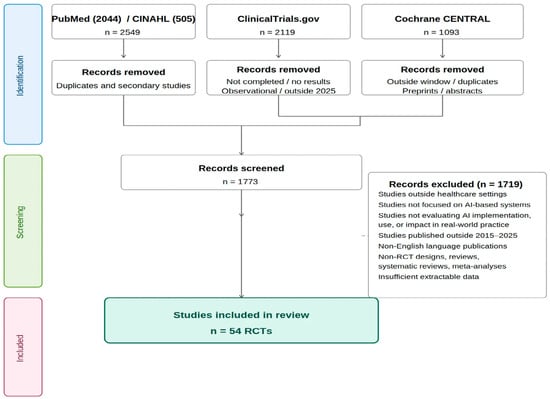
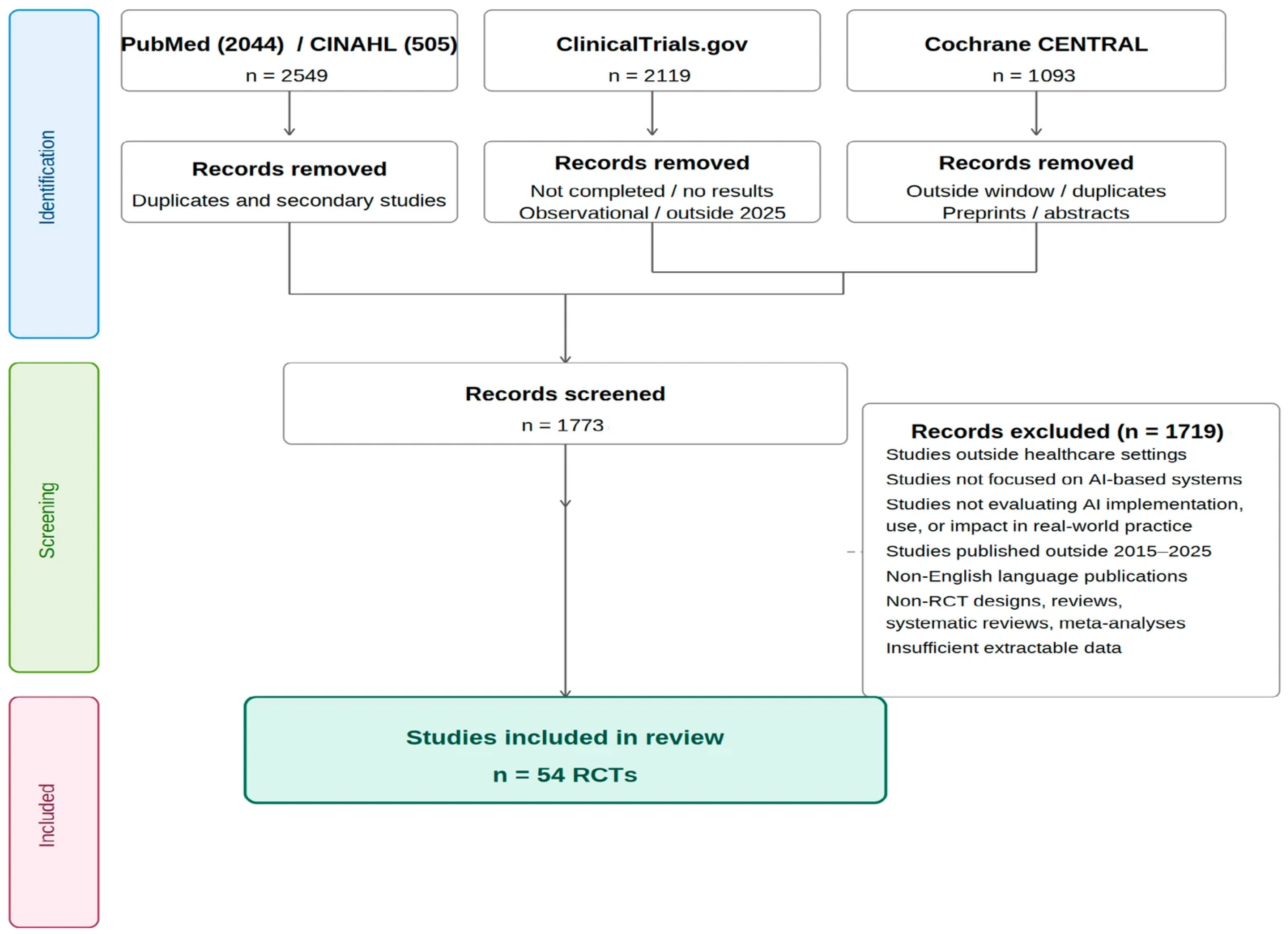

Disclaimer/Publisher’s Note: The statements, opinions and data contained in all publications are solely those of the individual author(s) and contributor(s) and not of MDPI and/or the editor(s). MDPI and/or the editor(s) disclaim responsibility for any injury to people or property resulting from any ideas, methods, instructions or products referred to in the content. |
© 2026 by the authors. Licensee MDPI, Basel, Switzerland. This article is an open access article distributed under the terms and conditions of the Creative Commons Attribution (CC BY) license.