


Abstract
Background: Suryanamaskar (Sun Salutation) is a dynamic sequence of yoga that incorporates movement, breath and mindfulness, and is known for its many potential multidimensional health benefits. Despite the increasing volume of research, a comprehensive and domain-specific synthesis examining the multidimensional effects of Suryanamaskar and yoga-based interventions incorporating Suryanamaskar remains limited. Hence, the present study was designed to systematically review and synthesize the existing evidence related to the effects of Suryanamaskar and yoga-based interventions using Suryanamaskar sequence on various populations and outcome domains. Methods: This systematic review was conducted in accordance with the PRISMA 2020 statement and Cochrane Handbook recommendations. Literature searches were performed in PubMed, Scopus, Web of Science, and Google Scholar from database inception to 31 December 2025. Studies involving human participants and Suryanamaskar-based interventions reporting measurable physical, physiological, or psychological outcomes were included. Fourteen studies met the eligibility criteria. Study characteristics, intervention protocols, and outcome measures were extracted. Risk of bias was assessed using RoB 2 for randomized studies and ROBINS-I for non-randomized studies. Due to substantial heterogeneity, findings were synthesized narratively. Results: A total of 14 studies met the inclusion criteria. Overall, Suryanamaskar and yoga-based interventions incorporating Suryanamaskar were associated with improvements in physical fitness, physiological health, psychological well-being, and body composition across diverse populations. Most included studies reported favourable changes in physical fitness, physiological, psychological, and body-composition outcomes; however, the magnitude and consistency of findings varied substantially across study designs, participant populations, intervention protocols, and outcome measures. Conclusions: Promising but heterogeneous evidence suggests that Suryanamaskar and yoga-based interventions incorporating Suryanamaskar may contribute to improvements in physical fitness, physiological function, psychological well-being, and body composition across diverse populations. However, these findings should be interpreted with caution because of variability in study designs, intervention protocols, participant characteristics, and risk of bias. Although Suryanamaskar appears to be a practical, low-cost, and holistic intervention with potential applications in educational, sports, and health-promotion settings, further high-quality randomized controlled trials with standardized protocols and larger sample sizes are required to strengthen the evidence base.
1. Introduction
Suryanamaskar (Sun Salutation) is the structured sequence of yogic postures that are performed in a cycle with the synchronized movement patterns and breathing [1,2]. Its benefits on the physical, physiological and psychological aspects of health have made it a widely adopted exercise, which has grown out of the traditional yoga systems [2,3]. This series is usually composed of 10–12 postures where multiple muscle groups and body systems are engaged in multiple transitions to forward and backward bending, stretching and weightbearing, together [4,5].
Suryanamaskar is a distinctive and effective full body exercise intervention that allows combined strength, flexibility, endurance, and coordination exercises to be performed in a single continuous session [1,6]. Physiologically, Suryanamaskar is linked to substantial enhancements in cardiovascular, respiratory and autonomic functions. Controlled breathing and the dynamic nature of the sequence maximize the amount of oxygen used and thus energy utilization is optimized [7,8]. Yoga has been shown to reduce autonomic imbalance, increase parasympathetic activity and improve baroreflex sensitivity, leading to better stress regulation and cardiovascular health [9,10]. Moreover, regular exercise has been shown to impact metabolic parameters, such as weight loss and decreases in body mass index, body fat percentage, and waist circumference, which suggests its importance in obesity management and related conditions [11,12]. These physiological changes indicate Suryanamaskar as a modality that brings integrative functioning of the internal systems.
From a physical fitness perspective, Suryanamaskar represents a comprehensive exercise modality capable of enhancing muscular strength, endurance, flexibility, balance, and neuromuscular coordination through the integration of dynamic postural transitions and weight-bearing movements. The repetitive and weight-bearing postures facilitate strengthening of the upper and lower body strength and the stretching component increases the mobility and flexibility of the joints and musculoskeletal system [13,14,15]. Moreover, the synchrony of the movement between postures calls for neuromuscular control and stability, which enhances balance and proprioceptive skills [16]. The combination of these effects makes Suryanamaskar a good physical conditioning system which can be used in various groups such as athletes and non-athletes.
A growing body of evidence has demonstrated the potential psychological benefits of Suryanamaskar and related yoga-based interventions, particularly in relation to stress regulation, emotional well-being, and mental health outcomes. Breathing exercises, physical activity, and mindfulness are all important components of reducing stress and improving mental health. The data indicate that yoga practices have a modulatory effect on neurophysiological mechanisms related to the hypothalamic–pituitary–adrenal axis and the autonomic nervous system, resulting in decreased stress responses and enhanced emotional regulation [17,18]. Empirical studies have found that practitioners of Suryanamaskar [19,20,21] showed significant reduction in anxiety, depression and perceived stress and improvement in emotional intelligence, resilience and overall quality of life, among others. The findings support the notion of Suryanamaskar as a comprehensive mind–body technique that can impact psychological and physiological areas.
Despite the growing body of evidence, a comprehensive synthesis specifically examining the multidimensional effects of Suryanamaskar and yoga-based interventions incorporating Suryanamaskar remains limited. While several studies have investigated individual outcome domains such as flexibility, cardiovascular function, body composition, or psychological well-being, these findings have largely been reported in isolation. Furthermore, variations in intervention design, participant characteristics, training duration, outcome assessment methods, and inconsistencies in effect-size reporting have made it difficult to establish a unified understanding of the effectiveness of Suryanamaskar-related practices and have reduced the clarity of evidence synthesis [22,23]. Existing reviews have generally focused on yoga as a broad intervention or have examined selected health and wellness outcomes associated with Surya Namaskar, without comprehensively evaluating its multidimensional effects across physical fitness, physiological, psychological, and body-composition domains. Accordingly, the present review should be considered an extension and update of the existing evidence base rather than the first synthesis on the topic. The present review expands previous reviews by simultaneously examining multidimensional outcomes across diverse populations while distinguishing between standalone Suryanamaskar interventions and broader yoga-based programmes that explicitly incorporate Suryanamaskar as a defined intervention component. This approach provides a more comprehensive understanding of the potential contributions of Suryanamaskar to health, fitness, and performance outcomes.
2. Materials and Methods
2.1. Study Selection Procedures
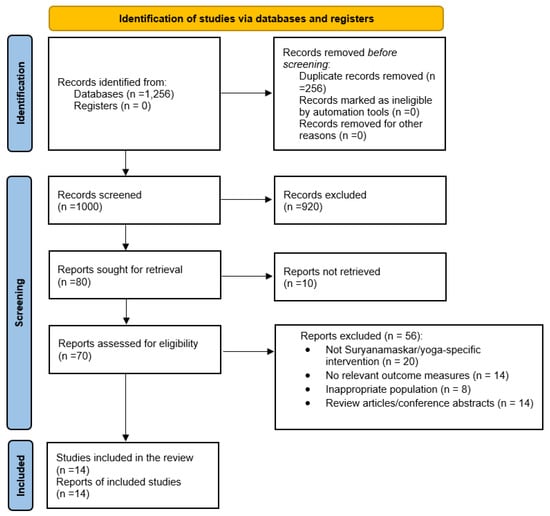
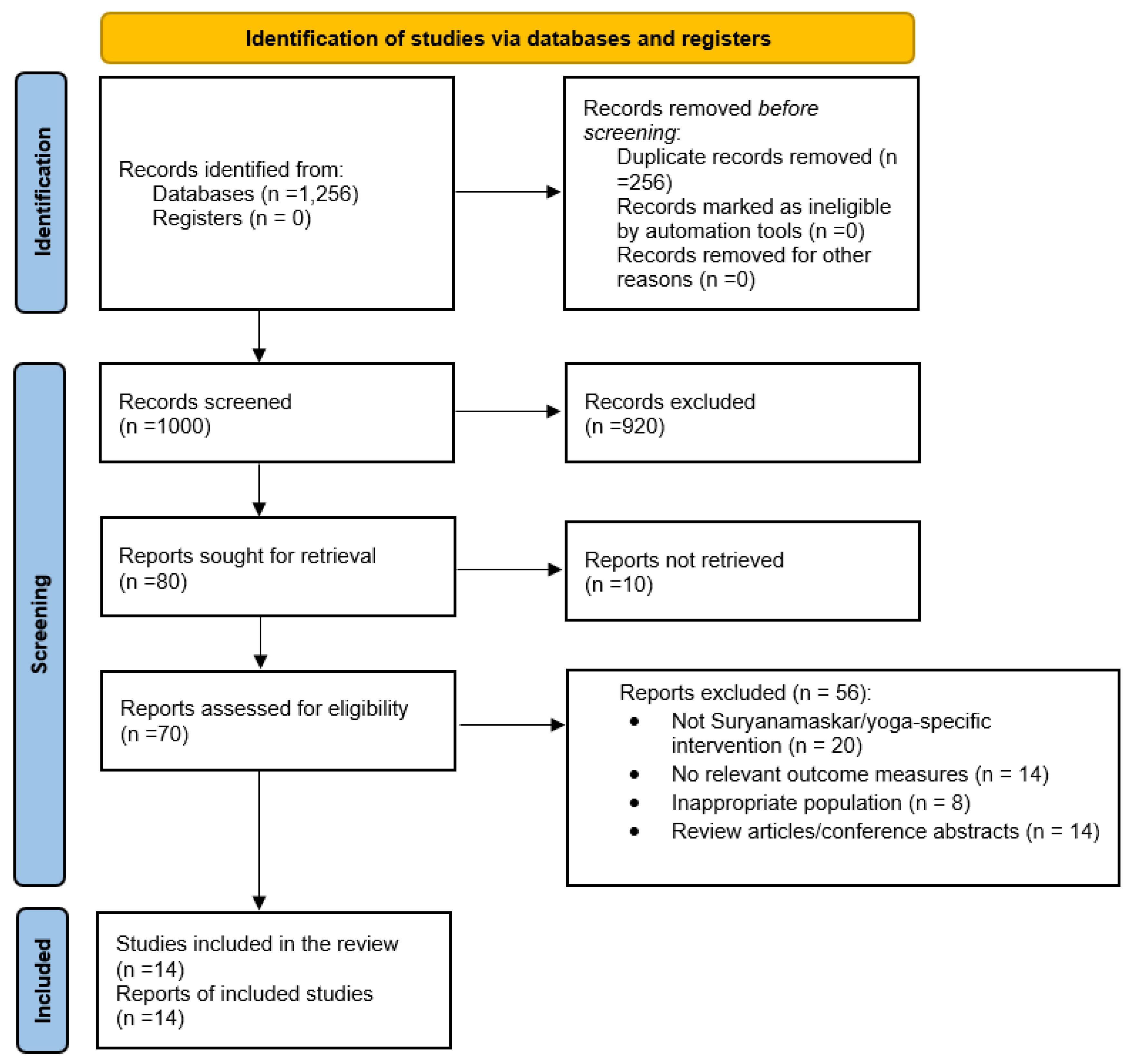
All the steps taken to select the studies were done in line with the internationally recognized guidelines for systematic reviews, specifically Preferred Reporting Items for Systematic Reviews and Meta-Analyses (PRISMA) and the recommendations of the Cochrane Collaboration. This systematic process also ensured methodological rigour, transparency and reproducibility in the review process. All records that were found through a thorough search of the databases were first imported into a reference management program where duplication was systematically identified and eliminated. This reduced duplication and ensured that each study was only looked at once during the screening process. A two-stage screening process was conducted after deduplication. In the first stage, two reviewers independently screened the titles and abstracts of all retrieved records using the Population, Intervention, Comparator, Outcomes, and Study Design (PICOS) framework (Table 1). Studies that clearly failed to meet the eligibility criteria, including those without Suryanamaskar-based interventions, those not reporting quantitative outcome measures, and those not involving human participants, were excluded at this stage. In the second stage, the full texts of potentially eligible articles were independently assessed by the same reviewers to determine final inclusion. Any disagreements between reviewers were resolved through discussion and consensus. When consensus could not be reached, a third reviewer acted as an adjudicator and made the final decision. All disagreements identified during title/abstract and full-text screening were resolved through discussion and consensus before data extraction. This procedure was implemented to minimize selection bias and strengthen the methodological rigor, transparency, and reliability of the review process. The studies were rigorously examined and it was ensured that each study specifically examined the effects of Suryanamaskar or a yoga intervention that includes Suryanamaskar on at least one domain of interest, such as physical fitness, physiological parameters, psychological outcomes or body composition. Specific focus was placed on intervention fidelity, outcome measurement validity and study design appropriateness. Screening and eligibility assessment were done separately to increase the reliability of the selection process; any differences and disagreements were discussed and agreed upon. When necessary, guidance from the existing systematic review literature was sought to facilitate consistency for decision-making. This cooperation reduced selection bias and increased the credibility of the review. The review protocol was registered in PROSPERO (CRD420261387567) on 08 May 2026. Registration occurred after completion of the literature search and study selection procedures but before the final evidence synthesis and manuscript preparation. Accordingly, the registration is reported to enhance transparency and protocol accessibility rather than as a prospectively registered review. In addition, all of the study selection process was systematically documented, and the number of records identified, screened, excluded (with reasons), and included in the final synthesis was reported. A supplementary table detailing categories of full-text articles excluded during eligibility assessment and the corresponding reasons for exclusion is provided in Supplementary Table S1. This documentation helps in ensuring transparency and enables the process to be replicated by future researchers, following best practices in evidence synthesis [24]. A detailed PRISMA 2020 flow diagram illustrating the identification, screening, eligibility assessment, and inclusion of studies is presented in Figure 1.
Table 1.
Inclusion and Exclusion Criteria.
Figure 1.
PRISMA flow diagram illustrating the study selection process.
2.2. Literature Search: Administration and Update
A detailed and systematic literature search was conducted to identify all relevant studies examining the effects of Suryanamaskar and yoga-based interventions incorporating Suryanamaskar on physical, physiological, and psychological outcomes. The search strategy was developed following the Cochrane Handbook and PRISMA guidelines to ensure methodological rigour, transparency, and reproducibility. Four major electronic databases, namely PubMed, Scopus, Web of Science, and Google Scholar, were searched. The literature search covered all eligible studies available from database inception until 31 December 2025. These databases were selected to ensure comprehensive coverage of peer-reviewed literature across biomedical, sports science, and interdisciplinary research fields. A search strategy incorporating controlled vocabulary (e.g., MeSH terms in PubMed) and free-text keywords was employed to maximise sensitivity and specificity. Boolean operators (“AND” and “OR”) were used to organize and refine the search strategy.
The search strategy was designed to maximise sensitivity while maintaining retrieval relevance. Search terms primarily focused on the intervention concept, including “Suryanamaskar”, “Surya Namaskar”, “Sun Salutation”, and related yoga terminology, combined with human-participant filters where applicable. Outcome-related terms were incorporated to improve retrieval efficiency and identify studies across a broad range of health and performance domains; however, eligibility was not restricted to any specific outcome category during study selection. Consequently, studies reporting physical fitness, physiological, psychological, cognitive, body-composition, metabolic, sleep-related, anthropometric, or other health-related outcomes remained eligible provided that they investigated a Suryanamaskar-based intervention and satisfied the predefined inclusion criteria. The following database-specific search strategies were subsequently applied: In PubMed, the search string used was: (“Suryanamaskar” OR “Surya Namaskar” OR “Sun Salutation”) AND (“Yoga”[Mesh] OR yoga OR “yogic exercise”) AND (“Physical Fitness”[Mesh] OR “Motor Activity”[Mesh] OR “Exercise”[Mesh] OR “physical fitness” OR strength OR endurance OR flexibility OR balance OR “physiological outcomes” OR “cardiorespiratory fitness” OR “VO2 max” OR “psychological outcomes” OR stress OR anxiety OR depression OR well-being) AND (Humans[Mesh]). The search strategy used in Scopus was: TITLE-ABS-KEY (“suryanamaskar” OR “surya namaskar” OR “sun salutation”) AND TITLE-ABS-KEY (yoga OR “yogic exercise”) AND TITLE-ABS-KEY (“physical fitness” OR strength OR endurance OR flexibility OR balance OR “physiological outcomes” OR “cardiorespiratory fitness” OR “VO2 max” OR “psychological outcomes” OR stress OR anxiety OR depression OR “mental health” OR well-being). The following search string was used in Web of Science: TS = (“suryanamaskar” OR “surya namaskar” OR “sun salutation”) AND TS = (yoga OR “yogic exercise”) AND TS = (“physical fitness” OR strength OR endurance OR flexibility OR balance OR “physiological outcomes” OR “VO2 max” OR “psychological outcomes” OR stress OR anxiety OR depression OR well-being). The search string used for Google Scholar was: (“Suryanamaskar” OR “Surya Namaskar” OR “Sun Salutation”) AND yoga AND (“physical fitness” OR “physiological outcomes” OR “psychological outcomes” OR stress OR anxiety OR depression). In line with systematic review methodology, only the first 200 results sorted by relevance were screened because of the wide range of Google Scholar. Because Google Scholar does not provide a direct peer-review filter, all records identified through Google Scholar were manually screened. Peer-reviewed status was verified through journal information, publisher websites, indexing databases, and article metadata during the eligibility assessment process. Only studies published in peer-reviewed English-language journals were ultimately included in the review. In addition, a manual search of the reference lists of included articles and relevant reviews was done to ensure that further articles that might not have been found in the database search were not overlooked. The search process was an iterative one, and the search was updated on a regular basis before final data synthesis was completed, to include the most updated studies, reflecting the most up-to-date evidence base. The methods used for searching (e.g., keywords, using Boolean operators, and sometimes adapting search (AS) strategies to the database) were thoroughly documented and reported, following best practice guidelines for conducting systematic reviews [24,25].
2.3. Data Extraction
Data extraction was carried out systematically in accordance with the recommendations of the Cochrane Collaboration and the PRISMA 2020 statement using a standardized and pilot-tested data extraction form. Two reviewers independently extracted data from all included studies, and any discrepancies were resolved through discussion and consensus. When agreement could not be reached, a third reviewer was consulted to adjudicate the final decision. Extracted information included study authors, country, study design, participant characteristics (sample size, age, and sex), intervention details (type, duration, and frequency), comparator characteristics, outcome variables, and key findings. In addition, statistical information, including mean values, standard deviations, p-values, and reported effect sizes, was collected whenever available. For studies that did not report effect sizes, alternative indicators such as percentage change, t-values, F-values, or descriptive interpretations were recorded to facilitate comparison of intervention effects across studies. The extracted data were subsequently cross-checked for completeness, accuracy, and consistency prior to synthesis. Several included studies were authored by members of the review team. To minimise potential bias, eligibility assessment, data extraction, and risk-of-bias evaluation for these studies were independently verified by co-authors who were not involved in the original primary research.
2.4. Summary Measures
The key summary variables were the change in outcome variables from pre- to post-intervention across the studies included. Changes were generally reported in terms of mean differences and standard deviations, if available. Reported p-values were used for statistical significance, and p < 0.05 was considered statistically significant. Standardised effect sizes (Cohen’s d and partial eta squared [η2]) were used where reported, to allow for assessment of the magnitude of intervention effects. For studies in which effect size was not reported, alternative measures such as percentage change, t or F values, or descriptive interpretations of the statistical results were used to approximate the direction and magnitude of the effects. When controlled comparisons were available, between-group effects were prioritised because they provide stronger evidence of intervention effectiveness. Within-group changes were reported descriptively to illustrate temporal changes but were interpreted cautiously, particularly in uncontrolled and self-controlled study designs where improvements may reflect factors other than the intervention itself.
2.5. Synthesis of Results
Considering the substantial methodological and clinical heterogeneity among the included studies, a structured narrative synthesis approach was adopted. Studies were first categorized according to four predefined outcome domains: (1) physical fitness, (2) physiological parameters, (3) psychological outcomes, and (4) body composition. Within each domain, findings were synthesized by comparing the direction of effect (improvement, deterioration, or no change), statistical significance, and reported effect magnitude where available. Greater emphasis was placed on identifying consistent patterns across studies rather than on individual study findings. The consistency of evidence was evaluated according to the proportion of studies reporting favourable outcomes within each domain, while consideration was also given to differences in participant characteristics, intervention duration, intervention composition, and study design. Because of heterogeneity in outcome measures and intervention protocols, quantitative pooling was considered inappropriate, and findings were interpreted descriptively.
2.6. Risk-of-Bias Assessment
The methodological quality of the included studies was assessed using risk-of-bias tools appropriate to the respective study designs. Randomized controlled trials were evaluated using the Cochrane Risk of Bias 2 (RoB 2) tool, whereas non-randomized, quasi-experimental, and self-controlled intervention studies were assessed using the Risk of Bias in Non-randomized Studies of Interventions (ROBINS-I) framework [26]. The RoB 2 assessment considered bias arising from the randomization process, deviations from intended interventions, missing outcome data, measurement of the outcome, and selection of the reported result. For non-randomized studies, the ROBINS-I framework was used to evaluate potential bias related to confounding, selection of participants into the study, classification of interventions, deviations from intended interventions, missing data, measurement of outcomes, and selection of the reported result. Because RoB 2 and ROBINS-I assess different sources of bias and employ different judgment criteria, their results were presented separately according to study design. Risk-of-bias assessments were conducted independently by two reviewers, and any disagreements were resolved through discussion and consensus. Overall methodological quality was considered during data synthesis and interpretation of findings. The assessment procedures followed recommendations outlined in the Cochrane Handbook for Systematic Reviews of Interventions and the guidance for the RoB 2 and ROBINS-I assessment tools [24,26].
3. Results
Overall, 14 studies met the inclusion criteria and were included in the narrative synthesis. Most studies were conducted in India and employed randomized, experimental, or quasi-experimental designs. Intervention durations ranged from 4 to 24 weeks, with frequencies between 2 and 6 sessions per week. Of the 14 included studies, eight evaluated standalone Suryanamaskar interventions, whereas six investigated yoga-based programs that explicitly incorporated Suryanamaskar as a defined component of the intervention. No included study was classified as a yoga-based intervention without a clearly identifiable Suryanamaskar component. Outcomes were broadly categorized into physical fitness, physiological parameters, psychological outcomes, and body composition (Table 2).
Table 2.
Characteristics of the Included Studies Evaluating the Effects of Surya Namaskar and Surya Namaskar-Based Yoga Interventions (N = 14).
Table 3 presents the RoB 2 assessment of the nine randomized studies included in this review. Overall, the methodological quality of the randomized evidence was characterized predominantly by ‘some concerns’ across most bias domains. The most common issues were related to insufficient reporting of randomization procedures, allocation concealment, deviations from intended interventions, and selective outcome reporting. Most studies demonstrated adequate management of missing outcome data and generally employed validated and standardized outcome measures. However, limited methodological reporting prevented several studies from being judged as having low risk of bias. Collectively, the findings indicate that although the randomized evidence base is generally acceptable, methodological limitations and incomplete reporting procedures warrant cautious interpretation of the observed intervention effects.
Table 3.
RoB 2 assessment for randomized studies.
Table 4 presents the ROBINS-I assessment of the five non-randomized studies included in the review. Overall, these studies demonstrated a greater susceptibility to bias than the randomized studies, with all investigations receiving an overall judgement of serious risk of bias. The most prominent sources of bias were related to confounding, participant selection procedures, and deviations from intended interventions, reflecting the inherent limitations of quasi-experimental and self-controlled study designs. In contrast, risks associated with missing data and selective outcome reporting were generally judged to be moderate, while classification of interventions and outcome measurement domains demonstrated low-to-moderate or moderate concerns across studies. Although these investigations frequently reported favourable outcomes and employed validated outcome measures, the absence of rigorous randomization procedures and the potential influence of uncontrolled confounding factors limit causal inferences regarding intervention effectiveness. Consequently, findings derived from the non-randomized evidence base should be interpreted with greater caution than those obtained from the randomized studies.
Table 4.
ROBINS-I assessment for non-randomized studies.
Table 5 provides a summary of the effects of Suryanamaskar and yoga-based interventions incorporating Suryanamaskar across the included studies. Overall, favourable trends were observed across physical fitness, physiological, psychological, and body composition domains. Improvements were most consistently reported for flexibility, muscular strength, endurance, balance, cardiovascular fitness, stress reduction, and quality of life. However, the magnitude of effects varied across studies because of differences in participant characteristics, intervention protocols, and outcome assessment methods.
Table 5.
Summary of Effects of Suryanamaskar and Yoga-Based Interventions on Physical, Physiological, and Psychological Outcomes.
A narrative certainty-of-evidence assessment based on GRADE principles indicated that the overall certainty of evidence was low for physical fitness and physiological outcomes and very low for psychological and body-composition outcomes, primarily because of methodological limitations, substantial heterogeneity, and the inclusion of several non-randomized studies. Detailed certainty ratings and reasons for downgrading are presented in Supplementary Table S2.
4. Discussion
The current systematic review included 14 studies to assess the effectiveness of Suryanamaskar and yoga-based interventions on physical, physiological and psychological outcomes in various population groups. The results frequently showed that these interventions have numerous multidimensional benefits, reinforcing their effectiveness as a whole-body exercise modality. In the studies included, we saw improvements in a variety of domains across all ages, genders and population types, indicating wide applicability. The overall findings suggest that Suryanamaskar and yoga-based interventions incorporating Suryanamaskar may contribute to improvements in human performance and health outcomes across multiple domains, although the strength of evidence varies according to study design and methodological quality. While the overall findings suggest beneficial effects of Suryanamaskar and yoga-based interventions incorporating Suryanamaskar across multiple outcome domains, the strength of evidence varied according to study design. Evidence was generally stronger in randomized and controlled studies, where between-group comparisons provided greater confidence in the observed effects. In contrast, findings from uncontrolled pre–post and quasi-experimental studies should be interpreted with caution because they are more susceptible to confounding factors, selection bias, and regression-to-the-mean effects. Furthermore, substantial heterogeneity in participant characteristics, intervention protocols, comparator conditions, and outcome measures limited direct comparisons across studies and reduced certainty regarding the magnitude of intervention effects.
4.1. Effects on Physical Fitness
One of the most significant findings of this review is the steady progression of physical fitness parameters including muscular strength, muscular endurance, flexibility and balance. Research in this review showed that there were strong increases in both upper and lower body strength, core stability and functional movement. Bhutkar et al. (2011) found significant improvements in strength and endurance after a structured Suryanamaskar program while Ethiraj et al. (2024) noted significant increases in spinal flexibility and Dubey and Choudhary (2024) noted significant increases in spinal flexibility [13,14,29]. Likewise, Mangaonkar and Puntambekar (2018) also reported that Suryanamaskar is more effective in enhancing hamstring flexibility than dynamic stretching [15]. The improvements have been attributed to the dynamic, repetitive, and weight-bearing nature of Suryanamaskar, which simultaneously engages multiple muscle groups and enhances neuromuscular coordination and functional movement capacity, findings that are broadly consistent with previous evidence demonstrating the benefits of multicomponent functional training interventions on physical fitness adaptations in athletic populations [33]. In addition, the effect of yoga on balance and joint kinematics has been noted in athletic populations, which further underscores the positive effects of yoga on improving balance and movement efficiency [16].
4.2. Physiological Adaptations
The review also brings attention to major physiological changes that occur due to Suryanamaskar and yoga-based approaches. Among studies that assessed cardiovascular and physiological outcomes, improvements in VO2 max, resting heart rate, blood pressure, and related indicators were generally reported. For example, Suwannakul et al. (2024) showed increases in VO2 max and decreases in body mass index and body fat percentage, which is related to enhanced cardiorespiratory efficiency [12]. In another study, Chawla et al. (2022) found decreases in heart rate and blood pressure after doing Suryanamaskar practice [27]. The results of this study align with the previous studies that indicate yoga practices have a beneficial effect on autonomic regulation, increase parasympathetic activity and optimize cardiovascular responses [9,10]. Further, these interventions showed a decrease in body composition parameters like BMI and waist circumference, which also suggest the metabolic benefits of these interventions [11]. The dynamic movement of Suryanamaskar coupled with controlled breathing probably enhances the use of oxygen and energy metabolism.
4.3. Psychological Outcomes
One of the most important findings of this review is that yoga and Suryanamaskar interventions are consistently shown to have positive effects on psychological well-being. Several studies indicated a decrease in stress, anxiety, and depression, as well as an increase in emotional intelligence, resilience and general well-being. In one study, Stec et al. (2023) found that students who practiced dynamic Suryanamaskar experienced substantial decreases in perceived stress and increases in emotional intelligence [21]. Likewise, Badve et al. (2025) found significant improvements in scores for psychological health parameters, such as decreased anxiety and increased quality of life in perimenopausal women [19]. This is congruent with neurophysiological evidence that yoga can modulate systems of response to stress and enhance emotional regulation via mechanisms that include the autonomic nervous system and neuroendocrine pathways [17,18]. Breathing, movement, and mindfulness combined in Suryanamakar are integral to the practice and could be the main factor in decreasing psychological tension and enhancing mental strength.
4.4. Combined and Multidimensional Effects
Several studies employing multidimensional yoga programmes that incorporated Suryanamaskar reported favourable outcomes across physical, physiological, psychological, and body-composition domains. For example, interventions combining Suryanamaskar with pranayama, mindfulness practices, or resistance training components were associated with improvements in body composition, stress reduction, physical fitness, and psychological well-being [11,19,31,32]. These findings suggest that yoga programmes incorporating multiple complementary components may provide broad health and performance benefits. However, direct comparisons between combined interventions and standalone Suryanamaskar interventions were not consistently performed across the included studies. Therefore, conclusions regarding the superiority of one intervention approach over another cannot currently be established. Overall, the findings support the concept of yoga as a multidimensional mind–body practice capable of influencing multiple health domains simultaneously [23,34].
4.5. Consistency and Strength of Evidence
Although the magnitude of effects varied across studies, most included investigations reported favorable outcomes following Suryanamaskar and yoga-based interventions incorporating Suryanamaskar. Positive trends were observed across physical fitness, physiological, psychological, and body-composition domains, with several studies reporting statistically significant improvements and moderate-to-large effect sizes, particularly for flexibility, muscular fitness, stress reduction, and psychological well-being. However, differences in study design, participant characteristics, intervention protocols, comparator conditions, and outcome measures contributed to variability in the observed effects and should be considered when interpreting the findings. Evidence from randomized and controlled studies generally provided greater confidence in the reported outcomes than evidence from quasi-experimental or self-controlled designs. Furthermore, the overall pattern of findings is broadly consistent with previous systematic reviews and meta-analyses reporting beneficial effects of yoga on physical and psychological health outcomes [35], thereby providing additional support for the potential value of Suryanamaskar-based interventions while highlighting the need for further high-quality research.
4.6. Mechanisms Underlying the Observed Effects
The underlying physiological and neuromuscular mechanisms constitute an important part in understanding the effectiveness of Suryanamaskar and yoga-based interventions. The specific progression of postures and the controlled breathing sequence result in a specific relationship between musculoskeletal activation and autonomic regulation. The movement between the postures increases the engagement of muscles, the joint mobility and circulation, controlled breathing improves oxygen delivery and autonomic balance [10]. This cross-modality stimulation is believed to help adapt the central and peripheral systems such as better neuromuscular coordination, improved cardiovascular efficiency and better metabolic regulation [7,23]. Furthermore, the consciousness of mindfulness practice can impact neural pathways linked to attention, emotional control, and stress control mechanisms, which can help with improving psychological functioning [18,34]. These effects seem to work together to offer a reasonable explanation for the concurrent gains across physical, physiological, and psychological areas.
4.7. Variability and Consistency Across Studies
Variation was observed across studies with respect to participant characteristics, study design, intervention duration, intervention composition, and outcome assessment methods. Differences between standalone Suryanamaskar protocols and broader yoga-based interventions incorporating Suryanamaskar, as well as variations in training frequency and intensity, likely contributed to differences in the magnitude of observed effects. Nevertheless, favorable outcomes were reported across a range of populations, including healthy adults, athletes, university students, older adults, and selected clinical groups. Although the overall pattern of findings suggests potential benefits across diverse settings, the generalizability of the results should be interpreted with caution because of methodological heterogeneity, differences in intervention protocols, and variability in study quality. Future research employing standardized interventions and outcome measures is needed to strengthen confidence in the consistency and applicability of these findings [17,22].
An important consideration when interpreting the present findings is that several included studies evaluated multidimensional yoga programmes in which Suryanamaskar was combined with other components such as pranayama, meditation, mindfulness practices, or resistance-training elements. Consequently, the observed benefits cannot always be attributed exclusively to Suryanamaskar, and the findings should be interpreted within the context of the broader intervention framework.
4.8. Limitations of the Study
The study has a few limitations. Although this review was conducted comprehensively and systematically, there are some limitations which need to be recognized. Firstly, there was large variability in study participants, intervention duration, frequency and outcome measures across the studies included, making a meta-analysis impossible. Secondly, while a great number of studies used randomized controlled designs, a few used a quasi-experimental or self-controlled design, which may have caused some selection bias and reduced internal validity. Third, some studies did not report an effect size or statistical parameters, leading to some difficulties in direct comparison of the size of the outcomes. Fourth, most of the studies were performed in India, and there is a possibility that its results may not be generalizable across cultural or geographic contexts. Fifth, the results could be affected by the different intervention protocols (standalone Suryanamaskar vs. combined yoga programs). Sixth, there were some studies with relatively small sample sizes, which can decrease statistical power and enhance the likelihood of a Type II error. Lastly, the use of published, English-language, peer-reviewed studies may have resulted in publication bias, which may have eliminated relevant work from grey or non-English literature. A further limitation of this review is that a formal certainty-of-evidence assessment using the Grading of Recommendations Assessment, Development and Evaluation (GRADE) framework was not conducted. Given the substantial heterogeneity in study designs, participant characteristics, intervention protocols, comparator conditions, and outcome measures, quantitative synthesis and standardized certainty assessment across outcome domains were not considered feasible. Consequently, the overall confidence in the available evidence should be interpreted with caution, and future reviews incorporating a larger number of methodologically comparable studies may benefit from applying formal certainty-of-evidence frameworks.
4.9. Practical Implications
The conclusions of this review have major implications for various groups of stakeholders such as teachers, coaches, health care professionals, policymakers and the public. Suryanamaskar can be effectively incorporated into the school and university curriculum systematically as a space-saving, low-cost and comprehensive exercise training. It can be used as an element in training routines for coaches and sports practitioners to increase their flexibility, balance, endurance, and recovery, ultimately boosting their athletic performance. Suryanamaskar can be used as a non-pharmacologic therapy for stress, obesity, and lifestyle-related diseases by healthcare professionals and rehabilitation specialists, as part of preventive healthcare programs. The current evidence suggests that Suryanamaskar may represent a practical and accessible movement-based intervention that can be incorporated into educational, community, recreational, and health-promotion settings. However, given the methodological limitations and heterogeneity of the available literature, policy-level recommendations should await confirmation from larger and more rigorous controlled trials. Overall, the multifaceted advantages discussed in this review highlight that Suryanamaskar can be implemented as an evidence-based, scalable, and inclusive intervention across the performance, health, and wellness domains.
5. Conclusions
The findings of this systematic review suggest that Suryanamaskar and yoga-based interventions incorporating Suryanamaskar may contribute to improvements in physical fitness, physiological function, psychological well-being, and body composition across diverse populations. Positive effects were most consistently observed in muscular strength, endurance, flexibility, balance, cardiovascular fitness, and psychological outcomes such as stress, anxiety, and depressive symptoms. The combination of dynamic movement, controlled breathing, and attentional focus may provide a holistic approach capable of influencing multiple health-related domains simultaneously. However, these findings should be interpreted with caution due to heterogeneity in study designs, participant characteristics, intervention protocols, and outcome measures, as well as the difficulty of isolating the specific effects of Suryanamaskar from broader yoga-based interventions. Nevertheless, the available evidence suggests that Suryanamaskar may represent a practical and accessible component of physical education, athletic training, and health-promotion programs. Although favourable outcomes were reported across multiple domains, several interventions incorporated additional yoga practices or exercise components alongside Suryanamaskar. Therefore, the independent contribution of Suryanamaskar to the observed effects cannot always be clearly distinguished. Future research should employ rigorous randomized controlled designs, larger and more diverse samples, standardized intervention protocols, and consistent outcome reporting to strengthen the evidence base and improve the generalizability of findings.
Supplementary Materials
The following supporting information can be downloaded at: https://www.mdpi.com/article/10.3390/healthcare14131924/s1, Table S1. Categories of Full-Text Articles Excluded During Eligibility Assessment and Reasons for Exclusion. Table S2. Narrative Certainty of Evidence Assessment Based on GRADE Principles.
Author Contributions
Conceptualization, S.C. and P.K.C.; methodology, P.K.C. and S.S.; software, S.C., P.K.C. and C.I.A.; validation, S.C., P.K.C. and C.I.A.; formal analysis, S.C., P.K.C. and N.O.; investigation, S.C., P.K.C., C.I.A. and B.A.A.; resources, P.K.C.; S.S. and C.I.A.; data curation, S.C. and P.K.C.; writing—original draft preparation, S.C., P.K.C., S.S., N.O., B.A.A. and C.I.A.; writing—review and editing, S.C., P.K.C., S.S., N.O., B.A.A. and C.I.A.; visualization, S.C., P.K.C. and S.S.; supervision, N.O., B.A.A. and C.I.A.; project administration, S.C., P.K.C., S.S., N.O., B.A.A. and C.I.A.; funding acquisition, N.O., B.A.A. and C.I.A. All authors have read and agreed to the published version of the manuscript.
Funding
This research received no external funding.
Institutional Review Board Statement
Not applicable.
Informed Consent Statement
Not applicable.
Data Availability Statement
No new datasets were generated or analyzed in this study. All relevant information and original contributions are included within the manuscript; therefore, data sharing is not applicable.
Acknowledgments
The authors gratefully acknowledge their respective institutions for providing academic support and essential resources that contributed to the successful completion of this study. The authors also express sincere appreciation to the researchers and scholars whose published works informed and enriched this narrative synthesis.
Conflicts of Interest
The authors declare no conflicts of interest.
References
- Bandyopadhyay, N.; Das, T.; Mondal, S. Practicing Surya Namaskar: A Sequence of Yogic Postures for Overall Health and Wellness among Healthy Adults. Phys. Educ. Theory Methodol. 2025, 25, 416–425. [Google Scholar] [CrossRef] [Scilit]
- Prasanna Venkatesh, L.; Vandhana, S. Insights on Surya namaskar from its origin to application towards health. J. Ayurveda Integr. Med. 2022, 13, 100530. [Google Scholar] [CrossRef] [Scilit] [PubMed] [PubMed Central]
- Feuerstein, G. The Yoga Tradition: Its History, Literature, Philosophy and Practice; SCB Distributors: Gardena, CA, USA, 2012; 794p. [Google Scholar]
- Shetty, S.; Manjunath, N.K.; Shetty, P.; Ramaswamy, K.A. Impact of Spinal Flexion and Extension-based Yoga Postures on Autonomic Nervous System Activity in Moderately Experienced Yoga Practitioners: A Randomized Crossover Trial. Int. J. Yoga 2025, 18, 152–160. [Google Scholar] [CrossRef] [Scilit] [PubMed] [PubMed Central]
- Singh, A.; Majhi, S.; Das, A. Immediate effect of Suryanamaskar on cardiorespiratory functions and cognitive performance: A quasi-experimental study on young adult females. J. Ayurveda Integr. Med. 2025, 16, 101224. [Google Scholar] [CrossRef] [Scilit] [PubMed] [PubMed Central]
- Bhandage, V.; Prabhu, S.; Hadimani, B.; Chadaga, K.; Sampathila, N.; Shetty, S. Classification of Surya Namaskar Yoga Asanas: A Sequential Combination of Predominant Poses for Physical and Mental Health. IEEE Access 2024, 12, 102027–102034. [Google Scholar] [CrossRef] [Scilit]
- Bhavanani, A.; Udupa, K.; Madanmohan Pn, R. A comparative study of slow and fast suryanamaskar on physiological function. Int. J. Yoga 2011, 4, 71. [Google Scholar] [CrossRef] [Scilit] [PubMed]
- Mody, B. Acute effects of Surya Namaskar on the cardiovascular & metabolic system. J. Bodyw. Mov. Ther. 2011, 15, 343–347. [Google Scholar] [CrossRef] [Scilit] [PubMed]
- Anasuya, B.; Deepak, K.; Jaryal, A.K.; Narang, R. Effect of slow breathing on autonomic tone & baroreflex sensitivity in yoga practitioners. Indian J. Med. Res. 2020, 152, 638–647. [Google Scholar] [CrossRef] [Scilit] [PubMed]
- Anasuya, B.; Deepak, K.K.; Jaryal, A. Yoga Practitioners Exhibit Higher Parasympathetic Activity and Baroreflex Sensitivity and Better Adaptability to 40 mm Hg Lower-Body Negative Pressure. Int. J. Yoga Ther. 2021, 31, 2. [Google Scholar] [CrossRef] [Scilit] [PubMed]
- Devi, G.; KVS; KA; Devi, B.; Singh, M. Effect of Suryanamaskara and Heating Pranayama on Grade 1 Obesity—A Randomized Controlled Trial. J. Ayurveda Integr. Med. Sci. 2024, 9, 23–31. [Google Scholar] [CrossRef] [Scilit]
- Suwannakul, B.; Sangkarit, N.; Thammachai, A.; Tapanya, W. Effects of Surya Namaskar yoga on perceived stress, anthropometric parameters, and physical fitness in overweight and obese female university students: A randomized controlled trial. Hong Kong Physiother. J. 2024, 45, 23–33. [Google Scholar] [CrossRef] [Scilit] [PubMed]
- Bhutkar, M.V.; Bhutkar, P.M.; Taware, G.B.; Surdi, A.D. How effective is sun salutation in improving muscle strength, general body endurance and body composition? Asian J. Sports Med. 2011, 2, 259–266. [Google Scholar] [CrossRef] [Scilit] [PubMed] [PubMed Central]
- Ethiraj, B.; Murugavel, K.; MRajKumar Logeswaran, S.; Vijayasankar, V.; Devaraj, C. The Effect of a Six-Week Course of Surya Namaskar Practice on Back Flexibility and Lumbar Flexion in Male College Students. Phys. Educ. Theory Methodol. 2024, 24, 41–46. [Google Scholar] [CrossRef] [Scilit]
- Mangaonkar, A.; Puntambekar, A. Effect of suryanamaskar vs dynamic stretching on hamstring flexibility among physiotherapy students: A pilot study. Int. J. Physiother. 2018, 5, 202–206. [Google Scholar] [CrossRef] [Scilit]
- Udiyapuram, T.; Albert, C.S.J.; Dilpreet, K.; Orhan, B.E.; Boby, F.A.; Astuti, Y. Enhancing Physical Fitness in Male Basketball Players through Yogic Asanas: A Randomized Controlled Trial. Phys. Educ. Theory Methodol. 2025, 25, 301–311. [Google Scholar] [CrossRef]
- Campelo, G.; Araújo, J.; Aristizabal, J.; Souza, W.; Castilho, G. Long-term effects of yoga-based practices on neural, cognitive, psychological, and physiological outcomes in adults: A scoping review and evidence map. BMC Complement. Med. Ther. 2025, 25, 92. [Google Scholar] [CrossRef] [Scilit] [PubMed]
- Sullivan, M.B.; Erb, M.; Schmalzl, L.; Moonaz, S.; Noggle Taylor, J.; Porges, S.W. Yoga Therapy and Polyvagal Theory: The Convergence of Traditional Wisdom and Contemporary Neuroscience for Self-Regulation and Resilience. Front. Hum. Neurosci. 2018, 12, 329370. [Google Scholar] [CrossRef] [Scilit] [PubMed]
- Badve, R.; Varadharajan, E.; Govindasamy, K.; Dongre, S.; Velusamy, S.; Valappil, I.N.K.; Karmakar, D.; Çitozi, R.; Geantă, V.A. Considering the Impact of Yoga on Psychological Well-being and Quality of Life in Perimenopausal Women: A Randomized Controlled Trial. Phys. Educ. Theory Methodol. 2025, 25, 331–339. [Google Scholar] [CrossRef] [Scilit]
- Parajuli, N.; Shindhe, M.; Pradhan, B. Effect of Surya Namaskara (Sun Salutation) on mental health, self-control and mindfulness of adolescent school children. Complement. Ther. Clin. Pract. 2023, 50, 101691. [Google Scholar] [CrossRef] [Scilit] [PubMed]
- Stec, K.; Kruszewski, M.; Ciechanowski, L. Effects of Suryanamaskar, an Intensive Yoga Exercise Routine, on the Stress Levels and Emotional Intelligence of Indian Students. Int. J. Environ. Res. Public Health 2023, 20, 2845. [Google Scholar] [CrossRef] [Scilit] [PubMed]
- Büssing, A.; Michalsen, A.; Khalsa, S.B.S.; Telles, S.; Sherman, K.J. Effects of Yoga on Mental and Physical Health: A Short Summary of Reviews. Evid.-Based Complement. Altern. Med. 2012, 2012, 165410. [Google Scholar] [CrossRef] [Scilit] [PubMed]
- Sengupta, P. Health Impacts of Yoga and Pranayama: A State-of-the-Art Review. Int. J. Prev. Med. 2012, 3, 444–458. [Google Scholar] [PubMed] [PubMed Central]
- Higgins, J.P.T.; Thomas, J.; Chandler, J.; Cumpston, M.; Li, T.; Page, M.J.; Welch, V.A. (Eds.) Cochrane Handbook for Systematic Reviews of Interventions [Internet], 1st ed.; Wiley: Hoboken, NJ, USA, 2019. [Google Scholar] [CrossRef] [Scilit]
- Page, M.J.; McKenzie, J.E.; Bossuyt, P.M.; Boutron, I.; Hoffmann, T.C.; Mulrow, C.D.; Shamseer, L.; Tetzlaff, J.M.; Akl, E.A.; Brennan, S.E.; et al. The PRISMA 2020 statement: An updated guideline for reporting systematic reviews. Int. J. Surg. 2021, 88, 105906. [Google Scholar] [CrossRef] [PubMed]
- Sterne, J.A.; Savović, J.; Page, M.J.; Elbers, R.G.; Blencowe, N.S.; Boutron, I.; Cates, C.J.; Cheng, H.Y.; Corbett, M.S.; Eldridge, S.M.; et al. RoB 2: A revised tool for assessing risk of bias in randomised trials. BMJ 2019, 366, l4898. [Google Scholar] [CrossRef] [Scilit] [PubMed]
- Chawla, J.; Arya, T.; Sharma, R.; Kumar, P. Effect of Suryanamaskar on the Sleep Quality and General Well-being among Young Adults: A Quasi-experimental Study. J. Clin. Diagn. Res. 2022, 16, YC06–YC09. [Google Scholar] [CrossRef] [Scilit]
- Raja, S. Effects of Suryanamaskar on Depression and Trunk Flexibility among Older Men. Innovare J. Educ. 2023, 11, 25–29. [Google Scholar] [CrossRef] [Scilit]
- Dubey, S.; Choudhary, P.K. Analyzing the Musculoskeletal Flexibility in Young Females: The Impact of a Six-Week Surya Namaskar Intervention on Back Flexibility and Lumbar Flexion. Phys. Educ. Theory Methodol. 2024, 24, 554–561. [Google Scholar] [CrossRef] [Scilit]
- Choudhary, S.; Choudhary, P.; Sahu, K.; Rajpoot, Y.; Karmakar, D.; Saha, S. The Impact of a 12-Week Structured Yoga Intervention on Flexibility, Balance, and Joint Kinematics in University Athletes: A Quasi-Experimental Study. Phys. Educ. Theory Methodol. 2025, 25, 927–937. [Google Scholar] [CrossRef] [Scilit]
- Choudhary, P.K.; Choudhary, S.; Wulandari, I.; Saha, S. Analyzing the Effects of a 12-Week Yoga and Elastic-Band Resistance Training Program on Functional Fitness in Intermediate-Level Male Tennis Athletes: A Randomised Controlled Trial. Phys. Educ. Theory Methodol. 2025, 25, 1358–1370. [Google Scholar] [CrossRef] [Scilit]
- Vijayalakshmi, C.; Saroja, S. The Effects of a Structured Yoga Intervention on Cognitive, Psychological, and Functional Performance in Competitive Women’s Basketball Players: A Two-Group Controlled Experimental Study. Phys. Educ. Theory Methodol. 2025, 25, 1328–1336. [Google Scholar] [CrossRef] [Scilit]
- Xiao, W.; Soh, K.G.; Wazir Norjali Wazir, M.R.; Talib, O.; Bai, X.; Bu, T.; Sun, H.; Popovic, S.; Masanovic, B.; Gardasevic, J. Effect of Functional Training on Physical Fitness Among Athletes: A Systematic Review. Front. Physiol. 2021, 12, 738878. [Google Scholar] [CrossRef] [Scilit] [PubMed]
- Schmalzl, L.; Crane-Godreau, M.A.; Payne, P. Movement-based embodied contemplative practices: Definitions and paradigms. Front. Hum. Neurosci. 2014, 8, 205. [Google Scholar] [CrossRef] [Scilit] [PubMed] [PubMed Central]
- Pascoe, M.C.; Thompson, D.R.; Ski, C.F. Yoga, mindfulness-based stress reduction and stress-related physiological measures: A meta-analysis. Psychoneuroendocrinology 2017, 86, 152–168. [Google Scholar] [CrossRef] [Scilit] [PubMed]

Disclaimer/Publisher’s Note: The statements, opinions and data contained in all publications are solely those of the individual author(s) and contributor(s) and not of MDPI and/or the editor(s). MDPI and/or the editor(s) disclaim responsibility for any injury to people or property resulting from any ideas, methods, instructions or products referred to in the content. |
© 2026 by the authors. Licensee MDPI, Basel, Switzerland. This article is an open access article distributed under the terms and conditions of the Creative Commons Attribution (CC BY) license.