


Abstract
Background: There are high documented rates of exposure to traumatic events and mental health disorders among youths yet existing disparities in access to care for racial and ethnic minority youths and youths in rural communities. Trauma-Focused Cognitive Behavioral Therapy (TF-CBT) is an evidence-based behavioral health therapy for children. The delivery of TF-CBT via telehealth can decrease access to care barriers. An interdisciplinary clinical team developed a training program to guide clinicians to effectively provide TF-CBT via telehealth. The goal of this study was to describe variation in implementation processes of the telehealth TF-CBT program and identify barriers and facilitators to program implementation post-training, which were utilized to develop implementation strategies for intervention sustainability. Methods: Using a mixed-methods approach, data were collected on telehealth implementation processes and facilitators and barriers to the delivery of telehealth TF-CBT. This study was guided by an adapted implementation science framework, namely the Exploration, Preparation, Implementation, Sustainment model. Interviews and surveys were completed with clinical site leaders who had participated in the telehealth TF-CBT training. Results: Throughout clinical sites, there was varied adoption and penetration of the telehealth TF-CBT program. Facilitators to implementation included leadership and site staff buy in, community needs, and training resources, while barriers included funding, available logistical resources, and child and family involvement. Conclusions: The feedback gained from this project assisted in the development of implementation strategies for increased adoption and sustainment of TF-CBT delivered via telehealth. Strategies include ongoing interactive assistance and resource support, enhanced training for stakeholders, and program adaptations, with the goal to increase access to quality mental health care for underserved populations.
1. Introduction
Childhood trauma is prevalent and can have significant lifelong effects on children and their families and communities. It is estimated that 34 million children, nearly half of all children in the United States, have experienced at least one trauma in their lives, and at least 16 million have experienced more than one type of traumatic event [1,2]. Research on the relationship between adverse childhood experiences and adult health outcomes shows strong connections between stress and trauma in childhood and serious long-term behavioral and physical health outcomes, including post-traumatic stress disorder (PTSD), depression, anxiety disorders, substance use, and physical health problems [3,4,5].
Children living in rural communities are particularly vulnerable to trauma effects because of geographic isolation, poverty, and lack of access to mental health services [6]. Despite high rates of trauma exposure and subsequent mental health outcomes, many children in need of mental health care still do not receive it or do not receive evidence-based care [7,8,9]. Even greater disparities in access to care are seen across geographies (rural locations) and among racial and ethnic minority youths and those whose primary language is not English [10,11,12].
For many years, telehealth (also tele-mental health, telemedicine, and telepsychology) has offered an innovative way to address gaps in care access. Telehealth can reduce barriers to care for populations that need mental health treatment but may not typically receive it due to a lack of available providers or the costs associated with traveling to appointments [7]. In addition to distance and time barriers, children and families also report that they utilize telehealth to decrease mental health care stigma by connecting with providers via child-friendly locations such as schools and primary care centers [13]. Current research provides support that mental health services delivered via telehealth are effective in addressing numerous mental health disorders in children and adolescents, including PTSD [13,14,15,16].
Trauma-Focused Cognitive Behavioral Therapy (TF-CBT) is an evidence-based, manualized treatment protocol designed to treat post-traumatic stress and co-occurring symptoms such as depression and anxiety in trauma-exposed children aged 3–18 [17]. Over 23 randomized controlled trials across the U.S. and worldwide have documented TF-CBT’s effectiveness in treating post-traumatic stress symptoms in children and adolescents [17,18]. TF-CBT has also been shown to be feasible and effective when delivered via telehealth to trauma-exposed youths, including racial/ethnic minority youths and youths in rural locations, via published case studies and open pilot feasibility trials [19,20,21,22].
Prior studies have illustrated that while tele-mental health programs are beneficial to patient outcomes [23] and improving access to care [24], implementation can be complex and challenging [24]. Implementation science methods can identify barriers and facilitators to tele-mental health program adoption [25] and thus guide strategies to improve the widespread implementation of these programs. This is one of the first studies to utilize implementation science methods to comprehensively and systematically identify barriers and facilitators to a telehealth TF-CBT program and identify potential strategies to improve implementation outcomes.
The objective of this study was to describe variation in implementation processes of an innovative telehealth TF-CBT training program, the Telehealth Outreach Program for Traumatic Stress (TOP-TS), and identify barriers and facilitators to program implementation, which can be utilized to develop implementation strategies for program sustainability.
2. Materials and Methods
This study was classified as quality improvement and did not require review by the Institutional Review Board. The Consolidated Criteria for Reporting Qualitative Research (COREQ) guided methods and results reporting [26].
2.1. Implementation Science Framework
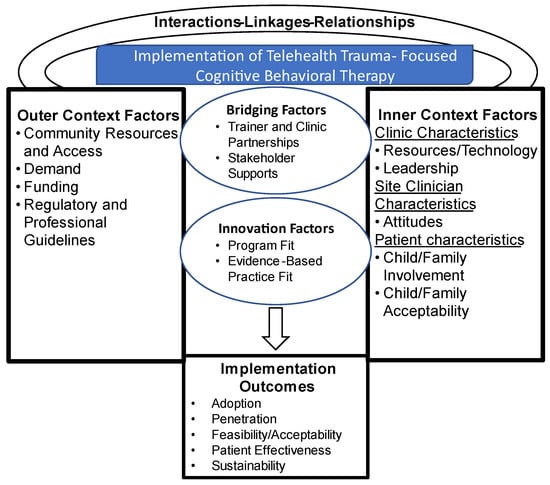
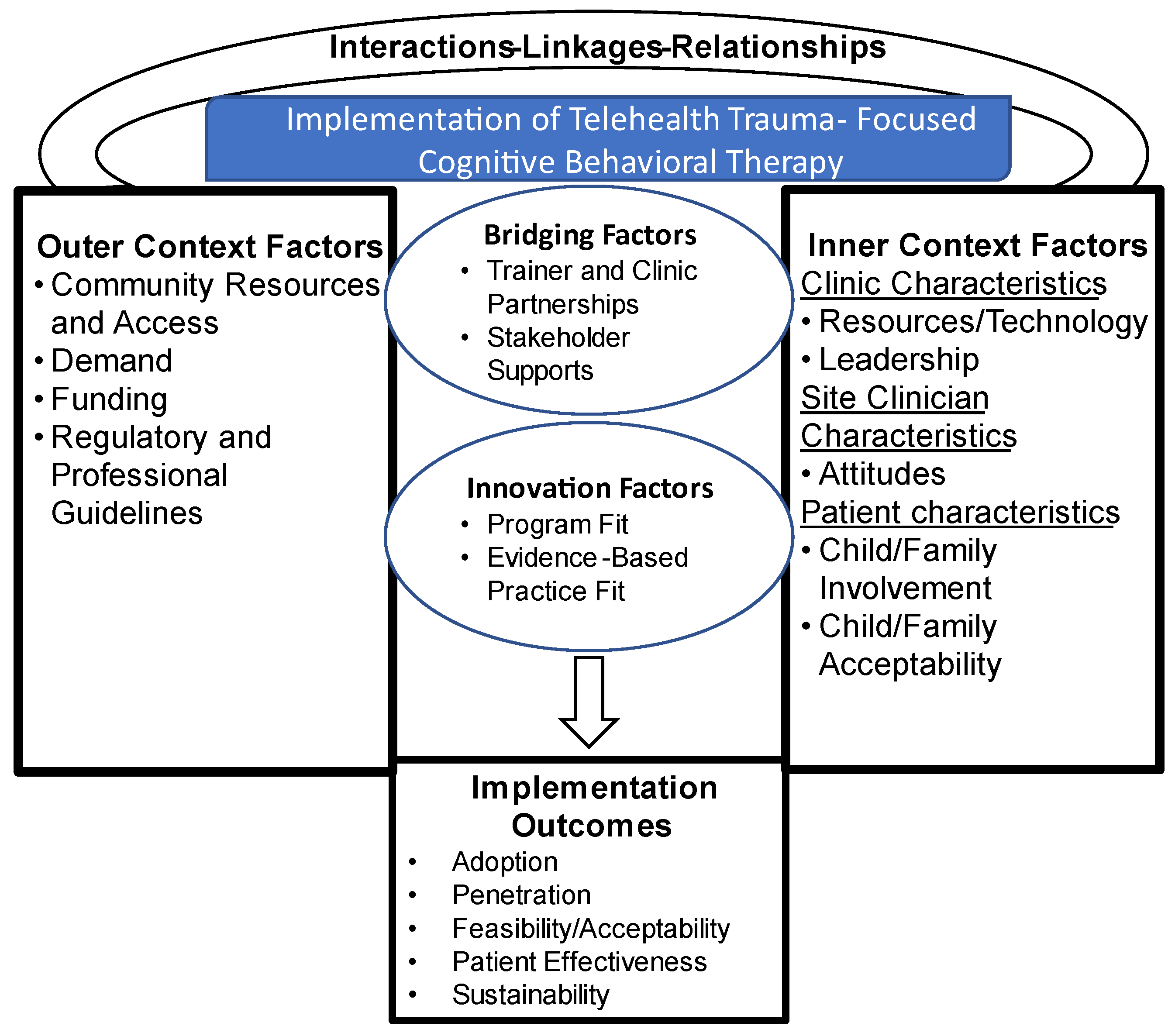
The Exploration, Preparation, Implementation, Sustainment (EPIS) model was utilized to guide this study] after adaptation to the TF-CBT setting [27,28]. The EPIS model includes outer and inner contextual factors and bridging and innovation factors that affect implementation processes and outcomes. In the TF-CBT telehealth setting, outer factors are external to sites delivering TF-CBT (regulatory/legal standards, community demand, and funding), while inner factors are within sites (resources, leadership, and clinician and patient characteristics) and can serve as facilitators or barriers to implementation. Innovation factors are specific to the TF-CBT program (fit and complexity), while bridging factors link inner, outer, and innovation factors (collaborative engagement of the training site and clinical sites) (Figure 1).
Figure 1.
Framework for implementation of telehealth Trauma-Focused Cognitive Behavioral Therapy.
2.2. The Telehealth Outreach Program for Traumatic Stress (TOP-TS)
The TOP-TS was developed in 2015 by an interdisciplinary team of clinicians at a medical university. This program provides TF-CBT via telehealth modalities for underserved youths (racial/ethnic minorities, rural communities, and low socioeconomic status) in the United States and Puerto Rico. In addition to TF-CBT clinical services, the TOP-TS team provides education, training, and technical assistance and resources to mental health workforces delivering TF-CBT via telehealth in child advocacy centers, community mental health clinics, schools, hospitals, juvenile justice agencies, and other child-serving agencies targeting rural and underserved trauma-exposed youths and families in the US and Puerto Rico. A typical training program for instruction in the telehealth delivery of TF-CBT includes two live online sessions (average of 210 min each) completed via a live interactive webinar using videoconferencing software. Each training session includes an overview of TF-CBT treatment components, tips for telehealth treatment delivery, descriptions of additional resources available in shared online folders, and time for discussion. Follow-up consultation calls are available as an opportunity for participants to discuss challenges to TF-CBT delivery via telehealth post-training and implementation.
2.3. Participants
Study participants were mental health providers who attended TOP-TS live training sessions for delivering TF-CBT via telehealth within the prior two years. Participation in training within the past two years served as the cut-off for inclusion criteria to improve recall validity of participants specific to clinical experiences post-training. In addition, the TF-CBT telehealth training curriculum was developed during the explosion of telehealth services during the COVID-19 pandemic in 2020, with training sessions initiating in late 2020. Thus, when recruiting participants for the study (2022–2023), the majority of potential mental health care providers would have completed the program within the prior two years. An email invitation to complete an online self-report survey on telehealth utilization was sent to these providers. This email also asked participants if they would like to be contacted to complete a semi-structured interview, and these participants were then contacted to schedule the interview.
2.4. Data Collection
An 8-item quantitative and qualitative investigator-initiated self-report survey was developed to gain exploratory data on TF-CBT utilization via telehealth. Quantitative questions included the number and dates of training sessions attended, number of patients seen via telehealth in six months following training, and number of patients currently seen via telehealth. Qualitative questions were framed to identify potential facilitators and barriers to telehealth integration within sites. These open-ended questions asked clinicians to define advantageous components to launching and continuing the utilization of telehealth and provided space to report challenges to telehealth utilization in their practices. An additional question asked for the identification and description of any needed resources or support for initial and ongoing telehealth implementation [Supplementary Materials]. The survey was pilot tested with two providers who had completed the TF-CBT telehealth training over two years prior (and thus were not eligible for the study), and verbiage was edited based on their feedback. The survey email invitation was sent to 102 mental health providers who were potential participants, and then the same survey was also sent to all interview participants after they completed an interview (if they had not previously completed the survey). The survey link opened via a webpage to a Redcap database. The 8 questions were all located on one screen, and participants scrolled down to answer all questions. Average time for completion was 8–12 min. There were no missing data as each question required a response and no identifying information was collected in the survey responses. The survey remained open from 15 July 2022 to 27 April 2023. Reminder emails for survey completion were sent four times over this time frame. All survey respondents received a USD 20 gift card for completion.
A comprehensive semi-structured interview guide with standardized questions and probes was created based on initial exploratory survey results and the identified contextual factors relevant to the telehealth TF-CBT program in the adapted EPIS model. Interview questions corresponded to the outer, inner, bridging, and innovation factors in the EPIS model with additional probing questions created based on exploratory survey results. Two post-graduate trained female interviewers (RV, MHA; EJ, PhD) not involved in the delivery of the TF-CBT program completed individual interviews via telephone in April 2023. Verbal consent from participants was provided prior to beginning interviews, and interview participants received a USD 25 gift card for participation. Interviews lasted between 21 and 32 min, and field notes were taken during and immediately following each interview. Theme saturation was sought with several methods. The interviews included a set of participants with a range of experience and utilization levels with telehealth TF-CBT methods. This allowed for comprehensive coverage of EPIS domains and a wider range of understanding of factors affecting implementation. Data collection methods during the interviews supported probing, which permitted participant reports of additional factors affecting implementation. Lastly, ongoing monitoring of field notes after each interview supported theme saturation after interview completion [29].
2.5. Data Analysis
Interviews were transcribed verbatim, and NVIVO software (http://www.lumivero.com/ accessed on 10 January 2023) [30] was utilized for data analysis. NVIVO software enhances organization for the qualitative coding process as it permits users to efficiently code data, classify and sort themes, and share files across platforms. A combined inductive and deductive template analysis approach was utilized [31,32] with an initial codebook developed from the adapted EPIS model [27,28]. The initial codebook included codes based on operational definitions of EPIS domains of outer, inner, bridging, and innovation factors as well as codes for implementation outcomes and strategies. Two coders independently applied the codebook to two interview transcripts and then met to discuss coding discrepancies. After discussion, two additional codes were created, and two codes were collapsed based on clarifying definitions in the EPIS model. The codebook was then utilized by the two coders independently to code the rest of the interview transcripts, with regular meetings between the coders taking place each time two additional transcripts were coded.
3. Results
3.1. Survey
Of the initial survey request, 10 surveys were completed, and 5 additional surveys were completed later by the interview participants. Thirteen participants (87%) that completed the survey reported currently seeing patients via telehealth with an average of 8 current telehealth patients (range of 2–40 current telehealth patients).
The participants’ open-ended responses identified facilitators to telehealth utilization for TF-CBT post-training, which included access to training materials, insurance reimbursement, tablets made available for patients, shorter treatment sessions, ability to screen share, flexibility for scheduling, technology support, an existing telehealth platform, and supportive leadership. The open-ended responses identified barriers to telehealth utilization for TF-CBT, which included a lack of patient technology and connectivity issues, lack of space for telehealth equipment, internet connections, summer/non-routine schedules for children, patient resistance to online modalities, and patient distraction/confidentiality concerns. Suggested resources to improve telehealth utilization included resources for teenagers, resources for children with disabilities, assistance with insurance verification, stronger internet connection, technology assistance (help with internet connection and supplies—such as loaned tablets, ear buds, and hot spots), and supply boxes to mail items to patients.
3.2. Interviews
Eight female mental health provider clinicians completed interviews, and of these participants, six reported actively performing telehealth visits for TF-CBT. Five participants worked as clinicians in a child advocacy center, two worked for non-profit outpatient mental health facilities, and one worked for private mental health practice. The clinicians had been working in their current roles and facilities for a range of one year to eight years.
Interview Results—Barriers and Facilitators to TF-CBT Implementation
Table 1 displays the barriers and facilitators to the implementation of TF-CBT via telehealth as reported by the interview participants.
Table 1.
Exemplary quotations: barriers and facilitators to TF-CBT implementation via telehealth.
3.3. Outer Factors
Community Resources/Access and Demand: The clinician participants described significant challenges for children living in rural areas to access crucial TF-CBT services, including a lack of available parent transportation, the inability of parents to stay for in-person therapy visits with their child due to scheduling conflicts, and lack of parent or family prioritization for therapy visits. In addition, the clinicians noted that language barriers make it difficult for some patients to receive timely in-person therapy due to wait times for available interpreters. The site clinicians described TF-CBT delivered via telehealth as a means to overcome these access barriers and meet the demand for this therapy in rural communities. However, the participants noted that offering therapy via telehealth also presents new access challenges including some families lacking stable Wi-Fi connections and electronic devices in homes to conduct telehealth visits. Additionally, background noise and other distractions were noted as an obstacle to the delivery of TF-CBT via telehealth in patients’ homes.
Funding and Regulatory/Professional Guidelines: Regulatory policies related to funding, telehealth reimbursement, and professional practice were noted as ongoing barriers to the implementation of TF-CBT via telehealth, as there have been limitations from insurance companies on reimbursements for certain telehealth services. In addition, some clinical sites lack supplies needed for comprehensive telehealth operations, such as electronic tablets. Some clinicians reported that they had received grant funding for needed supplies, while others were considering grant proposals in the upcoming year to fund these resources. A lack of clear protocols to ensure HIPAA compliance and sound consent procedures when completing telehealth visits were also noted as ongoing complexities for telehealth visits.
3.4. Bridging Factors
Trainer and Clinic Partnerships: The collaborative and supportive nature of the experienced TF-CBT training team was described as vital to the telehealth training program. Trainers were noted to have a wealth of experience with TF-CBT telehealth delivery, as the participants stated that they were “insightful, knowledgeable, and top in their field” when sharing their expertise of effective care delivery across different populations. The comprehensive format of the training was also seen as beneficial as clinicians appreciated the resources provided in online shared folders, which included protocols and templates, therapy worksheets and games, videos for therapy sessions, and innovative therapy modalities. The training also provided hands-on examples of care delivery via telehealth. The participants valued the ability to contact the trainers via phone or email after the training sessions ended and valued ongoing communication and support provided as clinicians began and progressed with patient telehealth visits.
All participants agreed that the training program was an appropriate length of time, and they appreciated the condensed format which allowed for completion within a few months. The participants appreciated the format of consultation calls, which were provided as a post-training resource in which clinicians could join live online group sessions with trainers and other clinicians around the country that had recently completed the training. During the calls, the trainers provided additional updated resources for the delivery of TF-CBT via telehealth while allowing time for attendees to share experiences with patient telehealth visits. These calls allowed the clinicians to receive ongoing support and insights from the trainers and their peers.
Stakeholder Supports: In addition to the TF-CBT training team, the participants discussed other stakeholders that were key to the implementation of TF-CBT via telehealth. The steps of initiating and processing referrals needed for trauma-related counseling for children were described by varied processes, originating from child protective services, law enforcement agencies, other juvenile protective organizations, and family advocates. Family advocates work directly with families to assist with referrals for trauma care, discussions with the family to determine preferences for in-person or telehealth visits, scheduling, and identifying interpreters. School administrators and counselors were identified as key potential collaborators so clinicians could provide TF-CBT via telehealth during the school day to children, although medical and academic regulations and guidelines related to youths have been barriers to providing this care in schools. These intermediary organizations and staff were often noted as having a direct impact on volumes of children seen by the agency for TF-CBT.
3.5. Innovation Factors
Program Fit: The TF-CBT telehealth training program was described as an excellent fit for sites as the training met patient needs and site goals for providing TF-CBT care for rural communities. Although some participants reported that they had completed the training over a year prior, they continued to use the resources and knowledge learned and predicted continued utilization of the training content in the future.
Evidence-Based Practice Fit: Conversely, although the training was perceived as an excellent fit for site goals, the degree to which the TF-CBT methods were feasible via telehealth varied based on individual patient needs. Telehealth visits with teenage children were described as practical and very successful in providing TF-CBT as it was easier to engage older children via telehealth. However, telehealth sessions were deemed difficult to conduct with younger children and children with learning disabilities due to a lack of engagement with the screen modality and other complexities with this population. In addition, the clinicians reported a lack of ‘connection’ with patients when interacting through a screen and taking a longer time to create and build sustained rapport with their patients through telehealth. Several clinicians stated that the narrative component of TF-CBT is difficult to complete effectively via telehealth. There was also concern about children’s need for more intensive trauma counseling care beyond what can be offered virtually via telehealth.
3.6. Inner Factors
Resources/Technology: A primary barrier to conducting telehealth visits was the availability of technology at sites, including laptops and tablets. Another challenge was identifying a quiet clean space with a professional background to conduct telehealth visits. Otherwise, resources were not identified as barriers for clinicians to conduct telehealth visits as the comprehensive training program provided the materials needed.
Resources were shared during the training and then stored as electronic documents in online shared folders so participants could access them at later dates. These documents included checklists for determining candidates for telehealth, protocols for emergencies, confidentiality and HIPAA compliance, templates for consent forms, check-in sheets to ensure an adult was present during visits, therapy worksheets, games and videos for utilization in therapy sessions, and online resources related to the conduct of TF-CBT components. Resources were also provided in Spanish. During the training sessions, the clinicians learned other essential concepts for conducting TF-CBT via telehealth including the importance of screen sharing, guidance on performing individual components of TF-CBT, such as a trauma narrative, cultural implications, and tips for how to build rapport and ensure children stay engaged. Introducing an innovative virtual relaxation room and other relaxation and coping skills were additional beneficial skills shared.
Leadership and Clinician Attitudes: There were mixed perceptions of leadership support within clinics for offering TF-CBT via telehealth to patients. Some sites reported initial and growing support over time from clinical and executive directors to offer telehealth services, as evidenced by encouragement to complete the telehealth training and the purchase of new equipment needed to offer telehealth services. Others felt that while their supervisors would support telehealth if needed, their preference was to provide in-person therapy visits. Similarly, site clinicians also had mixed preferences for offering TF-CBT via telehealth or in person. Some clinicians favored providing TF-CBT via telehealth and were committed to providing comparable services via telehealth as they do in person. Alternatively, some clinicians preferred in-person counseling visits because of reimbursement challenges with telehealth visits and the uncertainty of potential patient responses to the telehealth format. One clinician reported that team members and leadership at her site were initially not interested in offering TF-CBT via telehealth, but after she completed training and demonstrated the resources to the team, they became supportive and receptive to offering TF-CBT via telehealth.
Child/Family Involvement: There were varied observations of parent and child involvement with participation in TF-CBT via telehealth. Higher levels of family involvement were indirectly evident when younger children were present for telehealth appointments as a family member had set up the equipment for them at home and ensured they were logged in at the correct time. Some family members were cognizant to follow up with therapists, even via text, after telehealth visits. However, similar to in-person therapy visits, low parent and family involvement was also an ongoing challenge due to competing family demands and priorities. Explaining the telehealth model to parents was important to help them understand the format and potential benefits to their child. When family members were not present at home for the telehealth visits and children were left alone, therapists reported struggles with maintaining attention and engagement with the child. The training provided tips and games to introduce to children that had low engagement via telehealth modalities (children that turned off their screens or refused to speak), hence allowing them to overcome these challenges and make progress in treatment.
Child/Family Acceptability: The interviewees reported that the majority of families and patients appreciated the ability to conduct TF-CBT visits via telehealth. While participating in telehealth entails adjustment to a novel format, parents and family members appreciated that telehealth allows for appointments to be made sooner and saves them time and gas money from driving to appointments. Although at times, it was difficult to maintain the engagement of younger children for the entire telehealth visits, this population typically liked these visits because they felt comfortable in their own rooms and spaces which, at times, helped build a personal connection between the therapist and child as the child was able to demonstrate and share their room, art work, or other valued treasures via the screen. Teenagers typically favored the telehealth format as it allowed them flexibility to be on their own schedule and help with their younger siblings at home, as needed. One therapist described that she preferred meeting with all patients in person for the first visit to evaluate their preferences for visit format and determine feasibility for the telehealth format.
3.6.1. Interview Results—Implementation Outcomes and Potential Implementation Strategies for TF-CBT via Telehealth
Table 2 displays descriptions of implementation outcomes and potential implementation strategies for TF-CBT via telehealth, as reported by the interview participants.
Table 2.
Exemplary quotations: implementation outcomes and strategies for TF-CBT via telehealth.
Adoption: In terms of initial telehealth adoption, multiple clinicians described the COVID-19 pandemic as the prior impetus for incorporating virtual care into their practice. For those that had already been providing care via telehealth due to the pandemic, the TF-CBT telehealth training was described as a resource to make this care more effective, as it was noted that staff were “muddling along” with telehealth modalities prior to training. Others noted the gap in access for rural residents as an important factor influencing their initial adoption of delivering TF-CBT via telehealth.
Penetration: The extent to which telehealth had been incorporated into routine practice at each site after training varied and was dependent on individual clinic patient characteristics and also changing patient preferences. Some interviewees noted that their practice offers telehealth as an option to all referred patients, while others stated that telehealth is offered based on intake assessments and whether clinicians believe a patient can be effectively treated via telehealth. Multiple clinicians noted that the number of telehealth patients they see has decreased since the earlier days of the COVID-19 pandemic, in part due to patients’ changing preferences. Despite this varied penetration of delivering TF-CBT via telehealth, for patients that received telehealth, the clinicians noted TF-CBT as highly effective in addressing trauma, “just as successful as if it was face to face”.
Feasibility/Acceptability: The TF-CBT training program was described by all interviewees as highly beneficial regardless of the extent to which they were currently providing TF-CBT virtually. The interviewees cited potential increased access for patients as a major reason for the program’s acceptability. The interviewees regularly discussed two features of the training program they found particularly beneficial: the online resources made available after training that included protocols, checklists, and other tools and the ongoing consultation calls with other peers and training program leaders for case discussions and problem-solving strategies.
Sustainability: Finally, the site clinicians generally predicted sustaining efforts to provide TF-CBT via telehealth when appropriate. Multiple interviewees noted investments that their organizations were making to sustain telehealth efforts, including purchasing new equipment, supporting ongoing telehealth training, developing educational materials for patients and partner organizations, and pursuing funding to support the program. While generally, practices seemed interested in continuing to provide telehealth as an option, some sites noted that it was not a major priority among their organizations partly due to limited reimbursement and funds for such activity.
3.6.2. Interview Results—Implementation Strategies (Table 2)
Education: When discussing the TF-CBT training program, many interviewees shared feedback on potential opportunities to enhance education and resources to further aid in the implementation of TF-CBT via telehealth. Many comments were related to the benefit and value of the expanded content provided in the online resources and training itself. Specifically, clinicians expressed a desire for support for tailoring this intervention to individual populations, including children with developmental disabilities or ADHD and those from other cultural backgrounds. Similarly, one respondent noted that the resources provided in the online folder seemed to target a younger audience and that creating more age-diverse materials might better support the use of these resources with teenagers. Others noted a desire for additional training on delivering other evidence-based training sessions via telehealth, such as problematic sexual behavior cognitive behavior therapy or eye movement desensitization and reprocessing. Finally, some expressed interest in content related to more policy and programmatic aspects of delivering TF-CBT via telehealth, such as education on models for loaning out technology to patients.
Many interviewees also mentioned interest in receiving continued support due to the ‘ever-advancing’ nature of telehealth and supportive technologies. Ideas included a refresher course, participation in peer collaboration calls, periodic ‘check-in calls’ with trainers, and regular email updates from the training team on new resources available.
Technical Assistance: For the most part, the interviewees did not note a need for ongoing technology support for the delivery of telehealth. A few discussed having information technology (IT) staff either on-site or remote who were devoted to IT needs. Others noted that most clinicians have been able to navigate IT issues that come up on their own, only escalating to IT staff when needed. One interviewee, however, noted that more help with technology aspects of telehealth, including sharing screens and accessing online resources, would be beneficial.
4. Discussion
Childhood trauma, specifically in underserved populations, is prevalent and associated with long-term detrimental outcomes [1,2,6]. There are documented disparities in access to mental health care [10,11,12], and the delivery of mental health care services via telehealth, specifically TF-CBT, has demonstrated improved access to care and patient outcomes in vulnerable populations [16,19,20,22]. However, there are challenges related to the implementation of tele-mental health care [22,24,33]. An innovative TF-CBT training program focused on telehealth delivery was developed to overcome these challenges and improve the implementation of this modality. This study utilized implementation science principles to explore the implementation processes and outcomes of TF-CBT delivery via telehealth in a variety of settings after clinicians’ completion of the training program.
This study identified that a key facilitator of the successful implementation of TF-CBT via telehealth in clinics was the availability of applicable resources and support provided by the training team. Participants benefited from education provided by the training team during live training sessions and ongoing consultation calls, as well as online folders of resources that could be utilized in future clinical patient visits via telehealth. This valuable type of resource support is consistent with a report by Conradi et al., which described a process of rapidly transitioning mental health services from the in-person format to telehealth during the COVID-19 pandemic [33]. In this environment, site leaders facilitated multi-faceted training which included education on conducting practice initiatives via telehealth and leveraging resources such as protocol documents and checklists via online folders, contributing to an overall smoother transition process for this clinic [33]. Similarly, Appleton et al. found that ongoing support through technical assistance or ongoing consultation tended to be strongly aligned with the successful implementation of tele-mental health [34]. Related to this concept is the benefit of leadership support to facilitate tele-mental health services. The advantage of supportive leadership was evident in our study through site leader encouragement for clinicians to participate in TF-CBT training and through leaders’ provision of technology and supplies needed for transitions to the telehealth format; the benefits of leadership support for the implementation of tele-mental health has also been discussed in prior studies in the literature [21,33]. The presence of strong leadership has been demonstrated to improve the adoption of evidence-based practices in general mental health services [35,36], thus emphasizing the benefit of leadership support in the implementation of tele-mental health.
One of the primary barriers to the implementation of tele-mental health services in our study was a lack of availability of technology and internet connectivity issues at patients’ homes. Patient engagement was also discussed as a challenge by multiple participants as it was difficult to interact and engage with patients via a telehealth screen; it was concluded that some patients had needs that may be more favorably served with in-person treatment services. These barriers of technology and connectivity in patient homes, as well as the assessment that the delivery of mental health services via telehealth may be ideal for specific populations, are consistent with previous reports from the literature [24,33,37], some of which identified that young children with attentional difficulties and risk concerns [24,33] may be treated more effectively with in-person therapy.
Despite the implementation barriers to telehealth TF-CBT that were noted in our study, the participants had favorable impressions of the delivery and long-term sustainability of TF-CBT via telehealth as it meets patient demand and can increase access to quality mental health care for vulnerable populations. Thus, strategies for telehealth TF-CBT can be created to enhance the implementation of this critical innovation [38,39,40].
Based on feedback from the clinician participants in our study, ongoing training and education would be valuable resources for the implementation and sustainment of TF-CBT via telehealth. This long-term education and support of stakeholders could include ongoing scheduled consultation calls, strategically planned every six months for all training participants, and continued leveraging of resources. The calls could include updates on new resources and protocols for clinical practice and technology and offer continued collaboration with other providers to share clinical experiences. The online folder of resources can continually be updated with new clinical protocols and resources to meet dynamic health care needs, as well as strategies for identifying ideal formats for mental health service delivery for potential patients when deciding between in-person versus telehealth modalities. Importantly, the training program would ensure all stakeholders receive timely communication (emails, shared folder notifications, etc.) for announcements of newly scheduled calls and training sessions and updated available materials.
As the importance and benefit of leadership in the implementation of new tele-mental health innovations is evident, the training program can include facilitation on developing stakeholder interrelationships with focus on the identification of a leader at clinical sites who will champion and support the delivery of TF-CBT via telehealth. This process can include continued focused contact with site leaders to highlight the value of TF-CBT via telehealth in meeting the health priorities of their clinic and the population being served. Continued communication and involvement with TF-CBT telehealth intermediary contacts such as referring organizations and family advocates is also key to continued stakeholder engagement.
The training program can also be adapted and tailored to a variety of patient needs and contexts to maximize effectiveness for diverse populations. Due to the sensitive nature of TF-CBT, adaptability is a vital component of TF-CBT delivery via telehealth. Some clinician participants requested additional resources for utilization with older children (age-appropriate for teenagers) and children with development disabilities, as well as cultural implications related to TF-CBT delivery. By continuing to adapt and tailor resources, the training program can facilitate the expansion of TF-CBT via telehealth to a broader and more diverse population.
Addressing the barriers to the delivery of TF-CBT via telehealth presented by limited connectivity or a lack of technology in patient homes should be addressed; of interest is that technology and connectivity barriers have increasingly become a focus among programmatic and policy leaders [41,42]. The federal government has invested funding to enhance access to high-speed internet and has multiple initiatives targeting individual patient access to internet and technology, such as the Affordable Connectivity and Lifeline programs [43,44]. Moreover, many philanthropic and industry-led initiatives have adopted digital health equity as a funding priority, creating partnerships and grantmaking opportunities to enhance access to digital health and other services among local communities [45,46]. Leveraging free internet at libraries, community centers, and schools is another emerging practice to support enhanced telehealth access [42,47]. Incorporating information on these programs, funding opportunities, and promising practices in TF-CBT telehealth training and online resources may better equip providers to help their patients navigate the digital divide.
Lastly, the training program can highlight methods to engage patients in participation with TF-CBT by demonstrating the value and convenience of this treatment for families. Patient perceptions of the telehealth format were discussed as a barrier to implementation, similar to prior studies that documented patient resistance to online modalities for the delivery of medical treatment [48]. Innovative direct marketing strategies to deliver the purpose and benefits of this program to patients can help alleviate this obstacle to telehealth modalities. In addition, resources focused on engaging young children during the telehealth visit would be advantageous to clinicians to overcome distractions experienced with telehealth in this population, especially considering that engaging young children in tele-mental health is often perceived among clinicians to be a barrier to care [49].
This study had a few limitations as it did not include parents or children to understand their direct perceptions on the delivery of TF-CBT via telehealth. In addition, the timing and relevance of this training was influenced by the COVID-19 pandemic. While many telehealth payment flexibilities have become permanent, there is still uncertainty regarding the long-term role of telehealth in the provision of health care. Thus, perceptions regarding its utility and challenges in implementation are likely to evolve as polices are further solidified. Lastly, five of eight interview participants worked within child advocacy centers, which may limit the generalizability of the results. However, the other three interview participants worked in different environments, and all eight participants expressed varied ranges of time periods for their current work roles and varied utilization of TF-CBT via telehealth, thus demonstrating diverse experiences and perceptions. Lastly, despite the survey remaining open for 9 months (July 2022–April 2023) and four reminder emails being sent during this time frame, there was a low response rate, most likely due to hectic and busy clinician schedules. Despite the limitations, this study utilized implementation science principles to describe moderators to the implementation of TF-CBT via telehealth after the completion of the training program, which were used for the identification of implementation strategies to maximize the implementation and sustainment of TF-CBT via telehealth. Future research can include larger sample sizes to increase the generalizability of the results as well as studies to test the effectiveness of strategies to improve intervention outcomes.
5. Conclusions
TF-CBT via telehealth can decrease access to care barriers for trauma-affected vulnerable populations and improve patient outcomes. The COVID-19 pandemic created an immediate need to launch telehealth programs to protect the public. However, many mental health clinics lacked the necessary training, tools, and support to implement a telehealth program. Our implementation study showed that leadership and staff buy in, community need, offering practical training resources, live training sessions, ongoing consultation, and funding to assist with access to technology (tablets and internet) were key facilitators in the successful implementation of TF-CBT via telehealth. A lack of access to technology and privacy, reimbursement challenges, and difficulties with engaging younger children or those with developmental disabilities were key barriers. Providing training, technical assistance, and tailored support in the delivery of TF-CBT via telehealth is a promising implementation strategy that can help increase access to quality mental health care for underserved populations.
Supplementary Materials
The following supporting information can be downloaded at: https://www.mdpi.com/article/10.3390/healthcare12212110/s1.
Author Contributions
Conceptualization, R.O.-A., K.K., D.F. and R.S.; methodology, R.O.-A., R.S., E.J., R.K. and K.K.; software, E.J. and R.K.; validation, E.J., R.K., R.O.-A. and R.S.; formal analysis, E.J. and R.K.; investigation, R.O.-A. and R.S.; resources, R.O.-A., R.S., K.K. and D.F.; data curation, E.J.; writing—original draft preparation, E.J., R.K. and R.S.; writing—review and editing, E.J., R.K., R.S., R.V., D.F., R.O.-A. and K.K.; project administration, R.V., R.O.-A., R.S., D.F. and K.K.; funding acquisition, D.F., K.K., R.O.-A. and R.S. All authors have read and agreed to the published version of the manuscript.
Funding
This research was made possible by the Health Resources and Services Administration (HRSA) of the US Department of Health and Human Services (HHS) as part of the National Telehealth Centers of Excellence Award (U66RH31458). The contents are those of the author(s) and do not necessarily represent the official views of nor endorsements by the HRSA, HHS, or the US Government.
Institutional Review Board Statement
Ethical review and approval were waived for this study because the Institutional Review Board classified this study as quality improvement.
Informed Consent Statement
Verbal informed consent was obtained from all subjects involved in the interviews in this study.
Data Availability Statement
The interview data are unavailable due to privacy concerns.
Conflicts of Interest
The authors declare no conflicts of interest. The funders had no role in the design of the study; in the collection, analyses, or interpretation of data; in the writing of the manuscript; or in the decision to publish the results.
References
- Finkelhor, D.; Turner, H.A.; Shattuck, A.; Hamby, S.L. Violence, crime, and abuse exposure in a national sample of children and youth: An update. JAMA Pediatr. 2013, 167, 614–621. [Google Scholar] [CrossRef] [Scilit] [PubMed]
- Kilpatrick, D.G.; Ruggiero, K.J.; Acierno, R.; Saunders, B.E.; Resnick, H.S.; Best, C.L. Violence and risk of PTSD, major depression, substance abuse/dependence, and comorbidity: Results from the National Survey of Adolescents. J. Consult. Clin. Psychol. 2003, 71, 692. [Google Scholar] [CrossRef] [Scilit] [PubMed]
- Bethell, C.D.; Newacheck, P.; Hawes, E.; Halfon, N. Adverse childhood experiences: Assessing the impact on health and school engagement and the mitigating role of resilience. Health Aff. 2014, 33, 2106–2115. [Google Scholar] [CrossRef] [Scilit] [PubMed]
- Fairbank, J.A.; Fairbank, D.W. Epidemiology of child traumatic stress. Curr. Psychiatry Rep. 2009, 11, 289–295. [Google Scholar] [CrossRef] [Scilit] [PubMed]
- Kessler, R.C. Posttraumatic stress disorder: The burden to the individual and to society. J. Clin. Psychiatry 2000, 61, 4–14. [Google Scholar]
- Alexander, A.A.; Harrelson, M.E. Assessment of childhood trauma in rural settings. In Identifying, Treating, and Preventing Childhood Trauma in Rural Communities; Advances in Psychology, Mental Health, and Behavioral Studies (APMHBS); Information Science Reference/IGI Global: Hershey, PA, USA, 2016; pp. 121–135. [Google Scholar]
- Comer, J.S.; Barlow, D.H. The occasional case against broad dissemination and implementation: Retaining a role for specialty care in the delivery of psychological treatments. Am. Psychol. 2014, 69, 1–18. [Google Scholar] [CrossRef] [Scilit]
- Merikangas, K.R.; Nakamura, E.F.; Kessler, R.C. Epidemiology of mental disorders in children and adolescents. Dialogues Clin. Neurosci. 2009, 11, 7–20. [Google Scholar] [CrossRef] [Scilit]
- Whitney, D.G.; Peterson, M.D. US national and state-level prevalence of mental health disorders and disparities of mental health care use in children. JAMA Pediatr. 2019, 173, 389–391. [Google Scholar] [CrossRef] [Scilit]
- Alegria, M.; Vallas, M.; Pumariega, A.J. Racial and ethnic disparities in pediatric mental health. Child Adolesc. Psychiatr. Clin. 2010, 19, 759–774. [Google Scholar] [CrossRef] [Scilit]
- Merikangas, K.R.; He, J.-p.; Burstein, M.; Swendsen, J.; Avenevoli, S.; Case, B.; Georgiades, K.; Heaton, L.; Swanson, S.; Olfson, M. Service utilization for lifetime mental disorders in US adolescents: Results of the National Comorbidity Survey–Adolescent Supplement (NCS-A). J. Am. Acad. Child Adolesc. Psychiatry 2011, 50, 32–45. [Google Scholar] [CrossRef] [Scilit]
- Rodgers, C.R.; Flores, M.W.; Bassey, O.; Augenblick, J.M.; Lê Cook, B. Racial/ethnic disparity trends in children’s mental health care access and expenditures from 2010–2017: Disparities remain despite sweeping policy reform. J. Am. Acad. Child Adolesc. Psychiatry 2022, 61, 915–925. [Google Scholar] [CrossRef] [Scilit] [PubMed]
- Gloff, N.E.; LeNoue, S.R.; Novins, D.K.; Myers, K. Telemental health for children and adolescents. Int. Rev. Psychiatry 2015, 27, 513–524. [Google Scholar] [CrossRef] [Scilit] [PubMed]
- Myers, K.; Comer, J.S. The case for telemental health for improving the accessibility and quality of children’s mental health services. J. Child Adolesc. Psychopharmacol. 2016, 26, 186–191. [Google Scholar] [CrossRef] [Scilit] [PubMed]
- Myers, K.; Nelson, E.-L.; Rabinowitz, T.; Hilty, D.; Baker, D.; Barnwell, S.S.; Boyce, G.; Bufka, L.F.; Cain, S.; Chui, L. American telemedicine association practice guidelines for telemental health with children and adolescents. Telemed. E-Health 2017, 23, 779–804. [Google Scholar] [CrossRef] [Scilit] [PubMed]
- Stewart, R.W.; Orengo-Aguayo, R.; Young, J.; Wallace, M.M.; Cohen, J.A.; Mannarino, A.P.; de Arellano, M.A. Feasibility and effectiveness of a telehealth service delivery model for treating childhood posttraumatic stress: A community-based, open pilot trial of trauma-focused cognitive–behavioral therapy. J. Psychother. Integr. 2020, 30, 274. [Google Scholar] [CrossRef] [Scilit]
- Cohen, J.A.; Mannarino, A.P.; Deblinger, E. Treating Trauma and Traumatic Grief in Children and Adolescents, Second Edition; Guilford Publications: New York, NY, USA, 2017. [Google Scholar]
- de Arellano, M.A.; Lyman, D.R.; Jobe-Shields, L.; George, P.; Dougherty, R.H.; Daniels, A.S.; Ghose, S.S.; Huang, L.; Delphin-Rittmon, M.E. Trauma-focused cognitive-behavioral therapy for children and adolescents: Assessing the evidence. Psychiatr. Serv. 2014, 65, 591–602. [Google Scholar] [CrossRef] [Scilit]
- Stewart, R.W.; Orengo-Aguayo, R.E.; Cohen, J.A.; Mannarino, A.P.; de Arellano, M.A. A pilot study of trauma-focused cognitive–behavioral therapy delivered via telehealth technology. Child Maltreatment 2017, 22, 324–333. [Google Scholar] [CrossRef] [Scilit]
- Stewart, R.W.; Orengo-Aguayo, R.E.; Gilmore, A.K.; de Arellano, M. Addressing barriers to care among Hispanic youth: Telehealth delivery of trauma-focused cognitive behavioral therapy. Behav. Ther. 2017, 40, 112. [Google Scholar]
- Orengo-Aguayo, R.; Stewart, R.W.; Villalobos, B.T.; Hernandez Rodriguez, J.; Dueweke, A.R.; de Arellano, M.A.; Young, J. Listen, don’t tell: Partnership and adaptation to implement trauma-focused cognitive behavioral therapy in low-resourced settings. Am. Psychol. 2020, 75, 1158. [Google Scholar] [CrossRef] [Scilit]
- Stewart, R.W.; Orengo-Aguayo, R.; Wallace, M.; Metzger, I.W.; Rheingold, A.A. Leveraging technology and cultural adaptations to increase access and engagement among trauma-exposed African American youth: Exploratory study of school-based telehealth delivery of trauma-focused cognitive behavioral therapy. J. Interpers. Violence 2021, 36, 7090–7109. [Google Scholar] [CrossRef] [Scilit]
- Gurm, K.; Wampold, B.E.; Piatt, C.; Jagodzinski, R.; Caperton, D.D.; Babins-Wagner, R. Effectiveness of telemental health during the COVID-19 pandemic: A propensity score noninferiority analysis of outcomes. Psychotherapy 2023, 60, 231–236. [Google Scholar] [CrossRef] [Scilit]
- Lipschitz, J.M.; Connolly, S.L.; Van Boxtel, R.; Potter, J.R.; Nixon, N.; Bidargaddi, N. Provider perspectives on telemental health implementation: Lessons learned during the COVID-19 pandemic and paths forward. Psychol. Serv. 2022, 20 (Suppl. S2), 11–19. [Google Scholar] [CrossRef] [Scilit] [PubMed]
- Brownson, R.C.; Colditz, G.A.; Proctor, E.K. Dissemination and Implementation Research in Health: Translating Science to Practice; Oxford University Press: Oxford, UK, 2017. [Google Scholar]
- Tong, A.; Sainsbury, P.; Craig, J. Consolidated criteria for reporting qualitative research (COREQ): A 32-item checklist for interviews and focus groups. Int. J. Qual. Health Care 2007, 19, 349–357. [Google Scholar] [CrossRef] [Scilit] [PubMed]
- Aarons, G.A.; Green, A.E.; Willging, C.E.; Ehrhart, M.G.; Roesch, S.C.; Hecht, D.B.; Chaffin, M.J. Mixed-method study of a conceptual model of evidence-based intervention sustainment across multiple public-sector service settings. Implement. Sci. 2014, 9, 183. [Google Scholar] [CrossRef] [Scilit] [PubMed]
- Aarons, G.A.; Hurlburt, M.; Horwitz, S.M. Advancing a conceptual model of evidence-based practice implementation in public service sectors. Adm. Policy Ment. Health 2011, 38, 4–23. [Google Scholar] [CrossRef] [Scilit] [PubMed]
- Saunders, B.; Sim, J.; Kingstone, T.; Baker, S.; Waterfield, J.; Bartlam, B.; Burroughs, H.; Jinks, C. Saturation in qualitative research: Exploring its conceptualization and operationalization. Qual. Quant. 2018, 52, 1893–1907. [Google Scholar] [CrossRef] [Scilit]
- NVivo Software. NVivo Qualitative Software; Lumivero: Denver, CO, USA, 2023; Available online: http://www.lumivero.com/ (accessed on 10 January 2023).
- Brooks, J.; McCluskey, S.; Turley, E.; King, N. The Utility of Template Analysis in Qualitative Psychology Research. Qual. Res. Psychol. 2015, 12, 202–222. [Google Scholar] [CrossRef] [Scilit]
- Crabtree, B.F.; Miller, W.L. Using Codes and Code Manuals: A Template Organizing Style of Interpretation. In Doing Qualitative Research, 2nd ed.; Sage Publications: Thousand Oaks, CA, USA, 1999; pp. 163–177. [Google Scholar]
- Conradi, L.; Hazen, A.; Covert, J. The fast and the furious: The rapid implementation of tele-mental health practices within a children’s advocacy center. Glob. Implement. Res. Appl. 2022, 2, 305–320. [Google Scholar] [CrossRef] [Scilit]
- Appleton, R.; Barnett, P.; Vera San Juan, N.; Tuudah, E.; Lyons, N.; Parker, J.; Roxburgh, E.; Spyridonidis, S.; Tamworth, M.; Worden, M.; et al. Implementation strategies for telemental health: A systematic review. BMC Health Serv. Res. 2023, 23, 78. [Google Scholar] [CrossRef] [Scilit]
- Aarons, G.A. Transformational and transactional leadership: Association with attitudes toward evidence-based practice. Psychiatr. Serv. 2006, 57, 1162–1169. [Google Scholar] [CrossRef] [Scilit]
- Corrigan, P.W.; Garman, A.N. Transformational and transactional leadership skills for mental health teams. Commun. Ment. Health J. 1999, 35, 301–312. [Google Scholar] [CrossRef] [Scilit] [PubMed]
- Siegel, A.; Zuo, Y.; Moghaddamcharkari, N.; McIntyre, R.S.; Rosenblat, J.D. Barriers, benefits and interventions for improving the delivery of telemental health services during the coronavirus disease 2019 pandemic: A systematic review. Curr. Opin. Psychiatry 2021, 34, 434. [Google Scholar] [CrossRef] [Scilit] [PubMed]
- Powell, B.J.; Waltz, T.J.; Chinman, M.J.; Damschroder, L.J.; Smith, J.L.; Matthieu, M.M.; Proctor, E.K.; Kirchner, J.E. A refined compilation of implementation strategies: Results from the Expert Recommendations for Implementing Change (ERIC) project. Implement. Sci. 2015, 10, 1–14. [Google Scholar] [CrossRef] [Scilit] [PubMed]
- Powell, B.J.; Fernandez, M.E.; Williams, N.J.; Aarons, G.A.; Beidas, R.S.; Lewis, C.C.; McHugh, S.M.; Weiner, B.J. Enhancing the impact of implementation strategies in healthcare: A research agenda. Front. Public Health 2019, 7, 3. [Google Scholar] [CrossRef] [Scilit]
- Kirchner, J.E.; Smith, J.L.; Powell, B.J.; Waltz, T.J.; Proctor, E.K. Getting a clinical innovation into practice: An introduction to implementation strategies. Psychiatry Res. 2020, 283, 112467. [Google Scholar] [CrossRef] [Scilit]
- Marzouk, S.; Velasquez, D.E.; Joseph, N.; Martin, A. Broadband for better health—Ensuring internet access for all. BMJ 2023, 382, 1673. [Google Scholar] [CrossRef] [Scilit]
- Health Resources and Services Administration. Improving Access to Telehealth. Available online: https://telehealth.hhs.gov/providers/health-equity-in-telehealth/improving-access-to-telehealth (accessed on 15 November 2023).
- The White House. Fact Sheet: Biden-Harris Administration Announces Over $40 Billion to Connect Everyone in America to Affordable, Reliable, High-Speed Internet. Available online: https://www.whitehouse.gov/briefing-room/statements-releases/2023/06/26/fact-sheet-biden-harris-administration-announces-over-40-billion-to-connect-everyone-in-america-to-affordable-reliable-high-speed-internet/ (accessed on 15 November 2023).
- Affordable Connectivity Program. Universal Service Administration Company. Available online: https://www.affordableconnectivity.gov/ (accessed on 15 November 2023).
- Durocher, K.; Boparai, N.; Jankowicz, D.; Strudwick, G. Identifying technology industry-led initiatives to address digital health equity. Digit. Health 2021, 7, 20552076211056156. [Google Scholar] [CrossRef] [Scilit]
- McBeath, R.; Pathways to Digital Equity. How Communities Can Reach Their Broadband Goals and How Philanthropy Can Help. Benton Institute for Broadband and Society. 2022. Available online: https://www.benton.org/sites/default/files/pathways.pdf (accessed on 1 March 2024).
- Chiricuzio, S. Public Libraries Tackle Telehealth Challenges. Libr. J. 2022. Available online: https://www.libraryjournal.com/story/Public-Libraries-Tackle-Telehealth-Challenges#:~:text=Integrating%20telehealth%20into%20libraries%20will%20require%20cooperation,health%20systems%2C%20community%2Dbased%20organizations%2C%20and%20healthcare%20workers (accessed on 1 March 2024).
- Almathami, H.K.Y.; Win, K.T.; Vlahu-Gjorgievska, E. Barriers and facilitators that influence telemedicine-based, real-time, online consultation at patients’ homes: Systematic literature review. J. Med. Internet Res. 2020, 22, e16407. [Google Scholar] [CrossRef] [Scilit]
- AlRasheed, R.; Woodard, G.S.; Nguyen, J.; Daniels, A.; Park, N.; Berliner, L.; Dorsey, S. Transitioning to telehealth for COVID-19 and beyond: Perspectives of community mental health clinicians. J. Behav. Health Serv. Res. 2022, 49, 524–530. [Google Scholar] [CrossRef] [Scilit]

Disclaimer/Publisher’s Note: The statements, opinions and data contained in all publications are solely those of the individual author(s) and contributor(s) and not of MDPI and/or the editor(s). MDPI and/or the editor(s) disclaim responsibility for any injury to people or property resulting from any ideas, methods, instructions or products referred to in the content. |
© 2024 by the authors. Licensee MDPI, Basel, Switzerland. This article is an open access article distributed under the terms and conditions of the Creative Commons Attribution (CC BY) license (https://creativecommons.org/licenses/by/4.0/).