


Abstract
This study constructs a Stackelberg game model for a supply chain comprising a capital-constrained manufacturer and a retailer with private demand information to analyze the interplay between the manufacturer’s carbon abatement financing strategy (bank credit vs. trade credit) and the retailer’s information sharing decision. The results show that the impact of information sharing is contingent on market sentiment. Sharing is beneficial, promoting abatement investment and supply chain performance under optimistic market forecasts, but it can suppress investment and increase emissions under pessimistic ones. Furthermore, the manufacturer’s financing choice is driven by the investment cost and carbon price; trade credit becomes more attractive for emission reduction as investment costs decrease and carbon prices rise. Counter-intuitively, higher forecast accuracy does not always incentivize information sharing, with its effects on disclosure and environmental performance exhibiting distinct threshold characteristics.
Keywords:
green supply chain; emission abatement strategy; capital constraints; information asymmetry; credit financing MSC:
90B06; 91B54; 91A65
1. Introduction
The United Nations 2030 Agenda for Sustainable Development has established a global blueprint for peace and prosperity, with SDG 12 (Responsible Consumption and Production) and SDG 13 (Climate Action) serving as the cornerstone for industrial transformation [1]. Against the global drive toward a low-carbon transition and sustainable development, green supply chain management has evolved from an optional strategic choice into an institutional imperative for enterprises across industries. In pursuit of these Sustainable Development Goals (SDGs), countries and regions worldwide have successively rolled out stringent climate regulatory frameworks. These include China’s “Dual Carbon” goals (carbon peaking by 2030 and carbon neutrality by 2060), the EU’s Carbon Border Adjustment Mechanism (CBAM), the Corporate Sustainability Reporting Directive (CSRD), and California’s SB-253 climate disclosure law, which collectively mandate enterprises to quantify, reduce, and disclose carbon emissions throughout their value chains. Concurrently, rising consumer environmental awareness has fueled a strong preference for low-carbon and eco-labeled products, with sustainable goods growing much faster than conventional alternatives in global retail markets. However, it is crucial to recognize that this preference does not always translate into actual purchase behavior—a phenomenon known as the “attitude-behavior gap” [2,3]. In reality, consumers’ decisions are often balanced against pragmatic constraints such as cost, constant availability, and convenience, which may overshadow a product’s environmental credentials [4]. Thus, the market demand for green products is not a simple reflection of environmental concern, but a complex outcome of price and informational dynamics. Together, regulatory pressure and market demand have forced manufacturers—especially small and medium-sized manufacturers—to invest proactively in carbon abatement technologies, low-carbon process retrofits, and carbon footprint certification to maintain market access and competitiveness.
However, a critical bottleneck persists in practice: capital constraints. Carbon emission reduction R&D, equipment upgrades, and carbon asset management require large upfront, irreversible investments, which many manufacturers cannot afford with internal funds alone. This has sparked a surge in research on green supply chain finance, which aims to reconcile environmental goals with liquidity constraints. Two dominant financing modes have emerged: bank credit financing (BCF), represented by green loans and credit lines, and trade credit financing (TCF), where downstream retailers provide internal financing via advances, deferred payments, or direct lending. Recent empirical and analytical studies show that trade credit often better mitigates information asymmetry and reduces financing frictions compared with traditional bank credit, especially for manufacturers with limited collateral or low transparency [5,6].
A second defining feature of modern supply chains is information asymmetry, particularly regarding end-market demand. As the closest players to consumers, retailers typically hold superior, private demand forecasts, while upstream manufacturers often make decisions based on incomplete or outdated information. This information gap distorts production planning, inventory allocation, and green investment efficiency, exacerbating the “bullwhip effect” and undermining emission reduction outcomes. Although extensive literature has examined information sharing in conventional supply chains, limited work has explored its strategic interplay with financing choices and carbon abatement decisions in green supply chains. Most existing studies treat financing and information as separate issues: some focus on how capital constraints affect abatement investment without considering information structures [7,8]; others analyze information sharing without incorporating endogenous financing mode selection between bank credit and trade credit [9].
Recent literature has begun to bridge these silos. For instance, studies on green supply chain finance confirm that both external bank financing and internal trade credit can enable capital-constrained manufacturers to undertake abatement investment, but their efficiency differs systematically with interest rates [10,11], carbon prices [12], and risk-sharing mechanisms [13].
Despite these advances, three critical gaps remain. First, few studies unify retailer information disclosure, manufacturer financing choice (bank vs. trade credit), and carbon abatement investment in a single analytical framework under carbon trading and labeling schemes. Second, existing work largely ignores how market optimism or pessimism moderates the value of information sharing under different financing modes. Third, the threshold effects of investment cost, carbon price, and forecast accuracy on both information strategy and financing equilibrium remain underexplored. To fill these gaps, this study constructs a Stackelberg game model between a capital-constrained manufacturer and a retailer with private demand information, investigating how financing modes and information structures jointly determine pricing, abatement levels, profit distribution, and carbon emissions. In doing so, we aim to provide theoretical guidance for supply chain decarbonization under joint financial and informational frictions, thereby offering practical pathways to achieve the targets set by the UN 2030 SDGs in terms of industrial sustainability and climate resilience.
2. Literature Review
This study draws upon two interrelated streams of literature: (1) the coupling mechanisms of information asymmetry and capital constraints in supply chains; and (2) innovative financing models and strategic choices for green supply chains. The following subsections review each stream and highlight the research gap this study addresses.
A substantial body of literature recognizes information asymmetry as a structural source of capital supply–demand imbalance in supply chains [14]. For instance, Zer and Raz (2011) show that when production or cost information is private, information asymmetry significantly distorts profit distribution [15]. Niu et al. (2025) further demonstrate that such asymmetry affects suppliers’ investment incentives in a market-dependent manner [16]. In the context of supply chain finance, information asymmetry is identified as the root cause of credit rationing and financing frictions between lenders and borrowers [17]. Chen et al. (2022) emphasize that external capital constraints severely restrict operational risk-taking, with information asymmetry as the underlying driver [17]. Park and Ryu (2023) show that reverse factoring mitigates such frictions by leveraging high-credit buyers to reduce information opacity [18]. Similarly, Yi, Wang, and Chen (2021) find that platform intermediaries’ social responsibility concerns can alleviate financing constraints under asymmetric information [19]. When coupled with risk-averse behavior, the problem intensifies. Vosooghidizaji et al. (2020) find that bilateral risk aversion nearly doubles the efficiency loss caused by information asymmetry [14], and Tseng et al. (2018) show that risk attitudes transmit across tiers with damping or tipping effects, destabilizing financing decisions [20].
In summary, this literature thoroughly analyzes the negative effects of information asymmetry and its interaction with behavioral factors. However, most studies focus on eliminating or mitigating asymmetry, with little attention to treating information itself as a strategic resource that interacts endogenously with alternative financing modes.
The second stream focuses on financing solutions for capital-constrained manufacturers under carbon reduction policies. Scholars widely agree that SMEs face a “double squeeze” from rising operational costs and financing risk premiums during green transitions [21]. This financial pressure exhibits a threshold effect: when initial capital falls below a certain level, emission reduction investment willingness drops sharply [22]. Carbon trading mechanisms may amplify this effect, creating a “green premium” phenomenon [23].
To address these challenges, government subsidies and innovative financing models have been extensively studied. Wang et al. (2024) show that combining monetary incentives (cost-sharing) with symbolic incentives (green credit) can optimize emission reduction efficiency [24]. Qin et al. (2018) demonstrate that green financing synergized with retailer cost-sharing improves manufacturers’ emission reduction levels under low interest rates [25]. Zhang et al. (2021) find that equity or hybrid financing effectively reduces financing costs when consumers have strong low-carbon preferences [26]. While many studies in green supply chain management assume that consumer environmental awareness directly drives green demand, another strand of behavioral literature highlights the “attitude-behavior gap”. Research shows that even environmentally conscious consumers are highly sensitive to price premiums and shopping convenience [27]. For instance, consumers might express strong support for low-carbon products in surveys but revert to conventional products at the point of sale due to cost or limited availability [28,29]. This discrepancy suggests that the effectiveness of green supply chain strategies—such as carbon abatement and information disclosure—must be evaluated under more realistic and nuanced market conditions. Among internal financing mechanisms, trade credit has received particular attention. It can complement bank credit and, under certain conditions, create a separating equilibrium that improves risk sharing and overall performance [30]. However, trade credit is not always beneficial: under intense competition, it may lead to a prisoner’s dilemma [31]; under demand uncertainty, it may impose financial risks on capital-constrained supply chain members [32]. Recent studies compare alternative financing modes. An et al. (2023) contrast green credit financing (GCF) with trade credit financing (TCF), finding that GCF reduces carbon footprints under stringent penalties while TCF enables profit gains under lenient policies [10]. Lai et al. (2021) show that the equilibrium between bank and trade credit financing depends on manufacturers’ risk preferences and capital levels [30]. Wu et al. (2025) demonstrate that blockchain technology, by enhancing transparency, can shift the optimal choice toward trade credit [33].
In summary, this literature clearly delineates the “policy pressure → capital constraint → inhibited emission reduction” transmission chain and validates various interventions. However, most studies examine financing choices in isolation, without integrating information sharing as an endogenous strategic decision. Despite the advances, an integrative gap remains. Most studies examine information asymmetry, capital constraints, and financing strategies independently or in pairwise combinations, often overlooking how the “attitude-behavior gap” shapes market demand uncertainty. Few, if any, systematically investigate, within a unified framework, how downstream retailers’ information-sharing decisions—which serve as a key tool to resolve such demand uncertainty—influence capital-constrained manufacturers’ financing mode choices (bank financing vs. trade credit) and their carbon emission reduction investments.
This study addresses this gap by endogenizing both decisions in a unified game-theoretic model. The core contributions are twofold. First, we reveal that the value of information sharing is not absolute but depends on market conditions and emission reduction efficiency. Second, we show that under information sharing, trade credit exhibits stronger emission reduction incentives than bank financing by internalizing risks and benefits, offering a novel approach to reconciling economic and environmental objectives in green supply chains.
3. Problem Description and Model Assumptions
We examine a supply chain comprising a capital-constrained manufacturer (referred to as “M”) and a retailer (referred to as “R”), where the manufacturer supplies products in bulk to the retailer. As consumers’ growing preference for green products, product sales are significantly shaped by the product’s environmental credentials, particularly its carbon footprint, which is quantified by a carbon label reflecting the total emissions produced up to the point the product exits the manufacturer’s facility. The manufacturer with capital constraints can choose to borrow from a bank or borrow from the downstream retailer to invest in carbon reduction to reduce its product carbon label.
Assuming that the baseline carbon emission per unit, without any investments in emission reduction, is denoted as . This emission level can be decreased to when the manufacturer allocates an amount to carbon reduction initiatives, where signifies the efficiency of these investments. A larger value of reflects a greater effectiveness in lowering emissions. Correspondingly, the emission-reduction cost to be borne by the manufacturer can be represented as , where denotes the coefficient for the emission reduction with a carbon-reduction investment effort level s. So, the amount of the loan for carbon reduction is . For ease of exposition, the marginal cost of producing the product is considered constant and is standardized to zero. Additionally, the manufacturer is granted a carbon allowance , enabling her to buy or sell emission credits at a prevailing market price, depending on whether her emissions surpass or are below the assigned limit. If actual emissions fall below the quota, carbon emission rights may be sold at that price.
We assume the retailer possesses precise information regarding the manufacturer’s operational liquidity and risk exposure. Such insights can be derived from historical transactions, industry databases, supplier evaluations, and accumulated organizational knowledge through ongoing business relationships. Being closer to end consumers, the retailer can forecast market demand based on market data and decide whether to share its demand forecast with the manufacturer. The potential market capacity is a random variable defined as , where presents the deterministic component, and the stochastic component follows a normal distribution . The retailer’s forecast signal is given by , where ε denotes the forecast error, which is normally distributed with . The random variable and the forecast error are mutually independent. As demonstrated in research [34], it follows that: , . We define as the retailer’s predictive accuracy [34,35], which satisfies . Thus, the expression can be rewritten as .
The demand function is formally given by , where is the retail price, and is a positive constant that captures the consumer’s sensitivity to the carbon label. We assume to be less than one, reflecting the reality that consumers prioritize price over eco-labels. When the retailer does not share the information, the manufacturer only knows and makes decisions based on . There is an information asymmetry at this point, as the retailer has already predicted the potential market capacity and made decisions based on this information. Conversely, when the retailer shares market information with the manufacturer, both the manufacturer and the retailer make decisions based on and , that is, they believe the potential market capacity is . Hence, the carbon footprint function can be shown as .
Assuming the manufacturer’s initial capital is zero, it can secure financing through two methods: Bank Credit Financing (BCF) and Trade Credit Financing (TCF).
The sequence of actions is as follows (Figure 1): First, the manufacturer decides whether to invest and, if so, which financing method to choose (bank financing or trade credit). Next, the retailer observes the demand signal and decides whether to share demand information with the manufacturer. Then, the manufacturer sets the wholesale price and the investment effort level . Finally, the retailer determines the retail price that maximizes its own profit. This study employs backward induction to derive the equilibrium outcomes for each scenario.
Figure 1.
Sequence of events. (Source: Drawn by the authors).
The main notation used in the model is summarized in Table 1.
Table 1.
Notation. (Source: Compiled by the authors).
4. Model
This section develops models for cases where the manufacturer takes or does not take the carbon-emission reduction and adopts various loan options. We employ backward induction to get the equilibrium outcomes of each model, which are summarized in Appendix Table A1, Table A2 and Table A3 to save space.
4.1. Model N: The Benchmark Setting with No Carbon-Emission Reduction
Here we study the benchmark with no carbon-emission reduction, in which the design stage no longer exists. We denote “NN” and “NS” as the case of no information sharing and with information sharing, respectively.
4.1.1. Case NN
Keeping in mind that the market capacity information will not be shared in the pricing stage even though it has been anticipated by the retailer under the case NN. So, there is an information asymmetry between the manufacturer and the retailer; that is, the manufacturer only knows , while the retailer predicts the potential market capacity is . Therefore, the profit functions for the manufacturer and the retailer are, respectively, written as
Using backward induction, setting , yields the optimal pricing function . Since retailers do not share forecast information, the manufacturer’s expected retail price is . Substituting into and solving the first-order condition yields the equilibrium wholesale price. Substituting this into the optimal pricing function. Thus, the equilibrium solutions when the manufacturer does not invest in carbon reduction and the retailer does not share market information can be obtained, as follows:
4.1.2. Case NS
If the retailer decides to share market information with the manufacturer, both parties make decisions based on conditional expectation , where . The profit functions for the manufacturer and the retailer are, respectively, written as
Using backward induction, setting yields the optimal pricing function . Since retailers do not share forecast information, the manufacturer’s expected retail price is . Substituting into and applying the first-order condition, to determine the equilibrium wholesale price. This is then substituted into the corresponding optimal pricing function. Substituting into the equilibrium solution. Thus, the equilibrium solutions when the manufacturer does not invest in carbon reduction but the retailer shares market information can be obtained, as follows:
4.2. Model B: Invest in Carbon-Emission Reduction with a Bank Loan
In this section, we discuss when manufacturers choose the bank loan for carbon-emission reduction. We denote “BN” and “BS” as the case of no information sharing and with information sharing, respectively.
4.2.1. Case BN
In this case, the manufacturer engages in carbon-emission reduction by taking out loans from the bank in the product design stage. The loan amount is given by , where s represents the effort level in emission reduction investment. The cost of carbon reduction is defined as . Consequently, the unit carbon emission is reduced to . The manufacturer must repay the loan with interest, , where is the exogenous bank loan interest rate. During the product sales stage, the retailer does not share market information with the manufacturer even though it has predicted the information. Similarly to the case NN, there is an information asymmetry between the manufacturer and the retailer. The manufacturer can only make decisions based on the historical average of market size, but the retailer makes pricing decisions based on predicted market volume.
The profit functions for the manufacturer and the retailer are, respectively, written as
Using backward induction, setting , yields the retailer’s optimal pricing function . Since the retailer does not share the forecast information, the manufacturer forms its expectation of the retail price as . Substituting into the manufacturer’s expected profit , the Hessian matrix of with respect to w and s can be obtained as
The determinant of is given by . To ensure the economic feasibility of the model, the emission-reduction cost coefficient should satisfy . Under this condition, is negative definite, implying that , is jointly concave in (w,s). Therefore, the equilibrium wholesale price and optimal emission-reduction effort can be obtained by solving the first-order conditions . Substituting the optimal solutions into the retailer’s pricing function further yields the equilibrium outcomes of all decision variables when the manufacturer invests in carbon-emission reduction through bank financing and the retailer does not share forecast market information.
4.2.2. Case BS
In this case, the retailer shares its market forecast information with the manufacturer. Consequently, all decision-makers base their strategies on the conditional expectation of market demand, denoted by . When the manufacturer chooses to invest in carbon-emission reduction through a bank loan and the retailer shares forecast information, the profit maximization problems of the manufacturer and the retailer can be, respectively, formulated as
Using backward induction, and given that the retailer shares its forecast information, the manufacturer’s expected retail price is . The subsequent derivation process is analogous to that in Case-BN and therefore omitted for brevity.
When the manufacturer adopts bank financing for emission reduction and the retailer shares forecast information, the equilibrium solutions of the decision variables are obtained as follows:
4.3. Model R: Invest in Carbon-Emission Reduction with a Retailer Loan
In this section, we discuss when manufacturers choose the retailer loan for carbon-emission reduction. We denote “RN” and “RS” as the case of no information sharing and with information sharing, respectively.
4.3.1. Case RN
In this case, the manufacturer borrows funds from the downstream retailer, and the interest rate is set by the retailer. The loan amount is , and the manufacturer repays the principal and interest . The profit maximization problems of the manufacturer and the retailer can then be written as follows:
Using backward induction and setting , we obtain the retailer’s optimal pricing function . Since the retailer does not share its demand forecast, the manufacturer’s expected retail price is . Substituting into , we then derive the Hessian matrix of the manufacturer’s expected profit with respect to w and s:
The determinant of the Hessian is . To ensure the economic feasibility of the model, the emission reduction cost parameter must satisfy . Under this condition, is negative definite, implying that , is jointly concave in . Solving the first-order conditions yields the equilibrium wholesale price and the optimal emission reduction level. Substituting these into the optimal pricing function, we obtain the equilibrium solutions of the decision variables when the manufacturer finances the emission reduction investment through a retailer loan and the retailer does not share its demand forecast information.
4.3.2. Case RS
In the RS case, both parties make decisions based on conditional expectation A, and the profit maximization problems of the manufacturer and the retailer can be, respectively, written as:
Since the derivation process is analogous to that in the RN case, it is omitted here for brevity. By solving the optimization problems for both parties, we obtain the equilibrium solutions for the decision variables and profits. For clarity and ease of comparison, the complete set of equilibrium outcomes for all scenarios is summarized in Table A3 in Appendix A.
5. Analysis of Model Result
5.1. Analysis of the Retailer’s Information Sharing Decision
5.1.1. Equilibrium Regions of the Retailer’s Information Sharing Strategy
To gain deeper insight into how the cost structure of different financing channels dynamically constrains the retailer’s information-sharing boundary, this section conducts a comparative static analysis. While holding the bank financing interest rate constant at , we vary the trade credit interest rate to simulate three typical market environments: trade credit disadvantage, interest rate parity, and trade credit advantage. Under the equilibrium existence conditions of the model, the parameters are set as . The resulting evolutionary patterns of the retailer’s information-sharing strategy are illustrated in Figure 2. In this figure, the shaded and unshaded regions correspond to the retailer’s sharing and non sharing decisions, respectively, while the differently colored boundary lines depict the critical thresholds at which strategy switching occurs.
Figure 2.
Evolution of Equilibrium Regions for the Retailer’s Information Sharing Strategy under Varying Trade Credit Interest Rates . (Note: The blue region represents BS strategy, the orange region represents RS strategy, and the dashed lines denote the thresholds of ). (Source: Numerical analysis by the authors).
Figure 2 illustrates the evolutionary trajectory of the equilibrium strategy regions driven by changes in financing costs. The blue (BS) and orange (RS) regions denote the feasible zones for information sharing under Bank Credit and Trade Credit financing, respectively. The dark overlapping area indicates the robust range where retailers would share information under both financing models.
Figure 2 illustrates the evolutionary trajectory of the equilibrium strategy regions driven by changes in financing costs. Here, the orange region represents the Retailer Sharing strategy under Trade Credit (RS), while the blue region represents the Bank Financing strategy (BS). A distinct pattern emerges from Figure 2: As the trade credit interest rate decreases from 0.8 to 0.2 (indicating an increasing financing advantage), the orange region (RS) exhibits a significant expansion.
This observation suggests that lower internal financing costs effectively lower the threshold for the retailer to share information. When is significantly lower than (e.g., ), the trade credit mode not only incentivizes the manufacturer’s abatement investment through risk-sharing mechanisms but also “compensates” the retailer for potential losses due to information leakage via lower capital costs. Consequently, this substantially expands the Pareto improvement zone where financing, carbon reduction, and information sharing can be synergized within the supply chain.
Second, the structural impact of emission reduction efficiency on information-sharing incentives: a critical threshold exists for the investment cost coefficient (around , which bifurcates the information sharing strategy into two distinct regimes.
In the high-efficiency regime (low , left side): Information sharing is predominantly concentrated in the region of high market forecasts (high ). As established in our theoretical model, when abatement technology is cost-efficient, manufacturers favor a “small profits, quick turnover” strategy. Consequently, sharing optimistic market information incentivizes the manufacturer to scale up investment and lower wholesale prices, yielding a Pareto improvement.
In the low-efficiency regime (high , right side): The sharing region “flips,” concentrating mainly in areas of low to moderate market forecasts (low ). Under high abatement costs, manufacturers tend to exploit information to set higher wholesale prices for profit retention. If the retailer shares overly optimistic information in this scenario, it may backfire by triggering a sharp hike in wholesale prices. Thus, retailers are strategically motivated to share information primarily under pessimistic expectations to transfer inventory risk upstream.
In summary, the choice of financing mode is not merely a calculation of explicit interest costs but implicitly determines the supply chain’s information transparency. When Trade Credit holds a comparative interest rate advantage, it effectively widens the “safe zone” for information sharing, thereby facilitating manufacturer green investment in more complex market environments.
5.1.2. Theoretical Analysis of the Information-Sharing Thresholds
To determine the retailer’s optimal information sharing strategy, we compare their profits in the sharing versus non-sharing scenarios under each financing mode. This analysis allows us to identify the critical thresholds for the retailers’ forecast value for market demand () and the retailer’s information accuracy (), which make information sharing the superior choice. The detailed mathematical derivations of these thresholds are provided in Appendix B. Based on this analysis, the retailer’s equilibrium decision is formally characterized in the following theorem.
Theorem 1.
The retailer’s information sharing decision is characterized by specific threshold conditions as follows:
Under the no-investment scenario: The retailer shares demand information when; otherwise, the retailer does not.
Under the bank credit financing (BCF) scenario: (a) If , the retailer shares information only when ; (b) if , the retailer shares information only when ; otherwise, the retailer does not share.
Under the trade credit financing (TCF) scenario: (a) If , the retailer shares information only when ; (b) if , the retailer shares information when ; (c) if , the retailer shares information when ; otherwise, the retailer does not share. (where ).
Theorem 1 reveals that the retailer’s information sharing decision is not a binary static choice; rather, it is jointly constrained by the market signal , the baseline market size , the manufacturer’s carbon emission reduction investment cost coefficient , and the financing mode, exhibiting distinct interval characteristics.
Essentially, the aforementioned thresholds define the “break-even points” for the retailer’s willingness to disclose private information. Although these thresholds theoretically depict static sharing boundaries, in the operations of a realistic green supply chain, the retailer’s ability to acquire market intelligence (i.e., the forecasting accuracy ) often varies dynamically due to factors such as market data quality, information system capabilities, and experience accumulation. Such variations in forecasting accuracy directly affect the retailer’s judgment of market signals, thereby altering the critical points for information sharing.
Motivated by this, this section investigates how the boundaries of the retailer’s incentive to disclose information respond to more precise market information by analyzing the partial derivatives of the thresholds with respect to the forecasting accuracy . Furthermore, we elucidate the economic intuition underlying these responses.
Specifically, and imply that as the retailer’s forecasting accuracy improves, the threshold for sharing information rises synchronously. This suggests that higher forecasting accuracy enhances the retailer’s confidence in market judgment, making the information sharing behavior more cautious and rational.
However, the threshold under the trade credit financing mode exhibits a more complex non-monotonic characteristic. Although its trend remains consistent with and within the extremely low () or relatively high () investment cost intervals, we observe a counter-intuitive phenomenon where in the moderate cost interval (). This indicates that the retailer’s information sharing response is more sensitive under moderate financing constraints. The finding suggests that when the manufacturer faces moderate financial and emission reduction pressures, high-precision forecasting capability prompts the retailer to adopt a more aggressive openness strategy—initiating information sharing at lower demand signals—to “lock in” the manufacturer’s emission reduction decision through trade credit.
To verify the robustness of the aforementioned theoretical derivations and intuitively visualize this dynamic evolutionary trajectory, we further conduct a numerical sensitivity analysis. The benchmark parameters are set as , with three levels of forecasting accuracy selected as . Figure 3 and Figure 4 depict the evolutionary paths of the information sharing threshold curves with respect to the forecasting accuracy under the bank credit financing (BCF) and trade credit financing (TCF) modes, respectively (where the green solid line, blue dashed line, and red solid line correspond to the variation in forecasting accuracy from low to high).
Figure 3.
Impact of forecast accuracy θ on the information sharing region under BCF. (Source: Numerical analysis by the authors).
Figure 4.
Impact of forecast accuracy θ on the information sharing region under TCF. (Source: Numerical analysis by the authors).
Observing Figure 5 and Figure 6, it is evident that regardless of the financing mode adopted by the manufacturer, as the retailer’s forecasting accuracy evolves from a low to a high level, the critical boundary lines for information sharing exhibit a significant monotonic upward shift. This implies that the upper region representing the “sharing strategy” is compressed; in other words, the necessary conditions for information sharing to occur become more stringent (requiring a higher market demand forecast value ).
Figure 5.
Impact of information sharing on financing advantage. (Source: Numerical analysis by the authors).
Figure 6.
Impact of carbon trading price on wholesale price under different scenarios. (Source: Numerical analysis by the authors).
5.2. Impact of Information Sharing on Investment Decisions
5.2.1. Impact of Information Sharing on Carbon Emission Reduction Investment Levels
This section focuses on the core question: How does the downstream retailer’s information sharing strategy reshape the carbon emission reduction investment behavior of the capital-constrained manufacturer? Based on the equilibrium results derived previously, by comparing the optimal investment levels under different information structures () and different market expectations (), we obtain the following theorem and in-depth analysis.
Theorem 2.
Regardless of whether it is under BCF or TCF, when the forecast information shared by the retailer with the manufacturer is optimistic (pessimistic), the level of carbon emission reduction investment increases (decreases).
Let and denote the investment increment brought by information sharing. The following properties hold:
- (i)
- When the market expectation is optimistic ), we have and . That is, information sharing significantly enhances the manufacturer’s emission reduction investment level, and the larger is, the more pronounced the enhancement becomes.
- (ii)
- When the market expectation is pessimistic (), we have and . That is, information sharing significantly suppresses the manufacturer’s emission reduction investment level, and the smaller is, the more pronounced the suppression becomes.
Theorem 2 reveals the distinct roles played by information sharing under different market scenarios:
When the retailer forecasts an optimistic market demand (), the manufacturer’s posterior belief in high market demand is reinforced. This certainty eliminates the ambiguity of investment returns, emboldening the manufacturer to enhance the product’s low-carbon attributes by increasing the R&D investment in green technology.
When the retailer forecasts pessimistic market demand (), information sharing transmits a negative signal. Under information opacity (N), the manufacturer might blindly maintain a high investment budget based on the prior , leading to severe resource mismatch and inventory backlog. However, once informed of the pessimistic forecast, a rational manufacturer quickly identifies the risk that “high input is difficult to recover,” thereby proactively cutting non-productive investments. Although this decline in investment level numerically appears as a weakening of emission reduction efforts, it is essentially a “defensive strategy” for the firm to avoid rupturing the capital chain and to preserve cash flow, reflecting the correction effect of information on ineffective investments.
5.2.2. Impact of Information Sharing on Decision Variables
Theorem 3.
The impacts of information sharing on pricing decisions are summarized as follows:
In the absence of investment: When the retailer shares optimistic (pessimistic) information, both the wholesale price and the retail price increase (decrease).
Under BCF: When the retailer shares optimistic (pessimistic) information: The wholesale price increases (decreases) if , and decreases (increases) if . The retail price increases (decreases) if , and decreases (increases) if . (Where .
Under TCF: When the retailer shares optimistic (pessimistic) information: The wholesale price increases (decreases) if , and decreases (increases) if . The retail price increases (decreases) if , and decreases (increases) if . (where ).
Analysis of the Results:
For the no-investment case, we have and . It is evident that the sign depends only on .
For the BCF case, we derive:
Given the condition , the signs of and are identical to that of under the specified threshold conditions.
Similarly, for the TCF case, we have:
Since , the signs of and are also determined by under the corresponding conditions.
According to Theorem 3, the impact of the retailer sharing optimistic or pessimistic market forecast information on supply chain pricing strategies (wholesale price and retail price ) depends on the relative relationship between the emission reduction cost coefficient and specific thresholds.
First, in the benchmark case without investment, the impact of information sharing on pricing exhibits a simple positive correlation. When the retailer shares optimistic (pessimistic) information, both the upstream manufacturer and the downstream retailer increase (decrease) their prices. This is because, in the absence of emission reduction investment decisions, market demand is driven solely by the forecast signal . Optimistic information directly implies a higher willingness to pay among consumers, prompting both firms to raise prices to extract market surplus.
Second, upon introducing carbon emission reduction investment (BCF and TCF), the pricing strategy becomes more complex, exhibiting significant threshold characteristics. Taking the manufacturer’s wholesale price under BCF as an example:
- (i)
- When the emission reduction cost is relatively high (), sharing optimistic information leads to an increase in the wholesale price. This is because a large cost coefficient implies an extremely high marginal cost for the manufacturer to improve green technology, resulting in low “abatement efficiency.” Facing optimistic market expectations, constrained by the prohibitive marginal cost of investment, it is difficult for the manufacturer to effectively capture market opportunities by substantially increasing emission reduction levels. Consequently, his optimal decision logic shifts to “profit retention”: leveraging the optimistic signal transmitted by the retailer, he raises the wholesale price to increase the marginal revenue per unit, thereby ensuring that the financing interest and production costs are prioritized and covered under limited sales volume, thus reducing the risk of a capital chain rupture.
- (ii)
- Conversely, when the emission reduction cost is relatively low (), the manufacturer possesses a significant R&D advantage. According to the demand function (where ), increasing the abatement level can significantly stimulate demand. Facing optimistic expectations, the manufacturer is more inclined to adopt a “high-volume, low-margin” strategy: proactively lowering the wholesale price to incentivize the retailer to increase orders, and expanding market share through efficient abatement investment, ultimately maximizing profits through substantial sales growth.
Third, regarding the retail price , the retailer’s pricing response demonstrates a similar threshold effect to that of the wholesale price. When the abatement cost coefficient exceeds the threshold (), influenced by the pass-through effect of the upstream wholesale price increase, the retailer raises the retail price after sharing optimistic information. Conversely, when the coefficient is below the threshold (), to align with the manufacturer’s “high-volume, low-margin” strategy and accommodate the expanded market demand, the retailer chooses to lower the retail price. Similarly, the reverse price trends when the retailer shares pessimistic information can be explained by analogous logic.
Finally, Theorem 3 indicates that the financing mode plays a modulating role in defining pricing boundaries. Comparing the BCF and TCF scenarios, we find that the threshold expressions (e.g., and ) contain () and (), respectively. This implies that differences in financing costs shift the critical points for strategy switching. For instance, when the trade credit interest rate is lower (), the manufacturer is capable of maintaining the low-price strategy over a wider cost interval. This suggests that low-cost financing not only alleviates financial pressure but also, by altering pricing thresholds, encourages the supply chain to exhibit stronger price resilience and a greater willingness for market expansion in the face of information shocks.
5.3. Manufacturer’s Financing Mode Selection Strategy
This section first analyzes the impact of carbon emission reduction investment on the manufacturer’s profit to verify the economic feasibility of green financing. Subsequently, we explore the manufacturer’s optimal financing choice between bank credit and trade credit under different information sharing scenarios.
5.3.1. Economic Value Analysis of Carbon Emission Reduction Investment
To investigate whether the manufacturer should undertake carbon emission reduction investment, we compare the manufacturer’s equilibrium profits under bank credit financing (BN, BS) and trade credit financing (RN, RS) with those under the no-investment benchmark scenarios (NN, NS). Based on our calculations, we derive the following theorem.
Theorem 4.
Regardless of whether the retailer shares demand information, compared to not investing in carbon emission reduction, it is always more profitable for the manufacturer to invest in emission reduction through external financing. That is, , , , and .
Theorem 4 indicates that, driven by the dual forces of the Cap-and-Trade mechanism and consumers’ green preferences, emission reduction investment is no longer merely a compliance cost burden for the manufacturer but has transformed into a strategic asset capable of generating excess value. Although external financing (whether bank credit or trade credit) introduces interest costs and R&D for abatement technologies requires high fixed inputs, this strategy triggers two positive revenue mechanisms:
- (i)
- The low-carbon label significantly enhances product competitiveness in the end market, where sales growth driven by increased consumer willingness to pay is sufficient to cover the marginal costs of financing.
- (ii)
- Carbon emission reduction effectively reduces carbon tax expenditures per unit or increases revenue from selling surplus carbon quotas.
5.3.2. Modulating Effect of Information Sharing on Financing Advantages
Let denote the manufacturer’s profit difference between the two financing modes under information no-sharing (N) or sharing (S) scenarios. This section investigates whether information sharing alters the relative profitability of different financing modes. To answer this question, we define the difference in financing advantage as:
This indicator reflects the extent to which information sharing “amplifies” or “diminishes” the profit advantage of retailer financing relative to bank financing compared to an information-opaque environment. can be simplified as: , where .
Theorem 5.
Information sharing creates an asymmetric incentive for the manufacturer’s choice of retailer financing.
Assuming the retailer offers a more favorable loan interest rate (), then:
- (i)
- When the market demand expectation is optimistic (), we have . That is, information sharing further expands the profit advantage of trade credit financing, exerting a positive promoting effect.
- (ii)
- When the market demand expectation is pessimistic (), we have . That is, information sharing narrows the profit gap between the two financing modes.
The above theoretical derivation reveals the direction of modulation that information sharing exerts on financing advantages. To further quantify the intensity of this modulation effect and its specific performance across different market intervals, we conduct a numerical simulation with parameters set as . The results are shown in Figure 7, where the blue solid line and the red dashed line depict the evolution of the profit difference under information no-sharing and sharing scenarios, respectively.
Figure 7.
Impact of carbon trading price on investment level under different scenarios. (Source: Numerical analysis by the authors).
Figure 5 intuitively reveals the non-linear modulation mechanism of information sharing on the internal supply chain financing advantage (i.e., the excess return of retailer financing relative to bank financing). The vertical axis represents the profit difference between the two financing modes, while the blue solid line and the red dashed line correspond to the information no-sharing and sharing scenarios, respectively.
Observing the blue solid line, it appears as a horizontal line that is insensitive to the market forecast signal . This is because, under information opacity, the manufacturer cannot access the retailer’s private forecast information and can only formulate a constant production and credit plan based on the prior market baseline demand .
The red dashed line, however, exhibits a distinct convex growth characteristic and undergoes a structural reversal at the critical point :
- (i)
- When the market expectation is pessimistic (), the red dashed line lies below the blue solid line, indicating that information sharing narrows the return gap between the two financing modes.
- (ii)
- When the market expectation is optimistic (), the red dashed line rapidly surpasses the blue line and rises exponentially. Precise optimistic information eliminates uncertainty, incentivizing the manufacturer to substantially expand the scale of production and financing. Since the retailer’s financing rate is set to have a comparative advantage, as the financing scale expands, the savings in unit capital costs are amplified by a multiplier effect through the increased production volume.
5.4. Sensitivity Analysis of Key Parameters
5.4.1. Impact of Carbon Trading Price on Manufacturer’s Decision Variables
This section employs numerical simulation to deeply investigate the sensitivity of the supply chain decision variables (wholesale price and emission reduction investment level ) to the key exogenous parameter—the carbon trading price . The analysis focuses on the differentiated impacts across various financing and information scenarios and derives managerial implications. Based on the assumptions presented earlier and referring to parameter settings in related literature, the parameter values are assigned as follows: , and . To clearly visualize the divergence in trends caused by financing cost disparities and ensure the distinctness of the results, we specifically set the interest rate parameters with a significant gap: . Furthermore, we select (pessimistic expectation) and (optimistic expectation) for comparative analysis.
The impacts of the carbon trading price on supply chain decisions are summarized as follows:
Figure 6 illustrates the non-linear impact trajectory of the carbon trading price on the manufacturer’s wholesale pricing strategy . Observing the plots, it is evident that the wholesale price does not exhibit a simple linear escalation with rising carbon prices. Instead, it is governed by the interplay of market expectations and financing constraints, demonstrating a distinct inverted U-shape or diminishing marginal increment.
First, the cost pass-through mechanism dominates the initial price surge. In the lower range of , as the carbon price rises, both the direct cost of purchasing carbon quotas and the opportunity cost of holding them increase significantly. To transfer this compliance burden, the manufacturer is inclined to raise the wholesale price . However, this positive transmission exhibits a marked “saturation effect.” Specifically, observing the TCF modes (green and orange curves), the curves flatten or even decline once exceeds a certain threshold. This occurs because an exorbitant carbon price forces the manufacturer to substantially increase emission reduction investment . This high-intensity technological innovation significantly lowers the carbon emissions per unit, thereby offsetting the marginal cost pressure induced by the rising carbon price and creating room for the manufacturer to lower prices to secure market share.
Second, information sharing induces an asymmetric deviation in pricing under different expectations.
Contrasting panels (a) and (b) reveals that information sharing (red and orange lines) acts as an “amplifier” for pricing strategies.
Under pessimistic expectations ), the wholesale price after sharing is significantly lower than that under no-sharing (). The disclosure of pessimistic signals eliminates the possibility of the manufacturer pricing blindly based on a high prior demand (), compelling a rational downward price adjustment to align with the sluggish actual demand. This reflects the “correction effect” of information.
Conversely, under optimistic expectations (), the wholesale price after sharing surpasses the no-sharing scenario (). The confirmed optimistic signal endows the manufacturer with stronger pricing power, emboldening him to set a higher wholesale price to extract the surging consumer surplus downstream.
Finally, the financing mode exerts a heterogeneous modulation on price sensitivity. Compared to bank financing (blue lines), the wholesale price curves under trade credit (green and orange lines) exhibit an inflection point earlier. This suggests that within a vertical financing relationship, to ensure the retailer (as the creditor) can successfully recover funds, the manufacturer is more inclined to adopt a robust “price-for-volume” strategy rather than merely transferring costs through price hikes when facing high carbon price shocks.
Figure 7 illustrates the impact of the carbon trading price on the emission reduction investment level .
Overall, as increases, the marginal benefit of abatement investment (i.e., the savings in carbon tax or the increased revenue from selling carbon quotas) rises. This incentivizes the manufacturer to scale up green inputs, thereby validating the effectiveness of the carbon market mechanism. However, the investment logic diverges significantly across different scenarios.
- (i)
- When the actual market demand is pessimistic, we observe a counter-intuitive phenomenon: the investment level under the RN strategy (retailer financing without information sharing) is unexpectedly the highest. In the RN scenario, the manufacturer benefits from low-cost capital support but remains unaware of the impending market contraction. Consequently, he continues to maintain a high level of investment based on the prior belief . Conversely, in the RS scenario, the manufacturer realizes that high inputs cannot be recovered through high sales volume, prompting a “rational” and substantial cut in investment to mitigate risks.
- (ii)
- When the market information is optimistic, the RS mode (retailer financing with information sharing) demonstrates an absolute investment advantage, with its curve positioned at the top and featuring the steepest slope. This outcome results from a positive synergy between “capital advantage” and “information advantage.” On the one hand, the low-interest loans provided by the retailer lower the financing barrier; on the other hand, precise optimistic information eliminates the uncertainty of investment returns. The combination of these two factors maximizes the stimulation of the manufacturer’s emission reduction potential.
5.4.2. Impact of Forecast Accuracy on Profit and Decision Variables
This section investigates the marginal impact of the retailer’s forecast accuracy () on the supply chain’s economic performance and decision variables.
Figure 8 illustrates the modulating effect of forecast accuracy on the manufacturer’s profit.
Figure 8.
Impact of forecast accuracy on the manufacturer’s profit. (Source: Numerical analysis by the authors).
- (i)
- When market expectations are optimistic, manufacturer profit significantly increases as forecast accuracy improves. The underlying economic logic is that as approaches 1, the retailer’s judgment of high demand shifts from “speculation” to “conviction.” Under the information sharing (S) scenario, this deterministic optimistic signal greatly enhances the manufacturer’s production confidence, emboldening him to set higher wholesale prices and expand capacity, thereby fully capturing the dividends of market expansion. Consequently, the profit curve under the RS strategy (Retailer financing with Sharing) consistently remains at the highest level. This stems from the superposition of dual advantages: on the one hand, information sharing eliminates the production blindness caused by the “Bullwhip Effect”; on the other hand, the low-interest trade credit () provided by the retailer effectively reduces financing costs. Therefore, the combination of “high-precision information flow + low-cost capital flow” constitutes the optimal driver for the manufacturer’s profit growth.
- (ii)
- Conversely, when market expectations are pessimistic, manufacturer profit exhibits a downward trend as forecast accuracy increases. This phenomenon does not imply that high-precision information carries a negative value; rather, it reflects the firm’s “rational retrenchment” in adversity. As the forecast accuracy improves, the signal of low demand becomes increasingly credible. To avoid risks associated with inventory backlog and capital stagnation, the manufacturer proactively reduces capacity and lowers wholesale prices. Although this leads to a decline in profit, compared to the massive sunk costs caused by blind optimism, this loss-mitigation strategy based on precise information maximizes the preservation of the manufacturer’s residual earnings.
It is worth noting that under pessimistic expectations, the slope of the profit curve for NS (No financing, Sharing) is relatively flat, whereas the declines under RS and BS are more pronounced. This indicates that under financing constraints, precise negative information delivers a more direct impact on investment decisions.
Figure 9 reveals the complex impact of forecast accuracy on the retailer’s profit.
Figure 9.
Impact of forecast accuracy on the retailer’s profit. (Source: Numerical analysis by the authors).
- (i)
- When market demand is pessimistic, retailer profits generally decline as increases due to the contraction of the overall market scale. However, in the high forecast accuracy interval, information sharing strategies (S) gradually outperform no-sharing strategies (N) (i.e., ). This is because monopolizing pessimistic information becomes a burden rather than an asset for the retailer. If she conceals the pessimistic news, the manufacturer might set an excessively high wholesale price based on average expectations, leaving the retailer with negligible profits or even losses. By sharing precise pessimistic information, the retailer effectively sends an “early warning” to the manufacturer, compelling the upstream partner to proactively lower the wholesale price and jointly share the risk of market contraction.
- (ii)
- Conversely, when market expectations are optimistic, retailer profits increase with the improvement in forecast accuracy , stemming from more precise pricing capabilities. However, a critical finding emerges: under identical financing conditions, the profit under no information sharing (N) is paradoxically higher than that under sharing (S) (i.e., ). When market demand is optimistic and the forecast is precise, if the retailer chooses to share information, the manufacturer will inevitably raise the wholesale price to extract a share of the surplus, thereby compressing the retailer’s gross margin. In contrast, by concealing high demand information (adopting the N strategy), the retailer can maintain a lower procurement cost and monopolize the excess profits brought by market prosperity. Furthermore, the RN curve consistently ranks highest, indicating that the retailer profits not only from her informational advantage but also from the interest income generated by providing loans to the manufacturer.
Figure 10 reveals the impact of forecast accuracy on the level of carbon emission reduction investment.
Figure 10.
Impact of forecast accuracy on investment level under different strategies. (Source: Numerical analysis by the authors).
- (i)
- Under pessimistic expectations, as the forecast accuracy improves, the investment levels under both BS and RS scenarios decrease monotonically. This validates the effectiveness of the “dissuasion” mechanism—the more accurate the forecast, the more convinced the manufacturer becomes of the market downturn, and thus the more resolutely he executes a contraction strategy.
- (ii)
- Under optimistic expectations, the BS and RS curves exhibit a significant upward trend as increases. This indicates that higher information precision enhances the manufacturer’s trust in the “good news” and boosts his investment confidence. Notably, the RS curve features the steepest slope, implying that, supported by financing advantages, high-precision information sharing can maximize the manufacturer’s abatement potential.
Literature [36] posits that, without considering capital constraints, information sharing always reduces emissions (Proposition 3). In contrast, by introducing capital constraints and financing games, this study finds that the abatement effect of information sharing is not absolute.
In the context of capital constraints, the manufacturer’s investment decisions are more sensitive to risk. The core value of information sharing lies in endowing the manufacturer with a “demand-based green investment elasticity.” This allows the firm to dynamically optimize the allocation efficiency of abatement resources based on precise demand signals. When market demand is optimistic, precise information superimposed with the financing advantage of trade credit incentivizes the manufacturer to substantially increase capital input in green technology to capture the green premium. Conversely, when market demand is pessimistic, the manufacturer can rationally shrink his “green front” to avoid capacity idleness and capital stagnation caused by blind abatement. This dynamic adjustment mechanism, characterized by strategic flexibility (“advancing or retreating based on evidence”), although manifesting as a short-term decline in abatement levels under pessimistic expectations, essentially enhances the firm’s financial resilience by eliminating ineffective investments. thereby effectively averting the risk of a capital chain rupture and providing a more robust path for the long-term survival and sustained emission reduction in the green supply chain in a volatile environment.
Figure 11 illustrates the impact of forecast accuracy on the wholesale price .
Figure 11.
Impact of forecast accuracy on wholesale price under different strategies. (Source: Numerical analysis by the authors).
- (i)
- When market information is pessimistic, the wholesale price exhibits a monotonically decreasing trend as forecast accuracy improves. Once the manufacturer is convinced that end-market demand will contract, his optimal strategy is to proactively lower the wholesale price to sustain the retailer’s willingness to order and share the downstream sales pressure. This defensive pricing strategy of “trading price for volume” aims to preserve basic market share by compressing the manufacturer’s own profit margins. Furthermore, it is observed that the BS curve lies slightly above the RS curve. This is attributed to the higher capital costs under the bank financing mode, where the manufacturer is compelled to set a higher wholesale price to cover interest expenditures, thereby to some extent weakening the price competitiveness of the supply chain.
- (ii)
- Conversely, when market signals are optimistic, the wholesale price rises significantly with the increase of . In this context, precise optimistic information endows the manufacturer with stronger bargaining power. As the certainty of high demand strengthens, the manufacturer recognizes the scarcity of his green products in the market; consequently, he is inclined to raise the wholesale price to transfer a portion of the excess profits derived from market expansion from the retailer to himself.
5.4.3. Analysis of Carbon Footprint Performance
This section comprehensively examines the combined effects of the carbon trading price and the forecast accuracy on the per-unit product carbon footprint .
Figure 12 illustrates the impact of the carbon trading price on the per-unit product carbon footprint . A general regularity observed across both panels is that decreases monotonically as rises. This is because the escalating carbon price significantly inflates the compliance cost of high emissions, compelling the manufacturer to scale up abatement investment , thereby reducing the carbon content at the source. This validates the effectiveness of the carbon pricing mechanism at the micro-level.
Figure 12.
Impact of carbon trading price on carbon footprint under different scenarios. (Source: Numerical analysis by the authors).
However, a granular comparison between Panel (a) and Panel (b) reveals that information sharing and financing modes exert a significant heterogeneous modulation effect on carbon footprints:
- (1)
- The “Green Illusion” and Rational Retreat under Pessimistic Expectations
Observing Panel (a) (Pessimistic expectation ), a noteworthy phenomenon emerges: information sharing paradoxically deteriorates environmental performance. This is evidenced by the carbon footprint curves of the sharing group (BS, RS) being significantly higher than those of the non-sharing group (BN, RN).
This unveils a potential trade-off between environmental benefit and economic rationality. Under information opacity (N), the manufacturer, oblivious to the retailer’s private pessimistic information, formulates production and abatement plans based on a higher prior baseline . This “blind optimism” sustains a high level of abatement input, resulting in a lower carbon footprint. Conversely, once information is shared (S), the confirmed pessimistic signal triggers a “stop-loss mechanism,” prompting the manufacturer to drastically cut the abatement budget to mitigate investment risks. This contraction behavior, driven by economic rationality, preserves corporate profit but objectively leads to a degradation in product cleanliness.
- (2)
- “Synergistic Efficiency” under Optimistic Expectations
Observing Panel (b) (Optimistic expectation ), the situation reverses. Information sharing significantly reduces the carbon footprint, with the RS strategy (Retailer financing + Sharing) achieving the optimal environmental performance (the lowest curve).
This outcome results from a positive coupling between “capital advantage” and “information advantage.” The optimistic market signal boosts the manufacturer’s expected return on investment, while the low-interest trade credit () provided by the retailer further lowers the capital barrier for green technological retrofitting. The combination of these two factors incentivizes the manufacturer to adopt an aggressive abatement strategy, maximally squeezing out the residual carbon of the unit product.
- (3)
- Secondary Effect of Financing Modes
Under identical information conditions, retailer financing (RN, RS) generally outperforms bank financing (BN, BS). This suggests that internal supply chain financing possesses not only economic value but also an environmental premium. Internal financing mitigates the double marginalization effect, endowing the manufacturer with more ample liquidity to respond to carbon abatement policies.
Figure 13 reveals the complex modulating effect of forecast accuracy on the carbon footprint.
Figure 13.
Impact of forecast accuracy on carbon footprint under different scenarios. (Source: Numerical analysis by the authors).
- (i)
- Under pessimistic market expectations, the carbon footprints of the BS and RS (information sharing) scenarios are significantly higher than those of BN and RN (no sharing). More strikingly, as forecast accuracy improves, emission reductions in the sharing group barely improve; instead, they remain at an elevated level. This occurs because, under the no-sharing scenario (N), the manufacturer cannot access the precise pessimistic forecast and continues to maintain relatively high production and abatement investments based on historical averages. This “blind optimism” inadvertently sustains a lower carbon footprint. Conversely, once the retailer shares the precise pessimistic information (S), the rational manufacturer quickly identifies the investment risk and slashes abatement expenditures to “cut losses.”
- (ii)
- However, when the market is optimistic, the carbon footprints of the BS and RS groups decline as forecast accuracy increases, falling significantly below those of the non-sharing groups. Notably, the carbon footprint under the RS strategy reaches the lowest point across all scenarios. This is attributed to the fact that precise optimistic information eliminates uncertainty regarding investment returns. When superimposed with the low-cost advantage of trade credit, this drastically incentivizes the manufacturer’s willingness to abate, thereby achieving a Pareto improvement in both the economic and environmental values of the supply chain.
The above analysis indicates that the sole pursuit of information transparency does not invariably lead to environmental optimality. During market pessimism, while high-precision information sharing aids firms in financial hedging, it may exacerbate the deterioration of environmental performance (as evidenced by the elevated trajectories of the RS and BS curves). This implies that during industry downturns, the government may need to introduce additional green subsidies or establish mandatory emission standards to compensate for the insufficient momentum in green investment caused by market mechanism failures.
6. Conclusions
6.1. Concluding Remarks
This paper constructs a Stackelberg game model of a green supply chain consisting of a capital-constrained manufacturer and a retailer with an informational advantage. Driven by the dual forces of the carbon trading mechanism and consumers’ green preferences, we deeply investigate the manufacturer’s financing strategies (Bank Credit vs. Trade Credit) for carbon abatement investment and the retailer’s information sharing decisions. The equilibrium outcomes and environmental performance under different scenarios are comparatively analyzed. The key findings are summarized as follows:
First, carbon abatement investment supported by external financing exhibits significant double positive externalities in both economic and environmental dimensions. Regardless of whether the retailer shares demand information, investing in abatement through external financing (either via bank or retailer lending) is consistently a dominant strategy for the manufacturer compared to not investing. This indicates that consumers’ willingness to pay a premium for low-carbon products and the potential revenues from carbon trading are sufficient to cover the R&D costs of abatement technology and the interest costs of financing.
Second, the retailer’s information sharing strategy demonstrates a distinct “threshold effect” modulated by forecast accuracy. The retailer is not always motivated to share information; only when the forecasted market demand exceeds a specific threshold does sharing information yield profit increments by expanding order quantities. Furthermore, as the retailer’s forecast accuracy improves, her sharing behavior becomes more cautious (the sharing threshold rises). Particularly in extreme intervals where the manufacturer’s investment costs are either very high or very low, high-precision forecasting capabilities prompt the retailer to lean towards retaining her informational advantage.
Third, information sharing and financing modes jointly impact the carbon footprint performance of the supply chain. Improving forecast accuracy aids firms in accurately assessing the risk of market contraction, thereby reducing ineffective capacity and carbon emissions. Among various strategies, the trade credit mode exhibits the steepest slope in carbon footprint reduction, suggesting that internal supply chain financing is more sensitive to market fluctuations. Meanwhile, the information sharing mechanism smooths the magnitude of production adjustments, avoiding extreme production decisions caused by information opacity, thus maintaining supply chain stability while reducing carbon emissions.
Finally, by conducting horizontal and vertical comparisons of profits for supply chain members and the system under different modes, this paper provides proof of conditions for participants to select the optimal financing mode. Manufacturers can leverage this knowledge to tailor financing strategies based on their financial capabilities and expected carbon market returns to maximize profits and foster sustainable growth. Similarly, retailers can make informed information disclosure decisions that align with their profitability goals and market dynamics. Moreover, policymakers can utilize these findings to formulate regulations that encourage the adoption of low-carbon practices. By supporting diverse financing mechanisms (e.g., lowering green credit interest rates) and refining carbon labeling systems, governments can accelerate the transition to a low-carbon sustainable economy. Additionally, developing low-interest financing schemes specifically for green supply chain initiatives can eliminate financial barriers by reducing the cost of capital for green projects, enhancing the viability of firms transitioning to low-carbon operations.
6.2. Managerial and Policy Implications
Our findings offer actionable guidance for supply chain firms and policymakers navigating green technology investments, financing decisions, and information sharing strategies.
Implications for firms: Before committing to a specific financing mode for carbon abatement, capital-constrained manufacturers should conduct a structured assessment of consumer green preferences and expected carbon market returns, rather than treating green financing as a one-size-fits-all solution. When consumer willingness to pay a premium for low-carbon products is high, manufacturers should actively leverage external financing—either bank credit or trade credit—to unlock the double positive externalities of economic and environmental gains. For retailers, managing information disclosure requires evaluating two dimensions: market demand forecast accuracy and the manufacturer’s investment cost intervals. Rather than adopting a policy of full transparency, retailers should strategically utilize the “threshold effect” identified in our model. When forecasted demand is high, sharing information can expand order quantities and boost profits; however, as forecasting accuracy improves, retailers should lean toward retaining their informational advantage to safeguard their market power, especially under extreme technology cost conditions. Additionally, both parties should recognize that trade credit is highly sensitive to market fluctuations, and coordinating it with information sharing can smooth production adjustments and stabilize the supply chain.
Implications for policymakers and financial regulators: Our results indicate that carbon abatement investments supported by external financing consistently improve both environmental performance and supply chain profits, providing a strong rationale for public policies that actively facilitate green capital flows. Governments and environmental authorities should establish dynamic carbon cap-and-trade stabilization mechanisms, such as carbon price corridors, to reduce market volatility and provide a predictable return on green investments for capital-constrained firms. At the same time, policymakers should introduce targeted financial incentives, such as interest rate subsidies for green bank credit and tax credits for dominant retailers who extend trade credit to their suppliers. Furthermore, establishing standardized, transparent carbon labeling systems can lower the information barrier for consumers, effectively shifting the market from being regulation-driven to demand-driven. By coupling financial support with standardized environmental disclosures, regulators can help align private corporate incentives with broader social and environmental objectives.
6.3. Limitation and Future Research
Despite the aforementioned implications, this study has certain limitations that open avenues for future research. The Stackelberg game model adopted assumes a linear demand function and considers only a single manufacturer and a single retailer. This setup may not fully represent the complex network competition in the real world. Therefore, subsequent research could delve into competitive supply chain networks involving multiple manufacturers or retailers to capture strategic interactions in a competitive environment. While this study explores the interplay between financing and information, it assumes a binary information sharing strategy (full sharing or no sharing). Future research could examine scenarios of partial information disclosure or ambiguous information sharing. Similarly, scholars could further explore how other financial instruments, such as green bonds or revenue-sharing contracts, might further coordinate capital-constrained green supply chains.
Author Contributions
Conceptualization, J.X.; Methodology, J.X. and Y.L.; Software, Y.L.; Validation, J.X. and Y.L.; Formal analysis, J.X. and Y.L.; Writing—original draft, Y.L.; Writing—review and editing, J.X. All authors have read and agreed to the published version of the manuscript. Author Contributions” section when you and the co-authors finish the proofreading.
Funding
This research was funded by the National Natural Science Foundation of China (Grant No. 72201137).
Data Availability Statement
The original contributions presented in this study are included in the article. Further inquiries can be directed to the corresponding author.
Conflicts of Interest
The authors declare no conflicts of interest.
Appendix A
Table A1.
Equilibrium outcomes under No Financing (NN and NS scenarios). (Source: Compiled by the authors).
Table A2.
Equilibrium outcomes under Bank Financing (BN and BS scenarios). (Source: Compiled by the authors).
Table A3.
Equilibrium outcomes under Retailer Financing (RN and RS scenarios). (Source: Compiled by the authors).
Appendix B
Appendix B.1. No-Financing Scenario
Comparing the retailer’s profits between the information sharing and no-sharing scenarios allows us to identify the thresholds for the retailer to share information in each case.
Solving yields the condition .
Appendix B.2. Bank-Financing Scenario
By analyzing
We find that:
If ;
if .
Appendix B.3. Trade-Credit Financing Scenario
Similarly, for the comparison of the results show that:
if .
if
which implies
if
which implies
then .
References
- UN General Assembly. Transforming Our World: The 2030 Agenda for Sustainable Development. A/RES/70/1. 2015. Available online: https://www.refworld.org/docid/57b6e3e44.html (accessed on 19 June 2026).
- Zhuo, Z.; Ren, Z.; Zhu, Z. Attitude-Behavior Gap in Green Consumption Behavior: A Review. J. Econ. Manag. Trade 2022, 28, 12–28. [Google Scholar] [CrossRef] [Scilit]
- Joshi, Y.; Rahman, Z. Factors Affecting Green Purchase Behaviour and Future Research Directions. Int. Strateg. Manag. Rev. 2015, 3, 128–143. [Google Scholar] [CrossRef] [Scilit]
- Smith, S.; Paladino, A. Eating Clean and Green? Investigating Consumer Motivations towards the Purchase of Organic Food. Australas. Mark. J. 2010, 18, 93–104. [Google Scholar] [CrossRef] [Scilit]
- Safiullah, M.; Nguyen, L.T.M. Does Firm-Level Carbon Assurance Matter for Trade Credit? Financ. Res. Lett. 2024, 68, 106001. [Google Scholar] [CrossRef] [Scilit]
- Wang, J.; Wang, K.; Li, X.; Zhao, R. Suppliers’ Trade Credit Strategies with Transparent Credit Ratings: Null, Exclusive, and Nonchalant Provision. Eur. J. Oper. Res. 2022, 297, 153–163. [Google Scholar] [CrossRef] [Scilit]
- Qin, J.; Lyu, X.; Fu, H.; Wang, Z. Carbon Emission Reducing and Financing Strategies of Capital-Constrained Supply Chains Using Equity Financing under Different Power Structures. Ann. Oper. Res. 2026, 359, 2077–2113. [Google Scholar] [CrossRef] [Scilit]
- Shi, J.; Liu, D.; Du, Q.; Cheng, T.C.E. The Role of the Procurement Commitment Contract in a Low-Carbon Supply Chain with a Capital-Constrained Supplier. Int. J. Prod. Econ. 2023, 255, 108681. [Google Scholar] [CrossRef] [Scilit]
- Liu, K.; Wang, H. How Different Types of Platforms Should Strategically Share Information with Manufacturers. Int. J. Electron. Commun. 2025, 29, 431–459. [Google Scholar] [CrossRef] [Scilit]
- An, S.; Li, B.; Song, D.; Chen, X. Green Credit Financing versus Trade Credit Financing in a Supply Chain with Carbon Emission Limits. Eur. J. Oper. Res. 2021, 292, 125–142. [Google Scholar] [CrossRef] [Scilit]
- Cheng, T.; Wang, W.; Xiao, J. Financing Capital-Constrained Manufacturers: The Impact of Credit Rating Under Carbon Trading. Int. J. Prod. Econ. 2026, 295, 109915. [Google Scholar] [CrossRef] [Scilit]
- Cao, E.; Du, L.; Ruan, J. Financing Preferences and Performance for an Emission-Dependent Supply Chain: Supplier vs. Bank. Int. J. Prod. Econ. 2019, 208, 383–399. [Google Scholar] [CrossRef] [Scilit]
- Lai, Z.; Lou, G.; Ma, H.; Chung, S.-H.; Wen, X.; Fan, T. Optimal Green Supply Chain Financing Strategy: Internal Collaborative Financing and External Investments. Int. J. Prod. Econ. 2022, 253, 108598. [Google Scholar] [CrossRef] [Scilit]
- Vosooghidizaji, M.; Taghipour, A.; Canel-Depitre, B. Supply Chain Coordination under Information Asymmetry: A Review. Int. J. Prod. Res. 2020, 58, 1805–1834. [Google Scholar] [CrossRef] [Scilit]
- Özer, Ö.; Raz, G. Supply Chain Sourcing Under Asymmetric Information. Prod. Oper. Manag. 2011, 20, 92–115. [Google Scholar] [CrossRef] [Scilit]
- Niu, W.; Xia, J.; Shen, H. Decarbonizing Investment in a Supply Chain with Information Asymmetry under Innovation Uncertainty. Ann. Oper. Res. 2025, 349, 1277–1309. [Google Scholar] [CrossRef] [Scilit]
- Chen, J.; Wei, H.; Xie, L. Mitigating Product Quality Risk under External Financial Pressure: Inspection, Insurance, and Cash/Collateralized Loan. Prod. Oper. Manag. 2022, 31, 304–317. [Google Scholar] [CrossRef] [Scilit]
- Park, D.; Ryu, D. E-commerce Retail and Reverse Factoring: A Newsvendor Approach. Manag. Decis. Econ. 2023, 44, 416–423. [Google Scholar] [CrossRef] [Scilit]
- Yi, Z.; Wang, Y.; Chen, Y. Financing an Agricultural Supply Chain with a Capital-Constrained Smallholder Farmer in Developing Economies. Prod. Oper. Manag. 2021, 30, 2102–2121. [Google Scholar] [CrossRef] [Scilit]
- Tseng, M.-L.; Wu, K.-J.; Hu, J.; Wang, C.-H. Decision-Making Model for Sustainable Supply Chain Finance under Uncertainties. Int. J. Prod. Econ. 2018, 205, 30–36. [Google Scholar] [CrossRef] [Scilit]
- Omowole, B.M.; Olufemi-Philips, A.Q.; Ofodili, O.C.; Eyo-Udo, N.L.; Ewim, S.E. Conceptualizing Green Business Practices in SMEs for Sustainable Development. Int. J. Manag. Entrep. Res. 2024, 6, 3778–3805. [Google Scholar] [CrossRef] [Scilit]
- Su, X.; Pan, C.; Zhou, S.; Zhong, X. Threshold Effect of Green Credit on Firms’ Green Technology Innovation: Is Environmental Information Disclosure Important? J. Clean. Prod. 2022, 380, 134945. [Google Scholar] [CrossRef] [Scilit]
- Chen, W.; Chen, Z. Production and Carbon Emission Reduction Decisions of Remanufacturing Firms with Low-carbon Credit Financing under Uncertain Demand. Manag. Decis. Econ. 2024, 45, 3163–3179. [Google Scholar] [CrossRef] [Scilit]
- Wang, Y.; Fang, L.; Jiang, M. Optimal Contract Design for Carbon Emission Reduction in a Green Supply Chain: Monetary Incentive vs. Symbolic Incentive. Manag. Decis. Econ. 2024, 45, 3152–3162. [Google Scholar] [CrossRef] [Scilit]
- Qin, J.; Zhao, Y.; Xia, L. Carbon Emission Reduction with Capital Constraint under Greening Financing and Cost Sharing Contract. Int. J. Environ. Res. Public Health 2018, 15, 750. [Google Scholar] [CrossRef] [Scilit] [PubMed]
- Zhang, X.; Xiu, G.; Shahzad, F.; Duan, C. The Impact of Equity Financing on the Performance of Capital-Constrained Supply Chain under Consumers’ Low-Carbon Preference. Int. J. Environ. Res. Public Health 2021, 18, 2329. [Google Scholar] [CrossRef] [Scilit] [PubMed]
- Joshi, Y.; Uniyal, D.P.; Sangroya, D. Investigating Consumers’ Green Purchase Intention: Examining the Role of Economic Value, Emotional Value and Perceived Marketplace Influence. J. Clean. Prod. 2021, 328, 129638. [Google Scholar] [CrossRef] [Scilit]
- Nittala, R. Green Consumer Behavior of the Educated Segment in India. J. Int. Consum. Mark. 2014, 26, 138–152. [Google Scholar] [CrossRef] [Scilit]
- Moser, A.K. Thinking Green, Buying Green? Drivers of pro-Environmental Purchasing Behavior. J. Consum. Mark. 2015, 32, 167–175. [Google Scholar] [CrossRef] [Scilit]
- Lai, Z.; Lou, G.; Zhang, T.; Fan, T. Financing and Coordination Strategies for a Manufacturer with Limited Operating and Green Innovation Capital: Bank Credit Financing versus Supplier Green Investment. Ann. Oper. Res. 2023, 331, 85–119. [Google Scholar] [CrossRef] [Scilit]
- Dash Wu, D.; Yang, L.; Olson, D.L. Green Supply Chain Management under Capital Constraint. Int. J. Prod. Econ. 2019, 215, 3–10. [Google Scholar] [CrossRef] [Scilit]
- Cai, G.; Chen, X.; Xiao, Z. The Roles of Bank and Trade Credits: Theoretical Analysis and Empirical Evidence. Prod. Oper. Manag. 2014, 23, 583–598. [Google Scholar] [CrossRef] [Scilit]
- Wu, C.; Xu, C.; Zhao, Q.; Zhu, J. Research on Financing Strategy under the Integration of Green Supply Chain and Blockchain Technology. Comput. Ind. Eng. 2023, 184, 109598. [Google Scholar] [CrossRef] [Scilit]
- Li, L. Information Sharing in a Supply Chain with Horizontal Competition. Manag. Sci. 2002, 48, 1196–1212. [Google Scholar] [CrossRef] [Scilit]
- Yue, X.; Liu, J. Demand Forecast Sharing in a Dual-Channel Supply Chain. Eur. J. Oper. Res. 2006, 174, 646–667. [Google Scholar] [CrossRef] [Scilit]
- Ding, L.; Ma, P.; Qiu, Y.; Pardalos, P.M. The Optimal Cooperation Model of a New Energy Vehicle Supply Chain with Asym-metric Quality Information. Manag. Decis. Econ. 2025, 46, 4397–4413. [Google Scholar] [CrossRef] [Scilit]
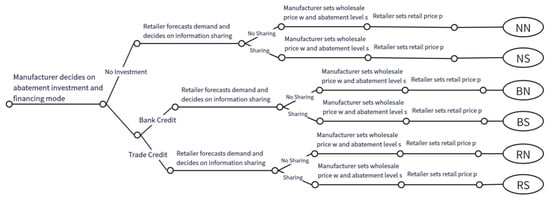
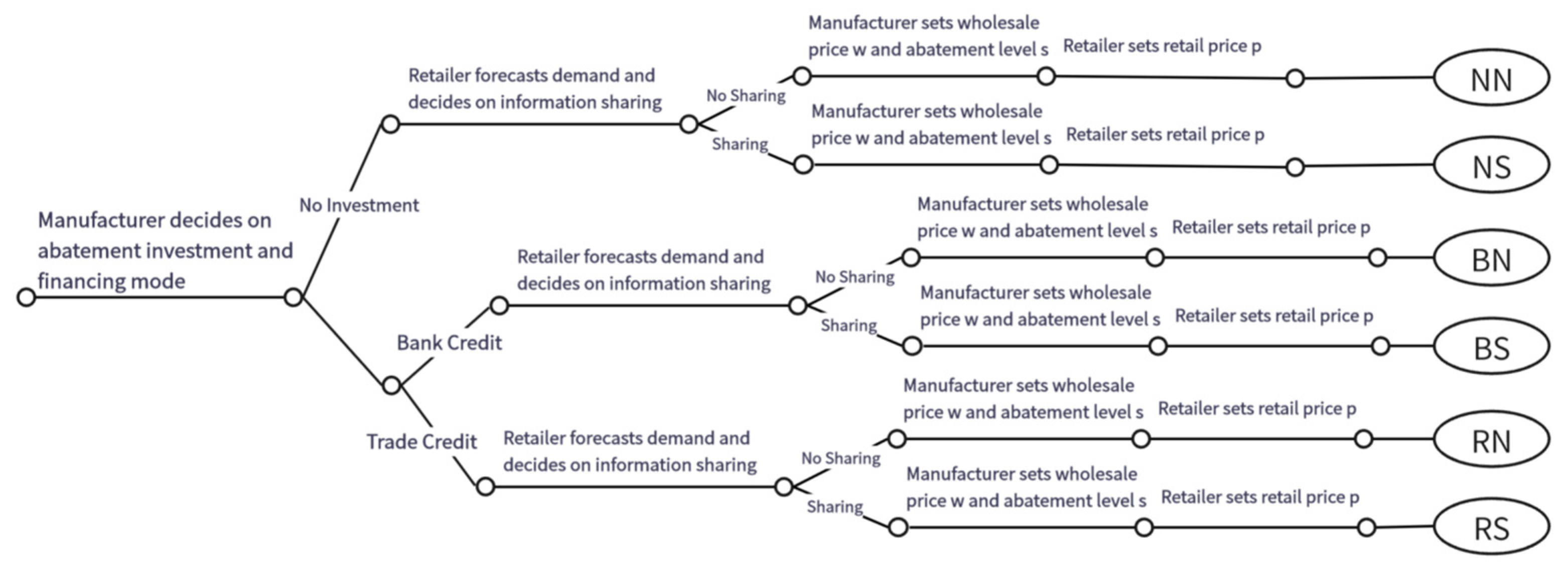
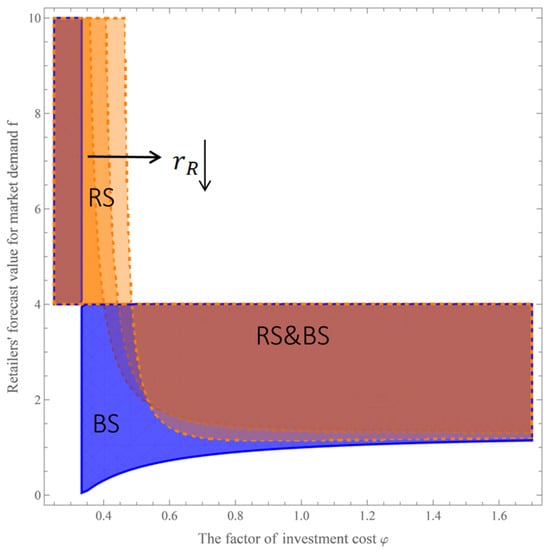
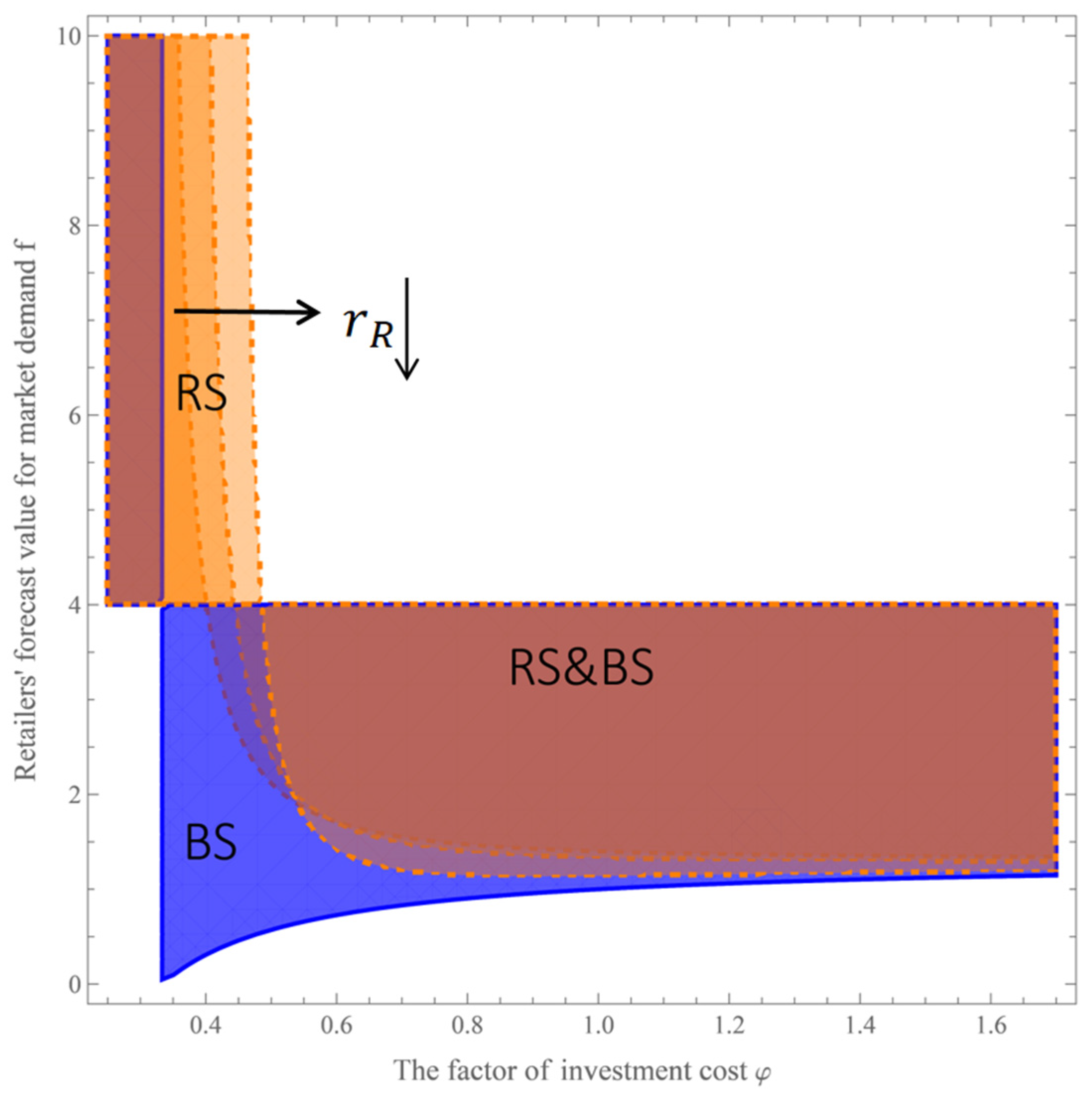
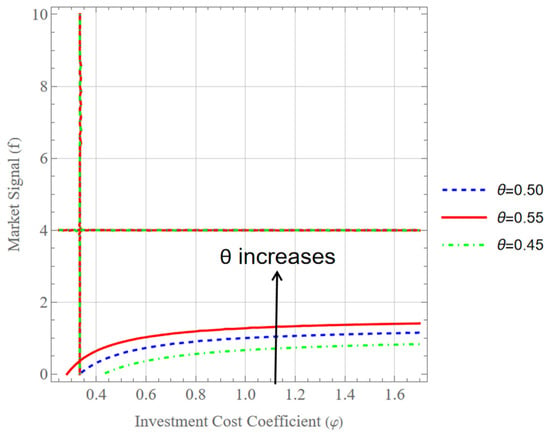
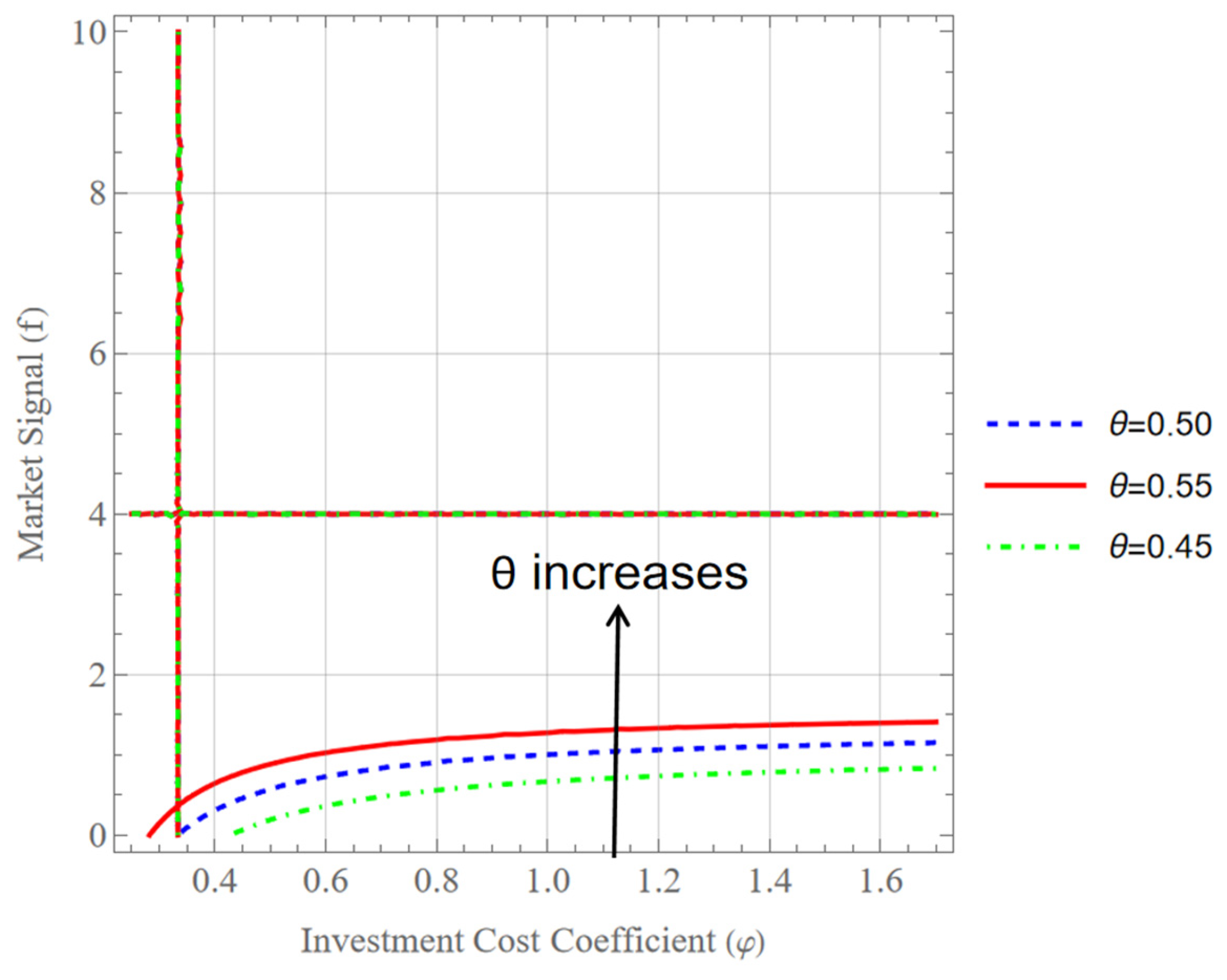
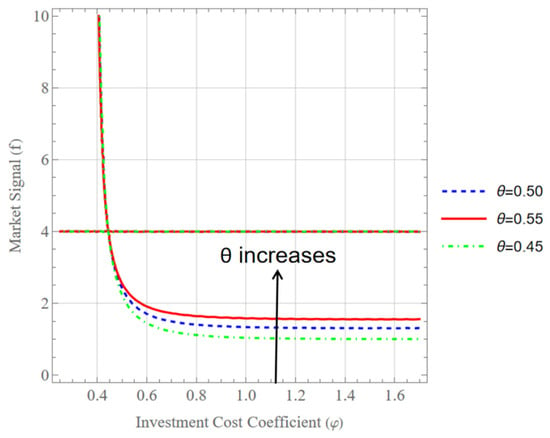
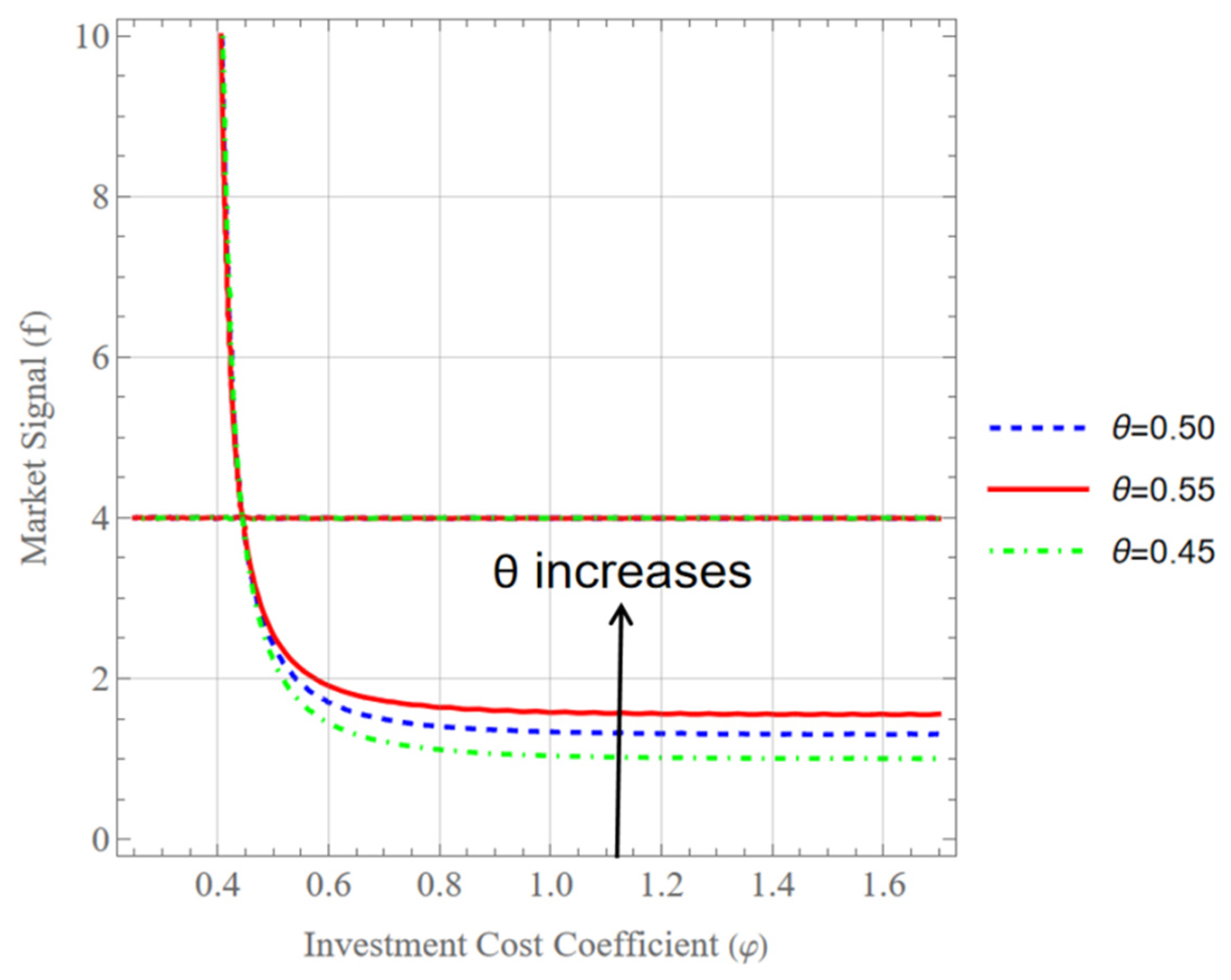
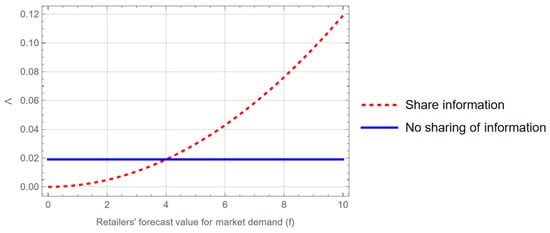
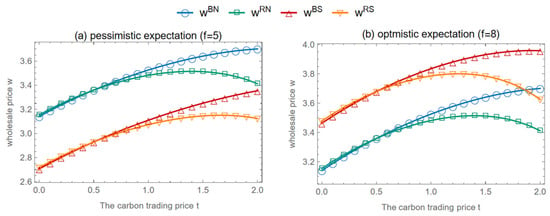
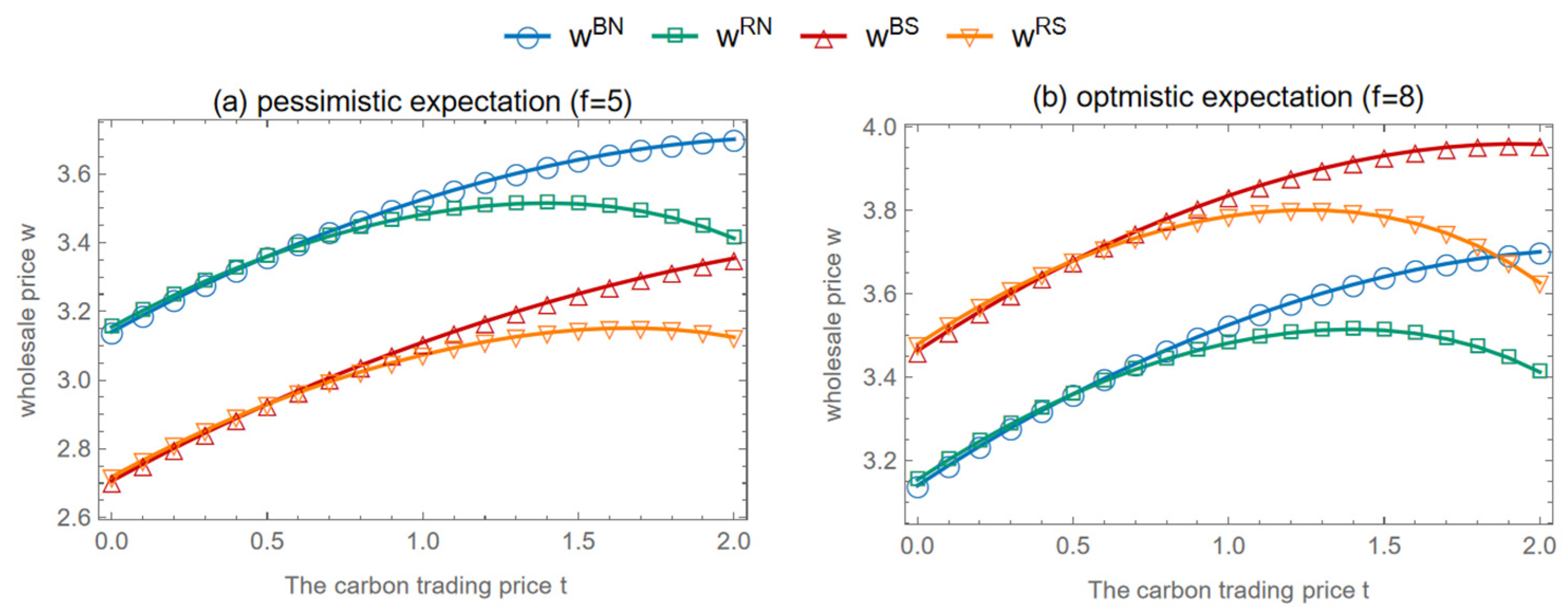
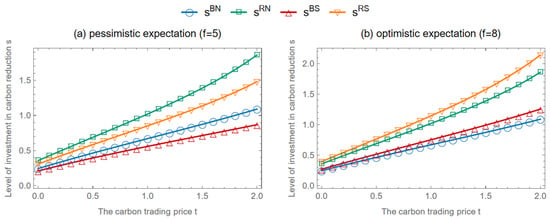
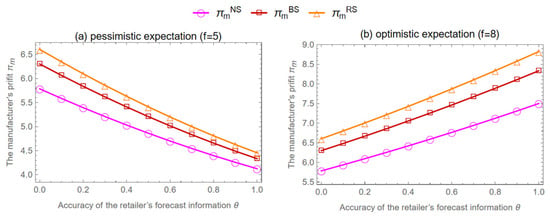
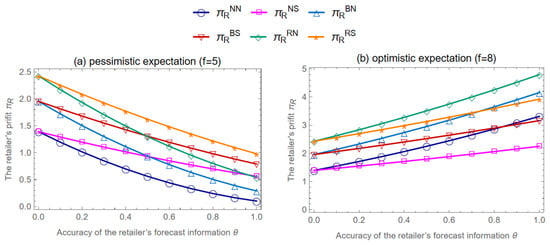
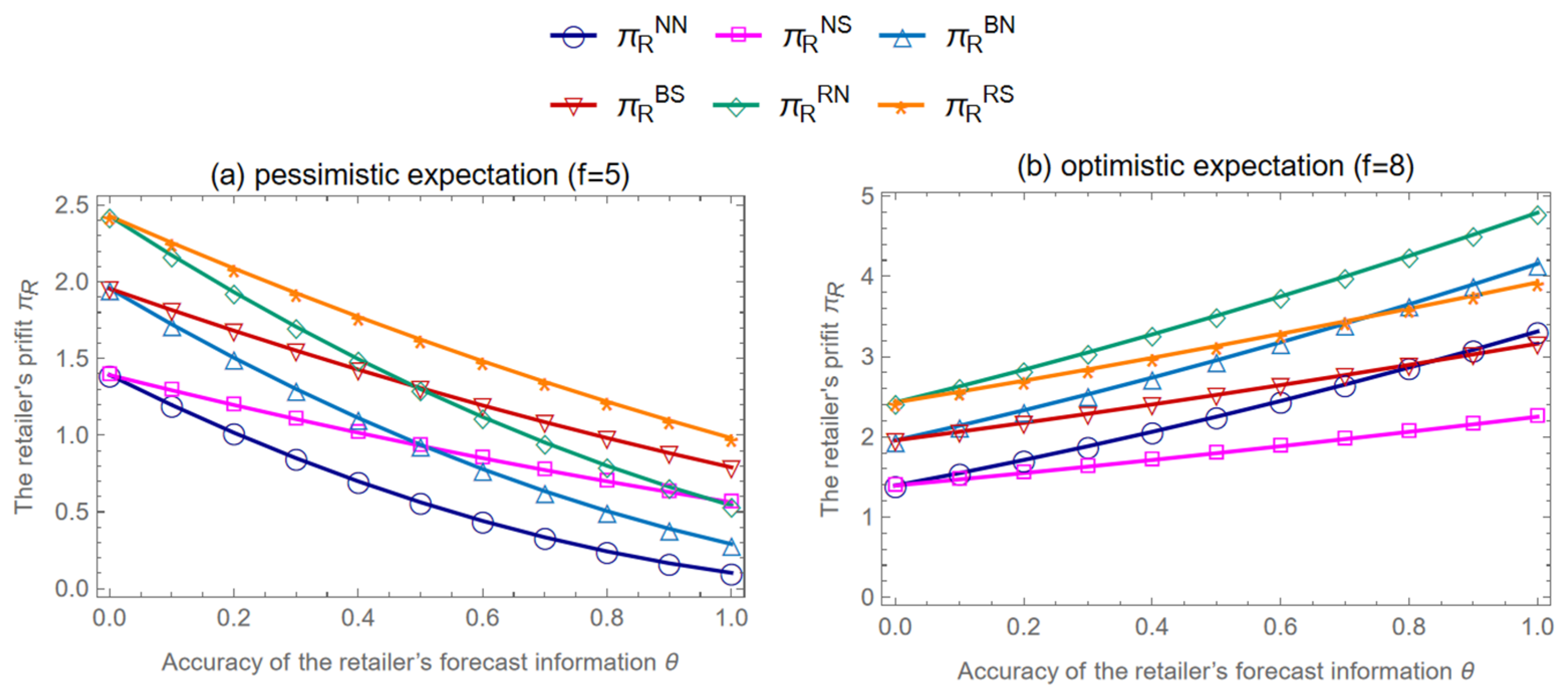
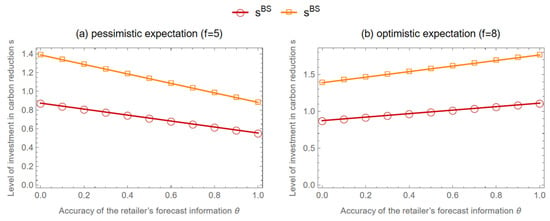
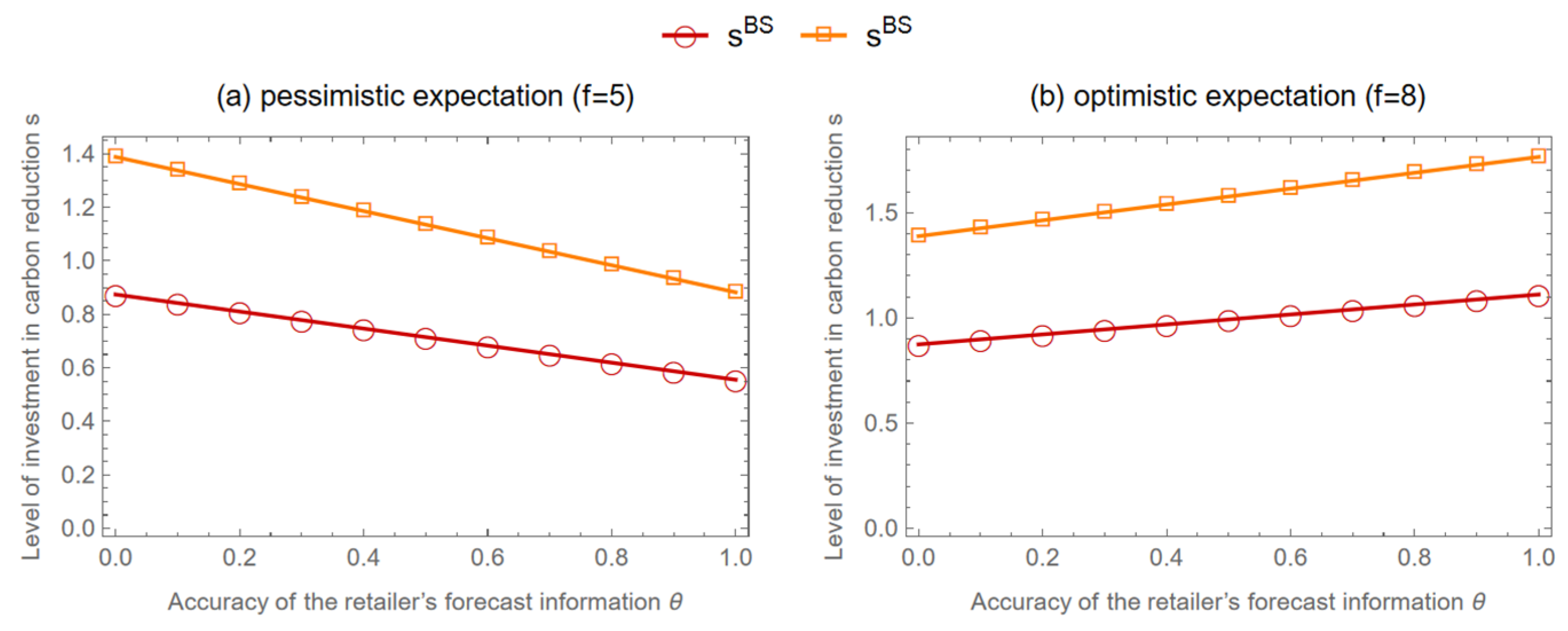
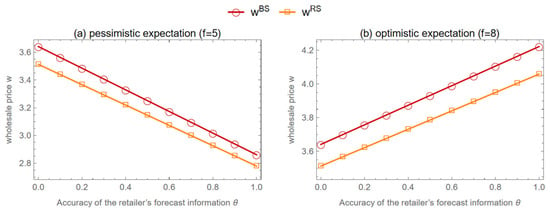
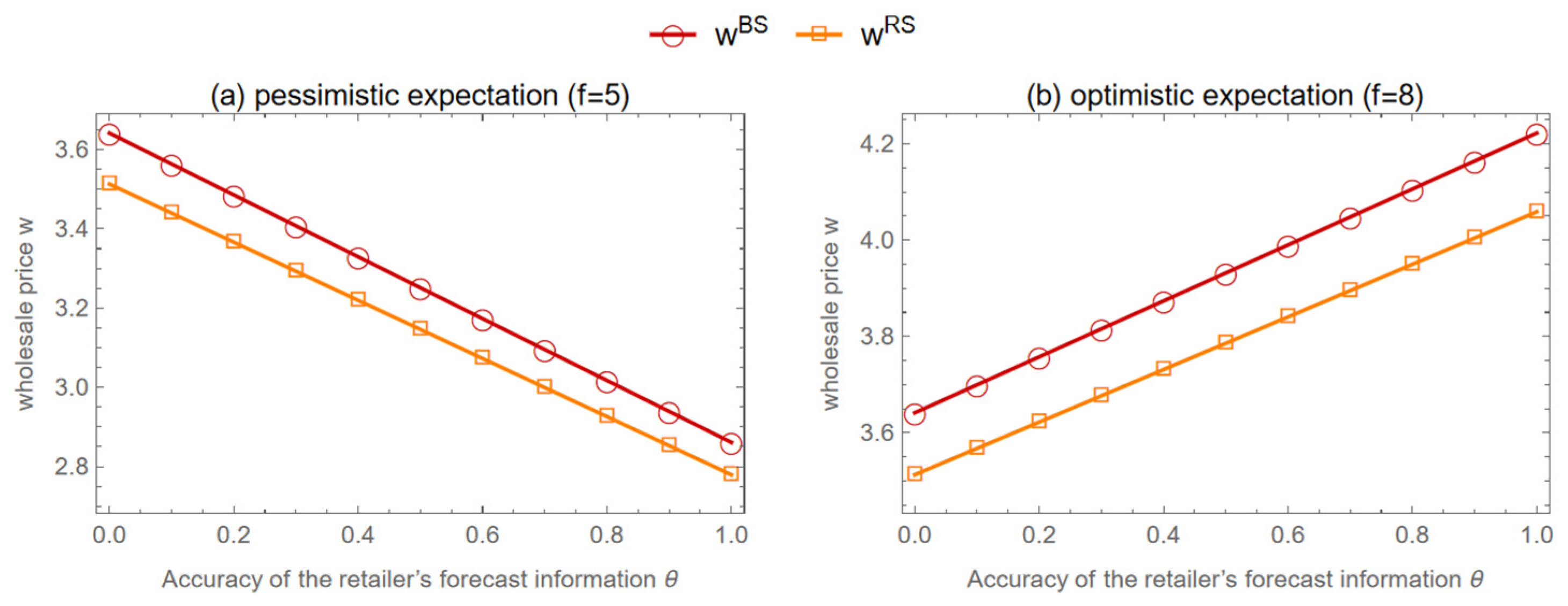
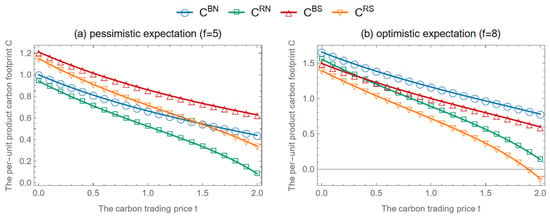
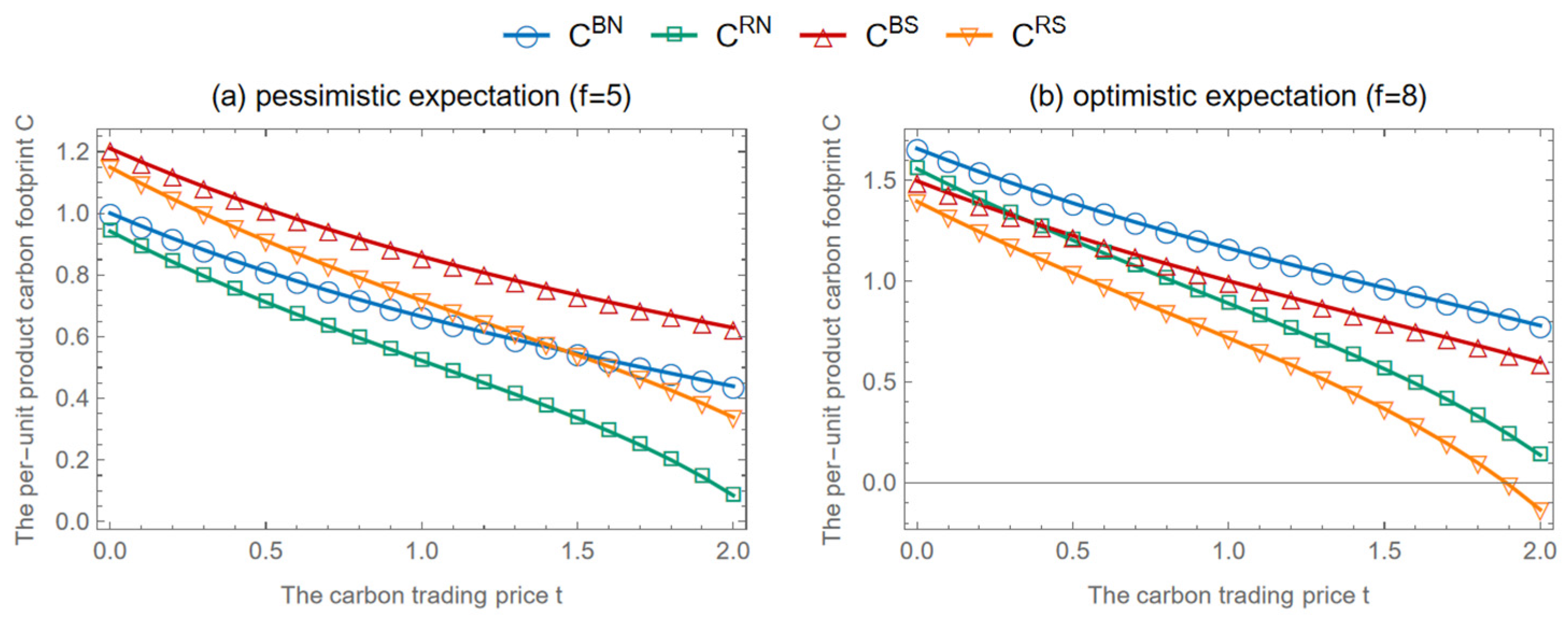
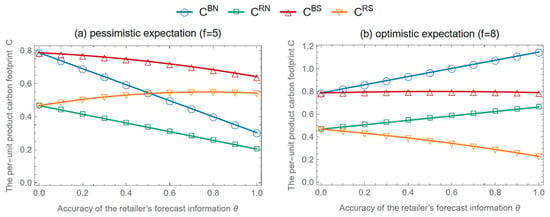
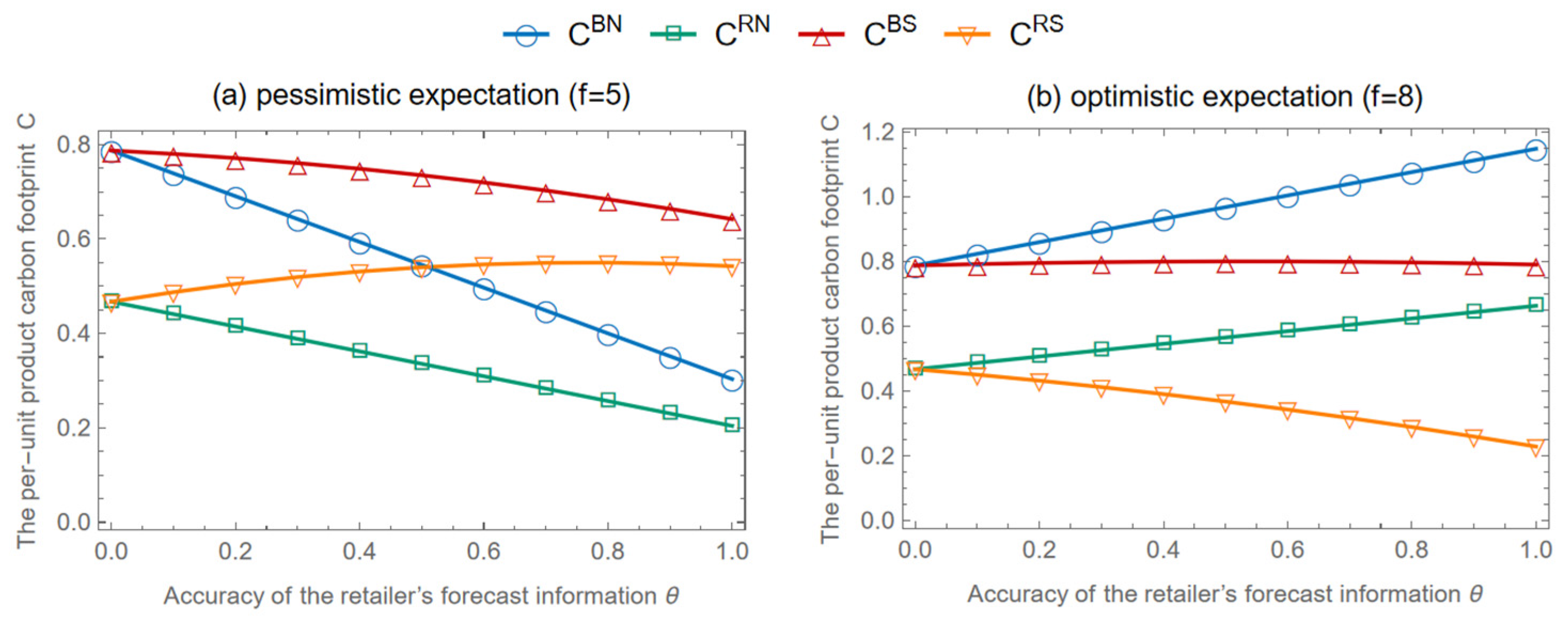

Disclaimer/Publisher’s Note: The statements, opinions and data contained in all publications are solely those of the individual author(s) and contributor(s) and not of MDPI and/or the editor(s). MDPI and/or the editor(s) disclaim responsibility for any injury to people or property resulting from any ideas, methods, instructions or products referred to in the content. |
© 2026 by the authors. Licensee MDPI, Basel, Switzerland. This article is an open access article distributed under the terms and conditions of the Creative Commons Attribution (CC BY) license.