1. Introduction
In recent years, brain-computer interface (BCI) technology has become an important focus of research at the intersection of neuroscience and artificial intelligence, owing to its great potential for establishing direct communication pathways between the brain and external environments [
1,
2]. Among various acquisition modalities, scalp electroencephalography (EEG) has become a preferred technique for capturing central nervous system activity due to its non-invasiveness, high temporal resolution, and ease of deployment [
3,
4]. In particular, the motor imagery (MI) paradigm, which decodes motor intentions by evoking sensorimotor rhythms (SMRs) in the cerebral cortex, has shown broad application prospects in clinical rehabilitation and neuro-assistance [
5,
6,
7]. However, MI-EEG signals are characterized by an extremely low signal-to-noise ratio (SNR) and high non-stationarity [
8,
9]. Therefore, how to effectively extract discriminative features that preserve both local details and global dependencies from complex non-stationary MI-EEG signals remains a key issue for improving motor imagery decoding performance.
With advancements in deep learning, researchers have proposed various methods to address these challenges [
10]. Convolutional neural networks (CNNs), such as EEGNet [
11] and ShallowConvNet [
12], can effectively capture local short-range features by eliminating the need for tedious traditional feature engineering. However, restricted by the inherent local receptive fields of convolutional kernels, CNNs struggle to effectively capture global dynamic features spanning long temporal scales [
13]. To overcome this bottleneck, transformer architectures based on self-attention mechanisms, such as EEGConformer [
14] and ATCNet [
15], have been introduced to MI-EEG decoding, significantly enhancing the collaborative representation of local details and global correlations [
16,
17]. However, although transformers can effectively model global dependencies, their feature extraction capabilities mainly rely on self-attention mechanisms and provide relatively weak inductive bias for local spatiotemporal structures, which may limit their ability to capture detailed and multi-scale local physiological patterns in MI-EEG signals. Recently, the Mamba architecture [
18], built upon structured state-space models (SSMs) [
19], has achieved efficient global modeling with linear complexity, effectively reducing computational burden. However, transformers demand quadratic computational overhead, while pure Mamba models compress historical states sequentially, occasionally losing fine-grained, non-local temporal correlations. Although these methods improve MI-EEG representation learning from different perspectives, structures based on a single or dominant modeling mechanism still struggle to fully accommodate the coexistence of local transient variations and global dynamic representations in MI-EEG signals.
Specifically, effective MI-EEG features are mainly reflected in two aspects: local multi-scale features and global long-range dependencies. On the one hand, SMR induced by motor imagery exhibits significant multi-scale transient variations along spatiotemporal dimensions [
20,
21], while volume conduction effects and redundant channel noise during electrode acquisition may weaken the expression of critical physiological information [
22]. Therefore, the model needs multi-scale local perception capability in order to extract discriminative local spatiotemporal patterns from different receptive fields and emphasize key channel responses. On the other hand, motor imagery involves sustained and coordinated neural dynamic evolution across multiple brain regions, and the core discriminative information is often embedded in long-range nonlinear dependencies [
23]. This requires the model to effectively capture temporal contextual information from a global perspective. Although existing methods have made progress in local feature extraction or global long-range modeling, they remain limited in coordinating multi-scale local perception with global long-range modeling, thereby constraining the discriminative feature representation capability of MI-EEG signals and the further improvement of decoding accuracy.
Thus, the remaining challenge is less about replacing one sequence model with another than about how local and global information are computed and coupled. After shallow spatiotemporal embedding, an EEG trial is first represented as , where p denotes the number of temporal positions and k denotes the number of feature channels. With learnable positional encoding, the position-enhanced token sequence is obtained as . Class-related patterns in this sequence are not confined to a single temporal scale; short transient SMR variations and local patterns with broader receptive fields may coexist along the trial. Therefore, should be mapped by two depthwise temporal branches into the scale-specific responses and before global dependency modeling. Since different channels and scales contribute unequally under low-SNR and non-stationary EEG conditions, these responses also require adaptive channel recalibration before fusion. After this multi-scale local refinement, the resulting sequence, , still requires global modeling because motor imagery involves continuous temporal evolution and interactions among different temporal segments. Therefore, the key issues are how to construct adaptive multi-scale local representations and how to integrate them with efficient global dependency modeling. However, existing transformer-based EEG classifiers primarily rely on self-attention, which lacks sufficient local inductive bias to capture transient, multi-scale SMR fluctuations. Conversely, emerging Mamba-based EEG models, while efficient at continuous sequence scanning, struggle to capture explicit, non-local segment-to-segment pairwise temporal alignments across distant brain activity states. Consequently, single-mechanism structures remain fundamentally limited in reconciling both local multi-scale transient dynamics and complex global temporal associations.
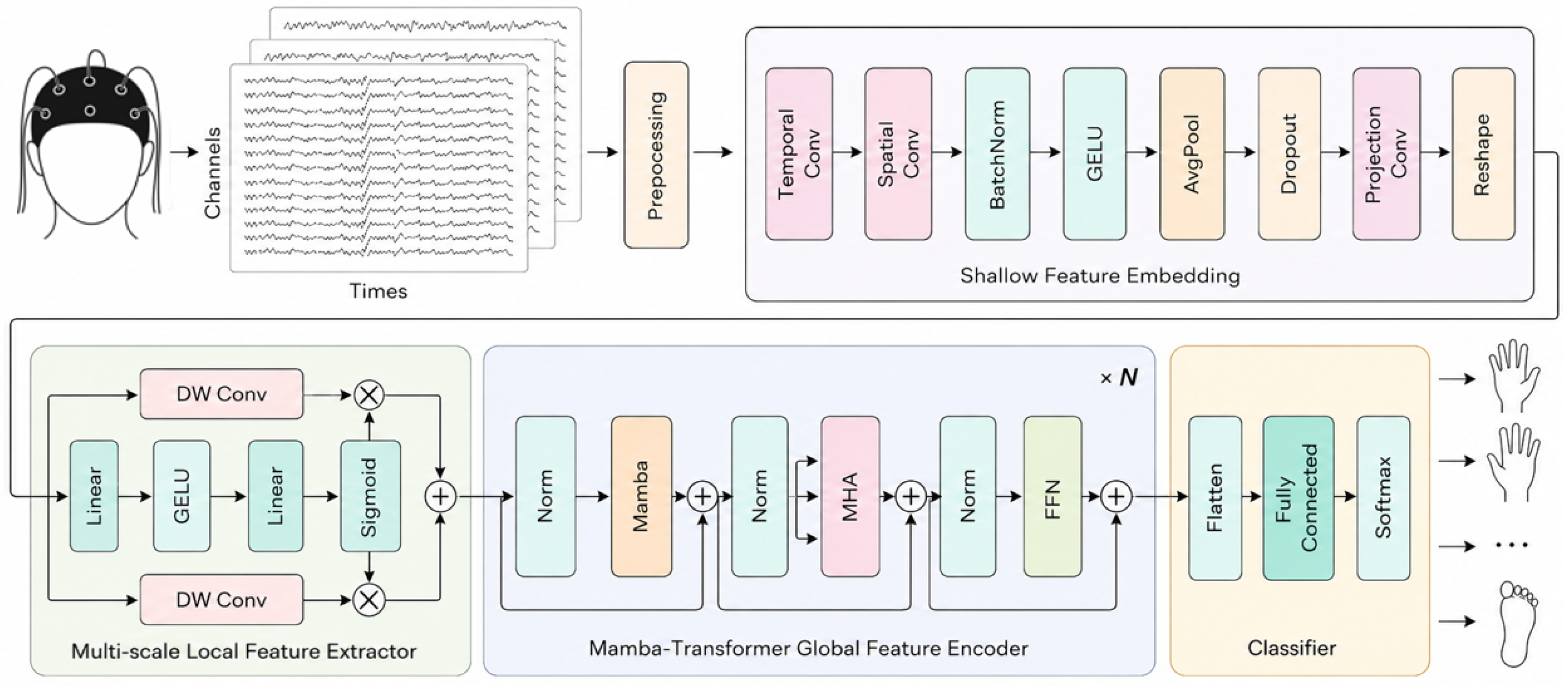
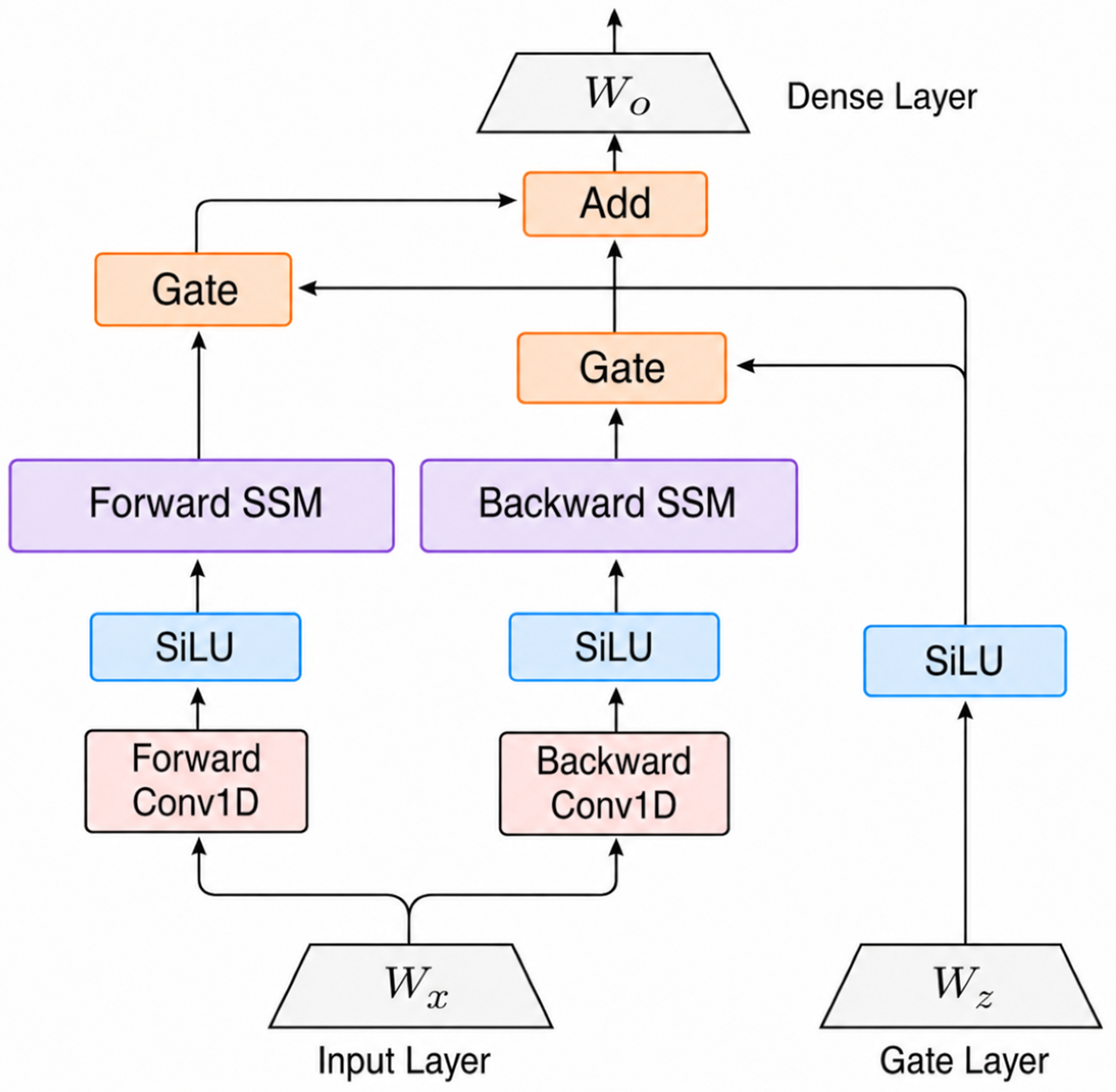
To address these issues, this paper proposes a Hybrid Mamba–Transformer Network (HMT-Net). The proposed model integrates multi-scale convolution, state-space models, and self-attention mechanisms to comprehensively capture both fine-grained local features and the long-range global dependencies of MI-EEG signals. The primary novelty of HMT-Net, distinguishing it from conventional Mamba- or transformer-dominant architectures, lies in a dual-level coupling strategy. First, at the local level, instead of using standard convolutional embeddings, we propose the MSLFE. The MSLFE utilizes parallel, depthwise temporal convolutions to capture multi-scale localized transient variations followed by channel attention to adaptively recalibrate feature responses under noisy EEG conditions. Second, at the global level, unlike models that deploy Mamba and transformer layers in isolation, we design the MTGFE. By sequentially chaining bidirectional state-space tracking with multi-head self-attention, the MTGFE allows Mamba’s continuous scanning to construct temporal contexts, which guide the self-attention mechanism in establishing precise global pairwise alignments. HMT-Net consists of three core components: first, a preliminary mapping layer completes the foundational topological fusion of electrode space and time series; second, a multi-scale local feature extractor (MSLFE) is introduced to extract transient physiological features via multi-branch dynamic receptive fields and channel attention; finally, a Mamba–transformer global feature encoder (MTGFE) is constructed to synergize linear continuous state evolution with discrete global attention.
The main contributions of this paper are summarized as follows:
Proposed the HMT-Net Hybrid Feature Extraction Framework: This framework establishes a hierarchical spatio-temporal route. By organically fusing local details from convolutional perception with global long-range associations from Mamba and transformers, it achieves precise modeling of cross-channel spatial features and non-stationary temporal evolution, significantly improving the extraction accuracy of discriminative features.
Designed a Multi-Scale Local Feature Extractor (MSLFE) with Dynamic Receptive Fields: This module utilizes dual-branch convolutions and a channel attention mechanism to dynamically weight multi-scale features, significantly enhancing the model’s ability to extract local physiological features in low-SNR environments.
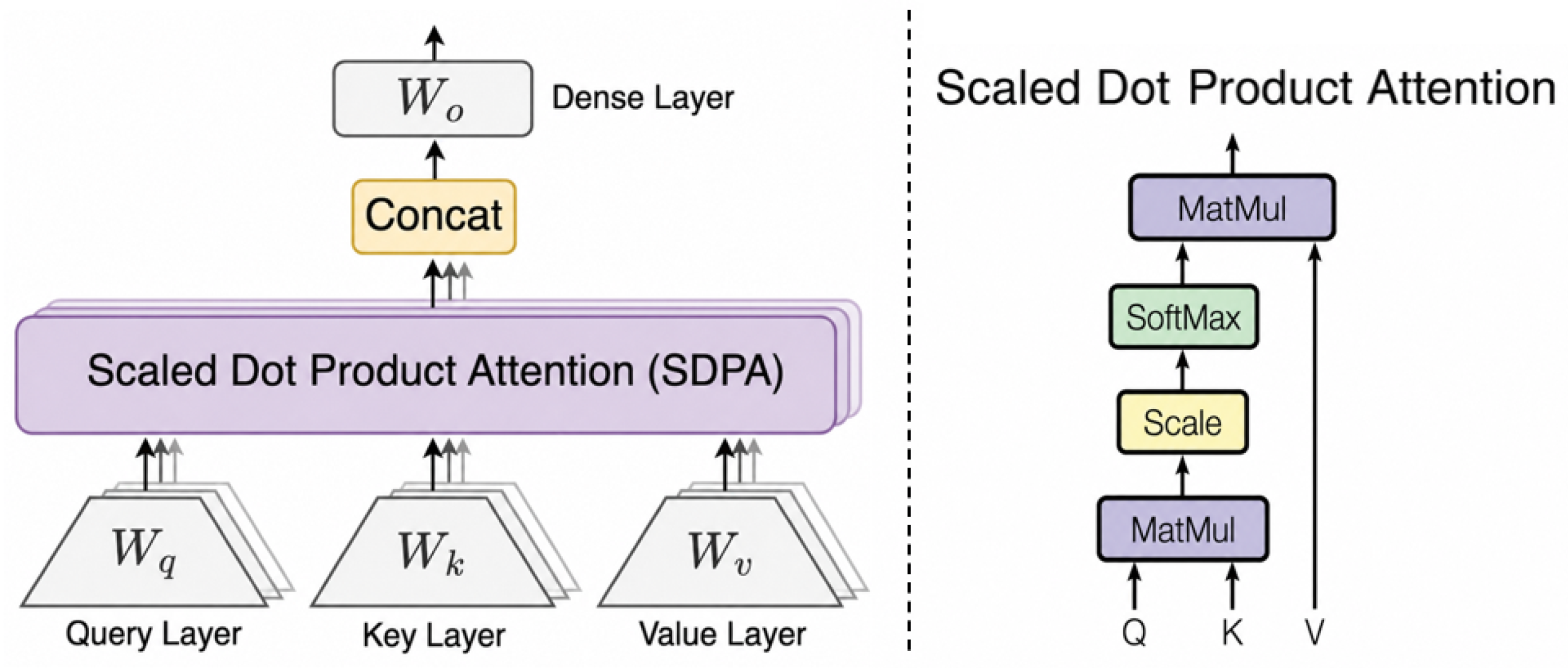
Innovatively Proposed a hybrid Mamba–transformer global feature encoder (MTGFE): We deeply integrate Multi-Head Attention (MHA) and the Mamba state-space model within the transformer architecture. This fused structure enhances the model’s ability to capture global contextual information and long-range spatial dependencies, leading to a significant boost in decoding accuracy.
Validated Effectiveness through Extensive Evaluations: Through extensive significance tests, inter-block ablation studies, ablation studies on transformer and Mamba, parameter analysis, and visualization experiments, we systematically evaluate the contributions of the proposed MSLFE module and the collaborative Mamba–attention structure in the MTGFE module. The results show that the MSLFE effectively enhances local spatio-temporal feature extraction, whereas the MTGFE improves global dependency modeling. These analyses further demonstrate that the collaboration between local feature extraction and global context modeling is essential for accurate and robust MI-EEG decoding.
The remainder of this paper is organized as follows.
Section 2 reviews related work.
Section 3 introduces the proposed method.
Section 4 presents the experimental setup.
Section 5 reports the experimental results and analysis.
Section 6 provides further discussion. Finally,
Section 7 concludes this paper.
5. Results
In this section, we evaluate the proposed model on three benchmark MI-EEG datasets under both subject-dependent and subject-independent settings. The classification performance is first compared with several representative state-of-the-art (SOTA) methods to demonstrate the effectiveness of the proposed approach. We then conduct ablation studies to investigate the contribution of key components in the model, along with an analysis of important design choices. Finally, a series of visualization experiments are presented to provide insights into the interpretability of the learned representations.
5.1. Subject-Dependent Classification
To comprehensively evaluate the effectiveness of the proposed method, we first analyze the subject-dependent classification results on three benchmark datasets.
The classification performance on the BCI-IV-2a dataset is reported in
Table 4. It can be observed that the proposed HMT-Net achieves the best overall performance, with an average accuracy of 84.07% and a kappa value of 0.79. Compared with conventional CNN-based methods such as ShallowConvNet, DeepConvNet, and EEGNet, HMT-Net achieves statistically significant improvements, indicating the advantage of more expressive feature representations. Compared with advanced architectures, including EEGConformer, ATCNet, and TMSA-Net, our method also demonstrates statistically significant performance gains. Although FBCNet and FA-STTM achieve strong results on certain subjects, the improvements of HMT-Net over these two methods are not statistically significant. Nevertheless, HMT-Net maintains the highest average accuracy and kappa value, suggesting better overall robustness and demonstrating the effectiveness of jointly modeling local and global dependencies.
The results on the BCI-IV-2b dataset are presented in
Table 5. A similar trend can be observed, where HMT-Net achieves the best average performance with an accuracy of 89.60% and a kappa of 0.79. According to the paired
t-test results, HMT-Net significantly outperforms ShallowConvNet, DeepConvNet, EEGNet, ATCNet, and FA-STTM. Compared with FBCNet, EEGConformer, and TMSA-Net, the improvements are positive but not statistically significant, suggesting that the performance gaps among these methods are relatively small on this binary classification dataset. Although several methods achieve competitive results on individual subjects, HMT-Net demonstrates more balanced overall performance and better average generalization capability.
The classification results on the HGD dataset are summarized in
Table 6. Since FA-STTM does not report results on this dataset, it is not included in the comparison. It can be seen that HMT-Net achieves the highest average accuracy of 96.02% with a kappa value of 0.95, outperforming all competing methods. The paired
t-test results show that HMT-Net achieves statistically significant improvements over ShallowConvNet, DeepConvNet, EEGNet, FBCNet, and TMSA-Net. In contrast, the differences between HMT-Net and EEGConformer or ATCNet are not statistically significant, indicating that these models achieve comparable performance on high-density EEG data. Overall, the proposed method shows consistently strong performance across most subjects, with relatively low variance, further validating its effectiveness in handling high-density EEG data with more complex spatial information.
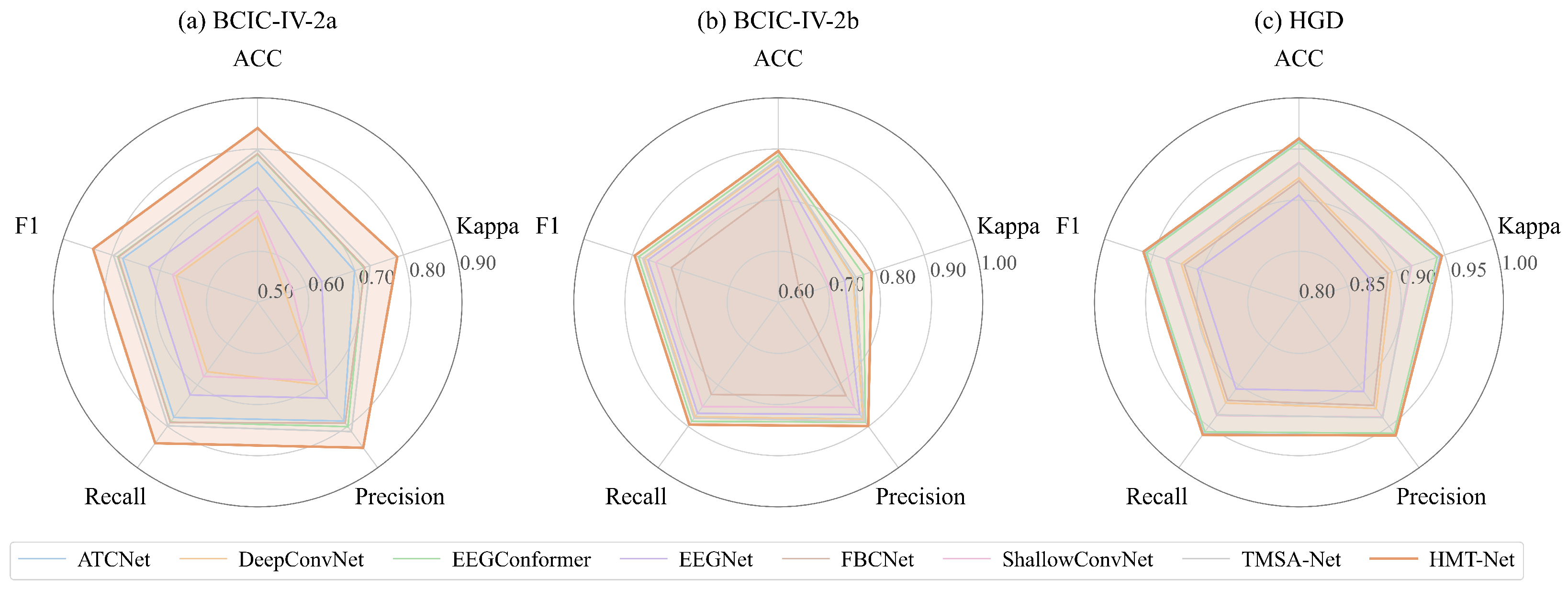
To provide a more intuitive comparison across multiple evaluation metrics,
Figure 4 presents radar charts of ACC, kappa, F1-score, recall, and precision on the three datasets. It can be observed that HMT-Net consistently achieves superior performance across all metrics, demonstrating its balanced and robust representation capability.
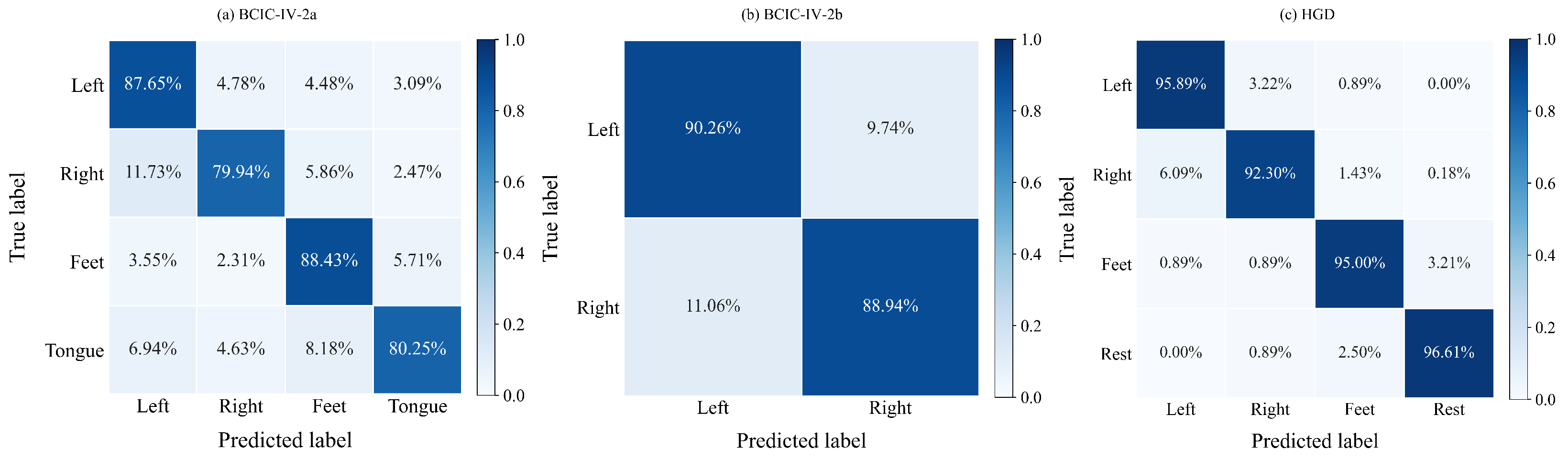
Furthermore, to visually examine the prediction performance,
Figure 5 shows the average normalized confusion matrices for HMT-Net on the BCI-IV-2a, BCI-IV-2b, and HGD datasets. Each matrix represents the average prediction distribution across subjects, highlighting the ability of the model to correctly classify each class. It can be seen that the diagonal values are consistently high across all datasets, indicating strong per-class accuracy, while off-diagonal values remain low, reflecting minimal misclassification between classes.
5.2. Subject-Independent Classification
To comprehensively evaluate the effectiveness of the proposed HMT-Net under cross-subject settings, we conducted subject-independent experiments using the Leave-One-Subject-Out (LOSO) protocol on three benchmark datasets, namely BCI-IV-2a, BCI-IV-2b, and HGD. For comparison, we selected representative baseline models, including ATCNet, EEGConformer, TMSA-Net, and FA-STTM. These models were chosen for two main reasons. First, they are widely recognized as state-of-the-art EEG classification architectures. Second, LOSO experiments are computationally expensive, and these models provide reasonable baselines in terms of both performance and training time.
For statistical comparison, paired
t-tests across subjects were conducted between HMT-Net and each baseline method, and the corresponding
p-values are reported in
Table 7,
Table 8 and
Table 9. Each subject was treated as one paired observation, and
p < 0.05 indicates a statistically significant difference compared with HMT-Net.
Table 7,
Table 8 and
Table 9 summarize the subject-independent classification results. On the BCI-IV-2a dataset (
Table 7), HMT-Net achieves the best overall performance, with an ACC of 64.85% and a kappa value of 0.53. Compared with ATCNet, EEGConformer, and TMSA-Net, HMT-Net obtains positive mean accuracy improvements, although the paired
t-test results show that these improvements are not statistically significant. Compared with FA-STTM, HMT-Net achieves a statistically significant improvement (
), suggesting better cross-subject generalization than the closest Mamba–transformer-based baseline on BCI-IV-2a. Similar trends are observed on the BCI-IV-2b dataset (
Table 8), where HMT-Net reaches 78.30% accuracy and 0.57 kappa. Although HMT-Net obtains the highest average accuracy, the differences compared with ATCNet, EEGConformer, TMSA-Net, and FA-STTM are not statistically significant. This result is consistent with the small performance gaps among the compared methods on this binary classification dataset. On the HGD dataset (
Table 9), HMT-Net achieves 83.65% ACC and 0.78 kappa, outperforming all baselines and demonstrating superior generalization on high-density EEG. Unlike the results on BCI-IV-2a and BCI-IV-2b, the paired
t-test results show that HMT-Net achieves statistically significant improvements over EEGConformer, ATCNet, and TMSA-Net. Since subject-wise FA-STTM results on HGD are unavailable, the paired statistical test is not reported for this comparison. Nevertheless, HMT-Net achieves a substantially higher average ACC than FA-STTM, suggesting stronger cross-subject generalization capability when more training subjects and high-density EEG channels are available.
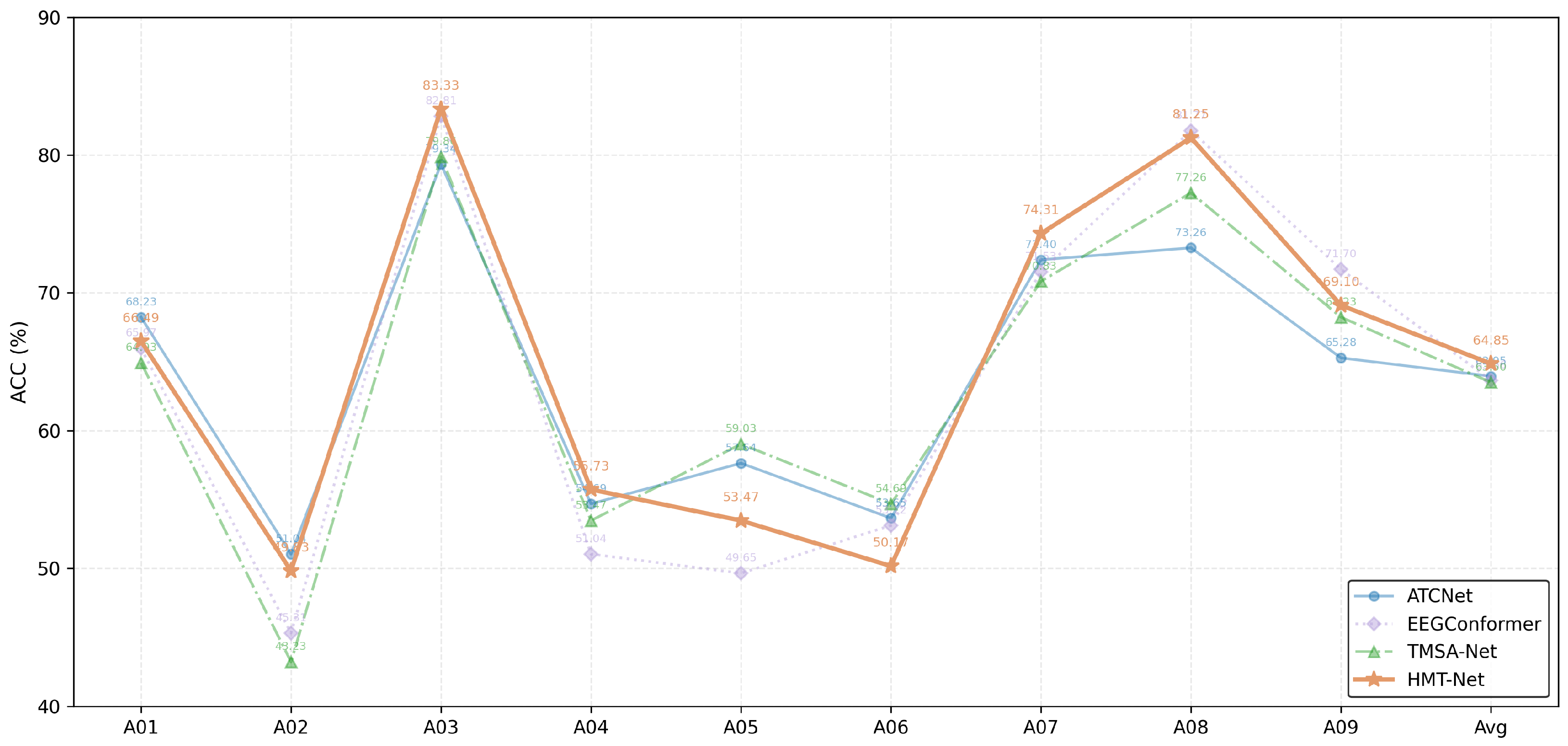
In
Figure 6, the accuracy of each subject on the BCI-IV-2a dataset under the LOSO setting is presented. HMT-Net achieves competitive or superior performance across most subjects compared with the baseline methods, indicating its robustness to inter-subject variability. In particular, the average accuracy of HMT-Net is higher than that of the compared methods, demonstrating its overall effectiveness in cross-subject motor imagery EEG classification.
5.3. Ablation Study
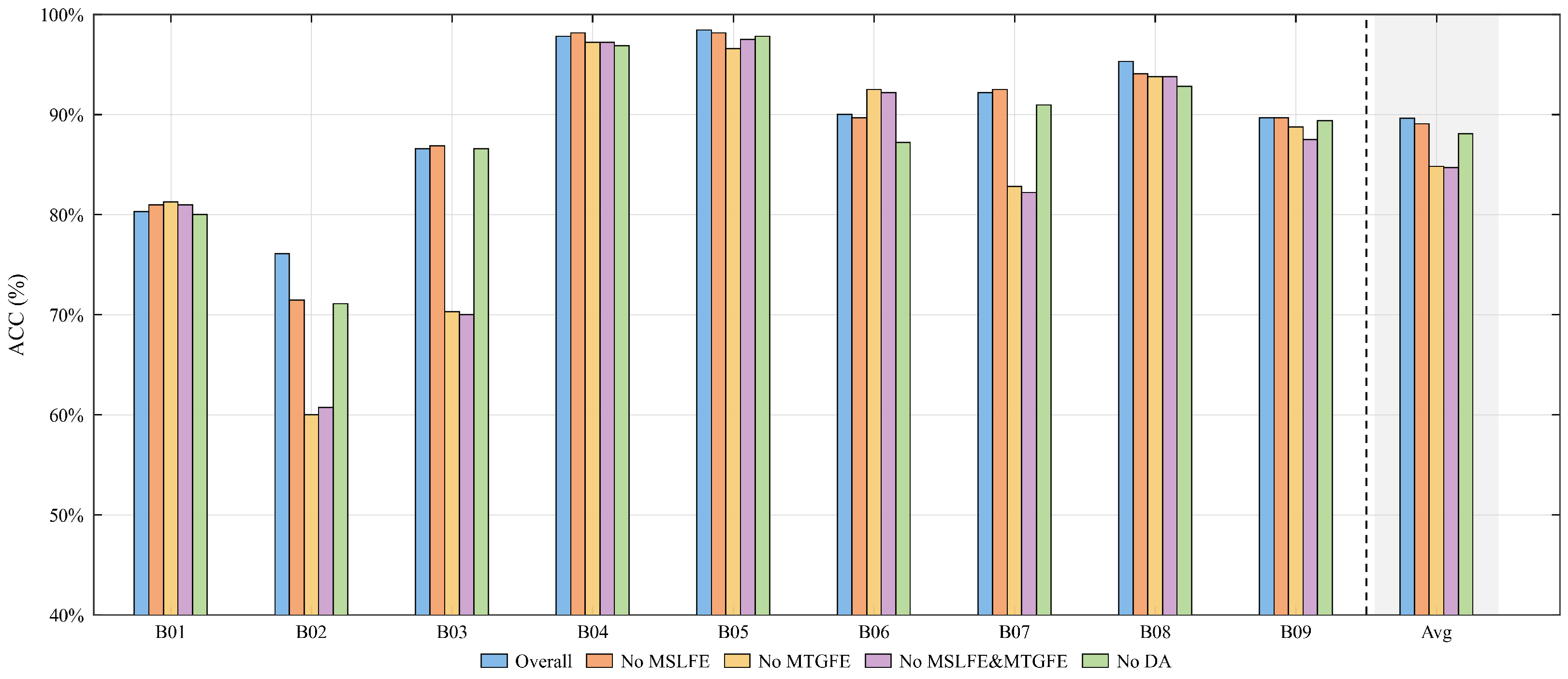
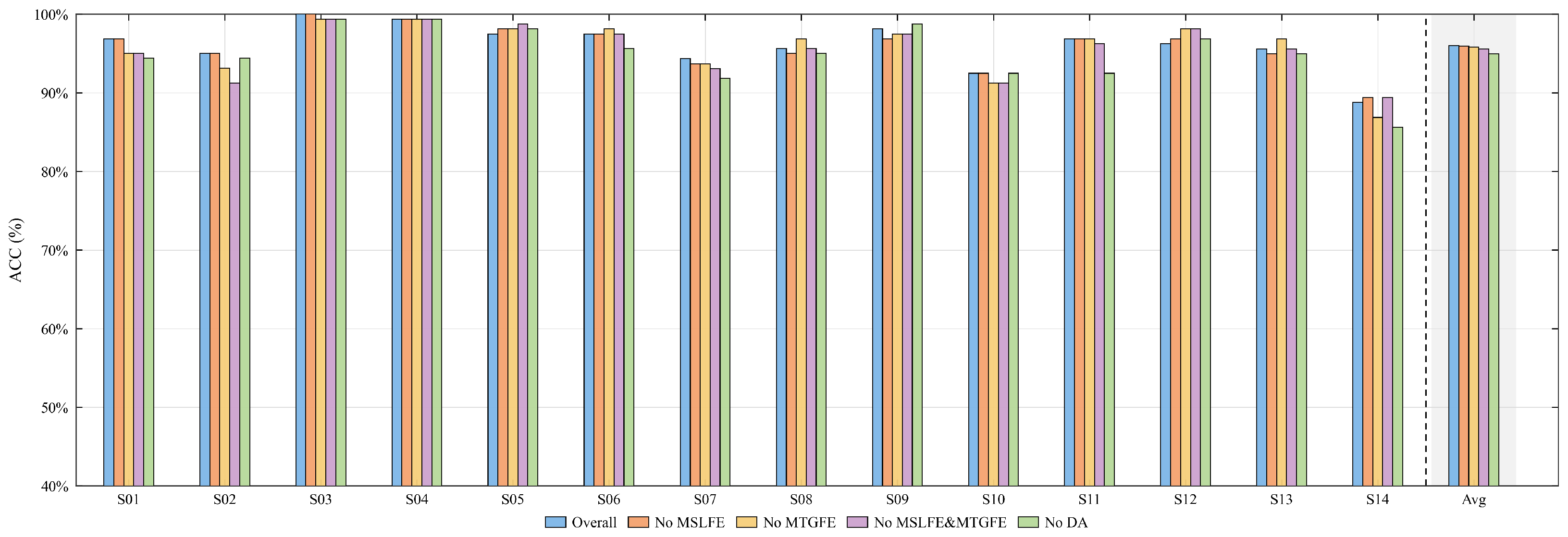
To comprehensively evaluate the contribution of each component in HMT-Net, we perform ablation experiments on three benchmark datasets under the subject-dependent setting. The experiments include two parts. First, we investigate the internal structure of the MTGFE module by comparing three variants, namely Mamba, transformer, and Mamba–transformer. Second, we compare the full model (Overall) with variants where the MSLFE module, the MTGFE module, both modules, or data augmentation (DA) are removed.
For the MTGFE ablation, the FFN module is retained in all variants to provide a consistent feature projection and ensure a fair comparison. In the Mamba variant, only the Mamba sequence modeling module is retained, while the MHA module is removed. In contrast, in the transformer variant, only the MHA-based transformer structure is retained, while the Mamba module is removed. The Mamba–transformer variant retains both modules simultaneously. As shown in
Table 10, the combined Mamba–transformer variant consistently achieves the highest ACC and kappa values across all datasets. The Mamba module is effective in capturing long-range sequence dependencies and temporal dynamics, while the transformer module explicitly models global relationships among temporal positions. Their complementary roles enable the network to exploit both sequential dynamics and global contextual interactions. The reduced performance of either single-module variant demonstrates that neither module alone is sufficient, indicating that both the Mamba and transformer modules are important for robust and discriminative EEG feature representation within MTGFE.
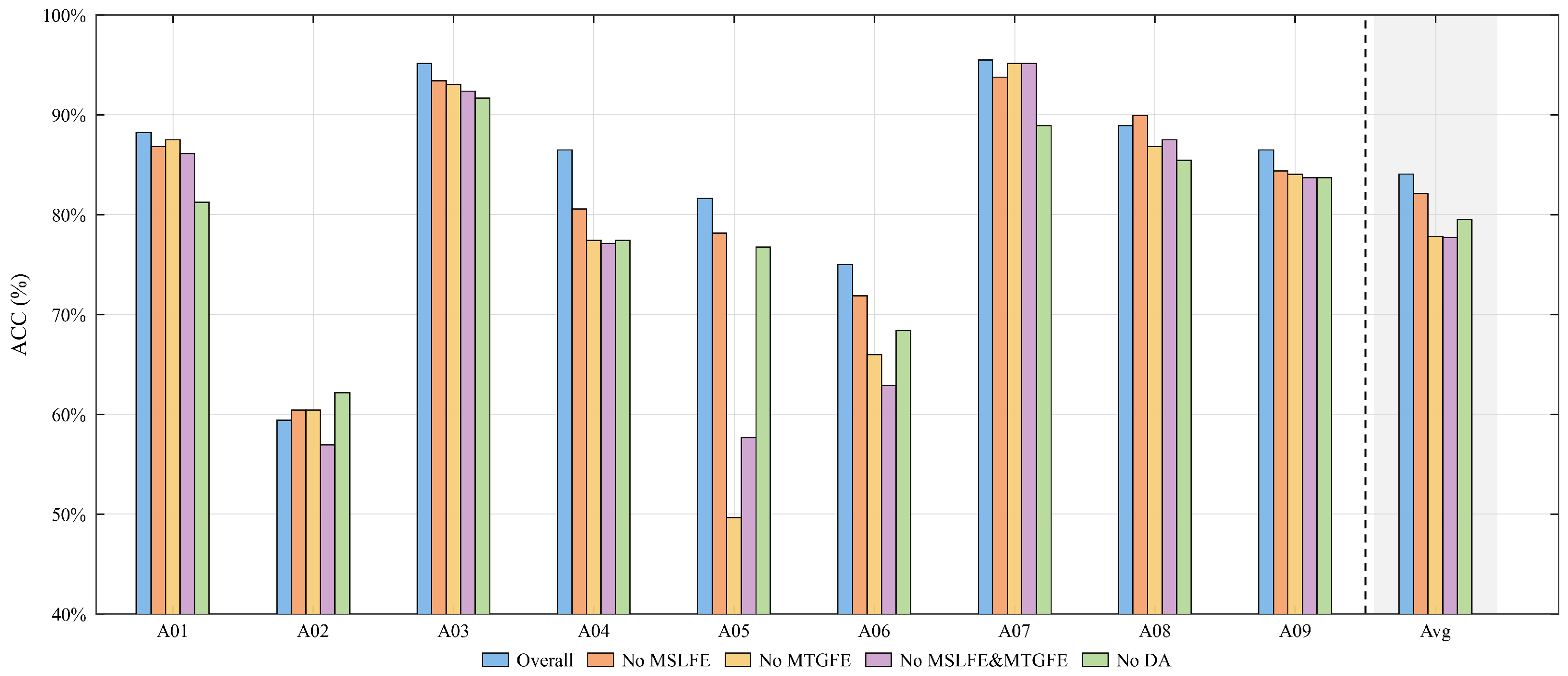
Figure 7,
Figure 8 and
Figure 9 show the classification accuracy for each subject across the BCI-IV-2a, BCI-IV-2b, and HGD datasets. It can be observed that removing the MSLFE or MTGFE modules leads to a notable performance drops. The MSLFE module contributes by capturing multi-scale spatial features from EEG signals, which allows the model to effectively extract fine-grained spatial patterns that are crucial for distinguishing motor imagery tasks. The MTGFE module, on the other hand, models global temporal dependencies across multiple channels, enabling the network to capture long-range interactions and temporal dynamics that are specific to each subject. Removing both modules results in the largest decrease in accuracy, highlighting the complementary nature of these modules. Their combined effect is essential for robust feature representation and improved generalization, demonstrating the unique advantage of integrating multi-scale spatial and global temporal modeling within HMT-Net.
The impact of data augmentation (DA) is also evident. Here, we adopt a segment and reconstruction strategy, which generates additional training samples by segmenting EEG trials and reconstructing them in novel combinations. Excluding DA consistently reduces performance across all datasets, demonstrating that augmenting the training data mitigates overfitting and enhances robustness. Overall, these results confirm that the MSLFE module, the MTGFE module, the hybrid Mamba–transformer design, and DA are all crucial for achieving strong and stable performance.
5.4. Parameters Analysis
5.4.1. Kernel Size
We first investigate the effect of different convolutional kernel combinations in the MSLFE module. As shown in
Table 11, the kernel combination
achieves the best performance on BCI-IV-2a, while
performs best on BCI-IV-2b and HGD. This difference may be related to the spatial resolution and signal characteristics of different datasets. For BCI-IV-2a, which contains 22 EEG channels, smaller kernels are sufficient to capture local discriminative patterns while avoiding excessive smoothing. In contrast, BCI-IV-2b contains only three bipolar channels and provides limited spatial information, while HGD uses high-density EEG recordings. In these cases, larger kernels can provide a wider receptive field, enabling the model to aggregate broader contextual information and capture more stable patterns. Therefore, the optimal kernel size depends on the spatial configuration and complexity of the dataset. The multi-scale design of MSLFE allows the network to balance fine-grained local feature extraction and broader contextual modeling for diverse EEG spatial patterns.
5.4.2. Heads
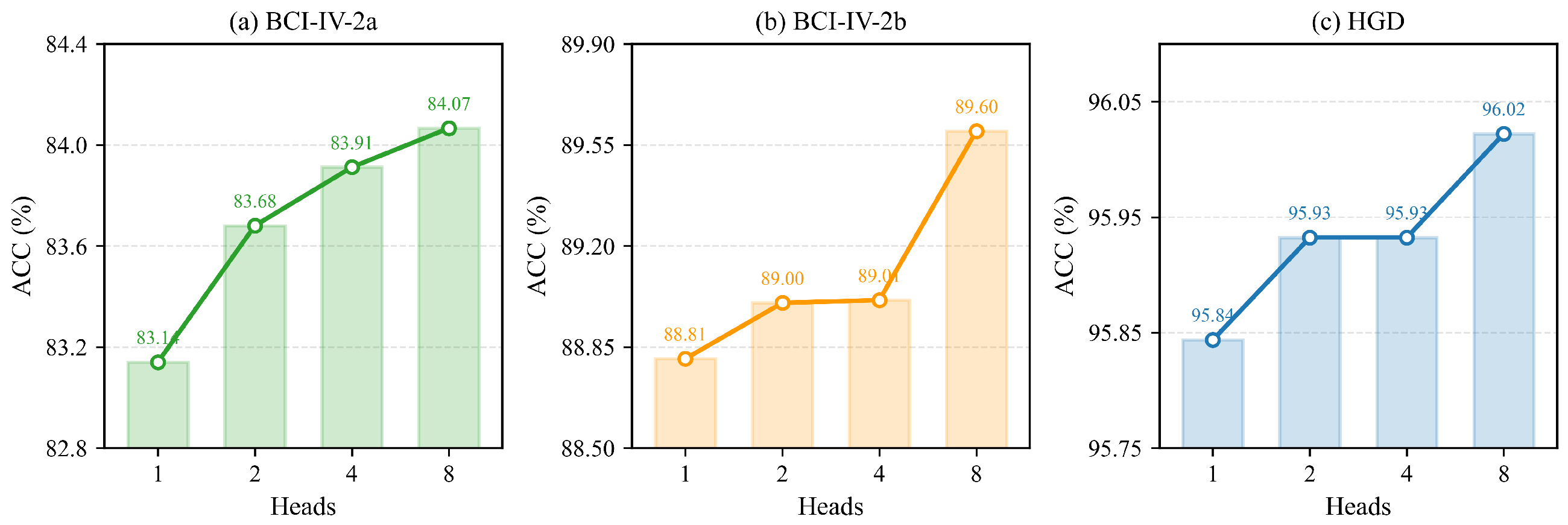
Figure 10 illustrates the influence of the number of attention heads in the MTGFE module. We evaluate 1, 2, 4, and 8 heads for each dataset. It can be observed that increasing the number of heads generally improves accuracy for all datasets, with 8 heads already providing a optimal performance. This suggests that 8 heads achieve a good balance between representation capability and computational efficiency.
5.4.3. Layers
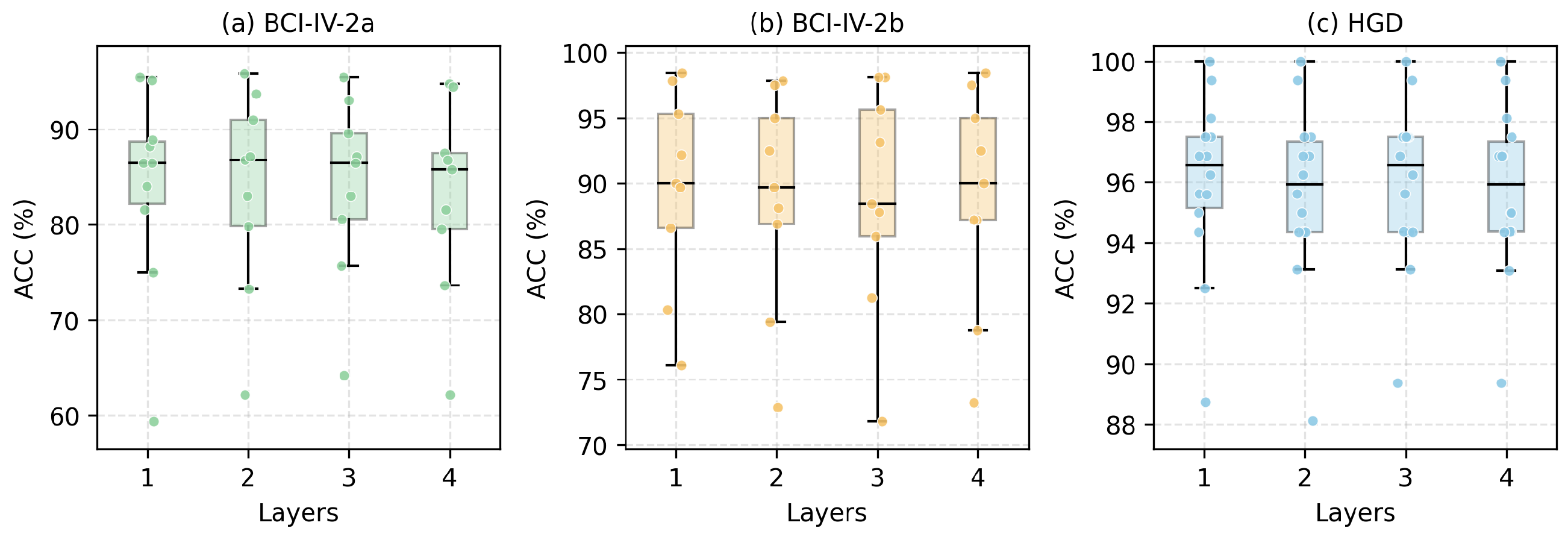
The effect of stacking multiple layers in the MTGFE module is shown in
Figure 11. We test 1, 2, 3, and 4 layers for each dataset. Accuracy generally improves with more layers, reflecting the benefit of deeper feature extraction. However, adding too many layers does not significantly boost performance, and may increase computational cost. Hence, one layer was chosen as a suitable compromise for all three datasets.
5.5. Computational Complexity Analysis
To further evaluate the computational efficiency of the proposed HMT-Net, we compare it with representative baseline models on the BCI-IV-2a dataset in terms of trainable parameters, FLOPs, GPU memory consumption, inference time, and classification accuracy. The results are summarized in
Table 12. It can be observed that HMT-Net contains only 0.0648M trainable parameters, which is much smaller than EEGConformer and ATCNet, indicating that the proposed model maintains a compact parameter scale. Although HMT-Net introduces relatively high FLOPs due to the hybrid Mamba–transformer modeling mechanism, its GPU memory consumption remains moderate. The inference time of HMT-Net is higher than that of lightweight CNN-based models, reflecting the additional computational cost required for global temporal dependency modeling. Nevertheless, HMT-Net achieves the highest classification accuracy among all compared methods. Overall, these results indicate that HMT-Net improves decoding accuracy at the cost of increased computation and inference time, while keeping the parameter count and memory consumption within a moderate range.
5.6. Visualization
To further analyze the representation capability and interpretability of the proposed model, we employ three complementary visualization methods. Specifically, t-distributed stochastic neighbor embedding (t-SNE) [
39] is used to examine the distribution of learned feature embeddings, Gradient-weighted Class Activation Mapping (Grad-CAM) [
40] is adopted to visualize task-relevant spatial activation patterns, and attention maps derived from the multi-head attention weights are further used to analyze temporal dependency modeling within the MTGFE module.
5.6.1. t-SNE
t-SNE is a nonlinear dimensionality reduction technique that maps high-dimensional features into a low-dimensional space while preserving local neighborhood structures, enabling intuitive visualization of clustering patterns among different classes.
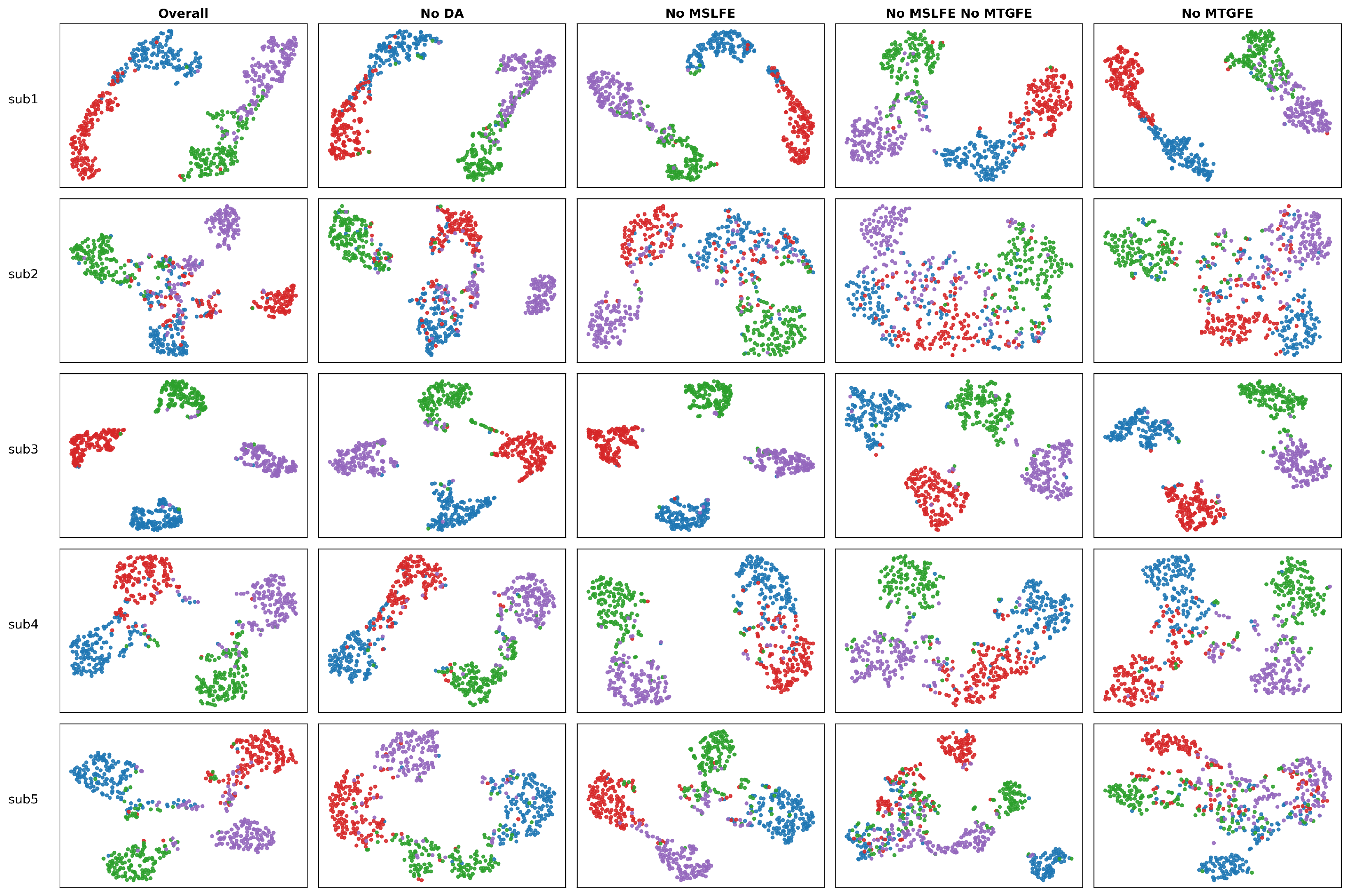
As shown in
Figure 12, we present the t-SNE projections of the learned features for several representative subjects under different configurations, including the full model and its ablated variants. It is worth noting that the visualization is conducted on feature representations before the classifier, thus reflecting the quality of learned embeddings rather than the final classification outputs. The full model exhibits compact intra-class distributions and clear inter-class separation, indicating strong discriminative capability.
In contrast, removing data augmentation (No DA) leads to less compact clusters, suggesting reduced robustness. When the MSLFE module is removed (No MSLFE), class boundaries become less distinct, suggesting that multi-scale local feature extraction is important for capturing discriminative temporal patterns. Furthermore, removing both MSLFE and MTGFE (No MSLFE No MTGFE) results in significantly mixed distributions, demonstrating that the joint modeling of local and global features is essential. When the MTGFE module is excluded (No MTGFE), the clusters become more scattered, highlighting the importance of global dependency modeling.
Overall, these observations indicate that each component contributes to improving representation quality, and the complete model achieves the most compact and well-separated feature distributions.
5.6.2. Grad-CAM
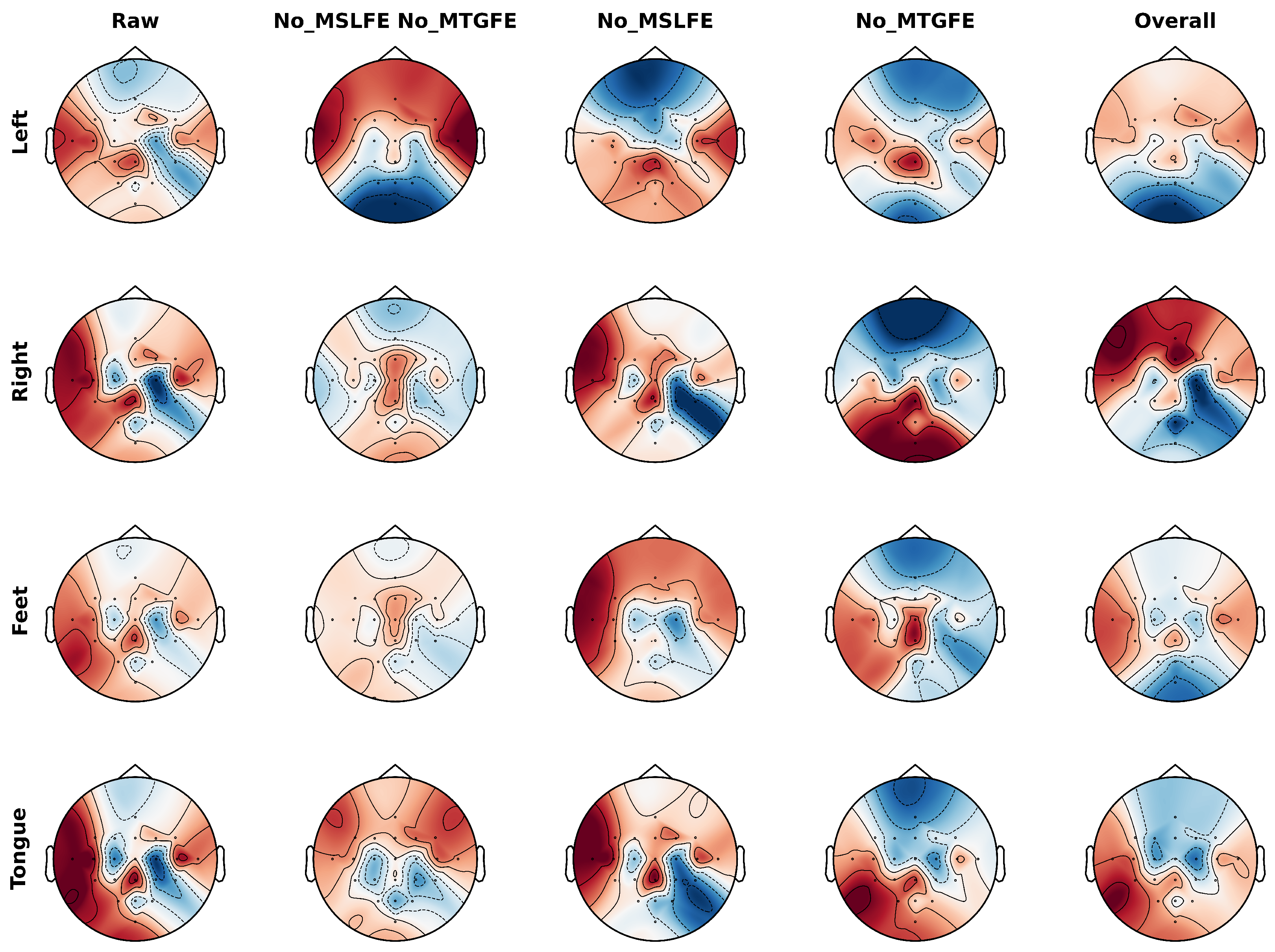
To further investigate the interpretability of the proposed model, we employ Grad-CAM to illustrate the spatial activation patterns on EEG topographical maps.
Grad-CAM highlights the regions in the input that contribute most to the model’s predictions, enabling an intuitive understanding of the learned representations. As shown in
Figure 13, we present the activation maps for four motor imagery classes (Left, Right, Feet, and Tongue) under different model configurations.
The full model (Overall) produces focused and well-localized activation patterns, with prominent responses over task-relevant brain regions. For left and right hand imagery, stronger activations are observed in the contralateral motor cortex, which is consistent with established neurophysiological findings. Similarly, for feet and tongue tasks, the activations are concentrated in their corresponding motor areas, indicating that the model effectively captures meaningful spatial features.
In contrast, removing key components leads to degraded activation patterns. When both MSLFE and MTGFE are removed (No MSLFE No MTGFE), the activation maps become diffuse and less structured, suggesting a loss of spatial discriminability. Removing MSLFE alone (No MSLFE) results in less consistent activation regions, indicating weakened local feature extraction. When the MTGFE module is excluded (No MTGFE), the activations become more scattered and less focused, highlighting the importance of global dependency modeling in maintaining coherent spatial representations.
Overall, these results demonstrate that the proposed model can effectively identify task-relevant brain regions, and that each component contributes to learning meaningful and interpretable spatial patterns.
5.6.3. Attention Maps
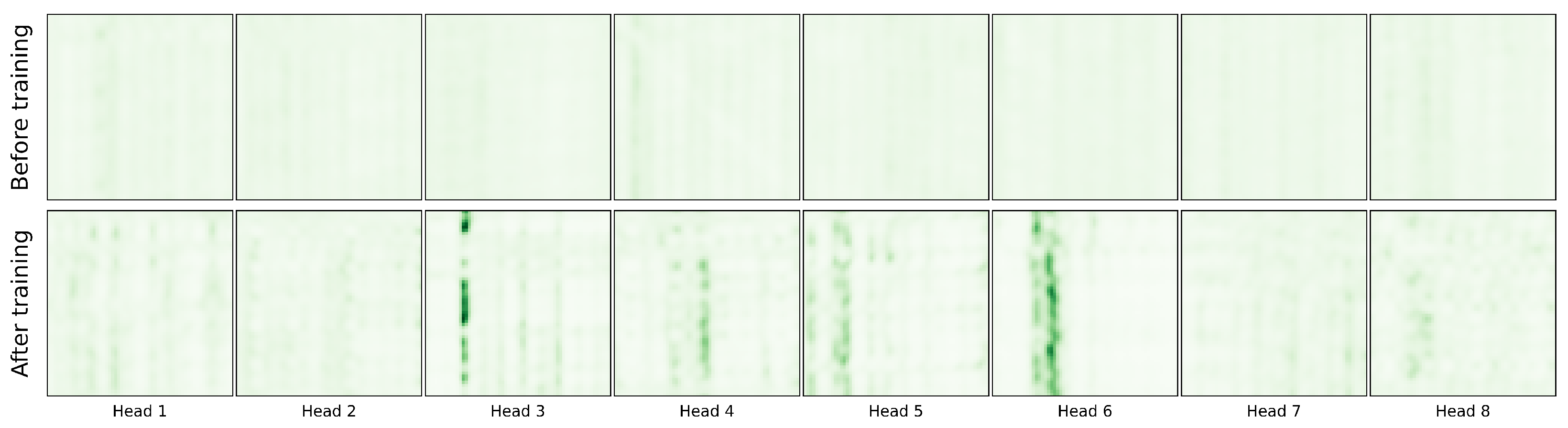
To complement the feature-level and spatial analyses, we illustrate the attention weight matrices from the MHA module in the MTGFE to investigate how the network models temporal dependencies within EEG sequences. In the MTGFE, the MHA component operates on features refined by the preceding Mamba module, capturing long-range interactions across temporal positions. Therefore, the attention maps offer a direct view of how the model distributes focus across the sequence to enhance temporal representation.
Figure 14 shows the attention maps of all eight heads for a representative subject, both before and after training. Prior to training, the attention distributions are relatively uniform and uninformative, reflecting the uninitialized state of the network. Following training, distinct patterns emerge, with certain heads emphasizing specific temporal regions while others capture broader interactions. This demonstrates that the multi-head design enables the network to model complementary temporal dependencies rather than relying on a single attention pattern.
These attention visualizations demonstrate that the MHA component in MTGFE captures structured temporal dependencies after training. Compared with the untrained network, trained attention patterns are more concentrated and head-specific, indicating that different heads capture complementary temporal relationships. Combined with the preceding t-SNE and Grad-CAM analyses, these results confirm that HMT-Net learns discriminative and interpretable representations across both spatial and temporal domains.
6. Discussion
Our proposed HMT-Net integrates multi-scale local feature extraction and hybrid temporal dependency modeling for MI-EEG decoding. The MSLFE module captures local temporal patterns at different receptive fields, while the MTGFE module combines Mamba-based sequence modeling with MHA-based global interaction modeling. The ablation results (
Figure 7,
Figure 8 and
Figure 9) show that removing the MSLFE or MTGFE degrades performance, confirming their complementary roles in learning discriminative EEG representations. In addition, the MTGFE ablation results in
Table 10 show that the Mamba–transformer variant achieves the best overall performance, indicating that Mamba and MHA provide complementary rather than redundant modeling capabilities.
The LOSO evaluation further demonstrates the cross-subject generalization capability of HMT-Net. As shown in
Table 7,
Table 8 and
Table 9, HMT-Net achieves competitive or superior performance compared with ATCNet, EEGConformer, TMSA-Net, and FA-STTM. The improvement is particularly evident on the HGD dataset, where more subjects and high-density EEG channels provide richer spatial-temporal information. However, the gains on BCI-IV-2a and BCI-IV-2b are relatively moderate, and some comparisons do not reach statistical significance, indicating that cross-subject MI-EEG decoding remains challenging when training subjects are limited or inter-subject variability is strong.
Despite its effectiveness, HMT-Net still has several limitations. First, the integration of Mamba and MHA introduces additional computational cost. As shown in
Table 12, HMT-Net maintains a compact number of trainable parameters and moderate memory consumption, but its FLOPs and inference time exceed those of lightweight CNNs. This indicates a trade-off between accuracy and computation, which is acceptable for offline MI-EEG analysis but real-time BCI applications may require further optimization. Second, individual differences remain an important factor affecting decoding performance. EEG signals vary across subjects due to neurophysiological patterns, electrode impedance, mental state, and task execution strategies. Although HMT-Net improves average performance, subject-wise variability persists, suggesting that a single shared model may not fully capture subject-specific characteristics. Future work may explore subject adaptation, domain generalization, or calibration-efficient learning. Third, practical deployment may face additional challenges, including EEG non-stationarity, artifacts, electrode displacement, and recording variations. These factors may reduce robustness under laboratory-trained models. Future studies should evaluate HMT-Net under diverse real-world scenarios and investigate more robust preprocessing, artifact handling, and adaptation strategies.
Overall, HMT-Net demonstrates strong potential for MI-EEG decoding by jointly modeling multi-scale local features and global temporal dependencies. The proposed architecture improves representation quality and classification performance, while the additional analyses reveal both its advantages and current limitations. Future work will focus on reducing computational cost, improving subject adaptation, and enhancing robustness in real-world BCI applications.




 ,
,