


Abstract
Academic well-being is often examined as an individual condition or support need, but less is known about how students construct well-being during transition into demanding pedagogical environments. This qualitative study explores how first-semester students in a Danish Problem-Based Learning (PBL) university understood and sustained academic well-being. Semi-structured interviews with 17 students from health-related and engineering/technology-related programs were analyzed using reflexive thematic analysis. The findings show that academic well-being was experienced as transition work: students made academic demands meaningful through relevance and purpose, developed confidence through emerging competence, negotiated support and vulnerability in teamwork, and managed autonomy within pedagogical and institutional structures. The study contributes to higher education research by showing how academic well-being emerges through interactions among intrapersonal resources, peer collaboration, and learning environments. It argues that transition support in PBL contexts should scaffold autonomy, collaboration, belonging, and academic meaning-making rather than treating well-being as an individual student responsibility alone.
1. Introduction
The transition to higher education has long been recognized as a significant and demanding period in students’ educational trajectories (Cameron & Rideout, 2022; Hussey & Smith, 2010). Rather than constituting a single moment of entry, transition is increasingly conceptualized as a complex and ongoing process involving changes in students’ academic practices, social roles, and personal lives. Entering higher education requires students to adapt to unfamiliar learning environments while negotiating heightened expectations for learner autonomy and responsibility, alongside broader changes related to independence and identity formation (Hussey & Smith, 2010).
Recent research reinforces this process-oriented understanding by demonstrating that transition unfolds in non-linear ways across the first semesters of university study, rather than being resolved in the initial weeks (Cameron & Rideout, 2022). Students often continue to adjust to academic demands, independent learning expectations, and self-management responsibilities while feeling insufficiently prepared for the level of autonomy required (Thompson et al., 2021). Transition has further been described as beginning prior to formal entry into higher education and extending until students have adapted to the new educational context and consolidated a revised learner identity, underscoring its temporal and developmental nature (Cifuentes Gómez et al., 2022). Importantly, students’ transition trajectories are shaped by prior educational experiences as well as institutional and social contexts, contributing to considerable variation in how transition is experienced (Athanasiadou et al., 2024).
While transition research has increasingly foregrounded the complexity of students’ early university experiences, a growing body of literature points to students’ well-being as a central dimension through which these experiences are lived and interpreted (Maymon et al., 2019). Empirical studies consistently identify social–emotional well-being as a critical component of successful adjustment to higher education, with the transition itself frequently experienced as a significant source of stress (Maymon et al., 2019; Wrench et al., 2014). Importantly, students’ well-being during transition is shaped not only by individual characteristics but also by the availability, quality, and sources of support within their learning environments, with perceived support quality playing a particularly influential role in well-being outcomes (Maymon et al., 2019).
Within this context, academic well-being has increasingly been used as a lens for understanding students’ experiences in higher education. Rather than being limited to the absence of distress, academic well-being is commonly conceptualized as a multidimensional construct encompassing students’ emotional experiences, perceived academic demands, sense of competence, and access to personal and relational resources within the learning environment (Chen et al., 2021, 2023, 2024; Hascher, 2012; Korhonen et al., 2014; Perkins et al., 2021). Research indicates that academic well-being is closely intertwined with stress, motivation, and learning conditions, and plays a critical role in students’ capacity to adapt to university study (Barbour & van Meggelen, 2024; Govorova et al., 2020).
However, while existing studies have established the importance of academic well-being for student adjustment, less is known about how first-semester students themselves conceive academic well-being during the transition, and how they actively develop resources and strategies to sustain it within specific pedagogical contexts (Chen et al., 2021). Much of the current literature focuses on outcomes, risk factors, or institutional support structures, offering limited insight into the lived processes through which academic well-being is experienced, negotiated, and developed in everyday study practices. This gap is particularly salient in learning environments characterized by high levels of autonomy, such as Problem-Based Learning (PBL), where students are required to navigate academic, social, and organizational demands simultaneously during the transition to university (Chen et al., 2021, 2023, 2024).
This study positions academic well-being and transition not as separate constructs but as interrelated processes. By examining how academic well-being is experienced and developed within the transition to university, the study seeks to show how students’ early transition trajectories are shaped through the resources and constraints embedded in their academic well-being. Accordingly, this study examines how first-semester university students conceive academic well-being and how they develop resources and strategies to sustain it during their transition to higher education within a PBL context. The study is guided by the following research questions:
RQ1: How do first-semester students understand academic well-being during their transition into a PBL university?
RQ2: How do first-semester students develop resources and strategies to sustain academic well-being during the transition?
By answering these questions, the article contributes to higher education research by conceptualizing academic well-being as transition work: a developmental and relational process through which students make academic demands meaningful, build competence, negotiate peer interdependence, and learn to manage autonomy within pedagogical and institutional structures. The study adopts a narrative qualitative approach based on semi-structured interviews with 17 first-semester students enrolled in a university where Problem-Based Learning (PBL) constitutes the institutional learning model, including ten students from health-related programs and seven from engineering/technology-related programs.
2. Theoretical Underpinnings
2.1. Transition to University as a Developmental Context
The transition to university represents a critical developmental period shaping students’ academic trajectories and well-being. First-year students frequently encounter heightened academic demands, increased autonomy, and the need to adapt to unfamiliar learning and social environments, all of which may challenge their adjustment and engagement (Nemes, 2025). Empirical research consistently shows that students’ emotional, social, and physical well-being is particularly vulnerable during the first year of study, underscoring the importance of supportive learning contexts during this period (Zhang, 2025).
Students enrolled in health-oriented programs often face especially demanding transitions due to intensive academic workloads and early professional expectations. Research indicates that first-year health professions students navigate multifaceted adjustments across academic, social, emotional, and institutional domains, with personal–emotional and social challenges reported as particularly significant despite strong academic commitment (Malau-Aduli et al., 2021). Studies of medical students further demonstrate how the volume and pace of academic work intensify adaptation pressures as students engage with student-centered learning approaches while managing emotional and professional expectations (Wahid et al., 2025).
Similarly, research within engineering education highlights how academic well-being is shaped by the pressures encountered during the first year. Longitudinal evidence points to a gradual decline in engineering students’ well-being across the academic year, with workload, performance expectations, and competitive program structures identified as dominant stressors (Ostafichuk et al., 2024). Students’ well-being is thus influenced by the interaction of individual and contextual factors within their learning environments, particularly during the early stages of transition (Chen et al., 2024).
Taken together, this body of research positions the transition to university as both academically demanding and developmentally consequential for students’ well-being. However, understanding how students experience and navigate this period requires an analytic lens capable of capturing the lived processes through which well-being is constructed within transition contexts.
2.2. Conceptualization of Academic Well-Being Within Transition
Well-being is a multifaceted construct examined across psychology, education, health, and social sciences, resulting in diverse yet overlapping conceptualizations (Ryan & Deci, 2001; Schmidt & Hansson, 2018). Psychological scholarship commonly distinguishes between hedonic perspectives, emphasizing happiness and positive affect, and eudaimonic perspectives, which foreground meaning, autonomy, self-efficacy, and personal growth (Freire et al., 2019; Kahneman et al., 1999; Ryff & Singer, 1996).
Within higher education research, increasing attention has been directed toward students’ well-being in relation to their learning experiences, often conceptualized as academic well-being (Perkins et al., 2021). Academic well-being is generally understood as a multidimensional construct encompassing students’ emotional experiences, perceptions of academic demands, sense of competence, and access to supportive learning resources (Chen et al., 2023; Govorova et al., 2020; Soutter et al., 2014). From a hedonic perspective, it has been defined as the predominance of positive emotions and cognitions toward study and the educational context (Hascher, 2012), while eudaimonic perspectives emphasize self-efficacy, autonomy, academic identity, engagement, and perceived challenges in learning (Fiorilli et al., 2017; Korhonen et al., 2014).
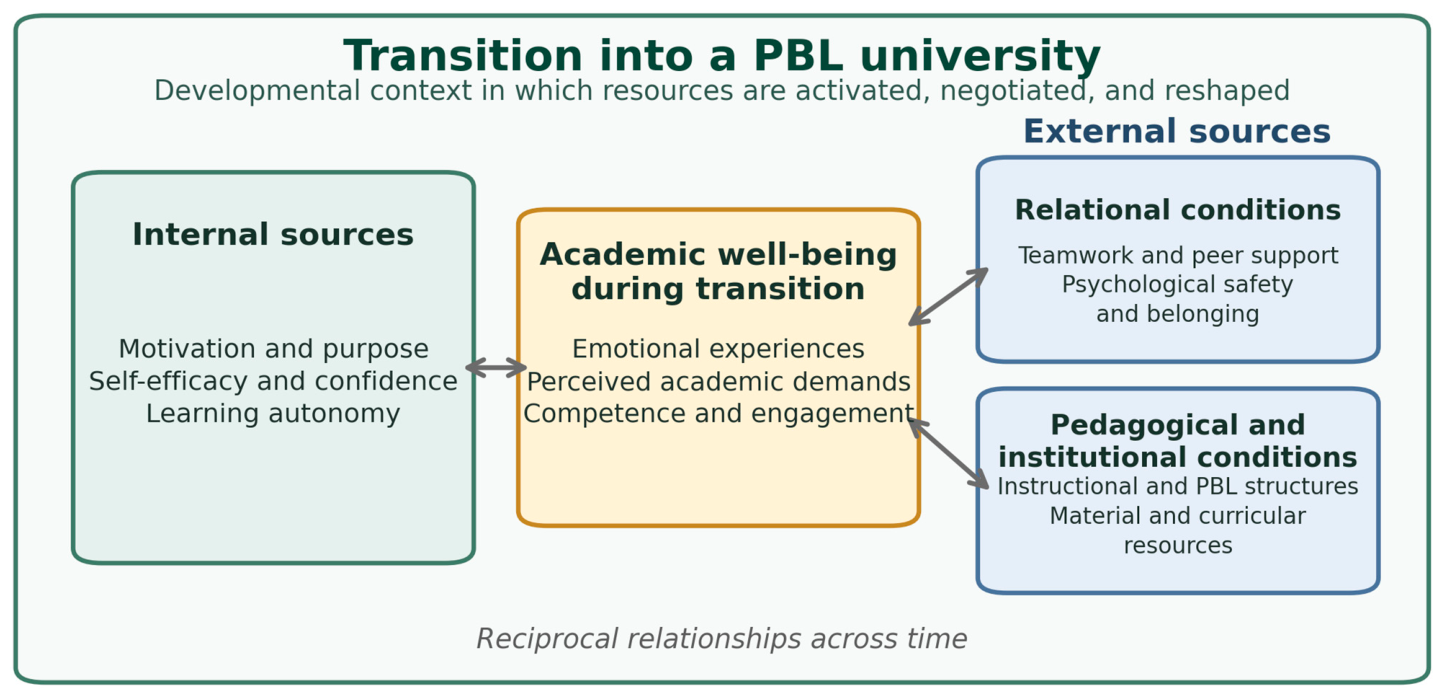
Building on these perspectives, Chen et al. (2024) propose a conceptual framework particularly suited to examining academic well-being in student-centered learning environments such as Problem-Based Learning (PBL). Their model conceptualizes academic well-being not as a stable individual trait but as a dynamic state shaped through the interaction of internal and external sources. Internal sources include motivation, self-efficacy, and learning autonomy, while external sources encompass instructional practices, peer relations, and institutional conditions (Chen et al., 2024). This relational perspective aligns with social-cognitive and sociocultural approaches that understand well-being as co-constructed through engagement with academic tasks, social relationships, and educational structures (Jensen & Cross, 2021; Kovich et al., 2023).
Across health and engineering education, research on student well-being has historically focused on mental health outcomes such as stress, anxiety, and burnout (Danowitz & Beddoes, 2018; Malau-Aduli et al., 2021). While these studies provide important insights, scholars increasingly call for broader conceptualizations that also account for competence, engagement, and belonging within learning environments (Golsteyn & Ostafichuk, 2020; Jensen & Cross, 2021). Chen et al.’s (2024) framework responds to this need by integrating emotional, personal, and contextual dimensions of academic well-being.
In this study, academic well-being is conceptualized as dynamically constructed within the transition to university through the interaction of internal and external sources. Internal sources refer to intrapersonal resources such as motivation, self-efficacy, learning autonomy, and developing academic confidence. External sources encompass interpersonal and contextual conditions, including peer collaboration, instructional practices, pedagogical structures, and institutional learning environments (Chen et al., 2021, 2024). Transition is thus understood as the developmental context in which these resources are activated, negotiated, and reshaped. This integrated lens enables analysis of how students experience academic demands, build supportive relationships, and engage with learning environments in ways that collectively shape their transition trajectories.
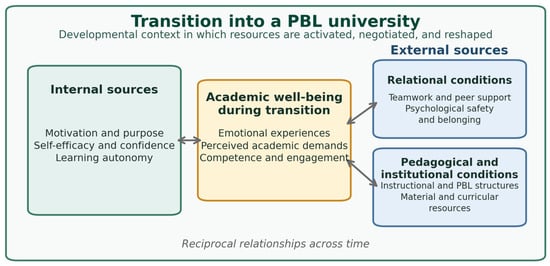
Figure 1 summarizes this conceptual framing. Because the study is qualitative, the arrows indicate reciprocal relationships among sources rather than tested causal pathways.
Figure 1.
Conceptual framework guiding the study: academic well-being is dynamically constructed during transition through interactions between internal and external sources in a PBL context.
3. Materials and Methods
3.1. Research Context and Participants
The study was conducted at a Danish university where PBL is an institutional pedagogical model across programs. In the programs represented in this study, the model was implemented through different combinations of courses, case-based learning, and collaborative project work. Students engaged with authentic, discipline-relevant problems in groups, supported by teachers or supervisors, and assumed responsibility for inquiry, planning, and coordination. Although the balance among these elements varied across health and engineering/technology programs, collaboration, problem orientation, student responsibility, and independent learning were common features of the learning environment (Chen et al., 2021). For first-semester students, the model therefore required simultaneous adjustment to new academic expectations, group collaboration, and increased autonomy.
The empirical context included health and engineering/technology educational programs, allowing exploration of first-semester students’ academic well-being across disciplinary settings in which students encounter collaborative, problem-oriented, and self-directed learning activities. Participants were purposively recruited to capture transition experiences in first-semester PBL study environments. Recruitment took place during scheduled teaching sessions, where the interviewer introduced the study and invited interested students to register in person or by email. Participation was voluntary and unrelated to course assessment.
Seventeen students participated in this study: ten from health-related programs and seven from engineering/technology-related programs. Participants were assigned pseudonymous identifiers, H01–H10 and E11–E17. Participant characteristics are presented in aggregated form in Table 1 to reduce the risk of identification.
Table 1.
Participant characteristics.
3.2. Research Design and Data Generation
The study adopted a qualitative narrative-oriented design to gain in-depth insight into first-semester students’ experiences of the transition to university and its influence on their academic well-being. In this study, narrative is understood as participants’ meaning-making accounts of lived experiences unfolding over time, capturing developmental trajectories, personal interpretations, and processes of adjustment during transition (Clandinin & Connelly, 2000; Riessman, 2008). This orientation enabled exploration of how students interpreted academic demands, negotiated challenges, and made sense of emerging resources for sustaining well-being during their early university experiences. While informed by narrative inquiry, the study did not employ formal narrative analysis. Instead, narrative accounts were examined through a thematic, deductive–inductive analytic approach informed by the conceptual framework outlined in Section 2. This design allowed sensitivity to temporal and experiential dimensions of transition while enabling systematic identification of patterns across participants’ accounts (Clandinin & Connelly, 2000).
Semi-structured individual interviews were conducted to elicit in-depth reflections on students’ lived experiences (Kvale & Brinkmann, 2009). Individual interviews were chosen over focus groups to provide a confidential setting in which participants could openly discuss personal challenges, coping processes, and well-being-related experiences. The interview guide (Appendix A) was developed from the study aims and conceptual framework and reviewed within the research team for content relevance, clarity, and alignment with the research questions. It addressed both internal resources (e.g., motivation, self-efficacy, autonomy) and external conditions (e.g., peer collaboration, teaching practices, and learning environments) shaping academic well-being. The semi-structured format ensured coverage of common domains while allowing participants to elaborate on experiences they perceived as significant.
Before formal data collection, a pilot interview was conducted to assess the comprehensibility, relevance, and flow of the questions. The research team reviewed the pilot and judged that no changes to the guide were required; the pilot interview was not included in the analysis. All 17 participants subsequently completed an interview and were asked the same core questions, while follow-up probes varied in response to individual accounts. All 17 transcripts were included in the analysis. The quotations presented in Section 4 were selected to illustrate analytically relevant patterns and therefore do not include every participant. Interviews were conducted by the same interviewer between October and November 2025 and lasted between 27 and 118 min, with most lasting substantially longer than the shortest interview. Interviews took place at participant-selected locations on the university campus to foster a comfortable conversational setting. All interviews were conducted in Danish, the participants’ native language, to support nuanced expression of experience. The interviews were transcribed verbatim in Danish and subsequently translated into English for analysis. To enhance linguistic and interpretive accuracy, translated transcripts and selected quotations were checked through repeated comparison with the original Danish recordings and transcripts by multiple researchers.
3.3. Data Analysis
Data were analyzed using reflexive thematic analysis (Braun et al., 2023). Analysis followed six recursive phases: familiarization, coding, initial theme generation, reviewing and developing themes, refining and naming themes, and producing the report. All authors familiarized themselves with the transcripts through repeated reading and memo-writing. Initial coding was informed by the study aims, research questions, and theoretical framework. The analysis used an integrated deductive–inductive approach in MAXQDA 24. Deductively, codes were developed in relation to personal, relational, pedagogical, and institutional conditions shaping academic well-being, including motivation, confidence, autonomy, peer collaboration, instructional practices, PBL structures, and learning environments. Inductively, the team remained open to additional patterns in students’ accounts, including uncertainty, belonging, support, responsibility, and the negotiation of academic expectations. Coding and theme development were iterative and collaborative. Team discussions were used reflexively to compare interpretations, refine themes, examine tensions in the data, and challenge assumptions. The final themes were developed to show how students understood academic well-being and how they perceived it as supported or constrained during transition into PBL.
3.4. Ethical Considerations and Reflexivity
Following approval by the university’s institutional ethics committee, the study was conducted in accordance with institutional procedures for research involving human participants. Participants received written and oral information about the study and provided informed consent. They were informed that participation was voluntary, that they could withdraw, and that participation or non-participation would not affect their studies. Consent covered audio recording, transcription, analysis, and the use of anonymized quotations in research publications.
Participants were assigned pseudonyms, and identifying details were removed or aggregated during analysis and reporting. Data were stored securely and accessed only by the research team. The research team’s position within a PBL university context shaped both access to the field and interpretation of the data. During analysis, the team attended to supportive experiences as well as tensions and negative cases, including accounts where autonomy, peer collaboration, or institutional conditions were experienced as difficult or insufficiently supportive.
4. Results
This section presents findings structured through a deductive framework refined by inductive thematic analysis. Section 4.1 examines how students define academic well-being, and Section 4.2 explores perceived supports and challenges. Overall, the findings show how academic well-being is shaped by personal, relational, and structural experiences.
4.1. How Do First-Semester Students Understand Academic Well-Being During Their Transition into a PBL University?
Participants conceptualized academic well-being in diverse ways, reflecting both internal and external domains. In this study, internal conceptions refer to how students experience themselves academically, including their motivation, sense of meaning, perceived competence, and psychological safety in learning. External conceptions, by contrast, relate to the study conditions shaping these experiences, such as teaching practices, workload structures, and the surrounding learning environment. Thematic analysis further identified a small number of holistic perspectives that integrated emotional, academic, and social dimensions of well-being across these domains.
4.1.1. Internal Conceptions of Academic Well-Being
A smaller number of participants articulated academic well-being primarily through internal experiences related to motivation, meaning-making, psychological safety, and perceived academic functioning. In these accounts, well-being was understood less in relation to external study structures and more as an experiential state shaped by how students engaged with learning and positioned themselves within the educational context.
One participant described academic well-being as closely tied to perceived purpose and long-term meaning. He defined academic well-being as “being able to see the long-term purpose of what I’m learning” (E16), emphasizing that engagement depended on understanding how knowledge could be applied in practice. When learning content felt overly abstract without clear relevance, sustaining motivation became more difficult. Academic well-being thus emerged through a sense of purpose, where learning aligned with personal goals and future aspirations. Interest in the subject further reinforced this orientation, as he also expressed: “It’s also an advantage that the subject interests me but I chose this program myself… For me, well-being is when I can see that what I learn is something I can apply” (E16).
A second participant foregrounded psychological safety as central to her understanding of academic well-being. She associated well-being with feeling safe enough to ask questions, make mistakes, and participate without fear of negative judgment:
“Feeling safe enough to dare to ask questions… and not being afraid that someone might look at you funny…”(H09)
Here, academic well-being was grounded in a learning climate that legitimized uncertainty and intellectual risk-taking, enabling active engagement.
4.1.2. External Conceptions of Academic Well-Being
While internal experiences were present, several participants framed academic well-being in relation to external academic conditions that shaped their learning experiences. These conceptions focused on teaching practices, workload expectations, learning structures, and the broader study environment.
Several students associated academic well-being with the design and delivery of teaching. One participant linked it to “teaching, the study workload, and how much we’re expected to read and prepare” (H10), while another emphasized the importance of teaching methods aligning with student investment: “I associate that with the benefit I get from the different teaching methods… whether it matches the time I invest” (H08).
Participants also highlighted the role of the surrounding learning culture. One health student described academic well-being as dependent on being part of an engaged academic environment: “It’s important to be in an environment where everyone is engaged… where you can get help from others and ask if you’re stuck” (H01). In this sense, academic well-being was shaped by collective study norms, peer seriousness, and the availability of academic support.
4.1.3. Academic Well-Being as a Holistic Experience
A smaller group of participants articulated academic well-being in more integrative terms, emphasizing its connection to mental health, balance, and social belonging. Rather than distinguishing between internal and external dimensions, these perspectives framed well-being as a holistic experience of thriving within university life. One participant expressed succinctly, “You can’t learn if you don’t feel good” (H06). Another student linked academic well-being directly to emotional sustainability:
“Academic well-being is closely connected to mental health. You need good mental health to thrive academically… It’s about balance”.(E13)
These accounts highlight how academic well-being may be understood as an interconnected state encompassing emotional stability, meaningful engagement, and social connectedness.
4.2. How Do First-Semester Students Develop Resources and Strategies to Sustain Academic Well-Being During the Transition?
Building on participants’ conceptualizations of academic well-being in Section 4.1, this section examines how well-being was shaped during the transition to university. Instead of focusing on definitions, the analysis highlights the experiential and contextual processes through which students sustained their well-being. Three sources emerged: academic experiences, where students developed intrapersonal resources such as competence, motivation, and resilience; teamwork, which provided both support and challenges that influenced belonging and coping; and the study environment, which shaped engagement through structural and pedagogical conditions. Together, these dimensions show how academic well-being was co-constructed through personal, relational, and environmental experiences. Table 2 summarizes the dimensions and subdimensions identified for RQ2.
Table 2.
Summary of dimensions and subdimensions identified for RQ2.
4.2.1. Academic Experiences as Sources of Academic Well-Being
Students’ accounts revealed academic experiences as central intrapersonal sources shaping their academic well-being during the transition to university. Across interviews, participants described how managing academic demands, sustaining motivation, and developing confidence interacted to support their engagement and persistence.
Motivation, Relevance, and Purpose as Academic Resources
Alongside academic demands, more than half of the students described motivation, relevance, and sense of purpose as important resources supporting their academic well-being during the transition. Experiences that connected theoretical learning to practice, future professional roles, or personal interests helped sustain engagement, particularly when academic pressures were high.
Several health students emphasized how encountering tangible applications of their studies strengthened their motivation. When abstract knowledge became visible through practical or embodied learning experiences, the content felt more meaningful and easier to engage with: “When you deal with organs that are tangible… it becomes much more exciting. Molecular Biology felt intangible. But now, being able to see, feel, and touch things… that’s motivating” (H08).
Seeing how academic content translated into real-world relevance helped students make sense of their studies and reinforced their commitment to learning. Exposure to professional pathways and future career possibilities further strengthened students’ sense of purpose. Encounters with practitioners or examples of professional roles helped students imagine their future selves and connect present academic effort to long-term goals: “Getting examples of what you can actually become… that’s when I’ve probably felt extra motivated” (H09). For these students, motivation was not only rooted in present learning but also in the perceived value and direction of their educational journey. Knowing that their studies would lead to meaningful professional outcomes supported persistence through demanding periods.
Intrinsic interest in the subject area also played a significant role in sustaining academic well-being. Personal curiosity and intellectual engagement helped students manage moments of overwhelm by maintaining a sense of enjoyment and commitment: “It has mainly been my curiosity. That’s what motivates me… I knew I had to choose an education where I’m really interested in the subject, otherwise I wouldn’t get through it” (H04).
Developing Academic Confidence and Competence
In addition to managing academic demands and sustaining motivation, students described the development of confidence and perceived competence as central to their academic well-being during the transition to university. Experiences of success, whether small or significant, reinforced their belief in their ability to meet academic expectations and progress within their programs.
Several students highlighted how achieving learning goals or completing challenging tasks strengthened their motivation and willingness to engage with future academic demands. One engineering student reflected on how experiencing success enhanced his confidence and readiness to take on new challenges: “It makes studying more motivating when you see that your work matters. It gives you courage to take on other challenges… When I’m satisfied with my work, I feel stronger” (E13).
Across accounts, confidence was closely linked to perceptions of academic control and resilience. Students expressed that believing in their ability to learn reduced stress and supported persistence, even when content was demanding. As one participant stated: “There is nothing you cannot learn” (H06). Early milestones, and the prospect of completing the first semester, were described as especially significant. These experiences reassured students that they were capable of continuing and completing their degrees: “If I can do the first semester, I can do the rest” (H10). Students also described deliberately challenging themselves beyond minimum requirements, framing such efforts as important for building competence and self-efficacy. One engineering student explained: “I could have done the basic version easily, but I pushed myself… That was a success for me because coding is the hardest part of this program” (E16). Together, these accounts illustrate how academic confidence developed through accumulated experiences of mastery, persistence, and self-challenge. This growing sense of competence strengthened students’ resilience and contributed positively to their academic well-being during the transition to university.
4.2.2. Teamwork as a Dual Source of Academic Well-Being: Support and Strain
Building on the intrapersonal academic experiences discussed above, this section turns to the interpersonal domain of teamwork. Students’ accounts revealed teamwork as a central yet demanding aspect of the transition to university in the studied context. In the PBL setting, teamwork was initially experienced as challenging due to uncertainty, uneven understanding, stress, and the need to collaborate with unfamiliar peers. However, students’ reflections revealed a growing awareness of the potential of teamwork as a positive space for academic well-being, alongside deliberate actions through which they shaped collaboration in more supportive ways. Across accounts, students described how working through these difficulties transformed teamwork from a potential source of strain into a source of academic, emotional, and social support. In this sense, teamwork functioned not only as an external structure for learning, but also as a developmental space where students learned to sustain their academic well-being through interaction with others.
Building on this developmental process, students’ experiences of teamwork revealed three interrelated forms of support that contributed to their academic well-being during the transition: academic support (support for learning, understanding, and performance); social and academic belonging (relational safety, inclusion, and peer connection); and navigational support (managing the expectations, structures, and relational demands of group work). The following subsections present these three dimensions as perceived by first-semester health and engineering students.
Teamwork as an Emerging Source of Academic Support
Students’ accounts revealed that teamwork could become an important academic resource when they encountered uncertainty, uneven understanding, and new academic expectations. Working with peers provided opportunities for them to clarify misunderstandings, test ideas, and build confidence through explanation and discussion: “So both the person who gets help and the person who explains benefit academically because explaining helps you prepare for exams” (H04). During periods of high workload or reduced capacity, teamwork could help sustain engagement when group members adjusted tasks and expectations: “That support has really made it possible for me to just function a bit better” (E13).
Over time, differences in background and experience, while initially challenging, could become academic resources that enriched discussion and problem-solving for some:
“Getting that interprofessional view on a problem really raises the quality of what we’re discussing”.(H09)
Teamwork as a Source of Social and Academic Belonging
Beyond academic learning, most of the students described teamwork as a key space for developing social and academic belonging during the transition to university. Early in their transition, students experienced insecurity, hesitation, and uncertainty about their place in the group, which limited their participation and sense of inclusion: “The disadvantage is in case groups, especially at the beginning, when you don’t dare to speak up” (H02).
This early silence was often connected to feeling unsure about one’s understanding or fearing negative evaluation, particularly when others appeared to progress more quickly:
“There are two who understand it very quickly […] then you sit and think: ‘I haven’t quite understood it yet’”.(H07)
Over time, as students negotiated these challenges, teamwork increasingly became a developmental space supporting academic, emotional, and social well-being. Students described how teamwork gradually became a space where they felt less alone in their academic struggles and more confident to ask questions:
“I feel that, as I said before, you have a network so you dare to ask when you’re in doubt. And then you have these people who have become your friends, who can help you understand things and also that you’re in this together”.(H01)
Belonging was further strengthened when students felt understood and accepted by their group members, particularly during periods of stress or reduced capacity. Feeling supported rather than judged allowed students to remain engaged in both learning and collaboration:
“They’ve just been like, ‘Listen, if you need to deal with that, we’ll take care of things. If there’s something you need to do later, we’ll figure it out’”.(E13)
4.2.3. Study Environment as a Source of Academic Well-Being
Students’ accounts highlighted the study environment as an important contextual source shaping their academic well-being during the transition to university. In contrast to the intrapersonal academic experiences described earlier and the interpersonal dynamics of teamwork, participants reflected on how pedagogical structures, institutional arrangements, and material learning conditions influenced their engagement and adjustment. Across interviews, three interrelated environmental dimensions emerged: autonomy and pedagogical structure, the navigation of environmental and learning demands, and material and curricular resources supporting engagement.
Autonomy and Pedagogical Structure in the Transition
Students across both health and engineering programs in this study described entering a learning environment characterized by reduced external structure and a reorganization of pedagogical practices compared with their previous educational experiences. For many, particularly health students transitioning from vocational or closely scheduled secondary education, this shift involved a sudden increase in autonomy: “Going from vocational education to university no one really holds your hand anymore” (H10).
This transition was commonly experienced as both liberating and demanding, especially during the initial phase of study. Most of the students described having greater freedom to organize their learning, but also heightened responsibility for deciding how, when, and how much to study: “It’s difficult to suddenly be the master of your own horse… it’s hard to accept that you decide everything yourself” (H10).
For a small number of students, this autonomy was appealing yet unsettling, reflecting ambivalence toward the withdrawal of external monitoring: “It’s cool that there isn’t a teacher after you, but I could miss that… there’s no one keeping track of me” (H01).
Changes in pedagogical structure were also evident in engineering programs, where students described a shift toward project-based and independent learning formats, accompanied by fewer scheduled lectures and more self-directed work: “It’s more project-based and independent, with fewer courses per semester but more depth… just something new to get used to” (E16). Lectures, while still present, were experienced less as continuous instructional guidance and more as orientation points within a broader framework of independent and collaborative learning. As a result, students were required to take greater responsibility for structuring their time and learning processes: “You have to structure your own time, and that takes time” (E14).
While several participants framed this autonomy as a positive developmental challenge that supported personal growth, the adjustment required was substantial, particularly early in the program. Students’ accounts suggest that the reconfiguration of pedagogical structure from externally regulated to self-directed learning formed a central environmental condition shaping their academic well-being during the transition.
Material, Spatial, and Curricular Resources Supporting Engagement
In addition to structural demands, students highlighted material and curricular resources as important environmental supports for academic well-being. These resources contributed to engagement, motivation, and a sense of institutional investment, shaping how students experienced autonomy and independent learning during transition. Across interviews, three interrelated environmental dimensions emerged: the pedagogical structures organizing learning, students’ navigation of environmental and academic demands, and the material and curricular resources that supported engagement. Together, these dimensions illustrate a developmental progression in which environmental structure shaped students’ need to navigate new demands, which in turn influenced the extent to which the learning environment functioned as supportive of academic well-being.
Across both fields, participants appreciated modern, well-maintained facilities, which contributed to a sense of professionalism and signaled institutional investment in their education: “Here, the infrastructure is modern, lots of group rooms, new microscopes, and updated facilities” (H03). Engineering students similarly emphasized the value of dedicated group spaces, which supported both project collaboration and a sense of ownership over their learning processes: “We get our own group room […] it feels like a lot of money is being spent to make sure we get good at what we do” (E17).
Curricular design also played a role in supporting engagement. Engineering students highlighted creative freedom within assignments as a motivating feature that fostered ownership and self-expression: “It’s great that there’s creative freedom. There aren’t many other programs related to programming that allow that” (E14).
Health students, by contrast, emphasized the relevance of program content, particularly case-based learning and engagement with real-life problems. These approaches helped connect theory to practice and made autonomous learning feel purposeful rather than isolating: “I actually really like the case work […] for me, it’s awesome” (H04). Another noted, “The insistence that it has to be something real that you start from something that actually exists” (H10).
Overall, students’ accounts suggest that academic well-being within the study environment was shaped through an interplay of pedagogical structure, the navigation of environmental demands, and access to supportive material and curricular resources. This progression from structure, through navigation, to support highlights how contextual conditions influenced whether autonomy was experienced as empowering, overwhelming, or developmentally productive during the transition.
5. Discussion
This study examined how first-semester students conceptualize academic well-being and how it is developed during the transition to university within a PBL context. Integrating students’ definitional accounts with their lived experiences, the findings position academic well-being not as a static individual state but as a developmental process unfolding through early university study. Rather than residing solely within personal dispositions or institutional provisions, academic well-being emerged through the dynamic interplay of intrapersonal resources, collaborative practices, and structural learning conditions. This perspective reinforces process-oriented conceptualizations of transition as an extended and negotiated adjustment rather than a discrete entry event (Cameron & Rideout, 2022; Chen et al., 2021, 2023, 2024; Hussey & Smith, 2010).
Linking the findings to the study’s conceptual framework, the analysis extends existing understandings of academic well-being as shaped by both internal and external sources (Hascher, 2012; Korhonen et al., 2014; Perkins et al., 2021). While prior research has conceptualized internal resources such as motivation and self-efficacy alongside external conditions such as instructional practices and peer relations (Chen et al., 2024; Govorova et al., 2020), the present findings illustrate how these dimensions are developmentally enacted through transition processes. Students’ experiences of competence, purpose, and psychological safety were continuously negotiated through engagement with academic demands, teamwork practices, and institutional structures. Academic well-being thus appeared as a co-constructed state emerging through participation in the socio-academic environment, aligning with sociocultural perspectives on learning and adjustment (Jensen & Cross, 2021; Kovich et al., 2023).
At the interpersonal level, teamwork functioned as a central developmental space within the PBL model. While collaborative work was initially experienced as a source of uncertainty, uneven participation, and relational strain, students gradually developed strategies to negotiate expectations, manage differences, and build mutual support. These findings resonate with literature emphasizing the importance of peer interaction and social integration for student adjustment (Maymon et al., 2019). Importantly, the study extends this literature by showing that relational well-being did not arise automatically through group work structures but emerged through dialogue, negotiation, and adaptive collaboration practices (Chen et al., 2021, 2023, 2024). Psychological safety and belonging were thus developmental outcomes rather than preconditions of teamwork.
At the structural level, the study environment mediated how students experienced autonomy, responsibility, and engagement during transition. The shift toward self-directed and project-based learning required students to assume responsibility for structuring time, interpreting expectations, and sustaining independent learning. While autonomy is often associated with positive educational outcomes, the findings illustrate its ambivalent character during early transition, where reduced external regulation could be experienced as both liberating and destabilizing. Material infrastructures, pedagogical design, and curricular relevance functioned as environmental supports that shaped whether autonomy was experienced as empowering or overwhelming.
Taken together, the findings suggest that academic well-being during the transition to university is best understood as a co-constructed developmental process shaped through the interaction of personal, relational, and structural dimensions. This integrated perspective contributes to both transition research and academic well-being scholarship by illustrating how well-being is enacted through everyday academic practices rather than residing solely within individual psychological states or institutional support mechanisms.
Implications for Educational Practice
Translating these findings into educational design suggests that supporting academic well-being during the transition to university requires a systemic approach that extends beyond individual student responsibility. Academic well-being emerged as a co-constructed developmental process shaped through interactions among students, educators, pedagogical practices, and institutional structures. As such, fostering academic well-being necessitates coordinated engagement across multiple actors and system levels.
For students, the findings highlight the importance of developing awareness of academic well-being as both an individual and collaborative capacity. Students’ well-being was shaped not only through personal meaning-making, motivation, and confidence-building, but also through their participation in peer learning and teamwork processes (Chen et al., 2023, 2024). Supporting students in recognizing transitional challenges as developmental, rather than individual deficits, may strengthen resilience and engagement. At the same time, fostering students’ capacities to engage constructively in teamwork, such as communicating expectations, negotiating differences, and contributing to psychological safety, may further support the relational foundations of academic well-being. Structured opportunities for reflection, peer dialogue, and collaborative sense-making may therefore strengthen both individual and collective well-being development during early study phases.
For educators, teaching practices play a critical mediating role in shaping how students experience academic demands and autonomy. Educators are positioned not only as knowledge facilitators but also as designers of transitional learning conditions. Making expectations explicit, scaffolding independent learning, and connecting theoretical content to professional relevance may support students’ motivation and sense of competence. Within collaborative learning environments, educators can further facilitate psychological safety, guide teamwork processes, and support students in navigating relational challenges.
From the program and institutional perspective, management and organizational structures shape the broader conditions through which academic well-being develops. Transition-sensitive program design may include coordinated curriculum design, balanced workload structures, and alignment between pedagogical expectations and students’ developmental readiness. Institutional investment in material and spatial learning infrastructures, such as group workspaces, accessible facilities, and supportive study environments, further contributes to students’ sense of belonging and academic engagement.
Taken together, these implications suggest that academic well-being during transition cannot be addressed through isolated interventions. Rather, it requires a system-oriented approach in which students, educators, and institutional leaders work collaboratively to design learning environments that scaffold autonomy, support relational learning, and sustain academic engagement. Such coordinated efforts may strengthen the developmental conditions through which academic well-being is cultivated during early university study.
6. Conclusions
This study explored how first-semester students conceptualize academic well-being and how it is developed during the transition to university within a PBL context. The findings position academic well-being as a developmental and co-constructed process rather than a static individual condition. Students’ well-being emerged through the dynamic interplay of intrapersonal resources, collaborative learning practices, and structural features of the study environment. By integrating students’ conceptualizations with their lived transition experiences, the study contributes to a more process-oriented understanding of academic well-being within early university trajectories.
Importantly, the findings highlight that academic well-being is shaped through systemic interactions across multiple actors and conditions. Students functioned not only as individual learners but also as collaborative participants in shaping relational learning environments. Educators, pedagogical practices, program structures, and institutional infrastructures jointly mediated how academic demands, autonomy, and belonging were experienced. Understanding academic well-being as embedded within this socio-academic ecology extends both transition research and well-being scholarship by foregrounding the coordinated conditions through which sustainable adjustment is cultivated.
Several limitations should be acknowledged. The study was conducted within a single Danish PBL university, which may shape the transferability of the findings to other educational contexts. The analysis foregrounded students’ perspectives and therefore captures students’ perceived experiences rather than direct observations of teaching practices, group interactions, or institutional decision-making. The study also captured experiences during an early transition phase, providing a cross-sectional rather than longitudinal view of academic well-being development. Finally, participation was voluntary, meaning that the study may not fully represent students who were less willing or able to participate, including those experiencing more severe difficulties during transition.
Future research may therefore benefit from adopting systemic and multi-actor perspectives that examine how academic well-being is supported across interacting pedagogical, relational, and institutional conditions. Longitudinal designs could further illuminate how well-being evolves across later stages of study, while comparative research across disciplinary and institutional contexts may deepen understanding of transition-sensitive educational design. Such approaches may contribute to developing more holistic strategies for supporting students’ academic well-being across higher education systems.
Author Contributions
Conceptualization, X.D. and S.H.; methodology, P.N., X.D. and S.H.; software, P.N. and Y.B.A.; validation, P.N., Y.B.A., X.D. and J.C.; formal analysis, P.N. and Y.B.A.; investigation, P.N.; resources, P.N., T.F., S.H., L.D.Ø. and C.B.; data curation, P.N. and Y.B.A.; writing, original draft preparation, P.N. and Y.B.A.; writing, review and editing, P.N., Y.B.A., X.D., J.C., T.F., S.H., L.D.Ø. and C.B.; visualization, P.N. and X.D.; supervision, X.D.; project administration, X.D. and P.N.; funding acquisition, X.D. All authors have read and agreed to the published version of the manuscript.
Funding
This research received no external funding. Internal institutional support was provided by the Institute for Advanced Study in PBL, Aalborg University.
Institutional Review Board Statement
The study was conducted in accordance with the Declaration of Helsinki, and approved by the Ethics Committee of Aalborg University (protocol code 2023-505-00134; date of approval: 10 January 2024).
Informed Consent Statement
Informed consent was obtained from all subjects involved in the study.
Data Availability Statement
Due to the sensitive and potentially identifiable nature of the qualitative interview data, the full interview transcripts are not publicly available. Anonymized excerpts are included in the article to support the presentation and interpretation of the findings.
Conflicts of Interest
The authors declare no conflicts of interest.
Abbreviation
The following abbreviation is used in this manuscript:
| PBL | Problem-Based Learning |
Appendix A
| Domains | Themes | Interview Questions | Probing Questions |
| Background and prior experience | Choice of education | (1) Why and how did you choose the current study program? | What factors influenced your decision? |
| Anticipation of university life | (2) How did you imagine university life before you started, and how does that compare to your experience now? | What has been surprising or different from your expectations? | |
| Conception of academic well-being | (3) How do you define well-being, and specifically academic well-being, in the context of university life? | How does your definition relate to your own experiences? | |
| Prior experience of well-being | (4) Before starting university, had you thought about or discussed well-being? If yes, in what ways? | With whom did you discuss it, and what aspects were most important to you? | |
| PBL experience | (5) Have you experienced PBL before starting this program? How did you understand it then, and how do you understand it now in your current environment? | What differences have you noticed between your expectations and your current experience? | |
| Internal sources | Motivation | (6) Can you tell me about times when you felt motivated or interested in your studies since starting university? Do you generally feel motivated? | What aspects of your subjects, projects or study environment make you want to engage more deeply? |
| On the other hand, what aspects of your study life demotivate you or are obstacles to your motivation? | |||
| Self-efficacy | (7) How confident do you feel in your ability to complete your learning tasks and meet academic requirements? | Can you recall a moment when you handled a challenging situation successfully? What helped? | |
| Autonomy | (8) How much control do you feel you have over your learning process and decisions in your study? | Can you give examples of how you have taken initiative or made choices in your learning? | |
| Intention and goal orientation | (9) What personal and academic goals or growth targets have you set for yourself this year? What about longer-term goals? Any career plans? | What makes you feel satisfied or happy when achieving near-term goals? | |
| Career perspective | (10) How do you see your studies connecting to your longer-term career plans, and how proactive are you in working toward them? | How do you see yourself becoming a health or engineering professional in the future? | |
| External sources | Interactions with peers | (11) How do you usually work or collaborate with classmates or students in your program or other programs? | Can you share an example of a peer interaction that positively affected your academic well-being? |
| (12) How have you experienced the current project teamwork? | How did you form the team? What is the project about? How do you work together? What benefits and challenges have you experienced? | ||
| Interactions with teachers and professionals | (13) Can you describe your interactions with the teachers, including lecturers and supervisors? | How are these interactions different from your experiences in high school? | |
| (14) How has your experience with the university been? Have you been in contact with anyone other than teachers and supervisors-for example, a secretary, coordinator, or other staff members in your program? | How have these interactions influenced your learning or your sense of belonging in the academic community? | ||
| Interactions with others | (15) How have family or friends supported you in your transition to university? | Are there any examples where feeling cared for or socially integrated has helped you cope with challenges? | |
| Learning environment | (16) How do you find the learning environment in your program, including resources and facilities? | Which aspects of the environment help you most, and which could be improved? | |
| (17) In what ways does the PBL setting support or challenge your learning and well-being? What about the overall learning environment? | Can you share examples of when PBL has worked well for you, and when it has been more difficult? | ||
| Closing questions and wrap-up | Those were all the questions I had. Do you have any questions yourself, or anything you would like to elaborate on? | ||
| Then I’d just like to say thank you for your participation, and feel free to contact me if you have any questions. |
References
- Athanasiadou, V., Lekka, E., Pilafas, G., & Louka, P. (2024). Student transition in higher education in Western counties revisited: Addressing and mediating challenges, a holistic approach. Galore International Journal of Applied Sciences and Humanities, 8(2), 1–11. [Google Scholar] [CrossRef] [Scilit]
- Barbour, N., & van Meggelen, D. (2024). Students’ well-being and factors impacting it during COVID-19 pandemic—Early findings from Delft University of Technology. European Journal of Engineering Education, 49(1), 192–211. [Google Scholar] [CrossRef] [Scilit]
- Braun, V., Clarke, V., Hayfield, N., Davey, L., & Jenkinson, E. (2023). Doing reflexive thematic analysis. In S. Bager-Charleson, & A. McBeath (Eds.), Supporting research in counselling and psychotherapy: Qualitative, quantitative, and mixed methods research (pp. 19–38). Palgrave Macmillan. [Google Scholar] [CrossRef] [Scilit]
- Cameron, R. B., & Rideout, C. A. (2022). ‘It’s been a challenge finding new ways to learn’: First-year students’ perceptions of adapting to learning in a university environment. Studies in Higher Education, 47(3), 668–682. [Google Scholar] [CrossRef] [Scilit]
- Chen, J., Du, X., Chaaban, Y., Velmurugan, G., Lyngdorf, N. E. R., Nørgaard, B., Routhe, H. W., Hansen, S., Guerra, A. O. P. D. C., & Bertel, L. B. (2023). An exploration of sources fostering first-year engineering students’ academic well-being in a PBL environment. IEEE Transactions on Education, 66(5), 421–430. [Google Scholar] [CrossRef] [Scilit]
- Chen, J., Du, X., Guerra, A., da Silva, F. M. F., & Chaaban, Y. (2024). Sources contributing to engineering students’ academic well-being: An exploration using the Q methodology. Journal of Engineering Education, 113(3), 576–602. [Google Scholar] [CrossRef] [Scilit]
- Chen, J., Kolmos, A., & Du, X. (2021). Forms of implementation and challenges of PBL in engineering education: A review of literature. European Journal of Engineering Education, 46(1), 90–115. [Google Scholar] [CrossRef] [Scilit]
- Cifuentes Gómez, G., Guzmán, P., & Santelices, M. V. (2022). Transitioning to higher education: Students’ expectations and realities. Educational Research, 64(4), 424–439. [Google Scholar] [CrossRef] [Scilit]
- Clandinin, D. J., & Connelly, F. M. (2000). Narrative inquiry: Experience and story in qualitative research. Jossey-Bass. [Google Scholar]
- Danowitz, A., & Beddoes, K. (2018, April 29–May 2). Characterizing mental health and wellness in students across engineering disciplines [Conference session]. Collaborative Network for Engineering and Computing Diversity Conference Proceedings, Crystal City, VA, USA. [Google Scholar] [CrossRef] [Scilit]
- Fiorilli, C., De Stasio, S., Di Chiacchio, C., Pepe, A., & Salmela-Aro, K. (2017). School burnout, depressive symptoms and engagement: Their combined effect on student achievement. International Journal of Educational Research, 84, 1–12. [Google Scholar] [CrossRef] [Scilit]
- Freire, C., Ferradás, M. D. M., Núñez, J. C., Valle, A., & Vallejo, G. (2019). Eudaimonic well-being and coping with stress in university students: The mediating/moderating role of self-efficacy. International Journal of Environmental Research and Public Health, 16(1), 48. [Google Scholar] [CrossRef] [Scilit]
- Golsteyn, Q. A., & Ostafichuk, P. M. (2020). Assessing and tracking the factors influencing student wellbeing in first-year engineering. In Proceedings of the Canadian Engineering Education Association (CEEA) (pp. 1–8). CEEA. [Google Scholar] [CrossRef] [Scilit]
- Govorova, E., Benítez, I., & Muñiz, J. (2020). Predicting student well-being: Network analysis based on PISA 2018. International Journal of Environmental Research and Public Health, 17(11), 4014. [Google Scholar] [CrossRef] [Scilit]
- Hascher, T. (2012). Well-being and learning in school. In N. M. Seel (Ed.), Encyclopedia of the sciences of learning (Vol. 7, pp. 3453–3456). Springer. [Google Scholar] [CrossRef] [Scilit]
- Hussey, T., & Smith, P. (2010). Transitions in higher education. Innovations in Education and Teaching International, 47(2), 155–164. [Google Scholar] [CrossRef] [Scilit]
- Jensen, K. J., & Cross, K. J. (2021). Engineering stress culture: Relationships among mental health, engineering identity, and sense of inclusion. Journal of Engineering Education, 110(2), 371–392. [Google Scholar] [CrossRef] [Scilit]
- Kahneman, D., Diener, E., & Schwarz, N. (Eds.). (1999). Well-being: Foundations of hedonic psychology. Russell Sage Foundation. [Google Scholar]
- Korhonen, J., Linnanmäki, K., & Aunio, P. (2014). Learning difficulties, academic well-being and educational dropout: A person-centred approach. Learning and Individual Differences, 31, 1–10. [Google Scholar] [CrossRef] [Scilit]
- Kovich, M. K., Simpson, V. L., Foli, K. J., Hass, Z., & Phillips, R. G. (2023). Application of the PERMA model of well-being in undergraduate students. International Journal of Community Well-Being, 6(1), 1–20. [Google Scholar] [CrossRef] [Scilit]
- Kvale, S., & Brinkmann, S. (2009). Interviews: Learning the craft of qualitative research interviewing (2nd ed.). Sage. [Google Scholar]
- Malau-Aduli, B. S., Adu, M. D., Alele, F., Jones, K., Drovandi, A., Mylrea, M., Sfera, K., Ross, S., & Jennings, E. (2021). Adjusting to university: Perceptions of first-year health professions students. PLoS ONE, 16(5), e0251634. [Google Scholar] [CrossRef] [Scilit]
- Maymon, R., Hall, N. C., & Harley, J. M. (2019). Supporting first-year students during the transition to higher education: The importance of quality and source of received support for student well-being. Student Success, 10(3), 64–75. [Google Scholar] [CrossRef] [Scilit]
- Nemes, J. E. (2025). Supporting first-year students on their transition journey through the university: Insights from literature. Journal of Ethics in Higher Education, (6.2), 301–321. [Google Scholar] [CrossRef] [Scilit]
- Ostafichuk, P. M., Bagherzadeh, S. A., Jaeger, C. P., & Nakane, J. (2024, June 15–19). A multi-year study of first-year engineering student well-being at a large Canadian university [Conference session]. Canadian Engineering Education Association (CEEA), Edmonton, AB, Canada. [Google Scholar] [CrossRef] [Scilit]
- Perkins, H., Gesun, J., Scheidt, M., Major, J., Chen, J., Berger, E., & Godwin, A. (2021). Holistic wellbeing and belonging: Attempting to untangle stress and wellness in their impact on sense of community in engineering. International Journal of Community Well-Being, 4(4), 549–580. [Google Scholar] [CrossRef] [Scilit]
- Riessman, C. K. (2008). Narrative methods for the human sciences. Sage. [Google Scholar]
- Ryan, R. M., & Deci, E. L. (2001). On happiness and human potentials: A review of research on hedonic and eudaimonic well-being. Annual Review of Psychology, 52, 141–166. [Google Scholar] [CrossRef] [Scilit]
- Ryff, C. D., & Singer, B. (1996). Psychological well-being: Meaning, measurement, and implications for psychotherapy research. Psychotherapy and Psychosomatics, 65(1), 14–23. [Google Scholar] [CrossRef] [Scilit]
- Schmidt, M., & Hansson, E. (2018). Doctoral students’ well-being: A literature review. International Journal of Qualitative Studies on Health and Well-Being, 13(1), 1508171. [Google Scholar] [CrossRef] [Scilit]
- Soutter, A. K., O’Steen, B., & Gilmore, A. (2014). The student well-being model: A conceptual framework for the development of student well-being indicators. International Journal of Adolescence and Youth, 19(4), 496–520. [Google Scholar] [CrossRef] [Scilit]
- Thompson, M., Pawson, C., & Evans, B. (2021). Navigating entry into higher education: The transition to independent learning and living. Journal of Further and Higher Education, 45(10), 1398–1410. [Google Scholar] [CrossRef] [Scilit]
- Wahid, M., Triastari, S. K., Amirah, S., & Zhuhra, R. T. (2025). Exploring the adaptation processes of first-year medical students: A mixed-method study. Education in Medicine Journal, 17(1), 129–148. [Google Scholar] [CrossRef] [Scilit]
- Wrench, A., Garrett, R., & King, S. (2014). Managing health and well-being: Student experiences in transitioning to higher education. Asia-Pacific Journal of Health, Sport and Physical Education, 5(2), 151–166. [Google Scholar] [CrossRef] [Scilit]
- Zhang, K. C. (2025). “How do I start strong?”: Exploring the subjective well-being, beliefs, and lifestyles of first-year university students in the UK. Societies, 15(3), 67. [Google Scholar] [CrossRef] [Scilit]

Disclaimer/Publisher’s Note: The statements, opinions and data contained in all publications are solely those of the individual author(s) and contributor(s) and not of MDPI and/or the editor(s). MDPI and/or the editor(s) disclaim responsibility for any injury to people or property resulting from any ideas, methods, instructions or products referred to in the content. |
© 2026 by the authors. Licensee MDPI, Basel, Switzerland. This article is an open access article distributed under the terms and conditions of the Creative Commons Attribution (CC BY) license.