


Abstract
This study examines the relationship between teachers’ level of environmentalism and their pedagogical practices across South Sudan, using a survey conducted among 254 primary school teachers in the Yei and Juba counties of Central Equatoria State, South Sudan. Through a statistical analysis of the survey data and use of relevant theory, the findings reveal pro-environmental attitudes and engagement among teachers; however, these are more focused on context-bound environmental issues, unlike in Western countries, where more abstract types of environmentalism often dominate engagement. At the same time, the survey identifies education practices as rather teacher-centred, combined with a focus on motivating learners towards environmental education, which we interpreted as caring for the learners. This indicates a paradoxical combination: a talk-and-chalk practice combined with learners’ wellbeing. Therefore, the teachers’ responses do not represent a coherent and consistent pedagogical position. Furthermore, the relationship between environmental engagement and pedagogy is positive but weak, suggesting that pro-environmental attitudes only partly translate into learner-centred teaching. In contrast, strong correlations were found between environmental engagement and teachers’ efforts to motivate and support pupils. Thus, the study contributes to the understanding of context-bound environmentalism and the attitude–pedagogy gap within a resource-based, post-conflict educational setting.
1. Introduction
The growing global environmental crisis, marked by rapid climate change, biodiversity loss, and resource depletion, demands a fundamental shift in how humans interact with the natural world (IPBES, 2019; IPCC, 2023). Environmental education (EE) and Education for Sustainable Development (ESD) are widely recognized as transformative tools for fostering the knowledge, values, and skills needed to achieve a sustainable future (Heikkinen et al., 2024). This urgency is acknowledged globally, calling for the systemic integration of sustainability education across all levels of schooling. Central to this agenda are classroom teachers, who serve as the primary actors responsible for translating broad policy frameworks, including the Sustainable Development Goals (SDGs), into meaningful learning situations; their commitment and pedagogical choices shape the quality and effectiveness of EE (Cutter & Smith, 2001; Potter-Nelson & O’Neil, 2019). However, Cutter and Smith (2001) argue that many primary teachers lack the necessary skills and knowledge to deliver effective environmental education.
A teacher’s environmental attitudes and behaviours directly influence their capacity to integrate sustainability into the curriculum, and their choice of teaching methods determines whether students remain passive recipients of information or develop into active, critical problem-solvers (Orbanic & Kovac, 2021).
This global challenge is particularly important in South Sudan, one of the world’s newest nations, navigating a fragile transition from conflict to development with widespread poverty, civil unrest, and an educational system under extreme stress (UNESCO, 2023). The country faces severe environmental pressures, intensified by post-conflict instability and dependence on natural resources (Vanner et al., 2020). Simultaneously, the education system must be rebuilt, a competent workforce must be trained, and citizenship values must be taught (UNESCO, 2023; Vanner et al., 2020). Within these intertwined environmental and socio-economic challenges, the role of schoolteachers in fostering responsible environmental stewardship is crucial. However, little is known about South Sudanese teachers’ environmental engagement or their pedagogical practices, which are often constrained by limited resources and an examination-driven culture that could hinder rather than support environmental literacy among youth.
Addressing this significant knowledge gap, this study investigates whether teacher environmentalism in South Sudan translates into learner-centred and pedagogical practices and reveals that this translation is partial, weak, and heavily mediated through systemic constraints. Specifically, it explores the following research questions:
1.1. Research Questions
- Do primary school teachers in South Sudan exhibit pro-environmental attitudes and engagement?
- What teaching practices do the teachers favour when teaching environmental education topics?
- How are environmental attitudes and engagement related to their choice of teaching practices?
1.2. Environmental Education and Education for Sustainable Development
Environmental education (EE), as defined in the Tbilisi Declaration, initially aimed to increase awareness and knowledge about environmental problems (Palmer & Neal, 1994; Krasny, 2020). After the report from the UN commission on the environment and development (WCED, 1987), growing focus on integrating environmental issues with emphasis on people’s livelihood led to the creation of Education for Sustainable Development (ESD). Both EE and ESD seeks to equip individuals with the knowledge, values, and competencies required to participate in shaping a sustainable future (Rieckmann, 2018). This shift requires teachers to move beyond the role of transmitters of knowledge and instead function as facilitators of reflection, critical thinking, and action-oriented learning (Dole et al., 2016; Blazar & Kraft, 2017). Recognizing the complex debate between EE and ESD, we pragmatically retain the term environmental education while remaining open to its broader interpretation, particularly within the African context.
Environmental education aims to promote environmentally active citizens, including by fostering knowledge, values, and behaviour reflecting environmental responsibility, in other words, developing the environmental literacy of learners (pupils). Environmental literacy involves understanding ecological relationships, caring for the environment, and importantly, possessing the practical competence to act on this understanding (Sanchez et al., 2025; Cutter & Smith, 2001). As such, examining teachers’ environmental attitudes, behaviours, and educational practices is important for looking into their ability to develop environmental literacy among learners (pupils).
Environmental literacy includes skills and behaviours, which may be difficult to measure directly; however, attitudes often reveal behavioural intention. Social psychology describes attitudes—comprising affective and cognitive evaluations—as strong predictors of intended behaviour (Glasman & Albarracin, 2006; Guyer & Fabrigar, 2015). Thus, teachers who hold strong pro-environmental attitudes might be expected to integrate sustainability into their teaching.
Attitudes are commonly described as including cognitive, affective, and behavioural-intent components (Heberlein, 1973; Gold, 1985). Attitudes often relate to specific subjects or situations—Rokeach (1973, p. 133) expresses them as “an organization of several beliefs around a specific object or situation”—and are best measured using scales with clusters of related statements (Heberlein, 1981; Price, 2016). Still, the relationship between attitudes and behaviours remains debated, sometimes appearing weak and sometimes strong depending on context (Guyer & Fabrigar, 2015; Glasman & Albarracin, 2006). In this study, environmentalism is defined as an individual’s personal commitment to the environment, reflected through internal attitudes and external practices (Guyer & Fabrigar, 2015).
1.2.1. Environmentalism as Context-Bound: Local, Community-Based, and Survival-Oriented Environmentalism in South Sudan
Environmental attitudes and perceptions vary across societies. In many Western societies, ecological modernisation is the dominant perspective (Hajer, 1995; Jänicke, 2008), suggesting that environmental problems can be solved within existing technological and economic systems. This orientation often aligns with worldviews that place humans above nature and emphasize growth, efficiency, and technological solutions (Bergius & Buseth, 2019). Related to this are the Human Exceptionalism Paradigm (HEP) and the Dominant Social Paradigm (DSP), both of which underscore human superiority over nature (Pirages & Ehrlich, 1974; Dunlap & Van Liere, 1984; Kim et al., 2023). Anthropocentric thinking has fostered what Evernden (2006) called “resourcism,” in which nature becomes merely an extractable resource.
Critiques of these positions include degrowth (Kallis, 2011) and deep ecology (Næss & Rothenberg, 1990), both of which challenge the assumption that environmental issues can be addressed through continued economic expansion. To measure such orientations, instruments like the New Environmental Paradigm (NEP) scale (Dunlap & Van Liere, 1978; Dunlap, 2008) and ecocentric/anthropocentric attitude scales (Thompson & Barton, 1994; Kopnina & Cocis, 2017) are commonly used. Although often developed within Western contexts, these scales have also been applied in parts of Africa, such as South Africa (Ogunbode, 2013; Evert et al., 2022). Analytically, these Western perspectives serve as a contrast to African perspectives, thereby highlighting differences between the Global North and the Global South.
From an African perspective, other environmental worldviews emerge, and many studies highlight how African cultures conceptualize human–nature relationships (Abur & Mugumbate, 2022; Maluleka, 2019; Hoem, 2026). One key philosophical perspective is Ubuntu, which emphasizes interconnectedness across community, humanity, and the natural world. Ubuntu’s principle that “I am because we are” extends not only to human relationships but also to the ecological systems that sustain them (Chibvongodze, 2016; Maluleka, 2019; Dowie, 2009). Unlike Western deep-rooted assumptions about humans and non-humans (Heikkinen et al., 2024), African orientations often prioritize communal wellbeing and survival.
However, environmental choices in African contexts such as South Sudan are frequently shaped by poverty, scarcity, and immediate survival needs. Income and education are associated with increased environmental engagement (Milfont & Schultz, 2018), but persistent poverty means many communities depend on natural resources for daily survival (Bergius & Buseth, 2019). In such contexts, pro-environmental behaviours—such as conserving water or limiting tree cutting—often arise from necessity and not necessarily from environmental ethics (Iragena & Lopez-Feldman, 2026). Somewhat similarly, in an Ethiopian study, teachers seem to have a more object-focused concept of the environment (Gugssa & Aasetre, 2023). In South Sudan, it is therefore likely that environmental attitudes may reflect a combination of survival-oriented pragmatism and community-based values rather than ideological environmentalism. Such contextual realities probably shape teachers’ approach to environmental education.
1.2.2. Pedagogy Under Constraint: Teacher- Versus Learner-Centred Instruction Within a Resource-Scarce Educational System
A spectrum of positions and views exists on EE and ESD: some focus on the normative dimension and the importance of action competence, such as Torsdottir et al. (2024) and Heikkinen et al. (2024); others problematize this by focusing on democratic pluralism, such as Öhman (2008); and some also focus on what they label as a “whole school approach to sustainability” (Wals et al., 2024). In the South Sudan context, we believe it is important to understand those perspectives on teaching practises as ranging from a teacher- to learner-centred pedagogy. In our view, a learner-centred approach is closest in potential to implementing a “whole school approach”.
Teacher-centred pedagogy positions the teacher as the primary authority, often relying on lecture-centred instruction, predetermined content, and standardized assessments (Bremner et al., 2022; Barrett, 2007; Schreurs & Dumbraveanu, 2014). Although efficient for covering broad curricula and preparing students for exams, it limits dialogue, critical thinking, and differentiated learning (Weimer, 2013; Westbrook et al., 2013). When applied to environmental education, this approach risks reducing environmental issues to discrete facts, preventing learners from understanding systemic complexity or engaging in practical problem-solving.
In contrast, a learner-centred approach is rooted in constructivist principles and emphasizes students’ active participation in knowledge construction (Weimer, 2013; McLeod, 2025), encouraging exploration, collaboration, critical dialogue, and problem-based learning and possibly cultivating critical thinking and teamwork. In the context of ESD and EE, learner-centred approaches support the development of agency and empowerment through hands-on engagement in real-world sustainability challenges (Veselinovska & Osogovska, 2012). However, even if teacher- versus learner-centred approaches are presented as contrasting teaching paradigms, it is important not to oversimplify this divide (Barrett, 2007).
1.2.3. The Attitude–Practice Gap: The Disconnect Between Positive Environmental Attitudes and Actual Classroom Practices
As mentioned, our theoretical assumption is that teachers with strong environmental commitment will adopt learner-centred pedagogies to foster similar environmental engagement and critical skills among pupils (Felix & Clayton, 2025). However, this relationship may vary depending on the attitudinal object or referent (Marcinkowski & Reid, 2019) and may not hold in the South Sudanese context. Teachers with strong environmental attitudes may face significant systemic constraints, such as rigid curricula, resource shortages, large class sizes, and exam-driven educational structures (Ochan & Kennedy, 2017; Read, 2015), which may limit their ability to use learner-centred methods, even when they hold such strong attitudes. As a result, personal environmental commitment may not translate into pedagogic practice. Therefore, in line with our research questions, we investigate the relationship between teachers’ environmental engagement and pedagogical position regarding teaching EE and ESD.
2. Method
2.1. Study Site and Design
This study was conducted in South Sudan, a country facing major development challenges; ranked among the least developed countries globally, appearing at the bottom of the 2023 Human Development Index (UNDP, 2025) and corruption index (Transparency International, 2026); and in a close-to-civil-war situation (Breidlid, 2019). Despite this, environmental education remains important, but research on the topic is very limited. We therefore conducted an exploratory survey to understand how teachers in South Sudan value environmental issues and perceive and promote environmental education.
The study was carried out in two counties: Juba, the capital, and Yei County in southwest Central Equatoria. Because the survey focused only on urban areas, it is not representative of the entire country but rather of urban school contexts. Across the two urban areas, there are 217 primary schools (grades 1–8) (MoGEI, 2011), from which we randomly selected 45 schools, slightly oversampling Yei to increase representation from smaller towns (Table 1).
Table 1.
Sampling procedure and response rate in the study sites.
The State Ministry of General Education and Instruction (Central Equatoria State) approved the study in accordance with the guidelines for conducting research in South Sudan (Lako & Baba, 2011). Participants were randomly selected from among the teachers in the schools (Creswell, 2009), and we provided them with a letter of introduction and obtained their informed consent to ensure that they understood the risks involved and the intended use of the survey. We guaranteed the protection of the participants and their sites by ensuring the anonymity of sensitive information (Creswell, 2009; Johnson & Christensen, 2014) and removing the names of both the schools and participants from the data.
All teachers in each study school were invited to participate voluntarily in the study. However, the questionnaires (hard-copy versions in English) were distributed to teachers through the headmasters, who acted as gatekeepers, which may have introduced bias. Given the hierarchical structures of South Sudanese schools, this potential bias was difficult to avoid. Ten (10) questionnaires were distributed in each school, resulting in a total of 450 surveys. No financial or other material incentives were provided for participation in the survey.
Response rates differed considerably: Juba had a much lower rate (45%) compared to Yei (78.5%): in Yei, 150 surveys were distributed, of which only 118 were retrieved, with 32 surveys missing; in Juba, 300 surveys were distributed, and only 136 filled surveys were returned in twenty-six schools, with 164 surveys not retrieved. We therefore note the constraint with teachers not returning questionnaires. The political and economic situation may explain this variation: teachers in Juba often view surveys with suspicion, sometimes interpreting them as a form of “spying,” particularly during ongoing sit-ins related to irregular salaries and limited incentives; thus, a more tense situation in Juba could be a reason for lower response rates (Table 1).
Despite sampling shortcomings and a bias toward urban teachers, this explorative study provides valuable insight into primary teachers’ perceptions in South Sudan. The sample includes governmental, church-supported, and private schools (Table 2), with government school teachers constituting half the sample. Private school teachers are significantly more represented in Juba than in Yei (χ2 = 12.9; DF = 2; p < 0.002), reflecting local school structures (MoGEI, 2011). Among respondents reporting gender, 81% were male and 19% female. Further demographic details are presented in the first part of the Section 3.
Table 2.
Sample distribution rate by county and school type.
Despite some biases and a relatively low sample size, we perceive the survey as interesting as an exploratory study. It should also be noted that minimizing bias is particularly challenging in a context such as South Sudan, given its significant social and institutional constraints, such as poverty and civil unrest.
2.2. Measurements
We administered the survey on teacher perceptions to primary school teachers, focusing on their environmental attitudes and perceptions, pedagogic positions, and teaching practices, along with background and demographic questions. All items reported in this article measured attitudes and perceptions using a four-point Likert scale. We did not use established Western scales, such as the NEP scale (Dunlap, 2008), due to concerns about their cultural fit in a South Sudanese context. Instead, items were selected based on insights from existing research (see theory section), including efforts to adapt environmental attitude measures toward more survival- and community-oriented perspectives, such as those reflected in Ubuntu (Chibvongodze, 2016). Western environmental attitude studies only functioned as a starting point. Scales on pedagogical orientation were grounded in theoretical distinctions between teacher- and learner-based approaches (see theoretical discussion); this division of items was, to some degree, inspired by Sonmark et al. (2017). While the use of self-developed Likert scales may challenge reliability and validity, the measurement instruments are better suited to the South Sudan context.
To strengthen the quality of the survey, we conducted a pretest in March 2022 with 50 teachers across 10 schools in Juba, which helped ensure the clarity and relevance of the items and improved the meaningfulness of subsequent interpretations and inferences (Creswell, 2009; Johnson & Christensen, 2014).
2.3. Analysis
Statistical tests were conducted using IBM SPSS Statistics for Windows, version 31.0 (IBM Corp., Armonk, NY, USA). For bivariate analyses, we used t-tests, chi-square, Pearson’s r, and Spearman’s ρ, with test selection based on established criteria (Gay et al., 2009). To construct multivariate indexes, we applied factor analysis (with varimax rotation) and reliability testing (Cronbach’s alpha), using α > 0.70 as the criterion for constructing indexes (Nunnally & Bernstein, 1994). Prior to factor extraction, the suitability of the data for factor analysis was assessed: the KMO values ranged from 0.772 to 0.785, exceeding the recommended minimum value of 0.60, and Bartlett’s tests of sphericity were significant for all analyses. We also performed multivariate analysis using OLS (Ordinary Least Squares) regression. Specific analyses are described alongside the respective findings.
2.4. Limitations
Our survey was designed to be as close as possible to a probability sample; however, circumstances and choices during the sampling process may introduce doubt as to whether it constitutes a true probability sample. A key weakness of convenience sampling is its limited suitability for making statistical generalizations (Guo & Hussey, 2008). Even with some biases, conducting statistical analyses is valuable for identifying patterns in the data, while being cautious about representativeness and viewing the results as a basis for further research.
3. Results
3.1. Teachers and Their Teaching
Table 3 presents key information about the teachers. Location reflects our sampling approach. The gender distribution likely providing a representative picture, with mostly male teachers. Furthermore, 53% have no education beyond secondary school and only 25% hold a diploma (short-term post-secondary school education), indicating generally low educational levels. Regarding experience, 35.5% have less than five years’ experience and 24.4% have five to nine years; in summary, about 60% have under ten years of experience.
Table 3.
Teachers’ demographic information.
3.2. Teachers’ Environmental Attitudes and Engagement
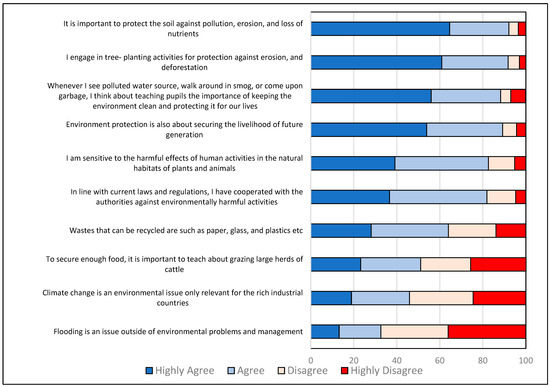
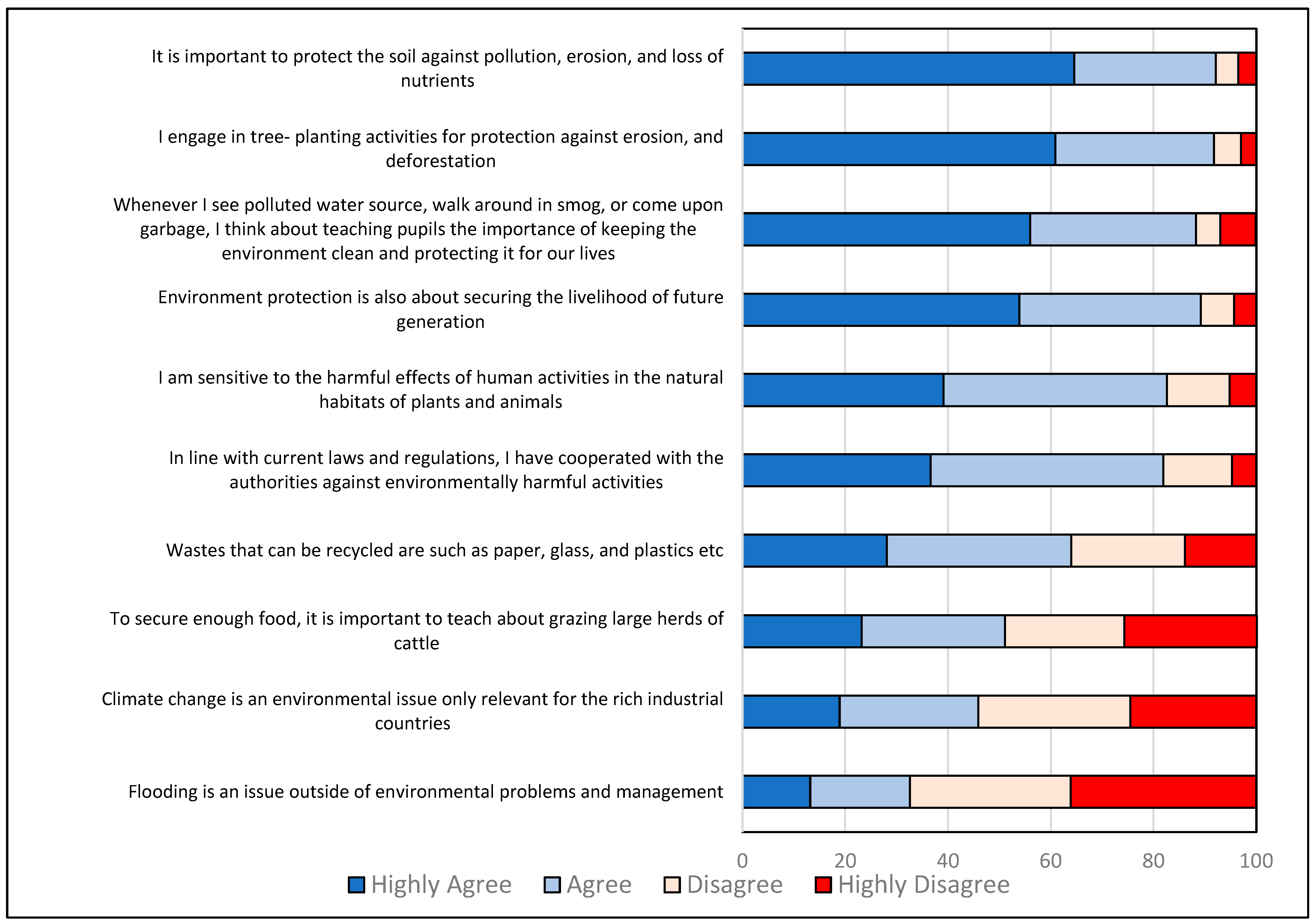
The South Sudanese teachers’ environmental attitudes and engagement were measured with a battery of 10 items (Figure 1). The majority of the teachers responded positively on most statements, ranging from 64% to 13.2% for highly agree. Opposite, the majority disagreed or highly disagreed on only two of the statements. However, those two statements could be classified as negative towards environmental engagement or as statements more describing environmental issues, i.e., claiming that flooding is an issue outside of environmental problems and management, or that climate change is only relevant for rich countries. The statements on protection of soil, engaging in tree planting, and teaching pupils against pollution, smog, and garbage were the statements most teachers agreed upon.
Figure 1.
Teachers’ environmental attitudes.
To examine whether latent environmental attitudes underlie the single-item responses, we conducted an exploratory factor analysis, and three factors had eigenvalues above one (Kaiser’s rule). The first factor comprised the six statements that also had the highest degree of agreement. The factor included statements on topics that can be managed locally, such as tree planting, pollution and littering, soil protection, securing future livelihoods, and following environmental regulations, in that order of agreement. This factor showed acceptable internal consistency (Cronbach’s alpha = 0.756), enabling construction of an index labelled “environmental engagement.” On this index ranging from 1 = Highly disagree to 4 = Highly agree, teachers had an average score of 3.36 and a standard deviation of 0.54.
The second factor exhibited low internal consistency (α = 0.532) (Table 4) and is therefore considered unreliable and unsuitable for index construction. Although we initially expected these items to load most strongly (positively or negatively) on the environmental engagement factor, this was not the case. We find it particularly interesting that items such as “flooding is not an environmental problem”, “climate change concerns only rich countries”, and “herders (pastoralists) need to be managed better” did not load highest on Factor 1. The Kaiser–Meyer–Olkin measure of sampling adequacy for the factor analysis was 0.772, and Bartlett’s test of sphericity was significant at χ2(45) = 403.53, p < 0.001.
Table 4.
Factor analysis of dimensions towards environmental attitudes.
3.3. Educational Practices and Pedagogical Strategies
3.3.1. Teaching Methods
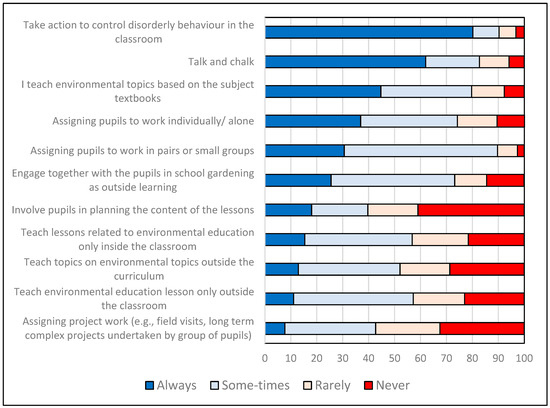
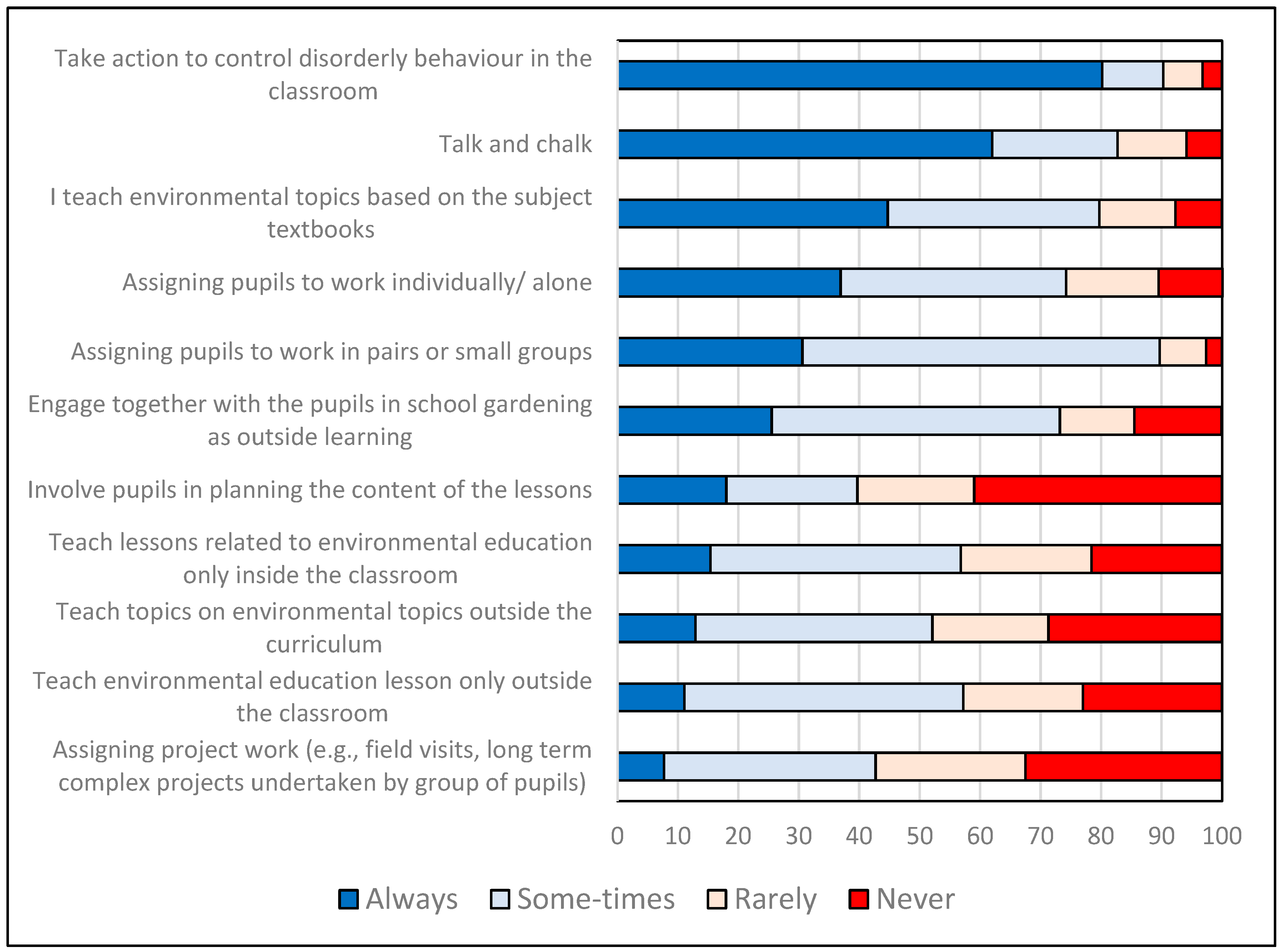
We asked teachers, “How frequently do you use the following teaching methods and approaches?” and asked them to rate eleven approaches from “Never” (1) to “Always” (4). When ranking the practices by the share responding “Always”, “Control disorderly behaviour in the classroom” ranked highest, followed by “Talk and chalk,” teaching environmental topics based on subject textbooks, and “Assign pupils to work individually/alone” (Figure 2).
Figure 2.
How frequently do you use the following teaching methods and approaches?
This pattern is theoretically interesting, as it highlights the divide between teacher- and learner-centred approaches (Schreurs & Dumbraveanu, 2014; Barrett, 2007): all four of the highest-rated practices align with a teacher-centred, talk-and-chalk paradigm. Supporting this, “Involve pupils in planning the content of the lessons” received the highest share of “Never” responses (41%), indicating a strong preference for teacher-centred methods.
More learner-centred and active approaches—such as “Assigning project work”, “Teaching environmental lessons only outside the classroom”, and “Teaching topics on environmental topics outside the curriculum”—received relatively low ratings.
It is relevant to test whether these items could be combined into a single index measuring degrees of “teacher-centred” approaches. However, a Cronbach’s alpha of 0.51 indicates insufficient internal consistency for constructing such an index, and no alternative combinations, including related items, produced an acceptable alpha, suggesting that teachers’ responses varied substantially from item to item.
When examining relationships between teachers’ “environmental engagement” and teaching approaches, we only found the correlations shown in Table 5 (using Spearman’s rho). The correlation that makes the most conceptual sense is between “environmental engagement” and using school gardens. However, the strongest correlations were with “Control disorderly behaviour” and “Assigning pupils to work individually/alone”, which could be interpreted as loosely related to teacher-centred approaches. However, controlling disorderly behaviour should be viewed positively in any teaching context.
Table 5.
Correlation between teachers’ environmental engagement and teaching methods and approaches (* p < 0.05: ** p < 0.001).
3.3.2. Teaching Plans and Methods
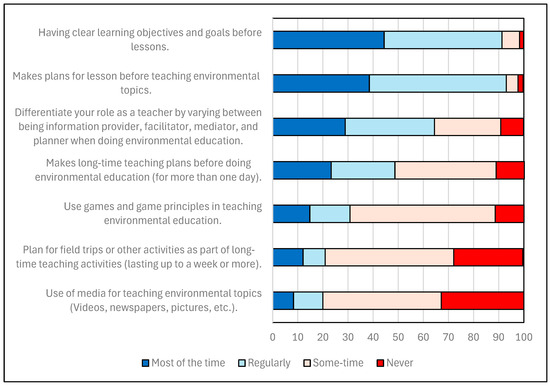
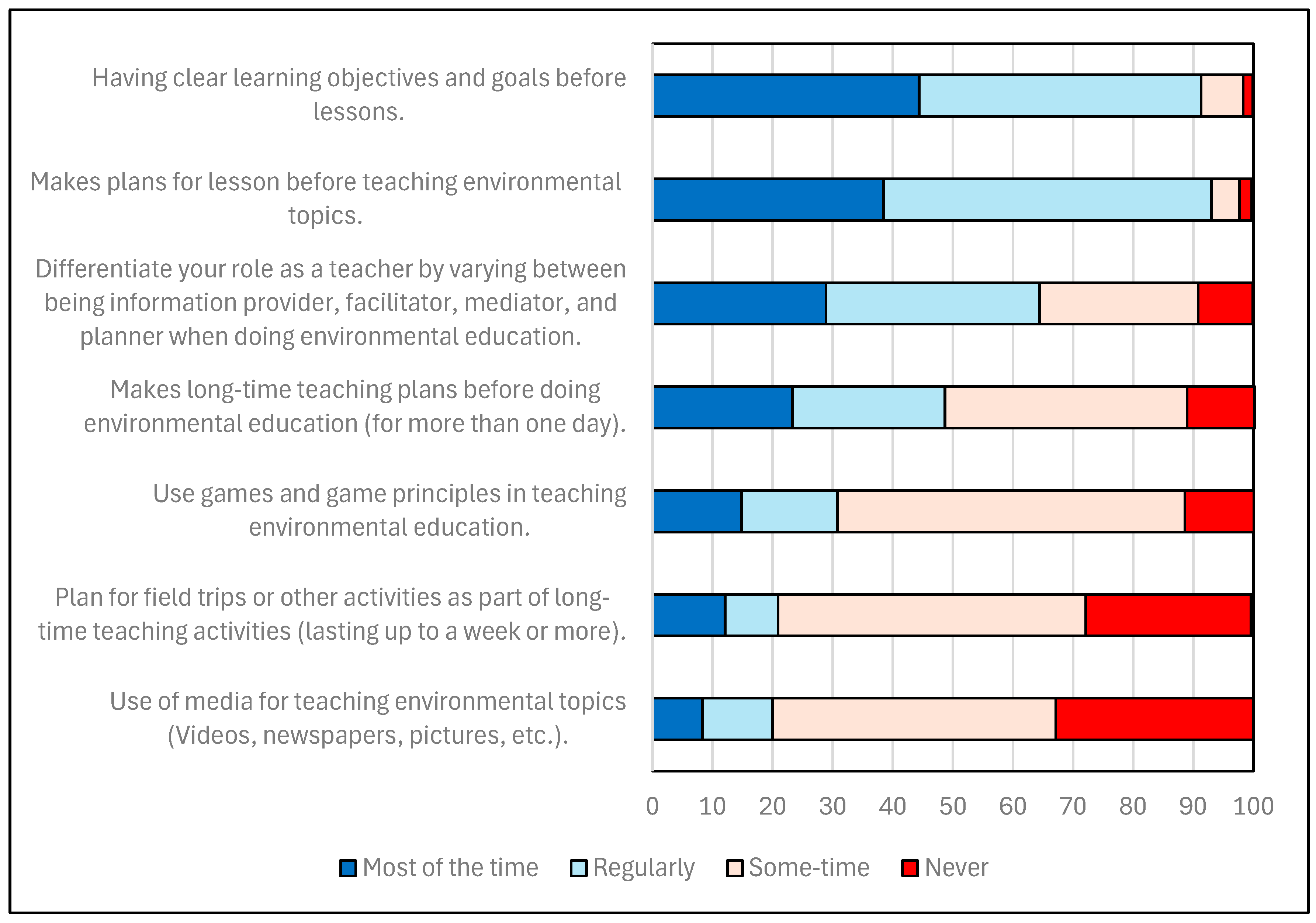
We also asked about teaching approaches related to planning lectures and teaching methods, using a scale from “Never” (1) to “Most of the time” (4). Most teachers responded either “Most of the time” or “Regularly” to “Having clear learning objectives before lectures” and “Make plans for lessons before teaching environmental topics” (above 90% for both items). These are practices regarded as good pedagogical practice by most scholars. Other approaches, such as “Differentiateyour role …” and “Making long-term plans …,” received more mixed responses.
In contrast, the majority answered “Never” or “Sometimes” for approaches such as “Using media for teaching …,” “Planning field trips or other activities …,” and, to a lesser extent, “Using games …” (see Figure 3). Again, this points toward teacher-centred, talk-and-chalk tendencies.
Figure 3.
Planning, teaching, and teaching approaches used for environmental education.
We also examined whether these approaches correlated with teachers’ level of “environmental engagement” and found only one significant correlation: teachers with higher “environmental engagement” scored higher on “Differentiate your role as a teacher by varying between being information provider, facilitator, mediator, and planner when doing environmental education” (Spearman’s ρ = 0.190, p = 0.006).
Both the teaching-method and teaching-planning items could theoretically relate to broader teaching paradigms—specifically teacher-centred/talk-and-chalk versus more investigative, learner-centred approaches. To explore whether these paradigms formed identifiable cognitive dimensions in the dataset, we conducted an exploratory factor analysis including all 18 items. The analysis produced seven factors with eigenvalues above one; however, none met the criterion for index construction (Cronbach’s alpha > 0.7), indicating that teachers’ perceptions across these items were mixed and diverse.
Even so, theoretically, we are interested in measuring the divide between teacher-centred and more learner-centred and exploratory approaches. Several items pointing toward a teacher-centred paradigm were rated relatively high by teachers. To assess the possibility of constructing an index reflecting a broader orientation toward learner-centred and exploratory approaches, we theoretically identified the following items as the basis for constructing such an index:
|
|
Indexes do not necessarily need to be consistent when one wants to create a formative index (Diamantopoulos & Winklhofer, 2001); in this case, those attitudes are in line with a learning-centred theoretical position even if the different statements are not strongly correlated. Using these eleven items, even based on the idea of a formative index, we tested and obtained a Cronbach’s alpha of 0.712, which is sufficient for constructing an index measuring “learner-centred and exploratory approaches”. The alpha value does not increase if items are removed, so all eleven items were included. On this scale, teachers have an average score of 2.45 on a range from 1 (Never) to 4 (Most of the time/Always), with a standard deviation of 0.48. This is clearly lower than the scores for the four most teacher-centred items mentioned earlier, although still somewhat more mixed than the “talk-and-chalk” items might suggest. At the same time, there is a significant, but rather weak, positive correlation between teachers’ “environmental engagement” and their orientation toward “learner-centred and exploratory approaches” (r (180) = 0.171, p = 0.022).
3.3.3. How Do You Motivate and Encourage Pupils?
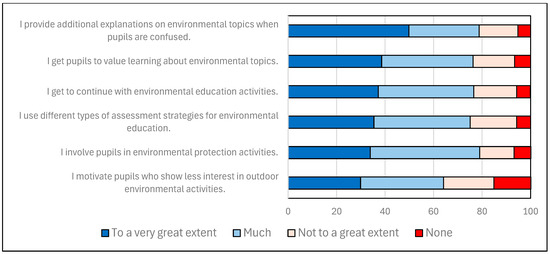
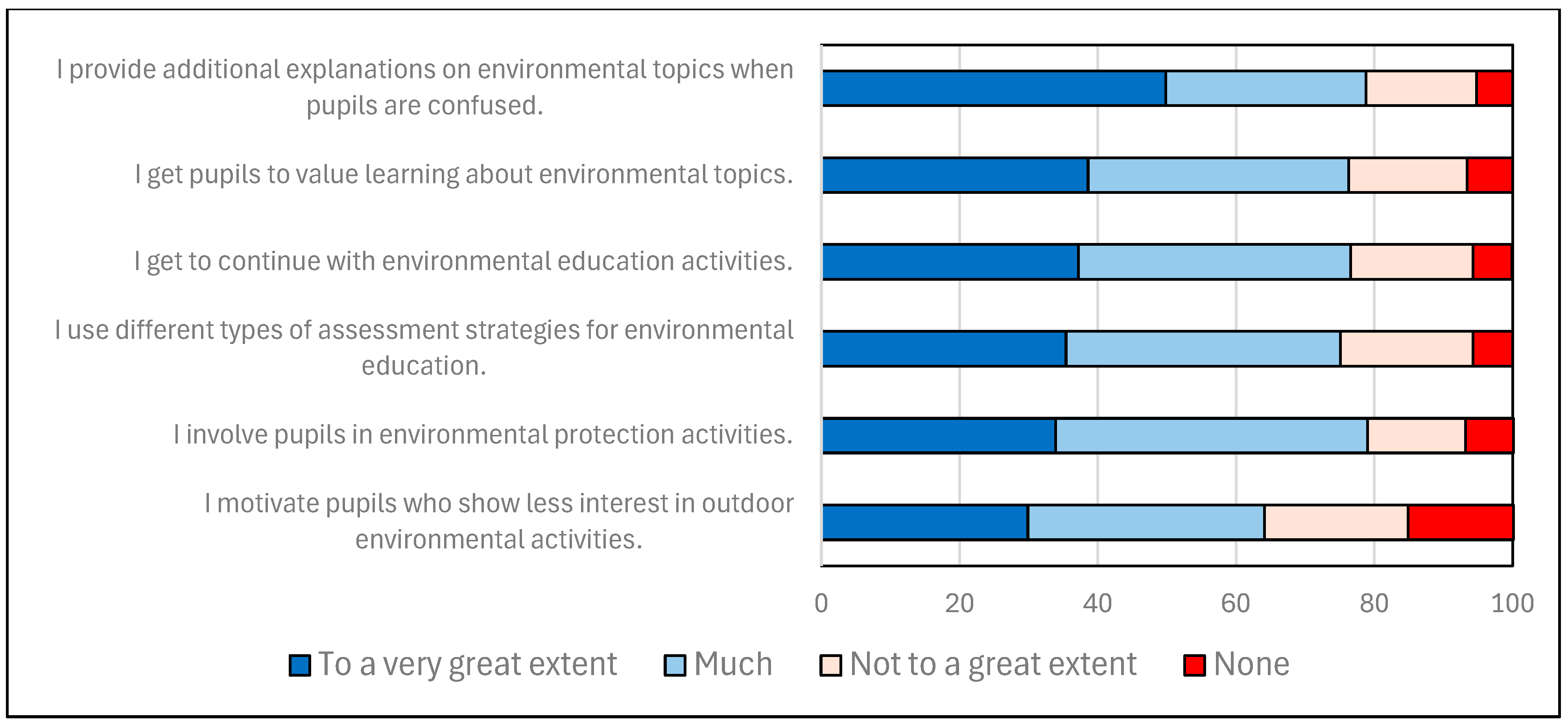
For the question on how teachers “… try to motivate and encourage pupils,” participants rated six different actions on a four-point scale ranging from “None” to “To a very great extent.” All actions received positive ratings, with the highest category ranging from 30% to 45% (Figure 4). When combining the categories “To a very great extent” and “Much,” the responses on the different items ranged from 79% to 64%. The action “I provide additional explanations on environmental topics when pupils are confused” received the highest score, while “I motivate pupils who show less interest in outdoor environmental activities” received the lowest.
Figure 4.
How teachers motivate and encourage pupils in environmental action.
An explorative factor analysis of those six items gave only one factor with an eigenvalue above 1, and for the analysis, the Kaiser–Meyer–Olkin measure of sampling adequacy was 0.780 and Bartlett’s test of sphericity was significant at χ2(15) = 198.53, p < 0.001. A reliability test including the same six items also gave a Cronbach’s alpha of 0.706, making it acceptable to include all items into an index measuring Motivating pupils. On this scale, the teachers obtained an average score of 3.05 on a scale ranging from 1 (None) to 4 (To a very great extent), with a standard deviation of 0.58.
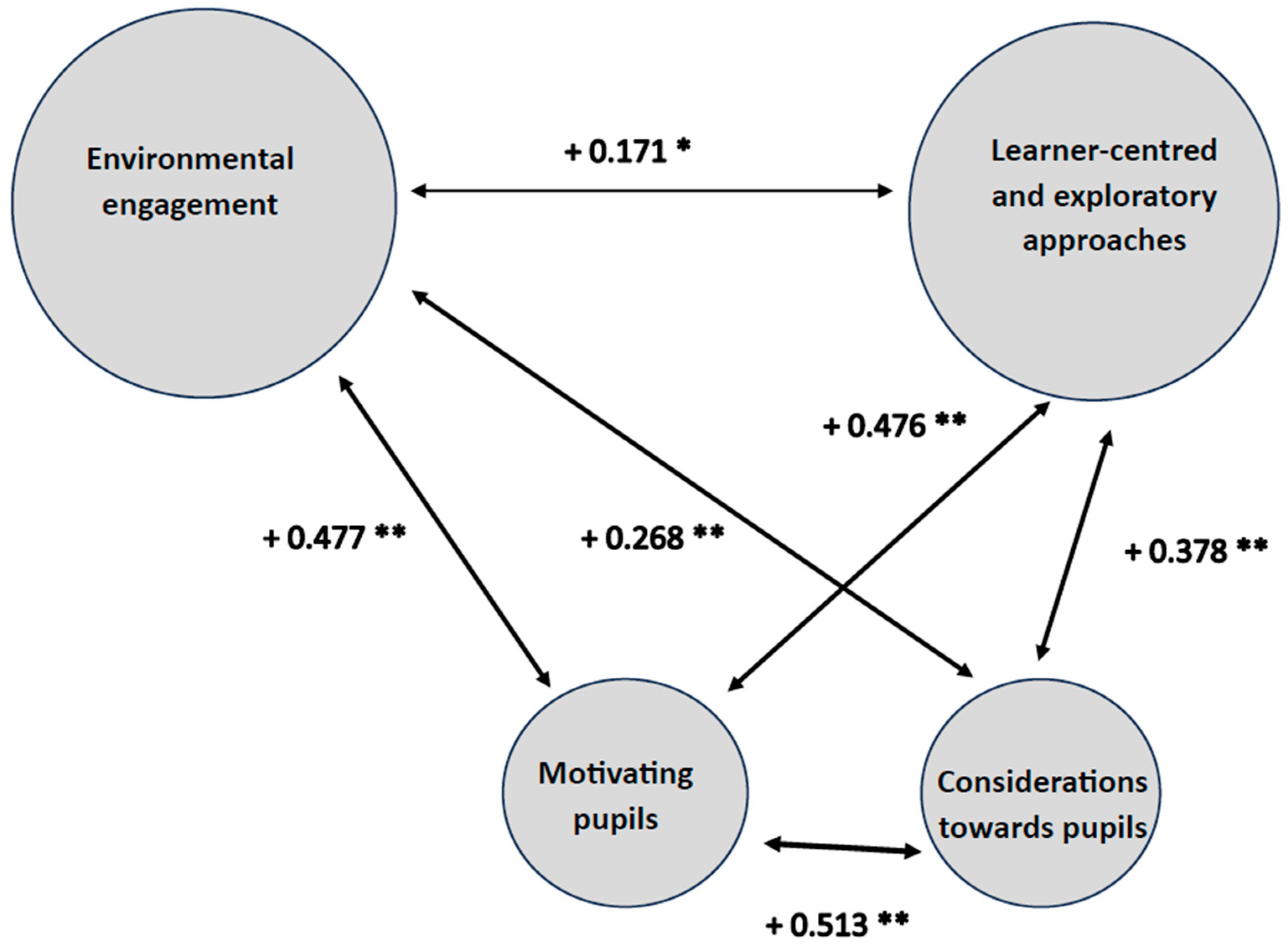
Interestingly, there is a strongly significant positive correlation between Environmental engagement among teachers and their views on motivating pupils (r (202) = 0.477, p < 0.001), which clearly shows that teachers with higher environmental engagement also, to a larger extent, want to motivate pupils for environmental education. Equally interesting and theoretically reasonable is the positive correlation with Learner-centred and exploratory approaches (r (180) = 0.476, p < 0.001).
3.3.4. The Environmental Learning Process
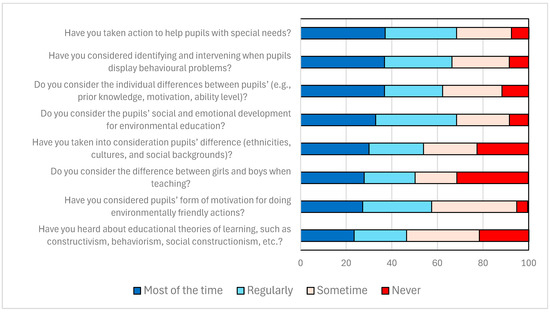
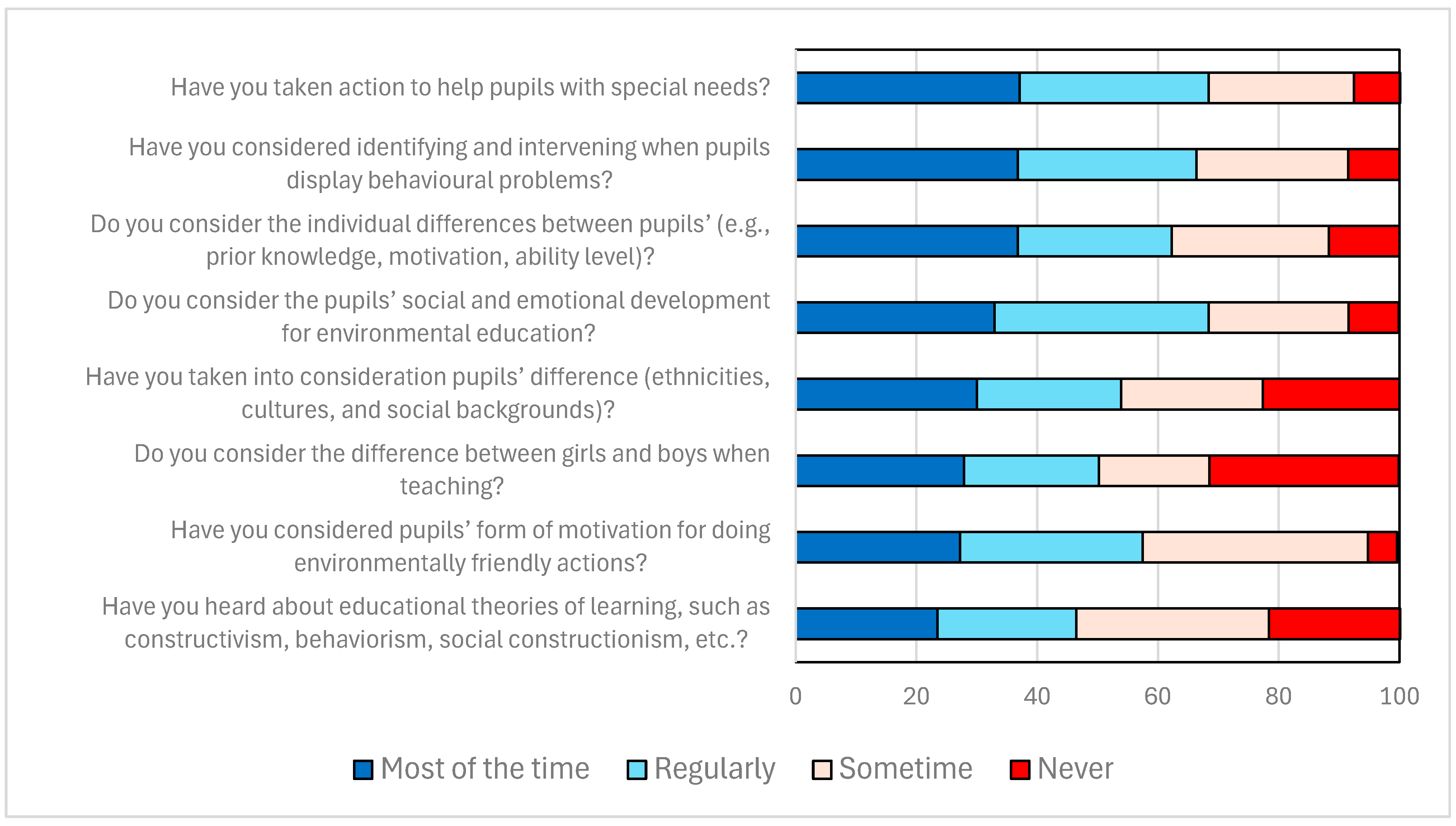
The teachers were also asked, “When planning the teaching of environmental content…”, followed by eight possible actions or considerations (Figure 5), which included taking “… action to help pupils with special needs”, “… identifying and intervening when pupils display behavioural problems”, “… considering differences between pupils …”, and similar items (see Figure 3). On a scale from 1 (Never) to 4 (Most of the time), the three considerations mentioned above received the highest proportions of “Most of the time” responses, in that order. The statement with the lowest score was “Have you heard about educational theories, such as …”.
Figure 5.
Consideration when planning teaching environmental content.
Notably, considerations such as “taking differences between girls and boys into account” and paying attention to ethnic, cultural, and social differences had the highest proportion of “Never” responses. This could be interpreted in different ways: either as an attempt to avoid discrimination based on sex or ethnicity, or as an indication that such considerations are not viewed as important.
An explorative factor analysis of those eight items gave only one factor with an eigenvalue above 1, and for the analysis, the Kaiser–Meyer–Olkin measure of sampling adequacy was 0.785 and Bartlett’s test of sphericity was significant at χ2(15) = 222.03, p < 0.001. A reliability test including the same eight items also gave a Cronbach’s alpha value of 0.715, making it acceptable to include those items into a single index measuring Considerations towards pupils. On this scale, the teachers obtained an average score of 2.77 on a scale ranging from 1 (None) to 4 (Most of the time), with an average close to “Regularly”, and the standard deviation was 0.60.
There is a significant positive correlation between Environmental engagement among teachers and their view on Consideration towards pupils during environmental education (r (196) = 0.268, p < 0.001). Equally interesting and theoretically reasonable is the positive and stronger correlation with Learner-centred and exploratory approaches (r (171) = 0.378, p < 0.001). There is also a positive correlation between Motivating pupils and Considerations towards pupils (r (198) = 0.513, p < 0.001). The three scales, learner-centred and exploratory approaches, motivating pupils, and Considerations towards pupils, could all be seen as indicators of a learner-centred educational view.
3.3.5. Summary
Teachers seemed to be rather oriented towards talk and chalk. Even this, they were positive towards motivating and caring for their learners. There was only a weak positive relationship between a learner-centred and exploratory approach in teaching, but a strong relationship one between environmental engagement and motivating and caring for learners.
3.4. Explaining Teachers’ Attitudes and Perceptions
We also investigated whether selected background and context variables could explain variation in “Environmental engagement” among teachers, or if they claimed to use “learner-centred and exploratory approaches” through using multivariate regression. Independent variables in the analysis were female (sex), Yei (location), teachers’ education level, whether schools were church schools or private schools, the number of pupils in the class, and teachers’ experience measured in years.
Interestingly, none of those variables seemed to have any significant effect on “environmental engagement”, and the equation was not significant at all. Therefore, we know little about what factors raise teachers’ environmental engagement. Regarding learner-centred and exploratory approaches, we obtained a significant equation explaining 12.6% of the variance; for this index, Yei (the provincial town) and working at a private school had negative effects. One may think private schools are better run than government schools; however, if one perceives learner-centred and exploratory approaches as more modern, this is not the case in our sample. Also, higher numbers of pupils in the class had a negative effect, which is more logical considering that a learner-centred and exploratory approach may be more difficult in very large classes (Table 6).
Table 6.
Multivariate regression on selected teacher positions (* p < 0.05).
4. Discussion
We began this article with three research questions, which will be discussed considering our findings and relevant theory.
4.1. Teachers’ Environmental Positions
The teachers largely agreed with environmental values in statements about environmental issues. Interestingly, the highest-scoring items concerned concrete actions in the local environment. These findings may be read as resonating with Ubuntu-oriented relational commitments (Chibvongodze, 2016); however, because the study did not directly measure Ubuntu values, this interpretation should remain cautious and exploratory, or simply a survival-oriented perspective rather than a more abstract Western eco-philosophy such as Deep Ecology (Næss & Rothenberg, 1990) or Degrowth (Kallis, 2011). Factor analysis further showed that issues like climate change, flooding, and pastoralism did not correlate strongly with this form of environmentalism.
Questions of validity naturally arise. For example, one might expect that our climate change item, stating that climate change is not relevant for South Sudan, would correlate negatively with environmentalism; instead, the relationship was weak, and teachers’ responses were mixed. Overall, we conclude that teachers’ environmentalism in South Sudan is not weak: it is differently organized—an environmentalism where concerns are more closely tied to the community and livelihood (Bergius & Buseth, 2019). Nevertheless, references to an “Ubuntu-style” position (Chibvongodze, 2016; Hoem, 2026) should be interpreted very carefully; similarities may be more contextual than evidence of a coherent philosophical position by the teachers.
4.2. Educational Practices and Environmental Engagement
Environmental education (EE) includes broad and diverse perspectives. Our focus, however, was on fundamental pedagogical orientations—specifically the contrast between teacher-centred “talk and chalk” approaches and more learner-centred practices. Our results present a diverse picture: at the general level, most teachers reported using “talk and chalk” strategies, and only a few claimed to frequently use project work in their teaching.
In fragile educational systems such as that in South Sudan, care for learners often coexists with teacher-centred methods rather than replacing them. Interestingly, the results show that more teachers at least sometimes allowed pupils to work in pairs or groups and engaged them in school gardening; many also regularly supported pupils with special needs and considered their social and emotional development. These practices counter a purely teacher-centred profile and suggest some recognition of individual learners’ needs. Such conflicting findings also resemble similar findings from Ethiopia (Gugssa, 2023).
Our interpretation is that teachers show a tendency toward teacher-centred approaches on some items, while others point in the opposite direction, resulting in an overall mixed pattern. Exploratory factor analysis did not reveal clear underlying pedagogical dimensions, reinforcing the impression of diverse and inconsistent attitudes and practices, even with an overweight of teacher-centred approaches. This indicates that the teachers lack a coherent pedagogical vision, which should not be seen as a surprise given the country’s situation with poverty, civil unrest, and an educational system under stress (UNESCO, 2023; Breidlid, 2019).
From a theoretical selection of items reflecting a learner-centred pedagogy, we constructed an indicator with acceptable reliability that, as noted earlier, showed a slightly positive correlation between environmental engagement and learner-centredness.
Interestingly, the teachers were more learner-centred in areas related to motivating pupils and considering their needs than in their choice of teaching methods. This inconsistency may stem from limited formal pedagogical training: over half of the sample had only secondary education, and fewer than a quarter held a bachelor’s degree or higher. Similar patterns have been documented by Ochan and Kennedy (2017). The tendency towards “talk and chalk”, combined with relational sensitivity toward pupils, may therefore reflect limited qualifications rather than a deliberate pedagogical stance. However, sensitivity towards learners despite “talk and chalk” practices may also be interpreted as related to an Ubuntu “I am because of we” attitude. This fits well with Barrett’s (2007) warning against oversimplifying the teacher- versus learner-centred perspective on teaching in Africa.
4.3. Relationship Between Environmental Attitudes and Pedagogical Practices
The relationship between environmental attitudes and pedagogical perceptions is noteworthy. The two main indicators, “environmentalism” and “learner-centred and exploratory approaches”, were correlated, but not strongly, suggesting that more environmentally engaged teachers are only partly leaning toward learner-centred, activity-oriented teaching. To some degree, this contrasts with the findings of Felix and Clayton (2025). As expected, there was a strong positive correlation between being learner-centred and focusing on motivating and supporting pupils. These orientations can be seen as part of a general learner-centred paradigm, particularly its relational dimension.
Environmentalism also correlated positively and strongly with motivating pupils and considering their needs, indicating that environmentally oriented teachers tend to show greater care for pupils and attempt to motivate them in environmental learning, even when their teaching techniques are not fully learner-centred. We hypothesize that this reflects social commitment rather than a coherent pedagogical philosophy. It could also resonate with Ubuntu’s “I am because we are” (Chibvongodze, 2016; Hoem, 2026). However, such interpretations must be made cautiously; correlations between attitudes and perceptions should be seen as openings for future research rather than evidence of a unified worldview.
Background and contextual factors did not explain much of the variation between teachers. For environmental engagement, none of the statistical background variables were significant, and for learner-centred and exploratory approaches, being in Yei and having more pupils in the classroom had negative effects. This is understandable, as learner-centred teaching becomes more difficult with larger class sizes. Teachers in Yei also showed less learner-centred teaching, which may reflect slower diffusion of pedagogical innovations to more peripheral areas. This also demonstrates that demographic variables alone are insufficient to explain these pedagogical patterns, highlighting the need for qualitative follow-up research.
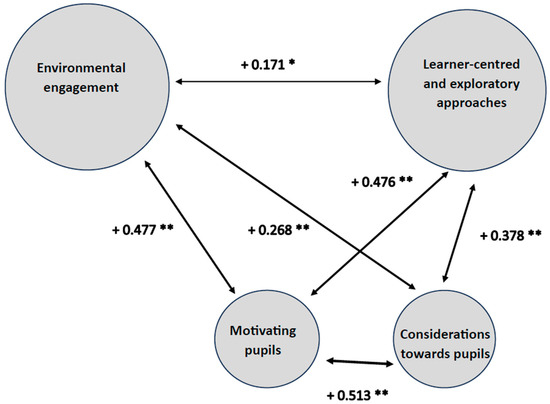
One surprising finding was that teachers in private schools were less learner-centred. Our data offer limited insight into why such differences occur. Future research could explore why teachers vary in environmentalism and pedagogical orientation, and how contextual factors shape these patterns. The correlation between the different indices is illustrated in Figure 6.
Figure 6.
Relationships (correlations) between main factors among the teachers (* = p < 0.05; ** = p < 0.001).
5. Conclusions
Environmentalism is slowly gaining recognition as a mechanism to build active, environmentally informed citizens in South Sudan. Given the inclusion of environmental education into the primary school curriculum, we surveyed teachers’ environmental attitudes and engagement and their educational practices. The findings showed that they generally hold positive environmental attitudes, but these are grounded in local, practical concerns rather than abstract ecological philosophies. Their engagement seems to reflect a more community-oriented environmentalism.
The teachers’ pedagogical attitudes and practices are mixed: many rely on teacher-centred “talk and chalk” methods, yet also use group work, engage in school gardening, and provide support for pupils’ social and emotional needs. This inconsistency indicates that the attitude–practice relationship is not universal; it is heavily mediated by culture, teacher training, class size, available resources, and institutional structures. In addition, many of the teachers show care for and want to motivate their pupils.
The relationships between environmental attitudes and learner-centred teaching are statistically significant but rather weak, with environmentally engaged teachers tending to show greater care for and desire to motivate pupils. The connection between environmentalism and caring for and motivating learners demonstrates that raising environmental awareness alone is insufficient in South Sudan; professional teacher development must bridge environmental commitment and active, outdoor, inquiry-based pedagogical practices. Despite this clear pattern, one should be careful not to make wide-ranging conclusions: the views of the teachers may be based more on traditional thoughts and not on a comprehensive pedagogical position.
When interpreting our findings, it is important to note that teacher training in South Sudan should build upon the existing local environmentalism rather than imposing abstract Western environmental frameworks in the African context.
Author Contributions
Conceptualization, L.D.P.O. and J.A.; Methodology, L.D.P.O.; Formal analysis, L.D.P.O.; Investigation, L.D.P.O. and J.A.; Resources, J.A.; Data curation, J.A.; Writing—original draft, L.D.P.O.; Writing—review & editing, L.D.P.O. and J.A.; Supervision, J.A.; Project administration, J.A. All authors have read and agreed to the published version of the manuscript.
Funding
This study was funded by the Norwegian Agency for Development Cooperation (Norad) through the NORHED Programme.
Institutional Review Board Statement
Not applicable.
Informed Consent Statement
Informed consent was obtained from all subjects involved in the study.
Data Availability Statement
Data can be sheard if taking contact with corresponding author.
Acknowledgments
During the preparation of this work, the authors used Microsoft Copilot (GPT-5-basert AI-assistant) to improve language regarding grammar and orthography and, in some places, shorten the text. All the text was written before the use of AI. After using Microsoft Copilot, the authors reviewed and edited the content as needed and take full responsibility for the content of the published article.
Conflicts of Interest
The authors declare no conflict of interest.
References
- Abur, W., & Mugumbate, J. R. (2022). Experiences of ubuntu and implications of African philosophy for social work in Australia. Reflective narrative. Advances in Social Work, Welfare and Education, 23(2), 21–37. [Google Scholar]
- Barrett, A. M. (2007). Beyond the polarization of pedagogy: Models of classroom practice in Tanzanian primary schools. Comparative Education, 43(2), 273–294. [Google Scholar] [CrossRef] [Scilit]
- Bergius, M., & Buseth, J. T. (2019). Towards a green modernization development discourse: The new green revolution in Africa. Journal of Political Ecology, 26, 57–83. [Google Scholar] [CrossRef] [Scilit]
- Blazar, D., & Kraft, M. A. (2017). Teacher and teaching effects on students’ attitudes and behaviors. Educational Evaluation and Policy Analysis, 39(1), 146–170. [Google Scholar] [CrossRef] [Scilit] [PubMed]
- Breidlid, A. (2019). Education and armed conflict in Sudan and South Sudan: The role of teachers in conflict resolution and peace building. Journal of Advances in Education Research, 4(3), 122–135. [Google Scholar] [CrossRef] [Scilit]
- Bremner, N., Sakata, N., & Cameron, L. (2022). The outcomes of learner-centred pedagogy: A systematic review. International Journal of Educational Development, 94, 102649. [Google Scholar] [CrossRef] [Scilit]
- Chibvongodze, D. T. (2016). Ubuntu is not about the human! An analysis of the role of African philosophy and ethics in environmental management. Journal of Human Ecology, 53(2), 157–166. [Google Scholar] [CrossRef] [Scilit]
- Creswell, J. W. (2009). Research design: Qualitative, quantitative, and mixed methods approaches (3rd ed.). SAGE. [Google Scholar]
- Cutter, A., & Smith, R. (2001). Gauging primary school teachers’ environmental literacy: An issue of priority. Asia Journal of Education Review, 2(2), 45–60. [Google Scholar] [CrossRef] [Scilit]
- Diamantopoulos, A., & Winklhofer, H. M. (2001). Index construction with formative indicators. Journal of Marketing Research, 38(2), 269–277. [Google Scholar] [CrossRef] [Scilit]
- Dole, S., Bloom, L., & Kowalske, K. (2016). Transforming pedagogy: Changing perspectives from teacher-centered to learner-centered. Interdisciplinary Journal of Problem-Based Learning, 10(1). [Google Scholar] [CrossRef] [Scilit]
- Dowie, M. (2009). Conservation refugees: The hundred-year conflict between global conservation and native peoples. The MIT Press. [Google Scholar]
- Dunlap, R. E. (2008). The new environmental paradigm scale: From marginality to worldwide use. Journal of Environmental Education, 40(1), 3–18. [Google Scholar] [CrossRef] [Scilit]
- Dunlap, R. E., & Van Liere, K. D. (1978). The “New Environmental Paradigm”. Journal of Environmental Education, 40(1), 10–19. [Google Scholar] [CrossRef] [Scilit]
- Dunlap, R. E., & Van Liere, K. D. (1984). Commitment to the dominant social paradigm and concern for environmental quality. Social Science Quarterly, 65(4), 1013–1028. [Google Scholar]
- Evernden, N. (2006). The natural alien: Humankind and environment. University of Toronto Press. [Google Scholar]
- Evert, M., Coetzee, H., & Nell, W. (2022). Environmental attitudes among undergraduate students at a South African university. Interdisciplinary Journal of Environmental and Science Education, 18(1), e2260. [Google Scholar] [CrossRef] [Scilit]
- Felix, S. M., & Clayton, S. (2025). Describing teachers’ environmental identity as part of education for sustainable development. Environmental Education Research, 31(7), 1389–1406. [Google Scholar] [CrossRef] [Scilit]
- Gay, L. R., Mills, G. E., & Airasian, P. (2009). Educational research. Competencies for analysis and applications (9th ed.). Pearson International Edition. [Google Scholar]
- Glasman, L. R., & Albarracin, D. (2006). Forming attitudes that predict future behavior. A meta-analysis of the attitude-behavior relation. Psychological Bulletin, 132(5), 778–822. [Google Scholar] [CrossRef] [Scilit] [PubMed]
- Gold, J. R. (1985). An introduction to behavioral geography. Oxford University Press. [Google Scholar]
- Gugssa, M. A. (2023). Characterizing environmental education practices in Ethiopian primary schools. International Journal of Educational Development, 102, 102848. [Google Scholar] [CrossRef] [Scilit]
- Gugssa, M. A., & Aasetre, J. (2023). Unveiling in-service teachers’ conceptions of ‘environment’ and ‘environmental education’: An Ethiopian perspective. Environmental Education Research, 29(9), 1239–1258. [Google Scholar] [CrossRef] [Scilit]
- Guo, S., & Hussey, D. (2008). Nonprobability sampling in social work research. Journal of Social Service Research, 30(3), 1–18. [Google Scholar] [CrossRef] [Scilit]
- Guyer, J. J., & Fabrigar, L. R. (2015). Attitude and behavior. In International encyclopedia of the social and behavioral sciences (2nd ed., pp. 183–189). Elsevier. [Google Scholar] [CrossRef] [Scilit]
- Hajer, M. (1995). The politics of environmental discourse: Ecological modernisation and the policy process. Oxford University Press. [Google Scholar]
- Heberlein, T. A. (1973). Socio-psychological assumptions of user attitude surveys: The case of the wildernism scale. Journal of Leisure Research, 5, 18–33. [Google Scholar] [CrossRef] [Scilit]
- Heberlein, T. A. (1981). Environmental attitudes. Zeitschrift Umweltpolitik, 2(81), 241–270. [Google Scholar]
- Heikkinen, H. L. T., Huttunen, R., Mahon, K., & Kemmis, S. (2024). Beyond an anthropocentric view of praxis: Towards education for planetary well-being. Environmental Education Research, 30(7), 1147–1160. [Google Scholar] [CrossRef] [Scilit]
- Hoem, I. B. (2026). Ubuntu and obuntubulamu childhoods: “I am because we are”: Reimagining social inclusion among youth in Norway through the lens of the African indigenous philosophy of Baganda. Global Studies of Childhood. Advance online publication. [Google Scholar] [CrossRef] [Scilit]
- IPBES (Intergovernmental Science-Policy Platform on Biodiversity and Ecosystem Services). (2019). Global assessment report on biodiversity and ecosystem services of the intergovernmental science-policy platform on biodiversity and ecosystem services (E. S. Brondizio, J. Settele, S. Díaz, & H. T. Ngo, Eds.). IPBES Secretariat. [Google Scholar]
- IPCC (Intergovernmental Panel on Climate Change). (2023). Climate change 2023: Synthesis report. Contribution of working groups I, II and III to the sixth assessment report of the intergovernmental panel on climate change (H. Lee, & J. Romero, Eds.). IPCC. [Google Scholar] [CrossRef] [Scilit]
- Iragena, J., & Lopez-Feldman, A. (2026). Facing the drought: A scoping review of the impact of extreme weather events on adaptation and pro-environmental behavior in Africa. Climatic Change, 179, 33. [Google Scholar] [CrossRef] [Scilit]
- Jänicke, M. (2008). Ecological modernisation: New perspectives. Journal of Cleaner Production, 16, 557–565. [Google Scholar] [CrossRef] [Scilit]
- Johnson, R. B., & Christensen, L. (2014). Educational research: Quantitative, qualitative, and mixed methods (5th ed.). SAGE. [Google Scholar]
- Kallis, G. (2011). In defence of degrowth. Ecological Economics, 70(5), 873–880. [Google Scholar] [CrossRef] [Scilit]
- Kim, J. H., Betz, N., Helmuth, B., & Coley, J. D. (2023). Conceptualizing human-nature relationship: Implications of human exceptionalist, thinking for sustainability and conservation. Topics in Cognitive Science, 15(3), 357–387. [Google Scholar] [CrossRef] [Scilit] [PubMed]
- Kopnina, H., & Cocis, A. (2017). Testing ecocentric and anthropocentric attitudes towards the Sustainable Development (EAATSD) scale with bachelor students. European Journal of Sociology and Anthropology, 2(1), 1–12. [Google Scholar] [CrossRef] [Scilit]
- Krasny, M. (2020). Advancing environmental education practice. Cornell University Press. [Google Scholar]
- Lako, R. L., & Baba, S. (2011). Guidelines for undertaking research in the Republic of South Sudan. South Sudan Medical Journal (SSMJ), 4(3). Available online: https://www.southsudanmedicaljournal.com/archive/august-2011/guidance-for-undertaking-research-in-the-republic-of-south-sudan.html (accessed on 23 August 2026).
- Maluleka, K. J. (2019). Indigenous African philosophy of ubuntu as a foundation for conducive environment for culturally responsive teaching and learning in South Africa. In International conference on new trends in teaching and education (pp. 1–25). NTTE. [Google Scholar]
- Marcinkowski, T., & Reid, A. (2019). Reviews of research on the attitude-behaviour relationship and their implications for future environmental education. Environmental Education Research, 25(4), 459–471. [Google Scholar] [CrossRef] [Scilit]
- McLeod, S. (2025). Constructivism learning theory and philosophy of education. Simply Psychology. Available online: https://www.simplypsychology.org/constructivism.html (accessed on 23 August 2026).
- Milfont, T. L., & Schultz, P. W. (2018). The role of attitudes in environmental issues. In I. D. Albarracín, & B. T. Johnson (Eds.), Handbook of attitudes (Vol. 2: Applications). Routledge. [Google Scholar]
- MoGEI. (2011). Education statistics for central equatoria state. Government of the Republic of South Sudan. MoGEI. [Google Scholar]
- Næss, A., & Rothenberg, D. (1990). Ecology, community, and lifestyle: Outline of an ecosophy. Cambridge University Press. [Google Scholar]
- Nunnally, J. C., & Bernstein, I. H. (1994). Psychometric theory (3rd ed.). McGraw-Hill. [Google Scholar]
- Ochan, J., & Kennedy, I. (2017). Analysis of teachers’ qualifications on the internal efficiency of primary schools in Central Equatoria State, South Sudan. Kampala International University Research Journal, 6, 1–13. [Google Scholar]
- Ogunbode, C. A. (2013). The NEP scale: Measuring ecological attitudes/worldviews in an African context. Environment, Development and Sustainability, 15(4), 1477–1494. [Google Scholar] [CrossRef] [Scilit]
- Orbanic, N. D., & Kovac, N. (2021). Environmental awareness, attitudes, and behaviour of preservice preschool and primary school teachers. Journal of Baltic Science Education, 20(3), 373–388. [Google Scholar] [CrossRef] [Scilit]
- Öhman, J. (2008). Environmental ethics and democratic responsibility—A pluralistic approach to ESD. In J. Öhman (Ed.), Values and democracy in education for sustainable development. Contributions from Swedish research (pp. 17–32). Liber. [Google Scholar]
- Palmer, J., & Neal, P. (1994). The handbook of environmental education. Routledge. [Google Scholar]
- Pirages, D. C., & Ehrlich, P. R. (1974). Ark II: Social response to environmental imperatives. Viking Press. [Google Scholar]
- Potter-Nelson, E. M., & O’Neil, J. K. (2019). Role of teachers on education for sustainable development. In Encyclopaedia of sustainability in higher education (pp. 1–10). Springer. [Google Scholar] [CrossRef] [Scilit]
- Price, L. R. (2016). Psychometric methods: Theory into practice. Methodology in the social sciences. The Guilford Press. [Google Scholar]
- Read, T. (2015). Where have all the textbooks gone? Toward sustainable provision of teaching and learning materials in sub-Saharan Africa (Directions in Development). World Bank. [Google Scholar] [CrossRef] [Scilit][Green Version]
- Rieckmann, M. (2018). Learning to transform the world: Key competencies in education for sustainable development. In A. Leicht, J. Heiss, & W. J. Byun (Eds.), Issues and trends in education for sustainable development (pp. 39–59). UNESCO Publishing. Available online: https://unesdoc.unesco.org/ark:/48223/pf0000261445 (accessed on 23 August 2026).
- Rokeach, M. (1973). The nature of human values. The Free Press. [Google Scholar]
- Sanchez, S.-J., Piedrahita Guzman, Y., Sosa-Molano, J., Robertson, D. R. D., Ahern, S., & Garza, T. G. T. (2025). Systematic literature review: A typology of sustainability literacy and environmental literacy. Frontiers in Education, 10, 1490791. [Google Scholar] [CrossRef] [Scilit]
- Schreurs, J., & Dumbraveanu, R. (2014). A shift from teacher-centered to learner-centered approach. International Journal of Engineering Pedagogy, 4(3), 36–41. [Google Scholar]
- Sonmark, K., Revai, N., Gottschalk, F., & Burns, T. (2017). Understanding teachers’ pedagogic knowledge: Report on international pilot study. OECD Education Working Papers, 159. [Google Scholar] [CrossRef]
- Thompson, S. C., & Barton, M. A. (1994). Ecocentric and anthropocentric attitudes towards the environment. Journal of Environmental Psychology, 14, 149–157. [Google Scholar] [CrossRef] [Scilit]
- Torsdottir, A. E., Olsson, D., & Sinnes, A. T. (2024). Developing action competence for sustainability—Do school experiences in influencing society matter? Global Environmental Change, 86, 102840. [Google Scholar] [CrossRef] [Scilit]
- Transparency International. (2026). Corruption perceptions index 2025. Available online: https://www.transparency.org/en/cpi/2025 (accessed on 23 August 2026).
- UNDP. (2025). Human development report 2025. United Nations Development Programme (UNDP). Available online: https://hdr.undp.org/content/human-development-report-2025 (accessed on 23 August 2026).
- UNESCO. (2023). Education sector analysis: South Sudan. UNESCO IIEP Dakar & Global Partnership for Education. Available online: https://unesdoc.unesco.org/ark:/48223/pf0000387120 (accessed on 23 August 2026).
- Vanner, C., Levi, K. T., & Akseer, S. (2020). South Sudanese primary school textbooks: Transforming and reinforcing conflict. Prospects, 48, 193–213. [Google Scholar] [CrossRef] [Scilit]
- Veselinovska, S. S., & Osogovska, T. L. (2012). Engagement of students in environmental activities in School. Procedia-Social and Behavioral Sciences, 46, 5015–5020. [Google Scholar] [CrossRef] [Scilit]
- Wals, A. E. J., Bjønness, B., Sinnes, A., & Eikeland, I. (Eds.). (2024). Whole school approaches to sustainability: Education renewal in times of distress. Springer Nature. [Google Scholar] [CrossRef] [Scilit]
- WCED (World Commission on Environment and Development). (1987). Our common future. Oxford University Press. [Google Scholar]
- Weimer, M. (2013). Learner-centered teaching: Five key changes to practice (2nd ed.). Jossey-Bass. [Google Scholar]
- Westbrook, J., Durrani, N., Brown, R., Orr, D., Pryor, J., Boddy, J., & Salvi, F. (2013). Pedagogy, curriculum, teaching practices and teacher education in developing countries (Final Report. Education Rigorous Literature Review). Department for International Development. [Google Scholar]

Disclaimer/Publisher’s Note: The statements, opinions and data contained in all publications are solely those of the individual author(s) and contributor(s) and not of MDPI and/or the editor(s). MDPI and/or the editor(s) disclaim responsibility for any injury to people or property resulting from any ideas, methods, instructions or products referred to in the content. |
© 2026 by the authors. Licensee MDPI, Basel, Switzerland. This article is an open access article distributed under the terms and conditions of the Creative Commons Attribution (CC BY) license.