1. Introduction
As teacher educators at a rural university, we have observed a growing trend in our department of an increasing number of students showing interest in enrolling in the Postgraduate Certificate in Education (PGCE) programme. Over the past few years, enrolment numbers have consistently exceeded 150 students, reflecting a seemingly growing demand for this qualification among many graduate students. Is there a perception among graduate students that the grass is still greener in the teaching field than elsewhere? These students come from diverse academic backgrounds, including mathematics, computer science, and natural and earth sciences, which adds richness to the teacher education programme. They all aspire to train as natural science teachers who specialize in teaching science in grades 7–9. Understanding why graduate students choose to enter the teaching profession is a subject of global research (
Alvariñas-Villaverde et al., 2022;
Heinz, 2015;
McDonald, 2017). The research reveals two crucial trends that hold significance for both pedagogical and academic purposes. From a teacher educator’s perspective, such insights can inform the design of learning experiences that are responsive to students’ backgrounds, motivations, needs, and expectations (
Mukminin et al., 2017;
Shak, 2022). From a researcher’s perspective, exploring these motivations contributes to the broader discourse on teacher identity, professional commitment, and the sociocultural factors influencing career choice (
Heinz, 2015).
Initial Teacher Education (ITE) in South Africa
Rapid technological developments, persistent socio-economic challenges, and escalating environmental issues increasingly demand quality education that equips learners with relevant knowledge, skills, and values (
Department of Basic Education, 2011). The primary and secondary school curriculum is therefore designed to cultivate an informed and competent citizenry capable of making meaningful contributions to sustainable development. Such quality education is fundamentally shaped and sustained by competent, well-prepared teachers, whose professional expertise directly influences teaching and learning outcomes. Initial Teacher Education (ITE), therefore, carries a critical responsibility to prepare and nurture teachers who are not only pedagogically and content knowledgeable but also responsive to contemporary societal challenges. By doing so, ITE plays a pivotal role in ensuring that education systems are staffed by teachers capable of fostering meaningful, inclusive, and future-oriented learning.
Students pursue teacher education through either the conventional four-year Bachelor of Education (B.Ed.) degree or the bridging one-year Postgraduate Certificate in Education (PGCE) programme. The PGCE is typically pursued by students who have completed other qualifications and are interested in becoming teachers specializing in teaching at the Senior Phase [SP] (grades 8–9) and the Further Education and Training [FET] (grades 10–12) phase of schooling. According to the Minimum Requirements for Teacher Education Qualifications [MRTEQ] (
Department of Higher Education and Technology, 2011), the primary purpose of all ITE qualifications is to certify that the holder has specialized as a beginner teacher in a specific phase and/or subject. Examining the motives of PSTs across different study programmes can help us understand why individuals are drawn to different programmes and teaching careers (
Lehtinen et al., 2025). Such analysis helps illuminate the types of teachers and professional orientations that ultimately shape and drive the education system in this country. Importantly, not all individuals who enter teaching possess the dispositions, commitments, and professional identities necessary for effective teaching. Actually, student teachers often begin their studies with a naïve understanding of the complexity of the teaching profession (
De Beer, 2023). Thus, initial teacher education should provide opportunities for students to develop the professional competencies that will prepare them to meet the demands and responsibilities of the teaching profession.
Several studies have explored the motivations underpinning individuals’ decisions to pursue teaching as a career (
Alvariñas-Villaverde et al., 2022;
Bergmark et al., 2018;
Lehtinen et al., 2025;
Shak, 2022). From Western and Asian perspectives, scholars commonly identify extrinsic, intrinsic, and altruistic motives for choosing a teaching career (
Alvariñas-Villaverde et al., 2022;
Ibarra, 2025;
Shak, 2022). Extrinsic motivations arise from external factors, such as salary, job security, and social recognition. Intrinsic motivations arise from internal drivers, including enjoyment of teaching, personal fulfilment, and interest in subject matter. Altruistic motivations stem from a solicitous concern to support children and young people’s success in life and a perception of teaching as a socially worthwhile occupation.
According to
Hodkinson and Sparkes (
1997) career choices are influenced by social and cultural factors. These include social networks, cultural traditions, education, the labour market, and available opportunities. While relatively few studies have explored the socioeconomic backgrounds and prior schooling experiences of teacher education applicants (
Calander et al., 2003), anecdotal evidence indicates that in many rural areas, poverty and limited employment opportunities play a significant role in driving individuals towards teaching as a career. Consequently, evidence from developing countries indicates that individuals are more strongly influenced by extrinsic motivations and generally exhibit lower levels of commitment than those in developed countries (
Heinz, 2015). Thus, socio-cultural backgrounds influence the ongoing construction, deconstruction, and reconstruction of teachers’ professional identities, which, in turn, shape their professional practice and effectiveness (
Flores & Day, 2006).
Motivation generally influences the direction, strength, and persistence of human behaviour (
Pintrich, 2003). Within the context of ITE, motivation shapes PSTs’ professional aspirations, commitment to the teaching profession, and long-term career intentions. Research has identified three broad profiles of professional development aspirations among PSTs: classroom-engaged careerists, who are committed to developing their classroom practice; highly engaged persisters, who demonstrate strong commitment to remaining in the profession while pursuing ongoing professional growth; and pessimists, whose motivation and confidence in a long-term teaching career are comparatively weaker (
Tang et al., 2015). Thus, understanding PSTs’ motivations will help create conditions that support human functioning and satisfy their basic psychological needs. According to the Self-Determination Theory (
Deci & Ryan, 2012;
Ryan & Deci, 2024), humans have three basic psychological needs: autonomy (i.e., engaging in a behaviour with a full sense of volition), competence (i.e., the experience of mastery and efficacy), and relatedness (i.e., the need to feel connected to other people in a meaningful way). According to the theory, these basic needs are considered essential nutrients for individuals’ adjustment, integrity, growth, and well-being (
Koludrović & Reić Ercegovac, 2015;
Ryan & Deci, 2024).
Central to SDT is the idea of internalization. Internalization refers to the process through which people gradually adopt externally introduced values, behaviours, or regulations and make them their own. Thus, socio-cultural influences such as family expectations, community values, economic circumstances, prior schooling experiences, and cultural beliefs about teaching provide external messages and values that individuals gradually interpret and internalize. So, rather than acting solely for external rewards or pressures, individuals increasingly experience these behaviours as personally meaningful and self-affirming. Depending on the social environment and the satisfaction of basic needs for autonomy, competence, and relatedness, internalization can lead to varying degrees of self-determination. When these needs are supported, externally valued reasons for becoming a teacher are more likely to be integrated into one’s sense of self, resulting in more autonomous forms of motivation. Conversely, when socio-cultural pressures undermine these needs, motivations may remain externally regulated or introjected. Thus, differences in socio-cultural contexts give rise to distinct motivational profiles, as individuals internalize social values to varying degrees.
In the South African context, research on students’ motivation to pursue teaching has primarily focused on first-year Bachelor of Education students specializing in the Foundation Phase (
Moodley & Moosa, 2023;
Sayed & McDonald, 2017) and the Senior Phase (
Moosa, 2020;
Sibanda, 2015). There is a notable lack of studies specifically focusing on graduate students enrolled in the PGCE bridging programme in Natural Sciences, aside from limited research on those specializing in Mathematics (
Du Preez, 2018). Hence, there is a significant gap in the research on the motivations of graduate students at rural universities who choose to pursue the PGCE with a specialization in Natural Sciences. Natural Sciences, a combined subject covering Biology, Chemistry, and Physics, is taught in grades 8–9 and lays the foundation for further study of life/physical sciences in grades 10–12. This study aims to address that gap by exploring the motivations that influence their decision to enter the teaching profession through this pathway. Previous studies on this topic have typically employed either qualitative methods involving textual data (
Kwok et al., 2022;
Shak, 2022;
Wang et al., 2023) or quantitative approaches using surveys (
Alvariñas-Villaverde et al., 2022;
Lehtinen et al., 2025;
Wiboolyasarin et al., 2025). In contrast, this study adopts a different perspective by incorporating visual methodologies to elicit and represent participants’ lived experiences and motivations. The dominant visual method in higher education research has been photo elicitation, which requires participants to interpret and explain their own images or to respond to images shared by the researcher (
Arnold & Casellas Connors, 2022;
Kelly & Kortegast, 2023). Another body of research has employed photo voice, a method that places participants in the role of experts and documenters, allowing them to capture and reflect on their lived experiences through photographs (
Latz, 2012;
Means & Jaeger, 2013). We have not come across a study that has elicited students’ motivation for pursuing teaching using visual methods. Thus, this study addresses a methodological gap in the literature by using visual methods to investigate how students represent and interpret their motivations for pursuing teaching as a profession.
Collaging
The adage ‘a picture is worth a thousand words’ is ancient Japanese wisdom that underscores the power of visual representation in conveying complex meanings succinctly and effectively. Despite this long-standing insight, visual modes of expression continue to have limited traction in teacher education in South Africa, where text-centric practices remain dominant. In the era of curriculum decolonization, the hegemony of text as the accepted form of meaning warrants critical interrogation. The continual use in teacher education programmes of the written and spoken language as the primary vehicles for knowledge construction and assessment, often marginalising visual, multimodal, and arts-based approaches, should be challenged. Pedagogical practices such as collage-making disrupt the centrality of text by enabling students to eloquently communicate ideas and experiences through visual images. This approach allows for the articulation of tacit, affective, and experiential understandings of the world, forms of knowledge that are often difficult to capture through words alone, thereby enriching the learning process and promoting deeper reflection (
Hoppe & Holmegaard, 2022;
Pink, 2020).
Collaging is gaining popularity in qualitative research because it departs from a traditional, linear, rational, and logical approach (
Li, 2023). Collaging is an innovative and arts-based qualitative approach to data collection and representation that allows participants to express their experiences, beliefs, and motivations in non-verbal and creative ways (
Culshaw, 2019;
Li, 2023;
Prasad, 2021). Thus, a collage is an artistic composition created by assembling or juxtaposing diverse physical materials or digital images to convey an idea, theme, or experience. The process of collaging is simultaneously creative, aesthetic, emotive, and cognitive, as it requires participants to reflect, select, organize, and symbolically represent meaning (
Brushwood Rose & Low, 2014;
Martin & Schwartz, 2014). Collaging serves as a non-textual narrative practice, allowing participants to tell stories through the selective arrangement of visual images. Visual approaches are often reported to stimulate deeper engagement and exploration, prompting more substantive reflections and generating richer data than verbal methods alone (
Gauntlett & Holzwarth, 2006;
Guillemin & Drew, 2010;
McKay, 2019).
The term collage originates from the French word coller, meaning ‘to glue’. In the African context, however, the concept can be traced to the San (or Khoisan) people, who created rock paintings in the regions they once inhabited. These paintings depicted aspects of their daily life, culture, and environment, serving as an early form of visual storytelling. They continue to serve as valuable sources of knowledge about the lived experiences of the San/Khoisan communities. In a similar vein, we can draw on images to explore and understand graduate students’ motivations for pursuing the PGCE. Collaging is grounded in the epistemological stance of constructivism, which views knowledge as socially and individually constructed; the ontological assumption of multiple, subjective realities; and the axiological position that values participants’ voices, emotions, creativity, and lived experiences as legitimate sources of knowledge. From this perspective, a collage produces knowledge that is no less valid than that generated through more conventional qualitative methods, as it offers a rich, multimodal representation of meaning that may not be readily captured through text-based or verbal forms alone.
An increasing number of studies in teacher education have employed this approach to refine teaching practices among teacher educators (
Ewing & Gibson, 2015;
Mkhize-Mthembu, 2023;
Whitelaw, 2021), thereby supporting the development of reflective skills among student teachers as they explore their teacher identity (
McKay, 2019;
Prasad, 2021). The pedagogical benefits of collaging in teacher education can be profound, as the process encourages creativity, critical reflection, and higher-order, relational, and personal-emotive thinking, and promotes reflective expression (
Page et al., 2022). By arranging images and symbols, student teachers are given a creative space to express and make sense of their inner thoughts, experiences, and worldviews (
Ademolu, 2022). Collaging also fosters collaboration, dialogue, and deeper engagement with educational concepts, thereby aligning closely with the qualities required of effective teachers, such as reflective practice, empathy, and the ability to communicate ideas in diverse and innovative ways (
McKay, 2019).
In the South African context, the use of collage is not well established in higher education, as evidenced by the scarcity of studies on the subject. This study aims to encourage student teachers to reflect intentionally on their motivation for pursuing a career in teaching through the use of visual representations. The use of collage is informed by
Csikszentmihalyi (
1997) view that it is easier to enhance creativity by changing environmental conditions than by trying to make people think more creatively. By offering an alternative, visually oriented reflective space, this approach aims to enable deeper self-exploration and meaning-making among student teachers. Despite advances in pedagogy, assessment practices in higher education have largely remained framed by the archaic and obstinate notion that cognitive ability can be demonstrated only through written expression. However, evidence suggests that students often prefer alternative forms of assessment beyond those currently implemented (
Morris et al., 2019). The study is framed within a practitioner inquiry paradigm, as a form of professional development characterized by a process in which the teacher educator poses questions about their work, generates and interprets data, takes action, and publicizes their learning (
Dana & Yendol-Hoppey, 2009). The study is a response to
Rutten (
2021), who advocates for novel designs to practitioner inquiry. The use of collage aims to decolonize and transform the curriculum by introducing innovative or inclusive ways to assess students’ creativity, critical thinking, and visual literacy. The creation of collages enables a broader range of expressive possibilities, allowing students to convey meanings that may be challenging to express through verbal articulation alone (
Hoppe & Holmegaard, 2022). It enables students to make meaning of their life narratives and understand the complex interplay between identity, experience, and professional development. This approach fosters a more holistic understanding of their journey into teaching and supports the development of reflective, empathetic, and socially responsive teachers.
Practitioner Enquiry
Practitioner enquiry is a bottom-up and pragmatic approach for teacher educators who wish to review or develop their practice, informed by their context or situation. According to
Marsh and Deacon (
2025), practitioner enquiry is a situational, participatory process in which teachers attempt to identify and solve problems specific to their context. This is grounded in the assumption that those in practice can take informed, intentional actions, explore their effects, and form judgments about their value (
Lofthouse, 2014). Practitioners, as insiders, are privileged with intimate information as the custodians of practice, as opposed to outsider researchers. The focus of practitioner enquiry is bifurcated, aiming to enhance student learning while simultaneously seeking the professional development of the teacher educator. As opined by
Lofthouse (
2014), the value of practitioner enquiry lies in producing case studies of educational practice, and the impact is often evident in the practice of an individual, a small team or perhaps an individual institution.
As early-career-teacher educators (ECTE) and emerging researchers, we are committed to fostering situational, flexible, and interactive learning spaces in teacher education that are informed by principles of inclusivity, social justice, and decoloniality. Teacher educators are faced with hard questions about how best to prepare beginning teachers, as well as to sustain practicing teachers (
Campbell, 2013). We work in a rural university designated as a historically disadvantaged institution, and the majority of our students have graduated from rural schools with learning and knowledge gaps. As teacher educators, we are challenged to reconsider our practices and be thoughtful so that we can teach in ways that are accessible to students from disadvantaged backgrounds. Being thoughtful moves from routinised good practice to reflexive, intentional, systematic, and enquiry-focused approaches to teaching and learning (
Marsh & Deacon, 2025). Thus, problematizing our practice and subjecting it to critical inquiry presents us as ECTEs with an ongoing struggle as we navigate the supercomplex terrain of the university, with its competing demands, expectations, and power dynamics. This may explain the question posed by
Campbell (
2013): “If practitioner research is so important, why are we not seeing more examples of practitioner research written by teacher-educators about their own classroom practice?”
In doing so, we create pedagogical and epistemic spaces where diverse experiences, perspectives, and ways of knowing are valued as central to the professional growth of future teachers.
Theoretical Framework
To better understand the motivations behind students’ decisions to pursue the PGCE programme, this study adopted a constructivist theoretical framework. Constructivism assumes a relativist ontology, which recognises that reality is multiple and socially constructed (
Denzin & Lincoln, 2008). It also embraces a subjectivist epistemology, in which knowledge is co-created through interaction between the researcher and participants (
William, 2024). Furthermore, the constructivist paradigm relies on naturalistic methodological procedures, which involve studying phenomena in their natural settings to understand how individuals interpret their experiences (
Denzin & Lincoln, 2008;
Lee, 2012;
William, 2024). These assumptions guided the investigation of students’ motivations for enrolling in the PGCE programme. Within this framework, students’ motivations are understood as socially constructed, shaped by their lived experiences, social interactions, and prior knowledge, and mediated by language (
William, 2024). In this study, language was expressed through both textual reflections and visual images, which participants used to communicate and represent their motivations for pursuing the PGCE programme. The use of visual and other non-traditional forms of representation in qualitative research aligns with a constructivist approach, as it allows participants to express their experiences beyond conventional verbal explanations (
Barry, 1996). Adopting a constructivist lens, therefore, allows for an in-depth exploration of how students use texts and images to make sense of their pathways into teacher education. Such representations support the co-construction of meaning between the researcher and participants and facilitate a deeper, shared understanding of participants’ lived experiences.
2. Materials and Methods
This study employed a qualitative narrative approach to investigate the motivations of graduate students in selecting the Postgraduate Certificate in Education (PGCE). Narrative inquiry is particularly well-suited for understanding individual subjective experiences, as it allows participants to share their personal stories, highlighting the meanings, decisions, and reflections they hold (
Rodríguez-Dorans & Jacobs, 2020;
Rosairo, 2023). Narrative approaches assume that individuals make sense of their lives through stories. According to
Riessman (
2008), narratives allow researchers to explore how individuals interpret and organize their experiences over time. Stories, therefore, function as a powerful means of communicating meaning and understanding human behaviour, as they provide insight into the ways people interpret events and construct identities (
Rodríguez-Dorans & Jacobs, 2020). This approach enabled the researchers to capture the complex interplay of personal and contextual factors influencing participants’ choice of the PGCE.
Participants
The study involved 166 graduate students enrolled in the PGCE programme, specializing in Natural Sciences methodology, at a selected historically disadvantaged institution (HDI) in South Africa. After a request to participate in this study was shared with all students in the class’s WhatsApp group, 15 students volunteered by responding to the text. Information about the study’s purpose was shared on WhatsApp, and participants were given time to decide whether to participate. It was emphasized that participation was purely voluntary, with no consequences for their academic standing, assessment, or relationship with the researcher if they chose not to participate or opted out during the course of the study. Furthermore, the researchers assured the participants that no real names would be mentioned; instead, pseudonyms would be used, and that any identifying details would be removed from the article.
Data Collection
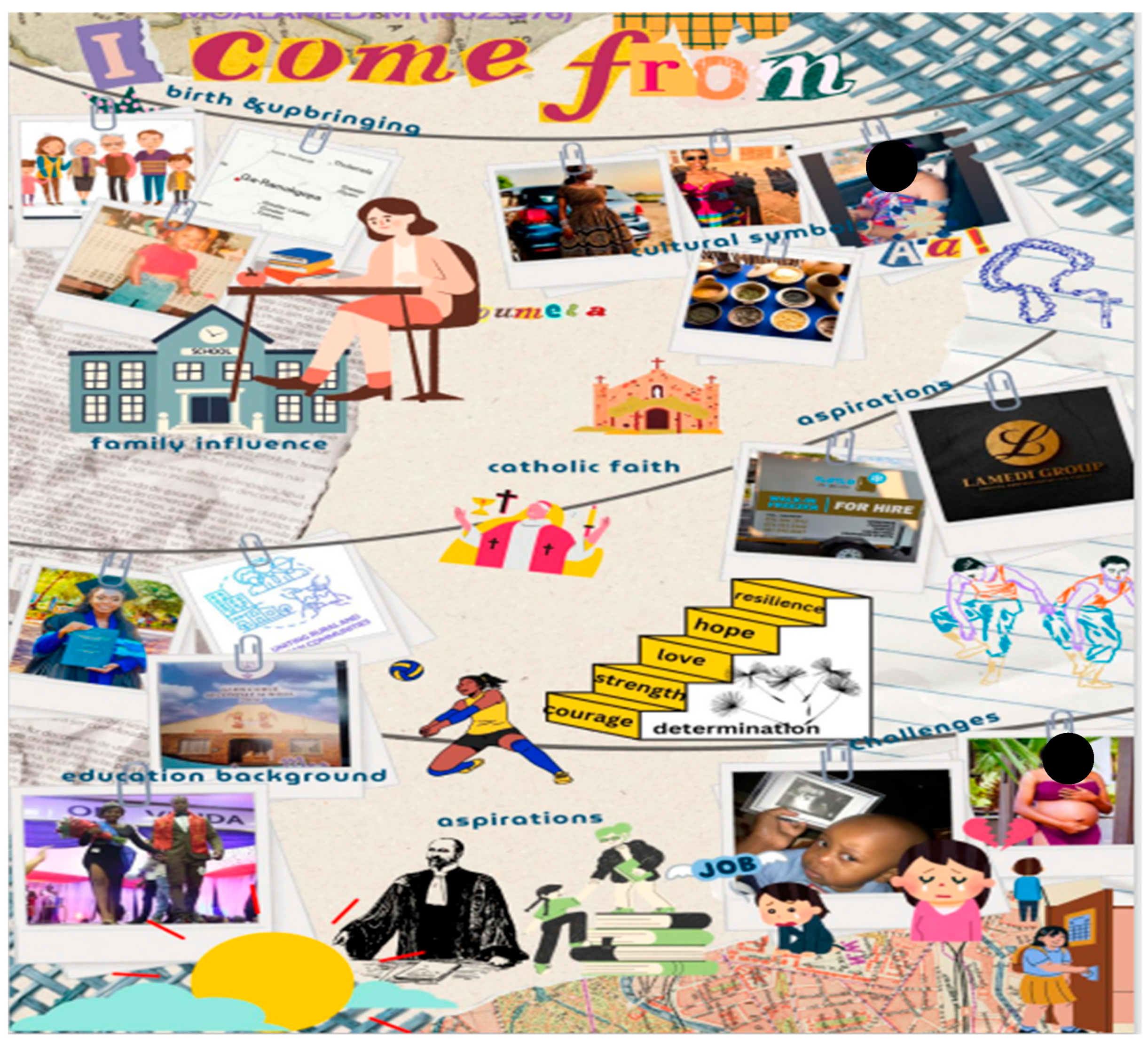
The data for this study consisted of 15 student-produced collages created in 2025 as part of a first-year teacher education course at a South African university. The pre-service teachers were tasked with producing a collage-based assignment that explored their motivations for choosing teaching as a profession, guided by the thematic prompt “I come from.” The instructions guided students to select a range of visuals, such as photographs, drawings, symbols, and other imagery, that reflected their socio-cultural backgrounds and life experiences shaping their identities. Students were asked to arrange these elements thoughtfully to tell a coherent story illustrating how their personal journeys led them to pursue teaching. In addition to the visuals, students incorporated text elements, including captions, quotes, and brief descriptions, to provide context and enrich the narrative of their collage (see
Figure 1). Finally, each student composed a reflective summary of 1000–1200 words, explaining the key themes and elements depicted in their collage and connecting these insights to their overall experiences and emerging professional identity as teachers. The students were given a week to work on the assignment and the option to create either a physical A3-sized collage or a single-page digital collage. The collages used in this study were all digital collages submitted online through Moodle.
The task used in this study was designed as an integral component of the Becoming a Natural Science Teacher theme within the Natural Sciences Methodology module. It served explicit educational purposes, namely fostering reflective practice and supporting PSTs’ professional identity development. The task was not originally conceived as a research instrument. Rather, the decision to analyse the images for research emerged from an institutional commitment to transforming departmental assessment practices by making them more inclusive and responsive to diverse ways of demonstrating learning. Participation in the research component was entirely voluntary and had no influence on the PSTs’ course grades or assessment outcomes.
Data Analysis
The analytical framework proposed by
Ademolu (
2022) was employed to guide the systematic analysis of both textual and visual data, enabling an integrated interpretation of participants’ written narratives and accompanying images.
Analysis proceeded in several iterative stages. First, each collage was examined independently using
Ademolu’s (
2022) framework to document its visual characteristics and potential meanings. The accompanying written narratives were then analysed through repeated reading to gain familiarity with participants’ explanations of their collages. Initial descriptive codes were generated inductively from both the visual and textual data, capturing recurring ideas, experiences, and motivations expressed by participants.
In the second stage, the visual interpretations were compared with participants’ written narratives to identify areas of convergence, complementarity, and divergence. Rather than interpreting the collages in isolation, meanings assigned to visual elements were grounded in participants’ own explanations, ensuring that interpretations reflected their intended meanings. Codes from both data sources were subsequently grouped into broader conceptual categories, which were refined through constant comparison across participants until coherent themes representing shared motivational patterns emerged.
Combining visual and textual data enabled methodological triangulation (
Heale & Forbes, 2013), strengthening the credibility of the findings by corroborating interpretations across complementary sources of evidence. This integrated approach also facilitated the production of thick descriptions (
Freeman, 2014) that captured both the cognitive and affective dimensions of participants’ motivations. Nevertheless, we recognise, following
Lincoln and Denzin (
1994), that such interpretations can only provide a partial understanding of participants’ lived experiences.
Consistent with a constructivist paradigm, we acknowledge that interpretation is inherently shaped by researchers’ positionality (
Barry, 1996). Our backgrounds and experiences as teacher educators informed the analytical process, and interpretations were developed through ongoing discussions among the research team to ensure that emerging themes remained closely grounded in both the visual artefacts and participants’ accompanying narratives. Throughout the analysis, aesthetic reflections (
Barry, 1996) were used to interrogate our responses to particular visual elements and to critically consider how these responses influenced meaning-making.
3. Results
In the findings section, eight of the fifteen collages were examined in detail because they offered rich, varied representations of participants’ motivations and experiences. These collages were selected as illustrative examples to demonstrate the key themes that emerged during the analysis. The remaining seven collages were not discussed individually, as they reflected themes and insights similar to those already presented. However, they were included in the overall analysis and contributed to confirming and strengthening the patterns and interpretations identified across the dataset.
I had to do something
Figure 1.
Moala’s Collage.
Figure 1.
Moala’s Collage.
Moala’s collage (
Figure 1) is composed of a series of images suspended on a line, symbolically arranged to convey a chronological sequence of life events culminating in her enrolment in a PGCE programme. Moala identifies herself as a Tswana person through the customary greeting “dumela,” while simultaneously acknowledging connections to the Pedi and Venda cultures. This visual organisation suggests a narrative of becoming, where experiences are presented as interconnected rather than isolated. We interpret the act of displaying the images on a line as a deliberate gesture of self-exposure, through which Moala renders her lived experiences visible and open to scrutiny. In this sense, the collage functions as an act of vulnerability, inviting viewers to engage with the personal, emotional, and contextual influences that have shaped her journey into teaching. This visual sequencing suggests a sense of continuity and progression, rather than a singular moment of decision. The images collectively foreground a strong rural heritage, represented through traditional clothing, staple food items, and everyday cultural practices that signal a life shaped by communal contexts. Interwoven within these representations are visual references to close family relationships and religious faith, which appear as stabilising forces and moral anchors in her life.
After completing both a bachelor’s and a master’s degree, Moala encountered significant challenges in securing employment. Although pursuing a career in law presented an alternative pathway, it would have required additional years of study, thereby prolonging her period of uncertainty. During this period, she gave birth to twins and was subsequently left without financial or practical support when her partner withdrew from parental responsibility. Confronted with the realities of single parenthood, inaction was not a viable option. These circumstances compelled her to respond decisively, leading her to enrol in a PGCE programme as a pragmatic and agentic response to pressing socio-economic and familial responsibilities. Within the overarching theme “I Had to Do Something,” Moala’s collage illustrates teaching not as an initially aspirational career choice, but as a necessary and purposeful course of action taken in the face of constraint. Her imaginative imagery thus foregrounds agency exercised under pressure, revealing how structural conditions, care responsibilities, and survival imperatives intersect to influence pathways into teaching.
Redeeming my past
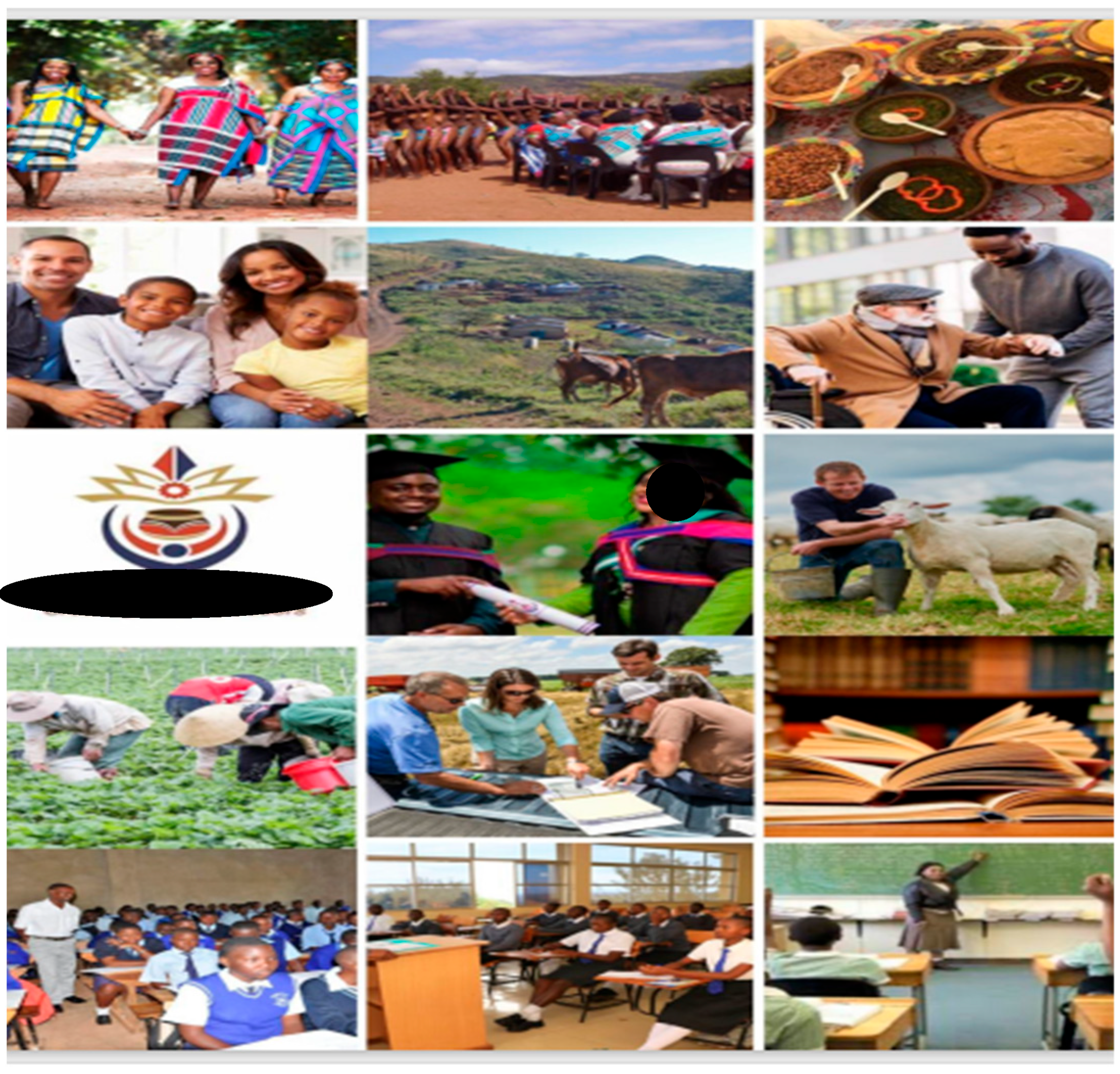
Tshilimba’s collage (
Figure 2) is an assemblage of clustered images, including cultural artefacts, traditional dances, diets, huts, classrooms, churches, graduation caps, and representations of his home location. The images and accompanying words used to depict Tshilimba’s favourite foods, such as tshidzimba, thophi, maranga, mashonzha, vhuswavhutete, and delele, alongside representations of traditional dances like tshikona, malende, tshigombela, and tshifasi, collectively signal his identity as a member of the Venda community with strong rural roots. The dense and overlapping arrangement of these images conveys the complexity of his experiences, reflecting multiple, interwoven influences that have shaped his journey. Prominent in his reflective entry is the value he places on relationships, particularly with his mother, family members, siblings, and friends, which emerge as central sources of support, guidance, and motivation throughout his journey toward becoming a teacher. We interpret the clustered nature of the images as indicative of a rich yet complex personal and cultural narrative, in which family, community, education, and cultural heritage intersect to inform his identity and shape his pathway into teaching.
Reflecting on his early years in high school, Tshilimba expresses regret over certain behaviours, including drinking and smoking, which he engaged in as coping mechanisms following the separation of his parents. These actions, he notes, were attempts to manage the emotional distress and instability caused by family disruption, yet they had negative consequences for his personal development and academic engagement. His reflection suggests a nuanced awareness of how personal challenges intersect with social pressures and peer influence, highlighting the formative role of early experiences in shaping both his character and his emerging aspirations as a teacher.
Graduating with a degree in Environmental Science, Tshilimba developed a strong interest in the experimental and hands-on aspects of the subject. Building on this formative engagement with practical learning, he reflects on his personal journey and the challenges he overcame, noting:
“I would like to share with my learners how I navigated difficult circumstances, including pressure from peers, family, and exposure to substances. Through mercy and perseverance, I was able to overcome smoking, drinking, and the stress associated with these experiences. I now understand the serious consequences of substance abuse. I would like to embrace opportunities to participate in community education programs to raise awareness about drugs and alcohol, as well as to teach strategies for coping with stress and addressing domestic violence, in order to support and protect vulnerable teenagers.”
Tshilimba’s aspiration to become a teacher is therefore deeply motivated by the need to redeem his past. He envisions teaching not merely as a career but as a means of transforming his earlier experiences into guidance, mentorship, and inspiration for learners facing similar challenges. His reflections suggest that teachers either did not play a role or could have played a more significant one in helping him navigate his situation. Through this vocation, he seeks to act as a role model and advocate, demonstrating resilience, responsible decision-making, and the possibility of overcoming adversity. Within the overarching theme “Redeeming My Past,” Tshilimba’s collage and reflections collectively illustrate how personal history, cultural identity, and lived experience converge to shape his emerging professional identity and pedagogical intentions.
Intending and becoming
Andra’s collage (
Figure 3) is a vibrant assemblage set against a lush, vegetative backdrop, firmly situated within a rural landscape. Through imaginative imagery, the collage brings together layered experiences in which cultural attire, traditional dances, and indigenous diets are foregrounded as valued expressions of family heritage. We interpreted the arrangement of her images in a rectangular shape as symbolising structure, stability, and purpose, suggesting a deliberate ordering of experiences that have shaped her life trajectory. Andra identifies her family as deeply rooted in cultural practices, particularly through the observance of the traditional domba dance and the wearing of Venda traditional attire, which serve as markers of identity and belonging. These visual elements collectively convey a life shaped by subsistence farming and rural livelihoods, reflecting a close and sustained relationship with the land. This agrarian upbringing later influenced her decision to pursue a degree in animal science. The collage not only foregrounds Andra’s cultural heritage but also illustrates how farming traditions and everyday rural experiences have shaped her values, worldview, and emerging identity as a future teacher.
Along the way, Andra reflects that she “realised my true calling is not only in nurturing the land but also in educating people.” Through her involvement in community programmes, where she taught local farmers various farming methods, her initial intention to work within agriculture gradually evolved into a deeper commitment to teaching. These engagements ignited her passion for education and enabled her to recognise the transformative power of knowledge as a tool for empowerment within rural communities.
This moment represents a critical point of transition in Andra’s journey of intending and becoming. Her agrarian background, cultural heritage, and sustained engagement with community learning spaces converged to shape an emerging teacher identity. As she articulates, “my journey took me from the fields to the classroom,” signalling a shift from vocational intention to professional becoming. For Andra, teaching is understood not merely as a job, but as a calling, one that allows her to draw on her agricultural knowledge and cultural roots to motivate, educate, and uplift learners. Through this process, her lived experiences become pedagogical resources, anchoring her becoming a teacher identity in both place and purpose.
I found myself here
Mutenda’s collage (
Figure 4) is an assemblage dominated by images of people, foregrounding relationships and interpersonal interactions as central to the formation of her identity and lived experiences. The prominence of human figures suggests that her sense of self has been shaped more by social encounters within educational spaces than by place or cultural symbolism. Although she identifies herself as having grown up in a rural area, the collage and accompanying reflection offer limited insight into her cultural background, suggesting that culture may not have been a salient marker in her narrative of becoming a teacher.
Instead, Mutenda’s reflections are firmly rooted in her school experiences. She recalls her primary school teachers with fondness, suggesting that early encounters with care, encouragement, and positive role modelling were a key part of her development. In contrast, her high school experiences are remembered as traumatic, particularly in relation to a school culture that normalised corporal punishment when learners failed to complete class activities. These experiences appear to have left a lasting emotional imprint, shaping her views about discipline, care, and learner support.
Her narrative also highlights academic struggle, particularly in mathematics during high school. Significantly, this challenge is counterbalanced by the presence of a supportive educator, Mrs Nengos, whom she describes as patient and understanding. This relationship marks a critical turning point, illustrating how compassionate teaching practices can mitigate academic difficulties and restore learner confidence. Collectively, Mutenda’s collage and reflections underscore the powerful role of teacher–learner relationships in shaping educational trajectories and suggest that her motivation to teach is informed by both affirming and adverse schooling experiences.
It is within the horizon
Chafane’s collage (
Figure 5) is an assemblage of predominantly materialistic images situated within the outline of a human head, symbolically locating his aspirations within his inner cognitive and imaginative world. At the centre of the collage are what he explicitly identifies as his aspirations: a large, luxurious mansion, a high-end supercar, images of expensive wines, Coca-Cola, a burger, and musical instruments associated with wealth and status. This imaginative configuration suggests that Chafane’s motivations are strongly oriented towards material success, financial prosperity, and a lifestyle marked by affluence and social prestige. This interpretation is further reinforced by the inclusion of the words “happiness” and “fun”, which signal an emphasis on pleasure, enjoyment, and immediate gratification. The placement of these images and text within the head motif of the collage further implies that these desires are deeply internalized, operating as guiding visions that shape his aspirations and imagined future.
Chafane’s rural upbringing is symbolically represented in the collage through images of a thatched house, the traditional game of playing with marbles, and children swimming in a river, evoking simplicity and communal life. Unlike other collages, however, Chafane does not include images that explicitly reference his cultural roots, family background, relationships with others, or village of origin. Instead, he foregrounds his faith and high school education as key markers of his identity. This rural narrative is disrupted by a tragic turning point in his life, a car accident, for which he later received financial compensation from the Road Accident Fund (RAF). Reflecting on this experience, Chafane notes: “I received compensation for the incident. Suddenly, I found myself with the means to live a life I thought I wanted. I indulged in extravagances, prioritizing short-term happiness and superficial relationships over meaningful pursuits.” This episode appears to have significantly shaped his aspirations, contributing to his desire for what he describes as a “good life.” After graduating from high school, he chose to enrol in a degree programme in Environmental Science, supporting himself with funds from the RAF. After completing his degree, he enrolled in the PGCE. Chafane concludes, “Becoming a teacher is a crucial step towards achieving this goal, as it will enable me to create a better life for myself and inspire others to do the same.” Teaching is thus positioned as a pathway toward what lies on the horizon of Chafane’s imaginative configuration of the “good life.”
This is what I wanted to be
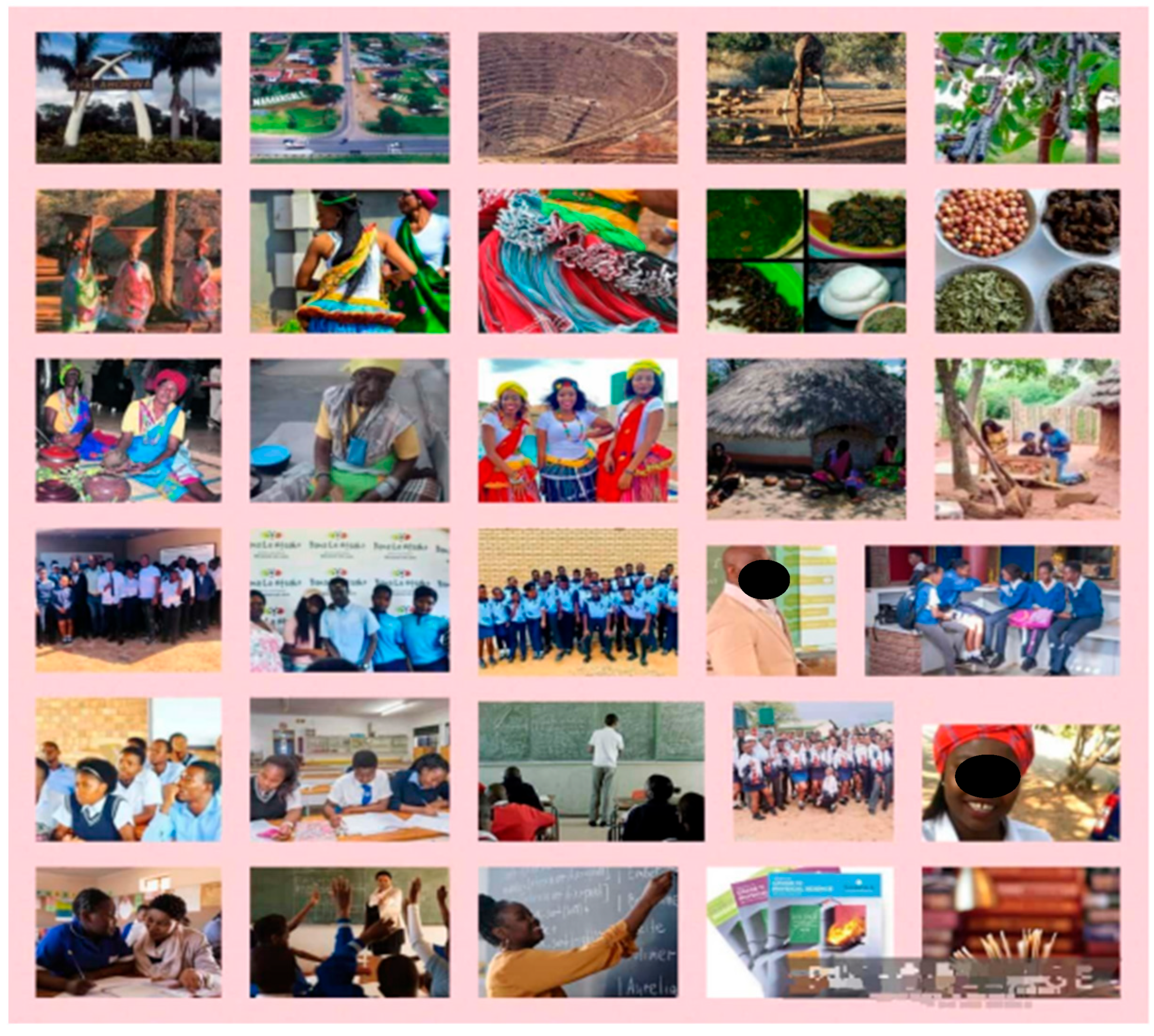
Nkhari’s collage (
Figure 6) primarily depicts people in various social and cultural settings, with a strong emphasis on communal life and the cultural identity of the Tsonga people. The inclusion of individuals dressed in traditional attire (xibelani skirt), engaged in cultural dances and ceremonies, and surrounded by images of indigenous foods foregrounds the importance of heritage, tradition, and collective practices in shaping their sense of self. Visual representations of village huts further situate these experiences within a rural context, evoking notions of belonging, continuity, and intergenerational knowledge. At the same time, the collage juxtaposes these traditional elements with images of a mining operation and a nearby wildlife park, suggesting the coexistence of cultural life, economic activity, and environmental resources. This juxtaposition highlights a complex social landscape where tradition, modern industry, and nature intersect, underscoring Nkhari’s awareness of development, livelihoods, and sustainability within her community. Collectively, the collage communicates an identity grounded in people, culture, and place, while also acknowledging the broader socio-economic forces that shape community life. The inclusion of images depicting learners, teachers, and textbooks suggests the centrality of educational experiences in shaping Nkhari’s lived realities. These visual representations are reinforced by her reflective narrative, in which she affirms that ‘my mentor, Miss Mehlote Ndlala, played a crucial role in shaping my passion for education. As my Life Sciences teacher, she inspired me to think critically and develop a love for learning, which ultimately led me to pursue a career in teaching’. Together, the visual and textual elements highlight the formative influence of mentorship and schooling in the construction of Nkhari’s professional identity. She further avers that the ‘images of a classroom setting symbolise ‘my aspiration to educate and inspire the next generation’.She reflects that her background has cultivated a deep appreciation for knowledge and an awareness of the transformative power of education. Consequently, she expresses a desire to become a teacher who not only imparts knowledge but also encourages learners to embrace their cultural heritage and recognise their potential. The theme ‘this is what I wanted to be’ quintessentially suggests that Nkhari’s motivation to choose teaching is intrinsically grounded, reflecting a personal passion and a deeply internalized sense of purpose rather than external pressures or expectations. We interpret the arrangement of the images to depict a deliberate narrative of her professional journey, highlighting the formative experiences, role models, and cultural values that have shaped her aspirations and identity as a teacher.
I never knew I had a love and passion for teaching until this programme
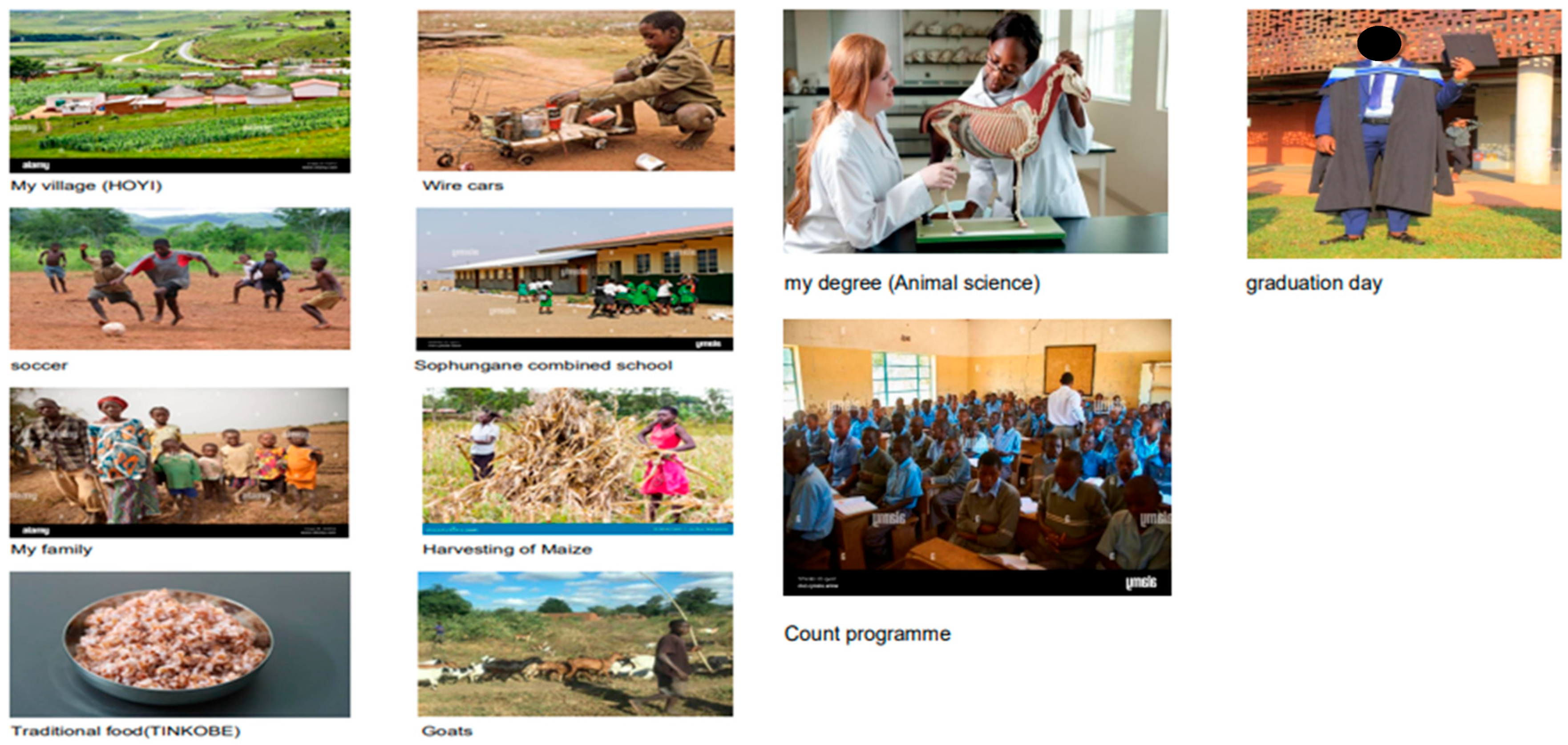
Gooma’s collage (
Figure 7) imaginatively configures the lived experience of a Tsonga family embedded within a predominantly Swati community. It portrays a delicate balancing act in which cultural continuity is preserved through traditions, practices, and familial values, while social integration is achieved through the use of the local language and participation in community life. He asserts, ‘My parents are Tsongas, they grew up in Bushbugridge, Mpumalanga. Growing up, I used to hear them communicating in the Tsonga language, even though they never wanted me to learn it, because it would have been a distraction at school, as I was learning Siswati at the time. They taught me the customs, traditions and also the food our people eat’. The collage is composed as a visual assemblage that traces key events, everyday practices, significant places, and schooling experiences that have shaped Gooma’s identity formation.
Gooma recalled fond memories of communal agricultural practices in which the entire village would gather at his family’s homestead to help with the harvest. These occasions were marked not only by collective labour but also by shared meals, during which community members were served traditional pap accompanied by locally harvested green leafy vegetables known as mbhidvo. Another customary Tsonga dish prepared during such gatherings was tinkobe, a nutritious mixture of maize, beans, and peanuts. These experiences reflect deeply embedded values of cooperation, reciprocity, and communal responsibility.
Gooma’s earliest career aspirations were rooted in animal science, inspired by his childhood experiences of herding goats. This early engagement with livestock fostered a sustained interest in animal health and care. Consequently, upon completing high school, he chose to pursue studies in animal science, driven by his ambition to become an animal health specialist.
After completing his degree, Gooma’s anticipation of entering the professional field was undermined by the limited availability of internship and employment opportunities aligned with his qualifications. Repeated attempts to secure a relevant placement proved unsuccessful. During this period of uncertainty, when all hope seemed lost, his sister introduced him to an initiative sponsored by a corporate organisation that offered academic support and enrichment programmes to primary and secondary schools, aiming to improve learners’ performance in mathematics. Reflecting on this experience, Gooma acknowledged a significant shift in his career orientation, noting: “I never knew I had a love and passion for teaching until this programme revealed a hidden part of me. I enjoyed engaging with learners, supporting them in problem-solving, explaining complex ideas in ways that were tailored to their learning needs, and providing guidance and support with their tasks.” This experience marked a pivotal moment in the emergence of his teacher identity, enabling him to recognise teaching not merely as an alternative career pathway, but as a vocation grounded in relational engagement and the purposeful support of learners.
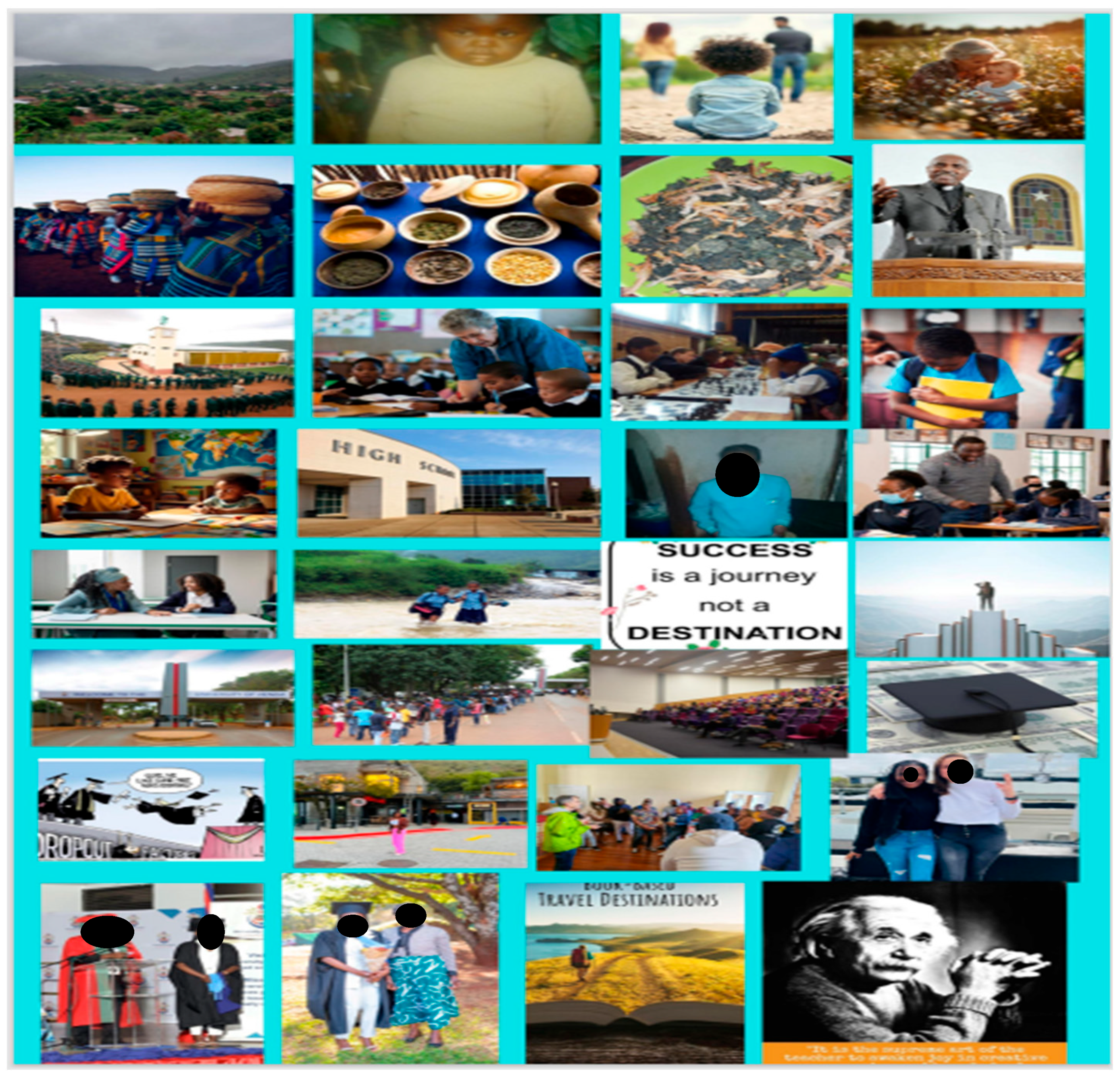
The struggles of life
Maduma’s collage (
Figure 8) is a conflation of images depicting people, places, artefacts, food items, and events that collectively chronicle lived experiences which often remain unnoticed and unexamined. While such experiences may not typically be foregrounded in formal narratives, they nonetheless exert a profound influence on the formation of personal identity. The collage foregrounds Maduma’s reflections on the absence of parental figures and her experience of navigating life’s challenges largely on her own. It also captures the difficulties she encountered in school, including the daily need to cross flooded rivers to attend. Raised by her grandmother in the rural village of Nzhelele, Maduma attributes much of her resilience, perseverance, and emotional strength to this formative relationship. She recognises her grandmother as a central figure in her upbringing, whose care, guidance, and lived wisdom cultivated in her the capacity to endure hardship and adapt to persistent adversity. This intergenerational bond provided not only material and emotional support but also a moral compass that shaped Maduma’s outlook on life. Additionally, religion played a significant role in her lived experiences, serving as a source of meaning, stability, and hope. She credits her religious upbringing with shaping her values, informing her sense of purpose, and sustaining her during periods of uncertainty and struggle, thereby contributing to the development of a resilient, value-oriented identity.
Maduma’s collage resonates strongly with the lived experiences of many of her pre-service teacher colleagues. Growing up in conditions marked by limited material resources, she placed a high premium on education as a pathway to possibility and self-advancement. She affirms: “School has always been a central part of my life, shaping my identity and my dreams. My collage reflects this passion, filled with images of education, because school was more than just a place of learning; it was my source of inspiration.” Central to this narrative is the influential role of teachers in her life, particularly her late favourite teacher, Mrs Mphephu, whom she credits with motivating her to believe in herself. Through such encouragement, Maduma was reminded of her potential and worth, encapsulated in the affirmation that she “is a star.” She concludes by asserting: “I want to be the guide and role model for students who, like me, need someone to remind them of their potential and encourage them to keep going against all odds.” It was during her time at university that the idea of becoming a teacher first took shape, emerging as a meaningful response to her own educational journey and the supportive relationships that had sustained her. This realisation marked the antecedent of her teacher identity, grounded in a desire to offer guidance, affirmation, and hope to learners facing circumstances similar to her own.
4. Discussion
This study sought to answer the research question: How do graduate students describe their motivations for pursuing a Postgraduate Certificate in Education (PGCE)? The findings reveal an interplay of antecedent influences, including factors that preceded and shaped their motivations, such as personal experiences, educational trajectories, cultural values, and social contexts. These antecedental influences provide a foundation for understanding why graduate students choose to pursue the PGCE, highlighting how prior life experiences, familial relationships, and encounters with role models contribute to the formation of their teacher identity. This is a departure from studies that have examined the motivations for pursuing teaching in different contexts. The following discussion examines these influences in detail, illustrating how they collectively inform the decision to pursue a career in teaching.
The motivations many students articulate for pursuing the PGCE often stem from personal challenges, with some directly linked to their socio-economic circumstances. For instance, Moala needed to secure employment while also caring for two children. She sought a pathway that would allow her to earn a living and support her family, although an alternative route, such as pursuing a law qualification, might have offered different prospects. In this context, her decision to pursue the PGCE was largely shaped by external factors, reflecting pragmatic considerations rather than an intrinsic passion for teaching. Similarly, Andra and Maduma’s motivations were predominantly influenced by external circumstances; however, unlike Moala, their narratives also include elements of altruism, reflecting a desire to contribute positively to learners’ lives. Drawing on
Moosa (
2020), it is evident that altruistic motivations dominate students’ decisions to pursue teaching, with intrinsic motivations playing a secondary role and extrinsic factors exerting the least influence. However, research conducted in other contexts reveals variations in motivational patterns. For instance, among students in Thailand, motivations for pursuing teaching reflect a combination of intrinsic and extrinsic factors (
Wiboolyasarin et al., 2025), whereas in Scotland, students tend to demonstrate predominantly intrinsic motivations for choosing teaching as a career, though they portrayed teaching negatively in relation to workload, work-related stress, salary, and social status (
Wang et al., 2023). An interesting finding from this study is that students’ motivations are not discrete or mutually exclusive, such as purely intrinsic, extrinsic, or altruistic; rather, they often represent a complex interplay of these factors, with multiple influences combining to shape their decision to pursue the PGCE. This finding contrasts with studies that categorize motivations into distinct and separate types, positioning them as either intrinsic, extrinsic, or altruistic, and instead points to a more integrated understanding of motivation in career decision-making (
Heinz, 2015;
Moosa, 2020). For example, in the study by
Shak (
2022) Indonesian students predominantly articulated intrinsic and altruistic motivations for pursuing a career in teaching, with less emphasis placed on extrinsic considerations.
Another important finding of this study is that motivations to pursue teaching may also emerge from reflections on perceived behavioural missteps during earlier life experiences. For instance, Tshilimba described engaging in behaviours such as drinking and smoking as coping mechanisms following his parents’ divorce. These experiences prompted critical self-reflection and, ultimately, fostered a desire to enter the teaching profession to model positive behaviour and provide guidance to learners navigating similar personal challenges. In many rural schools, learner discipline has been reported as a threat to effective teaching and learning (
Omodan, 2022). In addition, in several rural communities and schools experience persistent problems related to the use and abuse of alcohol and drugs (
Mokwena & Setshego, 2021;
Nzama & Ajani, 2021;
Oladeinde et al., 2020). Within this context, individuals such as Tshilimba may view teaching not merely as a career choice, but as an opportunity for personal transformation and a means of making a meaningful social contribution to their communities. While his motivations have a strong altruistic dimension, they also contain elements of self-redemption and identity reconstruction, as teaching becomes a means through which he seeks to reconcile past experiences with a renewed sense of purpose and responsibility. Unlike other studies that categorise motivations as either intrinsic, extrinsic, or altruistic (
Bergmark et al., 2018;
Lehtinen et al., 2025;
Shak, 2022), this study demonstrates that examining the antecedents of these motivations is crucial for developing a deeper and more nuanced understanding of why individuals choose to pursue teaching.
Another key finding from this study is the conflation of extrinsic and altruistic factors in students’ motivations to pursue teaching. Chafane’s drive to become a teacher is largely oriented towards achieving a better quality of life, while simultaneously aspiring to inspire young people in his community by demonstrating the value of education and the transformative potential of acquiring a formal qualification. In a context where 51% of children live in poverty (
von Fintel et al., 2017), with approximately 80% attending poor public schools (
Spaull, 2013), and about 70% of these learners enrolled in no-fee schools (
Taylor et al., 2019), individuals such as Chafane can serve as powerful role models. His example has the potential to motivate rural learners to pursue education and aspire toward obtaining formal qualifications as a pathway to improved life opportunities. However, the challenge with altruistic and extrinsic motives is that when these needs are not met in the profession, teachers are more likely to seek alternative work opportunities (
Moosa, 2020).
For Gooma, the motivation to pursue teaching emerged from his involvement in facilitating a learner support programme aimed at improving academic performance, which was sponsored by a corporate organisation. Past studies have reported the influential role of prior teaching experience in motivating individuals to pursue a career in teaching (
Heinz, 2015;
Kwok et al., 2022). Although his initial participation was prompted by external circumstances, specifically his inability to secure internships or employment opportunities related to animal science and his sister’s introduction to the programme, sustained engagement in the programme led to a notable shift in motivation. Through direct interaction with learners and active involvement in teaching-related activities, Gooma developed a genuine interest in teaching, reflecting a transformation from externally driven participation to intrinsically motivated commitment. While extrinsic motivation is undeniably significant, its impact is often secondary to deeper, intrinsic motivations rooted in societal values and personal convictions (
Wiboolyasarin et al., 2025).
Mutenda’s narrative did not reveal a clearly articulated or specific motivation for pursuing teaching, suggesting an absence of a singular formative experience or defining influence that directed her towards the profession. Instead, her pathway into teaching appears to be shaped by a confluence of social influences (
Richardson & Watt, 2010) that she did not explicitly frame as motivational antecedents. In contrast, Nkhari expressed a strong intrinsic drive to pursue teaching, rooted in her positive experiences with her high school Life Sciences teacher. This teacher served as a significant role model, inspiring Nkhari through subject mastery, pedagogical care, and encouragement, and thereby fostering an internalized desire to emulate these qualities in her own professional trajectory. This finding aligns with
Kwok et al. (
2022) who highlights the influential role of prior teaching and learning experiences in shaping individuals’ motivations to enter the teaching profession.
Implications for Practice
The findings of this study may benefit initial teacher education institutions and the Department of Basic Education. It would be of little value to either if teachers’ needs are not adequately addressed at both the pre-service and in-service levels. While it is essential to prepare students comprehensively for the demands of the profession, it is equally important that working conditions encourage them to remain in teaching, particularly given that many students appear motivated by extrinsic and altruistic factors. However, PSTs with intrinsic–altruistic motivations have been associated with high professional competence and planned engagement in future teaching (
Tang et al., 2015). Teacher education needs to intentionally create conditions that support professional learning that improve PSTs’ self-determination. Specifically, we now argue for curricula that: (1) support PSTs’ progression from externally regulated to more autonomous forms of motivation by incorporating transformative and authentic learning experiences; (2) provide opportunities for autonomy through self-directed inquiry, and reflective practice; (3) foster competence by offering scaffolded learning, constructive feedback, and appropriately challenging tasks; (4) strengthen relatedness through collaborative learning, mentoring, and supportive teacher–student relationships; and (5) explicitly connect coursework with the values and purposes of the teaching profession to promote the internalization of professional goals.