


Abstract
Grounded in a Critical Race Theory framework, this study explores the racial microaggressions experienced by Faculty of Color at one four-year university in California during what Bell would call a “peak of progress” for racial justice—where equity and inclusivity took center stage in the institutional agenda. We engaged a Critical Race Feminista Methodology, using group pláticas to gather stories of Faculty of Color from diverse racial and generational backgrounds to understand how they experienced everyday racism within the context of racial realism—the acknowledgement of the permanence of racism in U.S. society. Our findings revealed that despite the institutional focus on equity, Faculty of Color experiences with racial microaggressions were connected by threaded histories of imposed racial hierarchies, marginalization, and structural inequities. Faculty of Color across age, gender, and rank described the everyday racism that impacted academic trajectories and personal lives across time, from the late 1990s for the most senior faculty to the present for the most junior. However, we also found that faculty responded to those microaggressions through racial microaffirmations—the everyday ways People of Color affirm each other’s dignity, integrity, and shared humanity that make them feel seen and supported. Indeed, we found that Faculty of Color engaged powerful strategies of racial microaffirmations with each other across generations that supported their well-being and their careers.
1. Introduction
Racial realism is a theory coined by critical race legal scholar Derrick Bell (1992b) which holds that racism is an endemic and permanent fixture of U.S. society. Bell argued that any efforts for racial justice must consider this fact. In 1992, Bell explained,
Black people will never gain full equality in this country. Even those herculean efforts we hail as successful will produce no more than temporary ‘peaks of progress,’ short-lived victories that slide into irrelevance as racial patterns adapt in ways that maintain white dominance. This is a hard-to-accept fact that all history verifies.(p. 373)
In other words, racism has always been, always is, and always will be a permanent fixture in U.S. society, embedded in our social structures and the everyday lives of People of Color. Thus, he argued, racial equality in the U.S. is an “unobtainable” goal and any efforts towards it would be futile. To be clear, Bell was not suggesting that racial realism preclude the struggle for racial justice. In fact, Bell (1992a) argued that challenging racism was a necessary action. Rather, his argument was grounded in a realist perspective that assigned agency to naming the permanence of racism as an act of resistance.
As we come together to write this paper, racial realism in higher education has never been clearer. Just six years ago in 2020, institutions of higher education across the U.S. were issuing statements of solidarity with the Black Lives Matter movement in response to national protests that denounced racism, anti-Blackness, and systemic oppression. Institutional racism and white supremacy entered the public discourse in a way we had never seen before, prompted by the murders of Breonna Taylor, Ahmaud Arbery, George Floyd, Jacob Blake, and other unarmed African Americans killed by law enforcement that year, coupled with the COVID-19 pandemic that highlighted drastic racial inequities in health, sickness, and death (Pérez Huber & Muñoz, 2021). Universities began to establish and organize Diversity, Equity, and Inclusion (DEI) offices, centers, commissions, and committees in varying forms to address racial inequities. DEI and equity-related professional development programs were abundant. There was a renewed focus on DEI and money to back it; billions of dollars were available by public and private grantmaking agencies for racial equity research and support (Mercado, 2025). It was an energizing and hopeful movement that seemed to be shifting the ways the public understood racism as a fundamental problem in U.S. society. Six years later, we find ourselves in a very different landscape. At the start of the second Trump presidential term, executive orders were issued to end DEI in higher education, K-12 schools, federal agencies, and the military, while private businesses and corporations quickly followed suit (Murray & Bohannon, 2025).1 Federal grants for DEI-related research have been halted and are still in limbo (Palmer, 2025). Although executive orders are not law and cannot override federal law or statutes, universities all over the nation are quickly responding by undoing some or all of the DEI efforts they had established, closing offices and centers, changing names, and scrubbing websites to remove equity-related language (Hernandez, 2025; Kaleem, 2025). In 2020, we began to see “peaks of progress” in racial equity. Just a few years later, as Bell (1992a, 1992b) theorized, racial realism has proved that progress is indeed short-lived, as we now find ourselves in a time of profound retrenchment of civil rights (Montoya, 2026).
This study began exploring the experiences of Faculty of Color2 with everyday racism at one comprehensive four-year university in California during a “peak of progress,” where equity and inclusivity took centerstage of the institutional agenda. Various university-level DEI programs and commissions were established, and many departments and colleges within the university followed suit with their own equity and diversity programming. As part of this project, we engaged with Faculty of Color from diverse racial and generational backgrounds to understand how they experienced everyday racism, or racial microaggressions, within this specific institutional context. The findings of the study revealed that the racial microaggressions experienced by Faculty of Color were connected by threaded histories of imposed racial hierarchies, marginalization, and structural inequities. Faculty of Color across age, gender, and rank described the everyday racism that impacted academic trajectories and personal lives across time, from the late 1990s for the most senior faculty to the present (2023) for the most junior.
Racial realism emerged as a critical framework for understanding these faculty members’ experiences by situating them within a historical analysis of the shifting “racial patterns” of racism in California over the past three decades. We had no idea when we were gathering their stories that we would later witness racial realism unfold in the very ways we are now experiencing as we write this paper. Yet racial realism also reminds us of the histories of resistance against racism. Within these histories, acts of affirmation and solidarity have played a crucial role in challenging oppression and sustaining communities. Thus, another focus of this study was to examine one response to everyday racism, racial microaffirmations—the everyday ways People of Color affirm each other’s dignity, integrity, and shared humanity that make them feel seen and supported (Solórzano et al., 2020). Indeed, we found powerful strategies that Faculty of Color engaged with, with each other across generations, that supported their well-being and their careers. In this paper, we begin with the overarching theoretical framework for the study, Critical Race Theory in Education, and explain the CRT conceptual tools that guided the study, racial microaggressions, and racial microaffirmations. Next, we describe our methodology and present our findings on how the Faculty of Color in this study experienced racial microaggressions and microaffirmations. We conclude with recommendations for how institutions can recognize and respond to racial microaggressions and foster spaces of racial microaffirmations.
2. Critical Race Theory in Education
Critical Race Theory (CRT) emerged in the 1980s through the work of lawyers, activists, and legal scholars as a race-based legal analysis for a post-Civil Rights era in the U.S. (Bell, 1995; Matsuda et al., 1993). CRT in the legal field challenged the perceived race neutrality of legal analyses that contributed to the erasure of everyday and systemic racism (and other forms of subordination) that often led to misinterpretations of legal doctrine and the perpetuation of marginalization of Communities of Color. By the mid-1990s, education scholars began applying CRT to educational research. Ladson-Billings and Tate (1995), along with Solórzano (1997), pioneered this shift, creating a foundation for CRT’s use in education. Building upon this trajectory, we define CRT in education as an explanatory framework that examines the role of racism and white supremacy while working to challenge all forms of subordination (Solórzano, 1997). CRT in education is structured around core tenets that guide how scholars apply CRT in the field. Solórzano and Pérez Huber (2020) identify these key principles:
- CRT foregrounds race and racism while illustrating how they intersect with other forms of oppression—including sexism, cissexism, classism, eurocentrism, monolingualism, ableism, and heteropatriarchy—and their impact on People of Color.
- CRT critiques traditional research paradigms and theories, exposing deficit narratives about Communities of Color and educational practices that falsely claim neutrality and objectivity.
- CRT centers the experiences Communities of Color, recognizing them as valuable sources of knowledge and strength.
- CRT provides a transformative approach to addressing racial, gender, class, and other forms of discrimination by linking theory with practice, scholarship with teaching, and the academy with Communities of Color.
- CRT challenges ahistoricism, acontextualism, and aracialism3 by incorporating historical, contextual, and interdisciplinary perspectives to inform praxis.
These tenets inform a CRT analysis in education and shape our understanding of racial microaggressions.
Racial Microaggressions. The concept of racial microaggressions was first coined by psychiatrist and education scholar Dr. Chester Pierce who described the subtle, everyday forms of racism targeting Black communities as “offensive mechanisms” (Pierce, 1970). He theorized the term “microaggression” to describe the “subtle blows” of racism that, while often imperceptible to those enacting them, are persistent and cumulative in their harm to African Americans. Pierce explained that these aggressions stem from “feelings of superiority” that enable one group to degrade, abuse, and humiliate another (p. 265). His characterization of such “Black-white relations” remains relevant today. Through his research, Pierce highlighted the long-term psychological and physiological effects of racial microaggressions, underscoring their profound impact on mental and physical well-being.
In 1998, Solórzano conducted the first empirical study on racial microaggressions in education, analyzing the experiences of Chicana and Chicano postdoctoral scholars in academia (Solórzano, 1998). In the 2000s, counseling psychologist Derald Wing Sue (and colleagues) developed typologies to identify various types of racial microaggressions that target People of Color (Sue, 2010; Torino et al., 2019). By 2015, Pérez Huber and Solórzano (2015) further theorized racial microaggressions through a CRT lens, defining them as follows:
- Verbal and non-verbal assaults directed at People of Color, often expressed in subtle, automatic, or unconscious ways.
- Layered attacks based on multiple aspects of identity, including race, gender, class, sexuality, language, immigration status, phenotype, accent, or surname.
- Cumulative experiences that exact psychological, physiological, and academic tolls on People of Color (p. 302).
Accompanying this definition, these authors offered a model (Figure 1) for understanding how racial microaggressions occur in the experiences of People of Color.
Figure 1.
A model for understanding the types, contexts, effects, and responses to racial microaggressions (Solórzano & Pérez Huber, 2020).
The model includes the following:
- -
- Types: How one is targeted by the racial microaggression, including verbal (i.e., racist comments) and non-verbal expressions (i.e., body language), and visual forms of everyday racism (i.e., stereotypical racist imagery).
- -
- Context: The spatial location (i.e., workplace, classroom, street) and the surrounding circumstances and/or conditions present in that location (i.e., hostile campus climate).
- -
- Effects: The physiological and psychological consequences of racial microaggressions that take a toll on the mind, body, and spirit (i.e., anger, stress, self-doubt, poor health) (Pérez Huber et al., 2023).
- -
- Responses: How a Person of Color responds to racial microaggressions, which can also influence the effects (i.e., denial, resistance, self-care).
Figure 1 helps us to understand how racial microaggressions occur and how People of Color are impacted by them. Racial microaggressions are a systemic form of racism that negatively impact the bodies, minds, and spirits of People of Color. This form of everyday racism is a manifestation of institutionalized racism, the structural mechanisms that systematically subordinate, marginalize, and exclude People of Color. Furthermore, institutional racism exists because of ideologies of white supremacy that justify racial hierarchies, where People of Color are perceived as subordinate to whites (Pérez Huber & Solórzano, 2015). In this study, we examine the types and contexts of racial microaggressions experienced by Faculty of Color, how they are affected by them, and how they responded to them.
Racial Microaffirmations. The term “micro-affirmations” was initially used to refer to “small acts” of recognition that support professionals in workplace settings, leading to feelings of value and productivity (Rowe, 2008). According to Rowe (2008), examples of micro-affirmations in the workplace can be “graceful acts of listening, in the practice of generosity… and consistently giving credit to others” (p. 46). Solórzano et al. (2020) extend the concept of micro-affirmations by using a CRT framework to name racial microaffirmations as the everyday ways People of Color affirm and validate each other in response to the dehumanization of racism.4 Thus, racial microaffirmations are one response to racial microaggressions (Solórzano & Pérez Huber, 2020), that can mitigate the harmful effects of racism (Pérez Huber et al., 2021). In this study, we draw from the following definition of racial microaffirmations:
The subtle verbal and nonverbal strategies People of Color engage that affirm each other’s dignity, integrity, and shared humanity. These moments of shared cultural intimacy allow People of Color to feel acknowledged, respected, and valued in a society that constantly and perpetually seeks to dehumanize them. Racial microaffirmations can be protective and restorative, offering spaces and opportunities for healing that, over time, can have cumulative positive effects on the well-being of the body, mind, and spirit.(Pérez Huber et al., 2023, p. 713)
To ground our use of these theoretical and conceptual frameworks, we provide a brief overview of research that has examined the experiences of Faculty of Color with racial microaggressions, and the experiences of marginalized groups with microaffirmations.
3. Research on Racial Microaggressions and Faculty of Color
Educational research on racial microaggressions has increased in recent years, particularly with a growing body of literature employing a critical race analysis (Pérez Huber & Solórzano, 2015; Solórzano & Pérez Huber, 2020). Research on Faculty of Color’s experiences with racial microaggressions has found that these experiences are often subtle and habitual (Cueva, 2014; Harris et al., 2021; Louis et al., 2016; Morales et al., 2024). Faculty of Color navigate institutions that maintain structures and hierarchies of white supremacy, producing workplace inequities and barriers to full integration within higher education (Bond & Haynes-Baratz, 2022; Mickles-Burns, 2024; Morales et al., 2024). As a result, racial microaggressions target Faculty of Color through experiences with institutional racism deployed through university policies and practices (Aguirre, 2020; Arnold et al., 2016; Louis et al., 2016; Orelus, 2020; Salazar, 2009), as well as gendered and intersectional racial microaggressions (Cueva, 2014; Harris et al., 2021; Holling, 2019; Morales et al., 2024) that target multiple identities of Faculty of Color. In addition to racial microaggressions, Faculty of Color can experience other forms of everyday discrimination, including those related to academic hierarchies (Alwan et al., 2018; Young & Anderson, 2021; Young et al., 2015).5
Scholarship on racial microaggressions reveals critical insights on how institutional dynamics reinforce the perceptions of white faculty as competent, objective, and rigorous, while undermining the intellectual authority of Faculty of Color (Aguirre, 2020; Sue et al., 2011; Morales et al., 2024). At the institutional level, colleges and universities deny the racial realities faced by Faculty of Color, particularly when facing challenges in their Retention, Tenure, and Promotion (RTP) processes (Aguirre, 2020; Diggs et al., 2009; Harris et al., 2021; Orelus, 2020). Other racial microaggression research has employed intersectional analyses to uncover the experiences of Women Faculty of Color with cultural taxation, racial and gendered stereotypes, and resistance in the classroom from white male students (Cueva, 2014; Gutierrez y Muhs et al., 2012; Holling, 2019; Morales et al., 2024; Walters, 2018). For example, Morales and colleagues (2024) address the institutional failures in supporting Women Faculty of Color who must navigate academic careers amid constant racial and gendered microaggressions. Holling (2019) notes the microaggressions expressed through phrases such as “you intimidate me,” signal a perceived threat of Women of Color in academia. Walters (2018) explains the lack of belonging experienced by Black female faculty members amid conservative and anti-Black institutional contexts. The research on racial microaggressions targeting Women of Color faculty shows the particularly vulnerable positions they occupy within academic hierarchies.
Research has also addressed the cumulative psychological and physiological toll of enduring racial microaggressions for Faculty of Color (Arnold et al., 2016; Cueva, 2014; Louis et al., 2016; Sue et al., 2011). Smith and colleagues first named “racial battle fatigue” as the “psychophysiological symptoms” experienced by Black faculty because of the cumulative stress of racial microaggressions (Smith et al., 2006, p. 300; Smith et al., 2007). They found that such symptoms can include suppressed immunity, chronic pain, anxiety, insomnia, and mood swings, among many others. A decade later, Arnold et al. (2016) explained how racial battle fatigue was triggered by the tenure and review process among Faculty of Color, including physical signs of chronic stress, migraines, exhaustion, and weight gain associated with racial vigilance. Ultimately, to mitigate the racialized stress of enduring racial microaggressions, research reports that Faculty of Color developed a futile and passive response approach, such as “laughing it off,” “letting it go,” or “disengaging” (Louis et al., 2016, p. 466).
Despite the persistence of racial microaggressions and the physiological and psychological harm they can cause, Faculty of Color find strategies to endure and respond to such racial hostility (Cueva, 2014; Diggs et al., 2009; Salazar, 2009; Okorie-Awé et al., 2021). Some of the strategies shared in the literature include counterstorytelling to expose institutional racism and collective resistance (Cueva, 2014; Salazar, 2009). Additionally, counterspaces can serve as intimate spaces of dialogue, where Faculty of Color gather to debrief and process their experiences of racial microaggressions (Cueva, 2014; Morales et al., 2024; Salazar, 2009; Sue et al., 2011). These responses aim to mitigate the impact of racial microaggressions by responding with strategies, resistance, survival, and finding a path towards healing from the everyday racialization and institutional hostility experienced by Faculty of Color. These strategies move the literature toward an understanding of what we call racial microaffirmations in this study.
4. Research on Racial Microaffirmations
This would be the first study, to our knowledge, to examine the experiences of Faculty of Color with racial microaffirmations. However, there has been important research exploring the small acts of recognition Rowe described in 2008.6 While Rowe’s work on micro-affirmations did not consider the relationship between affirmations and identity, other research has empirically extended Rowe’s understanding of micro-affirmations to the experiences of marginalized groups. For example, Molina et al. (2019) explored how micro-affirmations could mitigate the experiences of “micro-inequities,” or forms of gender discrimination, experienced by women in medicine through transforming workplace culture to be more inclusive. Similarly, Flanders et al. (2019) explored the concept of microaffirmations (drawing from Rowe but using the term without the hyphen) to understand the small acts of recognition and inclusion experienced by bisexual women that can improve mental health practices for this population. Thus, Flanders et al. (2019) expanded microaffirmations to sexuality and gender-related research.7 The researchers developed the “Bisexual Microaffirmations Scale for Women”, which included sexual identity recognition and acceptance and social and emotional support as important factors for improving mental health practices among clinicians that serve bisexual women (p. 154). Extending the quantitative research by Flanders et al. (2019), Anzani et al. (2019) used qualitative data to explore how transgender clients experience microaffirmations in mental health settings when therapists validate gender identity and how they disrupt heteronormativity. Pulice-Farrow et al. (2019) found the significant role microaffirmative relationships play in the positive mental health of transgender clients. More recent studies in the mental health literature have examined the experiences of People of Color. For example, Paul et al. (2025) explored the everyday forms of validation in the experiences of nonbinary People of Color leading to feelings of physical safety and identity confidence, while Ellis et al. (2025) found that affirming Black male college students’ experiences led to decreased depressive symptoms (Ellis et al., 2025).
In educational research, studies on microaffirmations are relatively new. However, research in education expands the scope of everyday affirmations that can be experienced by all people, and toward the concept of racial microaffirmations specifically experienced by People of Color. For example, grounded in CRT and influenced by theories of self-affirmation in social psychology (Cohen & Sherman, 2014; Steele, 1988), Solórzano and Pérez Huber (2020) explain racial microaffirmations as “the subtle verbal or non-verbal strategies People of Color use to affirm each other’s dignity, integrity, and shared humanity” (p. 85). They explain these moments as a form of “shared cultural intimacy” (Gates, 1994, p. xv) that allow People of Color to feel acknowledged, respected, and valued in a society that continually seeks to dehumanize them. Several studies have used this definition of racial microaffirmations to examine the experiences of Students of Color. For example, Dávila (2023) explored how racial microaffirmations could be used to affirm the cultural and linguistic identities of Latinx students and build solidarity. Similarly, Mireles-Rios et al. (2024) found that Latinx college students engaged racial microaffirmations with each other, providing critical peer support in their undergraduate careers, while Latinx instructors also offered important sources of racial microaffirmations.
Similar to Solórzano and Pérez Huber (2020), Rolón-Dow and Davison (2021) also used CRT to theorize specific types of racial microaffirmations experienced by Students of Color, using a typology that identifies everyday recognition that can affirm students, providing a sense of protection, validation, and sense of belonging. Racial microaffirmations have been found to serve as protective factors that can mitigate the physiological and psychological harms of everyday racism (Pérez Huber et al., 2021). Furthermore, racial microaffirmations have been found to be restorative to the well-being of Students of Color, leading to pathways of healing that can have cumulative positive effects on the body, mind, and spirit (Pérez Huber et al., 2023). This study is one of few to offer an empirical exploration of racial microaffirmations in educational research, and the first to examine the experiences of racial microaffirmations with Faculty of Color in higher education.
5. Critical Race Feminista Methodology
Our methodology is framed by the bridging of Chicana feminisms and CRT, what scholars term a Critical Race Feminista Methodology (CRFM) (Delgado Bernal et al., 2019; Pérez Huber et al., 2024). Pérez Huber et al. (2024) explain, “While CRT affords an examination of the ways racism and white supremacy operate in the policies, practices, and discourses that structure educational institutions, Chicana Feminisms consider how experiences within these institutions become inscribed upon our bodies, minds, and spirits” (p. 1264). CRFM is a methodological approach that recognizes the historical permanence of racism imbedded within U.S. social systems and the ideologies of white supremacy that uphold those structures. Furthermore, CRFM is guided by the desire to recover and reconnect to identity, memory, and histories fragmented by colonialism, moving away from positivist research paradigms and toward ancestral knowledge (Delgado Bernal et al., 2019). Critical to a CRFM approach are elements of healing and transformation. Multiple research strategies can be used from this methodological standpoint in both qualitative and quantitative research including participatory action research (López, 2024), education historiography (Camargo Gonzalez, 2024), epistolary praxis (Escobedo, 2024), pláticas (Morales et al., 2023), and Critical Race Feminista Quantitative Praxis (García et al., 2026). To engage Faculty of Color in a discussion about their experiences related to everyday racism and racial microaffirmations, we utilized Chicana feminist pláticas and Critical Race Hypos.
Drawing from González (1998) and Fierros and Delgado Bernal (2016), we formed group pláticas that would create a space for Faculty of Color to collectively theorize from their lived experiences in a conversational format familiar to the types of informal sharing and storytelling that take place across many Communities of Color (Montoya, 2002). As a methodological approach, group pláticas emphasize collaboration, shared vulnerability, reflexivity, and possibilities for healing (Fierros & Delgado Bernal, 2016). We formed three affinity group pláticas, two Women of Color groups and one Men of Color group, for faculty at one large public four-year university in California.8 This particular institution maintained an explicit commitment to equity and diversity and was designated a Minority-Serving Institution (MSI), a Hispanic-Serving Institution (HSI), and an Asian American and Native American Pacific Islander-Serving Institution (AANAPISI) with an undergraduate student population that was 74 percent Students of Color at the time of the study. A total of 11 faculty members collaborated with us from this institution, all within the College of Education. We chose this College because at the time of data collection, it was distinct from other Colleges in its efforts to align its practices and policies with university-wide equity and inclusion initiatives. Each of the 11 faculty members (1) were current or former tenured/tenure-track professors or full-time lecturers; (2) identified as Black, Latinx, Asian American, or multiracial; and (3) had held their position at the institution for at least one year. Of the 11 faculty members, four were senior, three were mid-career, and four were early-career faculty.9
The group pláticas began with introductions and sharing of pseudonyms, which we use to refer to our collaborators throughout the study. After a community-building activity, the researchers shared Critical Race Hypos, a pedagogical tool developed from Bell’s (1999) concept of “racial hypos,”10 to illustrate how racism manifests in the everyday lives of Faculty of Color in higher education (Pérez Huber & Solórzano, 2018).11 Distinct from traditional classroom hypotheticals, Critical Race Hypos are not fictional but based in scholarly literature about how racism operates within social institutions and in the lives of People of Color. Furthermore, Critical Race Hypos can be used to prompt thinking, theorizing, and discussions beyond race to explore the intersectional identities that shape the lived experiences of People of Color (Pérez Huber & Solórzano, 2018). The Critical Race Hypos used in this study were developed by the researchers, grounded in the literature about the experiences of People of Color and created to prompt conversation about racial microaggressions and racial microaffirmations experienced in academic settings.
6. Findings
As we described at the beginning of this paper, we use Bell’s (1992a, 1992b) theory of racial realism to understand the patterns of racism that emerged in the experiences of Faculty of Color in the study. Through this lens, we observed common experiences related to racial microaggressions enacted in varying ways across faculty careers, signaling the ways ideologies of white supremacy have remained constant. We use Figure 2 to organize how we share the findings in this section. At the top of the model is white supremacy, the persistent ideologies that uphold racial realism. Racial realism encompasses the institutional racism that mediate everyday experiences with racial microaggressions. At the center of the model, we identify the types and contexts of the everyday racism Faculty of Color were targeted by. Two types of microaggressions emerged as prevalent experiences among these faculty, including academic rank and academic discipline as racial microaggressions. The context was the broader institution, and at times more specific locations like meeting rooms, classrooms, and virtual zoom rooms. The effects were the psychological, physiological, and emotional toll of this everyday racism that many in the study described as “a battle.” The responses to racial microaggressions were the everyday racial microaffirmations the Faculty of Color shared with People of Color colleagues and students. We argue that these responses stem from the white supremacy and racial realism that mediate racial microaggressions.
Figure 2.
Racial microaggressions amid racial realism: racial microaffirmations as response.
7. Racial Realism: Patterns of Everyday Racism Across Time
We begin with the story of Victor, a biracial (Chicano/Filipino) faculty member in the College of Education. Victor had worked at this institution for over 25 years and had recently retired. Victor described his early experiences as one of the only Faculty of Color in the late 1990s:
I was at the university for a long time. In that time, the demographics changed incredibly. Because [newer faculty] have changed them. But Leticia and I, Elizabeth, and Debbie–they brought us into the college to basically [racially] integrate it 25 years ago. And all the students I had in my education classes were white women. There were hardly any males. There were no Students of Color… those of us integrating the College, as we taught, we were met with a lot of hostility. Whenever you talked about multicultural education or anything like that, you were basically assaulted in your own classrooms, often. And the scores on your [student] evaluations; we all looked at our scores, they were all low. Now, one of us could be a bad teacher, but not all of us, right? It was very clear what was going on. And over the time, that shifted. But I think the strength of the institution to honor certain ways of doing things has not shifted.
Victor described his academic environment during this time, with nearly all-white faculty and a predominately white student population. As he notes, the demographics were starkly different than today, with a significant portion of Faculty of Color in the College and a student population that is now predominately Students of Color. Victor described the open hostility of white students to multicultural education issues and the negative viewpoints students would express about these courses. There was an overt resistance to Faculty of Color in classrooms that had shifted over time, yet the culture of the institution had not.
That is not to say that there has not been an effort to shift an institutional culture that functions to maintain the status quo. During the COVID-19 pandemic, amid national protests to confront anti-Blackness and address racial inequities, the College began to engage in professional development opportunities to explore issues of equity. For example, one of the first events was a local non-profit organization who facilitated a series of workshops for faculty and staff that explored racial justice practices (a collaborator describes an incident one of these workshops later in this section). Some of our collaborators commented on these efforts. Trixie, an early career Chicana faculty member, explained the structural challenges she confronts in program curriculum.
I think in the larger context of academia, our college is doing a pretty good job trying to be more equitable. But something as simple as… our preservice teachers, they only have to take one “multiculturalism” class. It’s the “token” CRP [culturally responsive pedagogy] class. That’s sending a message for students about the importance of being culturally responsive. They also see it as the “easy class.” [We are] trying to deliberately weave in discussions of systemic inequities and white supremacy across all the single subject credentialing courses, but you get pushback from older faculty or from people who just don’t get it, or are unwilling to get it, or people who don’t want to take the time to re[design] their course. I get it. We’re busy. But also, this is literally children’s lives that you’re screwing with and if you don’t take the time to talk about some of the white supremacist issues in K through 12. That sends a message.
While Trixie acknowledges the efforts her college is making to be more equitable, she also experiences dismissal and marginalization as she and other early-to-mid-career Faculty of Color attempt to re-design teacher education curriculum to address issues of systemic inequities and white supremacy. Lisa, a Black faculty member responds to Trixie during the plática:
What’s resonating with me is the tension of the professional learning experiences we have [had] and what the expectations are to fit in what already exists, instead of creating something that really does support the need [for equity]. And so, I am reminded of Trixie’s commentary regarding how we situate CRSP [culturally responsive and sustaining pedagogies] work in one course. But [where] is the intentional work to make sure that we are actively pursuing this as a collegiate group… I feel like when you do work in pockets of spaces, then there’s no commitment. If it’s threaded throughout all of our spaces, then I can hear and get behind the commitment we say we want to see. So, it’s all theoretical…we’re going to embrace this work, but we’re not going to change any of the structures that might be a threat to this work.
Lisa shares that she also identifies with the challenges that Trixie explains, where discussions about equity are happening, yet the institutional structure that has maintained inequity remains in place. Thus, college equity efforts are “theoretical,” conceptual values and ideas that do not lead to meaningful change.
Trixie then responds to Lisa’s comment during the plática:
I feel like our College tries to do the [equity] work at these meetings, having these discussions. But there are too many people who think, “Check. I’m done. I did my work.” They’re not understanding or willing to [consider], What are you doing to be held accountable, to talk about and reflect on how your thoughts are problematic? What are you doing that could be showing implicit bias or racism? Where are your microaggressions showing up? And that’s hard. I don’t want to lead that discussion, to be honest. I don’t know how it could be done—to get all the white colleagues in our department, staff and faculty, to have that hard conversation. That’s why we are where we are as a country, right? Because white people don’t want to talk about this stuff [emphasis added].
Trixie explains how some colleagues perceive their engagement in discussions about equity as sufficient contributions to advancing equity work, while they remain unwilling to consider how they contribute to the problem of racism.
Here, we have heard how Faculty of Color across generations have experienced a similar institutional culture marked by an aversion to racial inequity. Victor described how he experienced a more contentious form of this aversion in his earlier years at the college, with students openly hostile to discussions of multiculturalism. We also hear from Trixie and Lisa, who are faculty members in a very different time, when the college has become more racially diverse and has sought to open discussions about equity among its faculty and staff. Despite the years between their experiences and the demographic changes that have occurred at the campus, the faculty share similar stories about the permanence of institutional racism that has persisted, reproducing experiences with racial microaggressions, and making transformational change “unobtainable” (Bell, 1992b, p. 363).
8. Types and Contexts: Academic Rank as Racial Microaggression
During the pláticas, Faculty of Color revealed various types of racial microaggressions they experienced across time and in different spaces within the institutions. The first type of racial microaggression that emerged from the stories of faculty were those associated with academic rank. Academic hierarchies organize higher education professional labor and can be based on perceptions of academic competency, prestige, and privilege (Young et al., 2015).12 Within the professoriate, these hierarchies are organized according to categories defined by experience in a tenure-track position and tenure conferral. For example, in this academic hierarchy non-tenure track lecturer faculty are typically perceived to be lower in rank than tenure-track Assistant Professors. Assistant Professors are perceived to be ranked below Associate, and Associates below Full Professors. As such, academic rank microaggressions often mediate real and perceived faculty value and power within an institution. While these hierarchies can impact all faculty in higher education, they are yet another layer of the everyday racism experienced by Faculty of Color. Many senior tenure-track faculty in the study described this type of racial microaggression to be more prevalent in their early careers. For example, Victor shared,
Having sat through thousands of committee meetings, certain voices get recognized. Especially early in my career, I noticed that certain voices get recognized and there was a need to assert when I was in a committee. I would have to assert myself strongly in order to be heard.
While Victor’s experience with academic rank microaggressions occurred decades ago, this is a common experience for faculty across generations, even in the context of more focused efforts on equity and inclusive excellence.
Jina, an Asian American senior faculty member describes the intersection of race and academic rank commonly shared among our collaborators.
It [racial microaggressions] happens so frequently that it makes me wonder whether the folks who do it are aware. For example, it could be with colleagues who I really enjoy working with professionally and personally. Often times, because our college is mostly female, I see that happening a lot with my white female colleagues. They take credit [for ideas] or they speak over. They may be senior; either because of their professional rank or because of their years here, they’ve just had more years at the university. They speak with this very authoritative and opinionated voice and lens. But yeah, taking credit, feeling like they are this innovative person who came up with these brilliant ideas. Like, “Hello? Did you not hear me?”
Jina’s experience describes how academic rank microaggressions occur with white female faculty, noting that she can be targeted by this type of microaggression by both tenured and non-tenured faculty (such as lecturers) who have been in their positions longer. Jina’s story powerfully illustrates how this type of microaggression is distinct for Faculty of Color, when other white (in this case, female) colleagues can perpetrate academic rank microaggressions, even when they themselves are in a perceived lower position in the academic hierarchy.
Mansuetta, an Asian American mid-career faculty member recently awarded tenure explains how other People of Color can also perpetuate this type of microaggression. She explains,
I’ve experienced [academic rank microaggressions] from other People of Color in the College, but it’s when they’ve been at a rank that’s higher…. I think it’s interesting this combination, with racial microaggression and also rank microaggression, if that’s a thing that we are experiencing.
Here, Mansuetta names the intersection of race and academic rank she often experiences as an early career faculty member. Similar to the ways racism can be internalized by People of Color, Mansuetta describes how other Faculty of Color can internalize the academic hierarchies that exists in higher education and target other early career Faculty of Color.13
9. Types and Contexts: Academic Discipline as Racial Microaggression
Another type of racial microaggression that emerged were those associated with academic discipline. While all faculty in the study were in education, many hierarchies operate within the field related to sub-specializations and research expertise. This type of racial microaggression occurs when certain fields or areas of study of Faculty of Color are perceived as more “prestigious” or “academically rigorous” than others.14 Leticia, a Latina senior faculty member described the hostility she encountered in the late 1990s as an expert in K-12 bilingual education who sought to create a graduate degree program for bilingual educators. Leticia shared,
The space of bilingualism or multilingualism was being absolutely challenged at every level. We presented a very strong master’s program. You have no idea how hostile it was with colleagues of ours in public spaces, being interrogated and questioning why we would need that kind of graduate program when there were other graduate programs that were sort of meeting that need. It was very difficult and challenging. We were up for the fight, and we did it.
Leticia explained the years spent planning curriculum, writing proposals, and meeting with colleagues to create what would be one of the first advanced degrees for bilingual education in the state. As a matter of shared governance, Leticia and a small group of other faculty had to convince their colleagues that the degree was necessary and important for educators in the state of California, one where nearly half of public-school students were Latinx during the time (National Council of La Raza, 2001).
As Leticia shared her experiences with academic discipline microaggressions, Bianca, a senior Asian American faculty member responded:
I appreciate Leticia’s perspective, the historical perspective, too, that this has been happening over time. Leticia has been somebody who, along with some of our other senior Women of Color faculty members, have really worked hard to make sure that those of us who come behind them face less. And we still face racial microaggressions all the time…
At that point in the plática, Bianca expressed her gratitude for the fight that Leticia and others endured as to challenge deficit perspectives of teacher education. Bianca was a public-school teacher before pursuing her Ph.D. and entering the professoriate. She explained,
When I first came [to the tenure-track position], it was like, “Oh, that’s really cute that you’re from the K-12 space.” I don’t like to flex academic credentials, but I have a PhD from [a top public research institution]. I didn’t just come cutely into the university. I really value my K-12 educator identity, and what I bring in, and how that informs my work.
Bianca became a faculty member in the College more than 15 years after Leticia, yet she experienced similar microaggressions related to academic discipline as an expert in K-12 education. Here, Bianca deepens our understanding of academic discipline as a type of racial microaggression when she describes the devaluing of K-12 expertise but also the dismissal of her methodological work. She is a critical qualitative researcher that disrupts traditional education research paradigms. She explains:
Both within the college and at the university level, because of the type of research that I do, using particular methodologies that aren’t necessarily understood either outside education or respected. I use a lot of autoethnographic methods. I do a lot of deep qualitative work. I do other types of work too. It’s just this constant pushback on epistemologies, my research. “Oh, is that really research?” I am feeling like I’m constantly being questioned for my expertise.
Bianca describes how academic rank microaggressions continue to target Faculty of Color and, more specifically, diminish the expertise of Women of Color faculty.
10. Effects of Racial Microaggressions: Microaggressions as a Battlefield
As we described earlier, the effects of racial microaggressions are the physiological and psychological toll that everyday racism takes on the bodies, minds, and spirits of People of Color over time. Indeed, our collaborators described the toll that racial microaggressions takes as Faculty of Color working in an institution amid racial realism. We continue here with Bianca’s story about this toll, as she responds to a question posed by Lindsay during the plática:
Lindsay, you were talking about the collective toll that [microaggressions] places on you. It’s like why do I have to constantly justify myself here at home when I walk out of this place and people know who I am? I am a national presence and yet here, at home, I’m not respected.
As Bianca shared, there was a palpable sense of frustration and emotional exhaustion as she shared her experience, constantly having to prove herself in her college despite being a widely recognized and respected scholar in the broader education field. Jina shares a similar experience:
I teach in a master’s program, and I’ve had white female students who make up the majority of our [students] question my CV and my resume. Just downright not believe it, as if I’m lying about it… I’ve also had white male students, very boldly aggressive to the point where other students didn’t feel safe in the class and didn’t feel safe participating. I wonder about the harm he may be doing outside of class knowing he’s an elementary school teacher [in a local district]. So, those things scare and worry me a lot. But it’s sad because I’m listening to my colleagues Bianca and Leticia… we’ve experienced [microaggressions] so often or been witness to it, we’ve built this tolerance. We’re really not surprised. It’s frustrating. Sometimes I just get too tired to fight back or say anything. I don’t know if I did, if it would even make a difference.
Similar to Bianca, Jina’s expertise has been dismissed by some white students in her classrooms. In addition to the ways white female graduate students dismiss her expertise, Jina describes the hostilities expressed by some white male students who use their masculinity to intimidate and disrupt. She describes feelings of fear and concern, knowing these male students may engage in similar behaviors in schools with their own students and peers. She also expresses sadness listening to the ways her Women of Color colleagues have been targeted by racial microaggressions. As these experiences have accumulated over time, she has developed the unfortunate expectation of racial microaggressions and a sense of futility to challenge them.
Important to note on effects of everyday racism, some collaborators described racial microaggressions as a “battle” they faced as Faculty of Color. Frank, a Black faculty member who left his faculty position at the institution several years ago shared,
I expect certain types of behavior around race, and class, and diversity. I’ve always been wary of the term social justice because usually, it wasn’t people who were about social justice who were using the term. It was people who were trying to appropriate the term for their own ends… So, to me, it’s a straight-up battle when you’re talking about those kinds of things… the battlefield is on those conference room tables. I’ve called the university a constant warfare with lattes and smiles. People will stab you in the back during some of those meetings. Now, it’s not meant to be intentional, but it is part of the warfare. And so, sitting at those tables, talking about a term like social justice, or diversity, or multiculturalism, when not everybody really even wants those things, it’s difficult.
Frank uses the analogy of a “battlefield” to describe his engagement with others in the college around social justice issues. The feeling of being engaged in constant “warfare” suggests a heightened state of emotional labor, leading to burnout, and mistrust—a sense of betrayal when colleagues and institutions fail to uphold the values they claim to support.
In a separate plática, Trixie also uses the term “battle” to describe the ways she experiences racial microaggressions. In the excerpt below, Trixie recalls an incident that occurred at a faculty professional development event focused on racial justice, facilitated by a local non-profit group via Zoom. As an activity, the facilitators presented a scenario where a Person of Color’s name was mispronounced by a white colleague. Audience members were asked to discuss the scenario in breakout rooms. Trixie shared,
Me and another colleague, who is a good friend and also Latino, were in the same group with two white women from the college. We were reflecting on [the scenario]. And one of the women said, “Oh, my gosh. I totally get it when people mispronounce your name! Yeah, my name is spelled weird, too, and people mess that up all the time. And I just totally get it.” It was a white name. Yeah, maybe it had tricky spelling, but let’s be real. Then another white woman in the group [made] a comment about how progressive and open minded she is and all the things. It was just so problematic. I remember mentally being like, “Is it worth trying to fix the direction their thinking is going? Or is this just a losing battle because we only have three minutes left in the breakout room. I think I just let it pass because I was like, I’m tired. I can’t do this right now emotionally, mentally, anything.”
Trixie draws attention to the irony of being engaged in professional development on racial justice and experiencing a racial microaggression where the racism in the scenario was dismissed and then co-opted by a white female colleague. Like Jina, Trixie described the feeling of futility to challenge the racial microaggression, believing her efforts would be a “losing battle” not worthy of the emotional and mental labor required to engage in the fight.
11. Response: Intergenerational Racial Microaffirmations
While our collaborators shared difficult and painful experiences of racial microaggressions as Faculty of Color, they also shared how they were affirmed and supported through an intergenerational network of colleagues and students. As we described earlier, racial microaffirmations are the strategies People of Color engage that affirm each other’s dignity, integrity, and shared humanity in the face of everyday racism. It is important to note that our use of the term intergenerational is not limited to senior colleagues passing down support to younger faculty, but rather it includes reciprocal relationships that generate support across age, rank, and status. We found there were several ways Faculty of Color in the study engaged intergenerational racial microaffirmations with each other and with their students.
11.1. Academic Collaborations as Racial Microaffirmations
One of the ways that Faculty of Color were mutually affirmed and validated was by writing alongside Colleagues of Color. Given the heavy demands of teaching and service at a large comprehensive university, scholarship was often a daunting and isolating task. Senior faculty members Leticia and Victor stated that their scholarly endeavors were not supported by their college early in their careers, which led them to create informal writing communities. Leticia explained that due to the pressure to publish, she was often in “survival mode” and was further isolated by the underrepresentation of Faculty of Color in the 1990s. As a result, she and Victor sought out Faculty of Color across the university in other colleges and departments, such as Anthropology and Ethnic Studies. Writing with Colleagues of Color was also a response to the way their scholarship was scrutinized by their white colleagues. Leticia shared,
We stuck together. We published together. And in a journal that perhaps was not premiere for some people in the college, but for us it was. We decided to share the racism that we were experiencing in the classroom. Put it out there. Make it known to my colleagues, without confronting them, but knowing that we were telling the world that this stuff is going on, and that we needed to deal with it. So, that made us feel good, the four of us. So, with my colleagues, they were validating, we validated each other.
Collective writing projects allowed Faculty of Color to advance in their career, affirm their scholarly identity, and provide the support they were not receiving by white colleagues or the institution. In this specific project, Leticia describes the writing group formed with Victor and two other Women of Color colleagues that directly responded to the microaggressions they experienced in their college. The project developed into a peer-reviewed article that allowed them to identify, process, and announce their racial harm, using their skills and talents as scholars.15
While the example described above occurred decades ago, Faculty of Color cited recent examples of creating writing communities to support one another, using their scholarship as a tool to respond to racial microaggressions. For example, shortly after Leticia’s comment, Bianca added,
I can build on what Leticia said. I’ve also written with a colleague on identity and forming mentoring relationships. In that piece, we actually talk about our experiences with racial microaggressions [in our] college. It was public, but we anonymized some of the things that happened to us. That piece has actually gotten to folks outside of the college. They’ve talked about how they really resonated with that.
Bianca explains the interconnected and scholarly responses to microaggressions across generations and time. Academic collaborations were one strategy Faculty of Color engaged in that served as a racial microaffirmation. Indeed, this strategy was a direct response to feelings of survival, isolation, and racialized harm. Moreover, their scholarship provided the possibility for Scholars of Color in and outside of the institution to be affirmed, heal, and learn how others were navigating and responding to racial microaggressions.
11.2. Colleagues and Counterspaces as Microaffirmations
Throughout the pláticas, our collaborators identified Colleagues of Color and counterspaces formed with them as a type of racial microaffirmation. Counterspaces are sites where People of Color build relationships, share connections, and challenge deficit perspectives of their communities (Solórzano et al., 2000; Grier-Reed, 2010). Faculty of Color built relationships and community within and outside of their departments and college to create a sense of belonging, to debrief and process racialized experiences, and at times heal and respond to white supremacy. Edy, a Black senior faculty member described the affirmation he experiences from other People of Color,
I’ve really enjoyed being around People of Color within our campus. [Regarding] microaffirmations, the only time I feel affirmed, it’s almost exclusively coming from a Person of Color. And those moments really make a world of a difference. Where you feel seen, like, “Somebody notices that I have something important to contribute.” And it’s almost always coming from People of Color [emphasis added].
Edy’s excerpt highlights the significance of feeling “affirmed” and “seen” as someone that has “something important to contribute” by a supportive network of People of Color on campus. Here, Edy highlights the “shared cultural intimacy” of racial microaffirmations—that moment of feeling seen and acknowledged that is shared between Communities of Color (Solórzano et al., 2020).
Faculty also mentioned how they found spaces with People of Color to process racial harm. Lisa shared, “I feel like it’s a give and take. Sometimes… you can pour into the colleague who’s been hurt or offended… sometimes, we need to be poured into. And I’ve been poured into by people in this space.” Lisa highlights the reciprocal nature of racial microaffirmations and how faculty “pour into” one another. In another example, Trixie spoke of how she finds solace with Colleagues of Color when she is affected by racial microaggressions,
The moments of affirmation or validation is when I know I can go to a colleague and be honest about an experience and not have to worry about them trying to gaslight me and be like, “Well, do you think it was really about race?” Or, “Oh, that’s not what they meant.” Just someone to be like, “Yeah. That was [racist]… yes.” And I’ve got colleagues in the department and the college who do that. I have ones that I know I can text directly.
Trixie explains the emotional toll of experiencing a microaggression and the additional harm of a colleague questioning their racialized experiences. This can lead to the internal dilemma of deciding whether to share their microaggression and running the risk of having to prove their pain or not. She has identified Colleagues of Color as those that affirm and validate her hurt and meet her where she is at. The two examples highlight the way Faculty of Color provided one another with reassurance and support to process racial microaggressions.
In some instances, faculty members discussed counterspaces as places that provided support. During the pláticas, Frank referred back to a conversation with Edy about disengagement as a response to racial microaggressions. Frank said, “I disengaged from some of the politics at the department and college level. But I found places of refuge with the African Student Union and with Africana Studies [Department].” Frank and other Faculty of Color cited racial affinity spaces and Ethnic Studies departments as places of refuge. These counterspaces provided a physical space on campus (in the form of centers and offices) where the sharing of knowledge, activism, and relationship-based collectives were possible. Frank continued by saying, “But also, with people in the community who are doing work that will sustain and be reciprocal of my work.” As Frank suggested, these formal and informal counterspaces on campus bring together like-minded and equally committed Faculty, Staff, and Students of Color.
Throughout the study, relationships were identified as a central component to the way that faculty were affirmed and validated. This section highlights the importance of Colleagues of Color and has us consider the physical spaces, academic departments, affinity groups, and organizations located on campus that provide these faculty support. People of Color colleagues and counterspaces were vital for faculty to survive, heal, and respond to racial microaggressions.
11.3. Femtoring16 and Mentoring as Racial Microaffirmations
Another type of racial microaffirmation that emerged from the study was intergenerational femtorship and mentorship relationships that provided academic, professional, and personal guidance. Faculty described these relationships as reciprocal, participating as both recipient and contributor in support of one another. These relationships were crucial to confronting barriers and navigating the demands of academia. The guidance faculty received through these relationships had a familial and humanistic quality that made them feel like they were looking out for one another and part of a broader community on the campus.
Throughout the pláticas, faculty frequently commented that femtorship and mentorship were often informal and involved supporting each other on a more human level that extended beyond career and professional support. For example, Bianca mentioned:
Some of my senior colleagues who are Women of Color have provided really affirming spaces. A lot of times around food, cultural care, and love. Just checking in with me as a person. Leticia always asks about my family. She’ll take me out to lunch every once in a while. Same thing with some of my other senior colleagues within the department.
Bianca describes how femtorship had a familial approach that centered her well-being. As she reflects on the femtorship that she received over the years from senior Women of Color faculty like Leticia, Bianca shares the sense of responsibility she feels to pay it forward. She shares,
I’ve tried really hard to create those same types of femtoring counterspaces for the junior faculty and lecturing faculty who are Women of Color, who are close friends both inside the college and outside of the college.
Bianca shares how she has built from the femtorship she received to create “femtoring counterspaces” for Women of Color, specifically junior faculty members. Later in the plática, she further explains how she femtors students:
I am always going to prioritize femtoring as something I do, whether it is more formalized through [college programs] or [informal spaces]. I’m teaching and a lot of my students [say that] in their entire K-12 and college experience they’ve never actually had a Woman of Color as their professor or an Asian American… I take on this informal mentoring because that’s what there is for me to do. And then I do the traditional mentoring.
Her comments highlight the importance of representation and responsive action by Faculty of Color, specifically Women of Color through formal and informal femtorship. These experiences display the way one faculty member has been a recipient and contributor of femtorship but is representative of the intergenerational and collective occurrences of femtorship at the institution.
University leaders were also identified as providing fem-/mentorship to Faculty of Color. For example, Frank mentioned that he sought strategic mentorship outside of his college because he did not confide in his colleagues while he was going up for tenure. He shared,
And I teach this to my students as well. Find the highest-ranking person of your ethnicity, of your gender identity, whoever really gets you on those personal intersections of your career, who can advocate for you. And I found that person at the time, [a senior administrator] of student affairs. He was on his way out towards retirement. But he really advocated for me because he saw the work that I was doing for the university. So, I had to really rely on the fact that I know I do good work.
Going up for tenure and promotion is a stressful time that can lead Faculty of Color to question their contributions, yet Frank found reassurance in his mentor that he was indeed doing “good work.” Carmen, a Latina early career faculty member explains how she also branched out of her college to receive guidance,
Outside of the college, there is one senior administrator who has been a mentor to me. I really appreciate him just being open and recognizing the challenges that I face as a Woman of Color in the academy. So, he’s told me, “You got to be that person to ask for things because that’s the way our white colleagues are and be unapologetic about seeking out funding or whatever.” So, I appreciate him telling me that and just trying to mentor me in that way.
These experiences highlight the way faculty members received guidance beyond their college to navigate their academic trajectories and build their confidence.
Lastly, Trixie tells a story of how she was trying to navigate a racial microaggression. In this interaction, her femtor not only provided guidance but intervened to prevent further racial harm. Trixie describes a conflict that arose with a white female colleague on a research grant project. She explains her white colleague, “was crying in her white woman’s tears17 because I was mean to her, apparently, even though I was just trying to advocate for our preservice Teachers of Color who felt that they were being marginalized by [the project].” The moment escalated when the white woman requested a meeting with Trixie and another coworker to serve as a mediator. Trixie was untrusting of her intentions, so she reached out to a Latina senior administrator in her college. Trixie explains,
I sat there and I was like, “I’m not doing this shit. No.” Because I know what’s going to happen. It’s going to end up being about me again—being the angry, loud, aggressive person who needs to learn to speak more carefully and basically talk like a white lady; use a bunch of euphemisms and not be so direct. And so, I went to [the Latina senior administrator], and she was like, “No, you don’t have to do this. Do you want me to write a letter to get you out of it?” And I was like, “Thank you. Thank you.” It was affirming to know it’s not me. I can speak and be passionate and want to advocate for our preservice marginalized teachers. So, moments like that where I know I can go to people.
In this instance, femtorship went beyond guidance and entered the realm of advocacy to protect a junior Women of Color faculty member. It is important to note that the administrator did not question Trixie’s pain but instead asked how she could support her in the situation. Fortunately, the senior Latina administrator was also a scholar of educational equity and understood the power dynamics implicated in the conflict, affirming Trixie and disrupting further harm the white female colleague could have caused.18
11.4. Student Validation as Racial Microaffirmations
Validation from Students of Color further describes the intergenerational manifestations of racial microaffirmations. Faculty members explained that their Students of Color were a vital factor in helping them navigate and respond to the context of racial realism at their institution. Students provided emotional support and reassurance, and at times contributed towards their healing. While the student demographics were once predominately white, Students of Color are now the majority.19 Throughout the pláticas, faculty members commented that Students of Color provide validation, in and out of the classroom. For example, Mansuetta said, “the times that I feel the affirmation and relate it specifically to my race and ethnicity is from our students, because I have four or five students that share my racial and ethnic background.”
Faculty also mentioned that their Students of Color signaled to them that they mattered and were valued. For example, Carmen, whose pedagogical expertise is culturally and linguistically responsive, explains how students affirm her teaching, stating,
Most of the affirmation and validation come from students expressing to me privately their appreciation, maybe not of me, but of the course material. [They appreciate] having the opportunity to talk in an open way, about their experiences. More specifically in higher education [classrooms]. That has really helped me feel like, “Okay, this is important. At least my existence matters at some level to some students.”
Carmen’s comments highlight the reciprocal way her curriculum and instruction affirm and validate her students, and the affirmation she feels, knowing they appreciate their experiences being centered in her class.20 Similar to Carmen, Bianca and Jina (in a separate plática) explain the way Students of Color provide racial microaffirmations. Bianca shares,
Femtoring Students of Color has been really, really affirming. Having folks say, “You are the first Asian American woman. Now I can see myself in teaching or in leadership.” So, lots of moments of affirmation or validation. Because if there weren’t those moments, how do you survive this given all that we’re dealing with?
Bianca’s comment provides a glimpse of how students affirm and help her withstand the racial wounds caused by academia. After Bianca’s comments, Jina adds,
I’m glad that you talked about students. I think at the beginning of the pandemic when I was teaching, that was really hard on me in particular, being a mom of biracial kids who are Asian and going through all that. There were a handful of women in this particular master’s cohort that I taught, Women of Color. We just bonded, and we would cry [with each other] and text. We’re still really close. That group was so special because they all happened to also be mothers of young children. So, we could really relate to one another on multiple levels. That was just so special that I didn’t always feel that I had to be the one leading, or have to be strong. They were strong for me. It was mutual and it was understood, and I loved that.
Jina’s willingness to be vulnerable and have mutual and reciprocal relationships with students was vital for her to get through a heightened moment of anti-Asian racism during the pandemic. Jina’s vulnerability with other Women of Color students, specifically those that share an affinity as Mothers of Color, provided her the emotional support to mitigate the hurt that she was feeling during a critical moment.
12. Conclusions
This study sheds light on the persistent and evolving nature of everyday racism experienced by Faculty of Color across time. California was a very different place in the late 1990s when our most senior Faculty of Color began their academic appointments—a conservative state, governed by Republican Pete Wilson who supported policies like the 1994 “Three Strikes Law” and the 1997 bill Proposition 187 that would significantly and disproportionately criminalize Black, Latinx, and undocumented immigrant communities.21 Faculty of Color described an unwelcoming and hostile academic environment during this time, where their work was constantly challenged and racial microaggressions were more overt. For example, Leticia shared the resistance and hostility to a dual immersion master’s program that would serve Spanish-speaking Latinx students, aligned with the heightened anti-immigrant sentiment of that era. Over time, California became a “blue state” with more progressive policies and political leadership. Public higher education student demographics significantly shifted to what we see today, with most California Community colleges (CCC), California State Universities (CSU), and University of California (UC) campuses becoming Minority Serving Institutions.22 And, as we described in the introduction, many campuses shifted toward more inclusive and equity-minded efforts since 2020, including the campus in this study. Yet our findings revealed a concerning pattern of racial microaggressions experienced by Faculty of Color across time. Many of the microaggressions we found aligned with the literature. For example, our study confirmed the microaggressions Faculty of Color experience during the RTP process, what we name as a form of institutional racism (Aguirre, 2020; Diggs et al., 2009; Orelus, 2020). We also found the layered racial microaggressions experienced by Women of Color faculty, such as the student resistance experienced in classrooms, especially from male students (Harris et al., 2021; Holling, 2019; Morales et al., 2024). Our study confirmed the perceived intellectual inferiority of Faculty of Color, finding that this perception can also be influenced by discipline and area of expertise. Finally, 20 years after Smith at al. (2006) found racial battle fatigue to be a consequence of racial microaggressions for Faculty of Color, our collaborators use this same terminology to describe the toll of everyday racism.
Through the lens of Critical Race Theory and the framework of racial realism, our findings reveal the persistent nature of racism and white supremacy in higher education and the enduring impact on professional and personal well-being. Bell (1992a) named moments of perceived racial progress as “symbols” that were emblematic of justice but would not disrupt systems of racism and ideologies of white supremacy (p. 19).23 This study is yet another example of how racial realism continues in U.S. society generally, and in higher education specifically.
Yet, amid these challenges, acts of racial microaffirmation emerged as powerful tools of resistance, healing, and solidarity. Racial microaffirmations functioned as vital sources of connection, affirmation, and resistance, fostering an intergenerational support system among Faculty of Color. These affirming spaces and relationships not only countered the isolating effects of racial microaggressions but also cultivated a collective capacity to heal, advocate, and thrive within educational institutions. By centering these experiences, this study underscores the importance of institutional accountability and the need for intentional efforts to cultivate environments where Faculty of Color are not only protected from racial harm but are actively affirmed and supported. While this is the first study to name these strategies as racial microaffirmations for Faculty of Color, our findings align with research that found Faculty of Color respond to racial microaggressions by forming counterspaces and engaging in other forms of resistance (Cueva, 2014; Morales et al., 2024; Salazar, 2009).
To disrupt racial microaggressions and foster spaces of racial microaffirmations institutions must commit to both immediate and systemic change. This begins with mandatory education and training for all faculty, staff, and administrators to recognize, respond to, and disrupt racial microaggressions. We must also shift the burden of anti-racist education away from Faculty of Color by creating white affinity spaces where white colleagues can engage in self-reflection and accountability. Institutionally, we must examine and reform the structures that enable systemic harm. This includes conducting equity audits of hiring, promotion, and leadership practices; establishing clear reporting protocols for racial harm; and appointing dedicated support personnel outside of traditional compliance structures. At the same time, we must intentionally build spaces where racial microaffirmations can be cultivated—places where Faculty of Color feel seen, valued, and supported. This includes creating racial affinity spaces for Faculty of Color implementing mentorship and retention programs, and publicly recognizing their contributions. These efforts must be supported by sustained financial and institutional support to ensure sustained commitments endure. We acknowledge that these recommendations may seem idealistic as we face yet another iteration of a virulent adherence to white supremacy (Pérez Huber, 2016). Yet, as Bell (1992a, 1992b) reminds us, a peak of progress will come again if we continue in the fight for racial justice—and that fight must never be abandoned.
Author Contributions
This project was a collaborative work and all authors contributed to the overall theorizing and writing process. All authors have read and agreed to the published version of the manuscript.
Funding
This research was funded by the California State University President & Provost Initiative: Faculty Research Awards in Inclusive Excellence.
Institutional Review Board Statement
The study was approved by the Institutional Review Board of the California State University (protocol code 23-045 and date 30 November 2022).
Informed Consent Statement
Informed consent was obtained from all subjects involved in the study.
Data Availability Statement
The qualitative data used in this study consist of interview recordings and transcripts collected from research collaborators. These data are held by the authors and are not publicly available in order to protect participant confidentiality. De-identified excerpts of the data may be made available from the corresponding author upon reasonable request, subject to ethical and institutional approval.
Conflicts of Interest
The authors declare no conflict of interest.
Notes
| 1 | See the executive orders: https://www.whitehouse.gov/presidential-actions/2025/01/ending-illegal-discrimination-and-restoring-merit-based-opportunity/ (accessed on 1 May 2025) and https://www.whitehouse.gov/presidential-actions/2025/01/ending-radical-indoctrination-in-k-12-schooling/ (accessed on 1 May 2025). Although the federal government cannot mandate eliminating DEI from private business and corporations, dozens of companies have already halted DEI efforts, programs, and offices as of the writing of this article (Murray & Bohannon, 2025). It is likely many more will do the same. |
| 2 | We intentionally capitalize “Faculty of Color” to reject the grammatical norm. This practice is a political move toward language use that reflects the values of social and racial justice. It also applies to “Students of Color,” “Teachers of Color,” “People of Color,” and “Communities of Color.” For these reasons, we also de-capitalize “white,” particularly in the context of the term “white supremacy” where capitalization can discursively emphasize power and dominance. |
| 3 | We use the term “aracialism” to name an analysis that lacks and/or dismisses the consideration of race and racism (Solórzano et al., 2020). |
| 4 | While racial microaffirmations is primarily guided by CRT, the authors explain how the theorization of this concept was also informed by self-affirmation theory (Cohen & Sherman, 2014; Steele, 1988). |
| 5 | The work cited here refers to the concept of hierarchical microaggressions which is described as the systematic devaluing of a person based on their institutional role. However, their use of the term microaggression does not apply exclusively to People of Color and does not always include a racial analysis. Thus, this use of the term microaggressions falls out of the scope of our theorizing. We would characterize these experiences as everyday forms of discrimination, informed by academic hierarchies. See also note 12. |
| 6 | We mention Rowe’s (2008) conceptualization of “micro-affirmations” earlier in our discussion of racial microaffirmations as a conceptual framework. |
| 7 | This study also examines the “microaggressions” that target women based on their bisexual identity. It is important to note that the majority of participants (84%) in this study identified as white “bisexual” females, among a range of sexual and gender identities on this scale. The study acknowledges its limitations in analyzing the data and presenting findings from a race lens, diverging from our conceptualization of racial microaggressions and racial microaffirmations. |
| 8 | This includes students who identify as Black, Latinx, Asian, Asian Pacific Islander/Native Hawaiian, and American Indian/Alaska Native. |
| 9 | The study included tenure-track faculty and full-time lecturer faculty. To protect the anonymity of our collaborators, we do not refer to them by their specific rank or position. Instead, we followed a tenure-track timeline to categorize career level with 1 to 6 years of service as early career, 7 to 10 years as mid-career, and more than 10 years as senior career. It should be noted these years of service may not correlate with the total number of years of experience in the field. Many of our collaborators had many years of experience in the field of education, before obtaining their academic positions. |
| 10 | Bell’s (1999) racial hypos adapted traditional case law hypotheticals to help law students navigate the complexities and contradictions of applying legal rules to various forms of racial discrimination in U.S. society. |
| 11 | We began with a community-building activity which included two questions for faculty collaborators to find grounding and get to know fellow faculty collaborators prior to the data collection. These questions included “what brought you to this space today?” and “what is something about you that people typically don’t notice about you, but it is important to you?” This activity led into a critical race hypo that included three sections. The first was a hypo constructed around a Women of Color faculty’s experience with a racial microaggressions in a department meeting, the second was a hypo about two Women of Color faculty discussing the inequities related to their campus Retention, Tenure, Promotion (RTP) process, and the third was a hypo focused on the racial microaffirmations shared by Faculty of Color. Each of these hypos were followed with a series of questions for the collaborators in the group pláticas. |
| 12 | Young et al. (2015) named “hierarchical microaggressions” to describe the “everyday slights found in higher education that communicate systemic valuing (or devaluing) of a person because of the institutional role held by that person” (p. 66). For Young and co-authors, the term “microaggressions” is used to describe the experiences of individuals from a range of identities, including race, gender, age, disability and sexual orientation. Thus, according to these scholars, white people with marginalized identities (as those named here) can also experience microaggressions. The concept of hierarchical microaggressions is useful to name the ways power is assigned to individuals according to their institutional roles. However, academic rank as racial microaggressions is a distinct concept theorized from a CRT lens, which centers the racialized experiences of Faculty of Color specifically, in higher education. |
| 13 | Internalized racism is the conscious and/or unconscious acceptance of a racial hierarchy and its related ideologies and structures, that positions and privileges whites above People of Color (Kohli, 2017; Pérez Huber et al., 2006). This racial hierarchy reinforces white supremacy and is institutionalized through social structures (i.e., mass media, criminal justice, education, economic system, political system). Internalized racism is a learned process of socialization where one internalizes and acts out the negative perceptions of People of Color created by racism and white supremacy (Solórzano et al., 2020). |
| 14 | This type of racial microaggression is not specific to the field of education. Academic discipline hierarchies exist within and across fields. For example, STEM fields are often perceived as more “valuable” or “rigorous” compared to the social sciences and humanities. |
| 15 | It is important to note that the content of their publication carried an inherent risk of receiving additional scrutiny by their colleagues. |
| 16 | The use of the term femtor, femtorship, and femtoring follows the example of Chicana feminist scholars who explain the political significance of language that challenges the male-centered etymology of the word “mentor.” The use of femtor as a both noun and verb creates give visibility and empowerment to the collective support women in academia provide each other (Gonzalez et al., 2015). |
| 17 | Here, Trixie refers to “white tears” as a metaphor for white fragility. That is, the guilt, defensiveness and/or performative sadness that white people express when confronted with issues of racism and privilege. These reactions shift attention away from the racial harm they have caused and re-center whiteness (DiAngelo, 2018). |
| 18 | This was critical, as many upper-level administrators lack a deep understanding of equity and systemic racism, often engaging in decisions and actions that cause further racial harm. |
| 19 | Tenured and tenure-track faculty members have remained mostly white. |
| 20 | It is important to note that while she may have supportive Colleagues of Color, this type of microaffirmation is specific to experiences with Students of Color. |
| 21 | The California “Three Strikes Law” is also known as the “Three Strikes and You’re Out Law” and is a mandatory sentencing law for repeat law offenders in the state. Research has found that those serving a sentence under this law are likely serving for non-violent offenses and disproportionately impact Black and Latinxs. The incarceration rate for Latinx offenders for a third strike are 45 percent higher than the incarnation rate for whites, while the rate for African Americans are 12 times higher than whites (Ehlers et al., 2004). Playing as the “tough-on-crime” candidate, Wilson’s re-election campaign was hinged upon the state ballot measure, California Proposition 187. Proposition 187 was framed as the “Save our State (SOS) Initiative,” signaling a perceived condition of state-wide peril directly linked to undocumented Latinx immigrants in California (Chomsky, 2014). |
| 22 | Minority Serving Institutions (MSIs) are colleges and universities in the US that enroll a significant percentage of students from historically underrepresented and underserved racial and ethnic groups. In California, most MSI campuses have federal designation as Hispanic-Serving Institutions (HSIs) and Asian American and Native American Pacific Islander-Serving Institutions (AANAPISIs) (see https://www.doi.gov/pmb/eeo/doi-minority-serving-institutions-program (accessed on 1 May 2025)). For a complete list of MSI institutions in the US for 2024–2025, see https://msiexchange.nasa.gov/pdf/Final%202024-2025-MSI-List%20(10-23-24).pdf (accessed on 1 May 2025), developed by NASA’s Minority University Research and Education Project. |
| 23 | In “Faces at the Bottom of the Well” Bell’s (1992a) character, Jesse B. Semple, argues that national holidays like Martin Luther King Jr. Day are no more than “symbols” of racial progress. Semple states, “All most of us got is symbols… from the Emancipation Proclamation on, the Man been handing us a bunch of bogus freedom checks he never intends to honor… he only gives you when it will do him the most good” [emphasis in original] (p. 19). |
References
- Aguirre, A., Jr. (2020). Microaggressions, marginalization, and stress: Issues of identity, place, and home for minority faculty in academia. In Prejudice, stigma, privilege, and oppression: A behavioral health handbook (pp. 361–371). Springer International Publishing. [Google Scholar]
- Alwan, A., Doan, J., & Garcia, E. (2018). Microaggressions as a barrier to effective collaboration between teaching faculty and academic librarians. The International Journal of Information, Diversity, & Inclusion, 2(3), 26–58. [Google Scholar]
- Anzani, A., Morris, E. R., & Galupo, M. P. (2019). From absence of microaggressions to seeing authentic gender: Transgender clients’ experiences with microaffirmations in therapy. Journal of LGBT Issues in Counseling, 13(4), 258–275. [Google Scholar] [CrossRef] [Scilit]
- Arnold, N. W., Crawford, E. R., & Khalifa, M. (2016). Psychological heuristics and faculty of color: Racial battle fatigue and tenure/promotion. The Journal of Higher Education, 87(6), 890–919. [Google Scholar] [CrossRef] [Scilit]
- Bell, D. (1992a). Faces at the bottom of the well: The permanence of racism. Basic Books. [Google Scholar]
- Bell, D. (1992b). Racial realism. Connecticut Law Review, 24(2), 363–379. [Google Scholar]
- Bell, D. (1995). Whose afraid of critical race theory? University of Illinois Law Review, 4, 893–910. [Google Scholar]
- Bell, D. (1999). The power of narrative. Legal Studies Forum, 23(3), 315–348. [Google Scholar]
- Bond, M. A., & Haynes-Baratz, M. C. (2022). Mobilizing bystanders to address microaggressions in the workplace: The case for a systems-change approach to Getting A (Collective) GRIP. American Journal of Community Psychology, 69(1–2), 221–238. [Google Scholar] [CrossRef] [Scilit]
- Camargo Gonzalez, L. (2024). Convivencias across space and time within educational history: A critical race feminista approach. International Journal of Qualitative Studies in Education, 37(5), 1321–1334. [Google Scholar] [CrossRef] [Scilit]
- Chomsky, A. (2014). Undocumented: How immigration became illegal. Beacon Press. [Google Scholar]
- Cohen, G. L., & Sherman, D. K. (2014). The psychology of change: Self-affirmation and social psychological intervention. Annual Review of Psychology, 65(1), 333–371. [Google Scholar] [CrossRef] [Scilit]
- Cueva, B. M. (2014). Institutional academic violence: Racial and gendered microaggressions in higher education. Chicana/Latina Studies, 13(2), 142–168. [Google Scholar]
- Dávila, D. (2023). All in a day’s play: How a child resists linguistic racism and constructs her identity. Research in the Teaching of English, 57(3), 248–270. [Google Scholar] [CrossRef] [Scilit]
- Delgado Bernal, D., Pérez Huber, L., & Malagón, M. C. (2019). Bridging theories to name and claim a critical race feminista methodology. In J. Decuir-Gunby, T. Chapman, & P. Schutz (Eds.), Understanding critical race research methods and methodologies: Lessons from the field (pp. 109–121). Routledge. [Google Scholar]
- DiAngelo, R. (2018). White fragility: Why it’s so hard for white people to talk about racism. Beacon press. [Google Scholar]
- Diggs, G. A., Garrison-Wade, D. F., Estrada, D., & Galindo, R. (2009). Smiling faces and colored spaces: The experiences of faculty of color pursing tenure in the academy. The Urban Review, 41(4), 312–333. [Google Scholar] [CrossRef] [Scilit]
- Ehlers, S., Schiraldi, V., & Ziedenberg, J. (2004). Still striking out: Ten years of California’s three strikes. justice policy institute. Available online: http://www.justicepolicy.org/research/2028 (accessed on 1 May 2025).
- Ellis, J., Mason, L., Jester, J., Gale, A., & Williams, A. (2025). Examining the effects of microaffirmations and microaggressions on black male college student mental health. Journal of the Society for Social Work and Research. [Google Scholar] [CrossRef] [Scilit]
- Escobedo, C. R. (2024). Letter writing as a Chicana/Latina healing tool: The affordances of a critical race feminista epistolary praxis. International Journal of Qualitative Studies in Education, 37(5), 1335–1348. [Google Scholar] [CrossRef] [Scilit]
- Fierros, C., & Delgado Bernal, D. (2016). Vamos a pláticar: The contours of pláticas as Chicana/Latina feminist methodology. Chicana/Latina Studies, 15(2), 98–121. [Google Scholar]
- Flanders, C. E., LeBreton, M., & Robinson, M. (2019). Bisexual women’s experience of microaggressions and microaffirmations: A community-based, mixed-methods scale development project. Archives of Sexual Behavior, 48(1), 143–158. [Google Scholar] [CrossRef] [Scilit]
- García, N. M., Vélez, V. N., & Pérez Huber, L. (2026). Story(ing) statistical strategies using a critical race feminista quantitative praxis. Taylor & Francis. [Google Scholar]
- Gates, H. L., Jr. (1994). Colored people: A memoir. Vintage Press. [Google Scholar]
- Gonzalez, A., Lara, I., Prado, C., Rivera, S. L., & Rodriguez, C. (2015). Passing the sage: Our sacred testimonio as curandera scholar activists in academia. Chicana/Latina Studies, 15(1), 110–155. [Google Scholar]
- González, F. E. (1998). The formations of Mexicanness: Trenzas de identidades multiples: The development of womanhood among young Mexicanas: Braids of multiple identities [Unpublished doctoral dissertation, University of California]. [Google Scholar]
- Grier-Reed, T. L. (2010). The African American student network: Creating sanctuaries and counterspaces for coping with racial microaggressions in higher education settings. Journal of Humanistic Counseling, Education, and Development, 49(2), 181–188. [Google Scholar] [CrossRef] [Scilit]
- Gutierrez y Muhs, G., Flores Niemann, Y., Gonzalez, C. G., & Harris, A. P. (Eds.). (2012). Presumed incompetent: The intersections of race and class for women in academia. Utah State University Press. [Google Scholar]
- Harris, J. C., Snider, J. C., Anderson, J. L., & Griffin, K. A. (2021). Multiracial faculty members’ experiences with multiracial microaggressions. American Journal of Education, 127(4), 531–561. [Google Scholar] [CrossRef] [Scilit]
- Hernandez, E. (2025, February 22). CSU complies with Trump’s anti-DEI directives—And sees protests—As other Colorado schools weigh responses. The Denver Post. Available online: https://www.denverpost.com/2025/02/22/colorado-state-dei-trump-dear-colleague-letter/ (accessed on 1 May 2025).
- Holling, M. A. (2019). “You intimidate me” as a microaggressive controlling image to discipline womyn of color faculty. Southern Communication Journal, 84(2), 99–112. [Google Scholar] [CrossRef] [Scilit]
- Kaleem, J. (2025, February 28). USC scrubs DEI from some webpages as Trump cracks down on campus diversity programs. Los Angeles Times. Available online: https://www.latimes.com/california/story/2025-02-28/usc-scrubs-dei-websites-trump-campus-diversity-programs (accessed on 1 May 2025).
- Kohli, R. (2017). Internalized racism: The consequences and impact of racism on people of color. UCLA Center for Critical Race Studies in Education (CCRSE). Available online: https://issuu.com/almaiflores/docs/rk_internalized_racism/1 (accessed on 1 May 2025).
- Ladson-Billings, G., & Tate, W. F. (1995). Toward a critical race theory of education. Teachers College Record, 97(1), 47–68. [Google Scholar] [CrossRef] [Scilit]
- Louis, D. A., Rawls, G. J., Jackson-Smith, D., Chambers, G. A., Phillips, L. L., & Louis, S. L. (2016). Listening to our voices: Experiences of black faculty at predominantly white research universities with microaggression. Journal of Black Studies, 47(5), 454–474. [Google Scholar] [CrossRef] [Scilit]
- López, R. M. (2024). Braiding together critical race feminista participatory action research: Conceptual and methodological considerations. International Journal of Qualitative Studies in Education, 37(5), 1307–1320. [Google Scholar] [CrossRef] [Scilit]
- Matsuda, M. J., Lawrence, C. R., Delgado, R., & Crenshaw, K. (Eds.). (1993). Words that wound: Critical race theory, assaultive speech, and the First Amendment. Westview Press. [Google Scholar]
- Mercado, S. (2025). Philanthropy and DEI: Building on momentum post-2020. Philanthropy News Digest. Available online: https://philanthropynewsdigest.org/news/philanthropy-and-dei-building-on-momentum-post-2020 (accessed on 1 May 2025).
- Mickles-Burns, L. (2024). Voices of black faculty at predominantly white institutions: Coping strategies and institutional interventions. Journal of Applied Social Science, 18(1), 136–153. [Google Scholar] [CrossRef] [Scilit]
- Mireles-Rios, R., Garcia, N. M., Castro, I. M., Hernandez, M., & Cerda, R. (2024). Racial micro-affirmations: Latinx close friendships and ethnic identity development. Education Sciences, 14(7), 737. [Google Scholar] [CrossRef] [Scilit]
- Molina, R. L., Ricciotti, H., Chie, L., Luckett, R., Wylie, B. J., Woolcock, E., & Scott, J. (2019). Creating a culture of micro-affirmations to overcome gender-based micro-inequities in academic medicine. The American Journal of Medicine, 132(6), 769–771. [Google Scholar] [CrossRef] [Scilit]
- Montoya, M. E. (2002). Celebrating racialized legal narratives. In F. Valdez, J. M. Culp, & A. P. Harris (Eds.), Crossroads, directions, and new critical race theory (pp. 243–250). Temple University Press. [Google Scholar]
- Montoya, M. E. (2026). Teaching in a time of retrenchment. UCLA Law Review Discourse, 72, 458–481. [Google Scholar] [CrossRef] [Scilit]
- Morales, S., Flores, A. I., Gaxiola Serrano, T. J., & Delgado Bernal, D. (2023). Feminista pláticas as a methodological disruption: Drawing upon embodied knowledge, vulnerability, healing, and resistance. International Journal of Qualitative Studies in Education, 36(9), 1631–1643. [Google Scholar] [CrossRef] [Scilit]
- Morales, S., Gaxiola Serrano, T. J., & Lac, V. T. (2024). Imprinted on our bodies: The invisible taxation on women of color faculty when facing white resistance in the graduate classroom. The Urban Review, 56(5), 784–803. [Google Scholar] [CrossRef] [Scilit]
- Murray, C., & Bohannon, M. (2025, April 11). All the major companies and orgs dumping their DEI programs. Forbes. Available online: https://www.forbes.com/sites/conormurray/2025/04/11/ibm-reportedly-walks-back-diversity-policies-citing-inherent-tensions-here-are-all-the-companies-rolling-back-dei-programs/ (accessed on 1 May 2025).
- National Council of La Raza. (2001). Hispanic education in California. National Council of La Raza Fact Sheet. Available online: https://unidosus.org/wp-content/uploads/2021/07/2556_file_FS_Hispanic_Edu_CA_03.pdf (accessed on 1 May 2025).
- Okorie-Awé, C., Crawford, S. Y., Sharp, L. K., Jaki, B. U., & Kachlic, M. D. (2021). A faculty and staff workshop on microaggression and implicit bias: Knowledge and awareness of student, faculty, and staff experiences. Currents in Pharmacy Teaching and Learning, 13(9), 1200–1209. [Google Scholar] [CrossRef] [Scilit] [PubMed]
- Orelus, P. W. (2020). The cost of being professors and administrators of color in predominantly white institutions: Unpacking microaggression, isolation, exclusion, and unfairness through a critical race lens. Diaspora, Indigenous, and Minority Education, 14(2), 117–132. [Google Scholar] [CrossRef] [Scilit]
- Palmer, K. (2025). Researchers in ‘limbo’ as trump battles courts. Inside Higher Education. Available online: https://www.insidehighered.com/news/government/science-research-policy/2025/03/03/researchers-remain-limbo-trump-battles-courts?utm_source=Inside+Higher+Ed&utm_campaign=d43e9f2820-DNU_2021_COPY_02&utm_medium=email&utm_term=0_1fcbc04421-d43e9f2820-712306966&mc_cid=d43e9f2820&mc_eid=6d0ef4b64d (accessed on 1 May 2025).
- Paul, Z. A., Isadore, K. M., Ravi, N., Lewis, K. D., Qisti, D., Hietpas, A., & Hermanson, B. (2025). Operationalizing microaffirmations for queer and transgender people of color. Professional Counselor, 15(1), 32–51. [Google Scholar] [CrossRef] [Scilit]
- Pérez Huber, L. (2016). “Make America great again!:” Donald Trump, racist nativism, and the virulent adherence to white supremacy amid U.S. demographic change. Charleston Law Review, 10, 215–248. [Google Scholar]
- Pérez Huber, L., Gonzalez, T., Robles, G., & Solórzano, D. G. (2021). Racial microaffirmations as a response to racial microaggressions: Exploring risk and protective factors. New Ideas in Psychology, 63, 2–9. [Google Scholar] [CrossRef] [Scilit]
- Pérez Huber, L., Johnson, R. N., & Kohli, R. (2006). Naming racism: A conceptual look at internalized racism in U.S. schools. UCLA Chicana/o-Latina/o Law Review, 26, 183–206. [Google Scholar]
- Pérez Huber, L., & Muñoz, S. (2021). Why they hate us: How racist political rhetoric impacts education in the U.S. Teachers College Press. [Google Scholar]
- Pérez Huber, L., Robles, G., & Solórzano, D. G. (2023). “Life was brought back into my body”: A critical race feminista analysis of racial microaffirmations. Race, Ethnicity & Education, 26(6), 701–718. [Google Scholar]
- Pérez Huber, L., & Solórzano, D. G. (2015). Racial microaggressions as a tool for critical race research. Race, Ethnicity, and Education, 18(3), 297–320. [Google Scholar] [CrossRef] [Scilit]
- Pérez Huber, L., & Solórzano, D. G. (2018). Teaching racial microaggressions: Implications of critical race hypos for social work. Journal of Ethnic & Cultural Diversity in Social Work, 27, 54–71. [Google Scholar]
- Pérez Huber, L., Vélez, V. N., & Malagón, M. C. (2024). Charting methodological imaginaries: Critical race feminista methodologies in educational research. International Journal of Qualitative Studies in Education, 37(5), 1263–1271. [Google Scholar] [CrossRef] [Scilit]
- Pierce, C. M. (1970). Offensive mechanisms. In The black seventies (pp. 265–282). Porter Sargent. [Google Scholar]
- Pulice-Farrow, L., Bravo, A., & Galupo, M. P. (2019). “Your gender is valid”: Microaffirmations in the romantic relationships of transgender individuals. Journal of LGBT Issues in Counseling, 13(1), 45–66. [Google Scholar] [CrossRef] [Scilit]
- Rolón-Dow, R., & Davison, A. (2021). Theorizing racial microaffirmations: A critical race/LatCrit approach. Race Ethnicity and Education, 24(2), 245–261. [Google Scholar] [CrossRef] [Scilit]
- Rowe, M. (2008). Micro-affirmations and micro-inequities. Journal of the International Ombudsman Association, 1(1), 45–48. [Google Scholar]
- Salazar, C. F. (2009). Strategies to survive and thrive in academia: The collective voices of counseling faculty of color. International Journal for the Advancement of Counselling, 31(3), 181–198. [Google Scholar] [CrossRef] [Scilit]
- Smith, W. A., Allen, W. R., & Danley, L. L. (2007). Black faculty coping with racial battle fatigue: The campus racial climate in a post-civil rights era. In D. Cleveland (Ed.), A long way to go: Conversations about race by African American faculty and graduate students (pp. 171–190). Peter Lang. [Google Scholar]
- Smith, W. A., Yosso, T., & Solórzano, D. G. (2006). Challenging racial battle fatigue on historically white campuses: A critical race examination of race-related stress. In C. A. Stanley (Ed.), Faculty of color teaching in predominately white colleges and universities (pp. 299–327). Anker Publishing. [Google Scholar]
- Solórzano, D. G. (1997). Images and words that wound: Critical race theory, racial stereotyping, and teacher education. Teacher Education Quarterly, 24(3), 5–19. [Google Scholar]
- Solórzano, D. G. (1998). Critical race theory, race and gender microaggressions, and the experience of Chicana and Chicano scholars. International Journal of Qualitative Studies in Education, 11(1), 121–136. [Google Scholar] [CrossRef] [Scilit]
- Solórzano, D. G., Ceja, M., & Yosso, T. (2000). Critical race theory, racial microaggressions, and campus racial climate: The experiences of African American college students. The Journal of Negro Education, 69(1/2), 60–73. [Google Scholar]
- Solórzano, D. G., & Pérez Huber, L. (2020). Racial microaggressions: Using critical race theory to respond to everyday racism. Teachers College Press. [Google Scholar]
- Solórzano, D. G., Pérez Huber, L., & Huber-Verjan, L. (2020). Theorizing racial microaffirmations as a response to racial microaggressions: Counterstories across three generations of critical race scholars. Seattle Journal for Social Justice, 18(2), 185–215. [Google Scholar]
- Steele, C. (1988). The psychology of self-affirmation: Sustaining the integrity of the self. Advances in Experimental Social Psychology, 21, 261–302. [Google Scholar]
- Sue, D. W. (Ed.). (2010). Microaggressions and marginality: Manifestation, dynamics, and impact. John Wiley & Sons. [Google Scholar]
- Sue, D. W., Rivera, D. P., Watkins, N. L., Kim, R. H., Kim, S., & Williams, C. D. (2011). Racial dialogues: Challenges faculty of color face in the classroom. Cultural Diversity & Ethnic Minority Psychology, 17(3), 331. [Google Scholar] [CrossRef] [Scilit]
- Torino, G. C., Rivera, D. P., Capodilupo, C. M., Nadal, K. L., & Sue, D. W. (Eds.). (2019). Microaggression theory: Influence and implications. Wiley. [Google Scholar]
- Walters, N. M. (2018). Trump’s America is making microaggressions an even greater reality for women faculty of color: An African American faculty member’s lived experiences. Women, Gender, and Families of Color, 6(1), 63–68. [Google Scholar] [CrossRef] [Scilit]
- Young, K., & Anderson, M. (2021). Hierarchical microaggressive intersectionalities: Small stories of women of color in higher education. Metropolitan Universities, 32(1), 78–103. [Google Scholar] [CrossRef] [Scilit] [PubMed]
- Young, K., Anderson, M., & Stewart, S. (2015). Hierarchical microaggressions in higher education. Journal of Diversity in Higher Education, 8(1), 61–71. [Google Scholar] [CrossRef] [Scilit]
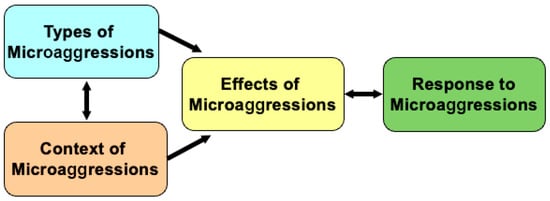
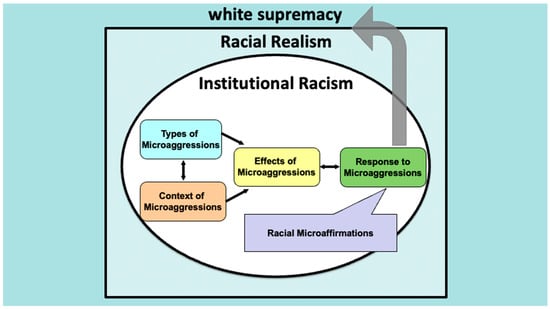
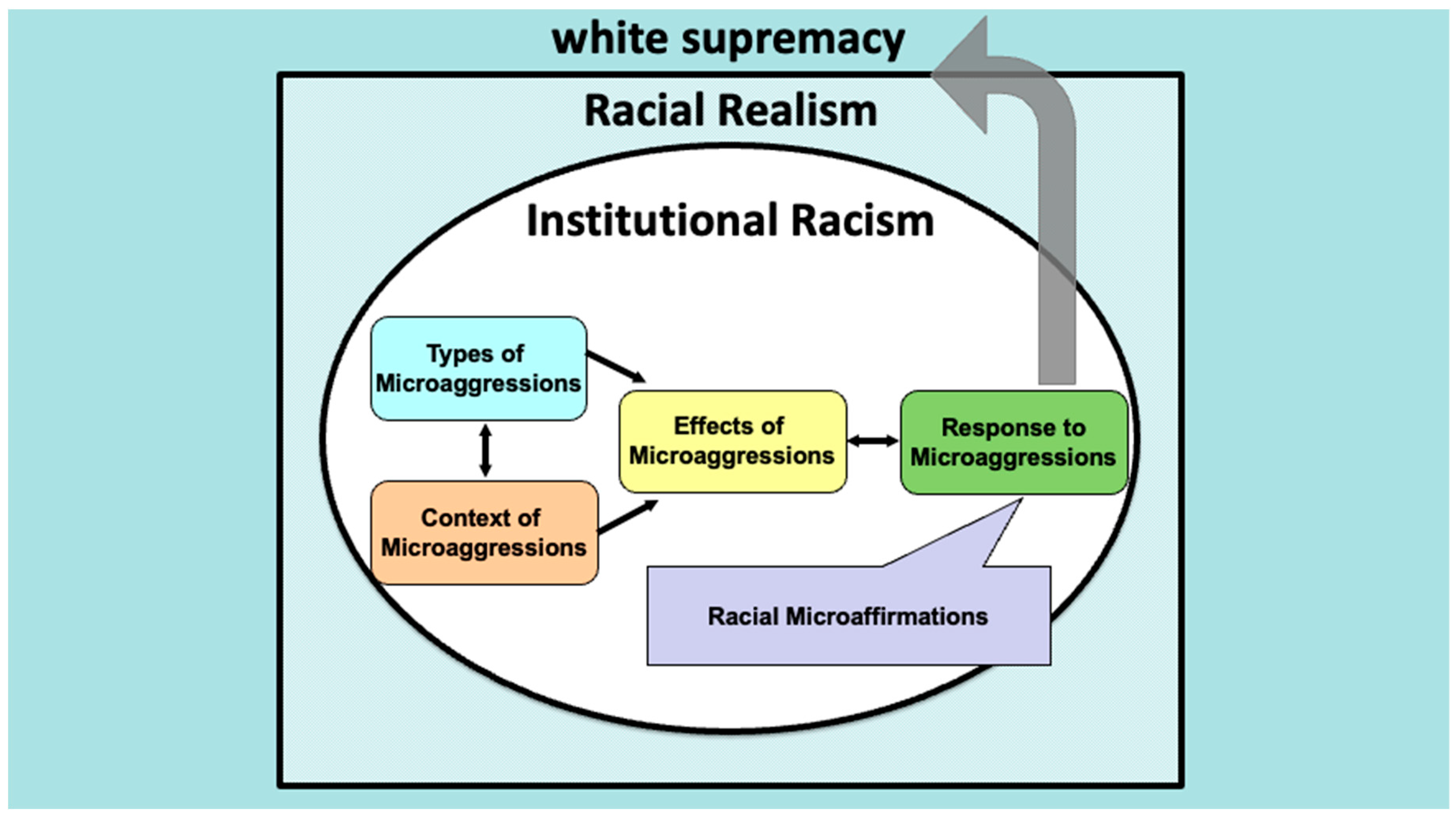
Disclaimer/Publisher’s Note: The statements, opinions and data contained in all publications are solely those of the individual author(s) and contributor(s) and not of MDPI and/or the editor(s). MDPI and/or the editor(s) disclaim responsibility for any injury to people or property resulting from any ideas, methods, instructions or products referred to in the content. |
© 2026 by the authors. Licensee MDPI, Basel, Switzerland. This article is an open access article distributed under the terms and conditions of the Creative Commons Attribution (CC BY) license.