


Abstract
This study examines the intercultural competence of Greek primary school teachers and early childhood educators enrolled in the Joint Master’s Program Intercultural Education & Mediation at the University of Patras. Using the Intercultural Development Inventory (IDI), the study assessed both perceived and developmental orientations of intercultural competence. The results reveal a significant gap between teachers’ self-assessed and actual competence, with most participants positioned in a minimization orientation—emphasizing commonalities while overlooking the educational value of cultural differences. Such an orientation limits teachers’ ability to fully engage with diversity, often resulting in superficial approaches to multicultural classrooms. The findings underscore the urgent need for systematic professional development in intercultural competence, diversity education, and critical self-reflection. Within this framework, the practicum of the Master’s program emerges as a key mechanism for transformation: through immersive experiences in schools, NGOs, and community organizations, coupled with structured reflective practices, teachers confront real intercultural challenges and develop adaptability, empathy, and resilience. By bridging theory with practice, the practicum fosters meaningful growth in intercultural mindset, enabling educators to acknowledge their biases, embrace cultural diversity as an asset, and design inclusive learning environments. Overall, the study contributes to the literature on intercultural competence and teacher education, offering insights into the challenges Greek educators face and the role of practicum-based learning in fostering culturally responsive teaching.
1. Introduction
In today’s culturally diverse classrooms, teachers must be equipped not only with pedagogical expertise but also with the capacity to engage meaningfully across cultural boundaries. Teachers are now expected to act as agents of social transformation, equipped to adapt to rapid change and innovation (Giaki & Arvanitis, 2024; Altan & Lane, 2018; Arvanitis, 2017). The concept of intercultural mindset captures this orientation. According to Bennett’s (1993) Developmental Model of Intercultural Sensitivity, an intercultural mindset involves moving beyond ethnocentric stages toward ethnorelative positions of acceptance, adaptation, and integration. Scholarly definitions emphasize openness, adaptability, empathy, and the belief that cultural traits and competences are not fixed but malleable (Chao et al., 2010).
However, many educators, despite being familiar with current teaching methods, often resist new intercultural knowledge, perceiving it as a threat to established ethnocentric narratives and to their sense of cultural security and dominance (Giaki, 2023; Arvaniti, 2013). This resistance can be attributed to a lack of exposure to diverse cultural contexts and a limited understanding of the complexities of cultural diversity (Giaki & Arvanitis, 2022, 2024).
As a result, teachers frequently retain what Dragona (2008) describes as a “naïve ignorance” of cultural diversity, which can lead to the reproduction of dichotomies such as “us” versus “them” (Holliday, 2010). They lack deeper intercultural awareness (Banks, 2006), which is essential for creating inclusive learning environments that foster social cohesion and promote intercultural understanding. This absence of intercultural dispositions, knowledge, and skills undermines their ability to function effectively in diverse classrooms (Deardorff, 2011). Recent studies have also highlighted the importance of intercultural competence in teaching, emphasizing that teachers need to be aware of their own biases and assumptions to create a more inclusive and equitable learning environment (Gay, 2018; Ladson-Billings, 2019). Social and cultural anthropologists were instrumental in introducing the need for self-reflection and for a critical approach to their discipline already in the 1980s, thus demonstrating how these two perspectives are intertwined (Marcus & Fischer, 1986). Similarly, linking the development the discipline of education to the progress of its practitioners through creative critique and evaluation, is developed in this paper.
Furthermore, research has shown that teachers’ intercultural competence is closely linked to their ability to recognize and address the diverse needs of their students (Cummins, 2019). This requires teachers to be able to navigate complex cultural contexts and to develop a deeper understanding of the ways in which culture shapes learning and teaching (Nieto, 2019). By acknowledging and addressing their own biases and assumptions, teachers can develop a deeper understanding of the complexities of cultural diversity and create learning environments that are more inclusive and equitable (Gorski, 2020).
Although intercultural competence has been extensively discussed in international scholarship, research on primary teachers remains limited. In Greece, most studies have focused on university students’ intercultural development (Arvanitis et al., 2019; Chranioti & Arvanitis, 2018; Spinthourakis et al., 2009; Spinthourakis, 2006). Only recently have scholars turned their attention to practicing teachers (Angelopoulou & Manesis, 2017; Polyzos, 2020). International findings similarly suggest that teachers often lack the necessary knowledge and struggle to recognize cultural differences (Bešter & Medvešek, 2016; Dusi et al., 2016; Salgur, 2013). For instance, a study by Gay (2018) found that teachers’ cultural competence was a significant predictor of their ability to create inclusive learning environments. Similarly, a study by Ladson-Billings (2019) found that teachers who were culturally competent were more likely to use culturally responsive teaching practices.
The term intercultural mindset is used in academic literature to describe an individual’s underlying orientation toward cultural difference and similarity, particularly the cognitive and affective dispositions that enable effective intercultural interaction. While the term itself is less frequently formalized than intercultural competence, it is embedded within major intercultural competence frameworks. For example, Bennett’s (1993) Developmental Model of Intercultural Sensitivity conceptualizes an intercultural mindset as a developmental shift from ethnocentric to ethnorelative worldviews, emphasizing how individuals perceive and make meaning of cultural difference. Similarly, Deardorff’s (2006) process model of intercultural competence situates attitudes such as openness, curiosity, and respect—core elements of an intercultural mindset—as foundational precursors to intercultural knowledge, skills, and effective behavior. Empirical instruments such as the Intercultural Development Inventory further operationalize this mindset dimension by measuring orientations toward cultural difference that reflect one’s readiness to adapt perspectives and behavior across cultural contexts (Hammer et al., 2003). Thus, in the literature, intercultural mindset functions as a dispositional and developmental component of intercultural competence rather than a standalone construct.
To develop an intercultural mindset, teachers often need to approach their multi-ethnic, multicultural and generally diverse classes somewhat like anthropologists carrying out ethnographic research among them. They need to have understood that different societies have different ways of classifying the world, which are expressed in their ways of talking, acting and interpreting various phenomena (Douglas, 1966/2002; Hendry, 1999/2016). Like anthropologists, teachers need to be able to comprehend and “translate” the ways in which members of one culture classify and interpret various people, objects and phenomena to the concepts and terms used by the members of one or more other cultures—their own and their other students’. For this transcultural and intercultural understanding to develop among the members of classes characterized by diversity, it must first develop between the teacher and his/her pupils. Both these goals can come to fruition through collaborative practice between all these agents. Collaborative practice will encourage pupils to work together, thus exchanging their ideas and emotions, while the teacher will also enhance his/her understanding of their cultures and his/her own. Thus, such communities of practice become communities of learning (Baron, 2016; Arvanitis & Chryssanthopoulou, 2014). Studies by anthropologists and folklorists have shown that by experimenting with folktales and proverbs in a culturally diverse class environment, teachers were able to stir their pupils’ creative powers while also expanding and deepening their own intercultural mindsets (Chryssanthopoulou, 2017).
The present study, based on data from a joint master’s program of University of Patras and University of Nicosia titled “Intercultural Education & Mediation”, investigates the intercultural competence of graduate students that are working as primary school teachers in Greece. By employing the Intercultural Development Inventory (IDI), the study offers a comparative perspective and provides a holistic assessment of teachers’ intercultural mindsets. The IDI is a widely used tool for assessing intercultural competence, and it has been validated in various studies (Hammer, 2011; Hammer & Bennett, 2017). Through an analysis of the intercultural orientations of teachers, the study seeks to identify areas of strength and weakness, and to provide recommendations for professional development programs that can enhance teachers’ intercultural competence. Additionally, the study will explore the relationship between teachers’ intercultural competence and their ability to create inclusive learning environments, with a focus on promoting social justice and equity in education.
1.1. Defining Intercultural Competence
The concept of intercultural competence is crucial in today’s multicultural classrooms, where teachers are expected to cultivate inclusive school cultures (Arvanitis, 2017) that recognize and build upon cultural diversity. Effective teaching is thus not only a matter of subject knowledge but also of fostering the personal and academic growth of diverse student populations (Annamma, 2015). This capacity is directly linked to intercultural competence (Gay, 2002), understood as the ability to communicate appropriately and effectively with individuals from different cultural frameworks (Bennett & Bennett, 2004). As noted by Deardorff (2006), intercultural competence involves the ability to navigate complex cultural contexts, to be aware of one’s own biases and assumptions, and to be able to adapt to different cultural norms and values.
Although there is no universally agreed definition, intercultural competence is commonly associated with related concepts such as intercultural communicative competence, intercultural sensitivity, and intercultural awareness (Byram, 1997; Chen & Starosta, 1998; Fantini, 2009; Hammer et al., 2003). Bennett (1993) offers a functional definition, emphasizing the mindsets and skillsets required: attitudes toward one’s own and others’ cultures, analytical ability to interpret cultural contexts, and the capacity to adapt behavior accordingly (Bennett & Bennett, 2004). This definition is supported by recent studies, such as the one by Gorski (2020), which highlights the importance of intercultural competence in promoting social justice and equity in education.
Bennett’s Developmental Model of Intercultural Sensitivity (DMIS) conceptualizes individuals’ responses to cultural differences across six stages—three ethnocentric (denial, defense, minimization) and three ethnorelative (acceptance, adaptation, integration) (Bennett, 1993). Ethnocentric orientations position one’s own culture as central and absolute, while ethnorelative orientations foster respect for and engagement with difference (Bennett, 1993). This framework later evolved into the Intercultural Development Continuum (IDC), which informs the IDI tool (Hammer, 2012). The IDC describes five orientations, ranging from monocultural mindsets of denial and polarization, through minimization, to ethnorelative orientations of acceptance and adaptation (Hammer, 2012). As noted by Holliday (2010), the IDC provides a useful framework for understanding the complexities of intercultural communication and for developing effective strategies for promoting intercultural competence.
The IDI provides a comprehensive assessment of an individual’s or group’s orientation toward cultural difference (Hammer, 2011). It distinguishes between perceived orientation (how individuals view themselves) and developmental orientation (their actual demonstrated orientation), highlighting discrepancies through the orientation gap (Hammer & Bennett, 2017). It also considers the distribution of orientations within a group (range of orientations), indicating whether a group’s approach to diversity is consistent or fragmented (Hammer, 2012). Recent studies (Giaki, 2023; Ladson-Billings, 2019), have used the IDI to investigate the intercultural competence of teachers and have found that it is a valuable tool for assessing and promoting intercultural competence in educational settings.
In addition to the IDI, other tools and frameworks have been developed to assess and promote intercultural competence, such as the Intercultural Competence Assessment (ICA) (Deardorff, 2006) and the Cultural Intelligence Framework (Earley & Ang, 2003). These tools and frameworks provide a range of strategies and approaches for developing intercultural competence, including training programs, workshops, and self-assessment tools (Gorski, 2020). As noted by Cummins (2019), the development of intercultural competence is a complex and ongoing process that requires a deep understanding of the complexities of cultural diversity and a commitment to promoting social justice and equity in education.
1.2. Teachers’ Intercultural Competence
The limited research on Greek primary teachers’ intercultural competence is a significant concern (Giaki, 2023; Polyzos, 2020; Chranioti & Arvanitis, 2018), as it highlights the need for further investigation into the challenges they face in managing diversity and developing intercultural knowledge, attitudes, and skills. Some teachers adopt moderate or indifferent stances toward cultural and linguistic diversity, and many feel unprepared to address bilingual students’ needs (Angelopoulou & Manesis, 2017). This lack of preparedness can be attributed to the limited training and policy support provided to teachers, which can leave them feeling uncertain and insecure in their ability to effectively teach diverse student populations (Hajisoteriou, 2013; Kipouropoulou, 2019).
International studies echo these findings, suggesting that teachers often struggle to perceive cultural differences and may attribute student underachievement to cultural background (Bešter & Medvešek, 2016; Dusi et al., 2016). Furthermore, teachers may overestimate their competence, assuming they can adapt to diversity while in practice minimizing or ignoring it (Álvarez Valdivia & González Montoto, 2018). This can lead to the reinforcement of monocultural environments that perpetuate “us versus them” divisions, rather than fostering inclusive and diverse learning environments (Yuen & Grossman, 2009). In contrast, teachers working in more pluralistic contexts, such as Croatia, demonstrate greater openness to diversity, highlighting the importance of training and professional development in fostering intercultural readiness (Drandić, 2016).
The reproduction of narrow, tokenistic practices that hinder genuine intercultural competence is a significant issue in many educational settings. In Cyprus, Greece, the Netherlands, and Australia, educators report limited training and policy support, which can leave them unprepared for diverse classrooms (Hajisoteriou, 2013; Kipouropoulou, 2019; Kiouri & Servou, 2021). Some studies describe a “naïve ignorance” of cultural diversity, where teachings celebrate differences without critical engagement (Papamichael, 2008). However, other studies link higher intercultural sensitivity, particularly among younger and less experienced teachers, with adaptive and inclusive practices (Maniatis & Panagiotidou, 2025; Lagou & Zorbas, 2020).
In certain contexts, educators express insecurity and emotional ambivalence in applying intercultural strategies, noting that existing policies and brief training initiatives often fail to transform established ethnocentric narratives (Roiha & Sommier, 2021; Tualaulelei & Halse, 2022). For example, a study by Roiha and Sommier (2021) found that teachers in Finland struggled to implement intercultural strategies due to lack of support and resources. Similarly, a study by Tualaulelei and Halse (2022) found that teachers in New Zealand experienced emotional ambivalence when trying to implement intercultural strategies, due to feelings of insecurity and uncertainty.
Across ten studies—with sample sizes ranging from 2 to 220 participants—the accounts consistently reveal that while teachers articulate intercultural ideals, structural constraints and unfulfilled training needs undermine their capacity to enact effective social transformation in diverse primary school settings (Angelopoulou & Manesis, 2017; Bešter & Medvešek, 2016; Chranioti & Arvanitis, 2018; Dusi et al., 2016; Hajisoteriou, 2013; Kipouropoulou, 2019; Kiouri & Servou, 2021; Maniatis & Panagiotidou, 2025; Roiha & Sommier, 2021; Tualaulelei & Halse, 2022). These studies highlight the need for more comprehensive and sustained approaches to teacher education and training, which prioritize the development of intercultural competence and address the structural constraints and unfulfilled training needs that undermine teachers’ capacity to enact effective social transformation in diverse primary school settings.
1.3. The Practicum as a Context for Developing Intercultural Mindset
Within teacher education, growth mindset (Dweck, 2006) further supports this orientation by framing professional competence as a developmental process. Roumelioti (2022) highlights that teachers with a growth mindset embrace differentiated instruction as an opportunity for experimentation and reflective learning. The practicum of the MEd in Intercultural Education and Mediation operationalizes these principles, providing a structured space where intercultural mindset can be cultivated through real-world engagement and guided reflection.
Recent studies demonstrate that intercultural mindset is both growth-oriented and reflective. Rissanen and Kuusisto (2023) found that Finnish teachers with a growth mindset were more likely to hold polyculturalist beliefs and adopt socially just pedagogies. Han and Liu (2023) showed that Chinese university students’ growth mindset increased intercultural competence indirectly via informal digital learning. In language learning contexts, Lou and Noels (2020) reported that growth mindsets reduced anxiety and avoidance, enabling resilient intercultural interaction.
Evidence also suggests a reciprocal relationship: multicultural experiences themselves foster growth mindset, which in turn strengthens intercultural competence (Narvaez & Hill, 2010). At scale, Sun et al. (2021) found that growth mindset predicted academic success in the U.S. more strongly than in China, while Lou and Li (2022) showed that societal norms moderated whether growth mindset correlated positively or negatively with well-being. Complementary qualitative work has highlighted mindfulness and reflection as mechanisms of intercultural growth: Tuleja (2014) demonstrated that MBA students developed cultural intelligence through mindfulness, while Weber (2005) proposed identity negotiation as a theoretical basis for intercultural learning. Moreover, the fact that the majority of students in culturally diverse classes are of migrant, refugee or diasporic background, means that they already have multicultural experiences themselves, as the concept of “ethnoscapes” has clearly shown, with regard to contemporary global flows (Appadurai, 1996). These multicultural experiences offer themselves as creative challenges for their classmates, but also for their teachers who may derive from a monocultural and/or ethnocentric background.
Together, these findings underscore that intercultural mindset is multifaceted: it involves growth-oriented beliefs about malleability, but also reflective openness, mindfulness, and adaptability in navigating cultural differences.
Towards this direction, the practicum (750 h, with 500 in-field) of the MEd in Intercultural Education and Mediation immerses students in diverse settings such as schools, NGOs, and community organizations. This direct exposure confronts students with cultural diversity in practice, compelling them to adapt, negotiate meaning, and develop empathy. In Bennett’s (1993) terms, such immersion fosters movement toward adaptation and integration stages of intercultural sensitivity.
Building upon this, a strong component is reflective practice and mindfulness. Structured reflection is embedded in the practicum through journals, SWOT analyses, the DIEP model, and peer dialogue. These practices cultivate mindfulness, enabling students to critically analyze experiences and adjust their responses. Tuleja (2014) emphasizes that mindfulness enhances cultural intelligence by teaching learners to slow down, observe, and reframe intercultural encounters. The practicum’s reflective design ensures that students internalize openness, curiosity, and self-awareness—cognitive and affective components of intercultural mindset (Spitzberg & Changnon, 2009).
By designing and iterating differentiated lessons or mediation strategies, students enact growth mindset principles. Challenges in real contexts demonstrate that competence can be developed through effort and reflection. Roumelioti (2022) situates this growth mindset as central to professional development: rather than viewing pedagogical innovation as a threat, teachers embrace it as an opportunity for refinement. The practicum embodies this belief, guiding students toward resilience and adaptability.
The practicum also integrates collaboration through seminars, peer feedback, and mentorship, reinforcing intercultural competence as a collective process. As Weber (2005) argues, intercultural learning is also identity negotiation. Through collaborative reflection, students construct professional identities grounded in intercultural sensitivity, empathy, and growth-oriented adaptability.
2. Materials and Methods
The study employed a mixed-methods approach, combining both quantitative and qualitative data collection and analysis methods. The IDI was administered to assess the intercultural competence of 90 students enrolled in a Master’s program in Greece during the 2024–2025 academic year, all of whom work as primary school teachers or early childhood educators. Participants were selected according to years of service, educational background, gender, and experience in multicultural classrooms.
The final sample consisted of 90 educators, of whom 92% were women and 8% were men, reflecting the gender composition typical of the Greek education sector, where the majority of students enrolled in Master’s programs are female (see Table 1). Participants demonstrated varied teaching experience: 32% had 1–5 years of experience, 36% had 6–15 years, and 32% reported having no prior teaching experience. In terms of education, all participants held undergraduate degrees, and 36% also held postgraduate degrees, ensuring a range of academic backgrounds within the sample (see Table 1). The participants represented multiple regions of Greece—including Attica, Central Greece, Northern Greece, the Peloponnese, and the Aegean islands—providing broad geographic coverage. Purposive sampling was used to ensure variation across demographic and professional characteristics.
Table 1.
Participant Demographic Characteristics (N = 90).
Inclusion criteria required that participants were currently employed, or qualified for employment, as primary school teachers or early childhood educators in Greece and (b) were enrolled in the Master’s program during the 2024–2025 academic year.
The IDI (educational version, third edition) was administered to the participants. It consists of 50 items that yield both a perceived orientation (self-assessed competence) and a developmental orientation (actual competence, as measured by the framework). The results are categorized into denial, polarization, minimization, acceptance, or adaptation, and the difference between perceived and developmental orientation is expressed as the orientation gap.
The Intercultural Development Inventory (IDI) is a psychometrically validated instrument designed to assess intercultural competence along a developmental continuum grounded in the Developmental Model of Intercultural Sensitivity (DMIS). Extensive validation studies have demonstrated the reliability and validity of the IDI across diverse cultural, national, and professional populations (Hammer, 2011; Hammer et al., 2003). Evidence of construct validity has been established through confirmatory factor analyses and cross-cultural invariance testing, demonstrating that the IDI measures intercultural competence consistently across gender, ethnicity, nationality, and language groups (Hammer, 2011). In line with IDI protocol, internal consistency coefficients were not recalculated for the present sample, as the instrument’s reliability has been robustly established across large-scale datasets and the assessment algorithm relies on calibrated scoring procedures administered by a Qualified Administrator. Collectively, these psychometric properties support the appropriateness of the IDI for assessing educators’ intercultural competence in the present study.
The study posed three central questions:
- -
- What is the intercultural mindset/competence of teachers? This question aimed to explore the level of intercultural competence among primary school teachers and early childhood educators in Greece, including their perceived and developmental orientations.
- -
- Which factors (education, teaching experience, gender) affect intercultural competence? This question aimed to investigate the relationship between various demographic factors and intercultural competence, including education level, teaching experience, and gender.
- -
- What role does the practicum play in fostering an intercultural mindset? This question sought to examine how the structured learning of the practicum contributes to the development of teachers’ intercultural skills and mindset.
The Intercultural Development Inventory (IDI) was administered exclusively by an IDI Qualified Administrator (QA). All participants provided informed consent and were assured of confidentiality. Each participant completed the 50-item IDI questionnaire, which produced a Developmental Orientation (DO) and a Perceived Orientation (PO), along with an Orientation Gap (OG) measuring differences between perceived and actual intercultural competence. Group-level IDI profiles were generated to capture collective intercultural orientations, leading orientations (LO), and trailing orientations (TO). Descriptive statistics were employed to examine Developmental and Perceived Orientations across demographic variables. Individual IDI results were shared only during one-on-one debriefing sessions with the QA; these results were not used for performance evaluation or stored in institutional records. Aggregated group data was anonymized for analytic purposes.
3. Results
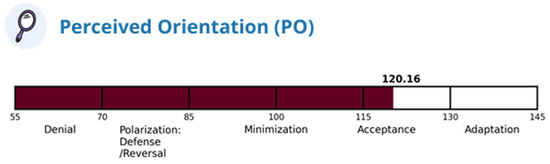
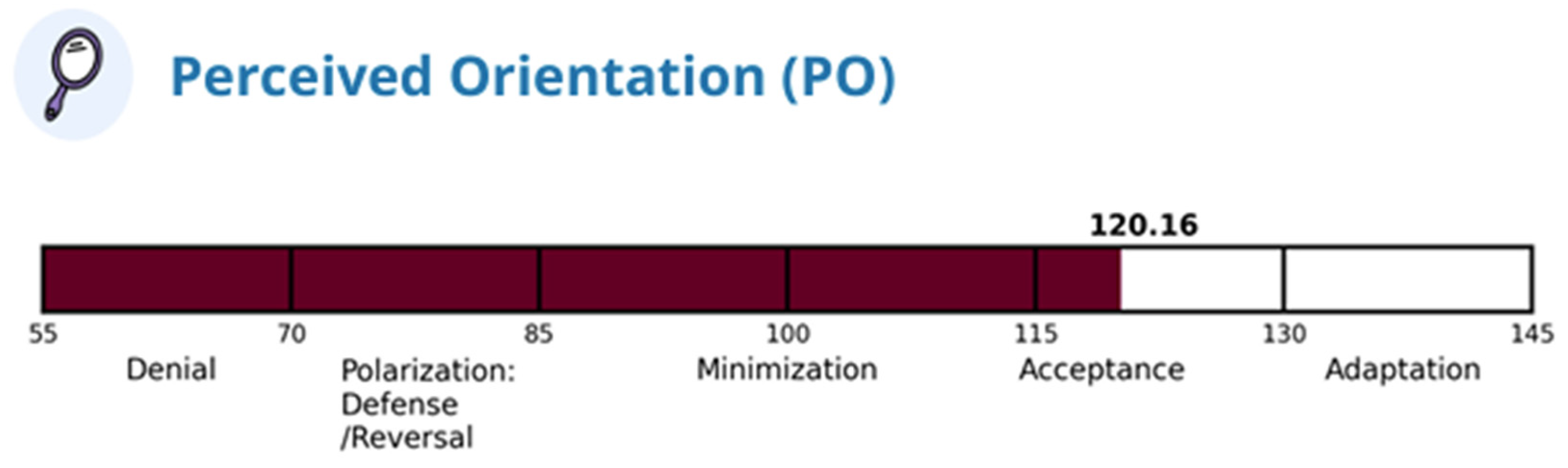
The findings of the study reveal a significant discrepancy between the teachers’ perceived and actual intercultural competence. The group’s Perceived Orientation score (120.16) places them within the Acceptance stage, suggesting that they view themselves as capable of understanding and appropriately adapting to cultural differences (see Figure 1). This orientation reflects an awareness and appreciation of cultural variation across values, perceptions, and behaviors, both within their own culture and in those of others.
Figure 1.
Perceived Orientation of Teachers’ & Early Childhood Educators’.
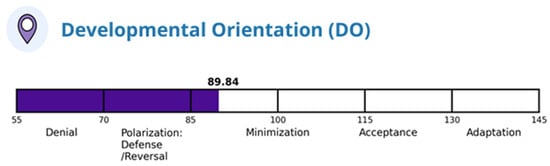
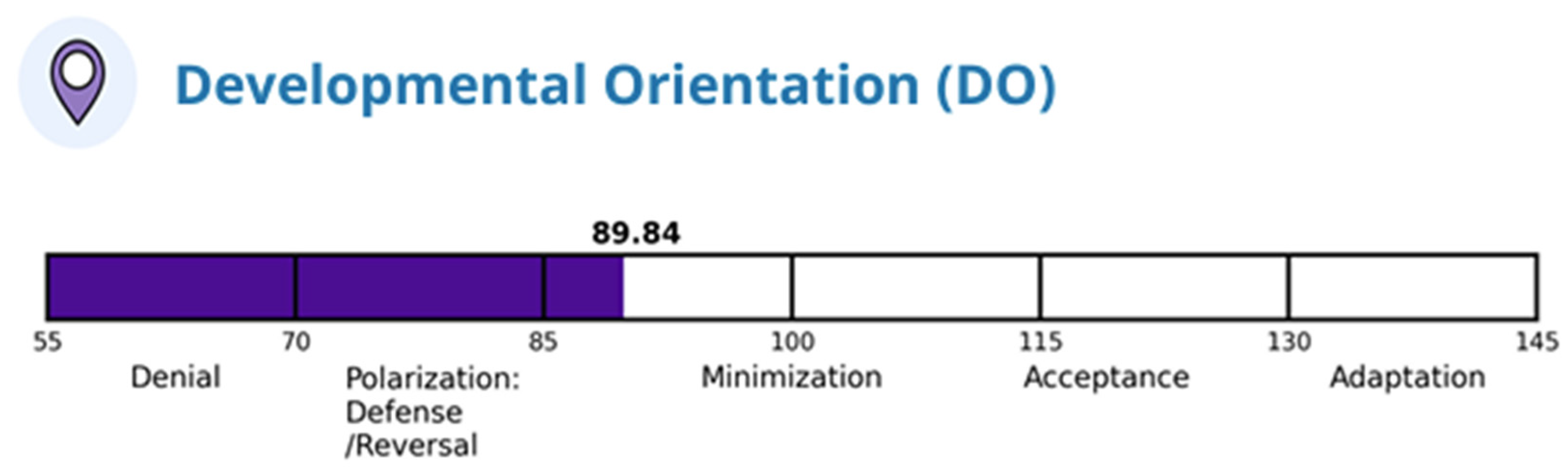
While most teachers believed that they were at the acceptance stage, the IDI results showed that they were actually at the minimization stage. The group’s Developmental Orientation score (89.84) situates them within Minimization, indicating a predominant tendency to emphasize cultural commonalities while overlooking or downplaying meaningful differences in values, perceptions, and behaviors (see Figure 2). This orientation, for members of dominant cultural groups like the majority of participants, often reflects limited cultural self-awareness, where similarities are highlighted at the expense of recognizing diversity. Given that only a small number of participants were second-generation migrants and members of non-dominant groups, minimization may function as a strategic response—emphasizing commonalities in order to navigate norms, values, and practices largely shaped by the dominant culture. Since most of the Master’s students were of Greek background, this may indeed relate to the strong ethnocentricity characterizing their societies of origin. Papataxiarchis (2006) argues that, since the 1990s influx of migrants to Greece, many Greeks view immigrants’ values and practices as similar to their own and welcome this cultural convergence. He highlights the concept of filoxenia—literally “love of foreigners”—as a core Greek value that reflects a desire for newcomers to align closely with Greek cultural norms in order to be included as “like us.” Similarly, the inclusion of migrants and cultural “others” seems to depend on the condition that they abide by the norms, values and practices of their hosts, by being culturally assimilated.
Figure 2.
Developmental Orientation of Teachers’ & Early Childhood Educators’.
This indicates that teachers tended to emphasize similarities between cultures while downplaying or masking differences, leading to a superficial engagement with diversity. This phenomenon can be attributed to the fact that teachers may not have received adequate training or support to develop their intercultural competence, or that they may be uncomfortable addressing cultural differences in the classroom. It is also influenced by the monocultural curriculum, the prevailing social norms and context, as well as the level of participation of groups and associations (Giaki, 2023).
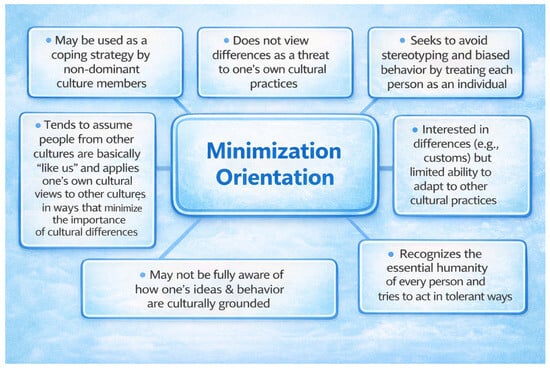
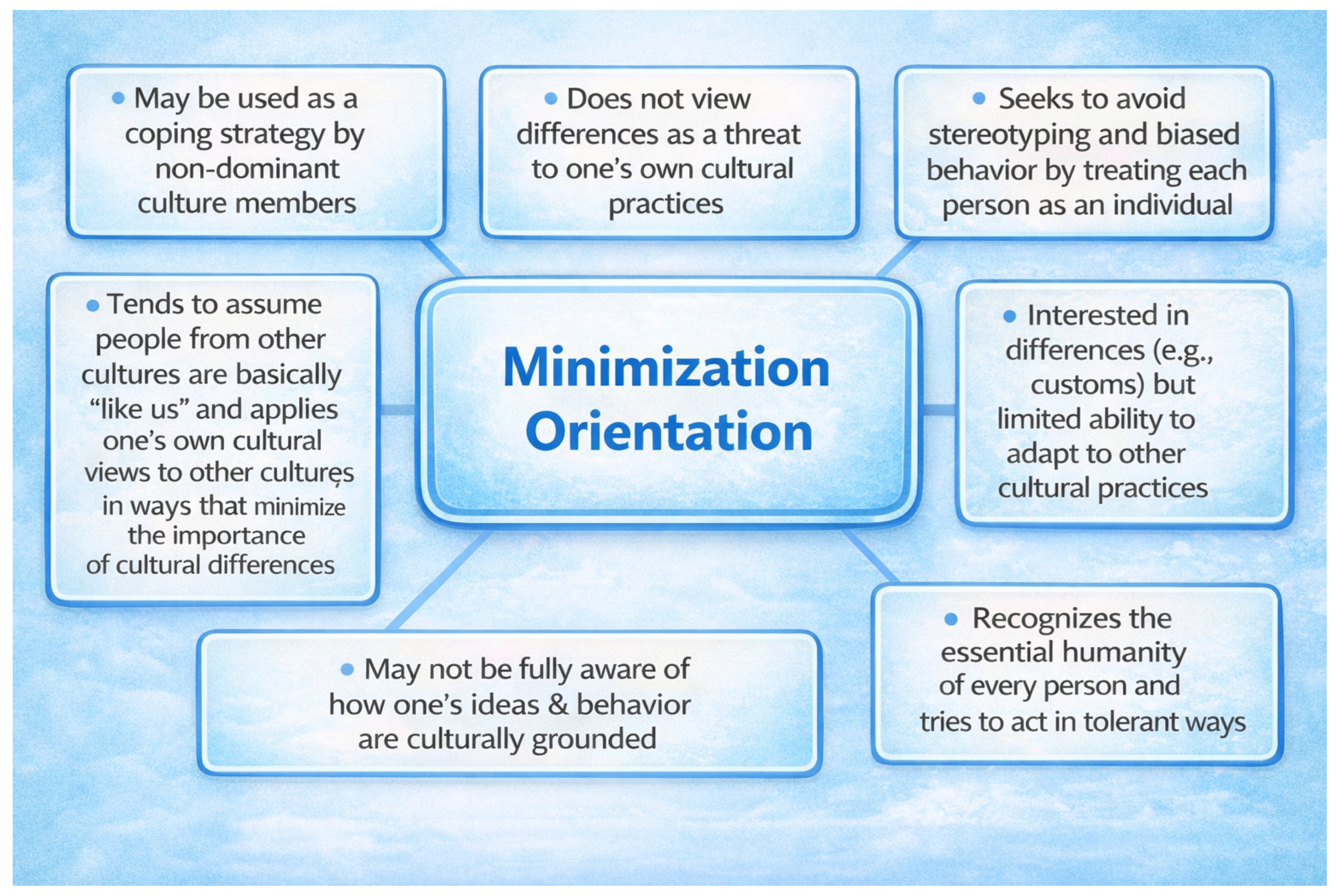
The study also revealed that some teachers employed minimization as an integration strategy—emphasizing similarities to avoid conflicts and seeking a sense of belonging—which may be interpreted as an attempt to balance their own identities. However, this approach can also lead to a lack of depth in understanding and addressing cultural differences. Others scored at the early minimization stage, reflecting a more superficial engagement with diversity and suggesting difficulties in navigating cultural differences while seeking a sense of belonging (see Figure 3). This highlights the need for teachers to develop a deeper understanding of cultural differences and to be able to navigate complex cultural contexts and not to be afraid of the co-existence of cultural differences in class and in society.
Figure 3.
Presentation of Minimization Orientation—IDI Group Profile.
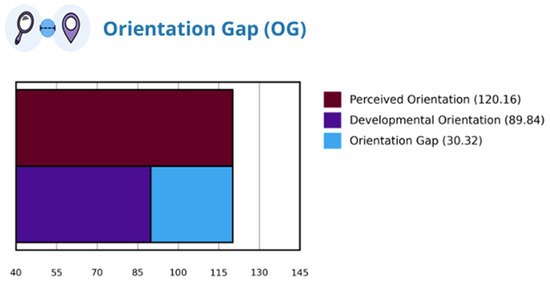
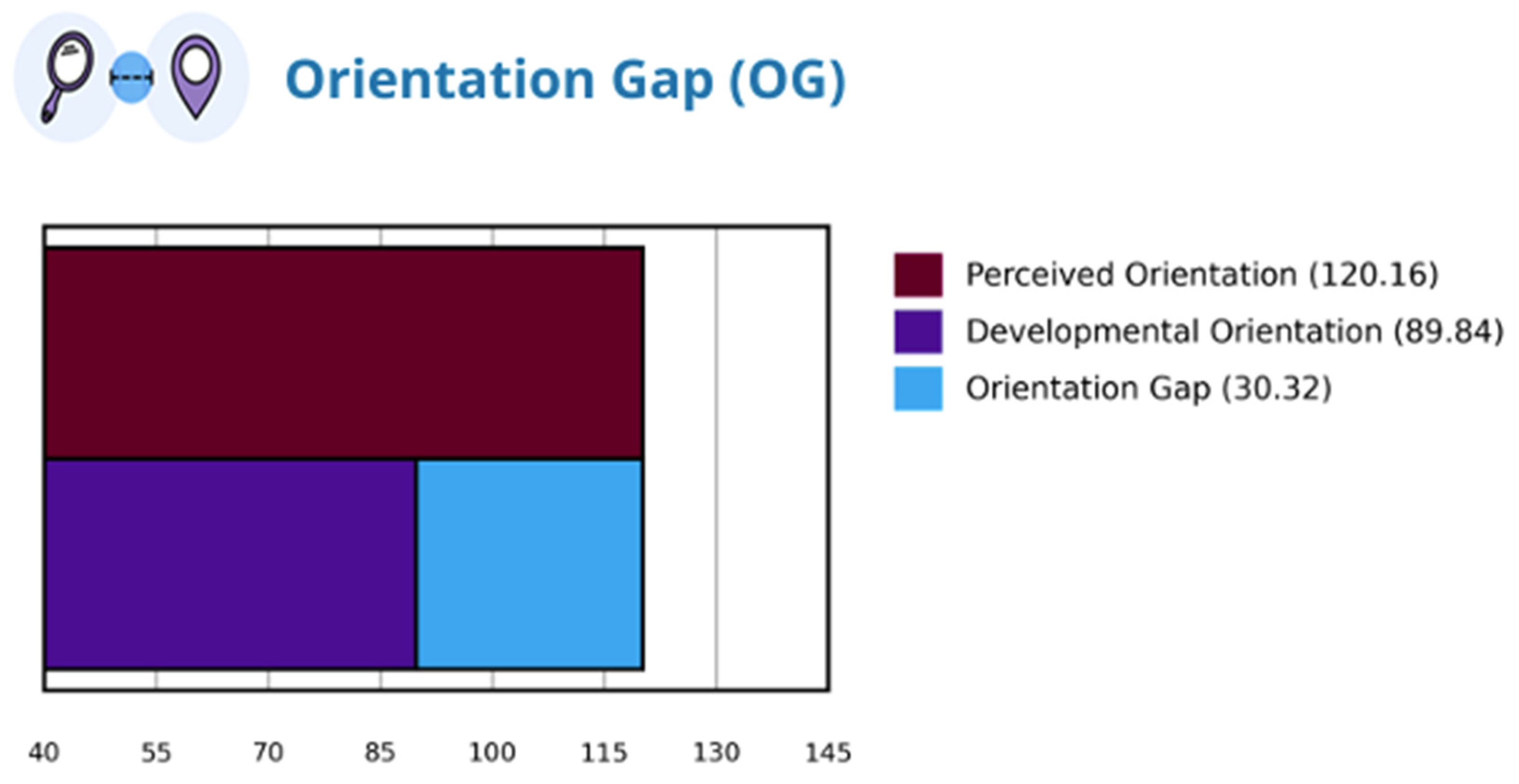
In this context, the Orientation Gap score reveals that the group has overestimated its intercultural competence, which may explain potential surprise at the results (see Figure 4). While the IDI findings suggest that participants perceive themselves as recognizing and valuing cultural differences, this perception is undermined by their tendency to overemphasize commonalities with others (Hammer & Bennett, 2017). Such discrepancies are not unusual; research consistently shows that individuals often rate themselves as more effective than they actually are, particularly in areas such as communication, where self-assessments frequently exceed demonstrated practice. The image below indicates a divergence between internal perceptions and actual orientations.
Figure 4.
Orientation Gap of Teachers’ & Early Childhood Educators’.
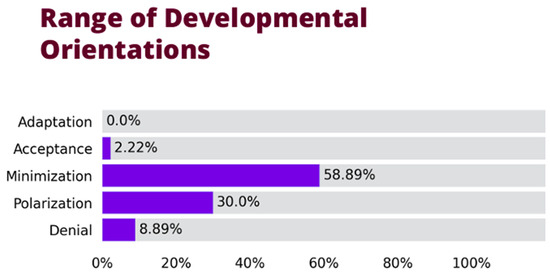
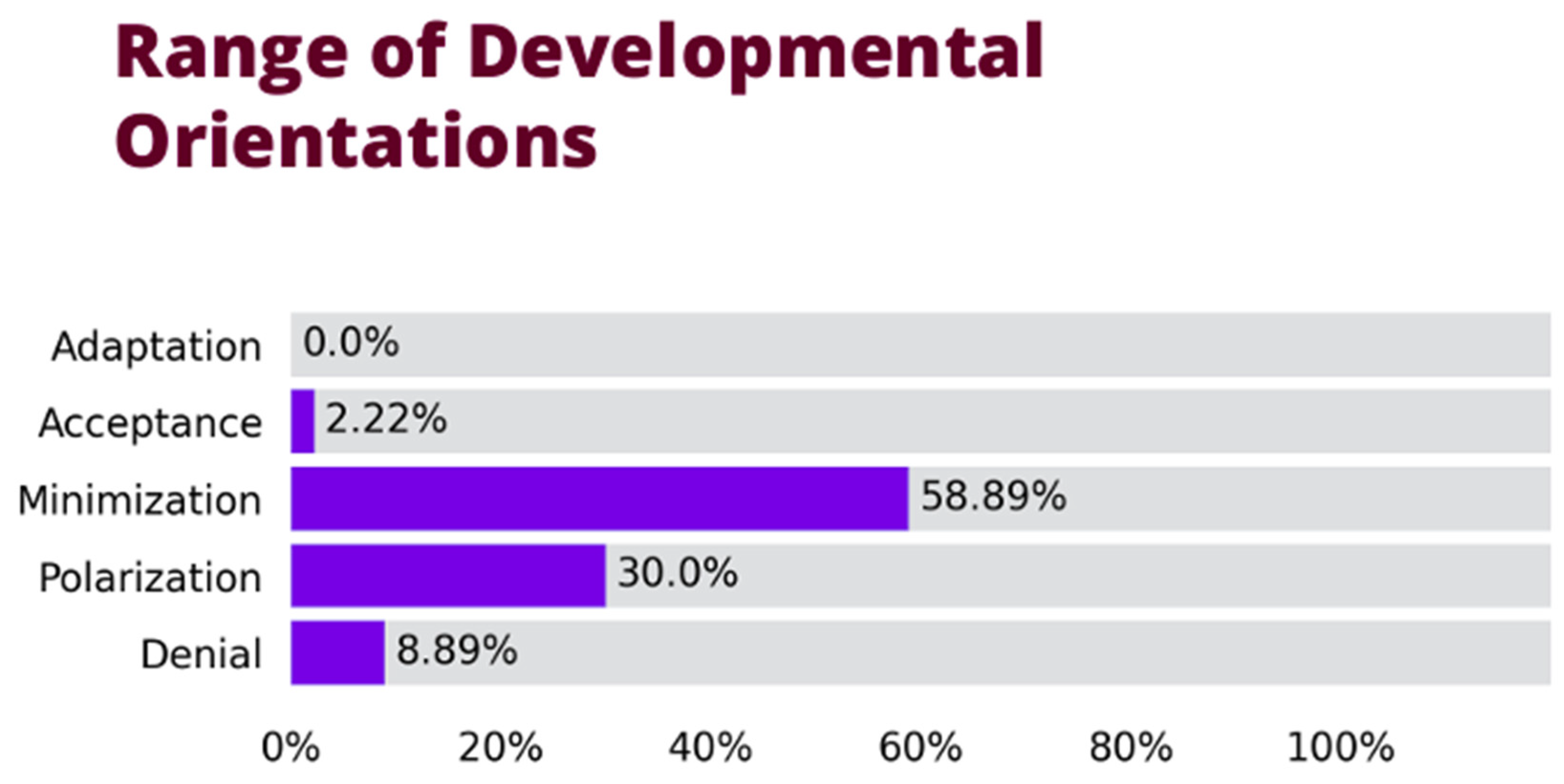
The chart below illustrates the distribution of the 90 group members across the various Developmental Orientations (see Figure 5). A narrow range—where most members fall within one or two orientations—indicates a relatively consistent perspective in how the group approaches cultural similarities and differences. Conversely, a wider range, without a clear majority in any single orientation, reflects limited consensus, suggesting the coexistence of both monocultural and intercultural mindsets. In such cases, without targeted efforts to develop intercultural competence, the group may struggle to establish a shared vision or effectively pursue its objectives in culturally diverse contexts.
Figure 5.
Range of Developmental Orientations.
According to the range of developmental orientations, the second group of participants (30%) exhibited a large orientation gap, with a significant difference between their perceived and actual orientations (see Figure 5). While they perceived themselves at the acceptance stage, their actual orientation was polarization, characterized by “us versus them” dichotomies. This reflects a lack of cultural self-awareness and highlights the monocultural environment’s role in reinforcing defensive orientations. Some teachers demonstrated defensive attitudes, viewing their own culture positively and others’ negatively, while others engaged in reversal, idealizing other cultures while criticizing their own. This lack of cultural self-awareness can lead to a lack of empathy and understanding towards students from diverse cultural backgrounds, ultimately undermining the teacher’s ability to create an inclusive learning environment.
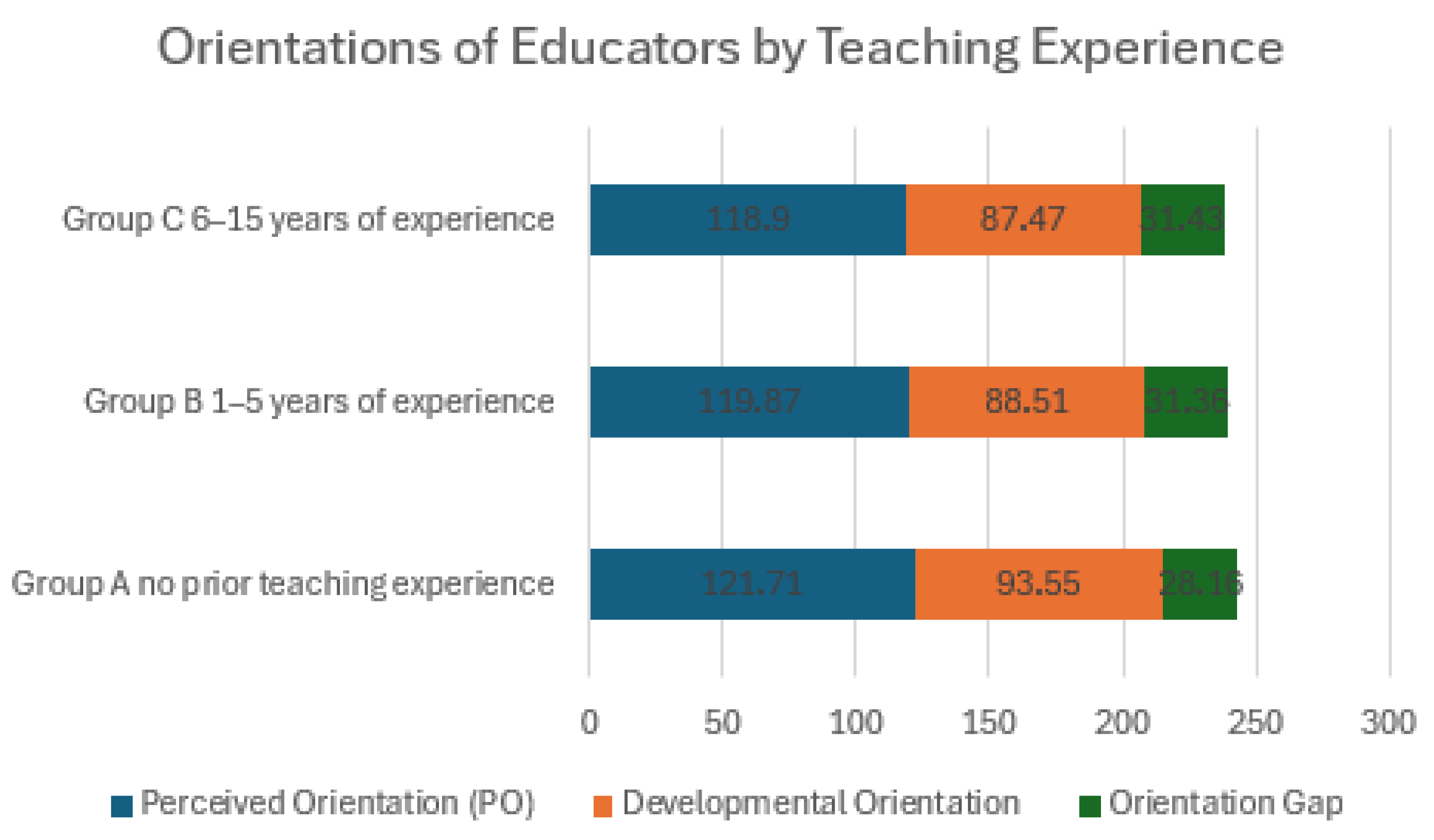
The study also found that education level did not have a significant impact on intercultural competence, with both undergraduate and postgraduate degree holders scoring within the minimization range (see Figure 6). However, teaching experience had a notable effect, with teachers with longer service tending to adopt more monocultural orientations and declining intercultural competence over time. Younger teachers were more consistently positioned within early minimization, while experienced teachers showed a broader range, including denial and polarization (see Figure 6). This suggests that teaching experience can have a negative impact on intercultural competence, possibly due to the reinforcing of traditional teaching practices, the lack of exposure to diverse cultural contexts and the lack of a state policy which promotes intercultural learning and true multiculturalism.
Figure 6.
IDI Orientations of Educators by Teaching Experience.
To address these findings, it is essential to provide teachers with opportunities for professional development that focus on intercultural competence and diversity education. This can include training programs that promote critical self-reflection, cultural awareness, and inclusive pedagogies. By acknowledging and addressing their own biases and assumptions, teachers can develop a deeper understanding of the complexities of cultural diversity and create learning environments that are more inclusive and equitable.
4. Discussion
The findings of the study suggest that teachers interpret cultural diversity through the lens of their own familiar cultural frameworks, thus leading to minimization of difference (Banks, 2006). This phenomenon is not unique to Greece, as studies from other countries such as Cyprus (Hajisoteriou, 2013), Australia (Yuen & Grossman, 2009), and New Zealand (Tualaulelei & Halse, 2022) have also reported similar results. Teachers often struggle to perceive cultural differences and may attribute student underachievement to cultural background (Bešter & Medvešek, 2016; Dusi et al., 2016). Furthermore, teachers may overestimate their competence, assuming they can adapt to diversity while in practice minimizing or ignoring it (Álvarez Valdivia & González Montoto, 2018).
In Greece, the study found that teachers and early childhood educators appear to use minimization strategically as a means of avoiding conflicts and differences, over highlighting commonalities (Giaki & Arvanitis, 2024; Angelopoulou & Manesis, 2017). This underscores the need to critically examine how teachers’ lived experiences shape the development of their intercultural competence (Arvanitis, 2017). Similarly, a study in Cyprus found that teachers’ cultural background and experiences played a significant role in shaping their intercultural competence, with teachers from diverse cultural backgrounds bringing unique perspectives and experiences to the classroom (Kiouri & Servou, 2021).
The use of minimization as an integration strategy can be seen as a way to balance dual cultural identities, but it can also lead to a lack of critical self-awareness and hinder effective engagement with multicultural classrooms (Holliday, 2010). In Australia, a study found that teachers who used minimization as an integration strategy were less likely to engage in critical self-reflection and more likely to reinforce dominant cultural norms (Yuen & Grossman, 2009). Similarly, in New Zealand, a study found that teachers who used minimization as an integration strategy were less likely to recognize and address the diverse needs of their students (Tualaulelei & Halse, 2022).
Another group of teachers, by contrast, displayed polarization, were rooted in a monocultural environment that fosters ethnocentrism (Bennett, 1993). They either rejected diversity as a threat (defense) or idealized it while disparaging their own culture (reversal) (Hammer, 2012). Both orientations reflect a lack of critical self-awareness and hinder effective engagement with multicultural classrooms (Nieto, 2019). This highlights the need for teachers to develop a deeper understanding of cultural differences and to be able to navigate complex cultural contexts (Cummins, 2019). In Greece, a study found that teachers who displayed polarization were less likely to engage in critical self-reflection and more likely to reinforce dominant cultural norms (Polyzos, 2020).
Educational attainment did not significantly affect competence levels, but length of teaching experience correlated with declining competence—possibly reflecting entrenched practices and resistance to change (Gorski, 2020). This suggests that teaching experience can have a negative impact on intercultural competence, possibly due to the reinforcing of traditional teaching practices and a lack of exposure to diverse cultural contexts (Polyzos, 2020). Therefore, it is essential to provide teachers with opportunities for professional development that focus on intercultural competence and diversity education, in order to help them develop a deeper understanding of the complexities of cultural diversity and create learning environments that are more inclusive and equitable (Kiouri & Servou, 2021).
The findings emphasize the urgent need for systematic intercultural training and sustained professional development. As multicultural societies and global interconnectedness continue to expand, teachers’ worldviews cannot remain static; they must evolve to meet the realities of diverse classrooms. A comprehensive understanding of intercultural competence is therefore essential not only for fostering inclusion and equality, but also for reshaping pedagogical practices toward reflective, transformative, and culturally responsive education. Professional development programs that integrate intercultural competence, diversity education, and critical self-reflection (Ladson-Billings, 2019) provide the foundation for this transformation. Within this context, the practicum emerges as a particularly powerful vehicle for professional growth. By immersing teachers in real-world multicultural settings and coupling these experiences with structured reflection, the practicum enables participants to translate theoretical knowledge into lived practice. This experiential learning fosters adaptability, empathy, and resilience, while reflective tools such as journals and peer dialogues deepen self-awareness and critical thinking. Evidence from the study indicates that participation in the practicum contributed to measurable improvements in intercultural competence as assessed by the IDI, with participants demonstrating greater openness, perspective-taking, and capacity to engage constructively with cultural difference. Ultimately, the practicum not only enhances individual teachers’ intercultural competence but also strengthens their ability to cultivate inclusive, equitable, and socially just learning environments.
5. Implications
The findings of this study have several important implications for teacher education, professional development, and educational policy in Greece. The overall intercultural competence levels—as reflected by the IDI developmental orientation scores—highlight the need for more systematic and sustained intercultural training within both pre-service and in-service teacher education programs. The presence of an orientation gap among many participants suggests that teachers may overestimate their intercultural readiness, which can hinder their ability to recognize and respond effectively to cultural differences in the classroom. Addressing this discrepancy through reflective practices, supervised practicum experiences, and ongoing mentorship may support the development of more accurate self-awareness and more intentional intercultural engagement.
Moreover, differences related to education level, years of service, gender, and prior experience in multicultural settings indicate that professional development should not adopt a one-size-fits-all approach. Instead, differentiated training pathways may be necessary to meet the diverse needs of teachers. Strengthening postgraduate programs with targeted intercultural components, particularly for educators with limited prior exposure to diversity, could help accelerate movement along the developmental continuum.
6. Limitations
Several limitations should be considered when interpreting the results of this study. First, the sample, although diverse in terms of geographic representation, was limited to teachers and early childhood educators enrolled in a single Master’s program in Greece. This restricts the generalizability of the findings. Second, the gender distribution of the sample was not balanced, with women comprising the majority of participants. While this reflects the gendered landscape of primary and early childhood education in Greece, it limits the ability to draw robust conclusions regarding gender differences in intercultural competence.
Additionally, the study’s reliance on aggregated IDI data at the group level limits the depth of analysis that could be conducted on individual developmental trajectories. Ethical constraints surrounding the confidentiality of individual results, while essential to the IDI protocol, prevented the integration of detailed qualitative insights from individual debriefings into the analysis.
7. Conclusions
The study reveals that many primary school teachers adopt a minimization orientation toward diversity, emphasizing similarities while overlooking the educational value of cultural differences. This limits their ability to recognize diversity as a resource for learning, often resulting in less inclusive classroom practices that can affect students’ engagement, achievement, and integration. Contributing factors include teachers’ limited exposure to diverse cultural contexts, insufficient training in intercultural competence, and unexamined biases. At the same time, the findings point to the potential of professional development to address these gaps. Programs that emphasize critical self-reflection, cultural awareness, and inclusive pedagogies can help teachers move beyond superficial approaches and cultivate intercultural sensitivity.
Within this framework, the practicum emerges as a crucial mechanism for transformation. Unlike theoretical training alone, the practicum immerses teachers in authentic intercultural contexts, compelling them to confront diversity in practice. Such practical training in the field is also employed by anthropologists and folklorists, whose main research method, ethnography, aims at the researcher getting to know and understanding the members of a group in depth, by acquiring a thorough experience of the different ways, values and practices of his/her collocutors. Thus, the use of methodological and analytical tools deriving from anthropology and folklore in teachers’ classes and practicum can also help teachers develop cultural awareness, reflexivity, understanding and empathy. Through structured reflection, dialogue, and experiential learning, teachers not only strengthen their intercultural competence but also reshape their professional identities toward inclusivity and adaptability. The practicum thus bridges the gap between theory and practice, fostering meaningful growth in intercultural mindset and equipping teachers to create learning environments that value and sustain diversity.
Author Contributions
Conceptualization, S.G., E.A. & V.C.; methodology, S.G. & E.A.; software, S.G.; validation, S.G., E.A. & V.C.; formal analysis, S.G., E.A.; investigation, S.G.; resources, S.G., E.A. & V.C.; data curation, S.G. & E.A.; writing—original draft preparation, S.G.; writing—review and editing, E.A. & V.C.; visualization, S.G.; supervision, E.A. & V.C.; project administration, S.G.; funding acquisition, E.A. All authors have read and agreed to the published version of the manuscript.
Funding
This research received no external funding.
Institutional Review Board Statement
According to the University of Patras Research Ethics Committee guidelines and Greek national practice, formal ethics committee approval is not required for anonymized, non-interventional educational research involving adult participants. The study complied fully with the Declaration of Helsinki (1975, revised in 2013) and with the EU General Data Protection Regulation (GDPR, Regulation EU 2016/679) and its Greek implementation law (Law 4624/2019).
Informed Consent Statement
Informed consent was obtained from all subjects involved in the study.
Data Availability Statement
The original contributions presented in this study are included in the article. Further inquiries can be directed to the corresponding author.
Conflicts of Interest
The authors declare no conflicts of interest.
References
- Altan, M., & Lane, J. (2018). Teacher education for diversity. Journal of Teacher Education, 69(3), 279–293. [Google Scholar]
- Angelopoulou, M., & Manesis, S. (2017). Intercultural education in the Greek primary school: A study of teachers’ perceptions. Journal of Intercultural Studies, 38(3), 273–288. [Google Scholar]
- Annamma, S. A. (2015). Whiteness as property: A framework for understanding racialized disparities in education. Journal of Contemporary Ethnography, 44(3), 281–304. [Google Scholar]
- Appadurai, A. (1996). Modernity at large: Cultural dimensions of globalization. University of Minnesota Press. [Google Scholar]
- Arvaniti, E. (2013). The role of the teacher in promoting intercultural education. Journal of Educational Research, 106(4), 253–264. [Google Scholar]
- Arvanitis, E. (2017). Intercultural education in Greece: Challenges and perspectives. Journal of Intercultural Studies, 38(3), 257–272. [Google Scholar]
- Arvanitis, E., Bertozzi, E., & Armaos, A. (2019). Intercultural development of university students in Greece: A comparative study. Journal of Intercultural Communication Research, 48(2), 147–162. [Google Scholar]
- Arvanitis, E., & Chryssanthopoulou, V. (2014). Educational folklore and learning by design: A model for professional learning at university. In E. G. Avdikos, & S. Koziou (Eds.), Folk culture and education: Proceedings of the 4th Panhellenic Conference (pp. 41–55). Centre of History and Folklore Research of Karditsa “O Apollon” & The Department of History, Archaeology and Social Anthropology, University of Thessaly. (In Greek) [Google Scholar]
- Álvarez Valdivia, I., & González Montoto, M. (2018). Teacher education for diversity: A study of Spanish primary teachers. Journal of Teacher Education, 69(3), 311–324. [Google Scholar]
- Banks, J. A. (2006). Cultural diversity and education: Foundations, curriculum, and teaching. Allyn & Bacon. [Google Scholar]
- Baron, R. (2016). Public folklore dialogism and critical heritage studies. International Journal of Heritage Studies, 22(8), 588–606. [Google Scholar] [CrossRef] [Scilit]
- Bennett, M. J. (1993). Towards Ethnorelativism: A developmental model of intercultural sensitivity. In R. M. Paige (Ed.), Education for the intercultural experience (pp. 1–71). Intercultural Press. [Google Scholar]
- Bennett, M. J., & Bennett, J. M. (2004). Developing intercultural sensitivity: An integrative approach to global and domestic diversity. In D. K. Deardorff (Ed.), The Sage handbook of intercultural competence (pp. 147–165). Sage Publications. [Google Scholar]
- Bešter, S., & Medvešek, M. (2016). Teacher education for diversity: A review of the literature. Journal of Teacher Education, 67(3), 259–274. [Google Scholar]
- Byram, M. (1997). Teaching and assessing intercultural communicative competence. Multilingual Matters. [Google Scholar]
- Chao, M. M., Chen, J., Roisman, G. I., & Hong, Y. (2010). Essentializing race: Implications for bicultural individuals’ cognition and physiological reactivity. Journal of Personality and Social Psychology, 99(5), 895–911. [Google Scholar] [CrossRef] [Scilit]
- Chen, G. M., & Starosta, W. J. (1998). Foundations of intercultural communication. Allyn & Bacon. [Google Scholar]
- Chranioti, N., & Arvanitis, E. (2018). Teachers’ intercultural sensitivity in Greek public schools. Educational Journal of the University of Patras UNESCO Chair, 5(2), 15–25. [Google Scholar] [CrossRef]
- Chryssanthopoulou, V. (2017). Strangers and migrants in contemporary Greek schoolchildren’s tales: Narrative representations and interculturalism. In M. G. Meraklis, G. Papantonakis, C. Zafiropoulos, M. Kaplanoglou, & G. Katsadoros (Eds.), The tale from the brothers Grimm to our times: Diffusion and study (pp. 639–654). Gutenberg. (In Greek) [Google Scholar]
- Cummins, J. (2019). Multilingualism and multiliteracies: A framework for teaching and learning. Multilingual Matters. [Google Scholar]
- Deardorff, D. K. (2006). The identification and assessment of intercultural competence as a student outcome of internationalization. Journal of Studies in International Education, 10(3), 241–266. [Google Scholar] [CrossRef] [Scilit]
- Deardorff, D. K. (2011). Assessing intercultural competence. New Directions for Institutional Research, 2011(149), 65–79. [Google Scholar] [CrossRef] [Scilit]
- Douglas, M. (2002). Purity and danger: An analysis of concepts of pollution and taboo. Routledge. (Original work published 1966). [Google Scholar]
- Dragona, A. (2008). Educating the unfamiliar “other”: Identities, psychological mechanisms, and ideology. In T. Dragona, & A. Fragoudaki (Eds.), Addition, not subtraction; multiplication, not division (pp. 423–435). Metaichmio. [Google Scholar]
- Drandić, M. (2016). Teacher education for diversity: A study of Croatian primary teachers. Journal of Teacher Education, 67(2), 148–162. [Google Scholar]
- Dusi, P., Rodorigo, G., & Aristo, A. (2016). Teacher education for diversity: A study of Italian primary teachers. Journal of Teacher Education, 67(2), 163–178. [Google Scholar]
- Dweck, C. (2006). Mindset: The new psychology of success. Random House. [Google Scholar]
- Earley, P. C., & Ang, S. (2003). Cultural intelligence: Individual interactions across cultures. Stanford University Press. [Google Scholar]
- Fantini, A. E. (2009). Assessing intercultural competence: Issues and tools. In D. K. Deardorff (Ed.), The Sage handbook of intercultural competence (pp. 456–476). Sage Publications. [Google Scholar]
- Gay, G. (2002). Preparing for culturally responsive teaching. Journal of Teacher Education, 53(2), 106–116. [Google Scholar] [CrossRef] [Scilit]
- Gay, G. (2018). Culturally responsive teaching: Theory, research, and practice. Teachers College Press. [Google Scholar]
- Giaki, S. (2023). The influence of intercultural capital on teachers’ intercultural competence: Life narratives [Doctoral dissertation, Department of Educational Sciences and Early Childhood Education, School of Humanities and Social Sciences, University of Patras]. Available online: https://www.didaktorika.gr/eadd/handle/10442/53238 (accessed on 19 September 2025).
- Giaki, S., & Arvanitis, E. (2022). Exploring intercultural capital through Greek teachers’ narratives. Mediterranean Journal of Education, 2, 58–74. [Google Scholar] [CrossRef]
- Giaki, S., & Arvanitis, E. (2024). Evaluating the intercultural competence of primary education teachers in Greece and Australia. In D. Katsarou (Ed.), Inclusion and education of vulnerable and marginalized social groups (pp. 344–370). Gutenberg. [Google Scholar]
- Gorski, P. (2020). Reaching and teaching students in poverty: Strategies for erasing the opportunity gap. Teachers College Press. [Google Scholar]
- Hajisoteriou, C. (2013). Duty calls for interculturalism: How do teachers perceive the reform of intercultural education in Cyprus? Teacher Development, 17(1), 107–126. [Google Scholar] [CrossRef] [Scilit]
- Hammer, M. R. (2011). Additional cross-cultural validity testing of the Intercultural Development Inventory. International Journal of Intercultural Relations, 35(4), 474–487. [Google Scholar] [CrossRef] [Scilit]
- Hammer, M. R. (2012). The Intercultural Development Inventory: A new frontier in assessment and development of intercultural competence. In M. J. Bennett (Ed.), The handbook of intercultural training (pp. 203–218). Sage Publications. [Google Scholar]
- Hammer, M. R., & Bennett, M. J. (2017). Measuring intercultural sensitivity: The Intercultural Development Inventory. In D. K. Deardorff (Ed.), The Sage handbook of intercultural competence (pp. 259–274). Sage Publications. [Google Scholar]
- Hammer, M. R., Bennett, M. J., & Wiseman, R. (2003). The Intercultural Development Inventory: A measure of intercultural sensitivity. International Journal of Intercultural Relations, 27, 421–443. [Google Scholar] [CrossRef] [Scilit]
- Han, T., & Liu, J. (2023, September 8–10). On the impact of growth mindset on intercultural competence with informal learning as the mediator. 4th International Conference on Modern Education and Information Management (ICMEIM 2023), Wuhan, China. [Google Scholar]
- Hendry, J. (1999/2016). An introduction to social anthropology: Sharing our worlds (3rd ed.). Bloomsbury Academic. [Google Scholar]
- Holliday, A. (2010). Intercultural communication and ideology. Sage Publications. [Google Scholar]
- Kiouri, E., & Servou, M. (2021). Intercultural education in the Greek primary school: A study of students’ perceptions. Journal of Intercultural Studies, 42(1), 35–50. [Google Scholar]
- Kipouropoulou, M. (2019). Primary school teachers’ perceptions about refugee children inclusion in Greek schools: Are teachers prepared. Sino-US English Teaching, 16(6), 240–248. [Google Scholar]
- Ladson-Billings, G. (2019). Culturally relevant pedagogy 2.0: A.k.a. the remix. Harvard Educational Review, 89(3), 297–312. [Google Scholar] [CrossRef] [Scilit]
- Lagou, M., & Zorbas, D. (2020). Intercultural education in the Greek primary school: A study of teachers’ intercultural sensitivity. Journal of Educational Research, 113(3), 251–264. [Google Scholar]
- Lou, N., & Li, L. (2022). The mindsets × societal norm effect across 78 cultures: Growth mindsets are linked to performance weakly and well-being negatively in societies with fixed-mindset norms. British Journal of Educational Psychology, 93(1), 134–152. [Google Scholar] [CrossRef] [Scilit]
- Lou, N., & Noels, K. (2020). Breaking the vicious cycle of language anxiety: Growth language mindsets improve lower-competence ESL students’ intercultural interactions. Contemporary Educational Psychology, 61, 101847. [Google Scholar] [CrossRef] [Scilit]
- Maniatis, P., & Panagiotidou, M. (2025). Intercultural education in the Greek primary school: A study of teachers’ intercultural competence. Journal of Intercultural Studies, 46(1), 1–18. [Google Scholar]
- Marcus, G. E., & Fischer, M. J. (1986). Anthropology as cultural critique: An experimental moment in the human sciences. University of Chicago Press. [Google Scholar]
- Narvaez, D., & Hill, P. (2010). The relation of multicultural experiences to moral judgment and mindsets. Journal of Diversity in Higher Education, 3(1), 43–55. [Google Scholar] [CrossRef] [Scilit]
- Nieto, S. (2019). Teaching as a journey: Mementos from a life in education. Teachers College Press. [Google Scholar]
- Papamichael, E. (2008). Greek-Cypriot teachers’ understandings of intercultural education in an increasingly diverse society. The Cyprus Review, 20(2), 51–78. [Google Scholar]
- Papataxiarchis, E. (2006). The burdens of otherness: Dimensions of cultural differentiation in early 21st century Greece. In E. Papataxiarchis (Ed.), Adventures of otherness: The production of cultural difference in contemporary Greece (pp. 1–85). Alexandria Publications. (In Greek) [Google Scholar]
- Polyzos, N. (2020). Intercultural readiness of primary education teachers. In Proceedings of the panhellenic interdisciplinary conference: The multicultural school in the 21st century: Teaching methods, applied practices, and cultural skills (pp. 151–234). Available online: https://www.pdeionion.gr/wp-content/uploads/2020/04/%CE%A0%CF%81%CE%B1%CE%BA%CF%84%CE%B9%CE%BA%CE%AC-%CE%A3%CF%85%CE%BD%CE%B5%CE%B4%CF%81%CE%AF%CE%BF%CF%85.pdf (accessed on 15 August 2020).
- Rissanen, I., & Kuusisto, E. (2023). The role of growth mindset in shaping teachers’ intercultural competencies: A study among Finnish teachers. British Educational Research Journal, 49(5), 947–967. [Google Scholar] [CrossRef] [Scilit]
- Roiha, A., & Sommier, M. (2021). Teacher education for diversity: A study of Finnish primary teachers. Journal of Teacher Education, 72(1), 35–50. [Google Scholar]
- Roumelioti, M. (2022). Teachers’ growth mindset and differentiated instruction in professional development: A learning by design perspective [Doctoral dissertation, National and Kapodistrian University of Athens]. [Google Scholar]
- Salgur, S. (2013). Teacher education for diversity: A study of Turkish primary teachers. Journal of Teacher Education, 64(2), 148–162. [Google Scholar]
- Spinthourakis, J. A. (2006). Developing multicultural competence through intercultural sensitivity. International Journal of Migration Studies. StudiEmigrazione/Migration Studies, XLIII(163), 641–656. [Google Scholar]
- Spinthourakis, J. A., Karatzia-Stavlioti, E., & Roussakis, Y. (2009). Intercultural education in the Greek university: A study of students’ perceptions. Journal of Intercultural Communication Research, 38(2), 131–144. [Google Scholar]
- Spitzberg, B. H., & Changnon, G. (2009). Conceptualizing intercultural competence. In D. K. Deardorff (Ed.), The Sage handbook of intercultural competence (pp. 2–52). Sage. [Google Scholar]
- Sun, X., Nancekivell, S. E., Gelman, S., & Shah, P. (2021). Growth mindset and academic outcomes: A comparison of US and Chinese students. npj Science of Learning, 6(1), 1–9. [Google Scholar] [CrossRef] [Scilit]
- Tualaulelei, T., & Halse, C. (2022). Teacher education for diversity: A study of New Zealand primary teachers. Journal of Teacher Education, 73(2), 148–162. [Google Scholar]
- Tuleja, E. A. (2014). Developing cultural intelligence for global leadership through mindfulness. Journal of Teaching in International Business, 25(1), 5–24. [Google Scholar] [CrossRef] [Scilit]
- Weber, S. (2005). Intercultural learning as identity negotiation. Peter Lang. [Google Scholar]
- Yuen, C., & Grossman, D. (2009). Teacher education for diversity: A study of Australian primary teachers. Journal of Teacher Education, 60(2), 148–162. [Google Scholar]

Disclaimer/Publisher’s Note: The statements, opinions and data contained in all publications are solely those of the individual author(s) and contributor(s) and not of MDPI and/or the editor(s). MDPI and/or the editor(s) disclaim responsibility for any injury to people or property resulting from any ideas, methods, instructions or products referred to in the content. |
© 2026 by the authors. Licensee MDPI, Basel, Switzerland. This article is an open access article distributed under the terms and conditions of the Creative Commons Attribution (CC BY) license.