


Abstract
Professionalism is central to veterinary practice, shaping not only the quality of care provided to animals but also the wellbeing of practitioners, the satisfaction of clients, and the sustainability of the profession. Prior research has catalogued various attributes of professionalism that are important for career success, but few studies have integrated these multiple perspectives into a cohesive framework. This study synthesizes insights from three key veterinary stakeholder groups—students, clinical practitioners, and clients—using a multi-methods approach including surveys, focus groups, critical incident interviews, and client complaint analyses. Across the datasets, ranking of Likert-scale responses and thematic analysis revealed four recurring themes that were identified as essential for career success: ‘Effective communication’; ‘Accountability, integrity, trustworthiness, and honesty’; ‘Personal wellbeing’; and ‘Quality of service’. These themes were organized into a unifying theoretical model of veterinary professionalism, conceptualized as a ‘navigational compass’, comprising three domains of care: patient-centered care, relationship-centered care, and self-care. By conceptualizing professionalism in terms of a compass, the model illustrates how veterinarians can draw on key professionalism attributes, coupled with consideration of the three domains of veterinary care, to navigate the challenges of practice and sustain long-term career success. The compass provides a reflective framework to guide veterinarians and educators, to support the integration of professionalism into curricula and to guide careers toward excellence in care and lasting personal fulfilment.
1. Introduction
Professionalism has long been recognized as an essential component of effective veterinary practice (Lewis & Klausner, 2003). Beyond technical knowledge and clinical acumen, veterinarians are expected to demonstrate behaviors and attributes that support positive relationships with both clients and colleagues. While previous studies have identified many of these key attributes, each body of research has mainly focused on particular veterinary stakeholders, such as students, educators, practitioners, or clients. Efforts to integrate these fragmented lists of skills and attributes into a coherent framework have remained elusive (M. A. Cake et al., 2016). There is a need to move beyond isolated perspectives and to amalgamate the views of all stakeholders who influence or are influenced by veterinary care.
The work reported here seeks to address this issue by incorporating the perspectives of final-year veterinary students, practicing clinicians, and veterinary clients. The perspectives were gathered using surveys and focus groups to capture student voices, critical incident interviews to elicit practitioners’ reflections, and complaints lodged with the Veterinary Council of New Zealand (VCNZ) to capture client expectations and concerns. The perspectives from these three sets of stakeholders have been published previously in separate research papers and as part of the principal author’s PhD (Gordon et al., 2019, 2021, 2025a, 2025b). The current paper summarizes and integrates the findings of that research, in the context of the broader literature, and considers their implications for veterinary practice. By drawing together the diverse perspectives of the three veterinary stakeholders, the present study has generated a holistic, evidence-based framework for veterinary professionalism (conceptualized as a ‘navigational compass’) that links attributes of professional behavior with career success. Ultimately, the evidence-informed compass aims to serve as a reflective framework to support the integration of professionalism into veterinary curricula and help veterinarians orient themselves towards excellence in care, relationships, and success in their careers.
2. Materials and Methods
Each of the groups of stakeholders provided unique insights into essential professionalism attributes for career success using methods tailored to their contexts. The methods used to gather data for each cohort of veterinary stakeholders are outlined in Figure 1 and summarized below. More detailed explanations of the methods used can be obtained in the original publications (Gordon et al., 2019, 2021, 2025a, 2025b).
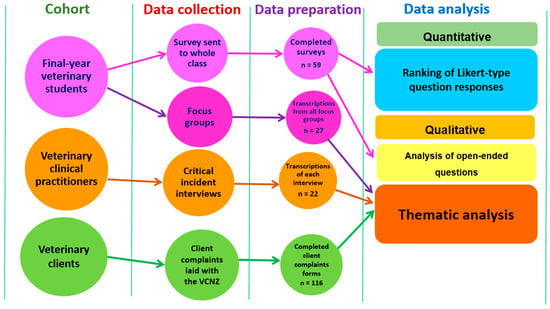
Figure 1.
The data collection, data preparation, and data analysis techniques utilized for the three research studies.
2.1. Final-Year Veterinary Students
Final-year veterinary students at the School of Veterinary Science at Massey University (MU) in New Zealand were surveyed and engaged in focus groups to explore their perspectives on essential professionalism attributes for career success (Gordon et al., 2025a, 2025b). In the survey, 59 students rated the relevancy of professionalism attributes to career success using a 4-point Likert-scale (from ‘Irrelevant to career success’ through to ‘Essential to career success’). Responses were collated to develop a ranked list of attributes based on the means of the responses. Appendix A shows the measures of central tendencies and percentage responses of the 59 final year veterinary students who selected whether the professionalism attributes presented in the survey were ‘Essential’ (4 points), ‘Desirable’ (3 points), ‘Less relevant’ (2 points), or ‘Irrelevant’ (1 point) to career success. Subsequent open-ended questions invited respondents to provide free-text responses, allowing them to propose additional attributes (absent from the survey list) they considered important for career success.
Five focus groups (n = 8, 6, 5, 4, and 4, respectively) were established based on an invitation provided at the end of the survey. The focus group questions were guided by a semi-structured script and yielded rich qualitative data. Participants shared their views on professionalism, experiences of professional challenges during training, and their perspectives on the attributes most critical for future success. These sessions were transcribed and subjected to thematic analysis using the six steps described by Braun and Clarke (2006, 2022) and Maguire and Delahunt (2017), ensuring that recurring concepts such as communication, empathy, and self-care were captured in detail.
2.2. Veterinary Clinical Practitioners
To gain insight into the experiences of practicing veterinarians, critical incident interviews were conducted with 22 veterinarians in clinical practice (Gordon et al., 2021). Participants were recruited using a mixture of criterion-related purposive sampling, convenience sampling, opportunistic recruitment and snowball sampling. The sample of 22 veterinarians interviewed comprised 11 (50%) early career veterinarians (<10-years’ experience) and 11 (50%) later career veterinarians (≥10-years’ experience) representing all disciplines of clinical veterinary practice.
The critical incident technique, first described by Flanagan (1954), invited participants to recall and describe significant events—both positive and negative—that had a lasting impact on their veterinary professional practice. Veterinarians were asked to recount interactions with clinical clients, where professionalism attributes either enhanced the veterinarian-client relationship or where a lack of these attributes created negative experiences. Thematic analysis of the interview transcripts was used to identify recurring patterns of professional behavior through an iterative coding process. These narratives illuminated the complexity of professional behavior in real-world settings, highlighting attributes related to integrity, accountability, communication, and teamwork.
2.3. Veterinary Clients
Data on 141 complaints, lodged with the VCNZ over a three-year period, were subject to thematic analysis to provide nuanced insights into client concerns relating to veterinary professional standards (Gordon et al., 2019). It is acknowledged that the complaints dataset primarily reflects client dissatisfaction and perceptions of professional conduct and does not constitute a direct measure or proxy for animal-facing clinical outcomes.
2.4. Integration of Data from the Three Stakeholder Groups
Although the different datasets were analyzed independently, their findings were subsequently synthesized using a crosswalk approach guided by the integration question: What shared professionalism attributes reported by veterinary stakeholders support veterinarians’ experiences of career success? Themes derived independently within each original study were systematically compared across studies to identify areas of overlap. Convergence was determined when conceptually similar themes emerged independently in at least two stakeholder groups, even if expressed using different language or contexts, while divergence was noted when themes were salient within a single cohort only.
2.5. Human Ethics Approval
Ethical approval for this study was obtained from the Massey University Human Ethics Committee (MUHEC). Participation by final-year veterinary students was approved under MUHEC: Southern B Application 17/31, while involvement of veterinary clinical practitioners and veterinary clients was approved through MUHEC Low Risk Notifications 4000017054 and 4000016302, respectively.
3. Results
Although there were variations in emphasis, the overlap between the findings from the different stakeholder groups was noticeable. The comparison and integration of data from veterinary students, veterinary clinical practitioners, and veterinary clients produced a convergence around four overarching themes: ‘Effective communication’; ‘Accountability, integrity, trustworthiness, and honesty’; ‘Personal wellbeing’; and ‘Quality of service’. Appendix B presents the major and minor themes identified for each cohort and illustrates the overlap among major themes that informed the development of the four overarching themes. These themes represented the common ground upon which a holistic framework of veterinary professionalism could be built.
3.1. Effective Communication
Across all cohorts, communication emerged as the most predominantly mentioned determinant of professional effectiveness. Final-year veterinary students recognized that effective communication skills were as vital as technical proficiency in shaping their readiness for practice. Students highlighted the importance of building rapport with clients and providing them with clear explanations (Gordon et al., 2025a, 2025b).
Veterinary clinical practitioners, reflecting on critical incidents, recalled how successful outcomes hinged on demonstrating empathy, and engaging in honest and respectful dialogue with clients and colleagues. In contrast, failures in communication frequently led to client dissatisfaction, conflict, or compromised patient care (Gordon et al., 2021).
Poor communication between the veterinarian and the client underpinned many of the complaints laid by clients with the VCNZ in the third study. Clients expected veterinarians to communicate in ways they found acceptable, whether it was through providing clear explanations, obtaining informed consent, reporting clinical findings or incidents truthfully, or responding empathetically and in a timely fashion to clients’ concerns (Gordon et al., 2019).
3.2. Accountability, Integrity, Trustworthiness, and Honesty
Veterinary students highlighted the necessity for veterinarians to accept full responsibility for their actions and to admit to mistakes when they occurred. They perceived honesty to be a foundation for trust with clients and colleagues. These sentiments were echoed by the clinical practitioners who noted that acknowledging limitations, apologizing when errors were made, and engaging in transparent decision-making fostered long-term trust and respect. Many critical incidents that resulted in negative outcomes stemmed from lapses in honesty and accountability and from failure to communicate openly about mistakes.
Complaints against veterinarians often stemmed from clients perceiving that their veterinarians were acting dishonestly or trying to cover up mistakes. Clients implied, in their complaints laid against veterinarians, that they expected veterinarians to always be trustworthy and honest, to declare any conflicts of interest, to keep accurate medical records, and to maintain strict client confidentiality.
3.3. Personal Wellbeing
The wellbeing of veterinarians frequently emerged as an important but often neglected aspect of professionalism. Students identified reflective practice, self-awareness, resilience, and maintaining work–life balance as vital for long-term success. They also stressed the importance of maintaining a positive attitude as well as striving to be adaptable and resilient in the face of challenges. When reflecting on challenging incidents, clinical practitioners also recognized the role of resilience, along with collegial support, in managing the emotional demands of practice. Many veterinarians described personal wellbeing as a prerequisite for professional competence. The focus of clients was less towards the veterinarian’s wellbeing, but they indirectly raised issues that pointed to its importance. These included concerns related to a veterinarian’s availability, responsiveness, or perceived overwork affecting the quality of service.
3.4. Quality of Service
All groups of stakeholders linked professionalism to the consistent delivery of high-quality veterinary care. While students mainly framed quality of service in terms of committing to best practice, and displaying competence in clinical skills, practitioners also associated it with displaying empathy and compassion towards clients and patients, providing adequate clinical resources, and managing time effectively. Clients expected veterinarians to offer a clinical service that was adequately resourced with both staff and equipment. They also expected the veterinarian to demonstrate clinical competency along with displays of empathy and compassion towards them and their animals. Complaints often referred to inadequate equipment, lack of staff, or the perceived neglect of client or animal welfare.
4. Discussion
4.1. The Principle of Veterinary Care
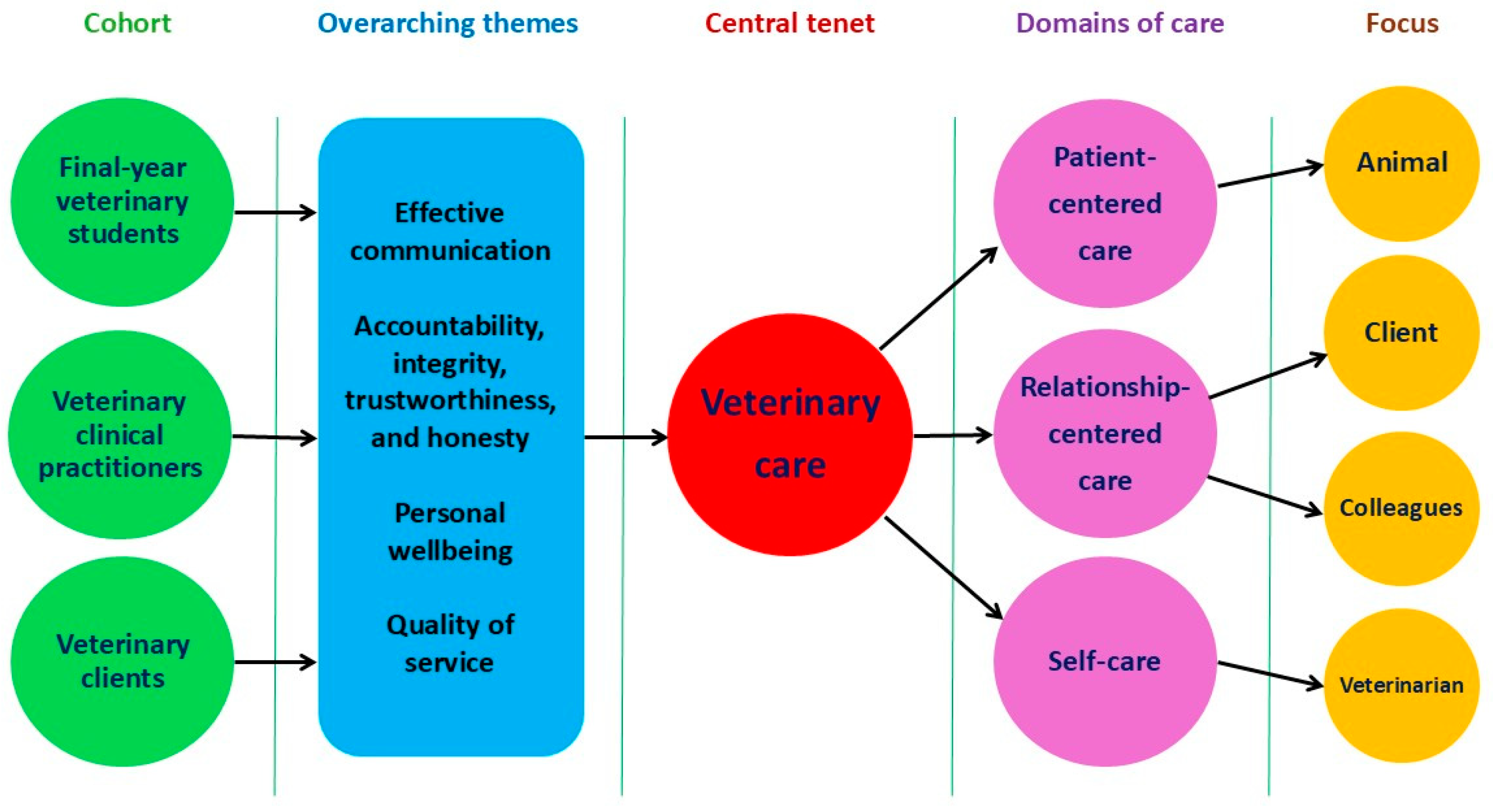
The professional identity of a veterinary clinical practitioner is fundamentally grounded in the role of caregiver (Stoewen, 2020). The four overarching themes (‘Effective communication’; ‘Accountability, integrity, trustworthiness, and honesty’; ‘Personal wellbeing’; and ‘Quality of service’) that have emerged from these studies coalesce around a central principle of delivering veterinary care. Under the central tenet of ‘veterinary care’, three domains of care can be identified: ‘Patient-centered care’, ‘Relationship-centered care’, and ‘Self-care’. The focus of patient-centered care is the animal, while the focus of relationship-centered care includes both the client and the veterinarian’s working colleagues. The self-care domain focuses on clinical practitioners themselves (Figure 2).
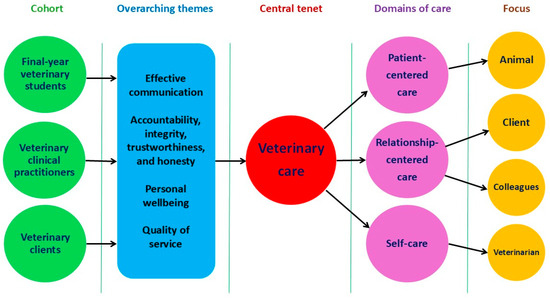
Figure 2.
Diagram illustrating the association between the three domains of veterinary care and the four overarching themes.
Professionalism, therefore, fundamentally revolves around veterinarians’ accountability to a social contract with patients, clients and colleagues (M. Cake et al., 2019) as well as their responsibilities to themselves. The recent literature on competency-based frameworks has underscored the necessity for veterinarians to demonstrate proficiency across all three domains of care (Bok et al., 2011; Matthew et al., 2020; Chaney et al., 2024). Veterinary clinical practitioners must juggle the demands of these competing domains in order to provide sustained veterinary care in a professional manner.
4.2. The Convergence of All Themes and Domains of Veterinary Care into a ‘Navigational Compass’ Framework to Guide Veterinary Care and Career Success
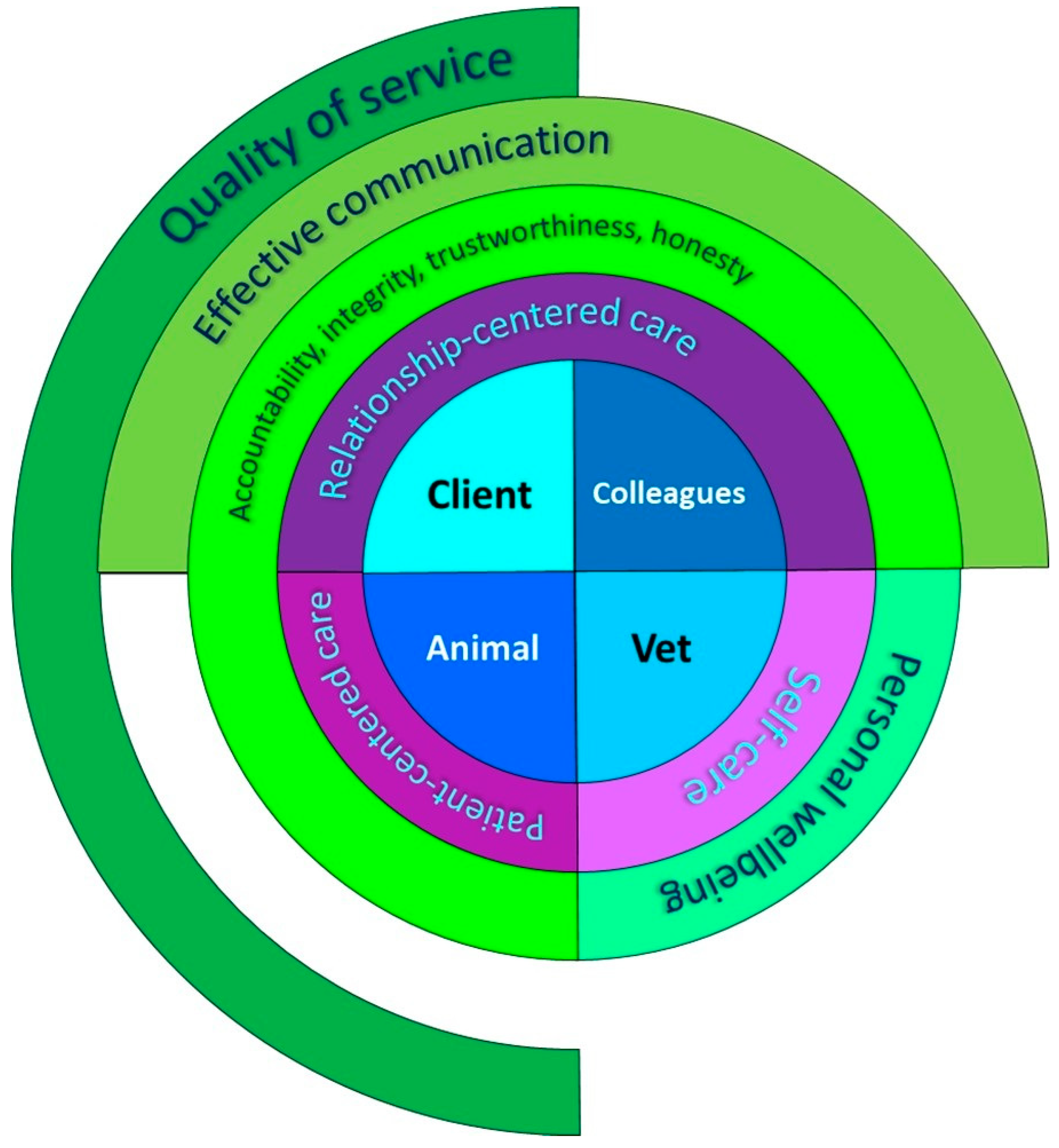
The synthesis of stakeholder perspectives on essential attributes of professionalism along with the three recognized domains of veterinary care, culminated in the development of a unifying theoretical model of veterinary professionalism, conceptualized as a ‘navigational compass’ (Figure 3).
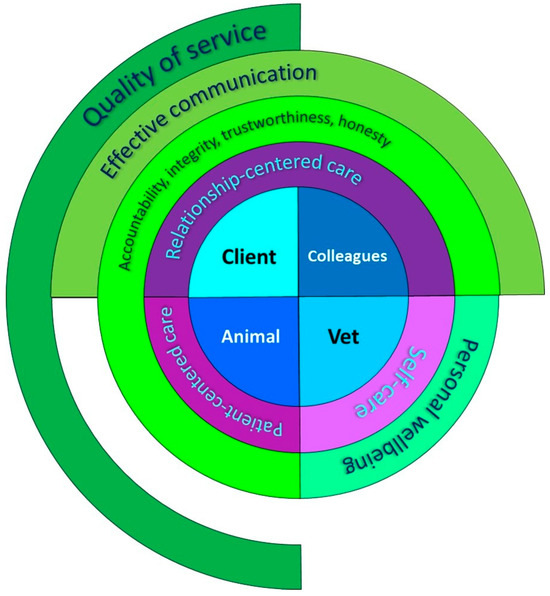
Figure 3.
The ‘navigational compass’ to guide veterinary career success: A theoretical framework of veterinary professionalism to help veterinarians to navigate the challenges of practice and sustain career success.
Just as navigators rely on a compass to steer through complex terrains, it is hoped that this framework will provide an orientation tool for veterinarians, helping them to balance the often-competing demands of animals, clients, colleagues, and themselves. By visualizing professionalism as a compass, the model highlights how veterinarians can use key professionalism attributes to navigate the challenges of practice and sustain career success. Indeed the ‘compass’ frames professionalism as an ongoing process of navigation rather than a fixed destination.
In the model, the center of the compass is occupied by the four foci of veterinary care: the animal (patient), the client, colleagues, and the veterinarian themselves. Surrounding these, the three domains of veterinary care (‘Patient-centered care’; ‘Relationship-centered care’; and ‘Self-care’) sit as the first layer of concentric rings aligned to their appropriate central foci. Surrounding the three domains are the four overarching themes of professionalism radiating out in concentric semi-circles (Figure 3). Each of these themes is aligned to the appropriate domains of care. The themes associated with each domain represent the attributes of professionalism that veterinarians would need to display in relation to that domain. The domains and their association with each theme are discussed in more detail below.
4.2.1. Patient-Centered Care
In this paper, patient-centered care is used explicitly to refer to ethical prioritization of animal wellbeing, which may not always align with client satisfaction or preferences, and is conceptually distinct from relationship-centered (client-centered) care.
Traditionally, veterinary education has placed emphasis on content knowledge and technical competencies, favoring a patient-centered care model that focuses on the animal (Lewis & Klausner, 2003; Fletcher et al., 2015). Patient-centered care is associated with the themes of ‘quality of service’ and ‘accountability, integrity, trustworthiness and honesty’. The ‘quality of service’ theme directly impacts the relationship between veterinarians and the animals under their care and includes important attributes such as medical and surgical content knowledge, clinical technical competence, and showing sufficient care and compassion towards the animal. The quality of service is also associated with attributes related to running the veterinary practice such as the provision of adequate veterinary equipment and ensuring that staffing levels allow the provision of optimum animal care.
There are varying views as to whether the primary obligation of the veterinarian is to the animal or to the owner (Willis et al., 2007). In the present studies, all three cohorts of veterinary stakeholders recognized that perceptions of veterinarians’ responsibilities have expanded to include the wellbeing of clients as well as their animals. Concern for the wellbeing of clients is not restricted to their emotional needs. Large animal veterinarians have become increasingly focused on the financial wellbeing of their farming clients. Veterinarians today recognize the financial challenges producers face (rising overheads, animal care costs, limited profit margins) and the tension between charging fees that are viable for the veterinary practice versus affordability for the farmer (Ritter & Mays, 2025). The two distinct responsibilities of a veterinarian today can be defined as that of an animal-focused physician or healer, and that of a client-focused advisor and counsellor (Tannenbaum, 1993, 1995). The healer role emphasizes the treatment and management of the patient, while the counsellor role highlights the value of building a supportive relationship with the client. Research has shown that many veterinarians tend to adopt the physician model, prioritizing the animal’s welfare when faced with ethical decisions (Rollin, 2011). This approach can sometimes be misinterpreted by clients, particularly when decisions seem to conflict with their own concerns or expectations (Mossop, 2012). This issue has been underscored in one of the present studies in situations in which allegations of unprofessional behavior were made by clients against veterinarians when they felt that their opinions and priorities had been compromised (Gordon et al., 2019). The navigational compass addresses the ethical tension veterinarians face when client interests diverge from animal wellbeing, such as in cases of owner-requested euthanasia driven by financial constraints. In these situations, the patient-centered domain of the compass would help guide veterinarians to prioritize animal welfare indicators (such as ensuring adequate analgesia and adherence to humane endpoints) while balancing respect for client circumstances within relationship-centered care.
Patient-centered care also overlapped with the theme of ‘accountability, integrity, trustworthiness and honesty’. Powell et al. (2022) found that when veterinarians demonstrate behaviors perceived by clients as trustworthy and transparent, client trust increases. This enhanced trust is associated with increased utilization of veterinary services, improved adherence to treatment recommendations, and stronger commitment by clients to their animals’ long-term care. It is also clearly in the best interests of the patient if veterinarians display honesty and transparency and acknowledge their technical limitations and respond promptly to any unexpected adverse outcomes or clinical errors.
4.2.2. Relationship-Centered Care
The veterinary-client relationship is the central essence of veterinary career success. Relationship-centered care focuses on the client and on veterinary colleagues and is associated with the themes of ‘effective communication’ and ‘accountability, integrity, trustworthiness and honesty’.
Important components of collegial relationships include effective interpersonal communication skills and the availability of reliable collegial support. Workplace relationships between veterinary colleagues can be complex, and ineffective communication may negatively impact both the quality of service provided to clients and the standard of care delivered to patients. Veterinarians are responsible for upholding professionalism in all interactions and communications with colleagues, thereby strengthening client trust in the integrity of the profession (Block et al., 2006).
As the importance of relationship-centered care has gained traction, more focus has been placed on the client domain in recent years. Cornell and Kopcha (2007) have referred to this veterinarian-client relationship as a ‘partnership in care’. Traditionally the relationship between the veterinarian and the client has been paternalistic in nature, yet this is increasingly recognized as outdated and is being replaced by a growing recognition that clients deserve an equal role in the relationship, with their opinions valued and included in the decision-making process.
When adopting a client focus, the ‘quality of service’ theme is important. With regard to this, the research centered on clients’ complaints reinforced the importance that clients place on the veterinarian responding appropriately to their needs, including obtaining informed consent before starting procedures, keeping accurate medical records, maintaining confidentiality, and avoiding conflicts of interest. Moreover, it was anticipated that the veterinarian would exhibit a suitable degree of empathy toward the client.
As alluded to above, the interaction between veterinarians and their clients can, however, be complex, especially regarding principles of animal welfare, requiring a careful balance of both parties’ expectations (Martimianakis et al., 2009). A veterinarian–client relationship based on accountability, integrity, trustworthiness and honesty should help minimize conflict when veterinarians make decisions about animal treatment and welfare that contradict the client’s viewpoints (Mossop, 2012). Indeed, interviews with animal owners conducted by Brown and Jones (2024) revealed that when integrity and honesty are demonstrated by the veterinarian, relationships are more resilient, and clients are more forgiving—even in the face of adverse outcomes.
4.2.3. Self-Care
The focus of self-care is the wellbeing of the veterinarian. Under the theme of ‘personal wellbeing’, both veterinary students and veterinary clinical practitioners highlighted important attributes of veterinary professionalism that included ‘engaging in reflective practice’, ‘possessing resilience’, and ‘maintaining an optimum work-life balance’.
Traditionally, the veterinary profession has shown limited strength in taking responsibility for individual wellbeing (Bartram & Baldwin, 2007). Although wellbeing resources and self-help strategies such as peer support groups, counselling, meditation, and mindfulness are often available to individuals, their adoption remains largely a personal decision. Moir and Van den Brink (2020) and Gordon (2020) were of the view that veterinary employers and regulatory authorities should assume more responsibility for the wellbeing of veterinarians. This holds particular importance considering that organizational factors such as the work environment and levels of workload can directly impact wellbeing (Brigham et al., 2018). Newly graduated veterinarians voiced concerns over their employers’ unreasonable expectations regarding workloads and time management and requested regular practice meetings and mentor support systems to help alleviate these difficulties (Riggs et al., 2001). The use of mentors (in the United Kingdom and Ireland) has been associated with facilitating the transition between student and practitioner and has improved mental wellbeing and retention rates within the profession (Graham, 2016). The role of other institutional levers, such as protected time for clinical debriefing, can provide structured support for processing ethically challenging cases and help sustain professional wellbeing over time.
Previously not deemed important in veterinary education, self-care is now recognized as critical to sustaining long-term career satisfaction and effectiveness (Bartram & Baldwin, 2007; Lloyd & Campion, 2017; Gibbons et al., 2019; Best et al., 2023; Chapman et al., 2025). Without attention to wellbeing, veterinarians risk burnout, reduced empathy, and compromised clinical judgement. The findings of the present studies support the incorporation of initiatives promoting self-care into the curriculum. These should encompass the development of skills such as recognizing personal and professional limitations, adapting to ongoing change, collaborating effectively with colleagues, and demonstrating strong teamwork and leadership (Goldie, 2008). The potential contributions of psychologists, bioethicists, and sociologists to the development of curriculum content on self-care and wellbeing should also be considered (Mossop & Cobb, 2013). Integrating education on specific mental health issues, along with strategies for addressing them within a safe and supportive learning environment, has been recommended as an effective way to reinforce self-care principles among veterinary students (Liu & van Gelderen, 2020; Best et al., 2023). Gardner and Parkinson (2011) have suggested that support service providers could be integrated into teaching, not only to help students build coping and social skills but also to increase awareness of available services. These authors emphasize that workshops on interpersonal skills or stress management are most effective when directly connected to the immediate challenges that students and new graduates face in their training and early careers.
5. Conclusions
An important aim of this project was to create an evidence-informed reflective framework of veterinary professionalism that would be useful for the veterinary profession. The navigational compass provides a unifying framework for understanding veterinary professionalism that integrates the perspectives of students, clinical practitioners, and clients. By organizing professionalism into the three domains of patient-centered care, relationship-centered care, and self-care, underpinned by the four overarching themes, the compass offers both a conceptual model and a reflective framework for navigating veterinary careers. By presenting and describing the framework, it is hoped that veterinarians may be able to use it to support reflection on the practice of veterinary medicine and in their relationships with patients, clients, and colleagues. At this stage, the compass is intended to inform understanding and discussion rather than to function as a validated evaluative or assessment tool. By using this compass, veterinarians can be supported to orient their professional development towards excellence in care and lasting personal fulfilment, ensuring that the profession continues to thrive in meeting the needs of animals, clients, and society.
Furthermore, adopting a model that helps to define aspects of professionalism can help form the basis for constructing a sound framework for veterinary education. Through the determination of veterinary professionalism attributes that stakeholders deemed important for career success, the research findings may contribute to improving the professionalism curriculum in primary veterinary degree programs. Humble (2001) underscored the role of veterinary schools as ‘nurseries’ that nurture and promote professionalism among students, enabling them to graduate with a ‘passion for excellence’ as they enter their careers.
Finally, the findings of this research are intended to initiate further discourse in veterinary professionalism and ensure that the concept of professionalism remains a priority within the profession as it evolves to meet society’s shifting expectations and the constantly changing work environment.
6. Directions for Future Research
Data from students, veterinarians and client complaints came only from New Zealand and, in the case of veterinarians, only from those in clinical practice. These findings are, therefore, most directly transferable to the New Zealand clinical veterinary context. The overarching themes related to professionalism, communication, and ethical decision-making may, however, be applicable across a broader range of veterinary roles and international settings. More information is needed on professionalism as seen by practitioners in teaching, welfare, industry, or government agency positions across an international context. Whether a future study of veterinarians from a broader base of employment, or from different geographical or socioeconomic regions would have highlighted different themes amongst respondents’ critical incidents remains to be seen.
In addition to broadening the participant base, future research should focus on the operationalization of the navigational compass into measurable competencies and observable professional behaviors across the three domains and four overarching themes. Professional codes of conduct from New Zealand and other jurisdictions may provide a valuable reference point in this process, supporting alignment between the compass framework and existing regulatory and ethical expectations of the profession. However, such translation from a conceptual model into assessable competencies would require a dedicated program of empirical development, piloting, and validation to ensure reliability, relevance, and educational utility. Collectively, these steps represent a substantive next phase of research that builds on the current findings, moving from conceptual synthesis toward applied evaluation.
Author Contributions
Conceptualization, S.G.; methodology, S.G.; formal analysis, S.G., J.W. and D.G.; investigation, S.G.; data curation, S.G. and C.B.; writing—original draft preparation, S.G.; writ-ing—review and editing, H.J., K.B., J.W., C.B., J.B., T.P. and D.G.; supervision, J.W., C.B., J.B., T.P. and D.G.; project administration, S.G., H.J. and K.B.; funding acquisition, S.G. and K.B. All authors have read and agreed to the published version of the manuscript.
Funding
This work was carried out as part of a PhD funded by a Lewis Fitch Research Grant and a McGeorge Research Grant, administered by MU. Article processing charges were covered by a St George’s University Research Grant.
Institutional Review Board Statement
The study was conducted in accordance with the Declaration of Helsinki, and each study was approved by the MU Human Ethics Committee (MUHEC) - MUHEC HEC: Southern B Application 17/31 (Approval Date: 2 October 2017); MUHEC Low Risk Notification: 4000017054 (Approval Date: 14 June 2016); MUHEC Low Risk Notification: 4000016302 (Approval Date: 29 November 2016).
Informed Consent Statement
Informed consent was obtained from all participants involved in the study.
Data Availability Statement
To avoid the risk of compromising the anonymity of participants, the transcripts of each focus group and interview are available on special request. As some of the referenced studies are published in subscription-based journals, copies of the four underlying papers are available from the corresponding author upon request.
Acknowledgments
The authors extend their sincere gratitude to the final-year veterinary students at MU and the veterinary clinical practitioners who generously contributed their time to the surveys, focus groups, and interviews and provided invaluable feedback. The authors are also grateful to the staff of the VCNZ for their generous cooperation in facilitating the research on client complaints.
Conflicts of Interest
The authors have no conflicts of interest to declare, although must acknowledge that some authors contributed towards the teaching of veterinary professionalism to the final-year veterinary students at MU. The funders had no role in the design of the study; in the collection, analyses, or interpretation of data; in the writing of the manuscript; or in the decision to publish the results.
Abbreviations
The following abbreviations are used in this manuscript:
| VCNZ | Veterinary Council of New Zealand |
| MU | Massey University |
| MUHEC | MU Human Ethics Committee |
Appendix A
The measures of central tendencies and percentage responses of the 59 final year veterinary students who selected whether the professionalism attributes presented in the survey were ‘Essential’ (4 points), ‘Desirable’ (3 points), ‘Less relevant’ (2 points), or ‘Irrelevant’ (1 point) to career success. Professionalism attributes were presented in three categories: ‘Self-development’, ‘Task-oriented’, and ‘Relationship-building’ attributes.
| Attribute | n | M | SD | Mdn | % Responses for Career Success | |||
| Essential | Desirable | Less Relevant | Irrelevant | |||||
| Summary statistics for the ‘Self-development’ veterinary professionalism attributes | ||||||||
| 1. Remain composed under pressure and cope with adversity | 59 | 3.68 | 0.471 | 4 | 68 | 32 | 0 | 0 |
| 2. Recover quickly from setbacks | 59 | 3.49 | 0.598 | 4 | 54 | 41 | 5 | 0 |
| 3. Self-regulate emotional responses | 59 | 3.49 | 0.537 | 4 | 51 | 47 | 2 | 0 |
| 4. Take a balanced view of own strengths, weaknesses and limitations | 59 | 3.41 | 0.591 | 3 | 46 | 49 | 5 | 0 |
| 5. Admit mistakes and shortcomings | 59 | 3.56 | 0.534 | 4 | 58 | 41 | 2 | 0 |
| 6. Engage in reflective practice and learn from experience | 58 | 3.43 | 0.596 | 3 | 48 | 47 | 5 | 0 |
| 7. Adapt and respond positively to change | 59 | 3.46 | 0.536 | 3 | 47 | 51 | 2 | 0 |
| 8. Engage in learning experiences and build expertise | 59 | 3.61 | 0.492 | 4 | 61 | 39 | 0 | 0 |
| 9. Create new and unique ideas | 59 | 2.71 | 0.671 | 3 | 12 | 47 | 41 | 0 |
| 10. Make connections among previously unrelated notions | 59 | 2.90 | 0.662 | 3 | 17 | 56 | 27 | 0 |
| 11. Utilize strategies to navigate challenges and maintain wellbeing | 59 | 3.51 | 0.598 | 4 | 56 | 39 | 5 | 0 |
| 12. Remain open to criticism without being defensive | 59 | 3.41 | 0.591 | 3 | 46 | 49 | 5 | 0 |
| 13. Adhere to an appropriate (for the context) and effective set of core values and beliefs | 59 | 3.27 | 0.611 | 3 | 36 | 56 | 8 | 0 |
| 14. Maintain a positive and constructive sense of humor | 59 | 3.46 | 0.652 | 4 | 54 | 37 | 8 | 0 |
| 15. Maintain confidentiality | 59 | 3.80 | 0.446 | 4 | 81 | 17 | 2 | 0 |
| 16. Maintain a conscious balance between work and personal life | 58 | 3.67 | 0.509 | 4 | 69 | 29 | 2 | 0 |
| 17. Act as a role model to others | 59 | 3.12 | 0.646 | 3 | 27 | 58 | 15 | 0 |
| 18. Provide guidance formally and informally | 59 | 3.15 | 0.690 | 3 | 32 | 51 | 17 | 0 |
| Summary statistics for the ‘Task-oriented’ veterinary professionalism attributes | ||||||||
| 19. Take responsibility for his/her own work | 59 | 3.66 | 0.545 | 4 | 69 | 27 | 3 | 0 |
| 20. Recognize opportunities and act with a minimum of direction | 59 | 3.17 | 0.497 | 3 | 22 | 73 | 5 | 0 |
| 21. Make timely decisions taking into account the wider context and likely consequences | 57 | 3.61 | 0.526 | 4 | 63 | 35 | 2 | 0 |
| 22. Work to a high standard and in an organized and methodical manner to deliver results | 59 | 3.54 | 0.567 | 4 | 58 | 39 | 3 | 0 |
| 23. Marshal resources (people, funding, material, support) to achieve goals | 59 | 3.07 | 0.612 | 3 | 22 | 63 | 15 | 0 |
| 24. Show enthusiasm, determination and resilience | 58 | 3.43 | 0.565 | 3 | 47 | 50 | 3 | 0 |
| 25. Demonstrate hard-work, diligence and reliability | 59 | 3.49 | 0.598 | 4 | 54 | 41 | 5 | 0 |
| 26. Initiate new approaches to improve work practices | 59 | 2.95 | 0.680 | 3 | 20 | 54 | 25 | 0 |
| 27. Use good judgment and employ rigorous logic to engage in clinical reasoning and solve difficult problems | 59 | 3.63 | 0.488 | 4 | 63 | 37 | 0 | 0 |
| 28. Use his/her time effectively and efficiently | 59 | 3.46 | 0.567 | 3 | 49 | 47 | 3 | 0 |
| 29. Recognize and respect the need for and relevance of policies, procedures and management | 59 | 3.19 | 0.629 | 3 | 31 | 58 | 12 | 0 |
| 30. Understand the businesses side of veterinary practice | 59 | 2.93 | 0.691 | 3 | 20 | 53 | 27 | 0 |
| 31. Appreciate how strategies and tactics work in the marketplace | 55 | 2.69 | 0.605 | 3 | 7 | 55 | 38 | 0 |
| 32. Demonstrate formal presentation skills | 56 | 2.75 | 0.667 | 3 | 13 | 50 | 38 | 0 |
| Summary statistics for the ‘Relationship-building’ veterinary professionalism attributes | ||||||||
| 33. Step up to conflicts, seeing them as opportunities | 59 | 2.90 | 0.712 | 3 | 20 | 49 | 31 | 0 |
| 34. Manage differences of opinion with tact and diplomacy | 59 | 3.66 | 0.477 | 4 | 66 | 34 | 0 | 0 |
| 35. Settle disputes equitably without damaging relationships | 59 | 3.58 | 0.498 | 4 | 58 | 42 | 0 | 0 |
| 36. Manage all kinds and classes of work colleagues and clients equitably | 59 | 3.59 | 0.561 | 4 | 63 | 34 | 3 | 0 |
| 37. Work openly and harmoniously within teams | 59 | 3.64 | 0.483 | 4 | 64 | 36 | 0 | 0 |
| 38. Create a motivating climate in which people want to do their best | 58 | 3.40 | 0.560 | 3 | 43 | 53 | 3 | 0 |
| 39. Empower others, making each individual feel his/her work is important | 58 | 3.43 | 0.624 | 3 | 50 | 43 | 7 | 0 |
| 40. Genuinely care about people and be attentive to their feelings, perspectives and concerns | 59 | 3.51 | 0.626 | 4 | 58 | 36 | 7 | 0 |
| 41. Remain non-judgmental and respect diversity of opinion | 59 | 3.41 | 0.591 | 3 | 46 | 49 | 5 | 0 |
| 42. Display empathy towards the plight of others experiencing difficulties or discomfort | 59 | 3.71 | 0.457 | 4 | 71 | 29 | 0 | 0 |
| 43. Express opinions, concepts and information in an uncomplicated manner using a variety of verbal and non-verbal communication styles to suit the intended audience | 59 | 3.61 | 0.558 | 4 | 64 | 32 | 3 | 0 |
| 44. Communicate with difficult or grieving clients/customers in an empathetic manner | 59 | 3.78 | 0.418 | 4 | 78 | 22 | 0 | 0 |
| 45. Practice attentive and active/reflective listening | 59 | 3.59 | 0.529 | 4 | 61 | 37 | 2 | 0 |
| 46. Show an understanding and respect for the human-animal bond | 59 | 3.71 | 0.457 | 4 | 71 | 29 | 0 | 0 |
| 47. Establish and maintain effective relationships with clients/customers and gain their trust and respect | 59 | 3.78 | 0.418 | 4 | 78 | 22 | 0 | 0 |
Appendix B
The major themes and minor themes identified for the final-year veterinary students, clinical veterinary practitioners and veterinary clients.
| Cohort | Major Theme | Minor Theme |
| Final-year veterinary students | Communicating with the client and building rapport |
|
| Demonstrating accountability and integrity |
| |
| Committing to personal wellbeing |
| |
| Clinical veterinary practitioners | Communication skills |
|
| Accountability and integrity |
| |
| Personal wellbeing |
| |
| Quality of care |
| |
| Veterinary clients | The veterinarian will communicate in a way that the client finds acceptable |
|
| The veterinarian will be trustworthy and honest |
| |
| The veterinarian will provide good quality care |
| |
| The veterinarian will charge fairly |
References
- Bartram, D., & Baldwin, D. (2007). Mental health and wellbeing survey. Veterinary Record, 161(10), 360. [Google Scholar] [CrossRef] [PubMed]
- Best, C. O., Best, N., Goodall, C., & Beaupre, B. (2023). Self-care practices and depression, anxiety, and stress scores in veterinary students during a semester. Journal of Veterinary Medical Education, 50(4), 495–504. [Google Scholar]
- Block, G., Ross, J., & Committee, N. V. L. (2006). The relationship between general practitioners and board-certified specialists in veterinary medicine. Journal of the American Veterinary Medical Association, 228, 1188–1191. [Google Scholar] [CrossRef] [PubMed]
- Bok, H. G., Jaarsma, D. A., Teunissen, P. W., van der Vleuten, C. P., & van Beukelen, P. (2011). Development and validation of a competency framework for veterinarians. Journal of Veterinary Medical Education, 38(3), 262–269. [Google Scholar] [CrossRef]
- Braun, V., & Clarke, V. (2006). Using thematic analysis in psychology. Qualitative Research in Psychology, 3(2), 77–101. [Google Scholar] [CrossRef]
- Braun, V., & Clarke, V. (2022). Thematic analysis: A practical guide (p. 536). SAGE Publications Ltd. [Google Scholar]
- Brigham, T., Barden, C., Dopp, A. L., Hengerer, A., Kaplan, J., Malone, B., Martin, C., McHugh, M., & Nora, L. M. (2018). A journey to construct an all-encompassing conceptual model of factors affecting clinician well-being and resilience. NAM Perspectives, 8(1), 201801b. [Google Scholar] [CrossRef]
- Brown, F. N., & Jones, J. V. (2024). Client experiences with veterinary professionals: A narrative inquiry study. New Zealand Veterinary Journal, 73, 165–177. [Google Scholar] [CrossRef]
- Cake, M., King, L., Bell, M., Cobb, K., Feakes, A., & Hamood, W. (2019). VetSet2Go: A collaborative outcomes and assessment framework building employability, resilience and veterinary graduate success (Final report). Australian Government Department of Education. [Google Scholar]
- Cake, M. A., Bell, M. A., Williams, J. C., Brown, F. J. L., Dozier, M., Rhind, S. M., & Baillie, S. (2016). Which professional (non-technical) competencies are most important to the success of graduate veterinarians? A Best Evidence Medical Education (BEME) systematic review: BEME Guide No. 38. Medical Teacher, 38, 550–563. [Google Scholar] [CrossRef]
- Chaney, K. P., Danielson, J. A., & Hodgson, J. L. (2024). Competency-based veterinary education. In Veterinary medical education: A practical guide (p. 37). Wiley-Blackwell. [Google Scholar]
- Chapman, A. J., Bennett, P. C., & Rohlf, V. I. (2025). Workplace strategies to reduce burnout in veterinary nurses and technicians: A Delphi study. Animals, 15(9), 1257. [Google Scholar] [CrossRef]
- Cornell, K. K., & Kopcha, M. (2007). Client-veterinarian communication: Skills for client-centered dialogue and shared decision making. Veterinary Clinics of North America: Small Animal Practice, 37, 37–47. [Google Scholar] [CrossRef]
- Flanagan, J. C. (1954). The critical incident technique. Psychological Bulletin, 51, 327–358. [Google Scholar] [CrossRef] [PubMed]
- Fletcher, O. J., Hooper, B. E., & Schoenfeld-Tacher, R. (2015). Instruction and curriculum in veterinary medical education: A 50-year perspective. Journal of Veterinary Medical Education, 42(5), 489–500. [Google Scholar] [CrossRef] [PubMed]
- Gardner, D. H., & Parkinson, T. J. (2011). Optimism, self-esteem, and social support as mediators of the relationships among workload, stress, and well-being in veterinary students. Journal of Veterinary Medical Education, 38(1), 60–66. [Google Scholar] [CrossRef] [PubMed]
- Gibbons, P. M., Barrow, M., Hyde, C., & Williams, S. (2019). Resilience in veterinary students and the predictive role of mindfulness and self-compassion. Journal of Veterinary Medical Education, 46(4), 446–454. [Google Scholar]
- Goldie, J. (2008). Integrating professionalism teaching into undergraduate medical education in the UK setting. Medical Teacher, 30, 513–527. [Google Scholar] [CrossRef]
- Gordon, S. J. (2020). Enhancing the wellbeing of veterinarians. New Zealand Veterinary Journal, 68(1), 1–2. [Google Scholar] [CrossRef]
- Gordon, S. J., Gardner, D. H., Weston, J. F., Bolwell, C., Benschop, J., & Parkinson, T. J. (2021). Using the critical incident technique to determine veterinary professional competencies important for enhancing the veterinarian-client interaction. Veterinary Record, 190, e943. [Google Scholar] [CrossRef]
- Gordon, S. J., Gardner, D. H., Weston, J. F., Bolwell, C. F., Benschop, J., & Parkinson, T. J. (2019). Quantitative and thematic analysis of complaints by clients against clinical veterinary practitioners in New Zealand. New Zealand Veterinary Journal, 67(3), 117–125. [Google Scholar] [CrossRef]
- Gordon, S. J., Janicke, H., Weston, J. F., Bolwell, C. F., Benschop, J., Parkinson, T. J., & Gardner, D. H. (2025a). Final-year veterinary students’ perspectives on key attributes for career success in clinical practice and on the teaching of professionalism—Findings from focus group discussions. Veterinary Record, e1–e13. [Google Scholar] [CrossRef]
- Gordon, S. J., Janicke, H., Weston, J. F., Bolwell, C. F., Benschop, J., Parkinson, T. J., & Gardner, D. H. (2025b). Final-year veterinary students’ views on essential professionalism attributes and their critique of its teaching. Veterinary Record, e1–e11. [Google Scholar] [CrossRef]
- Graham, H. (2016). Mentoring for new graduates. Veterinary Record, 179, i–ii. [Google Scholar] [CrossRef]
- Humble, J. A. (2001). Critical skills for future veterinarians. Journal of Veterinary Medical Education, 28, 50–53. [Google Scholar] [CrossRef]
- Lewis, R. E., & Klausner, J. S. (2003). Nontechnical competencies underlying career success as a veterinarian. Journal of the American Veterinary Medical Association, 222(12), 1690–1696. [Google Scholar] [CrossRef] [PubMed]
- Liu, A. R., & van Gelderen, I. F. (2020). A systematic review of mental health–improving interventions in veterinary students. Journal of Veterinary Medical Education, 47, 745–758. [Google Scholar] [CrossRef] [PubMed]
- Lloyd, C., & Campion, D. P. (2017). Occupational stress and the importance of self-care and resilience: Focus on veterinary nursing. Irish Veterinary Journal, 70(1), 30. [Google Scholar] [CrossRef] [PubMed]
- Maguire, M., & Delahunt, B. (2017). Doing a thematic analysis: A practical, step-by-step guide for learning and teaching scholars. All Ireland Journal of Teaching and Learning in Higher Education, 9(3), 3351–33514. [Google Scholar]
- Martimianakis, M. A., Maniate, J. M., & Hodges, B. D. (2009). Sociological interpretations of professionalism. Medical Education, 43, 829–837. [Google Scholar] [CrossRef]
- Matthew, S. M., Bok, H. G., Chaney, K. P., Read, E. K., Hodgson, J. L., Rush, B. R., May, S. A., Salisbury, S. K., Ilkiw, J. E., Frost, J. S., & Molgaard, L. K. (2020). Collaborative development of a shared framework for competency-based veterinary education. Journal of Veterinary Medical Education, 47(5), 578–593. [Google Scholar] [CrossRef]
- Moir, F. M., & Van den Brink, A. R. K. (2020). Current insights in veterinarians’ psychological wellbeing. New Zealand Veterinary Journal, 68(1), 3–12. [Google Scholar] [CrossRef]
- Mossop, L. H. (2012). Defining and teaching veterinary professionalism [Doctoral thesis, University of Nottingham]. [Google Scholar]
- Mossop, L. H., & Cobb, K. (2013). Teaching and assessing veterinary professionalism. Journal of Veterinary Medical Education, 40, 223–232. [Google Scholar] [CrossRef]
- Powell, L., Walsh, M., Reinhard, C. L., Jankowski, K., & Watson, B. (2022). One Health clinic promotes veterinarian-client trust among underserved pet owners and provides learning opportunities for veterinary students. Journal of the American Veterinary Medical Association, 260(8), 931–939. [Google Scholar] [CrossRef]
- Riggs, E. A., Routly, J. E., Dobson, H., & Taylor, I. R. (2001). Support needs of veterinary surgeons in the first few years of practice: A survey of recent and experienced graduates. Veterinary Record, 149, 743. [Google Scholar] [CrossRef] [PubMed]
- Ritter, N. L., & Mays, G. (2025). Education necessity for veterinary-producer relationship creation and sustainability: A mixed-method study. Frontiers in Veterinary Science, 12, 1521440. [Google Scholar] [CrossRef] [PubMed]
- Rollin, B. E. (2011). Euthanasia, moral stress, and chronic illness in veterinary medicine. Veterinary Clinics of North America: Small Animal Practice, 41, 651–659. [Google Scholar] [CrossRef] [PubMed]
- Stoewen, D. L. (2020). Moving from compassion fatigue to compassion resilience part 3: Causes of compassion fatigue. The Canadian Veterinary Journal, 61(4), 427. [Google Scholar]
- Tannenbaum, J. (1993). Veterinary medical ethics: A focus of conflicting interests. Journal of Social Issues, 49, 143–156. [Google Scholar] [CrossRef]
- Tannenbaum, J. (1995). Veterinary ethics: Animal welfare, client relations, competition, and collegiality. Mosby. [Google Scholar]
- Willis, N. G., Monroe, F. A., Potworowski, J. A., Halbert, G., Evans, B. R., Smith, J. E., Andrews, K. J., Spring, L., & Bradbrook, A. (2007). Envisioning the future of veterinary medical education: The Association of American Veterinary Medical Colleges Foresight Project, final report. Journal of Veterinary Medical Education, 34, 1–41. [Google Scholar] [CrossRef]
Disclaimer/Publisher’s Note: The statements, opinions and data contained in all publications are solely those of the individual author(s) and contributor(s) and not of MDPI and/or the editor(s). MDPI and/or the editor(s) disclaim responsibility for any injury to people or property resulting from any ideas, methods, instructions or products referred to in the content. |
© 2026 by the authors. Licensee MDPI, Basel, Switzerland. This article is an open access article distributed under the terms and conditions of the Creative Commons Attribution (CC BY) license.