


Abstract
This study investigates students’ motivation and engagement when participating as pedagogical partners in co-creating assessment rubrics for English language learning. Grounded in self-determination theory, this research explores how students’ sense of autonomy, competence, and relatedness influence their motivation to engage in co-created assessment practices. Data was collected from 143 undergraduate students at a university in Dubai. Findings showed generally positive perceptions of autonomy, with many students valuing opportunities to contribute ideas to assessment design and reporting that co-creation enhanced their ownership of learning. Students also believed that co-created assessments improved their understanding of learning objectives. Students reported that co-creation clarified expectations, reduced anxiety, and allowed them to develop broader academic and soft skills. Despite these benefits, unfamiliarity with assessment design at times hindered effective participation. These findings suggest that co-created assessment can strengthen motivation by enhancing competence, autonomy, and relatedness, but it is also important for the students to have clear guidelines to support meaningful student involvement.
1. Introduction
Students as pedagogical partners (SaP) is a pedagogical approach that has been embraced by many higher learning institutions all over the world. SaP positions students not only as active participants in their own learning but also as contributors to broader efforts to improve educational practices (Bryson, 2016; C. K. Y. Chan & Chen, 2023; Dai & Matthews, 2023). Central to this approach is the quality of the relationship between students and teachers, suggesting that learning should be based on collaborative partnership rather than hierarchy. In practice, SaP involves reciprocal and dialogic processes where both teachers and students contribute in different ways to shape, enact, and reflect on teaching and learning practices (Cook-Sather et al., 2014). Conceptually, such partnerships challenge traditional assumptions about the roles of teachers and students by reimagining these roles as more flexible and shared, thereby allowing students to take greater responsibility, agency, and have a voice in their learning (Matthews et al., 2018). It is grounded in the idea that students and faculty work together as co-creators of educational experiences, sharing responsibility for improvement and innovation (Dai & Matthews, 2023). Within this study, SaP is operationalized through learners’ involvement in co-created assessment practices for L2 writing, rather than as a general partnership philosophy.
One domain where SaP can be particularly transformative is assessment. Assessment not only measures achievement but also significantly influences students’ motivation, engagement, and learning strategies (Nakkula & Toshalis, 2025). Traditional assessment practices, particularly the use of teacher-designed rubrics, have been predominantly teacher-centred, with instructors developing the criteria and standards by which student work is evaluated and research shows that when students know the explicit criteria, it positively affects students performance (Jönsson & Prins, 2019). While such an approach may offer structure and clarity, it often limits learners’ comprehension of the reasons behind assessment decisions and minimizes their sense of ownership in the learning process (Z. Chan & Ho, 2019). In response, participatory or co-created assessment practices have emerged as an approach that actively involves students in shaping the assessment criteria (Zhao et al., 2021). Co-creating a rubric allows learners and teachers to collaboratively define what constitutes quality work, bridging the gap between teachers’ expectations and students’ interpretations (Bovill, 2020; Deeley & Bovill, 2017). Research suggests that this process can foster a deeper understanding of assessment criteria, promote metacognitive awareness, and strengthen students’ intrinsic motivation and engagement (Smith et al., 2025). From a self-determination theory (SDT) perspective, co-created assessment is particularly relevant because it has the potential to support students’ basic psychological needs for autonomy by involving them in decision-making processes, for competence by fostering a clearer understanding of what constitutes quality writing, and for relatedness through sustained teacher–student collaboration.
Despite these potential benefits, empirical research examining co-created assessment and its influence on learners’ motivation and engagement remains limited, especially in the context of L2 English writing. Existing studies on rubric co-creation have predominantly been conducted in fields such as medical and public health education (Kilgour et al., 2022), maritime (Ghosh et al., 2020), architecture (Andrews et al., 2018), and business (Meer & Chapman, 2015; Zhao et al., 2021), focusing primarily on design and implementation rather than on learner engagement outcomes. While some studies have reported an improved understanding of assessment criteria (Bovill, 2014; Blau & Shamir-Inbal, 2018), other studies indicate students’ hesitation due to perceived workload or uncertainty about their role (Blau & Shamir-Inbal, 2018). These mixed findings indicate that learners’ motivation and engagement during co-created assessment are not yet fully understood, especially in the UAE context, particularly when examined through SDT constructs.
This gap is particularly evident in L2 writing. Writing is widely recognized as one of the most challenging areas of language learning, especially for students in multilingual contexts such as the UAE (Belmekki et al., 2025; Annamalai et al., 2025). Many struggle with organization, vocabulary, and grammatical accuracy (Mahjabeen et al., 2025), which can undermine confidence and motivation. Engaging students as pedagogical partners in the co-creation of writing rubrics may therefore provide a pathway to enhance motivation, deepen engagement, and develop critical awareness of what constitutes effective writing. In this context, assessment practices are particularly consequential, as poorly understood or teacher-dominated rubrics may further reduce students’ sense of autonomy and competence in L2 writing.
This study therefore aims to explore how students’ motivation in L2 writing is shaped through their participation in co-created assessment practices, drawing explicitly on self-determination theory as the guiding theoretical framework. By examining students’ active roles as pedagogical partners in developing L2 writing rubrics, this study seeks to provide insights into how autonomy, competence, and relatedness are experienced and negotiated during co-created assessment.
By exploring students’ motivational experiences within a co-created L2 writing assessment, this study contributes to the SaP and writing and assessment literature by offering a theoretically grounded account of how students negotiate autonomy and competence in an authentic classroom context. Rather than evaluating learning outcomes, the study hopes to offer insights into the understanding of assessment, highlighting the opportunities and constraints associated with student participation. Such insights may inform educators on how to design transparent, fair, and engaging L2 writing assessment practices that promote learner agency and sustain motivation. Rather than addressing assessment broadly, this study is intentionally delimited to students’ motivational and engagement within the co-created L2 writing assessment.
Research Question
- To what extent do students engage in co-created assessment practices and approaches to learning?
- How do students describe their experiences with co-created assessment practices and the ways these experiences shape their motivation to learn?
2. Self-Determination Theory
The following section illustrates how the self-determination theory has been employed in the study. This is followed by the literature review on rubrics.
In this study, self-determination theory (SDT) is used to explain how students’ motivation and engagement in L2 writing are shaped through their participation in co-created assessment practices, specifically the co-construction of writing rubrics.
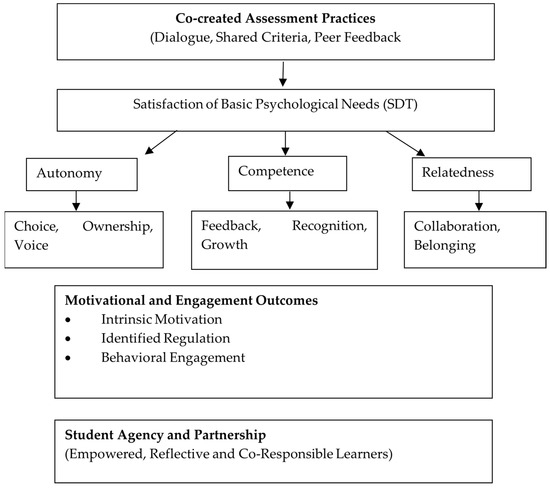
Self-determination theory (Deci & Ryan, 1985; Ryan & Deci, 2017) asserts that human motivation is grounded in three inherent psychological needs (see Figure 1): (i) autonomy, (ii) competence, and (iii) relatedness. SDT has been extensively employed in educational contexts to elucidate student motivation and engagement in a variety of learning environments (Ryan & Deci, 2000). Autonomy concerns volition and control over one’s actions, competence details the effectiveness of one’s activities, and relatedness refers to the feeling of belonging and connection with others. Studies consistently demonstrate that learners exhibit increased motivation when these psychological needs are met (Annamalai et al., 2023). Within the context of this study, these three needs are examined through students’ experiences of participating in the design and negotiation of assessment criteria for L2 writing tasks.
Figure 1.
The Three Basic Psychological Needs in Self-Determination Theory.
In educational environments, autonomy-supportive environments permit learners to regulate their learning, encourage learners to express their opinions, and significantly increase intrinsic motivation (Reeve, 2013). Research indicates that students who perceive autonomy in their learning are more likely to understand academic objectives, exhibit greater persistence, and accomplish more successful outcomes (Patall et al., 2008). In a co-created assessment for L2 writing, autonomy is operationalised through students’ opportunities to contribute to rubric criteria, descriptors, and expectations, allowing them to exercise choice and voice in how their writing is evaluated. Students are also more likely to experience a sense of competence when they experience optimal challenges, constructive feedback, and opportunities to succeed. This sense of mastery fosters motivation, as students are motivated to learn by the inherent satisfaction of growth and achievement (Elliot et al., 2017). Research has demonstrated that sustained motivation is significantly predicted by competence, particularly when learners perceive that their endeavours result in tangible advancements (Jang et al., 2016). Therefore, competence satisfaction serves as a fundamental factor in the stimulation and maintenance of learners’ motivation. In L2 writing assessment, competence is closely linked to students’ understanding of what constitutes quality writing, which can be strengthened when rubric criteria are transparently co-developed rather than imposed solely by instructors.
Positive social interactions and supportive relationships in the classroom cultivate a sense of belonging, which in turn increases motivation (Niemiec & Ryan, 2009). According to Furrer and Skinner (2003), learners who experience feelings of appreciation and encouragement are more inclined to internalize academic principles and engage in learning with greater enthusiasm. In addition to fostering emotional security, relatedness also reinforces collaborative learning, which has been demonstrated to maintain students’ motivation in the long term (Wentzel, 2009). Co-created assessment practices inherently involve dialogue, negotiation, and shared responsibility between teachers and students, thereby situating relatedness as a central motivational mechanism in an L2 writing assessment. Previous studies consistently support the notion that autonomy, competence, and relatedness collectively predict student motivation. Learners are more likely to develop intrinsic motivation when these needs are simultaneously met, which is associated with improved learning outcomes, higher persistence, and deeper engagement (Ryan & Deci, 2000; Vansteenkiste et al., 2020). Accordingly, this study adopts SDT as a theoretical lens to examine how co-created writing rubrics may simultaneously satisfy these three needs and thereby enhance students’ motivation in L2 writing.
Rubrics
Rubrics function as structured assessment instruments that encompass the fundamental dimensions of providing explicit statements regarding expectations for learning and performance (Ghosh et al., 2020). Building on this distinction, Brookhart (2018, p. 1) defines a rubric as an instrument that articulates ‘expectations for student work by listing criteria for the work and performance level descriptions across a continuum of quality. As a comprehensive assessment tool, rubrics offer multiple advantages: (1) they promote transparency in the evaluation processes (Jonsson, 2014); (2) they strengthen students’ understanding of assessment criteria and clarify expectations (Panadero & Jonsson, 2013; Su, 2020); and (3) they contribute to enhanced performance, motivation, and self-regulation (Brookhart & Chen, 2014). In this way, rubrics provide explicit statements of learning and performance expectations that support both educators and students in assessing the extent to which intended outcomes have been achieved. In the absence of rubrics, students lack clear guidance for attaining learning goals and for interpreting teachers’ feedback on their performance (Montgomery, 2002). In L2 writing, rubrics play a particularly critical role because writing quality is multidimensional, encompassing content, organization, language use, and rhetorical effectiveness, all of which require explicit articulation for second-language learners.
From the SDT perspective, rubrics can directly support competence, as they offer structured and constructive feedback that enables learners to evaluate their achievements against an explicit benchmark (Panadero & Jonsson, 2013). The importance of involving learners in the formulation of assessment rubrics is being emphasized by a growing body of research (Joseph et al., 2020; Stranford, 2024; Yan, 2024). Co-creation in rubrics is consistent with learner-centred pedagogy that promotes transparency, agency, and a more profound comprehension of assessment expectations (Panadero & Jonsson, 2013). However, when rubrics are exclusively teacher-designed, students may remain passive recipients of criteria, limiting their autonomy and engagement in L2 writing assessment. Student collaboration with instructors to develop or refine rubrics results in the development of more precise concepts of quality writing and the criteria by which it will be evaluated, thereby reducing ambiguity in task requirements (Wilson, 2017). This clarity allows metacognitive development and self-regulation, allowing learners to more effectively plan, monitor, and evaluate their own writing performance (Negretti, 2012). Such processes are especially pertinent in L2 writing, where learners often struggle to internalize abstract notions of quality without guided and dialogic engagement with assessment criteria.
Co-constructed rubrics improve students’ perceptions of ownership and control over their learning process from a motivational standpoint. In complex tasks such as writing, intrinsic motivation and persistence are fostered by opportunities to exercise autonomy and competence, according to self-determination theory (Ryan & Deci, 2000). Skillings and Ferrell (2020) conducted a co-creation of rubrics, which indicated that learners are more engaged and exhibit awareness that actively influences assessment tools. Co-creation also cultivates dialogic feedback, in which students and teachers negotiate the definitions of quality. This fosters a shared language regarding disciplinary discourse, genre expectations, and writing conventions (Carless & Boud, 2018). These dialogic interactions further support relatedness by positioning assessment as a collaborative rather than hierarchical practice.
Additionally, the participation of students in the development of rubrics can foster the development of critical thinking and evaluative judgement, which are indispensable for academic and professional writing (Becker, 2016; Tai et al., 2018). Students acquire an understanding of the construction and evaluation of writing quality through discussions regarding criteria, exemplars, and weightings. This process simplifies assessment, transforming it from a summative event to a formative learning experience (Morton et al., 2021). When learners participate in establishing assessment criteria, they develop stronger self-regulatory skills and greater confidence in their abilities. Consequently, co-created rubrics tend to be more contextually grounded, transparent, and equitable than those designed solely by instructors (Fraile et al., 2017; Skillings & Ferrell, 2020).
In general, the literature emphasizes that the co-creation of rubrics in writing instruction is not merely a procedural innovation but a pedagogical strategy that effectively incorporates assessment with learning. It fosters students’ agency and confidence as writers, while simultaneously fostering clarity, engagement, and evaluative expertise. Anchored in self-determination theory, this study conceptualizes co-created L2 writing rubrics as a motivational mechanism through which autonomy, competence, and relatedness are jointly supported, thereby enhancing students’ engagement and motivation in L2 writing assessment.
3. Materials and Methods
This study employed a mixed-methods approach, gathering quantitative data via survey and qualitative data through semi-structured interviews. The survey data offered a broad overview of undergraduates’ motivation and engagement in co-created assessment practices, while the interview data were used to explain, enrich, and deepen our understanding of the quantitative findings (Creswell & Clark, 2017). Integrating both types of data allows a more comprehensive understanding of how co-created assessment shapes students’ motivation and engagement.
3.1. Participants and Sampling Techniques
This study was carried out with undergraduates who enrolled in an English language study program at University R, in the UAE. The participants were students enrolled in Advanced Writing Skills, a compulsory course at the university. The university provides undergraduate and postgraduate programs across both the social sciences and the sciences. We considered a combination of purposive and convenience sampling to recruit undergraduate participants. The purposive sampling target students were students who hadenrolled in a writing course in the English language, and convenience sampling was selected as a practicable method for data collection within a restricted timeframe due to the accessibility and willingness of participants.
Prior to data collection, the researchers made sure that all participants clearly understood the study’s objectives and their rights as research participants. They were informed about the purpose of the research and advised that they could withdraw at any point. Participation was entirely voluntary, and all respondents signed an informed consent form before the study began. To protect their identities, pseudonyms (e.g., P1, P2, and P3) were assigned to participants. Of these participants, 30 students volunteered for the interviews. However, data saturation was also achieved with 20 participants. Before the interviews, confidentiality measures were explained to safeguard privacy. All data were collected systematically between August and September 2025.
A total of 144 undergraduate students initially responded to the online questionnaire. One response was incomplete and was excluded during data cleaning. Consequently, 143 valid responses were included in the final quantitative analysis. Of the survey respondents, 30 students volunteered to participate in the semi-structured interviews. However, data saturation was achieved after 20 interviews, and only these 20 interviews were included in the qualitative analysis. Of the 143 survey respondents, 48 were male and 95 were female. The demographic distribution by country of origin is presented in Table 1.
Table 1.
Participants’ countries of origin.
3.2. Instrument and Data Analysis
The questions were designed using Google form and the link was shared with English language writing classes. A total of 144 students initially responded to the survey; however, only 143 complete responses were retained for analysis following data screening. The items used a 5-point Likert scale. The questionnaire explained the study’s purpose, procedures, potential benefits and risks, confidentiality practices, and participants’ rights. Respondents were also asked to provide informed consent before answering. The questionnaire was designed to capture students’ perceptions of co-created assessment practices in L2 writing, with a specific focus on motivation and engagement, as conceptualized within self-determination theory (SDT).
The survey was developed with 16 items and grouped into five constructs, mainly,
- Autonomy (Items 1–3);
- Competence (Items 4–9);
- Relatedness (Items 10–11);
- Motivation and Engagement (Items 12–14);
- Overall Perception (Items 15–16).
The autonomy, competence, and relatedness constructs directly reflect the three basic psychological needs proposed by SDT, while motivation and engagement items were designed to capture students’ affective, cognitive, and behavioural involvement in L2 writing tasks following their participation in a co-created assessment.
Demographic variables were not analyzed, as the study utilized descriptive statistics aimed at exploring the phenomenon under investigation rather than testing specific hypotheses. Consequently, demographic factors were excluded from the analysis. The survey items were adapted from a literature review related to SDT. Specifically, items were adapted to reflect students’ experiences of decision-making in assessment (autonomy), clarity and understanding of L2 writing criteria (competence), and interaction and collaboration with instructors during rubric co-creation (relatedness). The reliability of the survey items was examined through Cronbach’s alpha to assess internal consistency. The resulting values were as follows: competency (0.90), relatedness (0.80), autonomy (0.80), motivation (0.8), and perception (0.75). Content validity was conducted through three experts’ evaluation, with two professors in the English language and one from education reviewing and endorsing the survey items.
This study adopts an exploratory mixed-methods design. The quantitative component relies on descriptive statistics and reliability analysis (Cronbach’s alpha) to examine patterns of student engagement and motivation rather than to test hypotheses or validate a psychometric scale. Content validity was established through expert review. Inferential statistics and factor analysis were therefore not conducted, as the study was not intended to examine causal relationships or scale structure.
In the second stage, semi-structured interviews were carried out with a subset of survey respondents who indicated an interest in participating. After analyzing the questionnaire data, an email invitation was sent to gather volunteers for interviews aimed at exploring students’ experiences with co-created assessment rubrics and how these experiences shaped their motivation and engagement in English writing. Each session lasted between 30 and 60 min, was audio-recorded, and later transcribed verbatim. Follow-up questions were posed when clarification was necessary, particularly addressing “how” and “why” aspects. The interview questions were explicitly framed around SDT constructs, prompting participants to reflect on how co-created rubrics influenced their sense of autonomy, competence, and relatedness in L2 writing assessment. A conscious decision was made to use manual coding rather than computer-assisted tools such as ATLAS.ti or NVivo. While these programs are suitable for handling large datasets, manual coding aligned better with the phenomenological focus of the study, allowing the researcher to engage closely with the text and interpret its meaning. This approach fostered deeper contextual insights and remained consistent with the qualitative methodology adopted.
Thematic analysis was conducted following Braun and Clarke’s (2021) six-step framework. These steps included familiarizing ourselves with the data, generating initial codes, identifying potential themes, reviewing them, defining and naming themes, and producing a final report. Initially, the first author thoroughly read the transcripts while taking coding notes to gain an overall understanding. Next, initial codes were manually derived through a line-by-line review of the data. Related codes were then clustered into broader categories, leading to the development of overarching themes. A deductive analytical approach was employed, using SDT as the guiding framework to organize themes according to autonomy, competence, relatedness, and motivation, in co-created L2 writing assessment. Two trained coders analyzed the interview data, with a third reviewer acting as a tiebreaker to resolve discrepancies. Deductive analysis was applied to organize themes based on competence, relatedness, autonomy, perception, and motivation.
3.3. Ethical Considerations
Several measures were implemented to protect participants’ rights and privacy. Students were informed about the nature and the purpose of the study and only those who voluntarily agreed took part in the study. Participants were free to withdraw from the study at any time without any consequences. Pseudonyms were assigned to all participants to ensure confidentiality. Additionally, no university or other sensitive information was disclosed in the study to safeguard institutional and personal privacy.
4. Results
Research Question 1
To what extent do students engage in co-created assessment practices and approaches to learning?
Table 2 presents the mean scores, frequencies, and standard deviations for items measuring students’ engagement in co-created assessment across four constructs: autonomy, competence, relatedness, and motivation. Overall, the findings reveal moderate to high levels of engagement among participants, with the highest mean scores reported in competence and relatedness domains. These constructs directly correspond to students’ engagement in co-created assessment practices as conceptualized within self-determination theory.
Table 2.
Students’ engagement in the co-created asessment process.
Students generally expressed positive engagement in activities that give them autonomy and voice in the assessment process. Over half of the students agreed or strongly agreed that they should have the freedom to suggest ideas considered in the assessment design (M = 4.03, SD = 1.09). Similarly, students believed that co-creation would help them take ownership of their learning (M = 3.87, SD = 1.08). However, when asked whether they need to have a voice in designing assessment tasks, responses were more divided, with 36.1% unsure and a lower mean (M = 3.56, SD = 1.09). These results indicate variability in the extent of students’ engagement in co-created assessment, suggesting that engagement is shaped by learners’ confidence and familiarity with participatory assessment practices rather than by general classroom preferences. Engagement levels were particularly high in this construct, indicating that students viewed co-created assessment as a way to strengthen their learning competence and skills. A large proportion of students agreed that co-creation would help them better understand learning objectives (M = 4.02, SD = 1.14) and improve their English skills. The highest endorsements were for writing (M = 3.94, SD = 1.18), speaking (M = 4.00, SD = 1.08), listening (M = 3.94, SD = 1.15), and reading (M = 3.99, SD = 1.11). Students also expressed moderate confidence in their ability to contribute meaningfully to the rubric design (M = 3.71, SD = 1.03). These findings demonstrate that students’ engagement in co-created assessment is closely linked to increased clarity of assessment criteria and perceived competence in L2 writing.
Students also demonstrated strong engagement in terms of relational connection and collaboration. Students reported that their instructors valued their input during co-creation activities (M = 4.59, SD = 1.43), and many felt that co-creation made them feel part of a learning community (M = 4.46, SD = 1.53). This sense of relatedness is interpreted here specifically in relation to assessment interactions, rather than to the general classroom climate. Students also reported motivational benefits from co-creation. The majority agreed that it would motivate them to participate more actively in English learning (M = 4.01, SD = 1.02) and found the process more engaging than traditional assessment (M = 3.90, SD = 1.09).
The qualitative interview findings were used to complement and explain the quantitative results by providing deeper insight into how students experienced autonomy, competence, and relatedness during co-created assessment practices. This integration enabled a more nuanced understanding of the survey trends.
Collectively, these quantitative findings address Research Question 1 by demonstrating that students engage in co-created assessment practices through autonomy-supportive participation, enhanced competence in understanding assessment criteria, and relational engagement with instructors.
The interview data provided deeper insights into how students engaged in co-created assessment and the factors that facilitated or hindered their participation. The thematic analysis identified two overarching categories, each comprising several themes:
A. Factors promoting engagement: Learners’ sense of control and involvement, transparency in assessment, and mutual understanding and shared perspective. B. Barriers to engagement: Limited understanding.
- A.
- Factors promoting engagement
Learners’ sense of control and involvement
Learners reported that co-creating the assessment rubric gave them a greater sense of control over the assessment and, in a way, allowed them to be motivated during the course. R19 expressed that “co creation will make one to feel more involved in learning and one will fill the marks are fair and clear”. Similarly, R13 noted “by having the knowledge of rubrics I am able to communicate rather than just listen.” R5 further highlighted the “value of this process in relation to learners’ diverse academic backgrounds. Since we have different major, we will not be able to acquire the English language skills effectively”. Therefore, creating the rubrics for assessment guides us to get the grades that we deserve. This view has been echoed by R6, who explained that “the process makes me more involved because I can share ideas about writing tasks. It helps me to understand each part of writing and improve my writing skills.” These accounts reflect engagement through autonomy, as learners actively participated in shaping assessment criteria rather than passively receiving them.
In short, learners are more likely to engage in an active manner when they feel that their voices are acknowledged and considered in developing the rubrics. This empowerment increases their confidence and strengthens their learning process. This enables learners to exercise and take control of their learning and feel responsible for their learning. This finding is directly aligned with engagement in co-created assessment rather than with general classroom participation.
Transparency in Assessment
It is favourable for both the educator as well as the learners, as the educator receives comments and feedback for their students, which in turn allows the learners to be more in charge of their grades and to be less dependent on the instructors. As R2 explained,
It is beneficial for both instructor and students since teacher gets comments and feedback from their students which in turn allows students to feel less trusted and in control of their marks making both parties happy and satisfied
Co-creation was also described as a source of mutual satisfaction for students as well as the instructors. It is also a good attempt, as learners are already aware of the rubrics and recommendations that they have made. R14 explained that “it is useful because students can suggest the rubrics and are familiar with the rubrics that they have to live up to what they have suggested.” For R4, “co-creation is particularly important for writing task as it allow the instructors to consider and understand each part of writing and improve my writing skills”.
Another perceived benefit was the reduction in grading bias. When students are actively involved in determining the rubrics, the instructor is relieved of sole responsibility for fairness. As R18 opined,
The teacher doesn’t have to worry about biasness since the students themselves have a say in rubrics and they must fulfil the criteria
Overall, transparency in rubrics is a sign of autonomy, as learners are motivated to accept their responsibilities and understand the expectations of assessment. The clarity not only minimizes feelings of mistrust but also encourages learners to view assessment as a collaborative process and not an authoritative one. These findings also illustrate engagement through competence, as transparency in co-created rubrics clarifies expectations and strengthens students’ understanding of assessment standards.
Mutual Understanding and Shared Perspectives
Engagement was also enhanced through improved relationships and shared perspectives between teachers and students. Learners described co-creation as an opportunity to strengthen classroom connections and foster a more collaborative atmosphere.
Most of the participants felt that co-creating rubrics fostered stronger teacher–student connections by acknowledging every individual perspective. The students felt that co-creation “will make all environment more comfortable and helps everyone to stay on track”(R19). R7 elaborated that “aspects like teamwork, collaboration active engagement, new information will make us more involved in our learning” (R13). Therefore, “the interest of the students will increase as they will always have support from the instructors” (R6). R14 opined that “it also helps negotiation skills, teamwork, speaking and listening skills.” These accounts suggest that co-created assessment fosters a sense of community and relatedness, key components of sustained engagement. When reframed within the assessment context, these accounts indicate that relatedness emerged through collaborative negotiation of writing criteria rather than through general classroom interaction.
- B.
- Barriers to engagement
Limited understanding
Despite the positive experiences, this study also revealed several limitations associated with co-creating assessment rubrics. A key challenge was learners’ limited understanding of assessment practices. As R8 acknowledged, “learners do not understand how marking should actually take place… as at the end of the day we are still learners and how we think assessment should happen would probably wrong.” This lack of experience often hindered the process, “as it would make it more complicated as everyone has their opinion as to how assessment should happen” (R11). As such “a mutually agreed upon decision would be difficult to reach” (R6). Furthermore, some participants felt that their contributions were undervalued, reducing their motivation to engage meaningfully. As R10 remarked, “students’ opinion is not respected”. Concerns were also raised about the quality of students’ input, as not all suggestions were seen as constructive. As R11 mentioned, “some students might give not so useful ideas that hinders the actual assessment and rubrics for English language learning.” Practical issues such as time constraints and potential conflicts were also cited. R11 commented that the process “takes time and causes conflict,” suggesting that while co-creation can enhance engagement, it also requires careful facilitation and clear role definition. These barriers highlight that engagement in co-created assessment demands adequate scaffolding and clear role clarification.
Research Question 2
How do students describe their experiences with co-created assessment practices and the ways these experiences shape their motivation to learn?
Learners described co-creation as a process that clarified course expectations and strengthened their sense of competence. Several participants emphasized how it enhanced their understanding of learning objectives and assessment.
Understanding Learning Objectives and Assessment
Students emphasized that co-creation enhanced their understanding of assessment criteria and learning goals. R18 reflected that “It helps us to understand the learning objectives, and this will help us in understanding the exam questions easily”. Similarly, R15 highlighted that “since you know the rubrics you will always practice and focused in writing the skills that will be tested” (R15). This increased clarity appeared to reduce stress. As R20 noted, “students will be less anxiety and stressed regarding assessment since they took part in laying down the foundation of assessment.” These experiences indicate that motivation was shaped primarily through enhanced competence and reduced uncertainty in L2 writing assessment.
Development of Broader Academic and Soft Skills
Learners also linked co-creation to the broader development of academic and soft skills. For instance, co-creation helped them in “building language skills,” (R1, R7, R20) where students have the possibilities to establish broader academic and soft skills. Importantly, R17 said that “it will help you to build language skills like creativity, teamwork, communication skills. It can also help you to build confidence in brainstorming and communication with peers”.
Similarly, R7 explained that “learning method involves the process of sharing ideas. This process improves speaking and communication skills. This can also be considered as a new learning approach.” Therefore, co-creation not only develops individual proficiency but also nurtures collaborative and interpersonal skills. Understanding learning objectives and assessments facilitates comprehension of the objectives that must be accomplished by the end of the course. Learning of academic and interpersonal skills allows learners with the necessary skills achieve the learning objectives. By ensuring that learners are both aware of the task at hand and confident in their ability to complete it successfully, they work together to enhance competence.
Relatedness
Co-creation also fostered a stronger sense of relatedness. Students described feeling that their perspectives were valued and that they were part of a shared learning community. Participation in shaping assessment practices encouraged mutual understanding and shared responsibility between teachers and students. In feeling heard and acknowledged, students became more willing to participate actively and collaboratively. This sense of relatedness encouraged students to engage more actively in assessment discussions and decision-making, reinforcing sustained motivation to participate in co-created L2 writing assessment.
5. Discussion
This study examined students’ motivation and engagement in co-created assessment practices for L2 writing through the lens of the self-determination theory (SDT). By integrating descriptive survey findings with qualitative interview data, this study provides an explanatory account of how autonomy, competence, and relatedness were experienced by students as pedagogical partners in assessment. The findings indicate that co-created assessment clarified expectations, reduced perceptions of bias, enhanced students’ sense of ownership, and promoted deeper engagement in learning tasks.
The findings revealed a clear pattern: when learners participate in co-creation, they report greater clarity about expectations, reduced perceptions of bias, stronger ownership over grades, and deeper engagement in learning tasks. With respect to autonomy, participants emphasized the importance of transparency in developing rubrics. They felt that knowing how their work would be assessed reduced uncertainty and allowed them to take greater responsibility for their performance. Such transparency constitutes a key autonomy-supportive condition, as it enables students to experience the assessment process as meaningful and self-endorsed rather than externally imposed. Clear insight into how their work would be assessed reduced uncertainty and encouraged students to assume greater responsibility for their performance, indicating a shift from more controlled forms of regulation toward more autonomous motivation. Importantly, autonomy was not promoted through pseudoautonomy, where learners are offered options without genuine influence. These findings align with the previous findings that co-creation improved students’ assessment literacy, where they have a deeper understanding of the task, the ability to use the assessment task as a guideline to produce quality work, and an opportunity to have control over their own learning (Bovill, 2020; Smith et al., 2025).
Research also demonstrates that co-creation in rubrics not only enhances the quality of students’ writing but also fosters their comprehension and awareness of the characteristics of effective writing (H. G. Andrade, 2001; H. L. Andrade et al., 2009). A recent meta-analysis on rubrics and assessment tools confirms that rubrics positively affect academic performance and self-regulated learning, particularly when they are used formatively with explicit instruction (Panadero et al., 2023). In this way, autonomy is fostered not simply through the provision of choice but through clarity, transparency, and the co-construction of expectations.
The qualitative findings help explain why co-creation appears to influence motivation. Students reported that taking part in defining assessment criteria and understanding learning objectives enhanced their sense of competence. By better understanding what was expected of them and why, students felt more capable of directing their own learning and performing successfully on assessment tasks. This clarity also reduced anxiety surrounding evaluation, indicating that co-creation not only provides academic scaffolding but also emotional reassurance. By clarifying learning objectives and enabling focused practice on the skills that would be assessed, students could navigate their own learning. This aligns with earlier work emphasizing the benefits of student engagement in assessment design for improving achievement and deepening appreciation for their own learning (Black & Wiliam, 1998; Stiggins & Chappuis, 2008). Importantly, competence was not limited to academic skills. Students also reported improvement in soft skills, including communication, creativity, collaboration, and confidence. This resonates with P. E. Chan et al. (2014), who argued that when students take ownership of their learning, they not only perform better but also develop essential 21st century competencies and overall achievement. For such ownership to be effective, however, a shift from a teacher-centred approach to a student-centered pedagogy is required.
The theme of relatedness further underscores the importance of co-creation. Within SDT, relatedness refers to the experience of feeling valued, respected, and connected to others, and the co-creation process described by participants closely reflects these conditions. By transforming assessment from a hierarchical, teacher-controlled practice into a dialogic partnership, co-creation supported relatedness-need satisfaction, which SDT identifies as a foundational condition for sustaining intrinsic motivation and emotional investment in learning. Participants consistently described co-creation as a process that fosters dialogue, shared perspectives, and recognition of student voices. This transformed assessment practice not only promotes belonging and mutual trust but also encourages students to invest emotionally in their learning. These findings reinforce the argument that relatedness is not an “add-on,” but a central condition for sustained motivation and academic success.
Overall, the data indicates that integrating co-creation strategies has a dual benefit: assessment design not only enhances students’ sense of belonging but also nurtures key interpersonal skills, such as negotiation, teamwork, and communication. When instructors intentionally cultivate an environment characterized by mutual respect and shared responsibility, they address students’ basic psychological need for relatedness, which, according to SDT, is a prerequisite for sustained motivation and academic success.
Nevertheless, this study also revealed challenges and limitations. Several participants expressed concern about a lack of experience in rubric design, reporting that the process is demanding, time-consuming, and sometimes a source of conflict. Therefore, it needs clear communication between instructors and students. These findings echo Blau & Shamir-Inbal (2018), who noted that students often experience “work overload” and tension when participating in co-creation initiatives. Such challenges highlight the importance of careful scaffolding: instructors need to provide guidance, structure, and support to ensure that co-creation remains productive rather than overwhelming. Without such facilitation, learners may struggle to contribute meaningfully, and the intended benefits for autonomy and competence may be undermined.
6. Pedagogical Implications
In the context of co-creation, it is pertinent that competence, autonomy, and relatedness influence students’ co-assessment. Instructors play a pertinent role in guiding learners in the co-creation process.
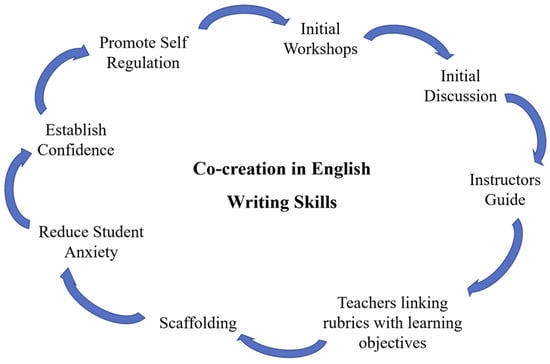
First, clarity and transparency are essential. Sharing clear rubrics and learning objectives before tasks enables learners to understand expectations and take ownership of their performance in L2 writing assessment. Transparency reduces mistrust and helps students to see assessment as a partnership rather than a top-down judgement. From an SDT perspective, this transparency directly supports students’ sense of competence by clarifying quality criteria in writing. Co-creating criteria empowers learners to exercise critical thinking and responsibility, specifically in evaluating writing quality and performance standards. This can be facilitated through workshops or group discussions where learners propose, refine, and agree on assessment standards for the writing task. When learners co-create rubrics, instructors should focus more on guiding learning rather than defending the rubrics and scores to sustain autonomy-supportive assessment practices and promote mutual satisfaction in writing evaluation.
Second, alignment with learning objectives is essential. Teachers should also link rubrics with learning objectives to master the subject content and the process of L2 writing. Co-creation can be used to strengthen communication, teamwork, and creativity. Students can also be guided on scaffolded practice, where students are engaged in low-stake tasks before gradually moving to high-stake tasks in co-creating writing rubrics. This will help to reduce anxiety and build confidence in the L2 writing assessment, thereby supporting learners’ perceived competence. Educators can also give feedback on how learners’ contributions have improved their performance in writing tasks, reinforcing students’ sense of agency and competence.
Third, reflection and self-regulation should be embedded in the process. Students should be encouraged to reflect on the rubric and how it influences their learning goals. This reflective practice not only fosters metacognition but also supports the development of self-regulated learning. Finally, certain conditions for effective co-creation must be met. These conditions include the following: (1) professors must facilitate effective communication (Deeley & Bovill, 2017), (2) they must provide appropriate guidance, (3) they must listen to their students’ suggestions (Dorta et al., 2016), and (4) students must be committed and motivated. Figure 2 illustrates the pedagogical model, providing a framework for instructors seeking to embed co-creation practices in their classrooms.
Figure 2.
Pedagogical Model for Co-created Assessment Practices.
7. Limitations and Future Studies
This study has several limitations that should be acknowledged. First, the data were collected from students in a single institution in the UAE. As a result, the findings may not necessarily be representative of learners from other regions, school types, or proficiency levels. Comparative studies across diverse contexts would provide greater insight into how cultural, institutional, and linguistic factors shape learners’ experiences of co-creation in L2 writing assessment.
Second, while this study included both quantitative and qualitative data, it was limited in scope and duration. The ability to conduct protracted or longitudinal observations of individual co-creation practices was restricted by the breadth of participants, despite the fact that qualitative data enriched interpretation. Future research could adopt longitudinal or classroom-based ethnographic designs to trace how students’ attitudes and practices evolve over time in relation to autonomy, competence, and relatedness during writing assessment.
Third, this study focused on students’ perceptions of co-creating rubrics, rather than measuring the direct impact on learning outcomes. Although participants highlighted benefits such as improved clarity, motivation, and skill development, this study did not quantify whether these perceptions translated into measurable gains in writing performance, assessment literacy, or long-term academic achievement. Future studies could therefore combine self-reported perceptions with performance data to examine how SDT-based-needs satisfaction predicts outcomes in L2 writing assessment.
8. Conclusions
The findings from this study suggest that learner’s participation in rubric development was associated with perceptions of increased autonomy, relatedness, and competence, in line with the core principles of self-determination theory when applied specifically to an L2 writing assessment. Co-creation was generally perceived by students as an empowering practice, particulary in terms of promoting a sense of ownership over learning, clarified assessment expectations, and fostering teacher–student collaboration within writing assessment contexts. At the same time, the findings indicate that co-creation is not without challenges. Students reported obstacles such as the time-intensive nature of joint rubric development, limited respect for peers’ contributions in certain groups, and an uneven level of assessment literacy, which constrained the process of the co-created writing assessment.
Overall, the results highlight the potential of co-creation to improve transparency and student motivation in English writing assessment when it is accompanied by mutual respect and explicit guidance. From an SDT-informed perspectives, these perceived benefits can be interpreted in relation to the satisfaction of students’ basic psychological needs for autonomy (having a voice in rubric design), competence (gaining clarity of writing criteria), and relatedness (engaging in collaborative assessment dialogue). Rather than demonstrating direct effects, the study provides insights into how students experience and make sense of co-creation practices in assessment. By attentively incorporating learners’ voices in assessment design, educators can create a more inclusive and learner-centred assessment environment that strengthens students’ sense of agency in L2 writing assessment. Future research may further examine technology-assisted co-creation practices on the writing performance, assessment literacy, and engagement over time using mixed or longitudinal designs within an SDT-informed framework.
Author Contributions
Conceptualization, N.A. and M.K.S.; methodology, N.A.; validation, N.A.; formal analysis, N.A. and R.K.M.H.M.; writing—original draft preparation, N.A. and M.K.S.; writing—review and editing, N.A. and M.K.S. All authors have read and agreed to the published version of the manuscript.
Funding
This research received no external funding.
Institutional Review Board Statement
The study was conducted in accordance with the principles of the Declaration of Helsinki. According to current ethical research regulations in the United Arab Emirates, formal approval from an Institutional Review Board is required only for studies that involve direct interventions, the collection of identifiable personal or sensitive data, or procedures that may pose risk to participants. The present study did not fall within these categories. Participation was entirely voluntary, no sensitive information was collected, and no identifiable personal data were recorded. Therefore, in line with UAE regulations, formal Institutional Review Board approval was not required. Informed consent was obtained from all participating students prior to data collection.
Informed Consent Statement
Informed consent was obtained from all student participants prior to data collection. Participation was voluntary, and no identifiable personal or sensitive information was collected.
Data Availability Statement
The datasets used and analyzed during the current study are not publicly archived due to participant confidentiality but are available from the corresponding author on request.
Acknowledgments
The authors would like to thank the students for their cooperation and support throughout the study. During the preparation of this manuscript, the authors used ChatGPT (OpenAI, GPT-5.1) for the purposes of language editing and improving clarity. The authors have reviewed and edited all generated content and take full responsibility for the final version of the manuscript.
Conflicts of Interest
The authors declare no conflicts of interest.
Abbreviations
The following abbreviations are used in this manuscript:
| SDT | Self Determination Theory |
| SaP | Students as Pedagogical Partners |
| UAE | United Arab Emirates |
| L2 | Second language |
References
- Andrade, H. G. (2001). The effects of instructional rubrics on learning to write. Current Issues in Education, 4(4), 1–22. [Google Scholar]
- Andrade, H. L., Wang, X., Du, Y., & Akawi, R. L. (2009). Rubric-referenced self-assessment and self-efficacy for writing. The Journal of Educational Research, 102(4), 287–302. [Google Scholar] [CrossRef] [Scilit]
- Andrews, M., Brown, R., & Mesher, L. (2018). Engaging students with assessment and feedback: Improving assessment for learning with students as partners. Practitioner Research in Higher Education, 11(1), 32–46. [Google Scholar]
- Annamalai, N., Eltahir, M. E., Zyoud, S. H., Soundrarajan, D., Zakarneh, B., & Al Salhi, N. R. (2023). Exploring English language learning via chatbot: A case study from a self-determination theory perspective. Computers and Education: Artificial Intelligence, 5, 100148. [Google Scholar] [CrossRef] [Scilit]
- Annamalai, N., Uthayakumaran, A., Bervell, B., & Kumar, R. (2025). Examining the use of ChatGPT in Argumentative Writing: A Mixed Methods Study. Journal of Advanced Academics, 36(3), 521–550. [Google Scholar] [CrossRef] [Scilit]
- Becker, A. (2016). Student-generated scoring rubrics: Examining their formative value for improving ESL students’ writing performance. Assessing Writing, 29, 15–24. [Google Scholar] [CrossRef] [Scilit]
- Belmekki, M., Belmekki, L., Chihab, M., Koumachi, B., & Benmhamed, M. (2025). Writing in English and writing in Standard Arabic in higher education: A correlational study. International Journal of English Language Studies, 7(1), 17–24. [Google Scholar] [CrossRef] [Scilit]
- Black, P., & Wiliam, D. (1998). Assessment and classroom learning. Assessment in Education: Principles, Policy & Practice, 5(1), 7–74. [Google Scholar]
- Blau, I., & Shamir-Inbal, T. (2018). Digital technologies for promoting “student voice” and co-creating learning experience in an academic course. Instructional Science, 46(2), 315–336. [Google Scholar] [CrossRef] [Scilit]
- Bovill, C. (2014). An investigation of co-created curricula within higher education in the UK, Ireland and the USA. Innovations in Education and Teaching International, 51(1), 15–25. [Google Scholar] [CrossRef] [Scilit]
- Bovill, C. (2020). Co-creation in learning and teaching: The case for a whole-class approach in higher education. Higher Education, 79(6), 1023–1037. [Google Scholar] [CrossRef] [Scilit]
- Braun, V., & Clarke, V. (2021). One size fits all? What counts as quality practice in (reflexive) thematic analysis? Qualitative Research in Psychology, 18(3), 328–352. [Google Scholar] [CrossRef] [Scilit]
- Brookhart, S. M. (2018). Appropriate criteria: Key to effective rubrics. Frontiers in Education, 3, 22. [Google Scholar] [CrossRef] [Scilit]
- Brookhart, S. M., & Chen, F. (2014). The quality and effectiveness of descriptive rubrics. Educational Review, 67(3), 343–368. [Google Scholar] [CrossRef] [Scilit]
- Bryson, C. (2016). Engagement through partnership: Students as partners in learning and teaching in higher education. International Journal for Academic Development, 21(1), 84–86. [Google Scholar] [CrossRef] [Scilit]
- Carless, D., & Boud, D. (2018). The development of student feedback literacy: Enabling uptake of feedback. Assessment & Evaluation in Higher Education, 43(8), 1315–1325. [Google Scholar] [CrossRef] [Scilit]
- Chan, C. K. Y., & Chen, S. W. (2023). Student partnership in assessment in higher education: A systematic review. Assessment & Evaluation in Higher Education, 48(8), 1402–1414. [Google Scholar] [CrossRef] [Scilit]
- Chan, P. E., Graham-Day, K. J., Ressa, V. A., Peters, M. T., & Konrad, M. (2014). Beyond involvement: Promoting student ownership of learning in classrooms. Intervention in School and Clinic, 50(2), 105–113. [Google Scholar] [CrossRef] [Scilit]
- Chan, Z., & Ho, S. (2019). Good and bad practices in rubrics: The perspectives of students and educators. Assessment & Evaluation in Higher Education, 44(4), 533–545. [Google Scholar] [CrossRef] [Scilit]
- Cook-Sather, A., Bovill, C., & Felten, P. (2014). Engaging students as partners in teaching and learning: A guide for faculty. Jossey-Bass. [Google Scholar]
- Creswell, J. W., & Clark, V. L. P. (2017). Designing and conducting mixed methods research. Sage. [Google Scholar]
- Dai, K., & Matthews, K. E. (2023). Students as partners rather than followers but…: Understanding academics’ conceptions of changing learner–teacher relationships in Chinese higher education. Higher Education Research & Development, 42(6), 1362–1376. [Google Scholar]
- Deci, E. L., & Ryan, R. M. (1985). Intrinsic motivation and self-determination in human behavior. Plenum Press. [Google Scholar]
- Deeley, S. J., & Bovill, C. (2017). Staff–student partnership in assessment: Enhancing assessment literacy through democratic practices. Assessment & Evaluation in Higher Education, 42(3), 463–477. [Google Scholar]
- Dorta, T., Kinayoglu, G., & Boudhraâ, S. (2016). A new representational ecosystem for design teaching in the studio. Design Studies, 47, 164–186. [Google Scholar] [CrossRef] [Scilit]
- Elliot, A. J., Dweck, C. S., & Yeager, D. S. (Eds.). (2017). Handbook of competence and motivation: Theory and application. Guilford Publications. [Google Scholar]
- Fraile, J., Panadero, E., & Pardo, R. (2017). Co-creating rubrics: The effects on self-regulated learning, self-efficacy and performance of establishing assessment criteria with students. Studies in Educational Evaluation, 53, 69–76. [Google Scholar] [CrossRef] [Scilit]
- Furrer, C. J., & Skinner, E. A. (2003). Sense of relatedness as a factor in children’s academic engagement and performance. Journal of Educational Psychology, 95(1), 148–162. [Google Scholar] [CrossRef]
- Ghosh, S., Bowles, M., & Abeysiriwardhane, A. (2020). Does excluding students from co-creation of rubrics affect their academic achievement? Australian Journal of Maritime and Ocean Affairs, 12(4), 243–258. [Google Scholar] [CrossRef] [Scilit]
- Jang, H., Kim, E. J., & Reeve, J. (2016). Why students become more engaged or disengaged: A dual-process model. Learning and Instruction, 43, 27–38. [Google Scholar] [CrossRef] [Scilit]
- Jonsson, A. (2014). Rubrics as a way of providing transparency in assessment. Assessment & Evaluation in Higher Education, 39(7), 840–852. [Google Scholar] [CrossRef] [Scilit]
- Joseph, S., Rickett, C., Northcote, M., & Christian, B. J. (2020). Student collaboration in the co-construction of assessment rubrics. New Writing, 17(1), 31–49. [Google Scholar] [CrossRef] [Scilit]
- Jönsson, A., & Prins, F. (2019). Transparency in assessment—Exploring the influence of explicit assessment criteria. Frontiers in Education, 3, 1–3. [Google Scholar] [CrossRef] [Scilit]
- Kilgour, A., Morton, J., Cloete, L., Dawson, S., & Northcote, M. (2022). Rubric co-construction in medical and allied health education: Students’ and teachers’ perceptions (Research Square preprint). Research Square. [Google Scholar] [CrossRef] [Scilit]
- Mahjabeen, A., Abbas, S. G., & Tanveer, Z. (2025). Writing difficulties in English among Arab university students. Multidisciplinary Journal of Emerging Needs of Curriculum, 2(1), 24–46. [Google Scholar]
- Matthews, K. E., Dwyer, A., Hine, L., & Turner, J. (2018). Conceptions of students as partners. Higher Education, 76, 957–971. [Google Scholar] [CrossRef] [Scilit]
- Meer, N., & Chapman, A. (2015). Co-creation of marking criteria: Students as partners in the assessment process. Business and Management Education in HE, 1, 1–15. [Google Scholar] [CrossRef] [Scilit]
- Montgomery, K. (2002). Authentic tasks and rubrics. College Teaching, 50(1), 34–40. [Google Scholar] [CrossRef] [Scilit]
- Morton, J. K., Northcote, M., Kilgour, P., & Jackson, W. A. (2021). Sharing the construction of assessment rubrics with students: A model for collaborative rubric construction. Journal of University Teaching and Learning Practice, 18(4), 1–15. [Google Scholar] [CrossRef] [Scilit]
- Nakkula, M. J., & Toshalis, E. (2025). Student engagement, motivation, and assessment. In Culturally responsive assessment in classrooms and large-scale contexts. Routledge. [Google Scholar] [CrossRef] [Scilit]
- Negretti, R. (2012). Metacognition in student academic writing: A longitudinal study of metacognitive awareness and its relation to task perception, self-regulation, and evaluation of performance. Written Communication, 29(2), 142–179. [Google Scholar] [CrossRef] [Scilit]
- Niemiec, C. P., & Ryan, R. M. (2009). Autonomy, competence, and relatedness in the classroom. Theory and Research in Education, 7(2), 133–144. [Google Scholar] [CrossRef] [Scilit]
- Panadero, E., & Jonsson, A. (2013). The use of scoring rubrics. Educational Research Review, 9, 129–144. [Google Scholar] [CrossRef] [Scilit]
- Panadero, E., Jonsson, A., Pinedo, L., & Fernández-Castilla, B. (2023). Effects of rubrics on academic performance, self-regulated learning, and self-efficacy: A meta-analytic review. Educational Psychology Review, 35, 113. [Google Scholar] [CrossRef] [Scilit]
- Patall, E. A., Cooper, H., & Robinson, J. C. (2008). Parent involvement in homework. Review of Educational Research, 78(4), 1039–1101. [Google Scholar] [CrossRef] [Scilit]
- Reeve, J. (2013). How students create motivationally supportive learning environments. Journal of Educational Psychology, 105(3), 579. [Google Scholar] [CrossRef] [Scilit]
- Ryan, R. M., & Deci, E. L. (2000). Intrinsic and extrinsic motivations. Contemporary Educational Psychology, 25(1), 54–67. [Google Scholar] [CrossRef] [Scilit]
- Ryan, R. M., & Deci, E. L. (2017). Self-determination theory: Basic psychological needs in motivation, development, and wellness. Guilford Press. [Google Scholar]
- Skillings, M. J., & Ferrell, R. (2020). Student-generated rubrics. The Reading Teacher, 53(6), 452–455. [Google Scholar]
- Smith, A., McConnell, L., Iyer, P., Allman-Farinelli, M., & Chen, J. (2025). Co-designing assessment tasks with Students in tertirary education: A scoping review of the literature. Assessment & Evaluation in Higher Education, 50(2), 199–218. [Google Scholar]
- Stiggins, R., & Chappuis, J. (2008). Enhancing student learning. District Administration, 44(1), 42–44. [Google Scholar]
- Stranford, S. A. (2024). Fostering student agency and motivation. Frontiers in Education, 8, 1213444. [Google Scholar] [CrossRef] [Scilit]
- Su, W. (2020). How rubric training influences students’ assessment of interpreting. Language Awareness, 29(2), 178–196. [Google Scholar] [CrossRef] [Scilit]
- Tai, J., Ajjawi, R., Boud, D., Dawson, P., & Panadero, E. (2018). Developing evaluative judgement. Higher Education, 76(3), 467–481. [Google Scholar] [CrossRef] [Scilit]
- Vansteenkiste, M., Ryan, R. M., & Soenens, B. (2020). Basic psychological need theory: Advancements, critical themes, and future directions. Motivation and Emotion, 44, 1–31. [Google Scholar] [CrossRef] [Scilit]
- Wilson, J. (2017). Automated essay evaluation software. Reading and Writing, 30(4), 691–718. [Google Scholar] [CrossRef] [Scilit]
- Yan, D. (2024). Rubric co-creation. Assessment & Evaluation in Higher Education, 49(8), 1017–1034. [Google Scholar] [CrossRef] [Scilit]
- Zhao, K., Zhou, J., & Dawson, P. (2021). Co-constructed rubrics in business assessment. Assessment in Education: Principles, Policy & Practice, 28(2), 170–190. [Google Scholar]

Disclaimer/Publisher’s Note: The statements, opinions and data contained in all publications are solely those of the individual author(s) and contributor(s) and not of MDPI and/or the editor(s). MDPI and/or the editor(s) disclaim responsibility for any injury to people or property resulting from any ideas, methods, instructions or products referred to in the content. |
© 2026 by the authors. Licensee MDPI, Basel, Switzerland. This article is an open access article distributed under the terms and conditions of the Creative Commons Attribution (CC BY) license.