


Abstract
Fitness testing is widely used in school-based physical education (PE) internationally, yet no study has examined fitness-testing practices alongside teachers’ perceptions of digital technology at a national level in Ireland. This study used an expert-reviewed and pilot-tested national cross-sectional survey, including an open-ended item, to examine secondary school PE teachers’ fitness-testing practices and their perceptions of digital technology for monitoring physical fitness (PF). In total, 351 PE teachers from 278 secondary schools (38.5% of schools nationally) participated. Most teachers (94.6%) used fitness testing, yet monitoring was limited: only 4.8% used a web- or app-based platform to store results, 16.5% tracked fitness across all school years, and over half (52.7%) were classified as not tracking fitness, including those who did not use testing or record results. Most teachers (78.3%) found digital technology easy to learn, and 82.9% would like to use a digital platform to monitor students’ PF. Open-ended responses highlighted anticipated benefits for data management and longitudinal tracking, alongside concerns about workload, cost and infrastructure. Positive perceptions of digital technology and interest in a platform indicate potential for digital PF monitoring. A co-designed, pedagogically grounded platform, supported by resources, could help address current limitations in longitudinal monitoring in Irish PE.
1. Introduction
Amid growing concerns about inactivity and declining health among youth globally (van Sluijs et al., 2021), physical education (PE) is increasingly recognised by policymakers as a key school-based strategy for promoting lifelong physical activity (Rocliffe et al., 2024). PE has been shown to develop movement skills and knowledge related to physical activity and health, contributing to young people’s overall physical competence (Mustafa et al., 2024). Curricula are typically designed by subject experts to meet national goals, though content varies across regions to reflect policy priorities, pedagogical approaches, and societal views (Gray et al., 2012). Traditionally, PE has focused on sport-based skill instruction, but its scope has since expanded to include broader priorities such as well-being (Quay et al., 2026), increasingly supported by digital technologies for assessment, instruction, and activity monitoring (Saiz-González et al., 2024; Wallace et al., 2023).
Physical fitness (PF) is commonly defined as the capacity to perform daily tasks with vigour and alertness while avoiding undue fatigue and maintaining sufficient energy for leisure and emergencies (Leso et al., 2024). It is a broad, multi-dimensional concept encompassing both health-related and performance-related components of fitness (Brazo-Sayavera et al., 2024). Health-related physical fitness (HRPF) includes cardiorespiratory endurance, muscular endurance, muscular strength, flexibility, and body composition (Utesch et al., 2018). The components of performance-related physical fitness (PRPF) include attributes such as agility, balance, coordination, speed, power, and reaction time, which enhance an individual’s ability to perform specific physical tasks (DeMet & Wahl-Alexander, 2019; Luo et al., 2023). PF is widely recognised as one of the most powerful indicators of health in youth, reflecting physical functioning, well-being, and disease risk (Demchenko et al., 2025; Gilic et al., 2023). The components of HRPF are key markers of current and future health (J. J. Smith et al., 2014) and show strong associations with physical, psychological, and cognitive outcomes (Cadenas-Sanchez et al., 2021).
Enhancing students’ understanding of PF is a central objective of many PE curricula, intended to foster healthy habits and promote lifelong engagement in physical activity (O’Keeffe et al., 2020). This emphasis aligns with the broader perspective that PE serves as a key setting for promoting health-related learning and sustained engagement in physical activity (Harte et al., 2024). Enhancing PF during adolescence is particularly important, as this period is critical for establishing future cardiometabolic and cardiovascular health (Ruiz et al., 2015). It has been argued that, from both educational and public health perspectives, HRPF should be prioritised in PE, while PRPF should be included to support motor development and engagement (Csányi et al., 2015). Furthermore, O’Keeffe et al. (2020) note that monitoring PF in PE can serve as an educational tool, helping students understand their own PF when integrated as part of a broader fitness education unit of learning. Used in this way, fitness monitoring becomes a teaching tool rather than simply a data-collection exercise, aligning with assessment-for-learning principles in which individual feedback and goal setting help students understand and improve their own fitness (Wiersma & Sherman, 2008).
PF monitoring involves the continuous tracking of fitness changes over time and provides more meaningful insight into students’ health and development (Joy et al., 2025). To support this monitoring, many school PE programmes use structured fitness testing to evaluate components of PF and raise awareness of physical health (Yang et al., 2024). A fitness test battery (FTB) combines field-based tests to evaluate components of PF (O’Keeffe et al., 2020). While less precise than lab measures, field-based tests are favoured in schools for their ease of administration and low cost (Lubans et al., 2011). Numerous standardised school-based FTBs have been developed internationally for assessing youth PF (Marques et al., 2021). For example, FitnessGram® in the United States focuses on testing HRPF components (Welk et al., 2011), while Slovenia’s SLOfit® and Hungary’s Netfit® include both HRPF and PRPF components in their nationwide school test batteries (Csányi et al., 2015; Jurak et al., 2020). European initiatives like the ALPHA project and the more recent FitBack network aim to standardise youth fitness assessment across countries (Joensuu et al., 2024). Collectively, these efforts reflect a growing international push toward standardisation and cross-country comparison for health monitoring and policy planning.
Although a standardised FTB for use in PE does not exist in Ireland, recent curricular reforms have embedded fitness-related learning outcomes as part of PE (O’Keeffe et al., 2020). These reforms reflect differing emphases across school stages: the Junior Cycle Physical Education Specification (National Council for Curriculum and Assessment, 2022) requires varied, formative approaches to assessment generally; the Senior Cycle Physical Education Framework (National Council for Curriculum and Assessment, 2017) emphasises students’ conceptual understanding of health-related fitness; and the Leaving Certificate Physical Education Specification (National Council for Curriculum and Assessment, 2025) explicitly requires fitness testing, including consideration of test validity and reliability. These developments highlight an increasing policy emphasis on fitness assessment across school stages, underscoring the need to examine how Irish teachers currently implement and monitor fitness testing in practice.
Experts in paediatric sciences have called for innovative technological solutions to enable large-scale fitness tracking of children and adolescents (Lang et al., 2018; Ruiz et al., 2006). Recent FTBs incorporating digital platforms address this need by improving continuity in fitness monitoring, while enhancing data collection, reporting, and feedback. Notable examples include PROESP-BR in Brazil (Silveira et al., 2025) and FITescola in Portugal (Henriques-Neto et al., 2020). Additionally, at a global level, at least 15 countries have instituted national fitness monitoring systems as part of public health surveillance (Brazo-Sayavera et al., 2024), underscoring the potential dual role of PF monitoring as both an educational tool in PE and a component of public health monitoring.
Teachers’ perceptions of digital technology, including perceived skill and self-efficacy and institutional support, are central components of digital readiness, which in turn shapes behavioural intention to adopt new technologies (Macwan & Barot, 2025). Among PE teachers specifically, adoption of digital technologies has increasingly grown to enhance engagement, facilitate assessment, and improve communication (Goodyear, 2020; Østerlie et al., 2022). This trend accelerated during the COVID-19 pandemic, when digital tools became essential for remote and hybrid PE delivery (Gil-Espinosa et al., 2022; O’Brien et al., 2020). However, research shows technology in PE still more often supplements traditional methods than transforms pedagogy (Sargent & Calderón, 2022). Adoption is also hindered by practical barriers including limited resources, insufficient training, privacy concerns and time constraints (Saiz-González et al., 2024). Despite growing international momentum around standardised FTBs and the rise of digital platforms for large-scale fitness monitoring (Ortega et al., 2025), Ireland does not have a nationally adopted FTB or dedicated system for tracking adolescent PF in schools. To our knowledge, no study has yet examined PE teachers’ fitness-testing practices alongside their perceptions of digital technology for monitoring PF at a national level in Ireland. The present study therefore addresses this gap with two primary aims: first, to conduct a national examination of PE teachers’ fitness-testing practices in Ireland; second, to examine their perceptions of digital technology and their interest in a digital platform for monitoring PF. These perceptions were not measured as a validated readiness construct.
2. Materials and Methods
2.1. Survey Development
Ethical approval for this study was obtained from an institutional research ethics committee. A cross-sectional survey, comprising predominantly closed quantitative items alongside open-ended qualitative questions, was designed to investigate PE teachers’ fitness testing practices and their perceptions of digital technologies to facilitate monitoring PF. The survey design was informed by previously validated instruments. Fitness-testing practices and perspectives were assessed using items adapted from the Physical Education Teacher Attitudes Toward Fitness Tests Scale (PETAFTS) (Keating & Silverman, 2004a), the Health, Activity and Fitness Monitoring Survey (Cale et al., 2007), and the Health-Related Fitness Monitoring Practices in Schools Survey by O’Keeffe et al. (2020). Perceptions of digital technology were assessed using items adapted from Viberg et al.’s (2020) digital preparedness instrument, covering perceived skills and confidence, institutional support, access to resources, and intentions to use digital technology. These items were analysed and reported individually and were not combined into a composite score. In addition to a demographics section, the survey initially comprised five themes: (1) Assessment of Student PF (e.g., ‘Do you use any form of student fitness testing as part of your PE curriculum?’), (2) Fitness Testing Practices and Perspectives (e.g., ‘Do you use fitness testing as a standalone unit or an integrated approach across units of work?’), (3) Barriers to Fitness Testing in PE (e.g., ‘Administering a fitness test lesson is more challenging than a normal PE lesson’), (4) Teachers’ Preparedness to Use Digital Technology in PE (e.g., ‘I feel comfortable using digital technology in physical education’), and (5) Suggestions for the Development of a Fitness Testing Battery Software Platform (an open-ended item inviting suggestions for platform design). The initial survey employed four response formats, including a 7-point Likert scale for fitness testing items and a 5-point scale for digital technology items. Phase one assessed content validity, while Phase two involved pilot testing with teachers.
2.1.1. Phase One: Content Validity Assessment
The initial version of the survey was reviewed via Qualtrics by five university lecturers in PE or sports pedagogy programmes, each with 3 to 15 years of experience and expertise in research and questionnaire development. The lead author conducted individual follow-up consultations with each expert to clarify feedback and ensure focused evaluation. Experts rated item relevance using Yusoff’s (2019) 4-point scale (1 = not relevant to 4 = highly relevant) and provided qualitative feedback on the survey’s clarity, structure, and organisation. Items were rated independently, with ratings of 3 or 4 classified as relevant and ratings of 1 or 2 as not relevant. The item-level Content Validity Index (I-CVI) was calculated as the proportion of experts rating each item as relevant, with values of ≥0.78 considered acceptable, and a modified kappa (k*) was calculated to adjust each I-CVI for chance agreement (Polit et al., 2007). Scale-level content validity was calculated as the average I-CVI (S-CVI/Ave) and as the proportion of items rated relevant by all experts (universal agreement; S-CVI/UA) (Polit & Beck, 2006). Of the 68 items rated, 66 met the I-CVI threshold (50 items with I-CVI = 1.00, k* = 1.00; 16 items with I-CVI = 0.80, k* = 0.76), and the S-CVI/Ave and S-CVI/UA were 0.94 and 0.74, respectively (Supplementary Table S2). Two items fell below the threshold (I-CVI = 0.60, k* = 0.42): “Ireland should have a standardised fitness test battery that is administered annually by PE teachers” and “Colleagues affecting my work think I should use digital technology”. The latter was removed. The former was retained because it addressed a policy question central to the study’s rationale, given the absence of a national fitness test battery in Ireland, and because expert feedback did not identify problems with its wording. Three experts also recommended that 7-point Likert scale items be replaced with 5-point scales to ensure consistency and reduce participant confusion, making the survey easier to interpret and consequently potentially improving response rates and reliability (Tanujaya et al., 2022). In a second round, the revised survey was redistributed to the same experts for review, and all endorsed the changes without further recommendations. The final Phase one survey comprised six sections: (1) Demographics, (2) Assessment of Student PF (fitness components assessed and tests used), (3) Fitness Testing Practices and Perspectives (implementation, result management, and perceived value), (4) Barriers to Implementing Fitness Testing in PE, (5) Teachers’ Preparedness to Use Digital Technology in PE, and (6) Suggestions for the Development of a Fitness Testing Battery Software Platform.
2.1.2. Phase Two: Pilot Testing with Teachers
A convenience sample of 22 PE teachers (13 male, 9 female) completed the revised survey to assess its clarity, usability, completion time and functioning, including the operation of skip logic. Teachers were invited to provide feedback on item wording and survey structure, and the median completion time was approximately 14 min. As survey items were analysed individually and were not combined into scales, internal consistency was not assessed. Before the final survey was administered, eight further items that had met the I-CVI threshold were removed by the research team to reduce survey length and because they were less central to the study aims (Supplementary Table S2). The final survey instrument is available as Supplementary Materials (File S1).
2.2. Survey Distribution and Participant Recruitment
This survey was administered online via Qualtrics (Qualtrics, Provo, UT, USA) between February and March 2025. The target population was secondary school PE teachers in Ireland, covering both junior cycle (years 1–3, ages 13–15) and senior cycle (years 4 to 6, ages 16–18). As of December 2024, 722 secondary schools were listed on the Department of Education database. A census-style recruitment strategy with voluntary participation was employed, with all school principals emailed and asked to disseminate the study information and survey link to their PE staff. Teachers who chose to complete the online questionnaire were not asked for their names. School roll numbers were collected to describe the spread of participating schools, to link school characteristics from the Department of Education database and to identify respondents from the same school. Roll numbers were subsequently replaced with a pseudonymised school code in the analysis dataset. To capture possible variations in schools, all PE teachers in each school were eligible. Because invitations were forwarded by principals, the number of PE teachers who received the invitation could not be recorded. All questions were compulsory, with skip logic directing participants to relevant items. The survey remained open for four weeks, with reminders sent in weeks three and four.
2.3. Statistical Analysis
2.3.1. Quantitative Analysis
All complete responses (N = 351) were extracted from Qualtrics and converted for analysis using the Statistical Package for the Social Sciences (SPSS, Version 29; IBM Corp., Chicago, IL, USA). As all displayed questions were compulsory, responses were incomplete only where participants exited the survey before finishing; these responses (n = 37 of 388 who began the survey; completion rate 90.5%) were excluded, and only fully completed surveys were retained for analysis.
Descriptive statistics were computed to summarise demographic characteristics and survey responses. Frequencies and percentages were used for categorical variables and means and standard deviations for continuous variables. Percentages are calculated out of the full sample (N = 351) except where a smaller group is specified (e.g., teachers who recorded results). Teachers who did not use fitness testing (n = 19) or did not assess HRPF (n = 4) or PRPF (n = 24) skipped the related component and test items but remain in the denominator and were counted as not assessing those components. Numerators, denominators, the number of respondents not shown for each item, and 95% confidence intervals accounting for clustering within schools are reported for all survey items in Supplementary Table S1. Use of fitness testing, HRPF testing and PRPF testing was classified from the respective screening questions, and responses to subsequent items were reported as given. Inconsistent responses across items were not recoded. The standing long jump and medicine-ball throw were listed under both muscular strength (HRPF) and power (PRPF), as both tests are used in the literature as indicators of muscular strength and of power (Fernández-Santos et al., 2015; Hackett et al., 2018; Ortega et al., 2023). Teachers could select these tests under either or both components, so HRPF and PRPF categories are not mutually exclusive. In the survey, height, weight, BMI, waist circumference and skinfolds were listed as body composition tests. Height and weight are anthropometric measures rather than assessments of body composition, whereas BMI and waist circumference are anthropometric indices commonly used as proxy indicators of body composition in youth fitness batteries (Ortega et al., 2025; Ruiz et al., 2011). These measures are therefore reported as anthropometric or body composition measures.
Spearman’s rank-order correlations were conducted to examine relationships between teacher characteristics (e.g., years of teaching experience) and ordinal Likert-scale survey responses. These correlational analyses were exploratory; full results, including sample sizes, 95% confidence intervals, exact p values and Holm-adjusted p values, are reported in Supplementary Table S3. Items not directly addressing the study aims, including perceived barriers and students’ responses to fitness testing, are reported in Supplementary Table S1. School characteristics (school type, gender composition, DEIS status and region) were obtained from the Department of Education database using school roll numbers. Teacher-reported school context items (e.g., PE time allocation, class size and facilities) are reported descriptively in Supplementary Table S1 and were not used in further analyses. All remaining items described teachers’ own practices and perceptions, and analyses were therefore conducted at teacher level. The exception was the cohort-specific component items, which asked teachers to report the components assessed in junior and senior cycles in their school, regardless of whether they personally taught that cohort; the survey did not record which cohorts each teacher taught. As some schools contributed more than one respondent, all correlations were repeated using one teacher per school (the first-listed respondent; n = 278), and results were consistent with the main analyses, although the association for the fitness test battery item was weaker (Supplementary Table S3). Consistency between teachers from the same school was assessed as the proportion of same-school teacher pairs giving the same response, compared with the agreement expected between two teachers selected at random from schools with more than one respondent.
2.3.2. Qualitative Analysis
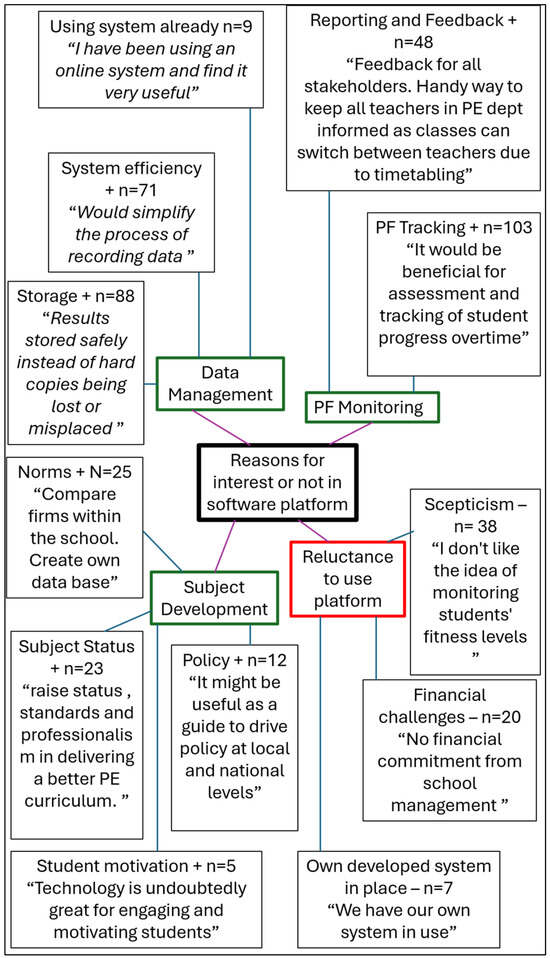
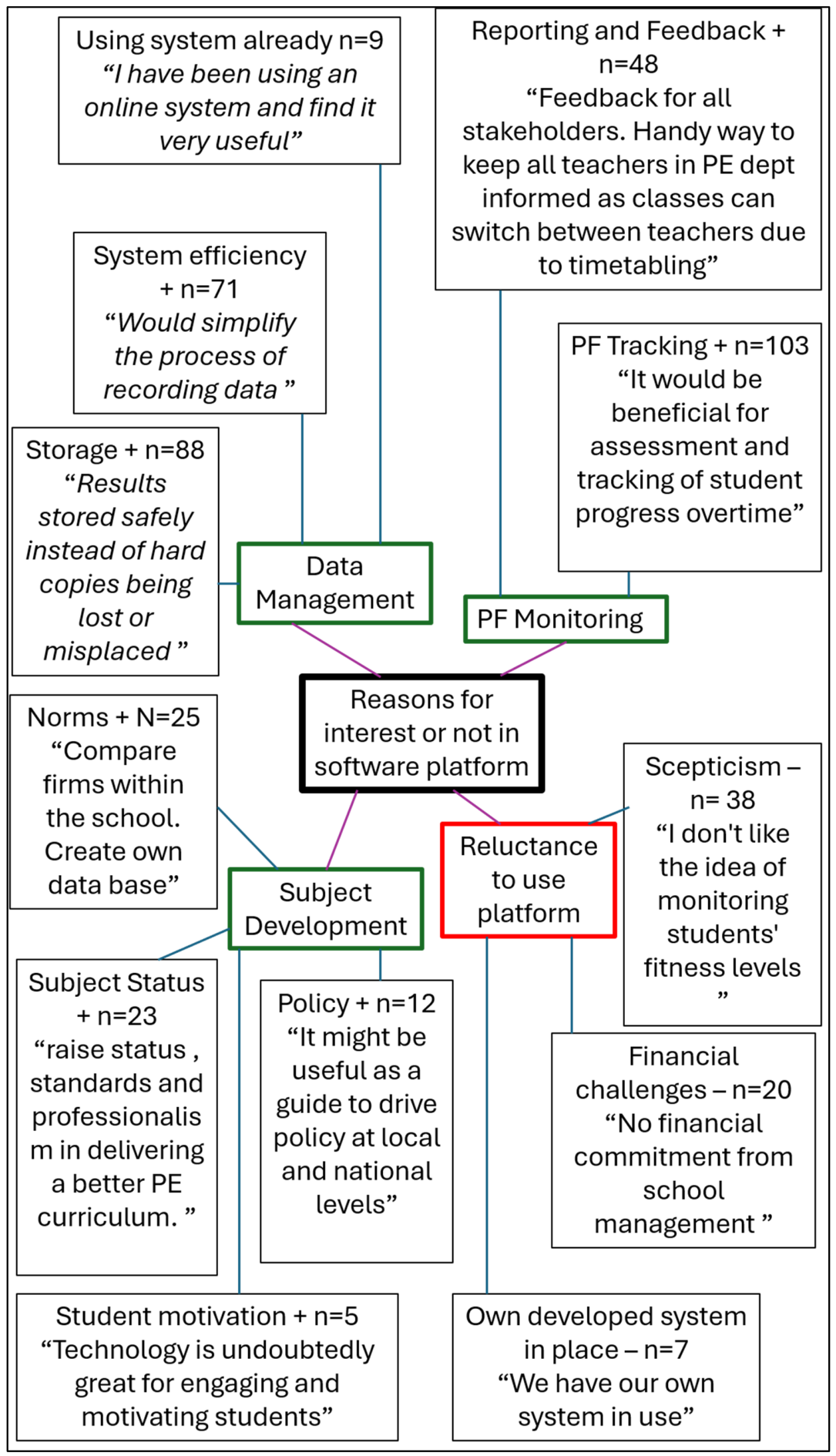
Free-text responses to the question “Would you like to use a digital technology software platform to store, monitor and report on students’ physical fitness in PE in your school? Briefly explain your answer” were analysed using hierarchical content analysis (Sparkes & Smith, 2014). This involved an iterative process of immersion in the data, during which responses were read repeatedly to gain familiarity and understanding. Meaning units (phrases or sentences expressing a single idea) were tagged and coded to capture their primary content and essence. These raw data themes were then clustered into subcategories of related meaning and subsequently organised into broader higher-order themes that represented more inclusive dimensions of the data. Analysis was inductive, with codes and themes derived from the data rather than from a predefined framework and was conducted in Microsoft Excel. Coding was conducted by the lead author, a PhD candidate and former secondary PE teacher, whose professional experience provided familiarity with the school contexts teachers described. A second researcher, an associate professor experienced in qualitative research in PE, reviewed all coding as a critical friend, challenging the interpretation of codes and the organisation of themes, rather than independently coding a subset of responses (B. Smith & McGannon, 2018). Differences in interpretation were discussed until consensus was reached. Frequencies were used descriptively to indicate the relative prominence of themes; however, interpretation emphasised their qualitative meaning and context rather than numerical dominance. Findings were summarised and represented visually using a pen profile, integrating themes, sub-themes, frequencies, and representative quotations (B. Smith & Caddick, 2012). A second open-ended item inviting suggestions for the design of a fitness testing platform was not analysed in the present study, as it addressed future platform development rather than the study aims.
2.4. Use of Generative Artificial Intelligence
During manuscript preparation, generative AI (Claude Opus 5.5, Anthropic, San Francisco, CA, USA) was used to assist with language editing and consistency checks of the manuscript and Supplementary Materials. No confidential information or participant-level data were uploaded to the AI tool. The authors reviewed and verified the outputs against the relevant source materials and retain full responsibility for the final manuscript, including the accuracy of reported results and references.
3. Results
3.1. Demographics
A total of 351 PE teachers (188/351 (53.6%) male, 162/351 (46.2%) female, 1/351 (0.3%) prefer not to say) from 278 secondary schools, representing 38.5% of all schools nationally, participated in the survey. School characteristics were calculated across unique schools (n = 278). Participating schools broadly reflected the national distribution of school types: 190/278 (68.3%) were co-educational (nationally, 71.6%), 46/278 (16.5%) were boys-only (nationally, 12.6%) and 42/278 (15.1%) were girls-only (nationally, 15.7%). Schools participating in the Delivering Equality of Opportunity in Schools (DEIS) programme, a Department of Education initiative supporting students from socioeconomically disadvantaged communities, made up 71/278 (25.5%) of the sample, below the national figure of 32%. Regional representation was generally aligned with national distributions; however, there was over-representation of schools from Munster and under-representation from Dublin (Munster: 111/278 (39.9%) vs. 28.0% nationally; Dublin: 45/278 (16.2%) vs. 25.4% nationally). The distribution of schools in Leinster excluding Dublin (74/278, 26.6% vs. 25.9% nationally) and Ulster (18/278, 6.5% vs. 6.9% nationally) closely matched national figures, with Connacht slightly under-represented (30/278, 10.8% vs. 13.9% nationally). Taken together, participating schools broadly reflected national distributions of school type and region, although DEIS schools were under-represented. Teaching experience among participants spanned one year or less to 38 years (mean 12.4 ± 8.7 years). Further respondent and school characteristics, including pre-service training provider, PE time allocation, class size and facilities, are reported in Supplementary Table S1.
3.2. Fitness Testing Practices and Approaches
Most teachers (332/351, 94.6%) reported using PF testing in their PE programmes; overall, 328/351 (93.4%) reported assessing HRPF and 308/351 (87.7%) reported assessing PRPF. Teachers (292/351, 83.2%) agreed or completely agreed that they enjoy implementing PF testing in their PE classes. No statistically significant association was detected between enjoyment and years of teaching experience (ρ = −0.062, p = 0.248). Among teachers who used fitness testing (n = 332), 118/332 (35.5%) conducted testing as standalone blocks, 82/332 (24.7%) integrated it across units of learning, and 127/332 (38.3%) used a combination of both approaches. The remaining 5/332 (1.5%) selected “I do not use fitness testing” at this item despite an earlier affirmative response. Fitness testing was more common in the junior cycle, with 324/351 (92.3%) of teachers assessing at least one component of HRPF and 295/351 (84.0%) at least one component of PRPF, compared with 262/351 (74.6%) and 248/351 (70.7%), respectively, in the senior cycle. Over three quarters of teachers (276/351, 78.6%) agreed or completely agreed that Ireland should implement a standardised annual fitness test battery. As this item had lower expert agreement on relevance (I-CVI = 0.60; Section 2.1.1), this finding should be interpreted with caution. A Spearman’s correlation revealed a small but statistically significant negative association between years of teaching experience and support for this initiative (ρ = −0.165, p = 0.002), indicating that more experienced teachers were slightly less supportive.
3.3. Components of Fitness and Tests Used
3.3.1. HRPF
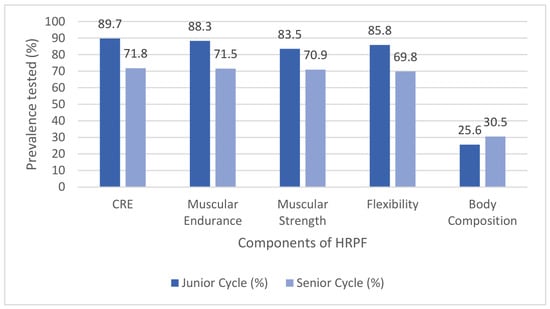
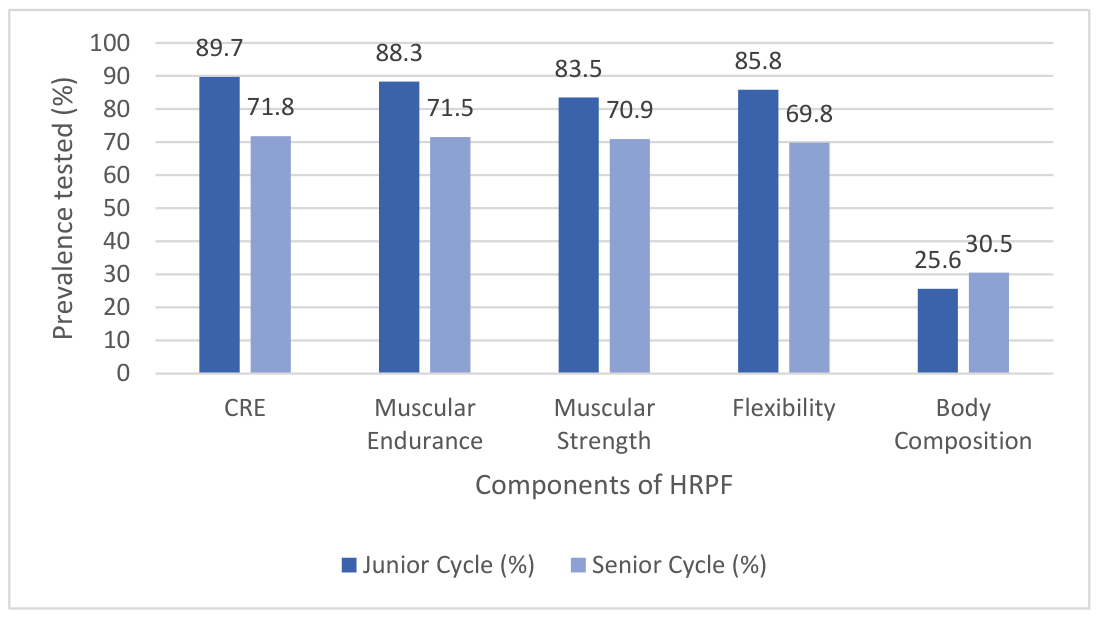
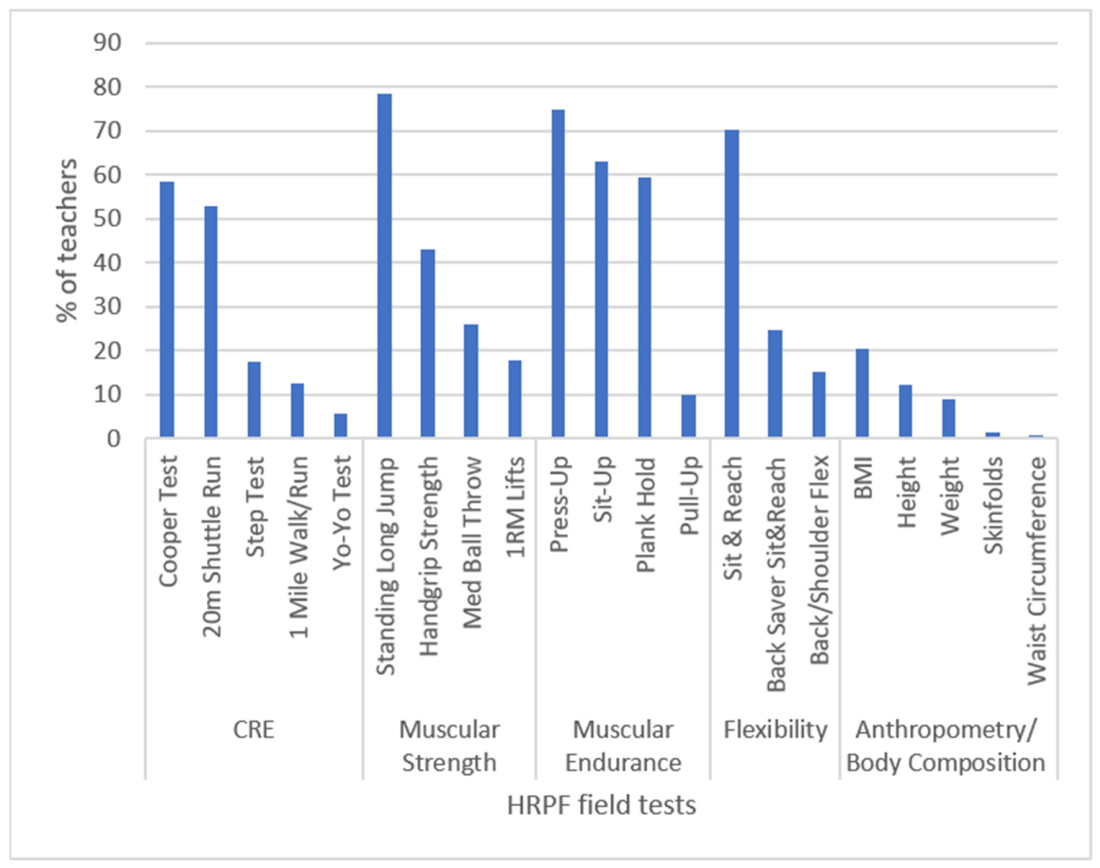
The components of HRPF assessed by teachers in the junior and senior cycles are shown in Figure 1, while the field tests used for each component are presented in Figure 2. Cardiorespiratory endurance was the most frequently assessed component, with 315/351 (89.7%) of teachers assessing it in the junior cycle and 252/351 (71.8%) in the senior cycle. The 12 min run test was the most commonly used test of cardiorespiratory endurance, reported by 205/351 (58.4%) of teachers, followed by the 20 m shuttle run test (186/351, 53.0%). Body composition was the least assessed component of HRPF in both junior and senior cycles. When asked about specific tests, 91/351 (25.9%) of teachers reported using an anthropometric or body composition measure, most commonly BMI (72/351, 20.5%). This is lower than the proportion who selected body composition at the component level in either cycle (128/351, 36.5%) because some teachers who selected “All components” subsequently selected “I do not test body composition”. The standing long jump was the most frequently reported HRPF test, selected as a test of muscular strength by 275/351 (78.3%) of teachers. Overall, 27/351 (7.7%) of teachers did not assess HRPF in the junior cycle, rising to 89/351 (25.4%) in the senior cycle.
Figure 1.
Prevalence of PE teachers conducting testing for each component of health-related physical fitness (HRPF) in junior and senior cycles (N = 351). Component prevalence includes respondents who selected “All components”. CRE = cardiorespiratory endurance.
Figure 2.
Percentage of PE teachers reporting use of health-related physical fitness (HRPF) tests in secondary schools in Ireland (N = 351). CRE = cardiorespiratory endurance.
3.3.2. PRPF
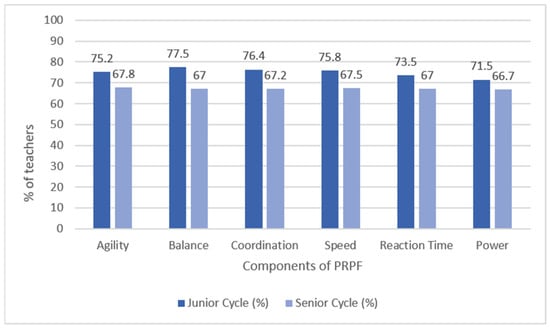
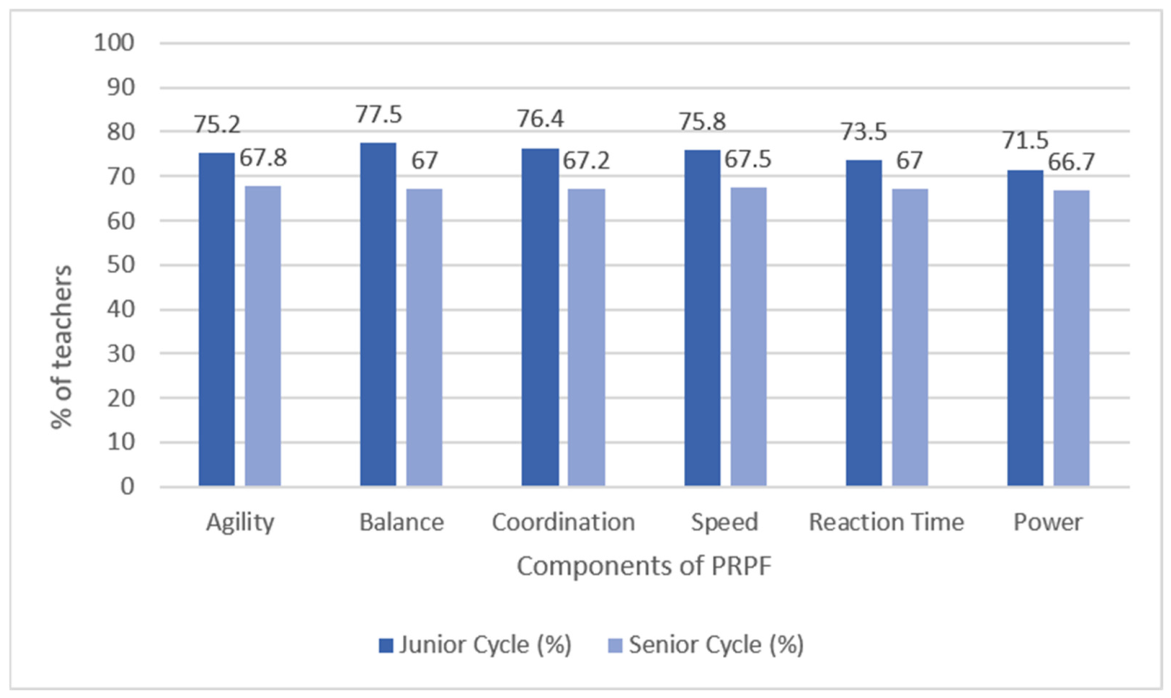
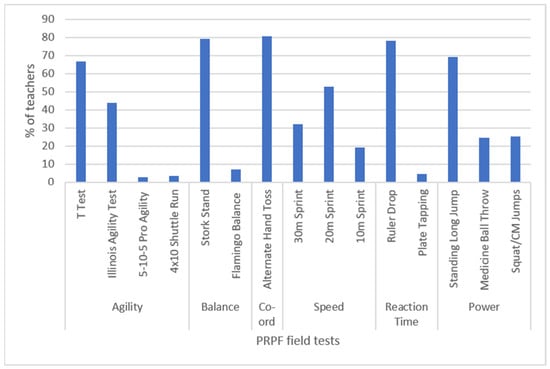
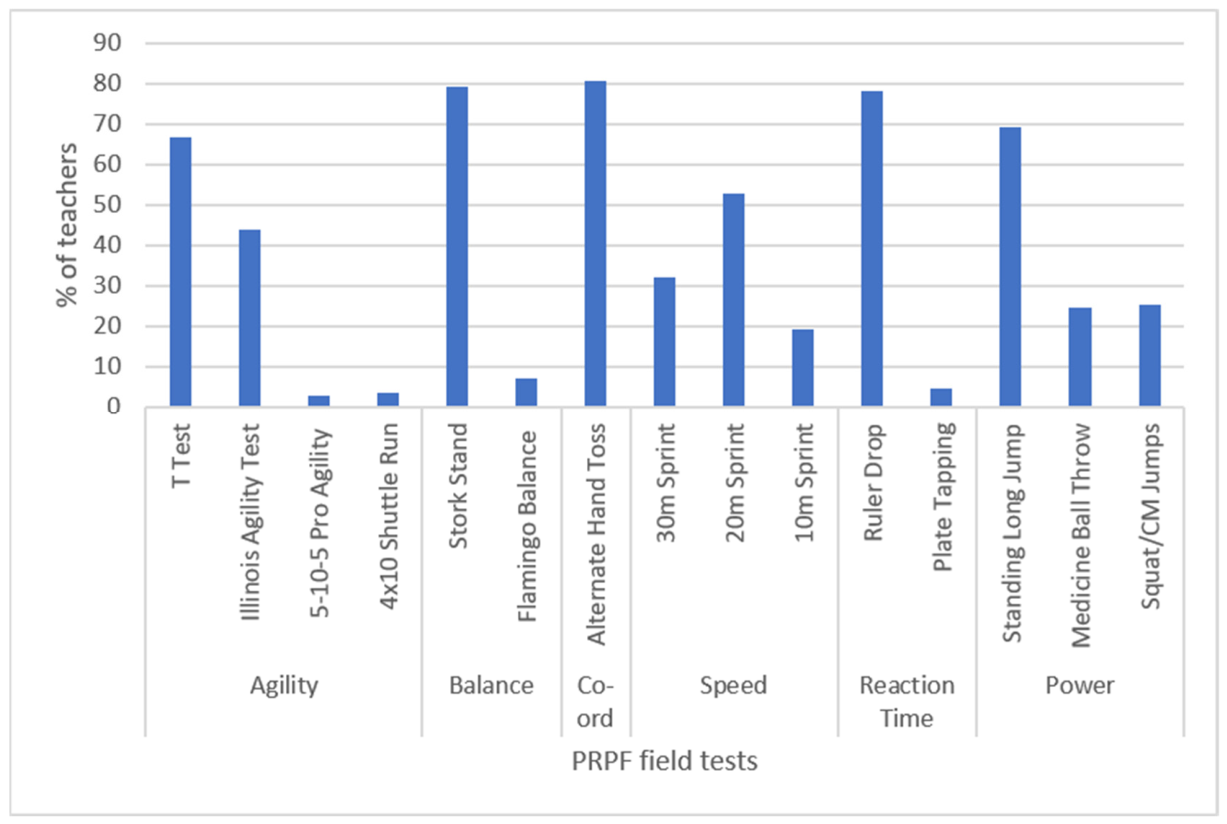
Figure 3 illustrates the components of PRPF assessed by teachers in the junior (ages 13–15) and senior (ages 16–18) cycles. Figure 4 presents the specific field tests used for each component. In the junior cycle, balance was the most assessed component of PRPF (272/351, 77.5%) and power the least (251/351, 71.5%). In the senior cycle, all components were assessed by a similar proportion of teachers (234–238/351, 66.7–67.8%). The alternate hand wall toss test for coordination was the most implemented assessment of PRPF, used by 283/351 (80.6%) of teachers. The standing long jump and medicine-ball throw were also selected as power tests by 243/351 (69.2%) and 87/351 (24.8%) of teachers, respectively. Of these, 218 teachers selected the standing long jump and 68 the medicine-ball throw under both strength and power. Overall, 56/351 (16.0%) of teachers did not assess PRPF in the junior cycle, rising to 103/351 (29.3%) in the senior cycle.
Figure 3.
Prevalence of PE teachers conducting testing for each component of performance-related physical fitness (PRPF) in junior and senior cycles (N = 351). Component prevalence includes respondents who selected “All components”.
Figure 4.
Percentage of PE teachers reporting use of performance-related physical fitness (PRPF) tests in secondary schools in Ireland (N = 351). Co-ord = coordination.
3.4. Teachers’ Perceptions of Digital Technology in PE
Table 1 presents teachers’ ratings of the digital technology items. Teachers indicated that they find it easy to learn how to use digital technologies (275/351, 78.3%, agreeing or completely agreeing) and that they have sufficient skills to teach pupils to use digital tools for learning (271/351, 77.2%). School-level support for digital technology use was also reported, with 268/351 (76.4%) of teachers agreeing or completely agreeing that their school generally supports its use (M = 3.9 ± 0.9). Over half of teachers (190/351, 54.1%) agreed or completely agreed that they are actively seeking digital technologies that can facilitate student learning. Years of teaching experience showed small negative associations with finding digital technology easy to learn (ρ = −0.196, p < 0.001), having sufficient skills to teach pupils to use it (ρ = −0.181, p < 0.001), and feeling comfortable using it in PE (ρ = −0.179, p < 0.001). No statistically significant association was detected between experience and intention to use digital technology (ρ = −0.021, p = 0.688) or perceived usefulness of a web-based fitness platform (ρ = −0.088, p = 0.100).
Table 1.
Teachers’ perceptions of digital technology: mean and standard deviation scores for Likert-scale items (N = 351).
3.5. Fitness Monitoring and Digital Tools
Nearly four out of five teachers (278/351, 79.2%) reported recording students’ fitness results. Among these teachers (n = 278), 119/278 (42.8%) stored hard copies, 70/278 (25.2%) used computer files (e.g., Excel), 17/278 (6.1%) used a web- or app-based monitoring platform, 12/278 (4.3%) used a school record system and 60/278 (21.6%) used other methods. Tracking practices also varied: 58/278 (20.9%) tracked students’ fitness across all school years, 79/278 (28.4%) during junior cycle only and 5/278 (1.8%) during senior cycle only, while 112/278 (40.3%) did not track fitness (24/278, 8.6%, other). Across the full sample, 17/351 (4.8%) of teachers used a web- or app-based platform to store results and 58/351 (16.5%) tracked fitness across all school years. Over half (185/351, 52.7%) did not track fitness. This comprised 112/351 (31.9%) who explicitly reported not tracking and 73/351 (20.8%) who were not asked the tracking question because they did not record results or did not use fitness testing. Practices also varied between teachers in the same school. In schools with more than one respondent, agreement between teachers on recording, storage and tracking practices was modest and, for recording results, no greater than expected by chance. A total of 239/351 (68.1%) of teachers agreed or completely agreed that students’ fitness should be tracked to monitor progress. Teachers believed that the introduction of the Junior Cycle curriculum specification (National Council for Curriculum and Assessment, 2022) had led to more structured tracking of student PF in PE, with 202/351 (57.5%) agreeing, while 214/351 (61.0%) expressed the same view regarding the Senior Cycle curriculum changes. Feedback on PF test results was provided to students by 268/351 (76.4%) of teachers, while 66/351 (18.8%) reported sharing results with parents. A total of 272/351 (77.5%) agreed or completely agreed that students should receive individualised feedback, compared with 198/351 (56.4%) who believed parents should also receive feedback. Regarding digital platforms, 261/351 (74.4%) agreed or completely agreed that a web-based system designed to host student PF test results and generate feedback reports on an individual or class group would be useful, and 291/351 (82.9%) indicated that they would like to use a digital platform to monitor students’ fitness.
3.6. Perspectives on Digital Fitness Testing Platforms
Of the 351 teachers, 348 provided a written explanation for their response to the question, “Would you like to use a digital technology software platform to store, monitor and report on students’ physical fitness in PE in your school?” (289 who would like to use a platform and 59 who would not). The remaining three responses contained no substantive content (e.g., “n/a”) and were excluded from analysis. Analysis identified four higher-order themes: (1) Data Management, (2) Physical Fitness Monitoring, (3) Subject Development, and (4) Reluctance to Use a New Fitness Testing Software Platform, and twelve sub-themes, reflecting both positive and negative perspectives. Individual responses could contain more than one meaning unit and could therefore be coded to more than one sub-theme. Figure 5 provides a visual pen profile summarising the themes, sub-themes, and frequency counts, alongside illustrative participant quotations. Definitions, frequencies and illustrative responses for each sub-theme are provided in Supplementary Table S4.
Figure 5.
Pen profile illustrating higher-order themes, sub-themes, and frequency counts with representative quotations. Note: The black box represents the central question. Green boxes indicate themes reflecting interest in using a software platform; the red box indicates the theme reflecting reluctance. Purple lines connect themes to the central question; blue lines connect sub-themes to their parent theme. + and – denote positive and negative responses, respectively; n = number of responses.
Data Management and Physical Fitness Monitoring were the most frequently coded themes, with tracking progress over time the most common sub-theme (n = 103). Among teachers expressing reluctance, concerns included additional workload, financial and infrastructure constraints, and existing school-based systems such as spreadsheets and shared online folders.
4. Discussion
Building on earlier national evidence (O’Keeffe et al., 2020), this study provides updated evidence on PE teachers’ fitness-testing practices in Ireland, extending it to performance-related fitness and offering an integrated view of how teachers assess multiple components of PF. It also examines teachers’ broader perceptions of using digital technologies to support fitness monitoring in PE. The following discussion reflects on the key findings that emerged from the study and situates them within the current evidence base.
4.1. Prevalence and Approaches to Fitness Testing
This study confirms that PF testing is widely used in Irish secondary school PE, with most teachers assessing both HRPF and PRPF. The high prevalence of HRPF testing observed aligns with previous research from Ireland (O’Keeffe et al., 2020). Comparable patterns have been reported internationally, with implementation observed in 89% of schools in the United Kingdom (UK) (Cale et al., 2014) and in 80% according to more recent UK data (Harte et al., 2024), as well as in 83% of schools in the United States (Keating & Silverman, 2004b). In contrast to previous research indicating that fitness testing was primarily delivered as a standalone unit in secondary schools in Ireland (O’Keeffe et al., 2020), the present study shows a more flexible and varied approach. While some teachers continue to use fitness testing in isolated blocks, many now integrate it across different units of learning on the PE curriculum or adopt a hybrid model combining both methods. This shift aligns with recommendations that testing should be embedded within broader fitness instruction rather than conducted in isolation (Wiersma & Sherman, 2008). Research has shown that students prefer testing distributed across time rather than concentrated in a single block (Alfrey, 2024). Teachers also reported generally positive attitudes toward fitness testing. Comparable results have been reported elsewhere, with studies consistently documenting favourable teacher attitudes toward fitness testing (Fredrick & Silverman, 2020; Quennerstedt et al., 2025).
Consistent with O’Keeffe et al. (2020), this study found that fitness testing was more prevalent in the junior cycle than in the senior cycle, yet it was widely reported across both stages. Despite this, there is little evidence of systematically recorded or standardised national PF data, with the 2022 Ireland North–South Report Card on Physical Activity for Children and Adolescents assigning an ‘Incomplete (INC)’ grade for PF due to insufficient population-level data aligned with established benchmarks (Carlin et al., 2024). The broad reported adoption of PF testing among teachers may reflect the curricular emphasis on PF assessment introduced through recent reforms (National Council for Curriculum and Assessment, 2017, 2022, 2025). The inclusion of formalised assessment components across these curricula has potentially created structured opportunities for teachers and students to engage with PF testing, supporting its integration across schools. Similar patterns have been observed elsewhere, with research in the UK showing that the inclusion of PF testing in curriculum and examination specifications has been a key factor in its widespread implementation in schools (Harte et al., 2024).
4.2. Components Assessed and Tests Used
Although HRPF was more commonly assessed than PRPF in both junior and senior cycles, the widespread assessment of both domains by Irish PE teachers differs from the emphasis of international monitoring frameworks such as FitBack (Ortega et al., 2023) and YFIT (Ortega et al., 2025), which have prioritised HRPF as the central focus of school-based fitness monitoring. The comparison between HRPF and PRPF should be interpreted with caution, as the standing long jump and medicine-ball throw contributed to both domains. The Irish pattern of assessing both domains may reflect the broader curricular emphasis on integrating both health- and performance-related fitness within PE. Cardiorespiratory endurance was the most frequently assessed component of HRPF, most often via the 12 min run or the 20 m shuttle run. This pattern mirrors previous national (O’Keeffe et al., 2020) and international (Ortega et al., 2023) research where endurance has been reported to be the most commonly assessed component. Although the 20 m shuttle run has been criticised for its maximal demands (Wrench & Garrett, 2008), it is now internationally endorsed as the core cardiorespiratory endurance test for youth, following expert consensus from 169 specialists across 50 countries (Ortega et al., 2025).
In contrast, body composition was the least assessed component, despite basic anthropometric measures (height, weight, BMI) being identified in the same international consensus as essential for youth PF monitoring and surveillance (Ortega et al., 2025). This reluctance may reflect practical and ethical concerns. School-based weight measurement has been linked to reduced weight satisfaction among students (Madsen et al., 2021) and often lacks privacy (Altman et al., 2022), while fitness testing more broadly has been described as potentially embarrassing and anxiety-inducing for students (Alfrey, 2024).
The commonly reported tests were predominantly practical field-based assessments, consistent with evidence that limited resources, time pressures, and large class sizes often drive reliance on simple field-based measures (Magallanes, 2024). This pattern aligns with broader research indicating that school-based fitness assessments should be time-efficient, low-cost, and feasible for large groups (Ruiz et al., 2011), making more complex or equipment-heavy tests unrealistic in many school settings.
4.3. Perceptions of Digital Technology and Fitness Monitoring Practices
Irish PE teachers in this study reported generally high confidence in, and intention to use, digital technologies, reflecting the increasing role of digital technologies in supporting learning in PE (Goodyear, 2020). Most found new tools easy to learn, felt able to support students’ use of them and reported school support for technology integration, and intention to use digital technology in the coming year received the highest mean rating of all digital technology items (M = 4.03). This aligns with national evidence of increasingly positive attitudes towards digital technology use in Irish schools (Donohue et al., 2024) and international evidence that digital technology has become widely accepted by PE teachers (Martín-Rodríguez & Madrigal-Cerezo, 2025). However, access to the necessary resources received the lowest mean rating of all digital technology items (M = 3.38), consistent with international evidence that limited resources and training constrain adoption (Saiz-González et al., 2024; Villalba et al., 2017). More experienced teachers reported slightly lower confidence in using digital technology, mirroring findings that PE teachers with fewer years of service report greater ability to use technological innovations (Konukman & Filiz, 2024). However, unlike previous studies in which newer teachers were also more inclined to adopt technology (Konukman & Filiz, 2024; Saiz-González et al., 2024), no statistically significant association between intention and experience was detected in the present study. Support for experienced teachers may therefore need to focus on building confidence as well as encouraging uptake, in line with calls for targeted training for longer-serving PE teachers (Konukman & Filiz, 2024). Although fitness testing is widely embedded in Irish PE, the ways in which results are recorded and reported remain inconsistent. Paper-based storage remains the most common single method (119/278, 42.8% of teachers who recorded results). Just over a third (99/278, 35.6%) used a digital method, most often computer files, while dedicated web- or app-based platforms were used by only 17/278 (6.1%). This reliance on paper and general-purpose files may limit the potential of fitness testing, leading to fragmented, short-term and administratively demanding monitoring practices (O’Keeffe et al., 2020). Feedback practices further illustrate this gap: results were typically provided to students but rarely shared with parents, reflecting international findings that parental involvement in fitness reporting is often underdeveloped (Mercier et al., 2016). This limited reporting to parents is noteworthy, as sharing results may provide one means of supporting family involvement in students’ fitness, and family support has been shown to play a key role in sustaining girls’ participation in sport and physical activity in Ireland (O’Brien et al., 2021). Of the teachers who agreed that fitness should be tracked to monitor progress, only half (122/239, 51.0%) reported tracking it, indicating a gap between beliefs and practice at the individual level. Individual feedback and tracking of personal progress are central to using fitness testing for learning (Wiersma & Sherman, 2008); a digital platform could help close this gap by making these practices feasible across school years. However, technology alone rarely transforms pedagogy (Sargent & Calderón, 2022), and targeted teacher professional development will also be needed (Martín-Rodríguez & Madrigal-Cerezo, 2025).
Most teachers would like to use a digital platform to monitor students’ PF, indicating interest in more structured monitoring in Ireland. Comparable platforms already operate internationally, illustrating how digital systems can support consistent tracking, reduce workload, and generate population-level data. FitnessGram® in the United States, SLOfit® in Slovenia, and Netfit® in Hungary provide long-established national frameworks, while the European FitBack project offers European-wide normative data and reporting tools that give student results greater meaning (Ortega et al., 2023). Crucially, FitBack has also published a peer-reviewed “10-step approach” for designing a national fitness monitoring system, offering a practical blueprint that policymakers and educators could adapt (Joensuu et al., 2024).
4.4. Teachers’ Perspectives on Digital Fitness Platforms
Teachers frequently highlighted the need for better data management as paper-based storage was described as unreliable, with results often lost or left unused. A centralised digital system was viewed as a way to improve efficiency, reduce duplication of effort, and make record-keeping more sustainable. These findings reinforce earlier Irish evidence that most PE teachers record fitness results but rarely retain them for long-term use (O’Keeffe et al., 2020), and mirror international reports that teachers see digital tools as a means to streamline administrative processes (Saiz-González et al., 2024). Teachers cited the benefits of longitudinal tracking for identifying changes in fitness levels and supporting earlier interventions, with several noting that digital systems could make results more accessible to students and parents. These perspectives align with international efforts to establish national monitoring systems that provide both longitudinal data and accessible reporting functions (Ortega et al., 2023). Beyond practical considerations, teachers also recognised the broader educational and professional potential of digital platforms. Several suggested that a national system could support the development of normative values, enabling meaningful comparisons at local and national levels. These views align with broader concerns about the lack of standardised PF data in Ireland, highlighted in the 2022 Ireland North–South Report Card, which issued an ‘Incomplete (INC)’ grade for this indicator (Carlin et al., 2024). Others felt that fitness data could contribute to shaping education and health policy, while some noted that engaging with digital innovation might raise the professional status of PE by demonstrating its alignment with contemporary practice. These ideas support the notion of PE’s dual role in promoting learning and contributing to public health agendas (Ortega et al., 2023).
Despite strong support for the principle of a digital platform, some teachers expressed reservations. Infrastructure and financial barriers were a recurring concern, particularly for under-resourced schools. Some teachers were sceptical about monitoring students’ fitness, citing the potential for pressure on students, while others feared that a new system might add to their workload. Some also pointed out that their schools had already developed local systems, from spreadsheets to online folders, and questioned whether a national platform would be necessary. Such concerns reflect broader challenges in PE, where resource and practical constraints often limit innovation, with cost and lack of time among the most commonly reported barriers to technology adoption (Cale et al., 2016; Konukman & Filiz, 2024; Saiz-González et al., 2024). Teachers’ willingness to use a platform therefore reflects hypothetical intention rather than readiness to adopt one, and implementation would likely depend on adequate devices, funding, manageable workload and integration with existing school systems.
4.5. Limitations and Strengths
While the sample was drawn from a range of secondary schools in Ireland and broadly reflected national patterns in school type, participation was voluntary rather than random, which may have introduced response bias. In addition, 37 respondents who began the survey did not complete it, and as these responses were not retained, their characteristics could not be compared with those of completers, so attrition bias cannot be ruled out. As the survey was distributed through school principals, some invitations may not have reached all intended PE teachers, contributing to non-response bias. Consequently, no teacher-level sampling frame was available; the number of eligible teachers invited and the overall response rate could not be determined, and the representativeness of the sample relative to PE teachers nationally cannot be established. Regional distributions were broadly aligned with national patterns but showed some imbalance, particularly the over-representation of schools from Munster and under-representation from Dublin. The four-week data collection window may also have hindered broader participation. Furthermore, while web-based surveys offer advantages in terms of efficiency and accessibility, they also require stable internet access and a basic level of digital literacy, which may have excluded some potential respondents. Additionally, DEIS schools were underrepresented in the sample, potentially limiting the generalisability of findings to schools serving socioeconomically disadvantaged communities. The use of self-reported data introduces the possibility of recall bias and socially desirable responding. Willingness to use a digital platform may also be affected by hypothetical and social-desirability bias and may not translate into actual adoption. The item on a standardised national fitness test battery showed lower expert agreement on relevance than other items (I-CVI = 0.60), so support for this proposal should be interpreted with caution. Because teachers were asked to report junior and senior cycle practices regardless of whether they taught both cohorts, cohort-specific responses may reflect a combination of personal practice and knowledge of practice in their school, and analyses could not be restricted to teachers with direct experience of each cohort. Finally, as the survey was the sole data source, responses were not independently verified; follow-up qualitative methods such as interviews could have provided greater depth of insight.
Despite these limitations, the study has notable strengths. The sample was broad and diverse, encompassing teachers from a wide range of school types and levels of experience, thereby capturing a broad range of perspectives. Importantly, the survey followed a comprehensive design protocol to maximise content validity, drawing on established instruments and expert review.
5. Conclusions
This study provides insights into fitness testing practices within the Irish context, with a novel focus on PE teachers’ perceptions of digital technology and interest in technology-supported approaches. While fitness testing is widely used, substantial variation exists in how it is implemented, particularly in test selection, monitoring, and reporting. Although many teachers reported confidence with digital technology and interest in a fitness monitoring platform, dedicated digital monitoring of fitness remains uncommon. These positive perceptions suggest potential for, but do not establish readiness to implement, a digital platform, and implementation would depend on adequate resourcing, manageable workload and integration with existing school systems. To support more consistent monitoring, consideration should be given to developing a standardised digital fitness testing platform for use in Irish PE, co-designed by researchers, PE teachers, students, and teacher education providers. Importantly, such a system should be evidence-based and informed by pedagogically sound principles to ensure it enhances learning and creates positive experiences for teachers and students, rather than functioning merely as a data-collection tool. When designed in this way, a national digital platform has the potential to make fitness assessment in schools more consistent, educationally meaningful, and scalable.
Supplementary Materials
The following supporting information can be downloaded at https://www.mdpi.com/article/10.3390/educsci16122003/s1. File S1: Survey instrument; Table S1: Respondent and school characteristics and response distributions for all survey items; Table S2: Item-level content validity indices from expert review; Table S3: Spearman’s rank-order correlations between years of teaching experience and Likert-scale items; Table S4: Higher-order themes and sub-themes from teachers’ explanations; Figure S1: Participant flow and questionnaire routing.
Author Contributions
Conceptualization, E.J. and B.O.; methodology, E.J. and B.O.; validation, E.J. and W.O.; formal analysis, E.J.; data curation, E.J. and W.O.; writing—original draft preparation, E.J.; writing—review and editing, C.W., W.O. and B.O.; supervision, C.W., W.O. and B.O.; project administration, E.J. and B.O.; funding acquisition, E.J. and B.O. All authors have read and agreed to the published version of the manuscript.
Funding
This research was funded by Research Ireland under the Enterprise Partnership Scheme, grant number EPSPG/2024/2085.
Institutional Review Board Statement
The study was conducted in accordance with the Declaration of Helsinki and approved by the Faculty of Education and Health Sciences Research Ethics Committee, University of Limerick (protocol code 2024_11_18_EHS; date of approval 20 January 2025).
Informed Consent Statement
Informed consent was obtained from all subjects involved in the study.
Data Availability Statement
The data presented in this study are available on reasonable request from the corresponding author. The data are not publicly available due to ethical restrictions relating to participant confidentiality.
Acknowledgments
The authors thank the school principals and PE teachers who participated in this study, and the expert panel who reviewed the survey. During manuscript preparation, Claude Opus 5.5 (Anthropic) was used to assist with language editing and consistency checks of the manuscript and supplementary materials. No confidential information or participant-level data were uploaded to the AI tool. The authors reviewed and verified the outputs and take full responsibility for the content of this publication.
Conflicts of Interest
The authors declare no conflict of interest.
Abbreviations
The following abbreviations are used in this manuscript:
| BMI | Body mass index |
| CRE | Cardiorespiratory endurance |
| DEIS | Delivering Equality of Opportunity in Schools |
| FTB | Fitness test battery |
| HRPF | Health-related physical fitness |
| I-CVI | Item-level content validity index |
| NCCA | National Council for Curriculum and Assessment |
| PE | Physical education |
| PETAFTS | Physical Education Teacher Attitudes Toward Fitness Tests Scale |
| PF | Physical fitness |
| PRPF | Performance-related physical fitness |
| SPSS | Statistical Package for the Social Sciences |
| YFIT | Youth Fitness International Test |
References
- Alfrey, L. (2024). An expansive learning approach to transforming traditional fitness testing in health and physical education: Student voice, feelings and hopes. Curriculum Studies in Health and Physical Education, 15(1), 24–39. [Google Scholar] [CrossRef] [Scilit]
- Altman, E., Linchey, J., Santamaria, G., Thompson, H., & Madsen, K. (2022). Weight measurements in school: Setting and student comfort. Journal of Nutrition Education and Behavior, 54(3), 249–254. [Google Scholar] [CrossRef] [Scilit]
- Brazo-Sayavera, J., Silva, D. R., Lang, J. J., Tomkinson, G. R., Agostinis-Sobrinho, C., Andersen, L. B., García-Hermoso, A., Gaya, A. R., Jurak, G., Lee, E. Y., Liu, Y., Lubans, D. R., Okely, A. D., Ortega, F. B., Ruiz, J. R., Tremblay, M. S., & Dos Santos, L. (2024). Physical fitness surveillance and monitoring systems inventory for children and adolescents: A scoping review with a global perspective. Sports Medicine, 54(7), 1755–1769. [Google Scholar] [CrossRef] [Scilit]
- Cadenas-Sanchez, C., Mena-Molina, A., Torres-Lopez, L. V., Migueles, J. H., Rodriguez-Ayllon, M., Lubans, D. R., & Ortega, F. B. (2021). Healthier minds in fitter bodies: A systematic review and meta-analysis of the association between physical fitness and mental health in youth. Sports Medicine, 51(12), 2571–2605. [Google Scholar] [CrossRef] [Scilit]
- Cale, L., Harris, J., & Chen, M. H. (2007). More than 10 years after “the horse is dead…”: Surely it must be time to “dismount”?! Pediatric Exercise Science, 19(2), 115–123. [Google Scholar] [CrossRef] [Scilit]
- Cale, L., Harris, J., & Chen, M. H. (2014). Monitoring health, activity and fitness in physical education: Its current and future state of health. Sport, Education and Society, 19(4), 376–397. [Google Scholar] [CrossRef] [Scilit]
- Cale, L., Harris, J., & Duncombe, R. (2016). Promoting physical activity in secondary schools: Growing expectations, ‘same old’ issues? European Physical Education Review, 22(4), 526–544. [Google Scholar] [CrossRef] [Scilit]
- Carlin, A., Connolly, S., Redpath, T., Belton, S., Coppinger, T., Cunningham, C., Donnelly, A., Dowd, K., Harrington, D., Murtagh, E., Ng, K., O’Brien, W., Rodriguez, L., Woods, C., McAvoy, H., & Murphy, M. (2024). Results from Ireland North and South’s 2022 report card on physical activity for children and adolescents. Journal of Exercise Science & Fitness, 22(1), 66–72. [Google Scholar] [CrossRef] [Scilit]
- Csányi, T., Finn, K. J., Welk, G. J., Zhu, W., Karsai, I., Ihasz, F., Vass, Z., & Molnar, L. (2015). Overview of the Hungarian national youth fitness study. Research Quarterly for Exercise and Sport, 86(Supp. S1), S3–S12. [Google Scholar] [CrossRef] [Scilit]
- Demchenko, I., Prince, S. A., Merucci, K., Cadenas-Sanchez, C., Chaput, J. P., Fraser, B. J., Manyanga, T., McGrath, R., Ortega, F. B., Singh, B., Tomkinson, G. R., & Lang, J. J. (2025). Cardiorespiratory fitness and health in children and adolescents: An overview of systematic reviews with meta-analyses representing over 125 000 observations covering 33 health-related outcomes. British Journal of Sports Medicine, 59(12), 856–865. [Google Scholar] [CrossRef] [Scilit]
- DeMet, T., & Wahl-Alexander, Z. (2019). Integrating skill-related components of fitness into physical education. Strategies, 32(5), 10–17. [Google Scholar] [CrossRef] [Scilit]
- Donohue, B., Moran, E., Clerkin, A., Millar, D., O’Flaherty, A., Piccio, G., & Dinh, T. (2024). Digital Learning Framework (DLF) national longitudinal evaluation: Wave 2 final report. Educational Research Centre. [Google Scholar] [CrossRef] [Scilit]
- Fernández-Santos, J. R., Ruiz, J. R., Cohen, D. D., González-Montesinos, J. L., & Castro-Piñero, J. (2015). Reliability and validity of tests to assess lower-body muscular power in children. Journal of Strength and Conditioning Research, 29(8), 2277–2285. [Google Scholar] [CrossRef] [Scilit]
- Fredrick, R. N., & Silverman, S. (2020). Relationship between urban middle school physical education teachers’ attitudes toward fitness testing and student performance on fitness tests. Measurement in Physical Education and Exercise Science, 24(4), 273–281. [Google Scholar] [CrossRef] [Scilit]
- Gil-Espinosa, F. J., Nielsen-Rodríguez, A., Romance, R., & Burgueño, R. (2022). Smartphone applications for physical activity promotion from physical education. Education and Information Technologies, 27(8), 11759–11779. [Google Scholar] [CrossRef] [Scilit]
- Gilic, B., Sunda, M., Versic, S., Modric, T., Olujic, D., & Sekulic, D. (2023). Effectiveness of physical-literacy-based online education on indices of physical fitness in high-school adolescents: Intervention study during the COVID-19 pandemic period. Children, 10(10), 1666. [Google Scholar] [CrossRef] [Scilit]
- Goodyear, V. (2020). Using digital technologies to support learning in physical education. In S. Capel, J. Cliffe, & J. Lawrence (Eds.), Learning to teach physical education in the secondary school: A companion to school experience (5th ed., pp. 306–321). Routledge. [Google Scholar] [CrossRef] [Scilit]
- Gray, S., MacLean, J., & Mulholland, R. (2012). Physical education within the Scottish context: A matter of policy. European Physical Education Review, 18(2), 258–272. [Google Scholar] [CrossRef] [Scilit]
- Hackett, D. A., Davies, T. B., Ibel, D., Cobley, S., & Sanders, R. (2018). Predictive ability of the medicine ball chest throw and vertical jump tests for determining muscular strength and power in adolescents. Measurement in Physical Education and Exercise Science, 22(1), 79–87. [Google Scholar] [CrossRef] [Scilit]
- Harte, N. P. A., Alfrey, L., Spray, C., & Cale, L. (2024). The if, why and how of fitness testing in secondary school physical education in the United Kingdom. European Physical Education Review, 30(3), 475–492. [Google Scholar] [CrossRef] [Scilit]
- Henriques-Neto, D., Minderico, C., Peralta, M., Marques, A., & Sardinha, L. B. (2020). Test–retest reliability of physical fitness tests among young athletes: The FITescola® battery. Clinical Physiology and Functional Imaging, 40(3), 173–182. [Google Scholar] [CrossRef] [Scilit]
- Joensuu, L., Csányi, T., Huhtiniemi, M., Kälbi, K., Magalhães, J., Milanović, I., Morrison, S. A., Ortega, F. B., Sardinha, L. B., Starc, G., Tammelin, T. H., & Jurak, G. (2024). How to design and establish a national school-based physical fitness monitoring and surveillance system for children and adolescents: A 10-step approach recommended by the FitBack network. Scandinavian Journal of Medicine & Science in Sports, 34(3), e14593. [Google Scholar] [CrossRef] [Scilit]
- Joy, E., Rocliffe, P., Woods, C., & O’Keeffe, B. (2025). Fitness test battery software platforms for monitoring physical fitness among adolescents in secondary schools: A scoping review protocol [version 1; peer review: 1 approved]. HRB Open Research, 8, 89. [Google Scholar] [CrossRef] [Scilit]
- Jurak, G., Leskošek, B., Kovač, M., Sorić, M., Kramaršič, J., Sember, V., Duric, S., Meh, K., Morrison, S. A., Strel, J., & Starc, G. (2020). SLOfit surveillance system of somatic and motor development of children and adolescents: Upgrading the Slovenian Sports Educational Chart. AUC Kinanthropologica, 56(1), 28–40. [Google Scholar] [CrossRef] [Scilit]
- Keating, X. D., & Silverman, S. (2004a). Physical education teacher attitudes toward fitness test scale: Development and validation. Journal of Teaching in Physical Education, 23(2), 143–161. [Google Scholar] [CrossRef] [Scilit]
- Keating, X. D., & Silverman, S. (2004b). Teachers’ use of fitness tests in school-based physical education programs. Measurement in Physical Education and Exercise Science, 8(3), 145–165. [Google Scholar] [CrossRef] [Scilit]
- Konukman, F., & Filiz, B. (2024). Turkish physical education teachers’ use of technology: Application and diffusion of technological innovations. Education Sciences, 14(6), 616. [Google Scholar] [CrossRef] [Scilit]
- Lang, J. J., Tomkinson, G. R., Janssen, I., Ruiz, J. R., Ortega, F. B., Léger, L., & Tremblay, M. S. (2018). Making a case for cardiorespiratory fitness surveillance among children and youth. Exercise and Sport Sciences Reviews, 46(2), 66–75. [Google Scholar] [CrossRef] [Scilit]
- Leso, V., Scalfi, L., Giordano, A., Reppuccia, L., Guarino, D., Fedele, M., & Iavicoli, I. (2024). Association between health-related physical fitness indicators and working ability: A systematic review. Journal of Occupational Health, 66(1), uiad006. [Google Scholar] [CrossRef] [Scilit]
- Lubans, D. R., Morgan, P., Callister, R., Plotnikoff, R. C., Eather, N., Riley, N., & Smith, C. J. (2011). Test–retest reliability of a battery of field-based health-related fitness measures for adolescents. Journal of Sports Sciences, 29(7), 685–693. [Google Scholar] [CrossRef] [Scilit]
- Luo, S., Kim Geok, S., Zhang, L., Zhai, X., Sunardi, J., Gao, Y., & He, S. (2023). Effect of core training on skill-related physical fitness performance among soccer players: A systematic review. Frontiers in Public Health, 10, 1046456. [Google Scholar] [CrossRef] [Scilit]
- Macwan, A. J., & Barot, B. J. (2025). Exploring factors influencing teacher readiness and perceptions towards digital learning technology: A systematic literature review. International Journal for Multidisciplinary Research, 7(6), 59978. [Google Scholar] [CrossRef]
- Madsen, K. A., Thompson, H. R., Linchey, J., Ritchie, L., Gupta, S., Neumark-Sztainer, D., Crawford, P., McCulloch, C., & Ibarra-Castro, A. (2021). Effect of school-based body mass index reporting in California public schools: A randomized clinical trial. JAMA Pediatrics, 175(3), 251–259. [Google Scholar] [CrossRef] [Scilit]
- Magallanes, C. (2024). Physical education teachers’ experiences in fitness testing. British Journal of Multidisciplinary and Advanced Studies, 5, 88–147. [Google Scholar] [CrossRef] [Scilit]
- Marques, A., Henriques-Neto, D., Peralta, M., Martins, J., Gomes, F., Popovic, S., Masanovic, B., Demetriou, Y., Schlund, A., & Ihle, A. (2021). Field-based health-related physical fitness tests in children and adolescents: A systematic review. Frontiers in Pediatrics, 9, 640028. [Google Scholar] [CrossRef] [Scilit]
- Martín-Rodríguez, A., & Madrigal-Cerezo, R. (2025). Technology-enhanced pedagogy in physical education: Bridging engagement, learning, and lifelong activity. Education Sciences, 15(4), 409. [Google Scholar] [CrossRef] [Scilit]
- Mercier, K., Phillips, S., & Silverman, S. (2016). High school physical education teachers’ attitudes and use of fitness tests. The High School Journal, 99(2), 179–190. [Google Scholar] [CrossRef] [Scilit]
- Mustafa, P. S., Suherman, W., Sumarjo, S., Nurhidayah, D., Lufthansa, L., & Anugrah, T. (2024). Analysis of design and implementation of physical education curriculum in primary school: A literature study. Retos, 60, 320–331. [Google Scholar] [CrossRef] [Scilit]
- National Council for Curriculum and Assessment. (2017). Senior cycle physical education framework. Available online: https://ncca.ie/en/senior-cycle/curriculum-developments/senior-cycle-physical-education-framework-scpe/ (accessed on 18 November 2026).
- National Council for Curriculum and Assessment. (2022). Junior cycle physical education curriculum specification. Available online: https://www.curriculumonline.ie/getmedia/daff0a6e-b640-43e7-bcd7-7cc2c3dff955/Junior-Cycle-Physical-Education-Specification-Oct-2022.pdf (accessed on 18 November 2026).
- National Council for Curriculum and Assessment. (2025). Curriculum specification for Leaving Certificate physical education. Available online: https://www.curriculumonline.ie/getmedia/e3c33f7c-a88b-4050-bed3-c892ec995ba2/SC-PE-Spec-ENG-INT.pdf (accessed on 18 November 2026).
- O’Brien, W., Adamakis, M., O’Brien, N., Onofre, M., Martins, J., Dania, A., Makopoulou, K., Herold, F., Ng, K., & Costa, J. (2020). Implications for European physical education teacher education during the COVID-19 pandemic: A cross-institutional SWOT analysis. European Journal of Teacher Education, 43(4), 503–522. [Google Scholar] [CrossRef] [Scilit]
- O’Brien, W., Coppinger, T., Hogan, I., Belton, S., Murphy, M. H., Powell, C., & Woods, C. (2021). The association of family, friends, and teacher support with girls’ sport and physical activity on the island of Ireland. Journal of Physical Activity and Health, 18(8), 929–936. [Google Scholar] [CrossRef] [Scilit]
- O’Keeffe, B. T., MacDonncha, C., Ng, K., & Donnelly, A. E. (2020). Health-related fitness monitoring practices in secondary school-based physical education programs. Journal of Teaching in Physical Education, 39(1), 59–68. [Google Scholar] [CrossRef] [Scilit]
- Ortega, F. B., Leskošek, B., Blagus, R., Gil-Cosano, J. J., Mäestu, J., Tomkinson, G. R., Ruiz, J. R., Mäestu, E., Starc, G., Milanovic, I., Tammelin, T. H., Sorić, M., Scheuer, C., Carraro, A., Kaj, M., Csányi, T., Sardinha, L. B., Lenoir, M., Emeljanovas, A., … Jurak, G. (2023). European fitness landscape for children and adolescents: Updated reference values, fitness maps and country rankings based on nearly 8 million test results from 34 countries gathered by the FitBack network. British Journal of Sports Medicine, 57(5), 299–310. [Google Scholar] [CrossRef] [Scilit]
- Ortega, F. B., Zhang, K., Cadenas-Sanchez, C., Tremblay, M. S., Jurak, G., Tomkinson, G. R., Ruiz, J. R., Keller, K., Nyström, C. D., Sacheck, J. M., Pate, R., Weston, K. L., Kidokoro, T., Poon, E. T., Wachira, L.-J. M., Ssenyonga, R., Gomes, T. N. Q. F., Cristi-Montero, C., Fraser, B. J., … Liu, Y. (2025). The Youth Fitness International Test (YFIT) battery for monitoring and surveillance among children and adolescents: A modified Delphi consensus project with 169 experts from 50 countries and territories. Journal of Sport and Health Science, 14, 101012. [Google Scholar] [CrossRef] [Scilit]
- Østerlie, O., Sargent, J., Killian, C., Garcia-Jaen, M., García-Martínez, S., & Ferriz-Valero, A. (2022). Flipped learning in physical education: A scoping review. European Physical Education Review, 29(1), 125–144. [Google Scholar] [CrossRef] [Scilit]
- Polit, D. F., & Beck, C. T. (2006). The content validity index: Are you sure you know what’s being reported? Critique and recommendations. Research in Nursing & Health, 29(5), 489–497. [Google Scholar] [CrossRef] [Scilit]
- Polit, D. F., Beck, C. T., & Owen, S. V. (2007). Is the CVI an acceptable indicator of content validity? Appraisal and recommendations. Research in Nursing & Health, 30(4), 459–467. [Google Scholar] [CrossRef] [Scilit]
- Quay, J., Williams, B., Luguetti, C., & Boyer, A. (2026). Historicising physical education: Towards a new configuration of physical education via a salutogenic orientation to health. Sport, Education and Society, 31(5), 842–856. [Google Scholar] [CrossRef] [Scilit]
- Quennerstedt, M., Barker, D., Johansson, A., & Korp, P. (2025). Teaching with the test: Using fitness tests to teach paradoxically in physical education. European Physical Education Review, 31(3), 462–481. [Google Scholar] [CrossRef] [Scilit]
- Rocliffe, P., Adamakis, M., O’Keeffe, B. T., Walsh, L., Bannon, A., Garcia-Gonzalez, L., Chambers, F., Stylianou, M., Sherwin, I., Mannix-McNamara, P., & MacDonncha, C. (2024). The impact of typical school provision of physical education, physical activity and sports on adolescent mental health and wellbeing: A systematic literature review. Adolescent Research Review, 9(2), 339–364, (Correction in 2024, Adolescent Research Review, 9, 365).. [Google Scholar] [CrossRef] [Scilit]
- Ruiz, J. R., Castro-Piñero, J., España-Romero, V., Artero, E. G., Ortega, F. B., Cuenca, M. M., Jimenez-Pavón, D., Chillón, P., Girela-Rejón, M. J., Mora, J., Gutiérrez, A., Suni, J., Sjöström, M., & Castillo, M. J. (2011). Field-based fitness assessment in young people: The ALPHA health-related fitness test battery for children and adolescents. British Journal of Sports Medicine, 45(6), 518–524. [Google Scholar] [CrossRef] [Scilit]
- Ruiz, J. R., Huybrechts, I., Cuenca-García, M., Artero, E. G., Labayen, I., Meirhaeghe, A., Vicente-Rodriguez, G., Polito, A., Manios, Y., González-Gross, M., Marcos, A., Widhalm, K., Molnar, D., Kafatos, A., Sjöström, M., Moreno, L. A., Castillo, M. J., & Ortega, F. B. (2015). Cardiorespiratory fitness and ideal cardiovascular health in European adolescents. Heart, 101(10), 766–773. [Google Scholar] [CrossRef] [Scilit]
- Ruiz, J. R., Ortega, F. B., Gutierrez, A., Meusel, D., Sjöström, M., & Castillo, M. J. (2006). Health-related fitness assessment in childhood and adolescence: A European approach based on the AVENA, EYHS and HELENA studies. Journal of Public Health, 14(5), 269–277. [Google Scholar] [CrossRef] [Scilit]
- Saiz-González, P., Sierra-Díaz, J., Iglesias, D., & Fernandez-Rio, J. (2024). Exploring physical education teachers’ willingness and barriers to integrating digital technology in their lessons. Education and Information Technologies, 30, 5965–5987. [Google Scholar] [CrossRef] [Scilit]
- Sargent, J., & Calderón, A. (2022). Technology-enhanced learning physical education? A critical review of the literature. Journal of Teaching in Physical Education, 41(4), 689–709. [Google Scholar] [CrossRef] [Scilit]
- Silveira, J., Reuter, C., Aadland, E., Andersen, L., Nevill, A., Mello, J., & Gaya, A. (2025). Normalizing and standardizing physical fitness by sex, age, and body size in Brazilian children and adolescents: A PROESP-BR study. Journal of Strength and Conditioning Research, 39, e598–e609. [Google Scholar] [CrossRef] [Scilit]
- Smith, B., & Caddick, N. (2012). Qualitative methods in sport: A concise overview for guiding social scientific sport research. Asia Pacific Journal of Sport and Social Science, 1(1), 60–73. [Google Scholar] [CrossRef] [Scilit]
- Smith, B., & McGannon, K. R. (2018). Developing rigor in qualitative research: Problems and opportunities within sport and exercise psychology. International Review of Sport and Exercise Psychology, 11(1), 101–121. [Google Scholar] [CrossRef] [Scilit]
- Smith, J. J., Eather, N., Morgan, P. J., Plotnikoff, R. C., Faigenbaum, A. D., & Lubans, D. R. (2014). The health benefits of muscular fitness for children and adolescents: A systematic review and meta-analysis. Sports Medicine, 44(9), 1209–1223. [Google Scholar] [CrossRef] [Scilit]
- Sparkes, A. C., & Smith, B. (2014). Qualitative research methods in sport, exercise and health: From process to product. Routledge. [Google Scholar] [CrossRef] [Scilit]
- Tanujaya, B., Prahmana, R. C. I., & Mumu, J. (2022). Likert scale in social sciences research: Problems and difficulties. FWU Journal of Social Sciences, 16(4), 89–101. [Google Scholar] [CrossRef] [Scilit]
- Utesch, T., Dreiskämper, D., Strauss, B., & Naul, R. (2018). The development of the physical fitness construct across childhood. Scandinavian Journal of Medicine & Science in Sports, 28(1), 212–219. [Google Scholar] [CrossRef] [Scilit]
- van Sluijs, E. M. F., Ekelund, U., Crochemore-Silva, I., Guthold, R., Ha, A., Lubans, D., Oyeyemi, A. L., Ding, D., & Katzmarzyk, P. T. (2021). Physical activity behaviours in adolescence: Current evidence and opportunities for intervention. The Lancet, 398(10298), 429–442. [Google Scholar] [CrossRef] [Scilit]
- Viberg, O., Mavroudi, A., Khalil, M., & Bälter, O. (2020). Validating an instrument to measure teachers’ preparedness to use digital technology in their teaching. Nordic Journal of Digital Literacy, 15(1), 38–54. [Google Scholar] [CrossRef] [Scilit]
- Villalba, A., González-Rivera, M. D., & Díaz-Pulido, B. (2017). Obstacles perceived by physical education teachers to integrating ICT. Turkish Online Journal of Educational Technology, 16(1), 83–92. [Google Scholar]
- Wallace, J., Scanlon, D., & Calderón, A. (2023). Digital technology and teacher digital competency in physical education: A holistic view of teacher and student perspectives. Curriculum Studies in Health and Physical Education, 14(3), 271–287. [Google Scholar] [CrossRef] [Scilit]
- Welk, G. J., Going, S. B., Morrow, J. R., Jr., & Meredith, M. D. (2011). Development of new criterion-referenced fitness standards in the FITNESSGRAM® program: Rationale and conceptual overview. American Journal of Preventive Medicine, 41(4, Suppl. 2), S63–S67. [Google Scholar] [CrossRef] [Scilit]
- Wiersma, L. D., & Sherman, C. P. (2008). The responsible use of youth fitness testing to enhance student motivation, enjoyment, and performance. Measurement in Physical Education and Exercise Science, 12(3), 167–183. [Google Scholar] [CrossRef] [Scilit]
- Wrench, A., & Garrett, R. (2008). Pleasure and pain: Experiences of fitness testing. European Physical Education Review, 14(3), 325–346. [Google Scholar] [CrossRef] [Scilit]
- Yang, A., Hamilton, X., Wang, Y., Smolianov, P., Castro-Piñero, J., Guan, J., Dolmatova, T., Zhang, X., Zhang, J., Zhan, E., & Hamilton, M. (2024). Results assessment methods of health-related fitness test batteries in school-based physical education programs: A global comparison. Journal of Teaching in Physical Education, 44, 1–9. [Google Scholar] [CrossRef] [Scilit]
- Yusoff, M. S. B. (2019). ABC of content validation and content validity index calculation. Education in Medicine Journal, 11(2), 49–54. [Google Scholar] [CrossRef] [Scilit]

Disclaimer/Publisher’s Note: The statements, opinions and data contained in all publications are solely those of the individual author(s) and contributor(s) and not of MDPI and/or the editor(s). MDPI and/or the editor(s) disclaim responsibility for any injury to people or property resulting from any ideas, methods, instructions or products referred to in the content. |
© 2026 by the authors. Licensee MDPI, Basel, Switzerland. This article is an open access article distributed under the terms and conditions of the Creative Commons Attribution (CC BY) license.