


Abstract
Connections between mathematics and the visual arts offer opportunities to integrate geometry, visualization, manipulation, and visual production. However, less is known about how the particular role assumed by a material within a task, particularly paper, shapes these connections. This study examines how future elementary school teachers mobilize geometric thinking in paper-based mathematical tasks and how different forms of paper mediation create opportunities for connecting mathematics with visual-artistic production. A qualitative interpretative approach was adopted, drawing on data from 26 pre-service elementary school teachers engaged in three paper-based tasks selected for their contrasting uses of the material. Data included participants’ written productions, artefacts, photographs, and observations. The analysis focused on geometric thinking, paper mediation, visual production and agency, and the direction of mathematics–arts interplay. Across the three task-based modes—representational, constructive-modeling, and creative-compositional—the findings show increasing opportunities for material experimentation and visual choice, while the relationship between mathematical reasoning and visual production shifts from predominantly mathematics-structured production toward more reciprocal interplay.
1. Introduction
Geometry provides a fertile ground for connecting mathematics and the visual arts, as symmetry, transformation, pattern, proportion, spatial organization, and form can simultaneously function as mathematical objects and as resources for visual production (e.g., Schoevers et al., 2020; Vale & Barbosa, 2025). Recent research highlights the potential of mathematics–visual arts integration for mathematical learning, creativity, and geometric thinking (Brunheira et al., 2026; Choutou & Potari, 2024; Sylviani et al., 2024). In teacher education, such experiences are particularly relevant because pre-service teachers need opportunities to strengthen their mathematical understanding and explore interdisciplinary approaches that may inform their future teaching practices (Nutov, 2021).
Paper offers an interesting context to investigate this relationship. As a simple and highly transformable material, it can be folded, unfolded, cut, rotated, and assembled, allowing learners to move between physical action, visual representation, and geometric relationships. Research on paper folding in mathematics has emphasized its potential for spatial visualization, geometric thinking, and the coordination of two- and three-dimensional representations (e.g., Arıcı & Aslan-Tutak, 2015; Boakes, 2008, 2009; Newcombe & Shipley, 2015; Valori et al., 2024; van Wijk et al., 2025). At the same time, folding and cutting paper have long occupied a space between mathematical construction and artistic practice, making paper suitable for activities in which mathematical structures become materially and visually expressed (e.g., Boakes, 2008, 2009; Brunheira et al., 2026; Meyer & Meyer, 1999).
However, these two strands of research have largely developed with different emphases. Research on paper folding in mathematics education has tended to examine its contribution to geometric knowledge, visualization, spatial thinking, or engagement, whereas research on mathematics–arts integration has more often focused on interdisciplinary learning, creativity, aesthetic experience, or the design of integrated tasks (e.g., Brunheira et al., 2026; Choutou & Potari, 2024; Valori et al., 2024). Less attention appears to be given to how the role assumed by paper within a mathematical task shapes the relationship between geometric thinking and visual-artistic production, especially when the same material can act in different ways—from reproducing a predetermined form, to constructing and investigating a geometric model, to supporting an open visual composition.
This gap is especially relevant because paper should not be regarded as a neutral material whose pedagogical contribution remains constant across tasks. The mathematical and artistic opportunities it affords depend on what learners are asked to do with it, on the degree to which the visual outcome is predetermined, and on whether the material product merely results from mathematical reasoning or can itself generate further mathematical noticing and decision-making. Recent interdisciplinary studies reinforce the importance of task design in creating genuine connections between mathematical and visual-artistic activity, including opportunities for production, analysis, choice, and reflection (e.g., Brunheira et al., 2026; Vale & Barbosa, 2025; Zich, 2023). Yet the role of paper mediation itself in shaping these different forms of connection remains rather underexplored. Instead of assuming that paper-based activities are inherently interdisciplinary because they generate visual artefacts, this study examines the conditions under which material and visual production create stronger or weaker opportunities for mathematics–arts integration.
Based on this background, this study aims to understand how future elementary school teachers mobilize geometric thinking through paper-based tasks, and how paper mediation creates different opportunities for connecting mathematics with visual-artistic production, and it addresses the following research questions: (1) How do future teachers mobilize geometric thinking when engaging in different paper-based mathematical tasks?; (2) How does the role of paper in these tasks create different opportunities for connecting mathematics with visual-artistic production?
2. Geometry and Visualization Through Paper-Based Mathematical Tasks
Geometry has a distinctive place in mathematics education because it connects spatial experience, visual representation, reasoning, and abstraction. The National Council of Teachers of Mathematics (NCTM, 2000) positions geometry as more than the recognition and classification of shapes, emphasizing the analysis of properties of two- and three-dimensional objects, the description of spatial relationships, the use of transformations and symmetry, and, importantly, visualization, spatial reasoning, and geometric modelling in problem solving.
Geometric and spatial thinking are important not only as mathematical domains in their own right but also because they support broader mathematical competence and higher-order reasoning. Clements and Sarama (2011) emphasize that spatial thinking is an essential human ability closely related to mathematical achievement and fundamental to the solution of non-routine problems. They further argue that geometric knowledge is associated with mathematical reasoning and with other domains of mathematics, while also establishing connections with other areas such as visual arts. The emphasis on visualization and spatial reasoning has remained central in subsequent research in geometry education, which increasingly treats productive geometric thinking as requiring coordination between visual representations, spatial processes, and knowledge of geometric properties (Fujita et al., 2020; Jones & Tzekaki, 2016).
Vale and Barbosa (2014), as well as the NCTM (2000) and Fujita et al. (2020), stress that meaningful experiences in geometry should move beyond routine procedures and provide opportunities for learners to observe, explore, conjecture, justify, and communicate, with visualization playing a central role in geometric thinking. Such experiences are important in teacher education, since future teachers themselves may have limited previous chances to engage deeply with geometry and spatial thinking. Clements and Sarama (2011) note that geometry is one of the domains in which pre-service teachers frequently report feeling least prepared. Consequently, teacher education needs to provide future teachers with opportunities not only to revisit geometric content but also to engage in the processes through which geometric knowledge is produced—visualizing, constructing, transforming, conjecturing, and reasoning about geometric relationships (Vale & Barbosa, 2014).
Manipulative materials can contribute to this kind of geometric activity by allowing learners to explore, represent, and discuss mathematical relationships through physical action (Vale & Barbosa, 2023). Manipulative-based tasks may enable learners to construct and transform configurations, compare cases, test relationships, support the appropriation of geometric properties and externalize spatial ideas that might otherwise need to be handled mentally (Uttal et al., 1997; Vale & Barbosa, 2014). However, physical manipulation does not in itself ensure mathematical understanding. Uttal et al. (1997) challenge the assumption that concrete materials are intrinsically transparent representations of mathematical ideas. Rather, manipulatives function as symbolic objects whose educational value depends on learners recognizing the relationship between the physical object, the actions performed on it, and the mathematical concepts or relations it is intended to represent (Uttal et al., 1997; Vale & Barbosa, 2014).
Paper is a particularly versatile manipulative material because its physical configuration can be transformed and explored in ways that support geometric activity (Vale, 2018; Vale & Barbosa, 2014). Unlike many manipulatives that retain their configuration while being moved or combined, a sheet of paper can itself be transformed through folding, unfolding, cutting, rotating, superimposing, and assembling, supporting the analysis of geometric properties and informal deductive reasoning (Brunheira et al., 2026; Valori et al., 2024). As a two-dimensional surface that can be successively transformed and can also generate three-dimensional forms, paper offers particular possibilities for coordinating physical action, spatial visualization, and geometric relationships. Newcombe and Shipley (2015), in their classification of spatial skills, explicitly include folding among intrinsic-dynamic spatial transformations, alongside processes involving the mental transformation of an object’s configuration. They also identify visualizing three-dimensional relations from two-dimensional representations and anticipating the outcomes of successive transformations as important spatial processes. These actions alter its material configuration while simultaneously generating or exposing mathematical relationships. Meyer and Meyer (1999) characterize paper folding as involving procedural action, spatial manipulation, communication, and the transformation of a sheet into recognizable two- or three-dimensional forms. They also highlight tasks in which learners anticipate the outcome of folds, compare transformations, keep track of symmetries, and determine how regions of the original sheet correspond to parts of the final model. Boakes (2008, 2009) and Vale and Barbosa (2023) similarly emphasize paper folding as a context for coordinating 2D and 3D representations and for developing spatial visualization. Arıcı and Aslan-Tutak (2015) further show that origami-based activity can mobilize concepts such as congruence, angle bisectors, triangles, polyhedra, perpendicular bisectors, midpoints, and altitudes, while creating opportunities for learners to formulate and evaluate geometric conjectures. Thus, the mathematical potential of paper derives not only from the geometric forms that can be produced with it, but also from the transformations through which those forms emerge.
Successive actions allow learners to produce, compare, and revise geometric configurations. Such activity may involve iterative cycles of planning, executing, evaluating the material outcome, and revising the action (Brunheira et al., 2026). A fold, for example, may establish coincidence between points or segments, generate lines and angles, reveal symmetry, or reorganize a two-dimensional configuration; unfolding may expose relationships that were not immediately visible; and assembling may require anticipating how plane components relate in three-dimensional space. Zich (2023) describes paper folding as a tangible form of descriptive geometry in which visible shapes and the actions that create them become closely related, which converges with earlier educational approaches. Meyer and Meyer (1999) emphasize anticipating transformations and tracking relationships throughout the folding process; Boakes (2008, 2009) focuses on the coordination between flat and three-dimensional forms; and Arıcı and Aslan-Tutak (2015) show how folding can make geometric information available for conjecturing and justification.
The cognitive complexity of such activity can be interpreted through Duval’s (1998) framework, according to which geometric thinking involves three distinct but closely connected processes: visualization, construction, and reasoning. Visualization concerns the apprehension and exploration of configurations, regarding space representation for the illustration of a statement, the heuristic exploration of a complex situation or a subjective verification; Construction refers to the production of configurations through instruments, procedures, or material actions and the observed results are related to the mathematical objects represented; and Reasoning involves the discursive processes through which properties and relationships are established, justified, or proved (Duval, 1998). Their distinction is important because these processes are not interchangeable. A learner may perceive a configuration without being able to construct it, reproduce a construction without understanding the geometric relations it embodies, or reason symbolically without coordinating that reasoning with the figure. From Duval’s perspective, the central issue is therefore the coordination among these forms of cognitive activity (Figure 1).
Figure 1.
Relationships among visualization, construction, and reasoning in geometric thinking (Duval, 1998).
As represented in Figure 1, these processes may support one another, although their coordination is neither automatic nor symmetrical. Construction necessarily involves Visualization, whereas Visualization does not always lead to Reasoning. Reasoning may support both Visualization and Construction, but it can also operate independently through natural or theoretical reasoning. A figure is not merely an illustration of verbal or symbolic information; it can support exploration and transformation, but its mathematical interpretation requires coordination with other representational and discursive processes. This idea remains relevant in recent paper-folding research. Valori et al. (2024), drawing on Duval, emphasize that geometric meaning requires moving beyond perceptual apprehension towards forms of apprehension in which figures are physically or mentally transformed. In paper-based tasks, this coordination between visualization, construction and reasoning can become particularly visible: learners may anticipate a fold, perform it, inspect the resulting configuration, verbalize or symbolize its properties, and use these observations to confirm or revise a conjecture.
Visualization is therefore not merely an auxiliary component of paper-based geometry but a central mathematical process. Arcavi (2003) defines visualization as both process and product, involving the creation, interpretation, use, and reflection upon pictures, images, and diagrams, whether internal or externally represented, for communicating information, developing ideas, and advancing understanding. Presmeg (2006) similarly conceptualizes visualization in mathematics education as involving visual imagery and representations that participate in mathematical thinking rather than merely illustrating already established ideas. Vale et al. (2018) extend these perspectives by emphasizing that visualization is not an end in itself but a means toward mathematical understanding. Their notion of seeing is particularly relevant here: seeing is conceived as a way of thinking that blends visual perception with mathematical knowledge and previous experience, involving not only observation but also imagining and translating ideas into visual form.
More recently, Vale and Barbosa (2023) emphasize the bidirectional character of visualization, especially important to paper-based activity, where learners continually move between internal anticipation and external material configurations. A fold or cut can be imagined before it is made, while the resulting crease or shape can subsequently reorganize the learner’s interpretation of the problem, creating a productive relationship between action and outcome (Arıcı & Aslan-Tutak, 2015; Brunheira et al., 2026).
This interaction also connects visualization with spatial reasoning. Spatial visualization involves constructing and manipulating mental representations of two- and three-dimensional objects and considering them from different perspectives. Spatial reasoning, however, encompasses a broader range of processes. Particularly relevant to paper-based geometric activity are intrinsic-dynamic processes, which involve transformations of objects themselves, including rotation and folding, as well as the capacity to anticipate the result of successive transformations (Newcombe & Shipley, 2015).
Taken together, these perspectives suggest that paper-based mathematical tasks provide a productive environment for examining the interplay among material transformation, visualization, geometric construction, and reasoning (Arıcı & Aslan-Tutak, 2015; Duval, 1998; Valori et al., 2024). In this study, paper mediation refers to the ways in which physical transformations of paper become involved in representing, exploring, testing, or reconsidering mathematical relationships. Importantly, these possibilities are not attributed to the material alone: their mathematical significance depends on the goals, constraints, and instructional conditions of the tasks in which paper is used. These ideas provide the theoretical basis for examining how prospective teachers mobilize geometric thinking and how the role of paper supports that activity. Accordingly, the analysis considers both the material transformations performed and the mathematical meanings associated with their outcomes, without assuming that paper independently determines the forms of reasoning observed. At the same time, the shapes, patterns, symmetries, and spatial configurations generated through paper manipulation begin to move beyond purely mathematical representation toward visual production, providing a natural transition to a more substantive mathematics–visual arts connection (Schoevers et al., 2020; Vale & Barbosa, 2025).
3. Paper-Based Learning as a Bridge Between Mathematics and the Visual Arts
Connections between mathematics and the visual arts have a long history, and geometry occupies an important position in this relationship. Geometric ideas such as symmetry, pattern, repetition, proportion, transformation, spatial organization, and form are simultaneously mathematical structures and resources for visual composition. Vale and Barbosa (2025) emphasize that geometry is central to the mathematics–arts relationship and argue that patterns, symmetry, structure, form, and beauty provide accessible points of connection between the two domains. Earlier work by Vale (2017) similarly highlights the educational potential of such connections for future teachers, especially through tasks that make the mathematics embedded in artistic manifestations visible and that encourage the development of both a “geometric eye” and an “artistic eye.” Geometry is therefore suited to interdisciplinary work because the same relationships may be approached both as mathematical properties and as elements for organizing visual form.
However, the mere presence of common concepts in mathematics and art does not in itself constitute meaningful interdisciplinary integration (Nutov, 2021; Schoevers et al., 2020). The use of an artwork to illustrate a mathematical idea, or the production of an aesthetically appealing object after completing a mathematical procedure, may leave the two domains separate. Research on interdisciplinary mathematics–arts education emphasizes instead the importance of creating learning situations in which disciplinary knowledge and practices interact rather than merely coexist (Choutou & Potari, 2024; Schoevers et al., 2020). A stronger connection emerges when mathematical structures actively inform visual production, and when visual or artistic activity provides a context for noticing, interpreting, or developing mathematical relationships (Nutov, 2021; Schoevers et al., 2020; Vale & Barbosa, 2025).
This distinction is important in paper-based tasks. Folding, cutting, repeating, assembling, and reorganizing paper can generate geometric structures while simultaneously producing visual forms and artefacts. Research beyond geometry also illustrates this representational potential: Adom and Adu (2020), for example, show how paper folding can physically manifest conceptual relationships and provide figurative representations through which learners visualize and evaluate mathematical situations. However, whether these material transformations support meaningful mathematics–arts connections depends on how the task relates geometric constraints to opportunities for visual production and choice.
Origami is especially relevant in this regard because it occupies a space between mathematical construction and artistic practice (Boakes, 2009). Boakes (2008) explicitly describes origami as the art of paper folding and highlights its potential to support spatial visualization through the transformation of two-dimensional sheets into three-dimensional forms. Zich (2023) likewise shows how origami modelling combines geometric and visuo-spatial thinking, while the physical model can acquire expressive and representational qualities through shape, movement, and even color. In this sense, paper-based activity is well suited to exploring how mathematical structures become materially and visually created.
A more explicit framework for understanding the visual-artistic side of this relationship is offered by Schoevers et al. (2020) through the Mathematics, Arts, and Creativity in Education (MACE) program. The program was designed around both domain-specific and overlapping learning goals in geometry and visual arts, with the aim of creating integrated contexts in which students could draw on conceptual systems from both disciplines. Within this perspective, visual arts education involves three main dimensions: perception, production, and reflection. Perception includes observing, interpreting, and analyzing visual products; Production concerns the creation of visual work; and Reflection involves thinking and speaking about the product and the process through which it was created. These dimensions are useful for moving beyond a superficial understanding of art as the production of something visually appealing. Rather, artistic engagement involves processes of seeing, interpreting, making, and reconsidering what has been produced. For the present study, these distinctions are useful because participants do not merely observe geometric forms: they physically produce configurations and artefacts whose visual characteristics can themselves become objects of analysis and decision-making.
The MACE perspective also emphasizes that integrated mathematics–arts learning is strengthened when tasks provide opportunities for openness and choice. Its pedagogy includes visual arts perception, open activities, reflection, peer communication, and a mediator role for the teacher. In practice, open activities create space for students to generate different responses, explore alternatives, and make decisions about how an idea is represented or produced. These features highlight the importance of task design and instructional mediation in shaping opportunities for interdisciplinary engagement.
For the purposes of paper-based mathematical tasks, this notion of openness is particularly valuable because it allows a distinction between simply producing a visual object and having genuine visual agency within the task (Nutov, 2021; Schoevers et al., 2020). Some paper-folding activities lead to a largely predetermined result, leaving little room for variation in the final form. Others provide a mathematically constrained structure while still allowing choices in arrangement, combination, repetition, or composition. Still others facilitate a wider range of visual outcomes in which learners select motifs, patterns, or configurations within mathematical constraints (Schoevers et al., 2020). In this sense, openness is not equivalent to an absence of mathematical structure. Rather, the mathematical conditions of a task may establish a productive constraint within which visual choices become possible. Accordingly, the artistic or visual potential of a task can be considered not only in terms of the object produced but also in terms of the decisions made during its production (Choutou & Potari, 2024; Nutov, 2021). Choices concerning motif, arrangement, orientation, repetition, combination, or overall composition can generate variation among products even when all participants work within the same mathematical conditions (Brunheira et al., 2026; Choutou & Potari, 2024; Nutov, 2021).
This relationship between constraint and choice is also closely connected to creativity. Schoevers et al. (2020) argue that both geometry and visual arts involve creative processes and that integrating the two disciplines can encourage learners to combine conceptual systems in new and meaningful ways. This is fundamental to paper-based activity because the material itself can become a medium through which mathematical knowledge is transformed into a visual artefact rather than merely represented symbolically. In the present study, creativity is considered in relation to opportunities for visual exploration and choice, rather than as a separately assessed outcome.
At the same time, meaningful mathematics–arts integration should not be understood as mathematics simply using art as a vehicle. Nutov (2021), reflecting on the limitations of her own study, notes that giving mathematics a dominant role restricts what can be understood about interdisciplinary learning and argues for considering mathematics and art as partners in the learning environment. For the present study, this does not imply that every task must give both domains equal weight. Rather, it suggests examining empirically the role that each one plays. An important analytical question is therefore whether visual production primarily follows mathematical requirements or also contributes to the emergence and reconsideration of mathematical ideas.
These distinctions make it possible to conceptualize the mathematics–visual relationship as directional. First, mathematical reasoning may structure visual production (M⇒V): geometric properties and relationships determine, organize, or constrain what can be produced (Nutov, 2021; Schoevers et al., 2020). Symmetry, congruence, spatial relationships, transformations, and repetition may, for example, establish the structural conditions of the resulting form. Second, visual or material production may prompt mathematical reasoning (V⇒M): observing an emerging configuration may reveal an unexpected relation, reveal an inconsistency, suggest a pattern, or lead the learner to revise a conjecture or construction (Schoevers et al., 2020; Sinclair, 2009). Third, the relationship may become reciprocal (M⇔V), when mathematical reasoning informs visual decisions while the evolving product itself generates further mathematical noticing, interpretation, or reasoning (Brunheira et al., 2026; Choutou & Potari, 2024; Schoevers et al., 2020). These directions are used as analytical distinctions for interpreting the documented activity, rather than as mutually exclusive or fixed characteristics of paper-based tasks.
These perspectives suggest that paper can operate as more than a manipulative for learning mathematics and more than a material for producing visually attractive objects (Brunheira et al., 2026; Vale, 2018; Zich, 2023). The extent of this mathematics–arts connection depends on the nature of the task: on how strongly the final product is predetermined, on the degree of choice afforded to the learner, and on whether mathematical relationships merely constrain the visual outcome or actively interact with the process of producing it. Thus, the transformability of paper provides material possibilities, while task goals, constraints, openness, and instructional mediation influence how these possibilities are mobilized. This provides the theoretical basis for examining not only what mathematical reasoning is mobilized through paper-based activity, but also how material transformation, visual agency, and the direction of the relationship between mathematical reasoning and visual production vary across tasks.
4. Methodology
4.1. Methodological Options, Context and Participants
This study followed a qualitative methodology within an interpretative and exploratory approach (Erickson, 1986; Miles & Huberman, 1994), seeking to understand how pre-service elementary school teachers mobilized geometric thinking while engaging with paper-based mathematical tasks and how different forms of paper mediation created opportunities for connecting mathematics with visual-artistic production.
The study was conducted in an initial teacher education context and involved 26 pre-service teachers enrolled in the first semester of the first year of a Master’s Degree Course in Primary Education (ages 6–12 years), in a course entitled Current Themes in Mathematics. The didactical experience took place within the Geometry module which provided the conceptual foundation for the tasks designed. The learning environment privileged active engagement with mathematical tasks, involving problem solving, visualization, manipulation, discussion, and collaborative work. Some of the experiences focused on paper-based tasks in which participants were expected to manipulate and transform paper while reasoning about mathematical relationships.
The two researchers were also the teacher educators responsible for the course, assuming the role of participant observers. Their sustained involvement in the learning setting enabled close observation of participants’ actions, interactions, reasoning, and engagement with the paper-based tasks, providing contextualized qualitative evidence of the processes under study. Participation in the research was voluntary and informed consent was obtained prior to data collection. To protect participants’ privacy, all data were anonymized, and the written productions, artefacts, and photographic records included in the study were handled exclusively for research and educational dissemination purposes. The study followed the institution’s ethical requirements and was formally approved by the institutional ethics committee.
4.2. The Selection of Tasks
The tasks from which the data were drawn were grounded in active learning approaches, emphasizing students’ intellectual, social, and physical engagement with mathematical ideas (Vale & Barbosa, 2023). They involved transforming paper through folding, cutting, and assembling to explore geometric relationships and produce visual configurations.
For the present study, three tasks were purposefully selected. Their selection was not intended to represent the full range of tasks implemented in the module. Rather, the choice was guided by their common use of paper as a manipulable and transformable material and the mobilization of geometric reasoning, while also allowing comparison across tasks that differed in the extent to which the procedures and resulting visual forms were predetermined. Based on these ideas, the role of paper in each task was characterized through three task-based modes: representational, constructive-modeling, and creative-compositional. This characterization provided a basis for comparing the different roles assumed by paper across the three tasks and subsequently supported the interpretation of the data. These modes were not treated as pre-existing theoretical categories or as outcomes to be confirmed by the analysis, but as heuristic descriptors of how paper functioned within each task. Table 1 summarizes their main characteristics.
Table 1.
Main characteristics of the selected tasks.
This characterization is fundamental to the research questions because the tasks establish a progression not in mathematical difficulty, but in the relationship between material action, mathematical structure, and visual production. In the representational mode, the visual outcome precedes participants’ activity as a target to be reproduced; in the constructive-modeling mode, the final geometric object is prescribed but its construction requires participants to investigate how a two-dimensional sheet can be manipulated to generate a three-dimensional structure; in the creative-compositional mode, mathematical relationships establish constraints and resources for producing a visual composition whose particular form is not fully predetermined. Although the Cube task had previously been used in a study by Vale and Barbosa (2023), the present investigation involved a different cohort of pre-service teachers, an independent empirical dataset, and a different analytical focus.
These modes characterize the role of paper within particular task configurations rather than properties of the material considered in isolation. Accordingly, the comparison does not seek to isolate the effects of paper from those of task design, but to examine how the material’s transformability was mobilized under different mathematical goals, procedural constraints, and opportunities for visual choice.
4.3. Data Collection and Analysis
Data were collected during the course through multiple qualitative sources, including participant observation, participants’ written productions, researchers’ fieldnotes, artefacts, and photographic records. These sources provided complementary evidence of participants’ reasoning, interactions, paper transformations, and intermediate and final productions, including processes not evident in the completed artefacts.
Although the study involved 26 pre-service teachers, the analysis was not centered on individual participants as separate cases. Rather, the units of analysis consisted of documented instances of mathematical and material activity, including participants’ written productions, artefacts, and episodes of interaction and paper manipulation, whether generated individually, in pairs, or in small groups. These instances were examined within the context of each task, which served as a unit of comparison, allowing similarities and differences in geometric thinking, paper mediation, visual production, and mathematics–arts interplay to be identified across the three tasks. Accordingly, the findings are interpreted at the level of documented activity and task characteristics, rather than as measures of individual participants’ performance.
A qualitative content analysis was conducted through an iterative process involving repeated examination of the empirical materials, identification of meaningful units of activity related to the research questions, coding of relevant evidence, and comparison of interpretations within and across tasks (Miles & Huberman, 1994). The analysis involved both researchers, who collaboratively examined the data and discussed coding decisions throughout the process. The analytical framework combined theoretically informed categories derived from the tasks’ nature and literature reviewed, with categories and indicators developed specifically to address the research questions. The analysis was organized around four interconnected categories: (1) geometric thinking; (2) paper mediation; (3) visual production and agency; and (4) mathematics–arts interplay. Table 2 presents the analytical framework, including the subcategories, indicators used to identify evidence in the data, and their main theoretical grounding.
Table 2.
Analytical framework.
The first category, geometric thinking, addresses how participants mobilized visualization, construction, and reasoning, while recognizing the interdependence of these processes in geometric activity (Arıcı & Aslan-Tutak, 2015; Duval, 1998). Particular attention was paid to evidence of anticipation and mental transformation, recognition and use of geometric properties, coordination between two- and three-dimensional configurations, construction processes, conjecturing, testing, and justification (Arcavi, 2003; Fujita et al., 2020; Newcombe & Shipley, 2015).
The second category, paper mediation, focuses on what participants did with the paper and, crucially, on whether those material actions became connected to mathematical meaning. This distinction helped identify situations in which folding, cutting, assembling, or reorganizing paper became connected to mathematical meaning, through the interpretation of material configurations and in relation to the goals and constraints of each task (Arıcı & Aslan-Tutak, 2015; Schoevers et al., 2020; Uttal et al., 1997; Zich, 2023). These actions were interpreted in relation to the goals and constraints of each task, rather than as effects of the material considered independently.
The third category, visual production and agency, concerns the opportunities afforded by the tasks for producing visually structured outcomes and for making intentional decisions about their configuration. Drawing on Schoevers et al.’s (2020) distinction among production, perception, and reflection, the analysis considered not only the creation of a visual product, but also instances in which participants observed, interpreted, or reconsidered the emerging product and the process through which it was generated. The analysis also examined the extent to which participants could make choices concerning motif, arrangement, repetition, orientation, configuration, or composition, and whether different outcomes emerged within the mathematical conditions of the task (Nutov, 2021; Schoevers et al., 2020). These indicators were used to distinguish visual production from stronger forms of visual agency, without assuming that the resulting products constituted evidence of artistic learning or artistic quality.
The fourth category, mathematics–arts interplay, examined how mathematical reasoning and visual production related to one another. The analysis distinguished situations in which mathematical structures primarily determined or organized the visual outcome (M⇒V), situations in which the emerging visual or material configuration prompted further mathematical noticing or reasoning (V⇒M), and situations in which mathematical reasoning and visual production developed reciprocally (M⇔V) (Choutou & Potari, 2024; Nutov, 2021; Schoevers et al., 2020; Sinclair, 2009). In the latter cases, the analysis looked for evidence that participants’ perception or reflection on an emerging product informed subsequent mathematical reasoning or visual decisions.
Throughout the analytical process, both researchers engaged in collaborative examination and interpretation of the data to strengthen interpretative credibility. Coding decisions, analytical categories, and emerging interpretations were discussed and revisited through comparison with the empirical evidence and the theoretical framework. Whenever different interpretations arose, the researchers re-examined the relevant data and discussed their interpretations until consensus was reached.
5. Results and Discussion
This section presents the results of the analysis for each of the three tasks—Heart, Cube, and Friezes. Each task is examined through the four analytical categories and the analysis focuses on how these dimensions are manifested in participants’ activity and how they contribute to characterizing the role of paper in each task. The examples presented in this section were selected for their relevance to the research questions, their capacity to illustrate the analytical categories, and their contribution to showing distinctive features of geometric and visual activity across the three tasks. The selection was intended to provide analytically informative illustrations rather than a statistically representative account of participants’ performance.
5.1. Task 1—Heart: Representational Mode
In the Heart task, participants worked in pairs, assuming the roles of sender and receiver of orally communicated instructions. One member of each pair observed the teacher silently perform a sequence of folds on a rectangular strip of paper to produce a heart (Figure 2).
Figure 2.
Steps to fold a rectangular strip into a heart.
Since no oral instructions accompanied the demonstration, the observers had to interpret the successive transformations and decide how to communicate them to their partners. The members of each pair were then positioned back-to-back, so that neither could see what the other was doing (Figure 3). Starting from an identical rectangular strip, the receiver attempted to reproduce the heart solely from the sender’s oral instructions.
Figure 3.
Communication of the folding between the pairs of students.
The task can be characterized as a representational mode of paper mediation, since the intended visual outcome was predetermined and the participants’ activity was directed towards reproducing a previously observed form. Paper thus functioned as a transformable medium through which a sequence of spatial and geometric relations had to be interpreted, communicated, and materially reconstructed. Although the final product had a recognizable visual character, participants had little scope for deciding on its arrangement; success depended mainly on the accuracy with which the observed folding sequence was reproduced.
Reproducing the outcome required considerable visual and spatial activity. Senders had to retain and mentally reorganize the successive configurations they had observed and translate them into verbal instructions, while receivers faced the inverse process; they had to construct a spatial representation from language and materialize it through folding. Participants’ comments make the difficulty of this coordination apparent: “Communicating without seeing is very difficult because we do not all have the same perspectives.”; “The fact that I could not see and simply had to listen to the description was more challenging.”
The comments suggest that the difficulty did not reside merely in remembering a sequence of instructions. The absence of a shared visual field required participants to construct and coordinate internal representations of position, orientation, and transformation. This supports the conception of visualization as an active process of producing, interpreting, and transforming visual–spatial representations (Arcavi, 2003; Presmeg, 2006). In this case, removing the possibility of seeing what the partner was doing made the normally less visible role of mental imagery relevant. These difficulties arose primarily from the communicative conditions established by the task rather than from the properties of paper itself. The successive folds, however, made the consequences of different spatial interpretations materially visible.
The differences between intended and produced folds provide further evidence of this difficulty. Classroom observations showed that, in some pairs, the receiver interpreted an instruction differently from what the sender had intended and consequently folded the paper incorrectly at one or more stages. The photographic records in Figure 4 document instances in which the sender’s intended fold and the receiver’s corresponding fold did not match.
Figure 4.
Unsuccessful folding.
These situations are informative when considered together with the participants’ use of geometric language. While some senders used correct geometric terminology, others resorted to imprecise or informal descriptions; for example, a pentagonal configuration was described as a “little house” or the use of incomplete information like “fold the rectangle in half”. Such descriptions sometimes conditioned the receiver’s interpretation and, consequently, the resulting material configuration. Participants themselves subsequently identified this connection: “I had difficulties with the names of some figures … if I knew the terminology, it would be easier to explain to my colleague a more precise way of folding.”; “I concluded that I have to know better the classification of polygons and be careful with the use of precise mathematical language.”
These statements show that mathematical vocabulary was not merely a matter of formal correctness. It acted as a resource for coordinating geometric properties, spatial representations, and material actions. The difficulty of naming a configuration restricted the sender’s capacity to specify what should happen to the paper. Hence, the unsuccessful material outcome exposed limitations in the mathematical description. Beyond confirming the importance of connecting physical actions with mathematical relationships (Uttal et al., 1997), this episode highlights a communicative dimension of paper mediation. The material outcome made visible the consequences of imprecise geometric descriptions, showing how difficulties in expressing spatial relationships could accumulate across successive transformations. Thus, in the Heart task, paper functioned not only as a means of constructing a prescribed form but also as a material record of how mathematical language was interpreted and enacted.
The successive folds also provide evidence of geometric construction and paper mediation operating in close connection. Each oral instruction had to be converted into a purposeful material transformation, and the configuration produced by one-fold became the starting point for the next. The paper therefore did more than provide a surface on which an already established solution was executed: it progressively embodied the receiver’s interpretation of the geometric and spatial relationships being communicated. An incorrect interpretation became materially persistent and could affect all subsequent transformations. This relationship between physical action and mathematical meaning is consistent with Uttal et al.’s (1997) argument that manipulatives become mathematically productive when learners establish connections between actions on concrete objects and the concepts and relationships those actions represent.
A particularly revealing feature of the task was the spontaneous use of gestures. Despite knowing that their partners could not see them, many senders accompanied their verbal descriptions with hand movements. Figure 5 shows this behavior during the task.
Figure 5.
Use of gestures to support communication.
Participants’ comments help clarify the function of these gestures: “Gestures have an important role in communication … it is a simple way of expressing ideas.”; “They allow others to visualize what we want to explain.” More significantly, participants also associated gesture with their own thinking, saying things like “Gestures are a great help … besides giving the receiver a clearer idea of the message, they facilitate our reasoning.”, and with the generation of spatial imagery, expressing that “Gestures allow us to perceive the figure, the shape, the position, its orientation.” Since the receiver could not actually see these gestures, their persistence suggests that gesture was functioning not only as communication but also as a resource for organizing the sender’s own spatial thinking.
The successive material configurations provided opportunities for feedback, but the participants’ ability to use this feedback was constrained by the communicative structure of the task and the absence of shared visual correction. Receivers continuously had to relate each new instruction to the configuration already produced, but the back-to-back arrangement prevented senders from inspecting that configuration and adjusting their instructions in response. Consequently, the paper recorded the cumulative effect of the interpretations without allowing immediate shared visual correction. This helps explain why errors continued to appear through the folding sequence and why some pairs did not obtain the expected heart.
From the perspective of visual production and agency, however, the evidence points to more restricted opportunities. Participants produced a recognizable visual artefact, but the heart itself, its overall configuration, and the sequence leading to it were predetermined. There is no evidence in the available data that participants made intentional decisions concerning motif, repetition, arrangement, or composition. Differences between final products resulted mainly from differences in interpretation and execution rather than deliberate visual choices. This distinction is important because producing an aesthetically recognizable object should not automatically be equated with artistic agency or with strong mathematics–arts integration. Hence, it integrated mathematics–arts activity (Nutov, 2021; Schoevers et al., 2020). The evidence suggests a predominantly M⇒V mathematics–arts relationship. Geometric and spatial relationships constrained the transformations required to obtain the heart, and successful visual production depended on their adequate interpretation and enactment. However, the photographic evidence of divergent folds and participants’ subsequent reflections also reveals instances of V⇒M: seeing that the resulting configuration differed from the intended one made ambiguities in spatial interpretation and limitations in geometric language apparent. This is illustrated by participants’ recognition that they had been unable to express some ideas correctly or understand some of their partner’s instructions.
There is, however, little evidence of sustained M⇔V reciprocal interplay. The emerging visual product could reveal whether the folding sequence was succeeding or failing, but participants had little agency to use it as a basis for new visual or compositional decisions.
5.2. Task 2—Cube: Constructive-Modeling Mode
The Cube task was proposed to the participants working in small groups. Starting from a square sheet of paper measuring 10 cm × 10 cm, they were asked to determine the net that would generate a cube with the maximum possible volume and subsequently construct the cube by folding that net. Thus, the task explicitly required movement and transformation of a two-dimensional representation into a three-dimensional object.
Unlike the Heart task, participants were not required simply to reproduce a demonstrated sequence. They had to investigate different arrangements of the cube net within the available square sheet, compare possibilities, and coordinate geometrical and spatial reasoning with physical construction, determining their dimensions and corresponding volumes, and finally transform the selected plane figure into a solid.
For the present analysis, this task is characterized as a constructive-modeling mode of paper mediation. The sheet is simultaneously a geometric constraint, a two-dimensional space for investigating possible nets, and the material from which the three-dimensional model is constructed. Although the intended object—a cube—is predetermined, the path toward its construction requires exploration and comparison of alternative configurations, since neither the arrangement of the net nor the path towards the solution was prescribed.
Regarding geometric thinking, the participants’ initial productions provide clear evidence of the interaction between visualization, construction, and reasoning. Most groups began by exploring relatively familiar cube nets, predominantly, the Latin-cross net, with the edges of the constituent squares aligned parallel to the sides of the square sheet. They positioned the net so that two sides of two of its squares coincided with two consecutive sides of the original sheet, making more efficient use of the available area (Figure 6, first image). In one solution, the sheet was divided into sixteen squares with side length 2.5 cm, producing a net cube of six squares with a volume of 15.625 cm3. In another solution, the students changed the orientation of the same basic configuration, the Latin-cross net, using a trial-and-error approach, so that opposite sides of the net coincided with two opposite sides of the original sheet (Figure 6, second image). They obtained a cube net with a side length of 2.16 cm, corresponding to a cube with a volume of only 10.078 cm3. A third approach represented a more substantial reorganization of the available space: participants exploited the diagonal of the square and positioned the cross-shaped net so that the diagonal functioned as an axis of symmetry (Figure 6, third image). Through trial and error, they approximated the side length of each square to 2.82 cm, obtaining a volume of 22.430 cm3. Although this was still not the optimal solution, it was the closest of these initial approaches to the maximum volume. These first three solutions relied on the familiar cross-shaped net. The last configuration shown in Figure 6 had the same side length (2.5 cm) and volume (15.625 cm3) as the first example. It drew on similar spatial principles—particularly the strategic use of the sheet’s boundaries and diagonal—but extended the exploration to less conventional cube nets.
Figure 6.
Productions to find the possible net.
The first two configurations preserve the horizontal and vertical organization suggested by the boundaries of the square sheet, whereas the third breaks with this initial organization by exploiting its diagonal. This progression suggests that visualization involved more than recognizing or recalling a valid cube net. Participants had to mentally reorganize the relation between the net and the available surface, change its orientation, and anticipate how a different arrangement could increase the dimensions of the cube faces. The distinctive feature of this episode is that spatial visualization was mobilized in relation to an optimization goal: participants had to reconsider the orientation and arrangement of a familiar geometric configuration within the constraints of the available sheet. This adds a task-specific dimension to established accounts of visualization as the generation and transformation of representations (Arcavi, 2003; Presmeg, 2006) and of dynamic spatial processes (Newcombe & Shipley, 2015), by showing how such processes were coordinated with the evaluation of alternative constructions.
The task also reveals why visualization alone was insufficient. The initial configurations could appear geometrically plausible and could generate cubes, but the requirement was not simply to produce a cube; it was to produce the cube with maximum volume. Consequently, participants had to coordinate visual–spatial exploration with measurement, and calculation. After several trials, calculations, and group discussions, they compared the volumes associated with different arrangements. The majority considered the Latin-cross to provide the maximum volume (Figure 7, first image). As none of the groups identified the optimal solution, the teachers/researchers presented and compared two configurations: the Latin-cross net and the optimal solution, based on a Greek-cross net (Figure 7, second image), explaining why the latter maximized the volume. This prompted an “aha” moment, as they were surprised to realize that the four right triangles located at the corners of the original square sheet could be considered together as forming a square corresponding to one face of the cube. This insight revealed a less immediate way of using the available area and challenged the spatial assumptions underlying their previous constructions. Figure 7 also includes a representation generated by the researchers in which two nets are explicitly compared analytically, relating the dimensions of their faces to the resulting volumes.
Figure 7.
Representations generated by the researchers to compare cube nets.
This movement between visual configuration and analytical verification is significant. Participants were not merely identifying properties or applying a formula; they were generating configurations, testing them against the mathematical conditions of the problem, comparing results, and revising their proposals, with the optimal solution subsequently introduced by the researchers. In this sense, geometric thinking emerged through the use of properties, spatial relationships, symmetry, measurement, conjecture, testing, and justification. The data therefore illustrate the coordination between visualization, construction, and reasoning emphasized by Duval (1998): none of these processes, considered separately, was sufficient to solve the task.
The progression from configurations aligned with the sides of the sheet towards an arrangement exploiting the diagonal is also revealing from this perspective. The mathematical constraint of maximizing volume progressively challenged the most immediately available visual configurations. The boundary of the sheet was initially treated as an organizing structure to which the net was aligned; then, participants reconsidered that relationship and began to use the same square differently. The visual representation was therefore not static: it was reorganized in response to mathematical reasoning. This reconsideration was driven by the optimization goal established by the task, which required participants to evaluate alternative arrangements rather than reproduce a familiar net. The square sheet provided the material space within which these configurations could be explored. Thus, the reasoning documented here emerged from the interaction between the mathematical requirements of the task and the possibilities afforded by the material, rather than from paper manipulation alone (Arcavi, 2003; Vale et al., 2018).
The second stage of the task brought geometric construction and paper mediation even more clearly to the center of attention. Once an appropriate net had been identified, participants had to transform it into the cube without cutting the sheet. This was particularly challenging. The records indicate that they were encouraged to observe the paper and imagine how it could be folded, beginning from the central square, before physically attempting the transformation. They subsequently engaged in repeated trial and error, and not all participants were able to obtain the cube autonomously. To support their understanding, the researchers presented a sequence of folding steps (Figure 8).
Figure 8.
Illustration of the folding process generated by the researchers.
The folding sequence presented in Figure 8 illustrates the material transformations required to construct the cube. It shows the same sheet undergoing successive changes as different regions are folded inward to coordinate the plane faces in three-dimensional space. Although these representations do not document the participants’ own attempts, they help clarify the spatial transformations involved in the students’ attempts of converting a two-dimensional geometric representation into a three-dimensional structure.
This transition required a strong action–meaning relationship. Each fold corresponded to a transformation in the geometric relationship among the faces: faces that were coplanar in the net had to become adjacent and perpendicular in the solid, while their relative orientation changed throughout the folding process. The paper thus made the 2D–3D relationship materially accessible. While previous research has established the value of paper folding for coordinating 2D–3D representations (Arıcı & Aslan-Tutak, 2015; Boakes, 2008, 2009; Uttal et al., 1997), the present episode draws attention to the investigative role of the material transformation. Folding made it possible to examine whether the anticipated relationships among the faces could be realized in the constructed solid. In this sense, the material outcome provided feedback on the participants’ spatial reasoning, illustrating how physical construction and mathematical evaluation could inform one another.
We also identify evidence of material experimentation. Participants did not simply determine the net analytically and then execute an already established sequence of folds. They attempted a fold, inspected the resulting configuration, adjusted the paper, reconsidered what should happen next, and tried alternative transformations. Trial and error with the square sheet led to progressively more successful results.
Contrary to the Heart task, here, the paper assumed a more exploratory role: what happened to the material could influence what participants thought and did next. Folding thus became part of the investigation itself. The resulting configuration could confirm an anticipated spatial relationship, reveal that the intended transformation was not viable, or suggest how the next fold should be reconsidered. In this sense, geometric construction was not simply the final practical realization of previous reasoning; it participated in that reasoning, consistent with Duval’s (1998) view of construction as one of the interacting cognitive processes involved in geometric activity.
The opportunities for visual production and agency afforded by the Cube task was more open than in the Heart task, although it remained constrained. The participants produced both two-dimensional visual configurations—the different cube nets—and a three-dimensional artefact. Their productions show variation in the orientation and spatial organization of the nets, including the decision to align configurations with the sides of the sheet or to exploit its diagonal. There was therefore evidence of visual choice, since participants selected and reorganized possible configurations rather than reproducing a single demonstrated model. However, these choices should not be interpreted as equivalent to artistic freedom. The final object was prescribed, and decisions about orientation and arrangement were primarily evaluated according to mathematical criteria, particularly the maximization of volume. The visual possibilities were therefore limited by the mathematical goal of the task. The distinction emerging from this task is that opportunities for visual decision-making do not necessarily translate into artistic agency. Although participants explored alternative geometric configurations, their choices were primarily influenced by mathematical functionality rather than aesthetic or compositional intentions. This finding adds a qualification to discussions of openness in mathematics–arts activities (Nutov, 2021; Schoevers et al., 2020): the availability of multiple solutions is not, in itself, sufficient to establish meaningful interdisciplinary integration. Compared with the Heart task, the Cube afforded greater choice in how the visual configuration could be organized, but this choice remained predominantly functional and mathematically driven.
The analysis of mathematics–arts interplay also distinguishes this task from the preceding one. There is evidence of mathematics structuring visual production (M⇒V). The requirement to construct a cube, the properties of its net, the dimensions of the square sheet, congruence among the six faces, and the maximization of volume all constrained how the plane configurations could be organized. Mathematical relationships therefore directly determined which visual arrangements were possible and which could constitute better solutions. At the same time, the data provide evidence of visual production prompting mathematical reasoning (V⇒M). Participants explored alternative nets, changed their orientations, considered the diagonal of the sheet, compared the resulting dimensions, and used the emerging configurations to reconsider their initial assumptions. In some cases, this feedback developed into reciprocal interplay (M⇔V): an initial geometric decision informed the configuration produced on paper; observation of that configuration led participants to reconsider the spatial relationship or viability of the construction; and this revised reasoning later informed a new arrangement or fold. This was visible during the construction stage. This bidirectional relationship is coherent with the view of visualization as a process operating between mathematical understanding and external representations (Vale et al., 2018).
Nevertheless, this reciprocity must be interpreted cautiously in relation to the arts dimension of the study. The data support a reciprocal relationship between mathematical reasoning and visual-material production, but there is much less evidence that participants were making deliberate aesthetic or compositional decisions. The visual organization remained strongly subordinated to mathematical functionality. Thus, the Cube task reveals a stronger M⇔V relationship than the Heart task without yet constituting a strongly reciprocal mathematics–arts experience.
5.3. Task 3—Friezes: Creative-Compositional Mode
The third task, Friezes, focused on the construction of friezes through paper folding and cutting and was organized as a progressive sequence of challenges involving geometric transformations. Participants first attempted to reproduce an AAA frieze, subsequently examined a configuration deliberately chosen to question the conditions under which a frieze could be generated through folding, and then addressed a more complex ABAB repetition. In the final stage, they were given freedom to construct friezes using motifs and configurations of their own choice.
This task is characterized as a creative-compositional mode of paper mediation. Although participants first worked from given configurations, the sequence progressively shifted from reproduction towards interpretation and creation. In its final stage, the mathematical structure of a frieze established constraints concerning repetition and geometric transformation, while participants had freedom to select the motif and determine the resulting visual configuration. This distinguished the task from both the Heart, whose visual outcome was prescribed, and the Cube, where alternative configurations were primarily evaluated according to a mathematical optimization criterion.
Regarding geometric thinking, the first frieze already exposed an important distinction between perceiving a visual pattern and understanding the geometric and material conditions through which it could be produced. Participants were asked to obtain a repeated heart frieze from a sheet of paper by folding and cutting. The target corresponded to an AAA repetition generated by translation (Figure 9, first image), with the individual heart also presenting vertical reflection symmetry. Although the visual configuration appeared relatively simple, most participants initially produced separate hearts rather than a continuous frieze.
Figure 9.
First proposed frieze.
The initial failure is significant from the perspective of visualization. Participants could perceive what the completed frieze should look like, but they did not initially anticipate how the cuts made on the folded paper would determine whether the figures remained connected after unfolding. Their difficulty therefore concerned the mental coordination of different states of the same material configuration: the folded sheet, the partial motif drawn on it, the cuts made through the layers, and the configuration that would emerge after unfolding. Through peer discussion and teacher questioning, participants identified that they could not cut the figures completely and were subsequently able to correct the construction. Some participants drew the entire repeating motif before cutting it out (Figure 9, second image). Others went a step further by recognizing that the motif itself had a vertical axis of reflection symmetry. They therefore folded the paper along this axis and drew only half of the motif, using reflection symmetry as a strategy to generate the complete shape when the paper was unfolded (Figure 9, third image).
This episode reinforces the distinction between seeing a finished geometric configuration and mentally operating on the transformations required to generate it. Visualization, as conceptualized by Arcavi (2003) and Presmeg (2006), involves producing and transforming visual–spatial representations rather than merely recognizing an external image. In this case, the folding process made that distinction visible: successful construction required participants to anticipate an outcome that was not directly observable while the paper remained folded.
The second frieze proposed elicited a more explicit form of geometric thinking (Figure 10).
Figure 10.
Second proposed frieze.
After several attempts, participants obtained isolated figures or friezes that differed from the target (Figure 11).
Figure 11.
The obtained frieze.
The resulting configurations generated considerable discussion and led them to reconsider the geometric properties of the motif rather than simply continuing to manipulate the paper. They eventually concluded that the proposed frieze was impossible to obtain through the intended folding process because the motif did not possess the required vertical reflection symmetry.
This episode illustrates how an unsuccessful material construction can become a source of mathematical reasoning. The repeated failure prompted participants to move beyond procedural attempts and examine the geometric conditions underlying the intended visual configuration. In particular, they recognized that the feasibility of the construction depended on the reflection symmetry of the motif. Beyond illustrating the coordination of visualization, construction, and reasoning described by Duval (1998), this episode highlights the role of the emerging material product as a source of feedback capable of redirecting mathematical activity. The discrepancy between the intended visual outcome and the configuration obtained through folding and cutting created an opportunity to identify and explain a geometric constraint. Thus, the contribution of this episode lies in showing how visual-material experimentation can generate mathematical questions, rather than merely serve to produce or verify a predetermined geometric form.
The following proposal, an ABAB frieze, made this coordination even more demanding. Participants were asked to obtain, after unfolding, an alternating repetition generated from a composite motif (Figure 12).
Figure 12.
Third proposed frieze.
Several attempts resulted in disconnected figures. After discussion and reflection on the conditions required by reflection symmetry, one participant explained her reasoning to the class: “We have to draw half of each of the figures that make up the frieze.” This statement constitutes evidence of geometric thinking, because the participant moved beyond describing a sequence of folds. She identified a relationship between the structure of the final frieze, the symmetry of each component of the composite motif, and what had to be represented on the folded sheet. Her reference to “half” of each figure expresses an anticipation of how reflection generated through unfolding would complete the motifs. It also provides evidence of construction: the construction was no longer oriented by imitation or trial alone but by a mathematical property that informed how the motif should be represented before cutting. This reasoning suggests an appropriation of ideas developed in the previous tasks and their mobilization in a new situation. The participant’s explanation illustrates how material construction can become coordinated with conceptual understanding rather than functioning as an independent practical procedure.
The role of paper mediation is especially visible across these episodes. Folding, cutting, and unfolding constituted purposeful material transformations, and each transformation modified both the physical sheet and the mathematical configuration available for inspection. In the first frieze, cutting completely through the motif produced isolated figures; changing the cut altered the mathematical relation between consecutive motifs. In the second, repeated folding and cutting exposed the impossibility of reproducing the target through the proposed method. In the ABAB task, representing half of each figure on the folded paper enabled reflection to generate the complete alternating configuration.
These situations therefore illustrate the action–meaning relationship central to the analytical framework. The mathematical significance of folding and cutting did not lie in the actions themselves, but in the relationship between those actions and translation, reflection, repetition, and symmetry. This is compatible with Uttal et al.’s (1997) argument that physical manipulation becomes mathematically meaningful when learners connect actions performed on an object with the mathematical properties those actions represent.
The data also provide evidence of material experimentation. Participants repeatedly folded, cut, unfolded, inspected, compared, and revised their constructions. In the second frieze, several unsuccessful attempts preceded the recognition of the missing reflection symmetry; in the ABAB task, participants again generated different results before identifying the appropriate construction. The value of manipulatives lies not simply in their physical presence but in the possibility of carrying out successive transformations through which relationships and properties can become accessible (Vale & Barbosa, 2014). Here, however, the material outcome did more than confirm an existing idea. The paper was an active component of the investigative process: the material configuration provided feedback with which the participants could reconsider their conjectures.
A substantial change occurred in the final phase, when participants were given greater freedom to construct friezes using motifs of their own choice and selecting the type of frieze they wished to produce, provided that their designs could be generated through paper folding. Within this mathematical constraint, the resulting products showed considerable variation in motif and visual organization, including human figures, animals, hearts, geometric motifs, combinations of different forms, and varied uses of color and alternation. Figure 13 illustrates this diversity.
Figure 13.
Examples of friezes constructed by the participants.
This part of the task provides the clearest evidence of visual production and visual choice. Unlike the predefined heart frieze used at the beginning of the sequence, participants were now responsible for determining what the repeated visual element would be and how it would contribute to the overall appearance of the strip. The diversity illustrated in Figure 13 is therefore not the consequence of errors or different interpretations of the same instructions; it reflects intentional variation made possible by the task.
This distinction is central to the artistic dimension of the analysis. The mathematical requirement of producing a frieze did not disappear, but it no longer dictated a unique visual outcome. Instead, the transformation rules established a productive constraint within which participants could make choices. This corresponds to the distinction developed in the theoretical framework between producing a visual object and exercising visual agency within mathematically constrained activity (Choutou & Potari, 2024; Nutov, 2021; Schoevers et al., 2020).
The mathematics–arts interplay is visible in the frieze sequence. Evidence of M⇒V appears whenever mathematical properties structure what can be visually constructed. Translation determines the repetition along the strip, while reflection symmetry constrains the motifs that can be generated through particular folding-and-cutting procedures. The impossible-frieze situation is especially revealing: the visual product could not be obtained precisely because the motif failed to satisfy the necessary mathematical condition. Mathematics therefore acted as a genuine constraint on visual production rather than simply providing decorative vocabulary.
There is also substantial evidence of V⇒M. The constructed configurations motivated mathematical noticing and revision. Seeing isolated hearts enabled participants to recognize a problem with the cutting strategy; observing the unsuccessful second configuration prompted them to identify the absence of reflection symmetry; and the repeated failed ABAB constructions ultimately supported the insight that only half of each figure should be represented on the folded paper. In each case, what became visible after unfolding the paper generated or refined mathematical reasoning.
Finally, the creative phase provides evidence of reciprocal interplay (M⇔V). Participants’ visual ideas had to remain compatible with the transformations necessary to generate a frieze. A desired motif could therefore influence the construction strategy, while mathematical properties could require participants to adapt how that motif was represented or repeated. For example, when a chosen motif could not be generated as intended through the folding-and-cutting procedure, participants modified its representation to preserve the symmetry or continuity required by the frieze. In such episodes, the initial visual intention informed the construction, the unfolded result exposed a mathematical constraint, and this recognition subsequently led to modification of the visual/material configuration. The cycle between choosing, folding, cutting, unfolding, observing, and adjusting meant that mathematical reasoning and visual production could influence one another iteratively. Participants were free to choose what their friezes would look like, but the success of those choices depended on understanding how repetition, translation, and reflection operated. These episodes suggest a more reciprocal relationship between mathematical reasoning and visual production than was observed in the other tasks. However, this reciprocity should be understood in relation to the documented choices, constructions, and revisions, rather than as evidence of a fully balanced integration of mathematical and artistic practices. In this respect, the findings offer a task-specific illustration of the possibilities for interdisciplinary interaction discussed by Nutov (2021).
6. Conclusions
This study aimed to understand how pre-service elementary school teachers mobilize geometric thinking through paper-based tasks and how different forms of paper mediation create opportunities for connecting mathematical reasoning with visual-artistic production. Drawing on documented productions, material actions, and interactions within three tasks, the analysis revealed different ways in which visualization, construction, and reasoning were coordinated. The comparison across tasks also highlighted how the role assumed by paper, in interaction with task characteristics, was associated with different forms of mathematics–visual arts interplay.
Regarding the first research question, the results indicate that future teachers mobilized geometric thinking processes of anticipating, constructing, transforming, comparing, and interpreting configurations. However, the prominence of these processes varied across tasks. In the Heart task, visualization was especially demanding because participants had to reconstruct spatial transformations from observation or verbal information without access to a shared visual field. In the Cube task, geometric thinking involved coordinating two- and three-dimensional representations, reorganizing plane configurations, and evaluating alternatives against an optimization condition. In the Friezes task, participants progressively moved from perceiving repeated structures to identifying the geometric conditions that made particular constructions possible or impossible and, finally, to using those conditions in the creation of their own visual compositions. These findings reinforce the view that visualization, construction, and reasoning should not be treated as isolated components of geometric activity, but as processes whose coordination is central to mathematical understanding (Arcavi, 2003; Duval, 1998; Presmeg, 2006). They also support more recent perspectives emphasizing the importance of dynamic spatial processes and the coordination between visual–spatial representations and geometric properties (Fujita et al., 2020; Newcombe & Shipley, 2015; Vale et al., 2018).
The findings also show that difficulties in these tasks were associated less with visual perception itself than with the coordination of seeing, mentally transforming, materially constructing, and mathematically interpreting geometric configurations. In the Heart task, participants could perceive the demonstrated folds but experienced difficulties in communicating and reconstructing them accurately. In the Cube task, recognizing a valid net did not in itself guarantee the capacity to reorganize it optimally or transform it into the corresponding solid. Similarly, in the Friezes task, recognizing a repeated visual structure did not immediately imply understanding the symmetry conditions required to generate it through folding and cutting. This distinction supports the argument that productive geometric reasoning requires the coordination of perceptual, material, and discursive processes rather than reliance on visual recognition alone (Duval, 1998; Vale et al., 2018).
Regarding the second research question, the three tasks revealed that the role of paper was not uniform. Paper could function as a medium for reproducing a prescribed form, as a constructive and investigative model, or as a material space for creating mathematically structured visual compositions. These differences were reflected in the representational, constructive-modeling, and creative-compositional modes identified for the comparative analysis. These modes should not be interpreted as fixed theoretical categories, but as ways of characterizing how the material functioned within the selected tasks.
The results further suggest that the mathematical potential of paper lies not simply in its concrete or manipulable nature, but in the relationship between material transformation and mathematical meaning. Folding, cutting, unfolding, rotating, or assembling became mathematically productive when participants used the outcomes of these actions to reveal, test, or reconsider geometric relationships. This was particularly visible in the Cube and Friezes tasks, where material experimentation became part of the reasoning process itself. Such findings are consistent with Uttal et al.’s (1997) argument that manipulatives do not contain mathematical meaning intrinsically; rather, their educational value depends on learners establishing connections between physical actions and the mathematical relationships represented by those actions. They also reinforce the particular value of paper as a transformable material through which successive configurations can support conjecturing, comparison, and revision.
The comparison across tasks also reveals that producing a visually recognizable object is not sufficient, by itself, to characterize a strong mathematics–arts connection. In the Heart task, the final form was predetermined and visual choice was minimal; the dominant relationship was therefore mathematics structuring visual production (M⇒V), although divergent material outcomes occasionally led to mathematical reflection (V⇒M). In the Cube task, participants had greater freedom to explore alternative configurations and the visual/material product increasingly informed further reasoning (V⇒M), although visual decisions remained primarily functional and mathematically driven (M⇒V). The Friezes task afforded the greatest visual agency: participants could select motifs, organize repetition, and determine aspects of the final composition within the mathematical constraints of symmetry and transformation. In this case, the relationship between mathematical reasoning and visual production became more reciprocal (M⇔V). The contribution of this comparison lies in showing that mathematics–arts integration cannot be inferred simply from the use of a common material or the production of visually recognizable artefacts. Rather, the three tasks illustrate how different configurations of mathematical constraints, material transformations, and opportunities for visual decision-making are associated with qualitatively different forms of interplay between mathematical reasoning and visual production. In this respect, the representational, constructive-modeling, and creative-compositional modes provide a task-oriented analytical distinction that may help characterize how mathematical and visual-artistic activity are connected. Furthermore, the analysis suggests that mathematical constraints and visual agency need not be opposing dimensions: under appropriate task conditions, geometric relationships may both structure visual composition and become objects of further investigation through the emerging visual product. This interpretation extends existing discussions of openness and interdisciplinary integration (Nutov, 2021; Schoevers et al., 2020) by examining these relationships through a comparative analysis of paper-based tasks.
Taken together, the three tasks suggest that paper can act as a bridge between mathematics and visual-artistic production in qualitatively different ways. Its role can range from representing a predetermined visual form, to supporting the construction and investigation of geometric models, to enabling open visual compositions organized by mathematical relationships. The findings therefore point to the importance of task design: the same material does not automatically produce the same kind of mathematical or artistic engagement. What matters is how the task positions the paper, what mathematical relationships it makes available for exploration, and how much visual agency it affords to learners.
7. Limitations, Implications and Future Research
Some limitations should be acknowledged in this study. First, it involved a context-specific group of future elementary school teachers within initial teacher education. The findings are therefore interpretative rather than generalizable and should be understood in relation to the particular instructional context in which the tasks were implemented. Furthermore, as the analysis focused on documented productions, actions, and interactional episodes, with the tasks serving as the main units of comparison, the findings do not support conclusions about individual participants’ performance or the prevalence of particular reasoning processes across the entire group. The researchers’ dual role as teacher educators and participant observers also needs consideration. Although their involvement in the instructional setting enabled close observation of participants’ activity, it may have influenced participants’ responses and interactions, as well as the interpretation of the data. This potential bias was addressed through collaborative analysis, comparison of evidence from different data sources, and critical discussion of emerging interpretations in relation to the empirical evidence and analytical framework. Nevertheless, the influence of the researchers’ involvement cannot be entirely excluded. Another limitation concerns the artistic dimension of the analysis. The study examined visual-artistic production through evidence of production and visual choice, but it did not include a specialist assessment of artistic quality, aesthetic development, or visual arts learning. The analysis therefore concerns the opportunities for visual-artistic agency and the relationship between mathematics and visual production, rather than achievement in visual arts as a disciplinary domain. This distinction is important because the three tasks were situated within mathematics education rather than co-designed with a focus on mathematics and visual arts.
Despite these limitations, the study has several implications for teacher education and classroom practice. Paper-based tasks can provide accessible contexts for engaging future teachers in visualization, geometric construction, conjecturing, and reasoning, while also making the relationship between material action and mathematical meaning explicit. However, the findings suggest that the educational value of paper does not reside in manipulation alone. Teachers need to design tasks and orchestrate discussion so that learners are encouraged to anticipate transformations, explore material outcomes, explain unexpected results, and connect physical actions with geometric properties. The findings also have implications for the design of mathematics–arts tasks. If the aim is interdisciplinary integration, tasks should go beyond producing an attractive object at the end of a mathematical procedure. They should create opportunities for learners to make meaningful visual decisions—such as selecting motifs, arranging elements, varying orientation or composition—while requiring those decisions to remain mathematically coherent. In this respect, mathematically constrained openness may be especially productive, because it allows structure and creativity to operate together instead of positioning them as opposites. Moreover, the aesthetic dimension associated with artistic creation may enhance learners’ engagement and motivation, encouraging sustained involvement in the mathematical work underlying the construction of the artefacts.
Building on previous research on visualization, manipulative materials, and mathematics–arts integration (Vale, 2017, 2018; Vale & Barbosa, 2014, 2023, 2025; Vale et al., 2018), the present study provides a different lens through which to interpret these findings, particularly by highlighting the ways in which paper mediates mathematical activity across different types of tasks. This perspective also opens new possibilities for research. Future research could extend this work in several directions. Studies could examine a wider range of paper-based tasks and age groups to test whether the representational, constructive-modeling, and creative-compositional modes remain analytically useful across contexts. Longitudinal research could investigate how repeated engagement with such tasks influences future teachers’ spatial reasoning, geometric understanding, and ability to design interdisciplinary learning experiences. It would also be valuable to involve visual arts educators in the design and analysis of tasks, allowing the artistic dimension to be examined with greater disciplinary depth. A further line of research could focus on the directionality of the mathematics–visual relationship. The M⇒V, V⇒M, and M⇔V distinctions used in this study proved useful for differentiating the three tasks, but they should be regarded as an initial analytical proposal. Future studies could examine whether these patterns recur across different materials, mathematical topics, and interdisciplinary settings, and whether reciprocal relationships between mathematical reasoning and visual production are associated with particular forms of task openness, material experimentation, or learner agency.
Author Contributions
Conceptualization, I.V. and A.B.; methodology, I.V. and A.B.; validation, I.V. and A.B.; formal analysis, I.V. and A.B.; investigation, I.V. and A.B.; data curation, I.V. and A.B.; writing—original draft preparation, I.V. and A.B.; writing—review and editing, I.V. and A.B. All authors have read and agreed to the published version of the manuscript.
Funding
This research received no external funding.
Institutional Review Board Statement
The study was conducted according to the guidelines of the Declaration of Helsinki, and ap-proved by the Institutional Review Board of the Polytechnic Institute of Viana do Castelo (proto-col code #PP-IPVC-03-2021, date of approval 23 September 2021).
Informed Consent Statement
Informed consent was obtained from all subjects involved in the study.
Data Availability Statement
The data presented in the study are available on request from the corresponding author. The data are not publicly available due to privacy issues.
Acknowledgments
This work was financially supported by Portuguese national funds through the FCT (Foundation for Science and Technology, I.P.) within the framework under the scope of the CIEC (Research Centre on Child Studies of the University of Minho) project under the reference UID/00317/2025 and the inED (Centre for Research and Innovation in Education) project under the reference UID/05198/2025.
Conflicts of Interest
The authors declare no conflicts of interest.
References
- Adom, D., & Adu, E. K. (2020). An investigation of the use of paper folding manipulative material on learners’ performance in fractions in grade 9. International Journal of Research and Review, 7(8), 153–158. [Google Scholar]
- Arcavi, A. (2003). The role of visual representations in the learning of mathematics. Educational Studies in Mathematics, 52(3), 215–241. [Google Scholar] [CrossRef] [Scilit]
- Arıcı, S., & Aslan-Tutak, F. (2015). The effect of origami-based instruction on spatial visualization, geometry achievement, and geometric reasoning. International Journal of Science and Mathematics Education, 13, 179–200. [Google Scholar] [CrossRef] [Scilit]
- Boakes, N. J. (2008). Origami-mathematics lessons: Paper folding as a teaching tool. Mathitudes, 1(1), 1–9. [Google Scholar]
- Boakes, N. J. (2009). Origami instruction in the middle school mathematics classroom: Its impact on spatial visualization and geometry knowledge of students. RMLE Online, 32(7), 1–12. [Google Scholar] [CrossRef] [Scilit]
- Brunheira, L., Loureiro, C., Regatão, J. P., Conceição, J., Morais, C., & Guerreiro, H. G. (2026). Pop-up cards—A context for interdisciplinarity between visual arts and mathematics. Education Sciences, 16(6), 869. [Google Scholar] [CrossRef] [Scilit]
- Choutou, C., & Potari, D. (2024). Investigating boundaries and boundary crossing between mathematics and visual art teaching in a collaborative setting. The Journal of Mathematical Behavior, 73, 101138. [Google Scholar] [CrossRef] [Scilit]
- Clements, D. H., & Sarama, J. (2011). Early childhood teacher education: The case of geometry. Journal of Mathematics Teacher Education, 14(2), 133–148. [Google Scholar] [CrossRef] [Scilit]
- Duval, R. (1998). Geometry from a cognitive point of view. In C. Mammana, & V. Villani (Eds.), Perspectives on the teaching of geometry for the 21st century: An ICMI study (pp. 37–52). Kluwer Academic Publishers. [Google Scholar]
- Erickson, F. (1986). Qualitative methods in research on teaching. In M. C. Wittrock (Ed.), Handbook of research on teaching (3rd ed., pp. 119–161). Macmillan. [Google Scholar]
- Fujita, T., Kondo, Y., Kumakura, H., Kunimune, S., & Jones, K. (2020). Spatial reasoning skills about 2D representations of 3D geometrical shapes in grades 4 to 9. Mathematics Education Research Journal, 32, 235–255. [Google Scholar] [CrossRef] [Scilit]
- Jones, K., & Tzekaki, M. (2016). Research on the teaching and learning of geometry. In Á. Gutiérrez, G. C. Leder, & P. Boero (Eds.), The second handbook of research on the psychology of mathematics education: The journey continues (pp. 109–149). Sense Publishers. [Google Scholar] [CrossRef] [Scilit]
- Meyer, J., & Meyer, D. (1999). Teaching mathematical thinking through origami. In Bridges: Mathematical connections in art, music, and science (pp. 191–204). Tarquin Publications. [Google Scholar]
- Miles, M. B., & Huberman, A. M. (1994). Qualitative data analysis: An expanded sourcebook (2nd ed.). SAGE. [Google Scholar]
- NCTM. (2000). Principles and standards for school mathematics. National Council of Teachers of Mathematics. [Google Scholar]
- Newcombe, N. S., & Shipley, T. F. (2015). Thinking about spatial thinking: New typology, new assessments. In J. S. Gero (Ed.), Studying visual and spatial reasoning for design creativity (pp. 179–192). Springer. [Google Scholar] [CrossRef] [Scilit]
- Nutov, L. (2021). Integrating visual arts into the mathematics curriculum: The case of pre-service teachers. Teaching and Teacher Education, 97, 103218. [Google Scholar] [CrossRef] [Scilit]
- Presmeg, N. C. (2006). Research on visualization in learning and teaching mathematics. In Á. Gutiérrez, & P. Boero (Eds.), Handbook of research on the psychology of mathematics education: Past, present and future (pp. 205–235). Sense Publishers. [Google Scholar]
- Schoevers, E. M., Leseman, P. P. M., & Kroesbergen, E. H. (2020). Enriching mathematics education with visual arts: Effects on elementary school students’ ability in geometry and visual arts. International Journal of Science and Mathematics Education, 18, 1613–1634. [Google Scholar] [CrossRef] [Scilit]
- Sinclair, N. (2009). Aesthetics as a liberating force in mathematics education? ZDM Mathematics Education, 41, 45–60. [Google Scholar] [CrossRef] [Scilit]
- Sylviani, S., Permana, F. C., & Azizan, A. T. (2024). Enhancing mathematical interest through visual arts integration: A systematic literature review. International Journal of Education in Mathematics, Science and Technology, 12(5), 1217–1235. [Google Scholar] [CrossRef] [Scilit]
- Uttal, D. H., Scudder, K. V., & DeLoache, J. S. (1997). Manipulatives as symbols: A new perspective on the use of concrete objects to teach mathematics. Journal of Applied Developmental Psychology, 18(1), 37–54. [Google Scholar] [CrossRef] [Scilit]
- Vale, I. (2017). Matemática e arte: Uma conexão a explorar no ensino da matemática [Mathematics and art: A connection to explore in mathematics teaching]. Diálogos com a Arte, 7, 205–215. [Google Scholar]
- Vale, I. (2018). A arte de dobrar e cortar papel para aprender matemática. [The art of cutting and folding for learning mathematics]. Diálogos Com a Arte, 8, 205–215. [Google Scholar]
- Vale, I., & Barbosa, A. (2014). Materiais manipuláveis para aprender e ensinar geometria [Manipulative materials to learn and teach geometry]. Boletim GEPEM, 65, 3–16. [Google Scholar] [CrossRef] [Scilit]
- Vale, I., & Barbosa, A. (2023). Active learning strategies for an effective mathematics teaching and learning. European Journal of Science and Mathematics Education, 11(3), 573–588. [Google Scholar] [CrossRef] [Scilit]
- Vale, I., & Barbosa, A. (2025). Mathematics and art: Ideas to use in teacher education. Arts & Communication, 3(4), 6487. [Google Scholar] [CrossRef] [Scilit]
- Vale, I., Pimentel, T., & Barbosa, A. (2018). The power of seeing in problem solving and creativity: An issue under discussion. In S. Carreira, N. Amado, & K. Jones (Eds.), Broadening the scope of research on mathematical problem solving: A focus on technology, creativity and affect (pp. 243–272). Springer International Publishing. [Google Scholar]
- Valori, G., Albanese, V., Adamuz-Povedano, N., & Gómez-Torres, E. (2024). Effectiveness of paper folding and GeoGebra on students’ geometric thinking and visualization. International Journal of Education in Mathematics, Science and Technology, 12(5), 1395–1414. [Google Scholar] [CrossRef] [Scilit]
- van Wijk, J., Bos, R., Shvarts, A., & Doorman, M. (2025). Mathematics teachers’ professional experimentation with mathematical origami in secondary education. EURASIA Journal of Mathematics, Science and Technology Education, 21(2), em2572. [Google Scholar] [CrossRef] [Scilit]
- Zich, U. (2023). Origami and descriptive geometry: Tangible models to enhance spatial skills. Nexus Network Journal, 25(1), 277–284. [Google Scholar] [CrossRef] [Scilit]
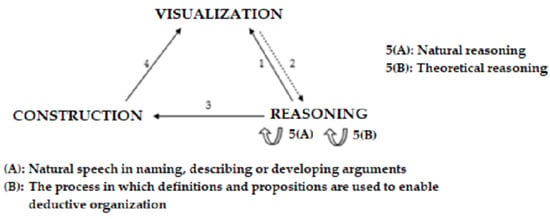


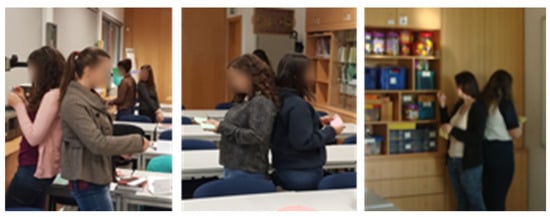
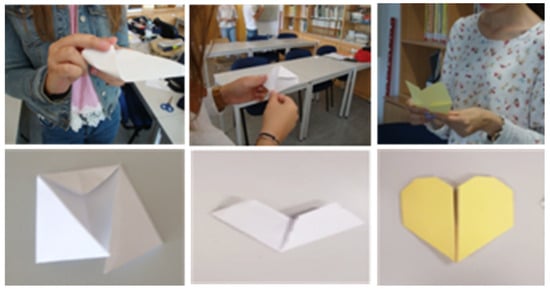
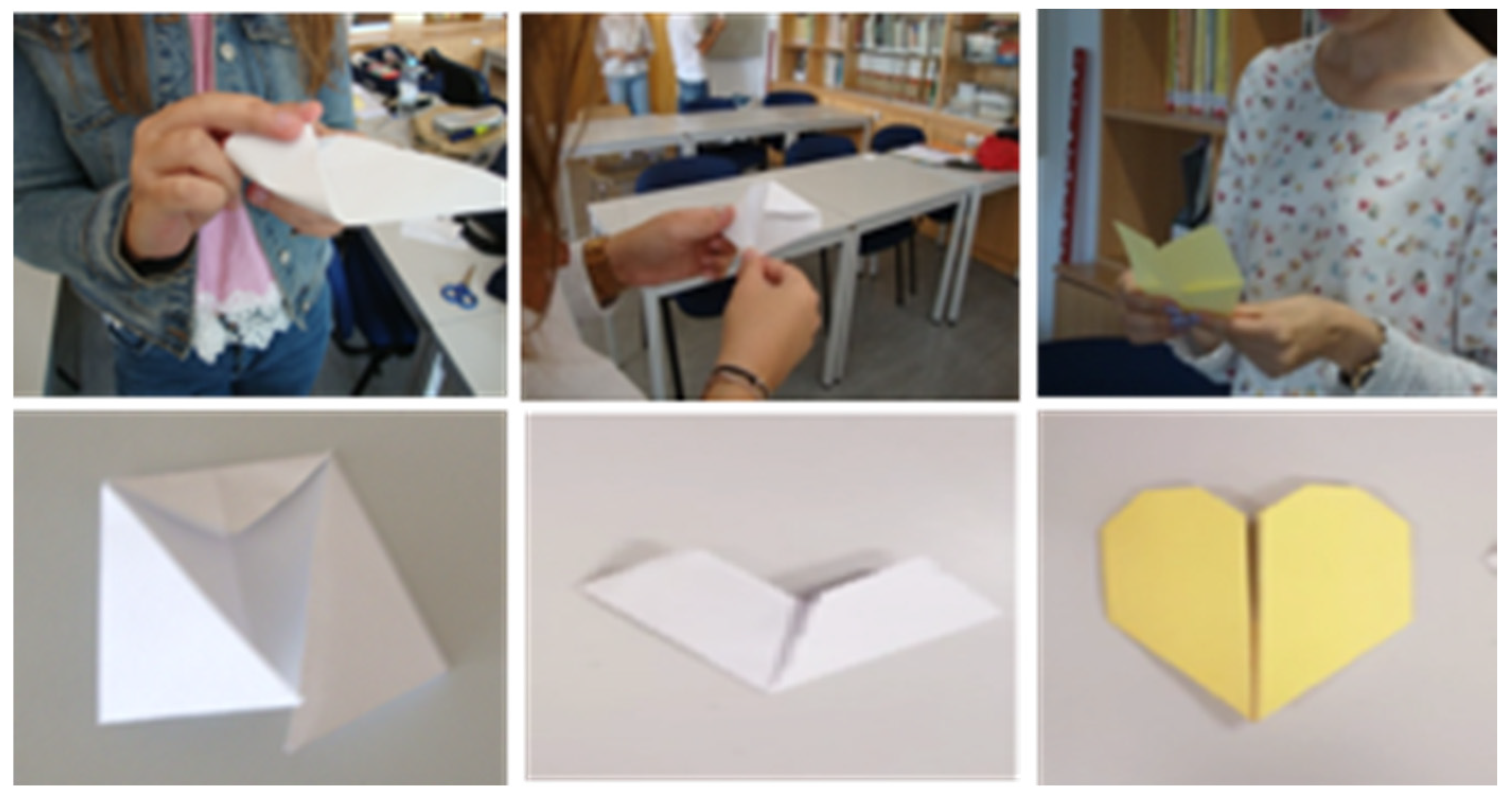
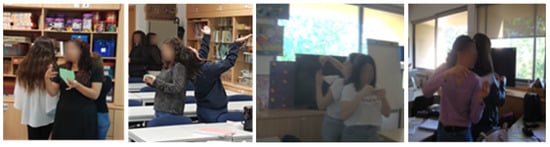
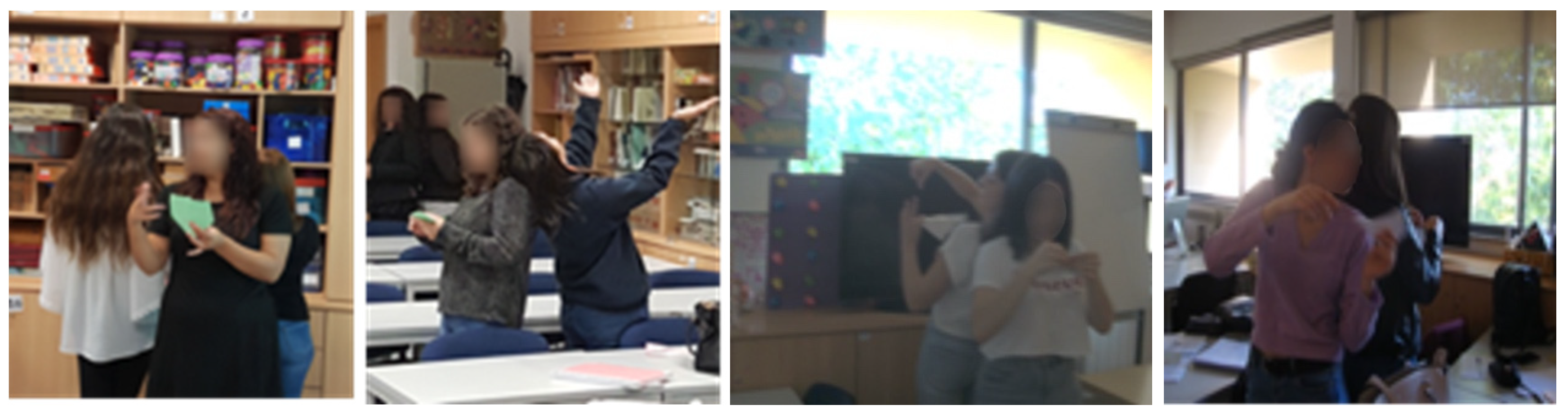
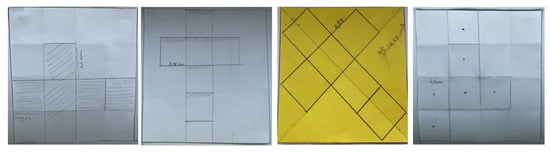
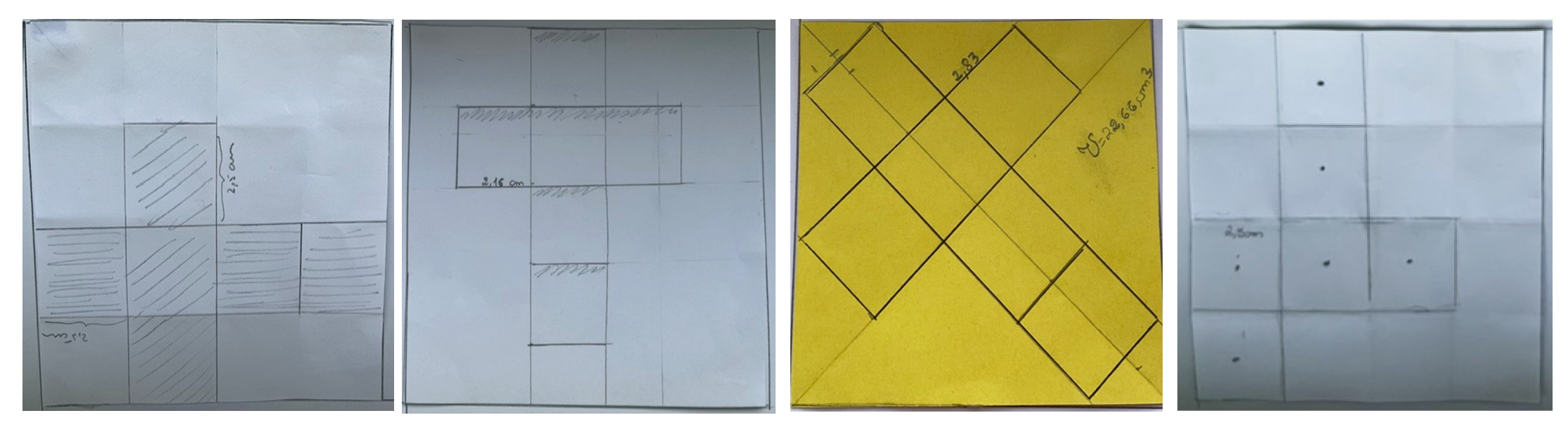
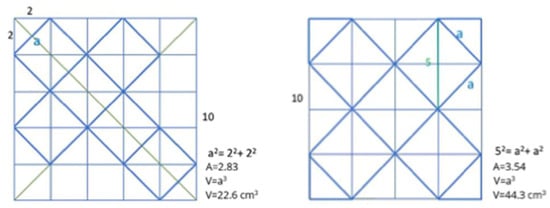
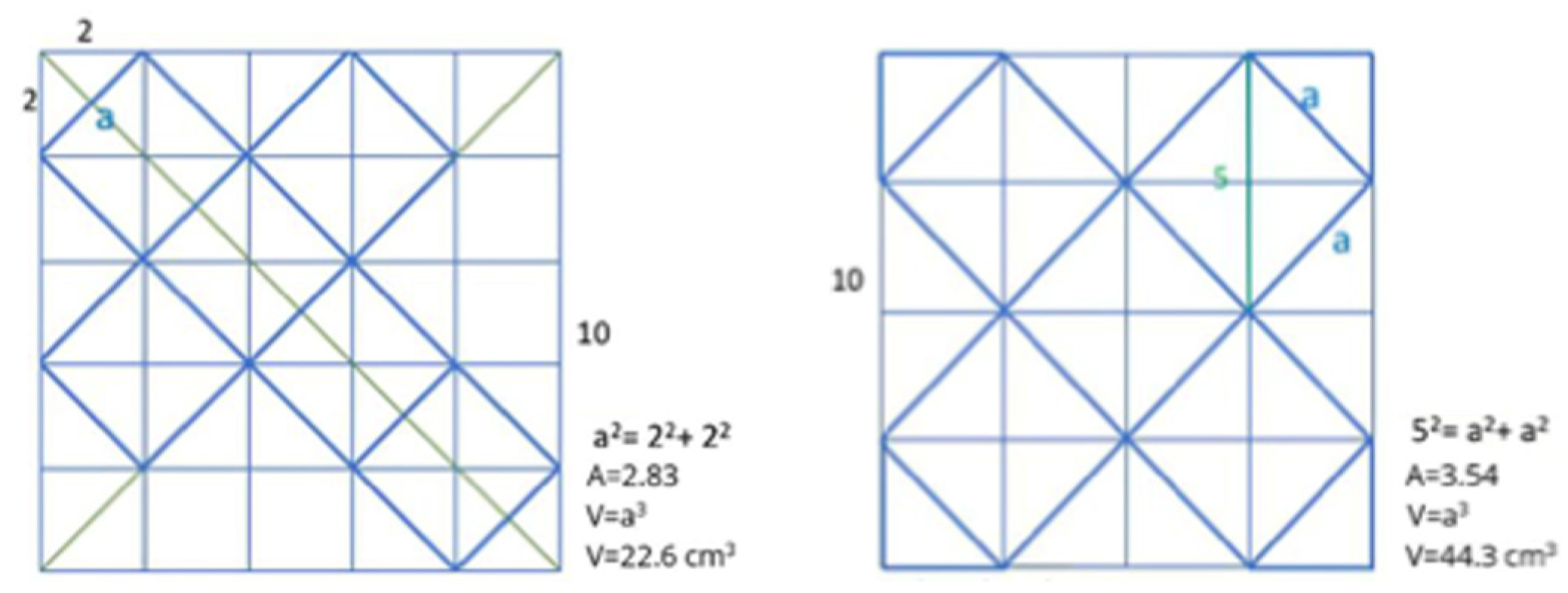
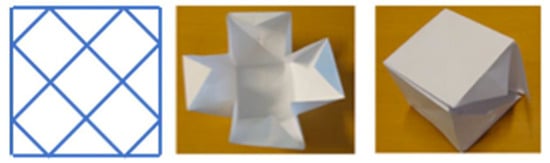
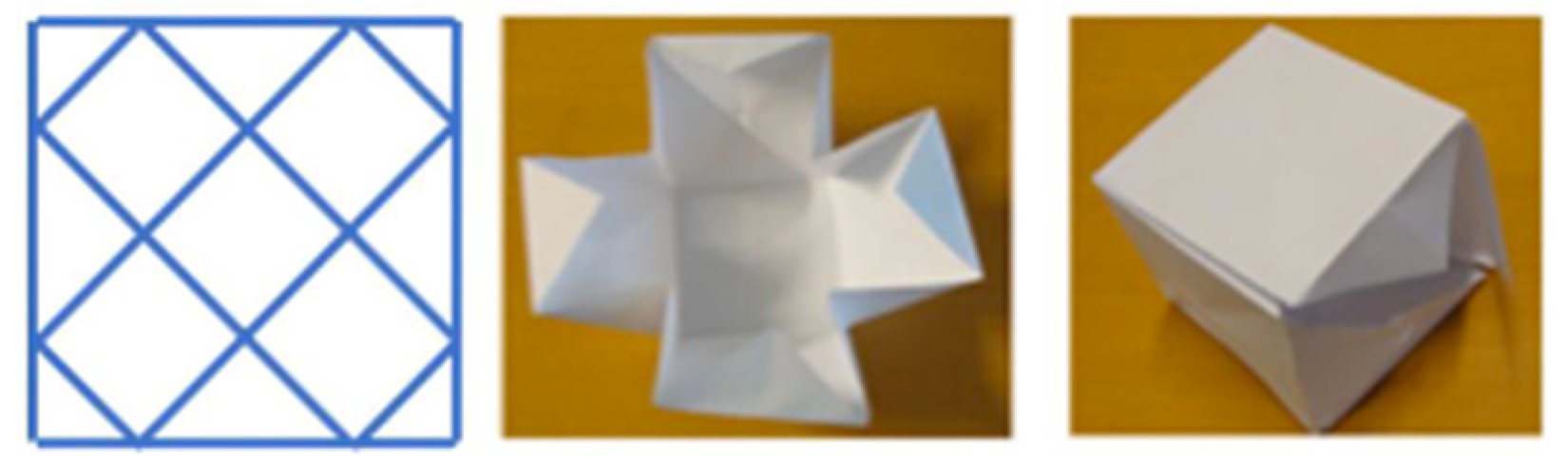


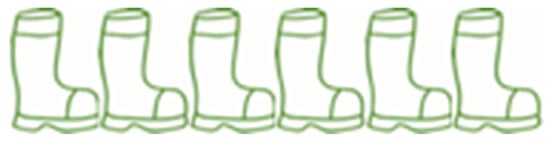
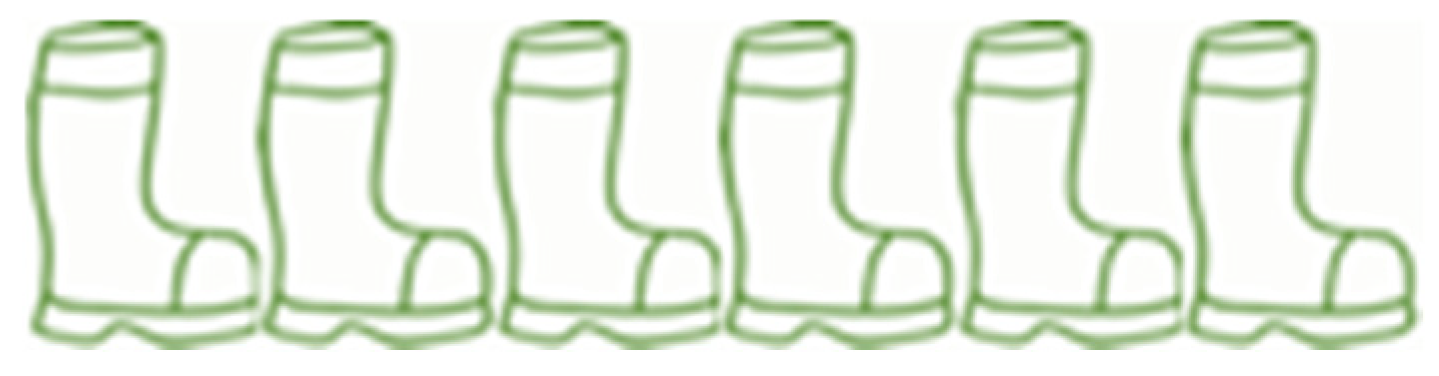





Disclaimer/Publisher’s Note: The statements, opinions and data contained in all publications are solely those of the individual author(s) and contributor(s) and not of MDPI and/or the editor(s). MDPI and/or the editor(s) disclaim responsibility for any injury to people or property resulting from any ideas, methods, instructions or products referred to in the content. |
© 2026 by the authors. Licensee MDPI, Basel, Switzerland. This article is an open access article distributed under the terms and conditions of the Creative Commons Attribution (CC BY) license.