


Abstract
Socioeconomic status (SES) strongly predicts children’s executive-function (EF) performance and academic achievement. Although findings remain inconsistent, bilingualism has been proposed as a potential moderator of SES-related differences. This scoping review systematically maps evidence on bilingualism, SES, and the three core EFs (inhibition, working memory, and cognitive flexibility) in children and adolescents. Following PRISMA-ScR guidelines, five databases were searched without publication-date restrictions on 9 February 2026, with a supplementary search on 17 September 2026. Eligible studies were peer-reviewed empirical articles examining bilingual participants aged 17 years or younger, including a monolingual comparison group, interpretable measures of SES and at least one core EF. Data were charted using a review-specific form by one author and checked by another. Thirty-nine studies published between 2007 and 2026 were included. Findings were highly heterogeneous. Inhibition was the most frequently examined EF and yielded comparatively more reports of bilingual advantages than the other domains. Working-memory findings were predominantly null, while cognitive flexibility was less extensively investigated and produced mostly null or mixed evidence. Rather than supporting a universal bilingual advantage, the findings suggest that EF outcomes depend on bilingual experience, SES, developmental stage, and task variability. Longitudinal research using multidimensional measures of bilingualism and SES is needed to clarify the possible role of bilingualism in reducing educational inequalities.
1. Introduction
Central to the cognitive development of a child are a set of cognitive abilities known as executive functions (EFs), the three core EFs being inhibition, working memory and cognitive flexibility (Miyake et al., 2000). These cognitive abilities are fundamental for everyday functioning (Diamond, 2013) and have awakened considerable attention in the fields of developmental psychology and educational research due to their central role in children’s and adolescents’ academic performance and achievement.
EFs develop gradually over an extended period spanning from early childhood to young adulthood, with the early years of life constituting an especially sensitive period. Among the many factors that have been seen to influence this development, socioeconomic status (SES) stands out as one of the strongest predictors of EF development. Children from low SES backgrounds frequently show greater academic disadvantage, contributing to what is widely known as the ‘achievement gap’ (Bradley & Corwyn, 2002; Noble et al., 2005).
Given the strong association between SES and EF development, increasing attention has been given to identifying factors that may reduce SES-related differences in cognitive development, among them bilingualism. Researchers suggest that the continuous management of two or more languages in bilingualism places high demands on regions of domain-general cognitive control processes, leading to enhanced executive functioning (Bialystok, 2017; Green, 1998). However, although promising, evidence for a bilingual advantage remains mixed: while numerous studies have reported advantages in inhibition, working memory and cognitive flexibility (e.g., Bialystok et al., 2004; Cox et al., 2016), others have failed to replicate these findings (e.g., Duñabeitia et al., 2014; Paap & Greenberg, 2013; Paap et al., 2015) resulting in an ongoing debate regarding the existence, extent and conditions under which bilingual advantages may emerge (see Antoniou, 2019).
A number of explanations for the inconsistency in these findings have been proposed. Studies show considerable methodological heterogeneity and differ substantially in their operationalisation of bilingualism, SES, participant characteristics, EF measures, and analytical approaches, making comparisons difficult. In particular, SES has often been treated exclusively as a control variable rather than as a factor that may meaningfully interact with the bilingual experience. This shortcoming was pointed out by Morton and Harper (2007), who argued that many reported bilingual advantages were a result of uncontrolled SES differences rather than caused by bilingualism itself. Carlson and Meltzoff (2008), in turn, demonstrated the importance of considering SES as a key developmental factor alongside bilingualism, marking a shift in how the relationship between these variables was viewed and, consequently, conceptualised. Since then, increasing attention has been devoted to understanding not only the independent effects of SES and bilingualism, but also how they interact to shape EF development, still yielding, however, mixed findings.
More recently researchers have begun to move beyond treating both SES and bilingualism as simple categorical variables. Instead, SES is recognised as a multidimensional construct including educational, occupational, financial, and environmental factors. At the same time, bilingualism is increasingly viewed as a multidimensional experience characterised by differences in language proficiency, exposure, language use, and interactional context. Furthermore, growing attention has been devoted to understanding how these two experiences interact throughout development as opposed to examining only their independent effects.
Previous meta-analyses have studied bilingual–monolingual differences in executive functioning and have considered SES to varying degrees (Donnelly et al., 2019; Gunnerud et al., 2020; Lehtonen et al., 2018; Lowe et al., 2021). However, their aims and scope differ from those of the present review. Lehtonen et al. (2018) focused on particular populations or EF outcomes, such as executive functioning in adults, while Donnelly et al. (2019) examined interference control across age groups. Others considered SES principally as a study-level moderator or methodological control. Gunnerud et al. (2020), for example, compared bilingual–monolingual effect sizes across broad SES categories and found a small bilingual advantage among middle-SES samples, but not among low- or upper-middle-SES samples. However, the small number of studies representing the latter groups limited the conclusions that could be drawn. On the other hand, Lowe et al. (2021) found that the apparent effects favouring bilingual children disappeared when only studies that had objectively measured and controlled for SES were considered. Even though these meta-analyses demonstrate that SES can influence conclusions about bilingual–monolingual EF differences, they do not specifically synthesise the evidence concerning the relationship between bilingualism and the three core EFs in children and adolescents across different socioeconomic contexts. Addressing this gap is the central aim of the present scoping review.
The present review therefore aims to map the available evidence concerning the relationship between bilingualism, SES, and the development of inhibition, working memory, and cognitive flexibility during childhood and adolescence, with particular attention to children from socioeconomically disadvantaged backgrounds. It explores whether and under what conditions bilingualism may be associated with stronger EF performance or may reduce SES-related differences. It also identifies the developmental and educational contexts represented in the literature, alongside the main methodological limitations and areas in need of further investigation.
2. Methodology
2.1. Methodological Framework
This scoping review was conducted following the methodological framework proposed by Arksey and O’Malley (2005) and subsequently refined by Levac et al. (2010), which suggests the following approach: (i) identifying the research question; (ii) identifying relevant studies; (iii) the selection of the studies; (iv) data extraction and organisation; (v) synthesis and reporting of the findings. To ensure methodological transparency, reproducibility, and comprehensive reporting, the review also followed the Preferred Reporting Items for Systematic Reviews and Meta-Analyses extension for Scoping Reviews (PRISMA-ScR) guidelines across all stages of the review process. No review protocol was registered for this scoping review.
This scoping review addresses the following research question:
What evidence does the literature provide about the potential relation between bilingualism and the development of the three core executive functions (inhibition, working memory, and cognitive flexibility) across different socioeconomic contexts in children and adolescents?
2.1.1. Search Strategy
A comprehensive systematic search was conducted on 9 February 2026 using the following five databases: PsycINFO, ERIC, Scopus, Web of Science, and MLA International Bibliography. The search strategy was designed to identify studies examining the relationships between bilingualism, SES, and executive functions in children and adolescents. Boolean operators were used to combine three key concepts: (i) the target population (children and adolescents); (ii) bilingualism and SES; and (iii) executive functions. To do so, the following search string was applied:
(child OR “school-aged” OR adolescen*) AND (socioeconomic OR SES) AND (bilingual* OR multilingual* OR “second language”) AND (“executive function*” OR inhibition OR “working memory” OR “cognitive flexibility”).
This search strategy was adapted to the indexing structure and functionality of each database. In Web of Science and Scopus, Topic and TITLE-ABS-KEY fields were used, respectively, to search for titles, abstracts, and keywords. In PsycINFO, searches were conducted in the title and abstract fields. Due to differences in indexing and search functionality, broader All Fields searches were conducted in ERIC and MLA International Bibliography to maximise the retrieval of potentially relevant studies.
2.1.2. Study Selection and Eligibility Criteria
All retrieved records were imported into the Mendeley reference management software to facilitate the identification and removal of any duplicate records after the database search. A study selection was then conducted using the following criteria: (i) included children or adolescents; (ii) investigated bilingualism or multilingualism, socioeconomic status (SES), and at least one of the three core executive functions (inhibition, working memory, or cognitive flexibility); (iii) reported original empirical findings; and (iv) was published in peer-reviewed journals.
Studies were excluded if they had the following characteristics: (i) were not published in peer-reviewed journals; (ii) non-empirical publications; (iii) involved clinical populations, including individuals with psychiatric disorders, neurodevelopmental disorders, or sensory disabilities; (iv) did not measure or include as a key variable either bilingualism, any of the three core EFs or the variable of SES; (v) explored research questions unrelated to the interaction between bilingualism, SES and EF development; (vi) included participants over the age of 17, unless findings for participants aged 17 years or younger could be extracted separately; (vii) did not include a monolingual control group; (viii) were written in a language other than English. The upper age limit of 17 was selected to preserve the review’s developmental focus on childhood and adolescence and to exclude young adults, particularly university student samples, which represent a distinct developmental and educational population. Although continuous within-bilingual designs provide valuable evidence about how variation in bilingual experience relates to executive functioning (Rothman et al., 2023; Zingaretti et al., 2026), this does not mean that bilingual–monolingual comparisons are uninformative in every research context. Indeed, Rothman et al. (2023) acknowledge that monolingual comparisons may be appropriate when their inclusion is explicitly justified by the research question. In the present review, requiring a monolingual comparison group provided a consistent framework for examining whether bilingual children performed differently from monolingual children across socioeconomic contexts and for classifying the published findings as advantage, mixed, or null. Monolingual participants were therefore treated as a theoretically relevant comparison group, not as a normative standard or true experimental control. This criterion was retained because it ensured comparability across the evidence synthesised, although its implications for the scope of the review are acknowledged in the limitations.
A total of 414 records were identified by the database searches. Due to export limitations, 412 records were successfully imported into Mendeley. Following the removal of 179 duplicate records and one corrigendum, 232 records remained for screening. An additional four records were identified through citation searching, resulting in a total of 418 records identified and 236 records entering the screening process, which is detailed in the PRISMA-ScR flowchart in Figure 1 (Page et al., 2021).
Figure 1.
PRISMA 2020 flow diagram of the study selection process.
2.1.3. Screening Process and Data Extraction
The selection process consisted of title and abstract screening, full-text eligibility assessment, and data extraction. Full-text eligibility assessment was completed in two phases, with the second phase serving as a final eligibility verification during preliminary data charting. All stages were conducted using the predefined inclusion and exclusion criteria.
During the title and abstract screening stage, the titles and abstracts of the 236 retrieved records were assessed for eligibility. A total of 104 records were excluded, while 132 articles progressed to full-text assessment. One report could not be retrieved, resulting in 131 full-text articles being assessed for eligibility. Title and abstract screening was conducted independently by the two authors. Each author assessed the same records against the predefined criteria and recorded an include, exclude, or uncertain decision in a Microsoft Excel spreadsheet. Following screening, the authors compared their decisions. Discrepancies and uncertain cases were discussed with reference to the eligibility criteria until consensus was reached. A third reviewer was not required because all disagreements were resolved through discussion. Although the screening decisions were compared, no formal inter-reviewer agreement statistics were calculated.
During the full-text screening stage, the 131 retrieved articles were evaluated in greater detail against the eligibility criteria. The same two authors assessed the full texts independently, recording an eligibility decision and, where applicable, the principal reason for exclusion. Their decisions were compared after screening, and discrepancies were resolved through discussion and re-examination of the full article until consensus was reached. At this stage, 72 studies were excluded, leaving 59 articles for further assessment. Reports that clearly failed to meet the criteria were excluded, whereas reports for which eligibility could not yet be determined confidently were retained for closer examination rather than excluded prematurely. The main reason for exclusion was that SES, bilingualism, or executive functions were not examined as key variables. All exclusion criteria used at this stage can be seen in the PRISMA-ScR flow diagram (Figure 1). The main reason for excluding each report was documented in the screening spreadsheet.
The 59 reports retained after the initial full-text assessment then underwent preliminary data charting and a second, more detailed eligibility verification. The authors examined the study aims, variables, measures, analyses, and discussion to determine whether bilingualism was a main variable, whether the outcomes represented one or more of the three core executive functions, whether SES provided interpretable evidence concerning executive functioning, and whether the study included a monolingual comparison group. The eligibility criteria did not change between the two phases; the second phase involved applying the same criteria using the more detailed information obtained during preliminary charting. This assessment resulted in the exclusion of 28 further reports: 19 were not aligned with the review objective and nine did not include a monolingual comparison group. These decisions were based on study characteristics and not on the direction or statistical significance of the findings. The final sample therefore comprised 31 studies. In total, 205 records or reports were removed from the review pathway, including the report that could not be retrieved. The complete selection process is presented in the PRISMA flow diagram (Figure 1).
The data-charting form was developed specifically for this review from the research question and eligibility criteria. It was not formally piloted on a predefined subset of studies; instead, it was refined iteratively during preliminary charting to ensure that all relevant information was captured consistently. After the final sample had been confirmed, data from the 31 included studies were fully extracted and charted by one author, and the recorded information was reviewed by the other author. The form included study characteristics (e.g., authors, publication year, country, study design and participant characteristics), alongside the main characteristics and metrics of the three key variables (SES, EFs and language measures), which are summarised in Table 1. The information regarding EF tasks used in the studies and the results reported was also charted and is presented in Table 3.
Table 1.
Characteristics of the 39 studies included in the scoping review.
Following data charting, the extracted information was compared across studies to identify patterns, similarities and differences, and was grouped according to shared characteristics such as EF domain, SES, age, bilingual experience, and methodological design. Studies with similar characteristics were then grouped under broader themes to facilitate cross-study comparisons and aid in identifying themes of discussion, which will be presented, alongside the results, in the following sections.
A recommended supplementary search was conducted on 17 September 2026 to identify relevant studies published or indexed since the original search. The following expanded search string was used: (child* OR “school-aged” OR adolescen*) AND (socioeconomic OR “socio-economic” OR SES OR poverty OR income OR disadvantage* OR deprivation OR “free lunch” OR “Head Start” OR “maternal education” OR “parental education” OR occupation OR “social class”) AND (bilingual* OR multilingual* OR “second language” OR “dual language” OR “heritage language” OR immersion) AND (“executive function*” OR inhibition OR “inhibitory control” OR “working memory” OR “cognitive flexibility” OR shifting OR switching). The syntax was adapted where necessary to meet the requirements of each database, as previously mentioned.
The supplementary search identified 964 records. After removing 412 records matching those identified in the original search, 552 records remained. A further 178 duplicates were removed, leaving 374 records for title and abstract screening. Of these, 326 were excluded, 48 reports were sought for retrieval, and two could not be retrieved. The remaining 46 reports underwent full-text eligibility assessment, of which 38 were excluded, resulting in eight additional included studies. The complete selection process is presented in Supplementary Figure S1. When combined with the 31 studies identified through the original search, these eight additional studies brought the final review sample to 39 studies.
3. Results
3.1. Characteristics of the Included Studies
The characteristics of the 39 studies included in this scoping review are summarised in Table 1. The studies are described according to their year of publication, geographical location, participant characteristics, educational settings, conceptualisation and measurement of bilingualism, operationalisation of socioeconomic status (SES), and executive functions (EFs) assessed.
3.1.1. Publication Period
As can be seen in Figure 2, the articles reviewed were published between 2007 and 2026, with most appearing after 2018. This distribution reflects a steady interest in understanding the relationship between bilingualism, SES, and EF development during childhood and adolescence.
Figure 2.
Publications per year.
3.1.2. Geographical Distribution
The reviewed studies included data from 12 countries, with most research conducted in North America and Western Europe. The largest number of studies were carried out in the United States (n = 16), followed by the United Kingdom (n = 6). Canada and Italy contributed three studies each, while Greece, Germany, The Netherlands, Sweden, and Luxembourg were represented in two studies each. India was represented in one study. The two studies conducted in Luxembourg additionally included monolingual comparison samples from Portugal and Brazil, respectively. Overall, 25 of the 39 studies were conducted primarily in the United States, the United Kingdom, or Canada, reflecting the continued predominance of English-speaking contexts in research on this topic and the comparatively limited representation of other linguistic and sociocultural settings. However, this pattern should be interpreted in light of the review’s restriction to English-language publications and the coverage of the databases searched, which may have increased the representation of research conducted in English-speaking contexts.
3.1.3. Participants
Great variation can be observed in sample sizes, ranging from 34 participants to more than 18,000 participants in large national cohort datasets, as well as the age groups studied. Table 2 reflects the distribution of studies according to the age of the participants:
Table 2.
Distribution of studies according to age of participants.
The studies were unevenly distributed across developmental stages. Eighteen studies focused on early childhood, eight on middle childhood, three on adolescence, and ten included multi-stage samples. Thus, the evidence remains considerably stronger for early and middle childhood than for adolescence. Conclusions concerning adolescence should therefore be regarded as tentative, and further research focusing specifically on bilingual adolescents from different socioeconomic backgrounds is needed.
3.1.4. Sites of Data Collection
Data were collected in a wide variety of settings, including preschools, primary and secondary schools, bilingual and dual-language immersion programmes, Head Start centres, lower-SES charter schools, inner-city and rural public schools, community-based settings, and remote or home-based assessment contexts. Several studies also used large-scale longitudinal cohorts and educational databases.
3.1.5. Language Status
Following the eligibility criteria used in this review, all studies included a monolingual comparison group. The predominant methodological approach was a bilingual–monolingual comparison (e.g., Bablekou et al., 2025; Hartanto et al., 2019; Morton & Harper, 2007), although a subset of studies also incorporated multilingual profiles, including simultaneous multilinguals, multilingual learners, and children with different levels of dominance or proficiency (e.g., Bialystok & Shorbagi, 2021; Czapka et al., 2020; Engel de Abreu et al., 2013; Perry et al., 2026; White & Greenfield, 2017).
The bilingual/multilingual vs. monolingual condition was established through different means. Mostly, children were classified according to the level of exposure and use of their home language via parent-report questionnaires (e.g., Federico et al., 2023; Gathercole et al., 2010). Many studies also used tests of language proficiency to measure bilingualism, such as standardised vocabulary tests (e.g., Bosman & Janssen, 2017; Buac & Kaushanskaya, 2014; Buac et al., 2016, Choi et al., 2018), while others took into account age of acquisition, duration of bilingual experience, or participation in immersion or dual-language educational programmes (e.g., Dicataldo & Roch, 2020; Trebits et al., 2022). On the other hand, a smaller number of studies treated bilingualism as a multidimensional construct by combining measures of language proficiency, exposure, and use across both languages (e.g., De Cat et al., 2018; Krizman et al., 2016). Finally, most studies focused on Spanish–English bilinguals (e.g., Frechette et al., 2023; Esposito, 2021; Huang et al., 2023a).
Spanish–English was the most frequently represented bilingual pairing (e.g., Frechette et al., 2023; Huang et al., 2023a; White & Greenfield, 2017). Nevertheless, the evidence base also included Turkish–Dutch, Italian bilingual, and linguistically diverse multilingual samples involving a broad range of heritage and home languages (e.g., Abdurokhmonova et al., 2026; Bosman & Janssen, 2017; Panesi et al., 2026; Perry et al., 2026; Tonér et al., 2021; Tsimpli et al., 2020).
3.1.6. Operationalisation of Socioeconomic Status
SES was also measured and incorporated into the main analysis in a wide variety of ways. The most widely used proxies were parental education, household income, and parental occupation, either individually or combined into composite SES indices (e.g., Bablekou et al., 2025; De Cat et al., 2018; Filippi et al., 2020; Panesi et al., 2026; Tonér & Nilsson, 2021). Some studies calculated an income-to-needs ratio based on household income and family size (e.g., Abdurokhmonova et al., 2026; Huang et al., 2023b), while others used broader multidimensional measures that additionally incorporated poverty status, family structure, eligibility for free or reduced-price lunch, Head Start participation, cumulative socioeconomic risk, or neighbourhood and area-level deprivation (e.g., Choi et al., 2018; Esposito & Baker-Ward, 2013; Frechette et al., 2023; Palomino & Brudvig, 2022; Perry et al., 2026; Santillán & Khurana, 2018).
Several studies examined uniformly low-income or socioeconomically disadvantaged samples, with SES established through Head Start eligibility, neighbourhood or school context, poverty thresholds, or recruitment criteria (e.g., Bosman & Janssen, 2017; Choi et al., 2018; Esposito, 2021; Huang et al., 2023b; White & Greenfield, 2017). These restricted-range designs provide evidence concerning bilingualism and EFs within disadvantaged populations, but they do not allow for a direct study of whether the connection between bilingualism and EFs varies across SES levels.
The analytical role of SES also differed considerably across studies. SES was treated as an independent predictor (e.g., Buac & Kaushanskaya, 2014; Dicataldo & Roch, 2020; Perry et al., 2026), moderator (e.g., Filippi et al., 2022; Krizman et al., 2016), covariate (e.g., Blom et al., 2014; Carlson & Meltzoff, 2008; Panesi et al., 2026), matching variable (e.g., Engel de Abreu et al., 2012; Esposito, 2021; Ladas et al., 2015), grouping factor (e.g., Bialystok & Shorbagi, 2021; Krizman et al., 2016), eligibility or sample-selection criterion (e.g., Bosman & Janssen, 2017; Huang et al., 2023b), or contextual or descriptive characteristic of the sample (e.g., Filippi et al., 2020; White & Greenfield, 2017).
Across the 39 included studies, 13 formally tested whether SES moderated the association between bilingualism and executive functioning by including a bilingualism × SES interaction. Eight studies used SES only as a control or covariate. Restricted-range studies were defined as those whose samples were confined to a single or narrow socioeconomic range, including uniformly low-SES, economically disadvantaged, and low-to-medium-low-SES samples. According to this definition, 16 studies used restricted-range samples. These categories were not mutually exclusive, as some restricted-range studies also controlled statistically for the remaining variation in SES. In addition, 10 studies entered SES as an independent predictor or main effect. This methodological heterogeneity highlights the absence of a standardised approach to conceptualising and measuring SES and limits direct comparison of findings across studies.
3.1.7. Measurement of Executive Functions
A wide range of tests was used to test the EFs, with some studies applying multiple measures for one EF (e.g., Blom et al., 2014 or Engel de Abreu et al., 2012; Panesi et al., 2026), while others used single tasks (e.g., Bialystok & Shorbagi, 2021; Choi et al., 2018; De Cat et al., 2018). The methods used to measure these functions included traditional researcher-administered behavioural tasks, computerised and online tasks, standardised test batteries, and batteries from which composite or latent EF scores were derived (e.g., Abdurokhmonova et al., 2026; Huang et al., 2023b; White & Greenfield, 2017). Studies also show a wide variety of tasks to measure the EFs, with more than 20 distinct task paradigms used to measure inhibition alone, therefore limiting direct comparability across findings. Backward Digit Span or Backward Digit Recall was a notable exception to this variability, being the most frequently used measure of WM.
3.2. Executive Function Outcomes
The EF outcomes reported across the 39 studies are summarised in Table 3. To make comparison across studies easier, findings were classified as advantage, mixed, or null. Advantage was used when the study reported significantly better EF performance or development among bilingual participants. Mixed findings were identified when bilingual effects were conditioned by specific contextual factors, including SES, age, bilingual proficiency, developmental stage, task characteristics, or specific subcomponents of the EF. Finally, null referred to studies reporting no bilingual advantage, either because no significant bilingual–monolingual differences were found or because monolingual participants performed significantly better.
Table 3.
Descriptive summary of studies reviewed: executive function outcomes and tasks used.
As will be seen below, this classification was not without its challenges, since some studies compared bilingual and monolingual participants from different SES backgrounds, and these differences were not always accounted for consistently when interpreting the results. This could have led to the classification of the impact of bilingualism as “null” when, in fact, equal performance on EF tasks of lower SES bilinguals and higher SES monolinguals may be understood as potentially consistent with the buffering hypothesis, but not sufficient to demonstrate one. These studies have been identified through an asterisk (*) in Table 3, but it was decided to maintain the authors’ interpretations all the same.
As regards WM, only executive-loaded measures of this skill were taken into account for the results. This is due to the fact that these have generally been considered to provide a more representative assessment of WM since they require both storage and manipulation of information, as opposed to simple span tasks that are generally regarded as a measure of short-term storage. (Conway et al., 2005; Friedman & Miyake, 2017).
Only performance-based cognitive tasks were included in the domain-specific EF results; questionnaire-based ratings of EF-related behaviour were not counted. To avoid double-counting across EF domains, each task outcome was assigned to a single domain according to the primary construct assessed by the relevant score. Response-inhibition and interference-control measures were classified as inhibition, tasks requiring the storage and manipulation of information as working memory, and switching or rule-shifting measures as cognitive flexibility. A study could contribute findings to more than one domain when it used separate tasks, but the same task result was not counted under more than one domain. Composite or latent EF scores were classified separately when domain-specific results were not reported.
4. Discussion
Overall, the results of the studies reviewed are very varied. Table 4 summarises their findings and specifies the number of studies reporting an advantage (A), mixed results (M) and null results (N) for each EF, using the task-to-domain classification rule described in Section 3.2. It thus forms an overview of the current evidence, and the basis for the discussion presented in the following section. Consistent with the mapping purpose of this scoping review, no formal critical appraisal was conducted. The descriptive counts therefore provide an overview of the patterns reported across the included evidence base, with each study contributing equally to the counts in Table 4 regardless of its design or sample size, which ranged from 34 to over 18,000 participants. Consequently, these counts do not account for differences in statistical power, precision, or methodological strength and should be interpreted as descriptive patterns rather than weighted estimates of the evidence.
Table 4.
Distribution of advantage (A), mixed (M) and null (N) results for each EF.
4.1. Executive Function Patterns Across Socioeconomic Contexts
4.1.1. Inhibition
Inhibition was the most frequently assessed executive function, but its findings were heterogeneous: eight studies were classified as showing a bilingual advantage, six as mixed, and eleven as null. Differences between inhibitory processes may help explain some of the variation. Several studies reported bilingual advantages on interference-control tasks, including the Flanker and Simon tasks, or on selective-attention measures such as Sky Search (e.g., Calvo & Bialystok, 2014; De Cat et al., 2018; Engel de Abreu et al., 2012). However, findings from these types of tasks were not consistently positive: other studies reported null or mixed results on the Flanker, Simon, ANT, and Bivalent Shape tasks (e.g., Bablekou et al., 2025; Buac & Kaushanskaya, 2014; Esposito, 2021; Morton & Harper, 2007). Response inhibition measures also yielded both null findings and advantages: Go/No-Go and delay tasks were often null (e.g., Carlson & Meltzoff, 2008; Czapka et al., 2020), whereas advantages were reported on Animal Go/No-Go and pencil tapping measures in some samples (e.g., Choi et al., 2018; Huang et al., 2023a; Santillán & Khurana, 2018). The findings are therefore compatible with the proposal that bilingual language management engages attention and conflict resolution (see Bialystok, 2017). However, the mixed results across both conflict and response inhibition tasks prevent a firm conclusion that bilingualism is more strongly associated with one inhibitory process than another.
Several factors may contribute to these inconsistent findings. First of all, the tasks used often require simultaneous activation and engagement of inhibition, working memory and cognitive flexibility (see Bialystok & Shorbagi, 2021; Czapka et al., 2020). The second reason for the inconclusive results can be found in the composition of the samples, either being too small or not adequately controlled for confounding variables, such as intelligence, migration history, or educational background (see De Cat et al., 2018; Filippi et al., 2020). A third reason may relate to methodological decisions, including how studies account for socioeconomic status (SES), intelligence, and other background variables. For example, Morton and Harper (2007) found no bilingual advantage when comparing children with similar socioeconomic and ethnic backgrounds. Other studies suggested that the association between bilingual experience and inhibitory-control performance varied with SES (e.g., Bialystok & Shorbagi, 2021).
4.1.2. Working Memory
As previously mentioned, this review considered only executive-loaded tasks to measure WM, as their high demands on both the storage and manipulation of information directly index the executive component of WM (Friedman & Miyake, 2017; Conway et al., 2005). Findings were predominantly null (12 of 22 studies), although seven studies reported an advantage and three yielded mixed results. Both verbal and visuospatial executive-loaded tasks yielded a mix of advantages and null findings, indicating that neither modality is more sensitive to bilingual effects than the other.
In some longitudinal studies, WM advantages were observed at later assessments but not earlier ones (e.g., Blom et al., 2014; Trebits et al., 2022). Hartanto et al. (2019) likewise found that bilingualism buffered the association between low SES and verbal WM only at a later wave. On the contrary, Perry et al. (2026) reported cross-sectional differences associated with multilingual status but no significant difference in longitudinal verbal WM change. These findings suggest that age and bilingual experience may be relevant, although they do not establish that advantages consistently emerge over time.
4.1.3. Cognitive Flexibility
Cognitive flexibility (CF) represents the least extensively investigated executive-function domain in the present review, appearing in 14 studies. Five studies were classified as showing a bilingual advantage, three as mixed, and six as null. The lack of research concerning this executive function can be partially explained due to the attention given to inhibition and WM, both compelling topics of interest due to the extensively reported connection between inhibition and language suppression in bilinguals and the relationship between WM and academic success and school readiness. Added to this are the issues of task impurity, the ‘ceiling effect’ often shown by the DCCS in children older than 5 years, and the linguistic mediation of complex rules common to CF tasks (see De Cat et al., 2018), which can confound results with a child’s linguistic proficiency.
As with inhibition, the heterogeneity of results suggests CF to also be highly task-dependent, making it difficult to draw firm conclusions regarding the existence of a consistent bilingual advantage. Across the included studies, bilingual advantages were most frequently reported in tasks requiring children to switch efficiently between mental sets or response rules, such as the Dimensional Change Card Sort (DCCS), the Trail Making Test (TMT), and other complex task-switching paradigms with brief switching costs that “tax” the executive system enough to reveal the bilingual’s refined control mechanisms, similar to what is required when managing two active language systems (e.g., Esposito & Baker-Ward, 2013; Hartanto et al., 2019; Huang et al., 2023a, 2023b). However, these same or closely related measures produced null findings in other studies (e.g., De Cat et al., 2018; Esposito, 2021; Panesi et al., 2026; Tonér et al., 2021). This variation indicates that task demands alone do not explain whether a bilingual advantage emerges. Differences in age, bilingual experience, SES, language proficiency, sample composition, and analytical controls may also contribute to the inconsistent results.
Developmental stage and accumulated bilingual experience may be factors to consider when interpreting findings regarding cognitive flexibility. Esposito and Baker-Ward (2013) found no programme difference among kindergarten children, while children in Grades 2 and 4 with longer exposure to dual-language education performed better on the Trail Making switching task. However, age and duration of programme participation were confounded in this cross-sectional study, and the available longitudinal evidence in this review does not show a consistent developmental progression (e.g., Hartanto et al., 2019; Tonér & Nilsson, 2021). This possibility should therefore be examined in longitudinal research that can distinguish the effects of age from those of the duration and intensity of bilingual experience.
Overall, the findings do not support a consistent bilingual advantage in cognitive flexibility. The small number of studies, variation in task selection and inconsistent results across similar measures limit the conclusions that can be drawn. Further longitudinal research is needed to examine cognitive-flexibility development across age groups while distinguishing developmental change from the duration and intensity of bilingual experience.
4.2. Developmental Stage
Beyond differences across EFs, an additional pattern appeared regarding participants’ developmental stage. Following Best and Miller (2010), early childhood, middle childhood and adolescence were established as 2–6 years, 7–11 years and 12–17 years, respectively. These age-ranges were selected because they broadly reflect recognised stages of cognitive development during which EFs undergo important developmental changes (see Best & Miller, 2010). Of the 39 included studies, 18 focused on early childhood, 8 on middle childhood, 3 on adolescence (12–17 years), and 10 spanned multiple developmental stages. Within the published evidence, advantages in inhibition were more commonly observed during early childhood and in cross-sectional studies (e.g., Carlson & Meltzoff, 2008; De Cat et al., 2018; Huang et al., 2023b). Choi et al. (2018) also found that bilingual children and dual language learners with limited English skills showed faster inhibitory-control growth than English monolinguals from Head Start entry to kindergarten, although the groups did not all differ significantly at initial testing. Findings regarding WM, and to a lesser extent CF, raise the possibility that bilingual effects may become more apparent with increasing age and accumulated bilingual experience (e.g., Blom et al., 2014; Hartanto et al., 2019; Esposito & Baker-Ward, 2013; Trebits et al., 2022). However, this pattern was not consistent across studies, and the available evidence does not establish that bilingual advantages reliably emerge or increase over time. Any developmental interpretation should therefore remain tentative, particularly because the evidence was unevenly distributed across age groups and only three studies focused specifically on adolescence.
A number of explanations can be provided for this developmental pattern. Firstly, the early development of inhibition may be due to the plasticity of the brain. This allows environmental experiences, including bilingualism, to influence cognitive development. Secondly, as has been mentioned in the literature and highlighted in this review, the EFs of WM and CF may require prolonged bilingual experience before measurable advantages emerge, supporting threshold or cumulative-experience accounts (see Hartanto et al., 2019; Trebits et al., 2022). Finally, the choice of task may interact with the developmental stage of the child, since some of the tests may be too easy or too complex for children, leading to ceiling or floor effects (see Bablekou et al., 2025; Tonér et al., 2021). All in all, these findings highlight the importance of adopting longitudinal designs to track EF development over time as opposed to solely relying on cross-sectional comparisons. The methodological implications of these observations, particularly the need for longitudinal designs and greater representation of adolescent samples, are discussed in Section 5.
4.3. The Role of Bilingual Experience
The developmental patterns identified across the three executive functions suggest that bilingualism cannot be understood as a simple categorical characteristic. Rather, the reviewed evidence shows that differences in proficiency, language use, accumulated experience, and educational context help explain why bilingual advantages emerge under some conditions but not others. This makes it necessary to conceptualise bilingualism as a multidimensional and dynamic experience, shaped by degree of language proficiency, balance between languages, intensity of language use, age of acquisition, language-switching habits, interactional context, and educational setting when measuring inhibition (e.g., Santillán & Khurana, 2018), WM (e.g., Blom et al., 2014; Dicataldo & Roch, 2020; Hartanto et al., 2019; Trebits et al., 2022), cognitive flexibility (e.g., Filippi et al., 2022), and composite EF scores (e.g., Abdurokhmonova et al., 2026; White & Greenfield, 2017). This shift regarding how bilingualism is conceptualised represents one of the greatest developments within the literature, offering one of the most compelling explanations for the great fluctuation in findings observed across studies exploring the relationship between SES, EFs and bilingualism.
Across the reviewed studies, and across all three executive functions, language proficiency emerged as a stronger predictor of EF performance than bilingual status alone, with a number of studies suggesting that EF advantages are more likely to be observed among balanced or highly proficient bilinguals than among children with limited bilingual experience (e.g., Blom et al., 2014; Bosman & Janssen, 2017; Carlson & Meltzoff, 2008; Frechette et al., 2023; Ladas et al., 2015). Such findings are consistent with the ‘Threshold Hypothesis’ (Cummins, 1976, 1979), which proposes that a minimum level of bilingual proficiency and sustained dual-language engagement is required before any cognitive benefits appear. However, not all authors agree with the notion of a threshold arguing that the relation between EF and bilingualism is a gradient experience, where small, continuous changes affect EF outcomes (see Bialystok & Shorbagi, 2021; Trebits et al., 2022).
The longitudinal studies included in this review raise the possibility of cumulative effects of bilingual experience, particularly for WM, as children accumulate greater proficiency (e.g., Blom et al., 2014). For example, Hartanto et al. (2019), who tracked 18,200 children from ages 5 to 7 years, found that bilingualism significantly weakened the impact of low SES on verbal working memory by Wave 4 (age 7 years). Choi et al. (2018) similarly found faster growth in inhibitory control among bilingual children and Dual Language Learners with limited English skills than among English monolinguals from Head Start entry to kindergarten. Developmental factors also appeared to play an important role for CF, suggesting that bilingual advantages may emerge progressively and not be present during the earliest stages of bilingualism, maturing throughout childhood and adolescence (see Bablekou et al., 2025; Filippi et al., 2022). De Cat et al. (2018) further argues that this cumulative bilingual experience is of great importance, with indices like the Bilingualism Profile Index (BPI) being able to predict inhibitory performance more accurately than simple group labels like monolingual or bilingual.
This ‘cumulative bilingual advantage’ could be due to the fact that practicing language switching and management causes a daily workout for the brain, strengthening its neural base (see Abdurokhmonova et al., 2026). However, alternative explanations have also been proposed, such as the ‘Controlled-Dose (or Routinisation) Hypothesis’ (Paap, 2018), which suggests that EF control demands may be greatest during the early stages of second-language acquisition and gradually diminish as control of the two acquired languages becomes more automatic (e.g., Bablekou et al., 2025).
Beyond proficiency, the reviewed studies consistently highlight the significance of how languages are used. Dicataldo and Roch (2020) highlighted in their study the importance of moving away from binary labels to use daily exposure as a continuous predictor, which explains the significant variance in WM. Abdurokhmonova et al. (2026) further states that objectively recorded balance in children’s everyday language exposure predicted EF performance when parent-reported bilingual knowledge did not. Consequently, factors such as active bilingual language use, frequent language switching, and sustained engagement with two languages were constantly connected to stronger EF performance, more so than passive exposure alone. The impact of language use lends support to the ‘Adaptive Control Hypothesis’ (Green & Abutalebi, 2013), which suggests that continuously managing two active languages strengthens EF processes, especially when children frequently change between languages in different situations and across different communicative contexts (e.g., Filippi et al., 2020, 2022). As a consequence, both the intensity and quality of the bilingual experience seem to be stronger predictors of EF development than bilingual status itself.
As regards the type of bilingualism developed by children, studies point towards an advantage of early bilinguals. However, the longitudinal study carried out by Trebits et al. (2022) suggested that immersion and dual-language education can also bolster EF development when exposure is intensive, sustained, and cognitively demanding. These authors observed cumulative effects of education in bilingual immersion programmes, where cognitive gains regarding WM emerged after 3 to 4 years of intensive dual-language schooling and concluded that these benefits appeared regardless of family SES. However, this conclusion should be interpreted cautiously because the sample was small and SES data were available for only 27 of the 39 participants. Similarly, Esposito and Baker-Ward (2013) carried out a cross-sectional study with a socioeconomically homogeneous sample of low-SES children that found that advantages in CF emerged only after several years of intensive exposure in dual-language (50:50) classrooms, suggesting that dual-language programmes could serve as a valuable intervention strategy for students from disadvantaged backgrounds.
4.4. The Role of Socioeconomic Status
SES emerged as one of the strongest influences on EF development across the 39 reviewed studies. Instead of simply functioning as a background characteristic, SES was very commonly associated with children’s access to cognitive stimulation, educational opportunities and environmental resources, with parental education and related SES indicators frequently being identified as stronger predictors of executive-function performance than bilingual status itself (e.g., Ladas et al., 2015; Morton & Harper, 2007; Filippi et al., 2020; Buac et al., 2016; Clayden et al., 2023; Tonér et al., 2021; Tonér & Nilsson, 2021). This reinforces the importance of considering SES when studying the relationship between bilingualism and EFs.
This review thus highlights an important conceptual shift within the literature on bilingualism and EFs. Whereas early studies often treated SES as a nuisance background variable in need of statistical control, more recent research increasingly considers it a key developmental factor capable of shaping or moderating the relationship between bilingualism and EF development. This has led to studies now examining not only the independent effects of SES, but also the way in which socioeconomic circumstances as a whole influence the consequences of bilingualism on cognition. As a result, the way in which SES is included in the design can strongly influence conclusions regarding bilingual advantages, suggesting that the lack of consensus within the literature can partly be explained by methodological differences in the conceptualisation and measurement of SES.
The reviewed studies argue that the three-way relationship between SES, EFs, and bilingualism is highly complex. For instance, Calvo and Bialystok (2014) reported independent and additive contributions of bilingualism and SES to inhibition (also see Krizman et al., 2016) and WM (also see Dicataldo & Roch, 2020). However, several studies also reported bilingual advantages within socioeconomically disadvantaged populations, including advantages in inhibition, WM, CF, or composite EF performance (Choi et al., 2018; Engel de Abreu et al., 2012; Huang et al., 2023b; Santillán & Khurana, 2018; White & Greenfield, 2017). However, because these studies sampled a restricted socioeconomic range, they demonstrate that bilingual advantages can occur within low-SES populations rather than establishing that bilingualism buffers SES-related disadvantages.
Evidence directly supporting the buffering hypothesis was reported by Hartanto et al. (2019) and Filippi et al. (2022), who formally examined interactions between bilingualism and SES. Hartanto et al. (2019) found that bilingualism generally attenuated SES-related differences in CF, while its buffering effect on verbal WM emerged only at the later assessment, at approximately age seven. These findings led Hartanto et al. (2019) to suggest that lower-SES children may be particularly responsive to the benefits of bilingual experience because they otherwise had comparatively fewer opportunities for cognitive development. Filippi et al. (2022) similarly found that a verbal WM advantage emerged among low-SES multilingual adolescents later in development, at ages 13–15 years, potentially alongside increasing second-language proficiency. These findings further suggest that the relationship between bilingualism and SES may change over time.
Conversely, several studies found that bilingual advantages disappeared after rigorously controlling for or matching SES (e.g., Bablekou et al., 2025; Esposito, 2021; Ladas et al., 2015; Filippi et al., 2020; Morton & Harper, 2007; Panesi et al., 2026). Abdurokhmonova et al. (2026) found that balanced naturalistic bilingual exposure predicted better behavioural EF performance but did not buffer the effect of low SES, while Perry et al. (2026) found no effect of multilingual status on longitudinal change in verbal WM. Others proposed that favourable socioeconomic environments may act as enabling conditions for bilingual cognitive benefits to emerge (e.g., Bialystok & Shorbagi, 2021). Taken together, these findings indicate that the interaction between bilingualism and SES is dynamic and context-dependent rather than uniformly compensatory.
Lastly, methodological differences in the measurement of SES further contribute to the heterogeneity of the findings. A wide range of factors and indicators were used throughout the reviewed studies to measure SES, including parental education, occupation, household income, neighbourhood characteristics, and composite indices. Increasingly, authors argue that SES should not be conceptualised as a simple categorical variable (high- vs. low-SES), but as a continuous and multidimensional construct including educational, occupational, financial, and environmental resources (e.g., Hartanto et al., 2019).
5. Priorities for Future Research and Limitations of the Current Evidence
The present review highlights a number of important limitations that, according to the authors, continue to hinder a homogeneous view of the SES-EF-bilingualism relationship. Consequently, to provide a more comprehensive understanding of the conditions under which bilingualism and SES interact to influence EF development, it is essential to address these limitations by means of more rigorous methodological approaches and study designs.
As was mentioned above, highly diverse definitions and indicators were used across the reviewed studies, which limited the possibility of comparison across investigations. Authors reviewed in this study suggest looking at the role of environmental factors—including bilingualism—in the development of language and cognitive skills in a more continuous, demographically representative manner (Buac & Kaushanskaya, 2014). It is also suggested that research moves away from between-group comparisons and rather uses matching procedures where subjects are matched by demographic variables to allow for comparison of results in the tests (e.g., Czapka et al., 2020).
The assessment of EFs is another important limitation. Despite the considerable attention given to inhibitory control and WM, comparatively little importance has been given to CF. Regarding test structure, many existing studies continue to rely on single-task measures to measure the three core EFs despite the well-recognised problem of task impurity. Future investigations should consequently use broader executive-function batteries, latent variables and more ecologically valid assessments that better capture children’s cognitive functioning in everyday contexts (e.g., Bablekou et al., 2025; Czapka et al., 2020; Tonér & Nilsson, 2021).
Another major priority for future research is the use of longitudinal research designs. While cross-sectional studies provide valuable insights into group differences, there is still very limited information regarding developmental trajectories or causal mechanisms, which this review has highlighted as highly consequential (e.g., Clayden et al., 2023; Santillán & Khurana, 2018). Longitudinal studies are fundamental to examine how bilingual experience accumulates over time (the cumulative experience), the correlation between proficiency and EF advantage, and how bilingualism and SES conditions interact throughout development and across age ranges (e.g., Bablekou et al., 2025; Krizman et al., 2016). Such designs are also essential to clarify the still ongoing debate of whether bilingualism influences EF growth or whether children with stronger executive functions are more likely to become proficient bilinguals.
Future research should also address the uneven representation of developmental stages within the literature. Most studies focus on early and middle childhood, with relatively few studies exploring adolescence, strongly limiting our understanding of how bilingualism and SES influence EF development beyond primary school. Providing greater representation across all developmental stages, alongside longitudinal designs, would enable researchers to determine more precisely whether bilingual advantages are temporary and limited to certain age ranges, remain stable or increase throughout childhood and adolescence. This would also serve to identify which periods would benefit the most from educational interventions and bilingual programmes, particularly among children from socioeconomically disadvantaged backgrounds.
Several authors in the review have also called for the imperative need to broaden the nature of study samples (e.g., Bablekou et al., 2025; Clayden et al., 2023; Frechette et al., 2023; Huang et al., 2023a). Most of the existing evidence comes from Western contexts, therefore representing specific types of bilingual populations, mostly Spanish–English speakers. Greater attention should be given to different cultural contexts, such as children living in non-Western settings with different language combinations, refugee populations, and other underrepresented groups.
Limitations of the Present Review
Limitations of the present review should also be acknowledged. Firstly, even though the research strategy used tried its best to identify all relevant studies in multiple databases and through a citation search, it is possible that some studies were not identified because they were either not indexed in the selected databases or not findable through the selected search strategy. Thus, evidence that might have been relevant may not have been included. The same is true for the decision to exclude books and book chapters from the search. The aim was to ascertain that the studies were peer-reviewed, but depending on publishing policies, this may also be true for books and book chapters. While acknowledging these limitations, the review nevertheless provides a first overview of the current evidence and highlights key patterns, methodological challenges, and fundamental considerations for future research.
As regards the fact that studies selected had to include a monolingual comparison group, this may have led to the exclusion of 22 studies, some of which could have proven relevant, and that were probably more careful in the description of their samples. As has been mentioned throughout the present study, one of the problems in research in the field of bilingualism that has increasingly been criticised is the fact of using language status as a categorical variable (monolingual vs. bilingual) rather than as points on a gradient, reflecting the reality of language exposure and use in more realistic ways. In future studies this exclusion criterion should be modified to better reflect the relative, continuous nature of language status.
A further limitation concerns publication bias. Since the review was restricted to published, peer-reviewed studies, its findings may overrepresent evidence supporting a bilingual advantage and underrepresent null or negative findings. De Bruin et al. (2015) found that 68% of conference studies reporting evidence in favour of a bilingual advantage were subsequently published, compared with 29% of studies reporting no bilingual effect or a bilingual disadvantage. Accordingly, the advantage, mixed, and null classifications reported in this review should be understood as a descriptive mapping of the published evidence rather than as an estimate of the prevalence or strength of bilingual advantages across all research conducted in the field.
Finally, the uneven distribution of studies across developmental stages represents an important limitation of the review. Whereas 18 studies focused on early childhood, only three specifically examined adolescence. Although ten studies included multi-stage samples, the inclusion of several age groups does not necessarily mean that developmental differences were formally analysed. The limited evidence on adolescents restricts the extent to which conclusions can be drawn about the relationship between bilingualism, SES, and executive functioning during this developmental period. Future research should therefore prioritise adolescent samples and employ longitudinal designs capable of examining whether the relationship between bilingualism, SES, and the core executive functions changes across development.
6. Practical Educational Implications
This review suggests some implications for educational policy. Even if evidence does not support a universal bilingual advantage, it has been suggested that bilingualism can represent a valuable cognitive resource, particularly for children from socioeconomically disadvantaged backgrounds. For this reason, both educators and policymakers should be aware of the potential of growing up with more than one language to support EF development within disadvantaged SES contexts rather than, as sometimes occurs, viewing bilingualism as a risk factor.
One of the strongest implications relates to bilingual education. Two studies in this review have set forth that structured bilingual programmes such as dual-language and immersion programmes can provide cognitively enriching environments that not only develop language learning but also enhance EF development (Esposito & Baker-Ward, 2013; Trebits et al., 2022). Esposito and Baker-Ward (2013) reported CF advantages within a low-SES sample, whereas Trebits et al. (2022) observed WM gains that appeared across socioeconomic backgrounds. However, the evidence base remains thin, consisting of one cross-sectional study with 113 participants and one longitudinal study with 39 participants. These findings should therefore be regarded as preliminary. Although they do not establish that participation in bilingual education causes improvements in EF or reduces SES-related inequalities, they raise the possibility that sustained bilingual educational experience may support EF development under certain conditions and identify bilingual educational settings as a promising context for larger, controlled longitudinal studies. Although not part of the evidence base included in this review, Dosi and Papadopoulou (2020) provide relevant contextual evidence suggesting that educational setting may form an important dimension of bilingual experience, with differences in the balance, quality, and active use of the two languages across school contexts being associated with performance.
Additionally, even though their studies were not carried out specifically in language immersion programmes, the results provided by authors like Blom et al. (2014) and Hartanto et al. (2019) further suggest the potential of bilingualism to level the playing field for low-SES students regarding EF development. However, despite these promising findings, it is important to highlight that bilingual education should not be seen as a universal solution to the educational disadvantages stemming from low-SES, but rather as a tool that, in combination with broader educational, social, and environmental support, can particularly benefit children growing up in disadvantaged circumstances. Also, authors like Filippi et al. (2022) and Trebits et al. (2022) actively advocate for the maintenance of heritage languages, encouraging educators to both support and include them in their classroom.
Finally, these findings could also have implications for assessment. Several studies encourage considering bilingual profiles when assessing, instead of using a single language to measure performance and interpreting lower scores as a result of cognitive or linguistic impairment, since bilingual children often distribute their knowledge across two languages (see Tonér & Nilsson, 2021). It is also proposed that, when possible, cultural and linguistically appropriate measures should also be taken into consideration to minimise background bias.
Overall, the findings propose that educational policies and practices should move beyond asking whether bilingualism is beneficial and instead focus on creating environments that support the low-cost, high-impact intervention that some authors consider bilingualism to be (see Engel de Abreu et al., 2012). Ideally, such an approach could not only promote multilingualism but also contribute to reducing SES inequalities in education, thus helping to narrow the achievement gap.
7. Conclusions
This scoping review was guided by the following research question: What evidence does the literature provide about the potential relation between bilingualism and the development of the three core executive functions (inhibition, working memory, and cognitive flexibility) across different socioeconomic contexts in children and adolescents? The findings indicate a more complex relationship than a simple bilingual advantage framework would suggest: rather than supporting a single, consistent effect of bilingualism, they reveal substantial variability in the development of inhibition, working memory, and cognitive flexibility. Of the three core EFs, inhibition was the most frequently examined and produced the largest number of studies reporting a bilingual advantage; however, findings remained heterogeneous form all three EFs.
This variability can be related to differences in the research methodology used, the developmental stage of the participants and the definition and measurement of bilingualism and SES. Indeed, one of the main findings of this review is the need to look at the two variables of bilingualism and SES as multidimensional and placed on a continuum rather than as categorical variables. On the other hand, the duration of participants’ exposure to two languages has been found to have an impact on the results of the studies, which calls for longitudinal research to confirm this pattern.
As regards the effect of bilingualism and whether it can potentially act as a protective factor against the negative effects associated with low SES, evidence is not conclusive. Further research is needed in this area to establish if, when, for whom and under what conditions bilingualism may influence executive-function development. This knowledge can then inform educational policies and interventions aimed at reducing SES-related inequalities and promote more equitable educational opportunities.
Supplementary Materials
The following supporting information can be downloaded at: https://www.mdpi.com/article/10.3390/educsci16111798/s1, Figure S1: PRISMA 2020 flow diagram of the supplementary study selection process.
Author Contributions
Conceptualization, M.T.A.-B.; methodology, M.T.A.-B.; resources, M.T.A.-B.; data curation, M.T.A.-B., A.H.; writing—original draft preparation, M.T.A.-B.; writing—review and editing, A.H.; visualization, M.T.A.-B. and A.H.; supervision, A.H.; project administration, M.T.A.-B.; funding acquisition, M.T.A.-B. and A.H. All authors have read and agreed to the published version of the manuscript.
Funding
This review was funded by a Pre-doctoral Fellowship for University Teacher Training (Contrato Predoctoral de Formación de Profesorado Universitario, FPU), from the University of Alcalá.
Institutional Review Board Statement
Not applicable.
Informed Consent Statement
Not applicable.
Data Availability Statement
No new data were created or analysed in this study. Data sharing is not applicable to this article.
Acknowledgments
The authors would like to thank the library staff at the University of Alcalá X for their valuable guidance in developing the literature search strategy, particularly regarding database selection and search procedures.
Conflicts of Interest
The authors declare no conflicts of interest. The funders had no role in the design of the study; in the collection, analyses, or interpretation of data; in the writing of the manuscript; or in the decision to publish the results.
Abbreviations
The following abbreviations are used in this manuscript:
| EF | Executive Functions |
| SES | Socio-economic status |
| WM | Working Memory |
| CF | Cognitive flexibility |
| PRISMA-ScR | Preferred Reporting Items for Systematic Reviews and Meta-Analyses extension for Scoping Reviews |
| ANT | Attention Network Test |
| DCCS | Dimensional Change Card Sort |
| TMT | Trail Making Test |
References
- Abdurokhmonova, G., Taylor-Robinette, E. K., McDorman, S. A., Ramirez, A. G., Merchant, J. S., Gabrieli, J. D. E., & Romeo, R. R. (2026). Parallel contributions of socioeconomic status and bilingual experiences on executive function and the brain in young children. Brain and Language, 276, 105737. [Google Scholar] [CrossRef] [Scilit] [PubMed]
- Antoniou, M. (2019). The advantages of bilingualism debate. Annual Review of Linguistics, 5(1), 395–415. [Google Scholar] [CrossRef] [Scilit]
- Arksey, H., & O’Malley, L. (2005). Scoping studies: Towards a methodological framework. International Journal of Social Research Methodology, 8(1), 19–32. [Google Scholar] [CrossRef] [Scilit]
- Bablekou, Z., Chrysochoou, E., Kazi, S., Masoura, E., & Tsigilis, N. (2025). Developmental trajectories of cognitive and metacognitive capacities in second-generation bilingual migrant and native monolingual children. Cognitive Development, 75, 101614. [Google Scholar] [CrossRef] [Scilit]
- Best, J. R., & Miller, P. H. (2010). A developmental perspective on executive function. Child Development, 81(6), 1641–1660. [Google Scholar] [CrossRef] [Scilit] [PubMed]
- Bialystok, E. (2017). The bilingual adaptation: How minds accommodate experience. Psychological Bulletin, 143(3), 233. [Google Scholar] [CrossRef] [Scilit] [PubMed]
- Bialystok, E., Craik, F. I., Klein, R., & Viswanathan, M. (2004). Bilingualism, aging, and cognitive control: Evidence from the Simon task. Psychology and Aging, 19(2), 290. [Google Scholar] [CrossRef] [Scilit] [PubMed]
- Bialystok, E., & Shorbagi, S. H. (2021). Subtle increments in socioeconomic status and bilingualism jointly affect children’s verbal and nonverbal performance. Journal of Cognition and Development, 22(3), 467–490. [Google Scholar] [CrossRef] [Scilit]
- Blom, E., Küntay, A. C., Messer, M., Verhagen, J., & Leseman, P. (2014). The benefits of being bilingual: Working memory in bilingual Turkish–Dutch children. Journal of Experimental Child Psychology, 128, 105–119. [Google Scholar] [CrossRef] [Scilit] [PubMed]
- Bosman, A. M. T., & Janssen, M. (2017). Differential relationships between language skills and working memory in Turkish–Dutch and native-Dutch first-graders from low-income families. Reading and Writing, 30, 1945–1964. [Google Scholar] [CrossRef] [Scilit] [PubMed]
- Bradley, R. H., & Corwyn, R. F. (2002). Socioeconomic status and child development. Annual Review of Psychology, 53(1), 371–399. [Google Scholar] [CrossRef] [Scilit] [PubMed]
- Buac, M., Gross, M., & Kaushanskaya, M. (2016). Predictors of processing-based task performance in bilingual and monolingual children. Journal of Communication Disorders, 62, 12–29. [Google Scholar] [CrossRef] [Scilit] [PubMed]
- Buac, M., & Kaushanskaya, M. (2014). The relationship between linguistic and non-linguistic cognitive control skills in bilingual children from low socio-economic backgrounds. Frontiers in Psychology, 5, 1098. [Google Scholar] [CrossRef] [Scilit] [PubMed]
- Calvo, A., & Bialystok, E. (2014). Independent effects of bilingualism and socioeconomic status on language ability and executive functioning. Cognition, 130(3), 278–288. [Google Scholar] [CrossRef] [Scilit] [PubMed]
- Carlson, S. M., & Meltzoff, A. N. (2008). Bilingual experience and executive functioning in young children. Developmental Science, 11(2), 282–298. [Google Scholar] [CrossRef] [Scilit] [PubMed]
- Choi, J. Y., Jeon, S., & Lippard, C. (2018). Dual language learning, inhibitory control, and math achievement in Head Start and kindergarten. Early Childhood Research Quarterly, 42, 66–78. [Google Scholar] [CrossRef] [Scilit]
- Clayden, J. D., Hope, S., Argyri, F., Goksan, S., Stefani, A., Wei, L., & Liegeois, F. J. (2023). The impact of multiple language exposure on cognition during childhood: Evidence from the UK Millennium Cohort Study. Frontiers in Psychology, 14, 1158333. [Google Scholar] [CrossRef] [Scilit] [PubMed]
- Conway, A. R., Kane, M. J., Bunting, M. F., Hambrick, D. Z., Wilhelm, O., & Engle, R. W. (2005). Working memory span tasks: A methodological review and user’s guide. Psychonomic Bulletin & Review, 12(5), 769–786. [Google Scholar] [CrossRef] [Scilit] [PubMed]
- Cox, S. R., Bak, T. H., Allerhand, M., Redmond, P., Starr, J. M., Deary, I. J., & MacPherson, S. E. (2016). Bilingualism, social cognition and executive functions: A tale of chickens and eggs. Neuropsychologia, 91, 299–306. [Google Scholar] [CrossRef] [Scilit] [PubMed]
- Cummins, J. (1976). The influence of bilingualism on cognitive growth: A synthesis of research findings and explanatory hypotheses. Working Papers on Bilingualism, 9, 1–43. [Google Scholar]
- Cummins, J. (1979). Linguistic interdependence and the educational development of bilingual children. Review of Educational Research, 49(2), 222–251. [Google Scholar] [CrossRef]
- Czapka, S., Wotschack, C., Klassert, A., & Festman, J. (2020). A path to the bilingual advantage: Pairwise matching of individuals. Bilingualism: Language and Cognition, 23(2), 344–354. [Google Scholar] [CrossRef] [Scilit]
- De Bruin, A., Treccani, B., & Della Sala, S. (2015). Cognitive advantage in bilingualism: An example of publication bias? Psychological Science, 26(1), 99–107. [Google Scholar] [CrossRef] [Scilit] [PubMed]
- De Cat, C., Gusnanto, A., & Serratrice, L. (2018). Identifying a threshold for the executive function advantage in bilingual children. Studies in Second Language Acquisition, 40(1), 119–151. [Google Scholar] [CrossRef] [Scilit]
- Diamond, A. (2013). Executive functions. Annual Review of Psychology, 64(1), 135–168. [Google Scholar] [CrossRef] [Scilit] [PubMed]
- Dicataldo, R., & Roch, M. (2020). Are the effects of variation in quantity of daily bilingual exposure and socioeconomic status on language and cognitive abilities independent in preschool children? International Journal of Environmental Research and Public Health, 17(12), 4570. [Google Scholar] [CrossRef] [Scilit] [PubMed]
- Donnelly, S., Brooks, P. J., & Homer, B. D. (2019). Is there a bilingual advantage on interference-control tasks? A multiverse meta-analysis of global reaction time and interference cost. Psychonomic Bulletin & Review, 26(4), 1122–1147. [Google Scholar] [CrossRef] [Scilit] [PubMed]
- Dosi, I., & Papadopoulou, D. (2020). The role of educational setting in the development of verbal aspect and executive functions: Evidence from Greek-German bilingual children. International Journal of Bilingual Education and Bilingualism, 23(8), 964–980. [Google Scholar] [CrossRef] [Scilit]
- Duñabeitia, J. A., Hernández, J. A., Antón, E., Macizo, P., Estévez, A., Fuentes, L. J., & Carreiras, M. (2014). The inhibitory advantage in bilingual children revisited. Experimental Psychology, 61, 234–251. [Google Scholar] [CrossRef] [Scilit] [PubMed]
- Engel de Abreu, P. M., Baldassi, M., Puglisi, M. L., & Befi-Lopes, D. M. (2013). Cross-linguistic and cross-cultural effects on verbal working memory and vocabulary: Testing language-minority children with an immigrant background. Journal of Speech, Language, and Hearing Research, 56(2), 630–642. [Google Scholar] [CrossRef] [Scilit] [PubMed]
- Engel de Abreu, P. M., Cruz-Santos, A., Tourinho, C. J., Martin, R., & Bialystok, E. (2012). Bilingualism enriches the poor: Enhanced cognitive control in low-income minority children. Psychological Science, 23(11), 1364–1371. [Google Scholar] [CrossRef] [Scilit] [PubMed]
- Esposito, A. G. (2021). Executive functions in two-way dual-language education: A mechanism for academic performance. Bilingual Research Journal, 43(4), 417–432. [Google Scholar] [CrossRef] [Scilit]
- Esposito, A. G., & Baker-Ward, L. (2013). Dual-language education for low-income children: Preliminary evidence of benefits for executive function. Bilingual Research Journal, 36(3), 295–310. [Google Scholar] [CrossRef] [Scilit]
- Federico, F., Mellone, M., Volpi, F., & Orsolini, M. (2023). Study of alerting, orienting, and executive control attentional networks in bilingual and monolingual primary school children: The role of socioeconomic status. Brain Sciences, 13(6), 948. [Google Scholar] [CrossRef] [Scilit] [PubMed]
- Filippi, R., Ceccolini, A., Booth, E., Shen, C., Thomas, M. S., Toledano, M. B., & Dumontheil, I. (2022). Modulatory effects of SES and multilinguistic experience on cognitive development: A longitudinal data analysis of multilingual and monolingual adolescents from the SCAMP cohort. International Journal of Bilingual Education and Bilingualism, 25(9), 3489–3506. [Google Scholar] [CrossRef] [Scilit] [PubMed]
- Filippi, R., Ceccolini, A., Periche-Tomas, E., Papageorgiou, A., & Bright, P. (2020). Developmental trajectories of control of verbal and non-verbal interference in speech comprehension in monolingual and multilingual children. Cognition, 200, 104252. [Google Scholar] [CrossRef] [Scilit] [PubMed]
- Frechette, L., Castle, S., Jeon, S., Horm, D., Martinez, I., Vega Ruvalcaba, D., & Schaefer, S. (2023). Effects of family and neighborhood vulnerability on dual language learner and monolingual children’s preschool outcomes. Frontiers in Education, 8, 955967. [Google Scholar] [CrossRef] [Scilit]
- Friedman, N. P., & Miyake, A. (2017). Unity and diversity of executive functions: Individual differences as a window on cognitive structure. Cortex, 86, 186–204. [Google Scholar] [CrossRef] [Scilit] [PubMed]
- Gathercole, V. C., Thomas, E. M., Jones, L., Guasch, N. V., Young, N., & Hughes, E. K. (2010). Cognitive effects of bilingualism: Digging deeper for the contributions of language dominance, linguistic knowledge, socio-economic status and cognitive abilities. International Journal of Bilingual Education and Bilingualism, 13(5), 617–664. [Google Scholar] [CrossRef] [Scilit]
- Green, D. W. (1998). Mental control of the bilingual lexico-semantic system. Bilingualism: Language and Cognition, 1, 67–81. [Google Scholar] [CrossRef] [Scilit]
- Green, D. W., & Abutalebi, J. (2013). Language control in bilinguals: The adaptive control hypothesis. Journal of Cognitive Psychology, 25(5), 515–530. [Google Scholar] [CrossRef] [Scilit] [PubMed]
- Grote, K. S., Scott, R. M., & Gilger, J. (2021). Bilingual advantages in executive functioning: Evidence from a low-income sample. First Language, 41(6), 677–700. [Google Scholar] [CrossRef] [Scilit]
- Gunnerud, H. L., ten Braak, D., Reikerås, E. K. L., Donolato, E., & Melby-Lervåg, M. (2020). Is bilingualism related to a cognitive advantage in children? A systematic review and meta-analysis. Psychological Bulletin, 146(12), 1059–1083. [Google Scholar] [CrossRef] [Scilit] [PubMed]
- Hartanto, A., Toh, W. X., & Yang, H. (2019). Bilingualism narrows socioeconomic disparities in executive functions and self-regulatory behaviors during early childhood: Evidence from the early childhood longitudinal study. Child Development, 90(4), 1215–1235. [Google Scholar] [CrossRef] [Scilit] [PubMed]
- Huang, R., Baker, E. R., & Schneider, J. M. (2023a). Executive function skills account for a bilingual advantage in English novel word learning among low-income preschoolers. Journal of Experimental Child Psychology, 235, 105714. [Google Scholar] [CrossRef] [Scilit] [PubMed]
- Huang, R., Baker, E. R., & Wang, T. (2023b). Early bilingualism enhances theory of mind in children from low-income households via executive function skills. Cognitive Development, 68, 101389. [Google Scholar] [CrossRef] [Scilit]
- Krizman, J., Skoe, E., & Kraus, N. (2016). Bilingual enhancements have no socioeconomic boundaries. Developmental Science, 19(6), 881–891. [Google Scholar] [CrossRef] [Scilit] [PubMed]
- Ladas, A. I., Carroll, D. J., & Vivas, A. B. (2015). Attentional processes in low-socioeconomic status bilingual children: Are they modulated by the amount of bilingual experience? Child Development, 86(2), 557–578. [Google Scholar] [CrossRef] [Scilit] [PubMed]
- Lehtonen, M., Soveri, A., Laine, A., Järvenpää, J., de Bruin, A., & Antfolk, J. (2018). Is bilingualism associated with enhanced executive functioning in adults? A meta-analytic review. Psychological Bulletin, 144(4), 394–425. [Google Scholar] [CrossRef] [Scilit] [PubMed]
- Levac, D., Colquhoun, H., & O’Brien, K. K. (2010). Scoping studies: Advancing the methodology. Implementation Science, 5(1), 69. [Google Scholar] [CrossRef] [Scilit] [PubMed]
- Lowe, C. J., Cho, I., Goldsmith, S. F., & Morton, J. B. (2021). The bilingual advantage in children’s executive functioning is not related to language status: A meta-analytic review. Psychological Science, 32(7), 1115–1146. [Google Scholar] [CrossRef] [Scilit] [PubMed]
- Miyake, A., Friedman, N. P., Emerson, M. J., Witzki, A. H., Howerter, A., & Wager, T. D. (2000). The unity and diversity of executive functions and their contributions to complex “frontal lobe” tasks: A latent variable analysis. Cognitive Psychology, 41(1), 49–100. [Google Scholar] [CrossRef] [Scilit] [PubMed]
- Morton, J. B., & Harper, S. N. (2007). What did Simon say? Revisiting the bilingual advantage. Developmental Science, 10(6), 719–726. [Google Scholar] [CrossRef] [Scilit] [PubMed]
- Noble, K. G., Norman, M. F., & Farah, M. J. (2005). Neurocognitive correlates of socioeconomic status in kindergarten children. Developmental Science, 8(1), 74–87. [Google Scholar] [CrossRef] [Scilit] [PubMed]
- Paap, K. R. (2018). Bilingualism in cognitive science: The characteristics and consequences of bilingual language control. In A. De Houwer, & L. Ortega (Eds.), The Cambridge handbook of bilingualism (pp. 435–465). Cambridge University Press. [Google Scholar]
- Paap, K. R., & Greenberg, Z. I. (2013). There is no coherent evidence for a bilingual advantage in executive processing. Cognitive Psychology, 66(2), 232–258. [Google Scholar] [CrossRef] [Scilit] [PubMed]
- Paap, K. R., Johnson, H. A., & Sawi, O. (2015). Bilingual advantages in executive functioning either do not exist or are restricted to very specific and undetermined circumstances. Cortex, 69, 265–278. [Google Scholar] [CrossRef] [Scilit] [PubMed]
- Page, M. J., McKenzie, J. E., Bossuyt, P. M., Boutron, I., Hoffmann, T. C., Mulrow, C. D., Shamseer, L., Tetzlaff, J. M., Akl, E. A., Brennan, S. E., Chou, R., Glanville, J., Grimshaw, J. M., Hróbjartsson, A., Lalu, M. M., Li, T., Loder, E. W., Mayo-Wilson, E., McDonald, S., … Moher, D. (2021). The PRISMA 2020 statement: An updated guideline for reporting systematic reviews. BMJ, 372, n71. [Google Scholar] [CrossRef] [Scilit] [PubMed]
- Palomino, C. I., & Brudvig, A. (2022). Examining the role of demographic characteristics, attachment, and language in preschool children’s executive function skills. Early Child Development and Care, 192(12), 1967–1981. [Google Scholar] [CrossRef] [Scilit]
- Panesi, S., Bandettini, A., Giofrè, D., Morra, S., & Traverso, L. (2026). Working memory and executive functions in monolingual and bilingual preschoolers: The role of socioeconomic status. Ricerche di Psicologia, 48(3), 35–49. [Google Scholar] [CrossRef] [Scilit]
- Perry, R. C., Filippi, R., Toledano, M. B., Dumontheil, I., Shen, C., & Thomas, M. S. C. (2026). Multilingualism, educational attainment and cognitive development in UK adolescents. NPJ Science of Learning, 11, 28. [Google Scholar] [CrossRef] [Scilit] [PubMed]
- Rothman, J., Bayram, F., DeLuca, V., Di Pisa, G., Duñabeitia, J. A., Gharibi, K., Hao, J., Kolb, N., Kubota, M., Kupisch, T., Laméris, T., Luque, A., van Osch, B., Pereira Soares, S. M., Prystauka, Y., Tat, D., Tomić, A., Voits, T., & Wulff, S. (2023). Monolingual comparative normativity in bilingualism research is out of “control”: Arguments and alternatives. Applied Psycholinguistics, 44(3), 316–329. [Google Scholar] [CrossRef] [Scilit]
- Santillán, J., & Khurana, A. (2018). Developmental associations between bilingual experience and inhibitory control trajectories in Head Start children. Developmental Science, 21(4), e12624. [Google Scholar] [CrossRef] [Scilit] [PubMed]
- Tonér, S., Kallioinen, P., & Lacerda, F. (2021). Selective auditory attention associated with language skills but not with executive functions in Swedish preschoolers. Frontiers in Psychology, 12, 664501. [Google Scholar] [CrossRef] [Scilit] [PubMed]
- Tonér, S., & Nilsson, G. T. (2021). Links between language and executive functions in Swedish preschool children: A pilot study. Applied Psycholinguistics, 42(1), 207–241. [Google Scholar] [CrossRef] [Scilit]
- Trebits, A., Koch, M. J., Ponto, K., Bruhn, A. C., Adler, M., & Kersten, K. (2022). Cognitive gains and socioeconomic status in early second language acquisition in immersion and EFL learning settings. International Journal of Bilingual Education and Bilingualism, 25(7), 2668–2681. [Google Scholar] [CrossRef] [Scilit]
- Tsimpli, I. M., Vogelzang, M., Balasubramanian, A., Marinis, T., Alladi, S., Reddy, A., & Panda, M. (2020). Linguistic diversity, multilingualism, and cognitive skills: A study of disadvantaged children in India. Languages, 5(1), 10. [Google Scholar] [CrossRef] [Scilit]
- White, L. J., & Greenfield, D. B. (2017). Executive functioning in Spanish- and English-speaking Head Start preschoolers. Developmental Science, 20(1), e12502. [Google Scholar] [CrossRef] [Scilit] [PubMed]
- Zingaretti, M., Spelorzi, R., Sohanpaul, T. K., & Sorace, A. (2026). The linguistic and cognitive effects of a one-week online Italian language course: A pilot study. Journal of the European Second Language Association, 10(1), 32–47. [Google Scholar] [CrossRef] [Scilit]
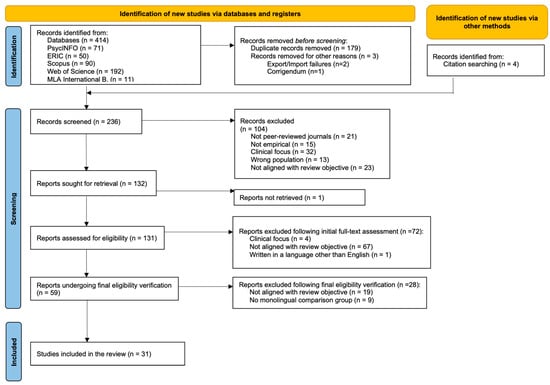
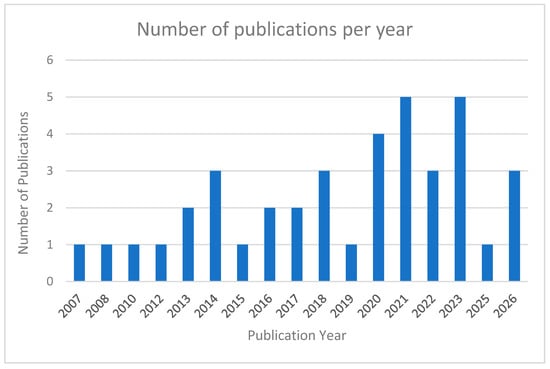

Disclaimer/Publisher’s Note: The statements, opinions and data contained in all publications are solely those of the individual author(s) and contributor(s) and not of MDPI and/or the editor(s). MDPI and/or the editor(s) disclaim responsibility for any injury to people or property resulting from any ideas, methods, instructions or products referred to in the content. |
© 2026 by the authors. Licensee MDPI, Basel, Switzerland. This article is an open access article distributed under the terms and conditions of the Creative Commons Attribution (CC BY) license.