


Abstract
Parental well-being is consistently associated with children’s development, but how qualitatively different forms of parental engagement relate to children’s well-being remains poorly understood. Drawing on the Dualistic Model of Passion, this cross-sectional study examined how harmonious and obsessive passion for child-rearing are associated with parental well-being and with parent-reported quality of life (QOL) of preschool children. A total of 1000 Japanese parents (519 mothers, 481 fathers) of preschool children aged 3–6 years completed an online survey measuring parental well-being (WHO-5), passion for child-rearing (an adapted Passion Scale), and children’s QOL (parent-proxy Kiddy-KINDL-R). A latent-variable model was estimated; all estimates are interpreted as associations, and no mediation was tested. Parental well-being was positively associated with both harmonious (β = 0.467) and obsessive passion (β = 0.276). The two forms were associated with parent-reported QOL in opposite directions, harmonious passion positively (β = 0.608) and obsessive passion negatively (β = −0.424), and an equality-constrained comparison confirmed that the coefficients differed (Δχ2(1) = 314.63). The pattern held across seven robustness analyses. Common-informant variance cannot be excluded. The distinction may provide a useful framework for future research and for practitioner training in early childhood education and care.
1. Introduction
Children’s quality of life has become an established indicator of well-being in its own right, used to monitor how children fare across populations and to evaluate the conditions that shape their lives. Understanding which features of the family environment raise or lower this indicator is therefore of direct relevance to well-being research. Research consistently demonstrates that parental psychological well-being is an important predictor of children’s developmental outcomes (Cummings & Davies, 2010; Waylen & Stewart-Brown, 2010). Parents who experience higher subjective well-being tend to provide more sensitive, responsive, and stimulating caregiving environments, which are in turn associated with children’s cognitive, social, and emotional development (Belsky, 1984; National Research Council & Institute of Medicine, 2000). Conversely, diminished parental well-being—whether through depression, stress, or reduced life satisfaction—has been linked to less optimal parenting practices and poorer child outcomes (Goodman et al., 2011). Yet how qualitatively different forms of parental engagement are associated with parents’ reports of their children’s quality of life remains less well understood. Research on family well-being has established that parental characteristics are linked to children’s outcomes through the manner of caregiving rather than directly. Household economic hardship, for instance, has been shown to relate to children’s mental health largely through parents’ own psychological distress rather than directly (Bartoll-Roca et al., 2024), illustrating that the family conditions that shape children’s well-being indicators typically operate through the parent. Similar patterns appear across parental characteristics: parental smartphone dependence operates through the parent–child relationship (J. Zhu et al., 2025), inter-parental conflict through parenting behaviour (Hess, 2022), and parental stress through parenting practices and children’s self-regulation (Jiang & Fan, 2024). Socioeconomic position, too, is related to children’s quality of life largely through parenting practices (Ji et al., 2023), and a recent review of parental antecedents of children’s quality of life concluded that parents’ psychological characteristics, and the forms of control they exercise, are among the most consistent correlates identified to date (X. Zhu et al., 2026). What remains unclear is whether qualitatively different forms of parental engagement are associated with children’s quality of life in different directions. The question has applied value: parenting support programmes and family well-being initiatives increasingly seek to improve children’s quality of life by supporting parents, and a framework that distinguishes forms of engagement could help such efforts to be targeted.
These observations are consistent with broader theories of the parent–child relationship. In Bronfenbrenner’s bioecological model (Bronfenbrenner & Morris, 2006), development is driven by proximal processes, the regular and reciprocal interactions between the child and the people in the immediate environment, of which parental engagement in the home is the most pervasive. Social cognitive theory adds that children learn through observing and modelling the affect and behaviour of their caregivers (Bandura, 1986), and Vygotsky’s (1978) account locates early development in socially mediated activity with more capable others. Each of these frameworks implies that it is the character of parents’ engagement, rather than its mere presence, that matters for children; none, however, specifies the psychological form that engagement takes on the parent’s side. The Dualistic Model of Passion offers one way of specifying it.
These questions have particular relevance for early childhood education and care (ECEC). In Japan, enrolment in early childhood education and care among children aged 3–5 is close to universal, at 98% (OECD, 2024). Provision is through kindergartens, day-care centres, and certified centres for early childhood education and care, each governed by its own national guidelines (Cabinet Office et al., 2017; MEXT, 2017; Ministry of Health, Labour and Welfare, 2017), which position support for parents’ child-rearing (kosodate shien) as an important function of practitioners alongside the education and care of children themselves. Practitioners are thus expected to provide support to parents in relation to child-rearing, yet the guidelines do not provide a specific framework for distinguishing forms of parental engagement that may relate differently to children’s well-being. A framework that separates the psychological form of parents’ engagement from its amount could inform that work.
1.1. The Dualistic Model of Passion
The Dualistic Model of Passion (DMP; Vallerand et al., 2003; Vallerand, 2015) offers a promising theoretical framework for understanding how parents’ engagement with child-rearing activities may differentially relate to children’s outcomes. According to the DMP, passion is defined as a strong inclination toward a self-defining activity that one loves, finds important, and in which one invests time and energy. The model distinguishes two types of passion: harmonious passion (HP) and obsessive passion (OP).
Harmonious passion originates from an autonomous internalization of the activity into one’s identity. Individuals with HP engage in their passionate activities volitionally, maintain flexible persistence, and experience positive affect during and after engagement (Vallerand, 2015). In contrast, obsessive passion stems from a controlled internalization, driven by intrapersonal or interpersonal pressures such as contingencies attached to the activity (e.g., self-esteem, social acceptance). Individuals with OP experience an uncontrollable urge to engage in the activity, display rigid persistence, and are more likely to experience negative affect and conflict with other life domains (Vallerand et al., 2003).
The two forms are not opposite ends of a single continuum. They are typically positively correlated, both arise from the same internalization process, whose quality depends on the autonomy-supportiveness of the social context and on how the activity is valued and identified with (Mageau et al., 2009), and recent work has examined their joint configuration within persons, distinguishing individuals who are high on both from those high on one alone (Schellenberg et al., 2019; Schellenberg et al., 2024; Waxler, 2026). In the present study the two forms are accordingly treated as coexisting orientations toward the same activity that may carry different correlates, not as mutually exclusive categories. Although the model was developed for elective activities such as sport, work, and leisure, it has also been applied to interpersonal domains such as romantic relationships (Vallerand, 2015), which share with child-rearing the feature that the passionate activity is embedded in a relationship with another person.
A substantial body of research has demonstrated that HP is associated with positive outcomes including psychological well-being, positive affect, and life satisfaction, whereas OP is associated with negative outcomes such as burnout, negative affect, and interpersonal conflict (T. Curran et al., 2015; Vallerand, 2015). However, the application of the DMP to the parenting context—particularly its implications for children’s outcomes—has received limited attention. Within quality-of-life research the model has been examined chiefly in the leisure domain among adults, where harmonious and obsessive passion were found to relate to well-being in opposing directions, through the diversity of leisure engagement (Lee et al., 2024). Evidence on whether an analogous opposition operates when the passionate activity is child-rearing itself, and when the outcome is parents’ reports of the quality of life of another person—the child—remains limited. In addressing this question, the present study contributes to well-being research by distinguishing the psychological quality of parental engagement. Family-level indicators typically capture resources, behaviours, or the extent of parental involvement; harmonious and obsessive passion instead capture qualitatively different ways in which parents internalize the child-rearing role. This distinction offers one account of why parental involvement is not uniformly associated with children’s well-being.
1.2. Parental Well-Being, Passion, and Children’s Quality of Life
We modelled parental well-being as associated with the form of passion parents bring to child-rearing, and both forms of passion as associated with parents’ reports of their children’s quality of life (QOL). The first of these orderings requires justification, because the DMP conceptualizes the two forms of passion as resulting from autonomous versus controlled internalization of the activity rather than from well-being as such (Vallerand et al., 2003; Vallerand, 2015). Two lines of theory nonetheless make parental well-being a plausible correlate, and arguably a precursor, of the form that internalization takes. In Belsky’s (1984) process model, parents’ psychological resources are a primary determinant of the quality of parenting; a parent with the resources indexed by well-being is better placed to take up child-rearing volitionally rather than under pressure. Self-determination theory, from which the DMP derives, treats well-being as a marker of satisfied psychological needs, and need satisfaction is the condition under which activities are internalized autonomously (Ryan & Deci, 2000). The DMP itself specifies that autonomy-supportive conditions and the way the activity is valued govern whether internalization is autonomous or controlled (Mageau et al., 2009); well-being is not the only such condition, but it is the one most directly available to a parent as a resource. On this basis we expected parental well-being to be positively associated with harmonious passion. We stress that the ordering is a modelling choice. The data are cross-sectional, the reverse ordering, in which passion is a source of well-being, is the one more commonly examined in the DMP literature (T. Curran et al., 2015; Vallerand, 2015) and is equally consistent with the data, and all estimates are interpreted as associations. Whether well-being is also associated with obsessive passion is less clear. On the one hand, controlled internalization arises from pressure rather than from resources, which would suggest little association. On the other, individuals who are more psychologically resourceful may invest more intensely in valued activities, and some portion of that investment may take a controlled form (T. Curran et al., 2015). We therefore treat this association as an open question rather than a directional prediction.
Critically, we anticipate that HP and OP will show opposing associations with parent-reported QOL. Parents with HP for child-rearing are expected to engage with their children in a flexible, attuned, and enjoyable manner that is conducive to children’s well-being. In contrast, parents with OP may engage in rigid, controlling, or anxiety-driven parenting behaviours that are associated with lower QOL. The two forms of passion are therefore expected to relate to children’s QOL in opposite directions.
1.3. The Present Study
We examined how HP and OP for child-rearing are associated with parental well-being and with parent-reported QOL of preschool children. We advanced three hypotheses and one research question. (H1) Parental well-being is positively associated with harmonious passion for child-rearing. (H2) Harmonious passion is positively associated with parent-reported children’s QOL. (H3) Obsessive passion is negatively associated with parent-reported children’s QOL. (RQ1) How is parental well-being associated with obsessive passion? As set out above, the DMP does not yield an unambiguous prediction here, and we treated this path as exploratory. The central hypothesis of the study is the conjunction of H2 and H3: that the two forms of passion are associated with parent-reported QOL in opposite directions. Because two coefficients of opposite sign with intervals excluding zero do not by themselves establish that the coefficients differ, this hypothesis was tested formally by comparing the primary model with a model in which the two coefficients were constrained to equality. The contribution of the study lies in this distinction. Family-level indicators typically capture the resources parents have or the amount of involvement they provide; the present study asks whether two psychological forms that involvement can take relate to parent-reported QOL in the same or in opposite directions. The amount of involvement itself was not measured, so the study cannot compare the form of engagement with its amount; that comparison is identified below as a direction for future research. Few studies, to our knowledge, have applied the dualistic model to child-rearing itself, and evidence linking passion for child-rearing to parent-reported child quality of life remains limited.
2. Materials and Methods
2.1. Participants
Participants were 1000 Japanese parents (519 mothers, 481 fathers) of preschool children aged 3–6 years. Parents’ mean age was 38.77 years (SD = 6.38). Children’s mean age was 4.50 years (SD = 1.05), with 218 three-year-olds, 272 four-year-olds, 300 five-year-olds, and 210 six-year-olds. The sample comprised 519 boys and 481 girls.
Participants were recruited from a commercial online access panel operated by a survey company (MyVoice Communications, Inc.) and completed the survey online in January 2026. The screening question asked whether the respondent had at least one preschool child (mishūgakuji, a child not yet enrolled in primary school) aged 3–6 years; panel members who did not were excluded before the main questionnaire. Children enrolled in primary school were therefore excluded by design, which is why the sample is described as preschool children although it includes six-year-olds; the type of early childhood setting attended (kindergarten, day-care centre, or certified centre) was not recorded. No quota was applied to the child’s age, and the resulting distribution across the four age groups, and the near-even split between mothers and fathers, are properties of the responding sample rather than features of the sampling design. The parent-proxy form of the Kiddy-KINDL-R is designed for children aged 3–6 years (KINDL, n.d.; Ravens-Sieberer & Bullinger, 1998), so the full age range of the sample lies within the instrument’s intended range; because the child self-report form is intended for children aged 4–6 years, a sensitivity analysis restricted to that band is also reported (see Section 3.5). The sample is therefore a non-probability sample and is not a random draw from the population of Japanese parents of preschool-aged children; the implications of this for the interpretation of the estimates are set out in the Analytic strategy below.
The dataset delivered by the survey company comprised 1000 completed questionnaires, the target sample size. The survey company’s standard panel-management and response-screening procedures were applied before delivery; no study-specific quality criteria (attention-check items, completion-time thresholds, or filters for invariant responding) were built into the questionnaire, and the research team applied no further exclusion criteria before analysis. There were no missing responses, because every item required an answer. A post hoc inspection of response patterns, conducted at the request of a reviewer, identified 80 respondents (8.0%) who gave an identical response to every item of at least one multi-item scale: 62 across the 17 passion items, 42 across the 24 Kiddy-KINDL-R items, and 24 across both. Because the Kiddy-KINDL-R contains reverse-keyed items, an invariant response across all 24 items is unlikely to reflect attentive responding. These respondents were retained in the primary analyses, which had been specified before the inspection; a sensitivity analysis excluding them is reported below (see Section 3.5).
2.2. Measures
Parental well-being. We measured parental well-being using the WHO-5 Well-Being Index (Topp et al., 2015; World Health Organization Regional Office for Europe, 1998), for which a validated Japanese version is available (Awata et al., 2007). The WHO-5 consists of five items assessing subjective psychological well-being over the past two weeks (e.g., “I have felt cheerful and in good spirits”). Items are rated on a 6-point scale from 1 to 6. Item means ranged from 3.47 (SD = 1.37) to 3.93 (SD = 1.21). The descriptive total score is the raw sum of the five items (range 5–30; M = 18.60, SD = 5.64); the conventional transformation to a 0–100 metric was not applied, because the latent analyses used the five items as indicators and the raw sum was used only for description. The scale showed high internal consistency (Cronbach’s α = 0.929).
Passion for child-rearing. We measured passion for child-rearing using an adapted version of the Passion Scale (Vallerand et al., 2003), in the Japanese adaptation of Kubo and Sawamiya (2018). We modified the original scale items by replacing the general activity referent with “child-rearing” to assess passion specific to the parenting context. The study thus applies an existing instrument to a new activity domain and examines its applicability there; it is not a scale-development study, and the ten-item version described below should be regarded as a preliminary adaptation (see Section 4.3). The original Japanese version comprises 12 items (6 HP, 6 OP). To examine the factor structure of this adapted scale, we conducted exploratory factor analysis (EFA) with maximum likelihood extraction and promax rotation. The number of factors was determined by parallel analysis (Horn, 1965), comparing the observed eigenvalues with the 95th percentile of eigenvalues from 1000 random data sets of the same dimensions; the eigenvalue-greater-than-one rule and the interpretability of the pattern matrix were considered alongside it. With all 12 items, parallel analysis supported two factors: the first two observed eigenvalues (4.56 and 2.56) exceeded their random counterparts (1.22 and 1.17), whereas the third (1.07) fell below its random counterpart (1.12). The eigenvalue-greater-than-one rule would have retained this marginal third factor. In the two-factor solution, one HP item (HP3) cross-loaded on both factors (λ = 0.38 and 0.46), and one OP item (OP6; “I feel as if child-rearing dominates me”) showed a low loading (λ = 0.38) and low communality (0.16); we return in the Discussion to why this item in particular may have functioned poorly in the present cultural context. After removal of these two items, parallel analysis again supported two factors and the solution showed simple structure: all primary loadings lay between 0.45 and 0.83, no cross-loading exceeded 0.17, and the interfactor correlation was 0.30. The item-retention decision was subsequently found to replicate when the 12-item analysis was repeated in one random half of the sample alone (see Section 3.5). Full pattern matrices and parallel-analysis results are reported in File S1. These analyses provide preliminary evidence on the adapted measure; they are not a factorial validation of an established scale. The resulting 10-item scale comprises the HP subscale (5 items; α = 0.895) and the OP subscale (5 items; α = 0.813). One retained item (OP1) subsequently showed the lowest standardized loading in the confirmatory model (λ = 0.441). It was retained because it exceeded the conventional 0.40 criterion and because the item (“It is difficult to control my urge to engage in child-rearing”) indexes the loss of control over the urge to engage that defines obsessive passion in the DMP (Vallerand, 2015); its omission is examined in a sensitivity analysis (Section 3.5). The Passion Scale additionally includes a Passion Criteria subscale (5 items; α = 0.850) that assesses whether child-rearing meets the definitional criteria for passion (e.g., “This activity is important for me”); these items confirmed that participants regarded child-rearing as a passionate activity but were not included in the structural model. All items are rated on a 7-point scale from 1 (do not agree at all) to 7 (very strongly agree). The HP total score was M = 24.05 (SD = 5.54) and the OP total score was M = 17.84 (SD = 5.73).
Children’s quality of life. We assessed children’s QOL using the Kiddy-KINDL-R (Ravens-Sieberer & Bullinger, 1998), a proxy-report measure completed by parents; the Japanese version has been documented by Nemoto (2012) and by Shibata et al. (2014). The parent-proxy form of the Kiddy-KINDL-R is designed for children aged 3–6 years (KINDL, n.d.; Ravens-Sieberer & Bullinger, 1998); the child self-report form, which was not used, is intended for children aged 4–6 years. The Kiddy-KINDL-R assesses six dimensions of QOL: physical well-being, emotional well-being, self-esteem, family, friends, and everyday functioning, each with four items (24 items total). Items are rated on a 5-point scale. After reverse-scoring of the ten negatively worded items, the four items of each subscale were summed to form six subscale scores (range 4–20 each), and the 24 items were summed to a descriptive total (range 24–120); no transformation to the 0–100 metric was applied. The total 24-item scale showed high reliability (α = 0.924). A six-factor confirmatory model of the 24 individual items did not fit the present data (χ2(237) = 3125.58, CFI = 0.830, RMSEA = 0.110; File S1). The misfit was concentrated in one item of each subscale; in every case, the item keyed in the opposite direction from the majority of its subscale, which loaded weakly on its substantive factor (λ = 0.04 to 0.31) while the remaining items loaded strongly (λ = 0.78 to 0.92); parallel analysis of the 24 items likewise favoured a solution organized partly by wording direction rather than by the six content domains. This pattern indicates a method effect of item wording at the item level rather than an absence of the content domains, and it is the reason the six subscale scores, each of which combines positively and negatively worded items, were used as parcelled indicators of the latent QOL construct, following recommendations by Little et al. (2002) for constructs with established subdimensions. This decision was guided by three considerations: (a) the Kiddy-KINDL-R has a well-established multidimensional structure validated across multiple populations (Ravens-Sieberer & Bullinger, 1998), satisfying the unidimensionality-within-parcel assumption; (b) the six subscales correspond to theoretically meaningful and separately interpretable domains of quality of life; and (c) subscale-level parcels attenuate the influence of item-specific error variance that can distort structural estimates in proxy-report measures administered for young children. Subscale reliabilities were physical well-being (α = 0.755), emotional well-being (α = 0.747), self-esteem (α = 0.900), family (α = 0.628), friends (α = 0.713), and everyday functioning (α = 0.759). The relatively lower reliability of the family subscale is consistent with patterns observed in prior validation studies with young child samples (Ravens-Sieberer & Bullinger, 1998); because this subscale served as one of six parcels, its measurement error is carried into the latent QOL variable, though its influence is diluted by the remaining five. We note also that parcelling does not resolve the item-level misfit: it accommodates it, and the parcel-level model should not be read as evidence that the six-factor item-level structure holds in these data. The item-level results are therefore reported in full in File S1, and the alternative specifications reported below examine whether the substantive findings depend on the parcel-level model. Item-level measurement of this instrument in Japanese preschool samples warrants separate investigation. The total QOL score was M = 90.22 (SD = 15.65).
2.3. Procedure
The Ethics Committee of Edogawa University approved this study (approval number R07-034A, approved on 2 December 2025), and the research was carried out in accordance with the Declaration of Helsinki and the ethical guidelines of Edogawa University. All participants provided informed consent electronically before participation, by proceeding from an information and consent screen presented at the start of the online questionnaire; respondents who did not wish to take part could exit at that point. Where a respondent had more than one child in the eligible age range, they were instructed to report on the oldest such child, and all child-referenced items concerned that child. Participants completed the battery of questionnaires in a single session, responding to items regarding their own well-being, passion for child-rearing, and their child’s quality of life.
2.4. Analytic Strategy
Inferential scope. Participants were recruited from a commercial online access panel rather than by probability sampling from a defined population. The estimates reported below are therefore not presented as extrapolations to the population of Japanese parents. Interval estimates are reported as indices of the precision with which the associations among the measured variables are estimated within this sample, and inference is directed at the structure of those associations rather than at population parameters. Consistent with this, we base interpretation on the direction and magnitude of the estimates and on the width and location of their confidence intervals, and we do not treat the crossing of a significance threshold as evidence that an association is substantively important. Where the data are consistent with a range of values, we report that range rather than a verdict.
Estimation. We conducted structural equation modelling (SEM) using AMOS 29.0 (Arbuckle, 2022) with maximum likelihood estimation. We adopted a two-step approach following Anderson and Gerbing (1988). In the first step, we conducted a confirmatory factor analysis (CFA) to evaluate the measurement model with four latent variables: parental well-being (WHO-5), harmonious passion, obsessive passion, and children’s QOL (KINDL-R subscale parcels). In the second step, we estimated the structural model with the theoretically specified directional paths among the latent variables, interpreted throughout as conditional associations. The sample size of 1000 was well above recommended minimum thresholds for latent-variable SEM (Kline, 2016). All indicators were treated as continuous. Maximum likelihood estimation with ordered-categorical indicators performs acceptably when items have five or more response categories and distributions are not severely non-normal (Rhemtulla et al., 2012); the WHO-5 items, the passion items, and the Kiddy-KINDL-R parcels had 6, 7, and 17 observed values, respectively. Multivariate normality was nonetheless assessed with Mardia’s (1970) coefficient, and because the data departed from multivariate normality (see Section 3), all interval estimates were obtained by bootstrap resampling, which does not rely on the normality assumption, rather than from the maximum likelihood standard errors.
We evaluated model fit using multiple indices: the chi-square statistic (χ2), the Comparative Fit Index (CFI), the Tucker–Lewis Index (TLI), and the Root Mean Square Error of Approximation (RMSEA) with 90% confidence intervals. Following conventional guidelines (Hu & Bentler, 1999), CFI and TLI values ≥ 0.95 and RMSEA values ≤ 0.06 were considered indicative of good fit, with CFI ≥ 0.90 and RMSEA ≤ 0.08 considered acceptable.
Confidence intervals for all model parameters were obtained by bootstrapping with 5000 resamples; all 5000 resamples yielded admissible solutions. Bias-corrected and percentile intervals were computed in parallel throughout. Across the five structural paths they agreed to within 0.003 in the primary model and to within 0.003 in each of the robustness models reported below, indicating that the intervals reported here do not depend on the choice between the two methods. This comparison is reported because bias-corrected intervals have been shown to be liberal relative to percentile intervals under some conditions (Fritz et al., 2012; Hayes & Scharkow, 2013); the close agreement observed here indicates that the estimates do not rest on that choice. Bias-corrected intervals are reported throughout, and the corresponding percentile intervals are available in the repository. p-values are reported in the tables for transparency, but they were not used as the criterion for substantive interpretation or for inference beyond this sample; the interpretation offered below rests on the direction, magnitude, and precision of the estimates. The same applies to the chi-square difference tests reported for nested model comparisons.
To examine whether the pattern of associations depends on the assumed structure, we also estimated three alternative structures: (a) a reverse-direction structure in which children’s QOL predicted passion, which in turn predicted parental well-being; (b) a passion-origin structure in which the two forms of passion served as exogenous variables predicting both parental well-being and children’s QOL; and (c) a structure without the direct path from parental well-being to children’s QOL. These are reported in File S4. Two pairs of structural coefficients were compared by constraining their unstandardized values to equality and comparing the fit of the constrained model with that of the primary model: the two paths from parental well-being to the two forms of passion, and, as the test of the central hypothesis, the two paths from the forms of passion to children’s QOL. Because the latent variables are scaled by marker indicators, an unstandardized comparison depends on the indicators chosen for identification; the passion and well-being latent variables are identified by items with the same response format, and the result should be read as a comparison in that metric rather than as free of scaling assumptions. Where the two coefficients have opposite signs, the test addresses whether they differ, not which is larger in absolute value. We compared models using the Akaike Information Criterion (AIC) and, for nested comparisons, the change in model chi-square. Because the present data were collected on a single occasion, we treat these comparisons as comparisons of alternative structural accounts rather than as evidence of temporal precedence. The primary model is a theory-derived covariance structure: it specifies which associations are expected and in what pattern, not the temporal order in which they arise. Following recommendations for single-occasion designs (Nimon, 2017; Shrout, 2011; Spector, 2019), we describe all estimates as associations; we do not test mediation, and we return to this issue in the Discussion. The model-implied decomposition of the association between parental well-being and children’s QOL into direct and indirect components is reported, as an exploratory description only, in File S4.
Beyond the comparison of alternative structures, six further concerns, examined in seven additional models, address specific features of the design, of the sample, and of the measurement model: confounding by demographic characteristics, the inclusion of three-year-olds, the refinement of the passion scale within the same respondents, the use of parcels for the outcome (two alternative specifications), the retention of a weakly loading item in the obsessive-passion scale, and the presence of invariant responders. These analyses were not preregistered. Each addresses a concern that the design or the measurement model raises independently of the results, and the full set is reported. First, we re-estimated the primary model with four demographic covariates (parent age, parent sex, child age, and child sex), each specified as a predictor of harmonious passion, obsessive passion, and children’s QOL, with covariances estimated among all exogenous variables. These four plausibly precede the variables examined and are not themselves consequences of any of them. Variables that could lie between parental well-being and children’s QOL in the model, such as parenting behaviours or time spent with the child, were not included, since adjusting for an intervening variable would remove part of the association of interest (Bartram, 2021; Cinelli et al., 2024; Rohrer, 2018). We additionally re-estimated the primary model in the subsample of children aged 4–6 years (n = 782), the age range of the child self-report form of the Kiddy-KINDL-R, to check that the results do not depend on the youngest children, for whom parent-proxy ratings of some domains (peers, everyday functioning) may be less informative. Because the adapted passion scale was refined within the same respondents, we cross-validated the measurement model by splitting the sample at random into two halves of 500. In the first half (Sample A), the full 12-item scale was re-analysed by EFA with parallel analysis, using that half alone, to determine whether the same two items would be identified for removal; in the second half (Sample B), the measurement and structural models were then re-estimated by confirmatory factor analysis and structural equation modelling. Because parcelling can conceal misfit at the item level, we further re-estimated the model under two alternative specifications of children’s QOL: as a single observed total score, and as a latent variable from which the least reliable parcel was omitted. Because one obsessive-passion item loaded appreciably below the others, we re-estimated the model with that item omitted, which also removes the residual covariance specified for it. Finally, because a post hoc inspection identified 80 respondents with invariant response patterns on at least one scale (see Section 2.1), we re-estimated the primary model excluding them (n = 920). These analyses address sensitivity to the specification of the model and to the composition of the sample; none of them addresses common-informant variance, which no analysis of single-informant data can remove (see Section 4.3).
Measurement model specification. We specified five error covariances based on content overlap within the same scales: HP items 2 and 4, OP items 1 and 2, KINDL parcels 1 (physical) and 2 (emotional), KINDL parcels 2 (emotional) and 4 (family), and KINDL parcels 5 (friends) and 6 (everyday functioning). We also specified a covariance between the disturbance terms of harmonious and obsessive passion to account for residual association between the two forms of passion, which are measured by the same instrument and are theoretically related. The initial CFA model without error covariances showed inadequate fit (see Section 3). A residual covariance was specified only where item or subscale content provided a substantive rationale for shared residual variance; modification indices were consulted only as a diagnostic aid to locate candidate pairs, and a substantive rationale was a necessary condition for freeing any pair. All specifications were restricted to within-factor indicators, and cross-loadings and between-factor residual covariances were left constrained irrespective of their modification indices, several of which were also substantial. Each covariance was added one at a time with re-estimation to monitor the impact on remaining modification indices. The KINDL parcels, being composites of multi-item subscales, were expected to share residual covariance due to overlapping content domains (e.g., physical and emotional well-being); three within-KINDL covariances were specified on this basis. The two within-passion-scale covariances (HP items 2 and 4; OP items 1 and 2) reflected method variance arising from similar item wording within each subscale. Modification indices for all freed and constrained pairs, and the fit of the model at each stage, are reported in File S1. The five error covariances constituted approximately 9.4% of the total estimated parameters (53), representing a modest degree of model modification. The final measurement model is therefore a theoretically informed but partly data-modified specification, and its fit should not be read as that of a fully a priori model. Throughout, we distinguish the covariances among the latent factors in the CFA from the covariance between the disturbance terms of harmonious and obsessive passion in the structural model; the latter represents the association between the two forms of passion that remains after their common association with parental well-being.
Reporting follows the STROBE (Strengthening the Reporting of Observational Studies in Epidemiology) recommendations for cross-sectional studies; a completed checklist is provided as File S5.
Availability of analysis materials. The variance–covariance matrix underlying all reported models, the model specification files, and code reproducing every analysis are available in an Open Science Framework repository (see Data Availability Statement).
2.5. Use of Generative Artificial Intelligence
A generative AI assistant (Claude, Anthropic; accessed through claude.ai between January and October 2026, most recently the Claude Fable 5.1 model) was used during the preparation of this study for three purposes: language editing of the manuscript; assistance in drafting and revising the text on the basis of the authors’ analyses, notes, and decisions; and assistance in preparing the supplementary Python code (Python 3.13 with factor_analyzer 0.5.1) for the parallel analyses reported in File S1, an R script (lavaan) for the item-level analysis of the Kiddy-KINDL-R, and the plotting code for the path diagram. The tool was not used in designing the study, collecting the data, or specifying and estimating the structural equation models, all of which were carried out by the authors in AMOS. The authors executed the deposited Python code and reproduced its outputs, reproduced the item-level analysis independently in AMOS, and reviewed, revised, and fact-checked all text prepared with its assistance; they take full responsibility for the content of the publication.
3. Results
3.1. Preliminary Analyses
Prior to the main analyses, we screened data for missing values, univariate outliers, and distributional assumptions. No missing data were present across all variables. Univariate skewness and kurtosis values for all observed variables fell within acceptable ranges (skewness < |2|, kurtosis < |7|) (P. J. Curran et al., 1996); the largest absolute values were 0.80 for skewness (physical well-being parcel) and 0.80 for kurtosis (everyday-functioning parcel). Multivariate kurtosis, however, was substantial (Mardia’s normalized coefficient = 129.97, critical ratio = 66.12), indicating departure from multivariate normality; interval estimates were therefore based on bootstrap resampling throughout rather than on maximum likelihood standard errors. All variables were assessed by the same respondent, and the resulting shared method variance cannot be separated from substantive covariation with the present design; we address this in the Limitations rather than attempting to bound it with a post hoc diagnostic.
Table 1 presents descriptive statistics and bivariate correlations among the study variables. Harmonious passion (M = 24.05, SD = 5.54) was endorsed at higher levels than obsessive passion (M = 17.84, SD = 5.73). Parental well-being was positively correlated with harmonious passion (r = 0.392), obsessive passion (r = 0.229), and parent-rated children’s QOL (r = 0.276). Harmonious passion showed a moderate positive correlation with parent-rated children’s QOL (r = 0.502), whereas obsessive passion showed a weak negative correlation with it (r = −0.183). Harmonious and obsessive passion were positively but weakly correlated (r = 0.253).
Table 1.
Descriptive statistics and bivariate correlations among study variables (N = 1000).
3.2. Measurement Model
The four-factor CFA model without error covariances yielded inadequate fit: χ2(183) = 1702.9, CFI = 0.886, TLI = 0.869, RMSEA = 0.091, 90% CI [0.087, 0.095]. Following the sequential addition of five theoretically justified within-factor error covariances and one disturbance covariance (see Section 2.4), the final, partly data-modified measurement model showed acceptable fit: χ2(178) = 854.38, CFI = 0.949, TLI = 0.940, RMSEA = 0.062, 90% CI [0.058, 0.066]. Standardized factor loadings and their bootstrap confidence intervals are presented in File S1. Model-based composite reliability was computed from the standardized solution as ω = (Σλ)2/[(Σλ)2 + Σθii + 2Σθij], where θii are the residual variances and θij the residual covariances specified within each factor; this is McDonald’s ω with the specified residual covariances included in the denominator, and it reduces to the familiar form when residuals are uncorrelated. Reliability was adequate for all four constructs (parental well-being ω = 0.93; harmonious passion ω = 0.86; obsessive passion ω = 0.79; children’s QOL ω = 0.82). Standardized factor loadings ranged from 0.789 to 0.894 for parental well-being, 0.714 to 0.861 for harmonious passion, 0.441 to 0.817 for obsessive passion, and 0.589 to 0.802 for children’s QOL. The large chi-square value is expected given the sample size (N = 1000) and is thus interpreted with caution. The CFI approached the stringent cutoff of 0.95, and the RMSEA fell within the acceptable range.
3.3. Structural Model
The primary model yielded the same fit indices as the measurement model: χ2(178) = 854.38, CFI = 0.949, TLI = 0.940, RMSEA = 0.062, 90% CI [0.058, 0.066]. This equivalence reflects the just-identified nature of the structural portion of the model, with six free parameters (five structural paths plus one disturbance covariance) corresponding to the six unique covariances among the four latent variables in the CFA. The acceptable fit indices therefore primarily reflect the adequacy of the measurement model; because the structural portion is just-identified, they do not provide an omnibus test of the proposed directional structure.
Parental well-being was positively associated with harmonious passion (β = 0.467, 95% CI [0.409, 0.520]), the direction hypothesized in H1. It was also positively associated with obsessive passion (β = 0.276, 95% CI [0.210, 0.341]), addressing RQ1: the association was positive, with a point estimate roughly half that for harmonious passion. Constraining the two unstandardized paths from parental well-being to equality worsened fit relative to the primary model, Δχ2(1) = 4.76, p = 0.029, with a higher AIC (963.14 vs. 960.38), so the difference between the two paths is larger than would readily arise from sampling variability within these data, subject to the qualification regarding scale identification noted in the Analytic strategy. Harmonious passion was positively associated with parent-rated children’s QOL (β = 0.608, 95% CI [0.541, 0.672]) and obsessive passion negatively associated with it (β = −0.424, 95% CI [−0.491, −0.362]), the opposing directions hypothesized in H2 and H3. Both intervals are narrow and lie well away from zero on opposite sides. The central hypothesis, that the two coefficients differ, was tested formally by constraining the two unstandardized paths to equality: the constrained model fit markedly worse than the primary model, Δχ2(1) = 314.63, with AIC 1273.01 versus 960.38, and under the constraint both coefficients collapsed to 0.047. The two associations therefore differ from one another, in addition to lying on opposite sides of zero. Parental well-being was also directly associated with parent-rated children’s QOL (β = 0.194, 95% CI [0.128, 0.262]); this estimate is the smallest of the five and its interval the closest to zero. The disturbance terms of harmonious and obsessive passion were correlated (r = 0.235, 95% CI [0.160, 0.306]). Full estimates are reported in Table 2, and Figure 1 displays the standardized path coefficients.
Table 2.
Structural path estimates for the primary model.
Figure 1.
Standardized coefficients for the primary latent-variable model. Children’s QOL is the parent-proxy-rated latent variable. Bias-corrected bootstrap 95% confidence intervals are shown in brackets. Values on the measurement paths are standardized factor loadings. Error covariances among measurement residuals are omitted for visual clarity; the disturbance covariance between harmonious and obsessive passion (r = 0.24) is shown as a dashed line. Unstandardized estimates and p-values are reported in Table 2.
3.4. Alternative Structures
Because the primary model is a covariance structure, a reverse-direction structure in which children’s QOL predicted passion, which in turn predicted parental well-being, produced fit indices identical to those of the primary model (χ2(178) = 854.38, CFI = 0.949); the two are statistically equivalent given cross-sectional data (MacCallum et al., 1993), and the preference for the primary structure rests on theory alone. Within the DMP, passion arises through an internalization process in which the person’s psychological state governs whether an activity is taken up autonomously or under internal pressure (Vallerand, 2015); in the theory, psychological well-being therefore precedes that process rather than following from it, but the present design represents this ordering only as a covariance structure and cannot test it. A passion-origin structure and a structure without the direct path from parental well-being to children’s QOL both fit less well (each χ2(179) = 886.71, CFI = 0.947, AIC = 990.71 vs. 960.38; Δχ2(1) = 32.33 for the nested comparison). These comparisons distinguish structures by statistical fit; they do not establish temporal ordering or causal direction. Full comparisons are reported in File S4, together with an exploratory algebraic decomposition of the model-implied association between parental well-being and children’s QOL into direct and indirect components; that decomposition is a property of the fitted covariance structure and does not constitute a test of mediation.
3.5. Robustness Checks
Seven further analyses examined whether the pattern of associations depends on specific features of the design, of the sample, and of the measurement model. Their standardized structural coefficients are summarized in Table 3; full estimates with bootstrap confidence intervals are reported in File S2 (covariate-adjusted model) and File S3 (the remaining analyses). Of these, the re-specification of children’s QOL as an observed total score is the most consequential for the measurement model, because it removes the parcel-level specification altogether, and the exclusion of invariant responders is the most consequential for the sample; the same pattern was obtained under both. These analyses address robustness to model specification and sample composition. They do not address common-informant variance, which is shared by every specification and is considered in the Limitations.
Table 3.
Standardized structural coefficients in the primary model and in seven robustness analyses.
Demographic covariates. Adding parent age, parent sex, child age, and child sex as covariates of all three endogenous variables left the five structural paths essentially unchanged (Table 3; χ2(246) = 994.16, CFI = 0.945). Among the covariates, the clearest association was that of parent sex with obsessive passion (β = −0.188, 95% CI [−0.257, −0.119]): fathers reported higher obsessive passion for child-rearing than mothers. All six intervals for the paths from child age and child sex fell within ±0.10, so the data are consistent with associations of up to roughly a tenth of a standard deviation in either direction but not with larger ones. The pattern of opposite-signed associations therefore does not depend on these four demographic characteristics. This adjustment is limited to the demographic variables that were measured; socioeconomic and broader family-context variables were not collected, and residual confounding is not excluded (see Section 4.3).
Restriction to the age range of the child self-report form. Although the parent-proxy form of the Kiddy-KINDL-R covers children aged 3–6 years, we re-estimated the primary model excluding the 218 three-year-olds (n = 782), the age band of the child self-report form, to check that the results do not depend on the youngest children, for whom proxy ratings of peer and everyday-functioning domains may be less informative. Model fit was marginally better than in the full sample (χ2(178) = 697.62, CFI = 0.951), and all five paths retained their magnitude and direction, each interval overlapping its full-sample counterpart (Table 3).
Split-sample cross-validation. Because the ten-item passion scale was refined within the same respondents, we cross-validated the measurement model on two randomly assigned halves (n = 500 each). In Sample A, the full 12-item scale was re-analysed with parallel analysis using that half alone. Parallel analysis again supported two factors (observed eigenvalues 4.47, 2.52, and 1.04 against random 95th-percentile values of 1.32, 1.24, and 1.18), and the same two items were identified as problematic: HP3 cross-loaded on both factors (λ = 0.34 and 0.50), and OP6 showed a low loading (λ = 0.38) and communality (0.16). After their removal, the ten items recovered the two-factor structure with all primary loadings between 0.46 and 0.82 and no cross-loading above 0.15 (File S1). The item-retention decision made on the full sample is thus reproduced when the analysis is confined to one random half. In Sample B, the measurement and structural models reproduced the full-sample results (χ2(178) = 502.92, CFI = 0.953), with intervals wider, as expected at half the sample size, but each overlapping its full-sample counterpart (Table 3). Because the halves are drawn from the same survey, this remains an internal cross-validation; replication in an independent sample is still required.
Alternative specifications of the outcome. Because parcelling can accommodate rather than resolve misfit at the item level, children’s QOL was re-specified first as a single observed total score and then as a latent variable from which the least reliable parcel (family, α = 0.628) was omitted. Fit remained acceptable in both (χ2(97) = 566.54, CFI = 0.952; χ2(160) = 776.84, CFI = 0.951), and the five paths retained their direction and magnitude (Table 3). The pattern is therefore not an artefact of the parcel-level measurement model.
Omission of the weakest passion item. Because item OP1 loaded appreciably below the remaining obsessive-passion items (λ = 0.441), the primary model was re-estimated with obsessive passion indicated by the four remaining items, which also removes the residual covariance between OP1 and OP2. Fit was comparable (χ2(160) = 781.11, CFI = 0.952), the four retained loadings ranged from 0.645 to 0.819, and no structural estimate moved by more than 0.005 (Table 3). The results therefore depend neither on the retention of OP1 nor on the residual covariance specified for it.
Exclusion of invariant responders. The primary model was re-estimated after excluding the 80 respondents identified post hoc as having given an identical response to every item of at least one scale (n = 920; 435 fathers, 485 mothers). Model fit was slightly better than in the full sample (χ2(178) = 731.37, CFI = 0.952, TLI = 0.943, RMSEA = 0.058, 90% CI [0.054, 0.063]), all 5000 bootstrap resamples yielded admissible solutions, and the five paths retained their direction and magnitude (Table 3): the largest change was in the path from parental well-being to harmonious passion (0.467 to 0.502), and the two paths from the forms of passion to QOL changed by 0.012 and 0.003. The pattern is therefore not attributable to the invariant responders.
4. Discussion
We examined how harmonious and obsessive passion for child-rearing are associated with parental well-being and with parent-rated QOL of preschool children. Because the data are cross-sectional, single-informant, and modelled as a covariance structure, every estimate is an association; none is evidence of temporal order or mediation. Two results together define the contribution. First, parental well-being was positively associated not only with harmonious passion but also with obsessive passion, a question we had left open because the theory does not settle whether controlled internalization draws on psychological resources or arises independently of them. Second, the two forms of passion showed associations of opposite sign with parent-rated QOL, and an equality-constrained comparison confirmed that the two coefficients differ. Taken together, higher parental well-being went with more of both forms of passion, and the two forms went with parent-rated QOL in opposite directions. The data show this divergence; they do not show that the form of engagement produces it.
4.1. Theoretical Implications
The finding that parental well-being was positively associated with both HP and OP is consistent with the resource reading set out above, under which psychological resources are held to support passionate engagement with valued activities (Vallerand, 2015), and less consistent with the alternative under which controlled internalization arises independently of them. The positive association with OP (β = 0.276) was not anticipated by the conventional formulation of the DMP, in which obsessive passion is more commonly linked to psychological vulnerability than to psychological resources. We regard it as a pattern that the DMP, as formulated for elective activities, does not readily accommodate, rather than as a confirmation of the model, and it should be interpreted with caution. Two observations bear on its reading. The bivariate correlation between well-being and OP (r = 0.229) was comparable in magnitude to the structural path, so the association is a positive relationship in these data rather than an artefact of suppression; and the covariate-adjusted model indicates that it is not attributable to the demographic composition of the sample. We offer two candidate explanations to be tested directly. From a resource perspective, parents with greater well-being have more energy and capacity to invest in valued activities (Vallerand, 2015); most of this investment is autonomous, but some may take a controlled form when parents feel pressure to meet high standards of involvement, and, more speculatively, individuals with greater resources may be the ones able to over-invest (T. Curran et al., 2015). Alternatively, the association may not be psychological in origin: parents with more available time, more secure employment, fewer children, or stronger social support may report both higher well-being and more intensive absorption in child-rearing, and none of these was measured here. Future research should examine whether the path survives adjustment for such factors.
The findings were obtained in a single cultural setting, and their cultural embeddedness is a matter for hypothesis rather than for conclusion. Where parental identity is defined relationally, through the child rather than through the parent’s own pursuits (Markus & Kitayama, 1991), investment in child-rearing may be internalized in a controlled manner even among psychologically resourceful parents, and the value placed on effort and perseverance in East Asian contexts (Heine et al., 1999) may blur the boundary between committed and compulsive engagement. A related possibility concerns the ideology of intensive parenting, which casts good parenting as child-centred, emotionally absorbing, and labour-intensive (Hays, 1996), and whose endorsement has been associated with lower life satisfaction and greater stress and depression among mothers of young children (Rizzo et al., 2013). Where such norms prevail, even well-resourced parents may experience part of their investment in child-rearing as obligatory, which is the configuration the DMP associates with obsessive passion. Each of these readings is consistent with the positive association between well-being and OP observed here, and each implies that the balance between the two forms of passion may be culturally patterned rather than universal. Whether the pattern generalizes beyond this setting is a question for comparative research.
An unanticipated finding concerns parental sex: fathers reported higher OP for child-rearing than mothers, whereas the two did not differ appreciably in HP. The present data do not speak to why. One hypothesis for direct testing is that involvement which is externally prescribed but not yet ordinary, as paternal involvement in Japan arguably is, is the configuration under which the DMP would expect controlled internalization (Vallerand, 2015). This difference should be treated as descriptive. The adapted OP scale was not tested for measurement invariance across mothers and fathers, and because some OP items already showed weaker psychometric behaviour, a difference in latent means cannot be separated from a difference in how the items function until equivalence has been examined.
The associations of HP (β = 0.608) and OP (β = −0.424) with parent-rated QOL ran in opposite directions, and the equality-constrained comparison showed that the two coefficients differ (Δχ2(1) = 314.63); to our knowledge, this pattern has rarely been reported when the passionate activity is child-rearing itself. The two forms are not rivals: they co-occurred within parents (disturbance correlation r = 0.235), consistent with the positive correlation typically observed between them and with recent work on their joint configuration (Schellenberg et al., 2019; Waxler, 2026), and they are better understood as coexisting orientations toward the same activity that carry different correlates. Given the single-informant, single-occasion design, the absolute magnitudes of these coefficients should not be emphasized; they are likely inflated by shared method variance (see Section 4.3). The informative feature of the results is the divergence of sign within the same respondents, not the size of either coefficient. The same opposition has been reported in the leisure domain, where harmonious passion widened and obsessive passion narrowed the range of activities through which adults derived well-being (Lee et al., 2024); the present results indicate that the opposition extends beyond the individual who holds the passion to parents’ reports of the quality of life of the child in their care. Because the amount of time or activity parents devoted to child-rearing was not measured, the present data cannot establish whether the form of engagement matters more than its amount, or whether it adds information beyond conventional indicators of involvement; what they show is that two forms of engagement that differ in kind are associated with parent-rated QOL in opposite directions. Whether the form of engagement explains variance in children’s QOL beyond its amount, and beyond family resources, is a hypothesis for future research that measures both. Harmonious passion, characterized by volitional engagement and flexible persistence, may manifest in responsive, attuned parenting behaviours that are conducive to children’s sense of well-being. Obsessive passion, characterized by rigid and compulsive engagement, may manifest in controlling or intrusive parenting behaviours that are associated with lower QOL.
Parental well-being was also associated with parent-rated children’s QOL over and above the two forms of passion (β = 0.194). Other parental characteristics—such as parenting self-efficacy, emotional availability, or household environment quality—may be associated with children’s QOL alongside passion and merit investigation in future research. Parental dispositional mindfulness, for instance, has been shown to relate to children’s emotion regulation through mindfulness in marriage and in parenting (Güney Uygun & Erus, 2024), suggesting that the quality of parental attention may operate alongside the quality of parental passion.
Applying the DMP to child-rearing also raises a conceptual question that the present study can address only in part. The model was developed for elective activities such as sport, work, and leisure, whereas child-rearing is at once a loved activity and an obligation embedded in a relationship. Two observations bear on the applicability of the construct. The Passion Criteria subscale indicated that respondents regarded child-rearing as an activity they love, value, and see as part of who they are, satisfying the definitional criteria of passion; and the item that functioned most poorly (OP6) was precisely the one whose wording presupposes an elective activity that can dominate a person. The adaptation is therefore defensible but not settled, and the unexpected positive association between well-being and obsessive passion may itself reflect the obligatory and relational character of the activity. We regard the application of the DMP to an activity of this kind as part of the contribution of the study, and as a question that warrants theoretical development in its own right.
The equivalence between the primary model and the reverse direction model reflects a well-documented property of covariance structure analysis: models implying identical covariance matrices cannot be distinguished on statistical grounds alone (MacCallum et al., 1993). Although theoretical reasoning favours the proposed ordering—well-being preceding the internalization of child-rearing, which is in turn associated with children’s QOL—the present data cannot empirically adjudicate between these alternatives. This constraint is intrinsic to single-occasion designs and has been extensively debated (Maxwell & Cole, 2007; O’Laughlin et al., 2018). Theory and the formal comparison of alternative structures support the interpretive plausibility of the primary model (Preacher, 2015; Shrout, 2011; Spector, 2019), but neither establishes temporal precedence, and the present estimates should not be read as evidence of causal mediation. Longitudinal replication remains essential.
4.2. Implications for Practice, Intervention Research, and Measurement
The practical implications of these findings are necessarily tentative. The design is cross-sectional and single-informant, the adapted passion measure is preliminary, and the study provides no evidence on any particular parenting programme or intervention; what follows is offered as a set of directions for future intervention research and for practitioner training rather than as recommendations supported by the present data.
The findings should not be read as indicating that parents with higher obsessive passion are poor parents: obsessive passion co-occurred with harmonious passion and with higher well-being in the same parents, and it is a form of engagement rather than a deficit. Two directions follow. First, intervention research could test whether distinguishing flexible from compulsive forms of engagement, rather than encouraging involvement or passion as such, improves outcomes for children; programmes that cultivate flexible, non-judgemental attention in parenting, such as mindfulness-based parenting interventions (Duncan et al., 2009), are one candidate for such a test, with the caveat that the positive association between well-being and OP observed here cautions against assuming that gains in parental well-being would translate uniformly into harmonious engagement. Second, in ECEC settings, where practitioners work in partnership with families and where support for child-rearing is a mandated function (Cabinet Office et al., 2017; MEXT, 2017; Ministry of Health, Labour and Welfare, 2017), the distinction may provide a framework for practitioner training and for future research on parent support: for example, on whether exploring with parents how they experience child-rearing, as flexible and self-chosen or as pressured and difficult to disengage from, is more useful than assuming that greater involvement is necessarily better. The measures used here were self-report scales rather than observable behaviours, and the distinction should not be treated as a diagnostic criterion.
A related implication concerns measurement. Indicators of the family environment have conventionally captured resources and quantities, such as household income, parental education, time spent with the child, or participation in activities. The present results raise the possibility that such measures miss a distinction that matters: two parents who are indistinguishable on them may differ in whether their engagement with child-rearing is autonomous or guilt-linked, and that difference was associated with parent-rated QOL in opposite directions here. Because none of these conventional indicators was measured in the present study, this is a hypothesis for future research rather than a finding; establishing it would require showing, in designs capable of supporting causal inference, that a measure of the form of engagement adds information beyond resource-based indicators and behaves consistently across populations.
4.3. Limitations
Several limitations warrant consideration. First, the data were collected on a single occasion; the estimated associations therefore cannot establish temporal precedence, we have not interpreted them as mediation (Maxwell & Cole, 2007; O’Laughlin et al., 2018), and the reverse-direction structure produced identical fit indices. The theoretical grounding of the model and the comparison of alternative structures, discussed above, bear on its interpretive plausibility but do not overcome this constraint. The constraint is shared across the field: a recent review of parental antecedents of children’s quality of life concluded that the evidence base remains dominated by cross-sectional designs and called for rigorous longitudinal and experimental work to establish causal mechanisms and long-term dynamics (X. Zhu et al., 2026). We regard the present study as contributing to the descriptive stage that such work must build upon, and longitudinal replication as the necessary next step.
Second, participants were recruited from a commercial online access panel by non-probability sampling. As set out in the Analytic strategy, the estimates describe the structure of associations within this sample rather than population parameters. Panel respondents may differ from the general population in internet literacy, motivation, or sociodemographic characteristics. Replication in samples recruited by other means, and ideally by probability sampling, would establish how far the pattern reported here extends.
Third, the adapted passion scale was refined within the same survey in which it was evaluated. The split-sample analysis reported above shows that the item-retention decision is reproduced when the 12-item analysis is confined to one random half of the sample, and that the measurement and structural models hold in the other half; the two items were not, however, selected and tested in fully separate samples drawn from different surveys, so this remains an internal cross-validation. The status of the adapted scale is taken up in the seventh limitation below.
Fourth, all variables, including children’s QOL, were reported by the same parent on the same occasion. Common-informant variance is therefore a plausible alternative explanation for part of every association reported here, and it is not addressed by any of the robustness analyses, which concern model specification and sample composition. Such variance need not take the form of a uniform positivity bias: it can arise from construct-specific or valence-related self-evaluative tendencies (Podsakoff et al., 2003; Podsakoff et al., 2012), and these could produce associations of both signs, for example if parents who regard themselves as good parents rate both their harmonious engagement and their child’s quality of life favourably, whereas parents who feel driven or overwhelmed endorse the obsessive items and rate their child’s quality of life less favourably. The opposite signs of the two passion–QOL associations should therefore not be taken as evidence against common-informant bias. The issue is sharpened by the outcome: parent-proxy ratings of children’s quality of life are known to diverge from children’s own reports, particularly for emotional and social domains (Eiser & Morse, 2001), so what was modelled here is the parent’s representation of the child’s quality of life, which may share variance with the parent’s representation of their own engagement and well-being. Multi-informant designs, incorporating child-reported measures, teacher or caregiver ratings, or behavioural observations, are needed to bound this source of variance.
Fifth, the sample consisted of Japanese parents, and cultural factors—such as the emphasis on effort and self-discipline in East Asian parenting contexts (Heine et al., 1999)—may shape how the two forms of passion are expressed and how they relate to children’s outcomes. Cross-cultural replication is needed to establish generalizability.
Sixth, the family subscale of the KINDL-R showed lower reliability (α = 0.628) than the other subscales; its measurement error is carried into the latent QOL variable, although the reduced-parcel specification reported above indicates that the substantive results do not depend on this parcel.
Seventh, the passion scale was adapted from a general activity measure to the child-rearing context, requiring removal of two items to achieve adequate factorial validity. The item that performed most poorly (OP6, “I feel as if child-rearing dominates me”) may be culturally sensitive. Within Japanese parenting norms, where devotion to the child is widely valorized, describing oneself as dominated by child-rearing may carry connotations of resentment or parental inadequacy that respondents are reluctant to endorse, irrespective of how absorbing they actually find the role. If so, the item may have failed not because the underlying construct is absent in this population but because its most explicit expression is normatively constrained. The ten-item version used here should therefore be regarded as a preliminary, internally cross-validated adaptation of the Passion Scale to the child-rearing context rather than as an established or validated measure of parental passion, and it requires validation in independent samples before it is used elsewhere. The lower loading of one obsessive-passion item may reflect that the notion of an urge to engage sits less naturally with child-rearing, an obligation rather than an elective pursuit, than with the leisure and work activities for which the scale was developed. Future research should develop and validate a purpose-built measure, with attention to how compulsive engagement is articulated across cultural settings.
Eighth, the covariate-adjusted model included only four demographic characteristics, and it should not be read as a comprehensive control for confounding. Socioeconomic indicators were not collected and could not be entered as covariates, and residual confounding cannot be excluded. Socioeconomic position may bear on parental well-being, on how child-rearing is experienced, and on children’s quality of life through several routes (Ji et al., 2023). Future studies should incorporate household income, parental education, employment conditions, and other indicators of socioeconomic context.
Ninth, the sample was defined by the screening question as parents of preschool children aged 3–6 years, but the type of early childhood setting attended was not recorded, and the parent-proxy Kiddy-KINDL-R, although designed for this age range, has been documented for the Japanese preschool version mainly in the proceedings of a learned society and in a university bulletin (Nemoto, 2012; Shibata et al., 2014) rather than in a peer-reviewed validation study. The sensitivity analysis restricted to children aged 4–6 years indicates that the substantive findings do not depend on the three-year-olds, but independent peer-reviewed validation of the Japanese preschool version would strengthen confidence in the measurement. Tenth, 8% of respondents showed invariant response patterns on at least one scale, and the questionnaire included no attention-check items or completion-time criteria. These respondents were retained in the primary analyses, and excluding them left the results unchanged; future online studies should nonetheless build response-quality checks into the design rather than inspect for them afterwards.
5. Conclusions
Parental well-being was associated with both harmonious and obsessive passion for child-rearing, and the two forms were associated with parent-rated QOL of preschool children in opposite directions, a difference confirmed by a formal comparison of the two coefficients. The association between parental well-being and parent-rated QOL thus occurs alongside two distinct patterns of harmonious and obsessive engagement that relate to QOL in opposite directions; the data show this divergence without establishing that the form of engagement produces it, and common-informant variance cannot be excluded. Whether interventions that foster flexible, autonomous engagement in child-rearing would improve children’s outcomes is a question these findings raise but cannot answer; it would require longitudinal, multi-informant, or experimental designs. For early childhood education and care practice and for parenting support, the distinction between the two forms of engagement may provide a potentially useful framework for future research and for practitioner training, rather than a guideline supported by the present findings.
Supplementary Materials
The following supporting information can be downloaded at: https://www.mdpi.com/article/10.3390/educsci16111779/s1, File S1: Measurement model: exploratory factor analyses and parallel analysis of the adapted passion scale, the item-level model of the Kiddy-KINDL-R, standardized factor loadings with bootstrap confidence intervals, and the sequential specification of residual covariances; File S2: Standardized and unstandardized estimates with bootstrap confidence intervals for the covariate-adjusted structural model; File S3: Robustness checks: estimates with bootstrap confidence intervals; File S4: Alternative model structures and exploratory model-implied decomposition; File S5: STROBE checklist for cross-sectional studies. The references Selig and Preacher (2008) and Zhao et al. (2010) are cited in the Supplementary Materials.
Author Contributions
Conceptualization, M.E. and T.F.; methodology, M.E. and T.F.; investigation, M.E.; formal analysis, M.E.; writing—original draft preparation, M.E.; writing—review and editing, M.E. and T.F.; funding acquisition, M.E. All authors have read and agreed to the published version of the manuscript.
Funding
This research was funded by JSPS KAKENHI, grant number 23K02288. The funder had no role in the design of the study; in the collection, analyses, or interpretation of data; in the writing of the manuscript; or in the decision to publish the results.
Institutional Review Board Statement
The study was conducted in accordance with the Declaration of Helsinki and was approved by the Ethics Committee of Edogawa University (approval number R07-034A, approved on 2 December 2025).
Informed Consent Statement
Informed consent was obtained electronically from all participants involved in the study.
Data Availability Statement
The raw survey data are available from MyVoice Communications, Inc., but restrictions apply to their availability: they were used under licence for the current study and are not publicly available. Data are, however, available from the authors upon reasonable request and with the permission of MyVoice Communications, Inc. The variance–covariance matrix underlying all reported models, the model specification files, and the analysis code required to reproduce every analysis are openly available in the Open Science Framework repository (Ebihara, 2026) at https://doi.org/10.17605/OSF.IO/29Y4S, together with the code used for the parallel analyses and the specification of the invariant-responder criterion.
Acknowledgments
During the preparation of this manuscript, the authors used Claude (Anthropic; accessed through claude.ai, January–October 2026, most recently the Claude Fable 5.1 model) for language editing, for assistance in drafting and revising the text, and for assistance in preparing the supplementary analysis code and Figure 1, as described in Section 2.5. The authors have reviewed and edited the output and take full responsibility for the content of this publication.
Conflicts of Interest
The authors declare no conflicts of interest.
References
- Anderson, J. C., & Gerbing, D. W. (1988). Structural equation modeling in practice: A review and recommended two-step approach. Psychological Bulletin, 103(3), 411–423. [Google Scholar] [CrossRef]
- Arbuckle, J. L. (2022). IBM SPSS Amos 29 user’s guide. IBM Corp. [Google Scholar]
- Awata, S., Bech, P., Yoshida, S., Hirai, M., Suzuki, S., Yamashita, M., Ohara, A., Hinokio, Y., Matsuoka, H., & Oka, Y. (2007). Reliability and validity of the Japanese version of the World Health Organization-five well-being index in the context of detecting depression in diabetic patients. Psychiatry and Clinical Neurosciences, 61(1), 112–119. [Google Scholar] [CrossRef] [Scilit] [PubMed]
- Bandura, A. (1986). Social foundations of thought and action: A social cognitive theory. Prentice-Hall. [Google Scholar]
- Bartoll-Roca, X., Serral Cano, G., Cortés Albaladejo, M., & Pérez, K. (2024). Household economic hardship and child mental health: The mediating role of parents’ mental distress in a Southern European city. Social Indicators Research, 175(1), 89–107. [Google Scholar] [CrossRef] [Scilit]
- Bartram, D. (2021). Cross-sectional model-building for research on subjective well-being: Gaining clarity on control variables. Social Indicators Research, 155(2), 725–743. [Google Scholar] [CrossRef] [Scilit]
- Belsky, J. (1984). The determinants of parenting: A process model. Child Development, 55(1), 83–96. [Google Scholar] [CrossRef] [PubMed]
- Bronfenbrenner, U., & Morris, P. A. (2006). The bioecological model of human development. In W. Damon, & R. M. Lerner (Eds.), Handbook of child psychology: Vol. 1. Theoretical models of human development (6th ed., pp. 793–828). Wiley. [Google Scholar]
- Cabinet Office, Ministry of Education, Culture, Sports, Science and Technology & Ministry of Health, Labour and Welfare. (2017). Yoho renkeigata nintei kodomoen kyoiku hoiku yoryo [Educational and childcare guidelines for integrated centres for early childhood education and care]. Cabinet Office. (In Japanese)
- Cinelli, C., Forney, A., & Pearl, J. (2024). A crash course in good and bad controls. Sociological Methods & Research, 53(3), 1071–1104. [Google Scholar] [CrossRef] [Scilit]
- Cummings, E. M., & Davies, P. T. (2010). Marital conflict and children: An emotional security perspective. Guilford Press. [Google Scholar]
- Curran, P. J., West, S. G., & Finch, J. F. (1996). The robustness of test statistics to nonnormality and specification error in confirmatory factor analysis. Psychological Methods, 1(1), 16–29. [Google Scholar] [CrossRef]
- Curran, T., Hill, A. P., Appleton, P. R., Vallerand, R. J., & Standage, M. (2015). The psychology of passion: A meta-analytical review of a decade of research on intrapersonal outcomes. Motivation and Emotion, 39(5), 631–655. [Google Scholar] [CrossRef] [Scilit]
- Duncan, L. G., Coatsworth, J. D., & Greenberg, M. T. (2009). A model of mindful parenting: Implications for parent–child relationships and prevention research. Clinical Child and Family Psychology Review, 12(3), 255–270. [Google Scholar] [CrossRef] [Scilit] [PubMed]
- Ebihara, M. (2026). Passion for child-rearing and preschoolers’ quality of life: Analysis materials [Data set and code]. Open Science Framework. [Google Scholar] [CrossRef]
- Eiser, C., & Morse, R. (2001). Can parents rate their child’s health-related quality of life? Results of a systematic review. Quality of Life Research, 10(4), 347–357. [Google Scholar] [CrossRef] [Scilit] [PubMed]
- Fritz, M. S., Taylor, A. B., & MacKinnon, D. P. (2012). Explanation of two anomalous results in statistical mediation analysis. Multivariate Behavioral Research, 47(1), 61–87. [Google Scholar] [CrossRef] [Scilit] [PubMed]
- Goodman, S. H., Rouse, M. H., Connell, A. M., Broth, M. R., Hall, C. M., & Heyward, D. (2011). Maternal depression and child psychopathology: A meta-analytic review. Clinical Child and Family Psychology Review, 14(1), 1–27. [Google Scholar] [CrossRef] [Scilit] [PubMed]
- Güney Uygun, E., & Erus, S. M. (2024). The mediating roles of mindfulness in marriage and mindfulness in parenting in the relationship between parents’ dispositional mindfulness and emotion regulation of their children. Applied Research in Quality of Life, 19(3), 1075–1096. [Google Scholar] [CrossRef] [Scilit]
- Hayes, A. F., & Scharkow, M. (2013). The relative trustworthiness of inferential tests of the indirect effect in statistical mediation analysis: Does method really matter? Psychological Science, 24(10), 1918–1927. [Google Scholar] [CrossRef] [Scilit] [PubMed]
- Hays, S. (1996). The cultural contradictions of motherhood. Yale University Press. [Google Scholar]
- Heine, S. J., Lehman, D. R., Markus, H. R., & Kitayama, S. (1999). Is there a universal need for positive self-regard? Psychological Review, 106(4), 766–794. [Google Scholar] [CrossRef] [Scilit] [PubMed]
- Hess, S. (2022). Effects of inter-parental conflict on children’s social well-being and the mediation role of parenting behavior. Applied Research in Quality of Life, 17(4), 2059–2085. [Google Scholar] [CrossRef] [Scilit]
- Horn, J. L. (1965). A rationale and test for the number of factors in factor analysis. Psychometrika, 30(2), 179–185. [Google Scholar] [CrossRef] [Scilit] [PubMed]
- Hu, L., & Bentler, P. M. (1999). Cutoff criteria for fit indexes in covariance structure analysis: Conventional criteria versus new alternatives. Structural Equation Modeling, 6(1), 1–55. [Google Scholar] [CrossRef] [Scilit]
- Ji, J., Sun, X., Zhang, Z., & Cai, Y. (2023). Socioeconomic status and child quality of life: The mediating roles of parenting practices. Child Indicators Research, 16(3), 1073–1095. [Google Scholar] [CrossRef] [Scilit]
- Jiang, C., & Fan, X. L. (2024). Parental aggravation, parenting behaviors, child self-control and externalizing problems in Singapore: Evidence from a nationally representative sample. Applied Research in Quality of Life, 19(6), 3153–3168. [Google Scholar] [CrossRef] [Scilit]
- KINDL. (n.d.). KINDL-R: Language versions of the questionnaire for measuring health-related quality of life in children and adolescents. Available online: https://www.kindl.org/english/questionnaires/language-versions-view-and-download/ (accessed on 22 August 2026).
- Kline, R. B. (2016). Principles and practice of structural equation modeling (4th ed.). Guilford Press. [Google Scholar]
- Kubo, T., & Sawamiya, Y. (2018). Development of a Japanese version of the passion scale and examination of its reliability and validity. Japanese Journal of Psychology, 89(5), 490–499. (In Japanese) [Google Scholar] [CrossRef] [Scilit]
- Lee, D. J., Yu, G. B., & Sirgy, M. J. (2024). The dual effects of passion on leisure wellbeing: Toward a theory of engagement in diverse leisure activities. Applied Research in Quality of Life, 19(1), 155–177. [Google Scholar] [CrossRef] [Scilit]
- Little, T. D., Cunningham, W. A., Shahar, G., & Widaman, K. F. (2002). To parcel or not to parcel: Exploring the question, weighing the merits. Structural Equation Modeling, 9(2), 151–173. [Google Scholar] [CrossRef] [Scilit] [PubMed]
- MacCallum, R. C., Wegener, D. T., Uchino, B. N., & Fabrigar, L. R. (1993). The problem of equivalent models in applications of covariance structure analysis. Psychological Bulletin, 114(1), 185–199. [Google Scholar] [CrossRef] [Scilit] [PubMed]
- Mageau, G. A., Vallerand, R. J., Charest, J., Salvy, S.-J., Lacaille, N., Bouffard, T., & Koestner, R. (2009). On the development of harmonious and obsessive passion: The role of autonomy support, activity specialization, and identification with the activity. Journal of Personality, 77(3), 601–646. [Google Scholar] [CrossRef] [Scilit] [PubMed]
- Mardia, K. V. (1970). Measures of multivariate skewness and kurtosis with applications. Biometrika, 57(3), 519–530. [Google Scholar] [CrossRef]
- Markus, H. R., & Kitayama, S. (1991). Culture and the self: Implications for cognition, emotion, and motivation. Psychological Review, 98(2), 224–253. [Google Scholar] [CrossRef]
- Maxwell, S. E., & Cole, D. A. (2007). Bias in cross-sectional analyses of longitudinal mediation. Psychological Methods, 12(1), 23–44. [Google Scholar] [CrossRef] [Scilit] [PubMed]
- Ministry of Education, Culture, Sports, Science and Technology. (2017). Yochien kyoiku yoryo [Course of study for kindergarten]. MEXT. (In Japanese)
- Ministry of Health, Labour and Welfare. (2017). Hoikusho hoiku shishin [Guidelines for nursery care at day-care centres]. MHLW. (In Japanese)
- National Research Council & Institute of Medicine. (2000). From neurons to neighborhoods: The science of early childhood development (J. P. Shonkoff, & D. A. Phillips, Eds.). National Academy Press. [Google Scholar]
- Nemoto, Y. (2012). Kiddy-KINDL questionnaire: A study of the Japanese version of the quality-of-life scale for preschool children. Health Science for Children, 13(1), 47–51. (In Japanese) [Google Scholar]
- Nimon, K. (2017). HRDQ submissions of quantitative research reports: Three common comments in decision letters and a checklist. Human Resource Development Quarterly, 28(3), 281–298. [Google Scholar] [CrossRef] [Scilit]
- OECD. (2024). Education at a glance 2024: OECD indicators. OECD Publishing. [Google Scholar] [CrossRef] [Scilit]
- O’Laughlin, K. D., Martin, M. J., & Ferrer, E. (2018). Cross-sectional analysis of longitudinal mediation processes. Multivariate Behavioral Research, 53(3), 375–402. [Google Scholar] [CrossRef] [Scilit] [PubMed]
- Podsakoff, P. M., MacKenzie, S. B., Lee, J.-Y., & Podsakoff, N. P. (2003). Common method biases in behavioral research: A critical review of the literature and recommended remedies. Journal of Applied Psychology, 88(5), 879–903. [Google Scholar] [CrossRef] [Scilit] [PubMed]
- Podsakoff, P. M., MacKenzie, S. B., & Podsakoff, N. P. (2012). Sources of method bias in social science research and recommendations on how to control it. Annual Review of Psychology, 63, 539–569. [Google Scholar] [CrossRef] [Scilit] [PubMed]
- Preacher, K. J. (2015). Advances in mediation analysis: A survey and synthesis of new developments. Annual Review of Psychology, 66, 825–852. [Google Scholar] [CrossRef] [Scilit] [PubMed]
- Ravens-Sieberer, U., & Bullinger, M. (1998). Assessing health-related quality of life in chronically ill children with the German KINDL: First psychometric and content analytical results. Quality of Life Research, 7(5), 399–407. [Google Scholar] [CrossRef] [Scilit] [PubMed]
- Rhemtulla, M., Brosseau-Liard, P. É., & Savalei, V. (2012). When can categorical variables be treated as continuous? A comparison of robust continuous and categorical SEM estimation methods under suboptimal conditions. Psychological Methods, 17(3), 354–373. [Google Scholar] [CrossRef] [Scilit] [PubMed]
- Rizzo, K. M., Schiffrin, H. H., & Liss, M. (2013). Insight into the parenthood paradox: Mental health outcomes of intensive mothering. Journal of Child and Family Studies, 22(5), 614–620. [Google Scholar] [CrossRef] [Scilit]
- Rohrer, J. M. (2018). Thinking clearly about correlations and causation: Graphical causal models for observational data. Advances in Methods and Practices in Psychological Science, 1(1), 27–42. [Google Scholar] [CrossRef] [Scilit]
- Ryan, R. M., & Deci, E. L. (2000). Self-determination theory and the facilitation of intrinsic motivation, social development, and well-being. American Psychologist, 55(1), 68–78. [Google Scholar] [CrossRef] [PubMed]
- Schellenberg, B. J. I., Verner-Filion, J., & Gaudreau, P. (2024). How do passionate sport fans feel? An examination using a quadripartite approach. Motivation and Emotion, 48(5), 684–699. [Google Scholar] [CrossRef] [Scilit]
- Schellenberg, B. J. I., Verner-Filion, J., Gaudreau, P., Bailis, D. S., Lafrenière, M.-A. K., & Vallerand, R. J. (2019). Testing the dualistic model of passion using a novel quadripartite approach: A look at physical and psychological well-being. Journal of Personality, 87(2), 163–180. [Google Scholar] [CrossRef] [Scilit] [PubMed]
- Selig, J. P., & Preacher, K. J. (2008). Monte Carlo method for assessing mediation: An interactive tool for creating confidence intervals for indirect effects [Computer software]. Available online: https://quantpsy.org/medmc/medmc.htm (accessed on 20 October 2026).
- Shibata, R., Matsuzaki, K., & Nemoto, Y. (2014). Assessing health-related quality of life in children and adolescents. Seishin Studies, 122, 27–52. (In Japanese) [Google Scholar]
- Shrout, P. E. (2011). Commentary: Mediation analysis, causal process, and cross-sectional data. Multivariate Behavioral Research, 46(5), 852–860. [Google Scholar] [CrossRef] [Scilit] [PubMed]
- Spector, P. E. (2019). Do not cross me: Optimizing the use of cross-sectional designs. Journal of Business and Psychology, 34(2), 125–137. [Google Scholar] [CrossRef] [Scilit]
- Topp, C. W., Østergaard, S. D., Søndergaard, S., & Bech, P. (2015). The WHO-5 well-being index: A systematic review of the literature. Psychotherapy and Psychosomatics, 84(3), 167–176. [Google Scholar] [CrossRef] [Scilit] [PubMed]
- Vallerand, R. J. (2015). The psychology of passion: A dualistic model. Oxford University Press. [Google Scholar]
- Vallerand, R. J., Blanchard, C., Mageau, G. A., Koestner, R., Ratelle, C., Léonard, M., Gagné, M., & Marsolais, J. (2003). Les passions de l’âme: On obsessive and harmonious passion. Journal of Personality and Social Psychology, 85(4), 756–767. [Google Scholar] [CrossRef] [Scilit] [PubMed]
- Vygotsky, L. S. (1978). Mind in society: The development of higher psychological processes. Harvard University Press. [Google Scholar]
- Waxler, E. A. (2026). What do we know about mixed passion? A review of harmonious–obsessive passion configurations. Social and Personality Psychology Compass, 20(8), e70162. [Google Scholar] [CrossRef] [Scilit]
- Waylen, A., & Stewart-Brown, S. (2010). Factors influencing parenting in early childhood: A prospective longitudinal study focusing on change. Child: Care, Health and Development, 36(2), 198–207. [Google Scholar] [CrossRef] [Scilit] [PubMed]
- World Health Organization Regional Office for Europe. (1998). Wellbeing measures in primary health care/the DepCare project: Report on a WHO meeting, Stockholm, Sweden, 12–13 February 1998. WHO Regional Office for Europe. [Google Scholar]
- Zhao, X., Lynch, J. G., Jr., & Chen, Q. (2010). Reconsidering Baron and Kenny: Myths and truths about mediation analysis. Journal of Consumer Research, 37(2), 197–206. [Google Scholar] [CrossRef] [Scilit]
- Zhu, J., Luo, J., Feng, J., & Li, Y. (2025). Parental smartphone addiction and child social avoidance: The moderated parallel mediation of parent–child relationship. Applied Research in Quality of Life, 20(4), 1493–1516. [Google Scholar] [CrossRef] [Scilit]
- Zhu, X., Zong, W., Tan, L., Zhou, K., & Shek, D. T. L. (2026). Antecedents and child quality-of-life outcomes of parental psychological control: Observations, unresolved issues, and future research directions. Applied Research in Quality of Life, 21(4), 1791–1812. [Google Scholar] [CrossRef] [Scilit]
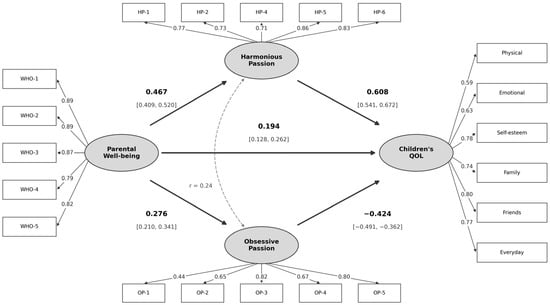
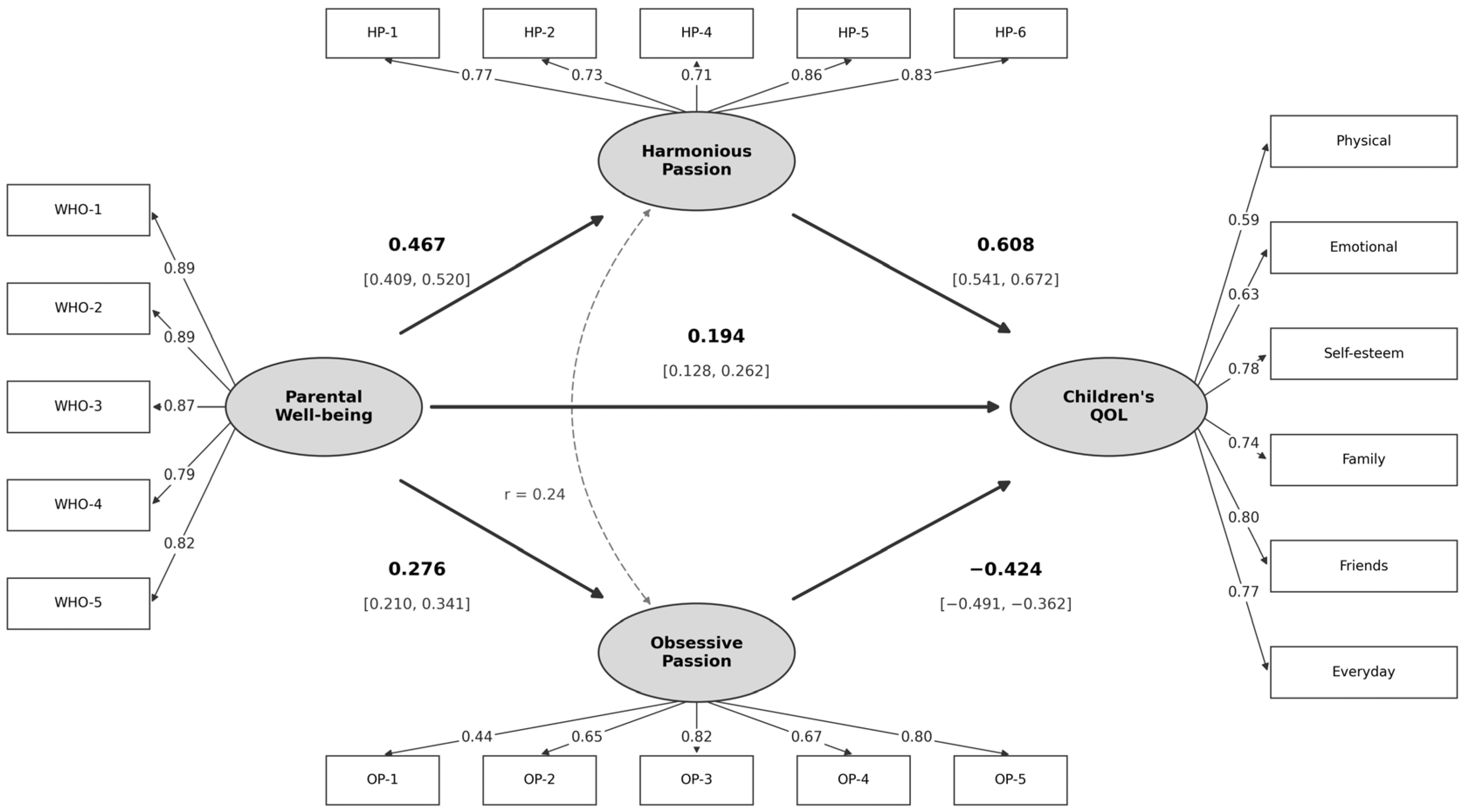

Disclaimer/Publisher’s Note: The statements, opinions and data contained in all publications are solely those of the individual author(s) and contributor(s) and not of MDPI and/or the editor(s). MDPI and/or the editor(s) disclaim responsibility for any injury to people or property resulting from any ideas, methods, instructions or products referred to in the content. |
© 2026 by the authors. Licensee MDPI, Basel, Switzerland. This article is an open access article distributed under the terms and conditions of the Creative Commons Attribution (CC BY) license.