


Abstract
This study examines how undergraduate design students imagined and critiqued biotechnological futures through speculative work with generative AI in a semester-long biodesign course. Using inductive qualitative coding and visual discourse analyses, we traced how students’ prompts, images, and reflections reveal an evolving grammar of speculation. Students shifted from crisis description to design-oriented possibility and socio-political reasoning about ecological, cultural, and ethical implications. Generative AI supported this shift by offering visual feedback that enabled students to recognize assumptions and critically examine speculative designs. Through repeated cycles of prompting and refinement, students advanced biodesign prototypes and developed a nuanced understanding of AI’s affordances and limits. Extending constructionism learning theories into speculative design with generative AI, this study examines how learners externalize discursive and imaginative thought through prompt-crafting. These findings articulate a grammar of speculation, showing how generative AI mediates critical AI literacy as a discursive and constructionist learning process.
1. Introduction
Artificial intelligence is no longer a matter of science fiction or an obscure technology reserved for experts; it has become an accessible collaborator across disciplines and professions. Designers, artists, educators, and scientists now engage with generative systems that propose forms, synthesize images, and reconfigure aesthetic and conceptual possibilities. In design, the question is no longer whether AI can assist designers but how its mediation reshapes the very purposes and practices of design itself (Vaithilingam et al., 2024). Generative AI (GAI) tools such as Midjourney and ChatGPT have become catalysts for ideation, accelerating visualization and enabling rapid iteration across creative and scientific domains (H. Yin et al., 2023). Research indicates that their integration into educational settings enhances collaboration and diversifies creative output (Zailuddin et al., 2024). Yet these same affordances invite scrutiny: if design education has long valued reflection, material engagement, and process-based learning, to what extent do AI’s efficiencies and visual fluencies align with—or risk undermining—these principles? These tensions are particularly pronounced in biodesign, an emerging field that “intentionally applies biological principles, organisms, and systems in the creation of products, materials, and environments” (Kim, 2025).
In design education, speculative design is increasingly considered as a powerful pedagogical approach to cultivate reflection and critical inquiry, especially within biodesign contexts. Instead of following the problem-solving trajectory of design thinking, with its familiar stages of empathizing, defining, ideating, prototyping, and testing (Brown, 2008), speculative design reorients students toward rigorous contextual inquiry and the creation of discourses that interrogate the social and ethical dimensions of design (Dunne & Raby, 2013). This approach positions design not only as a method for producing artifacts but as a medium for provoking reflection and envisioning possible and preferable futures. Recent syntheses have conceptualized speculative design as a process consisting of four phases—selecting, exploring, transforming, and provoking—each inviting learners to question assumptions and engage with complexity rather than resolve it (Cardenas Cordova et al., 2025). Within biodesign education, speculative design has proven particularly relevant because it allows students to engage with the abstract and unpredictable properties of living systems before physically manipulating them (Walker & Kafai, 2021; Ojeda-Ramirez et al., 2025).
One way design education supports this kind of inquiry is by creating opportunities for students to visualize ideas and reason through them discursively. As Johannessen (2017) explains, in speculative and critical design, the goal is not to produce a functional artifact but to design a discourse—a material and conceptual provocation that invites reflection on social and technological conditions. From a constructionist perspective, learning is understood as emerging through the active creation of ideas and artifacts that support thinking and reflection (Papert, 1991). Our previous studies have shown that these practices align with constructionist values of tinkering and reflection, offering entry points into otherwise inaccessible biological processes (Ojeda-Ramirez et al., 2025). Simultaneously, the incorporation of AI into design curricula has begun to support students’ creative ideation and prototyping processes by providing tools for visualization and iteration (Zailuddin et al., 2024). However, while the integration of AI into traditional design thinking has been widely examined, its role in speculative design remains underexplored. Although recent discussions suggest that AI can deepen societal and creative reflection (Johannessen, 2017; Danies et al., 2025; Ojeda-Ramirez et al., 2025), more empirical work is needed to understand how AI mediates the critical, discursive, and imaginative dimensions of speculative design in educational settings.
Recent studies show that speculative approaches to AI design can support future thinking, ethical reflection, and sociopolitical imagination, including the articulation of more just technological futures (Arada et al., 2023; Kenny et al., 2025; Lin & Long, 2023). This work builds on those contributions by shifting analytic attention from speculative outcomes to the learning processes through which such futures are constructed. The concept of a grammar of speculation offers a way to trace how students’ speculative reasoning develops over time through patterned changes in language, prompts, and AI-generated images. By examining how students formulate futures discursively and use text-to-image systems to project them visually, the changing grammar of their speculation makes visible how engagement with generative AI mediates speculative learning.
Accordingly, this paper examines how generative AI mediates learning in speculative biodesign education, focusing on how students formulate, refine, and interrogate thought-provoking design discourses as part of their creative process. Drawing on classroom observations and student artifacts from a 16-week undergraduate biodesign course, we analyze how learners engage with tools such as Midjourney and Adobe Firefly to imagine and critique futures of biotechnological design. Specifically, the study addresses two research questions: (1) How do students learn to imagine and critique futures of biotechnological design through speculative work using generative AI? and (2) What do students come to understand about AI’s usefulness, limitations, and implications—technical, ethical, and societal—within the design process? Guided by Johannessen’s (2017) notion of speculative design as a discursive practice, we approach learning here as the process of constructing and iteratively transforming ideas into discourses that provoke reflection and critical dialogue. As we trace this discursive process, we not only describe how learning unfolds through design but also examine how AI participates in that unfolding—how its mediations, biases, and generative constraints shape students’ inquiries and aesthetic decisions. At the same time, we investigate how students interrogate AI itself throughout this mediation, questioning its assumptions and creative boundaries. In doing so, this paper deepens existing understandings of how generative AI shapes the epistemic and discursive dimensions of design learning, framing AI as both a creative aid and an active participant in the negotiation of meaning.
2. Background
2.1. Learning-Through-Speculative-Design
Design-based pedagogies have historically invited students to learn by creating, situating knowledge in the iterative cycles of design. Such approaches are typically constructivist, emphasizing structured environments where students collaboratively solve open-ended problems and produce practical outcomes that serve community needs (Royalty et al., 2018; Brown, 2008). Within this framing, design is a vehicle for innovation: an applied process that develops empathy and technical competencies through tangible problem-solving.
Speculative design, however, reconfigures the very purpose of design. Instead of focusing on optimization, feasibility, or market viability, it seeks to question the assumptions underpinning technological progress and social norms. As Johannessen (2017) explains, speculative and critical design (SCD) operate as discursive practices in which designers construct arguments, not artifacts, to provoke reflection and debate about possible and preferable futures. Similarly, Cardenas Cordova et al. (2025) characterize SCD as “problem-finding” as opposed to problem-solving, guided by four iterative movements—Selection for Speculation, Speculative Exploration, Speculative Transformation, and Speculative Provocation—through which learners materialize thought experiments and use them to interrogate existing conditions. The artifact, then, becomes a provocation, a way of “designing a discourse” about what futures might or should exist, in contrast to a functional solution to present needs.
This difference in epistemological orientation distinguishes learning-through-speculative-design from traditional “learning-through-design.” The former cultivates imagination, ethical inquiry, and critique as its learning outcomes; students learn to inhabit uncertainty, question design’s social assumptions, and craft discursive worlds that challenge what is taken for granted. The speculative classroom thus becomes a site where design is a medium of thought, not a method of production.
Garcia and Mirra (2023) describe speculative education as a paradigm through which learners not only imagine but actively author socially just realities. They argue that speculative pedagogies must move beyond symbolic critique toward designing for equity in the present. In this view, learning through speculation is a moral and political practice: students design possible worlds that foreground liberation, equity, and collective flourishing in contrast to reproducing inherited systems of exclusion. Such pedagogies treat imagination as an ethical imperative, a method for re-envisioning the civic and ecological relations that sustain life.
Recent scholarship confirms the transformative potential of such pedagogies. Sharma et al. (2024) observe that engaging students in speculative projects fosters reflective awareness of technology’s sociocultural and ethical implications. Arada et al. (2023) and Sharma et al. (2024) show how speculative and critical design pedagogies support identity formation and empowerment, helping youth envision themselves as creators and critics of technology rather than passive consumers. Campos (2024) extends this argument by showing how speculative creativity allows Latin American students to confront oppressive “limiting situations” and reimagine community futures through what Jenkins et al. (2020) term civic imagination: the capacity to imagine alternative realities even when they seem impossible.
Within this landscape, biodesign exemplifies how speculative design intersects with ecological thinking. Defined as the integration of living organisms into design solutions (Myers, 2012; Gough et al., 2021), biodesign encourages learners to engage with biological systems as both materials and collaborators, blurring boundaries between human and nonhuman agency. Educational research demonstrates that biodesign fosters interdisciplinary reflection on sustainability, ethics, and the politics of life (Walker & Kafai, 2021; Walker et al., 2023). Viewed this way, learning-through-speculative-design transforms design education from a framework of production into one of mediation. It prepares learners not only to make things, but to think with things—to craft material and discursive provocations that open ethical dialogue, envision alternative social arrangements, and experiment with authoring futures that are freer, fairer, and more plural.
2.2. Integrating AI into Design Education
Integrating artificial intelligence into design education has gained attention as educators investigate how generative systems enhance creativity, reflection, and collaborative making. Recent research reveals AI’s dual nature: while studies show AI-supported design processes produce distinctive creative reasoning patterns (Chandrasekera et al., 2024), foster co-creative partnerships through dynamic iteration (Akcay Kavakoglu et al., 2022), and generate more prolific concept development using tools like DALL·E, Wombo Dream, and Remove.bg (Zailuddin et al., 2024), learners express ambivalence about overreliance and erosion of authorship. These tools prove particularly effective during early ideation, where AI’s speed and visual generation capabilities accelerate brainstorming and concept articulation. Beyond idea generation, AI functions as a guidance and collaboration tool within design-based learning, improving creative self-efficacy, reflective thinking, and design mindsets (Saritepeci & Yildiz Durak, 2024). These findings suggest that when purposefully integrated, AI transforms design education by prompting learners to reconsider how collaboration, agency, and authorship are distributed in creative processes, even as tensions between efficiency and originality persist.
While these studies foreground the instrumental affordances of AI such as enhanced ideation, efficiency, and reflection, emerging theoretical perspectives invite a deeper rethinking of its epistemic and pedagogical implications. Johannessen (2017) situates Speculative and Critical Design (SCD) as a discursive practice in which design operates as a form of argument rather than problem-solving. Within this framework, artifacts (whether objects, narratives, or images) serve as vehicles for discourse, designed to provoke reflection on how the world is and how it could be. When transposed into the domain of generative AI, this discursive process becomes linguistic: the prompt itself functions as the speculative artifact, a linguistic proposition that materializes a worldview through algorithmic mediation.
Media theorists further describe this shift from material to linguistic artifact as a new regime of generative media. Manovich (2023) characterizes generative AI as a discursive interface that turns creation into an act of curation and authorship through language. Oppenlaender (2024) similarly identifies prompt engineering as an emerging design grammar through which users articulate aesthetic and conceptual intent, engaging in iterative negotiation with the model’s latent space. Mahdavi Goloujeh et al. (2024) expand this notion by framing prompting as a socially constructed practice, emerging within online communities as learners collaboratively imitate, remix, and provoke through shared prompt vocabularies. In this sense, the prompt becomes a discursive artifact that encodes values, aesthetics, and assumptions—a form of speculative discourse through which learners construct possible worlds. Reframing prompting in this way shifts the pedagogical narrative of AI integration: In contrast to treating AI as a neutral tool for efficiency, it must be understood as a mediating system: one that organizes visibility, authorship, and meaning. The generative system becomes an active participant in speculation: it materializes language into image, translating human intention through the cultural and ideological patterns embedded in its training data.
This transforms the act of designing with AI into a co-speculative dialogue between human and machine, where students’ linguistic choices activate and navigate cultural archives encoded within the model’s latent space. As Crawford and Paglen (2021) explained, these archives are not neutral collections of images but political infrastructures built on particular histories of classification and exclusion. Datasets operate through taxonomies that determine what can be seen, named, and known within computational vision systems. The categories and labels that populate these datasets carry assumptions about race, gender, and intelligence, shaping what AI systems can recognize, and what they systematically misrecognize or render invisible. Within this co-speculative encounter, the AI model does more than visualize the student’s discourse; it filters it through inherited cultural and epistemic biases. The system’s latent space functions as a cultural archive of visibility: one that defines the limits of what becomes intelligible in visual culture. When students engage in speculative design with generative AI, they encounter these deep structures of meaning, learning how their linguistic propositions are translated into images and how those translations reveal the ideologies embedded in the data itself.
Seen through this lens, learning with generative AI becomes a form of media literacy through speculative discourse. Students learn not only to craft visual outputs but to interrogate how their prompts encode worldviews and how the model’s representations reproduce or distort them. The process mirrors Johannessen’s speculative design cycle: defining a context for debate, ideating through “what-if” prompts, and materializing discourse through AI-generated imagery. In doing so, learners engage in a discursive negotiation between what is sayable (linguistically constructed) and what is visualizable (algorithmically generated). This reconceptualization positions AI as both a catalyst and a question in design education. While its computational fluency expands the terrain of creative exploration, its presence also challenges the foundations of design pedagogy—raising profound inquiries about how we think, create, and learn with rather than only through technology. By embracing this discursive perspective, educators can harness AI not simply to extend creativity, but to cultivate critical and speculative literacies that enable students to see design as a form of argumentation: that enable students to see design as argumentative practice, where they actively negotiate between their own imagination, AI’s capabilities, and the cultural meanings they want to express.
3. Theoretical Framework: Constructionism
Constructionism provides the theoretical grounding for this study, offering a lens to understand how learning unfolds through the design and externalization of ideas. Rooted in Piaget’s constructivism, constructionism maintains that knowledge is not transmitted from teacher to student but actively constructed by learners as they make sense of their experiences (Papert, 1980; Kafai & Resnick, 1996/2012). What distinguishes constructionism is its emphasis on the construction of public artifacts—that is, the process through which learners express, test, and refine their thinking by creating shareable objects that hold personal meaning. These artifacts can take many forms: “a poem, a robot, a sand castle, a computer program” (Papert, 1991, p. 11)—or, in the context of this study, a generative AI prompt that materializes into an image. Through making, learners engage both cognitively and affectively with the ideas they are constructing, rendering their thinking visible and open to reflection, dialogue, and iteration.
As Papert argued, constructionism joins two interdependent kinds of construction: building knowledge in the mind and building in the world (Papert, 1993). The creation of artifacts provides a tangible space where abstract thought becomes visible, allowing learners to manipulate and revise their ideas through external representation. This process inherently ties design and learning together. While traditional theories of design often privilege the final product, constructionism centers on design as a process of meaning-making where the designer explores the relationships between self, object, and context (Kafai & Resnick, 1996/2012). From this perspective, designing becomes an act of learning: learners build understanding by iteratively constructing and reflecting on artifacts that embody their emerging ideas.
In this context, the prompt functions as a constructionist artifact: an external expression of internal reasoning that, through AI mediation, becomes visual and socially shareable. Just as programming in LOGO enabled learners to think about thinking through computational construction (Papert, 1980), prompting generative AI allows learners to think about speculation through linguistic construction. The iterative dialogue between learner and model parallels Papert’s recursive model of learning through debugging: each generated image invites reflection, critique, and re-articulation of the learner’s ideas, making the design process a visible record of conceptual growth.
Walker and Kafai (2021) have extended Papert’s vision into the realm of biodesign, illustrating how constructionist principles can be applied to living materials. Their adaptation of Papert and Solomon’s (1971) Twenty Things to Do with a Computer to biological contexts—“Twenty Things to Make with Biology”—positions biological systems as new constructionist media. In these environments, students design and manipulate living matter to explore scientific and ethical questions, blending computational and biological making. This alignment underscores a continuity between computational and biological design: in both, learning emerges through active engagement with materials—digital, biological, or hybrid—that allow students to externalize and reflect on their ideas.
By situating this study within constructionism, we conceptualize speculative prompting as a process of learning through design: students construct knowledge not only by building with materials but by designing discourses: linguistic and visual artifacts that express possible worlds. Through this process, learning becomes a recursive act of imagining, materializing, and reflecting. It is precisely this cycle—the externalization of speculative thought into prompts, the AI’s visual mediation, and the student’s subsequent interpretation—that we seek to understand as a form of constructionist learning in speculative biodesign education.
4. Methods
4.1. Research Design
Given the exploratory and theory-building nature of this study, we adopted a descriptive case study design (R. K. Yin, 2018) to portray the emergence of an innovative pedagogical approach within its authentic setting. Instead of aiming for causal explanation, the goal was to construct a situated and detailed account of how generative AI mediated learning in a speculative biodesign course. Descriptive case studies are particularly useful for examining new educational practices in which technologies, creative processes, and disciplinary boundaries intersect. In this project, the single bounded case was a 16-week undergraduate course integrating speculative design and biodesign practices with the use of AI-based visualization tools to imagine and represent future scenarios.
4.2. Participants and Context
Research took place at a private university in Colombia during the Fall 2024 academic term. The focal case was an online undergraduate biodesign course co-taught by two instructors: one from design, with expertise in creative product design and biodesign, and another from biological sciences, specializing in microbiology and plant pathology. Seventeen undergraduates (four men and thirteen women) participated, bringing backgrounds in design, engineering, biology, and related fields.
The course followed a constructionist and speculative pedagogy, inviting students to learn by designing, reflecting, and sharing artifacts that explored ethical and ecological questions about biotechnology. Students worked in small teams (n = 3 or 4) to envision speculative futures for the year 2050 and to propose biotechnological solutions addressing social and environmental challenges. Throughout the semester, learners used generative AI platforms—including Canva, Midjourney, and Adobe Firefly—to visualize their concepts. Instead of providing detailed step-by-step instruction, the instructors encouraged autonomous discovery: students received introductory guidance on crafting prompts but were left to develop their own strategies for communicating with AI systems. This approach aimed to stimulate curiosity, creative risk-taking, and metacognitive reflection on how AI mediates design and imagination.
4.3. Course Structure
The semester unfolded through a sequence of iterative design phases that scaffolded the learning process, aligned with Johannessen (2017) of speculative design:
- Problem Framing and Future Scenarios: Students identified a current ecological or social issue and projected how it might evolve by 2050. They researched emerging biotechnologies that could address the challenge and used generative AI to visualize speculative narratives of those futures.
- System Mapping and Opportunity Definition: Learners produced detailed maps connecting biological, social, and environmental components of their chosen issue. These maps helped them understand relationships among human and non-human actors and identify ethical and design opportunities within those systems.
- Ideation and Provotyping: Teams developed provotypes—prototypes intended to provoke reflection rather than demonstrate technical feasibility (Mogensen, 1992; Boer & Donovan, 2012). Using AI imagery, students illustrated early conceptual directions and discussed the desirability and implications of their speculative biotechnologies.
- Prototyping and Visual Development: Groups refined one design direction, creating tangible or digital representations of their biotechnological intervention. They relied heavily on generative AI to produce contextual visualizations and representations of materials, interactions, and environments.
- Ethical Reflection and Video Scenarios: Before final presentations, students participated in a dedicated reflection activity in which they analyzed the ethical, social, and environmental implications of their proposals. Each team then produced a short speculative video showing their biotechnology in use within a future world, highlighting potential consequences, tensions, and benefits.
- Final Presentation: The course concluded with a public showcase modeled after the Biodesign Challenge format, where students presented their speculative projects, integrating AI-generated visuals, prototypes, and critical reflections on originality, ethics, and sustainability.
Across these phases, learning was understood as iterative construction: each activity required students to build, visualize, and communicate their evolving ideas, transforming abstract speculation into shareable artifacts. Throughout the semester, students worked in five project-aligned groups of three to four members, allowing them to collaboratively move through each design phase while developing shared speculative narratives, problem framings, and biotechnological proposals.
4.4. Data Sources
Multiple qualitative data sources were collected to capture the process of learning and design as it unfolded (Table 1). These included:
Table 1.
Qualitative data sources analyzed.
- Student-generated AI images and accompanying prompts, which documented how students visually expressed and refined their speculative ideas;
- Written reflections completed after each design activity, where learners described their intentions, challenges, and evolving understanding of biodesign and AI; and
- Class observation notes, documenting interactions, group discussions, and spontaneous reflections during design activities.
These sources provide a rich record of how learners conceptualized, expressed, and reflected upon speculative biodesign ideas through their interactions with generative AI.
4.5. Data Analysis
For the purposes of analysis, we identified focal artifacts from three design iterations per student, including AI prompts, generated images, and written reflections, in order to follow students’ speculative work longitudinally across the course. These artifacts were examined as linked sets, not as isolated outputs, allowing us to attend to how ideas were articulated, revised, and re-expressed through repeated engagement with generative AI tools. Analytic work was conducted collaboratively by the research team, with regular discussion used to align interpretations and maintain coherence across cases and iterations.
Grounded in constructionist learning theory (Papert, 1980), this study approached students’ design work as a process of externalizing thought through artifact creation. In speculative design, however, what is constructed is not always a tangible product but a discourse—a proposition about how the world could be otherwise. As Johannessen (2017) argues, speculative and critical design function as discursive practices; they produce worlds in language, not merely in form. From this perspective, students’ prompts and images are both artifacts and arguments, materializations of thought that allow us to trace the evolution of their speculative reasoning. Accordingly, our analysis focused on two interrelated dimensions—discursive change and representational focus—which together capture how students’ learning unfolded through their engagement with generative AI tools.
To address our first research question, we conducted an inductive coding process (Saldaña, 2021) that began with familiarization with the data, followed by the generation of initial codes and iterative cycles of theme searching and refinement. For RQ1—How do students learn to imagine and critique futures of biotechnological design through speculative work using generative AI?—themes were not intended to function as categorical labels of student projects or outputs. Instead, they served as descriptors of the processes of change and evolution in students’ speculative reasoning, traced through shifts in their prompts, reflections and AI-generated images.
For RQ2—What do students come to understand about AI’s usefulness, limitations, and implications—technical, ethical, and societal—within the design process?—we followed a similar inductive procedure. Here, however, the emerging themes were developed specifically to name and characterize the understanding students articulated about AI’s role and limitations during their speculative design process.
4.5.1. Grammar of Speculative Prompts and Reflections
Under constructionism, the written prompt is a designed object that embodies the learner’s current understanding. When students engage in text-to-image prompting, they construct linguistic blueprints that direct the AI’s interpretive and generative capacities. These prompts constitute what Johannessen terms a “designed discourse”: a form of speculative construction that both describes and enacts a possible world. Analyzing the evolution of these prompts thus reveals how learners’ epistemic stance transforms over time.
Our longitudinal, discourse analysis examined grammatical resources—such as causal connectives, conditional constructions, and temporal projections—as indicators of developing speculative and biodesign reasoning. This approach aligns with sociocritical literacy studies that view language as a mediational tool through which learning and identity are negotiated (Gutiérrez, 2008). This analytic stance draws on an interactional view of grammar, which understands grammatical form as shaped by the communicative tasks participants are engaged in and the meanings they are working to make in interaction (Ochs et al., 1996). From this perspective, grammatical structures function as flexible resources that adapt as people coordinate action, articulate possibilities, and make their ideas intelligible to others across sequences of discourse (Gutiérrez, 2008). Grammar therefore serves as a productive unit of analysis for examining how speculative scenarios are linguistically assembled, negotiated, and revised in practice, including how intersubjective understanding is achieved as students prompt AI systems, interpret their outputs, and reflect on imagined futures (Ochs et al., 1996).
While recent research on prompting in human–AI interaction conceptualizes prompt refinement—often referred to as prompt engineering—as a learnable skill, its focus has largely been on improving communicative precision between human and model. Knoth et al. (2024) show that higher-quality prompt-engineering skills predict the quality of AI outputs, suggesting that effective prompting depends on users’ knowledge of AI systems and their ability to model the roles AI can play in human–AI interaction. Federiakin et al. (2024) similarly describe prompt engineering as a composite multidimensional skill involving the communication of problem, context, and constraints to an LLM, emphasizing the user’s ability to convey intentions clearly and iteratively refine inputs. Robertson et al. (2024), drawing from constructivism, frame prompting as a constructivist learning process, where users assimilate new knowledge through iterative engagement with generative AI systems.
While these studies foreground how learners prompt better—that is, how they refine and optimize linguistic instructions to produce more accurate or efficient outputs—our analysis differs in scope and intent. We view students’ prompts as windows into their learning process, not as instances of skill optimization but as discursive constructions through which they externalize and transform their thinking. In the context of speculative biodesign, prompts become linguistic sites of world-making: they reveal how students imagine, negotiate, and design possible futures. Accordingly, we examine changes in the grammar and structure of prompts to trace how learners’ reasoning evolves. This focus positions prompting not as a technical craft of refinement but as an epistemic and creative practice of constructing new worlds through language.
4.5.2. Visual Discourse
The second analytic dimension examined how students’ visual productions evolved across the three speculative design activities. Whereas discursive change reveals shifts in how students externalized their reasoning through language, the representational focus explores how they came to think with and through images. From a constructionist standpoint, visual artifacts are not only aesthetic outputs but epistemic constructions, material traces of learners’ evolving understanding. Following the view of discourse as the integration of language, action, values, and material representations (Gee, 2004), images here function as part of broader ways of knowing and doing.
Thus, we approached AI-generated images as semiotic actions that communicate conceptual relations. Consistent with the distinction between discourse (language-in-use) and Discourse (socially situated meaning systems), these images participate in larger Discourses of biotechnology, ecology, and futurity that students actively negotiate through design. In speculative design, such visualizations do not simply illustrate ideas but instantiate imaginaries, becoming sites where ethical, ecological, and technological propositions are visually reasoned into being.
We also acknowledge that this visual mediation is shaped by the nature of the text-to-image AI systems used by students, which rely on stable diffusion models trained on large image repositories that carry embedded cultural values, assumptions, and patterns of representation. This analytic stance emphasizes how meaning shifts across situated practices, revealing learning as a transformation in participation within a semiotic domain—that is, changes in how visual elements such as composition, symbols, and depicted relations are used to make sense of biotechnological futures (Gee, 2004). As students prompted these systems, their visual outputs were therefore co-shaped by the model’s inherited archives of images, categories, and aesthetics, making the AI an active participant in what could be imagined and made visible.
Accordingly, we analyzed transformations in visual composition, perspective, and symbolic focus, tracing how students’ imagery shifted from depicting crisis and separation to visualizing processes, relations, and care. This lens allows us to see how learners used generative AI to externalize thought visually, constructing, testing, and revising biotechnological imaginaries. The analysis thus complements the discursive dimension by showing how reasoning becomes visible through both language and image, capturing speculative biodesign learning as a multimodal construction of understanding.
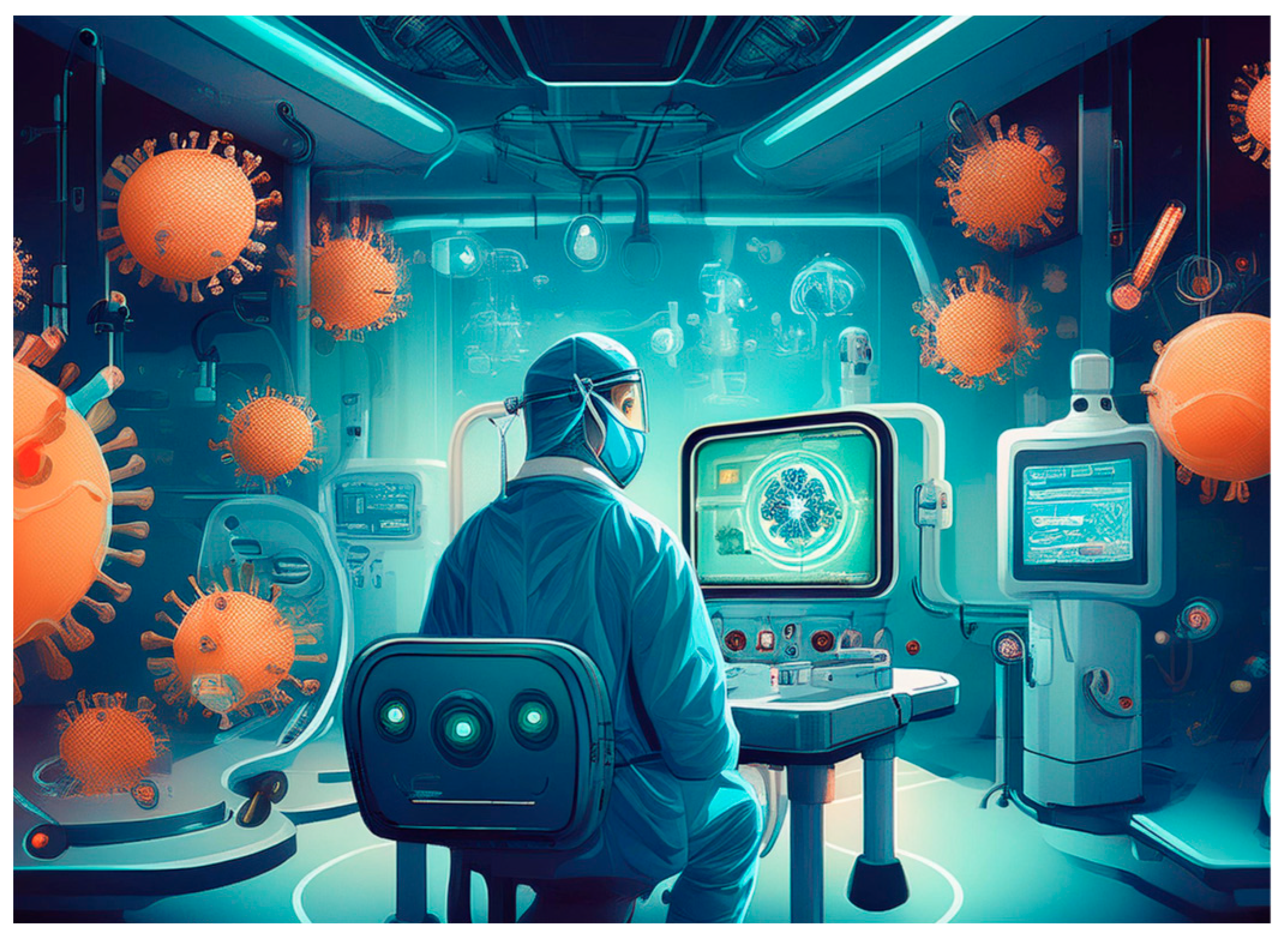
To illustrate the analytic approach, we present a brief example drawn from Diego’s first and third design iterations. In an early prompt, Diego asked the AI to generate “a city infected by an uncontrollable pathogen, with humans isolated inside protective suits.” The resulting image (Figure 1) depicted sealed architectures, rigid boundaries, and visual separation between human figures and the surrounding environment. This prompt–image pairing was coded as crisis framing and containment-oriented speculative reasoning. In later iterations, Diego’s prompts shifted to emphasize permeability and interaction, generating images of bio-architectures that integrated microbial processes into urban space. This shift was coded as relational and process-oriented speculation, indicating a transformation in how biotechnology was conceptualized across iterations.
4.6. Selection of Focal Youth
For our first research question, we selected focal youth following case study methodologies (R. K. Yin, 2018). These students were chosen because they completed all class products with depth and consistency, and because their work was broadly demonstrative of the patterns we observed across the larger group. Our goal was not to isolate exceptional cases but to highlight representative trajectories that made the overall learning process visible. Diego and Carmen were selected because their early class products surfaced shared concerns about health crises and the rise of infectious diseases linked to climate change, and their subsequent work showed a clear evolution in speculative reasoning and world-making. Across the semester, they collaboratively designed a future in which micro-capsules of insect repellent and disinfectant became integrated into everyday cultural and social practices.
We also selected Miguel and Elisa, whose sustained focus on biotechnological solutions to soil erosion in rural Colombia made their work illustrative of how students integrated disciplinary terminology into their speculative biodesign. Their prompts and visual artifacts demonstrated a notable use—and progressive expansion—of scientific vocabulary across activities. These focal cases offer detailed, information-rich examples that help illuminate the broader developmental patterns identified in the full dataset. Conversely, for our second research question, we used reflections from the whole group.
5. Results
To address our first research question, the following sections illustrate how the two analytic dimensions identified in our methods, students’ discursive practices and their representational productions, shifted across the iterative activities. We trace how prompts, written reflections, and AI generated images changed over time and how these changes reveal the development of students’ speculative biodesign reasoning.
Diego and Carmen focused on the overpopulation of disease bearing vectors in tropical regions. Their work moved from initial crisis portrayals toward city level interventions designed to isolate humans from these vectors, and eventually toward a more biochemically grounded proposal: substances carried in microcapsules that keep vectors away from humans and can be integrated into everyday social and ecological life without requiring human isolation from other organisms or outdoor environments.
In parallel, Miguel and Elisa centered their work on soil erosion caused by the overuse of chemical fertilizers in Boyacá, Colombia, a situated and pressing issue. They began by framing the problem alongside existing biotechnological adaptations, then developed their ideas toward a plausible biofertilizer produced through interactions between bacteria and onion crop waste, made feasible through future advancements in biotechnology.
5.1. The Evolving Grammar of Speculative Design Prompts and Reflections
Students’ writing shifted from describing problems to thinking about systems, showing that language played a central role in their learning. It became both the way they constructed speculative ideas and the set of instructions through which the text to image technologies mediated those ideas.
5.1.1. Diego & Carmen
Problem Framing and Future Scenarios
At the beginning, in the problem-framing and future scenarios activity of the pedagogical sequence, both Diego and Carmen positioned themselves primarily as observers of environmental crisis, not yet as agents of design possibility This was expected in their initial discourse. Discursively then, even while students were prompted to imagine a ‘fatalistic’ or problematic future, we saw a diagnostic stance that privileges description over projection. For example, Diego’s opening text adopted a catastrophic public-health framing:
“The world faces an unprecedented health crisis due to the spread of bacteria resistant to all known antibiotics, a ‘silent pandemic’…”
His language clustered around nouns of crisis: spread, mutation, isolation, with minimal deployment of verbs suggesting action or transformation. The passive voice dominated, positioning humanity as the victim, without much agency. Carmen’s initial writing presented an equally passive and descriptive stance:
“World full of dengue and malaria, dead people, brown contaminated water and trash.”
Her brief, image-driven description created a snapshot of the crisis, yet not properly an explanation of it. Instead of articulating causes or relationships, she assembled sensory details such as water, insects and death without connective language, evoking a world that is felt instead of analytically understood. As expected, both students initially adopted what might be termed a crisis discourse, a fatalistic register that narrated symptoms of disaster without articulating causes, relationships, or possibilities for intervention. At this stage, they enter speculative design through descriptions that lean heavily on nouns and adjectives, not on connections or processes. Their prompts functioned less as explanations and more as lists of visual elements, as if composing an image by supplying the AI with discrete objects to be represented, not by constructing a system or narrative.
Ideation and Provotyping
The second activity marked a critical discursive shift as both students began to articulate causal relationships and systemic connections. Their language evolved from static description to dynamic explanation, introducing conditional reasoning and temporal projection. Carmen’s discourse underwent substantial transformation:
“The extinction of insects essential for water quality regulation could destabilize aquatic ecosystems, favoring mosquito proliferation and increasing the risk of diseases like dengue.”
The introduction of conditional markers (“could destabilize”), causal connectives (“favoring”), and progressive verbs (“increasing”) signals emergent systems thinking. She started writing ecology as a process not as a fixed state. Diego similarly transitioned toward procedural and transformative language:
“In the year 2050, the implementation of a solution based on biodesigned architecture to repel mosquitoes will positively transform the way cities and their inhabitants interact with the environment.”
The future tense (“will transform”), action nouns (“implementation”), and relational framing (“interact with”) positioned biodesign as mediating technology between natural and social systems. This discursive shift made students’ emerging reasoning visible. As they began to articulate causal, conditional, and temporal relationships, their writing externalized a developing understanding of how biological and social systems interact. They didn’t depict ecological crises as fixed or inevitable, but framed these systems as dynamic and designable, signaling a growing capacity to imagine interventions and transformations within speculative biotechnological futures.
Prototyping and Visual Development
The third activity revealed mature speculative discourse characterized by reflexive awareness and systemic reasoning spanning biological, social, and political domains. Diego’s reflection demonstrated explicit metacognitive awareness about their design process:
“At first, we considered developing a toy… Now we propose researching how certain animals naturally secrete substances that repel insects… This would help avoid an apocalyptic future marked by resource scarcity and ecological imbalance, offering a solution that maintains balance between humans and their environment.”
The temporal markers (“at first… now”) enacted design iteration linguistically, while the integration of biological mechanisms with ethical purpose revealed sophisticated interdisciplinary reasoning. Carmen adopted what might be termed a policy voice:
“In 2050, anti-mosquito housing communities would significantly improve public health by reducing disease incidence… thanks to innovations in architectural design and biotechnology. New practices focused on sustainable design would emerge, along with stricter public health standards and greater education about biotechnology.”
Her use of the conditional, along with reasoning across different levels of a system, showed that she imagines technologies in relation to the social structures that would guide their ethical use. By the third activity, both students showed a more advanced form of speculative reasoning. They connected biological mechanisms with design decisions, contemplating ethical concerns and long-term social implications. They moved beyond isolated ideas toward more integrated systems thinking. Moreover, their writing situated biodesign within wider societal and political contexts, considering both the proposed technologies and the social practices and forms of governance that would shape their implementation.
5.1.2. Miguel & Elisa
Problem Framing and Future Scenarios
Miguel and Elisa began from a different discursive position than their peers. They centered moral and community-oriented concerns from the start, while also showing comfort with technical vocabulary. Miguel’s opening response, for example, framed social justice through architectural design:
“Improving the quality of life for vulnerable populations and ecosystems… a two-story modern-looking structure that produces vegetables, water, and pens for animals.”
The emphasis on vulnerability, combined with concrete architectural specification, suggested design as a moral response to inequality. Elisa’s initial text already adopted a sophisticated temporal and technical register:
“In a future where non-renewable resources have reached their limit… everyday buildings and objects are made from lab-grown biomaterials, completely biodegradable and seamlessly integrated into natural ecosystems.”
Both students began with a discourse shaped by ethical aspiration in contrast to Diego & Carmen’s fatalism. Even though the prompt focused on problem framing, they immediately integrated designed solutions into their writing, presenting the future as a space for intervention, not as an inevitable collapse. Their facility with technical vocabulary suggested some familiarity with scientific genres, yet their descriptions remained noun-heavy, identifying key elements of the system without yet explaining how they connect or operate. What stood out is that, from the outset, they framed biotechnological futures through moral purpose and designed possibilities, positioning solutions as already embedded in their imagined worlds.
Ideation and Provotyping
The second activity showed how both students developed causal explanations that grounded ethical aspiration in the biological process. Miguel deployed sophisticated causal chains:
“Bioremediated soil due to nutrient-rich water used for irrigation… by properly reusing organic waste, it no longer pollutes the water but instead becomes fertilizer that helps remediate the infertile soils of Boyacá.”
The transformation narrative (“no longer… but instead becomes”) combined with geographic specificity demonstrated place-based biological reasoning. Elisa merges biochemical mechanism with urban planning:
“Microalgae have the capacity to absorb pollutants like NO3 and heavy metals from the environment… by 2050, cities have integrated large living microalgae structures into their urban landscapes.”
The specific chemical notation combined with architectural vision revealed capacity to think across disciplinary boundaries. Both students demonstrated a growing ability to articulate mechanisms alongside aspiration. Their discourse evolved from declaring what biotechnology should achieve to explaining how it might function.
Prototyping and Visual Development
For the final activity, both students developed critical awareness of biotechnology’s political economy. Miguel’s reflection introduced dialectical analysis:
“It has changed significantly as the problem became much more focused… The most relevant negative implication… is the fertilizer industry since they would compete with an environmentally friendly product… on the positive side, the best implication of our change is the non-degradation of territory… which partially restores the purity of our most precious resource.”
The explicit weighing of implications shows emerging critical consciousness about biotechnology’s political dimensions. Elisa similarly integrated a technical proposal with social critique:
“We propose using biofertilizers that not only minimize dependence on chemical fertilizers, but also restore soil health… Implementation in Boyacá’s agricultural fields would change social structures… though there could be negative effects, like the risk of monopolization or the need for training.”
Her attention to monopolization and labor signaled an emerging awareness that biotechnological innovation unfolds within existing power relations. By the third activity, both students demonstrated a more critical grasp of biodesign’s sociopolitical dimensions, evaluating their proposals in relation to the social, economic, and political systems in which such technologies would operate.
5.2. Change in the Visual Discourse of AI-Generated Images
From a discourse-analytic perspective (Gee, 2004), these images are treated as situated meaning-making practices through which students position biotechnology, nature, and human agency within recognizable ways of knowing and doing. The visual dimension of student work revealed parallel transformations in how learners came to see and depicted biotechnological futures.
5.2.1. Diego & Carmen
Problem Framing and Future Scenarios
Initial visual representations mirror the crisis discourse identified in written work. Diego’s early images generated through AI (Figure 1) depicted sterile, pathogen-infested urban landscapes with humans in protective gear, surrounded by medical iconography. The visual composition emphasized separation and containment.
Figure 1.
Diego’s: Early portrayal of crisis imaginary of a pathogen dominated society.
Carmen’s initial visuals (Figure 2) presented stagnant waters filled with insect carcasses, decomposing organic matter rendered in browns and grays suggesting decay rather than life.
Figure 2.
Carmen’s crisis visualization showing stagnant waters and vector filled environments.
The visual focus on barriers and containment reflected an underlying assumption that biological forces act independently and uncontrollably, not in relationship with human systems. This serves as a diagnostic of students’ initial conceptual framing, one grounded in crisis. In Gee’s terms, these early images enact a crisis-oriented Discourse in which biology is positioned as an external threat and human action is organized around containment and control (Gee, 2004).
Ideation and Provotyping
The second iteration revealed both students learning to visualize connection across scales. Diego’s imagery (Figure 3) evolved to depict translucent bio-tunnels that merge architectural form with organic patterning, suggesting permeable boundaries between human and microbial worlds.
Figure 3.
Diego’s bio tunnel architecture merging organic and urban elements.
Carmen’s early visuals (Figure 4) presented a similar large-scale orientation toward containment. Her images depicted town-like settlements encircled by protective barriers, suggesting that safety is achieved through physical separation from ecological threats.
Figure 4.
Camen’s town like settlement enclosed by large protective barriers.
This representational shift marked important learning about biological interdependence. This shift reflects a reconfiguration of Discourse, as students reauthor biotechnology as a relational and process-oriented practice, reshaping what counts as meaningful reasoning about biodesign futures (Gee, 2004). Students began using AI to visualize processes that are not directly perceptible, linking microscopic dynamics to the broader systems that shape human life. Their designs now moved toward large scale systemic solutions, such as protective barriers and other infrastructural interventions.
Prototyping and Visual Development
Final visual productions demonstrated mature capacity to represent biotechnology as situated in relational practices. Diego’s culminating visuals (Figure 5) are more representational and feature bio-luminescent architectures populated by transparent human forms:
“At first, we considered developing a toy with chemical properties on its surface to repel mosquitoes, aimed at young children. The solution included the use of essential oils, color theory, and light as key elements. In addition, we proposed investigating how certain animals, such as the hippopotamus and the wildebeest, naturally secrete substances that repel insects, looking to nature for inspiration to optimize the design.”
Figure 5.
Diego’s representational image about bioluminescent environmental structures based on animal secretions research.
Carmen’s final images (Figure 6) depicted portable microcapsules (left) that humans can take everywhere, implying the isolation from the past iteration is replaced by a more situated and less large-scale solution
“…the focus shifts toward microcapsules and their use within the community. Now, the solution is approached from a more comprehensive perspective, based on research with experts and aimed at offering longer-lasting solutions compared to what is currently available on the market.”
Figure 6.
Carmen’s microcapsule-based vector repellent integrated into community life.
On both final iterations, we see that they went from a systemic but possible approach, towards a more plausible intervention, more grounded in scientific inquiry.
5.2.2. Miguel & Elisa
Problem Framing and Future Scenarios
Initial representations emphasized built form over biological process. Miguel’s first AI-generated image (Figure 7) shows a pristine greenhouse structure.
Figure 7.
Miguel’s initial representation of soil degradation and greenhouse structures.
Elisa’s initial visuals presented biomaterial architectures as sculptural objects (Figure 8), rendered as finished forms rather than evolving and growing systems. These early visualizations revealed AI being used illustratively, not yet speculatively: to aestheticize predetermined visions rather than explore unknown possibilities.
Figure 8.
Elisa’s biomaterial architecture represented as a finished sculptural form.
Ideation and Provotyping
The second iteration showed both students learning to acknowledge and represent sites for biological processes. Miguel’s visuals (Figure 9) depict stages of soil regeneration, specifically fungal networks spreading through contaminated earth, chemical transformation rendered as color change.
Figure 9.
Miguel’s soil regeneration processes showing fungal and nutrient transformations.
Elisa’s image (Figure 10) portrayed microalgae-infused agricultural systems pulsing with photosynthetic activity, thus representing agricultural infrastructure as a metabolic system. This shift from form to process represents fundamental refocus; students used AI as a tool to represent the visible outlook of biological processes and social infrastructures built around them.
Figure 10.
Elisa’s microalgae based agricultural infrastructure with visible metabolic activity.
Prototyping and Visual Development
Final visualizations integrated multiple scales to tell stories of ecological regeneration of soils. Miguel’s culminating images narrated complete ecological cycles (Figure 11): fungi decomposing waste, specifically onion, as well as nutrients entering soil and crops growing.
Figure 11.
Miguel’s ecological cycle of biofertilizer production using onion waste and fungi.
Elisa’s final work (Figure 12) depicts transparent bioreactors revealing internal processes, agricultural networks connected by visible nutrient flows, biotechnology as infrastructure for life.
Figure 12.
Transparent bioreactors and nutrient flow networks for soil recovery.
These mature visualizations demonstrated capacity for ethical visualization—using imagery to reason about social structures for sustainability, and care. Particularly, this envisioning represents a possibility for an existing problem for actual populations suffering from soil erosion in Boyacá, Colombia.
The parallel analysis of discursive and representational transformation revealed a speculative grammar that changes and develops through the process of speculative design. Diego and Carmen transform crisis narration into sociotechnical speculation, learning to write and visualize biotechnology as integrated into society. Miguel and Elisa evolve from moral aspiration to critical systems thinking that integrates technical mechanisms with ethical reflection, all this grounded on existing circumstances and a socio-technical problem: erosion caused by fertilization.
The combined analysis traces longitudinal movement among Discourses, documenting patterned changes in how students organize meaning around biotechnology, ethics, and human–environment relations over time (Gee, 2004). The iterative structure of our pedagogy allowed for a constructionist learning environment where knowledge emerges through students’ meaning-making and not from instructor-student transmission. As students shifted from description to explanation, from fear to relation, and from form to process, these transformations revealed how speculative biodesign pedagogy helps them gradually recognize biodesign as a tool for addressing societal problems. Since students reasoned across scales, temporalities, and value systems, this multi-dimensional reasoning represents the core learning objective: not just imagining different futures but developing the conceptual tools to evaluate and argue for them.
5.3. Students Reflections Towards an Ecological and Systemic Understanding of Generative AI Use for Design
To answer our second research question, we looked at written reflections from all students across the semester and we traced how they talked about generative AI; what worked, what didn’t, and what worried them as they used it for speculative biodesign. While the previous section followed specific students’ changing practices, this analysis broadens out to see how the whole class made sense of AI. Sometimes they saw it as a tool, sometimes as a collaborator, sometimes as something that got in the way of their creative process.
Analyses across these reflections revealed that students’ understanding also shifted over time. Early on, they approached AI more instrumentally. But as the semester progressed, they started seeing AI differently: understanding it as part of larger systems, paying attention to context, and developing more critical perspectives about how AI shapes the biotechnological futures they were imagining. We identified three recurring areas of understanding that together illustrate students’ emerging ecological and systemic awareness of AI within design practice.
5.3.1. AI as Perceptual Amplifier and Visualizer of Biological Processes in Speculative Design
Students initially articulated AI’s value in terms of efficiency and visualization capacity, positioning it as a design aid for rapid prototyping and visualization. When asked about generative AI usability and accuracy, Diego emphasized temporal acceleration saying that “Artificial intelligence is a tool that can quickly generate prototypes or personalize experiences based on data.” Similarly, Carmen foregrounded visualization capability, realizing it is “Useful for imagining and visualizing possible biodesign scenarios.”
Moreover, collaborative discussions revealed collective recognition of AI’s capacity to show the macroscopic outlooks of the microscopical processes. He wrote: “It allows us to capture ideas that don’t yet have material or image references.” and even employed a technological metaphor: “AI was like a microscope to see invisible processes in soil and water.” In turn, Elisa highlights experimental possibilities: “To experiment with living structures at urban scale without having to build them.” These understandings reveal students recognizing AI’s value for cognitive augmentation—extending capacity to imagine and experiment with biological systems. The recurring emphasis on speed, visualization, and access to the invisible suggests appreciation for overcoming traditional design education limitations.
5.3.2. Recognizing AI’s Limits and Biases
Through iterative use, students developed a nuanced understanding of the constraints, failures, and aesthetic tendencies of generative AI. Elena highlights issues of cultural generalization, noting that when she asks the model to “create an image of a town in Colombia,” it defaults to a homogenized imaginary of a “South American ‘town.’” Rosa names a more affective dimension of interacting with AI: a diminished creative confidence that emerges from becoming accustomed to consulting the tool—“one can generate insecurity about what they’re creating because there’s already a habit of turning to these tools.” Carlos framed this tension directly, recognizing AI’s usefulness for speed and idea generation while also warning that it may create “a dependency that would affect the designer’s ability.”
Reflections pointed to yet another layer of learning: an awareness of how easily AI fabricates details or drifts out of context, prompting him to write “more specific prompts so it doesn’t invent unreal things or things outside the context.” These reflections showed students’ growing critical attunement to AI: not only questioning its creative affordances, but also the cultural, emotional, and practical pitfalls embedded in its use. Their comments show an emerging start to read AI as a sociotechnical system whose outputs influence imagination, authorship, and the design process itself
5.3.3. Developing Situated Ethical Reasoning About AI
Most of the responses that articulated ethical reasoning about AI use, emerged after a class session examining the environmental, labor, and social impacts of generative AI and the global data-center infrastructures that sustain it, which provided students with a concrete political–ecological frame for evaluating AI use in design practice. Reflections showed comprehensive ethical frameworks for AI use in biodesign practice. Isabel introduced environmental concern: “The opportunity cost in social and environmental terms is too great… it drives me to use it as little as possible,” while Ana proposes temporal boundaries: “Its use should be limited to the end of the project, when deep research has already been done, so it helps to refine, not to conceive.” Similarly, Diego surfaced contextual ethics: “It should be guided by the need and benefit it can offer in a specific context and not just by technological novelty.”
These reflections demonstrated students constructing situated AI ethics: principles emerging from practice using AI. Proposals for temporal limitation, minimal use, and contextual justification reveal understanding that AI use participates in broader patterns of resource consumption and knowledge production. The progression from recognizing usefulness through identifying limitations to articulating ethical frameworks revealed development of critical AI literacy through speculative biodesign practice. Students developed nuanced positions recognizing AI’s value while maintaining critical distance.
Additional reflections deepened this ethical terrain by centering social, environmental, and labor harm as core criteria for responsible use. Mariana argued that “the opportunity cost in social and environmental terms is too large,” noting that many ignore these impacts, which makes it “difficult to accept that choosing not to use it may put you at a disadvantage” in design contexts. Javier similarly foregrounded structural consequences: generative AI “brings some benefits”, he wrote, but also “serious ethical and sustainability concerns that affect society, the environment, and labor conditions,” concluding that “if it is not necessary, we should refrain from using it” as a matter of responsibility.
Other students explicitly connected ethical reasoning to the protection of workers and the planet. Lucía insisted that AI use must be avoided when it “threatens jobs or has a considerable environmental impact,” recommending alternative methods that “prioritize sustainability and respect for the people involved” in the design ecosystem. Renata reflected on the shock of learning about these hidden costs: “I hadn’t realized the damage these tools cause… I knew about email, but not about AI,” advocating for reducing use whenever possible to avoid contributing to environmental degradation.
Students also articulated clearer boundaries around justified use. Samuel noted that designers often turn to AI simply to speed up processes “without real need,” and calls for using it responsibly by seeking strategies “that reduce negative social, environmental, and labor impacts” rather than offloading thinking to the machine. Tomás proposes a decision-making framework anchored in collective well-being: AI use should be permissible only when the value added “justifies the potential harms to the environment and affected communities,” positioning ethical evaluation alongside technical improvement.
In summary, we saw that through iterative engagement with AI for speculative design, students developed capacity to navigate productive tensions: leveraging visualization power while recognizing cultural limitations, appreciating efficiency while guarding against dependence, exploring possibilities while acknowledging ecological, labor and social costs. This navigation represents sophisticated learning: not just knowing about AI or using AI, but knowing how to think critically about AI simultaneously.
6. Discussion
This study examined how design students engaged in speculative biodesign activities with generative AI, revealing how the tool mediated their meaning-making while also provoking ethical, cultural, and epistemological questions. Consistent with recent work on speculative design for STEM learning (Matuk, 2023), students used AI to “think with” possible futures rather than to produce polished artifacts. Their engagement aligns with Garcia and Mirra’s (2023) framework of speculative civic literacies, which emphasizes imagining otherwise while remaining attentive to structural power. In our study, students rarely framed AI as emancipatory; instead, they approached it cautiously, interrogating its social, environmental, and representational consequences. This extends Zailuddin et al.’s (2024) argument that generative AI expands creative possibility spaces by showing that students perceive this expansion as ambivalent—simultaneously generative and extractive.
Moreover, we acknowledge that this study is limited by its single-case design and small sample size, and the findings should be interpreted as illustrative of learning processes rather than generalizable outcomes. The course was conducted online during the Fall 2024 academic term, which shaped interaction patterns and use of AI to the generative AI tools available back then. The study is situated within a Colombian context and within biodesign as a disciplinary domain, both of which foreground ecological relations that may influence how speculative reasoning with AI is taken up. These contextual features bound the transferability of the findings while also offering insight into how speculative AI pedagogy unfolds in a specific educational setting.
Addressing our first research question, we found that students developed speculative competence through an iterative grammar of speculation that moved from descriptive diagnosis, to design-oriented possibility, to socio-political agency. Early discursive and visual productions foregrounded crisis-oriented imaginaries, reflecting an initial diagnostic stance in which learners reproduced familiar dystopian narratives before developing more relational, agentic, and design-oriented forms of speculation (Matuk, 2023). As students revised prompts, generated images, and wrote reflections, prompts functioned less as optimization tools—as in conventional accounts of prompt engineering (Knoth et al., 2024)—and more as externalizations of emerging world-making processes.
As learners engaged in iterative cycles, their speculation shifted toward causal, conditional, and temporal reasoning, articulating how biological, social, and ecological processes might interact in imagined futures. This mirrors Cardenas Cordova et al.’s (2025) account of speculative design moving from selection to exploration and transformation, but our findings extend this by showing the linguistic and visual transformations through which these shifts become visible. Students increasingly framed futures not as fixed endpoints but as dynamic sociotechnical systems shaped through biodesign interventions. Generative AI supported this shift by providing immediate visual feedback that surfaced contradictions, generated new questions, and exposed assumptions—aligning with Johannessen’s (2017) view of speculative tools as dialogic provocations rather than mere content generators.
Constructionism helps illuminate why these changes occurred. As Papert (1980) and Kafai and Resnick (1996/2012) argue, learning emerges through the creation of public artifacts that make thinking visible. In our study, prompts and AI-generated images served exactly this function: they were artifacts students used to think through, and artifacts from which students learned. Revising these productions required learners to externalize, test, and refine evolving theories about ecological futures and biodesign mechanisms. While AI made this externalization immediate, the learning did not stem from the tool itself; it emerged from students’ critical negotiation with its outputs—an orientation resonant with the cautionary stance central to speculative civic literacies (Garcia & Mirra, 2023).
For our second research question, we found that students developed a nuanced and ecological understanding of AI that balanced recognition of its perceptual affordances with sustained ethical and epistemic critique. Students initially framed AI as a perceptual amplifier that helped them “see the invisible,” especially useful for visualizing biological and ecological processes that are hard to imagine at multiple scales. This echoes Zailuddin et al.’s (2024) claim that AI can support creative exploration. Yet students quickly situated this usefulness within a critical frame. As they worked iteratively with AI outputs, they identified representational biases—flattened Latin American landscapes, homogenized cultural markers, and inaccurate biological depictions—mirroring wider critiques of dataset politics (Crawford & Paglen, 2021). Rather than accepting these outputs, students treated inaccuracies as moments for inquiry, prompting additional research, prompt refinement, and ethical reasoning.
These representational critiques evolved into grounded ethical frameworks for responsible AI use. After instruction about environmental, labor, and extractive infrastructures, students articulated boundaries for when AI should or should not be used. Some proposed minimizing AI use to reduce environmental impact; others argued that AI should be avoided early in ideation so it would not overshadow their own conceptual grounding. Several students judged AI’s appropriateness in terms of whether its contributions justified its ecological cost—an approach aligned with Garcia and Mirra’s (2023) emphasis on interrogating the sociotechnical conditions shaping possible futures.
Students’ understanding of AI therefore did not settle into a simple balance of strengths and limitations. Instead, speculative practice helped them develop critical, practice-embedded ethical stances anchored in environmental responsibility, cultural specificity, and caution toward technological overreach. Although AI expanded some speculative possibilities, students frequently questioned its broader epistemic and cultural consequences. They did not position AI as inherently beneficial to design; they approached it as an ambivalent and sometimes constraining system whose value required constant evaluation.
7. Conclusions
This study builds on emerging scholarship showing that generative AI can open speculative possibility spaces while emphasizing that such openings are neither neutral nor automatically desirable. We conceptualize a grammar of speculation as the patterned ways language is used to imagine, test, and revise possible futures, including how students formulate prompts, interpret AI-generated outputs, and articulate reflections across linguistic, visual, and narrative modes. Within this grammar, students’ speculative language supported a range of epistemic actions, from proposing hypothetical scenarios to evaluating social, ecological, and ethical implications.
Over the course of the design activities, we observed transformations in how this grammar was enacted. Students’ speculative discourse increasingly organized futures through relations of care, responsibility, and agency, moving from crisis-oriented descriptions toward design propositions and socio-political reasoning. In conversation with Matuk’s (2023) framing of speculative design as an epistemic space and Garcia and Mirra’s (2023) account of speculative civic literacies, these findings show that AI-mediated speculation supports critical AI literacy when students interrogate the tool as part of their meaning-making practices. In this context, generative AI functioned as a medium for making speculative thinking visible, enabling students to examine and refine the discursive structures through which they imagine biotechnological futures.
Rather than portraying AI as a catalyst for creativity, we argue that speculative biodesign provides a space in which students grapple productively with AI’s epistemic, ethical, and cultural tensions. It is this friction—between what AI renders visible and what students judge inaccurate, extractive, or insufficient—that deepens learning. Through repeated encounters with its limitations, students refined not only their ideas but the very grammar through which they imagined futures. This progression from description to causal reasoning and, eventually, to socio-political analysis underscores that speculative competence emerges through the recursive production of discourse, not through AI’s creative capacity.
In this sense, generative AI becomes one provocation among many: a constrained but generative prompt within a broader pedagogical commitment to ethical, situated, and culturally grounded futures thinking. Designing learning environments that embrace this ambivalence allows students to use AI thoughtfully without being limited by it.
Author Contributions
Conceptualization, S.O.R.; methodology, S.O.R.; software, N.H. and G.D.; validation, S.O.R. and N.H.; formal analysis S.O.R. and N.H.; investigation, S.O.R. and N.H.; resources, N.H. and G.D.; data curation, N.H.; writing—original draft preparation, S.O.R.; writing—review and editing, S.O.R.; visualization, N.H.; supervision, G.D.; project administration, G.D. All authors have read and agreed to the published version of the manuscript.
Funding
This research received no external funding.
Institutional Review Board Statement
The study was approved by the Comité de Ética de Investigación de la Universidad de los Andes (1845; 6 November 2023).
Informed Consent Statement
Informed consent was obtained from all subjects involved in the study.
Data Availability Statement
The data presented in this study are available on request from the corresponding author.
Acknowledgments
A large language model (LLM, ChatGPT-5.0) was used in a limited way for the production of this paper. The LLM was used to reformulate a small number of paragraphs into more concise text and to assist in the generation of questions for the questions framework based on the findings of the paper. In all cases, we modified and added to the text that the LLM generated to reflect our intended meaning.
Conflicts of Interest
The authors declare no conflict of interest.
References
- Akcay Kavakoglu, A., Almaç, B., Eser, B., & Alaçam, S. (2022, September 13–16). AI driven creativity in early design education—A pedagogical approach in the age of Industry 5.0. 40th Conference on Education and Research in Computer Aided Architectural Design in Europe (p. 142), Ghent, Belgium. [Google Scholar] [CrossRef] [Scilit]
- Arada, K., Sanchez, A., & Bell, P. (2023). Youth as pattern makers for racial justice: How speculative design pedagogy in science can promote restorative futures through radical care practices. Journal of the Learning Sciences, 32(1), 76–109. [Google Scholar] [CrossRef] [Scilit]
- Boer, L., & Donovan, J. (2012, June 11–15). Provotypes for participatory innovation. Designing Interactive Systems Conference (pp. 388–397), Newcastle Upon Tyne, UK. [Google Scholar] [CrossRef] [Scilit]
- Brown, T. (2008). Design thinking. Harvard Business Review, 86(6), 84. [Google Scholar] [PubMed]
- Campos, F. C. (2024, June 10–14). Of barrios and favelas: Blending criticality and imagination through Freire-inspired utopian workshops. 18th International Conference of the Learning Sciences-ICLS 2024 (pp. 674–681), Buffalo, NY, USA. Available online: https://repository.isls.org/handle/1/11155 (accessed on 22 December 2025).
- Chandrasekera, T., Hosseini, Z., & Perera, U. (2024). Can artificial intelligence support creativity in early design processes? International Journal of Architectural Computing, 23, 122–136. [Google Scholar] [CrossRef] [Scilit]
- Cardenas Cordova, D., Kelly, N., & Rezayan, L. (2025). A systematic literature review of the speculative design process and a proposed framework for speculative design. Design Science, 11, e38. [Google Scholar] [CrossRef] [Scilit]
- Crawford, K., & Paglen, T. (2021). Excavating AI: The politics of images in machine learning training sets. AI & Society, 36(4), 1105–1116. [Google Scholar] [CrossRef] [Scilit]
- Danies, G., Ojeda-Ramírez, S., Obregón, C., & Burbano, A. (2025). Biodesign and plant sciences: Evolving STEAM pedagogies in higher education. Quantitative Plant Biology, 6, e32. [Google Scholar] [CrossRef] [Scilit] [PubMed]
- Dunne, A., & Raby, F. (2013). Speculative everything: Design, fiction, and social dreaming. MIT Press. [Google Scholar]
- Federiakin, D., Molerov, D., Zlatkin-Troitschanskaia, O., & Maur, A. (2024). Prompt engineering as a new 21st century skill. Frontiers in Education, 9, 1366434. [Google Scholar] [CrossRef] [Scilit]
- Garcia, A., & Mirra, N. (2023). Other suns: Designing for racial equity through speculative education. Journal of the Learning Sciences, 32(1), 1–20. [Google Scholar] [CrossRef] [Scilit]
- Gee, J. P. (2004). Discourse analysis: What makes it critical? In An introduction to critical discourse analysis in education (pp. 49–80). Routledge. [Google Scholar]
- Gough, P., Forman, J., Pataranutaporn, P., Hepburn, L.-A., Ramirez-Figueroa, C., Cooper, C., Vujic, A., Kong, D. S., Kim, R., Maes, P., Ishii, H., Sra, M., & Ahmadpour, N. (2021, May 8–13). Speculating on biodesign in the future home. Extended Abstracts of the 2021 CHI Conference on Human Factors in Computing Systems (pp. 1–5), Yokohama, Japan. [Google Scholar] [CrossRef] [Scilit]
- Gutiérrez, K. D. (2008). Developing a sociocritical literacy in the third space. Reading Research Quarterly, 43(2), 148–164. [Google Scholar] [CrossRef] [Scilit]
- Jenkins, H., Peters-Lazaro, G., & Shresthova, S. (2020). Popular culture and the civic imagination: Case studies of creative social change. NYU Press. [Google Scholar]
- Johannessen, L. K. (2017). The young designer’s guide to speculative and critical design. Norwegian University of Science and Technology. [Google Scholar]
- Kafai, Y. B., & Resnick, M. (2012). Constructionism in practice: Designing, thinking, and learning in a digital world. Routledge. Original work published 1996. [Google Scholar]
- Kenny, S., Antle, A. N., Russell, G., Kitson, A., & Veldhuis, A. (2025, June 23–26). Beyond the algorithm: Speculative approaches to critical AI literacies with diverse youth. 24th Interaction Design and Children (pp. 89–105), Reykjavik, Iceland. [Google Scholar] [CrossRef] [Scilit]
- Kim, R. (2025). What is biodesign? Biodesign Academy. Available online: https://www.biodesign.academy/p/what-is-biodesign (accessed on 10 August 2025).
- Knoth, N., Tolzin, A., Janson, A., & Leimeister, J. M. (2024). AI literacy and its implications for prompt engineering strategies. Computers and Education: Artificial Intelligence, 6, 100225. [Google Scholar] [CrossRef] [Scilit]
- Lin, L., & Long, D. (2023). Generative AI futures: A speculative design exploration. Creativity and Cognition, 380–383. [Google Scholar] [CrossRef] [Scilit]
- Mahdavi Goloujeh, A., Sullivan, A., & Magerko, B. (2024, May 11–16). The social construction of generative AI prompts. Extended Abstracts of the CHI Conference on Human Factors in Computing Systems (pp. 1–7), Honolulu, HI, USA. [Google Scholar] [CrossRef] [Scilit]
- Manovich, L. (2023). Seven arguments about AI images and generative media. Thinking with AI, 126. Available online: https://elearning.unite.it/pluginfile.php/336715/mod_resource/content/1/Inteligenza%20artificiale.pdf (accessed on 22 December 2025).
- Matuk, C. (2023). Speculative design for stem learning. In Amplifying informal science learning. Routledge. [Google Scholar]
- Mogensen, P. (1992). Towards a provotyping approach in systems development. Scandinavian Journal of Information Systems, 4(1), 5. [Google Scholar]
- Myers, W. (2012). Bio design: Nature + science + creativity. The Museum of Modern Art. Available online: https://www.moma.org/docs/publication_pdf/3167/BioDesign_PREVIEW.pdf (accessed on 22 December 2025).
- Ochs, E., Schegloff, E. A., & Thompson, S. A. (1996). Interaction and grammar. Cambridge University Press. [Google Scholar]
- Ojeda-Ramirez, S., Hakim, N., & Turano, G. D. (2025, June 10–13). Speculative biotechnologies: AI as a catalyst for biodesign education. 19th International Conference of the Learning Sciences-ICLS 2025 (pp. 736–744), Helsinki, Finland. Available online: https://repository.isls.org/handle/1/11799 (accessed on 22 December 2025).
- Oppenlaender, J. (2024). A taxonomy of prompt modifiers for text-to-image generation. Behaviour & Information Technology, 43(15), 3763–3776. [Google Scholar] [CrossRef] [Scilit]
- Papert, S. (1980). Mindstorms: Children, computers, and powerful ideas (Vol. 10, p. 1095592). Basic Books Inc. [Google Scholar]
- Papert, S. (1991). Situating constructionism. In I. Harel, & S. Papert (Eds.), Constructionism (pp. 1–14). Lawrence Erlbaum Associates. [Google Scholar]
- Papert, S. (1993). The children’s machine. Technology Review-Manchester NH, 96, 28. [Google Scholar]
- Papert, S., & Solomon, C. (1971). Twenty things to do with a computer. Artificial intelligence memo number 248. Available online: https://eric.ed.gov/?id=ED077240 (accessed on 22 December 2025).
- Robertson, J., Ferreira, C., Botha, E., & Oosthuizen, K. (2024). Game changers: A generative AI prompt protocol to enhance human-AI knowledge co-construction. Business Horizons, 67(5), 499–510. [Google Scholar] [CrossRef] [Scilit]
- Royalty, A., Chen, H., & Sheppard, S. (2018, October 3–6). Reflective design practice: A novel assessment of the impact of design-based courses on students. 2018 IEEE Frontiers in Education Conference (FIE) (pp. 1–4), San Jose, CA, USA. Available online: https://ieeexplore.ieee.org/abstract/document/8659162/ (accessed on 22 December 2025).
- Saldaña, J. (2021). The coding manual for qualitative researchers. Sage. [Google Scholar]
- Saritepeci, M., & Yildiz Durak, H. (2024). Effectiveness of artificial intelligence integration in design-based learning on design thinking mindset, creative and reflective thinking skills: An experimental study. Education and Information Technologies, 29(18), 25175–25209. [Google Scholar] [CrossRef] [Scilit]
- Sharma, S., Howell, N., Ventä-Olkkonen, L., Iivari, N., Eden, G., Hartikainen, H., Kinnula, M., Durall, E., Nitsche, M., Okkonen, J., Pait, S., Rubegni, E., Sluis-Thiescheffer, W., Van Der Velden, L., & Varanasi, U. S. (2024, October 13–16). Promoting criticality with design futuring with young children. Nordic Conference on Human-Computer Interaction (pp. 1–15), Uppsala, Sweden. [Google Scholar] [CrossRef] [Scilit]
- Vaithilingam, P., Arawjo, I., & Glassman, E. L. (2024, July 1–5). Imagining a Future of designing with AI: Dynamic grounding, constructive negotiation, and sustainable motivation. Designing Interactive Systems Conference (pp. 289–300), Copenhagen, Denmark. [Google Scholar] [CrossRef] [Scilit]
- Walker, J. T., Barrera, A., Perez-Piza, M., Acquah, A., Grushkin, D., & Vijayakumar, V. (2023, October 7–11). Biodesign: A frame for biomaking to learn. FabLearn/Constructionism 2023: Full and Short Research Papers (pp. 1–5), New York, NY, USA. [Google Scholar] [CrossRef] [Scilit]
- Walker, J. T., & Kafai, Y. B. (2021). The biodesign studio: Constructions and reflections of high school youth on making with living media. British Journal of Educational Technology, 52(3), 1116–1129. [Google Scholar] [CrossRef] [Scilit]
- Yin, H., Zhang, Z., & Liu, Y. (2023). The exploration of integrating the midjourney artificial intelligence generated content tool into design systems to direct designers towards future-oriented innovation. Systems, 11(12), 566. [Google Scholar] [CrossRef] [Scilit]
- Yin, R. K. (2018). Case study research and applications (Vol. 6). Sage. Available online: https://www.academia.edu/download/106905310/Artikel_Yustinus_Calvin_Gai_Mali.pdf (accessed on 22 December 2025).
- Zailuddin, M. F. N. O., Harun, N. A. N., Rahim, H. A. A., Kamaruzaman, A. F., Berahim, M. H., Harun, M. H., & Ibrahim, Y. (2024). Redefining creative education: A case study analysis of AI in design courses. Journal of Research in Innovative Teaching & Learning, 17(2), 282–296. [Google Scholar] [CrossRef] [Scilit]
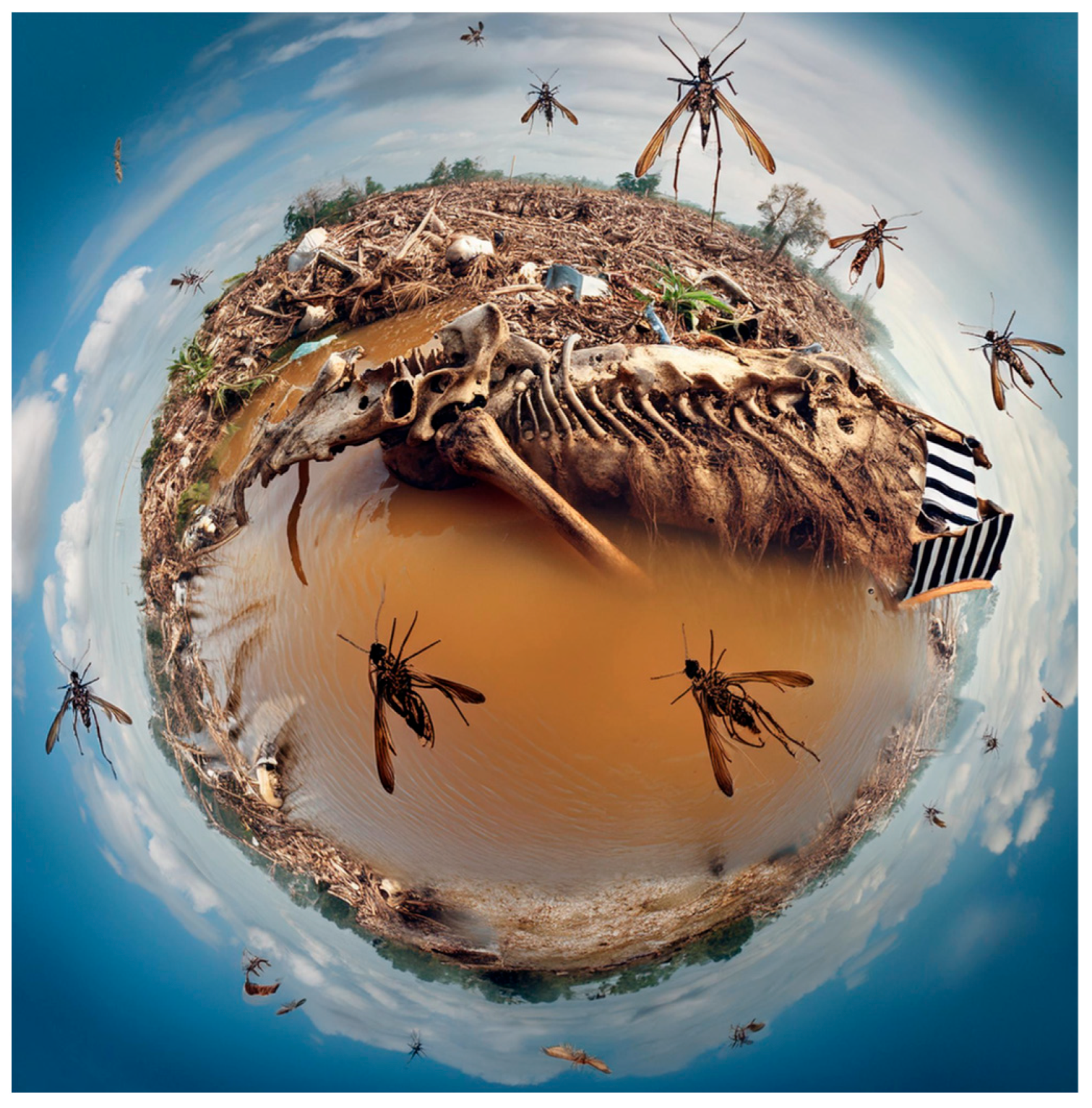
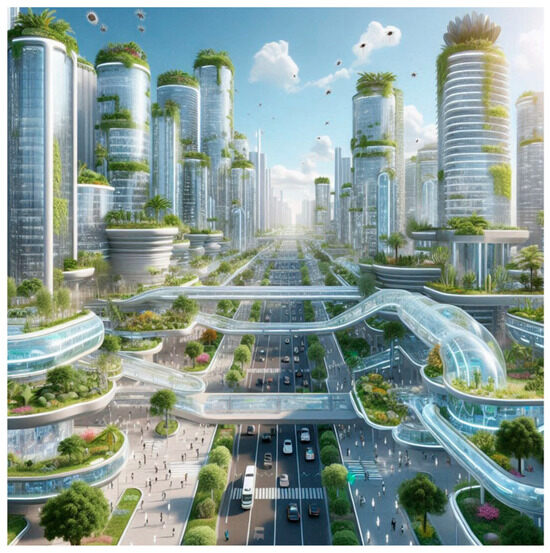
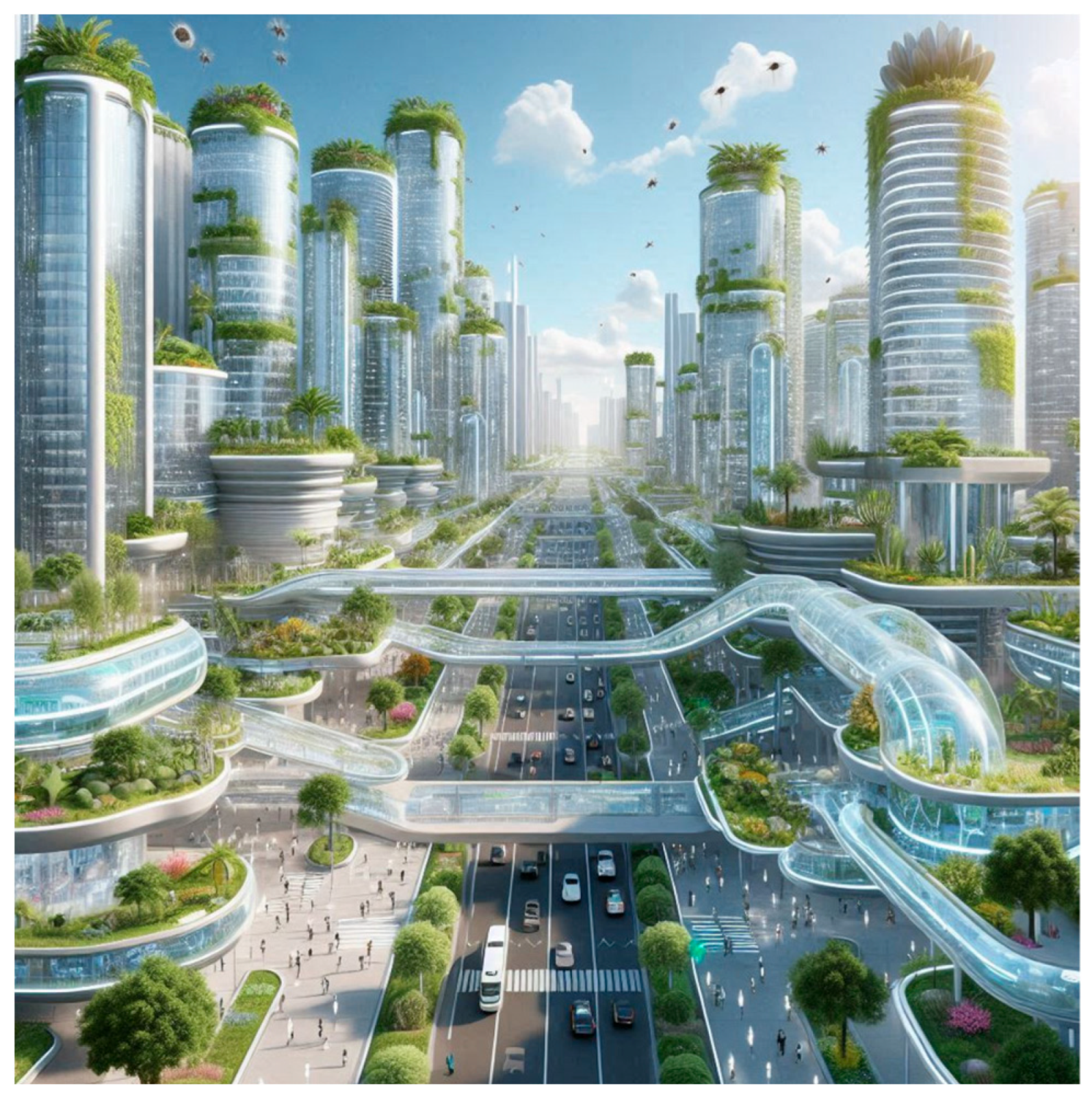
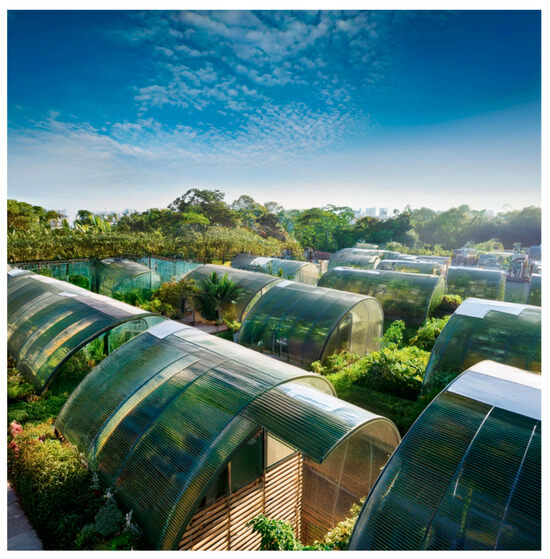
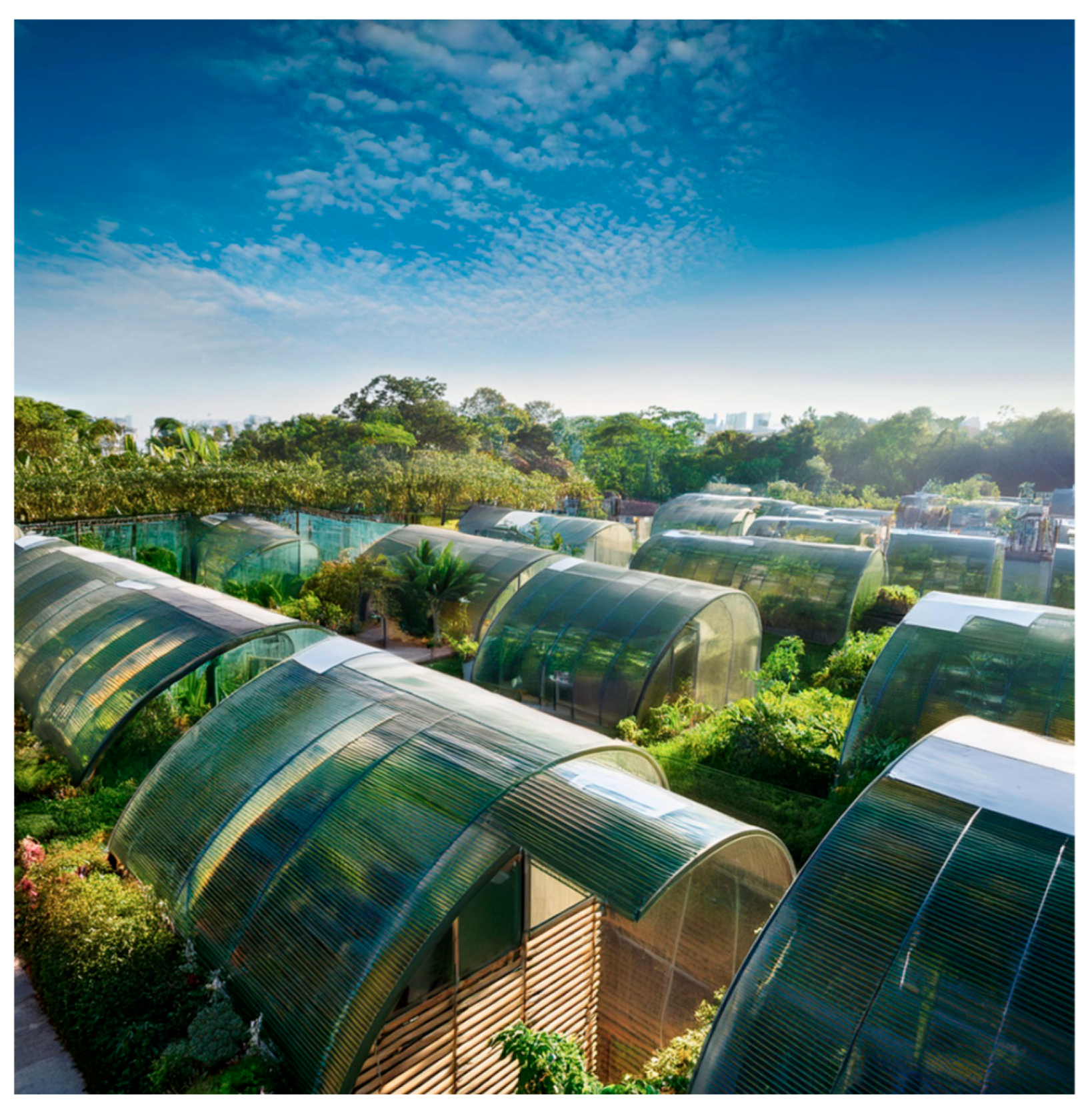
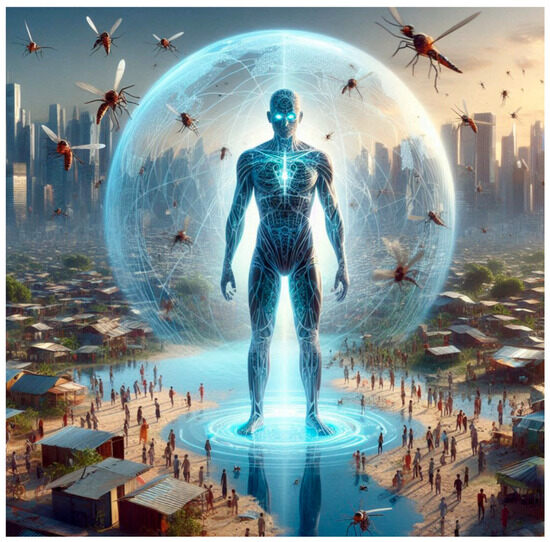
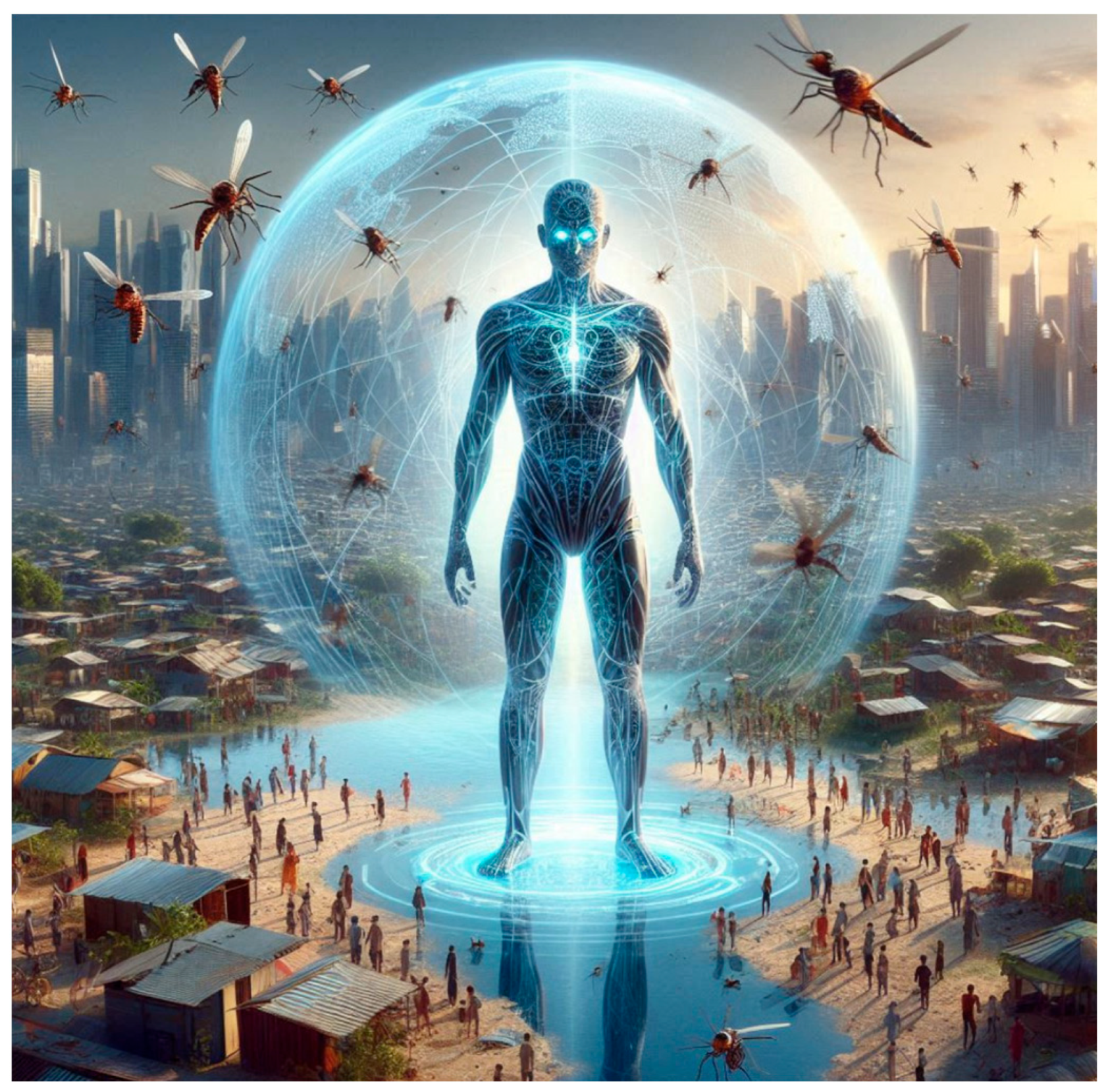


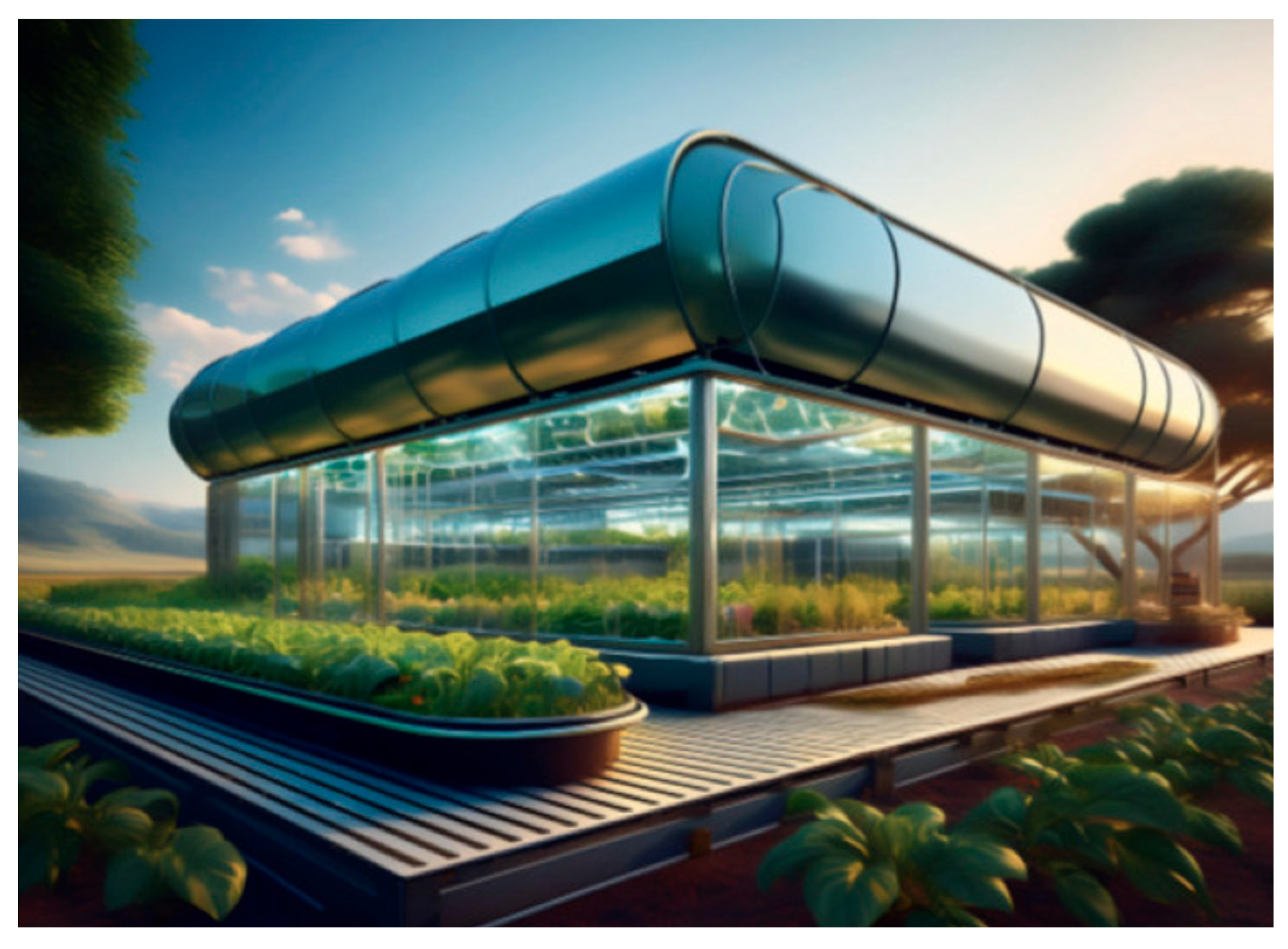
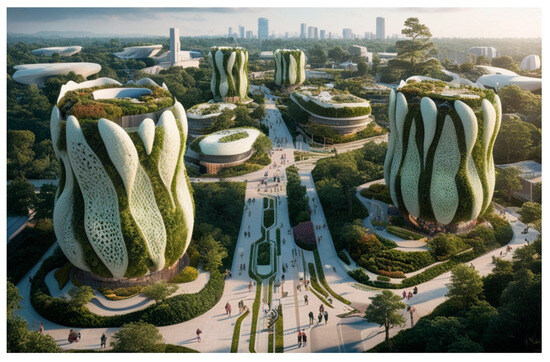
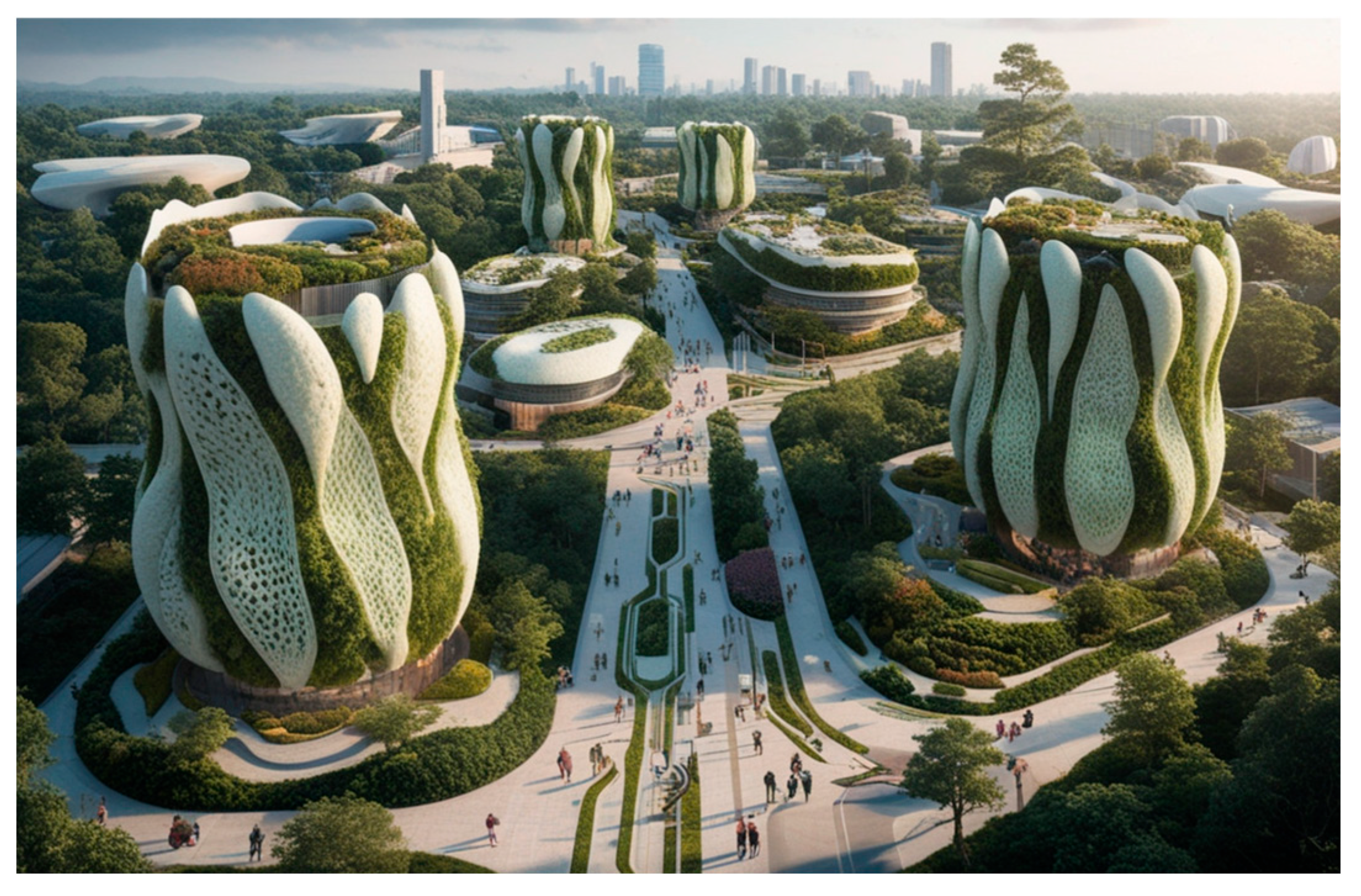



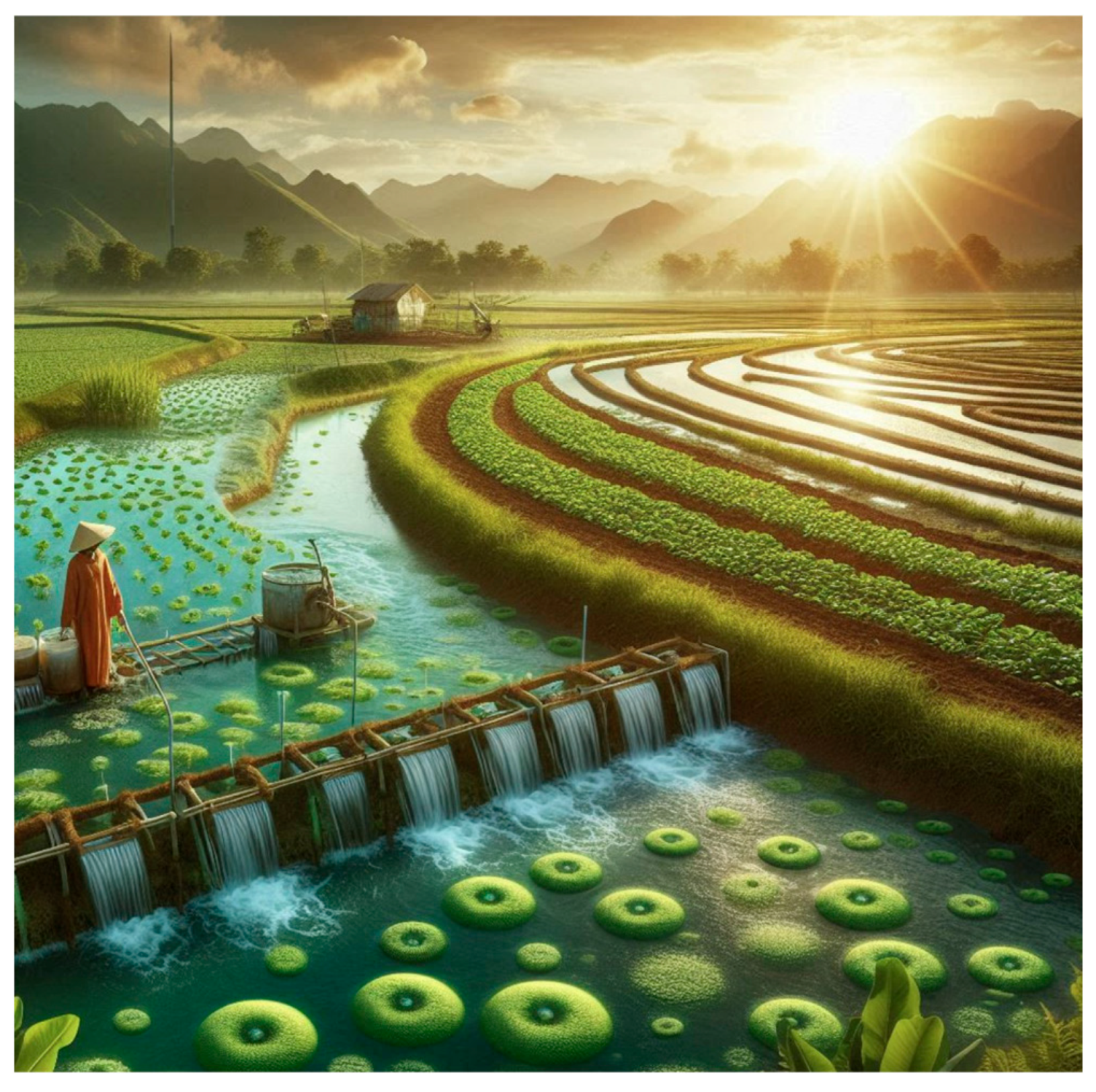
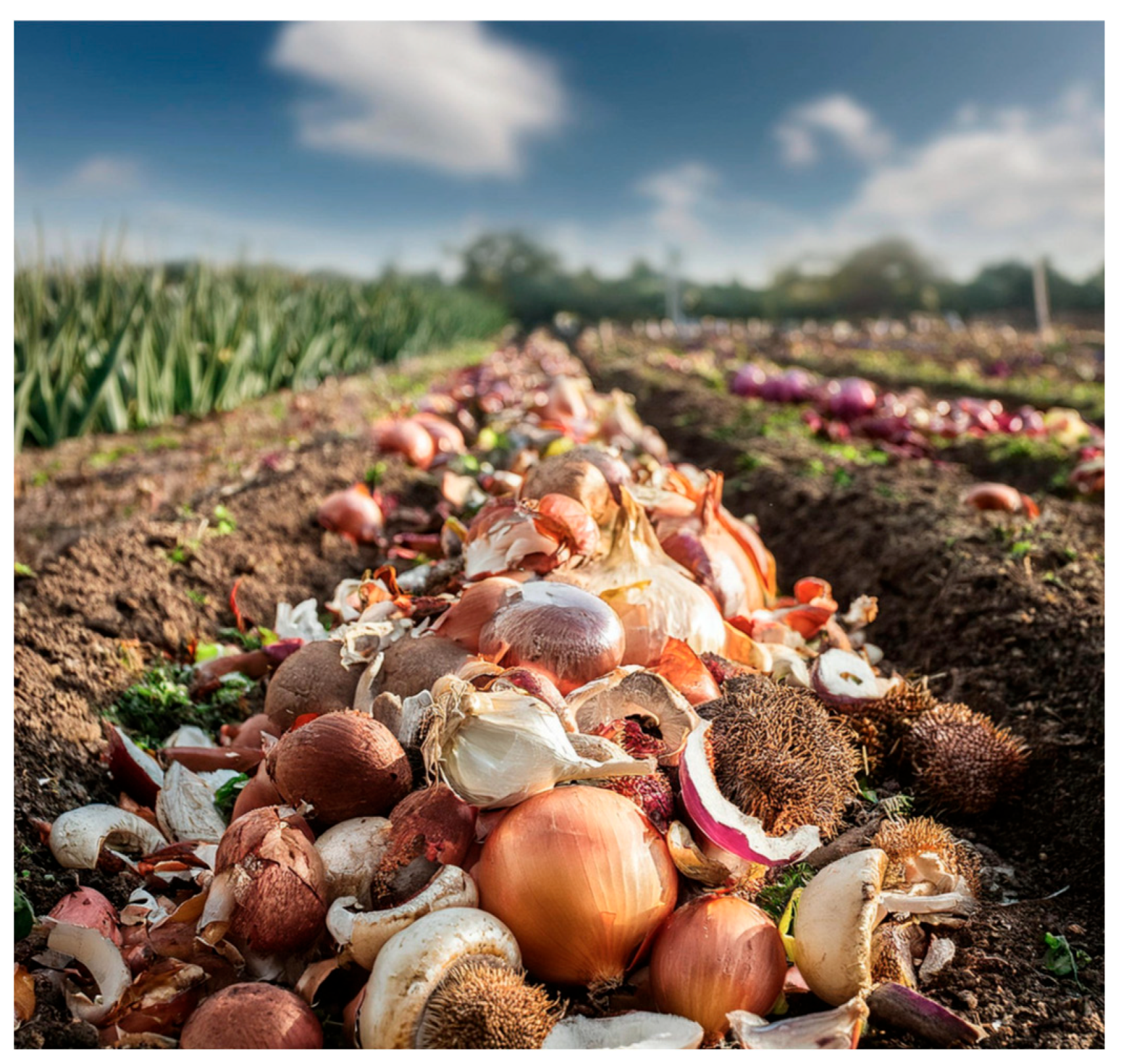
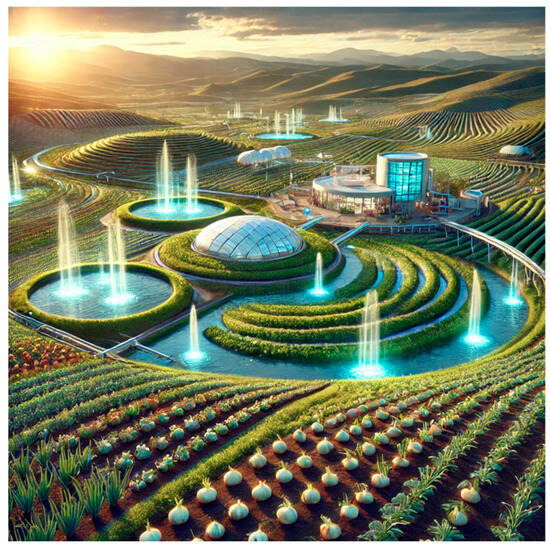
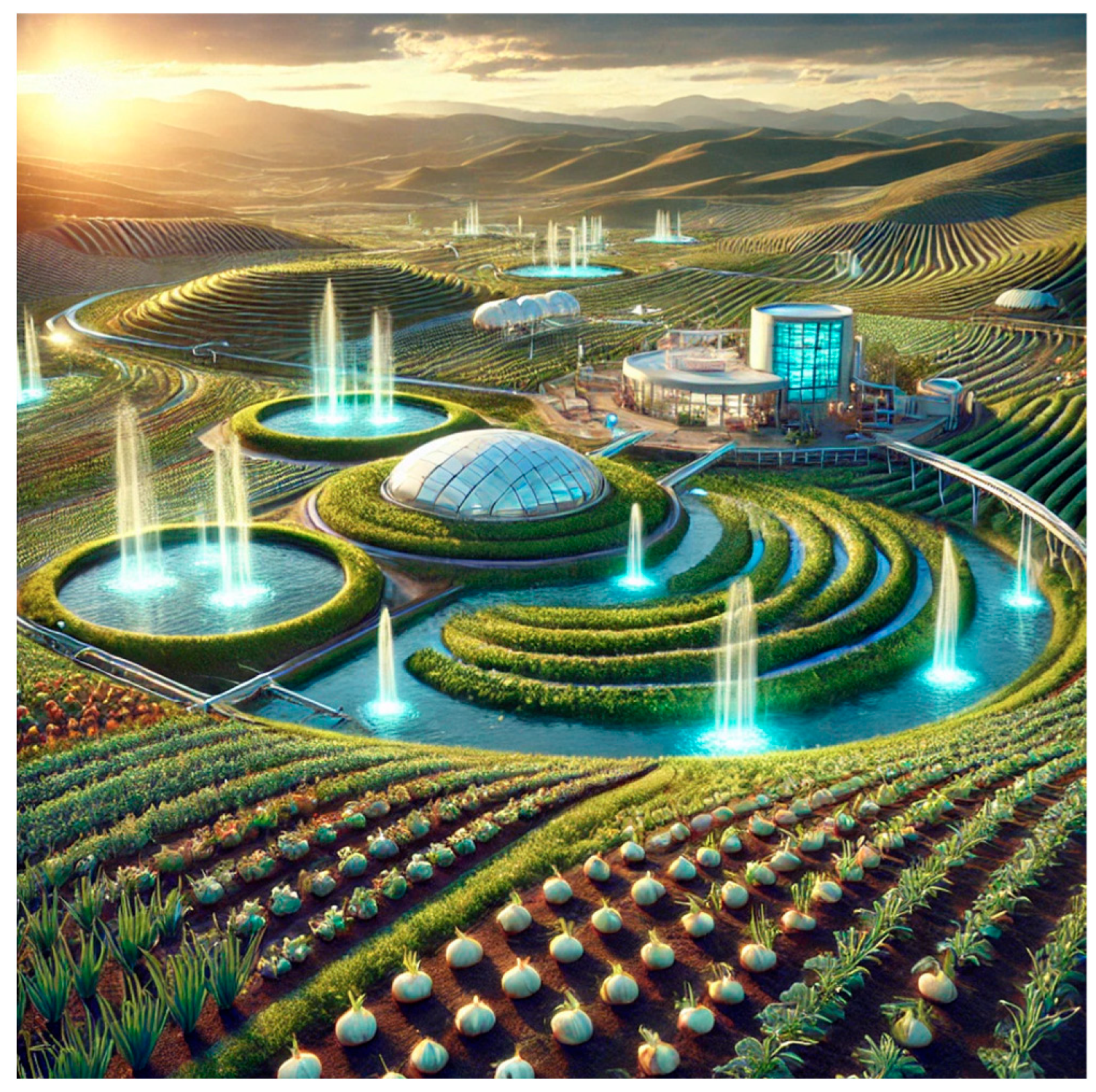

Disclaimer/Publisher’s Note: The statements, opinions and data contained in all publications are solely those of the individual author(s) and contributor(s) and not of MDPI and/or the editor(s). MDPI and/or the editor(s) disclaim responsibility for any injury to people or property resulting from any ideas, methods, instructions or products referred to in the content. |
© 2026 by the authors. Licensee MDPI, Basel, Switzerland. This article is an open access article distributed under the terms and conditions of the Creative Commons Attribution (CC BY) license.