


Abstract
As the foreign direct investment (FDI)-driven catch-up model of eight Central and Eastern European (CEE-8) economies approaches its limits, strengthening the export capacity of small and medium-sized enterprises (SME) may play an important role in sustaining economic convergence within the European Union (EU). Despite deep integration into EU production networks, domestic SME participation in international trade remains limited. In this context, digitalization is increasingly seen as a factor that may reduce information, coordination, and administrative barriers associated with SME cross-border trade. This study examines how different dimensions of digitalization relate to intra-EU export performance of SMEs in the CEE-8, conceptualizing digitalization across three distinct but interacting layers: firm-level digital adoption, societal digital usage, and the institutional digital environment. Using a balanced panel dataset covering 2018–2023, the analysis employs a one-way fixed-effects estimator with wild cluster bootstrap inference to address the small-cluster setting. Results indicate that societal digital usage and digital public services for businesses are strongly and positively associated with SME intra-EU export performance. Firm-level digitalization shows a more complex pattern: internal digital tools display delayed positive associations after a maturation period, while e-commerce participation is consistently negatively associated with aggregate export volumes. Robustness checks using Driscoll-Kraay standard errors and alternative functional forms confirm the stability of the core findings. The results suggest that strengthening digital foundations and reducing cross-border digital frictions can support more effective CEE-8 SME participation in the EU Single Market.
1. Introduction
1.1. CEE-8 Convergence Background, Digitalization, and SME Export Relevance
The economic transformation of Central and Eastern Europe (CEE) following the 2004 enlargement of the European Union stands as a landmark event in the history of European integration. It marked the transition of eight formerly centrally planned economies into a cohesive market-oriented bloc (László, 2025). This group of countries, namely the Czech Republic, Estonia, Hungary, Latvia, Lithuania, Poland, Slovakia, and Slovenia, collectively referred to as the CEE-8, embarked on a path of structural convergence to align their economic development with the Eurozone average (Lejour et al., 2009).
The CEE-8 countries have historically relied on a development strategy centered on foreign direct investment (FDI) and deep integration into global manufacturing value chains by leveraging their skilled yet cost-effective human capital (László, 2025). From a neoclassical perspective, the involvement of a low-developed economy in international trade naturally triggers a catch-up process, as the free movement of goods, capital, and labor allows for the efficient allocation of resources (László, 2025). However, the initial phase of catch-up, driven by low wages and standard industrial modernization, has begun to reach its limits. In recent years, the spread of productivity growth in the CEE-8 has slowed significantly compared to the 2000–2008 period (Moody’s Investors Service, 2019), promoting a shift in focus toward “knowledge-seeking” and technology-intensive models. In this regard, digitalization is increasingly seen as the potential new driver that CEE can employ to stay on its growth trajectory (Marciniak et al., 2020). Developing digitalization across all sectors of the economy can result in significant economic benefits, given the increasing productivity gains, which can be the new momentum for the growth engine of CEE countries (Marciniak et al., 2018).
Despite the shared regional economic growth trajectory, CEE-8 nations exhibit varying levels of digital infrastructure quality and business-level adoption. For instance, while Estonia is globally recognized as a digital frontrunner, other nations in the group face persistent challenges in bridging the digital divide between urban centers and rural areas (Marciniak et al., 2020; Brodny & Tutak, 2022). This indicates that the region’s countries have not yet managed to fully employ and leverage digitalization of the public and private sectors (Marciniak et al., 2020).
A study by Kutan and Yigit (2009) shows that participation in international trade played a significant role in economic convergence and productivity of CEE-8 countries. CEE-8 economies are highly open, export-oriented economies, according to the latest World Bank (2023) data; exports account for a significant share of GDP in CEE-8 countries. Although CEE-8 economies exhibit high aggregate export openness, much of this performance is driven by foreign-owned multinational enterprises integrated into global value chains. The internationalization of domestic SMEs has progressed at a slower pace. For example, in their report on the internationalization of SMEs in the Czech Republic, OECD (2026b) highlights the need for improving the base of exporting SMEs through more inclusive and enhanced policies. The internationalization of SMEs, specifically through exports, is a vital strategy for enhancing their competitiveness and long-term survival (Falk et al., 2014). Research has consistently established a positive link between international sales and firm performance, showing that exporting SMEs are generally more productive, more innovative, and employ a higher share of skilled workers than their domestic-only counterparts (Gkypali et al., 2021; European Commission, 2007). By expanding their customer base beyond their domestic market, SMEs can mitigate risks associated with domestic market saturation and diversify their revenue streams, thereby increasing their resilience to local economic shocks (Chishty et al., 2025; International Monetary Fund. European Dept, 2015). For EU SMEs, the EU Single Market plays a significant role in cross-border activity, as 80% of exporting EU SMEs make sales to other EU member states, and goods exported within the intra-EU market account for 70% of the value of their total exports (Adjutor et al., 2024). For CEE-8 SMEs, the EU Single Market represents the most accessible foreign market due to regulatory harmonization, geographic proximity, and institutional integration, yet it simultaneously exposes them to intense competition from more established firms across the EU Single Market. Understanding how CEE-8 SMEs perform within this highly integrated, but competitive environment is therefore essential for assessing their long-term convergence prospects.
Generally, SMEs are the undisputed backbone of the European economy, representing 99.8% of all enterprises in the non-financial business sector of EU-27 (Brodny & Tutak, 2022). In CEE-8, the significance of the SME sector is even more pronounced, as these firms are critical to regional stability and employment (Batrancea, 2022). In Poland, for example, SMEs account for over half (52.9%) of the overall value added by the economy (Schulze Brock et al., 2025). Their importance has also received increasing attention at the EU level, with multiple legislative and non-legislative initiatives launched to unleash the potential of SMEs in the EU, which include boosting investments, streamlining administrative procedures, workforce development, etc. Given that SMEs constitute the backbone of employment and regional development, strengthening their participation in international trade represents a key structural priority for sustaining economic convergence and long-term competitiveness in the CEE-8 economies.
1.2. SMEs, Digitalization, and Trade-Related Constraints
Despite their economic importance, SMEs face distinct challenges when entering international markets, often categorized as the “liability of smallness” (Ulvenblad & Barth, 2021), “the liability of foreignness” (Hymer, 1960), and “liability of outsidership” (Johanson & Vahlne, 2009; Han & Celly, 2025). Unlike large multinational enterprises (MNEs), SMEs operate with limited financial and human resources, a lack of specialized managerial expertise, and restricted access to international market intelligence (Aghazadeh et al., 2023). These barriers are particularly acute in converging economies where access to finance remains a persistent hurdle. Digitalization offers a potential avenue for mitigating these constraints by reducing transaction and coordination costs associated with foreign market entry, allowing SMEs to reach global customers with lower capital expenditures (Zhang et al., 2025). The EU is committed to digitally driven growth, developing Digital Agenda (2010–2020) and Digital Decade (2020–2030) policy programs and is set to achieve the EU’s digital transformation by establishing policy programs. 2030 Digital Compass set to achieve targets for digital skills, public services, business transformation and infrastructure by 2030. With the emerging digital economy and digital transformation, SMEs are becoming the center of this transformation and the focus of various initiatives across the EU (Kardoš, 2022). In the CEE-8 context, empowering SMEs to harness these digital advantages is not just a firm-level goal but a macroeconomic necessity for supporting economic convergence within the European Union.
From a trade-economic perspective, SME participation in export markets is also shaped by firm heterogeneity and by the fixed and variable costs of cross-border trade (Bernard & Jensen, 1999; Melitz, 2003; Helpman et al., 2008). It suggests that not all firms are able to equally absorb the information, compliance, logistics, and market entry costs associated with export activities. This helps explain why SME export participation remains more limited even in highly open economies such as the CEE-8. In this context, digitalization may matter not simply as a technological upgrade, but as a factor that can reduce search costs, coordination costs, and administrative frictions. This approach is consistent with the broader trade-cost perspective (Anderson & van Wincoop, 2004) and with evidence that internet diffusion can lower information-related barriers to trade (Freund & Weinhold, 2004).
In this context, the European Union simultaneously pursues two major strategic policy dimensions: strengthening SME participation in the Single Market through the Single Market Programme and accelerating digital transformation under the Digital Decade 2030 policy framework. Although these policy pillars are often treated separately, they intersect at the level of SMEs, where digital readiness and internationalization capacity are increasingly interdependent.
1.3. Research Gap, Question, and Contribution
Despite the growing literature on digitalization and SME internationalization, important gaps remain. Existing studies often examine specific dimensions of digitalization in isolation, while giving less attention to how firm-level adoption, broader digital readiness, and the institutional digital environment jointly relate to SME export performance. However, recent scholarly discourse emphasizes the need for an integrative approach that links national digitalization to internationalization (Ipsmiller & Dikova, 2021). These gaps are especially relevant in catching-up EU economies, where digital transformation and SME internationalization are central to competitiveness within the Single Market. To address this gap, this study adopts a multi-layered perspective to examine how different dimensions of digitalization are associated with SME export performance in the CEE-8.
Against this background, an important question emerges: how do different dimensions of digitalization under the EU Digital Decade agenda relate to the export performance of CEE-8 SMEs within the Single Market? This study examines this question using a panel analysis of CEE-8 economies to assess how different dimensions of the EU digital policy agenda are associated with SME export performance.
This study conceptualizes the digital environment into three distinct but interacting levels: firm-level digital adoption, societal digital usage, and institutional digital environment. At the firm level, digitalization includes both internal digital process transformation (e.g., Enterprise Resource Planning (ERP) systems) and external market engagement through e-commerce channels. Internal digital systems allow for improved information processing, efficient management of supply chains, and better resource allocation, which are necessary for managing the complexities of international trade. Simultaneously, engagement of SMEs in e-commerce reflects their ability to participate in digital commerce channels and reach customers directly via online platforms. At the societal level, digital readiness is proxied by internet usage intensity, capturing connectivity and the human capital dimension of the Digital Decade 2030 policy agenda, which has been identified as a key driver of digital transformation performance across EU member states (Sofrankova et al., 2025). Finally, the institutional layer represents the quality of digital public services available to businesses, which is crucial for reducing the administrative and operational burdens that SMEs face when engaging in international trade.
By integrating these three layers, the study provides a holistic assessment of how digital transformation interacts with SME export performance in catching-up EU economies.
Because the EU Single Market constitutes the primary foreign market for most EU SMEs, this study focuses specifically on intra-EU exports rather than total exports. This choice is theoretically and empirically appropriate for the CEE-8 context, as the most exporting EU SMEs trade with other member states, and intra-EU sales account for the majority of their export value (Adjutor et al., 2024). Focusing on intra-EU exports also allows the study to examine how digitalization relates to SME export performance within a relatively harmonized institutional setting, while reducing confounding variation arising from extra-EU tariffs, customs procedures, and heterogeneous regulatory barriers.
This study contributes to the literature by examining how digital transformation interacts with SME internationalization within the specific context of regional integration. By integrating insights from the digital economy, international business, and trade economics literature, the analysis highlights how different layers of digitalization shape the ability of SMEs in catching-up economies to participate in international markets. The findings provide essential insights for policymakers seeking to formulate SME support programs and ensure that digitalization serves as a bridge, rather than a barrier, to the international competitiveness of Central and Eastern European firms.
The remainder of this paper is structured as follows. Section 2 shows the literature review and hypotheses development. Section 3 describes the construction of a balanced panel dataset for CEE-8 countries and outlines the one-way fixed effects estimation strategy. Section 4 provides the results of the baseline model, the mechanism of export value per SME, and the temporal dynamics explored through lagged specifications. Section 4 ends with robustness checks, which validate the findings through spatial correlation analysis and alternative functional forms. Section 5 presents a detailed discussion of findings. Finally, Section 6 provides a summary of the results and proposes actionable strategies for policymakers, discusses limitations, and suggests future research.
2. Literature Review
2.1. Theoretical Frameworks
The evolution of international business theory has increasingly integrated digital dimensions to explain how resource-constrained firms expand in foreign markets. The Resource-Based View (RBV) posits that firm-specific advantages are derived from resources that are valuable, rare, inimitable, and effectively organized within the firm to capture value (VRIO) (J. Barney, 1991; J. B. Barney, 2001). In the digital context, assets such as proprietary software, data resources, and algorithms can function as strategic digital resources that help SMEs overcome traditional constraints related to scale, information access, and international market entry (Elia et al., 2021). However, in transition economies, the possession of resources alone is often insufficient; firms also need to develop Dynamic Capabilities to sense, seize, and reconfigure their resource base in response to volatile environments (Teece et al., 1997). For SMEs in CEE-8 countries, innovation, digitalization capability and adaptability are the specific Dynamic Capabilities that can help them overcome the stigma of being less competitive than their competitors in advanced economies (Fredrich et al., 2022; Dethine et al., 2020). Furthermore, the Ownership-Location-Internationalization (OLI) paradigm has been updated to include “New OLI advantages”, where Location (L) advantages encompass national digital infrastructure and Internationalization (I) advantages are enhanced by digital linkages that reduce coordination costs (Luo, 2021).
The study is also informed by trade economics. In heterogeneous-firm models, exporting involves fixed and variable trade costs, so only a subset of firms can profitably serve foreign markets (Melitz, 2003; Helpman et al., 2008). This logic is especially relevant for SMEs, whose participation in export markets is often constrained by limited scale and resources. From this perspective, digitalization may influence SME export performance not because it guarantees international success, but because it can reduce information frictions, coordination costs, and administrative barriers associated with cross-border trade (Anderson & van Wincoop, 2004; Freund & Weinhold, 2004; Clarke & Wallsten, 2006). This perspective complements the international business view adopted in this paper and frames digitalization as an export-relevant component of the broader trade environment, particularly through its potential to reduce information frictions, coordination costs, and administrative barriers.
Together, these theoretical perspectives suggest that digital resources and capabilities can enhance SMEs’ ability to overcome traditional constraints in international markets, particularly in catching-up economies where firms face structural disadvantages in scale, information access, and international networks.
These theoretical perspectives provide the conceptual basis for empirical specification. In particular, firm-level adoption of internal digital tools reflects organizational resources and capabilities consistent with the RBV and Dynamic Capabilities perspective, as such systems can strengthen coordination, information processing, and the management of cross-border activities. By contrast, SME participation in e-commerce captures firms’ engagement with digital market channels, which may broaden commercial reach, but whose export implications remain contingent on whether online presence translates into effective cross-border market participation. Societal digital usage and digital public services represent features of the wider digital environment and correspond to location-specific conditions that may reduce information and administrative frictions relevant to SME internationalization, thereby aligning with the extended OLI paradigm. Together, these variables operationalize the multi-layered nature of digitalization in a manner consistent with the theoretical frameworks outlined above.
Building on this theoretical foundation, the literature review examines digitalization across three complementary layers: (1) the external digital environment, including societal digital connectivity and institutional digital infrastructure; (2) internal digitalization within firms; and (3) SMEs’ participation in digital marketplaces such as e-commerce channels and their association with SME export performance. This multi-layer perspective also mirrors the architecture of the EU’s Digital Decade strategy, which targets digital infrastructure, societal digital usage, and business digital transformation as complementary drivers of competitiveness within the Single Market.
2.2. Societal Digital Connectivity and the Institutional Digital Environment and SME Export Performance
The foundation layer of digitalization relevant to SME performance comprises social digital connectivity and the quality of public services. Societal digital connectivity reflects the degree to which individuals are digitally connected and able to participate in online information and communication flows. On the other hand, digital public services for businesses capture the degree of digitally organized public administration in ways that reduce bureaucratic burdens for firms operating in the economy.
The existing literature generally associates widespread internet usage with greater digital readiness, efficient flows of information, and lower fixed costs of cross-border trade (Sofrankova et al., 2025; Osnago & Tan, 2016). In this perspective, internet usage serves not only as a measure of connectivity but also as a proxy for the availability of digitally skilled human capital and routine participation in online communication and information exchange. Although literature generally associates higher digital connectivity with improved trade-related outcomes, its role is best understood as an environmental condition that may facilitate, rather than directly determine, SME export performance.
A related but distinct body of literature examines the institutional digital environment, particularly the role of digital public services as a digitally enabled interaction between public administration and businesses. From this perspective, the focus is less on societal connectivity and more on how the quality of digitally provided public services reduces administrative and compliance burdens that disproportionately affect SMEs (OECD, 2024; Younus et al., 2023). Digital public services may lower procedural frictions, simplify regulatory interaction and allow SMEs to redirect internal resources away from bureaucratic compliance and toward market-oriented activities, such as market research and product adaptation (OECD, 2024). Generally, digital public services may support SME internationalization to the extent that they reduce administrative frictions and simplify firms’ interaction with public institutions.
These two dimensions of the digital environment may be particularly relevant for catching-up economies such as the CEE-8 countries, where differences in digital readiness and digital foundations can influence firms’ ability to access international markets. Based on the literature discussed above, the following hypotheses are formulated:
H1a.
Societal digital usage is positively correlated with SME export performance.
H1b.
Higher quality of digital public services is associated with higher SME export performance.
2.3. Internal Digitalization of the Firms and SME Export Performance
Internal digitalization refers to the adoption of integrated digital systems that support coordination, information processing, and operational efficiency within the firm (Neubert, 2018). Enterprise Resource Planning (ERP) systems represent one of the most widely studied forms of internal digital transformation, as they integrate various functional processes such as production planning, inventory management, and financial operations (AlMuhayfith & Shaiti, 2020; Barna & Ionescu, 2023). For internationally active firms, these systems can enhance the ability to manage complex supply chains, regulatory requirements, and cross-border transactions. As a result, internal digital capabilities are often viewed as an important organizational foundation supporting SME internationalization (Neubert, 2018). Evidence from survey-based research among Hungarian SMEs also suggests that firms planning to adopt ERP systems are more likely to report intentions to expand into export markets within the following years, indicating that internal digital transformation and internationalization strategies may evolve simultaneously (Szabó et al., 2023).
At the same time, the relationship between internal digital systems such as ERP and firm performance is often complex. In many cases, significant technological investments do not lead to immediate improvements in productivity or financial outcomes. This phenomenon is frequently described in the literature as the “digitalization paradox” (Chen et al., 2024; Brynjolfsson, 1993). From a theoretical perspective, this pattern is consistent with the Dynamic Capabilities framework, which suggests that firms must reconfigure routines and internal processes before realizing performance gains from new technologies. For SMEs, the integration of complex digital artifacts requires substantial organizational alignment and resource diversion during the initial “shakedown phase” (Markus & Tanis, 2000). During this period, firms often experience a temporary productivity dip as resources are redirected toward internal system integration and stabilization rather than outward market expansion (Nicolaou & Bhattacharya, 2006). These implementation costs can further crowd out investments in international marketing, leading to an insignificant or even negative contemporaneous relationship between internal digitalization and productivity of SMEs, therefore, on their export intensity (Bohorquez & Esteves, 2014).
Nonetheless, the literature suggests that the gains from internal digitalization are non-linear and often emerge only after a maturation period. Adopters of internal digital systems typically exhibit positive differential performance only after a period of continuous use (Nour, 2023), a pattern Nicolaou (2004) describes as “lag-led re-emergence of performance gains”. Once such systems are fully integrated, they can support more efficient resource allocation and better information processing, both of which are important for managing the logistical and regulatory complexities of international trade (Guo & Xu, 2021). Taken together, the literature suggests a non-linear relationship between internal digitalization and SME export performance, as the same systems that strengthen organizational digital capability over time may initially impose adjustment costs and disrupt existing routines. Based on the above evidence, the following hypotheses are formulated:
H2a.
The contemporaneous relationship between the adoption of internal digital tools and SME export performance is expected to be insignificant or negative.
H2b.
Adoption of internal digital tools is positively associated with SME export performance after a maturation period.
2.4. E-Commerce Participation and SME Export Performance
E-commerce is traditionally viewed as an enabler of internationalization that allows SMEs to participate in international trade with minimal capital expenditure (Zhang et al., 2025). Scholarly work highlights that digital platforms facilitate “Born Global” strategies by reducing the costs associated with transportation, coordination, and the need for physical investments abroad (Vadana et al., 2021). By utilizing digital marketplaces, SMEs can reach global customers and partners and benefit from reduced transaction costs, enhancing their overall competitiveness (Serrano et al., 2016).
However, the literature does not suggest a uniformly positive relationship between e-commerce participation and export performance. While online channels may reduce some barriers to market entry, they can also reshape competition in ways that limit SMEs’ ability to convert digital presence into higher export outcomes, particularly for resource-constrained SMEs. Digital marketplaces increase price transparency and intensify competition, while visibility on major platforms often depends on additional investments in advertising and platform-specific capabilities (OECD, 2026a). In such environments, even small price differences become commercially important, compressing margins and exposing SMEs to intensified competition (Hånell et al., 2019; Jean & Kim, 2019; Alfiqri et al., 2024; Diwan, 2024). In addition, cross-border e-commerce still requires firms to manage communication with international customers and comply with legal and regulatory requirements, meaning that digital marketplaces do not eliminate all trade-related frictions (Elia et al., 2019).
Recent studies also increasingly suggest that SMEs often adopt e-commerce not only as an export expansion tool, but also as a response to changing market norms and customer expectations. Evidence from Polish SMEs indicates that e-commerce adoption may reflect a reactive adjustment to evolving industry standards rather than a proactive internationalization strategy (Witek-Hajduk et al., 2021). OECD (2026a) likewise notes that SMEs increasingly adopt the hybrid online-offline models in response to shifts in consumer behavior.
Taken together, the literature suggests that e-commerce should not be viewed as a uniformly export-enhancing tool for SMEs; rather, its effects depend on whether lower digital entry costs outweigh intensified competition and the persistence of cross-border trade frictions. This suggests that e-commerce participation among CEE-8 SMEs may represent a defensive move to maintain market relevance instead of an offensive strategy designed to capture foreign market share.
From a theoretical perspective, the relationship between e-commerce participation and SME export performance is ambiguous. Trade economics highlights the need for a nuanced view when expecting a uniformly positive relationship between e-commerce and exports. It suggests that lower digital market-entry costs may increase the number of firms able to participate in online markets, but they may also intensify price competition and reduce margins, especially for smaller firms with weaker branding and logistics capabilities. Generally, trade theory suggests that reductions in trade frictions do not necessarily translate into proportional gains in export performance across firms (Chaney, 2008), and reduced distance-related frictions on digital sales channels do not necessarily imply stronger aggregate export performance for SMEs (Lendle et al., 2016). Based on the above-mentioned developments, the below hypothesis is developed:
H3.
A higher share of SME e-commerce participation is not necessarily associated with higher aggregate SME export volumes in the short run.
Despite the growing body of research, several gaps remain in the literature. First, relatively few studies examine societal, institutional, and firm-level digital dimensions simultaneously within a single empirical framework. Second, the relationship between internal digital adoption and SME performance over time remains insufficiently explored, particularly in the context of catching-up EU economies. Third, while much of the literature treats e-commerce primarily as an enabler of SME internationalization, less attention has been given to how increased participation in digital marketplaces may reshape competitive dynamics and influence aggregate export outcomes. Finally, empirical evidence on the relationship between different dimensions of digitalization and SME export performance remains relatively limited for the CEE-8 economies.
By addressing these gaps, this study examines how multiple dimensions of digitalization are associated with SME export performance in Central and Eastern Europe.
3. Data and Methodology
This study utilizes a balanced panel dataset of eight Central and Eastern European (CEE) countries: the Czech Republic, Estonia, Latvia, Lithuania, Hungary, Poland, Slovenia, and Slovakia, which joined the EU in 2004. They provide a robust comparative framework as they share similar institutional backgrounds while exhibiting notable heterogeneity in digital transformation and export performance. The selection of these eight CEE countries is theoretically motivated by their shared status as converging member states in the EU. Since 2004, these nations have undergone rapid structural convergence with the Eurozone (Próchniak & Witkowski, 2012). This CEE-8 group represents a unique laboratory for digitalization research. They are characterized by high levels of trade openness and a potential for accelerated digital convergence in technology adoption (Dobos & Bánhidi, 2024). By focusing on this relatively homogenous group, the study controls for broad historical and institutional legacies. This allows for a clearer identification of how different layers of digitalization are associated with the intra-EU export performance of SMEs. The observation period spans 2018 to 2023, covering the recent phase of accelerated digital adoption and policy emphasis, particularly during and after the COVID-19 pandemic (Dyba & Di Maria, 2023). Although digital transformation predates this period, these years reflect accelerated digitalization and ensure the consistent availability of harmonized indicators used in the analysis.
3.1. Dependent Variable
The primary dependent variable is SME intra-EU exports, measured as the natural logarithm of the total value of SME exports to other EU member states. The logarithmic transformation reduces skewness and allows for the interpretation of coefficients as semi-elasticities.
The focus on intra-EU exports is motivated by the central role of the EU Single Market in SME internationalization. Empirical evidence indicates that the majority of exporting EU SMEs engage primarily in trade with other EU member states, with approximately 80% of exporting SMEs selling within the EU and intra-EU trade accounting for around 70% of their total export value (Adjutor et al., 2024). For SMEs in the CEE-8 economies, the Single Market represents the most accessible foreign market due to regulatory harmonization, geographic proximity, and reduced administrative barriers compared to extra-EU trade. Concentrating on intra-EU exports, therefore, allows the analysis to isolate how digitalization interacts with SME participation in the Single Market, while minimizing confounding effects arising from heterogeneous global trade barriers.
To ensure robustness and explore the intensive margin of trade, SME export performance is also operationalized as exports per exporting SME, expressed in both levels (EUR) and logarithms. This dual approach evaluates whether digitalization is correlated with aggregate national exports or deeper firm-level export intensity as well.
3.2. Digital Environment and Usage Variables
Digitalization is a multidimensional concept covering the actual usage, firm-level adoption of digital tools, and the extended institutional digital environment in which SMEs operate. To empirically capture the interaction between the layers of the EU Digital Decade policy agenda and SME participation in the Single Market, the analysis incorporates indicators reflecting digital transformation across firm, societal, and institutional levels.
3.2.1. Firm-Level Digitalization
- ERP_use_share measures the share of SMEs using enterprise resource planning (ERP) systems, proxying internal digital capabilities related to coordination, information processing, and management efficiency;
- SME_esales_share represents the share of SMEs engaged in online sales, where e-sales account for at least 1% of turnover, reflecting SMEs’ participation in digital commerce and online sales channels.
3.2.2. Societal Digital Usage
- Int_use_share_indv represents the share of individuals in the population who use the internet daily. This variable proxies the overall level of digital connectivity, skills, and digital usage intensity in the economy, which may facilitate SME internationalization through improved information flows, digital engagements, and market access.
3.2.3. Institutional Digital Environment
- DPS_BIZ_score is the indicator of digital public services for businesses, measuring the availability and quality of digital public services for businesses.
This variable is a composite indicator derived from the EU eGovernment Benchmark, capturing the availability and sophistication of digital public services for businesses across key life events, including regular business operations and business start-up. The indicator aggregates multiple dimensions, including online service provision, availability of digital information, portal integration, and cross-border accessibility. However, an important methodological limitation arises from revisions to the benchmarking framework. In particular, the 2020 update introduced changes in indicator construction and service coverage, resulting in a structural break that limits strict comparability with earlier observations. Accordingly, the indicator is best interpreted as an evolving proxy of the institutional digital environment rather than a fully consistent time series.
3.3. Control Variables
3.3.1. Macroeconomic and Structural Variables
The model incorporates three primary macroeconomic and structural variables. GDP per capita (GDP_PC_EUR), trade openness (Trade_openness_pct), and SME employment share (SME_emp_share). These variables are grouped together as they represent the underlying structural conditions of the national economy that shape the capacity of SMEs to produce, compete, and engage in international markets. GDP per capita serves as a fundamental proxy for the overall level of economic development and income within a country. Higher income levels are typically associated with better infrastructure, a more skilled labor force, and higher domestic demand, all of which influence the ability of firms to fund digital transitions and international marketing efforts (Rana, 2024). Trade openness, measured as the ratio of total trade to GDP, is included to control for the degree of a country’s involvement in global markets. Neoclassical and new growth theories suggest that trade openness promotes economic performance by enabling efficient resource allocation, fostering competition, and facilitating the diffusion of new technologies and managerial know-how (Rana, 2024; Iyke, 2017). Without controlling for trade openness, the model might incorrectly attribute export gains from general trade liberalization to specific digital tools. SME employment share measures the relative importance of the small business sector in the total employment of the country. This structural characteristic is vital because the prevalence of SMEs in an economy influences its overall entrepreneurial dynamism (Heinzel et al., 2025). SMEs are widely recognized as engines of job creation and economic growth, but they also face significant constraints that differ from large multinational enterprises (Rotar et al., 2019). By including the share of employment, the research controls for the structural effect of the SME sector.
3.3.2. Innovation Ecosystem
The EIS_Linkage_Score, derived from the European Innovation Scoreboard, is treated as an ecosystem-level control variable. This indicator measures the level of collaboration within a country’s innovation system, specifically focusing on interactions among SMEs and their research and economic partners. Justification for this control stems from the recognition that innovation is not an isolated firm-level activity but is deeply embedded in the national “Innovation Ecosystem” (Banga & Gaile-Sarkane, 2025). The Linkage dimension assesses the connections that exist between stakeholders, including public sectors, academia, and businesses, who collaborate to foster technological advancements. For SMEs in catching-up economies, these linkages are paramount because they allow firms to bypass internal resource constraints by accessing external knowledge and collaborative research opportunities (Banga & Gaile-Sarkane, 2025). By controlling for ecosystem-level linkages, the study ensures that the impact of specific digital artifacts (like ERP systems) is distinguished from the broader collaborative environment that naturally supports innovative and internationalized firms.
Table 1 provides a comprehensive summary of the variables, including their definition, units of measurement, and primary sources. Export data are sourced from Eurostat, while structural economic indicators are obtained from the World Bank. Among explanatory variables—digital environment and usage variables, SME sector characteristics data are sourced from Eurostat, and where necessary, complemented with national statistical sources. Indicators for the institutional digital environment and innovation ecosystem are derived from the eGovernment Benchmark Reports and the European Innovation Scoreboard (EIS), respectively.
Table 1.
Utilized variables.
To contextualize the empirical analysis, Figure 1 illustrates the evolution of SME intra-EU export values from 2018 to 2023. The observed heterogeneity in growth patterns, including the varied recovery trajectories following the 2020 contraction, and clear within-country variation over time, further motivate the use of a fixed effects estimation strategy to isolate the impact of digital and structural drivers.
Figure 1.
Evolution of SME intra-EU exports in CEE-8 countries, 2018–2023. Note: Values are expressed in natural logarithms. Source: Author’s own elaboration based on Eurostat data.
3.4. Econometric Approach and Model
To examine the relationship between digitalization and SME export performance in CEE-8 countries, this study employs a panel data framework. The analysis utilizes annual data for eight CEE countries over the 2018–2023 period, resulting in a balanced panel of 48 observations.
The baseline empirical relationship is modelled as below:
where i and t denote the country and year, respectively.
ln(Yit) = β0 + D′itγ + S′itθ + E′itδ + μi + εit,
The variables are defined as follows:
- ln(Yit) is the natural logarithm of SME intra-EU exports (and alternatively, exports per SME in levels and logs for robustness);
- Dit is a vector of digital indicators encompassing firm-level digital adoption, societal usage, and institutional digital quality;
- Sit represents a vector of structural economic controls, including trade openness, GDP per capita, and SME employment share;
- Eit captures innovation ecosystem characteristics, proxied by EIS Linkage score;
- μi denotes country-specific fixed effects, capturing time-invariant unobserved heterogeneity;
- εit is the idiosyncratic error term.
The model is estimated using a one-way fixed effects (within) estimator. This approach is specifically chosen to control unobserved, time-invariant country characteristics, such as historical trade legacies, geographical location and institutional quality, that could otherwise bias the results. By utilizing the within-country variation over time, the estimated coefficients (β) can be interpreted as the association of temporal changes in digital and structural conditions with SME export performance. To justify the selected model specification, a partial F-test was conducted to compare the one-way fixed-effects model against a two-way specification. The results (F = 2.20, p = 0.083) indicate that we fail to reject the null hypothesis that the time fixed effects are jointly equal to zero at the conventional 5% significance level. Therefore, the one-way fixed effects model is maintained as the preferred specification, preserving degrees of freedom for the analysis of a relatively small sample panel of the study.
Given the potential for heteroskedasticity and within-country serial correlation, the models are estimated using cluster-robust standard errors at the country level. However, because traditional asymptotic inference can be over-optimistic when the number of clusters is small (n = 8), hypothesis testing relies on wild cluster bootstrap p-values (Cameron et al., 2008). This procedure provides more conservative and reliable inference in small-cluster settings by relaxing the asymptotic assumptions required for traditional cluster-robust variance estimators. To further ensure the reliability of the results against cross-sectional dependence (spatial correlation) and higher-order autocorrelation, Driscoll-Kraay standard errors (Driscoll & Kraay, 1998) are employed as an additional robustness check.
The DPS_BIZ_score variable is subject to methodological revisions over time, including a break in the series because of a method update introduced in 2020, which limits strict comparability across years. As a result, estimated coefficients related to this indicator should be interpreted with caution, particularly in terms of magnitude. Within the empirical framework, the results are best understood as reflecting within-country associations over time rather than precise measurements of changes in institutional digital quality. Additionally, utilization of within-country variation further reduces the influence of cross-country level differences in the indicator.
Due to the biannual frequency of Eurostat reporting for ERP usage, missing values for the intervening years were estimated by using linear interpolation. While this approach preserves continuity and enables panel estimation, it may introduce artificial smoothness and reduce short-term variation in firm-level digital adoption. This is methodologically relevant because it may bias coefficient estimates downward and reduce the ability to detect short-run dynamics. To mitigate this concern, a robustness check was conducted using only observed ERP data points without interpolation. The results remain qualitatively consistent, suggesting that the main findings are not driven by the interpolation procedure.
Standard diagnostic tests were conducted to confirm the validity of the fixed effects specification. These included checks for multicollinearity (VIF), heteroskedasticity, and serial correlation. To examine temporal dynamics in firm-level digitalization, an additional specification uses one-year lagged values for the firm-level digitalization variables. This reflects the expectation that firm-level digital adoption may require an adjustment period before showing an association with SME export performance. The lagged specification is used to explore temporal ordering and delayed association patterns rather than to identify causal effects. This approach enables the identification of temporal dynamics in SME digital adoption.
Additional robustness checks are reported in the following sections and in Appendix A. These include alternative functional forms for dependent variables and spatial correlation tests.
4. Empirical Results
This section of the study first shows the descriptive statistics of the data used for analysis and assessing multicollinearity issues among the variables. Subsequently, it reports the estimation results from the one-way fixed-effects models, robustness checks and specification tests.
4.1. Descriptive Statistics and Correlation Matrix
Table 2 shows the summary of descriptive statistics of the variables used for this study. SME export performance shows moderate variation across countries and over time. The log of intra-EU SME exports ranges between 15.48 and 17.87. Firm-level digitalization variables and societal and institutional digitalization variables display meaningful dispersion across observations.
Table 2.
Descriptive statistics of variables.
The share of usage of ERP and other internal digital tools among SMEs in the selected sample ranges from 13 percent to 47 percent, with the average value of 30 percent, while the share of SMEs using digital sales channels ranges from 10 percent to 31 percent. Trade openness shows wide dispersion with a value of 0.24 (24 percent) standard deviation across the country and over time. Overall, the summary of descriptive statistics suggests reasonable heterogeneity in the selected data to support the panel fixed-effect estimation.
After the descriptive statistics, pairwise Pearson correlations are checked to assess the potential multicollinearity among the explanatory variables. Table 3 represents the correlation matrix. While some variables exhibit relatively higher correlations, particularly among digital environment and SME sector indicators, the overall pattern does not indicate econometrically severe multicollinearity. This assessment is further supported by the variance inflation factor (VIF) analysis reported in subsequent sections.
Table 3.
Correlation matrix of variables.
4.2. Model Estimation Results
The next section shows the results of the econometric analysis. Following the econometric strategy outlined in the methodology, all specifications utilize cluster-robust standard errors to account for potential heteroskedasticity and within-country serial correlation. However, given the small number of country clusters, statistical inference and p-values are derived using wild cluster bootstrap procedures (Cameron et al., 2008). This approach ensures more conservative and reliable significance testing than traditional asymptotic distributions, which may be biased in small-sample settings.
4.2.1. Aggregate and Intensive Margin Estimates
Table 4 presents the results of the fixed effects estimations. Model 1 estimates the association between the explanatory variables and the logarithm of total SME intra-EU exports in CEE-8 countries. Model 2 examines whether the same relationships are also present at the intensive margin by using the logarithm of total SME exports per exporting SME. Model 3 reports total SME exports per exporting SME in levels (EUR) as an alternative functional specification. The empirical results from the baseline model (Model 1) demonstrate a robust fit, with an adjusted R2 of 0.817, suggesting that a substantial share of the within-country variation in aggregate SME intra-EU exports is accounted for by the included predictors.
Table 4.
Econometric model results.
In Model 1, societal digital usage, digital public services, trade openness, and GDP per capita are positively associated with total SME intra-EU exports. The coefficient on daily internet usage is positive and highly significant (β = 1.3832, p < 0.001), while the coefficient on digital public services for businesses is also positive and significant at 1% level (β = 0.0065). Trade openness remains strongly positively associated with SME exports (β = 0.9420, p < 0.001), and GDP per capita is positive at the 5% level (β = 0.000015). By contrast, the share of SMEs engaged in e-sales is negative and marginally significant (β = −1.0108, p < 0.10), whereas ERP usage is negative but statistically insignificant in the contemporaneous baseline model (β = −0.2763). SME employment share is statistically insignificant at conventional levels, while the innovation linkage indicator is marginally significant at 10% and positive (β = 0.0011).
Because the dependent variable in Model 1 is expressed in natural logarithms, the coefficients can be interpreted as approximate percentage changes in exports. For variables expressed as proportions, a one-percentage-point increase corresponds to a 0.01 increase in the underlying variable. Thus, a one-percentage-point increase in societal internet usage is associated with an approximate 1.38% increase in total SME intra-EU exports, holding other factors constant. Similarly, a one-point increase in the digital public services score is associated with an approximate 0.65% increase in total SME intra-EU exports. The negative coefficient on SME e-sales share implies that a one-percentage-point increase in the share of SMEs selling online is associated with an approximate 1.01% decrease in aggregate SME intra-EU exports. These estimates describe within-country conditional associations over time and should not be interpreted as causal effects.
Model 2, which estimates the same relationships at the intensive margin by using the logarithm of exports per exporting SME, shows similar main patterns to the baseline model. Societal internet usage remains positive and highly significant (β = 1.4673, p < 0.001), and trade openness also remains strongly positive (β = 0.8811, p < 0.001). The coefficient on the share of SMEs selling online remains negative (β = −1.0850) and marginally significant at 10% level. Coefficient of ERP usage is negative (−0.9860) and statistically significant at 5% level in this log specification. Unlike in Model 1, the relationship between digital public services for businesses and SME export performance is statistically insignificant when measured at the intensive margin. And the coefficients on digital public services, GDP per capita, and SME employment share do not reach conventional significance thresholds, while the coefficient of innovation linkages is 0.0014 and marginally significant at 10%. Taken together, Models 1 and 2 indicate that the positive association of societal digital usage is not limited to aggregate export totals, while the negative association of SME e-sales participation is also visible when export performance is measured per exporting SME.
Model 3 re-estimates the intensive-margin relationship using exports per exporting SME in levels (EUR). In this alternative specification, the negative coefficients on the firm-level digitalization variables are larger in absolute terms and statistically significant: ERP usage is negative (β = −3203.90, p < 0.001) and SME e-sales share is also negative (β = −7151.80, p < 0.001). Daily internet usage remains positively associated with exports per SME (β = 4901.80, p < 0.001), and trade openness also remains positive and highly significant (β = 1736.00, p < 0.001). The remaining variables are not statistically significant at conventional levels. Since the levels specification is more sensitive to scale and unit differences, it is treated here as an alternative functional specification rather than the main benchmark for the intensive margin. Nonetheless, it points to the same broad empirical pattern as the log specifications.
4.2.2. Temporal Dynamics and Lagged Associations
Table 5 represents a lagged specification in which the firm-level digitalization variables are entered with a one-year lag to examine delayed association patterns. This specification is used to examine whether the association between firm-level digitalization and export performance differs when firm-level digital indicators are allowed time to mature. In this model, the coefficient on lagged ERP usage becomes positive and marginally significant at 10% level (β = 0.5106), in contrast to the insignificant negative contemporaneous coefficient reported in Model 1. By comparison, lagged SME e-sales share remains negative and strongly significant (β = −1.1056, p < 0.001). The positive coefficients on digital public services (β = 0.0095, p < 0.001), trade openness (β = 0.9538, p < 0.001), and GDP per capita (β = 0.000016, p < 0.001) remain visible in the lagged specification, while SME employment share and the innovation linkage score are not statistically significant. The coefficient on internet usage is 1.1842, but in this specification, it is only marginally significant at 10% level.
Table 5.
Baseline model results with lagged firm-level digital variables.
Overall, the results show three main patterns. First, societal digital usage shows the most stable relationship with SME export performance across specifications. Second, the institutional digital environment, captured by digital public services, is positively associated with aggregate SME exports, although this relationship is less stable in the per-SME specifications. Third, firm-level digitalization is associated with export performance in a more mixed way. Thus, ERP usage does not show a positive contemporaneous association in the main models, but its coefficient turns positive and marginally significant in the lagged specification. On the other hand, the coefficient on SME e-sales participation remains negative across all reported models. On this basis, the results are consistent with H1a and H1b and provide support for H2a in contemporaneous models. Findings provide partial support for H2b in the lagged specification; while the coefficient is only marginally significant, the observed change from a negative contemporaneous sign to a positive lagged sign is consistent with the hypothesis. The results are also consistent with H3 in that a higher share of SMEs engaged in e-sales is not automatically associated with higher aggregate SME export performance in the short run.
4.3. Robustness Checks and Specification Tests
To ensure the integrity of the empirical findings, several diagnostic tests were conducted. The Variance Inflation Factors were calculated to assess potential multicollinearity, and all VIFs remained below the threshold of 5 (Table A1). This indicates that there is no problematic collinearity among predictors. The choice of fixed effects specification was evaluated using the Hausman test (p = 0.928) and the F-test for two-way fixed effects (p = 0.083). While the Hausman test did not reject the null hypothesis of the Random Effects model, the one-way fixed effects (FE) estimator was maintained at the baseline to rigorously control for time-invariant, country-specific unobserved heterogeneity, given the specific institutional backgrounds of the CEE-8 countries. As shown in Table A4, the main results of the model are robust to alternative estimator choice and direction, and the magnitude of the coefficients is generally consistent across the estimators. Furthermore, the F-test suggests that time-specific effects do not significantly improve the model, validating the use of the one-way specification.
As an additional robustness check, the baseline specification was re-estimated by adding a control variable capturing exchange rate competitiveness. Among CEE-8 countries, five countries (Estonia, Latvia, Lithuania, Slovakia, and Slovenia) are members of the euro area, while the Czech Republic, Hungary, and Poland operate under independent exchange rate regimes. As exchange rate movements vary over time, they are not fully absorbed by country fixed effects and may influence export competitiveness. To account for this potential source of bias, the model includes the real effective exchange rate (REER) as an additional control variable. The results, reported in Table A3, show that the core findings of the baseline model remain largely unchanged. The coefficient of the REER variable itself appears to be positive but only marginally significant at 10% level, suggesting a limited and less precisely estimated association between exchange rate competitiveness and SME export performance in the region. Importantly, the inclusion of this control does not materially alter the estimated associations of the digitalization variables, indicating that the primary conclusions of the study are robust to exchange rate dynamics.
Recognizing that CEE countries may be subject to shared regional shocks, the study employs Driscoll-Kraay standard errors as an additional robustness check to account for cross-sectional dependence and serial correlation. As shown in the results (Table A2), the primary predictors, trade openness, individual internet usage, digital public services (DPS) and GDP per capita, retain their statistical significance. Furthermore, under spatial correlation correction, the structural importance of the SME employment share becomes even more evident (p < 0.001). Notably, the negative association of the share of SMEs selling online remains significant (p < 0.01), confirming that the observed inverse relationship between e-sales participation and exports is not an artifact of regional spatial correlation or common macroeconomic shock.
As a further robustness check, the baseline model was re-estimated using only the years 2019, 2021, and 2023, for which ERP usage data were directly reported by Eurostat. This reduced sample results in a smaller balanced panel (n = 24), which substantially limits the available degrees of freedom. Nevertheless, the core patterns of the baseline results remain broadly consistent (Table A5). These results suggest that the main conclusions of the study are not driven by the interpolation procedure applied to the ERP variable. Due to the limited time dimension in the restricted sample, the lagged specification could not be estimated without losing all usable observations.
Finally, the baseline results were subjected to further validation through alternative functional forms (Model 2 and Model 3) and temporal specifications (Model 4). As discussed in Section 4.2, the core findings of the model remain robust when evaluating exports per individual SME and when employing one-year lagged digital predictors to explore temporal ordering and delayed association patterns. The consistency of the results across multiple variations confirms that the identified digitalization and export relationships are not sensitive to the specific measurement of SME export intensity or the timing of digital adoption.
5. Discussion
The empirical findings support the view that digitalization operates as a multi-layered phenomenon, where different components associate with SME export performance in distinct ways. Rather than acting as a single uniform driver, digitalization appears to function through complementary but heterogeneous channels, consistent with the theoretical framework developed in Section 2.
The following interpretations refer to conditional associations between different layers of digitalization and SME export performance identified within the fixed-effects framework rather than definitive causal mechanisms.
5.1. Digital Ecosystems and the Institutional Environment
The most stable association among multiple dimensions of digitalization and SME export performance emerges for societal digital usage, which remains positive across all specifications. This pattern is in line with earlier studies that link digital connectivity to lower information frictions, easier communication, and a broader base of digitally skilled human capital (Freund & Weinhold, 2004; Osnago & Tan, 2016; Sofrankova et al., 2025). The findings show that SME export performance is related not only to what firms do internally, but also to the broad digital environment in which they operate. For catching-up economies, societal digital readiness may function as a background condition that improves firms’ ability to search for information, communicate with foreign partners, and adapt to the informational demands of cross-border trade, even when individual SMEs remain resource-constrained.
Similarly, the positive association of digital public services with aggregate SME exports reinforces the role of the institutional digital environment for firms operating in the economy (OECD, 2024; Younus et al., 2023). This finding extends the existing literature by showing that digitalization in government-to-business interactions may be particularly relevant in catching-up economies, where administrative burdens and regulatory frictions have historically acted as barriers to internationalization. Rather than merely confirming prior expectations, the result of the study suggests that institutional digitalization may be more consequential at the extensive margin (total exports) than at the intensive margin (exports per SME), indicating that improvements in administrative efficiency may facilitate broader SME participation in export markets rather than increasing export intensity per firm.
Taken together, these findings reinforce the extended OLI perspective developed in the paper: some of the export-relevant gains from digitalization appear to stem from location-specific digital conditions that shape the environment in which SMEs operate, rather than from firm-level adoption alone. This also helps explain why the strongest and most consistent digital correlations in the models are not the firm-level variables, but the broader societal and institutional indicators.
5.2. Internal Digitalization and the Temporal Dimension of SME Export Performance
The findings for internal digitalization, proxied by ERP usage, are more mixed and therefore require more cautious interpretation. In the contemporaneous models (Model 1), ERP usage does not show a positive association with export performance. In the lagged specification (Model 4), however, the coefficient changes sign and becomes positive, although only marginally significant at the 10% level. While some recent studies suggest that ERP implementation can lead to immediate operational efficiency gains by streamlining real-time data access and decision-making (Wulan et al., 2024), our findings provide more suggestive evidence for the non-linear relationship between internal digitalization and firm performance highlighted in the literature (Guo & Xu, 2021). The absence of a positive contemporaneous association, combined with the emergence of a positive coefficient in the lagged specification, is consistent with the “digitalization paradox” and the concept of lagged performance gains (Nicolaou & Bhattacharya, 2006; Gebauer et al., 2020).
In the context of SME exports, this delayed association is especially plausible because internal process improvements may only gradually translate into better inventory management, improved order processing, more reliable delivery coordination, and stronger compliance capabilities in cross-border trade. In this sense, the results provide cautious support for the idea that the export-related relevance of internal digital tools may be better understood over time than in purely contemporaneous models, while still remaining within the limits of what the data can support.
The results, therefore, contribute to the literature by empirically illustrating the importance of temporal dynamics in digital transformation, particularly for SMEs operating under resource constraints.
From a theoretical perspective, this pattern aligns with the Dynamic Capabilities framework, which emphasizes that firms must first reconfigure internal processes before they can benefit from new technologies. However, this should not be interpreted as causal evidence of delayed effects, but rather as a pattern consistent with the hypothesis that internal digitalization may require time to translate into externally observable outcomes.
5.3. The e-Sales Divergence: Necessary but Insufficient for Export Success
The most surprising finding of the analysis is the negative association between SME e-sales participation and aggregate export performance, which remains visible across the main models and persists in the lagged specification. This finding is notable because it diverges from the common expectation that e-commerce should ease internationalization by expanding market access and lowering entry barriers (Serrano et al., 2016; Vadana et al., 2021; Zhang et al., 2025). However, the finding does not necessarily imply that e-commerce is harmful to SME internationalization. Rather, it suggests that a higher share of SMEs engaged in e-sales is not automatically associated with higher aggregate export performance in the CEE-8 context.
The most plausible interpretation of these results is that e-commerce adoption may reflect digital market participation of SMEs without guaranteeing export competitiveness. That is, SMEs may adopt e-sales because digital selling has become a necessary mode of operation, but many may remain concentrated in domestic or low-value online markets rather than converting digital presence into substantial intra-EU export growth. This interpretation is supported by evidence suggesting that SMEs often adopt e-commerce reactively, as a response to changing business norms or customer expectations, rather than as part of a deliberate internationalization strategy (Witek-Hajduk et al., 2021). In that sense, e-commerce may be a necessary condition for remaining commercially relevant, but not a sufficient condition for export success.
A related explanation is that digital marketplaces may facilitate domestic online participation more easily than cross-border trade. While online channels reduce some market-entry barriers, international transactions still involve regulatory, logistical, and marketing-related fixed costs. At the same time, digital platforms intensify price competition, increase transparency, and make visibility dependent on additional investments in branding, logistics, and digital marketing (Elia et al., 2019; Hånell et al., 2019; Jean & Kim, 2019; OECD, 2026a). The negative association between SME e-sales participation and SME aggregate exports may therefore be interpreted through a trade-cost and heterogeneous-firm lens. Thus, broader digital market participation does not automatically translate into greater export value when competition intensifies and when many SMEs remain constrained in converting online presence into sustained cross-border sales (Lendle et al., 2016). Therefore, the results highlight structural challenges in platform-based internationalization rather than a rejection of e-commerce as a tool for enhancing export activities.
The study shows that e-commerce participation is a necessary but not sufficient condition for stronger SME export performance. From a Resource-Based View perspective, digital sales channels alone are unlikely to constitute a sustained advantage unless they are supported by complementary organizational capabilities, such as logistics management, foreign market knowledge, branding, and the strategic ability to convert digital presence into cross-border sales (J. Barney, 1991; J. B. Barney, 2001). However, the current empirical design does not allow these mechanisms to be disentangled. Future research could address this limitation by distinguishing between domestic and cross-border e-commerce or incorporating firm-level data and interacting e-commerce variables with indicators such as marketing budget, branding, and the field of industry.
The study therefore, contributes to the SME internationalization literature not by rejecting the role of e-commerce but by showing that its relationship with export performance may be more conditional and context-dependent than much of the optimistic literature suggests.
In summary, these results suggest that for the CEE-8 economies, SME export performance shows a strong association with a combination of macroeconomic openness and digital readiness. While trade openness and GDP per capita remain as fundamental structural pillars associated with export growth, the findings reveal that the external digital environment, specifically societal connectivity (digital skills) and digital public services, exhibits a more immediate relationship with SME participation in the Single Market than isolated firm-level adoption. This suggests a hierarchy of digital associations where the external ecosystem acts as a foundational environment, while internal digital transitions (like ERP adoption) exhibit a temporal pattern consistent with a maturation period or an initial digitalization paradox. Conversely, the persistent negative correlation for e-sales underscores that participation of SMEs in digital marketplaces may introduce competitive pressures or a strategic pivot toward the domestic market, and it is not automatically associated with export success. Ultimately, for SMEs in catching-up economies, the external digital and economic environment appears to be a more consistent predictor of intra-EU trade success than internal technological transitions, as the latter tend to be contingent upon organizational alignment and the passage of time to associate with competitive export gains.
6. Conclusions and Recommendations
6.1. Conclusions
This study investigated the intersection of the EU Digital Decade 2030 agenda and SME participation in the Single Market. By employing a multilayered approach to digitalization, this research contributes to a more nuanced understanding of how digitalization is associated with SME internationalization in catching-up economies.
The findings offer three potential extensions to current theoretical frameworks. First, the negative association between general e-sales participation and export performance suggests a need to decouple “digital market presence” from “export competitiveness.” This indicates that while digital marketplaces may facilitate domestic commercial relevance, they do not inherently resolve the structural hurdles of cross-border trade. It means that higher shares of SMEs selling online are not automatically associated with higher export volumes. Second, the observation of a temporal lag in ERP-related gains provides cautious empirical support for the Dynamic Capabilities view, suggesting that the benefits of internal digitalization may be conditional on a period of organizational adjustment. Third, the results highlight that the external digital environment (societal and institutional) may serve as a more consistent predictor of aggregate export trends in CEE-8 economies than isolated firm-level adoption metrics.
These insights suggest that theoretical models of digitalization and SME internationalization could benefit from moving beyond a focus on technology adoption toward a greater emphasis on integration and maturation. For catching-up economies, the path to digitalized export growth appears non-linear, associated with the interplay between the speed of the external digital ecosystem and the internal readiness of firms. Ultimately, this study indicates that while the digital environment provides a foundation for trade, the realization of export-related returns may be a function of time and strategic alignment rather than a direct consequence of digital participation.
6.2. Policy Recommendations
Based on empirical findings, several policy recommendations are proposed to enhance the export competitiveness of CEE-8 SMEs. (1) Prioritize digital foundations: given the immediate positive impact of societal digital usage and digital public services, national and EU-level funding should continue to prioritize broadband infrastructure and digital public infrastructure. Streamlining online administrative processes for cross-border trade remains the most efficient enabler for supporting SME internationalization. (2) Support the digital maturity curve: policymakers should recognize that the adoption of complex digital tools like ERP involves an initial productivity dip. One-off hardware or software grants are often insufficient. Instead, support programs should offer long-term technical consulting and training. This approach helps SMEs navigate the restructuring phase and achieve the digital maturity necessary for export growth. (3) Facilitating cross-border digital trade for SMEs: Although digital sales channels lower entry barriers for SMEs, expanding these activities across borders within the EU Single Market still involves regulatory and logistical complexities. Policymakers should further simplify cross-border VAT (One Stop Shop—OSS) procedures and further support the simplification of international logistics for small-scale intra-EU exporters. Reducing the administrative costs and complexity of intra-EU digital transactions can help SMEs translate their digital market presence into broader participation in the EU Single Market. Such measures can encourage SMEs that are already active in online sales to expand their activities beyond domestic markets.
Although this study focuses on SME exports within the EU Single Market, the broader policy logic is also relevant for non-EU countries, especially emerging and catching-up economies. The main implication is that digitalization supports SME internationalization not only through firm-level technology adoption, but also through the wider digital ecosystem in which firms operate. In countries with varying levels of digital maturity, export support strategies should not rely exclusively on subsidizing firm-level digital tools. Comparable attention should be given to nationwide internet usage, digital skills, and business-facing digital public services such as e-customs, e-certification, e-invoicing, and online business registration. At the same time, unlike the EU context, SMEs in the non-EU countries may encounter higher external trade frictions, so digital policy should be coordinated with trade facilitation reforms, customs modernization, and logistics improvements. In this sense, the findings are transferable not as EU-specific institutional prescriptions, but as a broader policy logic emphasizing the complementary roles of different dimensions of digitalization. Strengthening digital foundations, supporting SMEs through the digital maturity process, and reducing cross-border administrative and logistical frictions jointly enable digital adoption to translate into export performance.
6.3. Limitations and Future Research
Although the results of this study are robust across multiple specifications, it also has certain limitations. First, the analysis is based on a relatively small panel consisting of eight CEE economies observed over the period 2018–2023. While the fixed effects framework allows for efficient use of within-country variation, the limited time dimension reduces the residual degrees of freedom in some specifications. In particular, the lagged model (Table 5) operates with approximately 24 residual degrees of freedom, which may limit statistical power and require cautious interpretation of the estimated coefficients.
Second, the focus on CEE-8 countries should be understood as a structural feature of research design rather than a sampling limitation. These countries represent a natural population of EU member states that joined during the 2004 enlargement and share comparable institutional trajectories of economic transition and EU integration. Similar panel designs focusing on clusters of CEE economies are commonly employed in empirical studies examining regional economic dynamics (e.g., Marcinkiewicz, 2018; Mihajlović & Miladinov, 2024). While this institutional homogeneity strengthens internal validity, the findings should be interpreted primarily within the context of EU-integrated catching-up economies, although they may still offer useful insights for other emerging economies pursuing digitalization and trade integration strategies for SMEs.
Additionally, several variables in the dataset do not follow a normal distribution. Consequently, the Pearson correlation matrix reported in the descriptive analysis (Table 3) should be interpreted as indicative of the general direction and approximate strength of linear relationships rather than as an exact measure of association. However, this does not affect the regression results since the fixed effects estimator requires normality of the error term rather than the explanatory variables. Although the panel is relatively short, the empirical specification employs a static fixed effects model without a lagged dependent variable and therefore does not suffer from Nickell bias.
Another limitation arises from the biannual reporting of ERP adoption data in Eurostat. Although interpolation was used to construct a balanced panel, and the robustness checks using only observed years produced broadly consistent results (Table A5), the reduced time dimension prevented the estimation of lagged specifications in the restricted sample. Therefore, the estimated association of ERP adoption should be interpreted with caution, particularly in relation to the observed lagged associations. Future research using higher-frequency or firm-level microdata could provide more precise estimates of the temporal dynamics of digital adoption.
In addition, the DPS_BIZ_score is subject to methodological revisions over time, including a break in the series introduced in 2020. Although the empirical approach mitigates some comparability concerns, the indicator should be interpreted as an approximate proxy for institutional digitalization rather than a fully consistent longitudinal measure.
Another limitation arises from the limited availability of harmonized digitalization indicators for SMEs, particularly at the firm level. The analysis, therefore, relies on aggregate indicators derived from Eurostat and related EU statistical sources. While this approach is appropriate for examining macro-level patterns across the CEE-8, it does not capture heterogeneity across firms in terms of size, sector, productivity, export readiness, ownership structure, or digital maturity. As trade theory suggests, SMEs are highly heterogeneous in their ability to absorb fixed and variable export costs, and aggregate indicators may therefore conceal important within-country differences in how digitalization relates to export outcomes. In particular, the observed associations may partly reflect differences in industrial structure, since countries with stronger manufacturing or digitally scalable sectors may display different export responses than service-oriented or domestically oriented SME populations. Accordingly, the results should be interpreted as an economy-level association rather than firm-level behavioral effects.
Finally, reverse causality cannot be fully excluded. More export-active SME environments may generate stronger incentives for digital adoption, implying that the observed relationships may reflect bidirectional dynamics rather than a single directional effect.
Building on these limitations, future research should extend the analysis using more granular firm-level or matched microdata to examine heterogeneity in SME digitalization and export performance across sectors, firm size, and digital maturity. Further work should also account more explicitly for industrial structure and distinguish between domestic and cross-border e-commerce, as well as between B2B and B2C channels. In addition, longer panels and more advanced empirical strategies could help clarify the direction of the observed relationships. Additionally, analyzing the interaction between SMEs’ participation in e-commerce and international trade with other firm-level variables, such as branding expenditures and trade network participation, could serve as a useful extension of this study Finally, future research could investigate whether emerging technologies, particularly AI-enabled tools, can mitigate the digital maturity lag by reducing the learning and implementation costs and accelerate the translation of digital adoption into export-relevant capabilities for SMEs.
Author Contributions
Conceptualization, I.Y. and A.C.; methodology, I.Y. and A.C.; software, I.Y.; validation, I.Y. and A.C.; formal analysis, I.Y.; investigation, I.Y.; resources, I.Y. and A.C.; data curation, I.Y.; writing—original draft preparation, I.Y.; writing—review and editing, A.C.; visualization, I.Y.; supervision, A.C.; project administration, A.C. All authors have read and agreed to the published version of the manuscript.
Funding
This research received no external funding.
Institutional Review Board Statement
Not applicable.
Informed Consent Statement
Not applicable.
Data Availability Statement
The data supporting the findings of this study are derived from publicly available policy documents, reports, and statistical databases of the European Union, Statistics Estonia, World Bank, OECD and data codes have been mentioned for each data where available. The data presented in this study are available on request from the authors as well.
Acknowledgments
We thank the Hungarian University of Agriculture and Life Sciences, Doctoral School of Economic and Regional Sciences for their support to this research.
Conflicts of Interest
The authors declare no conflicts of interest.
Abbreviations
The following abbreviations are used in this manuscript:
| SME | Small and Medium-sized Enterprise |
| MNE | Multinational Enterprise |
| GDP | Gross domestic product |
| DPS | Digital Public Services |
| G2B | Government-to-Business |
| ERP | Enterprise Resource Planning |
| EU | European Union |
| CEE | Central Eastern Europe |
| VAT | Value-Added Tax |
| OSS | One-Stop Shop |
| OECD | The Organization for Economic Co-operation and Development |
Appendix A
Table A1.
VIF results.
Table A2.
Baseline model with Driscoll–Kraay Standard Errors.
Table A3.
Baseline model with control variable REER.
Table A4.
Baseline model with Random Effects estimator.
Table A5.
Baseline model FE, covering period of available ERP data.
References
- Adjutor, S., Bena, A., & Ganem, S. (2024). The EU single market, a driver for economic and trade integration (Report No. 338). Direction Générale Du Trésor. Available online: https://www.tresor.economie.gouv.fr/Articles/2024/03/05/the-eu-single-market-a-driver-for-economic-and-trade-integration (accessed on 26 January 2026).
- Aghazadeh, H., Zandi, F., Amoozad Mahdiraji, H., & Sadraei, R. (2023). Digital transformation and SME internationalisation: Unravelling the moderated-mediation role of digital capabilities, digital resilience and digital maturity. Journal of Enterprise Information Management, 37(5), 1499–1526. [Google Scholar] [CrossRef] [Scilit]
- Alfiqri, M., Hidayatul Insani, I., Aulia, T., Romadhani, R. A., Budianto, L., & Lutvi, A. (2024). The negative impact of online shopping systems for micro-entrepreneurs: A phenomenological perspective. JPSDa: Jurnal Perbankan Syariah Darussalam, 4(2), 328–344. [Google Scholar] [CrossRef] [Scilit]
- AlMuhayfith, S., & Shaiti, H. (2020). The impact of enterprise resource planning on business performance: With the discussion on its relationship with open innovation. Journal of Open Innovation: Technology, Market, and Complexity, 6(3), 87. [Google Scholar] [CrossRef] [Scilit]
- Anderson, J. E., & van Wincoop, E. (2004). Trade costs. Journal of Economic Literature, 42(3), 691–751. [Google Scholar] [CrossRef] [Scilit]
- Banga, K., & Gaile-Sarkane, E. (2025). Methods for measuring open innovation’s impact on innovation ecosystems in the context of the European Innovation Scoreboard. Businesses, 5(3), 29. [Google Scholar] [CrossRef] [Scilit]
- Barna, L. E. L., & Ionescu, B. Ș. (2023). ERP systems as a part of business digitalization systems as a part of business digitalization. Proceedings of the International Conference on Business Excellence, 17(1), 1897–1908. [Google Scholar] [CrossRef] [Scilit]
- Barney, J. (1991). Firm resources and sustained competitive advantage. Journal of Management, 17(1), 99–120. [Google Scholar] [CrossRef] [Scilit]
- Barney, J. B. (2001). Resource-based theories of competitive advantage: A ten-year retrospective on the resource-based view. Journal of Management, 27(6), 643–650. [Google Scholar] [CrossRef]
- Batrancea, L. M. (2022). Determinants of economic growth across the European Union: A panel data analysis on small and medium enterprises. Sustainability, 14(8), 4797. [Google Scholar] [CrossRef] [Scilit]
- Bernard, A. B., & Jensen, J. B. (1999). Exceptional exporter performance: Cause, effect, or both? Journal of International Economics, 47(1), 1–25. [Google Scholar] [CrossRef] [Scilit]
- Bohorquez, V., & Esteves, J. (2014). Analyzing SMEs size as a moderator of ERP impact in SMEs productivity. Communications of the IIMA, 8(3), 7. [Google Scholar] [CrossRef] [Scilit]
- Brodny, J., & Tutak, M. (2022). Digitalization of small and medium-sized enterprises and economic growth: Evidence for the EU-27 countries. Journal of Open Innovation: Technology, Market, and Complexity, 8(2), 67. [Google Scholar] [CrossRef] [Scilit]
- Brynjolfsson, E. (1993). The productivity paradox of information technology. Communications of the ACM, 36(12), 66–77. [Google Scholar] [CrossRef] [Scilit]
- Cameron, A. C., Gelbach, J. B., & Miller, D. L. (2008). Bootstrap-based improvements for inference with clustered errors. Review of Economics and Statistics, 90(3), 414–427. [Google Scholar] [CrossRef] [Scilit]
- Chaney, T. (2008). Distorted gravity: The intensive and extensive margins of international trade. American Economic Review, 98(4), 1707–1721. [Google Scholar] [CrossRef] [Scilit]
- Chen, X., Zhang, X., Cai, Z., & Chen, J. (2024). The non-linear impact of digitalization on the performance of SMEs: A hypothesis test based on the digitalization paradox. Systems, 12(4), 139. [Google Scholar] [CrossRef] [Scilit]
- Chishty, S. K., Sayari, S., Mohamed, A. H., Inkesar, A., Mallick, M. F., & Khan, N. (2025). Determinants of SME internationalisation: An empirical assessment of born global firms. Journal of Risk and Financial Management, 18(4), 199. [Google Scholar] [CrossRef] [Scilit]
- Clarke, G. R. G., & Wallsten, S. J. (2006). Has the internet increased trade? Developed and developing country evidence. Economic Inquiry, 44(3), 465–484. [Google Scholar] [CrossRef] [Scilit]
- Dethine, B., Enjolras, M., & Monticolo, D. (2020). Digitalization and SMEs’ export management: Impacts on resources and capabilities. Technology Innovation Management Review, 10(4), 18–34. [Google Scholar] [CrossRef] [Scilit] [PubMed]
- Diwan. (2024). Impact of e-commerce on Small and Medium Enterprises: A case study of developing countries. Universal Research Reports, 11(4), 112–116. [Google Scholar] [CrossRef] [Scilit]
- Dobos, I., & Bánhidi, Z. (2024). Where Central and Eastern European countries stand in terms of digital readiness. Society and Economy, 47(1), 66–84. [Google Scholar] [CrossRef] [Scilit]
- Driscoll, J. C., & Kraay, A. C. (1998). Consistent covariance matrix estimation with spatially dependent panel data. The Review of Economics and Statistics, 80(4), 549–560. [Google Scholar] [CrossRef] [Scilit]
- Dyba, W., & Di Maria, E. (2023). Assessment and support of the digitalization of businesses in Europe during and after the COVID-19 pandemic. Regional Science Policy & Practice, 16(1), 12717. [Google Scholar] [CrossRef] [Scilit]
- Elia, S., Giuffrida, M., Mariani, M. M., & Bresciani, S. (2021). Resources and digital export: An RBV perspective on the role of digital technologies and capabilities in cross-border e-commerce. Journal of Business Research, 132(1), 158–169. [Google Scholar] [CrossRef] [Scilit]
- Elia, S., Giuffrida, M., & Piscitello, L. (2019). Does e-commerce facilitate or complicate SMEs’ internationalisation? ICE, Revista de Economía, 1(909), 61–73. [Google Scholar] [CrossRef] [Scilit]
- European Commission. (2007). Supporting the internationalisation of SMEs final report of the expert group. Available online: https://ec.europa.eu/docsroom/documents/2276/attachments/1/translations/en/renditions/native (accessed on 13 February 2025).
- Falk, M., Murphy, G., Siedschlag, I., Hagsten, E., Vessel, J., & Mirza, D. (2014). Drivers of SME internationalisation: Implications for firm growth and competitiveness (Background study for Chapter 3, European Competitiveness Report 2014). European Commission. [Google Scholar] [CrossRef]
- Fredrich, V., Gudergan, S., & Bouncken, R. B. (2022). Dynamic capabilities, internationalization and growth of small- and medium-sized enterprises: The roles of research and development intensity and collaborative intensity. Management International Review, 62, 611–642. [Google Scholar] [CrossRef] [Scilit]
- Freund, C. L., & Weinhold, D. (2004). The effect of the Internet on international trade. Journal of International Economics, 62(1), 171–189. [Google Scholar] [CrossRef] [Scilit]
- Gebauer, H., Fleisch, E., Lamprecht, C., & Wortmann, F. (2020). Growth paths for overcoming the digitalization paradox. Business Horizons, 63(3), 313–323. [Google Scholar] [CrossRef] [Scilit]
- Gkypali, A., Love, J. H., & Roper, S. (2021). Export status and SME productivity: Learning-to-export versus learning-by-exporting. Journal of Business Research, 128, 486–498. [Google Scholar] [CrossRef] [Scilit]
- Guo, L., & Xu, L. (2021). The effects of digital transformation on firm performance: Evidence from China’s manufacturing sector. Sustainability, 13(22), 12844. [Google Scholar] [CrossRef] [Scilit]
- Han, M., & Celly, N. (2025). SME internationalization: Can SMEs overcome liabilities of foreignness and smallness through international and product diversification? Journal of Enterprising Culture, 33(01), 55–75. [Google Scholar] [CrossRef] [Scilit]
- Hånell, S. M., Rovira Nordman, E., Tolstoy, D., & Özbek, N. (2019). “It’s a new game out there”: E-commerce in internationalising retail SMEs. International Marketing Review, 37(3), 515–531. [Google Scholar] [CrossRef] [Scilit]
- Heinzel, C., Langford, W. S., Peters, V., & Sanders, M. (2025). Young and small firms and resilience to extreme weather events. Journal of Business Venturing Insights, 24, e00541. [Google Scholar] [CrossRef] [Scilit]
- Helpman, E., Melitz, M., & Rubinstein, Y. (2008). Estimating trade flows: Trading partners and trading volumes. The Quarterly Journal of Economics, 123(2), 441–487. [Google Scholar] [CrossRef] [Scilit]
- Hymer, S. H. (1960). The international operations of national firms: A study of direct foreign investment [Doctoral dissertation, Massachusetts Institute of Technology]. MIT Libraries Research Repository. Available online: http://hdl.handle.net/1721.1/27375 (accessed on 25 January 2026).
- International Monetary Fund. European Dept. (2015). Internationalization of small and medium sized enterprises in Hungary: Determinants and the link to growth. IMF Staff Country Reports, 2015(093), A002. [Google Scholar] [CrossRef] [Scilit]
- Ipsmiller, E., & Dikova, D. (2021). Internationalization from Central and Eastern Europe: A systematic literature review. Journal of International Management, 27(4), 100862. [Google Scholar] [CrossRef] [Scilit]
- Iyke, B. N. (2017). Does trade openness matter for economic growth in the CEE countries? Review of Economic Perspectives, 17(1), 3–24. [Google Scholar] [CrossRef] [Scilit]
- Jean, R.-J., & Kim, D. (2019). Internet and SMEs’ internationalization: The role of platform and website. Journal of International Management, 26(1), 100690. [Google Scholar] [CrossRef] [Scilit]
- Johanson, J., & Vahlne, J.-E. (2009). The Uppsala internationalization process model revisited: From liability of foreignness to liability of outsidership. Journal of International Business Studies, 40(9), 1411–1431. [Google Scholar] [CrossRef] [Scilit]
- Kardoš, M. (2022, April 12). Digitization of CEE countries in the EU. Amcham.sk. Available online: https://amcham.sk/publications/issues/2022-2-innovation-in-the-digital-age/article/273700/digitization-of-cee-countries-in-the-eu (accessed on 21 February 2026).
- Kutan, A. M., & Yigit, T. M. (2009). European integration, productivity growth and real convergence: Evidence from the new member states. Economic Systems, 33(2), 127–137. [Google Scholar] [CrossRef] [Scilit]
- László, T. (2025). Economic convergence of Central and Eastern European countries in the European Union. Political Research Exchange, 7(1), 2507633. [Google Scholar] [CrossRef] [Scilit]
- Lejour, A., Solanic, V., & Tang, P. (2009). EU accession and income growth: An empirical approach. Transition Studies Review, 16(1), 127–144. [Google Scholar] [CrossRef] [Scilit]
- Lendle, A., Olarreaga, M., Schropp, S., & Vézina, P.-L. (2016). There goes gravity: eBay and the death of distance. The Economic Journal, 126(591), 406–441. [Google Scholar] [CrossRef] [Scilit]
- Luo, Y. (2021). New OLI advantages in digital globalization. International Business Review, 30(2), 101797. [Google Scholar] [CrossRef] [Scilit]
- Marciniak, T., Novak, J., Pastusiak, B., & Purta, M. (2020, October 13). Digital challengers in the next normal in Central and Eastern Europe. McKinsey Digital. Available online: https://www.mckinsey.com/capabilities/tech-and-ai/our-insights/digital-challengers-in-the-next-normal-in-central-and-eastern-europe (accessed on 16 January 2026).
- Marciniak, T., Novak, J., & Purta, M. (2018, November 14). Central and Eastern Europe needs a new engine for growth. McKinsey Digital. Available online: https://www.mckinsey.com/featured-insights/europe/central-and-eastern-europe-needs-a-new-engine-for-growth (accessed on 20 January 2026).
- Marcinkiewicz, E. (2018). Factors affecting the development of voluntary pension schemes in CEE countries: A panel data analysis. Central European Economic Journal, 3(50), 26–40. [Google Scholar] [CrossRef] [Scilit]
- Markus, M. L., & Tanis, C. (2000). The enterprise system experience—From adoption to success. In R. W. Zmud (Ed.), Framing the domains of IT research: Glimpsing the future through the past (pp. 173–207). Pinnaflex Educational Resources. [Google Scholar]
- Melitz, M. J. (2003). The impact of trade on intra-industry reallocations and aggregate industry productivity. Econometrica, 71(6), 1695–1725. [Google Scholar] [CrossRef] [Scilit]
- Mihajlović, V., & Miladinov, G. (2024). Impact of population ageing on economic growth in emerging EU countries. Ekonomický Časopis, 72(1–2), 50–71. [Google Scholar] [CrossRef] [Scilit]
- Moody’s Investors Service. (2019). Productivity growth key for CEE income convergence with EU. In Inside Central & Eastern Europe (pp. 4–5). Moody’s Investors Service. Available online: https://www.moodys.com/sites/products/ProductAttachments/InsideCEE.pdf (accessed on 25 January 2026).
- Neubert, M. (2018). The impact of digitalization on the speed of internationalization of lean global startups. Technology Innovation Management Review, 8(5), 44–54. [Google Scholar] [CrossRef] [Scilit] [PubMed]
- Nicolaou, A. I. (2004). Firm performance effects in relation to the implementation and use of enterprise resource planning systems. Journal of Information Systems, 18(2), 79–105. [Google Scholar] [CrossRef] [Scilit]
- Nicolaou, A. I., & Bhattacharya, S. (2006). Organizational performance effects of ERP systems usage: The impact of post-implementation changes. International Journal of Accounting Information Systems, 7(1), 18–35. [Google Scholar] [CrossRef] [Scilit]
- Nour, M. A. (2023). The impact of ERP systems on organizational performance. International Journal of Enterprise Information Systems, 19(1), 1–29. [Google Scholar] [CrossRef] [Scilit]
- OECD. (2024). Digital public infrastructure for digital governments (OECD Public Governance Policy Papers, No. 68). OECD Publishing. [Google Scholar] [CrossRef] [Scilit]
- OECD. (2026a). Local retail, global trends: How digital, green and skills shifts in the EU are reshaping SMEs in towns and cities. OECD Publishing. [Google Scholar] [CrossRef] [Scilit]
- OECD. (2026b). SME policy in Czechia. OECD Publishing. [Google Scholar] [CrossRef] [Scilit]
- Osnago, A., & Tan, S. W. (2016). Disaggregating the impact of the internet on international trade (Policy Research Working Paper No. 7785). World Bank. Available online: http://hdl.handle.net/10986/24866 (accessed on 23 January 2026).
- Próchniak, M., & Witkowski, B. (2012). Real economic convergence and the impact of monetary policy on economic growth of the EU countries: The analysis of time stability and the identification of major turning points based on the Bayesian methods. SSRN Electronic Journal. [Google Scholar] [CrossRef] [Scilit]
- Rana, R. (2024). Determinants of trade openness: A cross-country analysis. Indian Economic Service. Available online: https://www.ies.gov.in/pdfs/Rejju-Rana-march25.pdf (accessed on 14 February 2026).
- Rotar, L. J., Pamić, R. K., & Bojnec, Š. (2019). Contributions of small and medium enterprises to employment in the European Union countries. Economic Research-Ekonomska Istraživanja, 32(1), 3302–3314. [Google Scholar] [CrossRef] [Scilit]
- Schulze Brock, P., Katsinis, A., Lagüera González, J., Di Bella, L., Odenthal, L., Hell, M., Lozar, B., & Secades Casino, B. (2025). Annual report on European SMEs 2024/2025: SME performance review (JRC142263). Publications Office of the European Union. Available online: https://data.europa.eu/doi/10.2760/7714438 (accessed on 20 January 2026).
- Serrano, R., Acero, I., & Fernandez-Olmos, M. (2016). Networks and export performance of agri-food firms: New evidence linking micro and macro determinants. Agricultural Economics (Zemědělská Ekonomika), 62(10), 459–470. [Google Scholar] [CrossRef] [Scilit]
- Sofrankova, B., Sira, E., Horvathova, J., & Mokrisova, M. (2025). Digital skills and digital transformation performance in the EU-27: A DESI-based nonparametric and panel data study. Economies, 13(11), 315. [Google Scholar] [CrossRef] [Scilit]
- Szabó, R. Z., Szedmák, B., Tajti, A., & Bera, P. (2023). Environmental sustainability, digitalisation, and the entrepreneurial perception of distances as drivers of SMEs’ internationalisation. Sustainability, 15(3), 2487. [Google Scholar] [CrossRef] [Scilit]
- Teece, D. J., Pisano, G., & Shuen, A. (1997). Dynamic capabilities and strategic management. Strategic Management Journal, 18(7), 509–533. [Google Scholar] [CrossRef] [Scilit]
- Ulvenblad, P., & Barth, H. (2021). Liability of smallness in SMEs—Using co-creation as a method for the “fuzzy front end” of HRM practices in the forest industry. Scandinavian Journal of Management, 37(3), 101159. [Google Scholar] [CrossRef] [Scilit]
- Vadana, I.-I., Kuivalainen, O., Torkkeli, L., & Saarenketo, S. (2021). The role of digitalization on the internationalization strategy of born-digital companies. Sustainability, 13(24), 14002. [Google Scholar] [CrossRef] [Scilit]
- Witek-Hajduk, M. K., Grudecka, A. M., & Napiórkowska, A. (2021). E-commerce in the internet-enabled foreign expansion of Polish fashion brands owned by SMEs. Journal of Fashion Marketing and Management: An International Journal, 26(1), 51–66. [Google Scholar] [CrossRef] [Scilit]
- World Bank. (2023). Exports of goods and services (% of GDP) [Data set]. World Bank Data. Available online: https://data.worldbank.org/indicator/NE.EXP.GNFS.ZS?locations=CZ-EE-HU-LV-LT-PL-SK-SI (accessed on 12 February 2026).
- Wulan, T. S., Novika, P. W., Nurvianti, E., & Putra, F. A. (2024). Impact of ERP system implementation on operational and financial efficiency in manufacturing industry. Journal of Economic Education and Entrepreneurship Studies, 5(3), 491–501. [Google Scholar] [CrossRef] [Scilit]
- Younus, M., Pribadi, U., Nurmandi, A., & Rahmawati, I. Z. (2023). Comparative analysis of E-Government Development Index: A case study of South Asian countries. Transforming Government: People, Process and Policy, 17(4), 552–574. [Google Scholar] [CrossRef] [Scilit]
- Zhang, C., Bai, T., Zhou, A. J., & Zhou, S. S. (2025). Digital platforms, internal digitalization, and internationalization of SMES. Long Range Planning, 58(6), 102588. [Google Scholar] [CrossRef] [Scilit]
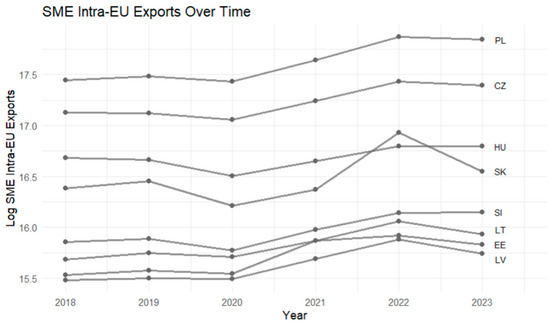
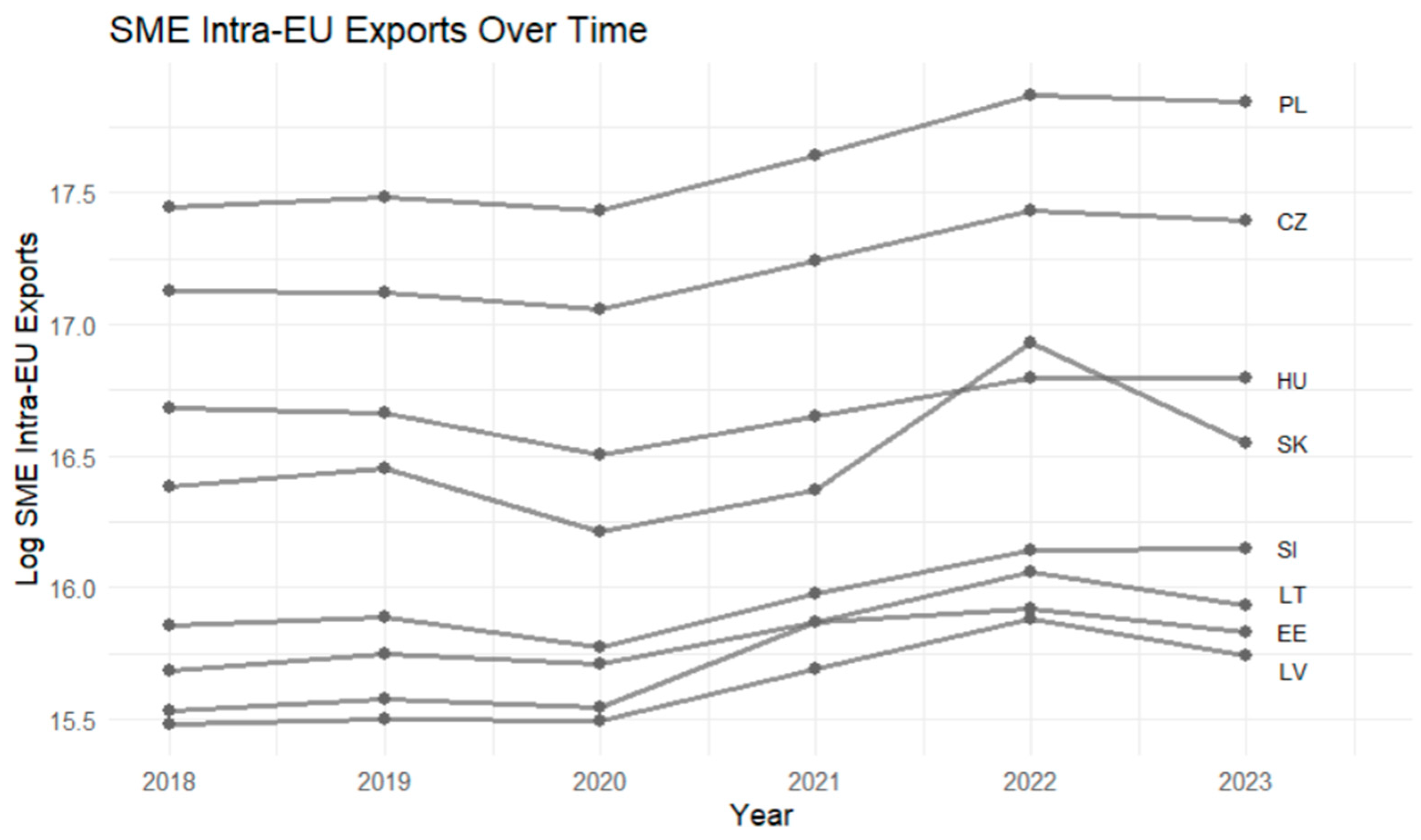

Disclaimer/Publisher’s Note: The statements, opinions and data contained in all publications are solely those of the individual author(s) and contributor(s) and not of MDPI and/or the editor(s). MDPI and/or the editor(s) disclaim responsibility for any injury to people or property resulting from any ideas, methods, instructions or products referred to in the content. |
© 2026 by the authors. Licensee MDPI, Basel, Switzerland. This article is an open access article distributed under the terms and conditions of the Creative Commons Attribution (CC BY) license.