


Abstract
Foreign direct investment (FDI) is a major channel through which Latin American economies obtain external capital, technology and access to foreign markets, yet the policy instruments directly under government control have attracted uneven empirical scrutiny. This article investigates how the overall tax burden, capital account openness and economic freedom relate to net FDI inflows in 17 Latin American countries between 1996 and 2023, with trade openness and natural resource export dependence entering as controls. Preliminary diagnostics reveal strong interdependence across countries and heterogeneous slopes. To accommodate these features, the empirical design combines second-generation panel unit root and cointegration procedures with two heterogeneous mean group estimators, the common correlated effects mean group (CCEMG) and the augmented mean group (AMG). Differences along the distribution of FDI are explored with Method of Moments Quantile Regression (MMQR), and a dynamic common correlated effects (DCCE) estimator serves as a further check. Every series behaves as an I(1) process, and the cointegration evidence points to a stable long-run equilibrium among the variables. In the long run, a heavier tax burden goes together with smaller FDI inflows, whereas more open capital accounts and greater economic freedom go together with larger inflows. Once effects are expressed in standard deviation units, economic freedom and trade openness emerge as the most influential correlates, ahead of resource dependence and taxation. The conclusions hold across alternative estimators, variable measures and subsamples. Quantile estimates further reveal that the three policy variables matter more where FDI is high conditional on fundamentals, while resource dependence is relevant chiefly at the lower end of the distribution.
Keywords:
FDI; tax burden; capital account openness; economic freedom; Latin America; CCEMG; AMG; MMQR; DCCE 1. Introduction
Emerging economies widely regard foreign direct investment (FDI) as an essential form of external finance, since it bundles long-term capital with technology transfer, managerial know-how and entry into global value chains. Compared with portfolio flows, FDI is generally less susceptible to sudden reversals during periods of financial turbulence (Dua & Verma, 2024; Lee et al., 2024). Latin America illustrates both the development potential and the volatility of this source of finance. Inflows into the region peaked in 2022, surpassing USD 200 billion for the first time in nearly a decade and amounting to about 4 percent of regional gross domestic product (GDP) (Economic Commission for Latin America and the Caribbean, 2023). This recovery was not sustained, however, as inflows declined to approximately USD 189 billion in 2024, equivalent to 2.8 percent of GDP and 13.7 percent of gross fixed capital formation, both below the corresponding averages observed during the 2010s (Economic Commission for Latin America and the Caribbean, 2025). Moreover, regional inflows remain concentrated in a small number of major recipient economies, particularly Brazil and Mexico, leaving FDI highly exposed to external shocks and domestic policy conditions. These patterns place the policy determinants of FDI at the center of the regional development agenda. Although market size, geographical characteristics, and natural-resource endowments are relatively fixed in the medium term, taxation, regulations governing international capital movements, and the institutional environment protecting property and contractual rights are substantially shaped by public policy. Recent evidence for Latin America indicates that macroeconomic, fiscal, and institutional conditions are among the important determinants of FDI inflows (Doyran & Gomez-Gonzalez, 2025), while prudent monetary and fiscal policies can enhance the attractiveness of emerging markets to foreign investors (de Mendonça & Tiberto, 2024). Nevertheless, the combined role of three policy dimensions, namely the overall tax burden, capital account openness, and economic freedom, remains comparatively underexplored, particularly within an empirical framework that accounts for the interdependence and heterogeneity characterizing Latin American economies.
The tax dimension is particularly relevant because governments face a persistent trade-off between mobilizing revenue for productive public expenditure and maintaining an attractive investment environment. Tax revenue in Latin America and the Caribbean averaged 21.5 percent of GDP in 2022 and 21.3 percent in 2023, substantially below the OECD average, although considerable cross-country variation persists (OECD et al., 2024, 2025). Higher tax revenues can support infrastructure, education, and social protection, which may strengthen the location advantages of host economies, whereas heavier taxation can raise capital costs and lower the after-tax returns earned by multinational enterprises. This trade-off has gained further importance as international tax competition has evolved. Large-scale profit shifting toward low-tax jurisdictions has weakened corporate tax bases in many economies (Tørsløv et al., 2023), while the global minimum tax framework developed under the OECD Inclusive Framework is reshaping the scope for international tax competition (Johannesen, 2022). Although theoretical research suggests that a coordinated minimum tax can potentially improve welfare in both high-tax and low-tax countries (Hebous & Keen, 2023), the empirical sensitivity of FDI to the aggregate tax burden in Latin America remains insufficiently established. Capital account policy represents a second important policy dimension. Latin American economies have experienced alternating periods of financial liberalization and renewed capital controls, resulting in substantial variation in de jure financial openness across countries and over time (Chinn & Ito, 2006; Ito & Chinn, 2025). Greater capital account openness can facilitate profit repatriation and the financing of foreign affiliates, although its benefits may depend on complementary institutional and trade conditions (Aman et al., 2024). Economic freedom constitutes a third dimension by capturing aspects of property-rights protection, market openness, regulatory efficiency, and the role of government. Early regional work linked greater economic freedom to larger FDI inflows and faster growth (Bengoa & Sanchez-Robles, 2003), while more recent cross-country studies have continued to document positive associations between economic freedom and investment outcomes (Štilić et al., 2023; Dang & Trinh, 2025).
Three related gaps motivate the present analysis. First, much of the regional evidence comes from pooled or dynamic panel estimators that treat countries as cross-sectionally independent and often force slope coefficients to be identical. Such assumptions are restrictive for Latin American economies, which are exposed to common commodity-price cycles, changes in United States monetary conditions, and regional and global financial spillovers. Ignoring these common factors can therefore produce biased or inconsistent estimates (Pesaran, 2006; Eberhardt & Teal, 2011). Second, mean-based estimators may conceal important distributional heterogeneity, since the determinants of FDI may operate differently in economies receiving relatively low levels of FDI than in major investment destinations. Although quantile-based approaches have gained growing use in studies of FDI effects in Latin America (Daud et al., 2025), substantially less attention has been given to the distributional determinants of FDI itself. Third, existing studies frequently examine taxation, capital account openness, or institutional conditions separately, despite the fact that these policy dimensions are economically interconnected and may evolve simultaneously. Examining them jointly is therefore important for reducing omitted-variable concerns and providing a more integrated assessment of the policy environment facing foreign investors.
Against this background, the present study uses a balanced panel of 17 Latin American countries covering 1996 to 2023 and adds to the regional literature in three ways. First, tax burden, capital account openness and economic freedom are modeled together as long-run correlates of net FDI inflows, with trade openness and natural resource export dependence held constant because both structural features shape where multinational investment locates in the region and what form it takes (Mahmood, 2023; Soto & Martinez-Cobas, 2024). Joint estimation, combined with effects expressed on a common standardized scale, allows the relative weight of each policy dimension to be compared. The results identify the institutional environment and trade integration as the leading long-run correlates of FDI, with the aggregate tax burden and capital account openness playing a more modest part, a finding that speaks directly to regional promotion strategies that have often leaned on tax incentives and financial liberalization. Second, the econometric design is built around the main cross-country features of the panel. Tests for cross-sectional dependence and slope heterogeneity come first, the stationarity and cointegration properties of the data are established next, and long-run parameters are then obtained from the common correlated effects mean group (CCEMG) estimator and the augmented mean group (AMG) estimator. A dynamic common correlated effects (DCCE) estimator, which also allows for persistence in FDI, provides a further check. Additional sensitivity exercises deal with the conceptual overlap between the economic freedom index and the remaining policy variables, with tax measures that fall more directly on multinational enterprises, with possible feedback from FDI to its determinants, with omitted macroeconomic conditions and with the influence of crisis episodes and individual countries. Third, the analysis adds a distributional dimension through the Method of Moments Quantile Regression (MMQR) approach of Machado and Santos Silva (2019). With this tool, the link between FDI and its policy determinants can be traced at several locations of the conditional distribution rather than only at its center, and formal tests on the scale parameters reveal whether the link changes significantly from one quantile to another. Taken together, these methods provide a coherent framework for judging how fiscal, financial and institutional conditions relate to FDI across heterogeneous Latin American economies.
The rest of the article is organized in five further sections. Section 2 reviews the theoretical and empirical literature and derives the hypotheses. Section 3 introduces the data, the construction of the variables and the estimation strategy. Section 4 reports the main estimates together with the diagnostic and robustness results. Section 5 discusses the findings in light of earlier studies and draws out their wider implications, and Section 6 closes with the main conclusions, policy implications, limitations and directions for future work.
2. Literature Review
2.1. Theoretical Framework
Dunning’s (1981) eclectic paradigm, commonly referred to as the OLI framework because it combines ownership, location and internalization advantages, remains a central theoretical reference for understanding why companies invest abroad and how they choose among potential host countries. Ownership advantages allow firms to compete with local rivals in unfamiliar markets, internalization advantages explain why firms prefer to exploit their specific assets inside the organization instead of licensing them or trading at arm’s length, and location advantages govern the relative appeal of competing host economies. The determinants examined here work mainly through the location channel, since they alter expected returns, the mobility of capital and profits, and the institutional and transaction costs of operating in the host country. The framework is further refined by distinguishing four investment motives, namely the search for markets, natural resources, strategic assets and efficiency. All four motives are present in Latin America, although resource-oriented investment in mining and hydrocarbons and market-oriented investment in manufacturing and services have traditionally accounted for a large part of regional FDI. Seen through this lens, taxation, capital account openness and economic freedom can shift the relative appeal of host economies by changing the cost of investing, the ease of cross-border financial transactions, and the security and profitability of foreign operations.
The institutional economics perspective extends the OLI framework by emphasizing that formal rules, regulatory quality, and their enforcement shape the incentives and constraints facing foreign investors across investment motives. Institutional conditions influence the credibility of government commitments, the assurance of secure property rights, the predictability of regulation, and the security of expected returns. Chen and Jiang (2023) show that institutional quality can attract FDI directly and indirectly through trade openness, industrial upgrading, and innovation, while Lee et al. (2024) demonstrate that institutional conditions can moderate the effects of economic and social determinants of FDI across both developed and developing economies. Similarly, threshold evidence suggests that the influence of labor costs and other location-specific factors varies with the level of institutional quality, with stronger institutional environments altering the conditions under which location advantages translate into foreign investment (Zhang & Kim, 2022). These perspectives collectively support an empirical specification in which fiscal, financial, and institutional policy conditions are considered jointly rather than as isolated determinants, allowing their relationships with FDI to be examined within a common location-advantage framework.
2.2. Tax Burden and FDI
Taxation influences FDI primarily through its effects on the after-tax rate of return and the relative attractiveness of alternative host locations. In neoclassical investment theory, a higher effective tax rate raises the user cost of capital and thereby lowers the desired capital stock of foreign affiliates. Consistent with this mechanism, bilateral gravity estimates by Saikia (2024) show that higher tax costs substantially discourage FDI from OECD source countries to developing host economies, with the magnitude of the effect varying according to whether the parent country operates a worldwide or territorial tax system. The investment response may also be influenced by uncertainty surrounding the corporate tax environment. Uncertainty regarding the application of double-tax agreements, together with corruption and weak institutional enforcement, can reinforce the deterrent effect of a relatively high statutory tax rate compared with the source country (Zagler, 2023). Tax differentials can also influence the geographical structure of multinational investment through conduit and tax-haven jurisdictions. Tørsløv et al. (2023) document substantial profit shifting by multinational enterprises toward tax havens, while Jones et al. (2023) show that emerging-market multinationals may use such jurisdictions to mitigate institutional risks in their home economies. This behavior has led to the concept of accountability-avoiding FDI, which highlights the possibility that recorded bilateral investment flows may not fully reflect underlying productive investment (Temouri et al., 2022). The introduction of the global minimum tax represents an international response to these incentives. Johannesen (2022) argues that a minimum tax can reduce the scope for aggressive tax-rate competition, while the simulations of Hebous and Keen (2023) suggest that moderate minimum rates can generate gains for both high-tax and low-tax jurisdictions. Regional evidence points in a similar direction, as reduced corporate income tax rates and extended tax holiday periods in Latin America and the Caribbean have attracted FDI without clearly raising total private investment or growth (Klemm & Van Parys, 2012). Taken together, these developments imply that the link between taxation and FDI depends not only on how high taxes are but also on the institutional setting and the international tax regime surrounding multinational activity.
The direction of this relationship may also be reversed, since FDI itself can affect the domestic tax base and government revenue. Camara (2023) finds that FDI inflows can expand the tax base and increase tax revenues in developing economies, although this effect is weaker in resource-exporting countries. Such feedback means that the tax burden cannot be treated as strictly exogenous. For this reason, the estimated coefficients are interpreted as long-run associations, and the empirical section checks how sensitive they are to lagged regressors and to a dynamic estimator that allows for feedback. In Latin America, a tax burden defined as the ratio of total tax revenue to GDP covers corporate taxation as well as consumption taxes, social security contributions and the wider fiscal pressure that accompanies government activity (OECD et al., 2026). Even though aggregate revenue does not single out the instruments that multinational enterprises actually face, a higher ratio can signal a relatively more expensive fiscal environment for foreign investors. Taxes on income and profits affect the returns of multinational enterprises more directly, so this revenue component is used in the robustness analysis as well. Accordingly, an inverse relationship between the aggregate tax burden and FDI inflows is expected, which leads to the first hypothesis.
H1.
A heavier tax burden is linked to smaller net FDI inflows in Latin American economies.
2.3. Capital Account Openness and FDI
Capital account openness determines the extent to which foreign investors can transfer capital across borders, remit dividends, service intra-company loans, and repatriate proceeds from divestment. The Chinn–Ito index, constructed from the International Monetary Fund’s classification of restrictions on international financial transactions, is the most widely used de jure measure of capital account openness and has been regularly updated to incorporate recent years (Chinn & Ito, 2006; Ito & Chinn, 2025). From a theoretical perspective, greater openness can enhance the attractiveness of host economies by reducing restrictions on capital mobility, lowering the expected cost of exit, and limiting the risk of profits becoming trapped within the host country. It can also facilitate access to international financing and signal a stronger commitment to market-oriented economic policies, thereby reducing uncertainty surrounding cross-border investment decisions.
Existing empirical evidence largely points to a positive but conditional relationship between financial openness and FDI. Aman et al. (2024) show that financial openness strengthens the external competitiveness of emerging markets particularly when accompanied by greater trade openness and stronger institutional conditions. Focusing on Asian emerging economies, Dua and Verma (2024) demonstrate that FDI is shaped by both global push factors and domestic pull factors and emphasize the importance of gradual capital account liberalization supported by appropriate macroprudential regulation. The broader financial environment also matters because financial development can interact with economic policy uncertainty in shaping foreign investment flows (Lutfi et al., 2022), while evidence from emerging and developing economies specifies that the joint presence of financial development and persistent uncertainty can reduce FDI over the long run (Marozva & Magwedere, 2025). Similarly, uncertainty, exchange-rate volatility, and inflation can discourage foreign investment even in high-income economies (Haque et al., 2022), whereas credible monetary and fiscal policies can strengthen investor confidence and support FDI inflows to emerging markets (de Mendonça & Tiberto, 2024). The Latin American experience is particularly informative in this respect, since several economies in the region, including Brazil, Chile and Colombia, have used capital account regulations as macroprudential instruments to manage volatile inflows, with evidence suggesting that such measures mainly alter the composition of inflows toward longer-term capital (Erten et al., 2021). Taken together, this evidence suggests that capital account openness can improve the investment environment by increasing the flexibility of international capital movements and reducing policy-related constraints, although its effectiveness may depend on broader macroeconomic and institutional conditions. On this basis, the second hypothesis is stated below.
H2.
More open capital accounts are linked to larger net FDI inflows in Latin American economies.
2.4. Economic Freedom, Institutions and FDI
Economic freedom refers to the degree to which individuals and firms are able to work, produce, trade and invest without excessive government interference. In the Heritage Foundation’s (2025) index, this concept is measured through twelve components organized in four pillars covering the size of government, regulatory efficiency, the rule of law and the openness of markets. Higher scores reflect better protection of property rights, more effective courts, greater government integrity and fiscal discipline, and fewer constraints on business, labor, monetary, trade, investment and financial activity, which jointly create a more favorable setting for market-based economic activity. Such institutional and regulatory conditions can make host economies more attractive by lowering transaction costs, making policy more predictable and reducing the threat of expropriation or arbitrary state action against foreign investors. Within the OLI framework, economic freedom therefore represents a meaningful location advantage, as it bears on both the expected profitability and the institutional safety of foreign investment. Some components, in particular financial freedom, tax burden, investment freedom and trade freedom, overlap conceptually with the fiscal, financial and trade variables used in this study. For this reason, the overall score is treated as a broad indicator of the institutional environment that supports markets, and the robustness analysis tests whether this overlap matters by using an alternative index built only from components unrelated to the other regressors.
Empirical studies largely confirm a positive link between economic freedom and FDI. For Latin America, Bengoa and Sanchez-Robles (2003) find that economic freedom significantly raises FDI inflows and that FDI in turn promotes growth when host countries maintain stable and liberal economic conditions. Other regional work indicates that economic reforms do not attract FDI uniformly and that lowering expropriation risk works as a complement to domestic financial and trade reforms (Biglaiser & DeRouen, 2006), which highlights the interdependence of the policy dimensions studied here. Drawing on both the Fraser Institute and Heritage Foundation measures, Ghazalian and Amponsem (2019) likewise report that economic freedom and its institutional components accompany larger FDI inflows. Comparable results appear in more recent work on wider international samples (Štilić et al., 2023), on Southeast Asian economies (Dang & Trinh, 2025) and on the location choices of Chinese outward investors in Asia (Waseem et al., 2026). How effective institutions are, however, may hinge on other features of the host economy. He et al. (2023) point to absorptive capacity as a key mechanism connecting institutional quality with FDI, Mamadiyarov et al. (2026) find for the Next-11 economies that human capital and institutional quality reinforce the growth benefits of FDI, and Wang and Fillat-Castejón (2024) show that institutional thresholds help determine whether complementary external flows such as foreign aid crowd in FDI.
Evidence from other developing regions further supports the importance of institutional conditions. Abdi et al. (2024) demonstrate that institutional quality significantly shapes long-run FDI inflows across African economies, while Correa da Cunha et al. (2022) show that institutional conditions in home economies influence the outward investment intensity of Latin American firms. Artikov et al. (2026) add that, in South and Central Asian economies, stricter governance can temporarily reduce FDI inflows by imposing greater compliance requirements and administrative burdens, which indicates that institutional strengthening may combine long-term credibility gains with near-term adjustment costs. Within the Latin American context, Doyran and Gomez-Gonzalez (2025) find that fiscal and institutional characteristics, including central bank independence and the rule of law, are among the more robust predictors of FDI inflows. At the global level, regulatory quality is also closely linked to the governance dimension of the environmental, social and governance framework, which positions regulatory efficiency as a component of the broader institutional environment evaluated by investors (Costantiello & Leogrande, 2024). Collectively, these findings suggest that economic freedom can strengthen the location advantages of host economies by improving institutional security, reducing regulatory and transaction costs, and increasing the predictability of the investment environment. These arguments motivate the third hypothesis.
H3.
Greater economic freedom is linked to larger net FDI inflows in Latin American economies.
2.5. Trade Openness, Natural Resources and Other Determinants
Trade openness and natural-resource dependence are included as control variables because they capture important structural motives underlying the location of FDI. Greater trade openness can support efficiency-seeking and export-platform investment by facilitating access to imported intermediate inputs, expanding market access, and integrating host economies into global value chains. Most earlier studies report that more open trade regimes attract more FDI, although the strength of this link can vary with the structure of the host economy. Evidence from Haque et al. (2022) and Artikov et al. (2026) indicates that openness raises FDI inflows, while Abdi et al. (2024) find that openness can discourage investment when increased exposure to international competition adversely affects domestic producers. In Latin America, Mahmood (2023) identifies interrelated effects of trade and FDI across countries, while Soto and Martinez-Cobas (2024) emphasize transport, telecommunications, and electricity infrastructure as important complementary location factors. The relevance of trade integration has increased with the reconfiguration of global value chains. Since 2017, FDI into Mexico has expanded faster in sectors exposed to United States tariffs on Chinese goods, and Mexico’s share of FDI directed to emerging markets has risen markedly, with investment concentrated in northern states that have established manufacturing links with the United States (Arizala et al., 2025). Nearshoring of this kind favors host economies that combine trade openness with proximity to major markets and adequate logistics infrastructure. These findings suggest that trade integration can strengthen the attractiveness of host economies when supported by adequate infrastructure and productive capacity.
Natural-resource endowments represent another important structural determinant because they can attract resource-seeking FDI while potentially concentrating foreign investment in extractive activities. Evidence on Chinese investment, which has become an important source of resource-seeking FDI in developing regions, shows that natural resources, financial development, market size and institutional conditions jointly shape investment location, and that resource motives can lead investors to enter economies with relatively weak market environments (Feng et al., 2022; Utesch-Xiong & Kambhampati, 2022; Luo & Chen, 2024). Beyond these structural motives, the governance environment shapes the volume and composition of FDI, since environmental, social and governance performance influences investment decisions and competition for FDI (Cheng & Su, 2024; Chow & Fung, 2025), and the environmental consequences of FDI depend on institutional quality (Boateng et al., 2024). Earlier studies also point to market size, growth, inflation and exchange-rate stability as relevant location factors (Haque et al., 2022; Abdi et al., 2024), and these variables are considered in the robustness analysis. Taken together, this evidence supports the inclusion of natural-resource dependence and trade openness as controls while recognizing that FDI location decisions are embedded within broader structural, institutional, and international conditions.
2.6. Heterogeneity and the Research Gap
Cross-country FDI panels have two econometric characteristics that deserve careful treatment. To begin with, the countries share common shocks such as commodity-price swings, shifts in global liquidity and changes in United States interest rates, and these shocks can create strong cross-sectional dependence. Pesaran (2006) shows that ignoring this dependence leads to inconsistent estimates and misleading inference. In addition, FDI may react differently to fiscal, financial and institutional conditions in countries with different economic structures and investment profiles, so imposing identical slope coefficients is a strong restriction. Estimators that allow slopes to differ across units, such as the AMG estimator of Eberhardt and Teal (2011), can handle this diversity while also controlling for unobserved common factors. Such methods are still used relatively rarely in FDI research, although Dua and Verma (2024) illustrate their usefulness for Asian FDI and later work applies them to the institutional drivers of sustainable development (Waseem et al., 2025). These considerations call for second-generation estimators that deal simultaneously with heterogeneous parameters and cross-sectional dependence when the determinants of FDI are analyzed.
Heterogeneity may also appear along the conditional distribution of FDI. Country-years with inflows that are large relative to what observed fundamentals predict may react to policy changes differently from country-years with comparatively small inflows, because the type of marginal investor, the sectoral mix and the competition among alternative host locations change along the distribution. Quantile methods suit this kind of heterogeneity well, since they let the effect of each explanatory variable shift systematically from one part of the conditional distribution of the outcome to another. Awan et al. (2022), for instance, use MMQR to study how the environmental effects of FDI vary, and Daud et al. (2025) show that the relationship between FDI and poverty differs across the distribution in Latin American economies. Much less is known, however, about how the determinants of FDI itself behave across the distribution in the region. The study addresses this gap by testing whether the links between FDI and its main fiscal, financial and institutional drivers change along the conditional distribution, which leads to the fourth hypothesis.
H4.
The links between net FDI inflows and the tax burden, capital account openness and economic freedom differ across the conditional distribution of FDI.
3. Methodology
3.1. Data and Variables
The dataset consists of yearly observations from 1996 to 2023 for 17 Latin American countries, nine in South America (Argentina, Bolivia, Brazil, Chile, Colombia, Ecuador, Paraguay, Peru and Uruguay), six in Central America (Costa Rica, El Salvador, Guatemala, Honduras, Nicaragua and Panama), together with Mexico and the Dominican Republic. These are the Latin American economies with complete data for all six series from 1996 onwards. Venezuela is left out because its macroeconomic and FDI statistics are discontinued in the later years, Cuba and Haiti are omitted because several variables are missing, and the English-speaking and Dutch-speaking Caribbean economies are not covered because they fall outside the Latin American region examined here and have very different fiscal and economic structures. The starting year reflects the first availability of consistent economic freedom scores and harmonized tax data, and 2023 is the most recent year with complete coverage for every variable. The balanced panel thus comprises 476 country-year observations, and Table 1 lists the definition, unit and source of each variable.
Table 1.
Description of variables and data sources.
Net FDI inflows relative to GDP, taken from the World Development Indicators (World Bank, 2025), form the dependent variable. Scaling by GDP removes size effects and makes large and small economies comparable. Tax burden is the ratio of total general government tax revenue to GDP, sourced from the harmonized Revenue Statistics in Latin America and the Caribbean (OECD et al., 2026). Capital account openness is proxied by the KAOPEN index of Chinn and Ito, where larger values signal fewer restrictions on cross-border financial transactions and hence greater financial openness (Chinn & Ito, 2006; Ito & Chinn, 2025). Economic freedom is captured by the overall Heritage Foundation score, which ranges from 0 to 100 and equals the unweighted mean of the component scores (Heritage Foundation, 2025). The two controls are trade openness, computed as exports plus imports of goods and services relative to GDP, and natural resource export dependence (NRED), computed as fuel together with ores and metals as a share of merchandise exports, both obtained from the World Development Indicators. The robustness analysis additionally uses revenue from taxes on income, profits and capital gains relative to GDP, drawn from the same OECD database, and a core institutional index equal to the mean of the property rights and government integrity components. Government integrity is spliced with the freedom-from-corruption component for editions before 2017, and judicial effectiveness enters from the 2017 edition onwards. None of these components overlaps with the tax, financial or trade variables. Market size, economic growth, inflation and exchange-rate volatility are measured, in that order, by the log of real GDP per capita, real GDP growth, consumer price inflation and the absolute yearly percentage change in the official exchange rate, all from the World Development Indicators. Because the country-by-country regressions have few degrees of freedom, these macroeconomic variables are left out of the baseline model and examined in a separate robustness specification.
3.2. Model Specification
Guided by the OLI framework and the hypotheses set out in Section 2, the long-run link between FDI and its determinants takes the form of a panel model with heterogeneous coefficients.
where i = 1, …, N (N = 17) indexes the countries, t = 1, …, T (T = 28, covering 1996–2023) indexes years, αi is a country-specific intercept and the slope coefficients βki are allowed to differ across countries. The error term uit follows a multifactor process in which a small number of latent common factors, for example world commodity prices, global interest rates or regional contagion, influence each country with country-specific loadings, in addition to an idiosyncratic shock. If these factors are correlated with the regressors, estimators that ignore them yield biased and inconsistent estimates (Pesaran, 2006). The expected signs are β1i < 0, and β3i > 0 on average, with a positive sign anticipated for trade openness and an ambiguous sign for NRED. Figure 1 summarizes the conceptual framework.
Figure 1.
Conceptual framework and research hypotheses. Figure prepared by the author.
3.3. Econometric Strategy
The estimation proceeds in sequential steps within a second-generation panel framework that addresses cross-sectional dependence, slope heterogeneity, non-stationarity, cointegration, distributional heterogeneity and the persistence of FDI. The first step applies the CD test of Pesaran (2021) to detect cross-sectional dependence, with the null read as weak dependence (Pesaran, 2015), and the delta and bias-adjusted delta statistics of Pesaran and Yamagata (2008) to test slope homogeneity. The second step determines the order of integration of each variable with the cross-sectionally augmented IPS (CIPS) test of Pesaran (2007). This test adds cross-sectional averages to the standard IPS regression so that the influence of unobserved common factors is removed. The lag order of the auxiliary cross-sectionally augmented Dickey–Fuller (CADF) regressions follows the Akaike information criterion and is capped at two. Appendix A reports country-level CADF statistics, CIPS results without a trend, and the Karavias and Tzavalis (2014) test, which allows for a structural break in short panels. The third step tests for cointegration using the four error-correction statistics of Westerlund (2007), two computed as group means and two as panel statistics, which stay valid when short-run dynamics differ across countries and when units are cross-sectionally dependent. The test regressions include a constant without a trend, lags and leads are chosen by the Akaike criterion up to two, long-run variances rely on a Bartlett kernel with a window of three, and robust p-values come from 800 bootstrap draws. Because the finite-sample size and power of these tests deteriorate as regressors are added when the time span is short, the tests are repeated for a reduced model that contains only the three policy variables.
Long-run coefficients are obtained primarily from the CCEMG estimator of Pesaran (2006). This estimator adds cross-sectional averages of the dependent variable and the regressors to every country regression, which controls for unobserved common factors while letting slopes differ freely across countries. Each country regression includes a constant, five regressors and six cross-sectional averages, leaving 16 degrees of freedom, and the mean group inference is based on 17 country estimates. The country coefficients are listed in Appendix A to show the dispersion behind the averages, and outlier-robust and leave-one-country-out mean group estimates check that no small group of countries drives the results. Both the CCE and AMG estimators are consistent regardless of whether the latent common factors are stationary or integrated (Kapetanios et al., 2011), so the long-run estimates do not hinge on every series being strictly I(1). The AMG estimator of Eberhardt and Teal (2011) is used as a complementary approach because it models an unobserved common dynamic process and allows slopes to vary by country. Heterogeneity along the conditional distribution is examined with the MMQR estimator of Machado and Santos Silva (2019), evaluated at the 0.10, 0.25, 0.50, 0.75 and 0.90 quantiles. MMQR is a location-scale model with country fixed effects in which each quantile coefficient is the location parameter plus the scale parameter times the quantile of the standardized error, βk(τ) = βk + γkq(τ). Variation across quantiles is thus driven solely by the scale parameters, and a monotonic quantile pattern arises by construction whenever a scale parameter is nonzero. H4 is accordingly evaluated through the significance of the scale parameters and through Wald tests of equal coefficients across quantiles. Since MMQR is estimated as a static fixed-effects model without cross-sectional averages, it is read as a description of the conditional distribution of FDI that complements the mean group results and not as a competing estimator of the cointegrating vector. As a further robustness check, the dynamic CCE mean group (DCCE-MG) estimator of Chudik and Pesaran (2015) is applied with the routine of Ditzen (2018). The model then includes lagged FDI along with current and lagged cross-sectional averages. The baseline uses one lag of the averages, and an alternative version uses three lags, in line with the cube root of T rule, together with the half-panel jackknife to correct the small-sample bias of the lagged FDI coefficient (Chudik & Pesaran, 2015; Ditzen, 2018). DCCE permits weakly exogenous regressors, so past FDI is allowed to affect current tax revenue, financial openness and institutions, and the estimator remains valid when the variables have different orders of integration (Chudik et al., 2016). Long-run coefficients are derived from the short-run estimates, while the lagged FDI coefficient determines how quickly the system returns to equilibrium. Lastly, any remaining cross-sectional dependence in the CCEMG, AMG and DCCE residuals is checked with the conventional CD test and with the CD-W+ statistic of Juodis and Reese (2022), which corrects the incidental parameters problem that distorts the standard test when it is applied to estimated residuals. The approach reduces, without fully eliminating, the risk of endogeneity in the policy variables. FDI may enlarge the tax base (Camara, 2023) and may also shape financial liberalization and institutional change, and market size, growth, inflation and exchange-rate stability may influence both FDI and the policy variables. Cross-sectional averages remove unobserved common factors such as global liquidity and commodity cycles, yet they cannot remove simultaneity specific to individual countries. The results are therefore re-estimated with one-year lags of the regressors, with extra macroeconomic controls, without the global financial crisis and COVID-19 years or with dummies for these episodes, and with the dynamic estimator that allows for feedback. None of these checks supplies an external source of exogenous variation, so the coefficients are interpreted as conditional long-run relationships rather than causal effects.
4. Results
4.1. Descriptive Statistics and Correlation Analysis
Descriptive statistics appear in Table 2. Net FDI inflows average 3.84 percent of GDP, with a standard deviation of 2.12 and values that range from net disinvestment of −1.10 percent to 12.84 percent of GDP. The mean tax burden of 18.61 percent of GDP lies below the regional average published in the harmonized revenue statistics for recent years. The Chinn–Ito index has a mean of 0.41 and spans −1.91 to 2.31, nearly the entire range of the index, which reflects the variety of capital account regimes in the region. A mean economic freedom score of 61.28 places the typical country in the moderately free group. Trade openness and natural resource export dependence vary the most, mirroring the presence of small open Central American economies alongside larger, more commodity-based South American economies.
Table 2.
Descriptive statistics (balanced panel, 17 countries, 1996–2023, N = 476).
Table 3 reports pairwise correlations together with variance inflation factors (VIF). FDI moves positively with capital account openness, economic freedom, trade openness and natural resource export dependence and negatively with the tax burden, signs that agree with the hypotheses. Correlations among the regressors are moderate, peaking at 0.461 between capital account openness and economic freedom. VIF values between 1.16 and 1.62 remain well below the usual cut-off of 10, so multicollinearity is not a concern for the specification.
Table 3.
Correlation matrix and multicollinearity diagnostics.
4.2. Cross-Sectional Dependence and Slope Heterogeneity
The CD test of Pesaran (2021), with weak cross-sectional dependence as the null (Pesaran, 2015), is summarized in Table 4. The null is rejected at the 1% level for all variables, which provides strong evidence of interdependence among the sample countries. The tax burden yields an especially large statistic, consistent with the parallel movement of fiscal pressure across the region, including the widespread growth of consumption taxes and common reactions to commodity cycles. Strong dependence is also found for trade openness, natural resource export dependence and capital account openness, whereas FDI and economic freedom produce smaller, though still highly significant, statistics. Latin American economies are therefore subject to shared shocks, and estimators that assume independence would risk biased and inconsistent results.
Table 4.
Results of the Pesaran CD test.
The slope homogeneity results are given in Table 5. Both the delta statistic and its bias-adjusted version reject homogeneous slopes at the 1% level, showing that the reaction of FDI to its determinants varies substantially across countries in line with their different economic structures, tax systems and investment regimes. Combined with the cross-sectional dependence results, this rules out pooled estimation and supports the heterogeneous panel techniques used below.
Table 5.
Pesaran and Yamagata (2008) test of slope homogeneity.
4.3. Unit Root and Cointegration Tests
CIPS unit root results are shown in Table 6. In levels, none of the statistics exceeds the Pesaran (2007) critical values for a specification with intercept and linear trend, so the null of a unit root is retained. In first differences, the statistics range from −3.984 to −4.612 and are all significant at 1%. All six variables are therefore treated as I(1), which warrants testing for cointegration among them. For the explanatory variables, this classification is broadly supported by the country-level CADF statistics, the CIPS test without a trend and the break-robust Karavias and Tzavalis (2014) test reported in Appendix A Table A1. The picture for FDI is less clear-cut. The trendless CIPS test rejects a unit root in levels at 10%, the CADF test rejects it in six of the 17 countries, and the Karavias–Tzavalis test rejects it at 5% once a break in 2014 is permitted. Together with the low persistence of FDI in the dynamic estimates of Section 4.6, these results imply that FDI relative to GDP could be stationary or close to stationary in some countries. Because the CIPS test has limited power with T = 28, the I(1) label for FDI should be viewed as tentative. This does not undermine the later analysis, since the CCE and AMG estimators are consistent under both stationary and non-stationary common factors (Kapetanios et al., 2011) and the dynamic CCE estimator remains valid when orders of integration differ (Chudik et al., 2016).
Table 6.
Results of the CIPS unit root test.
According to the Westerlund tests in Table 7, each of the four statistics rejects the null of no cointegration. The group-mean tests Gτ and Gα are significant at 5%, with robust bootstrap p-values of 0.017 and 0.022, while the panel tests Pτ and Pα are significant at 1%. Because the bootstrap p-values account for cross-sectional dependence, a long-run relationship between FDI and its determinants is supported for individual countries as well as for the panel as a whole. When only the three policy variables are included, as in Appendix A Table A2, all four statistics again reject the absence of cointegration at 5%, so the cointegration evidence is not an artifact of the number of regressors.
Table 7.
Results of the Westerlund cointegration test.
4.4. Long-Run Estimates
Table 8 presents the long-run CCEMG and AMG estimates. Both estimators deliver very similar coefficients in terms of sign, magnitude and significance. The tax burden enters negatively, with coefficients of −0.184 for CCEMG and −0.162 for AMG, both significant at 1%. In other words, raising the tax-to-GDP ratio by one percentage point goes along with net FDI inflows that are lower by about 0.16 to 0.18 percentage points of GDP in the long run, which is consistent with H1.
Table 8.
CCEMG and AMG long-run coefficients for net FDI inflows (% of GDP).
Capital account openness is positively and strongly significantly related to FDI, with coefficients of 0.245 and 0.228, so more open financial regimes coincide with larger long-run inflows. Moving up by one unit on the Chinn–Ito scale, roughly the gap between a partly restricted and a mostly open regime, coincides with inflows that are about 0.23 to 0.25 percentage points of GDP higher, in line with H2. Economic freedom has the biggest per-unit coefficient of the three policy variables, at 0.312 and 0.295, each significant at 1%. A Heritage score that is one point higher corresponds to FDI inflows roughly 0.3 percentage points of GDP larger, confirming H3.
Turning to the controls, trade openness carries positive coefficients of 0.084 and 0.091, significant at 5% and 1%, which fits with efficiency-seeking and export-platform investment. Natural resource export dependence is also positive, at 0.061 under CCEMG with 5% significance and 0.054 under AMG with 10% significance. Resource-seeking investment thus remains a relevant part of regional FDI, although the evidence is less strong than for the policy variables. Wald statistics show that the regressors are jointly significant, and the CD-W+ statistics of Juodis and Reese (2022) for the CCEMG and AMG residuals do not reject weak cross-sectional dependence, suggesting that both estimators deal adequately with the common factors.
As the regressors are expressed in different units, raw coefficients say little about the relative importance of each determinant. Table 9 therefore converts the long-run effects into the change in FDI implied by a one-standard-deviation movement in each regressor, measured both in percentage points of GDP and in standard deviations of FDI, using the standard deviations from Table 2. On this comparable basis, economic freedom and trade openness show the largest and broadly similar effects, with their order depending on the estimator. Natural resource export dependence ranks next, with a standardized effect above that of the tax burden, and capital account openness shows the smallest standardized effect of all regressors. Relative importance is thus more evenly spread than the per-unit coefficients imply, and the modest standardized effect of capital account openness fits the view that openness facilitates FDI rather than driving it. Because the Table 2 standard deviations mix within-country and between-country variation, whereas mean group coefficients capture within-country responses, the standardized effects should be read as relative and not absolute magnitudes.
Table 9.
Long-run effects of a one-standard-deviation increase in each regressor.
Each mean group estimate averages 17 country coefficients that come from regressions with few degrees of freedom. As Appendix A Table A3 shows, the country-level CCEMG coefficients have the same sign as the mean group estimate in every one of the 17 countries and for every regressor, and they are only moderately dispersed around the average. Tax coefficients are largest in absolute terms for Panama, Uruguay and Mexico and smallest for Paraguay and Guatemala, and Panama and Mexico also have the largest coefficients on capital account openness and economic freedom. The leave-one-country-out and outlier-robust estimates in Section 4.7 further show that the average effects do not depend on a handful of countries.
4.5. Distributional Effects from the MMQR
The MMQR results for five quantiles of the conditional FDI distribution appear in Table 10, and Figure 2 shows the coefficient paths with 95 percent confidence bands alongside the CCEMG estimates for comparison. The tax burden coefficient is negative throughout and grows steadily in absolute size from −0.092 at τ = 0.10, where it is only marginally significant, to −0.264 at τ = 0.90, where it is significant at 1%. Taxation is therefore more strongly linked to FDI at the upper conditional quantiles, namely in country-years whose inflows exceed what the regressors would predict. The median coefficient of −0.174 is almost identical to the CCEMG value. Capital account openness and economic freedom both relate positively to FDI, and their coefficients rise steadily along the distribution. The openness coefficient increases from 0.115 at the bottom quantile to 0.332 at the top, and the economic freedom coefficient climbs from 0.142 to 0.448. Each is significant at all quantiles and highly significant from τ = 0.25 upward. Trade openness is not significant at τ = 0.10, turns significant at τ = 0.25 and strengthens further at higher quantiles. Natural resource export dependence follows the reverse path, with its largest and most significant coefficient at τ = 0.10, a gradual decline thereafter and no significance at τ = 0.75 and τ = 0.90.
Table 10.
MMQR coefficients across quantiles of net FDI inflows (% of GDP).
Figure 2.
MMQR coefficient paths across quantiles of net FDI inflows. Shaded bands are 95 percent confidence intervals equal to the point estimate ± 1.96 standard errors from Table 10. Dashed lines mark the CCEMG long-run estimates from Table 8, shown only as a reference because the two estimators rely on different assumptions. Figure prepared by the author from the estimates in Table 8 and Table 10.
Since the location-scale structure of MMQR produces monotonic coefficient paths whenever a scale parameter is nonzero, the formal tests in Table 11 are what matter for H4. For the tax burden, capital account openness and economic freedom, the scale parameters are significant at 1%, and Wald tests reject equality of the coefficients between τ = 0.10 and τ = 0.90 as well as equality across all five quantiles jointly. Trade openness and natural resource export dependence have smaller scale parameters, significant at 5% and 10%, with opposite signs that match the rising and falling paths of these two controls. H4 is therefore supported for the three policy variables. Point estimates at the 90th percentile are much larger in absolute terms than at the 10th percentile, but the magnitude of this gap deserves caution given the wide confidence bands at the tails. Because a given conditional quantile can contain observations from different countries in different years, the findings describe variation along the conditional distribution of FDI and not differences between fixed groups of high-inflow and low-inflow countries.
Table 11.
MMQR location and scale estimates with tests of equal coefficients across quantiles.
4.6. Dynamic Common Correlated Effects Estimates as a Robustness Check
The DCCE results are presented in Table 12. Lagged FDI has a coefficient of 0.284, significant at 1%, which indicates that FDI inflows are only weakly persistent. Since the error-correction adjustment speed equals this coefficient minus one, convergence to the long-run equilibrium is rapid. This adjustment term is merely a transformation of the persistence parameter, so it is consistent with the cointegration evidence in Table 7 but does not constitute an independent cointegration test. Low persistence also fits the possibility noted in Section 4.3 that FDI is nearly stationary in some countries. Short-run coefficients keep the signs of the long-run estimates. A larger tax burden goes with lower inflows, whereas more capital account openness and more economic freedom go with higher inflows, each significant at 1%. Trade openness and natural resource export dependence have smaller positive short-run coefficients that are significant only at 10%.
Table 12.
DCCE short-run and long-run coefficients for net FDI inflows (% of GDP).
The long-run coefficients implied by the DCCE model are very similar to the CCEMG and AMG estimates in Table 8. The long-run tax coefficient of −0.184 matches the CCEMG value exactly, and the capital account openness and economic freedom coefficients differ from their CCEMG counterparts by less than 0.02. Trade openness and natural resource export dependence have long-run effects significant at 5% and close to the CCEMG values. Neither the standard CD test nor the bias-corrected CD-W+ test of Juodis and Reese (2022) rejects weak cross-sectional dependence in the DCCE residuals, so the cross-sectional averages appear to capture the relevant common factors. The Wald test shows joint significance of the regressors. In the alternative version reported in Section 4.7, which uses three lags of the averages and the half-panel jackknife, the lagged FDI coefficient and the long-run coefficients remain near their baseline values. Overall, the DCCE evidence shows that the long-run effects of the three policy variables survive once FDI dynamics are modeled, which lends further support to H1, H2 and H3.
4.7. Further Sensitivity Checks
Table 13 tests whether the CCEMG long-run results depend on how the policy variables are measured and on the specification. In column (1), the overall economic freedom score is replaced by the core institutional index, which omits the components that overlap with the tax, financial and trade variables. In column (2), revenue from taxes on income, profits and capital gains takes the place of total tax revenue, as these taxes fall more directly on the returns of multinational enterprises. Column (3) includes a dummy for editions prepared under the revised Heritage methodology. Column (4) lags all regressors by one year to limit contemporaneous feedback from FDI, and column (5) controls for market size, economic growth, inflation and exchange-rate instability to deal with omitted macroeconomic conditions. The core institutional index has a positive coefficient that is significant at 1% and only a little below that of the overall score, so the link between economic freedom and FDI is not a mechanical consequence of components shared with the other regressors. The coefficient on income, profit and capital gains taxes is negative and larger in magnitude than the aggregate tax coefficient, which implies that FDI reacts more strongly to the taxation of income and profits than the aggregate ratio indicates. The estimates also change little when the Heritage methodological break is controlled for, when regressors are lagged by one year and when the macroeconomic controls are added. Across all specifications the policy variables keep their signs and 1% significance, natural resource export dependence is significant only at 10% with lagged regressors and extra controls, and the CD-W+ statistics show no remaining cross-sectional dependence.
Table 13.
Alternative measures and specifications; CCEMG long-run coefficients for net FDI inflows (% of GDP).
Table 14 assesses sensitivity to the sample period, to individual countries and to the choice of estimator. Column (1) drops the global financial crisis years 2008–2009 and the COVID-19 years 2020–2021, while column (2) keeps the full sample and adds dummies for these episodes and for the period after the commodity price boom ended in 2014. Column (3) gives the range of CCEMG coefficients when countries are dropped one at a time, column (4) combines the country coefficients with robust weights that down-weight outlying estimates, and column (5) shows DCCE long-run estimates with three lags of the averages and the half-panel jackknife correction. The bottom row tests whether long-run coefficients are equal in 1996–2009 and 2010–2023. The baseline findings hold throughout. Dropping the crisis years raises the policy coefficients slightly, and adding dummies for the crises and the end of the commodity boom keeps them near their baseline levels. None of the leave-one-out ranges includes zero, so no individual country determines the sign or significance of the averages, and the robust mean group estimates almost coincide with the CCEMG values. The jackknife-corrected DCCE estimates with three lags also stay close to the baseline and show similar persistence. The stability test fails to reject equal long-run coefficients across the two subperiods, supporting a stable cointegrating relationship over years that span the global financial crisis, the end of the commodity boom and the COVID-19 shock.
Table 14.
Sensitivity to sample period, influential countries and estimator, long-run coefficients for net FDI inflows (% of GDP).
5. Discussion
The significantly negative link between the tax burden and FDI shows that fiscal pressure matters for where multinational enterprises locate in Latin America. This is in line with gravity-model evidence that tax costs discourage FDI into developing countries (Saikia, 2024) and with findings that statutory rates above those of source countries depress investment, especially where legal uncertainty is high (Zagler, 2023). It also fits the regional result that fiscal variables rank among the most robust predictors of inflows (Doyran & Gomez-Gonzalez, 2025). At about 0.18 percentage points of GDP per point of tax burden, the effect is moderate, and in standardized terms it is smaller than the effects of economic freedom, trade openness and natural-resource dependence, suggesting that investors balance taxation against the public goods that taxes pay for. Because FDI can itself help raise revenue in developing economies (Camara, 2023), part of the association may also capture feedback from FDI to the tax base. According to the DCCE estimates, around 70 percent of the long-run tax effect occurs within the first year, which points to a quick reaction of foreign investors to shifts in fiscal pressure. The larger coefficient on income, profit and capital gains taxes compared with the aggregate measure suggests that the total tax ratio understates how sensitive FDI is to the taxation of income and profits. The quantile estimates add a further nuance. Taxation weighs most heavily on FDI at the top of the conditional distribution, in country-years where inflows exceed what the remaining determinants would predict. A possible reason is that such episodes more often involve mobile efficiency-seeking and service projects, whose location decisions respond strongly to after-tax returns and can be redirected across jurisdictions through intra-group arrangements (Tørsløv et al., 2023; Jones et al., 2023). Near the bottom of the distribution, the binding constraints are more likely to be small markets, weak infrastructure and institutional deficiencies, although aggregate data do not allow this explanation to be tested directly. The results do not imply that governments should compete on tax rates. The global minimum tax limits room for such strategies (Johannesen, 2022), and coordination around a minimum can leave both high-tax and low-tax jurisdictions better off (Hebous & Keen, 2023). Evidence that tax incentives in Latin America and the Caribbean drew in FDI without clearly boosting total private investment (Klemm & Van Parys, 2012) points the same way. As the analysis measures the level of taxation and not its design, arguments for efficient and predictable tax systems rely on this wider body of work.
The positive link between capital account openness and FDI supports the argument that limits on cross-border financial transactions increase the perceived risk of investing in the region. Greater openness makes it cheaper to repatriate profits, to fund affiliates through intra-company loans and to exit investments, and it signals commitment to market-friendly policy. This agrees with findings that financial openness improves the external competitiveness of emerging markets when combined with trade integration and sound institutions (Aman et al., 2024), and with the advice to open capital accounts gradually under macroprudential safeguards (Dua & Verma, 2024). Even so, openness has the smallest standardized effect of all regressors, implying that capital account liberalization enables FDI rather than driving it, which is consistent with evidence that financial development and uncertainty jointly shape inflows (Lutfi et al., 2022; Marozva & Magwedere, 2025). The larger coefficient at higher conditional quantiles suggests that freedom to move capital matters most when inflows run above fundamentals, as tends to happen when multinational groups extend integrated production networks, while at lower quantiles openness by itself seems unable to offset other constraints. This reading also matches the regional practice of capital account regulation, which has mostly aimed at the composition of volatile short-term flows and not at direct investment (Erten et al., 2021). Liberalizing the capital account is therefore unlikely to generate FDI without complementary reforms, and macroeconomic credibility remains important, since prudent monetary and fiscal policies attract inflows in their own right (de Mendonça & Tiberto, 2024) whereas uncertainty and exchange-rate volatility discourage them (Haque et al., 2022).
Of the three policy variables, economic freedom has the largest standardized link with FDI, similar in size to trade openness, and it is significant at all quantiles and under all three mean group estimators. This extends the early regional findings of Bengoa and Sanchez-Robles (2003) to a longer time span and to estimators that handle common factors and heterogeneity. The result agrees with global and regional studies showing that economic freedom and institutional quality promote FDI (Ghazalian & Amponsem, 2019; Štilić et al., 2023; Chen & Jiang, 2023; Dang & Trinh, 2025) and with evidence that institutional quality guides where emerging-economy investors place outward FDI (Waseem et al., 2026). A sizeable effect is plausible because the Heritage index covers several dimensions that bear directly on investors, such as government integrity, property rights, regulatory efficiency, judicial effectiveness and trade, investment and financial freedom. Some of these dimensions overlap with other regressors, so the overall score partly mirrors fiscal, trade and financial conditions. Yet the core institutional index shows a positive coefficient of comparable size, indicating that property rights, courts that work and government integrity lie at the heart of the relationship. This is consistent with global evidence connecting regulatory quality with the governance pillar of the environmental, social and governance framework (Costantiello & Leogrande, 2024) and with regional evidence that lower expropriation risk complements financial and trade reforms in attracting FDI (Biglaiser & DeRouen, 2006). The quantile pattern, with the strongest link at the top of the conditional FDI distribution, fits threshold arguments. Once institutional quality passes a critical level, it magnifies the returns to other location advantages (Zhang & Kim, 2022; Wang & Fillat-Castejón, 2024), and absorptive capacity shapes how institutions translate into inflows (He et al., 2023; Mamadiyarov et al., 2026). At the lower quantiles the coefficient is smaller though still significant, implying that complementary investment in infrastructure and human capital may be required before better institutions lead to higher inflows (Soto & Martinez-Cobas, 2024; Lee et al., 2024). Evidence from South and Central Asia that tighter governance can temporarily raise compliance costs and hold back inflows (Artikov et al., 2026) further suggests that the design of institutional reform may shape its short-run effects, an issue left untested here.
Trade openness is positively linked with FDI, consistent with its function as a gateway into global value chains and with most of the empirical literature (Haque et al., 2022). Its standardized effect is close to that of economic freedom, so integration into world markets is about as strongly connected with FDI as the institutional environment is. The stronger link at upper conditional quantiles fits a sharp response of export-platform and efficiency-seeking investment to openness, although the quantile estimates cannot pinpoint particular countries. This finding differs from the negative long-run effect found for several African economies (Abdi et al., 2024), possibly because of differences in industrial structure and trade composition. The ongoing relocation of global value chains makes trade integration even more relevant for the region (Economic Commission for Latin America and the Caribbean, 2025). Since 2017, FDI into Mexico has risen faster in sectors facing United States tariffs on Chinese goods and has clustered in northern states with established manufacturing ties to the United States (Arizala et al., 2025). As the sample stops in 2023, the estimates reflect only the first stage of this shift, and whether it will last and spread to Central American economies is still unclear.
Natural resource export dependence is positively linked with FDI in the long run, with a standardized effect larger than that of the tax burden. The quantile estimates show that this link is strongest at the bottom of the conditional distribution and loses significance at the top. One explanation is that when inflows are low relative to other fundamentals, resource-seeking projects in mining and hydrocarbons make up a bigger part of foreign investment, in line with evidence on the importance of natural resources for the location of Chinese investment (Feng et al., 2022; Utesch-Xiong & Kambhampati, 2022; Luo & Chen, 2024). As inflows increase relative to fundamentals, institutional and policy factors explain more of the variation than resource endowments do. Resource-rich countries could therefore treat resource-seeking investment as a springboard for diversification instead of a replacement for wider reforms, especially given the environmental risks of extractive FDI (Boateng et al., 2024).
Table 15 summarizes the evaluation of the hypotheses. All four hypotheses are supported. The three policy variables are associated with FDI in the expected direction, and the formal tests indicate that their associations differ across the conditional distribution of inflows.
Table 15.
Summary of hypothesis testing.
6. Conclusions
The study investigated how tax burden, capital account openness and economic freedom relate to net FDI inflows in 17 Latin American countries between 1996 and 2023, with trade openness and natural resource export dependence as controls, using a second-generation panel approach. Diagnostic tests revealed strong cross-sectional dependence and marked slope heterogeneity. Panel unit root tests pointed to I(1) series, although the evidence for FDI was weaker and compatible with near-stationarity in some countries, and Westerlund tests supported a long-run equilibrium among the variables. CCEMG and AMG estimates showed that a higher tax burden accompanies lower FDI, while greater capital account openness and economic freedom accompany higher FDI, with the two estimators agreeing closely in sign, size and significance. In standardized terms, economic freedom and trade openness had the largest effects and capital account openness the smallest. The DCCE check produced almost the same long-run coefficients and indicated weak persistence of FDI, and the findings survived alternative tax and institutional measures, lagged regressors, extra controls, the removal of crisis years and a change of estimator. MMQR estimates, backed by formal tests of the scale parameters, showed that the three policy variables matter more at higher conditional quantiles of FDI, whereas natural resource export dependence matters mostly at lower quantiles.
Several policy implications follow from the estimates, bearing in mind their associational nature. The negative but moderate association between the aggregate tax burden and FDI suggests that revenue mobilization, which remains necessary given the comparatively low tax ratios of the region, need not be strongly detrimental to foreign investment. The small standardized effect of capital account openness indicates that financial liberalization alone is unlikely to raise FDI substantially, which supports a gradual approach embedded in a credible macroeconomic and macroprudential framework. The large standardized associations of economic freedom and trade openness indicate that the institutional environment and integration into international markets deserve a central place in investment promotion strategies. The stronger associations at upper conditional quantiles and the role of natural-resource dependence at lower quantiles further indicate that the relevance of each determinant differs across the conditional distribution of FDI, so the same policy change may be associated with different outcomes depending on whether inflows are high or low relative to fundamentals.
Further considerations are suggested by the broader literature. Evidence on tax incentives and the global minimum tax supports tax systems that are simple, predictable and free of costly incentives (Klemm & Van Parys, 2012; Johannesen, 2022; Hebous & Keen, 2023), a proposition that future work with effective tax rates could test directly, since the present analysis measures only the aggregate tax ratio. Similarly, the suggestion that institutional reforms should prioritize judicial effectiveness, property rights and government integrity while limiting compliance costs is consistent with the core-index results and with evidence from other regions (Artikov et al., 2026), but the design and sequencing of such reforms are not examined here. For resource-dependent economies, using resource-seeking investment as a platform for diversification is a plausible strategy, although the estimates do not identify the channels through which such diversification would occur.
Several caveats temper the policy considerations above and open avenues for further work. First, the estimates do not rest on an external source of exogenous variation, so feedback from FDI to tax revenue, financial openness and institutions cannot be fully excluded, so the coefficients describe long-run associations rather than causal effects. Second, the MMQR is a static fixed-effects model that ignores the cross-sectional dependence and potential non-stationarity found in Section 4.2 and Section 4.3, so the quantile estimates describe the conditional distribution of FDI rather than cointegrating relationships, and their comparison with the mean group estimates is indicative. Third, the time dimension of 28 years reduces both the power of the stationarity and cointegration tests and the degrees of freedom available in each country regression, and the methodological revision of the Heritage index in 2017 introduces a potential discontinuity in the economic freedom series. The analysis relies on aggregate FDI inflows, which may include round-tripping and flows routed through conduit jurisdictions and cannot distinguish greenfield investment from mergers and acquisitions. Future studies could use bilateral, sectoral or project-level data to examine whether the determinants differ between manufacturing, services and extractive investment. Although taxes on income and profits are used in a robustness check, the tax measures do not isolate corporate taxation or effective marginal rates, and the Chinn–Ito index measures de jure rather than de facto openness. Effective tax rates, de facto indicators of financial integration and the separate components of the economic freedom index would be useful in future work. Although the DCCE estimates capture short-run adjustment, they assume that adjustment is linear and symmetric. Extensions with cross-sectionally augmented autoregressive distributed lag models, nonlinear panel models, panel causality tests and threshold models would help to identify asymmetric adjustment, feedback effects and institutional tipping points. Finally, the implementation of the global minimum tax after 2024 provides a natural experiment for assessing whether international tax coordination changes the way taxation affects FDI across Latin America.
Author Contributions
Conceptualization, N.A. (Nargiza Abdurazakova) and U.O.; methodology, S.K. and U.O.; software, D.K.; validation, S.K. and I.M.; formal analysis, U.O.; investigation, N.A. (Nargiza Abdurazakova) and N.A. (Nasiba Ashurova); resources, S.A.; data curation, D.K. and S.A.; writing—original draft preparation, N.A. (Nargiza Abdurazakova) and N.A. (Nasiba Ashurova); writing—review and editing, N.A. (Nasiba Ashurova) and I.M.; visualization, D.K.; supervision, S.K. and I.M.; project administration, S.A.; funding acquisition, N.A. (Nargiza Abdurazakova), S.K., U.O., N.A. (Nasiba Ashurova), D.K., S.A. and I.M. All authors have read and agreed to the published version of the manuscript.
Funding
This research received no external funding.
Institutional Review Board Statement
Not applicable.
Informed Consent Statement
Not applicable.
Data Availability Statement
The data used in this study are publicly available from the World Bank World Development Indicators (https://databank.worldbank.org/source/world-development-indicators, accessed on 14 August 2026), the OECD Revenue Statistics in Latin America and the Caribbean database (https://data-explorer.oecd.org/s/e1, accessed on 11 August 2026), the Chinn–Ito financial openness database (https://web.pdx.edu/~ito/Chinn-Ito_website.htm, accessed on 10 August 2026) and the Heritage Foundation Index of Economic Freedom (https://economicfreedom.heritage.org, accessed on 12 August 2026).
Conflicts of Interest
The authors declare no conflicts of interest.
Abbreviations
The following abbreviations are used in this manuscript.
| AMG | Augmented mean group |
| CADF | Cross-sectionally augmented Dickey–Fuller |
| CAO | Capital account openness |
| CCEMG | Common correlated effects mean group |
| CD | Cross-sectional dependence |
| CD-W+ | Weighted cross-sectional dependence test with power enhancement |
| CIPS | Cross-sectionally augmented Im–Pesaran–Shin |
| DCCE | Dynamic common correlated effects |
| EF | Economic freedom |
| FDI | Foreign direct investment |
| MG | Mean group |
| MMQR | Method of moments quantile regression |
| NRED | Natural resource export dependence |
| OLI | Ownership, location and internalization |
| RMSE | Root mean squared error |
| VIF | Variance inflation factor |
Appendix A
This appendix reports the additional unit root and cointegration evidence and the country-specific CCEMG coefficients referred to in Section 4.3 and Section 4.4.
Table A1.
Additional panel unit root evidence.
Table A2.
Westerlund test for a model containing only the three policy variables.
Table A3.
Country-specific CCEMG long-run coefficients.
References
- Abdi, A. H., Sheik-Ali, I. A., Mohamed, F. H., & Mohamoud, S. S. A. (2024). Drivers of FDI inflows in Africa: Do trade openness, market size, and institutional quality matter? Cogent Economics & Finance, 12(1), 2416993. [Google Scholar] [CrossRef] [Scilit]
- Aman, Z., Granville, B., Mallick, S. K., & Nemlioglu, I. (2024). Does greater financial openness promote external competitiveness in emerging markets? The role of institutional quality. International Journal of Finance & Economics, 29(1), 486–510. [Google Scholar] [CrossRef] [Scilit]
- Arizala, F., Mineyama, T., & Tuesta, H. (2025). Relocation of global value chains: The role of Mexico (IMF Working Paper No. 25/180). International Monetary Fund. [Google Scholar]
- Artikov, B., Saburov, J., Bozorov, I., Tokhirov, J., Makhmudov, S., Avezov, M., & Yusupov, S. (2026). Governance and institutional quality as double-edged determinants of FDI inflows: Evidence from South and Central Asia. Economies, 14(6), 219. [Google Scholar] [CrossRef] [Scilit]
- Awan, A., Abbasi, K. R., Rej, S., Bandyopadhyay, A., & Lv, K. (2022). The impact of renewable energy, internet use and foreign direct investment on carbon dioxide emissions: A method of moments quantile analysis. Renewable Energy, 189, 454–466. [Google Scholar] [CrossRef] [Scilit]
- Bengoa, M., & Sanchez-Robles, B. (2003). Foreign direct investment, economic freedom and growth: New evidence from Latin America. European Journal of Political Economy, 19(3), 529–545. [Google Scholar] [CrossRef] [Scilit]
- Biglaiser, G., & DeRouen, K. (2006). Economic reforms and inflows of foreign direct investment in Latin America. Latin American Research Review, 41(1), 51–75. [Google Scholar] [CrossRef] [Scilit]
- Boateng, E., Annor, C. B., Amponsah, M., & Ayibor, R. E. (2024). Does FDI mitigate CO2 emissions intensity? Not when institutional quality is weak. Journal of Environmental Management, 354, 120386. [Google Scholar] [CrossRef] [Scilit] [PubMed]
- Camara, A. (2023). The effect of foreign direct investment on tax revenue. Comparative Economic Studies, 65(1), 168–190. [Google Scholar] [CrossRef] [Scilit]
- Chen, F., & Jiang, G. (2023). The impact of institutional quality on foreign direct investment: Empirical analysis based on mediating and moderating effects. Economic Research-Ekonomska Istraživanja, 36(2), 2134903. [Google Scholar] [CrossRef] [Scilit]
- Cheng, Z., & Su, Y. (2024). ESG and Chinese corporate OFDI. Research in International Business and Finance, 72, 102522. [Google Scholar] [CrossRef] [Scilit]
- Chinn, M. D., & Ito, H. (2006). What matters for financial development? Capital controls, institutions, and interactions. Journal of Development Economics, 81(1), 163–192. [Google Scholar] [CrossRef] [Scilit]
- Chow, W. W., & Fung, M. K. (2025). Relative ESG positions among OECD countries in the presence of international competition for FDI inflow: A gravity model perspective. Research in International Business and Finance, 76, 102851. [Google Scholar] [CrossRef] [Scilit]
- Chudik, A., Mohaddes, K., Pesaran, M. H., & Raissi, M. (2016). Long-run effects in large heterogeneous panel data models with cross-sectionally correlated errors. In G. González-Rivera, R. C. Hill, & T.-H. Lee (Eds.), Essays in honor of Aman Ullah (Advances in Econometrics, Vol. 36, pp. 85–135). Emerald. [Google Scholar] [CrossRef] [Scilit]
- Chudik, A., & Pesaran, M. H. (2015). Common correlated effects estimation of heterogeneous dynamic panel data models with weakly exogenous regressors. Journal of Econometrics, 188(2), 393–420. [Google Scholar] [CrossRef] [Scilit]
- Correa da Cunha, H., Singh, V., & Xie, S. (2022). The determinants of outward foreign direct investment from Latin America and the Caribbean: An integrated entropy-based TOPSIS multiple regression analysis framework. Journal of Risk and Financial Management, 15(3), 130. [Google Scholar] [CrossRef] [Scilit]
- Costantiello, A., & Leogrande, A. (2024). The regulatory quality in the light of environmental, social and governance framework at world level. Discover Global Society, 2(1), 1. [Google Scholar] [CrossRef] [Scilit]
- Dang, B. K., & Trinh, M. D. (2025). The impact of economic freedom on foreign direct investment: A study of selected Southeast Asian economies. Journal of Economics and Development, 27(2), 158–174. [Google Scholar] [CrossRef] [Scilit]
- Daud, E. I., Mohamoud, M. A., Mohamed, J., & Abdi, A. A. (2025). Exploring the impact of foreign direct investment on poverty reduction in Latin America: Evidence from panel quantile regression model. Cogent Economics & Finance, 13(1), 2468886. [Google Scholar] [CrossRef] [Scilit]
- de Mendonça, H. F., & Tiberto, B. P. (2024). Are prudent monetary and fiscal policy drivers of FDI inflows? Latin American Journal of Central Banking, 5(1), 100120. [Google Scholar] [CrossRef] [Scilit]
- Ditzen, J. (2018). Estimating dynamic common-correlated effects in Stata. The Stata Journal, 18(3), 585–617. [Google Scholar] [CrossRef] [Scilit]
- Doyran, M. A., & Gomez-Gonzalez, J. (2025). Political and institutional determinants of foreign direct investment (FDI) inflows in Latin American countries, 1995–2020. Latin American Business Review, 26(1), 1–33. [Google Scholar] [CrossRef] [Scilit]
- Dua, P., & Verma, N. (2024). Drivers of foreign direct investment inflows to emerging Asian economies. Journal of Emerging Market Finance, 23(1), 83–107. [Google Scholar] [CrossRef] [Scilit]
- Dunning, J. H. (1981). Explaining the international direct investment position of countries: Towards a dynamic or developmental approach. Weltwirtschaftliches Archiv, 117, 30–64. [Google Scholar] [CrossRef] [Scilit]
- Eberhardt, M., & Teal, F. (2011). Econometrics for grumblers: A new look at the literature on cross-country growth empirics. Journal of Economic Surveys, 25(1), 109–155. [Google Scholar] [CrossRef] [Scilit]
- Economic Commission for Latin America and the Caribbean. (2023). Foreign direct investment in Latin America and the Caribbean 2023. United Nations. [Google Scholar] [CrossRef] [Scilit]
- Economic Commission for Latin America and the Caribbean. (2025). Foreign direct investment in Latin America and the Caribbean rose by 7.1% in 2024, totaling $188.962 billion dollars [Press release]. Economic Commission for Latin America and the Caribbean. Available online: https://www.cepal.org/en/pressreleases/foreign-direct-investment-latin-america-and-caribbean-rose-71-2024-totaling-188962 (accessed on 14 August 2026).
- Erten, B., Korinek, A., & Ocampo, J. A. (2021). Capital controls: Theory and evidence. Journal of Economic Literature, 59(1), 45–89. [Google Scholar] [CrossRef] [Scilit]
- Feng, L., Ge, L., Li, Z., & Lin, C.-Y. (2022). Financial development and natural resources: The dynamics of China’s outward FDI. The World Economy, 45(3), 739–762. [Google Scholar] [CrossRef] [Scilit]
- Ghazalian, P. L., & Amponsem, F. (2019). The effects of economic freedom on FDI inflows: An empirical analysis. Applied Economics, 51(11), 1111–1132. [Google Scholar] [CrossRef] [Scilit]
- Haque, M. A., Biqiong, Z., Arshad, M. U., & Yasmin, N. (2022). Role of uncertainty for FDI inflow: Panel econometric analysis of selected high-income nations. Cogent Economics & Finance, 10(1), 2156677. [Google Scholar] [CrossRef] [Scilit]
- He, C., Wang, T., Shah, S. A., Chang, Y., & Zhou, X. (2023). A study on the moderating role of national absorptive capacity between institutional quality and FDI inflow: Evidence from developing countries. Economic Research-Ekonomska Istraživanja, 36(1), 2177–2198. [Google Scholar] [CrossRef] [Scilit]
- Hebous, S., & Keen, M. (2023). Pareto-improving minimum corporate taxation. Journal of Public Economics, 225, 104952. [Google Scholar] [CrossRef] [Scilit]
- Heritage Foundation. (2025). Index of economic freedom [Data set]. Heritage Foundation. Available online: https://economicfreedom.heritage.org (accessed on 12 August 2026).
- Ito, H., & Chinn, M. D. (2025). The Chinn-Ito index, a de jure measure of financial openness [Data set]. Portland State University. Available online: https://web.pdx.edu/~ito/Chinn-Ito_website.htm (accessed on 10 August 2026).
- Johannesen, N. (2022). The global minimum tax. Journal of Public Economics, 212, 104709. [Google Scholar] [CrossRef] [Scilit]
- Jones, C., Temouri, Y., Kirollos, K., & Du, J. (2023). Tax havens and emerging market multinationals: The role of property rights protection and economic freedom. Journal of Business Research, 155, 113373. [Google Scholar] [CrossRef] [Scilit]
- Juodis, A., & Reese, S. (2022). The incidental parameters problem in testing for remaining cross-section correlation. Journal of Business & Economic Statistics, 40(3), 1191–1203. [Google Scholar] [CrossRef] [Scilit]
- Kapetanios, G., Pesaran, M. H., & Yamagata, T. (2011). Panels with non-stationary multifactor error structures. Journal of Econometrics, 160(2), 326–348. [Google Scholar] [CrossRef] [Scilit]
- Karavias, Y., & Tzavalis, E. (2014). Testing for unit roots in short panels allowing for a structural break. Computational Statistics & Data Analysis, 76, 391–407. [Google Scholar] [CrossRef] [Scilit]
- Klemm, A., & Van Parys, S. (2012). Empirical evidence on the effects of tax incentives. International Tax and Public Finance, 19(3), 393–423. [Google Scholar] [CrossRef] [Scilit]
- Lee, S., Kang, S. J., & Lee, S. (2024). Economic, social and institutional determinants of FDI inflows: A comparative analysis of developed and developing economies. Transnational Corporations Review, 16(3), 200074. [Google Scholar] [CrossRef] [Scilit]
- Luo, C., & Chen, Z. (2024). Why has China invested heavily in countries with weak market environments? A new explanation and implications for China-Africa economic cooperation. China Economic Review, 88, 102245. [Google Scholar] [CrossRef] [Scilit]
- Lutfi, A., Ashraf, M., Watto, W. A., & Alrawad, M. (2022). Do uncertainty and financial development influence the FDI inflow of a developing nation? A time series ARDL approach. Sustainability, 14(19), 12609. [Google Scholar] [CrossRef] [Scilit]
- Machado, J. A. F., & Santos Silva, J. M. C. (2019). Quantiles via moments. Journal of Econometrics, 213(1), 145–173. [Google Scholar] [CrossRef] [Scilit]
- Mahmood, H. (2023). Trade, FDI, and CO2 emissions nexus in Latin America: The spatial analysis in testing the pollution haven and the EKC hypotheses. Environmental Science and Pollution Research, 30, 14439–14454. [Google Scholar] [CrossRef] [Scilit] [PubMed]
- Mamadiyarov, Z., Kholmatov, S., Sobirov, Y., Narzullayeva, G., Matyoqubov, A., Artikov, B., & Mirzaev, F. (2026). Economic growth in the Next-11 economies: The roles of structural, institutional, and human capital factors with evidence on FDI effects. Economies, 14(5), 183. [Google Scholar] [CrossRef] [Scilit]
- Marozva, G., & Magwedere, M. R. (2025). Uncertainty, FDI inflows, and financial market development: Empirical evidence. Economies, 13(6), 147. [Google Scholar] [CrossRef] [Scilit]
- OECD, ECLAC, CIAT & IDB. (2024). Revenue statistics in Latin America and the Caribbean 2024. OECD Publishing. [Google Scholar] [CrossRef] [Scilit]
- OECD, ECLAC, CIAT & IDB. (2025). Revenue statistics in Latin America and the Caribbean 2025. OECD Publishing. [Google Scholar] [CrossRef] [Scilit]
- OECD, ECLAC, CIAT & IDB. (2026). Revenue statistics in Latin America and the Caribbean 2026. OECD Publishing. [Google Scholar] [CrossRef] [Scilit]
- Pesaran, M. H. (2006). Estimation and inference in large heterogeneous panels with a multifactor error structure. Econometrica, 74(4), 967–1012. [Google Scholar] [CrossRef] [Scilit]
- Pesaran, M. H. (2007). A simple panel unit root test in the presence of cross-section dependence. Journal of Applied Econometrics, 22(2), 265–312. [Google Scholar] [CrossRef] [Scilit]
- Pesaran, M. H. (2015). Testing weak cross-sectional dependence in large panels. Econometric Reviews, 34(6–10), 1089–1117. [Google Scholar] [CrossRef] [Scilit]
- Pesaran, M. H. (2021). General diagnostic tests for cross-sectional dependence in panels. Empirical Economics, 60(1), 13–50. [Google Scholar] [CrossRef] [Scilit]
- Pesaran, M. H., & Yamagata, T. (2008). Testing slope homogeneity in large panels. Journal of Econometrics, 142(1), 50–93. [Google Scholar] [CrossRef] [Scilit]
- Saikia, M. (2024). Tax cost: Does it deter foreign direct investment (FDI)? International Economic Journal, 38(1), 62–85. [Google Scholar] [CrossRef] [Scilit]
- Soto, G. H., & Martinez-Cobas, X. (2024). The impact of transportation investment, road transportation and telecommunications on FDI in Latin America 2008–2021. Transport Economics and Management, 2, 45–57. [Google Scholar] [CrossRef] [Scilit]
- Štilić, A., Mastilo, A., Vuković, K., & Mastilo, D. (2023). Innovative solutions for economic growth: Exploring the impact of economic freedoms on foreign direct investment attraction. Economics, 11(1), 29–44. [Google Scholar] [CrossRef] [Scilit]
- Temouri, Y., Budhwar, P., Jones, C., Ylönen, M., Pereira, V., & Cobham, A. (2022). Tax havens and international business: A conceptual framework of accountability-avoiding foreign direct investment. International Journal of Management Reviews, 24(3), 309–332. [Google Scholar] [CrossRef] [Scilit]
- Tørsløv, T., Wier, L., & Zucman, G. (2023). The missing profits of nations. The Review of Economic Studies, 90(3), 1499–1534. [Google Scholar] [CrossRef] [Scilit]
- Utesch-Xiong, F., & Kambhampati, U. S. (2022). Determinants of Chinese foreign direct investment in Africa. Journal of African Business, 23(4), 833–850. [Google Scholar] [CrossRef] [Scilit]
- Wang, D., & Fillat-Castejón, C. (2024). Making aid work: Institutional thresholds and FDI. Applied Economic Analysis, 32(96), 189–206. [Google Scholar] [CrossRef] [Scilit]
- Waseem, M., Khurshid, N., Egbe, C. E., & Rashid, M. (2025). Energy transition and institutional quality in E-7 economies: Unveiling paths to sustainable development with CS-ARDL analysis. Sustainability, 17(10), 4321. [Google Scholar] [CrossRef] [Scilit]
- Waseem, M., Rehman, A. U., & Amir, M. (2026). Reassessing institutional quality, economic freedom, and China outward FDI: Evidence from Asian economies. SN Business & Economics, 6(6), 152. [Google Scholar] [CrossRef] [Scilit]
- Westerlund, J. (2007). Testing for error correction in panel data. Oxford Bulletin of Economics and Statistics, 69(6), 709–748. [Google Scholar] [CrossRef] [Scilit]
- World Bank. (2025). World development indicators [Data set]. World Bank. Available online: https://databank.worldbank.org/source/world-development-indicators (accessed on 14 August 2026).
- Zagler, M. (2023). Foreign direct investment, legal uncertainty and corporate income taxation. International Economics, 173, 19–28, (Erratum in 2023, International Economics, 176, 100453). [Google Scholar] [CrossRef] [Scilit]
- Zhang, H., & Kim, H. (2022). Institutional quality and FDI location: A threshold model. Economic Modelling, 114, 105942. [Google Scholar] [CrossRef] [Scilit]
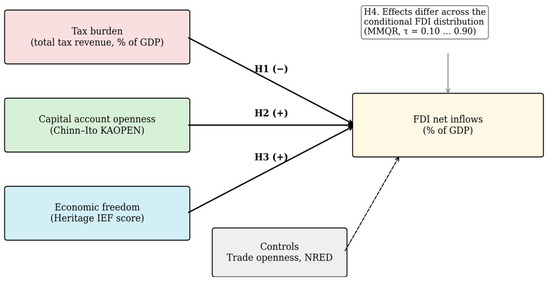
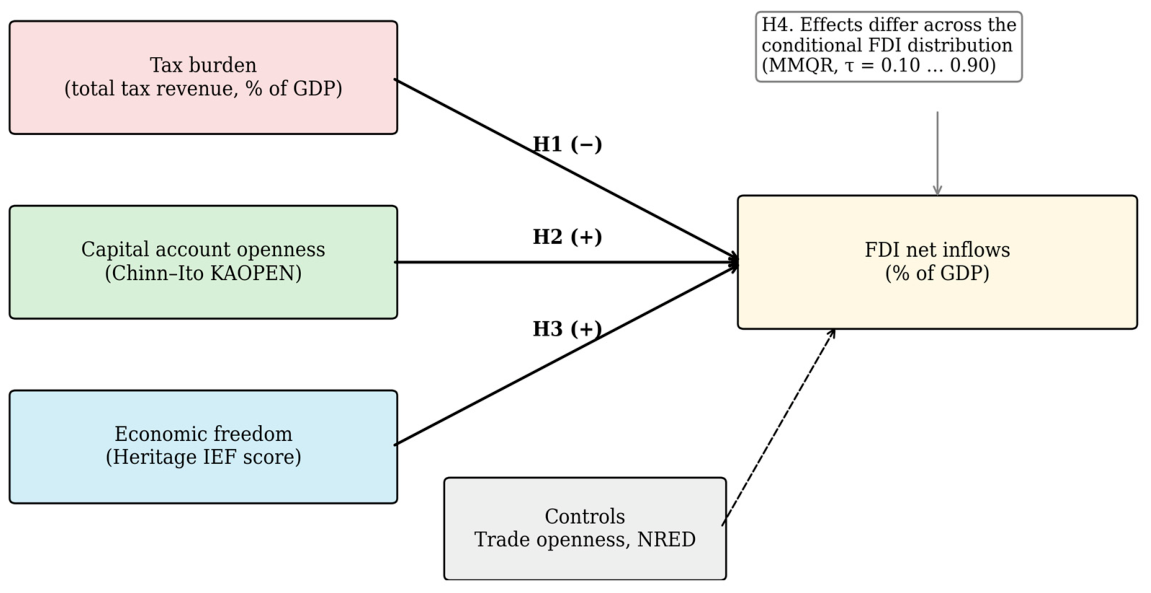
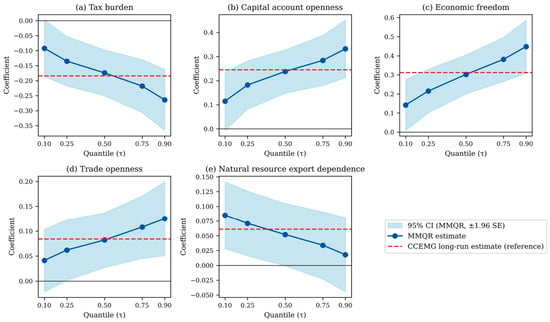
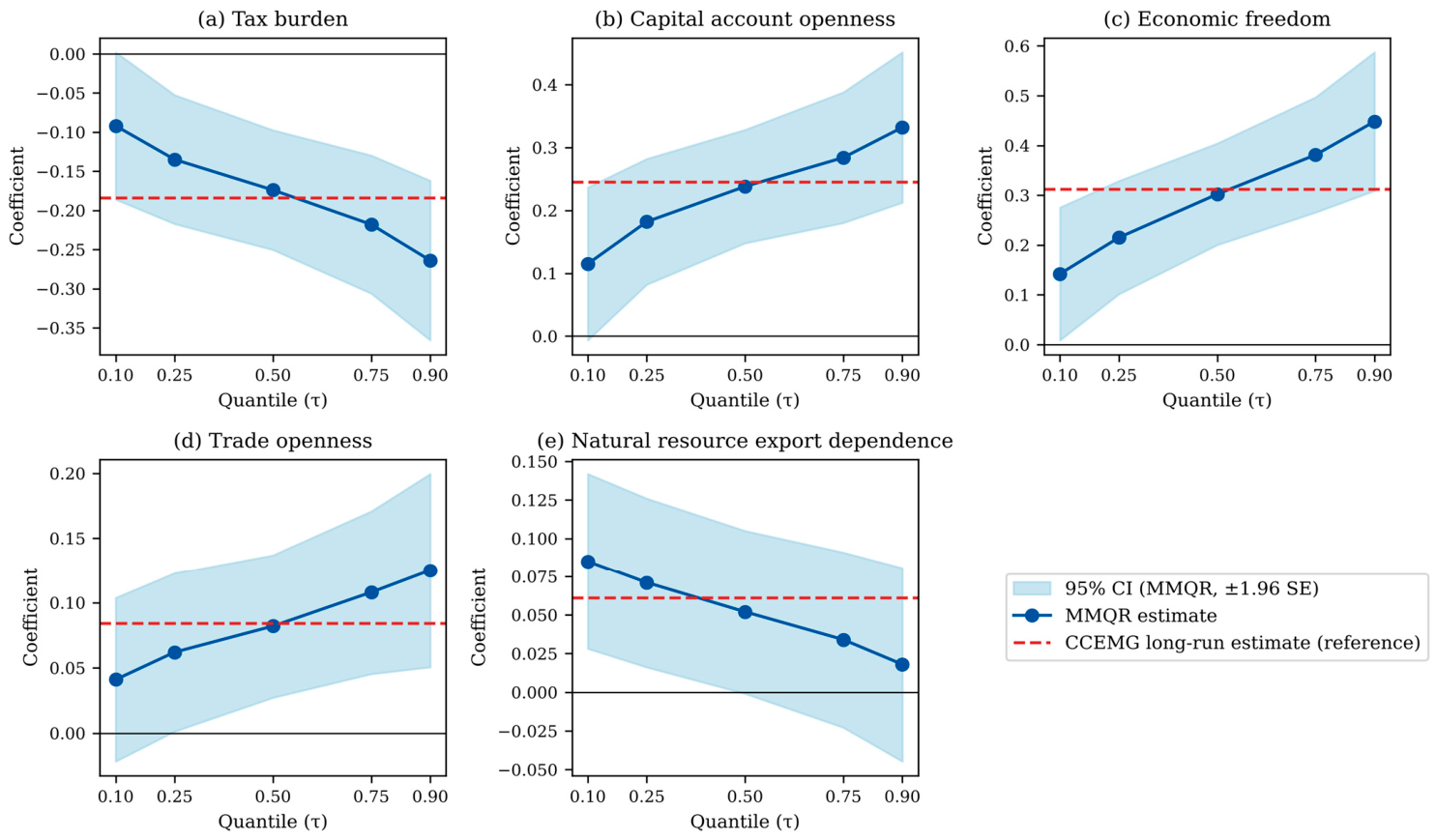

Disclaimer/Publisher’s Note: The statements, opinions and data contained in all publications are solely those of the individual author(s) and contributor(s) and not of MDPI and/or the editor(s). MDPI and/or the editor(s) disclaim responsibility for any injury to people or property resulting from any ideas, methods, instructions or products referred to in the content. |
© 2026 by the authors. Licensee MDPI, Basel, Switzerland. This article is an open access article distributed under the terms and conditions of the Creative Commons Attribution (CC BY) license.