


Abstract
Geopolitical instability presents an inherent paradox for renewable energy economics, reinforcing the strategic imperative for renewable energy while acting as a cost multiplier for its deployment. This study examines how geopolitical uncertainty could influence renewable energy investment in Egypt, specifically utility-scale solar photovoltaic (PV) projects, through physical supply chain disruptions and financial risk transmission channels. Drawing on the theory of investment under uncertainty, a quantitative scenario-based techno-economic framework is developed using recent secondary data to assess the potential implications of escalating geopolitical risk for renewable energy costs. Physical pressures arising from commodity, manufacturing, and logistics disruptions are represented through changes in capital expenditure (CAPEX), while changes in the weighted average cost of capital (WACC) capture financing risks. A reference solar PV system is evaluated alongside limited escalation, prolonged disruption, and severe escalation scenarios, followed by sensitivity and robustness analyses. The reference case yields a levelized cost of electricity (LCOE) of 4.62 US cents/kWh under the baseline assumptions. Findings show that LCOE increases to 5.17 cents/kWh under limited escalation, 6.04 cents/kWh under prolonged disruption, and 7.06 cents/kWh under severe combined stress, representing an increase of 52.9% relative to the reference case. Under the specified shocks, a 20% increase in CAPEX raises LCOE by 18.4%, whereas an increase in WACC from 10% to 14% raises it by 28.7%. Normalized sensitivity analysis further reveals a stronger LCOE response to equivalent proportional changes in CAPEX, while robustness testing across 162 parameter combinations reinforces the consistency of the findings under varying project assumptions. The combined scenarios further illustrate how simultaneous increases in capital and financing costs intensify the economic pressures on renewable energy investments. Consistent with the theoretical proposition, the findings suggest that abundant renewable resources do not necessarily ensure favorable investment conditions when geopolitical risk increases. For geopolitically exposed emerging economies like Egypt, energy policies that prioritize financial de-risking and supply chain resilience are therefore essential to enhancing renewable energy investment and promoting a sustainable and more secure energy future.
1. Introduction
The global energy transition is unfolding within an increasingly fragmented and uncertain geopolitical environment. Technological learning, manufacturing scale and policy support have substantially improved the competitiveness of renewable energy, yet the conditions surrounding deployment are no longer shaped by technology costs alone. Geopolitical tensions interact with commodity markets, trade relations, technology supply chains, shipping routes and financing conditions, creating multiple channels through which external instability can affect renewable investment. Recent empirical research confirms that geopolitical risk can influence renewable transition outcomes, but the direction and magnitude of that influence vary across countries, technologies, development levels and institutional settings (He et al., 2025; Javed et al., 2025; Y. Li et al., 2026a; Lin & Zhang, 2025; Shittu et al., 2025; Zhu et al., 2026). This heterogeneity is particularly important for emerging and developing economies, where strong renewable resources can coexist with imported technology dependence, exposure to international logistics and comparatively expensive capital.
Renewables nevertheless remain economically compelling. Recent IRENA evidence places utility-scale solar PV among the most competitive sources of new electricity generation and emphasizes the central role of renewables in accelerating the transition away from fossil fuels (IRENA, 2026a, 2026b). The strategic case can become even stronger during geopolitical instability because domestic renewable generation reduces recurrent dependence on internationally traded fuels and can limit exposure to fossil fuel price shocks. Yet low technology costs and strong natural resources do not by themselves guarantee favorable investment conditions. The economics of a capital-intensive renewable project also depend on the price of equipment, the reliability of supply chains, the timing of delivery, the cost of finance and the risk premium attached to committing capital.
This distinction is increasingly visible in the recent literature. Studies of geopolitical risk and renewable transition no longer point toward a single positive or negative relationship. Some evidence suggests that geopolitical pressure can accelerate renewable transition by strengthening incentives for diversification and energy autonomy (He et al., 2025). Other studies identify adverse effects on renewable investment and clean energy transition performance through financial, institutional and market channels (Javed et al., 2025; Lin & Zhang, 2025; Shittu et al., 2025). Cross-country evidence further indicates development-specific effects, with geopolitical risk more likely to impede renewable progress in developing economies where institutional and financial constraints are more binding (Y. Li et al., 2026a). Zhu et al. (2026) add a nonlinear dimension by identifying an inverted U-shaped relationship in which moderate geopolitical pressure can stimulate transition while excessive risk inhibits it. Together, these findings provide empirical support for treating geopolitical instability as a source of opposing pressures rather than a uniformly beneficial or harmful force.
Egypt represents a particularly relevant setting in which to examine those pressures. The country possesses substantial solar and wind resources and has increasingly positioned renewable energy as part of its long-term decarbonization and energy security strategy (Abdelmeguid & Ibrahiem, 2025; Dallmann et al., 2022; Gad et al., 2025). At the same time, renewable competitiveness cannot be assessed solely through resource availability or technological learning. Egypt participates in internationally integrated renewable technology markets, operates within an emerging market financing environment, and occupies a strategically sensitive geographic position adjacent to the Suez Canal and Red Sea. These characteristics create exposure to external disruptions even when domestic solar irradiation and plant technology remain unchanged.
Recent geopolitical developments in the region illustrate how several forms of exposure can emerge simultaneously. Maritime disruption can increase freight, insurance, and logistics costs, extend voyage distances, and delay equipment delivery (Y. Li et al., 2026b; UNCTAD, 2025). Geopolitical risk can affect critical mineral prices and strengthen the connectedness between mineral markets and clean technology investment (Depraiter & Goutte, 2025; Saadaoui et al., 2025). Concentrated PV production and trade networks can transmit disruptions across multiple stages of the value chain, while aggressive attempts to localize or decouple supply chains can themselves impose cost penalties (Chen et al., 2025; Cui et al., 2025; Gervais et al., 2025; W. Li et al., 2025). At the same time, geopolitical uncertainty can alter perceived sovereign, currency and project risk and increase the return required by providers of debt and equity (Bondarenko et al., 2024; Dato et al., 2025; IEA, 2024; Terrapon-Pfaff et al., 2025; Wildgruber et al., 2026).
These channels matter because utility-scale solar PV is highly capital intensive. A large share of lifetime expenditure is committed before commercial operation, while fuel expenditure is effectively absent. As a result, both the amount of upfront capital and the rate at which that capital is financed have a structural influence on LCOE. Recent evidence shows that renewable power is particularly sensitive to financing costs (Wilson et al., 2025), that WACC remains elevated across many African electricity markets (Dato et al., 2025), and that country and technology specific financing conditions vary substantially across renewable markets (Wildgruber et al., 2026). Evidence from Brazil further demonstrates that expensive capital can offset the benefit of falling PV technology costs in an emerging market (Gomez & Jansen, 2026). This makes financing conditions a potential geopolitical transmission mechanism rather than merely a background assumption in project appraisal.
The resulting tension can be described as an inherent paradox for renewable energy investment. Geopolitical instability and fossil fuel market volatility can reinforce the strategic imperative for renewable deployment by increasing the value of domestic low fuel cost generation and reducing dependence on imported fuels (He et al., 2025; IRENA, 2026b; Tol, 2023; Vakulchuk et al., 2020). The same instability can simultaneously weaken the economic conditions required to undertake renewable investment by raising equipment and logistics costs, tightening financing conditions and increasing uncertainty (Depraiter & Goutte, 2025; Javed et al., 2025; Lin & Zhang, 2025; Saadaoui et al., 2025; Shittu et al., 2025; Zhu et al., 2026). A country may therefore have stronger strategic reasons to accelerate renewables precisely when the financial and physical conditions for doing so become less favorable.
A rapidly expanding literature now examines each part of this problem. Empirical studies estimate how geopolitical risk affects renewable investment and transition outcomes (Flouros et al., 2022; He et al., 2025; Javed et al., 2025; Y. Li et al., 2026a; Lin & Zhang, 2025; Matallah et al., 2023; Shittu et al., 2025; Zhu et al., 2026). A second strand examines maritime disruption, critical minerals, and PV supply chain vulnerability (Chen et al., 2025; Cui et al., 2025; Depraiter & Goutte, 2025; Erol et al., 2024; Gervais et al., 2025; W. Li et al., 2025; Y. Li et al., 2026b; Saadaoui et al., 2025; UNCTAD, 2025). A third demonstrates the importance of financing conditions for renewable competitiveness and LCOE (Calcaterra et al., 2024; Dato et al., 2025; IEA, 2024; Gomez & Jansen, 2026; Terrapon-Pfaff et al., 2025; Wildgruber et al., 2026; Wilson et al., 2025).
The theory of investment under uncertainty provides an additional explanation for why irreversibility, uncertainty, and the possibility of delaying commitment can affect investment decisions (Dixit & Pindyck, 1994; Pindyck, 1991), with direct applications to renewable energy and solar PV (Kim et al., 2017; Lazo & Watts, 2023; Ofori et al., 2021; Or et al., 2024; Zhang et al., 2016). The literature is therefore rich in relevant components, but those components are commonly examined at different levels of analysis.
The research gap is therefore one of analytical integration and interpretation, rather than the absence of geopolitical risk or financing variables from prior studies. A transparent comparison is needed to show how specified CAPEX and WACC stresses affect Egyptian solar PV generation costs, how sensitive the comparison is to the chosen shock sizes, and what the resulting estimates can and cannot establish. To address this gap, this study applies a scenario-based LCOE framework to a representative utility-scale solar PV project in Egypt. It examines physical supply pressures through CAPEX and financing conditions through WACC, separately and jointly, while incorporating normalized sensitivity measures and robustness testing to assess the consistency of the modeled effects across alternative project assumptions.
Drawing on the theory of investment under uncertainty, the analysis highlights how geopolitical risks transmitted through physical supply pressures and financing conditions can affect renewable energy generation costs and, consequently, the economic attractiveness of solar PV investment in Egypt. The study addresses three research questions; (RQ1) How do specified CAPEX and WACC shocks change the LCOE of a representative solar PV project in Egypt? (RQ2) How does their relative influence vary with shock magnitude and project assumptions? (RQ3) What additional modeled cost effect arises when both shocks occur together, and how should this mathematical interaction be interpreted?
The study contributes to the literature on energy economics and geopolitical risk by integrating physical supply pressures and financing risks within a unified techno-economic framework for renewable energy investment in Egypt. The analysis provides new insights into how geopolitical instability can influence the economic attractiveness of renewable energy projects by examining the individual and combined effects of CAPEX and WACC variations on solar PV generation costs. The incorporation of normalized sensitivity measures and robustness testing further strengthens this contribution by distinguishing the effects of assumed shock magnitudes from the underlying sensitivity of generation costs to capital and financing conditions. The findings also highlight the importance of financial de-risking and supply chain resilience in strengthening energy security and informing renewable energy policy in geopolitically exposed emerging economies.
2. Literature Review
2.1. Geopolitical Risk, Energy Security, and the Energy Transition
Geopolitical risk has historically been closely associated with energy security because fossil fuel production and international trade are geographically concentrated and exposed to political instability, sanctions, conflict, and strategic competition (Baumeister & Hamilton, 2019; Flint, 2022; Kilian et al., 2024; Pinchetti, 2024; Verduzco-Bustos & Zanetti, 2025). Energy market research further shows that oil prices respond to shifts in supply, demand and uncertainty and that volatility is shaped by global market conditions (Caldara et al., 2019; Chatziantoniou et al., 2021). These mechanisms make conventional energy systems sensitive not only to physical interruption but also to expectations about future availability, transport routes, and political relations. For fuel-importing economies, geopolitical shocks can therefore transmit rapidly through import bills, inflation, exchange rate pressures, and electricity generation costs.
The expansion of renewable energy changes this geopolitical relationship but does not eliminate it. Wind and solar generation can reduce recurrent dependence on imported fuels because the primary energy resource is domestic, and no continuous fuel purchase is required. This creates an important energy security benefit and can strengthen the strategic case for renewable deployment when fossil fuel markets are volatile (He et al., 2025; IRENA, 2026b; Tol, 2023; Vakulchuk et al., 2020). However, renewable technologies remain embedded in international markets for minerals, components, manufacturing capacity, shipping, insurance, and capital. The geopolitical exposure of the energy system therefore shifts in form rather than disappearing.
The empirical literature presents competing interpretations of geopolitical risk. He et al. (2025) finds that geopolitical pressure can encourage renewable energy deployment by increasing incentives for diversification. In contrast, Javed et al. (2025), Lin and Zhang (2025), and Shittu et al. (2025) identify adverse investment or transition effects associated with financial and institutional constraints. These findings are not necessarily contradictory; the strategic incentive to diversify can strengthen even as the cost of financing and constructing new projects rises. More recent comparative evidence helps explain this variation. Y. Li et al. (2026a) identifies differences associated with countries’ development conditions, while Zhu et al. (2026) report a nonlinear relationship between geopolitical pressure and the energy transition. Taken together, these studies indicate that the sign of the aggregate relationship depends on context and the intensity of risk. They do not, however, separately quantify the effects of physical investment costs and financing conditions on a representative solar PV project.
Earlier studies had already pointed toward this ambiguity. Flouros et al. (2022) identify geopolitical risk as a determinant of renewable investment, while Matallah et al. (2023) show that persistent geopolitical risk can strengthen the transition imperative in Middle East, North Africa, and Türkiye (MENAT) oil-importing economies. The more recent literature does not overturn these contributions, it refines them by showing that the strategic push toward renewables can coexist with deteriorating investment conditions. This distinction is central to the present study because it separates the strategic value of renewable energy from the economics of committing capital to a specific project.
For the present analysis, energy security is therefore treated as a multidimensional concept. Renewable generation can improve long-run security by reducing exposure to imported fuels, but the ability to realize that benefit depends on whether projects remain financeable and constructible under stress. A geopolitical episode that strengthens the desirability of renewable energy can still delay deployment if equipment costs rise, logistics become less reliable, or investors demand higher returns. This provides the conceptual basis for examining physical and financial transmission channels separately rather than interpreting geopolitical risk through a single aggregate sign.
2.2. Geopolitical Risk and Renewable Energy Supply Chains
Solar PV supply chains are geographically dispersed and involve multiple stages, including mineral extraction, refining, polysilicon and wafer production, cell and module manufacturing, electrical equipment production, shipping, and project installation. This international division of production has supported rapid cost reduction, but it also creates exposure to concentrated manufacturing capacity and cross-border disruption. Recent network and optimization studies show that PV supply chains remain geographically concentrated and vulnerable to trade disruption (Chen et al., 2025; Cui et al., 2025; Gervais et al., 2025; W. Li et al., 2025). The same studies also caution that resilience cannot be equated with complete localization because aggressive decoupling or isolationist restructuring can raise costs and slow deployment (Chen et al., 2025; Cui et al., 2025).
The physical vulnerability begins upstream. Renewable technologies depend on internationally traded metals and minerals whose prices can respond to geopolitical risk. Saadaoui et al. (2025) show that geopolitical risk affects the prices of several critical minerals and that the magnitude and timing of the response depend on procurement risk and the nature of geopolitical shocks. Depraiter and Goutte (2025) similarly find that the connectedness among geopolitical risk, rare earth markets and clean technology markets strengthens during periods of elevated tension and can hinder clean energy investment. These findings establish a mechanism through which geopolitical stress can affect renewable project costs even when the conflict is geographically distant from the project site.
Manufacturing concentration creates a second vulnerability. Cui et al. (2025) show that policy-driven restructuring of global PV supply chains involves a trade-off between security and cost; diversification can improve resilience, while highly isolationist strategies can generate significant inefficiencies. W. Li et al. (2025) map the evolving geography of global PV trade and show that increasing concentration can amplify vulnerability to bilateral trade disruption. Gervais et al. (2025) likewise demonstrate how disruption can propagate through PV supply chain scenarios. Together, these studies suggest that a disturbance at one stage of production or trade can be transmitted through downstream equipment availability, lead times and prices.
Maritime logistics constitute a third transmission mechanism. The Suez Canal and Red Sea connect Asian manufacturing centers with European, Mediterranean, and North African markets. Disruptions affecting these routes can generate rerouting, longer voyage distances, higher fuel use, insurance costs, delivery delays and freight-rate volatility. UNCTAD documents how Red Sea disruption forced rerouting around the Cape of Good Hope and increased voyage distances, delays, and operating costs (UNCTAD, 2025). Y. Li et al. (2026b), using panel data for 42 coastal economies, find that geopolitical risk weakens shipping supply chain resilience through logistics infrastructure disruption, freight-rate volatility, and reduced customs clearance efficiency. These mechanisms are directly relevant to imported renewable equipment.
PV-specific resilience research provides a complementary management perspective. Erol et al. (2024) identify diversification, collaboration, visibility, flexibility, and related organizational capabilities as important enablers of resilience in solar PV supply chains. Chen et al. (2025) show that global PV supply chain integration has supported diffusion and cost savings, implying that resilience policy must preserve the benefits of international specialization while reducing excessive concentration. The relevant policy question is therefore not whether international supply chains should be abandoned, but how exposure to single suppliers, routes and manufacturing nodes can be reduced without sacrificing the cost advantages that helped make solar PV competitive.
For project appraisal, these different disturbances overlap economically. A mineral price shock, higher manufacturing energy costs, freight escalation, insurance premiums and delayed delivery can all ultimately increase the amount of capital required to place a project into service. Treating each disturbance as a separate percentage addition to LCOE would risk double counting because several pressures are already embodied in equipment and installed-cost quotations. The present study therefore consolidates the physical consequences of geopolitical stress into CAPEX. This preserves the economic meaning of the physical channel while allowing its effect to be compared transparently with a distinct financing shock.
These studies identify plausible physical channels, but they do not establish a direct numerical pass-through from a particular shipping or commodity disruption to the installed cost of solar PV in Egypt. In the present study, CAPEX represents the aggregate project cost channel, while the selected changes in CAPEX remain explicitly defined stress assumptions.
2.3. Solar PV Costs, LCOE, and Financing Conditions
LCOE provides a widely used measure of the discounted lifetime cost of electricity generation. For solar PV, principal determinants include installed CAPEX, operation and maintenance expenditure, electricity generation, project lifetime, technological degradation, and the discount rate or WACC. The metric is particularly useful for the present study because it allows changes in physical investment cost and financing conditions to be translated into a common unit of generation cost while holding solar resource and technical performance constant.
Rapid technological learning, manufacturing expansion and deployment scale have dramatically reduced PV costs (IRENA, 2026a). However, global weighted averages conceal substantial differences between markets because installed costs, solar resources, taxes, contractual structures, and financing conditions vary considerably. A project in a high-irradiation market can therefore have excellent physical productivity and still face a comparatively high LCOE if the capital required to build it is expensive. This distinction is especially important in emerging economies, where the cost of capital can remain high even when global technology prices decline.
The temporal structure of PV expenditure explains why financing matters so strongly. Unlike thermal generation, where a substantial share of lifetime expenditure is incurred through recurrent fuel purchases, solar PV concentrates a large proportion of cost before commercial operation. The discount rate therefore affects the annualized value of a large upfront investment over the entire project lifetime. Wilson et al. (2025) show that renewable power is more sensitive to financing costs than fossil generation and that changes in the cost of capital can materially alter relative competitiveness. Financing is therefore not an ancillary variable; it is embedded in the economic structure of capital-intensive renewable generation.
The IEA finds that the cost of capital for utility-scale solar PV in emerging and developing economies is well above that observed in advanced economies and that financing costs can account for around half or more of PV LCOE in these markets (IEA, 2024). African evidence reinforces this point. Dato et al. (2025) estimate electricity-sector WACC across 48 African countries and find values consistently above global and other regional benchmarks, with substantial cross-country variation. Calcaterra et al. (2024) further show that differentiated financing costs materially affect the affordability and pace of energy transition in developing economies. These findings indicate that renewable-resource abundance and low technology costs can be partly offset by the financial environment in which projects are developed.
Recent studies have further highlighted the importance of financing conditions in shaping renewable energy investment costs, particularly in emerging economies. Wildgruber et al. (2026), drawing on 439 empirical WACC observations across 86 countries, demonstrate how country specific risks and technology characteristics contribute to variations in renewable energy financing costs. Similarly, Terrapon-Pfaff et al. (2025) estimate an inflation adjusted pre-tax WACC of 13.86% for renewable energy investment in Egypt under a business-as-usual country risk scenario, illustrating the financial challenges facing renewable energy development in the region. Together, these findings emphasize the importance of financing risks in determining the economic competitiveness of renewable energy projects and the potential implications of geopolitical instability for investment conditions.
Project-level evidence from Brazil provides an especially relevant comparator. Gomez and Jansen (2026) estimate WACC and LCOE for utility-scale solar PV projects awarded through regulated auctions and show that financing conditions became a dominant component of project cost despite substantial reductions in CAPEX. Their results demonstrate how macroeconomic and financial conditions can offset technological cost improvements in an emerging market. The present study extends this logic in a different direction by asking whether a geopolitical stress episode can transmit into project economics through WACC and whether that financial channel can exceed the effect of a physical CAPEX shock.
The distinction between capital cost and cost of capital is therefore essential. Capital cost refers to the physical amount of investment required to construct and commission the asset and is represented here by CAPEX. Cost of capital refers to the return required by debt and equity providers and is represented by WACC. Geopolitical stress can affect either dimension independently. Commodity, manufacturing, freight, insurance and equipment disruption can raise CAPEX without necessarily changing financing rates, while higher perceived sovereign, currency, regulatory or project risk can increase WACC even if equipment prices remain unchanged. The two channels can also occur simultaneously, which creates the possibility of amplification when a higher financing rate is applied to a larger capital requirement.
Capital expenditure and the cost of capital must be distinguished analytically. CAPEX measures the upfront cost of developing and commissioning the asset, whereas WACC represents the required return used to discount its future costs and generation. Existing project appraisals already incorporate country risk into financing assumptions and supply chain conditions into capital costs. The contribution here is not the introduction of these variables, but their explicit separation, joint evaluation, and robustness testing under a common set of geopolitical stress scenarios. A larger LCOE response to a specified WACC shock must therefore be interpreted relative to the size of that shock, not as a universal ranking of financial and physical risk.
2.4. Theoretical Background and Conceptual Foundations
The theoretical foundation of this study draws primarily on the theory of investment under uncertainty, complemented by neoclassical investment theory and the role of financing conditions in capital-intensive investment. This combination is particularly relevant to renewable energy projects because substantial capital must be committed upfront, much of that commitment is difficult to reverse once construction begins, and the economic environment surrounding the project can change considerably over its lifetime. Geopolitical instability adds another layer of uncertainty by affecting both the physical cost of developing renewable assets and the financial conditions under which those assets are financed.
Neoclassical investment theory provides an important starting point. Jorgenson (1963) links capital formation to the economic cost of employing capital, implying that changes in the relative price of capital services alter the desired capital stock and the incentive to invest. For utility-scale solar PV, this relationship is especially important because expenditure is concentrated at the beginning of the project while subsequent fuel costs are negligible. A deterioration in financing conditions can therefore affect project economics even when the generating technology and renewable resource remain unchanged. Conventional investment appraisal becomes less complete, however, when investment is substantially irreversible, future conditions are uncertain and investors retain flexibility regarding when capital is committed.
The theory of investment under uncertainty extends conventional investment analysis by explicitly recognizing irreversibility, uncertainty, and timing flexibility. Pindyck (1991) and Dixit and Pindyck (1994) further extend this perspective by demonstrating how uncertainty, investment irreversibility, and the flexibility to postpone capital commitments influence investment decisions. Their contributions provide an important theoretical foundation for understanding how geopolitical instability can affect investment incentives, particularly in capital intensive sectors such as renewable energy. In this context, rising capital requirements and financing risks can weaken the economic attractiveness of renewable energy projects, even when their underlying technological and resource characteristics remain favorable.
This reasoning is directly relevant to renewable energy investment. Renewable power projects are capital intensive, require substantial expenditure before electricity production begins and involve assets whose alternative uses may be limited once installed. Investors simultaneously face uncertainty surrounding technology costs, electricity prices, financing conditions, regulatory arrangements, policy support and macroeconomic conditions. The theoretical implication is not simply that uncertainty makes projects more expensive. It is that the timing and attractiveness of commitment depend on both expected project value and the value of preserving flexibility when future conditions remain unresolved.
Applications of investment under uncertainty to renewable energy further highlight the importance of investment costs, policy conditions, financing risks, and timing flexibility in shaping investment decisions (Zhang et al., 2016; Kim et al., 2017; Ofori et al., 2021). More recent studies examining real options approaches in solar PV investment reinforce the significance of uncertainty and investment flexibility in evaluating renewable energy projects (Lazo & Watts, 2023; Or et al., 2024; Carozzani & D’Alpaos, 2025). Together, these contributions provide a broader theoretical perspective on the economic implications of uncertainty, complementing the present study’s focus on how geopolitical pressures transmitted through capital expenditure and financing conditions influence solar PV generation costs and investment attractiveness in Egypt.
Geopolitical risk introduces a distinctive source of uncertainty into this investment problem. Earlier evidence established that geopolitical risk is relevant to renewable investment rather than being confined to conventional fossil fuel markets (Vakulchuk et al., 2020; F. Li et al., 2021; Flouros et al., 2022; Matallah et al., 2023). The recent empirical literature is considerably richer and does not point in a single direction. Positive, negative, nonlinear, and development-specific responses have all been documented (He et al., 2025; Javed et al., 2025; Lin & Zhang, 2025; Shittu et al., 2025; Y. Li et al., 2026b; Zhu et al., 2026). This heterogeneity is compatible with the theory of investment under uncertainty because geopolitical pressure can alter both the expected strategic value of renewable energy and the uncertainty surrounding the conditions under which capital is committed.
The inherent paradox can therefore be expressed in investment terms. Geopolitical instability can raise the strategic value of renewable energy by increasing the benefits of diversification, domestic generation, and reduced exposure to imported fossil fuels (He et al., 2025; IRENA, 2026b; Tol, 2023; Vakulchuk et al., 2020; Zhu et al., 2026). Concurrently, the same instability can increase the physical cost of investment through mineral, manufacturing and logistics pressures (Cui et al., 2025; Depraiter & Goutte, 2025; W. Li et al., 2025; Saadaoui et al., 2025) and increase the financial cost of commitment through higher risk premia and financing costs (Calcaterra et al., 2024; Dato et al., 2025; IEA, 2024; Gomez & Jansen, 2026; Wildgruber et al., 2026; Wilson et al., 2025). A stronger strategic rationale can therefore coexist with a weaker immediate investment environment.
The cost of capital forms a particularly important bridge between theory and project economics. In a capital-intensive technology, an increase in WACC changes the economic value attached to future electricity production relative to the upfront commitment of capital. This can occur even when the physical asset and solar resource remain unchanged. Project-level evidence from Brazil shows that financing can become a dominant component of utility-scale PV costs in an emerging market (Gomez & Jansen, 2026), while African and cross-country evidence demonstrates substantial variation in WACC and the importance of financing premia (Calcaterra et al., 2024; Dato et al., 2025; Wildgruber et al., 2026). These findings make the financial environment central to interpreting how uncertainty reaches renewable project economics.
The theoretical argument also clarifies why CAPEX and WACC should remain analytically distinct. CAPEX represents the physical amount of capital that must be committed, while WACC represents the required return associated with financing that commitment. A geopolitical shock can increase one, the other or both. When both deteriorate simultaneously, the higher financing rate is applied to an enlarged capital requirement. This interaction does not constitute a real options result in itself, but it demonstrates how the economic conditions surrounding irreversible investment can worsen through more than one pathway at the same time.
The theory of investment under uncertainty is therefore used as an interpretive foundation rather than as a formally tested model. The study does not estimate an option value, derive an optimal investment trigger or determine the optimal timing of deferral. Such an exercise would require stochastic specification of the relevant state variables and a different empirical design. Instead, the theory establishes why uncertainty, irreversibility and changing capital conditions matter when interpreting the vulnerability of renewable investment. The scenario framework then quantifies two observable project-economic channels through which geopolitical stress can alter those conditions; physical supply pressures represented through CAPEX and financial risk represented through WACC.
This theoretical structure provides the bridge between the geopolitical literature and the techno-economic model. It moves the analysis beyond the general proposition that geopolitical instability influences renewable energy by identifying the project-level variables through which such influence can occur. It also provides the basis for examining whether physical supply side disruption or financing deterioration represents the stronger source of investment vulnerability and whether the two channels reinforce one another under combined stress. The scenario and sensitivity analyses therefore do not test the theory of investment under uncertainty directly; they quantify project-level mechanisms whose interpretation is consistent with its broader economic logic.
The distinction between CAPEX and WACC also clarifies the interpretation of joint stress. Increasing both parameters produce a larger modeled LCOE response because the discounting structure operates on a higher capital requirement. This is a mathematical property of the cost model, not independent empirical evidence that geopolitical risks interact causally. The value of the joint scenario is to show the total conditional cost exposure when both assumptions deteriorate together. Accordingly, investment under uncertainty is used to motivate the economic relevance of risk and irreversible capital commitments, not to claim that the static LCOE model estimates investment deferral or real option values. The analytical implications are developed in Section 3, where physical procurement pressures and financing risk are represented as separate model inputs.
2.5. Egypt and the Research Gap
Egypt combines significant renewable energy potential with distinctive geopolitical, logistical, and financial exposure. Existing studies demonstrate both the potential for accelerated renewable deployment and the importance of system-level planning in the Egyptian power sector (Abdelmeguid & Ibrahiem, 2025; Dallmann et al., 2022; Gad et al., 2025). Abdelmeguid and Ibrahiem (2025) identify pathways for accelerated decarbonization, while Dallmann et al. (2022) emphasize the interaction between renewable potential and power-system path dependence. Gad et al. (2025) further illustrates the value of integrated planning when energy choices interact with wider resource constraints. Collectively, this literature establishes a strong domestic rationale for renewable expansion but does not directly examine how a regional geopolitical stress episode changes the economics of an individual utility-scale PV project.
Recent Egypt-specific evidence brings geopolitical risk much closer to the center of the national energy debate. Hassanen et al. (2026), using data for 2000–2023, identify a long-run negative relationship between geopolitical risk and energy security in Egypt while also finding a positive role for renewable energy. This is an important contribution because it demonstrates that geopolitical exposure is empirically relevant to Egyptian energy outcomes rather than merely a regional background condition. Its level of analysis, however, remains national and macro-oriented. It does not decompose how geopolitical stress can alter renewable project CAPEX, financing conditions and LCOE.
The international literature provides strong evidence for each component required to build such a project-level explanation. Geopolitical risk affects renewable transition and investment outcomes (Flouros et al., 2022; He et al., 2025; Javed et al., 2025; Y. Li et al., 2026a; Lin & Zhang, 2025; Matallah et al., 2023; Shittu et al., 2025; Zhu et al., 2026). Maritime disruption and concentrated PV supply chains can transmit physical stress through freight, trade, and equipment availability (Chen et al., 2025; Cui et al., 2025; Erol et al., 2024; Gervais et al., 2025; W. Li et al., 2025; Y. Li et al., 2026b; UNCTAD, 2025). Critical mineral markets provide another route through which geopolitical tension can affect clean technology costs and investment (Depraiter & Goutte, 2025; Saadaoui et al., 2025). Financing research shows that WACC is elevated and heterogeneous across African and emerging markets and can materially alter renewable LCOE (Calcaterra et al., 2024; Dato et al., 2025; IEA, 2024; Gomez & Jansen, 2026; Terrapon-Pfaff et al., 2025; Wildgruber et al., 2026; Wilson et al., 2025). The theory of investment under uncertainty explains why worsening uncertainty and capital conditions matter for investments that are substantially irreversible and can be delayed (Carozzani & D’Alpaos, 2025; Dixit & Pindyck, 1994; Kim et al., 2017; Lazo & Watts, 2023; Y. Li et al., 2026a; Ofori et al., 2021; Or et al., 2024; Pindyck, 1991; Zhang et al., 2016).
The literature reviewed above highlights three interconnected mechanisms through which geopolitical instability can influence renewable energy investment: disruptions to energy investment conditions, procurement and logistics pressures affecting capital costs through internationally integrated solar PV supply chains, and financing risks influencing the cost of capital. Together, these mechanisms provide the analytical foundation for examining how geopolitical pressures can affect the economics of renewable energy projects. Building on this evidence, the present study adopts a scenario-based techno-economic approach to assess the implications of changes in CAPEX and WACC for solar PV generation costs in Egypt.
Egypt provides a particularly relevant setting for examining these interconnected risks, combining substantial solar energy potential and experience in utility-scale renewable deployment with exposure to regional geopolitical tensions, international supply chains, and emerging market financing constraints. Evidence from African energy markets highlights the significant influence of financing costs on electricity generation economics (Calcaterra et al., 2024; Dato et al., 2025), while emerging market research demonstrates how financing pressures can offset declining solar PV technology costs (Gomez & Jansen, 2026). The Egyptian case therefore reflects a broader challenge facing renewable-rich emerging economies, where abundant natural resources do not necessarily translate into favorable investment conditions.
The study contributes to the existing literature by integrating physical supply pressures and financing risks within a unified LCOE framework, systematically comparing their individual and combined effects, and examining the robustness of the findings across alternative technical and financial assumptions. This integrated approach provides insights into how geopolitical instability can influence renewable energy generation costs and the economic attractiveness of solar PV investment in geopolitically exposed emerging economies.
3. Conceptual and Analytical Framework
Building on the theoretical and empirical foundations discussed above, the analytical framework translates geopolitical uncertainty into two principal project-level economic pathways. The first is a physical supply side channel. Geopolitical escalation can affect internationally traded metals and materials, manufacturing energy costs, freight rates, insurance, shipping routes, equipment availability and delivery schedules. Evidence on critical minerals and PV trade networks demonstrates that geopolitical shocks can alter input prices and propagate through geographically concentrated technology supply chains (Cui et al., 2025; Depraiter & Goutte, 2025; Gervais et al., 2025; W. Li et al., 2025; Saadaoui et al., 2025). Because several of these mechanisms overlap, their principal project-level effect is represented through changes in installed project CAPEX rather than as separate direct multipliers of LCOE.
This aggregation is important for both conceptual clarity and model discipline. Commodity prices, manufacturing costs, freight, insurance, and delivery risk are not independent additions to the final cost of a PV project. Higher mineral or energy costs can already be reflected in module and equipment prices, while freight and insurance can be incorporated into delivered equipment quotations. Modelling each pressure as a separate percentage increase in LCOE would therefore risk counting the same cost escalation more than once. Representing the physical channel through CAPEX captures the cumulative effect on the capital requirement while preserving transparency.
The second pathway is a financial risk channel. Heightened geopolitical uncertainty can increase perceived sovereign, currency, regulatory and project risk, raise required returns and widen financing premia. This pathway is represented through changes in WACC. The distinction is supported by evidence showing that renewable electricity costs are highly sensitive to financing conditions, particularly in emerging and developing economies (Calcaterra et al., 2024; Dato et al., 2025; IEA, 2024; Gomez & Jansen, 2026; Wildgruber et al., 2026; Wilson et al., 2025). WACC is therefore treated as a project-economic variable that can deteriorate independently of physical equipment costs.
The two channels converge in the LCOE calculation but enter it differently. CAPEX changes the amount of capital that must be recovered over the project lifetime. WACC changes the rate at which future generation and costs are discounted and therefore the annualized burden of the upfront investment. When supply side disruption increases CAPEX while geopolitical stress concurrently increases WACC, the higher cost of capital applies to an enlarged investment base. Their combined effect on LCOE therefore reflects the interaction between capital requirements and financing costs, producing an additional cost increase beyond the sum of their individual effects under the specified scenarios.
A parallel strategic mechanism operates in the opposite direction. Greater instability in fossil fuel markets can increase the energy security value of domestic renewable generation and strengthen policy incentives for diversification. Recent empirical evidence is consistent with this duality. Geopolitical risk has been found to accelerate renewable transition under some conditions while constraining it under others, with nonlinear and development-specific effects increasingly documented (He et al., 2025; Javed et al., 2025; Y. Li et al., 2026a; Lin & Zhang, 2025; Shittu et al., 2025; Zhu et al., 2026). Geopolitical risk may therefore reinforce the strategic imperative for renewable deployment while weakening the near-term economic conditions under which renewable projects are financed and constructed. This tension constitutes the inherent paradox examined in the study.
The theory of investment under uncertainty provides the interpretive link between these pathways. Utility-scale PV requires a substantial and largely irreversible upfront commitment, while project initiation can often be delayed. Changes in CAPEX and WACC can therefore influence the economic conditions under which investment commitments are made, highlighting the importance of capital intensity, financing risks, and uncertainty in renewable energy development (Carozzani & D’Alpaos, 2025; Dixit & Pindyck, 1994; Ofori et al., 2021; Or et al., 2024; Pindyck, 1991). This theoretical perspective provides a basis for examining how geopolitical pressures affecting physical investment costs and financing conditions shape the economics of solar PV projects.
The framework consequently distinguishes between a shock’s geopolitical origin and the project variable through which it enters the model. This distinction enables the analysis to examine three interconnected dimensions; the effects of geopolitical stress on solar PV generation costs, the relative influence of physical CAPEX and financial WACC pressures under different scenarios, and the additional cost implications of their concurrent deterioration. The framework also highlights the importance of addressing both transmission channels through policies that strengthen supply chain resilience, reduce financing risks, and support renewable energy investment under geopolitical uncertainty.
4. Materials and Methods
4.1. Research Design
This study employs a quantitative scenario-based techno-economic approach to assess the sensitivity of utility-scale solar PV generation costs in Egypt to geopolitical risk. Drawing on the theory of investment under uncertainty, the analysis examines how geopolitical pressures transmitted through changes in CAPEX and WACC influence renewable energy generation costs and the broader economic attractiveness of solar PV investment. The framework evaluates the individual and combined effects of physical supply pressures and financing risks through progressively adverse geopolitical stress scenarios, using parameter ranges informed by contemporary empirical, institutional, and peer reviewed evidence. Sensitivity and robustness analyses are subsequently conducted to examine the consistency of the findings across alternative project and financing assumptions.
The analysis proceeds in four stages. A reference PV project is defined using transparent technical and financial assumptions, its discounted lifetime generation cost is calculated, separate and joint CAPEX and WACC stresses are applied, and sensitivity and robustness tests assess how the results vary with the assumed shocks and project characteristics. The provenance and status of each input are documented in Section 4.6 and the Supplementary Materials.
The geopolitical context provides the basis for examining two principal economic transmission channels. Disruptions to manufacturing, shipping, insurance, and procurement can increase project capital costs, while heightened geopolitical uncertainty can raise perceived investment risks and financing costs. These pressures are represented through changes in CAPEX and WACC, respectively, allowing their individual and combined implications for solar PV generation costs to be systematically evaluated under alternative geopolitical stress scenarios.
The scientific contribution lies in a reproducible comparison of these channels within a unified techno-economic framework. Through examining the separate and combined effects of CAPEX and WACC variations, the analysis provides insights into how physical supply pressures and financing risks shape renewable energy generation costs under geopolitical uncertainty. The findings further contribute to understanding the economic vulnerabilities of capital-intensive renewable energy investments and the importance of strengthening financial and supply chain resilience in geopolitically exposed emerging economies.
4.2. Reference Solar PV System
The reference system is a normalized utility-scale PV project, not an observed Egyptian plant. Table 1 sets out its assumptions, with costs expressed per kW of installed direct current (kWdc) capacity and generation per kWdc. CAPEX of USD 750/kWdc, a 23% capacity factor, fixed operation, and maintenance expenditure of USD 7/kWdc per year, a 25-year lifetime and 0.5% annual degradation are model inputs, not a jointly observed Egyptian project dataset. The 10% real WACC represents a comparatively de-risked financing case, not an estimate of prevailing national financing conditions. In particular, the 13.86% Egypt estimate reported by Terrapon-Pfaff et al. (2025) requires careful comparison of tax, currency, and other financial conventions before it can be treated as directly equivalent. Parameter provenance and limitations are summarized in Section 4.6.
Table 1.
Reference solar PV system assumptions.
4.3. LCOE Model
The LCOE is the ratio of discounted lifetime project expenditure to discounted electricity generation. All cash flows in the model are expressed in constant US dollars, with a real discount rate applied consistently. The initial CAPEX is incurred at the start of the project; fixed operation and maintenance costs are incurred annually. The simplified calculation excludes taxation, depreciation allowances, residual value, construction financing and explicit debt structuring. These exclusions limit direct comparison with project specific financial models.
LCOE = [CAPEX + Σt(O&Mt/(1 + r)ᵗ)]/[Σt(Et/(1 + r)ᵗ)]
In Equation (1), CAPEX denotes initial investment per kWdc, O&Mt is operating expenditure per kWdc in year t, r is the assumed real discount rate represented by WACC, and Et is annual electricity generation per kWdc. The summations extend over the assumed project lifetime, and multiplication by 100 converts USD/kWh into US cents/kWh.
Et = 8760 × CF × (1 − d)ᵗ−1
In Equation (2), CF denotes the first-year capacity factor and d the annual proportional degradation rate. The resulting LCOE is a plant-level generation cost, not a power purchase agreement tariff, an investment return, or a measure of electricity system cost. Under the stated assumptions, the reference result is approximately USD 46.16/MWh (4.62 US cents/kWh). This international cost comparison is a reasonableness check, not independent validation of each Egypt-specific input (IRENA, 2026a).
4.4. Geopolitical Transmission Channels and Scenario Calibration
Two channels are modeled separately; a physical investment cost channel represented by changes in CAPEX and a financing channel represented by changes in real WACC. Freight, insurance, manufacturing, and equipment price pressures are treated as possible contributors to a single aggregate CAPEX shock, they are not independently added to that shock. Likewise, WACC changes are imposed as financing stresses rather than estimated from sovereign spreads or exchange rates. Table 2 specifies the reference case and three increasingly adverse combinations.
Table 2.
Geopolitical stress scenario assumptions.
The CAPEX increases of 5%, 12% and 20%, paired with real WACC assumptions of 11%, 12.5% and 14%, are selected stress magnitudes. They are not measured outcomes of specific geopolitical events and no source establishes a one-to-one conversion from a specific shipping disruption or financial market movement into these values. Historical evidence of commodity and freight cost pressures provides context for the upper CAPEX range (IEA, 2021), while published evidence on emerging market financing conditions informs the WACC range (IEA, 2024; Terrapon-Pfaff et al., 2025). The precise numerical choices remain assumptions whose implications are tested rather than empirically estimated.
The analysis adopts a 10% real WACC as the reference financing assumption and examines a severe scenario in which WACC increases to 14%, alongside a 20% increase in project CAPEX. The four-percentage-point increase in WACC represents a hypothetical financing stress relative to the selected reference case. The published estimate of 13.86% for Egypt’s business-as-usual WACC provides additional context for interpreting these assumptions, although differences in financing structures and methodological conventions should be considered. The scenarios are designed to assess the sensitivity of solar PV investment costs to potential geopolitical risk transmission channels rather than to reproduce observed market financing conditions.
The model applies each scenario WACC as a constant real discount rate over the project lifetime, representing a sustained financing condition for the modeled project and does not establish that a temporary geopolitical event would raise borrowing costs for 25 years. The duration, refinancing possibilities, currency denomination and tax treatment of actual financing arrangements could change the outcome. Exchange rate exposure is not modeled as an independent quantitative shock because the necessary currency breakdown of equipment purchases, revenues and debt service is not specified, it is therefore not assumed to be fully captured by WACC.
The model applies a constant real WACC under each scenario throughout the project lifetime, reflecting the financing assumptions adopted for the techno-economic assessment. Exchange rate uncertainty may influence WACC through investors’ and lenders’ required returns, particularly where currency volatility, convertibility risks, or financing mismatches affect perceived investment risk. However, exchange rate fluctuations may also influence project costs through other channels, including imported equipment prices, operating expenditures, debt servicing, and currency hedging arrangements. These effects are not explicitly modeled, as their assessment would require project-specific information on procurement, financing, and revenue structures. Accordingly, the WACC scenarios capture potential changes in financing conditions without assuming that all exchange rate-related risks are fully reflected in the discount rate.
4.5. Sensitivity and Robustness Analysis
The primary sensitivity exercise varies CAPEX and WACC separately and jointly. Robustness is evaluated across 162 reconstructed parameter combinations, reference CAPEX of USD 650, 750, or 900/kWdc, capacity factor of 21%, 23%, or 25%, lifetime of 25 or 30 years, degradation of 0.3%, 0.5%, or 0.75% annually, and reference real WACC of 8%, 10%, or 12%. Each combination is evaluated against the same defined stress increments. These combinations reconstruct the stated parameter grid rather than recover original case level observations. A supplementary workbook provides the inputs, equations, scenario outcomes and case level results.
CAPEX and WACC shocks are evaluated using both their specified scenario magnitudes and normalized sensitivity measures to ensure a consistent comparison of their effects on LCOE. The increase in WACC from 10% to 14% represents a four-percentage-point change, equivalent to a 40% proportional increase relative to the reference rate, compared with the assumed 20% CAPEX increase. To account for these differences, point elasticities are calculated at the reference case, holding all other parameters constant, as follows:
where x represents either CAPEX or WACC, and ε(LCOE,x) measures the proportional change in LCOE associated with a 1% change in the respective parameter. Finite-shock normalized responses are also calculated by dividing the percentage change in LCOE by the corresponding proportional change in each input. Together, these measures enable a more balanced comparison of the two transmission channels and distinguish the effects of scenario magnitude from their underlying sensitivity.
Capacity factor, lifetime and degradation affect the absolute generation cost and may change the sensitivity of the result to the financing rate. Their ranges are included to test whether conclusions depend on a single project specification. The combined effect of CAPEX and WACC is calculated within the same discounted cost formula; any additional cross effect is a mathematical property of the model and is not independent evidence that geopolitical shocks causally reinforce one another.
All scenario calculations and sensitivity analyses were performed using Microsoft Excel for Microsoft 365, Version 2304 (Build 16327.20264 Click-to-Run; Microsoft Corporation, Redmond, WA, USA).
4.6. Data Sources
The analysis draws on secondary institutional publications, peer-reviewed research, disclosed project information and explicitly stated model assumptions. Sources have different evidentiary roles. Institutional and project data provide external context and benchmarks; published studies describe financing conditions and relevant mechanisms; and selected model inputs define the representative project and stress scenarios. No project-level dataset directly observes all reference parameters, and the assumed geopolitical stress effects on CAPEX and WACC are not econometrically estimated.
IRENA reports provide international benchmarks for solar PV investment and generation costs (IRENA, 2026a). The IEA Cost of Capital Observatory provides evidence on financing risks and country differences, although its published survey is not an Egypt specific estimate of real pre-tax PV WACC (IEA, 2025). Terrapon-Pfaff et al. (2025) report an Egypt business-as-usual renewable energy WACC of 13.86% in real pre-tax terms; the estimate is contextual rather than a directly observed WACC for the reference PV project. These publications inform interpretation, while the numerical inputs and geopolitical stress increments remain explicit modeling assumptions.
For financing, IEA research on financing conditions and relevant published studies document differences in renewable energy financing conditions across markets (IEA, 2024; Terrapon-Pfaff et al., 2025). These benchmarks inform interpretation of the selected WACC range but do not demonstrate a change in Egyptian project WACC attributable to geopolitical uncertainty. Historical IEA analysis of commodity and freight cost pressures informs the plausibility of physical cost stress (IEA, 2021). The IEA Middle East Maritime Chokepoints Shipping Monitor provides contextual evidence of transport risks (IEA, 2026), but it does not identify a numerical pass through into Egyptian PV procurement costs. In the absence of verified direct calibration, the selected stress increments remain hypothetical.
Table 3 summarizes the principal inputs and their evidentiary status. The accompanying supplementary workbook documents the full parameter grid, calculation conventions and resulting LCOE values. Where sources use different years, currencies, price bases, capacity denominators or financial conventions, they are treated as contextual benchmarks rather than mechanically converted into the model inputs.
Table 3.
Source provenance and status of selected inputs.
5. Results
5.1. Reference-Case LCOE
The reference specification produces an estimated LCOE of 4.62 US cents/kWh (USD 46.2/MWh). Its proximity to contemporary international utility-scale solar PV cost evidence provides an external reasonableness check on the reference specification (IRENA, 2026a).
5.2. Geopolitical Stress Scenarios
Table 4 presents the estimated LCOE under the reference case and the three geopolitical stress scenarios, together with the corresponding changes from the reference level.
Table 4.
LCOE across geopolitical stress scenarios.
The severe scenario therefore increases plant-level PV LCOE from approximately USD 46/MWh to USD 71/MWh despite no deterioration in solar resource, capacity factor, project lifetime or underlying technological performance. Figure 1 visualizes the progressive increase across the four geopolitical stress scenarios.
Figure 1.
LCOE across geopolitical stress scenarios.
5.3. Physical Versus Financial Transmission
Holding the reference WACC at 10% while increasing CAPEX by 20% raises LCOE from 4.62 to approximately 5.47 ¢/kWh, an increase of 18.4%. Holding CAPEX at its reference level while increasing WACC from 10% to 14% raises LCOE to approximately 5.94 ¢/kWh, an increase of 28.7%. These are conditional effects of two differently scaled shocks; they do not establish that WACC is intrinsically more influential per proportional unit of change. Table 5 and Figure 2 show the separate and joint model outcomes.
Table 5.
Two-way sensitivity of LCOE to CAPEX and WACC.
Figure 2.
CAPEX–WACC sensitivity of utility-scale solar PV LCOE.
Table 6 summarizes the severe scenario input changes, their corresponding LCOE effects, and the normalized sensitivity measures. Although the specified WACC shock produces a larger absolute percentage increase in LCOE, the point elasticities and finite-shock normalized responses indicate a greater LCOE sensitivity to equivalent proportional CAPEX changes at the reference case. This distinction reflects the unequal magnitudes of the assumed shocks and prevents scenario-specific results from being interpreted as a universal ranking of physical and financial transmission channels.
Table 6.
Comparison of CAPEX and WACC stress effects and normalized LCOE sensitivities.
5.4. Joint CAPEX and WACC Effects and Robustness Analysis
Under the severe combined stress scenario, LCOE increases to 7.06 US cents/kWh, representing a 52.9% increase relative to the reference case. The joint effect exceeds the sum of the separately calculated absolute LCOE changes by approximately 0.27 US cents/kWh, reflecting the interaction between capital expenditures and discounting within the LCOE model. This interaction indicates that evaluating CAPEX and WACC shocks independently does not fully capture their combined implications for project economics.
To assess the robustness of these findings, the analysis examines 162 parameter combinations representing variations in the underlying project and financing assumptions. Across these cases, a 20% increase in CAPEX raises LCOE by 17.8–18.9%, while a four-percentage-point increase in WACC results in a 25.3–35.8% increase. Under the combined stress scenario, LCOE increases by 48.9–61.3%. Figure 3 illustrates these ranges, and the complete case-level calculations are provided in the formula-based Supplementary Materials.
Figure 3.
Ranges of LCOE increases across 162 reconstructed project specifications.
The robustness analysis confirms that the direction of the individual and combined effects remains consistent across all 162 parameter combinations, although their magnitudes vary with the underlying assumptions. The specified WACC shock produces a larger percentage increase in LCOE than the CAPEX shock throughout the sensitivity matrix. However, as demonstrated by the normalized sensitivity measures in Section 5.3, this finding reflects the different magnitudes of the imposed shocks rather than an inherently greater sensitivity to financing costs.
Overall, the robustness results support the consistency of the modeled relationships across the examined parameter ranges while highlighting the conditional nature of their economic implications. The findings demonstrate how simultaneous capital cost and financing pressures can substantially increase the modeled cost of solar PV investment, without implying that the scenario outcomes represent observed or forecasted effects of geopolitical escalation.
6. Discussion
6.1. Renewable-Resource Advantage Does Not Guarantee Investment Resilience
The reference case illustrates how favorable solar resources can support competitive generation costs under the specified technical and financial assumptions. Yet the modeled LCOE rises when CAPEX or WACC increases, even though solar irradiation and operational performance remain unchanged. The result distinguishes the physical productivity of solar PV from the economic conditions under which its capacity is financed and built; it does not establish that any Egyptian project actually experienced these modeled shocks.
This finding is consistent with the broader literature showing that geopolitical risk affects renewable transition outcomes in heterogeneous ways. Positive effects reported in some studies can be interpreted as evidence that geopolitical pressure strengthens incentives for diversification and domestic energy production (He et al., 2025). Negative effects reported elsewhere indicate that uncertainty, institutional constraints, and market conditions can impede the translation of that strategic incentive into investment (Javed et al., 2025; Lin & Zhang, 2025; Shittu et al., 2025). Development-specific evidence is especially relevant to Egypt because Y. Li et al. (2026a) find that geopolitical risk is more likely to hinder renewable progress in developing economies, where financial and institutional constraints are more binding.
Recent empirical studies report positive, negative, and nonlinear relationships between geopolitical risk and renewable energy outcomes (He et al., 2025; Javed et al., 2025; Lin & Zhang, 2025; Shittu et al., 2025; Zhu et al., 2026). Such differences may reflect variations in countries, periods, institutional conditions, and outcome measures. The present project cost exercise cannot resolve these empirical disagreements or test a geopolitical threshold. It instead illustrates one possible mechanism through which adverse financing and procurement conditions could offset strategic incentives to expand renewable energy.
For policy interpretation, the distinction is between renewable resource potential and project bankability matters since that renewable potential and renewable bankability are not equivalent as resource quality alone does not determine the price at which a project can supply electricity. Whether the modeled cost pressures translate into delayed investment, higher tariffs, or revised financing arrangements, depends on contracts, investor expectations, and market institutions outside the LCOE model.
The result therefore supports a broader interpretation of energy transition resilience in which resource abundance is necessary but not sufficient. Resilience also depends on whether projects remain financeable and constructible when external conditions deteriorate.
Under the specified severe stresses, an increase in WACC from the de-risked 10% reference to 14% produces a larger absolute LCOE increase than a 20% CAPEX rise. This is not a like-for-like proportional comparison: the WACC change is four percentage points, or 40% relative to its starting value. The normalized reference-case point elasticities (0.691 for WACC and 0.922 for CAPEX) instead indicate a larger local response to a given proportional CAPEX change. The scenario comparison therefore illustrates exposure to selected financing conditions, not that financing risk is inherently the dominant geopolitical transmission channel.
6.2. Financing as a Geopolitical Transmission Channel
The second major finding is that deterioration in financing conditions produces a larger independent effect on LCOE than the corresponding physical CAPEX shock under the specified severe stress magnitudes. Specifically, an independent WACC change from 10% to 14% increases modeled LCOE more than the 20% CAPEX increase. This comparison, however, remains conditional, as the assumed shocks differ in magnitude and do not necessarily imply that financing risk is inherently or universally more influential.
The result nevertheless is economically plausible because solar PV projects require substantial upfront capital investment before electricity generation begins, so the price attached to upfront capital materially shapes lifetime generation cost. It is consistent with IEA evidence that financing can constitute around half or more of utility-scale PV LCOE in emerging and developing economies (IEA, 2024), and with recent empirical work showing elevated WACC across African power sectors and considerable cross-country and technology variation in renewable financing costs (Dato et al., 2025; Wildgruber et al., 2026).
The result also aligns closely with Wilson et al. (2025), who show that renewable power is more sensitive to the cost of capital than fossil generation. Their analysis demonstrates that changes in financing conditions can materially alter the relative competitiveness of solar PV even without a corresponding change in technology cost. This provides external support for treating WACC as a structural driver of LCOE rather than a secondary financial assumption.
Project and cross-country evidence reinforce the importance of financing assumptions, without providing a direct estimate of conflict-induced changes in Egypt. For example, Gomez and Jansen (2026) examine the role of financing in Brazilian utility scale solar PV, while African and international studies document differences in financing costs across markets and technologies (Dato et al., 2025; Wilson et al., 2025; Wildgruber et al., 2026). These studies support the relevance of examining WACC, but their parameter values cannot be transferred mechanically to the Egyptian reference project.
For Egypt, the de-risked 10% real WACC reference must be distinguished from the published 13.86% business-as-usual real pre-tax estimate. The latter is a contextual country-risk benchmark, not an observed WACC for the representative project; differences in taxation, currency, financing structure and measurement convention constrain direct equivalence. The 14% severe case therefore illustrates a conditional stress relative to the assumed 10% starting point, not a measured incremental deterioration above prevailing Egyptian market financing costs.
Foreign exchange (FX) exposure requires separate interpretation because Egyptian projects may purchase imported equipment or service debt in foreign currency while earning some revenues in local currency. Expected currency risk can affect required returns and hence WACC when financiers explicitly price it; in that limited sense it may be reflected in the assumed financing channel. Nevertheless, the model uses constant USD costs and a single real WACC and does not specify currency mismatches or model spot exchange rate changes, imported equipment repricing, currency-specific debt payments, revenue conversion or hedging. FX risk is therefore only potentially and partially represented through financing premia, not fully captured or independently quantified. A project-level FX assessment would require currency-specific cash flows and debt terms.
Foreign exchange exposure is particularly relevant for Egypt, where equipment procurement, debt obligations and electricity revenues may be denominated in different currencies. The present model uses constant US dollar costs and does not separately quantify exchange rate movements, debt service coverage, or hedging costs. These omissions limit any inference about the financing terms of a particular Egyptian project.
6.3. Interpreting Joint Physical and Financial Cost Effects
The combined scenario increases LCOE more than the sum of its separately calculated changes. This additional amount arises because the discount rate also affects recovery of the increased initial CAPEX. It is an arithmetic interaction within the specified LCOE formula, not evidence that a geopolitical event empirically causes CAPEX and WACC to reinforce one another.
The underlying physical and financial channels are economically distinct. Trade disruption may affect equipment availability and procurement prices, while uncertainty can affect financing terms. Research on shipping and clean technology supply chains provides context for these mechanisms (UNCTAD, 2025; Cui et al., 2025; Gervais et al., 2025). However, the present scenarios do not quantify how much of the selected CAPEX or WACC change can be attributed to any particular shipping route, mineral market, or conflict episode. The practical implication is however methodological; evaluating CAPEX and WACC separately is useful, but a joint stress test is needed to show the total modeled exposure under concurrent assumptions. The additional mathematical term should not be presented as a novel causal mechanism. Its relevance is that a project appraisal that reports only one factor at a time can understate the cost of a specified combined scenario.
Potential responses address different exposures. Procurement diversification and contractual price protections may limit some capital cost risks; concessional financing, credible payment arrangements and appropriate risk sharing may reduce some financing risks. The model does not quantify the cost, availability, or effectiveness of these measures, so their relative merits cannot be ranked from the scenario results alone.
Recent PV supply chain research supports this balanced approach. Erol et al. (2024) emphasize organizational and sourcing capabilities that improve resilience, while Cui et al. (2025) and Chen et al. (2025) show that excessive isolation or localization can sacrifice the cost advantages created by internationally integrated production. The policy objective is therefore not to eliminate interdependence but to reduce vulnerability to concentrated points of failure while preserving the efficiencies that have contributed to falling PV costs.
6.4. The Inherent Paradox of Geopolitical Risk and Renewable Energy Investment
The results provide project-level content to the inherent paradox introduced at the beginning of the study. Geopolitical instability can increase the strategic value of renewable energy because renewable generation reduces recurrent exposure to internationally traded fossil fuels and fuel-price shocks (He et al., 2025; IRENA, 2026b; Tol, 2023; Vakulchuk et al., 2020).
Yet the same instability can make renewable investment more expensive through supply chain and financing channels. The recent empirical literature strongly supports this non-uniform interpretation. Some studies identify geopolitical risk as a driver of renewable transition (He et al., 2025; Matallah et al., 2023), others find adverse effects on investment or transition performance (Javed et al., 2025; Lin & Zhang, 2025; Shittu et al., 2025), and recent cross-country evidence identifies nonlinear and development-specific responses (Y. Li et al., 2026a; Zhu et al., 2026).
The apparent geopolitical paradox is best treated as an interpretive possibility rather than an estimated empirical finding. A period of heightened geopolitical risk may strengthen the strategic appeal of domestic renewable electricity while simultaneously creating financing or procurement pressures that make projects more costly. The modeled cost channels illustrate the second possibility; they do not measure the first or establish the net effect on renewable investment.
This distinction also clarifies the study’s relationship to prior literature. Empirical studies assess geopolitical risk and renewable energy outcomes across countries and periods, whereas this study examines conditional costs for a representative Egyptian PV project. The two approaches answer different questions. The contribution here is a transparent, bounded comparison of cost channels under specified assumptions, not an estimate of the conflict’s effect on deployment.
The findings should therefore be read as a structured vulnerability assessment. Their usefulness lies in identifying which modeled cost exposures merit attention and in showing how the comparison changes with project specifications and shock magnitudes. Translating that vulnerability into investment outcomes would require observed project financing, procurement, revenue, and decision data.
This interpretation also sharpens the paper’s contribution relative to the empirical geopolitical literature. The study does not seek to estimate whether the net aggregate effect of geopolitical risk on renewable transition is positive or negative. It identifies two project-level pathways through which adverse economic pressure can arise even when the strategic case for renewables is strengthening. In this sense, the CAPEX and WACC channels provide a microeconomic mechanism that can help interpret the heterogeneous signs reported in macro and panel studies.
7. Research and Policy Implications
The policy implications follow from the modeled exposure of solar PV generation costs to capital and financing assumptions. They should be interpreted as areas for policy consideration rather than measures whose effectiveness has been demonstrated by this study. In particular, the scenario analysis does not estimate public expenditure, welfare benefits, electricity tariffs, project bankability thresholds or actual deployment outcomes.
First, financial de-risking should be treated as a core component of renewable energy and energy security policy. Measures can include guarantees, blended and concessional finance, political risk mitigation, currency risk management, predictable regulatory frameworks, and stable project revenue arrangements (Calcaterra et al., 2024; Dato et al., 2025; IEA, 2024; IRENA, 2026b). These instruments can reduce the premium investors attach to uncertainty and improve the conditions under which capital is mobilized. From the perspective of the theory of investment under uncertainty, credible arrangements can also reduce uncertainty surrounding the terms on which irreversible capital is committed.
Stable auction and PPA frameworks are especially important because they influence the predictability of future cash flows. Transparent permitting, credible offtake arrangements, timely payment mechanisms and consistent regulatory treatment can reduce project-specific risk even when broader geopolitical conditions cannot be controlled. Such measures do not eliminate external instability; they reduce the extent to which that instability is transmitted into the financing terms of domestic renewable projects.
Second, supply chain resilience remains essential. Supplier diversification, improved procurement strategies, selective development of domestic manufacturing capacity, logistics redundancy and improved inventory planning can reduce exposure to single-source or single-route disruptions. Recent PV research supports diversification and resilience building but also cautions that highly isolationist localization strategies can introduce significant cost inefficiencies (Chen et al., 2025; Cui et al., 2025; Erol et al., 2024; Gervais et al., 2025; W. Li et al., 2025). The policy objective should therefore be resilience and optionality rather than autarky.
Supply chain policy should also distinguish between components according to their strategic importance and substitutability. Full domestic replication of every stage of the PV value chain is neither necessary nor necessarily efficient. A more selective approach can identify equipment, services, or logistics routes where diversification, regional sourcing, inventory management or domestic capability would materially reduce exposure to disruption. This is consistent with the evidence that geographic concentration creates vulnerability while international integration has also delivered substantial diffusion and cost benefits (Chen et al., 2025; Cui et al., 2025; W. Li et al., 2025).
Third, geopolitical stress testing should become part of renewable energy planning and project appraisal. Transition strategies often employ a single CAPEX and discount-rate assumption or vary one parameter at a time. The present results show why concurrent shocks deserve explicit attention. Public agencies, lenders and developers can evaluate projects under combined physical and financing stress to identify whether a project that appears competitive under central assumptions remains viable when geopolitical conditions deteriorate.
Stress testing can also improve the targeting of policy instruments. If project viability is most sensitive to WACC, guarantees, concessional capital or revenue stabilization may provide greater value than broad equipment subsidies. If physical exposure dominates in a particular technology or project, procurement diversification and logistics measures may deserve priority. Where both channels are material, coordinated interventions can prevent one form of de-risking from being undermined by deterioration in the other.
Finally, energy transition planning should integrate the strategic and investment sides of energy security. Geopolitical instability can strengthen the case for accelerating renewable deployment while simultaneously increasing the cost of doing so. Policy credibility becomes particularly valuable under these conditions because it helps prevent external uncertainty from being compounded by domestic uncertainty. For Egypt and comparable emerging economies, the objective is therefore not simply to expand renewable capacity, but to maintain the financial and physical conditions that allow investment to continue when the strategic value of renewables is highest.
Implications for Egypt
For Egypt, the findings suggest that energy transition resilience cannot be assessed solely through renewable-capacity targets, resource potential or technological costs. Recent Egypt-specific evidence indicates that geopolitical risk can weaken energy security over the long run even as renewable energy contributes positively to resilience (Hassanen et al., 2026). The present results add a project-level dimension to that finding. Egypt’s solar resource can remain unchanged while the economics of converting that resource into electricity deteriorate through higher CAPEX and WACC.
The distinction between renewable potential and renewable bankability is therefore central. Egypt can possess strong solar irradiation, available land, policy ambition and experience with utility-scale deployment while individual projects remain sensitive to the terms on which international and domestic capital is mobilized. The financing result is particularly relevant considering wider African evidence showing elevated WACC and substantial financing premia (Calcaterra et al., 2024; Dato et al., 2025). Foreign exchange exposure adds another dimension to these financing challenges, particularly where imported equipment and foreign currency obligations create vulnerabilities to exchange rate fluctuations. Such pressures can affect both project capital costs and financing conditions, further influencing the economic attractiveness of solar PV investment in Egypt. Improving bankability can preserve more of the economic value created by Egypt’s natural-resource advantage.
The results also suggest that the Suez and Red Sea context should be considered in renewable planning beyond its conventional relevance to hydrocarbons and trade revenues. Maritime disruption can affect the delivery and cost of clean energy equipment, while the broader geopolitical episode can concurrently influence risk perception in financial markets. This creates a cross-sectoral policy problem involving energy, investment, trade, transport, and financial institutions rather than a purely technological renewable-energy issue.
Egypt-specific evidence and the present project analysis are therefore complementary rather than competing. Hassanen et al. (2026) establish that geopolitical risk is relevant to national energy security. The present study illustrates how geopolitical stress can affect the economics of a representative utility-scale solar PV project through physical and financial transmission channels. Together, the two levels of analysis suggest that energy security policy should consider not only the composition of the energy system but also the resilience of the investment conditions required to expand that system.
The Egyptian case also has broader relevance for other renewable-rich emerging economies. Many such countries combine strong natural resources with imported equipment, foreign-currency exposure, high financing costs and sensitivity to global logistics. The precise parameter values will differ across markets, but the analytical lesson is transferable; abundant renewable resources do not automatically produce resilient renewable investment when the cost and availability of capital and technology inputs remain exposed to external shocks.
8. Limitations and Future Research
The scenarios are illustrative and do not constitute empirically calibrated forecasts of geopolitical developments. No causal relationship is estimated between specific geopolitical events and the selected CAPEX or WACC changes. The reference project is hypothetical, and its inputs do not constitute a jointly observed Egyptian project dataset. The 10% real WACC is a de-risked assumption rather than a measured national average and published financing estimates may use different tax, currency, and rate conventions. The model also holds the assumed financing rate constant over the project lifetime.
The analysis is a deterministic plant level LCOE assessment, not a project finance or real options model. It does not estimate investment timing, debt service coverage, cash flow volatility, investor behavior, exchange rate exposure or policy effectiveness. The selected scenario magnitudes and 162 reconstructed robustness combinations establish conditional sensitivity rather than probabilities or expected outcomes. Although the robustness analysis confirms the consistency of the modeled effects across the examined parameter combinations, the relative magnitude of CAPEX and WACC impacts remains dependent on the assumed shock sizes. The normalized sensitivity measures provide a complementary basis for comparison but do not establish a universal ranking of the two transmission channels. Future research could estimate conflict-related procurement and financing changes using observed transactions and assess investment decisions with stochastic cash flow and real options approaches.
The results exclude storage, grid connection constraints, curtailment, transmission, and balancing costs, and therefore cannot be interpreted as electricity system costs or directly as contracted tariffs. Future research should integrate project level stress testing with Egyptian grid and capacity expansion analysis, and investigate how local currency revenues, foreign currency equipment and debt obligations affect financing resilience.
9. Conclusions
This study assessed the potential implications of geopolitical uncertainty risk for renewable energy investment in Egypt, examining how associated physical supply chain pressures and financial risks could influence solar PV generation costs under hypothetical stress scenarios. Drawing on the theory of investment under uncertainty, the analysis employed a scenario-based techno-economic framework to examine how disruptions in equipment supply chains and financing conditions could affect the levelized cost of electricity (LCOE) for utility-scale solar PV projects. The assessment of individual and combined CAPEX and WACC variations provides quantitative insights into the vulnerability of renewable energy investments to geopolitical uncertainty and highlights the importance of considering interconnected supply chain and financing risks when evaluating investment resilience.
Under the severe stress scenario, a 20% increase in CAPEX raises LCOE by approximately 18.4%, while an increase in WACC from 10% to 14% results in a 28.7% increase. However, the normalized sensitivity analysis reveals that CAPEX exhibits a greater LCOE response to equivalent proportional changes, with reference-case point elasticities of 0.922 for CAPEX and 0.691 for WACC. The robustness analysis across 162 parameter combinations further confirms the consistency of the modeled effects, although their relative magnitudes depend on the assumed shock sizes. Simultaneous increases in capital and financing costs produce additional interactions within the LCOE framework, highlighting the potential economic implications of overlapping geopolitical risk transmission channels. These findings reinforce the importance of financing conditions for renewable energy investment while demonstrating the need to consider both capital costs and financing risks when assessing project resilience (Dato et al., 2025; Wilson et al., 2025; Gomez & Jansen, 2026; Wildgruber et al., 2026).
The findings are consistent with the broader theoretical expectations of the theory of investment under uncertainty, although the study does not constitute a direct test of real options theory. Geopolitical stress can deteriorate the economic conditions under which renewable capital is committed even as the strategic value of renewable energy increases. This provides a project-level explanation for why recent empirical research can report positive, negative, and nonlinear relationships between geopolitical risk and renewable transition outcomes (He et al., 2025; Javed et al., 2025; Y. Li et al., 2026a; Lin & Zhang, 2025; Shittu et al., 2025; Zhu et al., 2026). The apparent contradiction can arise because stronger strategic incentives coexist with weaker financing and procurement conditions.
The study contributes to the literature by integrating geopolitical risk, supply chain vulnerabilities, renewable energy financing, and the theory of investment under uncertainty within a common techno-economic framework. The analysis translates potential physical and financial transmission channels into quantifiable implications for solar PV generation costs, while the normalized sensitivity measures provide a consistent basis for comparing the effects of CAPEX and WACC variations. The robustness assessment across 162 parameter combinations further demonstrates the consistency of the modeled relationships under alternative project assumptions. Together, these findings highlight the importance of distinguishing between the magnitude of assumed geopolitical stress scenarios and the underlying sensitivity of renewable energy investments to capital and financing costs, strengthening the analytical understanding of investment vulnerability under geopolitical uncertainty.
For Egypt, the findings highlight the importance of considering financing conditions and supply chain exposure alongside renewable resource potential when evaluating solar PV investments. Joint CAPEX and WACC stress testing can support developers, lenders, and policymakers in identifying potential vulnerabilities and assessing investment resilience under adverse geopolitical conditions. Risk-sharing mechanisms, credible payment arrangements, and procurement diversification may offer opportunities to mitigate these exposures, although their effectiveness requires further project-specific evaluation. Future research should incorporate observed Egyptian project data to refine the calibration of geopolitical risk scenarios and examine exchange rate exposure, financing structures, investment timing, and grid integration. The study demonstrates that the competitiveness and resilience of renewable energy investments under geopolitical uncertainty depend on the interaction between capital costs, financing conditions, and the capacity to manage external risks.
Supplementary Materials
The following supporting information can be downloaded at: https://www.mdpi.com/article/10.3390/economies14110562/s1, Supplementary File S1: Excel file containing model inputs, scenario calculations, normalized sensitivity analyses, 162-case sensitivity calculations, and robustness results.
Funding
This research received no external funding.
Data Availability Statement
The data presented in this study are available upon request from the corresponding author.
Conflicts of Interest
The author declares no conflicts of interest.
References
- Abdelmeguid, N., & Ibrahiem, D. (2025). Decarbonizing Egypt’s energy sector: Pathways for an accelerated energy transition. Review of Economics and Political Science, 10, 303–322. [Google Scholar] [CrossRef] [Scilit]
- Baumeister, C., & Hamilton, J. D. (2019). Structural interpretation of vector autoregressions with incomplete identification: Revisiting the role of oil supply and demand shocks. American Economic Review, 109, 1873–1910. [Google Scholar] [CrossRef] [Scilit]
- Bondarenko, Y., Lewis, V., Rottner, M., & Schüler, Y. (2024). Geopolitical risk perceptions. Journal of International Economics, 152, 104005. [Google Scholar] [CrossRef] [Scilit]
- Calcaterra, M., Aleluia Reis, L., Fragkos, P., Briera, T., de Boer, H. S., Egli, F., Emmerling, J., Iyer, G., Mittal, S., Polzin, F. H. J., Sanders, M. W. J. L., Schmidt, T. S., Serebriakova, A., Steffen, B., van de Ven, D. J., van Vuuren, D. P., Waidelich, P., & Tavoni, M. (2024). Reducing the cost of capital to finance the energy transition in developing countries. Nature Energy, 9, 1241–1251. [Google Scholar] [CrossRef] [Scilit] [PubMed]
- Caldara, D., Cavallo, M., & Iacoviello, M. (2019). Oil price elasticities and oil price fluctuations. Journal of Monetary Economics, 103, 1–20. [Google Scholar] [CrossRef] [Scilit]
- Carozzani, A., & D’Alpaos, C. (2025). The real option approach to investment decisions in hybrid renewable energy systems: A systematic literature review. Energies, 18, 5535. [Google Scholar] [CrossRef] [Scilit]
- Chatziantoniou, I., Filippidis, M., Filis, G., & Gabauer, D. (2021). A closer look into the global determinants of oil price volatility. Energy Economics, 95, 105092. [Google Scholar] [CrossRef] [Scilit]
- Chen, Z., Gu, B., Yu, D., & Wang, C. (2025). Quantifying the accelerated diffusion and cost savings of global solar photovoltaic supply chains. iScience, 28, 111610. [Google Scholar] [CrossRef] [Scilit] [PubMed]
- Cui, C., Lonergan, K. E., & Sansavini, G. (2025). Policy-driven transformation of global solar PV supply chains and resulting impacts. Nature Communications, 16, 6742. [Google Scholar] [CrossRef] [Scilit] [PubMed]
- Dallmann, C., Schmidt, M., & Möst, D. (2022). Between path dependencies and renewable energy potentials: A case study of the Egyptian power system. Energy Strategy Reviews, 41, 100848. [Google Scholar] [CrossRef] [Scilit]
- Dato, P., Dioha, M., Hessou, H., Houenou, B., Mukhaya, B., Okyere, M. A., & Odarno, L. (2025). Computation of weighted average cost of capital (WACC) in the power sector for African countries and the implications for country-specific electricity technology cost. Applied Energy, 397, 126333. [Google Scholar] [CrossRef] [Scilit]
- Depraiter, L., & Goutte, S. (2025). Geopolitical risk and clean energy investments: Exploring the role of rare earths. International Review of Financial Analysis, 100, 103965. [Google Scholar] [CrossRef] [Scilit]
- Dixit, A. K., & Pindyck, R. S. (1994). Investment under uncertainty. Princeton University Press. [Google Scholar] [CrossRef] [Scilit]
- Erol, I., Peker, I., Benli, T., Ar, I. M., & Searcy, C. (2024). Exploring the enablers for building resilience in solar photovoltaic energy supply chains. Operations Management Research, 17, 1100–1125. [Google Scholar] [CrossRef] [Scilit]
- Flint, C. (2022). Introduction to geopolitics (4th ed.). Routledge. [Google Scholar]
- Flouros, F., Pistikou, V., & Plakandaras, V. (2022). Geopolitical risk as a determinant of renewable energy investments. Energies, 15, 1498. [Google Scholar] [CrossRef] [Scilit]
- Gad, K. S., Crevani, G., & Colombo, E. (2025). An integrated modelling framework to address the energy trilemma in Egypt and Nile East Basin. Energy Strategy Reviews, 58, 101689. [Google Scholar] [CrossRef] [Scilit]
- Gervais, E., Sprecher, B., Nold, S., Brailovsky, P., & Kleijn, R. (2025). Tracing the propagation of disruptions in supply chain scenarios: A case study of photovoltaics diversification. Resources, Conservation and Recycling, 212, 107948. [Google Scholar] [CrossRef] [Scilit]
- Gomez, S. M., & Jansen, M. (2026). Risks, rates, and rays: Domestic financing shapes Brazil’s utility-scale solar PV costs in regulated auctions. Energy Economics, 157, 109297. [Google Scholar] [CrossRef] [Scilit]
- Hassanen, H. H. M., Hamouda, H. M., Hamid, A. S., El-Hawary, M. R., & Abdelaal, H. T. S. M. (2026). Geopolitical risk and energy security in Egypt: Evidence from 2000–2023. Sustainability, 18, 4801. [Google Scholar] [CrossRef] [Scilit]
- He, Z.-W., Lee, C.-C., & Sharma, S. S. (2025). The impact of geopolitical risks on the renewable energy transition. Energy Economics, 143, 108278. [Google Scholar] [CrossRef] [Scilit]
- International Energy Agency (IEA). (2021). What is the impact of increasing commodity and energy prices on solar PV, wind and biofuels? Available online: https://www.iea.org/articles/what-is-the-impact-of-increasing-commodity-and-energy-prices-on-solar-pv-wind-and-biofuels (accessed on 21 September 2026).
- International Energy Agency (IEA). (2024). Reducing the cost of capital: Strategies to unlock clean energy investment in emerging and developing economies. Available online: https://www.iea.org/reports/reducing-the-cost-of-capital (accessed on 21 September 2026).
- International Energy Agency (IEA). (2025). Cost of capital observatory. Available online: https://www.iea.org/reports/cost-of-capital-observatory (accessed on 4 November 2026).
- International Energy Agency (IEA). (2026). Middle East maritime chokepoints shipping monitor (updated 6 October 2026). Available online: https://www.iea.org/data-and-statistics/data-tools/middle-east-maritime-chokepoints-shipping-monitor (accessed on 4 November 2026).
- International Renewable Energy Agency (IRENA). (2026a). Renewable power generation costs in 2025. International Renewable Energy Agency. Available online: https://www.irena.org/Publications/2026/Jul/Renewable-Power-Generation-Costs-in-2025 (accessed on 2 November 2026).
- International Renewable Energy Agency (IRENA). (2026b). Transitioning away from fossil fuels: A roadmap powered by renewables, electrification, and grid enhancement. Available online: https://www.irena.org/-/media/Files/IRENA/Agency/Publication/2026/May/IRENA_OUT_TAFF_RE_electrification_grids_2026.pdf (accessed on 21 September 2026).
- Javed, A., Usman, M., Abid, N., & Rapposelli, A. (2025). Unveiling the impact of geopolitical risk, climate policy uncertainty, environmental policy stringency, and financial efficiency on renewable energy investment in the USA: Evidence from novel dynamic simulated ARDL approach. Journal of Environmental Management, 393, 127057. [Google Scholar] [CrossRef] [Scilit] [PubMed]
- Jorgenson, D. W. (1963). Capital theory and investment behavior. American Economic Review, 53, 247–259. [Google Scholar]
- Kilian, L., Plante, M., & Richter, A. W. (2024). Geopolitical oil price risk and economic fluctuations (Working Paper No. 2403). Federal Reserve Bank of Dallas. [Google Scholar]
- Kim, K., Park, H., & Kim, H. (2017). Real options analysis for renewable energy investment decisions in developing countries. Renewable and Sustainable Energy Reviews, 75, 918–926. [Google Scholar] [CrossRef] [Scilit]
- Lazo, J., & Watts, D. (2023). The use of real options approach in solar photovoltaic literature: A comprehensive review. Sustainable Energy Technologies and Assessments, 57, 103204. [Google Scholar] [CrossRef] [Scilit]
- Li, F., Yang, C., Li, Z., & Failler, P. (2021). Does geopolitics have an impact on energy trade? Empirical research on emerging countries. Sustainability, 13, 5199. [Google Scholar] [CrossRef] [Scilit]
- Li, W., Zhang, M., & Han, M. (2025). Geographical linkage and trade disruption within global photovoltaic supply chains. Geography and Sustainability, 6, 100323. [Google Scholar] [CrossRef] [Scilit]
- Li, Y., Hanif, M. W., Wen, M., Khoso, A. K., & Khoso, W. M. (2026a). Geopolitical risks and the global renewable energy transition: Implications for energy security and economic resilience. Energy Reports, 15, 108875. [Google Scholar] [CrossRef] [Scilit]
- Li, Y., Xia, X., Wang, Y., & Huang, Q. (2026b). Geopolitical risk and shipping supply chain resilience: Systemic characteristics, impact mechanisms, and the security of logistics nodes. Systems, 14, 427. [Google Scholar] [CrossRef] [Scilit]
- Lin, B., & Zhang, Z. (2025). China’s renewable energy development in the crosshairs of geopolitical risk: Impact mechanisms, heterogeneity, and policy imperatives. Journal of Environmental Management, 390, 126317. [Google Scholar] [CrossRef] [Scilit] [PubMed]
- Matallah, S., Matallah, A., & Hilmi, N. (2023). The transition to renewable energy is inevitable as geopolitical risks drag on: A closer empirical look at MENAT oil importers. Environmental Science and Pollution Research, 30, 105293–105307. [Google Scholar] [CrossRef] [Scilit] [PubMed]
- Ofori, C. G., Bokpin, G. A., Aboagye, A. Q. Q., & Afful-Dadzie, A. (2021). A real options approach to investment timing decisions in utility-scale renewable energy in Ghana. Energy, 235, 121366. [Google Scholar] [CrossRef] [Scilit]
- Or, B., Bilgin, G., Akcay, E. C., Dikmen, I., & Birgonul, M. T. (2024). Real options valuation of photovoltaic investments: A case from Turkey. Renewable and Sustainable Energy Reviews, 192, 114200. [Google Scholar] [CrossRef] [Scilit]
- Pinchetti, M. (2024). Geopolitical risk and inflation: The role of energy markets (CFM Discussion Paper No. 2431). Centre for Macroeconomics. [Google Scholar]
- Pindyck, R. S. (1991). Irreversibility, uncertainty, and investment. Journal of Economic Literature, 29, 1110–1148. [Google Scholar]
- Saadaoui, J., Smyth, R., & Vespignani, J. (2025). Ensuring the security of the clean energy transition: Examining the impact of geopolitical risk on the price of critical minerals. Energy Economics, 142, 108195. [Google Scholar] [CrossRef] [Scilit]
- Shittu, I., Saqib, A., Tang, C. F., & Chen, Y. (2025). Does global geopolitical risk jeopardize the clean energy transition? New evidence from a global panel. Renewable and Sustainable Energy Reviews, 223, 116006. [Google Scholar] [CrossRef] [Scilit]
- Terrapon-Pfaff, J., Braun, J., Ersoy, S. R., Prantner, M., Kern, J., & Viebahn, P. (2025). Country risk impacts on export costs of green hydrogen and its synthetic downstream products from the Middle East and North Africa. Frontiers in Energy Research, 13, 1546876. [Google Scholar] [CrossRef] [Scilit]
- Tol, R. S. J. (2023). Navigating the energy trilemma during geopolitical and environmental crises (ADBI Working Paper No. 1372). Asian Development Bank Institute. [Google Scholar] [CrossRef] [Scilit]
- United Nations Conference on Trade and Development (UNCTAD). (2025). Review of maritime transport 2025: Staying the course in turbulent waters. Available online: https://unctad.org/publication/review-maritime-transport-2025 (accessed on 21 September 2026).
- Vakulchuk, R., Overland, I., & Scholten, D. (2020). Renewable energy and geopolitics: A review. Renewable and Sustainable Energy Reviews, 122, 109547. [Google Scholar] [CrossRef] [Scilit]
- Verduzco-Bustos, G., & Zanetti, F. (2025). The effects of geopolitical oil price shocks (CESifo Working Paper No. 12606). CESifo. [Google Scholar]
- Wildgruber, K., Thompson, C., & Egli, F. (2026). An empirically validated open-access approach for calculating the cost of capital of renewables. Energy Strategy Reviews, 64, 102103. [Google Scholar] [CrossRef] [Scilit]
- Wilson, C., Shrimali, G., & Caldecott, B. (2025). Financing costs and the competitiveness of renewable power. iScience, 28, 113777. [Google Scholar] [CrossRef] [Scilit] [PubMed]
- Zhang, M. M., Zhou, P., & Zhou, D. Q. (2016). A real options model for renewable energy investment with application to solar photovoltaic power generation in China. Energy Economics, 59, 213–226. [Google Scholar] [CrossRef] [Scilit]
- Zhu, X., Fang, H., & Ma, J. (2026). Geopolitical risk and renewable energy transition: An economic analysis of the inverted U-shaped effect. Economic Analysis and Policy, 92, 837–854. [Google Scholar] [CrossRef] [Scilit]
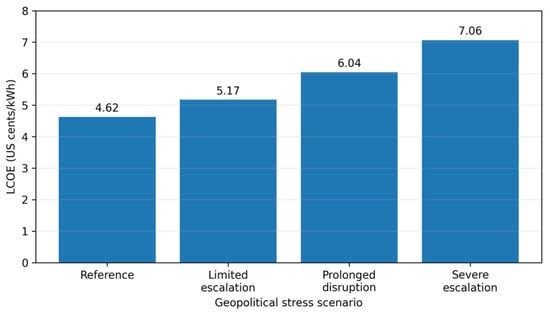
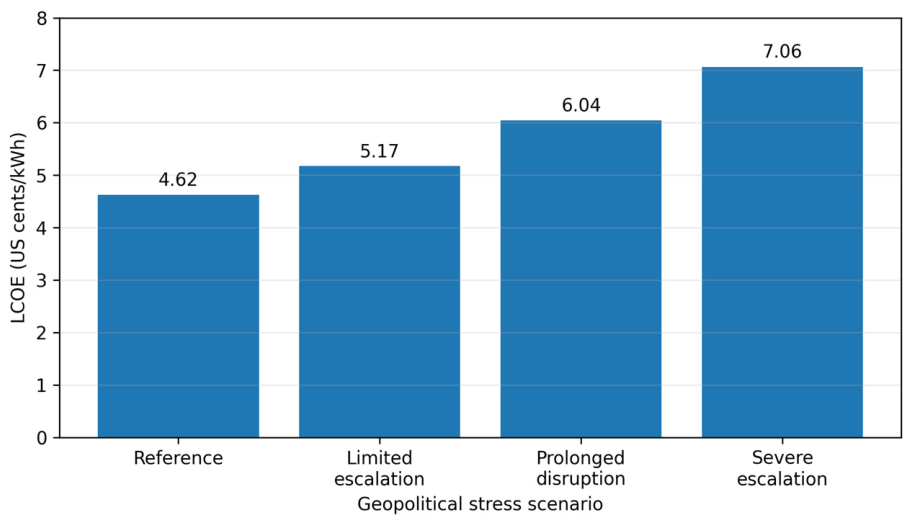
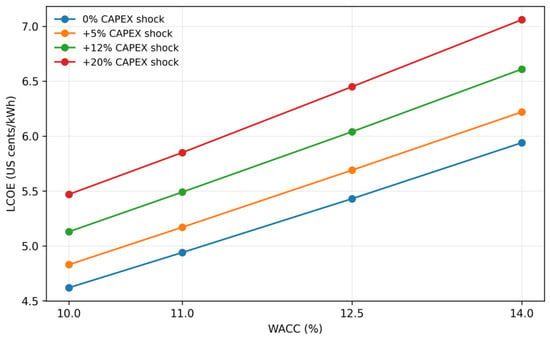
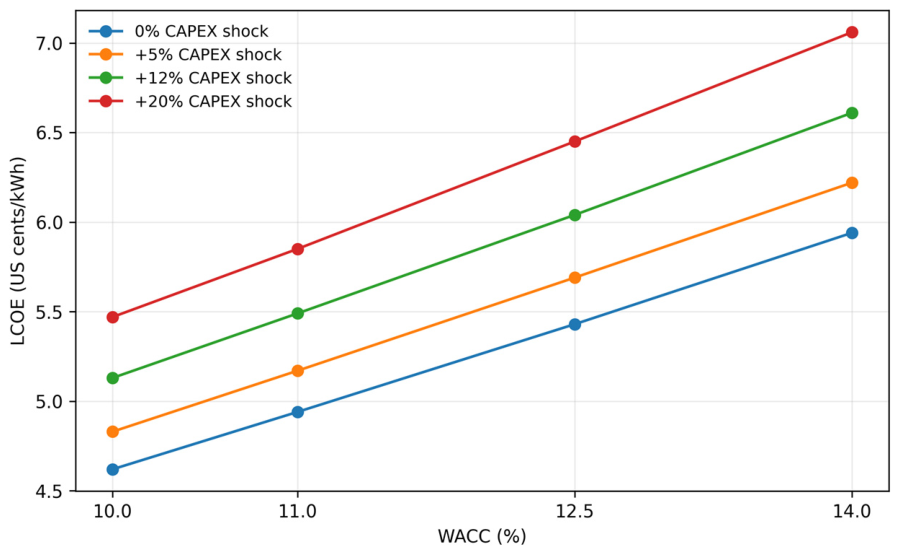
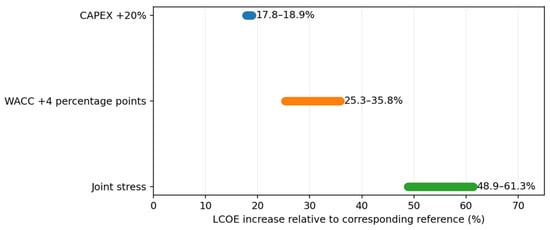
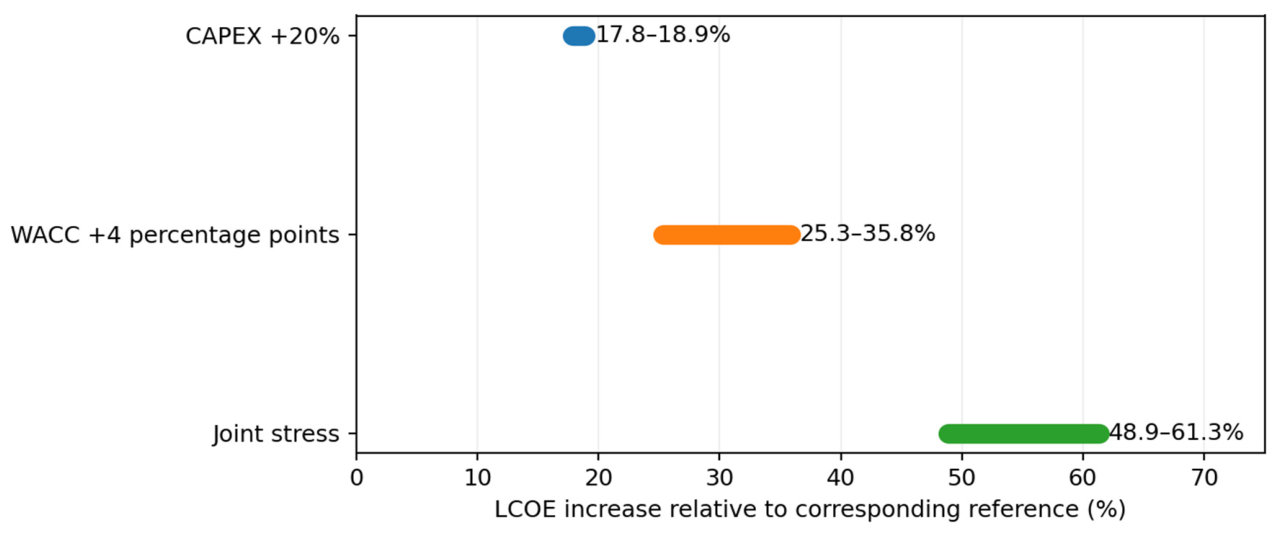

Disclaimer/Publisher’s Note: The statements, opinions and data contained in all publications are solely those of the individual author(s) and contributor(s) and not of MDPI and/or the editor(s). MDPI and/or the editor(s) disclaim responsibility for any injury to people or property resulting from any ideas, methods, instructions or products referred to in the content. |
© 2026 by the author. Licensee MDPI, Basel, Switzerland. This article is an open access article distributed under the terms and conditions of the Creative Commons Attribution (CC BY) license.