


Abstract
This paper presents a systematic, data-driven literature review of research on Physical Artificial Intelligence (AI) based on the top 100 Google Scholar publications related to the search terms “Physical Artificial Intelligence” and “Physical AI”. The rapid advancement of Physical AI, driven by the convergence of advanced sensor technologies and foundation world models, has resulted in a diverse and fragmented research landscape that lacks comprehensive quantitative overviews. To address this gap, we implement and apply an AI-assisted computational analysis pipeline to this domain. The collected publications are processed using a Large Language Model accessed via a Python-based Application Programming Interface (API), enabling a structured computational analysis of the literature to assist thematic categorization. Based on this approach, the publications are grouped into five data-driven thematic clusters reflecting primary research perspectives within the analyzed sample. Specifically, the identified clusters comprise “Sensor Infrastructure and Architectures”, “Core Learning and Modeling Methodologies”, “Sim-to-Real and Digital Twins”, “Applications”, and “Safety, Governance, and Ethics”. By synthesizing the literature in a structured manner, this work provides a consolidated overview of central research patterns, identifies key operational challenges, and highlights fragmentation across Physical AI research, establishing a solid foundation for future trustworthy autonomous systems.
1. Introduction
The concept of Physical Artificial Intelligence (AI) [1,2,3,4,5,6,7,8,9,10,11,12,13,14,15,16,17,18,19,20,21,22,23,24,25,26,27,28,29,30,31,32,33,34,35,36,37,38,39,40,41,42,43,44,45,46,47,48,49,50,51,52,53,54,55,56,57,58,59,60,61,62,63,64,65,66,67,68,69,70,71,72,73,74,75,76,77,78,79,80,81,82,83,84,85,86,87,88,89,90,91,92,93,94,95,96,97,98,99,100] has evolved from a nascent interdisciplinary interest into a central paradigm of contemporary research, marking a transition from digital information processing toward autonomous systems capable of acting within the physical world [1,12,31]. While early efforts were primarily focused on cybernetics and symbolic control, recent advances have been accelerated by the convergence of high-fidelity simulation, multimodal sensor fusion, and foundational world models [1,47,68]. The rapid maturation and strategic global relevance of this field are further underscored by its inclusion in Gartner’s Top 10 Strategic Technology Trends for 2026 [101]. This shift is critical as it addresses the limitations of disembodied intelligence. Physical AI systems must operate in dynamic and unforgiving environments where interaction is constrained by real-world physical laws, energy budgets, and safety requirements [38,47,93]. In these settings, the digital computation state and the physical kinematic state are inextricably linked, demanding robust synchronization between software and hardware to enable sophisticated physical agency [92,98].
At their core, Physical AI frameworks synthesize perception, causal reasoning, and physical actuation to ground digital computation in mechanical agency [16,18,61]. Rather than treating intelligence as an abstract mathematical process, these architectures require a synchronized interplay between material morphology, multi-sensor feedback, and real-time motor control under strict thermodynamic and kinematic limits [13,16,32]. Consequently, realizing physically intelligent systems necessitates a multi-disciplinary convergence spanning robotics, embedded computing, materials science, and biological architectures [2,15,95].
However, existing survey literature predominantly concentrates on narrow subdomains or relies on manual, qualitative categorizations, leaving a notable gap regarding a broad, quantitative synthesis of the overall research landscape. To address this, there is an acute need for a unified, data-backed survey that systematically maps the primary thematic clusters, quantifies their structural relationships, and provides an open, reproducible topology of the field.
To bridge this gap, this paper presents a data-driven scoping survey covering the 100 highest-ranked publications in Physical AI on Google Scholar, delivering a structured computational synthesis of the domain’s most visible discourse. We deploy a computational pipeline that analyzes the textual data of the chosen manuscripts via a Large Language Model (gemini-3.5-flash) integrated through a Python (version 3.12.6) based Application Programming Interface (API) to assist thematic evaluation and reduce manual categorization bias.
Through this method, the literature is organized into distinct thematic clusters: “Sensor Infrastructure and Architectures”, “Core Learning and Modeling Methodologies”, “Sim-to-Real and Digital Twins”, “Applications”, and “Safety, Governance, and Ethics”. We examine these categories along a logical continuum, illustrating how underlying hardware and architectural elements lay the ground for learning and simulation techniques, which subsequently empower real-world deployments and demand rigorous safety and governance mechanisms. In detail, we (i) examine their structural properties and interconnections, (ii) synthesize their primary scholarly contributions, and (iii) assess their strategic weight within the broader research environment.
The structure of the remainder of this manuscript is outlined as follows. Section 2 delineates the conceptual groundwork of Physical AI, while Section 3 details the underlying research methodology. Section 4 reviews the sensor infrastructure, followed by Section 5 on core learning methodologies and Section 6 on sim-to-real transfer and digital twins. Section 7 examines diverse applications, while Section 8 addresses safety, governance, and ethics. Finally, Section 9 concludes the paper.
2. Physical AI
Physical Artificial Intelligence represents a paradigm shift from purely digital computation to intelligent systems that perceive, reason, and act directly within the physical world [1,4]. Unlike traditional artificial intelligence, which operates primarily on disembodied data sets in virtual domains, Physical AI necessitates the strict coupling of cognitive algorithms with physical embodiment and real-world dynamics [61]. The scope of this field spans the continuous cycle of sensing environmental states, understanding spatial and physical laws, and executing autonomous actions through physical actuators [47]. By embedding intelligence directly into a material substrate, Physical AI enables agents to adapt to unpredictable, unstructured environments, moving beyond passive observation to active, meaningful intervention [2,99].
The architecture of Physical AI is founded upon several core building blocks designed to close the perception-action loop [18,61]. Embodiment serves as the fundamental medium, dictating how a system’s morphology influences its cognitive and operational capabilities [12]. Environmental perception relies heavily on multi-sensor fusion, integrating visual, tactile, auditory, and proprioceptive data to extract structured physical representations from raw sensory inputs [1,13,47]. This perceptual data feeds into reasoning modules, increasingly powered by world models, which allow agents to simulate physical dynamics, evaluate counterfactual scenarios, and predict the consequences of their actions prior to execution [13,99]. Finally, the action component translates these cognitive decisions into precise motor control, continuously adjusting to real-time physical feedback and thermodynamic constraints [16,61,99].
The emergence of Physical AI is the culmination of successive evolutionary epochs in artificial intelligence, tracing back to early cybernetics and its conception of feedback-driven regulation in both machines and living systems [102]. Early Symbolic AI relied on rigid, rule-based logic and expert systems, which lacked the flexibility to handle real-world uncertainty [1,61]. The subsequent rise in machine learning and deep learning, often termed Perceptional AI, enabled high-dimensional pattern recognition but remained largely disembodied [1,79]. Recently, the advent of large language and multimodal foundation models introduced advanced semantic reasoning and generative capabilities [1,46,61]. However, these generative models still lack intrinsic grounding in physical realities and constraints [1,13], a limitation famously captured by Moravec’s paradox, whereby sensorimotor skills trivial for humans remain computationally far harder for machines than abstract logical reasoning [103]. Physical AI bridges this gap, integrating the scalable reasoning of foundation models with the reactive, sensorimotor coupling of classical robotics to establish fully autonomous agents capable of operating under complex physical constraints [1,13,61].
While intimately related, Physical AI is operationally distinct from Traditional Robotics, Cyber-Physical Systems (CPS), and Embodied AI across latency, adaptivity, and control frequency [11,47,61,99]. Traditional robotics relies on deterministic trajectory tracking in calibrated, rigid environments [61], whereas CPS enforces hard real-time guarantees and static verification where adaptive learning is absent [11,99]. Embodied AI, in contrast, largely investigates cognitive grounding and policy learning within virtual simulations, where non-linear friction, wear, and sensor noise are abstracted away [61,99]. Physical AI unites these domains by coupling large foundation models (≥109 parameters) with real-world physical bodies under an asynchronous dual-rate control regime [38,47]. Landmark systems decouple slow deliberative reasoning (7–10 Hz) from high-frequency reactive motor control (120–200 Hz), while flow-matching architectures such as sustain 50 Hz continuous action generation [38,47]. This multi-tier separation is critical because the physical reality gap is unforgiving: a friction mismatch of just 4–5% between simulation and reality can raise task failure rates by roughly 30% [38,47]. Physical AI’s definitive boundary thus lies in the integration of large-scale reasoning, physical embodiment, and runtime safety assurance under the stochastic, contact-rich conditions that other fields either ignore or abstract away [11,38,47,61,99].
The pursuit of Physical AI is highly timely, catalyzed by a critical convergence of technological breakthroughs and pressing industrial demands. The recent maturation of edge computing architectures, high-fidelity differentiable physical simulators, and robust sim-to-real transfer techniques has drastically reduced the risk and cost of training embodied agents [28,47,99]. These advancements arrive as industries face escalating needs for resilient, autonomous systems capable of addressing labor shortages and operating in hazardous or unstructured environments, spanning from advanced manufacturing and logistics to healthcare [28,47]. Ultimately, unlocking Physical AI represents the essential next frontier in overcoming Moravec’s paradox, proving that combining digital reasoning with physical dexterity is the definitive step toward general-purpose, real-world autonomy [47,103].
Figure 1 illustrates Google Scholar publication growth from 2020 to 30 June 2026 for titles containing “Physical Artificial Intelligence” or “Physical AI”, queried via (allintitle: “Physical Artificial Intelligence” OR allintitle: “Physical AI”). Filtering for title-level occurrences restricts the selection to works where Physical AI is a central topic rather than a passing mention.
Figure 1.
Cumulative number of Google Scholar records with titles containing “Physical AI” or “Physical Artificial Intelligence”, from 2020 to 30 June 2026.
Between 2020 and 2024, cumulative records increased slowly, maintaining a stable volume. Output accelerated sharply through 2025 and early 2026, expanding from 24 at year-end 2024 to 100 in 2025 and 223 by 30 June 2026. This trajectory highlights the strong momentum in Physical AI and the need for a data-driven review.
Complementing this scholarly focus, Figure 2 depicts global Google Trends interest for Physical AI from January 2024 to June 2026. Search interest remained at a baseline level throughout 2024, only showing initial signs of activity in early 2025. Following this latent phase, interest began a steady upward trajectory in the second half of 2025, gaining significant momentum toward the end of the year. This growth accelerated sharply in 2026, leading to a consistent rise that culminated in a peak index value of 100 in June 2026. The data reflects a clear transition from negligible public awareness to a period of rapid and sustained growth in interest, highlighting the emerging relevance of Physical AI.
Figure 2.
Worldwide Google Trends interest (0–100) for “Physical AI”, from 1 January 2024 to 30 June 2026.
3. Research Methodology
In this section, we outline the computational, data-driven framework deployed to evaluate the body of literature on Physical AI. Diverging from purely qualitative review methodologies, our approach leverages an LLM-assisted pipeline applied directly to the Physical AI domain, supporting systematic categorization and providing transparent, reproducible data extraction.
To initiate the process, we collected the 100 highest-ranked Google Scholar publications [1,2,3,4,5,6,7,8,9,10,11,12,13,14,15,16,17,18,19,20,21,22,23,24,25,26,27,28,29,30,31,32,33,34,35,36,37,38,39,40,41,42,43,44,45,46,47,48,49,50,51,52,53,54,55,56,57,58,59,60,61,62,63,64,65,66,67,68,69,70,71,72,73,74,75,76,77,78,79,80,81,82,83,84,85,86,87,88,89,90,91,92,93,94,95,96,97,98,99,100] matching the queries “Physical Artificial Intelligence” or “Physical AI”, queried via (allintitle: “Physical Artificial Intelligence” OR allintitle: “Physical AI”), (data retrieval date: 8 July 2026, ordered by relevance). Google Scholar was chosen as the primary source as it (i) offers an open-access search interface, (ii) indexes complete texts alongside bibliographic metadata across diverse disciplines and publishing formats, and (iii) stands as one of the most comprehensive scholarly repositories, covering over 380 million records [104].
Additionally, Google Scholar employs an algorithm that ranks results based on combined parameters such as citation frequency, publishing venue, and textual alignment. This hierarchy serves as a suitable proxy for estimating a document’s academic visibility and thematic resonance. Consequently, the leading entries reflect studies of notable influence and recognition in the domain. The compiled corpus thus offers an organized cross-section of highly visible literature at the query date, establishing a solid foundation for our computational evaluation.
To guarantee sample integrity, candidate records were ingested into our assembled database, where we implemented a two-stage screening and deduplication procedure. First, initial duplicates with identical titles and abstracts were directly identified and pruned within our assembled database, while non-scholarly entries such as syllabi or slide decks were eliminated. Second, candidate entries were processed through an automated semantic screening step via our LLM pipeline. This step was essential because academic literature frequently contains iterations such as preprints alongside subsequent conference proceedings or journal articles, where authors alter titles and rewrite abstracts despite preserving an identical core methodology and main body of work. By evaluating textual representations across records, the model identified these hidden near-duplicate papers carrying divergent titles or modified abstracts, retaining the finalized archival publication in all instances exclusively.
The retrieved publications were preserved in their exact retrieved sequence without manual reordering or filtering. We treat this original rank position as a metric for relative visibility within our sample, where Paper [1] corresponds to the top-ranked item and Paper [100] to the lowest-ranked entry among the gathered studies. Preserving this exact sequence throughout the paper maintains operational transparency and consistency in our citations and comparative metrics. Specifically, the analyzed corpus comprises the bibliographic metadata, titles, and abstracts of these 100 publications. The analytical pipeline produces three primary outputs: (i) discrete thematic cluster assignments alongside continuous multi-dimensional relevance scores , (ii) 768-dimensional dense vector embeddings with corresponding pairwise cosine similarity metrics, and (iii) structured narrative syntheses of the five identified research streams.
In the subsequent phase, the assembled literature is systematically processed through Google’s ‘gemini-3.5-flash’ model, accessed via the Google GenAI Python SDK (‘google-genai’ package) on 10 July 2026, using Python (version 3.12.6). To enforce deterministic evaluation and reproducibility, the model’s hyperparameter configuration was set to a temperature of 0.0 with top-p = 1.0. For each publication, the model was provided with the title and abstract, ensuring uniform input availability across the corpus regardless of publisher access restrictions (the detailed prompt templates are provided in Appendix A). The LLM evaluates the textual substance of each manuscript to extract core conceptual patterns and thematic overlaps across the dataset. Formally, let the corpus be defined as
where each represents a publication and denotes the set of thematic groups.
The language model evaluates the alignment of a document across each thematic group, returning a raw relevance score as elicited by the prompt (see Appendix A.2). To obtain a formal probability distribution across all groups, these scores are normalized such that:
where
Using these probabilities, documents are assigned to their most probable group via
or alternatively retained as soft assignments reflecting uncertainty, while the raw scores serve as the standalone relevance metrics reported in Table 1 (detailed below). Prior to the classification stage, the five thematic categories were derived through a separate, preliminary prompt (see Appendix A.1) in which the LLM was provided with the titles and abstracts of the entire corpus and instructed to identify the five most frequent recurring conceptual patterns across the dataset directly, which were then used as the five categories throughout the subsequent classification stage. Only once this taxonomy was established were the individual manuscripts classified against it via the probabilistic assignment described above, again based on their title and abstract. This data-driven derivation ensures that the resulting taxonomy emerges directly from the textual patterns of the data, reducing the subjective bias typically associated with purely manual or rigid predefined categorization schemes.
To quantitatively evaluate the conceptual connections between individual studies, we compute pairwise semantic similarity metrics across the entire corpus. For every publication, its title and abstract are converted into dense vector embeddings using Google’s ‘text-embedding-004’ model, generating 768-dimensional dense vector representations. Let denote the vector embedding of document derived from its textual content. The degree of similarity between two individual documents and is subsequently calculated via the cosine similarity of their corresponding embedding vectors. These pairwise metrics offer a continuous evaluation of semantic proximity across the literature, enabling us to model the structural topology of the dataset.
While primary cluster affiliation is established through the probabilistic assignment , the similarity score is leveraged to assess both intra- and inter-cluster relationships, forming the foundation for the structural network visualization in Figure 3. This dual framework explicitly decouples probabilistic classification from similarity-driven structural mapping, thereby enhancing methodological transparency and reproducibility. Although both analytical stages share identical textual inputs, they fulfill distinct analytical functions: probabilistic assignment determines thematic categorization, whereas similarity scoring delineates structural linkages between individual manuscripts.
Figure 3.
Categorization of the top 100 Google Scholar papers on Physical AI, with inner numbers indexing bibliography entries.
In the final phase, we extend this data-driven workflow to synthesize structured narrative overviews for each recognized cluster. To accomplish this, the LLM is prompted to summarize the foundational concepts and primary research thrusts of each group using solely the literature mapped to that respective cluster. This systematic procedure supports a uniform and scalable evaluation, creating the analytical framework for the thematic synthesis in the subsequent sections.
To assess the reliability of the automated pipeline, the classification procedure was executed across three independent runs. Furthermore, to rule out algorithmic artifacts and evaluate classification validity, the authors independently audited the classifications against the publications, confirming high agreement with domain-expert judgment.
Figure 3 illustrates the practical output generated by the aforementioned algorithm: individual bubbles denote specific publications among the top 100 Google Scholar records, with the embedded digits indicating their respective entry in the bibliography. Within our analytical framework, each research stream is designated according to the predominant theme within that specific cluster. More precisely, our automated review pipeline (i) categorizes the literature into the streams “Sensor Infrastructure and Architectures”, “Core Learning and Modeling Methodologies”, “Sim-to-Real and Digital Twins”, “Applications”, and “Safety, Governance, and Ethics”, and (ii) maps each manuscript to a stream based on its maximum estimated probability score .
The “Applications” stream represents the largest cluster with 28 publications, followed by “Core Learning and Modeling Methodologies” (24), “Sensor Infrastructure and Architectures” alongside “Safety, Governance, and Ethics” (19 each), and “Sim-to-Real and Digital Twins” (10). To facilitate a more detailed analysis of these empirical results, Figure 3 was generated in accordance with the following core design principles, each reflecting a specific analytical parameter:
- The background sector shading denotes cluster membership, thereby delineating thematic groupings and facilitating clear cross-cluster comparisons.
- Bubble size operationalizes each manuscript’s strength of association with its respective cluster, as quantified by our cluster-specific scoring mechanism, where larger bubbles indicate a stronger conceptual centrality.
- Radial distance from the center represents the publication’s conceptual alignment with the core paradigm of Physical AI, with closer proximity to the center signifying a higher degree of thematic relevance.
The subsequent paragraphs outline the defining features and core attributes of the five identified research streams. Special emphasis is placed on the distinct characteristics of each domain to provide a comprehensive overview and initial analytical insights.
The “Sensor Infrastructure and Architectures” cluster addresses the material foundations of Physical AI, analyzing how intelligent agents perceive and interact with their environments [10,19,43]. Research emphasizes the transition from passive sensing to active, embodied intelligence where proprioceptive interfaces enable semantic understanding [19,43]. Tight connections exist between hardware-centric frameworks, such as the Artificial Tripartite Intelligence proposed by Choi et al. [53], and edge orchestration strategies by Kwon and Kim [42] that manage real-time perception-action loops under strict latency constraints.
The “Core Learning and Modeling Methodologies” stream investigates the cognitive foundations of Physical AI, grounding intelligent algorithms in physical laws and environmental constraints [1,13,38]. Studies focus on how foundation models serve as world models to facilitate counterfactual reasoning and imagination-based planning [5,16,35,50]. A strong synthesis is observed between physics-informed learning and standardized benchmarking efforts by Xiang et al. [13], Gaba et al. [16], and Xiong et al. [100], which collectively strive to unify perception, modeling, and interaction stacks [59].
The “Sim-to-Real and Digital Twins” stream explores methodologies to bridge the reality gap, where digital twins function as adaptive components in closed-loop control rather than passive models [4,67,94]. Research emphasizes high-fidelity simulation and physics-informed generative models to produce physically plausible synthetic data [8,14,17,94]. Significant interdependencies are identified between hybrid digital twin architectures [4,67] and scalable embodiment techniques, including 3D Gaussian Splatting [63] and egocentric-to-robotic data pipelines [58], which jointly mitigate data scarcity.
The “Applications” stream examines the deployment of Physical AI across mission-critical domains such as manufacturing, healthcare, and logistics [21,30,61]. The field is shifting toward adaptive workflows that integrate hybrid modeling and intelligent algorithms [30,48,77]. Illustrative connections emerge between collaborative robotics architectures [21,30] and surgical assistance frameworks, where research by Oh et al. [37] and Ezhilarasi et al. [82] highlights the integration of multimodal sensor fusion to ensure precision and human-centric safety.
The “Safety, Governance, and Ethics” stream analyzes the normative and risk-related implications of deploying autonomous physical agents [47,80,88]. Research prioritizes lifecycle-aligned accountability and runtime assurance over static deployment-time verification [64,69]. Robust interconnections are evident between formal verification studies utilizing Lyapunov-based stability and reachability analysis [52,76] and governance frameworks that demand interoperability and verifiable agent identities [46,69,80] to safeguard human values [70,88].
Apart from discrete cluster assignments, our methodological framework assesses each manuscript across all five thematic dimensions by assigning standalone relevance scores (scaled from 0 to 100). This multidimensional characterization facilitates a feature-level comparison, treating each individual research stream as a quantifiable dimension of the publication. Table 1 provides the descriptive statistics for these metrics across the complete corpus of 100 manuscripts.
Table 1.
Summary statistics for relevance scores across the five research streams.
The data reveals that “Core Learning and Modeling Methodologies” (μ = 84.78) and “Applications” (μ = 83.13) emerge as the most dominant features, reflecting a field strongly centered on algorithmic advancement and practical implementation. In contrast, “Sim-to-Real and Digital Twins” exhibits the highest variance (σ = 14.68), indicating a research landscape where this stream ranges from peripheral integration to core focus (Max = 100.0). Overall, the narrow standard deviations across all streams (11.29 ≤ σ ≤ 14.68) indicate relatively homogeneous LLM-assigned relevance scores within each research stream, rather than reflecting the actual distribution of publications across categories, which varies considerably. Even the domains with lower mean scores, such as “Safety, Governance, and Ethics” (μ = 78.78), demonstrate a robust baseline relevance, confirming that these topics have transitioned from niche considerations to integral, standardized components of the contemporary Physical AI architectural discourse.
4. Sensor Infrastructure and Architectures
4.1. Morphological Sensing and Material Embodiment
The integration of artificial intelligence into physical systems has catalyzed the emergence of Physical AI, a paradigm shift where intelligent agents ranging from autonomous vehicles and industrial robots to smart wearables actively perceive, learn from, and manipulate the physical environment [10,19,55,95]. Unlike conventional artificial intelligence, which primarily operates within centralized digital infrastructures, Physical AI necessitates a closed-loop perception-thinking-action architecture [12,19,49]. This evolution requires robust, heterogeneous infrastructure frameworks that bridge the gap between digital cognition and real-world physical dynamics [42,93]. A cornerstone of this field is the development of advanced sensing and environmental modeling. Rather than treating sensors as passive data collection tools, recent research frames them as active components of an embodied intelligence system [19,45]. For instance, proprioceptive wearable interfaces leverage carbon-elastomer composite sensors to enable semantic understanding of gestures and objects, facilitating intuitive human–machine interaction [43]. Furthermore, the paradigm of extended Physical AI seeks to bridge disciplinary boundaries, such as robotics, material science, and human–computer interaction, to explore how everyday objects and materials can become inherently intelligent through shape-changing or sensory-adaptive interfaces [60].
4.2. Multimodal Perception and Communication Networks
Wireless networks are being reimagined through the lens of Integrated Sensing and Communication, moving toward environment-aware architectures. These frameworks utilize radio signals as rich data sources, creating spatiotemporal models of the environment to handle complex dynamics such as mobility and occlusion [45,96]. High-precision geometric accuracy is supported by terrestrial laser scanner systems, which establish the spatial foundation for agentic navigation [83]. Furthermore, multi-agent neurosymbolic frameworks are employed to dynamically optimize RF transceivers, ensuring that physical communication systems adapt to the operational requirements of 6G environments [72]. Innovations such as the Artificial Tripartite Intelligence framework further illustrate this sensor-first necessity, partitioning system logic into hierarchical layers, including reflexive safety, sensor calibration, and high-level reasoning, to satisfy strict operational constraints [53].
4.3. Edge Orchestration and System Architecture
To address the inherent resource and latency constraints of Physical AI, orchestration and infrastructure design have become critical research focal points [11,92]. Heterogeneous edge-to-cloud blueprints are essential, combining lightweight edge orchestration, such as Kubernetes and K3s, with powerful cloud backends to optimize real-time inference and training [93]. Such distributed computing paradigms are vital for Physical AI agents, which must manage complex perception–reasoning–action loops under stringent power and bandwidth limitations [42,92]. In this domain, model recovery techniques on FPGAs are proving essential for deploying physics-informed neural architectures directly at the edge [41]. Furthermore, specialized design patterns such as Physical Retrieval-Augmented Generation allow Physical AI agents to link real-time physical context with domain-specific knowledge bases, thereby enhancing operational decision-making [10].
4.4. Standardization and Ecosystem Integration
Standardization and systematic research methodologies are emerging to unify these fragmented efforts. The concept of Cyber-Physical AI provides a novel three-dimensional classification schema using Constraint, Purpose, and Approach to harmonize artificial intelligence and Cyber-Physical Systems research, specifically targeting reliability and resource efficiency [11]. Complementing these developments, research into wave-based neuromorphic architectures [91] and industrial IoT connectivity [55] suggests new epistemic dimensions for physical perception. Ultimately, the research landscape points toward a holistic, timing-aware ecosystem where multi-modal data streams and distributed intelligence converge to enable reliable, goal-oriented autonomous systems [49,96]. This hardware-level readiness forms the essential foundation for the sophisticated learning and modeling methodologies discussed in the following section.
5. Core Learning and Modeling Methodologies
5.1. Foundations of World Models and Generative AI
Physical Artificial Intelligence marks a foundational shift in intelligent system design, moving beyond purely digital information processing toward the integration of artificial intelligence with the physical world [1,16,32]. This paradigm unifies sensory perception, causal reasoning, and embodied interaction by grounding intelligent algorithms in physical laws and environmental constraints [1,13,38]. Unlike classical automation, which often operates in closed or predefined settings, Physical AI enables autonomous agents such as humanoid robots and autonomous vehicles to navigate open-ended, non-stationary environments [1,16,38]. A central theme in this research cluster is the role of foundation models and world models in providing a substrate for physical understanding [16,35,50]. World foundation models function as digital twins of physical environments, allowing agents to predict future states, evaluate policies through imagination-based planning, and generate physically plausible scenarios [5,16,50]. These models enable agents to transcend reactive control by performing counterfactual reasoning and predicting the consequences of actions, thereby significantly enhancing data efficiency and facilitating transfer to novel settings [5,16,35]. Generative Physical AI approaches, including robot foundation models, vision-language-action models, and world-action models, complement each other by providing motion priors, multimodal control, and physics-compliant simulation data [16,27,54].
5.2. Physics-Informed Learning and Active Inference
Physics-informed learning and active inference are critical methodologies for bridging the gap between perception and action [16,18,44]. Physics-informed approaches incorporate fundamental principles directly into neural network architectures, ensuring that models adhere to laws such as Newtonian dynamics, which aids in stable generalization and interpretable performance [7,13,16]. Similarly, active inference, grounded in the Free Energy Principle, provides a principled framework for embodied agents to minimize prediction error while interacting with the world [18,44]. By continuously updating policies through Bayesian inference modeled as a test-time scaling mechanism, agents can adapt to non-stationary environments and generalize to unforeseen scenarios [44].
5.3. Embodiment and Evaluation Frameworks
The field emphasizes the importance of embodiment and decentralized control, where the physical body’s morphology and interaction dynamics contribute directly to intelligent behavior [3,32,79]. Research into mobile service robotics highlights that perception, planning, and control are increasingly unified within integrated stacks that fuse multimodal inputs [59]. Evaluation frameworks, such as PhyCritic [100], and various benchmarks for physical reasoning [1,7,13,81], are essential for measuring these systems’ physical grounding and ensuring their safety and reliability. Ultimately, the development of robust Physical AI necessitates a multi-disciplinary approach, combining advanced architectural innovations such as flow matching and graph neural networks [13,38] with standardized evaluation protocols and data-efficient training strategies to achieve genuinely generalizable and autonomous physical agents [13,16,29,97]. These sophisticated cognitive models and learning methodologies establish the functional requirements for deployment, which are intrinsically tied to the high-fidelity simulation and sim-to-real transfer capabilities detailed in the subsequent section.
6. Sim-to-Real and Digital Twins
6.1. Bridging the Reality Gap
The integration of high-fidelity physical simulation and digital twins represents a transformative paradigm for Physical AI, enabling the reliable deployment of autonomous agents in complex, unstructured real-world environments. This field focuses on bridging the reality gap, defined as the performance discrepancy between simulated environments and real-world execution, by combining data-driven methodologies with physical constraints [57,90,94]. Physical AI agents, which must perceive, reason, and act under physical laws, increasingly rely on digital twins not merely as passive mirrors of physical assets, but as active, adaptive components within closed-loop control and simulation architectures [4,67,94].
6.2. Simulation Paradigms and Domain Randomization
Significant recurring themes in this research landscape include high-fidelity simulation, domain randomization, and the development of world models [14,94]. High-fidelity simulators, such as those integrated within the NVIDIA Omniverse platform, provide the essential foundation for creating visually realistic and physically plausible synthetic data [17]. By utilizing physics-informed machine learning, researchers can inject physical rules into training processes, allowing agents to learn underlying physical constraints, which enhances both data efficiency and model interpretability [17]. Furthermore, domain randomization, a technique of randomizing simulation parameters during training, is utilized to improve policy robustness and facilitate seamless sim-to-real transfer [14,90].
6.3. Hybrid Digital Twin Architectures
Recent methodologies emphasize the creation of hybrid digital twin architectures that move beyond one-directional training pipelines [4,94]. Modern frameworks, such as the proposed holonic digital twin networks, support active reasoning, coordination, and belief exchange among agents, addressing the challenge of long-horizon planning under deep physical uncertainty [67]. In these systems, digital twins function as adaptive bridges that continuously perform system identification and leverage residual learning loops to recalibrate model parameters based on real-world deployment data [4,94]. This iterative process allows the digital twin to evolve alongside the physical asset, maintaining operational alignment and enabling reliable decision-making [4,67,94].
6.4. Synthetic Data and Scalable Embodiment
The role of synthetic data, particularly from world foundation models, is pivotal for scaling embodied intelligence. By leveraging generative foundation models, researchers can produce diverse, physically grounded synthetic scenarios, such as those generated by the Cosmos-Predict2.5 framework, to train and validate agents in scenarios rare or difficult to capture in real-world logs [8,94]. Moreover, frameworks like Splat2Real demonstrate the use of 3D Gaussian Splatting to scale novel-view synthesis, providing the geometric supervision necessary for robust monocular perception in embodied agents [63]. Other advances, such as the Egocentric2Embodiment pipeline, enable the transformation of large-scale human egocentric videos into supervision for robotic agents, effectively mitigating data scarcity and addressing the embodiment mismatch between human-centric data and robotic control [58]. Collectively, these methodologies underscore the maturation of Physical AI as a field that increasingly demands systemic integration of sensing, reasoning, and adaptive control, supported by robust, scalable, and physically aware simulation infrastructures [4,67,94]. These capabilities create the necessary conditions for implementing advanced Physical AI in diverse industrial and service applications, which are explored in the following chapter.
7. Applications
7.1. Industrial Automation and Manufacturing
Physical AI is transforming cyber-physical systems in manufacturing by replacing or augmenting traditional control loops with intelligent, adaptive algorithms [31]. Hybrid modeling, which integrates physical principles such as Modelica with neural network surrogates, allows for predictive maintenance and diagnostics even under data-scarce conditions [30,56,77]. For example, zero-shot learning frameworks enable the severity estimation of faults in machinery, such as gear systems, by utilizing randomized physical modeling to generate training data [77]. Furthermore, semantic ontologies and manufacturing knowledge graphs facilitate global state updates, allowing diverse production elements to collaborate efficiently [21]. The adoption of collaborative robotic architectures and digital twins, such as in the Circular Embodied Intelligence Manufacturing architecture, facilitates the fusion of heterogeneous data across the Internet of Manufacturing Things, significantly enhancing operational efficiency and autonomy [21,30,61].
7.2. Healthcare Robotics
In clinical settings, Physical AI enhances the autonomy and safety of robotic systems. In surgical robotics, learned policies sit between human intent and robotic execution, processing multimodal inputs such as video and kinematics to assist in complex procedures [37,61]. Beyond surgery, Physical AI platforms, such as the MediMomo interface, are designed to improve content accessibility and engagement for specific patient groups, such as children, by combining physical input or output modalities with conversational intelligence [78]. In rehabilitation and assistive care, robots, such as gait trainers and personal assistants, leverage Physical AI to interpret human behavioral cues, including muscle engagement and fatigue, for personalized, real-time therapy [61,82]. Distributed architectures further ensure patient privacy by performing on-device inference for medical advisory tasks, as demonstrated by the Homeyx framework for elderly home environments [82]. Furthermore, large-scale initiatives are developing unified, federated learning infrastructures for robotic oncology trials, aiming to standardize surgical procedures across clinical sites while maintaining strict patient privacy compliance [26,33].
7.3. Autonomous Logistics and Smart Infrastructure
Physical AI is critical for agents operating in unstructured environments, such as terminals and warehouses [61]. Aerial robots, such as FireDrone, utilize advanced material design, including thermal insulation, to perform autonomous sensing in extreme conditions like fire disasters, where conventional rigid robots would fail [36]. In residential infrastructure, frameworks such as PeaceComplex demonstrate the integration of multi-agent large language models with physical digital twins. This allows systems to manage societal externalities, such as environmental noise and crowd flow, by grounding interventions in both physical constraints and social norms [86]. Furthermore, these systems integrate high-frequency sensor data with real-time planning and reasoning, allowing for adaptive navigation and collaborative task execution across heterogeneous fleets [61,86].
7.4. Emerging Domains: Scientific Discovery and Maintenance
Niche applications are rapidly emerging, particularly in scientific research. The Agentic Lab framework exemplifies this, utilizing autonomous agents to coordinate long-term, multi-step experimental workflows in cell and organoid research, thereby significantly improving data reproducibility and reducing manual laboratory labor [75]. Additionally, Physical AI extends to optical sensor maintenance, such as the use of surface acoustic waves to actively clean lenses in autonomous vehicles, ensuring reliable sensor performance in adverse conditions [20].
While the qualitative research streams highlight the thematic diversity of the field, the technical implementation of these systems is characterized by a high degree of heterogeneity in hardware-software integration. Table 2 provides a comprehensive synthesis of representative Physical AI implementations across these core domains, detailing the specific model architectures and the corresponding physical hardware utilized to bridge the gap between digital reasoning and real-world actuation.
Table 2.
Representative Physical AI implementations across industrial and service domains.
7.5. Tangible Benefits and Practical Implementation
The practical implementation of Physical AI relies on methodologies such as Physics-Informed Machine Learning, Sim-to-Real transfer, and the development of Large Language Objects [2,25,65,77]. These approaches yield critical operational benefits. Primarily, they provide enhanced robustness and reliability by grounding learning models in physical laws; hybrid frameworks combine physics-informed machine learning with traditional control to ensure that intelligent systems behave predictably and safely within defined physical envelopes. This minimizes hazardous extrapolations and ensures safer operation in sensitive environments like operating rooms [37,56,61]. Furthermore, these systems drive operational efficiency, as autonomous agents minimize human intervention in high-risk or labor-intensive tasks by generalizing across tasks and adapting to real-world perturbations in real time [24,89]. Finally, through continuous experiential learning and embodiment, systems achieve adaptive intelligence, becoming increasingly capable of performing multi-functional tasks in dynamic, mission-critical environments. Such systems can adapt to environmental changes, such as wear, tear, or fluctuating dynamics, that would otherwise lead to system failure in conventional architectures [36,61,77]. Collectively, these publications highlight Physical AI as a pivotal architectural paradigm for the next generation of trustworthy, adaptive, and highly autonomous robotic systems [2,61,75,86]. While these applications demonstrate the immense potential of the field, they also highlight critical challenges regarding long-term reliability and standardization that must be addressed to facilitate widespread integration, which will be synthesized in the following chapter.
8. Safety, Governance, and Ethics
8.1. Safety: Reliability, Verification, and Risk Mitigation
The research landscape for Physical AI, defined as the integration of embodied intelligence, algorithmic reasoning, and real-world physical actuation, has rapidly matured, necessitating a rigorous re-evaluation of safety, governance, and ethical frameworks [47,80,99]. Unlike disembodied digital artificial intelligence, Physical AI operates within complex, stochastic physical environments where cognition is tightly coupled with sensorimotor interaction and thermodynamic constraints [34,99]. This convergence of foundation models, high-fidelity simulation, and robotics is shifting Physical AI from pilot-stage prototypes to safety-critical industrial, medical, and autonomous applications [47,84,88]. Safety in this domain extends beyond traditional software assurance, requiring robust mechanisms to handle the inherent unpredictability of learned behaviors [76,88]. A primary technical challenge is the runtime authorization gap, where policies may exhibit gradual failure spirals before catastrophic physical consequences, yet lack mechanisms for intervention [64]. To mitigate these risks, research advocates for extrinsic safeguarding, utilizing independent runtime assurance architectures, such as Simplex or safety cage designs, to bound model-mediated control [76,88]. These systems treat confidence thresholds as explicit control boundaries, allowing for forensic-ready logs and fallback paths that preserve determinism even when the primary model enters an ambiguous or failing state [64,88]. Furthermore, formal verification techniques, such as reachability analysis and Lyapunov-based stability proofs, are increasingly essential to establish provable safety envelopes for robots operating in open-world environments [52,76]. Continuous system health monitoring, incorporating drift detection and probabilistic diagnostics, is similarly vital to ensuring the ongoing operational fitness of safety-critical systems [73].
8.2. Governance and Standardization
The deployment of Physical AI necessitates a transition from static deployment-time verification, which is insufficient in dynamic, context-dependent environments, to lifecycle-aligned accountability [69]. Installation-time integrity, such as verifying cryptographic signatures, does not guarantee semantic correctness, as contextual interactions and runtime dynamics can induce unintended behaviors [69]. The Lifecycle Integrity and Accountability Coupling framework has been proposed to bridge this gap, ensuring evidentiary continuity across creation, distribution, installation, execution, and governance phases [69]. Parallel to these technical measures, the field is moving toward an Internet of Physical AI Agents, where interoperability, secure agent-to-agent communication, and verifiable agent identities are treated as first-class architectural requirements [46]. The standardization of these elements, alongside adherence to frameworks such as ISO 21448 or UL 4600, is critical to preventing fragmented, insecure, and proprietary silos [46,76]. Decentralized governance models, such as DAO-enabled architectures, are also being explored to coordinate multi-agent fleets and physical infrastructure, providing transparent, community-owned, and auditable governance substrates for distributed Physical AI [51].
8.3. Ethics: Societal Impact and Interaction
The ethical integration of Physical AI requires addressing the complex societal implications of autonomous systems in shared or public spaces [76,88]. Trust calibration, defined as the ability of users to develop appropriate reliance on AI features, is central to human–robot interaction, particularly as humans often hold feature-specific expectations that evolve with experience [71]. Because Physical AI manifests physical presence, it challenges traditional notions of evidence and perception, with risks including social privacy violations, data bias, and the potential for machines to exert undue influence on human decision-making or well-being [70,80,88]. Ensuring accountability when Physical AI systems cause harm or exhibit unintended biased behavior is an urgent ethical and legal priority [76,88]. This necessitates explainable physical intelligence that provides causal transparency, as well as socio-cultural inclusion in design to ensure that AI embodiments respect the diversity of human values and norms [88]. The shift toward machines that mimic not only cognition but also physical agency poses transformative risks to labor markets and human autonomy, requiring careful, interdisciplinary alignment of robot behavior with human safety and ethical principles [70,80].
8.4. Future Outlook: A Roadmap to Trustworthy Physical AI
There is a strong consensus that the next phase of Physical AI evolution depends on transitioning from ad hoc, task-specific engineering to the deployment of resilient, scalable, and trustworthy frameworks [47]. Achieving this requires coordinated progress across the entire Physical AI stack, including the development of superior sensors, high-fidelity world models, and standardized cross-domain benchmarking initiatives [47,88,98]. The field must move toward a Safety-Critical Assurance 2.0 approach, which combines formal logic and probabilistic monitoring to enable certifiable autonomy [88]. Future success will be defined by translational literacy, or the ability to convert research outcomes into validated, responsible, and standardized deployment models that can withstand real-world perturbations [88]. Ultimately, the field seeks to reach a stage of planetary intelligence, where multi-agent fleets are coordinated by ethical, forensic-ready, and transparent architectures, ensuring that the integration of machine agency into the physical world promotes collective welfare while strictly adhering to safety and environmental sustainability [51,88].
9. Conclusions
This paper provides a data-driven, computational scoping survey of the 100 highest-ranked publications in Physical Artificial Intelligence on Google Scholar, delineating five primary research clusters: Sensor Infrastructure and Architectures, Core Learning and Modeling Methodologies, Sim-to-Real and Digital Twins, Applications, and Safety, Governance, and Ethics. Our analysis reveals that Physical AI is rapidly evolving from isolated prototypes into an integrative paradigm that grounds cognitive intelligence in the constraints of the physical world. This transition is driven by the convergence of multimodal sensing, physics-informed learning, and high-fidelity simulation, enabling autonomous agents to operate within complex, non-stationary environments.
A key insight from this study is that the main technical challenge has evolved from single-agent cognitive reasoning to the robust orchestration of embodied intelligence. While foundation models provide advanced semantic capabilities, their deployment remains hindered by the reality gap, a lack of standardized interoperability protocols, and challenges in ensuring long-term reliability under evolving physical dynamics. Furthermore, existing evaluation frameworks are currently insufficient for measuring long-horizon stability and the reproducibility of physical interactions. These technical challenges indicate that Physical AI is at a critical transition point, moving from theoretical exploration toward the necessity of industrial-grade implementation.
The observations of this study highlight the value of Physical AI as an advancement beyond conventional Perceptional AI. By coupling reasoning, planning, and memory with physical actuation, Physical AI systems extend machine intelligence from passive response generation to goal-directed execution. This capability is paramount in domains characterized by high workflow complexity, including advanced manufacturing, healthcare, and logistics. The existing body of work highlights that the core value of Physical AI resides in its evolving ability to serve as a scalable foundation for automated decision support and collective intelligence within intricate socio-technical systems.
The continued growth of Physical AI relies on parallel advancements across standardization, safety verification, and ethical governance framework design. Consequently, upcoming research agendas should focus on creating coordination-focused benchmarking protocols, formal verification strategies tailored for embodied execution, unified, interoperable communication standards, and the deeper integration of advanced geometric optimization and multi-level attention fusion techniques into physical perception pipelines.
Several methodological limitations of this study should be noted. First, the sample is restricted to the top 100 Google Scholar results based on title-level queries, which privileges highly visible or cited literature and may overlook relevant works using alternative phrasing. Second, the automated categorization relies on titles and abstracts rather than full texts, which was selected to ensure uniform cross-publisher access but constrains granular technical analysis. Finally, while the qualitative audit confirmed high expert agreement, this work prioritizes domain mapping over algorithmic benchmarking. Future work should therefore quantitatively substantiate the pipeline through formal ablation studies against classical clustering baselines, statistical inter-rater metrics (e.g., Cohen’s Kappa), and empirical measurements of screening efficiency gains. Accordingly, this review serves as a computational scoping survey of prominent literature rather than an exhaustive mapping of the entire field.
To build upon this work, subsequent research agendas will expand this automated pipeline into an exhaustive multi-database review across repositories such as Scopus, Web of Science, and IEEE Xplore, where standard PRISMA reporting protocols and formal flow diagrams will be systematically implemented.
As Physical AI agents become increasingly integrated into public spheres, the need for lifecycle-aligned accountability and transparent governance substrates becomes essential. By addressing these cross-disciplinary requirements, the field will transition from disembodied generative AI applications [105] and purely digital agent architectures [106] toward an era of certifiable physical autonomy, ensuring that the integration of machine agency into the real world promotes collective welfare while strictly adhering to safety and sustainability standards.
Author Contributions
Conceptualization, J.S.; methodology, J.S.; software, F.M.; validation, F.M. and J.S.; formal analysis, F.M. and J.S.; investigation, F.M.; resources, F.M.; data curation, F.M.; writing—original draft preparation, F.M. and J.S.; writing—review and editing, F.M. and J.S.; visualization, J.S.; supervision, J.S.; project administration, J.S. All authors have read and agreed to the published version of the manuscript.
Funding
This research received no external funding.
Data Availability Statement
The data presented in this study, including the curated bibliographic corpus, extraction prompts, raw and normalized relevance scores, and cluster mappings, are available on request from the corresponding author.
Acknowledgments
We are further grateful to the two anonymous reviewers for their helpful comments and suggestions, which contributed to improving this paper.
Conflicts of Interest
The authors declare no conflicts of interest.
Abbreviations
The following abbreviations are used in this manuscript:
| AI | Artificial Intelligence |
| API | Application Programming Interface |
| CPS | Cyber-Physical System |
| DAO | Decentralized Autonomous Organization |
| FedAvg | Federated Averaging |
| FFT | Fast Fourier Transform |
| FPGA | Field-Programmable Gate Array |
| IoT | Internet of Things |
| LLM | Large Language Model |
| MLIPs | Machine Learning Interatomic Potentials |
| PADA | Physics-Aware Data Augmentation |
| RF | Radio Frequency |
| RL | Reinforcement Learning |
| SRT-H | Surgical Robot Transformer |
| VLA | Vision-Language-Action |
Appendix A
Appendix A.1
You are an expert in Physical AI research.
You will be given the titles and abstracts of 100 publications related to Physical AI.
Identify the five most frequent recurring thematic patterns across this entire corpus.
Each theme should represent a coherent research direction that multiple publications share.
Return ONLY valid JSON in the following format:
{{
“Theme_1”: “<short descriptive name>”,
“Theme_2”: “<short descriptive name>”,
“Theme_3”: “<short descriptive name>”,
“Theme_4”: “<short descriptive name>”,
“Theme_5”: “<short descriptive name>”
}}
Publications:
{pubs}
Appendix A.2
You are an expert in Physical AI research.
Evaluate how strongly the following paper fits into EACH of the following chapters.
Use a score from 0 to 100 for each chapter:
0 = not related at all
100 = strongly central to this chapter
Chapters:
1. Sensor Infrastructure and Architectures
2. Core Learning and Modeling Methodologies
3. Sim-to-Real and Digital Twins
4. Applications
5. Safety, Governance, and Ethics
Return ONLY valid JSON in the following format:
{{
“Sensor_Infrastructure_and_Architectures”: <0-100>,
“Core_Learning_and_Modeling_Methodologies”: <0-100>,
“Sim_to_Real_and_Digital_Twins”: <0-100>,
“Applications”: <0-100>,
“Safety_Governance_and_Ethics”: <0-100>
}}
Paper:
Title: {title}
Abstract: {abstract}
References
- Wu, E.-H.; Liu, Y.-Q.; Xu, T.-C.; Ren, L.-X.; Qin, Y.-M.; Wei, M.-Y.; He, X.-W.; Yuan, D.-Y.; Hou, W.-C.; Ma, Z.-W.; et al. Physical AI: Evolution, Progress, Challenges, and Prospects. J. Comput. Sci. Technol. 2026, 41, 271–288. [Google Scholar] [CrossRef] [Scilit]
- Dewi, R.S.; Kawakib, A.N.; Laili, M.N.; Fauziah, A.L.; Sabrina, S.R.; Hana, R.L. A Systematic Review of Physical Artificial Intelligence (Physical AI): Concepts, Applications, Challenges, and Future Directions. J. Artif. Intell. Eng. Appl. 2025, 4, 2246–2253. [Google Scholar] [CrossRef] [Scilit]
- Miriyev, A.; Kovač, M. Skills for Physical Artificial Intelligence. Nat. Mach. Intell. 2020, 2, 658–660. [Google Scholar] [CrossRef] [Scilit]
- Biswas, P.; Kim, T.M.; Kim, W.S. Integration of Digital Twins and Physical AI in Cyber-Physical Systems. Intell. Syst. Appl. 2026, 30, 200649. [Google Scholar] [CrossRef] [Scilit]
- Agarwal, N.; Ali, A.; Bala, M.; Balaji, Y.; Barker, E.; Cai, T.; Chattopadhyay, P.; Chen, Y.; Cui, Y.; Ding, Y.; et al. Cosmos World Foundation Model Platform for Physical AI. arXiv 2025, arXiv:2501.03575. [Google Scholar] [CrossRef] [Scilit]
- Li, Y.; Li, Z.; Duan, Y.; Spulber, A.-B. Physical Artificial Intelligence (PAI): The next-Generation Artificial Intelligence. Front. Inform. Technol. Electron. Eng. 2023, 24, 1231–1238. [Google Scholar] [CrossRef] [Scilit]
- Liu, D.; Zhang, J.; Dinh, A.-D.; Park, E.; Zhang, S.; Mian, A.; Shah, M.; Xu, C. Generative Physical AI in Vision: A Survey. arXiv 2025. [Google Scholar] [CrossRef] [Scilit]
- Aditi; Agarwal, N.; Ali, A.; Allen, J.; Antolini, M.; Aubame, A.; Azzolini, A.; Bai, J.; Bala, M.; Balaji, Y.; et al. Cosmos 3: Omnimodal World Models for Physical AI. arXiv 2026, arXiv:2606.02800. [Google Scholar] [CrossRef] [Scilit]
- Shaw, R.J.; Chen, B. Physical Artificial Intelligence in Nursing: Robotics. Nurs. Outlook 2025, 73, 102495. [Google Scholar] [CrossRef] [Scilit] [PubMed]
- Bousetouane, F. Physical AI Agents: Integrating Cognitive Intelligence with Real-World Action. arXiv 2025. [Google Scholar] [CrossRef] [Scilit]
- Lee, S.; Chae, J.; Jeon, H.; Kim, T.; Hong, Y.-G.; Um, D.-S.; Kim, T.; Park, K.-J. Cyber-Physical AI: Systematic Research Domain for Integrating AI and Cyber-Physical Systems. ACM Trans. Cyber-Phys. Syst. 2025, 9, 1–33. [Google Scholar] [CrossRef] [Scilit]
- Salehi, V. Fundamentals of Physical AI. J. Intell. Syst. Syst. Lifecycle Manag. 2025, 2, 1–38. [Google Scholar] [CrossRef] [Scilit]
- Xiang, K.; Zhang, T.J.; Huang, Y.; He, J.; Liu, Z.; Tang, Y.; Zhou, R.; Luo, L.; Wen, Y.; Chen, X.; et al. Aligning Perception, Reasoning, Modeling and Interaction: A Survey on Physical AI. IEEE Trans. Pattern Anal. Mach. Intell. 2026, 48, 12938–12957. [Google Scholar] [CrossRef] [Scilit] [PubMed]
- Muratore, F.; Gienger, M.; Peters, J. Assessing Transferability From Simulation to Reality for Reinforcement Learning. IEEE Trans. Pattern Anal. Mach. Intell. 2021, 43, 1172–1183. [Google Scholar] [CrossRef] [Scilit] [PubMed]
- Li, Y.; Duan, Y.; Spulber, A.-B.; Che, H.; Maamar, Z.; Li, Z.; Yang, C.; Lei, Y. Physical Artificial Intelligence: The Concept Expansion of Next-Generation Artificial Intelligence. arXiv 2021. [Google Scholar] [CrossRef] [Scilit]
- Gaba, S.; Rana, K.; Sai, S.; Chamola, V.; Niyato, D. A Comprehensive Review of Generative Physical Artificial Intelligence. IEEE Internet Things J. 2026, 13, 20452–20476. [Google Scholar] [CrossRef] [Scilit]
- Cao, Z.; Li, M.; Ling, F.; Jia, J.; Wen, Y.; Yin, J.; See, S. Transforming Future Data Center Operations and Management via Physical AI. IEEE Intell. Syst. 2026, 41, 91–100. [Google Scholar] [CrossRef] [Scilit]
- de Vries, B. Active Inference for Physical AI Agents—An Engineering Perspective. arXiv 2026, arXiv:2603.20927. [Google Scholar] [CrossRef] [Scilit]
- Jia, A.; Cai, Z.; Liu, X.; Zheng, K.; Liu, J. From Sensor-Empowered Ubiquitous Computing to Embodied Intelligence: Architectures, Paradigm Evolution, and Emerging Challenges. Sensors 2026, 26, 4352. [Google Scholar] [CrossRef] [Scilit] [PubMed]
- Jeon, J.; Yoon, J.; Kim, W.; Kim, Y.; Chung, S. SAW-Based Active Cleaning Cover Lens for Physical AI Optical Sensors. Symmetry 2026, 18, 347. [Google Scholar] [CrossRef] [Scilit]
- Tan, J.; Shi, J.; Wu, L.; Chen, B.; Tang, H.; Zhang, C.; Zhang, W.; Wang, S.; Wan, J. Embodied Intelligence Empowering Customized Manufacturing: Architecture, Opportunities, and Challenges. IEEE Access 2025, 13, 92740–92755. [Google Scholar] [CrossRef] [Scilit]
- Zhou, F.; Huang, J.; Li, J.; Ramanan, D.; Shi, H. PAI-Bench: A Comprehensive Benchmark For Physical AI. arXiv 2025. [Google Scholar] [CrossRef] [Scilit]
- Gu, N.; Hayashibe, M.; Kutsuzawa, K.; Yu, H. Deep Learning-Based Robotic Cloth Manipulation Applications: Systematic Review, Challenges and Opportunities for Physical AI. Front. Robot. AI 2026, 13, 1752914. [Google Scholar] [CrossRef] [Scilit] [PubMed]
- Abeyruwan, S.; Ainslie, J.; Alayrac, J.-B.; Arenas, M.G.; Armstrong, T.; Balakrishna, A.; Baruch, R.; Bauza, M.; Blokzijl, M.; Bohez, S.; et al. Gemini Robotics: Bringing AI into the Physical World. arXiv 2025, arXiv:2503.20020. [Google Scholar] [CrossRef] [Scilit]
- Coelho, M.; Labrune, J.-B. Large Language Objects: The Design of Physical AI and Generative Experiences. Interactions 2024, 31, 43–48. [Google Scholar] [CrossRef] [Scilit]
- Kawchak, K. Federated Learning Physical AI Oncology Trials Unification. Zenodo 2026. [Google Scholar] [CrossRef]
- Dai, Y.; Ananthanarayanan, G.; Cox, L.; Foukas, X.; Radunovic, B.; Netravali, R. Kairos: A Scalable Serving System for Physical AI. arXiv 2026. [Google Scholar] [CrossRef] [Scilit]
- VerWey, J. Physical AI; Research Report; Center for Security and Emerging Technology: Washington, DC, USA, 2026. [Google Scholar]
- Yang, L.; Dong, H.; El Saddik, A. Physical AI Labeling. IEEE Consum. Electron. Mag. 2026, 1–3. [Google Scholar] [CrossRef] [Scilit]
- Varela, L.; Putnik, G.D.; Ferreira, L.; Kumar Manupati, V.; Pinheiro, P.; Alves, C.; Avila, P.; Castro, H. A Review of Applied Artificial Intelligence in Manufacturing: Emergent AI Models in Cyber–Physical Systems for Manufacturing. Future Internet 2026, 18, 253. [Google Scholar] [CrossRef] [Scilit]
- Lee, S.; Chae, J.; Park, K.-J. Integrating ROS 2 and Physical AI: Architecture and Challenges. In Proceedings of the 2025 Sixteenth International Conference on Ubiquitous and Future Networks (ICUFN), Lisbon, Portugal, 8–11 July 2025; IEEE: Piscataway, NJ, USA, 2025; pp. 9–11. [Google Scholar]
- Manoonpong, P.; Shigaki, S.; Chaichaowarat, R.; Shamonin, M. Editorial: Physical AI and Robotics—Outputs from IS-PAIR 2025 and Beyond. Front. Robot. AI 2026, 13, 1881555. [Google Scholar] [CrossRef] [Scilit] [PubMed]
- Kawchak, K. National MCP Servers for Physical AI Oncology Clinical Trial Systems. Zenodo 2026. [Google Scholar] [CrossRef]
- Wang, T.; Li, F.; Dai, Y.; Ye, W.; Liu, D.; Cheng, Z. Adversarial Robustness in Embodied AI: A Closed-Loop Perspective on Attacks and Defenses. TechRxiv 2026. [Google Scholar] [CrossRef] [Scilit] [PubMed]
- Oh, I.-S. A Tutorial on World Models and Physical AI. arXiv 2026, arXiv:2606.12783. [Google Scholar] [CrossRef] [Scilit]
- Nguyen, P.H.; Kovač, M. Adopting Physical Artificial Intelligence in Soft Aerial Robots. IOP Conf. Ser. Mater. Sci. Eng. 2022, 1261, 012006. [Google Scholar] [CrossRef] [Scilit]
- Oh, N.; Jung, K.-H.; Choi, G.-S. Physical AI Goes to the Operating Room: Are We Ready for the Surgical Data Factory? Ann. Surg. Treat. Res. 2026, 110, 135. [Google Scholar] [CrossRef] [Scilit] [PubMed]
- Kang, Y. Physical AI: The Convergence of Foundation Models, Sim-to-Real Transfer, and Embodied Intelligence. J. Multimed. Inf. Syst. 2026, 13, 53–60. [Google Scholar] [CrossRef] [Scilit]
- Liang, Q.; Ollier-Malaterre, A. Intimacy with Socially Interactive AI: Humans’ Preferences Between Physical Robots and Virtual Agents in Different Types of Relationships. Int. J. Hum.–Comput. Interact. 2026, 1–34. [Google Scholar] [CrossRef] [Scilit]
- Tao, W.; Chun, H.; Han, B. Decoding Structural Complexity with Machine Learning to Empower Physical AI Driven Electrocatalyst Design. Appl. Surf. Sci. Adv. 2026, 34, 100984. [Google Scholar] [CrossRef] [Scilit]
- Xu, B.; Banerjee, A.; Gupta, S. MERINDA: Model Recovery in FPGA-Based Dynamic Architecture for Edge and Physical AI. ACM Trans. Des. Autom. Electron. Syst. 2026, 31, 1–36. [Google Scholar] [CrossRef] [Scilit]
- Kwon, J.-W.; Kim, W.-T. A Novel Execution Time Prediction Scheme for Efficient Physical AI Resource Management. Electronics 2025, 14, 4903. [Google Scholar] [CrossRef] [Scilit]
- Lee, S.; Kang, S.; Sung, S.; Jeon, Y.P.; Park, W. Realizing Physical AI through a Proprioceptive Wearable Interface: Semantic Understanding of Gestures and Objects. Sens. Actuators A Phys. 2026, 398, 117309. [Google Scholar] [CrossRef] [Scilit]
- Hashash, O.; Thomas, C.K.; Saad, W.; Debbah, M.; Friston, K.; Razi, A. Active Inference as the Test-Time Scaling Law for Physical AI Agents. arXiv 2026. [Google Scholar] [CrossRef] [Scilit]
- Kumbhar, F.H.; Dev, K.; Khowaja, S.A.; Boulogeorgos, A.-A.A.; Bennis, M.; Liu, Y. Physical-AI: From Channel Awareness to Environmental Intelligence in 6G Wireless Networks. arXiv 2026. [Google Scholar] [CrossRef]
- Morabito, R.; Tatipamula, M. The Internet of Physical AI Agents: Interoperability, Longevity, and the Cost of Getting It Wrong. arXiv 2026. [Google Scholar] [CrossRef] [Scilit]
- Shah, A.P.; Liu, M.; Huang, J.; Tandra, B.P.; Wang, Y.; Agarwal, S.; Wu, P.; Konwer, A.; Rozga, R.; Kondamuri, S.P.; et al. Physical AI: The Next Frontier in AI and Robotics to Build Truly Autonomous Machines. Preprints 2026. [Google Scholar] [CrossRef] [Scilit]
- El-Sattar, H.K.A.; Elshambakey, M.; Saleh, A.; Antar, S. Integrating Physical Modeling with Artificial Intelligence for Predicting Fish Survival Zones in Polluted Rivers to Maintain a Sustainable Aquaculture Industry. Sci. Rep. 2026, 16, 19009. [Google Scholar] [CrossRef] [Scilit] [PubMed]
- Wang, L.; Shui, T.; Saad, W.; Adjakple, P. World Model-Enabled Causal Digital Twins for Semantic Communications in Physical AI Systems. arXiv 2026. [Google Scholar] [CrossRef] [Scilit]
- Wang, F.; You, S.; Zhang, Q.; Huang, T.; Fu, Z.; Zheng, Z.; Xi, Y.; Lv, F.; Wu, X.; Liu, Z.; et al. Kairos: A Regret-Aware Native World-Action Model Stack for Physical AI. arXiv 2026, arXiv:2606.16533. [Google Scholar] [CrossRef] [Scilit]
- Ballandies, M.C.; Spychiger, F.; Serdült, U.; Tessone, C.J. DAO-Enabled Decentralized Physical AI: A New Paradigm for Human-Machine Collaboration. arXiv 2026. [Google Scholar] [CrossRef] [Scilit]
- Dawson, C. Breaking Things So You Don’t Have to: Risk Assessment and Failure Prediction for Cyber-Physical AI. Ph.D. Dissertation, Massachusetts Institute of Technology, Cambridge, MA, USA, 2024. Available online: https://hdl.handle.net/1721.1/155397 (accessed on 12 July 2026).
- Choi, Y.R.; Park, S.; Kim, H.-S. [Emerging Ideas] Artificial Tripartite Intelligence: A Bio-Inspired, Sensor-First Architecture for Physical AI. In Proceedings of the 24th Annual International Conference on Mobile Systems, Applications and Services, Cambridge, UK, 21–25 June 2026; ACM: New York, NY, USA, 2026; pp. 839–853. [Google Scholar] [CrossRef] [Scilit]
- Dai, Y.; Chen, Z.; Yang, L.; Netravali, R. Geometry Guided Self-Consistency for Physical AI. arXiv 2026. [Google Scholar] [CrossRef] [Scilit]
- Goolla, N.B. Physical AI: The Next Frontier of Industrial Digitalization. Int. Res. J. Eng. Technol. 2025, 12, 584–593. [Google Scholar]
- Hübel, M.; Nirmala, N.; Deligant, M.; Li, L. Hybrid Physical-AI Based System Modeling and Simulation Approach Demonstrated on an Automotive Fuel Cell. In Proceedings of the Asian Modelica Conference 2022, Tokyo, Japan, 24–25 November 2022. [Google Scholar]
- Kim, M.; Park, J.; Park, K.; Lee, Y.-J.; Jeon, S. Streamlining Human–Robot Interaction: Integrating LLM-Based Planning into Modular Robotic Frameworks. Sensors 2026, 26, 1978. [Google Scholar] [CrossRef] [Scilit] [PubMed]
- Lin, X.; Lian, S.; Yu, B.; Yang, R.; Shen, Z.; Wu, C.; Miao, Y.; Jin, Y.; Shi, Y.; He, J.; et al. PhysBrain: Human Egocentric Data as a Bridge from Vision Language Models to Physical Intelligence. arXiv 2025. [Google Scholar] [CrossRef] [Scilit]
- Lisondra, M.; Benhabib, B.; Nejat, G. Embodied AI with Foundation Models for Mobile Service Robots: A Systematic Review. Robotics 2026, 15, 55. [Google Scholar] [CrossRef] [Scilit]
- Ion, A.; Majidi, C.; Yao, L.; Alavi, A.H. Bridging Disciplines for a New Era in Physical AI. In Proceedings of the 37th Annual ACM Symposium on User Interface Software and Technology, Pittsburgh, PA, USA, 13–16 October 2024; ACM: New York, NY, USA, 2024; pp. 1–3. [Google Scholar]
- Thakur, A.; Kaipa, K.; Banerjee, A.G.; Cappelleri, D.J.; Krovi, V.N.; Gupta, S. Physical Artificial Intelligence for Powering the Next Revolution in Robotics. J. Comput. Inf. Sci. Eng. 2025, 25, 120809. [Google Scholar] [CrossRef] [Scilit]
- Liu, S.; Qin, X.; Wu, X.; Xia, X.; Ding, N.; Liu, J.; Tang, J. Data Standards for Humanoid Robotics: The Missing Infrastructure for Physical AI. arXiv 2026. [Google Scholar] [CrossRef] [Scilit]
- Lim, H.; Choi, J.B. Splat2Real: Novel-View Scaling for Physical AI with 3D Gaussian Splatting. arXiv 2026. [Google Scholar] [CrossRef] [Scilit]
- Chen, J. AEGIS: A Backup Reflex for Physical AI. arXiv 2026. [Google Scholar] [CrossRef] [Scilit]
- Yan, Z.; Liu, X.; Labrune, J.; Coelho, M. Colorimia: Color Picking and Image Generation with a Physical AI. In Proceedings of the Nineteenth International Conference on Tangible, Embedded, and Embodied Interaction, Bordeaux/Talence France, 4–7 March 2025; ACM: New York, NY, USA, 2025; pp. 1–6. [Google Scholar]
- Betteti, S.; Laurenti, L. Hybrid Energy-Based Models for Physical AI: Provably Stable Identification of Port-Hamiltonian Dynamics. arXiv 2026. [Google Scholar] [CrossRef] [Scilit]
- Thomas, C.K.; Hashash, O.; Saad, W. From Passive Mirrors to Active Agents: Holonic Digital Twins for Physical Artificial Intelligence Over Networks. IEEE Veh. Technol. Mag. 2026, 21, 18–36. [Google Scholar] [CrossRef] [Scilit]
- Long, X.; Zhao, Q.; Zhang, K.; Zhang, Z.; Wang, D.; Liu, Y.; Shu, Z.; Lu, Y.; Wang, S.; Wei, X.; et al. A Survey: Learning Embodied Intelligence from Physical Simulators and World Models. arXiv 2025. [Google Scholar] [CrossRef] [Scilit]
- Kim, H.M.; Lee, E.H. Structural Limits of Installation-Time Integrity Assurance: A Lifecycle-Based Accountability Framework for Over-the-Air-Enabled Physical AI Systems. IEEE Access 2026, 14, 89260–89282. [Google Scholar] [CrossRef] [Scilit]
- Chheda, S. Topic-Examining Physical Artificial Intelligence: Alexa & Siri, It’s Impact on Human Mind; Department of Psychology, St. Xavier’s College: Mumbai, India, 2023. [Google Scholar]
- Stocker, A.; Richter, A.; Ebinger, N. Feature-Specific Trust Calibration in Physical AI Systems. In Proceedings of the ICIS 2025 Proceedings, Nashville, TN, USA, 14–17 December 2025. [Google Scholar]
- Ratnayake, L.; Dabare, D.; Rupasinghe, S.; Jayakumar, W.; Marasinghe, D.; Edussooriya, C.U.S.; Madanayake, A. Agentic Physical-AI for Self-Aware RF Systems. arXiv 2026. [Google Scholar] [CrossRef] [Scilit]
- Borth, M.; Tiemann, C.; Barbini, L. Meets Expectations: System Health Analysis and Prognosis for Embedded and Cyber-Physical AI. PHM Soc. Eur. Conf. 2026, 9, 1–8. [Google Scholar] [CrossRef] [Scilit]
- Zhang, J.; Shen, C.; Zhu, Z.; Tong, H.; Fang, Q. Embodied Intelligence Technology for Next-Generation Soft Robots: A Survey. Eng. Sci. 2026, 40, 2073. [Google Scholar] [CrossRef] [Scilit]
- Wang, W.; Swain, S.; Lee, J.; Lin, Z.; Canales, B.; Aljović, A.; Liu, Y.; Li, Q.; Marin-Llobet, A.; Liu, M.; et al. Agentic Lab: An Agentic-Physical AI System for Cell and Organoid Experimentation and Manufacturing. bioRxiv 2025. [Google Scholar] [CrossRef] [Scilit] [PubMed]
- Harris, M.; Madden, D. Extrinsic Safeguarding Mechanism Requirements for Trustworthy Physical AI. In Proceedings of the 2025 IEEE 33rd International Requirements Engineering Conference Workshops (REW), Valencia, Spain, 1–5 September 2025; IEEE: Piscataway, NJ, USA, 2025; pp. 475–483. [Google Scholar]
- Yan, Q.; Ma, Y.; Yang, Z.; Song, Z.; Zheng, W.; Liu, Y.; Wang, Y.; Hong, J. A Novel Hybrid Physical-Ai Approach for Zero-Shot Diagnosis of Rotor Bolted Joint Conditions During Operation. SSRN 2025. [Google Scholar] [CrossRef] [Scilit]
- Thalhammer, P.; Wiethoff, A. MediMomo: Designing a Physical AI Platform for Content Accessibility in Healthcare. In Proceedings of the CHI Conference on Human Factors in Computing Systems, Yokohama, Japan, 26 April–1 May 2025. [Google Scholar]
- Liu, H.; Guo, D.; Cangelosi, A. Embodied Intelligence: A Synergy of Morphology, Action, Perception and Learning. ACM Comput. Surv. 2025, 57, 1–36. [Google Scholar] [CrossRef] [Scilit]
- Li, Y.; Spulber, A.-B.; Duan, Y. The Governance of Physical Artificial Intelligence. arXiv 2023. [Google Scholar] [CrossRef] [Scilit]
- Wu, Y. An Evaluation of State-of-the-Art Physical AI: Video-Based Benchmark of World Foundation Models and Vision-Language Models; UCLA: Los Angeles, CA, USA, 2025. [Google Scholar]
- Ezhilarasi, E.; Abishek Antony, T.; Roshan, R.A. Homeyx: A Low-Cost Distributed Physical AI Framework for Multimodal Assistive Robotics with Safety-Constrained Medical Advisory. In Proceedings of the 2026 International Conference on Recent Advances in Electrical, Electronics, Ubiquitous Communication, and Computational Intelligence (RAEEUCCI), Chennai, India, 22–24 April 2026; IEEE: Piscataway, NJ, USA, 2026; pp. 1–6. [Google Scholar] [CrossRef] [Scilit]
- Bae, J.B.; Kim, M.G.; Park, Y.; Lee, D.; Ahn, M.; Lee, G. Influence of Terrestrial LiDAR Scanning Conditions on Registration Results for Physical AI Development. KIEAE J. 2026, 26, 35–46. [Google Scholar] [CrossRef] [Scilit]
- Habeeb, R.; Yang, S.; Shao, Z. PARTEE: Trustworthy Real-Time Containers for the Physical AI Era. 2026. Available online: https://partee.systems/assets/whitepaper-feb-2026.pdf (accessed on 14 September 2026).
- McGuire, M.; Capelle, T.; Hodges, J. SENPAI: Self-ExperimentatioN for Physical AI an Observability-Based Research Harness. In Proceedings of the ICML 2026 AI for Science Workshop, Seoul, Republic of Korea, 10 July 2026. [Google Scholar]
- Ghosh, D.; Ghosh, D.; Prasad, D. PeaceComplex: The Science of Living Together with Psychology-Grounded Multi-Agent Physical AI. Preprint 2025. [Google Scholar] [CrossRef]
- Chang, E.; Kuang, Q.; Coelho, M. The Stochastic Parrot: A Physical AI Cohabitant. In Proceedings of the 39th Conference on Neural Information Processing Systems (NeurIPS 2025), San Diego, CA, USA, 2–7 December 2025. [Google Scholar]
- Prathipati, M. The S-A-D-A-L Loop: A Reliability-Gated Architecture for Forensic-Ready Cyber-Physical AI Systems. SSRN 2026. [Google Scholar] [CrossRef] [Scilit]
- Munoz-Perales, V. Accelerating Electrolyte Discovery via a Closed-Loop Physical AI Platform. In Proceedings of the AI4X—Accelerate Conference 2026, Singapore, 16–19 June 2026. [Google Scholar]
- Duarte, J.; Sousa, P. Design and Simulation Validation of an Open-Source Robot for Physical AI Data Collection and STEM Education. ResearchGate, 2026; preprint. Available online: https://www.researchgate.net/publication/405961902 (accessed on 13 July 2026).
- Chin, C. Wave-Based Neuromorphic Physical AI for Full-Body Humanoid Control: Distributed HBN Synapse Cavity Networks Mimicking Spinal, Peripheral, and Autonomic Neural Ar-Chitecture. J. Artif. Intell. Virtual Real. Hum.-Centered Comput. 2026, 2, 1–16. [Google Scholar]
- Zeng, L. Collaborative Edge AI for Physical Agents. In Proceedings of the 24th Annual International Conference on Mobile Systems, Applications and Services Companion, Cambridge, UK, 21–25 June 2026; ACM: New York, NY, USA, 2026; pp. 110–111. [Google Scholar]
- Motgi, P.P. Heterogeneous edge to cloud infrastructure blueprints for physical AI and autonomous systems. Int. J. Eng. Technol. Res. Manag. 2026, 10, 110–120. [Google Scholar] [CrossRef]
- Ali, A.; Bai, J.; Bala, M.; Balaji, Y.; Blakeman, A.; Cai, T.; Cao, J.; Cao, T.; Cha, E.; Chao, Y.-W.; et al. World Simulation with Video Foundation Models for Physical AI. arXiv 2025, arXiv:2511.00062. [Google Scholar] [CrossRef] [Scilit]
- Han, V.Y.; Gonzalez, J.T.; Yang, C.; Wang, Z.; Hudson, S.E.; Ion, A. Towards Unobtrusive Physical AI: Augmenting Everyday Objects with Intelligence and Robotic Movement for Proactive Assistance. In Proceedings of the 38th Annual ACM Symposium on User Interface Software and Technology, Busan, Republic of Korea, 28 September–1 October 2025; ACM: New York, NY, USA, 2025; pp. 1–16. [Google Scholar]
- Mishra, A.; de Souza, J.H.I.; Popovski, P. Temporal Windows of Integration for Multisensory Wireless Systems as Enablers of Physical AI. arXiv 2025. [Google Scholar] [CrossRef] [Scilit]
- Dong, H.; Yang, J. Physical Artificial Intelligence in Consumer Electronics. IEEE Consum. Electron. Mag. 2026, 15, 9–11. [Google Scholar] [CrossRef] [Scilit]
- Lee, S.; Chae, J.; Park, K.-J. Harness Engineering for Physical AI: Robot Middleware Is the Harness Layer. arXiv 2026. [Google Scholar] [CrossRef] [Scilit]
- Ray, P.P. Physical AI: Bridging the Sim-to-Real Divide Toward Embodied, Ethical, and Autonomous Intelligence. Mach. Learn. Comput. Sci. Eng. 2025, 2, 1. [Google Scholar] [CrossRef] [Scilit]
- Xiong, T.; Wang, S.; Liu, G.; Dong, Y.; Li, M.; Huang, H.; Kautz, J.; Yu, Z. PhyCritic: Multimodal Critic Models for Physical AI. arXiv 2026. [Google Scholar] [CrossRef] [Scilit]
- Gartner. Top 10 Strategic Technology Trends for 2026. Available online: https://www.gartner.com/en/articles/top-technology-trends-2026 (accessed on 17 July 2026).
- Wiener, N. Cybernetics: Or Control and Communication in the Animal and the Machine; MIT Press: Cambridge, MA, USA, 1948. [Google Scholar]
- Moravec, H. Mind Children: The Future of Robot and Human Intelligence; Harvard University Press: Cambridge, MA, USA, 1988. [Google Scholar]
- Gusenbauer, M. Google Scholar to overshadow them all? Comparing the sizes of 12 academic search engines and bibliographic databases. Scientometrics 2019, 118, 177–214. [Google Scholar] [CrossRef] [Scilit]
- Stübinger, J.; Metz, F.; Knoll, J. Trading on Sentiment: Leveraging Generative Artificial Intelligence for Financial Market Predictions. In The Human Side of Service Engineering; AHFE International: Orlando, FL, USA, 2025; Volume 182, pp. 11–18. [Google Scholar] [CrossRef] [Scilit]
- Stübinger, J.; Metz, F. Understanding AI Agents—A Data-Driven Literature Review. Mathematics 2026, 14, 1478. [Google Scholar] [CrossRef] [Scilit]
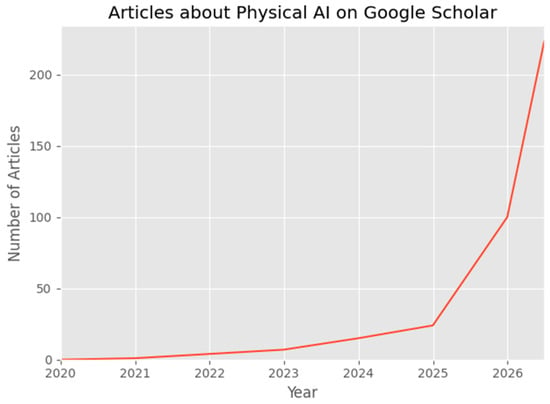
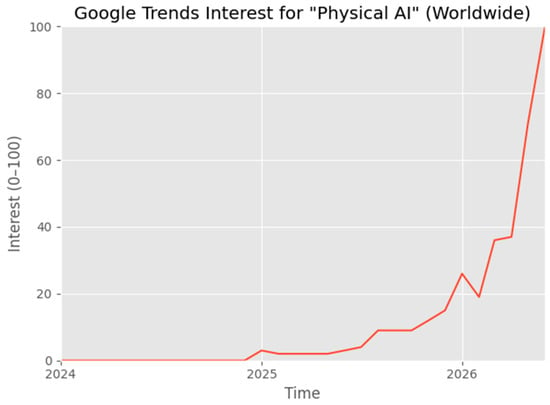
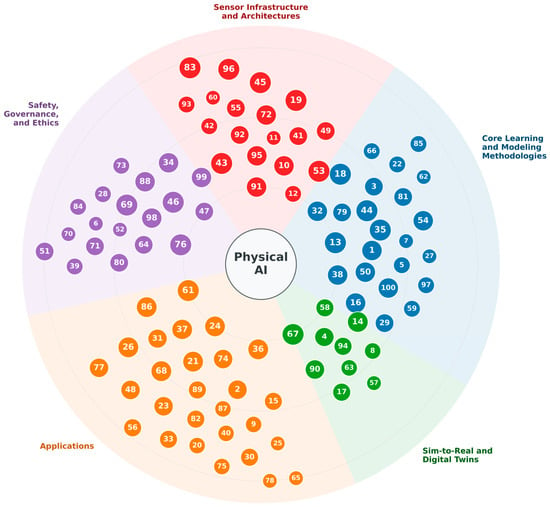
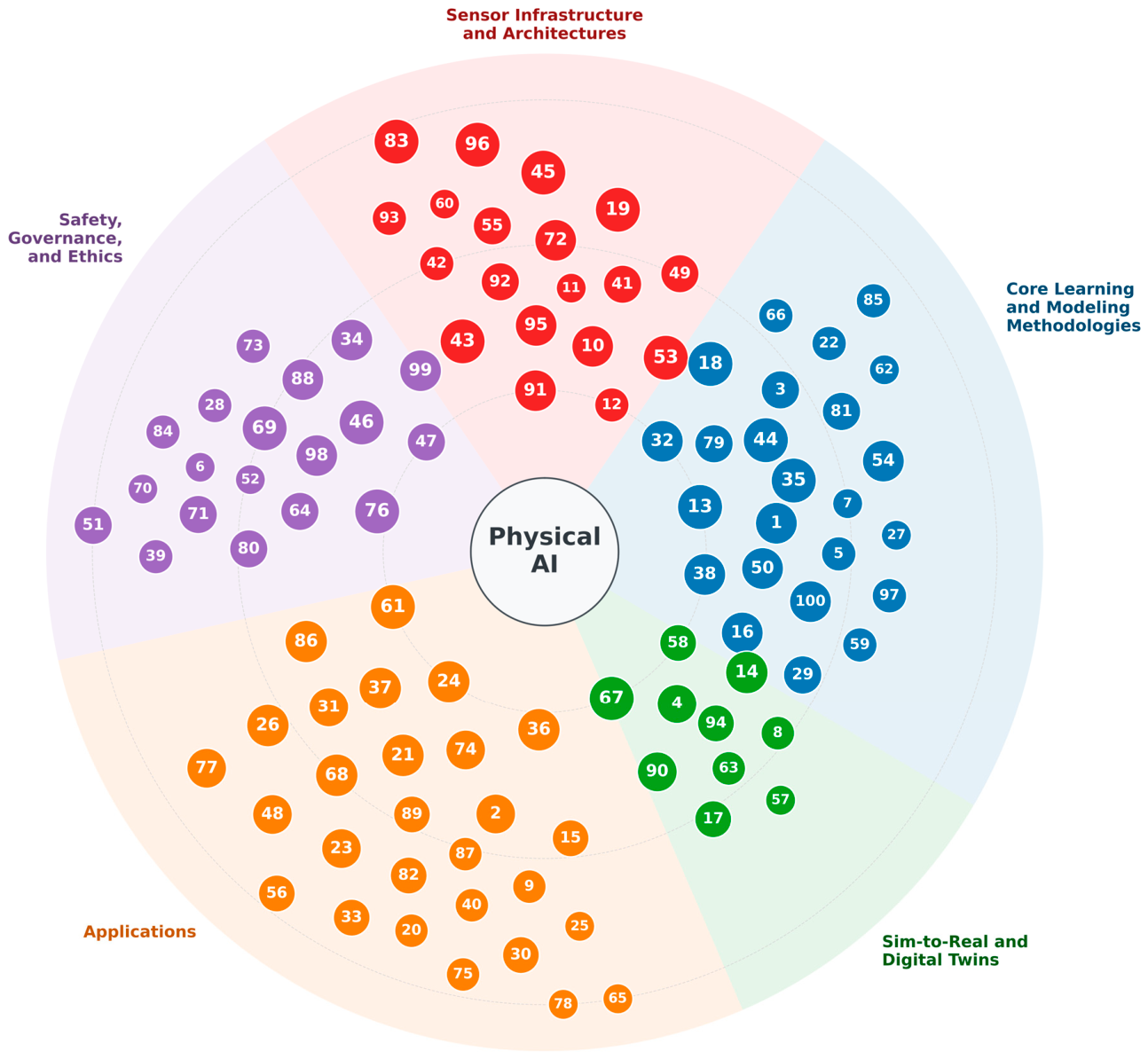

Disclaimer/Publisher’s Note: The statements, opinions and data contained in all publications are solely those of the individual author(s) and contributor(s) and not of MDPI and/or the editor(s). MDPI and/or the editor(s) disclaim responsibility for any injury to people or property resulting from any ideas, methods, instructions or products referred to in the content. |
© 2026 by the authors. Licensee MDPI, Basel, Switzerland. This article is an open access article distributed under the terms and conditions of the Creative Commons Attribution (CC BY) license.