


Abstract
Multi-view learning can effectively exploit the consistency and complementarity among multiple data sources and has become a major research direction in semi-supervised classification. However, the existing methods commonly suffer from several limitations, including the loss of view-specific information caused by premature feature fusion, interference from redundant inter-view noise, and the limited discriminative capability of consensus representation. These issues severely restrict classification performance under low-label settings. To address these limitations, this paper proposes Dual-branch Multi-view Learning with Dual-contrastive Information Bottleneck. The proposed framework constructs a decoupled dual-branch graph convolutional architecture to explicitly separate view-specific representations from cross-view consensus representation, thereby alleviating feature homogenization at the structural level. Furthermore, we design a dual-contrastive information bottleneck optimization mechanism, where the CLUB constraint minimizes redundant mutual information across views to suppress noise, while the InfoNCE constraint maximizes the mutual information between consensus representation and labels to enhance discriminative capability. Additionally, we employ an adaptive attention fusion module to dynamically integrate the dual-branch representations, further refining task-relevant features. The experiments conducted on nine public datasets demonstrate that the proposed method achieves favorable performance improvements over most of the selected comparison methods in semi-supervised classification tasks.
1. Introduction
With the rapid growth of multi-source data and the increasing demand for information fusion, multi-view learning has become a prominent research direction in machine learning and data mining [1,2,3,4,5]. In practical applications, a single object can often be observed from multiple perspectives, yielding heterogeneous modal data such as text, images, and audio. These data are referred to as multi-view data [6,7,8,9]. Compared with single-view data, multi-view data contain both complementary information and shared semantics. Multi-view learning aims to exploit both consistency and complementarity among views to learn robust and discriminative representations, and it has been widely applied in tasks such as node classification and recommender systems [10,11,12]. Notably, redundancy and noise are prevalent across views, and the existing methods struggle to suppress irrelevant information while preserving clean and informative representations [13,14,15,16].
In practical applications, large-scale multi-view data are readily available. However, acquiring high-quality annotations is both time-consuming and labor-intensive. Therefore, effectively exploiting abundant unlabeled data under limited supervision to achieve reliable representation learning and classification, namely multi-view semi-supervised learning, has become a major research focus [17,18,19,20]. In recent years, Graph convolutional networks (GCNs) [21] have demonstrated remarkable capability in modeling structured data and have been widely adopted in multi-view semi-supervised learning frameworks [22,23,24]. Existing methods generally encode different views independently and then fuse their representations to enhance the discriminative performance of the model. However, most of these methods rely on carefully designed yet often complex feature fusion mechanisms. They also lack an information-theoretic perspective to explicitly preserve informative components while compressing redundant ones. Consequently, they struggle to effectively suppress noise and redundancy during feature fusion, which ultimately limits their generalization and classification performance [25,26,27].
The information bottleneck (IB) [28,29] theory provides a principled information-theoretic framework for representation learning. Its objective is to minimize the mutual information between the representation and the input while maximizing that between the representation and the task labels, thereby achieving effective information compression and preservation [30,31,32]. In recent years, contrastive learning has been shown to be an effective approach for estimating lower bounds of mutual information. However, existing studies generally rely on a single contrastive objective to approximate the discriminative term in the IB framework. They lack an effective contrastive formulation for the compression term. Consequently, the integration of contrastive learning with the IB principle remains limited [33,34,35].
To address the aforementioned challenges, this paper proposes a novel framework, termed Dual-branch Multi-view Learning with Dual-contrastive Information Bottleneck (DMvIB). The framework integrates a decoupled dual-branch encoding architecture, a dual contrastive learning-driven information bottleneck, and an adaptive attention-based fusion module in a unified manner. DMvIB achieves superior performance in multi-view semi-supervised classification. Specifically, the dual-branch encoding architecture comprises a view-specific representation branch and a cross-view consensus representation branch. These two branches employ parameter-independent graph convolutional networks, which are designed to prevent information loss and representation homogenization caused by premature feature fusion. They also provide high-quality dual representations for subsequent information bottleneck optimization. Furthermore, the dual contrastive learning-driven information bottleneck incorporates two complementary optimization objectives. On the one hand, the Contrastive Log-ratio Upper Bound (CLUB) is adopted to estimate the upper bound of mutual information, and redundancy is reduced by minimizing the mutual information between view-specific and consensus representations. On the other hand, an InfoNCE-based lower bound estimator is introduced to maximize the mutual information between the consensus representation and labels, thereby enhancing discriminative capability under limited supervision. Additionally, an adaptive attention-based fusion mechanism is introduced to dynamically integrate view-specific and consensus representations, yielding task-relevant enhanced representations. This mechanism complements the bidirectional constraints of the information bottleneck. It also improves downstream classification performance while maintaining representation compactness. Finally, a unified objective function is constructed by combining the cross-entropy classification loss with the dual contrastive information bottleneck constraints, enabling effective multi-view semi-supervised learning.
The main contributions of this paper can be summarized as follows:
- We propose a decoupled dual-branch multi-view GCN encoding architecture that explicitly separates view-specific and cross-view consensus representations. This design alleviates information loss and representation homogenization caused by premature feature fusion. It provides high-quality representations for information bottleneck.
- We develop a dual contrastive learning-driven information bottleneck optimization mechanism. It leverages CLUB and InfoNCE to estimate the upper and lower bounds of mutual information, respectively. Through jointly optimizing the compression and relevance terms, this mechanism improves optimization stability and effectiveness.
- We design an adaptive attention-based fusion mechanism to dynamically integrate multi-view representations. By complementing the mutual information constraints, it further enhances the compactness and discriminative power of the fused representations.
- We conducted targeted experiments on nine public datasets, and the results show that DMvIB achieves better overall performance than most of the selected comparison methods in semi-supervised classification tasks, while presenting stable convergence and robust parameter adaptability within our experimental scope.
2. Related Work
2.1. Multi-View Semi-Supervised Classification
Multi-view semi-supervised classification has attracted increasing attention in recent years. Its primary goal is to exploit both complementary and consistent information across multiple views under limited labeled data, thereby enabling effective classification. The existing methods can generally be categorized into three groups: regression-based methods, graph-based methods, and discriminative representation learning-based methods. Yu et al. [36] proposed a label-driven automatic weighting strategy to differentiate the importance of views and suppress the influence of low-quality views, while preserving favorable scalability. Zhuge et al. [37] introduced a framework that jointly models consensus and diversity, employing power mean fusion to balance consistency and specificity across views. Wang et al. [38] developed the MMatch framework, which enhances discriminative capability by jointly optimizing view-specific features and pseudo-label refinement. Jiang et al. [39] proposed an adaptive collaborative fusion method that unifies feature projection and graph learning with relatively low computational complexity. Wu et al. [40] designed an interpretable multi-view graph convolutional network by integrating reconstruction error with Laplacian embedding, revealing the intrinsic connection between graph convolutional networks and multi-view learning. Despite their effectiveness, these methods generally fail to adequately address issues of premature feature fusion and redundancy interference. They also rarely perform joint optimization from an information bottleneck perspective. To address these limitations, this paper proposes DMvIB, a novel framework for multi-view semi-supervised classification.
2.2. Information Bottleneck
The information bottleneck (IB) principle has become a fundamental information-theoretic framework in representation learning [41]. Its central objective is to compress task-irrelevant redundant information while preserving task-relevant discriminative information. This principle has been widely applied in the field of multi-view learning. Cheng et al. [42] proposed the Contrastive Log-ratio Upper Bound (CLUB), which provides a stable and differentiable estimator for mutual information minimization in high-dimensional spaces, thereby facilitating gradient-based optimization in information bottleneck models. Tian et al. [43] introduced the scAMVIB framework, which employs maximum entropy regularization to adaptively assign view weights, enabling effective compression of redundant features while capturing complementary information across views. Li et al. [44] combined the variational information bottleneck with contrastive learning and proposed the CLIMB method, which suppresses spurious correlations by minimizing representation entropy, thereby improving robustness and discriminative capability. Hu et al. [45] proposed the Dual-association Multivariate Information Bottleneck (DMIB) for multi-view clustering, which learns compact and consensus-aware representations by modeling inter-view relationships and redundancy distributions. Hu et al. [46] further developed a multi-dimensional self-guided deep information bottleneck for multimodal clustering, which leverages self-supervision to identify salient semantic information, thereby enhancing discriminative power and robustness. Despite these advances, existing IB-based methods still struggle to decouple and refine view-specific and consensus representations in multi-view semi-supervised settings. Moreover, few studies integrate dual contrastive learning to jointly optimize redundancy compression and discriminative enhancement. To address these issues, this paper proposes DMvIB, a dual-branch multi-view semi-supervised classification framework driven by a dual contrastive learning-based information bottleneck optimization strategy.
3. Problem Formulation and Optimization
3.1. Overview and Notations
To address the multi-view semi-supervised classification problem, this paper proposes the multi-view learning framework DMvIB, which consists of five key modules. First, a view-specific representation branch performs independent graph convolutional encoding for each view to preserve view-specific discriminative information. Second, a cross-view consensus representation branch captures shared global semantics and topological structures across views, yielding decoupled dual-branch representations. Third, a dual contrastive learning-driven information bottleneck mechanism is introduced, where CLUB is employed to estimate the upper bound of mutual information for redundancy compression, and InfoNCE is used to estimate the lower bound for discriminative enhancement. Furthermore, an adaptive attention-based fusion module dynamically integrates the dual-branch representations. Finally, a unified optimization objective is constructed to jointly model the classification loss and the dual contrastive information bottleneck constraints. Figure 1 provides a detailed presentation of the proposed framework.
Figure 1.
Figure 1 illustrates the framework of DMvIB, which consists of five major modules. First, the view-specific representation branch employs parameter-independent GCNs to learn discriminative private features. Second, the cross-view consensus representation branch integrates multi-view features and consensus structures through GCNs to capture shared cross-view information. Third, the dual-contrastive information bottleneck module uses CLUB and InfoNCE constraints to respectively compress redundant information and enhance discriminative features. Fourth, the adaptive attention module dynamically fuses the dual-branch representations and outputs the final classification results. Finally, a unified optimization objective is constructed.
Given a multi-view graph dataset with V heterogeneous views, the shared node set is denoted as , where N represents the total number of nodes. For the v-th view, the original node feature matrix is denoted as , where is the feature dimension of that view. The feature vector of node in the v-th view is denoted by . For clarity, the main notations used in this paper are summarized in Table 1.
Table 1.
Notations and descriptions.
3.2. View-Specific Representation Branch
In multi-view representation learning, premature fusion of cross-view features often weakens view-specific information, leading to representation homogenization and degraded discriminative performance. To alleviate this issue, a view-specific representation branch is designed with a decoupled and independent encoding strategy. Specifically, a graph topology is first constructed for each view based on node feature similarity. Then, parameter-independent GCNs are employed to perform multi-layer feature propagation and high-order aggregation on single-view data. This design enables the extraction of view-specific topological and attribute information, resulting in diverse representations with strong discriminative capability.
3.2.1. Multi-View Topology Construction and Adjacency Matrix Generation
To map unstructured node features into a graph topology, we employ the radial basis function (RBF) to measure pairwise feature similarity. This yields a fully connected similarity matrix , defined as:
where denotes the Euclidean norm, and is the bandwidth parameter controlling the scale of similarity.
To reduce computational cost and redundant connections introduced by the fully connected topology, we apply the k-nearest neighbors (k-NN) algorithm to sparsify the similarity matrix. For each node, only the top-k most similar neighbors are retained. This yields the initial sparse adjacency matrix , defined as:
where denotes the set of k-nearest neighbors of node i in the v-th view. To ensure the undirected symmetry of the graph structure, the adjacency matrix is symmetrized as follows:
To mitigate the bias caused by imbalanced node degrees and preserve self-information, we add self-loops to obtain the augmented adjacency matrix:
where is the identity matrix. The corresponding degree matrix is diagonal, with entries defined as:
To eliminate the influence of degree variation and improve numerical stability during feature propagation, we apply symmetric normalization to obtain the normalized adjacency matrix:
This completes the construction of a normalized graph topology from the original feature space.
3.2.2. Decoupled Graph Convolutional Feature Encoding
Built upon the constructed view-specific graph topology, we employ a multi-layer graph convolutional network (GCN) as the feature encoder. It propagates and aggregates neighborhood information layer by layer, thereby enabling high-order representation learning. The propagation rule of a single GCN layer is defined as:
here, denotes the hidden representation of the v-th view at the l-th layer, with the input initialized as . The is the trainable weight matrix, and is a nonlinear activation function that enhances model expressiveness.
To preserve view-specific information, we adopt a parameter-decoupled encoding strategy. In this strategy, each view is modeled with independent GCN parameters. This design allows each view to adaptively capture its own topological and attribute characteristics. This effectively mitigates the representation homogenization issue commonly observed in multi-view learning.
3.2.3. View-Specific Representation Output
After L layers of graph convolution, the final view-specific node representation for the v-th view is obtained as:
where , and where denotes the shared output dimensionality across all views.
In summary, the view-specific representation branch integrates Gaussian kernel-based topology construction with decoupled graph convolutional encoding to extract discriminative private information from each view. By avoiding information loss and representation homogenization caused by premature fusion, it provides reliable representations for subsequent cross-view consensus modeling, information bottleneck regularization, and overall optimization.
3.3. Cross-View Consensus Representation Branch
To capture consensus representation and structural consistency across multiple views while mitigating distribution shifts and noise induced by view heterogeneity, we design a cross-view consensus representation branch. This branch takes concatenated multi-view features as input and employs a dedicated graph convolutional network to jointly model cross-view information. Therefore, it learns robust consensus representation with reduced redundancy. The resulting consensus representation complements the view-specific representations. They form a decoupled dual-branch graph representation learning framework together.
3.3.1. Multi-View Feature Concatenation
To enable the consensus representation to incorporate information from all views, we concatenate the raw node features from different views along the feature dimension. This results in a unified global representation:
where ∥ denotes concatenation along the feature dimension. The concatenated feature matrix satisfies , where denotes the feature dimensionality of the v-th view. This joint representation integrates complementary information across views. It provides a sufficient basis for consensus representation learning and alleviates information loss caused by premature feature compression.
3.3.2. Cross-View Consensus Adjacency Matrix Construction
To capture stable and consistent topological relationships across views, we construct a cross-view consensus adjacency matrix based on the individual view-specific adjacency matrices. Given a set of sparse adjacency matrices constructed via k-NN for V views, we apply an element-wise maximum operation to derive the consensus adjacency matrix:
under this rule, a connection between nodes i and j is preserved in the consensus graph if it appears in any view; it is removed only when no such connection exists across all views. This construction adopts a conservative strategy to preserve potential reliable topological structures to the greatest extent, avoiding premature loss of cross-view information that may only appear in a small number of views.
Based on this consensus graph, we introduce self-loops into the consensus adjacency matrix and perform symmetric normalization. This yields a normalized adjacency matrix suitable for graph convolutions:
where is the degree matrix associated with , and denotes the identity matrix. The resulting consensus topology captures consistent connectivity patterns across views. It also serves as a unified structural constraint for subsequent cross-view representation learning.
3.3.3. Graph Convolutional Learning for Consensus Representation
This branch takes the normalized consensus adjacency matrix and the joint feature matrix as inputs. Additionally, it employs a two-layer graph convolutional network to learn cross-view consensus representation. To ensure decoupled modeling across representation spaces, its parameters are independent of those in the view-specific branch. The forward propagation is defined as follows:
here, and denote the learnable weight matrices of the input and output layers, respectively. The resulting consensus representation shares the same dimensionality as the view-specific representations , facilitating subsequent representation fusion and joint optimization. In our implementation, we explicitly set (the number of classes) to ensure dimensional compatibility with label vectors.
In summary, the view-specific and cross-view consensus branches form a decoupled yet complementary dual-branch architecture: the former preserves view-private information to maintain feature diversity, while the latter captures consensus representation to ensure cross-view consistency. The consensus representation serves as the central variable in the information bottleneck formulation, providing a critical foundation for subsequent redundancy reduction and representation fusion.
3.4. Dual Contrastive Learning Driven Information Bottleneck
In multi-view data, view-specific representations inevitably contain noise and redundant information, which may interfere with the learning of the cross-view consensus representation , thereby degrading its discriminative power and downstream node classification performance. The information bottleneck principle provides a principled optimization framework for representation learning. Building on this, we design a dual contrastive learning-driven multi-view information bottleneck mechanism. This mechanism takes the consensus representation as the central optimization variable and imposes joint constraints from the perspectives of information compression and discriminative enhancement. Figure 2 shows in detail the specific content of the information bottleneck.
Figure 2.
This illustration details the dual-contrastive information bottleneck mechanism, which consists of two complementary components. The left-side CLUB constraint minimizes the mutual information between the view-specific representation and the cross-view consensus representation , thereby suppressing redundant inter-view noise. The right-side InfoNCE constraint maximizes the mutual information between the consensus representation and the label submatrix , thereby enhancing the task discriminability of the learned representations. These two constraints are jointly optimized to formulate the multi-view information bottleneck loss .
3.4.1. Multi-View Information Bottleneck Formulation
The standard objective of the information bottleneck is to minimize the mutual information between the input and the latent representation while maximizing the mutual information between the representation and the target variable, formulated as:
where denotes mutual information, and where is a Lagrange multiplier balancing information compression and discriminative information preservation.
Building on this, we extend the IB objective to a multi-view representation learning framework by treating the consensus representation as the intermediate variable, leading to:
the first term measures the statistical dependence between view-specific and consensus representations. Minimizing it suppresses the propagation of view-specific redundancy into the shared space. The second term quantifies the relevance between the consensus representation and task labels. Maximizing it enhances discriminative capability. Since mutual information is intractable in high-dimensional graph data, we introduce a dual contrastive learning scheme to provide differentiable and stable variational approximations for both terms.
3.4.2. CLUB-Based Contrastive Constraint for View Redundancy Compression
To minimize , we adopt the Contrastive Log-ratio Upper Bound (CLUB) as a variational estimator. CLUB constructs a differentiable and numerically stable upper bound on mutual information by contrasting the conditional log-likelihoods between positive pairs (matched –) and negative pairs (mismatched –). This reformulates the intractable minimization of mutual information into the minimization of its upper bound, thereby enabling effective compression of view-specific redundancy.
Ideally, the true conditional distribution is known. Therefore, the CLUB upper bound is given by:
by Jensen’s inequality, it can be shown that . Hence, minimizing this upper bound indirectly constrains the original mutual information.
In practical multi-view settings, the true conditional distribution is intractable. To address this, a variational inference approach is employed. This approach uses a parameterized neural network to model a variational distribution for approximating the true distribution, yielding a tractable upper bound:
For a batch of N samples , a Monte Carlo approximation yields the empirical estimator:
here, denotes a positive (matched) pair, whereas , represents negative (mismatched) pairs. This formulation quantifies the conditional dependence between view-specific and consensus representations via contrastive log-likelihood differences between positive and negative pairs.
To ensure the validity of the CLUB estimator, we parameterize the variational conditional distribution as a factorized Gaussian distribution with learnable mean and variance, following the official implementation of the CLUBSample estimator [42]. The distribution is modeled by a two-branch neural network: the first branch outputs the mean of the Gaussian, while the second branch outputs the log-variance followed by a Tanh activation to ensure numerical stability. The network has a hidden dimension of , where is the representation dimension equal to the number of classes.
We adopt a two-stage alternating optimization strategy to train the CLUB estimator and the main GCN model separately, which is the standard training procedure for CLUB estimators. In the first stage, we fix the main model parameters and train the CLUB network by minimizing the negative log-likelihood of the conditional distribution. In the second stage, we fix the CLUB estimator and update the main model parameters by optimizing the unified information bottleneck objective. This alternating scheme ensures stable training and accurate mutual information estimation. To further enhance numerical stability, we L2-normalize all output representations from the GCN branches to unit vectors, and we restrict the log-variance of the conditional distribution within the range using a Tanh activation.
Overall, minimizing effectively suppresses the transfer of view-specific redundancy into the consensus representation, thereby achieving cross-view redundancy compression.
3.4.3. InfoNCE-Based Contrastive Constraint for Task Relevance
To maximize , we employ InfoNCE as a variational lower-bound estimator. Built upon the contrastive learning paradigm, InfoNCE provides a differentiable approximation of mutual information by contrasting positive and negative pairs. This transforms the intractable maximization of mutual information into the maximization of its lower bound. Additionally, we use one-hot encoding to generate the full label matrix . Since we set the output dimension of to c, shares identical feature dimension with . For semi-supervised training, we only extract the submatrix corresponding to labeled nodes in for InfoNCE calculation.
Given a batch of labeled nodes from the labeled set with consensus representations and corresponding labels , we adopt cosine similarity to measure the alignment between representation and label embeddings, where is a temperature parameter controlling the smoothness of the similarity distribution. Under a bidirectional contrastive learning scheme, the InfoNCE lower bound is formulated as:
here, is the label submatrix sampled from the full ground-truth matrix , and only entries belonging to labeled set are adopted for InfoNCE optimization; and denote the consensus embedding and label embedding of node i, respectively. The pair forms a positive pair, while all other cross-sample combinations are treated as negative pairs. This objective quantifies the statistical dependence between the consensus representation and labels by contrasting the similarity scores of positive and negative pairs. Maximizing the InfoNCE lower bound strengthens the correlation between and the label variable , thereby improving the discriminative capability of the learned representation. Notably, the above InfoNCE loss is computed only over the labeled set , and unlabeled nodes together with their ground-truth labels are never utilized during this loss computation.
3.4.4. Unified Dual-Contrastive Information Bottleneck Modeling
Building upon the two contrastive constraints above, we formulate a unified dual-contrastive objective for multi-view information bottleneck optimization. Within a single framework, the CLUB-based compression term and the InfoNCE-based relevance term are jointly modeled, enabling a principled balance between information compression and discriminative enhancement. The resulting objective is defined as:
This objective takes the cross-view consensus representation as the intermediate variable and maps the compression and relevance principles of the information bottleneck into two tractable contrastive terms.
3.5. Attention Mechanism
In multi-view learning, the view-specific representations and the cross-view consensus representation contribute differently to downstream node classification. View-specific representations often contain modality-specific noise and redundancy, whereas the consensus representation, though encoding stable shared semantics, may fail to capture discriminative differences across views. Fixed weighting or simple averaging cannot effectively distinguish informative signals from redundant ones, thereby limiting the expressive power of multi-view representations. To address this issue, we introduce an adaptive attention-based fusion mechanism to learn the weights of view-specific and consensus representations in a data-driven manner. As a result, this mechanism achieves adaptive fusion for heterogeneous information from different views.
Specifically, we first denote as the feature of the k-th branch, where . The first V items correspond to view-specific representations and the last one is the consensus representation, and is fixed as the number of classes. All branch representations are stacked into a joint tensor:
here, , and this stacked tensor is then projected through a two-layer fully connected network with a hyperbolic tangent activation to compute attention scores. The scoring function is defined as:
here, and are the weight matrix and bias of the first fully connected layer, is the weight vector of the second layer, and 16 is the fixed hidden dimension of the attention module. The intermediate tensor and score tensor . Each scalar entry in quantifies the task relevance of the corresponding branch for a single node. The raw scores are normalized across the branch dimension via softmax to obtain attention weights:
here, is the normalized weight tensor, where denotes the attention weight associated with the v-th view-specific representation, and where corresponds to the consensus representation. The final fused representation is obtained via element-wise weighted summation:
where the first V terms correspond to view-specific representations and the last term corresponds to the consensus representation.
This mechanism complements the dual-contrastive information bottleneck at the structural level: the attention module performs explicit selection via adaptive weighting, while the information bottleneck enforces implicit compression through mutual information constraints. Together, they enhance both the compactness and the discriminative capacity of the learned representation.
3.6. Objective Function
To jointly optimize multi-view representation learning and semi-supervised classification, we formulate an integrated objective by coupling supervised learning signals with dual-contrastive information bottleneck constraints. The overall objective is defined as:
here, denotes the cross-entropy classification loss, and , are hyperparameters that balance different mutual information terms. In the supervised component, the fused representation , obtained via the attention mechanism, is fed into a classifier to produce prediction probabilities through a softmax function:
The cross-entropy loss is then computed over the labeled node set :
here, c denotes the number of classes, and is the ground-truth indicator for node i belonging to class j. Note that although the prediction matrix is generated for all nodes via forward propagation, only ground-truth labels of nodes belonging to are utilized for cross-entropy calculation.
As specified above, both cross-entropy loss and InfoNCE loss are calculated exclusively on the labeled node set with label subset , whereas the CLUB term is a label-free self-supervised constraint computed over all nodes.
The proposed objective optimizes the model from three complementary perspectives. First, the cross-entropy term provides direct supervision, aligning the fused representation with the discriminative space. Second, the CLUB-based constraint suppresses redundant dependencies between view-specific and consensus representations. Third, the InfoNCE-based constraint enhances the correlation between the consensus representation and label information. Together, these components enable the model to compress redundant information while preserving task-relevant semantics. This results in multi-view representations with improved discriminative power and generalization ability.
4. Experiments and Analysis
To systematically evaluate the effectiveness of the proposed DMvIB framework for multi-view semi-supervised classification, we conducted targeted experiments on nine widely used public multi-view datasets. The experimental results systematically validate the architectural innovations and performance advantages of DMvIB.
4.1. Experimental Settings
4.1.1. Dataset Description
To ensure the comprehensiveness and reliability of the experimental evaluation, we selected nine benchmark public datasets widely used in multi-view semi-supervised classification. These datasets are all standard benchmarks in the field, covering diverse data modalities including textual features, image features, and visual descriptors. They span a wide range of scales from 693 to 11,032 samples, with 2–6 views and 7–100 categories, including both homogeneous and heterogeneous view relationships. This diverse benchmark allowed us to comprehensively evaluate the effectiveness of the proposed method under different application scenarios and complexity levels. Detailed statistics of all the datasets are summarized in Table 2.
Table 2.
A description of selected multi-view datasets.
- Wikipedia: A multi-view text classification dataset containing 693 samples and two feature views with dimensions of 128 and 10, respectively. The dataset consists of 10 text categories.
- ALOI: An object image dataset containing 1079 samples and four visual feature views, including 13-D Haralick features, 64-D RGB color histograms, 64-D HSV color histograms, and 77-D color similarity features. The dataset covers 10 categories of daily objects.
- Caltech1017: A classical visual classification dataset containing 1474 samples with six heterogeneous visual feature views, including 40-D wavelet moment features, 48-D Gabor features, 254-D CENTRIST features, 512-D GIST features, 928-D LBP features, and 1984-D histogram of oriented gradients (HOG) features. The dataset contains seven target categories.
- 100leaves: A plant leaf multi-feature dataset containing 1600 leaf samples and three morphological feature views derived from shape descriptors, fine edge features, and texture histograms. The dataset includes 100 plant species.
- NUSWIDE: A multi-label visual dataset containing 1600 samples and six visual feature views, including 64-D color histograms, 73-D edge direction histograms, 128-D wavelet texture features, 144-D color correlograms, 225-D color moments, and 500-D bag-of-visual-words SIFT features. The dataset contains eight semantic categories.
- MFeat: A handwritten digit dataset containing 2000 digit samples with six feature views and 10 digit categories.
- scene15: A scene image classification dataset containing 4485 scene samples and three visual feature views, covering 15 scene categories.
- Hdigit: A dual-view handwritten digit dataset containing 10,000 samples with two feature views of dimensions 784 and 256, respectively. The dataset includes 10 digit categories.
- Espgame: A social image dataset containing 11,032 samples with two visual feature views and seven semantic categories.
4.1.2. Baseline Methods
To objectively evaluate the effectiveness of the proposed DMvIB framework, we selected eight representative methods as baseline approaches for comparison. The details of these methods are summarized as follows.
- MVAR [47]: A classical scalable multi-view semi-supervised classification method that independently computes regression losses for each view based on the -norm. MVAR employs an adaptive weighting strategy to aggregate the losses across views. This method models multi-view relationships only at the feature level and does not exploit graph topological information.
- WREG [48]: A supervised multi-view feature learning framework that projects multi-view features into a discriminative low-dimensional subspace. WREG adaptively integrates original features while preserving inter-view correlations and complementary information.
- HLR-M2VS [49]: A hyper-Laplacian regularized multilinear multi-view self-represent-ation method that jointly models local geometric structures of multiple views within a unified tensor space. HLR-M2VS introduces low-rank tensor regularization to enforce convergence consistency across views, making the method applicable to both clustering and semi-supervised classification tasks.
- Co-GCN [50]: A benchmark graph convolutional network approach for multi-view learning that performs joint modeling by integrating Laplacian operators from multiple graphs. Co-GCN was among the first methods to incorporate graph topological structures into multi-view semi-supervised classification, laying the foundation for subsequent GCN-based multi-view learning research.
- ERL-MVSC [51]: A multi-view semi-supervised classification method based on embedding regularizer learning. ERL-MVSC employs a linear regression model to learn view-specific embedding regularizers and automatically balances view diversity, sparsity, and consensus, thereby improving representation robustness under noisy conditions.
- DSRL [52]: A deep sparse regularized learning method that adaptively learns sparse constraints in a data-driven manner. Through a modular neural network architecture, DSRL captures compact and highly discriminative latent representations.
- LGCN-FF [53]: An advanced learnable graph convolution and feature fusion framework that adopts a two-stage architecture for multi-view representation learning and graph discriminative fusion. By introducing learnable weights and adaptive activation functions, LGCN-FF effectively suppresses noise and redundant information in multi-view data.
- SMMRL [54]: An advanced scalable multimodal representation learning method that preserves high-order local geometric structures through hierarchical adaptive feature selection and hypergraph embedding. SMMRL features a streamlined optimization process and strong generalization capability.
4.1.3. Experimental Protocol
All our experiments, including the main experiments under 10% supervision ratio and the additional experiments under 5% to 50% supervision ratios, were independently repeated 10 times with fixed random seeds. For each repetition and each supervision ratio, we randomly split each dataset into a labeled set and an unlabeled set according to the specified ratio. Critically, all the compared methods use exactly the same labeled/unlabeled splits and random seeds in every repetition and for every supervision ratio, eliminating bias introduced by data partitioning. We report the average performance and standard deviation across all 10 repetitions for all the methods. For the proposed DMvIB, we performed grid search to select optimal hyperparameters based on the 10% supervision ratio setting. The search ranges were as follows: learning rate , weight coefficients and . The number of training epochs was fixed at 500 for all the datasets and all the supervision ratios. All the hyperparameters were tuned on the labeled set only, and the best configuration was used for all the experiments under different supervision ratios. For all the baseline methods, we either adopted the hyperparameters recommended in their original papers or tuned them within the same search range to ensure fair comparisons. All the experiments were conducted on a single NVIDIA GTX 4060 GPU with 8 GB memory.
4.2. Multi-View Semi-Supervised Classification
4.2.1. Classification Results
All the experiments adopted per-class stratified sampling to generate the labeled set and the unlabeled set. The labeling ratio ranged from 5% to 50% as specified. During training, only the labels in were visible to the model. The performance was evaluated exclusively on the unlabeled set, which was disjoint from the training labeled set.
The comparative experiments were conducted under a 10% supervision ratio, using classification accuracy (ACC) and macro-averaged F1-score (F1) as evaluation metrics. As shown in Table 3, the proposed DMvIB achieved competitive performance and obtained the overall best results on most datasets. Specifically, DMvIB ranked first in accuracy on all nine datasets and first in F1-score on eight datasets, indicating its favorable overall performance on the evaluated benchmarks. Classical methods such as MVAR, WREG, and HLR-M2VS mainly model multi-view relationships at the feature level. Their inability to fully exploit graph topological information and suppress noisy interference led to inferior performance compared with DMvIB. Although Co-GCN introduces graph convolution into multi-view learning, its early-fusion strategy tends to discard view-specific information, resulting in clear performance limitations. ERL-MVSC and DSRL improve representation robustness through sparse regularization; however, they do not explicitly disentangle view-private information from consensus information. Recent advanced approaches, including LGCN-FF and SMMRL, enhance performance through learnable graph fusion and hypergraph embedding, respectively. Nevertheless, they do not integrate information bottleneck theory to simultaneously compress redundant information and strengthen discriminative semantics. In contrast, DMvIB combines a decoupled dual-branch architecture, dual-contrastive information bottleneck constraints, and adaptive attention fusion to preserve view-specific information while suppressing redundancy and enhancing discriminative features. Consequently, it achieved more favorable classification performance across the evaluated datasets.
Table 3.
To evaluate the classification accuracy and F1-score of all methods, 10% labeled samples were used. The results are reported as mean % (standard deviation %), where the best performance is highlighted in bold and underlined, while the second-best performance is underlined.
It is worth noting that on the Wikipedia dataset the WREG method achieved a slightly higher F1-score than DMvIB, although DMvIB still maintains the best accuracy. This can be attributed to the unique characteristics of the Wikipedia dataset: it is a text-based multi-view dataset with extremely high feature heterogeneity, where one view has only 10 dimensions. The WREG method is a traditional multi-view projection method specifically designed for low-dimensional feature spaces, which gives it a natural advantage on this particular dataset. In contrast, DMvIB is based on graph convolution and information bottleneck theory, and its core advantages are more prominent on datasets with high-dimensional features, complex view relationships, and large sample sizes, such as 100leaves, scene15, and Hdigit. This observation indicates that different methods have different scenario adaptabilities, and no single method can be universally optimal for all types of multi-view data.
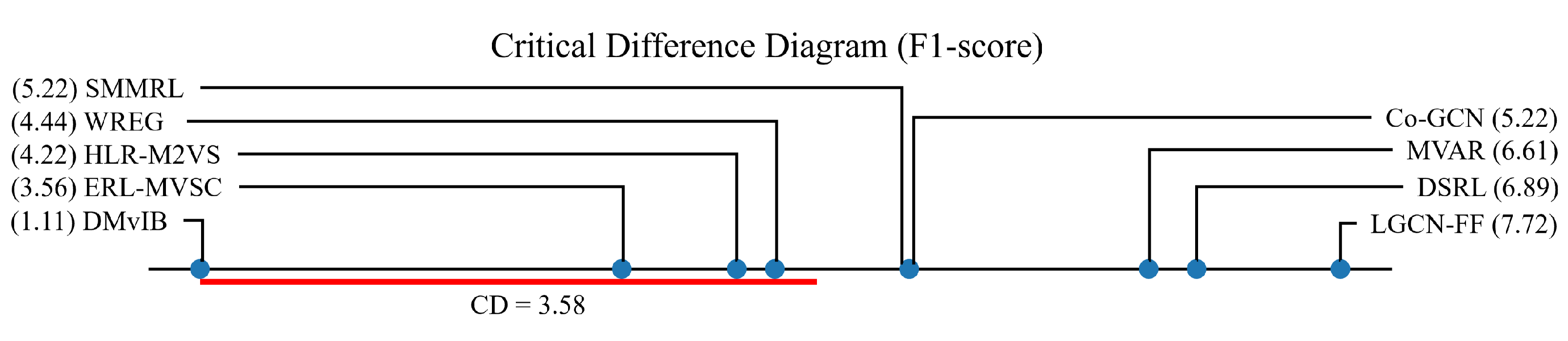
To further quantitatively compare the performance of all the methods and to verify the statistical significance of the results, we followed the standard protocol for comparing multiple classifiers proposed by Demšar (2006) [55]. We first calculated the average ranking of each method across the nine datasets, where a lower average rank indicated better performance. For the DSRL method, which encounters out-of-memory (OOM) errors on the Hdigit and Espgame datasets, we assigned it the lowest rank on these two datasets, as OOM indicates that the method cannot run normally and has poor practical performance. We then conducted the Friedman test to check whether there were significant overall differences among all the methods. If the test was significant (p < 0.05), we further performed the Bonferroni–Dunn post hoc test for pairwise comparison, and we drew the Critical Difference (CD) diagram. Table 4 reports the average ranking of each method in terms of accuracy and F1-score. The Friedman test yielded p-values of for accuracy and for F1-score, which indicates statistically significant differences among the compared methods on the nine evaluated datasets. The critical difference (CD) at the 0.05 significance level was 3.58. DMvIB achieved the lowest average rank on both metrics and outperformed six out of eight of the competing methods beyond the critical difference threshold under the current nine-dataset experimental setting. The CD diagrams for accuracy and F1-score are presented in Figure A1 and Figure A2, respectively. These results indicate that DMvIB achieved the best overall ranking among all the compared methods on the tested benchmarks. It should be noted that both the Friedman test and the post hoc CD comparison were conducted based on the nine benchmark datasets. The statistical power of non-parametric multiple-dataset comparison is inherently affected by the number of included datasets. Therefore, the above statistical conclusions are primarily valid for the current set of evaluated benchmarks, and their generalizability to a wider range of multi-view datasets requires further validation with a larger and more diverse benchmark collection in future research.
Table 4.
Average ranking of all the methods across the nine datasets. A lower average rank indicates better performance. The highest rank is highlighted in bold and underlined.
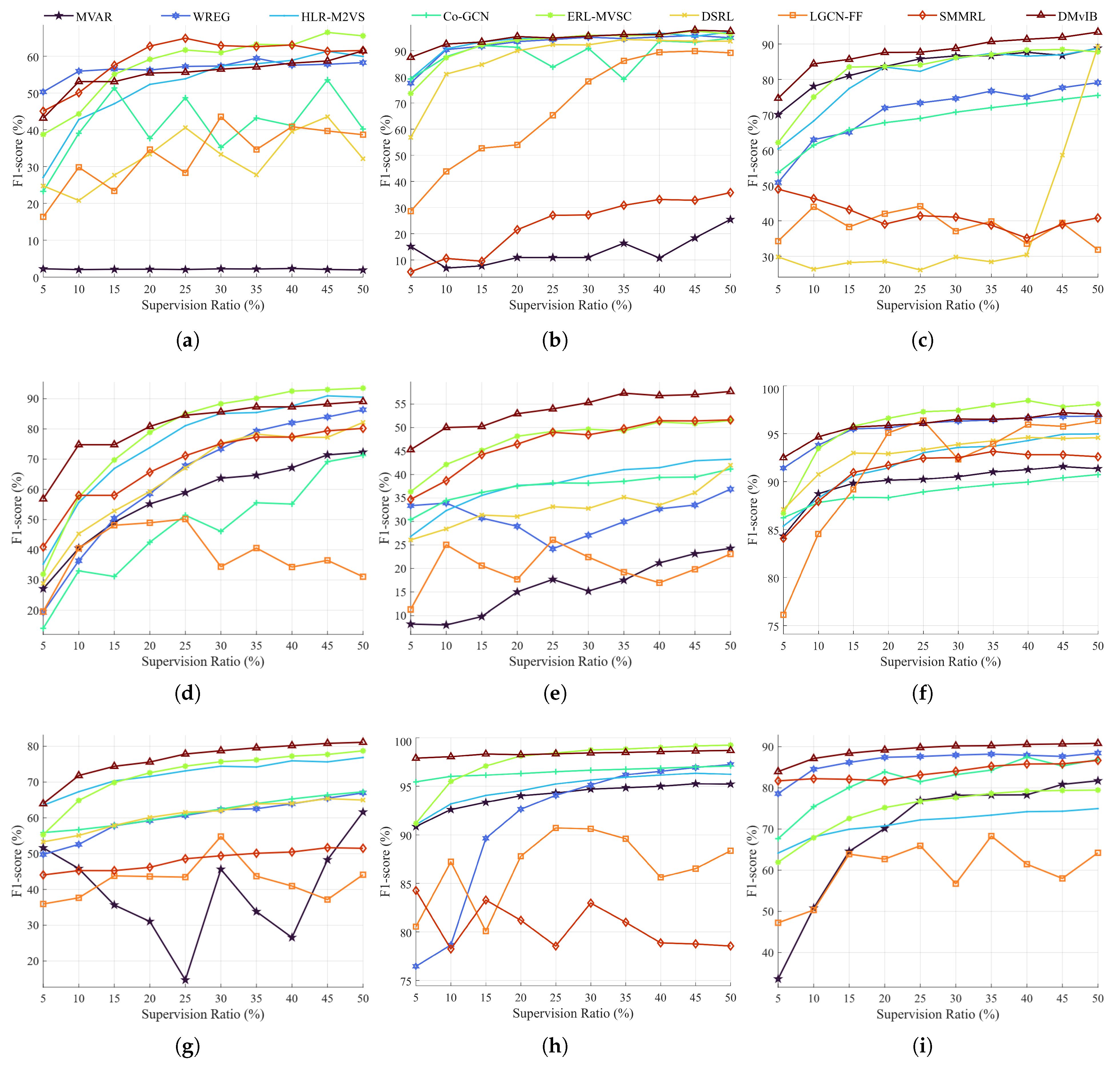
To further evaluate the advantage of DMvIB, we conducted experiments under ten different supervision ratios ranging from 5% to 50%. The ACC and F1-score curves of all the methods are illustrated in Figure A3 and Figure A4, respectively. Under low-supervision semi-supervised settings, DMvIB exhibited performance advantages and outperformed most of the comparison methods on the majority of the evaluated datasets. This observation further validates the ability of the dual-contrastive information bottleneck to refine representations under limited labeled samples. As the supervision ratio increased, the performance of several baseline methods gradually improved. Nevertheless, DMvIB remained highly competitive on most of the datasets. Although ERL-MVSC marginally matched or surpassed DMvIB under high-supervision settings on a few of the datasets, DMvIB still ranked among the top-performing methods overall. This demonstrates the stable and reliable classification capability of DMvIB.
4.2.2. Classification Visualization
To intuitively evaluate the discriminative capability of the fused representations learned by DMvIB, we employed the t-SNE algorithm to project the learned node embeddings into a two-dimensional space. We adopted consistent parameters across all the methods and datasets to ensure fair comparison. The visualization results on the Hdigit and Espgame datasets are presented in Figure 3 and Figure A5, respectively. As observed from the visualizations, the representations generated by DMvIB exhibited highly compact intra-class distributions and well-separated inter-class boundaries on both datasets. In particular, almost no cross-class overlap was observed among the different categories on the Hdigit dataset. This contrasts sharply with the severe class mixing and loosely distributed clusters commonly observed in competing methods.
Figure 3.
T-SNE visualization based on node representations of Hdigit dataset: (a) MVAR; (b) WREG; (c) HLR-M2VS; (d) Co-GCN; (e) ERL-MVSC; (f) LGCN-FF; (g) SMMRL; (h) DMvIB.
To quantitatively evaluate the cluster separation effect, we employed two widely recognized metrics: Silhouette Score (ranging from −1 to 1, higher values indicating better intra-class compactness and inter-class separation) and Calinski–Harabasz Score (higher values indicating more distinct cluster boundaries). As shown in Table 5 and Table A1, DMvIB achieved the highest Silhouette Score and Calinski–Harabasz Score on both datasets. These quantitative results are highly consistent with the visual observations in Figure 3 and Figure A5, providing objective evidence that DMvIB learns representations with more compact intra-class distributions and clearer inter-class boundaries.
Table 5.
Quantitative comparison of t-SNE visualization metrics on the Hdigit dataset. The best metric is highlighted in bold and underlined, while the second-best metric is underlined.
These results demonstrate that the decoupled dual-branch architecture effectively alleviates the homogenization of private features caused by conventional early-fusion strategies, thereby preserving and enhancing the most discriminative information across views. Meanwhile, the dual contrastive information bottleneck constraint effectively suppresses cross-view redundant noise while maximizing the mutual information between consensus representation and labels, thereby refining task-relevant features and amplifying inter-class separability.
4.3. Module Analysis
4.3.1. Convergence Analysis
To evaluate the optimization efficiency and convergence stability of DMvIB during training, we plotted the curves of loss, classification accuracy (ACC), and F1-score over the training iterations on nine multi-view datasets. The results are illustrated in Figure 4. The training curves indicate that DMvIB achieved fast and stable convergence across all the datasets. During the early training stage, the loss decreased rapidly with increasing iterations, while ACC and F1-score improved simultaneously. For most of the datasets, the model converged within 100–200 epochs, where the loss stabilized at a low level and the classification performance correspondingly reached a stable high-performance regime. For the small-scale datasets, the model converged extremely rapidly and achieved stable performance within approximately 50 epochs. On the more challenging scene15 dataset, although performance fluctuations appeared during training the model ultimately converged to an optimal region without suffering from overfitting or severe performance degradation. These results indicate that DMvIB achieved efficient and stable optimization on the nine evaluated multi-view datasets with varying scales and complexities.
Figure 4.
Curves of loss (red), accuracy (blue), and F1-score (yellow) of the DMvIB method on all datasets under a 10% supervision ratio: (a) Wikipedia; (b) ALOI; (c) Caltech1017; (d) 100leaves; (e) NUSWIDE; (f) MFeat; (g) scene15; (h) Hdigit; (i) Espgame.
4.3.2. Ablation Study
To systematically validate the contribution of all the core components in DMvIB, we conducted ablation studies targeting four key modules: dual branches, CLUB constraint, InfoNCE term, and attention fusion. All our experiments strictly followed the controlled-variable principle with a 10% labeled sample ratio. We not only report the classification results on each dataset but we also calculated the average performance gain across all nine datasets to quantify the effectiveness of each component.
We first investigated the synergistic effect of the dual-branch architecture by comparing three variants without the information bottleneck module: a view-specific representation branch only, a cross-view consensus representation branch only, and the complete dual-branch architecture. The experiments were conducted under a supervision ratio of 10%, and the results are reported in Table 6. Both single-branch variants exhibited evident performance limitations. Specifically, due to the lack of cross-view consensus constraints the view-specific branch alone suffered from substantial accuracy degradation on datasets such as Wikipedia and 100leaves. Although the consensus branch alone improved performance in certain scenarios through topological alignment, it remained constrained by the loss of private discriminative features on highly heterogeneous datasets such as ALOI. In contrast, the complete dual-branch architecture delivered the optimal performance across most of the datasets. Specifically, it achieved the best accuracy on all nine datasets and the best F1-score on eight of the datasets. A minor exception occurred on the Caltech1017 dataset, where the view-specific branch alone achieved a slightly higher F1-score than the complete dual-branch architecture, although the dual-branch architecture still maintained the best accuracy. This was because the Caltech1017 dataset had extremely low view noise and high view consistency. In this case, the view-specific branch could already capture sufficient discriminative information, and the introduction of the consensus branch brought a small amount of redundant information that slightly affected the F1-score.
Table 6.
Ablation study of the dual-branch architecture in DMvIB across all datasets, where the best performance is highlighted in bold and underlined.
However, it should be noted that the standard deviation of the F1-score for the view-specific branch (5.0%) was significantly higher than that of the dual-branch architecture (3.4%), indicating that the dual-branch architecture had better stability. Moreover, on all the other datasets with higher view noise and heterogeneity the dual-branch architecture consistently outperformed both single-branch variants. This confirms that the dual-branch design is a robust and general-purpose solution for most real-world multi-view scenarios.
As shown in the quantitative summary in Table 7, the dual-branch architecture brought an average ACC gain of 9.58% and an F1 gain of 9.29% compared with the single view-specific branch, and it also achieved an average improvement of 3.77% on ACC and 3.89% on F1 over the single consensus branch, which verifies its significant contribution to model performance.
Table 7.
Quantitative summary of the average performance contribution of each core component (average gain over nine datasets).
Overall, this demonstrates the complementary advantages of the two branches. The view-specific branch captures view-specific discriminative information, whereas the cross-view consensus branch learns unified semantic representations. Their combination effectively alleviates the information bias and feature homogenization issues commonly encountered in single-branch modeling.
We further evaluated the effectiveness of the dual-contrastive information bottleneck by comparing four variants: without dual-contrastive constraints, with the CLUB-based redundancy constraint only, with the InfoNCE-based discriminative constraint only, and the complete DMvIB model. The results are presented in Table 8. Introducing either contrastive constraint alone already improved the model performance. Specifically, the CLUB constraint compressed redundant noise through inter-view mutual information estimation, thereby alleviating modality heterogeneity interference in the multi-view data. In contrast, the InfoNCE constraint enhanced task-relevant discriminative capability in the semi-supervised settings by maximizing the mutual information between consensus representation and labels. The complete DMvIB model, which simultaneously incorporated both constraints, achieved the best performance on all the datasets. This confirms the strong synergistic effect between the two mechanisms.
Table 8.
Ablation study of the dual-contrastive information bottleneck in DMvIB across all datasets, where the best performance is highlighted in bold and underlined.
The quantitative results in Table 7 show that the CLUB constraint alone brought an average ACC gain of 1.54% and an F1 gain of 2.52%, while the InfoNCE constraint alone achieved an average improvement of 1.71% on ACC and 2.81% on F1. When combining the two constraints together, the joint average gain reached 3.46% on ACC and 4.99% on F1, which further demonstrates their complementary effect.
We further conducted ablation on the attention fusion module, which is designed to adaptively fuse the output features of the view-specific branch and the consensus branch. We adopted element-wise averaging as the baseline fusion method, while keeping all the other modules (dual branches, CLUB and InfoNCE constraints) unchanged. The results are presented in Table 9. As shown in the table, the model equipped with adaptive attention fusion achieved better performance on all nine datasets compared with the simple averaging baseline. This indicates that the attention mechanism can automatically assign appropriate weights to different branches according to their discriminative power, thus effectively integrating the advantages of both branches. According to the quantitative statistics in Table 7, the attention fusion module yielded an average ACC gain of 3.13% and an F1 gain of 3.86%, which further refined the feature fusion quality and improved the final classification performance.
Table 9.
Ablation study of the attention fusion module across all datasets, where the best performance is highlighted in bold and underlined.
4.3.3. Parameter Sensitivity Analysis
To evaluate the adaptability of the dual-contrastive information bottleneck framework, we conducted a parameter sensitivity analysis on the two core hyperparameters of our objective function: (the weight of the CLUB-based redundancy compression term) and (the weight of the InfoNCE-based discriminative preservation term). As defined in Equation (27), these two hyperparameters jointly control the trade-off between the two complementary objectives of the information bottleneck: compressing view-specific redundant information and preserving task-relevant discriminative semantics. The visualization results of model performance under different hyperparameter combinations are presented in Figure 5. Our experiments conducted on the nine multi-view datasets show that DMvIB’s classification performance remained consistently stable over the entire tested range of and . There were only minor performance fluctuations and no evident performance collapse or failure region across all the parameter combinations. From the perspective of the loss function mechanism, this remarkable stability stemmed from the complementary design of the dual-contrastive constraints. Specifically, the CLUB constraint effectively suppressed redundant dependencies between views across the tested weights, while the InfoNCE constraint enhanced the correlation between consensus representations and labels. This inherent complementarity ensured that the model could maintain a good balance between information compression and discriminative preservation without requiring precise tuning of the hyperparameter weights. This stable trend consistently appeared across the small-scale datasets, the complex multi-class datasets, and the large-scale high-dimensional datasets. This indicates that the dual-contrastive constraint configuration maintained stable performance across the different tested datasets, showing favorable adaptability within our experimental scope. On the whole, DMvIB can achieve stable and competitive performance within a practical parameter range. Consequently, DMvIB does not require relying on delicate hyperparameter tuning. This reduces the difficulty of real-world deployment and shows the promising application potential of DMvIB on multi-view data.
Figure 5.
Parameter sensitivity of DMvIB method with respect to and : (a) Wikipedia; (b) ALOI; (c) Caltech1017; (d) 100leaves; (e) NUSWIDE; (f) MFeat; (g) scene15; (h) Hdigit; (i) Espgame.
5. Conclusions
This paper proposes DMvIB, a novel framework designed to effectively address several critical challenges in multi-view semi-supervised classification, including premature feature fusion, redundant noise interference, and insufficient discriminative capability of learned representations. DMvIB disentangles view-specific representations from cross-view consensus representation through a decoupled dual-branch architecture. Meanwhile, it also integrates a dual-contrastive information bottleneck mechanism to achieve redundancy compression and discriminative enhancement. Additionally, it further refines task-relevant representations via adaptive attention-based fusion. Our experimental results on nine widely used multi-view datasets demonstrated that DMvIB achieved competitive performance and outperformed most of the comparison methods on the majority of the benchmark datasets. Moreover, the proposed framework exhibited fast and stable convergence and favorable parameter adaptability. Our extensive ablation studies further verified the necessity and synergistic effectiveness of all the core components. The proposed framework provides an efficient information-theoretic solution for multi-view semi-supervised learning and shows considerable potential for practical applications.
Nevertheless, DMvIB still has several limitations. The experimental evaluation was conducted on nine public benchmark datasets. Although these datasets cover diverse application scenarios, the limited number of datasets may restrict the generalizability of both the performance conclusions and the statistical test results. All the statistical findings in this work were drawn exclusively from these nine benchmarks, and their broader validity across more diverse multi-view data scenarios requires further verification on larger dataset collections. Furthermore, the framework relies on fixed k-NN-based adjacency construction, which may limit its adaptability to incomplete multi-view data, especially when dealing with severe noise interference or extensive view missingness. In addition, the weights of the dual-contrastive constraints are statically defined. Therefore, they cannot be dynamically adjusted according to the quality variations across different views. Future work will expand the benchmark to include more newly released multi-view datasets for more comprehensive validation. In addition, we will focus on addressing these limitations by exploring adaptive adjacency construction and dynamic weighting mechanisms. At the same time, we will further extend the framework to more challenging scenarios such as dynamic graphs and incomplete multi-view data, as well as to broader multi-view learning tasks including clustering and anomaly detection.
Author Contributions
Conceptualization, H.H. and R.L.; methodology, H.H. and Z.K. (Zichen Kang); software, H.H. and Z.K. (Zichen Kang); validation, H.H., Z.K. (Zichen Kang) and Z.K. (Zixi Kang); formal analysis, H.H.; investigation, S.D.; resources, Z.K. (Zixi Kang); data curation, S.D.; writing—original draft preparation, H.H.; writing—review and editing, H.H. and R.L.; visualization, H.H. and Z.K. (Zixi Kang); supervision, R.L.; project administration, H.H.; funding acquisition, R.L. All authors have read and agreed to the published version of the manuscript.
Funding
This research was funded by the National Natural Science Foundation of China under Grants U25A20527 and 62276065, and the Fujian Provincial Natural Science Foundation of China under Grant 2024J01510026.
Institutional Review Board Statement
Not applicable.
Informed Consent Statement
Not applicable.
Data Availability Statement
The data presented in this study are available at [Wikipedia http://www.svcl.ucsd.edu/projects/crossmodal/ (accessed on 26 March 2026). ALOI https://elki-project.github.io/datasets/multi_view (accessed on 29 March 2026). Caltech1017 https://data.caltech.edu/records/mzrjq-6wc02 (accessed on 2 April 2026). 100leaves https://archive.ics.uci.edu/dataset/241/one+hundred+plant+species+leaves+data+set (accessed on 4 April 2026). NUSWIDE https://opendatalab.com/OpenDataLab/NUS-WIDE (accessed on 6 April 2026). MFeat https://www.37steps.com/prhtml/prdatasets/mfeat.html (accessed on 9 April 2026). scene15 https://www.kaggle.com/datasets/yiklunchow/scene15 (accessed on 11 April 2026). Hdigit https://www.kaggle.com/datasets/hichamachahboun/mnist-handwritten-digits (accessed on 14 April 2026). Espgame https://www.kaggle.com/datasets/parhamsalar/espgame (accessed on 17 April 2026)].
Acknowledgments
During the preparation of this manuscript, the authors used ChatGPT5.5 for the purposes of language polishing. The authors have reviewed and edited the output and take full responsibility for the content of this publication.
Conflicts of Interest
The authors declare no conflicts of interest.
Appendix A
Appendix A.1. Critical Difference Diagrams
Figure A1.
Critical difference diagram for accuracy.

Figure A2.
Critical difference diagram for F1-score.
Appendix A.2. ACC and F1-Score Result Curves
Figure A3 and Figure A4 show the ACC and F1-score result curves of all nine methods under the 10 different supervision ratios (from 5% to 50%) in Section 4.2.1 (Classification Results).
Figure A3.
ACC values of all methods on all datasets under supervision ratios of 5%, 10%, 15%, 20%, 25%, 30%, 35%, 40%, 45%, 50%: (a) Wikipedia; (b) ALOI; (c) Caltech1017; (d) 100leaves; (e) NUSWIDE; (f) MFeat; (g) scene15; (h) Hdigit; (i) Espgame.
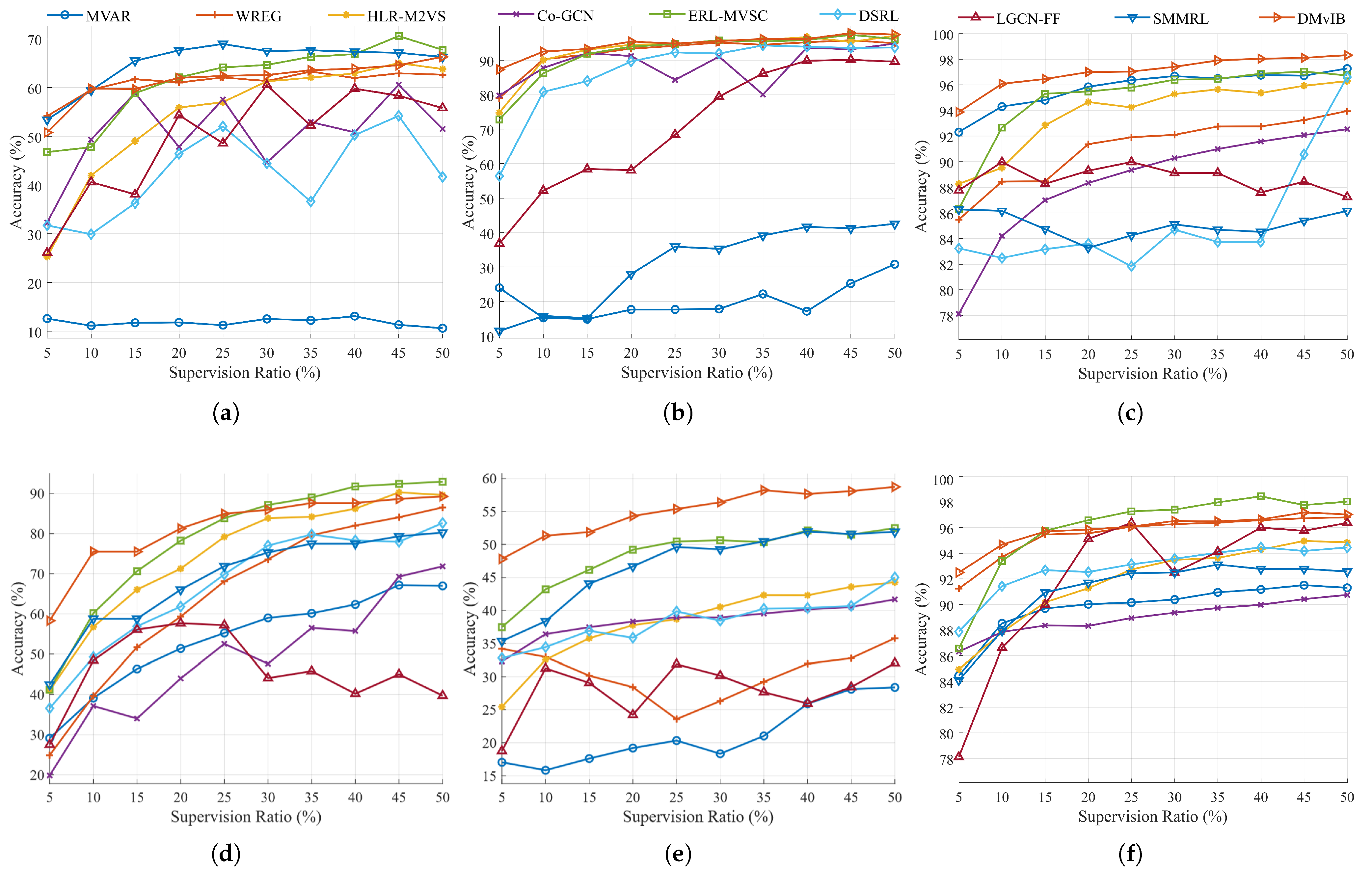
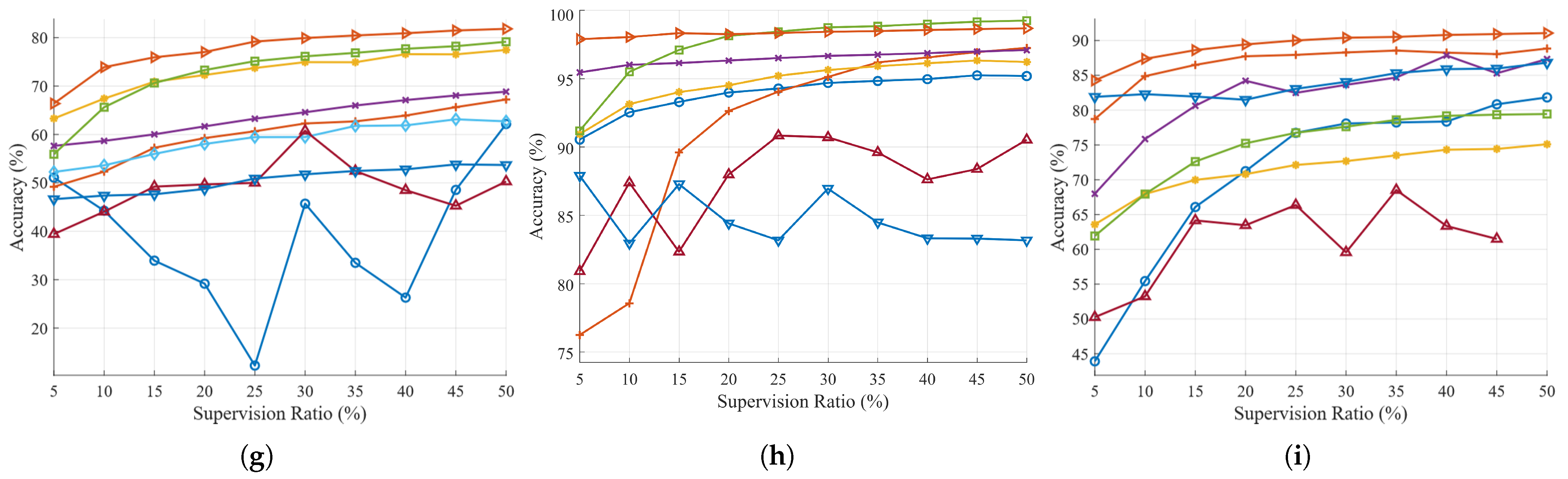
Figure A4.
F1-score of all methods on all datasets under supervision ratios of 5%, 10%, 15%, 20%, 25%, 30%, 35%, 40%, 45%, 50%: (a) Wikipedia; (b) ALOI; (c) Caltech1017; (d) 100leaves; (e) NUSWIDE; (f) MFeat; (g) scene15; (h) Hdigit; (i) Espgame.
Appendix A.3. T-SNE Visualizations and Metrics Quantification Table
Figure A5 and Table A1 are t-SNE visualizations and a t-SNE visualization metrics quantification table of all eight methods on the Espgame dataset in Section 4.2.2 (Classification Visualization).
Figure A5.
T-SNE visualization based on node representations of Espgame dataset: (a) MVAR; (b) WREG; (c) HLR-M2VS; (d) Co-GCN; (e) ERL-MVSC; (f) LGCN-FF; (g) SMMRL; (h) DMvIB.
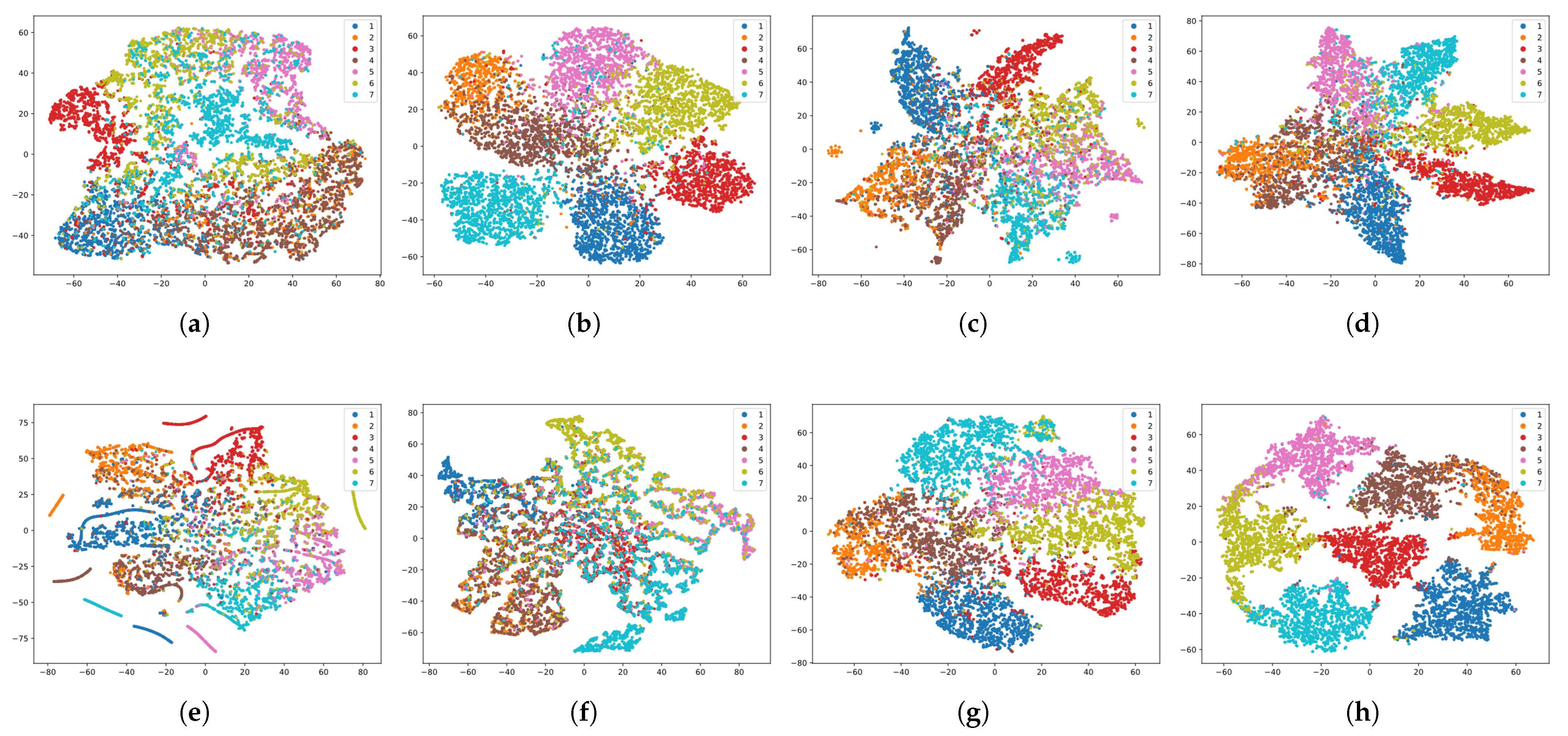
Table A1.
Quantitative comparison of t-SNE visualization metrics on the Espgame dataset. The best metric is highlighted in bold and underlined, while the second-best metric is underlined.
References
- Li, Q.; Zhang, P.; Tan, Q. Contamination-Reduced Multi-View Reconstruction for Graph Anomaly Detection. Technologies 2026, 14, 85. [Google Scholar] [CrossRef] [Scilit]
- Li, H.; Lin, Y.; Hu, P.; Yang, M.; Peng, X. Community-Aware Multi-View Representation Learning With Incomplete Information. IEEE Trans. Pattern Anal. Mach. Intell. 2026, 48, 3517–3529. [Google Scholar] [CrossRef] [Scilit] [PubMed]
- Wei, X.; Chen, Y.; Nie, F.; Liu, H.; Song, Q.; Xiao, L. View-Adaptive Multi-Granularity Anchor Learning for Multi-View Clustering. IEEE Trans. Image Process. 2026, 35, 3113–3126. [Google Scholar] [CrossRef] [Scilit] [PubMed]
- Kou, Z.; Wang, J.; Tang, J.; Jia, Y.; Shi, B.; Geng, X. Exploiting Multi-Label Correlation in Label Distribution Learning. In Proceedings of the Thirty-Third International Joint Conference on Artificial Intelligence, IJCAI-24; International Joint Conferences on Artificial Intelligence Organization: Jeju, Republic of Korea, 2024; pp. 4326–4334. [Google Scholar] [CrossRef] [Scilit]
- Wang, H.; Li, H.; Zou, H.; Chi, H.; Lan, L.; Huang, W.; Yang, W. Effective and Efficient Time-Varying Counterfactual Prediction with State-Space Models. In Proceedings of the International Conference on Learning Representations, Singapore, 24–28 April 2025; Volume 2025, pp. 15000–15025. [Google Scholar]
- Dong, Z.; Yu, S.; Wang, S.; Liu, X.; Zhu, E. Cross-View Graph Matching for Unsupervised Learning With Unaligned Multi-View Clustering. IEEE Trans. Knowl. Data Eng. 2026, 38, 2221–2233. [Google Scholar] [CrossRef] [Scilit]
- Liu, Y.; Guo, W.; Li, W.; Su, J.; Zhou, Q.; Yu, S. Tensor-Based Uncoupled and Incomplete Multi-View Clustering. Mathematics 2025, 13, 1516. [Google Scholar] [CrossRef] [Scilit]
- Zhu, J.; Liu, W.; Xu, Z.; Zhou, C. Enhanced Tensor Incomplete Multi-View Clustering with Dual Adaptive Weight. Electronics 2026, 15, 9. [Google Scholar] [CrossRef] [Scilit]
- Wang, H.; Yang, W.; Yang, L.; Wu, A.; Xu, L.; Ren, J.; Wu, F.; Kuang, K. Estimating Individualized Causal Effect with Confounded Instruments. In Proceedings of the 28th ACM SIGKDD Conference on Knowledge Discovery and Data Mining, Washington, DC, USA, 14–18 August 2022; pp. 1857–1867. [Google Scholar] [CrossRef] [Scilit]
- Yang, X.; Li, Y.; Xu, S.; Sun, Y. EGD: Error-Entropy-Guided Distillation for Noisy Multi-View Classification. Electronics 2026, 15, 1596. [Google Scholar] [CrossRef] [Scilit]
- Lin, R.; He, H.; Wu, Y.; Du, S.; Zhang, L. Graph Meets Deep Unfolding: An Interpretable Mutual-benefit Multi-view Learning Network. In Proceedings of the AAAI Conference on Artificial Intelligence, Singapore, 20–27 January 2026; Volume 40, pp. 23559–23567. [Google Scholar] [CrossRef] [Scilit]
- Kou, Z.; Wang, J.; Jia, Y.; Liu, B.; Geng, X. Instance-Dependent Inaccurate Label Distribution Learning. IEEE Trans. Neural Netw. Learn. Syst. 2025, 36, 1425–1437. [Google Scholar] [CrossRef] [Scilit] [PubMed]
- Li, J.; Chen, Y.; Lian, J.; Lu, J.; Liao, W.; Wang, S. Dual-channel optimized multi-view learning via information bottleneck. Knowl.-Based Syst. 2025, 327, 114104. [Google Scholar] [CrossRef] [Scilit]
- Lou, Z.; Zhang, C.; Xue, H.; Ye, Y.; Zhou, Q.; Hu, S. Self-supervised Weighted Information Bottleneck for Multi-view Clustering. In Proceedings of the Thirty-Third International Joint Conference on Artificial Intelligence, IJCAI-24; Larson, K., Ed.; International Joint Conferences on Artificial Intelligence Organization: Jeju, Republic of Korea, 2024; pp. 4643–4650. [Google Scholar] [CrossRef] [Scilit]
- Wang, H.; Zou, H.; Li, H.; Chi, H.; Shi, Y.; Zhang, Y.; Yang, W.; Liu, X.; Lin, Z. Transformers with Endogenous In-Context Learning: Bias Characterization and Mitigation. In Proceedings of the The Fourteenth International Conference on Learning Representations, Rio de Janeiro, Brazil, 23–27 April 2026. [Google Scholar]
- Kou, Z.; Wang, J.; Jia, Y.; Geng, X. Progressive label enhancement. Pattern Recognit. 2025, 160, 111172. [Google Scholar] [CrossRef] [Scilit]
- Perez Soler, J.; Guardiola, J.L.; García Sastre, N.; Garrigues Carbó, P.; Sanchis Hernández, M.; Perez-Cortes, J.C. Object-Specific Multiview Classification Through View-Compatible Feature Fusion. Sensors 2025, 25, 4127. [Google Scholar] [CrossRef] [Scilit] [PubMed]
- Wei, Z.; Cai, Z.; Shi, Z.; Fang, Z.; Fu, M.; Wang, S. Revisiting multi-view semi-supervised classification: A reinforcement learning perspective. Appl. Intell. 2026, 56, 37. [Google Scholar] [CrossRef] [Scilit]
- Luo, T.; Li, X.; Jiang, Z.; Zhang, S.; Hu, D. ESTIM: Efficient and Scalable Tensorial Incomplete Multi-view Semi-supervised Classification. In Proceedings of the 32nd ACM SIGKDD Conference on Knowledge Discovery and Data Mining V.1 (KDD ’26), Jeju Island, Republic of Korea, 9–13 August 2026; pp. 995–1006. [Google Scholar]
- Kou, Z.; Wang, J.; Jia, Y.; Geng, X. Inaccurate Label Distribution Learning. IEEE Trans. Circuits Syst. Video Technol. 2024, 34, 10237–10249. [Google Scholar] [CrossRef] [Scilit]
- Kipf, T.N.; Welling, M. Semi-Supervised Classification with Graph Convolutional Networks. In Proceedings of the 5th International Conference on Learning Representations, ICLR 2017, Toulon, France, 24–26 April 2017. [Google Scholar]
- Qiu, D.; Cai, K.; Lei, S.; Wu, X. Resonance in message propagation to improve GCN performance on semi-supervised node classification. Neurocomputing 2026, 679, 133223. [Google Scholar] [CrossRef] [Scilit]
- Xiao, F.; Liu, Y.; Shao, J. NNC-GCN: Neighbours-to-Neighbours Contrastive Graph Convolutional Network for Semi-Supervised Classification. ACM Trans. Knowl. Discov. Data 2024, 18, 1–18. [Google Scholar] [CrossRef] [Scilit]
- Lu, Z.; Zhong, M.; Sun, Q.; Ma, K. CA-NodeNet: A Category-Aware Graph Neural Network for Semi-Supervised Node Classification. Electronics 2025, 14, 3215. [Google Scholar] [CrossRef] [Scilit]
- Zhao, L.; Wang, X.; Liu, Z.; Wang, Z.; Chen, Z. Learnable Graph Guided Deep Multi-View Representation Learning via Information Bottleneck. IEEE Trans. Circuits Syst. Video Technol. 2025, 35, 3303–3314. [Google Scholar] [CrossRef] [Scilit]
- Wang, H.; Kuang, K.; Lan, L.; Wang, Z.; Huang, W.; Wu, F.; Yang, W. Out-of-Distribution Generalization With Causal Feature Separation. IEEE Trans. Knowl. Data Eng. 2024, 36, 1758–1772. [Google Scholar] [CrossRef] [Scilit]
- Kou, Z.; Xuan, H.; Zhu, J.; Wang, H.; Xie, M.K.; Wang, C.; Wang, J.; Jia, Y.; Geng, X. Tail-Aware Reconstruction of Incomplete Label Distributions With Low-Rank and Sparse Modeling. IEEE Trans. Circuits Syst. Video Technol. 2026, 36, 1571–1586. [Google Scholar] [CrossRef] [Scilit]
- Hu, S.; Lou, Z.; Yan, X.; Ye, Y. A Survey on Information Bottleneck. IEEE Trans. Pattern Anal. Mach. Intell. 2024, 46, 5325–5344. [Google Scholar] [CrossRef] [Scilit] [PubMed]
- Lou, Z.; Xue, H.; Zhang, C.; Hu, S. A Peer-review Look on Multi-modal Clustering: An Information Bottleneck Realization Method. In Proceedings of the 42nd International Conference on Machine Learning; Singh, A., Fazel, M., Hsu, D., Lacoste-Julien, S., Berkenkamp, F., Maharaj, T., Wagstaff, K., Zhu, J., Eds.; Proceedings of Machine Learning Research (PMLR): Vancouver, BC, Canada, 2025; Volume 267, pp. 40384–40399. [Google Scholar]
- Hu, S.; Shi, Z.; Yan, X.; Lou, Z.; Ye, Y. Multiview Clustering With Propagating Information Bottleneck. IEEE Trans. Neural Netw. Learn. Syst. 2024, 35, 9915–9929. [Google Scholar] [CrossRef] [Scilit] [PubMed]
- Lou, Z.; Zhang, K.; Wu, Y.; Hu, S. Super Deep Contrastive Information Bottleneck for Multi-modal Clustering. In Proceedings of the Forty-Second International Conference on Machine Learning, Vancouver, BC, Canada, 13–19 July 2025. [Google Scholar]
- Li, G.; Zhang, J.; Gao, R.; Yuan, W.; Jin, G.; Zeng, D. Learning Compact Representations With an Information Bottleneck for Camouflaged Object Detection. IEEE Trans. Multimed. 2026, 28, 360–372. [Google Scholar]
- Li, X.; Zhang, K. Heterogeneous Graph Neural Network with Multi-View Contrastive Learning for Cross-Lingual Text Classification. Appl. Sci. 2025, 15, 3454. [Google Scholar] [CrossRef] [Scilit]
- Huang, P.; Wang, C. Multi-View Graph Contrastive Neural Networks for Session-Based Recommendation. Mathematics 2025, 13, 1530. [Google Scholar] [CrossRef] [Scilit]
- Wang, Z.; Wei, L. Bi-View Contrastive Learning with Hypergraph for Enhanced Session-Based Recommendation. Information 2025, 16, 267. [Google Scholar] [CrossRef] [Scilit]
- Yu, Y.; Zhou, G.; Huang, H.; Xie, S.; Zhao, Q. A semi-supervised label-driven auto-weighted strategy for multi-view data classification. Know.-Based Syst. 2022, 255, 109694. [Google Scholar] [CrossRef] [Scilit]
- Zhuge, W.; Hou, C.; Peng, S.; Yi, D. Joint consensus and diversity for multi-view semi-supervised classification. Mach. Learn. 2020, 109, 445–465. [Google Scholar] [CrossRef] [Scilit]
- Wang, X.; Fu, L.; Zhang, Y.; Wang, Y.; Li, Z. MMatch: Semi-Supervised Discriminative Representation Learning for Multi-View Classification. IEEE Trans. Circuits Syst. Video Technol. 2022, 32, 6425–6436. [Google Scholar] [CrossRef] [Scilit]
- Jiang, B.; Zhang, C.; Zhong, Y.; Liu, Y.; Zhang, Y.; Wu, X.; Sheng, W. Adaptive collaborative fusion for multi-view semi-supervised classification. Inf. Fusion 2023, 96, 37–50. [Google Scholar] [CrossRef] [Scilit]
- Wu, Z.; Lin, X.; Lin, Z.; Chen, Z.; Bai, Y.; Wang, S. Interpretable Graph Convolutional Network for Multi-View Semi-Supervised Learning. IEEE Trans. Multimed. 2023, 25, 8593–8606. [Google Scholar] [CrossRef] [Scilit]
- Hu, S.; Geng, R.; Cheng, Z.; Zhang, C.; Zou, G.; Lou, Z.; Ye, Y. A Parameter-free Multi-view Information Bottleneck Clustering Method by Cross-view Weighting. In Proceedings of the 30th ACM International Conference on Multimedia (MM ’22), Lisbon, Portugal, 10–14 October 2022; pp. 3792–3800. [Google Scholar] [CrossRef] [Scilit]
- Cheng, P.; Hao, W.; Dai, S.; Liu, J.; Gan, Z.; Carin, L. CLUB: A Contrastive Log-ratio Upper Bound of Mutual Information. In Proceedings of the 37th International Conference on Machine Learning, ICML 2020, Virtual, 13–18 July 2020; Proceedings of Machine Learning Research (PMLR): Vienna, Austria, 2020; pp. 1779–1788. [Google Scholar]
- Tian, Z.; Wei, X.; Lou, Z.; Teng, Z.; Fu, S. Adaptive multi-view information bottleneck for multi-omics data clustering. Brief. Bioinform. 2026, 27, bbaf717. [Google Scholar] [PubMed]
- Li, J.; Wang, Y.; Zhang, X.; Jiang, D.; Dai, W.; Li, C.; Xiong, H.; Tian, Q. Contrastive Learning via Variational Information Bottleneck. IEEE Trans. Pattern Anal. Mach. Intell. 2025, 47, 7410–7427. [Google Scholar] [CrossRef] [Scilit] [PubMed]
- Hu, S.; Shi, Z.; Ye, Y. DMIB: Dual-Correlated Multivariate Information Bottleneck for Multiview Clustering. IEEE Trans. Cybern. 2022, 52, 4260–4274. [Google Scholar] [CrossRef] [Scilit] [PubMed]
- Hu, S.; Fan, J.; Zou, G.; Ye, Y. Multi-aspect Self-guided Deep Information Bottleneck for Multi-modal Clustering. In Proceedings of the AAAI Conference on Artificial Intelligence; Association for the Advancement of Artificial Intelligence: Philadelphia, PA, USA, 2025; Volume 39, pp. 17314–17322. [Google Scholar] [CrossRef] [Scilit]
- Tao, H.; Hou, C.; Nie, F.; Zhu, J.; Yi, D. Scalable Multi-View Semi-Supervised Classification via Adaptive Regression. IEEE Trans. Image Process. 2017, 26, 4283–4296. [Google Scholar] [CrossRef] [Scilit]
- Yang, M.; Deng, C.; Nie, F. Adaptive-weighting discriminative regression for multi-view classification. Pattern Recognit. 2019, 88, 236–245. [Google Scholar] [CrossRef] [Scilit]
- Xie, Y.; Zhang, W.; Qu, Y.; Dai, L.; Tao, D. Hyper-Laplacian Regularized Multilinear Multiview Self-Representations for Clustering and Semisupervised Learning. IEEE Trans. Cybern. 2020, 50, 572–586. [Google Scholar] [CrossRef] [Scilit] [PubMed]
- Li, S.; Li, W.; Wang, W. Co-GCN for Multi-View Semi-Supervised Learning. In Proceedings of the The Thirty-Fourth AAAI Conference on Artificial Intelligence, AAAI 2020, The Thirty-Second Innovative Applications of Artificial Intelligence Conference, IAAI 2020, The Tenth AAAI Symposium on Educational Advances in Artificial Intelligence, EAAI 2020, New York, NY, USA, 7–12 February 2020; AAAI Press: New York, NY, USA, 2020; pp. 4691–4698. [Google Scholar] [CrossRef] [Scilit]
- Huang, A.; Wang, Z.; Zheng, Y.; Zhao, T.; Lin, C.W. Embedding Regularizer Learning for Multi-View Semi-Supervised Classification. IEEE Trans. Image Process. 2021, 30, 6997–7011. [Google Scholar] [CrossRef] [Scilit] [PubMed]
- Wang, S.; Chen, Z.; Du, S.; Lin, Z. Learning Deep Sparse Regularizers With Applications to Multi-View Clustering and Semi-Supervised Classification. IEEE Trans. Pattern Anal. Mach. Intell. 2022, 44, 5042–5055. [Google Scholar] [CrossRef] [Scilit] [PubMed]
- Chen, Z.; Fu, L.; Yao, J.; Guo, W.; Plant, C.; Wang, S. Learnable graph convolutional network and feature fusion for multi-view learning. Inf. Fusion 2023, 95, 109–119. [Google Scholar] [CrossRef] [Scilit]
- Fang, Z.; Zou, Y.; Lan, S.; Du, S.; Tan, Y.; Wang, S. Scalable multi-modal representation learning networks. Artif. Intell. Rev. 2025, 58, 209. [Google Scholar] [CrossRef] [Scilit]
- Demšar, J. Statistical Comparisons of Classifiers over Multiple Data Sets. J. Mach. Learn. Res. 2006, 7, 1–30. [Google Scholar]

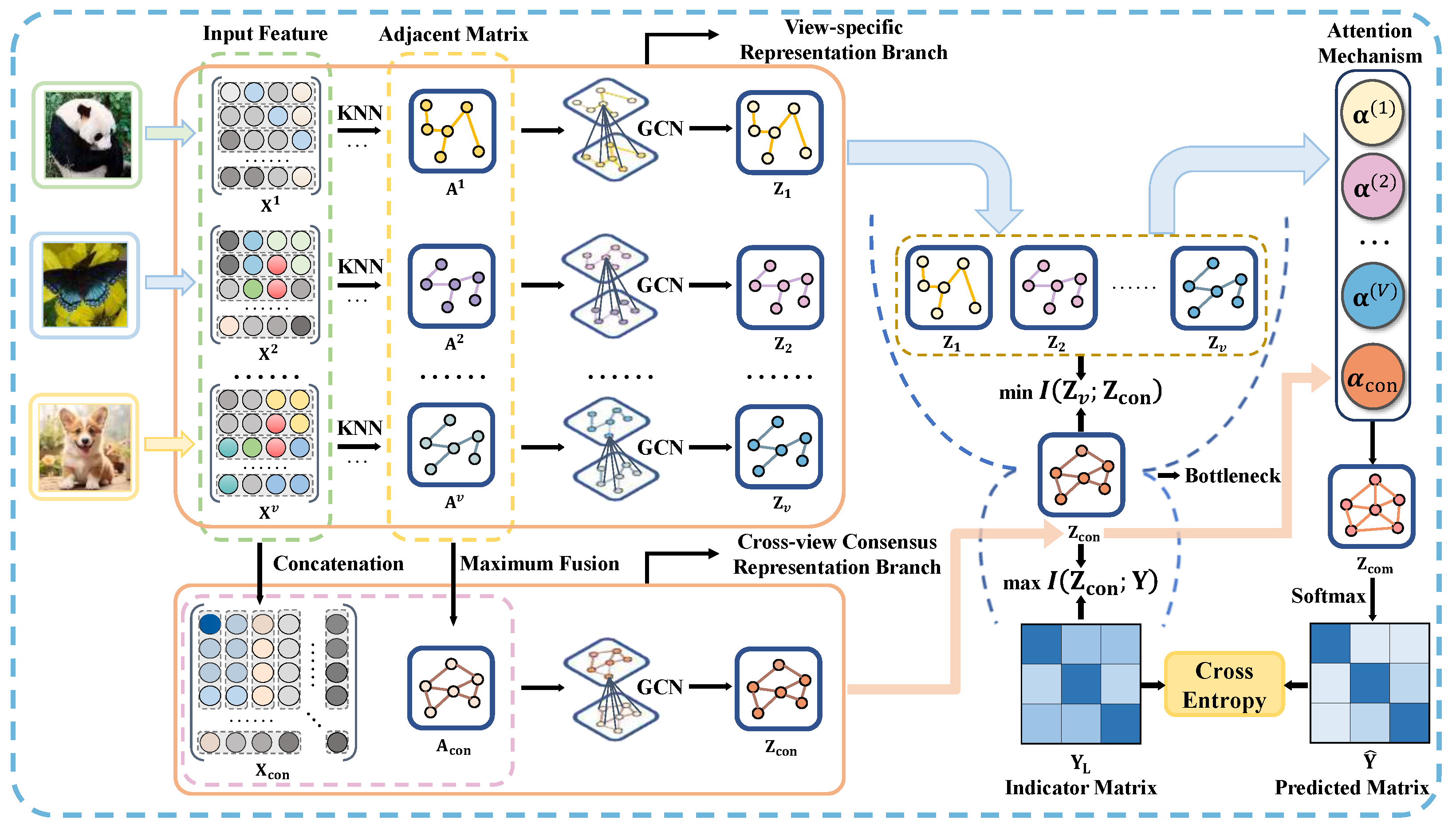
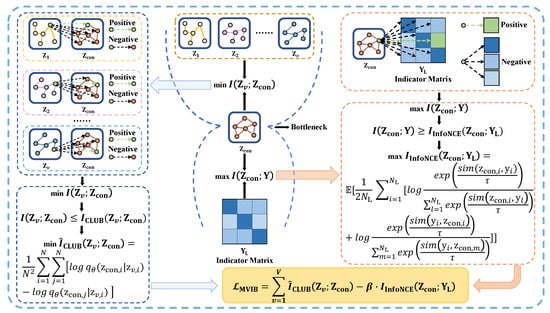

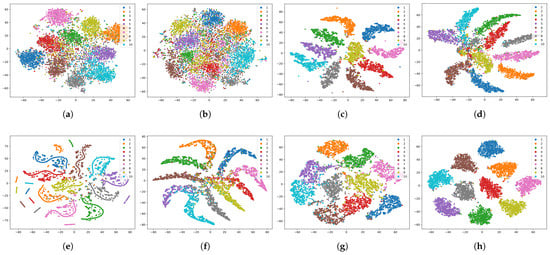
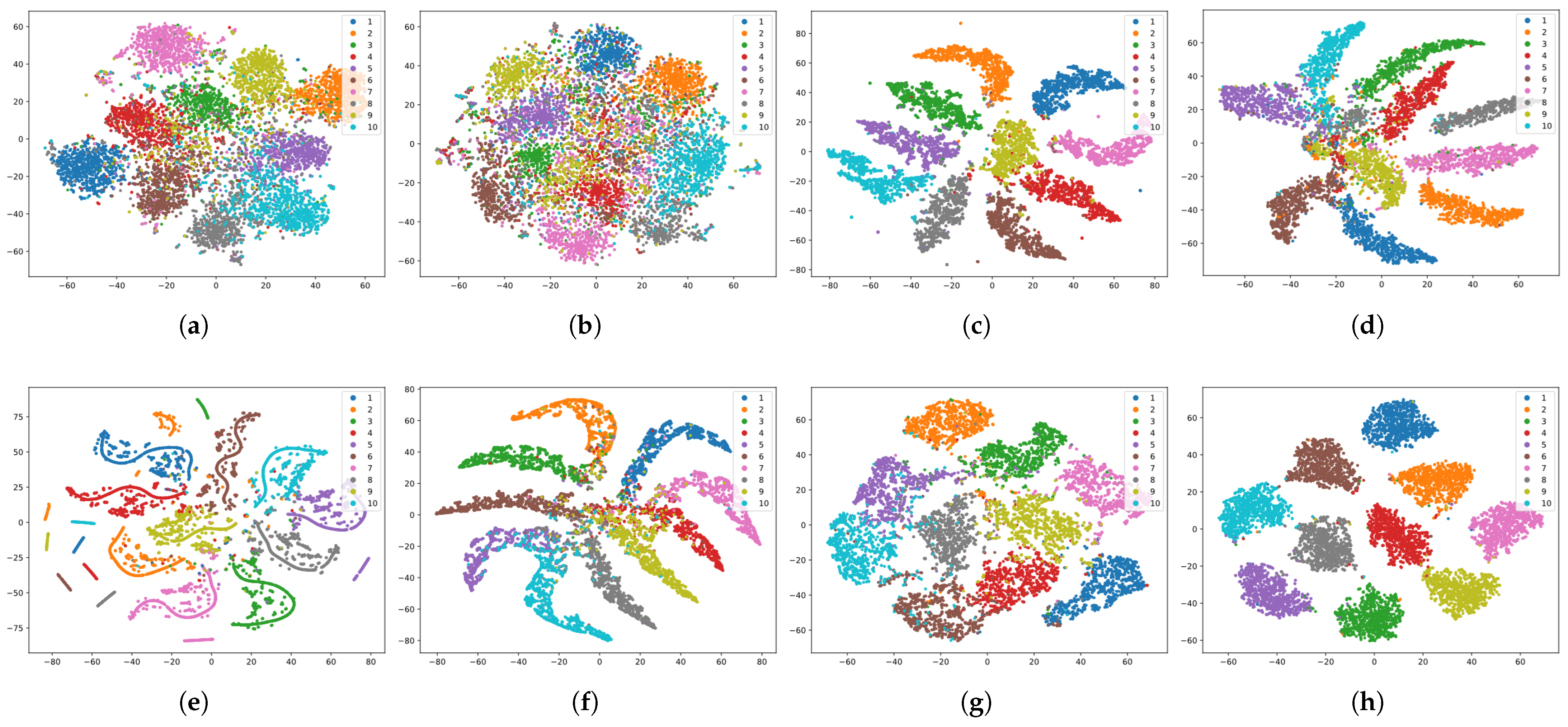
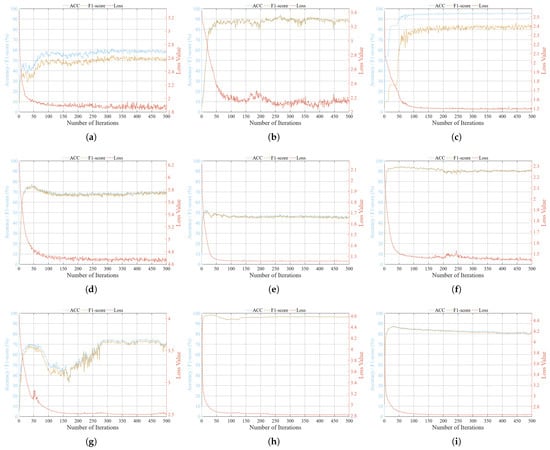
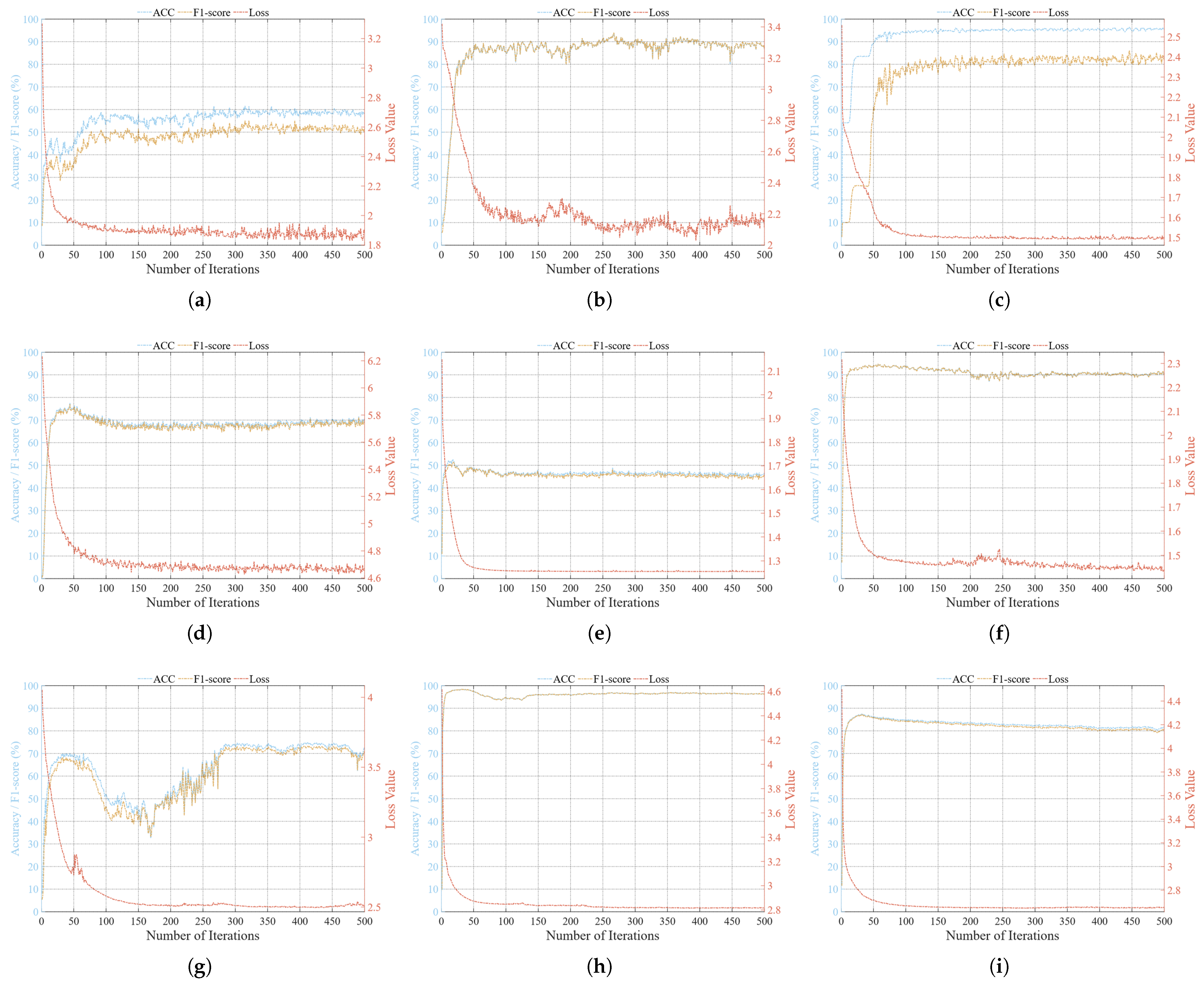
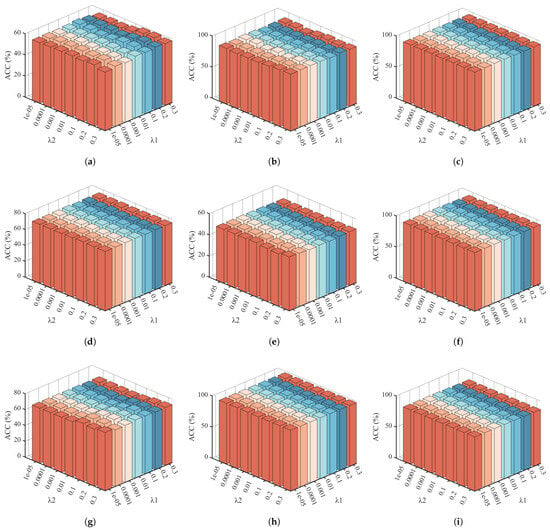
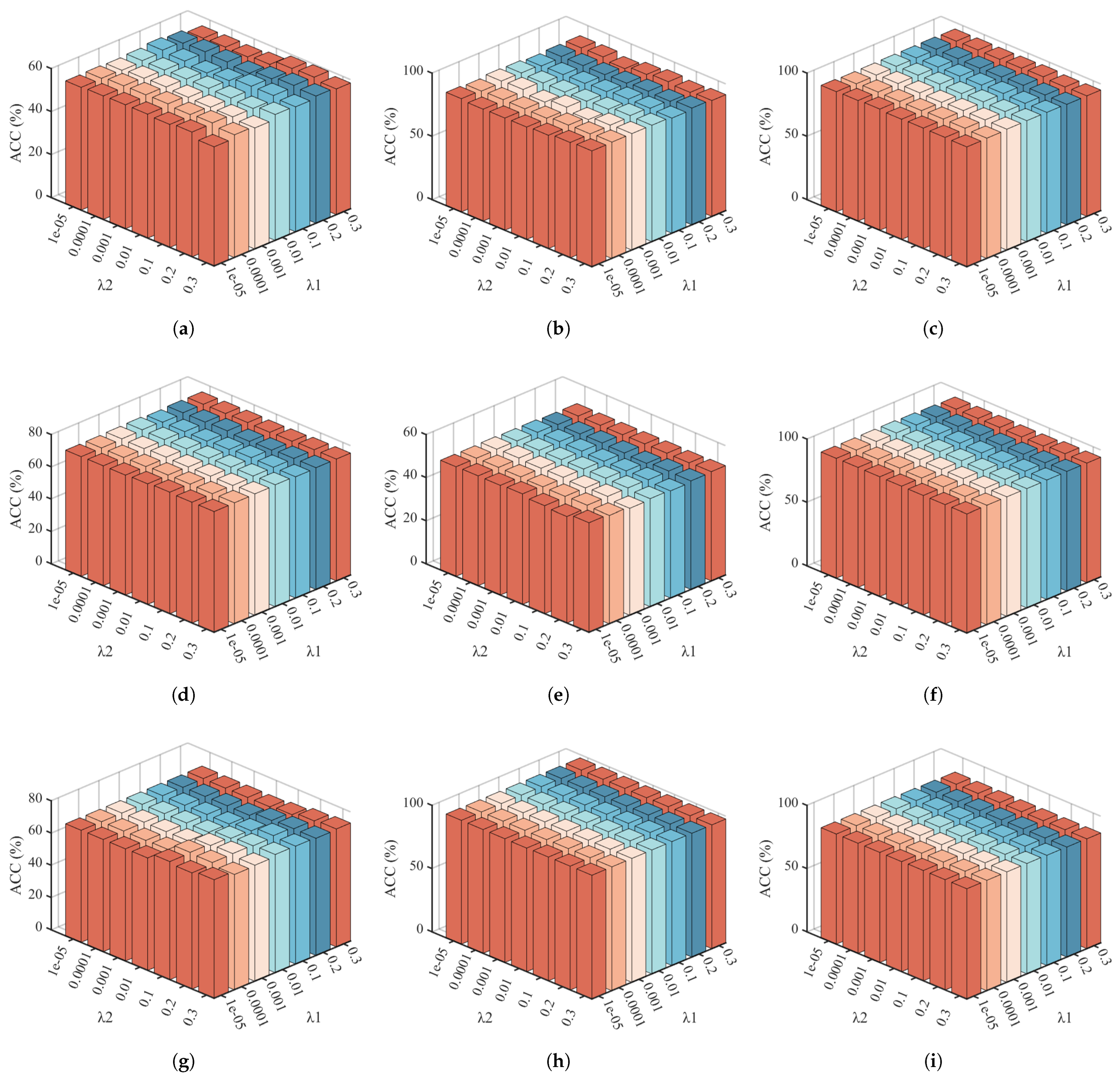

Disclaimer/Publisher’s Note: The statements, opinions and data contained in all publications are solely those of the individual author(s) and contributor(s) and not of MDPI and/or the editor(s). MDPI and/or the editor(s) disclaim responsibility for any injury to people or property resulting from any ideas, methods, instructions or products referred to in the content. |
© 2026 by the authors. Licensee MDPI, Basel, Switzerland. This article is an open access article distributed under the terms and conditions of the Creative Commons Attribution (CC BY) license.