


Abstract
People on the autism spectrum and other neurodivergent people may experience sensory-rich environments as distressing, while teachers and care professionals must often identify and respond to environmental discomfort with limited objective information. This study reports the human-centered requirement elicitation, prototype development, and quantitative pilot evaluation of an environmental-monitoring system that relies on rule-based thresholds. Across three case-study settings, 125 stakeholder participations informed the development and design of a smart sensor system measuring sound, light, temperature, and air quality. The subsequent pre–post pilot study was conducted at four Austrian and Italian centers from February to June 2026. In total, 42 clients or pupils and 26 teachers or care professionals participated in the evaluation measures of the pilot study. Post-study acceptance was positive: overall meCUE user experience scores ranged from 4.88 to 4.94 on a seven-point scale, and AttrakDiff overall attractiveness averaged 1.21 (SD = 1.06) on a scale from −3 to +3. The results support the usability and perceived value of the prototype to maintain supportive environmental conditions.
1. Introduction
Neurodiversity describes natural variation in human neurological functioning [1], with autism representing one form of neurodivergence [2,3]. Autism is characterized by differences in social interaction and by restricted or repetitive patterns of behavior or interests; hyper- or hyporeactivity to sensory input is included among the diagnostic features [4]. Sensory-processing differences may involve altered neural connectivity, sensory gating, or modulation of responses to sensory information [5,6]. Consequently, environmental characteristics such as light, sound, air quality and temperature can become salient stressors [7,8,9].
Sensory overload can adversely affect wellbeing [10] and participation in everyday activities [11,12]. These effects are particularly relevant in educational settings, where multiple sensory needs and stimuli coincide [13,14]. Classroom noise, for example, has been associated with repetitive behavior among children on the autism spectrum [15]. Healthcare environments may likewise restrict participation when they are unpredictable or sensorily demanding [16]. Teachers, relatives, and care professionals therefore use environmental and behavioral strategies to prevent or mitigate distress [12,17,18]. Given an estimated global autism prevalence of approximately 1% [19] and frequent co-occurring conditions, including attention-deficit/hyperactivity disorder (ADHD), anxiety, and mood disorders [20,21], accessible environmental support is relevant across settings.
Assistive technologies may help occupants and staff recognize unfavorable room conditions; however, reviews have identified limited real-world evidence, insufficient participatory development, and weak alignment between available technologies and the priorities of users on the autism spectrum [22,23,24].
A cross-border project addresses this gap by developing a smart home sensor and feedback system for schools, day-care services, and supported-living contexts. The proposed system records sound, light, temperature, and air-quality indicators and presents them to teachers or care professionals. Configurable rules can provide immediate threshold alerts. Exploratory machine-learning components are considered for detecting room- and activity-specific temporal patterns across several inputs but are not presented here as a validated model.
Development followed a Human-Centered Design (HCD) process [25] involving people on the autism spectrum, teachers, care professionals, and subject-matter experts. Interdisciplinary project partners contributed expertise in architecture, engineering, psychosocial care, and research. This participatory approach was intended to make requirement analysis and design decisions understandable, context-sensitive, and feasible rather than to demonstrate clinical effectiveness.
Reviews of assistive technology for people on the autism spectrum describe applications for communication, daily living, safety, and stress reduction, but also emphasize limited evaluation in naturalistic environments and insufficient involvement of intended users [22,23,24,26]. Environmental studies have examined associations between indoor conditions and autistic experience [7,8,9,15,16,27,28], while classroom systems have shown that simple visual feedback can influence noise levels [29]. These approaches provide important evidence for environmental adaptation but do not establish a transferable workflow that links stakeholder priorities across school and care settings to a concrete multisensor interface.
The novelty of the present work is therefore methodological and design-oriented: it documents a cross-setting HCD process, makes the route from stakeholder input to system requirements explicit, and conducts a multicenter pilot evaluation to assess the feasibility and acceptance of the system in different settings.
The study had three objectives: (1) to identify relevant contexts, users, and environmental-support needs; (2) to translate these findings into traceable requirements and a smart sensor system; and (3) to test acceptance of the system in a four-center pilot evaluation.
2. Materials and Methods
In the following sections the participatory development process according to the HCD process as well as the pilot study are described.
2.1. Human-Centered Design Process
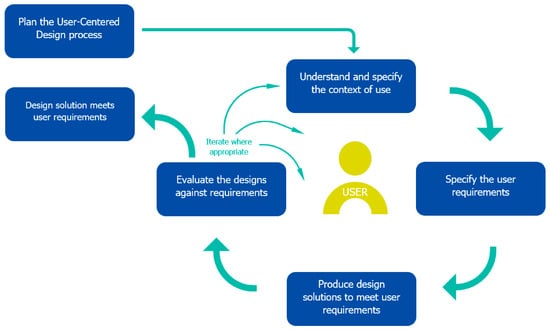
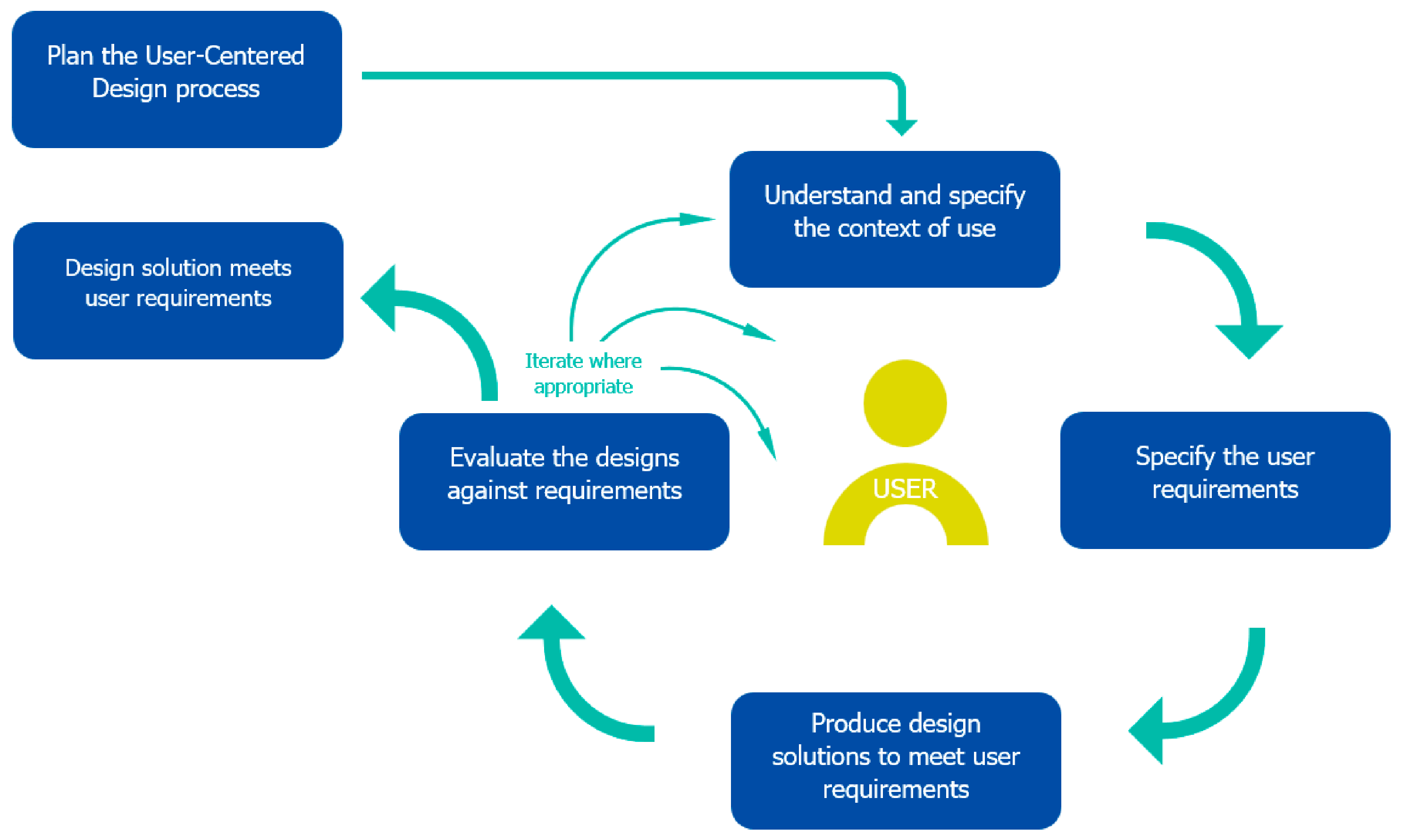
The development process followed the four interrelated and iterative activities of HCD, as shown in Figure 1: understanding and specifying the context of use, specifying user requirements, producing design solutions, and evaluating designs against requirements [25,30]. Stakeholders included people on the autism spectrum, teachers, care professionals, experts, and project partners. Their involvement was intended to elicit needs, define requirements and co-create the smart sensor system for different settings.
Figure 1.
Process of conducting the Human-Centered Design Approach [25].
Six stakeholder-involvement activities (SI1–SI6) were conducted across the design cycle as well as the pilot evaluation described separately in Section 2.2. The activities covered context exploration, context selection, user and requirement analysis, validation of personas and user days, selection of the system structure, and think-aloud evaluation of an interface mock-up. Iteration allowed outputs from one activity to be revised in later activities.
Between April 2024 and April 2025, 125 stakeholder participations were recorded across the activities shown in Table 1. This table represents participations rather than confirmed unique individuals because some stakeholders contributed to more than one activity. Activities were organized in three case studies: an elementary school in Austria (CS1); a day-care center in Italy (CS2); and a after-school care center in Italy (CS3).
Table 1.
Overview of Stakeholder Involvement (SI) during the requirement and co-creation phase.
Focus groups, collaborative workshops, co-design exercises, structured discussions, personas, user days, and mock-ups were used to elicit and refine requirements. Sessions were offered on site or online; online sessions used Microsoft Teams and MURAL [31]. Facilitators consolidated the documented outputs by setting and HCD phase. The requirements were retained, modified, or excluded during consortium discussions according to four criteria: expected user benefit, ethical acceptability, organizational and regulatory feasibility, and technical feasibility.
SI1 generated usage contexts and application scenarios, including supported living, education, employment, leisure, and public spaces. In SI2, project partners compared these scenarios using the predefined criteria and reached consensus on the settings to be carried forward. Table 1 summarizes the target groups and purpose of each activity.
SI3 specified the intended users and their goals, tasks, interaction constraints, and potentially challenging situations. These findings were translated into a preliminary set of functional and design requirements. Examples included room changes accompanied by loss of predictability and elevated sound levels.
In SI4, setting-specific personas and user days were reviewed with stakeholders. Personas represented teachers, care professionals, neurodivergent and neurotypical pupils, and neurodivergent clients [32]. User days mapped typical routines, potential stressors, and possible intervention points [33]. The consortium then selected the final system architecture in SI5 by comparing requirements with feasibility and stakeholder priorities.
A clickable interface mock-up was developed from the requirements generated in SI1–SI5. It represented navigation, data entry, real-time environmental information, and alert states before implementation of the full technical system.
In SI6, four formal users (two from CS1 and two from CS3) completed predefined mock-up tasks while verbalizing their thoughts using the think-aloud method [34]. Their comments were used for formative interface refinement.
2.2. Multicenter Pilot Study
2.2.1. Design, Settings, and Period
A multicenter pilot study with pre- and post-assessments to evaluate acceptance was conducted from February to June 2026. Four centers participated: an elementary school in Austria; a day-care center in Austria; a day-care center in Italy; and an afternoon-care center for pupils in Italy. For country-level reporting, the elementary school and day-care center in Austria were combined as the Austrian group, while the day-care center and afternoon-care center were combined as the Italian group.
2.2.2. System Use and Participant Roles
During the field phase, teachers and care professionals used the developed prototype to review environmental data and provide contextual labels for system development. Neurodivergent pupils and clients did not directly operate the interface and were considered passive occupants of the monitored environments. The system did not automatically regulate lighting, temperature, ventilation, or sound but reported current environmental factors and deviations to the teachers and caregivers via the system UI on a tablet.
2.2.3. Participants and Baseline Data
Baseline questionnaires covered 58 clients or pupils and 27 teachers or care professionals. Demographic information included age and gender. Parents or care professionals additionally reported background characteristics of the neurodivergent participants, including sensory hyper- and hyposensitivity and everyday challenges. Teachers and care professionals rated how frequently situations associated with sound, light, air quality, temperature, and other environmental factors negatively affected wellbeing on a five-point scale from 1 (never) to 5 (very frequently). They also rated the difficulty of maintaining comfortable conditions for each factor from 1 (very easy) to 5 (very difficult).
2.2.4. Acceptance and User Experience
At post-assessment, teachers and care professionals who had interacted with the system completed selected meCUE 2.0 and AttrakDiff items [35,36]. The meCUE assessment comprised usefulness, usability, and visual-aesthetics dimensions, each calculated as the mean of three items rated from 1 (strong disagreement) to 7 (strong agreement). AttrakDiff was administered as a ten-item semantic differential ranging from −3 to +3. Pragmatic quality (PQ) was calculated from complicated–simple, impractical–practical, unpredictable–predictable, and confusing–well organized. Hedonic quality–identity (HQ-I) comprised styleless–stylish and inferior–valuable; hedonic quality–stimulation (HQ-S) comprised unimaginative–creative and dull–captivating; and attractiveness (ATT) comprised ugly–beautiful and bad–good. Higher scores represented more favorable evaluations.
2.2.5. Statistical Analysis
The pilot analysis was descriptive. Means, standard deviations, medians, and ranges were calculated from available responses; missing or nonnumeric entries were excluded from the respective calculation. Environmental-frequency and maintenance-difficulty ratings were pooled across the Austrian and Italian centers as requested for this analysis and are reported with factor-specific valid sample sizes. Acceptance outcomes were summarized for the overall sample and separately for Austria and Italy. Because of the small, unequal country samples, no inferential country comparison was performed. Of 27 baseline staff respondents, 25 contributed valid environmental-factor ratings, 16 provided valid meCUE data (Austria n = 4; Italy n = 12), and 19 provided valid AttrakDiff data (Austria n = 6; Italy n = 13). The lower post-assessment sample sizes reflect attrition and incomplete post-questionnaires.
2.2.6. Ethics and Consent
The pilot study from February to June 2026 was approved by the Ethics Committee of Carinthia (protocol M2025-11; 11 June 2025) and by the Department of Education of Carinthia (protocol A/0312-Allg-B/2025; 25 February 2025). Written informed consent was obtained from all adult participants. For pupils and clients with a legal guardian, written consent was provided by a parent or legal guardian; pupils and clients received appropriate oral information and could decline participation, and their refusal was respected.
2.3. Use of Large Language Models in Manuscript Preparation
During the preparation of this manuscript, the authors used ChatGPT 5.6 and 6.1 (OpenAI) and Academic AI GPT-5 to support language editing, improve clarity of expression, and proofread the text. All AI-assisted revisions were critically reviewed and approved by the authors, who take full responsibility for the final content of the manuscript.
3. Results
The HCD process produced four successive outputs: selection of application contexts, definition of user groups and routines, specification of functional and interface requirements, and a smart home system concept with a graphical user interface that was tested in a multi-center pilot study.
3.1. Context Definition
Different contexts of use that potentially profit from a smart sensor system were discussed: living environments, workplaces, public spaces, and education. Living and educational settings were selected for further development because stakeholders judged them to offer the clearest combination of expected benefit and implementation feasibility.
Living contexts included supported-care facilities and independent or shared housing. Stakeholders emphasized sound-related disturbance, unpredictable social proximity, unsuitable lighting or temperature, and lack of daily structure. Suggested responses included environmental feedback, reminders, step-by-step guidance, and pre-warnings. The strongest perceived use case was a shared environment in which staff could act on room-level information.
In workplaces, open or busy offices and unfavorable room conditions were described as possible sources of overload. Participants proposed discreet notifications, advance warnings, color-coded information, and access to quiet areas. Views were mixed, however, and the workplace was not selected for initial implementation.
In public spaces, participants highlighted crowding, unpredictability, navigation difficulties, and environmental stimuli. Proposed functions included orientation, information about current conditions, access to decompression spaces, and emergency support. These use cases would require infrastructure and sensing beyond the scope of the transportable room-based prototype.
Education was prioritized because classrooms combine diverse sensory needs, shared environmental exposure, and limited opportunities for withdrawal. Requirements included predictability, quiet-space access, non-stigmatizing feedback, and a separation between staff information and any pupil-facing display. A generic room-level display was preferred over person-identifiable feedback.
On the basis of the decision criteria described in Section 2.1, living and primary-school settings were selected. The subsequent activities focused on the people who occupy these environments and on the teachers and care professionals expected to operate the system.
3.2. Analysis of Target Group
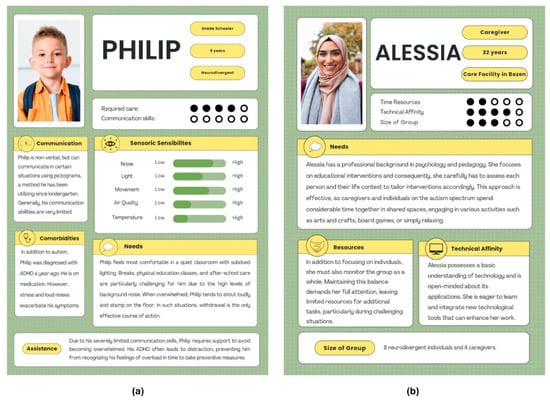
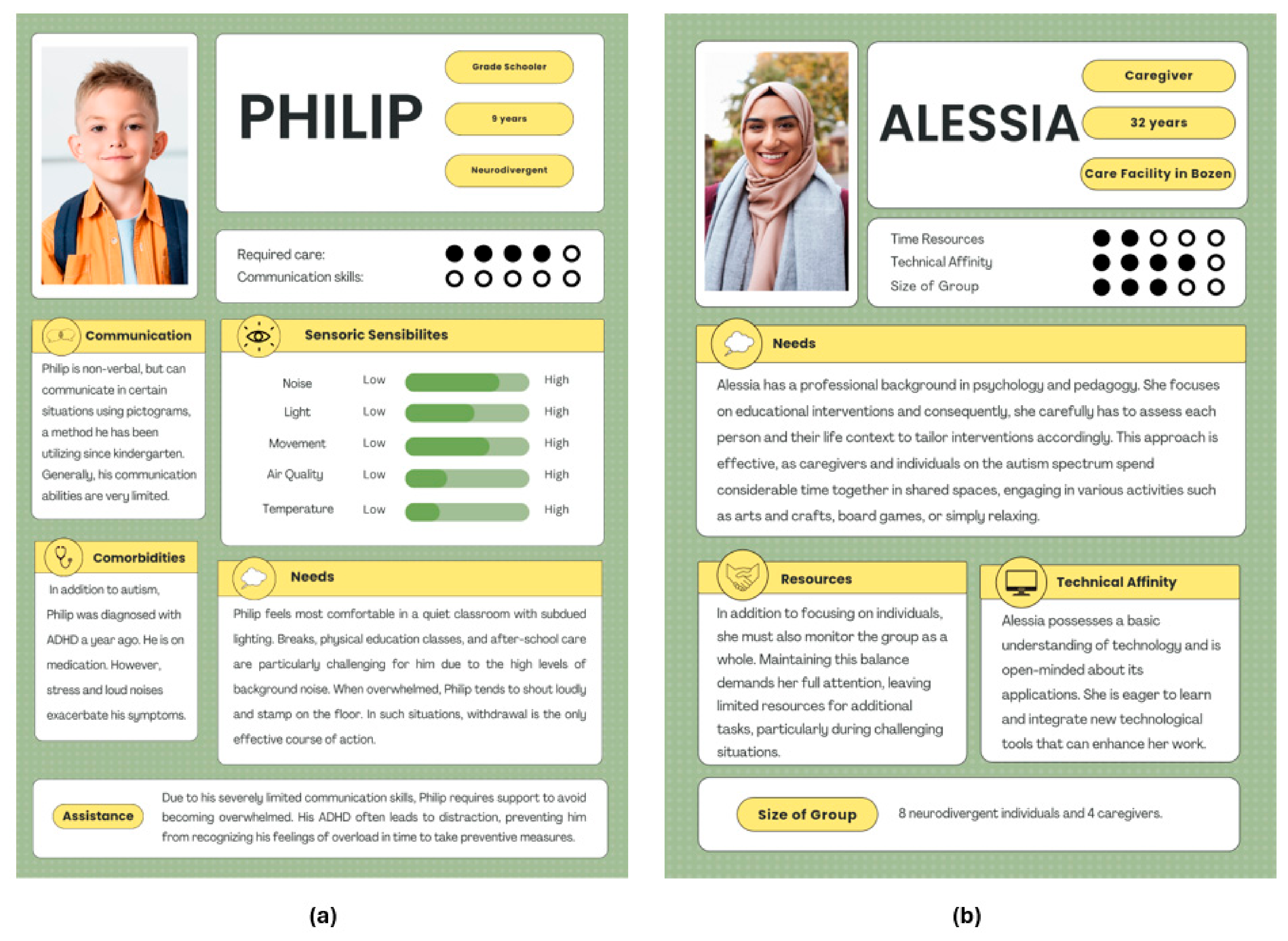
Personas, as illustrated in Figure 2, and user days were developed for the distinct settings and roles. The resulting profiles represented the potential target groups and were used for the development of the system showing variation in communication, sensory preferences, autonomy, routines, support needs, staff time, and technical confidence.
Figure 2.
Selection of Personas of each User Group: (a) pupil on the autism spectrum; (b) formal caregiver of a living facility. Created by the authors using Canva (web-based application; no version number available).
The design set included neurodivergent children in primary school, neurodivergent adolescents and adults attending day or care services, and neurotypical pupils sharing the classroom environment. Although neurotypical pupils were initially considered a separate interface-user group, the concept was revised so that teachers and care professionals remained the direct system operators.
Additional personas represented primary-school teachers and care professionals. Their differentiating characteristics included available time, technical confidence, group or class size, and responsibility for responding to alerts.
Care professionals were generally described as motivated but constrained by workload. This finding supported requirements for brief data entry, retrospective event reporting, and a dashboard that could be interpreted quickly.
User days mapped typical routines of the different settings (school and care facilities) and showed potential system touchpoints [37,38]. Their purpose was to locate periods in which changing rooms, activities, staffing, or environmental conditions could affect system use.
3.3. Requirements of System Functionalities
Stakeholders consistently prioritized sensory conditions in shared institutional environments with limited opportunities for withdrawal. The requirements therefore focused on environmental awareness and staff decision support.
The core functional requirement was continuous monitoring of sound, light, temperature, and air-quality indicators, accompanied by clear feedback to teachers and care professionals. Contextual information about the room and activity was required to make alerts interpretable. Requirements that depended on cameras or direct behavioral surveillance were excluded because of privacy and ethical concerns.
Because preferences vary across people, rooms, and activities, the concept allows for configurable threshold profiles. Fixed rules remain the transparent baseline for alerts. Exploratory machine learning was intended to be included in the system for multivariable, time-dependent pattern detection but is not presented here as a validated outcome.
The preferred hardware concept comprised portable multisensor boxes that could follow room schedules and be placed near relevant activity areas. The boxes were required to be robust, unobtrusive, and visually reassuring.
3.4. Requirements of User Interface
The interface separates staff input from system output. During the development phase, teachers and care professionals can record the time, severity, and suspected context of an observed discomfort event. Retrospective entry is supported because immediate documentation may be inappropriate during an acute event. These entries are explicitly treated as proxy labels to train the AI algorithm.
The output area of the interface presents current environmental parameters on a configurable dashboard.
Stakeholders proposed concise visualizations such as traffic-light indicators, pictograms, equalizers, or simple color coding. The design goal was rapid interpretation during demanding work routines rather than continuous attention to the screen.
Alerts may be visual or acoustic, with less intrusive cues used for early warnings. Wearable vibration alerts were discussed as an alternative for teachers and caregivers but were not selected as a core feature. In schools, a staff-only dashboard can be separated from any classroom display. In care settings, no dedicated visualization for neurodivergent occupants was included in the initial concept. Table 2 shows the pathway from stakeholder input to design decisions.
Table 2.
Traceability from stakeholder input to selected system requirements.
3.5. Final System Concept
The selected concept is a sensor and dashboard system for four environmental domains: sound, light, temperature, and air quality. It presents real-time information to teachers and care professionals on a computer, smartphone, or tablet. Cameras and image-based crowd monitoring were excluded. The system serves as an informational aid by notifying caregivers and teachers when environmental conditions fall outside predefined comfort ranges. It does not automatically regulate the environment; any environmental adjustments remain the responsibility of people in the setting.
Configurable rule-based thresholds provide the interpretable baseline. Context labels entered by staff can support later exploration of room- and activity-specific patterns. Machine-learning approaches offer the potential to identify complex patterns in environmental sensor data and, over time, support the adaptation of indoor conditions to individual or context-specific comfort needs. As staff reports represent proxy labels and relevant contextual triggers may remain unmeasured, identified associations should initially be interpreted as predictive patterns rather than causal relationships or validated person-specific comfort thresholds. For accurate proxy labels, additional data would be needed (e.g., pulse, stress ratings from wearable devices).
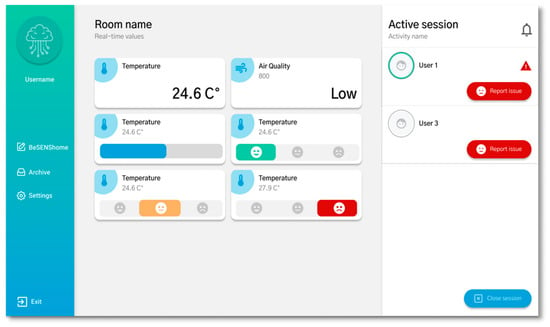
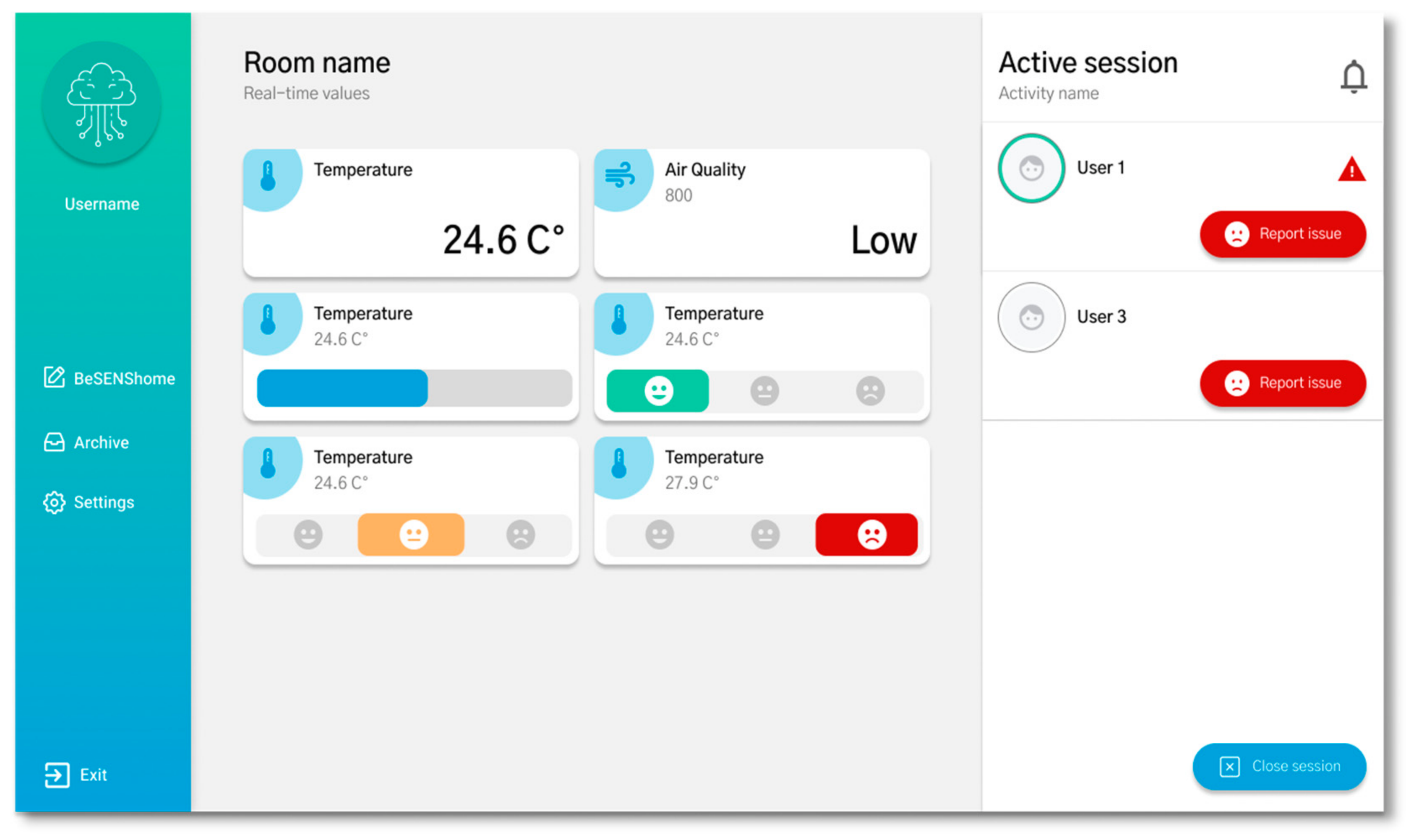
Accordingly, the current output is a set of requirements and a prototype concept, not evidence that the system improves wellbeing, autonomy, safety, or workload. These outcomes were designated for the subsequent pilot evaluation described in Section 2.2. Figure 3 shows the user interface of the proposed system.
Figure 3.
Dashboard on tablet with room parameters and notification about user issue.
3.6. Pilot Study Results
The following sections show the baseline characteristics of the study participants as well as the feasibility and acceptance analysis of the proposed system gathered in the pilot study.
3.6.1. Sample
Baseline questionnaires described 58 clients or pupils (43 male and 15 female) and 27 teachers or care professionals (6 male and 21 female). Table 3 presents the sample by center—elementary school, day-care center Austria, day-care center Italy and afternoon-care center. Age is shown as mean +/− standard deviation.
Table 3.
Pilot-study sample at baseline.
3.6.2. Challenging Environmental Situations and Maintenance of Comfort
Across the pooled Austrian and Italian sample, shown in Table 4, sound-related challenging situations were reported most frequently, on a scale from 1 = never to 5 = very often (M = 4.37, SD = 0.67), followed by air quality (M = 3.81, SD = 0.68), temperature (M = 3.63, SD = 0.82), and light (M = 3.46, SD = 1.01). On the scale from 1 (never) to 5 (very frequently), all four means were above the midpoint.
Table 4.
Frequency of challenging situations and difficulty maintaining environmental comfort, pooled across Austria and Italy.
Maintaining comfortable sound conditions was rated most difficult (M = 4.41, SD = 0.78). Mean ratings were lower for temperature (M = 3.07, SD = 1.18), air quality (M = 3.04, SD = 0.84), and light (M = 2.77, SD = 0.85). Thus, sound was both the most frequent source of challenging situations and the environmental domain perceived as most difficult to manage.
3.6.3. meCUE Acceptance
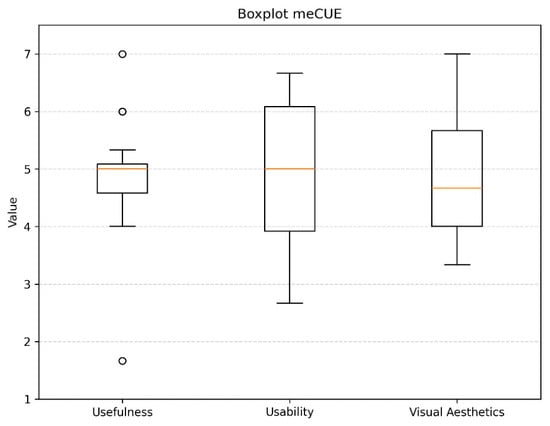
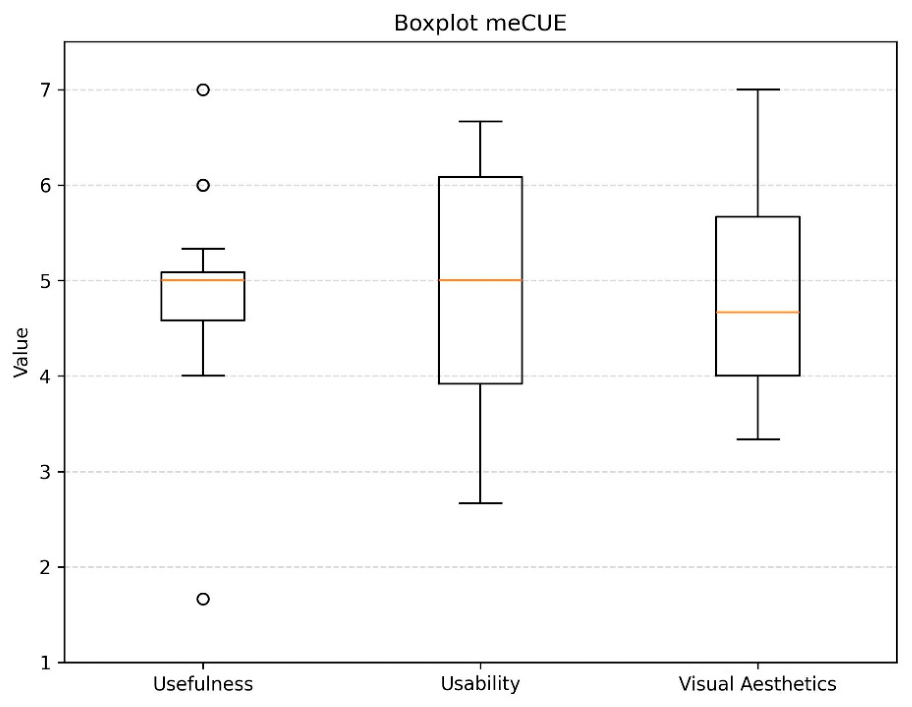
Valid meCUE 2.0 data were available for 16 respondents. Overall ratings were above the neutral midpoint of the seven-point scale: visual aesthetics received the highest mean (M = 4.94, SD = 1.09), followed by usability (M = 4.92, SD = 1.25) and usefulness (M = 4.88, SD = 1.14) as seen in Figure 4.
Figure 4.
Distribution of overall meCUE dimension scores (n = 16).
3.6.4. AttrakDiff Acceptance
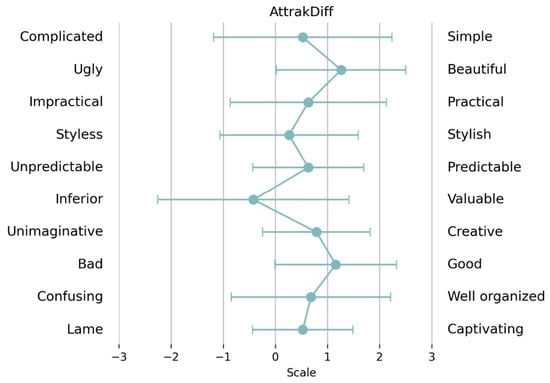
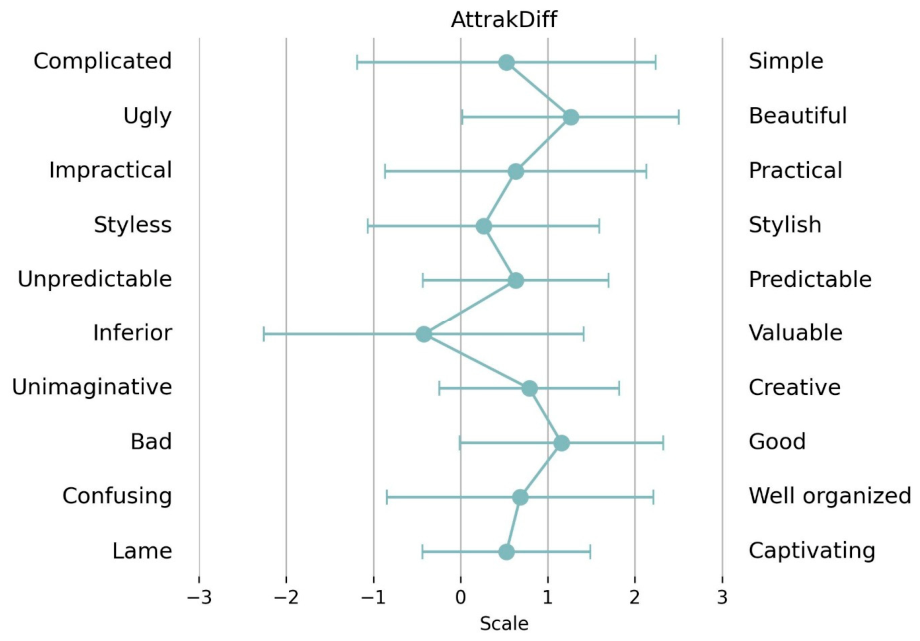
Mean AttrakDiff ratings were located on the positive side of the scale for all adjective pairs except inferior–valuable, for which the mean score fell slightly below the neutral midpoint in the overall sample. The highest mean ratings were observed for ugly–beautiful and bad–good. The system was also rated positively in terms of creativity, organization, practicality, simplicity, predictability, and appeal. By contrast, the mean rating for styleless–stylish was only marginally positive, suggesting a largely neutral evaluation of the system’s stylistic qualities.
Comparatively large standard deviations were observed for several adjective pairs, particularly inferior–valuable, complicated–simple, impractical–practical, and confusing–well organized. These findings indicate considerable between-participant variability in the evaluation of these system attributes. Thus, although the item-level profile was predominantly positive overall, the mean ratings should be interpreted in light of the observed heterogeneity among participants (Figure 5).
Figure 5.
Item-level AttrakDiff profile with error bars (n = 19).
4. Discussion
The present study shows a HCD process with the development and quantitative field evaluation of the prototype. The development phase comprised three case-study settings, six stakeholder-involvement activities, and 125 recorded stakeholder participations. These activities informed the selection of four environmental domains—sound, light, temperature, and air quality—and the development of an interface for teachers and care professionals. The subsequent pilot study included baseline information on 58 clients or pupils and 27 teachers or care professionals across four centers in Austria and Italy. Thus, the contribution extends beyond requirement elicitation by examining the resulting prototype under naturalistic conditions.
The findings underline that assistive technologies should be developed in accordance with the experiences, priorities, and routines of their intended users. Personas and user days supported a differentiated understanding of the target groups and helped identify relevant needs, barriers, and potential intervention points [37,38]. The iterative involvement of stakeholders enabled requirements to be assessed in terms of expected benefit, contextual appropriateness, ethical acceptability, and technical and organizational feasibility. This is important because usability and sustained use depend not only on technical functionality but also on how well a system fits its everyday implementation context [39,40].
The pilot results support the practical relevance of the environmental domains identified during the HCD process. Sound-related situations were reported most frequently (M = 4.37, SD = 0.67 on a five-point scale), and maintaining comfortable sound conditions was rated as the most difficult task (M = 4.41, SD = 0.78). Temperature and air quality were also identified as recurrent concerns. These findings are consistent with previous evidence that acoustic, thermal, and visual conditions may affect comfort and everyday functioning among people on the autism spectrum [7,8,9,15,27,28].
However, these ratings were provided by teachers or care professionals and represent proxy assessments. They do not establish that a measured environmental factor caused discomfort in an individual participant. Distress may also be related to unmeasured factors, such as transitions, fatigue, pain, social conflict, task demands, changes in routine, or crowding. Associations between sensor values and observed events must therefore be interpreted cautiously.
The meCUE results indicated a generally favorable evaluation of the prototype. Visual aesthetics received the highest overall mean rating (M = 4.94, SD = 1.09), followed by usability (M = 4.92, SD = 1.25) and usefulness (M = 4.88, SD = 1.14). All three dimensions were above the neutral midpoint of the seven-point scale. Nevertheless, these findings are based on only 16 valid post-assessment questionnaires and should be interpreted as initial evidence of perceived acceptance rather than as a conclusive usability evaluation.
The AttrakDiff findings were similarly positive. Overall attractiveness received the highest rating, followed by hedonic quality–stimulation and pragmatic quality. Hedonic quality–identity was close to neutral and showed substantial variability. At the item level, the system was evaluated particularly positively for ugly–beautiful and bad–good. The adjective pair inferior–valuable was the only item with a mean slightly below the neutral midpoint.
The acceptance results describe participants’ perceptions of the prototype but do not demonstrate improvements in wellbeing, autonomy, safety, or staff workload. Because teachers and care professionals must enter contextual information and respond to notifications, the system could increase workload if alerts are frequent, insufficiently actionable, or occur during demanding situations. Future studies should therefore assess alert frequency, response burden, ignored notifications, and the extent to which staff can realistically modify environmental conditions.
Compared with previous assistive-technology research, the main contribution of this study lies in its participatory, cross-setting development process and its implementation in naturalistic educational and care environments. Existing reviews have identified limited real-world evidence and insufficient alignment between technical functions and the priorities of users on the autism spectrum [22,23,24,26]. Direct numerical claims of superiority cannot be made because previous studies differ substantially in their technologies, populations, settings, and outcome measures and generally do not report comparable meCUE or AttrakDiff results.
The pilot findings also help clarify the potential role of artificial intelligence. Simple threshold exceedances can be managed through transparent and configurable rules and do not require AI. Machine learning would be justified if it predicted a clearly defined outcome more accurately or earlier than a rule-based baseline. To train and validate an AI model for predicting stress-related situations, additional data—such as physiological measures obtained from wearable devices and validated stress assessments—may be required.
Moreover, using staff observations as training labels entails the risk of biased associations if relevant contextual or social triggers and individual factors are not measured. Future model development should therefore account for label uncertainty, incorporate relevant contextual, social and individual variables where feasible, and compare machine-learning models with transparent rule-based approaches. Claims concerning personalized prediction should only be made after validation across different participants, settings, and time periods.
The final system architecture reflects the compromises involved in developing a solution for heterogeneous educational and care settings. Not all identified requirements could be implemented. For example, automatically assessing room activity could require cameras and raise substantial privacy concerns. Differences also emerged regarding activity categories and direct system interaction. Although pupils may be able to contribute actively in school settings, direct interaction was considered less feasible for clients with extensive support needs. Teachers and care professionals were therefore the direct system users during the pilot.
Teachers also expressed concerns about distraction, excessive system use, and possible stigmatization. Discreet design and inclusive communication are therefore essential. Environmental modifications should, where possible, be presented as measures benefiting all occupants rather than as adjustments for an identifiable individual. The optimal balance between transparency, ease of use, and discretion may differ between settings, making a universal “one-size-fits-all” configuration unlikely.
More broadly, the project reflects a shift from expecting neurodivergent people to adapt to predominantly neurotypical environments toward modifying environments to improve person–environment fit [41,42]. HCD supports this perspective by recognizing stakeholders as relevant knowledge holders [25]. Nevertheless, direct feedback from neurodivergent participants should be incorporated whenever their communication preferences and support needs permit, as professional proxy assessments cannot fully replace their subjective experiences.
Strengths, Limitations, and Future Research
The strengths of this study include its interdisciplinary and transnational development process, implementation across naturalistic educational and care settings, and explicit traceability between stakeholder input and design decisions. The pilot extended the original requirement analysis by providing quantitative data on environmental challenges and standardized measures of acceptance and user experience.
Several limitations must be considered. Recruitment was nonrandom, and the participating settings and age groups were heterogeneous. The post-assessment samples were small: of 27 baseline staff respondents, 16 provided valid meCUE data and 19 provided valid AttrakDiff data. Country samples were small and unequal, and the pooled environmental results do not allow for site-specific conclusions.
The attrition from baseline to the post-assessment meCUE evaluation may have introduced attrition bias. Participants who perceived the system as cumbersome or less useful may have been less likely to complete the post-assessment, potentially resulting in an overly positive evaluation. As the characteristics and experiences of non-completers were not examined, the acceptance findings should be interpreted with caution.
In addition, the study relied on proxy reports and captured only a subset of the factors potentially contributing to discomfort. Contextual, social, and individual factors, such as transitions, fatigue, pain, social conflict, task demands, routine changes, and crowding, were not systematically assessed. Moreover, neurodivergent clients and pupils were primarily indirect beneficiaries rather than direct system users, which limited the inclusion of their subjective experiences. The study did not evaluate clinical outcomes, changes in wellbeing, staff workload, sensor or alert accuracy, false alarms, ignored alerts, actual response burden, automated environmental regulation, or AI performance. The findings therefore indicate perceived acceptance and environmental relevance but do not demonstrate technical reliability or system effectiveness.
Future studies should include larger and more balanced samples, clearly defined outcomes, systematic documentation of system exposure, and strategies to reduce attrition. Longitudinal evaluations should determine whether acceptance is sustained and whether notifications result in feasible environmental adjustments without creating excessive workload.
Direct feedback from neurodivergent participants was not included in the present quantitative evaluation. Standardized self-report was difficult to implement across the heterogeneous sample, particularly among clients with extensive cognitive and communication support needs and/or those who were non-speaking. Consequently, the evaluation relied primarily on proxy reports, which may not fully reflect participants’ subjective experiences. Future studies should enable direct feedback through accessible and individually appropriate mechanisms whenever possible.
Future technical development should initially establish transparent, configurable rules as a reference approach. Any machine-learning model should subsequently be compared with this baseline using independent validation data and practically relevant measures.
Overall, the findings support the continued development of the prototype as a configurable environmental-monitoring and decision-support system. The selected environmental domains were relevant to participating staff, and the prototype was generally evaluated positively. However, the pilot study did not assess changes in wellbeing, autonomy, safety, environmental comfort, or staff workload. Further research is therefore required before conclusions can be drawn regarding clinical or environmental effectiveness, individual threshold prediction, workload reduction, or the added value of artificial intelligence.
5. Conclusions
The HCD process yielded an environmental-monitoring concept covering sound, light, temperature, and air quality and a role-specific dashboard for teachers and care professionals. In the four-center pilot, sound was the most frequent and most difficult environmental challenge to manage. meCUE and AttrakDiff results indicated generally positive usefulness, usability, aesthetics, pragmatic quality, stimulation, and attractiveness, although country estimates differed descriptively and were based on small unequal samples. The findings support continued prototype development but do not demonstrate clinical benefit or validate an AI model. Transparent rule-based alerts, careful treatment of proxy-label uncertainty, improved post-assessment retention, and direct comparison of rules with any future machine-learning model remain necessary.
Author Contributions
The authors’ contributions are allocated as follows: Conceptualization, A.R., L.W., L.K. and D.K.; methodology, L.W., D.K., L.K., A.M. (Andrea Mercusa), A.M. (Arianna Marzi), S.P. and A.R.; software, L.K., D.K., A.R. and L.W.; validation, L.W., L.K., A.M. (Andrea Mercusa) and A.R.; formal analysis, A.R., A.M. (Arianna Marzi), L.K. and L.W.; investigation, A.R., D.K., L.K., A.M. (Andrea Mercusa) and L.W.; resources, A.R.; data curation, A.M. (Arianna Marzi), A.R. and L.K.; writing—original draft preparation, A.R. and L.W.; writing—review and editing, L.W., L.K., D.K., A.R., M.D.P., A.M. (Arianna Marzi) and S.P.; visualization, A.R. and L.K.; supervision, L.W. and D.K.; project administration, A.M. (Andrea Mercusa) and L.W.; funding acquisition, D.K. and L.W. All authors have read and agreed to the published version of the manuscript.
Funding
This research was co-financed by the European Regional Development Fund as part of the Interreg VI-A Italy-Austria 2021–2027 cooperation program as well as by the Carinthian Economic Development Fund, grant number: Interreg-11-016 (BeSENSHome).
Institutional Review Board Statement
The study was conducted in accordance with the Declaration of Helsinki, and approved by the Ethics Committee of Carinthia (protocol code M2025-11 and 11 June 2025) as well as by the Department of Education of Carinthia (protocol code A/0312-Allg-B/2025 and 25 February 2025).
Informed Consent Statement
Informed consent was obtained from all subjects involved in the study.
Data Availability Statement
The data presented in this study are available on request from the corresponding author. The data are not publicly available due to ethical and privacy reasons as sensitive data from people on the autism spectrum, relatives and care facilities were gathered.
Acknowledgments
The authors would like to thank all study participants for their time and valuable contributions to this research.
Conflicts of Interest
The authors declare no conflicts of interest.
References
- Walker, N. Neuroqueer Heresies: Notes on the Neurodiversity Paradigm, Autistic Empowerment, and Postnormal Possibilities; Autonomous Press: Fort Worth, TX, USA, 2021; ISBN 978-1-945955-26-6. [Google Scholar]
- May, J. Neurodiversity with Nuance. Neuroethics 2025, 18, 30. [Google Scholar] [CrossRef] [Scilit]
- Miranda-Ojeda, R.; Wickramasinghe, A.; Ntolkeras, G.; Castanho, I.; Yassin, W. The Neurodiversity Framework in Medicine: On the Spectrum. Dev. Neurobiol. 2025, 85, e22960. [Google Scholar] [CrossRef] [Scilit]
- World Health Organization ICD-11 2019. Available online: https://icd.who.int/browse/2026-01/mms/en#437815624 (accessed on 29 October 2026).
- Greaves-Lord, K.; Skuse, D.; Mandy, W. Innovations of the ICD-11 in the Field of Autism Spectrum Disorder: A Psychological Approach. Clin. Psychol. Eur. 2022, 4, e10005. [Google Scholar] [CrossRef] [Scilit]
- Patil, O.; Kaple, M. Sensory Processing Differences in Individuals with Autism Spectrum Disorder: A Narrative Review of Underlying Mechanisms and Sensory-Based Interventions. Cureus 2023, 15, e48020. [Google Scholar] [CrossRef] [Scilit]
- Marzi, A.; Caniato, M.; Gasparella, A. The Influence of Indoor Temperature and Noise on Autistic Individuals. Sci. Rep. 2025, 15, 18802. [Google Scholar] [CrossRef] [Scilit]
- Zaikina, V.; Thorud, H.-M.S.; Rustad, S.F.; Falkenberg, H.K. Systematic Literature Review: Indoor Lighting and Color Effects on Persons With ASD. HERD Health Environ. Res. Des. J. 2026, 19, 224–236. [Google Scholar] [CrossRef] [Scilit]
- Rios Llamas, C.; Camacho Vega, D.O.; Delgadillo Ramos, M.G. Light and Sound Hypersensitivity in Autism Spectrum Disorder: A Systematic Review Focusing on Age and Gender Bias. Front. Psychiatry 2026, 17, 1771956. [Google Scholar] [CrossRef] [Scilit]
- Robeyns, I. Conceptualising Well-Being for Autistic Persons. J. Med. Ethics 2016, 42, 383–390. [Google Scholar] [CrossRef] [Scilit]
- Loh, S.Y.; Ee, S.I.; Marret, M.J. Sensory Processing and Its Relationship to Participation among Childhood Occupations in Children with Autism Spectrum Disorder: Exploring the Profile of Differences. Int. J. Dev. Disabil. 2023, 69, 226–237. [Google Scholar] [CrossRef] [Scilit]
- Pfeiffer, B.; Coster, W.; Snethen, G.; Derstine, M.; Piller, A.; Tucker, C. Caregivers’ Perspectives on the Sensory Environment and Participation in Daily Activities of Children With Autism Spectrum Disorder. Am. J. Occup. Ther. 2017, 71, 551–560. [Google Scholar] [CrossRef] [Scilit]
- Fielding, C.; Streeter, A.; Riby, D.M.; Hanley, M. Neurodivergent Pupils’ Experiences of School Distress and Attendance Difficulties. Neurodiversity 2025, 3, 27546330251327056. [Google Scholar] [CrossRef] [Scilit]
- Connolly, S.E.; Constable, H.L.; Mullally, S.E.L. School Distress and the School Attendance Crisis: A Story Dominated by Neurodivergence and Unmet Need. Front. Psychiatry 2023, 14, 1237052. [Google Scholar] [CrossRef] [Scilit]
- Kanakri, S.M.; Shepley, M.; Tassinary, L.G.; Varni, J.W.; Fawaz, H.M. An Observational Study of Classroom Acoustical Design and Repetitive Behaviors in Children with Autism. Environ. Behav. 2017, 49, 847–873. [Google Scholar] [CrossRef] [Scilit]
- Rios-Vega, L.; Carroll, A.; Dumont, R.; Treadwell-Deering, D.; Fields, M.; Schaaf, R. Designing Sensory Adaptive Environments to Enhance Participation in Healthcare for Autistic Children. Discov. Psychol. 2024, 4, 22. [Google Scholar] [CrossRef] [Scilit]
- Warreman, E.B.; Lloyd, S.E.; Nooteboom, L.A.; Leenen, P.J.M.; Terry, M.B.; Hoek, H.W.; Van Rossum, E.F.C.; Vermeiren, R.R.J.M.; Ester, W.A. Psychological, Behavioural, and Physical Aspects of Caregiver Strain in Autism-Caregivers: A Cohort Study. eClinicalMedicine 2023, 64, 102211. [Google Scholar] [CrossRef] [Scilit]
- Bonis, S. Stress and Parents of Children with Autism: A Review of Literature. Issues Ment. Health Nurs. 2016, 37, 153–163. [Google Scholar] [CrossRef] [Scilit]
- Zeidan, J.; Fombonne, E.; Scorah, J.; Ibrahim, A.; Durkin, M.S.; Saxena, S.; Yusuf, A.; Shih, A.; Elsabbagh, M. Global Prevalence of Autism: A Systematic Review Update. Autism Res. 2022, 15, 778–790. [Google Scholar] [CrossRef] [Scilit] [PubMed]
- Hossain, M.M.; Khan, N.; Sultana, A.; Ma, P.; McKyer, E.L.J.; Ahmed, H.U.; Purohit, N. Prevalence of Comorbid Psychiatric Disorders among People with Autism Spectrum Disorder: An Umbrella Review of Systematic Reviews and Meta-Analyses. Psychiatry Res. 2020, 287, 112922. [Google Scholar] [CrossRef] [Scilit]
- Barlattani, T.; D’Amelio, C.; Cavatassi, A.; De Luca, D.; Di Stefano, R.; di Berardo, A.; Mantenuto, S.; Minutillo, F.; Leonardi, V.; Renzi, G.; et al. Autism Spectrum Disorders and Psychiatric Comorbidities: A Narrative Review. J. Psychopathol. 2023, 29, 3–24. [Google Scholar] [CrossRef]
- Wohofsky, L.; Scharf, P.; Lattacher, S.L.; Krainer, D. Assistive Technology to Support People with Autism Spectrum Disorder in Their Autonomy and Safety: A Scoping Review. Technol. Disabil. 2022, 34, 1–11. [Google Scholar] [CrossRef] [Scilit]
- Pergantis, P.; Bamicha, V.; Doulou, A.; Christou, A.I.; Bardis, N.; Skianis, C.; Drigas, A. Assistive and Emerging Technologies to Detect and Reduce Neurophysiological Stress and Anxiety in Children and Adolescents with Autism and Sensory Processing Disorders: A Systematic Review. Technologies 2025, 13, 144. [Google Scholar] [CrossRef] [Scilit]
- Wang, M.; Jeon, M. Assistive Technology for Adults on the Autism Spectrum: A Systematic Survey. Int. J. Hum.–Comput. Interact. 2024, 40, 2433–2452. [Google Scholar] [CrossRef] [Scilit]
- ISO 9241-210:2019; Ergonomics of Human-System Interaction—Part 210: Human-Centred Design for Interactive Systems. ISO: Geneva, Switzerland, 2019.
- Iannone, A.; Giansanti, D. Breaking Barriers—The Intersection of AI and Assistive Technology in Autism Care: A Narrative Review. J. Pers. Med. 2023, 14, 41. [Google Scholar] [CrossRef] [Scilit]
- Wohofsky, L.; Marzi, A.; Bettarello, F.; Zaniboni, L.; Lattacher, S.L.; Limoncin, P.; Dordolin, A.; Dugaria, S.; Caniato, M.; Scavuzzo, G.; et al. Requirements of a Supportive Environment for People on the Autism Spectrum: A Human-Centered Design Story. Appl. Sci. 2023, 13, 1899. [Google Scholar] [CrossRef] [Scilit]
- Neufeld, J.; Hederos Eriksson, L.; Hammarsten, R.; Lundin Remnélius, K.; Tillmann, J.; Isaksson, J.; Bölte, S. The Impact of Atypical Sensory Processing on Adaptive Functioning within and beyond Autism: The Role of Familial Factors. Autism 2021, 25, 2341–2355. [Google Scholar] [CrossRef] [Scilit]
- Van Tonder, J.; Woite, N.; Strydom, S.; Mahomed, F.; Swanepoel, D.W. Effect of Visual Feedback on Classroom Noise Levels. S. Afr. J. Child. Educ. 2016, 5, 265. [Google Scholar] [CrossRef] [Scilit]
- Norman, D.A. The Design of Everyday Things; Revised and Expanded Edition; Basic Books: New York, NY, USA, 2013; ISBN 978-0-465-05065-9. [Google Scholar]
- MURAL What Is Mural? 2025. Available online: https://support.mural.co/s/article/what-is-mural (accessed on 29 October 2026).
- Salminen, J.; Wenyun Guan, K.; Jung, S.-G.; Jansen, B. Use Cases for Design Personas: A Systematic Review and New Frontiers. In Proceedings of the CHI Conference on Human Factors in Computing Systems, New Orleans, LA, USA, 29 April–5 May 2022; ACM: New York, NY, USA, 2022; pp. 1–21. [Google Scholar]
- Cohn, M. User Stories Applied: For Agile Software Development; Addison-Wesley Professional: Boston, MA, USA, 2004; ISBN 978-0-321-20568-1. [Google Scholar]
- Ericsson, K.A.; Simon, K.A. Protocol Analysis: Verbal Reports as Data; MIT Press: Cambridge, MA, USA, 1993. [Google Scholar]
- Minge, M.; Thüring, M.; Wagner, I. Developing and Validating an English Version of the meCUE Questionnaire for Measuring User Experience. In Proceedings of the Human Factors and Ergonomics Society Annual Meeting, Washington, DC, USA, 19–23 September 2016; SAGE: Los Angeles, CA, USA, 2016; Volume 60, pp. 2063–2067. [Google Scholar] [CrossRef] [Scilit]
- Hassenzahl, M.; Burmester, M.; Koller, F. AttrakDiff: Ein Fragebogen Zur Messung Wahrgenommener Hedonischer Und Pragmatischer Qualität. In Mensch & Computer 2003; Szwillus, G., Ziegler, J., Eds.; Berichte des German Chapter of the ACM; Vieweg+Teubner Verlag: Wiesbaden, Germany, 2003; Volume 57, pp. 187–196. ISBN 978-3-519-00441-7. [Google Scholar]
- Miaskiewicz, T.; Kozar, K.A. Personas and User-Centered Design: How Can Personas Benefit Product Design Processes? Des. Stud. 2011, 32, 417–430. [Google Scholar] [CrossRef] [Scilit]
- Dominello, A.; Cheek, C.; Clay-Williams, R. The Use of Personas to Involve Consumers in Healthcare Co-Design: A Scoping Review. BMC Health Serv. Res. 2025, 25, 649. [Google Scholar] [CrossRef] [Scilit]
- Tzimourta, K.D. Human-Centered Design and Development in Digital Health: Approaches, Challenges, and Emerging Trends. Cureus 2025, 17, e85897. [Google Scholar] [CrossRef] [Scilit]
- Lyon, A.R.; Aung, T.; Bruzios, K.E.; Munson, S. Human-Centered Design to Enhance Implementation and Impact in Health. Annu. Rev. Public Health 2025, 46, 467–485. [Google Scholar] [CrossRef] [Scilit]
- Dwyer, P. The Neurodiversity Approach(Es): What Are They and What Do They Mean for Researchers? Hum. Dev. 2022, 66, 73–92. [Google Scholar] [CrossRef] [Scilit]
- Lai, M.-C.; Anagnostou, E.; Wiznitzer, M.; Allison, C.; Baron-Cohen, S. Evidence-Based Support for Autistic People across the Lifespan: Maximising Potential, Minimising Barriers, and Optimising the Person–Environment Fit. Lancet Neurol. 2020, 19, 434–451. [Google Scholar] [CrossRef] [Scilit]

Disclaimer/Publisher’s Note: The statements, opinions and data contained in all publications are solely those of the individual author(s) and contributor(s) and not of MDPI and/or the editor(s). MDPI and/or the editor(s) disclaim responsibility for any injury to people or property resulting from any ideas, methods, instructions or products referred to in the content. |
© 2026 by the authors. Licensee MDPI, Basel, Switzerland. This article is an open access article distributed under the terms and conditions of the Creative Commons Attribution (CC BY) license.