


Abstract
The transition to renewable energy is generating numerous changes across different continents, some with greater impact than others, but the progress achieved is recognized and widely accepted. In particular, there are various solutions that include electric vehicles as elements that influence grid behavior when connected. Higher levels of electric vehicle penetration can present opportunities and solutions related to energy storage, V2G connections encompassing the distribution system, and long-term evaluation. High participation in V2G connections maintains the availability of the electrical system, while the high proportion of variable renewable energy sources forms the backbone of the overall electrical system. This study presents a systematic review of V2G systems in the Americas. The design of the Sustainable Mobility scenario and the high participation of V2G maintain the balance of the electrical system for most of the day, simplifying storage equipment requirements. Consequently, the influence of V2G systems on energy storage is an important outcome that must be considered in the energy transition and presents development opportunities for the various countries that make up the Americas. The stored electricity will not only serve as storage for future grid use, but V2G batteries will also act as a buffer between generation from diversified renewable sources and the end-use stage. This article shows that research on the design of V2G energy systems in scientific publications is relatively recent, but it has gained increasing attention in recent years. In total, 151 articles published since 1995 have been identified and analyzed. The overall result indicates that North American countries have developed the most V2G applications, and their deployment in the coming years will be significant. Meanwhile, in South and Central America, these systems are not yet being fully utilized due to the lack of growth in the electric vehicle market.
1. Introduction
The transition to sustainable transportation systems has taken center stage on the global energy agenda, driven by the urgent need to reduce greenhouse gas emissions and meet the commitments of the Paris Agreement. In this context, electric mobility is emerging as one of the most promising solutions for reducing dependence on fossil fuels in the transportation sector. The Americas, a region characterized by marked socioeconomic differences, geographic diversity, and variability in its regulatory frameworks, presents a complex but highly relevant scenario for studying the integration of electric vehicles (EVs) into the electrical grid. The sustained increase in EV adoption in countries such as the United States, Canada, Brazil, and Chile, along with emerging initiatives in Mexico, Colombia, and Ecuador, demonstrates an ongoing regional process that requires in-depth technical analysis. The electrification of transportation not only impacts energy demand patterns but also modifies the operation of electrical systems, infrastructure planning, and ancillary services. Therefore, understanding the effects of the massive integration of EVs is an essential step in designing strategies that guarantee reliability, efficiency, and sustainability in the continent’s electrical grids.
From a technical perspective, the increasing adoption of electric vehicles introduces new challenges related to demand management, system stability, and power quality. Simultaneous charging during peak hours can overload transformers, cause voltage drops, and lead to congestion in distribution circuits, especially in urban areas with aging or in-sufficient infrastructure. Furthermore, charging patterns are not uniform and depend on socioeconomic factors, the availability of public infrastructure, and incentive policies, adding complexity to grid sizing. However, EVs also offer opportunities, such as the use of smart charging technologies and the possibility of implementing vehicle-to-grid (V2G) schemes, which allow users to provide energy or auxiliary services during critical times. This bidirectional potential makes EVs distributed energy resources capable of contributing to frequency regulation, voltage control, and the integration of variable renewable energy sources. A detailed understanding of these interactions is crucial for energy planning in countries seeking to accelerate the transition to resilient, low-carbon electricity systems.
At the regional level, the integration of electric vehicles (EVs) presents particular challenges stemming from the heterogeneity of electrical systems, technological gaps, and varying levels of progress in public policy. In North America, for example, incentive pro-grams, charging standards, and modernized grids have enabled significant and sustained deployment of electromobility. In contrast, Latin America and the Caribbean have seen more modest adoption rates, limited by high initial costs, restricted availability of fast chargers, and incomplete regulatory frameworks. Nevertheless, countries such as Costa Rica, Chile, Uruguay, and Colombia have implemented ambitious strategies that demonstrate the region’s potential for expanding electric mobility, especially when there is alignment between the public sector, electricity companies, and private actors. Further-more, the prevalence of electricity grids with a high share of renewable energy—such as hydroelectric power in the Andean region or solar and wind power in the Southern Cone—opens opportunities for the sustainable integration of EVs, provided that technical and planning capacities are strengthened. Therefore, regional analysis becomes fundamental to identifying structural barriers and proposing solutions tailored to each country’s specific circumstances.
This article comprehensively analyzes the technical implications and challenges of integrating electric vehicles into the electrical grids of the Americas, highlighting both the structural differences between countries and their shared opportunities. Based on a literature review, case studies, and recent technical assessments, it examines the impacts on grid operation, charging infrastructure needs, demand management models, and advancements in smart charging and V2G systems. It also discusses future prospects, considering the projected growth of the electric vehicle fleet, digitalization trends, financing mechanisms, and the role of public policy.
The central objective of this study is to systematically and comparatively analyze the current state, opportunities, and challenges associated with the integration of vehicle-to-grid (V2G) technologies into the electrical systems of the Americas. The work seeks to evaluate how electric vehicles, operating as distributed energy resources, can provide ancillary services, support system stability, and facilitate the integration of variable renewable energy sources in different countries of the hemisphere. It aims to identify regional patterns, technological gaps, regulatory barriers, and technical conditions that influence V2G adoption, considering the heterogeneity of electrical infrastructures from North to South America. The study proposes an analytical framework that combines a literature review, technical analysis, and market trends to offer a comprehensive and up-to-date perspective that can serve as a reference for energy planners, distribution companies, and policymakers.
The main contribution of this review lies in offering the first comprehensive comparative analysis focused exclusively on V2G adoption in the Americas, a topic where the literature still exhibits limited systematization and significant disparities between countries. Unlike previous studies that focus on specific regions or isolated technical aspects, this work integrates regulatory, operational, technological, and socioeconomic dimensions, allowing for a comprehensive understanding of V2G’s true potential on a continental scale. The article’s novelty lies in identifying how factors such as renewable energy penetration, the degree of network modernization, charging infrastructure development, and market mechanisms asymmetrically influence V2G’s viability in the United States, Canada, Mexico, and Latin American nations. Furthermore, it highlights emerging innovation pathways, including aggregation models, flexibility services, and microgrid schemes with bidirectional electric vehicle participation, thus providing a solid foundation for future research and strategic decisions in the region.
The remainder of this paper is structured as follows: Section 1 introduced V2G systems. Section 2 presents the state-of-the-art analysis. Section 3 presents the scientific methodology adopted in this paper. Section 4 presents the results obtained from the review. Section 5 discusses the results. Finally, Section 6 presents the research conclusions.
2. Review of the State of the Art
The integration of electric vehicles (EVs) into electrical systems has evolved significantly in different parts of the world [1]. In the Americas, its growth has been most noticeable over the last decade, driven by decarbonization policies, technological advances, and the expansion of intermittent renewable energy sources [2,3]. Scientific literature recognizes that the electrification of transportation not only reduces emissions but also increases electricity demand, forcing network operators to reconfigure planning, operation, and flexibility strategies [4]. Studies conducted in North America have shown that the uncoordinated loading of large fleets can generate demand peaks that compromise distribution capacity [5,6], while research in Latin America demonstrates that existing networks have even greater limitations due to their lower level of modernization [7]. Despite this, numerous studies highlight the potential of EVs, including those developed by Daniel Icaza et al. [8], who created a roadmap that includes V2G systems in Ecuador, and David Borge Diez et al. [9] A provisioning system combining vehicle-to-home (V2H) and vehicle-to-building (V2B) systems to supply energy to buildings in Spain includes evaluations of distributed storage systems capable of providing ancillary services such as frequency regulation, load balancing, and microgrid support. Recent literature also highlights the transition to a bidirectional approach using V2G, G2V, and V2H technologies, which transform vehicles into flexible energy assets that complement renewable generation [10]. In this context, the state of the art presented in this section suggests that EV integration is a key element in the continent’s energy transformation, although its deployment faces marked differences between developed countries and emerging economies [11].
Comparative studies on charging infrastructure in the Americas show a highly uneven distribution, with the United States and Canada leading in fast-charging stations, smart infrastructure, and V2G pilot projects, while much of Latin America is progressing more slowly due to financial, regulatory, and technological limitations [12]. The literature highlights that North America has a greater presence of chargers with advanced communication capabilities (OCPP, ISO 15118) [13], an essential condition for bidirectional transactions [14]. In contrast, Latin American countries such as Brazil, Chile, Colombia, and Mexico have incipient developments, mostly focused on public fleets or pilot projects at universities and electric utilities [15]. Studies also demonstrate that the integration of renewables, such as solar photovoltaics and wind power, increases the need for flexibility, positioning EVs as a prominent solution for managing variability [16]. However, the technological maturity of V2G varies considerably: while some US states have conducted operational trials with homes and schools, most Latin American countries are still in the modeling or ex-ante evaluation stages [17]. This heterogeneity limits the region’s capacity to adopt advanced energy management schemes based on aggregators, flexibility markets, and highly interconnected smart grids [18,19].
The specialized literature identifies several technical challenges associated with the mass integration of EVs into the grid, including transformer saturation, voltage drop, circuit overload, and accelerated degradation of distribution equipment, particularly when charging is simultaneous or uncontrolled [20,21]. Research in Canada and the United States shows that smart charging can reduce negative impacts on residential networks by up to 40%, while studies in Mexico, Peru, and Ecuador highlight that the lack of sensors and real-time monitoring hinders the adoption of optimal control strategies [22]. In the V2G sphere, the challenges extend to the need for certified bidirectional inverters, predictive control algorithms, robust communications, and interoperable standards that guarantee system safety and stability [22,23]. Additionally, there is debate about the effect of bidirectional operation on battery degradation, an aspect that has motivated numerous studies on charging cycles, materials, and thermal management strategies [24]. The literature also emphasizes the need to integrate demand forecasting models, renewable energy sources, and user behavior to optimize the interaction between vehicle and grid [25]. These challenges show that, although V2G is technically feasible, its large-scale implementation requires a structural modernization of the network, especially in Latin America [26].
From a regulatory and economic perspective, the current state of research shows that the advancement of vehicle-to-grid (V2G) energy is heavily influenced by energy policies, market incentives, and tariff frameworks [27]. In North America, clearer regulatory structures allow for the participation of distributed energy resources and facilitate the development of aggregators, essential mechanisms for grouping multiple vehicles and providing services to the electrical grid [28]. In contrast, most Latin American countries have not yet formally recognized bidirectionality in their regulations, which limits the economic valuation of services provided by electric vehicles (EVs) [29]. Furthermore, economic studies highlight that the profitability of V2G depends on factors such as the cost of electricity, wholesale market prices, renewable energy penetration, and the availability of smart charging infrastructure [30]. At the continental level, the literature indicates a trend toward the integration of community microgrids, electrified public fleets, and disaster resilience schemes, where EVs can act as energy backup. There is a consensus that V2G has high potential to strengthen decarbonization in the Americas, but its realization requires overcoming institutional barriers, harmonizing standards, and promoting demonstration projects that reduce technological and regulatory uncertainty [31]. These perspectives show that the region is at a turning point, where coordination between infrastructure, public policy, and technology will define the future role of V2G in the continent’s energy transition.
The future directions of V2G in the Americas point toward deeper integration between electric mobility, smart grids, and flexible energy markets, driven by the increasing penetration of renewable energy and the need for resilience to extreme weather events. In North America, an accelerated expansion of V2G aggregators, the standardization of bidirectional chargers, and the incorporation of V2G into demand response programs, distributed storage, and community microgrids are projected. In Latin America, projections indicate a more gradual but strategic advance, focused on urban pilots, electrification of public fleets, integration with residential photovoltaic systems, and the use of V2G to improve reliability in areas with weak grids. Growth is also expected in innovative business models based on energy services, vehicle battery leasing, and blockchain-enabled transaction platforms. At the continental level, interoperability, cybersecurity, and regulation will be fundamental pillars for enabling the widespread participation of EVs as distributed energy assets. Taken together, these trends suggest that V2G will evolve from experimental projects into a structural component of the energy transition in the Americas over the next decade.
Interoperability protocols for V2G are essential to ensure seamless communication between vehicles, bidirectional chargers, power grids, and service providers. Standards such as ISO 15118, IEC 61850, and OCPP 2.0.1 [32] enable the exchange of data on authentication, charging and discharging control, billing, and cybersecurity [33]. Currently, while some automakers and charging infrastructure providers have partially adopted ISO 15118 and OCPP in pilot programs and commercial products, widespread adoption is still in its early stages, with variations between brands and utilities, which limits full interoperability [34]. Scaling V2G requires broader harmonization of standards and greater alignment among manufacturers, network operators, and regulators, reducing technical fragmentation. Cybersecurity measures in V2G scenarios focus on protecting communication between vehicles, chargers, and network operators against attacks such as spoofing, charging signal manipulation, and denial-of-service attacks [35]. In real-world environments, the use of end-to-end encryption, authentication via digital certificates (PKI), and secure key management, as proposed by ISO 15118, has proven effective in reducing critical vulnerabilities. However, penetration testing studies show that the lack of firmware updates and weak network segmentation remain risk factors. Overall, current strategies are technically adequate, but their effectiveness depends on consistent implementation, regular audits, and clear governance among manufacturers, operators, and utilities.
Integrating extreme weather variability data into a V2G optimization model is essential for assessing the resilience of the electrical system under critical conditions [36]. To this end, time series of events such as heat waves with temperature increases exceeding +5 °C above the average are incorporated, raising cooling demand by 15–30%, as well as severe storms or hurricanes that can reduce the availability of variable renewable generation (solar by up to 40–60% and wind by 20–50% for short periods). The V2G model can simulate grid constraints, partial failures, and decreased vehicle availability, prioritizing battery discharge for critical services and voltage support [37]. Prolonged drought scenarios affecting hydroelectricity are also analyzed, increasing the strategic value of distributed vehicle energy storage. In this way, V2G is positioned as a flexible resource capable of mitigating extreme climate impacts and improving the continuity of energy supply.
The incentive model for user participation in V2G in the US context is primarily based on clear economic signals, such as dynamic pricing, payments for ancillary services, and battery availability compensation [38]. Case studies in California and the East Coast show that users respond positively when the estimated annual revenue from V2G (ranging from hundreds to over a thousand dollars per vehicle) outweighs the perceived additional battery wear [39]. However, socioeconomic factors such as income level, housing type (single-family versus multi-family), access to private parking, and energy literacy decisively influence adoption. Likewise, trust in utilities, regulatory stability, and the perception of environmental benefits reinforce the willingness to participate. Overall, a successful incentive scheme in the US must combine transparent economic compensation with a reduction in perceived risk and equity in access to the infrastructure [40].
3. Methodology
This research uses a bibliometric approach to visualize the analysis based on statistics regarding the number of published articles and the primary context of the documents. Bibliometric methods are commonly used to evaluate scientific output by field of knowledge, country, and author, to structure graphs of scientific knowledge, and to identify the future direction and evolution of specific fields. In this manuscript, VOSviewer is employed due to its scientific recognition as the most widely recognized graphical tool for bibliometric analysis [41].
In this research, the VOSviewer visualization software was used as a powerful advanced analysis tool to analyze data. The analysis structure is systematic, including keywords and chronological distribution within the field of analysis, specifically the network in the Americas. VOSviewer uses mapping techniques to construct two dimensional maps based on distances, which can satisfactorily display maps such as authors or journals compared to other bibliometric programs [42].
A comprehensive review of the literature related to vehicle-to-grid (V2G) systems was conducted. The search databases were SCOPUS, and several search attempts were made, including filtering among the following: TITLE-ABS-KEY (vehicle AND to AND grid AND America).
The search in the Scopus database yielded 151 documents, indicating a notable growth in publications related to the analysis of vehicles to the V2G network from 2008 to 2025. Figure 1 below graphically presents the methodology used in the review.
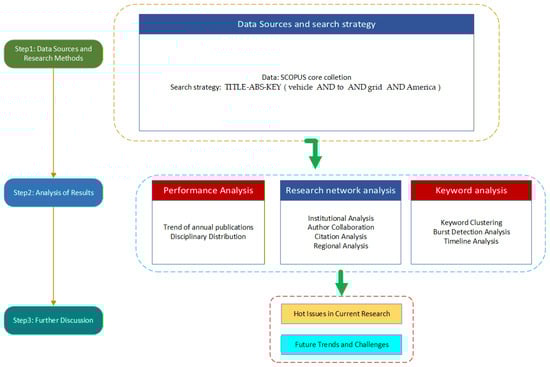
Figure 1.
Scientific methodology used in the present study.
The study consists of three clearly defined steps. The first involves analyzing the data source obtained from the Scopus database. The second step involves analyzing the results obtained in RIS format from Scopus, considering the findings of data patterns. Finally, in the third stage, the results are discussed. The countries that generate the most scientific contributions are highlighted, and the main authors and research centers driving the vehicle-to-grid field in the Americas are identified. The scientific methodology can be seen in Figure 1.
The level of V2G development in the energy system supply chain and its interactions has been evaluated, and this research is limited to the American continent. The number of studies dedicated to integrating vehicle-to-grid systems has been determined and classified by sub-areas. Scientific studies published in the Scopus database, not just those accepted, have been recognized [43]. Articles published in Scopus were chosen because of its excellent reputation and the various features it offers, such as a user interface and bibliometric analyzers. Comprehensive content and high-quality data are only useful if you can easily find the information you need. Scopus’s advanced search tools allow you to quickly discover relevant sources, identify research trends or emerging topics, and find potential research collaborators.
Scopus’s impact covers diverse subject areas, publication years, and document types, encompassing more than 5000 publishers, data on funders, and patents. Its strict policies mean that a journal must pass a series of rigorous quality filters to be indexed. Scopus indexes three main types of scientific content: conference proceedings, research journals, and books. Scopus provides abstract and citation data for the most important research worldwide; renowned researchers typically seek to publish their work on this site to gain prestige [44].
4. Analysis of Results
4.1. Annual Publication Statistics
Publication statistics are of great importance in identifying the level of development of an area or synergies between areas in a period of time determined by the research authors. The analyses carried out will depend greatly on the most recent trends, and the future will be marked by the most recent expectations that have been generated. Figure 2 presents the annual publications developed from 1995 to the present (end of 2025) corresponding to V2G in the Americas.
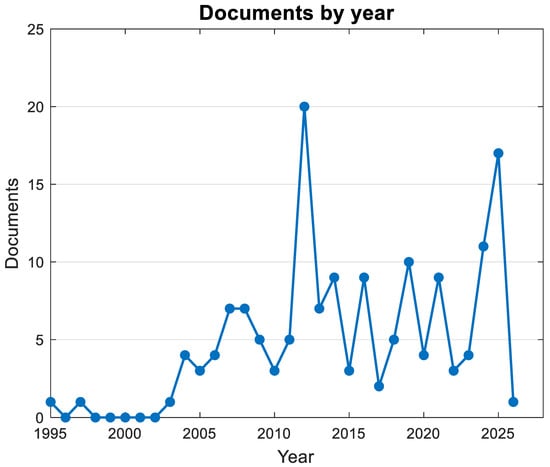
Figure 2.
Documents by year in the field of V2G in the Americas.
Interpreting the data in Figure 2, it is clear that the number of documents published in Scopus in the field of V2G research in the Americas has shown significant growth, especially over the last fifteen years. For clarity, the research can be divided into three relatively small growth phases. The first phase, from 1995 to 2005, can be described as slow growth with 7 documents. The second phase, from 2005 to 2012, can be characterized by accelerated growth with 49 articles, far exceeding the previous period. In 2012, a peak of 20 articles was reached in a shorter period. The third phase, from 2013 to 2025, is considered high growth because the increase in publications has surpassed expectations, reaching 93 documents. The number of articles published over these twelve years is relatively larger, and the number of publications has been low in some years and higher in others, but in no year has it surpassed the 2012 figure of 20 documents. The development of V2G has made significant progress; however, the sustained growth seen in the second stage, which was quite effective in applying to energy transition processes on the continent, is not evident.
Figure 3 below shows the documents published by different countries, and it is not necessarily the countries of the Americas that have been driving their own development. It is evident that several countries outside the continent have been concerned with identifying development levels. It can be interpreted that the interest in their research may lie in understanding how the electric vehicle market is evolving and its applications related to the electrical grid. The United States has the highest number of publications, reaching 62, followed by Canada with 22 documents. A group of publications, not defined by country, occupies third place with 20 documents. In fourth place is China, a country outside the area of analysis, which underscores the significance of China’s potential interest in the Americas and its current and future contributions. Following this point, there are countries with fewer published documents, but their presence is still important.
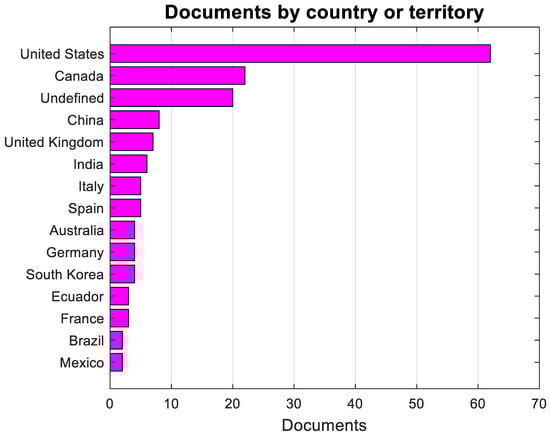
Figure 3.
Top 15 countries with the most publications on V2G in the Americas.
Figure 4 shows the authors’ names with the largest published documents on V2G in the Americas. It should be noted that the first place is identified with a block of articles not identified in relation to the main author, presenting twelve documents, followed by seven authors with three documents each: Gantt, L.R., Nelson, D., Nelson, D.J., Schey, S., Scoffield, D., Smart, J. and Walsh, P.M. Subsequently, two authors, presenting two documents each: Alexander, M. and Alley, R.
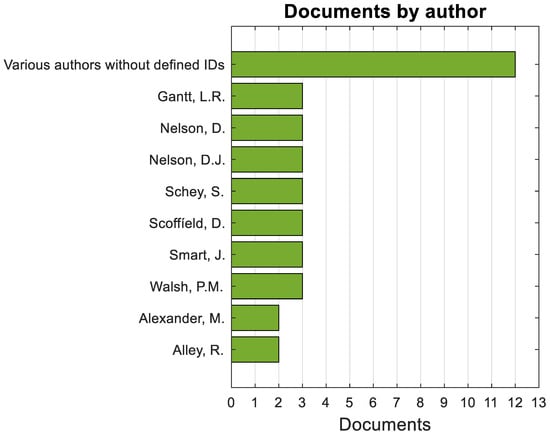
Figure 4.
Documents by author referring to V2G in the Americas.
In the context of the review related to Vehicle-to-Grid (V2G) in the Americas, the authors Dr. Rayid Hasan Mojumder et al. [37] and Ondřej Štogl et al. [45] emphasize the importance of V2G because it transforms electric vehicles (EVs) from simple consumers into active participants in the grid, acting as mobile batteries that alleviate peak demand, better integrate renewable energies (by storing surpluses), improve grid stability, and reduce operating costs and emissions, creating a more distributed, efficient, and sustainable energy system by balancing supply and demand. Much of the literature considers initiatives to increase the penetration of electric vehicles. The designed systems are primarily optimized, and it is considered that in the long term these systems will have a significant influence. These structures allow us to identify that the potential of renewable energy can be better exploited, and that vehicle systems will make significant contributions and have a stronger interaction in the coming years. Electric vehicles can also be used for charging at charging points and distributed battery energy storage systems (BESS) to offset peak demand. Adding extra storage elements to the grid can improve frequency regulation and load reserve, thereby taking advantage of grid operation by selling energy during peak hours.
Figure 5 presents a compilation of publications on V2G systems in the Americas, categorized by affiliation. Virginia Polytechnic Institute and State University has the most documents with six. It is followed by the University of California, Carnegie Mellon University, and the College of Engineering, each with four documents. In third place is a group of five institutions with three documents each: ECOtality North America, Environment and Climate Change Canada, Idaho National Laboratory, The University of Texas at Austin, and Virginia Tech College of Engineering. Finally, in fourth place, with two documents, is the Natural Resources Defense Council.
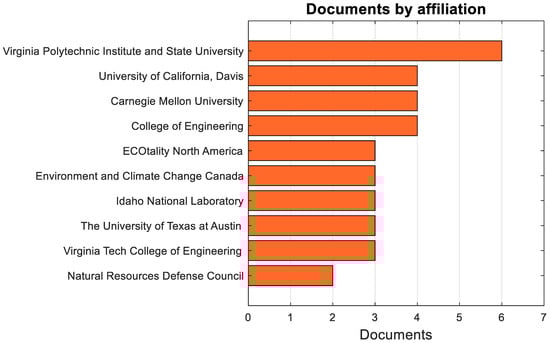
Figure 5.
Documents by affiliation referring to V2G in the Americas.
Vehicle-to-grid (V2G) technology is a connection between an electric vehicle and the electrical grid that allows for bidirectional energy flow, either charging the vehicle from the grid or discharging it to return energy to the grid [23]. Traditional electric vehicles, when parked and plugged in, use smart charging to draw energy from the grid to their batteries. With emerging V2G technology, these electric vehicle batteries can now also return energy to the grid.
The decision to charge or discharge the vehicle is based on the vehicle’s charge level and market signals from the grid. V2G technology allows electric vehicle batteries to charge during periods of low energy demand, such as midday when solar energy is abundant [37]. In other words, during periods of high electricity demand, the grid can draw energy from the vehicles if sufficient power is available and recharge the vehicle when demand is lower and the price is cheaper. During peak demand times, such as evenings and nights, the batteries can return excess energy to the grid. This process helps reduce energy costs for fleet operators, stabilize the grid during peak hours, and provide.
Figure 6 presents the documents by type. Articles account for 48.7%, conference papers for 27.3%, Conference Reviews for 8%, Reviews for 6.7%, Book Chapters for 3.3%, Book for 2%, Note for 2%, Editorial for 0.7%, Erratum for 0.7% and Letter for 0.7%.
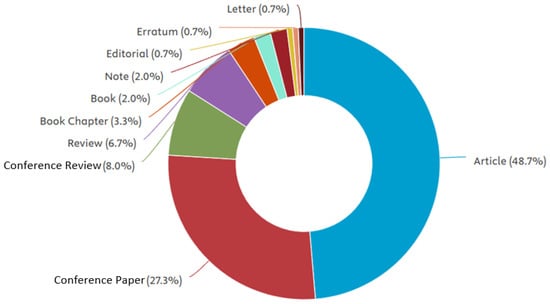
Figure 6.
Documents by type referring to V2G in the Americas extracted from the Scopus database.
4.2. Network Analysis
As the volume of academic literature grows, conducting a comprehensive literature review becomes a challenge. This is where the VOSviewer tool proves invaluable. VOSviewer is an intuitive software developed by Nees Van Eck and Ludo Waltman of CWTS, Leiden University. This software allows researchers to visualize and map scientific literature, making the literature review process more efficient and insightful. To become familiar with the tool, some information needs to be gathered. You can identify the academic database or search engine where you will search for the literature, using the corresponding guidelines. The most common options include databases such as Scopus, Google Scholar, and Web of Science. In our analysis, we considered Scopus, as stated in the methodology, and our area of interest is access to the web in the Americas. As you can see, the search is well-defined to find the relevant literature.
For visualization, in Figure 7 VOSviewer was used, version 1.6.20, updated on 31 October 2023. This case study demonstrated that VOSviewer has specific and powerful functions for visualizing complex bibliometric networks. This version offers enhanced features based on data downloaded via API and creates maps based on data exported from Scopus.
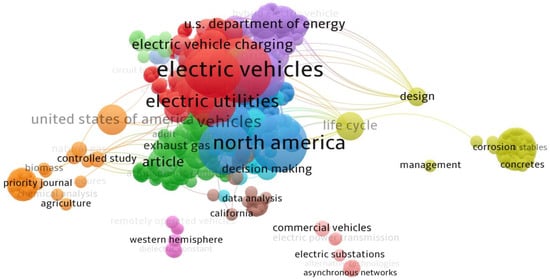
Figure 7.
Keyword analysis in the reviewed literature using VOSviewer.
The number of authors and co-authors is 434, as shown in Figure 8. The analysis was performed by authorship and co-authorship, with a maximum of 25 authors per article. The most relevant researchers are Nelson D., Walsh P., and Alley R. J. Figure 9 identifies collaborations among the authors considered to have the highest number of publications in the field related to networked vehicles in America, who form a broad network for publishing their documents.

Figure 8.
Visualization network by authorship and co-authorship.
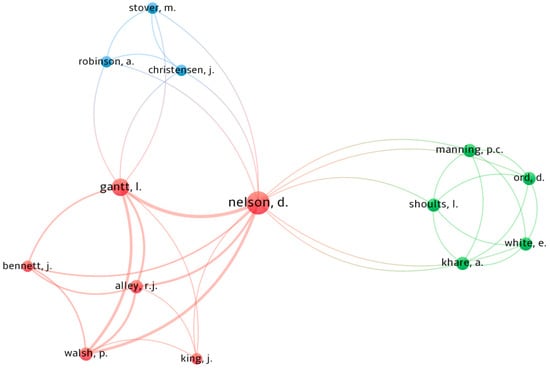
Figure 9.
Interrelations between the most prominent authors.
Table 1 presents the most significant developments in Vehicle-to-Grid (V2G) technology across the Americas, reflecting the technological, institutional, and regulatory diversity of each region. North America boasts the most advanced ecosystem, with well-established projects integrating school fleets, private vehicles, and smart microgrids, such as the programs in California and the University of California, San Diego project, which have demonstrated tangible benefits in ancillary services and reduced peak demand. Canada complements these advances with research focused on extreme weather conditions and standards validation. In Central America and the Caribbean, V2G advancements are still in their early stages, but pilot initiatives and conceptual studies exploring their feasibility are beginning to emerge [46]. In Panama, academic research and partnerships between universities and utilities have analyzed the integration of EVs and V2G to support the grid during peak demand, especially in Panama City, where urbanization and electric vehicle penetration are increasing [47]. The Dominican Republic has included grid flexibility studies and demand response models that consider bidirectional capacities, integrating them with variable renewable energy strategies [48]. Countries like Costa Rica and Guatemala have promoted technical forums on electric mobility that incorporate preliminary discussions on V2G, emphasizing the need for regulatory frameworks and real-world pilot projects to evaluate operational and economic benefits [18]. Although there are still no large-scale commercial deployments, these initial steps reflect a growing interest in the region in leveraging EVs as active grid resources. In South America, Brazil leads with experimental platforms and pilot projects involving bus fleets, while Chile, Colombia, and Argentina are advancing through techno-economic studies that seek to reconcile V2G integration with urban grids and renewable energy systems. Overall, the table shows a heterogeneous but growing process, in which countries are progressively moving from exploratory stages to commercial implementations, consolidating a path towards the intelligent electrification of transport and the modernization of electrical networks at a continental level.

Table 1.
Major V2G Developments in the Americas.
The analysis presented above shows that the progress made in different parts of the Americas can serve as a reference for other countries that have not yet adopted these technologies that integrate mobility systems and the electrical grid. The pursuit of a more reliable, intelligent, and secure system is driven by improvements to digital systems and, above all, by systems that are much more environmentally friendly. The analysis of renewable energy generation systems has become essential to combat climate change, and storage systems are also evolving, seeking effective solutions such as V2G, which is currently being studied.
The analysis of the state-of-the-art review and the most relevant developments to date regarding V2G in America, presented in Table 1, reveals several important gaps that require further investigation and are presented as future challenges below:
Standardization of Communication Protocols and Technological Compatibility: The region faces profound heterogeneity in technical standards, connectors, management platforms, and communication protocols between vehicles, chargers, and electrical systems [61]. Moving toward common standards (such as ISO 15118) is critical to ensuring interoperability among manufacturers and countries, especially considering the cross-border nature of the automotive market in the Americas.
Strengthening Bidirectional Charging Infrastructure: Although pilot programs exist in the United States, Canada, and some South American countries, the availability of V2G chargers is still limited and expensive [2]. Mass expansion requires investments in urban, commercial, and residential infrastructure, as well as clear incentives for technology adoption.
Unified Regulatory Framework and Clear Market Signals: Many countries lack specific regulations for V2G related to dynamic pricing, compensation for ancillary services, aggregation models, or the participation of residential users in electricity markets [62]. The absence of clear rules hinders private investment and limits the participation of electric utilities and network operators.
Modernization and Digitization of Electrical Grids: To manage thousands or millions of vehicles as distributed energy resources (DERs), grids will need to incorporate greater real-time monitoring capacity, advanced control, artificial intelligence, and cybersecurity [63]. Obsolete or weak grids, especially in parts of Central and South America, will hinder the large-scale implementation of V2G.
Managing the Impact on Battery Lifespan: Although advances in battery chemistry have reduced the impact of the V2G cycle, uncertainties remain regarding long-term degradation and associated costs [64]. Regional studies are needed, considering climatic conditions, usage patterns, and the characteristics of local electrical systems.
User Acceptance and Attractive Business Models: Many users are unfamiliar with V2G or do not perceive clear incentives to participate [65]. Designing transparent, reliable, and economically attractive compensation mechanisms will be essential to increasing the participation of electric vehicle owners.
Inequality in the Electrification of Transportation: Electric vehicle penetration is highly uneven across countries: high in North America, moderate in South America, and low in Central America and the Caribbean [66]. This gap could widen without supportive policies that make V2G an accessible option throughout the region.
Integration with Renewable Energy and Climate Variability: In the Americas, renewable energy generation varies widely by region: solar in Mexico and Chile, hydroelectric in Brazil, and wind in the United States and Canada [67]. Integrating V2G as a storage and flexibility mechanism will require optimized models that consider these differences and increasing climate variability.
Cybersecurity and Data Protection: Millions of vehicles connected to the grid represent a new potential attack surface [68]. Advanced security, authentication, and data protection protocols will be required to prevent vulnerabilities that could compromise users and electricity operators.
Synergies with Microgrids and Isolated Systems: The potential of V2G to improve energy resilience in remote areas such as the Caribbean, the Amazon, and rural communities remains underutilized [69]. Integrating V2G with renewable microgrids requires advanced models of operation, financing, and community governance.
These research gaps, currently considered challenges, also represent significant opportunities for future V2G research in the Americas applied to the energy transition [70]. Addressing them will be crucial for a more complete understanding of how electric vehicles will be integrated with electrical power systems. These integration efforts will significantly expand the grid, and their interactions will be multifaceted and will ultimately need to be managed.
4.3. Determining Aspects of Electric Vehicle Adoption in the Americas
The identification and joint presentation of the technological and operational aspects of electric vehicles (EVs) in the Americas is a key element for understanding their actual viability and rate of adoption. From a technological perspective, factors such as the maturity of lithium-ion batteries, energy density, lifespan, charging times, and interoperability of the charging infrastructure stand out. Operationally, integrating EVs into electrical systems presents challenges related to demand management, the need for smart grids, controlled charging, and opportunities for ancillary services such as vehicle-to-grid (V2G). Analyzing these elements in isolation limits understanding the system; however, a joint assessment allows for the identification of synergies, bottlenecks, and technical solutions adapted to urban, rural, and island contexts in North America, Central America, the Caribbean, and South America.
In the regulatory and public policy sphere, the adoption of electric vehicles depends largely on clear and coherent regulatory frameworks that support technological development. This includes efficiency and safety standards, tax incentives, charging tariff schemes, grid access regulations, and regulations for end-of-life battery management. In the Americas, regulatory heterogeneity among countries results in varying levels of EV penetration, highlighting the importance of integrated policies that address transportation, energy, and the environment. Presenting these regulatory aspects together with the technological and operational ones allows us to assess whether existing legal frameworks truly facilitate the transition to sustainable electric mobility or, conversely, constitute structural barriers.
Finally, socioeconomic and sociocultural factors are crucial for the acceptance and widespread adoption of electric vehicles in the region. Variables such as the initial purchase cost, access to financing, perceived reliability, environmental awareness, and cultural patterns of mobility directly influence user decisions. In Latin American and Caribbean contexts, electric mobility is also linked to job creation, workforce retraining, reduced local pollution, and improved urban quality of life. Integrating these factors with the technical and regulatory components allows us to build a systemic vision of electromobility, essential for designing transition strategies that are technically and economically viable and socially acceptable in the Americas.
5. Discussion
5.1. Integration of the V2G Ecosystem in Americas
Discussions about the implementation of V2G systems in the Americas focus primarily on the technical and operational challenges facing the region, characterized by significant heterogeneity in the development of its electrical grids [71]. In countries like the United States and Canada, the conversation revolves around the standardization of communication protocols, the management of large volumes of data, and the ability to incorporate electric vehicles as distributed energy resources without compromising system stability [72]. In contrast, in Central America and much of South America, the debate centers on insufficient grid modernization, low penetration of bidirectional charging infrastructure, and the need for public and private investment to support the operation of millions of connected vehicles [7]. Added to this is a relevant discussion about battery degradation: while some studies argue that V2G can accelerate wear, others indicate that intelligent management of charging cycles could even extend battery lifespan by maintaining optimal operating levels [73]. Simultaneously, there is intense debate surrounding cybersecurity and data privacy, as the massive interconnection of vehicles poses emerging risks that could affect both users and operators [74]. Interoperability challenges among manufacturers, chargers, and network operators are also being discussed; the lack of unified regulations in the Americas hinders the seamless integration of the V2G ecosystem [75]. Another critical point of discussion is the capacity of electricity markets to absorb and value the ancillary services provided by vehicle fleets, enabling a transition to more flexible, resilient, and decentralized networks.
5.2. Regulatory Frameworks Needed at Regional Level
On the socioeconomic and political front, discussions surrounding V2G in the Americas focus on the actual viability of business models and the incentive mechanisms that must be implemented to encourage widespread user participation [76]. One of the most recurring debates is whether the financial compensation that electric vehicle owners will receive will be sufficient to justify temporarily feeding energy back into the grid or participating in flexibility markets [77]. In many countries, the lack of dynamic pricing, authorized aggregators, and transparent remuneration schemes creates uncertainty that discourages adoption. Another point of contention is the inequality in access to electric vehicles: while electrification is progressing rapidly in North America, in Central and South America it faces high initial costs, a lack of incentives, and infrastructure limitations, which could widen technological gaps between countries [78]. Furthermore, there is a debate about the role of governments and public policies: some experts argue that firm and coordinated regulatory frameworks are required at the regional level, while others emphasize that development should be driven primarily by the market and private sector innovation. The integration of V2G into community resilience programs, especially in the Caribbean and isolated areas, also generates discussions on governance and energy equity [79]. Finally, academic and business dialogue addresses the need to integrate V2G with variable renewable energy sources, microgrids, and decarbonization strategies, assessing its potential to contribute to energy stability, emissions reduction, and energy independence in the region.
5.3. Battery Degradation/Charge Cycles
In V2G systems, battery charge and discharge cycles are among the most critical technical aspects due to their direct influence on electrochemical degradation and the lifespan of the energy storage system [80]. Each additional cycle of energy exchange with the grid increases the battery’s thermal and chemical stress, affecting parameters such as residual capacity and internal resistance [81]. However, recent studies show that intelligent control strategies, such as limiting the depth of discharge, operating within optimal state-of-charge ranges (e.g., between 20% and 80%), and prioritizing short-duration services, can significantly reduce accelerated degradation. In this context, the proper design of V2G algorithms allows balancing the economic and operational benefits for the network with battery preservation, turning electric vehicles into flexible energy resources without substantially compromising their long-term performance [23].
5.4. Unique Advantages of V2G in Weak Grid Environments in Latin America
In Latin America’s weak grid environments, V2G offers unique advantages by acting as a distributed resilience resource, especially in the face of extreme weather events. In Caribbean regions, where hurricanes cause power outages that can last from hours to several days, V2G-enabled electric vehicles can function as mobile backup power sources for homes, healthcare facilities, shelters, and telecommunications. Unlike diesel generators, V2G offers a quiet, responsive, and locally emission-free solution, reducing dependence on imported fuels whose logistics are often disrupted after disasters. Furthermore, aggregating multiple vehicles allows for voltage and frequency stabilization in temporary microgrids during the recovery phase. In this context, V2G not only improves operational reliability but also becomes a strategic component of climate risk management and regional energy security.
Key challenges include variability in renewable energy generation, data integration complexity, and solutions’ scalability. Despite this, studies are paving the way for more efficient and resilient energy systems crucial to achieving global sustainability and decarbonization goals.
6. Conclusions
The integration of electric vehicles and V2G schemes in the Americas is heavily influenced by differences in public policies and regional regulatory frameworks. While countries like the United States and Canada have made progress in tax incentives, technical standards, and pilot programs that recognize EVs as energy assets, much of Latin America, Central America, and the Caribbean maintain fragmented policies, focused primarily on the electrification of transportation rather than on their interaction with the electricity grid. This regulatory asymmetry creates gaps in investment, innovation, and institutional capacity, limiting the realization of EVs’ potential to provide flexibility, ancillary services, and resilience to the electricity system.
From a technical and energy planning perspective, this research concludes that the absence of integrated policies significantly reduces the systemic benefits of electromobility. In regions with weak electricity grids, high penetration of variable renewables, and climate vulnerability, the lack of clear incentives for V2G prevents the use of EVs as distributed resources for peak demand management, frequency support, and emergency backup power. Furthermore, regulatory heterogeneity hinders the adoption of interoperability and cybersecurity standards, increasing uncertainty for manufacturers, network operators, and end users, and slowing the transition to smarter and more resilient energy systems.
In this context, this study recommends that policymakers adopt a more coherent and practical approach that integrates transportation, energy, and climate. Key recommendations include the regional harmonization of technical standards, the design of specific economic incentive schemes for V2G services, the strengthening of smart grids, and the promotion of pilot projects adapted to local contexts (urban, rural, and island). The importance of accompanying these measures with training and public awareness programs is also emphasized. Together, these actions would help close regional gaps and transform electric vehicles into a strategic pillar of the sustainable energy transition in the Americas.
Empirical evidence from V2G pilot studies in weak power grids shows that the main practical obstacles are related to limitations in distribution infrastructure, low control capacity, and a lack of clear regulatory frameworks. Experiences in island and rural systems indicate that, without intelligent load management and robust communication protocols, V2G can generate power quality problems and local overloads. However, successful cases demonstrate that incorporating bidirectional chargers with centralized control, along with vehicle aggregation schemes, improves system stability.
Author Contributions
Conceptualization, D.I.-A.; methodology, D.I.-A. and G.M.; Data curation, D.I.-A., G.M. and J.M.; Validation, D.I.-A., G.M. and J.M.; Writing—original draft, D.I.-A.; Writing—review and editing, D.I.-A., G.M. and J.M. All authors have read and agreed to the published version of the manuscript.
Funding
This research received no external funding.
Data Availability Statement
The raw data supporting the conclusions of this article will be made available by the authors on request.
Acknowledgments
This research is part of the scientific research project PICTMS24-08. We also thank the Red Iberoamericana de Analisis de Sistemas Energéticos (RIASE) and the Red de Investigación en Analisis de Sistemas de Energía e Iluminación del Ecuador (RIASE-IE) for their unconditional support in enabling its successful completion.
Conflicts of Interest
The authors declare no conflicts of interest.
References
- Knez, M.; Zevnik, G.K.; Obrecht, M. A Review of Available Chargers for Electric Vehicles: United States of America, European Union, and Asia. Renew. Sustain. Energy Rev. 2019, 109, 284–293. [Google Scholar] [CrossRef]
- Martínez-Gómez, J.; Espinoza, V.S. Challenges and Opportunities for Electric Vehicle Charging Stations in Latin America. World Electr. Veh. J. 2024, 15, 583. [Google Scholar] [CrossRef]
- Rasbash, D.; Dillman, K.J.; Heinonen, J.; Ásgeirsson, E.I. A National and Regional Greenhouse Gas Breakeven Assessment of EVs across North America. Sustainability 2023, 15, 2181. Available online: https://www.mdpi.com/2071-1050/15/3/2181 (accessed on 7 December 2025). [CrossRef]
- Su, T.; Zhao, J.; Gomez-Exposito, A.; Chen, Y.; Terzija, V.; Gentle, J.P. Grid-Enhancing Technologies for Clean Energy Systems. Nat. Rev. Clean Technol. 2025, 1, 16–31. [Google Scholar] [CrossRef]
- Onat, N.C.; Noori, M.; Kucukvar, M.; Zhao, Y.; Tatari, O.; Chester, M. Exploring the Suitability of Electric Vehicles in the United States. Energy 2017, 121, 631–642. [Google Scholar] [CrossRef]
- Becker, T.A.; Sidhu, I. Electric Vehicles in the United States A New Model with Forecasts to 2030. Tenderich, B. Center for Entrepreneurship & Technology (CET) Technical Brief. Available online: https://globaltrends.thedialogue.org/wp-content/uploads/2014/12/Electric-Vehicles-in-the-United-States-A-New-Model-with-Forecasts-to-2030.pdf (accessed on 8 January 2026).
- Quirós-Tortós, J.; Victor-Gallardo, L.; Ochoa, L. Electric Vehicles in Latin America: Slowly but Surely Toward a Clean Transport. IEEE Electrif. Mag. 2019, 7, 22–32. [Google Scholar] [CrossRef]
- Icaza, D.; Borge-Diez, D.; Galindo, S.P.; Flores-Vázquez, C. Analysis of Smart Energy Systems and High Participation of V2G Impact for the Ecuadorian 100% Renewable Energy System by 2050. Energies 2023, 16, 4045. Available online: https://www.mdpi.com/1996-1073/16/10/4045 (accessed on 7 December 2025).
- Borge-Diez, D.; Icaza, D.; Açıkkalp, E.; Amaris, H. Combined Vehicle to Building (V2B) and Vehicle to Home (V2H) Strategy to Increase Electric Vehicle Market Share. Energy 2021, 237, 121608. [Google Scholar] [CrossRef]
- González, L.G.; Siavichay, E.; Espinoza, J.L. Impact of EV Fast Charging Stations on the Power Distribution Network of a Latin American Intermediate City. Renew. Sustain. Energy Rev. 2019, 107, 309–318. [Google Scholar] [CrossRef]
- Menyhart, J. Overview of Sustainable Mobility: The Role of Electric Vehicles in Energy Communities. World Electr. Veh. J. 2024, 15, 275. Available online: https://www.mdpi.com/2032-6653/15/6/275 (accessed on 7 December 2025). [CrossRef]
- Sachan, S.; Deb, S.; Singh, P.P.; Alam, M.S.; Shariff, S.M. A Comprehensive Review of Standards and Best Practices for Utility Grid Integration with Electric Vehicle Charging Stations. WIREs Energy Environ. 2022, 11, e424. [Google Scholar] [CrossRef]
- Nguyen, Q.H. Evaluation and Development of the Bridging Application Between ISO 15118 and OCPP 2.0.1 Protocols. Master’s Thesis, Rheinland-Pfälzische Technische Universität Kaiserslautern-Landau, Landau, Germany, 2023. [Google Scholar]
- Arena, G.; Chub, A.; Lukianov, M.; Strzelecki, R.; Vinnikov, D.; De Carne, G. A Comprehensive Review on DC Fast Charging Stations for Electric Vehicles: Standards, Power Conversion Technologies, Architectures, Energy Management, and Cybersecurity. IEEE Open J. Power Electron. 2024, 5, 1573–1611. [Google Scholar] [CrossRef]
- Alegre-Bravo, A.; Stedman, R.C.; Anderson, C.L. Rethinking the Role of Indicators for Electricity Access in Latin America: Towards Energy Justice. Appl. Energy 2025, 379, 124877. [Google Scholar] [CrossRef]
- Aghahosseini, A.; Bogdanov, D.; Barbosa, L.S.N.S.; Breyer, C. Analysing the Feasibility of Powering the Americas with Renewable Energy and Inter-Regional Grid Interconnections by 2030. Renew. Sustain. Energy Rev. 2019, 105, 187–205. [Google Scholar] [CrossRef]
- Guimarães, L.N. The Regulation and Policy of Latin American Energy Transitions; Elsevier: Amsterdam, The Netherlands, 2020; ISBN 978-0-12-819565-9. [Google Scholar]
- Icaza, D.; Vallejo-Ramirez, D.; Siguencia, M.; Portocarrero, L. Smart Electrical Planning, Roadmaps and Policies in Latin American Countries Through Electric Propulsion Systems: A Review. Sustainability 2024, 16, 10624. Available online: https://www.mdpi.com/2071-1050/16/23/10624 (accessed on 7 December 2025). [CrossRef]
- Mbacke, N.R.; Chowdhury, B. Integration and Optimization of Vehicle-to-Grid Technology in Distribution Systems—A Comprehensive Review. In Proceedings of the 2023 North American Power Symposium (NAPS), Asheville, NC, USA, 15–17 October 2023; pp. 1–6. [Google Scholar]
- Masud Rana, M.; Mahfuz Alam, S.M.; Allahma Rafi, F.; Bashu Deb, S.; Agili, B.; He, M.; Ali, M.H. Comprehensive Review on the Charging Technologies of Electric Vehicles (EV) and Their Impact on Power Grid. IEEE Access 2025, 13, 35124–35156. [Google Scholar] [CrossRef]
- Panossian, N.; Muratori, M.; Palmintier, B.; Meintz, A.; Lipman, T.; Moffat, K. Challenges and Opportunities of Integrating Electric Vehicles in Electricity Distribution Systems. Curr. Sustain. Energy Rep. 2022, 9, 27–40. [Google Scholar] [CrossRef]
- Amin, A.; Tareen, W.U.K.; Usman, M.; Ali, H.; Bari, I.; Horan, B.; Mekhilef, S.; Asif, M.; Ahmed, S.; Mahmood, A. A Review of Optimal Charging Strategy for Electric Vehicles under Dynamic Pricing Schemes in the Distribution Charging Network. Sustainability 2020, 12, 10160. Available online: https://www.mdpi.com/2071-1050/12/23/10160 (accessed on 7 December 2025). [CrossRef]
- Dong, S.; Guo, S. Advancements, Challenges, and Future Trends of Vehicle-to-Grid Technologies: A Review. Energy Technol. 2025, 13, 2500481. [Google Scholar] [CrossRef]
- Hu, Q.; Ding, P.; Jiang, W.; Fung, K. Enhancing Battery Thermal Management in Electric Vehicles through Reduced Order Modeling and Predictive Control for Quick Charging. SAE Int. J. Adv. Curr. Pract. Mobil. 2024, 7, 748–759. [Google Scholar] [CrossRef]
- Biswas, P.; Rashid, A.; Al Masum, A.; Nasim, M.A.A.; Anas Ferdous, A.S.M.; Gupta, K.D.; Biswas, A. An Extensive and Methodical Review of Smart Grids for Sustainable Energy Management-Addressing Challenges with AI, Renewable Energy Integration and Leading-Edge Technologies. IEEE Access 2025, 4, 1. [Google Scholar] [CrossRef]
- Ertugrul, N. Reinventing the Power Grid: Renewable Energy, Storage, and Grid Modernization; CRC Press: Boca Raton, FL, USA, 2024; ISBN 978-1-032-69217-3. [Google Scholar]
- Signer, T.; Baumgartner, N.; Ruppert, M.; Sandmeier, T.; Fichtner, W. Modeling V2G Spot Market Trading: The Impact of Charging Tariffs on Economic Viability. Energy Policy 2024, 189, 114109. [Google Scholar] [CrossRef]
- Khameneh, J.Z.; Emmanuel, F. Policy and Regulatory Gaps in Electric Vehicle Charging Infrastructure in the United States: Challenges and Opportunities. J. Manag. Dev. Res. 2025, 2, 149–156. [Google Scholar] [CrossRef]
- Ugarteche, O.; de León, C.; García, J. China and the Energy Matrix in Latin America: Governance and Geopolitical Perspective. Energy Policy 2023, 177, 113435. [Google Scholar] [CrossRef]
- Dimitriadou, K.; Rigogiannis, N.; Fountoukidis, S.; Kotarela, F.; Kyritsis, A.; Papanikolaou, N. Current Trends in Electric Vehicle Charging Infrastructure; Opportunities and Challenges in Wireless Charging Integration. Energies 2023, 16, 2057. Available online: https://www.mdpi.com/1996-1073/16/4/2057 (accessed on 7 December 2025). [CrossRef]
- Adamashvili, N.; Thrassou, A. Towards Sustainable Decarbonization: Addressing Challenges in Electric Vehicle Adoption and Infrastructure Development. Energies 2024, 17, 5443. Available online: https://www.mdpi.com/1996-1073/17/21/5443 (accessed on 7 December 2025). [CrossRef]
- Dhaliwal, S.; Rana, P.S.; Singh, M.; Kumar, A.; Anand, A.; Seema. Survey on Protocols and Standards Used by Electric Vehicles. In Proceedings of the 2025 3rd IEEE International Conference on Industrial Electronics: Developments & Applications (ICIDeA), Bhubaneswar, India, 21–22 February 2025; pp. 1–6. [Google Scholar]
- Podder, P. The Effect of Grid Codes in V2G Charging Equipment. Master’s Thesis, Lappeenranta-Lahti University of Technology LUT, Lappeenranta, Finland, 2025. [Google Scholar]
- Aybar-Mejía, M.; Cuevas, S.; Encarnación, H.; Abel, L.; Pichardo, J.; Yasuoka, K.; Mariano-Hernandez, D.; Taveras-Cruz, A.J.; Sbriz-Zeitun, G.; Rengifo, F.A.; et al. Securing the EV Charging Ecosystem: Protocol-Level Vulnerabilities, Defenses, and a Research Roadmap. J. Electr. Comput. Eng. 2025, 2025, 5770202. [Google Scholar] [CrossRef]
- Pawlik, L.; Wilk-Jakubowski, J.L.; Grabski, P.T.; Wilk-Jakubowski, G. Securing the Electrified Future: A Systematic Review of Cyber Attacks, Intrusion and Anomaly Detection, and Authentication in Electric Vehicle Charging Infrastructure. Energies 2025, 18, 4847. Available online: https://www.mdpi.com/1996-1073/18/18/4847 (accessed on 6 January 2026). [CrossRef]
- Resilience Planning and Optimization of Electric Power Systems Against Extreme Weather Events—ProQuest. Available online: https://www.proquest.com/openview/5e9d609965a9ea9c6ba29f3d466575b4/1?pq-origsite=gscholar&cbl=18750&diss=y (accessed on 6 January 2026).
- Mojumder, M.R.H.; Ahmed Antara, F.; Hasanuzzaman, M.; Alamri, B.; Alsharef, M. Electric Vehicle-to-Grid (V2G) Technologies: Impact on the Power Grid and Battery. Sustainability 2022, 14, 13856. [Google Scholar] [CrossRef]
- Dean, M.D.; Kockelman, K.M. Assessing Public Opinions of and Interest in Bidirectional Electric Vehicle Charging Technologies: A U.S. Perspective. Transp. Res. Rec. J. Transp. Res. Board 2024, 2678, 1889–1904. [Google Scholar] [CrossRef]
- Lipman, T.; Yuan, Y. Electric Vehicle Charge Management Strategies to Benefit the California Electricity Grid; University of California: Berkeley, LA, USA, 2025. [Google Scholar]
- Dawn, S.; Manideep, S.; Rekha, S.S.; Rao, C.R.; Rao, K.D.; Al Mansur, A.; Ustun, T.S. Advancing Renewable Energy Integration in Deregulated Markets: The Role of Energy Storage, EVs, and Policy Frameworks. Energy Explor. Exploit. 2025, 43, 2745–2797. [Google Scholar] [CrossRef]
- Oyewola, D.O.; Dada, E.G. Exploring Machine Learning: A Scientometrics Approach Using Bibliometrix and VOSviewer. SN Appl. Sci. 2022, 4, 143. [Google Scholar] [CrossRef] [PubMed]
- Bukar, U.A.; Sayeed, M.S.; Razak, S.F.A.; Yogarayan, S.; Amodu, O.A.; Mahmood, R.A.R. A Method for Analyzing Text Using VOSviewer. MethodsX 2023, 11, 102339. [Google Scholar] [CrossRef]
- Jacsó, P. The H-index, H-core Citation Rate and the Bibliometric Profile of the Scopus Database. Online Inf. Rev. 2011, 35, 492–501. [Google Scholar] [CrossRef]
- Mejia, C.; Wu, M.; Zhang, Y.; Kajikawa, Y. Exploring Topics in Bibliometric Research Through Citation Networks and Semantic Analysis. Front. Res. Metr. Anal. 2021, 6, 742311. [Google Scholar] [CrossRef]
- Štogl, O.; Miltner, M.; Zanocco, C.; Traverso, M.; Starý, O. Electric Vehicles as Facilitators of Grid Stability and Flexibility: A Multidisciplinary Overview. WIREs Energy Environ. 2024, 13, e536. [Google Scholar] [CrossRef]
- Cardona, M.; Aldana-Aguilar, J.; Salloum, S.G.A.; Morataya, C.; Flores, M.A.; Serrano, F.E. Advancing Electromobility in Central America: An Analysis of Policies and Regulations. In Proceedings of the 2024 IEEE 42nd Central America and Panama Convention (CONCAPAN XLII), San Jose, Costa Rica, 27–29 November 2024; pp. 1–6. [Google Scholar]
- Boya-Lara, C. Integrating Electric Mobility and Distributed Solar in Carbon-Negative Panama: Readiness Assessment and Policy Roadmap for Sustainable Energy Transition. Energy Sustain. Dev. 2025, 87, 101747. [Google Scholar] [CrossRef]
- Quevedo, J.; Herrera Moya, I.; Mariano-Hernandez, D.; Sbriz-Zeitun, G.; Cannone, C.; Howells, M.; Yeganyan, R.; Aybar-Mejía, M. Decarbonising the Power Sector of the Dominican Republic: An Approach from Electric Mobility Transition. Energy Strategy Rev. 2024, 52, 101357. [Google Scholar] [CrossRef]
- UC San Diego Microgrid|Real-World Testing for Energy Storage Innovation. Available online: https://www.energystorage.ucsd.edu/microgrid (accessed on 9 December 2025).
- Pandiella, A.G. Enhancing Business Dynamism and Consumer Welfare in Costa Rica with Regulatory Reform; OECD Economic Department Working Papers; Organisation for Economic Co-operation and Development: Paris, France, 2020. [Google Scholar]
- Nissan, ChargeScape Launch V2G Pilot in Silicon Valley. Available online: https://www.evinfrastructurenews.com/ev-networks/nissan-chargescape-v2g-pilot-silicon-valley (accessed on 9 December 2025).
- Vehicle-to-Grid (V2G). Available online: https://electricautonomy.ca/charging/v2g/ (accessed on 9 December 2025).
- Bi-Directional EV Pilot Project Toronto | Peak Power Project. Available online: https://peakpowerenergy.com/project/peak-drive-pilot-project/ (accessed on 9 December 2025).
- Pilot Project Starts with Electric Vehicles for Freight Transport. Available online: https://www.international-climate-initiative.com/en/iki-media/news/pilot-project-starts-with-electric-vehicles-for-freight-transport/ (accessed on 9 December 2025).
- BNamericas. Electric Mobility on the Rise: Panama Moves Towards a Sustainable Route. Available online: https://www.bnamericas.com/en/news/electric-mobility-on-the-rise-panama-moves-towards-a-sustainable-route (accessed on 9 December 2025).
- Brazil Smart Grid EV Charging Market |2019–2030| Ken Research. Available online: https://www.kenresearch.com/brazil-smart-grid-ev-charging-integration-market (accessed on 9 December 2025).
- Fantin, C.A.; Rivera, M.; Farah, B.; Lima, R.L.; Bonaldo, J.P. Electric Bus Rapid Transit Supported by Solar Generation: A Scalable Economic Model for Zero-Emission Urban Transit. Energy Policy 2026, 209, 114981. [Google Scholar] [CrossRef]
- Plataforma de Electromovilidad—Sistema V2G en Chile. Available online: https://energia.gob.cl/electromovilidad/tendencias/tendencias-en-investigacion-y-desarrollo/v2g-en-chile (accessed on 9 December 2025).
- Bedoya Moreno, M. Evaluación de Impacto Económico de las Redes Eléctricas Inteligentes en el Usuario Residencial de Colombia. Master’s Thesis, National University of Colombia, Bogotá, Colombia, 2019. [Google Scholar]
- Argentina Seeks Its EV Tariff: The Missing Factor to Accelerate the Charging Network—Mobility Portal. 2025. Available online: https://mobilityportal.eu/argentina-seeks-its-ev-tariff/ (accessed on 8 January 2026).
- Kong, P.-Y.; Karagiannidis, G.K. Charging Schemes for Plug-In Hybrid Electric Vehicles in Smart Grid: A Survey. IEEE Access 2016, 4, 6846–6875. [Google Scholar] [CrossRef]
- Yuan, H.; Tang, W. Flexibility Provision From Urban Buildings to Low-Carbon Power Systems: Quantification, Aggregation and System Integration. IET Energy Syst. Integr. 2025, 7, e70017. [Google Scholar] [CrossRef]
- Distributed, Intelligent Edge-Sensing for a Smarter Grid—ProQuest. Available online: https://www.proquest.com/openview/2f4e1096536a6a5940444d84843f0933/1?pq-origsite=gscholar&cbl=18750&diss=y (accessed on 3 January 2026).
- Zhang, C.; Wang, X.; Wang, Y.; Tang, P. Economic Viability of Vehicle-to-Grid (V2G) Reassessed: A Degradation Cost Integrated Life-Cycle Analysis. Sustainability 2025, 17, 5626. Available online: https://www.mdpi.com/2071-1050/17/12/5626 (accessed on 3 January 2026). [CrossRef]
- Chen, C.-F.; Lai, C.-M. Understanding the Acceptance of Vehicle-to-Grid (V2G) Services: Evidence from Taiwan. Transp. Policy 2024, 159, 230–240. [Google Scholar] [CrossRef]
- Strecker, J. Electrification and Justice for All? A Systematic Review of Equity and Justice Concerns in the Literature on Transportation Electrification. J. Plan. Lit. 2025, 1, 08854122251331911. [Google Scholar] [CrossRef]
- Vazquez, M.; Hallack, M.; Andreão, G.; Tomelin, A.; Botelho, F.; Perez, Y.; Di Castelnuovo, M. Bi-Regional Economic Perspectives Financing the Transition to Renewable Energy in the European Union, Latin America and the Caribbean; EU-LAC Foundation: Hamburg, Germany, 2018. [Google Scholar]
- Zografopoulos, I.; Hatziargyriou, N.D.; Konstantinou, C. Distributed Energy Resources Cybersecurity Outlook: Vulnerabilities, Attacks, Impacts, and Mitigations. IEEE Syst. J. 2023, 17, 6695–6709. [Google Scholar] [CrossRef]
- Li, J.; Gao, C. An Overview of the Current Status of V2G Technology in Improving Grid Resilience. In Proceedings of the 2024 6th International Conference on Energy, Power and Grid (ICEPG), Guangzhou, China, 27–29 September 2024; pp. 731–734. [Google Scholar]
- Ahmad, B.; Ding, J.; Ali, T.; Sarwatt, D.S.; Arshad, R.; Philipo, A.G.; Ning, H. Vehicle-to-Grid Integration: Ensuring Grid Stability, Strengthening Cybersecurity, and Advancing Energy Market Dynamics. arXiv 2025, arXiv:2509.13393. [Google Scholar]
- Aguilar Dominguez, D. The Influence of Electric Vehicle Availability on Vehicle-to-Grid Provision Within a Microgrid. Ph.D. Thesis, University of Sheffield, Sheffield, UK, 2023. [Google Scholar]
- Cao, J. The Future of V2x-Related Standards and Protocols in Europe, China and the United States. Bachelor’s Thesis, Lappeenranta-Lahti University of Technology LUT, Lappeenranta, Finland, 2024. [Google Scholar]
- Owens, J. Integrated Modeling Approaches to Quantify Vehicle-to-Grid Services in an Evolving Power Sector. Ph.D. Thesis, Massachusetts Institute of Technology, Cambridge, MA, USA, 2025. [Google Scholar]
- Sheth, K.; Patel, D.; Sajeev, S.K.; Swami, G. Comprehensive Guide to Battery Energy Storage Systems (BESS): Technology, Projects, and Operations; Scientific Research Publishing, Inc.: Glendale, CA, USA, 2025; ISBN 979-8-89507-710-8. [Google Scholar]
- Cyber Security for Electric Vehicle Smart Charging Energy Network—ProQuest. Available online: https://www.proquest.com/openview/092c6ee9d351be5c385c60fcaef9d13b/1?pq-origsite=gscholar&cbl=2026366&diss=y (accessed on 5 January 2026).
- Sovacool, B.K.; Kester, J.; Noel, L.; de Rubens, G.Z. Income, Political Affiliation, Urbanism and Geography in Stated Preferences for Electric Vehicles (EVs) and Vehicle-to-Grid (V2G) Technologies in Northern Europe. J. Transp. Geogr. 2019, 78, 214–229. [Google Scholar] [CrossRef]
- Almallah, R. Optimizing EV Charger Participation Across Different Power Markets: A Multi-Market Approach to aFRR, mFRR, and Local Flexibility Markets. Master’s Thesis, Universitat Politècnica de Catalunya, Barcelona, Spain, 2025. [Google Scholar]
- Mo, T.; Li, Y.; Lau, K.; Poon, C.K.; Wu, Y.; Luo, Y. Trends and Emerging Technologies for the Development of Electric Vehicles. Energies 2022, 15, 6271. [Google Scholar] [CrossRef]
- Roy, S.; Das, D.C.; Sinha, N. Optimizing Smart City Virtual Power Plants with V2G Integration for Improved Grid Resilience. In Proceedings of the 2024 IEEE International Conference on Interdisciplinary Approaches in Technology and Management for Social Innovation (IATMSI), Gwalior, India, 14–16 March 2024; Volume 2, pp. 1–6. [Google Scholar]
- Guo, J.; Yang, J.; Lin, Z.; Serrano, C.; Cortes, A.M. Impact Analysis of V2G Services on EV Battery Degradation—A Review. In Proceedings of the 2019 IEEE Milan PowerTech, Milan, Italy, 23–27 June 2019; pp. 1–6. [Google Scholar]
- Graber, G.; Sabatino, S.; Calderaro, V.; Galdi, V. Modeling of Lithium-Ion Batteries for Electric Transportation: A Comprehensive Review of Electrical Models and Parameter Dependencies. Energies 2024, 17, 5629. [Google Scholar] [CrossRef]
Disclaimer/Publisher’s Note: The statements, opinions and data contained in all publications are solely those of the individual author(s) and contributor(s) and not of MDPI and/or the editor(s). MDPI and/or the editor(s) disclaim responsibility for any injury to people or property resulting from any ideas, methods, instructions or products referred to in the content. |
© 2026 by the authors. Licensee MDPI, Basel, Switzerland. This article is an open access article distributed under the terms and conditions of the Creative Commons Attribution (CC BY) license.