


Abstract
The increasing integration of digital technologies into pharmacy education has transformed how students learn, communicate, and develop professional competencies. However, prolonged engagement with digital platforms may contribute to digital fatigue, technostress, cognitive overload, sleep disruption, and reduced well-being. Although digital fatigue has primarily been considered a learner wellness concern, its potential implications may extend to workforce readiness and medication safety. Cognitive functions affected by fatigue and information overload, including attention, vigilance, working memory, information synthesis, and clinical judgment, are also essential for safe medication use and effective pharmacy practice. This commentary applies a systems and human factors perspective to examine digital fatigue as an emerging consideration in pharmacy education and workforce development. Using principles aligned with the Systems Engineering Initiative for Patient Safety (SEIPS) framework, we highlight potential pathways through which digitally intensive learning environments may influence cognitive performance and preparedness for technology-enabled pharmacy practice. Systems-based strategies are proposed, including intentional digital curriculum design, digital well-being and resilience training, human-centered technology design, sleep and fatigue prevention, and simulation focused on cognitive load management. As pharmacy education continues to evolve alongside technological innovation, greater attention to digital well-being may help prepare pharmacists to practice safely, effectively, and sustainably within increasingly technology-intensive healthcare environments.
1. Introduction
The rapid digital transformation of pharmacy education has fundamentally changed how students learn, communicate, and develop professional competencies [1,2]. Learning management systems, virtual simulations, online assessments, mobile health applications, electronic health record training platforms, and emerging artificial intelligence tools have increased educational flexibility and broadened access to learning opportunities. While these innovations have enhanced educational delivery, they have also introduced unintended challenges, including prolonged screen exposure, technostress, cognitive overload, and digital fatigue [2,3,4].
Digital fatigue, defined as the physical, emotional, and cognitive exhaustion associated with sustained engagement with digital technologies, is increasingly recognized as a contributor to stress, burnout, sleep disruption, and reduced well-being among health professions students [3,4,5]. However, discussion of digital fatigue has largely focused on learner wellness rather than its potential downstream effects on professional performance. Emerging evidence suggests that the cognitive consequences of excessive digital engagement may have important implications for workforce readiness in pharmacy and ultimately for medication safety [2,6].
In addition, although often discussed together, cognitive overload, technostress, digital fatigue, and cognitive offloading represent distinct concepts. Cognitive overload occurs when information-processing demands exceed available cognitive capacity, whereas technostress refers to the psychological strain associated with technology-related demands and continuous connectivity. While digital fatigue encompasses cognitive, emotional, and physical exhaustion, cognitive offloading involves the use of technology to externalize memory or decision-making tasks, thereby reducing cognitive burden. While cognitive offloading may enhance efficiency and support performance, excessive reliance on technology may diminish active cognitive engagement and create dependency, particularly in increasingly AI-enabled learning environments.
As health systems become increasingly dependent on digital technologies, future pharmacists must be prepared to make complex medication-related decisions in environments characterized by continuous information flow, multiple digital interfaces, and increasing cognitive demands.
Although digital fatigue has primarily been discussed as a learner wellness issue, pharmacy education must also consider whether prolonged exposure to digitally intensive learning environments adequately prepares students for the cognitive demands of contemporary pharmacy practice. Graduates transition directly into workplaces characterized by continuous electronic documentation, clinical decision support systems, telehealth, artificial intelligence tools, and high-volume information processing [7]. This transition raises an important question: how can pharmacy education prepare learners not only to use digital technologies effectively, but also to manage the cognitive burden associated with them?
This commentary highlights the notion that digital fatigue should be viewed as an emerging human factors and medication safety concern that warrants systems-level attention within pharmacy education and workforce development.
2. Digital Fatigue and Cognitive Performance
In health professions education, students routinely navigate multiple platforms simultaneously while participating in synchronous coursework, asynchronous learning activities, virtual simulations, assessments, and professional communication. These demands create conditions that may contribute to cognitive overload and technostress.
A systematic review examining digital learning environments among health professions students identified consistent associations between high levels of screen exposure and increased anxiety, stress, sleep disruption, fatigue, and psychological distress [5,6]. Common technostress indicators included platform complexity, excessive workload, blurred academic-personal boundaries, and persistent digital connectivity [3,5]. Students also reported challenges related to attention, engagement, and information processing despite recognizing the flexibility and accessibility benefits of digital learning environments.
These findings are important because many of the cognitive functions affected by digital fatigue are also essential for safe medication use [6,8]. Attention, vigilance, working memory, information synthesis, and clinical judgment are foundational competencies for pharmacists across practice settings. When these functions are compromised, the potential for human error increases.
Although direct causal relationships between digital fatigue and medication errors have not yet been established, extensive human factors research demonstrates that fatigue, cognitive overload, interruptions, and diminished vigilance contribute to unsafe performance in complex healthcare environments [6,9,10]. Digital fatigue may represent another upstream human factors risk deserving investigation because it affects many of the same cognitive processes that support safe medication use.
3. Workforce Readiness in a Digitally Intensive Profession
The pharmacy profession increasingly relies on technology-enabled decision-making [11]. Pharmacists routinely use electronic health records, computerized prescriber order entry systems, clinical decision support tools, telehealth platforms, and population health management technologies [11]. In managed care settings, pharmacists support formulary management, utilization review, medication therapy management, prior authorization processes, and value-based care initiatives, all of which require sustained cognitive performance and accurate interpretation of complex clinical information.
The transition from digital learning environments to digitally intensive practice settings raises important questions regarding workforce readiness. If students experience persistent cognitive overload during training, they may enter practice environments with limited preparation for managing the demands of high-volume information processing and technology-mediated decision-making. Cognitive fatigue may impair attentional control, increase susceptibility to distractions, and reduce the efficiency of evidence evaluation, all of which are critical skills for safe medication management.
New pharmacists are expected to integrate information from multiple digital platforms simultaneously, including electronic health records, clinical decision support systems, medication databases, payer portals, secure messaging systems, and increasingly, artificial intelligence-assisted tools. Success in these environments depends not only on digital literacy but also on the ability to sustain attention, prioritize competing information, and make accurate clinical decisions despite constant technological demands. Preparing students for this reality should be considered a core component of workforce readiness.
Furthermore, burnout and technostress have become increasingly prominent concerns across healthcare professions [12,13]. Educational experiences that contribute to chronic digital fatigue may inadvertently reinforce patterns of cognitive strain that persist into professional practice. Consequently, improving digital well-being during pharmacy education may represent an important strategy for cultivating a resilient workforce capable of supporting medication safety and quality improvement efforts throughout the healthcare system [9,14].
4. Digital Fatigue as an Emerging Medication Safety Risk
Medication safety has traditionally focused on prescribing practices, dispensing processes, technology design, communication failures, and system-level safeguards. While these factors remain critically important, applying human factors principles through the Systems Engineering Initiative for Patient Safety (SEIPS) framework highlights that cognitive performance is equally central to safe medication use systems.
Applying the SEIPS framework provides a comprehensive lens for understanding the multifactorial nature of digital fatigue in pharmacy education and workforce development. Within the SEIPS work system, digital fatigue emerges not from technology exposure alone but through the interaction of multiple system components. At the person level, students may experience cognitive overload, reduced attention, sleep disruption, and decreased well-being resulting from sustained digital engagement. Individual factors such as cognitive workload, self-regulation, resilience, sleep quality, attention management, and digital competency may influence susceptibility to digital fatigue and shape students’ ability to effectively engage in technology-intensive learning and practice environments.
Digital well-being strategies, including digital hygiene practices and fatigue management approaches, may help support cognitive performance, learning engagement, and preparedness for increasingly technology-enabled pharmacy careers. However, these individual-level strategies should complement broader systems-based interventions designed to reduce sources of digital burden within the educational environment. Tasks such as online coursework, virtual simulations, electronic assessments, documentation activities, and digital communication contribute to increasing cognitive demands. Within pharmacy education and practice, digital technologies increasingly mediate a wide range of activities, including learning, clinical decision-making, communication, documentation, and information management. As students and future pharmacists must continuously transition between these technology-enabled tasks, cumulative cognitive workload may increase, contributing to digital fatigue and potentially affecting performance, efficiency, and engagement. Tools and technologies, including learning management systems, videoconferencing platforms, mobile applications, artificial intelligence tools, and electronic health records, may create challenges associated with information overload, multitasking, and continuous connectivity.
Technology-related factors such as platform fragmentation, excessive notifications, alert burden, frequent task switching, and the need to navigate multiple digital systems may further contribute to digital fatigue. Importantly, digital fatigue is not simply a consequence of screen exposure but may result from the cumulative cognitive demands associated with processing information, managing competing digital inputs, and interacting with multiple technologies simultaneously. Organizational factors, such as curricular structure, expectations for responsiveness, and technology-mediated collaboration, further influence digital workload. Additional organizational factors, including institutional norms surrounding technology use, digital communication culture, expectations for constant availability, peer collaboration practices, and curricular design decisions, may further shape students’ digital experiences. Together, these factors can influence the volume, timing, and complexity of digital interactions, potentially contributing to increased workload, technostress, and digital fatigue.
The physical environment, including prolonged screen time, workstation ergonomics, and limited opportunities for restorative breaks, may exacerbate fatigue. Additional environmental factors, including prolonged sedentary behavior, screen-intensive study spaces, lighting conditions, and workspace design, may further influence fatigue experiences among students. Reduced opportunities for movement and restorative breaks throughout the day may compound the cognitive and physical demands associated with sustained digital engagement. In addition, the external environment, characterized by the growing digitalization of healthcare and increasing expectations for technological proficiency, places additional demands on future pharmacists. Broader external influences, including societal reliance on digital technologies, ongoing healthcare digital transformation, regulatory and accreditation expectations related to technology competency, and the growing integration of artificial intelligence into healthcare and education, may further contribute to digital demands. These evolving expectations may increase the cognitive and technological burden placed on pharmacy students and future practitioners, underscoring the importance of preparing learners to navigate an increasingly complex digital landscape. Collectively, interactions among these work system elements may contribute to digital fatigue, which can negatively affect learning, engagement, career readiness, clinical performance, and ultimately medication safety outcomes. A systems-based approach is therefore needed to identify interventions that address root causes rather than focusing solely on individual adaptation strategies.
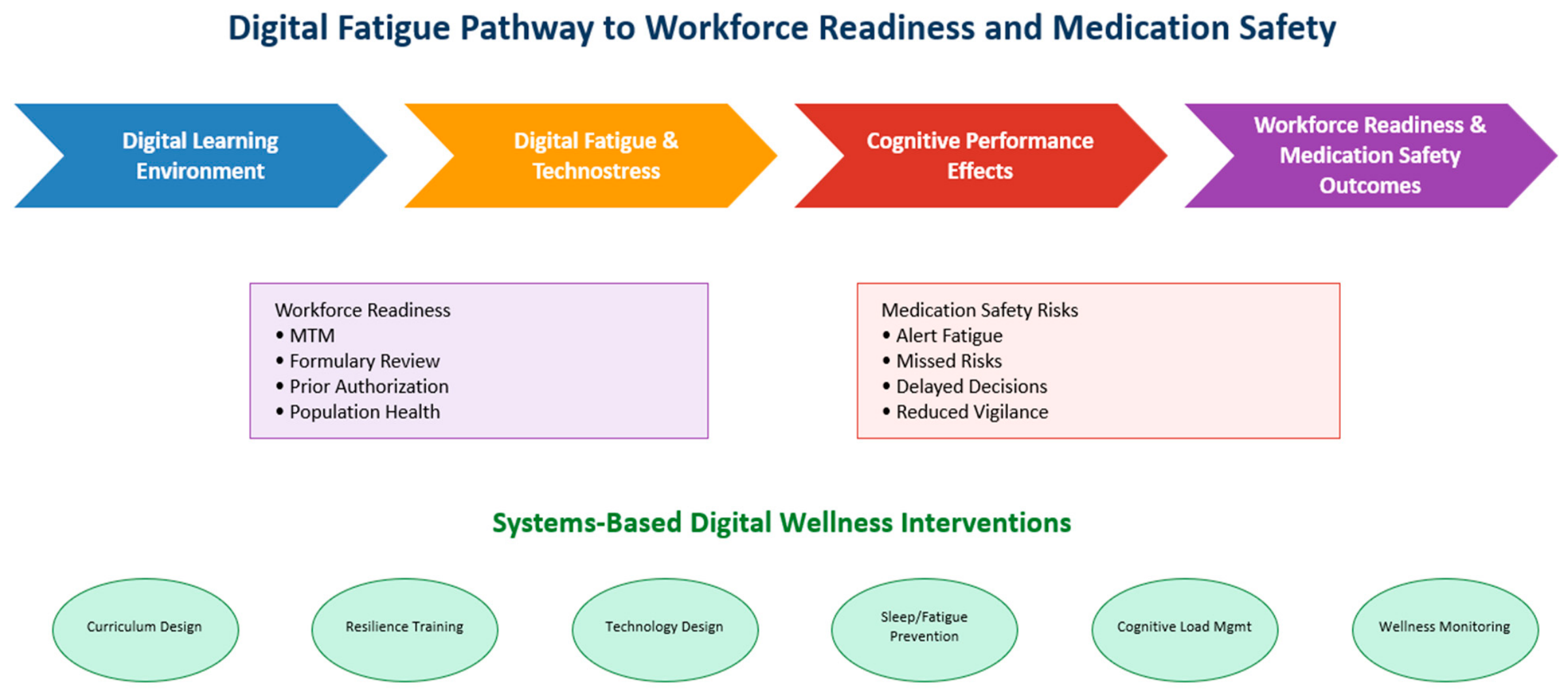
The pharmacy workforce serves as a critical checkpoint within the medication use process, and sustained attention is necessary to identify potential medication-related risks before patient harm occurs [15]. Figure 1 reflects how digital fatigue may represent an underrecognized threat within this framework. Excessive digital exposure can contribute to cognitive overload, impaired concentration, decision fatigue, and reduced vigilance. For example, diminished attention may reduce a pharmacist’s ability to recognize duplicate therapies, identify clinically significant drug interactions, interpret abnormal laboratory values that require medication adjustment, respond appropriately to high-priority clinical decision support alerts, or detect prescribing discrepancies during medication reconciliation. While these examples remain conceptual, they illustrate how cognitive fatigue may influence multiple checkpoints within the medication use process. These effects may diminish the ability of pharmacists to effectively evaluate medication regimens, recognize safety signals, interpret clinical alerts, and communicate recommendations within interprofessional teams. Although technology is designed to support safer care, poorly managed digital environments may simultaneously create new forms of cognitive burden.
Figure 1.
SEIPS-based Conceptual Framework Linking Digital Fatigue to Medication Safety.
A systems perspective therefore requires consideration of both the benefits and unintended consequences of technology adoption. Educational institutions preparing future pharmacists should recognize that digital well-being and medication safety are interconnected rather than separate domains.
5. Applying Systems-Based Solutions
Addressing digital fatigue requires interventions at multiple levels of the educational system. First, pharmacy programs should incorporate principles of intentional digital curriculum design. Strategies may include limiting prolonged continuous screen exposure, integrating scheduled breaks, balancing synchronous and asynchronous activities, and applying cognitive load management principles during course development. These approaches may help reduce unnecessary cognitive burden while preserving educational effectiveness [2,16]. Second, educators should incorporate digital well-being into professional development curricula. Training related to healthy technology use, self-regulation, sleep hygiene, and digital resilience may help students develop sustainable habits that support long-term professional performance. Such competencies are increasingly relevant in practice environments characterized by constant connectivity and information overload [4,14]. Third, educational technologies should be designed and selected using human-centered principles. Reducing platform fragmentation, minimizing redundant notifications, improving interface usability, and streamlining digital workflows may decrease technostress while enhancing learner engagement. These same principles have long been recognized as essential components of safer healthcare systems [8,9,10]. Finally, pharmacy schools should consider digital fatigue as part of broader efforts to promote patient safety culture. Developing resilient practitioners requires attention not only to knowledge and technical skills but also to the cognitive and environmental factors that influence performance.
Consistent with systems-thinking principles, solutions should prioritize redesigning educational environments rather than relying solely on learners to adapt to increasingly demanding digital ecosystems. Educational policies, curriculum design, technology selection, and institutional practices all influence cognitive workload and therefore represent important opportunities for intervention.
6. Digital Wellness Interventions for Workforce Readiness and Medication Safety
To mitigate the potential effects of digital fatigue on cognitive performance and workforce preparedness, pharmacy programs should adopt targeted digital wellness interventions [4,9,14,16]. Importantly, educational strategies alone are unlikely to sufficiently address digital fatigue. Consistent with human factors and fatigue risk management principles, sustainable improvements require organizational and environmental changes that reduce unnecessary digital burden at its source. Key strategies include:
- Intentional digital curriculum design, including management of cumulative screen time, incorporation of scheduled breaks, and balancing synchronous and asynchronous learning activities to reduce cognitive overload.
- Digital hygiene and resilience training, teaching students skills such as notification management, boundary setting, healthy technology use, and strategies for managing information overload in technology-intensive environments.
- Human-centered technology design, including reducing platform fragmentation, minimizing redundant communications, and simplifying digital workflows to decrease technostress. These approaches parallel the systems-based strategies commonly used to improve medication safety.
- Sleep and fatigue prevention initiatives, such as promoting healthy technology habits, reducing late-night digital demands, and incorporating education on sleep hygiene and recovery. Given the association between digital exposure, sleep disruption, and fatigue, these interventions may support sustained cognitive performance.
- Simulation and training focused on cognitive load management, enabling students to develop skills for maintaining attention, prioritizing information, and making safe decisions in environments characterized by digital complexity and information overload.
Collectively, these interventions position digital well-being as a workforce readiness and medication safety strategy, preparing future pharmacists to perform effectively in increasingly technology-enabled healthcare systems. Table 1 summarizes proposed digital wellness interventions, their expected benefits, and the primary SEIPS work system domains associated with each strategy.
Table 1.
Digital Wellness Interventions to Support Workforce Readiness and Medication Safety.
Importantly, the principles described in this commentary extend beyond pharmacy students and practitioners. Pharmacy educators, researchers, administrators, and healthcare leaders are similarly exposed to digital workload, continuous connectivity, information overload, and technology-related stressors. As such, systems-based approaches to digital well-being should be applied across stakeholder groups. Faculty and leadership development initiatives may benefit from training in digital workload management, cognitive load theory, human-centered educational design, notification management, platform consolidation, and workload balancing. Equipping educators and leaders with these competencies may not only support their own well-being but also foster learning and work environments that reduce unnecessary digital burden and mitigate contributors to digital fatigue among students and healthcare professionals.
7. Future Directions
Several research gaps remain. While digital hygiene education may help increase awareness and promote healthier technology use behaviors, educational interventions alone are unlikely to sufficiently address digital fatigue. Consistent with human factors and fatigue risk management principles, sustainable improvements require systems-level approaches, including thoughtful curriculum design, technology optimization, workload management, and organizational policies that reduce unnecessary digital burden. Similarly, sleep and fatigue education should therefore be viewed as a complementary strategy rather than a standalone solution. Addressing the underlying system factors that contribute to digital workload and fatigue is likely to have a greater and more sustainable impact on learner well-being and performance. Fatigue Risk Management Systems (FRMS), traditionally used in safety-critical industries, emphasize the systematic identification and mitigation of fatigue-related risks through organizational accountability, ongoing monitoring, and continuous improvement. Although primarily developed to address occupational fatigue, FRMS principles may offer a useful framework for informing systems-level strategies to address digital fatigue in pharmacy education [17].
Furthermore, longitudinal studies are needed to determine whether digital fatigue experienced during training influences professional performance following graduation. Researchers should also explore relationships between objective screen-time measures, technostress, clinical decision-making, and medication safety competencies. Standardized assessment tools specific to pharmacy learners would facilitate comparisons across studies and support intervention development.
Additionally, studies evaluating digital wellness interventions may help identify educational strategies that simultaneously improve learner well-being and workforce preparedness. As pharmacy practice continues to evolve alongside technological innovation, understanding the relationship between digital engagement and safe medication use will become increasingly important.
Future research should also examine the implications of artificial intelligence (AI)-enabled learning environments for digital fatigue, workforce readiness, and medication safety. As AI tools become increasingly integrated into pharmacy education and practice, learners will be required to interact with additional digital platforms that may simultaneously reduce and increase cognitive demands. While AI-enabled technologies may support efficiency, information retrieval, personalized learning, and cognitive offloading, they may also contribute to technostress, increased monitoring of digital information, workflow complexity, and overreliance on automated decision support. Future studies should investigate how AI influences cognitive workload, attention, decision-making, and digital fatigue among pharmacy learners and practitioners. Additionally, research should examine whether digital wellness interventions improve objective indicators of workforce readiness, including clinical reasoning, simulation performance, decision accuracy, and performance under cognitive load. Applying human factors and systems-based approaches will be essential to ensure that AI technologies are implemented in ways that enhance learning and patient care while minimizing unintended consequences for well-being and performance.
8. Conclusions
Digital technologies have become indispensable to pharmacy education and practice. Yet the benefits of technology must be balanced against the potential cognitive burden associated with excessive digital engagement. Growing evidence suggests that digital fatigue and technostress may influence attention, decision-making, and overall workforce readiness among future pharmacists.
Pharmacy educators, researchers, and healthcare leaders should therefore view digital fatigue not only as a learner wellness concern but also as a workforce readiness challenge with important implications for medication safety. Addressing digital fatigue through systems-based educational design may help develop pharmacists who are better prepared to practice safely, effectively, and sustainably within increasingly technology-enabled healthcare environments.
Author Contributions
Conceptualization, M.N., A.W. and C.P.; Methodology, M.N., A.W. and C.P.; Software, M.N., A.W., C.P., A.D., U.I., C.A.L., E.N., M.P. and H.T.; Validation, M.N., A.W., C.P., A.D., U.I., C.A.L., E.N., M.P. and H.T.; Formal Analysis, M.N., A.W., C.P., A.D., U.I., C.A.L., E.N., M.P. and H.T.; Investigation, M.N., A.W., C.P., A.D., U.I., C.A.L., E.N., M.P. and H.T.; Resources, M.N., A.W. and C.P.; Data Curation, M.N., A.W., C.P., A.D., U.I., C.A.L., E.N., M.P. and H.T.; Writing—Original Draft Preparation, M.N. and A.W.; Writing—Review and Editing, M.N., A.W., C.P., A.D., U.I., C.A.L., E.N., M.P. and H.T.; Visualization, M.N. and A.W.; Supervision, M.N., A.W. and C.P.; Project Administration, M.N., A.W. and C.P. All authors have read and agreed to the published version of the manuscript.
Funding
This research received no external funding.
Institutional Review Board Statement
Not applicable.
Informed Consent Statement
Not applicable.
Data Availability Statement
No new data were created or analyzed in this study. Data sharing is not applicable to this article.
Acknowledgments
The authors used Microsoft Copilot (GPT-4–based generative artificial intelligence technology) to assist with the development of the conceptual figure and to improve the clarity and readability of the manuscript. All AI-generated content was reviewed and edited by the authors, who take full responsibility for the final manuscript.
Conflicts of Interest
The authors declare no conflicts of interest.
References
- Accreditation Council for Pharmacy Education. Accreditation Standards and Key Elements for the Professional Program in Pharmacy Leading to the Doctor of Pharmacy Degree; Accreditation Council for Pharmacy Education: Chicago, IL, USA, 2025. [Google Scholar]
- Neophytou, E.; Manwell, L.A.; Eikelboom, R. Effects of excessive screen time on neurodevelopment, learning, memory, mental health, and neurodegeneration: A scoping review. Int. J. Ment. Health Addctn. 2021, 19, 724–744. [Google Scholar] [CrossRef] [Scilit]
- Kasemy, Z.A.; Bahbah, W.A.; Zewain, S.K.; Haggag, M.G.; Alkalash, S.H.; Zahran, E.; Desouky, D.E.; Hafez, E.M.; Alkalash, D. Technostress creators and outcomes among Egyptian medical staff and students: A multicenter cross-sectional study of the remote working environment during the COVID-19 pandemic. Front. Public Health 2022, 10, 796321. [Google Scholar] [CrossRef] [Scilit] [PubMed]
- Ibrahim, R.K.; Khaled, M.; Almansoori, M.; Almazrouei, M.; Ashraf, A.; Alahmedi, S.H.; Hendy, A. Screen time and stress: Understanding how digital burnout influences health among nursing students. BMC Nurs. 2025, 24, 990. [Google Scholar] [CrossRef] [Scilit] [PubMed]
- Argyriadi, A.; Katsarou, D.; Patelarou, A.; Megari, K.; Patelarou, E.; Kotrotsiou, S.; Giakoumidakis, K.; Abdoola, S.; Mantsos, E.; Efthymiou, E.; et al. Digital Stress Scale (DSS): Development and psychometric validation of a measure of stress in the digital age. Int. J. Environ. Res. Public Health 2025, 22, 1080. [Google Scholar] [CrossRef] [Scilit] [PubMed]
- Reason, J. Human error: Models and management. BMJ 2000, 320, 768–770. [Google Scholar] [CrossRef] [Scilit] [PubMed]
- Sinsky, C.; Colligan, L.; Li, L.; Prgomet, M.; Reynolds, S.; Goeders, L.; Westbrook, J.; Tutty, M.; Blike, G. Allocation of physician time in ambulatory practice: A time and motion study in four specialties. Ann. Intern. Med. 2016, 165, 753–760. [Google Scholar] [CrossRef] [Scilit] [PubMed]
- Institute of Medicine. To Err Is Human: Building a Safer Health System; National Academies Press: Washington, DC, USA, 2000. [Google Scholar] [CrossRef] [Scilit] [PubMed]
- Carayon, P.; Schoofs Hundt, A.; Karsh, B.T.; Gurses, A.P.; Alvarado, C.J.; Smith, M.; Flatley Brennan, P. Work system design for patient safety: The SEIPS model. Qual. Saf. Health Care 2006, 15, i50–i58. [Google Scholar] [CrossRef] [Scilit] [PubMed]
- US Agency for Healthcare Research and Quality. Patient Safety Primer: Human Factors Engineering. 2024. Available online: https://psnet.ahrq.gov/primer/human-factors-engineering (accessed on 3 August 2026).
- Pedersen, C.A.; Naseman, R.W.; Schneider, P.J.; Ganio, M.C.; Scheckelhoff, D.J. ASHP National Survey of Pharmacy Practice in Hospital Settings: Clinical Services and Workforce-2024. Am. J. Health-Syst. Pharm. AJHP 2025, 82, 979–1005. [Google Scholar] [CrossRef] [Scilit] [PubMed]
- Dyrbye, L.N.; Shanafelt, T.D. A narrative review on burnout experienced by medical students and residents. Med. Educ. 2016, 50, 132–149. [Google Scholar] [CrossRef] [Scilit] [PubMed]
- Harry, E.; Sinsky, C.; Dyrbye, L.N.; Makowski, M.S.; Trockel, M.; Tutty, M.; Carlasare, L.E.; West, C.P.; Shanafelt, T.D. Physician Task Load and the Risk of Burnout Among US Physicians in a National Survey. Jt. Comm. J. Qual. Patient Saf. 2021, 47, 76–85, Erratum in Jt. Comm. J. Qual. Patient Saf. 2026, 52, 54–55. [Google Scholar] [CrossRef] [Scilit] [PubMed]
- National Academies of Sciences, Engineering, and Medicine; National Academy of Medicine; Committee on Systems Approaches to Improve Patient Care by Supporting Clinician Well-Being. Taking Action Against Clinician Burnout: A Systems Approach to Professional Well-Being; National Academies Press (US): Washington, DC, USA, 2019. [Google Scholar] [CrossRef] [Scilit] [PubMed]
- Donaldson, L.J.; Kelley, E.T.; Dhingra-Kumar, N.; Kieny, M.P.; Sheikh, A. Medication Without Harm: WHO’s Third Global Patient Safety Challenge. Lancet 2017, 389, 1680–1681. [Google Scholar] [CrossRef] [Scilit] [PubMed]
- Sweller, J. Cognitive load during problem solving: Effects on learning. Cogn. Sci. 1988, 12, 257–285. [Google Scholar] [CrossRef] [PubMed]
- Sprajcer, M.; Thomas, M.J.W.; Sargent, C.; Crowther, M.E.; Boivin, D.B.; Wong, I.S.; Smiley, A.; Dawson, D. How effective are Fatigue Risk Management Systems (FRMS)? A review. Accid. Anal. Prev. 2022, 165, 106398. [Google Scholar] [CrossRef] [Scilit] [PubMed]

Disclaimer/Publisher’s Note: The statements, opinions and data contained in all publications are solely those of the individual author(s) and contributor(s) and not of MDPI and/or the editor(s). MDPI and/or the editor(s) disclaim responsibility for any injury to people or property resulting from any ideas, methods, instructions or products referred to in the content. |
© 2026 by the authors. Licensee MDPI, Basel, Switzerland. This article is an open access article distributed under the terms and conditions of the Creative Commons Attribution (CC BY) license.