


Abstract
In this article, we address the issue of the sometimes indeterminate grammatical and functional status of vocatives and vocative-like NPs by proposing a prototype-based approach to their classification. We then explore the socio-pragmatic functions of these vocative types, adopting a variationist perspective that considers both macro- and micro-social factors to determine when the different types of vocatives occur and how they contribute to managing interpersonal relationships. This exploratory analysis is based on data from an online questionnaire featuring Discourse Completion Tasks of over 3000 participants in Germany, Austria, and Switzerland. The findings show that different vocative types fulfill distinct socio-pragmatic functions, ranging from signaling positive politeness to heightening the face-threatening potential of an utterance, depending on the communicative task performed. In addition, their use varies between participants, based on the speakers’ regional background, gender, age, or personality traits.
1. Introduction
In 2025, the term Digga(h) (lit. ‘fat man’) was, for the second consecutive year, nominated as a candidate for the German Jugendwort des Jahres (‘Youth Word of the Year’). In media coverage preceding the vote, the term was described as a colloquial expression corresponding to Bro/Bruder/Kumpel (‘brother’/’buddy’) or as a reference to an unfamiliar person. It was further characterized as functioning both as a form of address or as an interjection.1 This example illustrates that, within particular communities of practice, such vocative forms can play a crucial role in managing interpersonal relationships and become salient indexical markers of group membership (e.g., Kiesling, 2004; Dammel & Gillmann, in press-a). It also highlights that, from a theoretical perspective, the grammatical and functional status of these forms is sometimes indeterminate.
Despite their pragmatic relevance, research on vocatives in contemporary German is limited. Existing studies are often restricted to the investigation of specific lexemes (e.g., Dammel & Gillmann, in press-a on Alter/Mensch; Droste & Günthner, 2020, 2021 on du) or, operating within interactional linguistics, focus on socio-pragmatic and conversation-structuring functions in specific situations (e.g., Günthner, 2016, 2022). A large-scale systematic analysis that explores both inter-individual and intra-individual variation in a range of vocatives remains a desideratum.
Accordingly, the aim of this contribution is twofold. First, we address the issue of the sometimes indeterminate grammatical and functional status of vocatives and vocative-like NPs by proposing a prototype-based approach to their classification. Secondly, we strive to get a better understanding of the socio-pragmatic functions of the proposed vocative types. To this end, we examine their use from a variationist perspective, considering both macro- and micro-social factors to determine when these forms occur and what role they play in the management of interpersonal relationships. This examination will be of an exploratory nature. Our analysis draws on data from an online questionnaire completed by over 3000 participants in Germany, Austria, and Switzerland.
This paper is structured as follows. We first discuss the structural and functional characteristics of vocatives (Section 2.1 and Section 2.2) before proposing different types of vocatives identified from our data and situating them along a continuum ranging from prototypical to peripheral members of the vocative category (Section 2.3). Afterwards, we briefly reflect on existing research dealing with variation in the use of vocatives (Section 3) before moving on to our own analysis. For this, we first outline our methodology and data (Section 4), which forms the basis for the discussion of variation in the use of different types of vocatives in contemporary German. We adopt a variationist perspective to assess the effect of selected variables, i.e., ‘communicative task’, ‘social distance’, ‘gender’, ‘region’, ‘age’, and ‘personality’ (Section 5). Finally, we conclude with a summary and outlook (Section 6).
2. Features of Vocatives and Vocative-like NPs
There is no straight-forward definition of what constitutes a vocative, since a definition is heavily dependent “both on the theoretical approach and the specific language studied”, as Sonnenhauser and Noel Aziz Hanna (2013, p. 1) summarize. In this contribution, we will follow a prototype-based perspective, as our aim is to show that even for a single language such as German, vocative is a rather fuzzy category with central and peripheral elements.
2.1. Characteristics of Vocatives
Let us first reflect upon some generally recognized structural and functional characteristics of vocatives, before turning to the central functions of vocatives described in the literature. From a pragmatic point of view, a common denominator is that vocatives are “linguistic addressing phenomena” (Sonnenhauser & Noel Aziz Hanna, 2013, p. 2). However, this also holds true for other terms of address, such as syntactically integrated address pronouns like Ger. du/Sie ‘you’. From a syntactic point of view, there is also broad agreement that vocatives can be seen as peripheral expressions or ‘secondary material’ (Gutzmann & Turgay, 2020), as they are non-integrated elements. This means that they do not serve as an argument of a verb or of any other expression within the sentence (Zwicky, 1974; Schaden, 2010), a characteristic that differentiates them from syntactically integrated forms of address like pronouns (e.g., Could you help me?). Usually, they can either occur autonomously (i.e., as stand-alone vocatives) or they may be used with other linguistic material in left- or right-peripheral position or in a so-called parenthetical niche (1–4).2 Crucially, vocatives are always facultative and typical elements of (conceptually) spoken language.
| (1) | Du Trottel [4811_v01_AT_f_18y]3 |
| ‘You.T4 idiot’ | |
| (2) | Torsten, willst Du noch ein Stück Kuchen? [2073_v01_DE_m_55y] |
| ‘Torsten, do you.T want another piece of cake?’ | |
| (3) | Willst du noch ein Stückchen Kuchen, Lea? [3715_v01_DE_f_29y] |
| ‘Do you.T want another piece of cake, Lea?’ | |
| (4) | Scheiße ey, Katha, der Wind hat deinen Schirm kaputt gemacht, den du mir |
| geliehen hast. [7262_v01_DE_f_32y] | |
| ‘Shit ey, Katha, the wind broke the umbrella you.T have borrowed me’. |
As the few examples listed above show, in German, vocatives are nominal elements and are most typically names or nouns, but pronouns may also function as vocatives (Leech, 1999, p. 107).5 Vocatives may be single (pro)nouns or multi-word units (=plain vocatives, 5), or they may consist of a quite elaborate DP/NP (=extended vocatives, 6). In certain combinations, they may also co-occur (=combined vocatives, 7). In the literature, vocatives are often discussed under the label nominal forms of address (e.g., Castellano Ascencio, 2008; Gagne, 2023; Schüpbach et al., 2023). However, this term is typically used as a counterpart to pronominal forms of address. Since pronouns can also occur as syntactically disintegrated elements, we consider the term nominal forms of address somewhat misleading and will employ the more neutral term vocative instead (even though the term is traditionally used to refer to a grammatical case).6
| (5) | a. | you; Britney Spears; madam; darling; sister |
| b. | Jane Smith; Mrs. Smith; Prof. Dr. Jane Smith | |
| (6) | my dear audience; you idiot; those of you who want to participate | |
| (7) | Du, Peter ‘lit. you, Peter‘; Peter, you bastard |
Thus, we define a vocative as a (pro)nominal, syntactically non-integrated element with the core function of addressing. Based on the functions of vocative NPs discussed in the literature (Section 2.2), a prototype theory-based proposal for the classification of vocatives and de-referentialized vocative-like elements will be made in Section 2.3. This classification serves as the basis for the annotation of our elicited production data that will be discussed in the following sections.
2.2. Functions of Vocatives
What are the core functions of vocative NPs? As mentioned above, all vocatives have in common the fact that they always refer to the addressee of the utterance in which they occur (Leech, 1999, p. 108) and thus count as markers of social deixis or, according to Silverstein (1976), social indices (like syntactically integrated terms of address). One of their core functions is therefore to establish or maintain a social relationship between the speaker and the addressee(s) (Leech, 1999; Buyle, 2021; Ackermann, 2023b; Günthner, 2016; Droste & Günthner, 2021; Dammel & Gillmann, in press-b). This is reflected in the choice of the specific vocative: Even though we have an open paradigm—unlike for syntactically integrated forms of address—vocatives function as markers of relational stance, e.g., through the choice of first name (Britney) versus full name (Britney Spears) versus name plus academic title (Prof. Dr. Smith); see the examples in (5).
Another key pragmatic function mentioned in the literature is attention-getting, which is closely related to the function of identifying and/or disambiguating the selected addressee(s). While Leech (1999) separates these two functions, Zwicky (1974), following Schegloff (1968), groups them together as calls. This call function means that vocatives can serve to attract attention and assign turns, which is likely to apply to all vocatives. Vocatives used to alert the interlocutor that s/he is being addressed often co-occur with vocative-like particles (e.g., Hey, Peter, wake up!), “which also function to draw attention, but which do not fix the addressee on their own” (Gutzmann, 2019, p. 178, see note 2). In line with their function, (purely) attention-getting vocatives usually occur in sentence-initial position. When it comes to identification, a crucial point is that not all vocative elements prove to be equally suitable: Especially in larger groups, onymic (i.e., name) or extended vocatives prove particularly suitable for distinguishing the intended recipient(s) of the utterance from other potential addressees. Bare (pro)nominal vocatives or generic terms (e.g., dude), on the other hand, prove to be less suitable for identifying or disambiguating addressees and are therefore less prototypical vocatives. As discussed by Gutzmann (2019, pp. 177, 182), these elements require additional eye gazes and/or pointing gestures to clearly identify the person(s) being addressed. As both the attention-getting and the addressee-identifying functions share the property that the addressee is not established in the utterance situation, we refer to these functions as identification, which is in line with Schaden (2010) and Gutzmann (2019).
Another core function of vocatives is one that Zwicky (1974) calls address and Schaden (2010) labels as activation from a semantic perspective. Here, the addressee is already established in the utterance situation, meaning that no identification is necessary, as it is clear to whom the speaker is talking. This rather phatic function is to “maintain or emphasize the contact between speaker and addressee” (Zwicky, 1974, p. 797), as in the following one-to-one situation, in which a speaker apologizes to her friend for breaking her umbrella:
| (8) | Anne, es tut mir sooo leid. Ich habe deinen Schirm kaputt gemacht. […] |
| [662_v02_DE_f_35y] | |
| ‘Anne, I am sooo sorry. I broke your.T umbrella.’ | |
| (9) | Du, dein Regenschirm ist mir leider durch den starken Wind kaputt |
| gegangen. […]. [4002_v01_DE_f_21y] | |
| ‘You.T, unfortunately, your.T umbrella broke because of the strong wind.’ |
Bare pronouns (9), as elements that are generally supposed to lack descriptive content and thus cannot be predicational (see below) and can only be used identificationally with additional (gestural) cues, prototypically fulfill affiliative functions. While affiliatively used, name vocatives seem to be syntactically more flexible than call vocatives as they may also occur in utterance-final position or in parenthetic niches (Gutzmann, 2019, p. 180), and pronominal ones seem to be restricted to the initial position (Schaden, 2010).
From a socio-pragmatic and interactional perspective, this vocative function, which Leech (1999, p. 108) describes as “purely social bond-maintaining”, has received some attention recently, and several discursive sub-functions have been described based on conversational data (see, e.g., Günthner, 2016, 2023; Droste & Günthner, 2020, 2021). In this relationship-defining or relationship-intensifying function, vocatives may steer cooperation on an evaluative-affective level. Gagne (2023, p. 203), in reference to Kerbrat-Orecchioni (2010, pp. 27–28), points to a discursive sub-function of vocative, whereby they can strengthen the illocutionary force of a speech act. For instance, the complaint in (10) is intensified by the use of the vocative. However, vocatives do not always increase the illocutionary force of an utterance but may also function as mitigators, as, for instance, in requests (Ackermann, 2023a). In this function, which we call (dis)affiliative—and thus highlight the socio-pragmatic potential of these signs—vocatives can be described as resources for interpersonal relationship building (Droste & Günthner, 2020; Günthner, 2023).
| (10) | Oooch Mensch, Elke! Was machen wa jetze? Ich hab Hunger. [1953_v01_DE_f_46y] |
| ‘Oh man, Elke! What are we going to do now? I’m hungry.’ |
Schaden (2010), who elaborates on the semantics of vocatives, establishes predication as a third central function, which is, however, closely related to the (dis)affiliative function. Here, the basic function is “to predicate a property on the addressee” (Schaden, 2010, p. 182, emphasis in the original), which differentiates them from (dis)affiliative vocatives without predicative or identificational function as such in (8), where the addressee is already established and the speaker does not want to predicate the property of being Anne on the addressed individual. As Schaden (2010, p. 182) notes, “nouns with a scalar element, and with speaker-oriented emotive content […] are more easily used in such contexts”. As Gutzmann (2019, p. 181) puts it: “A good example for predicational vocatives are expressions involving terms of politeness and approbation or […] disrespect and negative evaluation”, such as illustrious colleagues or asshole, which do not really qualify as identificational vocatives. This is because an identificational vocative only works when it corresponds to the self-ascription of the addressee.
A last functional type discussed by Gutzmann (2019) are, as he calls them, expressive vocatives, which seem to be discriminated from predicational ones mainly by structural means, as they obligatorily contain a second person pronoun and a nominal element, whereby the nominal element usually is an expressive like in you bastard but it could also be a neutral noun such as linguist in you linguist. Crucially, such neutral nouns receive an expressive insult-like flavor within this construction (see d’Avis & Meibauer, 2013; Gutzmann, 2019), which makes it reasonable to assume a separate type here, as neutral nouns remain neutral when used as ordinary predicative vocatives.7 Additionally, as Gutzmann (2019, pp. 189–190) argues, expressive vocatives are “not just plainly predicational, as the way the expressive content is applied to the addressee is not the same as with more descriptive expressions”. When a speaker refers to a group of addresses as you idiots, we cannot infer the existence of some idiots as the audience, but only that there is a group of addressees that the speaker feels negatively about. In the following, we label more descriptive and especially highly evaluative vocative DPs/NPs as predicational-expressive, even though they always seem to have an (dis)affiliative function as well. Figure 1 gives an overview of the functional vocative types discussed so far, which is based on Gutzmann’s (2019, p. 191) four-way taxonomy of vocative functions.
Figure 1.
Taxonomy of vocative functions.
This taxonomy of vocative functions suggests that these are clearly distinguishable functions. However, as shown above, this is not the case. First, some functions overlap and often occur in combination: especially the identificational and (dis)affiliative, as well as the (dis)affiliative and predicative functions, which are often performed in combination. Secondly, it is highly context-dependent, which function a certain type of vocative fulfills in a particular situation. Nevertheless, certain types are more or less suitable for performing certain functions. In the next section, we thus want to propose a prototype-based approach for different types of vocatives—also in relation to neighboring elements, since prototype theory allows for fuzzy category membership (see Rosch, 1973, 1978).
2.3. Prototypical Vocatives, Peripheral Vocatives, and Related Categories
As discussed in the preceding sections, vocative DPs/NPs are syntactically non-integrated forms of address that mark social deixis. A prototypical vocative type should thus offer options for close and distant communication, such as names (kinship terms—first names—courtesy title + family name—academic title + family name) and pronouns (T- and V-forms). Of course, onymic vocatives (e.g., Britney or Mrs. Spears) are not an option when addressing a stranger, as their name is unknown to the speaker.8
Additionally, vocatives should fulfill the two basic functions of affiliation and identification. As maintaining or emphasizing the contact between speaker and addressee is possible with all kinds of vocatives, this seems to be the most prototypical vocative function. Identification is not guaranteed by bare pronouns (without additional cues) or evaluative DPs/NPs. As predication is only possible with DPs/NPs and expressivity requires a special kind of construction, these functions seem to be rather peripheral.
On the one hand, there are more or less prototypical representatives among vocatives, which share more or less of the features discussed above. On the other hand, however, there is also a transitional area between vocatives and other pragmatic markers—namely (de-vocatival) discourse markers and interjections—which is based on the functional overlap of these markers and is the result of an ongoing pragmaticalization process. As Dammel and Gillmann (in press-a) show, highly routinized and indexicalized nominal vocatives, especially neutral or evaluative ones with male reference, such as Digga, Alter, and Junge ‘dude’ (lit. ‘fat man’, ‘old man’, and ‘boy’), can develop into de-referential markers for organizing conversation or relationships—i.e., discourse markers and interjections. Mensch ‘human’, which can be used as a discourse marker or interjection in German, is an example of a former vocative that went through the whole pragmaticalization cycle (Dammel & Gillmann, in press-a, in press-b). In this process, the addressing-referential function of the vocative bleaches. However, these markers remain syntactically non-integrated elements with affective-evaluative functions. Vocatives and de-vocatival discourse markers can therefore only be distinguished functionally via their referentiality, although it is not always possible to make a clear-cut distinction in specific utterance situations. Discourse markers and interjections, on the other hand, differ formally in that the latter are syntactically more autonomous, but they are functionally similar. However, unlike discourse markers, interjections independently convey affective evaluation, whereas discourse markers merely announce or reinforce this evaluation (see Dammel & Gillmann, in press-b for details). (11) gives an example of a clearly de-referentialized use of Alter from our data. Here, a female participant uses Alter in combination with the interjection fuck in a complaint situation where she had to imagine a female service person of the same age who bumps into her and breaks her phone display. Alter as well as fuck is used here to express surprise and annoyance. As it is unclear whether Alter projects the affective evaluation in the subsequent clause or encodes it itself, it is ambiguous between a discourse marker and an interjection.
| (11) | Alter fuuuuuck, huere nervig. [4515_v02_CH_f_23] |
| ‘Dude, fuck, extremely annoying.’ |
For our quantitative analysis, markers such as Alter, Digga, or Junge were classified as VDIs, reflecting their potentially ambiguous status between vocative, discourse marker, and interjection (see Dammel & Gillmann, in press-a, in press-b for criteria for distinguishing between these different uses). Elements that seem to be less frequent and are routinized only in certain regions or groups were treated as potential_VDIs.
Table 1 summarizes the main formal and functional characteristics of the vocative (and vocative-like) types we have identified based on the literature and our elicited production data (see Section 2). The various vocative (and vocative-like) types can be arranged on a continuum ranging from prototypical to peripheral.
Table 1.
Overview of more or less prototypical vocative types and their functional and formal characteristics.
3. Vocatives/Vocative-like NPs and Variation
Generally, vocatives in German have received comparatively little attention in linguistic research. Among the studies that do exist, only a few have adopted a socio-pragmatic variationist approach towards the investigation of vocatives, aiming to shine a light on the factors that promote their use in different situations. In the following, we briefly discuss central findings regarding social factors that have an impact on the use of vocatives.
Many studies have emphasized the interplay between vocative use, gender, and age. Across languages, certain non-onymic vocatives, such as German Alter, Diggah, or Bruder, which Leech (1999, p. 110) labels familiarizers and which were classified as VDIs in our data, are predominantly used among young males (Kiesling, 2004). In these contexts, they are not purely referential but also highly indexical, as they function as markers of solidarity and group membership (Kiesling, 2004; Dammel & Gillmann, in press-a). Kiesling (2004, pp. 282–283) argues that vocatives indexing what he calls a “stance of cool solidarity” are particularly relevant for young men in Western cultures, as they have to navigate competing societal expectations of masculine solidarity on the one hand and heterosexuality on the other hand. However, while such indexical vocatives emerge in a very restricted social context, they frequently become the source of pragmaticalization processes. Over time, these vocatives lose their purely male denotation, allowing their application by and among females. After first having lost their indexical function, ultimately, some of these forms may even lose their referential function altogether and develop into discourse markers or interjections (Kiesling, 2004; Kleinknecht & Souza, 2017; Dammel & Gillmann, in press-a).
Moreover, it has been shown that the use of vocatives in German is closely linked to speakers’ regional background. Generally, vocatives, especially onymic vocatives in greeting formulas (e.g., Hey, Peter!), are strongly associated with the language used in the German-speaking part of Switzerland (Elter, 2009, p. 206; Rash, 2004, p. 55; Schüpbach, 2015, p. 73). However, differences in the use of vocatives can also be observed in Germany. Ackermann (2023b) demonstrates that more prototypical vocatives (onymic and pronominal) are employed more frequently in the southern regions of Germany than in the northern and eastern parts. Ackermann et al. (2026) corroborate this regional variation and extend the analysis to Austria. Focusing on variation on a national level, they identify an increasing tendency toward vocative use in the southern areas of the contiguous German-speaking region, with Switzerland exhibiting the highest overall frequency. The importance of vocatives for Swiss speakers is further underscored by migration data. Ackermann et al. (2026) provide the first evidence that pragmatic norms governing vocative use remain stable even after a change in residence (see also Zoske, in preparation). Consequently, Germans migrating to Switzerland continue using vocatives rather sparingly, whereas Swiss participants living in Germany remain more inclined to employ vocatives.
Beyond the influence of macro-social factors such as ‘gender’ and ‘region’, studies based on natural conversation data show that vocative use also varies intra-individually. Günthner (2016), in her analysis of the pronominal vocative du ‘you’, describes it as an element that can be employed by speakers to fulfill various functions—including attention-getting, discourse structuring, and the marking of expressive stance—depending on the situational context. In the same vein, Droste and Günthner (2021) have illustrated the role of the pronominal vocative in managing alignment or affiliation between interlocutors, contingent on its syntactic position and situational embedding. Hence, the employment of a vocative is not only motivated by the speakers’ sociodemographic characteristics but also heavily depends on situational factors. Consequently, a comprehensive analysis of vocatives should encompass both macro- and micro-social factors.
In this contribution, we aim to advance this line of research with an exploratory investigation of the use of both prototypical and peripheral members of the vocative category from a variationist perspective. Operating within the framework of variational pragmatics (Schneider & Barron, 2008), we examine the impact of various macro- and micro-social factors to account for inter- and intra-individual variation in vocative use, as well as the general communicative functions of these forms. Adhering to the principles of variational pragmatics, which stipulate contrastivity, comparability and empiricity (Barron, 2021), we draw on data from an online questionnaire featuring Discourse Completion Tasks (see Section 4) to explore how macro-social factors such as ‘region’, ‘age’, ‘gender’ and ‘personality’ alongside micro-social factors such as ‘social distance’ and ‘relational gender’ shape inter- and intra-individual variation in the use of vocatives across different communicative situations.
4. Materials and Methods
The following sections outline the experimental design employed for data collection (Section 4.1) and introduce the dataset (Section 4.2), which serves as the basis for the quantitative analysis of variation in the use of the different types of vocatives in German.9
4.1. The Questionnaire
The data was gathered via an online questionnaire in which Discourse Completion Tasks (DCTs) were used to elicit responses to various situations.10 Ackermann (2023b), as well as Dammel and Gillmann (in press-a), show that DCTs can be successfully employed for the elicitation of vocatives or vocative-like NPs. Nevertheless, it has to be noted that DCTs have been heavily criticized, in particular with regard to the authenticity of the elicited data (Ogiermann, 2018, for an overview of the main points of criticism). Acknowledging this critique, we maintain that the advantages of DCTs outweigh their limitations, provided that it is recognized that the elicited data reflects speakers’ underlying social norms rather than authentic language use (cf. Ogiermann, 2018, p. 233). DCTs are a particularly valuable tool for studies situated in the framework of variational pragmatics (Schneider & Barron, 2008; Barron, 2021), as they allow for the systematic control of different macro- and micro-social factors that may influence pragmatic behavior. Furthermore, methodological challenges inherent in a DCT-based investigation of vocatives (cf. Ackermann, 2023b, p. 185) were attempted to be counteracted by an instructional text in which participants were explicitly encouraged to envision interlocutors in each scenario and to use names if doing so felt natural.11 It was also noted that all proper names would be anonymized during the analysis.12 Each DCT item in our questionnaire consisted of a brief description of the situational setting, including specifications of the social distance between speaker and hearer (close, distant, and service), as well as their age relation (S > H, S = H, and S < H), as both micro-social factors are assumed to influence interpersonal behavior. Furthermore, the scenarios were characterized by different communicative tasks (request, complaint, greeting, apology, and offer). Following the description of the scenario, participants were prompted with the phrase “I say” and asked to enter their response into an unlimited text field. The scenarios depicted everyday situations that participants, regardless of their sociodemographic background, could potentially encounter in their own lives13 (for a detailed description of the experimental setup and underlying reasoning, see Zoske, in preparation; Discher, in preparation). In total, the following analysis is based on 22 different items (Appendix A, Table A1).
Following the critical items, sociodemographic information of the participants was collected. Traditional information such as age, gender, and educational and linguistic background, as well as detailed information regarding the participants’ geographical history, were gathered.
In the final part of the questionnaire, it was our goal to learn more about our participants’ personality traits, i.e., whether an individual is generally affable or more inclined to engage in conflicts. While it seems rather evident that such individual character traits will have an impact on pragmatic behavior, there are hardly any studies that have incorporated personality as a variable (but see Chen & Li, 2023; Leemann et al., 2024). Characteristics as described above can be grouped together into the personality domain of agreeableness. In our study, we use the Big Five Inventory 2 (BFI-2) (Soto & John, 2017; German version: Danner et al., 2019), which is considered the standard procedure in psychology for determining personality traits (see, e.g., Neyer & Asendorpf, 2024). The BFI-2 is a standardized questionnaire that assesses the Big Five personality traits (domains): open-mindedness, conscientiousness, extraversion, agreeableness, and negative emotionality. Recent studies have illustrated the relevance of the consideration of personality traits in studies in the field of variationist sociolinguistics (e.g., Steiner et al., 2023). In our project, we restricted our investigation of personality traits to the domain of agreeableness in order to maintain a reasonable questionnaire length and because this domain has previously been shown to influence pragmatic phenomena (Leemann et al., 2024). The agreeableness domain comprises three different facets: compassion, respectfulness, and trust. The part of the BFI-2 assessing agreeableness includes 12 standardized items, with four items per facet. Each item describes a specific behavior, and participants indicate the extent to which the behavior applies to them on a five-point Likert scale. Based on these responses, an overall agreeableness score is calculated for each participant and incorporated into the analysis.
4.2. Participants
In total, this analysis is based on data from 3131 participants currently residing in different parts of Germany, Austria, and Switzerland (AT: 269 participants, CH: 795 participants, and DE: 2067 participants).14 In this study, regional variation is explored based on the zip code of participants’ current address. This means that participants who have moved to, e.g., Germany, are considered in the German dataset. This is a deliberate decision, as we did not want to limit our investigations to so-called NORM speakers (i.e., non-mobile, older, and rural males) (see also Discher et al., forthcoming).15
Table 2 provides an overview of the sociodemographic distribution of our dataset. It becomes apparent that the dataset is imbalanced regarding the age and gender of the participants. Across all three countries, the majority of participants identify as female16, and participants living in Austria are rather young, while the participants living in Switzerland are older on average.
Table 2.
Sociodemographic distribution of participant age and gender across countries.
5. Results
5.1. General Distribution
Before examining the factors that promote inter- and intra-individual variation in the use of vocatives and vocative-like NPs, we first briefly reflect on the general frequency of the different vocative types. It has to be noted that vocatives in German are generally a low-frequency phenomenon in our data. Of the 17,015 observations that this analysis is based on, only 1123 (RF = 0.07) contain a vocative. However, this distribution can also partly be traced back to the fact that the majority of our items depicted interactions between strangers or service encounters. Table 3 shows that the more prototypical types of vocatives, i.e., onymic vocatives followed by pronominal vocatives, emerge as the most frequent ones in our data. This distribution can be attributed to their fulfillment of the prototypical functions of vocatives, i.e., affiliation, attention-getting, and identification, which allows for a broad range of use cases. For pronominal vocatives, however, the identificational function is limited, rendering them somewhat less prototypical than onymic vocatives (see Section 2) and thus restricting their scope of application. This restriction is potentiated in our data, as additional cues, such as gaze or gesture, could not be elicited. VDIs, such as Alter, Diggah, or Bro/Bruder, constitute the third most frequent type. This frequency can be accounted for by the multifunctionality of these forms, which operate along a continuum between vocatives, discourse markers, and interjections, on the one hand, and by their role as salient in-group markers when functioning as vocatives (Dammel & Gillmann, in press-a) on the other hand. Once again, this high frequency of VDIs can also be explained by our experimental design, which featured multiple complaint situations in which VDIs frequently occur (see Section 5.2.1). The types nom_neutral, potential_VDI, and nom_predicational-expressives play a more marginal role in our data, which can be traced back to an increased functional restriction. Vocatives belonging to the type nom_affective-evalutative are almost non-existent in our data and are limited to the type meine Liebe (‘my dear’). For this reason, they will not be considered in the following analyses.
Table 3.
Absolute and relative frequency of the different vocative types in the dataset.
5.2. Parameters of Variation
In the following sections, we will explore which macro- and micro-social factors have an impact on the use of the different types of vocatives and vocative-like NPs in order to gain a better understanding of their socio-pragmatic values. To this end, we first examine intra-individual variation by assessing the use of the different vocative types in different communicative tasks and dyads of varying social distance. We then address how vocative use may vary inter-individually with respect to speaker gender, as well as intra-individually, depending on the gender relation in a given interaction. Finally, we explore diatopic as well as diastratic variation with regard to participant age in vocative use. In a last step, we will incorporate personality scores to account for differences in the use of vocatives between participants.
5.2.1. Communicative Task and Social Distance
Let us now take a look at when and to what end the different types of vocatives occur in our data. Generally, vocatives occur predominantly in close-distance interactions. Of the 1107 (excluding the 16 tokens of nom_affective-evaluative vocatives) vocative tokens in our data, 717 (RF = 0.65) were produced in scenarios depicting interactions between friends, 284 vocatives (RF 0.25) in interactions with strangers, and 106 (RF 0.10) in service interactions. This distribution may, however, partly reflect the design of the questionnaire, as a wider range of communicative tasks—such as apologies, greetings, and offers—was elicited for close-distance situations, whereas distant and service interactions were limited to complaints and requests. Nevertheless, looking beyond the mere frequency of occurrences of vocatives, it becomes apparent that the distribution of vocative types varies across the different communicative tasks, pointing towards different socio-pragmatic functions of the types (Figure 2).17
Figure 2.
Relative frequency of vocative category by social distance and communicative task.
Prototypical onymic vocatives are mainly used in close-distance interactions, as they serve as ‘Gesten persononifizierter Zuwendung’ (‘gestures of personalized attention’) (Günthner, 2016) and general markers of positive politeness (Brown & Levinson, 1987). While differences in frequency of onymic vocatives across the varying communicative tasks can be noted, they constitute at least half the number of vocatives observed in the different communicative tasks, with the exception of requests. This strategy of calling someone by their name is naturally only accessible to the speaker in situations in which the name of the addressee is known to them. Consequently, no onymic vocatives have been employed in the items depicting interactions between strangers. This same anonymousness is given in service interactions. However, in these items, role descriptions, such as Ober (‘waiter’), have been counted as onymic, as they fulfill the identificational function of onymic vocatives in these specific situations. In distant communication, instead of onymic vocatives, vocatives of the type nom_neutral are employed in requests to strangers. These vocatives constitute the distant-language counterpart to onymic vocatives, as they also function as markers of positive politeness, which are used to mitigate the face-threat of the request (Ackermann, 2023a). German, in contrast to languages such as Spanish (señora/señor), French (madame/monsieur), or English (ma’am/sir), does not have an equally conventionalized nominal vocative for distant communication. This lack of such a default form presumably inhibits the use of these vocatives to some extent. On the one hand, they are less prototypical as they are not as suitable for identifying the addressee as onymic vocatives are. On the other hand, their socio-pragmatic value is somewhat less determined. Most of the nouns used as vocatives for the type nom_neutral have a neutral connotation. Hence, the desired function of markers of positive politeness would not be fulfilled. On the contrary, the use of these nouns as bare forms, if grammatically acceptable (see note 8), may even have a negative, condescending connotation in some contexts (e.g., Frau, kommen Sie her!). Hence, such neutral nouns in vocative position are conventionally modified by culturally positive adjectives such as jung ‘young’ (12) or gut ‘good’ (13). Thus, these complex NPs serve to flatter the addressee in order to mitigate the face-threat of the request. This mitigating function can also be exploited in complaint situations (13). However, nom_neutral vocatives are not inherently positive politeness markers functioning as mitigators. This becomes obvious when considering (14). In this example, the vocative increases the face-threatening potential of the complaint, as it gives the utterance an almost condescending connotation. Thus, we argue that the socio-pragmatic value of a vocative is not entirely inherent in the form but is constructed in the conversation and largely depends on the situational and linguistic context in which it occurs. This is in line with the most recent approach to linguistic politeness, which assumes certain linguistic forms to have a default value with regard to politeness that is then negotiated in the interaction (e.g., Jucker, 2020, pp. 9–13 for an overview of different approaches to politeness).
| (12) | Entschuldijung, junge Frau, könn se mir vielleicht die Türe aufhalten? |
| [2194_v01_DE_f_34y] | |
| ‘Excuse me, young lady, can you.V maybe hold the door open for me?’ | |
| (13) | Guade Frau, iatz hams eana varechned. [491_v01_DE_f_37y] |
| ‘Good woman, now you.V have miscalculated?’ | |
| (14) | Junger Mann, wir sind nicht auf dem Basar. Können Sie leiser sein? [1390_v01_DE_f_74y] |
| ‘Young man, we are not at a bazaar. Kann you.V be more quiet?’ |
Félix-Brasdefer (2015), in his investigations of the language of service interactions, has identified terms of address, including vocatives, as an important tool for relationship management in service interactions. In our data, vocatives of the type nom_neutral can also be found in service interactions. In contrast to the distance items, however, onymic vocatives, such as NPs denoting the addressee’s profession (e.g., Ober), play an important role in the realization of requests to service staff. The fact that participants prefer onymic vocatives over other types, such as pronominal or nom_neutral ones, further underscores that onymic vocatives are the most prototypical ones, as they fulfill the identificational function as well as the (dis)affiliative function at the same time. Consequently, the participants tend to prefer employing onymic vocatives in contexts in which the language provides an adequate form.
Another vocative type that is frequently employed in our data is the pronominal vocative. As Figure 2 shows, pronominal vocatives are predominantly used in apologies and requests, highlighting their role as mitigators in face-threatening situations similar to onymic vocatives. The frequent use of the informal T-pronoun du ‘you’ as a vocative even in requests to strangers (15) emphasizes their role as an affiliative marker. They are used to mitigate the face-threat of the request by presupposing proximity or some sort of perceived common ground (Clyne et al., 2009), thus rendering the request more likely to be fulfilled. Ackermann (2023a, p. 383) confirms the role of pronominal vocatives as mitigators, a fact which is sometimes even underscored by the orthographic representation of the vocative, which may signal additional tentativeness (e.g., duuuuu).
| (15) | Du sorry, chasch mir ächt helfä, dä Pack do fürä zu mim Auto trägä? |
| [3795_v01_CH_f_39y] | |
| ‘You.T excuse me, can you.T just me carry that package to my car?’ |
Like with the nom_neutral vocatives, the mitigating function of pronominal vocatives is made use of in the realization of complaints in order to weaken the face threat. However, their function as markers of positive politeness also explains why they are preferred in requests or apologies compared to complaints. For some speakers, their mitigating effect may be undesirable in complaint situations. Whether a person prefers to realize their complaints more directly or indirectly (cf. Decock & Depraetere, 2018) may, among other things, depend on their personality traits (cf. Section 5.2.5). However, as has been shown for nom_neutral vocatives, (16) illustrates that the pragmatic value of pronominal vocatives is situation-dependent. In that vein, the pronominal vocative in (16) does not serve to mitigate the complaint but rather to intensify it by explicitly pointing out the interlocutor as the addressee of the complaint.18 This is underscored by the fact that the V-pronoun Sie is employed, which marks distance contrary to its counterpart du.
| (16) | Sie! Passen Sie doch auf! Sehen Sie nicht, dass ich neben Ihnen stehe? |
| [4114_v01_DE_f_66y] | |
| ‘You.V! Watch.V out! Do you.V not see that I am standing next to you.V?’ |
We now turn to the more peripheral members of the vocative category. As outlined in Section 2.3, for peripheral members of the vocative category, especially VDIs, their deictic function is often secondary or even almost completely bleached while their affective–expressive function is primary. Non-onymic nominal forms constitute the lexical source category for vocatives that behave this way. Following Leech (1999, p. 112), these non-onymic nominal forms can be labeled as familiarizers as they “mark the relationship between speaker and addressee as a familiar one”. Kleinknecht and Souza (2017, p. 259) propose that “while involving an inherent deictic component as a basic semantic value, [they] have a fundamental feature of signaling affective intensity that usually outweighs their deictic meaning”. As a consequence, they often serve as a source category for pragmaticalization processes, in which these familiarizers lose their referentiality and develop into expressive discourse markers or interjections, in what Dammel and Gillmann (in press-b) term the vocative cycle. In our data, this continuum between more vocative forms on the one hand and forms that behave more like discourse markers or interjections on the other hand can been seen when considering the types potential_VDIs, VDIs, and nom_predicational-expressives. Such potential_VDIs are familiarizing vocative forms that are still limited to certain communities of practice, e.g., constrained by region (17).
| (17) | Hawara, mach bitte das Fenster zu! [4578_v01_AT_m_23y] |
| ‘Buddy, please close.T the window!’ |
These potential_VDIs still behave more like prototypical members of the vocative category. They are still referential markers that can be used in a variety of contexts, such as requests, offers, and greetings, to express an affiliative stance and thereby contribute to relationship maintenance. Their absence from apologies may reflect their rather informal nature. In socially delicate situations such as apologies, speakers may refrain from using potential_VDIs (or VDIs) to avoid the risk of unintentionally conveying humor or sarcasm, which could undermine the perceived sincerity of their apology. While still being referential, they already bear high expressive potential, which is underlined by their frequent application in complaint situations.
The restriction of VDIs to complaint contexts is in line with their functional ambiguity: while being referential to a certain extent, they are primarily highly expressive in nature. This expressivity is exploited by speakers in complaint contexts to vent their emotions. In (18), the use of the V-pronoun reinforces the impression that the VDI, despite formally incorporating the familiarizing element alter, does not function as a means of creating an alliance. Instead, it appears to operate primarily as an expressive element that has largely lost its referential function in this context. The fact that expressive elements are preferred in complaint situations is also mirrored in the frequent use of predicational-expressive vocatives in these contexts (19). These vocatives do not fulfill the prototypical function of attention-getting and identification but are highly evaluative and express attitudes towards the addressee (d’Avis & Meibauer, 2013), in these cases by insulting them.
| (18) | achh fuck alter passen sie doch mal auf [651_v03_DE_m_20y] |
| ‘ahh fuck dude watch.V out’ | |
| (19) | Passen Se doch uff, Sie Vogel! [571_v02_DE_m_40y] |
| ‘Watch.V out, you.V fool! |
The examination of complaints in service interactions yields interesting insights into the participants’ politeness norms. As outlined above, in most cases, the staff, with whom speakers engage in service interactions, are also strangers in the sense that they are unknown to the speaker. However, service interactions are governed by specific sociocultural norms for both customers and staff, which depend on the particular communities of practice involved and call for corresponding politeness practices (Félix-Brasdefer, 2015, p. 1). Consequently, we assume that service encounters differ pragmatically from general encounters with strangers in the public sphere. In line with this assumption, vocatives categorized as onymic, pronominal, and nom_neutral, which often function as markers of positive politeness, occur more frequently in complaints addressed to service staff than in complaints directed at strangers. Conversely, expressive elements that convey the speaker’s discontent (e.g., VDIs and nom_predicational_expressive forms) are more common in complaints to strangers than to service personnel. This suggests that participants judge expressions of anger and impoliteness (Culpeper, 2011) to be more appropriate when aimed at strangers than at service staff. Instead, complaints in service encounters tend to be mitigated by vocatives expressing a certain amount of proximity or solidarity, attending to the addressee’s positive face. Overall, service interactions appear to be governed by a different code of conduct in which expressions of impoliteness with regard to the terms of address are generally refrained from.
In conclusion, it can be observed that the general presence, and even more so the type of vocative, depends heavily on the situational circumstances, i.e., social distance between interlocutors and communicative task, as most vocative types generally function as markers of proximity that mitigate face threats or signal intimacy towards the addressee. Others, by contrast, can exacerbate the face threat by foregrounding the addressee as the target of a complaint or by serving as expressive elements that convey anger or discontent.
5.2.2. Speaker Gender and Relational Gender
As outlined above, certain familiarizer vocatives (e.g., Digga(h)/Bruder) may develop from vocatives into discourse markers or interjections. This pragmaticalization process can be divided into different stages, following Dammel and Gillmann (in press-b). Initially, these familiarizers are used in male-to-male interaction, often on a subcultural or regional level as indexical markers of in-group membership (Dammel & Gillmann, in press-b; Kiesling, 2004). In our data, this is reflected in the use of potential_VDIs (16). Figure 3 shows that these forms are almost exclusively used in male–male dyads, which is why such vocatives are sometimes termed ‘brocatives’ (Urichuk & Loureiro-Rodríguez, 2019).
Figure 3.
Relative frequency of vocative type by relational gender.
Some of these vocatives, usually the ones characterized by a high “generality concerning the applicability across referents and the applicability across communities of practice” (Dammel & Gillmann, in press-b, p. 9, emphasis in the original), start to undergo semantic bleaching with regard to their male denotation as they become routinized and start to spread across communities of practice. They thus lose their indexical meaning of signaling ‘cool solidarity’ (Kiesling, 2004) and ‘male banter’ (Dammel & Gillmann, in press-b) and can now also be used by female speakers and to female addressees (see Kiesling & Choi, 2025 on the dis-enregisterment of dude). When considering the type VDI in Figure 3, this expansion to new groups can be observed. VDIs are almost as frequently used by females as by male participants. However, it appears that the terms, which have been classified as VDIs, are not equally far advanced concerning the bleaching of their referential potential. Lexemes like Alter and its regional variants, as well as Diggah, are frequently used non-referentially and, consequently, also occur in scenarios with female addressees, while lexemes such as Junge and Bro/Bruder are mostly restricted to scenarios with male addressees. This explains why overall these VDI forms are still predominantly used when the addressee is male.
Another interesting finding is that beyond VDIs, vocative-like NPs categorized as nom_predicational-expressives are also almost exclusively used towards male referents. These findings are in line with recent approaches to gender and politeness that refute traditional stereotypical assumptions that postulate a direct link between gender and politeness and claim that women are inherently more polite (e.g., Mills, 2003; Eckert & McConnell-Ginet, 2013). According to our data, female participants also frequently use such nom_predicational-expressives that can be considered as markers of impoliteness, as they aim to offend and/or express anger and displeasure (see, e.g., Van Olmen & Andersson, 2025). Hence, it seems that gender norms are changing, or females deliberately choose to defy the stereotypical gender role of ‘the polite and friendly woman’. However, our data show that such expressive vocatives and insults are seldom used in dyads in which the addressee is female. One possible explanation is that all complaint items involving a female addressee take place in service-encounter scenarios. As discussed in Section 5.2.1, service interactions are likely governed by different politeness norms than interactions with strangers who are not part of a service relationship. However, given the experimental design, a gender effect in which female addressees evoke different vocative use cannot be ruled out entirely.
When considering the results for the onymic and the pronominal vocatives, it can be noted that female participants in our data tend to use more onymic and pronominal vocatives than male participants, thus signaling a stronger ‘other-orientedness’ (House, 1996). This is not to say that female participants are more polite than male participants. It merely shows that female participants pursue different strategies for managing interpersonal relationships with the means of forms of address. Keeping in mind that onmyic vocatives were primarily used in greetings and offers in close-distance contexts (Figure 2), no conclusions about the effect of relational gender can be drawn here, since both these items define a male addressee. The same is true for the interpretation of the results of pronominal vocatives. In our data, pronominal vocatives predominantly occurred in apologies and requests in close-distance contexts. The addressee for the apology item was defined as female, and the one for the request item was male (see Appendix A, Table A1).
Finally, let us turn to the use of nom_neutral vocatives. Figure 3 shows that these forms are mainly used by female participants when addressing male interlocutors. A closer look at the data reveals that this distribution can, for the most part, be traced back to the use of the complex NP junger Mann employed by older women (mean: 60.52; median: 60; range: 47–73) towards younger males (RF = 0.70) (cf. Section 5.2.4). The reasons for this specific distribution are not immediately apparent. It may be that older women employ this specific vocative—both in request and complaint contexts—to assert their authority by highlighting the age difference. Relational age has been shown to have an effect on address strategies, in the sense that older interlocutors conventionally are addressed with more formal forms of address (for the interplay between relational age and pronouns of address, see Clyne et al., 2009; Ackermann et al., 2026; Zoske, in preparation). However, why elderly women only pursue such a strategy in interactions with male interlocutors and not female interlocutors is not clear. Similarly, it remains an open question why we do not observe the same pattern for older men in our sample.
Overall, the data suggest that vocatives exhibit different usage patterns with regard to speaker gender as well as the gender relation within a given dyad. Such gendered patterns have already been demonstrated for the use of familiarizers in English (e.g., Kiesling, 2004; Rendle-Short, 2010; Needle & Tagliamonte, 2025). Our findings show that this gender effect is not limited to familiarizers but that vocatives more generally constitute a linguistic phenomenon whose socio-pragmatic value can be exploited to different extents by different speakers.
5.2.3. Region
In examining regional differences between speaker groups, we consider the use of the different types of vocatives and vocative-like NPs across participants’ present country of residence, i.e., Austria, Germany, and German-speaking Switzerland. Of course, cross-national differences represent only one dimension of regional variation. German is a multi-standard language (Auer, 2021), encompassing at least three national standard varieties alongside a multitude of small-scale regional varieties, some of which may transcend national borders. For example, while pragmatic differences between Austrian and German speakers have been documented (see Muhr, 1993; Clyne et al., 2003; Warga, 2008), it is conceivable that speakers from Munich resemble speakers from Salzburg more closely than speakers from northern Germany, despite crossing a national rather than a dialectal boundary (Wiesinger, 1983)—a notion recently discussed under the label of pluriareal German (Elspaß et al., 2017). Furthermore, linguistic and/or geographic mobility (Leemann et al., 2024; Wirtz et al., 2025; Ackermann et al., in press; Discher, in preparation) and the urban–rural divide (Discher et al., forthcoming; see Van Dorst et al., 2024 for English) may be relevant variables of intra-national variation. While we are mindful of such potential intra-national differences, we simplify our analysis by beginning with a cross-national comparison of vocative use only.
Figure 4 illustrates the frequency of vocative types across Austria, Germany, and Switzerland. Overall, the data suggest that speakers in Switzerland employ vocatives differently from speakers in Austria and Germany. In apologies and offers, cross-national differences appear to play only a minor role. Apologies are conventionally mitigated by either pronominal or onmyic vocatives as makers of social proximity and positive politeness. In offers, onymic vocatives prevail. The high frequency of onymic vocatives in the offer item may be partially motivated by the design of this item, whereas the other close-distance items were constructed so that addressee identification was unnecessary; the offer item allows for the possibility that participants may feel the need to specially identify the addressee within a group of friends.19 Naturally, this identification is most readily accomplished by calling the addressee by their name, which may account for the increased occurrence of onymic vocatives. In greetings, on the other hand, considerable regional differences can be noted: Swiss participants are most likely to address someone by name (20), while pronominal vocatives play a bigger role in greetings in Germany and Austria (21).
| (20) | Hooi Röbi, wie gahts? [39_v03_CH_f_21y] |
| ‘Hey Röbi, how are you.T?’ | |
| (21) | Na du was geht [62_v02_DE_f_24y] |
| ‘Hey you.T what’s up’ |
Figure 4.
Relative frequency of vocative type in different communicative tasks by country of residence.
Günthner (2016), with reference to Goffman (1971), argues that onymic vocatives in greeting sequences constitute an interpersonal ritual to mark a period of increased accessibility. This finding aligns with previous research, which has highlighted the importance of names in Swiss culture (e.g., Ackermann, 2023b; Elter, 2009; Rash, 2004). Schüpbach (2015, p. 73) observes that the Swiss preference for onymic vocatives is so pronounced that it has become a topic of metapragmatic discussion in blogs. Thus, the use of onymic vocatives, especially in greeting formulas, appears to be somewhat indexical of Swiss identity. Similarly, usage norms regarding the realization of requests of participants living in Switzerland deviate from those of participants living in Germany and Austria. The affiliative pronominal vocative plays an important role in the Swiss data. The high frequency of pronominal vocatives in the Swiss data may, to some extent, be attributed to the additional form available to the speakers. The employment of the V-pronoun Sie is an exclusively Swiss–German phenomenon (Zoske, in preparation). Hence, pronominal vocatives in the German and Austrian sample are limited to the T-pronoun du, which is less frequently used in distant communication. However, the large number of pronominal vocatives can further be explained by deviating pragmatic norms. Ackermann (2023b) also records an increased usage of pronominal vocatives as markers of positive politeness in Switzerland compared to Germany. However, this overt marking of solidarity is not equally acceptable in different cultural areas. Kretzenbacher summarizes this clash of pragmatic norms as follows:
Der Gesprächspartner wird mit der völlig irrelevanten Mitteilung, daß er angesprochen ist, sozusagen dauernd angestupfst […] Es würde mich nicht wundern, wenn man von diesem Betroffenheits-du blaue Flecken bekommen könnte
The interlocutor is, so to speak, constatly nudged with the completely irrelevant message that he is being addressed. I would not be surprised if you could get bruises from this concernment-you(Kretzenbacher, 1991, p. 51)
So, while the use of pronominal vocatives as markers of positive politeness is an acceptable strategy in Switzerland to express solidarity and mitigate face-threatening acts, they can be interpreted as overly direct in other varieties of German in which the use of pronominal vocatives is not as widespread and conventionalized.
Moreover, a particularly pronounced difference between Austria and Germany on the one hand, and Switzerland on the other, emerges in the use of (im)politeness strategies in complaints. For German and Austrian speakers, VDIs (and potential_VDIs as well) play a central role in expressing complaints. Together with nom_predicational-expressives, which are particularly frequent in the German data, these forms account for more than half of all vocatives used in complaint contexts. This observation is, in principle, not surprising: in our DCT scenarios, it is primarily the complaint situations that allow for the expressive and de-referentialized articulation of annoyance or surprise—thus creating space for the use of ambiguous VDIs. By contrast, in the Swiss data, VDIs and nom_predicational-expressives together represent no more than one quarter of all cases. Instead, Swiss speakers predominantly employ pronominal vocatives. Examples (22–24) illustrate these functional differences:
| (22) | Si, Entschuldigung, Si send do im RUHEABTEIL! [1891_v02_CH_f_61y] |
| ‘You.V, excuse me, you.V are in the QUIET ZONE!’ | |
| (23) | Oida bitte, konnst ned a bissl aufpassen wost rumtanzt [4153_v01_AT_m_24y] |
| ‘Dude, please, can you.T watch where you.T are dancing?’ | |
| (24) | Gehts noch du Pisser?! [1817_v01_DE_f_21y] |
| ‘Are you.T serious, you.T jerk?! |
We argue that this distinctive feature in the Swiss data indicates diverging (im)politeness norms compared to Austria and Germany. Mitigation of face-threatening acts such as requests or complaints, as well as the use of names as markers of attentiveness and positive politeness, seem to be an important part of Swiss culture. This is in line with layperson discourse, which portrays the Swiss as polite, indirect people, especially in supposed contrast to the Germans, who are depicted as direct and less concerned with overly polite behavior and language use. However, this distribution cannot sufficiently be explained as diatopic variation as ‘age’ also plays a crucial role, as will be discussed in the following section.
5.2.4. Age
As society changes, so do norms governing language use, especially with regard to social interaction and politeness. Comparing the language use in different age groups is one approach towards mapping language change. Such an apparent-time design allows for investigations of linguistic change using synchronic data, based on the assumption that different age groups represent different stages of the language (cf. Tagliamonte, 2011). Kranich et al. (2021), as well as Ackermann et al. (2026), among others, have shown that such an approach can be successfully employed to investigate changes in pragmatic norms. Figure 5 shows that participant age is also a decisive factor for the usage of some of the vocative types.
Figure 5.
Relative frequency of vocative type by participant age.
The use of prototypical onymic vocatives seems to be an appropriate strategy for relationship management across all age groups. The same is true for the use of vocative-like NPs falling into the category of nom_predicational-expressives. Regardless of the age of the participants, the use of such disaffiliating forms is equally infrequent, as they constitute a violation of the general societal norm to treat each other with respect. However, we do see an effect of participant age on the use of pronominal, nom_neutral, and VDI vocative types. It appears that using a pronominal vocative is a mitigation strategy that is mostly pursued by older participants. As aforementioned (cf. Section 4.2), our data is imbalanced with regard to participant age, especially when comparing the three national samples. The participants living in Germany (mean: 41.41 years) and especially in Austria (mean: 37.64 years) are on average younger than the participants living in Switzerland (mean: 56.73 years). Keeping this imbalance in mind, some of the observations regarding the regional variation in the vocative types need to be reevaluated. Figure 4 shows that pronominal vocatives in apologies are used across all national samples. The high frequency of pronominal vocatives in requests and complaints in Switzerland, however, may partly be explained by the fact that the Swiss sample consists of more older participants than the Austrian and German samples. Consequently, we argue that the data points towards a change in norms regarding the use of vocatives in these two communicative situations. We postulate that the data reflect an age-grading process in which older participants consider mitigation of face-threatening acts, such as requests or complaints, through the use of pronominal vocatives as markers of affiliation and positive politeness to be more important than younger speakers do. The same tendency can be observed for the use of nom_neutral vocatives. Pronominal vocatives are predominantly applied in close communication, and nom_neutral vocatives constitute an alternative strategy in distant communication (cf. Section 5.2.1), which is pursued by older women in our data.
Another pronounced effect of participant age can be observed with regard to the use of VDIs. Such forms are predominantly used by younger participants. This finding is in line with existing research on forms such as German Alter or Diggah (Dammel & Gillmann, in press-a; Heyd, 2014) or English dude (Heyd, 2014; Kiesling, 2004; Kiesling & Choi, 2025) respectively, which also attribute these forms to the language use of young speakers, in particular young males, as a means of marking in-group membership.
5.2.5. Personality
When investigating variation in the use of socio-pragmatic markers like vocatives, which are used as a means to manage interpersonal relationships, it is of course highly relevant who is being investigated, i.e., what type of people the participants are. One way to capture the heterogeneity of character of the participants is by measuring their personality traits. Figure 6 shows the relative frequency of the different vocative types in correspondence with the agreeableness score of the participants. A higher average score means that a person is generally more agreeable.
Figure 6.
Relative frequency of vocative type by agreeableness.
It can be seen that the use of more peripheral members of the vocative category, i.e., potential_VDIs, VDIs, and nom_predicational-expressives, can be associated with lower scores in agreeableness. Consequently, individuals who score higher on agreeableness tend to be empathetic and concerned with others’ well-being, and thus refrain from engaging in antagonistic or hostile behavior (Soto & John, 2017, p. 121). The use of expressive markers, such as vocatives belonging to these types, can be interpreted as giving in to such aggressive or anti-social impulses. Hence, it is plausible that participants with lower agreeableness scores find such forms more acceptable, especially in complaint situations.
More prototypical vocatives, such as onymic and particularly pronominal vocatives, however, tend to be employed by individuals with higher agreeableness scores. This underscores the general function of markers of affiliation and positive politeness that are used as strategies to appeal to the addressee’s positive face (Brown & Levinson, 1987).
6. Conclusions
In this study, we have argued that the category vocative is best conceived as a continuum with prototypical and peripheral members. The prototype framework proved useful for understanding how different types of vocatives exhibit distinct pragmatic potentials, which sometimes overlap with other pragmatic markers such as discourse markers or interjections. Moreover, methodologically, our findings underscore the advantages of Discourse Completion Tasks for large-scale investigations of pragmatics norms, while bearing in mind that DCTs capture normative preferences rather than fully spontaneous, authentic language use. In sum, the exploratory analysis of our empirical data demonstrates that the employment of vocatives, and, more so, the choice of vocative type, is highly context-dependent and shaped by an interplay of macro- and micro-social factors which can lead to inter- and intra-individual variation in the use of vocatives.
Most vocatives are employed in interactions with friends as markers of social proximity. In that vein, they often function as markers of positive politeness that mitigate face threats, e.g., in requests or apologies. This holds particularly true for the more prototypical vocatives, i.e., onymic and pronominal vocatives. More peripheral members, by contrast, can exacerbate the face threat by serving as expressive elements that convey anger or discontent. Generally, the pragmatic value of a vocative type is never fixed but always negotiated in a specific situation. The macro-social variables ‘region’ and ‘age’ interact with these situational effects. Deviating usage norms for vocatives can be determined with regard to place of residency or age of the participants. These deviating usage norms point towards regional variation and/or changes in politeness norms. Participants residing in Switzerland and older participants in our sample favor onymic and pronominal strategies as markers of attentiveness and positive politeness, in particular in requests, greetings, and complaints. Younger participants, as well as participants residing in Austria and Germany, more often produce VDIs associated with in-group indexing and expressions of impoliteness. Especially in complaint situations, these differences between mitigation, e.g., through the use of pronominal vocatives, and upgrading, e.g., through the use of VDIs or nom_predicational-expressives, become apparent. In the future, mixed-effects analyses would be required to disentangle these two factors and describe their impact more accurately. In addition, our data also reveals the effect of participant gender and relational gender on the use of the different vocative types. In line with existing research (e.g., Dammel & Gillmann, in press-a, in press-b), we have shown that certain familiarizers (VDIs and potential_VDIs) start out as indexical markers of solidarity and in-group membership in male interactions, before sometimes undergoing a process of pragmaticalization and spreading beyond male networks. In contrast, affiliative vocatives such as onymic and pronominal forms are predominantly employed by female participants, thus signaling a stronger ‘other-orientedness’ (House, 1996). Finally, individual personality, i.e., the personality trait agreeableness, leads to a greater use of prototypical affiliative forms, while lower agreeableness is associated with more frequent use of expressive or hostile vocatives.
To conclude, vocatives are a socio-pragmatically potent linguistic phenomenon as they encode and negotiate social deixis, solidarity, and stance. Our variationist approach to different types of vocatives has given first indications for shifting norms of politeness, group membership, and interpersonal management across regions, generations, and personalities. Understanding these patterns contributes both to theorizing address phenomena and to broader accounts of socio-pragmatic variation and change in German.
Author Contributions
Conceptualization, J.Z. and T.A.; methodology, J.Z. and T.A.; software, J.Z.; formal analysis, J.Z.; investigation, J.Z. and T.A.; resources, J.Z. and T.A.; data curation, J.Z.; writing—original draft preparation, J.Z. and T.A.; writing—review and editing, J.Z. and T.A.; visualization, J.Z.; project administration, J.Z. and T.A.; funding acquisition, T.A. All authors have read and agreed to the published version of the manuscript.
Funding
This research was funded by the German Research Foundation (AC 390/1-1 and SI 750/6-1).
Institutional Review Board Statement
After consultation with the Research Integrity Office of the Freie Universität Berlin, ethical review and approval were waived for this study, as it is a non-interventional study.
Informed Consent Statement
Informed consent was obtained from all subjects involved in the study.
Data Availability Statement
The original data presented in the study are part of the DFG-funded project “Variantenpragmatik des Deutschen: Kommuikative Muster im Vergleich”. The data will be made openly available at the Refubium of the Freie Universität Berlin (https://refubium.fu-berlin.de) in 2026 once the project has finished.
Acknowledgments
We would like to thank Henrik Discher for his support with the technical implementation of the questionnaire as well as with the creation of R codes, which were used to structure the data and formed the basis for our analysis. We are also very grateful, to our student assistants who supported us in the annotation of the data: Nepomuk Bublitz, Julius Gürlich, Esther Lattorf, Anthea Lausten, Peer Scholl and Antonia Siebeck. Furthermore, we would like to thank Horst Simon for his support in the conceptualization of the questionnaire. We would also like to express our gratitude to all friends, family members and colleagues who have supported us in the distribution of our questionnaire. Furthermore, we would like to thank the anonymous reviewers for their valuable feedback. Finally, we are grateful to all participants of our study.
Conflicts of Interest
The authors declare no conflicts of interest.
Abbreviations
The following abbreviations are used in this manuscript:
| Adj | Adjective |
| AF | Absolute frequency |
| AT | Austria |
| Art | Article |
| CH | Switzerland |
| DCT | Discourse Completion Task |
| DE | Germany |
| DP | Determiner phrase |
| f | Female |
| m | Male |
| nom | Nominal |
| NP | Noun phrase |
| RF | Relative frequency |
| y | Years |
| VDI | Type: vocative/discourse marker/interjection |
Appendix A
Table A1.
Overview of items and conditions.
Notes
| 1 | As an example, see an article by zdfheute titled “Das crazy: Suche nach Jugendwort geht ins Finale” (https://www.zdfheute.de/panorama/jugendwort-2025-top-drei-100.html, accessed on 9 September 2025). |
| 2 | Gutzmann (2019, pp. 192–193) discusses an integrated type for so-called expressive vocatives such as you asshole (see below) that is not compatible with the standard definition, according to which vocatives are elements that do not serve as arguments: Du Arschloch hast mir mein Frühstück geklaut! ‘You asshole stole my breakfast!’. Such cases, which do not occur in our data, are excluded from our definition of a vocative and will not be discussed in detail here. |
| 3 | The sigles given in square brackets contain information on the identification number, an indication of the survey round, the country of residence, and the participant’s gender and age. |
| 4 | The distinction between a T-pronoun and a V-pronoun goes back to R. Brown and Gilman (1960), who established these terms, derived from the Latin pronouns tu and vos, to differentiate between informal (T) and formal (V) pronouns of address across languages. |
| 5 | Also, particles like ey and greeting formulae like hey, hello are sometimes treated as vocatives, depending on one’s notion of ‘addressing’, as Gutzmann (2019, p. 174) points out. We will not take such a broad view of addressing and exclude particles that do not refer to an addressee directly. However, as we will show, the referentiality of vocative-like expressions is not always clear. |
| 6 | We refrain from discussing the vocative as a case-form here, as it is done in mainstream European grammatical tradition (see, e.g., Schaden, 2010), since the form does not help to identify a vocative in our German data. |
| 7 | However, positive-evaluative nouns seem to keep their evaluative-descriptive interpretation as examples such as du Süße ‘you sweety’ or du Glückliche ‘you lucky-one’ show. |
| 8 | In German—unlike in English or French—bare nouns are unusual for single address:
However, for group address, nominal vocatives typically appear without definite article in German, but not in French:
|
| 9 | The data was gathered as part of the trinational research project Variantenpragmatik des Deutschen–Kommunikative Muster im Vergleich (VariPrag), jointly conducted by Freie Universität Berlin, Universität Bielefeld, Universität Salzburg, and Universität Zürich. The project investigates regional variation in the use of communicative patterns within the main German-speaking areas, Germany, Austria, and Switzerland, focusing on language use in context. The present study is based primarily on the dataset developed in sub-project 1 (Zoske, in preparation), which investigates variation in address strategies, such as the use of vocatives and syntactically integrated pronouns of address, in spoken communication. The questionnaire from which these data derive was collaboratively developed and administered by sub-projects 1 and 2 (Discher, in preparation). |
| 10 | The data has been collected in three rounds from September 2023 to May 2024, June 2024 to October 2024, and November 2025. to April 2025. |
| 11 | To ensure a clear understanding of the task and to further prime the use of vocatives, an example was provided, featuring exemplary answers in Standard German, an Austrian variety, and a Swiss variety. We would like to thank Ronja Eggenschwiler for her translations into Swiss German and Laura Fischlhammer for her translations into Austrian German. |
| 12 | This approach has been shown to be the most effective for eliciting authentic vocatives, as demonstrated by Zoske (in preparation), who, in a pre-study, compares various experimental designs, including scenarios without names, scenarios providing names for interlocutors in the item descriptions, and lastly, scenarios in which the instructional text explicitly comments on the use of names. |
| 13 | Participants were allowed to skip items if they found a particular situation impossible to envision. Nevertheless, considerable effort was put into the design of scenarios that are relatable to a broad range of potential participants, regardless of age, place of residence, or other sociodemographic factors. |
| 14 | All data from minors and participants with unknown age values were excluded beforehand. Additionally, responses with clearly invalid zip codes were removed (e.g., five-digit codes within Germany). Additionally, data from participants currently residing outside of Germany, Austria, or Switzerland have not been considered for the analysis. |
| 15 | For the same reason, we also included participants with German as a foreign language in our dataset. Nevertheless, for this analysis, the participant with the ID 6396_v01 was excluded from our sample. This participant, who now lives in Rostock, Germany, was born and raised in Nigeria. We chose to exclude him as he produced two instances of vocatives that are not typical in German and were most likely interferences of his first language, which we do not want to discuss in detail here. |
| 16 | Since this analysis explores the effect of speaker gender on the use of vocatives, 50 non-binary participants (AT: 6, CH: 5, DE: 39) and 37 participants who preferred not to specify their gender (AT: 2, CH: 7, DE: 28) had to be excluded due to the small sample size. |
| 17 | At first glance, it appears that the majority of vocatives in complaints occur in the scenarios depicting interactions with strangers. However, this is due to the unqueal number of items across the different levels of social distance. In total, there were four complaint items for distant and service interactions respectively, but only one complaint item in the close-distance condition. |
| 18 | Naturally, in spoken data, the pragmatic function of the vocative in each communicative task would be further decoded by prosodic cues, such as intonation (see, e.g., Borràs-Comes et al., 2015). |
| 19 | Item description: Ich habe Geburtstag und es sind Gäste zum Kuchenessen da. Ich biete einem Freund noch ein Stück Kuchen an. ‘It is my birthday and guests are here to eat cake. I offer a friend another piece of cake.’ |
References
- Ackermann, T. (2023a). Mitigating strategies and politeness in German requests. Journal of Politeness Research, 19(2), 355–389. [Google Scholar] [CrossRef] [Scilit]
- Ackermann, T. (2023b). Soziopragmatik und areale Verteilung von Vokativen im deutschsprachigen Raum. Beiträge zur Namenforschung, 58(1/2), 169–204. [Google Scholar]
- Ackermann, T., Simon, H. J., Discher, H., & Zoske, J. (2026). Variation und Wandel im Bereich höflichkeitssensitiver Ausdrücke. In A. Brunner, G. Diewald, S. Hansen, K. Kopf, & A. Wöllstein (Eds.), Deutsch im Wandel (Jahrbuch des Instituts für Deutsche Sprache 2025) (pp. 345–368). De Gruyter. [Google Scholar] [CrossRef] [Scilit]
- Auer, P. (2021). Reflections on linguistic pluricentricity. Sociolinguistica, 35(1), 29–47. [Google Scholar] [CrossRef] [Scilit]
- Barron, A. (2021). Contrastivity and comparability: Pragmatic variation across pluricentric varieties. Sociolinguistica, 35(1), 189–216. [Google Scholar] [CrossRef] [Scilit]
- Borràs-Comes, J., Sichel-Bazin, R., & Prieto, P. (2015). Vocative intonation preferences are sensitive to politeness factors. Language and Speech, 58(1), 68–83. [Google Scholar] [CrossRef] [Scilit]
- Brown, P., & Levinson, S. C. (1987). Politeness: Some universals in language usage. Cambridge University Press. [Google Scholar] [CrossRef] [Scilit]
- Brown, R., & Gilman, A. (1960). The pronouns of power and solidarity. In T. A. Sebeok (Ed.), Style in Language (pp. 253–276). MIT Press. [Google Scholar]
- Buyle, A. (2021). Between grammar and pragmatics. Social deixis in English address terms and directives [Doctoral Thesis, KU Leuven]. [Google Scholar]
- Castellano Ascencio, M. D. (2008). Nominal forms of address used by young people in Medellin when addressing their significant others. Íkala, Revista de Lenguaje y Cultura, 13(2), 163–181. [Google Scholar] [CrossRef] [Scilit]
- Chen, X., & Li, M. (2023). Personality and (im)politeness: Evidence from WeChat/QQ group chats. In C. Xie (Ed.), Advancing (im)politeness studies (pp. 51–71). Springer International Publishing. [Google Scholar] [CrossRef] [Scilit]
- Clyne, M., Fernandez, S., & Muhr, R. (2003). Communicative styles in a contact situation: Two German national varieties in a third country. Journal of Germanic Linguistics, 15(02), 95–154. [Google Scholar] [CrossRef] [Scilit]
- Clyne, M., Norrby, C., & Warren, J. (2009). Language and human relations: Styles of address in contemporary language. Cambridge University Press. [Google Scholar] [CrossRef] [Scilit]
- Culpeper, J. (2011). Impoliteness: Using language to cause offence. Cambridge University Press. [Google Scholar]
- Dammel, A., & Gillmann, M. (in press-a). ‘Mensch, Alter!’ Wie soll man das untersuchen? Pragmatikalisierung im Vokativzyklus im Methodenvergleich. In A. Brunner, G. Diewald, S. Hansen, K. Kopf, & A. Wöllstein (Eds.), Deutsch im Wandel (Jahrbuch des Instituts für Deutsche Sprache 2025). De Gruyter. [Google Scholar]
- Dammel, A., & Gillmann, M. (in press-b). Vocative, where are you going, man? Cyclicity in pragmaticalization: From vocative to discourse marker and interjection. In C. Dürscheid, L. Kretzenbacher, & H. J. Simon (Eds.), “You can say you to me”: Address in German. John Benjamins Publishing Company. [Google Scholar]
- Danner, D., Rammstedt, B., Bluemke, M., Lechner, C., Berres, S., Knopf, T., Soto, C. J., & John, O. P. (2019). Das Big Five Inventar 2: Validierung eines Persönlichkeitsinventars zur Erfassung von 5 Persönlichkeitsdomänen und 15 Facetten. Diagnostica, 65(3), 121–132. [Google Scholar] [CrossRef] [Scilit]
- d’Avis, F., & Meibauer, J. (2013). Du idiot! Din idiot! Pseudo-vocative constructions and insults in German (and Swedish). In B. Sonnenhauser, & P. Noel Aziz Hanna (Eds.), Vocative! Addressing between system and performance (pp. 189–218). De Gruyter. [Google Scholar] [CrossRef] [Scilit]
- Decock, S., & Depraetere, I. (2018). (In)directness and complaints: A reassessment. Journal of Pragmatics, 132, 33–46. [Google Scholar] [CrossRef] [Scilit]
- Discher, H. (in preparation). Sprachliche (Un)höflichkeit im Deutschen: Pragmatische Variation in Aufforderungs- und Beschwerdekontexten [Doctoral thesis, Freie Universität Berlin]. [Google Scholar]
- Discher, H., Zoske, J., Fischlhammer, L., & Guhe, S. (forthcoming). Pragmatic variation in formal contexts. In A. N. Lenz, S. Elspaß, S. M. Newerkla, & G. Budin (Eds.), German in Austria: Variation—contact—perception. Language Science Press. [Google Scholar]
- Droste, P., & Günthner, S. (2020). “das mAchst du bestimmt AUCH du;”: Zum Zusammenspiel syntaktischer, prosodischer und sequenzieller Aspekte syntaktisch desintegrierter du-Formate. In W. Imo, & J. P. Lanwer (Eds.), Prosodie und Konstruktionsgrammatik (pp. 75–110). De Gruyter. [Google Scholar] [CrossRef] [Scilit]
- Droste, P., & Günthner, S. (2021). Enacting ‘Being with You’: Vocative uses of du (“you”) in German everyday interaction. Pragmatics, 31(1), 87–113. [Google Scholar] [CrossRef] [Scilit]
- Eckert, P., & McConnell-Ginet, S. (2013). Language and gender. Cambridge University Press. [Google Scholar] [CrossRef] [Scilit]
- Elspaß, S., Dürscheid, C., & Ziegler, A. (2017). Zur grammatischen Pluriarealität der deutschen Gebrauchsstandards. Oder: Über die Grenzen des Plurizentrizitätsbegriffs. In H. Sieburg, & H.-J. Solms (Eds.), Das Deutsche als plurizentrische Sprache: Ansprüche—Ergebnisse—Perspektiven (pp. 69–91). Erich Schmidt Verlag. [Google Scholar]
- Elter, I. (2009). Höflichkeit in den nationalen Varietäten des Deutschen: Am Beispiel der Anrede. In E. Neuland, & C. Ehrhardt (Eds.), Sprachliche Höflichkeit in interkultureller Kommunikation und im DaF-Unterricht (pp. 201–216). Peter Lang. [Google Scholar] [CrossRef] [Scilit]
- Félix-Brasdefer, J. C. (2015). The language of service encounters: A pragmatic-discursive approach. Cambridge University Press. [Google Scholar] [CrossRef] [Scilit]
- Gagne, C. (2023). A comparative study of nominal forms of address in metropolitan French and British English service encounters. In N. Baumgarten, & R. Vismans (Eds.), It’s different with you: Contrastive perspectives on address research (pp. 197–219). Benjamins. [Google Scholar] [CrossRef] [Scilit]
- Goffman, E. (1971). Relations in public: Microstudies of the public order. Basic Books. [Google Scholar]
- Gutzmann, D. (2019). The grammar of expressivity. Oxford University Press. [Google Scholar] [CrossRef] [Scilit]
- Gutzmann, D., & Turgay, K. (2020). Zur (ortho)grafischen Markierung von sekundären Inhalten. In M. Evertz-Rittich, & F. Kirchhoff (Eds.), Geschriebene und gesprochene Sprache als Modalitäten eines Sprachsystems (pp. 145–184). De Gruyter. [Google Scholar] [CrossRef] [Scilit]
- Günthner, S. (2016). Praktiken erhöhter Dialogizität: Onymische Anredeformen als Gesten personifizierter Zuwendung. Zeitschrift für germanistische Linguistik, 44(3), 406–436. [Google Scholar] [CrossRef] [Scilit]
- Günthner, S. (2022). Relationship building in oncological doctor-patient interaction: The use of address forms as ‘tie signs’. In C. Scarvaglieri, E.-M. Graf, & T. Spranz-Fogasy (Eds.), Relationships in organized helping: Analyzing interaction in psychotherapy, medical encounters, coaching and in social media (Vol. 331, pp. 195–220). John Benjamins Publishing Company. [Google Scholar] [CrossRef] [Scilit]
- Günthner, S. (2023). Practices of person reference in Chinese and German interactions: A contrastive analysis of “third person reference forms” in SMS, WhatsApp and WeChat communication. In N. Baumgarten, & R. Vismans (Eds.), Topics in address research (Vol. 5, pp. 113–141). John Benjamins Publishing Company. [Google Scholar] [CrossRef] [Scilit]
- Heyd, T. (2014). Dude, Alter!: A tale of two vocatives. Pragmatics and Society, 5(2), 271–295. [Google Scholar] [CrossRef] [Scilit]
- House, J. (1996). Contrastive discourse analysis and misunderstanding: The case of German and English. In M. Hellinger, & U. Ammon (Eds.), Contrastive sociolinguistics (pp. 345–362). De Gruyter. [Google Scholar] [CrossRef] [Scilit]
- Jucker, A. H. (2020). Politeness in the history of English: From the Middle Ages to the present day. Cambridge University Press. [Google Scholar]
- Kerbrat-Orecchioni, C. (Ed.). (2010). S’adresser à autrui: Les formes nominales d’adresse en français. Université de Savoie. [Google Scholar]
- Kiesling, S. F. (2004). Dude. American Speech, 79(3), 281–305. [Google Scholar] [CrossRef] [Scilit]
- Kiesling, S. F., & Choi, S. (2025). Disenregistering dude: Shifts in familiarizing vocative meaning and use in American English. In R. J. Sandow, & N. Braber (Eds.), Sociolinguistic approaches to lexical variation in English (pp. 270–291). Routledge. [Google Scholar]
- Kleinknecht, F., & Souza, M. (2017). Vocatives as a source category for pragmatic markers: From deixis to discourse marking via affectivity. In C. Fedriani, & A. Sansò (Eds.), Studies in language companion series (Vol. 186, pp. 257–287). John Benjamins Publishing Company. [Google Scholar] [CrossRef] [Scilit]
- Kranich, S., Bruns, H., & Hampel, E. (2021). Requests across varieties and cultures. Anglistik, 32(1), 91–114. [Google Scholar] [CrossRef] [Scilit]
- Kretzenbacher, H. L. (1991). Vom Sie zum Du—Und retour? In H. L. Kretzenbacher, & W. Segebrecht (Eds.), Vom Sie zum Du—Mehr als eine neue Konvention? (pp. 9–78). Luchterhand Literaturverlag. [Google Scholar]
- Leech, G. (1999). The distribution and function of vocatives in American and British English conversation. In H. Hasselgård, & S. Oksefiell (Eds.), Out of corpora. Studies in honour of Stig Johansson (pp. 107–118). Rodopi. [Google Scholar]
- Leemann, A., Steiner, C., Jeszenszky, P., Culpeper, J., & Josi, L. (2024). Saying goodbye to and thanking bus drivers in German-speaking Switzerland. Journal of Pragmatics, 234, 78–98. [Google Scholar] [CrossRef] [Scilit]
- Mills, S. (2003). Gender and politeness. Cambridge University Press. [Google Scholar] [CrossRef] [Scilit]
- Muhr, R. (1993). Pragmatische Unterschiede in der deutschsprachigen Interaktion. Österreichisch—Bundesdeutsch. In R. Muhr (Ed.), Internationale Arbeiten zum österreichischen Deutsch und seinen nachbarsprachlichen Bezügen (pp. 26–38). Verlag Hölder-Pichler-Tempsky. [Google Scholar]
- Needle, J. M., & Tagliamonte, S. A. (2025). Buddies, dudes, and bros of Ontario: Trends and patterns of vocative change. Journal of English Linguistics, 53(2), 107–136. [Google Scholar] [CrossRef] [Scilit]
- Neyer, F. J., & Asendorpf, J. B. (2024). Psychologie der Persönlichkeit. Springer. [Google Scholar] [CrossRef] [Scilit]
- Ogiermann, E. (2018). Discourse completion tasks. In A. H. Jucker, K. P. Schneider, & W. Bublitz (Eds.), Methods in pragmatics (pp. 229–256). De Gruyter. [Google Scholar] [CrossRef] [Scilit]
- Rash, F. (2004). Linguistic politeness and greeting rituals in German-speaking Switzerland. Linguistik Online, 20(3), 47–72. [Google Scholar] [CrossRef] [Scilit]
- Rendle-Short, J. (2010). ‘Mate’ as a term of address in ordinary interaction. Journal of Pragmatics, 42(5), 1201–1218. [Google Scholar] [CrossRef] [Scilit]
- Rosch, E. H. (1973). Natural categories. Cognitive Psychology, 4(3), 328–350. [Google Scholar] [CrossRef] [Scilit]
- Rosch, E. H. (1978). Principles of categorization. In E. Rosch, & B. B. Lloyd (Eds.), Cognition and categorization (pp. 27–48). Routledge. [Google Scholar]
- Schaden, G. (2010). Vocatives: A note on addressee-management. University of Pennsylvania Working Papers in Linguistics, 16(1), 176–185. [Google Scholar]
- Schegloff, E. A. (1968). Sequencing in conversational openings. American Anthropologist, 70(6), 1075–1095. [Google Scholar] [CrossRef] [Scilit]
- Schneider, K. P., & Barron, A. (2008). Where pragmatics and dialectology meet: Introducing variational pragmatics. In K. P. Schneider, & A. Barron (Eds.), Variational pragmatics: A focus on regional varieties in pluricentric languages (pp. 1–32). John Benjamins. [Google Scholar] [CrossRef] [Scilit]
- Schüpbach, D. (2015). German or Swiss? Address and other routinised formulas in German-speaking Switzerland. In J. Hajek, & Y. Slaughter (Eds.), Challenging the monolingual mindset (pp. 63–77). Multilingual Matters. [Google Scholar] [CrossRef] [Scilit]
- Schüpbach, D., Hajek, J., Kretzenbacher, H. L., & Norrby, C. (2023). Nominal address and introductions in three national varieties of German: Intralinguistic variation and pragmatic transfer to English. In N. Baumgarten, & R. Vismans (Eds.), It’s different with you: Contrastive perspectives on address research (pp. 245–271). Benjamins. [Google Scholar] [CrossRef] [Scilit]
- Silverstein, M. (1976). Shifters, linguistic categories, and cultural description. In K. H. Basso, & H. A. Selby (Eds.), Meaning in anthropology (pp. 1–55). University of New Mexico Press. [Google Scholar]
- Sonnenhauser, B., & Noel Aziz Hanna, P. (2013). Introduction: Vocative! In B. Sonnenhauser, & P. Noel Aziz Hanna (Eds.), Vocative!: Addressing between system and performance (pp. 1–24). De Gruyter. [Google Scholar] [CrossRef] [Scilit]
- Soto, C. J., & John, O. P. (2017). The next Big Five Inventory (BFI-2): Developing and assessing a hierarchical model with 15 facets to enhance bandwidth, fidelity, and predictive power. Journal of Personality and Social Psychology, 113(1), 117–143. [Google Scholar] [CrossRef] [Scilit]
- Steiner, C., Jeszenszky, P., Stebler, V., & Leemann, A. (2023). Extraverted innovators and conscientious laggards? Investigating effects of personality traits on language change. Language Variation and Change, 35(1), 1–28. [Google Scholar] [CrossRef] [Scilit]
- Tagliamonte, S. A. (2011). Variationist sociolinguistics: Change, observation, interpretation. Wiley-Blackwell. [Google Scholar]
- Urichuk, M., & Loureiro-Rodríguez, V. (2019). Brocatives: Self-reported use of masculine nominal vocatives in Manitoba (Canada). In B. Kluge, M. I. Moyna, H. J. Simon, & J. Warren (Eds.), It’s not all about “you”: New perspectives on address research (pp. 356–372). John Benjamins Publishing Company. [Google Scholar] [CrossRef] [Scilit]
- Van Dorst, I., Gillings, M., & Culpeper, J. (2024). Sociopragmatic variation in Britain: A corpus-based study of politeness. Journal of Pragmatics, 227, 37–56. [Google Scholar] [CrossRef] [Scilit]
- Van Olmen, D., & Andersson, M. (2025). Conventionalized impoliteness in English and Polish: The case of ‘you idiot’. In D. Van Olmen, M. Andersson, J. Culpeper, & R. Giomi (Eds.), The grammer of impoliteness (pp. 283–306). De Gruyter. [Google Scholar]
- Warga, M. (2008). Requesting in German as a pluricentric language. In K. P. Schneider, & A. Barron (Eds.), Variational pragmatics: A focus on regional varieties in pluricentric languages (pp. 245–266). John Benjamins Publishing Company. [Google Scholar] [CrossRef] [Scilit]
- Wiesinger, P. (1983). Die Einteilung der deutschen Dialekte. In W. Besch, U. Knoop, W. Putschke, & H. E. Wiegand (Eds.), Dialektologie: Ein Handbuch zur deutschen und allgemeinen Dialektforschung (Volume Zweiter Halbband, pp. 807–900). De Gruyter. [Google Scholar]
- Wirtz, M. A., Elspaß, S., Pickl, S., & Niehaus, K. (2025). Regional and social influences on pragmatic variation in colloquial German. Journal of Language Variation and Sociolinguistics, 1(1), 73–94. [Google Scholar] [CrossRef]
- Zoske, J. (in preparation). Social relationship management through forms of address: Variation in the use of (pro)nominal address strategies in contemporary German [Doctoral thesis, Freie Universität Berlin]. [Google Scholar]
- Zwicky, A. (1974, April 19–21). Hey, whatsyourname. In M. La Galy, R. A. Fox, & A. Bruck (Eds.), Papers from the tenth regional meeting, Chicago linguistic society (pp. 787–801). Chicago Linguistic Society. [Google Scholar]
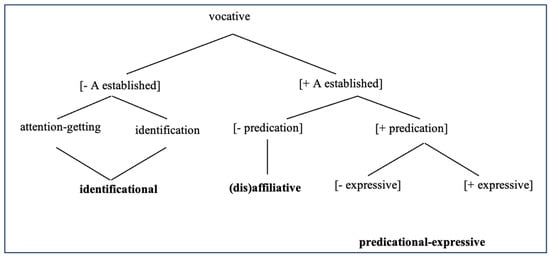
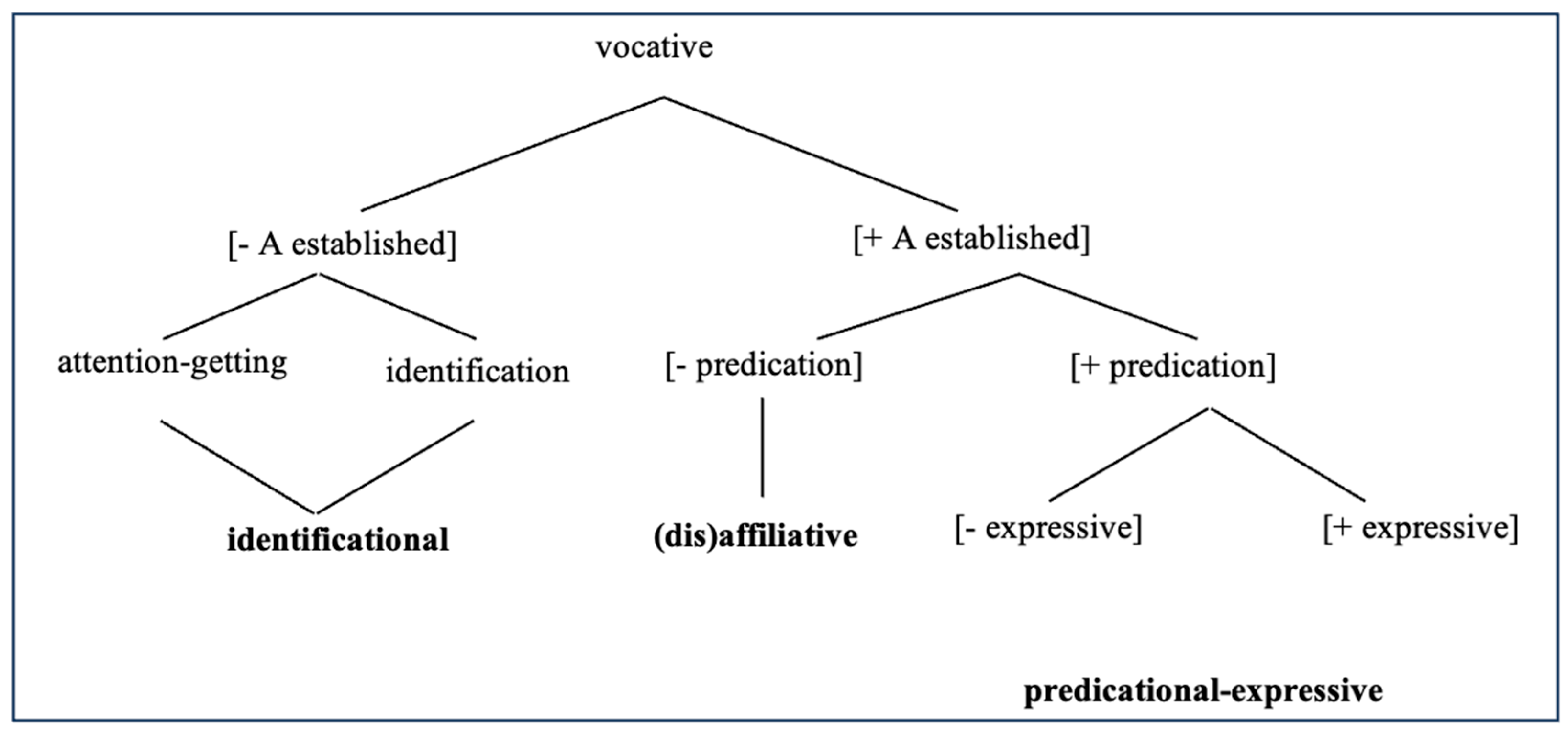
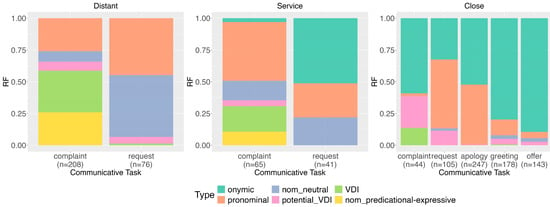
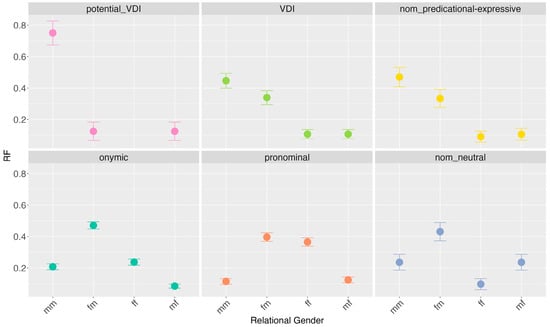
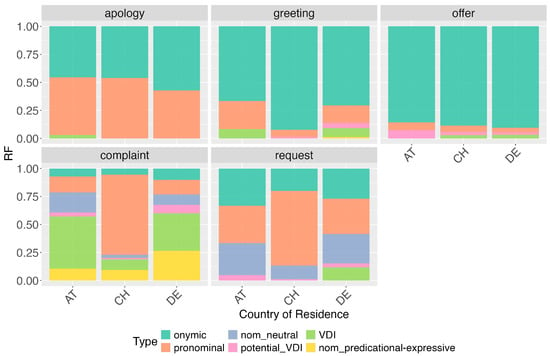
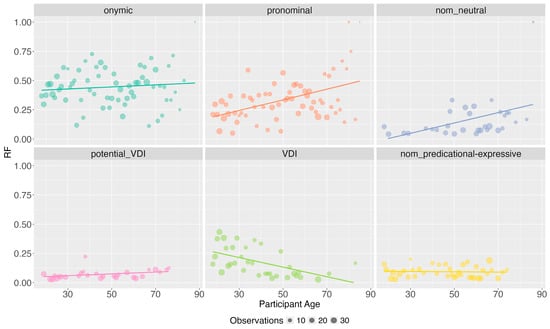
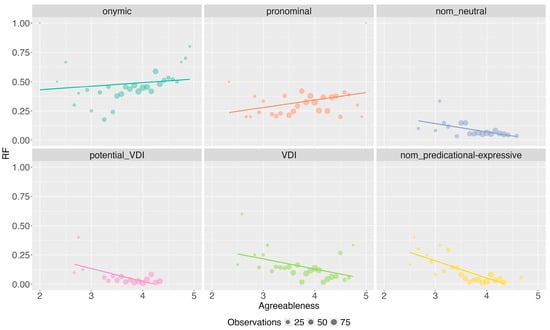


Disclaimer/Publisher’s Note: The statements, opinions and data contained in all publications are solely those of the individual author(s) and contributor(s) and not of MDPI and/or the editor(s). MDPI and/or the editor(s) disclaim responsibility for any injury to people or property resulting from any ideas, methods, instructions or products referred to in the content. |
© 2026 by the authors. Licensee MDPI, Basel, Switzerland. This article is an open access article distributed under the terms and conditions of the Creative Commons Attribution (CC BY) license.