


Abstract
In this study, we investigate the formation of passive structures in Garrusi Kurdish across two datasets: experimental and narrative free speech. For our data collection, we interviewed 30 native speakers of this language variety, located in Mehraban District in Hamadan Province, Iran. For our methodology, we conducted an image-description task and a story-narration task. In the first controlled task, the speakers were asked to describe 20 event-oriented pictures prompted by questions relating to the intended construction. In the free narrative task, the speakers were asked to renarrate the film “The Pear Story.” According to our observations, the choice of voice and the use of passive structures vary depending on the context. Our investigations show that passive is a context-oriented and contact-sensitive feature in Mehraban Garrusi Kurdish. In the controlled descriptive context, where the actor was intentionally ignored, the speakers tended to use passive verbal structures, specifically the prototypical form. However, in the free narrative context, where they were allowed to freely renarrate what they observed, they tended to express active predications in the presence of the animate actor, resorting to anticausative forms with patientive subjects affected by inanimate actors. We also found that the rare emergence of the non-prototypical passive suffix, the non-passivization of certain verbal forms, and the exceptional existence of agent phrases in passive diathesis were products of contact-induced change occurring in interaction with Chaharduli Kurdish, Shahsevan Turkic, and Standard Persian.
1. Introduction
In the present study, we explore the effect of context on the production of passive structures in Garrusi Kurdish (Southern Kurdish, Indo-Iranian, see Belelli, 2019; Christensen & Barr, 1939, pp. 291–331; De Morgan, 1904; Querry, 1896). We discuss passivization as a context-oriented and contact-sensitive feature in Garrusi Kurdish. By combining empirical and experimental datasets, we present various projections of passive patterns in controlled descriptive and free narrative contexts. Garrusi (also called Bijari; Belelli, 2019) is a Kurdish variety spoken by a minority population in the Garrus region of Iran. The area corresponds to today’s Bijar County in Kurdistan Province and Mehraban-e Sofla Rural District of Kabudarahang County in the northernmost part of Hamadan Province; see Figure 1 for the illustration of the geographical location. This Kurdish variety shows features of both Central and Southern Kurdish and displays intradialectal variations in both Bijar and Mehraban districts. The areal situation of Garrusi Kurdish has rendered it prone to contact with other dialects of Kurdish, including Ardalani (also known as Sine’i/Sanandaji Kurdish), varieties of Southern Kurdish such as Chaharduli, and Kolya’i (see Fattah, 2000; Borjian, 2023), and Azeri Turkic, specifically Shahsevan Turkic, spoken both within the Garrus region and in neighboring districts. In addition to areal contact with other Kurdish and Turkic varieties, Garrusi is heavily under the superstrate of Persian, the official language of Iran (see Figure 1).
Figure 1.
Geographical location of the Garrusi Kurdish in Iran (Map created by the authors, © 2025).
Our task-based experimental approach, employing a corpus of over 13,000 clauses of elicited and non-elicited speech from 30 speakers across controlled descriptive and free narrative contexts, allowed us to systematically investigate how discourse context shapes the production and distribution of passive constructions in Garrusi Kurdish.
2. Passivization in Kurdish Language Varieties
Areal diversity within the Kurdish language has long inspired scholars to delve into grammatical peculiarities, such as voice transformations in their various forms. MacKenzie (1961) described the passive construction in the Sulaymaniyah variety (also known as Sorani or Central Kurdish) as employing a passive suffix, -ra in the past tense and -re in the present tense, hosted by a present stem (see Haig, 2018). MacKenzie (1966) explored passivization in Hawrami, noting that in this variety, passive is formed by the present transitive stem, which hosts -îya in the past and -îye in the present tenses (see Mahmoudveysi & Bailey, 2018). Haig (1998, 2002) investigated passivization in Kurmanji Kurdish (also known as Northern Kurdish) as a periphrastic process formalized through the combination of a conjugated form of hatin ‘to come’ with the infinitive form of the main verb. He basically discussed passive projection in the ergative construction (Haig, 1998) and with complex predicates (Haig, 2002). Karimi Doostan and Veisi Hassar (2008) identified the passive marker -ra/-ya in Kurdish dialects as a remnant of the passive morpheme -ya in ancient Iranian languages.
Veisi Hassar (2009), in comparing passivization in Kurdish and Persian, distinguished Kurdish as a language that employs two synthetic and periphrastic strategies (the suffix -ya and the auxiliary bu, respectively) for voice transformation. Farzin (2014) explored canonical passive patterns in Kalhori Kurdish, which are formed both morphologically (marked by -ya) and periphrastically (marked by the auxiliary bu ‘to become’). Bamshadi and Mirdehghan (2015) studied voice and agent in Gorani, identifying three voices—passive, causative, and conversive—as well as agentless passives in this variety. Daneshpazhouh and Karimi Doostan (2016) conducted a comparative study of passivization in Sorani and Kurmanji Kurdish, illustrating synthetic and periphrastic patterns in these Kurdish varieties. Karimi Doostan and Daneshpazhouh (2019) redefined the -ra/-re passive marker in Sorani Kurdish dialects under the banner of an anti-actor marker that formalizes a non-active construction.
Fattah (2000) documented passive formation in Southern Kurdish dialects, showing that simple transitive verbs form passives morphologically through dedicated present and past stem markers, with a small subset of verbs retaining the passive morpheme in the past (-îrya). For complex and causative verbs, passives are generally realized lexically via light verbs. Building on this, Belelli (2021) reported that Harsini Laki uses -ir in the present and -ya in the past for simple verbs, with some verbs forming -îrya past stems, while complex verbs rely on light verbs. Borjian (2024) showed that Kermanshahi derives passive stems from the plain present with suffixes (-ye/-îe in the present, -ya/-îa in the past). Borjian also noted that certain verbs lack a plain present form and occur only with passive or causative morphology. A further distinctive feature is the insertion of an intrusive -r- in the passive stems of some high-frequency monosyllabic verbs ending in /e/.
According to these studies, passivization in Kurdish and closely related varieties is achieved morphologically and periphrastically, by means of the suffixes -ra/-re, -ya/-ye (-îya/-îye), or -îrya and dialectal forms of the verbs hatin ‘to come’ and bîgin ‘to become’ as auxiliary markers. In a prequel to the present study (Asadpour & Zarei, 2026), we identified four passive patterns in Garrusi Kurdish, illustrated with examples in Section 4.
3. Materials and Methods
To explore how passive structures are applied in the Garrusi Kurdish discourse, we conducted fieldwork using two visual tasks. The first task was designed as a controlled, descriptive context, prompted by a pictorial questionnaire (see Figure 2). The second task was the re-narration of a six-minute film titled “The Pear Story” (Chafe, 1975). We interviewed 30 native speakers in their native language, i.e., Garrusi Kurdish in Qohurd-e Olya, a village in Mehraban-e Sofla Rural District of Kabudarahang County in Hamadan Province.
Figure 2.
Picture 17 in the image-description task.
In the first phase of our fieldwork, we showed 20 event-oriented images1 to each participant and asked them three questions in Garrusi Kurdish regarding each picture. The events intended to be attested in each picture are as follows: to bury, to carry, to cut, to hit, to hold, to hug, to kick, to kiss, to lift, to paint, to pull, to punch, to push, to shoot, to splash, to spray, to throw, to tie, to touch, and to wipe. First, we asked them to describe, in general, what they observed in each picture. Then, we asked them two questions about two entities—one animate and one inanimate—that were subjects of the actions performed by an agent. For example, Figure 2 illustrates Picture 17 in the questionnaire, examining the event of throwing.
As depicted in Figure 2, in each picture, two animate actors acted upon a patient and an object theme (in Picture 17, a man throws a ball, and the other one throws a man). We intentionally instructed the participants to ignore the actors while describing the action performed on the patient or the theme. This approach helped us elicit passive responses from the participants. To illustrate, Table 1 provides an example of participant AZ’s responses2 to the questions inquiring about pekirdin ‘to throw’ as depicted in Figure 2.
Table 1.
Representative sample of the image-description task.
In the second stage of our fieldwork, we showed the “The Pear Story” film to the participants and asked them to renarrate what happened in it. The film was shown in its original format (wordless) immediately before participants were asked to renarrate the story. Unlike the image-description task, we did not guide the participants during this task. They watched the film and renarrated their observations without our intervention. This approach allowed us to assess the participants’ tendency to use passive patterns while narrating events in real time and in a less structured context. To depict the nature of this narrative task, we present a sample of the first seven sentences produced by participant AZ in Table 2.
Table 2.
Representative sample of the story-narration task.
We assembled a corpus of spoken Garrusi Kurdish from data collected during the administration of these two tasks. The first dataset in our corpus included utterances produced in the controlled descriptive context, and the second dataset consisted of the discourse generated in the free narrative context. Passive tokens extracted from these two datasets served as the basis for exploring the application of passive patterns in Garrusi discourse in this study. Table 3 provides the scope of our data and the number of passive tokens investigated in this study.
Table 3.
Data scope and passive tokens in the present study.
4. Passive Structures in Garrusi Kurdish
In Asadpour and Zarei (2026), we found four passive patterns in Garrusi Kurdish: three morphological and one periphrastic. We identified two realizations of the passive suffix in this Kurdish variety: -iřilî and -irî. The first possibility (-iřilî) was productive, whereas the second one (-irî) was restricted by tense, aspect, and to specific verbal forms. Examples (1–2) illustrate the usage of Pattern 1, and examples (3–4) are samples of Pattern 2 in Garrusi Kurdish:3
| (2) | aw | pîş-îrîlî=ye | ban=î |
| AF_150 | water | spray/splash-PASS=ADP6 | on=3SG |
| ‘Water is being splashed on him.’ | |||
| (3) | we | xatir=i | î | ki | aw | pîş-îr-îya-ye | ban=î |
| FI_222 | for | memory=EZ | this | COMP | water | spray/splash-PASS-PST.INTR/ANTIC-PRS.PRF | on=3SG |
| ‘Because water has been sprayed on it.’ | |||||||
| (4) | ew | zařû-ˀeg=e7 | ki | aw | pîş-îrî=ye | ban=î |
| VD_181 | that | child-DEF.SG=DEM | REL | water | spray/splash-PASS=ADP | on=3SG |
| ‘That child who is being sprayed with water.’ | ||||||
We observed that in both patterns, the passive suffix preceded a transitive/anticausative suffix which was expressed as -îya in the past tense and perfect aspect (examples 1 and 3, also the upcoming 7–8) and was zero-coded in the present non-perfect (simple and progressive) tenses (examples 2 and 4).
We also found specific verbal forms that did not accommodate the passive suffix. In these verbal structures, the intransitive/anticausative suffix—that is, -îya in the past tense and perfect aspect and its zero marking in the present non-perfect tenses—inherently conveyed the passive voice (Asadpour & Zarei, 2026). Samples (5–6) showcase the recruitment of Pattern 3 in Garrusi Kurdish passive construction:
| (5) | aw | pîş-îya-ye | we | ban=î |
| BM_180 | water | spray/splash-PST.INTR/ANTIC-PRS.PRF | to | on=3SG |
| ‘Water has been sprayed on it.’ | ||||
| (6) | aw-ege | pîş-î=ye | ban=î |
| SK_172 | water-DEF.SG | spray/splash-3SG=ADP | on=3SG |
| ‘Water is being splashed on him.’ | |||
The distinction between anticausative and passive readings of target-oriented verbs like pîšanin is discussed in detail in Section 4.3, where we analyze the interaction between lexical semantics, morphological marking, and discourse context.
We also identified a periphrastic pattern of passivization in Garrusi Kurdish employed in complex predicates that included the causative kirdin, ‘to make’, as their verbal element. In this pattern, the inchoative/anticausative bîgin, ‘to become’, functioned as a passive auxiliary and substituted the verbal part of the complex predicate. Examples (7–8) are instances of Pattern 4, displaying periphrastic passivization of the complex predicates çal kirdin (‘to bury’) and pîkew kirdin (‘to wipe’), respectively:
| (7) | ay | pîya-g=e | l=ayre | çal | bî-ye |
| MV_6 | this | man-DEF.SG=DEM | in=here | pit | be/become.PST-PRS.PRF |
| ‘This man has been buried here.’ | |||||
| (8) | ew | süş-eg=e | ki | pîk=ew | d-û | ewe | kew=e |
| BF_175 | that | glass-DEF.SG=DEM | REL | wipe=POSTV | IPFV-become.PRS | 3SG | blue=be.PRS.3SG |
| ‘That windowpane which is being wiped is blue.’ | |||||||
We found that Patterns 3 and 4 (the employment of the anticausative suffix per se and the passive/anticausative auxiliary) could be used as a second alternative to patterns with passive suffix (-iřilî/-irî). However, they were the only option for encoding the passive voice for specific verbal forms and grammatical contexts (Asadpour & Zarei, 2026). To better understand the application of these passive patterns in Garrusi Kurdish, we have provided illustrative examples (9–11). In this set of examples, the single verb îvet kirdin (‘to hold’) has been passivized once by Pattern 1 (example 9), once by Pattern 2 (example 10), and once by Pattern 4 (example 11).
| (9) | ew | kûz-eˀ=e | ki | îvet | kir-řil-îya-ye8 | sewz=e |
| BZ_52 | that | jar-DEF.SG=DEM | REL | held | make-PASS-PST.INTR/ANTIC-PRS.PRF | green=be.PRS.3SG |
| ‘That clay jar which has been held is green.’ | ||||||
| (10) | ew | küz-eg=e | ki | îvet | kîr-r-îya-ye9 | sewz=e |
| CZ_42 | that | jar-DEF.SG=DEM | REL | held | make-PASS-PST.INTR/ANTIC-PRS.PRF | green=be.PRS.3SG |
| ‘That clay jar which has been held is green.’ | ||||||
| (11) | ew | kûz-eg=e10 | ki | îvet | bî-ye | sewz=e |
| ZK_41 | that | jar-DEF.SG=DEM | REL | held | be/become.PST-PRS.PRF | green=be.PRS.3SG |
| ‘That clay jar which has been held is green.’ | ||||||
We refer to these patterns as PASS1, PASS2, PASS3, and PASS4 in the present study, depicted in Table 4.
Table 4.
Passive patterns in Garrusi Kurdish.
Table 4 shows how the passive voice is realized morphologically and periphrastically in Garrusi Kurdish. While all morphological patterns employ the anticausative suffix -îya in past tenses, PASS1 and PASS2 are distinguished by the additional presence of an explicit passive marker (-îřilî or -irî). In contrast, PASS3 relies exclusively on anticausative morphology to convey passive semantics in lexically restricted verb classes.
The variation and appearance of these forms in the datasets of our corpus are illustrated in Table 5, which provides a breakdown of the passive patterns used by participants in the image-description and story-narration tasks.
Table 5.
The usage of the passive patterns by the participants.
Table 5 offers a detailed view of how different participants, categorized by gender and age, employed passive structures in both tasks. The numbers indicate the frequency of each passive pattern for each participant. This breakdown provides insights into how various factors, such as gender and age, may influence the use of passive constructions in Garrusi Kurdish. The table shows that the highest number of tokens was 75, produced by SK (a 46-year-old female participant), and the lowest was 36, produced by TG (a 55-year-old female participant). The variations observed in the number of passive tokens and the patterns of passivization used by participants of different ages and genders show that age and gender do not influence the pattern structure or the use of passives, indicating that these are merely morphosyntactic features in this Kurdish variety.
Table 5 also shows that passive patterns were not used uniformly across the image-description and story-narration tasks, and their distribution differed significantly between the two discourses. We found 1515 passives, categorized as follows: PASS1: 1101 tokens; PASS2: 221 tokens; PASS3: 73 tokens; and PASS4: 120 tokens. To visualize the distribution of these patterns across the entire dataset, see Figure 3.
Figure 3.
Distribution of the passive patterns across the entire dataset.
The contrastive usage of the voice constructions and passive structures observed in the image-description versus story-narration tasks is discussed in sub-sections below.
4.1. Passive Suffixes in Garrusi Kurdish
The right-hand scale in Figure 3 demonstrates that the majority of the passive tokens in the corpus (87%) employed a passive suffix in their construction (PASS1 and PASS2).11 An interesting observation was the differential distribution of the passive suffixes within Garrusi Kurdish. As illustrated in the left-hand scale of Figure 3, 73% of the tokens were marked with the suffix -iřilî, making it the prototype choice for expressing passive voice. This suffix served as the default passive marker across all tense-aspect paradigms in Garrusi Kurdish. Its status as the prototypical choice (73% of all passive tokens) holds regardless of tense.
In contrast, the second possibility, -irî, was employed only in 14% of the tokens. Figure 4 represents the distribution of these two suffixes relative to each other across all passive tokens.
Figure 4.
Distribution of the passive suffixes in the passive tokens.
Furthermore, apart from the varying distribution depicted in Figure 3 and Figure 4, as Asadpour and Zarei (2026) argue, the application of the second suffix in present non-perfect tenses (i.e., present simple, progressive, and subjunctive forms) is restricted, and certain verbs (like dagin ‘to hit/give’, şüştin ‘to wash’, and nîyagin ‘to put’) cannot host it as a passive marker. Therefore, this difference in distribution and its limited usage suggests that -iřilî is the dominant and preferred passive suffix in the language, while -irî is less commonly employed. Exploring the differential distribution of the passive suffixes observed in the corpus entails investigation of their contexts of occurrence and the verbal events that hosted them. We dedicate the rest of this section to discussing the contextual status and the verbal events in which these two markers can occur. Table 6 and Table 7 provide lists of the events passivized with these two suffixes in our corpus of spoken Garrusi Kurdish.
Table 6.
Events passivized with passive suffixes in the image-description task.
Table 7.
Events passivized with passive suffixes in the story-narration task.
A comparison of the figures written in the columns of PASS1 and PASS2 in Table 6 and Table 7, specifically Table 6, reveals that passivization with the first suffix (-iřilî) occurred with various events, whereas the second possibility (-irî) occurred only with certain events. For example, the verb pîşanin (‘to splash/spray’) has been passivized with the first suffix 117 times, while its passivization with the second alternative took place only 10 times (see Table 6). These tables also show that the first suffix was used in various grammatical contexts. Examples (12–17) showcase possible tenses and aspects for the construction of passive voice, with the first possibility to occur.
| (12) | pe-kir-řil-îya |
| VZ_125 | thrown-make-PASS-PST.INTR/ANTIC |
| ‘(He) was thrown.’ |
| (13) | du-wuř-řul-îya |
| BZ_30 | IPFV-cut-PASS-PST.INTR/ANTIC |
| ‘(It) was being cut.’ |
| (14) | cam-ege | ki | maç | kir-řîlî | zerd=e |
| FI_104 | cup-DEF.SG | REL | kiss | make-PASS | yellow=be.PRS.3SG |
| ‘The cup which is being kissed is yellow.’ | |||||
| (15) | ew | kuř=e | ki | di-kîş-îřîlî |
| ZA_84 | that | boy=be.PRS.3SG | REL | IPFV-pull-PASS |
| ‘That boy who is being pulled.’ | ||||
| (16) | aye | ki | pa=y | biř-řil-îya-ye |
| MM_26 | this | REL | leg=3SG.POSS | cut-PASS-PST.INTR/ANTIC-PRS.PRF |
| ‘This one whose leg has been cut.’ | ||||
| (17) | ew | zařû-ˀeg=e | ki | aw-i | çew=î | di-şiř-řil-îya-ye |
| ZZ_154 | that | child-DEF.SG=DEM | REL | water-EZ | eye=3SG.POSS | IPFV-wipe-PASS-PRS.PRF |
| ‘That child whose tears have been being wiped.’ | ||||||
However, the second suffix was recruited in specific morphological tenses and aspects, marked in Table 6 and Table 7 (TNS and ASP). Upon closer examination, we found that out of 219 tokens of PASS2, in three tokens the verbal structure was formalized as simple present (stem-iřilî), in one token it had present progressive form (di-stem-iřilî), in 12 tokens it was in simple past (stem-iřilî-îya), and in the remaining 205 tokens it was in the present perfect form (stem-iřilî-îya-îye/îge). Examples (18–21) illustrate the usage of the second pattern for passivization:
| (18) | timşa=y | teref | kird | d-îr-îya | we | zemîn |
| JD_266 | look=EZ | guy | make.PST | hit/give-PASS-PST.INTR/ANTIC | to | ground |
| ‘When (he) looked at the guy, (he) was beaten to the ground.’ | ||||||
| (19) | ew | zařû-ˀeg=e | ki | aw | pîş-îrî=ye | ban=î | kewş=i | kew | ||
| VD_181 | that | child-DEF.SG=DEM | REL | water | splash/spray-PASS=ADP | on=3SG | shoe=EZ | blue | ||
| kird-îye12 | we | pa=y | ||||||||
| make.PST-PRS.PRF | on | leg=3SG.POSS | ||||||||
| ‘That child on whom water is sprayed/splashed has worn blue shoes.’ | ||||||||||
| (20) | aye | ki | kîş-îr-in=ey13 | weř=o | ban |
| MZ_131 | this | REL | pull-PASS-3PL=3SG | toward=POSTP | up |
| ‘This one who is pulled upward by them.’ | |||||
| (21) | yê | dane | gevezn | wer=î | hat=ewe | we | tenaf=o |
| SK_284 | a | CNT | deer | with=3SG | come.PST=POSTV | with | rope=POSTP |
| wes-îr-îya-ye | |||||||
| fasten-PASS-PST.INTR/ANTIC-PRS.PRF | |||||||
| ‘A deer came forward with him which has been fastened with a rope [i.e., A deer that had been tied with a rope arrived with him].’ | |||||||
Examples (18–20) instantiate the rare occurrence of the second option in simple past, present simple, and present progressive forms, respectively. Example (21) showcases the frequent usage of -iřî in present perfect forms. The stem formations hosting the PASS2 marker are represented in Table 8 for simple verbs, particle verbs (e.g., aw-kirdin ‘to open’), and complex predicates (e.g., tîr dagin ‘to shoot’), followed by their possible occurrence in different tenses and aspects.
Table 8.
Verbal stems in the PASS2 pattern occurred in different tenses and aspects.
Table 8 illustrates the tense and aspectual restrictions observed in passive tokens hosting -irî as their passive marker, marked with an asterisk. Only three stems—kîş- (‘pull’), pîş- (‘splash/spray’), and kut- (‘beat’)—could be passivized in all forms of past and present tenses. Verbs that exhibited stem allomorphy between past and present tenses—kir-/ke- ‘make/do’, da-/de- ‘hit/give’, biř-/wuř- ‘cut’, nîy-/ne- ‘put’, and şüş-/şûr- ‘wash’—never took passive form with -irî in the past progressive, present progressive, and present simple. However, all the stems could be passivized with this suffix in present non-perfect tenses (i.e., present simple and present progressive).
The findings also show that the passive present perfect of these verbs is formed from their simple past passive form: [SMP PST PASS + -îye], illustrated in the last column of Table 8. All verbs in this form can be glossed as [V-PASS-PST.INT/ANTIC-PRS.PRF]. In all these forms, the passive suffix is preceded by an intransitive/anticausative marker, which is zero-coded in the present tense in Garrusi Kurdish. The phonological variation observed in the verbal stems (in their final phoneme, i.e., ř/r, a, e, ş, s) suggests that the emergence of -irî is not a second realization of -iřilî merely resulting from phonological processes. In addition, since these stems can also host the PASS1 formant (kir-řilî, gir-řilî, d-iřilî, bir-řilî, wes-iřilî, weş-iřilî, n-iřilî, sir-řilî, and sûr-řîlî), this phenomenon cannot be explained by the zero-coding of the intransitive/anticausative marker in the present non-perfect tenses.
To investigate the nature of the passive suffix -irî and its uneven usage in Garrusi, we explored its function in another Kurdish variety, Chaharduli Kurdish,15 spoken in the vicinity of Garrusi Kurdish. Examples (22–24) illustrate the passive pattern used in this Kurdish dialect:
| (22) | kuř-e | kîş-îr-îya |
| boy-DEF | pull-PASS-PST.INTR/ANTIC | |
| ‘The boy was pulled.’ | ||
| (23) | kuř-e | kîş-îr-îye-t |
| boy-DEF | pull-PASS-PRS.INTR/ANTIC-3SG | |
| ‘The boy is pulled.’ | ||
| (24) | kuř-e | kîş-îr-îya-ye |
| boy-DEF | pull-PASS-PST.INTR/ANTIC-PRS.PRF | |
| ‘The boy has been pulled.’ | ||
The examples elucidate the passive construction of Chaharduli Kurdish in past simple (22), present simple (23), and present perfect (24) tenses. As these examples illustrate, the passive marker in Chaharduli must also be followed by the intransitive/anticausative suffix. However, unlike Garrusi, this suffix is not zero-coded in present non-perfect tenses; it is specifically formalized as -îye. Furthermore, in this Kurdish variety, -irî, the less frequent passive suffix in Garrusi, is the only passive marker basically used in synthetic passive construction. Synthetic passivization in the Garrusi and Chaharduli dialects of Kurdish follows the same structure. However, unlike Chaharduli, anticausativity, person, and number are zero-coded in the verbal event in present non-perfect tenses in Garrusi.
Therefore, based on our findings, the productive passive suffix, -iřilî, can be established as the prototype of the passive-forming suffix in Garrusi Kurdish, at least in Mehraban District. The second, less frequent suffix, -irî, may have emerged in Mehraban Garrusi Kurdish due to contact with Chaharduli Kurdish, the Kurdish variety spoken within the neighboring districts of the Garrus region. Determining whether its usage is more common in other subdialects of Garrusi, specifically those spoken in Bijar, requires further investigation beyond the scope of this study.
4.2. Anticausative Markers in Garrusi Kurdish
The application of the anticausative suffix (-îya in past and perfect forms and its zero-marking in present non-perfect forms) is another strategy for passive formation in Garrusi Kurdish, discussed as PASS3 in this paper. However, not all the anticausative forms can be considered as passive. Verbs in Garrusi, based on causativity, can be morphologically classified as follows: neutral (neither causative nor anticausative), causative, anticausative, and anticausative/passive (Asadpour & Zarei, 2026). What specifies a verbal form as a purely anticausative or a passive/anticausative form is the semantic role of the subject. If the subject is agentive performing the action in the event, the form is anticausative. However, if it is semantically a patient that does not have control over the action, the form can be anticausative and/or passive. The following examples extracted from the corpus represent the double function of the anticausative suffix in Garrusi:
| (25) | aye | du-soř-î | welî | ewe | soř-in-in=ey |
| BM_120 | this | IPFV-slide-3SG | but | that | slide-PRS.CAUS-3PL=3SG |
| ‘This one is sliding (on his own), but that one is being slid by them.’ | |||||
| (26) | le | duçerx-eg=ey | da-wûz-îya |
| MM_207 | from | bike-DEF.SG=3SG.POSS | down-stand-PST.INTR/ANTIC |
| ‘(He) dismounted his bike.’ | |||
| (27) | küz-ege | şîk-îya-ye |
| VD_58 | jar-DEF.SG | break-PST.INTR/ANTIC-PRS.PRF |
| a. ‘The clay jar has broken.’ b. ‘The clay jar has been broken.’ | ||
| (28) | libas-eg=ey | pilk-îya-ye |
| AK_267 | shirt-DEF.SG=3SG.POSS | dirt-PST.INTR/ANTIC-PRS.PRF |
| ‘His shirt has gotten dirty.’ | ||
Of the 1515 passive tokens extracted from the corpus, 73 tokens were marked without a passive-forming suffix. In these forms, the intransitive/anticausative suffix—realized as -îya in past tenses and perfect aspect, and as Ø in present non-perfect tenses—served as the sole marker for voice transition into passive. Table 9 represents the events formalized as PASS3 across the datasets of image-description and story-narration tasks.
Table 9.
Events produced as PASS3 across the datasets.
Except for kutagin ‘to beat’ (2 tokens), verbal forms observed with the PASS3 pattern are generally regarded as ambitransitive verbs across languages—functioning either as a transitive or an intransitive verb. Dixson and Aikhenvald (2000) consider the action denoted by these verbs either occurring spontaneously to a patient or to be contrived by an agent. They argue that the transitive form of these verbs is prone to “passive and/or anticausative derivation” whereas their intransitive form is expected to “undergo causative derivation” (Dixson & Aikhenvald, 2000).
Ambitransitive verbs in Garrusi Kurdish are overtly coded by a causative suffix when expressed in active voice. In fact, the transitivity of these forms is tied to their causativity in this Kurdish variety. That is, the verbal stem inevitably hosts either a causative or an intransitive suffix that intrinsically denotes a transitive or an anticausative action, respectively: if the verb is transitive, it is causative; if it is intransitive, then it is anticausative. Table 10 depicts the verbs under discussion in their transitive/causative, intransitive/anticausative, and passive infinitive forms.
Table 10.
Causativity/transitivity in the PASS3 pattern.
Excluding pîşanin ‘to splash/spray’, the ambitransitive verbs that occurred in the descriptive and narrative contexts of the present study belonged to verbs that cannot accommodate a passive marker (see Asadpour & Zarei, 2026), identified by an asterisk in Table 10. In these verbal structures, the intransitive/anticausative suffix encoded the passive voice on its own. Therefore, the lexically determined anticausative morphology of these verbs, when combined with a patientive subject, provided a structural basis for their realization as PASS3 without requiring explicit passive marking.16
Causativity can also be expressed periphrastically by the pair of the kirdin-bîgin (‘to make-become’) construction in Garrusi Kurdish. When accompanying a noun or an adjective, these auxiliaries contribute to the formation of complex predicates. The causative kirdin ‘to make’ appears in transitive constructions where the subject serves as an external causer changing the state of the patient. The auxiliary bîgin, ‘to be/become’, can function either as a copula and express a state or serve as an inchoative verb and encode a process. However, their forms differ in non-perfect present tenses (see Asadpour & Zarei, 2026). Like the anticausative suffix, the inchoative bîgin (‘to become’), can function, depending on the semantic role of the subject, either as a purely anticausative marker or as an anticausative/passive marker. Examples (29–31) manifest the dual role of this auxiliary:
| (29) | le | kinar=î | red=o | bî-n |
| MR_311 | from | side=3SG.POSS | pass=POSTV | be/become.PST-3PL |
| ‘(They) passed by him.’ | ||||
| (30) | xem=o | bî | |
| AZ_261 | bend=POSTV | be/become.PST | |
| a. ‘(He) bent.’ | (agentive subject) | ||
| b. ‘(It) became bent.’ | (patientive subject) | ||
| (31) | ay | pîya-ge | l=ayre | çal | bî-ye |
| MV_6 | this | man-DEF.SG | at=here | pit | be/become.PST-PRS.PRF |
| ‘This man has been buried here.’ | |||||
Of the 1515 passive tokens, 120 tokens were observed to encode passive concepts periphrastically. In these verbal forms categorized as PASS4, the inchoative auxiliary bîgin ‘to become’ substituted its causative counterpart kirdin ‘to make’ and conveyed the passive voice. Table 11 shows the events realized as PASS4 in the image-description and story-narration tasks.
Table 11.
Events produced as PASS4 across the datasets.
In all these forms, the external causer is excluded from the predication, and the patientive subject undergoes a change of state. This change of state is sometimes overtly encoded in the complex predicate with a resultative suffix (-o) hosted by the nonverbal element of the complex predicate, see examples (29–30). All the complex predicates with [N/ADJ + kirdin] structure have the potential for being passivized either morphologically as [N/ADJ + kir-iřilî] or periphrastically as [N/ADJ + bîgin]. However, the first option never occurs in imperfective forms since the stem kir- never accommodates the imperfective prefix di- (see Asadpour & Zarei, 2026). Therefore, the second alternative has an aspectual function in the passivization of the complex predicates with [N/ADJ + kirdin] structure. Table 12 illustrates the events that were passivized with both alternatives in the image-description and story narration tasks.
Table 12.
Causativity/transitivity in the PASS4 pattern.
To better understand the possible processes of voice transformation with kirdin, we provide the following samples extracted from the image-description task (Example 32) and the story-narration task (Example 33), showcasing the single event of ‘cleaning’:
| (32) | kamputir-egan | sef=ey | sewz=e | ki | temîs |
| BF_169 | computer-DEF.PL | screen=3SG.POSS | green=be.PRS.3SG | REL | clean |
| kir-řîl-îya-ye | |||||
| make-PASS-PST.INTR/ANTIC-PRS.PRF | |||||
| ‘The computer screens that have been cleaned, are green.’ | |||||
| (33) | ew=se | say=gey19 | libas=eg=ey | ki | temîs=o | b-û |
| AF_330 | that=be.PRS.3SG | rub.PST=3SG | shirt=DEF.SG=3SG.POSS | COMP | clean=POSTV | SBJV-become.PRS |
| ‘You see, (he) rubbed it on his shirt so that it would become cleaned.’ | ||||||
4.3. Contrastive Passivization in Descriptive vs. Narrative Contexts
Of the 1515 passive tokens extracted from the corpus, we observed that 1416 tokens were produced within our first dataset, i.e., the image-description task, while only 99 appeared within the story-narration task. This differential distribution reveals that predication in Garrusi discourse in the first task was basically expressed in the form of a passive construction. In contrast, it was predominantly expressed as active constructions in the second task. Asymmetry in the employment voice was not the only difference that we observed when comparing the tasks. Passive patterns identified in the passive construction of Garrusi Kurdish were also not used evenly across tasks. To visualize the distribution of these patterns within the image-description and the story-narration contexts, refer to Figure 5.
Figure 5.
Distribution of the passive patterns in the tasks.
The scales in Figure 5 illustrate that passive patterns were distributed differently within the pictorial questionnaire and the narrative context. In addition, a comparison of Table 6, Table 7 and Table 9, and 11 reveals that events in Task 1 were dominantly passivized through the passive suffix, specifically in its prototypical form (PASS1 -iřilî), while they were mostly passivized through an anticausative marker (PASS3 and PASS4) in Task 2. The contrastive application of these patterns in Garrusi Kurdish discourse across image description and story narration is illustrated in Figure 6.
Figure 6.
Contrastive distribution of the passive and anticausative markers in the tasks.
As shown in Figure 6, the application of passive patterns in descriptive and narrative contexts is markedly different. The contrastive use of passive constructions and passive patterns observed in the image-description and story-narration tasks can be explained by the nature of the tasks and the verbal events in each context. The upcoming discussion sheds light on the essence of the tasks and the verbal events that trigger the contrastive use of passive constructions.
The first dataset of our spoken Garrusi Kurdish corpus includes speakers’ discourse motivated by the image-description task. The second dataset of our spoken corpus consists of the speakers’ discourse motivated by the story-narration task.
We found that pîşanin ‘to splash/spray’ was the most recurrent verbal form being passivized in the corpus (143 tokens). This form, used in 127 tokens to describe the events in pictures 15 and 16 of the questionnaire, was passivized with a passive suffix. In these pictures, the actor (a little boy or girl) splashes or sprays water on a patient (a child) or a nonhuman theme (a duck or a bird), which serves as the Target of these caused-motion trivalent events (see Examples 1–6, 19, and 51).
The verb ‘to wipe’ was the next-most-frequently passivized event in our corpus (97 tokens), referring to Picture 20 of the questionnaire. This event, formalized both as a simple verb siřîn and as a complex predicate pîkew/temîs kirdin, was observed in a total of 94 tokens to be passivized via accommodating a passive suffix (62 tokens with a simple verb, 31 tokens with a complex verb). In this change-of-state bivalent event, an actor (a man) acts upon an animate or an inanimate entity (a little boy or a window), causing their state to be transformed from dirtiness into cleanliness:
| (34) | ewe | ki | çew=î | sir-řilî | pîk=ew | kir-řilî |
| HM_154 | 3SG | REL | eye=3SG.POSS | wipe-PASS | wipe=POSTV | make-PASS |
| ‘That one whose eye is being wiped (or) is being cleaned.’ | ||||||
The image-description task was a controlled task in which the speakers were asked to passivize specific events. Therefore, the speakers, motivated by the questions, expressed the predication predominantly as passive in its prototypical form—that is, via a passive suffix, specifically -iřilî. In all these events, an animate actor acted upon a human or nonhuman entity. In contrast, the story-narration task was uncontrolled, in which the speakers were asked to freely renarrate what they observed. According to our findings, 90% of the passive tokens in the narrative context of our experiment were generated as anticausative forms, excluding an agentive subject. This observation inspired us to investigate the nature of the actors acting upon the patients or the themes in the narrations, where, unlike the questionnaire, there was no external stimulus to encourage participants to produce passives.
Upon closer examination of these passive tokens with regard to their frequency, it becomes evident that řişanin ‘to pour/spill’ and zexm bîgin ‘to become wounded’ were passivized at a notably higher rate compared to other events (61 of 99 tokens). These two events occur in a single scene in the film “The Pear Story,” where the boy’s bike collides with a stone, causing him to fall. Consequently, the pears spill, and the boy sustains a leg injury. In this scene, a stone serves as the catalyst for a change of state affecting the bike, the boy, and the pears.
It is important to note that řişanin ‘to pour/spill’ (for liquid-like dispersal of pears) and zexm bîgin ‘to get wounded’ are not the only passivized events arising from this scene. In the participants’ narration, this particular scene acted as a fertile ground, generating a total of 83 passive tokens among all the extracted tokens. The verbal events that emerged from this scene involved subjects centered on the boy, the pears, and the bike:
- The boy: Subjects related to the boy’s actions and injuries, and the bike.
- The pears: Subjects related to the spilling and scattering of pears.
- The boy and the pears: Subjects involving actions impacting both the boy and the pears.
- The bike: Subjects related to the damage to the bike.
Table 13 represents the passivized events that emerged from this scene and their subjects.
Table 13.
Passive events emerged from the passive-generator scene.
This scene shows the role of actor animacy in passivizing the patients or the themes in the narrative. We found that the presence or absence of animate actors significantly influenced the choice of voice in Garrusi Kurdish narrations. When animate actors were physically present in the scene or event, participants typically opted for active voice constructions to highlight their agency in the narrative. However, when inanimate entities, such as a stone, were responsible for causing changes to the state of subjects or objects, passive voice constructions became more prevalent, specifically in anticausative forms, excluding the agentive subject. This distinction in voice usage suggests that Garrusi Kurdish speakers tend to align their voice choices with the animacy of the actors, emphasizing agency with the active voice and passivity when the agent is inanimate.
5. Non-Passivized Verbal Forms in Garrusi Kurdish
As we were exploring the events intended to be investigated in each picture of the image-description task, we found that birdin ‘to carry’ and dagin ‘to hit’, attested in Pictures 2 and 4, were never expressed in a passive form in the field of study. Therefore, we examined what strategies the participants employed to encode passive voice in these verbs throughout the corpus. Examples (35–38) illustrate VZ’s responses to the actions of birdin ‘to carry’ and dagin ‘to hit’ (illustrated in Figure 7 and Figure 8) as representative of how the speakers expressed these events when they were expected to passivize them.
Figure 7.
Picture 2 in the questionnaire attesting birdin ‘to carry’.
- What is white?
| (35) | ew | ceb-eg=e | ki | dû-we-n=ey |
| VZ_16 | that | box-DEF.SG=DEM | REL | IPFV-carry/take-3PL=3SG |
| ‘That box which (they) are carrying.’ | ||||
- 2.
- Who is wearing a red shirt?
| (36) | ew | kuř=e | ki | le | naw | gehware | naw | ay | lennî-yeg=e | |
| VZ_17 | that | boy=DEM | REL | at | inside | cradle | inside | this | hammock-DEF.SG=DEM | |
| xef-an-in | dû-we-n=ey | |||||||||
| sleep-PST.CAUS-3PL | IPFV-carry/take-3PL=3SG | |||||||||
| ‘That boy whom (they) put to sleep in a cradle, in that hammock, (and) whom (they) are carrying.’ | ||||||||||
Figure 8.
Picture 4 in the questionnaire illustrating dagin ‘to hit’.
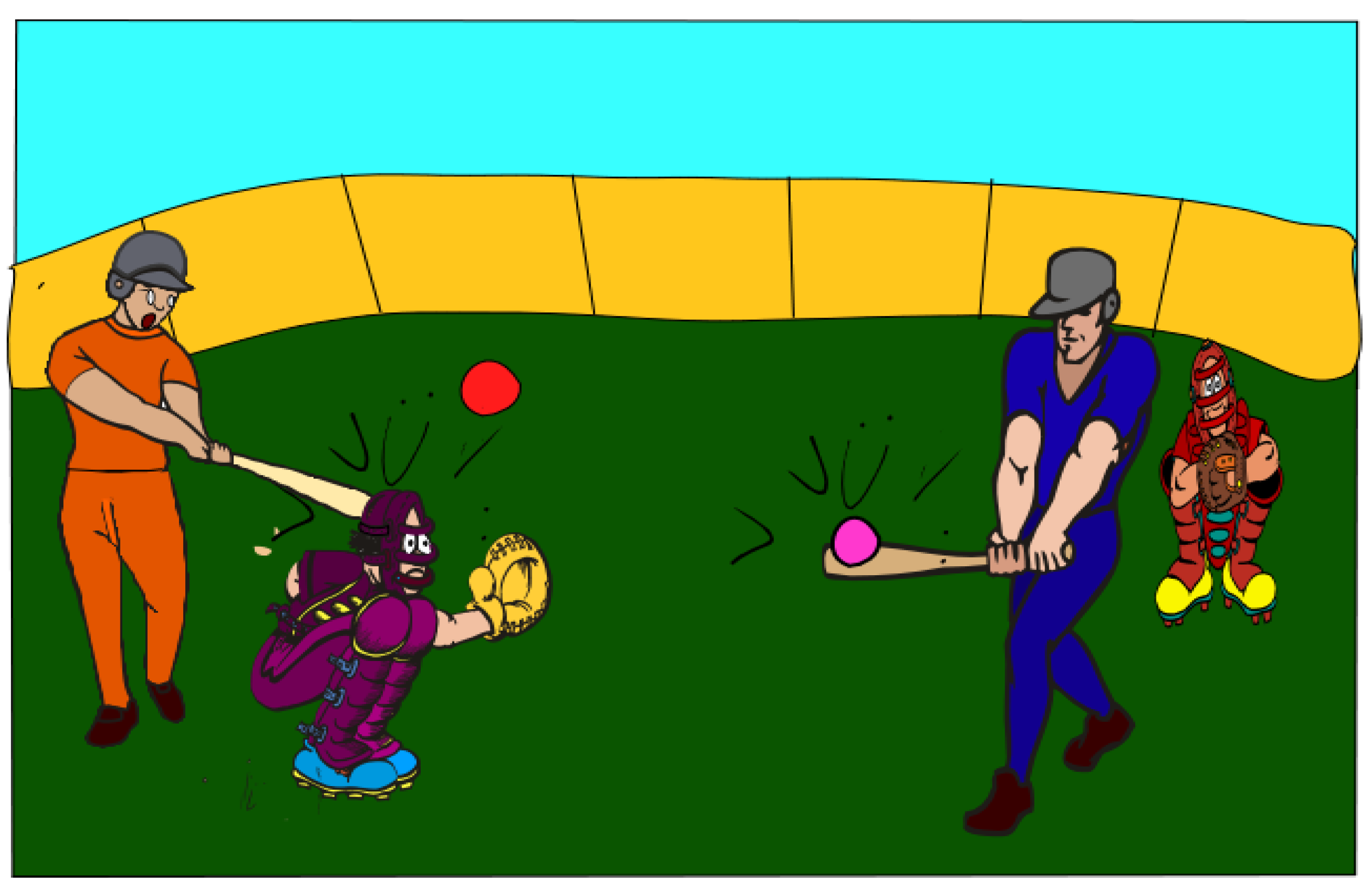
- What is pink?
| (37) | ew | tup-eg=e | ki | we | ew | çûw-ege=ˀo | de-y | ||
| VZ_26 | that | ball-DEF.SG=DEM | REL | with | that | bat-DEF.SG=POSTP | hit/give.PRS-3SG | ||
| le=y | we | çûw-ege=ˀo | da-g-in20 | le=y | |||||
| at=3SG | with | bat-DEF.SG=POSTP | hit/give.PST-PRS.PRF-3PL | at=3SG | |||||
| ‘That ball which (he) hits with that bat, (or) which (they) have hit with the bat.’ | |||||||||
- 2.
- Who is wearing purple?
| (38) | ewe | ki | we | çûw-ege=ˀo | we | cîy=i | tup-ege | da-g-in | |
| VZ_27 | 3SG | REL | with | bat-DEF.SG=POSTP | in | place=EZ | ball-DEF.SG | hit/give.PST-PRS.PRF-3PL | |
| le | beçik=î | ||||||||
| at | head=3SG.POSS | ||||||||
| ‘That one whom (they) have hit on the head with the bat instead of the ball.’ | |||||||||
Except for the question ‘Who is wearing a red shirt’ examined in Picture 2, in all events of the questionnaire, a single person is acting upon an animate or an inanimate entity. In our investigation of the speakers’ responses to questions requiring a passive form of the verbs ‘to carry’ and ‘to hit’, we observed that participants’ responses were in active voice with a third-person plural subject that did not refer to a specific group of people. The use of this semantic passive strategy was not limited to the events under discussion in the task. It was equally used by different participants alongside the morphological passive formations when they were encouraged to express a passive clause. However, we found that the use of an impersonal third person plural (IP3PL) subject was the only alternative for conveying a passive concept when it came to expressing the events ‘to carry’ (birdin) and ‘to hit’ (dagin).
We noticed that the passivization of birdin and dagin in the format of [root+-iřilî/-irî] entails the conveyance of other concepts for the speakers. Indeed, they formally correspond to the passive of the verbs biřîn ‘to cut’ and diřîn ‘to tear’. In a personal conversation with a native speaker from the city of Bijar, we found that this feature is perceived as a significant dialectal variation in the Garrus region. In the variety spoken in Mehraban District, these verbs cannot be passivized, whereas in the dialect spoken in Bijar District, they can be passivized with specific projections. Examples (39–43) represent the passivization of these four forms in the Bijar (BD) and Mehraban (MD) districts:
| (39) | a. | mê | tenaf-egan | bir-d-im21 | (BD and MD) | |
| I | rope-DEF.PL | carry.PST-PST-1SG | ||||
| ‘I carried the ropes.’ | ||||||
| b. | tenaf-egan | bir-ril-îya-n/bir-r-îya-n | (BD) | |||
| rope-DEF.PL | carry.PST-PASS-PST.INTR/ANTIC-PL | |||||
| ‘The ropes were carried.’ | ||||||
| (40) | a. | mê | tenaf-egan | biř-î-m | (BD and MD) | |
| I | rope-DEF.PL | cut.PST-PST-1SG | ||||
| ‘I cut the ropes.’ | ||||||
| b. | tenaf-egan | biř-řil-îya-n/biř-r-îya-n | (BD and MD) | |||
| rope-DEF.PL | cut.PST-PASS-PST.INTR/ANTIC-3PL | |||||
| ‘The ropes were cut.’ | ||||||
| (41) | a. | mê | tenaf-egan | da-m | we | ewe | (BD and MD) | |
| I | rope-DEF.PL | hit/give.PST-1SG | to | 3SG | ||||
| ‘I gave the ropes to him.’ | ||||||||
| b. | tenaf-egan | d-irîl-îya-n/d-ir-îya-n | we | ewe | (BD) | |||
| rope-DEF.PL | hit/give-PASS-PST.INTR/ANTIC-3PL | to | 3SG | |||||
| ‘The ropes were given to him.’ | ||||||||
| (42) | a. | mê | da-m | le | tenaf-egan | (BD and MD) | |
| I | hit/give.PST-1SG | at | rope-DEF.PL | ||||
| ‘I hit at the ropes.’ | |||||||
| b. | tenaf-egan | d-irîl-îya-n/d-ir-îya-n | le=yan | (BD) | |||
| rope-DEF.PL | hit/give-PASS-PST.INTR/ANTIC-3PL | at=3PL.POSS | |||||
| ‘The ropes were hit at them.’ | |||||||
| (43) | a. | mê | tenaf-egan | diř-î-m | (BD and MD) | |
| I | rope-DEF.PL | tear-PST-1SG | ||||
| ‘I tore the ropes.’ | ||||||
| b. | tenaf-egan | diř-řîl-îya-n/diř-r-îya-n | (BD and MD) | |||
| rope-DEF.PL | tear-PASS-PST.INTR/ANTIC-3PL | |||||
| ‘The ropes were torn.’ | ||||||
As illustrated in Examples (39–40), the only difference between the roots of the verbs birdin (‘to carry’) and biřîn (‘to cut’) in Garrusi is in the manner of articulation of the alveolar glide r/ř phoneme. If it is articulated as tap, bir-, it will mean ‘to carry’ (example 39), but if it is articulated as trill, biř-, it will signify ‘to cut’ (example 40). The transcription of the datasets reveals that this articulatory distinction has been neutralized in the dialect of Mehraban District, where these phonemes, except in a small portion of the lexicon, are no longer distinctive in any morphological or syntactic context. In Qohurd-e Olya, in most cases, r/ř alternates freely in daily speech in the idiolects of most speakers. This phenomenon has caused the passivization of birdin (‘to carry’), with the optional tap or trill articulation, to be blocked and the passivization of biřîn (‘to cut’), with the constant trill articulation, to be kept in this village.
Examples (41–43) show that diřîn (‘to tear’) and dagin (‘to hit/give’) are formally distinct in the active voice. However, since the alveolar glide in the passive formant -iřilî/-irî phonemically merges with the root of diř- in everyday speech in Mehraban Garrusi Kurdish, diřîn can be confused with the form dagin in the passive diathesis (compare the verbal forms in 41b, 42b, and 43b). Despite this syncretism, in both Bijar and Mehraban, the utterance of tenafegan diřilîyan (in 43b) only denotes the meaning of ‘the ropes were torn’ for the speakers, excluding the meanings of ‘to hit/give’ associated with the verbal form dagin. This can be related to whether diřîn (‘to tear’) and dagin (‘to hit/give’) function as a simple or complex expression in their respective construction.
The verbal structure dagin (‘to hit/give’) in Garrusi, like in some other Kurdish varieties such as Mukri Kurdish22, is classified as a “multi-word verb” (MWV), consisting of more than one element. In multi-word verbs, adpositional elements are incorporated in the construction of the verb (Asadpour, 2022). Asadpour (2022) argues that in lê=dân, the verbal structure for ‘to give at’ in Mukri Kurdish, the presence of the adposition is obligatory for the verb’s semantics (Asadpour, 2022). In the same way, the verbal form dagin in Garrusi is always projected as le/we dagin ‘to hit/give at/to’, entailing a Target which indicates the semantic role of a “recipient” (Asadpour, 2022).
The presence of the Target in the verbal domain of dagin (‘to hit/give’) has been represented in Examples (41–42). It is an obligatory oblique argument phrase in the predicate-argument construction of the verbal structure dagin (‘to hit/give’). Marked by the preposition le, it functions as the second central argument of the predicate where dagin denotes the action of ‘hitting’ (le tenaf-egan and le=yan in Example 42). On the other hand, it takes the role of the third central argument of the predicate when it signifies the event of ‘giving’, marked by the preposition we. (we ewe in Example 41).
In Bijar, ‘to hit’ and ‘to give’ can be easily passivized through the passive projection of le/we dagin, and the utterances tenafegan diřilîyan leyan ‘the ropes were hit at them’ (42b) and tenafegan diřilîyan weyan ‘the ropes were given to them’ (41b) are distinguished from tenafegan diřilîyan ‘the ropes were torn’ (43b). Yet the data analysis shows that it is not possible to passivize them in Mehraban District, specifically in the field of our study—the village of Qohurd. When the native speakers were asked directly, they emphasized the impossibility of passivizing dagin with respect to the concepts ‘to hit/give’. This linguistic phenomenon prompted us to further explore this issue and investigate dagin (‘to hit/give’) more deeply throughout the corpus.
Upon further exploration of our datasets, we noticed that birdin ‘to carry/take’ never had a passive form, whereas dagin ‘to hit/give‘ could be passivized when it was semantically bleached, serving as a light verb in complex verb formations. The passivization of this verbal form was bound to its attestation in complex verbs, observable in 247 passive tokens extracted from the image-description task: leqqe dagin (‘to kick’), müşt dagin (‘to punch’), hol dagin (‘to push’), des dagin (‘to touch’), tîr dagin (‘to shoot’), gîrye dagin (‘to tie’), and zemîn dagin (‘to hit the ground’). Examples (44–45) show the function of dagin as a light verb in the complex predicate müşt dagin (‘to punch’).
| (44) | ew | kîse-buks-eg=e | ki | muşt | d-iřilî | le=y | narincî=ye |
| AZ_92 | that | bag-punch-DEF.SG=DEM | REL | fist | hit/give-PASS | at=3SG | orange=be.PRS.3SG |
| ‘That punching bag which is being punched is orange.’ [lit. ‘That punching bag which is being punched at it is orange’] | |||||||
| (45) | ay | kîse-buks-eg=e | ki | muşt | d-iřilî | narincî=ye |
| ZA_93 | this | bag-punch-DEF.SG=DEM | REL | fist | hit/give-PASS | orange=be.PRS.3SG |
| ‘This punching bag which is being punched is orange.’ | ||||||
We found that in these 247 passive forms of dagin as a light verb, the presence of the Target is optional, as illustrated in examples (44–45). In these examples, a single event occurring on the same theme is expressed by two different participants, once with the Target encoded (Example 44) and once without overt Target expression (Example 45). Since, in these complex forms, dagin is semantically bleached and the non-verbal element conveys the concept of the event, the Target was optionally expressed by the individuals during the tasks. However, in utterances involving dagin as a simple verb, the potential absence of the Target blocked the passivization of this event in Mehraban Garrusi Kurdish. Like the optionality of the tap or trill articulation of a phoneme observed to make birdin (‘to carry’) a non-passive form, here the optionality of the presence of the Target has rendered dagin (‘to hit/give’) impossible to passivize in its simple form.
This optionality can be compared with the linguistic features of Shahsevan Turkic spoken within the Garrus region. In this region, members of the Shahsevan tribe either live in separate districts from Kurdish-speaking areas or are dispersed within Kurdish-speaking zones with diverse demographic percentages. Our field of study, Qohurd-e Olya, is basically a Kurdish-speaking village. However, due to kinship ties with the Shahsevan people, the majority of the residents are bilingual, switching between Kurdish and Turkic in daily speech.
In the Shahsevan Turkic dialect spoken in Mehraban, the tap or trill articulation of the alveolar glide r/ř is not phonologically distinctive. They appear just as allophones in different phonetic contexts. Furthermore, in this Turkic variety, the presence of the Target is optional within the verbal domain of virmax ‘to give’ and vûrmax ‘to hit’, as illustrated by examples (46–49):
- viřmax ‘to give’ with Target
| (46) | a. | men | almi-ler-ê | vir-d-im | bile-si-ne | ||
| I | apple-PL-ACC | give-PST-1SG | self-3SG.POSS-DAT | ||||
| ‘I gave the apples to him.’ | |||||||
| b. | almi-ler | viř-il-ib-dê | bile-si-ne | ||||
| apple-PL | give-PASS-PRF-COP | self-3SG.POSS-DAT | |||||
| ‘The apples were/have been given to him.’ | |||||||
- viřmax ‘to give’ without Target
| (47) | a. | men | almi-ler-ê | vir-d-im | |
| I | apple-PL-ACC | give-PST-1SG | |||
| ‘I gave the apples.’ | |||||
| b. | almi-ler | viř-il-ib-dê | |||
| apple-PL | give-PASS-PRF-COP | ||||
| ‘The apples were/have been given.’ | |||||
- vûřmax ‘to hit’ with Target
| (48) | a. | men | üşaq-ê | vûr-d-im | bile=si-ne | ||
| I | child-ACC | hit-PST-1SG | self=3SG.POSS-DAT | ||||
| ‘I hit the child.’ | |||||||
| b. | üşaq | vûř-il-ib-dê | bile=si-ne | ||||
| child | hit-PASS-PRF-COP | self=3SG.POSS-DAT | |||||
| ‘The child was/has been hit.’ | |||||||
- vûřmax ‘to hit’ without Target
| (49) | a. | men | üşaq-ê | vûr-d-im |
| I | child-ACC | hit-PST-1SG | ||
| ‘I hit the child.’ | ||||
| b. | üşaq | vûř-il-ib-dê | ||
| child | hit-PASS-PRF-COP | |||
| ‘The child was/has been hit.’ | ||||
According to our findings, the transformation of birdin (‘to carry’) and dagin (‘to hit/give’) into non-passive forms in the Mehraban Garrusi dialect spoken in Qohurd is a phenomenon occurring as a result of contact-induced change. In this bilingual zone, the distinction between r and ř as minimal pairs is increasingly neutralized in Shahsevan Turkic. Likewise, the potential absence of the Target in the passive diathesis of the multi-word verb dagin may have developed in relation to the optionality of this role in both active and passive voice in Shahsevan Turkic. These changes in the Mehraban Garrusi dialect spoken in the investigated speech community have gradually impeded the passivization of birdin (‘to carry’) and dagin (‘to hit/give’), providing a platform for the passivization of biřîn (‘to cut’) and diřîn (‘to tear’), respectively, where the alveolar glide is always articulated as a trill. The Target is not a mandatory constituent in the verbal domain.
6. The Agent in the Passive Construction of Garrusi Kurdish
Our final findings address agent encoding in passive diathesis as observed in our corpus of spoken Garrusi. We found that passive tokens in both image-description and story-narration tasks basically did not encode the agent in their passive forms. However, among the 1515 passive tokens, we identified 9 tokens, expressed by 4 male participants, that included an agent-like argument in their structure. These examples, all found in the context of the image-description task, occurred in suffixal passive constructions (PASS1 and PASS2). Investigation of these samples revealed two distinct patterns for the representation of the agent in the clause. In six tokens, the agent was expressed morphologically, as follows:
| (50) | ew | dut=e | ki | leqqi | d-iřil-îya-n |
| MR_91 | that | girl=DEM | REL | leg | hit/give-PASS-PST.INTR/ANTIC-3PL |
| ‘That girl who was kicked by them.’ | |||||
| (51) | ew | kuř=e | ki | le | püşt=a | aw | pîş-îr-in=e | ban=î |
| MR_180 | that | boy=DEM | REL | from | back=POSTP | water | splash/spray-PASS-3PL=ADP | over=3SG.POSS |
| ‘That boy on whom water was sprayed by them from behind’. | ||||||||
| (52) | aye | ki | kîş-îr-in=ey | weř=o | ban |
| MZ_131 | this | REL | pull-PASS-3PL=3SG | toward=POSTP | up |
| ‘This one who is pulled upward by them.’ | |||||
| (53) | maşîn-ege | ki | di-kîş-îr-in=ey |
| MZ_134 | truck-DEF.SG | REL | IPFV-pull-PASS-3PL=3SG |
| ‘The toy truck which is being pulled by them.’ | |||
| (54) | ew | vezn-eg=e | ki | el-vir-ř-îya-n=ey | ban=i | ser |
| PZ_48 | that | weight-DEF.SG=DEM | REL | up-lift-PASS-PST.INTR/ANTIC-3PL=3SG | on=EZ | head |
| ‘That weight which was lifted above the head by them.’ | ||||||
| (55) | ew | manîtur-eg=e | ki | des | kîş-îr-in=e | qed=î |
| PZ_92 | that | monitor-DEF.SG=DEM | REL | hand | pull-PASS-3PL=ADP | body=3SG.POSS |
| ‘That monitor which is being touched by them.’ | ||||||
In these tokens, passive forms include an indexical suffix (-in) that does not align with a specific subject argument in the predicate domain. This affixal agent is identifiable as an impersonal third-person plural (IP3PL) subject. However, it is important to note that this agent does not represent the actual marker of the events, but serves as a structural component of the passive construction. In all these events, a single person was acting upon a patient or a theme. For instance, Figure 9 shows Picture 7 in the questionnaire, which served as the platform for the production of example (50).
Figure 9.
Picture 7 in the questionnaire.
Picture 7 was shown to participants to illustrate the event ‘to kick’ (leqqi dagin) in the image-description task. The sentence in (50) is MR’s response to the question ‘Who is wearing blue?’, to elicit a response describing the girl’s state of being kicked by the boy. Therefore, the third person plural suffix -in indexed in the verb neither cross-references with the girl (the patientive subject of the passive verb) nor encodes the boy (the agentive participant of the event).
We have already observed the presence of this IP3PL subject as an alternative strategy for expressing passive meaning in the verbs birdin (‘to carry’) and dagin (‘to hit/give’), which could not be structurally passivized in Mehraban Garrusi (see Section 5). As mentioned before, semantic passivization—that is, the use of an active voice with an IP3PL subject—was widely employed by participants alongside the structural passive throughout the tasks. This is a common mechanism prevalently used in various languages spoken in Iran.
It aligns with the broader pattern observed in languages without a dedicated passive voice, where passive meanings are expressed through alternative means, such as IP3PL subjects, as noted by Keenan and Dryer (2007). In such cases, the IP3PL agent does not refer to any specific group of individuals but rather serves as a grammaticalized means to express passive concepts in the absence of a dedicated passive voice. In fact, it functions as an anti-actor marker, conveying the semantic meaning of the passive through active expressions.
However, in the examples under discussion, this IP3PL subject is used in structurally passive verbal forms. This phenomenon can be explored from the perspective of grammatical convergence. In these cases, an IP3PL agent has been incorporated into the passive forms under the influence of the language’s semantic passive construction, in which the presence of an obscure agent conveys a passive expression.
The three remaining examples, expressed by a single participant (VZ), are those in which a prepositional phrase represents the agent within the passive voice construction:
| (56) | ew | xirs-î | ki | bawuş | kir-řîl-îya-ye | tevesut=i | |
| VZ_45 | that | bear-INDF | REL | hug | make-PASS-PST.INTR/ANTIC-PRS.PRF | by=EZ | |
| ew | dut=e | ||||||
| that | girl=DEM | ||||||
| ‘That teddy bear which has been hugged by that girl.’ | |||||||
| (57) | ew | pîya-g=e | ki | bawuş=î | kir-řîl-îya-ye |
| VZ_46 | that | man-DEF.SG=DEM | REL | hug=3SG | make-PASS-PST.INTR/ANTIC-PRS.PRF |
| we | terîq=i | dut-e | |||
| with | through=EZ | girl-DEF.SG | |||
| ‘That man who has been hugged by the girl.’ | |||||
| (58) | ew | dut=e | ki | tevesut=i | dalik=î | maç | kir-řîlî |
| VZ_59 | that | girl=DEM | REL | by=EZ | mother=3SG.POSS | kiss | make-PASS |
| ‘That girl who is being kissed by her mother.’ | |||||||
In these tokens, the prepositional phrases tevesuti ‘by’ and we terîqi ‘through’ combined with an agentive entity encode the agent in the passive diathesis. This phenomenon can be explored through loan translation. This mechanism of agent encoding is commonly found in the passive constructions in formal and written Standard Persian, the official language of Iran. In these cases, Persian tavasote ‘by’ and az tariqe ‘through’ combined with an agentive noun phrase are calqued into Garrusi passive constructions.
It is noteworthy that all these samples were produced by Kurdish–Persian bilinguals who have had lifelong exposure to Standard Persian through education, media, and official communication, though the elicitation tasks were conducted entirely in Garrusi Kurdish without Persian input. The agent phrases represent calques of Persian constructions (tevesuti < Persian tavasot-e ‘by’, we terîqi < Persian az tariq-e ‘through’), suggesting stable grammatical convergence among certain speakers rather than momentary code-switching. The extreme rarity of these constructions (9 tokens out of 1515 passives, produced by only 4 participants) indicates they represent contact-induced innovations in the grammars of individual speakers—likely those with higher Persian literacy—rather than conventionalized features of Garrusi passive morphosyntax.
Beyond these nine tokens, which incorporate features of semantic passive constructions common in Iranian languages and agent phrases characteristic of Standard Persian formal registers, passive constructions in Garrusi Kurdish are canonically agentless. This finding underscores the agentless nature of the inherited Garrusi passive system and highlights how contact with Persian introduces marginal but analytically significant variation in agent encoding strategies.23
7. Discussion and Conclusions
Our exploration of passive structures in controlled descriptive and free narrative discourses highlights several key findings regarding the nature and usage of passive constructions in Garrusi Kurdish. We identified the use of passive suffixes as the prototypical passive construction in Garrusi Kurdish (87%). The controlled image-description task elicited a preference for the prototype form of the passive suffix as -iřilî. This suffix was employed in the majority of the passive tokens (73%), emphasizing its significance as the primary passive marker in Garrusi, at least in Mehraban District. We found that the limited usage of the second possibility -irî in Mehraban Garrusi (14%) could emerge as a result of contact with Chaharduli Kurdish spoken in the vicinity of the investigated location.
We identified the use of the anticausative markers, morphologically and periphrastically, as the non-prototypical passive construction in Garrusi Kurdish (13%). In this construction, when the subject was patientive, the mere presence of the anticausative marker allowed the verbal structure to transition into passive voice. The morphological forms (-îya and its zero-coding in non-perfect present tenses) were used sparingly, primarily with ambitransitive verbs (5%). Periphrastic structures, using the auxiliary bîgin ‘to become’ were applied to a smaller subset of complex predicates that included the causative kirdin ‘to make’ as their verbal element (8%).
We found that the function of voice constructions in the discourses produced in controlled descriptive and free narrative contexts was not symmetric. Further, passive patterns were applied contrastively for voice transformation in these contexts. The speakers expressed the events intended to be attested in the image-description task basically as passive, specifically in its prototypical form. However, they tended to express the predications in the story-narration task as active, turning to passive constructions sporadically in their non-prototypical form.
The type of task the participants were engaged in played a crucial role in their selection of voices. In the controlled image-description task, in which participants were specifically instructed to focus on the entity that was acted upon (the patient or the theme), passive voice was more frequently employed. This suggests that the questionnaire task, which emphasized event-oriented questions related to the patients or themes in each picture, encouraged participants to use the prototype form of the passive voice in their native language.
In contrast, in the story-narration task, which allowed participants more freedom in their narrative style and content, the use of the passive voice diminished, especially in its prototypical form. Participants preferred active voice constructions and used the passive voice primarily when an animate actor was not physically present in the narrative. Inanimate actors also provided a platform for the use of anticausative markers with patientive subjects for voice transformation in the narrative task. This task dependence underscores the flexibility of Garrusi Kurdish speakers in adapting their voice choices to task requirements and the presence of animate actors in the narrative.
We also observed that contact effects and constraints on passivization have not occurred only in the realm of passive suffixes. There were some verbal events that hosted neither of the passive suffixes and conveyed the passive voice semantically; birdin ‘to carry‘ and dagin ‘to hit/give’ could not be structurally passivized, possibly due to their contact with another language variety. Neutralization of phonemic distinctions and potential absence of the Target impede the passivization of these events in the variety under study, notably due to contact with the Shahsevan Turkic language.
In the final phase of our explorations, we examined the presence of encoded agents in the passive tokens of the corpus. We found that the rare presence of overtly expressed agents in Garrusi passive constructions could be a contact-induced phenomenon. Verbal structures were not the only constituents prone to contact influence in voice transformation. The rare presence of the affixal agent in passive forms could be tracked in the semantic passive construction prevalent in the language, and the exceptional existence of the phrasal agent in passive diathesis could be traced back to formal and written Standard Persian. Apart from these rare contact-induced cases, passive constructions in Garrusi Kurdish are primarily agentless, formalized without specifying the agentive argument.
In conclusion, our study provides valuable insights into passive as a context-oriented and contact-sensitive construction in language. We have discussed the function of task dependence and speakers’ context-driven tendencies for adapting their voice choice. Finally, we have examined the role of actor and agent in the passive diathesis of Garrusi Kurdish. Our findings reveal that the usage of the passive voice in Mehraban Garrusi Kurdish is influenced by factors such as the preference for specific passive markers, contact-induced change, contextual requirements, patientive subjects, and the presence of animate actors. Further research is needed to explore variation in passive voice usage in other subdialects of Garrusi Kurdish.
Author Contributions
Conceptualization, H.A.; methodology, H.A.; software, H.A.; validation, H.A. and M.Z.; formal analysis, H.A. and M.Z.; investigation, M.Z. under the supervision of H.A.; resources, H.A.; data curation, M.Z. under the supervision of H.A.; writing—original draft preparation, M.Z. under the guidance of H.A.; writing—review and editing, H.A. with contributions from M.Z.; visualization, H.A.; supervision, H.A.; project administration, H.A.; funding acquisition, H.A. All authors have read and agreed to the published version of the manuscript.
Funding
This research received no external funding. We acknowledge with thanks the Open Access publication funding provided by the Library of Goethe University Frankfurt.
Institutional Review Board Statement
The study was conducted in line with the ethical principles of the Declaration of Helsinki (1975, revised 2013). All participants were fully informed about the aims and methods of the research, their voluntary participation, and their right to withdraw at any time. Informed consent was obtained from all participants prior to data collection. No sensitive personal data, medical information, or biological material was involved, and all materials were anonymized to protect participants’ privacy.
Informed Consent Statement
To ensure their safety and privacy, we have anonymized the data as much as possible. This step is particularly important because some of our Kurdish participants live in sensitive and high-risk regions, such as Iran, where their identity must be protected for security reasons. For this reason, we maintain strict data protection measures to safeguard participants fro all levels even their official consents.
Data Availability Statement
Part of the data is published in open access and public spaces, such as Universal Dependency Treebanks, and the whole dataset is not available as it is planned for a separate publication.
Acknowledgments
The authors have reviewed and edited the output and take full responsibility for the content of this publication. We also would like to extend our thanks to the reviewers who provided very useful feedback.
Conflicts of Interest
The authors declare no conflicts of interest.
Abbreviations
| * | Restrictions on hosting a passive marker |
| 1 | First person |
| 3 | Third person |
| A | Age |
| ACC | Accusative |
| ADJ | Adjective |
| ADP | Adposition |
| ANTIC | Anticausative |
| ASP | Aspect |
| BD | Bijar District |
| C | Code |
| CAUS | Causative |
| CNT | Countable |
| COMP | Complementizer |
| COP | Copula |
| DAT | Dative |
| DEF | Definite |
| DEM | Demonstrative |
| EZ | Ezafe |
| G | Gender |
| INDF | Indefinite |
| INF | Infinitive |
| INTR | Intransitive |
| IP3PL | Impersonal third person plural |
| IPFV | Imperfective |
| MD | Mehraban District |
| MWV | Multi-word verb |
| N | Noun |
| PASS | Passive |
| PL | Plural |
| POSS | Possessive |
| POSTP | Postposition |
| POSTV | Postverb |
| PRF | Perfective |
| PRS | Present |
| PST | Past |
| REL | Relativizer |
| SG | Singular |
| SBJV | Subjunctive |
| SMP | Simple |
| TNS | Tense |
| V | Verb |
Notes
| 1 | |
| 2 | AZ stands as the speaker’s full name abbreviation for the sake of data protection. |
| 3 | We used the Roman Kurdish Phonetic Alphabet for the transcription of the original examples. |
| 4 | -ye (short form of -îye) in verbal contexts marks present perfect aspect, while =ye in nominal/adjectival contexts functions as a copula. |
| 5 | The code written before the glossing in each example stands for the code of the participant’s sentence in the corpus. |
| 6 | We follow Asadpour (2022) in analyzing this construction as a prepositional clitic rather than a directional particle, given its argument-introducing function. |
| 7 | Epenthetic consonant, which is realized in Garrusi Kurdish as -y- (e.g., gulabî-yege ‘the pear’), -w- (e.g., dû-wan ‘dual’), -g- (e.g., say=gey ‘he rubbed it’), and -ˀ- (e.g., zařû-ˀege ‘the child’), is not segmented separately in the glossing of the examples and is placed at the beginning of the second morpheme. |
| 8 | We have opted for a maximally transparent morphological segmentation to explicitly represent the passive marker as a distinct morpheme, even when it surfaces as a geminate consonant resulting from the combination of stem-final /ř/ + passive /-řil-/ (e.g., biř-řil-îya ‘cut-PASS-PST.INTR/ANTIC’). |
| 9 | The second /r/ represents the passive marker -irî in its reduced form, -ir-/-r-. The gemination arises from the concatenation of the stem-final consonant /r/ in kir- ‘make’ and the initial consonant of the passive suffix /-r-/ (< -irî). This results in the surface form kîrr- before the anticausative suffix -îya and the perfect aspect marker -ye. |
| 10 | The different vowel qualities (küz vs. kûz) reflect actual phonetic variation among participants in our corpus. Specifically, participants CZ and VD produced [küzege] while participants BZ and ZK produced [kûzege]. This variation correlates with sociolinguistic factors: older speakers and those with less formal education tend to produce [ü], while younger or more educated speakers favor [û]. We have preserved these distinct forms in our examples to accurately represent the data as produced by individual speakers, noting the speaker codes (e.g., CZ_42, ZK_41) to maintain transparency about the source of each variant. |
| 11 | While we acknowledge that present simple/progressive tenses dominate in image description tasks and present perfect is common in narrative retelling, the high frequency of passive suffixes (-îřilî/-irî) in our corpus cannot be attributed solely to tense preferences. Our analysis in subsequent Section 4.2 and Section 4.3 reveals that the distribution of passive patterns is primarily conditioned by discourse context (task type), lexical semantics (verb class), and information structure (agent animacy and topicality) rather than tense selection. The controlled image-description task strongly favors explicit passive marking (PASS1/PASS2), whereas the free narrative task shows greater variability, despite both tasks eliciting a range of tenses. We elaborate on these contextual and semantic factors in Section 4.2 and Section 4.3. |
| 12 | Diachronically, the present perfect marker -îye may derive from a copular source (as is common in Iranian languages). However, -îye in these perfect forms is a grammaticalized aspectual marker rather than a synchronic copula. |
| 13 | In Garrusi Kurdish, the 3SG pronominal clitic takes different forms while hosted by a verbal or a nonverbal element: while it attaches to a verb, it is realized as =ey (e.g., bird=ey ‘he carried it’), whereas when hosted by a noun in a complex predicate or by a preposition, it is realized as =î (e.g., řeng=î key ‘he paints it’, ban=î ‘on it’). |
| 14 | The present perfect in Garrusi expresses completed actions with current relevance, as in kîš-îř-îya-ye (pull-PASS-PST.INTR/ANTIC-PRS.PRF) ‘has been pulled’. |
| 15 | A Kurdish dialect spoken in Chaharduli Rural Districts of Ghorveh County in Kurdistan and Asadabad County in Hamadan. |
| 16 | See Asadpour and Zarei (2026, Section 4.1, pp. 243–263) for a detailed discussion of verb classes in Garrusi and the morphological encoding of valency alternations. |
| 17 | Our translation strategy balances two goals: (1) maintaining systematic morpheme-by-morpheme glossing that reflects the Garrusi grammatical structure, and (2) providing natural English free translations. The gloss line uses ‘become’ to distinguish bîgin from xwardin, while free translations use whichever English verb (‘become,’ ‘get,’ or ‘be’ + passive participle) sounds most natural in context. |
| 18 | We have opted for agentless translations (‘to be buried,’ ‘to be kissed,’ ‘to be painted’) for two reasons:
|
| 19 | The epenthetic consonant -g- may derive historically from a past participle marker, as suggested by the reviewer, though it functions synchronically as a hiatus-breaker in Garrusi. In addition, the element /=ey/ in say=gey is a 3SG pronominal clitic (see Footnotes 7 and 13). |
| 20 | The morpheme -g- in da-g-in is a reduced form of the present perfect marker -îge, whose initial and final vowels are deleted when it occurs between the final vowel of the past stem da ‘hit/give’ and the initial vowel of the 3PL agreement marker -in. |
| 21 | We have opted to separate tense/aspect morphology from agreement morphology throughout our glossing for theoretical motivation and consistency with passive analysis. |
| 22 | A Kurdish variety spoken in Western Azerbaijan in Iran (Asadpour, 2022). |
| 23 | Future research could investigate whether agent-marked passives correlate with speakers’ Persian proficiency levels, educational background, or exposure to formal/written registers, which would further illuminate the mechanisms of contact-induced change in this bilingual community. |
References
- Asadpour, H. (2022). Word order in Mukri Kurdish: The case of incorporated Targets. In H. Asadpour, & T. Jügel (Eds.), Word order variation: Semitic, Turkic, and Indo-European languages in contact (pp. 63–87). De Gruyter Mouton. [Google Scholar]
- Asadpour, H., & Zarei, M. (2026). Passive constructions in Garrusi Kurdish. In P. M. Noorlander, & H. Asadpour (Eds.), Passivisation in semitic, Iranian, Armenian and beyond: A typological overview (pp. 233–276). Cambridge Semitic Languages and Cultures. [Google Scholar] [CrossRef] [Scilit]
- Bamshadi, P., & Mirdehghan, M. (2015). Radeshenasiy-e barhamnahesht ve jahat-e fe’h dar Kordiy-e Gorani [Typology of diathesis and voice in Gorani Kurdish]. Pazhuheshha-ye Zabani, 6(2), 1–20. [Google Scholar]
- Belelli, S. (2019). Toward a dialectology of Southern Kurdish: Where to begin? In S. Gündoğdu, E. Öpengin, G. Haig, & E. Anonby (Eds.), Current issues in Kurdish linguistics (pp. 73–92). University of Bamberg Press. [Google Scholar] [CrossRef] [Scilit]
- Belelli, S. (2021). The Laki variety of Harsin: Grammar, texts, lexicon. Bamburg University Press. [Google Scholar]
- Borjian, H. (2023). The Kolya’i Kurdish tribe and its language. Pazhuheshha-ye Zabani-Adabi-e Qafqaz o Kaspian, 1(2), 35–50. [Google Scholar]
- Borjian, H. (2024). Kermashani: The Kurdish dialect of Kermanshah. WORD, 70(3), 199–240. [Google Scholar] [CrossRef] [Scilit]
- Chafe, W. L. (1975). The pear film. University of California. Available online: https://www.youtube.com/watch?v=bRNSTxTpG7U (accessed on 20 February 2020).
- Christensen, A., & Barr, K. (1939). Iranische Dialektaufzeichnungen aus dem Nachlass von F. C. Andreas. Weidmannsche Verlagsbuchhandlung. [Google Scholar]
- Daneshpazhouh, F., & Karimi Doostan, G. (2016). Majhul dar Kurmanji va Sorani bar paye-ye dastur-e naqsgh-o erja [Passive in Sorani and Kurmanji Kurdish based on role and reference grammar]. Domahnam-ye Jostarha-ye Zabani, 7(2), 49–71. [Google Scholar]
- De Morgan, J. (1904). Mission scientifique en Perse: Etudes linguistiques, dialectes kurdes, langues et dialectes du nord de la Perse. E. Leroux. [Google Scholar]
- Dixson, R. M. W., & Aikhenvald, A. Y. (2000). Changing valency: Case studies in transitivity. Cambridge University Press. [Google Scholar]
- Farzin, S. (2014). Majhul dar Kordi-ye Kalhori: Didgahi radeshenaxti [Passive in Kalhori Kurdish: A typological view]. Zabanha va Guyeshha-ye Irani, 3, 147–166. [Google Scholar]
- Fattah, I. K. (2000). Les dialectes kurdes meridionaux: Etude linguistique et dialectologique. Liege. [Google Scholar]
- Haig, G. (1998). On the interaction of morphological and syntactic ergativity: Lessons from Kurdish. Lingua, 105, 149–173. [Google Scholar] [CrossRef] [Scilit]
- Haig, G. (2002). Noun-plus-verb complex predicates in Kurmanjî Kurdish: Argument sharing, argument incorporation, or what? STUF-Language Typology and Universals, 55(1), 15–48. [Google Scholar] [CrossRef] [Scilit]
- Haig, G. (2018). The Iranian languages of Northern Iraq. In G. Haig, & G. Khan (Eds.), The languages and linguistics of Western Asia: An areal perspective (pp. 267–304). De Gruyter Mouton. [Google Scholar]
- Karimi Doostan, G., & Daneshpazhouh, F. (2019). Kurdish -râ as an anti-actor marker. In S. Gündoğdu, E. Öpengin, G. Haig, & E. Anonby (Eds.), Current issues in Kurdish linguistics (pp. 205–223). University of Bamberg Press. [Google Scholar]
- Karimi Doostan, G., & Veisi Hassar, R. (2008). Hefz-e yek maddesaz-e bastani dar saxt-e Majhul dar zaban-e Kordi [Preservation of an ancient stem-marker in the passive structure of Kurdish]. Specialized Journal of Language and Literature Faculty of Literature and Humanities (Mashhad), 16, 136–147. [Google Scholar]
- Keenan, E. L., & Dryer, M. S. (2007). Passive in the world’s languages. In T. Shopen (Ed.), Language typology and syntactic description (pp. 325–361). Cambridge University Press. [Google Scholar]
- MacKenzie, D. N. (1961). Kurdish dialect studies I. Oxford University Press. [Google Scholar]
- MacKenzie, D. N. (1966). The dialect of Awroman (Hawrāmān-ī Luhōn): Grammatical sketch, texts, and vocabulary. Det Kongelige Danske Videnskabernes Selskab. [Google Scholar]
- Mahmoudveysi, P., & Bailey, D. (2018). Hawrāmī of Western Iran. In G. Haig, & G. Khan (Eds.), The languages and linguistics of Western Asia: An areal perspective (pp. 533–568). De Gruyter Mouton. [Google Scholar]
- Montag, J. L., & MacDonald, M. (2014). Visual salience modulates structure choice in relative clause production. Language and Speech, 57(2), 163–180, (Original work published 2013). [Google Scholar] [CrossRef] [Scilit] [PubMed]
- Querry, A. (1896). Le dialecte Guerruci. Mémoires de la Société de Linguistique de Paris, 9, 1–23. [Google Scholar]
- Veisi Hassar, R. (2009). Majhul dar Farsi va Kordi bar asas-e dastur-e saxtmadar-e bonyadi [Passive in Persian and Kurdish based on radical construction grammar] [Master’s thesis, The University of Kurdistan]. [Google Scholar]
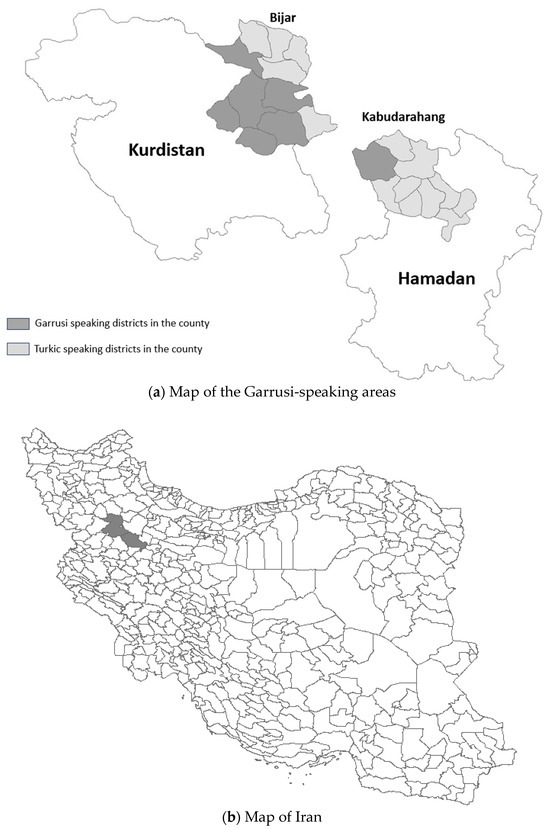
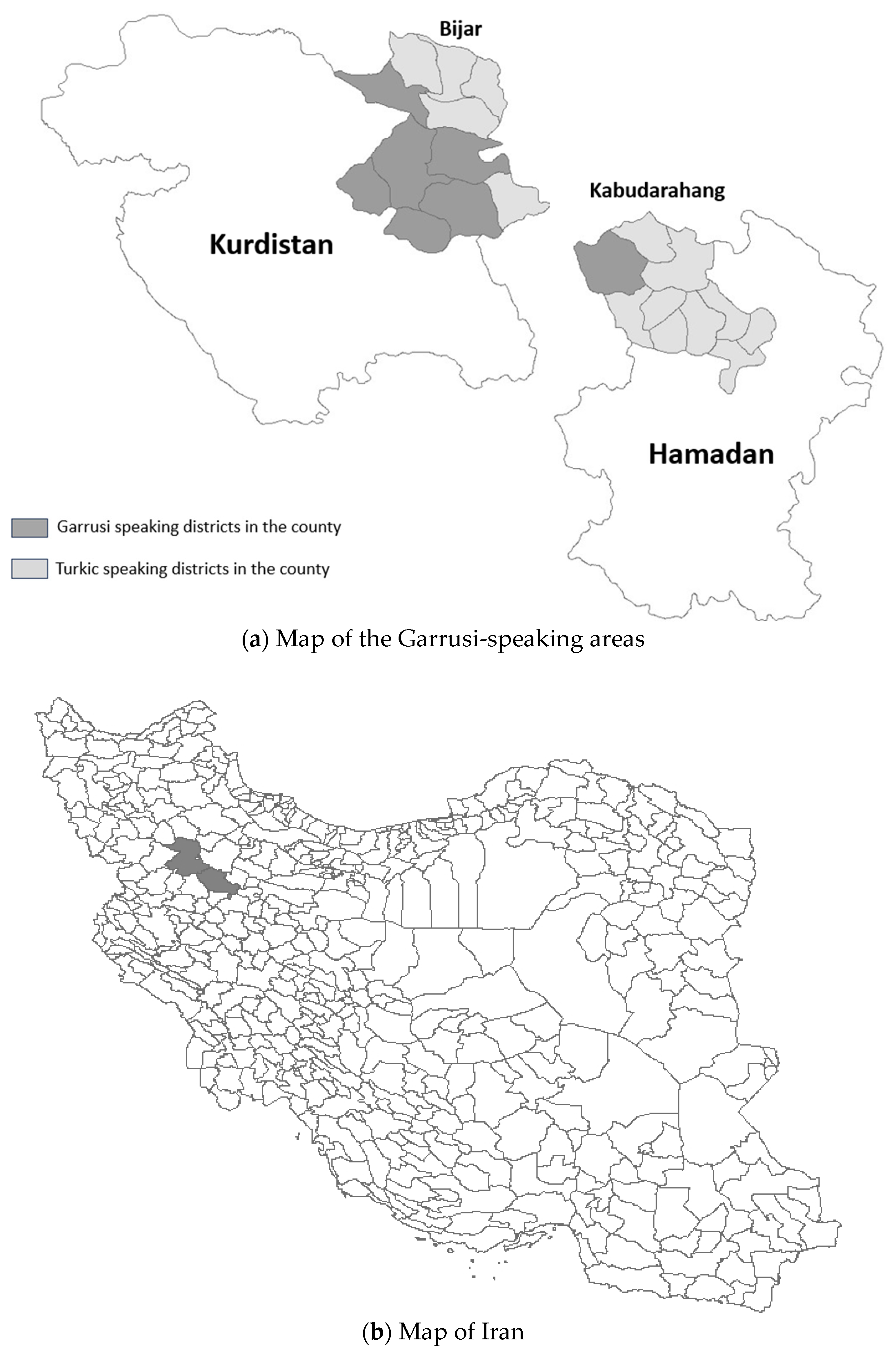
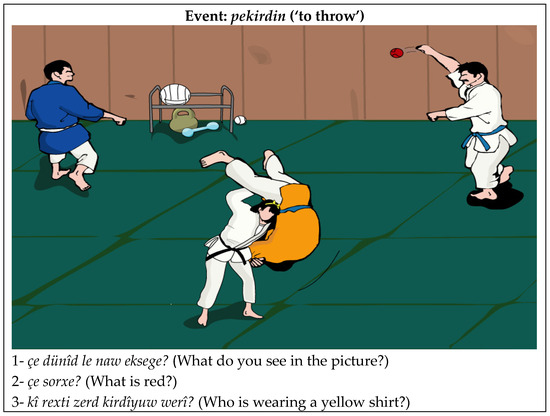
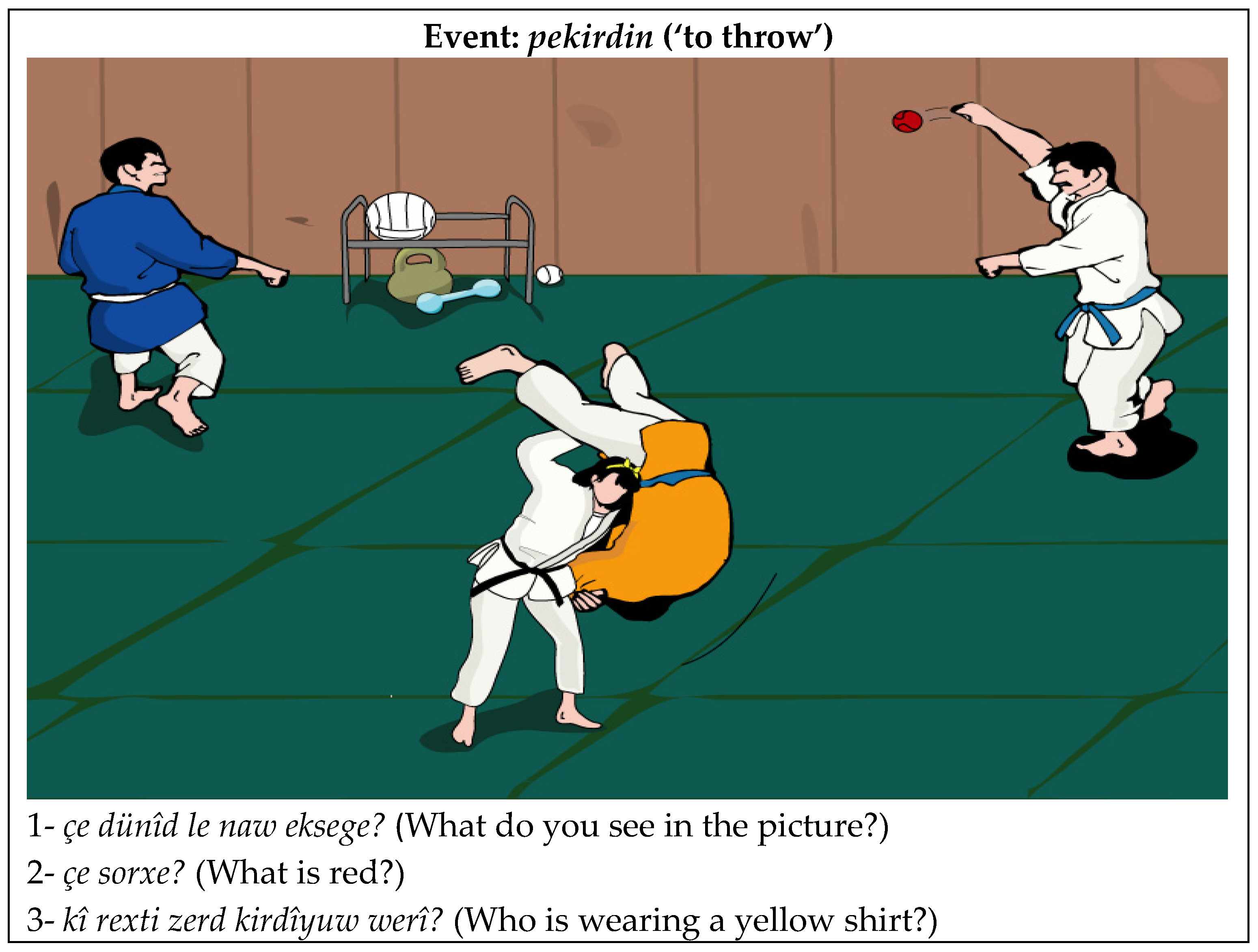
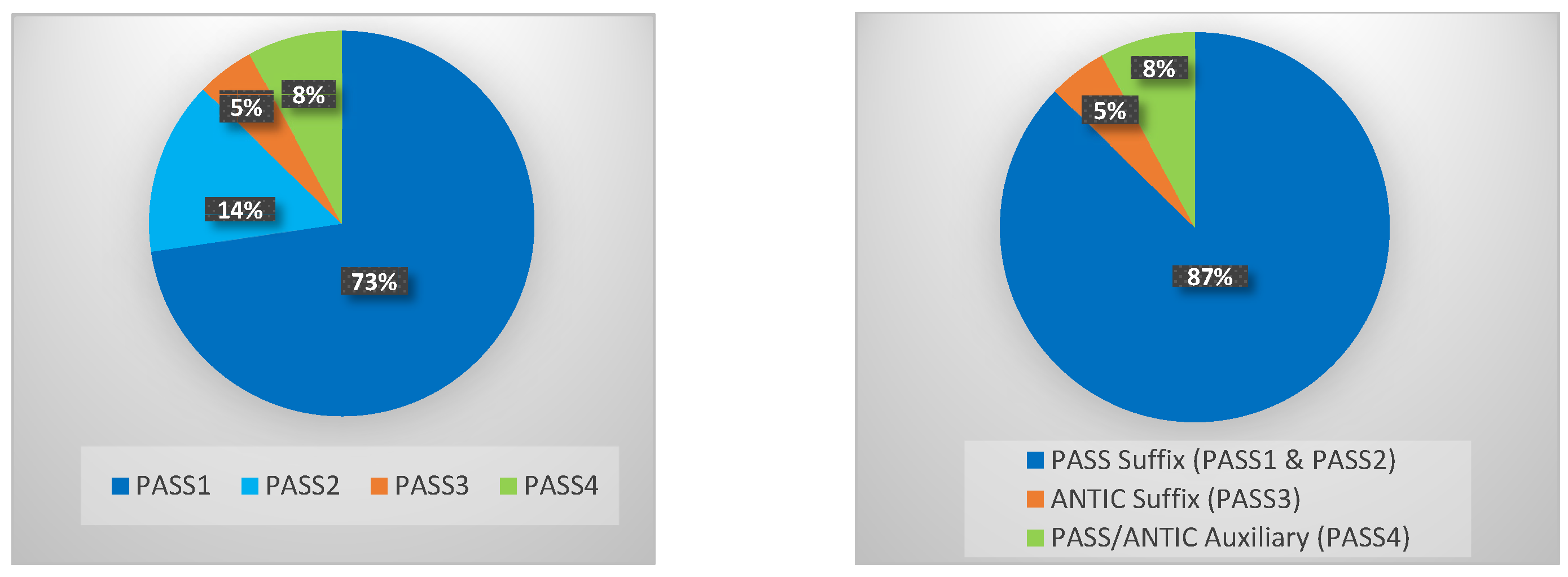
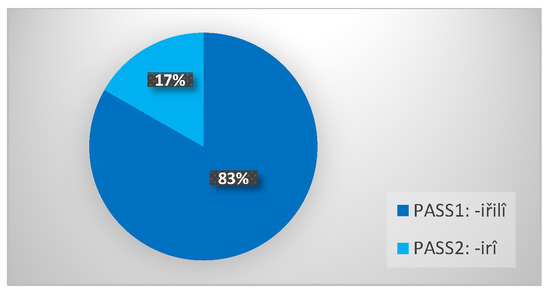
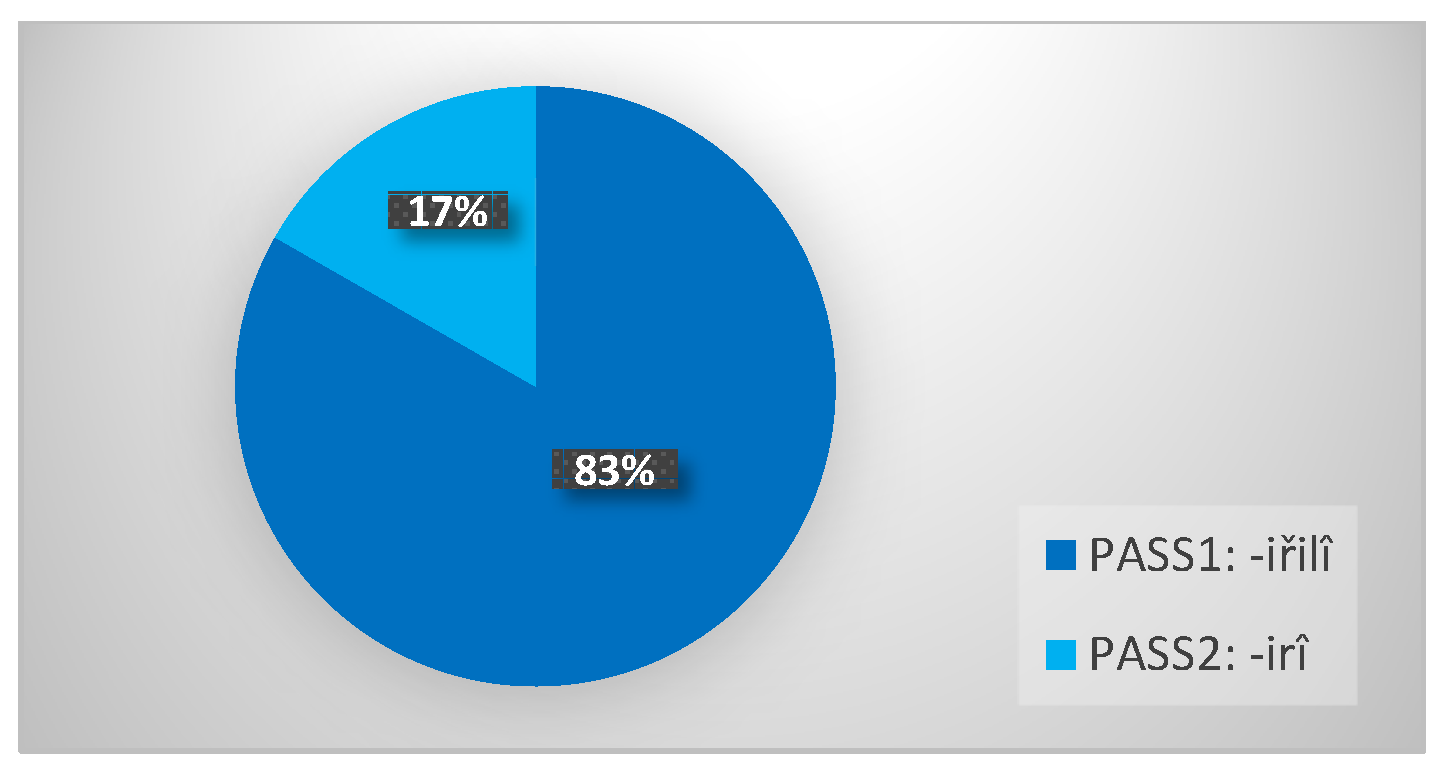
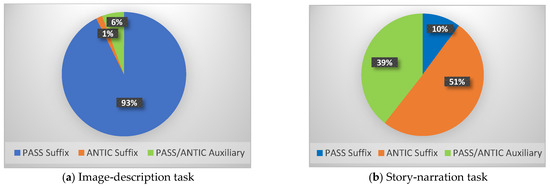
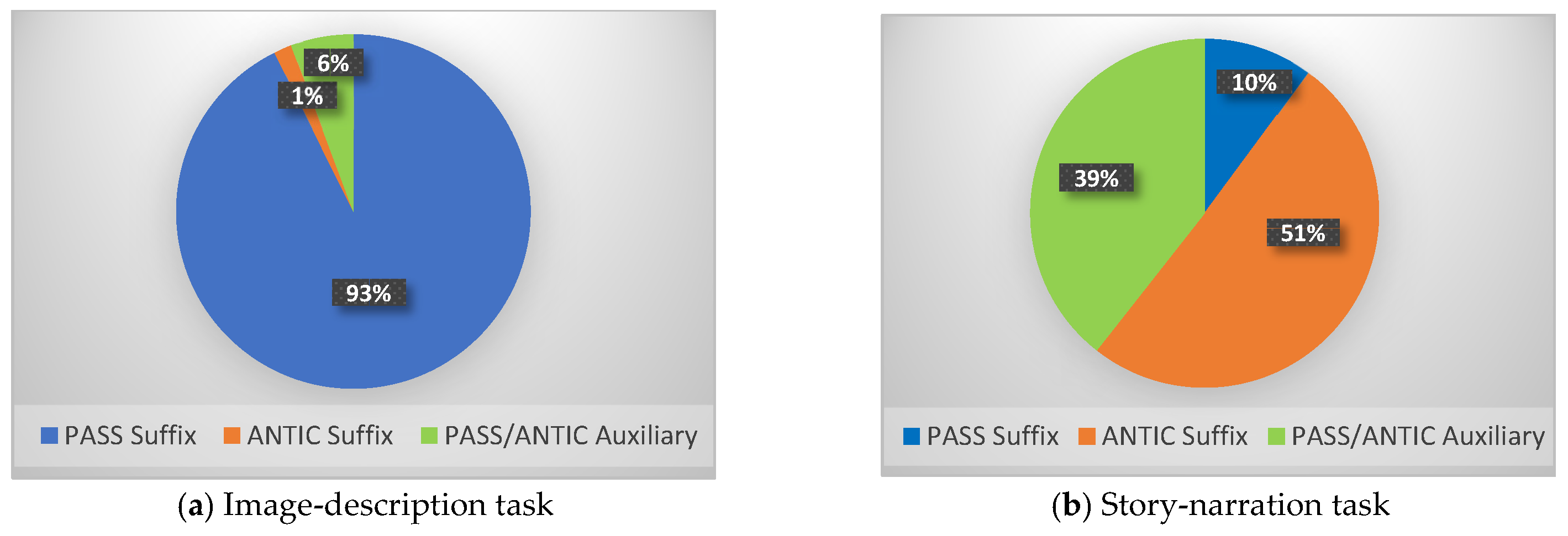
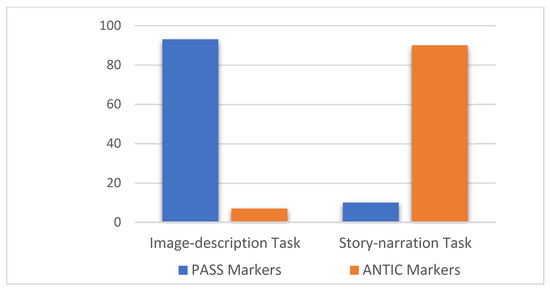
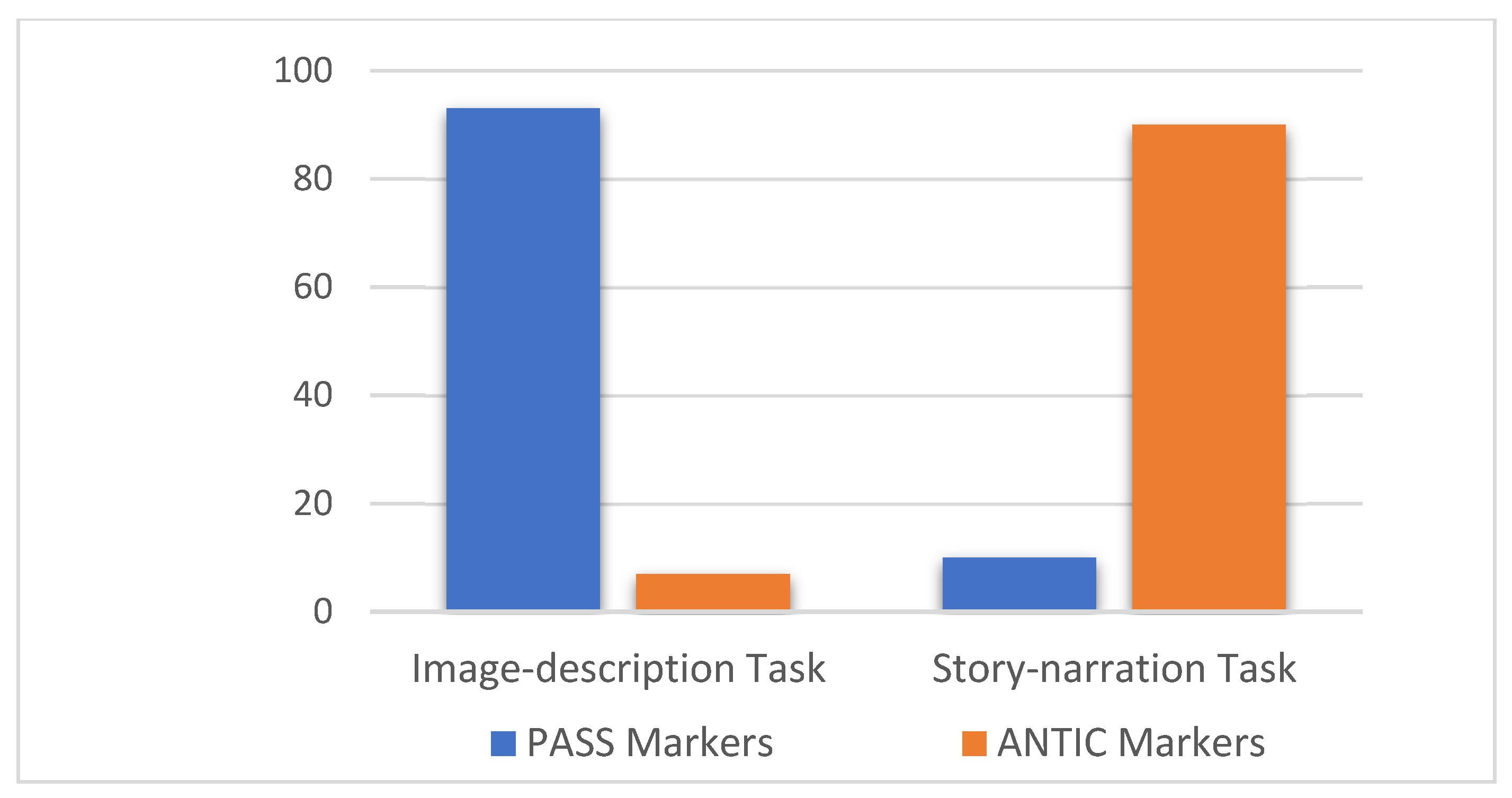
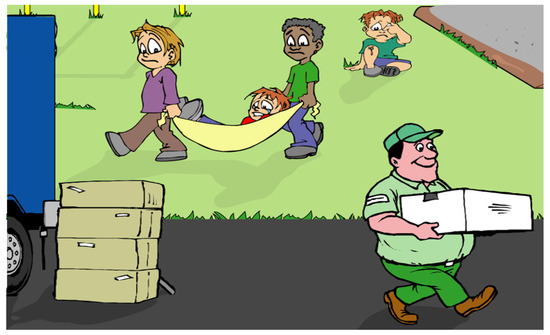
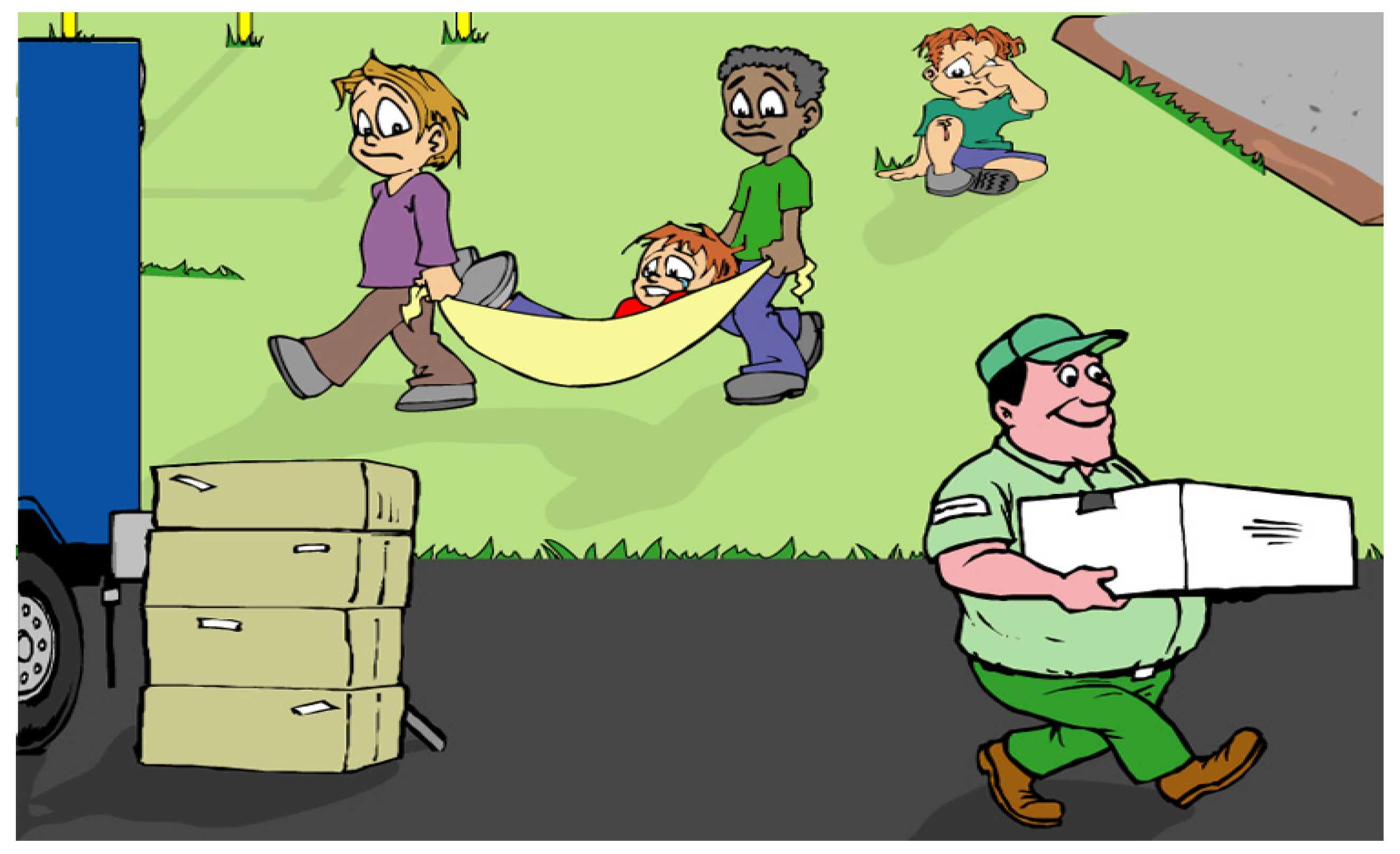
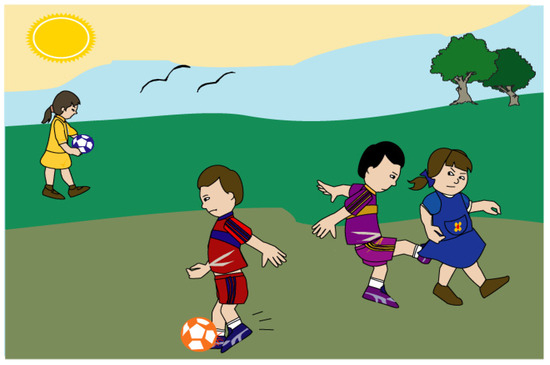
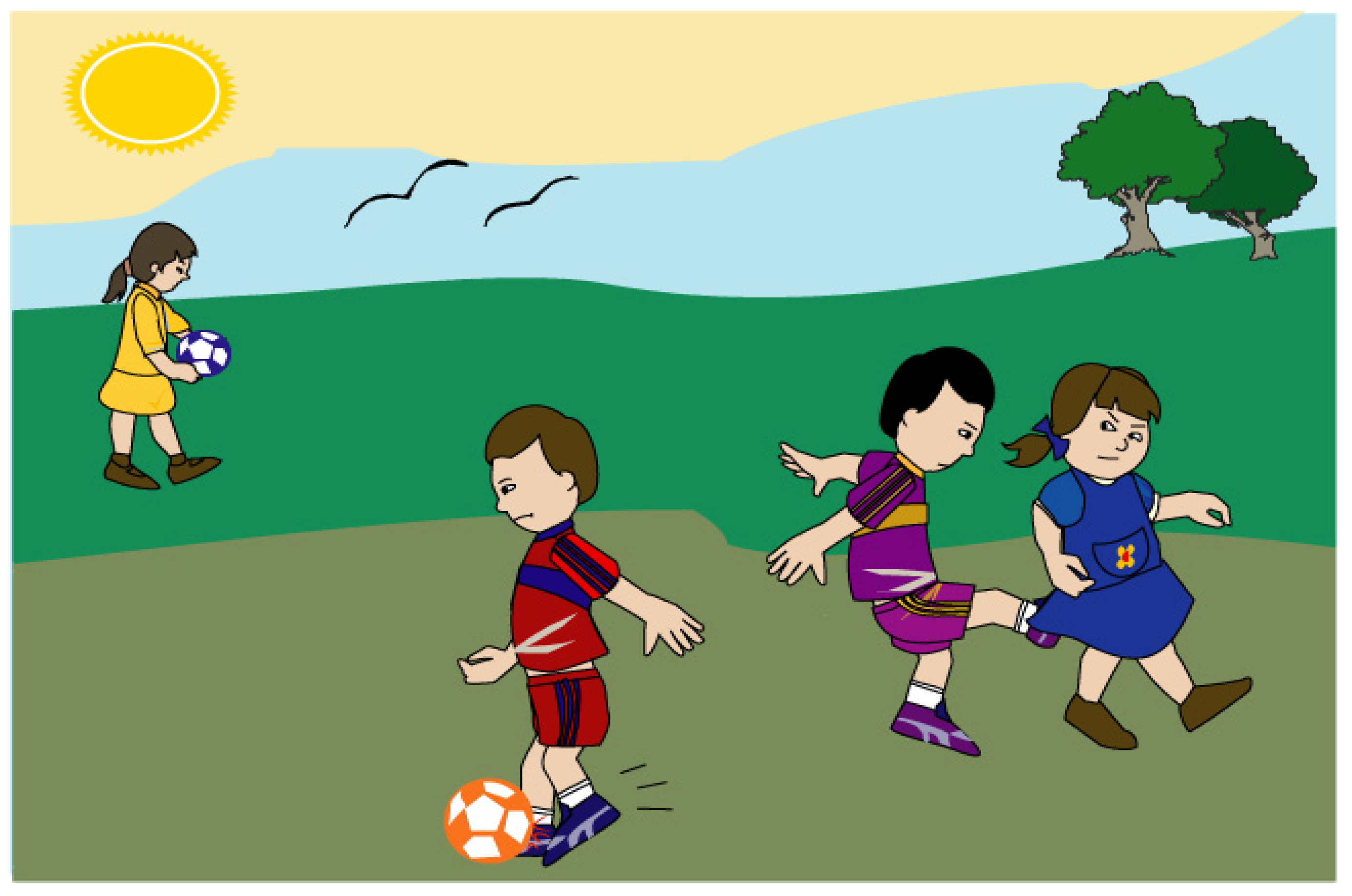

Disclaimer/Publisher’s Note: The statements, opinions and data contained in all publications are solely those of the individual author(s) and contributor(s) and not of MDPI and/or the editor(s). MDPI and/or the editor(s) disclaim responsibility for any injury to people or property resulting from any ideas, methods, instructions or products referred to in the content. |
© 2026 by the authors. Licensee MDPI, Basel, Switzerland. This article is an open access article distributed under the terms and conditions of the Creative Commons Attribution (CC BY) license.