


Abstract
Lightweight composite aircraft wing design increasingly depends on combining multidisciplinary design optimization (MDO), aeroelastic tailoring, and stacking sequence optimization. However, an overview of these interconnected fields is lacking. This study applies a PRISMA-ScR-based scoping review of 54 selected articles to map current approaches, identify emerging trends, and highlight remaining gaps. Key findings indicate six MDO architectures—with hybrid methods being increasingly preferred—and demonstrate that aeroelastic tailoring (e.g., ply angle manipulation) enhances performance while reducing weight. Manufacturing constraints (ply continuity, blending, symmetry) are addressed in a subset of the reviewed literature, with opportunities for broader integration. Critical future priorities include integrating manufacturing process models into MDO and incorporating durability considerations (fatigue, impact). This work synthesizes current approaches, identifies emerging trends, and provides a roadmap for the development of next-generation lightweight, high-performance composite wings.
1. Introduction
Currently, polymer composite materials are widely used in many branches of the industry. Weight reduction is the greatest advantage of using composites, and this fact is the key factor for using these in aircraft construction [1]. In the history of aeronautics, the wing plays an important role in the generation of lift force [2], and many scholars have paid attention to its parametric design and optimization [3,4]. The typical structural design drivers for light aircraft composite wings are weight, strength, stiffness, flight performance, fatigue resistance, and manufacturing cost.
An integrated MDO, aeroelastic, and stacking sequence perspective is necessary because the design of an aircraft wing requires a harmoniously balanced approach that simultaneously considers these three interconnected elements. Wing design must reconcile multiple competing factors, such as weight, structural integrity (stiffness/strength), aerodynamic performance, and cost. The simultaneous consideration of multiple disciplines falls within the scope of MDO [5]. An example of the use of response surfaces for first-generation MDO can be found in [6]. Aeroelastic tailoring is the distribution of stiffness within an aircraft’s structural design in such a way that it improves the aeroelastic response, where divergence and flutter speed are increased. This is not just encountered in aircraft structures, as it also occurs in turbines, high-rise buildings, and long-span suspension bridges [7,8,9]. Composite wings exhibit significant flexibility and torsional deformation. Aerodynamic loads can induce structural deformations that, in turn, alter the aerodynamic load distribution, a coupled aeroelastic phenomenon [10]. This can lead to instability issues, such as flutter and divergence. Aeroelastic tailoring can be achieved by employing non-conventional structural layouts [11,12,13], advanced anisotropic materials [14,15,16], or adaptive control strategies [17,18]. In non-conventional layouts, the shape and location of spars and ribs are optimized using different evolutionary algorithms to obtain desired stiffness [19]. In advanced anisotropic materials, composites are used to obtain elliptical stiffness by utilizing the concept of tow-steering. Varying stacking sequences, ply orientations, and laminate thicknesses are the prominent ways to achieve aeroelastic tailoring using composite materials [20]. The primary advantage of composites lies in the ability to tailor laminate stacking sequences, including ply orientation, material type, and number of plies [21]. Altogether, laminate design influences structural stiffness, mass, and aeroelastic response. These three aspects (MDO, aeroelastic properties, and stacking sequences) are deeply coupled.
Altering the laminate changes the aeroelastic performance, while aeroelastic requirements drive laminate design changes. Optimizing one in isolation can degrade the others. For example, an overly stiff laminate design may incur a weight penalty. Only by considering these three aspects at the same time can an optimal wing design be created—one that is lightweight, structurally robust, high-performance, and safe.
How are MDO, aeroelastic properties, and stacking sequence optimization methods related and used in the selection of structural parameters of aircraft lightweight composite wings? Therefore, this question necessitates a scoping review of methods for selecting structural parameters of composite wings.
The overall structure of this review paper is illustrated schematically in Figure 1. The paper begins with the scoping review methodology (Section 2), followed by the results organized into five subsections (Section 3). A critical discussion of the current gaps and emerging trends is then presented (Section 4), and the paper concludes with the key findings and future research directions (Section 5).
Figure 1.
Schematic overview of the review paper structure.
2. Methods
This scoping review followed the Joanna Briggs Institute methodology for scoping reviews, a structured approach for mapping existing evidence on a given topic [22]. The review also followed the Preferred Reporting Items for Systematic Reviews and Meta-Analyses extension for Scoping Reviews (PRISMA-ScR) checklist to ensure transparency and methodological clarity [23].
This section adopts a scoping review framework to systematically map and analyze existing research on the selection of structural parameters for composite wings of light aircraft. This study focuses on MDO, aeroelastic properties, and stacking sequence design, which are critical for achieving lightweight and aeroelastically efficient wing structures. The scoping review methodology was selected to identify dominant modeling approaches, structural parameter categories, and validation practices, as well as to reveal research gaps within the current body of literature.
This section comprises four main stages: (1) search strategy, (2) eligibility criteria, (3) information sources and study selection, and (4) data extraction. Each stage is described below and summarized using tables and figures to ensure transparency and reproducibility of the review process.
2.1. Search Strategy
A systematic search strategy was employed to identify relevant studies from major scientific databases. Keywords were selected to reflect the core topics of composite wing design, multidisciplinary optimization, aeroelastic tailoring, and stacking sequence optimization. The keyword framework used to guide the literature search is illustrated in Figure 2. The framework covers analysis tools, material and structural concepts, design methods, and aircraft context relevant to composite wing design for light aircraft.
Figure 2.
Keywords and search strategies defining the evidence-gathering process.
2.2. Eligibility Criteria
When eligibility criteria are defined, these will take into account the categories of publication type, aircraft class, wing structure, structural concepts, modeling approach, time interval, and language. First of all, the inclusion criteria for publication types were defined as peer-reviewed journals, Web of Science-listed articles, conference papers, and articles conducting research in the academic field. Reports and web documents representing non-peer-reviewed materials were excluded in order to maintain academic integrity.
The review focuses only on civil aviation platforms, like general aviation aircraft, light aircraft, and unmanned aerial vehicles. This choice reflects where much of the current research for lighter and more energy-efficient wing designs is located. Military aircraft were excluded, as the requirements for these products are classified military secrets, and the actual technical requirements and operating conditions are significantly different from civilian product design.
Other aircraft components, such as fuselage, vertical stabilizer, and horizontal stabilizer components, and research on wing types using isotropic materials were classified as exclusion criteria. In this study, we review aircraft composite wings. So only the primary structural components that used composite materials will be included in the review scope, such as spars, stringers, ribs, and wing boxes belonging to the wing.
The objective of the selection of articles was to obtain studies that had merged advanced structural concepts into their numerical methods. We prioritized approaches such as multidisciplinary design optimization, aeroelastic tailoring, stacking sequence optimizations, and high-fidelity finite element or coupled fluid–structure interaction simulations. While computationally demanding, these methods aim to reflect how predictive engineering is actually practiced today. In contrast, studies that remained purely theoretical, focused only on aerodynamics, or dealt exclusively with material science of composite materials were excluded. Although such works may be valuable in themselves, these have nothing to do with the integrated structural design questions that inspired this review.
For the publication dates, this was set from 2015 to 2026 in such a way as to cover the most up-to-date developments, consisting of the latest advances in computational methods and composite materials manufacturing. Earlier studies and research were excluded due to the time distance of compatibility with current practical processes.
The role of language is the primary means of communication in international aerospace engineering. Other languages were excluded to avoid the risk of technical misunderstanding of engineering terms following translation. Therefore, the review is limited to documents published in English. Definition of eligibility criteria for study selection is shown in Table 1.
Table 1.
Definition of eligibility criteria for study selection.
2.3. Information Sources and Study Selection
The four databases were selected based on their complementary coverage. Scopus and ScienceDirect provide access to high-impact, peer-reviewed journals widely recognized in aerospace engineering, while ResearchGate and Google Scholar were included to capture conference proceedings, technical reports, and preprints not indexed in traditional databases. The search strategy and results for each database are summarized in Table 2.
Table 2.
Search strategy and results.
The authors selected these databases to capture the technical engineering literature and used a combination of controlled vocabulary and free-text words. The search terms targeted 4 main concepts: (1) MDO, (2) composite wing, (3) aeroelastic tailoring, and (4) stacking sequence optimization. Boolean operators (“AND”, “OR”) were used to combine these terms appropriately.
All search results were imported into EndNote reference management software version 21, and duplicates were removed. To ensure objectivity and minimize selection bias, the study selection process was conducted independently by two reviewers (K.P.Z. and S.V.B.). Reviewers independently screened the titles and abstracts using the predetermined inclusion criteria, retrieved the full-text versions of the screened studies, and then independently assessed the articles for inclusion. Any disagreements between the two reviewers were resolved through discussion and consensus.
Consistent with the Joanna Briggs Institute methodology for scoping reviews, formal quality appraisal or risk-of-bias assessment of the included studies was not performed. Scoping reviews aim to map the existing literature and identify research gaps rather than critically evaluate the methodological quality of individual studies. Therefore, all 54 studies that met the eligibility criteria were included in the data extraction and synthesis. Figure 3 summarizes the study selection process, including the reasons for exclusion at the full-text screening stage.
Figure 3.
PRISMA flowchart of study selection.
2.4. Data Extraction
The reviewers independently extracted data from the included studies using a structured form developed in Google Sheets. The form included the following data items: links of articles, names of articles, authors, year of publication, inclusion criteria, research question, relevance of the work, knowledge gap, methodology used (e.g., MDO, FEM, Fluent, Genetic Algorithm), and future work. Additionally, the reviewers noted any reported limitations, ethical considerations, or practical challenges related to the methodology.
Due to the nature of the subject field overview, the following factors help reduce bias. The authors conducted a systematic analysis starting from the methodology section. In the results section, authors clearly categorized the three domains (MDO, aeroelastic tailoring, and stacking sequence optimization) into distinct sections, considering different analytical perspectives. This clear categorization demonstrates that the authors were able to comprehensively review the literature without bias. The manuscript included 54 references in the end, covering a wide range of research across the subject field, which further reflects the absence of bias in the review.
Generative Artificial Intelligence (DeepSeek-V4-Flash) was used to assist in the preparation of this manuscript. Since most reviewed articles did not include a dedicated list of abbreviations, GenAI was employed to identify and compile abbreviations directly from the text. Before writing this article, the authors had already established the framework and research questions. GenAI was used to assist in determining which key points from the authors’ compiled data should be extracted and presented in tables. Additionally, GenAI was used to both paraphrase complex engineering sentences and help clarify analytical formulas presented in the articles for better comprehension.
3. Results
3.1. Structural Parameter Categories for Composite Wing
3.1.1. Problem Categories and Reoccurrence
By analyzing the papers used in this study, the key methodologies and problems considered in the design of lightweight high-strength wings were identified. As shown in Figure 4, when looking at the methodologies used to solve these problems, there were 20 studies that focused on methodology, 12 studies focused on structural aspects, and 22 studies focused on performance aspects. The dominance of performance-related studies indicates that the ultimate goal of most research is to improve the wing’s performance (e.g., strength, stiffness, aeroelastic stability). The high number of methodology studies also points to the widespread use of numerical analysis, genetic algorithms, and other optimization techniques in this field.
Figure 4.
The reoccurrence rate of studies on different wing design problems.
3.1.2. Objective Function Types in Composite Wing Optimization
As shown in Figure 5, among the research studies, the trade-off between weight and aeroelastic performance was the most frequently emphasized. A total of 18 studies focused primarily on this issue. Similarly, the trade-off between weight and stacking sequence was explored in 13 studies. This figure suggests that researchers are mainly focused on achieving the best possible aeroelastic stability with the lightest possible structure.
Figure 5.
Types of objective functions in composite wing optimization.
3.1.3. Influential Parameters on Aeroelastic Stability, Load Paths, and Damage Tolerance
This section summarizes the findings from 54 research studies (study IDs 24 to 77) on composite wing design, identifying six critical design parameters and their influence on three key performance aspects: aeroelastic stability, load paths, and damage tolerance.
Stacking sequence and ply orientation is the most frequently studied parameter, appearing in 28 studies. It influences all three performance aspects—aeroelastic stability, load paths, and damage tolerance—positioning it as the key design variable in current research.
Spanwise location (position along the wing from root to tip) is another important factor, as loads and structural behaviors differ significantly between the root and tip. Spar and rib layout primarily influences load paths by defining the internal framework that distributes bending moments and shear forces. Laminate/ply thickness and ply counts/percentage primarily influence damage tolerance and aeroelastic stability, with thicker laminates providing greater strength and ply orientation ratios affecting overall stiffness. Wing planform geometry (aspect ratio, taper ratio, and sweep angle) primarily influences aeroelastic stability by governing the wing’s interaction with airflow.
A notable gap emerges when examining damage tolerance, where only stacking sequence (28 studies), ply thickness (13 studies), and ply counts (9 studies) affect this aspect, while spar/rib layout (11 studies) and spanwise location (7 studies) do not. Across all studies, aeroelastic stability is the most commonly addressed performance aspect, indicating that current research prioritizes aeroelastic performance over structural safety (damage tolerance).
Therefore, future MDO frameworks should move beyond a singular focus on stacking sequence and pursue combined optimization that includes spar layout and ply thickness. Furthermore, damage tolerance should be explicitly integrated as a certification requirement within the optimization formulation.
Table 3 provides a quick reference for composite wing design, highlighting which parameters are most critical for achieving specific performance objectives.
Table 3.
Key design parameters and their primary influence on wing structural performance.
3.2. MDO Approaches for Composite Wing Design
3.2.1. Classification of MDO Architectures for Composite Wings
Based on the review, there are mainly six groups of MDO for composite wing design.
Brooks et al. [26], Dababneh et al. [69], Bons et al. [62], and Sinha et al. [54] used gradient-based optimization. This method offers fast convergence and is suitable for high-fidelity models, like CFD and FEA; however, it risks becoming trapped in local optima.
In contrast, gradient-free optimization was found in many studies. Ahmadi et al. [24], Ziakos et al. [25], Benaouali et al. [66], Kilimtzidis et al. [53], Farsadi et al. [27], Zamani et al. [70], Setayandeh et al. [71], and Lam [67] used this optimization method. This approach handles non-convex, mixed-integer problems effectively and is capable of finding global optima.
Benaouali et al. [66], Kim et al. [61], Setayandeh et al. [71], Afonso et al. [72], and Lam [67] used surrogate-based/meta-modeling, which is useful for reducing computational cost and is significant for global optimization.
Farsadi et al. [27], Zamani et al. [70], Afonso et al. [72], and Zhao et al. [29] applied hybrid/multi-level optimization, which balances between global search and local refinement.
Kilimtzidis et al. [53] and Sinha et al. [54] utilized nested/sequential optimization, which manages complexity and ensure feasibility at every stage.
Collaborative/distributed optimization was applied by Albuquerque et al. [73] and Zhao et al. [29].
As illustrated in Figure 6, the MDO framework integrates these six architectures within a structured optimization sequence. The framework begins with four primary objectives (minimize weight, maximize aerodynamic efficiency, maximize aeroelastic performance, maximize buckling load), followed by five design variable categories (wing geometry, flight conditions, material properties, stacking sequence, and structural layout). Four key trade-offs govern the design space: weight versus aeroelastic performance, aeroelastic performance versus manufacturability, accuracy versus computational cost, and aeroelasticity versus structural strength. Six constraint types determine the feasible region: structural, aeroelastic, aerodynamic, weight/mass, manufacturing, and geometric constraints. The optimization engine then applies one of the six MDO architectures to produce the optimal design output.
Figure 6.
MDO framework for composite wing design.
A critical observation from the literature is that there is no single best MDO method. Gradient-based methods remain dominant for high-fidelity models due to their fast convergence, while surrogate-based methods are preferred when computational cost is prohibitive. Hybrid methods may become the future standard for complex composite wings, but method selection must remain problem dependent, guided by the trade-off between solution accuracy, global optimality, and computational expense.
3.2.2. Integration of Constraints in MDO
Here, we outline how different constraints are incorporated within the MDO framework. For structural constraints, Ahmadi et al. [24], Ziakos et al. [25], Benaouali et al. [66], Kilimtzidis et al. [53], Farsadi et al. [27], Dababneh et al. [69], Shrivastava et al. [28], Albuquerque et al. [73], and Sinha et al. [54] included structural constraints, such as strength (Tsai–Wu, von Mises), buckling, displacement, and strain, through direct FEA within the optimization loop. Only nine studies incorporated structural constraints, a figure that is surprisingly modest given that 54 composite wing studies were reviewed. This suggests that pure structural optimization without aeroelastic coupling is becoming less common, as research increasingly recognizes that composite wings cannot be designed for strength alone.
For aeroelastic considerations, Ahmadi et al. [24], Ziakos et al. [25], Kilimtzidis et al. [53], Brooks et al. [26], Farsadi et al. [27], Dababneh et al. [69], Zhao et al. [29], and Sinha et al. [54] used PK method flutter analysis (NASTRAN SOL145), the Doublet Lattice Method (DLM), or coupled CFD/CSM to capture flutter speed, divergence speed, gust response, and bend–twist coupling. Aeroelastic constraints were addressed in eight studies, nearly matching the number of structural studies. This near-parity reflects a field-wide consensus that aeroelastic stability is equally as important as structural strength for modern lightweight composite wings, especially as aspect ratios increase.
Aerodynamic constraints received less attention. Benaouali et al. [66], Nathan et al. [74], Afonso et al. [72], Bons et al. [62], Lam [67], and Zhao et al. [29] included lift coefficients, L/D ratios, buffet onset, and pressure distribution using CFD (RANS, FLUENT), the Vortex Lattice Method (VLM), or surrogate models. Six studies incorporated aerodynamic constraints. This bias toward structural and aeroelastic considerations over pure aerodynamic performance is concerning, because an aerodynamically suboptimal wing—even if structurally sound—will increase fuel burn and reduce range, directly undermining the purpose of lightweight composite constructions.
Weight and mass constraints were treated as hard limits in 11 studies [24,25,26,27,28,53,54,66,67,69,73]. Specifically, these studies specified maximum allowable structural mass, take-off weight, or fuel burn as upper bounds that the optimized design must not exceed. It is important to distinguish this approach from treating weight as an objective function to be minimized. In constraint-based formulations, weight acts as a limiting condition rather than a goal to be driven downward. This approach is appropriate when weight targets are dictated by external requirements, such as runway limits, payload specifications, or certification rules. With 11 studies addressing weight constraints, this category leads the field—an expected and appropriate finding, as weight reduction remains the primary driver for composite adoption in aircraft.
Geometric constraints were the least represented category. Benaouali et al. [66], Brooks et al. [26], Bons et al. [62], Lam [67], and Zhao et al. [29] included wing twist, thickness distribution, and spar/rib locations in parametric geometry models. Only five studies looked at geometric constraints. From basic wing theory, twist has a big effect on lift distribution, while the locations where engineers place spars really determine how loads travel through the wing. One possible reason is that changing the geometry during optimization requires re-meshing the model repeatedly, which demands significant computing power. Another reason might be that researchers in this field prefer to focus on material-level optimization (stacking sequence) rather than topology-level optimization, such as spar and rib layout.
Table 4 summarizes the different types of constraints used in the studies, including structural, aeroelastic, aerodynamic, weight/mass, and geometric constraints, along with a brief description of how they were integrated or applied.
Table 4.
Constraint integration.
3.3. Aeroelastic Properties and Tailoring
3.3.1. Methods for Evaluating Aeroelastic Stability of Composite Wings
In this section, various types of methods were used to assess aeroelastic stability of wings made of composite materials.
Frequency-domain methods were used effectively by Othman et al. [40,56], Kirsch et al. [30], Yu et al. [31], Ayaz et al. [32], Campagna et al. [35], Kilimtzidis et al. [55], and Saputra et al. [60] for linear flutter analysis and preliminary design, employing techniques such as the PK method (NASTRAN SOL145), eigenvalue analysis, and ARPACK (IRAM). The dominance of frequency-domain methods reflects their computational efficiency and industry-standard status (NASTRAN SOL145). However, their linear assumptions become inaccurate for highly flexible wings undergoing large deformations.
Kirsch et al. [30], Ayaz et al. [32], Leitch et al. [33], Wang et al. [58], Farsadi et al. [34], and He et al. [37] utilized time-domain methods to capture nonlinearities, large deformations, and transient gust responses through two-way FSI, CFD/CSD coupling, and ROM-based gust analysis. While they can capture geometric nonlinearities that frequency-domain methods miss, their high computational cost limits their use within optimization loops. This explains why time-domain methods are often replaced by ROMs in MDO frameworks.
Reduced-order models (ROMs) were developed by the authors of [30,33,34,55] using Proper Orthogonal Decomposition (POD), Kriging surrogates, and GEBTAero to achieve computational efficiency suitable for optimization. ROMs appear in four studies, representing an emerging trend. The goal is to preserve the accuracy of time-domain methods while reducing computational cost to levels compatible with iterative optimization. This is one of the most promising directions for future MDO frameworks.
Experimental methods were performed by Krüger et al. [38] and Werter et al. [39] through wind tunnel testing, Ground Vibration Tests (GVTs), and flight tests to validate numerical models. This is the critical gap, as only two studies included experimental validation. Considering that 54 studies were reviewed, the lack of physical validation is concerning. Numerical models rely on assumptions (linearity, idealized boundary conditions, perfect manufacturing) that may not hold in real wings. Without experimental validation, we cannot trust that optimal designs from simulation will behave as predicted in flight. Study [39] found that for tailored wings, root bending moment errors ranged from 1.2% to 7.5%—significant enough to affect design decisions.
Analytical and semi-analytical methods were leveraged studies [30,31,33,35] by using the Rayleigh–Ritz method, quasi-static method, and GEBT with Peters’ aerodynamics. These four studies demonstrate that analytical methods remain valuable for fast parametric studies and closed-form solutions, though their applicability is limited to simple geometries.
Multi-fidelity coupling, which combines VLM, FEM, DLM, and CFD, was employed by Kirsch et al. [30], Natella et al. [75], Wang et al. [58], Farsadi et al. [34], He et al. [37], Krüger et al. [38], and Kilimtzidis et al. [55] to balance accuracy and efficiency. Multi-fidelity approaches appear in seven studies, making them the second-most common category. This reflects a growing recognition that single-fidelity models are inadequate, where low-fidelity models, such as VLM, are too inaccurate, while high-fidelity models, such as CFD, are too slow. Multi-fidelity coupling offers a practical middle ground for MDO.
Several methods (frequency-domain methods, time-domain methods, reduced-order models, experimental methods, analytical/semi-analytical methods, and multi-fidelity coupling) to assess aeroelastic elasticity of composite wings and their applications are shown in Table 5.
Table 5.
Aeroelastic analysis of methods and their classifications.
3.3.2. Mechanisms for Achieving Aeroelastic Tailoring
Six aeroelastic tailoring mechanisms were identified from the literature to achieve aeroelastic efficiency. Figure 7 illustrates the distribution of these mechanisms across the 28 studies that reported quantitative results.
Figure 7.
Aeroelastic tailoring mechanisms and their distribution across studies.
Ply angle manipulation and anisotropy tuning dominate the literature (25% each), while modal strain energy targeting appears in only one study (3%), despite being the most efficient mechanism in terms of performance gain per mass penalty.
Sanmugadas et al. [57], Kirsch et al. [30], Farsadi et al. [34], McGurk et al. [36], He et al. [37], Saputra et al. [60], and Rajpal et al. [40] employed ply angle manipulation to obtain desired stiffness properties. Research findings indicate that a 30° fiber angle provides maximum controllability, a 45° layup improves divergence speed percentage, and larger ply angles enhance modal frequencies. Ply angle manipulation is the most commonly used tailoring mechanism. Its dominance reflects the relative simplicity of implementation, as changing ply orientations does not require new manufacturing processes or complex structural layouts. However, this popularity may also indicate a field-wide bias toward material-level solutions over topological or geometric tailoring.
Coupling between bending and torsion was calculated by Kirsch et al. [30], Ayaz et al. [32], Farsadi et al. [34], Krüger et al. [38], Werter et al. [39], and Saputra et al. [60] using off-axis plies or unbalanced laminates. The benefit of unbalanced laminates enables passive load alleviation and cause washout in tailored wings. Bend–twist coupling mechanism is particularly valuable because it achieves passive load alleviation without active control systems. The washout effect reduces root bending moments, allowing lighter structures. However, unbalanced laminates can cause warping during curing, a manufacturing challenge rarely addressed in optimization studies.
Anisotropy tuning using lamination parameters was employed by multiple studies, including [38,40,55,56,58,75,76]. By utilizing lamination parameters, continuous stiffness optimization was made possible and successfully integrated with gradient-based optimization. Lamination parameters reduce the design space from discrete ply angles to continuous variables, making them compatible with efficient gradient-based optimizers. However, a critical gap remains, as lamination parameters must be converted back to physical stacking sequences after optimization, a step that can introduce manufacturing infeasibilities and weight penalties.
Variable stiffness laminates were implemented by [29,33,58] to achieve location-specific stiffness variations. Only two studies investigated variable stiffness laminates, despite their significant theoretical advantages. This scarcity stems from manufacturing challenges where tow-steering introduces defects, such as thickness variations and fiber waviness, that current linear aeroelastic models cannot capture. Leitch et al. [33] demonstrated that continuous tow shearing (CTS) causes coupled thickness variation, which can alter flutter speed predictions by up to 14% using standard Tsai lamination parameters. Similarly, Zhao et al. [29] showed that fiber steering induces fiber waviness and uneven interlaminar bond strength, defects that conventional aeroelastic models do not account for. Furthermore, experimental validation of tow-steered wings is almost nonexistent. Thus, the gap between theoretical promise and practical application remains wide, representing both a challenge and an opportunity for future research.
Spanwise tailoring, which involves varying the thickness and fiber angle along the wingspan, was performed by Sanmugadas et al. [57], Natella et al. [75], Marano et al. [59], Krüger et al. [38], and Kilimtzidis et al. [55]. Through spanwise tailoring, the design achieved an improvement in static margin. Spanwise tailoring appears in five studies. This mechanism recognizes that loads vary significantly from root to tip, so optimal laminate properties should also vary. The 45% static margin improvement reported by [57] demonstrates the substantial benefits possible with regional optimization. However, spanwise tailoring requires careful blending to ensure ply continuity between regions, a manufacturing constraint often overlooked.
Modal strain energy targeting was demonstrated by Marano et al. [59], who added material in high-strain-energy areas to enhance stiffness for specific modes. This is the least represented mechanism, appearing in only one study. The results are striking, as a 15% frequency increase with only 2.73% mass penalty is exceptionally efficient. Modal strain energy targeting requires detailed modal analysis and physical intuition about where to add material—it is less amenable to automated optimization than ply angle manipulation or lamination parameters. Yet the exceptional efficiency demonstrated by [59] suggests this approach deserves significantly more attention.
3.3.3. Evidence Linking Stacking Sequence to Aeroelastic Performance
The relation between stacking sequence and aeroelastic performance was documented across multiple studies. These studies can be grouped into four thematic categories as presented below.
The first category comprises parametric optimization studies identifying optimal fiber angles. Kirsch et al. [30] performed a systematic parametric sweep of first-layer and second-layer fiber angles across 3600 discrete combinations, generating sensitivity maps that identified optimal layups for flutter and divergence speed. Saputra et al. [60] extended this approach by evaluating symmetric ply angle laminates of the form [0/θ/−θ/0], with θ ranging as 0°, 15°, 30°, 45°, 60°, 75°, and 90°, finding that θ = 45° improved flutter speed margin by over 260%. This represents the most dramatic single improvement reported in the literature. He et al. [37] compared two-angle laminates against three-angle laminates and found that introducing a third orientation (specifically [0°/90°/45°]) significantly enhanced modal frequencies, suggesting that design freedom beyond simple ply angle families yields measurable benefits. Collectively, these parametric studies [30,37,60] point to a robust heuristic: 45° plies play a disproportionately important role in bend–twist coupling. However, the optimal angle is not universal. It varies with wing geometry, aspect ratio, and the specific aeroelastic metric targeted.
The second category includes comparative studies between conventional and composite designs. Ayaz et al. [32] replaced an aluminum spar with a CFRP spar featuring an optimized stacking sequence, achieving a 17.7% mass reduction alongside a 22.8% increase in flutter speed. This demonstrates that material substitution alone, without changing structural topology, can deliver substantial dual benefits. Krüger et al. [38] compared balanced symmetric laminates against unbalanced designs, achieving an 8% mass reduction while maintaining passive load alleviation through washout. Othman et al. [76] evaluated three layup strategies. These were 0/±45/90, ±30/±60, and ±15/±75. The second strategy (incorporating ±30° and ±60° plies) reduced failure probability by 94.6%, highlighting the importance of ply orientation selection for reliability. Rajpal et al. [40] compared the traditional knockdown factor approach against an explicit fatigue model, demonstrating that the latter reduces structural mass by 22%, a striking indication that conservative safety factors leave substantial weight savings on the table. The implication from studies [32,38,40,76] is clear: conventional design practices leave substantial weight savings on the table. However, transitioning to optimized composites requires more sophisticated analysis tools and validation. This remains a barrier to industrial adoption.
The third category covers spanwise tailoring and regional optimization. Sanmugadas et al. [57] compared a uniform laminate design with a spanwise tailored design and reported a 45% improvement in static margin, demonstrating that allowing ply angles to vary along the wingspan yields far greater benefits than any single, globally optimal layup. Marano et al. [59] compared a baseline fabric-only design with a hybrid design incorporating unidirectional tape in high-strain-energy areas, achieving a 15% increase in flexural frequency with only a 2.73% mass penalty. This is one of the most efficient tailoring strategies in the literature. The results from [57,59] suggest that regional optimization offers greater returns than global optimization of a single laminate. However, spanwise tailoring introduces manufacturing complexity such as blending requirements, ply continuity, and drop rules. Few studies address these manufacturing constraints explicitly.
The fourth category focuses on uncertainty quantification and validation. McGurk et al. [36] compared three layup families—{(−45,−45,45)s}, {(0,0,−45)s}, and {(90,90,45)s}—and found that 90° plies had the greatest impact on flutter speed uncertainty, implying that manufacturing tolerances for 90° plies may need to be tighter than for other orientations. Werter et al. [39] compared quasi-isotropic designs against tailored (three-layer and four-layer) designs and reported root bending moment errors between 1.2% and 7.5%, with the tailored wing exhibiting washout. Leitch et al. [33] demonstrated that coupled thickness variation in tow-steered composites increased flutter speed by 12–14% but also noted that ignoring thickness coupling leads to prediction errors of similar magnitude. The uncertainty studies [33,36,39] reveal a concerning pattern: simulation errors can reach 7.5% for tailored wings while ply orientation uncertainty significantly affects flutter predictions. This suggests that numerically optimized designs require experimental validation before certification. Yet such validation remains rare in the literature.
3.4. Stacking Sequence Optimization and Layup Design
3.4.1. Optimization Methods for Stacking Sequence Design
Various methods have been used for stacking sequence optimization. You et al. [41], Bach et al. [63], Peng et al. [42], Picchi Scardaoni et al. [43], Zhu et al. [65], Jang et al. [47], and Neuhäusler et al. [48] applied GA to manage discrete variables, search for global optima, and solve complex stacking sequence problems. Gradient-based methods efficiently handle continuous design variables (thickness, lamination parameters) with rapid convergence, making them suitable for large-scale optimization problems. Gradient-based optimization was used effectively for continuous variables, achieving fast convergence [44,64,65,68,77]. Lamination parameter methods help reduce the number of design variables and enable continuous optimization. Research, such as Bach et al. [63], Picchi Scardaoni et al. [43], Liu et al. [44], Farzan Nasab et al. [45], Ntourmas et al. [64], Neuhäusler et al. [48], and Dähne et al. [77], have successfully applied this technique, with a subsequent retrieval stage to convert the continuous parameters back into physical stacking sequences. As demonstrated in Ntourmas et al. [64,68], authors applied MILP to manage discrete variables using linear constraints and ensure global optimality for convex problems. To balance efficiency and accuracy in industrial applications, two-stage or bi-level optimization was employed in studies of Ntourmas et al. [64,68], Bach et al. [63], Picchi Scardaoni et al. [43], Liu et al. [44], Neuhäusler et al. [48], and Dähne et al. [77]. You et al. [41] developed GA-based Partial Similitude Design; Peng et al. [42] created the Multi-Peak Stacking Sequence Table (MPSST); and Farzan Nasab et al. [45] introduced SST generation methods.
The distribution of methods across the reviewed studies reveals an important pattern. Genetic algorithms remain popular for discrete variable problems, but they do not guarantee optimality and require careful tuning. Gradient-based methods and lamination parameter approaches are efficient but require continuous relaxation, which introduces a retrieval gap. Ntourmas et al. [68] quantified this gap as a notable weight penalty. Mixed-integer linear programming guarantees optimality for convex problems, yet few studies have employed this method, likely due to poor scalability. Two-stage optimization has been adopted for industrial applications, but it is fundamentally suboptimal because manufacturing constraints are addressed only in the second stage. This gap between optimization efficiency and manufacturability remains the central challenge for future research.
3.4.2. Integration of Manufacturing Constraints
Manufacturing constraints are critical for ensuring that optimized stacking sequences can be produced using standard composite fabrication processes.
Ply continuity requires that each ply continues continuously across region boundaries when laminate thickness varies along the wing (e.g., thicker at the root, thinner at the tip). Ply drops are allowed only at predefined region boundaries. Ntourmas et al. [68] and Liu et al. [44] implemented ply continuity using generic stacks and Stacking Sequence Tables (SSTs) within their optimization frameworks. Optimization without continuity rules may produce stacking sequences with random ply start/end points, leading to sudden ply drops and stress concentrations that are not captured by conventional FEA. This oversight can significantly reduce fatigue life, yet only two studies explicitly enforced ply continuity.
Blending refers to the gradual termination of plies rather than abrupt drops. The specific rules are that a maximum of four plies can be dropped in a single step, dropped plies must be staggered rather than clustered at the same spanwise location, and the number of plies dropped per step should decrease as the structure becomes thinner. Ntourmas et al. [64,68] and Picchi Scardaoni et al. [43] incorporated blending using MILP formulations and generic stack approaches. Optimization ignoring blending may drop 10 or more plies simultaneously, creating severe stress gradients and structural weak points that reduce load-carrying capacity. Despite this risk, fewer than five studies included blending constraints, and none quantified the performance penalty of violating them.
Symmetry and balance are two related but distinct requirements. Symmetry means that the stacking sequence must mirror about the mid-plane, so that the sequence reads the same forward and backward. For example, the symmetric laminate [45/0/−45]s expands to [45/0/−45/−45/0/45]. Balance means that the number of +θ plies must equal the number of −θ plies for all non-zero θ. Bach et al. [63], Liu et al. [44], Zhu et al. [65], Jang et al. [47], Meng et al. [49], and Dähne et al. [77] applied symmetric pairs and balance constraints in their optimization formulations. Asymmetric or unbalanced laminates warp during curing and exhibit unintended bend–twist coupling. However, fewer than 10% of reviewed studies explicitly enforced both symmetry and balance, meaning that many optimal designs may be unmanufacturable or aerodynamically unpredictable.
Ply percentage rules, commonly known as the 10% rule in aerospace industry practice, require that each ply orientation group constitutes a minimum percentage of the total laminate to ensure multidirectional reinforcement. The specific rules are that 0° plies must constitute at least 10% of the total ply count, ±45° plies must each constitute at least 10% (or combined 20%), and 90° plies must constitute at least 10% of the total ply count. Bach et al. [63], Peng et al. [42], Picchi Scardaoni et al. [43], Liu et al. [44], and Jang et al. [47] enforced these rules using penalty functions and feasible region constraints in their optimization formulations. The consequence of violating ply percentage rules is poor damage tolerance, particularly under impact or fatigue loading, as well as manufacturing difficulties due to unbalanced thermal stresses that can cause warping and dimensional instability. Despite this well-known consequence, only five of the reviewed studies explicitly enforced ply percentage rules. This suggests an opportunity for future research to validate the 10% rule’s applicability in the context of optimized composite wing designs, particularly under impact and fatigue loading conditions.
Contiguity rules limit the number of consecutive plies that may have the same orientation to prevent matrix cracking and maintain damage resistance. The specific rule is that a maximum of four consecutive plies may have the same orientation, meaning that a ply count of five or more identical consecutive plies is not allowed. For example, the sequence [0/0/0/0/45] is allowed because four 0° plies are followed by a change, but the sequence [0/0/0/0/0] is not allowed because five 0° plies appear in a row. Ntourmas et al. [64,68] and Jang et al. [47] implemented contiguity rules as explicit MILP constraints in their discrete optimization frameworks. Exceeding the contiguity limit creates matrix cracking due to the accumulation of thermal residual stresses, reduced resistance to damage propagation, and premature failure under cyclic loading.
AFP machine limits refer to the specific operational constraints of automated fiber placement (AFP) equipment, which must be respected for a design to be manufacturable. The specific rules include a minimum steering radius that depends on tow width and machine capability (typically 3–5 mm); a maximum angle change between adjacent courses (typically 5° to 10° per course) to prevent gaps and overlaps; a prohibition against gaps, which create resin-rich areas, and overlaps, which create fiber-rich areas; fiber waviness limits to maintain structural stiffness (typically aspect ratio of the waviness ≤ 50); and a minimum ply angle increment of discrete step sizes, such as 5° or 7.5°, rather than continuous angles. Ntourmas et al. [64,68] incorporated generic stack configurations that respect AFP machine constraints, and Wang et al. [58] developed manufacturability rules specifically for variable-stiffness composites. AFP machine limits that do not respect these constraints may render a stacking sequence unsuitable for standard automated fabrication, potentially requiring manual layup or alternative manufacturing approaches.
Across the 54 reviewed studies, nine incorporated manufacturing constraints, representing 16.7% of the literature. Within these studies, the maximum number of constraints integrated in a single framework was four. AFP machine limits and ply percentage rules were the least frequently addressed constraints. Experimental validation of manufacturability through production trials was not identified in the reviewed literature. These observations highlight an opportunity for closer integration of manufacturing considerations in future optimization frameworks. Based on this synthesis, the six constraints listed above, along with their specific rules, are recommended as a minimum standard for producible composite wings. Future optimization frameworks should integrate all six constraints simultaneously from the outset of the design process, not as an afterthought. Otherwise, the gap between academic optimal design and industrial manufacturability will continue to widen. Figure 8 provides an overview of these six constraints.
Figure 8.
Recommended manufacturing constraints for composite stacking sequence optimization.
3.5. Validation Practices: Experimental Strategies and Simulation Accuracy
Validating numerical models is important to validate confidence in composite wing design. Studies [24,25,26,27,28,29,30,31,32,33,34,35,36,37,38,39,40,41,42,43,44,45,46,47,48,49,50,51,52,53,54,55,56,57,58,59,60,61,62,63,64,65,66,67,68,69,70,71,72,73,74,75,76,77] used different validation approaches, from basic material tests to full-scale flight tests. Figure 9 presents a validation pyramid that illustrates the hierarchy of these methods and their relative usage across the reviewed studies.
Figure 9.
Validation pyramid for composite wing aeroelastic analysis.
Coupon-level tests are the fundamental in providing material properties and checking basic models. Basri et al. [46] validated their FE-ACP modeling approach through tensile and flexural tests on multi-layered composites. Werter et al. [39] and Farsadi et al. [27] also did coupon tests to support their studies.
Subcomponent tests on stiffened panels and wing boxes check local failure and buckling. Farsadi et al. [27] manufactured and tested composite wings. Jang and Ahn [47] validated their blade-stiffened panel designs. Werter et al. [39] tested both quasi-isotropic and tailored wing boxes made from carbon fiber/epoxy with foam core, giving good experimental data for validation. Subcomponent tests validate local failure modes, but they cannot confirm that the assembled wing will behave as predicted under flight conditions.
Ground Vibration Tests (GVTs) check modal parameters. Farsadi et al. [27] found excellent agreement between their numerical models and GVT results for an optimized UAV wing. Krüger et al. [38] tested both reference and tailored FLEXOP UAV wings, finding good concurrence. GVTs are critical for validating structural dynamics models used in flutter analysis. Without GVTs, numerical models may have undetected errors in modal properties that lead to incorrect flutter speed predictions.
Wind tunnel tests are the most common way to validate aeroelastic predictions. Werter et al. [39] performed wind tunnel tests and reported that lift coefficient errors ranged from 0.5% to 4.6% for quasi-isotropic wings and from 0.2% to 4.7% for tailored wings. Root bending moment errors were between 0.5% and 3.8% for quasi-isotropic wings and between 1.2% and 7.5% for tailored wings. The larger errors for tailored wings indicate that complex anisotropic designs are more challenging to predict accurately, which is concerning because aeroelastic tailoring is precisely where composites offer the greatest advantage. Farsadi et al. [27] also did wind tunnel tests on UAV wings to validate aeroelastic and fatigue predictions. Krüger et al. [38] tested FLEXOP UAV wings and demonstrated passive load alleviation through reduced root bending moments.
Flight tests are rare but provide the best validation. Krüger et al. [38] successfully flight-tested an aeroelastically tailored UAV wing. Only one study reached this highest level of validation, highlighting a significant gap in the literature.
4. Discussion
4.1. Current State and Technology Gaps
Despite significant advances in MDO frameworks, aeroelastic tailoring, and stacking sequence optimization, several critical gaps persist. This section discusses the current state and remaining challenges for each domain.
MDO frameworks for composite wing design have evolved considerably over the past decade. Six distinct architectures have been identified. Among these, gradient-based methods remain dominant for high-fidelity models (CFD/FEA coupling) due to their fast convergence, while surrogate-based methods are preferred when computational cost is prohibitive. Hybrid methods, which combine the rapid convergence of gradient-based approaches with the global search capability of gradient-free methods, are increasingly adopted for complex composite wing optimization problems. Most MDO studies integrate structural constraints (strength, buckling, displacement) and aeroelastic constraints (flutter speed, divergence speed, gust response). Weight and mass constraints are treated as either objective functions to be minimized or hard limits on maximum allowable mass. However, aerodynamic and geometric constraints receive significantly less attention, appearing in only six and five studies, respectively.
The key gaps of MDO are:
- High-fidelity vs. computational cost trade-off: High-fidelity 3D models remain too computationally expensive for direct integration into MDO loops, forcing researchers to rely on lower-fidelity models that may sacrifice accuracy. Surrogate models offer faster alternatives but risk accuracy loss, particularly when geometric nonlinearities are neglected.
- Wing-only model limitations: The majority of MDO studies employ wing-only models, ignoring fuselage and tail effects. Natella et al. [75] demonstrated that this simplification can lead to designs that are up to 11% heavier than necessary—a substantial penalty for light aircraft.
- Gust load exclusion: Few MDO frameworks consider gust loads within optimization loops, despite gust safety being a certification requirement. Wang et al. [58] showed that including gust loads increases wing mass by approximately 5%, suggesting that many optimized designs may not satisfy real-world operational requirements.
- Gradient-based method risks: While gradient-based methods offer fast convergence, they risk becoming trapped in local optima, potentially missing superior designs that lie outside the local search region.
Six aeroelastic tailoring mechanisms have been identified from the literature: ply angle manipulation (most common, seven studies), anisotropy tuning via lamination parameters (seven studies), bend–twist coupling (six studies), spanwise tailoring (five studies), variable stiffness laminates (two studies), and modal strain energy targeting (one study). Ply angle manipulation dominates due to its simplicity, as changing ply orientations does not require new manufacturing processes or complex structural layouts. Bend–twist coupling, achieved through off-axis plies or unbalanced laminates, enables passive load alleviation without active control systems, reducing root bending moments and allowing lighter structures. Anisotropy tuning using lamination parameters reduces the design space from discrete ply angles to continuous variables, making it compatible with efficient gradient-based optimizers. Variable-stiffness laminates (tow-steering) enable location-specific stiffness variations, with reported flutter speed increases of 12–14%.
The key gaps of aeroelastic tailoring are:
- Frequency does not correlate with efficiency: The most studied mechanism (ply angle manipulation, seven studies) produces moderate improvements, while the least studied mechanism (modal strain energy targeting, one study) achieved a 15% frequency increase with only 2.73% mass penalty—the most efficient result in the literature. This gap suggests that future research should prioritize high-efficiency mechanisms.
- Manufacturing challenges overlooked: Unbalanced laminates can cause warping during curing, yet this manufacturing challenge is rarely addressed in optimization studies. Similarly, tow-steering introduces defects, such as thickness variations and fiber waviness, that current linear aeroelastic models cannot capture. Leitch et al. [33] demonstrated that coupled thickness variation can alter flutter speed predictions by up to 14%.
- Lamination parameter retrieval gap: Lamination parameters must be converted back to physical stacking sequences after optimization, a step that can introduce manufacturing infeasibilities and weight penalties of approximately 3% [64,68].
- Limited experimental validation for tailored wings: Werter et al. [39] reported that validation errors for tailored wings reached 7.5% for root bending moment predictions, compared to less than 4% for quasi-isotropic wings, indicating that complex anisotropic designs are the most difficult to predict accurately.
Stacking sequence optimization methods have advanced to include genetic algorithms (GAs), gradient-based methods, lamination parameter methods, mixed-integer linear programming (MILP), two-stage/bi-level optimization, and specialized methods, such as Multi-Peak Stacking Sequence Tables (MPSSTs). Manufacturing constraints are increasingly integrated into optimization formulations. Two-stage optimization has been adopted for industrial applications when balancing efficiency and accuracy.
The key gaps of stacking sequences are:
- Manufacturing constraints underrepresented: Only nine studies (16.7% of the 54 reviewed) considered manufacturing constraints. Without manufacturing constraints, many theoretically optimal designs may never be producible in practice.
- Discrete retrieval weight penalty: Converting continuous optimal designs into discrete, manufacturable stacking sequences remains challenging. Ntourmas et al. [64,68] reported that discrete retrieval adds approximately 3% weight penalty to satisfy manufacturability constraints.
- Two-stage optimization is fundamentally suboptimal: Manufacturing constraints are addressed only in the second stage of two-stage optimization, meaning that the first-stage continuous optimum may be infeasible or suboptimal when manufacturing constraints are applied.
- AFP machine constraints are rarely considered: Automated fiber placement (AFP) machine limits, such as minimum steering radius, maximum angle change per course, and minimum ply angle increment, are almost entirely absent from current optimization frameworks, despite being essential for producibility.
- Scalability limitations of MILP: Mixed-integer linear programming guarantees optimality for convex problems, yet few studies have employed this method, likely due to poor scalability for large, realistic wing structures.
Beyond the domain-specific gaps identified above, several cross-cutting challenges affect all three areas:
- Experimental validation is scarce: Less than 15% of studies validated their results beyond coupon-level tests, and flight tests appear in only one study [38].
- Manufacturing defects are rarely integrated: Voids, fiber misalignment, and curing distortion are seldom considered as design variables or constraints.
- Uncertainty quantification is underrepresented: Robust design optimization and reliability-based design optimization remain scarce in the literature.
- Wing-only models dominate all domains: Full-aircraft aerodynamic effects are ignored, which can lead to non-conservative or suboptimal designs [75].
4.2. Integration of Design, Manufacturing, and Durability Requirements
Durability is usually handled with simple safety factors. A better way is to include durability directly in the design process. Rajpal et al. [40] did this by adding a fatigue model to their wing optimization framework. This approach reduced weight by 22% compared to using traditional safety factors. Similar methods are needed for other issues, like impact damage from bird strikes, and environmental effects, like moisture or temperature changes. These factors can weaken the material and change how the wing behaves in flight. Manufacturing process models need to be part of MDO. This ensures designs can actually be built and will work as intended. Wang et al. [58] created an optimization framework that includes manufacturability rules for variable-stiffness composites. Leitch et al. [33] showed that features from tow-steering, like thickness changes, can alter flutter speeds by up to 12%. Ignoring these during design means the real wing will not match the simulation. Cure processes can also cause shape distortions, making parts hard to assemble.
4.3. Emerging Trends
New computational methods will change how we design composite wings. They make the process faster, more accurate, and more complete. Surrogate models are getting smarter. Kim and Park [61] used AutoML to reduce computational time while maintaining good results. Machine learning can also help study how manufacturing errors affect performance [36].
Beyond cost reduction, ML- and AI-based methods offer promising solutions for the manufacturing defect challenges identified in Section 4.1. Traditional optimization assumes perfect manufacturing, but real wings contain unavoidable defects, such as ply misalignment (±5°), thickness variations, voids, and curing distortion. Physics-informed neural networks can predict aeroelastic performance under manufacturing variability by embedding the governing equations of composite mechanics into the network architecture. Probabilistic ML methods (e.g., Bayesian neural networks) can quantify how uncertainty in ply orientation propagates to flutter speed, enabling risk-based manufacturing tolerances rather than arbitrary safety factors. Active learning algorithms can identify which design variables are most sensitive to defects, allowing targeted quality control. Integrating these ML methods into robust design optimization frameworks would directly address the manufacturing variability gap identified in this review.
Digital twins are another promising tool. These are virtual copies of real wings that use sensor data to predict problems. Flight test data, such as from the FLEXOP project [38], help build trust in these digital models. Soon, wings will not only be well-designed but also monitored and adjusted throughout their entire life.
Variable-stiffness composites are changing aeroelastic tailoring. With automated fiber placement, fibers follow curved paths instead of straight lines. This allows stiffness to vary across the wing, giving designers more freedom than before. Ziakos et al. [25] and Brooks et al. [26] found that tow-steering can reduce weight by 12.5% and skin stress by 47%. It also helps control flutter and divergence naturally. Better manufacturing methods now make these complex designs possible to build.
5. Conclusions
This scoping review has systematically mapped the interconnected domains of multidisciplinary design optimization, aeroelastic tailoring, and stacking sequence optimization for light aircraft composite wings. Unlike previous reviews that address these topics separately [5,15,21,56], the present work synthesizes all three domains within a single framework, revealing cross-cutting gaps that individual reviews overlook.
According to the 54 studies reviewed, the design and optimization processes for composite aircraft wings have improved significantly. However, several critical gaps persist across all three domains.
The key findings of this review article are as follows:
- MDO frameworks have evolved to include gradient-based, gradient-free, surrogate-based, and hybrid methods. However, key gaps remain: wing-only models ignore fuselage and tail effects, leading to designs up to 11% heavier than necessary [75]; gust loads are excluded from most frameworks despite certification requirements [58]; and gradient-based methods risk local optima.
- Aeroelastic tailoring techniques—including ply angle manipulation, bend–twist coupling, anisotropy tuning, and variable stiffness laminates—demonstrate substantial advantages. However, the frequency of study does not correlate with efficiency. The most efficient mechanism (modal strain energy targeting) achieved a 15% frequency increase with only 2.73% mass penalty, yet it remains the least studied (one study). Additionally, manufacturing challenges (curing warpage, tow-steering defects) are rarely addressed, and validation errors for tailored wings reach 7.5% [39].
- Stacking sequence optimization methods include genetic algorithms, lamination parameters, MILP, and two-stage optimization. However, manufacturing constraints are significantly underrepresented: only nine studies (16.7%) considered them. Converting continuous lamination parameters to discrete stacking sequences adds approximately 3% weight penalty [64,68]. AFP machine limits (steering radius, angle change) are almost entirely ignored.
- Cross-cutting gaps affect all three domains simultaneously: experimental validation is scarce (less than 15% beyond coupon tests; flight tests in only one study [38]); manufacturing defects (voids, fiber misalignment, curing distortion) are rarely integrated; and wing-only models dominate all domains.
Based on the gaps identified above, the following recommendations are made with specific priorities for future research directions.
First, manufacturing process models (void formation, cure-induced distortion, fiber-steering limits) must be integrated directly into MDO loops.
Second, durability considerations should replace simple safety factors. Explicit fatigue models reduced weight by 22% compared to knockdown factors [40].
Third, wing-only models must be replaced with full-aircraft representations to avoid designs that are up to 11% non-conservative [75].
Fourth, machine learning should be prioritized for quantifying manufacturing defect interactions (ply misalignment, thickness variations), using physics-informed neural networks and probabilistic methods.
Fifth, experimental validation must be strengthened across all levels—from coupon tests to full-scale flight tests.
Addressing these challenges—particularly the manufacturing–producibility gap and the validation deficit—will enable more efficient and reliable composite wing designs, supporting future aviation goals such as reduced fuel consumption, lower emissions, and increased range. The fields of MDO, aeroelastic tailoring, and stacking sequence optimization for composite aircraft wings have advanced significantly, contributing to the development of lighter, higher-performance wings. However, challenges remain in incorporating manufacturing uncertainties, strengthening experimental validation, and integrating high-fidelity models with optimization frameworks.
Author Contributions
Conceptualization, K.P.Z. and S.V.B.; methodology, K.P.Z. and S.V.B.; validation, K.P.Z. and S.V.B.; formal analysis, K.P.Z. and S.V.B.; investigation, S.V.B.; resources, K.P.Z.; data curation, K.P.Z.; writing—original draft preparation, K.P.Z.; writing—review and editing, K.P.Z. and S.V.B.; supervision, S.V.B. All authors have read and agreed to the published version of the manuscript.
Funding
This review article received no external funding.
Data Availability Statement
Not applicable.
Acknowledgments
The authors would like to thank Evdokimova Yulia Sergeevna, an analyst at the Department of International Ranking Studies, as well as the staff of the Center for Scientific Publication Analytics and International Ranking Studies (CPR), for their valuable consultation and assistance in the preparation of this material. During the preparation of this work, generative AI (GenAI) was used to assist in compiling abbreviations, selecting key data for tables, and paraphrasing complex sentences for better clarity, as detailed in Section 2.4. The authors have reviewed and edited the output and take full responsibility for the content of this publication.
Conflicts of Interest
The authors declare no conflicts of interest.
Abbreviations
The following abbreviations are used in this manuscript:
| ARSM | Adaptive Response Surface Method |
| AutoML | Automated Machine Learning |
| BWB | Blended Wing Body |
| CFD | Computational Fluid Dynamics |
| CFRP | Carbon Fiber-Reinforced Polymer |
| CSD | Computational Structural Dynamics |
| CSM | Computational Structural Mechanics |
| CTS | Continuous Tow Shearing |
| DG | Discontinuous Galerkin |
| DLM | Doublet Lattice Method |
| DOF | Degree of Freedom |
| EA | Evolutionary Algorithm |
| FE | Finite Element |
| FEA | Finite Element Analysis |
| FEM | Finite Element Method |
| FFD | Free-Form Deformation |
| FLEXOP | Flexible Extremely High Aspect Ratio Wing Optimization |
| FSI | Fluid–Structure Interaction |
| GA | Genetic Algorithm |
| GEBT | Geometrically Exact Beam Theory |
| GEBTAero | Geometrically Exact Beam Theory with Aerodynamics |
| GFRP | Glass Fiber-Reinforced Polymer |
| GVT | Ground Vibration Test |
| IRAM | Implicitly Restarted Arnoldi Method |
| L/D | Lift-to-Drag Ratio |
| MDO | Multidisciplinary Design Optimization |
| MILP | Mixed-Integer Linear Programming |
| ML | Machine Learning |
| MPSST | Multi-Peak Stacking Sequence Table |
| PK | PK Method (Theodorsen’s Method) |
| POD | Proper Orthogonal Decomposition |
| PRISMA | Preferred Reporting Items for Systematic Reviews and Meta-Analyses |
| PRISMA-ScR | PRISMA extension for Scoping Reviews |
| RANS | Reynolds-Averaged Navier–Stokes |
| RBDO | Reliability-Based Design Optimization |
| RDO | Robust Design Optimization |
| ROM | Reduced-Order Model |
| RSM | Response Surface Methodology |
| SST | Stacking Sequence Table |
| UAV | Unmanned Aerial Vehicle |
| UD | Unidirectional |
| VLM | Vortex Lattice Method |
References
- Aung, P.W.; Tatarnikov, O.; Aung, N.L. Structural optimization of a light aircraft composite wing. IOP Conf. Ser. Mater. Sci. Eng. 2020, 709, 044094. [Google Scholar] [CrossRef] [Scilit]
- Sziroczak, D.; Smith, H. A review of design issues specific to hypersonic flight vehicles. Prog. Aerosp. Sci. 2016, 84, 1–28. [Google Scholar] [CrossRef] [Scilit]
- Zhang, T.T.; Wang, Z.G.; Huang, W.; Yan, L. A review of parametric approaches specific to aerodynamic design process. Acta Astronaut. 2018, 145, 319–331. [Google Scholar] [CrossRef] [Scilit]
- Zhang, T.T.; Huang, W.; Wang, Z.G.; Yan, L. A study of airfoil parameterization, modeling, and optimization based on the computational fluid dynamics method. J. Zhejiang Univ. Sci. A 2016, 17, 632–645. [Google Scholar] [CrossRef] [Scilit]
- Andrews, S.A.; Perez, R.E. Comparison of box-wing and conventional aircraft mission performance using multidisciplinary analysis and optimization. Aerosp. Sci. Technol. 2018, 79, 336–351. [Google Scholar] [CrossRef] [Scilit]
- Kim, Y.; Jeon, Y.H.; Lee, D.H. Multi-objective and multidisciplinary design optimization of supersonic fighter wing. J. Aircr. 2006, 43, 817–824. [Google Scholar] [CrossRef] [Scilit]
- Zhang, Z.; Gao, D.; Qi, Y.; Cheng, K. Single-objective optimal design of a high-performance wind turbine airfoil family. IEEE Access 2023, 11, 128261–128287. [Google Scholar] [CrossRef] [Scilit]
- Date, S.; Abe, Y.; Okabe, T. Effects of fiber properties on aerodynamic performance and structural sizing of composite aircraft wings. Aerosp. Sci. Technol. 2022, 124, 107565. [Google Scholar] [CrossRef] [Scilit]
- Hu, P.; Han, Y.; Cai, C.S.; Cheng, W. Wind characteristics and flutter performance of a long-span suspension bridge located in a deep-cutting gorge. Eng. Struct. 2021, 233, 111841. [Google Scholar] [CrossRef] [Scilit]
- Li, Y.-H.; Sun, S.-L.; Ren, H.-L.; Hu, J.; Chen, J.-W. Aero-elastic characteristics of a wing in different proximity to the free surface. Ocean Eng. 2025, 316, 119912. [Google Scholar] [CrossRef] [Scilit]
- Das, G.K.; Ranjan, P.; James, K.A. 3D topology optimization of aircraft wings with conventional and non-conventional layouts: A comparative study. In Proceedings of the AIAA AVIATION Forum, Chicago, IL, USA, 27 June–1 July 2022; pp. 8–13. [Google Scholar]
- Najmi, J.; Khan, H.A.; Javaid, S.S.; Hameed, A.; Siddiqui, F. Aeroelastic tailoring for aerospace applications. Heliyon 2024, 10, e24151. [Google Scholar] [CrossRef] [Scilit] [PubMed]
- Tewari, K.; Pandit, M.K.; Budarapu, P.R.; Natarajan, S. Analysis of sandwich structures with corrugated and spiderweb-inspired cores for aerospace applications. Thin-Walled Struct. 2022, 180, 109812. [Google Scholar] [CrossRef] [Scilit]
- Punera, D.; Mukherjee, P. Recent developments in manufacturing, mechanics, and design optimization of variable stiffness composites. J. Reinf. Plast. Compos. 2022, 41, 917–945. [Google Scholar] [CrossRef] [Scilit]
- Tatar, A.; Cheung, R.; Cooper, J.E.; Pearson, D.P.; Warsop, C. Aeroelastic tailoring optimisation of a combat aircraft wing with tow-steered composites. In Proceedings of the 19th International Forum on Aeroelasticity and Structural Dynamics, Madrid, Spain, 13–17 June 2022; pp. 1–17. [Google Scholar]
- Alhajahmad, A.; Mittelstedt, C. Design tailoring of curvilinearly grid-stiffened variable-stiffness composite cylindrically curved panels for maximum buckling capacity. Thin-Walled Struct. 2020, 157, 107132. [Google Scholar] [CrossRef] [Scilit]
- Vindigni, C.R.; Esposito, A.; Orlando, C. Stochastic aeroservoelastic analysis of a flapped airfoil. Aerosp. Sci. Technol. 2022, 131, 107967. [Google Scholar] [CrossRef] [Scilit]
- Thomas, P.V.; ElSayed, M.S.A.; Walch, D. Development of high fidelity reduced order hybrid stick model for aircraft dynamic aeroelasticity analysis. Aerosp. Sci. Technol. 2019, 87, 404–416. [Google Scholar] [CrossRef] [Scilit]
- Chan, Y.N.; Harmin, M.Y.; Othman, M.S. Parametric study of varying ribs orientation and sweep angle of un-tapered wing box model. Int. J. Eng. Technol. 2018, 7, 155–159. [Google Scholar] [CrossRef] [Scilit]
- Culliford, L.E.; Scarth, C.; Maierhofer, T.; Jagpal, R.; Rhead, A.T.; Butler, R. Discrete stiffness tailoring: Optimised design and testing of minimum mass stiffened panels. Compos. B Eng. 2021, 221, 109026. [Google Scholar] [CrossRef] [Scilit]
- Stodieck, O.; Cooper, J.E.; Weaver, P.M.; Kealy, P. Aeroelastic tailoring of a representative wing-box using tow-steered composites. AIAA J. 2017, 55, 1425–1439. [Google Scholar] [CrossRef] [Scilit]
- Munn, Z.; Pollock, D.; Khalil, H.; Alexander, L.; McLnerney, P.; Godfrey, C.M.; Peters, M.; Tricco, A.C. What are scoping reviews? Providing a formal definition of scoping reviews as a type of evidence synthesis. JBI Evid. Synth. 2022, 20, 950–952. [Google Scholar] [CrossRef] [Scilit] [PubMed]
- Tricco, A.C.; Lillie, E.; Zarin, W.; O’Brien, K.K.; Colquhoun, H.; Levac, D.; Moher, D.; Peters, M.D.J.; Horsley, T.; Weeks, L.; et al. PRISMA Extension for Scoping Reviews (PRISMA-ScR): Checklist and Explanation. Ann. Intern. Med. 2018, 169, 467–473. [Google Scholar] [CrossRef] [Scilit] [PubMed]
- Ahmadi, M.; Farsadi, T. Multidisciplinary optimization of high aspect ratio composite wings with geometrical nonlinearity and aeroelastic tailoring. Aerosp. Sci. Technol. 2023, 132, 108072. [Google Scholar]
- Ziakos, N.; Kilimtzidis, S.; Kostopoulos, V. Multidisciplinary aeroelastic optimization of high aspect-ratio composite aircraft wings via tow-steering. CEAS Aeronaut. J. 2025, 17, 399–419. [Google Scholar] [CrossRef] [Scilit]
- Brooks, T.R.; Martins, J.R.R.A.; Kennedy, G.J. High-fidelity aerostructural optimization of tow-steered composite wings. J. Fluids Struct. 2019, 88, 122–147. [Google Scholar] [CrossRef] [Scilit]
- Farsadi, T.; Ahmadi, M.; Sahin, M.; Haddad Khodaparast, H.; Kayran, A.; Friswell, M.I. High aspect ratio composite wings: Geometrically nonlinear aeroelasticity, multi-disciplinary design optimization, manufacturing, and experimental testing. Aerospace 2024, 11, 193. [Google Scholar] [CrossRef] [Scilit]
- Shrivastava, S.; Mohite, P.M.; Yadav, T.; Malagaudanavar, A. Multi-objective multi-laminate design and optimization of a carbon fibre composite wing torsion box using evolutionary algorithm. Compos. Struct. 2018, 185, 132–147. [Google Scholar] [CrossRef] [Scilit]
- Zhao, W.; Jrad, M.; Gupta, R.; Kapania, R.K. Multidisciplinary design, analysis and optimization of performance adaptive aeroelastic wings. In Proceedings of the 58th AIAA/ASCE/AHS/ASC Structures, Structural Dynamics, and Materials Conference, Grapevine, TX, USA, 9–13 January 2017; pp. 1–38. [Google Scholar]
- Kirsch, B.; Montagnier, O.; Bénard, E.; Faure, T.M. Tightly coupled aeroelastic model implementation dedicated to fast aeroelastic tailoring optimisation of high aspect ratio composite wings. Aerosp. Sci. Technol. 2021, 118, 107041. [Google Scholar]
- Yu, Y.; Wang, Z.; Guo, S. Efficient method for aeroelastic tailoring of composite wing to minimize gust response. Int. J. Aerosp. Eng. 2017, 2017, 1592527. [Google Scholar] [CrossRef] [Scilit]
- Ayaz, A.; Memon, I.R.; Ali, F.; Malik, S.; Shah, U.H.; Ghafoor, U.; Umer, M.; Qazi, U.W. Aeroelastic tailoring framework of Pazy wing with variable stiffness of composites spar. IEEE Access 2024, 12, 106042–106055. [Google Scholar] [CrossRef] [Scilit]
- Leitch, H.J.; Stodieck, O.; Yuan, J. The influence of coupled thickness variation in the aeroelastic response of continuous tow sheared composite wing. Compos. Struct. 2025, 352, 118705. [Google Scholar]
- Farsadi, T.; Ahmadi, M.; Haddad Khodaparast, H. Optimizing high aspect ratio composite wings through geometrically nonlinear aeroelastic tailoring. In Proceedings of the International Forum on Aeroelasticity and Structural Dynamics (IFASD 2024), The Hague, The Netherlands, 17–21 June 2024; pp. 1–16. [Google Scholar]
- Campagna, D.; Benedetti, I.; Gulizzi, V. Variable-order framework for aeroelastic flutter analysis of laminated composite wings. Compos. Struct. 2025, 371, 119508. [Google Scholar] [CrossRef] [Scilit]
- McGurk, M.; Stodieck, O.; Yuan, J. Probabilistic aeroelastic analysis of high-fidelity composite aircraft wing with manufacturing variability. Compos. Struct. 2024, 329, 117794. [Google Scholar] [CrossRef] [Scilit]
- He, Y.; Wang, J.; Li, J.; Duan, B.; Zhou, Y.; Wang, K. Effect of aeroelastic tailoring design on wing mode. Int. J. Aerosp. Eng. 2023, 2023, 1711088. [Google Scholar] [CrossRef] [Scilit]
- Krüger, W.R.; Meddaikar, Y.M.; Dillinger, J.K.S.; Sodja, J.; De Breuker, R. Application of aeroelastic tailoring for load alleviation on a flying demonstrator wing. Aerospace 2022, 9, 535. [Google Scholar] [CrossRef] [Scilit]
- Werter, N.P.M.; Sodja, J.; De Breuker, R. Design and testing of aeroelastically tailored wings under maneuver loading. AIAA J. 2017, 55, 1012–1025. [Google Scholar] [CrossRef] [Scilit]
- Rajpal, D.; Kassapoglou, C.; De Breuker, R. Aeroelastic optimization of composite wings including fatigue loading requirements. Compos. Struct. 2019, 227, 111248. [Google Scholar] [CrossRef] [Scilit]
- You, C.; Yassee, M.; Dayyani, I. Structural similitude design for a scaled composite wing box based on optimised stacking sequence. Compos. Struct. 2019, 224, 111049. [Google Scholar]
- Peng, X.; Zhou, C.; Chen, K.; Yi, B.; Li, J.; Jiang, S. Stacking sequence optimization design of CRM wingbox skin structure based on MPSST approach. Struct. Multidiscip. Optim. 2026, 69, 24. [Google Scholar] [CrossRef] [Scilit]
- Picchi Scardaoni, M.; Izzi, M.I.; Montemurro, M.; Panettieri, E.; Cipolla, V.; Binante, V. Multi-scale deterministic optimisation of blended composite structures: Case study of a box-wing. Thin-Walled Struct. 2022, 170, 108521. [Google Scholar] [CrossRef] [Scilit]
- Liu, D.; Toropov, V.V.; Querin, O.M.; Barton, D.C. Weight and mechanical performance optimization of blended composite wing panels using lamination parameters. Struct. Multidiscip. Optim. 2015, 52, 549–562. [Google Scholar] [CrossRef] [Scilit]
- Farzan Nasab, F.; Geijselaers, H.J.M.; Baran, I.; de Boer, A. Generating the best stacking sequence table for the design of blended composite structures. In Proceedings of the 7th European Conference on Computational Mechanics (ECCM VII), Glasgow, UK, 11–15 June 2018; pp. 779–789. [Google Scholar]
- Basri, E.I.; Sultan, M.T.H.; Basri, A.A.; Mustapha, F.; Ahmad, K.A. Consideration of Lamination Structural Analysis in a Multi-Layered Composite and Failure Analysis on Wing Design Application. Materials 2021, 14, 3705. [Google Scholar] [CrossRef] [Scilit] [PubMed]
- Jang, J.-H.; Ahn, S.-H. Optimum Design of UAV Wing Skin Structure with a High Aspect Ratio Using Variable Laminate Stiffness. Appl. Sci. 2022, 12, 9436. [Google Scholar] [CrossRef] [Scilit]
- Neuhäusler, J.; Rother, K. Application of Tsai’s Theory for the Laminate Optimization of an Aerospace Wing Box. In Proceedings of the Munich Symposium on Lightweight Design 2020, Munich, Germany, 26 November 2020; pp. 103–114. [Google Scholar]
- Meng, Y.-S.; Yan, L.; Huang, W.; Zhang, T.-T. Detailed Parametric Investigation and Optimization of a Composite Wing with High Aspect Ratio. Int. J. Aerosp. Eng. 2019, 2019, 3684015. [Google Scholar] [CrossRef] [Scilit]
- Nath, A.; Anand, R.; Desai, J.; Sultan, M.T.H.; Raj, S.A. Modelling and Finite Element Analysis of an Aircraft Wing using Composite Laminates. IOP Conf. Ser. Mater. Sci. Eng. 2021, 1183, 012006. [Google Scholar] [CrossRef] [Scilit]
- Rajadurai, M.; Vinayagam, P.; Priya, G.M.; Balakrishnan, K. Optimization of Ply Orientation of Different Composite Materials for Aircraft Wing. Int. J. Adv. Eng. Res. Sci. 2017, 4, 111–117. [Google Scholar] [CrossRef] [Scilit]
- Wang, J.; Li, J. Failure Analysis and Optimization Design of Wing Skin Unbalanced Lay-Up. Adv. Mater. Sci. Eng. 2022, 2022, 7131899. [Google Scholar] [CrossRef] [Scilit]
- Kilimtzidis, S.; Kostopoulos, V. Multidisciplinary structural optimization of novel high-aspect ratio composite aircraft wings. Struct. Multidiscip. Optim. 2023, 66, 150. [Google Scholar] [CrossRef] [Scilit]
- Sinha, K.; Klimmek, T.; Schulze, M.; Handojo, V. Loads analysis and structural optimization of a high aspect ratio, composite wing aircraft. CEAS Aeronaut. J. 2021, 12, 233–243. [Google Scholar] [CrossRef] [Scilit]
- Kilimtzidis, S.; Kostopoulos, V. Static aeroelastic optimization of high-aspect-ratio composite aircraft wings via surrogate modeling. Aerospace 2023, 10, 251. [Google Scholar] [CrossRef] [Scilit]
- Othman, M.F.; Silva, G.H.C.; Cabral, P.H.; Prado, A.P.; Pirrera, A.; Cooper, J.E. A robust and reliability-based aeroelastic tailoring framework for composite aircraft wings. Compos. Struct. 2019, 208, 101–118. [Google Scholar] [CrossRef] [Scilit]
- Sanmugadas, V.; Gupta, R.; Zhao, W.; Kapania, R.K.; Schmidt, D.K. Effect of aeroelastic tailoring of composite skin laminates on modal controllability/observability of aircraft structures. In Proceedings of the AIAA AVIATION 2021 Forum, Virtual Event, 2–6 August 2021; pp. 1–21. [Google Scholar]
- Wang, Z.; Peeters, D.; De Breuker, R. An aeroelastic optimisation framework for manufacturable variable stiffness composite wings including critical gust loads. Struct. Multidiscip. Optim. 2022, 65, 290. [Google Scholar] [CrossRef] [Scilit]
- Marano, A.D.; Belardo, M.; Beretta, J.; Starace, F.; Orlando, S.; Punzi, C.; Frajese, R.; Paletta, N.; Di Palma, L. Aeroelastic tailoring of the next generation civil tiltrotor technological demonstrator composite wing. Aerospace 2022, 9, 335. [Google Scholar] [CrossRef] [Scilit]
- Saputra, A.D.; Satriya, I.A.A.; Purabaya, R.W.; Syariefatunnisa; Masfuri, Z.; Sangaji, D.; Ali, F.M. Aeroelastic optimization using laminate fiber orientation on a composite wing structure. In Proceedings of the International Conference on Aerospace and Aviation (ICAA 2021), Bandung, Indonesia, 24–25 November 2021; pp. 233–241. [Google Scholar]
- Kim, Y.S.; Park, C. Multi-disciplinary optimization of wing sandwich structure using proper orthogonal decomposition and automatic machine learning. Int. J. Aeronaut. Space Sci. 2021, 22, 1085–1091. [Google Scholar] [CrossRef] [Scilit]
- Bons, N.P.; Martins, J.R.R.A. Aerostructural wing design exploration with multidisciplinary design optimization. In Proceedings of the AIAA AVIATION 2020 Forum, Virtual Event, 15–19 June 2020; pp. 1–13. [Google Scholar]
- Bach, C.; Viti, A.; Jebari, R.; Hewson, R. Composite stacking sequence optimization for aeroelastically tailored forward-swept wings. Struct. Multidiscip. Optim. 2017, 55, 105–119. [Google Scholar]
- Ntourmas, G.; Ozcan, E.; Chronopoulos, D.; Glock, F.; Daoud, F. Towards a streamlined stacking sequence optimisation methodology for blended composite aircraft structures. In Proceedings of the 8th European Conference for Aeronautics and Aerospace Sciences (EUCASS), Madrid, Spain, 1–4 July 2019; pp. 1–12. [Google Scholar]
- Zhu, W.; Yu, X.; Wang, Y. Layout optimization for blended wing body aircraft structure. Int. J. Aeronaut. Space Sci. 2019, 20, 879–890. [Google Scholar] [CrossRef] [Scilit]
- Benaouali, A.; Kachel, S. Multidisciplinary design optimization of aircraft wing using commercial software integration. Aerosp. Sci. Technol. 2019, 92, 766–776. [Google Scholar] [CrossRef] [Scilit]
- Lam, X.-B. Multidisciplinary design optimization for aircraft wing using response surface method, genetic algorithm, and simulated annealing. J. Sci. Technol. Civ. Eng. 2020, 14, 28–41. [Google Scholar] [CrossRef] [Scilit]
- Ntourmas, G.; Glock, F.; Deinert, S.; Daoud, F.; Schuhmacher, G.; Chronopoulos, D.; Özcan, E.; Ninic, J. Stacking sequence optimisation of an aircraft wing skin. Struct. Multidiscip. Optim. 2023, 66, 31. [Google Scholar] [CrossRef] [Scilit]
- Dababneh, O.; Kipouros, T.; Whidborne, J.F. Multidisciplinary design optimization of the NASA metallic and composite common research model wingbox: Addressing static strength, stiffness, aeroelastic, and manufacturing constraints. Aerospace 2025, 12, 476. [Google Scholar] [CrossRef] [Scilit]
- Zamani, D.; Pagani, A.; Petrolo, M.; Carrera, E. Multi-patch hybrid optimization of composite wings. In Proceedings of the AeroBest 25 III ECCOMAS Thematic Conference on Multidisciplinary Design Optimization of Aerospace Systems, Lisbon, Portugal, 22–24 April 2025. [Google Scholar]
- Setayandeh, M.R.; Babaei, A.-R. Multidisciplinary design optimization of an aircraft by using knowledge-based systems. Soft Comput. 2020, 24, 12443–12448. [Google Scholar] [CrossRef] [Scilit]
- Afonso, F.; Vale, J.; Lau, F.; Suleman, A. Performance based multidisciplinary design optimization of morphing aircraft. Aerosp. Sci. Technol. 2017, 67, 1–12. [Google Scholar] [CrossRef] [Scilit]
- Silva, A.M.P.; Pereira, A.N. Aircraft wing structural sizing computational tool tailored for a collaborative multidisciplinary design framework. In Proceedings of the 34th Congress of the International Council of the Aeronautical Sciences (ICAS), Florence, Italy, 9–13 September 2024; pp. 1–19. [Google Scholar]
- Nathan, J.P.V.S.; Chellapandian, M.N.; Raja, V.; Rajendran, P.; Lee, I.E.; Kulandaiyappan, N.K.; Arputharaj, B.S.; Singh, S.; Varshney, D. Multi-disciplinary investigations on the best flying wing configuration for hybrid unmanned aerial vehicles: A new approach to design. Machines 2025, 13, 604. [Google Scholar] [CrossRef] [Scilit]
- Natella, M.; De Breuker, R. The effects of a full-aircraft aerodynamic model on the design of a tailored composite wing. CEAS Aeronaut. J. 2019, 10, 125–143. [Google Scholar] [CrossRef] [Scilit]
- Othman, M.F.; Cooper, J.E.; Pirrera, A.; Weaver, P.M.; Silva, G.H.C. Robust aeroelastic tailoring for composite aircraft wings. In Proceedings of the 17th European Conference on Composite Materials (ECCM17), Munich, Germany, 26–30 June 2016; pp. 1–14. [Google Scholar]
- Dähne, S.; Hühne, C. Gradient based structural optimization of a stringer stiffened composite wing box with variable stringer orientation. In Proceedings of the 12th World Congress on Structural and Multidisciplinary Optimization, Braunschweig, Germany, 5–9 June 2017; pp. 814–826. [Google Scholar]
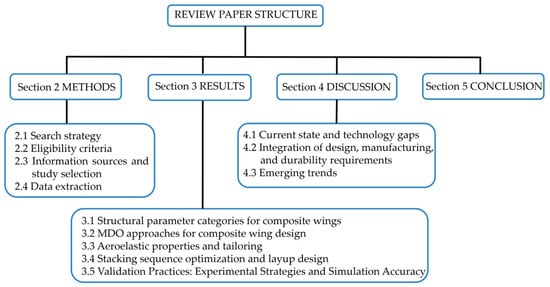
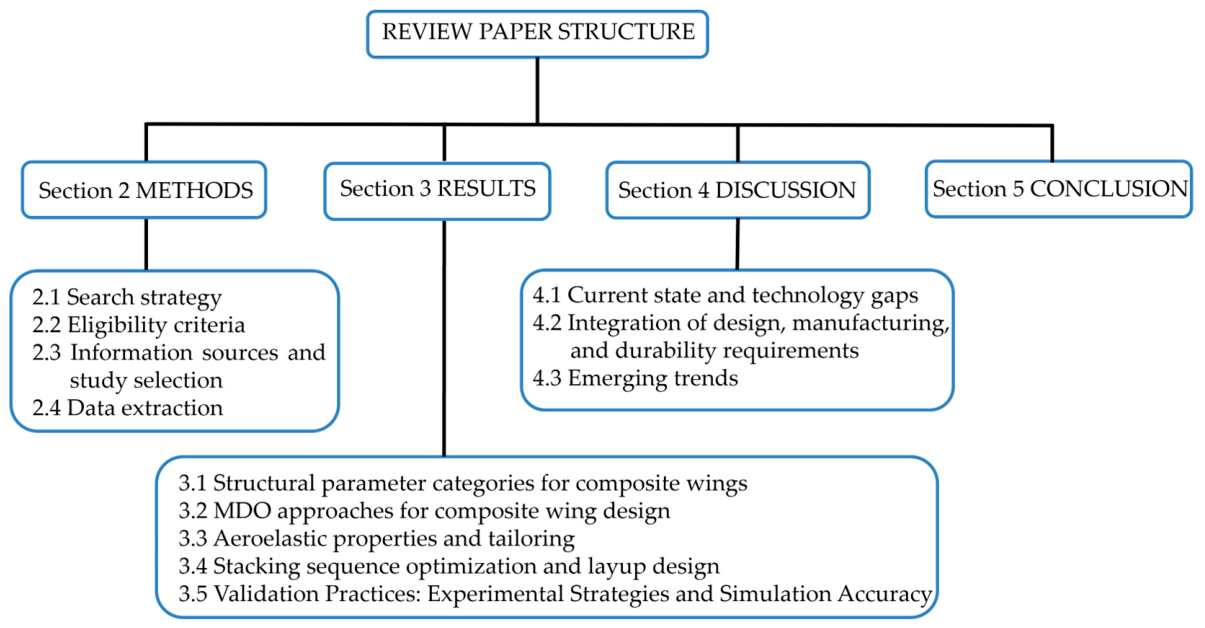
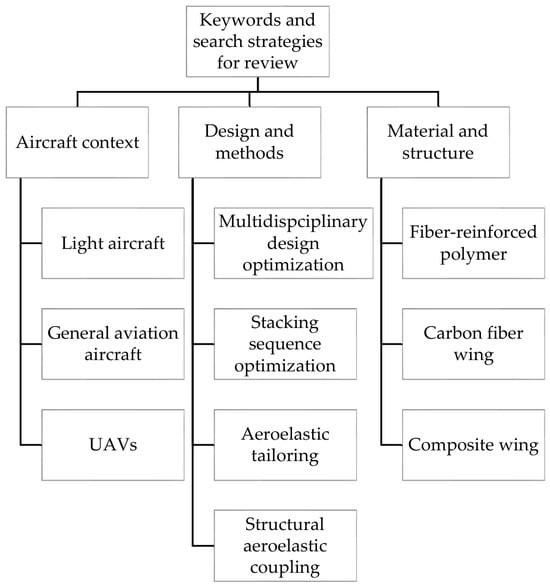
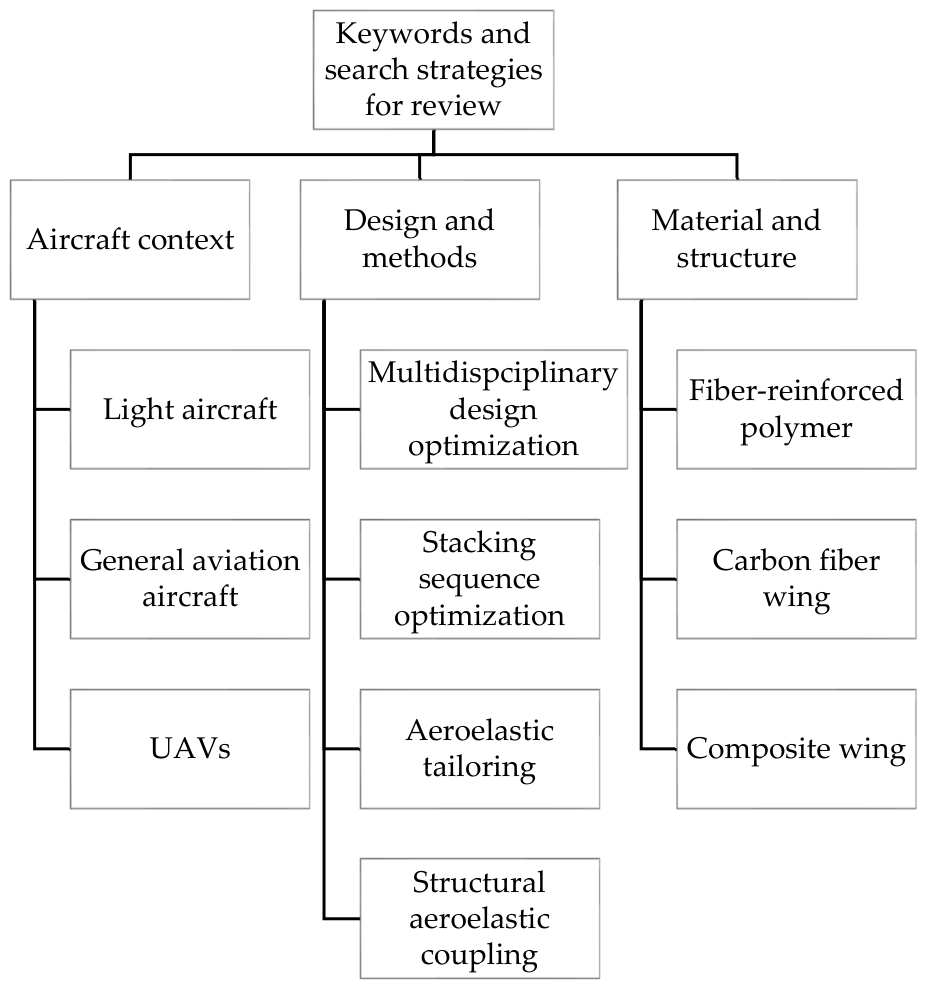
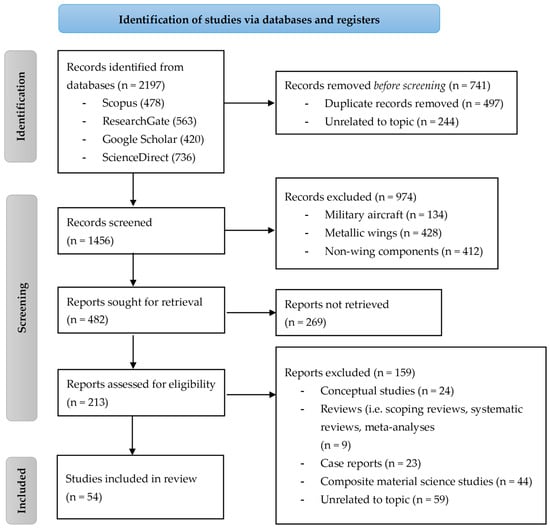
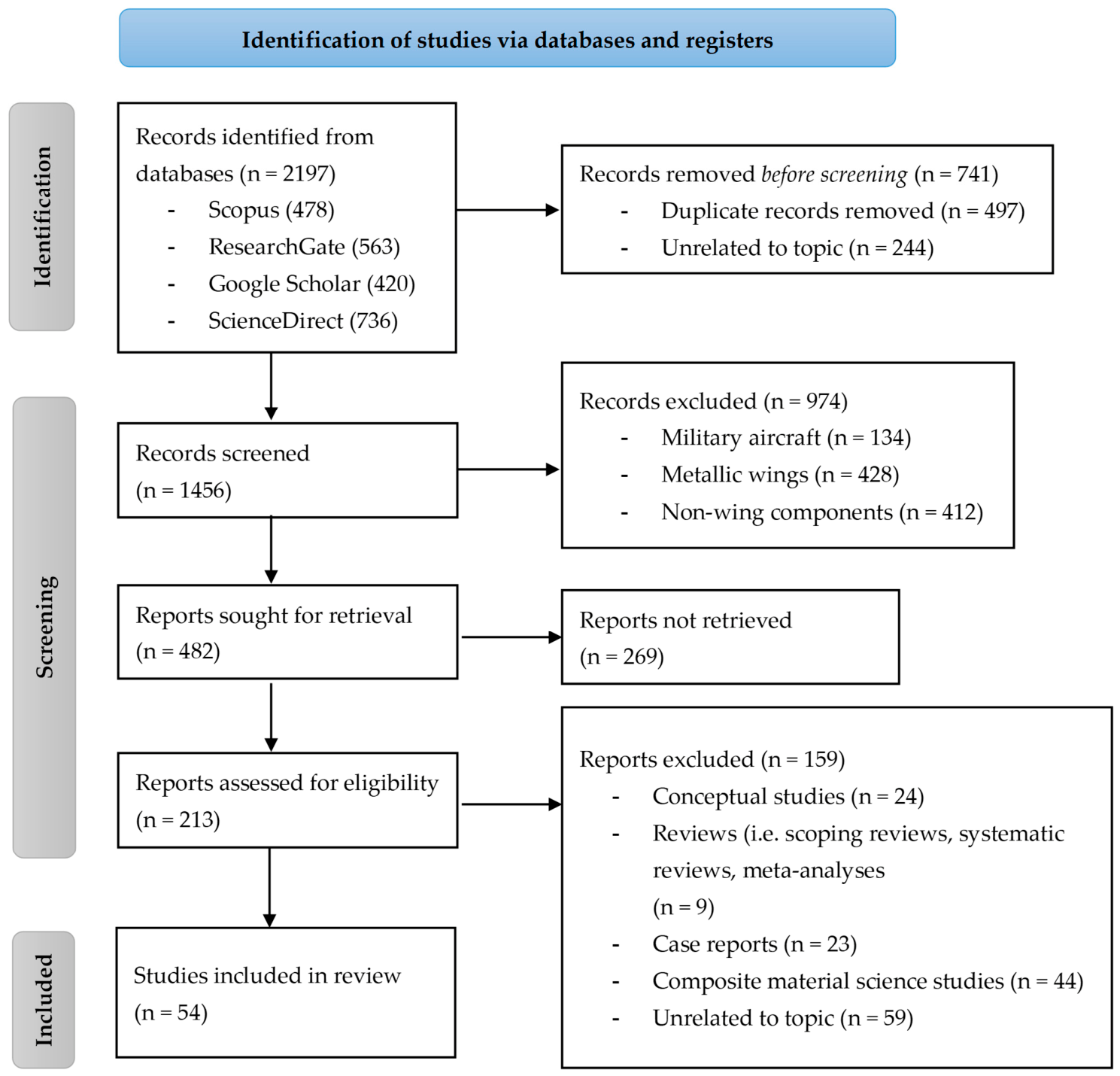
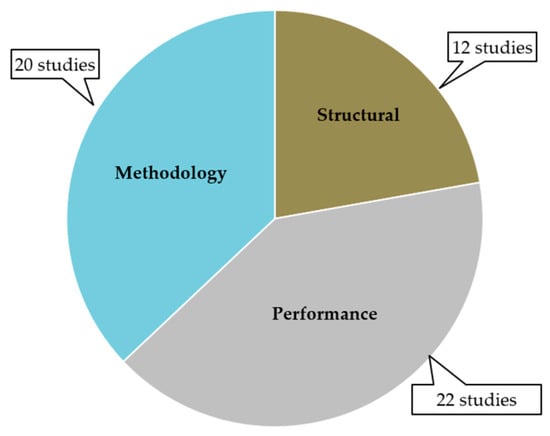
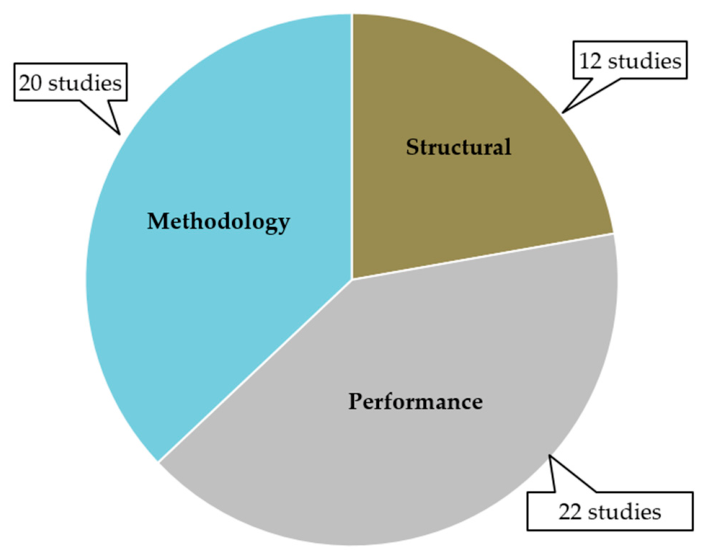
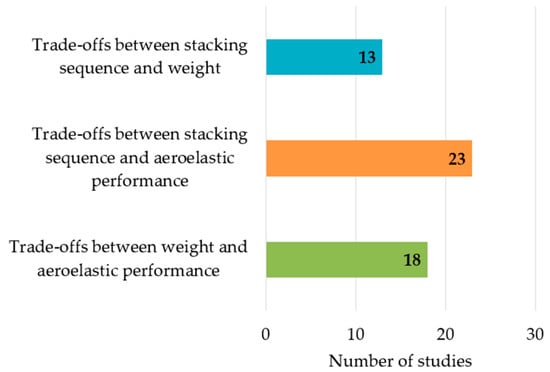
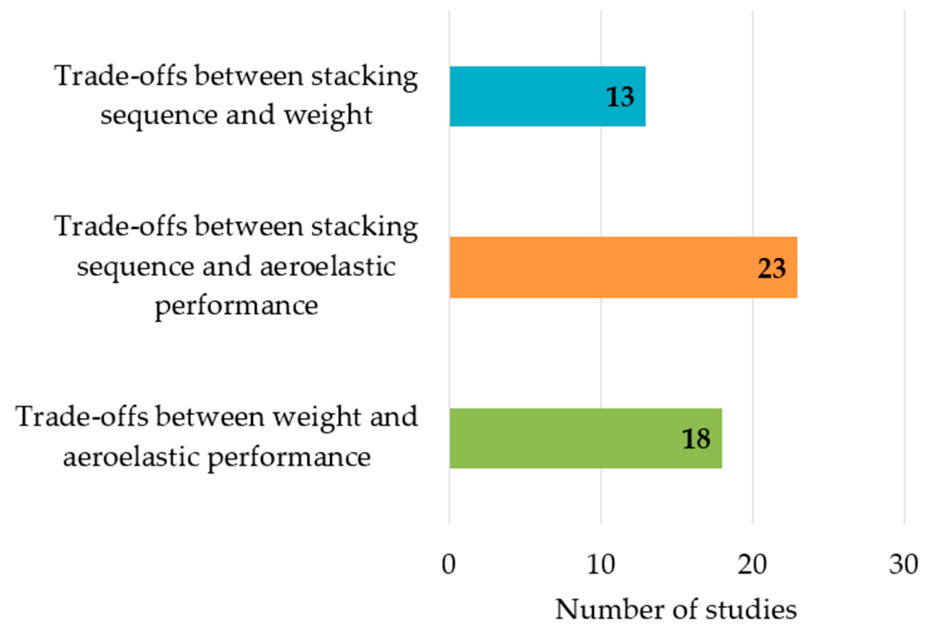
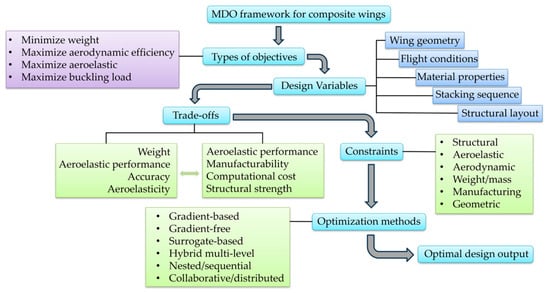
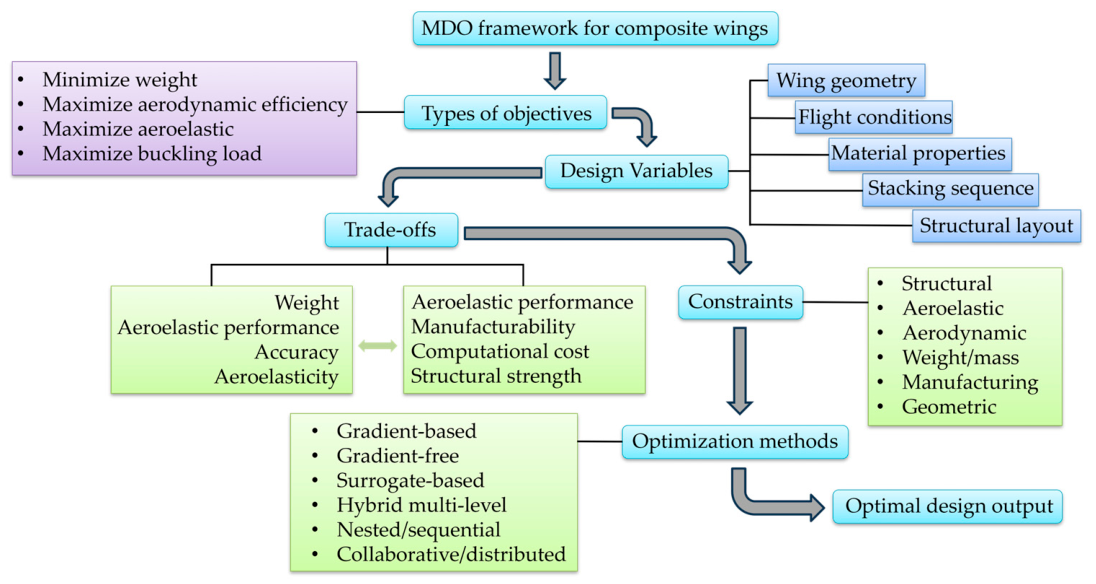
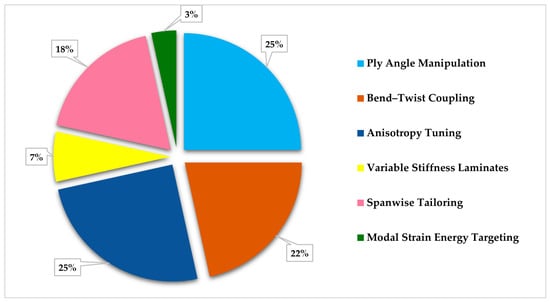
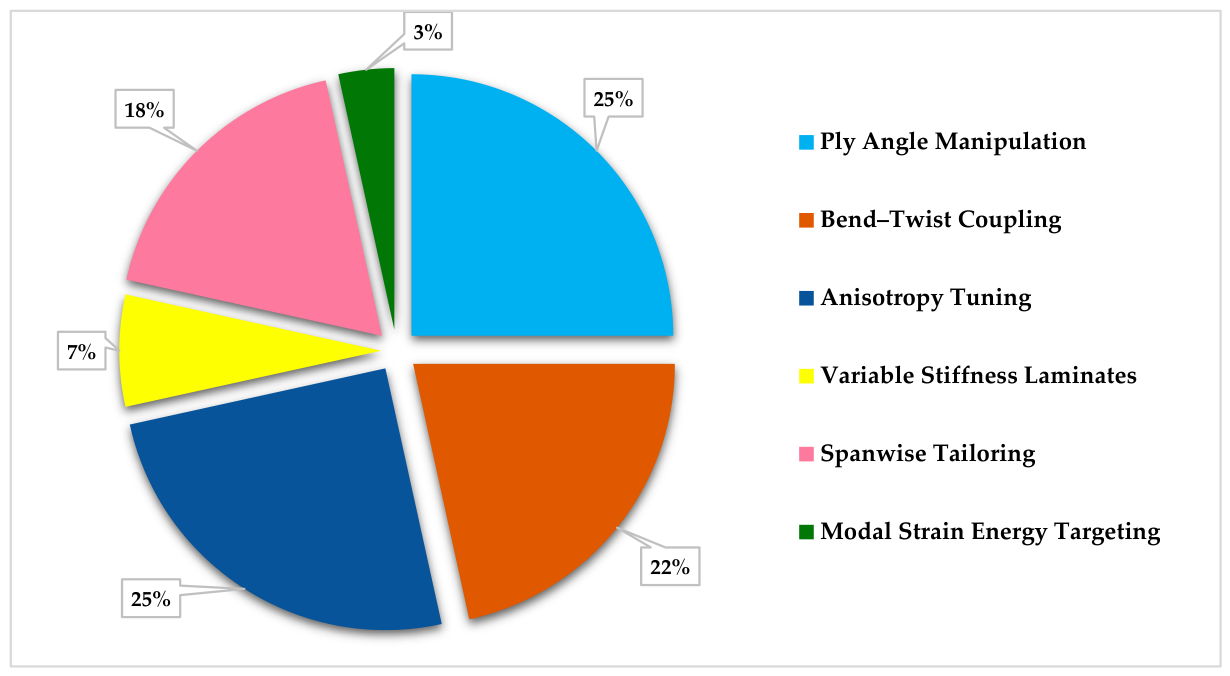
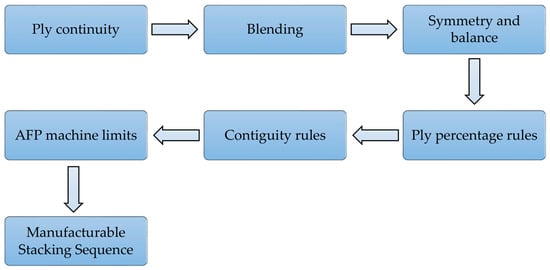
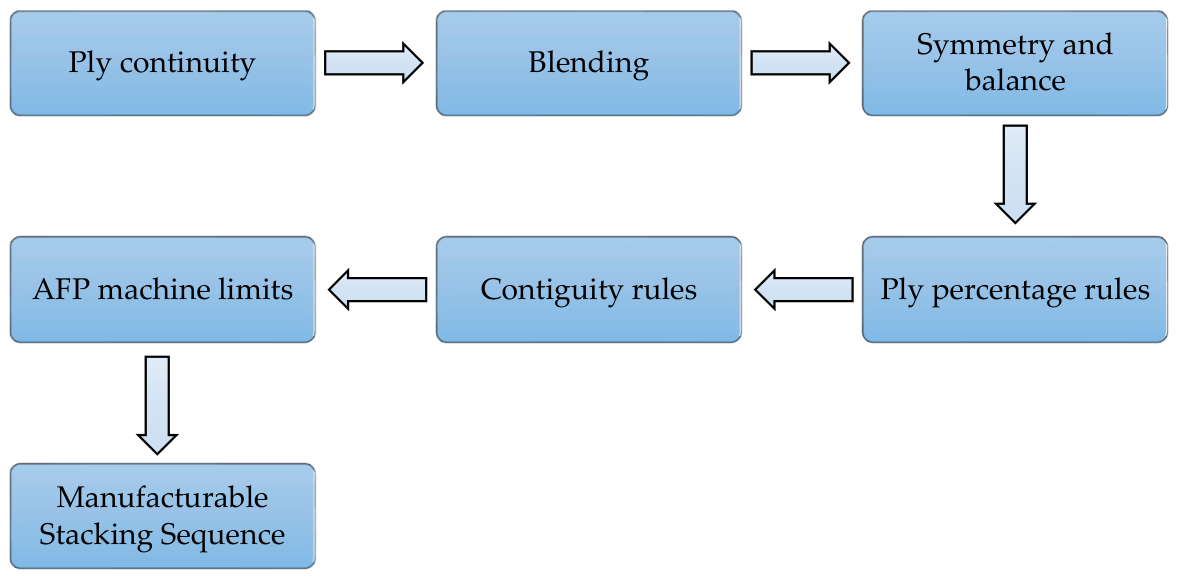
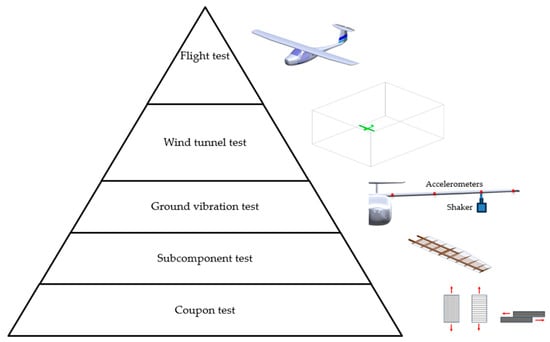
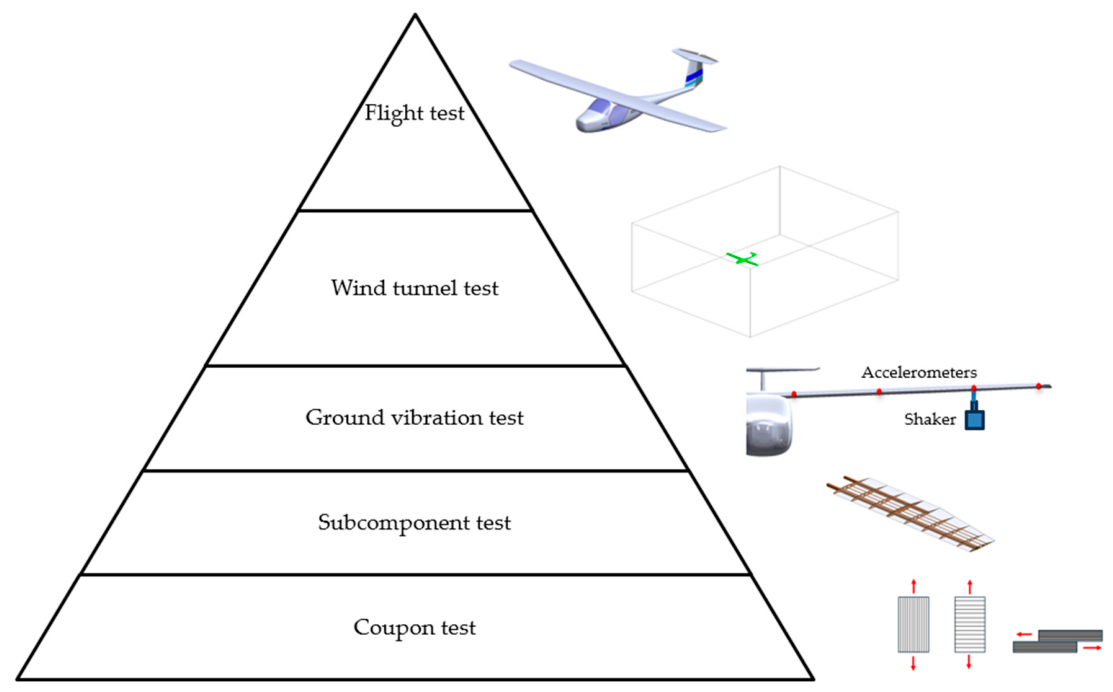

Disclaimer/Publisher’s Note: The statements, opinions and data contained in all publications are solely those of the individual author(s) and contributor(s) and not of MDPI and/or the editor(s). MDPI and/or the editor(s) disclaim responsibility for any injury to people or property resulting from any ideas, methods, instructions or products referred to in the content. |
© 2026 by the authors. Licensee MDPI, Basel, Switzerland. This article is an open access article distributed under the terms and conditions of the Creative Commons Attribution (CC BY) license.