


Abstract
Aedes aegypti L. in Hasselquist (Diptera: Culicidae) is a major vector of dengue, chikungunya, Zika, and other arboviral diseases. Increasing insecticide resistance and environmental concerns highlight the need for sustainable vector-control strategies. Phytochemical-mediated silver nanoparticles (AgNPs) are promising bio-larvicidal agents because plant-derived metabolites contribute to nanoparticle formation, stabilization, and biological activity. This review provides a mechanistic and comparative assessment of green-synthesized AgNPs for A. aegypti control. It examines the roles of phytochemicals, including phenolics, flavonoids, terpenoids, and alkaloids, in nanoparticle synthesis and discusses how particle size, morphology, surface chemistry, and synthesis conditions influence larvicidal efficacy. Comparative analysis indicates that reported larvicidal activity varies with extract composition, nanoparticle characteristics, larval stage, exposure duration, and bioassay conditions, limiting direct comparisons of lethal concentrations across studies. Across the studies reviewed, plant-extract composition and synthesis-dependent nanoparticle characteristics emerge as important determinants of activity; however, their effects are difficult to separate from differences in larval stage, exposure duration, tested dose, and bioassay protocol. These methodological and material discrepancies elucidate the variability in reported lethal concentrations and the frequent unreliability of direct efficacy rankings across studies. Major toxicity mechanisms, including reactive oxygen species generation, oxidative stress, membrane disruption, enzyme inhibition, DNA damage, and apoptosis, are examined, with consideration of the distinction between experimentally demonstrated and proposed mechanisms in A. aegypti. The review also evaluates dose–response relationships and potential effects on non-target organisms and aquatic ecosystems. The contribution of plant metabolites to larvicidal activity and the relative roles of nanoparticles and released silver ions remain important research gaps. Challenges in standardization, reproducibility, scale-up, environmental safety, regulatory approval, and field validation are highlighted. Future research should prioritize harmonized synthesis and bioassay protocols, mechanistic validation, comprehensive ecological risk assessment, and field evaluation to support the responsible development of phytogenic AgNPs for mosquito control.
1. Introduction
The increasing loss of forest cover and human intrusion into wildlife habitats lead to the re-emergence of dreadful vector-borne diseases of major public health concern. Members of the family Culicidae transmit major human pathogens that causes malaria, dengue, chikungunya, yellow fever, Zika virus infection, lymphatic filariasis, and Japanese encephalitis [1]. Among these, dengue is a major public health problem, especially in the tropics and subtropics of Asia [2]. Moreover, the re-emergence of dengue in Kerala and Tamil Nadu demonstrates the significance of dengue for vector control in India [3].
Aedes aegypti L. in Hasselquist (Diptera: Culicidae) is an anthropophilic mosquito and a principal vector for alphaviruses and flaviviruses. Transmission occurs through the ingestion of infected blood by female mosquitoes and subsequent transmission during blood feeding [4]. Climatic factors, particularly temperature, rainfall, and humidity, affect its populations and transmission potential [5]. Several models have been developed to monitor this relationship, demonstrating that an increase in temperature can accelerate the population growth of female A. aegypti mosquitoes, potentially increasing the transmission risk of dengue and other arboviral diseases [6]. The proximity of its habitat to humans, reproductive behavior, and behavioral plasticity make it difficult to control using traditional vector-control methods [7].
An integrated vector management approach incorporating chemical, biological, and other measures restricts mosquito populations [8]. Classical adulticidal or larvicidal agents include organophosphates (temephos) and insect growth regulators (e.g., methoprene) as well as some synthetic insecticides (e.g., permethrin). In appropriate settings, more selective alternatives include biological control agents such as Bacillus thuringiensis Berliner (Bacillaceae) subsp. israelensis and Bacillus sphaericus Meyer and Neide (Bacillaeae) [9]. However, vector-control products are hampered by costly formulations, environmental persistence and bioaccumulation, and potential effects on non-target organisms [10,11]. Resistance to conventional insecticides exacerbates these problems [12]. Hence, there is growing interest in plant-based larvicidal materials and other alternatives [13]. One such alternative approach has been to study the biological activity and potential of metallic nanoparticles, particularly silver nanoparticles (AgNPs), against mosquitoes [14]. In the plant-mediated synthesis, phytochemicals act as reducing and stabilizing agents in the synthesis of nanoparticles [15]. However, the biological performance of these materials cannot be solely attributed to their “green” origin: exposure conditions, extract composition, nanoparticle size and surface characteristics, and silver-ion release all need to be carefully considered.
An increasing number of studies on the plant-based synthesis of AgNPs have been carried out, but there is a lack of agreement between studies regarding the source and preparation conditions of plant material and extracts, routes of synthesis and characterization of samples, larval stages, and toxicity testing conditions, which complicates the assessment of the potential for A. aegypti for vector control. Such variation makes it challenging to discern whether differences in reported mortality relate to AgNP properties, the contribution of plant-derived compounds, or the release of silver ions. Furthermore, the proposed mechanisms of AgNP toxicity have not been demonstrated in A. aegypti. However, laboratory efficacy does not guarantee product safety or field efficacy against A. aegypti. This review aims to synthesize these evidence areas for A. aegypti, linking plant-derived synthesis and physicochemical properties of nanoparticles with reported larvicidal effects and mode-of-action evidence. Through the assessment of methodological discrepancies alongside non-target effects and translational challenges, the review seeks to distinguish established findings from proposed mechanisms and identify research gaps requiring further experimental confirmation.
1.1. Review Scope and Literature-Selection Approach
Literature was identified through searches of Scopus, Web of Science, PubMed, ScienceDirect, and Google Scholar, covering all years available up to 2026. The search focused on plant-mediated or green synthesis of silver nanoparticles (AgNPs), larvicidal activity against A. aegypti, physicochemical characterization, proposed mechanisms of toxicity, and effects on non-target organisms and the environment. Search concepts included combinations of terms relating to “A. aegypti,” mosquito larvae, larvicidal activity, silver nanoparticles, plant-mediated synthesis, green synthesis, phytochemicals, LC50, LC90, mechanisms of action, silver-ion release, ecotoxicity, and non-target organisms. Primary research articles, reviews, and other relevant publications were considered. Records were screened manually for relevance to the review scope, with attention to the reported plant source and synthesis conditions, nanoparticle characterization, bioassay methods, mechanistic endpoints, or environmental outcomes. Publications without relevant data or sufficient methodological detail were not used to support quantitative comparisons. Where possible, quantitative efficacy data were verified against the original research article rather than obtained solely from secondary summaries.
The literature was synthesized narratively rather than through a pooled meta-analysis because study designs, tested concentrations, larval instars, exposure periods, controls, and outcome reporting varied. Quantitative comparisons are therefore study-specific unless protocols are sufficiently comparable. Reported concentration units and endpoint definitions were carefully considered to support accurate and meaningful comparisons across studies.
1.2. A. aegypti as a Vector for Arboviral Diseases
Aedes aegypti is a major vector of arboviruses responsible for dengue, chikungunya, Zika, and yellow fever, posing significant global public health challenges [16]. The limited availability of effective vaccines against several of these diseases underscores the need for robust vector control strategies to reduce transmission [17,18]. Resistance found in mosquito populations can lessen the efficacy of specific compounds and encourage ongoing research into alternative modes of action, even though established larvicides are still crucial [19]. Plant-derived compounds have therefore attracted interest as possible larvicides and repellents [20,21,22,23]. The larval stage in A. aegypti is of special operational interest, considering that breeding sites can be mapped as relatively fixed locations, as opposed to adult A. aegypti mosquitoes, which can disperse over much wider areas [24,25]. Such differences are especially relevant for the choice of larvicides and their application to water-holding sites [26]. Activity against mosquito larvae, for example of Acacia nilotica (L.) Delile (Fabaceae), has been explored. Nonetheless, these botanical approaches lay the ground for the exploration of plant-mediated AgNPs, and the conclusions on efficacy must be made with due consideration of the plant origin, properties of the nanoparticles, exposure conditions, and possible implications for non-target aquatic organisms. Reproducibility, mechanistic evidence, and environmental relevance should be considered before AgNP-based larvicides are applied [27].
2. Green Synthesis of Silver Nanoparticles
Plant-mediated AgNP synthesis can reduce reliance on some conventional chemical reducing agents, although the environmental benefits of the process depend on reagent consumption, energy demand, and waste generation [28]. Plant extracts are naturally rich in secondary metabolites (phenolics, terpenoids, flavonoids) that act as reducing/stabilizing agents in the production of silver nanoparticles with phytochemical-derived surface coatings, as represented in Figure 1 [29]. Their functional groups can influence nucleation, growth, aggregation, and surface chemistry by binding to newly formed particle surfaces and taking part in Ag+ reduction. However, avoiding certain synthesis reagents does not establish the safety of the resulting AgNPs. Thus, variations in the biochemical profiles of plants can influence the size distribution, morphology, and surface chemistry of AgNPs and therefore influence their interaction with mosquito larvae, particle uptake, and larvicidal activity [2,12]. Without suitable controls, these connections are still formulation-dependent and should not be taken as proof that a specific metabolite directly causes larval mortality. As illustrated in Figure 1, phytochemical functional groups facilitate Ag+ reduction to Ag0, followed by nucleation, particle growth, and surface capping. The resulting size and morphology depend on the balance between reduction and growth, while surface-bound hydroxyl, carbonyl, carboxyl, and nitrogen-containing groups may modify surface charge and limit aggregation through electrostatic or steric interactions. These features are interdependent rather than fixed outcomes of plant-mediated synthesis [29].
Figure 1.
Schematic representation of phytochemical-mediated AgNP synthesis and their key physicochemical properties.
Such versatility makes it possible to produce nanoparticles with improved stability, dispersibility, and bioavailability, which are key characteristics for vector control. Nevertheless, plant-mediated AgNPs may still release silver ions, persist in aquatic environments, and affect non-target organisms; their ecological risks require exposure-specific assessment. Plant-mediated synthesis is consistent with several green chemistry principles, but its sustainability and suitability for vector control require experimental validation [30]. Eco-friendly and cost-saving methods, which may include the use of marine resources, offer a feasible approach to the mass production of silver nanoparticles for mosquito management [31]. Thus, this approach offers a possible alternative for mosquito management in the context of insecticide resistance, provided that larvicidal efficacy is balanced against nanoparticle fate and non-target toxicity.
2.1. Principles of Green Synthesis
Essentially, this strategy utilizes the inherent biochemical compounds, mainly secondary metabolites, e.g., alkaloids, phenols, terpenoids, and flavonoids, to perform the dual functions of reducing and capping agents simultaneously for metallic ions, thus resulting in the stabilization of nanoparticles [32]. The technique eliminates the need for harmful reducing agents and high energy inputs that are usually required in physical and chemical synthesis [33,34]. Moreover, the adoption of bioactive plant compounds as the source of metal nanoparticles as precursors for metal nanoparticles ensures biocompatibility, and the resulting nanoparticles are usually more stable due to the presence of biomolecules on the surface of the nanoparticles, which in turn leads to the generation of more potent larvicidal agents [35]. Besides that, the complexity and variability of the chemical constituents in the plant extract used often result in the surface chemistry and morphological features of the nanoparticles that are difficult to predict, and these differences can be of great importance, especially for their biological activities and their ability to target mosquito larvae [36]. Such a customized preparation route enables the optimization of properties such as size, shape, and surface charge, which are the main factors determining the safety and dosage of the resultant AgNPs in the environment [37]. These virtues of green synthesis make it a suitable route for the fabrication of AgNPs to be used in vector control, as it is in harmony with the principles of environmental sustainability and public health safety. In particular, the reduction stage depicted in Figure 1 precedes the formation of Ag0 nuclei, whereas subsequent growth and capping determine particle dispersity and surface chemistry. A phytochemical coating may provide steric stabilization, while electrostatic stabilization depends on surface charge and the dispersion medium; neither mechanism alone guarantees long-term colloidal stability.
2.2. Key Phytocompounds and Plant Extracts Used in AgNP Synthesis
Numerous plant species have been used to create AgNPs by using their varied phytochemical compositions to obtain diverse nanoparticle properties and larvicidal potencies [1]. As an example, the use of Cymbopogon citratus (DC.) Stapf (Poaceae) leaf extract, containing a high concentration of phenolic compounds and flavonoids, has resulted in silver nanoparticles (AgNPs) with strong antibacterial and larvicidal effects [7]. Similarly, in Diospyros montana Roxb. (Ebenaceae) leaves, where the extracts have been found to support the generation of AgNPs that are effective against mosquito larvae, potentially due to the presence of compounds such as quercetin, luteolin, and kaempferol [35]. Gallic acid, catechin, epicatechin, and epigallocatechin gallate derived from plant sources serve as effective reducing and capping agents, contributing to the stabilization and antimicrobial activity of the formulated silver nanoparticles, which have shown low LC90 values against larval instars and pupae of Aedesalbopictus (Skuse, 1894) (Diptera: Culicidae) with minimal reported effects on non-target organisms [35]. Besides that, various studies that have been done on the subject have shown that the green-synthesized AgNPs have strong larvicidal effects on A. aegypti and Culex quinquefasciatus Say (Diptera: Culicidae) when synthesized using mangrove plant extracts and Atalantia monophylla (L.) DC. (Rutaceae), respectively [38]. Furthermore, the biomolecules such as flavones, quinones, and organic acids present in the water-soluble plant extracts like Garcinia mangostana L. (Clusiaceae) are responsible for the rapid reduction of silver ions, resulting in effective AgNPs with an LC50 value of 5.93 mg L−1 observed against fourth-instar A. aegypti larvae [28]. These observations demonstrate that plant-mediated synthesis operates as an open system in which the phytochemical profile determines characteristics of the resulting AgNPs and their subsequent biological activities.
The variation in plant sources provides a basis for the tailored synthesis of AgNPs, enabling efficient reduction and optimization of surface chemistry, which is important for larvicidal action [39]. The presence of phytochemicals such as flavonoids, phenols, tannins, and terpenoids in the plant extracts used is significant for both silver-ion reduction and nanoparticle stabilization, thereby reducing aggregation and improving their biological availability [40]. For example, aqueous extracts of lemon and neem leaves have been successfully employed as reducing and capping agents, resulting in stable silver nanoparticles with antibacterial activity and improved properties [41]. Moreover, research into different compounds has disclosed that plant-derived saponins, steroids, bioflavonoids, essential oils, alkaloids, and tannins, which are found in different plant parts, are not only sources of electrons and stabilizers in the reaction but also, they confer direct vectoricidal properties, thus acting as larvicides, repellents, and growth inhibitors [9].
3. Characterisation and Physicochemical Properties of Phytogenic AgNPs
Several methods have been employed for the synthesis of phytogenic metallic nanoparticles, among which silver nanoparticles are the most widely studied. Their successful synthesis is typically confirmed using characterisation techniques such as UV-vis spectroscopy, XRD for preliminary conformation, and XRD, TEM, particle size analysis and EDX for detailed structural and morphological insights (Figure 2). These nanoparticles are of particular interest due to their significant role in mediating biological activities and influencing target-specific mechanisms in living organisms.
Figure 2.
Physicochemical characterization of plant-mediated AgNP synthesis.
3.1. Size, Shape, and Morphology
The structure of nanoparticles plays a crucial role in determining their biological activity and the mechanism of action. Ref. [42] highlighted that the shape of the particle significantly influences cellular interactions (Table 1). These findings underscore that not only the chemical composition but also the physical characteristics of nanoparticles are critical in modulating their behaviour in biological systems and optimising their effectiveness in healthcare applications. According to numerous studies, the most common shape of Phyto-mediated silver nanoparticles is spherical. Ref. [43] reported that Catharanthus roseus (L.) G.Don (Apocynaceae) mediated AgNPs synthesised against the larvicidal properties of A. aegypti exhibited a monodispersed spherical shape with a size ranging from 15–25 nm. Bioactivity of AgNP is likely influenced by several physicochemical characteristics such as particle size and shape or surface chemistry. Smaller particles have a larger surface-area-to-volume ratio and may be more reactive, resulting in increased release of silver ions and interaction with larval tissue. Silver nanoparticles from Allium sativum L. (Amaryllidaceae) (spherical, 22.3–34.4 nm) exhibited concentration- and time-dependent larvicidal activity against A. aegypti larvae [2]. Although there is currently little direct comparative data in mosquito larvae, particle shape may also affect biological interactions through variations in exposed crystal facets and surface reactivity. Surface coatings due to phytochemicals may affect stability, aggregation, and biological availability of nanoparticles and thus contribute to larvicidal activity. Therefore, these physicochemical attributes should be taken into account simultaneously when assessing changes in larvicidal potency.
Table 1.
Physicochemical characteristics of plant-synthesized AgNPs.
3.2. Analytical Interpretation and Stability Assessment
Several methods have been employed for the synthesis of phytogenic metallic nanoparticles, among which silver nanoparticles are the most widely studied. Their successful synthesis is typically confirmed using characterisation techniques such as UV-vis spectroscopy, while XRD, TEM, particle size analysis, and EDX provide complementary information on crystalline structure, morphology, particle size, and elemental composition. These nanoparticles are of particular interest due to potential biological activities and interactions with biological targets.
The UV-visible absorption spectrum exhibited a prominent surface plasmon resonance peak at 435 nm. This spectrum is consistent with the formation of colloidal silver nanoparticles and supports the occurrence of silver-ion reduction, although it does not independently confirm complete reduction or nanoparticle stability [9]. XRD was used to assess the crystalline phases of the synthesised nanoparticles. The reported silver content of approximately 58% in Aristolochia bracteolate Lam. (Aristolochiaceae)-mediated nanoparticle synthesis should be attributed to the analytical method used, rather than XRD unless the original study explicitly supports this measurement [50].
The analysis also revealed that the synthesised silver nanoparticles exhibit a well-defined crystalline arrangement. The reported diffraction pattern was consistent with a face-centred cubic (FCC) crystalline structure; however, crystallinity alone does not establish nanoparticle purity or long-term stability [46]. Dynamic Light Scattering analysis provides information on the hydrodynamic size distribution of nanoparticles in dispersion. Verma et al. [51] reported that the hydrodynamic size of synthesised phyto-Ag nanoparticles varied with the plant source, with differences in size distribution among formulations. Zeta potential analysis provided insights into their surface charge, a critical indicator of their colloidal stability. AgNPs synthesised using Diospyros montano extract had a negative Zeta potential of −19.10 mV, indicating a negatively charged surface; however, this value alone does not establish long-term stability [35,52].
Energy Dispersive X-Ray analysis (EDX) is used to assess the elemental composition of nanoparticle samples. The authors reported that the EDX spectrum of the synthesised phyto silver displayed a strong signal corresponding to silver, supporting the presence of silver in the sample [43]. However, an EDX signal cannot independently verify complete reduction of Ag+ to metallic Ag0 or establish nanoparticle purity.
SEM and TEM analysis are essential for evaluating the morphological features and size of nanoparticles, which plays a critical role in their biological activity, including their larvicidal activity against mosquito vectors. Studies have shown that silver nanoparticles synthesised via plant extracts exhibit varied morphologies, depending on the plant source and synthesis conditions [44]. FTIR spectroscopy is useful in identifying functional groups present in plant extracts and in assessing functional groups potentially involved in nanoparticle formation and surface stabilisation.
X-ray photoelectron spectroscopy (XPS) serves as a vital analytical tool for understanding the surface chemistry, oxidation states, and elemental composition of silver nanoparticles. The survey spectra of biosynthesised AgNPs typically reveal the presence of metallic silver along with oxygen and carbon-based surface functionalities which may be associated with plant-derived capping agents or other surface species. The characteristic Ag 3d3/2 peaks at approximately 365.3 and 371.5 eV were reported in the cited study [59]. However, these peak positions should be verified against the original XPS spectra and reference assignments before being used to confirm metallic silver or negligible oxidation. These surface functional groups may originate from phytochemicals acting as capping and stabilising agents, although this interpretation requires supporting evidence.
3.3. Surface Chemistry and Stability
Role of Phytochemicals in Stability and Surface Functionalization
Plant-derived compounds influence nanoparticle formation, surface functionalization, and colloidal stability. Phenolic compounds containing hydroxyl and other reactive functional groups may participate in silver-ion reduction and coordinate with nanoparticle surfaces, thereby contributing to their formation and stabilization [60]. Similarly, alkaloids, terpenoids, and flavonoids reported in Diospyros montana extracts have been associated with AgNP synthesis and larvicidal potential; interactions involving oxygen-, nitrogen-, and carbon-containing functional groups may contribute to surface stabilization [35]. Plant-derived proteins may also participate in reduction and capping, while amide and carboxyl groups can contribute to interactions between biomolecules and nanoparticle surfaces [61]. Such surface-associated compounds may influence particle aggregation, size distribution, morphology, and interactions with biological systems. However, the specific contribution of individual phytochemicals to nanoparticle formation, stability, or larvicidal activity should not be assumed without appropriate experimental evidence.
Extract concentration and the plant extract-to-silver precursor ratio can further influence nanoparticle formation and stability [62]. Higher extract concentrations may accelerate reduction under certain synthesis conditions, but their effects on particle growth and aggregation depend on the phytochemical composition and reaction parameters. In a study using Jatropha integerrima extract, AgNP stability was reported to depend on the extract-to-AgNO3 ratio, with stability maintained for up to six months under the reported storage conditions [51]. These findings highlight the importance of optimizing synthesis conditions and evaluating stability over time rather than assuming that a particular extract concentration will consistently produce more stable nanoparticles.
3.4. Influence of Synthesis Parameters on Nanoparticle Properties
The synthesis parameters, including plant extract volume, reaction duration, silver salt concentration, and temperature, have a significant impact on the structural and functional properties of the nanoparticles. The author states that the formation and stability of AgNPs are strongly dependent on reaction time. An increase in the SPR peak intensity up to 30 min indicates active nanoparticle synthesis. After this, no significant spectral variation occurs. This stabilisation beyond optimal time confirms the completion of the reaction and the attainment of stable AgNPs [63]. Another key parameter, pH, has an impact on nanoparticle synthesis. The variations in pH can interact with other factors such as light intensity and temperature, further affecting the rate of nucleation, growth and stability of the nanoparticles. The formation of nanoparticles is most favourable under neutral pH conditions, while both highly acidic and alkaline environments tend to hinder the synthesis process [64]. The efficiency of silver ion reduction and subsequent nanoparticle formation is strongly influenced by pH variation. Changes in pH alter the electrostatic interactions between particles and their surrounding environment, which in turn affects the stability and tendency of AgNPs to aggregate. Therefore, maintaining an optimal pH is crucial to ensure the synthesis of well-dispersed, stable, and uniformly sized silver nanoparticles [65].
The choice of natural and synthetic stabilisers affects nanoparticle size and distribution. Organic stabilisers like citrate tend to produce relatively larger sizes due to soft static stabilisation, while synthetic polymers generate smaller, more monodisperse particles. The author highlighted that the effectiveness of green synthesis depends on the phytochemical composition of plant waste, rich in phenolics, enhancing both the reduction and stabilisation efficiency of the nanoparticles [66]. Antioxidants in plant extracts also play another role in the phyotosynthesis of silver nanoparticles by facilitating the reduction of silver ions and stabilising the formed nanoparticles. Studies have shown that the antioxidant activity of the extract directly influences nanoparticle characteristics. Higher antioxidant activity results in smaller, more stable nanoparticles with enhanced electrochemical activity and lower charge transfer resistance [67]. In addition, increasing the volume concentration of AgNO3 enhances the availability of Ag+ concentration can lead to a shift in the SPR peak, indicating particle aggregation and a larger size of nanoparticles due to an imbalance between silver ions and available capping agents [68].
Interaction with Biological Systems
Numerous studies have reported the effective use of AgNPs in targeting biological organisms, with significant potential in larvicidal applications. When combined with plant extracts, AgNPs develop stable and flexible nanostructures that show improved activity against mosquito vectors [50]. The interaction of AgNPs with larvae induces the excessive generation of reactive oxygen species (ROS), resulting in oxidative stress that disrupts cellular homeostasis and have reported that oxidative imbalance leads to mitochondrial dysfunction, DNA and protein damage, and inhibition of cell proliferation. Hence, ROS-mediated oxidative damage is considered one of the primary pathways through which silver nanoparticles exert their biocidal and vector control efficacy. The silver particle interacts with multiple physiological systems within the insect body, disrupting normal biochemical and molecular processes. They interfere with nerve signal transmission and induce oxidative stress through excessive reactive oxygen species generation. This imbalance affects the antioxidant and detoxifying enzyme systems, leading to cellular damage and apoptosis.
The silver nanoparticles can accumulate within the biological system of exposed organisms, contributing to potential toxicity through bioaccumulation. These accumulated particles can also be transferred through the food chain via predation, leading to secondary exposure and possible mortality in higher trophic organisms. However, according to several studies, including those by the exposure to silver nanoparticles at minimal concentrations does not produce significant toxic effects, suggesting that the extent of toxicity is dose-dependent and influenced by factors such as concentration, exposure duration, and the organism’s metabolic capacity. AgNPs interact with the biological system, influencing various physiological and developmental processes. During the developmental stages of vectors, these nanoparticles can induce alterations in organogenesis, potentially affecting organ formation and function [69].
Overall, understanding the balance between bioactivity and biosafety remains essential for their translational application. Phyto-mediated nanoparticles demonstrate promising biological interactions with potential for safe and effective use in vector control and environmental fields.
4. Larvicidal Efficacy of Phytochemical-Mediated AgNPs Against A. aegypti
Green-synthesized silver nanoparticles have been shown in various studies to have strong larvicidal effects on A. aegypti, and in many cases, their effectiveness is even greater than that of the plant extracts used for the synthesis. Proposed explanations include midgut epithelial injury, altered enzyme activity, and oxidative imbalance; however, larval mortality alone does not establish these cellular mechanisms in A. aegypti [23]. As an example, silver nanoparticles prepared by using the leaf extract of Trianthema portulacastrum L. (Aizoaceae) showed strong larvicidal effect against A. aegypti and early fourth-instar larvae were found to be more susceptible [70]. In the same way, silver nanocomposites made from the leaf extracts of Achyranthes aspera were found to be highly effective in killing the larva of the early fourth instar A. aegypti [45]. Besides that, it has been proved that AgNPs synthesized from the leaves of Annona squamosa L. (Annonaceae) increase the death rate of the fourth instar A. aegypti larvae and the adult mosquito life span is also shortened [71].
4.1. Overview of Bioassay Techniques (LC50 and Mortality Rates)
Standardized laboratory bioassays play a very important role in assessing the larvicidal properties of phytochemical-mediated AgNPs. Commonly the assays include the exposure of larvae to different concentrations of the synthesized nanoparticles, and all experiments are carried out under controlled environmental conditions. This allows the determination of the main parameters, such as lethal concentration (LC50 and LC90) and lethal time, which reflect the effectiveness of AgNPs against A. aegypti larvae. Oxidative stress, mitochondrial dysfunction, and DNA damage are potential mechanisms reported or inferred from nanoparticle studies, but they should not be regarded as confirmed in A. aegypti without direct biochemical or molecular evidence [72]. These conclusions are in line with the research that indicates considerable larval deaths because of the exposure to green-synthesized AgNPs, with some formulations reaching 100% efficiency against A. aegypti within 12 h. The larvicidal activity of AgNPs towards A. aegypti has been confirmed to be dose dependent. This was confirmed by the research where higher mortalities at greater concentrations were observed and this has been a constant trend across all the studies conducted with different plant extracts. For example, it has been found that a concentration of 10 ppm of a nanomaterial synthesized from Diospyros montana can bring about the complete death of all larval instars of A. albopictus after 48 h of exposure. This shows that the work can be done effectively even at relatively low concentration levels [35]. Furthermore, the green-synthesized AgNPs not only kill the target species, but they also have a very significant effect on other mosquito species like Culex quinquefasciatus and Anopheles stephensi Liston (Diptera: Culicidae), which indicates that they can be used as a broad-spectrum means of controlling the mosquito population [73]. In addition to that, plant-derived insecticides and green-synthesized silver nanoparticles have shown promising larvicidal activity against third-instar larvae of A. aegypti, presenting an eco-friendly and cost-effective alternative to conventional chemical insecticides. Concretely, AgNPs fabricated via Acacia nilotica bark extract have illustrated the potential of being a strong A. aegypti adulticidal agent, thus, pointing to their use beyond mosquito developmental stages in control schemes [74].
4.2. Dose–Response Relationships
In general, the larvicidal activity of AgNPs against A. aegypti is a dose-dependent relationship, i.e., the higher the concentration of nanoparticles, the higher are the mortality rates and the lower are the survival times. The dose–response effect is even more visible by the time factor as the long contact even with a sub-lethal concentration may result in a toxic accumulation and finally death of the larvae. As an example, the Allium sativum-based AgNPs were highly effective in killing the larvae of second and third instar of A. aegypti, and the percentage of the dead larvae was proportional to the nanoparticle concentration used [75]. This concentration-dependent toxicity that influences development and adult emergence is invariably confirmed by different studies. To illustrate, the research conducted by [76] showed that within 12 h of exposure to AgNPs from Cleistanthus collinus (Roxb.) Benth.ex.Hook.f. (Phyllanthaceae), A. aegypti was able to cause 100% mortality. Particle penetration through the larval cuticle and subsequent effects on feeding or growth have been proposed, but these processes require direct experimental confirmation. The lethal levels (LC50 and LC90) of AgNPs for A aegypti as well as other mosquito species have been determined in detail, thereby confirming their effectiveness, e.g., LC50 values as low as 0.585 mg/L for A. aegypti and 0.891 mg/L for Culex quinquefasciatus are reported. These LC values presented in Table 2. serves as an evident for the efficient green-fabricated AgNPs even at their minutest concentration against the major mosquito vectors [77].
Table 2.
Comparative larvicidal efficacy of phytochemical-mediated AgNPs of different concentrations against A. aegypti.
4.3. Comparison with Synthetic Insecticides
Although conventional insecticides such as temephos remain effective in some settings, plant-mediated AgNPs have shown promising larvicidal activity against A. aegypti in laboratory studies. Some formulations produce substantial larval mortality at low tested concentrations, but these efficacy results do not independently demonstrate environmental safety. Direct comparisons with conventional larvicides require matched exposure conditions and non-target toxicity endpoints. One of the best examples is the use of Cleistanthus collinus and Strychnos nux-vomica L. (Loganiaceae) leaf extracts to produce natural bio larvicidal agents that are effective in controlling the A. aegypti population, while at the same time having low toxicity to non-target species such as Artemia salina (L.) (Artemiidae) [76]. This is particularly significant given the emergence by the physiological resistance of mosquitoes to synthetic insecticides, which, in addition, also cause environmental pollution [87]. Accordingly, their potential role in mosquito management should be assessed using both efficacy and ecological safety data.
5. Mechanisms of Larvicidal Action of Phytochemical-Mediated AgNPs Against A. aegypti
The novel biological behavior of AgNPs exhibits significant larvicidal activity. The research evidence backing specific toxicity mechanisms in A. aegypti is variable. Though mechanisms such as ROS generation, mitochondrial disturbance, and apoptosis are frequently inferred from more general models of nanoparticle toxicity or from other organisms, there is some direct evidence for biological damage following AgNP exposure (mortality, abnormal morphology, tissue damage, etc.) However, mechanisms of ROS generation, mitochondrial dysfunction, DNA damage, enzyme inhibition, and apoptosis are often speculative or inferred from work in non-target species or general models of nanoparticle toxicity of diverse nature. These pathways may be responsible for the larvicidal activity but A. aegypti necessitates validation via species-specific biochemical, histological, and molecular analyzes [12]. The green-synthesized silver nanoparticles’ larvicidal action is very complex and largely involves physiological disruption through oxidative stress induction, membrane rupture, and enzyme inhibition. These mechanisms, in combination, cause organs overstress and, finally, death of larvae demonstrating the strong and sophisticated mode of action of nanoparticles against mosquito vectors. Figure 3 summarizes hypothesized pathways, including ROS-associated injury and tissue interactions, rather than a fully demonstrated causal sequence in A. aegypti [70]. The small nature of the Nano particles, helps them to cross the larval cuticular barriers and helps in destruction of the metabolic pathway by accumulation in internal organs [10]. This interrupts the development process and disturbing normal physiological function leading to the death of the mosquitoes and, therefore, will lead to complete tissue and cellular damage like necrosis and other lethal effects. Furthermore, the phytochemical constituents such as polyphenols, flavonoids, and terpenoids, acts synergistically with nanoparticles and helps in amplifying, the oxidative stress response drastically [88]. In addition to their potential contribution to larvicidal activity, these phytochemicals facilitate AgNP formation by reducing silver ions (Ag+) to metallic silver (Ag0) and subsequently contribute to nanoparticle stabilization through surface capping. However, the specific contribution of individual phytochemicals to nanoparticle formation and larvicidal efficacy remains insufficiently understood. Comparative studies have reported greater larvicidal potency of plant mediated AgNPs than the corresponding plant extracts, as demonstrated in investigations involving Allium sativum and Trianthema portulacastrum against mosquito larvae [2,70]. Nevertheless, such enhanced activity cannot be attributed exclusively to phytochemicals, since nanoparticle characteristics and the potential toxicity of released silver ions may also contribute. Therefore, comparisons involving plant extracts, silver salts and synthesized AgNPs under appropriately are necessary to clarify their specific contribution to AgNP formation and larvicidal activity.
Figure 3.
Mechanistic pathway of AgNP-mediated toxicity in mosquito larvae. (The red prohibition symbol indicates inhibition of the corresponding process. ROS: Rective Oxygen Species).
5.1. Silver Ion Release and the Contribution of Ag+-Mediated Toxicity
Silver nanoparticle (AgNP) toxicity may arise from both nanoparticle-associated effects and the release of silver ions (Ag+) through oxidative dissolution. Dissolution kinetics are influenced by particle characteristics and exposure conditions, including pH and ionic strength, which can alter the availability of released silver ions [1,2]. Ag+ may contribute to biological toxicity, including oxidative stress and cellular damage; however, the relative contributions of ionic silver and nanoparticle-associated mechanisms vary with the exposure environment and experimental conditions [2,3,4]. Therefore, the larvicidal effects of phyto-mediated AgNPs should not be attributed exclusively to nanoparticle-specific mechanisms without considering the potential contribution of released Ag+. Distinguishing these effects requires appropriate ionic-silver controls and, where feasible, measurements of dissolved silver under the relevant exposure conditions [1,3,4].
5.2. Oxidative Stress Induction
Superoxide radicals, hydroxyl radicals, and hydrogen peroxide are the key reactive oxygen species that silver nanoparticles induce in A. egypti larvae thus setting the scene for their oxidative attack [89]. Broader mechanisms suggest, the massive surge in ROS production imparts a heavy strain on the larvae antioxidant defence systems and therefore lipid peroxidation, protein damage, and DNA fragmentation are the results, thus compromising not only cell integrity but also cell function. The very high oxidative stress levels eventually lead to programmed cell death or necrosis thereby leaving the damage to the cells irreversible and leading to the larvae’s demise [90]. AgNP exposure also results in morphological and physiological changes such as the loss of hair, depigmentation, and cellular disorganization, all of which contribute to the lethal effect on larvae. In other experimental systems, phosphorylated histone H2AX (γ-H2AX) serves as a marker of DNA-damage responses; however, its induction in AgNP-exposed A. aegypti larvae have not been established by the larvicidal bioassays discussed here; at the same time, perturbations in gene regulation pathways, e.g., those connected with toll-like receptors and matrix metallopeptidases, provokes to even more severe cellular dysfunction. The damages inflicted on the cells can become obvious if one looks at the different tissues through the microscope thus showing epithelial cells, food bolus, basement membrane, muscles, and midgut tissues to be affected [91].
5.3. Cell Membrane Disruption
The nanoscale dimensions of AgNPs may facilitate interactions with larval gut tissues, whereas binding to intracellular proteins or DNA and the resulting disruption of replication remain proposed mechanisms unless supported by direct A. aegypti evidence. Such a union with intracellular elements results in the instant denaturation of organelles and enzymes, and the loss of cellular function and membrane permeability [92]. In addition, AgNPs cause considerable morphology changes of mosquito larvae, e.g., breakage of the endo- and exocuticle, necrosis and thickening of the epidermis [93]. At present, these nanomaterials can also obstruct the proton motive force, thus further damaging the larval cellular energy supply and the general survival of the larvae. Besides that, the research on AgNP exposed A. aegypti larvae reveal that apical swelling in the midgut, nuclear degeneration, and a decline in intracellular contact is among the observed symptoms. The damage at the cellular and tissue level that is especially noticeable in the midgut impairs the peritrophic membrane, microvilli and the epithelial layer disintegration and vacuolated cytoplasm as well as the desquamation of epithelial cells are some of the other occurrences [94]. The damage to the internal mid-gut structure due to severe disorganization caused also by lysed cells and a broken basement membrane that has been established by histopathological studies. These signs of massive cellular injury along with alterations in protein biosynthesis routes and membrane integrity are responsible for the considerable impairment of essential cellular functions resulting in the stunted growth and development [58]. As a case in point, research through transmission electron microscopy to track AgNPs in midgut cells has unravelled that those NPs move to and build up in cell organelles which in turn cause harms like DNA strand breaks, genotoxicity, and mitochondrial challenges.
5.4. Enzyme Inhibition
In addition, causing the structural harm, phytochemical-mediated AgNPs may alter enzymes involved in detoxification, metabolism, and neurotransmission eventually resulting in the disruption of life-sustaining physiological processes. In the most direct way, an experiment on insect pests revealed that AgNPs are capable of energy-stimulating a decrease in the production of esterase and phosphatase enzymes thus leading the larvae of mosquitoes to rely on the metabolism of the nutrients present in their food and be-manifesting an eventual detoxification [78].
As an example, a study on Chironomus riparius Meigen (Diptera: Chironomidae) shows that the important glutathione S-transferase enzyme’s consequential drop in the level of presence in the case of larvae exposed to AgNPs is the most prominent indication that crucial detoxification pathways have been affected which results in heightened oxidative stress and the subsequent damage to the tissues [95]. The enzymatic blockade which is accompanied by the simultaneous cellular destruction by the Culex larvae encumbers their capability of resisting the pressures of the environment and sustaining a state of equilibrium which impacts their total extinction. The blockage of acetylcholinesterase by AgNPs, in addition, causes the increase of acetylcholine at the postsynaptic terminal whereby continuous nerve stimulation and hence paralysis of the larvae are the effects experienced [44]. The neurotoxic effect synergistically causes severe damage to the cellular organization of the digestive system, e.g., disintegrated microvilli and vacuolated cytoplasm drastically interfering with feeding and nutrient assimilation.
5.5. DNA Damage and Apoptosis
Potential genotoxic mechanisms include ROS-associated DNA injury and interactions with cellular macromolecules, but their occurrence in A. aegypti must be distinguished from findings in other experimental models. The cellular apoptosis can be later associated with DNA damage showing nuclear condensation and fragmentation, that are essential in programmed cell death [53]. Cytochrome c release and downstream apoptosis have been described in some nanoparticle-exposed cellular systems; their contribution to phytogenic AgNP-induced A. aegypti larval mortality remains hypothetical. The apoptotic cascade leads to the halting of the cell cycle machinery followed by the degradation of the cell organelles, larval death being the result of the process [96,97]. These sophisticated molecular interactions reveal the complex cytotoxic mechanisms behind the use of phytochemical-mediated AgNPs as a potent method of mosquito population control. Proteomic studies support this argument further by showing that Ag/AgCl nanoparticles cause mitochondrial dysfunction, DNA damage, and cell proliferation inhibition, thus implying a variety of molecular-level mechanisms of action.
6. Toxicological and Ecological Considerations
6.1. Toxicity to Non-Target Organisms
In addition to their effect on mosquito larvae, the effect of plant-mediated AgNPs on non-target organisms should be evaluated. Variation on the susceptibility responses of other organisms, including crustaceans as well as aquatic predators, means toxicity endpoints for other species are required. Research concerning Trewia nudiflora-facilitated AgNPs indicated reactions in aquatic organisms, such as Anisops bouvieri Kirkaldy (Hemiptera: Notonectidae), Diplonychus indicus (Hemiptera: Belostomatidae), and Gambusia affinis (Cyprinodontiformes: Poecilidae) [49]. AgNPs derived from Azadirachta indica have been investigated in the brine shrimp Artemia salina and the earthworm Eudrilus eugeniae (Opisthopora: Eudrilidae) [41]. These studies are useful as evidence for some test organisms but are not generalizable to all non-target organisms or test conditions.
The assessment of selectivity should involve a comparison of larvicidal concentrations against those that result in mortality or sublethal effects in relevant non-target organisms exposed for equivalent timeframes. The reported 80–85% mortality of Diplonychus annulatus (Hemiptera: Belosomatidae) and Diplonychus rusticus at 8–10 ppm in a study related to Cocos nucifera L. (Arecaceae) [98] demonstrates why it is necessary to identify the affected species and the experimental formulation before making any safety conclusions. Studies are difficult to compare, with different species, endpoints, types of tests, and exposures. Figure 4 summarizes possible routes of environmental exposure and impacts on non-target organisms and should be considered as potential risks and not for phytogenic AgNP formulations.
Figure 4.
Ecotoxicological pathway of plant-mediated silver nanoparticles affecting non-target organisms and the ecosystem.
6.2. Biodegradability and Environmental Safety
Silver nanoparticles have been widely explored for nanocatalysis and environmental remediation due to their versatile functional properties. But they are not traditionally biodegradable unlike organic compounds. However, biodegradability and potential effects on non-target organisms remain consideration for their safe application. In aquatic ecosystems, they may experience oxidation and dissolution, liberate Ag+, aggregate, or undergo transformations via interactions with chloride, sulfide, and natural organic substances; these mechanisms alter silver speciation, mobility, and bioavailability instead of definitively removing exposure. Thus, the environmental fate of phytogenic AgNPs is determined by surface coatings, physicochemical properties of the nanoparticles, interactions with the sediment and of the surrounding water chemistry, and exposure time. There is not enough data from individual formulations, such as AgNPs derived from Marsilea quadrifolia [48], to prove a generally smaller ecological footprint. Comparisons with traditional larvicides under realistic application scenarios, such as persistence, dissolved and particulate silver concentrations, sediment accumulation, and chronic exposure, are necessary for claims of improved environmental performance [99].
7. Challenges and Limitations
Evolutionary resistance to AgNPs should be taken into account in addition to resistance to traditional larvicides. Prolonged sublethal exposure may potentially favor larvae exhibiting improved antioxidant mechanisms, such as superoxide dismutase, catalase, and glutathione-related systems, or modified detoxification pathways involving cytochrome P450 monooxygenases, glutathione S-transferases, and esterases. Other possible pathways of decreased susceptibility include modifications in particle uptake, sequestration, and silver-ion handling. Cross-resistance is a testable possibility rather than a proven result because some of these pathways also contribute to conventional insecticide tolerance. Nonetheless, direct proof of heritable AgNP resistance or cross-resistance in A. aegypti is still lacking; acute oxidative-stress reactions should not be construed as developed resistance. The potential for such adaptations to evolve and alter larvicidal efficacy remains to be tested using selective multi-generation assays, reciprocal susceptibility assays, and biochemical or transcriptomic assays.
7.1. Standardisation and Reproducibility of Green Synthesis
7.1.1. Selection and Preparation of Plant Material
Plant extracts are important for the formulation of nanoparticles; they are the main factors in determining the reproducibility of green-synthesised AgNPs. However, several challenges persist in achieving uniform synthesis outcomes. The phytochemical composition of plant extracts varies widely depending on species, geographical location, harvesting time, and extraction conditions, leading to inconsistencies in nanoparticle size, shape, and distribution. The complex nature of plant metabolites makes it difficult to identify specific compounds actively participating in the synthesis process. Therefore, a comprehensive understanding of the phytochemical profile is essential for optimising the synthesis process and ensuring reproducibility in green nanoparticle fabrication [77]. Another drawback includes batch-to-batch variability in plant extract composition, lack of standardised synthesis protocols, and complex purification requirements. Addressing these issues through process optimisation, automation, characterization and standardization will be crucial for improving scalability.
7.1.2. Optimization of Reaction Parameters
The synthesis of phyto-silver nanoparticles is highly influenced by the concentration of bioactive compounds present in the plant extract, which act as reducing and stabilizing agents. External parameters such as pH, temperature, and reaction time play crucial roles in determining the rate of nanoparticle formation. These factors collectively affect the size, morphology, and stability, thereby influencing the overall quality and yield of the synthesised nanoparticles [100]. Studies have shown that pH plays a major role in determining nanoparticle size. Similarly, temperature affects the nucleation and growth of AgNPs, where higher temperatures promote uniformity and stability, while lower temperatures lead to mixed particle populations. Therefore, precise regulation and optimisation of these physicochemical parameters are essential to ensure reproducible synthesis and environmentally sustainable production of silver nanoparticles, which remains challenging due to variability in synthesis methodology [101].
7.1.3. Monitoring and Control of Synthesis
Monitoring and controlling the synthesis of silver nanoparticles is essential to ensure reproducibility. UV-Visible spectroscopy has been employed to monitor the reaction progress by observing the surface plasmon resonance peak, while X-ray diffraction (XRD) helped to confirm the crystalline structure and purity of the nanoparticles. In as study, it was observed that the leaf extract of Megaphrynium macrostachyum (K.Schum) (Zingiberales: Marantaceae) was capable of rapidly reducing silver ions to form nanoparticles within a short period. The synthesis rate increased with higher concentrations of extract and silver ions, as well as with longer reaction time and elevated temperature. UV-visible analysis revealed that the alkaline conditions, particularly at pH 10, promoted efficient nanoparticle formation. XRD analysis further confirmed the crystalline purity of the nanoparticles, showing Ag and AgCl nanocrystallites of approximately 33.7 nm and 44.2 nm in size [102]. Similarly, in the case of Syzygium cumini (L.) Skeels (Myrtaceae) fruit extract, the synthesis of Ag/AgCl nanoparticles was effectively controlled and monitored through optimisation of parameters. The optimal conditions of fruit extract were identified. UV-visible spectroscopy was used to monitor the reaction progress, where changes in the surface plasmon resonance peak indicated nanoparticle formation and stability. This careful control and real-time monitoring ensured synthesis of uniform, stable Ag/AgCl nanoparticles suitable for applications such as colorimetric detection [103].
The control of green synthesis of AgNPs is crucial for achieving consistent and enhanced biological activity. However, obtaining a well-defined nanoparticle structure using plant extracts remains challenging, as phytochemical composition varies between extracts. Physiochemical parameters such as pH, temperature, and environmental conditions modulate the reduction kinetics, thereby influencing the structural integrity and functional characteristics [104].
7.1.4. Purification and Storage Conditions
There are several ways to purify nanoparticles after synthesis, and the choice of method usually depends on the type of sample and available laboratory setup. Techniques like centrifugation, antisolvent precipitation are commonly used, but they fail to remove very small impurities completely. These, high-speed ultracentrifugation and sucrose density gradient methods provide better purification and uniformity. Advanced approaches like continuous flow purification effectively remove impurities without altering nanoparticle structure. They enable the purification of nanoparticles in real time as part of a multi-step synthesis process. Instead of relying on the conventional batch purification method, this approach integrates purification directly into the production line, creating a seamless and uninterrupted workflow. It enables a smooth transition from nanoparticle synthesis to subsequent processes, such as shell growth, ligand exchange, or functionalization. This not only enhances process efficiency and scalability but also reduces manual handling and contamination risks [105].
These purified nanoparticles are best preserved through freeze drying below −20 °C or mild drying at about 50 °C to ensure stability [99]. The stability and toxicity of AgNPs are closely linked to their tendency to undergo surface oxidation. The rate of oxidation and ion release is influenced by several factors, including temperature, light exposure etc. Improper storage, particularly under light or oxygen-rich environments, can accelerate this oxidation, leading to changes in particle size, shape, and surface chemistry. When the stabilising layer loses its protective function due to photochemical reactions or degradation, AgNPs become more prone to aggregation and dissolution. Hence, maintaining suitable storage conditions and using robust stabilisers are essential to preserve nanoparticle integrity and minimise unwanted oxidative transformation [106].
In the case of Phyto-synthesised silver nanoparticles, storage conditions play a crucial role in maintaining their physicochemical stability and dispersity over time. Studies have shown that factors such as temperature and light exposure significantly influence the aggregation behaviour and surface charge of AgNPs. When stored in daylight at room temperature, AgNPs tend to lose stability rapidly, leading to agglomeration and precipitation within a few weeks due to enhanced oxidative and photochemical reactions. In contrast, samples preserved in the dark room temperature exhibit comparatively better stability, with only minor aggregation observed after prolonged storage. The most favourable conditions for long-term preservation are low temperature and dark environments around 5 °C, where AgNPs maintain their spherical morphology, narrow size distribution, and high zeta potential, indicating strong electrostatic repulsion between particles. Thus, for phyto-synthesized AgNPs, refrigeration in dark conditions is ideal to ensure prolonged colloidal stability and prevent particle agglomeration [107]. Another study on the green synthesis of AgNPs using cauliflower extract revealed that the bioactive molecules present in the extract effectively reduced and stabilized silver ions, forming uniform nanoparticles. The phytochemicals acted as natural capping agents, preventing oxidation and aggregation during early storage. However, prolonged storage led to a gradual decline in biological activity, even though structural and chemical characteristics of the nanoparticles remained largely unchanged. This suggests that while phytochemical components can ensure physical stability, their functional activity may weaken over time, emphasizing the importance of optimizing storage conditions for maintaining long-term bioactivity [108].
7.1.5. Quality Control and Validation
Quality control ensures the reproducibility and reliability of synthesized nanoparticles for surface-enhanced Raman scattering (SERS) applications, focusing on monitoring parameters such as size, shape, and stability to maintain consistency. Validation confirms the accuracy, precision, and robustness of both synthesis and analytical methods. Together, they guarantee uniform nanoparticle quality and dependable SERS performance for quantitative analysis. They involve monitoring key parameters, such as concentration, pH, and reaction time, to maintain consistency. This systematic approach can be utilised in the synthesis process, ensuring accuracy and repeatability in analytical applications [109]. Quality control and validation of the QbD-based green synthesis of AgNPs using Mitragyna parvifolia (Roxb.) Korth. (Rubiaceae) were ensured through systematic optimisation and characterisation approaches. By employing Central Composite Design, the synthesis process was effectively optimised, enabling fine-tuned regulation of critical factors like temperature and incubation time, which in turn ensured uniformity in nanoparticle size, shape, and overall stability. The strong correlation between process parameters and nanoparticle quality highlights the robustness of this method, establishing it as a reliable and scalable approach for producing biocompatible nanomaterials [110].
7.2. Stability, Shelf-Life, and Scalability
Green-synthesised AgNPs are considered scalable due to their higher yield compared to other approaches. Moreover, large-scale synthesis using plant extracts is more advantageous than microbial-mediated methods, as plant provides a faster and more stable source of bio-reducing and capping agents, making the process more efficient and environmentally sustainable [111].
The stability of AgNPs is generally limited to a short period and can be compromised during long-term use due to nanoparticle aggregation, oxidation, and ion release. Previous studies have also reported that stabilizing agents such as sodium citrate, SDS, and chitosan help maintain particle dispersion; however, these stabilizers gradually degrade over time, ultimately leading to reduced stability of the nanoparticles. Consequently, the decline in stability often results in diminished biological activity of the AgNPs [112]. According to [33], Phyto silver synthesis using plant extract showed moderate stability, maintaining about 51% degradation efficiency up to the fourth cycle. The observed decline in catalytic performance was primarily associated with the partial loss of catalyst during the washing and drying steps. The stability and shelf life of phyto-synthesized metal nanoparticles depend largely on their surface chemistry and storage environment. Generally, nanoparticles stabilized by plant-derived biomolecules maintain their activity for several months when kept under deep-freezing or refrigerated conditions. the presence of natural capping agents helps prevent aggregation and oxidation, which otherwise reduces their bio-efficacy. Silver nanoparticles typically show greater stability due to stronger electrostatic interactions and more effective capping by phytoconstituents. Over time, nanoparticles with weak surface charge tend to cluster, increasing particle size and lowering biological performance. These findings highlight the importance of optimizing synthesis parameters, capping efficiency, and storage conditions to ensure long-term nanoparticle stability for practical applications [113].
7.3. Regulatory and Commercialisation Barriers
Green nanotechnology has emerged as a sustainable alternative to conventional nanoparticle synthesis methods, finding significant applications across various sectors, particularly in vector control programs. However, the commercialization of phyto-synthesised silver nanoparticles remains a major challenge in industrial-scale production due to the low yield associated with large-scale silver particle utilization. Also, the requirement for substantial volumes of solvents during synthesis poses environmental and sustainability concerns, limiting the feasibility of large-scale implementations [114]. Achieving consistent physical properties and stability of nanoparticles also remains challenging, as maintaining a uniform and standardized particle size is difficult, often affecting large-scale production and application on the other hand.
7.3.1. Lack of Standardised Protocols
The lack of standardized models to assess the ecological and biological safety of biogenic silver nanoparticles is another important regulatory challenge. This uncertainty in toxicity evaluations hinders large-scale production approval and commercialization, as consistent assessment frameworks are yet to be established. The standardization procedure varies depending on the plant extract and synthesis parameters, as such extracts possess distinct phytochemical compositions that require specific conditions for effective phyto-mediated silver nanoparticle synthesis. They also face significant barriers due to limitations in existing production methods. Physical approaches, though capable of producing high purity, are constrained by low yield and intensive energy requirements, making large-scale manufacturing economically unfeasible. While the chemical method leads to safety concerns that restrict its applications, and biological methods pose challenges such as variability in biological sources, low reaction control, and lack of standardization, they hinder consistent large-scale production. These methodological limitations collectively impede the commercialization and regulatory acceptance of nanoparticle technologies [115].
7.3.2. Risk Assessments and Regulatory Approvals
Regulatory and commercialization challenges in AgNP synthesis arise from difficulties in achieving standardized, safe, and reproducible production. Physiochemical methods, although efficient, rely on costly equipment and toxic reagents, which raises safety and environmental concerns. Biosynthetic routes are more eco-friendly but face issues of variability in plant extracts and reaction conditions, making consistent large-scale production and regulatory approval difficult [116]. Reported toxicity, particularly to aquatic organisms and potential reproductive effects, are major challenges in regulatory approval. Conflicting data on nano silver’s reproductive toxicity highlighted the need for advanced studies such as the extended one-generation reproductive toxicity test. If classified as a reproductive toxin, nano silver could face strict regulatory restrictions, including removal from approved biocidal lists. These measures would require manufacturers to reformulate products, enhance safety evaluations, and invest heavily in testing and certification to meet updated exposure and safety standards [117]. Regulations governing AgNPs are still evolving, with no unified international standards to assess their safety or environmental effects. The absence of coordinated guidelines limits consistent evaluation and slows the approval of AgNp-based technologies for wider use [95].
8. Future Direction and Recommendations
Despite promising laboratory results, the practical application of phytochemical-mediated silver nanoparticles (AgNPs) against A. aegypti remains constrained by substantial methodological and evidential gaps. Differences in plant species, extract composition, synthesis conditions, nanoparticle characteristics, larval instar, exposure duration, and bioassay protocols limit direct comparisons among studies. Moreover, larvicidal efficacy alone does not establish the superiority or long-term suitability of a formulation. Future studies should use authenticated plant material, chemically characterised extracts, reproducible synthesis procedures, and consistent reporting of particle size, morphology, surface chemistry, stability, and dose–response endpoints. Appropriate controls, including plant extract alone, silver salt, AgNPs, and a standard larvicide, are essential to distinguish nanoparticle effects from those of the extract and released silver ions [49,118].
Standardisation is a major prerequisite for reproducibility and scale-up. Studies should report synthesis parameters, purification methods, storage conditions, particle concentration, larval stage, exposure period, mortality endpoints, and statistical procedures using comparable protocols. Batch-to-batch variation, production yield, formulation stability, cost, and scalability also require systematic evaluation. Although plant-mediated synthesis may reduce reliance on certain synthetic reagents, it does not necessarily ensure environmental safety. Dissolution and Ag+ release, persistence, transformation in natural waters, and toxicity to non-target organisms require assessment under environmentally relevant conditions, including chronic exposure and potential accumulation [49].
The relationship between AgNP-based larvicides and insecticide resistance also remains insufficiently investigated. Although resistance to conventional insecticides is documented in A. aegypti, it cannot be assumed that AgNPs will overcome resistance or prevent its development. Studies should compare susceptible and insecticide-resistant mosquito populations and investigate whether repeated AgNP exposure produces changes in susceptibility or other adaptive responses [54]. Finally, promising formulations require staged validation under semi-field and field conditions, followed by evaluation of operational effectiveness, ecological risk, regulatory compliance, and compatibility with integrated vector management. These priorities are essential before recommending broad deployment.
9. Conclusions
The insights derived from this review propose that the larvicidal effectiveness of plant-based silver nanoparticles (AgNPs) against A. aegypti should be investigated through an integrated approach that considers material properties, biological responses, and environmental factors, rather than focusing exclusively on mortality results. One of the recurrent themes in the literature seems to be the potential disconnect between larvicidal potency and improved formulations, particularly as experimental practices remain heterogeneous and physicochemical features of nanoparticles not easily comparable. Despite the plethora of studies showing high larvicidal susceptibility, we are far from a position to predict which physicochemical properties would result in better, or at least more consistent, high larvicidal activity/selectivity. This represents a fundamental science gap in relating biocidal effects to mechanistic insights for rational particle design. Moreover, separating the contribution of the individual plant-derived surface constituents to the larvicidal activity from the impact of the particles as such is not yet straightforward in this comparative work. Future studies should focus on structure-activity models for prediction, experimentally validated toxicity pathways, and exposure scenarios that reflect the complexity of natural aquatic environments. Significant attention must be directed toward assessing if enhanced larvicidal effectiveness can be attained without elevating ecological hazards, thus creating a substantial equilibrium between efficacy and environmental sustainability. In the end, the value of phytogenic AgNPs is not merely in their effectiveness at inducing larval death, but in the opportunity to formulate scientifically defined, biologically targeted, and reliably functional products that can enhance evidence-based management of mosquito vectors.
Author Contributions
Conceptualization, S.S. and S.A.; methodology, S.S. and K.R.; investigation and data curation, S.S. and K.R.; writing—original draft preparation, S.S. and K.R.; writing—review and editing, S.A., S.B. and D.G.; visualization and figure preparation, S.S. and K.R.; supervision, S.A., S.B. and D.G. All authors have read and agreed to the published version of the manuscript.
Funding
This research received no external funding.
Data Availability Statement
No new data were created or analyzed in this study. Data sharing is not applicable to this article.
Conflicts of Interest
The authors declare no conflict of interest.
References
- Kumar, D.; Kumar, P.; Singh, H.; Agrawal, V. Biocontrol of mosquito vectors through herbal-derived silver nanoparticles: Prospects and challenges. Environ. Sci. Pollut. Res. 2020, 27, 25987–26024. [Google Scholar] [CrossRef] [Scilit] [PubMed]
- Nasir, S.; Walters, K.F.; Pereira, R.M.; Waris, M.; Chatha, A.A.; Hayat, M.; Batool, M. Larvicidal activity of acetone extract and green synthesized silver nanoparticles from Allium sativum L. (Amaryllidaceae) against the dengue vector Aedes aegypti L. (Diptera: Culicidae). J. Asia Pac. Entomol. 2022, 25, 101937. [Google Scholar] [CrossRef] [Scilit]
- Tourapi, C.; Tsioutis, C. Circular policy: A new approach to vector and vector-borne diseases’ management in line with the global vector control response. Trop. Med. Infect. Dis. 2022, 7, 125. [Google Scholar] [CrossRef] [Scilit] [PubMed]
- Morejón, B.; Pilaquinga, F.; Domenech, F.; Ganchala, D.; Debut, A.; Neira, M. Larvicidal activity of silver nanoparticles synthesized using extracts of Ambrosia arborescens (Asteraceae) to control Aedes aegypti L. (Diptera: Culicidae). J. Nanotechnol. 2018, 2018, 6917938. [Google Scholar] [CrossRef] [Scilit]
- Cabrera, C.V.P.; Selvaraj, J.J. Geographic shifts in the bioclimatic suitability for Aedes aegypti under climate change scenarios in Colombia. Heliyon 2020, 6, e03101. [Google Scholar] [CrossRef] [Scilit] [PubMed]
- Massad, E.; Forattini, O.P. Modelling the temperature sensitivity of some physiological parameters of epidemiologic significance. Ecosyst. Health 1998, 4, 119–129. [Google Scholar] [CrossRef] [Scilit]
- Basosila, N.B.; Inkoto, C.L.; Maganga, O.M.; Mbembo, B.; Kasiama, G.N.; Kabengele, C.; Falanga, C.M.; Masengo, C.A.; Mpiana, P.T.; Ngbolua, K.T.N. Biogenic synthesis; Spectroscopic characterization and bioactivity of Cymbopogon citratus Derived Silver nanoparticles. J. Appl. Sci. Nanotechnol. 2023, 3, 33–41. [Google Scholar] [CrossRef] [Scilit]
- Mishra, P.; Tyagi, B.K.; Chandrasekaran, N.; Mukherjee, A. Biological nano pesticides: A greener approach towards the mosquito vector control. Environ. Sci. Pollut. Res. 2018, 25, 10151–10163. [Google Scholar] [CrossRef] [Scilit] [PubMed]
- Amarasinghe, L.D.; Wickramarachchi, P.A.S.R.; Aberathna, A.A.A.U.; Sithara, W.S.; De Silva, C.R. Comparative study on larvicidal activity of green synthesized silver nanoparticles and Annona glabra (Annonaceae) aqueous extract to control Aedes aegypti and Aedes albopictus (Diptera: Culicidae). Heliyon 2020, 6, e04322. [Google Scholar] [CrossRef] [Scilit] [PubMed]
- Ferdous, Z.; Nemmar, A. Health impact of silver nanoparticles: A review of the biodistribution and toxicity following various routes of exposure. Int. J. Mol. Sci. 2020, 21, 2375. [Google Scholar] [CrossRef] [Scilit] [PubMed]
- Hurst, T.P.; Kay, B.H.; Ryan, P.A.; Brown, M.D. Sublethal effects of mosquito larvicides on swimming performance of larvivorous fish Melanotaenia duboulayi (Atheriniformes: Melanotaeniidae). J. Econ. Entomol. 2007, 100, 61–65. [Google Scholar] [CrossRef] [Scilit]
- Sharma, A.; Mishra, M.; Dagar, V.S.; Kumar, S. Morphological and physiological changes induced by Achyranthes aspera-mediated silver nanocomposites in Aedes aegypti larvae. Front. Physiol. 2022, 13, 1031285. [Google Scholar] [CrossRef] [Scilit] [PubMed]
- Kabtiyal, N.; Bayas, R.; Shinde, L.; Goyal, M. Review article on the synthesis of silver nanoparticles from plant extract and its larvicidal activity on the mosquito. Int. J. Mosq. Res. 2022, 9, 608. [Google Scholar] [CrossRef] [Scilit]
- Nagime, P.V.; Shaikh, N.M.; Singh, S.; Chandak, V.S.; Chidrawar, V.R.; Nweye, E.P. Metallic nanostructures: An updated review on synthesis; stability; safety; and applications with tremendous multifunctional opportunities. Pharm. Nanotechnol. 2025, 13, 1–36. [Google Scholar] [CrossRef] [Scilit] [PubMed]
- Pouthika, K.; Madhumitha, G. A review on plant-derived nanomaterials: An effective and innovative insect-resistant strategy for alternate pesticide development. Int. J. Environ. Sci. Technol. 2024, 21, 2239–2262. [Google Scholar] [CrossRef] [Scilit]
- Näslund, J.; Ahlm, C.; Islam, K.; Evander, M.; Bucht, G.; Lwande, O.W. Emerging mosquito-borne viruses linked to Aedes aegypti and Aedes albopictus: Global status and preventive strategies. Vector-Borne Zoonotic Dis. 2021, 21, 731–746. [Google Scholar] [CrossRef] [Scilit] [PubMed]
- Minal, S.P.; Prakash, S. Laboratory analysis of Au–Pd bimetallic nanoparticles synthesized with Citrus limon leaf extract and its efficacy on mosquito larvae and non-target organisms. Sci. Rep. 2020, 10, 21610. [Google Scholar] [CrossRef] [Scilit] [PubMed]
- Onen, H.; Luzala, M.M.; Kigozi, S.; Sikumbili, R.M.; Muanga, C.J.K.; Zola, E.N.; Wendji, S.N.; Buya, A.B.; Balciunaitiene, A.; Viskelis, J.; et al. Mosquito-borne diseases and their control strategies: An overview focused on green synthesized plant-based metallic nanoparticles. Insects 2023, 14, 221. [Google Scholar] [CrossRef] [Scilit] [PubMed]
- Dusfour, I.; Vontas, J.; David, J.P.; Weetman, D.; Fonseca, D.M.; Corbel, V.; Ragavendhra, K.; Coulibaly, M.B.; Martins, A.J.; Kasai, S.; et al. Management of insecticide resistance in the major Aedes vectors of arboviruses: Advances and challenges. PLoS Neglected Trop. Dis. 2019, 13, e0007615. [Google Scholar] [CrossRef] [Scilit] [PubMed]
- Chandhirasekar, K.; Thendralmanikandan, A.; Thangavelu, P.; Nguyen, B.S.; Nguyen, T.A.; Sivashanmugan, K.; Nareshkumar, A.; Nguyen, V.H. Plant-extract-assisted green synthesis and its larvicidal activities of silver nanoparticles using leaf extract of Citrus medica; Tagetes lemmonii; and Tarenna asiatica. Mater. Lett. 2021, 287, 129265. [Google Scholar] [CrossRef] [Scilit]
- Silvério, M.R.S.; Espindola, L.S.; Lopes, N.P.; Vieira, P.C. Plant natural products for the control of Aedes aegypti: The main vector of important arboviruses. Molecules 2020, 25, 3484. [Google Scholar] [CrossRef] [Scilit] [PubMed]
- Biswal, D. Urbanization and he mosquito population: Threats to human health. In Ecological and Evolutionary Perspectives on Infections and Morbidity; IGI Global: Hershey, PA, USA, 2023; pp. 68–69. [Google Scholar] [CrossRef] [Scilit]
- Patil, S.; Chandrasekaran, R. Biogenic nanoparticles: A comprehensive perspective in synthesis, characterization, application and its challenges. J. Genet. Eng. Biotechnol. 2020, 18, 67. [Google Scholar] [CrossRef] [Scilit] [PubMed]
- Dahmana, H.; Mediannikov, O. Mosquito-borne diseases emergence/resurgence and how to effectively control it biologically. Pathogens 2020, 9, 310. [Google Scholar] [CrossRef] [Scilit] [PubMed]
- Patel, K.; Akbari, D.; Pandya, R.V.; Trivedi, J.; Mevada, V.; Wanale, S.G.; Patel, A. Larvicidal proficiency of volatile compounds present in Commiphora wightii gum extract against Aedes aegypti (Linnaeus; 1762). Front. Plant Sci. 2023, 14, 1220339. [Google Scholar] [CrossRef] [Scilit] [PubMed]
- Gomes, B.; Ogélio, H.; Brant, F.; Pereira-Pinto, C.J.; Workman, M.J.; Costa, M.; Lima, J.B.P.; Martins, J.A.; Ramalho-Ortigao, M.; Durvasula, R.; et al. High larvicidal efficacy of yeast-encapsulated orange oil against Aedes aegypti strains from Brazil. Parasites Vectors 2021, 14, 272. [Google Scholar] [CrossRef] [Scilit] [PubMed]
- Falkowski, M.; Jahn-Oyac, A.; Odonne, G.; Flora, C.; Estevez, Y.; Touré, S.; Boulogne, I.; Robinson, J.C.; Bereau, D.P.; Azam, D.; et al. Towards the optimization of botanical insecticides research: Aedes aegypti larvicidal natural products in French Guiana. Acta Trop. 2020, 201, 105179. [Google Scholar] [CrossRef] [Scilit] [PubMed]
- Karthiga, P.; Rajeshkumar, S.; Annadurai, G. Mechanism of larvicidal activity of antimicrobial silver nanoparticles synthesized using Garcinia mangostana bark extract. J. Clust. Sci. 2018, 9, 1233–1241. [Google Scholar] [CrossRef] [Scilit]
- Borgheti-Cardoso, L.N.; San Anselmo, M.; Lantero, E.; Lancelot, A.; Serrano, J.L.; Hernández-Ainsa, S.; Fernandez-Busquets, X.; Sierra, T. Promising nanomaterials in the fight against malaria. J. Mater. Chem. B 2020, 8, 9428–9448. [Google Scholar] [CrossRef] [Scilit] [PubMed]
- Fares, A.; Mahdy, A.; Ahmed, G. Unraveling the mysteries of silver nanoparticles: Synthesis; characterization; antimicrobial effects and uptake translocation in plant—A review. Planta 2024, 260, 7. [Google Scholar] [CrossRef] [Scilit] [PubMed]
- Vinoth, S.; Shankar, S.G.; Gurusaravanan, P.; Janani, B.; Devi, J.K. Anti-larvicidal activity of silver nanoparticles synthesized from Sargassum polycystum against mosquito vectors. J. Clust. Sci. 2019, 30, 171–180. [Google Scholar] [CrossRef] [Scilit]
- Willian, N.; Pardi, H.; Fitriyah, D.; Yetti, R.D. Silver Nanoparticles in Cosmetics: A New Challenge Using Marine Resources. BIO Web Conf. 2023, 79, 12004. [Google Scholar] [CrossRef] [Scilit]
- Some, S.; Bulut, O.; Biswas, K.; Kumar, A.; Roy, A.; Sen, I.K.; Mandal, A.; Franco, O.L.; İnce, İ.A.; Neog, K.; et al. Effect of feed supplementation with biosynthesized silver nanoparticles using leaf extract of Morus indica L. V1 on Bombyx mori L. (Lepidoptera: Bombycidae). Sci. Rep. 2019, 9, 14839. [Google Scholar] [CrossRef] [Scilit] [PubMed]
- Ilavenil, K.K.; Senthilkumar, V.; Kasthuri, A. Green synthesis of metal nanoparticles from three medicinal plants: A review of environmental and health applications. Discov. Catal. 2025, 2, 3. [Google Scholar] [CrossRef] [Scilit]
- Malla, R.K.; Chandra, G. Diospyros montana mediated reduction, stabilization, and characterization of silver nanoparticles and evaluation of their mosquitocidal potentiality against dengue vector Aedes albopictus. Sci. Rep. 2023, 13, 17202. [Google Scholar] [CrossRef] [Scilit] [PubMed]
- Santhosh, S.B.; Yuvarajan, R.; Natarajan, D. Annona muricata leaf extract-mediated silver nanoparticles synthesis and its larvicidal potential against dengue; malaria and filariasis vector. Parasitol. Res. 2015, 114, 3087–3096. [Google Scholar] [CrossRef] [Scilit] [PubMed]
- Elumalai, K.; Kavipriya, M.R.; Prabha, A.L.; Krishnappa, K.; Pandiyan, J.; Nicoletti, M.; Alharbi, N.S.; Kadaikunnan, S.; Khaled, J.M.; Govindarajan, M. Green synthesis of silver nanoparticles using Atalantia monophylla: A potential eco-friendly agent for controlling blood-sucking vectors. Green Process. Synth. 2022, 11, 915–930. [Google Scholar] [CrossRef] [Scilit]
- Dhir, R.; Chauhan, S.; Subham, P.; Kumar, S.; Sharma, P.; Shidiki, A.; Kumar, G. Plant-mediated synthesis of silver nanoparticles: Unlocking their pharmacological potential–a comprehensive review. Front. Bioeng. Biotechnol. 2024, 11, 1324805. [Google Scholar] [CrossRef] [Scilit] [PubMed]
- Al-Otibi, F.O.; Yassin, M.T.; Al-Askar, A.A.; Maniah, K. Green biofabrication of silver nanoparticles of potential synergistic activity with antibacterial and antifungal agents against some nosocomial pathogens. Microorganisms 2023, 11, 945. [Google Scholar] [CrossRef] [Scilit] [PubMed]
- Nassar, M.Y.; Shaker, F.A.; El-Sayed, G.O.; Masoud, E.M.; Adam, M.S.; Khalil, A.; El-Feky, H.H. Synthesis and characterization of lemon leaf extract-mediated silver nanoparticles: An environmentally friendly approach with enhanced antibacterial efficacy. J. Mol. Struct. 2024, 1315, 138753. [Google Scholar] [CrossRef] [Scilit]
- Vivekanandhan, P.; Almansour, M.I.; Alharbi, S.A.; Ansari, M.J. Impact of Nanoparticles Synthesized from Azadirachta indica (A. Juss) for Targeted Control of Malarial, Dengue, and Filariasis Vectors with Minimized Aquatic Toxicity. Environ. Qual. Manag. 2024, 34, e22348. [Google Scholar] [CrossRef] [Scilit]
- Lean, J.S.; Ali, W.N.W.M.; Ahmad, R.; Mohamed Nor, Z.; Wong, C.L.; Ng, J.F. Size-tunable Sargassum polycystum mediated synthesis of silver nanoparticles and its larvicidal effect on Aedes aegypti. J. Appl. Phycol. 2023, 35, 1921–1931. [Google Scholar] [CrossRef]
- Hillary, V.E.; Senthamarai, M.D.; Antony, T.J.; Ceasar, S.A.; Rajan, M.R.; Jagannathan, K.; Ebeed, H.T.; Ignacimuthu, S. Characterization of a silver nanoparticle derived from the fruit peel of Myristica fragrans on mosquito control. Int. J. Trop. Insect Sci. 2025, 45, 1881–1891. [Google Scholar] [CrossRef] [Scilit]
- Fouad, H.; Hongjie, L.; Hosni, D.; Wei, J.; Abbas, G.; Ga’al, H.; Jianchu, M. Controlling Aedes albopictus and Culex pipiens pallens using silver nanoparticles synthesized from aqueous extract of Cassia fistula fruit pulp and its mode of action. Artif. Cells Nanomed. Biotechnol. 2018, 46, 558–567. [Google Scholar] [CrossRef] [Scilit] [PubMed]
- Benelli, G.; Kadaikunnan, S.; Alharbi, N.S.; Govindarajan, M. Biophysical characterization of Acacia caesia-fabricated silver nanoparticles: Effectiveness on mosquito vectors of public health relevance and impact on non-target aquatic biocontrol agents. Environ. Sci. Pollut. Res. Int. 2018, 25, 10228–10242. [Google Scholar] [CrossRef] [Scilit] [PubMed]
- Sharma, A.; Kumar, S.; Tripathi, P. A facile and rapid method for green synthesis of Achyranthes aspera stem extract-mediated silver nano-composites with cidal potential against Aedes aegypti L. Saudi J. Biol. Sci. 2019, 26, 698–708. [Google Scholar] [CrossRef] [Scilit] [PubMed]
- Manimegalai, T.; Raguvaran, K.; Kalpana, M.; Maheswaran, R. Green synthesis of silver nanoparticle using Leonotis nepetifolia and their toxicity against vector mosquitoes of Aedes aegypti and Culex quinquefasciatus and agricultural pests of Spodoptera litura and Helicoverpa armigera. Environ. Sci. Pollut. Res. 2020, 27, 43103–43116. [Google Scholar] [CrossRef] [Scilit] [PubMed]
- Ishwarya, R.; Saravanan, K.; Selvaraj, D.; Govindarajan, M.; Alharbi, N.S.; Kadaikunnan, S.; Khaled, J.M.; Sivakamavalli, J.; Selvakumar, T.; Vaseeharan, B. Antibacterial greener silver nanoparticles synthesized using Marsilea quadrifolia extract and their eco-friendly evaluation against Zika virus vector, Aedes aegypti. Green Process. Synth. 2021, 10, 742–755. [Google Scholar] [CrossRef] [Scilit]
- Esan, V.; Elanchezhiyan, C.; Mahboob, S.; Al-Ghanim, K.A.; Al-Misned, F.; Ahmed, Z.; Elumalai, K.; Krishnappa, K.; Marimuthu, G. Toxicity of Trewia nudiflora-mediated silver nanoparticles on mosquito larvae and non-target aquatic fauna. Toxin Rev. 2022, 41, 229–236. [Google Scholar] [CrossRef] [Scilit]
- Narayanan, M.; Priya, S.; Natarajan, D.; Alahmadi, T.A.; Alharbi, S.A.; Krishnan, R.; Chi, N.T.L.; Pugazhendhi, A. Phyto-fabrication of silver nanoparticle using leaf extracts of Aristolochia bracteolata Lam and their mosquito larvicidal potential. Process Biochem. 2022, 121, 163–169. [Google Scholar] [CrossRef] [Scilit]
- Verma, A.; Preet, S. Novel green synthesis of combinational silver nanoparticles using jatropha integerrima for dengue vector control and cytotoxicity Assessment. Proc. Natl. Acad. Sci. India Sect. B Biol. Sci. 2022, 92, 747–757. [Google Scholar] [CrossRef] [Scilit]
- Mahalingam, S.; Govindaraji, P.K.; Solomon, V.G.; Kesavan, H.; Neelan, Y.D.; Bakthavatchalam, S.; Kim, J.; Bakthavatchalam, P. Biogenic synthesis and characterization of silver nanoparticles: Evaluation of their larvicidal, antibacterial, and cytotoxic activities. ACS Omega 2023, 8, 11923–11930. [Google Scholar] [CrossRef] [Scilit] [PubMed]
- Prabakaran, K.; Baranitharan, M.; Mathiyazhagan, M.; Sumedha, N.C.; Surya, P.; Irrusappan, H.; Sampath, S.; Ahmed, M.Z.; Asaithambi, P. Eco-friendly synthesis of silver nanoparticles using Phyllanthus niruri leaf extract: Assessment of antimicrobial activity, effectiveness on tropical neglected mosquito vector control, and biocompatibility using a fibroblast cell line model. Open Chem. 2024, 22, 20240089. [Google Scholar] [CrossRef] [Scilit]
- Thavamurugan, S.; Annamalai, A.; Narayanan, M.; Devan, M.; Manoharan, N.; Prabha, A.L. Green synthesis of silver nanoparticles using Osbeckia leschenaultiana DC extract: Optimization of synthesis, biological activities, larvicidal activity and toxicity analysis. Inorg. Chem. Commun. 2024, 169, 113011. [Google Scholar] [CrossRef] [Scilit]
- Aravinth, A.; Mohan, P.K.; Narayanan, M.; Perumal, P.; Dhanasundaram, S.; Ramkumar, R.; Kamaraj, C.; Rajaram, R. Eco-friendly synthesis of silver nanoparticles from the red seaweed Gelidiella acerosa and their impact on larvae of Anopheles stephensi, Aedes aegypti, and Culex quinquefasciatus. J. Appl. Phycol. 2025, 37, 2107–2119. [Google Scholar] [CrossRef] [Scilit]
- Kumar, D.; Singh, B.; Kumar, G.; Shakya, R.; Vikram, K.; Rani, A.; Singh, H. Phyto-fabrication and characterization of Alternanthera sessilis leaf extract–mediated silver nanoparticles and evaluation of larvicidal potential. Biomass Convers. Biorefinery 2025, 15, 2329–2344. [Google Scholar] [CrossRef] [Scilit]
- Aravinth, A.; Mohan, P.K.; Perumal, P.; Dhanasundaram, S.; Kamaraj, C.; Rajaram, R. Phyto-fabrication of brown seaweed Dictyota ciliolata extract towards silver nanoparticles synthesis and evaluation of mosquito-larvicidal potential of the synthesized AgNPs. J. Appl. Phycol. 2024, 36, 2311–2323. [Google Scholar] [CrossRef] [Scilit]
- Dass, K.; Prakash, N.; Mariappan, P. Larvicidal efficacy of green synthesized silver nanoparticles using Coleus aromaticus and Wrightia tinctoria against Aedes aegypti. Next Mater. 2025, 8, 100651. [Google Scholar] [CrossRef] [Scilit]
- Chinnasamy, R.; Priyadharsan, A.; Kamaraj, C.; Manoharadas, S.; Manigandan, V.; Ahmed, M.; Ahmad, N. Phyto-Assisted Synthesis of Silver Nanoparticles (Ag-NPs) Using Delonix elata Extract: Characterization, Antimicrobial, Antioxidant, Anti-Inflammatory, and Photocatalytic Activities. Mol. Biotechnol. 2026, 68, 1531–1557. [Google Scholar] [CrossRef] [Scilit] [PubMed]
- Xuan, Y.; Zhang, W.; Zhu, X.; Zhang, S. An updated overview of some factors that influence the biological effects of nanoparticles. Front. Bioeng. Biotechnol. 2023, 11, 1254861. [Google Scholar] [CrossRef] [Scilit] [PubMed]
- Ritu; Verma, K.K.; Das, A.; Chandra, P. Phytochemical-based synthesis of silver nanoparticle: Mechanism and potential applications. BioNanoScience 2023, 13, 1359–1380. [Google Scholar] [CrossRef] [Scilit]
- Ullah, S.; Khalid, R.; Rehman, M.F.; Irfan, M.I.; Abbas, A.; Alhoshani, A.; Anwar, F.; Amin, H.M. Biosynthesis of phyto-functionalized silver nanoparticles using olive fruit extract and evaluation of their antibacterial and antioxidant properties. Front. Chem. 2023, 11, 1202252. [Google Scholar] [CrossRef] [Scilit] [PubMed]
- Kaur, R.; Avti, P.; Kumar, V.; Kumar, R. Effect of various synthesis parameters on the stability of size controlled green synthesis of silver nanoparticles. Nano Express 2021, 2, 020005. [Google Scholar] [CrossRef] [Scilit]
- Das, D.; Haydar, M.S.; Mandal, P. Impact of physical attributes on proficient phytosynthesis of silver nanoparticles using extract of fresh mulberry leaves: Characterization, stability and bioactivity assessment. J. Inorg. Organomet. Polym. Mater. 2021, 31, 1527–1548. [Google Scholar] [CrossRef] [Scilit]
- Miranda, A.; Akpobolokemi, T.; Chung, E.; Ren, G.; Raimi-Abraham, B.T. pH alteration in plant-mediated green synthesis and its resultant impact on antimicrobial properties of silver nanoparticles (AgNPs). Antibiotics 2022, 11, 1592. [Google Scholar] [CrossRef] [Scilit] [PubMed]
- Skiba, M.; Vorobyova, V.; Sorochkina, K. Phyto-green (grape, orange pomace) and chemical fabricated silver nanoparticles: Influence type of stabilizers component on antioxidant and antimicrobial activity. J. Clust. Sci. 2023, 34, 1907–1925. [Google Scholar] [CrossRef] [Scilit]
- Stozhko, N.; Tarasov, A.; Tamoshenko, V.; Bukharinova, M.; Khamzina, E.; Kolotygina, V. Green silver nanoparticles: Plant-extract-mediated synthesis, optical and electrochemical properties. Physchem 2024, 4, 402–419. [Google Scholar] [CrossRef] [Scilit]
- Mehmood, A.; Zahir, S.; Rauf Khan, M.A.; Ahmad, K.S.; Abasi, F.; Raffi, M.; Proćków, J.; de la Lastra, J.M.P. Optimization and bio-fabrication of phyto-mediated silver nanoparticles (Ag-NPs) for antibacterial potential. J. Biomol. Struct. Dyn. 2024, 42, 8063–8072. [Google Scholar] [CrossRef] [Scilit] [PubMed]
- Santhoshkumar, J.; Sowmya, B.; Kumar, S.V.; Rajeshkumar, S. Toxicology evaluation and antidermatophytic activity of silver nanoparticles synthesized using leaf extract of Passiflora caerulea. S. Afr. J. Chem. Eng. 2019, 29, 17–23. [Google Scholar] [CrossRef] [Scilit]
- Rameshkumar, K.; Ananthi, V.; Arun, A.; Prema, P.; Veeramanikandan, V.; Nguyen, V.H.; Balaji, P. Trianthema portulacastrum leaf extract mediated synthesis of silver nanoparticles and elucidation of their larvicidal and antibacterial activities. Mater. Today Commun. 2023, 35, 105980. [Google Scholar] [CrossRef] [Scilit]
- Dass, K.; Mariappan, P.; Ramya, P.; Prakash, N. Green synthesis of silver nanoparticles for mosquito control: A review of larvicidal activity from plant extracts. Uttar Pradesh J. Zool. 2024, 45, 242–266. [Google Scholar] [CrossRef] [Scilit]
- George, J.A.; Ying, J.Y.; Pappuswamy, M.; Balasubramanian, B.; Chaudhary, A.; Paari, K.A. Evaluation of toxicity of Vitex negundo L. synthesized silver nanoparticles against Aedes aegypti. Plant Sci. Today 2024, 11, 537–545. [Google Scholar] [CrossRef] [Scilit]
- Veerakumar, K.; Govindarajan, M.; Rajeswary, M. Green synthesis of silver nanoparticles using Sida acuta (Malvaceae) leaf extract against Culex quinquefasciatus, Anopheles stephensi, and Aedes aegypti (Diptera: Culicidae). Parasitol. Res. 2013, 112, 4073–4085. [Google Scholar] [CrossRef] [Scilit] [PubMed]
- Bruntha, R.; Lokeshwaran, S.; Subala, S.P. Green Synthesis and Characterization of Acacia nilotica Derived Silver Nanoparticles and Their Insecticidal Potential Against Three Important Mosquito Vectors. Res. Sq. 2024. [Google Scholar] [CrossRef] [Scilit] [PubMed]
- Dicken, V.M.; John, M.C.; Dimaculangan, A.F.; Curilan, M.R.; Uy, J.E.; Tibangen, T.; Hernandez, G.R.; Encina, M.M.; Cano, E.A. Larvicidal Activity of Allium sativum against Aedes, Anopheles, and Culex spp.: A Systematic Review. Int. J. Mosq. Res. 2022, 9, 131–139. [Google Scholar] [CrossRef] [Scilit]
- Jinu, U.; Rajakumaran, S.; Senthil-Nathan, S.; Geetha, N.; Venkatachalam, P. Potential larvicidal activity of silver nanohybrids synthesized using leaf extracts of Cleistanthus collinus (Roxb.) Benth. ex Hook.f. and Strychnos nux-vomica L. nux-vomica against dengue, Chikungunya and Zika vectors. Physiol. Mol. Plant Pathol. 2018, 101, 163–171. [Google Scholar] [CrossRef] [Scilit]
- Ahmed, S.F.; Mofijur, M.; Rafa, N.; Chowdhury, A.T.; Chowdhury, S.; Nahrin, M.; Islam, A.S.; Ong, H.C. Green approaches in synthesising nanomaterials for environmental nanobioremediation: Technological advancements, applications, benefits and challenges. Environ. Res. 2022, 204, 111967. [Google Scholar] [CrossRef] [Scilit] [PubMed]
- Parthiban, E.; Ramachandran, M.; Jayakumar, M.; Ramanibai, R. Biocompatible green synthesized silver nanoparticles impact on insecticides resistant developing enzymes of dengue transmitted mosquito vector. SN Appl. Sci. 2019, 1, 1282. [Google Scholar] [CrossRef] [Scilit]
- Ali, M.M.; Ramadan, M.A.; Ghazawy, N.A.; Afify, A.; Mousa, S.A.X. Eco-friendly synthesis of silver nanoparticles and its larvicidal property against fourth instar larvae of Aedes aegypti. IET Nanobiotechnology 2017, 11, 106–111. [Google Scholar] [CrossRef] [Scilit] [PubMed]
- Balakrishnan, S.; Srinivasan, M.; Mohanraj, J. Biosynthesis of silver nanoparticles from mangrove plant (Avicennia marina) extract and their potential mosquito larvicidal property. J. Parasit. Dis. 2016, 40, 991–996. [Google Scholar] [CrossRef] [Scilit] [PubMed]
- Poopathi, S.; De Britto, L.J.; Praba, V.L.; Mani, C.; Praveen, M. Synthesis of silver nanoparticles from Azadirachta indica—A most effective method for mosquito control. Environ. Sci. Pollut. Res. 2015, 22, 2956–2963. [Google Scholar] [CrossRef] [Scilit] [PubMed]
- Bhuvaneswari, R.; Xavier, R.J.; Arumugam, M. Larvicidal property of green synthesized silver nanoparticles against vector mosquitoes (Anopheles stephensi and Aedes aegypti). J. King Saud Univ.-Sci. 2016, 28, 318–323. [Google Scholar] [CrossRef] [Scilit]
- Priya, S.; Murugan, K.; Priya, A.; Dinesh, D.; Panneerselvam, C.; Devi, G.D.; Chandramohan, B.; Kumar, P.M.; Barnard, D.R.; Xue, R.; et al. Green synthesis of silver nanoparticles using Calotropis gigantea and their potential mosquito larvicidal property. Int. J. Pure Appl. Zool. 2014, 2, 128–137. [Google Scholar]
- Muthukumaran, U.; Govindarajan, M.; Rajeswary, M. Green synthesis of silver nanoparticles from Cassia roxburghii—A most potent power for mosquito control. Parasitol. Res. 2015, 114, 4385–4395. [Google Scholar] [CrossRef] [Scilit] [PubMed]
- Ghramh, H.A.; Al-Ghamdi, K.H.M.; Mahyoub, J.A.; Ibrahim, E.H. Chrysanthemum extract and extract prepared silver nanoparticles as biocides to control Aedes aegypti (L.), the vector of dengue fever. J. Asia-Pac. Entomol. 2018, 21, 205–210. [Google Scholar] [CrossRef] [Scilit]
- Ramanibai, R.; Velayutham, K. Synthesis of silver nanoparticles using 3,5-di-t-butyl-4-hydroxyanisole from Cynodon dactylon against Aedes aegypti and Culex quinquefasciatus. J. Asia-Pac. Entomol. 2016, 19, 603–609. [Google Scholar] [CrossRef] [Scilit]
- Kumar, K.V.; Govindarajan, M. Biological synthesis of silver nanoparticles from Anisomeles indica and their mosquito efficacy. Int. J. Zool. Anim. Biol. 2019, 2, 1–13. [Google Scholar] [CrossRef] [Scilit]
- Ghosh, A.; Majumdar, D.; Biswas, H.; Chowdhury, A.; Podder, S. Nano-biopesticide formulation comprising of silver nanoparticles anchored to Ocimum sanctum: A sustainable approach to pest control in jute farming. Sci. Rep. 2025, 15, 3414. [Google Scholar] [CrossRef] [Scilit] [PubMed]
- Al-Salih, M.; Samsudin, S.; Rashid, A.R. Evaluation of cellular oxidative stress levels in Aedes aegypti mosquitoes as a reaction of photo catalyst modify nanoparticles exposure. Eurasian J. Biosci. 2020, 14, 3607–3616. [Google Scholar]
- Gwada, C.A.; Ndivhuwo, P.S.; Matshetshe, K.; Aradi, E.; Mdluli, P.; Moloto, N.; Otieno, F.; Airo, M. Phytochemical-assisted synthesis; optimization; and characterization of silver nanoparticles for antimicrobial activity. RSC Adv. 2025, 15, 14170–14181. [Google Scholar] [CrossRef] [Scilit] [PubMed]
- Keerthana, J.; Vilvest, J.; Yagoo, A. Comparative mosquitocidal activity of Pisonia alba extracts and green-synthesized silver nanoparticles against Aedes aegypti and Culex quinquefasciatus. Parasitol. Int. 2027, 117, 103399. [Google Scholar] [CrossRef] [Scilit] [PubMed]
- Chinnasamy, R.; Chinnaperumal, K.; Cherian, T.; Thamilchelvan, K.; Govindasamy, B.; Vetrivel, C.; Perumal, V.; Willie, P.; Krutmuang, P. Eco-friendly phytofabrication of silver nanoparticles using aqueous extract of Aristolochia bracteolata Lam: Its antioxidant potential; antibacterial activities against clinical pathogens and malarial larvicidal effects. Biomass Convers. Biorefinery 2024, 14, 28051–28066. [Google Scholar] [CrossRef] [Scilit]
- Karade, V.C.; Patil, R.B.; Parit, S.B.; Kim, J.H.; Chougale, A.D.; Dawkar, V.V. Insights into shape-based silver nanoparticles: A weapon to cope with pathogenic attacks. ACS Sustain. Chem. Eng. 2021, 9, 12476–12507. [Google Scholar] [CrossRef] [Scilit]
- Alba-Tercedor, J.; Vilchez, S. Anatomical damage caused by Bacillus thuringiensis variety israelensis in yellow fever mosquito Aedes aegypti (L.) larvae revealed by micro-computed tomography. Sci. Rep. 2023, 13, 8759. [Google Scholar] [CrossRef] [Scilit] [PubMed]
- Nair, P.M.G.; Choi, J. Identification characterization and expression profiles of Chironomus riparius glutathione S-transferase (GST) genes in response to cadmium and silver nanoparticles exposure. Aquat. Toxicol. 2011, 101, 550–560. [Google Scholar] [CrossRef] [Scilit] [PubMed]
- Jalil, P.J.; Shnawa, B.H.; Hamad, S.M. Silver Nanoparticles: Green Synthesis; Characterization; Blood Compatibility and Protoscolicidal Efficacy against Echinococcus granulosus. Pak. Vet. J. 2021, 41, 393–399. [Google Scholar] [CrossRef] [Scilit] [PubMed]
- Moya-Andérico, L.; Vukomanovic, M.; del Mar Cendra, M.; Segura-Feliu, M.; Gil, V.; Del Río, J.A.; Torrents, E. Utility of Galleria mellonella larvae for evaluating nanoparticle toxicology. Chemosphere 2021, 266, 129235. [Google Scholar] [CrossRef] [Scilit] [PubMed]
- Gomathi, M.; Prakasam, A.; Chandrasekaran, R.; Gurusubramaniam, G.; Revathi, K.; Rajeshkumar, S. Assessment of silver nanoparticle from Cocos nucifera (coconut) shell on dengue vector toxicity, detoxifying enzymatic activity and predatory response of aquatic organism. J. Clust. Sci. 2019, 30, 1525–1532. [Google Scholar] [CrossRef] [Scilit]
- Ahmad, B.; Shireen, F.; Rauf, A.; Shariati, M.A.; Bashir, S.; Patel, S.; Khan, A.; Rebezov, M.; Khan, M.U.; Mubarak, M.S.; et al. Phyto-fabrication, purification, characterisation, optimisation, and biological competence of nano-silver. IET Nanobiotechnology 2021, 15, 1–18. [Google Scholar] [CrossRef] [Scilit] [PubMed]
- Dwivedi, A.D.; Gopal, K. Biosynthesis of silver and gold nanoparticles using Chenopodium album leaf extract. Colloids Surf. A Physicochem. Eng. Asp. 2010, 369, 27–33. [Google Scholar] [CrossRef] [Scilit]
- Peralta-Videa, J.R.; Huang, Y.; Parsons, J.G.; Zhao, L.; Lopez-Moreno, L.; Hernandez-Viezcas, J.A.; Gardea-Torresdey, J.L. Plant-based green synthesis of metallic nanoparticles: Scientific curiosity or a realistic alternative to chemical synthesis? Nanotechnol. Environ. Eng. 2016, 1, 4. [Google Scholar] [CrossRef] [Scilit]
- Meva, F.E.A.; Segnou, M.L.; Ebongue, C.O.; Ntoumba, A.A.; Kedi, P.B.E.; Deli, V.; Etoh, M.-A.; Mpondo, E.M. Spectroscopic synthetic optimizations monitoring of silver nanoparticles formation from Megaphrynium macrostachyum leaf extract. Rev. Bras. Farmacogn. 2016, 26, 640–646. [Google Scholar] [CrossRef] [Scilit]
- Ebrahimi, A.; Samari, F.; Eftekhar, E.; Yousefinejad, S. Rapid and efficient colorimetric sensing of clindamycin and Fe3+ using controllable phyto-synthesized silver/silver chloride nanoparticles by Syzygium cumini fruit extract. J. Anal. Sci. Technol. 2022, 13, 10. [Google Scholar] [CrossRef] [Scilit]
- Habeeb Rahuman, H.B.H.; Dhandapani, R.; Narayanan, S.; Palanivel, V.; Paramasivam, R.; Subbarayalu, R.; Thangavelu, S.; Muthupandian, S. Medicinal plants mediated the green synthesis of silver nanoparticles and their biomedical applications. IET Nanobiotechnology 2022, 16, 115–144. [Google Scholar] [CrossRef] [Scilit] [PubMed]
- Khositanon, C.; Adpakpang, K.; Bureekaew, S.; Weeranoppanant, N. Continuous-flow purification of silver nanoparticles and its integration with flow synthesis. J. Flow Chem. 2020, 10, 353–362. [Google Scholar] [CrossRef] [Scilit]
- Korshed, P.; Li, L.; Ngo, D.T.; Wang, T. Effect of storage conditions on the long-term stability of bactericidal effects for laser generated silver nanoparticles. Nanomaterials 2018, 8, 218. [Google Scholar] [CrossRef] [Scilit] [PubMed]
- Velgosova, O.; Čižmárová, E.; Málek, J.; Kavuličova, J. Effect of storage conditions on long-term stability of Ag nanoparticles formed via green synthesis. Int. J. Miner. Metall. Mater. 2017, 24, 1177–1182. [Google Scholar] [CrossRef] [Scilit]
- Oda, A.M.; Abdulkadhim, H.; Jabuk, S.I.; Hashim, R.; Fadhil, I.; Alaa, D.; Kareem, A. Green synthesis of silver nanoparticle by cauliflower extract: Characterisation and antibacterial activity against storage. IET Nanobiotechnology 2019, 13, 530–535. [Google Scholar] [CrossRef] [Scilit]
- Horne, J.; De Bleye, C.; Lebrun, P.; Kemik, K.; Van Laethem, T.; Sacré, P.Y.; Hubert, P.; Hubert, C.; Ziemons, E. Optimization of silver nanoparticles synthesis by chemical reduction to enhance SERS quantitative performances: Early characterization using the quality by design approach. J. Pharm. Biomed. Anal. 2023, 233, 115475. [Google Scholar] [CrossRef] [Scilit] [PubMed]
- Pote, S.; Salve, P. QbD-Based Green Synthesis and Multifaceted Characterization of Silver Nanoparticles from Mitragyna parvifolia Leaves Extract with Enhanced Bio-efficacy. Chem. Phys. Impact 2025, 10, 100880. [Google Scholar] [CrossRef] [Scilit]
- Shimoga, G.; Palem, R.R.; Lee, S.H.; Kim, S.Y. Catalytic degradability of p-nitrophenol using ecofriendly silver nanoparticles. Metals 2020, 10, 1661. [Google Scholar] [CrossRef] [Scilit]
- Habibullah, G.; Viktorova, J.; Ulbrich, P.; Ruml, T. Effect of the physicochemical changes in the antimicrobial durability of green synthesized silver nanoparticles during their long-term storage. RSC Adv. 2022, 12, 30386–30403. [Google Scholar] [CrossRef] [Scilit] [PubMed]
- Anees, M.M.; Patil, S.B.; Kambrekar, D.N.; Chandrashekhar, S.S.; Jahagirdar, S. Biosynthesis, characterization, evaluation, and shelf-life study of silver nanoparticles against cotton bollworm, Helicoverpa armigera (hubner) (Noctuidae: Lepidoptera). Nanomaterials 2022, 12, 3511. [Google Scholar] [CrossRef] [Scilit] [PubMed]
- Hua, S.; De Matos, M.B.; Metselaar, J.M.; Storm, G. Current trends and challenges in the clinical translation of nanoparticulate nanomedicines: Pathways for translational development and commercialization. Front. pharmacol. 2018, 9, 790. [Google Scholar] [CrossRef] [Scilit] [PubMed]
- Dikshit, P.K.; Kumar, J.; Das, A.K.; Sadhu, S.; Sharma, S.; Singh, S.; Gupta, P.K.; Kim, B.S. Green synthesis of metallic nanoparticles: Applications and limitations. Catalysts 2021, 11, 902. [Google Scholar] [CrossRef] [Scilit]
- Shaikh, W.A.; Chakraborty, S.; Owens, G.; Islam, R.U. A review of the phytochemical mediated synthesis of AgNP (silver nanoparticle): The wonder particle of the past decade. Appl. Nanosci. 2021, 11, 2625–2660. [Google Scholar] [CrossRef] [Scilit] [PubMed]
- Matyjas, Z.; Matyjas-Zgondek, E. The Impact of External Factors on Technological Advancement: The Case of Nanosilver. Eur. Res. Stud. J. 2024, 27, 347–356. [Google Scholar] [CrossRef] [Scilit]
- Jangra, M.; Saini, G.; Sheoran, P.; Gahlaut, A.; Raj, V. Advances in Silver Nanoparticles: Synthesis, Characterization, and Diverse Applications in Medicine, Environment, Antimicrobial and Antiviral Research. Crit. Rev. Anal. Chem. 2025, 56, 2620–2644. [Google Scholar] [CrossRef] [Scilit] [PubMed]
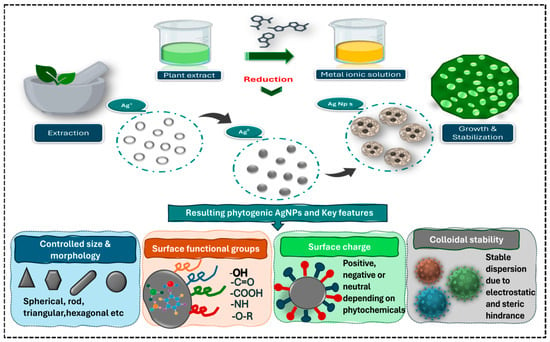
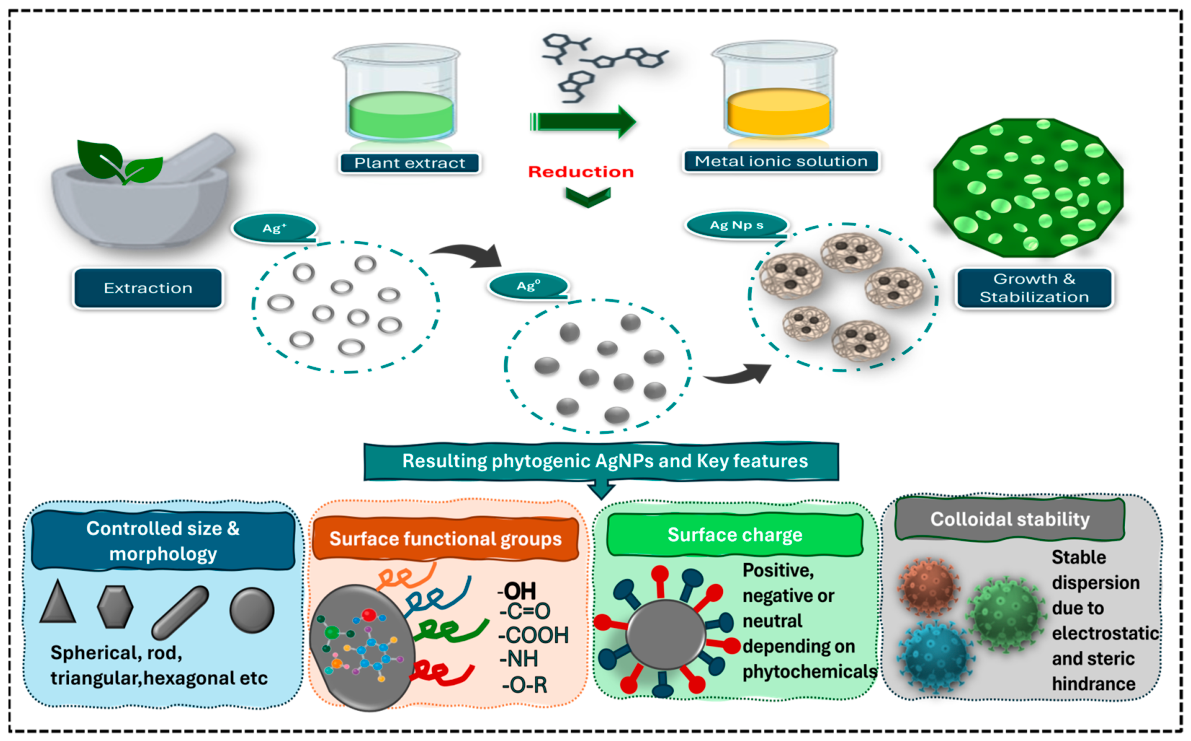
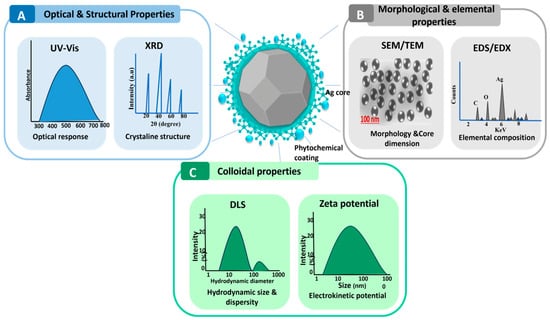
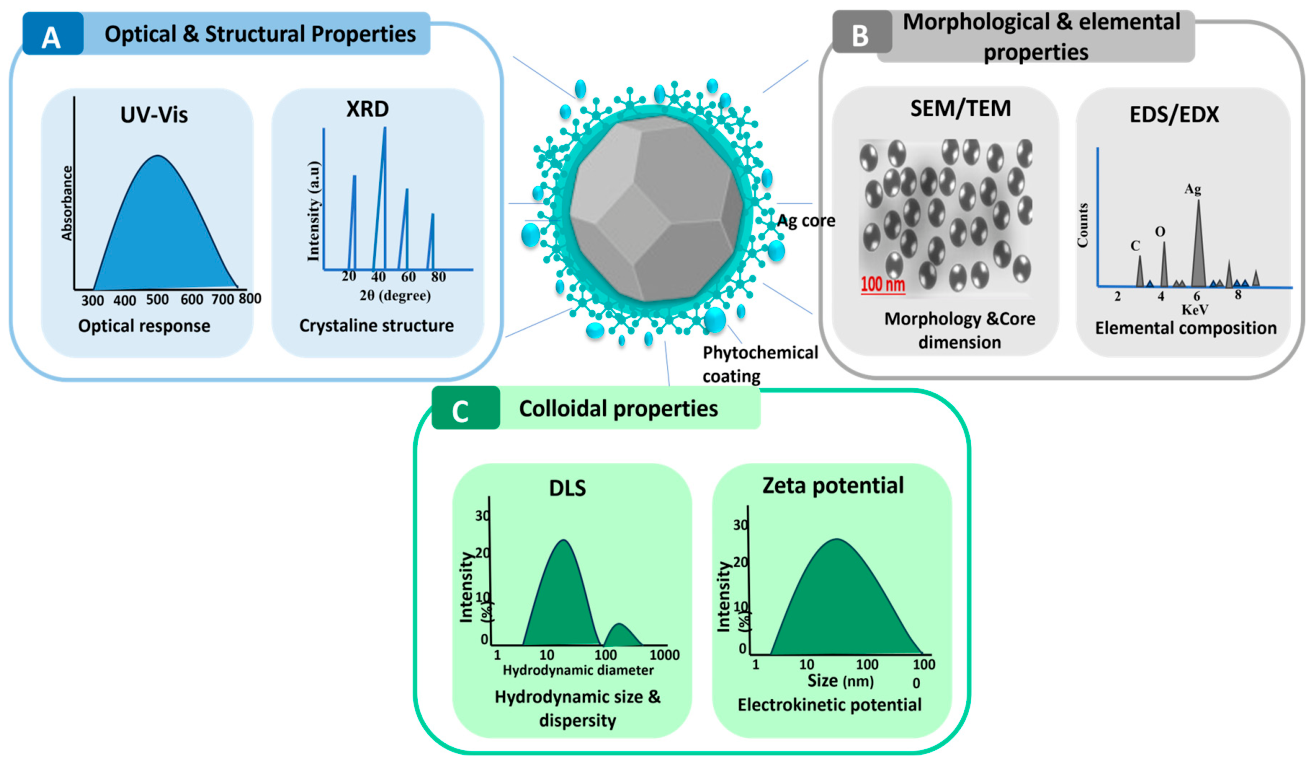
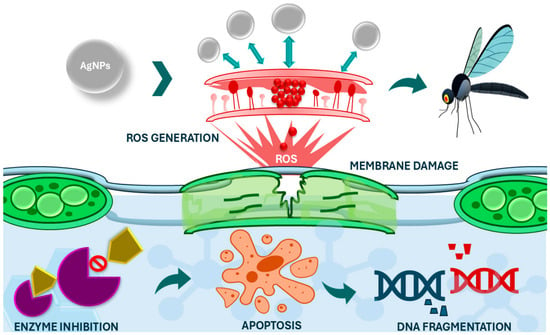
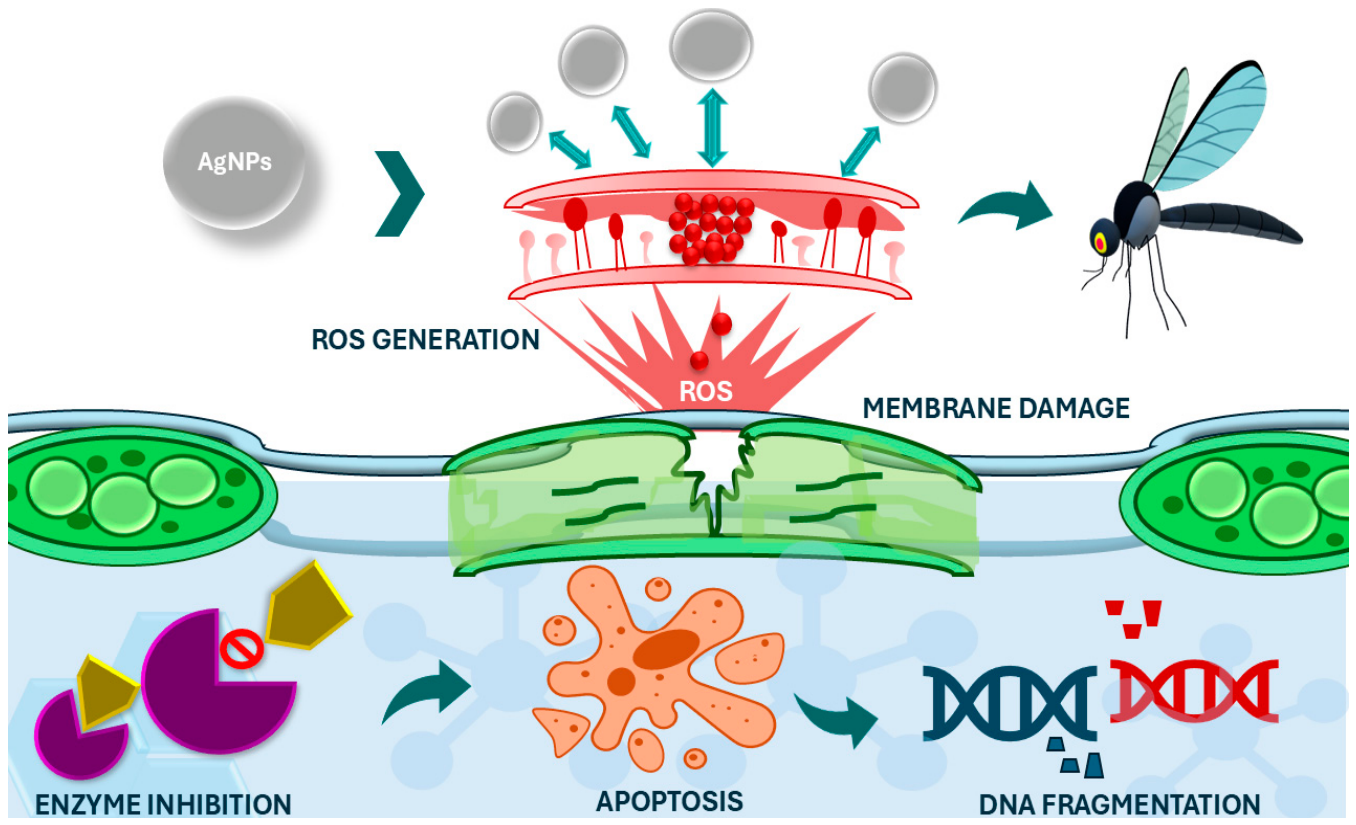
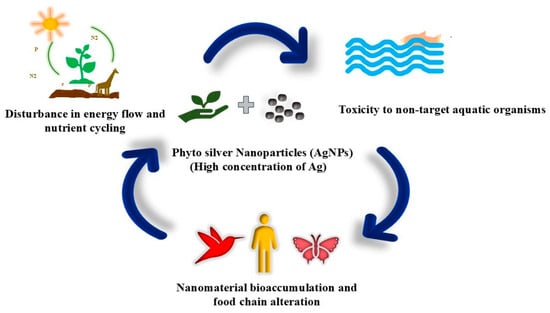
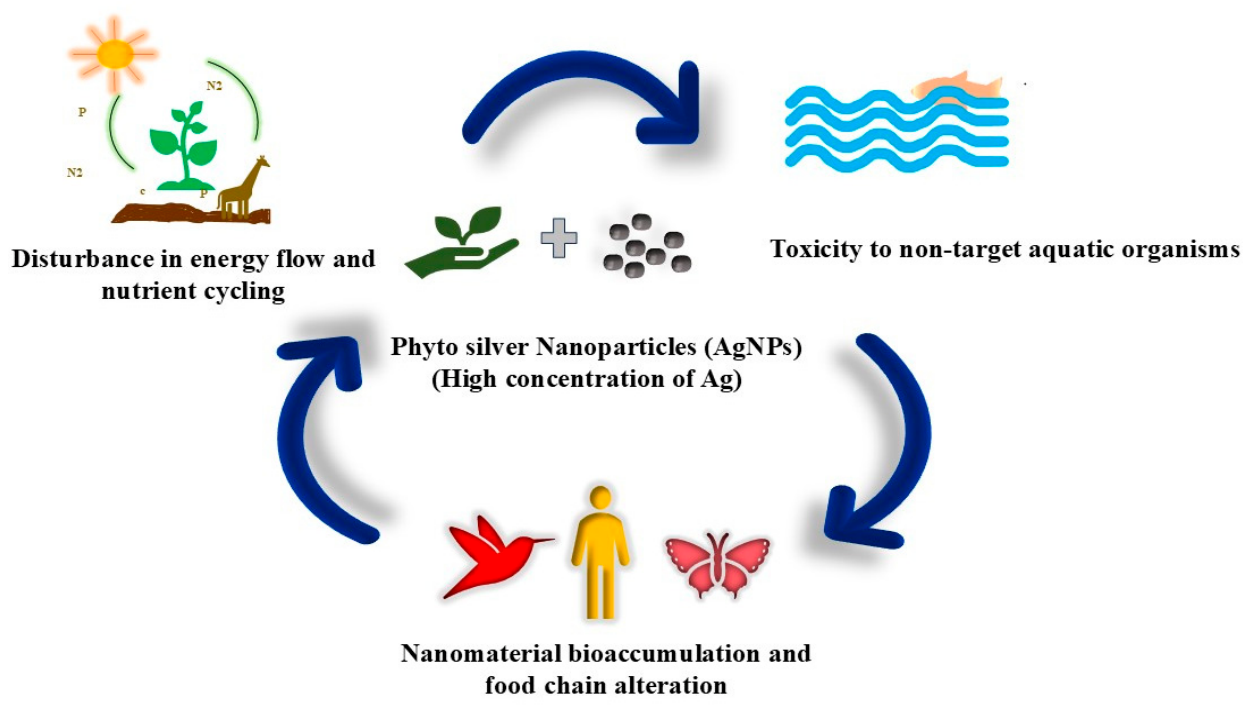

Disclaimer/Publisher’s Note: The statements, opinions and data contained in all publications are solely those of the individual author(s) and contributor(s) and not of MDPI and/or the editor(s). MDPI and/or the editor(s) disclaim responsibility for any injury to people or property resulting from any ideas, methods, instructions or products referred to in the content. |
© 2026 by the authors. Licensee MDPI, Basel, Switzerland. This article is an open access article distributed under the terms and conditions of the Creative Commons Attribution (CC BY) license.