


Abstract
Salvia przewalskii Maxim. is a perennial alpine plant with significant ornamental and medicinal value. However, previous studies have shown that this species has a low germination rate under natural conditions, and its artificial propagation techniques remain unclear. This study aimed to investigate the seed quality and the effects of various pre-sowing treatments (storage, chemical, physical, hormonal, combined) and soil substrates on S. przewalskii germination. The results indicated that S. przewalskii seeds demonstrated high viability (>85%) but exhibited high empty seed rate (45.32%) and physiological dormancy. Compared with the control (20%), dehydration (24.44%), demucilage + dehydration combination (35.56%), storage at 4 °C for 360 (53.33%) and 450 (54.29%) days, and GA3 (44.44–55.56%) treatments significantly enhanced S. przewalskii germination percentages. Demucilage, H2SO4 and KNO3 treatments had negative effects on seed germination, while 6-BA treatment did not significantly improve seed germination. Among tested soil substrates, S. przewalskii seeds pre-chilled for 450 days showed the highest germination rate (71.11%) and optimal seedling growth in peat:vermiculite (3:1), representing the most suitable soil substrate. These findings demonstrate that understanding germination characteristics of S. przewalskii is crucial for developing protocols to enhance germination efficiency that can improve large-scale propagation capacity through shorter germination periods, ultimately enhancing the species regeneration potential and protecting its stability in nature.
1. Introduction
With more than 1000 species, sage is the largest genus in the Lamiaceae [1]. Because of its various plant and flower types, diverse flower colors, and high aromatic substances, the species are widely used in the horticultural, food and health, cosmetic, and medical industries [2,3,4,5]. There are over 100 species of East Asian Salvia, of which more than 80% are distributed in China [6,7]. About 40 of these species, including Salvia miltiorrhiza Bge. and Salvia przewalskii Maxim., are traditional Chinese medicines that have been widely used since the Eastern Han Dynasty for the treatment of cardiovascular diseases, hypertension, cirrhosis, stroke, and atherosclerosis [8,9,10]. Our preliminary investigation indicates that wild medicinal sage plant resources have declined sharply in recent years due to indiscriminate harvesting by humans [11]. Therefore, studying sage seed germination is of great significance for large-scale production and to meet market demand for medicinal purposes.
S. przewalskii is a perennial herb with purple flowers, mainly distributed in the alpine areas of southwest China, and has high ornamental and medicinal value [12,13,14,15]. Therefore, the expanded propagation of S. przewalskii is one of the effective ways to address the demand for and supply of medicinal sage. Wu et al. [16] investigated the germination rate of 20 alpine plants, including S. przewalskii, and found that its germination rate after 1 month of layer treatment was only 35.47%, indicating that it required less light for germination. Bilinska et al. [15] studied the effect of different storage temperatures on seed germination of S. przewalskii and found that storage at 4 °C and 16 °C for one year increased seed germination. These results are important for us to further explore the effect of different pre-sowing treatments on seed germination of S. przewalskii.
Mechanical scarification, hormonal treatments, chemical treatments and water treatments have been widely used to improve germination in plant species [17,18,19]. For example, Nazir et al. [19] found that the germination rate of S. rosmarinus was significantly increased to 10.00–36.66%, 6.66–24.83%, 10.17–48.33%, and 41.67–59.33%, respectively, compared to control through physical, chemical, hormonal, and pre-chilling and hormonal combined treatments. Dos Santos et al. [20] treated Euterpe edulis seeds from three habitats (including lowland, submontane, and montane forest) with water and found that the germination rate was higher in all low water potential treatments than in flooded treatments, and that the germination rate of seeds from the montane forest was the highest among all treatments at −1.0 MPa. In addition, the selection of soil substrates significantly affects seed germination and seedling growth, with suitable substrates providing optimal water supply for seed germination [21,22]. S. rosmarinus germinated significantly higher in soil:sand (1:1) than other substrates combinations, and performed the worst in soil:nanozim (1:1) [19]. Therefore, improving seed germination rates through these pre-sowing treatments and soil substrates could alleviate pressure on wild populations and is a viable approach to promote conservation and sustainability.
In this study, we compared seed size, weight, empty seed rate and viability of S. przewalskii, and improved the germination rate through storage, chemical, physical, hormonal, and combined (pre-chilling and physical, hormonal) treatments. We explored the suitable soil substrates for germination and growth of S. przewalskii through controlled component ratios. Our research aimed to answer the following questions: (1) What is the quality and germination of S. przewalskii seeds? (2) Why is the germination rate of S. przewalskii seeds low? How to improve the germination rate of S. przewalskii? (3) What is the most suitable soil substrate ratio for the germination and growth of S. przewalskii? We expect to identify the causes of poor germination in S. przewalskii, improve seed germination rates through pre-sowing treatments and soil substrates selection, and provide theoretical guidance for the large-scale production and market application of S. przewalskii.
2. Results
2.1. Seed Quality
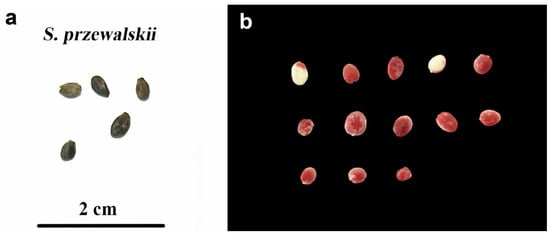
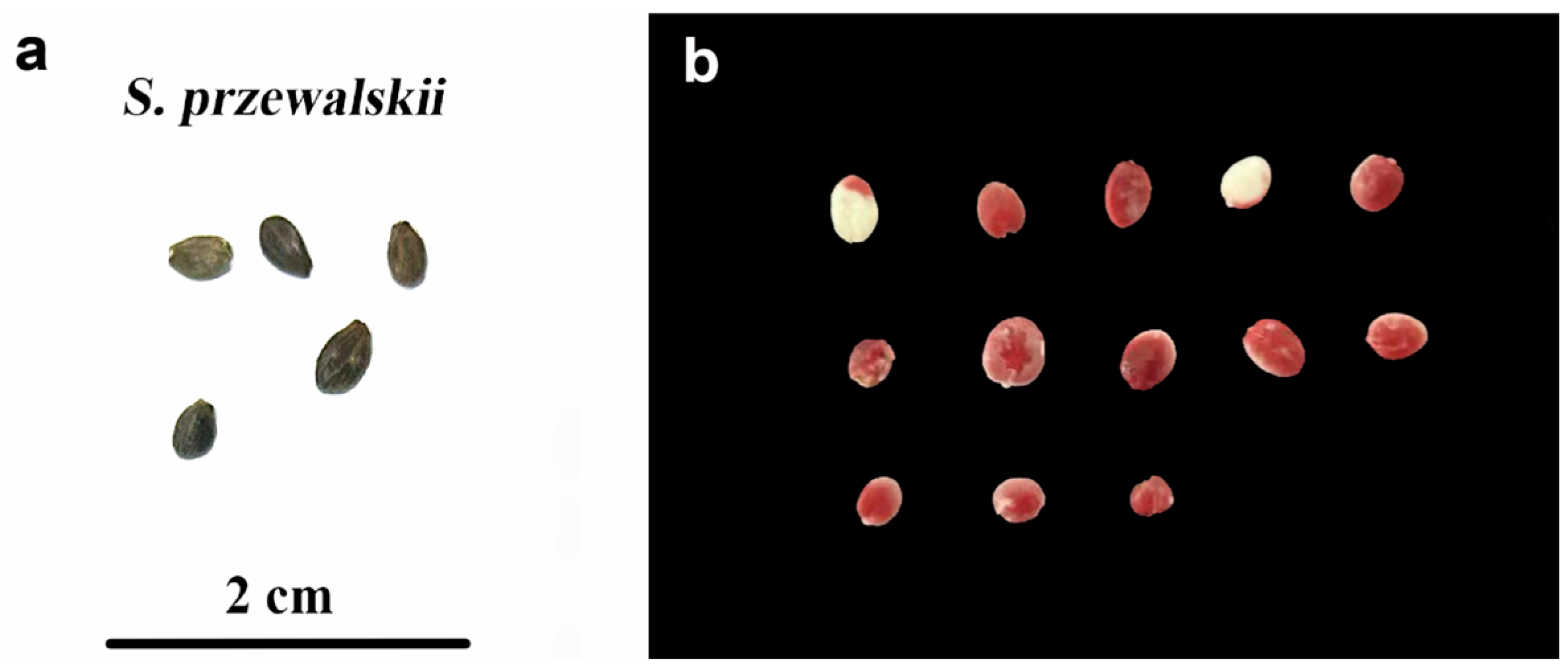
The seeds of S. przewalskii were long-ovate and tan (Figure 1a). Morphological measurements revealed that the length, width, and thickness of S. przewalskii seed were 3.80 ± 0.09 mm, 2.51 ± 0.07 mm, and 1.49 ± 0.03 mm, respectively. The hundred-seed weight of S. przewalskii was 0.50 ± 0.00 g, and the empty seed rate was 45.32 ± 0.72%. Notably, S. przewalskii seeds exhibited high seed viability, at 87.02 ± 1.26% (Figure 1b).
Figure 1.
Seed morphology and viability of Salvia przewalskii. (a) Seed morphology; (b) seed viability; red color for viable seeds and white color for nonviable seeds.
2.2. Germination Response to Storage Times
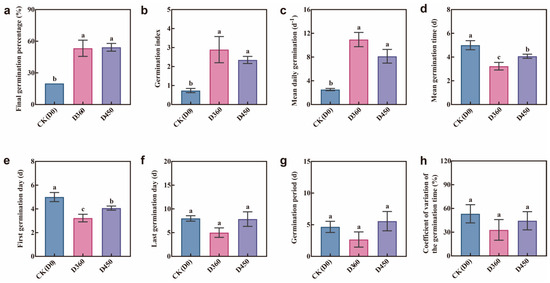
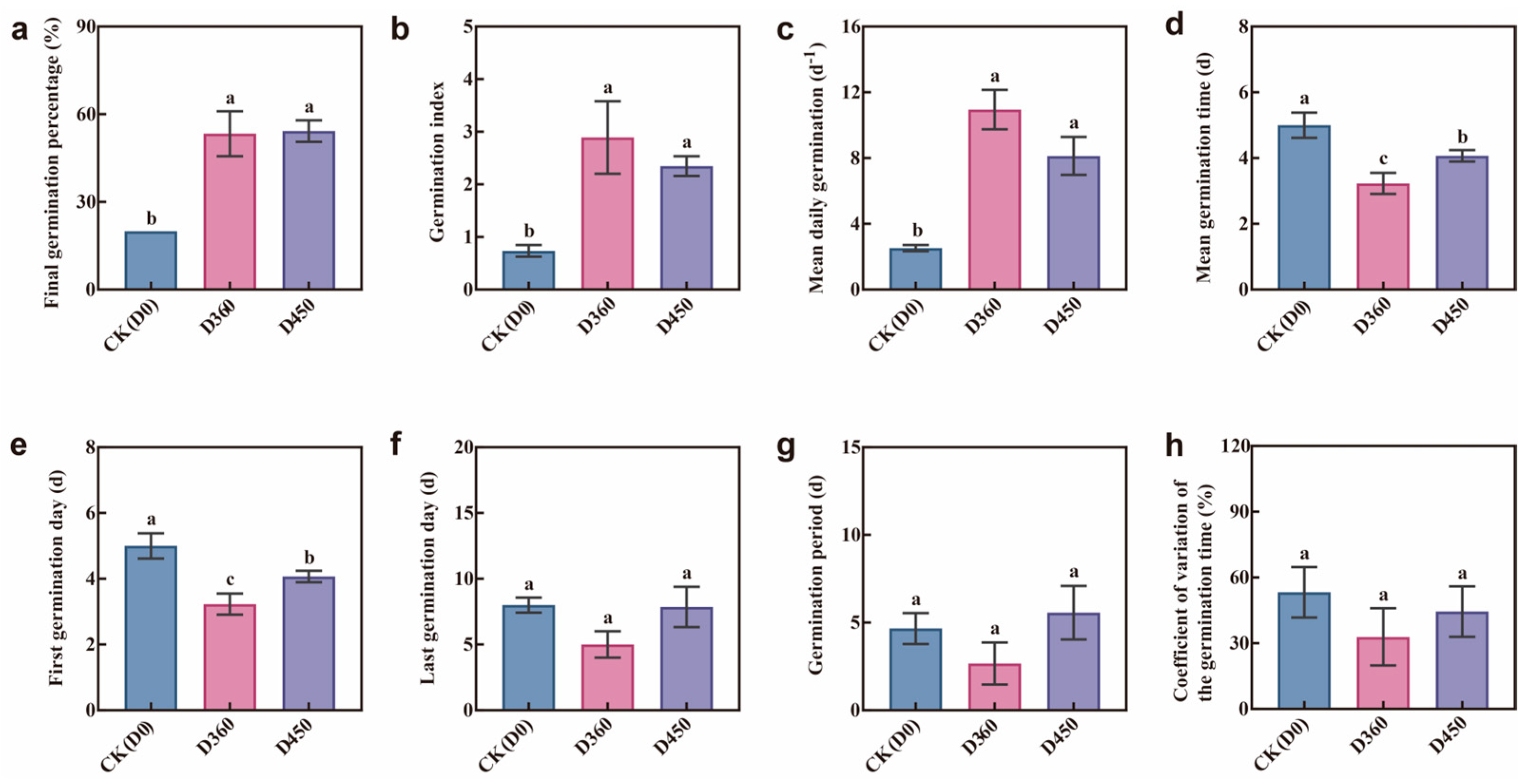
Both fresh seeds (D0 treatment) and stored seeds (D360 and D450 treatments) of S. przewalskii started to germinate within 2–4 days, and the germination percentage of D0 treatment was 20.00 ± 0.00%, significantly lower than that of D360 treatment (53.33 ± 7.70%) and D450 treatment (54.29 ± 3.69%) (χ2 = 37.438, dƒ = 2/10, p < 0.001; Figure 2a). Similarly, there was no significant difference in the GI and MDG of S. przewalskii in D360 treatment compared to D450 treatment, but both were significantly higher than those of D0 treatment (χ2 = 23.284, dƒ = 2/10, p < 0.001; Figure 2b; χ2 = 22.819, dƒ = 2/10, p < 0.001; Figure 2c). Comparison of MGT revealed a decreasing and then increasing trend among S. przewalskii seeds of the three storage times (χ2 = 22.346, dƒ = 2/10, p < 0.001; Figure 2d). The MGT of D0 treatment was the longest, at 5.00 ± 0.38 d, significantly higher than those stored for 360 and 450 days. The MGT of D360 treatment was shortest, at 3.23 ± 0.32 d, significantly lower than those stored for 450 days. However, there was no significant difference in GP and CVt for all three storage times (χ2 = 2.075, dƒ = 2/10, p = 0.354; Figure 2g; χ2 = 1.111, dƒ = 2/10, p = 0.574; Figure 2h). These results suggest that dormancy exists in fresh seeds of S. przewalskii, and pre-chilling treatment can effectively break seed dormancy and shorten the mean germination time.
Figure 2.
Effect of pre-chilling treatments on germination characteristics of Salvia przewalskii seeds. (a) Final germination percentage (FGP); (b) germination index (GI); (c) mean daily germination (MDG); (d) mean germination time (MGT); (e) first germination day (FGD); (f) last germination day (LGD); (g) germination period (GP); (h) coefficient of variation in the germination time (CVt) (mean ± SEM). CK (D0) refers to fresh seeds. D360 and D450 refers to pre-chilled seeds at 4 °C for 360 and 450 days, respectively. Different lowercase letters indicate significant differences among the treatments (p < 0.05).
2.3. Germination Response to Chemical Treatments
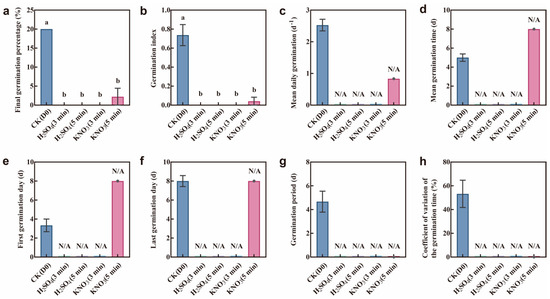
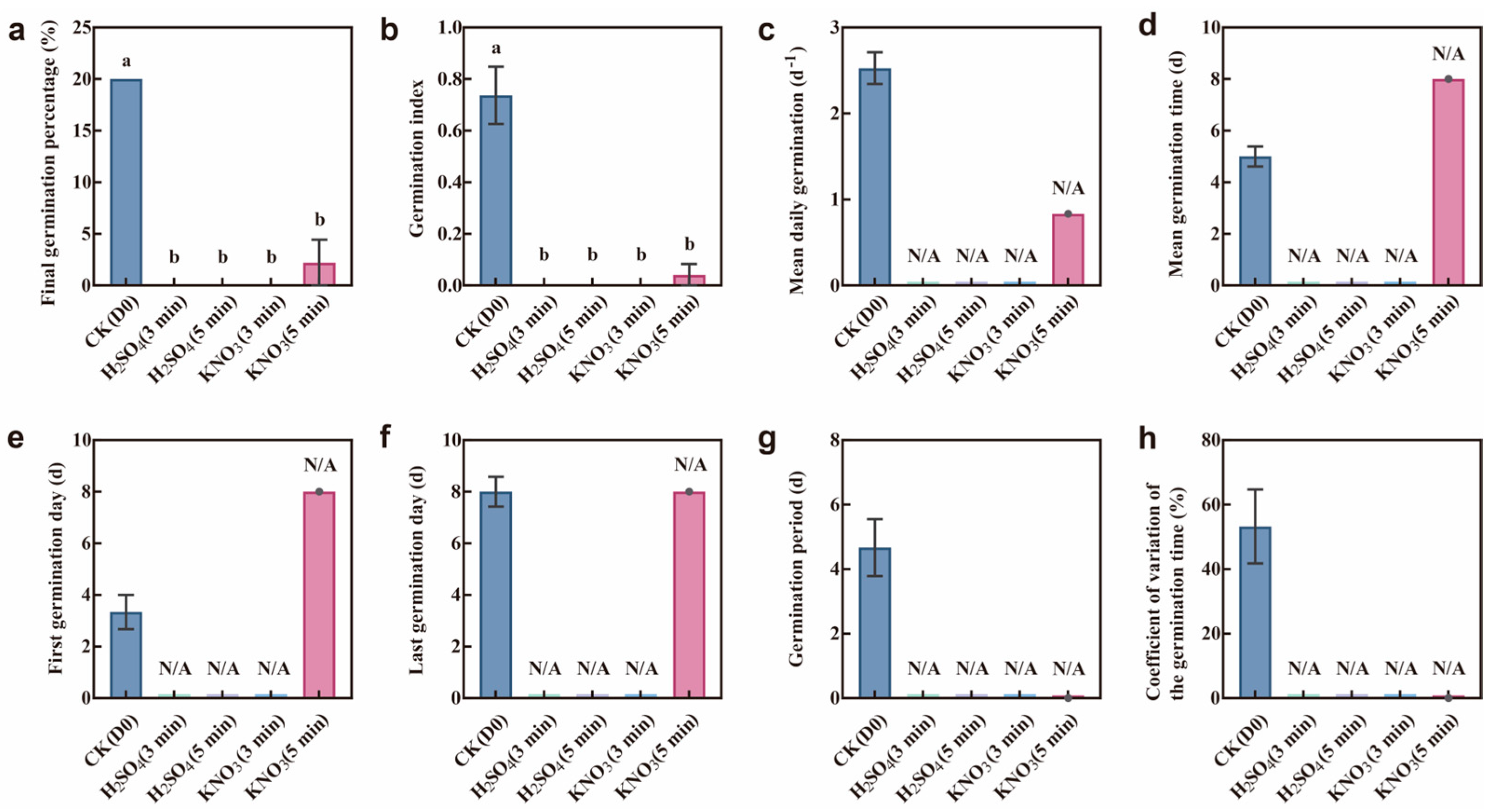
The results of the two chemical treatments, potassium nitrate and sulfuric acid, showed that only one seed in S. przewalskii treated with 0.6% potassium nitrate for 5 min germinated on the eighth day, with a germination percentage of 2.22 ± 2.22%, while the rest did not germinate, significantly lower than that of the control by 20.00 ± 0.00% (χ2 = 465.000, dƒ = 4/10, p < 0.001; Figure 3a). GI also showed the same trend (χ2 = 226.909, dƒ = 4/10, p < 0.001; Figure 3b). These results indicate that the two chemical treatments had a negative effect on seed germination in S. przewalskii.
Figure 3.
Effect of chemical treatments on germination characteristics of Salvia przewalskii seeds. (a) Final germination percentage (FGP); (b) germination index (GI); (c) mean daily germination (MDG); (d) mean germination time (MGT); (e) first germination day (FGD); (f) last germination day (LGD); (g) germination period (GP); (h) coefficient of variation in the germination time (CVt) (mean ± SEM). CK (D0) refers to fresh seeds. N/A indicates that the data is not applicable due to insufficient germination. Different lowercase letters indicate significant differences among the treatments (p < 0.05).
2.4. Germination Response to Physical Treatments
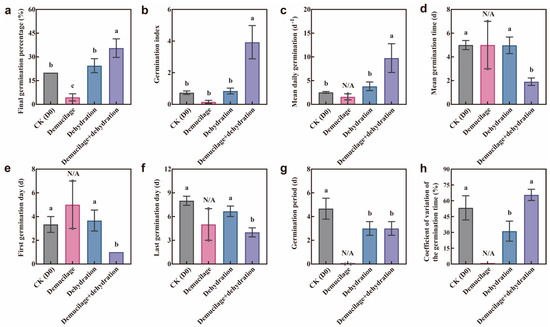
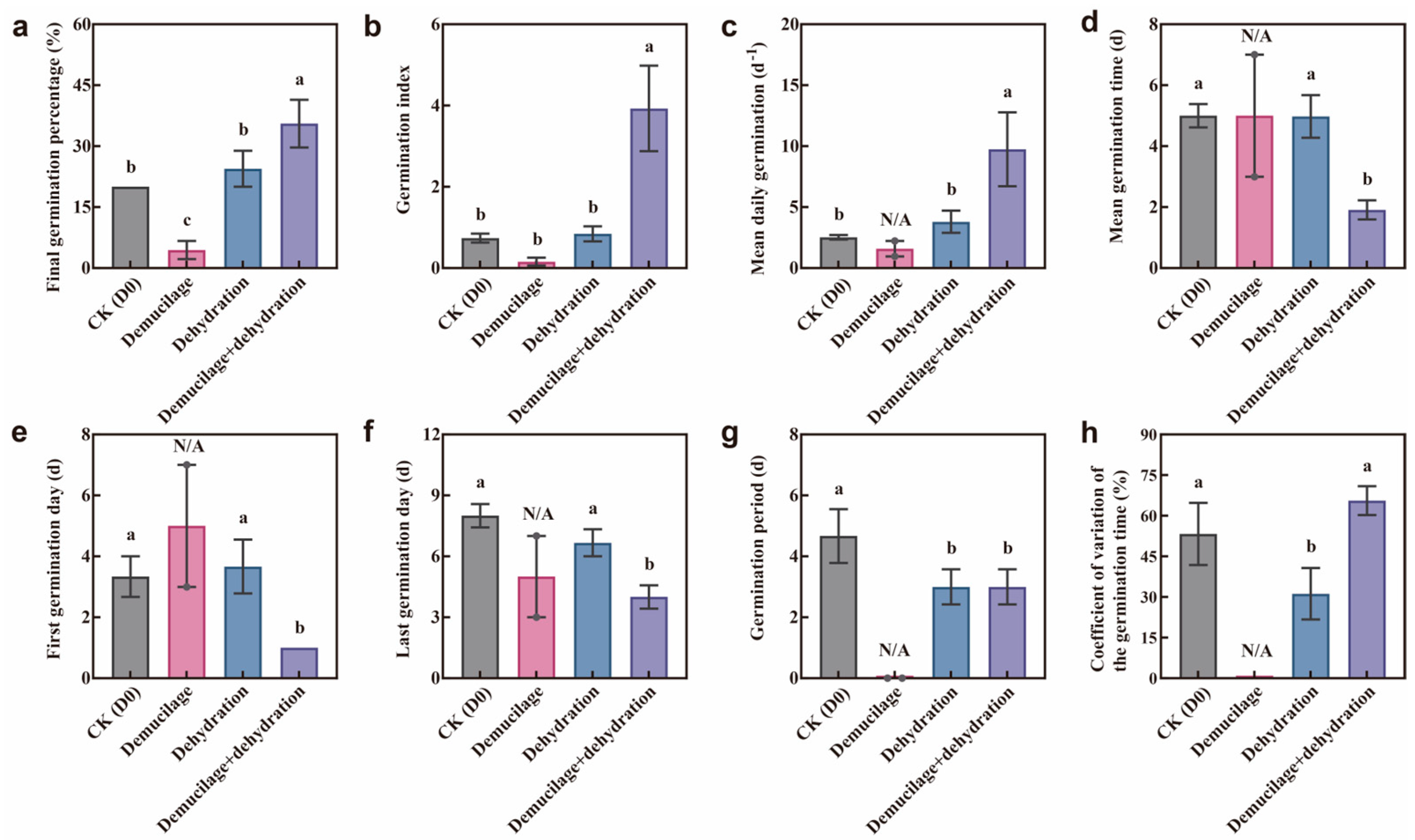
The germination percentages of the three physical treatments of demucilage, dehydration and their combination differed significantly (χ2 = 50.500, dƒ = 3/8, p < 0.001; Figure 4a). Demucilage treatment significantly reduced S. przewalskii seed germination by only 4.44 ± 2.22% compared to the control. The germination rate of dehydration treatment, on the other hand, was not significantly different from the control. The combined treatment of demucilage and dehydration resulted in a germination percentage of up to 35.56 ± 5.88%, which was significantly higher than the control. Similarly, the combined treatment of demucilage and dehydration had the highest GI and MDG of 3.93 ± 1.05 and 4.98 ± 0.07, respectively, which were significantly higher than the control and the other two physical treatments, and there was no significant difference between the dehydration treatment and the control (χ2 = 47.295, dƒ = 3/8, p < 0.001; Figure 4b; χ2 = 38.643, dƒ = 2/6, p < 0.001; Figure 4c). The combined treatment of demucilage and dehydration concentrated germination on days 1–5, significantly faster than the control and the other two physical treatments (days 3–9) (χ2 = 15.545, dƒ = 2/6, p < 0.001; Figure 4e; χ2 = 33.600, dƒ = 2/6, p < 0.001; Figure 4f). MGT also showed a consistent trend (χ2 = 38.643, dƒ = 2/6, p < 0.001; Figure 4d). CVt comparison revealed no significant difference between the combined treatment of demucilage and dehydration and the control, but both were significantly higher than the dehydration treatment (χ2 = 10.921, dƒ = 2/6, p = 0.040; Figure 4h).
Figure 4.
Effect of physical treatments on germination characteristics of Salvia przewalskii seeds. (a) Final germination percentage (FGP); (b) germination index (GI); (c) mean daily germination (MDG); (d) mean germination time (MGT); (e) first germination day (FGD); (f) last germination day (LGD); (g) germination period (GP); (h) coefficient of variation in the germination time (CVt) (mean ± SEM). CK (D0) refers to fresh seeds. N/A indicates that the data is not applicable due to insufficient germination. Different lowercase letters indicate significant differences among the treatments (p < 0.05).
2.5. Germination Response to Hormonal Treatments
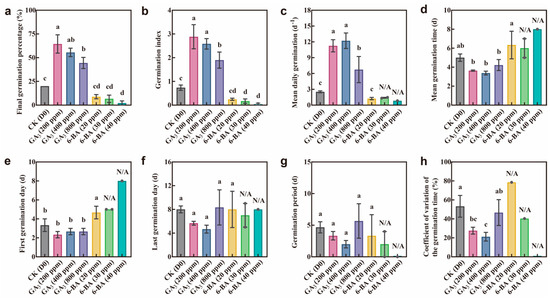
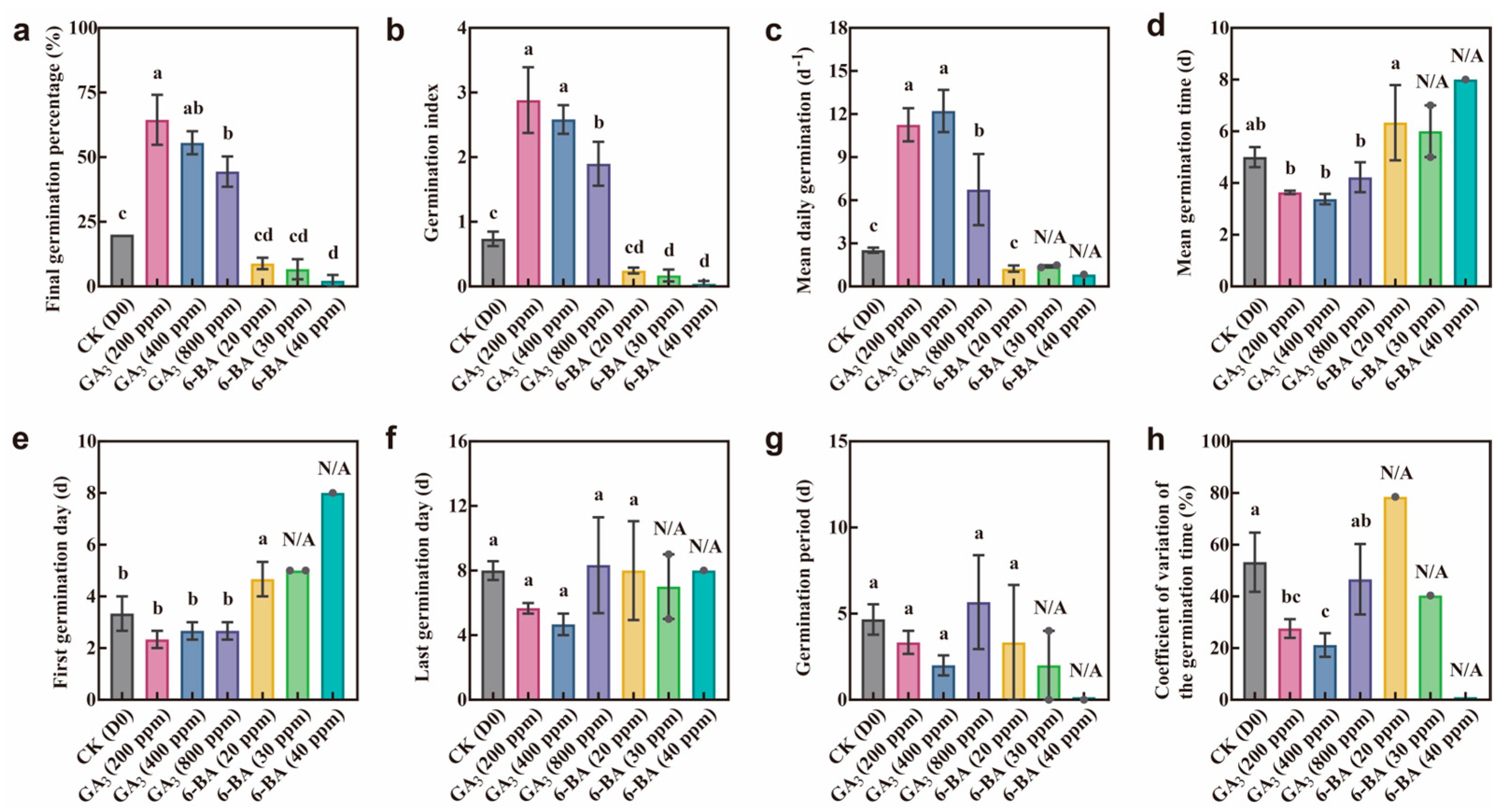
The differences in germination percentages of S. przewalskii between the two hormonal treatments, GA3 and 6-BA, were significant (χ2 = 237.000, dƒ = 6/14, p < 0.001; Figure 5a). Germination percentages decreased progressively with the increase of 6-BA concentration compared to control. The germination percentages of S. przewalskii seeds in 20 ppm and 30 ppm 6-BA treatments were slightly lower than those in CK and slightly higher than those in 40 ppm 6-BA treatment, but the differences were not statistically significant. The germination percentage in 40 ppm 6-BA treatment was significantly lower than that in CK. All GA3 treatments increased S. przewalskii seed germination. The FGP of 200 ppm GA3 treatment was the highest (64.44 ± 9.69%), slightly higher than the 400 ppm GA3 treatment (55.56 ± 4.44%), but the difference was not significant; the 800 ppm GA3 treatment had the lowest germination (44.44 ± 5.88%), significantly lower than the 200 ppm, but not significantly different from the 400 ppm. GI and MDG showed similar trends, with the difference being that the 400 ppm GA3 treatment had a significantly higher GI and MDG than those of 800 ppm GA3 treatment, and the GI of 30 ppm 6-BA treatment was significantly lower than that of the control (χ2 = 222.099, dƒ = 6/14, p < 0.001; Figure 5b; χ2 = 76.035, dƒ = 4/10, p < 0.001; Figure 5c). The FGD of the three GA3 treatments was slightly earlier than the control, but there was no significant difference and all of them were significantly earlier than the 20 ppm 6-BA treatment (χ2 = 21.273, dƒ = 4/10, p = 0.363; Figure 5e). MGT also showed a similar trend, but the difference between the 20 ppm 6-BA treatment and the control was not significant (χ2 = 16.147, dƒ = 4/10, p = 0.003; Figure 5d). Comparing LDG and GP, it was found that there was no significant difference between the three GA3 treatments and 20 ppm 6-BA treatment and the control (χ2 = 4.333, dƒ = 4/10, p = 0.363; Figure 5f; χ2 = 2.950, dƒ = 4/10, p = 0.566; Figure 5g). The CVt of the 400 ppm GA3 hormonal treatment was the lowest at 21.20 ± 4.59%, significantly lower than 800 ppm GA3 treatment (46.66 ± 13.61%) and the control (53.26 ± 11.47%), but not significantly different from 200 ppm GA3 treatment (27.58 ± 3.62%) (χ2 = 11.893, dƒ = 3/8, p = 0.008; Figure 5h).
Figure 5.
Effect of hormone pre-soaking treatments on germination characteristics of Salvia przewalskii seeds. (a) Final germination percentage (FGP); (b) germination index (GI); (c) mean daily germination (MDG); (d) mean germination time (MGT); (e) first germination day (FGD); (f) last germination day (LGD); (g) germination period (GP); (h) coefficient of variation in the germination time (CVt) (mean ± SEM). CK (D0) refers to fresh seeds. N/A indicates that the data is not applicable due to insufficient germination. Different lowercase letters indicate significant differences among the treatments (p < 0.05).
2.6. Germination Response to Pre-Chilling Combination Treatments
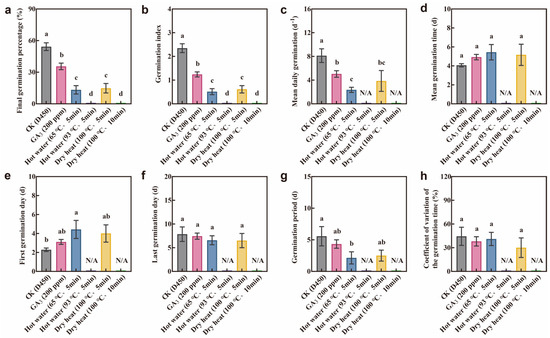
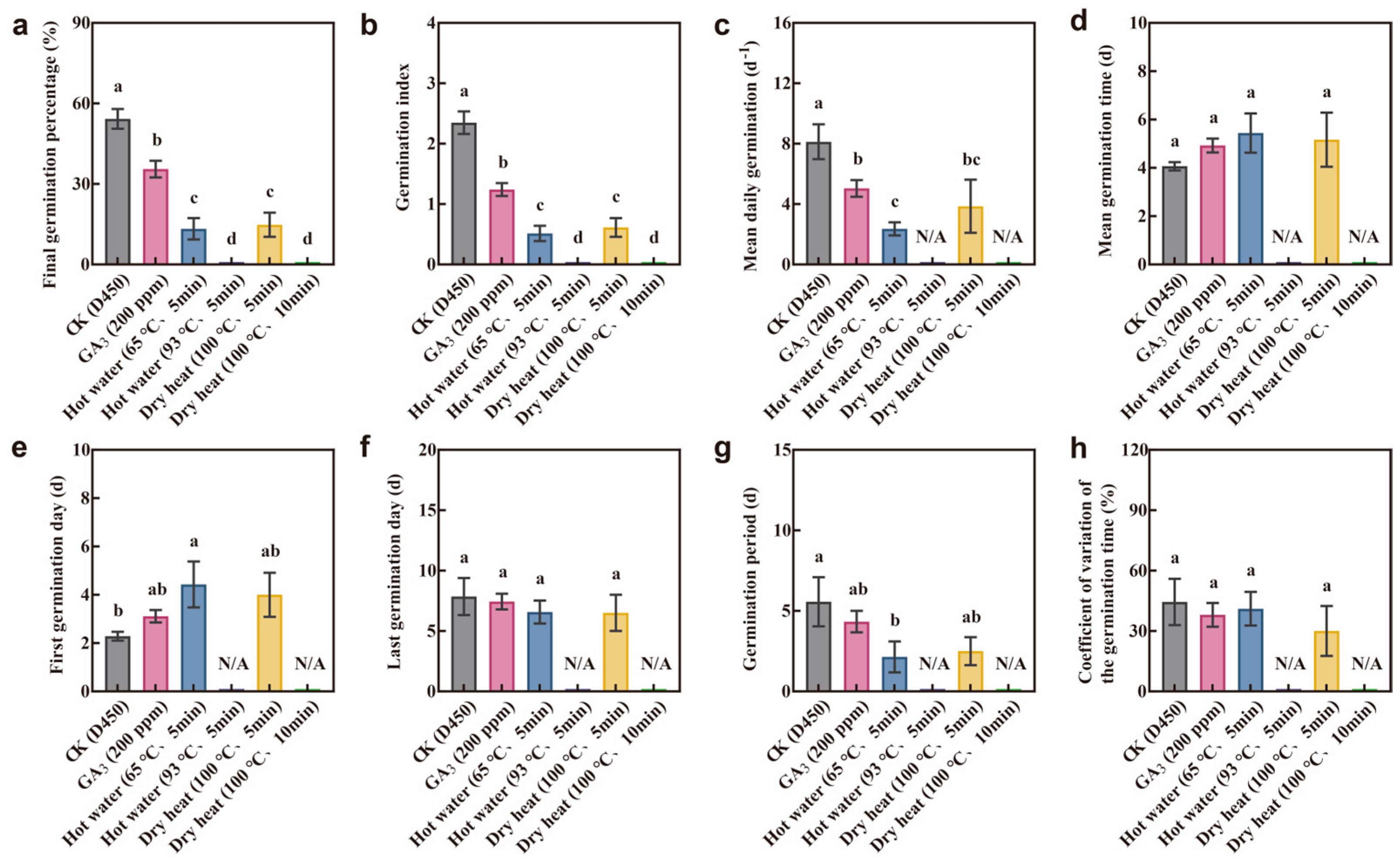
All pre-chilling + physical and pre-chilling + hormonal combination treatments had significantly lower germination percentages than the control (D450 treatment). In the pre-chilling + hot water bath treatments, the seed germination percentages were significantly decreased to 0 with the increase in the water bath temperature. And in the pre-chilling + dry heat treatments, the seed germination percentages were also significantly reduced to 0 with the increase in the dry heat time. Among them, the germination percentage of the pre-chilling + dry heat (100 °C, 5 min) combination treatment (14.79 ± 4.51%) was slightly higher than that of the pre-chilling + hot water (65 °C, 5 min) combination treatment (13.33 ± 3.98%), but there was no significant difference. Both of them were significantly higher than the pre-chilling + hot water (93 °C, 5 min) and pre-chilling + dry heat (100 °C, 10 min) combination treatment (both at 0.00 ± 0.00%), and significantly lower than pre-chilling + 200 ppm GA3 combination treatment (35.56 ± 3.14%) (χ2 = 328.654, dƒ = 5/41, p < 0.001; Figure 6a). GI also showed a consistent trend (χ2 = 389.458, dƒ = 5/41, p < 0.001; Figure 6b). Similarly, the MDG of pre-chilling + dry heat (100 °C, 5 min) was slightly lower than that of the control and pre-chilling + 200 ppm GA3 combination treatment, and slightly higher than that of the pre-chilling + hot water (65 °C, 5 min) combination treatment, but there was no significant difference. Whereas the MDG of the pre-chilling + 200 ppm GA3 combination treatment was not significantly different from the control, it was significantly higher than the pre-chilling + hot water (65 °C, 5 min) combination treatment (χ2 = 27.024, dƒ = 3/23, p < 0.001; Figure 6c). Compared with the control, there were no significant differences in MGT, LGD, and CVt for all the pre-chilling combination treatments (χ2 = 3.866, dƒ = 3/23, p = 0.276; Figure 6d; χ2 = 1.154, dƒ = 3/23, p = 0.764; Figure 6f; χ2 = 1.250, dƒ = 3/20, p = 0.741; Figure 6h). Except for the GP being significantly lower than the control in the pre-chilling + hot water (65 °C, 5 min) combination treatments, there were no significant differences between the other combination treatments and the control (χ2 = 7.679, dƒ = 3/23, p = 0.053; Figure 6g).
Figure 6.
Effect of recombination treatments on germination characteristics of Salvia przewalskii seeds. (a) Final germination percentage (FGP); (b) germination index (GI); (c) mean daily germination (MDG); (d) mean germination time (MGT); (e) first germination day (FGD); (f) last germination day (LGD); (g) germination period (GP); (h) coefficient of variation in the germination time (CVt) (mean ± SEM). CK (D450) refers to pre-chilled seeds at 4 °C for 450 days. N/A indicates that the data is not applicable due to insufficient germination. Different lowercase letters indicate significant differences among the treatments (p < 0.05).
2.7. The Influence of Soil Substrates on Germination and Seedling Growth
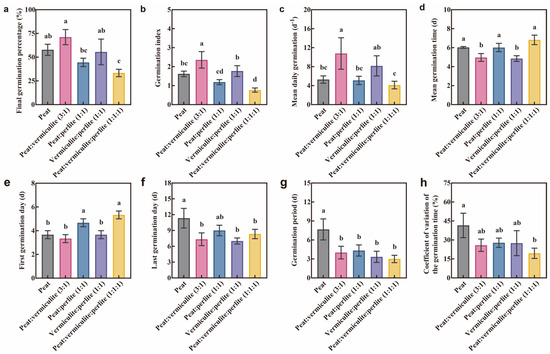
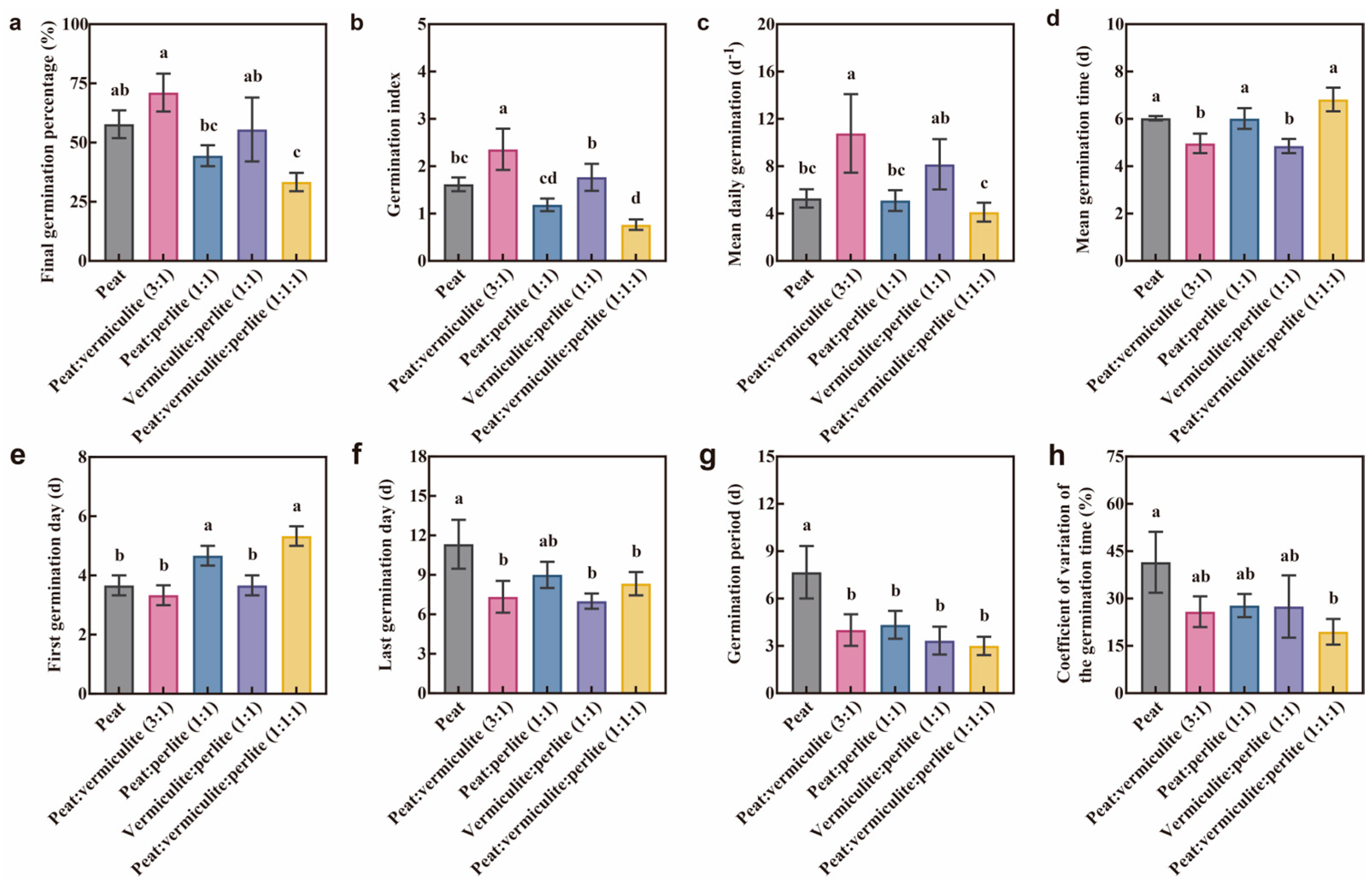
Significant differences were observed between the germination percentages of different types of soil substrates and ratios (Figure 7a). The highest germination percentage of S. przewalskii seeds was found in peat:vermiculite (3:1) (71.11 ± 8.01%), significantly higher than peat:perlite (1:1) (44.44 ± 4.44%) and peat:vermiculite:perlite (1:1:1) (33.33 ± 3.85%), and slightly higher than peat (57.78 ± 5.88%) and perlite:vermiculite (1:1) (55.56 ± 13.52%), but the difference was not significant (χ2 = 19.359, dƒ = 4/10, p < 0.001; Figure 7a). GI also showed a similar trend (χ2 = 33.718, dƒ = 4/10, p < 0.001; Figure 7b). Similarly, the MDG of S. przewalskii seeds in peat:vermiculite (3:1) was the highest, which was slightly higher than perlite:vermiculite (1:1), but there was no significant difference, significantly higher than the other three groups (χ2 = 12.838, dƒ = 4/10, p = 0.012; Figure 7c). Perlite:vermiculite (1:1) had the lowest MGT, at 4.86 ± 0.30 d, slightly lower than peat:vermiculite (3:1), but not significantly different, and all were significantly lower than the remaining three groups (χ2 = 28.648, dƒ = 4/10, p < 0.001; Figure 7d). A similar trend was observed for FGD and LGD, with the earliest initiation of germination on the 3rd to 4th day in peat, peat:vermiculite (3:1) and perlite:vermiculite (1:1), which differed significantly from the other two groups. Peat:vermiculite (3:1), perlite:vermiculite (1:1) and peat:vermiculite:perlite (1:1:1) ended germination as early as at 5–10 days, significantly earlier than peat, but not significantly different from peat:perlite (1:1) (χ2 = 37.800, dƒ = 4/10, p < 0.001; Figure 7e; χ2 = 12.714, dƒ = 4/10, p = 0.013; Figure 7f). However, the peat treatment had the longest GP and CVt, with a GP of 7.67 ± 1.67 d, significantly higher than the remaining four groups, and a CVt of 41.52 ± 16.73%, significantly higher than peat:vermiculite:perlite (1:1:1), with no significant difference with the other three groups (χ2 = 18.412, dƒ = 4/10, p = 0.001; Figure 7g; χ2 = 7.989, dƒ = 4/10, p = 0.092; Figure 7h). These results indicate that peat:vermiculite (3:1) had the highest germination percentage and germination index, shorter mean germination time, more concentrated germination period, and was the most suitable for seed germination of S. przewalskii.
Figure 7.
Effect of different potting media combinations on germination characteristics of Salvia przewalskii seeds. (a) Final germination percentage (FGP); (b) germination index (GI); (c) mean daily germination (MDG); (d) mean germination time (MGT); (e) first germination day (FGD); (f) last germination day (LGD); (g) germination period (GP); (h) coefficient of variation in the germination time (CVt) (mean ± SEM). Different lowercase letters indicate significant differences among the treatments (p < 0.05).
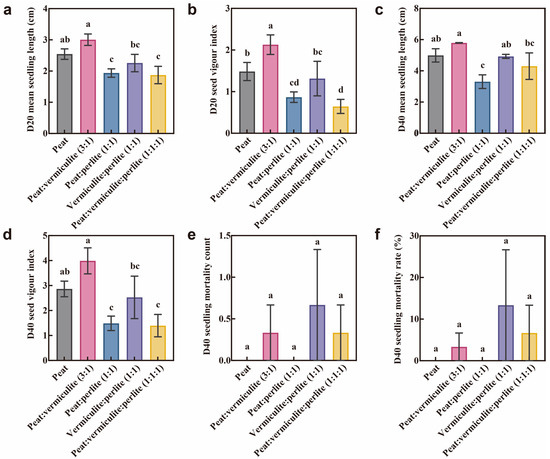
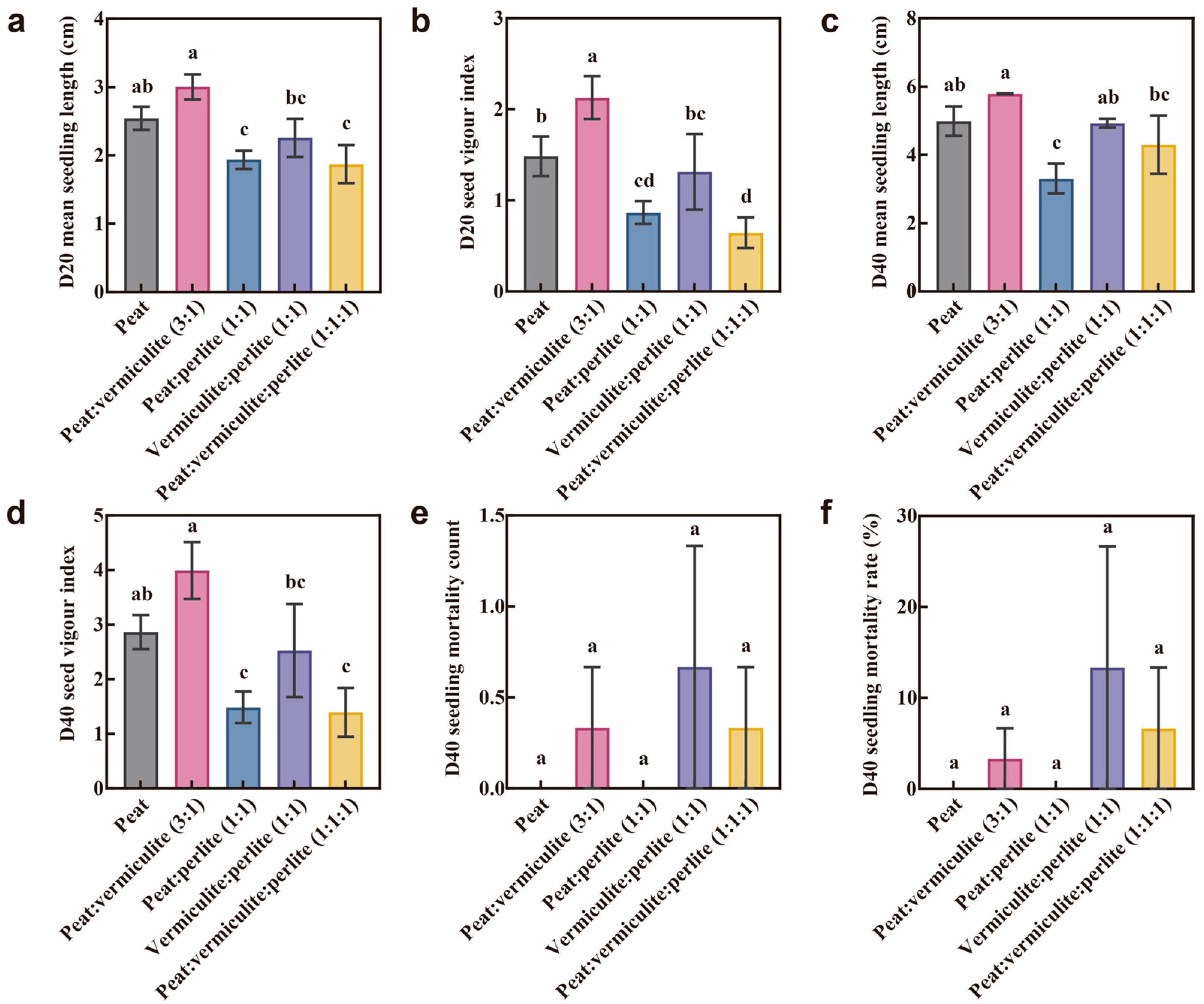
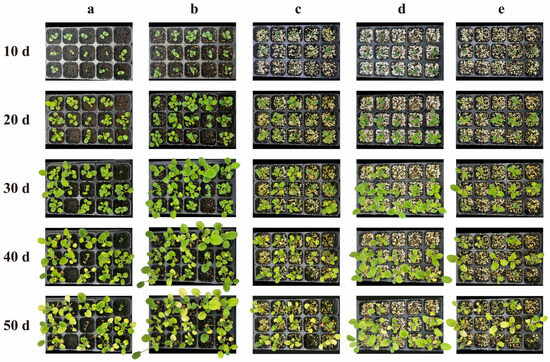
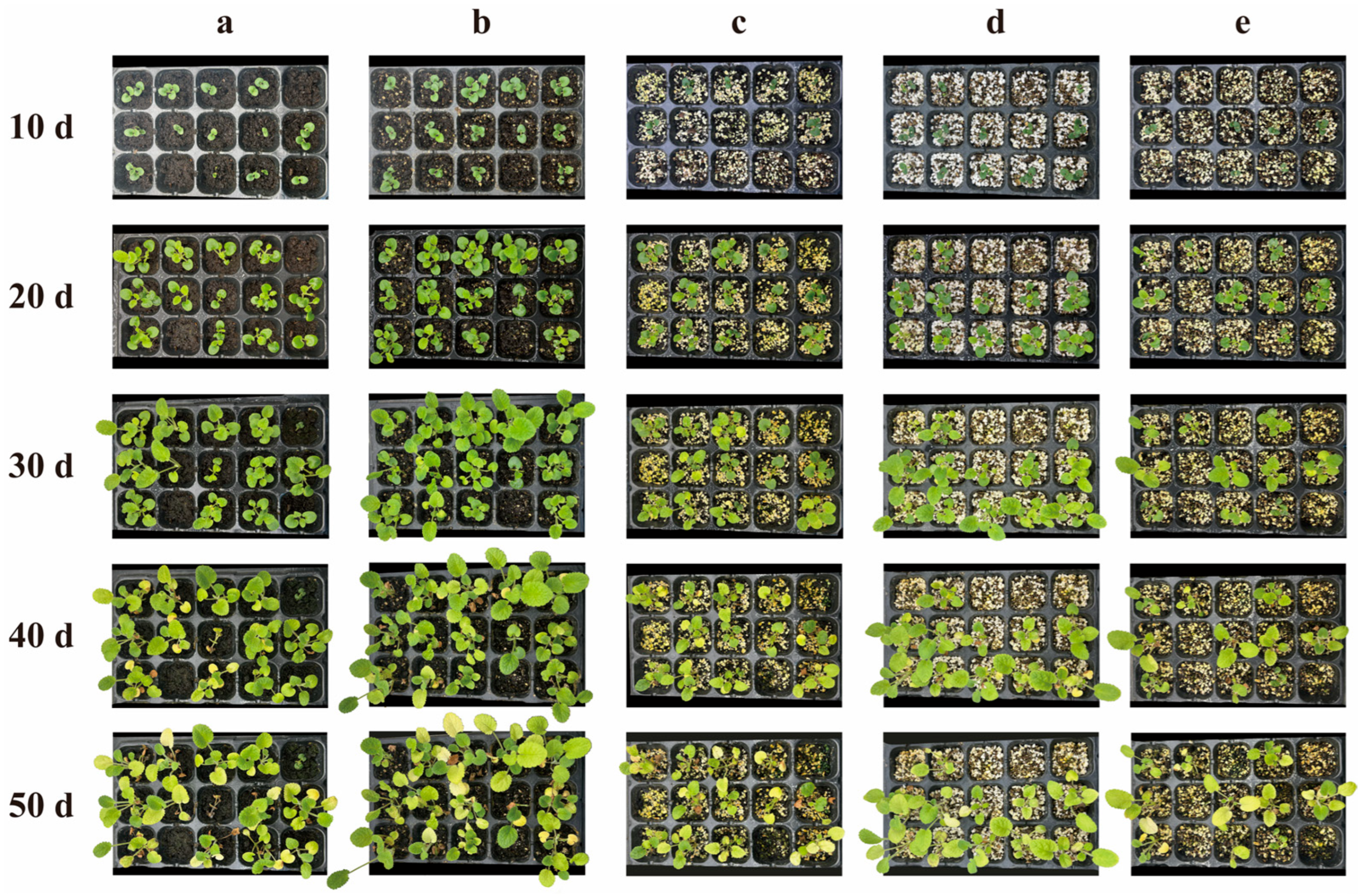
There were significant differences in the mean seedling length (Ls) and seedling vigor index (SVI) of S. przewalskii seedlings grown in different soil substrates (Figure 8 and Figure 9). The highest Ls of 3.01 ± 0.18 cm was observed in peat:vermiculite (3:1) on the 20th day, which was slightly higher than peat but not significantly different, and significantly higher than the other three groups; the lowest Ls of 1.87 ± 0.28 cm was observed in peat:vermiculite:perlite (1:1:1), which was slightly lower than peat:perlite (1:1) and perlite:vermiculite (1:1), but the difference was not significant (χ2 = 27.731, dƒ = 4/10, p < 0.001; Figure 8a). Similarly, the SVI of peat:vermiculite (3:1) on the 20th day was the highest at 2.13 ± 0.24, significantly higher than the other four groups, and the SVI of perlite:vermiculite (1:1) was significantly higher than peat:vermiculite:perlite (1:1:1), slightly higher than peat:perlite (1:1), and slightly lower than peat, but not significantly different (χ2 = 31.454, dƒ = 4/10, p < 0.001; Figure 8b).
Figure 8.
Effect of combination of potting media on growth characteristics of Salvia przewalskii seeds. (a) D20 mean seedling length (Ls); (b) D20 seed vigor index (SVI); (c) D40 mean seedling length (Ls); (d) D40 seed vigor index (SVI); (e) D40 seedling mortality count; (f) D40 seedling mortality rate (mean ± SEM). Different lowercase letters indicate significant differences among the treatments (p < 0.05).
Figure 9.
Germination and seedling growth of Salvia przewalskii seeds pre-chilled for 450 days in different combinations of potting media for 10–50 days. (a) Peat; (b) peat: vermiculite (3:1); (c) peat: perlite (1:1); (d) vermiculite:perlite (1:1); (e) peat: vermiculite: perlite (1:1:1).
On the 40th day, Ls and SVI showed a similar pattern, with peat:vermiculite (3:1) still performing the best of the five groups, with a significantly higher Ls (5.79 ± 0.02 cm) than peat:perlite (1:1) (3.31 ± 0.44 cm) and peat:vermiculite:perlite (1:1:1) (4.30 ± 0.85 cm) (χ2 = 23.025, dƒ = 4/10, p < 0.001; Figure 8c). And its SVI (3.99 ± 0.52) was significantly higher than the other four groups (1.40–2.86) (χ2 = 25.050, dƒ = 4/10, p < 0.001; Figure 8d). With the increase in time, there were seedlings that gradually died, but there was no significant difference in D40 seedling mortality count (χ2 = 3.500, dƒ = 4/10, p = 0.478; Figure 8e) and mortality rate (χ2 = 4.000, dƒ = 4/10, p = 0.406; Figure 8f). Specifically, one plant died in the peat:vermiculite (3:1) treatment, two in perlite:vermiculite (1:1), and one in peat:vermiculite:perlite (1:1:1). No seedling death was observed in the other treatments. These results indicate that peat:vermiculite (3:1) had the highest mean seedling length and seedling vigor index among the five groups on day 20 and 40, and had no significant difference in seedling mortality rate compared to the other four groups, making it the most suitable for the seedling growth of S. przewalskii.
3. Discussion
Seeds are the basis for plant growth and development, as well as the formation of the next generation of offspring. They are one of the most important aspects of plant reproductive strategies and factors such as seed size, hundred-seed weight, viability and empty rate are prerequisites for studying seed developmental processes, and may affect water absorption and germination of seeds [23,24,25]. In this study, S. przewalskii seeds had a higher empty seed rate at 45.32%, with seed viability as high as 85%, but the germination percentage of fresh seeds was only 20.00%, which suggested that S. przewalskii seeds are of low quality and are also dormant. S. przewalskii grows in the alpine region of southwest China, where harsh climatic and environmental conditions, infertile soils, and habitat fragmentation allow for impeded gene exchange and homogenization, leading to a decline in population genetic diversity. Furthermore, successive visits by pollinators to flowers on the same plant may promote inbreeding, leading to insufficient pollination and ultimately reducing seed quality. It has also been found that S. przewalskii shares the pollinator, Bombus trifasciatus, with Delphinium yuanum, a sympatric coflowering species, and the heterospecific pollen transfer of S. przewalskii is higher than that of D. yuanum, resulting in lower reproductive success [26]. These may be three of the reasons why this species is endangered under natural conditions. Therefore, understanding the factors affecting the germination of S. przewalskii and exploring the optimal germination conditions are crucial for its artificial propagation and effective conservation.
Application of chemical methods to induce seed germination and break dormancy is a common method to increase seed percentage. Sulfuric acid immersion is one of the most commonly used chemical methods. Concentrated sulfuric acid can scratch dormant seeds through corrosion, effectively break seed dormancy and significantly promote seed germination [27,28]. Potassium nitrate can not only induce the synthesis of growth hormone in plants and regulate their vigor, but also in eliminating the effect of germination inhibiting substances on seeds, so that seed viability is improved and germination is promoted [29,30,31]. However, in this study, the germination percentage of seeds treated with concentrated sulfuric acid and potassium nitrate immersion ranged from 0% to 2.22%, both of which were significantly lower than that of CK, and failed to play the role of breaking dormancy and promoting germination. Our findings are in agreement with those of Phuyal et al. [18], who found that the germination percentage of Zanthoxylum armatum seeds soaked in concentrated sulfuric acid for 1, 2, and 5 min failed to show significant differences compared to the control. And treating the seeds with different acids for a long time will damage the seed coat and prevented the seeds from germinating at all, which may be related to the damage to the embryos [32]. Previous studies have found that the presence of mucilage significantly increases sage seed germination under various environmental conditions [33]. In this study, we also observed similar results that the germination rate of S. przewalskii seeds in demucilage treatment was significantly lower than that of the control. Furthermore, S. przewalskii seeds treated with potassium sulfate and potassium nitrate also exhibited lower germination rates, which may be due to the chemical agents disrupting the seed mucilage during soaking, thereby reducing germination rates. In future research, the influence of chemical methods on the germination of S. przewalskii should be further explored by reducing the concentration of chemicals and soaking time.
Physical treatment is a common pre-sowing technique that breaks physiological dormancy in many plants. Seed coat mucilage plays important roles in germination, including increasing water content as water storage, facilitating hydration during seed absorption, adhering to the soil or animal bodies to facilitate dispersal, preventing oxygen diffusion, DNA repair, participating in biodegradation to provide nutrients, and protecting the seedling under biotic or abiotic stresses [34,35]. It has been shown that germination of S. hispanica seeds with demucilage was slower, with a germination percentage of 63% after 26 h, compared to 97% germination percentage of intact seeds [36]. This is consistent with the results of this study, where we found that the germination percentage of the demucilage treatment was significantly lower than that of CK, and that the dehydration treatment had little effect on breaking dormancy in S. przewalskii. This may be related to the fact that seed germination requires a certain amount of water and oxygen as well as the mucilage’s ability to increase surface area, promote water absorption and retention, and impede oxygen acquisition. Moreover, this study found that the combination of the two treatments produced a synergistic effect, which not only effectively broke the seed dormancy of S. przewalskii and increased germination percentage, but also resulted in faster germination speed.
Studies have shown that a low degree of seed dormancy is widely present in the Lamiaceae [36,37], and 6-BA and GA3 are two hormones often used to break seed dormancy. In this study, GA3 hormonal treatment significantly increased the germination percentage (44.44–64.44%) and slightly decreased MGT, which is consistent with the results reported by S. rosmarinus and S. officinalis [20,38]. 6-BA is a plant growth regulator with the functions of promoting cell proliferation and inducing flower bud differentiation. Through soaking treatment, the hormone level in the plants can be change and increase the content of growth substances in plants, which in turn improves plant growth and development [39]. In contrast, 6-BA hormonal treatment had no significant effect on seed germination. This may be related to the induction of metabolites or enzymes that inhibit seed germination by 6-BA.
In recent years, it has been shown that low-temperature treatment can increase the germination percentage of dormant seeds by reducing ABA levels on the embryonic axis, decreasing protein phosphatase gene expression and regulating ABA/GA3 balance [40,41,42]. In this study, S. przewalskii seeds pre-chilled for 360 and 450 days exhibited significant germination percentages compared to non-pre-chilled seeds. FGP, GI and MDG did not change significantly with increasing pre-chilling time, but MGT increased significantly, indicating that the germination ability was similar in both groups of pre-chilling treatments, but prolonged pre-chilling time slowed down the germination speed of seeds. This is consistent with the findings of Bilinska et al. [16] that the total number of germinated seeds (Gmax), germination energy and germination capacity increased significantly in S. przewalskii after one year of storage at 4 °C and 16 °C. We also carried out a combination of pre-chilling with physical and hormonal treatments; however, the germination percentages of all the combination treatments were significantly lower than those of the pre-chilled seeds. CVt, LGD, and MGT showed not significant difference compared to pre-chilled seeds, indicating that the combination of physical and hormonal treatments could not further break the dormancy of the pre-chilled seeds, nor could they improve germination percentage or accelerate the germination process. Pre-chilling treatment may have maximized the release of dormancy in S. przewalskii seeds, and the combination of pre-chilling treatment may have triggered thermal damage or hormonal inhibitory effects, leading to lower germination percentage.
Soil substrates can provide the required moisture and nutrients for seed germination, and different seeds have their relatively suitable substrates environment. A study has found that S. rosmarinus prefers a loose, breathable soil substrate, and its germination percentage and seedling vigor index were highest in soil:sand (1:1), significantly higher than other soil substrates [20]. In this study, we found that S. przewalskii germinated and grew best in the peat:vermiculite (3:1), with the highest germination percentage, mean seedling length, and seedling vigor index among the five groups. However, the peat:vermiculite:perlite (1:1:1) treatment performed the worst, suggesting that S. przewalskii not only requires a soil substrate with certain degree of permeability, but also needs to grow in a nutrient rich, water and fertilizer retaining substrate. This is related to the growth habits of S. przewalskii, which grows in alpine soils with low organic matter content and is afraid of drought and flooding. It may also be related to the fact that peat–vermiculite treatment can more effectively increase soil organic carbon content, optimize soil rhizosphere microbial communities and increase crop yields [43].
4. Materials and Methods
4.1. Experimental Materials
S. przewalskii seeds were collected in 2023 and 2024 in Baoxing County, Ya’an City, China (102°45′ E, 30°40′ N, 2500 m above sea level). After air-drying in shade (seed moisture ≈ 10%), the seeds were placed in kraft paper bags and stored in air tight containers. The 2023 seeds were stored at 4 °C for 360 and 450 days, while the 2024 seeds were stored at room temperature.
4.2. Seed Size, Weight, Empty Seed Rate and Viability
To investigate seed size, weight, empty seed rate, and viability, we thoroughly mixed S. przewalskii seeds collected in 2023 and 2024 and performed the following treatments: (1) 10 seeds were randomly selected, and their length, weight and thickness were measured with a vernier caliper (Series 530, Mitutoyo America Corporation, Aurora, IL, USA). (2) Using the hundred-seed method to measure seed weight, 300 seeds were randomly selected (100 seeds per replicate) and weighed using a electronic analytical scale (ME204, Mettler Toledo Inc., Columbus, OH, USA). (3) Using the soaking method to determine empty seed rate, 300 seeds were randomly selected (100 seeds per replicate) and soaked for 24 h. Floating seeds were considered empty seeds. (4) In total, 60 seeds were randomly selected (20 seeds per replicate) to determine seed viability. The seed coats were removed, and the stripped embryos were stained with 1% TTC in a thermostat at 30 °C protected from light for 24 h. Embryos stained red indicated viability. The specific calculation formulas are shown in Table 1.
Table 1.
The method of calculating seed germination and seedling growth.
4.3. Effects of Storage Times on Germination
To investigate whether dormancy exists in fresh seeds of S. przewalskii and the effect of storage on breaking dormancy, we used fresh seeds as a control and conducted pre-chilling treatment, which refers to testing the germination of seeds after 360 and 450 days of storage at 4 °C. We randomly selected 45 seeds (15 seeds per replicate) to detect the presence of dormancy in fresh seeds. Subsequently, 45 seeds stored for 360 days (3 replicates) and 90 seeds stored for 450 days (7 replicates) were randomly selected for germination. The seeds were then sown in sterilized Petri dishes (90 mm diameter) lined with two layers of filter paper and containing 10–15 mL of ultrapure water. Based on the environmental conditions and the inhibition of light on the germination of S. przewalskii in Wu et al. [17], the Petri dishes were wrapped in tinfoil and placed in a dark 26–28 °C artificial climate incubator (RDN-1000D-4, Ningbo Southeast Instrument Co., Ltd., Ningbo, China) in the seed germination experiment. In the soil substrates experiment, we set the artificial climate incubator to a light intensity of 80 µmol photons M−2S−1 with 16 h of light and 8 h of darkness. Seed germination was observed daily after sowing, with the length of radicle over 2 mm considered indicative of germination. The experiment lasted for 20 days.
4.4. Chemical Treatment
To examine the effect of chemical treatments on the germination of S. przewalskii, we used untreated fresh seeds as a control and immersed the fresh seeds in 60% sulfuric acid and 0.6% potassium nitrate for 3 and 5 min, respectively. Three replicates of 15 seeds were used for each treatment. Temperature and light conditions were the same as in Section 4.3.
4.5. Physical Treatments
To examine the effect of physical treatments on the germination of S. przewalskii, we used untreated fresh seeds as a control and employed sunk high-quality fresh seeds that have just been soaked for 24 h to the following three physical treatments: (1) Demucilage treatment, which refers to gently wiping off the mucilage on the surface of the seeds with filter paper. (2) Dehydration treatment, which refers to dispersing the seeds on sulphate paper and drying them in a dry and ventilated place for 24 h. (3) The combined treatment of demucilage and dehydration refers to removing the mucilage from the seed coat and then drying the seeds for 24 h. Three replicates of 15 seeds were used for each treatment. Temperature and light conditions were the same as in Section 4.3.
4.6. Hormonal Treatments
To examine the effect of hormone treatments on the germination of S. przewalskii, we used untreated fresh seeds as a control and soaked the fresh seeds in gibberellic acid (GA3) (200, 400, and 800 ppm) and 6-benzyladenine (6-BA) (20, 30, and 40 ppm) for 24 h, respectively. Three replicates of 15 seeds were used for each treatment. Temperature and light conditions were the same as in Section 4.3.
4.7. Combination of Pre-Chilling and Physical, Hormonal Treatments
The experiment aimed to evaluate the impact of pre-chilling treatment on seed germination in combination with physical and hormonal treatments. Using S. przewalskii seeds pre-chilled at 4 °C for 450 days as the control, we subjected the pre-chilled seeds described above to the following five treatments: (1) Soaking in hot water at 65 °C for 5 min (8 replicates); (2) soaking in hot water at 93 °C for 5 min (12 replicates); (3) dry heat at 100 °C for 5 min (4 replicates); (4) dry heat at 100 °C for 10 min (5 replicates); and (5) soaking in 200 ppm GA3 for 24 h (9 replicates), with 15 seeds per replicate. Temperature and light conditions were the same as in Section 4.3.
4.8. Effects of Soil Substrates on Germination and Seedling Growth
To investigate the effects of different soil substrates on seed germination and seedling growth of S. przewalskii, we used the seeds pre-chilled at 4 °C for 450 days as experimental material, tested various ratios of peat, vermiculite and perlite, and set up the following five treatments: (1) Peat; (2) peat:vermiculite (3:1, v/v); (3) peat:perlite (1:1, v/v); (4) vermiculite:perlite (1:1, v/v); and (5) peat:vermiculite:perlite (1:1:1, v/v). Three replicates of 15 seeds were used for each treatment. Temperature and light conditions were the same as in Section 4.3. Subsequently, when the seedlings grew to the 20th and 40th day, we measured the mean seedling length (Ls) of all seedlings, calculated the seed vigor index (SVI), and seedling mortality count and rate on the 40th day (Table 1).
4.9. Statistical Analysis
In this study, the following parameters were calculated with reference to the methods of Nazir et al. [20] and Ismaili et al. [44]: final germination percentage (FGP), germination index (GI), mean daily germination (MDG), mean germination time (MGT), germination period (GP), and coefficient of variation of the germination time (CVt). The specific calculation formulas are shown in Table 1.
All statistical analyses were performed using IBM SPSS Statistics 27 (Chicago, IL, USA). All figures were created using GraphPad Prism 10.2.1 (Boston, MA, USA). Differences in seed size, weight, emptying rate and viability between the two species were analyzed using a generalized linear model (GLM) with the species as independent variables and different seed quality parameters (including length, width, size index, weight, emptying rate, and viability) as dependent variables. We also assessed the effects of storage, chemical, physical, hormonal, combination of pre-chilling and physical, and combination of pre-chilling and hormonal treatments on seed germination of S. przewalskii using GLM separately with the treatments as independent variables and various germination parameters (including FGP, GI, MDG, MGT, FGD, LGD, GP, CVt, and SVI) as dependent variables.
5. Conclusions
This study evaluated the seed quality of S. przewalskii, investigated the effects of different pre-sowing treatments on seed germination of S. przewalskii, explored the optimal pre-sowing treatment and soil substrate for S. przewalskii, and answered three main research questions. The results of this study indicated that S. przewalskii has higher seed viability, but is hindered by seed dormancy, resulting in a low germination percentage and making reproduction under natural conditions difficult. Physical, hormonal and storage treatments can induce the germination process with 200 ppm and 400 ppm GA3 treatments and 360 and 450 days storage treatments being the most effective, followed by 800 ppm GA3 treatment. However, chemical treatments cannot break seed dormancy, and the combination treatments of demucilage and dehydration is superior to pre-chilling and hormonal treatments in breaking dormancy and accomplishing germination in a shorter period of time. Pre-chilling does not present synergistic effects with physical and hormonal combined treatment. In terms of soil substrates, peat:vermiculite (3:1) is the most effective ratio to ensure survival while enhancing seedling growth, which can be used to achieve maximum germination and seedling growth for nursery growth in S. przewalskii.
Therefore, establishing a standardized germination protocol for the species is crucial for its large-scale reproduction and material use in the pharmaceutical industry. In this study, we improved seed germination percentage by optimizing the seed treatment protocol for S. przewalskii, thus providing an effective method for its cultivation in both natural habitats and artificial environments. The developed reproducible protocol will reduce the dependence on plant material from natural habitats and promote the sustainable use of this plant species.
Author Contributions
Conceptualization, W.-K.J., H.-W.X. and J.-P.X.; methodology, W.-K.J., H.-W.X. and J.-P.X.; software, W.-K.J. and H.-W.X.; validation, W.-K.J., H.-W.X. and J.-P.X.; formal analysis, W.-K.J.; investigation, W.-K.J., X.-J.C. and H.-Q.L.; resources, W.-K.J., H.-W.X., X.-J.C. and H.-Q.L.; data curation, W.-K.J. and H.-W.X.; writing—original draft preparation, W.-K.J.; writing—review and editing, H.-W.X. and J.-P.X.; visualization, W.-K.J. and H.-W.X.; supervision, H.-W.X. and J.-P.X.; project administration, H.-W.X.; funding acquisition, H.-W.X., X.-J.C. and H.-Q.L. All authors have read and agreed to the published version of the manuscript.
Funding
This research was funded by China Postdoctoral Science Foundation (2020M671509), Metasequoia Teacher Research Start-up Foundation of Nanjing Forestry University (163120831), and Priority Academic Program Development of Jiangsu Higher Education Institutions.
Data Availability Statement
The data presented in this study are available on request from the corresponding author. The data are not publicly available due to privacy and ethical restrictions.
Acknowledgments
We are grateful to the editor and the three reviewers for their careful reading and constructive suggestions.
Conflicts of Interest
The authors declare no conflicts of interest.
References
- Drew, B.T.; González-Gallegos, J.G.; Xiang, C.-L.; Kriebel, R.; Drummond, C.P.; Walked, J.B.; Sytsma, K.J. Salvia united: The greatest good for the greatest number. Taxon 2017, 66, 133–145. [Google Scholar] [CrossRef] [Scilit]
- Sharifi-Rad, M.; Ozcelik, B.; Altın, G.; Daşkaya-Dikmen, C.; Martorell, M.; Ramírez-Alarcón, K.; Alarcón-Zapata, P.; Morais-Braga, M.F.B.; Carneiro, J.N.P.; Alves Borges Leal, A.L.; et al. Salvia spp. plants-from farm to food applications and phytopharmacotherapy. Trends Food Sci. Technol. 2018, 80, 242–263. [Google Scholar] [CrossRef] [Scilit]
- Lubbe, A.; Verpoorte, R. Cultivation of medicinal and aromatic plants for specialty industrial materials. Ind. Crops Prod. 2011, 34, 785–801. [Google Scholar] [CrossRef] [Scilit]
- Wu, Y.-B.; Ni, Z.-Y.; Shi, Q.-W.; Dong, M.; Kiyota, H.; Gu, Y.-C.; Cong, B. Constituents from Salvia species and their biological activities. Chem. Rev. 2012, 112, 5967–6026. [Google Scholar] [CrossRef] [Scilit] [PubMed]
- Zheng, H.; Chen, Q.; Zhang, M.; Lai, Y.; Lei, L.; Shu, P.; Zhang, J.; Xue, Y.; Luo, Z.; Li, Y.; et al. Cytotoxic ent-kaurane diterpenoids from Salvia cavaleriei. J. Nat. Prod. 2013, 76, 2253–2262. [Google Scholar] [CrossRef] [Scilit] [PubMed]
- Will, M.; Claßen-Bockhoff, R. Time to split Salvia s.l. (Lamiaceae)—New insights from old world Salvia phylogeny. Mol. Phylogenet. Evol. 2017, 109, 33–58. [Google Scholar] [CrossRef] [Scilit] [PubMed]
- Kriebel, R.; Drew, B.T.; Drummond, C.P.; González-Gallegos, J.G.; Celep, F.; Mahdjoub, M.M.; Rose, J.P.; Xiang, C.; Hu, G.; Walker, J.B.; et al. Tracking temporal shifts in area, biomes, and pollinators in the radiation of Salvia (sages) across continents: Leveraging anchored hybrid enrichment and targeted sequence data. Am. J. Bot. 2019, 106, 573–597. [Google Scholar] [CrossRef] [Scilit] [PubMed]
- Chen, W.; Chen, G. Danshen (Salvia miltiorrhiza Bunge): A prospective healing sage for cardiovascular diseases. Curr. Pharm. Des. 2018, 23, 5125–5135. [Google Scholar] [CrossRef] [Scilit] [PubMed]
- Yu, J.; Gao, H.; Wu, C.; Xu, Q.-M.; Lu, J.-J.; Chen, X. Diethyl blechnic, a novel natural product isolated from Salvia miltiorrhiza Bunge, inhibits doxorubicin-induced apoptosis by inhibiting ROS and activating JNK1/2. Int. J. Mol. Sci. 2018, 19, 1809. [Google Scholar] [CrossRef] [Scilit] [PubMed]
- Fei, Y.; Wang, S.; Yang, L.; Qiu, Y.; Li, Y.; Liu, W.; Xi, T.; Fang, W.; Li, Y. Salvia miltiorrhiza Bunge (Danshen) extract attenuates permanent cerebral ischemia through inhibiting platelet activation in rats. J. Ethnopharmacol. 2017, 207, 57–66. [Google Scholar] [CrossRef] [Scilit] [PubMed]
- Zhou, X.; Zhang, Z.-C.; Huang, Y.-B.; Xiao, H.-W.; Wu, J.-J.; Qi, Z.-C.; Wei, Y.-K. Conservation genomics of wild red sage (Salvia miltiorrhiza) and its endangered relatives in China: Population structure and interspecific relationships revealed from 2b-RAD data. Front. Genet. 2021, 12, 688323. [Google Scholar] [CrossRef] [Scilit] [PubMed]
- Xu, J.; Wei, K.; Zhang, G.; Lei, L.; Yang, D.; Wang, W.; Han, Q.; Xia, Y.; Bi, Y.; Yang, M.; et al. Ethnopharmacology, phytochemistry, and pharmacology of Chinese Salvia species: A Review. J. Ethnopharmacol. 2018, 225, 18–30. [Google Scholar] [CrossRef] [Scilit] [PubMed]
- Wang, Y.; Duo, D.; Yan, Y.; He, R.; Wang, S.; Wang, A.; Wu, X. Bioactive constituents of Salvia przewalskii and the molecular mechanism of its antihypoxia effects determined using quantitative proteomics. Pharm. Biol. 2020, 58, 469–477. [Google Scholar] [CrossRef] [Scilit] [PubMed]
- Qiu, B.-M.; Wang, P.; Li, J. Salprzesides A and B: Two novel icetexane diterpenes with antiangiogenic activity from Salvia przewalskii Maxim. Nat. Prod. Res. 2022, 36, 2479–2485. [Google Scholar] [CrossRef] [Scilit] [PubMed]
- Bilińska, E.; Adamczak, A.; Buchwald, W. Effects of osmopriming and storage temperature on the seed quality of Salvia przewalskii Maxim. Acta Sci. Pol. Hortorum Cultus 2022, 21, 3–10. [Google Scholar] [CrossRef] [Scilit]
- Wu, G.-L.; Du, G.-Z.; Shi, Z.-H. Germination strategies of 20 alpine species with varying seed mass and light availability. Aust. J. Bot. 2013, 61, 404–411. [Google Scholar] [CrossRef] [Scilit]
- Ekpong, B. Effects of seed maturity, seed storage and pre-germination treatments on seed germination of cleome (Cleome gynandra L.). Sci. Hortic. 2009, 119, 236–240. [Google Scholar] [CrossRef] [Scilit]
- Phuyal, N.; Dahal, M.S.; Jha, P.K.; Raturi, P.P.; Gurung, S.; Rajbhandary, S. Effects of pre-sowing treatments and harvesting period on the seed germination of Zanthoxylum armatum DC. J. Appl. Res. Med. Aromat. Plants 2022, 31, 100435. [Google Scholar] [CrossRef] [Scilit]
- Nazir, R.; Qadir, R.U.; Yousuf, M.; Sultan, P.; Nawchoo, I.A.; Hassan, Q.P. Exploring the efficacy of hormonal treatments and pre-sowing techniques on seed germination of Salvia rosmarinus Spenn. J. Appl. Res. Med. Aromat. Plants 2024, 42, 100564. [Google Scholar] [CrossRef] [Scilit]
- dos Santos, A.S.; Braz, M.I.G.; dos Santos de Barros, C.; de Cássia Quitete Portela, R.; de Mattos, E.A. Sensitivity of seed germination to water stress in high-altitude populations of a threatened palm species. Plant Biol. 2023, 25, 593–602. [Google Scholar] [CrossRef] [Scilit] [PubMed]
- Majekodunmi, O.A.; Abiola, I.O.; Aderemi, A.M.; Adedipe, J.O.; Ogunwale, O.G.; Oyewole, O.O. Effect of different sowing media on seed germination and seedling growth of (golden shower tree) Senna fistula L. J. Appl. Sci. Environ. Manag. 2021, 25, 1493–1496. [Google Scholar] [CrossRef] [Scilit]
- Abha Manohar, K.; Shukla, G.; Roy, B.; Chakravarty, S. Effects of plant growth regulators and growing media on propagation and field establishment of Stevia rebaudiana: A medicinal plant of commerce. CABI Agric. Biosci. 2022, 3, 4. [Google Scholar] [CrossRef] [Scilit]
- Luzuriaga, A.L.; Escudero, A.; Pérez-García, F. Environmental maternal effects on seed morphology and germination in Sinapis arvensis (Cruciferae). Weed Res. 2006, 46, 163–174. [Google Scholar] [CrossRef] [Scilit]
- Mohan Mandal, S.; Chakraborty, D.; Gupta, K. Seed size variation: Influence on germination and subsequent seedling performance in Hyptis suaveolens (Lamiaceae). Res. J. Seed Sci. 2008, 1, 26–33. [Google Scholar] [CrossRef] [Scilit]
- Samarasinghe, B.R.C.P.; Jayasuriya, K.M.G.G.; Gunaratne, A.M.T.A.; Senanayaka, M.C.; Dixon, K.W. Seed traits and climate resilience in three Mesua species from Sri Lanka. Flora 2022, 287, 152004. [Google Scholar] [CrossRef] [Scilit]
- Huang, Z.-H.; Liu, H.-L.; Huang, S.-Q. Interspecific pollen transfer between two coflowering species was minimized by bumblebee fidelity and differential pollen placement on the bumblebee body. J. Plant Ecol. 2015, 8, 109–115. [Google Scholar] [CrossRef] [Scilit]
- Macoumba, D.; Samba, A.N.S.; Samba, A.N.S.; Ousmane, N.; Patrick, V.D. Difference in germination rate of baobab (Adansonia digitata L.) provenances contrasting in their seed morphometrics when pretreated with concentrated sulfuric acid. Afr. J. Agric. Res. 2015, 10, 1412–1420. [Google Scholar] [CrossRef] [Scilit]
- Okonwu, K.; Ariaga, C. Effects of seed treatment on removal of physical dormancy in Canna indica L. Int. J. Plant Soil Sci. 2017, 14, 1–9. [Google Scholar] [CrossRef] [Scilit] [PubMed]
- Saini, H.S.; Bassi, P.K.; Spencer, M.S. Seed germination in Chenopodium album L. Plant Physiol. 1985, 77, 940–943. [Google Scholar] [CrossRef] [Scilit] [PubMed]
- Yücel, E.; Yılmaz, G. Effects of Different alkaline metal salts (NaCl, KNO3), acid concentrations (H2SO4) and growth regulator (GA3) on the gGermination of Salvia cyanescens Boiss. & Bal. seeds. Gazi Univ. J. Sci. 2009, 22, 123–127. [Google Scholar]
- Narejo, G.A.; Mirbahar, A.A.; Yasin, S.; Sirohi, M.H.; Saeed, R. Effect of hydro and KNO3 priming on seed germination of cotton (Gossypium hirsutum L.) under gnotobiotic conditions. J. Plant Growth Regul. 2023, 42, 1592–1603. [Google Scholar] [CrossRef] [Scilit]
- Majd, R.; Aghaie, P.; Kazerooni Monfared, E.; Alebrahim, M.T. Evaluating of some treatments on breaking seed dormancy in mesquite. Int. J. Agron. Plant Prod. 2013, 4, 1433–1439. [Google Scholar]
- Xiao, H.; Xin, J. Effect of seed mucilage on germination of Salvia substolonifera under different stress conditions. Plant Soil 2026, 519, 1163–1174. [Google Scholar] [CrossRef] [Scilit]
- Tsai, A.Y.-L.; McGee, R.; Dean, G.H.; Haughn, G.W.; Sawa, S. Seed mucilage: Biological functions and potential applications in biotechnology. Plant Cell Physiol. 2021, 62, 1847–1857. [Google Scholar] [CrossRef] [Scilit] [PubMed]
- Chen, Y.; Zhang, L.; Lu, X.; Lan, X.; Shen, M.; Lu, C. Role of mucilage during achene germination and sprout growth of the endangered Tibetan medicinal herb Mirabilis himalaica (Nyctaginaceae) Exposed to Abiotic Stresses. J. Plant Ecol. 2018, 11, 328–337. [Google Scholar] [CrossRef] [Scilit]
- Geneve, R.L.; Hildebrand, D.F.; Phillips, T.D.; AL-Amery, M.; Kester, S.T. Stress influences seed germination in mucilage-producing chia. Crop Sci. 2017, 57, 2160–2169. [Google Scholar] [CrossRef] [Scilit]
- Zona, S. Fruit and seed dispersal of Salvia L. (Lamiaceae): A review of the evidence. Bot. Rev. 2017, 83, 195–212. [Google Scholar] [CrossRef] [Scilit]
- Abdani Nasiri, A.; Mortazaeinezhad, F.; Taheri, R. Seed germination of medicinal sage is affected by gibberellic acid, magnetic field and laser irradiation. Electromagn. Biol. Med. 2018, 37, 50–56. [Google Scholar] [CrossRef] [Scilit] [PubMed]
- Gu, Y.; Li, J.; Zhang, H.; Pan, D.; Wang, C.; Song, P.; Luo, B. Effect of 6-Benzyladenine on soybean seed germination under salt stress and establishment of stress grade prediction model. Plant Stress 2024, 11, 100388. [Google Scholar] [CrossRef] [Scilit]
- Alvarado, V.; Nonogaki, H.; Bradford, K.J. Expression of endo-β-mannanase and SNF-related protein kinase genes in true potato seeds in relation to dormancy, gibberellin and abscisic acid. In Dormancy in Plants: From Whole Plant Behaviour to Cellular Control; CABI: Wallingford, UK, 2000; pp. 347–364. [Google Scholar]
- Lorenzo, O.; Rodríguez, D.; Nicolás, G.; Rodríguez, P.L.; Nicolás, C. A new protein phosphatase 2C (FsPP2C1) induced by abscisic acid is specifically expressed in dormant beechnut seeds. Plant Physiol. 2001, 125, 1949–1956. [Google Scholar] [CrossRef] [Scilit] [PubMed]
- Pawłowski, T.A. Proteomic Approach to analyze dormancy breaking of tree seeds. Plant Mol. Biol. 2010, 73, 15–25. [Google Scholar] [CrossRef] [Scilit] [PubMed]
- Wu, X.; Liu, Y.; Shang, Y.; Liu, D.; Liesack, W.; Cui, Z.; Peng, J.; Zhang, F. Peat-Vermiculite alters microbiota composition towards increased soilfertility and crop productivity. Plant Soil 2022, 470, 21–34. [Google Scholar] [CrossRef] [Scilit]
- Ismaili, S.E.; Maurady, A.; Lachkar, M.; Britel, M.R.; Bakali, A.H. Effect of temperature and different pre-treatments on seed germination of Stachys mouretii Batt. & Pit. J. Appl. Res. Med. Aromat. Plants 2023, 32, 100438. [Google Scholar] [CrossRef] [Scilit]

Disclaimer/Publisher’s Note: The statements, opinions and data contained in all publications are solely those of the individual author(s) and contributor(s) and not of MDPI and/or the editor(s). MDPI and/or the editor(s) disclaim responsibility for any injury to people or property resulting from any ideas, methods, instructions or products referred to in the content. |
© 2026 by the authors. Licensee MDPI, Basel, Switzerland. This article is an open access article distributed under the terms and conditions of the Creative Commons Attribution (CC BY) license.