


Abstract
Artificially induced polyploidization is one of the most effective techniques for improving the biological properties and creating new cultivars of fruit trees. Up to now, systematic research on the autotetraploid of sour jujube (Ziziphus acidojujuba Cheng et Liu) has not been reported. ‘Zhuguang’ is the first released autotetraploid sour jujube induced with colchicine. The objective of this study was to compare the differences in the morphological, cytological characteristics, and fruit quality between diploid and autotetraploid. Compared with the original diploid, ‘Zhuguang’ showed dwarf phenotypes and decreased tree vigor. The sizes of the flowers, pollen, stomata, and leaves of ‘Zhuguang’ were larger. Perceptible darker green leaves were observed in ‘Zhuguang’ trees owing to increased chlorophyll contents, which led to higher photosynthesis efficiency and bigger fruit. The pollen activities and the contents of ascorbic acid, titratable acid, and soluble sugar in the autotetraploid were lower than those in diploids. However, the cyclic adenosine monophosphate content in autotetraploid fruit was significantly higher. The sugar/acid ratio of autotetraploid fruit was higher than that of diploid fruit, which made the autotetraploid fruit taste different and better. The results indicated that the autotetraploid we generated in sour jujube could greatly meet the goals of our multi-objective optimized breeding strategies for improving sour jujube, which includes tree dwarfing, increased photosynthesis efficiency, and better nutrient values and flavors as well as more bioactive compounds. Needless to say, the autotetraploid can also serve as material for generating valuable triploids or other types of polyploids and are also instrumental in studying the evolution of both sour jujube and Chinese jujube (Ziziphus jujuba Mill.).
1. Introduction
Polyploidization is one of the main driving forces behind the evolution of plant species [1,2,3]. Previous reports have indicated that most plants have undergone whole-genome duplication during evolution [4,5,6]. The evolutionary pathway of polyploids can be roughly divided into three stages [7]. In the first stage, a plant genome produces a doubling effect under natural stress or artificial intervention. Spontaneous doubling is rare in natural populations. Therefore, polyploid plants are obtained mainly through artificial synthesis at this stage, where the research is mainly focused on the methods and efficiency of mutagenesis. In the second stage, genomic doubling leads to genetic and epigenetic changes, promoting structure and function reorganization. In this stage, polyploid plants generally exhibit superior agronomic characteristics compared to original diploids, such as larger fruit size [8,9], better fruit taste [10], higher nutritional and bioactive component contents [8,11,12,13,14,15], and higher resistance to biotic and abiotic stress [15,16,17,18]. Due to their advantages, polyploid plants, such as tetraploids, are frequently used directly for commercial production or as breeding materials to produce sterile or seedless triploids with many superior or expected advantages [19]. In the third stage, polyploid plants that undergo diploidization with neofunctionalization can eventually produce new species through thousands to hundreds of thousands of years of evolution.
Sour jujube (Ziziphus acidojujuba Cheng et Liu) is an economically important fruit shrub or tree species native to China, and it is frequently used as rootstock for grafting Chinese jujube (Ziziphus jujuba Mill.) [20]. The fruits of sour jujube are of high economic and medicinal value [21,22]. At the same time, the kernels of sour jujube have been used in traditional herbal medicine for thousands of years to nourish the heart and liver and soothe nerves [23,24,25]. Previous studies have found that ascorbic acid, flavonoid, polysaccharide, and triterpenic acid are the main bioactive components in sour jujube fruit and kernels [26]. Sour jujube is regarded as the direct ancestor of the Chinese jujube. Thus, studying the polyploidy of sour jujube may shed some light on the evolution of Chinese jujube’s characteristics.
The genetic selection of sour jujube germplasms was initiated in the 1980s [20,27]. Up to now, the spontaneous polyploidy of sour jujube under natural conditions has not been found. The artificial polyploidization of sour jujube was started in 2005 [28]. After years of scrutiny, our research team designed a method for the rapid in vivo induction of homogeneous autopolyploids from the callus tissue of sour jujube [29] and successively obtained autotetraploid and octoploid sour jujube [27,30,31]. However, previous studies have mainly focused on developing polyploid induction methods and increasing induction efficiency. The assessment of morphological growth, phenotypic characteristics, and the fruit nutrients of autotetraploid in the field has not been reported.
In this study, the morphological, cytological, and fruit quality changes of autotetraploid ‘Zhuguang’ were comparatively studied in comparison with its diploid ‘Xingtai 0604′. The results provide supportive evidence for the feasibility of improving sour jujube by generating an autotetraploid, meeting the goals of our multi-objective breeding strategy for sour jujube. The autotetraploid generated can serve as material for the generation of valuable triploids or other types of polyploids and are also instrumental in studying the evolution of both sour and Chinese jujube.
2. Materials and Methods
2.1. Plant Material and Cultivating Conditions
Sour jujube cultivars of ‘Zhuguang’ (autotetraploid) [32] and ‘Xingtai 0604′ (diploid) were grafted onto 6-year-old ‘Zanhuangdazao’ trees in April 2012, which were propagated by suckers. Three mean trees representative of each population were selected to evaluate the diploid and autotetraploid in 2016. All of the sample trees were routinely managed in Zanhuang county, Hebei province, at 37°67′ north latitude and 114°31′ east longitude, with an average annual temperature of 13.3 °C and an annual precipitation of 568 mm.
2.2. Examination of Ploidy by Chromosome Counting
To examine the chromosomal numbers in the autotetraploid, we performed karyotype analysis on the shoot tips of the ‘Xingtai 0604′ and ‘Zhuguang’ trees. The shoot tips were collected at 9 am in the morning in mid-May and pretreated with 0.02 M of 8-hydroxyquinoline for 2 h. After pretreatment, the shoot tips were transferred to 0.075 M KCl for 0.5 h at 25 °C, then transferred to Carnoy’s fixative solution (ethanol: glacial acetic acid = 3:1) to fix for 24 h at 4 °C. The shoot tips were then rinsed with distilled water 6 times and then macerated for 6 h with a 2.5% mixed enzyme solution (pectinase: cellulase = 1:1). The enzyme solution was gently sucked with a dropper, washed with distilled water 3 times, and then infused with distilled water for 60 min. A drop of fixative was added to the center of a pre-frozen clean slide after these shoot tips were quickly mashed into the fixative with tweezers. The slide was placed on an alcohol lamp and heated until dry. The dried slides were stained with 5% Giemsa solution for 1 h at 25 °C. The chromosome slides were obtained after the slides were washed with tap water several times and then dried. A photomicroscope (Olympus BX41, Japan) was used for chromosome determination. Images were taken with Image Analysis System 10.0 software.
2.3. Evaluation of Tree Characteristics
Multiple characteristics of the ‘Zhuguang’ variety, including but not limited to the posture, form, vigor, plant height, annual shoot growth, and the annual number of extension shoots, were measured. Tree posture, form, and vigor were assessed using a method described by Li [33]. To measure the annual growth of the shoots, nine 5-year-old branches with the same growth status were selected from both the ‘Zhuguang’ and ‘Xingtai 0604′ varieties, and the lengths of the 1-year-old extension shoots were measured. To determine the number of extension shoots, three trees were selected from the diploids and autotetraploid, and the number of extension shoots in one year was checked and recorded.
2.4. Evaluation of Flower Characteristics
In order to clarify the change in flower characteristics after chromosome doubling. Thirty flower buds and flowers were randomly selected from ‘Zhuguang’ and ‘Xingtai 0604′, and the flower bud diameters, the diameters of the flowers in the full-bloom stage, the number of stamens, sepal lengths, petal lengths, petal widths, anther lengths, and anther widths were investigated, and the mean values were then calculated. The mean diameter of the pollen grains was determined by following methods described earlier [30].
Ten flower buds were randomly selected from both ‘Zhuguang’ and ‘Xingtai 0604′ during the full-bloom stage for the in vitro pollen germination test; the pollens were spread on solid culture media (0.01% boric acid, 15% sucrose and 0.5% agar) at 26 °C in the dark for 24 h. To determine the pollen germination rates, 10 Petri dishes for either ‘Zhuguang’ or ‘Xingtai 0604′ were observed under a photomicroscope (Olympus BX41, Tokyo, Japan) and counted. Images were taken using Image Analysis System 10.0 software.
2.5. Evaluation of Leaf Characteristics
Some leaf characteristics were determined and compared between ‘Zhuguang’ and ‘Xingtai 0604′, including the widths, lengths, colors, epidermal cell structure, chlorophyll contents, and photosynthetic parameters. Thirty leaves were selected from ‘Zhuguang’ and ‘Xingtai 0604′ and were used to determine leaf length, width, and color. The epidermal cell structure was investigated and calculated following the methods of Shi et al. [30,31]. The chlorophyll contents were determined using the method used in a previous study [34]. The photosynthetic parameters were measured using a multi-leaf chamber dynamic photosynthetic apparatus (YZQ-100E, Yicongqi, Beijing, China) every 2 h from 6:00 am to 18:00 pm, including the net photosynthetic rate (Pn), internal CO2 concentration (Ci), stomatal conductance (Gs), and transpiration rate (Tr).
2.6. Evaluation of Fruit Quality
Thirty mature fruits were selected from both ‘Xingtai 0604′ and ‘Zhuguang’, which were then used to determine fruit quality, including vertical diameter, cross-diameter, shape index, and weight and the contents of ascorbic acid (Vc), titratable acid, soluble sugar, and cyclic adenosine monophosphate (cAMP). The content of ascorbic acid (Vc), titratable acid, soluble sugar, and cyclic adenosine monophosphate (cAMP) were determined using the methods of previous studies [35,36,37].
2.7. Statistical Analysis
The data were analyzed using R statistical software (R Development, Core Team, 2018). Student’s t-test was used to evaluate the statistical significance. The figures were made using an R package called ggplot2 in the R statistical software.
3. Results
3.1. Karyotypic Evidence Showed ‘Zhuguang’ Was Autotetraploid
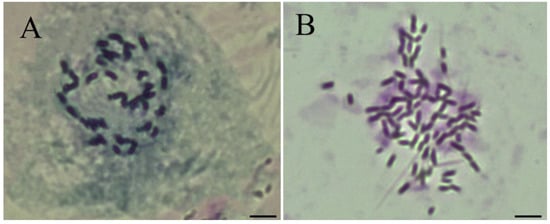
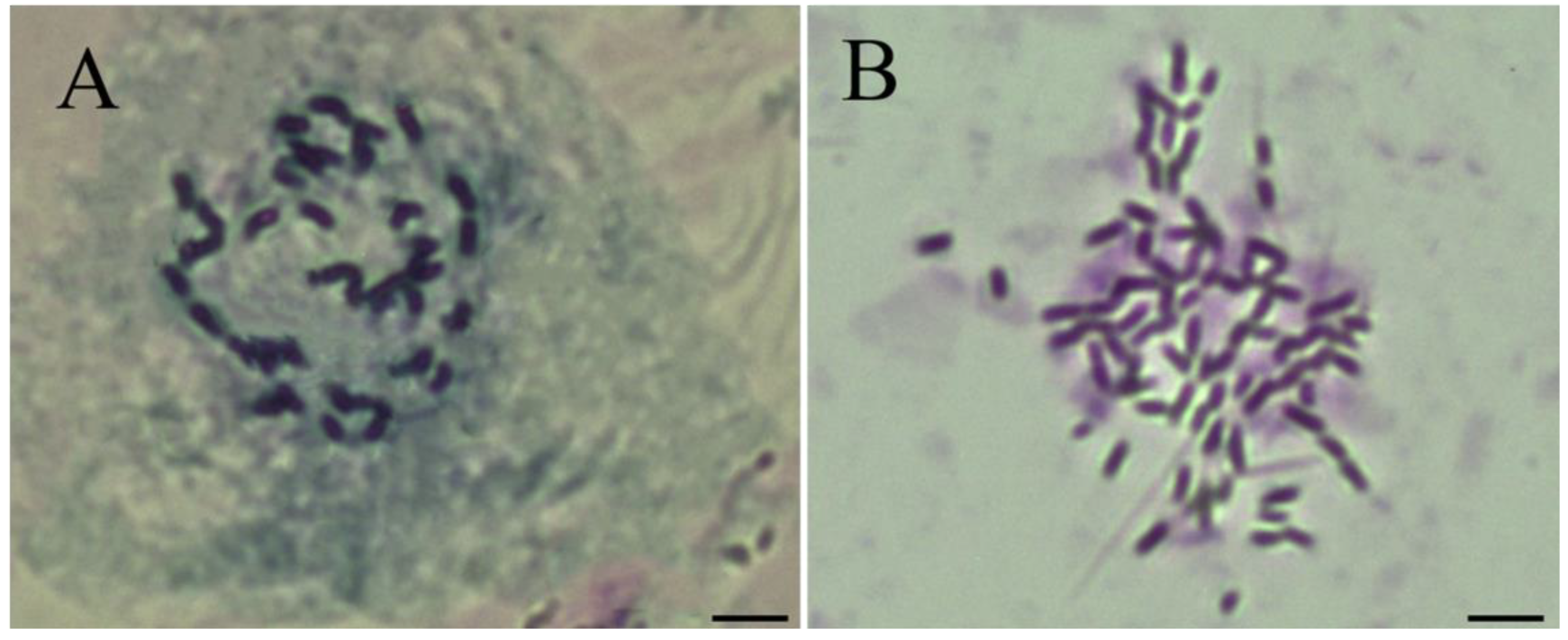
Karyotype analysis revealed that ‘Zhuguang’ was indeed an autotetraploid, with 48 chromosomes (Figure 1B), whereas ‘Xingtai 0604′ had 24 chromosomes (Figure 1A). This result indicated that ‘Zhuguang’ has maintained its stable ploidy level for many years and can represent an autotetraploid in our evaluation.
Figure 1.
Karyotype analysis of chromosomes of deploid ‘Xingtao 0604′ ((A), 2n = 2x = 24) and autotetraploid ‘Zhuguang’ ((B), 2n = 4x = 48), Bars = 5 μm.
3.2. Evaluation of Tree Characteristics
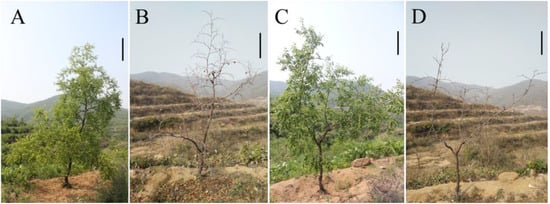
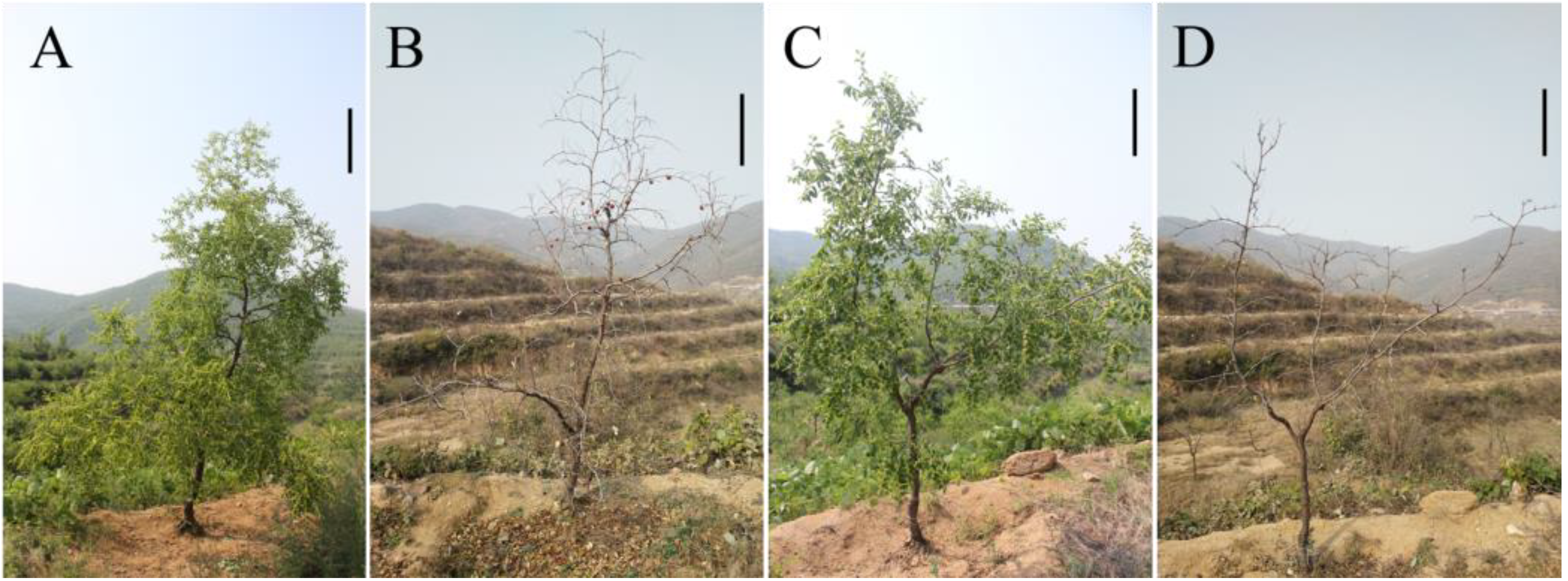
The autotetraploid ‘Zhuguang’ plant displayed distinct morphological characteristics compared to the diploid plant (Figure 2). Compared with ‘Xingtai0604′, Zhuguang’ lacked apical dominance and thus had a more opened canopy. Autotetraploid plants exhibit a certain dwarf effect compared with diploid plants, and the data showed that the plant height of the autotetraploid was 21.54% lower than those of the diploid.
Figure 2.
The morphological difference between ‘Xingtai0604′ (diploid) and ‘Zhuguang’ (autotetraploid). (A) and (B), ‘Xingtai0604′. (C) and (D), ‘Zhuguang’. Bars = 0.5 m.
At the same time, the growth rate of ‘Zhuguang’ is significantly lower than that of ‘Xingtai0604′. The result showed that the annual growth of shoots and the annual number of extension shoots of ‘Xingtai0604′ were higher than ‘Zhuguang’ by 28.29% and 135.34%, respectively. Compared with ‘Xingtai0604′, ‘Zhuguang’ showed poor dryness (Table 1, Figure 2A–D) and slower tree growth. All of these data indicated that the ‘Zhuguang’ plants exhibited a reduced tree vigor compared to the ‘Xingtai0604′ plants.
Table 1.
Tree characteristics of ‘Xingtai 0604′ and ‘Zhuguang’.
3.3. Evaluation of Flower Characteristics
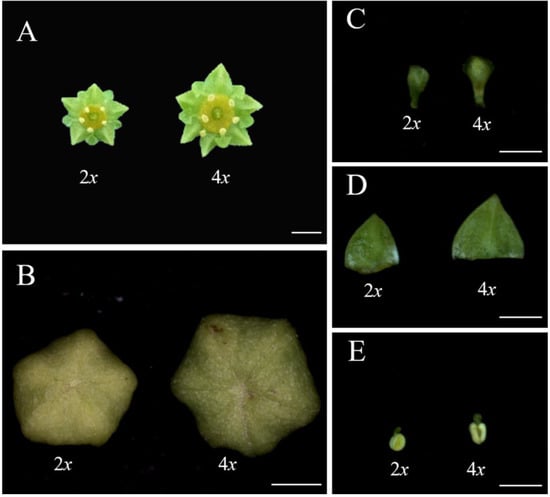
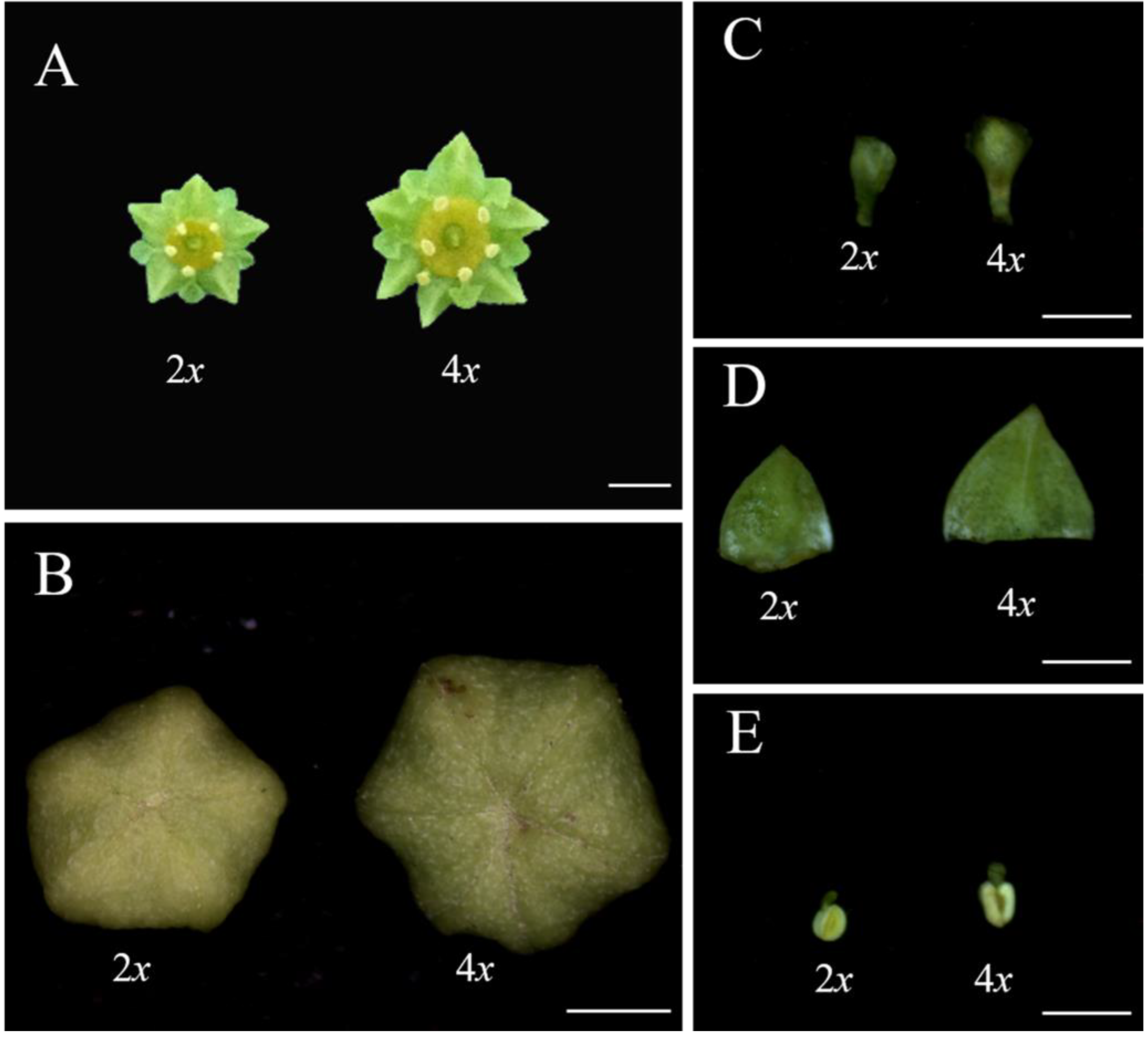
The flower characteristics of ‘Xingtai0604′ and ‘Zhuguang’, including the average diameter of the flower buds and blooming flowers, number of stamens, sepal length, petal length, petal width, anther length, anther width, and the diameter of their pollen grains, were investigated. By comparing the ‘Zhuguang’ and ‘Xingtai0604′ flower characteristics, as shown in Figure 3 and Table 2, we found that the flowers of ‘Zhuguang’ were much larger than those of ‘Xingtai0604′.
Figure 3.
Flower morphologies of ‘Xingtai0604′ (2x) and ‘Zhuguang’ (4x), (A) flowers, bar represents 3 mm. (B) flower buds. (C) petals. (D) sepals. (E) anther. The bars in B–E represent 1 mm.
Table 2.
Flower characteristics of ‘Xingtai0604′ and ‘Zhuguang’.
The average diameter of the flower buds and flowers in full bloom, petal length, sepal length, sepal width, anther length, anther width, and the diameter of the pollen grains of ‘Zhuguang’ increased by 25.69%, 26.59%, 18.10%, 13.01%, 24.58%, 36.36%, and 11.43% compared to those of ‘Xingtai0604′, respectively, as shown in Table 2.
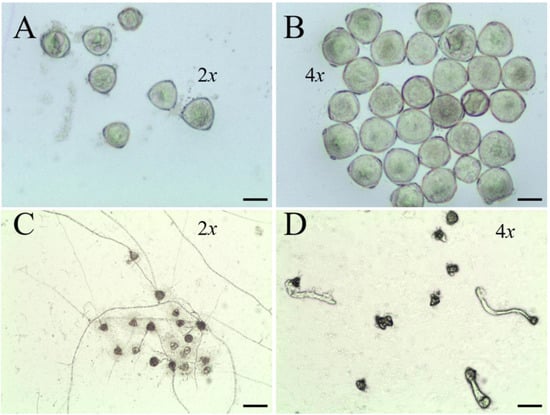
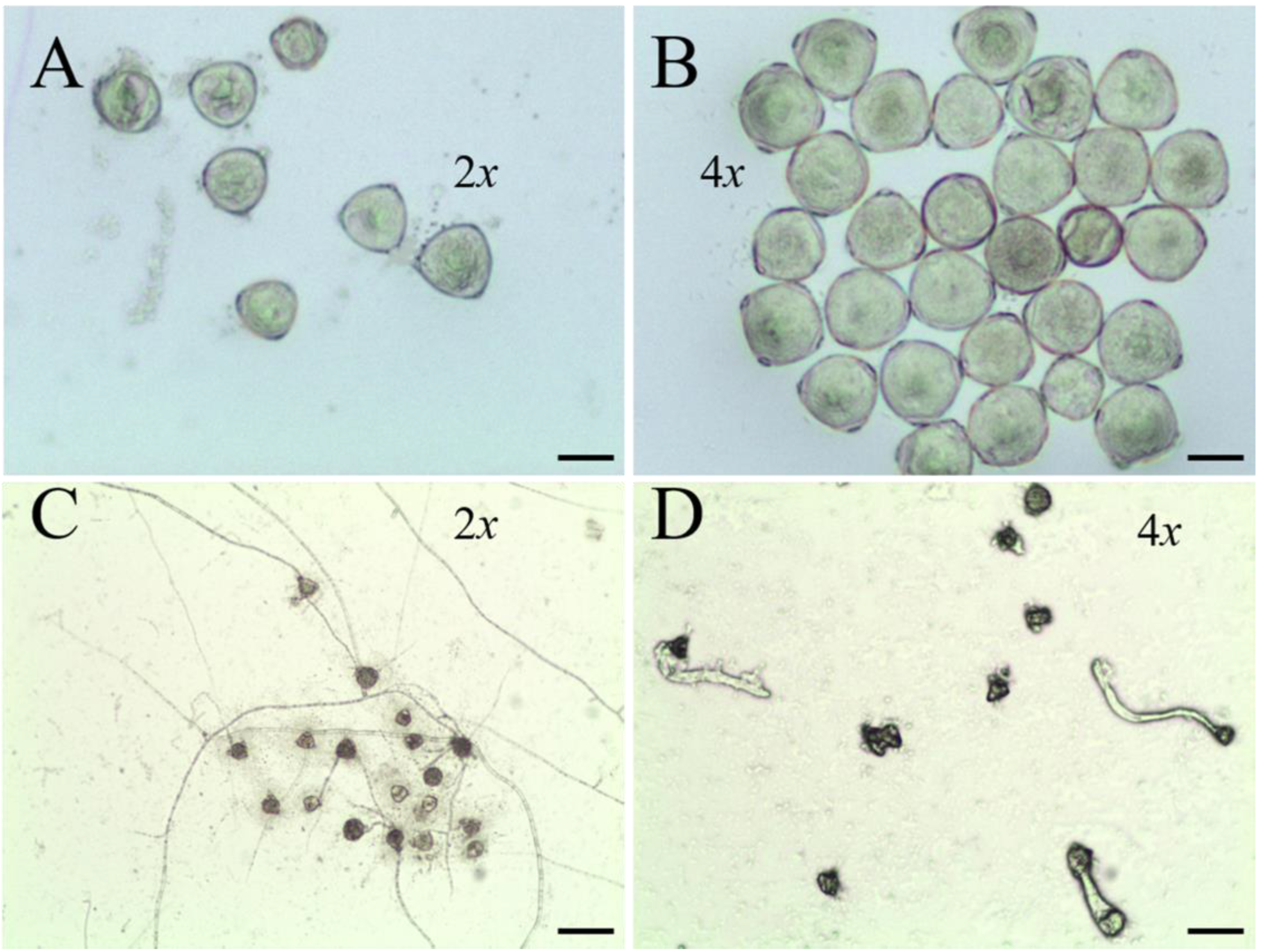
As shown in Figure 4 and Table 2, we found that the pollens of ‘Zhuguang’ were much larger than those of ‘Xingtai 0604′. The average pollen diameter of ‘Zhuguang’ was 22.09% larger than that of diploids. In addition, the pollen activity of ‘Zhuguang’ significantly decreased compared to Xingtai 0604, with the germination rate being usually 27.21% (Figure 4C,D), much less than the 53.01% of ‘Xingtai 0604′.
Figure 4.
Pollen characteristics of ‘Xingtai 0604′ (2x) and ‘Zhuguang’ (4x). (A) The pollen sizes of ‘Xingtai 0604′. (B) the pollen sizes of ‘Zhuguang’. (C) the pollen activity of ‘Xingtai 0604′. (D) the pollen activity of ‘Zhuguang’, (A,B), bars = 25 μm, (C,D), bars = 75 μm.
3.4. Evaluation of Leaf Characteristics
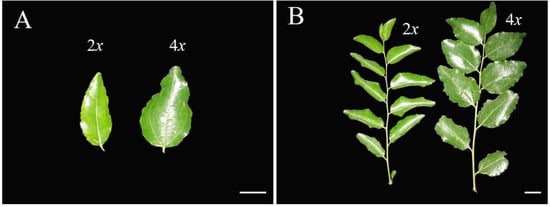
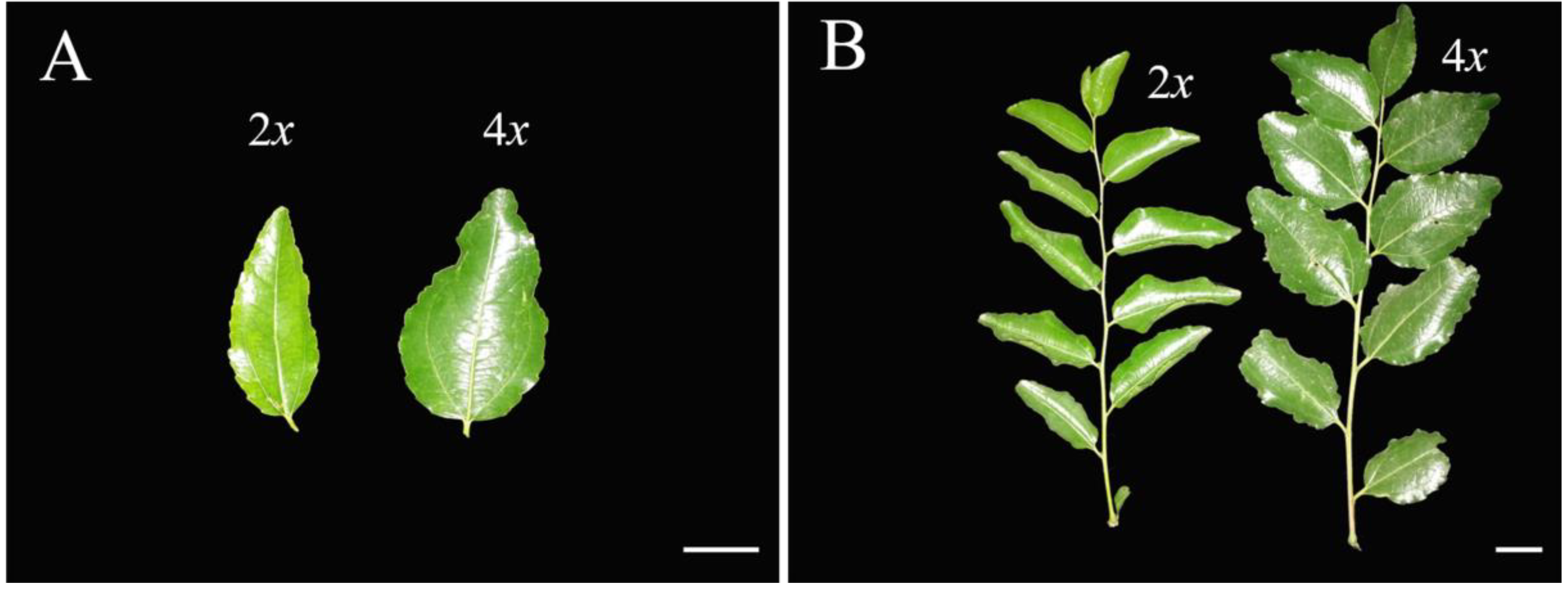
The morphological characteristics of the autotetraploid ‘Zhuguang’ sour jujube leaves and the lengths of the bearing shoots differed significantly from those of their diploid counterparts (Figure 5). The lengths of the bearing shoots of ‘Zhuguang’ increased by 9.58%, but the number of leaves on the bearing shoots did not differ significantly in terms of ploidy level.
Figure 5.
Morphological changes of ‘Xingtai 0604′ (2x) and ‘Zhuguang’ (4x) leaves and bearing shoot. (A): leaves; (B): bearing shoot, bars = 2 cm.
The leaves of ‘Zhuguang’ were much larger and slightly curled compared to those of ‘Xingtai 0604′. The average length and width of the ‘Zhuguang’ leaves were 7.85% and 56.56% higher than those of ‘Xingtai 0604′, respectively. Significantly enlarged leaves have been observed in almost all polyploids, including autotetraploids, primarily due to ploidy-dependent cell enlargement caused by the increased gene copies [38], leading to the production of larger amounts of proteins and, subsequently, a larger amount of carbohydrates. In addition to leaf size, the color of the ‘Zhuguang’ leaves was obviously darker than those of ‘Xingtai 0604′ leaves, indicating augmented chlorophyll biosynthesis.
The contents of chlorophyll a, chlorophyll b, and total chlorophyll were detected and calculated. As shown in Table 3, the contents of chlorophyll a, chlorophyll b, and the total chlorophyll of ‘Zhuguang’ significantly increased by 22.43%, 58.06%, and 30.43% compared to those of ‘Xingtai 0604′, respectively. Of these, chlorophyll b, which functions in photosynthesis by absorbing light energy [39], increased the most.
Table 3.
Leaf characteristics of ‘Xingtai 0604′ and ‘Zhuguang’.
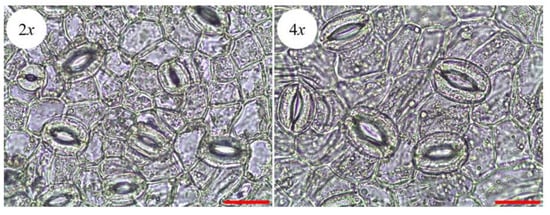
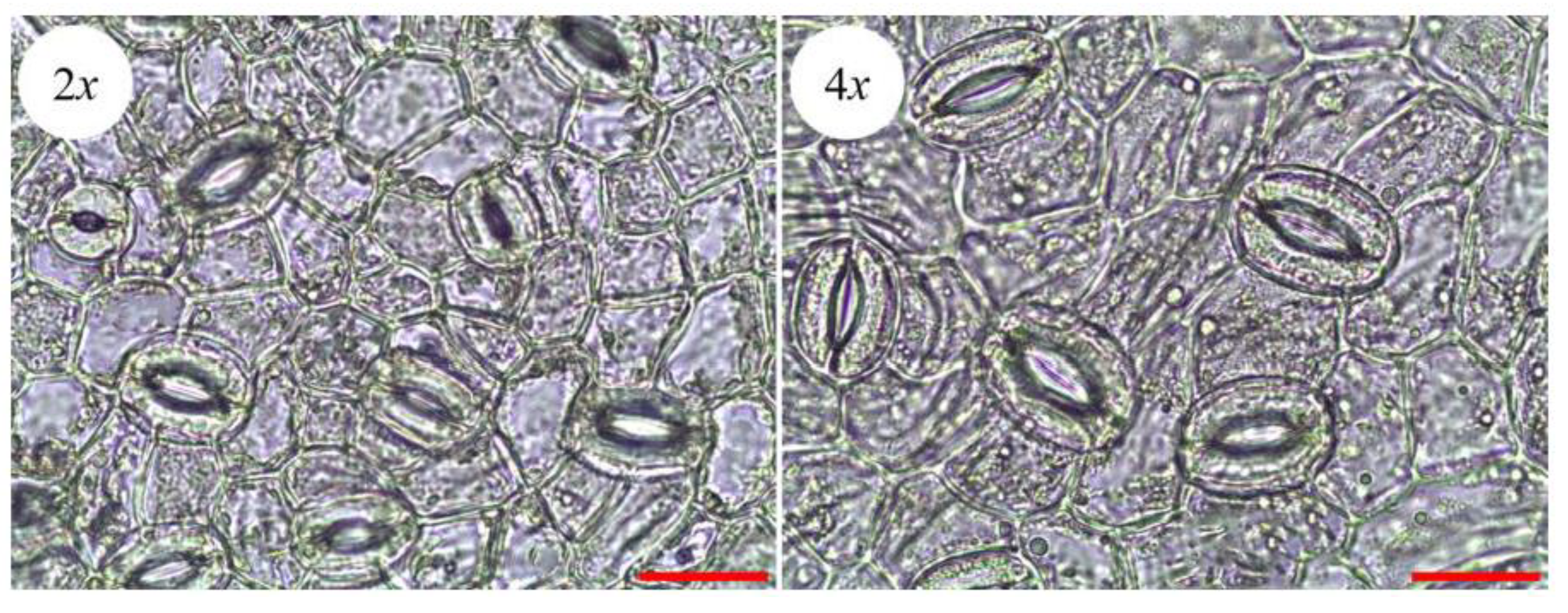
The anatomical study of the leaves of both ‘Xingtai 0604′ and autotetraploid leaves revealed that the autotetraploid plants exhibited much larger stomata than the diploid plants (Figure 6A,B). As shown in Table 3, the average width and length of the ‘Zhuguang’ stomata were 31.03% and 30.26% greater than those of ‘Xingtai 0604′, respectively. However, the average stomatal density of ‘Xingtai 0604′ was significantly higher than that of ‘Zhuguang’, which is presumably caused by ploidy-dependent cell enlargement, causing the stomatal apertures to grow larger.
Figure 6.
Stoma morphological of ‘Xingtai 0604′ (2x) and ‘Zhuguang’ (4x). Both bars represent 25 μm.
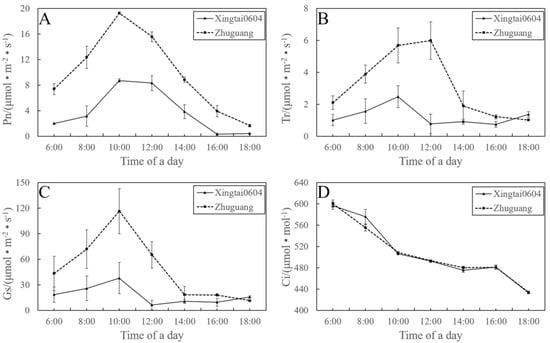
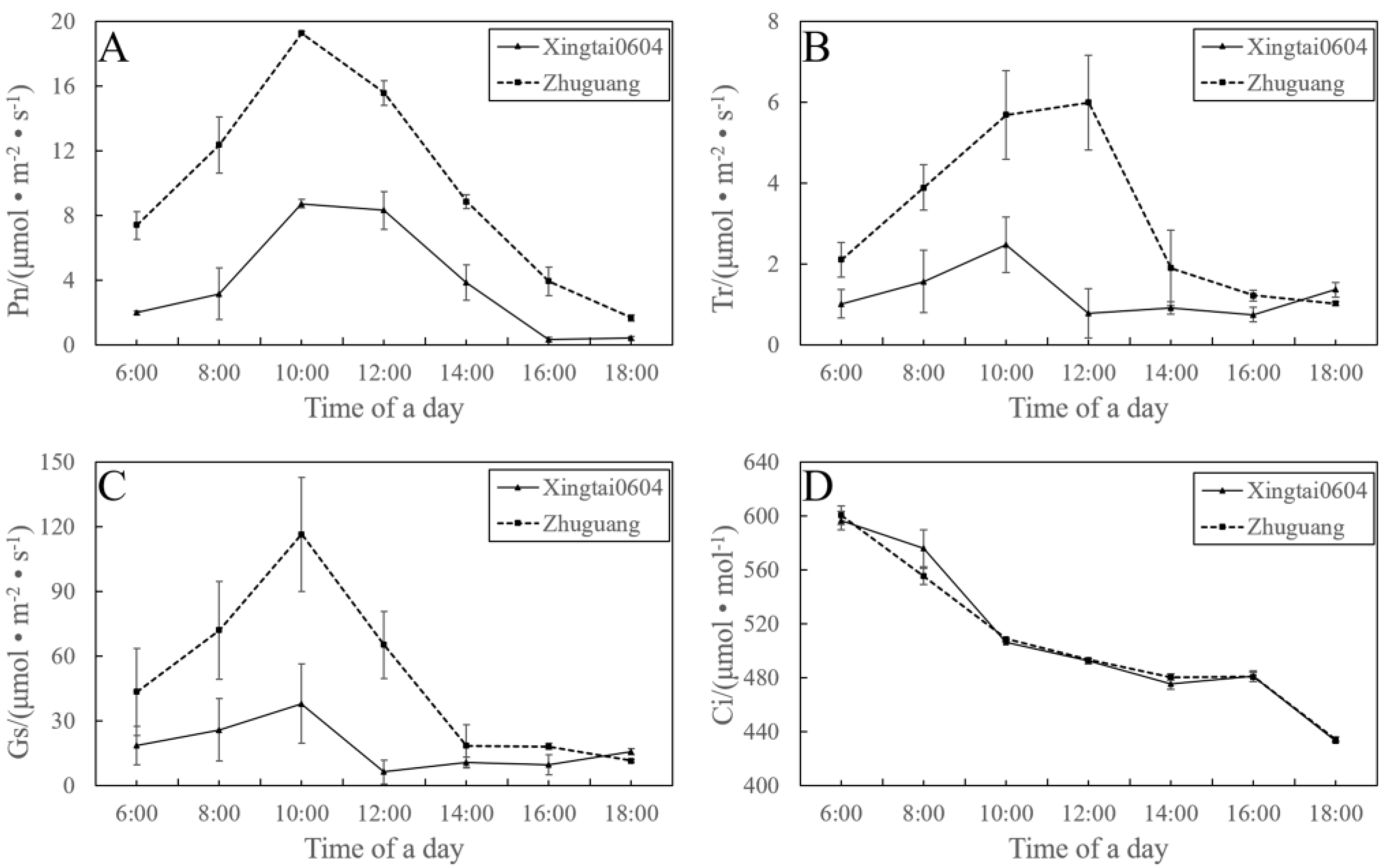
The significantly increased contents of chlorophyll a, chlorophyll b, and the total chlorophyll and the enlarged stomatal apertures should have positive impacts on photosynthesis. Thus, we measured the photosynthesis of ‘Zhuguang’. As shown in Figure 7, the photosynthetic rate, transpiration rate, stomatal conductance, and internal CO2 concentration of ‘Zhuguang’ were significantly higher than those of diploids. However, the diurnal photosynthetic changes in the photosynthetic rate, transpiration rate, and stomatal conductance of ‘Zhuguang’ had a similar trend. The maximum values of the photosynthetic rate, transpiration rate, and stomatal conductance in ‘Zhuguang’ were increased by 121.35%, 141.53% and 206.92%, respectively. The diurnal change trend of internal CO2 concentration was similar, and there was no significant difference between ‘Xingtai 0604′ and ‘Zhuguang’.
Figure 7.
Diurnal photosynthetic parameter changes in ‘Xingtai 0604′ (2x) and ‘Zhuguang’ (4x). Pn, photosynthetic rate (A); Tr, transpiration rate (B); Gs, stomatal conductance (C); Ci, internal CO2 concentration (D). Vertical bar at each point represents the standard deviation.
3.5. Autotetraploid Fruit Showed Changed of Quality
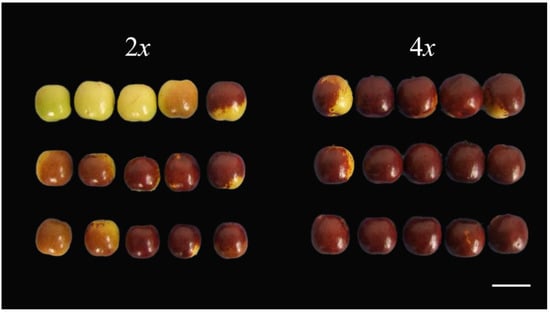
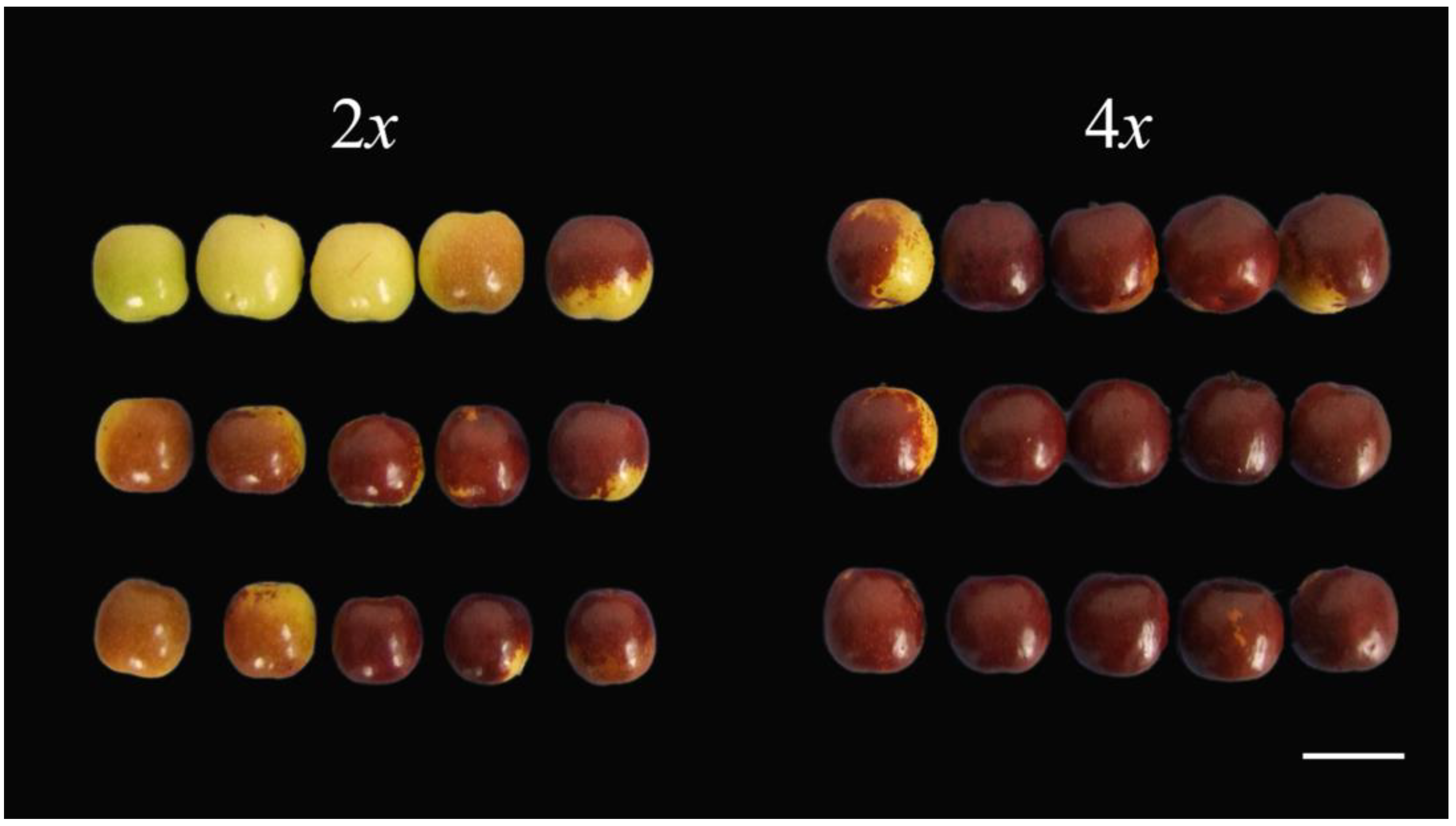
A significant difference in the fruit sizes of ‘Xingtai 0604′ and ‘Zhuguang’ was observed (Figure 8). As shown in Table 4, the fruit length and width of ‘Zhuguang’ were, on average, 17.45%, and 20.56% larger than those of ‘Xingtai 0604′, respectively. The fruit index of ‘Xingtai 0604′ was higher than ‘Zhuguang’. The data indicated that the change in fruit width exceeded the change in fruit length after the homologous doubling of diploid sour jujube. The fruit shape index, which represents the ratio of fruit length to width, decreased.
Figure 8.
Fruit morphology of ‘Xingtai 0604′ (2x) and ‘Zhuguang’ (4x), bar = 30 mm.
Table 4.
Fruit characteristics and quality of ‘Xingtai 0604′ and ‘Zhuguang’.
The analysis of the nutrients in the fruit suggests that the ‘Zhuguang’ fruit showed improved quality. For example, the cAMP content of ‘Zhuguang’ was 38% higher than that of ‘Xingtai 0604′. On the other hand, Vc, titratable acid, and the soluble sugar contents of ‘Zhuguang’ decreased by 51.43%, 16.66%, and 12.72%, respectively. It is worth noting that the sugar–acid ratio of ‘Zhuguang’ was higher than the diploid ‘Xingtai 0604′.
4. Discussion
Polyploidization is one of the most effective approaches to improving fruit quality. In the previous studies, autotetraploid plants were shown to bear much larger fruit; for example, autotetraploid trees of apple [40] and banana [38], and autotetraploid plants of muskmelon [8,41]. On the contrary, the average fruit size of autotetraploid pears is approximately the same as that of diploids, though the autotetraploid fruit grows quicker than diploids during the early stages [10]. In this study, the average size of autotetraploid sour jujube ‘Zhuguang’ fruit was significantly larger than that of diploids. As the important indicators of the flavor and nutritional quality of fruits, the sugar and acid contents of the plants change in response to chromosome doubling. The sugar content of the autotetraploid fruit was reported to be significantly higher than that of the diploids [8,10]. However, in this study, the sugar and acid contents of autotetraploid sour jujube fruit were lower than those of diploids, though the ratio of sugar to acid was higher, which can change the fruit flavor. Reduced acid content has also been reported in other autotetraploid fruit trees [10,12]. Therefore, the changes in fruit sizes and the sugar and acid contents of the plants after tetraploidization depend on the species. Although the Vc content of ‘Zhuguang’ was reduced, it is still significantly higher than that of other types of fruit, such as raspberries, blackberries, red currants, gooseberries, and cornelian cherries [42]. At the same time, the cAMP content of ‘Zhuguang’ has also been improved compared to that in the diploid. In summary, the fruit of ‘Zhuguang’ still has excellent fruit quality and may be more suitable for use by hyperglycemic people.
Sour jujube is considered to be the wild ancestor of Chinese jujube, and many studies have shown some evidence that Chinese jujube evolved from sour jujube [20]. Most Chinese jujube cultivars have prototypes in sour jujube [43]. Compared with sour jujube, Chinese jujube exhibits larger fruit, higher sugar content, lower acid content, lower Vc content, and a higher cAMP content [35,44]. The molecular explanation for the difference in sugar and acid content between Chinese jujube and sour jujube is that the acid biosynthesis genes are highly expressed, and the sugar biosynthesis genes are lowly expressed in sour jujube [45] compared to those in Chinese jujube. In this paper, autotetraploid sour jujube ‘Zhuguang’ showed similar nutritional characteristics as Chinese jujube. Currently, we are still not sure if Chinese jujube evolved these characteristics through neofunctionalization upon a genome duplication. Genomic sequencing data demonstrate that the Chinese jujube genome has undergone frequent inter-chromosome fusions and segmental duplications, but there was a lack of a recent whole-genome duplication after gamma duplication [46]. In addition, whether the whole-genome duplication event has occurred in the evolution of the sour jujube genome is also unknown because the whole genome sequencing of sour jujube has not yet been completed. Additionally, the natural polyploidy of sour jujube has not been found in nature.
Autotetraploid plants are usually used as intermediate materials to obtain triploids with outstanding agronomic characteristics, such as disease resistance, larger fruit size, and an absence of seeds [38]. One barrier to use an autotetraploid as a paternal parent for crossing is that the pollens of an autotetraploid have lower activity. Previous studies have demonstrated that the mitosis of autotetraploid pollens is abnormal and often results in reduced pollen activity and lower fertility rates, which can eventually affect fruit settings, seed numbers, and the seed germination rates of the hybrid fruits [19,47,48,49]. Although autotetraploid pollen activity and fertility were reduced, it did not significantly affect the acquisition of triploid seeds via crossing. The results of previous studies also indicated that genome multiplication mainly affected pollen activity rather than the fertility of the female reproductive organs [10]. In our previous study, triploids of Chinese jujube were obtained successfully using autotetraploid Chinese jujube as the male parent and diploid Chinese jujube as the female parent [50]. As an ancestor of Chinese jujube, sour jujube has adapted well to harsher environmental conditions compared to Chinese jujube. In this study, we found that autotetraploid sour jujube can produce pollens that have about a 30% germination rate, and autotetraploid themselves bear no seeds due to ovary abortion [47,51], which makes autotetraploid sour jujube ideal for use as a paternal parent to obtain triploid hybrids of sour jujube (2n) and sour jujube (4n) or the triploid hybrids of Chinese jujube (2n) and sour jujube (4n) for augmented adaptation and enlarged fruit. The autotetraploid can be used as starting material to generate octoploids, which may have more desirable traits.
5. Conclusions
The autotetraploid sour jujube ‘Zhuguang’ exhibited excellent agronomic characteristics that have been sought after. These include dwarf phenotypes, opened canopies, enlarged fruit sizes, and improved flavor. Therefore, ‘Zhuguang’ is a new valuable sour jujube cultivar and an important genetic material for generating other polyploids, for instance, triploids and octoploids, through hybridization or artificial doubling. The autotetraploid can also be used to study the evolution of Chinese jujube from sour jujube.
Author Contributions
L.W. (Lihu Wang), M.L., P.L. and J.Z. conceived and designed the experiments; L.W. (Lihu Wang), L.W. (Lixin Wang), T.Y. and L.W. (Lili Wang) performed the experiments; (L.W.) Lihu Wang, H.W. and M.L. analyzed the data and wrote the paper. All authors have read and agreed to the published version of the manuscript.
Funding
This work was supported by the National Natural Science Foundation of China (31372029), National Key Research and Development Projects (2019YFD1001605), Key R&D Projects in Hebei Province (21326304D), National Key R&D Program Project Funding (2018YFD1000607), Subsidy Funds of Hebei Jujube Industry Technology Research Institute after Operation Performance (205676155H). Natural Science Foundation of Hebei, China (C2022402021; C2017204114), Provincial Graduate Student Innovation Project of Hebei (CXZZBS2017072), the Science and Technology Research Project of University in Hebei Province (QN2020205), Science and Technology Research and Development Plan Project of Handan (19422011008–49). Ph.D. Starting Fund of the Hebei University of Engineering (SJ2101003172).
Institutional Review Board Statement
Not applicable.
Informed Consent Statement
Not applicable.
Data Availability Statement
Data will be made available upon request.
Conflicts of Interest
The authors declare that they have no conflicts of interest.
References
- Marfil, C.F.; Duarte, P.F.; Masuelli, R.W. Phenotypic and epigenetic variation induced in newly synthesized allopolyploids and autopolyploids of potato. Sci. Hortic. 2018, 234, 101–109. [Google Scholar] [CrossRef] [Scilit]
- Tokumoto, Y.; Kajiura, H.; Takeno, S.; Harada, Y.; Suzuki, N.; Hosaka, T.; Gyokusen, K.; Nakazawa, Y. Induction of tetraploid hardy rubber tree, Eucommia ulmoides, and phenotypic differences from diploid. Plant Biotechnol. 2016, 33, 51–57. [Google Scholar] [CrossRef] [Scilit]
- Spoelhof, J.P.; Soltis, P.S.; Soltis, D.E. Pure polyploidy: Closing the gaps in autopolyploid research. J. Syst. Evol. 2017, 55, 340–352. [Google Scholar] [CrossRef] [Scilit]
- Jaillon, O.; Aury, J.M.; Noel, B.; Policriti, A.; Clepet, C.; Casagrande, A.; Choisne, N.; Aubourg, S.; Vitulo, N.; Jubin, C.; et al. The grapevine genome sequence suggests ancestral hexaploidization in major angiosperm phyla. Nature 2007, 449, 463–467. [Google Scholar] [CrossRef] [Scilit]
- Qiao, X.; Yin, H.; Li, L.; Wang, R.; Wu, J.; Wu, J.; Zhang, S. Different modes of gene duplication show divergent evolutionary patterns and contribute differently to the expansion of gene families involved in Important fruit traits in pear (Pyrus bretschneideri). Front. Plant Sci. 2018, 9, 161. [Google Scholar] [CrossRef] [Scilit]
- Wu, J.; Wang, Z.; Shi, Z.; Zhang, S.; Ming, R.; Zhu, S.; Khan, M.A.; Tao, S.; Korban, S.S.; Wang, H.; et al. The genome of the pear (Pyrus bretschneideri Rehd.). Genome Res. 2013, 23, 396–408. [Google Scholar] [CrossRef] [Scilit]
- Parisod, C.; Holderegger, R.; Brochmann, C. Evolutionary consequences of autopolyploidy. New Phytol. 2010, 186, 5–17. [Google Scholar] [CrossRef] [Scilit]
- Zhang, W.Q.; Hao, H.; Ma, L.Y.; Zhao, C.; Yu, X.Y. Tetraploid muskmelon alters morphological characteristics and improves fruit quality. Sci. Hortic. 2010, 125, 396–400. [Google Scholar] [CrossRef] [Scilit]
- Wu, J.H.; Ferguson, A.R.; Murray, B.G.; Jia, Y.; Datson, P.M.; Zhang, J. Induced polyploidy dramatically increases the size and alters the shape of fruit in Actinidia chinensis. Ann. Bot. 2012, 109, 169–179. [Google Scholar] [CrossRef] [Scilit]
- Wang, X.Q.; Wang, H.H.; Shi, C.H.; Zhang, X.Y.; Duan, K.; Luo, J. Morphological, cytological and fertility consequences of a spontaneous tetraploid of the diploid pear (Pyrus pyrifolia Nakai) cultivar ‘Cuiguan’. Sci. Hortic. 2015, 189, 59–65. [Google Scholar] [CrossRef] [Scilit]
- Sanwal, S.K.; Rai, N.; Singh, J.; Buragohain, J. Antioxidant phytochemicals and gingerol content in diploid and tetraploid clones of ginger (Zingiber officinale Roscoe). Sci. Hortic. 2010, 124, 280–285. [Google Scholar] [CrossRef] [Scilit]
- Wu, J.H.; Ferguson, A.R.; Murray, B.G.; Duffy, A.M.; Jia, Y.; Cheng, C.; Martin, P.J. Fruit quality in induced polyploids of Actinidia chinensis. HortScience 2013, 48, 701–707. [Google Scholar] [CrossRef] [Scilit]
- Hannweg, K.; Visser, G.; de Jager, K.; Bertling, I. In vitro-induced polyploidy and its effect on horticultural characteristics, essential oil composition and bioactivity of Tetradenia riparia. S. Afr. J. Bot. 2016, 106, 186–191. [Google Scholar] [CrossRef] [Scilit]
- Corrêa, J.P.O.; Vital, C.E.; Pinheiro, M.V.M.; Batista, D.S.; Saldanha, C.W.; da Cruz, A.C.F.; Notini, M.M.; Freitas, D.M.S.; DaMatta, F.M.; Otoni, W.C. Induced polyploidization increases 20-hydroxyecdysone content, in vitro photoautotrophic growth, and ex vitro biomass accumulation in Pfaffia glomerata (Spreng.) Pedersen. In Vitro Cell. Dev. Biol.-Plant 2016, 52, 45–55. [Google Scholar] [CrossRef] [Scilit]
- Xia, J.; Ma, Y.J.; Wang, Y.; Wang, J.W. Deciphering transcriptome profiles of tetraploid Artemisia annua plants with high artemisinin content. Plant Physiol. Biochem. 2018, 130, 112–126. [Google Scholar] [CrossRef] [Scilit] [PubMed]
- Zhang, F.; Xue, H.; Lu, X.J.; Zhang, B.; Wang, F.; Ma, Y.; Zhang, Z.H. Autotetraploidization enhances drought stress tolerance in two apple cultivars. Trees 2015, 29, 1773–1780. [Google Scholar] [CrossRef] [Scilit]
- Xue, H.; Zhang, F.; Zhang, Z.-H.; Fu, J.-F.; Wang, F.; Zhang, B.; Ma, Y. Differences in salt tolerance between diploid and autotetraploid apple seedlings exposed to salt stress. Sci. Hortic. 2015, 190, 24–30. [Google Scholar] [CrossRef] [Scilit]
- Hannweg, K.; Steyn, W.; Bertling, I. In vitro-induced tetraploids of Plectranthus esculentus are nematode-tolerant and have enhanced nutritional value. Euphytica 2015, 207, 343–351. [Google Scholar] [CrossRef] [Scilit]
- Nukaya, T.; Sudo, M.; Yahata, M.; Nakajo, Y.; Ohta, T.; Yasuda, K.; Tominaga, A.; Mukai, H.; Kunitake, H. Characteristics in autotetraploid kumquats (Fortunella spp.) induced by colchicine treatment to nucellar embryos and their utilization for triploid breeding. Sci. Hortic. 2019, 245, 210–217. [Google Scholar] [CrossRef] [Scilit]
- Liu, M.J.; Wang, M. Germplasm Resources of Chinese Jujube; China Forestry Publishing House: Beijing, China, 2009; ISBN 7503857420. [Google Scholar]
- Wang, Z.; An, X.; Chitrakar, B.; Li, J.; Yuan, Y.; Liu, K.; Nie, X.; Zhang, Y.; Zhao, X.; Zhao, Z. Spatial and temporal distribution of phenolic and flavonoid compounds in sour jujube (Ziziphus. acidojujuba Cheng et Liu) and their antioxidant activities. Plant Foods Hum. Nutr. 2023, 78, 46–51. [Google Scholar] [CrossRef] [Scilit]
- Xue, X.; Zhao, A.; Wang, Y.; Ren, H.; Li, Y.; Li, D.; Du, J. Metabolomics-based analysis of flavonoid metabolites in Chinese jujube and sour jujube fruits from different harvest periods. J. Food Sci. 2022, 87, 3752–3765. [Google Scholar] [CrossRef] [Scilit] [PubMed]
- Zhang, S.; Cheng, M.; Li, Z.; Guan, S.; Cai, B.; Li, Q.; Rong, S. Composition and biological activity of rose and jujube kernel after fermentation with kombucha SCOBY. J. Food Process. Preserv. 2020, 44, e14758. [Google Scholar] [CrossRef] [Scilit]
- Liu, M.; Wang, J.; Wang, L.; Liu, P.; Zhao, J.; Zhao, Z.; Yao, S.; Stănic, F.; Liu, Z.; Wang, L. The historical and current research progress on jujube—A superfruit for the future. Hortic. Res. 2020, 7, 199. [Google Scholar] [CrossRef] [Scilit] [PubMed]
- Hua, Y.; Xu, X.-X.; Guo, S.; Xie, H.; Yan, H.; Ma, X.-F.; Niu, Y.; Duan, J.-A. Wild jujube (Ziziphus jujuba var. spinosa): A review of its phytonutrients, health benefits, metabolism, and applications. J. Agric. Food Chem. 2022, 70, 7871–7886. [Google Scholar] [CrossRef] [Scilit]
- Chen, J.; Liu, X.; Li, Z.; Qi, A.; Yao, P.; Zhou, Z.; Dong, T.T.X.; Tsim, K.W.K. A review of dietary Ziziphus jujuba Fruit (Jujube): Developing health food supplements for brain protection. Evid.-Based Complement. Altern. Med. 2017, 2017, 3019568. [Google Scholar] [CrossRef] [Scilit]
- Shi, Q.; Liu, P.; Liu, M.; Wang, J.; Zhao, J.; Zhao, Z.; Dai, L. In Vivo fast induction of homogeneous autopolyploids via callus in sour jujube (Ziziphus acidojujuba Cheng et Liu). Hortic. Plant J. 2016, 2, 147–153. [Google Scholar] [CrossRef] [Scilit]
- Wang, N.; Liu, M.J.; Dai, L.; Qin, Z.Y. In Vitro tetraploid induction of Ziziphus jujuba ‘Dongzao’and Z. acidojujuba (Z. spinosa Hu) with colchicine. Acta Hortic. Sin. 2005, 32, 1008–1012. [Google Scholar] [CrossRef]
- Liu, M.; Wang, J.; Liu, P.; Zho, J.; Zhao, Z.; Dai, L.; Li, X.; Liu, Z. Historical achievements and frontier advances in the production and research of Chinese Jujube (Ziziphus jujubein) in China. Acta Hortic. Sin. 2015, 42, 1683–1698. [Google Scholar] [CrossRef]
- Shi, Q.H.; Liu, P.; Wang, J.R.; Xu, J.; Ning, Q.; Liu, M.J. A novel in vivo shoot regeneration system via callus in woody fruit tree Chinese jujube (Ziziphus jujuba Mill.). Sci. Hortic. 2015, 188, 30–35. [Google Scholar] [CrossRef] [Scilit]
- Shi, Q.H.; Liu, P.; Liu, M.J.; Wang, J.R.; Xu, J. A novel method for rapid in vivo induction of homogeneous polyploids via calluses in a woody fruit tree (Ziziphus jujuba Mill.). Plant Cell Tissue Organ Cult. 2015, 121, 423–433. [Google Scholar] [CrossRef] [Scilit]
- Liu, P.; Liu, M.; Shi, Q.; Wang, J.; Hu, L.; Wang, L. ‘Zhuguang’, a new excellent tetraploid table cultivar of sour jujube. Acta Hortic. Sin. 2017, 44, 195–196. [Google Scholar]
- Li, D.K. Descriptors and Data Standard for Jujube (Ziziphus jujuba Mill.); China Agriculture Press: Beijing, China, 2006. [Google Scholar]
- Xue, C.L.; Liu, Z.G.; Dai, L.; Bu, J.D.; Liu, M.J.; Zhao, Z.H.; Jiang, Z.H.; Gao, W.L.; Zhao, J. Changing Host Photosynthetic, Carbohydrate, and Energy Metabolisms Play Important Roles in Phytoplasma Infection. Phytopathology 2018, 108, 1067–1077. [Google Scholar] [CrossRef] [Scilit] [PubMed]
- Chen, Y.Y.; Zhao, Z.H.; Zhao, J.; Liu, M.J. Expression profiles of genes and enzymes related to ascorbic acid metabolism in fruits of Ziziphus jujuba Mill. ‘Jinsixiaozao’. Front. Agric. Sci. Eng. 2016, 3, 131–136. [Google Scholar] [CrossRef] [Scilit]
- Liu, Y.; Feng, C.F.; Yu, H.C.; Wang, J.R.; Liu, M.J. Discovery and evaluation of natural mixoploid (2x + 4x) variants in Ziziphus jujuba Mill.‘Dongzao’. Acta Hortic. Sin. 2016, 43, 966–974. [Google Scholar] [CrossRef]
- Wang, L.X. Methods analysing cAMP from Hetian jade jujuba. Food Sci. Technol. 2011, 36, 303–306. [Google Scholar] [CrossRef]
- do Amaral, C.M.; de Almeida dos Santos-Serejo, J.; de Oliveira e Silva, S.; da Silva Ledo, C.A.; Amorim, E.P. Agronomic characterization of autotetraploid banana plants derived from ‘Pisang Lilin’ (AA) obtained through chromosome doubling. Euphytica 2015, 202, 435–443. [Google Scholar] [CrossRef] [Scilit]
- Janečková, H.; Husičková, A.; Lazár, D.; Ferretti, U.; Pospíšil, P.; Špundová, M. Exogenous application of cytokinin during dark senescence eliminates the acceleration of photosystem II impairment caused by chlorophyll b deficiency in barley. Plant Physiol. Biochem. 2019, 136, 43–51. [Google Scholar] [CrossRef] [Scilit]
- Xue, H.; Zhang, B.; Tian, J.R.; Chen, M.M.; Zhang, Y.Y.; Zhang, Z.H.; Ma, Y. Comparison of the morphology, growth and development of diploid and autotetraploid ‘Hanfu’ apple trees. Sci. Hortic. 2017, 225, 277–285. [Google Scholar] [CrossRef] [Scilit]
- Wang, K.; He, L.; Yan, H.; Wei, X. Induction of tetraploidity with antimicrotubule agents in oriental melon (Cucumis melovar. Makuwa). Isr. J. Plant Sci. 2015, 62, 198–207. [Google Scholar] [CrossRef] [Scilit]
- Valente, A.; Albuquerque, T.G.; Sanches-Silva, A.; Costa, H.S. Ascorbic acid content in exotic fruits: A contribution to produce quality data for food composition databases. Food Res. Int. 2011, 44, 2237–2242. [Google Scholar] [CrossRef] [Scilit]
- Zhang, C.M.; Yin, X.; Li, X.G.; Huang, J.; Wang, C.Z.; Lian, C.L. Genetic diversity of sour jujube along the Yellow River. J. Northwest A F Univ. Nat. Sci. Ed. 2013, 12, 107–112. [Google Scholar] [CrossRef]
- Zhao, A.; Xue, X.; Wang, Y.; Sui, C.; Ren, H.; Li, D. Characteristic analysis of sugars and organic acids components and contents of Chinese jujube and wild jujube fruits. J. Tarim Univ. 2016, 28, 29–36. [Google Scholar]
- Huang, J.; Zhang, C.; Zhao, X.; Fei, Z.; Wan, K.; Zhang, Z.; Pang, X.; Yin, X.; Bai, Y.; Sun, X. The jujube genome provides insights into genome evolution and the domestication of sweetness/acidity taste in fruit trees. PLoS Genet. 2016, 12, e1006433. [Google Scholar] [CrossRef] [Scilit] [PubMed]
- Liu, M.J.; Zhao, J.; Cai, Q.L.; Liu, G.C.; Wang, J.R.; Zhao, Z.H.; Liu, P.; Dai, L.; Yan, G.; Wang, W.J.; et al. The complex jujube genome provides insights into fruit tree biology. Nat. Commun. 2014, 5, 5315. [Google Scholar] [CrossRef] [Scilit] [PubMed]
- Lv, Y.; Xue, Z.H.; Wu, G.E.; Liu, P.; Liu, M.J. Abnormal meiosis behaviors of triploid and tetraploid Chinese Jujube. Acta Hortic. Sin. 2018, 45, 659–668. [Google Scholar] [CrossRef]
- Wu, J.; Shahid, M.Q.; Chen, L.; Chen, Z.; Wang, L.; Liu, X.; Lu, Y. Polyploidy enhances F1 pollen sterility loci interactions that increase meiosis abnormalities and pollen sterility in autotetraploid rice. Plant Physiol. 2015, 169, 2700–2717. [Google Scholar] [CrossRef] [Scilit] [PubMed]
- Nghiem, C.Q.; Griffin, R.; Harbard, J.; Harwood, C.; Le, S.; Nguyen, K.D.; Van Pham, B. Reduced fertility in triploids of acacia auriculiformis and its hybrid with A. mangium. Euphytica 2018, 214, 77. [Google Scholar] [CrossRef] [Scilit]
- Yan, F.; Wang, L.; Zheng, X.; Luo, Z.; Wang, J.; Liu, M. Acquisition of triploid germplasms by controlled hybridisation between diploid and tetraploid in Chinese jujube. J. Hortic. Sci. Biotechnol. 2018, 94, 123–129. [Google Scholar] [CrossRef] [Scilit]
- Liang, S.L.; Dang, J.B.; Liang, G.L.; Guo, Q.G. Meiosis observation and fertility analysis in natural tetraploid loquat of ‘B431’. Acta Hortic. Sin. 2018, 45, 1895–1904. [Google Scholar] [CrossRef]

Disclaimer/Publisher’s Note: The statements, opinions and data contained in all publications are solely those of the individual author(s) and contributor(s) and not of MDPI and/or the editor(s). MDPI and/or the editor(s) disclaim responsibility for any injury to people or property resulting from any ideas, methods, instructions or products referred to in the content. |
© 2023 by the authors. Licensee MDPI, Basel, Switzerland. This article is an open access article distributed under the terms and conditions of the Creative Commons Attribution (CC BY) license (https://creativecommons.org/licenses/by/4.0/).