


Abstract
Gaze estimation, a critical facet of understanding user intent and enhancing human–computer interaction, has seen substantial advancements with the integration of deep learning technologies. Despite the progress, the application of deep learning in gaze estimation presents unique challenges, notably in the adaptation and optimization of these models for precise gaze tracking. This paper conducts a thorough review of recent developments in deep learning-based gaze estimation, with a particular focus on the evolution from traditional methods to sophisticated appearance-based techniques. We examine the key components of successful gaze estimation systems, including input feature processing, neural network architectures, and the importance of data preprocessing in achieving high accuracy. Our analysis extends to a comprehensive comparison of existing methods, shedding light on their effectiveness and limitations within various implementation contexts. Through this systematic review, we aim to consolidate existing knowledge in the field, identify gaps in current research, and suggest directions for future investigation. By providing a clear overview of the state-of-the-art in gaze estimation and discussing ongoing challenges and potential solutions, our work seeks to inspire further innovation and progress in developing more accurate and efficient gaze estimation systems.
1. Introduction
Eye gaze serves as a crucial non-verbal communication cue. It plays an essential role in a wide range of applications by providing rich information on human intent, cognition [1,2], and behavior [3,4]. Its importance extends to the improvement of human–robot interactions [5,6,7,8], ensuring driver safety through engagement monitoring [9,10,11,12,13,14], and enriching user experiences in virtual and augmented reality [15,16]. These applications depend on accurate gaze estimation methods to interpret the direction and focus of gaze effectively.
The journey of gaze estimation technology is a clear sign of the remarkable evolution in the field of computer vision. The brief chronology of seminal gaze estimation methods reveals a rich history filled with significant milestones and technological advancements. Figure 1 presents a brief chronology of significant innovations in the field of gaze estimation. The foundation for gaze estimation was laid as early as 1879, using visual observation of the eye’s movements while reading a text. Javal et al. [17] revealed that reading is made up of saccades, which are quick movements, and fixations, which are short pauses.
Figure 1.
A brief chronology of gaze estimation methods. The first gaze study modeling dates back to the work of Javal et al. [17]. The transition from complex hardware to cheaper, off-the-shelf cameras from webcams by Shih et al. [18]. One of the first deep learning-based gaze estimation models was proposed by zhang et al. [19].
Shortly thereafter, Huey et al. [20,21,22] developed the first eye movement sensing device using direct mechanical contact with the cornea. However, these methods were invasive and tended to cause overshooting of eye movements. A key moment in this timeline was in 1901 with the introduction of the first non-invasive optical eye tracker by Dodge et al. [23]. This technique recorded horizontal eye movement through cornea reflections and obliged participants to keep their head fixed. This invention paved the way for the field of eye tracking to evolve in various ways. For instance, Buswell et al. [24] and Yarbus et al. [25] monitored the eye movement of users while looking at complex scenes. They noticed that people mainly focused on meaningful areas for understanding the scene like objects and faces. Hartridge et al. [26] introduced the first head-mounted eye tracker that marked a significant step toward allowing greater freedom of head movement in eye tracking studies. In 1970, gaze estimation and tracking technology flourished. Merchant et al. [27] developed the first eye tracker that remotely measures the direction of the eye without interrupting his normal activities. Furthermore, Levine et al. [28] utilize newly invented high-speed computers to track gaze in real time, allowing gaze-based human–computer interaction. In the 1990s, Ellis et al. [29] used eye trackers to examine the usability of websites and emails. However, these early tracking devices came with limitations. They required specific hardware and constraint settings to work effectively which presents a barrier to widespread eye trackers as everyday technology for the average user.
In the 2000s, the research focus on gaze estimation shifted to using cheaper, off-the-shelf cameras from webcams or smartphones, thus avoiding the need for special devices. Most gaze estimation approaches extract hand-crafted features (e.g., geometric and appearance) from cameras [18,30,31,32,33,34,35,36] and map these features directly to the gaze point or direction. In 2015, the field of gaze estimation experienced a significant change [37,38,39], similar to the transformations seen in other computer vision tasks. This change was driven by the introduction of deep learning techniques. Deep learning, enhanced by access to large amounts of training data, began to overcome issues related to different lighting conditions, camera setups, and the intricate relationship between eye and head movements. Although these advancements led to improved gaze estimation performance within the same datasets, they face challenges in new environments due to variations in facial features, head poses, and lighting. Recently, two key strategies were used: domain generalization [40,41] and domain adaptation [42,43], which improve the adaptability of the models across different datasets and conditions.
2. Gaze Estimation Problem Setting
The primary objective of gaze estimation is to identify the line of sight, which is the direction in which the pupil is looking. A typical configuration for implementing gaze estimation includes a setup that involves the human subject, sensors, and a visual plane, as illustrated in Figure 2. Each component possesses unique characteristics and properties, including:
Figure 2.
In a typical gaze estimation setup, a subject is positioned at a distance from, and directly facing, a camera and screen. The coordinate system is visually organized with color-coded axes: the x-axis in red, the y-axis in green, and the z-axis in blue. The gaze vector is represented by the angles within a polar coordinate system.
- Sensors: These can be categorized as either intrusive or non-intrusive. Intrusive sensors, while accurate, may cause discomfort as they require physical attachment to the user. Non-intrusive sensors offer a more comfortable experience as they do not need physical contact. However, they encounter challenges such as occlusions, variable lighting conditions, and reflections, which can be particularly problematic in scenarios where the user wears eyeglasses. Over the past decade, a variety of sensors have been investigated in research, including Head-Mounted Devices [44,45,46,47], IR Camera [44,45,48], Single cameras [49,50,51,52,53,54,55,56,57,58,59] and RGB Depth cameras [60], each with its advantages and limitations in different applications.
- Subject Head Movement: Accurate gaze estimation extends beyond merely tracking eye movement; it also requires monitoring the orientation of the head. Coordinated movement of the head and eyes in different directions requires gaze tracking systems to consider both factors to ensure accuracy.
- Visual plane: The visual plane refers to the surface that includes the point at which the subject’s gaze is directed, commonly known as the Point of Gaze (PoG). Typically, gaze estimation systems rely on a camera positioned at a fixed distance from the user. However, in real-world scenarios, the distance between the subject and the visual plane can vary significantly. Common examples of visual planes in gaze estimation setups include computer screens [49,50,51,52,53,54] (approximately 60 cm away), mobile phones [11] (around 20 cm away), and Automotive [11,61] (roughly 50cm away). This variability in the distance to the visual target adds complexity to the design and functionality of gaze estimation systems.
The key calibration factors in such a setup are camera calibration, geometric calibration, and personal calibration. Camera calibration is an essential first step that involves identifying the camera’s intrinsic parameters to ensure the accurate capture of images for analysis. Geometric calibration follows, establishing the precise spatial relationships between the camera, the illumination source, and the display, crucial for accurately interpreting the captured images. Personal calibration, the final step, is conducted to adjust for individual variations, calibrating factors such as head pose and eye-specific attributes, including corneal curvature and the eye’s nodal point, to enhance the system’s accuracy. For example, CalibMe [62] offers an innovative, fast, and unsupervised technique for calibrating gaze trackers within the realm of human–computer interaction. With the advancements in computer vision and deep learning, contemporary gaze estimation methods have shifted towards relying on appearance-based features, thereby reducing the reliance on explicit calibration steps. Accurately predicting the gaze direction involves addressing challenges related to sensor technology, head and eye movement, and the variability of the visual target’s distance. A diverse range of methodologies has emerged, each paving the way for overcoming these challenges in gaze estimation, enhancing the accuracy and applicability of these systems. Many studies [63,64,65,66,67] have focused on eye gaze estimation research and attempt to classify the various gaze methodologies. This is a complex task, given that the distinctions between various methods are often ambiguous, and numerous systems employ a combination of techniques. For instance, Kar et al. [68] divide them into five categories, including 2D regression, 3D model, appearance-based, cross-ratio-based and shape-based methods. Another categorization, proposed by Cazzato et al. [69], distinguishes between geometric-based and appearance-based methods. In this paper, we draw upon these studies to categorize gaze estimation methods into two main categories: conventional and deep learning methods.
While gaze estimation aims to recover the line of sight, it is important to clarify its relationship to visual attention. Line of sight estimation captures the overt component of visual attention, in which attention is aligned with eye and often head movements toward a visual target. In contrast, covert attention refers to shifts of attentional focus that occur without corresponding eye movements, allowing an individual to attend to peripheral stimuli while maintaining a fixed gaze direction. As a result, estimating gaze direction provides a reliable proxy for overt visual attention but does not fully characterize covert attentional processes. This distinction is well established in foundational vision and neuroscience literature and is particularly relevant when interpreting gaze estimation outputs, as the inferred gaze direction reflects where the eyes are directed rather than necessarily what the observer is cognitively attending to. Consequently, gaze estimation systems are best understood as capturing observable visual orientation rather than the full spectrum of human attentional behavior.
3. Conventional Methods for Gaze Estimation
Conventional methods for gaze estimation use images directly from cameras and map them to the gaze direction. This way, gaze estimation could be used easily in unconstrained settings without complex hardware. In this paper, we identify three traditional categories of conventional methods for gaze estimation, as shown in Figure 3:
Figure 3.
Conventional-based gaze estimation includes three main categories. Model-based methods rely on 3D geometry, feature-based and appearance-based methods rely on image pixels.
- 1.
- Model-based: Utilize geometric models to determine the orientation and the position of eyeballs in the image.
- 2.
- Feature-based: Identify an important feature in an image and use regression to map it into a gaze point or direction.
- 3.
- Appearance-based: Use image pixels directly and map them onto a gaze vector.
We explore the recent developments within each of these categories in the following subsections.
3.1. Model-Based Gaze Estimation
Model-based methods utilize the anatomy of the eyeball, primarily through two types of models: Elliptical iris boundary models and spherical eyeball models. Elliptical iris boundary models are based on the principle that the iris, which is circular in three dimensions, appears as an ellipse in two-dimensional images. These models involve two main steps: first capture the 2D limbal ellipse from the eye image, and second project it back into its original 3D circular form and use the circle’s normal vector to determine the gaze direction. To project the 2D ellipse of the iris into a 3D circle, one needs to know the radius of the iris. For example Wang et al. [36] employed the Canny algorithm [70] to accurately identify the edges of the iris using a high-resolution image captured with a zoom-in camera. They fit the iris contour to an ellipse, projecting it to the 3d circle representing iris radius as average anatomical values. Hansen et al. [71] present an active iris tracker using particle filtering that showed robustness against different changes in lightning and camera settings. Zang et al. [32] propose an improved and reliable RANSAC algorithm to improve the precision of limbal ellipse extraction. Tsukada et al. [33] determine gaze direction by accurately fitting the iris shape and employing a lookup table that correlates different iris shapes with their respective gaze directions. Wood et al. [34] use a regular tablet with a built-in front-facing camera to estimate gaze direction based solely on eye geometry. They recognize a set of possible limbus edge points to avoid the computational cost of popular iris boundary detectors. However, issues such as partial eyelid closure continue to pose significant challenges in accurately extracting the limbal ellipse from images.
In contrast, models using spherical eyeballs address this limitation by identifying the pupil’s position and the center of the eyeball in a 3D space. They utilized the line connecting these points to predict the direction of gaze. Various techniques have been employed to ascertain the center of the iris and the eyeball. Valent et al. [72] and Timm et al. [72] employ shape-based methods to estimate the center of the iris Yamazoe et al. [30] created a 3D model of a face over time by tracking key points in example images. They then used this model to estimate the position of the head and find the center of the irises Xiong et al. [73] proposed a face model for each individual and manually set the position of the eyeballs. They then mapped the coordinates of the detected iris centers onto this pre-established 3D model. In the other hand, the position of the 3D eyeball center was estimated by utilizing head tracking [74] facial landmarks [75,76] or eyelid contours [77]. Furthermore, recent studies have explored the fitting of morphable models directly to the eye region, optimizing appearance and illumination [78,79], an advancement that aids not only in estimating gaze direction, but also in gaze redirection [80]. The use of additional light sources [18,81] and multiple cameras [82] has been explored to improve robustness against head movements and to provide more accurate reflections of the corneal surface. Despite these advances, uncertainties remain in determining the 3D center of the eyeball, affecting the accuracy of the gaze estimation.
3.2. Feature-Based Gaze Estimation
Feature-based gaze estimation techniques focus on identifying and detecting specific key points within the input image of the eye. Unlike model-based approaches that fit a geometric model to image features, these methods directly use the identified features in regression-based techniques. These methods are robust against challenges such as changes in lighting or the subject’s head pose. These techniques often rely on the location of key points in the image of the eye, such as the offset between the pupil center and corneal reflection (PC-CR), which requires the user’s head to be fixed and steadily facing the computer screen. Cerrolaza et al. [83] showed that using a single infrared (IR) source is sufficient to track stationary gaze using the PC-CR vector and two IR sources are needed when there are dynamic head movements. Another key feature used in these methods is the pupil center and eye corner (PC-EC), which calculates the vector between the center of the pupil and the inner corner of the eye. Sesma et al. [84] showed that the PC-EC vector can effectively replace the PC-CR vector in the webcam setting. This approach is generally practical for implementation, as shown by its widespread use in many webcam-based eye-tracking systems [85,86,87] since it does not require the use of meticulously calibrated hardware. In particular, Hansen et al. [88] employ an active appearance model to identify the PC-EC vector and apply a Gaussian process to estimate gaze. Valenti et al. [89] adapt the isophote curvature technique to detect PC-EC locations and use linear mapping method to predict gaze.
To enhance reliability across various gaze directions and head poses, researchers have investigated the use of a more extensive set of feature points in the image. For instance, Bäck et al. [90] augmented the traditional Pupil Center-Eye Corner (PC-EC) features with additional data points like nostril positions and head pose, thereby creating a more comprehensive feature vector for regression. Similarly, Skodras et al. [91] improved their gaze tracking methodology by incorporating points on the eyelids, significantly improving the accuracy of vertical gaze tracking.For example, Huang et al. [92] learn a gaze model from numerous daily human computer interactions by adapting additional gaze points, eye movement patterns, and head pose. Despite the advantages of robustness to certain environmental and individual variations, feature-based gaze estimation faces challenges, especially in accurately localizing features under diverse conditions and in the presence of occlusions or extreme head movements. The performance of these systems heavily depends on the choice and reliability of the feature points.
3.3. Appearance-Based Gaze Estimation
The field of gaze estimation has undergone a significant transformation with the introduction of appearance-based methods. Traditional model- or feature-based techniques adapt specific feature points or facial landmarks in the image of the eye. For example, many model-based methods rely on tracking the limbus. However, they struggle when the eyes are nearly closed or partially obscured. Similar feature-based methods focus on tracking the corners of the eyes. The challenge here is the inner eye corner, which is a poorly defined landmark and difficult to accurately track. Appearance-based approaches address these problems by focusing on a holistic analysis of the entire eye image, avoiding issues with specific feature tracking. Eye image pixels are transformed into a feature space and then mapped to the gaze direction. This methodology shifted the emphasis from reliance on pre-defined eye features to a data-driven learning process.
In this approach, the characteristics of the eyeball and eye features are learned implicitly through the analysis of vast amounts of image data. Prior to 1994 approaches, Baluja and Pomerleau [93,94] trained a neural network with 2000 training samples to predict the positions of gaze on a screen. Following this, Tan et al. [95] developed a method based on pixel similarity using a nearest-neighbor approach leveraging 252 labeled samples for screen coordinate prediction.
Early appearance-based methods typically focused on learning a mapping function specific to each subject, which requires a time-consuming calibration process to gather the required training samples for that particular individual. To minimize the need for extensive training samples, Williams et al. [96] introduced the use of semi-supervised Gaussian process regression methods. Furthermore, Sugano et al. [97] developed a novel approach by integrating gaze estimation with saliency models, providing a more efficient and potentially more accurate method to understand gaze behavior. Lu et al. [98] reduce the resolution of the eye images to 3 × 5 pixels and apply adaptive linear regression to identify the most effective set of sparse training samples for interpolation. Although these methods demonstrate acceptable performance within constrained settings, where the head pose is fixed and the subjects are consistent, their effectiveness diminishes significantly in uncontrolled environments. To address the issue of performance when applied across different subjects, Funes et al. [99] introduced a method of cross-subject training. Nonetheless, the average error reported by this approach exceeds 10 degrees. Sugano et al. [100] proposed a learning-by-synthesis strategy, utilizing a vast collection of synthetic cross-subject data to train their model. Furthermore, Lu et al. [101] adopted a sparse autoencoder approach, learning a set of basis functions from patches of eye images and using these bases to reconstruct the eye images. To handle the head movement problem, Sugano et al. [102] grouped training samples that share similar head poses and performed gaze interpolation within a local manifold. On the other hand, Lu et al. [103] recommended starting the estimation process with the original training images and adjusting for any bias through regression. Additionally, Lu et al. [104] introduced an innovative method for gaze estimation that accommodates free head movement by synthesizing eye images with a single camera.
Another direction in gaze estimation based on appearances is to explore more sophisticated feature spaces. For example, Schneider et al. [105] investigate different types of features, including the discrete cosine transform (DCT), local binary patterns (LBP), and histogram of Oriented Gradients (HOG), and employ the dimensionality reduction method to enhance accuracy. Huang et al. [106] revealed that employing multilevel HOG features combined with a random forest produced the most effective accuracy. However, these methods typically perform well in controlled settings with specific subject or fixed head pose, but their accuracy drops in unconstrained environments. A significant advancement in appearance-based gaze estimation through the acquisition of large training data collected with a multi-view camera system, coupled with 3D reconstruction techniques to create a synthetic dataset via Structure-from-Motion [100]. They employed random forest regression on the synthesized large-scale dataset to achieve precise cross-person gaze estimation without the need for individual calibration steps. The introduction of the MPIIGaze [37] dataset was a critical milestone, establishing a standardized platform for reproducible evaluations in both cross-person and person-specific settings. This dataset, providing a diverse range of images for the same individual, was crucial to refine and test estimation models. Moreover, the advent of appearance-based methods has significantly improved the applicability and consistency of experimental results in gaze estimation research. By harnessing the power of large-scale data and leveraging the capabilities of modern machine learning, this approach has opened new avenues for more accurate, robust, and user-friendly gaze tracking technologies.
4. Deep Learning Methods for Gaze Estimation
Appearance-based gaze estimation encounters significant challenges, such as variations due to individual differences and head movement in unconstrained settings. Fortunately, the advent of Convolutional Neural Networks (CNNs) has provided a robust solution that utilizes their superior performance in various computer vision tasks to address these challenges effectively. This progress is particularly timely, given the current renaissance in gaze estimation research. The field has witnessed an increase in publicly available datasets and innovative methods that integrate insights from broader areas of computer vision. Among these methods, Zhang et al. [19] introduce the first CNN-based model for appearance-based gaze estimation. They trained a deep CNN using 200,000 images from 15 individuals that were captured during daily laptop use. Their work significantly improved upon previous methods in gaze estimation. This achievement has paved the way for a deeper exploration of deep learning-based gaze estimation techniques. In this section, we examine current deep learning-based gaze estimation methods. We introduce these methods from three perspectives: method, validation, and adaptation as depicted in Figure 4. This framework provides a structured overview of the state-of-the-art, facilitating further research and development in the field.
Figure 4.
We introduce gaze estimation with deep learning from three perspectives, including models, validation, and adaptation.
In this section, we provide a generic formulation and representation of gaze estimation models. Given an RGB image, , a gaze estimation model maps it to a shared feature embedding space, from which the features are then mapped to a gaze label space. Effectively extracting features from the complex appearance of the eye is challenging. The quality of these extracted features significantly depends mainly on the type of input used and the network architectures employed to extract gaze information from this input. We explore these architectural and input-driven nuances in the following sub-sections.
4.1. Input Features
We categorize feature extraction methods based on the types of input into eye images, eye and face images, and face images as in Figure 5. This classification helps in understanding how different inputs can be utilized to improve the performance of gaze estimation models by leveraging their respective strengths in representing gaze-relevant information.
Figure 5.
Three gaze estimation categories based on the types of input image. (a) features using eye image only [19,37,49,107]; (b) features using eye and face images [56,108,109,110]; and (c) features from face images only [38,40,41,111].
4.1.1. Features from Eye Images
The relationship between gaze direction and eye appearance is fundamental to gaze estimation. Changes in gaze direction lead to observable modifications in the eye, such as shifts in the location of the iris and changes in the shape of the eyelid. Consequently, conventional gaze estimation methods [95,112] often rely on features extracted directly from eye images by raster scanning of all pixels. However, these features often exhibit high redundancy and face challenges in adapting to changes in the environment. Deep learning-based methods have significantly advanced the field of gaze estimation by automatically extracting deep features from eye images. Initially, Zhang et al. [19] extract features from single-eye gray scale images using a LeNet-based approach for gaze estimation. This method utilizes a CNN to enhance feature extraction by incorporating estimated head pose information. Building on their initial work, Zhang et al. [37] developed GazeNet, a deeper network architecture with 13 convolutional layers, based on the 16-layer VGG network. This model demonstrated better performance compared to earlier methods that used LeNet-based architectures. Park et al. [49] transform the image of the single eye into a unified gaze representation, encapsulating a detailed pictorial depiction of the eyeball, iris, and pupil. Further, they employ lightweight dense-Net [107] to regress the gaze direction from the pictorial representation to. This conversion facilitates a more intuitive regression of the gaze direction directly from these pictorial representations, thereby enhancing the accuracy and interpretability of gaze estimation. The evolution of gaze estimation techniques has also seen a shift from analyzing single-eye images to incorporating features from both eyes to enhance accuracy. Cheng et al. [113] develop a novel four-stream CNN network for eye gaze estimation, integrating with the Asymmetric Regression-Evaluation Network (ARE-Net). They use two streams to extract features from the left and right eyes separately, and two additional streams for analyzing joint features. Huang et al. [114] enhance mobile gaze estimation by leveraging both eyes and implementing a baseline algorithm, achieving a satisfactory accuracy on a tablet screen. They further evaluated the performance of four different regression algorithms, including k-Nearest Neighbors (k-NN), Random Forests (RF), Gaussian Process Regression (GPR), and Support Vector Regression (SVR), providing valuable insights for future advancements in gaze estimation accuracy. Fischer et al. [39] employ two VGG-16 networks to extract the individual features from two eye images. These features are then concatenated with the head pose values estimated by Patacchiola et al. [115]. Some methods employ generative adversarial networks (GANs) for preprocessing eye images to address specific environmental factors. For example, Kim et al. [116] used EnlightenGAN framework [117] to enhance eye images captured under poor lighting into brighter counterparts. This pre-processing step recovers essential information lost in low-light conditions, leading to improved gaze performance. Rangesh et al. [118] utilize a GAN to remove eyeglasses from eye images, significantly reducing potential reflections and distortions. The gaze direction is influenced by both the head’s position and orientation, as well as the movement of the eyeball and pupil. One can change gaze direction via eyeball and pupil movement by maintaining a stationary or dynamic head-pose, or by moving both. Therefore, accurate gaze estimation requires the simultaneous consideration of both eye gaze and head pose. For this reason, it is more common to consider head pose information in gaze estimation methods [39]. However, incorporating head pose values in gaze estimation algorithms presents challenges, as it often requires existing systems for head pose estimation or the use of manually engineered features for accurate prediction.
4.1.2. Features from Eye and Face Images
To reduce the complexity of using head pose information in gaze estimation, some approaches [56] combine eye features with the entire facial image, as they contain crucial head pose information. For example, Karfa et al. [119] propose iTracker, an eye-tracking system based on a CNN that processes multiple inputs to estimate the direction of gaze. It uses images of the left eye, right eye, and face, all cropped from the original frame. Additionally, it incorporates a face grid input, which is a binary mask that indicates the location and size of the head within the frame. This multi-input approach enables the iTracker to accurately determine where a person is looking by analyzing both the detailed features of the eyes and face, as well as the head’s position in the frame. Chen et al. [56] extract features from images of the face and both eyes separately, using a dedicated network for the face and one for each eye. They employ dilated convolutions to extract high-resolution features, effectively enlarging the receptive field of convolutional filters without compromising spatial resolution. In subsequent work, Chen et al. [108] estimate a basic gaze direction from the face image, which contains richer information, and then refine this estimate using fine-grained features extracted from eye images. Furthermore, they proposed FARE-Net [120] which employs a face-based asymmetric regression network to predict 3D gaze directions using face and eye images, together with an evaluation network that adaptively optimizes this process by assessing the reliability of each eye. Murthy et al. [109] improve this area of research by extracting features from both eyes and the entire face, integrating them into the final prediction layers. Unlike traditional approaches that merge face and eye features, Wu et al. [110] improve gaze estimation by using eye features to refine face features. Zhou et al. [121] initially extract facial features to guide the extraction of left and right eye features separately. It then iteratively computes and correlates contextual features for both eyes using Correlation-based Blocks (CCBs), which adaptively assign shared attention weights. Murthy et al. [122] extract feature maps for images of left and right eye images using shared convolutional layers, capturing high-level information such as the eyeball, sclera, and brow regions. Further, they retain the face channel as it is essential for encoding head pose information, crucial for accurate gaze estimation. Facial landmarks enhance gaze estimation by modeling head pose and eye position. Palmero et al. [123] integrate face, eye regions, and facial landmarks in a CNN to improve accuracy. Dias et al. [124] use facial landmarks to directly predict gaze direction and incorporate prediction uncertainty into their output. Jyoti et al. [125] extract geometric features, such as angles from the center of the pupil to key facial landmarks, to refine gaze estimation. Furthermore, Dubey et al. [51] leverage detected facial landmarks for unsupervised gaze representation learning, classifying gaze zones in web-collected images, showcasing the utility of landmarks in various gaze estimation tasks. Although incorporating facial images with eye images enhances the accuracy and robustness of gaze estimation, it adds computational complexity to the network’s training and inference. More recently, Duan et al. [126] address the challenge of unconstrained head motion by proposing a deep learning framework for free-head gaze estimation, in which head pose is implicitly learned rather than explicitly estimated. Their approach jointly models facial appearance and eye regions using convolutional networks, enabling robust gaze prediction under large head rotations and varying viewpoints without requiring explicit head pose annotations. Similarly, Li et al. [127] propose a gaze estimation network that leverages multi-head attention mechanisms to effectively fuse eye features with global facial information. By modeling interactions between local eye regions and holistic facial cues, the attention-based fusion module enhances the network’s ability to capture subtle gaze-related patterns, particularly in challenging conditions involving head movement and appearance variations.
4.1.3. Features from Face Images
Gaze estimation using eye images typically involves two major stages: initially segmenting the eye area from the face, and then deducing the gaze direction from that area. However, this approach faces several challenges. Eye segmentation requires additional annotations such as eye location or head orientation, plus gaze ground truth [37,39,119]. Failures in accurately isolating the eye area can compromise gaze deduction. Furthermore, performing segmentation at the inference stage adds complexity and does not ensure an optimal solution for accurate gaze estimation. Recent studies have adopted an approach where face images are directly used as input for gaze estimation to automatically extract deep facial features [38]. Face images, containing critical gaze information from the eyeballs and head pose, are vital for accurate gaze estimation. Moreover, utilizing the entire face image as the sole input simplifies the architecture of the gaze estimation model, reducing its complexity. This approach improves the effectiveness and efficiency of gaze estimation by leveraging the natural synergy between eyeball orientation and head posture in determining gaze direction. Zhang et al. [38] introduce the first full-face CNN architecture for gaze estimation that differs from traditional methods by using the entire face image to directly predict gaze estimates. They outperform existing eye-only and multi-region methods, achieving a significant improvement in gaze estimation accuracy. Researchers have developed methods to filter out redundant information from face images in order to enhance the efficiency and accuracy in gaze estimation [38,128]. Zhang et al. [38] integrate the spatial weighting mechanism into standard CNN architectures to prioritize significant facial regions by learning spatial weights from the activation maps of the convolutional layer, effectively reducing noise.
Zhang et al. [59] propose a learning-based approach for dynamically selecting optimal facial sub-regions for gaze estimation. Cheng et al. [40] develop a self-adversarial network designed as a plug-and-play solution to enhance facial features by eliminating irrelevant details while preserving key gaze-related information, thus boosting the robustness of gaze estimation models. Oh et al. [41] introduce a novel projection that applies convolution across the full face image to accurately model local context while reducing the computational cost of self-attention. The proposed model incorporates deconvolution to upscale the down-sampled global context back to the input size, ensuring spatial information is preserved.
To address the challenge of estimating gaze from low resolution facial images, Zhu et al. [129] introduce a novel approach that leverages the consistent structure of faces to reconstruct missing information through an end-to-end mapping from low- to high-resolution images.
Wang et al. [111] propose the GazeCaps framework, which uses capsules to encode diverse facial properties for gaze estimation. These capsules adeptly adjust to facial transformations through vector expressions, effectively managing the nonlinear changes in facial components influenced by head direction and perspective. Although full-face gaze estimation addresses some issues in traditional eye-based methods, it also encounters its own set of challenges. These include the eyeball, which is critical for gaze information, occupying only a small portion of the face image, and traditional CNNs struggling to extract fine-grained gaze features without also capturing irrelevant facial features. These challenges pave the way for the development of new deep learning methods aimed at enhancing face-based gaze estimation. More recently, Abdelrahman et al. [130] propose a fine-grained gaze estimation approach based on a two-branch CNN architecture with a multi-loss learning strategy. Their method estimates gaze angles (pitch and yaw) from facial images using separate fully connected layers for each angle, enabling explicit learning of angle-specific discriminative features and improving robustness in unconstrained settings. Building on the challenge of capturing subtle gaze cues from facial images, Abdelrahman et al. [131] further introduce MobGazeNet, a lightweight and mobile-friendly architecture that progressively integrates multiple attention mechanisms—including squeeze-and-excitation, convolutional block attention, and coordinate attention—to emphasize informative eye regions while preserving global spatial context.
4.2. Representative Models
The function of representative models in gaze estimation is to extract gaze features from images and map them to gaze directions. Within the realm of deep learning, we categorize these models into four categories: CNN-based, temporal-based, generative-based, and transformer-based.
4.2.1. CNN Models
CNNs have emerged as a powerful tool in computer vision [7,132,133,134,135,136], delivering impressive results across a range of tasks including gaze estimation.
The typical architecture of a supervised gaze estimation CNN as shown in Figure 6 is designed to train with image samples annotated with ground-truth gaze values. Early approaches in gaze estimation leverage the supervised training paradigm, focusing on the CNN architecture to extract essential gaze information. These methods employ conventional CNN architectures with popular backbones such as LeNet [19], Alex-Net [119], VGG [39], ResNet-18 [137], ResNet-50 [138], or rely on specially designed CNN architectures [53,108,120,139] to precisely extract fine-grained gaze features from images.
Figure 6.
Supervised CNN model by Cheng et al. [108] utilizes two subnetworks: Face-Net and Eye-Net. Face-Net employs a CNN with thirteen convolutional blocks to process face images and estimate basic gaze directions. Meanwhile, Eye-Net, focusing on the left eye, is equipped with a CNN featuring ten convolutional blocks, enhancing the system’s ability to analyze and interpret gaze data effectively.
GazeNet [19], which utilizes a LeNet-based architecture, comprises five convolutional layers followed by two fully connected layers (FC). This model processes grayscale eye patch images to map them onto a 2D angular gaze vector. An improved version of this model was presented in a subsequent study [37], employs a deeper architecture with 13 convolutional layers to achieve improved performance.
Zhang et al. [38] is another CNN-based model for gaze estimation that employs the AlexNet backbone, consisting of five convolutional layers and two FC layers. This model enhances its capabilities by incorporating a spatial weighting mechanism, which includes three additional 1 × 1 convolutional layers followed by ReLU activation. This model integrates a spatial weighting mechanism by adding three 1 × 1 convolutional layers followed by ReLU activation. The purpose of this enhancement is to emphasize crucial areas within the facial images by adjusting the weights of the activation maps.
RtGeneNet [39] uses VGG-16 networks to process eye patches and extract features. Following this feature extraction phase, the output from each VGG-16 network is directed into a FC layer, which is then subjected to batch normalization and ReLU activation. The head pose vector is incorporated at this point, and this is followed by two additional FC layers that produce the gaze estimation.
Cheng et al. [108] introduced a coarse-to-fine strategy equipped with an attention module to capture precise fine-grained gaze features as shown in Figure 6. This approach utilizes two subnetworks: Face-Net and Eye-Net. Face-Net employs a CNN with thirteen convolutional blocks to process face images and estimate basic gaze directions. Meanwhile, Eye-Net, focusing on the left eye, is equipped with a CNN featuring ten convolutional blocks, enhancing the system’s ability to analyze and interpret gaze data effectively.
Cheng et al. [120] consists of two subnets that include FARNet and ENet. FARNet is a three-stream CNN designed for gaze estimation, with the first two streams dedicated to processing left and right eye images, respectively. These streams share an identical architecture, consisting of six convolutional layers followed by a fully connected layer, ensuring detailed feature extraction from each eye. For the third stream, which focuses on extracting deep features from facial images, AlexNet is utilized as the foundational architecture, enhancing the network’s ability to analyze and integrate comprehensive visual information for accurate gaze detection. ENet is a two-stream CNN where one stream processes left eye images and the other processes right eye images, each with six convolutional layers and two fully connected layers. Multitask learning enhances model generalization in gaze estimation by using related tasks as inductive bias.
Lian et al. [139] introduce a multi-task, multi-view network that estimates gaze directions from eye images and the point of gaze (PoG) from both single and multi-view eye images. They also developed a CNN for PoG estimation using depth images, adding a task to refine these images with facial features. This approach produces four critical features for gaze estimation, derived from facial, left/right eye, and depth images, demonstrating a multifaceted strategy for accurate gaze estimation.
Yu et al. [53] introduce a landmark-gaze model to jointly analyze eye landmark locations and gaze directions. Their multi-task CNN estimates model coefficients and alignment parameters for eye landmarks. This model then decodes these parameters to accurately calculate the gaze direction, offering an integrated method for gaze estimation.
The accuracy of supervised deep learning in gaze estimation is significantly dependent on the availability of a large scale of annotated data. However, obtaining accurate gaze annotations is both complex and time-consuming. To tackle this challenge, semi-supervised, self-supervised, weakly supervised, and unsupervised learning paradigms emerge as promising solutions as shown in Figure 7. These approaches utilize unlabeled images to improve performance, taking advantage of the lower cost and ease of gathering such data. Semi-supervised CNNs use a combination of labeled and unlabeled images to optimize network training. Semi-supervised CNNs utilize both labeled and unlabeled pictures in a strategic manner to optimize network training. This method not only decreases the need for a significant quantity of labeled data, but also creates opportunities for the development of gaze estimate models that are more scalable and efficient.
Wang et al. [140] introduce an adversarial learning approach for semi-supervised learning, aimed at enhancing model performance for specific subjects or datasets. Self-supervised CNNs are designed to create pretext auxiliary tasks that enhance gaze estimation performance.
Figure 7.
Unsupervised learning model by Yu et al. [141] utilizes a gaze redirection network and leverages the discrepancy in gaze representation between input and target images. This framework facilitates the concurrent training of both the redirection and representation networks by employing a redirection loss in the image domain, eliminating the need for gaze annotations.
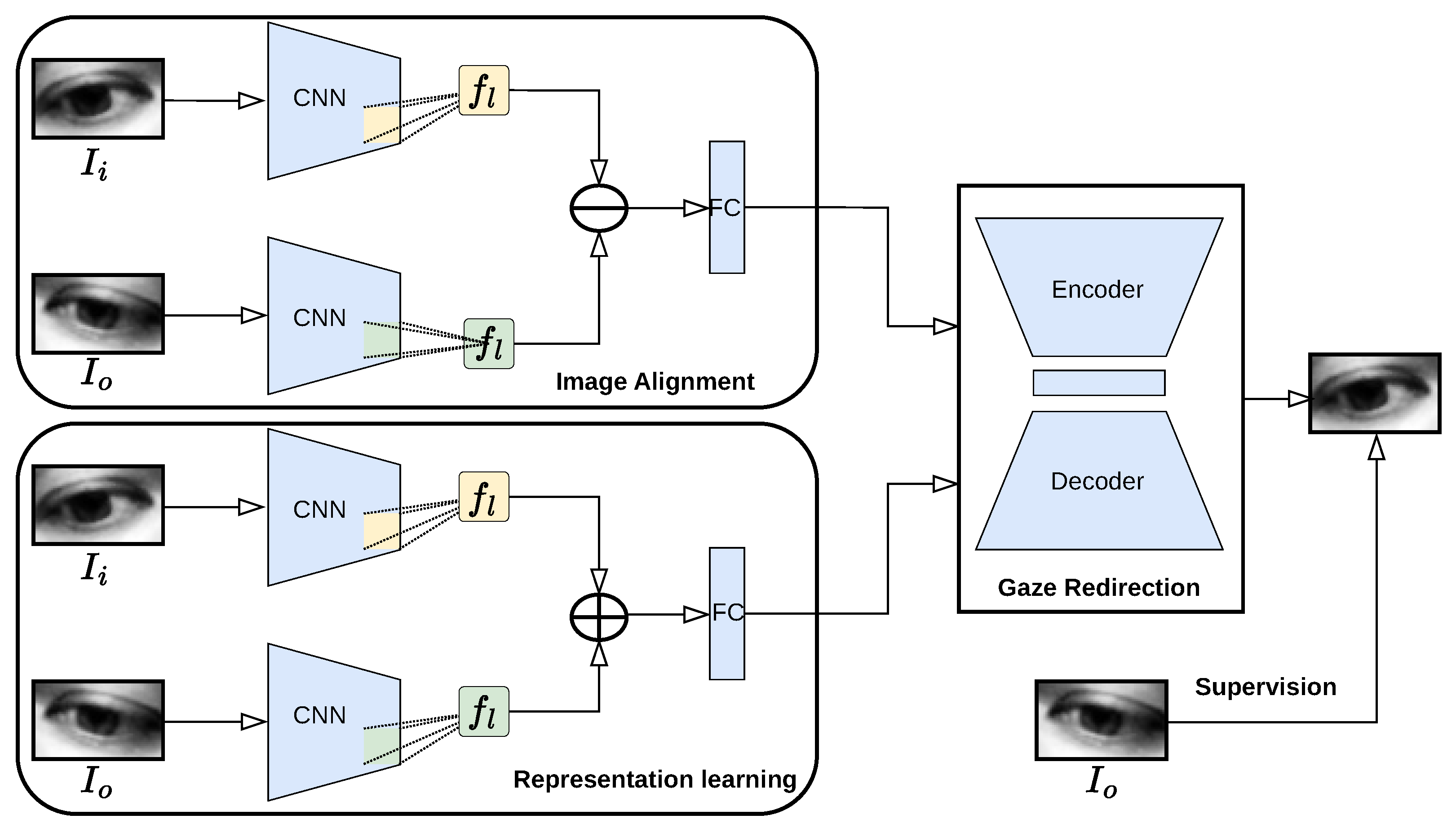
Cheng et al. [113] introduce a self-supervised asymmetry regression network, this approach features a regression component tasked with determining the gaze directions of both eyes. In addition, it includes an evaluation mechanism designed to assess the reliability of gaze estimations for each eye, ensuring accurate and reliable gaze direction predictions. Weakly supervised learning combines elements of both supervised and unsupervised methods, using limited labeled data to enhance learning with mostly unlabeled data.
Kothari et al. [142] employ the LAEO (Looking At Each Other) dataset [143] to leverage geometric constraints related to gaze in two-person interactions, offering a distinct approach to weak supervision.
Ghosh et al. [144] propose the MTGLS framework, which harnesses non-annotated facial images by combining three signals: the pupil’s line of sight, head pose, and eye movement. Unsupervised CNNs can be trained using unlabeled data, but optimizing them without ground-truth data presents challenges.
Dubey et al. [51] gathered unlabeled facial images from web pages and approximated gaze region annotations based on detected facial landmarks, enabling them to undertake gaze representation learning as if it were a supervised task.
4.2.2. Temporal Models
The human gaze is continuous and changes dynamically, involving complex movements. Moreover, there is a strong temporal correlation between an image frame and the gaze direction in the preceding time steps. Building on this insight, many studies [57,58,123,137,145] have utilized the temporal information to greatly improve the accuracy of gaze estimation, surpassing the capabilities of methods based solely on static images. Various temporal architectures have been used in gaze estimation, including GRUs [123], LSTMs [57], and bi-LSTMs [137].
Zhou et al. [57] introduce an innovative enhancement to the iTracker framework, creating a refined static model for accurate gaze prediction from single image frames. They further incorporate a Bidirectional Bi-LSTM network to effectively harness temporal sequence information from consecutive frames, enhancing gaze estimation accuracy. This approach skillfully combines static image analysis with dynamic temporal insights, offering a comprehensive and advanced solution for gaze estimation.
Palmero et al. [123] propose a multimodal recurrent CNN framework that processes invariant features from all input frames in a sequence, then channels these into a dedicated multimodal recurrent module to predict the 3D orientation of the gaze in the sequence’s final frame. This innovative integration of a Recurrent Neural Network (RNN) with a Convolutional Neural Network (CNN) aims to enhance the extraction of gaze-related features. While their study did not report significant improvements in gaze estimation accuracy for on-screen targets, it unveiled promising results for the smooth pursuit of floating targets within the EYEDIAP dataset. These findings suggest that temporal data, including information collected over time, may not substantially improve gaze estimation in straightforward scenarios such as screen tracking. However, this approach could offer significant advantages in more complex situations involving varied gaze directions and head movements.
Kellnhofer et al. [137] innovate the Gaze360 model, an innovative approach that integrates CNNs and bidirectional Long Short-Term Memory (bi-LSTM) networks for the tracking and prediction of gaze direction from video sequences as shown in Figure 8. By analyzing a sequence of seven frames, they utilize a CNN to extract high-level features from each frame and then employ bi-LSTM to process these features over time, capturing the temporal dynamics of gaze. The bidirectional LSTM architecture is key to leveraging both past and future contextual information to enhance prediction accuracy. Additionally, the model output includes an estimate of the prediction error, which demonstrates its ability to understand and predict human gaze behavior accurately.
Figure 8.
Temporal model by Kellnhofer et al. [137] combines CNNs and bi-LSTM networks to predict gaze direction from video sequences. It analyzes seven frames at a time, using CNNs for feature extraction and bidirectional LSTMs to incorporate temporal dynamics, thereby enabling accurate gaze predictions in spherical coordinates.
Palmeiro et al. [145] employ a spatio-temporal model that compares a recurrent CNN approach with a static only CNN model, underscoring the critical role of temporal data in the precise tracking of eye movements. The accuracy of gaze estimation was significantly improved by integrating temporal information from eye image sequences captured at a high frame rate, with notable enhancements observed in the estimation of the vertical component of gaze. This finding is particularly relevant for applications involving virtual reality head-mounted displays.
Although these studies [57,58,123,137,145] confirm the benefits of temporal information in gaze estimation, challenges remain in capturing eye dynamics in real-world scenarios and low-quality videos. More research is needed to understand eye movement patterns across different tasks and natural behaviors, highlighting significant gaps in current understanding.
4.2.3. Generative/Transformer Models
The exploration of Generative Adversarial Networks (GANs) has opened new avenues in the field of gaze estimation. These models have shown significant promise in learning complex, high-dimensional data distributions, which is essential for accurately inferring gaze direction from visual inputs.
Park et al. [52] innovate the FAZE framework as presented in Figure 9 that leverages the Disentangling Transforming Encoder-Decoder (DT-ED) to learn latent representations of crucial gaze-related features from input images, such as gaze direction, head pose, and eye appearance. They map these inputs to a well-structured latent space to facilitate accurate and efficient gaze estimation. This approach increases the model’s generalizability across various subjects by facilitating a detailed understanding and manipulation of gaze that is independent of person-specific attributes.
Figure 9.
Generative model by Park et al. [52], namely the FAZE framework that leverages the Disentangling Transforming Encoder–Decoder (DT-ED) to learn latent representations of crucial gaze-related features from input images.
Zheng et al. [146] propose the Self-Transforming Encoder–Decoder (ST-ED) framework, which encodes both task-relevant factors, such as gaze and head orientation, and task-irrelevant factors. The ST-ED model is designed to process image pairs, enabling it to effectively distinguish subject-specific embeddings from those associated with gaze transformations. This crucial differentiation allows the model to leverage pseudo-labels for learning transformation-related attributes with minimal calibration samples.
Yu et al. [141] leverage a pre-trained gaze redirection network for unsupervised learning of gaze representations. The model aims to generalize eye appearance across different gaze directions without explicit supervision. By focusing on learning a generic representation of the eye, this network underscores the potential of unsupervised learning in enhancing the capabilities of gaze estimation models, particularly in terms of representation learning and gaze manipulation.
Chaudhary et al. [147] tackle the segmentation of the eye region, an essential preliminary step for precise gaze estimation. They introduced RITnet, a hybrid model that combines elements of U-Net and DenseNet within a Fully Convolutional Network (FCN) framework to efficiently segment the eye. This approach provides a solid foundation for subsequent gaze estimation efforts and is designed to balance the trade-off between performance and computational complexity. This model showcases the potential of specialized neural networks in enhancing the performance of gaze estimation systems, particularly in challenging conditions where traditional methods may struggle to accurately locate and analyze the eye region.
The advent of transformer models in computer vision has led to their exploration in the field of gaze estimation, offering new methodologies beyond traditional CNNs. Specifically, the Vision Transformer (ViT) framework has been adapted to gaze estimation tasks, showcasing two distinct approaches: GazeTR-Pure and GazeTR-Hybrid.
Cheng et al. [148] are the first to apply a pure transformer architecture for gaze estimation with their GazeTR-Pure model as shown in Figure 10, which directly processes facial images. They introduced a novel feature that learns to capture global image characteristics, enabling the model to analyze facial features from a comprehensive perspective instead of focusing on local patches. This innovation highlights the significant potential of transformers to improve the accuracy of gaze estimation through a holistic understanding of the images.
Figure 10.
Transformer models by Cheng et al. [149] namely GazeTR-Pure, with a pure transformer architecture designed for extracting global gaze features, alongside GazeTR-Hybrid a hybrid version combining CNNs and transformers for gaze direction prediction.
In the same study, Cheng et al. [148] recognize the challenges of using pure transformers for regression tasks such as gaze estimation. To address this, they introduce the GazeTR-Hybrid model, which combines CNNs for extracting local features with transformers for synthesizing global information. This hybrid method leverages the strengths of both architectures: CNNs for capturing detailed local features and transformers for understanding the overall context. The GazeTR hybrid model demonstrates not only enhance the accuracy of gaze estimation but also reduce the computational costs.
Oh et al. [41] integrate self-attention with convolution and deconvolution to enhance eye gaze estimation from full-face images. They efficiently model local contexts and reduce the computational costs of applying self-attention directly to images, while also ensuring that crucial spatial information is retained through a deconvolution process.
4.2.4. Lightweight Models
Lightweight networks are pivotal in developing efficient network architectures for various domains. Starting with the Xception network [150,151] that adapts deep separable convolutional layers to significantly reduce the number of parameters and enhance the efficiency of network designs. Furthermore, MobileNet [152] advanced this approach by employing deep separable convolutional layers, moving away from traditional model reduction methods. Further improvements were made with MobileNetV2 [153], which introduced backward residuals and linear bottlenecks, optimizing the MobileNet architecture for better accuracy and lower computational demand. Furthermore, the MobileViT [154,155,156,157] series combines the strengths of CNNs and Transformers, providing exceptional performance on a wide range of mobile vision tasks. These lightweight networks opened new avenues in the field of effective gaze estimation.
Wang et al. [111] introduce GazeCaps, a novel framework for gaze estimation that utilizes self-attention-routed capsules to represent various facial properties crucial for gaze estimation. GazeCaps encapsulates the non-linear transformations of facial features with head movement into distinct capsules. These capsules are sensitive to transformations, providing a vectorial representation that effectively captures the complex changes in facial components related to gaze direction. Furthermore, the framework incorporates a Self-Attention Routing (SAR) module that dynamically focuses on relevant capsules that contain significant information for gaze estimation. This mechanism allows for optimization in a single process without the need for iterations. The proposed GazeCaps model demonstrates superior performance across multiple gaze estimation benchmarks, showcasing its potential for real-world applications.
Zhou et al. [121] propose EM-Gaze, an advanced gaze estimation model that incorporates eye context correlation and metric learning to enhance the accuracy of 2D gaze estimation on mobile devices. The network architecture is designed around a two-stream collaborative framework, integrating an attention-based module to correlate and fuse contextual features from the left and right eyes. This approach not only improves the regression of gaze points but also leverages metric learning for gaze classification across display quadrants, thereby enhancing both regression and classification performance. EM-Gaze’s architecture, with its efficient attention mechanism and metric learning approach, sets a new benchmark in gaze estimation, illustrating its potential for practical applications in human-computer interaction.
Murthy et al. [122] innovate I2DNet, an innovative architecture that leverages dilated convolutions and a unique differential layer to improve real-time subject-independent gaze accuracy. Dilated convolutions are utilized to enhance the network’s receptive field without losing spatial details through maxpooling, while the differential layer emphasizes gaze-relevant features by focusing on the differences between left and right eye features. Through a user study involving a 9-block pointing and selection task, I2DNet demonstrated improved performance in selection time and reduced miss selections, highlighting its potential for creating efficient gaze-controlled interfaces using standard webcams.
Xu et al. [158] introduce FR-Net as shown in Figure 11, a novel lightweight model designed for accurate gaze estimation, which significantly minimizes computational complexity. Using Fast Fourier Transform (FFT), FR-Net adeptly extracts gaze-relevant features within frequency domains, thereby diminishing both the parameter count and computational demands. A notable innovation is the introduction of a shortcut component that emphasizes spatial domain analysis, which is key to further augmenting the model’s accuracy. Experimental results underscore FR-Net’s superior performance in achieving lower gaze error angles while employing considerably fewer parameters and FLOPs in comparison to existing state-of-the-art gaze estimation methods.
Figure 11.
Lightweight model by Xu et al. [158] namely FR-Net, the three FFT Residual Blocks are utilized to extract both depth spatial domain and frequency domain features, which are then fused to form the input for the subsequent layer.
Recent work has also explored extending traditional gaze estimation toward predicting the specific object that a person is attending to. Methods such as gaze-object fusion [159] integrate gaze signals with object detection features to identify attended objects, while approaches using foveated representations for instance segmentation [160] leverage high-resolution foveal regions combined with low-resolution peripheral context to improve object-level attention modeling. These approaches offer a complementary perspective to standard gaze tracking, highlighting how gaze signals can be used not only to estimate spatial attention but also to infer attention at the level of individual objects. Our work focuses primarily on gaze-driven attention localization, but we note that these object-centric methods provide a promising avenue for future integration.
5. Deep Learning Validation for Gaze Estimation
We review the commonly followed evaluation procedures used in gaze estimation, including various datasets, as well as the metrics adopted for assessing performance. The review emphasizes the diversity of datasets and the benchmarks set for comparison, providing a comprehensive overview of how performance in gaze estimation is measured and benchmarked across different studies.
5.1. Datasets
The advancement of gaze estimation research is significantly improved by the development and availability of diverse datasets, evolving from constrained laboratory settings to more complex and natural indoor and outdoor environments. Researchers employ rigorous methodologies and specific equipment to generate these datasets. They ask participants to perform certain tasks that naturally show how people look at things. Before using the data, it is sometimes necessary to pre-process them using specialized software to detect facial features, such as eyes, and ensure that the images are of high quality and suitable for analyzing gaze patterns. These datasets facilitate the development of novel methods for estimating gaze direction by providing a standardized means of evaluating the effectiveness of these new approaches. This evolution in dataset collection techniques reflects the growing need for models that can operate under varied and less controlled conditions, pushing the boundaries of gaze estimation technology. As the need for gaze estimation in real-life situations grows, there is a bigger demand for datasets that show more natural and varied environments. This means collecting data in different light, from different kinds of people, and during different activities. The future of these datasets will likely focus on including a wider range of human gaze behavior in many settings, such as indoor and outdoor settings. we summarize the most well-known gaze estimation datasets in Table 1.
Table 1.
A Comparison of Gaze Estimation Datasets Across Various Characteristics: Including the number of subjects, head pose, gaze, total images or videos, application environment, and data sources (all links are accessed on 2 March 2026).
CAVE [161]: Comprising 5880 images from 56 subjects, this dataset offers varied gaze directions and head poses within a controlled lab setting, highlighting early efforts in creating high-resolution, focused datasets for gaze estimation.
GazeCapture [119]: GazeCapture is the largest available in-the-wild gaze dataset that contains a training set of 1,379,083 images, a testing set of 191,842 images, and a validating set of 63,518 images.
Eyediap [162]: Designed to address challenges such as variation in head pose, person identity, and 3-D target changes, alongside fluctuations in ambient and sensing conditions, Eyediap marks a significant step towards capturing the complexities of real-world gaze behavior.
TabletGaze [114]: A notable example of datasets aiming at unconstrained environments, TabletGaze contains data from 51 subjects across four postures, utilizing a tablet in an indoor setting to gather data across a 7 × 5 grid, showcasing the diversity in user interaction scenarios.
MPIIGaze [37]: Capturing daily laptop use over three months from 15 subjects, this dataset emphasizes the importance of naturalistic data collection, offering a rich source for studying gaze behavior in common technology usage contexts.
RT-GENE [39]: This dataset introduces a more naturalistic setting with varied gaze and head pose angles, annotated using motion capture systems, underscoring the shift towards capturing more dynamic and spontaneous gaze interactions.
Gaze360 [137]: With data from 238 subjects in both indoor and outdoor settings, Gaze360 expands the scope of gaze estimation to a wide range of head poses, highlighting the field’s move towards more inclusive and comprehensive data collection.
ETH-XGaze [138]: This dataset provides high-resolution images across a wide range of head poses, collected in a constrained environment but with varied camera positions and illumination, adding to the challenge and complexity of gaze estimation tasks.
The transition from constrained to more unconstrained, real-world settings in gaze estimation datasets reflects the community’s response to the need for models that are robust across various operational conditions. With each new dataset, the gaze estimation field moves closer to developing systems that can perform reliably in the diverse settings encountered in daily life, from personal device interaction to automotive and accessibility applications.
The detailed examination of these datasets not only provides a foundation for current gaze estimation research but also outlines the trajectory for future dataset development and challenges in capturing the nuances of human gaze behavior.
5.2. Evaluation Metric
We outline the most commonly used metrics for assessing gaze estimation in various domains. The paper discusses two main evaluation metrics: angular error and Euclidean distance.
Angular error is used predominantly to evaluate the accuracy of 3D gaze estimation methods. It involves computing the angle between the actual gaze direction and the estimated gaze direction, both represented in 3D space. The angular error is derived using the formula below, which measures the accuracy in terms of the angular difference between the actual and estimated gaze directions. Assuming that the ground truth gaze direction is and the predicted gaze vector is , the gaze angular error (in degrees) is calculated as follows.
This formula corrects the previous misrepresentation and accurately calculates the angular error by applying the arc cosine to the cosine similarity between and .
Euclidean Distance: Euclidean distance is utilized to gauge the accuracy of 2D gaze estimation methods. It calculates the straight-line distance between the actual gaze position and the estimated gaze position , both located in a 2D space. This metric serves as an indicator of accuracy by measuring the spatial discrepancy between the actual and predicted gaze points. The Euclidean distance is computed using the formula:
This formula provides a direct method for quantifying the accuracy of gaze position predictions in a 2D context, highlighting the spatial accuracy of the estimated gaze points in relation to their actual positions.
6. Deep Learning Adaptation for Gaze Estimation
In the realm of gaze estimation technology, achieving accurate gaze direction prediction from images has been a focal point, with various approaches demonstrating promising results within dataset evaluations. However, the application of these models to new, unseen domains (cross-dataset evaluations) often faces challenges due to factors like variations in face appearance, head pose, image quality, and illumination. To tackle the issue of gaze generalization to new environments, two primary strategies are employed: domain generalization and domain adaptation.
6.1. Domain Generalization
Domain generalization techniques strive to enhance model performance on unseen domains by leveraging only the data from source domains, without incorporating any labels from the target domain.
Cheng et al. [40] propose PureGaze, a domain-generalization framework for gaze estimation that aims to purify gaze features by removing gaze-irrelevant factors such as illumination and identity, without the need for target domain data. This approach is designed to enhance cross-dataset performance, utilizing a self-adversarial framework to purify extracted features. The framework includes two key tasks: gaze estimation to preserve gaze-relevant information and adversarial reconstruction to remove general image information. The implementation features two shared-weight backbones for feature extraction, a two-layer MLP for gaze estimation, and an SA-Module for image reconstruction, facilitating feature purification through adversarial learning. PureGaze not only achieves state-of-the-art performance in benchmark comparisons but also enhances existing gaze estimation methods significantly without requiring additional inference parameters or training images, proving its effectiveness and plug-and-play capability for improving generalization in gaze estimation across different domains.
Oh et al. [41] propose an advanced framework for eye gaze estimation that combines self-attention with convolution and deconvolution, aiming to enhance generalization performance beyond traditional methods. This approach leverages self-attention to capture the global context, significantly boosting the model’s generalization capabilities. By incorporating convolution projection and deconvolution both before and after the self-attention process, the model efficiently balances between modeling local contexts and reducing computational demands associated with self-attention. This strategy ensures an effective equilibrium between accurately modeling gaze behavior and maintaining computational efficiency.
These methods show potential in extending to new domains; however, their effectiveness is limited by the scarcity of annotated in-the-wild gaze datasets that can encompass the wide array of environmental conditions present in real-world settings.
6.2. Domain Adaptation
Domain adaptation approaches engage data from the target domain during the training process to directly address domain discrepancies.
Wang et al. [140] address the challenge of generalizing eye tracking across different subjects and environments by developing a novel Bayesian adversarial learning framework. This approach systematically tackles the factors that hinder generalization in appearance-based gaze estimation, including appearance variations, head pose variations, and overfitting issues associated with point estimation. By integrating adversarial learning and Bayesian inference, their method learns features that are responsive to gaze direction while being robust to variations in appearance and pose. Furthermore, by adopting a Bayesian framework, the model performs gaze estimation using a distribution of parameters rather than relying on a single set of parameters, which mitigates overfitting.
Bao et al. [42] propose the Rotation-Enhanced Unsupervised Domain Adaptation (RUDA) framework, leveraging the rotation-consistency property of gaze estimation. By rotating original images at various angles for training and applying domain adaptation under rotation consistency constraints, the model assigns sub-labels to target domain images based on relative rotation angles. This innovative approach enables effective domain adaptation without requiring real labels in the target domain. The RUDA framework is evaluated across four cross-domain gaze estimation tasks, showing significant performance improvements and highlighting its potential applicability in other computer vision tasks with physical constraints.
Liu et al. [43] propose a Plug-and-Play Gaze Adaptation Framework (PnP-GA), an innovative solution aimed at enhancing the ability of gaze estimation models to generalize across new domains without requiring target domain labels. The framework is distinct for its ensemble approach, where networks collaborate under the guidance of outliers to adapt pre-existing gaze estimation algorithms to novel environments or individuals. This outlier-guided collaborative learning strategy significantly improves on traditional unsupervised domain adaptation methods, showcasing substantial performance enhancements in various domain adaptation tasks such as ETH-to-MPII and Gaze360-to-EyeDiap. The PnP-GA framework’s ability to seamlessly integrate with existing gaze estimation networks without architectural modifications underlines its practicality for real-world applications, thereby setting a new benchmark in the field of gaze domain adaptation.
Wang et al. [172] introduce a Contrastive Regression Gaze Adaptation (CRGA) that utilizes contrastive regression for domain adaptation. This method leverages the Contrastive Domain Generalization (CDG) module to extract stable representations from the source domain and the Contrastive Self-training Adaptation (CSA) module to learn from pseudo-labels in the target domain. The core innovation lies in the Contrastive Regression (CR) loss, designed to bring features with similar gaze directions closer and push dissimilar ones apart, enhancing the model’s adaptability to new domains without requiring labeled data. The effectiveness of CRGA is demonstrated across several domain adaptation tasks, significantly improving performance over baseline models and surpassing current state-of-the-art domain adaptation methods in gaze estimation. This breakthrough paves the way for more robust gaze estimation models capable of adapting to varied environments and subjects without the need for extensive retraining or labeled target domain data.
Xu et al. [158] focuses on learning from gaze-consistent features to improve the model’s generalization to unseen domains. Their approach modifies the training data to reduce the effects of gaze-irrelevant factors, such as identity, expression, and illumination. This allows the model to focus on acquiring gaze-consistent features. This is achieved through adversarial attack or data augmentation based on these gaze-irrelevant factors, followed by feature alignment to ensure gaze consistency. The proposed method has demonstrated state-of-the-art performance on gaze domain generalization tasks, showcasing its ability to effectively generalize across different conditions without requiring ground-truth labels for unseen domains.
Although these methods offer improvements in cross-dataset performance, they typically rely on additional models or annotations, which might not always be accessible in practical scenarios. Moreover, the resulting models are fine-tuned for specific domains rather than being universally applicable to any unseen domain, highlighting a limitation in their generalizability.
7. Future Work
Despite considerable advances in deep learning-based gaze estimation, several challenges remain for achieving robust real-world deployment. Future research should focus on improving model generalization across diverse users, environments, and acquisition conditions, as current methods often remain domain-dependent. Reducing reliance on large annotated datasets through self-supervised, semi-supervised, and data-efficient learning strategies also represents an important direction.
Moreover, incorporating temporal information to better model dynamic gaze behavior and developing lightweight architectures for real-time operation on resource-constrained devices are essential for practical applications. The integration of gaze estimation within multimodal perception frameworks, combining gaze cues with head pose and contextual information, is expected to further enhance human–computer interaction systems. Finally, the development of more diverse in-the-wild datasets will be crucial for improving robustness and enabling reliable evaluation under realistic conditions.
8. Conclusions
In this paper, we presented a comprehensive review of gaze estimation methodologies, highlighting the evolution from conventional model- and feature-based approaches to modern deep learning-based techniques. We analyzed the fundamental principles, challenges, and developments across model-based, feature-based, and appearance-based methods, and provided an extensive discussion of recent advances in deep learning architectures, including CNNs, temporal models, generative frameworks, transformer-based approaches, and lightweight networks. The review demonstrates that deep learning has significantly improved gaze estimation accuracy and robustness, enabling operation under increasingly unconstrained conditions. Nevertheless, challenges related to cross-person and cross-environment generalization, data dependency, and efficient real-time deployment remain key obstacles toward widespread practical adoption. Overall, this review consolidates current progress in gaze estimation and provides a structured foundation for future research and development in intelligent human-centered vision systems.
Author Contributions
Conceptualization, A.A.-H.; methodology, A.A.A.; validation, A.A.A. and B.A.-T.; investigation, A.A.A. and B.A.-T.; resources, A.A.A.; writing original draft preparation, A.A.A., and B.A.-T.; writing review and editing, A.A.A. and B.A.-T.; visualization, A.A.A. and B.A.-T.; supervision, A.A.-H.; project administration, A.A.A. and A.A.-H.; funding acquisition, A.A.-H. All authors have read and agreed to the published version of the manuscript.
Funding
This research was supported by several NIT projects: in part by the Federal Ministry of Research, Technology, and Space of Germany (BMFTR) through project Edison (Grant No. 13N17576); in part by the European Regional Development Fund (ERDF) through ENABLING (Grant No. ZS/2023/12/182056); and by the ERDF as part of the project ORAKEL (Grant No. ZS/2023/12/182322), funded by the European Union and the state of Saxony-Anhalt.
Data Availability Statement
This study is a review article and did not generate any new data. All datasets, materials, and sources discussed in this manuscript are publicly available in the cited references.
Acknowledgments
During the preparation of this manuscript, the authors used ChatGPT (OpenAI, GPT-4) for language editing, including grammar, phrasing, and formatting. The authors have reviewed and edited all AI-generated text and take full responsibility for the content of this publication.
Conflicts of Interest
The authors declare no conflict of interest.
References
- Eckstein, M.K.; Guerra-Carrillo, B.; Singley, A.T.M.; Bunge, S.A. Beyond eye gaze: What else can eyetracking reveal about cognition and cognitive development? Dev. Cogn. Neurosci. 2017, 25, 69–91. [Google Scholar] [CrossRef] [Scilit]
- Raptis, G.E.; Katsini, C.; Belk, M.; Fidas, C.; Samaras, G.; Avouris, N. Using eye gaze data and visual activities to infer human cognitive styles: Method and feasibility studies. In UMAP’17 Proceedings of the 25th Conference on User Modeling, Adaptation and Personalization; ACM: New York, NY, USA, 2017; pp. 164–173. [Google Scholar]
- Meißner, M.; Oll, J. The promise of eye-tracking methodology in organizational research: A taxonomy, review, and future avenues. Organ. Res. Methods 2019, 22, 590–617. [Google Scholar] [CrossRef] [Scilit]
- Kerr-Gaffney, J.; Harrison, A.; Tchanturia, K. Eye-tracking research in eating disorders: A systematic review. Int. J. Eat. Disord. 2019, 52, 3–27. [Google Scholar] [CrossRef] [Scilit]
- Hempel, T.; Al-Hamadi, A. Slam-based multistate tracking system for mobile human-robot interaction. In International Conference on Image Analysis and Recognition; Springer: Berlin/Heidelberg, Germany, 2020; pp. 368–376. [Google Scholar]
- Strazdas, D.; Hintz, J.; Khalifa, A.; Abdelrahman, A.A.; Hempel, T.; Al-Hamadi, A. Robot System Assistant (RoSA): Towards Intuitive Multi-Modal and Multi-Device Human-Robot Interaction. Sensors 2022, 22, 923. [Google Scholar] [CrossRef] [Scilit] [PubMed]
- Abdelrahman, A.A.; Strazdas, D.; Khalifa, A.; Hintz, J.; Hempel, T.; Al-Hamadi, A. Multi-Modal Engagement Prediction in Multi-Person Human-Robot Interaction. IEEE Access 2022, 10, 61980–61991. [Google Scholar] [CrossRef] [Scilit]
- Khalifa, A.; Abdelrahman, A.A.; Strazdas, D.; Hintz, J.; Hempel, T.; Al-Hamadi, A. Face recognition and tracking framework for human–robot interaction. Appl. Sci. 2022, 12, 5568. [Google Scholar] [CrossRef] [Scilit]
- Hu, Z.; Lv, C.; Hang, P.; Huang, C.; Xing, Y. Data-driven estimation of driver attention using calibration-free eye gaze and scene features. IEEE Trans. Ind. Electron. 2021, 69, 1800–1808. [Google Scholar] [CrossRef] [Scilit]
- Vora, S.; Rangesh, A.; Trivedi, M.M. Driver gaze zone estimation using convolutional neural networks: A general framework and ablative analysis. IEEE Trans. Intell. Veh. 2018, 3, 254–265. [Google Scholar] [CrossRef] [Scilit]
- Ghosh, S.; Dhall, A.; Sharma, G.; Gupta, S.; Sebe, N. Speak2label: Using domain knowledge for creating a large scale driver gaze zone estimation dataset. In Proceedings of the IEEE/CVF International Conference on Computer Vision (ICCV); IEEE: Montreal, QC, Canada, 2021; pp. 2896–2905. [Google Scholar]
- Palazzi, A.; Abati, D.; Solera, F.; Cucchiara, R. Predicting the Driver’s Focus of Attention: The DR (eye) VE Project. IEEE Trans. Pattern Anal. Mach. Intell. 2018, 41, 1720–1733. [Google Scholar] [CrossRef] [Scilit]
- Abbasi, J.A.; Mullins, D.; Ringelstein, N.; Reilhac, P.; Jones, E.; Glavin, M. An analysis of driver gaze behaviour at roundabouts. IEEE Trans. Intell. Transp. Syst. 2021, 23, 8715–8724. [Google Scholar] [CrossRef] [Scilit]
- Hempel, T.; Abdelrahman, A.A.; Al-Hamadi, A. 6d rotation representation for unconstrained head pose estimation. In Proceedings of the 2022 IEEE International Conference on Image Processing (ICIP); IEEE: Piscataway, NJ, USA, 2022; pp. 2496–2500. [Google Scholar]
- Patney, A.; Salvi, M.; Kim, J.; Kaplanyan, A.; Wyman, C.; Benty, N.; Luebke, D.; Lefohn, A. Towards foveated rendering for gaze-tracked virtual reality. ACM Trans. Graph. (TOG) 2016, 35, 1–12. [Google Scholar] [CrossRef] [Scilit]
- Clay, V.; König, P.; Koenig, S. Eye tracking in virtual reality. J. Eye Mov. Res. 2019, 12, 3. [Google Scholar] [CrossRef] [Scilit]
- Javal, E. Essai sur la physiologie de la lecture. Ann. D’Ocul. 1879, 82, 242–253. [Google Scholar]
- Shih, S.W.; Wu, Y.T.; Liu, J. A calibration-free gaze tracking technique. In Proceedings of the 15th International Conference on Pattern Recognition. ICPR-2000; IEEE: Piscataway, NJ, USA, 2000; Volume 4, pp. 201–204. [Google Scholar]
- Zhang, X.; Sugano, Y.; Fritz, M.; Bulling, A. Appearance-based gaze estimation in the wild. In Proceedings of the IEEE Conference on Computer Vision and Pattern Recognition; IEEE: Piscataway, NJ, USA, 2015; pp. 4511–4520. [Google Scholar]
- Huey, E.B. Preliminary experiments in the physiology and psychology of reading. Am. J. Psychol. 1898, 9, 575–586. [Google Scholar] [CrossRef] [Scilit]
- Huey, E.B. On the psychology and physiology of reading. I. Am. J. Psychol. 1900, 11, 283–302. [Google Scholar] [CrossRef] [Scilit]
- Delabarre, E.B. A method of recording eye-movements. Am. J. Psychol. 1898, 9, 572–574. [Google Scholar] [CrossRef] [Scilit]
- Dodge, R.; Cline, T.S. The angle velocity of eye movements. Psychol. Rev. 1901, 8, 145. [Google Scholar] [CrossRef] [Scilit]
- Buswell, G.T. How People Look at Pictures: A Study of the Psychology and Perception in Art; American Psychological Association: Washington, DC, USA, 1935. [Google Scholar]
- Yarbus, A.L.; Yarbus, A.L. Eye movements during perception of complex objects. In Eye Movements and Vision; Springer: Boston, MA, USA, 1967; pp. 171–211. [Google Scholar]
- Hartridge, H.; Thomson, L. Methods of investigating eye movements. Br. J. Ophthalmol. 1948, 32, 581. [Google Scholar] [CrossRef] [Scilit]
- Merchant, J.; Morrissette, R.; Porterfield, J.L. Remote measurement of eye direction allowing subject motion over one cubic foot of space. IEEE Trans. Biomed. Eng. 1974, 4, 309–317. [Google Scholar] [CrossRef] [Scilit]
- Levine, J.L. An Eye-Controlled Computer; IBM Research Division, TJ Watson Research Center: Armonk, NY, USA, 1981. [Google Scholar]
- Ellis, S.; Candrea, R.; Misner, J.; Craig, C.S.; Lankford, C.P.; Hutchinson, T.E. Windows to the soul? What eye movements tell us about software usability. In Proceedings of the Usability Professionals’ Association Conference; UPA Press: Washington, DC, USA, 1998; pp. 151–178. [Google Scholar]
- Yamazoe, H.; Utsumi, A.; Yonezawa, T.; Abe, S. Remote gaze estimation with a single camera based on facial-feature tracking without special calibration actions. In Proceedings of the 2008 Symposium on Eye Tracking Research & Applications; ACM: New York, NY, USA, 2008; pp. 245–250. [Google Scholar]
- Hansen, D.W.; Ji, Q. In the eye of the beholder: A survey of models for eyes and gaze. IEEE Trans. Pattern Anal. Mach. Intell. 2009, 32, 478–500. [Google Scholar] [CrossRef] [Scilit]
- Zhang, W.; Zhang, T.N.; Chang, S.J. Gazing estimation and correction from elliptical features of one iris. In Proceedings of the 2010 3rd International Congress on Image and Signal Processing; IEEE: Piscataway, NJ, USA, 2010; Volume 4, pp. 1647–1652. [Google Scholar]
- Tsukada, A.; Shino, M.; Devyver, M.; Kanade, T. Illumination-free gaze estimation method for first-person vision wearable device. In Proceedings of the 2011 IEEE International Conference on Computer Vision Workshops (ICCV Workshops); IEEE: Piscataway, NJ, USA, 2011; pp. 2084–2091. [Google Scholar]
- Wood, E.; Bulling, A. Eyetab: Model-based gaze estimation on unmodified tablet computers. In ETRA’14 Proceedings of the Symposium on Eye Tracking Research and Applications; ACM: New York, NY, USA, 2014; pp. 207–210. [Google Scholar]
- Lu, F.; Sugano, Y.; Okabe, T.; Sato, Y. Adaptive linear regression for appearance-based gaze estimation. IEEE Trans. Pattern Anal. Mach. Intell. 2014, 36, 2033–2046. [Google Scholar] [CrossRef] [Scilit] [PubMed]
- Venkateswarlu, R. Eye gaze estimation from a single image of one eye. In Proceedings of the Proceedings Ninth IEEE International Conference on Computer Vision; IEEE: Piscataway, NJ, USA, 2003; pp. 136–143. [Google Scholar]
- Zhang, X.; Sugano, Y.; Fritz, M.; Bulling, A. Mpiigaze: Real-world dataset and deep appearance-based gaze estimation. IEEE Trans. Pattern Anal. Mach. Intell. 2017, 41, 162–175. [Google Scholar] [CrossRef] [Scilit] [PubMed]
- Zhang, X.; Sugano, Y.; Fritz, M.; Bulling, A. It’s written all over your face: Full-face appearance-based gaze estimation. In Proceedings of the IEEE Conference on Computer Vision and Pattern Recognition Workshops; IEEE: Piscataway, NJ, USA, 2017; pp. 51–60. [Google Scholar]
- Fischer, T.; Chang, H.J.; Demiris, Y. Rt-gene: Real-time eye gaze estimation in natural environments. In Proceedings of the European Conference on Computer Vision (ECCV); Springer: Cham, Switzerland, 2018; pp. 334–352. [Google Scholar]
- Cheng, Y.; Bao, Y.; Lu, F. Puregaze: Purifying gaze feature for generalizable gaze estimation. In Proceedings of the AAAI Conference on Artificial Intelligence; AAAI: Palo Alto, CA, USA, 2022; Volume 36, pp. 436–443. [Google Scholar] [CrossRef] [Scilit]
- O Oh, J.; Chang, H.J.; Choi, S.I. Self-Attention with Convolution and Deconvolution for Efficient Eye Gaze Estimation From a Full Face Image. In Proceedings of the IEEE/CVF Conference on Computer Vision and Pattern Recognition; IEEE: Piscataway, NJ, USA, 2022; pp. 4992–5000. [Google Scholar]
- Bao, Y.; Liu, Y.; Wang, H.; Lu, F. Generalizing Gaze Estimation With Rotation Consistency. In Proceedings of the IEEE/CVF Conference on Computer Vision and Pattern Recognition; IEEE: Piscataway, NJ, USA, 2022; pp. 4207–4216. [Google Scholar]
- Liu, Y.; Liu, R.; Wang, H.; Lu, F. Generalizing gaze estimation with outlier-guided collaborative adaptation. In Proceedings of the IEEE/CVF International Conference on Computer Vision; IEEE: Piscataway, NJ, USA, 2021; pp. 3835–3844. [Google Scholar]
- Garbin, S.J.; Shen, Y.; Schuetz, I.; Cavin, R.; Hughes, G.; Talathi, S.S. Openeds: Open eye dataset. arXiv 2019, arXiv:1905.03702. [Google Scholar] [CrossRef] [Scilit]
- Palmero, C.; Sharma, A.; Behrendt, K.; Krishnakumar, K.; Komogortsev, O.V.; Talathi, S.S. OpenEDS2020: Open eyes dataset. arXiv 2020, arXiv:2005.03876. [Google Scholar] [CrossRef] [Scilit]
- Kim, J.; Stengel, M.; Majercik, A.; De Mello, S.; Dunn, D.; Laine, S.; McGuire, M.; Luebke, D. Nvgaze: An anatomically-informed dataset for low-latency, near-eye gaze estimation. In Proceedings of the 2019 CHI Conference on Human Factors in Computing Systems; ACM: New York, NY, USA, 2019; pp. 1–12. [Google Scholar]
- Tonsen, M.; Steil, J.; Sugano, Y.; Bulling, A. Invisibleeye: Mobile eye tracking using multiple low-resolution cameras and learning-based gaze estimation. In Proceedings of the ACM on Interactive, Mobile, Wearable and Ubiquitous Technologies; ACM: New York, NY, USA, 2017; Volume 1, pp. 1–21. [Google Scholar] [CrossRef] [Scilit]
- Wu, Z.; Rajendran, S.; Van As, T.; Badrinarayanan, V.; Rabinovich, A. Eyenet: A multi-task deep network for off-axis eye gaze estimation. In Proceedings of the 2019 IEEE/CVF International Conference on Computer Vision Workshop (ICCVW); IEEE: Piscataway, NJ, USA, 2019; pp. 3683–3687. [Google Scholar]
- Park, S.; Spurr, A.; Hilliges, O. Deep pictorial gaze estimation. In Proceedings of the European Conference on Computer Vision (ECCV); Springer: Cham, Switzerland, 2018; pp. 721–738. [Google Scholar]
- Zhang, X.; Sugano, Y.; Bulling, A. Evaluation of appearance-based methods and implications for gaze-based applications. In Proceedings of the 2019 CHI Conference on Human Factors in Computing Systems; ACM: New York, NY, USA, 2019; pp. 1–13. [Google Scholar]
- Dubey, N.; Ghosh, S.; Dhall, A. Unsupervised learning of eye gaze representation from the web. In Proceedings of the 2019 International Joint Conference on Neural Networks (IJCNN); IEEE: Piscataway, NJ, USA, 2019; pp. 1–7. [Google Scholar]
- Park, S.; Mello, S.D.; Molchanov, P.; Iqbal, U.; Hilliges, O.; Kautz, J. Few-shot adaptive gaze estimation. In Proceedings of the IEEE/CVF International Conference on Computer Vision; IEEE: Piscataway, NJ, USA, 2019; pp. 9368–9377. [Google Scholar]
- Yu, Y.; Liu, G.; Odobez, J.M. Deep multitask gaze estimation with a constrained landmark-gaze model. In Proceedings of the European Conference on Computer Vision (ECCV) Workshops; Springer: Cham, Switzerland, 2018. [Google Scholar]
- Chong, E.; Ruiz, N.; Wang, Y.; Zhang, Y.; Rozga, A.; Rehg, J.M. Connecting gaze, scene, and attention: Generalized attention estimation via joint modeling of gaze and scene saliency. In Proceedings of the European Conference on Computer Vision (ECCV); Springer: Cham, Switzerland, 2018; pp. 383–398. [Google Scholar]
- Zhang, X.; Huang, M.X.; Sugano, Y.; Bulling, A. Training person-specific gaze estimators from user interactions with multiple devices. In CHI’18 Proceedings of the 2018 CHI Conference on Human Factors in Computing Systems; ACM: New York, NY, USA, 2018; pp. 1–12. [Google Scholar]
- Chen, Z.; Shi, B.E. Appearance-based gaze estimation using dilated-convolutions. In Proceedings of the Asian Conference on Computer Vision; Springer: Berlin/Heidelberg, Germany, 2018; pp. 309–324. [Google Scholar]
- Zhou, X.; Lin, J.; Jiang, J.; Chen, S. Learning a 3D gaze estimator with improved Itracker combined with bidirectional LSTM. In Proceedings of the 2019 IEEE International Conference on Multimedia and Expo (ICME); IEEE: Piscataway, NJ, USA, 2019; pp. 850–855. [Google Scholar]
- Wang, K.; Su, H.; Ji, Q. Neuro-inspired eye tracking with eye movement dynamics. In Proceedings of the IEEE/CVF Conference on Computer Vision and Pattern Recognition; IEEE: Piscataway, NJ, USA, 2019; pp. 9831–9840. [Google Scholar]
- Zhang, X.; Sugano, Y.; Bulling, A.; Hilliges, O. Learning-based region selection for end-to-end gaze estimation. In Proceedings of the 31st British Machine Vision Conference (BMVC 2020); British Machine Vision Association: Durham, UK, 2020; p. 86. [Google Scholar]
- Lian, D.; Zhang, Z.; Luo, W.; Hu, L.; Wu, M.; Li, Z.; Yu, J.; Gao, S. RGBD based gaze estimation via multi-task CNN. In Proceedings of the AAAI Conference on Artificial Intelligence; AAAI: Palo Alto, CA, USA, 2019; Volume 33, pp. 2488–2495. [Google Scholar] [CrossRef] [Scilit]
- Tawari, A.; Chen, K.H.; Trivedi, M.M. Where is the driver looking: Analysis of head, eye and iris for robust gaze zone estimation. In Proceedings of the 17th International IEEE Conference on Intelligent Transportation Systems (ITSC); IEEE: Piscataway, NJ, USA, 2014; pp. 988–994. [Google Scholar]
- Santini, T.; Fuhl, W.; Kasneci, E. Calibme: Fast and unsupervised eye tracker calibration for gaze-based pervasive human-computer interaction. In Proceedings of the 2017 CHI Conference on Human Factors in Computing Systems; ACM: New York, NY, USA, 2017; pp. 2594–2605. [Google Scholar]
- Cheng, Y.; Wang, H.; Bao, Y.; Lu, F. Appearance-based gaze estimation with deep learning: A review and benchmark. arXiv 2021, arXiv:2104.12668. [Google Scholar] [CrossRef] [Scilit]
- Akinyelu, A.A.; Blignaut, P. Convolutional neural network-based methods for eye gaze estimation: A survey. IEEE Access 2020, 8, 142581–142605. [Google Scholar] [CrossRef] [Scilit]
- Klaib, A.F.; Alsrehin, N.O.; Melhem, W.Y.; Bashtawi, H.O.; Magableh, A.A. Eye tracking algorithms, techniques, tools, and applications with an emphasis on machine learning and Internet of Things technologies. Expert Syst. Appl. 2021, 166, 114037. [Google Scholar] [CrossRef] [Scilit]
- Pathirana, P.; Senarath, S.; Meedeniya, D.; Jayarathna, S. Eye gaze estimation: A survey on deep learning-based approaches. Expert Syst. Appl. 2022, 199, 116894. [Google Scholar] [CrossRef] [Scilit]
- Ghosh, S.; Dhall, A.; Hayat, M.; Knibbe, J.; Ji, Q. Automatic gaze analysis: A survey of deep learning based approaches. IEEE Trans. Pattern Anal. Mach. Intell. 2023, 46, 61–84. [Google Scholar] [CrossRef] [Scilit]
- Kar, A.; Corcoran, P. A review and analysis of eye-gaze estimation systems, algorithms and performance evaluation methods in consumer platforms. IEEE Access 2017, 5, 16495–16519. [Google Scholar] [CrossRef] [Scilit]
- Cazzato, D.; Leo, M.; Distante, C.; Voos, H. When i look into your eyes: A survey on computer vision contributions for human gaze estimation and tracking. Sensors 2020, 20, 3739. [Google Scholar] [CrossRef] [Scilit]
- Canny, J. A computational approach to edge detection. IEEE Trans. Pattern Anal. Mach. Intell. 1986, PAMI-8, 679–698. [Google Scholar] [CrossRef] [Scilit]
- Hansen, D.W.; Pece, A.E. Eye tracking in the wild. Comput. Vis. Image Underst. 2005, 98, 155–181. [Google Scholar] [CrossRef] [Scilit]
- Valenti, R.; Gevers, T. Accurate eye center location and tracking using isophote curvature. In Proceedings of the 2008 IEEE Conference on Computer Vision and Pattern Recognition; IEEE: Piscataway, NJ, USA, 2008; pp. 1–8. [Google Scholar]
- Xiong, X.; Liu, Z.; Cai, Q.; Zhang, Z. Eye gaze tracking using an RGBD camera: A comparison with a RGB solution. In Proceedings of the 2014 ACM International Joint Conference on Pervasive and Ubiquitous Computing: Adjunct Publication; ACM: New York, NY, USA, 2014; pp. 1113–1121. [Google Scholar]
- Alberto Funes Mora, K.; Odobez, J.M. Geometric generative gaze estimation (g3e) for remote rgb-d cameras. In Proceedings of the IEEE Conference on Computer Vision and Pattern Recognition; IEEE: Piscataway, NJ, USA, 2014; pp. 1773–1780. [Google Scholar]
- Ishikawa, T. Passive Driver Gaze Tracking with Active Appearance Models. Master’s Thesis, Linköping University, Linköping, Sweden, 2004. [Google Scholar]
- Baltrusaitis, T.; Robinson, P.; Morency, L.P. Constrained local neural fields for robust facial landmark detection in the wild. In Proceedings of the IEEE International Conference on Computer Vision Workshops; IEEE: Piscataway, NJ, USA, 2013; pp. 354–361. [Google Scholar]
- Wu, H.; Kitagawa, Y.; Wada, T.; Kato, T.; Chen, Q. Tracking iris contour with a 3D eye-model for gaze estimation. In Proceedings of the Computer Vision–ACCV 2007: 8th Asian Conference on Computer Vision, Tokyo, Japan, 18–22 November 2007, Proceedings, Part I 8; Springer: Berlin/Heidelberg, Germany, 2007; pp. 688–697. [Google Scholar]
- Wang, K.; Ji, Q. Real time eye gaze tracking with 3d deformable eye-face model. In Proceedings of the IEEE International Conference on Computer Vision; IEEE: Piscataway, NJ, USA, 2017; pp. 1003–1011. [Google Scholar]
- Wood, E.; Baltrušaitis, T.; Morency, L.P.; Robinson, P.; Bulling, A. A 3d morphable eye region model for gaze estimation. In Proceedings of the Computer Vision–ECCV 2016: 14th European Conference, Amsterdam, The Netherlands, 11–14 October 2016, Proceedings, Part I 14; Springer: Berlin/Heidelberg, Germany, 2016; pp. 297–313. [Google Scholar]
- Wood, E.; Baltrušaitis, T.; Morency, L.P.; Robinson, P.; Bulling, A. Gazedirector: Fully articulated eye gaze redirection in video. Comput. Graph. Forum 2018, 37, 217–225. [Google Scholar] [CrossRef] [Scilit]
- Guestrin, E.D.; Eizenman, M. General theory of remote gaze estimation using the pupil center and corneal reflections. IEEE Trans. Biomed. Eng. 2006, 53, 1124–1133. [Google Scholar] [CrossRef] [Scilit]
- Yoo, D.H.; Chung, M.J. A novel non-intrusive eye gaze estimation using cross-ratio under large head motion. Comput. Vis. Image Underst. 2005, 98, 25–51. [Google Scholar] [CrossRef] [Scilit]
- Cerrolaza, J.J.; Villanueva, A.; Cabeza, R. Taxonomic study of polynomial regressions applied to the calibration of video-oculographic systems. In Proceedings of the 2008 Symposium on Eye Tracking Research & Applications; ACM: New York, NY, USA, 2008; pp. 259–266. [Google Scholar]
- Sesma, L.; Villanueva, A.; Cabeza, R. Evaluation of pupil center-eye corner vector for gaze estimation using a web cam. In Proceedings of the Symposium on Eye Tracking Research and Applications; ACM: New York, NY, USA, 2012; pp. 217–220. [Google Scholar]
- Huang, M.X.; Kwok, T.C.; Ngai, G.; Chan, S.C.; Leong, H.V. Building a personalized, auto-calibrating eye tracker from user interactions. In Proceedings of the 2016 CHI Conference on Human Factors in Computing Systems; ACM: New York, NY, USA, 2016; pp. 5169–5179. [Google Scholar]
- Zhang, Y.; Bulling, A.; Gellersen, H. Sideways: A gaze interface for spontaneous interaction with situated displays. In Proceedings of the SIGCHI Conference on Human Factors in Computing Systems; ACM: New York, NY, USA, 2013; pp. 851–860. [Google Scholar]
- Zhang, Y.; Müller, J.; Chong, M.K.; Bulling, A.; Gellersen, H. Gazehorizon: Enabling passers-by to interact with public displays by gaze. In Proceedings of the 2014 ACM International Joint Conference on Pervasive and Ubiquitous Computing; ACM: New York, NY, USA, 2014; pp. 559–563. [Google Scholar]
- Hansen, D.W.; Hansen, J.P.; Nielsen, M.; Johansen, A.S.; Stegmann, M.B. Eye typing using Markov and active appearance models. In Proceedings of the Sixth IEEE Workshop on Applications of Computer Vision, 2002. (WACV 2002). Proceedings; IEEE: Piscataway, NJ, USA, 2002; pp. 132–136. [Google Scholar]
- Valenti, R.; Staiano, J.; Sebe, N.; Gevers, T. Webcam-based visual gaze estimation. In Proceedings of the Image Analysis and Processing–ICIAP 2009: 15th International Conference Vietri sul Mare, Italy, 8–11 September 2009 Proceedings 15; Springer: Berlin/Heidelberg, Germany, 2009; pp. 662–671. [Google Scholar]
- Bäck, D. Neural Network Gaze Tracking Using Web Camera. 2006. Available online: https://www.diva-portal.org/smash/get/diva2:21388/FULLTEXT01.pdf (accessed on 1 March 2026).
- Skodras, E.; Kanas, V.G.; Fakotakis, N. On visual gaze tracking based on a single low cost camera. Signal Process. Image Commun. 2015, 36, 29–42. [Google Scholar] [CrossRef] [Scilit]
- Huang, M.X.; Kwok, T.C.; Ngai, G.; Leong, H.V.; Chan, S.C. Building a self-learning eye gaze model from user interaction data. In Proceedings of the 22nd ACM International Conference on Multimedia; ACM: New York, NY, USA, 2014; pp. 1017–1020. [Google Scholar]
- Baluja, S.; Pomerleau, D. Non-intrusive gaze tracking using artificial neural networks. In Advances in Neural Information Processing Systems 6; Morgan Kaufmann: San Francisco, CA, USA, 1993; pp. 753–760. [Google Scholar]
- Pomerleau, D.; Baluja, S. Non-intrusive gaze tracking using artificial neural networks. In Proceedings of the AAAI Fall Symposium on Machine Learning in Computer Vision, Raleigh, NC; AAAI: Palo Alto, CA, USA, 1993; pp. 153–156. [Google Scholar]
- Tan, K.H.; Kriegman, D.J.; Ahuja, N. Appearance-based eye gaze estimation. In Proceedings of the Sixth IEEE Workshop on Applications of Computer Vision, 2002. (WACV 2002). Proceedings; IEEE: Piscataway, NJ, USA, 2002; pp. 191–195. [Google Scholar]
- Williams, O.; Blake, A.; Cipolla, R. Sparse and Semi-supervised Visual Mapping with the S^ 3GP. In Proceedings of the 2006 IEEE Computer Society Conference on Computer Vision and Pattern Recognition (CVPR’06); IEEE: Piscataway, NJ, USA, 2006; Volume 1, pp. 230–237. [Google Scholar]
- Sugano, Y.; Matsushita, Y.; Sato, Y. Appearance-based gaze estimation using visual saliency. IEEE Trans. Pattern Anal. Mach. Intell. 2012, 35, 329–341. [Google Scholar] [CrossRef] [Scilit]
- Lu, F.; Sugano, Y.; Okabe, T.; Sato, Y. Inferring human gaze from appearance via adaptive linear regression. In Proceedings of the 2011 International Conference on Computer Vision; IEEE: Piscataway, NJ, USA, 2011; pp. 153–160. [Google Scholar]
- Mora, K.A.F.; Odobez, J.M. Person independent 3d gaze estimation from remote rgb-d cameras. In Proceedings of the 2013 IEEE International Conference on Image Processing; IEEE: Piscataway, NJ, USA, 2013; pp. 2787–2791. [Google Scholar]
- Sugano, Y.; Matsushita, Y.; Sato, Y. Learning-by-synthesis for appearance-based 3d gaze estimation. In Proceedings of the IEEE Conference on Computer Vision and Pattern Recognition; IEEE: Piscataway, NJ, USA, 2014; pp. 1821–1828. [Google Scholar]
- Lu, F.; Chen, X. Person-independent eye gaze prediction from eye images using patch-based features. Neurocomputing 2016, 182, 10–17. [Google Scholar] [CrossRef] [Scilit]
- Sugano, Y.; Matsushita, Y.; Sato, Y.; Koike, H. An incremental learning method for unconstrained gaze estimation. In Proceedings of the Computer Vision–ECCV 2008: 10th European Conference on Computer Vision, Marseille, France, 12–18 October 2008, Proceedings, Part III 10; Springer: Berlin/Heidelberg, Germany, 2008; pp. 656–667. [Google Scholar]
- Lu, F.; Okabe, T.; Sugano, Y.; Sato, Y. Learning gaze biases with head motion for head pose-free gaze estimation. Image Vis. Comput. 2014, 32, 169–179. [Google Scholar] [CrossRef] [Scilit]
- Lu, F.; Sugano, Y.; Okabe, T.; Sato, Y. Gaze estimation from eye appearance: A head pose-free method via eye image synthesis. IEEE Trans. Image Process. 2015, 24, 3680–3693. [Google Scholar] [CrossRef] [Scilit]
- Lu, F.; Okabe, T.; Sugano, Y.; Sato, Y. A head pose-free approach for appearance-based gaze estimation. In Proceedings of the British Machine Vision Conference (BMVC); BMVA Press: Durham, UK, 2011; pp. 1–11. [Google Scholar]
- Huang, Q. TabletGaze: Dataset and Algorithm for Unconstrained Appearance-Based Gaze Estimation in Mobile Tablets. Ph.D. Thesis, Rice University, Houston, TX, USA, 2015. [Google Scholar]
- Huang, G.; Liu, Z.; Van Der Maaten, L.; Weinberger, K.Q. Densely connected convolutional networks. In Proceedings of the IEEE Conference on Computer Vision and Pattern Recognition; IEEE: Piscataway, NJ, USA, 2017; pp. 4700–4708. [Google Scholar]
- Cheng, Y.; Huang, S.; Wang, F.; Qian, C.; Lu, F. A coarse-to-fine adaptive network for appearance-based gaze estimation. In Proceedings of the AAAI Conference on Artificial Intelligence; AAAI: Palo Alto, CA, USA, 2020; Volume 34, pp. 10623–10630. [Google Scholar] [CrossRef] [Scilit]
- Murthy, L.; Biswas, P. Appearance-based gaze estimation using attention and difference mechanism. In Proceedings of the 2021 IEEE/CVF Conference on Computer Vision and Pattern Recognition Workshops (CVPRW); IEEE: Piscataway, NJ, USA, 2021; pp. 3137–3146. [Google Scholar]
- Wu, Y.; Li, G.; Liu, Z.; Huang, M.; Wang, Y. Gaze estimation via modulation-based adaptive network with auxiliary self-learning. IEEE Trans. Circuits Syst. Video Technol. 2022, 32, 5510–5520. [Google Scholar] [CrossRef] [Scilit]
- Wang, H.; Oh, J.O.; Chang, H.J.; Na, J.H.; Tae, M.; Zhang, Z.; Choi, S.I. GazeCaps: Gaze Estimation With Self-Attention-Routed Capsules. In Proceedings of the IEEE/CVF Conference on Computer Vision and Pattern Recognition; IEEE: Piscataway, NJ, USA, 2023; pp. 2668–2676. [Google Scholar]
- Machin, D. A novel approach to real-time non-intrusive gaze finding. In Proceedings of the Ninth British Machine Vision Conference; University of Southampton Institutional Repository: Southampton, UK, 1998; pp. 58–67. [Google Scholar]
- Cheng, Y.; Lu, F.; Zhang, X. Appearance-based gaze estimation via evaluation-guided asymmetric regression. In Proceedings of the European Conference on Computer Vision (ECCV); Springer: Cham, Switzerland, 2018; pp. 100–115. [Google Scholar]
- Huang, Q.; Veeraraghavan, A.; Sabharwal, A. Tabletgaze: Dataset and analysis for unconstrained appearance-based gaze estimation in mobile tablets. Mach. Vis. Appl. 2017, 28, 445–461. [Google Scholar] [CrossRef] [Scilit]
- Patacchiola, M.; Cangelosi, A. Head pose estimation in the wild using convolutional neural networks and adaptive gradient methods. Pattern Recognit. 2017, 71, 132–143. [Google Scholar] [CrossRef] [Scilit]
- Kim, J.H.; Jeong, J.W. Gaze estimation in the dark with generative adversarial networks. In ETRA’20 Adjunct: Proceedings of the ACM Symposium on Eye Tracking Research and Applications; ACM: New York, NY, USA, 2020; pp. 1–3. [Google Scholar]
- Jiang, Y.; Gong, X.; Liu, D.; Cheng, Y.; Fang, C.; Shen, X.; Yang, J.; Zhou, P.; Wang, Z. Enlightengan: Deep light enhancement without paired supervision. IEEE Trans. Image Process. 2021, 30, 2340–2349. [Google Scholar] [CrossRef] [Scilit]
- Rangesh, A.; Zhang, B.; Trivedi, M.M. Driver gaze estimation in the real world: Overcoming the eyeglass challenge. In Proceedings of the 2020 IEEE Intelligent Vehicles Symposium (IV); IEEE: Piscataway, NJ, USA, 2020; pp. 1054–1059. [Google Scholar]
- Krafka, K.; Khosla, A.; Kellnhofer, P.; Kannan, H.; Bhandarkar, S.; Matusik, W.; Torralba, A. Eye tracking for everyone. In Proceedings of the IEEE Conference on Computer Vision and Pattern Recognition; IEEE: Piscataway, NJ, USA, 2016; pp. 2176–2184. [Google Scholar]
- Cheng, Y.; Zhang, X.; Lu, F.; Sato, Y. Gaze estimation by exploring two-eye asymmetry. IEEE Trans. Image Process. 2020, 29, 5259–5272. [Google Scholar] [CrossRef] [Scilit] [PubMed]
- Zhou, J.; Li, G.; Shi, F.; Guo, X.; Wan, P.; Wang, M. EM-Gaze: Eye context correlation and metric learning for gaze estimation. Vis. Comput. Ind. Biomed. Art 2023, 6, 8. [Google Scholar] [CrossRef] [Scilit]
- Murthy, L.; Brahmbhatt, S.; Arjun, S.; Biswas, P. I2DNet-Design and Real-Time Evaluation of Appearance-based gaze estimation system. J. Eye Mov. Res. 2021, 14, 1–15. [Google Scholar]
- Palmero, C.; Selva, J.; Bagheri, M.A.; Escalera, S. Recurrent cnn for 3d gaze estimation using appearance and shape cues. arXiv 2018, arXiv:1805.03064. [Google Scholar] [CrossRef] [Scilit]
- Dias, P.A.; Malafronte, D.; Medeiros, H.; Odone, F. Gaze estimation for assisted living environments. In Proceedings of the IEEE/CVF Winter Conference on Applications of Computer Vision; IEEE: Piscataway, NJ, USA, 2020; pp. 290–299. [Google Scholar]
- Jyoti, S.; Dhall, A. Automatic eye gaze estimation using geometric & texture-based networks. In Proceedings of the 2018 24th International Conference on Pattern Recognition (ICPR); IEEE: Piscataway, NJ, USA, 2018; pp. 2474–2479. [Google Scholar]
- Duan, F.; Song, Z.; Chen, X.; Yin, S.; Sun, Z.; Liang, B.; Guo, Y. Free-Head Gaze Estimation with Deep Learning. Cogn. Comput. 2025, 17, 95. [Google Scholar] [CrossRef] [Scilit]
- Li, C.; Li, F.; Zhang, K.; Chen, N.; Pan, Z. Gaze estimation network based on multi-head attention, fusion, and interaction. Sensors 2025, 25, 1893. [Google Scholar] [CrossRef] [Scilit]
- Ogusu, R.; Yamanaka, T. LPM: Learnable pooling module for efficient full-face gaze estimation. In Proceedings of the 2019 14th IEEE International Conference on Automatic Face & Gesture Recognition (FG 2019); IEEE: Piscataway, NJ, USA, 2019; pp. 1–5. [Google Scholar]
- Zhu, Z.; Zhang, D.; Chi, C.; Li, M.; Lee, D.J. A Complementary Dual-branch Network for Appearance-based Gaze Estimation from Low-resolution Facial Image. IEEE Trans. Cogn. Dev. Syst. 2022, 15, 1323–1334. [Google Scholar] [CrossRef] [Scilit]
- Abdelrahman, A.A.; Hempel, T.; Khalifa, A.; Al-Hamadi, A. Fine-grained gaze estimation based on the combination of regression and classification losses: AA Abdelrahman et al. Appl. Intell. 2024, 54, 10982–10994. [Google Scholar] [CrossRef] [Scilit]
- Abdelrahman, A.A.; Hempel, T.; Khalifa, A.; Strazdas, D.; Al-Hamadi, A. Mobgazenet: Robust gaze estimation mobile network based on progressive attention mechanisms. Mach. Vis. Appl. 2025, 36, 76. [Google Scholar] [CrossRef] [Scilit]
- Yang, Y.; Wei, H.; Zhu, H.; Yu, D.; Xiong, H.; Yang, J. Exploiting Cross-Modal Prediction and Relation Consistency for Semisupervised Image Captioning. IEEE Trans. Cybern. 2022, 54, 890–902. [Google Scholar] [CrossRef] [Scilit]
- Mo, Y.; Wu, Y.; Yang, X.; Liu, F.; Liao, Y. Review the state-of-the-art technologies of semantic segmentation based on deep learning. Neurocomputing 2022, 493, 626–646. [Google Scholar] [CrossRef] [Scilit]
- Oza, P.; Sindagi, V.A.; Sharmini, V.V.; Patel, V.M. Unsupervised domain adaptation of object detectors: A survey. IEEE Trans. Pattern Anal. Mach. Intell. 2023, 46, 4018–4040. [Google Scholar] [CrossRef] [Scilit]
- Zhang, Q.; Xu, Y.; Zhang, J.; Tao, D. Vitaev2: Vision transformer advanced by exploring inductive bias for image recognition and beyond. Int. J. Comput. Vis. 2023, 131, 1141–1162. [Google Scholar] [CrossRef] [Scilit]
- Yang, Y.; Zhan, D.C.; Wu, Y.F.; Liu, Z.B.; Xiong, H.; Jiang, Y. Semi-supervised multi-modal clustering and classification with incomplete modalities. IEEE Trans. Knowl. Data Eng. 2019, 33, 682–695. [Google Scholar] [CrossRef] [Scilit]
- Kellnhofer, P.; Recasens, A.; Stent, S.; Matusik, W.; Torralba, A. Gaze360: Physically unconstrained gaze estimation in the wild. In Proceedings of the IEEE/CVF International Conference on Computer Vision; IEEE: Piscataway, NJ, USA, 2019; pp. 6912–6921. [Google Scholar]
- Zhang, X.; Park, S.; Beeler, T.; Bradley, D.; Tang, S.; Hilliges, O. ETH-XGaze: A large scale dataset for gaze estimation under extreme head pose and gaze variation. In Proceedings of the European Conference on Computer Vision (ECCV); Springer: Cham, Switzerland, 2020; pp. 365–381. [Google Scholar]
- Lian, D.; Hu, L.; Luo, W.; Xu, Y.; Duan, L.; Yu, J.; Gao, S. Multiview multitask gaze estimation with deep convolutional neural networks. IEEE Trans. Neural Networks Learn. Syst. 2018, 30, 3010–3023. [Google Scholar] [CrossRef] [Scilit]
- Wang, K.; Zhao, R.; Su, H.; Ji, Q. Generalizing eye tracking with bayesian adversarial learning. In Proceedings of the IEEE/CVF Conference on Computer Vision and Pattern Recognition; IEEE: Piscataway, NJ, USA, 2019; pp. 11907–11916. [Google Scholar]
- Yu, Y.; Odobez, J.M. Unsupervised representation learning for gaze estimation. In Proceedings of the IEEE/CVF Conference on Computer Vision and Pattern Recognition; IEEE: Piscataway, NJ, USA, 2020; pp. 7314–7324. [Google Scholar]
- Ghosh, S.; Hayat, M.; Dhall, A.; Knibbe, J. Mtgls: Multi-task gaze estimation with limited supervision. In Proceedings of the IEEE/CVF Winter Conference on Applications of Computer Vision; IEEE: Piscataway, NJ, USA, 2022; pp. 3223–3234. [Google Scholar]
- Kothari, R.; Yang, Z.; Kanan, C.; Bailey, R.; Pelz, J.B.; Diaz, G.J. Gaze-in-wild: A dataset for studying eye and head coordination in everyday activities. Sci. Rep. 2020, 10, 2539. [Google Scholar] [CrossRef] [Scilit]
- Kothari, R.; De Mello, S.; Iqbal, U.; Byeon, W.; Park, S.; Kautz, J. Weakly-supervised physically unconstrained gaze estimation. In Proceedings of the IEEE/CVF Conference on Computer Vision and Pattern Recognition; IEEE: Piscataway, NJ, USA, 2021; pp. 9980–9989. [Google Scholar]
- Palmero Cantarino, C.; Komogortsev, O.V.; Talathi, S.S. Benefits of temporal information for appearance-based gaze estimation. In Proceedings of the ACM Symposium on Eye Tracking Research and Applications; ACM: New York, NY, USA, 2020; pp. 1–5. [Google Scholar]
- Zheng, Y.; Park, S.; Zhang, X.; De Mello, S.; Hilliges, O. Self-learning transformations for improving gaze and head redirection. Adv. Neural Inf. Process. Syst. 2020, 33, 13127–13138. [Google Scholar]
- Chaudhary, A.K.; Kothari, R.; Acharya, M.; Dangi, S.; Nair, N.; Bailey, R.; Kanan, C.; Diaz, G.; Pelz, J.B. Ritnet: Real-time semantic segmentation of the eye for gaze tracking. In Proceedings of the 2019 IEEE/CVF International Conference on Computer Vision Workshop (ICCVW); IEEE: Piscataway, NJ, USA, 2019; pp. 3698–3702. [Google Scholar]
- Cheng, Y.; Lu, F. Gaze estimation using transformer. In Proceedings of the 2022 26th International Conference on Pattern Recognition (ICPR); IEEE: Piscataway, NJ, USA, 2022; pp. 3341–3347. [Google Scholar]
- Cheng, Y.; Lu, F. Gaze estimation using transformer. arXiv 2021, arXiv:2105.14424. [Google Scholar] [CrossRef] [Scilit]
- Chollet, F. Xception: Deep learning with depthwise separable convolutions. In Proceedings of the IEEE Conference on Computer Vision and Pattern Recognition; IEEE: Piscataway, NJ, USA, 2017; pp. 1251–1258. [Google Scholar]
- Zhang, X.; Zhou, X.; Lin, M.; Sun, J. Shufflenet: An extremely efficient convolutional neural network for mobile devices. In Proceedings of the IEEE Conference on Computer Vision and Pattern Recognition; IEEE: Piscataway, NJ, USA, 2018; pp. 6848–6856. [Google Scholar]
- Howard, A.G.; Zhu, M.; Chen, B.; Kalenichenko, D.; Wang, W.; Weyand, T.; Andreetto, M.; Adam, H. Mobilenets: Efficient convolutional neural networks for mobile vision applications. arXiv 2017, arXiv:1704.04861. [Google Scholar] [CrossRef] [Scilit]
- Sandler, M.; Howard, A.; Zhu, M.; Zhmoginov, A.; Chen, L.C. Mobilenetv2: Inverted residuals and linear bottlenecks. In Proceedings of the IEEE Conference on Computer Vision and Pattern Recognition; IEEE: Piscataway, NJ, USA, 2018; pp. 4510–4520. [Google Scholar]
- Graham, B.; El-Nouby, A.; Touvron, H.; Stock, P.; Joulin, A.; Jégou, H.; Douze, M. Levit: A vision transformer in convnet’s clothing for faster inference. In Proceedings of the IEEE/CVF International Conference on Computer Vision; IEEE: Piscataway, NJ, USA, 2021; pp. 12259–12269. [Google Scholar]
- Mehta, S.; Rastegari, M. Mobilevit: Light-weight, general-purpose, and mobile-friendly vision transformer. arXiv 2021, arXiv:2110.02178. [Google Scholar]
- Mehta, S.; Rastegari, M. Separable self-attention for mobile vision transformers. arXiv 2022, arXiv:2206.02680. [Google Scholar] [CrossRef] [Scilit]
- Wadekar, S.N.; Chaurasia, A. Mobilevitv3: Mobile-friendly vision transformer with simple and effective fusion of local, global and input features. arXiv 2022, arXiv:2209.15159. [Google Scholar]
- Xu, T.; Wu, B.; Fan, R.; Zhou, Y.; Huang, D. FR-Net: A Light-weight FFT Residual Net For Gaze Estimation. arXiv 2023, arXiv:2305.11875. [Google Scholar]
- Nieva-Suárez, Á.; Marron-Romera, M.; Losada-Gutiérrez, C.; Guardiola-Luna, I. Towards fusing gaze estimation and object prediction: What are you looking at? Eng. Appl. Artif. Intell. 2025, 157, 111113. [Google Scholar] [CrossRef] [Scilit]
- Zeng, H.; Liu, W.; Xia, T.; Chen, J.; Li, Z.; Zhang, S.Q. Foveated instance segmentation. In Proceedings of the Computer Vision and Pattern Recognition Conference; IEEE: Piscataway, NJ, USA, 2025; pp. 24496–24505. [Google Scholar]
- Smith, B.A.; Yin, Q.; Feiner, S.K.; Nayar, S.K. Gaze locking: Passive eye contact detection for human-object interaction. In Proceedings of the 26th Annual ACM Symposium on User Interface Software and Technology; ACM: New York, NY, USA, 2013; pp. 271–280. [Google Scholar]
- Funes Mora, K.A.; Monay, F.; Odobez, J.M. Eyediap: A database for the development and evaluation of gaze estimation algorithms from rgb and rgb-d cameras. In Proceedings of the Symposium on Eye Tracking Research and Applications; ACM: New York, NY, USA, 2014; pp. 255–258. [Google Scholar]
- Cortacero, K.; Fischer, T.; Demiris, Y. RT-BENE: A dataset and baselines for real-time blink estimation in natural environments. In Proceedings of the IEEE/CVF International Conference on Computer Vision Workshops; IEEE: Piscataway, NJ, USA, 2019; pp. 2514–2523. [Google Scholar]
- Park, S.; Aksan, E.; Zhang, X.; Hilliges, O. Towards end-to-end video-based eye-tracking. In Proceedings of the Computer Vision–ECCV 2020: 16th European Conference, Glasgow, UK, 23–28 August 2020, Proceedings, Part XII 16; Springer: Berlin/Heidelberg, Germany, 2020; pp. 747–763. [Google Scholar]
- Recasens, A.; Khosla, A.; Vondrick, C.; Torralba, A. Where are they looking? In Advances in Neural Information Processing Systems 28; Curran Associates, Inc.: Red Hook, NY, USA, 2015; pp. 199–207. [Google Scholar]
- Wood, E.; Baltrušaitis, T.; Morency, L.P.; Robinson, P.; Bulling, A. Learning an appearance-based gaze estimator from one million synthesised images. In Proceedings of the Ninth Biennial ACM Symposium on Eye Tracking Research & Applications; ACM: New York, NY, USA, 2016; pp. 131–138. [Google Scholar]
- Hu, G.; Xiao, Y.; Cao, Z.; Meng, L.; Fang, Z.; Zhou, J.T.; Yuan, J. Towards real-time eyeblink detection in the wild: Dataset, theory and practices. IEEE Trans. Inf. Forensics Secur. 2019, 15, 2194–2208. [Google Scholar] [CrossRef]
- Fan, L.; Wang, W.; Huang, S.; Tang, X.; Zhu, S.C. Understanding human gaze communication by spatio-temporal graph reasoning. In ETRA’16 Proceedings of the IEEE/CVF International Conference on Computer Vision; ACM: New York, NY, USA, 2019; pp. 5724–5733. [Google Scholar]
- Daza, R.; Morales, A.; Fierrez, J.; Tolosana, R. MEBAL: A multimodal database for eye blink detection and attention level estimation. In ICMI’20 Proceedings of the Companion Publication of the 2020 International Conference on Multimodal Interaction; ACM: New York, NY, USA, 2020; pp. 32–36. [Google Scholar]
- Tomas, H.; Reyes, M.; Dionido, R.; Ty, M.; Mirando, J.; Casimiro, J.; Atienza, R.; Guinto, R. Goo: A dataset for gaze object prediction in retail environments. In Proceedings of the IEEE/CVF Conference on Computer Vision and Pattern Recognition; ACM: New York, NY, USA, 2021; pp. 3125–3133. [Google Scholar]
- Emery, K.J.; Zannoli, M.; Warren, J.; Xiao, L.; Talathi, S.S. OpenNEEDS: A dataset of gaze, head, hand, and scene signals during exploration in open-ended VR environments. In ETRA’21 Proceedings of the ACM Symposium on Eye Tracking Research and Applications; ACM: New York, NY, USA, 2021; pp. 1–7. [Google Scholar]
- Wang, Y.; Jiang, Y.; Li, J.; Ni, B.; Dai, W.; Li, C.; Xiong, H.; Li, T. Contrastive regression for domain adaptation on gaze estimation. In Proceedings of the IEEE/CVF Conference on Computer Vision and Pattern Recnognitio; ACM: New York, NY, USA, 2022; pp. 19376–19385. [Google Scholar]
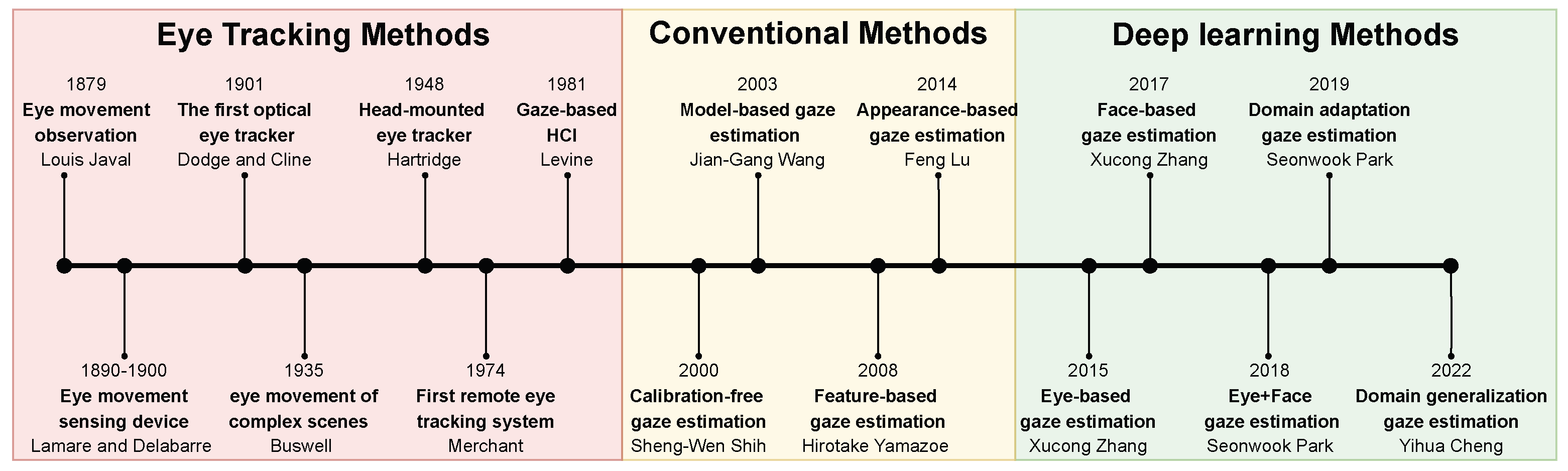
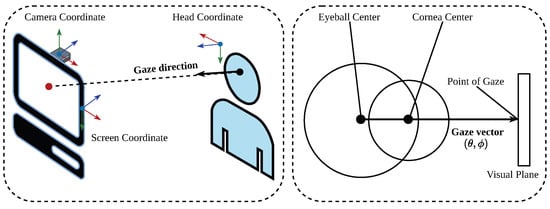
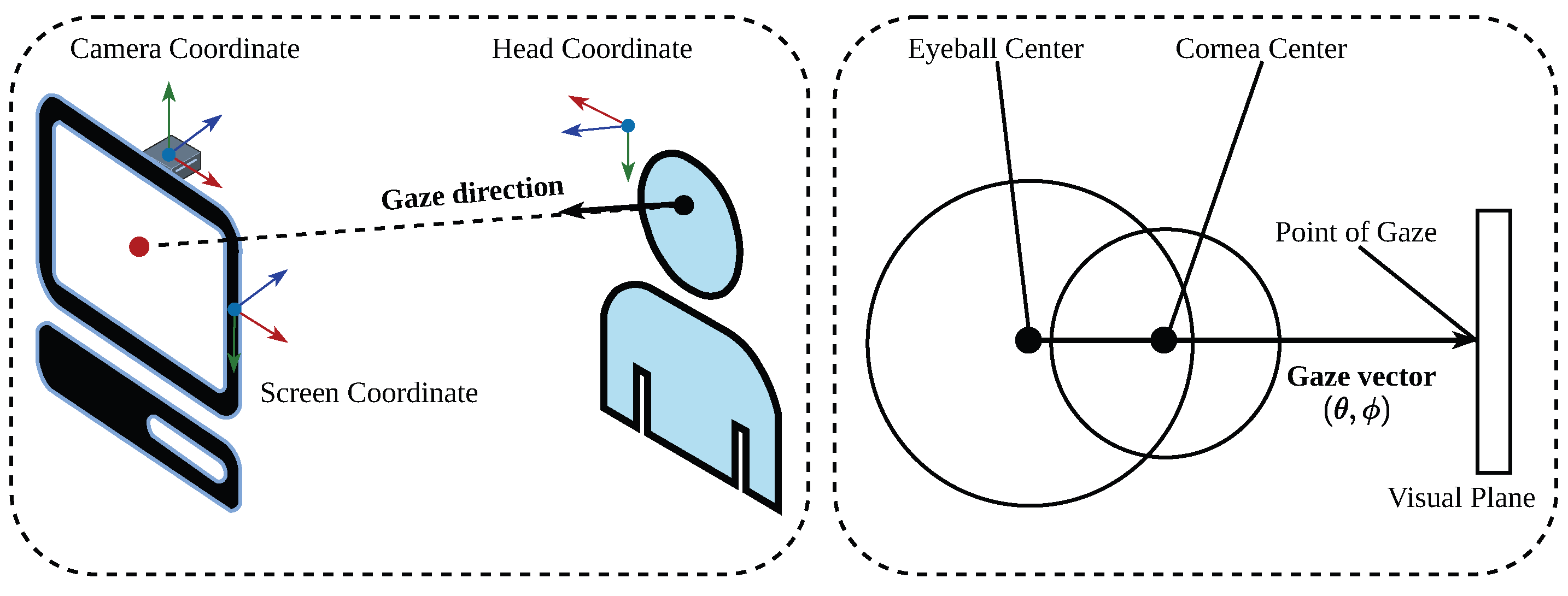
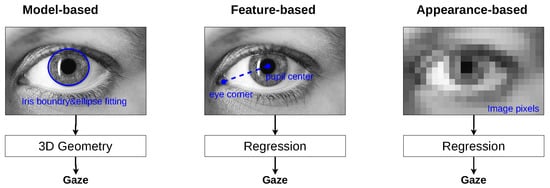
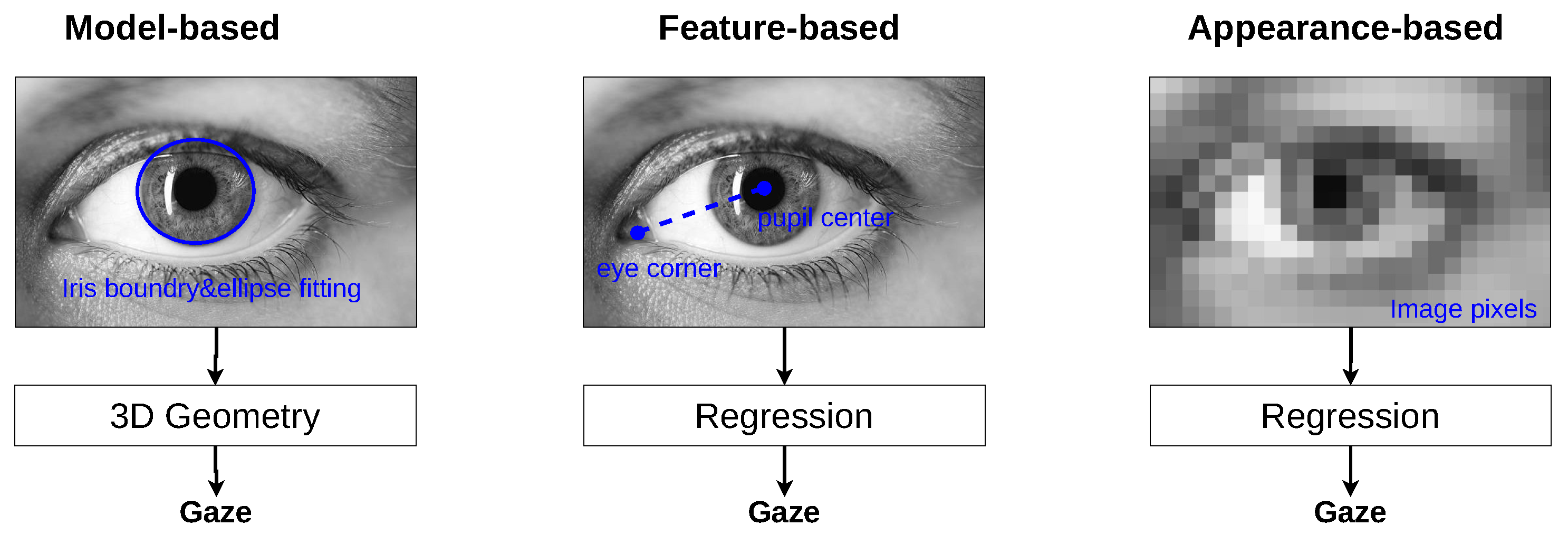
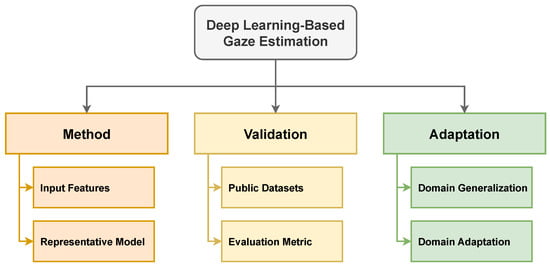
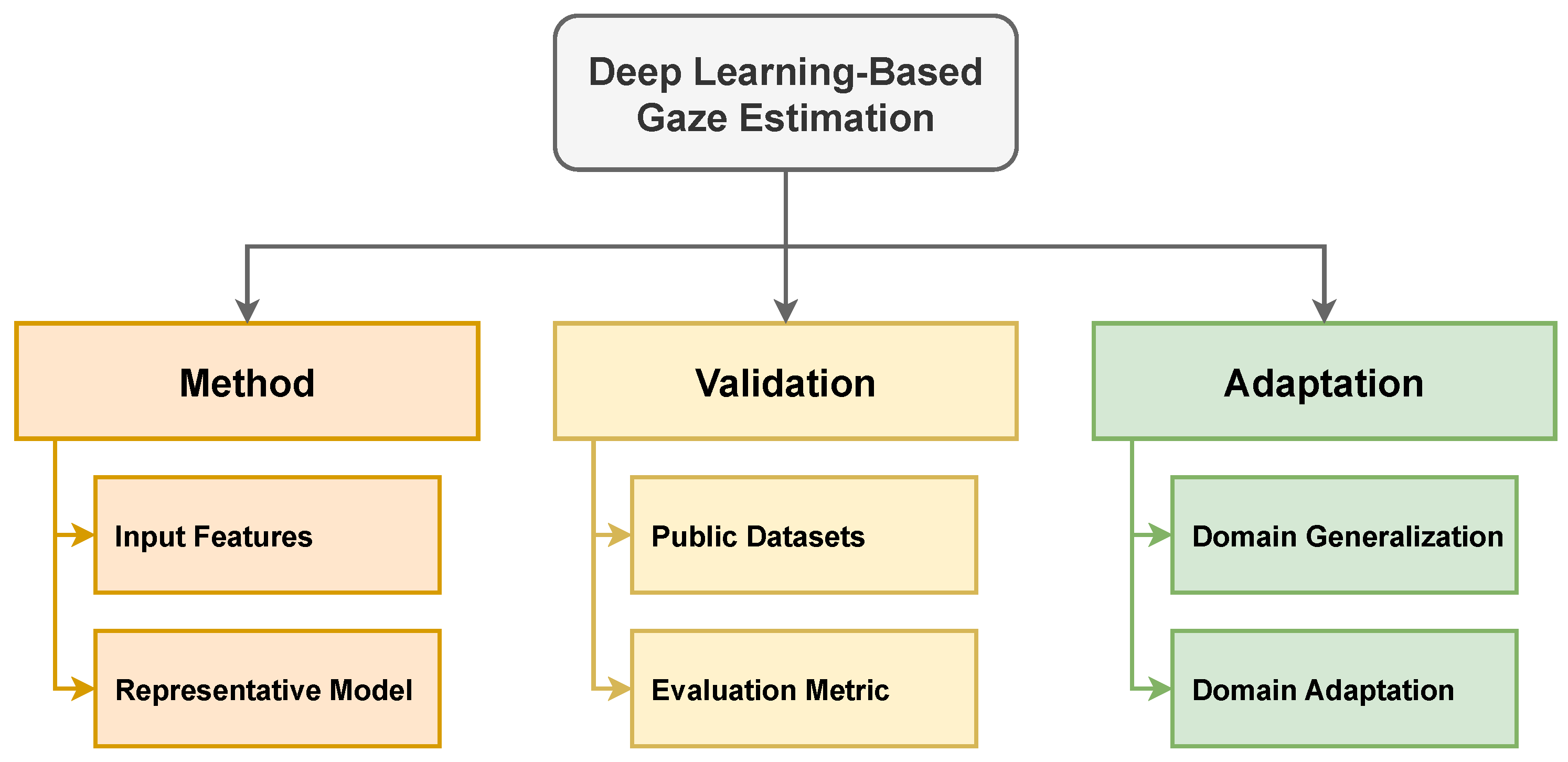
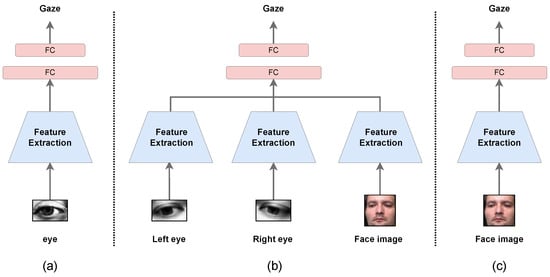
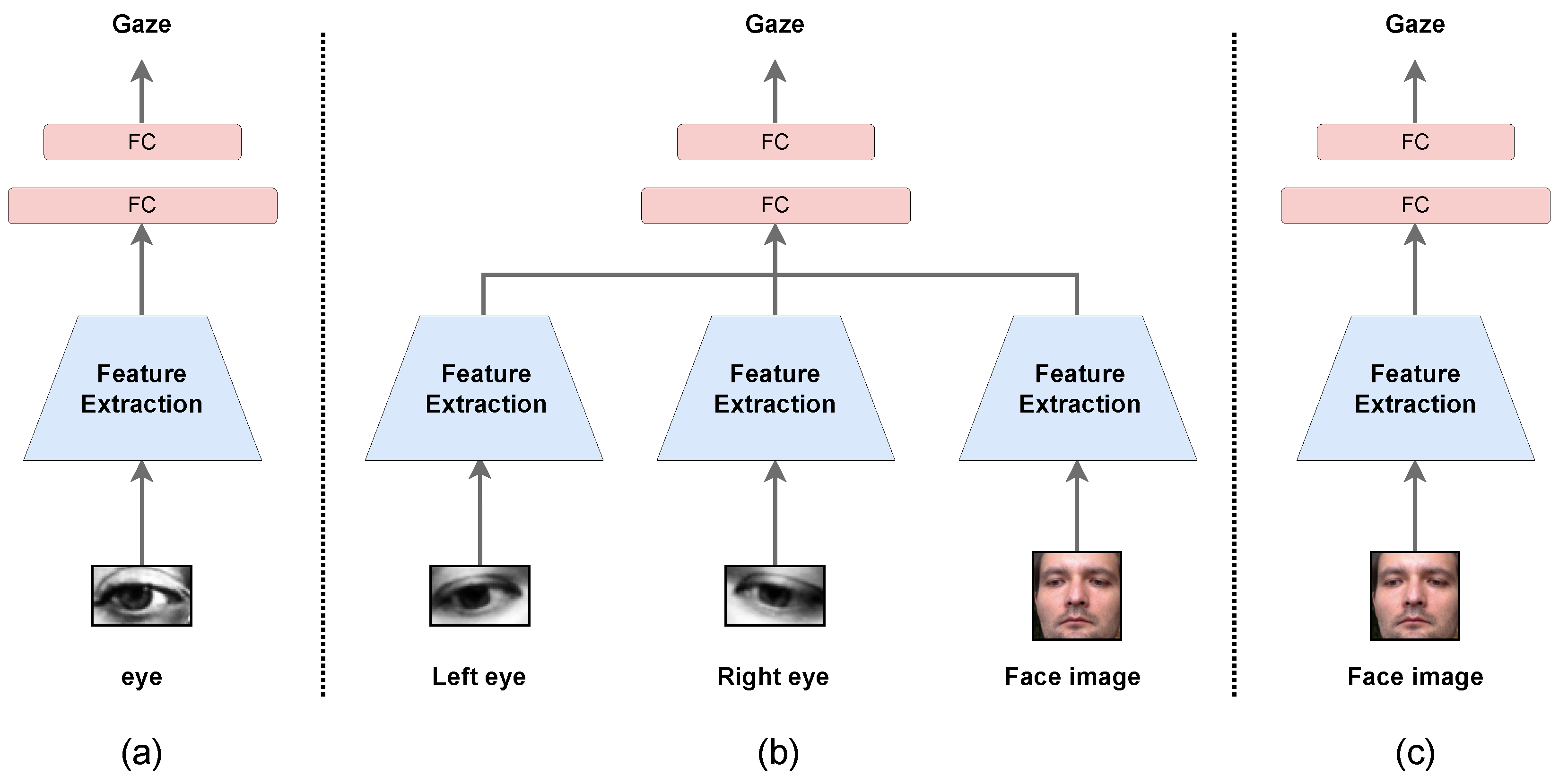
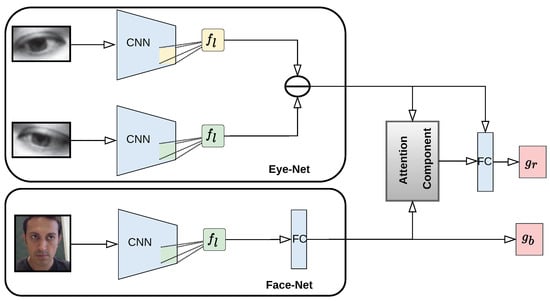
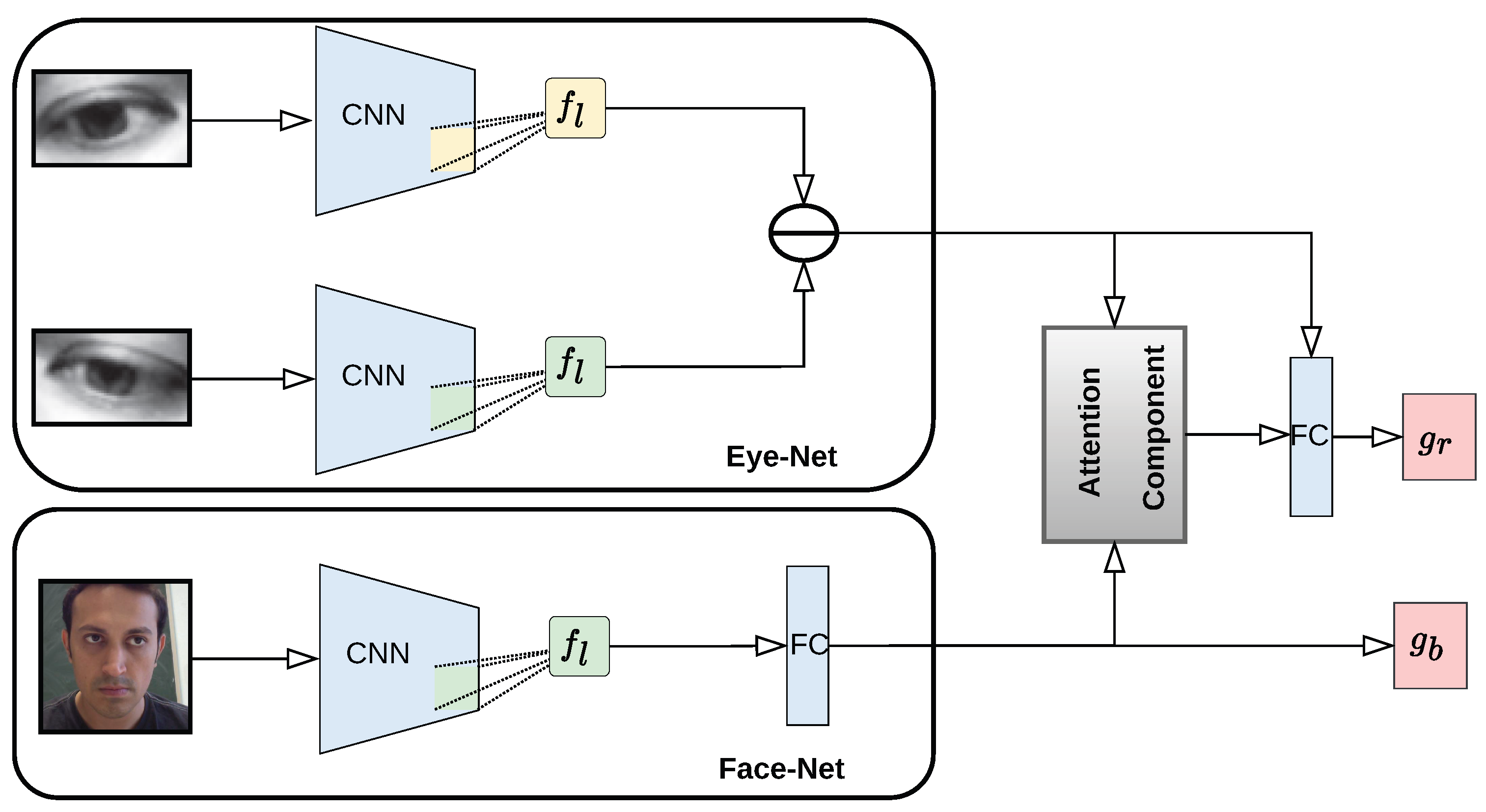
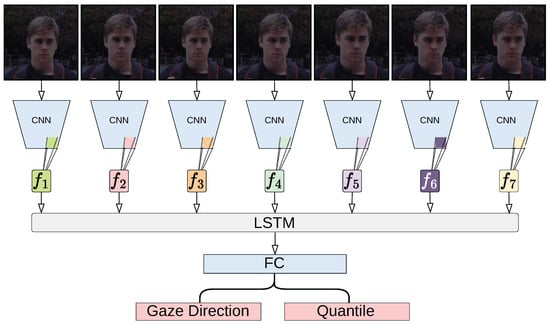
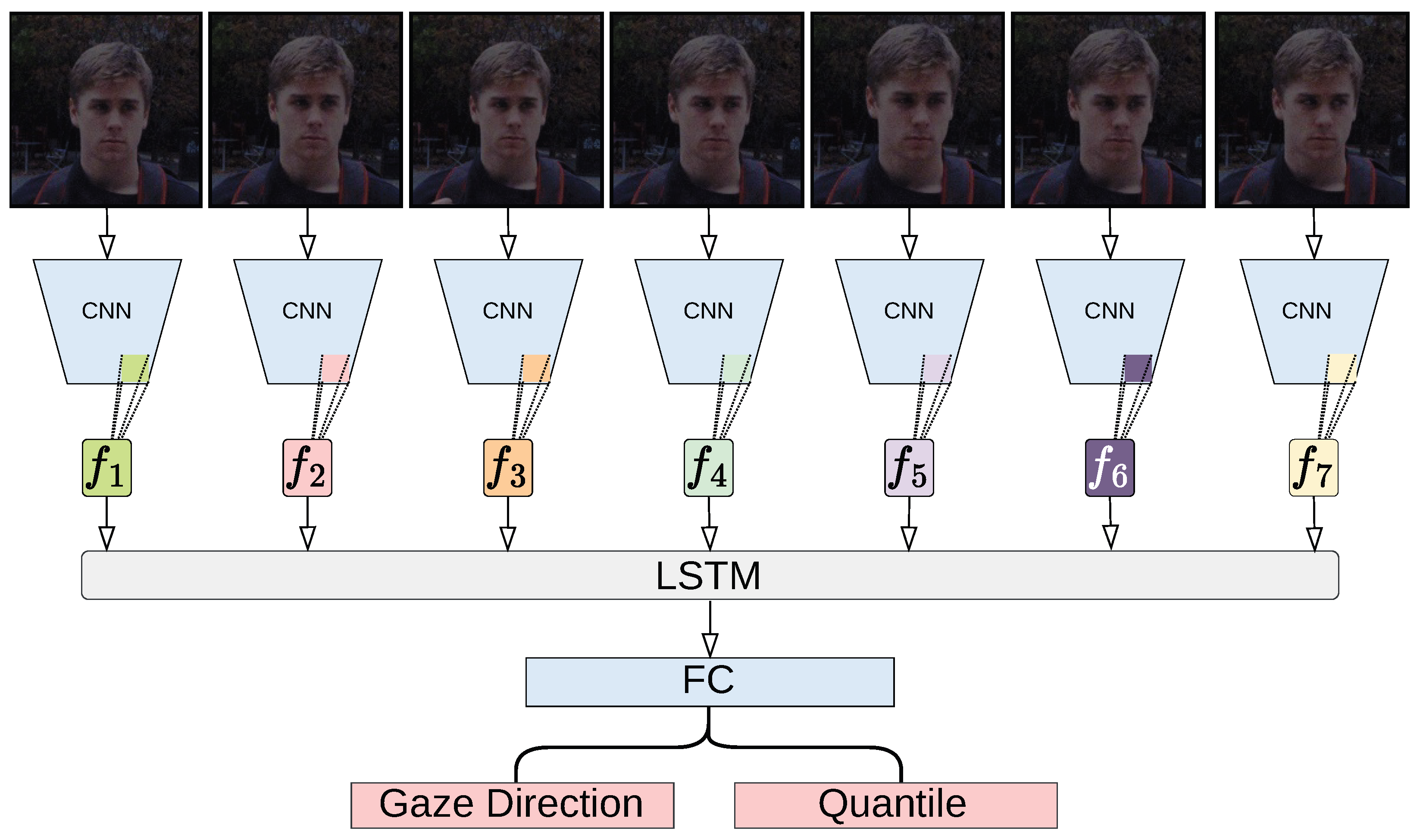
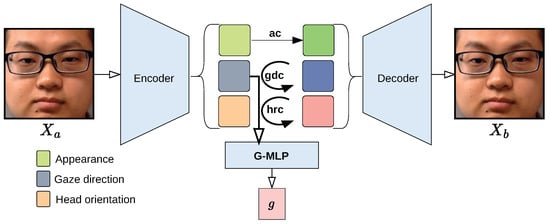
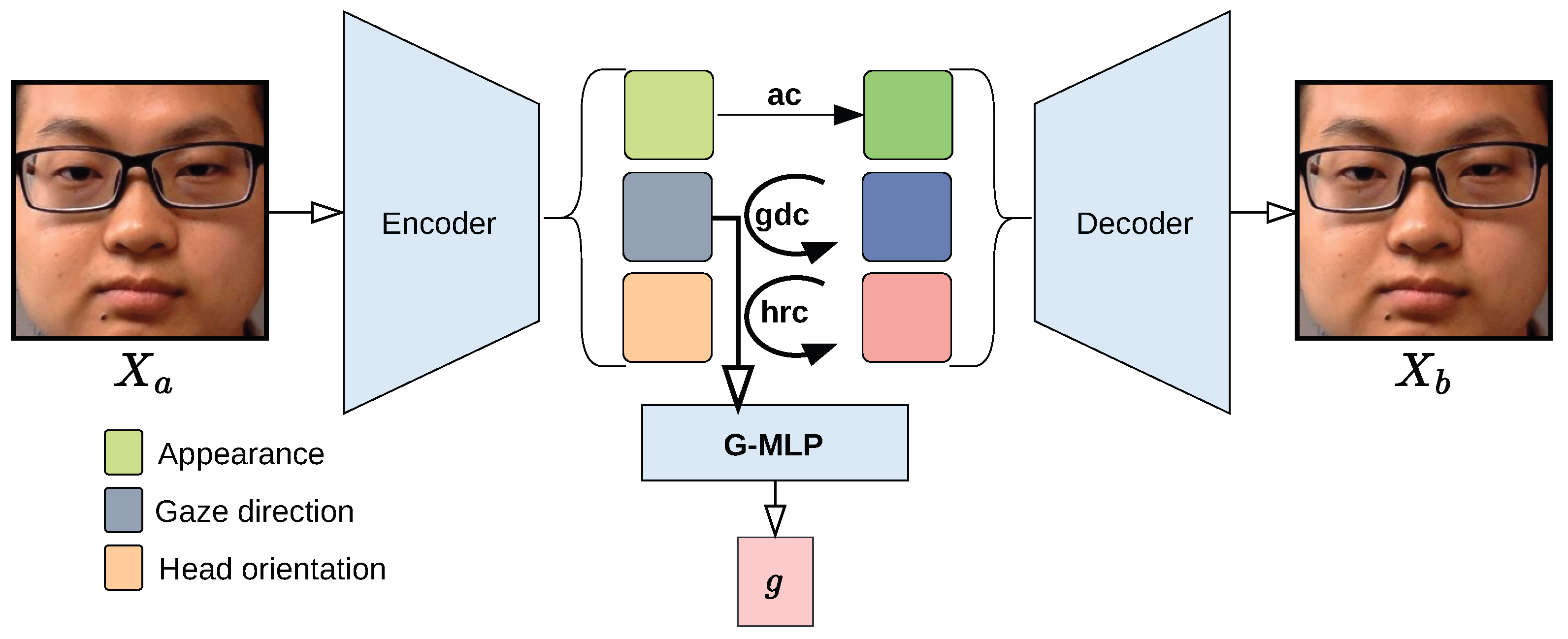
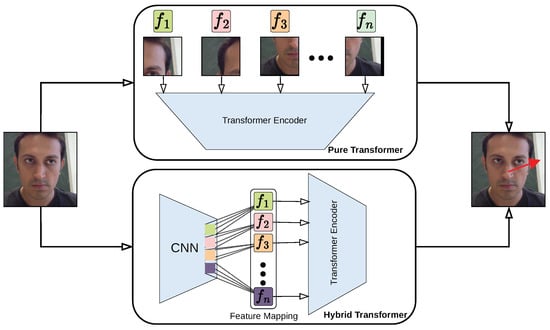
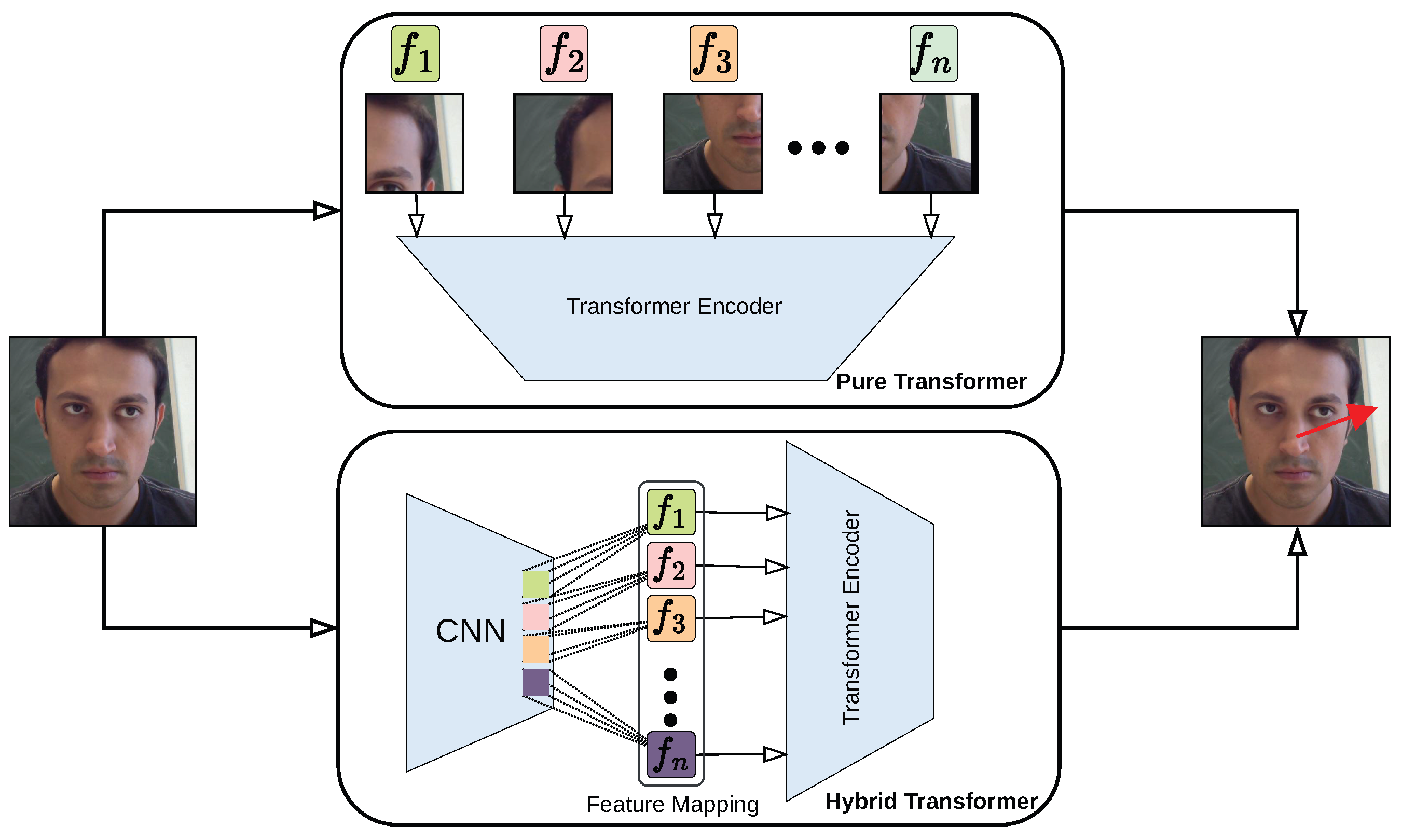
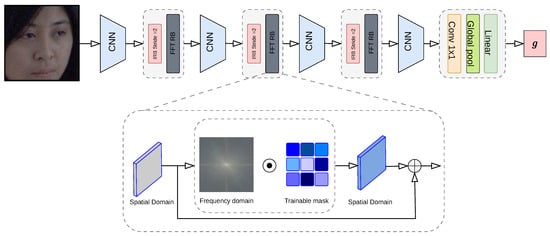
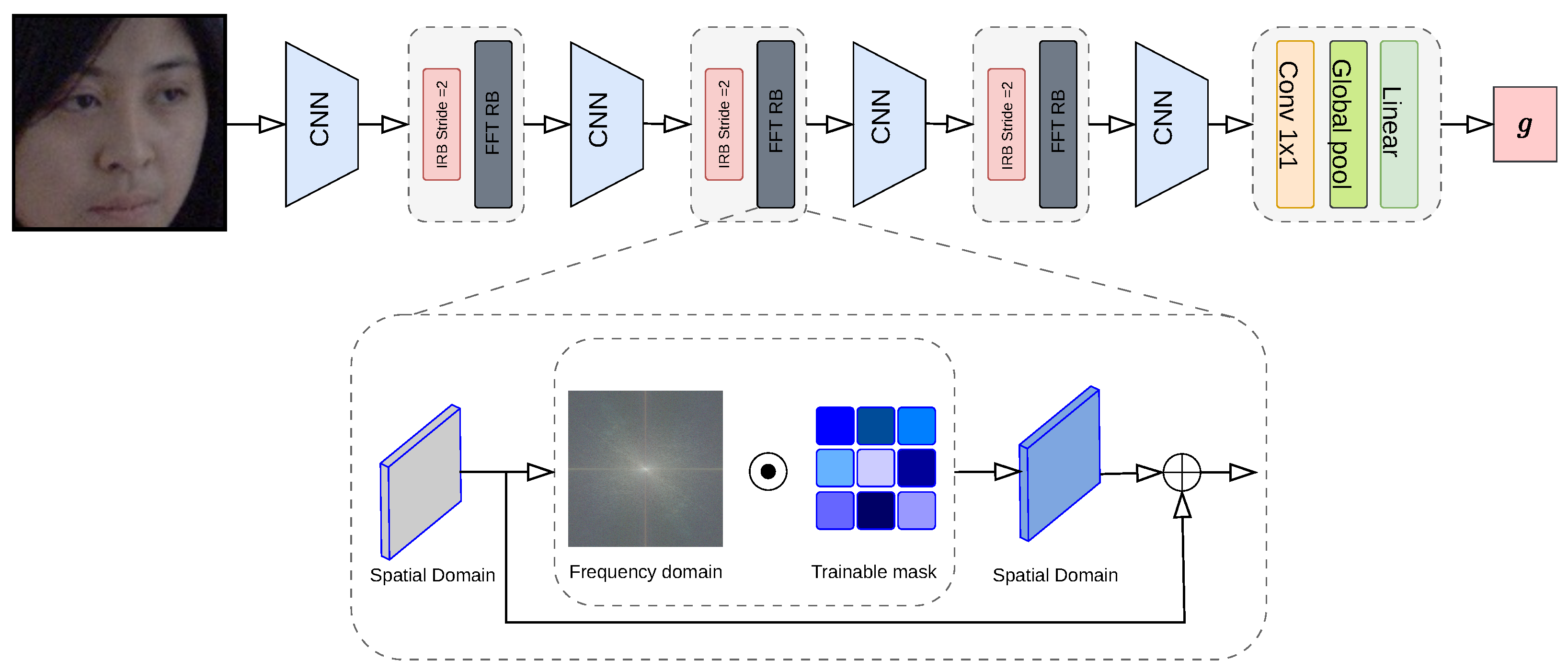

Disclaimer/Publisher’s Note: The statements, opinions and data contained in all publications are solely those of the individual author(s) and contributor(s) and not of MDPI and/or the editor(s). MDPI and/or the editor(s) disclaim responsibility for any injury to people or property resulting from any ideas, methods, instructions or products referred to in the content. |
© 2026 by the authors. Licensee MDPI, Basel, Switzerland. This article is an open access article distributed under the terms and conditions of the Creative Commons Attribution (CC BY) license.