Article

A Few Years Later: Revisiting Period Variations of Eclipsing Binaries in the Northern Continuous Viewing Zone of TESS


by
Tamás Borkovits
1,2,3,*,
Tibor Mitnyan
2,4,
Donát R. Czavalinga
2,4 and
Saul A. Rappaport
2,5
1
Baja Astronomical Observatory of University of Szeged, Szegedi út, Kt. 766, H-6500 Baja, Hungary
2
HUN-REN—SZTE Stellar Astrophysics Research Group, Szegedi út, Kt. 766, H-6500 Baja, Hungary
3
Konkoly Observatory, HUN-REN Research Centre for Astronomy and Earth Sciences, Konkoly Thege Miklós út 15-17, H-1121 Budapest, Hungary
4
Department of Experimental Physics, University of Szeged, Dóm tér 9, H-6720 Szeged, Hungary
5
Department of Physics, Kavli Institute for Astrophysics and Space Research, M.I.T., Cambridge, MA 02139, USA
*
Author to whom correspondence should be addressed.
Universe 2026, 12(4), 107; https://doi.org/10.3390/universe12040107

Submission received: 11 February 2026 / Revised: 29 March 2026 / Accepted: 31 March 2026 / Published: 3 April 2026

Abstract

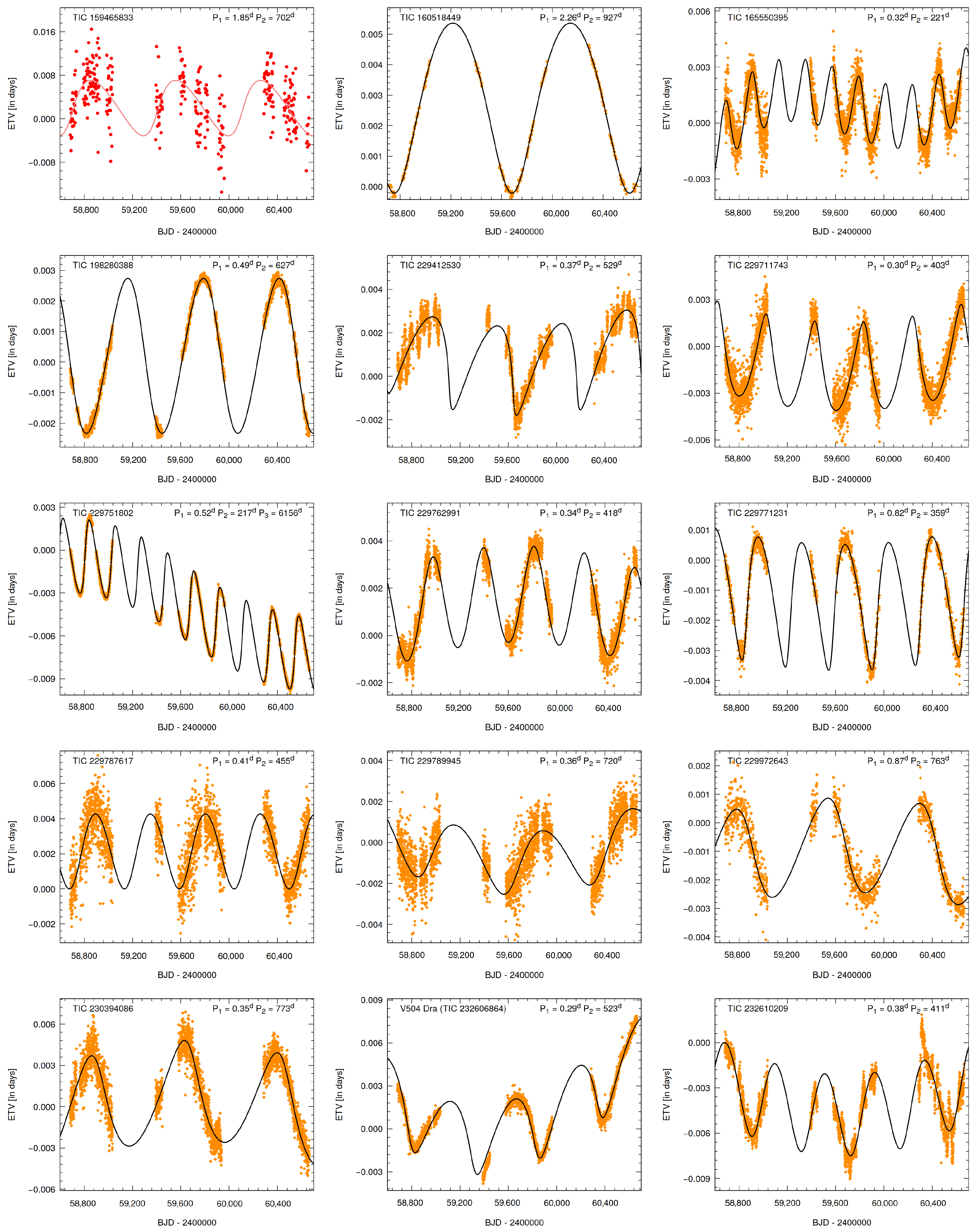
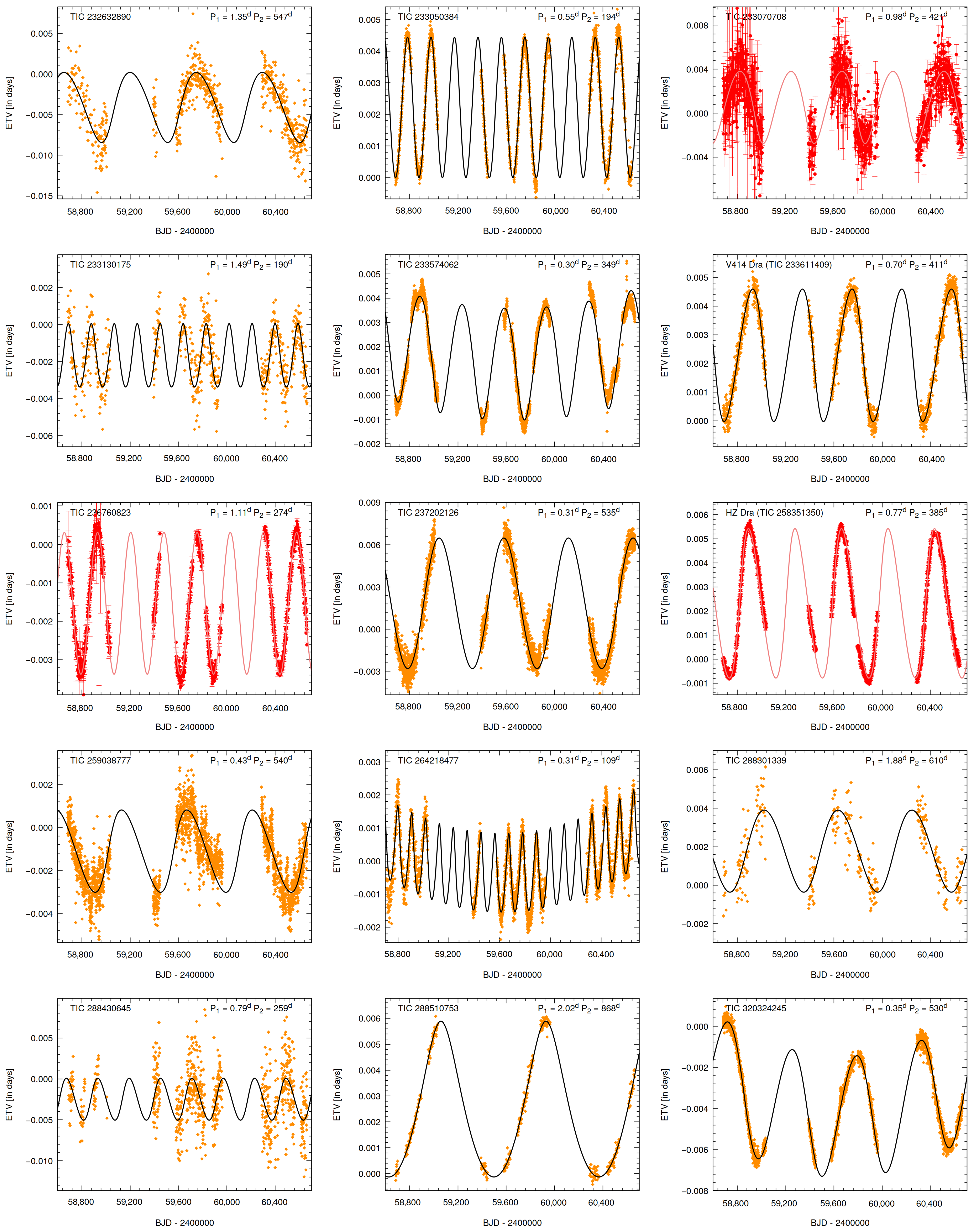
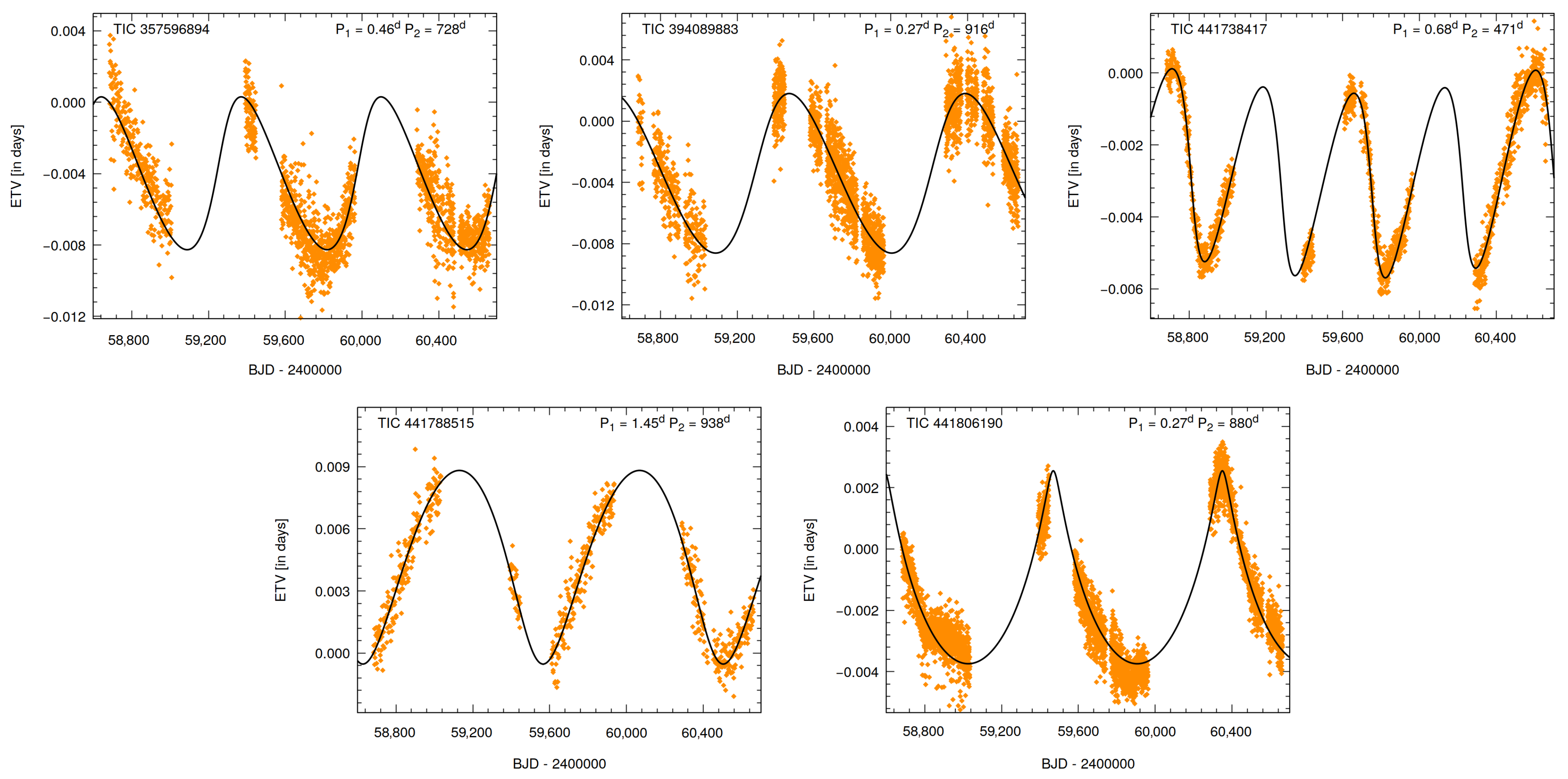
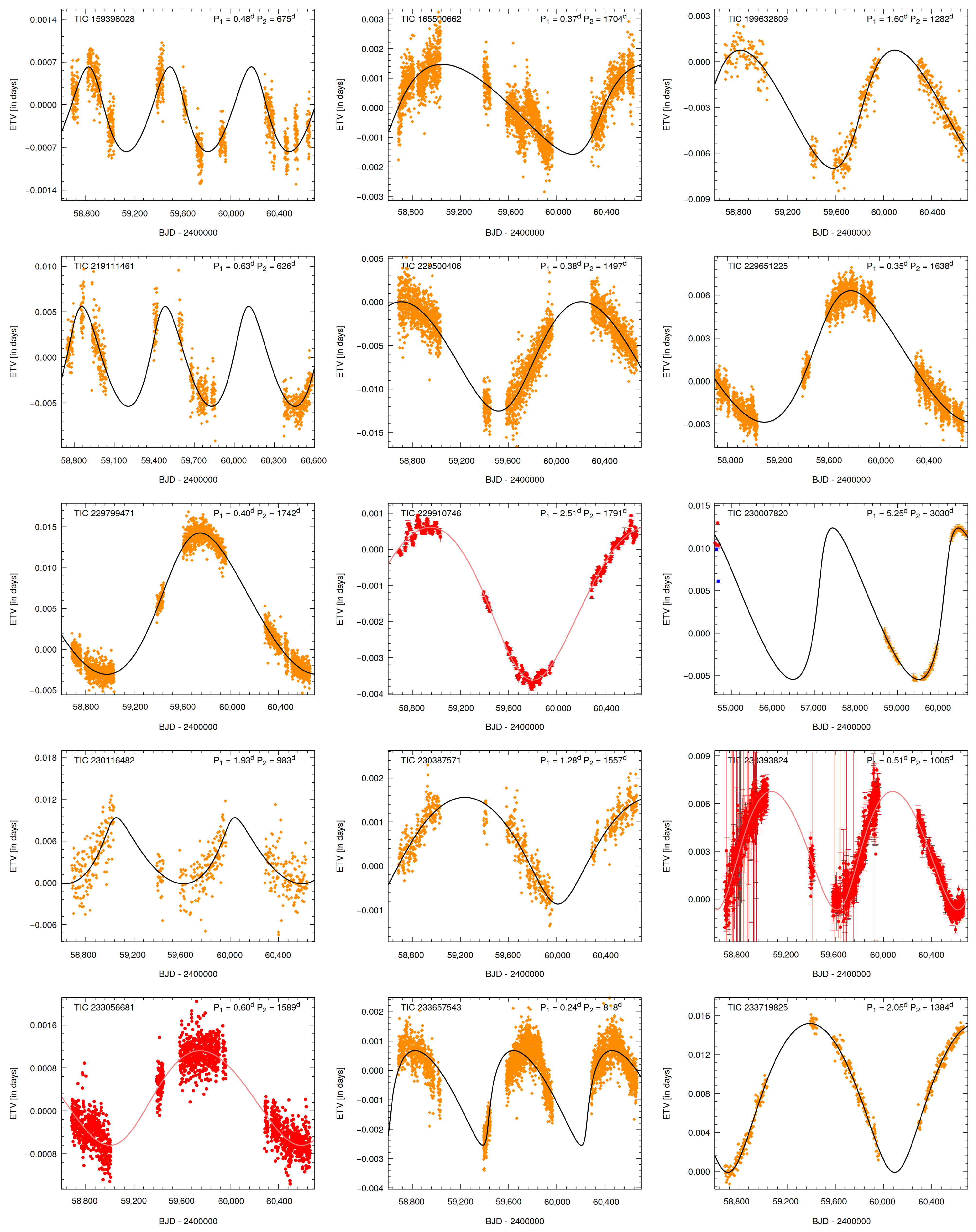
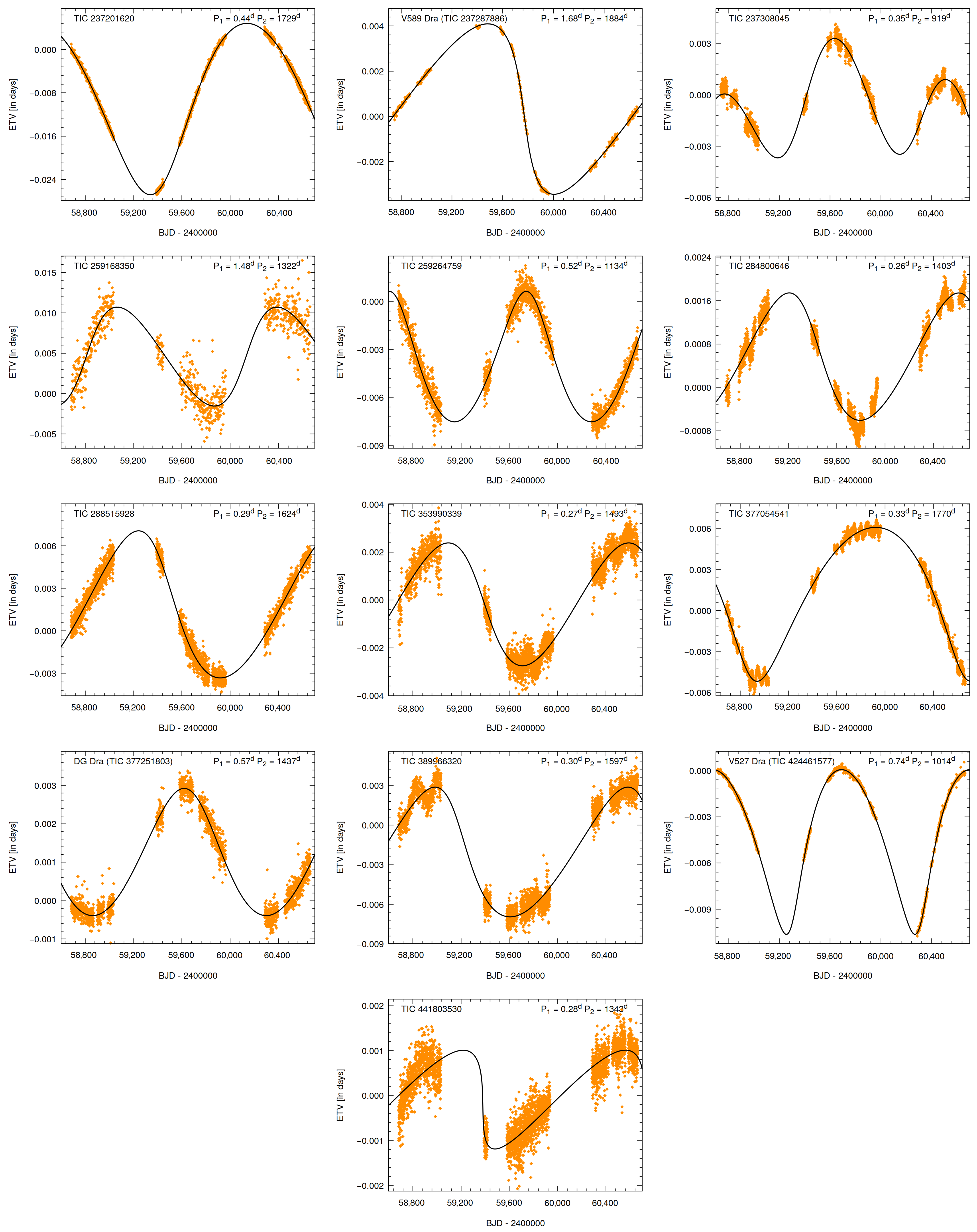
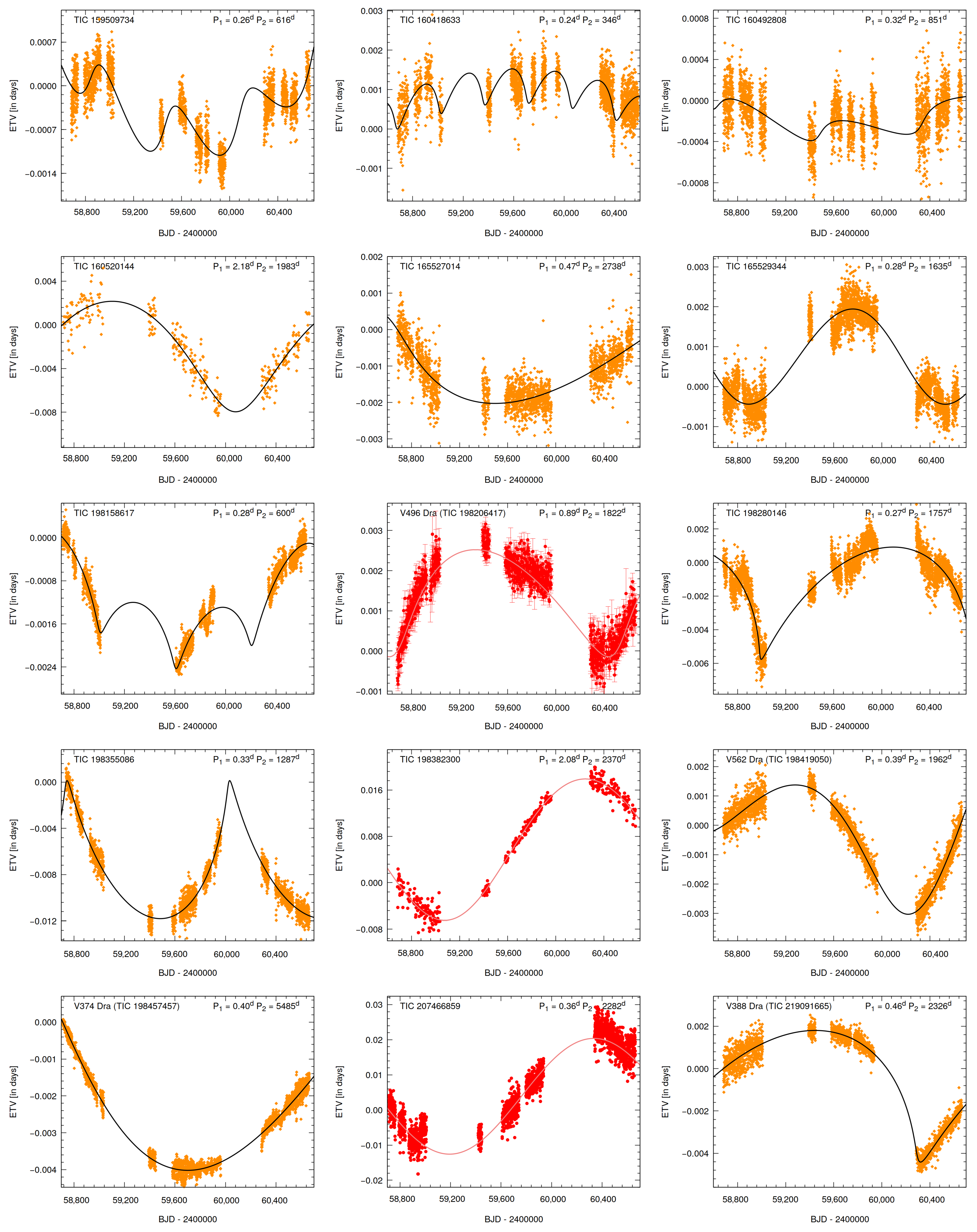
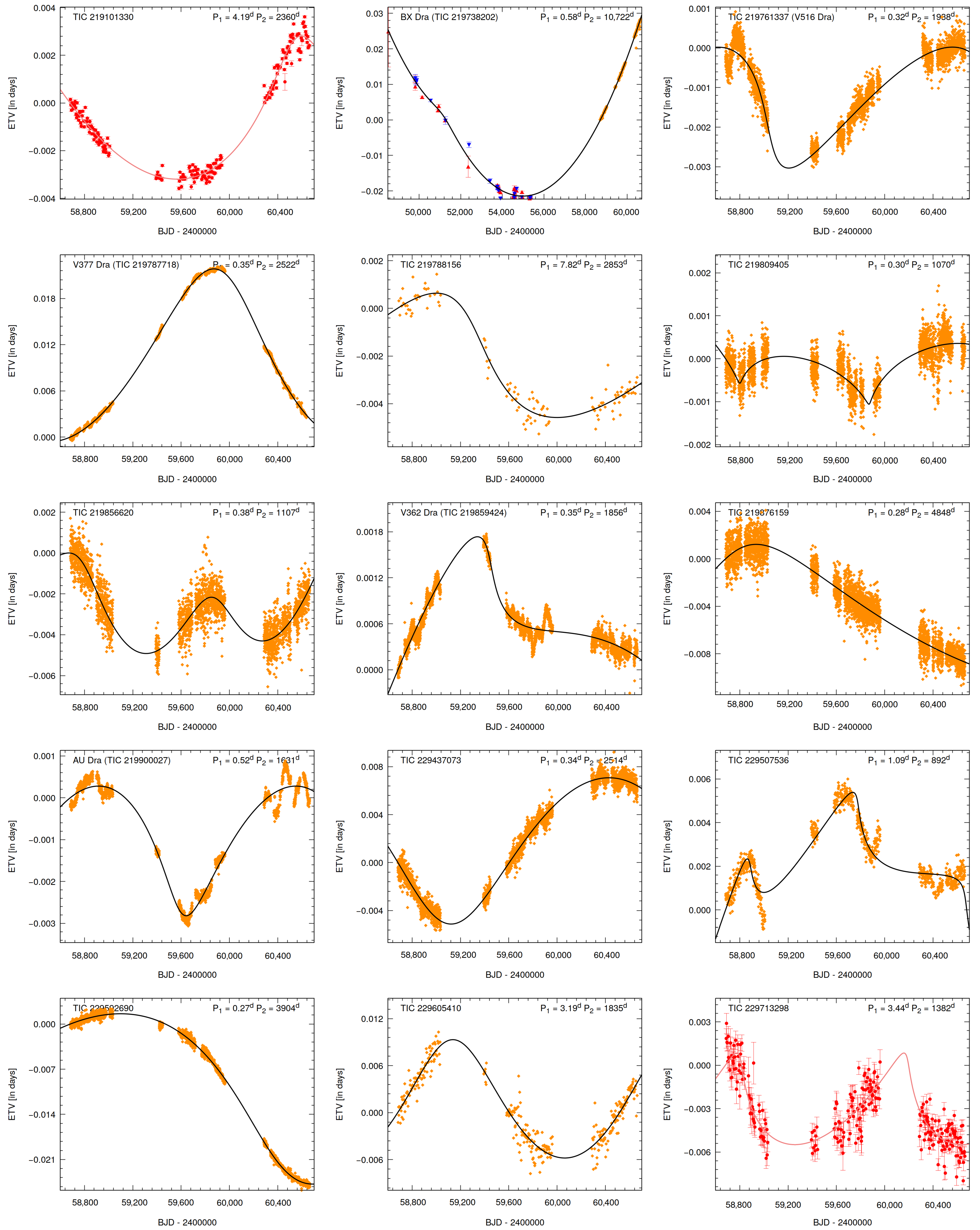
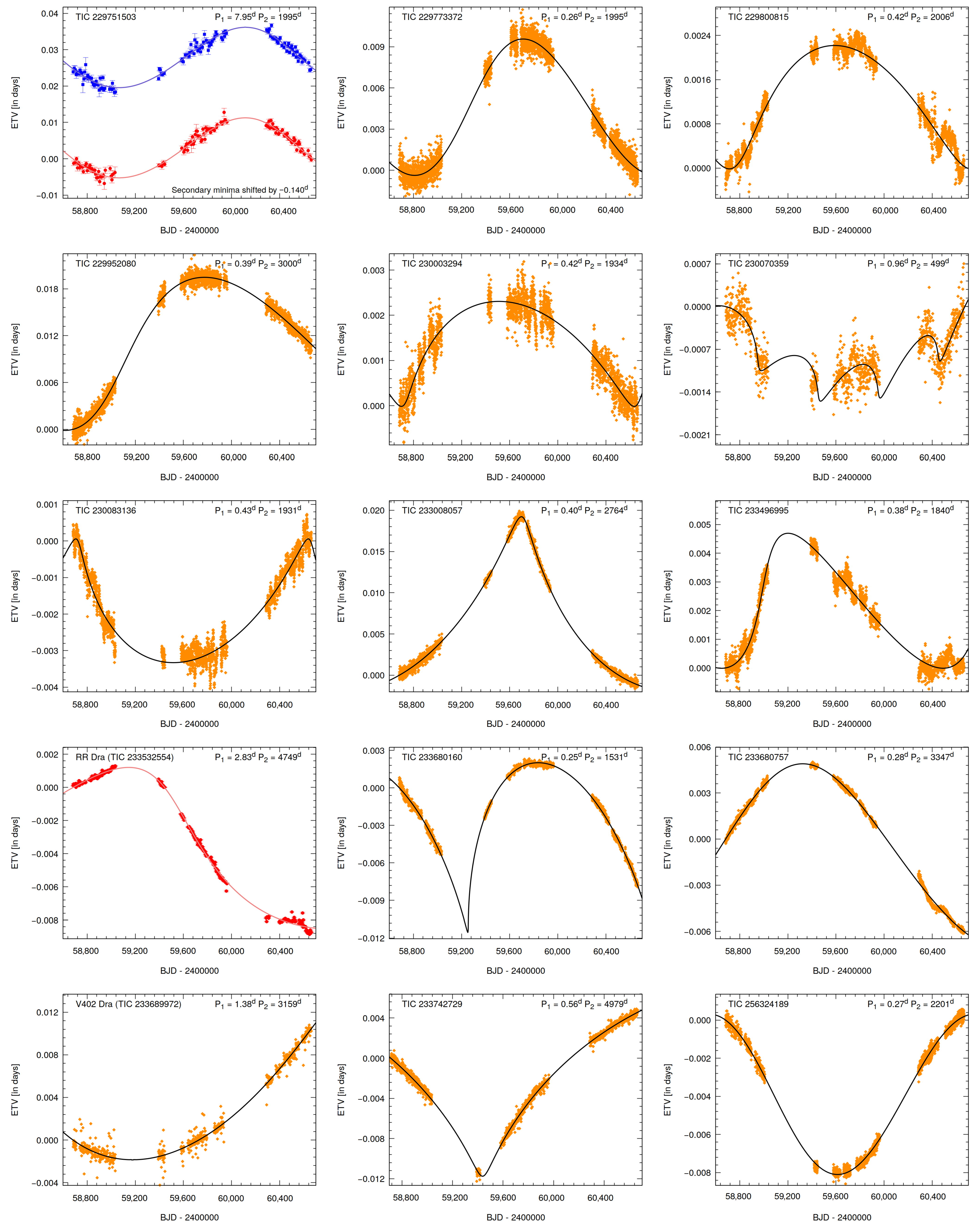
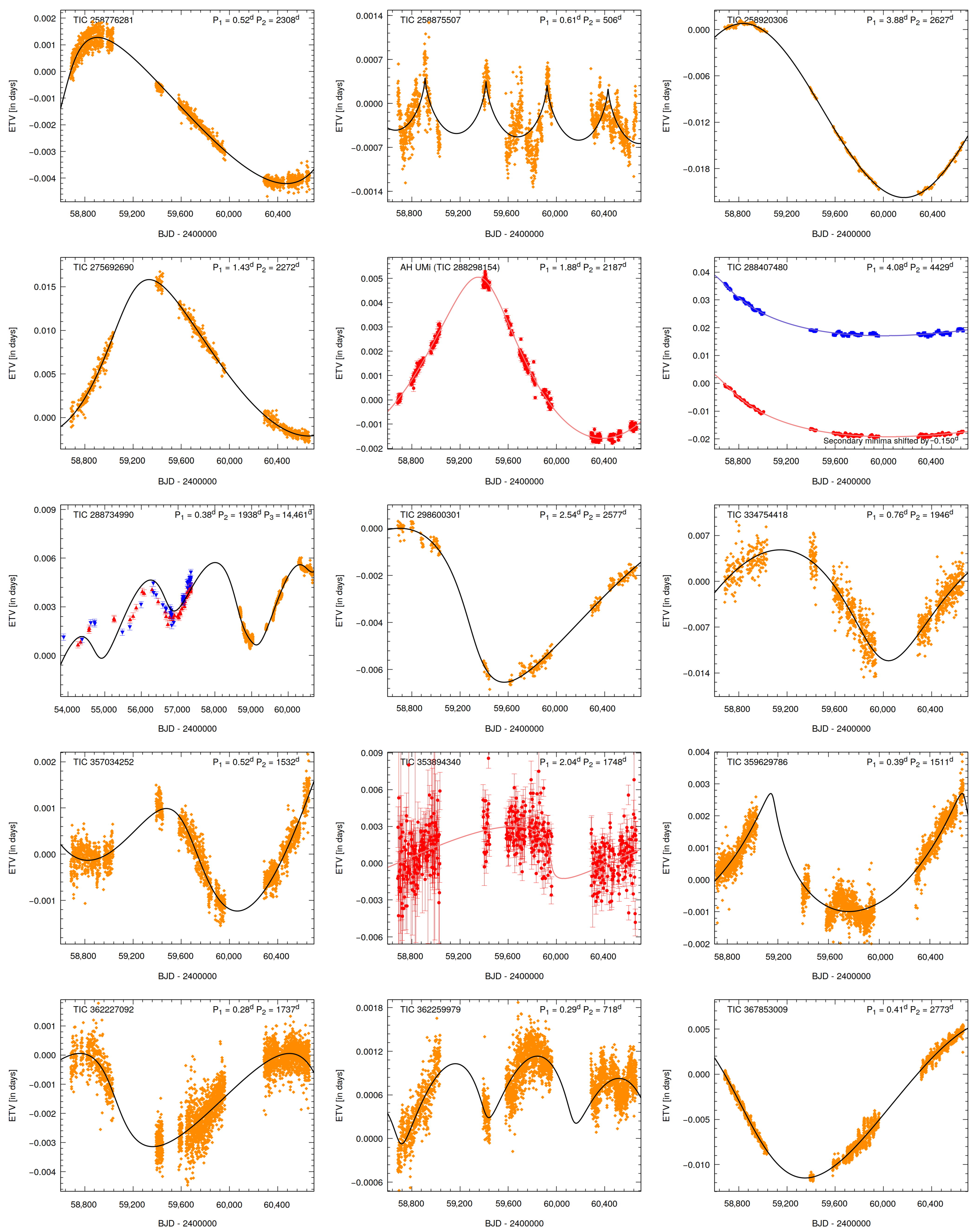
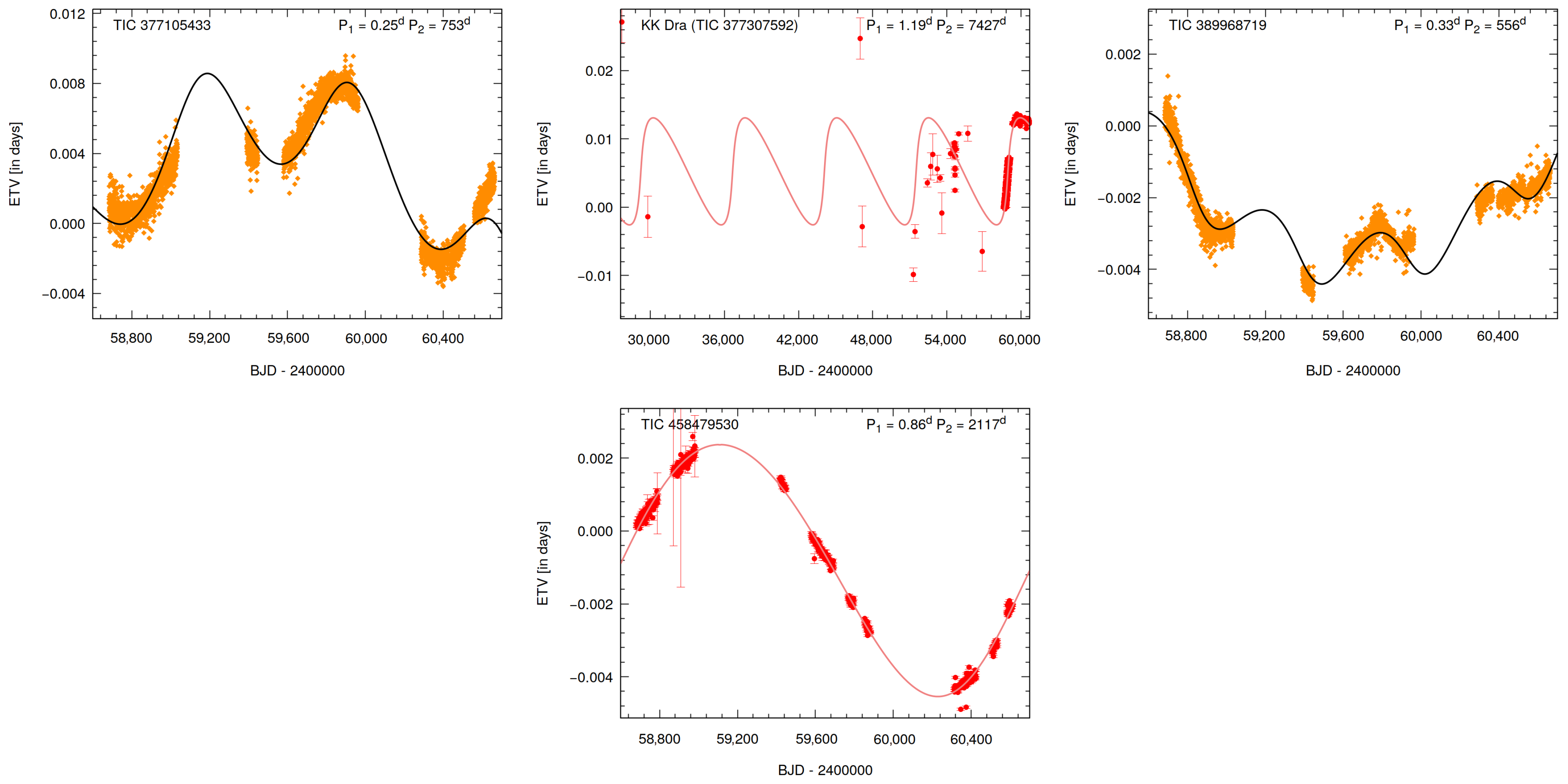
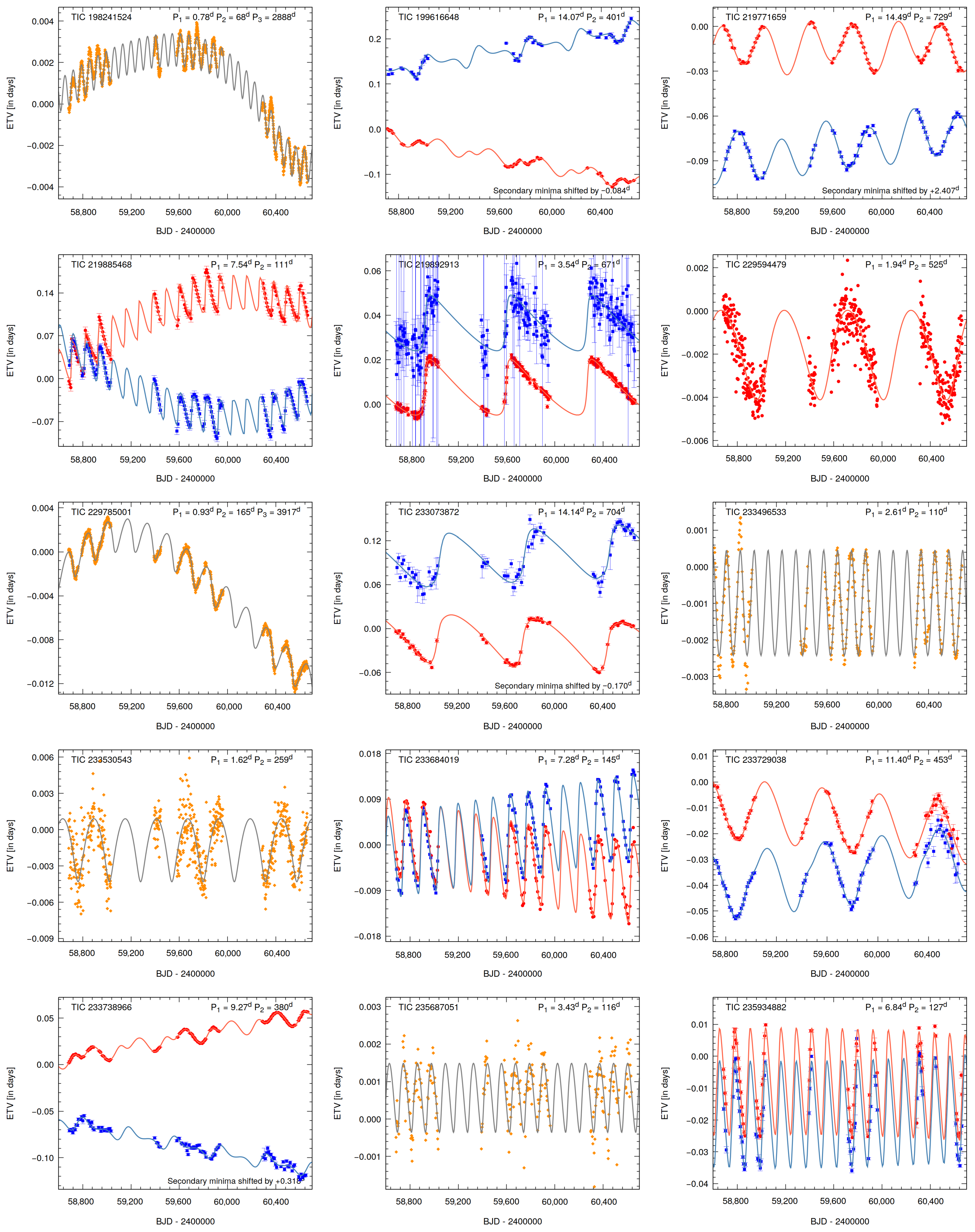
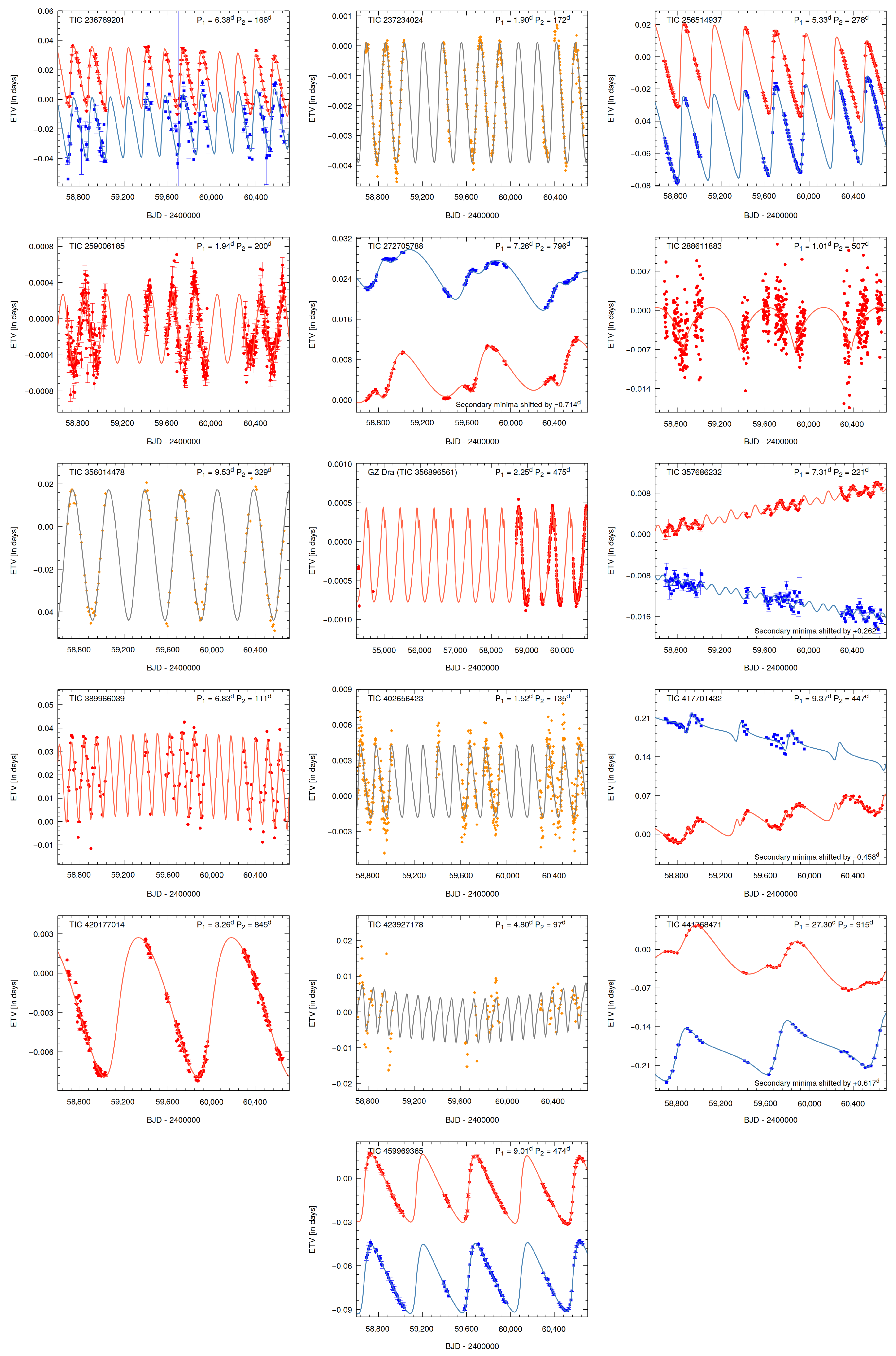
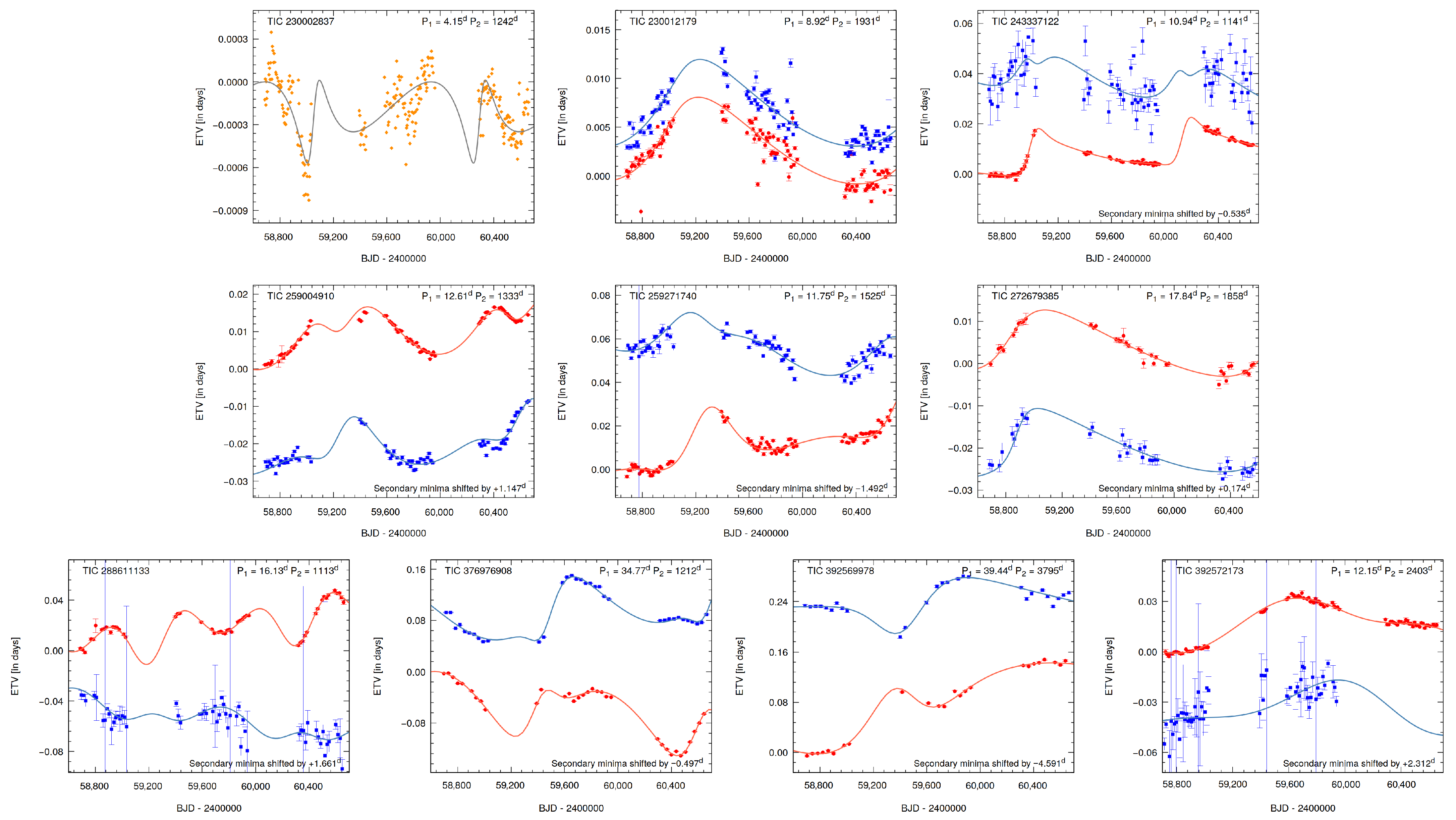
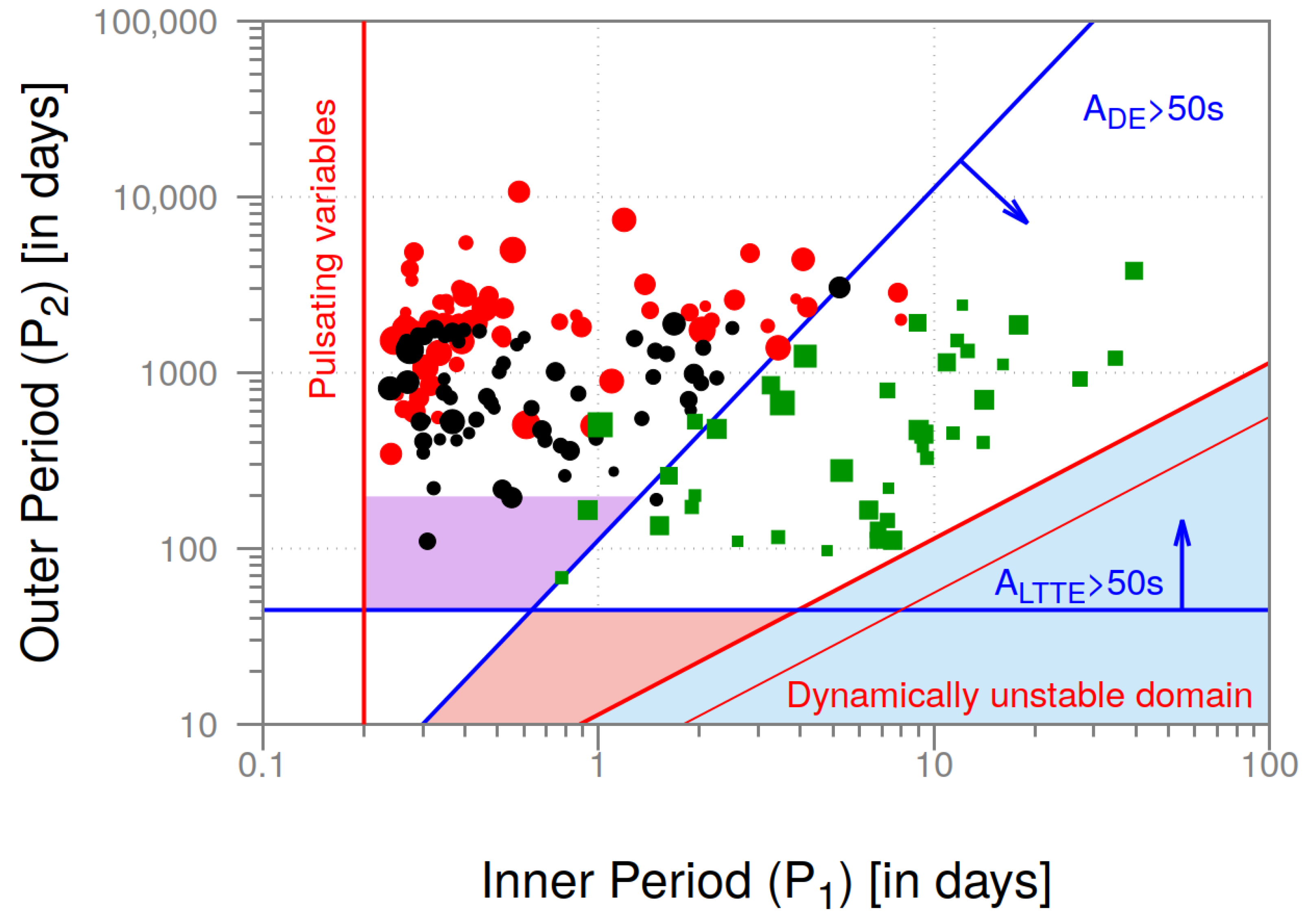
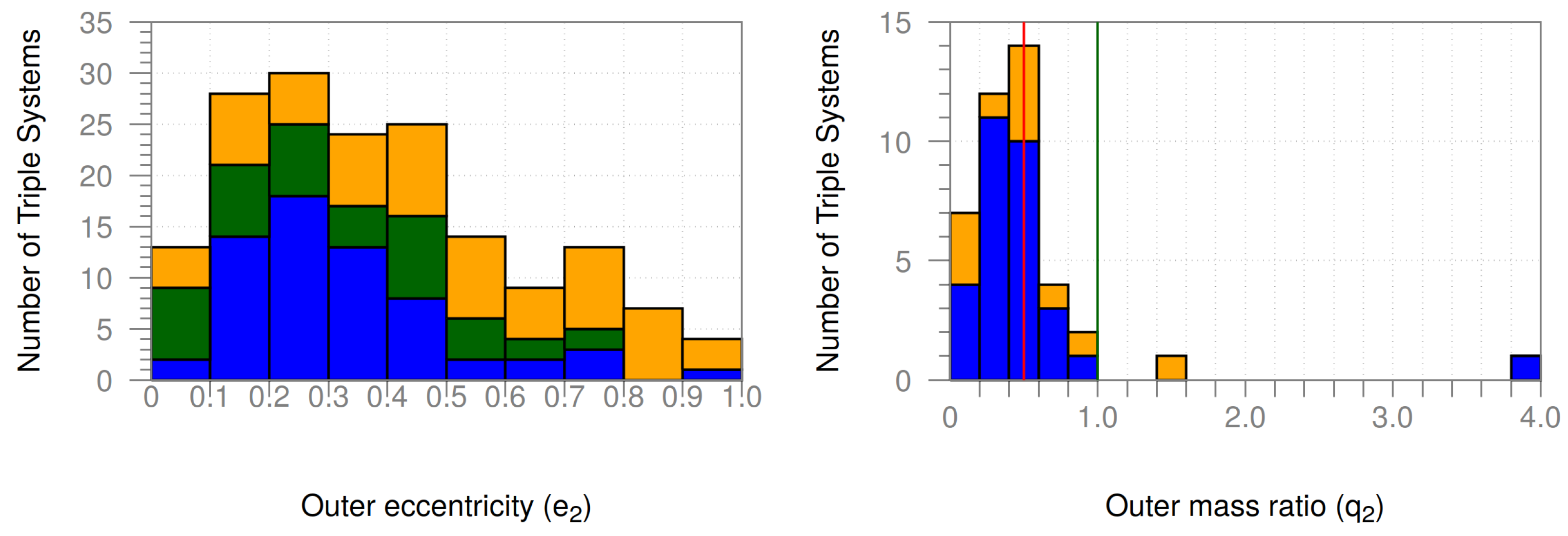
In our previous analysis of the eclipse timing variation patterns of eclipsing binaries located in and near the Northern Continuous Viewing Zone (NCVZ) of the TESS space telescope, 135 hierarchical triple star candidates were found. Now, two additional years of TESS observations are available and, hence, we have extended the former analysis with the use of the new observational data. We now detect 168 triple star candidates in the updated and reanalyzed sample. The majority (∼74%) of them are identical to the former triples candidates. For many of them, our new solutions are more certain than the original ones. Therefore, we can now conclude that we have identified at least 66 short-period hierarchical triple stellar systems in the NCVZ with full confidence. In the case of the majority of the remaining systems in our sample, the presence of a close third stellar component appears to be very likely. We also identify additional, longer timescale period variations in 34 systems (20% of the total sample) and conclude that in at least three systems the presence of a fourth stellar component is quite plausible. Finally, we report the complete disappearance of the eclipses in two former EBs and detect eclipse depth variations in seven other EBs as well. We interpret this effect as the consequence of changing orbital inclination caused by a non-coplanar third body.
Keywords: binaries: eclipsing; binaries: close; stars: multiple binaries: eclipsing; binaries: close; stars: multiple