


Abstract
Stellar feedback is central to galaxy evolution, yet the coupling of radiation, stellar winds, and supernovae to the multi-phase interstellar medium remains uncertain. This review assesses this as a problem of inference and frames the discussion around four qualitative axes of ignorance: observational diagnostics are indirect; stellar population synthesis models need to be ground-truthed before they can be used to infer feedback quantities; recent high-redshift observations have opened a new regime that potentially requires re-calibrating; and stellar feedback is interdependent of the affected environment. The inference chain of feedback, which requires conversions from observables to physical quantities and from those quantities to an interpretation of how energy and momentum are transferred to the surrounding medium, is examined across the principal observational diagnostics of stellar feedback: from ionised gas and mechanically-driven bubbles, to giant molecular cloud lifetimes, galactic outflows, and Lyman-continuum escape. This addresses the overarching question of how much observations actually allow us to know about the link between the feedback-driving massive stars and the feedback-driven interstellar medium. Further, we discuss how the assumptions that go into stellar population synthesis models—along with environmental (e.g., metallicity, dust content) and galaxy properties (e.g., stellar mass, gas content)—can affect feedback measurements, as well as how recent high-redshift observations are testing calibrations established in the nearby universe. The emerging picture is that the interpretation of a feedback measurement requires control over both the inference chain and the physical context in which the measurement is made; consequently, feedback should be contextualised, meaning that measurements must be interpreted in terms of the feedback mechanism, gas phase, environment, and spatial–temporal scale. Progress in the field will depend on measuring feedback-related quantities across the full range of star-forming systems, and more importantly, on obtaining observations (“real” as well as synthetic from postprocessed simulations) that match the same tracer and spatial scale across the same systems.
Keywords:
stellar feedback; HII regions; molecular clouds; galactic outflows; galaxy evolution; JWST 1. Introduction
Over the short (order-of-Myr) timescales relevant to star formation and the regulation of the interstellar medium (ISM), massive stars (M > 8 M⊙) dominate the radiative and mechanical energy input. Such stars emit photons that ionise and inject momentum into the surrounding ISM, launching powerful stellar winds. A subset of these massive stars are progenitors to energetic core collapse supernova (CCSN) events; by chemically enriching their surroundings, they affect the ISM from the sub-pc scales of individual stars to the kpc scales of the circumgalactic medium (CGM; see Figure 1). These processes, by which feedback couples to the ISM, are collectively referred to as stellar feedback, and play a central role in the baryon cycle of galaxies [1].
Figure 1.
Schematic showing the scales and components of stellar feedback, from individual massive stars (bottom) to the kpc scales of galaxy disks, feedback-driven outflows, and the circumgalactic medium (top). Radiation and stellar winds start to inflate and clear HII regions before the first supernovae start contributing to dispersing the natal molecular material. The combined effect of stellar feedback affects the multi-phase ISM up to kpc scales by inflating superbubbles and driving galactic outflows, thereby playing a role in the regulation of star formation and the re-distribution of chemically enriched material.
From small to large scales, stellar feedback is responsible for the photoevaporation of protoplanetary disks, the expansion of HII regions, the disruption of molecular clouds, and the launching of galactic winds (outflows), which in low-mass galaxies are able to alter the underlying dark matter distribution by removing baryonic matter from the potential. The importance of stellar feedback for galaxy evolution is demonstrated by the inability of cosmological simulations lacking efficient feedback to reproduce the observed galaxy population. Such simulations convert too large a fraction of baryons into stars, yielding galaxies with stellar masses substantially larger than observed and star formation histories (SFHs) that are inconsistent with observations and have morphologies bearing little resemblance to the Milky Way or its Local Group neighbors [2,3]. Thus, the inclusion of stellar feedback, resulting in the net suppression of star formation by injection of turbulence, dispersal of molecular clouds, and the launching of galactic-scale outflows, is a necessity for any plausible model of galaxy formation and evolution [4,5]. Despite decades of progress, however, the efficiency with which feedback couples to the multi-phase ISM across the full range of galactic environments remains uncertain, and it is also unclear how this efficiency may have changed over cosmic time.
This review focuses on four qualitative axes of ignorance that limit the predictive power of current observational feedback studies and that the community must address in order to drive progress that is more than just incremental.
- 1.
- Axis I: Observational diagnostics require calibration and constraints. Quantifying the dynamical coupling efficiency of stellar feedback to the multi-phase ISM is based on inferring feedback-related quantities. The observables we use to derive these, such as emission line luminosities, line profiles, expansion velocities, and mass outflow rates, are a convolution of stellar physics with ISM geometry, density structure, ionisation state, and kinematic complexity, and are further averaged along the line of sight and over timescales set by both stellar evolution and the response of the affected gas. Emission line-based inferences inherit additional systematic uncertainty from dust attenuation, sampling of the initial mass function (IMF), and spatial resolution [6], to name a few. Converting observed photons into quantities such as energy injection rates, mass outflow rates, or molecular cloud dispersal timescales requires a chain of assumptions, each of which can propagate into the final inferred quantity. In addition, while feedback studies are now entering the statistical regime enabled by integral field surveys at cloud scale across entire galaxies, most remain limited in terms of spatial resolution and probed environmental diversity [7,8,9].
- 2.
- Axis II: Stellar population models carry unresolved uncertainties. Deriving the ionising photon rate, SFH, or supernova rate of the underlying stellar population from an observed spectral energy distribution (SED) or emission line spectrum, requires population synthesis models. These come with internal degeneracies and depend on the details of stellar evolution (wind mass loss prescriptions, binary evolution, and the adopted stellar atmosphere and interior tracks [10,11,12]) as well as on the properties of the assumed IMF. Advancements in these areas include downward revisions to empirical and predicted stellar wind mass loss rates can amount to factors of several [13,14] and the recognition that more than 70% of massive stars undergo binary mass exchange over their lifetimes [15]; however, these also change the inferred ionising flux, supernova rates, and mechanical yields in population synthesis [11,16]. Such recent revisions have yet to propagate into galaxy-scale models and simulations, which prevents the validation of empirically-derived feedback quantities.
- 3.
- Axis III: High-z opens qualitatively new physical regimes. High-redshift galaxies are characterised by lower metallicity, higher gas fraction, higher ISM pressure, and more extreme specific star formation rates (sSFRs) than the low-redshift samples on which most diagnostic calibrations have been developed [17,18]. Photometry from the James Webb Space Telescope (JWST) has produced both UV-luminous candidates at –14 [19] and apparently massive red systems at –9 [20], in excess of many pre-launch expectations. NIRSpec has since spectroscopically confirmed UV-luminous galaxies at –14 [21,22,23], raising the question of whether stellar feedback operates differently in these environments and/or whether the same diagnostic tools need to be revised when applied to high-redshift data.
- 4.
- Axis IV: Feedback and environment are interdependent. Metallicity, dust content, density (or compactness), and galaxy-scale properties like the SFR and SFH change the radiative and mechanical energy that a stellar population produces as well as the response of the ISM that absorbs it. Line-driven winds weaken at low metallicity, while the ionising output per unit mass typically rises. Infrared radiation can become trapped in compact dusty HII regions until radiation pressure exceeds the ionised gas pressure [24,25], whereas the latter dominates in evolved disk regions. Photon leakage and the density into which supernovae explode vary with the same conditions, thereby affecting subsequent feedback coupling efficiencies. Therefore, the relative importance of feedback mechanisms, escape fractions, or mass loading factors set the properties of the environment, but are also set by those properties. Thus, it is important to address whether an apparent change in feedback efficiency across different environments (and redshift) represents a change in the coupling with the ISM, a change in the stellar output and ISM structure, or both.
Our discussion is structured to follow the chain of inference from the sources of feedback to physical interpretation. We restrict our attention to feedback from massive stars specifically—their radiation, winds, and supernovae—and to the consequences of this feedback for the ISM and galaxy-scale gas cycle. Magnetic fields also influence the structure and dynamics of the ISM (e.g., [26]), and as such can modify the response to stellar feedback. They form part of the physical context in which feedback operates, even though their contribution is not routinely quantified alongside the thermal, radiation, and mechanical terms discussed here. A comprehensive treatment of magnetic field regulation and its interplay with stellar feedback is beyond the scope of this review; we also do not review AGN feedback except where it must be disentangled from stellar feedback observationally.
After providing a short refresher on the involved physical mechanisms and quantities and briefly summarising the historical background of feedback studies, the remaining structure of this paper is as follows: Section 2 examines the principal observational diagnostics of stellar feedback (ionised gas tracers, mechanical feedback signatures, molecular cloud dispersal timescales, galactic outflow indicators, and Lyman continuum escape fractions), with critical attention to the assumptions and systematic uncertainties that go into each; Section 3 turns to the stellar population synthesis models that underpin the interpretation of feedback diagnostics and the challenges that arise when stellar populations are resolved (nearby galaxies) versus unresolved (integrated light); Section 4 examines how the JWST era is transforming the observational landscape, highlighting the qualitatively new regimes now probed at high redshifts and how existing diagnostic calibrations are placed under stress, and also discusses the connection of high-z Lyman continuum escape and feedback; Section 5 examines how metallicity and dust, and consequently galaxy-scale properties such as stellar mass, star formation rate, and gas content, modulate feedback-related quantities; finally, Section 6 summarises the previous discussions and concludes the paper.
1.1. A Brief Overview of Feedback Mechanisms
Massive stars influence their environment through several (coupled) physical mechanisms, or channels. As mentioned above, for the purpose of this review, we focus on radiation, stellar winds, and SNe; chemical enrichment is discussed only in its role in modifying subsequent feedback (see Section 5). We do not discuss protostellar outflows which operate primarily on dense core and early star formation scales, which play a more limited role in setting the feedback efficiencies at the larger scales from protoclusters to galactic, nor do we discuss the effect of feedback on protoplanetary disks (see e.g., [27]). What follows is a brief overview intended to provide the necessary background to stellar feedback physics. For a much more detailed physical description of the various feedback mechanisms and their interplay with star cluster formation, the interested reader is referred to Krumholz et al. [28], while a comprehensive discussion about feedback in the context of the formation and lifetimes of giant molecular clouds can be found in Chevance et al. [29]. For completeness, we mention cosmic rays below, but do not discuss them further in the rest of the paper.
Photoionisation and radiation pressure. Massive O- and early B-type stars emit the majority of their bolometric luminosity at far- and extreme-UV wavelengths. Photons with > 13.6 eV ionise hydrogen, heating the surrounding gas to T ∼ 104 K and creating an HII region in which thermal overpressure drives expansion into the surrounding neutral and molecular ISM [30]. This process, together with stellar winds, is considered among the primary mechanisms disrupting or dispersing natal gas on timescales of 1–5 Myr prior to the first SN explosions ([31,32,33]; see Section 2.3). In addition to thermal pressure from photoionised gas, radiation exerts a direct radiative force on dust grains through absorption and scattering. At high gas surface densities (e.g., in compact HII regions, starbursts, or the early universe), this radiation pressure on dust can exceed thermal pressure and potentially drive large-scale outflows even without SNe [34,35].
Stellar winds. Massive stars lose mass through line-driven stellar winds powered by the radiation field, which injects mass, momentum, and mechanical energy into the surrounding ISM [36]. Additionally, during later evolutionary stages, Wolf–Rayet stars can develop denser winds with terminal velocities of order km s−1, and although the Wolf–Rayet phase is short, these winds can substantially affect the ISM before core collapse. The wind mechanical luminosities of individual luminous O and Wolf–Rayet stars can reach – erg s−1 (note that these are peak values and do not persist throughout the full 3–10 Myr lifetime of massive stars); winds inflate hot low-density cavities within HII regions and natal molecular clouds, thereby driving shocks and changing the ISM density and morphology into which subsequent CCSNe explode [37]. As will be discussed in Section 3.1, corrections to wind properties have lowered O- and Wolf–Rayet-star mass loss rates, revisions that can reduce the inferred mechanical input by factors of a few (e.g., [38]), with important consequences for the evolution of massive stars and pre-SN feedback.
Core collapse supernovae. The deaths of massive stars as CCSNe release ∼ erg of energy (predominantly as neutrinos), of which ∼ erg couples to the ejecta as kinetic energy [39]. This kinetic energy drives a blast wave into the surrounding ISM, evolving through an initial free-expansion phase, an energy-conserving Sedov–Taylor phase, and radiative pressure-driven and momentum-conserving snowplow phases, before merging with the ambient medium. A key uncertainty for feedback is the fraction of the canonical 1051 erg that thermalises and performs mechanical work before being radiated away. This efficiency depends on the pre-SN ambient density and clearing done by previous feedback mechanisms [33,40]. The importance of clustering of supernovae within star-forming regions—that is, repeated explosions inside a common superbubble that maintain a hot overpressured interior for tens of Myr, increasing the momentum injection efficiency [41] and ultimately facilitating the launching of large-scale galactic outflows [42]—is another aspect that is observationally less well constrained; however, it is not discussed in this paper (see, e.g., Sharma et al. [43]).
Chemical enrichment. SN explosions and stellar winds enrich the ISM with nucleosynthetically processed material such as oxygen, iron, silicon, carbon, and other metals. This chemical feedback is not energetically dominant, but has consequences for the amount and efficiency of feedback produced by the subsequent generations of stars. While enrichment couples successive generations of stars and their feedback, metallicity acts on feedback in competing directions: stars with higher metallicity produce stronger line-driven winds, while a higher-metallicity ISM contains more dust for radiation pressure to act on; both enhance feedback. At the same time, a metal-rich ISM cools more efficiently, thereby increasing radiative losses, and metal-rich massive stars emit a softer ionising spectrum with fewer ionising photons per unit mass; consequently, the ionised gas is hotter at low metallicity [32]. The net effect of enrichment on subsequent feedback, i.e., whether this loop is self-regulating or self-reinforcing, is not established a priori and depends on the feedback channel and environment (see Section 5).Further, enrichment of the CGM, observed at metallicity of ∼0.1-0.3 Z⊙ at large radii [44], provides evidence of processed material being transported beyond the star-forming ISM of the disk, partly mediated by feedback via galaxy-scale outflows.
Cosmic rays. Feedback from massive stars also accelerates cosmic ray (CR) particles, with efficiencies of order ∼10% often adopted in models [45], although the acceleration efficiency and subsequent coupling remain uncertain. Unlike thermal energy, CRs can survive for tens of Myr in the diffuse ISM. CRs stream and diffuse through the ISM on long timescales, providing a “slow-release” energy reservoir that can maintain pressure support and drive outflows after the individual supernova remnant has faded [46]. CR feedback in galaxy evolution and its importance relative to the other stellar feedback mechanisms is reviewed in Ruszkowski and Pfrommer [45], and is not discussed further in this paper.
1.2. A Quick History of Feedback Studies
The modern understanding of stellar feedback as a dynamical process governing ISM structure and galaxy evolution has its roots in the earliest quantitative descriptions of HII regions and diffuse interstellar gas. Oort and Spitzer [47] showed that photoionisation by massive stars can drive the acceleration and photoevaporation of surrounding neutral clouds, providing an early quantitative treatment of photoionisation feedback, while similarly early analytical studies showed that photoionisation can produce an overpressured HII region that drives an ionisation front and shock into the surrounding neutral ISM [48]. Subsequent work developed the classical expansion solution [49]. Castor, McCray, and Weaver [50] and Weaver et al. [51] derived the analytic energy-driven bubble solution for wind-blown cavities in a uniform ISM, while Chevalier and Clegg [52] provided the corresponding solution for a thermally-driven starburst wind from a nuclear region, establishing the foundational model for the launching of kpc-scale outflows.
Important progress was made with the introduction of the three-phase ISM model of McKee and Ostriker [53], who argued that the statistical overlap of SN remnants naturally produces a hot, pervasive, and interconnected ISM in approximate pressure equilibrium with the warm and cold phases. This model provided the framework within which subsequent ISM feedback physics has been interpreted and identified SN feedback as the dominant driver of ISM phase structure. A subsequent important quantitative treatment of stellar feedback in the context of galaxy formation and evolution was provided by Dekel and Silk [54], who argued that supernova-driven winds could efficiently expel gas from dwarf galaxies residing in dark matter halos with characteristic circular velocities below ∼100 km s−1. Their model demonstrated how feedback could suppress star formation in low-mass galaxies by removing material and reproduced the observed scaling relations of these systems, laying the foundation for modern feedback-regulated models of galaxy formation and evolution.
Observational evidence for starburst-driven galactic winds emerged from studies of extended ionised gas in nearby starburst galaxies, with optical spectroscopy revealing large-scale outflows and kinematic signatures consistent with superwinds [55,56]; this was later expanded by subsequent systematic observational programmes [57]. Large spectroscopic surveys using rest-frame UV absorption lines showed that galactic-scale outflows are ubiquitous in star-forming galaxies. Quantification of their kinematics, covering fractions, and scaling relations has provided key observational benchmarks for modern galaxy formation models (e.g., [58,59]).
The field was transformed during the 2010s and 2020s by two parallel developments, around the same time that Bally [60] wrote about the “feedback ladder” of increasingly powerful feedback mechanisms. First, the advent of large integral field spectroscopy surveys such as CALIFA, SAMI, and MaNGA [61,62,63], together with later high-resolution programmes covering nearby galaxies like NGC 300 [64,65], NGC 7793 [66], and M 83 [67] as well as surveys such as PHANGS-MUSE [7] and SIGNALS [68], enabled spatially resolved measurements of HII region properties, ISM kinematics, chemical abundance, and ionisation conditions across statistically significant samples of nearby galaxies and the HII regions within them. Second, cosmological hydrodynamical simulations, including large-volume simulations such as EAGLE, IllustrisTNG, and SIMBA [2,69,70] together with high-resolution cosmological zoom-in simulations such as FIRE [71], combined increasingly sophisticated stellar feedback models with sufficient numerical fidelity to make quantitative, testable predictions for galaxy populations across cosmic time. In parallel, high-resolution simulations of the multiphase ISM, such as TIGRESS [72,73], have resolved the interaction of stellar feedback with the ISM and the launching of galactic winds on smaller spatial scales. These simulations established a framework for interpreting observations in terms of specific feedback prescriptions and their impact on the ISM. The JWST has now opened qualitatively new observational windows on the high-redshift universe (Section 4), while the forthcoming generation of ELT-class facilities promises spatially resolved studies of galaxies during the peak epoch of galaxy assembly, where many of the uncertainties surrounding stellar feedback are expected to be most acute.
1.3. Definitions and Basic Feedback Concepts
Having defined stellar feedback as the deposition of energy and momentum by radiation, stellar winds, and supernovae into the surrounding ISM, with indirect transfer to the CGM (and further, the IGM), throughout this paper we will at times refer to the feedback mechanisms as “source terms”, whereas the fraction of this energy and momentum deposition retained by the ISM and the resulting effects on it are referred to as “response”. The relevant quantities fall into three categories, i.e., stellar source terms, local gas responses, and galaxy-scale transport diagnostics, of which the principal ones considered here are as follows:
- Ionising photon production rate, (photons s−1), i.e., the intrinsic rate at which a star (or stellar population) emits photons that are capable of ionising hydrogen. Luminosities from recombination lines such as H trace and constrain the rate of photons absorbed by hydrogen. As we will discuss in Section 2.1, recovering the intrinsic (injected) requires assumptions about extinction, dust absorption, photon escape, nebular conditions, and the ionising stellar population itself [6].
- Wind mechanical luminosity, (erg s−1), corresponding to the rate at which the stellar wind carries kinetic energy away from the star. For a wind with mass loss rate and terminal velocity ,Its dynamical effect depends on how much of this energy is retained by the surrounding gas. The remainder may be radiated, transferred across phase boundaries, or advected through a porous shell.
- Supernova mechanical luminosity, (erg s−1), corresponding to the explosion energy multiplied by the supernova rate . For a stellar population, the time-averaged mechanical luminosity isTwo important caveats to keep in mind are that is not a continuous injection on the scale of an individual supernova remnant; the commonly adopted explosion energy erg is the initial value, which can differ from the energy ultimately retained by the ISM after, e.g., radiative losses, mixing, and breakout.
- Feedback-related pressure, P (dyn cm−2), often reported as (K cm−3), quantifies an energy density or momentum flux per unit area and provides a local measure of the capacity of a feedback mechanism to accelerate gas. Typically, the derived pressure terms are those of the ionised gas, the direct and reprocessed radiation, and the pressure originating from stellar winds. The individual pressure terms are defined below.
- Photon escape fraction, , which measures the fraction of intrinsic photons that escape the region and as such do not contribute to the ionising budget of an HII region measured by, e.g., L(H):where is the ionising photon rate as inferred from the H luminosity (as will be described in Section 2.1). Escape fractions measured on different scales (from an HII region into the diffuse ISM and from the galactic disk into the CGM) are different quantities, as will be discussed in Section 2.5.
- Mass outflow rate, (M⊙), and mass loading factorThe mass loading factor measures the rate of gas transported through a specified surface (e.g., the rate at which mass is transported to larger scale heights due to feedback-driven galactic outflows) relative to the rate at which stars are formed. The mass loading factor provides a measure for the connection between star formation and stellar feedback in the form of gas removal on galactic scales; clearly, it is not a direct observable, and depends (for example) on the considered gas phase (molecular, atomic, ionised), chosen tracer, geometry, definition of gas velocity, and characteristic radius from which the outflow is being launched, as will be discussed in Section 2.4.
A prerequisite for stellar feedback studies is the fact that the ISM is multi-phase in nature. Following McKee and Ostriker [53], the ISM is broadly characterised by a cold neutral medium (CNM; T ∼ 100 K, n ∼ 50 cm−3), a warm neutral and ionised medium (WNM/WIM; T ∼ 104 K, n ∼ 0.5 cm−3), and a hot ionised medium (HIM; T > 106 K, n ∼ 10−3 cm−3), with molecular clouds (T ∼ 10–50 K, n > 103 cm−3) forming the cold dense sites of star formation. Feedback operates across a large dynamic range (from the sub-pc scales of individual feedback-driving massive stars to the kpc scales of galactic disks and the CGM) and acts simultaneously on the gas phases and involved spatial scales, driving mass exchange between them. This is the main challenge of observational feedback measurements, given that the connection between the feedback-driving stars and star clusters and the multi-scale ISM response requires the phases and scales to be observed at the same spatial resolution. To further complicate matters, different feedback mechanisms couple differently to the different gas phases, and the efficiency with which these mechanisms couple to the ISM likely changes as a function of cosmic time, following the known increase, peak, and decrease in star formation rate across the history of the universe [74].
As mentioned in the list above, a framework often used for comparing the relative importance of the various feedback channels (particularly in the context of HII region dynamics and the launching of galactic outflows via supernovae in the pre-cleared ISM) is the measurement of characteristic feedback pressure terms [8,75,76]. Four pressures are most commonly invoked. First, the thermal pressure of the ionised gas:
arises from the photoionisation heating of the gas to T ∼ 104 K by Lyman continuum photons; it is generally a major and often dominant contributor to HII region expansion in typical GMC environments. Together with the direct radiation pressure defined next, it is the most straightforwardly observable of the four terms, being derivable from the electron density , typically measured from the [S ii] 6716,6731 doublet, together with an electron temperature (either assumed, or preferably taken from auroral-to-nebular line ratios).
Second, the direct radiation pressure, which corresponds to the momentum flux carried by the stellar radiation field:
where is the bolometric luminosity. If the photons are absorbed or scattered once, the maximum momentum deposition rate is . This single-scattering limit is expected to be most relevant in compact star-forming regions with high surface density, where the radiation flux and dust coupling can be large [34].
Third, the dust-processed (infrared) radiation pressure:
as defined by Lopez et al. [75] in their Equation (6), where is the energy density of the infrared radiation field; it is the dominant pressure term in ultra-compact HII regions in the Milky Way [24].
A further radiative term, which is typically not included in observational pressure budgets, is that exerted by resonantly scattered Ly photons. Roughly two-thirds of recombinations in an HII region produce a Ly photon. Because of the large line centre cross-section, these photons can scatter many times in the surrounding neutral gas (line centre optical depths of – for – cm−2) before escaping through the line wings. Unlike photons absorbed by dust, Ly photons are scattered rather than destroyed, and the momentum each one deposits is multiplied by a factor . Radiation–hydrodynamical simulations have found – or more in dust-poor gas [77,78,79,80]. In these simulations, Ly pressure can dominate the early pre-SN momentum budget in metal-poor systems, while dust absorption during the long trapped path reduces at higher metallicity; depends on the HI column, gas kinematics, and dust content, none of which are constrained by the emergent Ly line alone. Further, within the ionised zone of dusty HII regions, Ly radiation pressure is expected to be minor (e.g., [81]), and the large force multipliers arise from trapping in the surrounding neutral gas. To our knowledge, the pressure from Ly photons has not been measured observationally for resolved HII regions, and as such is absent from the observational comparisons discussed in this paper.
The final term is the stellar wind ram pressure (commonly parameterised in HII region analyses as the volume-averaged pressure):
which differs from the local wind ram pressure by a geometric factor of three and quantifies the momentum flux of the stellar wind at terminal velocity 1000–3000 km/s, given the stellar mass loss rate . Its conversion to thermal pressure via strong shocks heats the interior of wind-blown bubbles to K (e.g., [82]), and the temperature and density of the resulting X-ray-emitting hot gas can then be used to derive from the ideal gas law [75].
The relative magnitudes of these four pressures as a function of, e.g., HII region radius, galactocentric distance, star cluster properties, and ambient ISM density, has been estimated from observations in HII regions in the Milky Way, Magellanic Clouds, and nearby galaxies [8,24,65,67,83], and constitutes one of the primary observational diagnostics discussed in Section 2.
2. Observational Diagnostics of Stellar Feedback: What Are We Actually Measuring?
The observational study of stellar feedback is fundamentally a problem of inference. The commonly used observables of recombination line luminosities, emission line ratios, region morphologies, absorption line Doppler shifts, gas outflow velocities, and Lyman continuum fluxes are a convolution of the underlying stellar physics with the geometry, density structure, ionisation state, and kinematic complexity of the surrounding ISM, and additionally need to be averaged over the gas response timescale. The feedback-driving massive stars and the ISM response are not observable at the same spatial resolution, across the same wavelength range, or with the same sensitivity required to disentangle them except in a handful of nearby regions and systems. Therefore, the fundamental limitation is that observations correspond to more or less integrated properties of the stellar–ISM system projected onto a two-dimensional plane on the sky, then averaged along the line of sight and over timescales determined (in large part) by the response of the gas. In very simple terms, deriving both the intrinsic “amount” of feedback being injected by the massive stars and the fractional amount of it that translates into an ISM response requires a chain of assumptions that leads from a measurement to an inferred quantity. This limitation shapes the discussion of this paper. The subsections that follow operate on three distinct levels: the observables (e.g., H flux, X-ray luminosity, shell radius/velocity, CO intensity), the inferred physical quantities (e.g., , density, gas pressure, mass outflow rate), and the model-dependent physical interpretation (e.g., mechanical luminosities, cloud dispersal times, mass loading factors). We begin with ionised gas, the workhorse tracer of stellar feedback and extragalactic star formation studies, then move outward in terms of physical scale: mechanical energy stored in wind-blown bubbles and supernova remnants, the time over which natal molecular clouds remain visible, galaxy-scale outflows, and finally the propagation of ionising photons from HII regions into the galaxy ISM and CGM.
2.1. Ionised Gas as a Tracer of Feedback
Recombination lines of hydrogen, most commonly H and H in the optical, are among the primary tracers of the interaction between massive stars and the ionised ISM. In the simplest case, the H luminosity of an ionisation-bounded nebula can be used to infer the rate of absorbed Lyman-continuum (LyC) photons. Under Case B recombination and for a characteristic electron temperature of K, the absorbed ionising photon rate is proportional to the H luminosity, , with the proportionality set by the recombination coefficients [30]. Recombination line measurements are also used to quantify dust extinction through the Balmer decrement. Combined with collisionally-excited lines, they can constrain electron densities and temperatures, while spatially resolved narrow-band imaging and integral field spectroscopy of the ionised gas provide region sizes (and, at sufficient spectral resolution, gas kinematics and expansion velocities). When these measurements are combined with a census of the ionising stars or with a population-synthesis model used as a proxy for that census, appropriately calibrated as discussed in Section 3.2, they can be used to estimate the fraction of ionising photons absorbed locally, constrain escape fractions, infer feedback-related pressure terms such as the direct radiation pressure and pressure of the ionised gas , and characterise the effects of feedback on the surrounding gas, including the expansion, compression, or dispersal of ionised structures.
The relation between the luminosity of recombination lines and used as a measure of the ionising photon budget of a young stellar population (also invoked when using H as a SFR tracer or to convert to [6]) involves a chain of assumptions that become increasingly important when H is used as a quantitative diagnostic of feedback rather than simply an indicator of recent star formation. These include: (a) the nebula is fully ionisation-bounded, so that all LyC photons are absorbed within the region; (b) the recombination coefficients can be adequately described by a characteristic electron temperature and density; (c) the ionising stellar population is sufficiently well sampled by the assumed IMF; (d) the recombination line emission is not significantly contaminated by non-stellar excitation mechanisms such as shocks or AGN activity; (e) the aperture samples a well-defined nebula rather than a mixture of HII region and diffuse ionised gas (DIG) emission; and (f) absorption of LyC photons by dust within the nebula is either negligible or modelled appropriately.
These assumptions affect the physical interpretation of the inferred or in different ways. For example, density-bounded regions allow LyC photons to escape before producing recombinations, such that H measures only the absorbed component of the photons emitted by the stellar population. In the most strongly leaking systems, neglecting escape of LyC photons can lead to substantial underestimates of the intrinsic [76,84,85]. However, in the case that the intrinsic can be independently inferred (for example, from a complete census of massive stars and their spectral types), the difference between the two separate estimates can be used to constrain an HII region escape fraction (Equation (3)), with the caveat that the interpretation also depends on dust absorption, matching a given nebula with a given stellar population, and resolution.
At the other extreme, at sufficiently low stellar masses, incomplete sampling of the upper IMF makes the relation between stellar mass and ionising luminosity a stochastic one. Consequently, converting to and then to using a fully sampled IMF calibration can introduce age- and mass-dependent scatter and bias. This is illustrated in Figure 2, adapted from Rowland et al. [83], who used the stochastic stellar population synthesis code SLUG [86] to quantify the fractional difference between inferred from (using the fully sampled IMF calibration of Kennicutt and Evans [6]) and the intrinsic of the stochastically sampled synthetic clusters. In Figure 2 this difference is expressed in terms of , since the fractional errors in and in the inferred are equivalent at a fixed region radius r (Equation (6)) and the stochasticity propagates into the inferred contribution of the direct radiation pressure to the total feedback budget. Their synthetic clusters span stellar masses of – M⊙, with 100 realisations at each mass. The resulting scatter is largest for low-mass young populations, while the median bias changes with age in such a way that the fully sampled IMF calibration tends to overestimate () for very young populations and underestimate it at later times [83].
Figure 2.
Fractional difference between the direct inferred from the H luminosity, using the fully sampled IMF calibration of Kennicutt and Evans [6], and the intrinsic of stochastically sampled synthetic stellar clusters, as a function of cluster age. The synthetic clusters, generated with the stochastic stellar population synthesis code SLUG [86], span stellar masses of – M⊙, with 100 realisations at each mass. The increasing scatter (shaded regions) towards lower cluster masses reflects the stochastic sampling of the upper IMF and the resulting variation in ionising luminosity. This figure is adapted from Rowland et al. [83], who plotted the fractional difference between bolometric luminosities; however, at fixed cluster radius, the fractional errors in and in the inferred are equivalent, since .
If spatial resolution is low, and consequently insufficient to separate individual HII regions from the surrounding diffuse DIG, the measured H luminosity can include emission that is not powered locally by the associated young stellar population. Across typical spiral galaxies, DIG emission contributes roughly 20–50% of the total H emission [87,88]. In terms of the origin of the potentially contaminating DIG emission, ionising photons leaking from HII regions are generally considered an important source [89]; however, old low-mass stellar populations can contribute significantly in some systems [9], while shocks and turbulent mixing layers provide additional sources of excitation. Thus, H emission integrated over spatial scales of hundreds of pc cannot in general be uniquely associated with the young massive stars responsible for the nearby HII regions. This ambiguity propagates directly into estimates of , and when H is used to infer , into the corresponding estimate of .
What this means in practice is that the physical information contained in H measurements depends on whether the ionising stellar population and the responding gas can be spatially and physically matched, i.e., whether there is a probable causal connection between the LyC emitting stars and the H emitting gas. Therefore, the increasing availability of spatially resolved stellar spectroscopy (from instruments such as VLT/MUSE, Keck/KCWI, and CFHT/SITELLE) and high angular resolution imaging (the HST of course, but increasingly also the JWST) across entire nearby galaxies has shifted the use of recombination and collisionally-excited lines from a simple luminosity-based tracer towards a diagnostic of the coupling between individual massive stars or star clusters and the surrounding ISM. In particular, three related questions have become accessible: how much of the ionising photon budget is absorbed locally, how the resulting ionised gas responds dynamically, and how both these quantities vary with the environment.
The first of these questions can be addressed by comparing the intrinsic ionising output of the stellar population with the recombination line luminosity of the surrounding ISM, then folding these into a photon escape fraction (3). In the LMC star-forming complexes N44 and N180, VLT/MUSE spectroscopy was used by McLeod et al. [76] to identify and characterise the individual O-type and WR stars and to compare their intrinsic stellar ionising photon budgets, , with the Case B rates inferred from the measured H emission, . The difference between the stellar and nebular estimates implies substantial leakage, with inferred HII region escape fractions of ∼–. An analogous pilot analysis in the nearby ( 2 Mpc) galaxy NGC 300, combining MUSE <10 pc resolution spectroscopy with HST imaging, identified thirteen previously unknown O-type stars and four WR stars in two of the brightest HII region complexes [64]. In this case, in only two of the five regions for which the stellar populations were sufficiently constrained, corresponding to inferred escape fractions of approximately and . It is important to note that a difference between the ionising photon rate as predicted by the stellar population and that measured from H can only be taken as evidence for LyC leakage after properly accounting for other mechanisms that would lead to photons being removed from the intrinsic emitted budget, in primis of course dust absorption, but also (in)completeness of the massive stellar population and spatial or aperture mismatches between the stellar and nebular measurements. As such, escape fractions are indirect measurements inherent to a specific region and the adopted assumptions.
Beyond distances of 1–2 Mpc (so beyond the distance of NGC 300), individual massive stars can no longer be resolved and measurements are necessarily made for integrated star clusters; thus, we move from direct stellar characterisation to population-level inference. At a distance of ∼10 Mpc, Teh et al. [90] combined LEGUS cluster photometry and stochastic SLUG population modelling with SIGNALS H measurements in NGC 628 [68] for a statistical comparison between the predicted stellar ionising photon budget and the nebular emission. For cluster–nebula associations with sufficiently constrained ionising photon posterior distributions (and accounting for dust extinction in the SLUG modeling), the inferred HII region escape fraction was , with larger values in regions with lower H luminosities. Therefore, the inferred values are HII region leakage fractions that depend on how well one can match the ionising sources and the nebulae as well as on the stellar population synthesis model adopted (see also Section 3.1).
The same comparison can now be made statistically across the sample of nearby spirals conducted by the PHANGS survey ([7]) by matching MUSE HII regions to their HST-identified stellar associations [91,92]. For regions linked one-to-one to a single young association (that is, each region has a single, bona fide stellar association that can me matched to it), Scheuermann et al. [92] inferred a median HII region escape fraction of . This means that most of the stellar LyC budget does not stay in the HII regions, consistent with DIG being fed by leakage. In Scheuermann et al. [92], the authors also mentioned that near the median age of ∼2 Myr of the stellar associations, even a 1 Myr uncertainty on the derived association age (this goes back to the discussion around Figure 2) can change the derived by a factor of two, underlining that inferred escape fraction inherits the uncertainties of the adopted stellar population synthesis model on top of the uncertainty coming from the one-to-one spatial matching itself. Again, and together with the LMC, NGC 300, and NGC 628 results above, this shows that region-scale can become a feedback-related quantity when one has control over the completeness of the stellar census or the assumptions made for the stellar population models. Values ranging from ∼10% to ≳80% in nearby galaxies should not be averaged into a single extragalactic escape fraction, as they are an indication for the range of conditions which will influence how much of the stellar input can end up as feedback locally: an HII region escape fraction of ∼0.2 means that most ionising photons are still absorbed locally, so H remains a viable tracer of the stellar population. Values of ∼ imply that the nebula is strongly density-bounded or porous, and that roughly half of the intrinsic does not end up as local recombinations.
We now turn to the second question of how the resulting ionised gas responds dynamically. Spatially resolved HII region observations can also be used to quantify the dynamics of the ionised gas. Using the same MUSE observations of N44 and N180, following Lopez et al. [75], McLeod et al. [76] also estimated , , and . They found and to dominate over by two to three orders of magnitude, and so concluded that the expansion of the analysed HII regions is driven by stellar winds and the pressure exerted by the ionised gas, consistent with previous LMC and SMC pressure calculations [75]. However, the interpretation of the contribution of stellar winds requires caution in the case of McLeod et al. [76], because the dynamical estimate of the wind luminosity was obtained by assuming that stellar winds alone account for the observed bubble expansion. Their approach quantifies the wind input required under that assumption, rather than independently measuring the actual pressure of the hot gas from, e.g., X-rays. Hence, if also contributes to the expansion, the wind input required to explain the observed bubble sizes and ages would be lower. In McLeod et al. [76], wind luminosities were inferred directly from the characterised stellar population within the regions, finding that in most cases (7 out of 11) this value is smaller than the wind luminosity inferred from a Weaver-type bubble model. Therefore, the relative dynamical contributions of winds and ionised gas remain model-dependent, particularly when energy leakage, radiative losses, or environmental confinement affect the bubble evolution, as we discuss in the next section.
The subsequent analysis of NGC 300 similarly found [64]. Exploiting the full 35 arcmin2 MUSE coverage of the star-forming disk of NGC 300, McLeod et al. [65] then extended the analysis to the full population of ∼100 covered HII regions. They found that the inferred pressure terms varied systematically with galactocentric environment, in particular along the negative metallicity gradient, demonstrating the interdependence of feedback and environment. In fact, when compared to and measurements of Milky Way ultra-compact [24] and Central Molecular Zone [25] HII regions, the lower surface density, moderately lower metallicity, and overall more evolved (i.e., larger) HII regions in NGC 300 and the LMC have lower pressure terms overall, adding to the growing evidence that these depend on evolutionary stage and environment. At the scale of individual star-forming complexes, the relative importance of the different feedback channels is also expected to depend on the mass of the feedback-driving cluster and the escape velocity of the region, which together with compactness (radius) and surface density set the conditions under which photoionisation, direct radiation pressure, winds, and supernovae can remove or regulate gas [28].
The PHANGS/MUSE survey [7,93] expanded pressure-based feedback studies to ∼6000 HII regions in nineteen nearby spiral galaxies at ∼50–100 pc resolution, using extinction-corrected H as a tracer of the absorbed ionising photon budget and computing , , and [8]. The analysis found the three pressure terms to be comparable across galaxies, with only showing marginal dominance. This result needs to be interpreted while considering the limited spatial resolution (meaning that the inferred pressures depend on assumptions about their sizes and internal structure); nonetheless, it shows that a statistically significantly larger HII region sample does not by itself lead to more insight on feedback pressure unless the probed systems do not span a wider parameter space in terms of environment (e.g., galaxy stellar mass, metallicity, as will be discussed in Section 5), at least when it comes to comparisons between galaxies.
However, the picture changes when one looks at systematic environmental trends within individual galaxies, as the galactocentric/metallicity trends of feedback-related pressure terms in NGC 300 have already shown. In M 83, for example, Della Bruna et al. [67] found that while exceeds by a factor of ≃13 across the disk, the two terms become more comparable in the central starburst, where both are enhanced and the HII regions are under-pressured relative to their surroundings. More recently, when incorporating JWST mid-infrared observations into the PHANGS framework, it was found by Pathak et al. [94] that thermal pressure remains dominant over the radiation pressure terms, although the relative importance of radiation pressure increases when weighting by H luminosity and towards galaxy centres.
Together, all of the above discussed pressure term results show that the relative importance of different feedback mechanisms depends both on the physical conditions of the surrounding ISM and on the spatial scale of the region being measured. This is further illustrated in Figure 3, where distributions of and measurements are compared for HII regions spanning different types of environments: from dwarf starbursts [83] and the Magellanic Clouds, to the nearby spirals such as NGC 300 and the PHANGS galaxies, the already mentioned Milky Way ultra-compact HII regions (UCHIIs), and the Galactic Central Molecular Zone. Outside the densest galactic environments, typically exceeds by one to several dex, whereas the two become more comparable in UCHIIs and the CMZ, where both can reach . While it might be be tempting to infer a trend of increasing pressure terms with increasing metallicity and ambient density from left to right in Figure 3, the above discussion cautions us to do so, given the variety of assumptions and measurements that led to these pressure terms. We return to this topic in Section 5.
Figure 3.
Distributions of direct radiation pressure (; blue) and ionised gas pressure (; orange) for HII regions across environments, spanning a range of metallicities and local ISM conditions from low-metallicity dwarf starbursts and the Magellanic Clouds to high-pressure compact galactic environments. Right: dwarf starbursts [83], the SMC [75], NGC 300 [65], the LMC [75], the PHANGS nearby spiral sample [8], Milky Way ultra-compact HII regions [24], and the Central Molecular Zone (CMZ; [25]). Violins show the full distribution for each sample, with individual measurements overplotted as points; red bars mark the median and black bars the interquartile range. Sample sizes (n) are indicated beneath each violin. Pressures are shown as in units of K cm−3. Wind ram pressure and X-ray thermal pressure are not plotted; they are different quantities from and , and are discussed in Section 2.2.
2.2. Mechanical Feedback Diagnostics: Winds, Bubbles, Supernova Remnants
The ionised gas diagnostics of the previous subsection tell us about photon absorption and about the internal pressure budget of HII regions. Just as in the case of radiative feedback quantities, the mechanical energy injected by stellar winds and supernovae is inferred rather than directly observed.
In the context of this paper, there are three related quantities that need to be distinguished: the momentum flux injected by stellar winds, the thermal pressure of the hot gas, and the fraction of mechanical energy retained or thermalised in the ISM. In the simplest picture, a fast stellar wind (or a supernova blast wave) shocks against the surrounding gas, creating a hot low-density interior that does work on a swept-up shell. If the injected energy is retained in that interior, the expansion follows a similarity solution. For a continuous mechanical luminosity L into a uniform medium of density , Weaver et al. [51] obtained (the Castor–Weaver or Weaver bubble). An instantaneous supernova energy into a uniform medium yields the related Sedov–Taylor remnant. Observationally, the mechanical energy input from stellar winds and supernovae can be inferred through several diagnostics, including (i) the X-ray luminosity and spectral temperature of hot gas in wind-blown bubbles and supernova remnants; (ii) the expansion velocity, radius, and morphology of ionised or shock-heated shells, measured from emission line kinematics; and (iii) the sizes, expansion rates, and radiative properties of individual supernova remnants. These observables are then interpreted using dynamical and radiative models, for example, Weaver-type energy-driven bubble solutions for wind-blown bubbles and Sedov–Taylor dynamics, together with shock models for supernova remnants.
Interpreting these observables as a mechanical luminosity requires several assumptions: (a) that the hot interior retains a substantial fraction of the injected energy such that the observed radius, expansion velocity, and age or the X-ray luminosity and temperature can be used through a dynamical/radiative bubble model to constrain ; (b) that the ambient medium can be approximated as smooth and uniform, as in the classical Weaver similarity solution [51]; (c) that energy losses through shell leakage, radiative cooling, mass loading, and turbulent mixing are either negligible or adequately described by the adopted model, although these processes can substantially reduce the energy retained by the hot interior [95,96]; (d) that the momentum flux inferred from the feedback-driving stellar population can be directly compared with the thermal pressure of the hot gas, despite representing different stages of the feedback chain; and (e) that a core collapse supernova couples of kinetic energy to the remnant [97]. Hence, the inference measures a combination of mechanical power, ambient density, age, and energy retention.
A particularly clear illustration of the limitations of the Weaver bubble picture (where the injected energy remains confined or trapped) comes from observations of young massive star-forming regions, which consistently show less hot X-ray emitting gas than expected for such a fully confined Weaver bubble. In the Carina Nebula, Harper-Clark and Murray [98] found the Castor–Weaver solution to overpredict the observed X-ray luminosity by a factor of ∼60 and to predict an expansion velocity about four times larger than what is observed. When the observed radius and age are used to constrain the model, the discrepancy in is even larger. These discrepancies point to the assumption that the injected energy remains confined within a closed energy-conserving bubble being very likely incorrect. In Harper-Clark and Murray [98], it was suggested that the energy is advected through a leaky shell, and that the hot gas in this particular region is not dynamically dominant and is approximately in pressure equilibrium with the K photoionised gas. Evidence for energy leakage is also found in 30 Doradus, where Lopez et al. [99] measured the X-ray pressure at the bubble rim and found it to be substantially below those expected for a fully trapped wind, consistent with energy escaping through porous channels in the shell. The same observations suggest that real bubbles span a continuum of confinement rather than falling into idealised trapped-or-free limits. The evolved Magellanic Cloud (LMC and SMC) HII regions studied in Lopez et al. [75] appear to occupy exactly such an intermediate regime between a fully trapped Weaver interior and a freely flowing Chevalier–Clegg wind. Moreover, the X-ray luminosity may not be tracing the entire energy budget: Rosen et al. [82] found that the cooling luminosity of the Carina X-ray plasma represents only a small fraction of the injected wind power, implying that most of the mechanical energy is actually not accounted for by the observed X-ray emission. The implication is that X-ray properties alone cannot be used as a measure for stellar wind feedback; this is corroborated by Dwarkadas [37], who noted that observed X-ray temperatures can lie one to two orders of magnitude below the Weaver post-shock temperature. Hence, inferring from an idealised Weaver model can introduce large systematic errors.
While the closed uniform Weaver interpretation might be inadequate at the level of individual systems, a more general problem is that quantifying mechanical feedback from the hot X-ray emitting gas alone does not tell us what happened to the injected mechanical energy that did not result in said X-ray emission. This energy can escape through a porous or ruptured shell, be transferred to cooler phases through turbulent mixing and subsequently radiated, or vent from the galactic disk following breakout. These processes have different consequences for the surrounding ISM and CGM, with the caveat that they can produce similar X-ray observables. For example, Lancaster et al. [96] showed that turbulent mixing at the hot/cold interface can remove up to ∼99% of the injected wind energy through radiation at –, while Fielding et al. [42] found that clustered supernovae can vent a substantial fraction of their energy after breaking out of a the disk. Further, the classical Weaver solution also includes thermal conduction and evaporation at the hot/cold interface, which modify the X-ray-emitting structure of the bubble [51]. Hence, the same observed deficit can arise from physically different forms of energy loss or redistribution, providing even more evidence for the fact that X-rays might not be the best tracer for mechanical feedback measurements.
In addition, it is important to keep in mind that the different quantities that are taken as a measure of mechanical feedback are not equivalent: the momentum flux from stellar winds describes the mechanical input from the stellar population, whereas the thermal pressure inferred from X-ray emission , as just discussed, describes the state of one phase of the surrounding gas without accounting for energy losses. However, neither of these two quantities measures the total mechanical energy transferred to the ISM. For example, Lopez et al. [75] and McLeod et al. [76] found that the pressure from stellar winds can be comparable to and in some cases exceed in evolved HII regions in the Magellanic Clouds, in general finding that . However, while Pw and are both attributed to stellar winds, the former is derived from the terminal wind velocities and mass loss rates of the detected massive stars, while the latter is inferred from the hot X-ray gas. Comparing these two quantities for the same regions and stellar populations would provide a direct test of how the wind source term maps onto the hot gas pressure. It can be concluded that stellar winds are dynamically important, which is supported by smoothed-particle hydrodynamic simulations of star-forming molecular clouds that include prescriptions for both stellar winds and photoionisation [31]. These simulations show that winds can clear gas and create cavities in the ionised component, producing morphologies that are more consistent with observations than those in corresponding simulations without wind feedback.
The observational consequence of the above is that a robust estimate of mechanical feedback requires the various observables to be combined with the information on the stellar population, the ambient density and geometry, the age of the region, and the distribution of gas across different phases (from the cold and warm ISM to the hot X-ray-emitting component). As is the case for other feedback mechanisms, the relevant and unconstrained question is again how much of the injected mechanical energy remains in each gas phase and on which time and spatial scales it acts upon the ISM. This also pertains to the interpretation of canonical supernova energy as an observationally calibrated coupling efficiency. A core collapse supernova is conventionally assigned an explosion energy of ∼, but the fraction of that energy that remains dynamically relevant to the surrounding ISM again depends on the density and structure of the ambient medium, the degree of pre-SN clearing, radiative losses, SN clustering, and whether the remnant subsequently breaks out of the disk [31,32,33,42,97]. Importantly, whether a supernova explodes into dense natal gas or into a pre-cleared cavity is a separate coupling problem that depends on the timescale over which massive stars clear their natal environment, which in turn connects directly to the molecular cloud and star formation timescales discussed in the following subsection.
2.3. Molecular Cloud Dispersal Times
The feedback-related pressure terms discussed in the previous sections provide a measure for their relative importance, suggesting that these should be investigated as a function of and across different environments while introducing the concept of pre-supernova feedback, that is, the relative amount of radiative and mechanical feedback affecting the ISM prior to the explosion of the first SNe. However, the pressure terms do not provide a measure for the timescales of what happens to the ISM in terms of star formation and molecular cloud dispersal once the first stars formed in them start to feed back. Crucially, knowing a “feedback timescale” would provide insight on whether the first supernovae explode into dense gas or into an ISM that has been cleared (or, at the very least, affected) by pre-supernova feedback channels, and consequently how efficiently mechanical (SN) energy couples to the cold ISM (Section 2.2). While following individual clouds through their full lifecycle is observationally difficult, co-spatial multi-wavelength observations enable a statistical view of the lifecycle of GMCs when averaged across entire (nearby) galaxies. With sufficient resolution, maps of different tracers will contain a statistically representative number of star-forming regions; thus, under the assumption that they independently cycle through the same evolutionary phases, the relative occurrence of each phase can provide a measure for the timescale of that phase.
This statistical approach exploits the scale-dependent spatial offset between two tracers of two different phases, for example, a tracer of the cold molecular gas for the pre-stellar phase (such as CO) and a tracer of more or less embedded star formation (e.g., 21 μm or H, as will be described below). By placing large kpc-scale apertures on the two tracer maps, the apertures will contain emission peaks in both tracers close to the galaxy average. Within apertures on cloud scales, however, they separate: apertures centred on molecular peaks are gas-rich and star-poor, while apertures centred on H peaks are the reverse. Plotted as a function of aperture size, this divergence is the characteristic “tuning fork” [100]. This statistical method converts the scale-dependent spatial decorrelation of star formation tracers into phase durations under a model of independent regions cycling through the same lifecycle [101,102]. This approach has been applied to the galaxies of the PHANGS survey using CO and H [103,104] as well as with the JWST, CO, and mid-infrared dust emissions [105].
The physical timescales extracted from a tuning fork analysis, such as a CO-bright phase , a tracer overlap timescale sometimes termed as feedback time , and cloud-scale star formation efficiency, are time scales and efficiencies associated with the visibility and spatial co-existence of the adopted tracers. Interpreting these quantities as physical GMC lifetimes or feedback-driven cloud dispersal times requires additional assumptions, including the following: (a) star-forming regions can be described statistically as independent regions evolving along a common sequence of phases (crudely, gas → gas + stars → stars); (b) the adopted gas tracer reliably traces the molecular cloud phase (e.g., H traces the relevant young massive star/HII region phase, 21 μm traces the embedded star formation phase); (c) the system is sufficiently close to statistical steady state; and (d) the spatial distribution of independent regions is adequately described by the assumed statistics and the characteristic separation scale is resolved. In addition, conversion of the fitted relative timescales into absolute times requires an externally calibrated reference timescale.
An important caveat concerns the interpretation of as an H2-cloud lifetime, as CO is not a direct tracer of the total reservoir H2 and its disappearance does not imply the disappearance of H2. In regions with low metallicity, low shielding, or strong UV radiation fields, H2 can survive where carbon is predominantly C I/C II rather than CO, producing CO-dark molecular gas [29]. CO-based tuning fork measurements may measure the lifetime of the CO-bright phase, which may not coincide with the lifetime of the underlying molecular structure; more generally, the disappearance of CO–H spatial correspondence need not uniquely imply physical cloud dispersal, as relative drift between molecular clouds and young stars, for example, could also lead to a tuning fork. Progress on this particular point would require implementing a metallicity-dependent (the factor converting CO luminosity to molecular hydrogen mass, which currently enters the timescale measurements as a systematic uncertainty) as a measured function.
It is perhaps more useful to think of the timeline as consisting of nested tracer visibilities, that is, the timeline measures how long a region remains detectable in the chosen gas tracer before it becomes predominantly associated with the stellar tracer. As depicted in Ramambason et al. [105], a simplistic description of the sequence is as follows: CO-bright gas becomes visible before (massive) stars form; an obscured overlap follows in which CO and 21 μm coexist but H does not (the stars are still embedded but already producing feedback); an exposed overlap then follows in which CO, 21 μm, and H are seen together; finally, isolated H or 21 μm remains after CO has disappeared from the beam. In Ramambason et al. [105], the authors defined the embedded feedback time as the CO–21 μm overlap regardless of H, and defined the obscured time as the difference .
The comparison that then matters for pre-SN versus SN feedback is whether this overlap is shorter or longer than the time it takes the first core collapse supernovae (CCSNe) to explode, typically ∼3–4 Myr for a standard instantaneous stellar population [103,106].1 Across 54 PHANGS galaxies, after excluding twelve objects for which only upper limits can be measured, Kim et al. [104] found a CO–H overlap of – Myr, with a mean of about 3.2 Myr. In a previous study, Chevance et al. [103] obtained a similar 1–5 Myr overlap in an initial subset of nine of those galaxies and compared it to the mentioned SN delay time of 4 Myr. This comparison was used as an observational argument for pre-SN dispersal of CO-bright gas, given that in most of the sample the overlap is shorter than 4 Myr.
However, using H alone as a tracer for star formation is insufficient. Earlier work using Spitzer/24 μm in a handful of galaxies [108] suggested that including the embedded phase lengthens the overlap by 1–4 Myr, and Ramambason et al. [105] provided the statistical JWST measurement of that missing piece using MIRI 21 μm versus CO. Among galaxies that are not blending-limited, the median obscured time is ∼0.8 Myr and the median CO–21 μm overlap is ∼3.4 Myr. The obscured phase is ≤4 Myr in all 37 analysed galaxies and ≤1 Myr in 28 of 37. O the 37 galaxies (all massive, high-metallicity barred spirals), only five have a clearly resolved non-zero obscured phase.
The observed few-Myr overlap favours pre-SN feedback channels for the disruption of CO-bright gas relative to the ∼3–4 Myr delay time of the first CCSNe. However, this still does not isolate which of the pre-SN feedback channels is the dominant one. Moreover, tuning fork-like analyses have not yet been applied to galaxies with , which would provide an extension to the low-mass and low-metallicity regime. Lastly, galactic dynamics, which contribute to setting molecular lifetimes, are encoded in the inferred timescale through the duration of the CO-visible phase: at low mean molecular surface density, follows internal crossing times, while large-scale collapse and shear become competitive above [104].
As the first CCSNe explode around the already mentioned canonical ∼4 Myr, CCSN feedback continues for a few tens of Myr as lower-mass progenitors explode and is temporally superimposed with two sources of late ionising photons. The emergence of stripped stars from binary envelope evolution produces hot helium stars that keep high after the single-star ionising output has declined, becoming distinct around 6–8 Myr and persisting for tens of Myr [11,92,109]. Separately, once early feedback has opened HII regions at ∼5 Myr, stars aged 5–25 Myr start to dominate the ionisation of the DIG [88]. Therefore, stellar feedback continues to shape the ionised ISM well after the first supernovae through late photons in an already-cleared geometry. The sequence of timescales is schematically shown in Figure 4, where the upper time scale shows tuning fork conversions of maps of different tracers and the lower time scales illustrate which feedback mechanisms continue to operate after the first CCSNe events.
Figure 4.
Nested tracer visibilities and stellar source terms after the onset of massive star formation (). Isolated CO before is omitted. The upper panel shows PHANGS “tuning fork” timescales of a single GMC–HII cycle, where by definition ([105]). The hatched bar is the median H-invisible CO–21 μm overlap, 0.8 Myr. Here, 25 of 37 measurements are upper limits (ULs), and the phase is ≤4 Myr in all 37 galaxies [105]. The exposed bar starts after that median and has width Myr, while the parent overlap is 3.4 Myr. The lower panel shows source terms that run in parallel: the diamond marks the typical minimum delay to the first core-collapse supernova, and the bar is the subsequent CCSN tail; ionisation begins at , the contribution of binary star to becomes distinct around 6–8 Myr [11,92] and can persist for tens of Myr [110]. DIG ionisation begins once HII regions leak, and is dominated by stars aged 5–25 Myr after those regions clear [88]. This schematic illustrates tracer visibility and stellar feedback timescales; it is not intended as a deterministic evolutionary track for an individual GMC, nor does it imply that GMCs have been destroyed by the end of the timeline.
As a final remark on the topic of feedback and molecular cloud dispersal times, we note that the discussion here is heavily biased towards the tuning fork analysis, primarily performed on PHANGS galaxies (which, as already mentioned, span a rather limited range of probed environments). Clearly, other GMC lifetime estimates exist in the literature, as discussed in Schinnerer and Leroy [111], and more extreme or diverse galactic regimes need to be included for a more complete and possibly predictive picture. An additional complication is that feedback does not necessarily terminate star formation by directly unbinding the dense molecular gas. Stellar winds may instead suppress continued accretion onto a star-forming region, while supernovae can preferentially remove lower-density gas and prevent star formation from restarting after the dense phase has been disrupted [28]. However, it is fair to say that at the time of this writing, the measured few-Myr overlap between tracers already provides strong evidence that the CO-bright phase usually ends before the first CCSNe in the already-studied nearby star-forming galaxies; moreover, it does not distinguish physical cloud destruction from tracer conversion, drift, or the specific pre-SN mechanism, nor how and if GMC lifetimes depend on environmental properties, which will be discussed in Section 5.
If natal clouds are cleared on a few-Myr timescale and if wind-blown bubbles leak or break out of the disk (Section 2.2), gas can leave the star-forming layer altogether. This galaxy-scale consequence is an outflow, and is the diagnostic that is supposed to connect massive-star physics to the baryon cycle. We address this topic in the next subsection.
2.4. Galaxy Outflow Diagnostics: The Multi-Phase Problem
Galactic outflows are the macroscopic result of stellar feedback acting on the ISM on kpc scales. The quantity most commonly used to characterise an outflow is the already introduced mass loading factor , which quantifies the rate of outflowing mass per unit SFR. If is of order unity, star formation and mass ejection are comparable; while indicates a high mass flux relative to the SFR, it does not imply that the outflowing gas will be able to escape the galaxy or reach the CGM. The complicating factor in terms of outflow diagnostics is that outflows are multi-phase, comprising molecular, neutral atomic, warm ionised, and hot plasma components. Each phase couples differently to different feedback channels (so the question of which phase dominates the outflowing mass arises naturally), and each phase requires different tracers with different assumptions in order to convert the observable into a mass [112,113]. Hence, a measurement of in one phase is not a measurement of the total mass flux, and does not automatically put constraints on the other unmeasured phases.
Outflows are commonly identified through gas that is kinematically offset from the systemic star-forming disk component, often producing blueshifted absorption or broad emission line components. In UV absorption, blueshifted low-ionisation metal lines such as Si ii, C ii, and Mg ii trace cool and predominantly neutral or weakly ionised outflowing gas, while higher-ionisation species such as C iv probe more highly ionised gas, including transition or interface material between cooler and hotter phases. Optical Na i D absorption provides a complementary probe of cool predominantly neutral gas, particularly in dusty outflows; conversely, emission line observations decompose the line into a broad (outflow) component superposed on the narrower disk emission, and increasingly sensitive integral field spectroscopy (IFS) allows these components to be mapped spatially across nearby galaxies (e.g., [114]). In all cases, the basic observables are a luminosity or absorption column, a velocity, and some measure of spatial extent; the inference then consists of converting the observables into a mass (and mass outflow rate) and an SFR (see Section 2.1).
For a given phase, the mass outflow rate is usually estimated as
where each of these terms introduces phase-specific assumptions. For ionised gas, the mass can be inferred from the luminosity of a recombination line provided that the electron density, temperature, extinction, and ionisation state are specified. For example, under Case B recombination,
where is the extinction-corrected luminosity of the broad (outflow) component, is the Case B emissivity at the adopted electron temperature, is the electron density, and is a characteristic radius [30]. Note the dependence on , which can introduce significant systematic uncertainties given that it is often assumed (e.g., 100 cm−3) or otherwise measured from the optical [S ii] doublet. Similarly, and the geometry of the flow are generally not measured directly (e.g., in unresolved systems), and the velocity of the broad component is a tracer-dependent characterisation of what is potentially a broad velocity distribution (this latter point is where spatially-resolved IFS outflow mapping will certainly deliver constraints for unresolved observations in upcoming years; see, e.g., [114]).
Absorption line measurements involve a different set of assumptions compared to emission lines. A general expression is
where is inferred from the observed ionic column through an ionisation correction and an assumed abundance, is the covering fraction, Ω describes the adopted solid angle of the flow, and r is the characteristic radius of the absorbing material [113,115]. Here, the dominant uncertainties are the ionisation corrections, adopted metallicity, covering fraction, and geometry and location of the absorbing gas. These all enter the conversion from column density to mass flux, and the main consequence is that emission and absorption measurements do not necessarily yield the same even if they probe physically related gas. The same issue applies to the colder phases: atomic gas can be traced via lines such as [C ii] , but conversion to a mass requires assumptions about C+ abundance and excitation. Molecular outflows are commonly traced through CO, with the inferred mass depending on the already-mentioned adopted CO-to-H2 conversion factor [113,116] as well as on the excitation and optical depth; it might not be possible to readily use the same assumptions for the outflowing material as for the molecular gas of the galaxy disk.
The SFR in the denominator of is usually obtained by applying a Kennicutt–Evans calibration [6] to an extinction-corrected H luminosity, FUV continuum luminosity, total IR luminosity or mid-infrared monochromatic luminosity, or hybrid indicator (FUV + , H + ) that sums the unobscured and dust-reprocessed radiative output from massive stars. These indicators probe different timescales: recombination emission is dominated by the most recent ≲5–10 Myr of star formation, whereas the FUV continuum averages over substantially longer timescales and infrared emission can include a contribution from older stellar populations. Moreover, the conversion assumes a fully sampled IMF and a continuous star formation over the tracer’s visibility window as well as an SPS library, commonly Starburst99 [10]. Therefore, the resulting compares an instantaneous mass flux to a time-averaged and calibration-dependent star formation rate.
These systematics become especially important when the different gas phases are compared in the same galaxies as opposed to the same gas phase across different galaxies; for example, in local (U)LIRGs where all three phases have been measured, the molecular phase accounts for ≳ of in most systems (with the fraction being larger in AGN-hosting galaxies), the Na i phase for ∼, and the ionised phase for a negligible share of the total [113]. In the star-forming subset of these systems, the molecular fraction is lower, and the ionised and atomic gas are often co-spatial and have similar kinematics. In NGC 253, optically thin CO filaments give a conservative molecular –3 [116], comparable to the values of the ionised phase mentioned above. While one phase might dominate over the others, it is important to keep in mind that the three can be part of the same flow; a hot volume-filling wind is able to provide the pressure and ram force that accelerates cooler material, while most of the mass can be contained in the molecular and atomic components. As expected, the relative mass in each phase can be environmentally dependent, meaning that it can vary with galaxy type and outflowing radius.
Once the systematics have been taken into account and is known, the next question is then how the different phases are connected and what specific feedback mechanism(s) are responsible for accelerating the gas. Spatially-resolved spectroscopy provides one route to answering this question by measuring the velocity, surface brightness, and spatial extent of the outflowing gas, while multi-wavelength observations can determine whether ionised, atomic, molecular, and hot components are co-spatial and kinematically coupled. For example, resolved ionised gas observations can constrain how the outflowing mass flux varies with local star formation intensity; this was done for a sample of dwarf starburst galaxies imaged with the KCWI integral field instrument on Keck. Such a comparison shows (although the inferred value depends strongly on the adopted extinction correction and other assumptions) that the outflows strongly correlate with local SFR surface density, implying that the spatial distribution of the underlying starbursts modulates the spatial distribution of outflow properties [114].
In terms of what the acceleration mechanism is, one test is to compare the slope of – to a shallow mechanical energy scaling () and to a radiation momentum scaling (). Another test is versus , compared to the constant momentum and constant energy scalings ( and ) used in some semi-analytic recipes. A note of caution here is that these are of course idealised scaling expectations rather than definite signatures of individual feedback channels. Following such a comparison, Reichardt Chu et al. [114] found slopes of – in the dwarf starburst galaxies in their analyses, consistent with a supernova-driven regime rather than the simple radiation pressure scaling, well below . In Heckman et al. [115] no or was found in UV absorption, and a momentum-driven equation of motion for the absorbing clouds (that is, ram pressure of a hot flow, plus gravity) was integrated. When put into context of the previous subsections, where we discussed how pre-SN feedback can clear clouds prior to the onset of SN feedback, outflow measurements lack the timescale aspect; while SNe appear as the primary driver of galaxy outflows, the role and relative importance of pre-SN feedback channels in enabling SN-driven outflows is obvious but only partially constrained. The same stellar feedback event can deposit energy and momentum into different phases, while subsequent shocks, radiative cooling, mixing, and entrainment can transfer mass and momentum between them. A shallow velocity– relation in warm ionised gas, for example, does not make a direct causal argument that the outflow is mechanically (SN) driven. Clearly, this is yet another argument for the fact that observational feedback studies require “the drivers and the driven” to both be observed at the same spatial scales across all tracers and phases, allowing phase-resolved measurements distinguishing the channel and quantifying the time scale can be performed within the same systems.
2.5. Lyman Continuum Escape and Feedback-Cleared Channels
Stellar feedback disrupts and disperses CO-bright natal gas on few-Myr timescales (Section 2.3), and can contribute to the formation of channels with low column density through which radiation and outflowing gas escape. In the scenario where every photon emitted by a massive stellar population is absorbed in the natal HII region, the nebula is ionisation-bounded and the fraction of escaping photons is zero. A non-zero escape fraction (central to cosmic reionisation arguments, where the escape fraction typically corresponds to a quantity that is averaged over an entire galaxy) requires optically thin sightlines through the neutral/dusty material surrounding the ionising source. Density-bounded HII regions are one limiting configuration that permit this.
For the purpose of the following discussion, we must distinguish three escape fractions depending on the scale that is being considered: (from HII region scales), (from the star-forming ISM on galaxy scales), and (beyond the galaxy/halo). We have already discussed in Section 2.1 in the context of using ionised gas emission as a tracer of stellar feedback, meaning that the fraction of photons that escape and do not enter the local feedback budget. Here, we want to focus on feedback-related measurements in the context of unresolved higher-redshift systems, moving closer not only to cosmic noon but also to the much higher-redshift galaxies in the very early universe that have recently revealed by the JWST and which will be discussed in Section 3 and Section 4. From quantifying how many photons have escaped the regions instead of contributing to the local feedback budget, the question now becomes where in the galaxy–CGM–IGM system these photons are absorbed. At larger scales, these photons remain part of the feedback budget, in the sense that they have transferred their energy and momentum deposition from the local natal cloud to the surrounding ISM or CGM; the location of the energy deposition has simply moved to larger spatial scales. Observationally, the challenge is to determine how much of the intrinsic ionising photon budget is absorbed locally, how much escapes the star-forming ISM, and how much ultimately reaches the CGM or IGM.
While recombination lines can also be used for larger-scale escape fraction studies, measurements of and are typically performed in the UV. If Hi along a sightline is optically thick, then the stellar Lyman continuum is absorbed and the observed flux below the Lyman limit at 912 Å is zero. One then converts the residual flux (that is, the leftover ionising continuum after that absorption) or the extinction-corrected H or H luminosity (which yield the ionising photons absorbed in the nebula under Case B recombination) into via division by the ionising continuum that the stars are inferred to have produced. This continuum can be inferred from a resolved stellar population, an extinction-corrected recombination-line luminosity, or a population synthesis fit to the observed SED or non-ionising UV continuum, at the radius of the measurement; therefore, the denominator folds an age, star formation history, metallicity, and binary prescription into the calculation.
At –, individual HII regions are generally unresolved by the apertures used for direct LyC spectroscopy. The Lyman limit falls in the HST/COS bandpass and the aperture encompasses scales of several kpc, so the measured residual LyC flux is already a measurement on a substantially larger scale than the individual nebular regions considered in Section 2.1. The Low-redshift Lyman Continuum Survey (LzLCS) provides the largest direct sample in this regime: Flury et al. [117] detected LyC emission in 35 of 66 galaxies and inferred escape fractions ranging up to ∼. The important result for the present discussion is the large object-to-object variation; the strongest leakers are compact, and often have high (i.e., a high degree of ionisation), but many equally-compact high- galaxies remain optically thick along the COS sightline [118]. These observations show that ionising photons can leave the star-forming layer on kiloparsec scales in the presence of channels along particular sightlines.
The connection to stellar feedback is clarified when the stellar populations and the geometry of the neutral gas used as the tracer are considered alongside one another. Using a larger set of LzLCS spectra, Flury et al. [119] found that mechanical feedback associated with ∼8–10 Myr stellar populations is enhanced in LyC leakers and is associated with the anisotropic gas distributions required for escape, while the highest escape fractions additionally require very young populations that provide the contemporaneous ionising luminosity. Their interpretation is a temporal sequence: mechanical feedback creates or enlarges low-column-density channels, while subsequent young massive stars are the sources of the ionising photons that escape through them. This result connects the feedback time scales discussed in Section 2.2 and Section 2.3 directly to the emergent LyC budget. It also illustrates why cannot be interpreted as a simple measure of feedback strength, as a large escape fraction requires both a sufficiently cleared geometry and a sufficiently luminous young ionising population.
At , the Lyman limit is shifted into the observed-frame optical, allowing direct searches for residual LyC emission from the ground. The measurement is nevertheless fundamentally different from the low-redshift case because the observed LyC has passed through both the CGM and IGM before reaching the observer. Therefore, the intrinsic escape fraction must be inferred jointly with the transmission probability of intervening Hi. In Shapley et al. [120], for example, a clean LyC detection in Q1549-C25 was reported at , and was inferred at 95% confidence after modelling absorption along the line of sight. At still higher redshift, the increasing opacity of the intervening IGM makes direct LyC measurements progressively more difficult, and ultimately impractical during the epoch of reionisation; the observational problem then changes from measuring the escaping photons directly to inferring the conditions that permit their escape. Ly emission, low-ionisation absorption, nebular line ratios, and other tracers of ionisation and neutral gas covering are used as indirect diagnostics of LyC escape [118,121], but the loss of spatial resolution and the inability to observe the escaping continuum directly make the inference correspondingly more model-dependent.
The stellar denominator in deriving introduces a second independent uncertainty at high redshift. The intrinsic ionising photon production rate depends on the assumed stellar population model, including its treatment of binaries, stellar rotation, metallicity, and the recent star formation history; this is the topic of Section 3. Binary evolution can maintain a harder ionising spectrum at ages when single-star populations would predict a much more rapid decline in [11], and simulations have found that this can increase the predicted time-averaged LyC escape fraction [122]. This is particularly relevant when feedback and escape are time-dependent: mechanical clearing and the production of ionising photons do not necessarily peak simultaneously, as already discussed in Section 2.3 and illustrated in Figure 4. Consequently, an inferred high-redshift contains two linked but distinct pieces of physics, namely, the production of ionising photons by the stellar population and the transmission of those photons through the evolving gas distribution, further determining how escape fractions from different studies should be compared. An of tens of percent and a galaxy-scale of a few percent are not necessarily contradictory measurements, as photons can escape the HII region and subsequently be absorbed in the diffuse ISM or CGM. Conversely, a substantial directly measured galaxy-scale LyC flux requires that sufficiently low-column-density channels persist beyond the individual HII regions and through the intervening ISM; therefore, the relevant quantities must be compared at the same spatial scale and with the same definition of the intrinsic ionising photon budget. An escape fraction is consequently a measurement of how far ionising radiation has propagated through the multiphase gas before being absorbed.
3. The Engines: Caveats of Stellar Population Synthesis Models
The majority of feedback-related quantities in Section 2 require an assumption on the feedback-driving stellar population unless the massive stars can be characterised with sufficient fidelity and completeness. The conversion from H to and/or , from a colour–magnitude diagram or integrated spectrum to an age and SFH, and from an age to a supernova rate all require choosing a model that describes (or prescribes) how a population of stars injects radiative and mechanical energy as a function of time. The resulting feedback quantity inherits assumptions about the stellar evolution, atmospheres, IMF, binarity, rotation, mass loss, metallicity, and the star formation history. Because the stellar source term is the starting point from where feedback quantities are inferred, changing the predicted stellar population can change the inferred amount of radiation or mechanical energy available to interact with the gas even when the observed gas properties are unchanged.
In very simple terms, a stellar population is synthesised from stellar evolution tracks (the path of a star of given initial mass and metallicity) by constructing isochrones (the stars present at a given age) and assigning each star a spectrum from an atmosphere library. The population can be of a single age (with all stars formed at the same time) or composite (with stars formed over a period of time); under a chosen IMF, the synthesis then predicts the integrated light (colour, spectrum, luminosity) of the stellar population, which can be a star cluster or an entire galaxy. Full SED modelling requires combining the synthesised population with a star formation history, metallicity history, nebular gas, and dust absorption and emission. Leading SPS codes include GALAXEV [123], Starburst99 [10], FSPS [124,125], the Maraston models [126], and BPASS [11].
SPS models are then used in two directions. In the forward (modeling) direction, an assumed IMF, set of evolutionary tracks and atmospheres, and SFH produce a synthetic spectrum or synthetic photometry for the adopted assumptions and a unique set of parameters—, , wind power, and supernova rate—as a function of age and metallicity. In this way, it provides a controlled approach to asking how a particular assumption about stellar physics changes the predicted observables or source terms. Inverse modeling starts from observed photometry or spectroscopy and attempts to recover the properties of the underlying stellar population; the inferred age, mass, star formation history, attenuation, and metallicity are then used to estimate quantities such as , , , or supernova rate. The caveat is that the fit parameters are degenerate: more than one combination of age, star formation history, dust, metallicity, IMF sampling, rotation, and binarity can match the same photometry or spectrum, and the relative uncertainties of the input quantities propagate to the derived feedback quantities. If using SPS models, one should at the very least know what the chosen model assumes for the stellar evolution and atmospheres, IMF and modelled mass range, initial metallicity, binary parameters, and dust and nebular gas. We will now discuss the two directions of SPS model use separately.
3.1. Forward Modelling: Predicting Stellar, Galaxy, and Feedback Properties from Synthetic Populations
A population synthesis code takes an IMF, stellar tracks and atmospheres, and star formation history, then returns the ionising photon rate, bolometric luminosity, and other quantities of interest in terms of feedback-related studies. Commonly used frameworks include Starburst99 [10], FSPS [124,125], and BPASS [11]. Different model families make different choices for the evolution of massive stars, mass loss, rotation, and binary evolution, and consequently do not predict the same stellar source terms. For example, a comparison of BPASS, BoOST, Geneva, MIST, and PARSEC models at near-solar metallicity found differences of up to 18% in the integrated ionising radiation, while predictions for maximum stellar radii and remnant masses differed much more substantially [16].
This makes forward modelling particularly useful for feedback studies, as the sensitivity of a derived quantity to an uncertain stellar ingredient can be directly tested. The effect of changing the evolutionary tracks, including rotation or binary interactions, can be examined at fixed age, metallicity and IMF, while stochastic sampling can be included for low-mass populations and different wind prescriptions can be propagated into both the instantaneous wind power and the subsequent stellar evolution. In what follows, we briefly discuss how these input choices affect the derived quantities of interest for feedback studies.
Stellar wind mass loss. The inferred from diagnostics such as recombination lines depends on the assumed small-scale structure of the wind. Because the emissivity of recombination processes scales approximately as density squared, adopting a smooth instead of a clumpy wind can overestimate by factors of a few to ten [13]. Empirical clumping corrections imply substantially lower O-star mass-loss rates than those obtained from smooth-wind prescriptions; these empirical constraints should, however, be distinguished from theoretical predictions of the line-driven wind mass-loss rate, which are parallel developments that also predict lower mass loss rates than the canonical prescriptions used in many evolutionary calculations [36,38]. The magnitude of the systematic uncertainties depends on the adopted clumping prescription, wind diagnostic, stellar parameters, and metallicity. Importantly, a lower integrated mass loss rate changes the evolutionary stripping of massive-star envelopes, and as such can alter the duration of Wolf–Rayet phases (and so the overall efficiency of WR-mediated feedback), stellar effective temperatures, remnant masses, and the subsequent ionising output of the stellar population [12,36]. Therefore, the choice of wind prescription affects not only the instantaneous wind power but also the predicted time-dependent and the stellar population spectrum more generally. In this way, wind uncertainties propagate through both the mechanical feedback budget and the stellar property used to infer radiative feedback.
By setting the final core mass and structure (e.g., the core compactness), the integrated mass loss also affects whether a star ends its life as a successful CCSN or collapses to a black hole without a luminous explosion (e.g., [107,127]). Because explodability is not a monotonic function of initial mass, wind prescriptions affect not only the timing but also the number of CCSNe per unit stellar mass formed, and in turn the SN energy and momentum budget available for feedback. Furthermore, steady-wind prescriptions do not capture episodic mass loss, which can eject substantial mass (e.g., ≳10 M⊙ ejected by Carinae’s Great Eruption [128]) and may account for a substantial fraction of the total mass lost by the most massive stars.
Binarity and rotation. A large fraction of massive stars are expected to interact with a companion during their evolution. For example, Sana et al. [15] inferred a binary interaction fraction of more than 70% for their sample of massive stars. Mass transfer and envelope stripping produce hot luminous stars that continue to emit ionising photons after the ionising output from single stars has declined, becoming distinct around 6–8 Myr [11,92] and persisting for tens of Myr [110]. That delay falls after the typical CO–H overlap and after the usually short obscured 21 μm phase of Section 2.3. Binary-stripped stars add ionising photons once natal CO-bright gas has already been cleared, coinciding in time with the supernova tail of Figure 4 and with the 5–25 Myr population that dominates DIG ionisation [88]. Similarly, rotating stellar models can alter the ionising output relative to non-rotating models by up to a factor at solar metallicity [106]. The resulting change in the stellar source term can affect interpretations of both nebular leakage and the timing of feedback relative to molecular cloud dispersal.
IMF sampling. For individual low-mass associations, the upper IMF is sampled stochastically rather than continuously. Deterministic SPS models then describe the mean population rather than a particular realisation. This is especially important for quantities dominated by the most massive stars, such as . Stochastic population synthesis calculations show that the relation between and can have substantial age- and mass-dependent scatter in populations of – [83,86]. This is the same effect discussed in Section 2.1, i.e., applying a fully sampled IMF calibration to an individual region can produce a biased estimate of the stellar source term.
The important point is that these effects do not represent a single generic uncertainty introduced from the adopted SPS model and that their importance depends on the feedback quantity and on the timescale being probed. Rotation and IMF sampling can strongly affect the ionising luminosity of a young population, mass loss prescriptions affect both wind power and subsequent stellar evolution, and binary evolution becomes particularly important once stripped stars contribute to the ionising spectrum at later times. Thus, forward modelling provides a useful experiment that can be used to identify which assumptions control a particular feedback inference.
3.2. Inverse Modelling: Deriving Stellar, Galaxy, and Feedback Properties from Synthetic Populations
The inverse step fits an observed SED, ultraviolet continuum, or recombination-line luminosity with an SPS model to infer quantities such as stellar age, mass, star formation history, metallicity and attenuation. The inferred population is then used to estimate the stellar source terms , , and from the time-dependent output of a population synthesis library, from which one can then derive the feedback-related quantities discussed earlier in this paper.
The main issue involving derivation of physical parameters by fitting observations to SPS models is that there is no unique combination of model parameters that matches the observation [12]; thus, degeneracies enter the feedback measurements of Section 2. The age of a stellar population is the most immediate degeneracy, as illustrated in the PHANGS HII region–association matches of Scheuermann et al. [92] (which have a median age of 2 Myr) and the decrease of with time. They showed that a 1 Myr uncertainty can halve the derived and that this is the largest term in the propagated error on . At a given H luminosity, the factor of two in the stellar ionising rate is a factor of two in inferred leakiness and in the input used to compute , that is, an older fitted age lowers and , which can make the derived stellar content appear insufficient to power the nebula, while a younger age inflates both leakiness and radiation pressure. Even at a fixed age, the same HII region–association pairs yield different under different libraries (e.g., w/o rotation, binary evolution) [92] and IMF sampling assumptions. Ultimately, the choice of which models to use should be guided by the scientific question being asked.
Nearby galaxies are ideal laboratories for ground-truthing SPS models, as individual massive stars and clusters can be resolved. The photometry of those stars or of the population colour–magnitude diagram can be compared to evolutionary tracks in order to derive temperatures, luminosities, and a mass and age for an association or cluster. Spectroscopy supplies spectral types, luminosity classes, and wind diagnostics, which atmosphere grids convert into , , and star-by-star. Summing over the known population of stars and their individual parameters then gives an empirical prediction that can be compared with an integrated-light SPS fit of the same region and with the nebular recombination luminosity [64,76,92]. While completeness, crowding, and the atmosphere grid used to assign to a spectral type do not fully remove model assumptions and uncertainties, such comparisons test whether the population assumed in the feedback inference is consistent with the resolved stellar content. At high redshift, individual (massive) stars and star clusters generally cannot be resolved, so integrated spectra provide no equivalent star-by-star constraint. This is precisely why SPS models need to be calibrated with resolved stellar populations, thereby providing a direct empirical test of the stellar properties assumed by feedback quantities derived from integrated light.
4. Stellar Feedback at High Redshift
The feedback diagnostics of Section 2 and the stellar models of Section 3 were largely calibrated on nearby galaxies. Applying them at high redshift, where star-forming galaxies are characterised by lower metallicities, higher gas fractions, and higher star formation rates [17,18], invites two questions: first, whether stellar feedback couples to the ISM differently under the physical conditions of the early universe; and second, even if the underlying feedback physics does not change at high redshift, whether the conversions from observables to stellar source terms and ISM properties (as discussed in Section 2) remain valid.
The JWST has made these questions urgent by delivering rest-frame optical photometry (and subsequent spectroscopy) of galaxies within the first billion years. In Labbé et al. [20] very red candidates were identified at photometric ; their spectral energy distributions show two sharp breaks, interpreted as a Balmer break plus a Lyman break. Six have fiducial stellar masses above , taken as the median across several SED codes, under the assumption of a Salpeter IMF. If the derived masses are taken at face value, the interpretation is that the stellar mass density in galaxies above exceeds prior UV-selected expectations by a factor of ∼20 at and ∼1000 at . In addition to this, Finkelstein et al. [19] constructed rest-UV luminosity functions for 88 galaxies and found that the space density at changes only modestly from to . Subsequent NIRSpec spectroscopy has confirmed that, with some exceptions, the UV-luminous population at –14 is at the claimed redshifts [21,22,23] (although these objects have stellar masses of order –, compared to the higher masses of the Labbé sample, for which a spectroscopic high-mass analogue exists, albeit at a lower redshift of [129]). These results imply rapid early assembly of both stellar mass and UV-luminous sources, which could be the result of either weaker feedback regulation or a higher stellar yield (i.e., more ultraviolet light and ionising photons per unit stellar mass produced by a top-heavy IMF or very massive stars). Although the two options might seem to contradict each other, whether a higher stellar yield translates into stronger feedback is a question of coupling: weaker regulation by stellar feedback would mean that the high masses are real, whereas a top-heavy IMF or a helium-boosted mass-to-light ratio would mean that a Salpeter-based SED overestimates the derived stellar mass.
Even where redshifts are spectroscopically confirmed, deriving the stellar masses of these sources still depends on assumptions about how much light a stellar population produces per unit mass. For example, a top-heavy IMF or a larger contribution from very massive stars would increase the UV and ionising output per unit mass assembled. Helium enrichment at the levels inferred for some nitrogen-rich systems can boost the 1500 Å luminosity of a zero-age main sequence population by up to ∼50% [130]. An altered upper mass function and a helium-enriched composition enter the mass-to-light ratio of Section 3, and consequently the and UV luminosity inferred from a given SED. If a standard IMF and composition are assumed, assembling more or less stellar mass at a given gas reservoir requires a change in how efficiently stellar radiation and winds couple to the ISM, which in turn is tied to the ISM properties such as the ISM density of the star-forming regions.
In Section 2 we have seen that compact high-column HII regions can trap ionising radiation and reradiate it in the infrared until radiation pressure on dust exceeds the ionised gas pressure, as in the Galactic UCHII sample of Olivier et al. [24]. These probe a different regime compared to the PHANGS HII region population, where Pathak et al. [94] found a median direct-radiation trapping factor and where the pressure of the ionised gas typically exceeds the direct radiation pressure. High-redshift star-forming galaxies are gas-rich compared to nearby systems [18]. Hence, under the assumption that their star-forming regions are also compact and high-column, high-z galaxies are likely closer to the trapped-infrared regime (although a high gas fraction alone does not imply stronger IR trapping, which requires a higher gas surface density and dust opacity, and also depends on geometrical/compactness properties). Therefore, what is required is knowledge of the density, compactness, and infrared reprocessing in the high-redshift systems.
It needs to be said that additional assumptions and uncertainties also remain, such as the contribution of AGN or contamination of nebular emission, and assumption about burst versus continuous SFH. Illustrating this, Cameron et al. [131] showed that the SED of GS-NDG-9422 at fitted as starlight can attribute nebular light to stars, since nebular two-photon and free-bound emission can dominate the rest-UV and produce a Balmer jump. The apparent excess can arise through at least three branches: a different stellar yield per unit mass, different coupling of that output to the ISM, or inadequacy of the diagnostic model used to infer the stellar population.
At high redshift, the conversions in Section 2 and Section 3 are applied to integrated light without knowledge of the underlying stellar population, whereas in nearby galaxies we have the benefit of resolved photometry and spectroscopy of individual massive stars, which as mentioned in Section 3, can be used to calibrate SPS models. Until that calibration or ground-truthing has been performed, age, IMF, binary evolution, and stellar atmospheres remain priors on the inference of feedback quantities derived from high-z observations. Whether radiation and winds couple more or less efficiently to the ISM as a function of redshift is not currently known. Local studies do show that the conditions of the early universe, such as lower metallicities, higher gas fractions, and higher star formation rates, affect how stars form and how much radiative and mechanical feedback a population produces. Again, the practical care one needs to take is in the choice of the SPS model and the ISM assumptions (extinction, density, aperture) when a high-redshift spectrum is converted into a feedback quantity. A good example of this comes from analyses of deep JADES spectra at –9, which show how the high ionisation parameters inferred from the strong line ratio depend on the adopted stellar library and photoionisation grid [132].
The insight gathered from the latest high-redshift results is that the JWST has exposed how strongly the inferred stellar source term and ISM properties depend on the adopted stellar and nebular models, rather than showing that a particular feedback channel changes with redshift. To test whether and how the feedback that it couples to the ISM changes with the redshift would require observations that constrain both the stellar output and the physical conditions into which that output is injected.
5. The Role of Environment
As has become clear through the discussion in the preceding sections, stellar feedback needs to be contextualised in terms of environment, that is, metallicity (hence dust content) and ISM conditions (density, temperature, multi-phase gas reservoirs), as well as with more global properties such as galaxy (stellar) mass, star formation rate, and dynamics. These environmental properties impact both the feedback physics and the coupling efficiency to the ISM. We first treat metallicity and dust, which jointly modulate the stellar output and the gas that absorbs it. We then discuss larger galaxy-scale properties in terms of whether the energy and momentum are retained at the local scales they are injected into.
5.1. Metallicity and Dust Content
Metallicity impacts both stellar and gaseous physics [133]. Decreasing metal abundance weakens line-driven winds [36] while typically raising the ionising photon emission rate per unit stellar mass, because the atmosphere absorbs fewer photons. In the gas, cooling by metal lines is less efficient at low Z, which can enhance the impact of mechanical and photoionisation feedback. Dust also affects how much of the stellar radiative momentum is transferred to the gas [133], but this does not enter the observed directly, with in Equation (6) inferred from H already excluding escaping ionising photons, but assuming that non-ionising photons are absorbed in the same proportion. Ionising photons deposit their momentum inside the ionisation front even without dust, where it is balanced by a pressure gradient within the ionised gas [81]. Non-ionising photons, which carry most of bolometric luminosity, are absorbed by dust only, both within the ionised gas (to an extent set by its dust optical depth) and in the surrounding neutral shell.
In Rowland et al. [83], the authors continued the study of the relative importance of feedback-related pressure terms in the more massive and higher metallicity PHANGS galaxies and the conditions of the Milky Way and Magellanic Clouds into the dwarf (), low-Z () regime. They found that in these systems, the ionised gas pressure exceeds direct radiation pressure, with lower values at lower metallicities. This is expected when averaged across different systems (ignoring systemtatics stemming from different analysis methods) where gas-phase metallicity and dust content are expected to positively correlate when taken over a large dynamic range of the two [134]. Note that the lower values of measured at low metallicity do not imply that radiative feedback as a whole becomes less important: a lower dust-to-gas ratio reduces the destruction of trapped Ly photons and raises the force multiplier mentioned in Section 1.3. Theoretical work predicts that the pressure of Ly photons increases towards low metallicities (e.g., Kimm et al. [79]), while the observed decreases. Strictly speaking, the momentum budget as a whole in the low-metallicity regime is observationally incomplete. Combining neutral-gas columns (e.g., from HI 21 cm or Ly/metal absorption) with resolved Ly spectroscopy of nearby metal-poor HII regions would provide the first empirical constraints on this term.
But resolved radial trends in nearby galaxies show that dust and metallicity do not always exhibit the same behaviour. For example, the inner (<0.5 Re) parts of the NGC 300 show a negative metallicity gradient but a positive dust gradient, along which McLeod et al. [65] find that both and increase weakly. In absolute terms, the ionised gas pressure dominates over the direct radiation pressure in this portion of the galaxy, and the trend is the expected response to a harder spectrum and a higher photon flux at lower metallicities. The rising dust content in this region, seen both in the Balmer decrement and independently in far-infrared dust maps [135], coincides with the increase in . Since does not depend explicitly on dust, this trend must act through or r, for example through more compact HII regions in denser, dustier gas. Therefore, we caution against assuming that the dust follows the same behaviour as the metal abundance within individual systems. Across the inner few kiloparsecs of a disc, dust can remain constant or increase even as the gas-phase abundance falls, and that decoupling changes which pressure term is inferred to dominate.
Radial HII region pressure [8] and metallicity [136] trends in PHANGS galaxies further show that these gradients can exhibit significant variation and structure within individual galaxies. In a forthcoming analysis (included here only as an illustration, and which should not be considered as an established literature result until published), McLeod et al. (in prep.) analysed how radial feedback and dust extinction trends are modulated by the large scale galaxy properties and morphology. These preliminary findings also show that when averaged over entire galaxies rather than looked at in a resolved manner (which would wash out any internal radial trend variations), nearby galaxies show a positive correlation between the direct radiation pressure and the dust content, again proxied by the average dust extinction. This is shown in Figure 5, where dustier galaxies exhibit higher direct radiation pressures.
Figure 5.
Correlation between the average direct radiation pressure and the average dust content (traced by the average dust extinction ) for publicly-available data of each of 19 PHANGS galaxies and NGC 300 (averaged are over all HII regions in each galaxy; black points, error bars correspond to the spread of values in each galaxy), and an unweighted straight line fit (black line). Data points are colour-coded by the average gas-phase metallicity, the marker size is a measure of the stellar mass of each galaxy.
Dust also sets whether infrared radiation is trapped, which is an effect of compactness as much as metallicity. Compact Galactic HII regions can have of several to ten [24,99]; PHANGS discs at ∼10 pc have reprocessed-to-direct ratios of order 5% [94]. This difference is a result of the fact that the probed environments are different. Further, the mid-IR 21 μm emission already discussed in Section 2.3 is not only a tracer of embedded star formation, it is also a molecular-column tracer [105], which is why the CO–21 μm clock of Section 2.3 is not a pure star formation clock. One might then expect faster cloud clearing at low metallicity, because more ionising photons and less dust-shielded CO would shorten the overlap. Ramambason et al. [105] report a tentative trend toward faster 21 μm and obscured clearing at lower metallicity, but as also already mentioned, the sample on which these measurements were made only reaches ∼, therefore not probing the extremely low metallicity regime of dwarf galaxies. We caution that a causal connection between metallicity and feedback timescales and cloud clearing, while tempting, cannot be made uniquely from any of the above until the properties of the stellar sources and the feedback terms have been derived in a consistent manner for all HII regions in the probed galaxies.
So far, the discussion of varying metal and dust content environments has focused on radiative feedback. While available for HII regions in PHANGS galaxies [8], and few tens of Galactic UCHII [24] and LMC and SMC regions [75,76], mechanical wind feedback measurements are limited and a trend with metallicity has not been established yet. Other than limited measurements, a comparison between the different values is hampered by the fact that different measurement techniques (X-ray emission vs terminal wind velocity arguments) have been used. However, the weaker winds of lower metallicity stars would lead to an expected trend where is negatively correlated with metallicity.
Moving from pre- to SN feedback and its dependence on metallicity, an indirect empirical argument for enhanced SN feedback comes from McLeod et al. [65] who attempt to connect the above discussed HII region trends to the density of the medium into which supernovae explode. They infer pre-shock ISM densities of a few cm−3 for seven supernova remnants and find a negative correlation with galactocentric radius and a positive correlation with gas-phase abundance, each at roughly once uncertainties are folded in. The interpretation is that supernovae at larger galactocentric distances, and therefore lower Z, expanded into less dense gas, as expected if stronger pre-supernova feedback had already carved cavities [33]. The tentative conclusion would be that this enhances the effect of SN compared to a scenario in which SNe explosions are confined by higher density gas. However, the sample of supernova remnants in this study is small, and the radial coverage does not cover the galactic outskirts beyond . This type of measurement is therefore not predictive of a metallicity law for supernova coupling unless expanded to a much larger sample spanning a wider range of environmental properties.
Photon leakage from HII regions is equally impacted by the harder ionising spectrum and higher per unit stellar mass, and the smaller fraction of photons locally absorbed by less dust. In the Dwarf Galaxy Survey, Ramambason et al. [85] inferred HII region escape fractions that reach ∼60% at low metallicity, are globally lower at higher metallicity, and correlate most strongly with specific star formation rate. Direct LyC detections in compact, metal-poor starbursts confirm that escape does occur in this regime [84], implying a higher cloud-scale escape fraction at low metallicities and low dust content, likely a consequence of local conditions. The mechanical implication is the one already suggested by the NGC 300 supernova remnants, that is, if radiative and mechanical feedback lowers the ISM density and open channels via which photons can escape before the first supernova, subsequent explosions couple to a more porous, lower-density medium [33,42,65].
5.2. Global Environmental Properties: Stellar Mass, Star Formation Rate, and Dynamics
On larger scales, global galaxy properties such as stellar mass, star formation rate, molecular gas content, and galactic dynamics modulate the conditions into which various feedback mechanisms are launched. More massive, more actively star-forming discs are typically more metal-rich and dustier [17,134], and they set whether the local pressure terms, supernova coupling, and photon leakage discussed above become galaxy-scale outflows and, potentially, net gas removal. The relevant questions are as follows: how do galaxy-averaged feedback pressures scale with these global properties; how does the supernova rate, and the density of the medium into which supernovae explode, change; and under which of those conditions is gas actually launched from the star-forming layer.
When averaged over entire galaxies, the same HII region measurements already discussed at length in Section 2.1 show that also rises with galaxy stellar mass, star formation rate, and CO luminosity, as illustrated in Figure 6. But because these global properties covary with each other, the trends seen in Figure 6 do not distinguish which property is their dominant driver. This is, however, a preliminary empirical link from the local pressure budget to the galaxy-scale quantities.
Figure 6.
The direct radiation pressure averaged across all HII regions across 20 nearby galaxies (same as Figure 5) as a function of global galaxy properties (from upper left to lower right: stellar mass, SFR, , and metallicity). Black lines correspond to linear fits with best-fit parameters listed in each panel’s legend, together with the correlation coefficient.
Having established that the ISM into which those supernovae explode is itself a function of pre-supernova radiative and mechanical feedback (and so of metallicity, dust, etc.), and having discussed the fact that the relatively short (of the order of a few Myr) CO–H overlap favours pre-supernova clearing of CO-bright gas in nearby discs we now relate pre-SN and SN feedback to global environmental properties, knowing that galaxies with higher SFR produce more core-collapse events per unit time [74]. At lower metallicities and lower dust as well as in systems with lower stellar masses, one would expect radiative pre-SN clearing to be at least as efficient, if not more so, because of the ionising output per unit stellar mass can be higher and their dust shielding weaker. Whether the net pre-SN clearing efficiency increases toward lower mass remains an empirical question, also because weaker winds from low-metallicity stars act in the opposite direction. But if pre-SN clearing is enhanced, a substantial fraction of supernova energy can vent into the halo rather than remaining stored in the bubble [42]. In the opposite regime of high stellar mass, high SFR, high molecular-gas content, more supernovae explode, but they do so in dustier, more compact, and more often confined environments (centres, bars) where radiative losses and stalling are more likely before breakout [25,67]. Galaxy dynamics enter the confinement picture with bars and shear, which modulate how long CO remains visible.Outflow launching and net gas removal follow from this combination of dynamics, local pressure, supernova coupling, and potential-well depth. In shallow potentials a given energy injection more readily expels gas [54], an argument that contributes to the fact that dwarf galaxies are prime loci to study star formation-driven, galaxy-scale outflows. Marasco et al. [137] find, for a sample of local dwarf starburst galaxies, that the mass outflow rates and mass loading factors are low and strongly correlate with stellar mass, sSFR, and , concluding that in these galaxies feedback does not drive large-scale, mass-removing outflows.
The metallicity and dust trends affect the two ends of the mass sequence differently. Low-mass, high-SFR, low-metallicity, low-dust systems combine a leakier ISM, weaker stellar winds, a harder ionising spectrum, and supernovae that may explode into pre-cleared cavities, in a shallow potential. These conditions favour both photon escape and mechanical venting, which is why these galaxies are often invoked as laboratories for LyC-escape studies [83,84,85]. High-mass, high-SFR, high- discs combine a larger supernova rate and (on average) higher direct radiation pressure with more dust trapping, more nuclear confinement, and a deeper well. Whether that configuration launches a hotter, more mass-loaded wind, a fountain, or a stalled nuclear flow depends on whether the extra pressure and the extra supernovae couple before the gas cools, mixes, or is reaccreted.
We suggest that progress in this area requires observations where is measured across systems at fixed phase (atomic, molecular, ionised) and radius, while controlling for stellar mass, SFR, dust, and metallicity. Outstanding questions that can already be addressed with the existing surveys referenced above are: (i) once stellar mass, SFR, and are controlled for, does the galaxy-averaged still correlate with dust, or does one of the global quantities dominate; (ii) does the confined HII region fraction remain ∼1% outside galactic nuclei once bars and arms are separated, and do supernovae in those confined regions expand into systematically denser gas than in the disk; (iii) can warm, molecular, and hot be measured in dwarfs and larger spirals and compared at matched after cloud and feedback timescales have been measured? Answers to these questions will shed light on how local coupling becomes galaxy-scale gas removal.
6. Conclusions
The central questions of empirical stellar feedback studies are how much energy and momentum is intrinsically injected by the stars, how that energy and momentum are redistributed through the multiphase ISM, on what timescales this occurs, and which fraction remains dynamically effective on the different scale of interest. The observable consequences of feedback depend as much on the properties of the surrounding feedback-driven gas as on those of the feedback-driving stars themselves. Several conclusions can be drawn from the discussion:
- First, feedback quantities are model-dependent conversions, or inferences, from measurements. While feedback-related pressure terms, escape fractions, and mass loading factors are physically useful quantities, their numerical values have meaning only together with the assumptions used to derive them.
- Second, the response of the ISM is a multi-phase, multi-scale, multi-temporal, and so multi-wavelength phenomenon; thus, a diagnostic that samples one phase, scale, or evolutionary stage cannot by itself constrain feedback.
- Third, the timescale of the response of the impacted ISM is as important as the magnitude of the feedback effect. While the few-Myr spatial overlap between CO and tracers of young massive stars in nearby galaxies favours substantial evolution of the CO-bright phase driven by pre-SN feedback mechanisms before the first core collapse supernovae, the tracer overlap does not distinguish which physical mechanism is responsible for or dominates the pre-SN clearing; further, the subsequent supernova phase, binary-stripped stars, and ionisation of the diffuse gas extend the feedback sequence well beyond the typical lifetimes of molecular clouds.
- Fourth, the stellar source term is itself uncertain. Forward stellar population synthesis modeling shows how assumptions about stellar evolution, mass loss, rotation, binary evolution, IMF sampling, and metallicity affect the predicted ionising and mechanical output. Nearby observations of resolved stellar populations and the ISM provide an empirical route for testing and ground-truthing SPS models so that they can be used for robust inverse modeling, which otherwise would add uncertainties stemming from degeneracies in the model parameters. This calibration becomes increasingly important at high redshift, where the underlying stellar population cannot be resolved and where JWST observations probe regimes in which local stellar population and nebular calibrations may not apply unchanged.
- Finally, feedback and environment are interdependent. Metallicity, dust, compactness, gas density, and a galaxy’s stellar mass, star formation rate, and dynamics alter both the amount and spectrum of feedback produced by the stars and the medium into which it is injected. A change in , , , or with galaxy mass or redshift can arise from a change in the stellar source term, ISM structure, coupling, or some combination of all three. Separating these possibilities requires measurements of the source and response within the same systems together with consistent assumptions.
The observational picture that emerges from the preceding sections suggests an extension of the traditional feedback ladder [60]. The ladder provides a useful ordering of feedback mechanisms by their characteristic strength and the stellar populations and spatial scales on which they become important. Increasingly resolved multi-phase observations show that the effect of a given feedback mechanism cannot be interpreted independently of the environment in which it operates, as the same stellar energy or momentum input can produce different responses depending on the compactness, surface density, metallicity, geometry, gravitational potential, and larger-scale context of the surrounding gas. Its observational signature also depends on the spatial scale and temporal window over which the star/ISM system is measured. We propose contextualised feedback as a framework in which feedback measurements are interpreted jointly in terms of the mechanism, environment, spatial scale, temporal scale, and gas phase being traced. In this view, a feedback measurement is a measurement of a feedback mechanism and its interaction with a particular physical system.
To end on a positive note, it is fair to say that the overall picture is relatively well-constrained, at the very least more constrained than the apparent complexity of the problem might suggest: ionised gas pressure dominates many ordinary disk HII regions, radiation pressure becomes more competitive in compact and dusty environments, CO-bright gas generally ceases to overlap with young massive stars on few-Myr timescales, outflows are multiphase, and SPS assumptions affect inferred quantities. Therefore, the most useful next step is not simply to measure more feedback-related quantities in more regions but to construct observations that cover the stars and the multi-phase ISM at the same spatial scales. This would allow such observations to be independently characterised and the assumptions of the inference chains to be either minimised or at the very least made sufficiently clear. Moreover, while we have not discussed simulations, the real predictive power will result from observations and postprocessed simulations that are matched around the same physical quantity, phase, and spatial scale and analysed using the same methods; only then can differences between observed and simulated feedback be interpreted as evidence for differences in physical coupling rather than as differences in the inference chain.
Funding
This research was funded by the Science and Technology Facilities Council (STFC) consolidated grant ST/X001075/1.
Data Availability Statement
Acknowledgments
During the preparation of this manuscript, the author used ChatGPT (OpenAI, GPT-5.6) for the purposes of language polishing to improve clarity and readability and used Gemini (Google) for the creation of Figure 1. The author retains full responsibility for the scientific content, interpretation, and final text of the manuscript.
Conflicts of Interest
The author declares no conflicts of interest.
Abbreviations
The following abbreviations are used in this manuscript:
| AGN | Active Galactic Nucleus |
| ALMA | Atacama Large Millimeter Array |
| BC03 | Bruzual and Charlot [123] Stellar Population Models |
| BPASS | Binary Population and Spectral Synthesis |
| CALIFA | Calar Alto Legacy Integral Field Area survey |
| CCSN | Core Collapse Supernova |
| CGM | Circumgalactic Medium |
| CMZ | Central Molecular Zone |
| COS | Cosmic Origins Spectrograph |
| CR | Cosmic Ray |
| DIG | Diffuse Ionised Gas |
| DUVET | Deep near-UV observations of Entrained gas in Turbulent galaxies |
| EAGLE | Evolution and Assembly of GaLaxies and their Environments |
| ELT | Extremely Large Telescope |
| FIR | Far-Infrared |
| FIRE | Feedback In Realistic Environments |
| FSPS | Flexible Stellar Population Synthesis |
| FUV | Far-Ultraviolet |
| GMC | Giant Molecular Cloud |
| HIM | Hot Ionised Medium |
| HST | Hubble Space Telescope |
| IFU | Integral Field Unit |
| IFS | Integral Field Spectroscopy |
| IGM | Intergalactic Medium |
| IMF | Initial Mass Function |
| IR | Infrared |
| ISM | Interstellar Medium |
| JADES | JWST Advanced Deep Extragalactic Survey |
| JWST | James Webb Space Telescope |
| KCWI | Keck Cosmic Web Imager |
| LEGUS | Legacy ExtraGalactic UV Survey |
| LyC | Lyman continuum |
| MIRI | Mid-Infrared Instrument |
| MUSE | Multi Unit Spectroscopic Explorer |
| NIR | Near-Infrared |
| NIRSpec | Near-Infrared Spectrograph |
| PHANGS | Physics at High Angular resolution in Nearby GalaxieS |
| SAMI | Sydney-AAO Multi-object Integral field spectrograph |
| SED | Spectral Energy Distribution |
| SFE | Star Formation Efficiency |
| SFH | Star Formation History |
| SIGNALS | Star formation, Ionized Gas, and Nebular Abundances Legacy Survey |
| SIMBA | SIMBA cosmological galaxy formation simulations |
| SLUG | Stochastically Lighting Up Galaxies |
| SN | Supernova |
| SNR | Supernova Remnant |
| SPS | Stellar Population Synthesis |
| TIGRESS | Three-phase Interstellar Medium in Galaxies Resolving Evolution with Star Formation and Supernova Feedback |
| UCHII | Ultra-Compact HII Region |
| UV | Ultraviolet |
| VLT | Very Large Telescope |
| WIM | Warm Ionised Medium |
| WNM | Warm Neutral Medium |
| WR | Wolf–Rayet |
| YSO | Young Stellar Object |
Note
| 1 | We note that the onset of the first CCSNe of course depends on the adopted stellar evolution model. Moreover, not every massive star necessarily produces a luminous CCSN (e.g., Sukhbold et al. [107]), so that the translation from progenitor mass to explosion energy is not a one-to-one mapping. This latter point does not, however, affect the CCSN timing argument. See also the discussion of mass loss and explodability in Section 3.1. |
References
- Naab, T.; Ostriker, J.P. Theoretical Challenges in Galaxy Formation. Annu. Rev. Astron. Astrophys. 2017, 55, 59–109. [Google Scholar] [CrossRef] [Scilit]
- Schaye, J.; Crain, R.A.; Bower, R.G.; Furlong, M.; Schaller, M.; Theuns, T.; Dalla Vecchia, C.; Frenk, C.S.; McCarthy, I.G.; Helly, J.C.; et al. The EAGLE project: Simulating the evolution and assembly of galaxies and their environments. Mon. Not. R. Astron. Soc. 2015, 446, 521–554. [Google Scholar] [CrossRef] [Scilit]
- Scannapieco, C.; Wadepuhl, M.; Parry, O.H.; Navarro, J.F.; Jenkins, A.; Springel, V.; Teyssier, R.; Carlson, E.; Couchman, H.M.P.; Crain, R.A.; et al. The Aquila comparison project: The effects of feedback and numerical methods on simulations of galaxy formation. Mon. Not. R. Astron. Soc. 2012, 423, 1726–1749. [Google Scholar] [CrossRef] [Scilit]
- Schaye, J.; Chaikin, E.; Schaller, M.; Ploeckinger, S.; Huško, F.; McGibbon, R.; Trayford, J.W.; Benítez-Llambay, A.; Correa, C.; Frenk, C.S.; et al. The COLIBRE project: Cosmological hydrodynamical simulations of galaxy formation and evolution. arXiv 2025, arXiv:2508.21126. [Google Scholar] [CrossRef] [Scilit]
- Balogh, M.L.; Pearce, F.R.; Bower, R.G.; Kay, S.T. Revisiting the cosmic cooling crisis. Mon. Not. R. Astron. Soc. 2001, 326, 1228–1234. [Google Scholar] [CrossRef]
- Kennicutt, R.C.; Evans, N.J. Star Formation in the Milky Way and Nearby Galaxies. Annu. Rev. Astron. Astrophys. 2012, 50, 531–608. [Google Scholar] [CrossRef] [Scilit]
- Emsellem, E.; Schinnerer, E.; Santoro, F.; Belfiore, F.; Pessa, I.; McElroy, R.; Blanc, G.A.; Congiu, E.; Groves, B.; Ho, I.T.; et al. The PHANGS-MUSE survey. Probing the chemo-dynamical evolution of disc galaxies. Astron. Astrophys. 2022, 659, A191. [Google Scholar] [CrossRef] [Scilit]
- Barnes, A.T.; Glover, S.C.O.; Kreckel, K.; Ostriker, E.C.; Bigiel, F.; Belfiore, F.; Bešlić, I.; Blanc, G.A.; Chevance, M.; Dale, D.A.; et al. Comparing the pre-SNe feedback and environmental pressures for 6000 H II regions across 19 nearby spiral galaxies. Mon. Not. R. Astron. Soc. 2021, 508, 5362–5389. [Google Scholar] [CrossRef] [Scilit]
- Belfiore, F.; Santoro, F.; Groves, B.; Schinnerer, E.; Kreckel, K.; Glover, S.C.O.; Klessen, R.S.; Emsellem, E.; Blanc, G.A.; Congiu, E.; et al. A tale of two DIGs: The relative role of H II regions and low-mass hot evolved stars in powering the diffuse ionised gas (DIG) in PHANGS-MUSE galaxies. Astron. Astrophys. 2022, 659, A26. [Google Scholar] [CrossRef] [Scilit]
- Leitherer, C.; Schaerer, D.; Goldader, J.D.; Delgado, R.M.G.; Robert, C.; Kune, D.F.; de Mello, D.F.; Devost, D.; Heckman, T.M. Starburst99: Synthesis Models for Galaxies with Active Star Formation. Astrophys. J. Suppl. Ser. 1999, 123, 3–40. [Google Scholar] [CrossRef] [Scilit]
- Eldridge, J.J.; Stanway, E.R.; Xiao, L.; McClelland, L.A.S.; Taylor, G.; Ng, M.; Greis, S.M.L.; Bray, J.C. Binary Population and Spectral Synthesis Version 2.1: Construction, Observational Verification and New Models. Publ. Astron. Soc. Aust. 2017, 34, e058. [Google Scholar] [CrossRef] [Scilit]
- Conroy, C. Modeling the Panchromatic Spectral Energy Distributions of Galaxies. Annu. Rev. Astron. Astrophys. 2013, 51, 393–455. [Google Scholar] [CrossRef] [Scilit]
- Puls, J.; Vink, J.S.; Najarro, F. Mass loss from hot massive stars. Astron. Astrophys. Rev. 2008, 16, 209–325. [Google Scholar] [CrossRef] [Scilit]
- Vink, J.S.; Muijres, L.E.; Anthonisse, B.; de Koter, A.; Gräfener, G.; Langer, N. Wind modelling of very massive stars up to 300 solar masses. Astron. Astrophys. 2011, 531, A132. [Google Scholar] [CrossRef] [Scilit]
- Sana, H.; de Mink, S.E.; de Koter, A.; Langer, N.; Evans, C.J.; Gieles, M.; Gosset, E.; Izzard, R.G.; Le Bouquin, J.B.; Schneider, F.R.N. Binary Interaction Dominates the Evolution of Massive Stars. Science 2012, 337, 444–446. [Google Scholar] [CrossRef] [Scilit] [PubMed]
- Agrawal, P.; Szécsi, D.; Stevenson, S.; Eldridge, J.J.; Hurley, J. Explaining the differences in massive star models from various simulations. Mon. Not. R. Astron. Soc. 2022, 512, 5717–5725. [Google Scholar] [CrossRef] [Scilit]
- Maiolino, R.; Mannucci, F. De re metallica: The cosmic chemical evolution of galaxies. Astron. Astrophys. Rev. 2019, 27, 3. [Google Scholar] [CrossRef] [Scilit]
- Tacconi, L.J.; Genzel, R.; Sternberg, A. The Evolution of the Star-Forming Interstellar Medium Across Cosmic Time. Annu. Rev. Astron. Astrophys. 2020, 58, 157–203. [Google Scholar] [CrossRef] [Scilit]
- Finkelstein, S.L.; Leung, G.C.K.; Bagley, M.B.; Dickinson, M.; Ferguson, H.C.; Papovich, C.; Akins, H.B.; Arrabal Haro, P.; Davé, R.; Dekel, A.; et al. The Complete CEERS Early Universe Galaxy Sample: A Surprisingly Slow Evolution of the Space Density of Bright Galaxies at z ∼ 8.5–14.5. Astrophys. J. Lett. 2024, 969, L2. [Google Scholar] [CrossRef] [Scilit]
- Labbé, I.; van Dokkum, P.; Nelson, E.; Bezanson, R.; Suess, K.A.; Leja, J.; Brammer, G.; Whitaker, K.; Mathews, E.; Stefanon, M.; et al. A population of red candidate massive galaxies 600 Myr after the Big Bang. Nature 2023, 616, 266–269. [Google Scholar] [CrossRef] [Scilit] [PubMed]
- Curtis-Lake, E.; Carniani, S.; Cameron, A.; Charlot, S.; Jakobsen, P.; Maiolino, R.; Bunker, A.; Witstok, J.; Smit, R.; Chevallard, J.; et al. Spectroscopic confirmation of four metal-poor galaxies at z = 10.3–13.2. Nat. Astron. 2023, 7, 622–632. [Google Scholar] [CrossRef] [Scilit]
- Arrabal Haro, P.; Dickinson, M.; Finkelstein, S.L.; Kartaltepe, J.S.; Donnan, C.T.; Burgarella, D.; Carnall, A.C.; Cullen, F.; Dunlop, J.S.; Fernández, V.; et al. Confirmation and refutation of very luminous galaxies in the early Universe. Nature 2023, 622, 707–711. [Google Scholar] [CrossRef] [Scilit] [PubMed]
- Carniani, S.; Hainline, K.; D’Eugenio, F.; Eisenstein, D.J.; Jakobsen, P.; Witstok, J.; Johnson, B.D.; Chevallard, J.; Maiolino, R.; Helton, J.M.; et al. Spectroscopic confirmation of two luminous galaxies at a redshift of 14. Nature 2024, 633, 318–322. [Google Scholar] [CrossRef] [Scilit] [PubMed]
- Olivier, G.M.; Lopez, L.A.; Rosen, A.L.; Nayak, O.; Reiter, M.; Krumholz, M.R.; Bolatto, A.D. Evolution of Stellar Feedback in H II Regions. Astrophys. J. 2021, 908, 68. [Google Scholar] [CrossRef] [Scilit]
- Barnes, A.T.; Longmore, S.N.; Dale, J.E.; Krumholz, M.R.; Kruijssen, J.M.D.; Bigiel, F. Which feedback mechanisms dominate in the high-pressure environment of the central molecular zone? Mon. Not. R. Astron. Soc. 2020, 498, 4906–4923. [Google Scholar] [CrossRef] [Scilit]
- Beck, R.; Wielebinski, R. Magnetic Fields in Galaxies. In Planets, Stars and Stellar Systems. Volume 5: Galactic Structure and Stellar Populations; Oswalt, T.D., Gilmore, G., Eds.; Springer: Dordrecht, The Netherlands, 2013; Volume 5, pp. 641–723. [Google Scholar] [CrossRef] [Scilit]
- Winter, A.J.; Haworth, T.J. The external photoevaporation of planet-forming discs. Eur. Phys. J. Plus 2022, 137, 1132. [Google Scholar] [CrossRef] [Scilit]
- Krumholz, M.R.; McKee, C.F.; Bland-Hawthorn, J. Star Clusters Across Cosmic Time. Annu. Rev. Astron. Astrophys. 2019, 57, 227–303. [Google Scholar] [CrossRef] [Scilit]
- Chevance, M.; Krumholz, M.R.; McLeod, A.F.; Ostriker, E.C.; Rosolowsky, E.W.; Sternberg, A. The Life and Times of Giant Molecular Clouds. In Proceedings of the Protostars and Planets VII; Inutsuka, S., Aikawa, Y., Muto, T., Tomida, K., Tamura, M., Eds.; Astronomical Society of the Pacific Conference Series; Astronomical Society of the Pacific: San Francisco, CA, USA, 2023; Volume 534, p. 1. [Google Scholar] [CrossRef] [Scilit]
- Osterbrock, D.E.; Ferland, G.J. Astrophysics of Gaseous Nebulae and Active Galactic Nuclei; University Science Books: Sausalito, CA, USA, 2006. [Google Scholar]
- Dale, J.E.; Ngoumou, J.; Ercolano, B.; Bonnell, I.A. Before the first supernova: Combined effects of H II regions and winds on molecular clouds. Mon. Not. R. Astron. Soc. 2014, 442, 694–712. [Google Scholar] [CrossRef] [Scilit]
- Geen, S.; Hennebelle, P.; Tremblin, P.; Rosdahl, J. Feedback in Clouds II: UV photoionization and the first supernova in a massive cloud. Mon. Not. R. Astron. Soc. 2016, 463, 3129–3142. [Google Scholar] [CrossRef] [Scilit]
- Lucas, W.E.; Bonnell, I.A.; Dale, J.E. Supernova feedback and the energy deposition in molecular clouds. Mon. Not. R. Astron. Soc. 2020, 493, 4700–4710. [Google Scholar] [CrossRef] [Scilit]
- Murray, N.; Quataert, E.; Thompson, T.A. The Disruption of Giant Molecular Clouds by Radiation Pressure & the Efficiency of Star Formation in Galaxies. Astrophys. J. 2010, 709, 191–209. [Google Scholar] [CrossRef] [Scilit]
- Hopkins, P.F.; Quataert, E.; Murray, N. Stellar feedback in galaxies and the origin of galaxy-scale winds. Mon. Not. R. Astron. Soc. 2012, 421, 3522–3537. [Google Scholar] [CrossRef] [Scilit]
- Vink, J.S. Theory and Diagnostics of Hot Star Mass Loss. Annu. Rev. Astron. Astrophys. 2022, 60, 203–246. [Google Scholar] [CrossRef] [Scilit]
- Dwarkadas, V.V. On the Evolution of, and Hot Gas in, Wind-Blown Bubbles around Massive Stars - Wind Bubbles Are Not Energy-Conserving. Galaxies 2023, 11, 78. [Google Scholar] [CrossRef] [Scilit]
- Björklund, R.; Sundqvist, J.O.; Puls, J.; Najarro, F. New predictions for radiation-driven, steady-state mass-loss and wind-momentum from hot, massive stars. II. A grid of O-type stars in the Galaxy and the Magellanic Clouds. Astron. Astrophys. 2021, 648, A36. [Google Scholar] [CrossRef] [Scilit]
- Woosley, S.E.; Weaver, T.A. The physics of supernova explosions. Annu. Rev. Astron. Astrophys. 1986, 24, 205–253. [Google Scholar] [CrossRef]
- Gentry, E.S.; Krumholz, M.R.; Dekel, A.; Madau, P. Enhanced momentum feedback from clustered supernovae. Mon. Not. R. Astron. Soc. 2017, 465, 2471–2488. [Google Scholar] [CrossRef] [Scilit]
- Gentry, E.S.; Madau, P.; Krumholz, M.R. Momentum injection by clustered supernovae: Testing subgrid feedback prescriptions. Mon. Not. R. Astron. Soc. 2020, 492, 1243–1256. [Google Scholar] [CrossRef] [Scilit]
- Fielding, D.; Quataert, E.; Martizzi, D. Clustered supernovae drive powerful galactic winds after superbubble breakout. Mon. Not. R. Astron. Soc. 2018, 481, 3325–3347. [Google Scholar] [CrossRef] [Scilit]
- Sharma, P.; Roy, A.; Nath, B.B.; Shchekinov, Y. In a hot bubble: Why does superbubble feedback work, but isolated supernovae do not? Mon. Not. R. Astron. Soc. 2014, 443, 3463–3476. [Google Scholar] [CrossRef] [Scilit]
- Tumlinson, J.; Peeples, M.S.; Werk, J.K. The Circumgalactic Medium. Annu. Rev. Astron. Astrophys. 2017, 55, 389–432. [Google Scholar] [CrossRef] [Scilit]
- Ruszkowski, M.; Pfrommer, C. Cosmic ray feedback in galaxies and galaxy clusters. Astron. Astrophys. Rev. 2023, 31, 4. [Google Scholar] [CrossRef] [Scilit] [PubMed]
- Girichidis, P.; Pfrommer, C.; Pakmor, R.; Springel, V. Spectrally resolved cosmic rays—II. Momentum-dependent cosmic ray diffusion drives powerful galactic winds. Mon. Not. R. Astron. Soc. 2022, 510, 3917–3938, Correction in Mon. Not. R. Astron. Soc. 2023, 521, 5410–5417. [Google Scholar] [CrossRef] [Scilit]
- Oort, J.H.; Spitzer, L., Jr. Acceleration of Interstellar Clouds by O-Type Stars. Astrophys. J. 1955, 121, 6. [Google Scholar] [CrossRef] [Scilit][Green Version]
- Kahn, F.D. The acceleration of interstellar clouds. Bull. Astron. Inst. Neth. 1954, 12, 187. [Google Scholar]
- Spitzer, L. Physical Processes in the Interstellar Medium; John Wiley & Sons: New York, NY, USA, 1978. [Google Scholar] [CrossRef] [Scilit]
- Castor, J.; McCray, R.; Weaver, R. Interstellar bubbles. Astrophys. J. Lett. 1975, 200, L107–L110. [Google Scholar] [CrossRef] [Scilit] [PubMed]
- Weaver, R.; McCray, R.; Castor, J.; Shapiro, P.; Moore, R. Interstellar bubbles. II. Structure and evolution. Astrophys. J. 1977, 218, 377–395, Erratum in Astrophys. J. 1978, 220, 742. [Google Scholar] [CrossRef] [Scilit] [PubMed]
- Chevalier, R.A.; Clegg, A.W. Wind from a starburst galaxy nucleus. Nature 1985, 317, 44–45. [Google Scholar] [CrossRef] [Scilit]
- McKee, C.F.; Ostriker, J.P. A theory of the interstellar medium: Three components regulated by supernova explosions in an inhomogeneous substrate. Astrophys. J. 1977, 218, 148–169. [Google Scholar] [CrossRef] [Scilit]
- Dekel, A.; Silk, J. The Origin of Dwarf Galaxies, Cold Dark Matter, and Biased Galaxy Formation. Astrophys. J. 1986, 303, 39. [Google Scholar] [CrossRef] [Scilit] [PubMed]
- McCarthy, P.J.; van Breugel, W.; Heckman, T. Evidence for Large-Scale Winds from Starburst Galaxies. I. The Nature of the Ionized Gas in M82 and NGC 253. Astron. J. 1987, 93, 264. [Google Scholar] [CrossRef] [Scilit] [PubMed]
- Heckman, T.M.; Armus, L.; Miley, G.K. On the Nature and Implications of Starburst-driven Galactic Superwinds. Astrophys. J. Suppl. Ser. 1990, 74, 833. [Google Scholar] [CrossRef] [Scilit] [PubMed]
- Lehnert, M.D.; Heckman, T.M. Ionized Gas in the Halos of Edge-on Starburst Galaxies: Evidence for Supernova-driven Superwinds. Astrophys. J. 1996, 462, 651. [Google Scholar] [CrossRef] [Scilit] [PubMed]
- Steidel, C.C.; Erb, D.K.; Shapley, A.E.; Pettini, M.; Reddy, N.; Bogosavljević, M.; Rudie, G.C.; Rakic, O. The Structure and Kinematics of the Circumgalactic Medium from Far-ultraviolet Spectra of z = 2–3 Galaxies. Astrophys. J. 2010, 717, 289–322. [Google Scholar] [CrossRef] [Scilit]
- Martin, C.L.; Shapley, A.E.; Coil, A.L.; Kornei, K.A.; Bundy, K.; Weiner, B.J.; Noeske, K.G.; Schiminovich, D. Demographics and Physical Properties of Gas Outflows/Inflows at 0.4 < z < 1.4. Astrophys. J. 2012, 760, 127. [Google Scholar] [CrossRef] [Scilit]
- Bally, J. Observations of Winds, Jets, and Turbulence Generation in GMCs. In Proceedings of the IAU Symposium; Alves, J., Elmegreen, B.G., Girart, J.M., Trimble, V., Eds.; Computational Star Formation; Cambridge University Press: Cambridge, UK, 2011; Volume 270, pp. 247–254. [Google Scholar] [CrossRef] [Scilit]
- Sánchez, S.F.; Kennicutt, R.C.; Gil de Paz, A.; van de Ven, G.; Vílchez, J.M.; Wisotzki, L.; Walcher, C.J.; Mast, D.; Aguerri, J.A.L.; Albiol-Pérez, S.; et al. CALIFA, the Calar Alto Legacy Integral Field Area survey. I. Survey presentation. Astron. Astrophys. 2012, 538, A8. [Google Scholar] [CrossRef] [Scilit]
- Bryant, J.J.; Owers, M.S.; Robotham, A.S.G.; Croom, S.M.; Driver, S.P.; Drinkwater, M.J.; Lorente, N.P.F.; Cortese, L.; Scott, N.; Colless, M.; et al. The SAMI Galaxy Survey: Instrument specification and target selection. Mon. Not. R. Astron. Soc. 2015, 447, 2857–2879. [Google Scholar] [CrossRef] [Scilit]
- Bundy, K.; Bershady, M.A.; Law, D.R.; Yan, R.; Drory, N.; MacDonald, N.; Wake, D.A.; Cherinka, B.; Sánchez-Gallego, J.R.; Weijmans, A.M.; et al. Overview of the SDSS-IV MaNGA Survey: Mapping nearby Galaxies at Apache Point Observatory. Astrophys. J. 2015, 798, 7. [Google Scholar] [CrossRef] [Scilit]
- McLeod, A.F.; Kruijssen, J.M.D.; Weisz, D.R.; Zeidler, P.; Schruba, A.; Dalcanton, J.J.; Longmore, S.N.; Chevance, M.; Faesi, C.M.; Byler, N. Stellar Feedback and Resolved Stellar IFU Spectroscopy in the Nearby Spiral Galaxy NGC 300. Astrophys. J. 2020, 891, 25. [Google Scholar] [CrossRef] [Scilit]
- McLeod, A.F.; Ali, A.A.; Chevance, M.; Della Bruna, L.; Schruba, A.; Stevance, H.F.; Adamo, A.; Kruijssen, J.M.D.; Longmore, S.N.; Weisz, D.R.; et al. The impact of pre-supernova feedback and its dependence on environment. Mon. Not. R. Astron. Soc. 2021, 508, 5425–5448. [Google Scholar] [CrossRef] [Scilit]
- Della Bruna, L.; Adamo, A.; Lee, J.C.; Smith, L.J.; Krumholz, M.; Bik, A.; Calzetti, D.; Fox, A.; Fumagalli, M.; Grasha, K.; et al. Studying the ISM at ∼10 pc scale in NGC 7793 with MUSE. II. Constraints on the oxygen abundance and ionising radiation escape. Astron. Astrophys. 2021, 650, A103. [Google Scholar] [CrossRef] [Scilit]
- Della Bruna, L.; Adamo, A.; McLeod, A.F.; Smith, L.J.; Savard, G.; Robert, C.; Sun, J.; Amram, P.; Bik, A.; Blair, W.P.; et al. Stellar feedback in M 83 as observed with MUSE. II. Analysis of the H II region population: Ionisation budget and pre-SN feedback. Astron. Astrophys. 2022, 666, A29. [Google Scholar] [CrossRef] [Scilit]
- Rousseau-Nepton, L.; Martin, R.P.; Robert, C.; Drissen, L.; Amram, P.; Prunet, S.; Martin, T.; Moumen, I.; Adamo, A.; Alarie, A.; et al. SIGNALS: I. Survey description. Mon. Not. R. Astron. Soc. 2019, 489, 5530–5546. [Google Scholar] [CrossRef] [Scilit]
- Pillepich, A.; Springel, V.; Nelson, D.; Genel, S.; Naiman, J.; Pakmor, R.; Hernquist, L.; Torrey, P.; Vogelsberger, M.; Weinberger, R.; et al. Simulating galaxy formation with the IllustrisTNG model. Mon. Not. R. Astron. Soc. 2018, 473, 4077–4106. [Google Scholar] [CrossRef] [Scilit]
- Davé, R.; Anglés-Alcázar, D.; Narayanan, D.; Li, Q.; Rafieferantsoa, M.H.; Appleby, S. SIMBA: Cosmological simulations with black hole growth and feedback. Mon. Not. R. Astron. Soc. 2019, 486, 2827–2849. [Google Scholar] [CrossRef] [Scilit]
- Hopkins, P.F.; Wetzel, A.; Kereš, D.; Faucher-Giguère, C.A.; Quataert, E.; Boylan-Kolchin, M.; Murray, N.; Hayward, C.C.; Garrison-Kimmel, S.; Hummels, C.; et al. FIRE-2 simulations: Physics versus numerics in galaxy formation. Mon. Not. R. Astron. Soc. 2018, 480, 800–863. [Google Scholar] [CrossRef] [Scilit]
- Kim, C.G.; Ostriker, E.C. Three-phase Interstellar Medium in Galaxies Resolving Evolution with Star Formation and Supernova Feedback (TIGRESS): Algorithms, Fiducial Model, and Convergence. Astrophys. J. 2017, 846, 133. [Google Scholar] [CrossRef] [Scilit]
- Kim, C.G.; Ostriker, E.C.; Somerville, R.S.; Bryan, G.L.; Fielding, D.B.; Forbes, J.C.; Hayward, C.C.; Hernquist, L.; Pandya, V. First Results from SMAUG: Characterization of Multiphase Galactic Outflows from a Suite of Local Star-forming Galactic Disk Simulations. Astrophys. J. 2020, 900, 61. [Google Scholar] [CrossRef] [Scilit]
- Madau, P.; Dickinson, M. Cosmic Star-Formation History. Annu. Rev. Astron. Astrophys. 2014, 52, 415–486. [Google Scholar] [CrossRef] [Scilit]
- Lopez, L.A.; Krumholz, M.R.; Bolatto, A.D.; Prochaska, J.X.; Ramirez-Ruiz, E.; Castro, D. The Role of Stellar Feedback in the Dynamics of H II Regions. Astrophys. J. 2014, 795, 121. [Google Scholar] [CrossRef] [Scilit]
- McLeod, A.F.; Dale, J.E.; Evans, C.J.; Ginsburg, A.; Kruijssen, J.M.D.; Pellegrini, E.W.; Ramsay, S.K.; Testi, L. Feedback from massive stars at low metallicities: MUSE observations of N44 and N180 in the Large Magellanic Cloud. Mon. Not. R. Astron. Soc. 2019, 486, 5263–5288. [Google Scholar] [CrossRef] [Scilit]
- Dijkstra, M.; Loeb, A. Lyα-driven outflows around star-forming galaxies. Mon. Not. R. Astron. Soc. 2008, 391, 457–466. [Google Scholar] [CrossRef] [Scilit]
- Smith, A.; Bromm, V.; Loeb, A. Lyman α radiation hydrodynamics of galactic winds before cosmic reionization. Mon. Not. R. Astron. Soc. 2017, 464, 2963–2978. [Google Scholar] [CrossRef] [Scilit]
- Kimm, T.; Haehnelt, M.; Blaizot, J.; Katz, H.; Michel-Dansac, L.; Garel, T.; Rosdahl, J.; Teyssier, R. Impact of Lyman alpha pressure on metal-poor dwarf galaxies. Mon. Not. R. Astron. Soc. 2018, 475, 4617–4635. [Google Scholar] [CrossRef] [Scilit]
- Tomaselli, G.M.; Ferrara, A. Lyman-alpha radiation pressure: An analytical exploration. Mon. Not. R. Astron. Soc. 2021, 504, 89–100. [Google Scholar] [CrossRef] [Scilit]
- Draine, B.T. On Radiation Pressure in Static, Dusty H II Regions. Astrophys. J. 2011, 732, 100. [Google Scholar] [CrossRef] [Scilit]
- Rosen, A.L.; Lopez, L.A.; Krumholz, M.R.; Ramirez-Ruiz, E. Gone with the wind: Where is the missing stellar wind energy from massive star clusters? Mon. Not. R. Astron. Soc. 2014, 442, 2701–2716. [Google Scholar] [CrossRef] [Scilit]
- Rowland, L.E.; McLeod, A.F.; Fattahi, A.; Belfiore, F.; Cresci, G.; Hunt, L.; Krumholz, M.; Kumari, N.; Marasco, A.; Venturi, G. Pre-supernova stellar feedback in nearby starburst dwarf galaxies. Astron. Astrophys. 2024, 685, A46. [Google Scholar] [CrossRef] [Scilit]
- Izotov, Y.I.; Schaerer, D.; Thuan, T.X.; Worseck, G.; Guseva, N.G.; Orlitová, I.; Verhamme, A. Detection of high Lyman continuum leakage from four low-redshift compact star-forming galaxies. Mon. Not. R. Astron. Soc. 2016, 461, 3683–3701. [Google Scholar] [CrossRef] [Scilit]
- Ramambason, L.; Lebouteiller, V.; Bik, A.; Richardson, C.T.; Galliano, F.; Schaerer, D.; Morisset, C.; Polles, F.L.; Madden, S.C.; Chevance, M.; et al. Inferring the HII region escape fraction of ionizing photons from infrared emission lines in metal-poor star-forming dwarf galaxies. Astron. Astrophys. 2022, 667, A35. [Google Scholar] [CrossRef] [Scilit]
- da Silva, R.L.; Fumagalli, M.; Krumholz, M. SLUG—Stochastically Lighting Up Galaxies. I. Methods and Validating Tests. Astrophys. J. 2012, 745, 145. [Google Scholar] [CrossRef] [Scilit]
- Haffner, L.M.; Dettmar, R.J.; Beckman, J.E.; Wood, K.; Slavin, J.D.; Giammanco, C.; Madsen, G.J.; Zurita, A.; Reynolds, R.J. The warm ionized medium in spiral galaxies. Rev. Mod. Phys. 2009, 81, 969–997. [Google Scholar] [CrossRef] [Scilit]
- McClymont, W.; Tacchella, S.; Smith, A.; Kannan, R.; Maiolino, R.; Belfiore, F.; Hernquist, L.; Li, H.; Vogelsberger, M. The nature of diffuse ionized gas in star-forming galaxies. Mon. Not. R. Astron. Soc. 2024, 532, 2016–2031. [Google Scholar] [CrossRef] [Scilit]
- Mannucci, F.; Belfiore, F.; Curti, M.; Cresci, G.; Maiolino, R.; Marasco, A.; Marconi, A.; Mingozzi, M.; Tozzi, G.; Amiri, A. The diffuse ionized gas (DIG) in star-forming galaxies: The influence of aperture effects on local H II regions. Mon. Not. R. Astron. Soc. 2021, 508, 1582–1589. [Google Scholar] [CrossRef] [Scilit]
- Teh, J.W.; Grasha, K.; Krumholz, M.R.; Battisti, A.J.; Calzetti, D.; Rousseau-Nepton, L.; Rhea, C.; Adamo, A.; Kennicutt, R.C.; Grebel, E.K.; et al. Constraining the LyC escape fraction from LEGUS star clusters with SIGNALS H II region observations: A pilot study of NGC 628. Mon. Not. R. Astron. Soc. 2023, 524, 1191–1210. [Google Scholar] [CrossRef] [Scilit]
- Scheuermann, F.; Kreckel, K.; Barnes, A.T.; Belfiore, F.; Groves, B.; Hannon, S.; Lee, J.C.; Minsley, R.; Rosolowsky, E.; Bigiel, F.; et al. Stellar associations powering H II regions—I. Defining an evolutionary sequence. Mon. Not. R. Astron. Soc. 2023, 522, 2369–2383. [Google Scholar] [CrossRef] [Scilit]
- Scheuermann, F.; Kreckel, K.; Teh, J.W.; Belfiore, F.; Groves, B.; Barnes, A.T.; Boquien, M.; Chevance, M.; Dale, D.A.; Egorov, O.; et al. Stellar associations powering H II regions. Astron. Astrophys. 2026, 708, A202. [Google Scholar] [CrossRef] [Scilit]
- Groves, B.; Kreckel, K.; Santoro, F.; Belfiore, F.; Zavodnik, E.; Congiu, E.; Egorov, O.V.; Emsellem, E.; Grasha, K.; Leroy, A.; et al. The PHANGS-MUSE nebular catalogue. Mon. Not. R. Astron. Soc. 2023, 520, 4902–4952, Correction in Mon. Not. R. Astron. Soc. 2025, 539, 1850–1855. [Google Scholar] [CrossRef] [Scilit]
- Pathak, D.; Leroy, A.K.; Thompson, T.A.; Lopez, L.A.; Barnes, A.T.; Dale, D.A.; Blackstone, I.; Glover, S.C.O.; Menon, S.H.; Sutter, J.; et al. Linking Stellar Populations to H II Regions across Nearby Galaxies. II. Infrared Reprocessed and UV Direct Radiation Pressure in H II Regions. Astrophys. J. 2025, 982, 140. [Google Scholar] [CrossRef] [Scilit]
- Chu, Y.H. Bubbles and Superbubbles: Observations and Theory. In Proceedings of the IAU Symposium; Bresolin, F., Crowther, P.A., Puls, J., Eds.; Massive Stars as Cosmic Engines; Cambridge University Press: Cambridge, UK, 2008; Volume 250, pp. 341–354. [Google Scholar] [CrossRef] [Scilit]
- Lancaster, L.; Ostriker, E.C.; Kim, J.G.; Kim, C.G. Efficiently Cooled Stellar Wind Bubbles in Turbulent Clouds. II. Validation of Theory with Hydrodynamic Simulations. Astrophys. J. 2021, 914, 90. [Google Scholar] [CrossRef] [Scilit]
- Thornton, K.; Gaudlitz, M.; Janka, H.T.; Steinmetz, M. Energy and Momentum Input from Supernovae in the Interstellar Medium. Astrophys. J. 1998, 500, 95–119. [Google Scholar] [CrossRef] [Scilit]
- Harper-Clark, E.; Murray, N. One-Dimensional Dynamical Models of the Carina Nebula Bubble. Astrophys. J. 2009, 693, 1696–1712. [Google Scholar] [CrossRef] [Scilit]
- Lopez, L.A.; Krumholz, M.R.; Boland, M.J.; Walker, A.M.; Ostriker, E.C. The Pressure Balance of the 30 Doradus Nebula. Astrophys. J. 2011, 731, 91. [Google Scholar] [CrossRef] [Scilit]
- Schruba, A.; Leroy, A.K.; Walter, F.; Sandstrom, K.; Rosolowsky, E. The Scale Dependence of the Molecular Gas Depletion Time in M33. Astrophys. J. 2010, 722, 1699–1706. [Google Scholar] [CrossRef] [Scilit]
- Kruijssen, J.M.D.; Longmore, S.N. An uncertainty principle for star formation—I. Why galactic star formation relations break down below a certain spatial scale. Mon. Not. R. Astron. Soc. 2014, 439, 3239–3252. [Google Scholar] [CrossRef] [Scilit]
- Kruijssen, J.M.D.; Schruba, A.; Hygate, A.P.S.; Hu, C.Y.; Haydon, D.T.; Longmore, S.N. An uncertainty principle for star formation—II. A new method for characterizing the cloud-scale physics of star formation and feedback across cosmic history. Mon. Not. R. Astron. Soc. 2018, 479, 1866–1952. [Google Scholar] [CrossRef] [Scilit]
- Chevance, M.; Kruijssen, J.M.D.; Krumholz, M.R.; Leroy, A.K.; Rosolowsky, E.W.; Schinnerer, E.; Bigiel, F.; Blanc, G.A.; Bolatto, A.D.; Dale, D.A.; et al. The PHANGS-ALMA survey: Molecular cloud and stellar feedback timescales in nearby galaxies. Mon. Not. R. Astron. Soc. 2020, 493, 2872–2889. [Google Scholar] [CrossRef] [Scilit]
- Kim, J.; Chevance, M.; Kruijssen, J.M.D.; Leroy, A.K.; Schruba, A.; Barnes, A.T.; Bigiel, F.; Blanc, G.A.; Cao, Y.; Congiu, E.; et al. Environmental dependence of the molecular cloud lifecycle in 54 main-sequence galaxies. Mon. Not. R. Astron. Soc. 2022, 516, 3006–3028. [Google Scholar] [CrossRef] [Scilit]
- Ramambason, L.; Chevance, M.; Kim, J.; Belfiore, F.; Kruijssen, J.M.D.; Romanelli, A.; Amiri, A.; Boquien, M.; Chown, R.; Dale, D.A.; et al. Duration and properties of the embedded phase of star formation in 37 nearby galaxies from PHANGS-JWST. Astron. Astrophys. 2026, 706, A186. [Google Scholar] [CrossRef] [Scilit]
- Leitherer, C.; Ekström, S.; Meynet, G.; Schaerer, D.; Agienko, K.B.; Levesque, E.M. The Effects of Stellar Rotation. II. A Comprehensive Set of Starburst99 Models. Astrophys. J. Suppl. Ser. 2014, 212, 14. [Google Scholar] [CrossRef] [Scilit]
- Sukhbold, T.; Ertl, T.; Woosley, S.E.; Brown, J.M.; Janka, H.T. Core-collapse Supernovae from 9 to 120 Solar Masses Based on Neutrino-powered Explosions. Astrophys. J. 2016, 821, 38. [Google Scholar] [CrossRef] [Scilit]
- Kim, J.; Chevance, M.; Kruijssen, J.M.D.; Schruba, A.; Sandstrom, K.; Barnes, A.T.; Bigiel, F.; Blanc, G.A.; Cao, Y.; Dale, D.A.; et al. On the duration of the embedded phase of star formation. Mon. Not. R. Astron. Soc. 2021, 504, 487–509. [Google Scholar] [CrossRef] [Scilit]
- Götberg, Y.; Drout, M.R.; Ji, A.P.; Groh, J.H.; Ludwig, B.A.; Crowther, P.A.; Smith, N.; de Koter, A.; de Mink, S.E. Stellar Properties of Observed Stars Stripped in Binaries in the Magellanic Clouds. Astrophys. J. 2023, 959, 125. [Google Scholar] [CrossRef] [Scilit]
- Götberg, Y.; de Mink, S.E.; Groh, J.H.; Leitherer, C.; Norman, C. The impact of stars stripped in binaries on the integrated spectra of stellar populations. Astron. Astrophys. 2019, 629, A134. [Google Scholar] [CrossRef] [Scilit]
- Schinnerer, E.; Leroy, A.K. Molecular Gas and the Star-Formation Process on Cloud Scales in Nearby Galaxies. Annu. Rev. Astron. Astrophys. 2024, 62, 369–436. [Google Scholar] [CrossRef] [Scilit]
- Veilleux, S.; Cecil, G.; Bland-Hawthorn, J. Galactic Winds. Annu. Rev. Astron. Astrophys. 2005, 43, 769–826. [Google Scholar] [CrossRef] [Scilit]
- Fluetsch, A.; Maiolino, R.; Carniani, S.; Arribas, S.; Belfiore, F.; Bellocchi, E.; Cazzoli, S.; Cicone, C.; Cresci, G.; Fabian, A.C.; et al. Properties of the multiphase outflows in local (ultra)luminous infrared galaxies. Mon. Not. R. Astron. Soc. 2021, 505, 5753–5783. [Google Scholar] [CrossRef] [Scilit]
- Reichardt Chu, B.; Fisher, D.B.; Chisholm, J.; Berg, D.; Bolatto, A.; Cameron, A.J.; Fielding, D.B.; Herrera-Camus, R.; Kacprzak, G.G.; Li, M.; et al. DUVET: Sub-kiloparsec resolved star formation driven outflows in a sample of local starbursting disc galaxies. Mon. Not. R. Astron. Soc. 2025, 536, 1799–1821. [Google Scholar] [CrossRef] [Scilit]
- Heckman, T.M.; Borthakur, S.; Overzier, R.; Leitherer, C.; Dixon, W.V.; Kollmeier, J.; Martin, C.L.; Meurer, G.; Rubin, K.; Schiminovich, D.; et al. The role of galaxy mass and environment in shaping galactic winds. Astrophys. J. 2015, 809, 147. [Google Scholar] [CrossRef] [Scilit]
- Bolatto, A.D.; Walter, F.; Leroy, A.K.; Thornley, M.D.; Brinks, E.; Blitz, L.; Schuster, K.F.; Wong, T.; Wolfire, M.G. Suppression of star formation in the galaxy NGC 253 by a starburst-driven molecular wind. Nature 2013, 499, 450–453. [Google Scholar] [CrossRef] [Scilit] [PubMed]
- Flury, S.R.; Jaskot, A.E.; Ferguson, H.C.; Worseck, G.; Makan, K.; Chisholm, J.; Saldana-Lopez, A.; Schaerer, D.; McCandliss, S.; Wang, B.; et al. The Low-redshift Lyman Continuum Survey. I. New, Diverse Local Lyman Continuum Emitters. Astrophys. J. Suppl. Ser. 2022, 260, 1, Erratum in Astrophys. J. Suppl. Ser. 2024, 275, 47. [Google Scholar] [CrossRef] [Scilit]
- Flury, S.R.; Jaskot, A.E.; Ferguson, H.C.; Worseck, G.; Makan, K.; Chisholm, J.; Saldana-Lopez, A.; Schaerer, D.; McCandliss, S.R.; Xu, X.; et al. The Low-redshift Lyman Continuum Survey. II. New Insights into LyC Diagnostics. Astrophys. J. 2022, 930, 126. [Google Scholar] [CrossRef] [Scilit]
- Flury, S.R.; Jaskot, A.E.; Saldana-Lopez, A.; Oey, M.S.; Chisholm, J.; Amorín, R.; Bait, O.; Borthakur, S.; Carr, C.; Ferguson, H.C.; et al. The Low-redshift Lyman Continuum Survey: The Roles of Stellar Feedback and Interstellar Medium Geometry in LyC Escape. Astrophys. J. 2025, 985, 128. [Google Scholar] [CrossRef] [Scilit]
- Shapley, A.E.; Steidel, C.C.; Pettini, M.; Reddy, N.A.; Adelberger, K.L.; Erb, D.K.; Rudie, G.C.; Strom, A.L. The Direct Detection of Lyman Continuum Emission from Star-forming Galaxies at z ∼ 3. Astrophys. J. Lett. 2016, 826, L24. [Google Scholar] [CrossRef] [Scilit]
- Jaskot, A.E.; Oey, M.S. Linking Lyα and Low-ionization Transitions at Low Optical Depth. Astrophys. J. Lett. 2014, 791, L19. [Google Scholar] [CrossRef] [Scilit]
- Rosdahl, J.; Katz, H.; Blaizot, J.; Kimm, T.; Michel-Dansac, L.; Garel, T.; Haehnelt, M.; Ocvirk, P.; Teyssier, R. The SPHINX cosmological simulations of the first billion years: The impact of binary stars on reionization. Mon. Not. R. Astron. Soc. 2018, 479, 994–1016. [Google Scholar] [CrossRef] [Scilit]
- Bruzual, G.; Charlot, S. Stellar population synthesis at the resolution of 2003. Mon. Not. R. Astron. Soc. 2003, 344, 1000–1028. [Google Scholar] [CrossRef] [Scilit]
- Conroy, C.; Gunn, J.E.; White, M. The Propagation of Uncertainties in Stellar Population Synthesis Modeling. I. The Relevance of Uncertain Aspects of Stellar Evolution and the Initial Mass Function to the Derived Physical Properties of Galaxies. Astrophys. J. 2009, 699, 486–506. [Google Scholar] [CrossRef] [Scilit]
- Conroy, C.; Gunn, J.E. The Propagation of Uncertainties in Stellar Population Synthesis Modeling. III. Model Calibration, Comparison, and Evaluation. Astrophys. J. 2010, 712, 833–857. [Google Scholar] [CrossRef] [Scilit]
- Maraston, C.; Strömbäck, G. Stellar population models at high spectral resolution. Mon. Not. R. Astron. Soc. 2011, 418, 2785–2811. [Google Scholar] [CrossRef] [Scilit]
- O’Connor, E.; Ott, C.D. Black Hole Formation in Failing Core-Collapse Supernovae. Astrophys. J. 2011, 730, 70. [Google Scholar] [CrossRef] [Scilit]
- Smith, N. Mass Loss: Its Effect on the Evolution and Fate of High-Mass Stars. Annu. Rev. Astron. Astrophys. 2014, 52, 487–528. [Google Scholar] [CrossRef] [Scilit]
- Xiao, M.; Oesch, P.A.; Elbaz, D.; Bing, L.; Nelson, E.J.; Weibel, A.; Illingworth, G.D.; van Dokkum, P.; Naidu, R.P.; Daddi, E.; et al. Accelerated formation of ultra-massive galaxies in the first billion years. Nature 2024, 635, 311–315. [Google Scholar] [CrossRef] [Scilit] [PubMed]
- Katz, H.; Ji, A.P.; Telford, G.; Senchyna, P. Early Bright Galaxies from Helium Enhancements in High-Redshift Star Clusters. Open J. Astrophys. 2024, 7, 106. [Google Scholar] [CrossRef] [Scilit]
- Cameron, A.J.; Katz, H.; Witten, C.; Saxena, A.; Laporte, N.; Bunker, A.J. Nebular dominated galaxies: Insights into the stellar initial mass function at high redshift. Mon. Not. R. Astron. Soc. 2024, 534, 523–543. [Google Scholar] [CrossRef] [Scilit]
- Cameron, A.J.; Saxena, A.; Bunker, A.J.; D’Eugenio, F.; Carniani, S.; Maiolino, R.; Curtis-Lake, E.; Ferruit, P.; Jakobsen, P.; Arribas, S.; et al. JADES: Probing interstellar medium conditions at z ∼ 5.5-9.5 with ultra-deep JWST/NIRSpec spectroscopy. Astron. Astrophys. 2023, 677, A115. [Google Scholar] [CrossRef] [Scilit]
- Geen, S.; Agrawal, P.; Crowther, P.A.; Keller, B.W.; de Koter, A.; Keszthelyi, Z.; van de Voort, F.; Ali, A.A.; Backs, F.; Bonne, L.; et al. Bringing Stellar Evolution and Feedback Together: Summary of Proposals from the Lorentz Center Workshop. Publ. Astron. Soc. Pac. 2023, 135, 021001. [Google Scholar] [CrossRef] [Scilit]
- Rémy-Ruyer, A.; Madden, S.C.; Galliano, F.; Galametz, M.; Takeuchi, T.T.; Asano, R.S.; Zhukovska, S.; Lebouteiller, V.; Cormier, D.; Jones, A.; et al. Gas-to-dust mass ratios in local galaxies over a 2 dex metallicity range. Astron. Astrophys. 2014, 563, A31. [Google Scholar] [CrossRef] [Scilit]
- Casasola, V.; Cassarà, L.P.; Bianchi, S.; Verstocken, S.; Xilouris, E.; Magrini, L.; Smith, M.W.L.; De Looze, I.; Galametz, M.; Madden, S.C.; et al. Radial distribution of dust, stars, gas, and star-formation rate in DustPedia face-on galaxies. Astron. Astrophys. 2017, 605, A18. [Google Scholar] [CrossRef] [Scilit]
- Brazzini, M.; Belfiore, F.; Ginolfi, M.; Groves, B.; Kreckel, K.; Rickards Vaught, R.J.; Baron, D.; Bigiel, F.; Blanc, G.A.; Dale, D.A.; et al. Metallicity calibrations based on auroral lines from PHANGS—MUSE data. Astron. Astrophys. 2024, 691, A173. [Google Scholar] [CrossRef] [Scilit]
- Marasco, A.; Belfiore, F.; Cresci, G.; Lelli, F.; Venturi, G.; Hunt, L.K.; Concas, A.; Marconi, A.; Mannucci, F.; Mingozzi, M.; et al. Shaken, but not expelled: Gentle baryonic feedback from nearby starburst dwarf galaxies. Astron. Astrophys. 2023, 670, A92. [Google Scholar] [CrossRef] [Scilit]
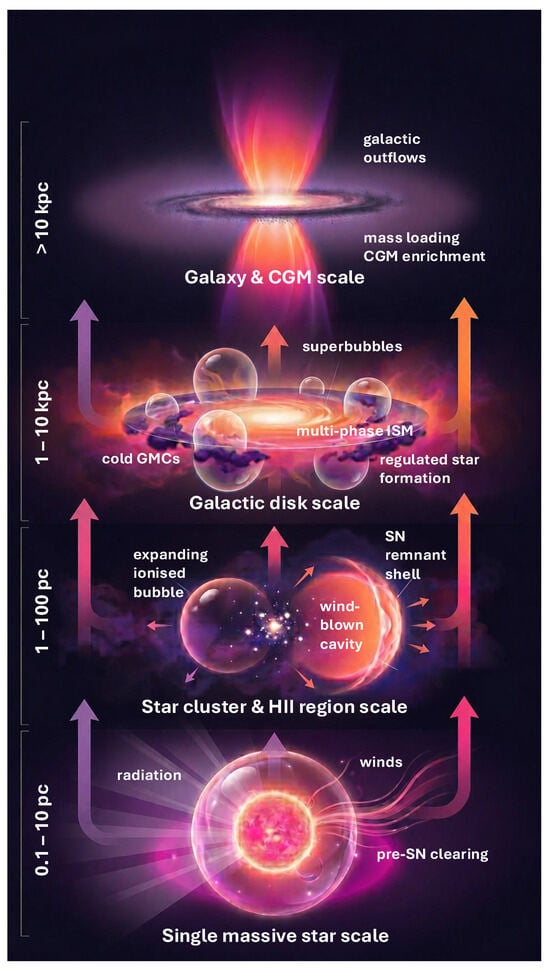
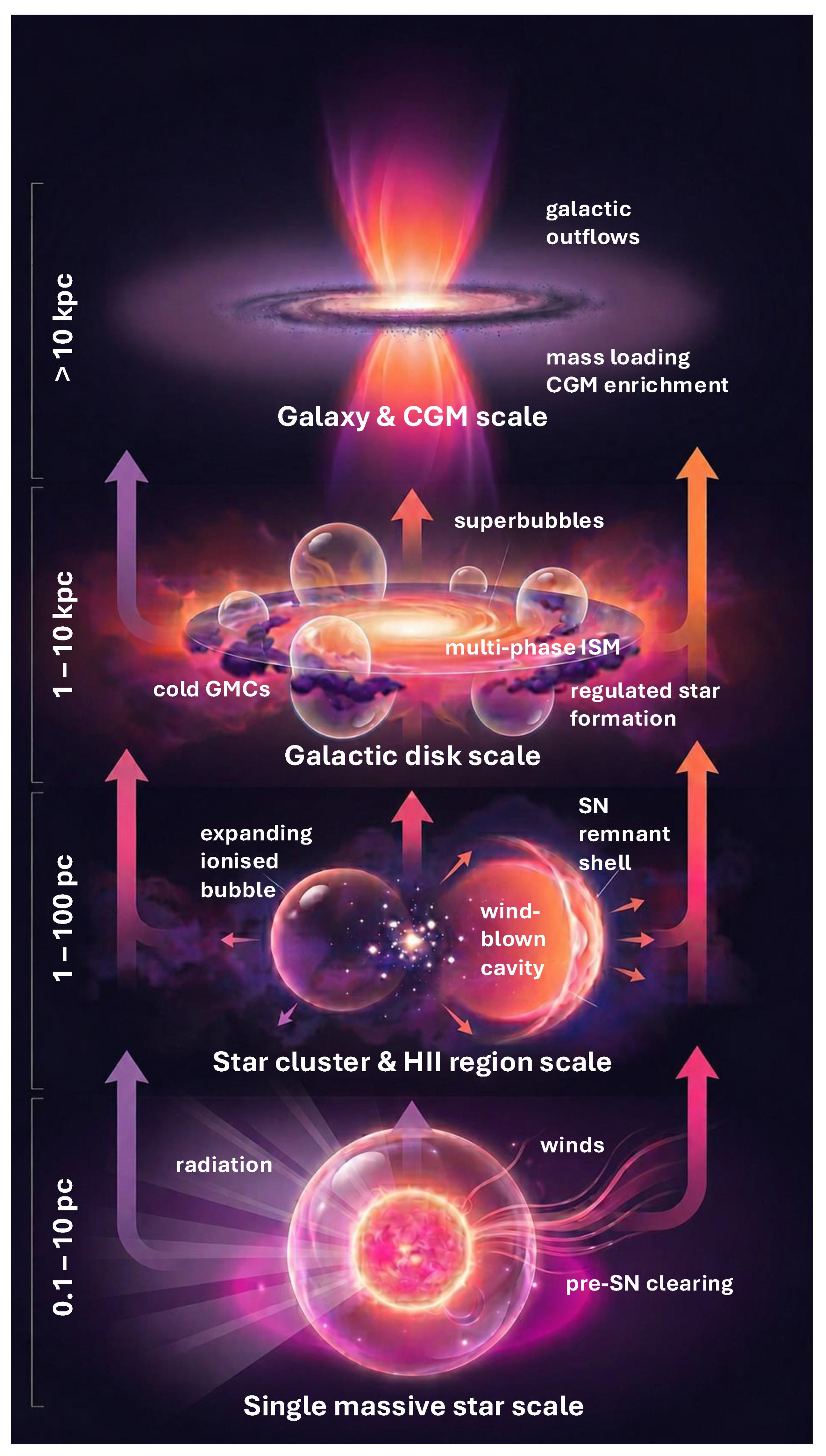
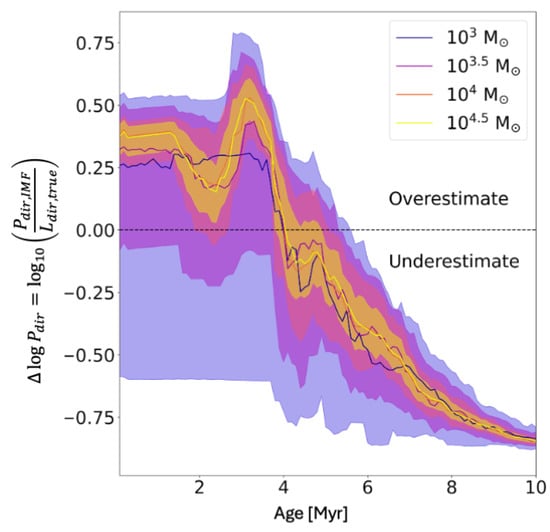
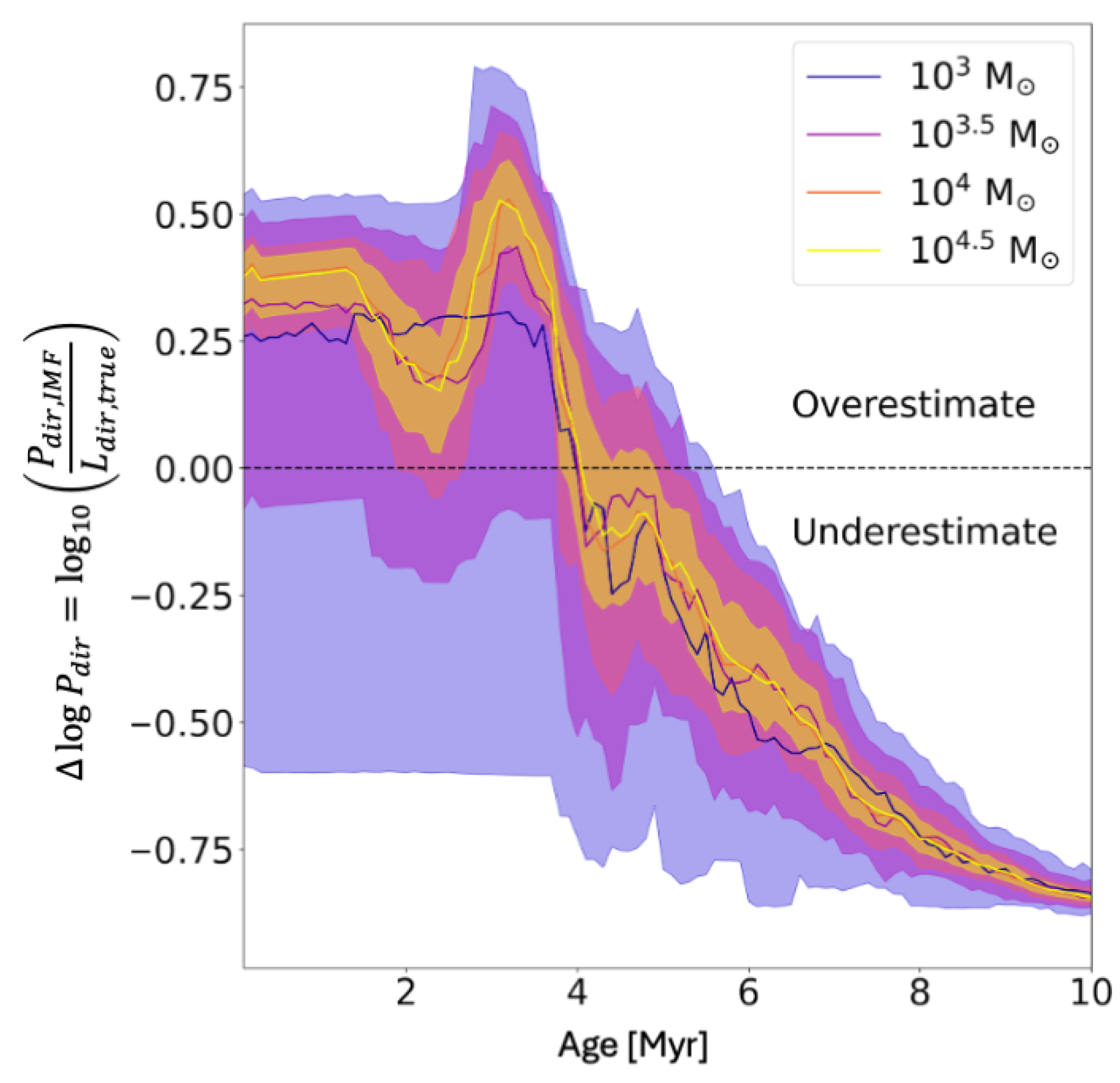
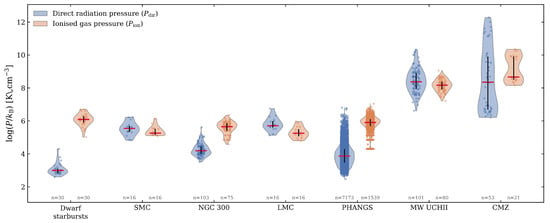
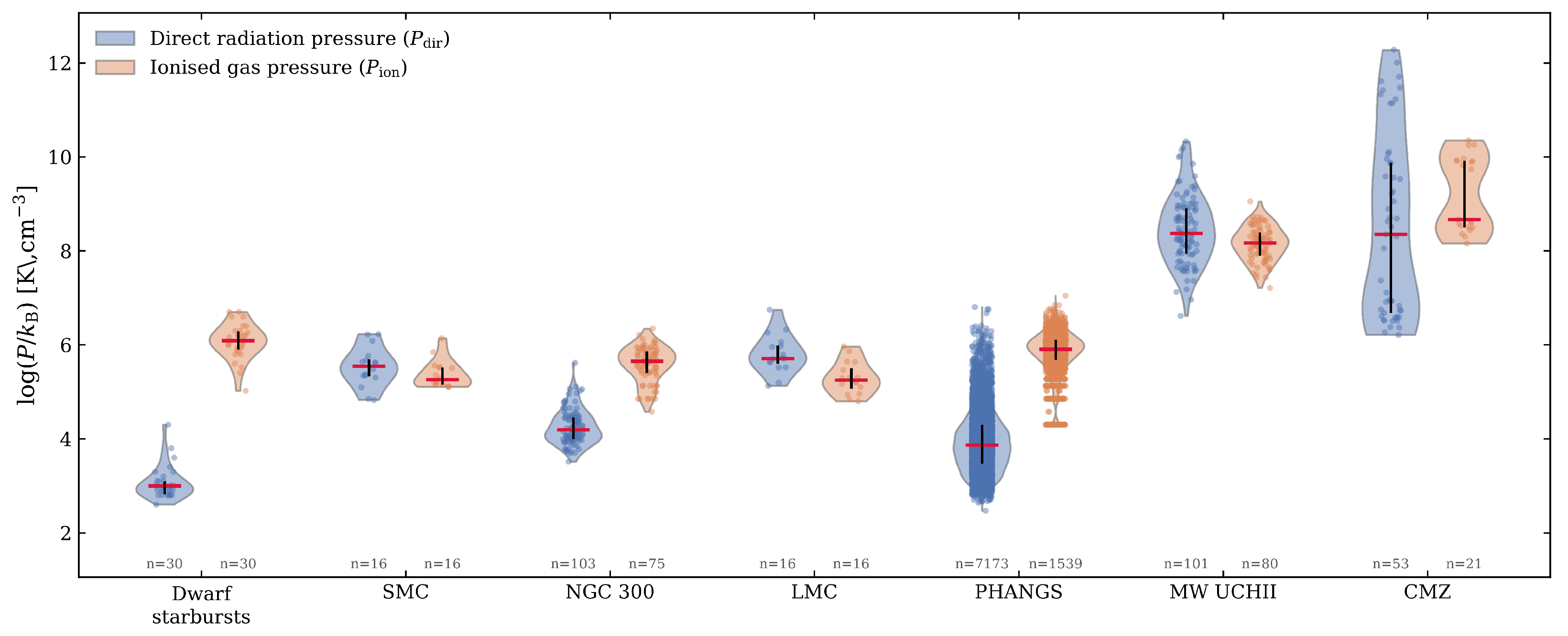
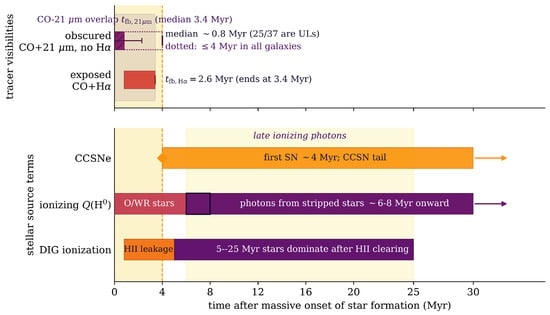
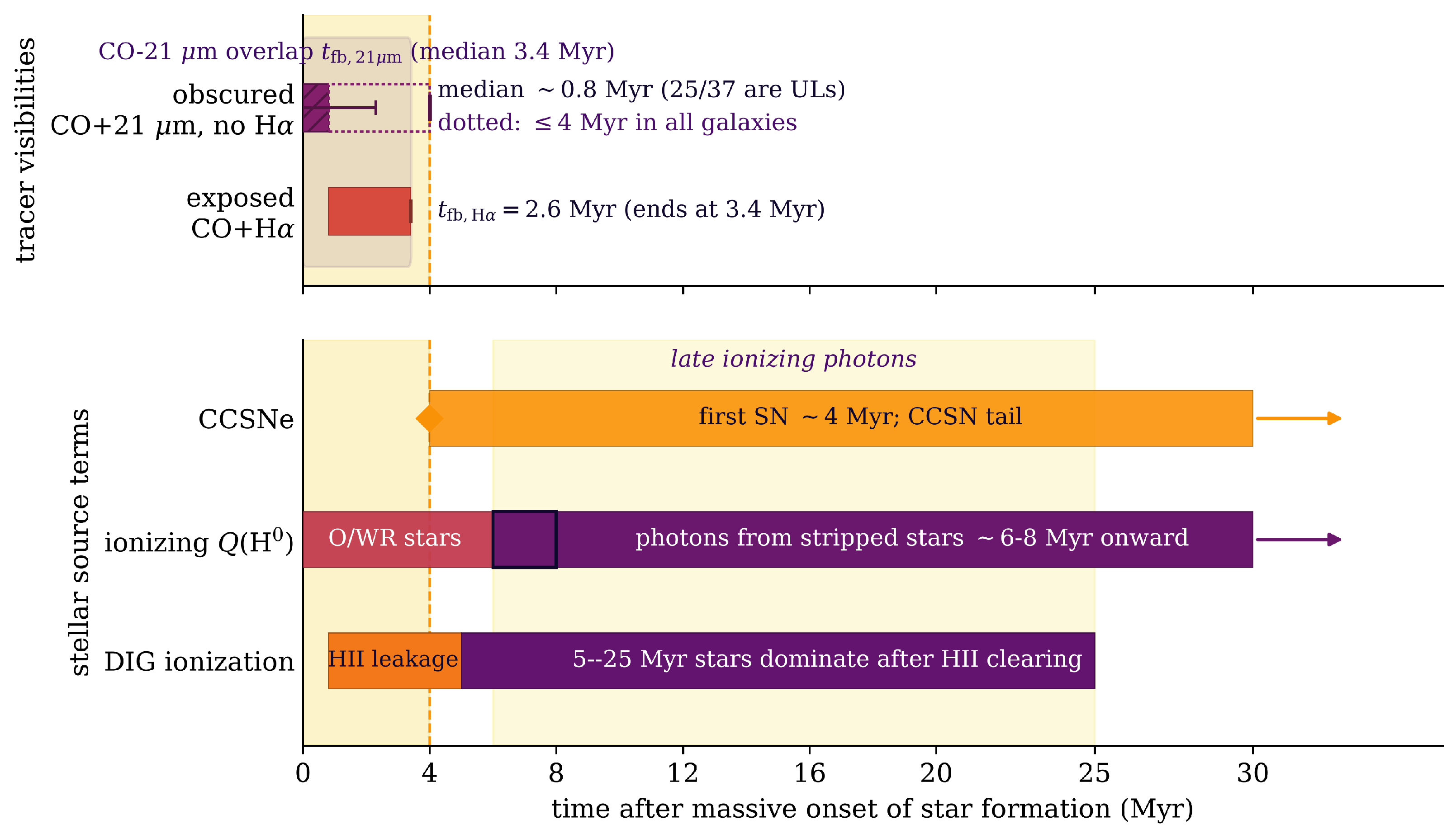
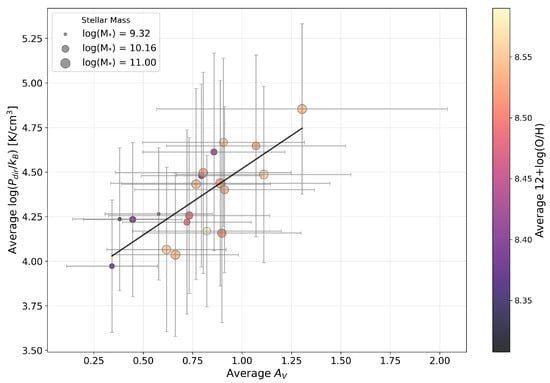
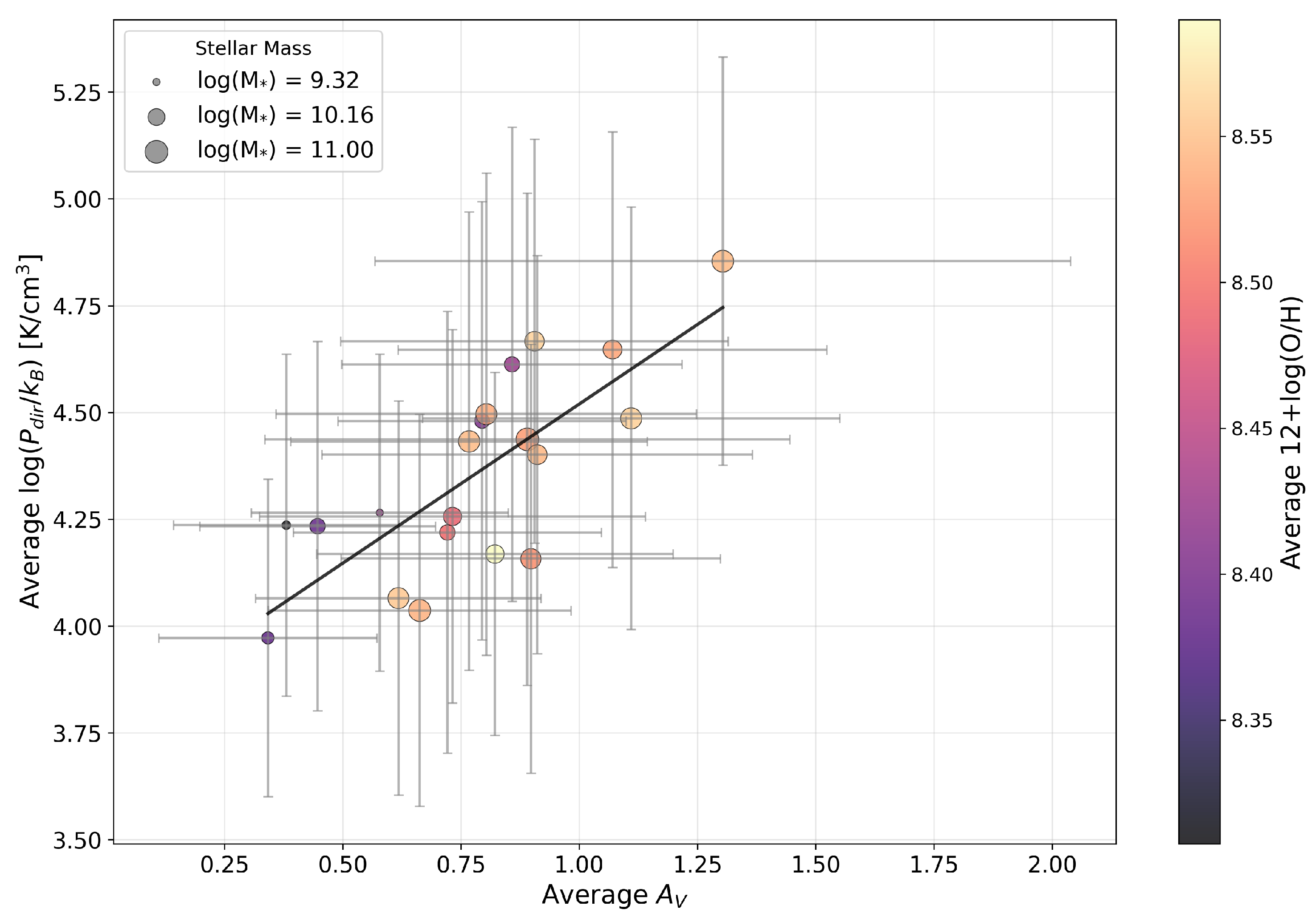
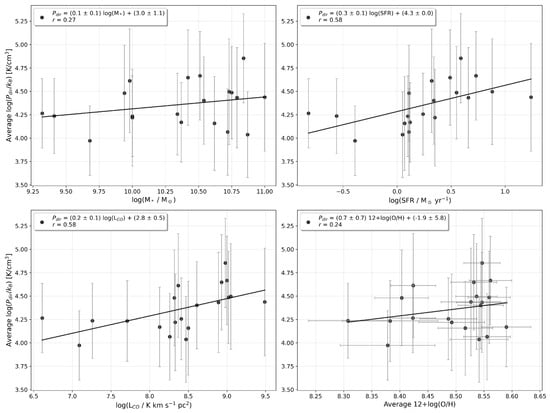
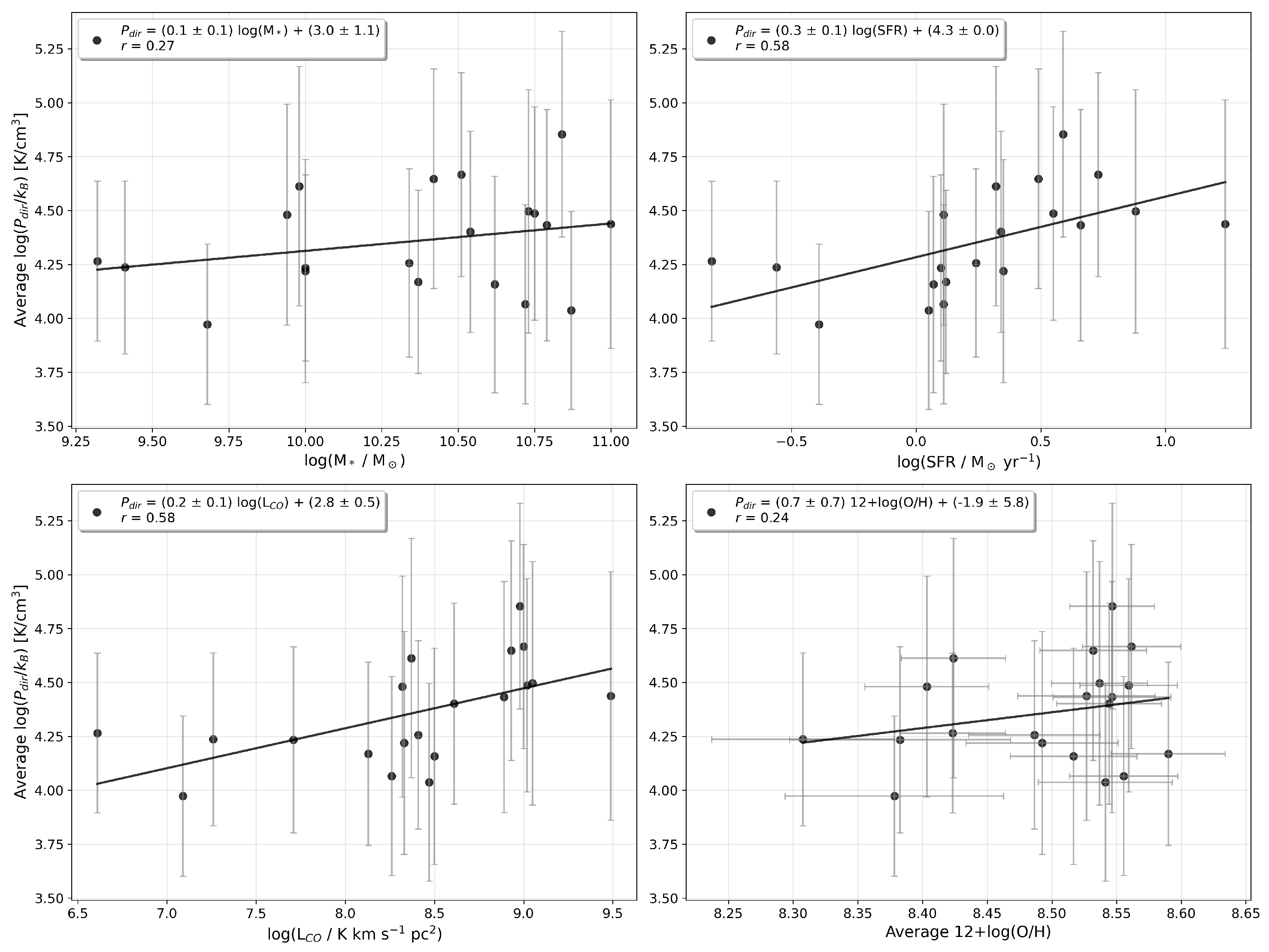
Disclaimer/Publisher’s Note: The statements, opinions and data contained in all publications are solely those of the individual author(s) and contributor(s) and not of MDPI and/or the editor(s). MDPI and/or the editor(s) disclaim responsibility for any injury to people or property resulting from any ideas, methods, instructions or products referred to in the content. |
© 2026 by the author. Licensee MDPI, Basel, Switzerland. This article is an open access article distributed under the terms and conditions of the Creative Commons Attribution (CC BY) license.