


Abstract
Tea polyphenol (TPs) oxidation caused by polyphenol oxidase (PPO) in manufacturing is responsible for the sensory characteristics and health function of fermented tea, therefore, this subject is rich in scientific and commercial interests. In this work, an in vitro catalysis of TPs in liquid nitrogen grinding of sun-dried green tea leaves by PPO was developed, and the changes in metabolites were analyzed by metabolomics. A total of 441 metabolites were identified in the catalyzed tea powder and control check samples, which were classified into 11 classes, including flavonoids (125 metabolites), phenolic acids (67 metabolites), and lipids (55 metabolites). The relative levels of 28 metabolites after catalysis were decreased significantly (variable importance in projection (VIP) > 1.0, p < 0.05, and fold change (FC) < 0.5)), while the relative levels of 45 metabolites, including theaflavin, theaflavin-3′-gallate, theaflavin-3-gallate, and theaflavin 3,3′-digallate were increased significantly (VIP > 1.0, p < 0.05, and FC > 2). The increase in theaflavins was associated with the polymerization of catechins catalyzed by PPO. This work provided an in vitro method for the study of the catalysis of enzymes in tea leaves.
1. Introduction
Tea is manufactured from the fresh leaves of Camellia sinensis, which is the most consumed beverage in the world after water, and widely believed to be rich in flavor compounds and have positive effects on human health, especially anti-oxidation, anti-inflammatory, gut barrier protection, and bile acid metabolism regulatory effects [1,2,3]. Polyphenols in tea leaves (TPs) account for 18% to 36% of dried tea leaves [4], mainly including catechins, O-glycosylated flavonols, C-glycosylflavones, proanthocyanidins, phenolic acids, and their derivatives, and also containing the fermented oxidation products of catechins, e.g., theaflavins, thearubigins, and theabrownins in oolong, black, and dark teas [5,6,7]. Among them, O-glycosylated flavonols, tannins, and galloylated catechins are the main astringent compounds, and non-galloylated catechins enhance the tea bitterness [8,9]. Furthermore, TPs are a major class of aroma compounds giving clove-like, smoky, and phenolic characteristics to dark teas, particularly Pu-erh tea [10]. Hence, TPs are important for the healthful functions and flavors of tea beverages [2,4], which have important scientific and commercial interests in tea manufacture.
According to the manufacturing process, tea can be classified into six types: green tea, white tea, black tea, yellow tea, ooloog tea, and dark tea [11]. The oxidation of TPs caused by polyphenol oxidase (PPO) or peroxidase in the manufacturing process is critical for the formation of different tea types [12,13,14]. For example, in the fixation processing of green tea, the activities of endogenous PPO and peroxidase are terminated, and TPs are not oxidized; while through fermentation, TPs are fully oxidized in black tea, and partially oxidized in oolong tea [12,15,16]. Therefore, TPs oxidation caused by PPO plays an important role in the sensory characteristics of black tea, and it has an important research value.
In the black tea production process, TPs are enzymatically oxidized by endogenous PPO to yield a complex mixture of oxidation products, including theaflavins and thearubigins, and the reaction mechanisms at the initial stages of catechin oxidation are explained by simple quinone–phenol coupling reactions [17]. Based on this, exogenous PPO can effectively increase the formation rate of epicatechin quinone and theaflavins in the solution of (−)-epicatechin and (−)-epigallocatechin [18,19] or in the solution of (−)-epicatechin gallate and (−)-epigallocatechin-3-O-gallate [20], increase the contents of thearubigins and theabrownins using (−)-epigallocatechin-3-O-gallate [21], and transform green tea extracts into black tea with a high content of theaflavins [22]. In addition, adding 1% PPO during black tea fermentation reduced the fermentation time, the content of theaflavins and thearubigins increased, and the color and aroma of the tea improved [23]. Furthermore, theabrownins, which have a healthcare function and can improve the quality of dark tea, are formed by PPO acting on TPs during the fermentation of dark tea [24,25,26,27]. However, the catalytic mechanism of PPO to TPs are complex, and effective methods are needed urgently. Therefore, in this work, to develop an effective methods for studying the catalysis of TPs by PPO, an in vitro catalysis was developed and the changes in metabolites were analyzed using metabolomic methods.
2. Results and Discussion
2.1. Optimization of Conditions for PPO Catalyzing TPs in Sun-Dried Green Tea Leaves
As shown in Figure 1A, with the increase in PPO concentrations, the contents of (−)-epigallocatechin 3-O-gallate (EGCG), (−)-epicatechin 3-O-gallate (ECG), luteolin (Lu), and gallic acid (GA) decreased significantly (p < 0.05), while the content of (−)-gallocatechin (GC) and (+)-catechin (C) first increased and then decreased significantly (p < 0.05). The content of (−)-gallocatechin gallate (GCG), (−)-catechin gallate (CG), (−)-epicatechin (EC), (−)-epigallocatechin (EGC), ellagic acid (EA), kaempferol (Kp), myricetin (My), quercetin (Qc), taxifolin (Ti), rutin (Rt), and caffeine (Ca) fluctuation changed. However, when the PPO concentrations was 500 U/mL, the contents of all TPs (e.g., GA, GC, EGC, C, Ca, EGCG, EC, GCG, ECG, Ti, CG, Rt, EA, My, Qc, Lu, Kp) decreased most significantly (p < 0.05) compared with control check (CK, 0 U/mL), indicating that the reaction of 500 U/mL PPO with sun-dried green tea leaves for 7 h could significantly (p < 0.05) catalyze TPs in sun-dried green tea leaves.
Figure 1.
The catalysis of TPs in sun-dried green tea leaves using different concentrations (A) and with different reaction times of PPO (B). Different lowercase superscripts within a row indicated significantly different among comparisons (p < 0.05).
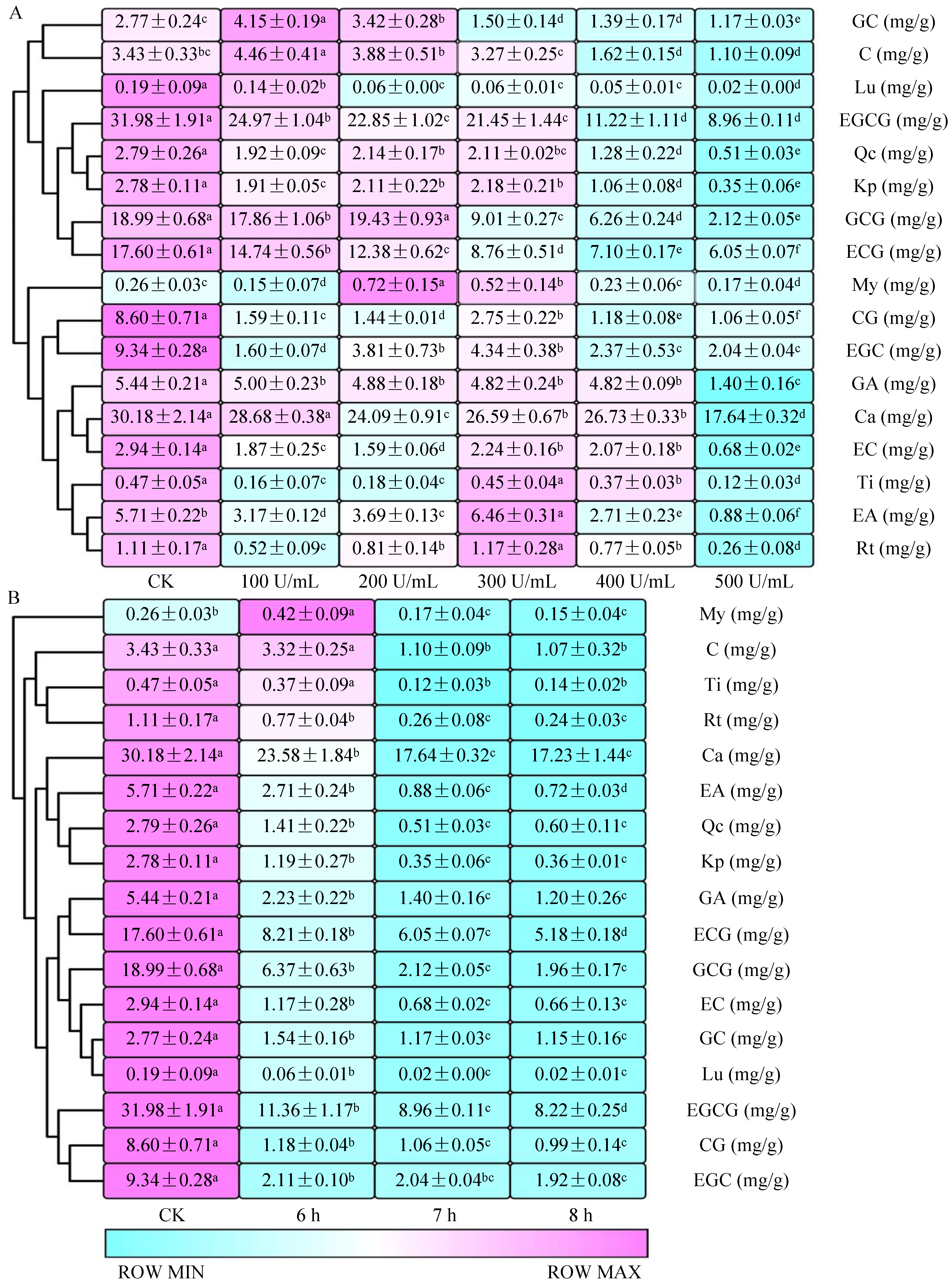
Under the action of the 500 U/mL PPO, whether the contents of TPs could be significantly (p < 0.05) reduced with the extension of reaction time needed further discussion, so different enzyme reaction times were selected to verify this. As shown in Figure 1B, the contents of all TPs (e.g., GA, GC, EGC, C, Ca, EGCG, EC, GCG, ECG, Ti, CG, Rt, EA, My, Qc, Lu, Kp) in sun-dried green tea leaves decreased significantly (p < 0.05) with the extend of enzyme reaction time from 6 h to 7 h. Furthermore, except for EGCG, ECG, and EA, the contents of most TPs did not change significantly (p > 0.05) at the PPO reaction time of 7 h and 8 h (Figure 1B).
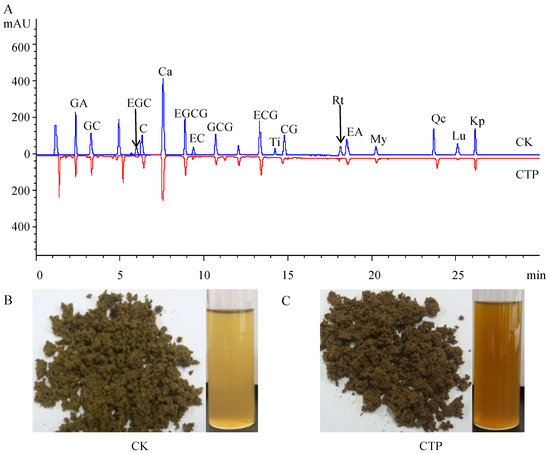
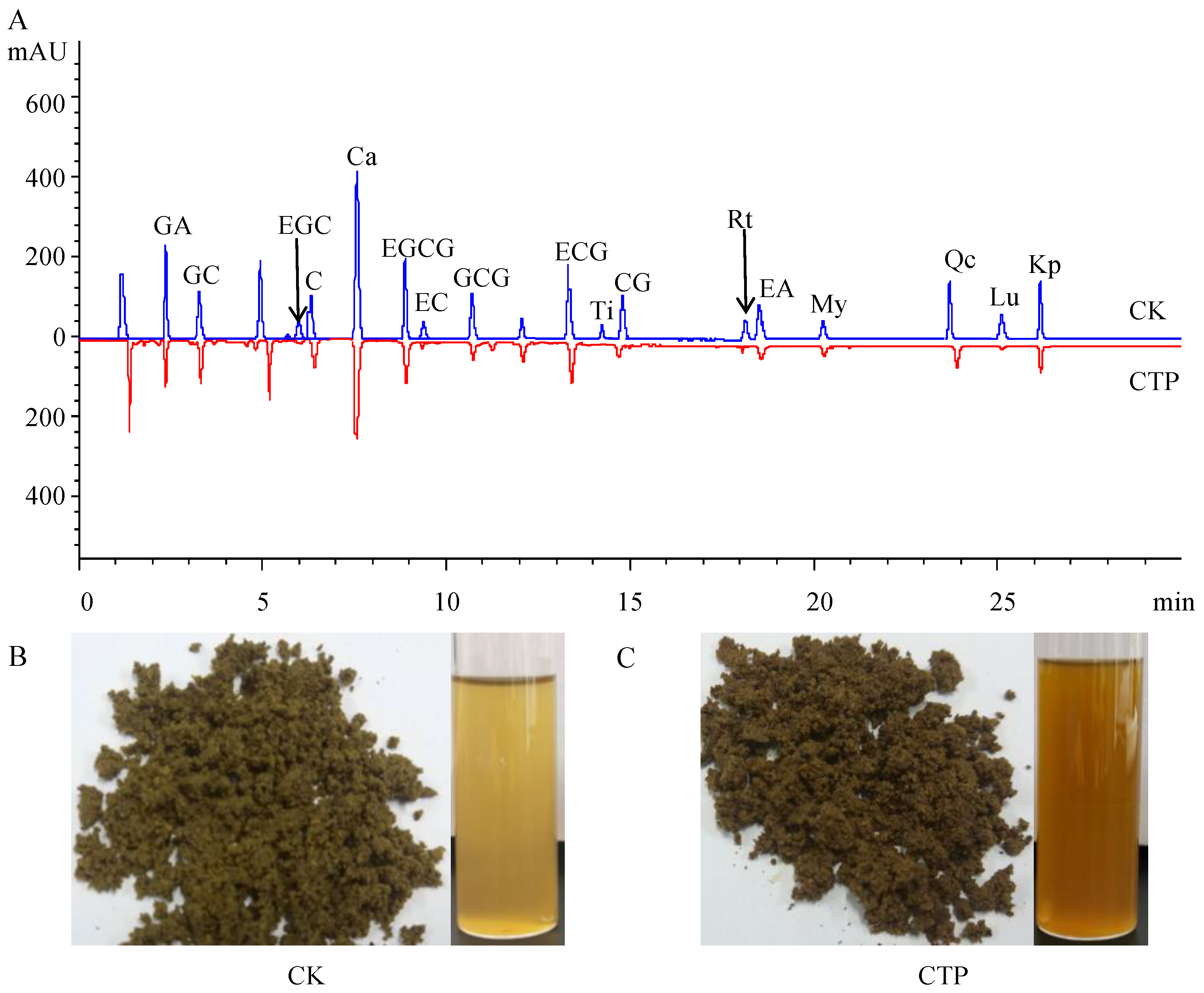
Therefore, 500 U/mL PPO reaction for 7 h can catalyze most TPs (e.g., GA, GC, EGC, C, Ca, EGCG, EC, GCG, ECG, Ti, CG, Rt, EA, My, Qc, Lu, Kp) in sun-dried green tea leaves (Figure 2A). The color of sun-dried green tea leaves and tea infusions became deeper after PPO catalysis (Figure 2B). These changes in TPs were similar to those after PPO metabolism of tea leaves and are in agreement with previous reports [28,29,30].
Figure 2.
HPLC chromatograms for the determination of TPs in sun-dried green tea leaves (A), appearance of tea leaves and infusion in control check (B) and catalysis (C).
2.2. Metabolomic Analysis of Catalysis of Metabolites in Sun-Dried Green Tea Leaves by PPO
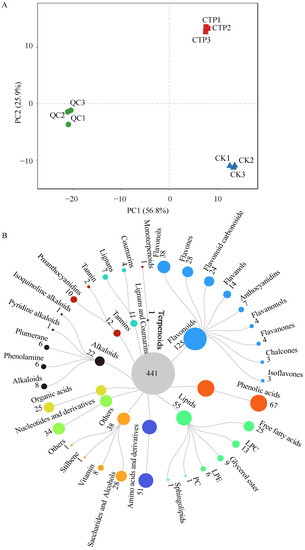
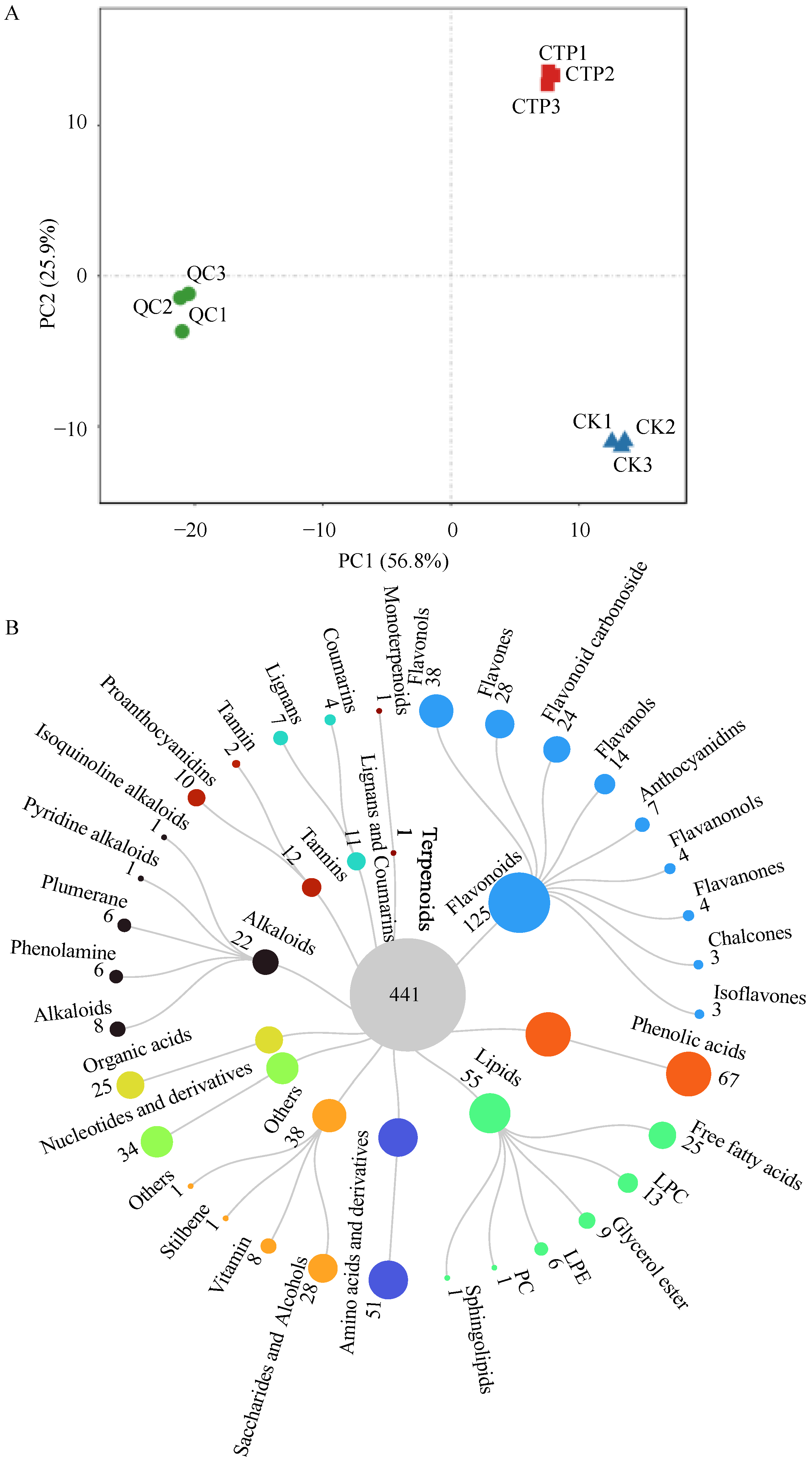
Metabolomics is broadly applied in tea sciences and has tremendous potential for establishing correlations between tea metabolites and quality characteristics, and assessing the physiological changes in tea plants induced by cultivation conditions and metabolic responses to abiotic and biotic stress, and construction of metabolic pathways [31,32]. Therefore, the changes in metabolites of sun-dried green tea leaves under 500 U/mL PPO reaction for 7 h were further subjected to a metabolomic analysis. Metabolites were extracted from catalyzed tea powder (CTP) and CK, and analyzed using a non-targeted liquid chromatography electrospray ionization tandem mass spectrometry (LC-ESI-MS/MS) based metabolomics approach. As shown in Figure 3A, PCA showed that the variance contributions of PC1 and PC2 were 56.8% and 25.9%, respectively, with a cumulative variance contribution of 82.7%, which was much larger than the confidence value of 60%, suggesting that this metabolomics analysis had good stability and reproducibility. While, a great distance was observed among the three different samples, ETP samples were clustered in the upper right area, CK samples were mainly located in the bottom right, and quality control (QC) samples were clustered in the left area. Differential clustering of CK and CTP samples indicated that metabolites in sun-dried green tea leaves were significantly changed after the catalysis of PPO.
Figure 3.
Results of the metabolomics analysis. PCA (A) and classification (B) of identified metabolites in CTP, CK, and QC. LPC: lysophosphatidylcholine, LPE: lysophosphatidylethanolamine, PC: phosphatidyl cholines.
A total of 441 metabolites were identified (Figure 3B, Table 1, and Table S1 in Supplementary Materials), which were classified into 11 classes, while the major metabolites included flavonoids (125 metabolites), phenolic acids (67 metabolites), and lipids (55 metabolites); these were followed by amino acids and derivatives (51 metabolites), nucleotides and derivatives (34 metabolites), organic acids (25 metabolites), alkaloids (22 metabolites), tannins (12 metabolites), lignans and coumarins (11 metabolites), terpenoids (1 metabolite), and others (38 metabolites).
Table 1.
The relative levels of metabolites in CTP and CK.
They were further grouped into 33 sub-classes, including phenolic acids (67 metabolites), amino acids and derivatives (51 metabolites), flavonols (38 metabolites), nucleotides and derivatives (34 metabolites), flavones (28 metabolites), saccharides and alcohols (28 metabolites), free fatty acids (25 metabolites), organic acids (25 metabolites), flavonoid carbonoside (24 metabolites), flavanols (14 metabolites), lysophosphatidylcholine (LPC, 13 metabolites), proanthocyanidins (10 metabolites), glycerol esters (9 metabolites), alkaloids (8 metabolites), vitamins (8 metabolites), anthocyanidins (7 metabolites), lignans (7 metabolites), phenolamines (6 metabolites), lysophosphatidylethanolamines (LPE, 6 metabolites), plumeranes (6 metabolites), coumarins (4 metabolites), flavanones (4 metabolites), flavanonols (4 metabolites), isoflavones (3 metabolites), chalcones (3 metabolites), tannin (2 metabolites), and monoterpenoids (1 metabolite), etc.
To gain an overview of the differentially changed metabolites (DCMs) between the CTP and CK, we developed a new OPLS-DA of metabolites. In comparison of CTP to CK, the relative levels of 28 metabolites were decreased significantly (VIP > 1.0, p < 0.05, and FC < 0.5), respectively, including flavonoids (13 metabolites, e.g., quercetin 3,7-bis-O-β-D-glucoside, acacetin-7-O-β-D-glucoside, acacetin-7-O-galactoside, diosmetin-7-O-galactoside, tricin 7-O-hexoside, chrysoeriol, 6-hydroxykaempferol-7,6-O-diglucoside, tricin O-saccharic acid, luteolin 7-O-β-D-glucosyl-6-C-α-L-arabinose, chrysoeriol O-glucuronic acid, phloretin 2′-O-glucoside, cyanidin 3-rutinoside, and cyanin chloride), phenolic acids (9 metabolites, e.g., 3-O-p-coumaroyl shikimic acid O-hexoside, pyrocatechol, syringin, 5-O-p-coumaroyl quinic acid O-hexoside, 1-O-[(E)-p-cumaroyl]-β-D-glucopyranose, 2,5-dihydroxy benzoic acid O-hexside, protocatechuic acid-4-glucoside, 4-methylcatechol, and rosmarinyl glucoside), lignans and coumarins (4 metabolites, e.g., esculin, terpineol monoglucoside, pinoresinol hexose, and matairesinoside), nucleotides and derivatives (1 metabolite, e.g., 2′-deoxyadenosine-5′-monophosphate), and others (1 metabolite, e.g., dihydro-N-caffeoyltyramine). Among them, the relative levels of 18 metabolites decreased more than 5-fold, e.g., acacetin-7-O-β-D-glucoside, acacetin-7-O-galactoside, tricin 7-O-hexoside, chrysoeriol, 3-O-p-coumaroyl shikimic acid O-hexoside, pyrocatechol, syringin, 5-O-p-coumaroyl quinic acid O-hexoside, 1-O-[(E)-p-cumaroyl]-β-D-glucopyranose, 2,5-dihydroxybenzoic acid O-hexoside, protocatechuic acid-4-glucoside, 4-methylcatechol, diosmetin-7-O-galactoside, terpineol monoglucoside, pinoresinol-hexose, matairesinoside, quercetin 3,7-bis-O-β-D-glucoside, and esculin (Figure 4).
Figure 4.
The differentially changed metabolites (DCMs) after catalysis with PPO. D1–18: acacetin-7-O-β-D-glucoside, acacetin-7-O-galactoside, tricin 7-O-hexoside, chrysoeriol, 3-O-p-coumaroyl shikimic acid O-hexoside, pyrocatechol, syringin, 5-O-p-coumaroyl quinic acid O-hexoside, 1-O-[(E)-p-cumaroyl]-β-D-glucopyranose, 2,5-dihydroxy benzoic acid O-hexside, protocatechuic acid-4-glucoside, 4-methylcatechol, diosmetin-7-O-galactoside, terpineol monoglucoside, pinoresinol-hexose, matairesinoside, quercetin 3,7-bis-O-β-D-glucoside, esculin. I1–12: coniferyl alcohol, esculetin, salicin, theaflavin 3,3′-digallate, theaflavin-3-gallate, theaflavin-3′-gallate, pinoresinol, MAG (18:1) isomer 2, resveratrol, L-methionine, L-homocystine, and peonidin.
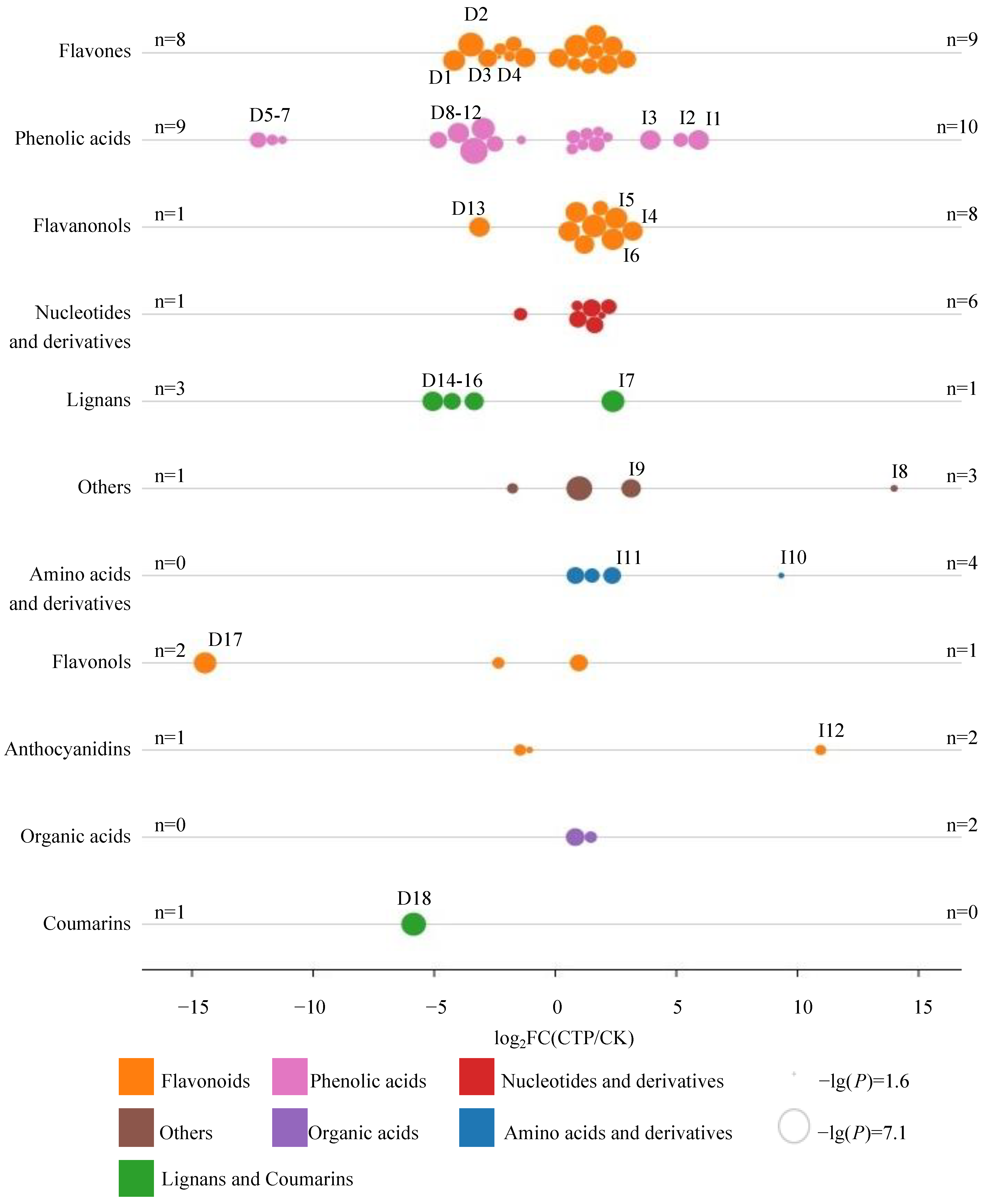
Meanwhile, the relative levels of 45 metabolites in CTP/CK were increased significantly (VIP > 1.0, p < 0.05, and FC > 2), including flavonoids (19 metabolites, e.g., herbacetin, naringenin chalcone, taxifolin, pinobanksin, 5,7-dihydroxy-3′,4′,5′-trimethoxyflavone, pinocembrin, apigenin, 3′,4′,7-trihydroxyflavone, luteolin, diosmetin, pratensein, theaflavin, jaceosidin, hispidulin, acacetin, theaflavin-3′-gallate, theaflavin-3-gallate, theaflavin 3,3′-digallate, and peonidin), phenolic acids (10 metabolites, e.g., ferulic acid, 4-aminobenzoic acid, vanillin, trans-ferulic acid, caffeic acid, coniferaldehyde, oxalic acid, salicin, esculetin, and coniferyl alcohol), nucleotides and derivatives (6 metabolites, e.g., guanosine 3′,5′-cyclic monophosphate, cytidine, guanosine, 8-hydroxyguanosine, 3′-aenylic acid, and xanthine), amino acids and derivatives (4 metabolites, e.g., leucylphenylalanine, DL-alanyl-DL-phenylalanine, L-homocystine, and L-methionine), organic acids (2 metabolites, e.g., D-glucoronic acid, 5-hydroxyhexanoic acid), lignans and coumarins (1 metabolite, e.g., pinoresinol), and others (3 metabolites, e.g., pyridoxine, resveratrol, and MAG (18:1) isomer 2). Among them, the relative levels of 12 metabolites increased more than 5-fold, including coniferyl alcohol, esculetin, salicin, theaflavin 3,3′-digallate, theaflavin-3-gallate, theaflavin-3′-gallate, pinoresinol, MAG (18:1) isomer 2, resveratrol, L-methionine, L-homocystine, and peonidin (Figure 4). Interestingly, the relative levels of four major theaflavins in black tea, including theaflavin (TF1), theaflavin-3-gallate (TF2A), theaflavin-3′-gallate (TF2B), and theaflavin 3,3′-digallate (TF3) [33,34], increased significantly (VIP > 1.0, p < 0.05, and FC > 2) in CTP/CK (Figure 4).
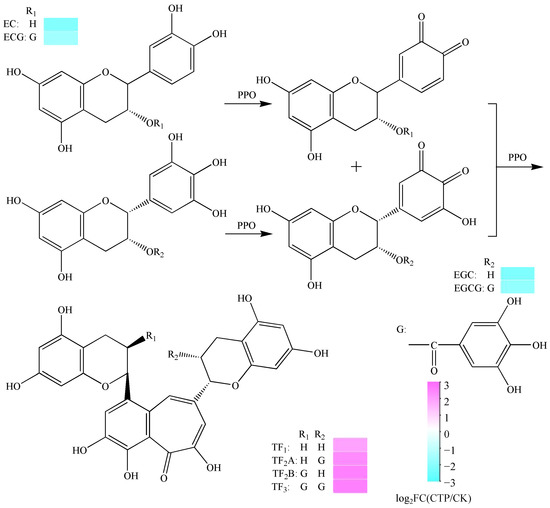
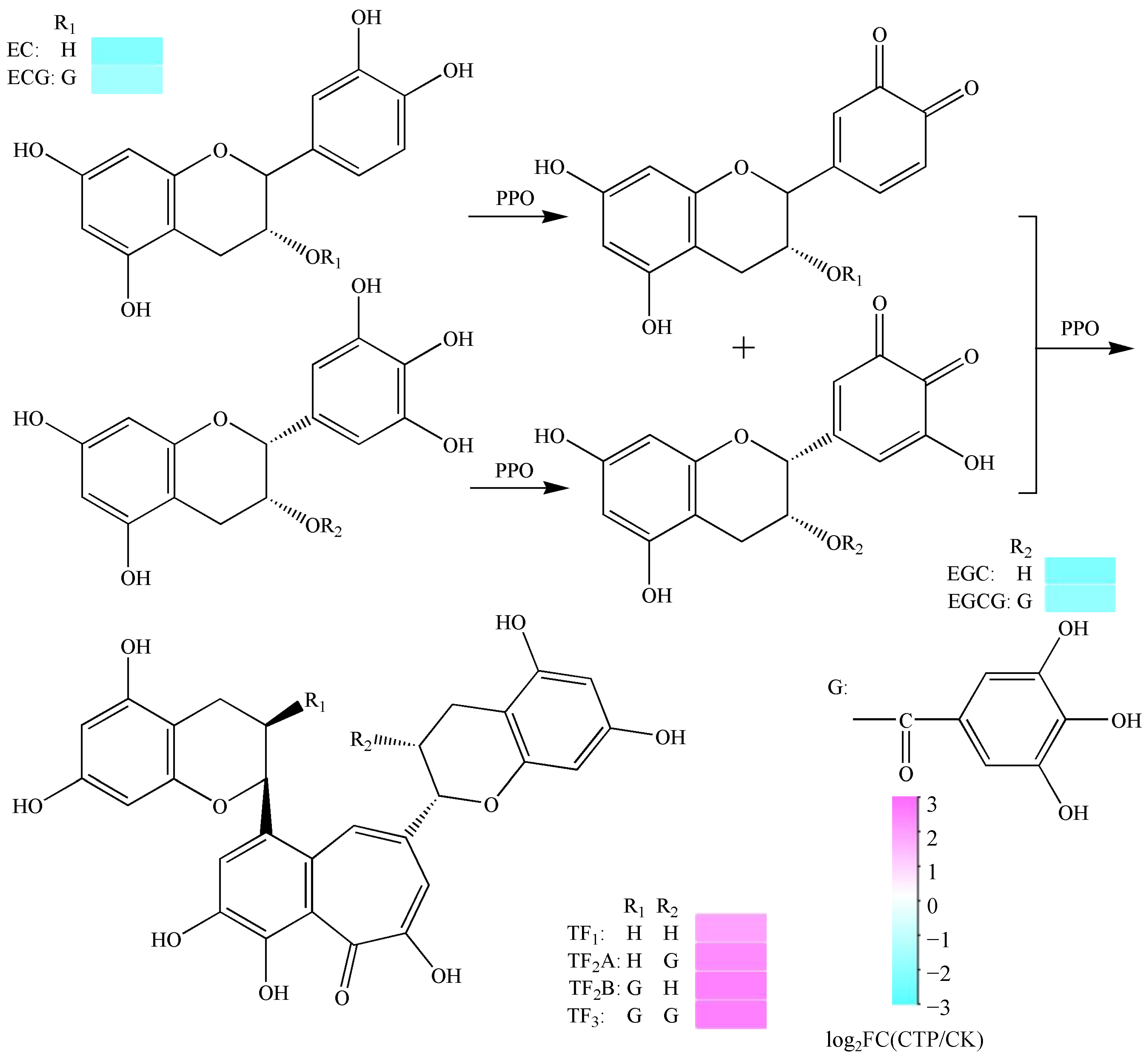
In comparison with CK, the levels of EC, EGC, ECG, and EGCG in CTP decreased from 2.94 mg/g, 9.34 mg/g, 17.60 mg/g, 31.98 mg/g to 0.68 mg/g, 2.04 mg/g, 6.05 mg/g, and 8.96 mg/g, respectively, whereas the levels of TF1, TF2A, TF2B, and TF3 increased 3.82-, 5.11-, 5.92-, and 6.01-fold, respectively (Figure 5). We suggested that TF1 was synthesized through the polymerization of EC and EGC under the catalysis of PPO; PPO could catalyze the polymerization of EC and EGCG to form TF2A; ECG and EGC could be polymerized to form TF2B under the catalysis of PPO; and TF3 was synthesized through the polymerization of ECG and EGCG under the catalysis of PPO. Theaflavins are the general name for a class of compounds with a benzodiazepine structure formed by the condensation of catechins under the catalytic action of PPO [35,36], and they have great potential and broad application prospects in the fields of food, health products, and natural medicine [37,38,39]. In fresh tea leaves, the phenolic hydroxyl groups on the B ring of catechins are oxidized by PPO to form theaflavin intermediates (o-quinones) [40,41], which are easily oxidized and polymerized to form theaflavins [42,43]. Therefore, it is proved that TF1, TF2A, TF2B, and TF3 can be produced by enzymatic oxidation of PPO only in the presence of dihydroxy-B-cycloflavanol (e.g., EC and ECG) and trihydroxy-B-cycloflavanol (e.g., EGC and EGCG) through the structural formula and the change of the levels of metabolites (Figure 5).
Figure 5.
The change of levels and possible formation mechanism of theaflavin (TF1), theaflavin-3-gallate (TF2A), theaflavin-3′-gallate (TF2B), and theaflavin 3,3′-digallate (TF3) from catechins catalyzed by PPO.
3. Materials and Methods
3.1. Materials and Chemical Standards
The raw material (RM) was sun-dried green tea leaves with one bud and three leaves, which were collected from Pu’er City Institute of Tea Science, Yunnan Province, China. PPO (500 U/mg) was purchased from Shanghai Yuanye Biotechnology Co., Ltd. (Shanghai, China). Gallic acid (GA), ellagic acid (EA), caffeine (Ca), rutin (Rt), myricetin (My), taxifolin (Ti), quercetin (Qc), kaempferol (Kp), luteolin (Lu), and catechins including (+)-catechin (C), (−)-epicatechin (EC), (−)-epigallocatechin (EGC), (−)-epicatechin 3-O-gallate (ECG), (−)-epigallocatechin 3-O-gallate (EGCG), (−)-gallocatechin (GC), (−)-gallocatechin gallate (GCG), and (−)-catechin gallate (CG) of high-performance liquid chromatography (HPLC) grade were purchased from Manster Biotechnology Co., Ltd. (Chengdu, China).
3.2. Optimization of the PPO Catalysis Conditions
Sun-dried green tea leaves were ground to fine powder with liquid nitrogen 30 min to obtain tea leaves with broken cell walls, and the tea powder can be passed through the 40 mesh sieve. After that, 1 g tea powder was added to 1 mL PPO at a concentration of 0 U/mL (control check, CK), 100 U/mL, 200 U/mL, 300 U/mL, 400 U/mL, and 500 U/mL, respectively, and the reaction was carried out at 35 °C for 7 h, then terminated by boiling water for 10 min. Since then, 1 mL PPO (500 U/mL) was added to the tea powder (1 g) and the reaction was terminated after 6 h, 7 h, and 8 h at 35 °C. TPs were extracted with the methanol extraction method and subjected to HPLC analysis described in our previous report [44]. Briefly, 1 g of sample was extracted with 44.00 mL of methanol:hydrochloric acid (40:4, v/v) in a flask equipped with a reflux condenser. The extraction was performed in a water bath (at 85 °C) for 90 min. The extractions were diluted to 50 mL, filtered through a 0.2 μm nylon filter, and then analyzed directly by HPLC. Samples were determined using an Agilent 1200 series HPLC system consisting of an LC-20AB solvent delivery unit, an SIL-20A autosampler, a CTO-20A column oven (35 °C), a G1314B UV variable wavelength detector, and an LC Ver1.23 workstation (Agilent Technologies, Santa Clara, CA, USA). Partitioning was performed using an Agilent Poroshell 120 EC-C18 column (4.6 × 100 mm, 2.7 μm) fitted with a C18 guard column (Agilent Technologies). The mobile phase was a mixture of (A) 5% acetonitrile and 0.261% ortho-phosphoric acid in water and (B) 80% methanol in water. In an elution gradient, from 0–16 min, buffer B was increased from 10 to 45%; from 16–22 min, buffer B was increased to 65%; and from 22–25.9 min, buffer B was increased to 100%. Three replicates of each sample were extracted, and each extraction was analyzed twice.
3.3. Metabolomics Analysis
Metabolites in the tea leaves were extracted and analyzed using a liquid chromatography electrospray ionization tandem mass spectrometry (LC-ESI-MS/MS) based metabolomics approach performed by Metware Biotechnology Co. Ltd., Wuhan, China. The catalyzed tea powder (CTP) or CK samples (100 mg) were weighed and extracted overnight at 4 °C using 1.0 mL 70% methanol. The samples were then centrifuged at 10,000× g for 10 min. The supernatant was filtered using a microporous membrane (SCAA-104, 0.22-μm pore size, ANPEL, Shanghai, China) for LC-ESI-MS/MS analysis. Quality control (QC) samples were prepared by mixing sample extracts to examine the repeatability of the analysis.
Samples were injected into an LC-ESI-MS/MS system (UPLC, Shim-pack UFLC Shimadzu CBM30A system, MS, Applied Biosystems 4500 Q-Trap). The LC-ESI-MS/MS system analytical method was performed as described previously [45]. The chromatographic separation was performed on a Waters ACQUITY UPLC HSS T3 C18 column (2.1 × 100 mm, 1.8 μm; Waters Corporation, Milford, MA, USA) at 40 ℃, and the LC parameters were as follows: injection volume, 4μL; flow rate, 0.35 mL/min; The mobile phase was a mixture of (A) 0.04% acetic acid in water and (B) 0.04% acetic acid in acetonitrile; the gradient elution was carried out: 5–95% B for 0–10 min, 95% B for 10–11 min, 5% B for 11–11.1 min, 5% B for 11.1–14 min, and 100% B for 35–45 min. The effluent was alternatively connected to an ESI-triple quadrupole-linear ion trap (QTRAP)-MS controlled by Analyst 1.6.3 software (AB Sciex, Darmstadt, Germany). The operating parameters of the ESI source were as follows: ESI source temperature, 500 ℃; ion spray voltage, 5500 V; ion source gas I (GSI), gas II (GSII), and curtain gas (CUR), 30 psi; and collision-activated dissociation, highest setting. Triple quadrupole (QQQ) scans were acquired as multiple reaction monitoring (MRM) experiments using optimized declustering potentials (DP) and collision energies (CE) for each individual MRM transition. Instrument tuning and mass calibration were performed with 10 μmol/L and 100 μmol/L polypropylene glycol solutions in QQQ and LIT modes, respectively. QQQ scans were acquired as MRM experiments with collision gas (nitrogen) set to 5 psi. DP and CE for individual MRM transitions were carried out with further DP and CE optimization. A specific set of MRM transitions was monitored for each period according to the metabolites eluted within this period [46].
Data filtering, peak detection, alignment, and calculations were performed using Analyst 1.6.3 software (AB Sciex). To facilitate the identification/annotation of metabolites, accurate m/z ratios were obtained for each precursor ion. Total ion chromatograms and extracted ion chromatograms of QC samples were exported to give an overview of the metabolite profiles of all samples. Metabolites were characterized by searching internal and public databases (MassBank, KNApSAcK, HMDB, MoTo DB, and METLIN) and comparing their m/z values, retention times, and fragmentation patterns with those of the standards [47,48] and comparing their m/z values, retention times and fragmentation patterns with those of the standards. The chromatographic peak area of each was calculated. Positive and negative data were combined to obtain a combined data set.
3.4. Statistical Analysis
Statistical analyses were performed using IBM SPSS Statistics 26.0 (SPSS Inc., Chicago, IL, USA). Principal component analysis (PCA) and orthogonal partial least square discriminant analysis (OPLS-DA) results were generated by SIMCA 14.1 (Umetrics, Umea, Sweden) to visualize the metabolic differences between the experimental groups after normalization and standardization processing. Variable importance in projection (VIP) analysis ranked the overall contribution of each variable to the OPLS-DA model, and those variables with VIP > 1.0, p < 0.05, and fold change (FC) > 2 or < 0.5 were classified as differentially changed metabolites (DCMs) [49].
4. Conclusions
The PPO catalytic conditions on TPs in liquid nitrogen grinding sun-dried green tea leaves were optimized, and 500 U/mL PPO reaction for 7 h can catalyze TPs effectively. Meanwhile, a total of 441 metabolites were identified in tea leaves, which were classified into 11 classes, including flavonoids (125 metabolites), phenolic acids (67 metabolites), and lipids (55 metabolites), amino acids and derivatives (51 metabolites), nucleotides and derivatives (34 metabolites), organic acids (25 metabolites), alkaloids (22 metabolites), tannins (12 metabolites), lignans and coumarins (11 metabolites), terpenoids (1 metabolite), and others (38 metabolites). Furthermore, the relative levels of 28 metabolites, including flavonoids (13 metabolites), phenolic acids (9 metabolites), lignans and coumarins (4 metabolites), nucleotides and derivatives (1 metabolites), and others (1 metabolite) were decreased significantly after catalysis (VIP > 1.0, p < 0.05, and FC < 0.5); the relative levels of 45 metabolites including flavonoids (19 metabolites), phenolic acids (10 metabolites), nucleotides and derivatives (6 metabolites), amino acids and derivatives (4 metabolites), organic acids (2 metabolites), lignans and coumarins (1 metabolite), and others (3 metabolites) were increased significantly (VIP > 1.0, p < 0.05, and FC > 2), while, these four major theaflavins (TF1, TF2A, TF2B, and TF3) can be produced by enzymatic oxidation of PPO only in the presence of dihydroxy-B-cycloflavanol (e.g., EC and ECG) and trihydroxy-B-cycloflavanol (e.g., EGC and EGCG).
Therefore, an in vitro catalysis of TPs by PPO was established and provided technical references for the study of the catalytic mechanism of PPO in tea leaves.
Supplementary Materials
The following supporting information can be downloaded at: https://www.mdpi.com/article/10.3390/molecules28041722/s1, Table S1: The metabolites in CTP, CK, and QC.
Author Contributions
Conceptualization, M.Z.; formal analysis, K.L., Q.C. and H.L.; funding acquisition, Y.M. and M.Z.; methodology, K.L. and B.J.; software, K.L., R.L., L.C., Z.L. and T.W.; writing–original draft preparation, K.L. and B.J.; writing–reviewing and editing, Y.M. and M.Z. All authors have read and agreed to the published version of the manuscript.
Funding
This research was funded by the National Natural Science Foundation of China (Grant No. 32160728), the Project of Yunnan Provincial Science and Technology Department (Grant No. 202104bi090008).
Institutional Review Board Statement
Not applicable.
Informed Consent Statement
Not applicable.
Data Availability Statement
The experimental data provided in this work are available in articles and Supplementary Materials.
Conflicts of Interest
The authors declare no conflict of interest.
Sample Availability
Samples of the compounds (e.g., gallic acid, ellagic acid, caffeine, rutin, myricetin, taxifolin, quercetin, kaempferol, luteolin, (+)-catechin, (−)-epicatechin, (−)-epigallocatechin, (−)-epicatechin 3-O-gallate, (−)-epigallocatechin 3-O-gallate, (−)-gallocatechin, (−)-gallocatechin gallate, (−)-catechin gallate of high-performance liquid chromatography grade) are available from the authors.
References
- Sanlier, N.; Gokcen, B.B.; Altuğ, M. Tea consumption and disease correlations. Trends Food Sci. Technol. 2018, 78, 95–106. [Google Scholar] [CrossRef] [Scilit]
- Yang, Y.; Zhang, T. Antimicrobial activities of tea polyphenol on phytopathogens: A review. Molecules 2019, 24, 816. [Google Scholar] [CrossRef] [Scilit] [PubMed]
- Liu, Z.; Vincken, J.; de Bruijn, W.J.C. Tea phenolics as prebiotics. Trends Food Sci. Technol. 2022, 127, 156–168. [Google Scholar] [CrossRef] [Scilit]
- Sharma, N.; Phan, H.T.; Chikae, M.; Takamura, Y.; Azo-Oussou, A.F.; Vestergaard, M.C. Black tea polyphenol theaflavin as promising antioxidant and potential copper chelator. J. Sci. Food Agric. 2020, 100, 3126–3135. [Google Scholar] [CrossRef] [Scilit]
- Zhu, X.; Chen, B.; Ma, M.; Luo, X.; Zhang, F.; Yao, S.; Wan, Z.; Yang, D.; Hang, H. Simultaneous analysis of theanine, chlorogenic acid, purine alkaloids and catechins in tea samples with the help of multi-dimension information of on-line high performance liquid chromatography/electrospray–mass spectrometry. J. Pharm. Biomed. Anal. 2004, 34, 695–704. [Google Scholar] [CrossRef] [Scilit]
- Menet, M.; Sang, S.; Yang, C.S.; Ho, C.; Rosen, R.T. Analysis of theaflavins and thearubigins from black tea extract by MALDI-TOF mass spectrometry. J. Agric. Food Chem. 2004, 52, 2455–2461. [Google Scholar] [CrossRef] [Scilit]
- Zhou, Z.; Zhang, Y.; Xu, M.; Yang, C. Puerins a and b, two new 8-C substituted flavan-3-ols from pu-er tea. J. Agric. Food Chem. 2005, 53, 8614–8617. [Google Scholar] [CrossRef] [Scilit]
- Zhang, L.; Cao, Q.; Granato, D.; Xu, Y.; Ho, C. Association between chemistry and taste of tea: A review. Trends Food Sci. Technol. 2020, 101, 139–149. [Google Scholar] [CrossRef] [Scilit]
- Zhai, X.; Zhang, L.; Granvogl, M.; Ho, C.T.; Wan, X. Flavor of tea (Camellia sinensis): A review on odorants and analytical techniques. Compr. Rev. Food Sci. Food Saf. 2022, 21, 3867–3909. [Google Scholar] [CrossRef] [Scilit]
- Pang, X.; Yu, W.; Cao, C.; Yuan, X.; Qiu, J.; Kong, F.; Wu, J. Comparison of potent odorants in raw and ripened Pu-Erh tea infusions based on odor activity value calculation and multivariate analysis: Understanding the role of pile fermentation. J. Agric. Food Chem. 2019, 67, 13139–13149. [Google Scholar] [CrossRef] [Scilit]
- Shevchuk, A.; Megias-Perez, R.; Zemedie, Y.; Kuhnert, N. Evaluation of carbohydrates and quality parameters in six types of commercial teas by targeted statistical analysis. Food Res. Int. 2020, 133, 109122. [Google Scholar] [CrossRef] [Scilit] [PubMed]
- Zhang, L.; Ho, C.T.; Zhou, J.; Santos, J.S.; Armstrong, L.; Granato, D. Chemistry and biological activities of processed Camellia sinensis teas: A comprehensive review. Compr. Rev. Food Sci. Food Saf. 2019, 18, 1474–1495. [Google Scholar] [CrossRef] [Scilit] [PubMed]
- Bora, P.; Bora, L.C. Microbial antagonists and botanicals mediated disease management in tea, Camellia sinensis (L.) O. Kuntze: An overview. Crop Prot. 2021, 148, 105711. [Google Scholar] [CrossRef] [Scilit]
- Hua, J.; Xu, Q.; Yuan, H.; Wang, J.; Wu, Z.; Li, X.; Jiang, Y. Effects of novel fermentation method on the biochemical components change and quality formation of Congou black tea. J. Food Compos. Anal. 2021, 96, 103751. [Google Scholar] [CrossRef] [Scilit]
- Ye, J.; Ye, Y.; Yin, J.; Jin, J.; Liang, Y.; Liu, R.; Tang, P.; Xu, Y. Bitterness and astringency of tea leaves and products: Formation mechanism and reducing strategies. Trends Food Sci. Technol. 2022, 123, 130–143. [Google Scholar] [CrossRef] [Scilit]
- Sajilata, M.G.; Bajaj, P.R.; Singhal, R.S. Tea polyphenols as nutraceuticals. Compr. Rev. Food Sci. Food Saf. 2008, 7, 229–254. [Google Scholar] [CrossRef] [Scilit]
- Tanaka, T.; Matsuo, Y.; Kouno, I. Chemistry of secondary polyphenols produced during processing of tea and selected foods. Int. J. Mol. Sci. 2010, 11, 14–40. [Google Scholar] [CrossRef] [Scilit]
- Yabuki, C.; Yagi, K.; Nanjo, F. Highly efficient synthesis of theaflavins by tyrosinase from mushroom and its application to theaflavin related compounds. Process Biochem. 2017, 55, 61–69. [Google Scholar] [CrossRef] [Scilit]
- Tanaka, T.; Mine, C.; Inoue, K.; Matsuda, M.; Kouno, I. Synthesis of theaflavin from epicatechin and epigallocatechin by plant homogenates and role of epicatechin quinone in the synthesis and degradation of theaflavin. J. Agric. Food Chem. 2002, 50, 2142–2148. [Google Scholar] [CrossRef] [Scilit]
- Lei, S.; Xie, M.; Hu, B.; Zhou, L.; Sun, Y.; Saeeduddin, M.; Zhang, H.; Zeng, X. Effective synthesis of theaflavin-3,3′-digallate with epigallocatechin-3-O-gallate and epicatechin gallate as substrates by using immobilized pear polyphenol oxidase. Int. J. Biol. Macromol. 2017, 94, 709–718. [Google Scholar] [CrossRef] [Scilit]
- Lee, Y.; Lin, Z.; Du, G.; Deng, Z.; Yang, H.; Bai, W. The fungal laccase-catalyzed oxidation of EGCG and the characterization of its products. J. Sci. Food Agric. 2015, 95, 2686–2692. [Google Scholar] [CrossRef] [Scilit] [PubMed]
- Li, Q.; Luo, J.; Zhou, Z.; Wang, G.; Chen, R.; Cheng, S.; Wu, M.; Li, H.; Ni, H.; Li, H. Simplified recovery of enzymes and nutrients in sweet potato wastewater and preparing health black tea and theaflavins with scrap tea. Food Chem. 2018, 245, 854–862. [Google Scholar] [CrossRef] [Scilit] [PubMed]
- Mishra, B.B.; Gautam, S.; Sharma, A. Free phenolics and polyphenol oxidase (PPO): The factors affecting post-cut browning in eggplant (Solanum melongena). Food Chem. 2013, 139, 105–114. [Google Scholar] [CrossRef] [Scilit] [PubMed]
- Ngure, F.M.; Wanyoko, J.K.; Mahungu, S.M.; Shitandi, A.A. Catechins depletion patterns in relation to theaflavin and thearubigins formation. Food Chem. 2009, 115, 8–14. [Google Scholar] [CrossRef] [Scilit]
- Cao, X.X.; Liu, M.M.; Hu, Y.J.; Xue, Q.; Yao, F.; Sun, J.; Sun, L.W.; Liu, Y.J. Systemic characteristics of biomarkers and differential metabolites of raw and ripened pu-erh teas by chemical methods combined with a UPLC-QQQ-MS-based metabolomic approach. LWT 2021, 136, 110316. [Google Scholar] [CrossRef] [Scilit]
- Zeng, J.; Du, G.; Shao, X.; Feng, K.; Zeng, Y. Recombinant polyphenol oxidases for production of theaflavins from tea polyphenols. Int. J. Biol. Macromol. 2019, 134, 139–145. [Google Scholar] [CrossRef] [Scilit]
- Huang, F.; Zheng, X.; Ma, X.; Jiang, R.; Zhou, W.; Zhou, S.; Zhang, Y.; Lei, S.; Wang, S.; Kuang, J.; et al. Theabrownin from Pu-erh tea attenuates hypercholesterolemia via modulation of gut microbiota and bile acid metabolism. Nat. Commun. 2019, 10, 4971. [Google Scholar] [CrossRef] [Scilit]
- Abudureheman, B.; Yu, X.; Fang, D.; Zhang, H. Enzymatic oxidation of tea catechins and its mechanism. Molecules 2022, 27, 942. [Google Scholar] [CrossRef] [Scilit]
- Bonnely, S. A model oxidation system to study oxidised phenolic compounds present in black tea. Food Chem. 2003, 83, 485–492. [Google Scholar] [CrossRef] [Scilit]
- Verloop, A.J.W.; Vincken, J.; Gruppen, H. Peroxidase can perform the hydroxylation step in the “oxidative cascade” during oxidation of tea catechins. J. Agric. Food Chem. 2016, 64, 8002–8009. [Google Scholar] [CrossRef] [Scilit]
- Du, Y.; Yang, W.; Yang, C.; Yang, X. A comprehensive review on microbiome, aromas and flavors, chemical composition, nutrition and future prospects of Fuzhuan brick tea. Trends Food Sci. Technol. 2022, 119, 452–466. [Google Scholar] [CrossRef] [Scilit]
- Wang, S.; Qiu, Y.; Gan, R.; Zhu, F. Chemical constituents and biological properties of Pu-erh tea. Food Res. Int. 2022, 154, 110899. [Google Scholar] [CrossRef] [Scilit]
- He, H. Research progress on theaflavins: Efficacy, formation, and preparation. Food Nutr. Res. 2017, 61, 1344521. [Google Scholar] [CrossRef] [Scilit] [PubMed]
- Lin, L.; Chen, P.; Harnly, J.M. New phenolic components and chromatographic profiles of green and fermented teas. J. Agric. Food Chem. 2008, 56, 8130–8140. [Google Scholar] [CrossRef] [Scilit] [PubMed]
- Stodt, U.W.; Blauth, N.; Niemann, S.; Stark, J.; Pawar, V.; Jayaraman, S.; Koek, J.; Engelhardt, U.H. Investigation of processes in black tea manufacture through model fermentation (oxidation) experiments. J. Agric. Food Chem. 2014, 62, 7854–7861. [Google Scholar] [CrossRef] [Scilit]
- Matsuura, K.; Usui, Y.; Kan, T.; Ishii, T.; Nakayama, T. Structural specificity of electric potentials in the coulometric-array analysis of catechins and theaflavins. J. Clin. Biochem. Nutr. 2014, 55, 103–109. [Google Scholar] [CrossRef] [Scilit]
- Tan, Q.; Peng, L.; Huang, Y.; Huang, W.; Bai, W.; Shi, L.; Li, X.; Chen, T. Structure-activity relationship analysis on antioxidant and anticancer actions of theaflavins on human colon cancer cells. J. Agric. Food Chem. 2019, 67, 159–170. [Google Scholar] [CrossRef] [Scilit]
- Wu, Y.H.; Kuraji, R.; Taya, Y.; Ito, H.; Numabe, Y. Effects of theaflavins on tissue inflammation and bone resorption on experimental periodontitis in rats. J. Periodont. Res. 2018, 53, 1009–1019. [Google Scholar] [CrossRef] [Scilit]
- Fatima, M.; Kesharwani, R.K.; Misra, K.; Rizvi, S.I. Protective effect of theaflavin on erythrocytes subjected to in vitro oxidative stress. Biochem. Res. Int. 2013, 2013, 649759. [Google Scholar] [CrossRef] [Scilit]
- Su, Y.L.; Leung, L.K.; Huang, Y.; Chen, Z. Stability of tea theaflavins and catechins. Food Chem. 2003, 83, 189–195. [Google Scholar]
- Deka, H.; Sarmah, P.P.; Devi, A.; Tamuly, P.; Karak, T. Changes in major catechins, caffeine, and antioxidant activity during CTC processing of black tea from North East India. RSC Adv. 2021, 11, 11457–11467. [Google Scholar] [CrossRef] [Scilit] [PubMed]
- Kusano, R.; Matsuo, Y.; Saito, Y.; Tanaka, T. Oxidation mechanism of black tea pigment theaflavin by peroxidase. Tetrahedron Lett. 2015, 56, 5099–5102. [Google Scholar] [CrossRef] [Scilit]
- Peng, C.X.; Liu, J.; Liu, H.R.; Zhou, H.J.; Gong, J.S. Influence of different fermentation raw materials on pyrolyzates of Pu-erh tea theabrownin by Curie-point pyrolysis-gas chromatography-mass spectroscopy. Int. J. Biol. Macromol. 2013, 54, 197–203. [Google Scholar] [CrossRef] [Scilit]
- Nian, B.; Chen, L.; Yi, C.; Shi, X.; Jiang, B.; Jiao, W.; Liu, Q.; Lv, C.; Ma, Y.; Zhao, M. A high performance liquid chromatography method for simultaneous detection of 20 bioactive components in tea extracts. Electrophoresis 2019, 40, 2837–2844. [Google Scholar] [CrossRef] [Scilit] [PubMed]
- Li, R.; Liu, K.; Liang, Z.; Luo, H.; Wang, T.; An, J.; Wang, Q.; Li, X.; Guan, Y.; Xiao, Y.; et al. Unpruning improvement the quality of tea through increasing the levels of amino acids and reducing contents of flavonoids and caffeine. Front. Nutr. 2022, 9, 1017693. [Google Scholar] [CrossRef] [Scilit]
- Wang, Y.; Li, J.; Xu, Z.; Li, M.; Wang, K.; Pang, S.; Ni, Y. The formation process of green substances in Chrysanthemum morifolium tea. Food Chem. 2020, 326, 127028. [Google Scholar] [CrossRef] [Scilit]
- Wishart, D.S.; Jewison, T.; Guo, A.C.; Wilson, M.; Knox, C.; Liu, Y.; Djoumbou, Y.; Mandal, R.; Aziat, F.; Dong, E.; et al. HMDB 3.0—The Human Metabolome Database in 2013. Nucleic Acids Res. 2013, 41, D801–D807. [Google Scholar] [CrossRef] [Scilit]
- Zhu, Z.J.; Schultz, A.W.; Wang, J.; Johnson, C.H.; Yannone, S.M.; Patti, G.J.; Siuzdak, G. Liquid chromatography quadrupole time-of-flight mass spectrometry characterization of metabolites guided by the METLIN database. Nat. Protoc. 2013, 8, 451–460. [Google Scholar] [CrossRef] [Scilit]
- Ma, Y.; Jiang, B.; Liu, K.; Li, R.; Chen, L.; Liu, Z.; Xiang, G.; An, J.; Luo, H.; Wu, J.; et al. Multi-omics analysis of the metabolism of phenolic compounds in tea leaves by Aspergillus luchuensis during fermentation of pu-erh tea. Food Res. Int. 2022, 162, 111981. [Google Scholar] [CrossRef] [Scilit]

Disclaimer/Publisher’s Note: The statements, opinions and data contained in all publications are solely those of the individual author(s) and contributor(s) and not of MDPI and/or the editor(s). MDPI and/or the editor(s) disclaim responsibility for any injury to people or property resulting from any ideas, methods, instructions or products referred to in the content. |
© 2023 by the authors. Licensee MDPI, Basel, Switzerland. This article is an open access article distributed under the terms and conditions of the Creative Commons Attribution (CC BY) license (https://creativecommons.org/licenses/by/4.0/).