


Abstract
Precise temporal segmentation of acoustic cough signals is critical for digital health, yet existing literature predominantly focuses on simple event detection rather than exact boundary delineation. To bridge this gap, we introduce a comprehensive benchmarking framework specifically designed to systematically evaluate continuous boundary detection performance using modern deep learning architectures. Built upon this evaluation paradigm, we propose a novel Dual-Branch Bi-Mamba architecture that effectively integrates the local morphological feature extraction capabilities of a 2D U-Net with the long-range sequential modeling power of 1D Bidirectional State-Space Models (SSMs). Evaluated on the clinical DKPNet41 dataset, the proposed compact 0.54-million-parameter model achieved an F1-Score of 87.66% while reducing offset boundary error by over 50%. Operating 56× faster than real time on a standard CPU, this study establishes a reliable evaluation framework for precise boundary segmentation and provides a computationally efficient architectural solution for high-resolution automated acoustic signal processing.
1. Introduction
Cough is a fundamental physiological reflex and a primary symptom of numerous respiratory conditions, including asthma, Chronic Obstructive Pulmonary Disease (COPD), pneumonia, and recently, COVID-19 [1,2]. In the era of digital health, cough sounds have emerged as valuable non-invasive “digital biomarkers” for disease monitoring and aspiration risk assessment, as highlighted by recent studies in this journal [3,4]. The objective quantification of cough frequency, intensity, and temporal patterns is essential for assessing disease severity, monitoring progression, and evaluating the efficacy of therapeutic interventions [5].
Traditionally, cough assessment has relied on subjective self-reporting surveys or manual counting by medical staff. However, these methods are notoriously unreliable; studies have shown a poor correlation between patient-reported cough frequency and objective counts [6,7]. Hall et al. [8] further emphasize that manual counting is labor-intensive and impractical for long-term monitoring. Consequently, the focus has shifted towards automated systems. Recent publications have demonstrated the potential of Artificial Intelligence (AI) in classifying respiratory pathologies from cough sounds, including pneumonia detection [9], COVID-19 screening [4], and multi-class respiratory disease recognition [10,11].
Despite these advances, a critical gap remains in the literature: the distinction between classification and segmentation. As noted in a comprehensive review by Serrurier et al. [12], the vast majority of existing studies focus on classifying pre-segmented audio clips or detecting the presence of cough in a window. However, extracting vital clinical biomarkers, such as true cough frequency and exact event duration, inherently dictates the need for precise temporal boundary segmentation. These event-level metrics cannot be estimated reliably using standard window-based classification; they strictly require isolating individual events by identifying the exact onset and offset within a continuous, noisy stream. In particular, accurate single-cough cycle delineation is essential: grouping consecutive coughs into one “bout” can systematically undercount events and distort temporal patterns, while overly fragmented segmentation inflates counts and biases downstream statistics. Moreover, segmentation is a prerequisite for extracting fine-grained acoustic features, which are discriminative for differentiating pathologies such as wet vs. dry cough [13,14]. Therefore, robust segmentation directly impacts both clinical monitoring and diagnostic modelling, especially in long-term and nocturnal scenarios [15].
The automated analysis of respiratory sounds has historically relied on a combination of acoustic heuristics and engineered feature sets. Early benchmark systems, such as the Hull Automatic Cough Counter [6] and the Leicester Cough Monitor [16], utilized spectral coefficients and Hidden Markov Models (HMMs) to establish early clinical gold standards. These evolved into more sophisticated pipelines incorporating Mel-Frequency Cepstral Coefficients (MFCCs) paired with early machine learning classifiers like Time Delay Neural Networks (TDNNs) [13]. To further enhance robustness, advanced machine hearing systems were subsequently developed, such as the band-specific Support Vector Machine (SVM) approach introduced by Monge-Àlvarez et al. [17]. While these feature-engineering pipelines improved detection accuracy, they exhibit two major limitations. First, they degrade rapidly in non-stationary hospital environments where impulsive sounds deceive fixed energy thresholds [18]. Second, and more importantly, these foundational studies formulate evaluation largely at the event level, reporting sensitivity, specificity, and Cohen’s kappa, without boundary-focused analyses such as Intersection-over-Union (IoU) distributions or onset/offset error statistics. Most existing frameworks approach acoustic cough analysis essentially as a binary classification or energy-based peak-detection problem. While sufficient for estimating coarse trends, these methodologies systematically fail to quantify exact cough duration and struggle to accurately separate closely spaced consecutive coughs. Consequently, they lack the proven temporal precision required to extract reliable diagnostic biomarkers.
To overcome the fragility of manual feature engineering, the focus shifted towards Deep Neural Networks (DNNs). Recent literature has demonstrated the significant potential of DNNs in respiratory audio; for instance, Kuluozturk et al. [19] introduced the DKPNet41 architecture for disease diagnosis, and Pavel and Ciocoiu [4] evaluated CNNs for COVID-19 screening. Addressing the specific challenge of continuous temporal monitoring, Rashid et al. [20] proposed CoughNet, a compact CNN-LSTM architecture designed for efficient cough detection. While CoughNet leverages Mel-spectrograms for screening, its reliance on traditional recurrent layers inherently limits its capacity to model ultra-long-range temporal dependencies due to the vanishing gradient problem inherent in extended acoustic sequences.
More recently, Feng et al. [5] introduced the Neural Cough Counter, which utilizes an end-to-end foundation model approach. Their architecture employs a pre-trained HuBERT front-end with a dual-head configuration for simultaneous classification and distance regression. While this strategy attempts to delineate continuous coughs via sawtooth-like distance estimation, it relies on global feature extraction constrained by the foundation model’s pre-defined temporal stride. This structural rigidity restricts the model’s adaptability to the dense, high-resolution temporal micro-dynamics and abrupt micro-pauses preserved in our consensus-based framework. Furthermore, such regression-oriented models estimate boundaries based on relative distances, a process that inherently assumes a degree of morphological consistency across events. This premise frequently fails given the highly non-stationary acoustic signatures and impulsive clattering typical of clinical environments. As highlighted by Barata et al. [15], generating precise, high-resolution temporal segmentation masks, rather than relying on regression-based approximations, remains a vital objective for nocturnal monitoring. Transitioning from rough classification or regression approximations to exact boundary segmentation is not merely a technical refinement, but a clinical necessity; it is the only way to reliably extract critical biomarkers such as true cough frequency and exact duration while allowing clinicians to manually verify events.
When researchers attempt dense, sample-level segmentation to achieve this clinical detail, they typically borrow encoder–decoder architectures from the computer vision domain, most notably the U-Net [21,22]. Given its proven efficacy in resolving complex boundary structures in biomedical imaging, such as the precise segmentation of the glottis [23], this architecture is highly adept at extracting morphological features when acoustic signals are represented as 2D Mel-spectrograms. Beyond these spatial applications, the efficacy of U-Net has recently been demonstrated in 1D time-series segmentation tasks requiring precise boundary delineation. For instance, Chen et al. [24] utilized a 1D U-Net for the post-processing refinement of ECG signal delineation, accurately locating the onset and offset of cardiac waves. Similarly, Shan et al. [25] adapted a U-Net variant (U-TSS) for the automatic detection and segmentation of interference events in geomagnetic time-series data. However, despite these successes in low-frequency physiological and geological signals, the specific application of such dense encoder–decoder architectures to delineate the highly non-stationary, broad-spectrum boundaries of acoustic cough events remains unexplored. To the best of our knowledge, our study pioneers the adaptation of these advanced spatial–temporal networks directly for cough boundary segmentation.
Nevertheless, convolutional architectures like U-Net suffer from an inherent theoretical limitation due to their restricted receptive fields [26]. While CNNs are highly proficient at extracting localized spectral–spatial features, they inherently struggle to model the long-range temporal context required for continuous audio streams. To capture this temporal context, some studies have explored recurrent architectures, such as Bidirectional GRUs applied to raw waveforms [27]. However, these recurrent models were deployed strictly for audio classification, determining the presence of a cough within a predefined window, rather than continuous boundary segmentation. Furthermore, if adapted for dense sample-level delineation, recurrent networks suffer from slow sequential processing and vanishing gradients over long acoustic sequences. Recently, State Space Models (SSMs) have emerged as a highly effective alternative, capturing ultra-long-range dependencies with linear computational complexity. The biomedical imaging community quickly capitalized on this with the U-Mamba architecture [28], which integrates CNNs and SSMs sequentially for complex 2D medical image segmentation.
Despite this success in static imaging, the exploration of advanced SSM-CNN hybrid architectures for 1D acoustic time-series data remains largely uncharted. Furthermore, our preliminary investigations reveal that the direct adaptation of sequential image-based architectures like U-Mamba to acoustic signals introduces significant structural bottlenecks. First, the original SSM block operates in a causal, unidirectional manner. While causal scanning is effective for detecting sudden, high-energy onsets, pinpointing the exact termination of a fading acoustic event amidst hospital noise becomes inherently ambiguous without future context; thus, bidirectional modeling is critical to resolve this ambiguity. Second, the sequential integration of CNNs and SSMs within every encoder block inherently increases the computational complexity without proportional performance gains in 1D audio. More critically, this deep sequential coupling forces the State Space Models to operate on progressively pooled, low-resolution temporal representations. In acoustic boundary segmentation, this spatial downsampling destroys the fine-grained temporal information required to localize exact offsets.
Beyond these architectural bottlenecks, ground truth ambiguity poses a significant hurdle in acoustic cough segmentation. The subjective definition of a “cough event” creates high inter-annotator variability [29,30], meaning that models trained on noisy labels derived from a single annotator struggle to generalize reliably [31].
To bridge these critical gaps in both methodology and architecture, our work significantly diverges from sequential hybrid models and single-annotator datasets. We introduce a cross-dimensional parallel fusion tailored for audio. By extracting localized 2D spectral features through a U-Net branch and simultaneously modeling global 1D temporal dynamics through a Bidirectional Mamba (Bi-Mamba) branch, our proposed architecture provides a theoretically sound solution for acoustic boundary localization, setting a new benchmark beyond traditional CNNs, RNNs, and image-centric SSMs.
The contributions of this study are structured around a comprehensive framework for continuous acoustic cough segmentation. We first introduce a comprehensive, event-based evaluation protocol that utilizes a multi-annotator consensus Ground Truth and strict intersection-over-union (IoU) conditional metrics to effectively penalize both boundary smearing and under-segmentation. Utilizing this framework, we systematically benchmark various morphological variants, ranging from highly compressed 1D networks and standard 2D U-Nets to sequentially integrated State-Space Models (SSMs), to explicitly expose their structural vulnerabilities in temporal localization.
To address these identified bottlenecks, we propose a novel architecture: the Dual-Branch Bi-Mamba. By decoupling localized spectral–spatial feature extraction from global temporal sequence modeling, our approach resolves acoustic decay ambiguity without suffering from the spatial pooling degradation inherent to sequential SSMs.
Furthermore, a detailed computational complexity analysis demonstrates that this dual-branch paradigm achieves faster than real-time inference on standard CPUs with a compact footprint of 0.54 Million parameters. By effectively balancing between architectural complexity and high-resolution boundary accuracy, this efficiency highlights the model’s strong potential for future deployment in resource-constrained edge computing applications and automated clinical signal processing systems.
2. Materials and Methods
2.1. Dataset Description and Annotation Protocol
A critical yet often ignored aspect of supervised learning in acoustic event detection is the quality of the underlying labels. While large crowdsourced datasets like COUGHVID [29] provide scale, they frequently suffer from significant label noise. Recent investigations, such as the landmark study by Orlandic et al. [30] on “How to Count Coughs,” reveal that even expert annotators exhibit substantial variability when defining the exact onset and offset of a cough event. Furthermore, Hall et al. [8] and Zimmer et al. [7] emphasize that subjective event boundary definitions are inherently prone to human error. Training advanced deep learning architectures on such noisy labels inevitably leads to poor generalization [31].
To provide a consistent foundation for our boundary detection model, we utilized the DKPNet41 dataset [19], a publicly available repository containing continuous audio recordings captured in a clinical hospital pulmonology department. For the specific purpose of this segmentation study, we curated a subset focusing on two primary classes: Asthma and Healthy. The recordings were captured using a Samsung Galaxy S4 microphone (Samsung Electronics, Suwon, South Korea), at a sampling rate of 44.1 kHz in a standard hospital examination room. As summarized in Table 1, the dataset exhibits distinct characteristics between classes. The Healthy class comprises a larger number of files, but these are significantly shorter on average, about 3.30 s. Conversely, the Asthma class contains fewer files, but has a much higher average duration, 7.45 s, and maximum duration, up to 16.78 s, reflecting prolonged cough bouts typical of pathological conditions.
Table 1.
Statistical distribution of audio recording durations across classes. Note that while Asthma has fewer files, the recordings are longer and contain more complex cough events.
Subjectivity in data annotation poses a significant challenge in supervised learning, often introducing noise that degrades model generalization. To mitigate this issue and construct a high-fidelity “Golden Truth” dataset, we established a multi-annotator protocol.
The annotation protocol involved three independent annotators, designated as ANT1, ANT2, and ANT3, who were undergraduate engineering students. These students were trained based on established respiratory acoustic literature to identify the fine-grained acoustic phases of cough events, specifically the explosive onset, intermediate phase, and voiced offset, while distinguishing them from environmental artifacts. To facilitate precise temporal marking, we developed a custom Python-based (v3.12.13) annotation tool with a Matplotlib (v3.10.0) graphical user interface, as previously described in our work on data augmentation [32]. Annotators were instructed to isolate and mark each individual cough cycle as a discrete segment rather than grouping consecutive coughs into a single bout. The annotation process was conducted over a two-month period, ensuring a thorough evaluation of each recording.
In this study, we define a single cough event as one cough cycle consisting of the initial high-energy acoustic burst, explosive component, together with its immediately following trailing component, when present, which may be perceived as an aspiration-like or vowel-like sound. This event-based definition is consistent with prior work emphasizing the importance of explicitly specifying the counting unit, event vs. epoch/bout, in objective cough monitoring [15,30].
Figure 1 illustrates representative scenarios encountered during this labeling process. Figure 1a demonstrates a recording where non-cough acoustic components, such as speech and breath sounds, complicate the annotation task. Figure 1b shows a case with background noise similar to white noise, leading to significant disagreement among annotators regarding the cough offset. Finally, Figure 1c depicts a high-consensus example where all annotators achieved an IoU , qualifying the segment as a strong candidate for the Golden Truth dataset.
Figure 1.
Three representative scenarios illustrating the challenges in cough annotation and the necessity of the consensus protocol. The solid blue line represents the raw acoustic waveform. Shaded regions indicate individual annotations, while the combined darker overlapping areas denote the consensus regions among annotators. (a) A recording contaminated with non-cough artifacts. (b) A noisy recording where annotators struggled to agree on the end-point. (c) A clean example with high inter-annotator agreement. (a) Scenario 1: Signal with multiple acoustic components. The presence of speech and breath sounds alongside cough events complicates the precise marking of boundaries. (b) Scenario 2: Impact of background noise. White noise-like interference causes significant disagreement between annotators, particularly in determining the cough offset (end-point). (c) Scenario 3: High-consensus example. All annotators achieved high agreement (IoU ) on this segment, qualifying it for inclusion in the Golden Truth dataset.
2.2. Inter-Annotator Agreement Analysis
Before synthesizing the final labels and training the segmentation models, we mathematically validated the quality of our dataset by analyzing the inter-annotator agreement. Given that annotators might identify a different number of events or have temporal discrepancies, we utilized the Hungarian Algorithm for linear sum assignment to optimally pair segments between annotators.
To quantify the exact temporal agreement between any two annotated segments, A and B, we formally define the Intersection-over-Union (IoU) metric as the ratio of their overlapping duration to their total spanned duration:
The optimal pairing was achieved by minimizing an assignment cost function defined as . High agreement (IoU approaching 1.0) indicates that the temporal boundaries of the cough events are distinct and unambiguous across different human listeners. Conversely, low agreement highlights acoustic ambiguity, underscoring the necessity of our subsequent consensus-based filtering mechanism.
Figure 2 illustrates the statistical distribution of annotator disagreements in terms of start time, end time, and overall IoU. Figure 2a,b reveal a critical insight: the disagreement in marking the end time of a cough, offset, is significantly higher and more variable than the start time, onset. This supports the findings of Orlandic et al. [30], suggesting that the explosive onset of a cough is acoustically distinct, whereas the fading voiced phase or breath intake makes the offset subjective. Figure 2c confirms that despite these temporal variations, the median IoU remains high (>0.7). As presented in Table 2, the annotators achieved substantial overall agreement, validating the reliability of the human labeling process.
Figure 2.
Boxplot analysis of inter-annotator consistency. (a) Deviation in start times (ms) is generally low, indicating consensus on cough onset. (b) Deviation in end times (ms) is higher, reflecting the subjectivity in determining when a cough sound fades into silence. (c) The distribution of Intersection over Union (IoU) scores.
Table 2.
Consistency analysis between annotators on the curated dataset. IoU scores indicate strong spatial overlap, while start/end errors (calculated via the Hungarian matching algorithm) quantify temporal discrepancies.
2.3. Threshold Sensitivity Analysis and Golden Truth Synthesis
To construct the final ground truth, matched pairs were subjected to a strict consensus check. A recording was included in the final dataset only if the annotators agreed on the total count of events and if the IoU for each matched segment pair exceeded a specific threshold.
To justify the selection of this threshold, we conducted a sensitivity analysis examining the trade-off between dataset size (available files/segments) and label confidence. As illustrated in Figure 3 and detailed in Table 3, increasing the IoU threshold leads to a significant decrease in the number of retained segments. An excessively high threshold (e.g., 0.95) retains only 5 files, leading to severe data scarcity. Conversely, lower thresholds (e.g., 0.50) include many more files (182) but risk introducing noisy, ambiguous labels.
Figure 3.
Sensitivity analysis of the dataset size relative to the IoU consensus threshold. The chosen threshold of 0.70 balances data quantity with label quality.
Table 3.
Impact of varying IoU thresholds on dataset size. The selected threshold of 0.70 (bold) retains a balanced number of high-quality segments.
To provide a quantitative rationale for selecting the IoU consensus threshold rather than relying on an arbitrary value, we employed a data-driven heuristic known as the Elbow Method (Knee Point Detection) [33]. By evaluating the discrete rate of change, analogous to the first derivative, of the retained segment counts detailed in Table 3, we geometrically identified the optimal inflection point. Moving from a threshold of 0.65 to 0.70 results in a marginal reduction of 105 segments. However, increasing the threshold from 0.70 to 0.75 triggers a significantly steeper loss of 148 segments, and shifting to 0.80 eliminates an additional 161 segments. Consequently, the 0.70 threshold corresponds to the “elbow”, the operational juncture where annotator agreement is sufficiently maximized just before the rate of data exclusion accelerates sharply.
The selected threshold of 0.70 represents an optimal trade-off, preserving a sufficient number of high-quality segments for robust model training while ensuring strong inter-annotator agreement. Files failing to meet these strict consensus criteria, due to disagreements in event counts or low IoU overlaps, were excluded from the training set. This filtering process resulted in a curated dataset of 117 high-confidence files containing 547 clean cough segments, while 240 files with ambiguous labels were rejected. The statistical distribution and morphological characteristics of this final curated dataset, categorized into Healthy and Asthmatic classes, are detailed in Table 4.
Table 4.
Statistical distribution and morphological characteristics of the curated Golden Truth dataset (117 files) following the strict IoU consensus filtering. The dataset exhibits a natural clinical imbalance, with Asthmatic recordings contributing a larger volume of individual segments.
As detailed in Table 4, the curated dataset contains 77 healthy subjects yielding 331 distinct explosive segments and 40 asthmatic subjects yielding 216 segments. While the maximum duration of a single explosive phase is consistent across both classes, approximately 0.92 to 0.94 s, the healthy class contains significantly shorter explosive bursts, with a minimum duration of 0.08 s compared to 0.18 s for asthma, and a slightly lower average duration of 0.38 s compared to 0.46 s.
The final consensus segments, referred to as the “Golden Truth” in our dataset curation and visual annotations, were computed by mathematically averaging the start and end times of the validated pairs. Once established through this strict multi-annotator agreement, these high-fidelity segments serve as the definitive Ground Truth for all subsequent model training, threshold optimization, and quantitative evaluations. Figure 4 illustrates a representative sample from this curated dataset, demonstrating a case where high inter-annotator agreement of IoU > 0.70 led to the successful generation of a precise training label. By training exclusively on such unambiguous Ground Truth data, we aim to prevent the proposed architecture from learning incorrect temporal patterns associated with noisy boundaries.
Figure 4.
A representative example of the Golden Truth generation process. The segments represent the consensus time intervals, calculated by averaging the start and end points of the matching annotations that satisfied the strict IoU criterion.
To operationalize this carefully curated annotator consensus into a standardized binary representation, we developed a deterministic mask synthesis protocol. A well-known challenge in respiratory audio annotation is the treatment of “cough bouts”, rapid, consecutive explosive bursts separated by micro-pauses. In traditional bounding-box classification, such bouts are often smeared into a single, prolonged macro-event, inherently destroying the underlying acoustic rhythm and blurring the exact onset/offset phases.
Because our core objective is high-resolution dense segmentation, we explicitly preserved these micro-dynamics. The consensus-validated boundaries (events satisfying IoU ) were projected directly onto a highly granular 1D binary temporal array () sampled at the standardized 16 kHz resolution, aligning with our acoustic preprocessing pipeline.
Furthermore, closely spaced consecutive coughs within a bout were never artificially merged. To prevent the discrete temporal projection from accidentally fusing two distinct bursts separated by an short pause, we programmatically enforced a strict minimum gap of at least one temporal frame, corresponding to 16 ms of silence, where , between any two consecutive events. This structural separation guarantees that the Ground Truth intrinsically preserves the discrete nature of a cough bout. Consequently, the deep learning models are severely penalized for temporal smearing and are explicitly forced to learn the precise, alternating acoustic rhythm required to distinguish and isolate individual cough instances within a continuous attack.
2.4. Acoustic Preprocessing and Spectrogram Representation
Before feeding the raw acoustic signals into the deep learning models, they must be standardized and transformed into a 2D representation that preserves critical temporal and spectral characteristics. Initially, to ensure uniformity across the dataset, all raw audio recordings were resampled to a standard sampling rate of 16 kHz. This rate was strategically selected because it effectively satisfies the Nyquist criterion for the dominant acoustic energy spectrum of human coughs, which typically peaks below 8 kHz, thereby significantly reducing computational overhead while explicitly filtering out irrelevant high-frequency hospital noise.
Following this temporal standardization, the Short-Time Fourier Transform (STFT) was computed. To capture the fine-grained temporal and spectral transitions of explosive cough bursts without sacrificing temporal resolution, we utilized a strict window size of 256 samples, corresponding to 16 ms, and a hop length of 256 samples, 8 ms. The resulting magnitude spectrum was then mapped to 64 Mel bands and scaled logarithmically. This processing pipeline yields the final 2D spatial representation matrix , where B is the batch size and T indicates the total number of sequential time frames.
2.5. Comparative Paradigms and Ablation Models
To validate the efficacy and necessity of our proposed Dual-Branch Bi-Mamba architecture, we benchmarked it against a suite of comparative paradigms representing different modeling philosophies and an ablation study. We implemented several baseline architectures to establish a comprehensive performance benchmark. The specific modeling limitations addressed by our proposed approach are visually supported by the detailed architectural diagrams provided in the subsequent subsections.
2.5.1. Traditional TDNN Baseline
As a classical machine learning baseline, we implemented a Time Delay Neural Network (TDNN) based on the foundational framework of Amrulloh et al. [13]. Unlike our end-to-end spatial–temporal models, this architecture operates on a manually engineered acoustic feature set, comprising Mel-Frequency Cepstral Coefficients (MFCCs), Zero-Crossing Rate (ZCR), Shannon entropy, and spectral energy, extracted across fixed sliding windows. The TDNN captures local temporal dynamics by concatenating these feature vectors from adjacent past and future frames using tapped delay lines, subsequently processing them through fully connected layers. While computationally lightweight, this paradigm exhibits two inherent structural limitations for high-resolution boundary segmentation. First, summarizing acoustic information into handcrafted features over fixed windows inherently smears the precise onset and offset timings. Second, heuristic energy-based features are highly susceptible to the non-stationary background noise and impulsive clattering common in clinical environments, leading to imprecise temporal localization.
2.5.2. CoughNet (CNN-LSTM Hybrid)
Representing a widely adopted hybrid deep learning paradigm, CoughNet combines Convolutional Neural Networks (CNNs) with Long Short-Term Memory (LSTM) networks [20]. In this architecture, sequential 1D convolutional layers are utilized to extract local acoustic features and harmonic textures from the input frames. These intermediate spatial representations are subsequently fed into LSTM layers designed to capture the temporal dependencies and sequential evolution of the cough events. We include CoughNet as a primary recurrent baseline to evaluate the efficacy of traditional RNN-based sequence modeling in continuous acoustic segmentation. Specifically, this model serves as a benchmark to demonstrate the temporal boundary smearing and under-segmentation issues inherent to LSTM architectures when processing rapid, consecutive respiratory events, providing a direct contrast to the high-fidelity boundary resolution of our proposed state-space approach.
It must be explicitly acknowledged that the ‘CoughNet’ evaluated in this study is a heavily adapted variant of the original architecture. While the original CoughNet architecture was designed for clip-level binary classification using 13-dimensional MFCCs, to ensure a fair and comprehensive comparison against our dense segmentation task, we adapted the baseline to operate as a frame-level segmenter. First, we modified the input layer to accept the identical 64-band Mel spectrograms used by all other models in this study. Second, to prevent the severe loss of temporal resolution inherent to the original architecture’s pooling strategy, we modified the 1D Max-Pooling layer to utilize a unit stride. Finally, rather than pooling the LSTM outputs into a single clip-level prediction, we applied the fully connected layer across all sequential time-steps and utilized linear interpolation to realign the output sequence with the original input time dimension (T). This adaptation allows CoughNet to perform continuous boundary detection, enabling a fair and direct comparison of Intersection-over-Union (IoU) and boundary error metrics against our proposed architecture.
2.5.3. Standard Convolutional Baselines: 1D and 2D U-Net
As established in our review of the literature, encoder–decoder architectures have recently advanced 1D boundary delineation in physiological signals like ECGs. However, their specific mathematical adaptation for the highly non-stationary boundaries of acoustic cough events remains unexplored. To systematically evaluate the baseline capacity of convolutional networks for this novel task, we implemented two distinct U-Net variants: 1D and 2D.
2D U-Net (Spectral–Spatial Segmentation)
The 2D U-Net baseline treats the input log-Mel-spectrogram as a single-channel spatial image. This model shares the exact structural foundation illustrated in the “Spatial Branch” of our proposed architecture (Figure 5), functioning independently as a standalone baseline.
Figure 5.
Architecture of the Spatial Branch (2D U-Net). The network extracts localized spectral textures. The final Spectral Aggregation Block (SAB) collapses the 64 Mel bands via a convolution, producing a 1D spatial feature sequence synchronized with the temporal branch.
The encoder path consists of cascading levels. At each spatial level l, the feature map is generated via repeated 2D convolutions, Batch Normalization (BN), and Rectified Linear Unit (ReLU) activations, followed by a max-pooling operation for downsampling:
While max-pooling isolates the high-energy spectral structures of a cough, it inherently degrades the temporal resolution. To reconstruct the exact temporal onset and offset, the decoder path employs bilinear upsampling followed by dense skip connections. Let denote the upsampled feature map from the deeper layer. The skip connection concatenates this with the corresponding encoder map along the channel dimension C:
In this standalone baseline configuration, instead of passing the features to a parallel SSM branch, the final high-resolution decoder output is processed by a Spectral Aggregation Block (SAB). The SAB utilizes a learnable convolution to project the 64 Mel bands into a 16-channel 1D temporal sequence, aggregating the broadband acoustic features. Finally, a standard classification layer, comprising a 1D convolution followed by a Sigmoid activation function, is applied to map these 16 channels into a single continuous probability mask, . This baseline mathematically isolates and evaluates the limits of localized 2D receptive fields in tracking long-range acoustic continuity.
1D U-Net (Temporal Array Segmentation)
To determine whether the 2D spectral texture is necessary, or if temporal convolutions alone can resolve acoustic boundaries, we implemented a 1D U-Net baseline. In this architecture, the input log-Mel-spectrogram is reshaped by squeezing the singular spatial channel, treating the 64 Mel frequency bands as independent input channels across the temporal axis (). Consequently, all spatial 2D operations defined in Equations (2) and (3) are entirely replaced by their 1D counterparts, Conv1D and MaxPool1D. Because the frequency dimension is inherently absorbed into the channel dimension at the input stage, the inter-frequency relationships are naturally mapped by the channel-wise dense connections of the 1D convolutions, making a dedicated Spectral Aggregation Block (SAB) redundant. The decoder directly outputs a 16-channel 1D temporal feature map, which is subsequently projected into the final probability mask using a 1D convolution and a Sigmoid activation. The 1D U-Net explicitly evaluates the efficacy of scanning the audio stream entirely as a sequential multi-channel waveform array, establishing a lightweight baseline for boundary segmentation without the computational overhead of 2D spectral convolutions.
2.5.4. Sequential Hybrid Baselines: Original U-Mamba Architectures
While Convolutional Neural Networks (CNNs) are effective at extracting local morphological features, their receptive fields are strictly bounded by kernel dimensions and pooling depth. Conversely, Transformers [34] capture global context via self-attention mechanisms; however, their computational and memory complexity scales quadratically with sequence length, . To contextualize this bottleneck within our specific preprocessing parameters, 16 kHz sampling and a 256-sample hop length corresponds to 16 ms per frame, a standard training chunk is computationally padded to a sequence length of frames, approximately 2.05 s, to satisfy strict hardware-level tensor optimization constraints. A Transformer must compute = 16,384 attention relationships per chunk. More critically, during our unchunked continuous inference, e.g., evaluating a approximately 10 s respiratory event (), this quadratic scaling demands over 400,000 operations ( = 409,600), rendering it computationally prohibitive for high-resolution, unbounded audio streams.
To overcome these limitations, State Space Models (SSMs), particularly Mamba [26], have recently emerged as a robust alternative. By compressing the sequence history into a fixed-size latent state, Mamba achieves linear time complexity and a constant memory footprint per time step. In the same 10 s continuous inference scenario, the SSM requires only 640 linear updates, entirely bypassing the quadratic attention bottleneck and successfully modeling extended sequence dependencies.
The fundamental premise of an SSM is mapping a 1D input sequence to an output through a hidden state using continuous-time Ordinary Differential Equations (ODEs):
A critical factor for the success of this continuous-time representation is the parameterization of the state transition matrix A. Rather than utilizing random initialization, which typically leads to vanishing gradients and catastrophic forgetting over long sequences, the A matrix is structured using the High-Order Polynomial Projection Operators (HiPPO) framework [35]. The HiPPO initialization mathematically ensures that the hidden state effectively encodes the history of the input sequence by projecting it onto a basis of orthogonal polynomials. By enforcing a structured, stable trajectory with negative eigenvalues, the HiPPO matrix allows the SSM to maintain long-range acoustic dependencies without the gradient instability frequently encountered in standard recurrent networks.
While the HiPPO matrix optimizes the theoretical memory capacity, traditional SSMs remain Linear Time-Invariant (LTI), applying the same transition dynamics regardless of the input. To operate effectively in dynamic acoustic environments, Mamba introduces a Selective State-Space mechanism. The primary mathematical distinction is making the transition matrices data-dependent. For a given input sequence at time step t, the projection parameters , , and the discretization step size are dynamically formulated as linear projections of the input:
To integrate this continuous system into a deep learning framework, the data-dependent timescale parameter is utilized to discretize the continuous matrices A and using the Zero-Order Hold (ZOH) rule:
This yields the input-aware discrete-time recurrence used in the standard causal SSM block:
From a theoretical perspective [26], the parameter is mathematically formulated to function as a dynamic information gate, which conceptually aligns with the requirements of acoustic boundary segmentation. In the theoretical SSM framework, during periods of steady-state background noise, a small computed yields , theoretically preserving historical context () while suppressing irrelevant input. Conversely, upon the onset of a sudden transient—such as an explosive cough phase—a large is designed to drive , prompting the state memory to integrate the new high-frequency acoustic information via .
This inherent input-aware selectivity provides a structural advantage for processing continuous acoustic streams. By maintaining a constant memory requirement per time step, the Selective SSM avoids the quadratic attention bottleneck, establishing a theoretically sound foundation for high-resolution temporal segmentation.
U-Mamba_Enc (Deep Sequential Baseline)
This configuration performs a sequential integration within every hierarchical block. The feature map at level l first passes through a spatial convolutional block to extract local textures, yielding . To apply Equation (7), this multidimensional map is flattened, sequentially fed into the causal SSM block to capture global context, and then reshaped and pooled for the next layer:
While successful in static 2D image segmentation by providing global context to local image patches, this deep sequential coupling reveals two critical flaws in 1D audio. First, the causal (unidirectional) nature of the SSM block introduces inherent boundary ambiguity when localizing the fading offset of a cough, often forcing the model into delayed or truncated predictions without future context. Second, placing the SSM block before the pooling operation forces the sequential modeling to operate on progressively downsampled temporal representations. As the temporal dimension T is repeatedly halved, the deep SSM blocks process wide, abstract chunks of time rather than high-resolution, millisecond-level acoustic frames, inherently destroying fine-grained boundary precision.
U-Mamba_Bot (Bottleneck Baseline)
To mitigate the parameter inflation and computational overhead of U-Mamba_Enc, the alternative U-Mamba_Bot architecture restricts the SSM exclusively to the deepest layer of the U-Net. In this baseline, standard 2D convolutions handle all spatial feature extraction, and a causal Mamba block replaces the traditional convolutional bottleneck. However, this approach introduces an even more severe temporal resolution degradation. By the time the acoustic sequence reaches the bottleneck, the temporal dimension T has been heavily compressed by repeated max-pooling operations, frequently down to . Operating on this maximally downsampled representation prevents the SSM from capturing the millisecond-level acoustic fluctuations necessary to localize precise onset and offset boundaries.
Collectively, the limitations of these sequential and bottleneck integration strategies establish the primary mathematical and structural motivation for our decoupled, parallel architecture.
2.6. Proposed Architecture: Dual-Branch Bi-Mamba
To overcome the fundamental temporal resolution limits of both the multi-layer U-Mamba and the Bottleneck U-Mamba paradigms, we introduce a novel architecture: the Dual-Branch Bi-Mamba. As illustrated in Figure 6, our framework bypasses the traditional sequential integration pipeline. Instead, it explicitly decouples the feature extraction process into two parallel branches. This parallelization allows the spatial branch to extract localized high-frequency textures via pooling, while the temporal branch independently models global acoustic context at the maximum, unpooled temporal resolution (T).
Figure 6.
The architecture of the proposed Dual-Branch Bi-Mamba. The input log-Mel-spectrogram is explicitly decoupled into two parallel pipelines: a 2D spatial branch (top) dedicated to extracting high-resolution acoustic textures, and a 1D temporal branch (bottom) powered by a Bidirectional State Space Model to track global, long-range acoustic context. The parallel features are ultimately fused via 1D convolutions to generate the dense temporal probability mask.
2.6.1. Spatial Branch: 2D U-Net Feature Extraction
The spatial branch is dedicated to analyzing the acoustic log-Mel-spectrograms as high-resolution 2D images. As detailed in Figure 5, it utilizes the same 3-layer encoder–decoder structure mathematically defined in Equations (2) and (3). The encoder progressively compresses the frequency resolution to isolate the high-energy harmonic structures characteristic of an explosive cough onset, while the decoder reconstructs the spatial map using skip connections to retain critical edge information.
Importantly, to synchronize this 2D representation with the unpooled 1D temporal branch, the final processing stage incorporates the Spectral Aggregation Block (SAB). The SAB systematically collapses the 64 Mel bands via a learnable convolution, projecting the rich 2D spectral textures into a unified 1D temporal feature sequence. This sequence is mathematically defined as , preserving the original temporal length T to ensure effective integration with the subsequent temporal SSM modules.
2.6.2. Temporal Branch: Bidirectional State Space Modeling
To capture the long-range temporal continuity that convolutional layers miss, the input spectrogram X is simultaneously flattened across the frequency axis and fed into the parallel Temporal Branch, maintaining the absolute maximum temporal resolution (T).
Standard discrete SSMs, as formulated in Equation (7), operate causally; the hidden state is updated sequentially from to T. This unidirectional, forward-only scanning mechanism, is highly effective for detecting sudden, high-energy acoustic events, such as the cough onset. However, relying exclusively on historical context introduces severe ambiguity when attempting to localize a gradual acoustic offset. In non-stationary hospital environments, a temporary drop in signal energy might indicate the true termination of a cough, or merely a brief intra-cough pause. A causal model is forced to make premature truncation errors or delayed predictions.
To definitively resolve this boundary ambiguity, the model inherently requires future context. Therefore, our architecture extends the standard causal SSM into a Bidirectional Mamba (Bi-Mamba) block (Figure 7). The sequence is scanned simultaneously in both the forward () and backward () directions:
Figure 7.
Architecture of the Temporal Branch (1D Bi-Mamba). The flattened input sequence is scanned simultaneously in the forward direction (capturing the explosive onset) and the backward direction (providing future context for the decaying offset tail).
The forward pass mathematically captures the explosive attack phase, while the backward pass provides the crucial future confirmation, such as the detection of subsequent silence, needed to accurately delineate the fading offset. The final temporal representation is obtained by concatenating these directional outputs and projecting them via a linear weight matrix :
2.6.3. Cross-Dimensional Parallel Fusion
By decoupling the architecture, we generated spatially precise boundary textures () and continuous, bidirectional temporal context (), both operating at the maximum temporal resolution T. As delineated in Figure 8, these features are concatenated along the channel dimension. A dedicated fusion block, utilizing 1D convolutions (), Batch Normalization, and a final convolution with a Sigmoid activation, effectively integrates these cross-dimensional features to produce the continuous probability mask, .
Figure 8.
The Cross-Dimensional Fusion block. By concatenating the outputs from both branches, the network effectively merges spatially precise boundaries with continuous temporal context, utilizing 1D convolutions to produce the final probability mask.
An architectural advantage of the proposed Dual-Branch Bi-Mamba is its strict independence from fixed-length temporal windowing. Traditional continuous acoustic monitoring pipelines predominantly rely on arbitrary sliding windows, such as 3 s or 5 s chunks, coupled with heuristic Voice Activity Detection (VAD) pre-processing to identify regions of interest. However, fixed sliding windows frequently slice prolonged cough bouts in half across adjacent frames, artificially truncating onset and offset boundaries. Furthermore, cascading a fragile VAD module with a downstream classifier inherently compounds boundary localization errors, especially in noisy clinical environments.
Because our architecture relies entirely on time-equivariant operations, specifically, spatial convolutions, 1D pointwise fusions, and State Space Models that dynamically scale with sequence length, and strictly avoids fixed-length dense, fully connected, layers, the temporal dimension T is mathematically unbounded. The translation-invariant spatial filters and recurrent state-tracking parameters optimized on 2 s temporal chunks generalize to continuous streams of any arbitrary length during inference without architectural modification. The network acts as a fully convolutional and length-agnostic segmenter. It can ingest a continuous acoustic stream of any arbitrary length.
2.7. Experimental Setup and Training Strategy
To ensure strict replicability and minimize statistical bias, all models were evaluated using a 5-fold Monte Carlo cross-validation strategy. As demonstrated by Xu and Liang [36], this repeated random sub-sampling effectively minimizes the variance of performance estimates and provides a more robust evaluation of model generalization compared to standard k-fold methods.
The dataset was repeatedly partitioned into 70% training, 15% validation, and 15% testing splits utilizing five distinct random seeds. Fundamentally, within the DKPNet41 dataset, each audio file corresponds to a distinct, unique patient. To prevent data leakage and ensure rigorous clinical evaluation, this partitioning was strictly stratified at the file and inherently subject level. All acoustic segments originating from a single recording were entirely isolated within either the training, validation, or testing fold. This strict isolation guarantees that the models were always evaluated on unseen subjects, preventing the artificially inflated performance metrics characteristic of temporal data leakage. Deterministic behavior was enforced across all PyTorch (v2.10.0+cu128) and CUDA operations to guarantee reproducible optimization trajectories.
During the training phase, to increase data variance and stabilize gradient flow, the continuous Mel-spectrograms were dynamically segmented into overlapping chunks of 256 frames, approximately 2 s, with a 50% overlap of 128 frames. To maintain contextual integrity without feeding ambiguous noise to the networks, regions outside the Ground Truth cough boundaries within a chunk were explicitly padded with absolute silence. All deep learning architectures were trained for a maximum of 150 epochs using the Adam optimizer with a base learning rate of 0.001. To prevent overfitting, an early stopping mechanism was implemented with a patience of 15 epochs, monitoring the validation loss on the respective splits (see Appendix A for detailed cross-validation learning curves). A major challenge in high-resolution audio segmentation is high class imbalance; the duration of active explosive cough events is vastly outweighed by silent background noise. Standard binary cross-entropy formulations heavily penalize models in such scenarios, often leading to degenerate all-zero predictions. Therefore, we optimized all networks using a Dice Loss function (), formulated as:
where is the multi-annotator Ground Truth mask, is the predicted continuous probability, and is a smoothing constant to prevent division by zero.
2.8. Evaluation Metrics and Inference Protocol
Unlike simple clip-level classification, continuous acoustic segmentation requires evaluating both the detection of isolated clinical events and the precision of their temporal boundaries. To objectively evaluate the models and avoid the inflation biases common in raw frame-by-frame counting, we employed an event-based, instance-level, segmentation protocol governed by Intersection-over-Union (IoU) constraints. In this protocol, an extracted acoustic segment is considered a True Positive (TP) if its IoU with a Ground Truth (GT) event meets or exceeds a predefined overlap threshold (). If a predicted segment does not sufficiently overlap with any GT event (IoU ), it is classified as a False Positive (FP). Conversely, a GT event that lacks a corresponding prediction meeting the threshold is marked as a False Negative (FN). Based on these strict event-level counts, we compute the global Precision, Recall, and F1-Score to evaluate the macro-detection capabilities of the architectures.
For the baseline benchmark and dynamic validation optimization, a permissive overlap threshold of was utilized to prioritize initial event discovery. To evaluate true temporal fidelity, boundary error metrics are calculated exclusively on the N successfully matched (TP) segments. For every correctly identified cough segment, the Onset Mean Absolute Error () and Offset Mean Absolute Error () are quantified in milliseconds (ms) as:
During the inference phase, the models act as length-agnostic segmenters, processing the entire unchunked acoustic stream of each patient. Instead of relying on a rigid, arbitrary probability threshold to generate the final binary mask, we employed a Validation-Optimized Dynamic Thresholding strategy. For each cross-validation fold, the optimal probability threshold was dynamically determined strictly on the validation set via a grid search ranging from 0.1 to 0.9. The threshold was optimized to maximize the event-level F1-Score. Once this optimal, data-driven threshold was established, it was frozen and exclusively applied to the unseen test set to evaluate all subsequent metrics.
3. Results and Discussion
3.1. Dynamic Threshold Optimization Analysis
To visually demonstrate the dynamic threshold optimization strategy detailed in Section 2.8 and explicitly establish the methodological provenance of our subsequent qualitative analyses, Figure 9 presents the Event-Based F1-Score trajectories evaluated across the validation grid search for a representative cross-validation split. Tracking the event-level F1-Score directly reveals an architecture’s operational sensitivity to contextual merging (under-segmentation) at low thresholds and false negatives at high thresholds.
Figure 9.
Validation optimization of the Event-Based F1-Score across varying probability thresholds (Fold 4). The proposed Dual-Branch Bi-Mamba sustains a superior performance trajectory, peaking at a strict 0.90 threshold. The baseline State-Space Models fail to maintain stability, requiring thresholds of 0.60 and 0.70 to achieve their respective suboptimal peaks. The star markers (★) denote the fixed thresholds applied to the unseen test set.
As illustrated, the proposed Dual-Branch Bi-Mamba (green) demonstrates higher discriminative capacity, sustaining a robust performance trajectory that peaks at a large threshold of 0.90. In contrast, the U-Mamba_Enc baseline (orange) peaks prematurely at a threshold of 0.60 before plateauing, while the U-Mamba_Bot architecture (red) consistently underperforms across the entire spectrum, peaking at 0.70 before degrading. The marked star points (★) denote these exact data-driven optimal thresholds. Notably, these specific validation-optimized values (0.90, 0.60, and 0.70) were subsequently fixed and utilized to evaluate the unseen test sequences in the corresponding fold, directly generating the qualitative boundary diagnostics presented in the subsequent error analysis section.
3.2. Global Segmentation Performance
The quantitative results, detailed in Table 5, substantiate our architectural hypotheses. The traditional TDNN baseline, which relies on a manually engineered acoustic feature set, including MFCCs, ZCR, and spectral energy, exhibited notable performance degradation, achieving a limited Recall of 43.88%. This degradation may stem from the architectural constraints of the feature extraction process itself. While originally designed for continuous segmentation within a specific, controlled hospital room, the fixed feature representations and the limited number of extracted MFCCs likely struggled to generalize across the highly variable and non-stationary clinical acoustics present in our diverse dataset. Consequently, such handcrafted pipelines appear insufficient to robustly segment complex cough events.
Table 5.
Comprehensive performance benchmark of the proposed Dual-Branch Bi-Mamba against baseline architectures. Results are reported as the mean ± standard deviation across the 5-fold cross-validation (Validation-Optimized Thresholds, IoU ). Our proposed architecture achieves leading results across both event-level detection and high-resolution boundary localization.
To evaluate the capacity of deep temporal classification models, we adapted the CNN-LSTM architecture of CoughNet [20] to output frame-level predictions. While CoughNet achieved a higher F1-Score of 78.00% compared to the TDNN, its reliance on traditional recurrent layers likely constrained its boundary localization capabilities, resulting in a substantial Offset MAE of 198.5 ms. This empirical finding suggests that models optimized primarily for broader sequence classification or basic event detection may lack the high-resolution, frame-by-frame precision required to delineate exact morphological boundaries, potentially leading to the observed acoustic offset smearing.
The transition to strictly convolutional encoder–decoder architectures brought substantial improvements in event detection. The 1D U-Net achieved an F1-Score of 83.46%, while the 2D U-Net further elevated this to 84.12%, driven primarily by a robust Precision of 90.44%. This high precision indicates that treating the Mel-spectrogram as a 2D spatial representation allows the network to extract local spectral–temporal textures, maintaining a low False Positive rate amidst clinical background noise. However, both U-Net variants exhibited constrained Recall scores, approximately 79%. In our strict IoU-based evaluation framework, lower Recall implies a higher rate of False Negatives, which occurs when a model either entirely misses an event or fails to accurately encapsulate its full temporal duration, causing the overlap to drop below the threshold. This performance plateau suggests that while the localized receptive fields of standard convolutions are adept at identifying core acoustic features, they likely lack the global sequence context required to consistently track the full temporal boundaries of complex respiratory events.
Integrating State-Space Models (SSMs) to address these temporal limitations yielded mixed results, dependent on the architectural integration strategy. The U-Mamba_Enc variant, which embeds causal SSMs sequentially at the encoder level, broadened the temporal receptive field. This configuration achieved the highest baseline Recall of 82.05% and marginally improved the overall F1-Score to 84.91%, suggesting a better capability to encapsulate prolonged events and reduce False Negatives. However, this expansion coincided with a decrease in Precision (88.31%) compared to the 2D U-Net. In our event-based evaluation framework, a drop in Precision directly indicates an increase in False Positives. This implies that while deep sequential coupling captures broader context, it may simultaneously introduce feature ambiguity, potentially causing the model to misclassify structured clinical noise or boundary artifacts as active respiratory segments.
Conversely, restricting the SSM exclusively to the deepest architectural layer (U-Mamba_Bot) resulted in a marked performance degradation, with the F1-Score stalling at 80.34% and Recall dropping significantly to 74.44%. Within a strict IoU-based localization protocol, such a pronounced decline in Recall points to a high rate of False Negatives, often symptomatic of severe under-segmentation. This empirical evidence indicates that repeatedly downsampling the spatial–temporal representation via pooling layers, before applying the sequence modeling scan, substantially degrades the fine-grained temporal resolution. Consequently, the model likely loses the high-frequency temporal acuity necessary to distinguish rapid, consecutive events or precisely define exact offsets.
Ultimately, these contrasting failure modes, the localized temporal limitations of convolutional networks and the spatial, pooling bottlenecks inherent to sequential SSMs, substantiate the structural necessity of our proposed Dual-Branch Bi-Mamba. By decoupling high-resolution spatial feature extraction from unpooled, bidirectional global temporal tracking, our architecture consistently mitigates both False Positives and False Negatives. This parallel paradigm achieves an optimal balance, delivering a leading Precision of 91.53% and Recall of 84.76%, which culminates in a baseline F1-Score of 87.66%.
While F1-Scores indicate event detection capacity, the Mean Absolute Error (MAE) metrics expose the true challenge of acoustic segmentation: resolving boundary ambiguity. As shown in Table 5, all deep learning models performed comparably well in predicting the onset of a cough, with Onset MAEs hovering between 24 ms and 31 ms. This is physically intuitive; the sudden, high-energy explosive phase of a cough is structurally salient and relatively easy to localize.
However, the fading offset, the gradual decay of the acoustic energy, introduces inherent ambiguity. The fully convolutional 2D U-Net produced a substantial Offset MAE of 126.1 ms. While the U-Mamba_Enc baseline managed to slightly mitigate this issue, reducing the offset error to 107.4 ms, the U-Mamba_Bot configuration severely exacerbated it, yielding an elevated offset error of 162.7 ms. Because these sequential baselines operate on heavily pooled temporal representations and utilize causal, forward-only, scanning, they structurally lack the high-resolution future context needed to determine exactly when the acoustic decay resolves into silence.
Our proposed Dual-Branch Bi-Mamba actively resolved this limitation, reducing the Offset MAE to a notable 76.8 ms, a substantial reduction in boundary error compared to all baselines. By entirely bypassing the spatial pooling bottleneck and applying a bidirectional state-space scan, forward and backward, directly across the native temporal dimension, the model effectively resolves the offset ambiguity. This substantial reduction in temporal smearing directly validates our core architectural thesis.
To empirically substantiate our quantitative findings, we present a detailed qualitative analysis of the segmentation outputs across different architectural paradigms. Figure 10a–g provide a comprehensive visual overview of the detection capabilities on a representative clinical audio signal (File 1(92)). In these visualizations, the solid orange vertical lines delineate the Ground Truth (GT) boundaries established by the expert consensus. Predictions satisfying the IoU threshold are marked as True Positives (TP), indicated green dashed boxes, while incorrect detections and missed events are highlighted as False Positives (FP) and False Negatives (FN) in red, respectively.
Figure 10.
Qualitative comparison of acoustic cough segmentation outputs across different architectures. The blue line represents the raw audio signal. Solid orange vertical markers denote the expert Ground Truth (GT) boundaries. Green shaded regions indicate True Positive (TP) predictions alongside their respective Intersection over Union (IoU) scores. Furthermore, the yellow shaded area highlights a missed event (False Negative, FN), while the gray shaded region represents a false alarm (False Positive, FP). (a–f) Baseline architectures exhibit various failure modes, including recurrent offset smearing (e.g., CoughNet) or pooling-induced contextual merging (e.g., U-Mamba_Bot). (g) The proposed Dual-Branch Bi-Mamba leverages unpooled bidirectional tracking to effectively resolve dense events and rapid micro-pauses, achieving highly precise boundary localization without False Negatives in this specific sequence.
Analyzing the baseline response, the fundamental limitations of manually engineered features become visually evident. As shown in Figure 10a, the traditional TDNN correctly identifies the first two isolated, high-energy explosive coughs, achieving high overlap scores 0.89 and 0.84. However, its reliance on localized energy thresholds causes it to misclassify a brief background noise artifact at approximately the 5.0 s mark as an active cough event (FP). More critically, as the acoustic morphology becomes more complex and clustered in the subsequent seconds (3.0–4.5 s and 5.7–6.7 s), the TDNN fails entirely, resulting in a series of missed events (FN). This visual evidence directly aligns with the severely limited Recall (43.88%) reported in our quantitative benchmark, confirming that such traditional pipelines lack the robustness required for highly non-stationary clinical environments.
In contrast, the transition to deep learning architectures largely resolves the issue of entirely missed events. As observed in the subsequent panels, models like CoughNet and the U-Net variants detect the general presence of the dense acoustic clusters. However, while they mitigate the False Negative problem, they introduce new structural challenges. Instead of missing events entirely, they exhibit varying degrees of severe boundary distortion, contextual merging, and offset smearing, which we further analyze below.
Figure 10b visually exposes the primary failure mode of the CNN-LSTM-based CoughNet. While the model successfully detects the presence of acoustic activity across all major clusters, its recurrent layers introduce severe temporal smearing. When analyzing the densely packed expirations between 3.0 s and 4.5 s, as well as 5.7 s and 6.7 s, CoughNet fails to react to the inter-cough micro-pauses. Instead of delineating distinct boundaries for each explosive cycle, it erroneously fuses multiple consecutive events into monolithic blocks (contextual merging). Because our strict event-based protocol requires discrete overlap, the secondary coughs trapped within these large blocks are computationally marked as Missed (FN), artificially suppressing the Recall. Furthermore, the trailing edges of these green prediction blocks stretch far beyond the true orange offset lines, visually confirming the high 198.5 ms Offset MAE reported in Table 5. This demonstrates that while LSTMs capture general sequence context, they inherently lack the high-frequency temporal agility needed for precise acoustic offset localization.
Transitioning to the convolutional encoder–decoder architectures, Figure 10c,d demonstrate a substantial leap in boundary precision. Unlike the recurrent smearing observed in CoughNet, both the 1D and 2D U-Net track the sharp acoustic decay of the initial clusters (1.0–2.0 s and 3.0–4.5 s), dropping their prediction masks cleanly during the micro-pauses to separate the events. The 2D U-Net, in particular, exhibits highly accurate localization on isolated bursts, achieving high overlap scores, such as 0.99 and 0.95. This visual fidelity directly substantiates the high Precision, 90.44%, recorded in our quantitative benchmark, confirming that the spatial processing of spectrograms excels at isolating distinct harmonic textures. However, the localized nature of convolutional receptive fields reveals a critical vulnerability during the final, most densely packed acoustic cluster, between the time interval 5.8–6.7 s. In this segment, the micro-pause between the expirations is brief. Both U-Net variants fail to resolve this tight gap, erroneously merging the two distinct events into a single prediction block. Consequently, the secondary event is marked as Missed (FN). This shared failure mode visually clarifies why the Recall scores for strictly convolutional models plateau around 79%: while precise on clear events, they lack the global temporal continuity required to resolve tight boundaries without contextual merging.
Figure 10e,f illustrate the impact of integrating State-Space Models to address this temporal continuity problem. While both the U-Mamba_Bot and U-Mamba_Enc baselines maintain general event detection across the recording, they visibly struggle with high-resolution boundary fidelity. In the challenging final cluster (5.8–6.7 s), both sequential Mamba variants suffer from the exact same contextual merging observed in the standard convolutional models, failing to plunge their prediction probabilities during the tight micro-pause and resulting in Missed (FN) secondary events. Furthermore, the U-Mamba_Bot exhibits a noticeable return of offset smearing, extending beyond the orange GT lines, visually confirming our hypothesis that deep spatial pooling severely degrades temporal resolution before the sequence reaches the SSM bottleneck.
The effectiveness of our architectural design is visually validated in Figure 10g, displaying the output of the proposed Dual-Branch Bi-Mamba. The cross-dimensional decoupling strategy yields substantial boundary improvements. Most notably, in the dense final cluster (5.8–6.7 s) where every baseline architecture succumbed to under-segmentation, our proposed model successfully drops its prediction mask during the micro-pause. It cleanly isolates both consecutive expirations, achieving highly accurate overlap scores (IoU: 0.95 and 0.94) without triggering a False Negative. By processing the global temporal context bidirectionally at the maximum, unpooled temporal resolution, the architecture avoids the smearing of recurrent networks and the contextual merging of spatial bottlenecks. This visual evidence directly substantiates the leading 87.66% F1-Score, the superior Average IoU of 78.80%, and the highly compressed 76.8 ms Offset MAE reported in our quantitative findings, proving the model’s robustness in delineating complex clinical acoustics.
A critical challenge in continuous acoustic cough segmentation is under-segmentation, a failure mode where models cannot resolve rapid, consecutive cough expirations, erroneously fusing them into a single prolonged event. To investigate the internal mechanics of this failure, Figure 11 explicitly overlays the raw prediction probability curves (black dashed lines) and the validation-optimized thresholds (purple dotted lines) for the tested architectures during a dense cough bout (File 1(95)).
Figure 11.
Visual demonstration of the under-segmentation problem during rapid consecutive cough expirations. The solid blue line represents the raw acoustic waveform. Solid orange vertical lines denote the expert Ground Truth (GT) boundaries, while dashed green lines indicate the predicted boundaries. Green shaded regions highlight True Positive (TP) detections, and red annotations indicate missed events (False Negatives, FN). By overlaying the prediction probability curves (black dashed lines) and optimal thresholds (purple dotted lines), the visualization reveals how baseline architectures fail to react to inter-cough pauses, erroneously merging distinct events. In contrast, the proposed Dual-Branch Bi-Mamba forces sharp probability drops, maintaining the high temporal resolution necessary to precisely isolate consecutive expirations.
As illustrated in Figure 11a, the recurrent structure of CoughNet fails to react to the micro-pauses between expirations. Its prediction probability saturates near 1.0 and remains flat across the entire bout, failing to drop below the 0.85 threshold. This memory-induced inertia causes severe offset smearing and forces the evaluation protocol to mark the internal expirations as Missed (FN).
Conversely, Figure 11b exposes the architectural instability of the 2D U-Net’s localized receptive field. While previous qualitative examples demonstrated the model’s capacity to cleanly separate moderately spaced expirations, its performance becomes unpredictable under high acoustic density. When the inter-cough silent intervals in this sequence are relatively pronounced, such as between 3.3 s and 3.9 s, the network successfully drops its prediction probability to zero, isolating the subsequent expirations with high accuracy. However, it exhibits a critical blind spot during the micro-pause separating the first two rapid expirations, around 1.6 s. In this densely packed region, the probability curve does not even attempt a shallow dip; rather, it remains entirely saturated at 1.0. This inconsistency indicates that when acoustic events are too closely spaced, standard convolutional filters spatially blend the tight temporal features together. Lacking a global sequential tracking mechanism to consistently confirm the subtle acoustic offset, the network suffers from predictive instability, remaining oblivious to the micro-pause and inevitably resulting in severe contextual merging (FN).
In stark contrast, the proposed Dual-Branch Bi-Mamba (Figure 11c) maintains high-fidelity temporal tracking. By simultaneously processing local spectral textures and bidirectional global context, the model forces its prediction probability to plunge sharply and decisively below the 0.65 threshold the moment an expiration ends. This rapid probability decay prevents threshold bridging, precisely separating consecutive events with exact offset boundaries and achieving high, discrete overlap scores ranging from 0.88 to 0.96.
To provide a transparent evaluation of architectural limitations under high acoustic density, Figure 12 contrasts the performance of the State-Space baselines against our proposed model on a challenging sequence of rapid, consecutive cough expirations. Analyzing the prediction probability curves, black dashed lines, provides direct insight into how each architecture handles critical micro-pauses. The U-Mamba_Bot variant exhibits pronounced under-segmentation. Likely constrained by the severe loss of temporal resolution from repeated max-pooling, it struggles to react to the silent gaps between consecutive coughs, maintaining a probability output near 1.0 across the entire cluster. By failing to drop the probability below its 0.70 threshold during these micro-pauses, it erroneously fuses multiple distinct expirations into large, monolithic segments. This boundary collapse yields substantially reduced IoU scores, 0.34 and 0.35, and registers the highest number of False Negatives, 4 FNs, as the embedded individual events are computationally merged and missed by the evaluation algorithm.
Figure 12.
Error analysis of architectural responses to inter-cough micro-pauses within a highly dense sequence. The solid blue line represents the raw acoustic waveform. Solid orange vertical lines denote the Ground Truth (GT) boundaries, while dashed green lines indicate model predictions. Green and red shaded regions indicate True Positives (TP) and False Negatives (FN), respectively. Tracking prediction probabilities (black dashed lines) against optimal thresholds (purple dotted lines) reveals the structural mechanics of under-segmentation. (a) The U-Mamba_Bot fails to drop its probability during silent gaps, erroneously fusing distinct expirations into monolithic blocks. (b) The U-Mamba_Enc exhibits shallow probability dips, providing only marginal boundary separation. (c) Conversely, the proposed Dual-Branch Bi-Mamba forces sharp probability drops, effectively isolating the vast majority of events with high precision (IoU: 0.84–0.94). Maintaining analytical transparency, its single merge error (FN at 2.5 s) highlights the persistent challenge of sufficient probability decay when a weak trailing cough immediately follows a high-amplitude expiration.
Moving the state-space integration to the encoder level (U-Mamba_Enc) provides a marginal improvement in temporal resolution. Unlike the bottleneck variant, its probability curve begins to exhibit minor dips during the inter-cough pauses. One of these shallow dips crosses below its 0.60 validation-optimized threshold, allowing the model to separate at least one boundary that the bottleneck variant missed, reducing the FNs to 3. However, the probability drops are generally too shallow to consistently break the threshold. Consequently, the model still suffers from pervasive contextual merging, fusing the majority of the rapid cluster. This indicates that single-path sequential integration, even at earlier layers, faces significant challenges in delineating tight acoustic boundaries.
In stark contrast, the proposed Dual-Branch Bi-Mamba forces the probability curve to plunge sharply during the inter-cough micro-pauses. Even when the probability does not reach absolute zero, it reliably drops well below the strict 0.90 threshold. This cross-dimensional responsiveness allows the model to effectively isolate the vast majority of individual expirations, yielding precise boundaries with overlap scores ranging from 0.84 to 0.94. To maintain analytical transparency, we also examine the single failure mode of the proposed architecture in this segment. Between the powerful expiration at 2.0 s and the weaker trailing expiration at 2.5 s, the probability curve drops slightly but fails to dip below the 0.90 threshold during the brief pause. As a result, the model erroneously merges the weak trailing event into the strong primary event, registering 1 FN. This observation highlights that while parallel spatiotemporal processing effectively resolves the majority of under-segmentation issues, high amplitude disparities within densely packed clusters remain a persistent challenge for continuous acoustic boundary detection.
3.3. Tolerance Analysis and Boundary Robustness
While Table 5 establishes the leading performance of the proposed Dual-Branch Bi-Mamba in general event detection at the baseline threshold (IoU ), evaluating true segmentation fidelity requires subjecting the models to stricter temporal overlap constraints. To evaluate the structural integrity of the generated segmentation masks beyond aggregated averages, we conducted a comprehensive Intersection-over-Union (IoU) tolerance analysis. Figure 13 and Table 6 detail the F1-Score decay trajectory of all evaluated architectures as the temporal overlap constraint is tightened from the base threshold of 0.1 to a strict 0.7.
Figure 13.
Intersection-over-Union (IoU) tolerance analysis illustrating the F1-Score decay across progressively stricter overlap thresholds. The evaluation demonstrates the boundary localization stability of each architecture as spatial constraints tighten. The proposed Dual-Branch Bi-Mamba sustains robust event-level detection under the stringent PASCAL VOC criterion (IoU ), whereas standard convolutional and sequential baselines exhibit pronounced performance degradation due to their inherent contextual merging and offset smearing vulnerabilities.
Table 6.
F1-Score (%) decay across progressively stricter Intersection-over-Union (IoU) thresholds. While baseline architectures exhibit rapid performance degradation as spatial constraints tighten, the proposed Dual-Branch Bi-Mamba consistently sustains superior boundary localization accuracy, demonstrating robust structural fidelity under stringent evaluation criteria.
At lower thresholds (IoU ), which primarily evaluate basic event-level detection, most deep learning architectures exhibit a relatively flat performance plateau. However, as the threshold approaches the strict PASCAL VOC localization standard (IoU ) and beyond, a critical divergence in architectural capability emerges. Traditional architectures like CoughNet experience severe degradation, declining sharply from 78.00% to 57.66% at IoU due to LSTM-induced offset smearing.
More importantly, integrating a standard, uni-directional State-Space Model deep within the architectural bottleneck (U-Mamba_Bot) exposes a severe vulnerability in temporal resolution. While the model appears reasonably competent under baseline evaluation criteria, achieving an initial F1-score of 80.34% at IoU , this initial performance masks underlying boundary inaccuracies. The model’s inability to produce precise acoustic boundaries is clearly exposed under stricter constraints. As the overlap tolerance narrows to a stringent IoU threshold of 0.7, the F1-score of the Bottleneck variant experiences a sharp decline to 53.22%, significantly underperforming even the standard 2D U-Net. This steep decay trajectory empirically validates our core critique: single-path sequential processing inside a deep spatial pooling layer inherently destroys the high-resolution temporal sequences required to delineate fine-grained acoustic boundaries.
In contrast, the proposed Dual-Branch Bi-Mamba circumvents this bottleneck, exhibiting high boundary robustness. By allowing the U-Net branch to preserve local high-resolution features while the parallel Bi-Mamba branch handles global context, the architecture mitigates boundary collapse. It demonstrates gradual degradation, sustaining a robust F1-score of 77.05% at the stringent IoU threshold. Furthermore, in the high precision regime (IoU ), where models are demanded to resolve the exact millisecond boundaries of the acoustic decay, strictly convolutional baselines and bottleneck Mamba architectures exhibit pronounced performance degradation. Overcoming this architectural limitation, the Dual-Branch Bi-Mamba preserves a leading score of 68.30%. This robust tolerance empirically demonstrates that processing unbounded temporal sequences via a bidirectional state-space scan, parallel to a localized spatial branch, yields cohesive temporal boundaries that closely align with the Ground Truth. Notably, this empirical tolerance trajectory definitively addresses the stability of our study’s conclusions against variations in Ground Truth dataset construction. Whether the underlying consensus threshold is loosened to tolerate boundary noise or tightened to demand extreme precision, the progressive widening of the performance gap in Table 6 guarantees that the relative model rankings remain invariant, and the architectural superiority of the Dual-Branch Bi-Mamba is consistently preserved.
3.4. Strict Boundary Diagnostics and Distributional Stability
While the aggregated mean metrics presented in Section 3.2 demonstrate the overall capabilities of the evaluated architectures, mean performance is inherently susceptible to statistical outliers caused by complex clinical acoustics and irregular respiratory patterns. To evaluate the true central tendency and distributional stability of the models across all critical dimensions, event detection, overlap accuracy, and boundary precision, we present the Median and Interquartile Range (IQR) statistics at the stringent PASCAL VOC standard (IoU ). These metrics, detailed in Table 7 and visually represented in the corresponding boxplots (Figure 14 and Figure 15), provide an outlier-resistant assessment of model reliability.
Table 7.
Statistical distribution of detection and boundary localization performance at the strict PASCAL VOC standard (IoU ). Values correspond to the boxplot visualizations, reported as the Median (Interquartile Range, IQR) across the 5-fold cross-validation. By filtering out impulsive outliers, these median metrics provide a robust evaluation of the central tendency and distributional stability of each architecture.
Figure 14.
Statistical distribution of detection performance at the strict PASCAL VOC standard (IoU ). The boxplots illustrate (a) F1-Score stability and (b) Average IoU distribution across the 5-fold cross-validation. The solid vertical line within each box denotes the median value. The proposed Dual-Branch Bi-Mamba demonstrates robust predictive stability (narrow Interquartile Range, IQR) and higher median performance compared to standard convolutional baselines like the 2D U-Net, which exhibits substantial predictive variance.
Figure 15.
Absolute boundary localization errors at IoU . The boxplots illustrate the distribution of Onset (blue) and Offset (orange) errors in milliseconds, where lower values correspond to higher boundary precision. The solid vertical line within each box denotes the median error. While baseline architectures struggle with substantial offset variance due to their inability to track fading acoustic energy, the proposed Dual-Branch Bi-Mamba yields the most compact error distribution. By achieving the highest precision (median offset error: 48.2 ms) and the narrowest Interquartile Range (IQR), it empirically validates its structural capacity to robustly resolve the complex acoustic decay of clinical cough events.
Analyzing the event-level distributions detailed in Table 7 and Figure 14 demonstrates the distributional robustness of the proposed Dual-Branch Bi-Mamba. Under this strict threshold, the model achieves a leading Median F1-Score of 82.7% (IQR: 12.4%) and a Median Average IoU of 85.1% with an tight IQR of 1.7%. Conversely, standard convolutional models like the 2D U-Net and single-branch state-space architectures like U-Mamba_Bot exhibit substantial predictive instability. While their median metrics appear moderately competitive, their wide F1-Score IQRs, 30.7% and 27.5%, respectively, as reported in Table 7, indicate high variance across different cross-validation folds. This suggests significant limitations in their ability to generalize consistently across diverse respiratory patterns.
To validate that the performance superiority of the Dual-Branch Bi-Mamba is not merely due to stochastic variance, formal statistical hypothesis testing was conducted. Paired Wilcoxon signed-rank tests across all testing files confirmed that the improvements over the top baseline architectures are statistically significant under the strict IoU constraint. Specifically, compared to the strongest state-space baseline (U-Mamba_Enc), our proposed model demonstrated statistically significant advancements in F1-Score (), Offset MAE reduction (), and Average IoU (). Furthermore, compared to the standard 2D U-Net, the improvements in both F1-Score () and Offset MAE () were also statistically validated (). This confirms that the observed performance gains are a direct consequence of the architectural synergies, not data-dependent fluctuations.
Furthermore, examining the Absolute Boundary Localization Errors, shown in Figure 15 and Table 7, exposes the fundamental limitations of sequential pooling architectures while highlighting the precision of the proposed model. Traditional recurrent baselines like CoughNet fail to maintain boundary resolution, yielding a severe median offset error of 102.6 ms. Even the contemporary U-Mamba_Bot struggles with a median offset error of 65.2 ms and exhibits significant distributional instability, evidenced by a large offset IQR of 49.4 ms. This variance confirms that single-path bottleneck integration not only degrades central boundary precision but also introduces unpredictable predictive fluctuations. Overcoming these limitations, the Dual-Branch Bi-Mamba reliably circumvents the temporal pooling bottleneck, compressing the median offset error to 48.2 ms, with a narrow IQR of 5.1 ms, and the median onset error to 19.7 ms with an IQR of 4.3 ms. This tightly clustered error distribution empirically demonstrates that processing unbounded temporal sequences via a bidirectional state-space scan, parallel to a localized spatial branch, yields highly consistent, morphology-aware temporal boundaries that closely align with the Ground Truth.
3.5. Class-Specific Performance Analysis
To investigate the morphological variance identified in the dataset distribution and evaluate whether the models exhibit bias toward specific respiratory classes, we conducted a class-specific performance analysis. Table 8 presents the boundary segmentation metrics analyzed independently on the Asthma and Healthy subsets under the strict IoU ≥ 0.5 constraint using dynamically optimized probability thresholds.
Table 8.
Class-specific boundary segmentation performance (IoU ). All metrics are reported as Mean ± Standard Deviation. The evaluation indicates that while baseline models exhibit performance disparities between asthmatic and healthy morphologies, the proposed dual-branch architecture maintains more consistent performance across both clinical classes.
The empirical results reveal a notable cross-class generalization gap among the baseline models. While contemporary architectures such as the 2D U-Net and U-Mamba_Enc achieve competitive Mean F1-Scores on the asthmatic subset (81.4% and 81.1%, respectively), they exhibit degraded performance on the healthy class, experiencing a performance drop of approximately 18%. This disparity indicates that their overall dataset performance is disproportionately affected by the shorter, less structured acoustic events typical of the healthy subset.
In contrast, the proposed Dual-Branch Bi-Mamba demonstrates improved morphological robustness across both classes. While a performance disparity of 8.8% remains between the two clinical categories (81.6% vs. 72.8% F1-Score), the proposed architecture yields the most robust results on the healthy subset among all evaluated models. By narrowing the performance gap, which reaches up to 27% in standard recurrent and convolutional baselines, the results suggest that combining localized spatial filtering with bidirectional state-space context assists in capturing more consistent features across varying cough patterns. These findings indicate that the model’s aggregate advantage is driven by its ability to better mitigate the degradation typically observed in healthy cough segmentation.
Furthermore, these empirical results also validate the length-agnostic capabilities of the architecture during continuous inference. As initially detailed in Table 1, Asthma recordings are substantially longer, ranging from 7 to nearly 17 s. The proposed model achieves its tightest boundary precision, an Offset MAE of 44.1 ms, precisely on these prolonged, unchunked Asthma sequences. This concretely demonstrates that processing extended 7–16 s streams during inference does not induce temporal drift, memory decay, or boundary degradation, successfully mitigating the train–test sequence length discrepancy.
3.6. Cross-Dataset Validation
A critical limitation in many deep learning studies utilizing specialized, limited-scale datasets is the susceptibility to domain shift. Deep architectures may inadvertently overfit to the specific acoustic environment, microphone characteristics, or ambient noise profile of the primary recording site. To validate the generalization capabilities of the proposed Dual-Branch Bi-Mamba, we conducted an external validation.
Because large-scale crowdsourced repositories like COUGHVID [29] primarily provide clip-level binary metadata without the precise temporal boundaries required for our strict segmentation metrics, direct large-scale evaluation is unfeasible. To overcome this, we manually annotated a representative subset of the COUGHVID database, establishing a new test set comprising 223 distinct explosive cough segments. These boundaries were delineated with millisecond precision following the identical stringent criteria used for the primary DKPNet41 dataset.
It is worth noting that, the Dual-Branch Bi-Mamba, along with the most competitive baseline architectures, was evaluated on this COUGHVID subset without any prior exposure, fine-tuning, or re-training.
The external validation results, detailed in Table 9, provide strong empirical evidence of the proposed architecture’s acoustic generalizability. Even when exposed to entirely novel recording environments and disparate microphone hardware profiles inherent to the COUGHVID data, the Dual-Branch Bi-Mamba maintains its superior segmentation integrity, achieving a leading Mean F1-Score of 80.2% and a Mean Offset MAE of 54.9 ms under the strict threshold constraint. In contrast, standard convolutional baselines like the 2D U-Net and single-branch architectures like U-Mamba_Enc exhibit noticeable performance degradation, dropping below 77% in F1-Score, highlighting their reliance on dataset-specific localized textures. The sustained performance of the proposed model mathematically validates that the dual-branch integration of global state-space modeling with local spatial features successfully captures intrinsic physiological cough morphologies rather than overfitting to recording-specific acoustic artifacts.
Table 9.
External Validation on the COUGHVID Subset (223 segments under strict IoU ). Selected top-performing models trained exclusively on the primary dataset were evaluated directly on COUGHVID to test acoustic generalization.
3.7. Ablation Study: Architectural Validation
To empirically validate the architectural drivers behind the high boundary precision and distributional stability observed in the previous sections, we conducted a systematic ablation study. Rather than merely evaluating isolated components, Table 10 deconstructs the proposed architecture by analyzing the contribution of spatial, temporal, integration, and directionality mechanisms under the baseline threshold (IoU ).
Table 10.
Comprehensive ablation study deconstructing the architectural evolution of the proposed model. The table highlights the impact of spatial–temporal decoupling and bidirectional scanning (Validation-Optimized Thresholds, IoU ).
To establish the necessity of cross-dimensional processing, we first evaluate the independent capacities of spatial and temporal modalities through the 2D U-Net and Pure Bi-Mamba variants. Relying solely on a global temporal receptive field, Pure Bi-Mamba, without local 2D spatial convolutions causes a substantial degradation in boundary resolution, increasing the Offset MAE to 166.3 ms. Conversely, relying solely on localized spatial features, 2D U-Net, yields competitive boundaries but limits the global F1-Score, 84.12%, due to the lack of long-range acoustic context. This performance gap confirms that neither spatial nor temporal processing alone is sufficient; rather, a cross-dimensional feature extraction strategy is highly beneficial.
Beyond the requirement for both modalities, a critical architectural question is where to optimally integrate the State-Space Model. The U-Mamba_Bot variant sequentially places the Mamba block deep within the U-Net’s bottleneck. As hypothesized, the spatial pooling operations leading to the bottleneck significantly degrade the temporal resolution, causing the average IoU to drop to 72.79% and the Offset MAE to increase to 162.7 ms with large variance. Shifting from this sequential integration to the parallel Dual-Branch design restores both the global F1-Score (87.66%) and offset precision. This demonstrates that SSMs must bypass spatial pooling layers to process high-resolution acoustic sequences effectively.
Finally, to assess the impact of bidirectional scanning, we isolated the directionality mechanism using the Dual-Branch Uni-Mamba variant. This model is structurally identical to the proposed architecture but restricts the temporal branch to a standard causal (forward-only) Mamba block. While this parallel integration achieves a competitive F1-Score (85.95%), its lack of future context restricts offset localization, increasing the Offset MAE from 76.8 ms to 89.5 ms. This explicit performance drop validates our final architectural choice: relying exclusively on historical context introduces inherent ambiguity when attempting to localize a fading acoustic decay, whereas a bidirectional scan resolves this ambiguity to yield more precise and robust temporal boundaries.
3.8. Interpretability via Grad-CAM and Selective Gating Analysis
To provide an empirical analysis of the decision-making process within the proposed architecture, we conducted a two-tier interpretability evaluation: a macro-level analysis of architectural synergy using Gradient-weighted Class Activation Mapping (Grad-CAM), followed by a micro-level examination of the internal state-space gating dynamics.
First, Grad-CAM was applied independently to both the spatial and temporal branches. Figure 16 illustrates the resulting activation maps for a representative acoustic sequence containing both cough events and background distractors. As observed in Figure 16C, the 2D spatial branch (U-Net) exhibits localized activations corresponding to the broadband spectral signatures of the cough events. The activation magnitudes remain negligible during intervals containing speech or ambient hospital noise. This indicates that the spatial branch effectively functions as a morphological filter, suppressing non-target acoustic features to reduce false-positive detections.
Figure 16.
Grad-CAM visualizations demonstrating the decoupled feature extraction of the Dual-Branch Bi-Mamba architecture. (A) Input acoustic waveform. Solid orange lines denote Ground Truth boundaries, while dashed green lines indicate model predictions. (B) Input Mel-spectrogram. (C) The 2D spatial branch activation map. Here, warmer/brighter colors indicate regions of higher morphological relevance and model attention, while darker colors correspond to suppressed background noise. (D) The 1D activation profile of the temporal branch, where the amplitude of the curve directly represents the normalized activation magnitude, tracking the onset peaks and decaying offsets of the acoustic envelope.
Conversely, the 1D temporal branch (Bi-Mamba), shown in Figure 16D, demonstrates a distinct activation pattern that aligns with the physical envelope of the acoustic signal. The activation profile peaks concurrently with the explosive onset of the cough burst and exhibits a gradual decay corresponding to the event’s trailing offset.
To further analyze the internal mechanics driving this 1D temporal tracking, we visualized the high-dimensional learnable timescale parameters () across all hidden channels. As illustrated in Figure 17, the Selective SSM exhibits sophisticated, frequency-selective gating behaviors rather than uniform decay. Most notably, the activation maps reveal a distinct functional asymmetry between the two temporal directions. Even in frequency channels exhibiting high spectral energy, the forward branch (, Figure 17A) and the backward branch (, Figure 17B) frequently exhibit divergent gating responses. This indicates that the parameters do not function as simple energy thresholds; rather, they react to the directional dynamics of the acoustic envelope.
Figure 17.
Visualization of the internal frequency-selective gating activations across hidden channels. (A) The Forward branch () exhibits broadband state initialization reacting to cough onsets. (B) The Backward branch () demonstrates targeted channel activations tracking the frequency-specific decay of the cough offset. In both panels, solid orange vertical lines denote the expert Ground Truth (GT) boundaries, while dashed green lines indicate the model’s predicted boundaries. Brighter colors correspond to higher gating activation. The coordination of these directional features enables precise boundary delineation.
The forward branch predominantly triggers state updates in response to the broadband explosive energy of the cough onset, whereas the backward branch exhibits targeted channel activations that frequently misalign with the forward pass, capturing the reverse-time characteristics of the fading acoustic offset. This observed channel-wise divergence and asymmetry confirm that the bidirectional scan extracts complementary spectral–temporal features. By coordinating these directional feature sets, the Dual-Branch Bi-Mamba successfully delineates the precise boundaries of the acoustic events.
3.9. Computational Complexity and Efficiency Analysis
High-precision boundary localization represents the core achievement of this study; however, a comprehensive characterization of the architectural efficiency and computational complexity is fundamental to evaluating the practical viability of the proposed Dual-Branch Bi-Mamba framework. To address this requirement, we conducted a quantitative complexity analysis benchmarking the proposed model against the baseline architectures. The evaluation encompasses the total learnable parameters in millions, Multiply–Accumulate (MAC) operations in gigas, and the average inference latency per 2 s acoustic chunk. To establish a reproducible benchmark, inference times were recorded on a standardized hardware environment featuring an AMD EPYC 7B12 CPU and an NVIDIA Tesla G4 GPU utilizing a unit batch size. The resulting complexity profiles are summarized in Table 11.
Table 11.
Computational complexity and inference efficiency comparison. Evaluation is based on a standardized input dimension of (approximately 2 s of acoustic data). Timings are reported using standard 32-bit floating-point (FP32) precision.
As expected, the highly compressed 1D baselines (CoughNet and 1D U-Net) exhibit minimal parameter counts, albeit at the cost of contextual merging and boundary degradation, as demonstrated in Section 3.2. Conversely, integrating state-space models into the standard U-Net backbone substantially inflates the computational requirements. The sequential integration in the U-Mamba_Enc variant disproportionately expands the parameter count to 8.98 M and increases the computational burden (1.70 G MACs), resulting in a prolonged CPU inference time of 99.66 ms. This makes it significantly less practical for resource-constrained real-time processing.
Notably, the proposed Dual-Branch Bi-Mamba provides an effective architectural balance. By decoupling the spatial feature extraction from the global sequence modeling, the Bi-Mamba block operates on a dimensionally reduced parallel branch rather than being stacked within a deep encoder cascade. This structural efficiency restricts the parameter growth to 0.54 M, a marginal 0.05 M overhead compared to the standard 2D U-Net, while keeping the operational MACs nearly identical (0.69 G).
A key observation from the complexity benchmarking (Table 11) is the impact of hardware-aware algorithmic optimizations on GPU acceleration. Standard discrete State-Space Models often face memory bandwidth bottlenecks due to sequential recurrent operations accessing the GPU’s High Bandwidth Memory (HBM/DRAM). To mitigate this latency, our implementation utilizes the hardware-aware parallel scan algorithm [26], specifically integrating the optimized CUDA kernel (selective_scan_fn) from the official Mamba implementation (Official Mamba implementation: https://github.com/state-spaces/mamba (accessed on 01 April 2026)). By leveraging this kernel, recurrent state updates are fused and executed directly within the on-chip GPU SRAM. This optimization successfully circumvents the DRAM bottleneck, reducing the Dual-Branch Bi-Mamba’s GPU inference time to 0.87 ms.
Furthermore, the proposed model processes a 2 s acoustic chunk in 35.77 ms on the evaluated AMD EPYC processor. This indicates that the architecture operates roughly 56× faster than real-time, i.e., the ratio of the audio input duration to the model’s inference processing time, demonstrating highly efficient inference even on standard, non-accelerated CPU hardware. In a standard 32-bit (FP32) format, the 0.54 M parameters equate to a compact memory footprint of approximately 2.16 MB. While direct micro-benchmarking on specific low-power devices falls outside the scope of this algorithmic study, this low-latency, SRAM-optimized inference provides a robust structural foundation for future edge hardware studies. Future work will focus on translating these hardware-agnostic metrics into physical edge deployments to validate the model’s performance in real-world, resource-constrained clinical environments.
4. Conclusions
In this study, we addressed the critical gap in precise acoustic cough segmentation by introducing a comprehensive evaluation framework and a novel dual-branch architecture. Recognizing the lack of standardized boundary evaluation in non-stationary clinical audio, we first established a strict multi-annotator Ground Truth protocol combined with event-based IoU localization metrics.
By systematically benchmarking various morphological variants within this framework, we empirically demonstrated that traditional CNNs lack long-range temporal context, while sequentially integrated State-Space Models (SSMs) suffer from pronounced boundary degradation due to spatial pooling bottlenecks. To resolve these structural conflicts, we proposed the Dual-Branch Bi-Mamba. Operating a localized 2D spatial branch in parallel with a 1D global bidirectional scanning branch, the architecture achieved an F1-Score of 87.66%, outperforming traditional baselines. Under stringent evaluation constraints (IoU ), the proposed model sustained a median F1-Score of 82.7% and compressed the median offset error to 48.2 ms, reducing boundary ambiguity by over 50% compared to standard recurrent networks. Furthermore, it exhibited substantial distributional stability, consistently mitigating the temporal smearing observed in previous models.
To empirically validate the generalizability of these findings beyond the primary clinical dataset, we conducted a cross-dataset evaluation using the external COUGHVID database. The proposed architecture maintained consistent segmentation integrity without any fine-tuning, confirming that the dual-branch integration successfully captures intrinsic physiological cough morphologies rather than overfitting to recording-specific acoustic artifacts.
Our computational complexity analysis confirmed the operational viability of this approach. By avoiding deep sequential SSM stacking, the architecture restricts parameter growth to 0.54 million. Furthermore, integrating a hardware-aware parallel scan kernel enabled recurrent state updates to execute directly within the on-chip GPU SRAM, reducing GPU inference time to 0.87 ms. Operating roughly 56× faster than real time on a standard CPU, this efficiency demonstrates that achieving high boundary precision, a critical requirement for reliably extracting vital clinical biomarkers like true cough frequency and exact event duration, can be accomplished without prohibitive computational overhead.
While these results establish a reliable foundation, expanding this systematic evaluation to broader datasets remains constrained by the extensive human labor required for multi-annotator consensus. To overcome this annotation bottleneck, future work will explore deploying the proposed model within a semi-automated pipeline to accelerate the generation of large-scale Ground Truth annotations. Concurrently, we plan to leverage the substantial volume of ambiguous, rejected audio files via self-supervised or semi-supervised pre-training to further enhance model robustness without requiring explicit boundary labels.
Finally, the highly compact footprint and rapid inference capabilities of this architecture present significant potential for real-time edge computing environments. Future research will explore model quantization and pruning techniques to facilitate its efficient deployment in resource-constrained applications. Ultimately, by effectively resolving acoustic boundary ambiguity through advanced State-Space Modeling, the Dual-Branch Bi-Mamba provides a robust, scalable, and computationally viable framework for future applications in automated biomedical signal processing and clinical acoustic analysis.
Funding
This research received no external funding.
Institutional Review Board Statement
Not applicable. The study exclusively utilized a publicly available, anonymized dataset (DKPNet41) and did not involve direct human or animal experiments conducted by the author.
Informed Consent Statement
Not applicable. The study utilized a publicly available anonymized dataset.
Data Availability Statement
The raw acoustic recordings (DKPNet41 dataset) analyzed in this study are openly available in the literature [19]. The novel multi-annotator Ground Truth segmentation masks and precise temporal boundary annotations generated during this study are available on request from the corresponding author.
Acknowledgments
The author would like to express gratitude to Gökhan Gökçen, Nuray Yiğit, and Şeref Acar, undergraduate students at the Department of Electrical and Electronics Engineering, Süleyman Demirel University, who performed the manual data annotation. To ensure absolute methodological integrity and prevent any implicit annotation bias, it is declared that these annotators were strictly blinded to the research objectives and architectural designs of this specific study. Their annotation task was conducted concurrently for a completely separate, independent undergraduate project. Consequently, the Ground Truth construction process remained entirely decoupled from the conceptualization and development of the proposed deep learning architectures.
Conflicts of Interest
The author declares no conflicts of interest.
Abbreviations
The following abbreviations are used in this manuscript:
| CNN | Convolutional Neural Network |
| SSM | State Space Model |
| Bi-Mamba | Bidirectional Mamba |
| IoU | Intersection-over-Union |
| HMM | Hidden Markov Model |
| MFCC | Mel-Frequency Cepstral Coefficient |
| TDNN | Time Delay Neural Network |
| SVM | Support Vector Machine |
| DNN | Deep Neural Network |
| LSTM | Long Short-Term Memory |
| GRU | Gated Recurrent Unit |
| COPD | Chronic Obstructive Pulmonary Disease |
| ECG | Electrocardiogram |
| ZOH | Zero-Order Hold |
Appendix A. Cross-Validation Learning Curves and Overfitting Mitigation
To address potential concerns regarding model overfitting, Figure A1 presents the learning curves for all five cross-validation folds. As detailed in Section 2.7, the architectures were optimized using a Dice Loss function to address the class imbalance inherent in high-resolution audio segmentation. The trajectories track the training and validation Dice loss across epochs, demonstrating consistent performance across all folds. The training process was dynamically terminated via the early stopping mechanism, patience of 15 epochs, based on validation loss to prevent dataset memorization.
Figure A1.
Training and validation learning curves (Dice Loss) for the proposed Dual-Branch Bi-Mamba across all five cross-validation folds. The convergence and lack of divergence between training and validation trajectories demonstrate the effectiveness of the early stopping mechanism.
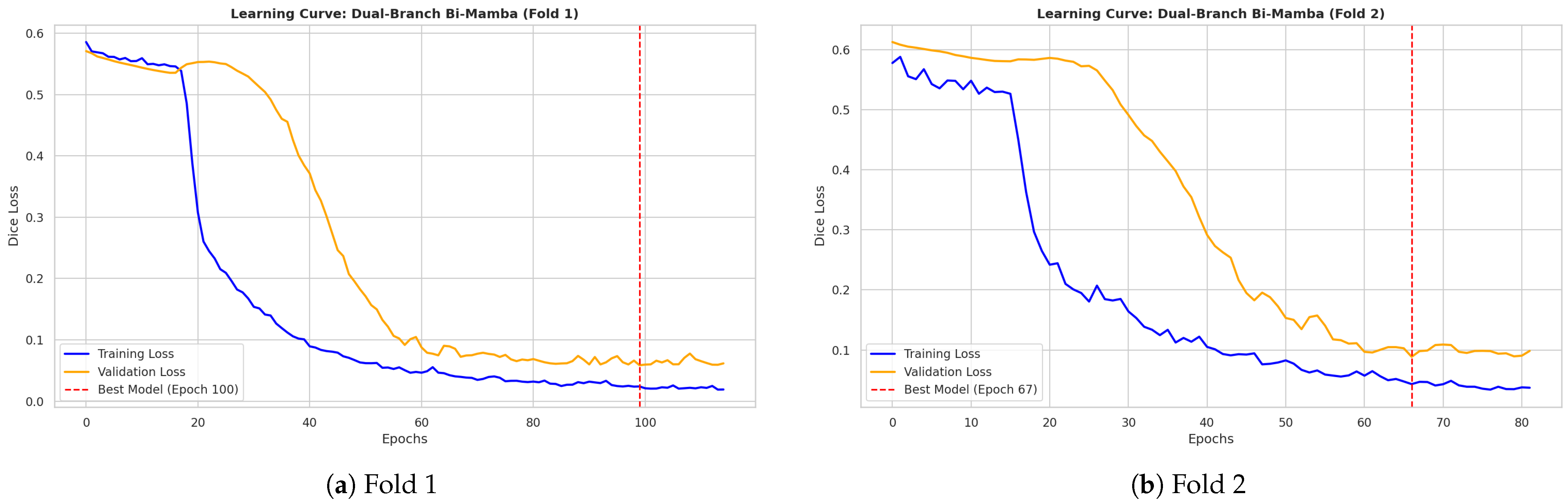
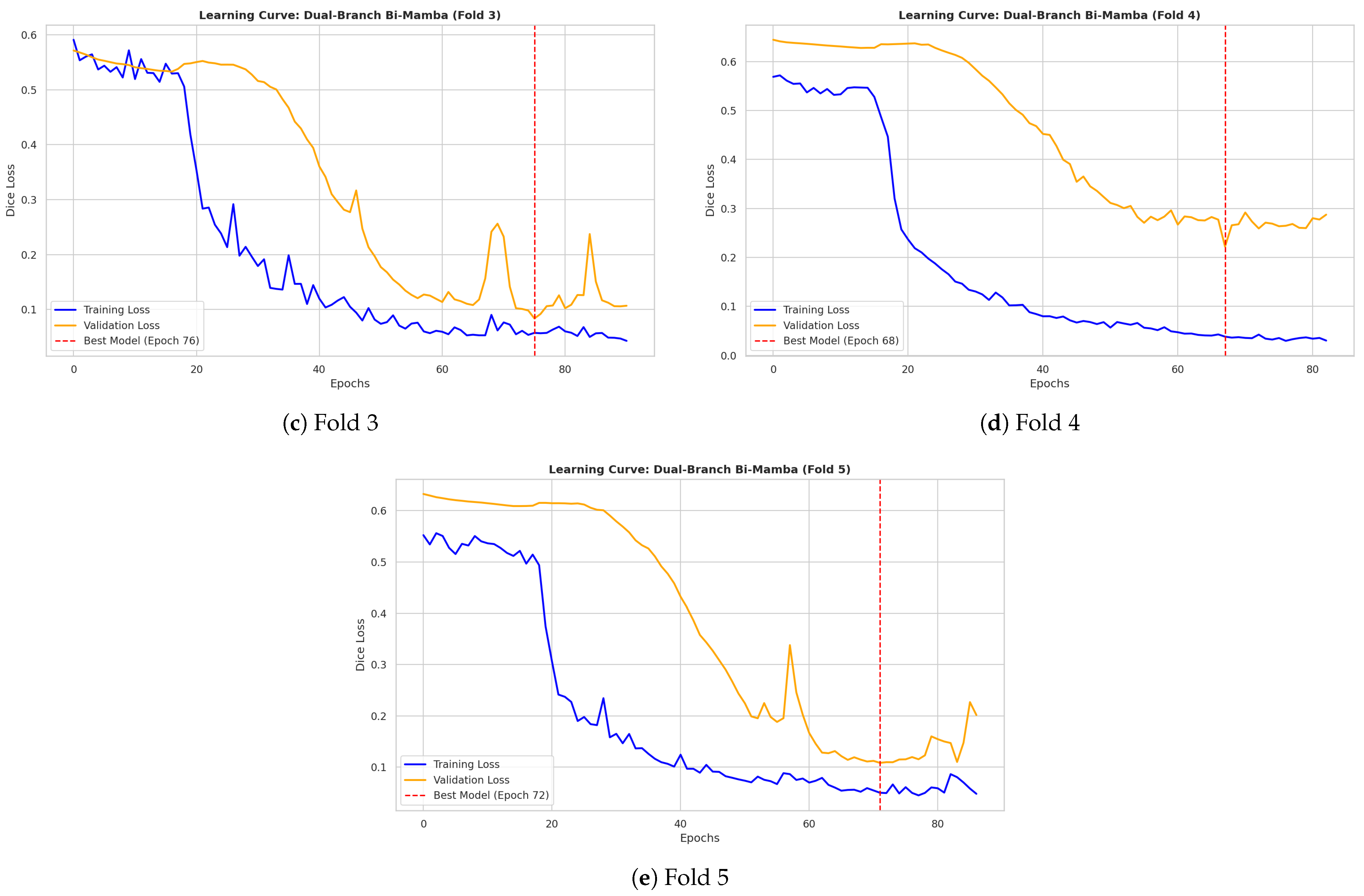
Appendix B. Cross-Validation Threshold Optimization Trajectories
To provide further detail regarding the variance in optimal threshold selection across different data splits, Figure A2 presents the optimization curves for cross-validation Folds 1, 2, 3, and 5 (Fold 4 is discussed in Section 3.1). The inflection point—balancing F1-Score maximization against Offset MAE minimization—varies for each fold. This variation reflects the unique acoustic properties and label distributions inherent to each validation set, supporting the utility of a dynamic, data-driven thresholding approach.
Figure A2.
Dynamic threshold optimization trajectories for cross-validation Folds 1, 2, 3, and 5. The selected optimal probability threshold varies across data splits, highlighting the necessity of adapting the threshold to each validation set’s distribution. The star markers (★) denote the data-driven optimal probability threshold where the highest F1-Score is achieved for each respective architecture.
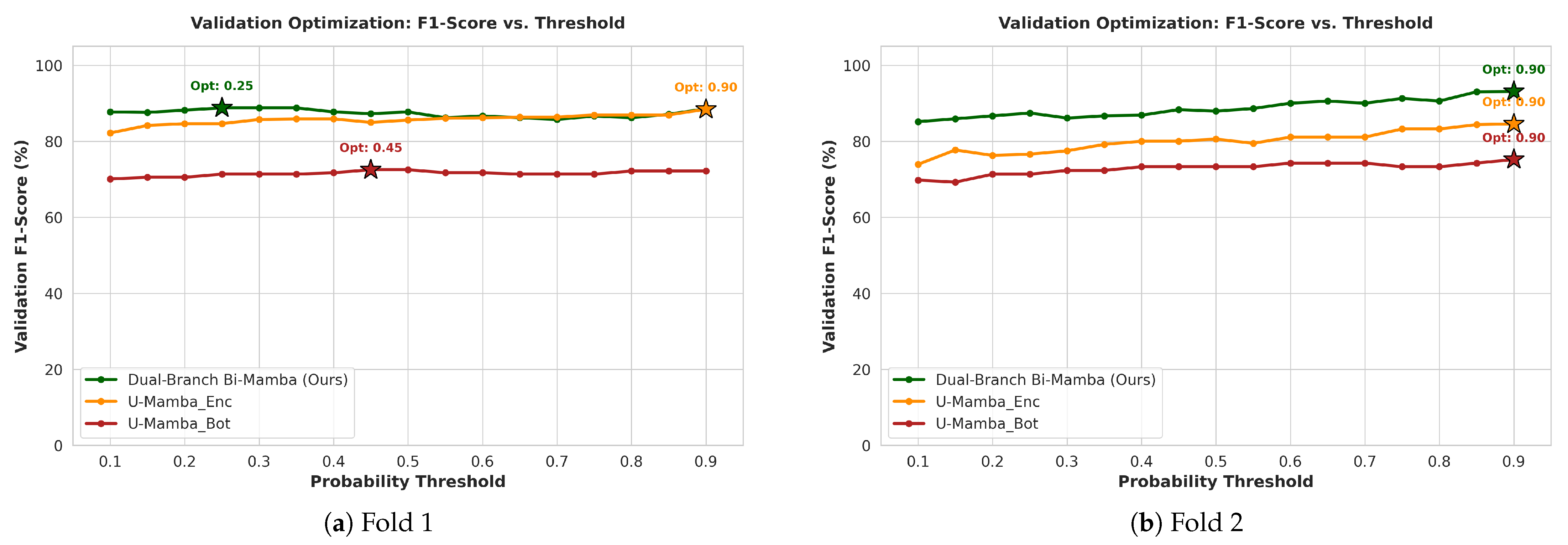
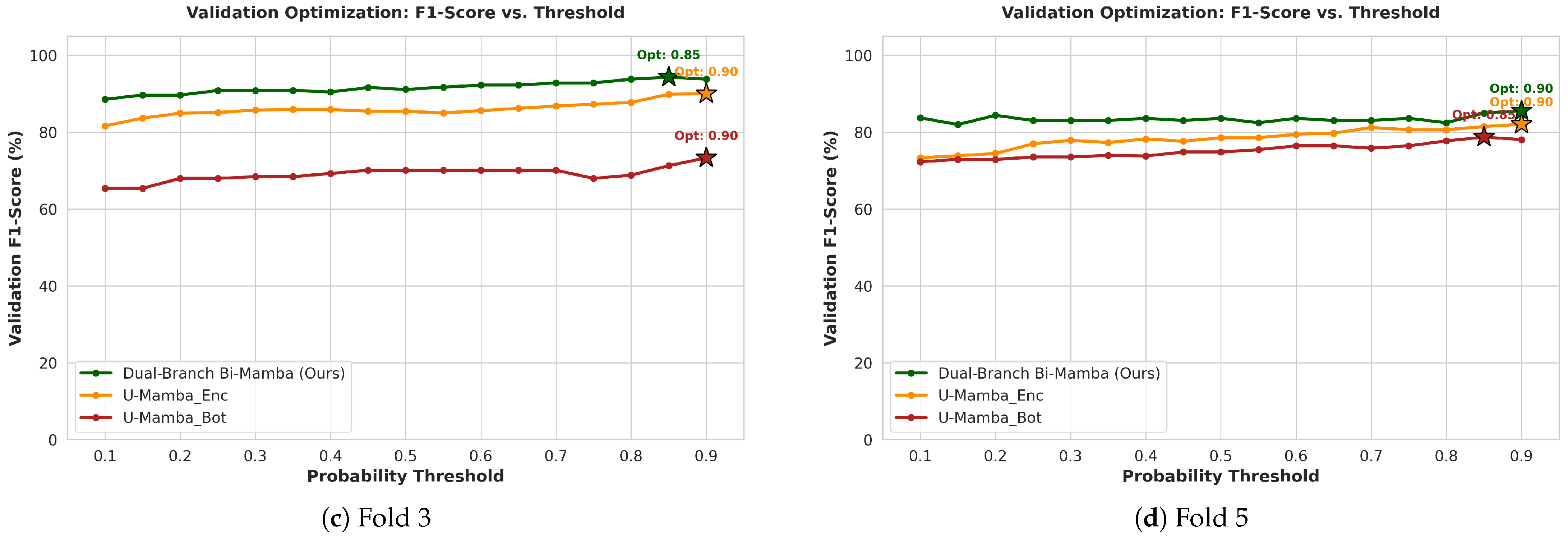
References
- Sharan, R.V.; Rahimi-Ardabili, H. Detecting acute respiratory diseases in the pediatric population using cough sound features and machine learning: A systematic review. Int. J. Med. Inform. 2023, 176, 105093. [Google Scholar] [CrossRef] [Scilit]
- Wang, Y.; Yang, K.; Xu, S.; Rui, S.; Xie, J.; Wang, J.; Wang, X. An automatic cough counting method and system construction for portable devices. Front. Bioeng. Biotechnol. 2024, 12, 1477694. [Google Scholar] [CrossRef] [Scilit]
- Kang, H.S.; Lee, E.G.; Kim, C.K.; Jung, A.; Song, C.; Im, S. Cough Sounds Recorded via Smart Devices as Useful Non-Invasive Digital Biomarkers of Aspiration Risk: A Case Report. Sensors 2021, 21, 8056. [Google Scholar] [CrossRef] [Scilit] [PubMed]
- Pavel, I.; Ciocoiu, I.B. COVID-19 Detection from Cough Recordings Using Bag-of-Words Classifiers. Sensors 2023, 23, 4996. [Google Scholar] [CrossRef] [Scilit] [PubMed]
- Feng, Z.; Markov, K.; Saito, J.; Matsui, T. Neural Cough Counter: A Novel Deep Learning Approach for Cough Detection and Monitoring. IEEE Access 2024, 12, 118816–118829. [Google Scholar] [CrossRef] [Scilit]
- Barry, S.J.; Dane, A.D.; Morice, A.H.; Walmsley, A.D. The automatic recognition and counting of cough. Cough 2006, 2, 8. [Google Scholar] [CrossRef] [Scilit]
- Zimmer, A.J.; Das, R.; Lopez, P.E.; Nafade, V.; Gore, G.; Ugarte-Gil, C.; Lapierre, S.G. Objective cough counting in clinical practice and public health: A scoping review. Lancet Digit. Health 2025, 7, 100908. [Google Scholar] [CrossRef] [Scilit]
- Hall, J.I.; Lozano, M.; Estrada-Petrocelli, L.; Birring, S.; Turner, R. The present and future of cough counting tools. J. Thorac. Dis. 2020, 12, 5207. [Google Scholar] [CrossRef] [Scilit]
- Chung, Y.; Jin, J.; Jo, H.I.; Lee, H.; Kim, S.H.; Chung, S.J.; Yoon, H.J.; Park, J.; Jeon, J.Y. Diagnosis of Pneumonia by Cough Sounds Analyzed with Statistical Features and AI. Sensors 2021, 21, 7036. [Google Scholar] [CrossRef] [Scilit]
- Zhang, P.F.; Ting, H.N.; Chang, S.W. Using Cough Sounds for the Recognition of Multiclass Respiratory Diseases with Artificial Intelligence: A Review. IEEE Access 2025, 13, 114318–114345. [Google Scholar] [CrossRef] [Scilit]
- Balamurali, B.T.; Hee, H.I.; Kapoor, S.; Teoh, O.H.; Teng, S.S.; Lee, K.P.; Herremans, D.; Chen, J.M. Deep Neural Network-Based Respiratory Pathology Classification Using Cough Sounds. Sensors 2021, 21, 5555. [Google Scholar] [CrossRef] [Scilit]
- Serrurier, A.; Neuschaefer-Rube, C.; Röhrig, R. Past and Trends in Cough Sound Acquisition, Automatic Detection and Automatic Classification: A Comparative Review. Sensors 2022, 22, 2896. [Google Scholar] [CrossRef] [Scilit]
- Amrulloh, Y.A.; Abeyratne, U.R.; Swarnkar, V.; Triasih, R.; Setyati, A. Automatic cough segmentation from non-contact sound recordings in pediatric wards. Biomed. Signal Process. Control 2015, 21, 126–136. [Google Scholar] [CrossRef] [Scilit]
- Sharan, R.V.; Xiong, H. Wet and dry cough classification using cough sound characteristics and machine learning: A systematic review. Int. J. Med. Inform. 2025, 199, 105912. [Google Scholar] [CrossRef] [Scilit]
- Barata, F.; Tinschert, P.; Rassouli, F.; Steurer-Stey, C.; Fleisch, E.; Puhan, M.A.; Kowatsch, T. Automatic recognition, segmentation, and sex assignment of nocturnal asthmatic coughs and cough epochs in smartphone audio recordings: Observational field study. J. Med. Internet Res. 2020, 22, e18082. [Google Scholar] [CrossRef] [Scilit] [PubMed]
- Birring, S.S.; Fleming, T.; Matos, S.; Raj, A.A.; Evans, D.H.; Pavord, I.D. The Leicester Cough Monitor: Preliminary validation of an automated cough detection system in chronic cough. Eur. Respir. J. 2008, 31, 1013–1018. [Google Scholar] [CrossRef] [Scilit]
- Monge-Àlvarez, J.; Hoyos-Barceló, C.; San-José-Revuelta, L.M.; Casaseca-de-la Higuera, P. A machine hearing system for robust cough detection based on a high-level representation of band-specific audio features. IEEE Trans. Biomed. Eng. 2019, 66, 2319–2330. [Google Scholar] [CrossRef] [Scilit]
- Atmaja, B.T.; Zanjabila; Suyanto; Sasou, A. Comparing hysteresis comparator and RMS threshold methods for automatic single cough segmentations. Int. J. Inf. Technol. 2024, 16, 5–12. [Google Scholar] [CrossRef] [Scilit]
- Kuluozturk, M.; Kobat, M.A.; Barua, P.D.; Dogan, S.; Tuncer, T.; Tan, R.S.; Acharya, U.R. DKPNet41: Directed knight pattern network-based cough sound classification model for automatic disease diagnosis. Med. Eng. Phys. 2022, 110, 103870. [Google Scholar] [CrossRef] [Scilit]
- Rashid, H.A.; Mazumder, A.N.; Niyogi, U.P.K.; Mohsenin, T. CoughNet: A Flexible Low Power CNN-LSTM Processor for Cough Sound Detection. In 2021 IEEE 3rd International Conference on Artificial Intelligence Circuits and Systems (AICAS); IEEE: New York, NY, USA, 2021; pp. 1–4. [Google Scholar] [CrossRef] [Scilit]
- Ronneberger, O.; Fischer, P.; Brox, T. U-net: Convolutional networks for biomedical image segmentation. In Medical Image Computing and Computer-Assisted Intervention–MICCAI 2015: 18th International Conference, Munich, Germany, October 5–9, 2015, Proceedings, Part III 18; Springer: Berlin/Heidelberg, Germany, 2015; pp. 234–241. [Google Scholar] [CrossRef] [Scilit]
- Jansson, A.; Humphrey, E.; Bartsch, N.; Hawkins, A.; Weyde, T. Singing voice separation with deep U-Net convolutional networks. In Proceedings of the 18th International Society for Music Information Retrieval Conference (ISMIR), Suzhou, China, 23–27 October 2017. [Google Scholar]
- Derdiman, Y.S.; Koc, T. Deep learning model development with U-net architecture for glottis segmentation. In 2021 29th Signal Processing and Communications Applications Conference (SIU); IEEE: New York, NY, USA, 2021; pp. 1–4. [Google Scholar] [CrossRef] [Scilit]
- Chen, Z.; Wang, M.; Zhang, M.; Huang, W.; Gu, H.; Xu, J. Post-processing refined ECG delineation based on 1D-UNet. Biomed. Signal Process. Control 2023, 79, 104106. [Google Scholar] [CrossRef] [Scilit]
- Shan, W.; Wang, M.; Xia, J.; Chen, J.; Li, Q.; Xing, L.; Zhang, R.; Wang, M.; Zhang, S.; Zhang, X. U-TSS: A novel time series segmentation model based U-net applied to automatic detection of interference events in geomagnetic field data. PeerJ Comput. Sci. 2025, 11, e2678. [Google Scholar] [CrossRef] [Scilit]
- Gu, A.; Dao, T. Mamba: Linear-time sequence modeling with selective state spaces. arXiv 2023, arXiv:2312.00752. [Google Scholar] [CrossRef] [Scilit]
- Sharan, R.V. Cough sound detection from raw waveform using SincNet and bidirectional GRU. Biomed. Signal Process. Control 2023, 82, 104580. [Google Scholar] [CrossRef] [Scilit]
- Ma, J.; Li, F.; Wang, B. U-mamba: Enhancing long-range dependency for biomedical image segmentation. arXiv 2024, arXiv:2401.04722. [Google Scholar] [CrossRef] [Scilit]
- Orlandic, L.; Teijeiro, T.; Atienza, D. The COUGHVID crowdsourcing dataset, a corpus for the study of large-scale cough analysis algorithms. Sci. Data 2021, 8, 156. [Google Scholar] [CrossRef] [Scilit] [PubMed]
- Orlandic, L.; Dan, J.; Thevenot, J.; Teijeiro, T.; Sauty, A.; Atienza, D. How to Count Coughs: An Event-Based Framework for Evaluating Automatic Cough Detection Algorithm Performance. In 2024 IEEE 20th International Conference on Body Sensor Networks (BSN); IEEE: New York, NY, USA, 2024; pp. 1–4. [Google Scholar] [CrossRef] [Scilit]
- Saba, E. Techniques for Cough Sound Analysis. Ph.D. Thesis, University of Washington, Washington, DC, USA, 2018. [Google Scholar]
- Türkçetin, A.Ö.; Koç, T.; Cilekar, S. Cough Sound Analysis with Deep Learning: The Impact of Data Augmentation on Respiratory Disease Classification. J. Eng. Sci. Des. 2025, 13, 896–910. [Google Scholar]
- Satopaa, V.; Albrecht, J.; Irwin, D.; Raghavan, B. Finding a “kneedle” in a haystack: Detecting knee points in system behavior. In 2011 31st International Conference on Distributed Computing Systems Workshops; IEEE: New York, NY, USA, 2011; pp. 166–171. [Google Scholar]
- Vaswani, A.; Shazeer, N.; Parmar, N.; Uszkoreit, J.; Jones, L.; Gomez, A.N.; Kaiser, Ł.; Polosukhin, I. Attention is all you need. In Proceedings of the Advances in Neural Information Processing Systems, Long Beach, CA, USA, 4–9 December 2017. [Google Scholar]
- Gu, A.; Dao, T.; Ermon, S.; Rudra, A.; Ré, C. HiPPO: Recurrent Memory with Optimal Polynomial Projections. In Advances in Neural Information Processing Systems; NeurIPS: San Diego, CA, USA, 2020; Volume 33, pp. 1474–1487. [Google Scholar]
- Xu, Q.S.; Liang, Y.Z. Monte Carlo cross validation. Chemom. Intell. Lab. Syst. 2001, 56, 1–11. [Google Scholar] [CrossRef] [Scilit]
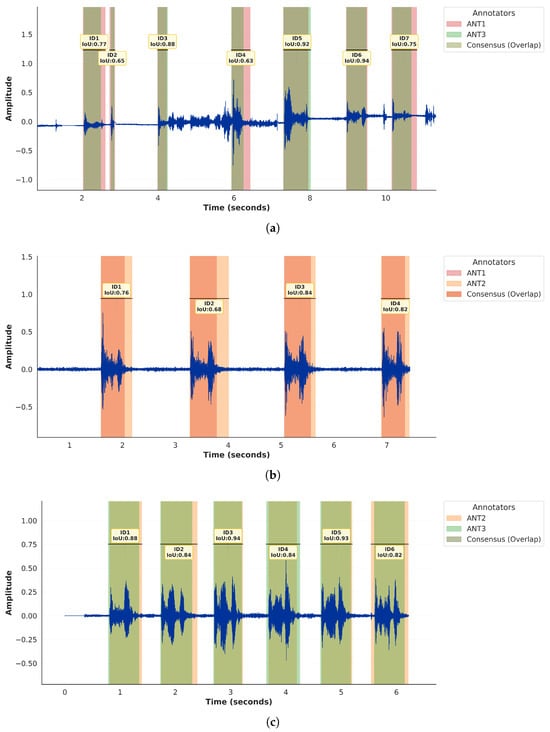
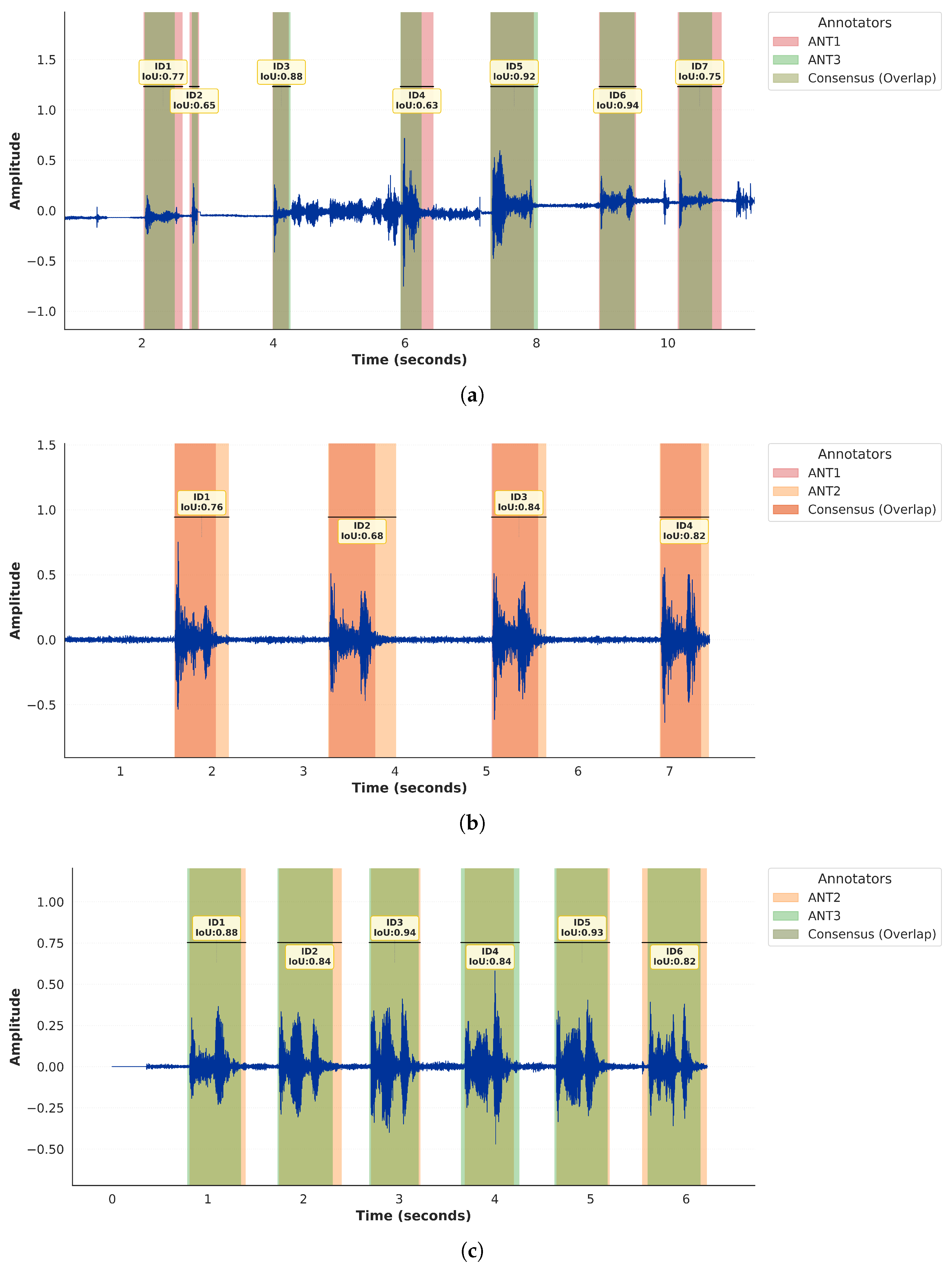
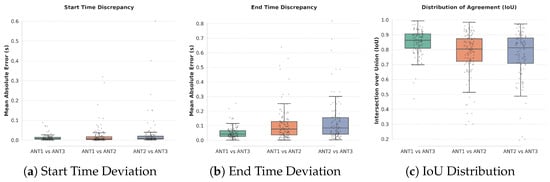
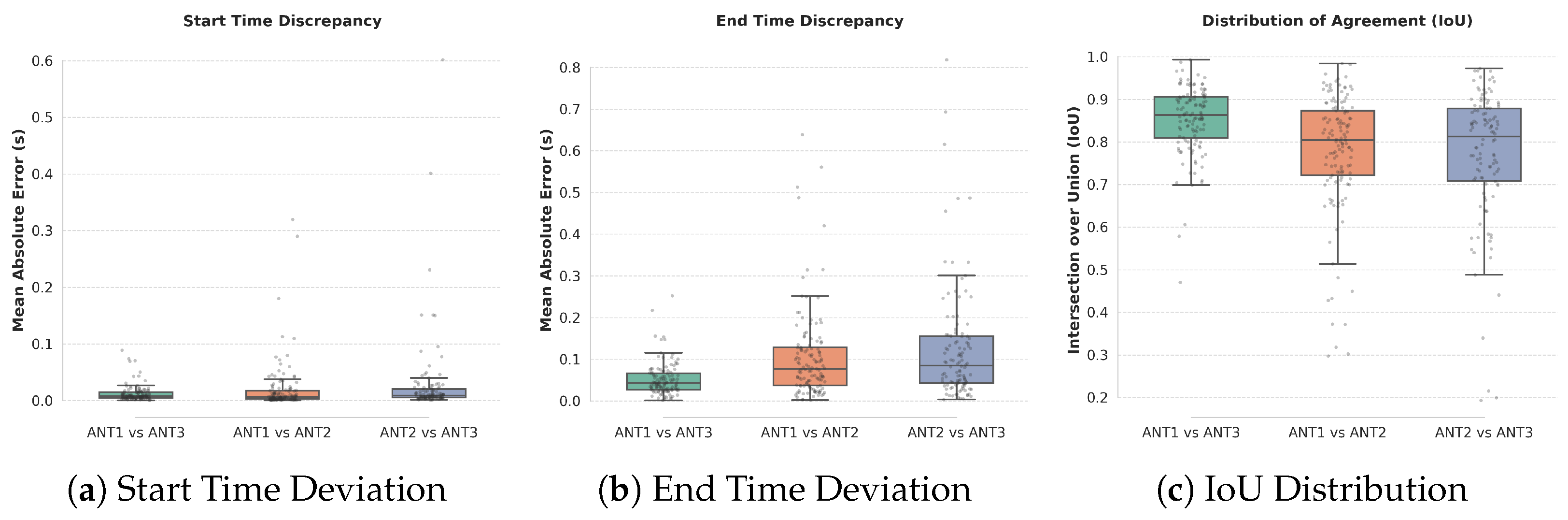
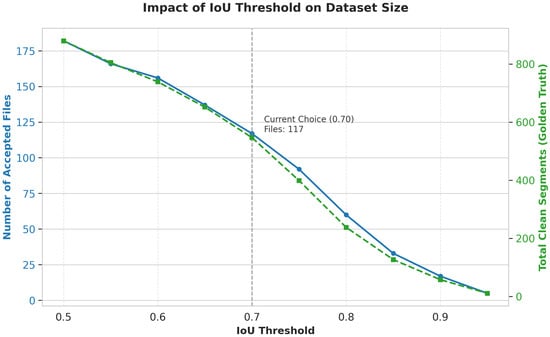
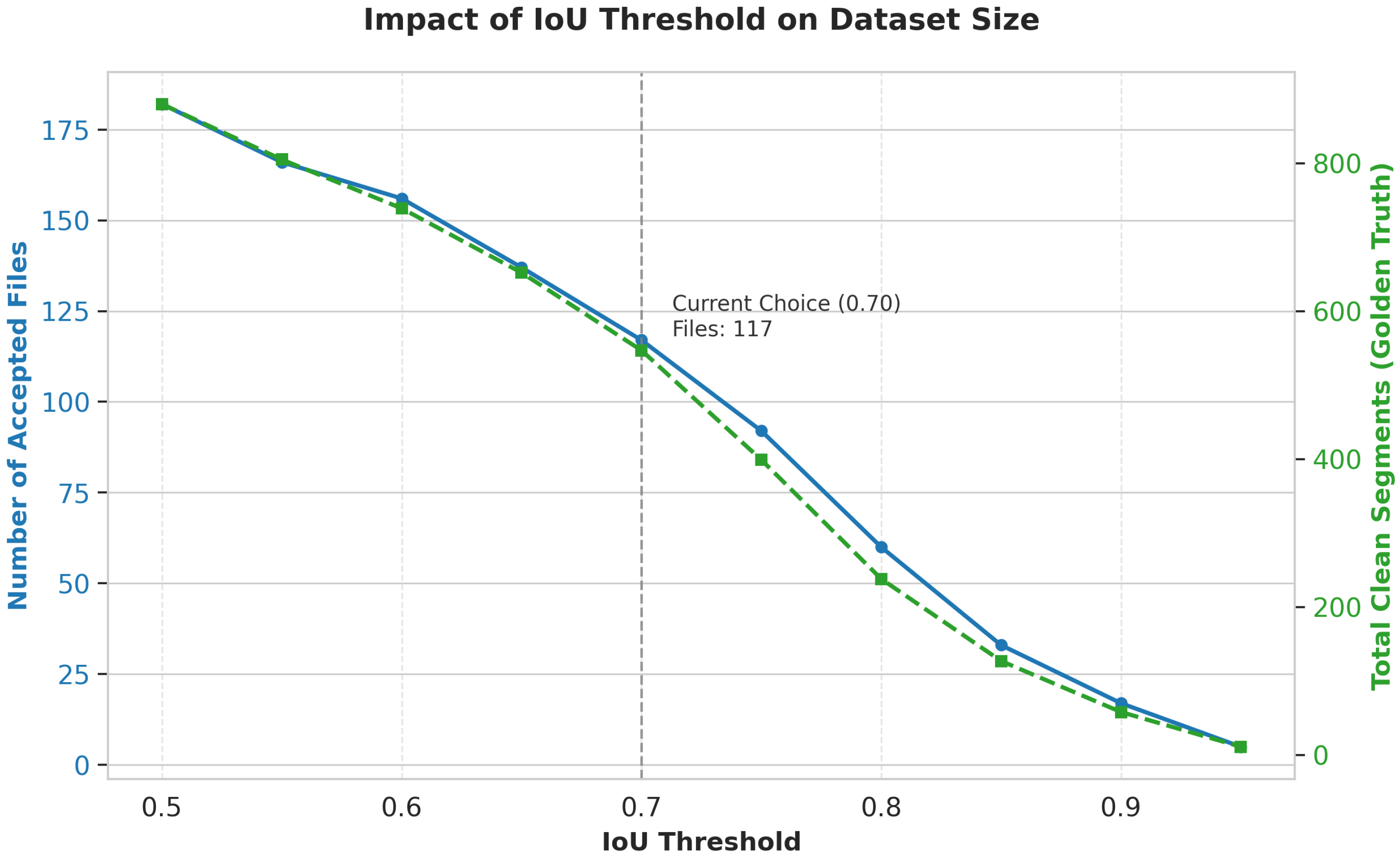
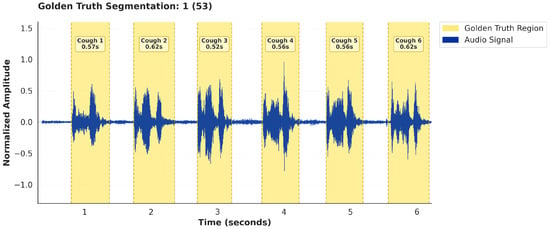
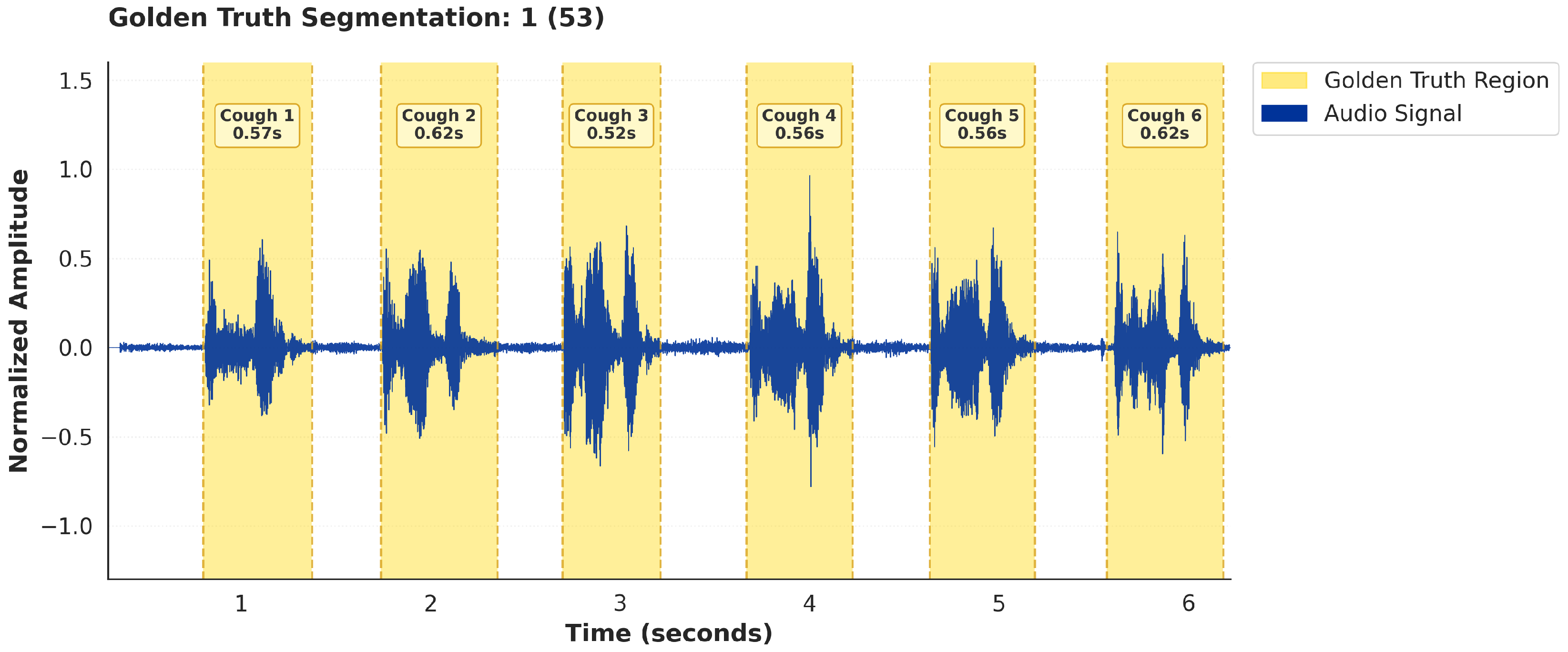
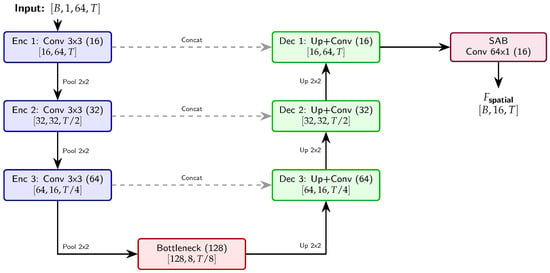
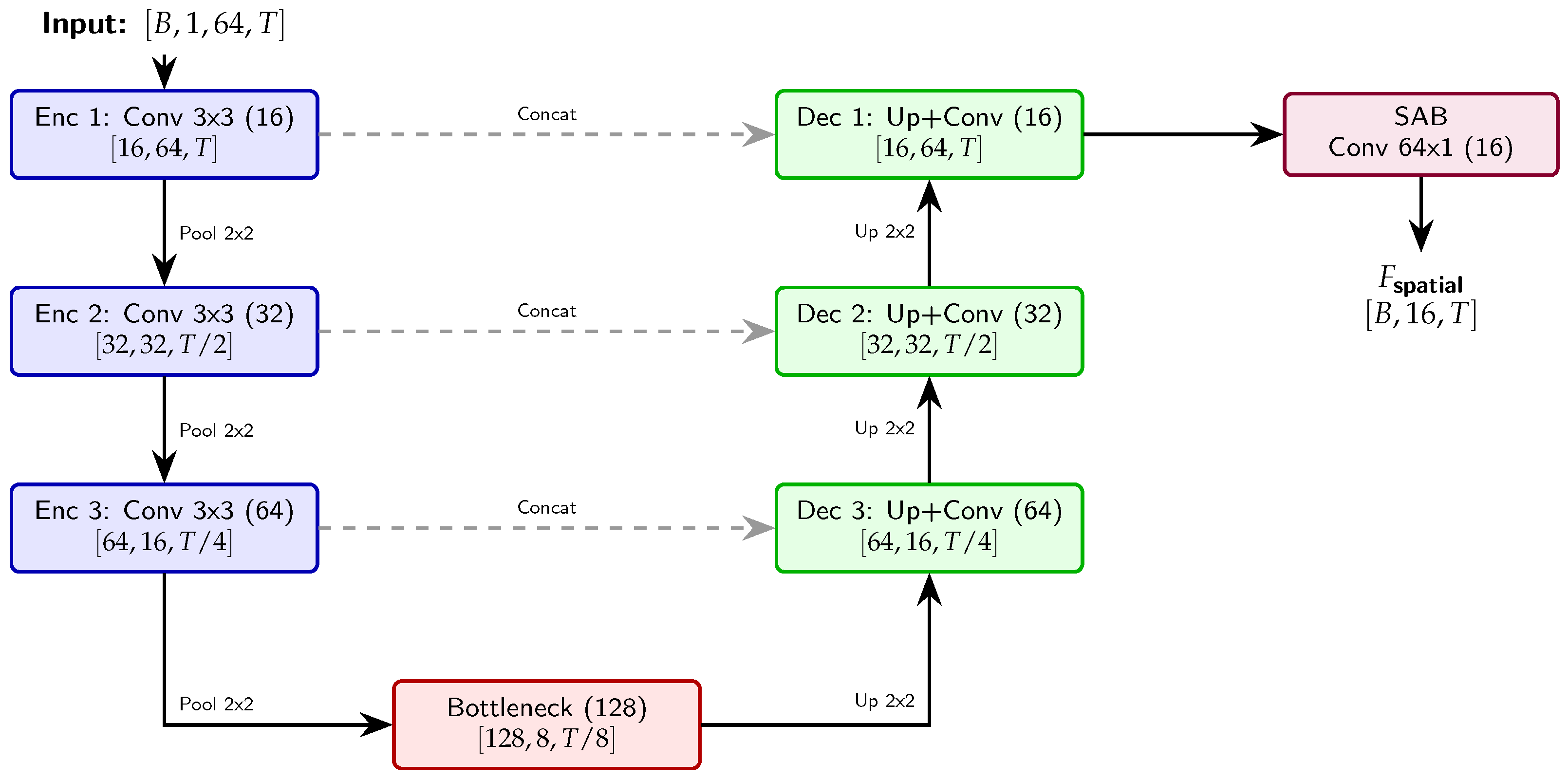
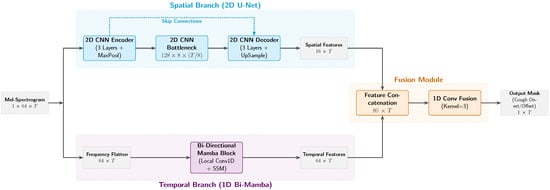
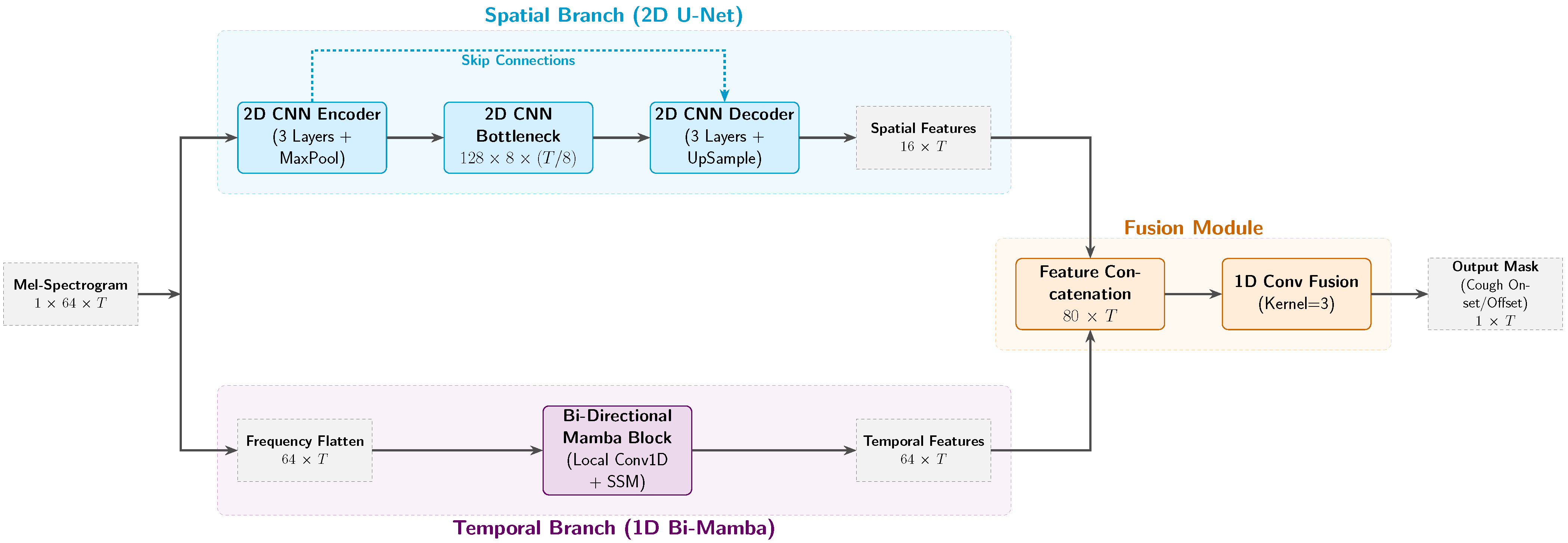
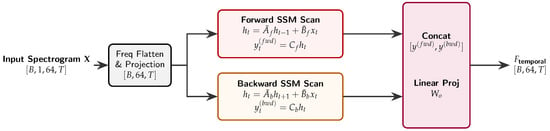
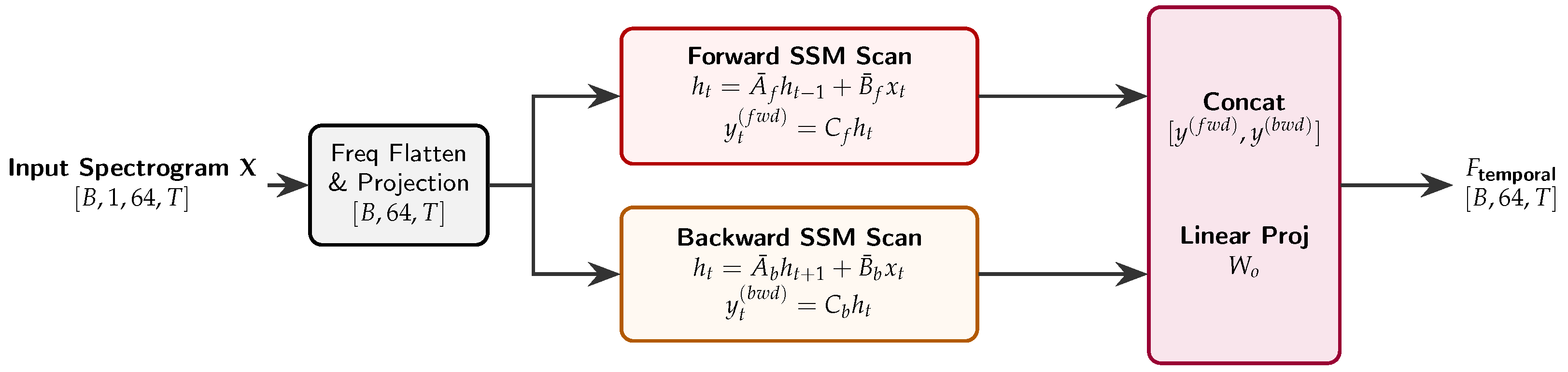


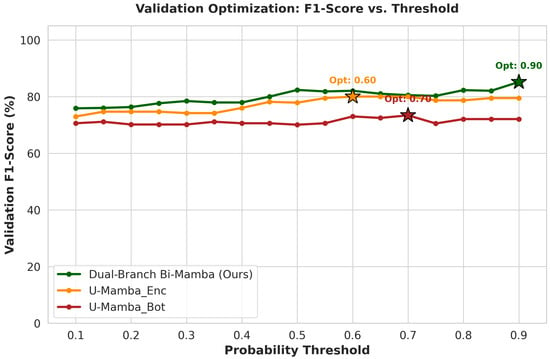
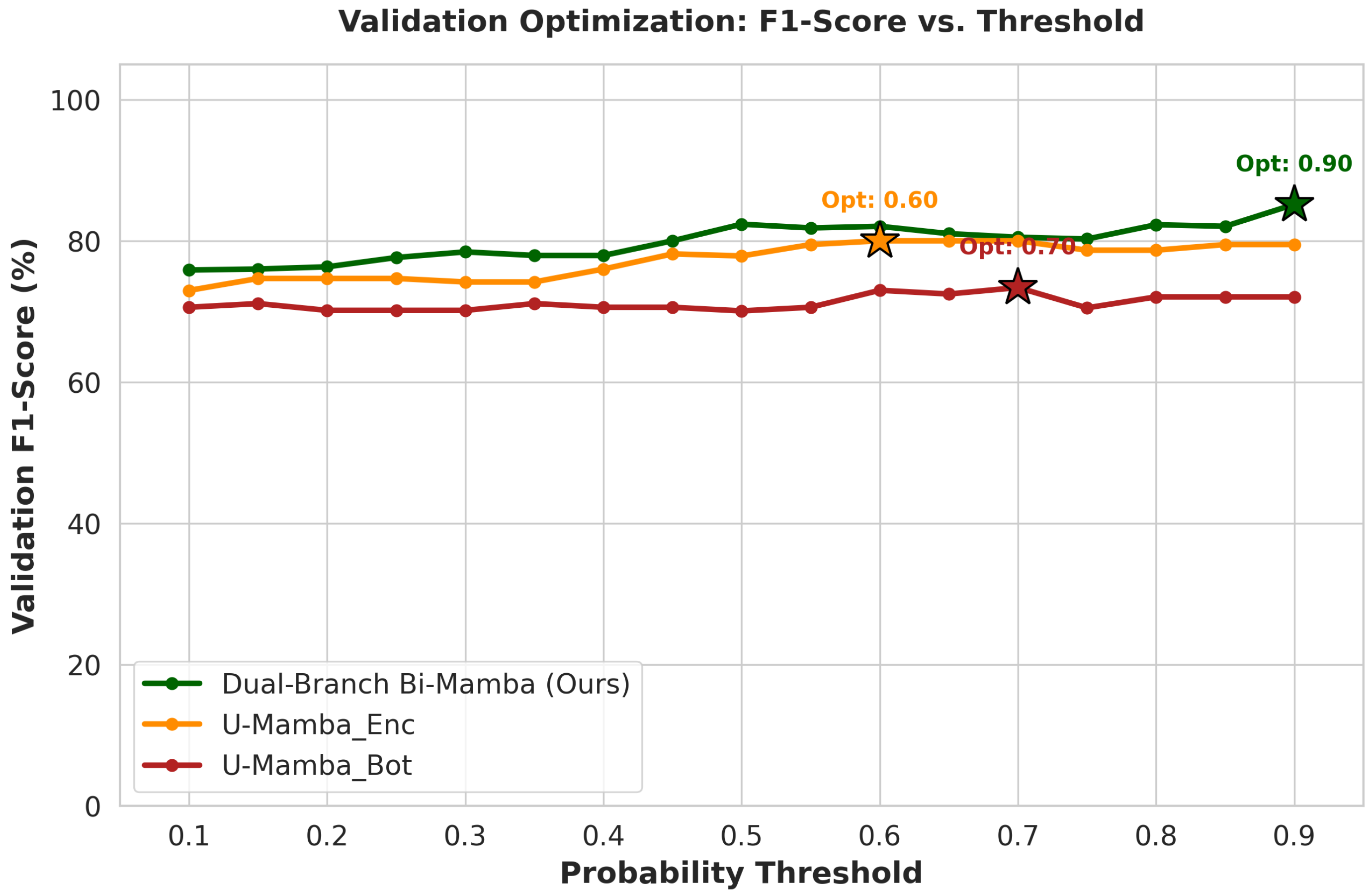
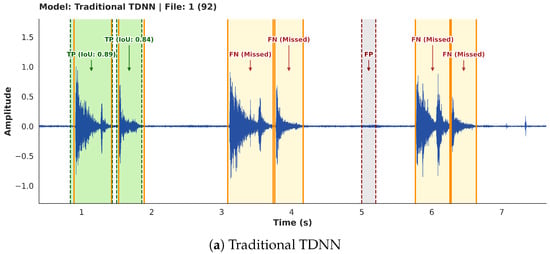
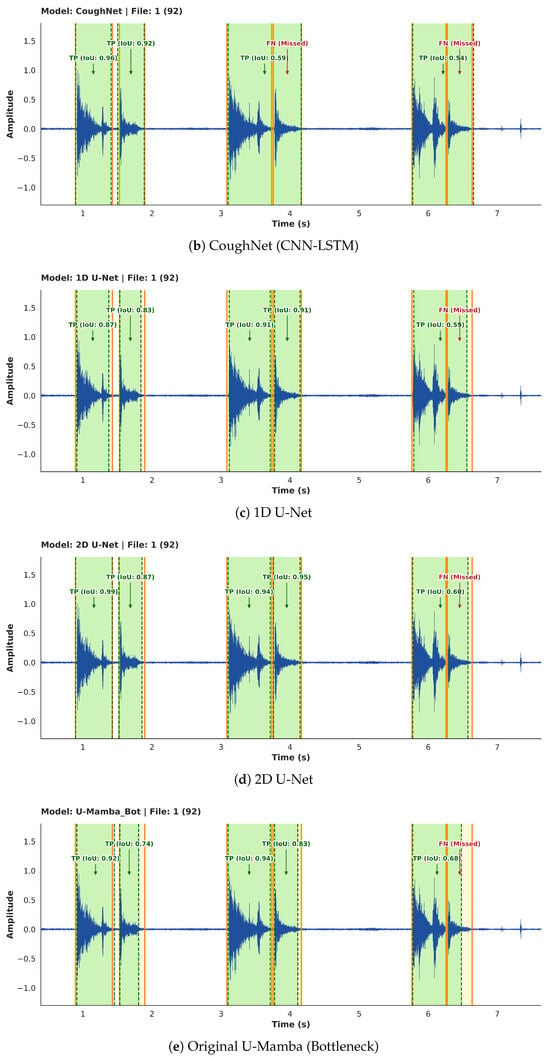
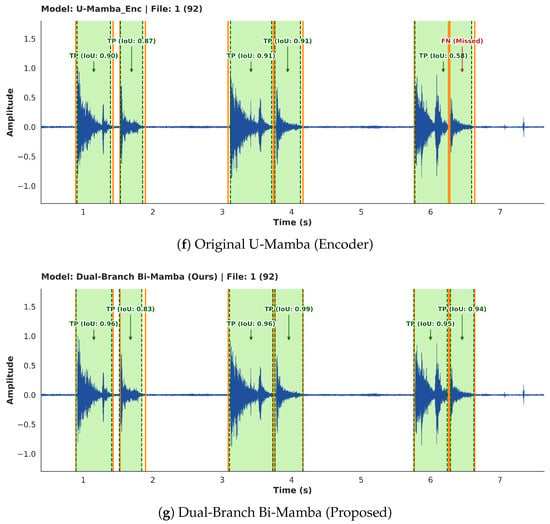
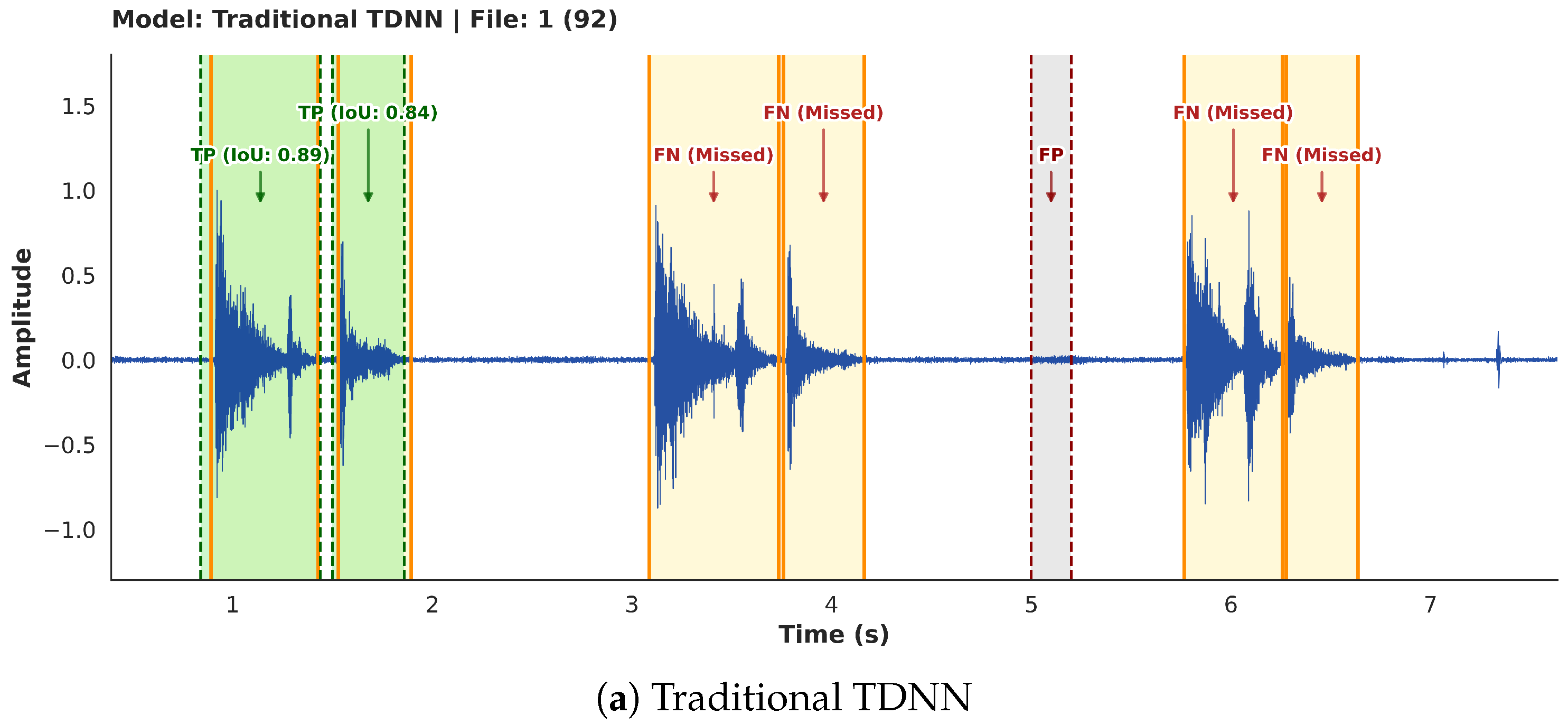
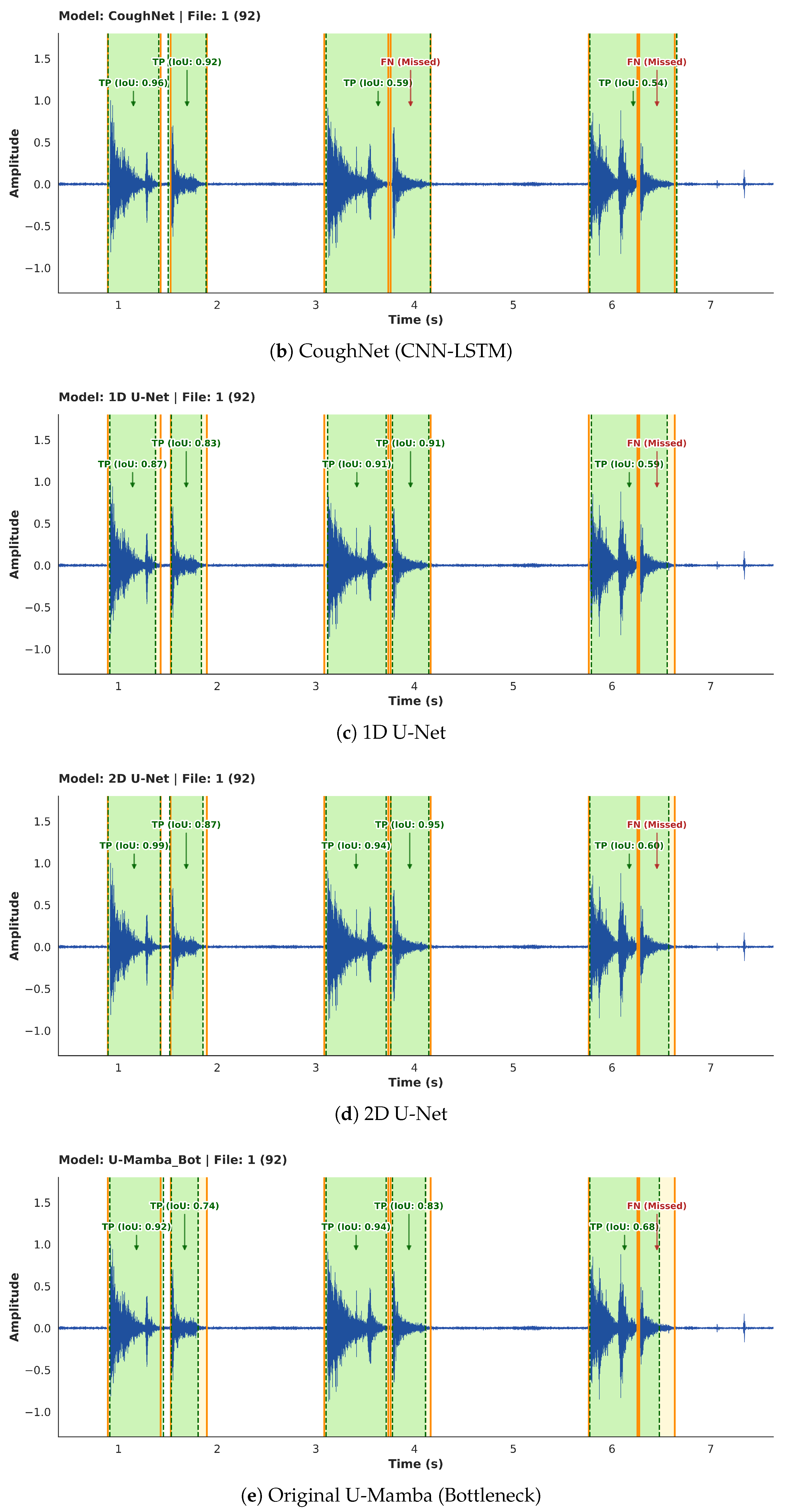
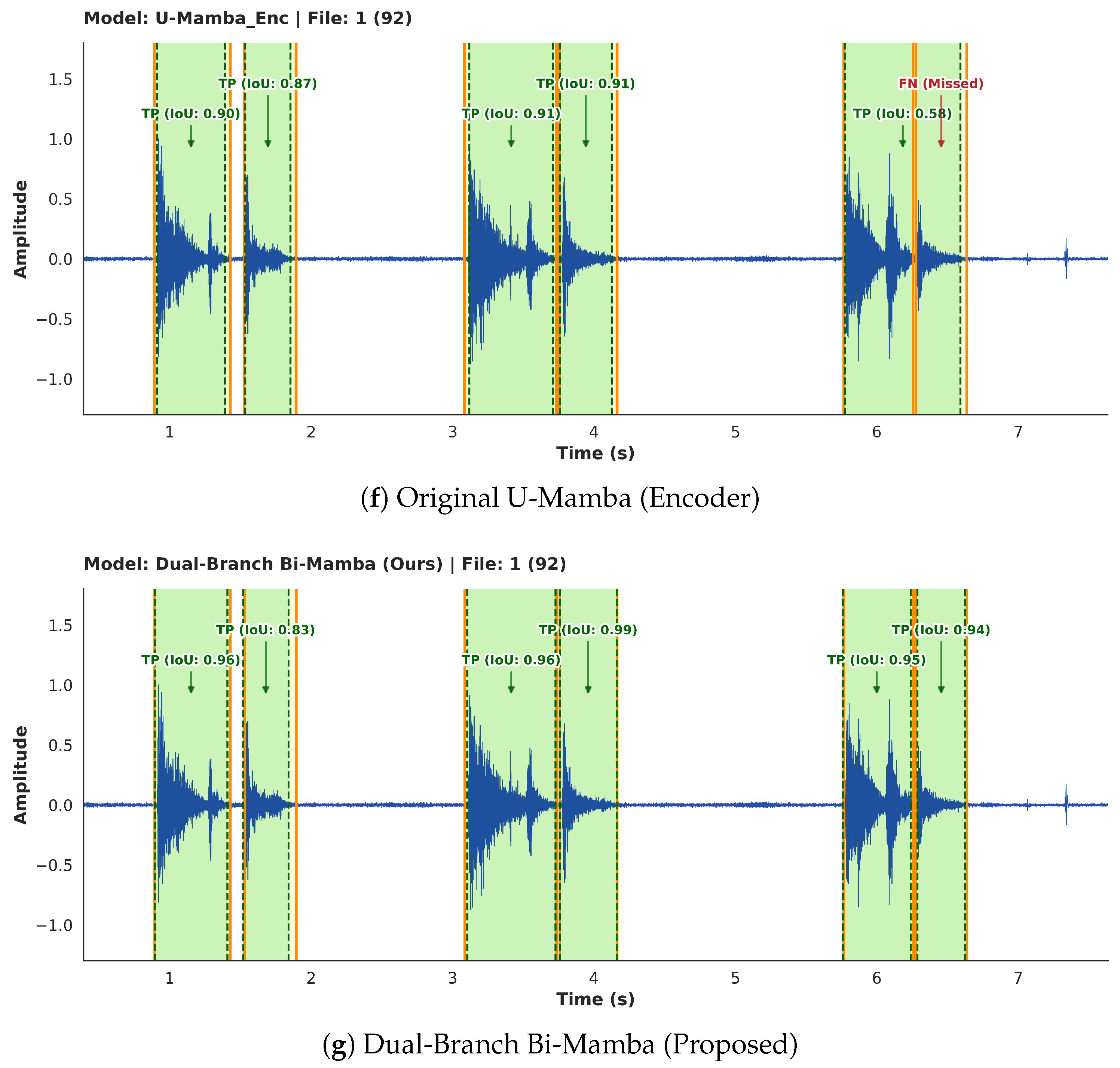
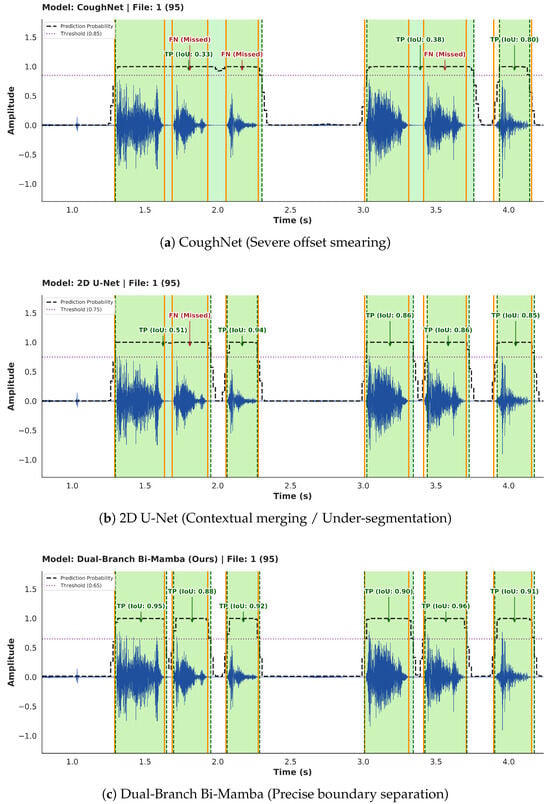
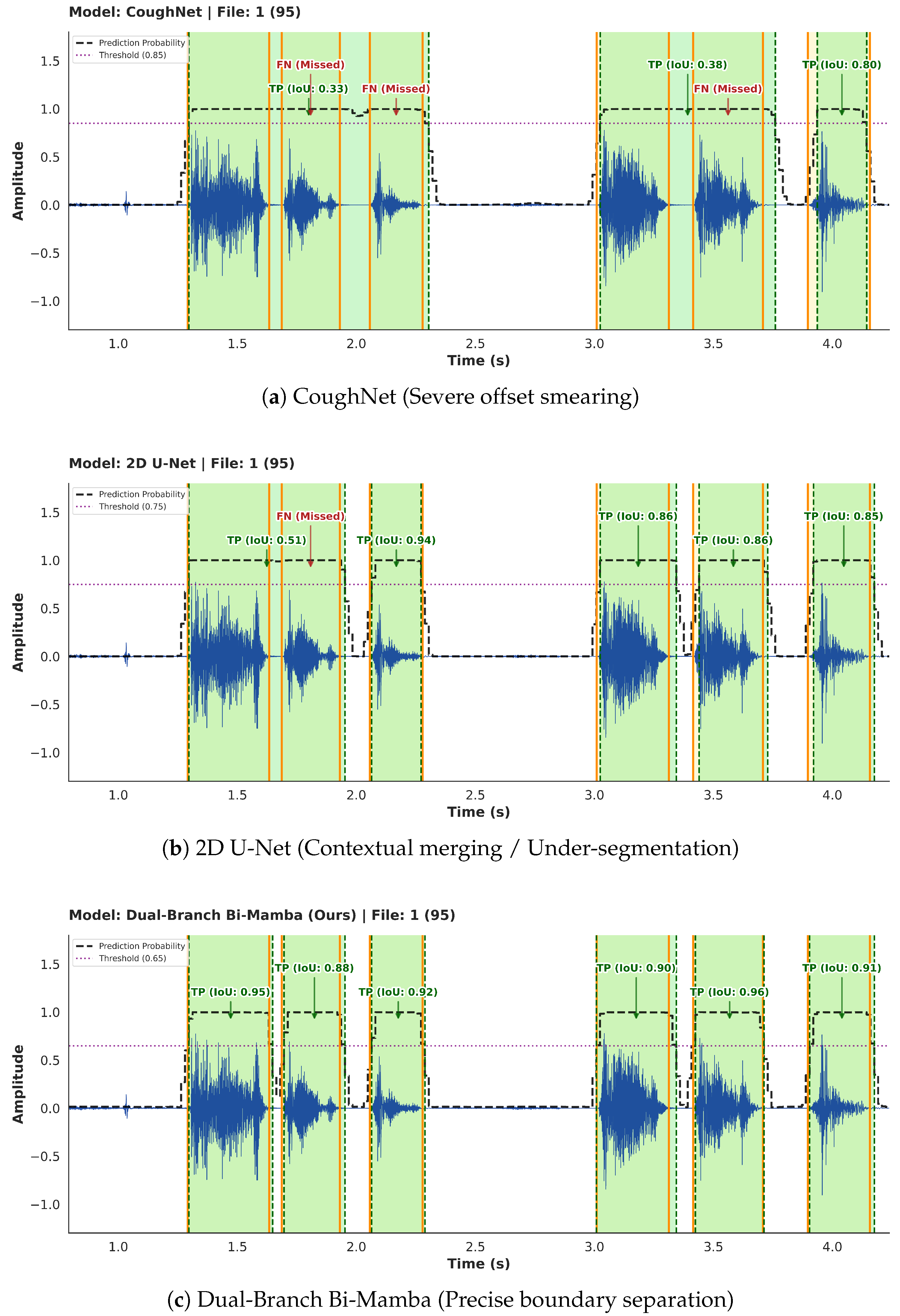
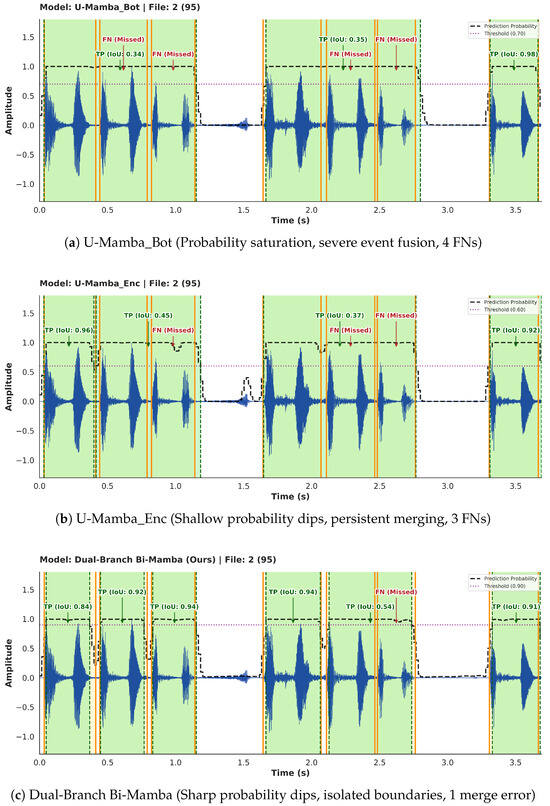
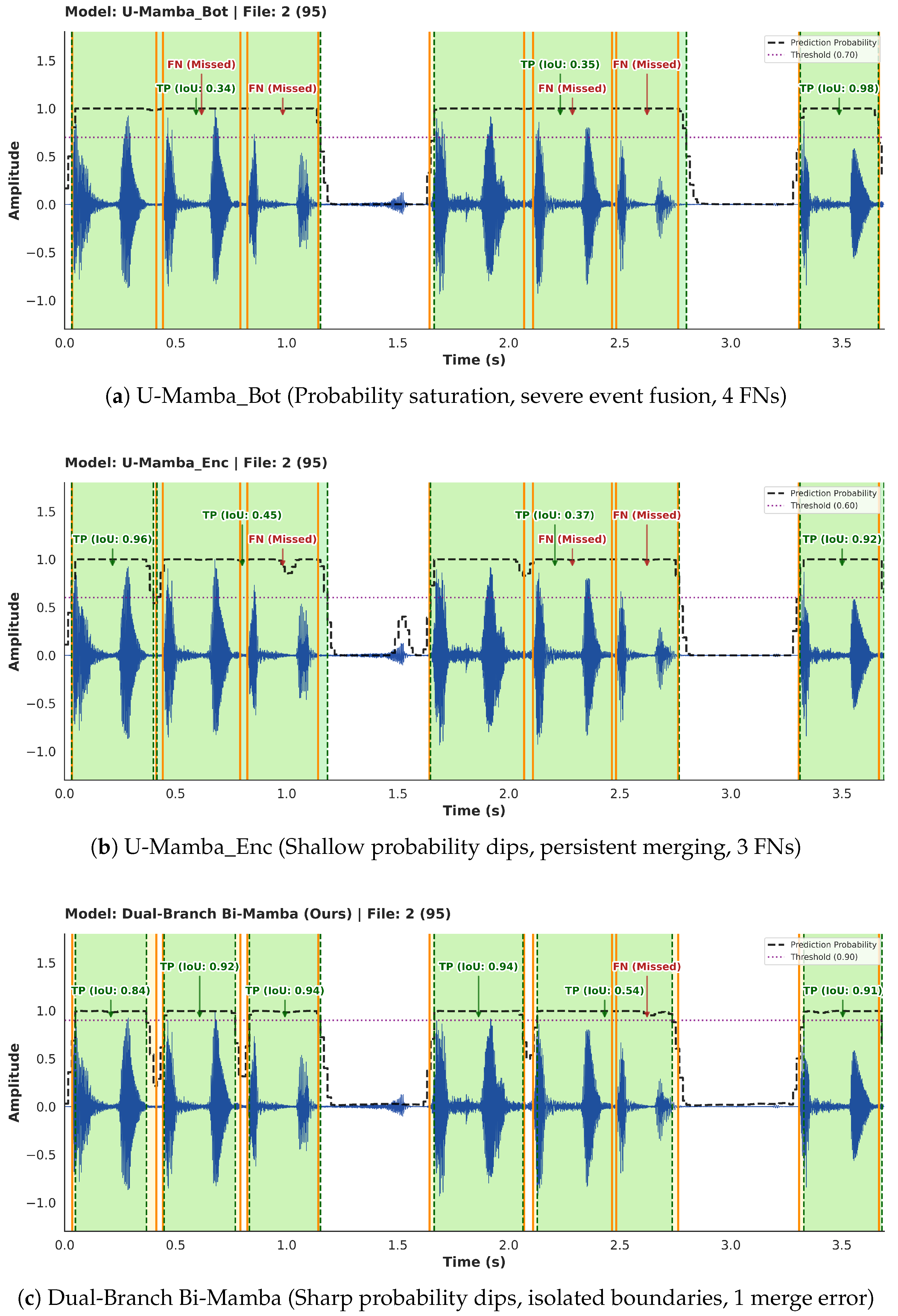
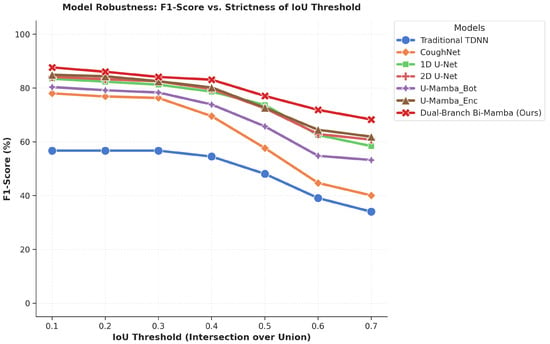
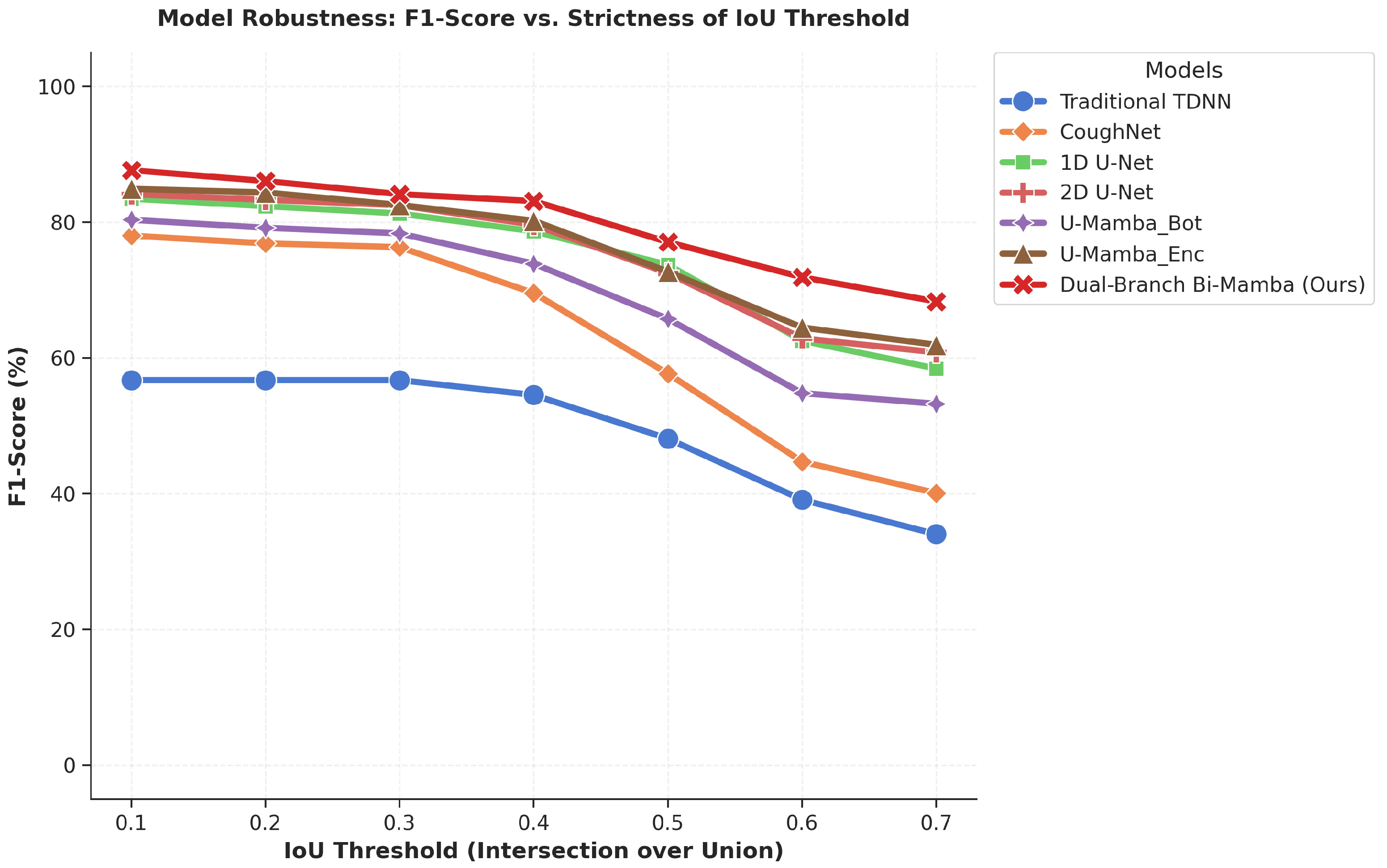
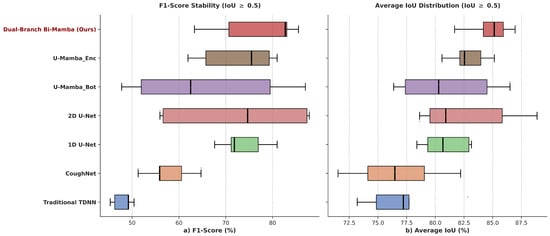
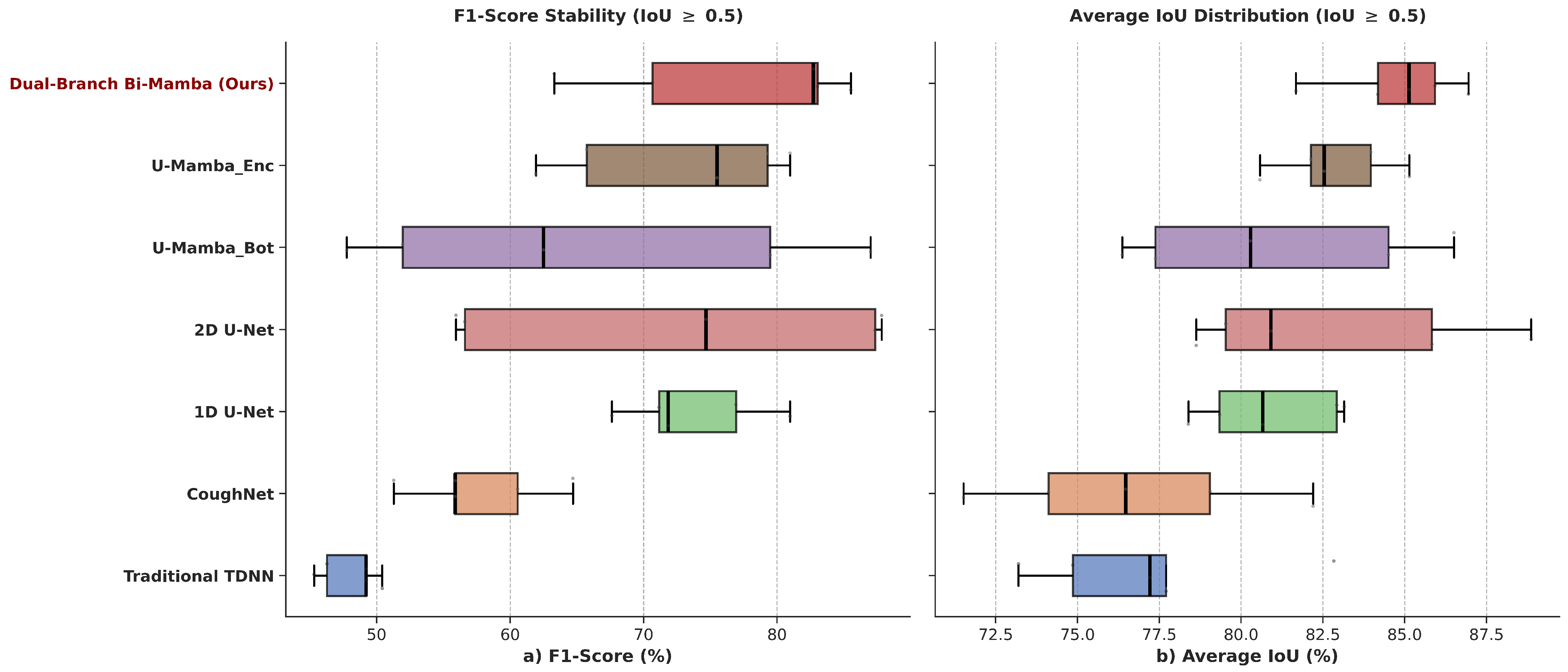
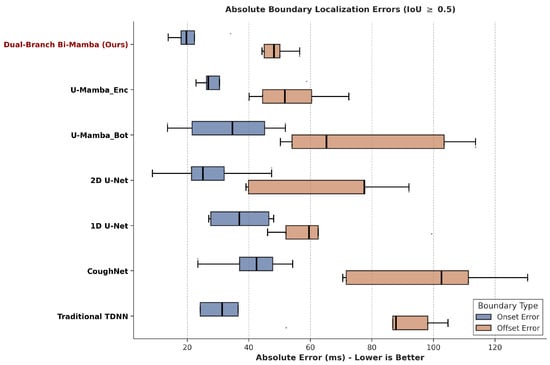
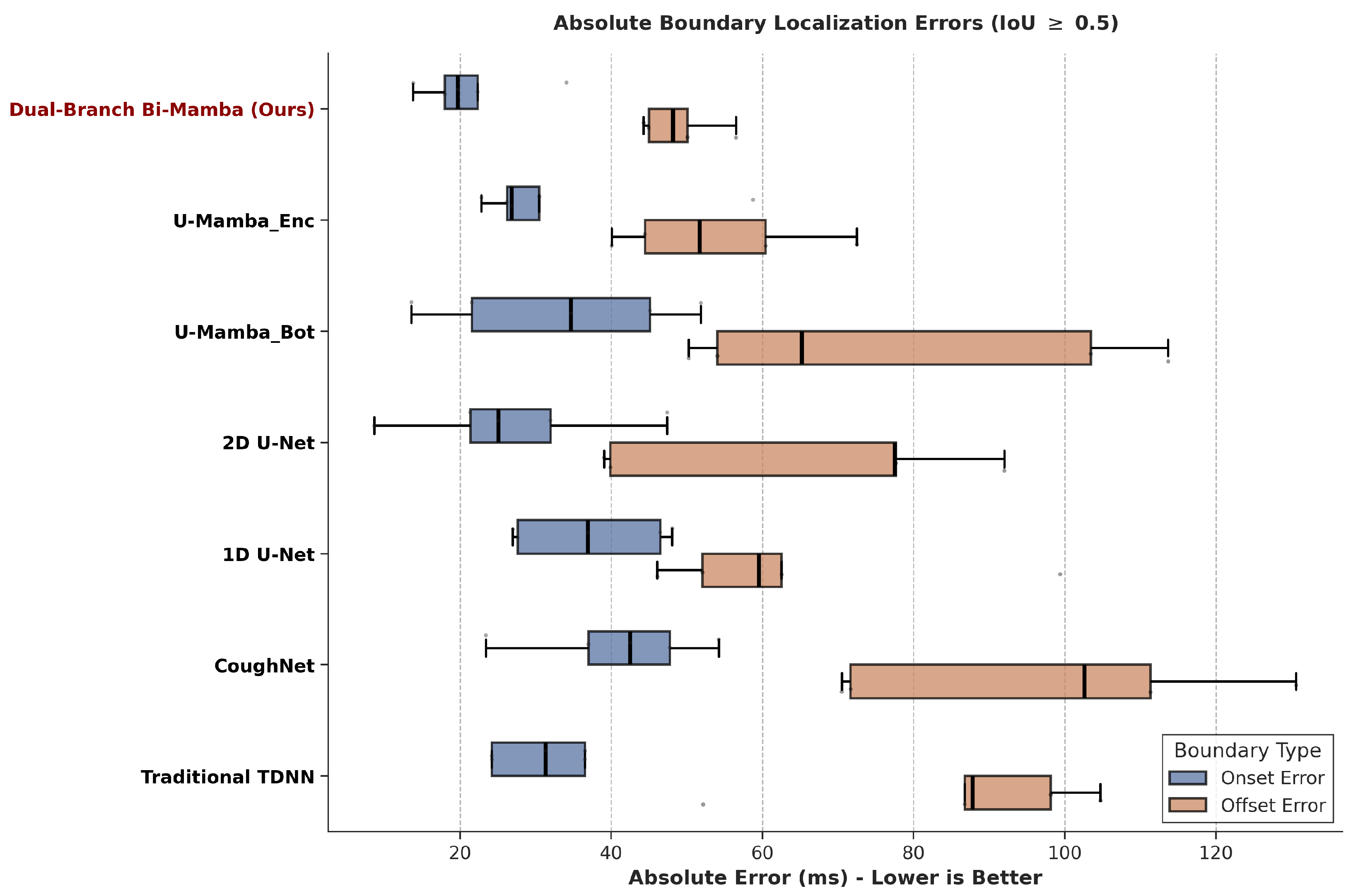
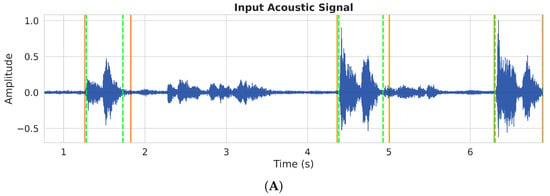
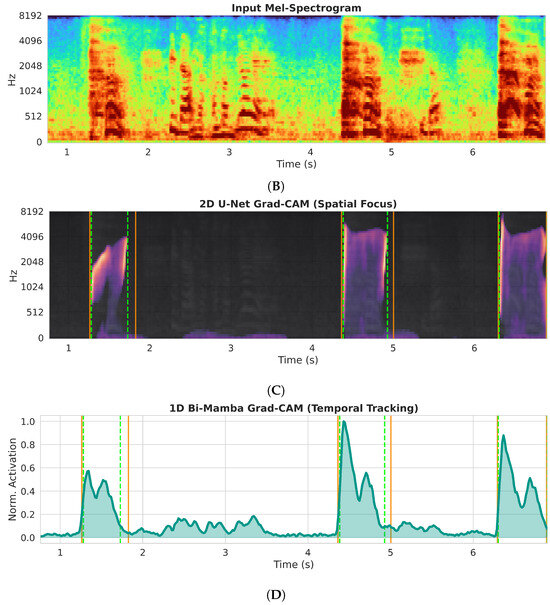
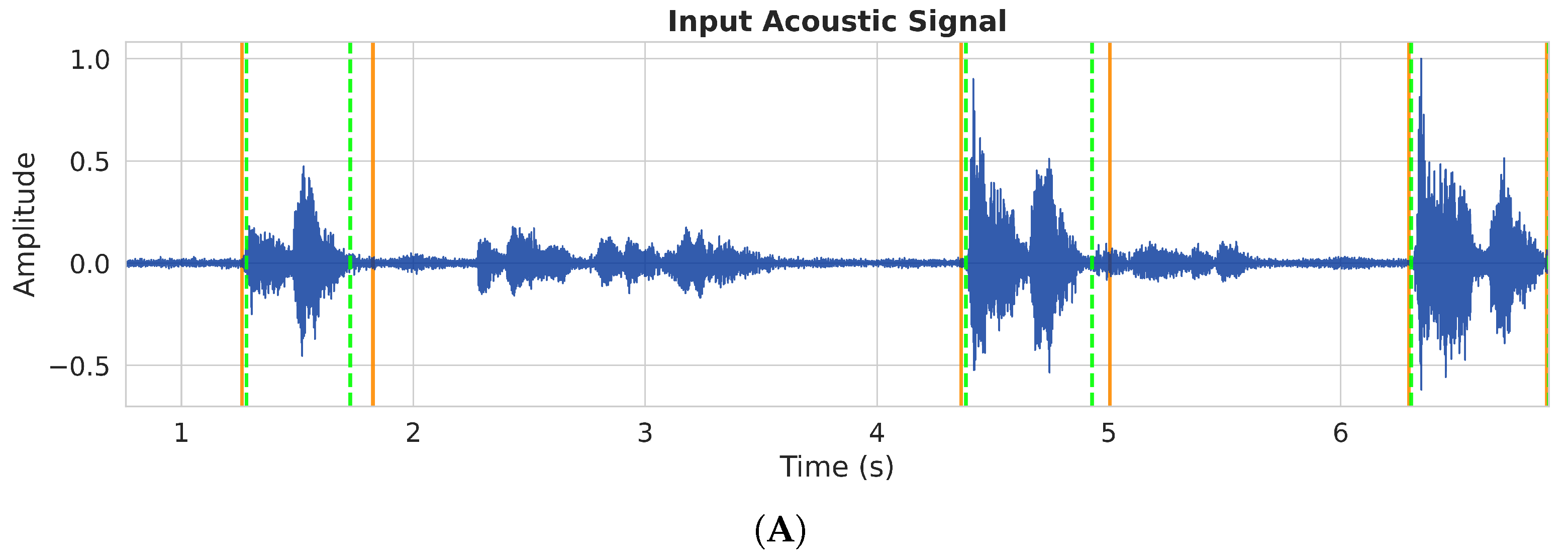
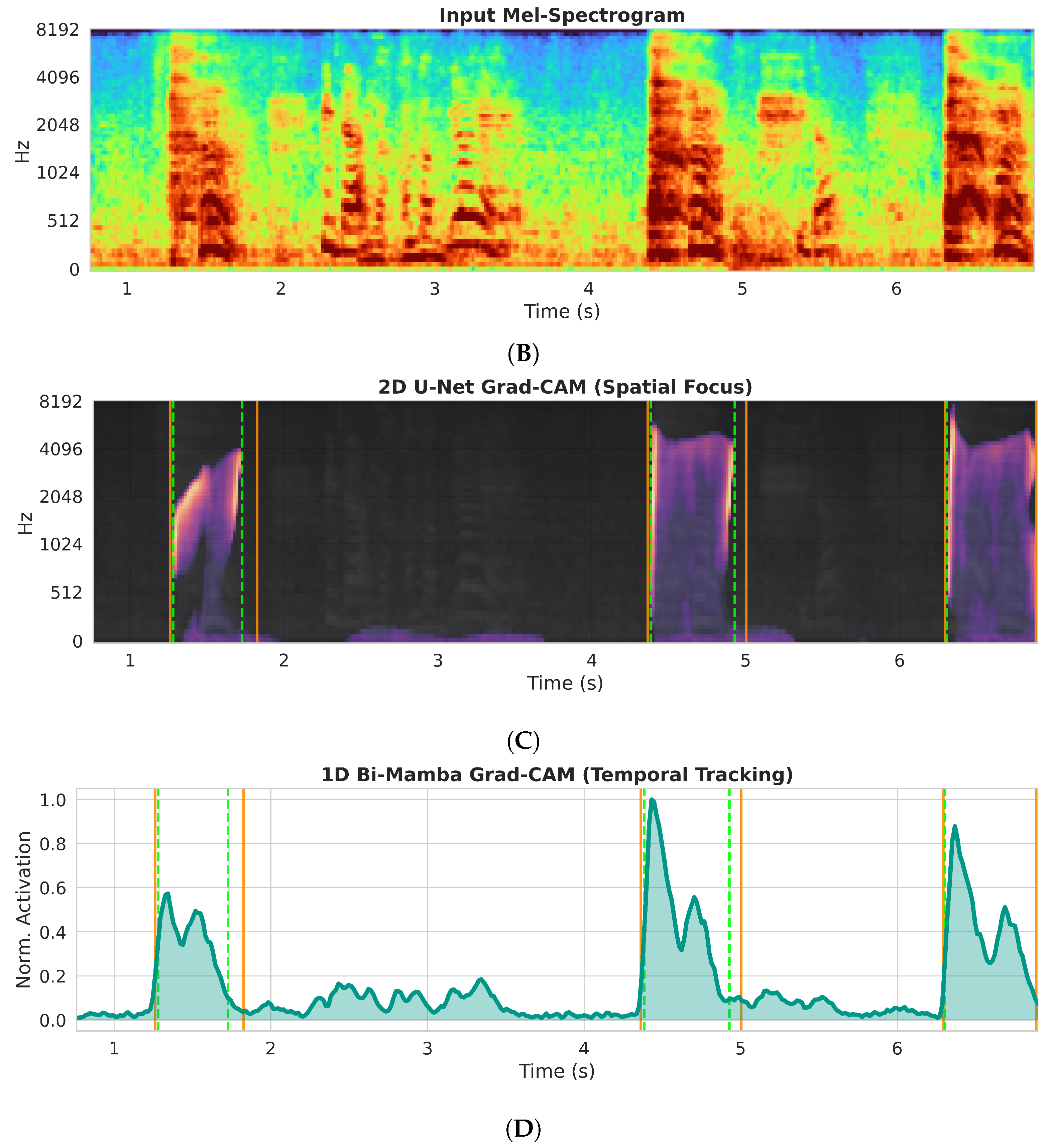
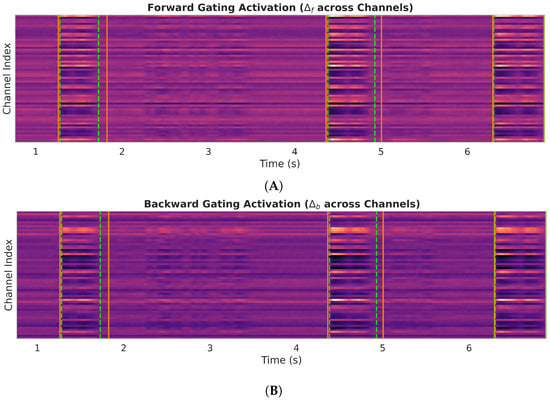
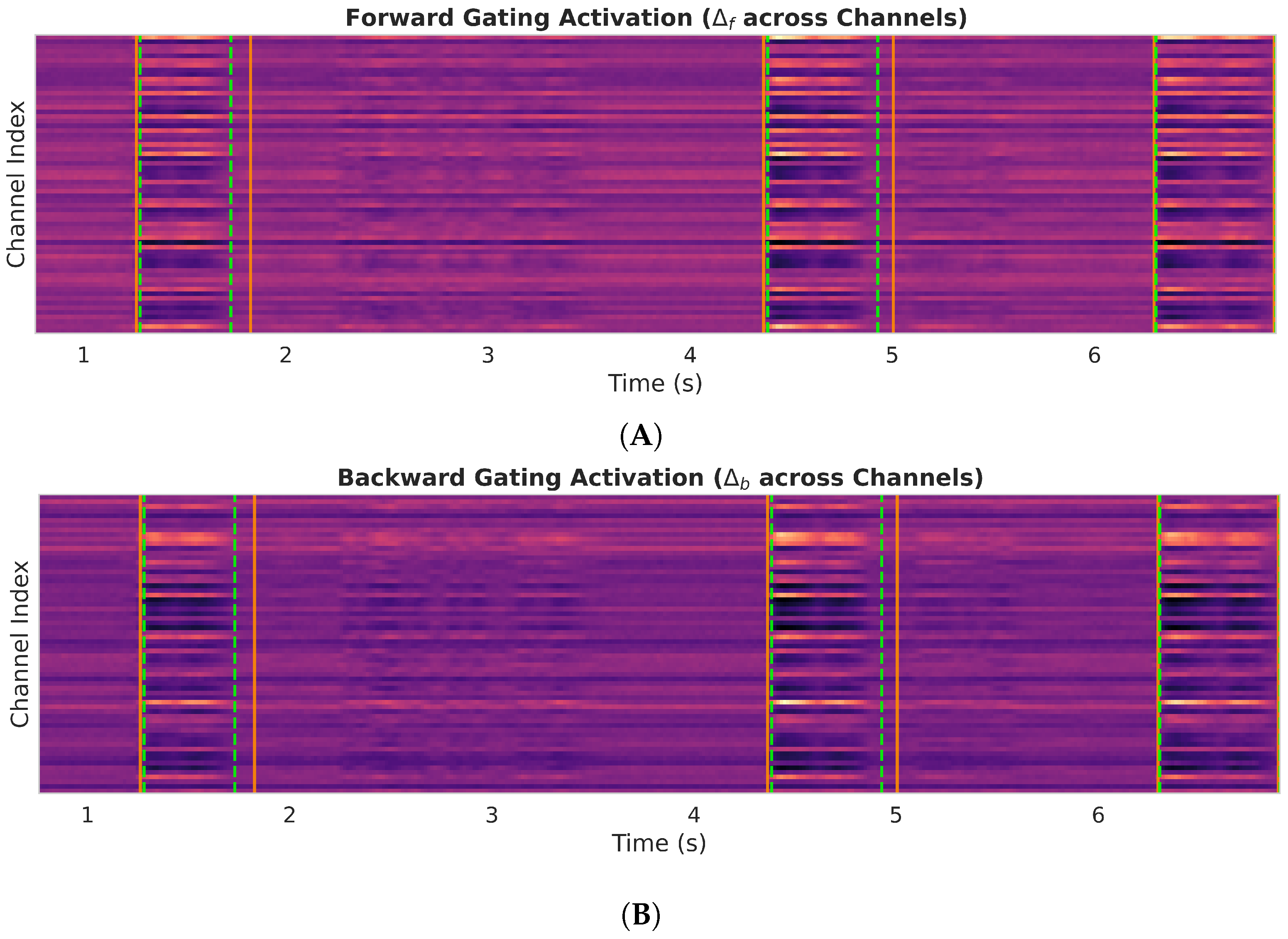

Disclaimer/Publisher’s Note: The statements, opinions and data contained in all publications are solely those of the individual author(s) and contributor(s) and not of MDPI and/or the editor(s). MDPI and/or the editor(s) disclaim responsibility for any injury to people or property resulting from any ideas, methods, instructions or products referred to in the content. |
© 2026 by the author. Licensee MDPI, Basel, Switzerland. This article is an open access article distributed under the terms and conditions of the Creative Commons Attribution (CC BY) license.