


Abstract
Coal mine conveyor belt foreign objects detection is critical in conveyor belt transportation of coal. Aiming at the problems that the existing coal mine conveyor belt foreign objects detection model has a large number of parameters, occupies more computer resources, and detects fewer types of foreign objects, the original YOLOv13 object detection algorithm is optimized to achieve lightweight design and high precision. Therefore, a sophisticated lightweight YOLO network named LRNet is proposed based on the original YOLOv13, which is tailored for foreign objects detection on coal mine conveyor belts. First, lightweight ShuffleNetv2 is used as the backbone network for YOLOv13 to reduce computational cost and the number of parameters, and to improve the network parallelism. Second, the Bidirectional Feature Pyramid Network (BIFPN) is used as a feature fusion network to effectively fuse global deep and shallow key detail information. Finally, the Coordinate Attention (CA) mechanism is added to enhance the extraction capability of key features and strengthen the foreign objects target attention to improve the network model detection accuracy. The experimental results show that the average detection accuracy of LRNet reaches 91.0%, the number of parameters is 3.6 M. The proposed method can quickly and accurately detect foreign objects in coal mine conveyor belts with less computational resources, and at the same time, it shows strong adaptability and anti-interference ability, which reflects the effectiveness and advancedness of the LRNet model.
1. Introduction
The coal mine conveyor belt is one of the important components in underground transportation of coal mines, playing a crucial role in coal transportation [1,2,3]. Due to its frequent and high load use, the coal transported in its production process is very easily mixed with coal gangue, wooden blocks, iron tools and other dangerous foreign objects, which can easily cause safety accidents such as belt breakage and tearing of the conveyor belt in coal mines, thus affecting the safe production of coal and reducing the production value of enterprises [4,5,6,7]. Therefore, timely and accurate detection of foreign objects in coal mine conveyor belt can not only greatly reduce the risk of coal mine conveyor belt failure, but also improve coal production efficiency, which is of great significance [8,9].
At present, many scholars at home and abroad have conducted extensive research on foreign objects detection on coal mine conveyor belts using computer vision technology, and have achieved certain research results [10,11,12,13,14]. Zhang L. et al. [15] adopted the Gaussian filtering algorithm to preprocess the coal and gangue images to remove image noise, while extracting grayscale features and texture features from the original images, and using a least squares vector machine (LS-SVM) to achieve accurate detection of coal and gangue. Wang X. et al. [16] obtained the target dielectric and geometric characteristics by using the variational mode decomposition method and the marked watershed method, respectively, and utilized support vector machine (SVM) to effectively and accurately identify coal and gangue. Luo Q. et al. [17] applied multi-dimensional gradient features and grey-scale texture features to coal and gangue detection, and the experimental results show that the proposed strategy can effectively improve detection accuracy and anti-interference performance. However, the above methods require manually specified features or complex logical reasoning operations, and are greatly influenced by external environments, making them difficult to apply to complex scenarios.
With the rapid development of deep learning, a large amount of research has been carried out into foreign-objects in coal mine conveyor belt based on object detection network, and has achieved success to a certain extent. Wang Y. et al. [18] proposed an improved network model for foreign objects detection in coal mine conveyor belts with SSD to improve foreign objects detection accuracy by optimizing the loss function and default boxes ratio. Chen Y. et al. [19] proposed to use the KinD++ low-light enhancement strategy to improve input image quality, while using the YOLOv4 network model to effectively detect foreign objects in coal mine conveyor belts. Liu Q. et al. [20] improved the YOLOv4 network architecture by increasing the number of feature pyramid layers, and extensive experiments have shown that the improved algorithm achieves a more comprehensive detection performance. Pan H. et al. [21] proposed an improved YOLOv3 network model that enables fast and efficient identification of coal and gangue. Yan P. et al. [22] added the scSE module to the backbone network of YOLOv5 to effectively improve the accuracy of gangue identification, which can also obtain the relative position of the gangue. Lv Z. et al. [23] adopted a novel feature fusion module and a feature separation module to optimize the detection accuracy of gangue. Ye T. et al. [24] enhanced the efficiency of foreign objects detection in coal mine conveyor belts by optimizing the feature fusion network of YOLOX and strengthening the feature representation capability at different scales. Zhang M. et al. [25] improved the lightweight network model based on YOLOv4 to achieve real-time and high-precision detection of foreign objects in coal mine conveyor belts, thereby ensuring the safe and stable operation of belt conveyors. Although the above methods have made some technical breakthroughs, they still have the following shortcomings: (1) those foreign body detection models are complex in structure and have a large number of parameters, making it difficult to achieve real-time detection; (2) the feature extraction ability of the foreign object detection network model is insufficient, making it difficult to achieve accurate localization and detection of foreign objects; (3) the detection target for foreign objects in coal mine conveyor belts is single, and there is a lack of detection for other types of foreign objects.
To address the above limitations, this paper proposes LRNet, a lightweight detection network based on YOLOv13 for foreign-object detection on coal mine conveyor belts. Rather than introducing a completely new standalone operator, the contribution of LRNet lies in a task-oriented lightweight redesign of the baseline detector for this specific industrial scenario. This design is motivated by the characteristics of coal conveyor inspection, including limited deployment resources, small and elongated foreign objects, complex coal-like backgrounds, and unstable lighting and motion conditions. Specifically, ShuffleNetv2 is adopted to reduce computational overhead and model size, BiFPN is used to improve multi-scale feature representation, and Coordinate Attention is introduced to enhance the spatially aware discrimination of foreign objects against cluttered backgrounds. The main contributions of the proposed LRNet are summarized as follows:
(1) ShuffleNetv2 is adopted as the backbone to reduce model complexity and computational cost, while maintaining effective extraction of texture and shape features of conveyor foreign objects. This makes the detector more suitable for deployment under limited industrial computing resources.
(2) BiFPN is introduced as the feature fusion network to enhance the integration of multi-scale features, which is beneficial for detecting small, elongated, and partially occluded foreign objects on conveyor belts.
(3) The Coordinate Attention module is incorporated to improve the model’s ability to focus on target-relevant regions while preserving positional information, thereby enhancing foreign-object features and suppressing interference from coal-like backgrounds.
The remainder of the paper is organized as follows: Section 2 displays the brief theory of the original YOLOv13 network. Section 3 introduces our LRNet network in detail. Section 4 performs a series of experiments to verify the effectiveness and robustness of our LRNet network. Finally, this study is summarized in Section 5.
2. Yolov13 Network Architecture
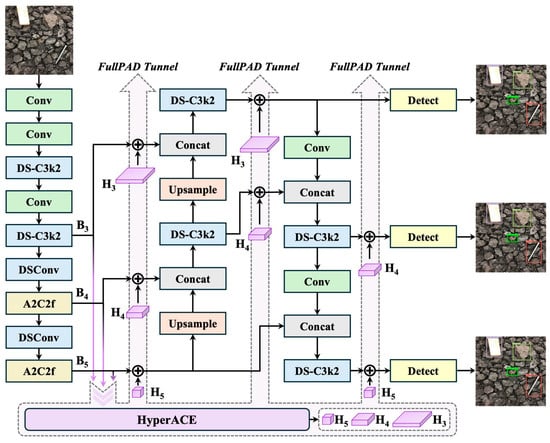
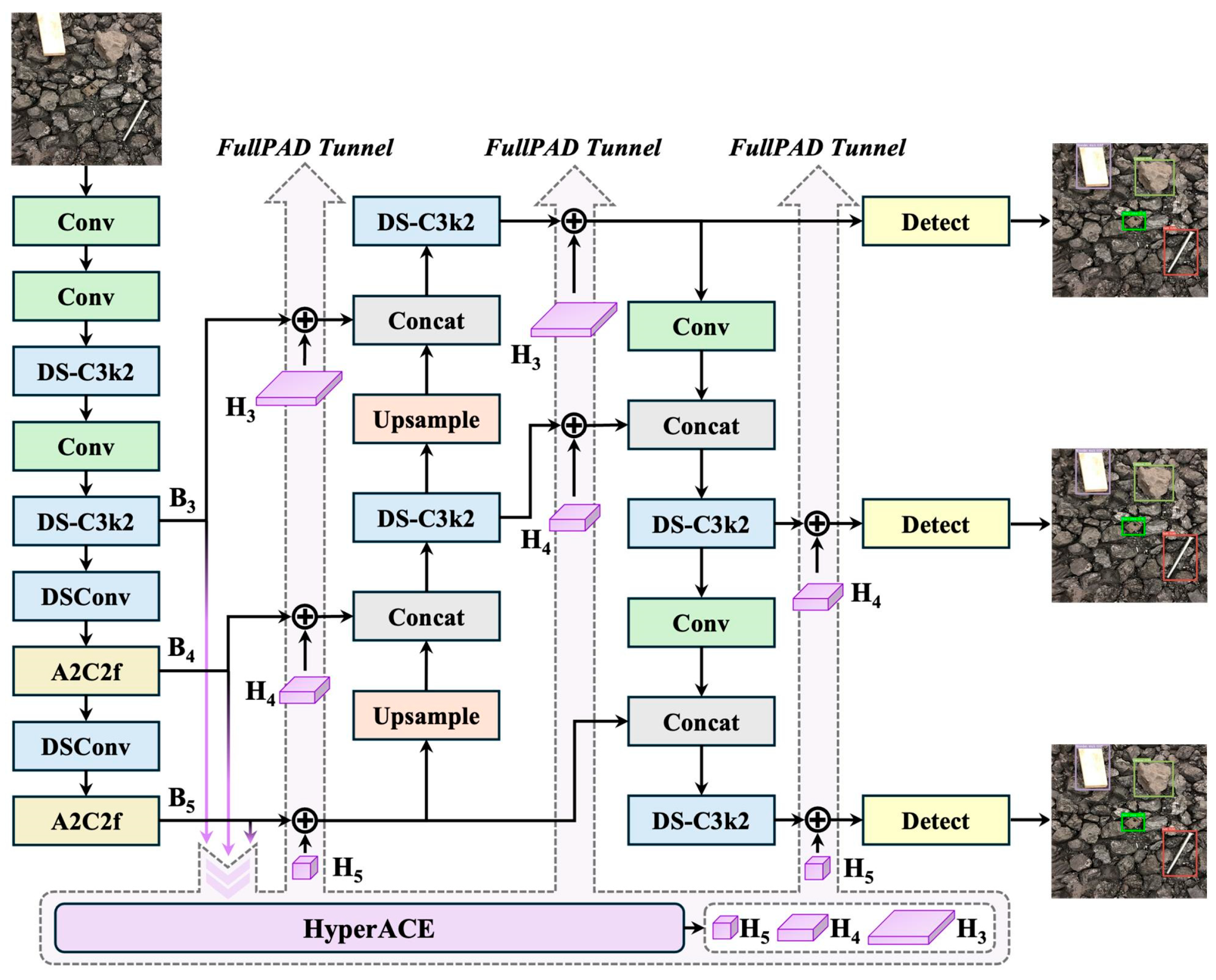
The YOLOv13 network is a mainstream deep learning One-Stage object detection architecture, which consists of four components: input, backbone, neck, and head [26]. The structure of YOLOv13 is illustrated in Figure 1. In the input stage, mosaic data augmentation, adaptive anchor computation, and adaptive image scaling are employed to enable the model to handle images of varying sizes while enriching the dataset and improving network generalization [27,28]. The backbone network of YOLOv13 adopts a CSPDarknet-based architecture with an optimized depth and channel configuration, which enhances feature extraction efficiency. In the initial layers, a focus-like structure is used to slice the input image at intervals in both horizontal and vertical directions before concatenating the feature maps. This approach aggregates spatial information into the channel dimension, enlarges the receptive field, and reduces computational complexity. Each module consists of multiple convolutional layers integrated with cross-stage partial connections, combined with a spatial pyramid pooling structure to jointly extract multi-scale features. The neck network is responsible for feature fusion and employs a combination of Feature Pyramid Network (FPN) and Path Aggregation Network (PAN) structures. The FPN propagates semantic information from deeper layers to shallower layers, while the PAN delivers localization information from shallower layers to deeper layers, achieving effective multi-scale feature fusion through top-down and bottom-up pathways. The head network is responsible for final prediction and adopts the CIoU loss function for bounding box regression and cross-entropy loss for classification, enabling detection across feature maps of different scales [29,30].
Figure 1.
The original YOLOv13 network architecture.
The YOLOv13 series includes four model variants—N, S, L, and X—which mainly differ in network width and depth coefficients. Among them, YOLOv13-S is the most suitable for deployment in scenarios with limited computational resources. Therefore, YOLOv13-S is selected as the baseline detector in this study for foreign-object detection on coal mine conveyor belts. Hereafter, YOLOv13-S is referred to as YOLOv13 for simplicity, and all baseline comparisons in this paper are based on this model.
3. Proposed Model
3.1. ShuffleNetv2 Network
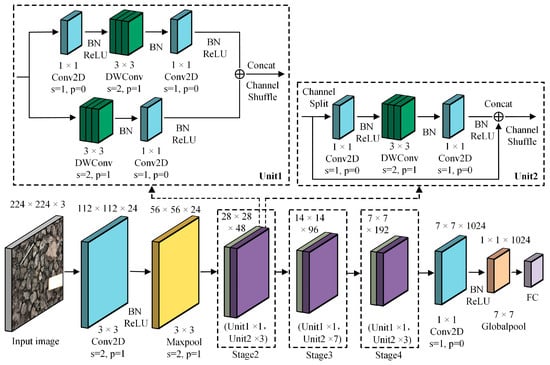
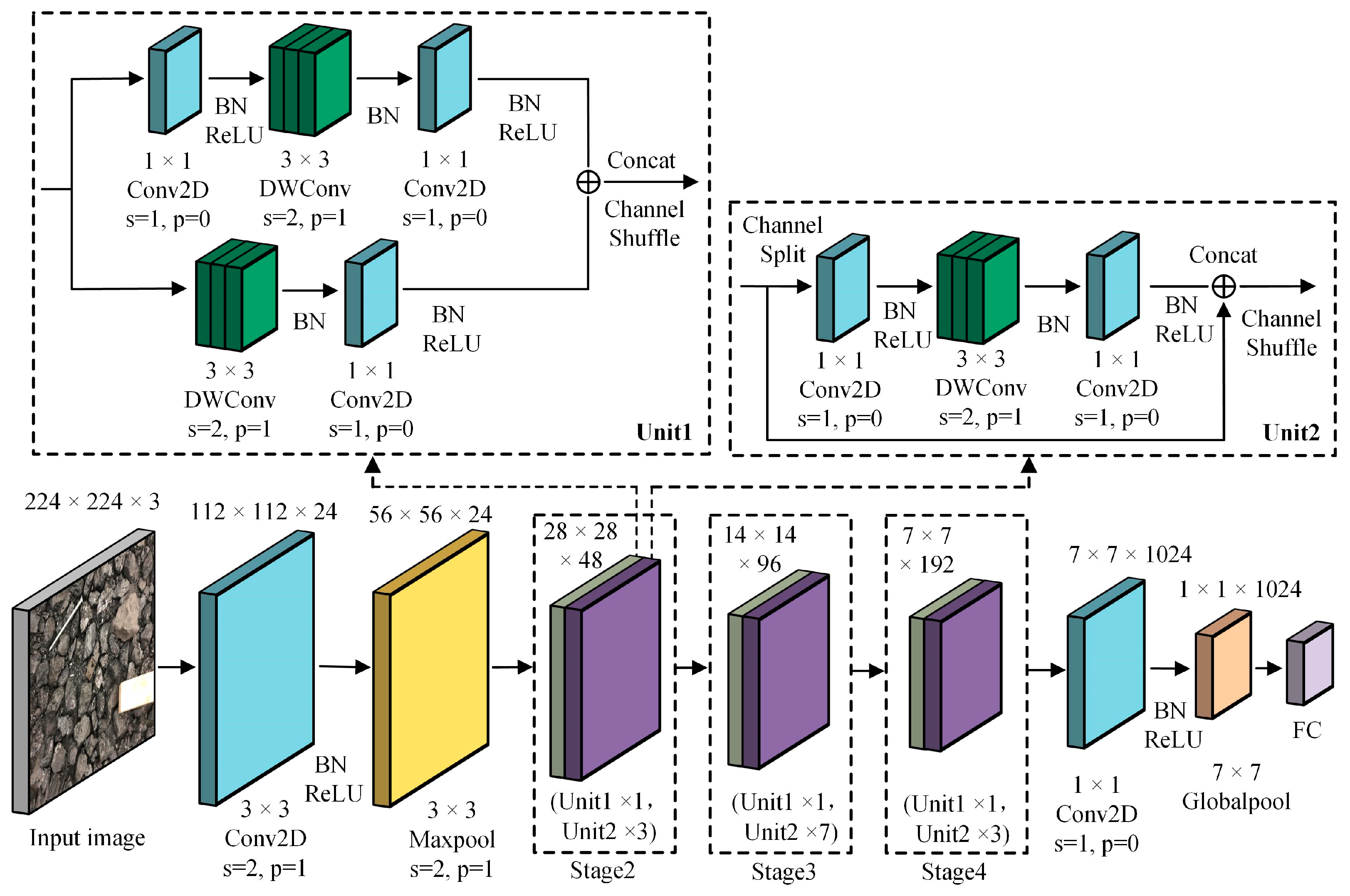
Aiming at the problems that the original YOLOv13 target detection network is difficult to effectively extract multi-scale feature information, and the complex structure of the original model results in a large number of parameters, consumes considerable computational resources, and is unable to realize real-time detection, this study uses the lightweight ShuffleNetv2 convolutional neural network as the backbone feature extraction network to realize the lightweight of the detection model. The network structure of ShuffleNetv2 is shown in Figure 2. Among them, Module1 and Module2 are the basic modules of ShuffleNetv2 network.
Figure 2.
The lightweight ShuffleNetv2 network architecture.
Module 1 splits the input channel features equally into 2 parts through the channel split operation, where the left branch retains its own mapping and directly outputs the final output features, and the right side passes through two 1 × 1 Convs and one 3 × 3 DWConv. The information between channels is fused as much as possible through the Concat cascade operation (channel summation) and Channel Shuffle (feature fusion) strategies [31,32]. In contrast to Module 1, Module 2 uses the feature maps of the same channels as inputs to the branches on both sides, and then outputs the final features through the Concat splicing operation. Module 2 is able to increase the number of channels in the downsampling operation, which effectively improves the feature extraction capability of the model [33].
3.2. Bidirectional Feature Pyramid Network
The original YOLOv13 neck network passes the top features of the network to the bottom features through a top-down feature information transfer strategy. The semantic information and details such as edges and textures of the network model are well preserved, but the feature information between different scales is not considered and is limited by the unidirectional information flow.
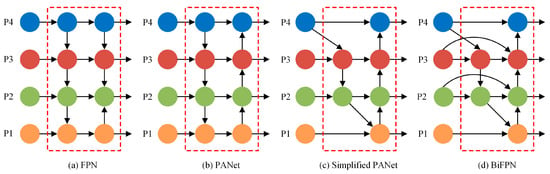
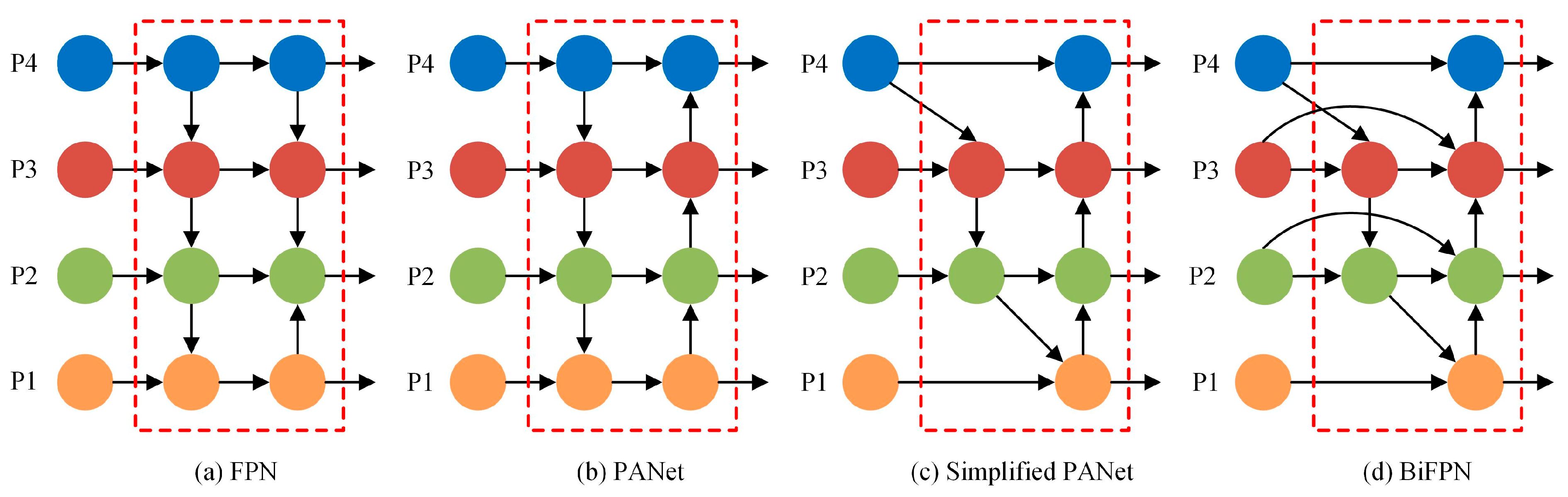
To address the aforementioned issues, this paper uses the Bidirectional Feature Pyramid Network (BIFPN) as a feature fusion network to fully fuse the detail information in different feature map scales. The feature fusion structure of BiFPN is shown in Figure 3. Compared with the FPN, PANet and simplified PANet fusion structure, the BiFPN structure is able to apply weights to different features and adopt feature hierarchical operation, which can more adequately fuse multi-scale features, as shown in Equation (1).
where denotes the input features, denotes the output features, denotes the learnable weights, and is set to 0.0001 to address numerical instability.
Figure 3.
The formation process of BiFPN structure.
The BiFPN structure connects with low-level features across layers through downsampling operations, while input nodes and output nodes add jump connections. More multi-scale features are fused without adding too much cost, and more semantic information can be extracted with a very small number of parameters [34,35,36].
3.3. Coordinate Attention
Due to the complex background of the foreign-object images in the coal mine conveyor belt and the similarity with the transported coal features, it is easy to cause the network model detection difficulties. Aiming at the above problems, this paper chooses the lightweight Coordinate Attention (CA) mechanism to exert attention to the foreign-object target, assigns higher weights, and improves the multi-scale detection accuracy of foreign-objects in coal conveyor belts by reinforcing the foreign object features of coal conveyor belts and suppressing the background features.
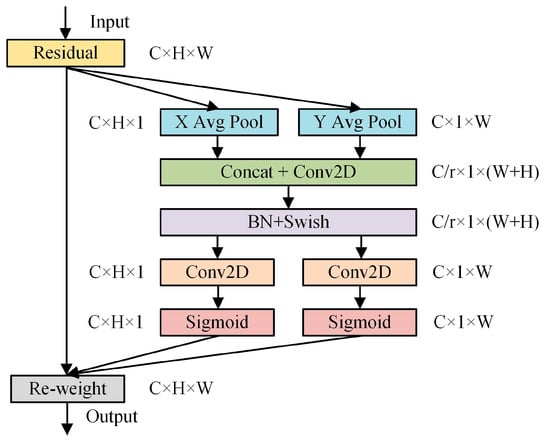
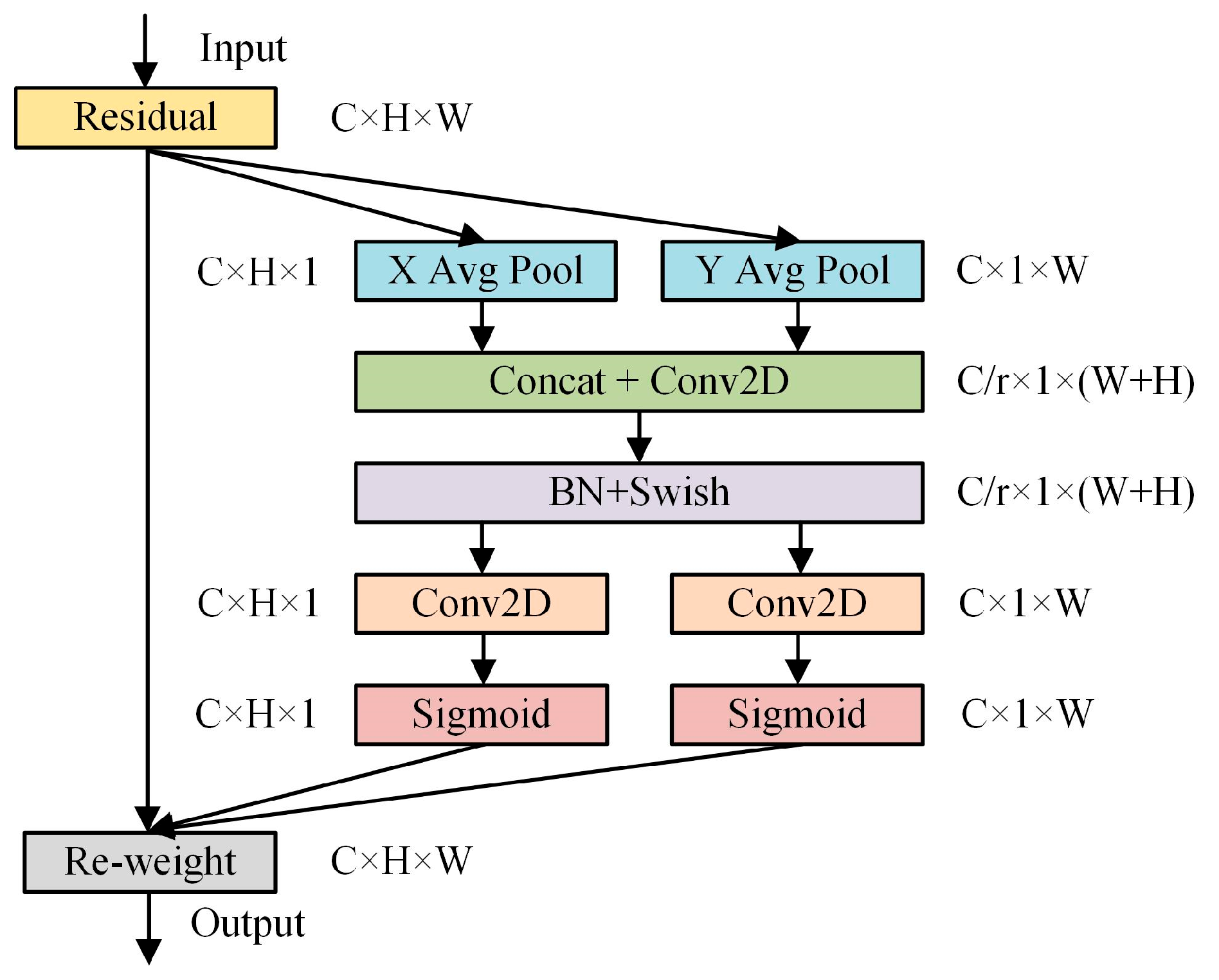
The structure of the CA attention mechanism is shown in Figure 4. The CA attention mechanism obtains the output of interest from the horizontal and vertical coordinate directions, which enables the network to more accurately localize the region of important features [37]. The CA attention mechanism first pools the input feature maps along the horizontal and vertical coordinates to obtain feature maps with dimensions C × W × 1 and C × 1 × W, which greatly captures the channel information and position information between feature channels. Then, convolution is performed by cascade splicing, and the batch normalization and nonlinear activation function are used to obtain an output feature map of C/r × 1 × (W + H), where r is the shrinkage rate. Finally, the feature map is split into two parts C × H × 1 and C × 1 × W, and a multiplicative weighting operation is performed at the same time to obtain a finer feature map containing channel information and position information [38,39].
Figure 4.
Structure of CA attention mechanism.
4. Experiments and Analysis
In this section, we first demonstrate experimental test images, including image acquisition, image augmentation, and image annotation. Then, we provide a detailed introduction to the model training environment and detection performance evaluation indicators in the experiment. Next, in the context of qualitative capability assessment, our LRNet model is compared with other models, demonstrating its superiority over competing models. Finally, we conduct evaluation experiments in different environments using our LRNet model.
4.1. Test Images
This study uses a coal mine conveyor belt foreign objects image acquisition platform device to acquire foreign objects image data on the surface of the coal mine conveyor belt for a long period of time for a variety of foreign objects. The foreign objects image acquisition platform device consists of a Hikvision MV-CS060 industrial camera (Hangzhou Hikvision Digital Technology Co., Ltd., Hangzhou, China), zoom lens, and LED light source. Detailed steps for image acquisition: when the conveyor runs and reaches the specified speed, the industrial camera and LED light source are turned on. The camera is responsible for collecting real-time surface images of the coal mine conveyor belt, and the collected images are transmitted to the industrial computer for storage. To meet the diversity of foreign objects image datasets in coal mine conveyor belts, the shooting distance is 1–5 m, the shooting environment includes strong and weak light, and the conveyor runs at a speed of 1–4 m/s.
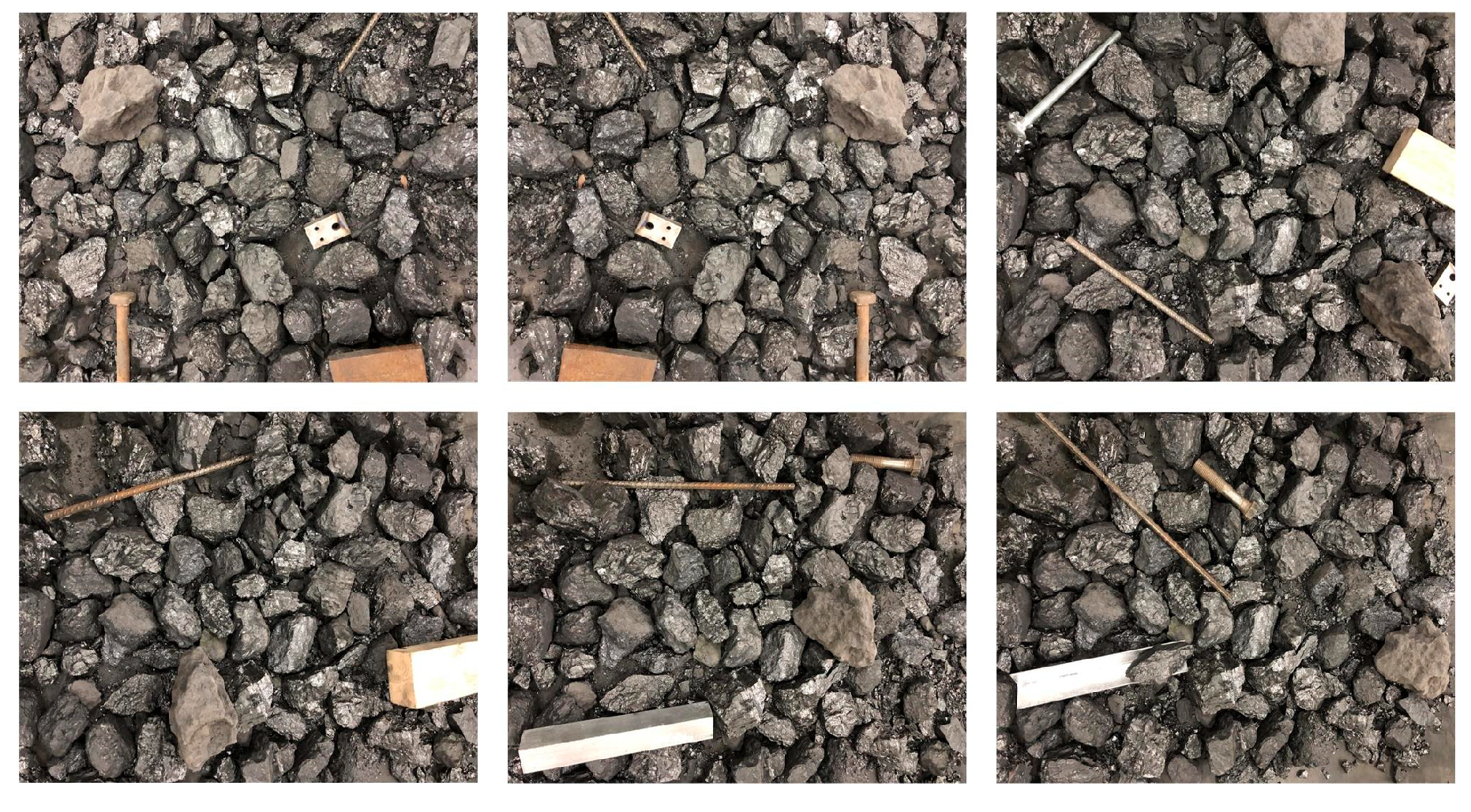
Based on field statistics and the actual working conditions of underground coal mines, six types of foreign objects were considered in this study, namely gangue, wooden stick, anchor rod, bolt, angle iron, and steel plate. An experimental dataset was constructed by collecting, filtering, and cropping images acquired from the coal mine conveyor belt foreign-object image acquisition platform. A total of 3000 raw images containing foreign objects were obtained, all with a resolution of 640 × 640. Figure 5 shows representative examples of the collected images.
Figure 5.
Sample of foreign objects in coal mine conveyor belts.
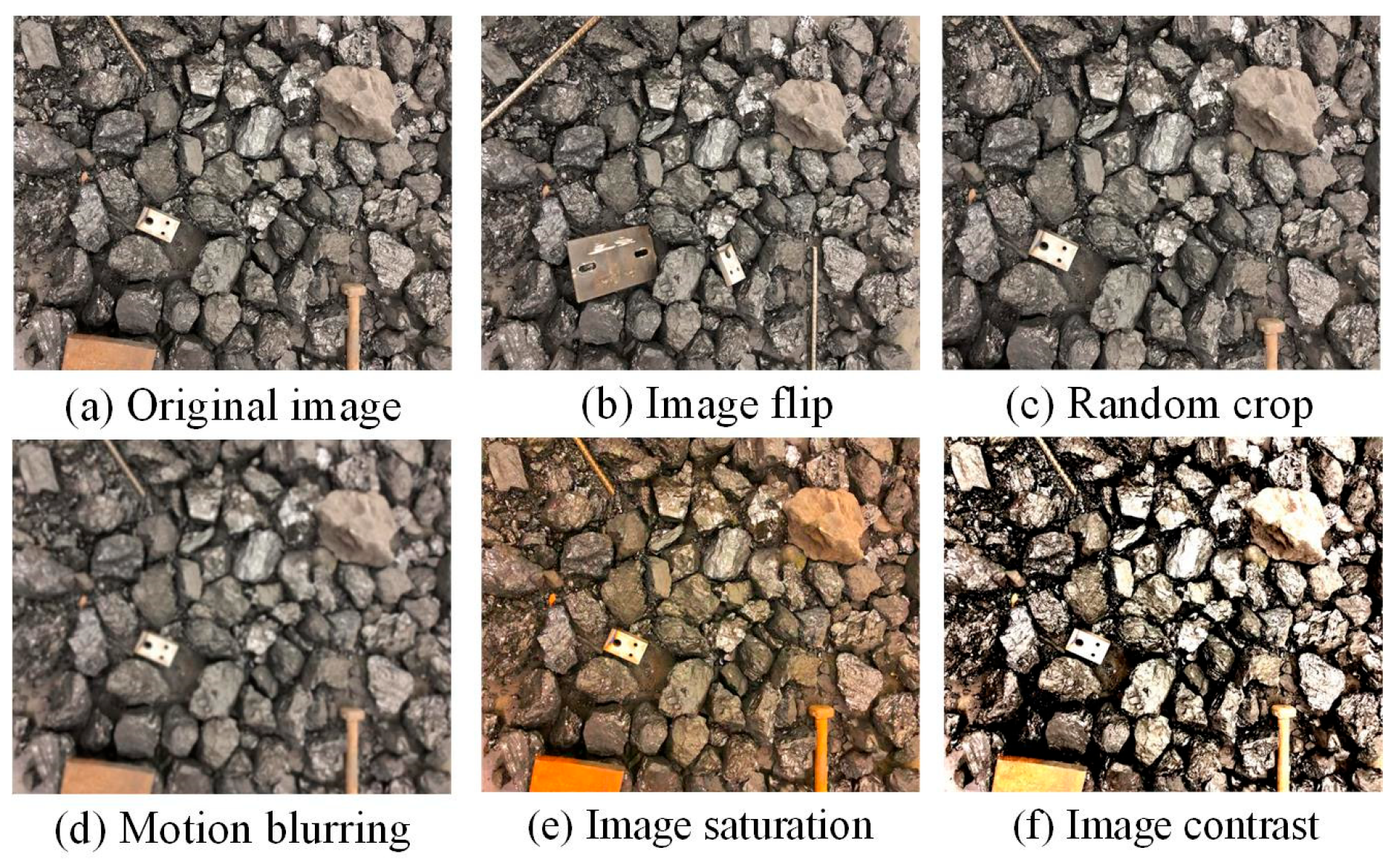
To avoid information leakage, the 3000 raw images were first divided at the image level into training, validation, and test subsets with a ratio of 8:1:1, corresponding to 2400 training images, 300 validation images, and 300 test images. Data augmentation was then applied only to the training set to improve the robustness of the LRNet model. The augmentation operations included image flipping, random cropping, motion blurring, saturation adjustment, and contrast adjustment. Examples of these data augmentation operations are shown in Figure 6. After manual screening, the training set was expanded from 2400 images to 5184 images, while the validation and test sets were kept unchanged except for standard preprocessing. Therefore, the final dataset used in the experiments contained 5184 training images, 300 validation images, and 300 test images.
Figure 6.
Example of data augmentation samples.
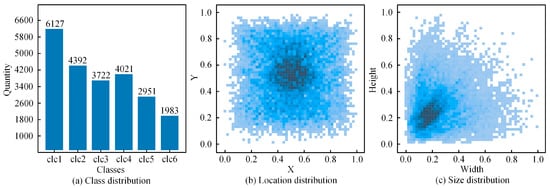
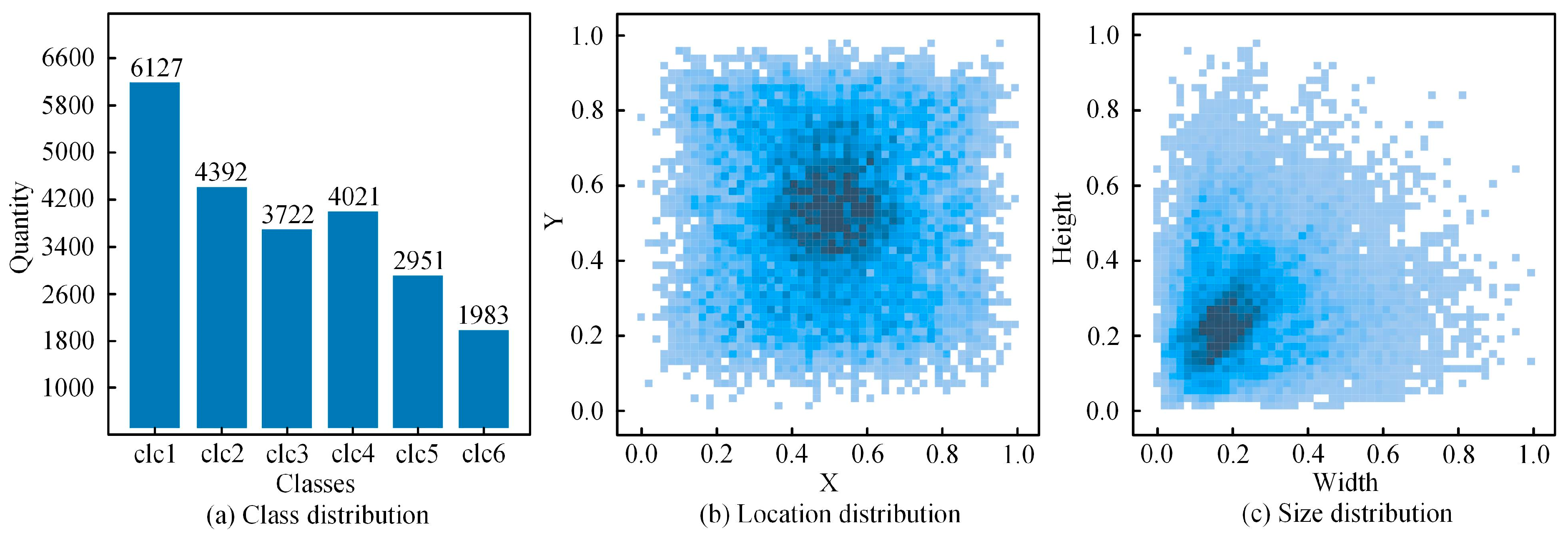
All images were manually annotated using the LabelImg tool (version 1.8.6) in PASCAL VOC format and stored as XML files. To improve annotation quality, the annotations were re-checked and corrected for ambiguous labels or inaccurate bounding boxes before training. As shown in Figure 7, the dataset contains 23,196 labeled foreign-object instances in total. The class distribution is imbalanced to some extent: gangue, bolt, and wooden stick appear more frequently, whereas anchor rod, angle iron, and steel plate account for relatively fewer samples. In Figure 7b,c, the color intensity of the blue heatmap indicates the density of labeled instances. Specifically, darker blue regions represent areas with a higher concentration of instances, while lighter blue regions correspond to lower instance density.
Figure 7.
The coal mine conveyor belt foreign objects target detection dataset labeling information statistics.
4.2. Experimental Settings
All experiments were conducted on a graphical analysis workstation with Windows 10 64-bit system, which is configured with Intel E5-2609 CPU and Nvidia TITAN RTX 24 G in-memory graphics card, and the model running environment is CUDA 11.3, Python 3.8 and Pytorch 1.12.1.
To ensure that the target detection network model is trained to the optimum, the model is trained for 200 epochs, the learning rate is set to 0.001, the weight decay is set to 0.0005, and the batch-size is set to 32 according to the memory size of the graphics card.
4.3. Performance Evaluation
In order to objectively evaluate the detection performance of the network model on the coal mine conveyor belt foreign-object dataset, four detection performance metrics such as Precision (P), Recall (R), mean Average Precision (mAP) and Frames Per Second (FPS) were chosen to conduct a comprehensive evaluation. Among them, P is used to evaluate the global accuracy of the model; R represents the proportion of correct predictions; mAP denotes the average detection accuracy of all categories in the dataset; FPS indicates the number of images that can be detected in each second, the larger the FPS value, the faster the processing speed of the target detection model [40,41,42]. The above-mentioned performance indicators can be calculated as
where TP is the number of positive detections in positive samples; TN is the number of negative detections in negative samples; FP is the number of positive detections in negative samples; FN is the number of positive samples classified as negative; Ω is the number of foreign objects in coal mine conveyor belt.
4.4. Model Training
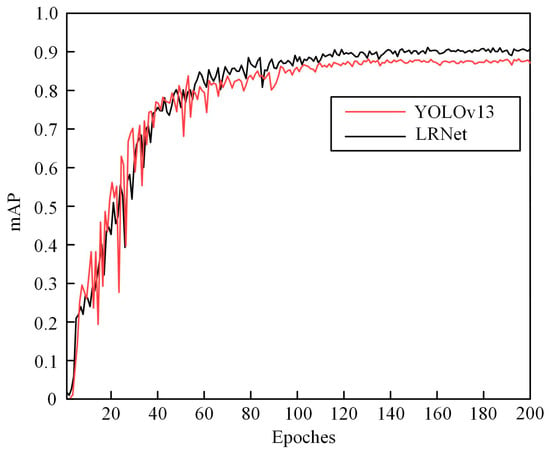
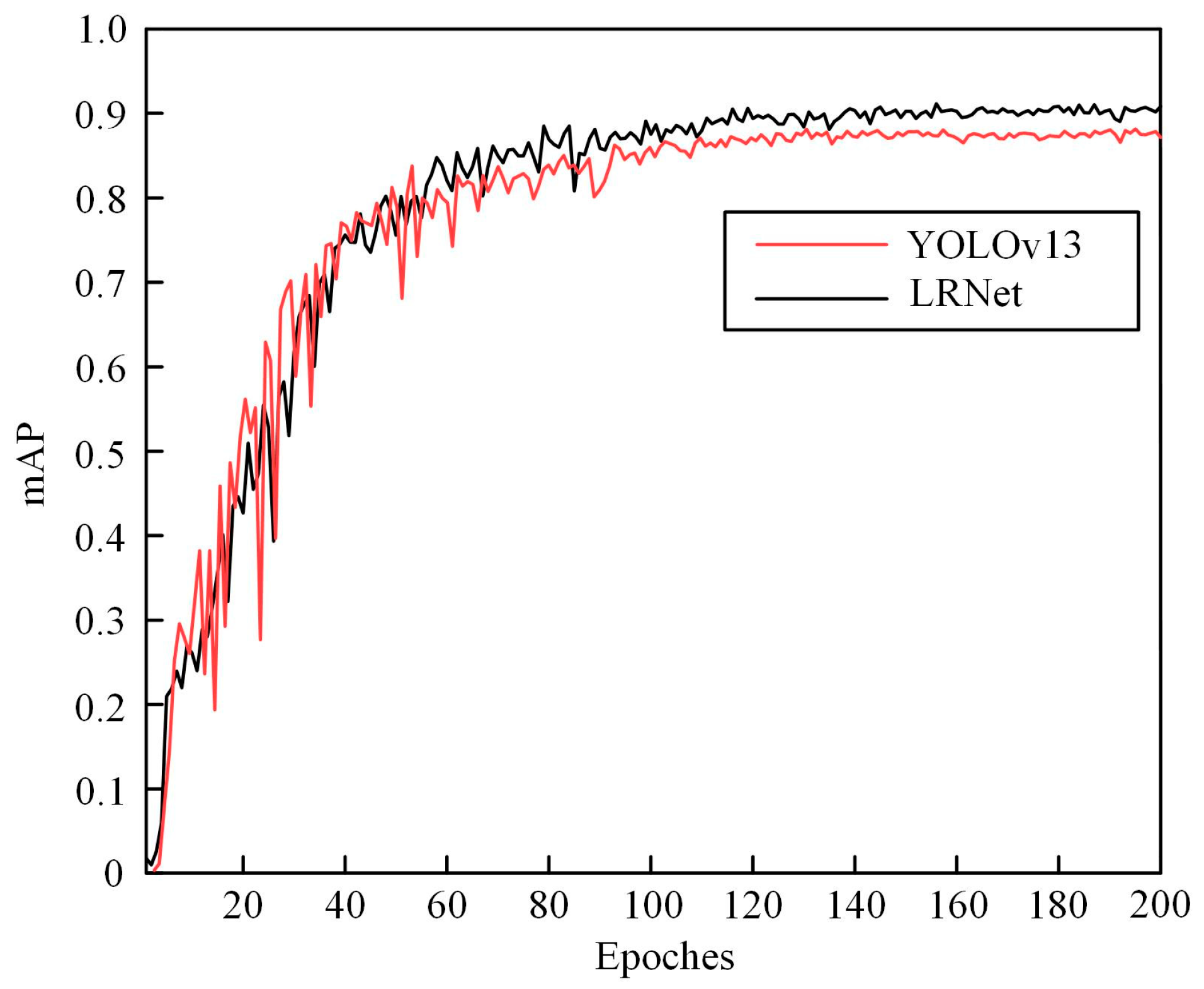
As shown in Figure 8, the results of the comparison of the training accuracy curves of the original YOLOv13 model and the LRNet model are shown. It can be observed that during the training of the target detection model, with the increase in the epoches, the training accuracy gradually tends to stabilize, indicating that both the original YOLOv13 model and LRNet model have converged to achieve the desired training effect. It is also clear from the curves that the LRNet model converges better than the original YOLOv13 model, and shows more stable performance. When the original YOLOv13 model and the LRNet model were trained to 100 epoches, the LRNet model had higher accuracy values, proving its reliability and validity.
Figure 8.
Training accuracy curves for the original YOLOv13 model and our LRNet model.
4.5. Ablation Experiment
To validate each improvement strategy on the detection performance of the proposed LRNet model, we conducted ablation experiments on the coal mine conveyor belt foreign objects test dataset. The YOLOv13 is adopted as the benchmark network to measure the effect of different improvement strategies on the network performance. To ensure the fairness of the experiments, all experiments have the same parameter settings and training environment. As shown in Table 1, we quantitatively demonstrate the ablation detection results of the LRNet model. Among them, Experiment 1 represents the detection results of the YOLOv13 benchmark network; Experiments 2–7 indicate the detection results of applying the improved strategies in the original YOLOv13 network on the performance of the benchmark network; Experiment 8 shows the detection results achieved by using the above-mentioned strategies.
Table 1.
The ablation detection results of our LRNet model. ‘√’ indicates the adoption of the proposed strategy, while ‘×’ indicates the non-adoption of the proposed strategy.
As can be observed from Experiment 2, by replacing the backbone network with ShuffleNetv2, the FPS increases by 21.0% (from 62 to 75) and the Parameters decrease by 68.9% (from 9.0 M to 2.8 M), but the detection accuracy indicators of P, R, and mAP in the network have all decreased. It is also apparent from Experiments 3–4 that the utilization of BIFPN and CA optimization strategies can improve the detection accuracy without significantly increasing the number of model parameters and the detection speed, indicating that the proposed improvement strategy effectively improves the network’s performance in detecting foreign objects on coal mine conveyor belts. Experiments 5–7 illustrate that the detection performance of the model can also be significantly improved when using random combinations of the proposed optimization strategies, further demonstrating the effectiveness and reasonableness of the three improved strategies. The detection results of Experiment 8 show that the simultaneous adoption of the above three optimization strategies can significantly enhance the comprehensive detection performance of the model, which effectively improves the detection accuracy of the network (with P of 92.0%, R of 88.5%, and mAP of 91.0%) and maintains a faster detection speed (57 FPS) with only 3.6 M parameters. It can be concluded that the LRNet model is characterized by fast speed, high accuracy and few parameters, and is significantly better than the YOLOv13 benchmark network. Overall, the improvement strategy proposed in this paper can greatly reduce the size of the model and effectively improve the comprehensive performance of the network.
4.6. Comparison Experiment
In order to verify the rationality and superiority of the LRNet model in this paper, the detection performance effect is compared with Faster RCNN, SSD, YOLOv4, YOLOv5, YOLOv5-Lite and YOLOX target detection network models in terms of qualitative aspects. All the above-mentioned target detection neural networks were trained until the loss function converged with optimal network performance, and the network performance was tested based on the coal mine conveyor belt foreign objects test set.
The detection results of other several advanced target detection models and our LRNet model are shown in Table 2. The model parameters of proposed LRNet are only 3.6 M, with an average detection accuracy of 91.0 mAP and a FPS of 57 FPS. The LRNet model detection is very fast and can be realized in real time. In terms of detection precision, detection speed and model parameters, the LRNet network has the best comprehensive detection performance, which is better than other target detection models. The Experiment 1–7 proves that the model in this paper can better balance the relationship between detection accuracy, speed and the number of model parameters with optimal performance. Therefore, it can be concluded that the proposed LRNet model is superior to several other advanced models in the detection of foreign objects on conveyor belts, which has high detection accuracy and ensures fast detection speed, and can meet the accuracy and speed requirements of real-time detection in the process of conveyor belt operation.
Table 2.
Comparison of detection results between other target detection models and our LRNet model.
4.7. Experiment with Different Light Environment
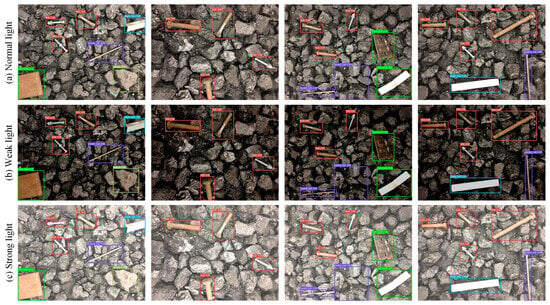
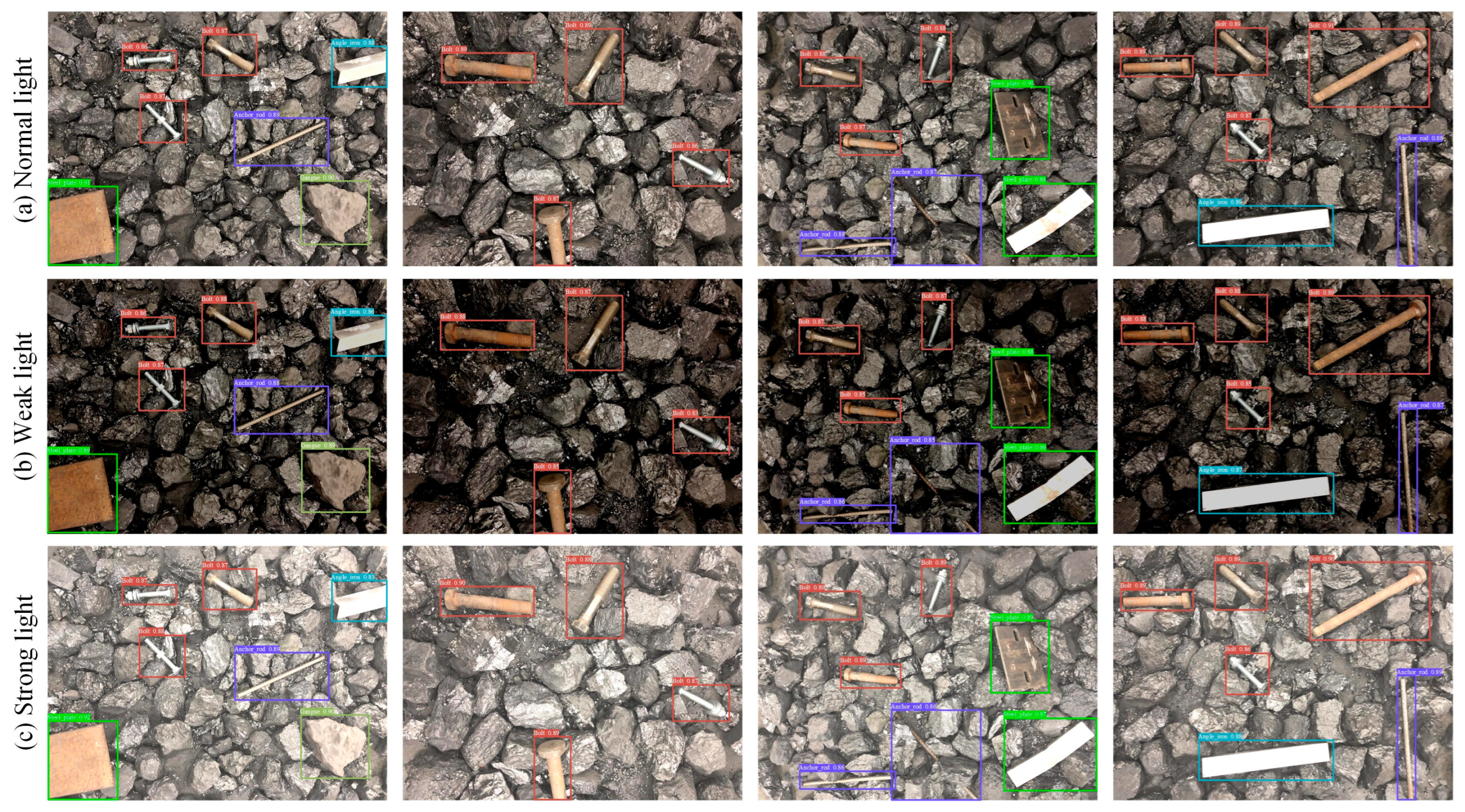
As the conveyor belt is vulnerable to uneven illumination in the process of running, resulting in the details of the foreign objects image edges and contour texture is not clear, it is difficult to effectively distinguish the foreign objects from the background. In a strong light environment, the light is sufficient and the crack features are obvious, making it easy to identify; In low light and dim environments, insufficient lighting, complex background information, and high image background noise increase the difficulty of foreign objects detection. Therefore, this study utilized the proposed LRNet model to detect foreign objects in different lighting environments. In order to verify the stability and advancement of the detection performance of the LRNet model in normal light, weak light and strong light, four images of coal mine conveyor belts in the test set were randomly selected for comparative testing and analysis. The detection results of the proposed LRNet model in different light environments are shown in Figure 9.
Figure 9.
Detection results of the LRNet model in different light environments.
Under normal light conditions, the foreign objects in the coal mine conveyor belt image are correctly detected and have excellent detection accuracy, realizing a more ideal detection effect. With the weakening and strengthening of light intensity, it can be clearly seen that the detection accuracies of the six kinds of foreign objects are slightly changed, indicating that the LRNet model can effectively adapt to the changes in the light environment and achieve good detection performance before and after the change in light intensity.
4.8. Experiment with Different Motion Blur
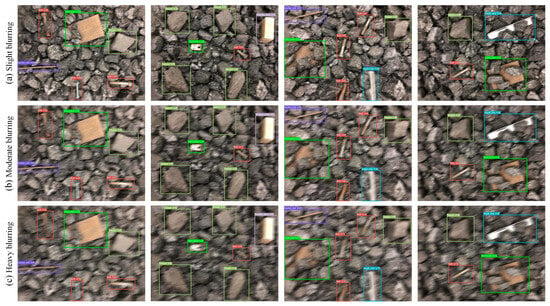
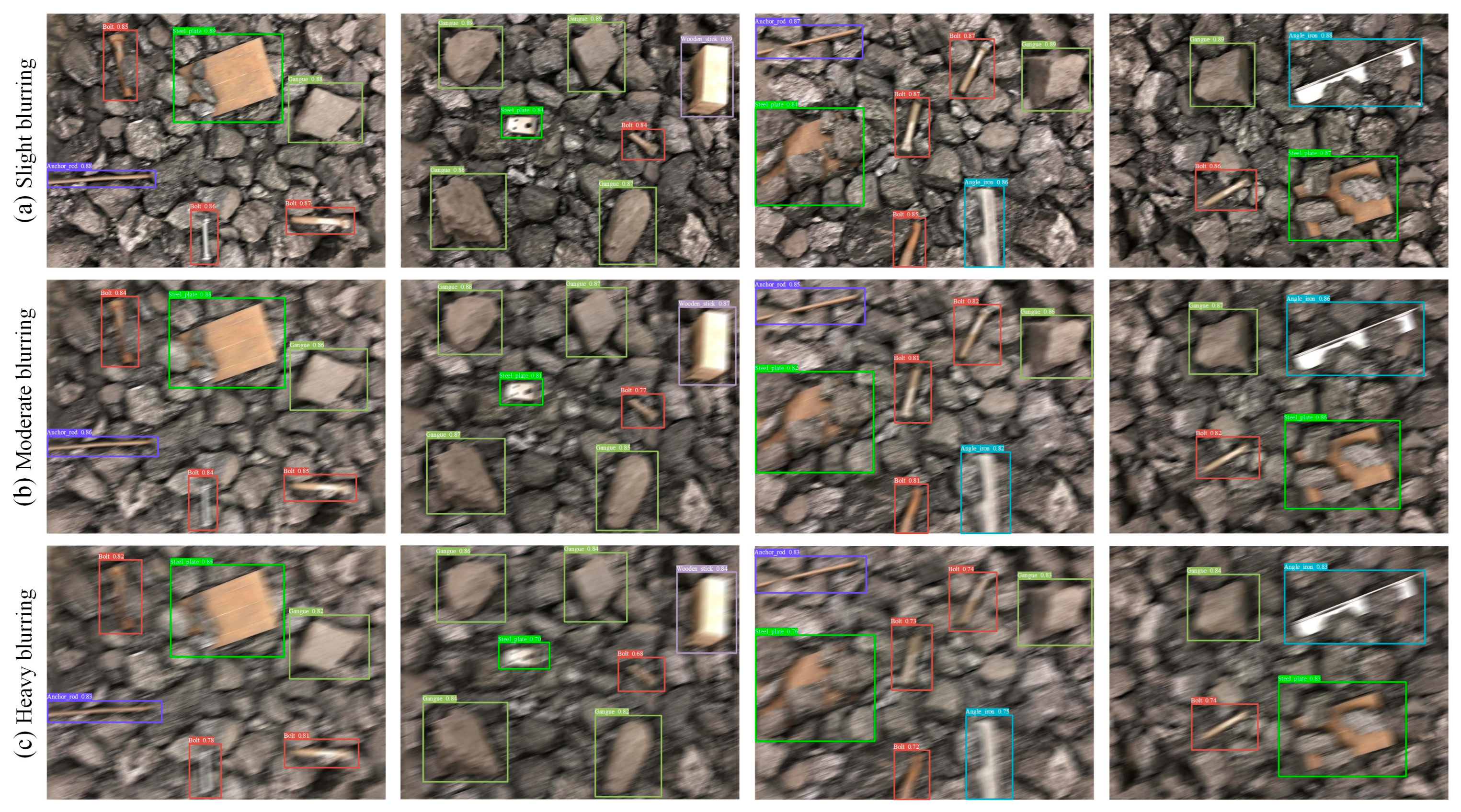
Usually, the fast motion of the conveyor belt and the delayed properties of the camera exposure cause image motion blurring in the captured conveyor belt image. In order to validate the reliability and excellence of our LRNet model’s detection performance under slight blur, moderate blur and severe blur, four images of coal mine conveyor belt foreign objects in the test set were randomly selected for comparative testing and analysis. Figure 10 shows the detection results of the proposed LRNet model of this paper in different motion blur.
Figure 10.
Detection results of the LRNet model in different motion blur.
From the detection results, it can be observed that under the condition of slight blurring, the foreign objects in the coal mine conveyor belt image are correctly detected with high detection accuracy, which achieves a relatively desirable detection effect. When the degree of blurring of the image of foreign objects in coal mine conveyor belts is intensified, it can be clearly noticed that the quality of the image is obviously reduced, and the detection accuracy of the foreign objects is slightly decreased, which indicates that the LRNet model can effectively adapt to different degrees of motion blurring, and the confidence level of the detection is more satisfactory. In summary, the LRNet model can effectively adapt to different motion blur images of foreign objects in coal mine conveyor belts, further verifying the reliability and robustness of the LRNet model.
5. Conclusions
In this paper, we propose LRNet, a lightweight detection model for foreign-object detection on coal mine conveyor belts based on YOLOv13, aiming to address the limitations of existing methods, such as large model size, high computational cost, and insufficient comprehensive detection performance. By introducing ShuffleNetv2 as the backbone, BiFPN as the feature fusion network, and Coordinate Attention as an auxiliary attention mechanism, the proposed LRNet achieves a favorable balance between detection accuracy, model size, and inference speed. Experimental results show that LRNet reaches 91.0% mAP with 57 FPS on the coal mine conveyor belt foreign-object test set, while maintaining only 3.6 M parameters. In addition, the model demonstrates good robustness under different lighting and motion-blur conditions.
Nevertheless, the present study is based on supervised learning and therefore relies on a sufficiently labeled target-domain dataset, which increases annotation cost and may limit generalization to new conveyor environments. In future work, more label-efficient learning strategies, such as semi-supervised learning and domain adaptation, will be explored to reduce the dependence on large-scale labeled data [43,44]. For example, domain-adaptive Faster R-CNN has been shown to improve cross-domain detection robustness through source-target alignment for non-PPE identification, while transformer-based domain adaptation has also demonstrated effectiveness for automated detection tasks under cross-domain appearance variation. These directions may help improve the scalability and cross-scene generalization of foreign-object detection on coal mine conveyor belts. In addition, we will continue to optimize the network structure to further improve detection accuracy while maintaining real-time performance.
Author Contributions
Conceptualization: A.Z. initially proposed the concept of detecting foreign-objects on coal mine conveyor belts using an optimized YOLO model; all authors jointly discussed and finalized the overall research plan. Methodology: L.X. proposed adopting ShuffleNetv2 as the lightweight backbone network; Y.Y. put forward the use of BIFPN for enhanced multi-scale feature fusion; A.Z. suggested integrating the CA mechanism to strengthen foreign-object target attention. All three co-authors independently designed and refined preliminary model frameworks. Software and Experiments: L.X. developed the core code of the LYOLO model, and conducted model training and ablation experiments. Writing—Original Draft: Y.Y. drafted the main body of the manuscript, including the Introduction, Proposed Model, and Experiments and Analysis sections. Writing—Review and Editing: A.Z. revised the remaining parts of the manuscript and optimized the logical expression of experimental results. Visualization: L.X. prepared images related to model training and foreign object detection results; Y.Y. created all flowcharts (e.g., network architecture diagrams); A.Z. designed and produced data tables (e.g., ablation experiment results, model comparison results). All authors have read and agreed to the published version of the manuscript.
Funding
This research was funded by the project titled “Research on Intelligent Recognition Method for Unsafe Behaviors of Miners under the Background of Green Mining” (Grant Number: 2023067). The Article Processing Charge (APC) for this publication was also supported by the above-mentioned project.
Data Availability Statement
The original contributions presented in this study are included in the article. Further inquiries can be directed to the corresponding author.
Acknowledgments
The authors would like to acknowledge the contributions of each team member to the research and manuscript development. Airan Zhang (A.Z.) first put forward the idea of applying an optimized YOLO model to coal mine conveyor belt foreign-object detection, and all authors jointly determined the research direction and technical route through in-depth discussions. Lili Xu (L.X.) provided key insights into the lightweight backbone design with ShuffleNetv2; Youli Yao (Y.Y.) contributed to the feature fusion optimization via BIFPN; A.Z. proposed the integration of the CA mechanism to improve target attention. In the implementation phase, L.X. completed the core coding and experimental verification of the LYOLO model; Y.Y. led the drafting of the manuscript’s core sections; A.Z. optimized the result analysis and manuscript revision. For the visualization work, L.X. prepared experimental images, Y.Y. created network structure flowcharts, and A.Z. organized data into tables—their collaborative efforts ensured the smooth completion of this study. All authors also express gratitude for the financial support from the project “Research on Intelligent Recognition Method for Unsafe Behaviors of Miners under the Background of Green Mining” (Grant Number: 2023067), which made this research possible.
Conflicts of Interest
The authors declare no conflict of interest.
References
- Hou, C.; Qiao, T.; Qiao, M.; Xiong, X.; Yang, Y.; Zhang, H. Research on audio-visual detection method for conveyor belt longitudinal tear. IEEE Access 2019, 7, 120202–120213. [Google Scholar] [CrossRef] [Scilit]
- Guo, X.; Liu, X.; Królczyk, G.; Sulowicz, M.; Glowacz, A.; Gardoni, P.; Li, Z. Damage detection for conveyor belt surface based on conditional cycle generative adversarial network. Sensors 2022, 22, 3485. [Google Scholar] [CrossRef] [Scilit] [PubMed]
- Dey, S.; Salim, O.; Masoumi, H.; Karmakar, N.C. A novel UHF RFID sensor based crack detection technique for coal mining conveyor belt. IEEE J. Radio Freq. Identif. 2021, 6, 19–30. [Google Scholar] [CrossRef] [Scilit]
- Zhang, M.; Shi, H.; Zhang, Y.; Yu, Y.; Zhou, M. Deep learning-based damage detection of mining conveyor belt. Measurement 2021, 175, 109130. [Google Scholar] [CrossRef] [Scilit]
- Qu, D.; Qiao, T.; Pang, Y.; Yang, Y.; Zhang, H. Research on ADCN method for damage detection of mining conveyor belt. IEEE Sens. J. 2020, 21, 8662–8669. [Google Scholar] [CrossRef] [Scilit]
- Liu, M.; Zhu, Q.; Yin, Y.; Fan, Y.; Su, Z.; Zhang, S. Damage Detection Method of Mining Conveyor Belt Based on Deep Learning. IEEE Sens. J. 2022, 22, 10870–10879. [Google Scholar] [CrossRef] [Scilit]
- Che, J.; Qiao, T.; Yang, Y.; Zhang, H.; Pang, Y. Longitudinal tear detection method of conveyor belt based on audio-visual fusion. Measurement 2021, 176, 109152. [Google Scholar] [CrossRef] [Scilit]
- Zhang, M.; Jiang, K.; Cao, Y.; Li, M.; Wang, Q.; Li, D.; Zhang, Y. A new paradigm for intelligent status detection of belt conveyors based on deep learning. Measurement 2023, 213, 112735. [Google Scholar] [CrossRef] [Scilit]
- Wang, G.; Liu, Z.; Sun, H.; Zhu, C.; Yang, Z. Yolox-BTFPN: An anchor-free conveyor belt damage detector with a biased feature extraction network. Measurement 2022, 200, 111675. [Google Scholar] [CrossRef] [Scilit]
- Miao, D.; Wang, Y.; Yang, L.; Wei, S. Foreign Object Detection Method of Conveyor Belt Based on Improved Nanodet. IEEE Access 2023, 11, 23046–23052. [Google Scholar] [CrossRef] [Scilit]
- Mao, Q.; Li, S.; Hu, X.; Xue, X. Coal Mine Belt Conveyor Foreign Objects Recognition Method of Improved YOLOv5 Algorithm with Defogging and Deblurring. Energies 2022, 15, 9504. [Google Scholar] [CrossRef] [Scilit]
- Dai, L.; Zhang, X.; Gardoni, P.; Lu, H.; Liu, X.; Królczyk, G.; Li, Z. A new machine vision detection method for identifying and screening out various large foreign objects on coal belt conveyor lines. Complex Intell. Syst. 2023, 9, 5221–5234. [Google Scholar] [CrossRef] [Scilit]
- Nguyen, P.T.; Huynh, D.C.; Ho, L.D.; Tran, H.T.; Dunnigan, M.W. InsDD-YOLO: Detection of Transmission Line Insulator Damage Based on the Improved YOLOv13 Model. IEEE Access 2025, 13, 216596–216610. [Google Scholar] [CrossRef] [Scilit]
- Yoon, J.; Han, J.; Nguyen, T.P. Logistics box recognition in robotic industrial de-palletising procedure with systematic RGB-D image processing supported by multiple deep learning methods. Eng. Appl. Artif. Intell. 2023, 123, 106311. [Google Scholar] [CrossRef] [Scilit]
- Zhang, L.; Sui, Y.P.; Wang, H.S.; Hao, S.K.; Zhang, N.B. Image feature extraction and recognition model construction of coal and gangue based on image processing technology. Sci. Rep. 2022, 12, 20983. [Google Scholar] [CrossRef] [Scilit] [PubMed]
- Wang, X.; Wang, S.; Guo, Y.; Hu, K.; Wang, W. Dielectric and geometric feature extraction and recognition method of coal and gangue based on VMD-SVM. Powder Technol. 2021, 392, 241–250. [Google Scholar] [CrossRef] [Scilit]
- Luo, Q.; Wang, S.; Li, X.; He, L. Recognition of coal and gangue based on multi-dimensional gray gradient feature fusion. Energy Sources Part A Recovery Util. Environ. Eff. 2022, 44, 8060–8076. [Google Scholar]
- Wang, Y.; Wang, Y.; Dang, L. Video detection of foreign objects on the surface of belt conveyor underground coal mine based on improved SSD. J. Ambient. Intell. Humaniz. Comput. 2020, 14, 5507–5516. [Google Scholar] [CrossRef] [Scilit]
- Chen, Y.; Sun, X.; Xu, L.; Ma, S.; Li, J.; Pang, Y.; Cheng, G. Application of YOLOv4 Algorithm for Foreign Object Detection on a Belt Conveyor in a Low-Illumination Environment. Sensors 2022, 22, 6851. [Google Scholar] [CrossRef] [Scilit]
- Liu, Q.; Li, J.; Li, Y.; Gao, M. Recognition methods for coal and coal gangue based on deep learning. IEEE Access 2021, 9, 77599–77610. [Google Scholar] [CrossRef] [Scilit]
- Pan, H.; Shi, Y.; Lei, X.; Wang, Z.; Xin, F. Fast identification model for coal and gangue based on the improved tiny YOLO v3. J. Real-Time Image Process. 2022, 19, 687–701. [Google Scholar] [CrossRef] [Scilit]
- Yan, P.; Sun, Q.; Yin, N.; Hua, L.; Shang, S.; Zhang, C. Detection of coal and gangue based on improved YOLOv5. 1 which embedded scSE module. Measurement 2022, 188, 110530. [Google Scholar] [CrossRef] [Scilit]
- Lv, Z.; Wang, W.; Xu, Z.; Zhang, K.; Fan, Y.; Song, Y. Fine-grained object detection method using attention mechanism and its application in coal–gangue detection. Appl. Soft Comput. 2021, 113, 107891. [Google Scholar] [CrossRef] [Scilit]
- Ye, T.; Zheng, Z.; Li, Y.; Zhang, X.; Deng, X.; Ouyang, Y.; Zhao, Z.; Gao, X. An adaptive focused target feature fusion network for detection of foreign bodies in coal flow. Int. J. Mach. Learn. Cybern. 2023, 14, 2777–2791. [Google Scholar] [CrossRef] [Scilit]
- Zhang, M.; Cao, Y.; Jiang, K.; Li, M.; Liu, L.; Yu, Y.; Zhou, M.; Zhang, Y. Proactive measures to prevent conveyor belt Failures: Deep Learning-based faster foreign object detection. Eng. Fail. Anal. 2022, 141, 106653. [Google Scholar] [CrossRef] [Scilit]
- Lei, M.; Li, S.; Wu, Y.; Hu, H.; Zhou, Y.; Zheng, X.; Ding, G.; Du, S.; Wu, Z.; Gao, Y. Yolov13: Real-time object detection with hypergraph-enhanced adaptive visual perception. arXiv 2025, arXiv:2506.17733. [Google Scholar]
- Wang, Z.; Hu, S.; Wang, X.; Gao, Y.; Zhang, W.; Chen, Y.; Lin, H.; Gao, T.; Chen, J.; Gong, X.; et al. YOLOv13-Cone-lite: An enhanced algorithm for traffic cone detection in autonomous formula racing cars. Appl. Sci. 2025, 15, 9501. [Google Scholar] [CrossRef] [Scilit]
- Liu, Z.; Wang, J.; Wu, H.; Xue, F.; Qin, Z.; Sun, S.; Guo, X.; Zhao, F. Water-aware real-time detection of floating plastic debris via an enhanced YOLOv13 framework for aquatic pollution monitoring. Expert Syst. Appl. 2026, 313, 131552. [Google Scholar] [CrossRef] [Scilit]
- Gao, Y.; Luo, W.; Zhang, S.; Ahmad, N.S.; Wang, X.; Goh, P. Benchmarking YOLOv8 to YOLOv13 for robust hand gesture recognition in human–robot interaction. Sci. Rep. 2025, 15, 40043. [Google Scholar] [CrossRef] [Scilit]
- Zhang, S.; Guo, X.; Tan, M.; Yang, C.; Wang, Z.; Li, G.; Wang, B. DE-YOLOv13-S: Research on a Biomimetic Vision-Based Model for Yield Detection of Yunnan Large-Leaf Tea Trees. Biomimetics 2025, 10, 724. [Google Scholar] [CrossRef] [Scilit]
- Li, W.; Zhang, Z.; Jin, B.; Yu, W. A Real-Time Fish Target Detection Algorithm Based on Improved YOLOv5. J. Mar. Sci. Eng. 2023, 11, 572. [Google Scholar] [CrossRef] [Scilit]
- Liu, W.; Xiao, Y.; Zheng, A.; Zheng, Z.; Liu, X.; Zhang, Z.; Li, C. Research on Fault Diagnosis of Steel Surface Based on Improved YOLOV5. Processes 2022, 10, 2274. [Google Scholar] [CrossRef] [Scilit]
- Ma, N.; Zhang, X.; Zheng, H.T.; Sun, J. Shufflenet v2: Practical guidelines for efficient cnn architecture design. In Proceedings of the European Conference on Computer Vision (ECCV), Munich, Germany, 8–14 September 2018; pp. 116–131. [Google Scholar]
- Liu, W.; Quijano, K.; Crawford, M.M. YOLOv5-Tassel: Detecting tassels in RGB UAV imagery with improved YOLOv5 based on transfer learning. IEEE J. Sel. Top. Appl. Earth Obs. Remote Sens. 2022, 15, 8085–8094. [Google Scholar] [CrossRef] [Scilit]
- Yin, X.; Wu, D.; Shang, Y.; Jiang, B.; Song, H. Using an EfficientNet-LSTM for the recognition of single Cow’s motion behaviours in a complicated environment. Comput. Electron. Agric. 2020, 177, 105707. [Google Scholar] [CrossRef] [Scilit]
- Su, B.; Chen, H.; Zhou, Z. BAF-detector: An efficient CNN-based detector for photovoltaic cell defect detection. IEEE Trans. Ind. Electron. 2021, 69, 3161–3171. [Google Scholar] [CrossRef] [Scilit]
- Guo, G.; Zhang, Z. Road damage detection algorithm for improved YOLOv5. Sci. Rep. 2022, 12, 15523. [Google Scholar] [CrossRef] [Scilit]
- Xuan, K.; Deng, L.; Xiao, Y.; Wang, P.; Li, J. SO-YOLOv5: Small object recognition algorithm for sea cucumber in complex seabed environment. Fish. Res. 2023, 264, 106710. [Google Scholar] [CrossRef] [Scilit]
- Xuan, W.; Jian-She, G.; Bo-Jie, H.; Zong-Shan, W.; Hong-Wei, D.; Jie, W. A lightweight modified YOLOX network using coordinate attention mechanism for PCB surface defect detection. IEEE Sens. J. 2022, 22, 20910–20920. [Google Scholar] [CrossRef] [Scilit]
- Jiang, K.; Xie, T.; Yan, R.; Wen, X.; Li, D.; Jiang, H.; Jiang, N.; Feng, L.; Duan, X.; Wang, J. An attention mechanism-improved YOLOv7 object detection algorithm for hemp duck count estimation. Agriculture 2022, 12, 1659. [Google Scholar] [CrossRef] [Scilit]
- Gallo, I.; Rehman, A.U.; Dehkordi, R.H.; Landro, N.; La Grassa, R.; Boschetti, M. Deep object detection of crop weeds: Performance of YOLOv7 on a real case dataset from UAV images. Remote Sens. 2023, 15, 539. [Google Scholar] [CrossRef] [Scilit]
- Souza, B.J.; Stefenon, S.F.; Singh, G.; Freire, R.Z. Hybrid-YOLO for classification of insulators defects in transmission lines based on UAV. Int. J. Electr. Power Energy Syst. 2023, 148, 108982. [Google Scholar] [CrossRef] [Scilit]
- Wang, S. Domain-adaptive faster R-CNN for non-PPE identification on construction sites from body-worn and general images. Sci. Rep. 2026, 16, 4793. [Google Scholar] [CrossRef] [Scilit] [PubMed]
- Wang, S. Domain adaptation using transformer models for automated detection of exterior cladding materials in street view images. Sci. Rep. 2025, 16, 2696. [Google Scholar] [CrossRef] [Scilit] [PubMed]

Disclaimer/Publisher’s Note: The statements, opinions and data contained in all publications are solely those of the individual author(s) and contributor(s) and not of MDPI and/or the editor(s). MDPI and/or the editor(s) disclaim responsibility for any injury to people or property resulting from any ideas, methods, instructions or products referred to in the content. |
© 2026 by the authors. Licensee MDPI, Basel, Switzerland. This article is an open access article distributed under the terms and conditions of the Creative Commons Attribution (CC BY) license.