


Abstract
Artificial Intelligence (AI) and robotics constitute two major technological fields frequently integrated into education. Both of them provide advantages to educational settings, stemming from approaches integrating them at all educational levels. The emergence of generative Artificial Intelligence and the growing popularity of related tools have accelerated the integration of AI into education. An aspect of interest is to explore the combination of AI with robotics in education, aiming to benefit from the advantages of both technological schemes. This paper reviews work regarding the combination of generative Artificial Intelligence and robotics in K-12 and higher education. Scopus was used to search for relevant work. Fifty-four relevant papers were retrieved and analyzed after an exhaustive search. Trends in this combination are highlighted, taking into consideration learning, teaching, robot functionality and capabilities of generative AI tools, teaching subjects, sample size, and educational levels. Five main types of generative AI and robotics combinations are discerned. The overall combination benefits and challenges are analyzed. To the best of the authors’ knowledge, there is no other review discussing this subject in this specific context.
1. Introduction
For decades, efforts have been made to integrate technology into education, with the primary goal of enhancing learning outcomes. Various approaches have been implemented across all educational levels. Effective integration requires careful planning that considers the needs of students and educators, curriculum requirements, and available infrastructure [1].
Technology takes many forms and offers diverse features, which should be taken into account when designing technology-enhanced educational strategies. Among the most prominent fields commonly incorporated into education are Artificial Intelligence (AI) and robotics.
AI is integrated at all levels of education from early childhood to higher education ([2,3,4,5,6]). Specifically, the integration of AI in higher education spans several decades. One may discern different directions in AI integration in education. More specifically, AI in education may be a teaching subject, learning and teaching medium, and a tool for learners, educators, and institutions.
In higher education, AI has been a teaching subject in computing and engineering departments for many years. It is a teaching subject in other departments as well, and interest is growing due to the increased popularity of AI applications. As a teaching subject, AI may be taught independently or in combination with other subjects (e.g., robotics). Both directions may be pursued at undergraduate and postgraduate levels. Recently, there has been a growing interest in integrating AI as a teaching subject in K-12 education as well, usually in the overall context of technology.
As far as learning is concerned, AI offers advantages as it provides personalized learning experiences by adapting content and instructional methods to individual needs. In the context of educational institutions, efforts are made to develop AI-based learning systems accessible through the web [7,8]. These systems are developed and supported by the institutions. The recent availability of popular AI-based systems on the web and the incorporation of AI methods in many systems provide further opportunities to learners at all educational levels.
AI provides opportunities in teaching and research. AI may assist in creating and refining learning content and tools. AI may also assist in the design and implementation of learning activities [6]. Educators can also process and analyze student data with the assistance of AI. This assists them in obtaining information about students’ overall progress, the difficulties they face, and potential gaps in their knowledge [9]. As far as research is concerned, AI may have multiple roles. On the one hand, AI may be the subject of research by itself or in combination with other subjects (e.g., robotics). On the other hand, AI may serve as a tool assisting research in all subjects.
The emergence of generative AI has expanded the benefits that AI can offer to students and educators, reshaping how they perceive its role in education [10,11]. The main advantages offered by generative AI include the ability to generate and refine content through natural language interaction. Interaction may be text-based, but other forms may be used as well. Generative AI has the potential to transform the aforementioned roles of AI in education. An interesting aspect is that these roles may be performed in combination with robotics.
Robotics may have multiple roles in education due to the variety in robot forms and functionality. Robotics in educational contexts may be a teaching subject, a learning tool, and a learning and teaching medium. Furthermore, it may provide services to learners, educators, and institutions.
Robotics is a teaching subject in several higher education fields and provides the opportunity for cross-curricular activities involving computing, physics, mathematics, and engineering [12]. It is taught at both undergraduate and postgraduate levels. It is also a teaching subject in K-12 education and often integrated with other subjects in the context of learning activities [13].
Robots may constitute useful learning tools. Students are able to take part in hands-on experiences by designing, building, and programming robots [14]. Students may also learn by experimenting with robots and observing their reactions. The implementation of robotics projects assists in promoting creative thinking, problem-solving skills, and collaboration [15]. Abstract concepts are put into practice in an engaging way and become more understandable [16].
Robots may assume further roles in education besides being learning tools or teaching subjects. This may be achieved with social robots that have advanced capabilities. Social robots are designed to interact with students and educators in engaging and meaningful ways. The capabilities of social robots are discussed in [17]. Social robots have perception abilities, including vision, audio, touch, and proximity. This enables them to recognize the environment, objects, and humans around them and respond to what is happening. They may comprehend natural language and interact accordingly with humans, perhaps with limitations concerning their ability to participate in open-ended conversations and to respond to open-ended questions effectively. They may recognize non-verbal human behaviors and respond accordingly. In addition, they may recognize verbal and non-verbal emotions of humans in their interactions with them. Furthermore, they may also express emotions themselves while interacting with humans. They also have the ability to connect with other systems. Due to the aforementioned capabilities, social robots can assume a variety of roles in educational contexts, including teacher, teaching assistant, companion, or friend [18].
Various approaches have explored the combination of AI and robotics in education. The goal of these approaches is to combine the features of both AI and robotics in educational settings. For instance, AI modules may be encompassed in (or collaborate closely with) robots, improving their functionality. However, other combination schemes may be explored as well. More specifically, AI tools may support learning, teaching, and research in robotics. Furthermore, AI-based systems may teach robotics.
The recent advances in generative AI have affected the research carried out regarding the combination of AI and robotics. More specifically, a recent research direction is to explore the combination of generative AI and robotics. Based on the aforementioned, one way of combining them is to use generative AI to improve the functionality of robots. In the case of social robots, it enables them to enhance their interaction in natural language and comprehend natural language in more contexts, surpassing previous limitations [19]. This improves their aforementioned roles in education as tutors, teaching assistants, companions, and friends. In the case of robots that are not social, their functionality may be improved with generative AI, enabling them to respond to human instructions and constitute enhanced learning tools. Similar to the aforementioned, generative AI may support learning, teaching, and research in robotics and may also teach robotics. It would be interesting to study all these aspects in the context of K-12 and higher education.
This paper reviews approaches combining generative AI and robotics in K-12 and higher education. Scopus was used to retrieve relevant studies. The review highlights combinations focusing on various aspects involved in education. More specifically, five main aspects of the combinations are discerned. These aspects concern robot functionality, AI support for learning in robotics, AI literacy, AI support of teaching and research in robotics, and AI-based teaching of robotics. A subset of these aspects is usually discussed by other researchers working in the field of generative AI and robotics in K-12 and higher education. However, it is necessary to consider all of these aspects in the discussion of the corresponding combinations.
This paper is organized as follows. Section 2 provides background knowledge. Section 3 presents the methodology, pointing out the research questions and how the search for relevant work was conducted. Section 4 presents the main trends in the surveyed work. Section 5 provides the discussion. Finally, Section 6 concludes.
2. Background
This section provides background knowledge for the following sections of the review. It addresses the following: (i) robot categorization and robotics in education, (ii) generative AI applications and challenges, and (iii) factors affecting the integration of technology in education.
2.1. Robot Categorization and Robotics in Education
Different categorizations for robots may be defined as they can be distinguished into categories using various criteria. For instance, a criterion for categorizing robots may be the environment they operate [12]. In this case, robots may be distinguished as fixed and mobile robots. Robotic arms usually associated with industrial tasks are examples of fixed robots. Mobile robots may move around their environment, and they may further be discerned as airborne, aquatic, and terrestrial ones. Typical types of terrestrial mobile robots include wheeled, tracked, and legged robots [12].
Another approach would be to categorize robots according to their application field and the corresponding tasks they perform. In this case, one may discern industrial and non-industrial robots [12]. Typical cases of industrial robots are robots for manufacturing and logistics. Typical cases of non-industrial robots include medical, home, educational, defense, space, and agricultural ones.
Some of the reviewed studies address robotic surgery; therefore, certain aspects of medical robots will be outlined. Medical robots have been used in surgery for several years, enabling doctors to operate remotely and/or with greater precision. In addition to surgical applications, medical robots can perform a range of other tasks, including rehabilitation, assistive wearable functions (e.g., prosthetic body parts), cardiac assistance, gastroscopy (e.g., capsule robots), magnetic actuation, and bronchoscopy (e.g., continuum robots) [20].
Various types of educational robots may be discerned. One way to discern them is according to the role an educational robot has. On the one hand, an educational robot may be a learning tool; that is, the robot has a passive role [13]. In this case, students mainly implement tasks such as designing, building, and programming robots. On the other hand, an educational robot may have a more active role; that is, it may assume the role of a tutor, teaching assistant, companion, or friend [13]. These last roles are assumed by social robots whose advanced functionality enables them to interact socially with humans.
Various robots are used as learning tools depending on the educational level [21,22,23]. In early childhood education, robotic devices in the form of floor robots are frequently used, enabling students to learn sequential logic and directional concepts. In primary education, robotic activities usually address simple block-based programming, computational thinking, and simple sensors and motors [13]. In secondary education, more advanced building, electronics, and programming are involved. In higher education, a variety of robots may be employed based on the subject of the studies. Tasks carried out in higher education may vary from introductory to advanced robotics, including real-world applications, AI methods in robotics, and autonomous systems. Projects focusing on collaboration, problem-based learning, programming, and hands-on experience are frequently implemented in the context of robotics courses [14,15]. Robot kits are frequently used in educational settings to provide hands-on experience as students design and build their own robots using the available components. Programming tasks in robotics involve screen-free activities and visual programming in the younger ages and text-based programming (e.g., Python and C++) for older students [13].
In several cases, robotics simulators are used in education. This is done at all educational levels but mostly in higher education [24]. Simulations are useful to reduce costs in cases of physical robots, which are expensive to acquire or difficult/impossible to use in educational settings. They also enable testing, experimentation, and practice using diverse scenarios without the risk of damaging robots and with safety for humans.
Challenges need to be addressed in the integration of robotics in education [13]. These include the costs associated with the required hardware and software and the need for curricula and infrastructure to adhere to the continuous advancements in the corresponding technologies. A further challenge stems from the interdisciplinary nature of the field, which creates the need to coordinate learning outcomes and content in multiple courses.
2.2. Generative AI Applications and Challenges
Generative AI focuses on AI approaches that generate new and diverse content in response to corresponding inputs. These approaches are typically trained on large datasets and, in many cases, also learn from web-based data [25]. Generative AI systems are commonly accessed via the web by connecting to remote servers. They may also be deployed locally when models are open, the available hardware satisfies model requirements, and sufficient technical expertise personnel are available. Generative AI systems available from remote providers may have a free version and versions requiring subscription.
The available generative AI models have been trained with datasets chosen by their developers. It may be possible to train available generative AI models with specialized datasets chosen by the researchers in educational institutions. In this way, the generative AI models are adapted to the needs of a specific domain.
The inputs and outputs of generative AI systems can take various forms. Consequently, generative AI approaches can be categorized based on their output type (e.g., text, images, 3D models, and videos) [25]. This section primarily focuses on text generation, as it is the dominant form of content in applications combining generative AI and robotics. Other types of generative AI are also briefly outlined, particularly those referenced in the reviewed studies.
Text generation systems produce natural language using language models. Large language models (LLMs) are the most prominent examples. Widely used LLMs include OpenAI GPT (Generative Pre-trained Transformer), Google Gemini, Claude, DeepSeek, and LLaMA. These models underpin conversational AI applications such as chatbots, which provide user-friendly web-based interfaces. Among these, ChatGPT is the most widely used, followed by alternatives such as Gemini, Microsoft Copilot, Claude, and DeepSeek [26]. In addition to LLMs, smaller language models also exist; these require fewer computational resources and are more suitable for local deployment. This direction has been explored in some of the reviewed studies.
While LLMs primarily process and generate text, many also support multimodal inputs such as images and audio. Multimodal models enable interaction across different data types, increasing flexibility. Vision-language models, for example, combine visual inputs (images and/or videos) with text and are commonly used for tasks such as image captioning, visual question answering, and object recognition [25].
Image generation approaches create new images or modify existing ones. Popular tools include DALL·E, Adobe Firefly, Midjourney, and Stable Diffusion, the latter being open-source [25]. All of these tools have been utilized in the reviewed studies.
Other forms of generative AI include, among others: (a) video generation from text, images, or videos; (b) text-to-speech systems; (c) code generation; (d) music creation; and (e) 3D model generation from text, images, sketches, or drawings [25]. Relevant tools from the last four types used in the surveyed studies are presented in Section 4. As mentioned in Section 4, researchers may implement their own customized generative AI tools for specialized tasks addressed in their studies.
Applications developed in educational institutions may integrate generative AI services from remote providers (e.g., LLM functionality) using APIs (Application Programming Interfaces). APIs enable external applications to submit prompts and receive the results. API metering costs may be charged based on API usage. There is also an API token limit referring to the amount of data that may be sent to or received from APIs [27]. APIs may also be used in case of generative AI services running locally.
Generative AI applications introduce several challenges, as discussed in [28], across four main perspectives: (i) ethics, (ii) technology, (iii) regulation and policy, and (iv) economy. The most critical challenges related to the first three perspectives are outlined below, as they are particularly relevant to education. Further details are available in [28].
Six key ethical challenges can be identified [28]. First, generative AI systems may produce harmful or inappropriate content. This concept is context-dependent and may include issues such as violence, offensive language, or culturally inappropriate material. Second, generated content may reflect biases related to gender, race, nationality, language, or culture. Both challenges are closely linked to the quality and diversity of training data and the web-based sources.
Privacy and security also present significant concerns [28]. Data from user interactions may be incorporated into training datasets or exposed to unauthorized access. Another challenge is the potential misuse of generated content by students, such as submitting AI-generated work as their own or using it in online assessments. Additionally, there is a risk of over-reliance on generative AI, where users may depend on generated outputs without critical evaluation. A further issue is the digital divide, which refers to inequalities in access to and use of digital technologies [29]. Limited access to generative AI may result from inadequate hardware, poor Internet connectivity, financial constraints, or insufficient user knowledge.
Technological challenges are also significant [28]. First, obtaining high-quality and sufficiently large training datasets remains difficult, which can negatively affect output quality. Second, generative AI systems may produce hallucinations, including factual inaccuracies or fabricated information. Third, the decision-making processes of these models are often opaque, making it difficult to explain how outputs are generated. Explainability is particularly important in domains such as education, as it enhances transparency and trust [3]. Fourth, verifying the authenticity of generated content remains challenging. Finally, output quality is highly dependent on effective prompt design. Prompt engineering (i.e., the process of crafting and refining inputs) requires skill and experience.
Regulatory and policy challenges are also evolving in response to rapid advancements in generative AI [28]. This is especially relevant in education, where regulations and policies must adapt to address the implications of AI use in teaching, learning, and assessment.
2.3. Factors Affecting the Integration of Technology in Education
Several researchers have studied the factors that affect the integration of technology in education. The identification of the corresponding factors may lead to policies facilitating the integration. This could be useful in the case of emerging technologies in education. Several of these factors are categorized in [30] and are outlined below.
A category of factors involves the specific technology itself. These factors include the specific features it possesses, cost, the advantages it offers, the complexity in its use and integration, and compatibility with available infrastructure.
A second category of factors involves the educational system. A first factor is the willingness to integrate a specific technology in education as reflected in educational policies and curricula. A second one is the sufficiency of information and the existence of well-defined goals in curricula about the integration of a specific technology. A third factor is the existence of pedagogical and assessment approaches in the curricula promoting integration of a specific technology. Another factor concerns national policies ensuring the availability of corresponding hardware, learning content, and software in the educational units.
Another category of factors concerns the educational institutions. Certain factors are the technical and financial support for tutors, the size of classes, the background of students in the specific technology, the available infrastructure, and the overall practices within the institution about technology.
A further category of factors concerns tutors themselves. Several of these factors include their attitudes toward the specific technology and willingness to integrate it into education, their knowledge and experience with the specific technology, and the availability of time to learn new aspects of the technology.
3. Methodology
This research was guided by the following research questions:
- Research Question 1: What are the main trends in the publication years, types of publication, and geographic distribution of researchers involving the work combining generative AI and robotics in K-12 and higher education?
- Research Question 2: What are the main trends in the educational level, teaching subjects, and sample size in combinations of generative AI and robotics in K-12 and higher education?
- Research Question 3: What are the main trends in the generative AI tools and types of robots used in combinations of generative AI and robotics in K-12 and higher education?
- Research Question 4: How are generative AI and robotics combined in K-12 and higher education, and what are the corresponding tasks of the generative AI tools used?
- Research Question 5: What are the main benefits and challenges reported in the approaches combining generative AI and robotics in K-12 and higher education?
The aim was to identify studies describing specific approaches that combine generative AI and robotics, rather than reviews or general overviews. To identify relevant studies, an exhaustive search was conducted in Scopus in October 2025 and February 2026 using different queries in each case. The search query was applied to the title, abstract, and keywords of the publications. This focused strategy reduced the retrieval of irrelevant studies in which the corresponding terms were only mentioned in the full text.
The search query was formulated to include relevant terms. For the educational levels (i.e., early childhood, primary, secondary, and higher education), alternative terms were included to reflect the terminology used in different countries. For early childhood education, the terms “early childhood education”, “preschool”, and “kindergarten” were included. For primary education, the terms “primary education”, “elementary education”, “primary school”, and “elementary school” were used. For secondary education, the terms “secondary education”, “middle school”, “middle education”, “high school”, and “secondary school” were included. For higher education, the terms “higher education”, “undergraduate”, “postgraduate”, “post-graduate”, “college”, and “universit*” were used. The query also included the term “ChatGPT” due to its widespread popularity and the possibility that some researchers may use it without explicitly referring to “generative AI” or “generative artificial intelligence.” In addition, the general educational terms “learner”, “teacher”, and “student” were included.
The specific query used to do the search in October 2025 is as follows:
(“generative AI” OR “generative artificial intelligence” OR ChatGPT) AND (“robot*” OR “robotic*”) AND (“kindergarten*” OR “early childhood education” OR “preschool*” OR “primary education” OR “primary school*” OR “elementary school*” OR “elementary education” OR “secondary school*” OR “secondary education” OR “high school*” OR “middle school*” OR “middle education” OR “K-12 education” OR “K-12 school*” OR “higher education” OR undergraduate OR postgraduate OR “post-graduate” OR “college*” OR “universit*” OR “student*” OR “learner*” OR “teacher*”)
The set of items retrieved in October 2025 was analyzed, and the relevant papers were studied, reaching useful conclusions for structuring the presentation of the results and the discussion in this review.
The query used for the search conducted in February 2026 included all the aforementioned terms, except for the first three, which were replaced with the terms “LLM*” and “large language model*”. This modification was made because certain researchers were found to use these terms in their publications without referring to “generative AI” or “generative artificial intelligence”. In this case, the search covered all years up to the end of 2025. The two sets of items retrieved in October 2025 and February 2026 were subsequently merged, with duplicates removed.
A total of 417 items were initially retrieved. Of these, 232 were excluded after screening their titles and abstracts. More specifically, the following items were excluded at this stage:
- Items not accessible through the infrastructure of our institution or not generally accessible (29 items),
- Items not written in English (2 items),
- Editorials, conference reviews, and notes (88 items),
- Overviews and reviews outside the subject area (40 items),
- Studies not involving education (13 items),
- Studies not involving robotics (38 items),
- Books outside the subject area (14 items),
- Studies not involving the combination of generative AI and robotics (6 items),
- Studies not involving K-12 or higher education (2 items).
From the remaining 185 papers (i.e., those not excluded based on their titles and abstracts), 26 papers were included in the review without full-text examination, as they were clearly relevant. The full text of the remaining 159 papers was examined to determine eligibility, resulting in 131 exclusions. The following papers were excluded in this phase:
- Studies not involving education (2 items),
- Studies not involving K-12 or higher education (3 items),
- Studies not involving robotics (90 items),
- Studies not involving generative AI (5 items),
- Items not explicitly studying the combination of generative AI and robotics (10 items),
- Items without explicit educational use (17 items),
- Overviews or reviews not covering the whole subject area of the review (2 items),
- Workshop overviews (2 items).
The total number of excluded papers was 363, leaving 54 papers included in this review. Table 1 lists all included papers, along with their year of publication, publication type, and authors’ countries. For papers with co-authors from different countries or multiple affiliations, the corresponding column in Table 1 lists all relevant countries.
Table 1.
List of surveyed studies.
4. Trends in the Surveyed Papers
Trends in the surveyed papers are analyzed based on the research questions.
4.1. Geographic Distribution of Researchers, Publication Years, and Types of Publications
The geographic distribution of authors of the reviewed papers spans four continents: Africa, Asia, Europe, and the Americas, with authors from a total of twenty-two countries. Africa, Asia, Europe, and the Americas are represented by researchers from one, seven, eleven, and three countries, respectively. The countries with the most studies are the USA (nine), the UK (seven), China (six), Germany (five), and Italy (five). Europe accounts for the largest number of studies (thirty-three), followed by Asia (sixteen), the Americas (eleven), and Africa (one). Studies with co-authors from different continents are counted multiple times in these totals. Figure 1 presents the number of studies per continent in a bar chart.
Figure 1.
The number of studies per continent.
Based on the data in Table 1, most papers were published in 2024 and 2025, with twenty-one and twenty-seven, respectively. Five papers were published in 2023 and one in 2019. The authors expected a higher number of publications in 2024 and 2025, as generative AI became significantly more popular after 2023–2024. Relevant results supporting this opinion have been reported in various studies. For example, in [83] the rapid adoption of generative AI is reported after 2023–2024, and in [84] a global diffusion of AI-assisted writing in academia is documented during the same period.
A further note is that the number of papers in 2025 is slightly greater than the corresponding number in 2024. This shows an increasing rate of publications, considering that the first set of papers was retrieved in October 2025, leaving out some period in 2025. It would be interesting to view the corresponding number of papers for 2026 and 2027 and examine if the rate of the relevant publications increases year by year.
Regarding publication type, most papers (thirty-two) appeared in conference proceedings, six in symposium or workshop proceedings, and sixteen in journals.
The themes of the conferences, symposia, and workshops in which the papers were published vary and can be grouped into four main categories. The first group concerns AI and AI applications (six papers). The second involves education and educational research (twelve papers), including technology in education (five papers), engineering education (five papers), and engineering and computing education (two papers). The third group focuses on engineering or computing (seven papers), with themes including core engineering and transdisciplinary engineering (three papers), human-computer interaction (one paper), and health informatics and biomedical engineering (three papers). The fourth group addresses robotics (thirteen papers). It should be noted that alternative categorizations for the conferences, symposia, and workshops are also possible.
Table 2 lists the specific conferences, symposia, and workshops within the four groups, including subgroups. The number of papers is indicated in parentheses when greater than one; otherwise, it is one. Figure 2 presents a bar chart for the number of papers per group.
Table 2.
Grouping of conference/symposium/workshop themes.
Figure 2.
The number of studies per conference theme.
The majority of proceedings (twenty-one) were published by the Institute of Electrical and Electronics Engineers (IEEE). The International Conference on Human-Robot Interaction is jointly organized by the Association for Computing Machinery (ACM) and IEEE. Other proceedings were published by the ACM (2), Springer (3), the American Society for Engineering Education (ASEE) (3), IOS Press (1), ScitePress (1), AAAI (1), and others (6).
One-fourth of the journals in which the reviewed papers were published focus on education or interdisciplinary subjects involving education. Roughly another one-fourth of the journals concern medicine. The remaining journals cover electronics, applied sciences, robotics, AI and robotics, and AI. The journal publishers are MDPI (4), Springer (4), Frontiers Media (3), JMR Publications (2), the IEEE (2), and De Gruyter Brill (1).
4.2. Educational Level, Teaching Subjects, and Sample Size
Table 3 presents, for each study, the educational level, generative AI (GenAI) tool(s) used, the robot employed, sample size, and teaching subject. In the first row, ‘Cit.’ stands for ‘Citation’. Furthermore, ‘Ed. Level’ stands for ‘Educational Level’, and in this column, the initials ‘HIE’, ‘PE’, ‘SE’, and ‘ECE’ represent higher, primary, secondary, and early childhood education, respectively.
Table 3.
Educational level, GenAI tools, robots, sample size, and teaching subject in the surveyed studies.
The papers cover all educational levels, from early childhood to higher education. For several higher education approaches, Table 3 indicates in parentheses whether they specifically involve undergraduate or graduate studies. If this information is not provided or unclear, only ‘HIE’ is used. Similarly, for secondary education, if it is explicitly stated that the study involves middle or high school, this is noted in parentheses after ‘SE’; otherwise, only ‘SE’ appears.
Most approaches focus on higher education. Four approaches explicitly involve multiple educational levels [59,70,72,82]. Specifically, one includes primary and secondary education [82], two involve early childhood, primary, and secondary education [70,72], and the fourth covers higher and K-12 education. In addition, ref. [62] reports primary education in the implemented application (i.e., digital story), although the overall design could involve K-12 education. Figure 3 presents the distribution of educational levels across the studies in a bar chart.
Figure 3.
Distribution of educational levels across the studies.
The surveyed papers cover a variety of teaching subjects, demonstrating that the combination of generative AI and robotics can be applied across multiple domains. It could be mentioned that to a lesser or larger degree, the inherent subjects in any such approach are robotics and AI. Table 3 lists the main teaching subject(s) for each paper, with certain studies focusing on a single subject and others addressing multiple subjects. Certain subjects, such as business education or history, appear in only one paper.
Robotics is the most frequently addressed subject. Engineering education and/or engineering design are also main teaching subjects in the studies. Other subjects of interest include language, AI literacy, and human-robot interaction (HRI). Language instruction appears in various contexts such as general language learning, domain-specific language (i.e., hospitality and tourism), second language learning, and English as a foreign language (EFL).
Associating teaching subjects with educational levels reveals further patterns. Robotics, engineering education, and engineering design are most common in higher education, often combined as co-subjects. Robotics may also be combined with programming skills. Higher education studies also include non-engineering subjects such as language, teacher education, business education, medicine, and natural sciences. Broader subjects are also explored, such as collaborative learning activities.
For primary and secondary education, over 50% of papers involve level-specific subjects such as mathematics, biology, general language learning, second language learning, and computational thinking. The rest focus on HRI, AI literacy, STEM (Science, Technology, Engineering, and Mathematics) education, and general educational topics such as general educational content and learning activities, broadly focusing on teacher perceptions. Early childhood education papers address STEM education, robotics, counting tasks, AI and robotics literacy, and general learning activities.
The reported sample sizes varied considerably, ranging from five to 1570 participants. Most studies reporting sample sizes (twenty-six out of forty-one) involved thirty participants or fewer, indicating a predominance of small-scale implementations. Thirteen studies did not explicitly report sample sizes. Only two studies included more than 100 participants, while one study constituted a clear outlier with a sample of 1570 participants. Figure 4 shows the distribution of sample sizes across studies.
Figure 4.
Distribution of sample sizes across studies.
4.3. Generative AI Tools and Types of Robots Used
Section 4.3.1 and Section 4.3.2 outline the generative AI tools and types of robots used, respectively.
4.3.1. Generative AI Tools Used
Some studies do not explicitly specify the generative AI tool used [64,71], while others may be considered to refer to generative AI in general [61,80] despite using specific tools. For example, ref. [61] discusses generative AI broadly for learning support, although their examples involve ChatGPT. Similarly, ref. [80] employs a robot to teach AI concepts, including generative AI, using music remix as an activity. Nevertheless, most studies identify the generative AI tool(s) used.
The most frequently mentioned tools are ChatGPT and GPT, its underlying LLM. In the reviewed studies, they were primarily used for text generation. Several other tools are also employed, as outlined below.
Gemini is a general-purpose tool developed by Google. It was used in [33] to analyze students’ commands about the robot action to be executed. Claude AI is a general-purpose tool developed by Anthropic. It is based on the concept of Constitutional AI and aims to provide harmless responses [85]. Claude AI was introduced to students in [14] to assist in the design process, although its specific tasks are not detailed.
GitHub Copilot assists with code understanding, debugging, writing, completion, and documentation [86]. It generates code from text and comments. It is a different tool from Microsoft Copilot, which is a general-purpose tool and has similar features to ChatGPT. GitHub Copilot was used in [14] to support robot programming.
DALL-E, developed by OpenAI, generates images from text prompts or edits existing images based on relevant text instructions. It is used in [41,67] to support robot design and indirectly in [66] through ChatGPT integration. It should be noted that DALL-E has since been replaced within ChatGPT by a newer model developed by OpenAI.
Vizcom generates visual content (i.e., realistic images and 3D models) from sketches, prompts, and drawings. It is used in [41,67] as a sketch-to-image tool in product and robot design, enabling the exploration of multiple design variations. It is difficult to create such visual content with classical techniques such as drawing and 3D modeling [41].
Microsoft Azure Speech Services provides cloud-based capabilities such as text-to-speech, speech-to-text, speech translation, speaker recognition, identification and verification, and the ability to train models for custom speech [87]. The functions provided by Microsoft Azure Speech Services can be partially considered generative AI. This specifically involves text-to-speech services (i.e., generation of new audio data) and speech translation services (i.e., generation of new audio or text data). In [69] text-to-speech is used to provide functionality for a social robot (i.e., NAO).
Common Sense Machines is a generative AI platform that generates 3D models from text, images, and sketches. It is used in [67] to convert 2D sketches to 3D models in the context of product design and industrial applications.
Autodesk Fusion is a 3D product development tool used for computer-aided design (CAD), computer-aided manufacturing (CAM), and computer-aided engineering (CAE). It is not a generative AI tool as a whole but includes generative AI features. These features enable the generation and optimization of designs taking into consideration inputs such as materials, objectives, manufacturing methods, loading methods, and constraints [88]. It is applied in [67] to improve robot design in terms of structural integrity and efficiency.
Adobe Firefly is a generative AI tool generating images, video, audio, and vector graphics. It may assist in producing creative content. In [67], it is used in the context of robot design to edit the output produced by Vizcom by improving image details. Midjourney is a generative AI tool that generates images from text prompts. It is used in [41] in the design of social robots.
Some studies employ open generative AI tools for flexibility and local deployment. They are mostly open-source or open-weight language models. They are used for robot functionality (i.e., Flan-T5-Large, OpenChat, and Phi-3-mini-128k-instruct) [34,60,74], generation of educational games for robots (i.e., Gemma, Llama, Mistral, oLMo, and Qwen) [68], question answering about robot functionality (i.e., LLama, Mixtral, and GPT2LMHead) [56], and visual question answering (i.e., InstructBLIP and CLIP) [43,45,51]. In addition, Stable Diffusion, an open-source tool, is used for image generation in robot design [77] and storytelling [76].
In addition, custom tools have been developed by researchers to support generative art in education and address the need to teach young students in a comprehensible way. For example, in [79] and [80], a custom generative drawing platform and music remix application, respectively, were developed for educational use.
Overall, the generative AI tools used in the surveyed studies can be categorized into five groups: (i) conversational AI, (ii) code assistance, (iii) text-to-speech, (iv) generative art, and (v) 3D modeling and design. Figure 5 illustrates these categories along with the corresponding tools.
Figure 5.
Categories of GenAI tools and corresponding tools used in the studies.
Most approaches use a single generative AI tool, as one tool is often sufficient to cover the needs of a study. However, some approaches employ multiple tools mainly to leverage complementary functionalities needed to fulfill the requirements. This makes it particularly relevant to examine such approaches, especially in terms of teaching subjects involved and the tasks performed by the tools.
One area where multiple tools offer clear advantages is robot design [14,41,67]. This process benefits from the combination of diverse functionalities. General-purpose tools such as GPT, ChatGPT, and Claude AI support text generation for brainstorming and question answering [67]. GitHub Copilot facilitates coding and documentation [14]. Image generation tools such as DALL-E and Midjourney provide visual support, with DALL-E also enabling image editing. In addition, tools such as Common Sense Machines, Vizcom, and Autodesk Fusion support 3D modeling and design refinement, including the conversion of text, images, and sketches to 3D models.
The value of combining multiple tools in robot design is highlighted in [67], where students developed industry-relevant products based on company-defined specifications. Generative AI tools were used throughout all phases of the project, including brainstorming (ChatGPT and DALL-E), visual representations (Vizcom and Adobe Firefly), 3D modeling (Common Sense Machines), optimization (Autodesk Fusion generative AI features), and prototyping (ChatGPT).
In certain studies, multiple tools are used for other reasons. One reason is to test alternative tools in specific tasks and examine their comparative performance ([33,56,68]). Another reason is to provide learners and educators the option to select the tool they prefer from a list of alternative tools [46,74].
4.3.2. Types of Robots Used
There are approaches not mentioning a specific robot model. These approaches usually refer to robotics courses or to teacher education courses. However, in most of the approaches, specific models or types of robots are mentioned. The types of robots mentioned may be categorized in various ways. Based on their availability, the types of robots may be discerned into the following categories:
- (a)
- Physical robots acquired from the market (i.e., NAO, Pepper, Furhat, CommU, Alpha Mini, Misty II, QTrobot2 social robots, Mini Pupper, Cubetto, Turtlebot3 mobile educational robot, Ufactory Lite 6 robotic arm, and LG ColdZero robot cleaner),
- (b)
- Physical robots acquired from the market (i.e., Asus Zenbo social robot) in combination with their virtual forms,
- (c)
- Physical robots built by the researchers using available robotic platforms acquired from the market (i.e., Ameca, LEGO Mindstorms EV3),
- (d)
- Robots designed and built by the researchers using a variety of components,
- (e)
- Fictional robots made up by generative AI,
- (f)
- Educational, modular, and programmable platforms acquired from the market and used in student projects involving robot design and/or programming,
- (g)
- Programmable robots or platforms (model not explicitly mentioned) used in student projects (computer-based robot programming),
- (h)
- Robots designed by students (model not explicitly mentioned) in the context of projects,
- (i)
- Simulations of specific robots.
Table 4 depicts the relevant categories of robot types along with the corresponding studies.
Table 4.
Categorization of the types of robots.
4.4. GenAI Tasks and Types of GenAI and Robotics Combinations
An interesting aspect is to discern the main types of generative AI and robotics combinations. Figure 6 depicts the five main types of combinations. More specifically, these are the following:
Figure 6.
Main types of GenAI and robotics combinations.
- (i.)
- Emphasis on AI literacy (e.g., robots teach generative AI),
- (ii.)
- GenAI teaches robotics,
- (iii.)
- Emphasis on GenAI-powered robot functionality,
- (iv.)
- GenAI supports learning in robotics, and
- (v.)
- GenAI supports teaching and research in robotics.
The main types of combinations were defined by identifying the main objectives of the combinations and the combined modules. One objective is to have functional generative AI and robotic modules that are tightly integrated. This means that their mechanisms closely collaborate to achieve the educational goals. This corresponds to the type of combinations putting emphasis on GenAI-powered robot functionality. Another case is to have distinct generative AI and robotic modules that are not functionally tightly integrated, and the learning, teaching, or research process includes both of them in combination. In this case, the term ‘module’ is used in a general sense. It may refer to implementations of generative AI and robots or to concepts of them. The other four types of combinations correspond to this case.
Studies combining generative AI and robotics usually concern one of these main objectives, that is, the objective they put more emphasis on. Obviously, there may be combinations with multiple objectives. For instance, there may be robots teaching generative AI whose functionality is based on generative AI. One may also note that the promotion of AI literacy is inherent, to a greater or lesser degree, in the last four main combination types. However, emphasis on AI literacy is mentioned as a distinct objective because there may be approaches that specifically emphasize this. The main aspects of these five combination types are analyzed below, outlining relevant approaches in the surveyed studies.
Table 5 presents the categories of GenAI and robotics combinations along with the types of GenAI tasks corresponding to each combination category. The corresponding surveyed studies are listed for each type of generative AI tasks and combination category.
Table 5.
GenAI tasks and main types of GenAI and robotics combinations.
4.4.1. Emphasis on AI Literacy
Combinations emphasizing AI literacy may involve only generative AI, or they may involve generative AI along with various other AI aspects. Approaches emphasizing AI literacy are presented in [54,79,80]. The first one was tested in early childhood education, and the other two in primary education. Obviously, tools and approaches suitable for the age of students need to be used. This aspect received attention by the researchers in [54,79,80] due to the young age of students. All three of them concern literacy in generative AI along with other aspects of AI. Relevant classes of approaches are outlined below.
A relevant class of approaches that one would imagine involves learning AI through social interaction with social robots. Such approaches are presented in [79,80].
In [80], the social robotics platform PopBots is used in early childhood education to teach AI concepts about the following: (i) knowledge-based systems, (ii) supervised machine learning, and (iii) generative AI. A music remix activity is used to teach children generative AI. Children provide an input melody and define music emotion parameters. Based on these, the robot generates a new melody.
In [79], the social robot Doodlebot is used in physical and virtual mode. The specific researchers discern three types of learning use cases: (i) robot programming focusing on teaching interaction with AI and its impact on society, (ii) collaborative generative drawing for creativity and learning generative AI concepts, and (iii) multi-agent autonomous navigation focusing on representation and reasoning. In the second case, a generative AI model is integrated within Doodlebot for creative drawing and idea generation (e.g., image synthesis or concept expansion). Children may complete drawings made by the robot, the robot may complete drawings made by children, or drawings are co-created by children and the robot working in turns. The approach presented in [71] concerns research in ethics in education and AI literacy. More specifically, the Furhat humanoid social robot was used to raise students’ awareness about the output produced by generative AI and teach them to be cautious. A part of the content generated by generative AI was intentionally deceptive or misleading, and students were tested to see if they were deceived. After the activity, a discussion was carried out about the deceptions in the content to make students aware of them.
Students may learn (generative) AI concepts through HRI in other ways as well. Indicatively, they may experiment with robots to view in practice how AI affects their functionality, they may train robots using AI models and datasets they choose, they may compare different AI models in robots, and they may learn the role of datasets in training and testing AI models in robots. In these cases, the AI models may be generative AI models or other model types. Additionally, in this context, generative AI may indicatively assist in the creation, updating, and refinement of datasets; selection of suitable AI models; and setting parameters of AI models. Therefore, students may obtain AI literacy in alternative ways in the context of combinations emphasizing AI literacy. A relevant approach is presented in [54], which focuses on AI literacy and computational thinking by combining GenAI drawing (GAID) and game-based learning. GAID is used to assist in creating board game cards by hand, which are used to train an image recognition model. This trained model is then programmed, the application is installed on a mobile device, and it is used to recognize cards and control the movement of a microbit robot. Therefore, in this study, generative AI assists in the creation of training and testing datasets for models controlling robot functionality.
4.4.2. Generative AI Teaches Robotics
Approaches in which generative AI teaches robotics could be considered intelligent tutoring systems or adaptive learning systems whose functionality integrates generative AI modules, and the teaching subject is robotics. GenAI-powered social robots teaching robotics would also fit into this type of approach. Generally speaking, relevant studies have not been presented until now. Therefore, this constitutes a potential future research direction.
Research in intelligent tutoring and adaptive learning systems has been carried out for several years. Conventionally, these systems encompass mechanisms to guide students in their learning based on their interaction and estimated knowledge. The learning content has a structured form facilitating personalized student interaction. Human tutors have a main role in shaping the incorporated learning content and the design of the overall system functions.
The integration with generative AI may enrich the presented content and enhance the way these systems interact with students. Recent work encompassing language models within intelligent tutoring systems may lead to relevant approaches [89].
4.4.3. GenAI-Powered Robot Functionality
Various studies emphasize GenAI-powered robot functionality. These approaches may be discerned as two main types. The former addresses rich interaction of humans with social robots and involves most of the studies that emphasize GenAI-powered robot functionality. The latter enables robots that are not social to respond to human instructions.
Social robots may interact with humans in various ways, including speech, gestures, emotions, and movements. Generative AI assists in the real-time interaction of social robots with humans, improving HRI in a way that could not have been achieved otherwise. Interaction is enriched by exploiting the knowledge encompassed in generative AI models and, in some cases, the history of conversations. This assists in adapting the interaction to students’ interests and reactions and providing context-aware responses. The interest of students is maintained by sustaining conversations and retaining their engagement in learning activities.
The corresponding studies involve mainly a variety of physical social robots acquired from the market (i.e., NAO, Pepper, Furhat, CommU, Alpha Mini, Misty II, and QTrobot2) or implemented on the Ameca robot. There are two exceptions. More specifically, in [31], a simulated NAO is used, and in [49], a social robot with physical and virtual forms is employed.
Robots that are not social may be used in learning activities as learning tools. Generative AI may enhance their functionality as learning tools by enabling them to respond to human instructions given in various forms. A few studies address this direction using a variety of robot models in physical and simulated forms ([33,42,48,63,82]).
A typical scenario is as follows. First, students provide oral instructions to the robot through a microphone. Second, these instructions are converted to text by a speech-to-text module. Then, the produced text is processed by a generative AI tool (e.g., a language model), which generates output for robot actions. This scenario has been carried out in [33,42,63]. In [33], the robot used is a robotic arm in an early childhood setting. In the two other studies, constructions by the researchers using the ESP32 microcontroller and LEGO Mindstorms EV3, respectively, were used in higher education robotics courses. In these studies, it is interesting to examine the type of output generated by the generative AI tool. In [63], the text response generated by ChatGPT was translated into Python code executed by the robot. In [42], the text generated by IFlyspark is converted to audio data using its text-to-speech service, which is downloaded and played locally by the platform. In [33], the LLM produced text determining the action to be performed by the robotic arm (e.g., moving it to a specific object, moving it up or down, and grabbing or dropping an object). This text is combined with the output of an object detection system that collects information about the environment and sent to the robot action module to guide the accurate execution of the robot’s actions.
Instructions using other input data forms (e.g., text and images) may be provided by students to the generative AI tool, perhaps with the assistance of a customized interface. For example, in [48], a simulation for a UAV is used so that students learn to use these types of robots in aerial route planning and vision-based cyber-attack analysis. In the first case, students provide in natural language a set of objects to be included in a single route for the UAV. The LLM chooses a route-planning algorithm; the calculated route along with the cost is returned to the user, and code for UAV action is produced. In the second case, students initially submit a prompt to the LLM to generate code triggering the UAV to capture an image. The captured image is processed by YOLO to detect objects and assign classes to them. The captured image, the image output by YOLO, and a student prompt are processed by the LLM for attack analysis. Students use the generated analysis to make decisions on UAV actions.
4.4.4. GenAI Supports Learning in Robotics
A number of studies concern the use of generative AI tools to support learning in robotics. The typical context of these studies is robotics courses or course sections about robotics. They generally address the following aspects: (a) student projects about robot programming and potential kit assembling, (b) student projects about the design (and creation) of robots that could also include programming, (c) visual question answering, and (d) other aspects. The tasks performed by the generative AI tools involving each one of these main types of aspects will be discussed.
Studies involving student projects about programming robots are presented in ([38,39,46,64,81]). In [38,39], the analysis of student prompts showed that they involved development of coding solutions (parts of code or the whole solution) and assistance in debugging and understanding of tasks, code, and concepts. In [64], the exact types of questions posed by students are not explicitly mentioned, except that they involve robot programming in the context of integrated self-learning and interactive learning management. In [44] GenAI is used to assist in robot programming and in assembling the kit; that is, to put together the available components according to instructions. In a few studies, generative AI also assisted in further tasks in the context of such projects, such as the creation of webpages or online portfolios [44,81] and answering questions about the syllabus [81] and the course [44].
Studies involving the design and creation of robots are presented in [14,41,65,67]. It may be seen that generative AI implemented a range of tasks such as information seeking, brainstorming, exploration of alternative options, conversion to 3D, assistance in sketching and refinement, and assistance in 3D printing.
Certain studies focus on visual question answering. For this purpose, vision-language models are employed [43,45,51]. Visual question answering takes as input visual elements (images, videos) and student questions in natural language and provides responses enabling humans to understand the visual content. It combines computer vision (visual element understanding) and natural language processing [43].
Further aspects are addressed in some studies. For example, in [61] various learning strategies employing generative AI are explored by students. These include concept understanding and question practicing, evaluation of GenAI solutions to complex problems, interaction with literature, and project-based learning. In [56], generative AI supports students in learning about the functionality of a mobile educational robot.
4.4.5. GenAI Supports Teaching and Research in Robotics
In five studies, GenAI supports teaching and research in robotics. Four types of generative AI support are explored.
The first type addresses the use of generative AI to support educators in designing and building robots used in educational contexts. This enables educators to create products customized to the needs of their students. One may think of several ways of doing this, similarly to the support generative AI provides to relevant student projects. For instance, in [66], an innovative pet robot providing stress relief to students was designed. The image creation functionality of ChatGPT (then based on DALL-E) was used to assist in the design. This enabled the generation of alternative images of a companion robot that could be assessed by students and educators and guide the design process.
The second type focuses on supporting educators’ decision-making by analyzing students’ deliverables in robotics courses they attend. Indicatively, generative AI may be used to perform sentiment analysis of students’ experience reports [57].
The third type of support concerns assistance in the design of learning activities, learning content generation, and information acquisition in the context of educational robotics. For example, in [78], generative AI is used to assist in the design of gender-neutral learning activities. In [59], a range of question topics for generative AI about robots in educational contexts is proposed. These topics concern acquaintance with robots in general; use of specific robots and components; robots in the curriculum as learning tools— including the design of learning activities—and the role of robots in society. In [68], GenAI is used to generate educational games for Cubetto, a tangible programming robot. Each game consists of a theme, subjects, and a task for children.
The fourth type of generative AI support concerns its use to provide a view of future perspectives for educational robots in classrooms. Such an approach is presented in [62]. More specifically, generative AI was used to generate a story about a fictional social robot that assumes the role of a teaching assistant in a fifth-grade classroom. Obviously, digital stories about robots could be generated for other educational levels as well in a relevant context.
In all relevant studies, the input given to the generative AI tools is text. This is also the case for the output produced by the generative AI tools, with the exception of the study presented in [66], in which the output involves images.
4.5. Reported Benefits and Challenges
The surveyed studies report both benefits and challenges, presented in Section 4.5.1 and Section 4.5.2, respectively. Table 6 and Table 7 summarize these benefits and challenges, organizing them into categories and listing the relevant studies. Appendix A provides detailed information on the benefits and challenges reported in each study.
Table 6.
Categories of benefits along with representative benefits and relevant studies.
Table 7.
Categories of challenges along with representative challenges and relevant studies.
4.5.1. Reported Benefits
The combination of generative AI and robotics in educational settings offers a wide range of benefits for both students and educators. The main benefits are summarized based on reported results.
One of the most consistent findings is a significant increase in learner engagement and motivation. The “novelty effect” of robots, combined with the interactivity of generative AI, enhances student interest and enjoyment [70,72]. For example, the use of humor in robotic interactions increases social presence and positive attitudes [40], while GenAI-powered social robots provide a non-judgmental environment for practice, particularly for language learning [34]. Furthermore, experimental groups using these technologies report higher satisfaction and interaction levels compared to traditional methods [49,79].
The combination of generative AI and robotics also supports personalized learning. Researchers highlight the capability of these systems to provide immediate feedback and adapt content to different proficiency levels [66]. This individualized support functions as a “one-to-one” tutoring system, effectively acting as a teaching assistant in resource-limited classrooms [69]. In technical subjects, generative AI facilitates scaffolded learning, reducing the need for constant instructor intervention and enabling autonomous student progress [64,77].
Another important aspect is cognitive and technical skill development. Beyond engagement, these technologies foster high-level cognitive skills. Critical thinking and AI literacy may be enhanced. Interaction with generative AI encourages students to evaluate and question AI-generated content. Studies such as [53,71] highlight the importance of designing learning activities that expose potential errors or misleading outputs from generative AI. Educators play a key role by providing proper guidelines and feedback, requiring students to document prompts and responses, and encouraging critical evaluation of generative AI. Therefore, AI literacy is improved.
Problem-solving skills are also strengthened, as generative AI can introduce open-ended tasks within robotics contexts, both individually and collaboratively. This contributes to improved engineering education and better alignment with industry needs [54,61]. Students also develop a better understanding of how to guide generative AI tools effectively, enhancing their self-regulation and prompting strategies [65].
Generative AI tools have demonstrated significant value in robotics projects. In product design projects, generative AI enhances efficiency, reducing the time required to complete the work, supporting the exploration of alternative options, and improving the quality of final products [41,67]. It also enables rapid design iterations, allowing students to engage in creative phases even before mastering all theoretical concepts [14,67]. Additionally, programming skills are strengthened through such projects [64].
For educators, generative AI serves as a powerful productivity tool, supporting lesson planning, idea generation, and administrative tasks [59,64]. It can also contribute to more equitable STEM experiences by generating gender-neutral scenarios and identifying potential biases in instructional materials [78]. Furthermore, it supports broader adoption of computer science education by integrating with existing classroom practices while maintaining learning outcomes comparable to established tools such as Scratch [39]. It also enables analysis of student work for knowledge extraction [57] and assists educators in designing and developing robots used in educational settings.
4.5.2. Reported Challenges
Despite the transformative potential of combining generative AI and robotics in education, their implementation faces significant challenges. These range from technical instability and “hallucinations” to pedagogical risks and ethical concerns. Based on the reviewed studies, these challenges can be grouped into four main categories illustrated in Figure 7. Table 7 outlines the categories of challenges along with representative challenges and citations to relevant studies.
Figure 7.
Main categories of challenges in combinations of GenAI and robotics.
The first category concerns technical issues, including infrastructure requirements, response delays, system failures, speech recognition limitations, and integration complexity. The acquisition (or development) and maintenance of the necessary hardware and software require financial, temporal, and human resources. In addition, stable Internet connectivity and constant power are essential [69]. Such requirements may be difficult to satisfy in resource-limited settings [69,70].
Delays in generating outputs may occur due to connectivity issues or processing time. In some cases, generative AI systems may be unable or find it difficult to produce outputs for tasks falling outside their knowledge domain (e.g., course syllabus) [44] or when insufficient context is provided. Speech recognition limitations, especially with complex student utterances or pauses, can further reduce system effectiveness. These issues may lead to decreased engagement and participant dropout [60,72,77].
In case of GenAI-powered robot functionality, it is required to integrate generative AI software with the robotic system. This combination remains technically difficult, leading to inconsistent behaviors and errors [42,77].
The second category involves educational risks introduced by generative AI. One major concern is over-reliance on generative AI, which may hinder the development of critical thinking, creative problem-solving, and writing skills [54,61,81]. Another type of risk concerns inaccuracy and hallucinations of generative AI. Feedback generated by generative AI is often inconsistent, inaccurate, or off-topic, which can mislead learners [64,69]. The skipping of foundational knowledge by students is also a type of risk. Researchers warn that generative AI tools may allow students to jump directly to high-level design phases without fully mastering the theoretical foundations, necessitating a re-evaluation of frameworks such as Bloom’s Taxonomy [67]. From a pedagogical perspective, ensuring alignment with curricula and meaningful integration into learning environments remains a challenge. A further issue is the need to safely integrate robotic systems in educational settings.
The third category relates to educator burden and literacy gaps. The integration of AI into classrooms places additional demands on educators, who must adopt new workflows and develop critical digital literacy skills to guide students effectively [39,66,70]. Without effective prompt design and instructor scaffolding, students often struggle to use generative AI productively [65].
The fourth category includes ethical, social, and psychological concerns. The interaction between humans (especially children) and AI-driven agents raises complex questions. Issues of academic integrity, plagiarism, and algorithmic bias remain significant [59,66]. Even with efforts toward “gender-neutral” designs, eliminating biases entirely is challenging [78]. Trust and deception also pose risks, as students, particularly younger ones, may overtrust the GenAI-powered robots, failing to detect subtle errors or recognize deceptive AI behaviors [53,71]. Another issue is anthropomorphism, that is, the attribution of human traits, emotions, behaviors, or intentions to non-human entities (i.e., robots and AI). There are ongoing ethical debates regarding the anthropomorphism of AI and robots and how it affects social dynamics and student expectations [62,79].
5. Discussion and Future Research Directions
Five research questions were defined for this review, as presented in Section 3, and addressed in Section 4. More specifically, each research question is answered in Section 4.1, Section 4.2, Section 4.3, Section 4.4 and Section 4.5, respectively. This section discusses the results and highlights future research directions.
The analysis of the surveyed studies reveals several benefits deriving from the combinations of generative AI and robotics. These benefits were presented and categorized in Section 4.5 and concern both students and educators. They could form the basis when considering the implementation of relevant approaches. However, they provide only a partial view of the learning and teaching processes. A more comprehensive understanding requires considering them in conjunction with the discussion in Section 4.4, which outlines the generative AI tasks implemented in the context of these combinations. These tasks demonstrate the added value of generative AI in robotics, as many of them would be less effective, difficult, or even impossible to implement without it. Conversely, without the robotic component, the learning experience would lose key elements and differ substantially.
The analysis also identifies several challenges associated with these combinations, as presented in Section 4.5. These challenges need to be considered when designing and implementing such approaches. The reported challenges align with factors affecting the integration of technology in education outlined in Section 2.3. The reported challenges regarding the generative AI modules align with corresponding challenges outlined in Section 2.2. As discussed below, some of these challenges align with those reported by other researchers.
A positive aspect is the broad geographic distribution of researchers across four continents, although Australia and New Zealand are not represented in the reviewed studies. Researchers from Europe and some countries on other continents (e.g., the USA, China, Japan, Taiwan, and Singapore) appear particularly active in this field, which is noteworthy. However, it is likely that researchers from other regions will become increasingly active in the near future. The aforementioned findings align with results presented in [84] showing a global digital divide in generative AI adoption. Some of the factors affecting country-level generative AI usage are the digital infrastructure, English fluency, and human capital. Therefore, usage intensity remains substantially higher in high-income economies, including Europe and North America.
Most studies were implemented in higher education, although other educational levels are also represented. This could be attributed to specific reasons. First, robotics courses are an integral part of the curricula in many higher education fields. Second, higher education institutions are more likely to possess the resources required to implement such approaches, including developers, technically experienced instructors and students, servers, software, robots, and related hardware. Educational institutions at other levels may require additional support to adopt similar approaches, representing a potential direction for future research.
The sample size in most of the surveyed papers involved thirty participants or fewer. Implementations on a larger scale could assess better the corresponding approaches. Given that most approaches seem to generally be implemented in higher education, it could be feasible to present results with a larger number of participants.
Several generative AI tools were used in the studies, which were categorized in Section 4. Generally speaking, an under-explored direction is to compare the effectiveness of alternative generative AI tools in doing the same tasks in robotics. This is another future research direction. For instance, one could compare the effectiveness of various conversational AI tools (e.g., ChatGPT, Gemini, Copilot, Claude AI, and open tools) in performing corresponding tasks in robotics.
Some reviewed studies compare alternative generative AI tools. For example, in [68], the open LLMs Gemma, Llama, Mistral, oLMo, and Qwen run locally and are compared in the context of generating educational game scenarios. In [33], Gemini and two versions of GPT are thoroughly compared in interpreting young children’s instructions regarding the actions to be performed by a robotic arm. The comparison was done in terms of interpretation effectiveness and time efficiency as both parameters are important in HRI involving young students. In [56], GPT and models running locally (Llama, Mixtral, and GPT2LMHead) are compared in supporting students to learn about the functionality of an educational robot. The models were assessed based on how relevant and informative were the responses to questions.
It would be useful to have further studies comparing alternative generative AI tools in terms of effectiveness and time efficiency. The aforementioned studies compare conversational AI tools. Studies comparing tools belonging to other categories of generative AI tools (e.g., code assistance, text-to-speech, generative art, 3D modeling, and design) would be beneficial.
As far as conversational AI is concerned, tools featuring customized interfaces to GPT were found to be useful, as they were tailored to the needs of students in robotics. These tools facilitated the submission of specialized prompts (e.g., creation of web pages, robot programming, course syllabi, and robotic kit assembly) [44]. However, their implementation requires institutional support, although it may represent a valuable practice.
In [11], different types of ChatGPT use among learners in a university department are described, along with illustrative examples. These usage types support learning and are summarized in Table 8. They were selected to be applicable across the scientific domains of university departments and may therefore align with broader uses of ChatGPT (or conversational AI in general) in contexts where generative AI supports learning. Uses explicitly reported in the surveyed studies are indicated in italics in Table 8.
Table 8.
Types of conversational AI use addressed to higher education students [11].
For example, students used conversational AI to retrieve information about course syllabi [44], for brainstorming and idea generation [67], and, in one study, to assist with report writing, i.e., academic writing support. It is likely that additional uses were employed but not explicitly reported (e.g., retrieving relevant examples, clarifying ambiguous or abstract theoretical concepts, and accessing tutorials). As a direction for future work, it would be valuable to systematically document the types of conversational AI use among students in robotics courses. Initial efforts in this direction have already been made in some of the surveyed studies.
Physical robots acquired from the market are the type most frequently mentioned in the surveyed papers. In most cases, these are well-known social robots. When financial resources are available, acquiring established commercial robots is a convenient option. It is noteworthy that a robotic arm and a robot cleaner were employed in two studies, indicating that a wide range of commercially available physical robots can be used in educational settings. This is further illustrated by a study utilizing a UAV simulation.
Robots developed by researchers are also used in some studies. Such robots offer flexibility in terms of functionality, hardware design, cost, and alignment with the curriculum, allowing them to address the specific needs of different educational contexts.
Most of the surveyed papers focus on two main types of GenAI-robotics integration: (i) GenAI supporting learning in robotics and (ii) emphasis on GenAI-powered robot functionality. These appear to be the most prevalent approaches. This can be explained as follows. First, approaches in which GenAI supports learning in robotics have primarily been applied in higher education, where robotics courses or course components are commonly offered and there is strong interest in enhancing learning through AI, particularly generative AI. Second, approaches emphasizing GenAI-powered robot functionality have gained attention in recent years, as generative AI helps address limitations in robot capabilities. This likely explains why this category accounts for the largest number of publications.
Approaches in which GenAI supports teaching and research in robotics appear to be relatively limited. However, it is reasonable to assume that generative AI is already being used for related tasks that have not yet been documented in the literature. For example, in [11] tasks that conversational AI (e.g., ChatGPT) can support for university instructors are analyzed. These include retrieving relevant course resources, assisting in the preparation or updating of syllabi, course outlines, lesson plans, presentations, learning materials, and assessment content. Additional applications involve retrieving and summarizing research literature and improving the presentation of academic texts. The authors suggest that faculty members likely use generative AI for such tasks, even though this usage is not explicitly reported in publications. This represents a potential direction for future research.
In the context of higher education, two additional applications of generative AI can be identified that are not discussed in [11]. The first concerns supporting educators in the design and development of robots for educational use, which can be viewed more broadly as the development of tools for teaching and learning. The second involves the use of generative AI to extract insights from students’ deliverables. These aspects could be incorporated into the discussion presented in [11].
The use of low-cost physical robots in education is an objective highlighted in certain of the surveyed studies, particularly in contexts with limited budgets. To address this, researchers have designed and developed low-cost robotic systems tailored to specific educational needs. For example, Doodlebot [79] is a social robot designed to be low-cost, reliable, and versatile. In [66], a pet-like social robot was constructed using inexpensive materials such as 3D-printed components and modeling clay. In [42], the ESP32-based embedded platform was employed in robotics activities; this platform is widely used due to its low cost and strong open-source support.
These approaches are consistent with earlier work emphasizing low-cost robotics in education, such as [90,91]. In the former, 3D printing and the ESP32 microcontroller were used to develop a low-cost robot for higher education, while in the latter, 3D printing and open-source software were used to construct a robotic manipulator. A promising direction for future research is the further exploration of low-cost robot development. In addition, proposals for scalable low-cost robotic solutions suitable for widespread adoption in education would be particularly valuable. For instance, in [79] it is suggested that Doodlebot could be deployed at scale in educational settings.
Open generative AI tools are used in ten studies, as they offer several advantages. For instance, they eliminate subscription and API metering costs and can be deployed locally. Local deployment may also reduce response latency and mitigate privacy concerns associated with proprietary tools, addressing challenges identified in Section 4.5.2.
Open language models allow researchers to fine-tune them using selected datasets tailored to specific tasks. The use of domain-specific datasets during fine-tuning can enhance performance in particular application areas [74]. This approach may also help address concerns related to the appropriateness of generated content and potential biases.
However, open tools may also present limitations. For example, in ref. [33] the authors chose not to run open-source LLMs locally due to insufficient hardware infrastructure. Furthermore, in [56] it is reported that a locally deployed open LLM without Internet access was less effective than GPT models with online access. A potential direction for future research is the broader adoption of open generative AI tools and a more systematic evaluation of their advantages and limitations.
Cost-effectiveness and scalability are key considerations in educational technology, including approaches that combine generative AI and robotics. As noted in the previous section, cost is a significant challenge. Several strategies can support cost-effective and scalable implementations. For example, locally deployed open generative AI tools eliminate subscription and API costs, offering a scalable software solution, provided that institutions can support the required infrastructure. In addition, lightweight open models with lower system requirements may offer further cost-effective and scalable options, provided they perform adequately for the intended tasks [56,68,74]. However, the limitations of open tools must also be taken into account.
Low-cost robots can further contribute to cost-effectiveness and scalability. In some studies, researchers developed low-cost robotic systems within their institutions, representing an additional viable approach. For instance, in [79] it is reported that their robot could be deployed at scale in educational settings. Moreover, as discussed in Section 2.1, robot simulations provide a cost-effective and scalable alternative, particularly in higher education. Examples are UAV simulations as exemplified in a study.
Multimodal language models are used in a limited number of studies (e.g., [43,45,51,73]). Popular generative AI tools (e.g., ChatGPT, Gemini, Copilot, Claude, and Llama) have recently incorporated multimodal capabilities, whereas earlier versions primarily supported text-based interaction. For example, a multimodal version of Llama was employed in [73]. In this context, vision-language models appear particularly promising in medical education [43,45,51]. As users become more accustomed to multimodal interaction, further studies exploring these capabilities are expected to emerge. Important aspects of multimodal interaction in educational settings are time efficiency and cost. For example, in [58] it is mentioned that the more recent version of GPT (GPT 4) supports visual, audio, and text inputs, but it can be expensive and slower for real-time applications compared to the previous version (GPT 3.5), which does not provide this multimodal functionality. This means that an examination of alternative generative AI tools may be needed along with the use of local deployment where feasible. Furthermore, the combination of generative AI tools with other tools providing visual understanding and speech processing may provide solutions [58].
Equity issues constitute another important aspect of the generative AI and robotics combinations. As noted in the Background section, a key challenge is the digital divide, which refers to inequalities in access to and use of digital technologies. Open generative AI tools and low-cost robots may help mitigate cost-related inequities. Further equity issues such as English fluency are highlighted in [26] in the context of the global digital divide in generative AI adoption. More equity issues are highlighted in [29] in the general context of the digital divide. However, additional equity concerns can be identified.
The first relates to insufficient datasets for certain languages [3], which hinders the development of effective AI models. Furthermore, in some of the reviewed multilingual studies, specific modules were found to be less effective across all languages, requiring content to be translated in order to be processed accurately. A third issue concerns difficulties in speech processing for younger users. Young children’s speech differs from that of older individuals, which can reduce the accuracy of speech-to-text systems. The resulting text is then processed by language models, which may misinterpret the intended meaning and produce inaccurate responses [33]. Notably, in [33] Gemini was found more accurate than GPT in responding to young children’s spoken instructions, highlighting the need for robust systems tailored to younger learners.
Additional equity concerns include potential biases related to gender, race, nationality, language, and culture embedded in generative AI systems. Finally, limited access to robotics and generative AI technologies remains a significant issue.
Criteria for selecting generative AI tools used in combination with robotics can be defined across three categories: (a) general criteria applicable to both proprietary and open tools, (b) criteria specific to proprietary tools, and (c) criteria specific to locally deployed open tools. In general, and based on findings from some reviewed studies, it is advisable to compare alternative tools and select the most appropriate ones. The main criteria are outlined below.
A primary general criterion concerns the tasks the tools are expected to implement. Based on these tasks, relevant tools can be identified, for example, through a review of existing studies. Closely related is the requirement for specific input and output modalities (e.g., text, images, speech, video, 3D models, code, or tabular data). Tools that support the necessary modalities should be prioritized. These criteria help identify candidate tools, whose effectiveness must then be evaluated.
Time efficiency in task execution is also important, as it can enhance learner engagement and overall interaction quality. Usability is another key consideration. In addition, tools should adequately support the language(s) used in the educational context. Finally, alignment with the broader cultural and social context (e.g., nationality, race, and cultural norms) should also be taken into account.
Specific criteria for proprietary tools include the availability of a free version, which can facilitate access for students and educators outside institutional environments. Subscription costs for both institutions and individuals should also be considered in relation to available budgets. Similarly, API metering costs and token limits should align with institutional constraints and interaction requirements [27]. Another important factor is the ability to customize or fine-tune models remotely using specialized datasets. Finally, when multiple APIs are available, selection should be based on a balance between cost and token limitations [27].
Specific criteria for open tools include hardware requirements and whether the available infrastructure can support local deployment. The extent to which models can be fine-tuned is also important, as is the ease of customization.
The combination of generative AI and robotics may be extended to other human-related fields. One of these fields is healthcare training. Two such directions are discerned in the reviewed studies. For example, some of the reviewed studies address the use of generative AI to support learning in robotic surgery [43,45,51]. As mentioned in these studies, this aspect generally concerns undergraduate students (i.e., surgery is a part of undergraduate studies) and junior doctors wanting training in advanced surgical methods. Perhaps experienced doctors not acquainted with some recent trends in robotic surgery may also benefit from such approaches. The other direction concerns the use of social robots combined with language models to simulate virtual patients [35,36,37].
Furthermore, as outlined in the Background section, various types of robots are used in medicine to perform several tasks beyond surgery. A future direction is to study combinations considering robots performing other types of tasks besides the ones focusing on surgery.
GenAI-powered robots in education may provide services to learners, educators, and institutions besides teaching, learning, and research. For example, GenAI-powered social robots may be used to navigate freshmen students and visitors in the facilities of educational institutions. Relevant approaches are discussed in [92,93,94,95]. In this context, robots need to be able to interact effectively with humans in verbal and non-verbal ways, displaying emotions, responding to their questions, and guiding them in the facilities. To achieve this, the robots need to have access to information about the educational institution and the facilities. This direction may be adapted for facilities in other sectors such as libraries, hospitals, government buildings [92], museums, and exhibition centers.
A further type of a service that GenAI-powered social robots may provide to students beyond learning and teaching involves counseling. For example, in [96], an approach using a GenAI-powered social robot is presented to assist students in selecting the vocational training program most suitable to them. Two main issues need to be dealt with in this context. The former is the large number of available vocational training programs, which creates difficulties in the selection process. The latter concerns the unwillingness of students to interact with career counselors. Career counselors may employ social robots to facilitate the counseling process since they may be appealing to students. According to the status of counselors (i.e., full-time or part-time staff members, visitors, and mobile staff members), this may be done in counseling hours, career fairs, and during school visits [96]. Similarly, GenAI-powered social robots may be used in other counseling tasks.
The search in Scopus identified a review published in conference proceedings [97] and a book chapter [76] addressing the topic of social robots integrated with generative AI in education. However, neither covers the full scope of the present review and is therefore discussed only briefly.
The review in [97] represents an early effort to examine the integration of ChatGPT and social robots in learning. As the corresponding proceedings were published in early 2024, the body of relevant literature was still limited. The authors identified ten papers, only three of which were related to education; the remaining studies focused on service domains, healthcare, and general applications. Of the three education-related papers, two focused on chatbots and one on social robots. The authors explicitly note that they were unable to identify work integrating ChatGPT and social robots in educational contexts. They provide background information.
Compared to the present review, differences can be noted. First, they focus specifically on ChatGPT rather than generative AI more broadly and therefore do not consider earlier work such as [80], which employed GAID and a social robot in early childhood education. Second, their review does not address the combination of generative AI with robots that are not social, a direction that is of interest in educational contexts and is covered in this review. Third, one of their eligibility criteria requires that studies provide information directly relevant to students (e.g., academic advice). It is unclear whether this criterion would exclude studies included in the present review, such as those examining the role of generative AI in supporting teaching and research in robotics or studies such as [70], which investigate educators’ perspectives.
The book chapter in [76] presents an overview of their vision of autonomous and adaptive social robots in education enhanced by generative AI. It discusses limitations of current social educational robots, recent advances in generative AI, applications of generative AI in educational robotics, and technical and societal limitations of generative AI. However, it is an overview rather than a review and focuses specifically on generative AI in social robots rather than the broader landscape of generative AI and robotics combinations.
Certain challenges identified in Section 4.5.2 are also mentioned in [76]. These concern the response delays, generative AI inaccuracy and hallucinations, anthropomorphism, trust and deception, and speech recognition limitations. They also mention the difficulty of operating local generative AI tools in case the background knowledge of staff members is insufficient, which aligns, to a certain degree, with the challenging infrastructure requirements mentioned in Section 4.5.2. Our review seems to have encountered further challenges. A challenge mentioned in [76] not discussed in Section 4.5.2 concerns the issue of sustainability, which means that it is good to choose options that are as sustainable as possible. Furthermore, our review discusses benefits for learners and educators based on the reviewed work (Section 4.5.1) and generative AI tasks in the context of GenAI and robotics combinations. In [76], the focus is on benefits generative AI provides to social robots, which lead to benefits for learners.
The limitations of this review should also be acknowledged. First, only the Scopus database was used to retrieve relevant studies, due to its broad coverage of journals and conference proceedings. However, additional results might have been identified by including other databases. Second, the search was limited to titles, abstracts, and keywords in order to avoid retrieving irrelevant studies that merely mention the search terms. This practice is done in other reviews as well. However, it may be possible that some more relevant work could be retrieved by searching in the full text. Moreover, work not authored in English was excluded for practical reasons. This is a typical practice in reviews but may have excluded work presenting useful results. Finally, we excluded work that was not accessible during the period the search was carried out. This is also a typical practice in reviews but may have excluded some relevant work.
6. Conclusions
This paper reviews research on the combinations of generative AI and robotics in K–12 and higher education. Most of the work has been published during the last two years. The goal of these combinations is to enhance learning and teaching experiences by leveraging the strengths of both technologies.
The selected studies are analyzed, and key trends are discussed. The identified approaches span all educational levels and a variety of teaching subjects. Generative AI tools are categorized into five groups based on their primary functions. In addition, different types of robots are employed, demonstrating the versatility of the implemented approaches.
Five main types of combinations are identified, and the roles of generative AI within each category are outlined. The categorization itself is a good step for viewing the whole perspective of GenAI and robotics combinations. It deals with multiple viewpoints on the combinations of GenAI and robotics. It covers six viewpoints: (i) teachers (how GenAI supports teaching and research in robotics), (ii) learners (how GenAI supports learning in robotics), (iii) robotics as a teaching subject taught by a GenAI-powered system, (iv) AI literacy in the context of combinations, (v) GenAI-powered robots, and (vi) consideration of various types of robots in (i)–(v). To the best of our knowledge, previous reviews and overviews do not cover all of these six viewpoints.
Several benefits for both learners and educators are highlighted, indicating the effectiveness of these approaches. As expected, a number of challenges are also reported, some of which are consistent with findings in related work.
This combination has the potential to offer significant advantages to both students and educators. In the coming years, the number of relevant studies is likely to increase. We believe that this review provides a basis for further discussion in this field.
Author Contributions
Conceptualization, J.P.; methodology, J.P.; validation, J.P. and A.B.; data curation, J.P. and A.B.; writing—original draft preparation, J.P. and A.B.; writing—review and editing, J.P. and A.B.; visualization, J.P. All authors have read and agreed to the published version of the manuscript.
Funding
This research received no external funding.
Data Availability Statement
Data sharing is not applicable.
Conflicts of Interest
The authors declare no conflicts of interest.
Abbreviations
The following abbreviations are used in this manuscript:
| AAAI | American association for artificial intelligence |
| ACM | Association for computing machinery |
| AI | Artificial intelligence |
| AIED | Artificial intelligence in education |
| API | Application programming interface |
| ASEE | Association for engineering education |
| ASR | Automatic speech recognition |
| CAD | Computer-aided design |
| CAE | Computer-aided engineering |
| CAM | Computer-aided manufacturing |
| CS | Computer science |
| ECE | Early childhood education |
| EFL | English as a foreign language |
| ER | Educational robotics |
| GAID | Generative artificial intelligence drawing |
| GenAI | Generative artificial intelligence |
| GPT | Generative pre-trained transformer |
| HIE | Higher education |
| HRI | Human-robot interaction |
| IEEE | Institute of electrical and electronics engineers |
| LLM | Large language model |
| PE | Primary education |
| ROS | Robot Operating System |
| SE | Secondary education |
| STEM | Science, technology, engineering, and mathematics |
| UAV | Unmanned aerial vehicle |
Appendix A
Table A1 summarizes the benefits and challenges reported in the surveyed studies. The acronyms ‘CS’, ‘AIED’, ‘ASR’, ‘ER’, and ‘ROS’ stand for computer science, AI in education, automatic speech recognition, educational robotics, and Robot Operating System, respectively.
Table A1.
Benefits and challenges reported in the surveyed studies.
References
- Hughes, J.E.; Roblyer, M.D. Integrating Educational Technology into Teaching: Transforming Learning Across Disciplines, 9th ed.; Pearson: New York, NY, USA, 2023. [Google Scholar]
- Prentzas, J. Artificial Intelligence methods in early childhood education. In Artificial Intelligence, Evolutionary Computing and Metaheuristics. In the Footsteps of Alan Turing; Yang, X.S., Ed.; Studies in Computational, Intelligence; Springer: Berlin/Heidelberg, Germany, 2013; Volume 427, pp. 169–199. [Google Scholar] [CrossRef] [Scilit]
- Prentzas, J.; Binopoulou, A. Explainable artificial intelligence approaches in primary education: A review. Electronics 2025, 14, 2279. [Google Scholar] [CrossRef] [Scilit]
- Martin, F.; Zhuang, M.; Schaefer, D. Systematic review of research on artificial intelligence in K-12 education (2017–2022). Comput. Educ. Artif. Intell. 2024, 6, 100195. [Google Scholar] [CrossRef] [Scilit]
- Zawacki-Richter, O.; Marín, V.I.; Bond, M.; Gouverneur, F. Systematic review of research on artificial intelligence applications in higher education—Where are the educators? Int. J. Educ. Technol. High Educ. 2019, 16, 39. [Google Scholar] [CrossRef] [Scilit]
- Chen, L.; Chen, P.; Lin, Z. Artificial intelligence in education: A review. IEEE Access 2020, 8, 75264–75278. [Google Scholar] [CrossRef] [Scilit]
- Perikos, I.; Grivokostopoulou, F.; Hatzilygeroudis, I. Assistance and feedback mechanism in an Intelligent Tutoring System for teaching conversion of Natural Language into Logic. Int. J. Artif. Intell. Educ. 2017, 27, 475–514. [Google Scholar] [CrossRef] [Scilit]
- Chrysafiadi, K.; Virvou, M. Evaluating the integration of fuzzy logic into the student model of a web-based learning environment. Expert Syst. Appl. 2012, 39, 13127–13134. [Google Scholar] [CrossRef] [Scilit]
- Ahmad, K.; Iqbal, W.; El-Hassan, A.; Qadir, J.; Benhaddou, D.; Ayyash, M.; Al-Fuqaha, A. Data-driven artificial intelligence in education: A comprehensive review. IEEE Trans. Learn. Technol. 2023, 17, 12–31. [Google Scholar] [CrossRef] [Scilit]
- Prentzas, J.; Sidiropoulou, M. Assessing the use of Open AI Chat-GPT in a University Department of Education. In Proceedings of the 14th International Conference on Information, Intelligence, Systems and Applications (IISA 2023), Volos, Greece, 10–12 July 2023; IEEE: New York, NY, USA, 2023; pp. 1–4. [Google Scholar] [CrossRef] [Scilit]
- Prentzas, J.; Sidiropoulou, M. Integrating OpenAI Chat-GPT in a University Department of Education: Main types of use and preliminary assessment results. In Extended Selected Papers of the 14th International Conference on Information, Intelligence, Systems, and Applications; Bourbakis, N., Tsihrintzis, G.A., Virvou, M., Jain, L.C., Eds.; Lecture Notes in Networks and Systems; Springer: Cham, Switzerland, 2024; Volume 1093, pp. 306–326. [Google Scholar]
- Ben-Ari, M.; Mondada, F. Elements of Robotics; Springer Nature: Cham, Switzerland, 2018. [Google Scholar]
- Ryalat, M.; Almtireen, N.; Al-refai, G.; Elmoaqet, H.; Rawashdeh, N. Research and education in robotics: A comprehensive review, trends, challenges, and future directions. J. Sens. Actuator Netw. 2025, 14, 76. [Google Scholar] [CrossRef] [Scilit]
- Adorni, G.; Grosso, D. Speeding up design and making to reduce time-to-project and time-to-market: An AI-Enhanced approach in engineering education. In Proceedings of the Second International Workshop on Artificial Intelligent Systems in Education (AIxEDU 2024) Co-Located with the 23rd International Conference of the Italian Association for Artificial Intelligence (AIxIA 2024), Bolzano, Italy, 26 November 2024; CEUR Workshop Proceedings. Volume 3879. [Google Scholar]
- Dong, S.; Zhi, R.; Gan, F. Integrating robotics in art education: Leveraging constructivist and experiential learning frameworks to enhance cognitive development, problem-solving skills and collaboration among diverse learners. Eur. J. Educ. 2025, 60, e70114. [Google Scholar] [CrossRef] [Scilit]
- Cangelosi, A.; Stramandinoli, F. A review of abstract concept learning in embodied agents and robots. Philos. Trans. R. Soc. B Biol. Sci. 2018, 373, 20170131. [Google Scholar] [CrossRef] [Scilit] [PubMed]
- Breazeal, C.; Dautenhahn, K.; Kanda, T. Social robotics. In Springer Handbook of Robotics; Siciliano, B., Khatib, O., Eds.; Springer: Cham, Switzerland, 2016; pp. 1935–1972. [Google Scholar] [CrossRef] [Scilit]
- Mubin, O.; Stevens, C.J.; Shahid, S.; Al Mahmud, A.; Dong, J.J. A review of the applicability of robots in education. J. Technol. Educ. Learn. 2013, 1, 13. [Google Scholar] [CrossRef] [Scilit]
- Verhelst, E.; Janssens, R.; Belpaeme, T. Enabling autonomous and adaptive social robots in education: A vision for the application of Generative AI. In Social Robots in Education; Lampropoulos, G., Papadakis, S., Eds.; Studies in Computational Intelligence; Springer: Cham, Switzerland, 2025; Volume 1194, pp. 17–42. [Google Scholar] [CrossRef] [Scilit]
- Dupont, P.E.; Nelson, B.J.; Goldfarb, M.; Hannaford, B.; Menciassi, A.; O’Malley, M.K.; Simaan, N.; Valdastri, P.; Yang, G.Z. A decade retrospective of medical robotics research from 2010 to 2020. Sci. Robot. 2021, 6, eabi8017. [Google Scholar] [CrossRef] [Scilit]
- Trapero-González, I.; Hinojo-Lucena, F.J.; Romero-Rodríguez, J.M.; Martínez-Menéndez, A. Didactic impact of educational robotics on the development of STEM competence in primary education: A systematic review and meta-analysis. Front. Educ. 2024, 9, 1480908. [Google Scholar] [CrossRef] [Scilit]
- Xia, L.; Zhong, B. A systematic review on teaching and learning robotics content knowledge in K-12. Comput. Educ. 2018, 127, 267–282. [Google Scholar] [CrossRef] [Scilit]
- Zamora, P.; Lozada, A.; Buele, J.; Avilés-Castillo, F. Robotics in higher education and its impact on digital learning. Front. Comput. Sci. 2025, 7, 1607766. [Google Scholar] [CrossRef] [Scilit]
- Ztoupas, E.; Sapounidis, T.; Tselegkaridis, S. Simulators in educational robotics: A systematic review with content analysis. Appl. Sci. 2026, 16, 653. [Google Scholar] [CrossRef] [Scilit]
- Gozalo-Brizuela, R.; Garrido-Merchán, E.C. A survey of generative AI applications. arXiv 2023, arXiv:2306.02781. [Google Scholar] [CrossRef] [Scilit]
- Liu, Y.; Wang, H. Who on earth is using Generative AI? World Dev. 2026, 199, 107260. [Google Scholar] [CrossRef] [Scilit]
- Tozadore, D.; Rusu, A.-M. Teachers, take care of the essential. the rest is story: Using LLM and social robots for content approaching by storytelling. In Proceedings of the 33rd IEEE International Workshop on Robot and Human Communication (RO-MAN 2024), Pasadena, CA, USA, 26–30 August 2024; IEEE: New York, NY, USA, 2024; pp. 2125–2130. [Google Scholar] [CrossRef] [Scilit]
- Nah, F.F.-H.; Zheng, R.; Cai, J.; Siau, K.; Chen, L. Generative AI and ChatGPT: Applications, challenges, and AI-human collaboration. J. Inf. Technol. Case Appl. Res. 2023, 25, 277–304. [Google Scholar]
- Lythreatis, S.; Singh, S.K.; El-Kassar, A.N. The digital divide: A review and future research agenda. Technol. Forecast. Soc. Change 2022, 175, 121359. [Google Scholar] [CrossRef] [Scilit]
- Karipidis, N.; Prentzas, J. A survey of factors affecting the successful integration of ICT in education. In Proceedings of the 10th International Technology, Education and Development Conference (INTED 2016), Valencia, Spain, 7–9 March 2016; International Academy of Technology, Education and Development: Valencia, Spain, 2016; pp. 8456–8466. [Google Scholar] [CrossRef] [Scilit]
- Abbas, I.; Ganesan, S. Exploring the feasibility of AI-driven educational robots in simulation environments for early childhood learning: A pilot study. In Proceedings of the IEEE International Conference on Electro Information Technology (eIT 2025), Valparaiso, IN, USA, 29–31 May 2025; IEEE: New York, NY, USA, 2025; pp. 173–181. [Google Scholar] [CrossRef] [Scilit]
- Abbo, G.A.; Desideri, G.; Belpaeme, T.; Spitale, M. ‘Can you be my mum?’: Manipulating social robots in the large language models era. In Proceedings of the 20th ACM/IEEE International Conference on Human-Robot Interaction, Melbourne, Australia, 4–6 March 2025; IEEE: New York, NY, USA, 2025; pp. 1181–1185. [Google Scholar] [CrossRef] [Scilit]
- Aguilera, C.A.; Castro, A.; Aguilera, C.; Rǎducanu, B. Voice-controlled robotics in early education: Implementing and validating child-directed interactions using a collaborative robot and Artificial Intelligence. Appl. Sci. 2024, 14, 2408. [Google Scholar] [CrossRef] [Scilit]
- Ashok, A.; Bruno, B.; Helf, T.; Berns, K. ‘Thanks for the Practice!’: LLM-powered social robot as Tandem language partner at university. In Proceedings of the 20th ACM/IEEE International Conference on Human-Robot Interaction (HRI 2025), Melbourne, Australia, 4–6 March 2025; IEEE: New York, NY, USA, 2025; pp. 1221–1226. [Google Scholar] [CrossRef] [Scilit]
- Borg, A.; Jobs, B.; Huss, V.; Gentline, C.; Espinosa, F.; Ruiz, M.; Edelbring, S.; Georg, C.; Skantze, G.; Parodis, I. Enhancing clinical reasoning skills for medical students: A qualitative comparison of LLM-powered social robotic versus computer-based virtual patients within rheumatology. Rheumatol. Int. 2024, 44, 3041–3051. [Google Scholar] [CrossRef] [Scilit]
- Borg, A.; Georg, C.; Jobs, B.; Huss, V.; Waldenlind, K.; Ruiz, M.; Edelbring, S.; Skantze, G.; Parodis, I. Virtual patient simulations using social robotics combined with large language models for clinical reasoning training in medical education: Mixed methods study. J. Med. Internet Res. 2025, 27, e63312. [Google Scholar] [CrossRef] [Scilit]
- Borg, A.; Schiött, J.; Ivegren, W.; Gentline, C.; Huss, V.; Hugelius, A.; Jobs, B.; Espinosa, F.; Ruiz, M.; Edelbring, S.; et al. AI-enhanced social robotic versus computer-based virtual patients for clinical reasoning training in medical education: Observational crossover cohort study. J. Med. Internet Res. 2025, 27, e82541. [Google Scholar] [CrossRef] [Scilit]
- Brender, J.; El-Hamamsy, L.; Mondada, F.; Bumbacher, E.W. Who’s helping who? When students use ChatGPT to engage in practice lab sessions. In Artificial Intelligence in Education; Olney, A.M., Chounta, I.A., Liu, Z., Santos, O.C., Bittencourt, I.I., Eds.; Lecture Notes in Computer Science; Springer: Cham, Switzerland, 2024; Volume 14829, pp. 235–249. [Google Scholar] [CrossRef] [Scilit]
- Brender, J.; El-Hamamsy, L.; Uittenhove, K.; Mondada, F.; Bumbacher, E.W. Structured prompts, better outcomes? Exploring the effects of a structured interface with ChatGPT in a graduate robotics course. In Proceedings of the 20th European Conference on Technology Enhanced Learning (EC-TEL 2025), Durham, UK, 15–19 September 2025; pp. 91–106. [Google Scholar] [CrossRef] [Scilit]
- Buchem, I.; Bäcker, N.; Trutty, A.; Thomas, E.; Dincel, K. Humour in educational robots: Investigating the effects of humour in a robot-led Scrumban simulation in business education. In Proceedings of the 16th International Conference on Computer Supported Education (CSEDU 2024), Angers, France, 2–4 May 2024; SciTePress: Setúbal, Portugal, 2024; Volume 1, pp. 314–321. [Google Scholar] [CrossRef] [Scilit]
- Chakraborty, S.; Loyens, D.; Aston, J.H. Product ideation in the age of Artificial Intelligence: Insights on design process through shape coding social robots. Open Educ. Stud. 2025, 7, 20250094. [Google Scholar] [CrossRef] [Scilit]
- Chen, H.; Luo, J.; Shi, W.; Wu, J.; Wang, J.; Leach, M.P.; Zhang, X.; Zhang, Q. Development of an AI desktop assistant based on ESP32: Practice on experiential learning in engineering education. In Proceedings of the 14th International Conference on Information Technology in Medicine and Education (ITME 2024), Guiyang, China, 13–15 September 2024; IEEE: New York, NY, USA, 2024; pp. 1156–1160. [Google Scholar] [CrossRef] [Scilit]
- Chen, K.; Du, Y.; You, T.; Hoque, M.; Guo, Z.; Jin, Y.; Chen, G.; Heng, P.A. LLM-Assisted Multi-Teacher Continual Learning for Visual Question Answering in Robotic Surgery. In Proceedings of the IEEE International Conference on Robotics and Automation (ICRA 2024), Yokohama, Japan, 13–17 May 2024; IEEE: New York, NY, USA, 2024; pp. 10772–10778. [Google Scholar] [CrossRef] [Scilit]
- Danahy, E.E.; Vora, M.K.; Xu, Y.M.; Church, W.J. Supporting students’ educational robotics experiences through Generative AI chatbots. In Proceedings of the 15th Annual First-Year Engineering Experience Conference (FYEE 2024), Boston, MA, USA, 28–30 July 2024; American Society for Engineering Education: Washington, DC, USA, 2024; p. 45077. [Google Scholar]
- Du, Y.; Chen, K.; Zhan, Y.; Low, C.H.; Hoque, M.; Guo, Z.; Jin, Y.; Chen, G.; Heng, P.A. LMT++: Adaptively collaborating LLMs with multi-specialized teachers for continual VQA in robotic surgical videos. IEEE Trans. Med. Imaging 2025, 44, 4678–4689. [Google Scholar] [CrossRef] [Scilit] [PubMed]
- Göhler, V. Critical or confident? AI literacy and student-AI collaboration in higher education. In Proceedings of the 26th ACM Annual Conference on Cybersecurity and Information Technology Education (ACM SIGCITE 2025), Sacramento, CA, USA, 6–8 November 2025; ACM: New York, NY, USA, 2025; pp. 119–126. [Google Scholar] [CrossRef] [Scilit]
- González-Santamarta, M.Á.; Rodríguez-Lera, F.J.; Conde-González, M.Á.; Rodríguez-Sedano, F.; Fernández-Llamas, C. Exploring the use of LLMs for teaching AI and robotics concepts at a Master’s Degree. In Proceedings of the 20th Conference of the Spanish Association for Artificial Intelligence (CAEPIA 2024), A Coruña, Spain, 19–21 June 2024; Lecture Notes in Computer Science; Springer: Cham, Switzerland, 2024; Volume 14640, pp. 254–263. [Google Scholar] [CrossRef] [Scilit]
- Guntupalli, K.M.; Raja, A. FLY-LLM Sim: A novel integration of UAV and LLM lab platform. In Proceedings of the 2025 IEEE 6th Annual World AI IoT Congress, (AIIoT 2025), Seattle, WA, USA, 28–30 May 2025; IEEE: New York, NY, USA, 2025; pp. 259–265. [Google Scholar] [CrossRef] [Scilit]
- Hakim, V.G.A.; Yang, S.; Wang, J.; Chang, Y.; Lin, H.; Chen, G. Exploring the impact of designing a robot as a pet with Interdependence Theory on long-term relationships and learning performance. In Proceedings of the International Conference on Computers in Education, Matsue Shimane, Japan, 4–8 December 2023; Asia-Pacific Society for Computers in Education: Taoyuan City, Taiwan; pp. 611–620. [Google Scholar] [CrossRef] [Scilit]
- Hakim, V.G.A.; Yang, S.-H.; Wang, J.-H.; Peng, C.-Y.; Chen, G.-D. AI-powered personalized robots with digital companions: Leveraging LLMs for frequent engagement, ownership, and sustained learning. In Proceedings of the 25th IEEE International Conference on Advanced Learning Technologies (ICALT 2025), Changhua, Taiwan, 14–17 July 2025; IEEE: New York, NY, USA, 2025; pp. 54–58. [Google Scholar] [CrossRef] [Scilit]
- Hao, P.; Wang, H.; Yang, G.; Zhu, L. Enhancing visual reasoning with LLM-powered knowledge graphs for visual question localized-answering in robotic surgery. IEEE J. Biomed. Health Inform. 2025, 29, 9027–9040. [Google Scholar] [CrossRef] [Scilit] [PubMed]
- Hasko, R.T.; Hasko, O.; Kutucu, H. Teaching assistant robots in various fields: Natural sciences, medicine and specific non-deterministic conditions. In Proceedings of the 6th International Conference on Informatics & Data-Driven Medicine (IDDM 2023), Bratislava, Slovakia, 17–19 November 2023; CEUR Workshop Proceedings. Volume 3879, pp. 303–309. [Google Scholar]
- Helal, M.E.; Holthaus, P.; Wood, L.J.; Velmurugan, V.; Lakatos, G.; Moros, S.; Amirabdollahian, F. When the robotic maths tutor is wrong—Can children identify mistakes generated by ChatGPT? In Proceedings of the 5th International Conference on Artificial Intelligence, Robotics and Control (AIRC 2024), Cairo, Egypt, 22–24 April 2024; IEEE: New York, NY, USA, 2024; pp. 83–90. [Google Scholar] [CrossRef] [Scilit]
- Hsu, T.; Hsu, T. Teaching AI with games: The impact of generative AI drawing on computational thinking skills. Educ. Inf. Technol. 2025, 30, 21499–21518. [Google Scholar] [CrossRef] [Scilit]
- Ito, S.; Kochigami, K.; Kanda, T. A robot dynamically asking questions in university classes. In Proceedings of the 20th ACM/IEEE International Conference on Human-Robot Interaction, Melbourne, Australia, 4–6 March 2025; IEEE: New York, NY, USA, 2025; pp. 839–848. [Google Scholar] [CrossRef] [Scilit]
- Krupas, M.; Antonets, L.; Vaščák, J.; Zolotova, I. AI-based assistant: LLMs for effective robotics education and research. In Proceedings of the 22nd International Conference on Emerging eLearning Technologies and Applications (ICETA 2024), Stary Smokovec, Slovakia, 24–25 October 2024; IEEE: New York, NY, USA, 2024; pp. 372–377. [Google Scholar] [CrossRef] [Scilit]
- Kuo, J.Y.; Xia, Z. Exploring intelligent user interfaces from design students’ perspectives on smart home products through peer assessment, focus group and ChatGPT. In Proceedings of the 30th ISTE International Conference on Transdisciplinary Engineering, Hua Hin Cha Am, Thailand, 11–14 July 2023; IOS Press: Amsterdam, The Netherlands; pp. 161–170. [Google Scholar] [CrossRef] [Scilit]
- Latif, E.; Parasuraman, R.; Zhai, X. PhysicsAssistant: An LLM-powered interactive learning robot for Physics lab investigations. In Proceedings of the 33rd IEEE International Workshop on Robot and Human Communication (RO-MAN 2024), Pasadena, CA, USA, 26–30 August 2024; IEEE: New York, NY, USA, 2024; pp. 864–871. [Google Scholar] [CrossRef] [Scilit]
- Markos, A.; Prentzas, J.; Sidiropoulou, M. Pre-service teachers’ assessment of ChatGPT’s utility in higher education: SWOT and content analysis. Electronics 2024, 13, 1985. [Google Scholar] [CrossRef] [Scilit]
- Mauliana, M.; Ashok, A.; Czernochowski, D.; Berns, K. Exploring LLM-powered multi-session human-robot interactions with university students. Front. Robot. AI 2025, 12, 1585589. [Google Scholar] [CrossRef] [Scilit]
- Narayan, M.; Saharan, L.K. Reshaping engineering technology education: Fostering critical thinking through open-ended problems in the era of Generative AI. In Proceedings of the ASEE Annual Conference & Exposition, Portland, OR, USA, 23–26 June 2024; American Society for Engineering Education: Washington, DC, USA, 2024; p. 44232. [Google Scholar]
- Pastore, S. ‘The Classroom Robot’, by ChatGPT: Unpacking the imaginary of the AIED classroom through an AI-generated story. Postdigit. Sci. Educ. 2025, 7, 699–718. [Google Scholar] [CrossRef] [Scilit]
- Pramanta, D.; Tamukoh, H. A feasibility study of generative AI applications using EV-3 Robots at the Kyushu Institute of Information Sciences. In Proceedings of the International Conference on Artificial Life and Robotics (ICAROB 2025), Oita, Japan, 13–16 February 2025; ALife Robotics Corporation Ltd.: Oita, Japan, 2025; pp. 499–502. [Google Scholar] [CrossRef] [Scilit]
- Puttajanyawong, N.; Suamuang, W.; Chomsuwan, K. Utilizing Generative AI to develop programming skill through self-directed and interactive learning. In Proceedings of the IEEE Global Engineering Education Conference (EDUCON 2025), London, UK, 22–25 April 2025; IEEE: New York, NY, USA, 2025; pp. 1–9. [Google Scholar] [CrossRef] [Scilit]
- Reeping, D.P.; Shah, A. Work-in-progress: Students’ prompting strategies when solving an engineering design task. In Proceedings of the Frontiers in Education Conference (FIE 2024), Washington, DC, USA, 13–16 October 2024; IEEE: New York, NY, USA, 2024; pp. 1–5. [Google Scholar] [CrossRef] [Scilit]
- Rivadeneira, F.; Carcausto, D.; Ore, C.; Saga, G.; Vilca, M.; Arroyo, D. AI—Driven design of a robotic companion with Feline-inspired behaviors for stress relief. In Proceedings of the 20th ACM/IEEE International Conference on Human-Robot Interaction (HRI 2025), Melbourne, Australia, 4–6 March 2025; IEEE: New York, NY, USA, 2025; pp. 1568–1572. [Google Scholar] [CrossRef] [Scilit]
- Romanillos, E.J.; Andersson, T. The intersection of AI and Bloom’s Taxonomy in design education: A robotic design case study. In Proceedings of the 26th International Conference on Engineering and Product Design Education (E&PDE 2024), Birmingham, UK, 5–6 September 2024; Department of Management and Engineering, Linköping University: Linköping, Sweden, 2024; pp. 651–656. [Google Scholar]
- Ruskov, M. Our coding adventure: Using LLMs to personalise the narrative of a tangible programming robot for preschoolers. In Proceedings of the Workshop on Transformative Curriculum Design—Digitalisation, Sustainability, and AI Literacy for 21st Century Learning (D-SAIL 2025), Palermo, Italy, 22 July 2025; CEUR Workshop Proceedings. 2025; Volume 4051, pp. 50–58. [Google Scholar]
- Rutatola, E.P.; Stroeken, K.; Belpaeme, T. “Habari, Colleague!”: A qualitative exploration of the perceptions of primary school mathematics teachers in Tanzania regarding the use of social robots. Appl. Sci. 2025, 15, 8483. [Google Scholar] [CrossRef] [Scilit]
- Sacco, F.; Rossini, G.; Manzi, F.; Di Dio, C.; Aquilino, L.; Cangelosi, A.; Raggioli, L.; Massaro, D.; Marchetti, A. An antropomorphic robot with ChatGPT for learning activities: The teachers’ perspective. In Proceedings of the IEEE International Conference on Metrology for eXtended Reality, Artificial Intelligence and Neural Engineering (MetroXRAINE 2023), Milano, Italy, 25–27 October 2023; IEEE: New York, NY, USA, 2023; pp. 1166–1170. [Google Scholar] [CrossRef] [Scilit]
- Salem, A.; Sumi, K. Deception detection in educational AI: Challenges for Japanese middle school students in interacting with generative AI robots. Front. Artif. Intell. 2024, 7, 1493348. [Google Scholar] [CrossRef] [Scilit] [PubMed]
- Sievers, T. A practical approach to child-robot interaction in the classroom. In Proceedings of the AAAI Symposium Series, San Francisco, CA, USA, 31 March–2 April 2025; Volume 5, pp. 425–429. [Google Scholar] [CrossRef] [Scilit]
- Sun, F.; Li, L.; Meng, S.; Teng, X.; Payne, T.R.; Craig, P. Integrating emotional intelligence, memory architecture, and gestures to achieve empathetic humanoid robot interaction in an educational setting. Front. Robot. AI 2025, 12, 1635419. [Google Scholar] [CrossRef] [Scilit]
- Tozadore, D.; Ertug, N.; Chaker, Y.; Abderrahim, M. RoboBuddy in the classroom: Exploring LLM-powered social robots for storytelling in learning and integration activities. In Proceedings of the 34th IEEE International Workshop on Robot and Human Communication (RO-MAN 2025), Eindhoven, The Netherlands, 25–29 August 2025; IEEE: New York, NY, USA, 2025; pp. 1543–1549. [Google Scholar] [CrossRef] [Scilit]
- Uchida, T.; Ban, M.; Koshino, A.; Maeda, M.; Sakai, K.; Matsuura, N.; Ishiguro, H.; Yoshikawa, Y. Affirmative large language model-based dialogue robots for broadening or deepening the perspective of children. Int. J. Soc. Robot. 2025, 17, 2729–2741. [Google Scholar] [CrossRef] [Scilit]
- Verhelst, E.; Belpaeme, T. Large language models cover for speech recognition mistakes: Evaluating conversational AI for second language learners. In Proceedings of the 20th ACM/IEEE International Conference on Human-Robot Interaction, Melbourne, Australia, 4–6 March 2025; IEEE: New York, NY, USA, 2025; pp. 1705–1709. [Google Scholar] [CrossRef] [Scilit]
- Verhelst, E.; Demeester, T.; Janssens, R.; Belpaeme, T. Adaptive second language tutoring using Generative AI and a social robot. In Proceedings of the ACM/IEEE International Conference on Human-Robot Interaction (HRI 2024), Boulder, CO, USA, 11–14 March 2024; IEEE: New York, NY, USA, 2024; pp. 1080–1084. [Google Scholar] [CrossRef] [Scilit]
- Voutyrakou, D.A.; Skordoulis, C.D. Using AI tools to enhance educational robotics to bridge the gender gap in STEM. Educ. Sci. 2025, 15, 711. [Google Scholar] [CrossRef] [Scilit]
- Williams, R.; Ali, S.A.; Alcantara, R.; Burghleh, T.; Alghowinem, S.; Breazeal, C.L. Doodlebot: An educational robot for creativity and AI literacy. In Proceedings of the ACM/IEEE International Conference on Human-Robot Interaction (HRI 2024), Boulder, CO, USA, 11–14 March 2024; IEEE: New York, NY, USA, 2024; pp. 772–780. [Google Scholar] [CrossRef] [Scilit]
- Williams, R.; Park, H.; Breazeal, C.L. A is for artificial intelligence the impact of artificial intelligence activities on young children’s perceptions of robots. In Proceedings of the Conference on Human Factors in Computing Systems (CHI 2019), Glasgow, UK, 4–9 May 2019; ACM: New York, NY, USA, 2019; 447, pp. 1–11. [Google Scholar] [CrossRef] [Scilit]
- Xu, Y.M.; Danahy, E.E.; Church, W.J. Re-Design introductory engineering course for tinkering with Generative AI and the shifts in students’ perceptions of using AI for learning. In Proceedings of the ASEE Annual Conference & Exposition, Portland, OR, USA, 23–26 June 2024; American Society for Engineering Education: Washington, DC, USA, 2024; p. 43357. [Google Scholar] [CrossRef] [Scilit]
- Zhou, C. Application research of teaching robot based on ChatGPT. In Proceedings of the IEEE International Conference on Sensors, Electronics and Computer Engineering (ICSECE 2023), Jinzhou, China, 18–20 August 2023; IEEE: New York, NY, USA, 2023; pp. 633–637. [Google Scholar] [CrossRef] [Scilit]
- Bick, A.; Blandin, A.; Deming, D.J. The rapid adoption of generative AI. Manag. Sci. 2026. [Google Scholar] [CrossRef] [Scilit]
- Liu, J.; He, Y.; Zheng, Z.; Bu, Y.; Ni, C. AI-assisted writing is growing fastest among non-English-speaking and less established scientists. arXiv 2025, arXiv:2511.15872. [Google Scholar]
- Bai, Y.; Kadavath, S.; Kundu, S.; Askell, A.; Kernion, J.; Jones, A.; Chen, A.; Goldie, A.; Mirhoseini, A.; McKinnon, C.; et al. Constitutional AI: Harmlessness from AI feedback. arXiv 2022, arXiv:2212.08073. [Google Scholar] [CrossRef] [Scilit]
- Wermelinger, M. Using Github Copilot to solve simple programming problems. In Proceedings of the 54th ACM Technical Symposium on Computer Science Education (SIGCSE 2023), Toronto, Canada, 15–18 March 2023; ACM: New York, NY, USA, 2023; pp. 172–178. [Google Scholar] [CrossRef] [Scilit]
- Moniz, A.; Gordon, M.; Bergum, I.; Chang, M.; Grant, G. Beginning Azure Cognitive Services; Apress: Berkeley, CA, USA, 2021. [Google Scholar]
- Bhad, P.U.; Buktar, R.B. Multiple novel generative design solutions for various mechanical engineering related products using Autodesk Fusion 360 software. Int. J. Des. Eng. 2022, 11, 1–26. [Google Scholar]
- Gaeta, A.; Orciuoli, F.; Pascuzzo, A.; Peduto, A. Enhancing traditional ITS architectures with large language models for generating motivational feedback. Comput. Educ. Artif. Intell. 2025, 9, 100433. [Google Scholar] [CrossRef] [Scilit]
- Ananias, E.; Gaspar, P.D. A low-cost collaborative robot for science and education purposes to foster the industry 4.0 implementation. Appl. Syst. Innov. 2022, 5, 72. [Google Scholar] [CrossRef] [Scilit]
- Zajc, L.Č.; Rezelj, A.; Skočaj, D. Low-cost open-source robotic platform for education. IEEE Trans. Learn. Technol. 2022, 16, 18–25. [Google Scholar] [CrossRef] [Scilit]
- Aldini, M.O.A.; Ismail, A.H.; Ayob, M.N.; Basri, H.H.; Wen, L.J.; Thongkot, D. Development of DeepSeek-based conversational robot system for indoor navigation assistance in FKTE1 Building, UniMAP. In Proceedings of the 9th International Conference on Man-Machine Systems (ICoMMS 2025), Malacca, Malaysia, 18–19 August 2025; IEEE: New York, NY, USA, 2025; pp. 198–203. [Google Scholar] [CrossRef] [Scilit]
- Jackson, I.S.; Ballard, A.G.; Hefeida, M.; Srivastava, A.; Gyawali, P. Development of microcontroller-based AI robot tour guide utilizing custom language models. In Proceedings of the IEEE 6th Annual World AI IoT Congress (AIIoT 2025), Seattle, WA, USA, 28–30 May 2025; IEEE: New York, NY, USA, 2025; pp. 1–8. [Google Scholar] [CrossRef] [Scilit]
- Alcantara, C.B.; Júnior, A.O.; Costa, J.; Ricken, L.; Mendes, A.; Leitão, P. Artificial Intelligence-based user interaction module for autonomous mobile service robots. In Proceedings of the IEEE 3rd Industrial Electronics Society Annual On-Line Conference (ONCON 2024), Beijing, China, 8–10 December 2024; IEEE: New York, NY, USA, 2024. [Google Scholar] [CrossRef] [Scilit]
- Deng, X.; Yang, D.; Zhang, Y. Intelligent orientation robot based on large language models and retrieval-augmented generation. In Proceedings of the 5th International Conference on Artificial Intelligence and Computer Engineering (ICAICE 2024), Wuhu, China, 8–10 November 2024; IEEE: New York, NY, USA, 2024; pp. 779–782. [Google Scholar] [CrossRef] [Scilit]
- Piazza, A.; Schacht, S.; Herzog, M. “which vocational training program is best for me”—Design of a recommender system for school students using large language models. In Proceedings of the Adjunct Proceedings of the 33rd ACM Conference on User Modeling, Adaptation and Personalization (UMAP 2025), New York, NY, USA, 16–19 June 2025; ACM: New York, NY, USA, 2025; pp. 425–428. [Google Scholar] [CrossRef] [Scilit]
- Jamil, N.; Saghir, F.N.; Alshanqiti, H.; Ali Almansoori, A.K.; Saeed, A.; Ahmad, A.; Belkacem, A.N. On combining the potential of social robots and ChatGPT for enhanced learning. In Proceedings of the 12th International Conference on Information and Education Technology (ICIET 2024), Yamaguchi, Japan, 18–20 March 2024; IEEE: New York, NY, USA, 2024; pp. 226–231. [Google Scholar] [CrossRef] [Scilit]
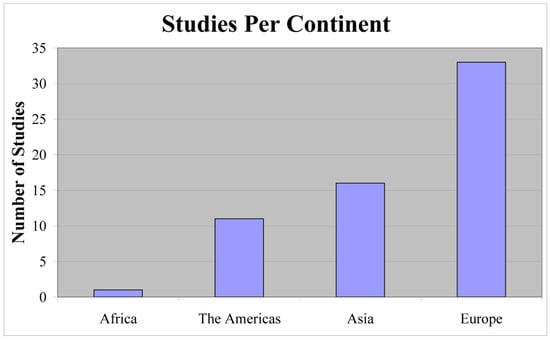
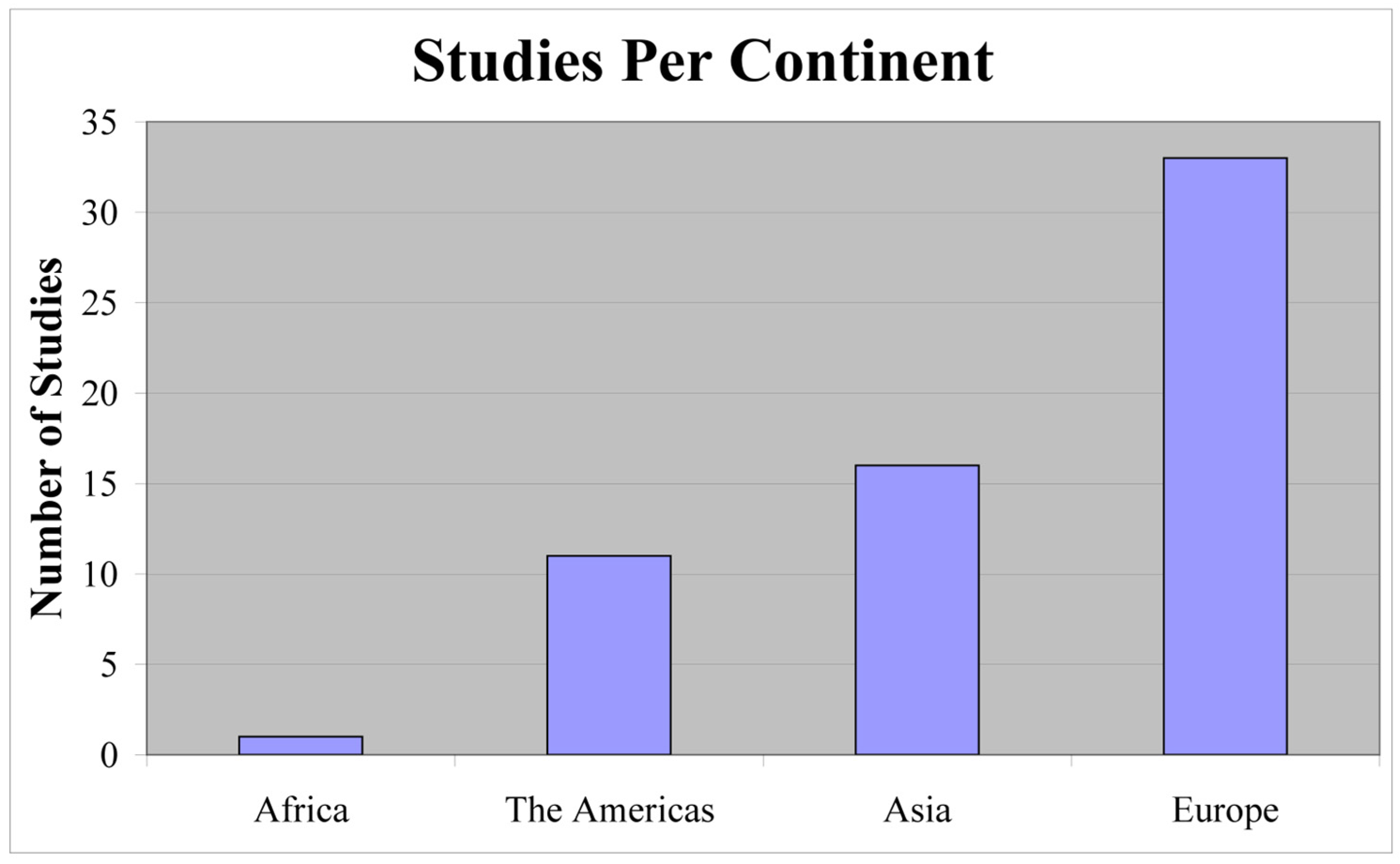
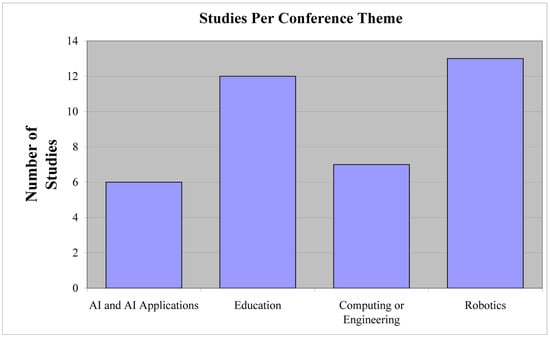
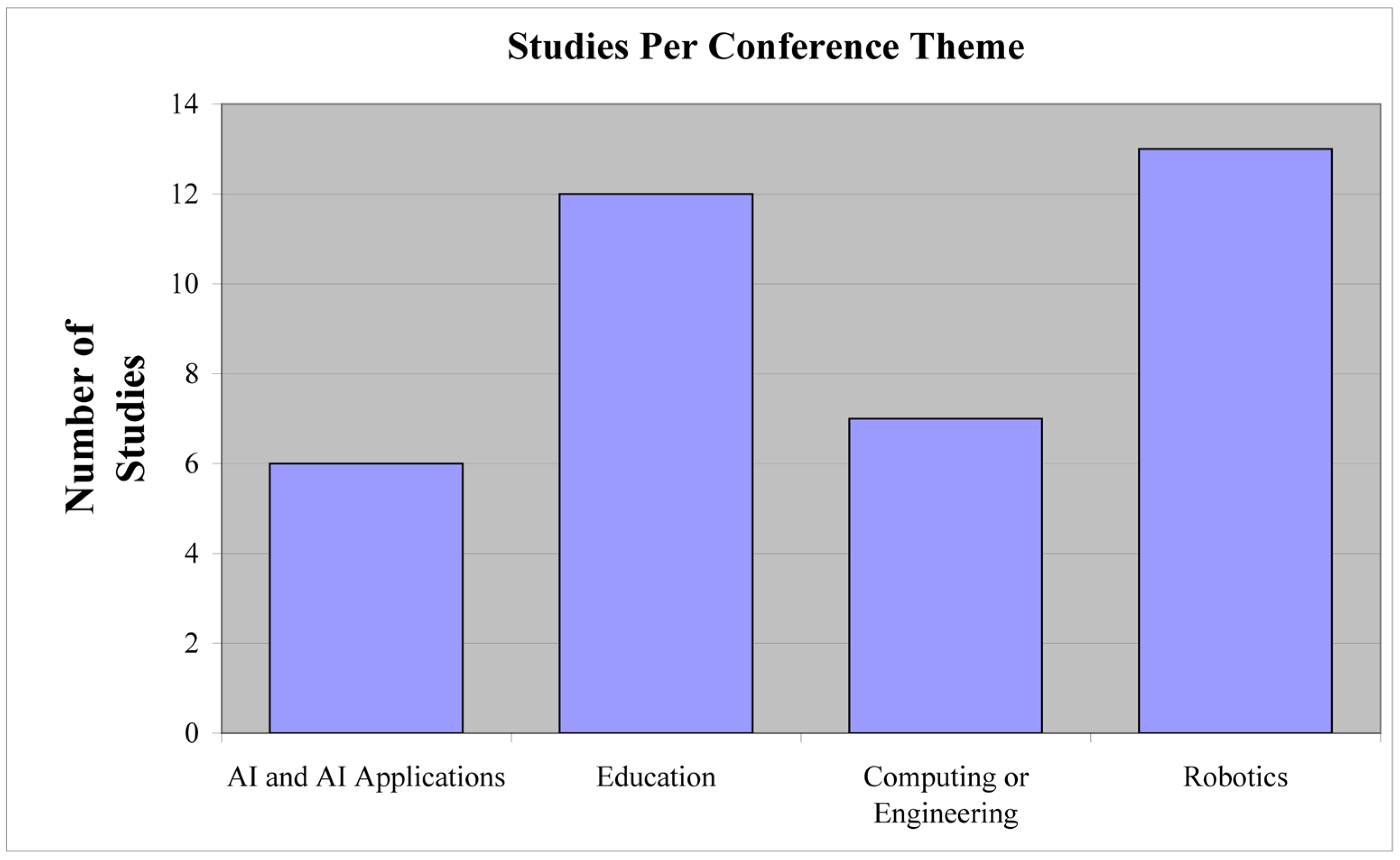
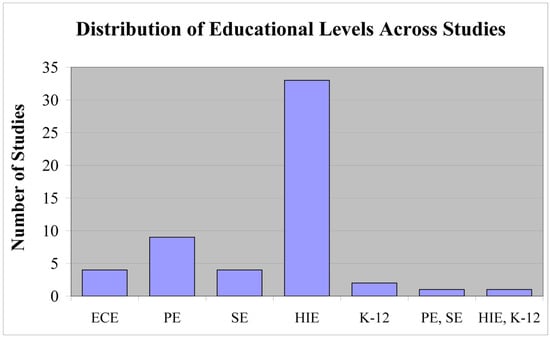
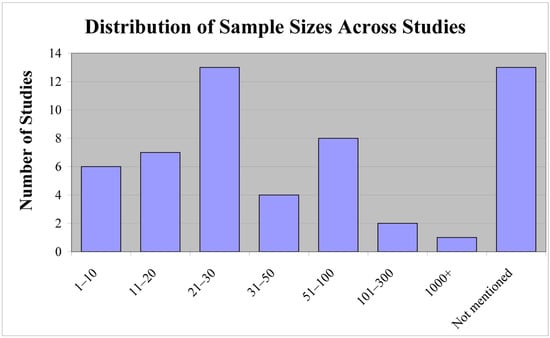
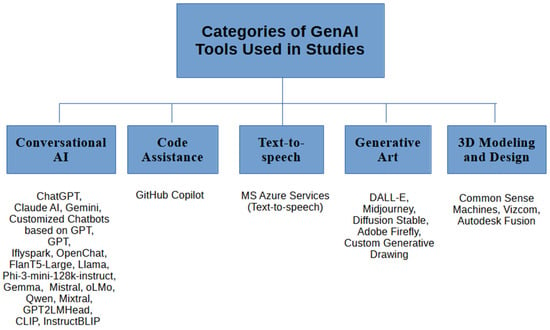
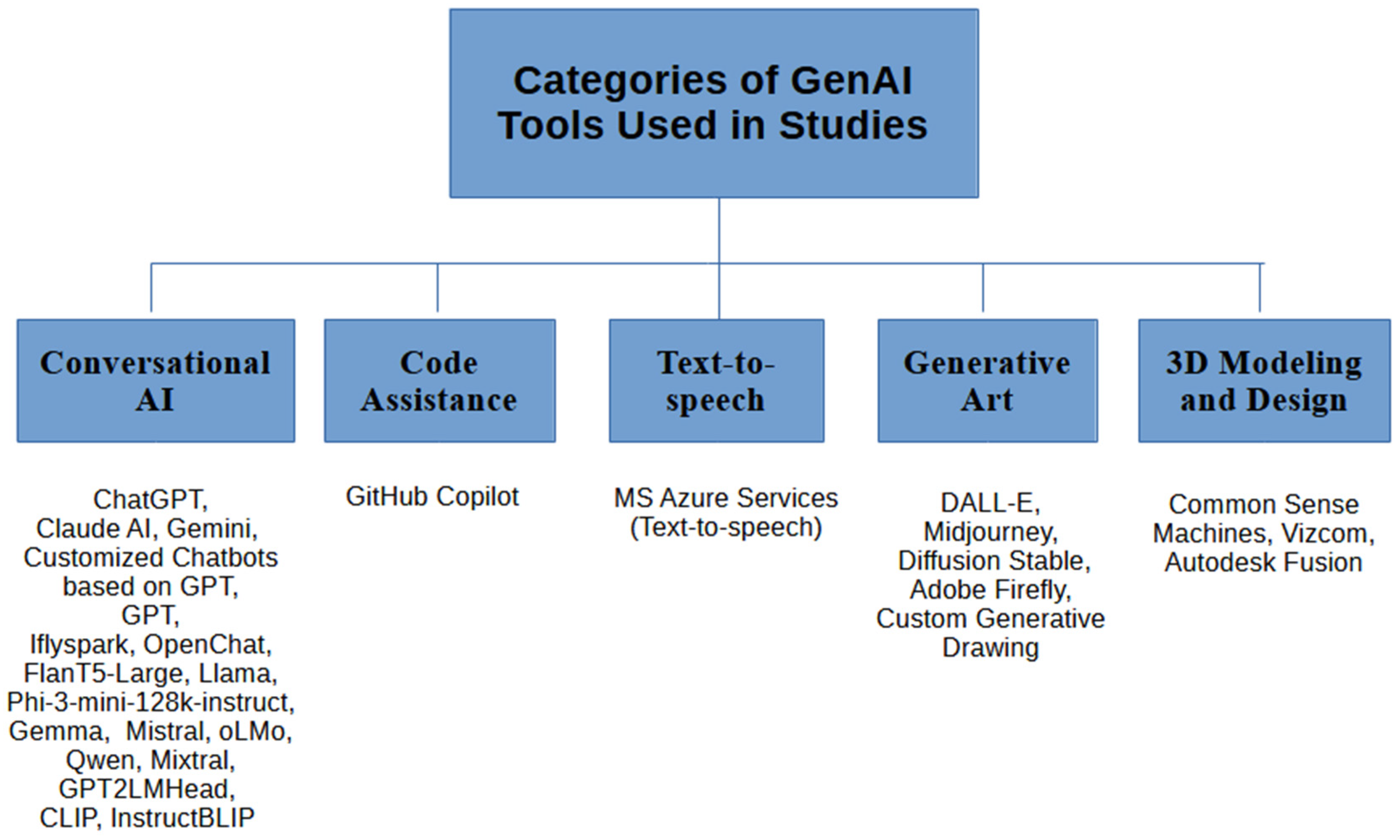
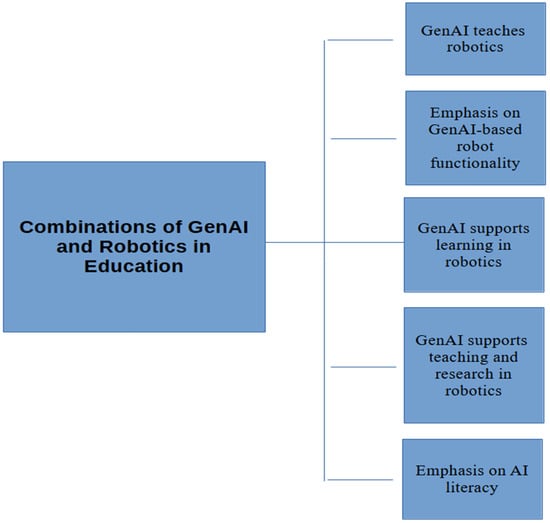
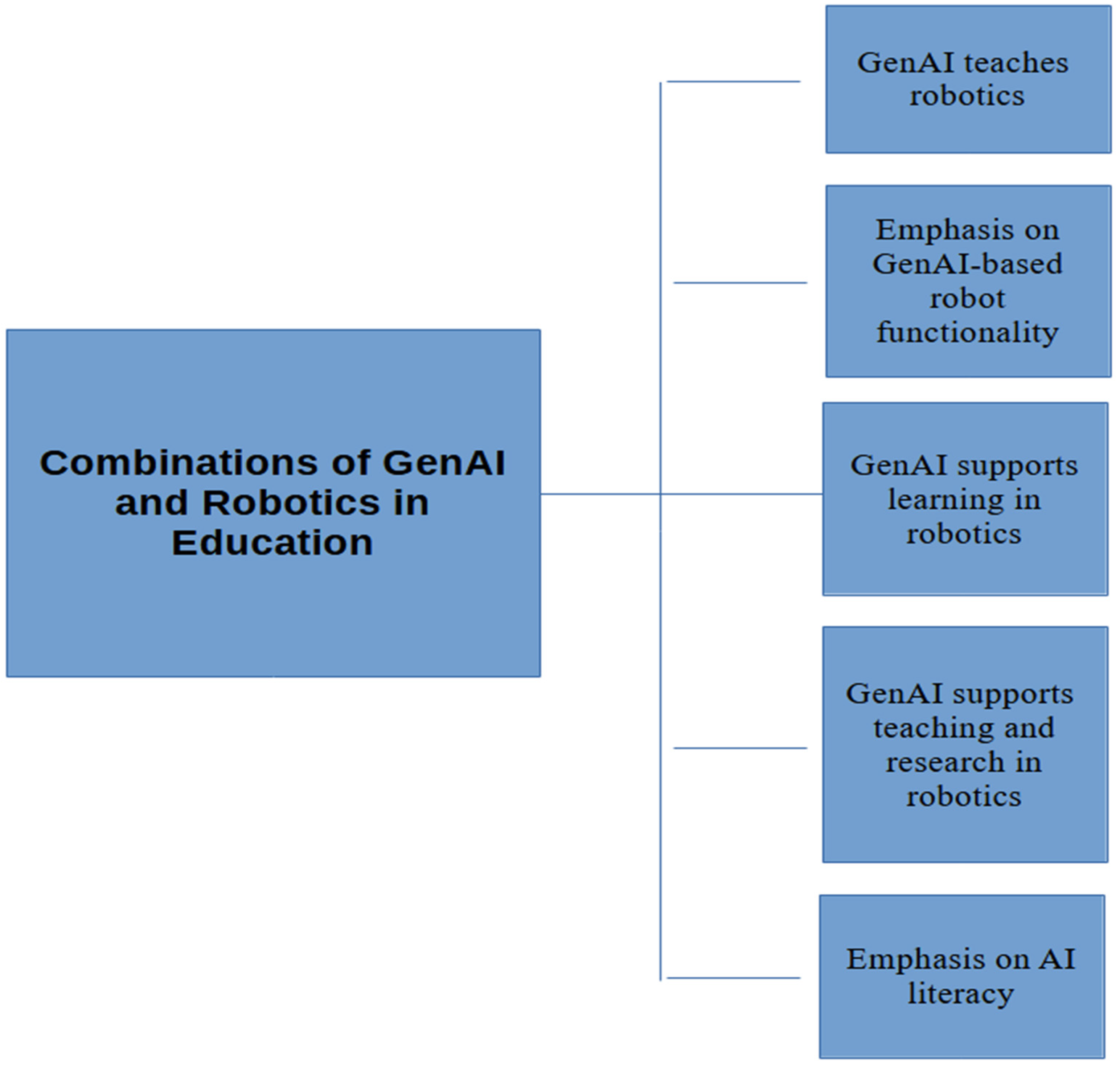
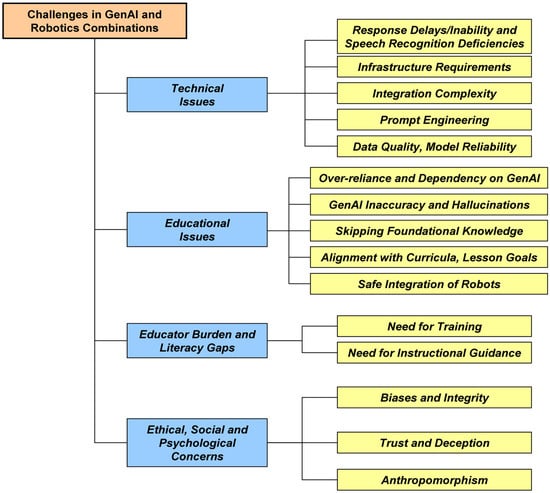

Disclaimer/Publisher’s Note: The statements, opinions and data contained in all publications are solely those of the individual author(s) and contributor(s) and not of MDPI and/or the editor(s). MDPI and/or the editor(s) disclaim responsibility for any injury to people or property resulting from any ideas, methods, instructions or products referred to in the content. |
© 2026 by the authors. Licensee MDPI, Basel, Switzerland. This article is an open access article distributed under the terms and conditions of the Creative Commons Attribution (CC BY) license.