


Abstract
The transition from 5G to 6G wireless systems marks a paradigm shift from “connected things” to “connected intelligence,” driven by the necessity to manage hyper-heterogeneous networks and overcome the Shannon capacity limit. This Systematic Literature Review (SLR) analyzes 118 primary studies to evaluate the transformative impact of Generative AI (GenAI) and Large Language Models (LLMs) on 6G architecture. We categorize the integration of GenAI into five semantic clusters: Architecture, Management, Security, Semantics, and Edge AI. The synthesis reveals that 6G is evolving toward an “AI-Native” ecosystem where LLMs show strong promise for augmenting network orchestration through Intent-Based Networking (IBN) and generative models demonstrate significant potential to augment or transcend traditional physical layer algorithms. Furthermore, the review identifies a fundamental transition from bit-oriented to semantic-oriented communication, utilizing GenAI to reconstruct meaning from minimal data. However, critical challenges remain, particularly the “energy–intelligence paradox” and the risks of model hallucinations in critical infrastructure. We conclude that while GenAI provides the necessary cognitive flexibility for 6G, its successful deployment depends on solving the “inference gap” through split learning and extreme model quantization at the edge.
1. Introduction
The evolution from 5G to 6G wireless systems represents a fundamental architectural transformation, driven by the necessity to support ultra-reliable low-latency communication (URLLC), massive machine-type communication (mMTC), and terabit-scale data rates [1]. This transition envisions a convergence of physical, digital, and biological worlds through applications like holographic presence and immersive Extended Reality (XR), which demand performance metrics far beyond the reach of current networks. As 3rd Generation Partnership Project (3GPP) standards evolve towards Release 21, the network architecture is becoming increasingly heterogeneous, expanding into a three-dimensional ecosystem that integrates terrestrial, aerial, and satellite components. Consequently, the complexity of managing physical and MAC layer resources has grown beyond the capabilities of traditional model-based optimization methods, creating a management landscape where manual intervention is virtually impossible [2,3].
While 5G successfully introduced AI-driven components, traditional discriminative AI (DAI) and deep learning (DL) models are encountering significant bottlenecks. Specifically, standard statistical models fail to capture the non-linear spatiotemporal characteristics of modern mobile traffic, often struggling to adapt to the bursty and unpredictable nature of next-generation services [4]. Moreover, the reliance of DL on massive supervised training sets creates a critical “data wall.” In dynamic wireless environments, collecting and labeling data for every possible interference scenario, channel condition, or cyber threat is prohibitively expensive and practically unfeasible. As a result, conventional “black-box” approaches remain largely reactive; they optimize based on historical precedents but lack the cognitive adaptability to handle unseen “zero-day” network states or generalize across diverse radio environments without extensive retraining [5,6].
To address these limitations, the telecommunications industry is pivoting toward Generative AI (GenAI) and Large Language Models (LLMs) as foundational pillars for the 6G architecture [7]. Unlike traditional methods that merely classify or predict based on existing patterns, GenAI introduces the capability to synthesize new data for Digital Twins, automate complex standard interpretation, and enable semantic communication [8]. This represents a shift from simple optimization to autonomous reasoning. Recent visionary frameworks, such as “NetLLM” and “AI-Native” architectures, propose integrating Foundation Models directly into the network edge to facilitate autonomous orchestration and self-healing [9,10]. Crucially, GenAI promises to bridge the widening “expertise gap” by translating high-level human intents expressed in natural language into executable low-level network configurations, thereby enabling true Intent-Based Networking. Furthermore, the transition to an “Intelligent Internet of Intelligent Things” requires edge systems that can automatically organize and adapt without human intervention, a task for which traditional cloud-centric AI is ill-suited due to latency constraints [11,12].
However, the integration of GenAI into 6G is not without challenges. Current research highlights severe fragmentation in technical approaches, ranging from “hallucinations” in network control loops, where models might generate plausible but physically invalid configurations, to the prohibitive energy costs of deploying large models on resource-constrained edge devices [13,14]. Moreover, existing security frameworks are often insufficient to address the unique vulnerabilities introduced by softwarized, multi-tenant architectures, where the AI model itself becomes a vector for adversarial attacks [15].
Against this backdrop, this Systematic Literature Review (SLR) aims to consolidate current knowledge and provide a technical roadmap. Unlike existing narrative surveys on 6G and AI [7,8], this review employs a rigorous PRISMA-based methodology to ensure reproducibility and eliminate selection bias. Crucially, it introduces an original five-cluster taxonomy that explicitly differentiates Generative AI contributions from discriminative AI baselines—covering the full network stack from the physical layer to orchestration within a single unified framework. This approach allows for a more precise mapping of how GenAI, as distinct from general deep learning, reshapes each layer of the 6G architecture. The primary objective is to answer the following research question (RQ): “How does the introduction of generative AI and LLM change the architecture and services in 6G networks?” By analyzing 118 primary studies, this paper categorizes the transition into five semantic clusters—Architecture, Management, Security, Semantics, and Edge AI—to delineate the shift from simple data transmission to semantic connected intelligence [16].
2. Materials and Methods
This Systematic Literature Review (SLR) was conducted following the Preferred Reporting Items for Systematic Reviews and Meta-Analyses (PRISMA) guidelines to ensure transparency, reproducibility, and rigorous selection of primary studies. The review process focused on identifying high-quality research articles that explicitly address the intersection of Generative AI (GenAI), Large Language Models (LLMs), and 6G network architectures. The methodology was designed to minimize selection bias and ensure comprehensive coverage of both theoretical frameworks and practical implementations.
2.1. Search Strategy and Selection Criteria
The literature search was performed across major academic databases, including IEEE Xplore, Scopus, Web of Science, and ACM Digital Library. The search query was constructed using Boolean logic to combine terms related to next-generation mobile networks (e.g., “6G,” “Beyond 5G,” “Network Architecture”) with specific AI terminology (e.g., “Generative AI,” “Large Language Models,” “GPT,” “Diffusion Models,” “Semantic Communication”). The temporal scope of the search covered the period from 2019 to early 2025. This timeframe was strategically selected to encompass the release of the first visionary 6G white papers and the simultaneous emergence of Transformer-based architectures, capturing the complete evolution of the topic from conceptual proposals to recent “native AI” implementations.
As illustrated in the PRISMA flow diagram (Figure 1), the initial search yielded a broad set of results which were first screened by title and abstract to remove duplicates and irrelevant non-technical articles. The remaining papers underwent a full-text review based on specific inclusion criteria: (1) the paper must propose a technical solution or framework; (2) it must utilize or analyze Generative AI or LLM techniques; (3) it must be applied within the context of 6G telecommunications. A critical filter was applied to distinguish between “AI-enabled” and “Generative AI-native” works; studies merely employing standard regression or discriminative classification (e.g., Convolutional Neural Networks (CNNs) without generative feedback) were excluded unless they provided a comparative baseline. This distinction is vital for answering the RQ regarding the shift to “connected intelligence,” ensuring the review focuses strictly on the generative capabilities of modern AI. Ultimately, 118 primary studies were selected for the final extraction and synthesis.
Figure 1.
PRISMA flow diagram of the study selection process.
2.2. Data Extraction and Semantic Clustering
To answer the research question, the selected papers were analyzed and categorized into five distinct semantic clusters. This taxonomy was developed inductively: initially, papers were tagged by their primary application domain (e.g., security, edge computing, PHY layer), and these tags were then grouped into higher-level clusters. Data extraction went beyond metadata, capturing the specific AI model architecture (e.g., LLaMA, Diffusion, GAN), the targeted network layer, and quantitative performance gains. To address the challenge of overlapping domains such as a secure edge offloading framework, a “primary contribution” rule was enforced: papers were assigned to the cluster reflecting their core technical innovation rather than their auxiliary benefits. To ensure methodological rigor and reproducibility, the tagging process followed a structured protocol: each paper was independently reviewed by two authors, who assigned primary domain tags from a pre-defined controlled vocabulary. Disagreements were resolved through discussion, and inter-reviewer agreement was assessed prior to finalizing cluster assignments. This process ensures that the taxonomy is not only internally consistent but also reproducible by independent researchers applying the same inclusion criteria and tagging guidelines.
Table 1 presents the quantitative distribution of the analyzed literature. A significant dominance is observed in Cluster 2 (Management), accounting for 41.2% of the studies. This reflects the immediate applicability of LLMs for interpreting human intent and automating complex network configurations (NetOps), representing the immediate opportunities of GenAI adoption. Cluster 1 (Architecture) follows with 22.7%, driven by the surge in Digital Twin research and AI-Native air interface designs. Conversely, Cluster 4 (Semantics) represents a niche but emerging field (6.7%). Unlike the Management layer, which can leverage existing software and hardware stacks, the PHY/Semantics layer requires fundamental mathematical re-definitions of information theory—a barrier that limits the volume of mature, implementable research available for inclusion. This distribution underscores a clear trend: the industry is currently prioritizing operational efficiency, while the transition to radical physical layer paradigm shifts remains in a nascent research phase.
Table 1.
Quantitative distribution of the analyzed literature.
3. Results
3.1. Generative AI-Native 6G Architecture (C1)
The transition to 6G is not merely an upgrade in speed but a fundamental architectural restructuring towards an “AI-Native” paradigm. Unlike 5G, where AI was often an “add-on” to optimize specific functions, 6G architectures are increasingly being envisioned with Generative AI (GenAI) and Large Language Models (LLMs) as prospective intrinsic components. This cluster, comprising 27 primary studies, identifies four critical architectural shifts: the emergence of generative physical layers, the automation of standard interpretation, the rise of cognitive agentic workflows, and the evolution of cloud-native Digital Twins.
3.1.1. From Discriminative to Generative Physical Layers
The physical layer (PHY) faces unprecedented challenges in the Terahertz (THz) era, particularly with signal attenuation and Inter-Symbol Interference (ISI) caused by adverse weather [17]. Traditional model-based designs and discriminative AI (DAI) are proving insufficient for these dynamic environments due to data scarcity [6]. Consequently, researchers are increasingly proposing GenAI-driven physical layers as a promising direction, though most implementations remain at the experimental or simulation stage. For instance, ref. [5] demonstrates that ANN-based demodulators can match optimal model-based systems without prior channel knowledge, while ref. [18] utilizes Denoising CNNs (DnCNN) to reduce channel estimation complexity by two orders of magnitude in massive MIMO systems. Similarly, ref. [19] applies Particle Swarm Optimization (PSO) to address power consumption in high-resolution DACs. Moving beyond traditional RF methods, ref. [20] introduces Computer Vision-aided Beam Management (CVBM), using object detection to reduce beamforming latency to 15.8ms. These innovations collectively suggest a move towards a “Wireless Big AI Model” (WBAIM) architecture [21], where a unified foundation model handles diverse PHY tasks across scenarios, potentially replacing or substantially reducing reliance on fragmented, task-specific models [22].
3.1.2. Automating Standards
A unique application of GenAI in 6G architecture is the automation of technical knowledge itself, effectively creating a new “Semantic Knowledge Plane” above the traditional control layer. The growing complexity of 3GPP releases (Rel-15 to Rel-21) has created a bottleneck where human operators struggle to interpret vast technical specifications [1,3]. Several studies propose Retrieval-Augmented Generation (RAG) frameworks to solve this. Refs. [16,23] utilize fine-tuned LLMs (BERT, LLaMA) to classify and interpret 3GPP working group documents, achieving up to 75% accuracy in energy estimation models. More advanced implementations, such as the TSpec-LLM dataset [24], demonstrate that RAG can significantly reduce hallucinations when querying technical standards. This trend suggests that future 6G architectures may demonstrate significant potential to develop the cognitive ability to parse and implement standard-compliant configurations autonomously.
3.1.3. Cognitive Agents and Reasoning-Based Control
The 6G architecture is evolving from static automation to cognitive reasoning. Papers in this cluster explore how LLMs can act as autonomous agents using advanced prompting strategies like Chain-of-Thought (CoT) and Tree of Thoughts (ToT) [25]. For example, ref. [26] introduces the “Reflexion” framework, allowing agents to verbally reinforce learning and improve success rates in complex tasks. To ensure these agents align with human values, ref. [27] proposes “Constitutional AI,” embedding safety rules directly into the model. Beyond text, ref. [10] argues for Large Multi-Modal Models (LMMs) that can ground reasoning in physical reality, while ref. [28] automates the hardware design process itself by generating Verilog code using fine-tuned LLMs. In optimization tasks, ref. [29] even utilizes LLMs as “black-box search operators” within evolutionary algorithms, distilling their behavior into interpretable linear operators.
3.1.4. Unifying Cloud-Edge and Digital Twins
Finally, the macro-architecture of 6G is being flattened to support “Cloud-Edge Synergy” [30]. Visionary frameworks propose a dedicated AI-Plane that sits alongside traditional User and Control Planes to orchestrate distributed intelligence [8,31]. This is essential for managing network slicing in heterogeneous environments [32], where multi-agent Deep Reinforcement Learning (MADRL) can decentralize resource management for URLLC [33]. Ref. [13] introduces an ‘AI Interconnect’ to prevent model ossification and manage the lifecycle of distributed GenAI models. Furthermore, GenAI is identified as a foundational pillar for high-fidelity Digital Twins [7,34]. By synthesizing realistic traffic and channel data, GenAI addresses the “sim-to-real” gap, enabling zero-touch automation even in scenarios where real-world training data is absent.
3.1.5. Architectural Synthesis
The integration of these diverse components necessitates a unified reference model. Figure 2 illustrates the proposed GenAI-Native 6G Architecture derived from the analyzed literature. The architecture is stratified into three interactive planes:
Figure 2.
6G AI-Native architecture.
The Semantic Knowledge Plane (Top) utilizes RAG-based agents [24] to interpret human intent and 3GPP standards, translating them into executable policies.
The AI-Native Orchestration Plane (Middle) leverages Digital Twins [34] and Multi-Agent Reinforcement Learning [33] to manage resources dynamically across the Cloud-Edge continuum.
The Generative PHY Plane (Bottom) employs foundational models (WBAIM) [21] for task-agnostic signal processing.
This layered approach ensures that intelligence flows vertically, allowing high-level semantic reasoning to directly influence low-level physical transmission parameters. Quantitatively, the studies in this cluster report significant gains: beamforming latency reduced to 15.8 ms via Computer Vision-aided methods [20], channel estimation complexity reduced by two orders of magnitude using DnCNN [18], and RAG-augmented LLMs improved 3GPP specification query accuracy from ~44–51% to 71–75% [24].
To quantify the shift from legacy systems, Table 2 contrasts the traditional model-based approaches of 5G with the data-driven, generative methodologies proposed for 6G. This comparison highlights a critical transition: while 5G relies on pre-defined mathematical rules (e.g., Kalman filters, static codebooks), 6G leverages GenAI to learn and synthesize solutions for scenarios that were not explicitly programmed, such as unseen channel interference or novel security threats.
Table 2.
Comparison of traditional 5G and GenAI-Native 6G architectural approaches.
In summary, the literature confirms that GenAI is not just an optimization tool but the structural foundation of 6G, enabling a self-evolving architecture that bridges the gap between human specifications and physical reality.
3.2. Intelligent Network Management and Orchestration (C2)
The most prolific area of research identified in this review, comprising 49 studies (41.2%), is the application of Generative AI and Large Language Models (LLMs) to Network Management and Orchestration (MANO). As 6G networks evolve into highly heterogeneous environments integrating terrestrial, aerial, and satellite components [37], the operational complexity exceeds human cognitive limits. Traditional management paradigms, which rely on manual configuration or static rules, are proving inadequate for handling the projected data volumes and dynamic topologies of 6G [38,39,40]. Consequently, the literature indicates a decisive transition from “Zero-Touch” automation (based on discriminative AI) to “Intent-Based” autonomy (driven by Generative AI). This section analyzes this transition across four key domains: generative forecasting, intent translation, autonomous optimization, and multi-agent collaboration.
3.2.1. From Discriminative Forecasting to Foundation Models
Accurate prediction of network traffic and user behavior is the precursor to effective resource allocation. Traditional methods, such as AutoRegressive Integrated Moving Average (ARIMA) or standard Long Short-Term Memory (LSTM), struggle to capture the non-linear spatiotemporal characteristics of modern traffic [2,4]. While discriminative approaches like the TSCRNN (Time-Space Convolutional Recurrent Neural Network) classifier [41] and hybrid frameworks integrating CNNs with LSTMs [42] have improved classification and latency management, they often lack generalization across different network domains and encrypted traffic types.
Generative AI addresses this by introducing Foundation Models for time series. Studies such as [43,44] demonstrate that LLMs, pre-trained on vast textual datasets, can be repurposed for numerical forecasting. The LLM4TS framework [43] and TIME-LLM [44] utilize techniques like “Prompt-as-Prefix” to align time-series data with language tokens, achieving superior zero-shot performance compared to specialized deep learning models. Similarly, TimeGPT [45] illustrates the capability of Transformer-based architectures to perform inference on unseen datasets (zero-shot) with speeds as fast as 0.6 ms, fundamentally changing the economics of predictive management. This shift allows operators to deploy a single “Universal Forecaster” rather than training thousands of specific models for each base station [10].
3.2.2. Intent-Based Networking (IBN) and Automated Operations (NetOps)
The most transformative contribution of LLMs to 6G is the realization of true Intent-Based Networking (IBN). Several studies highlight the “expertise gap” where operators struggle to translate high-level service goals into low-level configurations [46,47]. Generative AI bridges this gap by functioning as a natural language interface. Comprehensive surveys [48] confirm that LLMs are creating a new taxonomy for “Generative NetOps,” covering tasks from configuration to diagnostics.
Research by [49,50] evaluates the technical proficiency of models like GPT-4 and LLaMA in telecom contexts. The TeleQnA benchmark [50] reveals that while general LLMs achieve ~86% on lexicon tasks, they require Retrieval-Augmented Generation (RAG) to accurately handle 3GPP specifications [51]. Building on this, frameworks like OptiMUS [46] and Emergence [52] demonstrate “Agentic Workflows” where LLMs decompose abstract intents (e.g., “optimize for low latency”) into specific mathematical constraints or executable policies. However, blind reliance on LLMs is dangerous. Ref. [53] characterizes LLMs as narrowly specialized models capable of generating complex router configurations but that are prone to syntax errors. Their Verified Prompt Programming framework mitigates this by integrating formal verification tools, ensuring mathematical soundness before deployment. Similarly, refs. [54,55] apply these capabilities to fault diagnosis, using LLMs to analyze unstructured trouble tickets.
3.2.3. Generative Optimization and Resource Allocation
Beyond text processing, GenAI is increasingly used as a Black-Box Optimizer for complex mathematical problems [56]. In scenarios like massive MIMO beamforming or Reconfigurable Intelligent Surface (RIS) tuning, the solution space is too vast for exhaustive search.
While Deep Reinforcement Learning (DRL) remains a dominant approach for resource allocation [57,58,59,60,61,62,63], it often suffers from sample inefficiency. GenAI models and advanced DRL are addressing these gaps in dynamic environments. For instance, in UAV-assisted networks, ref. [64] demonstrates that Deep Q-Networks (DQN) can reduce mission completion time by 60% compared to heuristics, while ref. [65] utilizes Multi-Agent Federated RL (MAFRL) to minimize data collection time while preserving privacy. Similarly, ref. [66] uses VAE-GANs to generate realistic smart home energy data to robustly train these agents.
Novel generative approaches further enhance exploration. Ref. [67] utilizes Diffusion Models to outperform standard DRL baselines in Non-Terrestrial Networks (NTNs). Other researchers have explored hybrid strategies: ref. [68] combines heuristic DRL for RIS phase shifts, ref. [69] employs multi-Agent DRL for beam training without explicit CSI, and ref. [70] introduces fuzzy optimization for IoT task scheduling. Additionally, ref. [71] proposes a unified framework integrating GenAI for spectrum sensing, while ref. [72] introduces In-Context Learning (ICL) for power control, allowing models to optimize parameters by learning from prompt examples without gradient updates.
3.2.4. Multi-Agent Systems and Heterogeneous Networks
As 6G expands into non-terrestrial networks, management becomes a distributed challenge. Ref. [73] provides a systematic review of LLM-based Multi-Agent (LLM-MA) systems, proposing architectures where distinct agents (e.g., “Slicing Agent,” “Security Agent”) collaborate. This is crucial for managing large-scale UAV swarms [74] and Integrated Satellite–Aerial–Terrestrial Networks (ISATNs) [37], where centralized control is unfeasible due to latency. Innovative frameworks like NetLLM [9,75] and FrugalGPT [76] propose adapting these heavy models for the edge, utilizing techniques like Low-Rank Adaptation (LoRA) to minimize resource consumption. Ref. [77] further integrates LLMs with Graph Neural Networks (GNNs) to optimize topology management.
3.2.5. Synthesis of Intelligent Management
The literature confirms that GenAI is shifting network management from a “script-based” to a “dialogue-based” paradigm. Figure 3 visualizes the GenAI-Driven Intent-Based Networking Cycle, a recurrent theme across the analyzed papers. The cycle begins with a human operator expressing an intent, which is parsed by an LLM Agent [46]. The agent retrieves domain knowledge (RAG) [51], generates a candidate configuration, and crucially passes it through a Verification Module [53] before applying it to the Physical Network. The loop is closed by Feedback/Monitoring agents [78] that report performance back to the LLM. Key quantitative outcomes across C2 include: TimeGPT performing zero-shot inference in as little as 0.6 ms [45], UAV mission completion time reduced by 60% using Deep Q-Networks [64], and fault diagnosis systems achieving 30–50% reductions in Mean Time To Repair (MTTR) through LLM-based analysis of unstructured trouble tickets [54,55].
Figure 3.
GenAI Intent-Based Networking loop.
Collectively, these figures demonstrate a concrete operational advantage: across the reviewed C2 studies, GenAI-driven management approaches reduce resource optimization time by 15–60% and improve zero-shot adaptability to unseen network states—capabilities that are structurally unavailable to traditional rule-based or task-specific discriminative AI methods.
Table 3 summarizes the comparative advantages of GenAI-driven management over traditional methods.
Table 3.
Comparative analysis of traditional discriminative AI and Generative AI paradigms in 6G network management.
Despite these advancements, significant challenges remain. The computational cost of running these models is immense. Ref. [79] notes that a 65B parameter model can consume up to 1 kW. To address this, optimization techniques like ZeRO (Zero Redundancy Optimizer) [80] and aggressive power capping are being explored to make training trillion-parameter models feasible on existing hardware. Furthermore, the risk of “cascading hallucinations” in multi-agent systems [73] poses a critical stability challenge. In 6G orchestration contexts, this failure mode is particularly dangerous: when one agent generates a plausible but physically invalid configuration, downstream agents that depend on its output may propagate and amplify the error across the orchestration plane before any human operator can intervene. For example, a Slicing Agent that hallucinates an incorrect QoS constraint could trigger erroneous resource re-allocation by a connected Scheduling Agent, destabilizing network slices at scale. Mitigation strategies identified in the literature include formal verification layers integrated into LLM pipelines [53], Constitutional AI alignment constraints embedded at the model level [27], and mandatory Human-in-the-Loop checkpoints at critical decision boundaries [81]. Ref. [73] poses a stability risk that requires rigorous “Human-in-the-Loop” safeguards [81].
3.3. Security and Privacy in the GenAI (C3)
The transition to 6G introduces a massive expansion of the attack surface. As networks become softwarized, multi-tenant, and heterogeneous, traditional security models (like the static CIA triad) are no longer sufficient [15,82]. The integration of Generative AI creates a unique dual-edged dynamic, described in the literature as the “Sword and Shield” paradox. This cluster of 19 papers investigates how GenAI serves both as a sophisticated defender against zero-day attacks and, conversely, as a tool for automating cyber-offensives.
3.3.1. GenAI as a Defender: Advanced Intrusion Detection (IDS)
The primary application of GenAI in defense is overcoming data scarcity for Intrusion Detection Systems (IDSs). Real-world attack data, especially for zero-day exploits, is rare, leading to imbalanced datasets that cripple traditional classifiers. To address this, ref. [83] utilizes Wasserstein Conditional GANs (WCGAN-GP) to synthesize realistic attack traffic, mixing it with real data to achieve a 99.29% F1-score on the BoT-IoT dataset. Similarly, ref. [84] employs ensemble learning to protect IoT systems against diverse threats like botnets. For encrypted traffic, where packet payloads are invisible, ref. [85] introduces ET-BERT, a pre-trained model that analyzes traffic patterns without decryption, achieving 99.3% accuracy in malware classification. Ref. [86] further refines this by combining BERT with CNNs (BFCN) to capture both global packet dependencies and local byte-level features. In the resource-constrained IoT/IIoT domain, ref. [87] proposes SecurityBERT, a lightweight model that detects threats with 98.2% accuracy while maintaining a minimal inference time (0.15 s), proving that Transformer architectures can be adapted for the edge. Furthermore, at the physical layer, ref. [88] demonstrates that Diffusion Models can act as denoisers, recovering signals from jamming attacks with greater fidelity than traditional filters.
3.3.2. GenAI as an Offender: Automating Cyber Threats
Conversely, the democratization of GenAI lowers the barrier for cybercriminals. Ref. [89] introduces “Occupy AI,” a framework illustrating how fine-tuned GPT models can automate sophisticated attacks, including generating polymorphic malware and convincing phishing campaigns with a 75.4% click rate. The network architecture itself faces new vulnerabilities. Ref. [90] reveals that deep learning-based air interfaces are susceptible to adversarial perturbations, where carefully crafted noise causes modulation accuracy to drop from 95% to 80%. In the open O-RAN architecture, ref. [91] highlights risk of “poisoning” AI models and suggests that even quantum-safe cryptography (QKD) may not fully mitigate AI-driven logic corruption. Moreover, ref. [92] (ShieldGPT) notes that while LLMs can explain attacks, generating automated mitigation commands (e.g., ACL rules) runs the risk of “hallucinating” configurations that could disrupt legitimate traffic.
3.3.3. Privacy, Trust, and Explainability (XAI)
With intelligence distributed across the Cloud-Edge continuum, privacy becomes paramount. Ref. [93] addresses the privacy–utility trade-off in distributed learning, proposing “Hash-Comb Randomized Quantization” to achieve Differential Privacy (DP) with a 20% higher F1-score than standard methods. For critical sectors like E-Health, ref. [94] provides a taxonomy of privacy-preserving techniques, warning that while LLMs enhance predictive analytics, they also incur high risks of bias and data leakage. To build trust in these “black-box” models, Explainable AI (XAI) is essential. Ref. [95] surveys XAI techniques for 6G, arguing that operators must understand why an anomaly was flagged before acting. Ref. [96] proposes fastSHAP-C, a real-time explanation method for O-RAN that is 30% faster than standard SHAP, enabling “Reactive XAI” that can keep pace with 6G latency requirements. Finally, for secure connectivity in dynamic environments like UAV swarms, ref. [97] develops lightweight ECC-based authentication protocols to prevent impersonation without draining battery life.
3.3.4. Security Synthesis
The literature suggests that 6G security is moving from static, rule-based perimeters to dynamic, AI-driven immunological systems. Figure 4 illustrates this “Sword and Shield” dynamic, identifying the specific GenAI models used for both attack and defense.
Figure 4.
The dual role of Generative AI in 6G cybersecurity.
Table 4 categorizes the analyzed papers based on their security function, highlighting the specific AI architectures employed.
Table 4.
Taxonomy of Generative AI applications in 6G security.
In conclusion, GenAI acts as a force multiplier in 6G security. While it empowers defenders with the ability to detect unknown threats via synthetic training and BERT-based analysis, it simultaneously arms attackers with automated tools, necessitating a continuous “AI vs. AI” arms race. Key quantitative outcomes in this cluster include: WCGAN-GP achieving an F1-score of 99.29% on the BoT-IoT dataset [83], ET-BERT achieving 99.3% accuracy in malware classification [85], SecurityBERT detecting 14 attack types with 98.2% accuracy at 0.15 s inference time [87], and fastSHAP-C providing real-time XAI explanations 30% faster than standard SHAP [96]. Notably, the challenge of trustworthy collaborative learning across decentralized 6G nodes is addressed by privacy-preserving Federated Learning frameworks with secure aggregation, which demonstrate how AI can be deployed in a trustworthy manner across distributed IoT and network infrastructures without centralizing sensitive data [100].
3.4. From Bits to Meaning: Semantic Communications (C4)
While the previous clusters addressed how to manage and secure the network, Cluster 4 (eight papers) addresses the fundamental question of what is being transmitted. As 6G approaches the Shannon capacity limit, the literature indicates an emerging transition toward ‘Semantic-Oriented Communication’, representing a potential paradigm shift from conventional bit-oriented transmission. It is important to clarify that this shift does not constitute a general circumvention of Shannon’s theorem; rather, it leverages task-specific semantic efficiency—achieving radical compression for specific intelligent tasks (e.g., object detection, intent inference) where the receiver’s AI can reconstruct meaning from minimal cues. This transition leverages Generative AI not just for compression, but for reconstructing information at the receiver side with minimal data transfer.
3.4.1. Semantic Compression and Reconstruction
The core innovation in this domain is the use of Generative AI to “hallucinate” missing data segments based on context, drastically reducing bandwidth usage. Ref. [101] proposes a multi-modal framework using Diffusion Models (DFMs) that transmit only skeletal data (0.5 MB) instead of full images (6.7 MB), relying on the receiver’s AI to reconstruct the scene with high fidelity. Similarly, ref. [102] employs generative Diffusion Models to optimize semantic fidelity (SSIM) under low SNR conditions, demonstrating that AI can infer lost packets better than traditional error correction codes.
Moving beyond images, ref. [103] introduces the SE-SC (Scalable Extraction Based Semantic Communication) model. By using Masked Autoencoders (MAE), it reduces transmission symbols by 23.7% while maintaining object detection accuracy comparable to transmitting the full feature set. This confirms that for intelligent machine-to-machine tasks, transmitting the “semantics” (e.g., “red car turning left”) is sufficient, rendering raw pixel transmission obsolete.
3.4.2. Reasoning and Forecasting as Semantic Tasks
Generative AI also transforms how networks process numerical and logical data. Refs. [104,105] investigate the reasoning capabilities of LLMs using Chain-of-Thought (CoT) and ReAct prompting. They show that by generating intermediate reasoning steps, LLMs can solve complex symbolic tasks that traditional numerical models cannot. Ref. [106] applies this to time-series forecasting with PromptCast, treating numerical prediction as a semantic sentence-generation task, which achieves superior zero-shot generalization compared to rigid numerical models.
However, this shift introduces new risks. Ref. [107] proposes a conceptual framework for deploying these semantic LLMs at the IoT edge but warns of privacy leakage when “meaning” is decoded at intermediate gateways. Furthermore, ref. [108] (OpenAI’s analysis of GPT-4V) highlights the safety challenges of Multimodal LLMs, noting that visual semantic interpretation can be “jailbroken,” leading to ungrounded inferences or “hallucinations” that could mislead semantic receivers.
3.4.3. Synthesis of Semantic Architectures
To visualize this fundamental architectural divergence, Figure 5 contrasts the traditional bit-oriented pipeline with the emerging semantic-oriented approach. While the legacy path focuses on channel coding to protect bits against noise, the GenAI path focuses on a “Semantic Encoder” that extracts the core intent and a “Semantic Decoder” that regenerates the content using a shared knowledge base, thereby bypassing the Shannon limit for specific intelligent tasks, rather than in the general information-theoretic sense.
Figure 5.
Comparison of traditional and GenAI semantic communication pipelines.
Table 5 contrasts the operational principles of traditional communication with the emerging GenAI-driven semantic paradigm. As detailed below, the fundamental difference lies in the metric of success: shifting from technical accuracy (BER) to semantic fidelity (meaning preservation), which allows 6G networks to achieve radical compression efficiency beyond Shannon’s theorem for specific intelligent tasks. It should be noted that these gains apply to task-specific semantic efficiency and do not represent a general circumvention of fundamental information-theoretic capacity limits.
Table 5.
Comparison of bit-oriented vs. semantic-oriented communication paradigms.
3.5. Edge AI and Cloud-Edge Synergy (C5)
The final and critical piece of the 6G puzzle is where this intelligence resides. Cluster 5 (15 papers) addresses the “Deployment Gap”: large GenAI models are too heavy for edge devices, yet 6G applications (autonomous driving, XR) demand ultra-low latency that cloud processing cannot provide. This section analyzes how the industry is solving this via Split Learning, Model Quantization, and Hierarchical Intelligence.
3.5.1. Split Learning and Distributed Inference
To run massive models on constrained devices, researchers are effectively “cutting” the neural networks. Refs. [36,109] propose Split Learning (SL), where the model is partitioned: the early layers run on the mobile device (preserving privacy), while the heavy computation is offloaded to the edge server. Ref. [110] refines this with Efficient Parallel Split Learning (EPSL), reducing training latency by 50% through joint optimization of subchannels and cut layers. For even deeper integration, ref. [111] introduces a “SplitMoE” (Mixture of Experts) architecture, achieving LLM-level performance at only 25.8% of the computing cost by activating only relevant model experts.
3.5.2. On-Device “Tiny” GenAI and Optimization
Running GenAI natively on devices is the goal. Ref. [112] introduces QLoRA (Quantized Low-Rank Adaptation), a breakthrough technique allowing a 65B parameter model to be fine-tuned on a single GPU with minimal performance loss. Similarly, ref. [113] proposes Csi-L2O, a model-driven deep learning approach that reduces computational FLOPs to just 0.15% of state-of-the-art models for channel feedback.
Addressing memory bottlenecks, ref. [114] presents “LLM in a flash,” a framework utilizing flash memory to run models 2× larger than available DRAM. Ref. [35] proposes LLMCad, a “generate-then-verify” architecture where a small on-device model generates tokens that are asynchronously verified by a larger model, speeding up inference on smartphones by up to 9.3×.
It is important to contextualize these optimization gains against the realistic hardware constraints of typical 6G edge nodes. Under current roadmaps, edge devices are expected to operate within power budgets of approximately 5–20 W with memory capacities in the range of 4–16 GB. Under these constraints, models in the 7B parameter range require aggressive 4-bit quantization (as demonstrated by QLoRA [112]) to be deployable natively, while models in the 65B range are feasible only through flash-memory offloading [114] or split learning [36,110]. Models exceeding 100B parameters remain currently infeasible for standalone edge deployment without further hardware advances. This boundary is a critical practical constraint: the performance gains demonstrated in controlled experiments may not be fully reproducible within the power and memory envelopes of deployed 6G infrastructure, and it should be a primary consideration when evaluating GenAI deployment strategies for latency-sensitive applications.
3.5.3. Autonomous Agents at the Edge
The convergence of Edge AI and GenAI enables fully autonomous cyber-physical systems. Refs. [11,14] define the roadmap for this “Intelligent Internet of Intelligent Things,” where edge nodes not only process data but reason about it. Ref. [12] demonstrates a hierarchical framework where GPT-4 acts as a controller for edge clients, reducing communication overhead by 85%.
Specific applications include DriveGPT4 [115] for autonomous vehicles, which provides interpretable end-to-end driving decisions, and [116] (EODF), which optimizes object detection offloading. In the IoT domain, ref. [117] develops a “Three-Stage Prompting” system for local LLaMA-3 models, enabling complex reasoning on tabular data directly on the device. Finally, ref. [118] proposes fully decentralized, server-less federated learning (CFA-GE), removing the single point of failure in massive IoT networks.
3.5.4. Edge AI Synthesis
The progression from centralized cloud training to distributed edge inference is visualized in Figure 6, which depicts the “Split Computing” paradigm. This architecture is essential for minimizing the latency of GenAI services to the microsecond levels required by 6G.
Figure 6.
Hierarchical split learning architecture for 6G edge intelligence.
Table 6 summarizes the optimization techniques that enable Large Language Models to fit into the constrained “Edge” of 6G. The data highlights a multi-pronged approach: algorithmic splitting (Split Learning), mathematical compression (Quantization/QLoRA), and hardware-aware memory management (flash attention), all working in concert to democratize access to GenAI.
Table 6.
Optimization techniques for deploying GenAI on 6G edge devices.
In conclusion, Cluster 5 demonstrates that the “Brain” of 6G is moving out of the data center. Through split architecture and extreme quantization, GenAI is becoming a ubiquitous utility available at the extreme edge of the network. Quantitatively, this cluster reports: EPSL reducing split learning latency by 50% [36], SplitMoE achieving LLM-level performance at just 25.8% of compute cost [110], QLoRA enabling fine-tuning of a 65B parameter model on a single GPU [111], LLMCad accelerating on-device inference by up to 9.3× on smartphones [114], and hierarchical GPT-4 edge control reducing communication overhead by 85% [35].
4. Conclusions
This Systematic Literature Review analyzed 118 primary studies to answer the central research question: “How does the introduction of generative AI and LLM change the architecture and services in 6G networks?” The synthesis of evidence confirms that 6G represents a fundamental departure from the “bit-pipe” architecture of previous generations toward a semantic, AI-Native ecosystem. However, this transition is not merely an upgrade of capabilities but a collision between visionary architectural requirements and current physical limitations.
A critical analysis of the literature reveals that the primary obstacle to this transition is the energy–intelligence paradox. As noted in [1,79], the 6G vision of “Green Networks” directly contradicts the computational reality of Foundation Models, where a single 65B parameter model can consume up to 1 kW during inference. Without breakthrough advancements in neuromorphic computing or extreme quantization [112], the vision of ubiquitous “Native AI” at the edge remains energetically unfeasible. Addressing this paradox is among the most important directions for future work. The literature suggests a portfolio of complementary ‘Green AI’ strategies whose trade-offs must be carefully evaluated within a network context. Model pruning—the structured removal of redundant weights—can reduce inference energy by 30–50% with acceptable performance degradation, and is particularly well-suited to stable, well-defined network management tasks. Knowledge distillation offers a complementary pathway: training a compact student model to replicate the behavior of a large teacher model enables lightweight edge inference engines that retain much of the reasoning capability of full foundation models. In a 6G architecture, a viable approach would be a cloud-based teacher model that continuously distills its knowledge into smaller student models deployed at the edge, so that real-time inference remains within edge power constraints while the teacher handles infrequent but complex orchestration decisions. Beyond model-level strategies, network-level scheduling—such as deferring non-urgent inference tasks to periods of low traffic load or renewable energy availability—represents an important systems-level complement. Future research should rigorously benchmark the practical trade-off frontier between intelligence quality and energy consumption under realistic 6G operational conditions.
Furthermore, the integration of probabilistic Generative AI introduces a profound “Trust Deficit” into critical infrastructure. Unlike deterministic mathematical models, GenAI is prone to “hallucinations” [13], creating dangerous failure modes where network agents might invent plausible but physically invalid configurations. Studies such as [73] warn of “cascading hallucinations” in multi-agent systems, where errors propagate through the orchestration plane, destabilizing the network. This issue is exacerbated by the “Black Box” nature of Deep Learning [96], which clashes with the strict operational requirement for explainability in telecom. Consequently, the “Inference Gap” [12], the discrepancy between the seconds required for LLM reasoning and the microsecond-level latency demanded by 6G, currently restricts GenAI to the management plane, preventing its full deployment in real-time physical layer control.
Despite these significant open challenges, the architectural impact of GenAI is undeniable and transformative. Structurally, the network shows strong indications of evolving from a rigid stack of protocols toward a more flexible, multi-plane architecture. We identified the emergence of a new “Semantic Knowledge Plane” [24], capable of interpreting human intent and technical 3GPP standards, effectively automating the expertise required to manage network complexity. This plane orchestrates a “Generative Physical Layer” [21], where fixed mathematical models are replaced by neural networks that can synthesize channel strategies for dynamic environments in real-time.
In terms of services, the transition enables a shift from Communication to Connected Intelligence. The literature demonstrates that GenAI enables Intent-Based Networking, where operators interact with the network via natural language rather than command-line scripts, bridging the “expertise gap” [47]. Furthermore, Semantic Communication is demonstrating significant potential to redefine bandwidth efficiency by transmitting the meaning of data rather than raw bits, leveraging generative reconstruction to substantially reduce reliance on Shannon-bounded bit transmission for specific intelligent tasks [101]. However, these advancements are contingent upon solving the “deployment gap” at the edge, where massive models must be compressed via Split Learning and Quantization to fit within the power envelopes of user devices. Quantitatively, C4 results demonstrate the scale of achievable compression: Diffusion Model-based frameworks transmit as little as 0.5 MB of skeletal data instead of 6.7 MB full images with high reconstruction fidelity [100], and Masked Autoencoder-based semantic coding reduces transmission symbols by 23.7% while maintaining task accuracy [102].
Ultimately, Generative AI provides the necessary cognitive tools to manage the astronomical complexity of 6G, but successful implementation requires a pivot from “Model-Centric” research to “System-Centric” solutions. A structured comparison of deployment paradigms clarifies the tradeoffs involved: cloud-based inference offers full model capability but incurs up to 1kW per 65B parameter model [79], making it incompatible with 6G latency requirements; edge-based split inference (e.g., EPSL [36]) reduces training latency by 50% and preserves user privacy by keeping early layers on-device, at the cost of increased communication overhead; and on-device quantized inference (e.g., QLoRA [111], LLM in a flash [113]) reduces memory footprint to fit models 2x larger than available DRAM, enabling sub-second inference at the extreme edge but with constrained model capacity. Architectures such as SplitMoE [110] bridge these tiers by activating only relevant model experts, achieving LLM-level performance at 25.8% of the full computational cost. Future work must prioritize energy efficiency, explainability, and verifiable safety over raw model size. If these hurdles can be overcome, the transition to 6G has the potential to mark the emergence of networks that go beyond data transmission toward systems capable of reasoning and contextual generation.
Author Contributions
Conceptualization, Y.N. and T.I.; methodology, Y.N. and S.A.; software, N.K. and A.M.; validation, S.A. and A.M.; formal analysis, Y.N. and N.K.; investigation, Y.N., N.K. and A.M.; resources, S.A. and B.K.; data curation, N.K. and A.M.; writing—original draft preparation, Y.N. and S.A.; writing—review and editing, N.K. and A.M.; visualization, N.K. and A.M.; supervision, B.K. and T.I.; project administration, T.I.; funding acquisition, T.I. All authors have read and agreed to the published version of the manuscript.
Funding
This research was funded by the Committee of Science of the Ministry of Science and Higher Education of the Republic of Kazakhstan (Grant No. BR24993211).
Data Availability Statement
The original contributions presented in this study are included in the article. Further inquiries can be directed to the corresponding authors.
Conflicts of Interest
The authors declare no conflicts of interest.
References
- Attar, H.; Issa, H.; Ababneh, J.; Abbasi, M.; Solyman, A.A.A.; Khosravi, M.; Said Agieb, R. 5G System Overview for Ongoing Smart Applications: Structure, Requirements, and Specifications. Comput. Intell. Neurosci. 2022, 2022, 2476841. [Google Scholar] [CrossRef] [Scilit] [PubMed]
- Rekkas, V.P.; Sotiroudis, S.; Sarigiannidis, P.; Wan, S.; Karagiannidis, G.K.; Goudos, S.K. Machine Learning in Beyond 5G/6G Networks—State-of-the-Art and Future Trends. Electronics 2021, 10, 2786. [Google Scholar] [CrossRef] [Scilit]
- Dao, N.-N.; Tu, N.H.; Hoang, T.-D.; Nguyen, T.-H.; Nguyen, L.V.; Lee, K.; Park, L.; Na, W.; Cho, S. A Review on New Technologies in 3GPP Standards for 5G Access and Beyond. Comput. Netw. 2024, 245, 110370. [Google Scholar] [CrossRef] [Scilit]
- Wang, L.; Che, L.; Lam, K.-Y.; Liu, W.; Li, F. Mobile Traffic Prediction with Attention-Based Hybrid Deep Learning. Phys. Commun. 2024, 66, 102420. [Google Scholar] [CrossRef] [Scilit]
- Wang, C.-X.; Renzo, M.D.; Stańczak, S.; Wang, S.; Larsson, E.G. Artificial Intelligence Enabled Wireless Networking for 5G and Beyond: Recent Advances and Future Challenges. IEEE Wirel. Commun. 2020, 27, 16–23. [Google Scholar] [CrossRef] [Scilit]
- Celik, A.; Eltawil, A.M. At the Dawn of Generative AI Era: A Tutorial-Cum-Survey on New Frontiers in 6G Wireless Intelligence. IEEE Open J. Commun. Soc. 2024, 5, 2433–2489. [Google Scholar] [CrossRef] [Scilit]
- Sheraz, M.; Chuah, T.C.; Tareen, W.U.K.; Al-Habashna, A.; Saeed, S.I.; Ahmed, M.; Lee, I.E.; Guizani, M. A Comprehensive Survey on GenAI-Enabled 6G: Technologies, Challenges, and Future Research Avenues. IEEE Open J. Commun. Soc. 2025, 6, 4563–4590. [Google Scholar] [CrossRef] [Scilit]
- Usman, Y.; Oladipupo, H.; During, A.D.; Akl, R.; Chataut, R. AI, ML, and LLM Integration in 5G/6G Networks: A Comprehensive Survey of Architectures, Challenges, and Future Directions. IEEE Access 2025, 13, 168914–168950. [Google Scholar] [CrossRef] [Scilit]
- Wu, D.; Wang, X.; Qiao, Y.; Wang, Z.; Jiang, J.; Cui, S.; Wang, F. NetLLM: Adapting Large Language Models for Networking. In Proceedings of the ACM SIGCOMM 2024 Conference, Sydney, Australia, 4–8 August 2024; pp. 661–678. [Google Scholar]
- Xu, S.; Thomas, C.K.; Hashash, O.; Muralidhar, N.; Saad, W.; Ramakrishnan, N. Large Multi-Modal Models (LMMs) as Universal Foundation Models for AI-Native Wireless Systems. IEEE Netw. 2024, 38, 10–20. [Google Scholar] [CrossRef] [Scilit]
- Peltonen, E.; Bennis, M.; Capobianco, M.; Debbah, M.; Ding, A.; Gil-Castiñeira, F.; Jurmu, M.; Karvonen, T.; Kelanti, M.; Kliks, A.; et al. 6G White Paper on Edge Intelligence. arXiv 2020, arXiv:2004.14850. [Google Scholar] [CrossRef] [Scilit]
- Shen, Y.; Shao, J.; Zhang, X.; Lin, Z.; Pan, H.; Li, D.; Zhang, J.; Letaief, K.B. Large Language Models Empowered Autonomous Edge AI for Connected Intelligence. arXiv 2023, arXiv:2307.02779. [Google Scholar] [CrossRef] [Scilit]
- Tarkoma, S.; Morabito, R.; Sauvola, J. AI-Native Interconnect Framework for Integration of Large Language Model Technologies in 6G Systems. arXiv 2023, arXiv:2311.05842. [Google Scholar] [CrossRef] [Scilit]
- Letaief, K.B.; Shi, Y.; Lu, J.; Lu, J. Edge Artificial Intelligence for 6G: Vision, Enabling Technologies, and Applications. IEEE J. Sel. Areas Commun. 2022, 40, 5–36. [Google Scholar] [CrossRef] [Scilit]
- Khan, R.; Kumar, P.; Jayakody, D.N.K.; Liyanage, M. A Survey on Security and Privacy of 5G Technologies: Potential Solutions, Recent Advancements, and Future Directions. IEEE Commun. Surv. Tutor. 2020, 22, 196–248. [Google Scholar] [CrossRef] [Scilit]
- Bariah, L.; Zou, H.; Zhao, Q.; Mouhouche, B.; Bader, F.; Debbah, M. Understanding Telecom Language Through Large Language Models. In Proceedings of the GLOBECOM 2023—2023 IEEE Global Communications Conference, Kuala Lumpur, Malaysia, 4–8 December 2023. [Google Scholar]
- Sen, P.; Hall, J.; Polese, M.; Petrov, V.; Bodet, D.; Restuccia, F.; Melodia, T.; Jornet, J.M. Terahertz Communications Can Work in Rain and Snow: Impact of Adverse Weather Conditions on Channels at 140 GHz. In Proceedings of the 6th ACM Workshop on Millimeter-Wave and Terahertz Networks and Sensing Systems, Sydney, Australia, 17 October 2022; pp. 13–18. [Google Scholar]
- Abdallah, A.; Celik, A.; Mansour, M.M.; Eltawil, A.M. RIS-Aided mmWave MIMO Channel Estimation Using Deep Learning and Compressive Sensing. IEEE Trans. Wirel. Commun. 2023, 22, 3503–3521. [Google Scholar] [CrossRef] [Scilit]
- Dai, J.; Wang, Y.; Pan, C.; Zhi, K.; Ren, H.; Wang, K. Reconfigurable Intelligent Surface Aided Massive MIMO Systems with Low-Resolution DACs. IEEE Commun. Lett. 2021, 25, 3124–3128. [Google Scholar] [CrossRef] [Scilit]
- Ahn, Y.; Kim, J.; Kim, S.; Shim, K.; Kim, J.; Kim, S.; Shim, B. Towards Intelligent Millimeter and Terahertz Communication for 6G: Computer Vision-Aided Beamforming. IEEE Wirel. Commun. 2022, 30, 179–186. [Google Scholar] [CrossRef] [Scilit]
- Chen, Z.; Zhang, Z.; Yang, Z. Big AI Models for 6G Wireless Networks: Opportunities, Challenges, and Research Directions. IEEE Wirel. Commun. 2024, 31, 164–172. [Google Scholar] [CrossRef] [Scilit]
- Bariah, L.; Zhao, Q.; Zou, H.; Tian, Y.; Bader, F.; Debbah, M. Large Generative AI Models for Telecom: The Next Big Thing? arXiv 2023, arXiv:2306.10249. [Google Scholar] [CrossRef] [Scilit]
- Maatouk, A.; Piovesan, N.; Ayed, F.; Domenico, A.D.; Debbah, M. Large Language Models for Telecom: Forthcoming Impact on the Industry. IEEE Commun. Mag. 2024, 63, 62–68. [Google Scholar] [CrossRef] [Scilit]
- Nikbakht, R.; Benzaghta, M.; Geraci, G. TSpec-LLM: An Open-Source Dataset for LLM Understanding of 3GPP Specifications. In Proceedings of the 2024 IEEE Globecom Workshops (GC Wkshps), Cape Town, South Africa, 8–12 December 2024. [Google Scholar]
- Yao, S.; Yu, D.; Zhao, J.; Shafran, I.; Griffiths, T.L.; Cao, Y.; Narasimhan, K. Tree of Thoughts: Deliberate Problem Solving with Large Language Models. In Proceedings of the NeurIPS 2023, New Orleans, LA, USA, 10–16 December 2023. [Google Scholar]
- Shinn, N.; Cassano, F.; Berman, E.; Gopinath, A.; Narasimhan, K.; Yao, S. Reflexion: Language Agents with Verbal Reinforcement Learning. In Proceedings of the NeurIPS 2023, New Orleans, LA, USA, 10–16 December 2023. [Google Scholar]
- Bai, Y.; Kadavath, S.; Kundu, S.; Askell, A.; Kernion, J.; Jones, A.; Chen, A.; Goldie, A.; Mirhoseini, A.; McKinnon, C.; et al. Constitutional AI: Harmlessness from AI Feedback. arXiv 2022, arXiv:2212.08073. [Google Scholar] [CrossRef] [Scilit]
- Thakur, S.; Ahmad, B.; Fan, Z.; Pearce, H.; Tan, B.; Karri, R.; Dolan-Gavitt, B.; Garg, S. Benchmarking Large Language Models for Automated Verilog RTL Code Generation. arXiv 2022, arXiv:2212.11140. [Google Scholar] [CrossRef] [Scilit]
- Liu, F.; Lin, X.; Wang, Z.; Yao, S.; Tong, X.; Yuan, M.; Zhang, Q. Large Language Model for Multi-Objective Evolutionary Optimization. arXiv 2024, arXiv:2310.12541v3. [Google Scholar] [CrossRef] [Scilit]
- Chen, Y.; Li, R.; Zhao, Z.; Peng, C.; Wu, J.; Hossain, E.; Zhang, H. NetGPT: A Native-AI Network Architecture Beyond Provisioning Personalized Generative Services. arXiv 2024, arXiv:2307.06148. [Google Scholar] [CrossRef] [Scilit]
- Tataria, H.; Shafi, M.; Molisch, A.F.; Dohler, M.; Sjöland, H.; Tufvesson, F. 6G Wireless Systems: Vision, Requirements, Challenges, Insights, and Opportunities. Proc. IEEE 2021, 109, 1166–1199. [Google Scholar] [CrossRef] [Scilit]
- Wu, W.; Zhou, C.; Li, M.; Wu, H.; Zhou, H.; Zhang, N.; Shen, X.; Zhuang, W. AI-Native Network Slicing for 6G Networks. IEEE Wirel. Commun. 2021, 29, 96–103. [Google Scholar] [CrossRef] [Scilit]
- Chen, X.; Chuai, G.; Gao, W. Multi-Agent Reinforcement Learning Based Fully Decentralized Dynamic Time Division Configuration for 5G and B5G Network. Sensors 2022, 22, 1746. [Google Scholar] [CrossRef] [Scilit]
- Nguyen, H.X.; Sun, K.; To, D.; Vien, Q.-T.; Le, T.A. Digital Twin for O-RAN Towards 6G. IEEE Commun. Mag. 2024, 63, 174–181. [Google Scholar] [CrossRef] [Scilit]
- Xu, D.; Yin, W.; Jin, X.; Zhang, Y.; Wei, S.; Xu, M.; Liu, X. LLMCad: Fast and Scalable On-Device Large Language Model Inference. arXiv 2023, arXiv:2309.04255. [Google Scholar] [CrossRef] [Scilit]
- Xu, M.; Niyato, D.; Kang, J.; Xiong, Z.; Mao, S.; Han, Z.; Kim, D.I.; Letaief, K.B. When Large Language Model Agents Meet 6G Networks: Perception, Grounding, and Alignment. IEEE Wirel. Commun. 2024, 31, 63–71. [Google Scholar] [CrossRef] [Scilit]
- Javaid, S.; Khalil, R.A.; Saeed, N.; He, B.; Alouini, M.-S. Leveraging Large Language Models for Integrated Satellite-Aerial-Terrestrial Networks: Recent Advances and Future Directions. IEEE Open J. Commun. Soc. 2025, 6, 399–432. [Google Scholar] [CrossRef] [Scilit]
- Mahmood, M.R.; Matin, M.A.; Sarigiannidis, P.; Goudos, S.K. A Comprehensive Review on Artificial Intelligence/Machine Learning Algorithms for Empowering the Future IoT Toward 6G Era. IEEE Access 2022, 10, 87535–87562. [Google Scholar] [CrossRef] [Scilit]
- Sanjalawe, Y.; Fraihat, S.; Al-E’Mari, S.; Abualhaj, M.; Makhadmeh, S.; Alzubi, E. A Review of 6G and AI Convergence: Enhancing Communication Networks With Artificial Intelligence. IEEE Open J. Commun. Soc. 2025, 6, 2308–2355. [Google Scholar] [CrossRef] [Scilit]
- Ly, A.; Yao, Y.-D. A Review of Deep Learning in 5G Research: Channel Coding, Massive MIMO, Multiple Access, Resource Allocation, and Network Security. IEEE Open J. Commun. Soc. 2021, 2, 396–408. [Google Scholar] [CrossRef] [Scilit]
- Lin, K.; Xu, X.; Gao, H. TSCRNN: A Novel Classification Scheme of Encrypted Traffic Based on Flow Spatiotemporal Features for Efficient Management of IIoT. Comput. Netw. 2021, 190, 107974. [Google Scholar] [CrossRef] [Scilit]
- Nagesh, C.; Kumar, N.K.; Gowd, G.S.; Reddy, G.P. Adaptive Artificial Intelligence Techniques for QoS and Congestion Management in 5G Wireless Networks: A Literature. Int. J. Sci. Res. Eng. Manag. 2024, 08, 1–5. [Google Scholar] [CrossRef] [Scilit]
- Chang, C.; Wang, W.-Y.; Peng, W.-C.; Chen, T.-F. LLM4TS: Aligning Pre-Trained LLMs as Data-Efficient Time-Series Forecasters. ACM Trans. Intell. Syst. Technol. 2025, 16, 1–20. [Google Scholar] [CrossRef] [Scilit]
- Jin, M.; Wang, S.; Ma, L.; Chu, Z.; Zhang, J.Y.; Shi, X.; Chen, P.-Y.; Liang, Y.; Li, Y.-F.; Pan, S.; et al. Time-LLM: Time Series Forecasting by Reprogramming Large Language Models. arXiv 2024, arXiv:2310.01728. [Google Scholar] [CrossRef] [Scilit]
- Garza, A.; Challu, C.; Mergenthaler-Canseco, M. TimeGPT-1. arXiv 2024, arXiv:2310.03589. [Google Scholar]
- AhmadiTeshnizi, A.; Gao, W.; Udell, M. OptiMUS: Optimization Modeling Using MIP Solvers and Large Language Models. arXiv 2023, arXiv:2310.06116. [Google Scholar] [CrossRef] [Scilit]
- Mani, S.K.; Zhou, Y.; Hsieh, K.; Segarra, S.; Chandra, R.; Kandula, S. Enhancing Network Management Using Code Generated by Large Language Models. In Proceedings of the 22nd ACM Workshop on Hot Topics in Networks, Cambridge, MA, USA, 28–29 November 2023. [Google Scholar]
- Zhou, H.; Hu, C.; Yuan, Y.; Cui, Y.; Jin, Y.; Chen, C.; Wu, H.; Yuan, D.; Jiang, L.; Wu, D.; et al. Large Language Model (LLM) for Telecommunications: A Comprehensive Survey on Principles, Key Techniques, and Opportunities. IEEE Commun. Surv. Tutor. 2024, 27, 1955–2005. [Google Scholar] [CrossRef] [Scilit]
- Soman, S.; Ranjani, H.G. Observations on LLMs for Telecom Domain: Capabilities and Limitations. In Proceedings of the The Third International Conference on Artificial Intelligence and Machine Learning Systems, Bangalore, India, 25–28 October 2023; pp. 1–5. [Google Scholar]
- Maatouk, A.; Ayed, F.; Piovesan, N.; Domenico, A.D.; Debbah, M.; Luo, Z.-Q. TeleQnA: A Benchmark Dataset to Assess Large Language Models Telecommunications Knowledge. arXiv 2023, arXiv:2310.15051. [Google Scholar] [CrossRef] [Scilit]
- Gajjar, P.; Shah, V.K. ORAN-Bench-13K: An Open Source Benchmark for Assessing LLMs in Open Radio Access Networks. In Proceedings of the 2025 IEEE 22nd Consumer Communications & Networking Conference (CCNC), Las Vegas, NV, USA, 10–13 January 2025. [Google Scholar]
- Dzeparoska, K.; Lin, J.; Tizghadam, A.; Leon-Garcia, A. LLM-Based Policy Generation for Intent-Based Management of Applications. In Proceedings of the 2023 19th International Conference on Network and Service Management (CNSM), Niagara Falls, ON, Canada, 30 October–2 November 2023. [Google Scholar]
- Mondal, R.; Tang, A.; Beckett, R.; Millstein, T.; Varghese, G. What Do LLMs Need to Synthesize Correct Router Configurations? In Proceedings of the Proceedings of the 22nd ACM Workshop on Hot Topics in Networks; ACM: Cambridge, MA, USA, 28–29 November 2023; pp. 189–195. [Google Scholar]
- Yayah, F.C.; Ghauth, K.I.; Ting, C.-Y. The Automated Machine Learning Classification Approach on Telco Trouble Ticket Dataset. J. Eng. Sci. Technol. 2021, 16, 4263–4282. [Google Scholar]
- Long, S.; Tang, F.; Li, Y.; Tan, T.; Jin, Z.; Zhao, M.; Kato, N. 6G Comprehensive Intelligence: Network Operations and Optimization Based on Large Language Models. IEEE Netw. 2025, 39, 192–201. [Google Scholar] [CrossRef] [Scilit]
- Guo, P.-F.; Chen, Y.-H.; Tsai, Y.-D.; Lin, S.-D. Towards Optimizing with Large Language Models. arXiv 2024, arXiv:2310.05204. [Google Scholar] [CrossRef] [Scilit]
- Sultana, A.; Fernando, X. Intelligent Reflecting Surface-Aided Device-to-Device Communication: A Deep Reinforcement Learning Approach. Future Internet 2022, 14, 256. [Google Scholar] [CrossRef] [Scilit]
- Zhou, H.; Erol-Kantarci, M.; Poor, V. Learning from Peers: Deep Transfer Reinforcement Learning for Joint Radio and Cache Resource Allocation in 5G RAN Slicing. IEEE Trans. Cogn. Commun. Netw. 2022, 8, 1925–1941. [Google Scholar] [CrossRef] [Scilit]
- Zhang, H.; Zhou, H.; Erol-Kantarci, M. Federated Deep Reinforcement Learning for Resource Allocation in O-RAN Slicing. In Proceedings of the GLOBECOM 2022—2022 IEEE Global Communications Conference, Rio de Janeiro, Brazil, 4–8 December 2022. [Google Scholar]
- Zhou, H.; Erol-Kantarci, M.; Poor, V. Knowledge Transfer and Reuse: A Case Study of AI-Enabled Resource Management in RAN Slicing. IEEE Wirel. Commun. 2022, 30, 160–169. [Google Scholar] [CrossRef] [Scilit]
- Du, H.; Li, Z.; Niyato, D.; Kang, J.; Xiong, Z.; Shen, X.; Kim, D.I. Enabling AI-Generated Content (AIGC) Services in Wireless Edge Networks. arXiv 2023, arXiv:2301.03220. [Google Scholar] [CrossRef] [Scilit]
- Zhou, H.; Erol-Kantarci, M.; Liu, Y.; Poor, H.V. A Survey on Model-Based, Heuristic, and Machine Learning Optimization Approaches in RIS-Aided Wireless Networks. IEEE Commun. Surv. Tutor. 2023, 26, 781–823. [Google Scholar] [CrossRef] [Scilit]
- Kousika, N.; Thangamalar, J.B.; Pritha, N.; Jackson, B.; Aiswarya, M. Enhanced Wireless Communication Optimization with Neural Networks, Proximal Policy Optimization and Edge Computing for Latency and Energy Efficiency. Int. J. Electr. Electron. Res. 2024, 12, 721–726. [Google Scholar] [CrossRef] [Scilit]
- Saleh, A.M.; Omar, S.S.; Abd El-Haleem, A.M.; Ibrahim, I.I.; Abdelhakam, M.M. Trajectory Optimization of UAV-IRS Assisted 6G THz Network Using Deep Reinforcement Learning Approach. Sci. Rep. 2024, 14, 18501. [Google Scholar] [CrossRef] [Scilit] [PubMed]
- Gao, Y.; Liu, M.; Yuan, X.; Hu, Y.; Sun, P.; Schmeink, A. Federated Deep Reinforcement Learning Based Trajectory Design for UAV-Assisted Networks with Mobile Ground Devices. Sci. Rep. 2024, 14, 22753. [Google Scholar] [CrossRef] [Scilit] [PubMed]
- Razghandi, M.; Zhou, H.; Erol-Kantarci, M.; Turgut, D. Smart Home Energy Management: VAE-GAN Synthetic Dataset Generator and Q-Learning. IEEE Trans. Smart Grid 2023, 15, 1562–1573. [Google Scholar] [CrossRef] [Scilit]
- Khoramnejad, F.; Hossain, E. Generative AI for the Optimization of Next-Generation Wireless Networks: Basics, State-of-the-Art, and Open Challenges. IEEE Wirel. Commun. 2024, 31, 106–114. [Google Scholar] [CrossRef] [Scilit]
- Zhou, H.; Erol-Kantarci, M.; Liu, Y.; Poor, H.V. Heuristic Algorithms for RIS-Assisted Wireless Networks: Exploring Heuristic-Aided Machine Learning. IEEE Trans. Wirel. Commun. 2024, 23, 7983–7999. [Google Scholar] [CrossRef] [Scilit]
- Abdallah, A.; Celik, A.; Mansour, M.M.; Eltawil, A.M. Multi-Agent Deep Reinforcement Learning for Beam Codebook Design in RIS-Aided Systems. IEEE Trans. Wirel. Commun. 2024, 23, 7983–7999. [Google Scholar] [CrossRef] [Scilit]
- Chakraborty, K.; Kapila, D.; Kumar, S.; Bhupati; Shaik, N.; Singh, A. Intelligent Machine Learning Based Internet of Things (IoT) Resource Allocation. In Proceedings of the RAiSE-2023; MDPI: Basel, Switzerland, 2023; p. 73. [Google Scholar]
- Cao, X.; Yang, B.; Wang, K.; Li, X.; Yu, Z.; Yuen, C.; Zhang, Y.; Han, Z. AI-Empowered Multiple Access for 6G: A Survey of Spectrum Sensing, Protocol Designs, and Optimizations. Proc. IEEE 2024, 112, 1264–1302. [Google Scholar] [CrossRef] [Scilit]
- Zhou, H.; Hu, C.; Yuan, D.; Yuan, Y.; Wu, D.; Liu, X.; Zhang, C. Large Language Model (LLM)-Enabled In-Context Learning for Wireless Network Optimization: A Case Study of Power Control. arXiv 2025, arXiv:2408.00214. [Google Scholar]
- Guo, T.; Chen, X.; Wang, Y.; Chang, R.; Pei, S.; Chawla, N.V.; Wiest, O.; Zhang, X. Large Language Model Based Multi-Agents: A Survey of Progress and Challenges. arXiv 2024, arXiv:2402.01680. [Google Scholar] [CrossRef] [Scilit]
- Alqudsi, Y.; Makaraci, M. UAV Swarms: Research, Challenges, and Future Directions. J. Eng. Appl. Sci. 2025, 72, 12. [Google Scholar] [CrossRef] [Scilit]
- TelecomGPT: A Framework to Build Telecom-Specfic Large Language Models. Available online: https://ar5iv.labs.arxiv.org/html/2407.09424 (accessed on 18 February 2026).
- Chen, L.; Zaharia, M.; Zou, J. FrugalGPT: How to Use Large Language Models While Reducing Cost and Improving Performance. arXiv 2023, arXiv:2305.05176. [Google Scholar] [CrossRef] [Scilit]
- Sun, G.; Wang, Y.; Niyato, D.; Wang, J.; Wang, X.; Poor, H.V.; Letaief, K.B. Large Language Model (LLM)-enabled Graphs in Dynamic Networking. IEEE Netw. 2024, 39, 290–301. [Google Scholar] [CrossRef] [Scilit]
- Miao, Y.; Bai, Y.; Chen, L.; Li, D.; Sun, H.; Wang, X.; Luo, Z.; Ren, Y.; Sun, D.; Xu, X.; et al. An Empirical Study of NetOps Capability of Pre-Trained Large Language Models. arXiv 2023, arXiv:2309.05557. [Google Scholar]
- Samsi, S.; Zhao, D.; McDonald, J.; Li, B.; Michaleas, A.; Jones, M.; Bergeron, W.; Kepner, J.; Tiwari, D.; Gadepally, V. From Words to Watts: Benchmarking the Energy Costs of Large Language Model Inference. In Proceedings of the 2023 IEEE High Performance Extreme Computing Conference (HPEC), Boston, MA, USA, 25–29 September 2023. [Google Scholar]
- Rajbhandari, S.; Rasley, J.; Ruwase, O.; He, Y. ZeRO: Memory Optimizations Toward Training Trillion Parameter Models. In Proceedings of the SC20: International Conference for High Performance Computing, Networking, Storage and Analysis, Atlanta, GA, USA, 9–19 November 2020. [Google Scholar]
- Zhang, H.; Sediq, A.B.; Afana, A.; Erol-Kantarci, M. Generative AI-in-the-Loop: Integrating LLMs and GPTs into the Next Generation Networks. arXiv 2024, arXiv:2406.04276. [Google Scholar]
- Siriwardhana, Y.; Porambage, P.; Liyanage, M.; Ylianttila, M. AI and 6G Security: Opportunities and Challenges. In 2021 Joint European Conference on Networks and Communications & 6G Summit (EuCNC/6G Summit), Porto, Portugal, 8–11 June 2021; IEEE: New York, NY, USA, 2021; pp. 616–621. [Google Scholar]
- Kumar, V.; Sinha, D. Synthetic Attack Data Generation Model Applying Generative Adversarial Network for Intrusion Detection. Comput. Secur. 2023, 125, 103054. [Google Scholar] [CrossRef] [Scilit]
- El-Sofany, H.; El-Seoud, S.A.; Karam, O.H.; Bouallegue, B. Using Machine Learning Algorithms to Enhance IoT System Security. Sci. Rep. 2024, 14, 12077. [Google Scholar] [CrossRef] [Scilit]
- Lin, X.; Xiong, G.; Gou, G.; Li, Z.; Shi, J.; Yu, J. ET-BERT: A Contextualized Datagram Representation with Pre-Training Transformers for Encrypted Traffic Classification. In Proceedings of the ACM Web Conference 2022, Virtual Event, Lyon France, 25–29 April 2022; ACM: New York, NY, USA, 2022; pp. 633–642. [Google Scholar]
- Shi, Z.; Luktarhan, N.; Song, Y.; Tian, G. BFCN: A Novel Classification Method of Encrypted Traffic Based on BERT and CNN. Electronics 2023, 12, 516. [Google Scholar] [CrossRef] [Scilit]
- Ferrag, M.A.; Ndhlovu, M.; Tihanyi, N.; Cordeiro, L.C.; Debbah, M.; Lestable, T.; Thandi, N.S. Revolutionizing Cyber Threat Detection with Large Language Models: A Privacy-Preserving BERT-Based Lightweight Model for IoT/IIoT Devices. IEEE Access 2024, 12, 23733–23750. [Google Scholar] [CrossRef] [Scilit]
- Zhao, C.; Du, H.; Niyato, D.; Kang, J.; Xiong, Z.; Kim, D.I.; Shen, X.; Letaief, K.B. Generative AI for Secure Physical Layer Communications: A Survey. IEEE Trans. Cogn. Commun. Netw. 2024, 11, 3–26. [Google Scholar] [CrossRef] [Scilit]
- Usman, Y.; Upadhyay, A.; Chataut, R.; Gyawali, P.K. Is Generative AI the Next Tactical Cyber Weapon For Threat Actors? Unforeseen Implications of AI Generated Cyber Attacks. arXiv 2024, arXiv:2408.12806. [Google Scholar] [CrossRef] [Scilit]
- Usama, M.; Mitra, R.N.; Ilahi, I.; Qadir, J.; Marina, M.K. Examining Machine Learning for 5G and Beyond through an Adversarial Lens. IEEE Internet Comput. 2021, 25, 26–34. [Google Scholar] [CrossRef] [Scilit]
- Rathi, V.; Chopra, L.; Agarwal, M.; Rajput, N.; Sharma, K.; Mundepi, S.; Gangwar, S.; Rawal, R. Q-RAN: Quantum-Resilient O-RAN Architecture. arXiv 2025, arXiv:2510.19968. [Google Scholar]
- Wang, T.; Xie, X.; Zhang, L.; Wang, C.; Zhang, L.; Cui, Y. ShieldGPT: An LLM-Based Framework for DDoS Mitigation. In Proceedings of the 8th Asia-Pacific Workshop on Networking, Sydney, Australia, 3–4 August 2024; ACM: New York, NY, USA, 2024; pp. 108–114. [Google Scholar]
- Colombo, M.; Asal, R.; Damiani, E.; AlQassem, L.M.; Almemari, A.A.; Alhammadi, Y. A Quantization-Based Technique for Privacy Preserving Distributed Learning. Future Gener. Comput. Syst. 2025, 167, 107741. [Google Scholar] [CrossRef] [Scilit]
- Nankya, M.; Mugisa, A.; Usman, Y.; Upadhyay, A.; Chataut, R. Security and Privacy in E-Health Systems: A Review of AI and Machine Learning Techniques. IEEE Access 2024, 12, 148796–148816. [Google Scholar] [CrossRef] [Scilit]
- Senevirathna, T.; La, V.H.; Marchal, S.; Siniarski, B.; Liyanage, M.; Wang, S. A Survey on XAI for 5G and Beyond Security: Technical Aspects, Challenges and Research Directions. IEEE Commun. Surv. Tutor. 2025, 27, 941–973. [Google Scholar] [CrossRef] [Scilit]
- Basaran, O.T.; Dressler, F. XAInomaly: Explainable, Interpretable and Trustworthy AI for xURLLC in 6G Open-RAN. In Proceedings of the 2024 3rd International Conference on 6G Networking (6GNet), Paris, France, 21–24 October 2024; IEEE: New York, NY, USA, 2024; pp. 93–101. [Google Scholar]
- Salami, Y. SOBV-FEF: Secure Lightweight Data Offloading Base in Blockchain Technology for Internet of Vehicles Enabled Handover UAVs within a Fog-Edge Federation. Sci. Rep. 2025, 16, 1393. [Google Scholar] [CrossRef] [Scilit]
- Ferrag, M.A.; Friha, O.; Hamouda, D.; Maglaras, L.; Janicke, H. Edge-IIoTset: A New Comprehensive Realistic Cyber Security Dataset of IoT and IIoT Applications for Centralized and Federated Learning. IEEE Access 2022, 10, 40281–40306. [Google Scholar] [CrossRef] [Scilit]
- Gupta, A.B.; Akter, S.; Islam, M.; Jabed, M.M.I.; Ferdous, J. Smart Defense: AI-Powered Adaptive IDs for Real-Time Zero-Day Threat Mitigation; Technical Report; IEEE: Piscataway, NJ, USA, 2023. [Google Scholar]
- Kumar, D.; Pramod Pawar, P.; Kumar Meesala, M.; Kumar Pareek, P.; Reddy Addula, S.; Shwetha, K.S. Trustworthy IoT Infrastructures: Privacy-Preserving Federated Learning with Efficient Secure Aggregation for Cybersecurity. In Proceedings of the 2024 International Conference on Integrated Intelligence and Communication Systems (ICIICS), Kalaburagi, India, 22–23 November 2024; pp. 1–8. [Google Scholar]
- Zhang, R.; Xiong, K.; Du, H.; Niyato, D.; Kang, J.; Shen, X.; Poor, H.V. Generative AI-Enabled Vehicular Networks: Fundamentals, Framework, and Case Study. IEEE Netw. 2024, 38, 259–267. [Google Scholar] [CrossRef] [Scilit]
- Liu, G.; Deng, J.; Zhu, Y.; Li, N.; Han, B.; Wang, S.; Rui, H.; Wang, J.; Zhang, J.; Cui, Y.; et al. 6G Autonomous Radio Access Network Empowered by Artificial Intelligence and Network Digital Twin. Front. Inf. Technol. Electron. Eng. 2025, 26, 161–213. [Google Scholar] [CrossRef] [Scilit]
- Fu, Y.; Cheng, W.; Zhang, W.; Wang, J. Scalable Extraction Based Semantic Communication for 6G Wireless Networks. IEEE Commun. Mag. 2024, 62, 96–102. [Google Scholar] [CrossRef] [Scilit]
- Wei, J.; Wang, X.; Schuurmans, D.; Bosma, M.; Ichter, B.; Xia, F.; Chi, E.; Le, Q.; Zhou, D. Chain-of-Thought Prompting Elicits Reasoning in Large Language Models. arXiv 2023, arXiv:2201.11903. [Google Scholar]
- Yao, S.; Zhao, J.; Yu, D.; Du, N.; Shafran, I.; Narasimhan, K.; Cao, Y. ReAct: Synergizing Reasoning and Acting in Language Models. arXiv 2023, arXiv:2210.03629. [Google Scholar] [CrossRef] [Scilit]
- Xue, H.; Salim, F.D. PromptCast: A New Prompt-Based Learning Paradigm for Time Series Forecasting. IEEE Trans. Knowl. Data Eng. 2023, 36, 6851–6864. [Google Scholar] [CrossRef] [Scilit]
- Kalita, A. Large Language Models (LLMs) for Semantic Communication in Edge-Based IoT Networks. arXiv 2024, arXiv:2407.20970. [Google Scholar]
- GPT-4V(Ision) System Card. Available online: https://openai.com/index/gpt-4v-system-card/ (accessed on 19 February 2026).
- Mai, P.; Yan, R.; Huang, Z.; Yang, Y.; Pang, Y. Split-and-Denoise: Protect Large Language Model Inference with Local Differential Privacy. arXiv 2023, arXiv:2310.09130. [Google Scholar]
- Lin, Z.; Zhu, G.; Deng, Y.; Chen, X.; Gao, Y.; Huang, K.; Fang, Y. Efficient Parallel Split Learning over Resource-Constrained Wireless Edge Networks. IEEE Trans. Mob. Comput. 2024, 23, 9224–9239. [Google Scholar] [CrossRef] [Scilit]
- Lin, Z.; Qu, G.; Chen, Q.; Chen, X.; Chen, Z.; Huang, K. Pushing Large Language Models to the 6G Edge: Vision, Challenges, and Opportunities. IEEE Commun. Mag. 2025, 63, 52–59. [Google Scholar] [CrossRef] [Scilit]
- Dettmers, T.; Pagnoni, A.; Holtzman, A.; Zettlemoyer, L. QLoRA: Efficient Finetuning of Quantized LLMs. arXiv 2023, arXiv:2305.14314. [Google Scholar] [CrossRef] [Scilit]
- Ma, Y.; He, H.; Song, S.; Zhang, J.; Letaief, K.B. Low-Complexity CSI Feedback for FDD Massive MIMO Systems via Learning to Optimize. arXiv 2024, arXiv:2406.16323. [Google Scholar] [CrossRef] [Scilit]
- Alizadeh, K.; Mirzadeh, I.; Belenko, D.; Khatamifard, K.; Cho, M.; Mundo, C.C.D.; Rastegari, M.; Farajtabar, M. LLM in a Flash: Efficient Large Language Model Inference with Limited Memory. In Proceedings of the 62nd Annual Meeting of the Association for Computational Linguistics (ACL), Bangkok, Thailand, 11–16 August 2024. [Google Scholar]
- Xu, Z.; Zhang, Y.; Xie, E.; Zhao, Z.; Guo, Y.; Wong, K.-Y.K.; Li, Z.; Zhao, H. DriveGPT4: Interpretable End-to-End Autonomous Driving via Large Language Model. arXiv 2024, arXiv:2310.01412. [Google Scholar] [CrossRef] [Scilit]
- Kim, S.W.; Ko, K.; Ko, H.; Leung, V.C.M. Edge Network-Assisted Real-Time Object Detection Framework for Autonomous Driving. arXiv 2020, arXiv:2008.07083. [Google Scholar] [CrossRef] [Scilit]
- Xiao, B.; Kantarci, B.; Kang, J.; Niyato, D.; Guizani, M. Efficient Prompting for LLM-Based Generative Internet of Things. IEEE Internet Things J. 2025, 12, 778–791. [Google Scholar] [CrossRef] [Scilit]
- Savazzi, S.; Nicoli, M.; Rampa, V. Federated Learning with Cooperating Devices: A Consensus Approach for Massive IoT Networks. IEEE Internet Things J. 2020, 7, 4641–4654. [Google Scholar] [CrossRef] [Scilit]
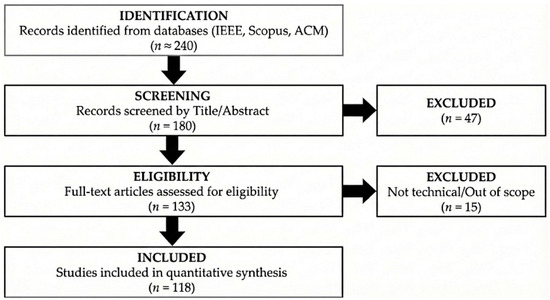
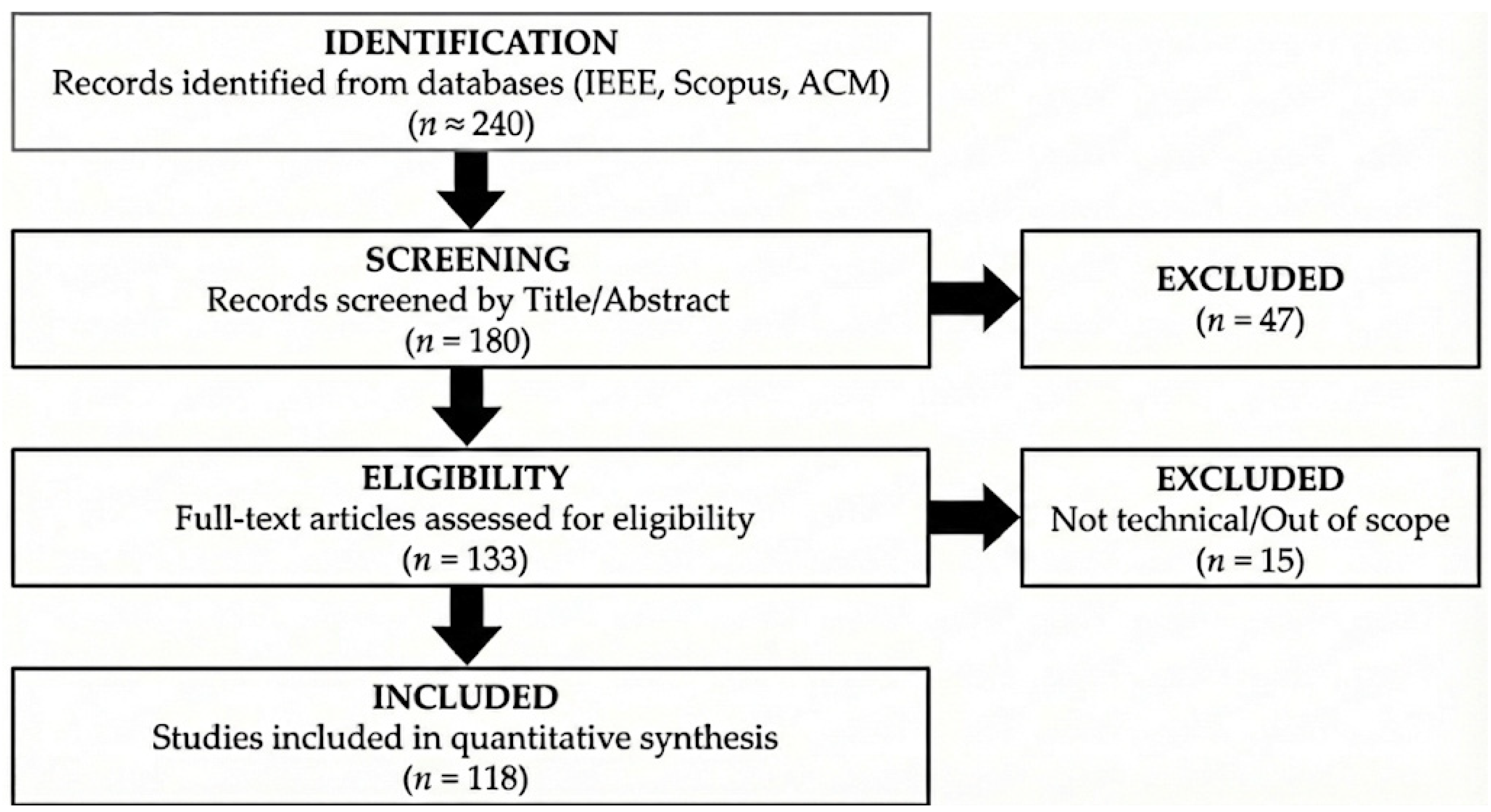
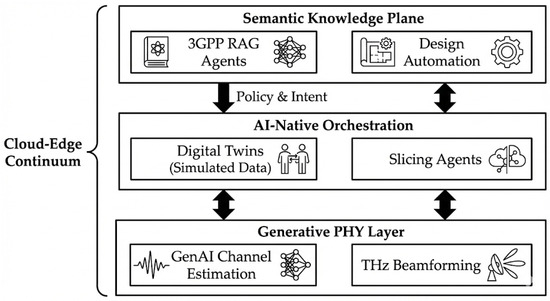
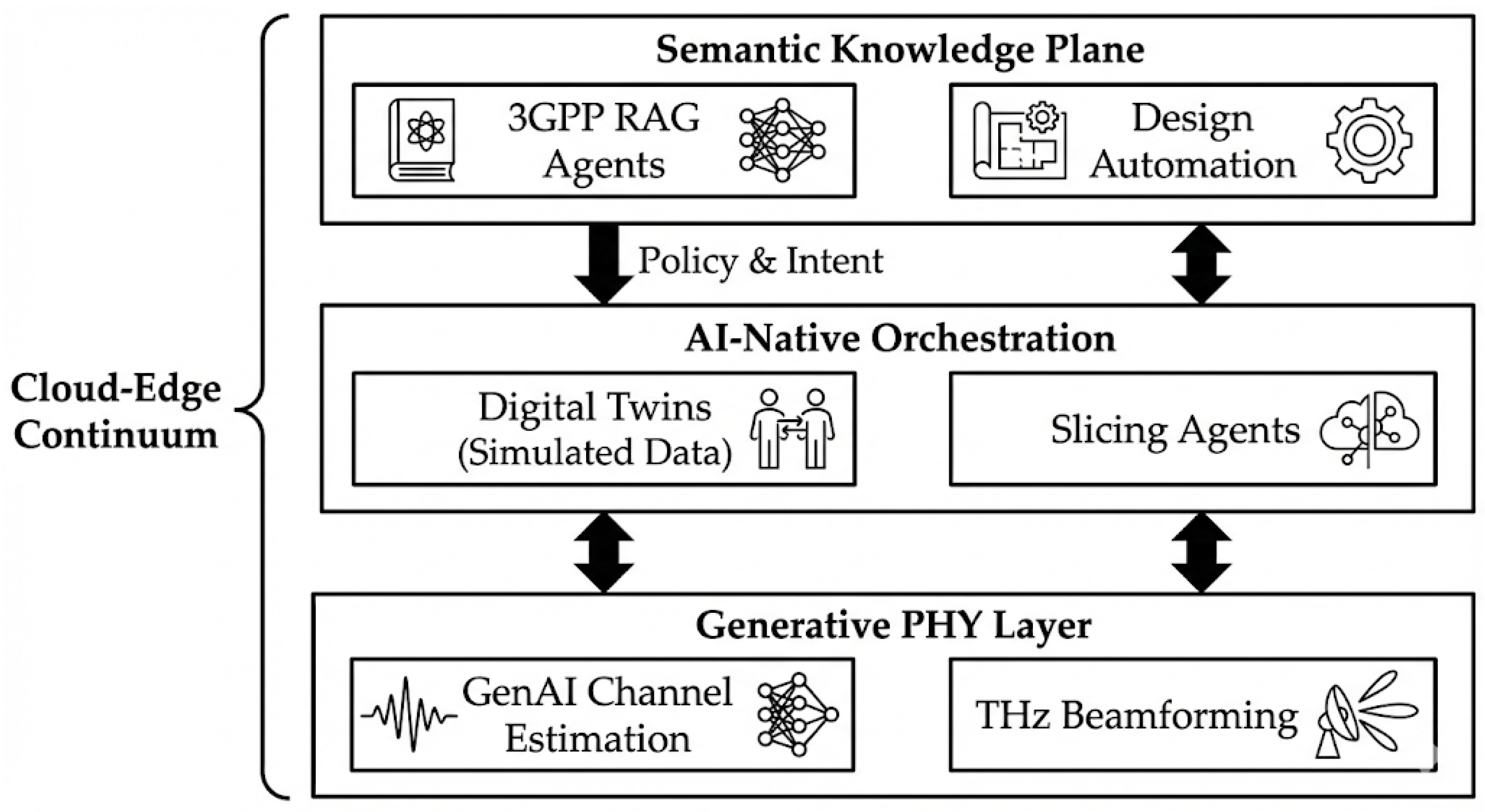
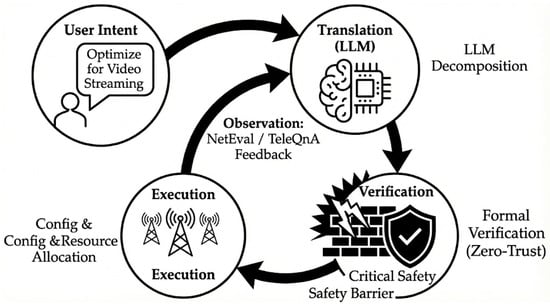
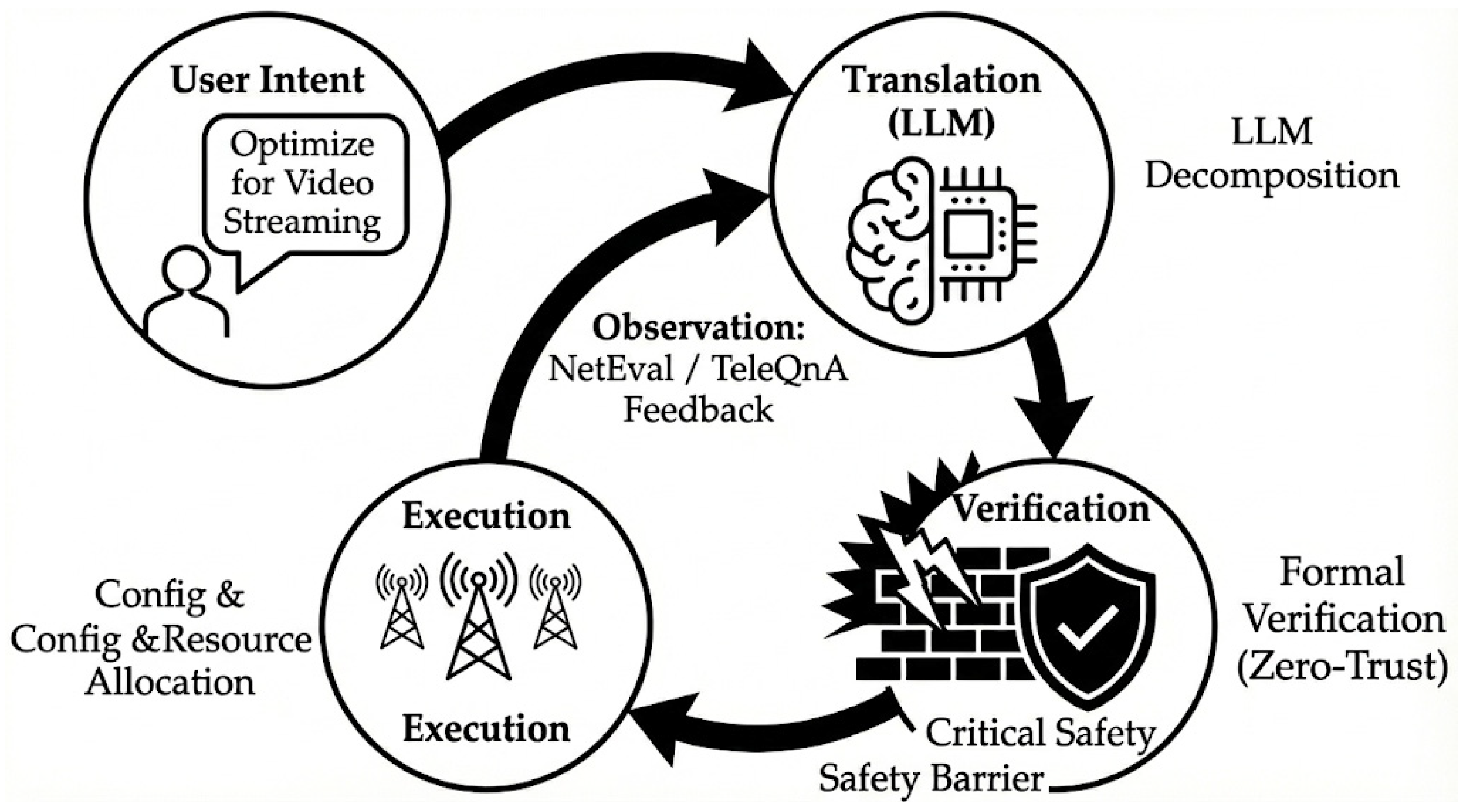
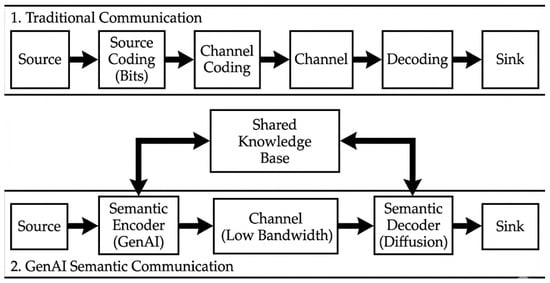
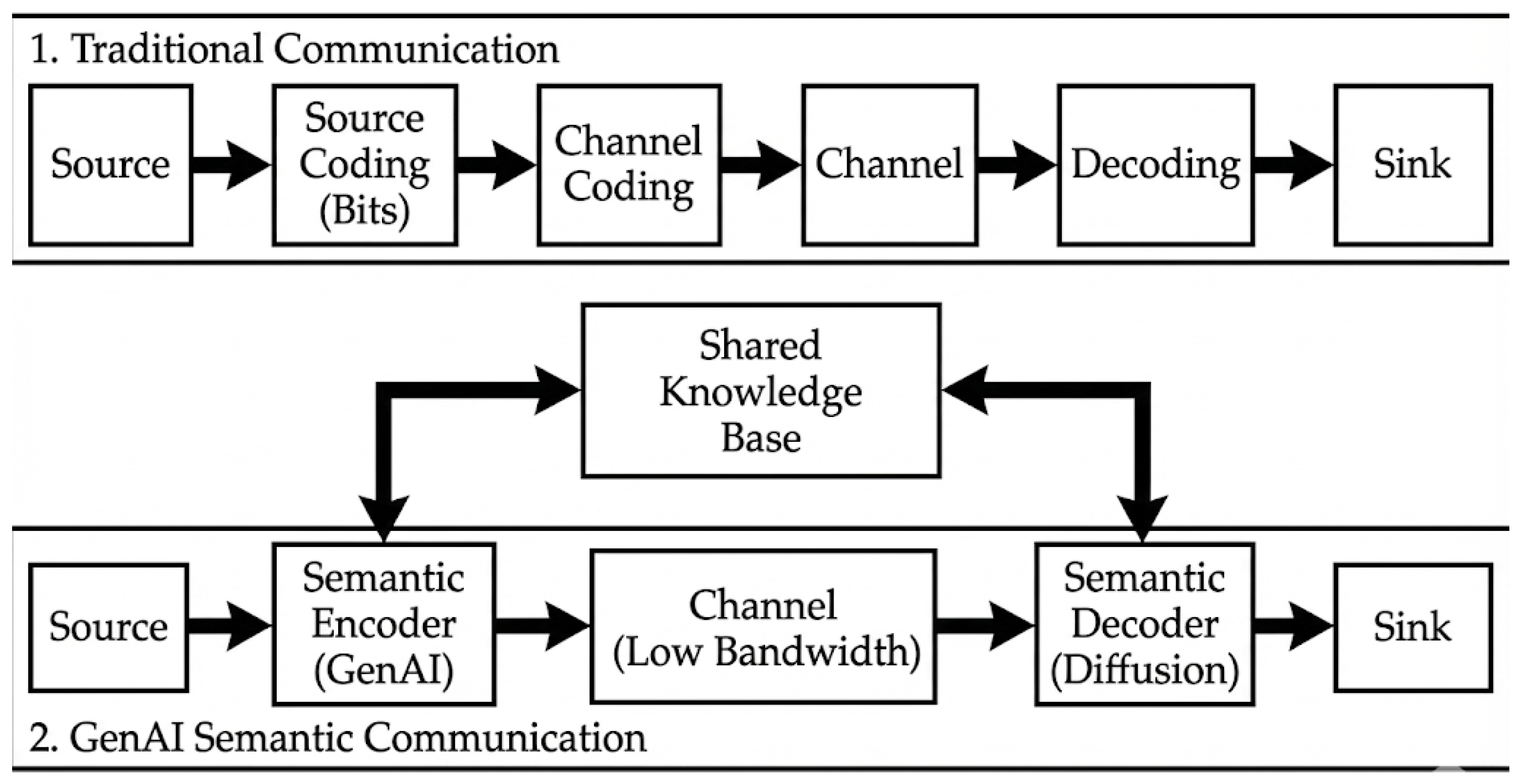
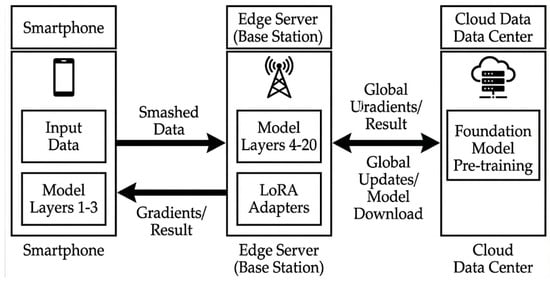
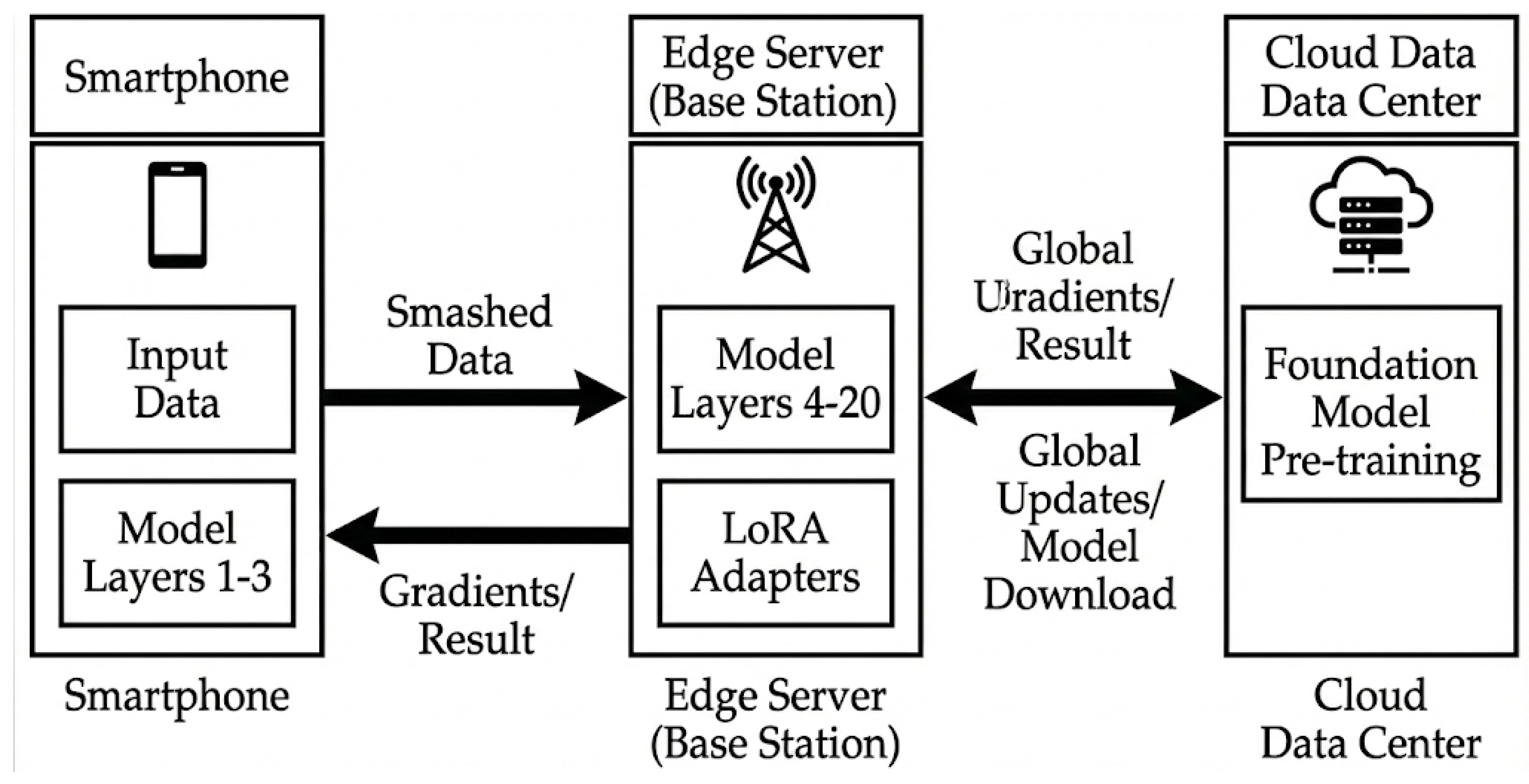

Disclaimer/Publisher’s Note: The statements, opinions and data contained in all publications are solely those of the individual author(s) and contributor(s) and not of MDPI and/or the editor(s). MDPI and/or the editor(s) disclaim responsibility for any injury to people or property resulting from any ideas, methods, instructions or products referred to in the content. |
© 2026 by the authors. Licensee MDPI, Basel, Switzerland. This article is an open access article distributed under the terms and conditions of the Creative Commons Attribution (CC BY) license.