


Abstract
The Cooperative-Intelligent Transport Systems (C-ITS) require emerging Vehicular-to-Everything (V2X) applications, such as Advanced Driving Systems (ADS) and Connected Autonomous Driving (CAD), to support efficient road safety measures. These applications often require high reliability, throughput, and low latency by exchanging a significant amount of data among End-to-End (E2E) vehicles. However, current V2X communication technologies, such as DSRC and C-V2X, are not able to meet these stringent demands. Two or more Radio Access Technologies (RATs) are essential to guarantee the required Quality of Service (QoS) in high-density vehicular environments. To address this critical gap, this survey presents the 3M Framework—a hybrid vehicular architecture approach based on Multi-Radio Access Technology (M-RAT), Mobility Management, and Machine Learning (ML). The manuscript provides a detailed overview of V2X Multi-RAT evolutions, analyzing their state-of-the-art and limitations in heterogeneous scenarios. We specifically highlight that the existing Long Term Evolution (LTE)-based mobility management fails to meet V2X handover requirements for high-speed vehicles, necessitating a comprehensive overview of Vertical Handover (VHO). Furthermore, the survey details how the integration of ML promotes the prediction of network states, enabling optimized context-aware decisions for connectivity and resource allocation, thereby reducing Handover Failures (HoFs) and enhancing reliability using techniques like Deep Reinforcement Learning (DRL). Finally, based on a comprehensive review of existing methods, the paper identifies critical research directions and challenges required to realize intelligent, hyper-fast, and ultra-reliable Beyond 5G (B5G) and Sixth Generation (6G) V2X networks, delivering a more profound understanding for future endeavors.
1. Introduction
The new era of connected autonomous vehicles expects an extremely intelligent, highly advanced, hyper-fast ultra reliable, and low-latency based massive information exchange system for Beyond Fifth Generation (B5G) wireless networks. The Sixth Generation (6G) communication system is poised to provide unprecedented user experiences, tremendously improved road safety, air quality, and augmented battery life in energy-efficient devices, along with highly diverse transportation environments for vehicles and their use cases. The concept of smart connected vehicles has recently gained popularity to bring new levels of connectivity to vehicles along with on-board computing and sensing technologies, to create the Cooperative Intelligent Transport System (C-ITS) and smart cities. The goal is to have a safer, greener, comfortable, and efficient travel system that transforms vehicles from a simple transportation system to a powerful computing and networking hub with intelligent processing capabilities such as Artificial Intelligence/Machine Learning (AI/ML). Another potential technology parallel to vehicular communication is “Integrated Sensing and Communication (ISAC)”, which combines communication and sensing capabilities in the same device. Several use cases for ISAC have been proposed by the 3rd Generation Partnership Project (3GPP). Some of these include assisted navigation, activity detection, movement tracking, environmental monitoring, artificial intelligence, and virtual reality applications [1]. ISAC enhances network functionality by integrating the sensing and positioning capabilities of connected devices with mobile and wireless networks, enhancing communication performance while also playing a critical role in vehicle communication. In addition, ISAC offers significant potential for use in scenarios requiring emergency response by monitoring environmental parameters such as rainfall, water level changes, and earthquakes. These monitoring systems contribute to pre-disaster warning, disaster sequence detection, and post-disaster management processes by monitoring environmental parameters such as rainfall, water level changes, and potential flooding. However, most existing technological devices and solutions suffer from limitations such as limited channel access, high latency, low Quality of Service (QoS) guarantees, and short-term Vehicle-to-Infrastructure (V2I) connection outages [2].
In the dynamic landscape of autonomous driving under C-ITSs, 6G Vehicle-to-Everything (V2X) networks are witnessing a surge in data transmission demands and applications due to the new challenges imposed by current Radio Access Technologies (RATs). However, there are several challenges, such as heterogeneous vehicle management for future smart cities that must manage current and targeted RATs connections [3], enabling high QoS for high-density, fast mobility scenarios [4], enhancing the capacity of Ultra-Reliable Low-Latency Communications (URLLC) for current RATs in auto-remote driving applications [5], and lastly, allowing intelligence to serve as a networking solution between cloud servers [6].
Vehicular communication technology enables two or more vehicles to connect, as well as to other entities in their surrounding environment, through Wi-Fi, cellular networks, or Dedicated Short-Range Communication (DSRC) technology. Moreover, cellular networks are powerful communication technologies within conventional wireless systems, comprising LTE (4G) and Fifth Generation (5G), which are widely deployed across the globe and are considered among the most effective solutions to enable vehicular communication and networking. The primary goal is to improve road safety by disseminating alerts and help reduce traffic congestion [7].
Another innovative solution for C-ITS is that Autonomous Vehicles (AVs) are designed to provide safety, comfort, and advanced driving features. AVs are essentially self-driving vehicles equipped with advanced sensor systems, an AI-based control system, and high-speed communication technologies that rely on real-time data for navigation, decision-making, and interaction with the environment. This technology enhances performance by adopting millimeter-wave (mmWave) technology, which provides a high communication bandwidth of several gigabits per second. For high bandwidth requirements, the mmWave technique utilizes frequencies between 30 and 300 GHz in cellular networks [8]. However, it tends to exhibit problems of insufficient low gains and high transmit power in direct omnidirectional transmission scenarios due to higher attenuation.
Additionally, it supports high-speed data exchanges through V2X communication. The V2X links that utilize mmWave technology can achieve safety-based applications by gathering and sharing raw information with neighboring vehicles in the environment. The process starts by gathering data from the V2X links, which is sensed from the vehicles, and then sending it to the cloud to make decisions. 5G bands (FR1, FR2) enable mmWave-based V2X communication to download real-time HD map updates in a dynamic environment, such as the 28 GHz band used for high-speed urban coverage and the unlicensed New Radio (NR) of the 60 GHz band (V band) used for high throughput. Automotive radar operates in the frequency range of 24 GHz to 77 GHz [9]. Most of the work supports mmWave technology combined with beamforming techniques to enhance spectral and energy constraints in V2X communication. Still, it encounters significant overhead problems [10] due to massive antenna arrays that attempt to improve transmission efficiency [11]. It is also less effective in adapting to frequent mobility scenarios in vehicular networks.
Due to limited intelligence offered, 5G-V2X networks may not be fully supportive for a wide range of requirements in V2X use-cases. Therefore, focusing on a more diversified network approach, such as B5G (6G) networks, attracts significantly enhanced reliability, security, high data rates, hyper-fast massive wireless accesses, and genuinely intelligent-greener 3D communication coverage with terrestrial/non-terrestrial networks. The organization of the paper is as Figure 1.
Figure 1.
Organization of the Paper.
Initially, DSRC is the only de facto standard of V2X technology on shorter ranges for urban scenarios (100–300 m NLOS and 300–800 m LOS) and for highway (500–1000 m) [12,13]. However, with the extension of technology, DSRC starts to decline the prospects of being best for the V2X system, providing limited coverage, low data rate, limited QoS, and unbound channel access delays for high mobility scenarios [14]. Furthermore, DSRC operates in a specific frequency band (range), making it less effective and compromising the reliability and consistency of data transmission over long-distance communication. Therefore, advanced V2X and beyond communication provides a promising solution in the existing generation of vehicular networks with the addition of cellular networks to effectively control traffic and manage services such as smart navigation, updates optimal routes for intelligent vehicles, schedule of smart traffic lights, road diversion alerts and toll road services, as well as delivering high reliability, seamless coverage, and robust mobility support altogether.
Connected autonomous vehicles defined on a heterogeneous V2X service supported by the C-ITS standard consider multi-RAT selection as the most suitable solution for all vehicles to receive messages simultaneously at the Physical (PHY) and Medium Access (MAC) layers. In addition, mobility management is another potential and challenging goal for a seamless connection, depending on a Handover (HO) process (low HO latency), guaranteeing high QoS to sustain the ongoing connection of vehicles while switching between different access points (cells/radio access networks).
This paper aims to provide an insightful overview of C-V2X communication to support a sustainable and cooperative transportation system based on intelligence, enhanced road safety, traffic management for users, and vehicles. C-V2X is one of the intelligent and flexible technologies that promise to improve road safety, traffic flow, and sustainability by enabling communication among vehicles, infrastructure, and the driving environment. Mobility management and multi-RAT diversity are of paramount importance in meeting the stringent demands of critical safety applications, providing seamless reliability, high data rates, and low latency by incorporating two different technologies simultaneously between vehicles to facilitate smooth HOs. Essentially, a HO is a process that allows vehicles to switch from serving one Base Station (BS) to another without losing connection. It is a key component of Radio Resource Allocation (RRA), which defines the optimal execution of HOs, leading to a considerable increase in the overall system’s efficiency. During this execution, numerous signal and service degradation problems may arise due to a vehicle being linked to only one BS.
Given the challenges mentioned above, it is unlikely that a single RAT can accommodate such a broad range of applications and demands for a large number of vehicles in the network. Therefore, this paper discusses the multi-RAT technology and its potential solutions, considering mobility management for C-V2X communication and different aspects of machine learning.
Most of the previous studies focus on the basic interworking of DSRC integrating a single technology (LTE or 5G) and technique for V2X or NR-V2X, as shown in Table 1, while this work distinguishes itself by defining the 3M framework which gives a more holistic view of Digital Twin (DT) technology. This works emphasize on:
Table 1.
Comparison analysis of existing surveys.
- A detailed advancements, and evolutions of C-V2X communication with enhanced 3GPP based C-V2X modes are discussed.
- Elaborates 5G Communication Automotive Research and Innovation (5GCAR) use-cases of not only DSRC but C-V2X too.
- Considers multi-RAT selection based on hybrid schemes, called as Vehicle Hybrid Networks ‘VHN’ to promote dual interface by considering DRL techniques under C-V2X communication.
- Defines Vehicle Mobility Management (VMM) optimized-context aware decision making techniques in multi-connect with HO techniques including ML for dynamic environment.
- Unlike previous studies, that rely on static terminology, this survey integrates M-RAT and mobility management along machine learning to provide cross layer optimization for B5G.
The remainder of the paper is organized as follows. Section 2 introduces C-V2X technology and discusses its evolution, background from 4G to 5G, modes, and use cases. Section 3 provides comprehensive insights into C-V2X use cases. Section 4 presents optimization methods for V2X communication scenarios, covering mobility management, multiple-RAT approaches, applications, and ML techniques in vehicular networks. In Section 5, we describe the challenges faced during the implementation of optimization techniques for V2X communication. The open research issues and several future research directions are discussed in Section 6. Finally, in Section 7, the article is concluded.
2. Literature Review and Research Landscape
Several surveys offer valuable insights into cellular-based V2X communications, as summarized in Table 1. Various studies focus on mobility management, several studies integrate resource allocation with RAT techniques, while some works concentrate exclusively on simulation methods for different communication technologies. The comparative analysis in Table 1 highlights the influence of multi-RAT selection, C-V2X use cases, mobility management, and ML.
A comprehensive understanding of V2X communication is provided in [15], with a focused overview of C-V2X in comparison with other technologies such as DSRC, LTE-V2X, and 5G-NR-V2X. The current LTE PHY structure cannot support vehicle equipment speeds and high carrier frequencies due to the Doppler shifts incurred by Orthogonal Frequency-Division Multiplexing (OFDM). The only solution to support up to 6 GHz of higher frequencies is to design a new PHY structure in LTE that improves the reference signal by adding a 1 ms sub-frame, decreasing the time intervals between reference signals, and adding up to four reference signal symbols at certain locations. The survey provides limited insights into dynamic resource allocation, neglecting hybrid scenarios related to LTE-NR-V2X and the deployment of dual-radio technology, also called “M-RAT,” which limits its applicability for evolving V2X networks. Moreover, the focus throughout the work was on autonomous resource allocation, offering a broader perspective but failing to address ultra-dense urban scenarios and completely ignoring hybrid-based AI/ML solutions to improve and more accurately predict pre-allocated network resources.
Gyawali et al. [16] compare C-V2X communication with DSRC-to-V2X communication, providing a general overview of the LTE-V2X architecture and its operating scenarios. Although C-V2X has gained considerable interest recently, it still lacks effective solutions to the challenges faced in integrating LTE networks with the 5G NR V2X network for communication. One of the issues that arises is that Doppler shifts due to high-speed vehicles which tend to change the topologies and create synchronization problems between vehicle users and BSs in 5G NR systems because they use OFDM, which depends on the Inter-Carrier Interference (ICI) factor. Additionally, resource allocation is another challenge in V2X communication when integrating with C-V2X, where vehicular users may be affected in their ability to access resources due to competition with cellular users. Limited work has been conducted on dynamic and high-mobility vehicular networks, such as scenarios where high-speed vehicles rapidly change densities or topologies during urban traffic congestion and highway platooning. Furthermore, the role of ML mechanisms has not been addressed, despite their potential to offer improved solutions for resource allocation in dynamic traffic scenarios. A comprehensive list of abbreviations and acronyms used in this paper is outlined in Table 2.
Table 2.
List of acronyms.
In [17], the authors present a 4G/LTE-based C-V2X communication framework and a hybrid-V2X approach, utilizing various simulation environments to test, evaluate, and enable the technology under more realistic road situations. However, since the authors focus primarily on purely simulation-based test scenarios, this limits the ability to fully consider real-world use cases for C-V2X within a 4G/LTE technology environment. The reliance on simulations may overlook critical factors that impact performance in actual driving conditions, such as variable traffic density, environmental influences, and interactions with other transport systems. Furthermore, expanding the experimental scope to include a wider range of use cases and hybrid scenarios could enhance the understanding and reliability of C-V2X applications, ultimately contributing to safer and more efficient vehicular communication systems.
Nurkahfi et al. present a comprehensive study on Software Defined Network (SDN) technology for vehicular communication, integrating with C-V2X and IEEE 802.11p RAT systems [18]. The paper discusses the potential applications of SDN, the SDN architecture, its use cases, and the effects of integration between SDN and other technologies on vehicular communication. A single RAT cannot provide all Cooperative Awareness Messages (CAMs) or Decentralized Environmental Notification Messages (DENMs) necessary to meet communication performance requirements. Therefore, the coexistence and interoperability of multiple RATs (IEEE 802.11p and LTE-V2X) in the 5.9 GHz frequency band can address challenges such as low data rates and high latency in multi-hop V2X communication. Moreover, frequency spectrum scarcity can be managed by utilizing multiple RATs in the same geographical area, and channel management with a fixed preamble insertion helps to reduce collisions, particularly in high vehicle density conditions. Although the survey paper covers almost every aspect of V2X communication under SDN, from an application perspective to V2X use cases, M-RAT to mobility management, low latency to high-density Vehicular Ad-hoc Network (VANET) nodes, network congestion to security issues, and the integration of SDN with other existing technologies. However, it still lacks harmonization of these competing technologies from an SDN perspective, particularly regarding interference among technologies through the sharing of SDN-dynamic spectrum and SDN-based hybrid communication use cases. It also lacks in defining 5G-NR integration by considering dynamic network slicing and edge computing coordination, with limited focus on AI/ML-driven methods for M-RAT and security problems.
In [19], the author focuses on one of the V2X use cases (vehicle platooning) for reviewing RRA in the context of C-V2X communication. Vehicle platooning not only substantially increases road capacity but also enhances vehicle network density, posing significant challenges due to radio resource scarcity while aiming for enhanced spectrum efficiency. The high-performance RRA strategies are conducted to achieve optimal spectrum efficiency and QoS. The authors discuss the importance of SideLink (SL) RRA in vehicle platooning within the C-V2X environment, which is critical for safety and high reliability. One of the imperative factors is to enable the centralized management of connectivity between the BS and platoon vehicles through the Platoon Leader (PL) of SL RRA, compared to traditional Uplink/Downlink (UL/DL), as it allows for a reduction in BS signaling overhead. Additionally, more consistent network connectivity can be transferred dynamically from the PL to the following vehicles in the platoon (those with optimal UL/DL channel conditions) to establish a connection between the PL and the BS, in order to manage radio resources efficiently. Moreover, the key difference between a generic V2X scenario and vehicle platooning is the geographical distribution of the vehicles in the network, as the behavior of vehicles on the road is more random. However, when vehicles behave as a PL, following similar driving intentions forms a virtually connected convoy pattern to track the RRA process in group platooning.
The paper provides a valuable insight into RRA strategies such as (1) centralized RA for vehicle platooning based on Device-to-Device (D2D) communication at the BS side, (2) centralized RA for vehicle platooning based on C-V2X communication at the BS side, (3) centralized RA from cell/RSU based on the C-V2X standard for vehicle platooning, (4) User Equipment (UE) autonomous RA based on in-coverage scenarios for the C-V2X standard in vehicle platooning, (5) UE autonomous RA based on out-of-coverage scenarios for the C-V2X standard in vehicle platooning, and (6) bandwidth-based RA on the C-V2X standard for vehicle platooning. While this survey provides valuable insights about RRA for vehicle platooning, its limitations underscore the need for more in-depth analysis, such as the potential of ML in the centralized RRA scheme for vehicle platooning. Although ML has been widely adopted for UE-driven RA selection, its incorporation with centralized RA in the vehicle platooning use case, despite fluctuating mobility and channel states, remains underdeveloped. Secondly, the current approaches presented in the survey are overly simplistic for vehicle platooning, relying on assumed mobility patterns rather than evaluating collision probability and string stability metrics through optimized models. Additionally, they overlook the adaptability of a multi-objective framework that supports balancing safety, efficient resource sharing, and performance for enhanced RRA solutions.
Clancy et al. propose a survey highlighting the critical aspects of wireless access for V2X communication [20]. The current state of wireless access still presents an unclear picture for V2X communication, providing a key candidacy for the primary candidates of wireless access technologies to enable V2X communication. A thorough comparative analysis is conducted between C-V2X, including LTE-V2X and NR-V2X, and DSRC (IEEE 802.11p, IEEE 802.11bd) based solutions, evaluating their adaptability in various V2X scenarios. The survey indicates that C-V2X provides a promising controlled environment by enabling enhanced RRA, throughput, and power efficiency in V2X communication based on cellular networks, while challenges related to interference management and channel allocation dynamics remain unresolved. Notably, theoretical frameworks are well addressed, but several crucial insights are overlooked in the survey, such as: (1) the lack of interoperability between heterogeneous technologies or multi-RAT integration for seamless connectivity in mixed traffic environments, (2) the absence of empirical validation in urban traffic environments, and (3) the need for AI/ML-driven RRA schemes to be integrated to enhance real-time RA in dynamic situations. This work emphasizes into hybrid communication, high mobility scenarios, M-RAT integration in dense traffic conditions and intelligence based channel allocation within the 3M framework.
3. Advancements in C-V2X Communication
The advancement of C-V2X communication is the integration of cellular technology into V2X systems. This development enables not only short-range but also long-range communication, as shown in Figure 2 [21]. C-V2X technology offers multiple advantageous services, such as greater coverage, extended range, improved mobility, and higher throughput [22]. These benefits attract more advanced V2X use cases, including remote driving, group configuration, and enhanced sensor information exchanges [22,23,24].
Figure 2.
Overview of the heterogeneous structure of future vehicular network, known as Cellular-Vehicle-to-Everything (C-V2X) Communication. The C-V2X environment includes several application scenarios such as Vehicle-to-Pedestrian (V2P), Vehicle-to-Vehicle (V2V), Vehicle-to-Infrastructure (V2I), Vehicle-to-Networks (V2Ns), Road-side-units (RSUs), and Unmanned Aerial Vehicle (UAV) with Line of sight/Non-line of sight (LoS/NLoS).
In the context of V2X communication, the IEEE 802.11p and DSRC systems are playing vital roles in facilitating short-range communication without relying on infrastructure. Although they are considered the best candidates for V2X communication, these systems also present several issues, such as low scalability, high latency with dense traffic, limited bandwidth, and low connectivity in high-speed scenarios. This is due to the Carrier-Sense Multiple-Access with Collision Avoidance (CSMA/CA) approach, limited radio ranges, and insufficient RSUs, respectively, which lead to reduced throughput and latency performance in IEEE 802.11p [25].
As the CSMA/CA protocol operates, it allows devices to listen to the channel before transmitting and to wait if the channel is busy to avoid collisions in the shared/unlicensed spectrum. However, in the case of heavy traffic loads, high mobility, and synchronization challenges, CSMA/CA suffers from back-off delays and collisions due to high-speed vehicular scenarios, which complicate safety-based V2X applications in C-V2X communication.
Cellular-based V2V communication for safety applications may also limit the capacity needed to facilitate low latency due to the centralized architecture of the cellular system, and it remains uncertain whether it can handle data traffic or manage the growing demands for data in V2X applications. Therefore, the research community is focusing on exploiting a hybrid approach based on the DSRC-cellular architecture to support reliable and efficient V2X communications [26].
3.1. Limitation of DSRC
Vehicular communication supports safety-based applications by offering satisfactory performance over DSRC technology for up to 100 ms E2E latency, as long as the density does not exceed certain limits. Over the past few years, extensive studies have been performed on DSRC and its capabilities through analytical modeling, simulation experiments, and field trials.
The primary limitation of DSRC is its short-range coverage, ideally up to 1000 m [12,13], and in dense areas, it ranges from 300 to 500 m [12,13]. Unlike cellular networks, which provide broader coverage through the BS, DSRC struggles to maintain continuous connectivity between nodes, especially in scenarios with low vehicle density. Furthermore, the dynamic nature of vehicle movement complicates packet routing, making DSRC less suitable for V2X applications that require low-latency data transmission over large road segments.
Another significant limitation of DSRC arises from its use of the MAC protocol based on CSMA/CA contention, which is part of the IEEE 802.11p (Wi-Fi) standard for vehicular environments [26]. In high vehicle density scenarios, increased channel contention leads to a higher rate of transmission collisions and longer access delays, severely degrading the performance. This inefficiency is particularly problematic for broadcasting safety based messages in V2X communications, as it results in unreliable service due to issues such as:
- The hidden terminal problem [27] prompts the need for alternative MAC schemes based on distributed Time Division Multiple Access (TDMA) that have not yet been standardized [26].
- Simultaneous re-transmission of broadcast “emergency alerts” messages results in higher packet collisions [28].
The limitations of DSRC IEEE 802.11p and a comparative analysis with IEEE 802.11bd are presented in Table 3.
Table 3.
Comparison analysis of DSRC communication standards.
3.2. Evolution of C-V2X
The C-V2X technology represents a significant evolution in vehicular communication systems, offering relatively superior performance compared to DSRC. It attains through a higher link budget for Mode 4 [29,30] and the centralized control of resources in Mode 3 (C-V2X based Mode 3 defines cellular networks (eNodeB/gNodeB) that are responsible to allocate resources for devices (vehicles) while Mode 4 C-V2X refers the autonomous communication where vehicles are responsible to select and allocate (manage) resources independently using a distributed sensing strategy without involving the network assistance) [31]. Despite offering substantial advances and adaptability over DSRC, C-V2X still faces key limitations, such as performance degradation in high-density traffic scenarios, particularly in C-V2X-based SL Mode 4. According to [30], the frequency reuse algorithm implemented over a given geographical area reduces the reuse distance as traffic density increases, resulting in high interference among C-V2X users.
The evolution from 4G LTE to 5G-NR-V2X has marked a significant advancement in communication technologies, particularly in the context of connected vehicles and intelligent transportation systems. The first C-V2X standard was introduced in 2016, with Release 14 (Rel-14) defining 4G LTE access technology for supporting the ITS band of GHz based on D2D communication. D2D, also referred to as Proximity Services (ProSe) in 3GPP, was proposed in 2011.
This technology allows devices, nodes, and users to communicate and share data directly without relying on the BS. As a result, it improves network performance, reduces latency, and enhances resource utilization for more efficient communication [27]. Therefore, Rel-14 facilitated the existing LTE infrastructure to allow V2X communications with IEEE 802.11p devices. In high-speed vehicle scenarios, such as those traveling above 50 km/h, frequency fluctuations can induce a Doppler shift of kHz and a ppm high-frequency offset in the GHz spectrum, which affects the reliability of channel estimation [32]. The journey of the evolution of V2X, as depicted by 3GPP, is shown in Figure 3.
Figure 3.
C-V2X Evolution in 3GPP Releases: Key enhancements from Rel-12 to Rel-19.
The development of IEEE 802.11p began nearly two decades ago, deriving from IEEE 802.11a to enable the PHY and MAC layers, and subsequently evolving through IEEE 802.11n/ac/ax to improve and advance PHY and MAC techniques [33]. However, IEEE 802.11p faces certain challenges in providing real-time reliability, including low scalability, contention methods inherent in the CSMA/CA technique [6], and the broadcast storm problem [34], all of which impact the reliable transmission of messages critical for safety applications. Moreover, a Packet Reception Ratio (PRR) of about 75% has been observed with IEEE 802.11p for safety-based applications [35]. Therefore, the IEEE 802.11 Next Generation V2X (NGV) study group proposed the formation of the IEEE 802.11bd Task Group (TGbd) in 2019. To enable one or more modes to get enhanced IEEE 802.11p MAC throughput at a vehicular speed of 500 km/h, which experiences a relative Doppler frequency of 2.7 KHz, necessitating achieves the communication range, V2X based vehicle positioning capabilities, and support for interoperability, coexistence with IEEE 802.11p, backward compatibility, and fairness in co-channel scenarios ensures equal access to the communication channel. The comparative studies of DSRC and C-V2X interference models are provide in Table 4.
Table 4.
Summary of V2X interference models.
The IEEE 802.11bd standard utilizes the Enhanced Distributed Channel Access (EDCA) mechanism and a packet-based re-transmission method to enhance reliability and PRR values. This scheme allows vehicles to send up to three repetitions of packets for the same data, with vehicles responsible for independently determining the number of packet repetitions based on their observations of the Channel Busy Ratio (CBR) [37]. EDCA is based on the CSMA/CA scheme to improve QoS parameters by assigning multiple priority levels to each application class in a multi-channel operational scheme [6]. It is important to note that IEEE 802.11bd was confirmed in December 2022, and a few studies have examined its performance, including decreased Signal-to-Noise Ratio (SNR), improved PRR values, and extended transmission range in various deployment scenarios. However, these studies indicate that the adaptive re-transmission mechanism can lead to channel congestion, thereby degrading real-time reliability.
Recalling the advancements in Release-14, it introduces enhancements to the data link layer by adding two additional reference symbols per sub-frame, which increases the total to 16 symbols in LTE. This release promotes the execution of a dynamic approach for the utilization of the Modulation and Coding Scheme (MCS) to target a Block Error Rate (BLER) of 10% in high mobility scenarios [38]. Furthermore, Release-15 in 2018 leveraged the technical specifications of 5G to further enhance 4G-LTE for reliable C-V2X communication. Various limitations have been identified in the Release 14 specifications, including high latency (passing vehicular networks data through cellular networks BS increases latency and safety-critical applications), half-duplex errors such as vehicles selecting the same sub-frame for simultaneous transmission for multiple users causes errors in safety messages, and issues with backward compatibility like integration of mobility standards with previous standards and existing systems [9].
3GPP planned to replace LTE Rel-14 with the 5G standard, which was defined in two phases. The first phase introduced the 5G Rel-15 standard, which focuses on 5G standalone (SA) capabilities combined with a New Radio (NR) system and a Next-Generation Core Network (NGCN) to resolve the challenges presented by the previous release and was completed in 2019. The second phase highlighted the first V2X standard based on 5G-NR, defined as Rel-16 in 2020. This standard supports enhanced Mobile Broadband (eMBB), URLLC, and the Internet of Things/Vehicles (IoT/IoV), along with a network interface protocol that ensures a latency of 1 ms or less, a data packet loss not exceeding , and a high reliability of % [39].
The first V2X communication standard that supported SL communication under the 5G-NR air interface was introduced by Rel-16, where UE can represent pedestrians, vehicles, RSUs, and mobile devices complementing the standard to support enhanced V2X (eV2X) connected and automated driving use-cases [40,41]. As more advanced capabilities of 5G-NR-V2X were demanded, Rel-17 followed by Rel-16 in 2022 and was offered to focus on the 5G-NR air interface and support enhancements for URLLC use-cases and the NR-based Industrial Internet of Things (IIoT) [23].
It is important to note that 5G-NR-V2X is not in competition with C-V2X; rather, it is intended to support those use cases that cannot be fulfilled by C-V2X. It is assumed that newer vehicles will have both C-V2X and 5G-NR-V2X capabilities to support not only advanced V2X applications but also basic safety applications in the same geographical region. A C-V2X based comparison between 5G-LTE and 5G-NR V2X is shown in Table 5. 5G-NR-V2X addresses heterogeneous V2X demands (latency, reliability, throughput) and handles both periodic and critical aperiodic messaging. A further advancement is its support for targeted communication alongside broadcast [41]. By introducing unicast (transmitting packets to a single vehicle) and group-cast (to a subgroup), 5G-NR-V2X optimizes use cases like vehicle platooning. Additionally, 5G-NR-V2X adopts mmWave frequency bands up to 57–71 GHz [35] (similar to IEEE 802.11bd) for up to 1000 m and high-throughput scenarios [29].
Table 5.
Comparison analysis of C-V2X communication standards.
The objectives of the 5G-NR-V2X study include the following:
- Enhancing SL procedures for advanced V2X applications.
- Enhancing the 5G-NR Uu interface.
- Developing a Radio Access Technology (RAT) or interface selection mechanism to identify the best interface (among LTE SL, NR SL, LTE Uu, and NR Uu) for a given V2X message transmission.
- Enhancing QoS through different radio interfaces.
- Ensuring the in-device coexistence of C-V2X and 5G-NR-V2X.
C-V2X also supports various periodic message services, such as CAMs in ITS-G5 [42] and Basic Safety Messages (BSMs) in DSRC mode [14]. The aim of these messages is to provide basic information related to a vehicle’s location, speed (velocity), type, direction, and acceleration/deceleration, as well as other general information during mobility. Another message standard based on aperiodic, event-triggered transmissions for emergencies is known as the DENM. DENMs represent an ETSI standard and can include information about traffic efficiency, infotainment, and geographic map updates, such as intersection map messages (lane geometry) [43].
3.3. Modes
The 3GPP offers two complementary communications methods for LTE based C-V2X: Mode 3 and Mode 4. Mode 3 behaves like a cellular network (eNB) where the infrastructure manages and allocates radio resources among vehicles to allow road information using V2I/I2V communication. However, Mode 4 supports autonomous allocation of RRA services through resource reservation algorithms among vehicles that allow more efficient V2V communication in the out of coverage or exhausted BS scenario for safety applications [44]. The algorithm helps each UE (Vehicle) sense the channel for 1 s, ensuring neighbor UE (Vehicles) to select and reserve orthogonal resources (time/frequency/both) by Semi-Persistent Scheduling (SPS) (SPS is a technique that reduces the scheduling overhead linked with V2X uplink transmission, even for a periodic traffic and similar sized packets [45]) and collects the sensing results for minimizing packet collisions [45] as shown in Figure 4. Despite the whip-hand of Mode 4 over other modes, it still experiences performance degradation issues due to high contention in the available resources in dense urban network scenarios. C-V2X provides a solution to this issue by using the Decentralized Congestion Control (DCC) method, where transmission rates, transmission powers, and MCS can be modified to reduce resource congestion through Channel Busy Ratio (CBR) and Channel Occupancy Ratio (COR) to avoid congestion [46].
Figure 4.
An overview of the V2X Communication Mode 3 and Mode 4 specifications, including the underlying technology, application scenarios, channel bandwidth, operating frequency bands (ITS), and short/long-range communication distances for each C-V2X mode.
Mode 3 behaves in two interfaces, such as PC5 (communication between vehicles) and Uu (communication between vehicles and eNodeB called “eNB”), while the working scenario of LTE remains the same for the entire vehicular networks. Channel width scalability ranges from 1.4 to 20 MHz, with 10 and 20 MHz channels preferred [36].
The PC5 (Sidelink) radio interface is used for short-range messages, including safety messages, traffic updates, and proximity services in V2X communication. The second interface, C-V2X (Uu), is used for long-range broadcasts with approximate ranges of 100–200 m in urban areas [21], 200–500 m in suburban areas, and 500–1000 m in rural areas. Transmitting time-critical safety messages via roundtrip communication through LTE cellular networks may add unacceptable delays. However, C-V2X employs the sidelink for short-range V2I and V2V services within approximately 1 km [47]. For the downlink, Orthogonal Frequency Division Multiple Access (OFDMA) is utilized, while Single Carrier Frequency Division Multiple Access (SC-FDMA) is used for the uplink in 5G NR V2I scenarios. Mode 3 exploits SPS for predictability, UE (Vehicle) reports for adaptability, and cross-carrier scheduling through the cellular infrastructure (eNB) for efficient, network-controlled sidelink resource management in coverage areas. SPS is a technique that reduces the scheduling overhead associated with V2X uplink transmissions, even for periodic traffic and similarly-sized packets [45]. Despite these capabilities, C-V2X still faces several open challenges, such as those related to vehicular network coverage, interference, and mobility management.
Similarly, 5G-NR-V2X offers two modes of operation: Mode 1 and Mode 2. Mode 1 is a centralized mode that provides cellular network coverage and configuration through the Uu interface from the network to the V2X UE (VUE). The network manages available resources to prevent two VUEs from using the same resource from the same pool at the same time. Therefore, a VUE needs to connect to a Next Generation NodeB (gNB). However, due to the continuous communication required over the Uu link, latency can become high for certain 5G-V2X use-cases. In contrast, Mode 2 in 5G-NR-V2X is a decentralized system that does not rely on cellular network coverage, allowing VUEs to conduct sidelink communication by themselves through the PC5 interface. The PC5 interface enables VUEs to establish and maintain the sensing, selection, and re-selection of radio resources [48].
3.4. C-V2X Use-Cases
To look upon the history of vehicular communication projects dates back to the 1970s to till date, which focused on enhancing driver safety and assistance, and can be accessed at [49] which elaborates various organizations and government entities involved in establishing standards and regulations for vehicular communication; for instance, 3GPP is developing standards and specifications for cellular-based V2X communications, while IEEE is working through the Next Generation V2X (NGV) study group to issue the 802.11bd standard.
V2X typically offers bidirectional communications, allowing the exchange of information (location, speed, and direction to prevent accidents) through V2V and V2P interactions. However, V2I and V2N connections can facilitate communication between vehicles and traffic controllers/servers using 5G and beyond networks.
Additionally, infrastructure components like RSUs can function as repeaters to enhance V2X connectivity. It is important to note that the characteristics of V2P UE may not possess the same capabilities—due to battery capacity and radio sensitivity—as UEs designed for V2V communications, which can affect their ability to send and receive messages at the same frequency.
The 5G operators must be responsible for the control of priority-based services (limited available resources, vehicle mobility, a vast amount of data exchange by vehicles) for regional and national regularities services, such as emergency-public safety services, operators’ policies, safety-non-safety based V2X applications [50]. For example, in [49], the V2V/V2I use-cases based on basic safety service need at least 20 MHz bandwidth, while for the rest of the use-cases, 30 MHz is required, and these ranges are dependent on the regions and authorities of the world, such as ETSI, CEPT, IEEE and TTA.
Several associations offer hierarchical models, scenarios and use cases such as 5G Automotive Association (5GAA), The Fifth Generation Communication Automotive Research and innovation (5GCAR), and 3GPP for the enhancements of V2X communication. The 5GAA offers 12 use cases: safety, autonomous driving, vehicle platooning, traffic efficiency, vehicle operations management, convenience, environmental friendliness, society, and community [49]. For 5GCAR, it supports five use-case classes based on cooperative perception, cooperative safety, autonomous navigation, cooperative maneuver, and remote driving [51]. Lastly, 3GPP offers 25 use-cases and these use-cases are further categorized into four subclasses [52]. Reviewing some 3GPP use-cases such as vehicle platooning, remote driving, advanced driving, and extended sensors with their Key Performance Indicators (KPIs) to fulfill the stringent requirements of reliability, latency and throughput, is summarized in Table 6. For a better understanding of the latency and reliability challenges faced by vehicular networks, the above mentioned use cases are presented here:
Table 6.
V2X Use-cases description and KPIs.
3.4.1. Vehicle Platooning
Vehicle platooning is a key element of integrated control and communication, which defines a concept of cooperative driving (a group of vehicles) traveling closely together in the same direction with a coordinated manner at short inter-vehicle distances. It supports increased road capacity, fuel savings (efficiency), shorter distances (between platoon users), and reduces the number of drivers on the road. However, for the maintenance of platoon driving, all vehicles must share and receive periodic data of their velocities and relative distances information of the leading vehicle among neighbouring vehicles [53]. Continuous data exchange establishes a critical cross-layer dependency between networking Key Performance Indicators (KPIs) and system-level control outcomes. Specifically, communication KPIs such as End-to-End (E2E) latency and reliability directly map to control-oriented metrics, including string stability and safety margins. String stability ensures that velocity perturbations originating from the lead vehicle are damped rather than amplified as they propagate downstream through the platoon, a condition that requires E2E latency to remain below 10 ms. Moreover, ultra-reliable communication enables a reduction in the minimum inter-vehicle headway distance, allowing vehicles to operate safely at shorter gaps. By optimizing these networking parameters through the proposed 3M framework, the system improves traffic efficiency and roadway capacity while mitigating collision risks caused by communication impairments. The authors in [54] mention the merging and diverging scenarios of vehicle platooning in which vehicles need to dynamically adjust vehicle positions and velocities. They intended to avoid collisions, improve traffic flow, and reliability by sharing vehicle position and direction information to coordinate maneuvers through vehicle platooning. The study focuses entirely on simulation-based results and avoids the various conditions of traffic and the unexpected driver behavior of real-world problems, which may affect its practical applicability to various traffic scenarios.
Anis et al. [55] provide a comprehensive insight into communication strategies and technologies that facilitate inter-platoon interactions among autonomous vehicles and consider various intra-platooning and inter-platooning parameters that can improve communication among vehicles. The mentioned parameters such as timing, energy consumption, and speed, and interference at homogeneous and unconnected platoons are considered. However, in reality, platoons are heterogeneous networks (HETNETs), which is entirely ignored. The study emphasizes only highway scenarios that ignore urban traffic service, where the performance of vehicle platooning can be improved in the urban environment of cellular V2X communication. Table 7 provides a general limitation for vehicle platooning based on 3GPP standards.
Table 7.
Control performance analysis of Vehicle platooning for different scenarios .
In short, 99.999% reliability cannot be guaranteed in a high load and interference based conditions over a wide area networks of remote driving. Therefore, the conditions where remote driving fails must be defined with local solutions.
Reference [56] investigates the cooperative V2X communication performance considering vehicle platooning to improve efficiency and enhance the safety based real communication model using stochastic geometry. The author proposes an Amplify and Forward (AF) relay network model where BS/RSU dynamically selected as the relay node moves near to the platoon and improves the signal coverage, reliability and data transmission efficiency. The vehicles and RSUs distributions are based on Poisson Line Process (PLP) where BSs are drawn to analyze their positioning impact and location placement through 2D Poisson Point Process (PPP). An analytical solution about communication success probability of a vehicle connecting to BS or RSU is given through mathematical form and evaluates the system performance by vehicle density, relay selection criteria and transmission power to make cooperative V2X communication. The performance analysis of Vehicle Platooning use-case is shown in Table 8.
Table 8.
Vehicle platooning control performance analysis comparison.
Autonomous platooning services under the performance of 5G-NR V2X communication in [58], where multiple vehicles travel in a coordinated manner to proceed safer, efficient and highly connected mobility solutions. The study presents real road test environment by On-Board-Units (OBUs) and RSUs to assess signal robustness, interference mitigation, and network stability for V2X platooning applications. The study evaluates the effects of both LOS and NLOS conditions by three different scenarios. The comparison of vehicle platooning with control performance analysis is provided in Table 8.
The 5G-NR V2X-based methodology results in ensuring data rates of approximately 150 Mbps, a latency of below 3 ms, and a reliability of 99.99% regarding the enhancement of signal robustness and network stability.
3.4.2. Remote Driving
It is a critical backup option in an unexpected situation on the road for autonomous driving that prevents operating independently. In a remote driving use-case, vehicle control is managed remotely by the user (human operator or cloud computing) at a distant location. Remote driving, also called Tele-operated Support (TeOSo), temporarily enables a single human operator to operate an autonomous vehicle in harsh/dangerous conditions where the driver physically cannot control the vehicle or is not present in the vehicle. It supports real-time video broadcasts and the implementation of commands that allow the operator to perceive the vehicle inside/outside of the surrounding environment and guide the vehicle throughout the road trip [59].
A public transportation scenario predicting routes in a limited variations by the use of cloud computing to improves high reliability and low latency in remote driving. The latency should be extremely low, with 5 to 20 ms for the operator to respond quickly. It also depends on the V2N scenarios characteristics where the E2E latency must be 5–20 ms for a maximum reliability of 99.999% of the traffic with data rates of 1 Mbps (DL) and 25 Mbps (UL) [60].
In [60], an outdoor field test is presented to analyze the V2X performance with continuous real-time monitoring and remote control of a monorail vehicle, and discusses the improvements in the reliability and operational efficiency of the transportation system. The paper also presents performance analysis indicators such as reliability, latency, and data throughput over 5G technology, but ignores security vulnerabilities associated with V2X communications and environmental factors such as urban settings with obstructions or adverse weather in automated systems.
Another study by [61] uses an automated bus for remote operation in a rural environment. The study highlights the requirements for communication such as latency, throughput, Round Trip Time (RTT), jitter, Arbitrary Strength Unit (ASU), and reliability, where ASU is basically an indicator used to define the signal quality of the mobile network signal, RTT to evaluate the latency parameters, and throughput to define how much data is transferred during the test track. The results show that throughput values ranged between 258 kbps and a maximum of 3.8 Mbps, RTT with an average value of 34 ms, which goes to a maximum value of 51 ms for most of the use-cases. The paper purely depends on existing infrastructure, potentially limiting the implementation feasibility for rural settings, and also does not address the scalability issue with increasing the number of vehicles or varying traffic conditions.
3.4.3. Advanced Driving
The vehicles’ driving intentions are shared with other nearby vehicles to facilitate semi/fully automated driving capabilities, such as cooperative maneuvers and emergency trajectory alignments between two vehicles, referred to as “Advanced Driving”. The KPIs for Advanced Driving require a reliability ranging from 90% to 99.999% with E2E latency of 3 to 100 ms and a message of 300–12,000 bytes of payload for a communication range of 360–700 m [49]. Sensor-based perception data is shared among each vehicle and/or RSUs, allowing them to coordinate their trajectories, synchronize their maneuvers, and driving intentions. This kind of approach defines a high Level of Automation (LoA) which supports the transition of a fully automated driving experience, maintaining longer distances without any interruption between vehicles.
The minimum communication range depends on the speed of a vehicle, measured by multiplying by the maximum relative speed m/s by 10 or 5 s in the case of semi or fully automated driving, respectfully [52]. To support the ultra-reliable, low latency, high traffic, and high mobility services requires a large number of equipment and frequency investments to reduce the capital and operational expenses called (CAPEX/OPEX). There are many solutions to extend the communication of V2X such as adding AI techniques based on deep learning and swarm intelligence optimization tools or introducing multi-hop and cognitive radio technology by increasing the frequency resources and range of V2V communication between two vehicles.
The 3GPP based general use-case of multiple vehicle communication defines different Radio Access Technologies (RATs) for various scenarios, such as with/without coverage, LTE-only coverage, or LTE/NR coverage, or both. Vehicles equipped with either LTE or NR technologies or both because V2X based UEs supports multiple RATs scenarios where optimal communication technology must be selected for specific application. The process of selection of RATs depends on several parameters such as the number of V2X UEs using a specific technology, number of RSUs available, network configuration information including mapping of application IDs, RATs and QoS requirements. Advanced driving use-case of V2X with different KPIs is shown in Table 9.
Table 9.
Advanced driving use-cases with KPIs.
The enhancement in reliability for V2X communication is proposed by [62] to assess various independent and coordinated transmission schemes in which packets are sent via the LTE-Uu and 5G-PC5 interfaces. The study focuses on utilizing multi-RAT systems, and allows vehicles to switch between two different technologies for communication scenarios such as limited coverage/connectivity or no coverage. However, no security vulnerabilities related to the use of multiple communication technologies are mentioned to enable safe V2X communication. Mir et al. [63] presented a study on enabling DSRC and LTE-cellular based technology to form a hybrid vehicle network architecture and protocol suite to improve reliability in V2V and V2I scenarios in a highway environment. Hybrid vehicle networks combine DSRC and C-V2X technology to design a distributed RRA entity to manage, control and coordinate radio resources of both RATs. A generic framework “cellcar” is designed for dynamic multi-RAT selection and communication management while seamlessly managing the connectivity via Vertical HO (VHO) depending on initial RAT selection type, priority and selected application traffic. The focus is to lower the latencies and avoiding unnecessary switching between two RATs through Dynamic Communication Management (DCM). Performance evaluation was done on the basis of latency, throughput, number of VHOs, Packet Delivery Ratio (PDR) by ensuring that lower latencies, higher reliability, and a fewer number of VHO are achieved.
3.5. Extended Sensors
Extended sensor use-cases allows exchange of raw or processed data gathered through local sensors or live video images among vehicles, RSUs, devices of pedestrians, and V2X application servers. Extended sensors proceed to three use-cases of groups such as as Sensor and State Map Sharing (SSMS), Collective Perception of Environment (CPE), and Video data sharing for automated Driving (VaD).
Vehicles can increase perception of their environment beyond what sensors can detect by providing a more broader and holistic view of the local situation. High data rate is one of the key characteristics. Extended sensors groups’ performance requirement depends on the use-cases and level of automation factors such as for high automation, the data rate varies from 10–100 Mbps, latency from 3–10 ms, payload of 1600 bytes and with a reliability of 90% to 99.999%. For low automation, the latency can vary from 25 ms to 100 ms and reliability of 99%. The requirements for extended sensors services for several V2X scenarios and their comparison analysis on different performance parameters is shown in Table 10.
Table 10.
Extended Sensor Service Requirements consist of sensory and Pre-crash based V2V/V2I/V2N scenarios, respectively. The comparison depends on distances, reliability, latency and degree of automation among different scenarios.
Sensor and State Map Sharing (SSMS) is an extension of Local Dynamic Map (LDM), which is a standard of ETSI and ISO, and has an advantage over LDM. SSMS has the ability of higher spatio-temporal fidelity, low latency and enabling “state map” awareness to the network areas.
Secondly, Collective Perception of Environment (CPE) is utilized to avoid accidents and enhance perception environment (automated forward collision avoidance, overtaking, and lane changing cases), sharing and accessing real-time sensor data from vehicle or RSUs’ all around view. The invisible areas (curves, behind crests and behind corners of homes) may limit the sensors horizon to detect objects and obstacles. Therefore, CPE enhances the limited sensor horizon information by pre-processed sensor information.
Lastly, Video data sharing for automated Driving (VaD) use-case complements the CPE based on the sharing of previously processed sensor data which may not be sufficient enough. Drivers need to make maneuver decisions for vehicle through sharing of HD video data according to driving and safety preferences.
Comparative studies [64,65,66] highlight the reliability parameters for extended sensor sharing under several conditions, outperforming traditional DSRC standard IEEE 802.11p in high mobility highway scenarios.
The vehicle perception and mapping collaboration enhancement through hybrid collective perception in a more comprehensive, accurate environment is presented in [64]. It leverages both real-time sensor data from vehicles and user-generated content and improves situational awareness for autonomous driving applications. The methods depend on receiving from each plurality of ITS stations, a local dynamic map, a local collective perception map, and the distribution of the local collective perception map among one of the plurality of ITS stations.
Schiegg et al. [65] assess the performance of the collective perception service in a cellular mode “Mode-4” at a highway scenario based on a safety application among two vehicles. The study designed an analytical model that depends on the on-board sensor system, driving dynamics, and PHY-MAC layers of C-V2X. The model includes vehicles’ environmental perception at the facility layer, the detection redundancy, and cooperative awareness-based information for object perception. The model parameters are based on a highway scenario, considering the number of lanes, density, CPM rate, radar ranges for different sides, a 20Hz update rate, antennas, average environmental heights, sensing power threshold, and background noise. Moreover, cooperative-Adaptive Cruise Control (C-ACC), the Lane Change Assistance (LCA), and DCC-based improvements are needed for some scenarios.
The author in [66] presents a model on collective perception service. The study focuses on different traffic situations deployed in Cooperative Awareness (CA) and Collective Perception (CP) scenarios, measuring the CBR. The simulation results show that the quality of the provided CP services degraded significantly as the two services, CA and CP, are used simultaneously on the same channel. Additionally, more distinct multi-channel solutions for data-intensive V2X applications are required for deployments to avoid radio channel overload, and each channel must have its own DCC.
4. Optimization Techniques in V2X Communication
In this paper, the 3M Framework functions as a unified end-to-end architecture designed to bridge the gap between physical network states and intelligent decision-making. As illustrated in Figure 5, the framework operates through a continuous feedback loop where environmental data, such as vehicle position, velocity, and Received Signal Strength (RSS), are fed into Machine Learning (ML) modules. These AI-driven engines process real-time context to output optimized decisions for Multi-RAT selection and proactive Mobility Management. By synchronizing these modules, the architecture ensures that Vertical Handovers (VHO) are executed with minimal latency while selecting the most reliable radio interface to maintain stringent QoS requirements in high-density vehicular environments. A standardized performance metric of 3M framework for C-V2X communication is given in Table 11.
Figure 5.
Brief description of the selected technology components and their relation to each other to support the V2X communication. It highlights the support of Hybrid C-V2X in favor of the 3M concept based on Mobility Management, Multi-RAT selection, and ML to efficiently handle the selected technology components.
Table 11.
Standardization of V2X Performance Metrics (3M Framework).
4.1. Mobility Management (MM)
The primary challenge in 6G mobility management is the ‘ping-pong’ effect caused by ultra-dense small cell deployments. Traditional reactive handover mechanisms—which rely on predetermined 3GPP parameters—result in excessive signaling overhead and increased Handover Failure (HoF) rates at high vehicular speeds [67]. To address this, our 3M framework proposes a shift toward proactive, context-aware decisions that utilize MEC-based trajectory prediction and real-time VUE status to calculate optimal handover slots before the link degrades. This transition from reactive to predictive management is essential for meeting the 10 ms latency requirements of 6G C-ITS.
4.1.1. Multi-Connect and Handover Mechanisms
Advanced mobility techniques are required to meet the high speed and heterogeneous nature of modern V2X [68]. A critical technique for improving mobility in dynamic environments is Multi-Connect [69]. Multi-Connect provides high connectivity by allowing the Vehicle User Equipment (VUE) to communicate with multiple Base Stations (BSs) simultaneously, ensuring a resilient communication channel. Multi-Connect is frequently used with dynamic use of Sidelink (PC5) and Infrastructure (Uu) connectivity. In order to enhance reliability and data rate, SL may be created as the primary link to populate E2E communication, while a link via gNB serves as a secondary connection. This dual-link solution requires effective protocol design to balance resource utilization and power consumption in multi-operator situations [70].
4.1.2. Multi-Access Edge Computing (MEC) for Proactive HO
MM is being transformed by adding the functionality of Edge Computing (EC), which is viewed as possibly being a solution in reaching the goal of URLLC in vehicle networks [71]. Because vehicles move quickly through small cell coverage, faster and continuous handovers are required. MEC platforms act as a control point where servers calculate the best handover target based on real-time VUE status (position, heading, speed, and acceleration) relayed by the vehicle. The MEC server anticipates arrival times and allocates the vehicle to specific HO slots, effectively controlling resource utilization in the target cell. This proactive method minimizes total HO latency and ensures reliable pre-migration of data to avoid service interruptions [70].
4.1.3. Mobility Decisions Based on ML
The integration of intelligence using ML is also an important pillar of the 3M framework. Unlike traditional systems relying on predetermined parameters, ML models like Deep Learning (DL) and Long-Short Term Memory (LSTM) networks improve network performance by optimizing Handover Management (HOM) and reducing link losses. Models use mobility habits, speed, and RSS to predict patterns and implement prudent HO actions [72]. Therefore, the integration of ML within the 3M framework is a functional necessity. While value-based methods are effective for discrete selection, policy-based Deep Reinforcement Learning (DRL) is better suited for continuous control tasks, such as dynamic power allocation in mmWave V2X links [45]. By transitioning to predictive, DRL-driven optimization, 6G networks can maintain 99.9999% reliability even during rapid topology changes.
To further clarify the operational differences between the advanced mobility mechanisms discussed within the 3M framework, Table 12 provides a structured comparison of their decision-making architectures, control logic, and performance objectives.
Table 12.
Structured comparison of mobility management mechanisms in the 3M framework.
Table 12 represents the structural comparison of the 3M framework, which lies in its ability to transition from reactive, threshold-based control to predictive, context-aware loops. The Multi-Connect focuses on immediate link resilience, while the MEC and ML-driven approaches optimize the evaluation endpoints by anticipating network state changes before they occur.
4.2. Multi-RAT Approach
Multi-RAT diversity is an enabler for hybrid V2X communication in a cutting-edge technology, which allows multiple RATS to coordinate and flexibly enhance the data transmission rate. The Multi-RATs technique in the hybrid V2X ecosystem offers a wide array of valuable services, such as
- Exploration of unique characteristics of every RAT (bandwidth, spectrum bands, PHY/MAC layers’ schemes).
- Secondly, the diverse nature of M-RATs allows switching between DSRC (IEEE 802.11p/bd) or cellular networks (5G-NR-V2X) with those non-3GPP RATs [73].
- Lastly, the support of Internet of Vehicles (IoV) provides an environment to assist the integration of several 5G-NR services, including road safety services, notifications in URLLC, load monitoring, mMTC trajectory tracking, and in-vehicle infotainment [74].
The critical aspect of the Hybrid Vehicular Network (HVN) is the coexistence of multi-RAT and dual interface, enabling the hybrid-heterogeneous communication system, where DSRC and C-V2X technology operate in ad-hoc and infrastructure modes. A distributed ad-hoc RRA domain is needed in each vehicle to function exactly as the RRA does in infrastructure networks. Therefore, enhanced network architectures that enables dynamic communication and resource allocation provide exciting opportunities in HVN-V2X communication. A hybrid approach of DSRC and C-V2X technologies does not serve as a competitor; instead, they complement each other to create a more robust network. D2D communication is an example, where the direct communication over PC5 interface and cellular network communication take place over Uu interface with the coexistence of DSRC, resulting in reduced cost, enhanced reliability, and lower complexity [75]. Additionally, the HVN technique also provides an opportunity to reuse established upper protocol layers (application, security, and transport layers) with reusing more infrastructure deployment cost and adding pre-deployed existing RSUs incorporated with DSRC and PC5 interfaces alongside 4G/5G small cells equipped with Uu interface [63]. Ultimately, the coexistence of both technologies demands a high-performance service required by emerging applications and use cases. 3M framework performance metrics are given in Table 11.
Limited work has been done on heterogeneous networking for V2X communication through multiple RAT systems. In [76], a static service-aware RAT mode selection algorithm is proposed where different types of services (low-latency-based safety message transmission, high-bandwidth video streaming, and seamless communication for other applications) are defined and selected through network performance considering DSRC and/or LTE technology. Vehicles are also equipped with both LTE and DSRC interfaces. A real-time video data sharing (see-through) scenario is utilized for efficient driving. The algorithm is implemented through OMNet++ and the SUMO environment. The results support the DSRC technology, which continuously performs low-latency safety message transmission. Secondly, it offers high-bandwidth video streaming via LTE, and the rest with seamless communication for other applications.
Most authors prefer to acquire intelligence-based decisions in their work through ML methods for multi-RAT systems [77,78,79,80]. In [77], an emerging new V2X application on road safety based on Advanced Driver Assistance Systems (ADASs) and Connected Autonomous Driving (CAD) is discussed. They proposed an intelligent, scalable hybrid V2X multi-RAT architecture that utilizes multiple RATs through a mode selection algorithm based on Deep Reinforcement Learning (DRL) to maximize the network’s reliability. Algorithms select the optimal communication mode (single, redundant, and division mode), dynamically considering channel quality and application requirement factors to minimize resource consumption while maximizing the network reliability. The system evaluates the result in a platooning scenario, which shows an improvement of up to 30% in PRR, up to a 20% reduction in resource consumption, and 98% reliability in high mobility scenarios.
Multi-RAT systems often operate over multiple links for simultaneous transmission and reception on different RATs. Without multi-links, devices cannot transmit using multiple RAT simultaneously. Therefore, multi-link and multi-RAT are key enablers of technology for advanced 5G-V2X applications to exchange data flexibility with vehicles [78].
Authors in [78] proposed a Context-Aware-Heterogeneous V2V communications (CAERHet) solution where each vehicle autonomously-dynamically selects the RAT depending on its application demands and observes the context conditions based on its first-hop neighbouring vehicles. Multi-link and multi-RAT allow different RAT characteristics, bandwidths, spectrum bands, MAC, and physical layer schemes. Context-aware decision is made through collecting contextual information (channel load levels) calculated by neighbouring vehicles and generating informed decisions about RATs at the time. The algorithm runs in a decentralized manner, reduces computational overhead time, and allows scalable implementation in V2X networks. The evaluation results show that the algorithm supports a high number of vehicles per km over single RATs, significantly increasing network capacity, and even under high channel load conditions, the system maintains the PDR, supporting the reliable safety-critical applications. The results also emphasized that improved network performance, reduced congestion, and optimized resources make the CARHet system efficient and reliable. A predefined logic and contextual awareness may limit adaptability in unseen dynamic and urban dense traffic scenarios. However, DRL may help the system to learn the environment and optimize the RAT selection scheme over time. As shown in Table 13, most of literature work satisfies the methodology aspect which identifies a specific gap in studies regarding environment and RAT integration. This gap requires the 3M framework approach.
Table 13.
3M framework evaluation criteria.
NR-V2X-based vehicular technology for an efficient SCS-based adaptive resource allocation technique is proposed to achieve a higher PRR [79]. The authors evaluate the performance with different RATs technology (IEEE 802.11p, LTE-V2X, 5G-NR-V2X) and KPI (latency, reliability, and throughput) with simulation metrics such as vehicle density, mobility patterns, and vehicle distances. The study suggests that a single RAT can not meet all the requirements of V2X communications. Because IEEE 802.11p supports low-latency needs, LTE-V2X and 5G-NR-V2X provide high data rates and scalability. Therefore, a hybrid strategy is the best approach to utilizing each RAT strengths for future V2X schemes. While the paper considers the performance metrics and treats each RAT in isolation, it lacks in generating the V2X real scenarios involving hybrid and multi-RAT connectivity. Yacheur et al. [80] present another novel ITS protocol stack on a hybrid V2X architecture. It is a decentralized RAT selection scheme that enables each vehicle user to define their optimal RAT combinations (ETSI ITS-G5 and LTE-V2X-PC5) regarding the V2X application through Double-Deep-Q Learning (DDQL) and limiting the channel load and resource consumption factors. They consider two scenarios with multiple traffic flow densities to enhance the PRR rate up to 30%, compared with static RAT selection schemes and the Multi-Criteria-Decision-Making (MCDM) algorithm. The results show that a 10% reduction is seen in the CBR ratio and a 20% improvement is seen in throughput.
Till now, the selection of multiple-RATs has not been elaborated properly, only ensuring the vehicles’ connectivity over multiple interfaces and network protocols. Every RAT is furnished with specific access methods, radio resources, and contextual functions, especially in an urban environment where the selection of different RATs becomes challenging due to passing by city areas (acting as a barrier/obstacle between Access Points and vehicles), which degrades the link quality and performance.
The M-RAT scheme needs to shift beyond from single agent optimization towards Multi-Agent DRL (MADRL). All above techniques are based on single, reactive-strength based HO. Therefore, proactive context aware transitions are necessary to promote Digital Twin (DT) technology meeting high mobility vehicular environments in real-time. Future V2X communication expects to integrate Federated DRL (FDRL) across 5G, 6G and satellite to vehicle (S2V) links to allow secure, cross network M-RAT and mobility management without compromising vehicle data privacy. A critical challenge lies in balancing DRL’s high computation complexity demands with rigorous URLLC needs of V2X.
4.3. ML Applications
Vision Zero is the European Green Deal [81] framework that aims to target zero fatalities and cut emissions of 90% by 2050 in road transport systems. The integration of traffic must occur in a smart, intelligent, and dynamic manner to enhance the efficiency of traffic flows and improve congestion as well as the time taken by vehicles on the roads. However, for highly dynamic urban scenarios, the assessment of environmental effects not only on wireless communication but also on mobile and vehicular communications is a critical aspect to address [82].
AI-driven ML models are used for B5G network scenarios, predicting user behavior in dynamic and complex environments [83]. Advanced AI works by analyzing user behavior (vehicles, pedestrians, RSUs, and eNBs), suggesting energy optimization, and helping to minimize network power consumption. For example, AI algorithms predict low traffic locations with fewer users, informing BSs to reduce the power intelligently. AI also offers enhancements in the efficiency of massive Multiple Input Multiple Output (MIMO) and mmWave systems, reducing power consumption for large systems by optimizing resource allocation and beamforming methods [84]. ML has emerged as a powerful paradigm for solving complex optimization challenges in wireless networks. Contemporary ML techniques primarily fall into three fundamental categories: (1) Supervised Learning (SL) utilizes labeled/known training datasets to establish input-output mappings; (2) Unsupervised Learning (UL) extracts patterns from unlabeled data without predefined outputs; and (3) RL employs an interactive reward-based framework where autonomous agents learn optimal policies through environmental feedback [85,86], as shown in Figure 6a. Currently, RL has a great potential in providing solutions to uncertain decision-making problems. Moving further advanced, the deep neural and RL structures are combined to form a new concept called DRL, proposed by [87], and this study emphasizes DRL techniques of different dynamics of C-V2X networks, providing a base for identifying multi-aspects of DRL with variable models. The Framework of the DRL structure is shown in Figure 6b.
Figure 6.
(a) Description of RL framework is a kind of ML that imitates human behaviors, which trains the agents (people) to do actions based on the cumulative reward (reflection from the environment) of previous actions (temptations). (b) It states on a V2X perspective that a V2V link (Agent) learns the policy to select the radio resources technology (Action) considering vehicle position, speed, RSSI, Bandwidth and load (State), and the achieved capacity (throughput) of V2I links and V2V latency (Reward) in the learning framework.
DRL Based Mobility Management for V2X
Deep learning employs multi-layered Artificial Neural Networks (ANNs) to allow hierarchical feature extraction and complex pattern recognition. It depends on multiple hidden layers fine-tuned to accurately model the data flow and processing, similar to the processing that human brains do. ML algorithms hold response time and erase the computational burden while training the agents. Moreover, Federated Learning (FL) has emerged as a promising solution for the training of ML schemes that depend on statistical models over remote devices while keeping data locally in heterogeneous scenarios [88]. A central mode undergoes iterative updates periodically while accumulating locally trained data from distributed nodes. Therefore, this achieves dual optimization objectives: (1) Computational load is efficiently managed, maintaining systems’ latency on one side, and (2) later, data security and privacy are enhanced by reducing the transmission of sensitive raw data. Thus, the FL approach leverages both performance and privacy concerns in a distributed learning environment [89].
Ibrahim et al. present an optimization of QoS prediction through NR-V2X communication with a nested-cross-validation scheme adopting several models of ML [90]. This validation scheme not only enhances the reliability of vehicle communication but also avoids information leakages during hyperparameter selection by overfitting the model. Training and validation of the ML model depend on real-world NR-V2X datasets in a dynamic vehicular network environment. ML model deploys support vector regression (SVR), ANN, Gradient Boosting Regression (GBR), Random Forest (RF), the Light Gradient Boosting Method (LGBM) and Categorical Boosting Regression (CBR) methods used with a nested cross-validation technique. Datasets used in the article include SINR, packet size, distance-to-BS, throughput, MCS generated by the SUMO traffic simulator, and the 5G-LENA network simulator. The results are evaluated through Mean Absolute Error (MAE), root mean square error (RMSE), and R-squared (R2 score) metric for the comparison of all the models.
Wireless channel quality is crucial for reliability and safety applications in V2X networks due to fluctuations in vehicles’ mobility, especially in congested urban areas. CAVs generate big data from vehicles’ sensors and infrastructure, allowing contextual information (position, velocity, obstacles) shared between V2V and V2I links [91]. The above study lacks in the cross scenario generalization such as switching between low-speed, high density congested urban scenario to low multipath, high Doppler shift highway scenario without retraining. Moreover, in MADRL logic, stationary interference models does not support real-world high mobility deployments.
This rapid Doppler-induced frequency variation (offsets) creates an ICI problem, resulting in the OFDM subcarrier to overlap, compromise synchronization sequences (RLF), and rendering signal degradation in a high speed scenario; this is due to faster network topology shifts before completion, and leads to broken handshakes and poor bean alignment. In ultra-dense environments, the traditional architecture indulged to signaling overhead and pilot contamination, where Sensing-based Semi-Persistent Scheduling (SB-SPS) fails in eliminating packet collisions due to unmanageable interference level. Under these extreme dynamics of 5G reactive protocols, a proactive AI driven 6G mechanism is a necessity.
In another article, [92], the author focuses on the optimal and intelligent selection of multi-RATs in a hybrid V2X communication system using the decision tree method. The solution addresses the challenge of selecting DSRC, C-V2X, and 5G cellular networks, allowing seamless switching based on real-time scenarios that receive CAMs signals to obtain information/data based on inter-vehicular distance, E2E latency, data rate, vehicle mobility patterns, and network congestion levels. The gathered information acted as input data for the decision tree for the selection of suitable technology (DSRC, C-V2X-PC5, and 5G), which schedules the C-ITS message transmission. The results showed significant enhancements in a static technology approach, particularly a reduction in packet losses during HOs, better technology selection under varying traffic densities, and improved reliability for safety messages.
As described earlier, RL was extensively utilized to efficiently allocate resources, enhance QOS, and utilize power effectively in the V2X environment [93]. The mathematical demonstration between agents and the environment is expressed by the Markov Decision Process (MDP), which defines the state, environment, and actions transfer procedure [94]. Initially, RL developed from combinations of learning processes, such as the classical Dynamic Programming (DP) algorithm [95], the classical Temporal Differences (TD) [96], Q-learning [97], the Monte Carlo (MC) control learning method [98], and DRL [87]. Further extensions were developed under DRL, such as value based DRL [99], policy based DRL [100], the Asynchronous Advantage Actor-Critic (A3C) algorithm (which combines both value updating and policy gradient) [101], the Proximal Policy Optimization (PPO) [102], and the most recent advancement of DRL, the Deep Deterministic Policy Gradient (DDPG) [103].
Reference [93] presents a decentralized resource allocation for V2V communication based on a deep RL method, where each vehicle is treated as an agent, makes decisions on the sub-spectrum, and transmits with limited overhead for power selection. The algorithm is applied for unicast as well as for broadcast scenarios. As resource allocation is in a decentralized manner, an autonomous agent, a V2V connection/vehicle, generates its decision for optimal sub-band and power level for transmission without relying on global information. The result shows that an agent effectively learns to satisfy the latency constraint on V2V links and maintains the interference to V2I.
The authors in [104] focus on the problem of frequency-spectrum allocation using a Multi-agent RL (MARL) algorithm to optimize the sum-rate for V2I links and the payload delivery rate of V2V links. In a high mobility vehicular system, the pre-occupied frequency spectrum of V2I is attempted by V2V links. The algorithm considers V2V links, where each vehicle acts as an agent, interacts with the environment, receives a common distinct reward, updates the Q-network table through gained experience, and learns to improve power and spectrum allocation. Every agent cooperatively tries to successfully learn in a distributed way, simultaneously to enhance the sum rate for high bandwidth content delivery and payload delivery reliability to the links.
DRL is considered a special branch of ML, used to optimize the problem by action policy, making adaptive solutions through frequent interaction with agents and a time-varying environment. The system is modeled as an MDP, which specializes in state space, action space, transition probability, and direct reward. It runs on a model-dependent and model-free (Q learning) RL algorithm, based on previous knowledge of transition probability and direct reward. For a realistic environment, a model-free algorithm suits best based on the transition probability and direct reward. Model free Q learning algorithm acts through Q table and upgrade to get an optimal policy. For small-scale problems and discrete-based states and action spaces, Q learning algorithms are preferred.
A DRL-based centralized congestion control scenario for C-V2X communication is presented in [105]. The author evaluates the performance of the centralized DRL algorithm with the legacy DCC approach. In the mechanism, the centralized agent integrated with BSs/RSUs and expected to run an optimal policy for dynamic cooperation with the environment. A system-level simulation is generated through TAPASCologne scenario in the realistic urban mobility platform (SUMO). Simulation results suggest that an average channel congestion level below 0.65 is successfully managed consistently and achieves much higher PRRs compared to legacy DCC, leading to an increase in reliability while maintaining the throughput. A standardized experimental and simulation context is provided in Table 14. This table address the lack of standardized experimental context in the literature and maps the previous literature against the six experimental criteria such as protocol standard, KPI, simulation tools, mobility, traffic density, and channel realism.
Table 14.
Taxonomy of experimental contexts and simulation parameters in V2X literature.
Another aspect of C-V2X communication is cell selection, which plays a major role in highlighting handover issues and managing HO schemes for high mobility scenarios and moves towards the solutions. The authors in [106] proposed an intelligent based Analytic Hierarchy Process-Order Preference by Similarity to Ideal Solution (TOPSIS) technique with Q learning approach for HO optimization. TOPSIS algorithm is based on the Multi-Criteria-Decision-Method (MCDM) technique where different aspects and attributes are compared and provides the best network selection. Cell selection and rank of vehicle UEs (VUEs) are based on Reference Signal Received Power (RSRP), Reference Signal Received Quality (RSRQ), Signal-to-interference plus Noise Ratio (SINR), current BS load, type of application, direction, position and speed of VUEs. VUEs are ranked by application types where high priority is given to delay sensitive applications as beneficiary for BS(eNB) selection and current speed of VUEs. The results are compared with conventional methods where HO failure rates and HO ping pong effects are reduced.
In [107], the authors presented work on target cell selection through handover schemes, following the same route of vehicle direction while observing remaining maximum dwelling time to prevent frequent HO. They predicted dwell time for the potential target cell by considering VUEs local received signal strength (RSS) measurement reports, speed, direction parameters through 1D-CNN deep learning algorithm without providing users private information to the BS. The results show that handovers based on deep learning achieve 26% enhancement and reduced 74% of unnecessary handovers.
Al Harthi et al. [108], proposes a dual, seamless and intelligent HO decision method for 5G-V2X networks. In the study, the authors blend the MCDM scheme utilizing Technique for TOPSIS with intelligent Q learning component RL algorithm to improve HO efficiency and network stability. The results showed a reduction in unnecessary HO operation around 73%, 18% in energy consumption and met the 22% minimum latency requirement for application specific requirement.
Most of the above work emphasizes single layer decision-making, which resists the dynamic switching between physical layer real time channel fluctuations and network layer HO execution. Moreover, the current DRL framework often imposes prohibitive computational overhead, limiting the sub-10 ms constraints of URLLC. Furthermore, typical single vehicle learning is not enough for robust ultra-dense M-RAT environment. To resolve these gaps, a cross layer optimization must be established that combines and manages radio resource allocation and mobility. Additionally, to compress the high computational overhead (latency) generated by DRL architecture, the integration of quantization model alongside federated learning paradigm is necessary to facilitate a ‘collective intelligence’ model, multi-vehicle HO coordination without sharing location privacy for connected vehicles.
5. Challenges in Optimizing V2X Communication
Through high-speed communication with other vehicles, traffic infrastructure, cloud servers, etc., vehicles can perform complex data exchange and processing to achieve highly automated driving. However, while communication technologies bring various benefits to Intelligent Connected Vehicles (ICVs), there are also challenges, such as increased network dependency.
5.1. Spectrum Management Issues
Currently, two major developed RATs systems (DSRC and C-V2X) and their corresponding standards are underway for V2X vehicular communication. The following are the multi-RAT implementation issues.
5.1.1. Dynamic Spectrum Sharing and Heterogeneity
Licensed and unlicensed bands (Cellular, DSRC bands, and mmWave spectrum) are utilized to share resources dynamically to gain a high-quality user experience, and enhance the usage of resources, and the solution lies in adopting a multi-RAT technique [109]. However, fast mobility limits the adaptability of 5G spectrum resources, and reduces spectrum efficiency due to spectrum heterogeneity, leaving only the solution that UE Vehicles collaborate with each other dynamically to share different spectrum resources to increase the spectrum utilization. Moreover, the hybrid approach, where multiple and different applications map to one or multiple RATs in parallel under unpredictable radio channels, initiates a huge challenge. The 99.99% ultra-high reliability of a message for a communication range of 500 m must be transferred among different V2X users to avoid accidents and enhance the network performances [62]. To be more concrete, both LTE-Uu and PC5 interfaces are exploited together to obtain a better perception environment, such as road detection, traffic sign recognition, accident detection, and vehicle movement, to reduce latency and signaling overhead.
5.1.2. Multi-RAT Heterogeneous Connectivity and Implementation Costs
A Multi-RAT heterogeneous connectivity defines significant implementation challenges among the integration of different technologies, such as interoperability limitation issues, communication interruption time, etc, to support critical safety applications over a feasible RAT. Therefore, a minimum Time-to-Leave (TTL) window selection for targeted RAT is needed for maximizing the data delivery time and reliability with minimum packet loss. LTE-Uu interface still lacks in meeting V2X technical and standardization demands bound by bandwidth limitations. A heterogeneous connectivity of Multi-RAT technologies defines significant implementation challenges in the integration of different technologies to enable optimal performance in V2X communication. It brings interoperability limitation issues in order to support critical safety applications by selecting the feasible RAT over a service need. A communication interruption occurs due to high-speed vehicles, leaving the communication coverage area of the deployed RAT and shortening the delivery time for data. Therefore, the selection of the minimum Time-to-Leave (TTL) window for targeted RAT maximizes the data delivery period and reliability of selecting the RAT approach with minimum packet loss. LTE-Uu interface still lacks in meeting V2X technical and standardization demands bound by bandwidth limitations. For example, releases beyond Rel-14 are not backward compatible with further standards while DSRC with IEEE 802.11/bd standards maintains full backward compatibility. Secondly, hybrid interworking always brings technical complexity and cost to advanced vehicle transceivers to handle handovers, network selections, and mobility, which enables achieving seamless multi-RAT connectivity too.
5.1.3. High Handover Delay and Standard Incompatibility
In a multi-RAT scenario, HO issues are always high due to the hybrid approach, making it complex as dealing with multiple different networks and devices results in high delay. Moreover, due to different standards and systems, DSRC and C-V2X cannot communicate directly with each other, which prevents the vehicles from exchanging data, preventing the V2X standard from reaching its full potential. Therefore, regularity authorities should allow at least one technology (either DSRC/C-V2X) per geographical region to ensure all interoperability of vehicles [110].
5.1.4. Privacy and Authentication Concerns in V2X Networks
Privacy and safety are other issues where SIM cards may not be reliable in network-based authentication for V2X scenarios (D2D/B5G). So far, 5G-NR proposes temporary subscription identifiers like “Subscription Permanent Identifiers (SUPIs)” to improve privacy over past generations [111].
5.1.5. MAC Protocol Mismatch and Hidden Node Collisions
Due to “hidden nodes”, the SPS in C-V2X Mode 4 is unable to sense rapid variations of signals in dense urban situations and behind buildings, tunnels, traffic lights, and intersections, resulting in packet collision/latency spikes. Mostly, different RATs (DSRC, C-V2X) use different MAC protocols, which are designed for specific scenarios, such as urban and highway scenarios, without considering the traffic insights, not enabling cross communication. Therefore, the next generation must consider the essential MAC protocols for designing multiple mobility scenarios efficiently for both standards.
5.1.6. Excessive Signaling Overhead from RAT Measurements
Broadcasting PHY measurements of each RAT overloads the network, increasing signaling overhead. If each vehicle indicates the channel quality from its side and establishes a connection to the targeted specific RAT, and the decision must take place at the network, user, or both (Hybrid) sides, it targets the lower computational complexity and signaling overhead.
5.1.7. Machine Learning Processing Limitations and Storage Overhead
The challenge of inconsistent data delivery significantly affects the reliable and uninterrupted V2X communication. To overcome this problem, a deep learning prediction methods such as a conventional RL algorithm (Q learning) must be employed to predict each RAT’s future signal strength, and selecting optimal RATs through context aware-multi-criteria schemes for the enhancement of network performance. Yet, it proposes solvable issues like the slow processing speed of UEs, which makes high storage consumption for an extensive Q value table. To tackle these issues, the DRL approach has emerged as a promising tool for improving B5G system performance, offering features of lower storage usage for model parameters, and reducing the conventional RLs’ computational delays [112].
5.1.8. Adjacent Channel Interference from Wi-Fi Coexistence
The effect of Wi-Fi devices operating in the adjacent channel, located close to the V2X receiver, generates the noise floor effects leading to the performance loss due to the frequency separation between Wi-Fi and ITS channels. This generates interference among vehicles and devices utilizing Wi-Fi-based DSRC and C-V2X spectrum. One solution is to use the lower 40 MHz spectrum for V2X-non-safety application while the upper 30 MHz [45] are utilized for vehicular safety application. Therefore, spectrum sharing between DSRC and Wi-Fi can be allowed in the 40 MHz sub-band and tolerates a higher level of interference, while on the upper 30 MHz sub-band, no spectrum sharing is allowed, and with the cooperation of the DSRC and Wi-Fi systems, they can operate in adjacent cells without assigning guard bands. Another solution is that intelligence-based interference management techniques must be explored to mitigate co-channel interference and enhance spectral efficiency, such as interference alignment and cognitive radio.
5.1.9. Dataset and Environment Standardization for ML Adoption in Vehicular Networks
ML algorithms play an effective role in V2X communication as the concept imposes the data training on large quantities to the problem sector. Despite the above fact, it offers some issues regarding testing the ML algorithm requiring datasets and environment standardization. Some of the datasets offer a comparison on common issues with different simulation environments, such as MNIST datasets which offer an image recognitions scenario with Open AI Gym environment [113,114], an RL technique for vehicular networks which offers a mmWave beam selection based dataset [115], with a simulator designed for vehicle traffic and beam tracing scenarios. References [116,117] worked on an NS-3 simulator and Open AI Gym. However, there is more scope on working AI/ML frameworks. There is still there a big gap due to dataset absence when perform more networking tasks, enhancement in V2X scenarios and standardized simulation ML-networking environments.
5.2. Vulnerable Road Users (VRUs) Safety Issue
Most of the studies prioritize V2X link-level evaluations, failing to connect network performance to actual driving awareness or a complete VRU safety strategy under real sensor constraints in the same physical environment. The European Commission report “Road safety in the European Union” highlighted that around 22% of the highest accidents that occur on the road are by pedestrians in the urban areas [118]. Primarily, it is due to road users’ distraction by the use of mobile devices, leading to a lack of road awareness in traffic situations. Nowadays, the use of mobile devices is increasing rapidly and is putting the lives of not only drivers but also pedestrians at risk in urban environments with heavy traffic [119].
Some authors offer holistic assessments of the protection system’s effectiveness, such as [120], which highlights the VRU safety services in a realistic pedestrian crash case, emphasizing that the impeded VRUs are always failed to be detected on time by sensors (cameras and radars). To resolve the above stated issue and extend the range of driver awareness in the most dangerous situations, cooperation is built between different road users. In another study [121], a solution is provided based on camera and P2V link detection, underlining that higher distance or visibility conditions (fog, darkness) create unavoidable detection errors. Therefore, the perception system and camera sensors can detect perfectly under 50 m to locate pedestrian users.
6. Future Direction, and Emerging Technologies
In this section, we present a number of attractive directions for future research in Multi-RAT and mobility management perspectives for C-V2X communication and networks.
6.1. RA for NR-V2X and IEEE 802.11bd
Recently, 5G-NR-V2X has emerged as an advanced version of LTE-V2X, while the IEEE 802.11bd standard, as an upgraded version of IEEE 802.11p, has reduced the gap between DSRC and C-V2X technologies [114] to effectively support the use of both traditional bands and new mmWave bands. It is worth noting that for short-range communication, mmWave is the best option offering high data rates and for cooperative distributed scheduling approaches. NR-V2X is the best option where vehicles can either assist each other by sharing the most suitable transmission resources or a vehicle schedules the SL transmissions for its neighboring vehicles for the out-of-coverage scenarios.
In the first scenario, a thorough investigation is required to determine the type of information (e.g., packet reception acknowledgment, channel busy ratio assessment, etc.) that vehicles need to share to improve the resource allocation process, while ensuring that the sharing process itself will not cause congestion in the vehicular networks. On the other hand, the autonomous selection of a cluster-head (a vehicle that allocates the resources for its surrounding vehicles) is an open issue.
6.2. Software-Defined Networking (SDN) Multi-RAT
IoV is formed by vehicles (transportation) integrated with advanced computational and communication components. IoV has the potential to efficiently manage traffic, improve road safety, and enhance user experience on the road through linking vehicles, sensors, wireless devices, and the internet. Therefore, a technology (SDN) that is capable of automated network management offers flexibility and optimization with real-time heterogeneous resource harmonization by multiple controllers to offload computing tasks to edge and cloud servers and increase service delivery, reliability, and connectivity. In SDN architecture, the control plane is responsible for detecting the network and selection processes, which are separated from the data plane. Despite the facts of the SDN centralized network control, infrastructure dependency on its controllers, security threats/exposures, load balancing issues in heterogeneous environments, and scalability issues, it is still the best option for vehicular communication due to dynamic resource allocation with real-time synchronizations, safety-critical applications with low-latency, and suboptimal routes to offer a safe transportation system. It allows a more interconnected vehicular transportation system to be integrated between multi-RAT systems and vehicular communication infrastructure. Hence, DSRC and C-V2X standards are not enough to meet enhanced applications of future V2X. Therefore, SDN-multi-RAT must explore new key enabling technologies [122,123] such as Network Functions Virtualization (NFV), Mobile Edge Computing (MEC), network Slicing, AI/ML algorithms, and fog and cloud computing to enhance network performance, reliability and scalability challenges.
6.3. Integrated Sensing and Communication (ISAC)
ISAC has gained significant attention as one of the key enabling technologies for 6G wireless networks. Rather than treating sensing and communication as separate functions, ISAC integrates them within a unified framework, allowing for the joint use of spectrum, hardware, and signal processing resources. This integration not only reduces cost and system complexity but also improves overall efficiency. Recognizing its importance, several 3GPP study items and technical reports have already introduced detailed use cases and requirements related to ISAC [124].
ISAC is expected to be a game-changer in the field of V2V communications. Vehicles require the ability to perceive their surroundings to ensure safety and reliability. Applications such as blind-spot detection, collision avoidance, and the early identification of hazardous situations demand accurate sensing capabilities. By embedding ISAC into V2V systems, vehicles can simultaneously communicate and sense the environment, enabling enhanced situational awareness and paving the way toward cooperative autonomous driving [125]. The accuracy of sensing in ISAC systems is closely tied to the available bandwidth. Operating at mmWave and terahertz (THz) frequencies makes it possible to utilize bandwidths of several hundred megahertz, which in turn enables cm level sensing resolution. This fine-grained detection capability is critical for high-mobility vehicular environments. Moreover, sharing this wide bandwidth for both communication and sensing significantly enhances spectrum efficiency, a key challenge in future transportation networks.
The research community has already produced a considerable number of survey studies that examine ISAC from multiple perspectives, including system architectures, algorithmic approaches, and hardware design. Collectively, these works highlight the rapid progress and growing importance of ISAC as a research field. Finally, the choice of modulation scheme plays an essential role in ISAC design. Wide-band modulation techniques such as OFDM and Orthogonal Time Frequency Space (OTFS) are particularly well suited to ISAC, as they combine high data rate transmission with robust sensing performance under the challenging conditions of vehicular mobility.
6.4. Multi-Connectivity
Multi-RAT is one of the ways to support V2X systems’ interoperability and compatibility with the existing legacy architecture towards a seamless transition of future technologies. It facilitates the coexistence of different protocols and standards, allowing backward compatibility, managing costs, and ensuring that V2X systems are able to adapt to the technology as progress is made. However, multi-connectivity is an optimizing mobility management technique to perform high connectivity and low HoFs in a seamless user experience case. It allows a VUE to connect to several BSs simultaneously and maintains a resilient and stable communication link for a seamless and reliable connectivity environment. Moreover, it offers advanced mobility management schemes that consider flexible network transactions, enabling VUEs to be connected and dynamically adjust the conditions to gain uninterrupted services.
7. Conclusions
V2X is a promising technology that offers numerous benefits, transforming the transportation system into an enhanced traffic efficiency, road safety, high reliability, and low latency. In this survey, we highlight the recent developments in 4G and 5G-NR technology to support cellular-based V2X communication. We show how advanced functionalities in the 5G NR system can change the scenarios of C-V2X and act as a competitor by considering both multi-RAT and mobility management for safety-critical applications in vehicular communications. The 5G NR is the first entity that initiates an intelligence-based transportation system for advanced applications and enables users through the coexisting infrastructure of LTE-V2X and DSRC in autonomous driving scenarios. The survey focuses on generalized communication technologies such as DSRC and cellular, considering more than two technologies (4G/5G-NR), their standards (IEEE 802.11p and IEEE 802.11bd), and their impacts. A single wireless technology has rejected the concept of fully supportive application and network requirements for V2X communication. A comprehensive analysis of the literature surrounding both technologies in the V2X communication context is reviewed. The first primary vehicular communication technology, DSRC, based on IEEE 802.11p, laid the foundation for direct communication between two vehicles; however, it experiences LOS, Doppler shifts, and congestion management issues. Another issue in multi-RAT deployments can arise due to scalability; as the number of VUEs increases, the demand for great bandwidth is also expected to increase. These kinds of issues can be dealt with through management strategies. Therefore, the newer generation of DSRC, complying with IEEE 802.11bd, has the potential capability to improve the performance and deal with the above challenges, and opens new directions for network performance enhancements. Additionally, the integration of multiple RATs provides an opportunity to leverage the benefits of each RAT, availing a single connectivity framework. There is another research area that must be focused on: pedestrian VUEs, as about 40% of deaths occur in domestic traffic environments. Future ITS should focus on critical safety services with high connectivity through smart portable devices. However, it poses specific technical issues due to vehicular environments, and performance limitations need to be addressed efficiently to enable V2X-based multi-RAT systems.
Author Contributions
Conceptualization, M.A.A., S.A.K., S.A.C. and S.K.; methodology, M.A.A., S.A.K. and S.A.C.; software, M.A.A., S.A.K. and S.A.C.; validation, M.A.A., S.A.K., S.A.C., S.K. and T.I.; formal analysis, M.A.A., S.A.K., S.A.C., S.K. and T.I.; investigation, M.A.A., S.A.K., S.A.C., S.K. and T.I.; writing—original draft preparation, M.A.A., S.A.K., S.A.C., S.K. and T.I.; writing—review and editing, M.A.A., S.A.K., S.A.C., S.K. and T.I.; visualization, M.A.A., S.A.K., S.A.C., S.K. and T.I. All authors have read and agreed to the published version of the manuscript.
Funding
This study was partially financed by the European Union-NextGenerationEU through the National Recovery and Resilience Plan of the Republic of Bulgaria, project № BG-RRP-2.013-0001.
Institutional Review Board Statement
Not applicable.
Informed Consent Statement
Not applicable.
Data Availability Statement
Data sharing is not applicable.
Conflicts of Interest
The authors declare no conflicts of interest.
References
- ITU. Principles for the Process of Future Development of IMT-2020 and IMT-2030; Technical Report M.2160-0; International Telecommunication Union: Geneva, Switzerland, 2023. [Google Scholar]
- Li, G.Y. Towards Intelligent Vehicular Networks: A Machine Learning Framework. arXiv 2018, arXiv:1804.00338. [Google Scholar]
- Noussaiba, M.; Razaque, A.; Rahal, R. Heterogeneous Algorithm for Efficient-Path Detection and Congestion Avoidance for a Vehicular-Management System. Sensors 2023, 23, 5471. [Google Scholar] [CrossRef] [Scilit]
- Cecchini, G.; Bazzi, A.; Masini, B.M.; Zanella, A. Performance comparison between IEEE 802.11P and LTE-V2V in-coverage and out-of-coverage for Cooperative awareness. In 2017 IEEE Vehicular Networking Conference (VNC); IEEE: Piscataway, NJ, USA, 2017; pp. 109–114. [Google Scholar]
- Ghatak, G. Cooperative relaying for URLLC in V2X networks. IEEE Wirel. Commun. Lett. 2020, 10, 97–101. [Google Scholar] [CrossRef] [Scilit]
- Salem, F. Multi-RAT Diversity in Intelligent Vehicular Networks: A Review of Design and Implementation Issues. In 2023 IEEE 11th International Conference on Systems and Control (ICSC); IEEE: Piscataway, NJ, USA, 2023; pp. 390–395. [Google Scholar]
- Peng, J.; Shangguan, W.; Chai, L.; Chen, J.; Peng, C.; Cai, B. V2X-Enabled Platoon Control for Aperiodic Congestion Mitigation via Moving Bottlenecks in Mixed Traffic Environments. IEEE Trans. Veh. Technol. 2025; early access.
- Rangan, S.; Rappaport, T.S.; Erkip, E. Millimeter-wave cellular wireless networks: Potentials and challenges. Proc. IEEE 2014, 102, 366–385. [Google Scholar] [CrossRef] [Scilit]
- Ahangar, M.N.; Ahmed, Q.Z.; Khan, F.A.; Hafeez, M. A survey of Autonomous Vehicles: Enabling communication technologies and challenges. Sensors 2021, 21, 706. [Google Scholar] [CrossRef] [Scilit]
- González-Prelcic, N.; Méndez-Rial, R.; Heath, R.W. Radar aided beam alignment in mmWave V2I communications supporting antenna diversity. In 2016 Information Theory and Applications Workshop (ITA); IEEE: Piscataway, NJ, USA, 2016; pp. 1–7. [Google Scholar]
- Van Veen, B.D.; Buckley, K.M. Beamforming: A versatile approach to spatial filtering. IEEE ASSP Mag. 1988, 5, 4–24. [Google Scholar] [CrossRef] [Scilit]
- Zadobrischi, E.; Havriliuc, S. Enhancing Scalability of C-V2X and DSRC vehicular communication protocols with LORA 2.4 GHz in the scenario of Urban Traffic Systems. Electronics 2024, 13, 2845. [Google Scholar] [CrossRef] [Scilit]
- Bae, J.-K.; Park, M.C.; Yang, E.J.; Seo, D.W. Implementation and performance evaluation for DSRC-based vehicular communication system. IEEE Access 2020, 9, 6878–6887. [Google Scholar] [CrossRef] [Scilit]
- Kenney, J.B. Dedicated Short-Range Communications (DSRC) standards in the United States. Proc. IEEE 2011, 99, 1162–1182. [Google Scholar] [CrossRef] [Scilit]
- Hur, D.; Lee, D.; Oh, J.; Won, D.; Song, C.; Cho, S. Survey on Challenges and Solutions of C-V2X: LTE-V2X communication technology. In 2023 14th International Conference on Ubiquitous and Future Networks (ICUFN); IEEE: Piscataway, NJ, USA, 2023; pp. 639–641. [Google Scholar]
- Gyawali, S.; Xu, S.; Qian, Y.; Hu, R.Q. Challenges and Solutions for Cellular based V2X communications. IEEE Commun. Surv. Tutor. 2020, 23, 222–255. [Google Scholar] [CrossRef] [Scilit]
- Hejazi, H.; Bokor, L. A survey on simulation efforts of 4G/LTE-based Cellular and Hybrid V2X communications. In 2021 44th International Conference on Telecommunications and Signal Processing (TSP); IEEE: Piscataway, NJ, USA, 2021; pp. 333–339. [Google Scholar]
- Nurkahfi, G.N.; Triwinarko, A.; Prawara, B.; Armi, N.; Juhana, T.; Syambas, N.R.; Mulyana, E.; Dogheche, E.; Dayoub, I. On SDN to Support the IEEE 802.11 and C-V2X-Based Vehicular Communications Use-Cases and Performance: A Comprehensive Survey. IEEE Access 2023, 12, 95926–95958. [Google Scholar] [CrossRef] [Scilit]
- Yang, C.; Kwong, C.F.; Chieng, D.; Kar, P.; Yau, K.L.A.; Chen, Y. Navigating the road ahead: A comprehensive survey of radio resource allocation for vehicle platooning in C-V2X communications. IEEE Commun. Surv. Tutor. 2024, 27, 1326–1362. [Google Scholar] [CrossRef] [Scilit]
- Clancy, J.; Mullins, D.; Deegan, B.; Horgan, J.; Ward, E.; Eising, C.; Denny, P.; Jones, E.; Glavin, M. Wireless access for V2X communications: Research, challenges and opportunities. IEEE Commun. Surv. Tutor. 2024, 26, 2082–2119. [Google Scholar] [CrossRef] [Scilit]
- Tabassum, M.; Bastos, F.H.; Oliveira, A.M.; Klautau, A. NR Sidelink performance evaluation for enhanced 5G-V2X services. Vehicles 2023, 5, 1692–1706. [Google Scholar] [CrossRef] [Scilit]
- Ali, Z.; Lagén, S.; Giupponi, L.; Rouil, R.A. 3GPP NR V2X mode 2: Overview, models and system-level evaluation. IEEE Access 2021, 9, 89554–89579. [Google Scholar] [CrossRef] [Scilit]
- Castaneda Garcia, M.H.; Molina-Galan, A.; Boban, M.; Gozalvez, J.; Coll-Perales, B.; Sahin, T.; Kousaridas, A. A tutorial on 5G NR V2X communications. IEEE Commun. Surv. Tutor. 2021, 23, 1972–2026. [Google Scholar] [CrossRef] [Scilit]
- Gures, E.; Shayea, I.; Alhammadi, A.; Ergen, M.; Mohamad, H. A comprehensive survey on Mobility Management in 5G heterogeneous networks: Architectures, challenges and solutions. IEEE Access 2020, 8, 195883–195913. [Google Scholar] [CrossRef] [Scilit]
- Altahrawi, M.; Abdullah, N.F.; Nordin, R. Service-Oriented LSTM Multi-Criteria RAT Selection Scheme for vehicle-to-infrastructure V2I communication. IEEE Access 2022, 10, 110261–110284. [Google Scholar] [CrossRef] [Scilit]
- Abboud, K.; Omar, H.A.; Zhuang, W. Interworking of DSRC and cellular network technologies for V2X communications: A survey. IEEE Trans. Veh. Technol. 2016, 65, 9457–9470. [Google Scholar] [CrossRef] [Scilit]
- Ghavami, H.; Moghaddam, S.S. Outage probability for underlaying Device-to-Device communications. In 2016 8th International Symposium on Telecommunications (IST); IEEE: Piscataway, NJ, USA, 2016; pp. 353–358. [Google Scholar]
- Ma, X.; Chen, X.; Refai, H.H. Performance and reliability of DSRC vehicular safety communication: A Formal Analysis. EURASIP J. Wirel. Commun. Netw. 2009, 2009, 969164. [Google Scholar] [CrossRef] [Scilit]
- Wevers, K.; Lu, M. V2X communication for ITS from IEEE 802.11 p towards 5G. IEEE 5G Tech Focus 2017, 1, 5–10. [Google Scholar]
- Molina-Masegosa, R.; Gozalvez, J. LTE-V for side link 5G V2X vehicular communications: A new 5G technology for short-range vehicle-to-everything communications. IEEE Veh. Technol. Mag. 2017, 12, 30–39. [Google Scholar] [CrossRef] [Scilit]
- Bazzi, A.; Masini, B.M.; Zanella, A.; Thibault, I. On the performance of IEEE 802.11 P and LTE-V2V for the cooperative awareness of connected vehicles. IEEE Trans. Veh. Technol. 2017, 66, 10419–10432. [Google Scholar] [CrossRef] [Scilit]
- Salem, F.; Ghozzi, M.; Siala, M. A tractable stochastic channel model for V2X communications. In IEEE 3rd International Maghreb Meeting on Advances in Science, Techniques and Technology (MI-STA); IEEE: Piscataway, NJ, USA, 2023; pp. 599–606. [Google Scholar]
- Sun, H.B.; Zhang, H. IEEE 802.11-18/0861r9: 802.11 NGV proposed PAR. In IEEE 802.11 NGV Meeting; IEEE: Piscataway, NJ, USA, 2019. [Google Scholar]
- Feukeu, E.; Snyman, L.W. An improved dynamic broadcast storm mitigation for VANETs. Procedia Comput. Sci. 2018, 130, 180–187. [Google Scholar] [CrossRef] [Scilit]
- Salem, F.; Elhillali, Y.; Niar, S. User model-based method for IEEE 802.11 p performance evaluation in vehicular safety applications. In 2017 IEEE International Conference on Vehicular Electronics and Safety (ICVES); IEEE: Piscataway, NJ, USA, 2017; pp. 63–68. [Google Scholar]
- Gu, X.; Peng, J.; Cai, L.; Cheng, Y.; Zhang, X.; Liu, W.; Huang, Z. Performance Analysis and Optimization for Semi-Persistent Scheduling in C-V2X. IEEE Trans. Veh. Technol. 2022, 72, 4628–4642. [Google Scholar] [CrossRef] [Scilit]
- Sun, B.; Zhang, H. 802.11 NGV proposed PAR. In Proceedings of the IEEE NGV Meeting; IEEE: Piscataway, NJ, USA, 2018; pp. 2–3. [Google Scholar]
- Shrestha, R.; Bajracharya, R.; Shrestha, A.P.; Nam, S.Y. Evolution of V2X communication and integration of Blockchain for Security enhancements. Electronics 2020, 9, 1338. [Google Scholar] [CrossRef] [Scilit]
- Popovski, P.; Trillingsgaard, K.F.; Simeone, O.; Durisi, G. 5G wireless network slicing for eMBB, URLLC, and mMTC: A communication-theoretic view. IEEE Access 2018, 6, 55765–55779. [Google Scholar] [CrossRef] [Scilit]
- Navidi, S.M.; Khalilian, M.; Ghoreishizi, S.S.; Atarodi, M.; Chow, G.C.T. A high-speed ADC for a multi-band 5G V2X wireless receiver. In IEEE International Symposium on Circuits and Systems (ISCAS); IEEE: Piscataway, NJ, USA, 2022; pp. 331–335. [Google Scholar]
- 3GPP. Study on Enhancement of 3GPP Support for 5G V2X Services; Technical Report 22.886 V16.2.0; 3GPP: Sophia Antipolis, France, 2018. [Google Scholar]
- Festag, A. Cooperative intelligent transport systems standards in Europe. IEEE Commun. Mag. 2014, 52, 166–172. [Google Scholar] [CrossRef] [Scilit]
- ETSI ITS. Intelligent Transport System (ITS); Vehicular Communications; Basic Set of Applications; Analysis of the Collective-Perception Service (CPS); Draft TR 103 562 V0.0.15; ETSI ITS: Sophia Antipolis, France, 2019. [Google Scholar]
- Ghodhbane, C.; Kassab, M.; Maaloul, S.; Aniss, H.; Berbineau, M. A study of LTE-V2X mode 4 performances in a multiapplication context. IEEE Access 2022, 10, 63579–63591. [Google Scholar] [CrossRef] [Scilit]
- Naik, G.; Choudhury, B.; Park, J.-M. IEEE 802.11 bd & 5G NR V2X: Evolution of radio access technologies for V2X communications. IEEE Access 2019, 7, 70169–70184. [Google Scholar]
- Mansouri, A.; Martinez, V.; Härri, J. A first investigation of congestion control for LTE-V2X Mode 4. In 2019 15th Annual Conference on Wireless On-demand Network Systems (WONS); IEEE: Piscataway, NJ, USA, 2019; pp. 56–63. [Google Scholar]
- Omar, H.A.; Zhuang, W.; Abdrabou, A.; Li, L. Performance evaluation of VeMAC Supporting Safety Applications in Vehicular Networks. IEEE Trans. Emerg. Top. Comput. 2013, 1, 69–83. [Google Scholar] [CrossRef] [Scilit]
- González, E.E.; Rogers, S.; Mascarell, C.B.; Monserrat, J.F.; García-Roger, D. Performance evaluation and optimal management of mode 2 V2X communications in 5G networks. IEEE Access 2023, 11, 128810–128825. [Google Scholar] [CrossRef] [Scilit]
- Alalewi, A.; Dayoub, I.; Cherkaoui, S. On 5G-V2X use cases and enabling technologies: A comprehensive survey. IEEE Access 2021, 9, 107710–107737. [Google Scholar] [CrossRef] [Scilit]
- ETSI. 5G; Study on Channel Model for Frequencies From 0.5 to 100 GHz, Version 15.0.0 Release 15; TR 38.901; 3GPP: Sophia Antipolis, France, 2018. [Google Scholar]
- Condoluci, M.; Gallo, L.; Mussot, L.; Kousaridas, A.; Spapis, P.; Mahlouji, M.; Mahmoodi, T. 5G V2X System-Level Architecture of 5GCAR Project. Future Internet 2019, 11, 217. [Google Scholar] [CrossRef] [Scilit]
- 3GPP. Technical Specification Group Services and System Aspects; Release 15; 3GPP: Sophia Antipolis, France, 2018. [Google Scholar]
- Bagheri, H.; Noor-A-Rahim, B.; Liu, Z.; Lee, H.; Piran, M.; Zhu, Z. 5G NR-V2X: Toward connected and Cooperative Autonomous driving. IEEE Commun. Stand. Mag. 2021, 5, 48–54. [Google Scholar] [CrossRef] [Scilit]
- Chen, W.; Ling, Q.; Huang, K. Platoon control for connected vehicles based on the V2X communications: Design and Implementation. In 2018 Chinese Control And Decision Conference (CCDC); IEEE: Piscataway, NJ, USA, 2018; pp. 6552–6557. [Google Scholar]
- Boubakri, A.; Gammar, S.M. Inter-platoons communication in Autonomous Vehicles: A survey. In 2022 International Wireless Communications and Mobile Computing (IWCMC); IEEE: Piscataway, NJ, USA, 2022; pp. 1154–1159. [Google Scholar]
- Zhou, S.; Zhang, J.; Zhang, S.; Sun, J. On Performance of Cooperative V2X Communication with Vehicular Platoon Systems. In IEEE 23rd International Conference on High Performance Computing & Communications (HPCC); IEEE: Piscataway, NJ, USA, 2021; pp. 955–960. [Google Scholar]
- Wang, X.; Zhang, Y.; Chen, L.; Wang, J.; Zhang, K. Cooperative Control for Connected Automated Vehicle Platoon with C-V2X PC5 Interface. In IEEE International Conference on Unmanned Systems (ICUS); IEEE: Piscataway, NJ, USA, 2023; pp. 635–640. [Google Scholar]
- An, B.; Park, J.; Kim, S.; Lee, J.; Kim, J. Scenarios and Performance Analysis of 5G-NR-V2X Communication Performance for the Autonomous Platooning Service. In 2014 International Conference on Electronics, Information, and Communication (ICEIC); IEEE: Piscataway, NJ, USA, 2024; pp. 1–4. [Google Scholar]
- Saeed, U.; Casetti, C.; Chiasserini, C.F. On the feasibility of remote driving application over dense 5G roadside networks. In 2019 16th International Symposium on Wireless Communication Systems (ISWCS); IEEE: Piscataway, NJ, USA, 2019; pp. 271–276. [Google Scholar]
- Gustin, D.; Kim, G.; Kim, S. Outdoor Field Test of 5G-based V2X Communication for Real-Time Monitoring and Remote Control of a Monorail Vehicle. In 2023 IEEE 21st International Conference on Industrial Informatics (INDIN); IEEE: Piscataway, NJ, USA, 2023; pp. 1–6. [Google Scholar]
- Babl, R.; Schmid, J.; Höß, A. Analysis and evaluation of the communication requirements for remote operating an automated bus in rural areas. In 2021 IEEE Int. Intelligent Transportation Systems Conference (ITSC); IEEE: Piscataway, NJ, USA, 2021; pp. 693–698. [Google Scholar]
- Lianghai, J.; Weinand, A.; Han, B.; Schotten, H.D. Applying multiradio access technologies for reliability enhancement in vehicle-to-everything communication. IEEE Access 2018, 6, 23079–23094. [Google Scholar] [CrossRef] [Scilit]
- Mir, Z.H.; Abbas, S.; Filali, F. Enabling DSRC and C-V2X integrated hybrid vehicular networks: Architecture and protocol. IEEE Access 2020, 8, 180909–180927. [Google Scholar] [CrossRef] [Scilit]
- Doig, I.C.D.; Garcia, A.G.O.; Garcia, J.C.G. Method and System for Hybrid Collective Perception and Map Crowd Sourcing. U.S. Patent Application 15/969,259, 7 November 2019. [Google Scholar]
- Schiegg, F.A.; Brahmi, N.; Llatser, I. Analytical performance evaluation of the collective perception service in C-V2X mode 4 networks. In 2019 IEEE Intelligent Transportation Systems Conference (ITSC); IEEE: Piscataway, NJ, USA, 2019; pp. 181–188. [Google Scholar]
- Herbert, M.; Váradi, A.; Bokor, L. Modelling and Examination of Collective Perception Service for V2X Supported Autonomous Driving. In Proceedings of the 11th International Conference on Applied Informatics, Eger, Hungary, 29–31 January 2020; pp. 138–149. [Google Scholar]
- Qasim, H.H.; Abidin, H.Z.; Abdullah, S.A.C. Handover management in vehicle communication: Applications, techniques, issues, and challenges: A review. Bull. Electr. Eng. Inform. 2024, 13, 3167–3186. [Google Scholar] [CrossRef] [Scilit]
- Ullah, Y.; Ahmed, M.R.; Khan, M.S.; Piran, M.J.; Han, G.; Almaaref, A.S. A Survey on Handover and Mobility Management in 5G HetNets: Current State, Challenges, and Future Directions. Sensors 2023, 23, 5081. [Google Scholar] [CrossRef] [Scilit]
- Mangipudi, P.K.; McNair, J. SDN enabled Mobility Management in Multi Radio Access Technology 5G networks: A Survey. arXiv 2023, arXiv:2304.03346. [Google Scholar] [CrossRef] [Scilit]
- Li, F.; Wang, D. 5G Network Data Migration Service Based on Edge Computing. Symmetry 2021, 13, 2134. [Google Scholar] [CrossRef] [Scilit]
- Soua, R.; Palattella, M.R.; Muzaffar, A.S.; Kumar, R.S.S.; Engel, T. Multi-Access Edge Computing for Vehicular Networks: A Position Paper. In 2018 IEEE Globecom Workshops (GC Wkshps); IEEE: Piscataway, NJ, USA, 2019. [Google Scholar]
- Liu, Y.; Garg, S.; Nie, J.; Zhang, Y.; Hossain, M.S.; Ahmed, S.H. Handover control in wireless systems via asynchronous multiuser deep reinforcement learning. IEEE Internet Things J. 2018, 5, 4296–4307. [Google Scholar] [CrossRef] [Scilit]
- Jacob, R.; Franchi, N.; Fettweis, G. Hybrid V2X communications: Multi-RAT as enabler for connected autonomous driving. In 2018 IEEE 29th Annual International Symposium on Personal, Indoor and Mobile Radio Communications (PIMRC); IEEE: Piscataway, NJ, USA, 2018; pp. 1370–1376. [Google Scholar]
- Storck, C.R.; Duarte-Figueiredo, F. A 5G V2X ecosystem providing internet of vehicles. Sensors 2019, 19, 550. [Google Scholar] [CrossRef] [Scilit]
- Zhou, Y.; Liu, L.; Du, H.; Wang, J.; Zhang, L.; Sun, J. Energy-efficient two-stage cooperative multicast: Effect of user density. IEEE Trans. Veh. Technol. 2015, 65, 7297–7307. [Google Scholar] [CrossRef] [Scilit]
- Shen, X.; Wang, J.; Zhang, L.; Zhang, X.; Jing, X. Heterogeneous LTE/DSRC Approach to Support Real-time Vehicular Communications. In 2018 10th International Conference on Advanced Infocomm Technology (ICAIT); IEEE: Piscataway, NJ, USA, 2018; pp. 122–127. [Google Scholar]
- Yacheur, B.Y.; Ahmed, T.; Mosbah, M. DRL-based RAT selection in a hybrid vehicular communication network. In 2023 IEEE 97th Vehicular Technology Conference (VTC2023-Spring); IEEE: Piscataway, NJ, USA, 2023; pp. 1–5. [Google Scholar]
- Sepulcre, M.; Gozalvez, J. Heterogeneous V2V communications in multi-link and Multi-RAT vehicular networks. IEEE Trans. Mob. Comput. 2019, 20, 162–173. [Google Scholar] [CrossRef] [Scilit]
- Bhargavi, T.; Behara, A.; Bommisetty, L.; Gopalakrishnan, V.T. Performance analysis of the Radio Access Technologies (RAT) of Vehicular Communications. In 2022 IEEE International Conference on Advanced Networks and Telecommunications Systems (ANTS); IEEE: Piscataway, NJ, USA, 2022; pp. 308–313. [Google Scholar]
- Yacheur, B.Y.; Ahmed, T.; Mosbah, M. Efficient DRL-based selection strategy in hybrid vehicular networks. IEEE Trans. Netw. Serv. Manag. 2023, 20, 2400–2411. [Google Scholar] [CrossRef] [Scilit]
- Roger, S.; Botella-Mascarell, C.; Martín-Sacristán, D.; García-Roger, D.; Monserrat, J.F.; Svensson, T. Sustainable mobility in B5G/6G: V2X technology trends and use cases. IEEE Open J. Veh. Technol. 2024, 5, 459–472. [Google Scholar] [CrossRef] [Scilit]
- Bulakcı, O.; Li, X.; Gramaglia, M.; Gavras, A.; Uusitalo, M.; Rugeland, P.; Boldi, M. Towards Sustainable and Trustworthy 6G: Challenges, Enablers, and Architectural Design; Now Publishers: Boston, MA, USA, 2023. [Google Scholar]
- López-Pérez, D.; Domenico, A.D.; Piovesan, N.; Xinli, G.; Bao, H.; Qitao, S.; Debbah, M. A survey on 5G Radio Access Network Energy Efficiency: Massive MIMO, lean carrier design, sleep modes, and machine learning. IEEE Commun. Surv. Tutor. 2022, 24, 653–697. [Google Scholar] [CrossRef] [Scilit]
- Gkonis, P.K. A survey on Machine Learning Techniques for massive MIMO configurations: Application areas, performance limitations and future challenges. IEEE Access 2022, 11, 67–88. [Google Scholar] [CrossRef] [Scilit]
- Rekkas, V.P.; Sotiroudis, S.; Sarigiannidis, P.; Wan, S.; Karagiannidis, G.K.; Goudos, S.K. Machine learning in beyond 5G/6G networks—State-of-the-art and future trends. Electronics 2021, 10, 2786. [Google Scholar] [CrossRef] [Scilit]
- Giannopoulos, A.; Spantideas, S.; Kapsalis, N.; Karkazis, P.; Trakadas, P. Deep Reinforcement Learning for energy-efficient multi-channel transmissions in 5G cognitive hetnets: Centralized, decentralized and transfer learning based solutions. IEEE Access 2021, 9, 129358–129374. [Google Scholar] [CrossRef] [Scilit]
- Mnih, V.; Kavukcuoglu, K.; Silver, D.; Graves, A.; Antonoglou, I.; Wierstra, D.; Riedmiller, M. Playing atari with deep reinforcement learning. arXiv 2013, arXiv:1312.5602. [Google Scholar] [CrossRef] [Scilit]
- Albreem, M.A.; Juntti, M.; Shahabuddin, S. Massive MIMO detection techniques: A survey. IEEE Commun. Surv. Tutor. 2019, 21, 3109–3132. [Google Scholar] [CrossRef] [Scilit]
- Albreem, M.A.; Alhabbash, A.H.; Shahabuddin, S.; Juntti, M. Deep learning for massive MIMO uplink detectors. IEEE Commun. Surv. Tutor. 2021, 24, 741–766. [Google Scholar] [CrossRef] [Scilit]
- Yazici, I.; Gures, E. NR-V2X Quality of Service Prediction Through Machine Learning with Nested Cross-Validation Scheme. In 2024 6th International Conference on Communications, Signal Processing, and Their Applications (ICCSPA); IEEE: Piscataway, NJ, USA, 2024; pp. 1–5. [Google Scholar]
- Guo, H.; Svensson, T. The potential of context-aided communications. In 2023 International Workshop on Antenna Technology (iWAT); IEEE: Piscataway, NJ, USA, 2023; pp. 1–3. [Google Scholar]
- Khalid, I.; Maglogiannis, V.; Naudts, D.; Shahid, A.; Moerman, I. Optimizing hybrid V2X communication: An intelligent technology selection algorithm using 5G, c-V2X pc5 and dsrc. Future Internet 2024, 16, 107. [Google Scholar] [CrossRef] [Scilit]
- Ye, H.; Li, G.Y.; Juang, B.-H.F. Deep Reinforcement Learning based resource allocation for V2V communications. IEEE Trans. Veh. Technol. 2019, 68, 3163–3173. [Google Scholar] [CrossRef] [Scilit]
- Howard, R.A. Dynamic Programming and Markov Processes; John Wiley: Hoboken, NJ, USA, 1960. [Google Scholar]
- Sakoe, H.; Chiba, S. Dynamic programming algorithm optimization for spoken word recognition. IEEE Trans. Acoust. Speech Signal Process. 2003, 26, 43–49. [Google Scholar] [CrossRef] [Scilit]
- Sutton, R.S. Learning to predict by the methods of temporal differences. Mach. Learn. 1988, 3, 9–44. [Google Scholar] [CrossRef] [Scilit]
- Watkins, C.; Dayan, P. Technical Note: Q-Learning. Mach. Learn. 1992, 8, 279–292. [Google Scholar] [CrossRef] [Scilit]
- Silver, D.; Huang, A.; Maddison, C.J.; Guez, A.; Sifre, L.; Driessche, G.V.D.; Schrittwieser, J.; Antonoglou, I.; Panneershelvam, V.; Lanctot, M.; et al. Mastering the game of Go with deep neural networks and tree search. Nature 2016, 529, 484–489. [Google Scholar] [CrossRef] [Scilit]
- Van Hasselt, H.; Guez, A.; Silver, D. Deep Reinforcement Learning with double q-learning. In Proceedings of the AAAI Conference on Artificial Intelligence; Association for the Advancement of Artificial Intelligence: Washington, DC, USA, 2016; Volume 30. [Google Scholar]
- Thomas, P.S.; Brunskill, E. Policy gradient methods for reinforcement learning with function approximation and action-dependent baselines. arXiv 2017, arXiv:1706.06643. [Google Scholar] [CrossRef] [Scilit]
- Mnih, V.; Badia, A.P.; Mirza, M.; Graves, A.; Lillicrap, T.; Harley, T.; Silver, D.; Kavukcuoglu, K. Asynchronous Methods for Deep Reinforcement Learning. Proc. Mach. Learn. Res. 2016, 48, 1928–1937. [Google Scholar]
- Schulman, J.; Wolski, F.; Dhariwal, P.; Radford, A.; Klimov, O. Proximal policy optimization algorithms. arXiv 2017, arXiv:1707.06347. [Google Scholar] [CrossRef] [Scilit]
- Xu, Y.-H.; Yang, C.-C.; Hua, M.; Zhou, W. Deep deterministic policy gradient (DDPG)-based resource allocation scheme for NOMA vehicular communications. IEEE Access 2020, 8, 18797–18807. [Google Scholar] [CrossRef] [Scilit]
- Liang, L.; Ye, H.; Li, G.Y. Spectrum sharing in vehicular networks based on Multi-Agent Reinforcement Learning. IEEE J. Sel. Areas Commun. 2019, 37, 2282–2292. [Google Scholar] [CrossRef] [Scilit]
- Roshdi, M.; Bhadauria, S.; Hassan, K.; Fischer, G. Deep Reinforcement Learning based congestion control for V2X communication. In 2021 IEEE 32nd Annual International Symposium on Personal, Indoor and Mobile Radio Communications (PIMRC); IEEE: Piscataway, NJ, USA, 2021; pp. 1–6. [Google Scholar]
- Goyal, T.; Kaushal, S. Handover optimization scheme for LTE advance networks based on AHP-TOPSIS and Q-learning. Comput. Commun. 2019, 133, 67–76. [Google Scholar] [CrossRef] [Scilit]
- Zhang, Z.; Hou, Y.; Hui, P.-S.; Sun, C. Deep learning-based handover for high-speed connected vehicles in ultra-dense networks. In 2014 IEEE Vehicular Networking Conference (VNC); IEEE: Piscataway, NJ, USA, 2024; pp. 290–296. [Google Scholar]
- Al Harthi, F.R.A.; Touzene, A.; Alzidi, N.; Salti, F.A. Intelligent Handover Decision-Making for Vehicle-to-Everything (V2X) 5G Networks. Telecom 2026, 6, 47. [Google Scholar] [CrossRef] [Scilit]
- Zhou, H.; Xu, W.; Bi, Y.; Chen, J.; Yu, Q.; Shen, X.S. Toward 5G spectrum sharing for immersive-experience-driven vehicular communications. IEEE Wirel. Commun. 2017, 24, 30–37. [Google Scholar] [CrossRef] [Scilit]
- Kenney, J.B. An update on V2X in the United States. In SIP-Adus Workshop on Connected and Automated Systems; Toyota InfoTechnology Center: Mountain View, CA, USA, 2018. [Google Scholar]
- 3GPP. Security Architecture and Procedures for 5G System; TS 33.501 V17.0.0; 3GPP: Sophia Antipolis, France, 2020. [Google Scholar]
- Xiong, Z.; Zhang, Y.; Niyato, D.; Deng, R.; Wang, P.; Wang, L.-C. Deep reinforcement learning for mobile 5G and beyond: Fundamentals, applications, and challenges. IEEE Veh. Technol. Mag. 2019, 14, 44–52. [Google Scholar] [CrossRef] [Scilit]
- Brockman, G.; Cheung, V.; Pettersson, L.; Schneider, J.; Schulman, J.; Tang, J.; Zaremba, W. Openai gym. arXiv 2016, arXiv:1606.01540. [Google Scholar] [CrossRef] [Scilit]
- Deng, L. The mnist database of handwritten digit images for machine learning research [best of the web]. IEEE Signal Process. Mag. 2012, 29, 141–142. [Google Scholar] [CrossRef] [Scilit]
- Klautau, A.; Batista, P.; González-Prelcic, N.; Wang, Y.; Heath, R.W. 5G MIMO data for machine learning: Application to beam-selection using deep learning. In 2018 Information Theory and Applications Workshop (ITA); IEEE: Piscataway, NJ, USA, 2018; pp. 1–9. [Google Scholar]
- Gawlowicz, P.; Zubow, A. Ns-3 meets openai gym: The playground for machine learning in networking research. In Proceedings of the 22nd International ACM Conference on Modeling, Analysis and Simulation of Wireless and Mobile Systems; IEEE: Piscataway, NJ, USA, 2019; pp. 113–120. [Google Scholar]
- Yin, H.; Liu, P.; Liu, K.; Cao, L.; Zhang, L.; Gao, Y.; Hei, X. ns3-ai: Fostering artificial intelligence algorithms for networking research. In Proceedings of the 2020 Workshop on ns-3; Association for Computing Machinery: New York, NY, USA, 2020; pp. 57–64. [Google Scholar]
- Hussein, A.; Garcia, F.; Armingol, J.M.; Olaverri-Monreal, C. P2V and V2P communication for pedestrian warning on the basis of autonomous vehicles. In 2016 IEEE 19th International Conference on Intelligent Transportation Systems (ITSC); IEEE: Piscataway, NJ, USA, 2016; pp. 2034–2039. [Google Scholar]
- Olaverri-Monreal, C. Autonomous vehicles and smart mobility related technologies. Infocommun. J. 2016, 8, 17–24. [Google Scholar]
- Tahmasbi-Sarvestani, A.; Mahjoub, H.N.; Fallah, Y.P.; Moradi-Pari, E.; Abuchaar, O. Implementation and evaluation of a cooperative vehicle-to-pedestrian safety application. IEEE Intell. Transp. Syst. Mag. 2017, 9, 62–75. [Google Scholar] [CrossRef] [Scilit]
- Merdrignac, P.; Shagdar, O.; Jemaa, I.B.; Nashashibi, F. Study on perception and communication systems for safety of vulnerable road users. In 2015 IEEE 18th International Conference on Intelligent Transportation Systems; IEEE: Piscataway, NJ, USA, 2015; pp. 1876–1881. [Google Scholar]
- Katsaros, K.; Dianati, M. Evolution of vehicular communications within the context of 5G systems. In Enabling 5G Communication Systems to Support Vertical Industries; Wiley: Hoboken, NJ, USA, 2019; pp. 103–126. [Google Scholar]
- Zhang, L.; Farhang, A.; Feng, G.; Onireti, O. Radio Access Network Slicing and Virtualization for 5G Vertical Industries; John Wiley & Sons: Hoboken, NJ, USA, 2020. [Google Scholar]
- 3GPP. Service Requirements for Integrated Sensing and Communication; TS 22.137 V19.1.0; 3rd Generation Partnership Project (3GPP): Sophia Antipolis, France, 2024. [Google Scholar]
- Aldirmaz-Colak, S.; Namdar, M.; Basgumus, A.; Özyurt, S.; Kulac, S.; Calik, N.; Yazici, M.A.; Serbes, A.; Durak-Ata, L. A Comprehensive Review on ISAC for 6G: Enabling Technologies, Security, and AI/ML Perspectives. IEEE Access 2025, 13, 97152–97193. [Google Scholar] [CrossRef] [Scilit]
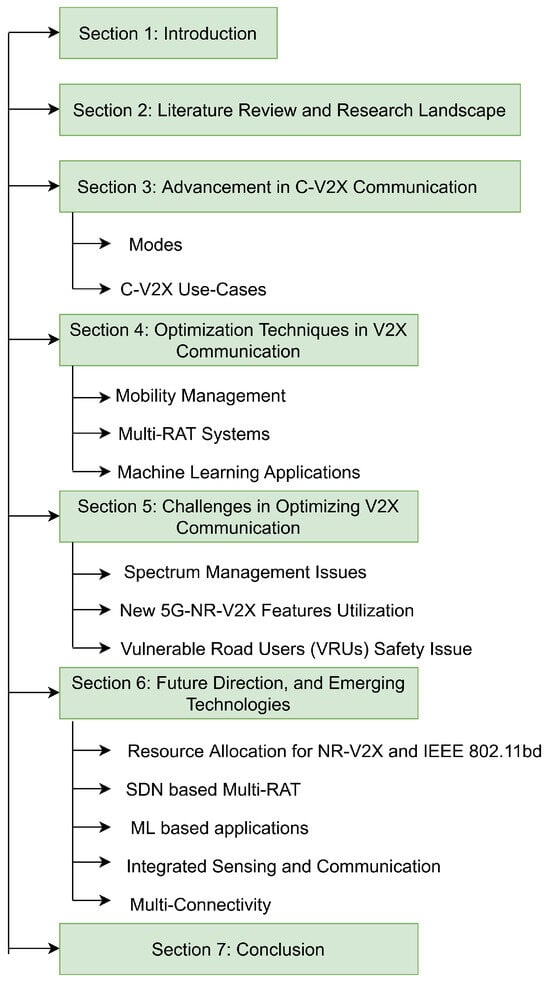
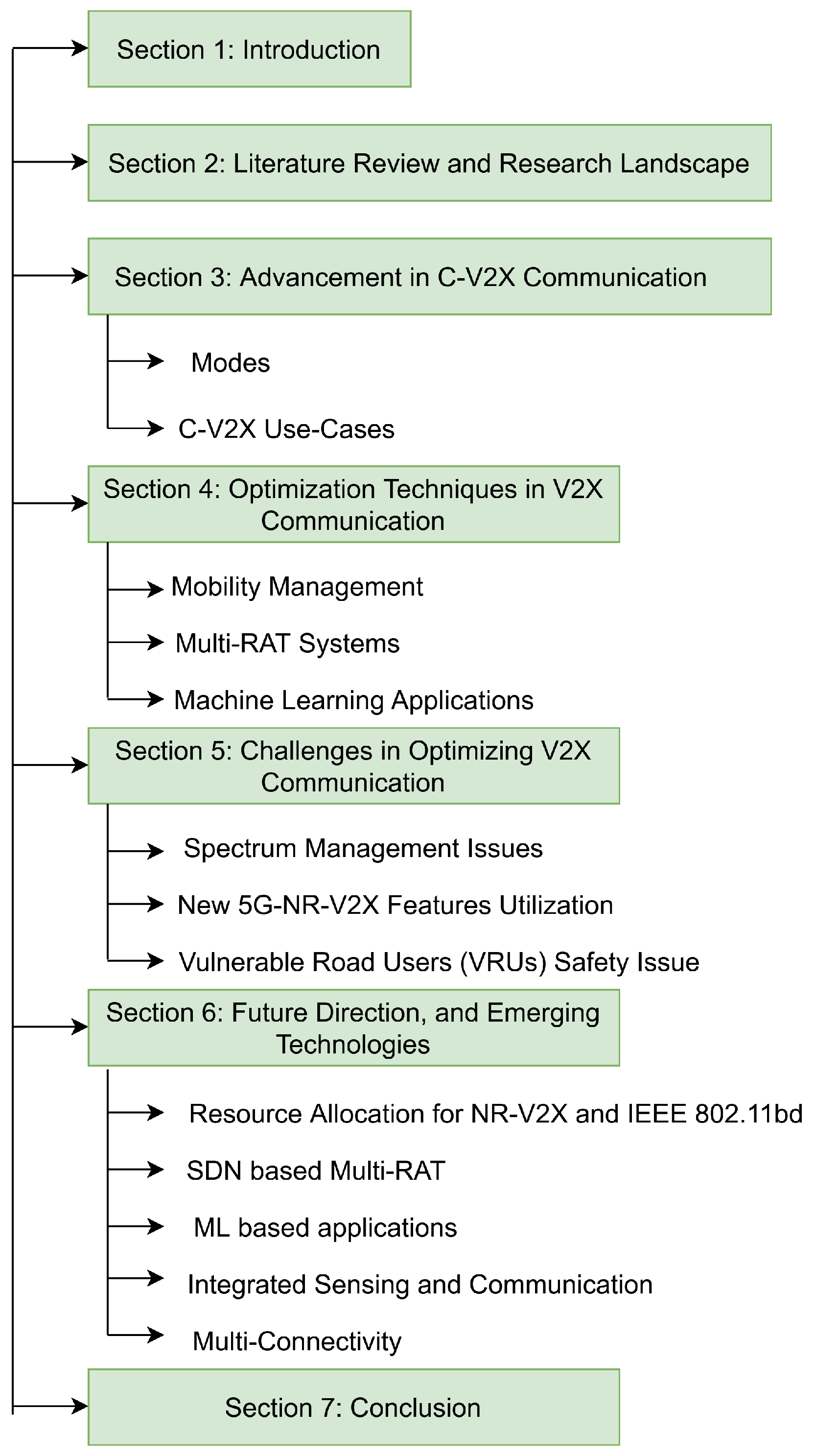
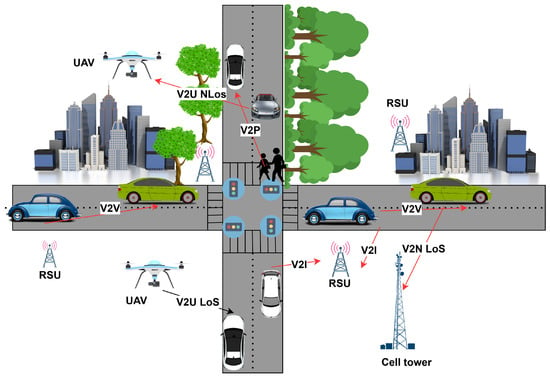
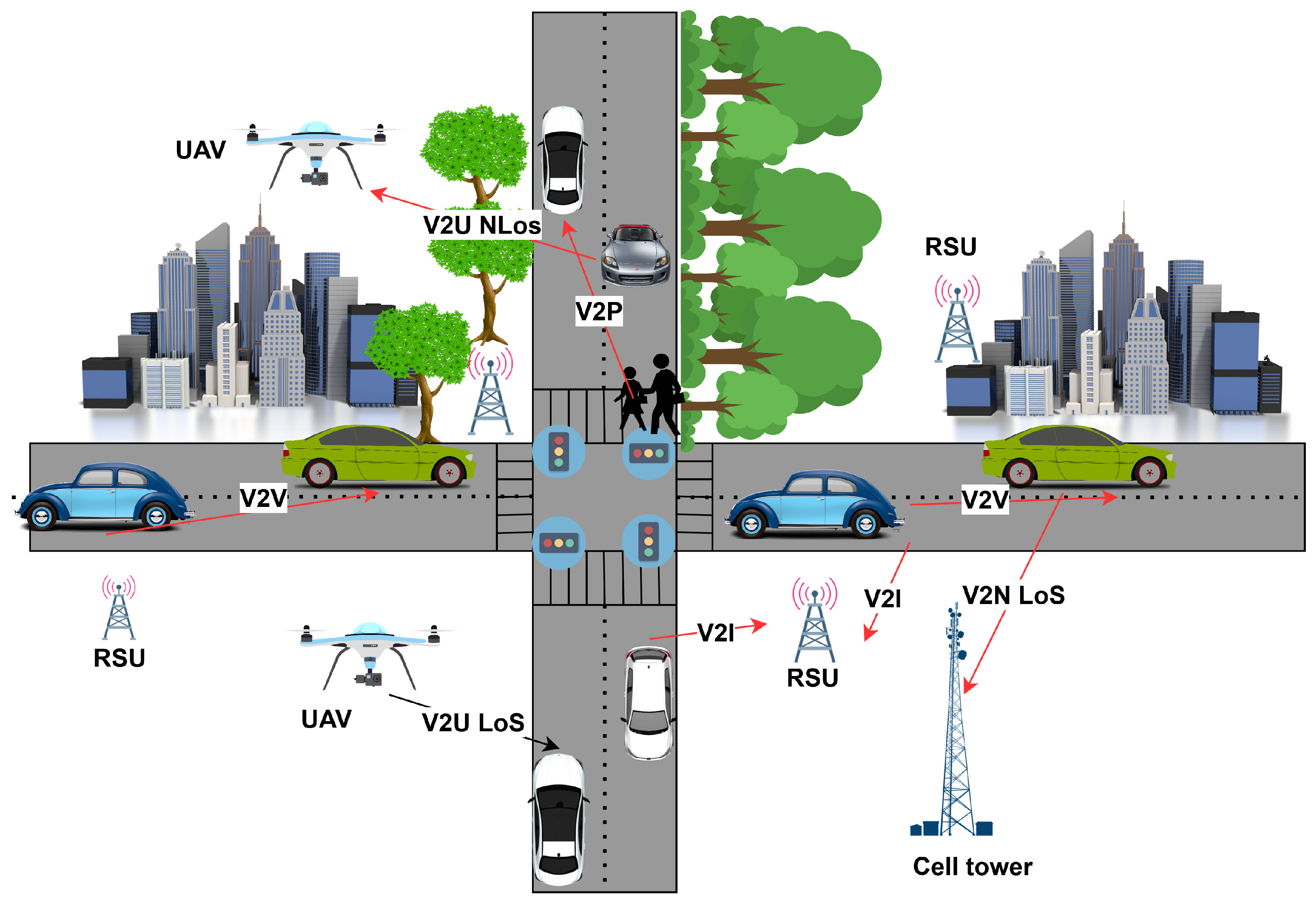
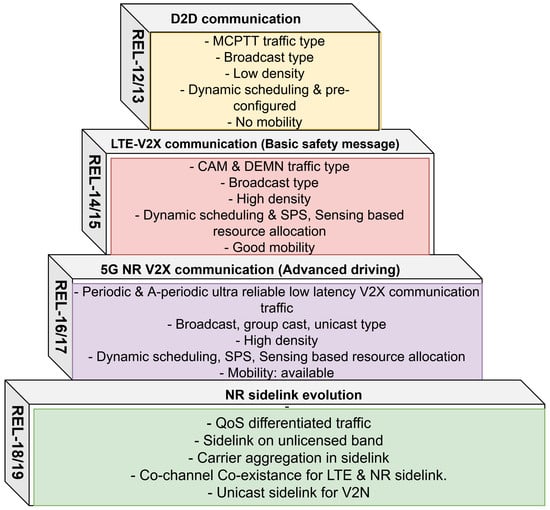
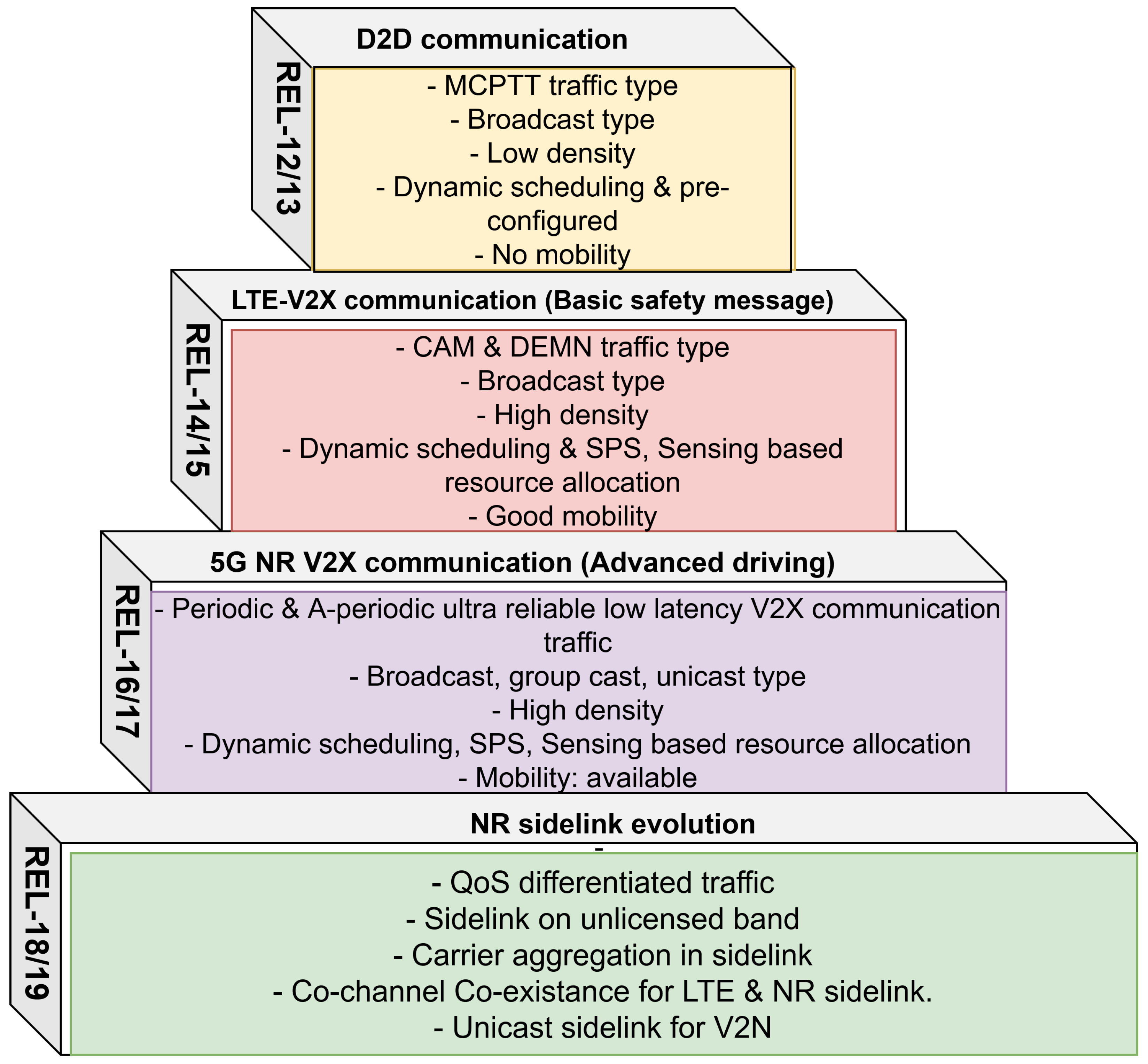
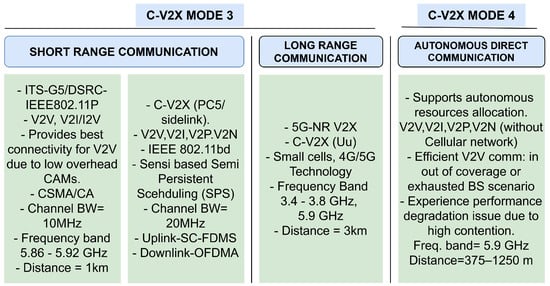
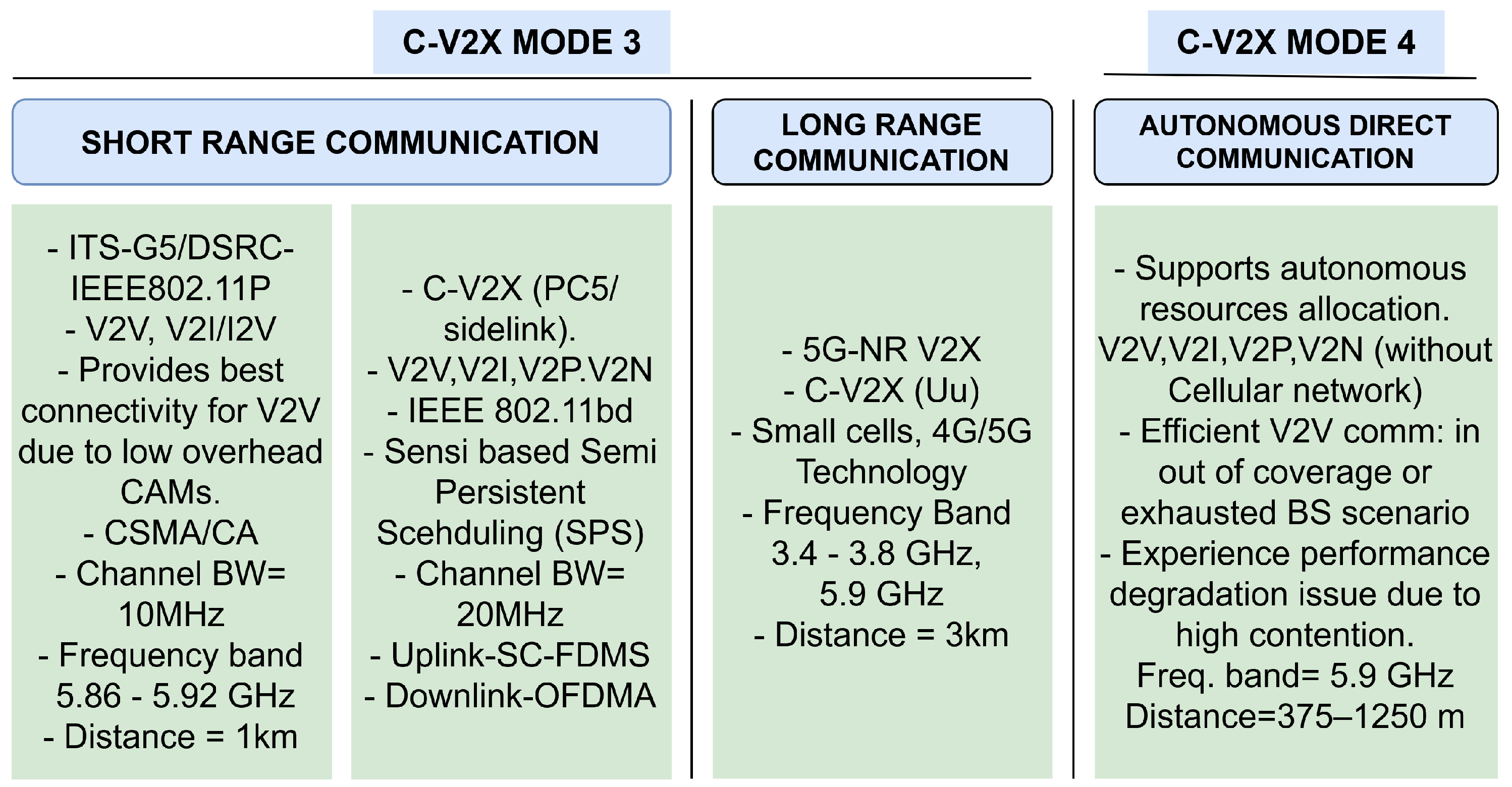
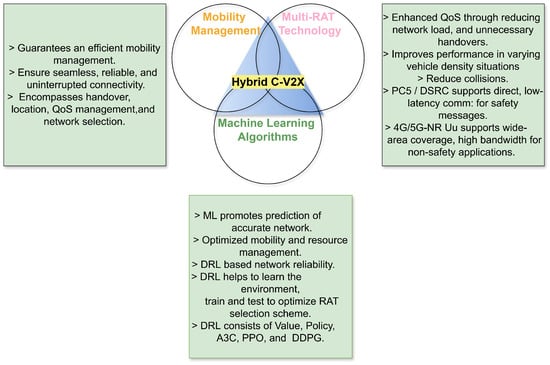
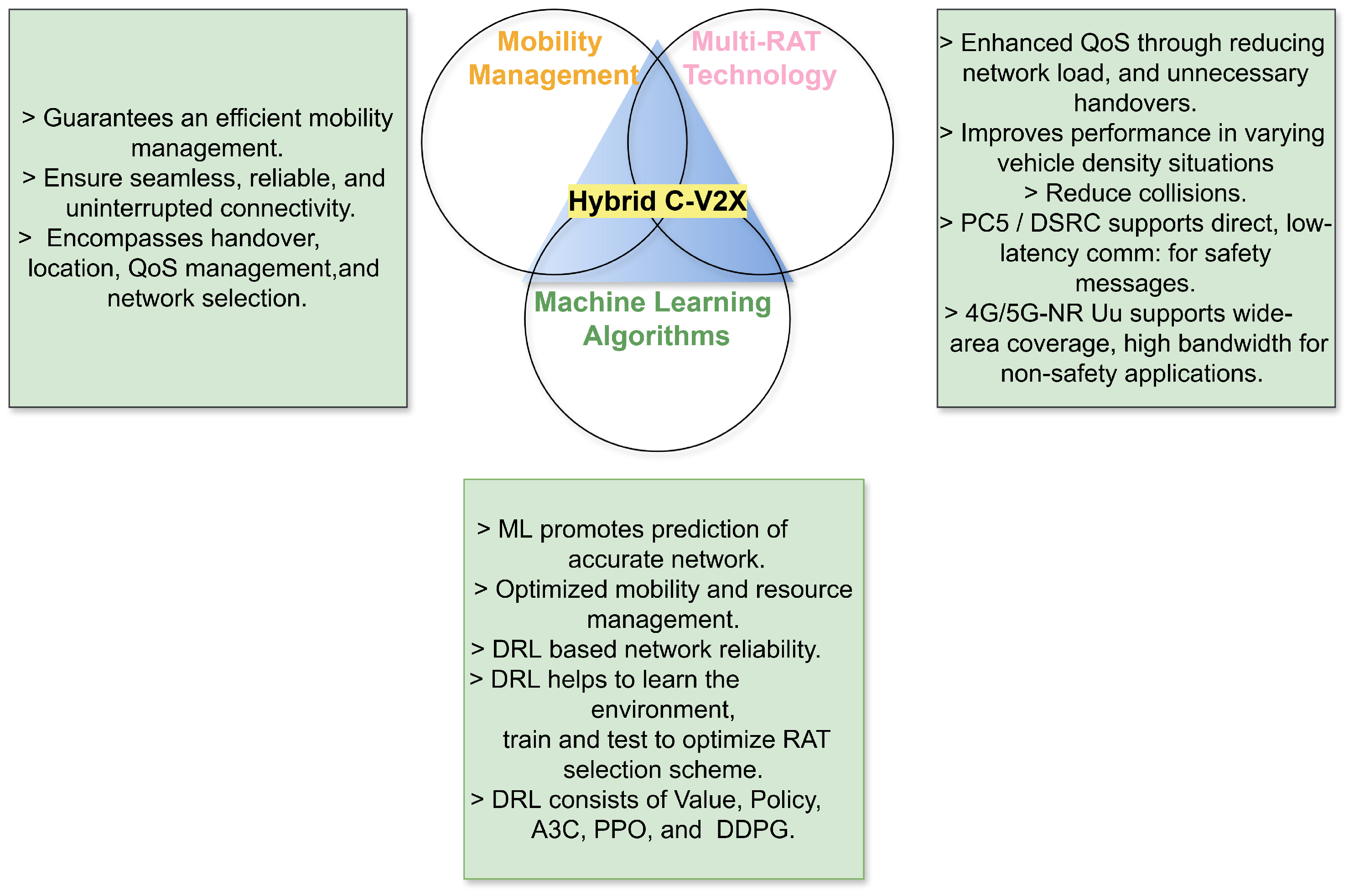
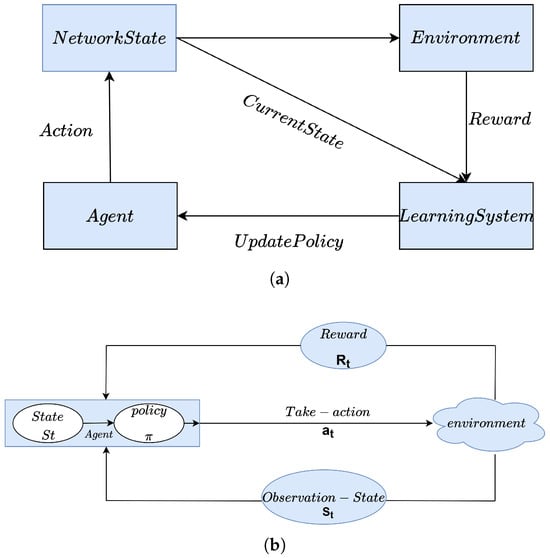
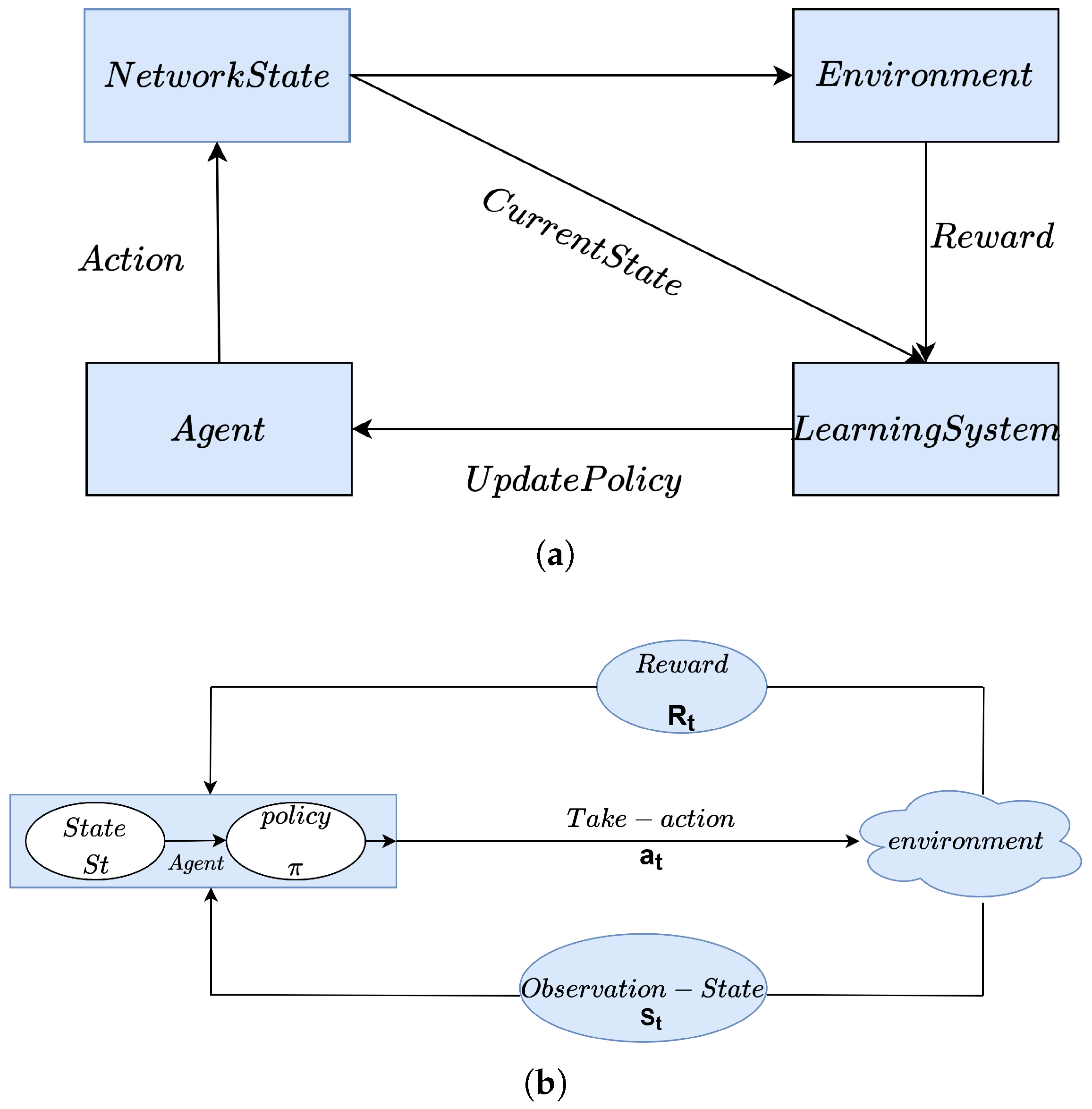

Disclaimer/Publisher’s Note: The statements, opinions and data contained in all publications are solely those of the individual author(s) and contributor(s) and not of MDPI and/or the editor(s). MDPI and/or the editor(s) disclaim responsibility for any injury to people or property resulting from any ideas, methods, instructions or products referred to in the content. |
© 2026 by the authors. Licensee MDPI, Basel, Switzerland. This article is an open access article distributed under the terms and conditions of the Creative Commons Attribution (CC BY) license.