


Abstract
Deep learning techniques have significantly enhanced medical image classification for disease diagnosis. However, traditional deep learning models face several challenges, such as dependence on large annotated datasets, complex architectural layers, and millions of trainable parameters, which can increase computational load and cause overfitting. Although quantum computing offers potential for parallel processing and improved feature representation, its practical use is limited by the current capabilities of Noisy Intermediate-Scale Quantum (NISQ) hardware. To overcome these issues, Hybrid Quantum–Classical Convolutional Neural Networks (HQCNNs) have been developed, using quantum properties like superposition and entanglement to improve feature extraction and classification of medical images. This review offers a thorough analysis of 50 peer-reviewed studies published from 2021 to 2026 and introduces a taxonomy of HQCNN architectures. It classifies existing approaches into three categories: Quantum-to-Classical, Classical-to-Quantum, and Hybrid Quantum Transfer Learning. The studies reviewed encompass a diverse range of medical imaging applications, including binary and multi-class disease classification using X-ray, CT, MRI, ultrasound, dermoscopic, retinal, and mammographic images. Additionally, the review compares HQCNNs with their classical CNN counterparts, exploring how factors like quantum circuit design, dataset size, class imbalance, task complexity, evaluation protocols, and hardware limitations influence classification performance. It concludes with an analysis of the key limitations of current HQCNN models, discusses challenges in deploying NISQ devices practically, and proposes future research directions to bridge the gap between experimental HQCNN frameworks and reliable clinical diagnostic systems.
1. Introduction
With the advent of deep neural networks, interpreting medical images, such as magnetic resonance imaging (MRI), computed tomography (CT scans), X-rays, and ultrasound, is now more feasible. These networks can perform automatic lesion detection, disease classification, and quantitative feature analysis. They assist in radiology reporting using segmentation, object detection, and feature extraction through multiple layers of a neural network, achieving outstanding accuracy [1]. Despite these promising results, classical convolutional neural networks (CNNs) face several limitations. They are computationally expensive and require multiple layers with millions of parameters for extensive feature extraction and efficient training. In addition, deep architectures are necessary to learn complex nonlinear patterns in images, which sometimes leads to a vanishing gradient problem. CNNs also require a large dataset for training; a small or imbalanced dataset can lead to overfitting. Finally, medical images are high-dimensional. Models must be carefully designed to avoid losing critical information necessary for classification tasks. The consequences of these limitations can be critical in clinical settings, where accurately identifying diseases from medical images is essential to prevent compromising patient’s health [1].
In contrast, quantum computing is based on the concepts of quantum mechanics involving superposition, entanglement, and interference. It is rapidly moving from theories to implementations in real-world problems. The paradigm originated when Richard Feynman observed that the physical nature, atoms and tiny particles, obeys the laws of quantum mechanics, exhibiting wave and particle duality simultaneously, rather than obeying classical physics. He questioned whether we could develop a computer that follows the laws of quantum mechanics, one that can perform computations in an entirely different fashion [2]. The real boom in quantum computing happened when Peter Shor developed a quantum algorithm that computes large integer factorizations exponentially faster than any classical algorithm [3]. Subsequently, Lov Grover introduced an algorithm that searches unsorted databases in quadratic time [4]. These revolutions demonstrate the capabilities of quantum computing to solve complex problems in parallel, exponentially faster than classical computers.
Quantum circuits can theoretically process and analyze images independently using specialized quantum encoding schemes and variational algorithms. However, practical image analysis is currently not feasible due to the limitations of existing quantum hardware. Although quantum computing has the potential to solve certain complex problems more efficiently than classical computers, current quantum hardware remains brittle. The term used to describe today’s quantum computer is NISQ—Noisy Intermediate-Scale Quantum. It accurately describes the current state of quantum hardware with approximately 1000 qubits and is limited by quantum decoherence, imperfect qubit control, shallow quantum circuit depth, and lack of fault tolerance [5].
To mitigate the limitations of both classical neural networks and quantum computing, researchers have opted for hybrid frameworks, as shown in Figure 1, which combine classical neural networks with quantum circuits. The figure provides a general conceptual representation and does not imply that current quantum circuits independently perform complete image classification comparable to classical deep learning models. These frameworks often employ a quantum simulator, which is software installed on a classical computer to mimic the behavior of a noise-free quantum computer. This integration has led to the emergence of the Hybrid Quantum–Classical Convolutional Neural Network (HQCNN), a computational architecture that combines quantum circuits with conventional neural networks to effectively function on NISQ devices without requiring full fault-tolerant quantum error correction.
Figure 1.
Venn diagram illustrating the hybrid HQCNN approach.
The HQCNNs have demonstrated significant potential within the domain of medical imaging. However, the existing literature currently lacks a systematic and comprehensive understanding of various quantum architectures and their performance in binary and multi-classification tasks. Furthermore, a detailed comparative and quantitative analysis of the standard CNN and HQCNN models is required to evaluate how the size of the data set, the class imbalance, and the complexity of the task influence their overall performance. To address these challenges, this paper investigates these variables while analyzing the inherent limitations of HQCNN models. Finally, it addresses the practical deployment constraints imposed by current Noisy Intermediate-Scale Quantum (NISQ) devices, mapping out existing research gaps to strategically guide future work in this field.
This review makes the following contributions:
- Presents the fundamental concepts of Hybrid Quantum–Classical Convolutional Neural Networks (HQCNNs), including quantum data encoding, variational quantum circuits, and hybrid learning frameworks.
- Proposes a taxonomy of HQCNN architectures, categorizing existing approaches into Quantum-to-Classical, Classical-to-Quantum, and Hybrid Quantum Transfer Learning paradigms, while providing a comprehensive review of their applications across diverse medical imaging modalities and disease classification tasks.
- Examines transfer-learning-enhanced HQCNN models and analyzes their role in addressing limited data availability and improving classification performance.
- Presents a comparative analysis of HQCNN and classical CNN models, highlighting the influence of factors such as dataset size, class imbalance, task complexity, quantum circuit design, and transfer learning strategies on model performance.
- Identifies the main limitations of current HQCNN models and discusses the practical challenges associated with deployment on Noisy Intermediate-Scale Quantum (NISQ) devices, while outlining future research directions toward scalable, robust, and clinically applicable HQCNN frameworks for medical image analysis.
2. Review Strategy
This survey investigates Hybrid Quantum–Classical Convolutional Neural Networks (HQCNNs) for enhanced disease detection from medical imaging modalities and evaluates their performance alongside classical deep learning frameworks, while addressing the practical limitations of current Noisy Intermediate-Scale Quantum (NISQ) hardware.
To ensure that the most up-to-date synthesis of state-of-the-art developments is presented, this study was conducted as a systematic literature review following the PRISMA 2020 guidelines. The search strategy targeted peer-reviewed literature published between 2021 and 2026. However, relevant foundational studies from the earlier literature are also cited where necessary to provide theoretical background of quantum computing. Relevant studies were retrieved from multiple electronic databases and indexing platforms, including Google Scholar, IEEE Xplore, MDPI, Nature, Springer, Elsevier, and ScienceDirect. The search strategy employed specific, targeted keyword sequences, including “hybrid classical quantum neural networks”, “variational quantum circuits in medical imaging”, “quantum convolutional neural networks in medicine”, “classical to quantum hybrid approach”, “quantum to classical hybrid approach”, “quantum transfer learning in disease diagnosis”, “hybrid quantum for disease classification”, and “hybrid quantum neural networks for disease classification on real quantum hardware”.
The screening and eligibility evaluation were conducted by one reviewer. Records were initially screened by title and abstract, followed by full-text assessment of eligible peer-reviewed studies. A co-author guided the screening and study-selection process, reviewed the eligibility criteria, and provided input when clarification on study inclusion or exclusion was needed. The reviewer and co-author resolved any uncertainities during the selection process through discussion based on the defined inclusion and exclusion criteria. The overall study-selection process is illustrated in the PRISMA flow diagram in Figure 2. A total of 121 studies were initially identified. After the detailed screening process, which included systematic removal of 4 duplicate studies and a detailed analysis of titles, abstracts, and methodologies, 67 studies were excluded. The studies were excluded according to the pre-defined eligibility criteria, including lack of relevance to the included scope, inappropriate dataset or application context, non-peer-reviewed status, and methodological approaches outside the defined hybrid quantum-classical HQCNN framework.
Figure 2.
PRISMA flow diagram.
Ultimately, 50 peer-reviewed studies were selected for final inclusion in the systematic review. The studies identified in the final inclusion were screened based on their titles, abstract, and methodological frameworks. No protocol was prospectively registered for this review. In addition, 27 dataset references were included to provide information on the datasets and were not part of the systematic study-selection process. Most of the papers are published in highly ranked journals classified in quartiles Q1 and Q2. Journal quartile information was considered as a bibliographic characteristic and was not used as a substitute for the methodological quality assessment of the included studies. Geographically, majority of these studies were conducted in Asia, Middle East, Europe and North and South America, Africa and Oceania. The final selected studies provide a detailed overview of current advancements in the field of HQCNNs addressing their architectural advancements, performance comparison against their classical counterparts, their limitations and key research gaps to provide insights for future directions.
This review aims to answer the key questions linked with HQCNNs as follows:
Q1—What architectural design patterns are used in HQCNNs for medical imaging, and how do quantum design choices such as qubit count, quantum circuit depth, entanglement strategy, and data encoding influence feature extraction and learning?
Q2—How does the performance of HQCNN models compare with that of classical CNNs in medical image classification, and how are the results influenced by dataset size, class imbalance, task complexity, and transfer learning strategies?
Q3—To what extent does hybrid transfer learning enhance the performance, data efficiency, and scalability of HQCNN models for medical image classification?
Q4—How do architectural, data and evaluation limitations, feature compression, and quantum encoding strategies affect information retention, model generalization, and predictive performance in HQCNN-based medical image analysis?
Q5—What are the major challenges and limitations associated with the deployment of HQCNN models on current NISQ devices, including noise, decoherence, limited qubit resources, connectivity constraints, and scalability issues?
Section 3 of the review explains the fundamental concepts of quantum computing. Section 4 of this review outlines the taxonomy of hybrid quantum–classical CNN architectures, while addressing the first research question (Q1), exploring different HQCNN architectures. Section 5 explores various applications of medical imaging using these HQCNN architectures. Section 6 presents a comparative performance analysis of of HQCNNs versus classical CNNs, while also examining the underlying factors that influences these outcomes. Specifically, Section 6.1 and Section 6.2 explain the second research question (Q2) that focuses on the performance comparison of the HQCNN and CNN models. The subsequent Section 6.3 and Section 6.4 address the third research question (Q3) explaining factors that influence the results achieved and how hybrid transfer learning approaches further enhance the HQCNNs’ performance. Section 7 provides a comprehensive discussion addressing the advantages of the review and subsequently addresses the fourth and fifth research questions. Specifically, Section 7.1.1, Section 7.1.2 and Section 7.1.3 answer the fourth research question (Q4) by investigating how architectural, data and evaluation limitations, feature compression, and quantum encoding strategies affect information retention, model generalization, and predictive performance in the HQCNN. Subsequently, the following Section 7.2 addresses the fifth research question (Q5) highlighting the practical deployment limitations of current NISQ devices. Section 7.3 and Section 7.4 discuss risk of bias and clinical validation considerations and address the limitations of the review. Ultimately, Section 7.5 highlights the existing research gaps to provide directions for future work.
3. Fundamental Concepts of Quantum Computing
To provide the necessary context for this review, this section introduces the fundamental principles of quantum computing that will be discussed throughout this paper.
3.1. Qubits and Superposition
Just like a classical computer stores data in binary digits (0 s and 1 s), a qubit, also known as a quantum bit, represents data in a quantum state. However, unlike the classical bit, which can be either in a state of 0 or 1, a qubit, or quantum bit, is the basic unit of quantum information. It is described by a quantum state defined in a two-level Hilbert space, with two computational basis states, and . Unlike a classical bit, which can take only one value at a time, a qubit can exist in a superposition of these basis states. It can exist in either of these states or in superposition, which means intuitively in both states simultaneously [6]. For a single qubit, as shown by Equation (1), the state vector is written as the sum of its two possible computational basis states, and , as
where and are complex numbers.
3.2. Entanglement
Entanglement is a fundamental concept of quantum computing. It refers to quantum correlations between different qubits that cannot be explained by classical physics. It occurs when two individual qubits are correlated with each other in such a way that the state of one qubit directly reveals the state of other qubit no matter how far apart they are. Suppose we have two-qubit states, as shown in (2):
Before measuring either qubit, we cannot determine whether they are in state or state . The state can either be or . For instance, if we measure the first qubit and it reveals , the final quantum state collapses to . Without measuring the state of the second qubit, we already know that it is also in state [7].
3.3. Quantum Measurement
Measurement is the process of observing a quantum state to obtain classical information. Because qubits typically exist in a superposition, they cannot be seen directly. Instead, after processing completes, the measurement causes the state to collapse to either 0 or 1. This process is irreversible because the original superposition disappears, and the information previously held in its amplitudes is lost completely. For example, if a qubit in state with a 70% probability of collapsing to and 30% probability of collapsing to is measured and reveals , its original probabilities (amplitudes) are permanently lost. Measuring this qubit repeatedly will constantly yield [7].
3.4. Quantum Gates
Quantum gates are building blocks of quantum computing. They manipulate the states of the qubits by applying unitary transformations. Quantum gates are of two types:
- Single-qubit gates, such as Hadamard, rotational , and Pauli (X, Y and Z) gates. The major difference between rotational and Pauli gates is that rotational gates allow us to rotate the qubit towards any angle. However, Pauli gates perform a fixed, 180-degree rotation. These gates are used to manipulate individual states by flipping the bits or phases. Specifically, the Hadamard gate is used to create superposition enabling quantum interference, which is used to combine quantum states to maximize the probability of measuring the correct state rather than a wrong one. Let us consider a single qubit. Applying Hadamard gate to induce superposition to state gives us . If we apply a second Hadamard gate, it transforms the and into two separate superpositions as and [6]. Adding them together yields the expression shown in Equation (3):The states have opposite signs, so they destructively interfere and cancel out each other. whereas the states have identical positive sign, so they constructively interfere and add up to 1. The quantum state collapses to with certainty upon measurement. The gates are described as follows:
- 1.
- The gate is used to rotate the qubit around the X-axis. It introduces an imaginary number into the quantum state amplitude that induces quantum constructive and destructive interference. This helps the quantum circuits to eliminate incorrect paths across multiple qubits. It modifies the measurement probabilities and phase of the qubit at the same time [6]. Equation (4) shows the representation of gate.
- 2.
- The gate is used to rotate the qubit around the Y-axis. It keeps the amplitudes of all quantum states completely real-valued. This makes it easy to use in classical data encoding, optimize parameters and train the quantum circuits. Additionally, it directly modifies the measurement probabilities of the qubit without altering its phase [6]. Equation (5) shows the representation of gate.
- 3.
- The gate is used to rotate the qubit around the Z-axis. It keeps the measurement possibilities of the qubit constant while altering its phase. It is used to generate interference patterns. For example, if we have two qubits and both have a 50% chance of being either 0 or 1, this means that they are identical. But when we apply the gate to any one of them, their waves will interfere differently later in the circuit, where one one path will cancel out, and the other will be amplified [6]. It is rarely used alone for data encoding; rather, it is heavily used with entangling gates to capture spatial correlations in the image [8]. Equation (6) shows the representation of the gate.
- 4.
- The Pauli-X gate acts as a quantum-NOT gate. It is used to perform bit-flip as and . Equation (7) shows the representation of the Pauli-X gate in matrix form [6].
- 5.
- The Pauli-Y gate is used to perform bit-flip and phase-flip simultaneously. It maps the computational basis states via a imaginary unit i as and . Equation (8) shows the representation of the Pauli-Y gate in matrix form [6].
- 6.
- The Pauli-Z gate acts as a flip-gate. It leaves the state unchanged but flips the sign (phase) of the state as and . Equation (9) shows the representation of the Pauli-Z gate in matrix form [6].
- Multi-qubit gates, such as CNOT and CZ gates, are a primary source for generating entanglement between the qubits. Without multi-qubit gates, the qubits would act independently without any interaction with each other [6]. The CNOT gate consists of two input qubits, the control qubit and the target qubit. If the control qubit is set to 0, the target qubit remains unchanged. Conversely, if the control qubit is set to 1, the target qubit is flipped, as shown in Equation (10):The CZ gate, on the other hand, is used to flip the phase of the target state by multiplying it by -1 if and only if both qubits are in state of , as shown in Equation (11):
By combining elementary gates, a quantum computer can generate superposition and entanglement, enabling it to solve any complex quantum computation problem [6].
3.5. Encoding Strategies
Encoding strategies map classical data into quantum states so they can be processed in a quantum environment. The two types of encoding strategies used in HQCNN models are as follows:
- Angle encoding is utilized to encode classical features into qubits as rotation angles of quantum gates. For an N-dimensional classical feature vector , angle encoding maps each feature to the rotation angle of a corresponding individual qubit. Equation (12) demonstrates the process of angle encoding. The initial state of the qubit, pointing towards the north pole in Hilbert space, is defined as . The rotation operator R() represents a quantum gate that rotates the direction of the qubit according to the classical data . The tensor product ⨂ denotes the rotation of qubits from i = 1 to N alongside each other. The final quantum state contains the sequential arrangement of qubits after the conclusion of rotation operation [9].In the context of medical image classification, angle encoding is most commonly used due to its superior hardware compatibility, as all classical features can be mapped simultaneously via single rotation gates. Consequently, the quantum circuit depth is fixed at exactly one step, allowing the computer to process the state safely before noise destroys the encoded information [10].
- Amplitude encoding is used to encode classical data into the amplitudes of a quantum state. It is highly efficient for storing data, as n-qubits can easily store classical data values. For example, if we have two qubits, we have = four computational states: . This means that using two qubits, we can encode four classical data values. These computational basis are represented as . By preparing the qubits in a normalized superposition where the classical data values serve as the amplitudes (coefficients), the final quantum state is obtained [7,9].While amplitude encoding is highly efficient for data storage, its practical application requires many complex entangling gates, which results in a high quantum circuit depth with prolonged execution times. Given that medical images are high-dimensional, the current NISQ devices present severe limitations, where the qubits undergo decoherence before the circuit finishes loading the image data, thereby degrading the integrity of the encoded data [11].
3.6. Quantum Circuits
The quantum circuits are built using a combination of single- and multi-qubit gates. The two types of quantum circuits most commonly used in HQCNNs are as follows:
- Variational quantum circuit (VQC), also known as parameterized quantum circuit (PQC), consists of trainable parameters that are updated using classical optimization algorithms to minimize an objective function. After encoding classical data using angle or amplitude encoding, it is transformed into initial quantum state . This state is passed through a circuit, which comprises vectors of trainable parameters . The consists of rotation angles of single- and multi-qubit gates. By adjusting , the circuit is trained to perform specific tasks, behaving as a quantum neural network [12]. The output produces a new quantum state, as shown in Equation (14):Equation (15) shows that a VQC unitary , composed of repeatable sequence of PQC layers. Each individual layer of PQC, denoted as , consists of alternating single- and multi-qubit gates to induce superposition and entanglement.where corresponds to i-th PQC.
- Random quantum circuit (RQC) consists of gate sequence and parameters that are chosen randomly. However, its parameters are not trainable. The parameters are initialized once using a random distribution (Like Haar measure), fixed permanently and not adapted to input data, to minimize the loss function or update its weights. The decomposition of RQC is shown in Equation (16). The depth (d) represents the number of sequencial layers inside RQC. A higher depth indicates that more operations are performed sequentially, thereby increasing the complexity in the final quantum state. The ∏ is used to perform matrix multiplication from right to left. Therefore, the layer acts on the initial state first, followed by , followed sequentially up to . The represents the final result as a total unitary matrix. Each layer is a combination of all single-qubit and multi-qubit gates executed during that specific cycle [13].
4. Taxonomy of Hybrid Quantum–Classical CNN Architectures
This section introduces a taxonomy of Hybrid Quantum–Classical Convolutional Neural Networks (HQCNNs) for medical image classification. To provide a consistent grouping of the included studies, the HQCNN taxonomy is defined according to the position of quantum and classical components in the overall model architecture. Specifically, studies were classified according to whether quantum processing preceded classical processing, classical feature extraction preceded quantum processing, or transfer learning approaches incorporated in the hybrid architecture. As shown in Figure 3, existing HQCNN architectures are broadly categorized into three types: Quantum-to-Classical, Classical-to-Quantum, and Hybrid Quantum Transfer Learning approaches. These categories differ in the placement and function of the quantum component within the learning process, as well as in their feature extraction, dimensionality reduction, and classification techniques. This taxonomy describes the principal architectural configurations identified in the reviewed studies, while assigning each study to the category that best represents its primary architectural approach.
Figure 3.
Taxonomy of HQCNN architectural designs.
HQCNNs merge the representational strengths of classical convolutional neural networks (CNNs) with quantum computing principles such as superposition and entanglement. Depending on the design, they incorporate variational quantum circuits (VQCs), or random quantum circuits (RQCs) with CNNs to improve feature representation and learning in a high-dimensional Hilbert space [14].
In these hybrid systems, classical trainable parameters are optimized with standard loss functions, such as binary cross-entropy for binary classification and categorical cross-entropy for multi-class classification. Conversely, quantum circuit parameters are typically optimized using the parameter-shift rule. The resulting gradients can then be used by a gradient-based optimizer such as gradient descent or Adam [15].
4.1. Quantum-to-Classical Architecture
In the quantum-to-classical architecture, image data are initially encoded into quantum states through angle or amplitude-encoding methods. These states are then manipulated by VQCs or RQCs, leveraging quantum effects such as superposition and entanglement to capture complex features. The feature map produced from quantum measurements is subsequently fed into fully connected classical layers that perform the final classification [16,17,18,19]. Figure 4 depicts the overall workflow of this quantum-to-classical approach, while Table 1 outlines the hybrid architectural pipelines in detail.
Figure 4.
Quantum-to-classical architecture.
This architecture allows quantum circuits to process image data directly, facilitating feature extraction within the quantum domain prior to classification. Consequently, it can improve representation learning while keeping the number of trainable parameters relatively low. However, its scalability is limited by the current number of available qubits and the data-encoding demands, which restrict the resolution and complexity of images that can be handled efficiently. Within this architectural framework, medical imaging modalities, such as X-ray, CT and MRI scans, frequently utilize spatial resolutions of 28 × 28, 32 × 32, and 64 × 64 pixels [17,19,20].
The current HQCNN architectures that adopt the quantum-to-classical approach are broadly categorized into four configurations based on their architectural design, qubit-scaling and feature-encoding strategies:
- 1.
- The first configuration uses a quantum convolution layer with an internal, non-trainable RQC, typically employing a four-qubit quantum circuit. It uses pixel patches of the input image to encode classical features to quantum states using angle rotation gates (). The encoded quantum states are processed through alternating single-qubit and entangling layers. The resulting expectation values of quantum state are measured via a Pauli-Z operator to generate classical feature maps. The output feature maps are processed via subsequent classical convolutional layers [17] or directly flattened and passed to classical fully connected layers for classification [18,19]. This configuration is primarily used to reduce the number of trainable parameters required to train the model.
- 2.
- The second configuration introduces PQCs with heuristic optimizations, utilizing genetic algorithms to search for optimal parameters such as quantum circuit depth and learning rates. This four-qubit framework consists of encoding local pixel patches using angle rotation, leveraging CNOT and CZ gates for entanglement to perform sequential quantum convolutions. The output feature maps are processed via classical fully connected layers for classification. This configuration is primarily used to achieve optimal validation accuracy with faster training and narrower confidence intervals [21,22].
- 3.
- The third configuration departs from the paradigm and utilizes a trainable VQC inside the quantum convolutional layer to map a larger pixel patch onto a heavily entangled nine-qubit circuit utilizing parameterized , , and gates to implement learnable single-qubit transformations and entangling CNOT gates. The output feature maps are processed via classical fully connected layers for classification. This configuration is primarily used to achieve higher validation accuracy by incorporating trainable parameters [16].
- 4.
- Rather than processing local image patches, the fourth configuration utilizes Principal Component Analysis (PCA) to compress global image features into a four-dimensional vector to encode them into four qubits using hybrid angle-and-phase encoding strategy via and gates to capture both amplitude and phase-based transformations. This framework incorporates quantum pooling, which measures two qubits and selectively discards one, thereby reducing the active qubit count from four to just two, simulating the convolutional stride of CNNs and effectively downsampling the quantum feature map to reduce training parameters. The final classification is performed natively by a four-qubit VQC utilizing parameterized and entangling gates, with the final measurement outcomes directly mapped to class probabilities via a classical softmax function. This configuration is primarily used to mitigate the current NISQ hardware constraints [20].
Table 1.
Key contributions and findings of hybrid quantum–classical architectures.
4.2. Classical-to-Quantum Architecture
In the classical-to-quantum paradigm, a traditional CNN first extracts and compresses high-dimensional medical image features into a compact representation. These low-dimensional feature vectors are then encoded into quantum states, usually via VQCs, for advanced feature analysis. The VQC leverages quantum effects such as superposition and entanglement before passing the quantum measurements to classical fully connected layers for final classification [23,24,25]. Figure 5 depicts the overall workflow of this classical-to-quantum approach, while Table 2 outlines the hybrid architectural pipelines in detail.
Figure 5.
Classical-to-quantum architecture.
Table 2.
Key contributions and findings of hybrid classical–quantum architectures.
The main advantage of this strategy is that the quantum circuit works with compact feature vectors instead of raw images, which reduces qubit needs and computational complexity. However, too much feature compression can lead to information loss, possibly limiting the quantum performance gain and the scalability of the architecture [25,26].
The current HQCNN architectures adopting classical-to-quantum approach are broadly categorized into two configurations based on their architectural design, qubit-scaling, and feature-encoding strategies:
- 1.
- In the first configuration, classical Features are extracted via a classical CNN containing both convolutional and fully connected layers. The extracted features are then used as an input for a four-qubit quantum classifier. The final classification decision is made entirely by the quantum classifiers. The first classifier, Multi-Multi-Single (MMS), employs three CNOT configurations, where the first two are multi-CNOT gates, and the third is a single CNOT gate to entangle qubits with even and odd indices. The second classifier, Multi-Single-Multi-Single (MSMS), employs two multi-qubit CNOT gates, two single-qubit () gates, and an auxiliary CNOT gate. After entanglement, the classifiers apply another set of four rotating gates (, , , and ) to map the entangled states. The measurement is computed via Pauli-Z operator and passed through a softmax layer for multi-classification. This configuration is primarily designed for resource-constrained deployment, portability, and parameter efficiency [25].
- 2.
- The second configuration, which is widely adopted, consists of sequential integration of classical CNN layers for feature extraction, followed by quantum processing via a VQC employing four and two qubits. The final classification is achieved through classical dense layers, utilizing a softmax activation function for multi-class classification and a sigmoid activation function for binary classification. This configuration is primarily designed to maximize expressiveness, enhance model generalization, and improve dimensionality mismatches by processing the image with a CNN for feature extraction and subsequently processing them via quantum circuits [23,24,26].
4.3. Hybrid Quantum Transfer Learning Architecture
Hybrid quantum transfer learning combines pre-trained CNN backbones with quantum circuits. The pre-trained network extracts rich image representations learned from large-scale datasets, while the quantum layer performs additional feature transformations before classification. This architecture aims to combine the strong feature learning capabilities of transfer learning with the expressive power of quantum circuits.
The concept of transfer learning in HQCNNs was originally introduced by Mari et al. [27]. This approach integrates a pre-trained classical CNN model with quantum circuits, such as VQCs and RQCs. Figure 6 depicts the comprehensive workflow of the hybrid quantum transfer learning architecture for binary classification, while Figure 7 illustrates the corresponding architecture for multi-classification tasks. Table 3 and Table 4 provides a structural breakdown of the HQCNNs integrated with transfer learning frameworks across the reviewed studies.
Figure 6.
Hybrid quantum transfer learning architecture for binary classification.
Figure 7.
Hybrid quantum transfer learning architecture for multi-classification.
Table 3.
Key contributions and findings of hybrid quantum transfer learning architectures for binary classification.
Table 4.
Key contributions and findings of hybrid quantum transfer learning architectures for multi-classification.
The current HQCNN architectures integrated with transfer learning are applied to solve both binary and multi-classification tasks based on their architectural design, qubit-scaling and feature-encoding strategies.
4.3.1. Hybrid Quantum Transfer Learning Architectures for Binary Classification
The hybrid quantum transfer learning architectures for binary classification integrate pre-trained CNNs, such as ResNet-18, ResNet34, ResNet50, Inception-V3, AlexNet, VGG16, DenseNet121, and EfficientNet-B3, or custom shallow convolutional blocks to handle initial high-dimensional feature extraction from medical images. While conventional frameworks remove the final classification layers of pre-trained CNNs and replace them with fully connected layers for dimensionality reduction for data encoding, ref. [32] utilizes convolutional layers for efficient dimensionality reduction while preserving important spatial features to achieve lower training times by reducing the number of trainable parameters. Depending on the design and complexity of the HQCNN model and to accommodate the limitations of the NISQ era, these architectures employ constrained qubit counts, ranging from two to eight, to perform quantum computations. For instance, ref. [33] scales its qubit requirements based on the selected CNN backbones, utilizing three qubits for its custom QCNN, three to four qubits for QDenseNet121, and three to five qubits for QResNet50. The extracted features are mapped to quantum states using diverse quantum encoding schemes, including amplitude embedding, Y-axis angle embedding via parameterized rotation gates [29,30,31,32,34,35,36], X-axis angle and amplitude embedding via rotations [33], or ZZFeatureMap [28]. Additionally, ref. [36] implements a custom trainable unitary circuit alongside gate for data encoding. This strategy captures complex amplitudes along the Y-axis of the Bloch sphere to expand the representation space and generate complex entangled states. As illustrated in Figure 6, quantum processing layer typically consists of Hadamard gates to initialize qubits in a superposition state, followed by a VQC layer with entangling CNOT gates or CZ gates. Finally, the expectation values are measured via the Pauli-Z operator and converted back to classical features, which are subsequently processed by classical fully connected layers to perform binary classification [28,29,30,31,32,33,34,35,36].
4.3.2. Hybrid Quantum Transfer Learning Architectures for Multi-Classification
The HQCNN architectures integrated with transfer learning for multi-classification are broadly categorized into two configurations, as illustrated in Figure 7. The configurations are described as follows:
- 1.
- The first configuration of transfer learning in HQCNN models employs a pre-trained quantum convolutional layer instead of classical pre-trained CNNs. This technique, known as quantum-to-classical transfer learning, is proven for accurate multi-classification. The procedure first requires pre-training the quantum neural network and subsequently fine-tuning it on the target dataset. The quantum convolutional layer traverses the pixel patch to map input data to quantum states. Specifically, ref. [37] utilizes four-qubit PQCs with trainable gates, CNOT for entanglement and measurement via the Pauli-Z operator. In contrast, ref. [38] utilizes rotation gate followed by CNOT gates and additional parameterized single-qubit gates. The resulting feature maps are fed into classical networks for dimensionality reduction, with softmax activation function for class mapping [37], which extracts 512 features from the pre-trained HQCNN feature extractor and passes them through fully connected layers, while [38] uses the Inception-ResNet-V1 architecture and employs a multi-class support vector machine (SVM) instead of classical fully connected layers for class mapping, as it has demonstrated excellent performance in previous melanoma studies.
- 2.
- The second configuration involves the merging of classical features from datasets of two modalities, such as chest radiographic (CXR) images and CT scans for enhanced multi-classification. Transfer learning models such as, VGG16, VGG19, Inception-v3, Xception, ResNet50, and RepVGG are evaluated individually to extract classical features from each modality, thereby merging them into one feature vector of five values using Singular Value Decomposition (SVD). The mapping of features to quantum states is performed via the Phase (P) gate for simplicity to store numerical feature values directly into the relative phase of a qubit’s state without altering the probability amplitudes. The quantum five-qubit PQC consists of Hadamard gate for superposition, trainable variational parameters to minimize the loss, followed by CNOT for entanglement. The measured qubit values are passed through four fully connected layers with softmax for multi-classification. Combining two image modalities helps capture detailed patterns, thereby enhancing classification accuracy [39].
5. Applications of HQCNNs in Medical Image Classification
The integration of quantum computing with deep learning has led to the development of various Hybrid Quantum–Classical Convolutional Neural Network (HQCNN) models for medical image analysis. These models have been evaluated across diverse imaging types, including X-ray, CT, MRI, ultrasound, fundus, mammography, and dermoscopy, for both binary and multi-class disease classification. The primary goal of these efforts is to harness quantum properties of superposition and entanglement while also addressing some limitations of traditional deep learning methods.
This section explores the application of HQCNN paradigms in medical imaging. It evaluates the key studies based on their architectural design, quantum circuit setup, imaging modality, classification objectives, and findings.
5.1. Quantum to Classical Applications
Quantum-to-classical HQCNNs have been applied to a variety of medical image classification tasks, including breast cancer detection from ultrasound images, pneumonia and COVID-19 diagnosis from chest X-rays and CT scans, brain tumor classification from MRI images, and dermatological disease recognition. These studies investigate the potential of quantum feature extraction to improve classification performance while operating under the resource constraints of current quantum computing technologies. Table 1 summarizes the primary characteristics, end-to-end architectural pipelines, architectural configurations detailed in Section 4, key contributions, and main findings of representative quantum-to-classical HQCNN applications.
One of the earliest applications of the quantum-to-classical paradigm was breast cancer classification from ultrasound images [16]. The proposed HQCNN employed quantum convolutional layers and a variational quantum circuit (VQC) for quantum feature extraction prior to classification. Experimental results demonstrated that the HQCNN outperformed a conventional CNN under the same evaluation conditions, suggesting that quantum feature extraction can be beneficial when training data are limited. However, the model exhibited a bias towards benign predictions, highlighting the impact of class imbalance. Furthermore, the study did not investigate alternative quantum circuit configurations, thereby limiting the assessment of model generalizability and optimization potential [16].
Several studies have applied quantum-to-classical HQCNNs to chest X-ray analysis for pneumonia and COVID-19 diagnosis [17,18]. Although these studies adopted quantum convolutional feature extraction, architectures incorporating trainable quantum parameters and entanglement consistently achieved better performance than models relying on non-trainable quantum operations. The results indicate that HQCNNs can outperform their classical counterparts, particularly in binary classification tasks and small-data settings. However, the absence of entanglement, shallow quantum circuit depth, and non-trainable quantum parameters were found to limit feature representation capabilities and reduce performance in multi-class classification problems [17]. Beyond these applications, quantum-to-classical HQCNNs have also been applied to more challenging multi-class classification tasks for COVID-19 diagnosis from CT scans and dermatological disease recognition [19,20]. For CT-based COVID-19 classification, carefully designed quantum circuits incorporating trainable parameters and entanglement achieved superior performance and greater parameter efficiency than VGG-19 and other deep learning models. However, performance degraded as image resolution increased, reflecting the limitations imposed by the restricted number of available qubits [19]. In dermatological image classification, class-weighted learning improved minority-class recognition despite severe class imbalance [20]. Nevertheless, the need for dimensionality reduction and the susceptibility of quantum circuits to noise remain important challenges for real-world deployment.
Brain tumor classification from MRI images has also been investigated using quantum-to-classical HQCNNs [21,22]. The reported results indicate that data-related factors, particularly class imbalance, have a significant impact on classification performance. In [22], random oversampling substantially improved accuracy, precision, recall, and F1-score across both binary and multi-class classification, suggesting that performance gains were primarily driven by improved data balance rather than increased circuit complexity. Similarly, ref. [21] demonstrated that optimization strategies play an important role in enhancing HQCNN performance, with a fully adaptive stochastic gradient descent (SGD) optimizer yielding faster convergence and superior performance compared to conventional optimization algorithms. These findings highlight the importance of data preparation and optimization techniques in achieving effective HQCNN-based medical image classification.
Overall, the reviewed studies demonstrate that quantum-to-classical HQCNNs can achieve competitive performance across a range of medical imaging applications, particularly when datasets are small or moderately sized. However, their effectiveness remains strongly dependent on factors such as class imbalance, data quality, optimization strategies, quantum circuit design, and qubit availability. These observations suggest that future progress will require not only improved quantum architectures but also more robust validation on larger and more diverse clinical datasets.
5.2. Classical to Quantum Applications
Classical-to-quantum HQCNNs have been applied to a variety of medical imaging tasks, including lung disease diagnosis from chest X-ray images, pneumonia detection, brain stroke prediction from CT and MRI scans, and COVID-19 classification. In these applications, classical CNNs are primarily used to extract and compress image features before passing low-dimensional representations to a quantum circuit for further processing. Table 2 summarizes the primary characteristics, end-to-end architectural pipelines, architectural configurations detailed in Section 4, key contributions, and main findings of representative classical-to-quantum HQCNN applications.
Several studies have investigated the application of classical-to-quantum HQCNNs to chest X-ray analysis. For lung disease classification, different quantum circuit depths and gate configurations were evaluated to assess their impact on classification performance [26]. Although the proposed HQCNN achieved a high AUC-ROC value, its classification accuracy remained below that of the corresponding classical CNN. The results suggest that increasing quantum circuit depth alone is insufficient to improve performance when trainable quantum parameters, and entanglement mechanisms are limited. In contrast, a pneumonia classification study demonstrated that incorporating trainable quantum parameters and entanglement enabled the HQCNN to outperform its classical counterpart while maintaining statistical significance across multiple experimental runs [23]. These findings highlight the importance of quantum circuit design in determining the effectiveness of classical-to-quantum architectures. In [25], the COVID-19 diagnosis from chest X-ray images was performed using a real quantum hardware. The proposed quantum classifiers, Multi-Multi-Single (MMS) and Multi-Single-Multi-Single (MSMS), achieved competitive multi-class classification performance while substantially reducing the number of trainable parameters and model size, demonstrating the potential of hybrid quantum models for resource-efficient deployment. However, the limited number of available qubits and restricted quantum circuit depth imposed by current NISQ devices remain important constraints affecting scalability and performance.
Classical-to-quantum HQCNNs have also shown promise for neurological disease diagnosis. In brain stroke prediction using CT and MRI scans, the proposed QBrainNet architecture achieved superior diagnostic performance compared to several classical machine learning and deep learning models [24]. The study reported improvements in both classification accuracy and inference time while maintaining robustness against overfitting through data balancing and regularization techniques. Nevertheless, the model incurred higher training costs due to the complexity of quantum processing and requires validation on larger and more diverse multimodal datasets before clinical deployment.
Overall, the reviewed studies demonstrate that classical-to-quantum HQCNNs can provide competitive performance across a range of medical imaging applications while significantly reducing the dimensionality of the data processed by the quantum circuit. The findings indicate that trainable quantum parameters, entanglement mechanisms, and appropriate feature extraction strategies are key factors influencing performance. Nevertheless, challenges related to qubit availability, circuit scalability, computational costs, and external validation continue to limit the widespread adoption of these architectures in clinical practice.
5.3. Transfer-Learning-Enhanced HQCNNs
One of the main challenges in quantum machine learning for medical imaging is the scarcity of large, annotated datasets needed to effectively train deep models. At the same time, current Noisy Intermediate-Scale Quantum (NISQ) devices limit the qubit count and circuit complexity that can be practically used. To overcome these challenges, several studies have combined transfer learning with Hybrid Quantum–Classical Convolutional Neural Networks (HQCNNs). In these methods, pre-trained convolutional neural networks (CNNs) are used as feature extractors, while variational quantum circuits (VQCs) act as quantum classifiers or feature-processing modules. This approach aims to take advantage of the detailed feature representations learned from large datasets while utilizing quantum properties like superposition and entanglement to improve classification accuracy.
Transfer learning has allowed HQCNNs to be applied to various medical imaging tasks, including COVID-19 diagnosis, neurodegenerative disease detection, diabetic retinopathy screening, breast cancer classification, abdominal trauma evaluation, and multiple sclerosis diagnosis. This section reviews transfer-learning-enhanced HQCNNs based on the complexity of the classification task, covering both binary and multi-class problems. Special attention is given to the selection of pre-trained backbone networks, quantum circuit configurations, reported improvements in performance, and the practical challenges related to scalability and real-world implementation.
5.3.1. Hybrid Quantum Transfer Learning for Binary Classification
Hybrid quantum transfer learning combines the feature extraction capabilities of pre-trained convolutional neural networks with the representational power of VQCs. This approach aims to mitigate the need for large training datasets and prolonged convergence times while leveraging quantum feature representations for improved classification performance. Table 3 summarizes the architectures, key contributions, and main findings of representative studies employing hybrid quantum transfer learning for binary medical image classification.
Several studies have investigated the application of transfer-learning-enhanced HQCNNs to COVID-19 diagnosis from CT scan images. To address the challenges associated with limited datasets, pre-trained CNN backbones such as VGG16, ResNet, and EfficientNet have been integrated with VQCs for feature classification [28]. The reported results indicate that HQCNNs with transfer learning outperform both conventional pre-trained CNNs and HQCNNs trained from scratch, achieving improved precision, recall, and generalization across datasets. The findings suggest that combining quantum feature processing with pre-trained representations enhances the detection of subtle COVID-19-related abnormalities, such as ground-glass opacities (GGOs). However, these models have not yet been validated in real-time clinical workflows, and their robustness on geographically diverse datasets remains uncertain.
Transfer learning has also been successfully applied to neurodegenerative disease diagnosis using MRI images. Several studies integrated pre-trained backbones, including ResNet34, AlexNet, DenseNet121, ResNet50, and EfficientNetB3, with variational quantum circuits for the classification of Alzheimer’s disease, Parkinson’s disease, and multiple sclerosis lesions [29,30,33]. Across these studies, hybrid quantum transfer learning models consistently outperformed conventional pre-trained CNNs and several state-of-the-art approaches while reducing the number of trainable parameters. The results indicate that transfer learning enables robust feature extraction, whereas quantum layers contribute additional discriminative representations. Nevertheless, most studies were limited to binary classification tasks and simulator-based evaluations, while issues related to scalability, computational overhead, and deployment on real quantum hardware remain largely unexplored.
Hybrid quantum transfer learning has also been applied to retinal disease diagnosis and breast cancer detection. For diabetic retinopathy classification, the integration of InceptionV3 with a variational quantum classifier demonstrated superior performance compared to conventional CNN models, highlighting the ability of quantum circuits to capture subtle disease-related features [31]. Similarly, breast cancer classification from mammography and ultrasound images benefited from the integration of ResNet50 with quantum convolutional and quantum pooling layers, which reduced computational complexity while preserving important spatial information [32]. However, the reported results revealed that increasing quantum circuit depth does not necessarily improve performance and that the effectiveness of quantum entanglement remains highly dependent on the chosen encoding strategy.
Applications have further extended to abdominal trauma classification from CT images, where a hybrid ResNet18-VQC framework achieved higher accuracy and recall than the corresponding classical ResNet18 model while exhibiting faster convergence [34]. These findings suggest that quantum circuits can enhance the discrimination of subtle image patterns that may be difficult to capture using classical representations alone.
Most transfer-learning-based HQCNN studies have been evaluated using quantum simulators due to the limitations of current NISQ devices. However, a small number of studies have validated their approaches on real quantum hardware. For breast cancer classification, a ResNet18-VQC architecture achieved comparable performance on both simulators and the IBM Lagos [40] quantum processor, demonstrating resilience to quantum noise while highlighting the substantial execution times associated with real-hardware experimentation [35]. Similarly, a transfer learning framework for COVID-19 classification was evaluated on multiple IBM quantum devices, where competitive performance was maintained across different quantum hardware platforms [36]. These studies provide encouraging evidence regarding the feasibility of deploying hybrid quantum transfer learning models on current quantum hardware, although concerns related to scalability, execution times, and overfitting remain unresolved.
Overall, the reviewed studies demonstrate that hybrid quantum transfer learning is among the most promising HQCNN paradigms for binary medical image classification. By combining the robust feature extraction capabilities of pre-trained CNN backbones with quantum feature processing, these models generally achieve superior classification performance while reducing the number of trainable parameters. Nevertheless, most studies remain limited to simulator-based evaluations, relatively small datasets, and binary classification tasks, emphasizing the need for larger-scale clinical validation and broader experimentation on the real quantum hardware.
5.3.2. Hybrid Quantum Transfer Learning for Multi-Classification
This section explores hybrid quantum transfer learning approaches applied to multi-class medical image classification. Table 4 summarizes the primary characteristics, end-to-end architectural pipelines, architectural configurations detailed in Section 4.3.2, key contributions, and main findings of representative studies.
One approach to transfer learning in HQCNNs is to utilize a pre-trained quantum convolutional layer rather than a pre-trained classical CNN. This quantum-to-classical transfer learning strategy has been successfully applied to multi-classification of knee osteoarthritis from X-ray images and skin lesions from dermoscopic images [37,38]. In these studies, a quantum feature extractor was first trained on a source medical imaging task and subsequently fine-tuned on a target dataset. The output feature map from the qubit measurement produced by the quantum layer is fed into a classical network based on Xception backbone and Inception-ResNet-V1 for multi-classification. The results demonstrated that transfer learning significantly improved classification accuracy and recall while reducing convergence time, enabling the models to outperform several state-of-the-art deep learning approaches. The findings suggest that transferring quantum representations learned from one medical imaging domain to another can improve feature extraction and classification performance. However, model performance remained sensitive to the choice of backbone architecture, while issues related to overfitting, data augmentation, and the lack of external validation datasets continue to limit the assessment of generalizability.
Hybrid quantum transfer learning has also been applied to multimodal medical image analysis. By combining features extracted from chest radiographs and CT scans, transfer learning models based on VGG16, VGG19, InceptionV3, Xception, ResNet50, and RepVGG were integrated with parameterized quantum circuits for multi-class lung cancer classification [39]. The reported results indicate that multimodal feature fusion improves the representation of disease-related patterns and enhances classification performance compared with single-modality approaches. Among the investigated architectures, the RepVGG-based hybrid model achieved the highest classification accuracy and recall, outperforming both conventional transfer learning models and existing state-of-the-art methods. Nevertheless, some lung cancer subtypes remained difficult to classify due to their complex morphological characteristics. Furthermore, the absence of independent validation and testing protocols raises concerns regarding model generalizability, while the lack of tumor staging prediction limits the clinical applicability of the proposed framework.
Overall, the reviewed studies demonstrate that hybrid quantum transfer learning can effectively support multi-class medical image classification by combining transfer learning with quantum feature processing. The reported results indicate that both quantum feature reuse and multimodal feature fusion can enhance classification performance while reducing convergence time. However, most studies remain limited to simulator-based evaluations, relatively small datasets, and a lack of external validation. Future research should therefore focus on improving generalizability, reducing overfitting, validating models on diverse clinical datasets, and investigating deployment on real quantum hardware.
6. Comparative Performance Analysis of HQCNNs Versus Classical CNNs and Influencing Factors
This section evaluates the comparative performance of Hybrid Quantum–Classical Convolutional Neural Networks (HQCNNs) against classical deep learning convolutional neural network (CNN) models in image classification tasks. Rather than assuming inherent quantum superiority, this analysis utilizes CNNs as the baseline benchmark to systematically investigate the conditions under which quantum integration may provide a measurable performance improvement in medical image classification tasks. Such comparisons are interpreted in the context of the experimental conditions reported in each study, including the dataset used, qubit count utilized, model configuration, and evaluation metrics, to avoid attributing performance differences solely to the use of quantum components. The majority of the included studies utilized a single experimental run, whereas studies [23,37] incorporated multiple runs to assess statistical significance.
To determine the effectiveness of HQCNNs, the analysis evaluates core quantum architectural configurations and physical factors, including quantum properties of superposition and entanglement, as well as quantum circuit design, including qubit count used, quantum circuit depth, gates selection, and the effect of quantum trainable parameters on HQCNN’s performance.
The comparative performance evaluation is investigated across three areas. Section 6.1 evaluates binary classification analysis, Section 6.2 evaluates multi-classification analysis, and Section 6.3 evaluates the impact of dataset size and class imbalance on HQCNN performance.
To validate these qualitative discussions in observable evidence, Table 5 and Table 6 present comprehensive benchmarking results across different experimental configurations. Table 5 presents a performance comparison between classical CNNs and HQCNN utilizing quantum-to-classical and classical-to-quantum architectural configurations. Meanwhile, Table 6 contrasts the performance of standard CNN models with HQCNN architectures integrated via hybrid quantum transfer learning. The tables highlight the specific dataset and its properties, qubit count used, classification task performed, architecture utilized, alongside the configuration of trainable or non-trainable parameters. Furthermore, ( Accuracy) highlights the performance of CNN baseline model and corresponding change in performance accuracy resulting from the transition to HQCNN architecture. It is calculated as the difference between HQCNN and CNN test accuracies, as shown in Equation (17):
Table 5.
Comparative performance analysis of quantum-to-classical and classical-to-quantum HQCNN models versus classical CNN models ( accuracy denotes the difference between HQCNN and CNN test accuracies (HQCNN − CNN)).
Table 6.
Comparative performance analysis of hybrid quantum transfer learning models versus classical CNN models ( accuracy denotes the difference between HQCNN and CNN test accuracies (HQCNN − CNN)).
The F1-score provides a balance between precision and recall, whereas recall reflects the model’s ability to correctly identify actual disease cases. These metrics are accompanied by observations that summarize the experimental takeaways influencing the comparative results.
The reviewed studies generally report improved performance for HQCNNs compared to classical CNN baselines, particularly in small-data settings. However, rather than universally outperforming CNNs, successful quantum circuit integration relies on a careful selection of architectural design choices.
6.1. Binary Classification Analysis
6.1.1. Quantum-to-Classical Architecture
The quantum-to-classical architecture for binary classification classically simulates quantum circuits to extract intricate, non-linear features that are computationally inaccessible by standard convolutional filters [16,18]. Rather than representing a universal performance leap, the reviewed studies suggest that the comparative efficacy of this architecture is highly context-dependent. A primary advantage of these HQCNN models is their ability to achieve high training and validation accuracy on small datasets relative to pre-trained CNN models [16]. In these small-dataset settings, the integration of quantum-to-classical architecture has been shown to deliver a measurable performance advantage, yielding an average positive delta ( Accuracy) of 3.84% to 10% over traditional classical baselines. Consequently, this architecture facilitates accelerated optimization, enabling HQCNN to converge faster within 10 epochs even with small training samples, such as 50 instances [17,30].
The reported performance of HQCNN models over classical CNNs may be associated with quantum-to-classical architectural reduction of trainable parameters compared to traditional CNNs. This is achieved by quantum convolutional layers using smaller image patches (e.g., 2 × 2 and 3 × 2 3) and processing them to effectively encode complex features into qubits individually, rather than processing the entire image simultaneously. This promotes faster convergence and reduces the need for extensive data augmentation [17,18]. However, the reduction in trainable parameters should not be considered, by itself, evidence of improved clinical performance, as the reported results may also depend on factors such as feature encoding, architectural configuration, feature-reduction strategy, and experimental settings.
Furthermore, while quantum circuits leverage entanglement to construct expressive feature spaces, entanglement alone does not ensure robustness against noise. However, in shallow HQCNN architectures at an optimal depth of three entanglement layers, multi-qubit feature encoding acts as a natural regularizer, making the model resilient against input data noise. By distributing feature representations across entangled quantum states, the model reduces its sensitivity to local image perturbations. Moreover, see ref. [71].
6.1.2. Classical-to-Quantum Architecture
The classical-to-quantum architecture for binary classification strategically enhances classical CNNs by replacing the classical dense layer with a variational quantum circuit (VQC). Holding the remainder of the architecture constant, it isolates the quantum performance gains, demonstrating statistically significant improvements across multiple training rounds despite the inherent stochastic nature of neural networks [19,23]. Furthermore, replacing just one layer of a classical CNN with a six-parameter quantum circuit has been shown to significantly improve AUROC and accuracy, demonstrating that the quantum layer is better at optimizing objective functions for complex, real-world problems [21,23]. Additionally, leveraging quantum advantage of superposition, the HQCNN model increases its processing power while reducing computational load. As a result, its inference time is 30% faster than its classical counterpart, which is essential in clinical practice [24]. Ultimately, this classical-to-quantum architecture delivers a performance advantage, yielding an average positive delta ( Accuracy) of 4% to 9% over traditional classical baselines in binary classification.
Although classical-to-quantum HQCNNs models outperform traditional CNNs using shallow circuits and a limited qubit count for binary classification, achieving higher accuracy necessitates deeper quantum circuit depths and an increased qubit count. Without these architectural scalability modifications, the expressive power of the quantum circuits remains constrained, causing the accuracy to stagnate that yields an average negative delta ( Accuracy) of −1% relative to its classical counterpart [22,23]. Moreover, these models are designed for the current NISQ era, utilizing low-depth circuits suitable for error mitigation while still delivering enhanced disease classification performance compared to traditional CNNs [23].
6.1.3. Hybrid Quantum Transfer Learning Architecture
The hybrid quantum transfer learning architecture utilizes high-capacity classical pre-trained CNNs, such as ResNet and VGG, for raw data processing, followed by quantum circuits for sophisticated final classification. The VQCs in these models act as powerful tools for efficient dimensionality reduction, projecting high-dimensional feature vectors (e.g., 2048 features from ResNet50) into a lower-dimensional quantum space utilizing two or four qubits without losing critical information [30,32,33]. These hybrid models often show more stable learning curves and are better adapted to hyperparameter tuning, leading to better generalization on unseen medical images compared to their classical counterparts [24,29,34]. In addition, increasing the depth of quantum layers helps the model to perform more complex computations on the features, as each layer provides more trainable parameters, which increase the model’s learning capacity. This enables the HQCNN model to progressively improve its classification accuracy and overall performance over an increasing number of training epochs [29].
The margin in accuracy between standalone pre-trained CNNs and HQCNN models is occasionally narrow, exhibiting a negative delta ( Accuracy) of −0.57% [33]. The reason for that is because classical CNN architectures such as VGG16, ResNet50, and EfficientNetV2L already exhibit excellent performance when dealing with certain types of images. When used with hybrid quantum circuits, these architectures serve as robust feature extractors before passing the extracted features through quantum circuits for further processing, thereby improving the accuracy of HQCNN models. Consequently, the hybrid approach closes the gap on challenging tasks, achieving incremental accuracy over already highly optimized classical baselines [28]. Additionally, exploiting quantum efficiency through the integration of three CNOTs enables HQCNN models to converge rapidly with high accuracy within just five epochs compared to classical CNNs, reflecting a large gap in the convergence rate between the two approaches [31].
Moreover, utilizing unitary circuits lead to a significant performance boost in HQCNN models, providing an average increase of 5% to 9% in overall classification performance in small datasets [36].
6.2. Multi-Classification Analysis
6.2.1. Quantum-to-Classical Architecture
The quantum-to-classical architectural configuration of HQCNNs offers significant advantages by leveraging quantum principles like entanglement, superposition, and parallel processing to extract complex, high-dimensional medical image features. These architectures generate highly complex quantum kernels that can capture intricate, non-linear patterns that classical CNNs struggle to exploit, thereby exhibiting a positive delta ( Accuracy) ranging from 0.1% to 10.85% [17,19,20]. Moreover, employing quantum pooling—which measures two qubits and selectively discards one to reduce spatial dimensions and emulate the convolutional stride of traditional CNNs—allows the model to produce compact feature states prior to classification. When paired with a class-weighted loss scheme, this hybrid architecture has been proven to achieve significant improvements in recall for minority classes compared to unweighted baseline networks [20].
However, HQCNNs experience a performance bottleneck when handling multi-classification tasks compared to binary classification. Due to NISQ constraints, these architectures are restricted to shallow, single-layer quantum convolutional configurations and restricted four-qubit configuration. These minimal circuit layouts rely on basic and simple entanglement gates (such as basic and gates), which lack the architectural sophistication and representational depth required to differentiate between classes in multi-class datasets [22]. Consequently, this results in measurable performance disadvantage, yielding an average negative delta ( Accuracy) ranging from −5.2% to −28% over traditional classical baselines.
6.2.2. Classical-to-Quantum Architecture
Fundamentally, a primary reason that HQCNNs face challenges in multi-classification stems from architectural scalability limits that degrade performance in multi-class scenarios. Studies [18,26] attribute this to two main factors. Firstly, the quantum circuits that are solely dominated by single-qubit gates restrict the expressiveness of potential interactions between the qubits and limit their ability to represent complex multi-class datasets. Secondly, there is a critical need for finer parameter optimization, specifically with regard to the choice of the qubit count, quantum circuit depths, and the arrangement of rotation gates alongside the development of quantum-aware regularization techniques. To address these issues, the use of multi-qubit gates is highly significant to link the qubits together to leverage quantum entanglement.
Quantum parameters and architectural configurations significantly impact the model’s multi-classification performance. Ref. [26] experimented with a four-qubit RQC with different quantum rotational gates, specifically ( and ) gates for encoding, followed by fixed Pauli gates (X, Y, and Z) gates to evaluate multi-classification of lung diseases. Among the experiments conducted, Rotation-X and Pauli-Z gates configuration achieved the highest classification accuracy; however, this configuration exhibits a negative delta ( Accuracy) of −4% compared to its classical counterpart. This is due to lack of trainable quantum parameters and multi-qubit entanglement. The limitation was addressed by increasing quantum circuit depth, which had no impact on the results.
Conversely, employing an appropriate entanglement strategy and quantum circuit depth can significantly enhance multi-classification accuracy of classical-to-quantum HQCNN models. [25] experimented with two custom quantum classifiers, Multi-Multi-Single (MMS) and Multi-Single-Multi-Single (MSMS), inside a (four and six)-qubit VQC. The results demonstrate that when paired with a ResNet-18 feature extractor with K-nearest neighbors (KNN), the MMS classifier (depth 6) achieved testing accuracy of 92.6%, yielding a positive delta ( Accuracy) of 0.7% compared to its classical counterpart.
6.2.3. Hybrid Quantum Transfer Learning Architecture
The hybrid quantum transfer learning architecture has been demonstrated to enhance accuracy in multi-classification tasks, exhibiting a positive delta ( Accuracy) ranging from 2.91% to 17.56% [37,38,39]. This performance edge over classical CNNs stems from quantum parallel computing via superposition, allowing HQCNN models to process massive image datasets rapidly [38].
To maximize the multi-classification accuracy of HQCNN models, pre-trained classical backbones for feature extraction must be selected carefully based on their suitability for specific datasets [37,38]. Pre-training the HQCNN model on one dataset and then fine-tuning it on another dataset is proven to improve multi-classification accuracy. When combined with adversarial validation for dataset shift, it ensures clinical reliability with faster convergence, reaching 90% accuracy in less than two epochs [37]. Similarly, integrating multiple image modalities using Singular Value Decomposition (SVD), and processing them via quantum VQC circuits leverages the mutual advantages of quantum computing and deep learning, thereby improving multi-classification accuracy [39].
In addition, adapting genetic algorithms to find optimal hyperparameters and SGD optimizer alongside dynamic learning rate adjustment during training of the HQCNN model helps it converge much faster, thereby outperforming classical CNNs in multi-classification tasks [21,37].
6.3. Impact of Dataset Size and Class Imbalance on HQCNN Performance
Although HQCNNs have the ability to outperform CNNs, they may sometimes be subject to class imbalance, thereby introducing bias towards one class compared to the other, which can lead to an incorrect diagnosis of diseases. Incorporating dataset balancing techniques, such as oversampling, undersampling, random sampling, and weighted sampling, helps to improve the model’s training and validation accuracy across both binary and multi-classification tasks [22,24,38]. In addition, the stratified KFold method and stratified sampling are used to preserve class balance to ensure training and testing are consistent throughout for enhanced performance [33,37]. This suggests the need to correctly split the dataset and fine-tune the quantum parameters for better classification [16,31,34]. Moreover, choosing the optimal dataset size is crucial, as it reflects the model’s performance.
Another method to mitigate severe class imbalance in multi-classification is employing class-weighted cross-entropy loss function. This works by assigning higher weights to minority classes, thereby improving minority recall and preventing the model from overfitting to majority classes, ensuring balanced predictions [20]. In addition, data augmentation techniques such as rotation, shifting width and height, and horizontal flipping are applied to small datasets to introduce diversity, improve their accuracy and reduce overfitting [24,26,30,33,38,39]. Moreover, increasing the dataset size during training increases the HQCNN model’s learning capacity without overfitting by incorporating cross-validation and regularization techniques [24].
6.4. Differences Between Binary Versus Multi-Classification in HQCNNs
Across all three architectural configurations of Hybrid Quantum–Classical Convolutional Neural Networks (HQCNNs), it demonstrates distinct performance patterns for classifying binary verses multi-classification tasks.
In binary classification, HQCNNs consistently achieve significant quantum performance gains, delivering positive accuracy gains of up to 10% on small datasets. Furthermore, architectural configurations for binary classification benefit from 30% faster inference times than classical CNNs and rapid training convergence within 5 to 10 epochs. These binary gains stem from efficient quantum parameter reduction and employing shallow circuits with limited qubit count.
Conversely, multi-classification tasks expose severe performance bottlenecks due to Near-Term Intermediate-Scale Quantum (NISQ) limitations, shallow quantum circuits, and insufficient qubit entanglement. In quantum-to-classical configurations, restricted four-qubit layouts and simple CX/CZ gates yield negative accuracy deltas between −5.2% and −28%. Similarly, classical-to-quantum models suffer from a lack of multi-qubit entanglement which limits expressiveness, leading to performance degradation in multi-class settings. To overcome these multi-class challenges, architectures require increased quantum circuit depth or specialized custom multi-qubit classifiers. Ultimately, hybrid quantum transfer learning emerges as the superior approach for multi-classification, achieving positive accuracy deltas from 2.91% to 17.56%. By combining pre-trained classical backbones with quantum superposition, SVD feature merging, and genetic algorithm optimization, transfer learning bypasses these limitations to some extent, thereby reaching rapid convergence in under two epochs. Thus, their performance advantage is significant but highly dependent on the configurations of quantum circuit depth, qubit entanglement, gate selection and dataset characteristics.
7. Discussion
This review presents a systematic analysis of Hybrid Quantum–Classical Convolutional Neural Networks (HQCNNs) for medical image classification highlighting architectural and methodological trends across the reviewed studies.
Firstly, the review provides a comprehensive architectural taxonomy into three clear architectural paradigms—quantum-to-classical, classical-to-quantum, and hybrid quantum transfer learning frameworks—showing how quantum circuits integrate with classical deep learning pipelines across various image modalities.
Secondly, rather than relying on theoretical claims, the review provides rigorous qualitative benchmarking against established classical baselines, such as ResNet, VGG, and EfficientNet. It identifies the reported performance gains, including a 3.84% to 10% accuracy improvement in binary classification tasks, a 30% reduction in inference time, faster convergence, and significant reductions in trainable parameters. Furthermore, it highlights NISQ-related performance limitations in multi-classification tasks.
Finally, the review emphasizes bridging theoretical quantum computing concepts with clinical applications by highlighting strategies such as hybrid transfer, multimodal feature fusion, and class-weighted loss functions. Moreover, the review outlines essential next steps for real-world deployment, including hardware testing and external validation on diverse clinical datasets.
The remainder of this section discusses the key challenges and limitations of HQCNN models and NISQ devices, the risk of bias and clinical validation considerations, the limitations of the review and future research directions.
7.1. Limitations of HQCNN Models
This section delves into the limitations of HQCNN models, including architectures and data representation, the effects of dimensionality reduction, performance challenges imposed by small and large datasets, model evaluation, and hardware related obstacles. Table 7 summarizes the limitations by category mentioned in the studies.
Table 7.
HQCNN model limitations by category.
7.1.1. Architectural and Data Representation Limitations
Quantum performance gains are purely architectural-dependent. Encoding strategies, VQC depth, gates arrangement, and the use of entanglement and superposition all are correlated with each other and reflect the HQCNN model’s performance [22,33]. Training of quantum HQCNN models is extremely difficult and requires precise quantum gate operations, as they are highly sensitive to their environment. The current quantum hardware is still experimental and cannot handle complex calculations without making errors, which negatively affects its performance [16].
The architectural choice of HQCNN models greatly affects their classification performance. A shallow VQC circuit with non-trainable parameters and absence of entanglement makes it difficult to process large multimodal datasets, perform fine-tuning, and execute multi-classification tasks, because it restricts the model’s complexity and representational capability even if the quantum circuit depth and qubit count are increased [18,26,32]. Although data balancing techniques may improve accuracy to some extent, overall performance still largely depends on the architecture of the HQCNN model, including quantum circuit depth, qubit connectivity, and gate sequence [22,33].
In addition to architectural limitations, classical data must be encoded into qubits to represent them in quantum states. Quantum unitary operations and measurements are computationally expensive, and they require an immense amount of training time; even a single epoch would take 54 days to train on a real physical quantum computer [16]. This requires dimensionality reduction of medical images, as they are very high-dimensional in nature [16,18]. In addition, increasing the qubit count or dataset size can optimize performance; however, it also leads to an increase in the number of trainable parameters and training time [25,34]. Therefore, dimensionality reduction is often applied to images via resizing and processing them through classical CNN layers to match the number of feature values to qubits. Employing a simple CNN architecture for feature extraction and reduction without proper evaluation can sometimes hinder HQCNN performance [33]. However, extreme dimensionality reduction of features extracted from pre-trained CNNs to match the qubit count for encoding results in the loss of important features leading to resolution down sampling and local distortion, both of which are necessary for complex medical diagnosis and negatively affect the model accuracy and generalization capability [31]. Another method used for dimensionality reduction to encode features to qubits is Principal Component Analysis (PCA). This helps to retain discriminative features necessary for classification, which can be reused for new, unseen images without retraining. However, it performs aggressive reduction in dimensionality and retains only 70% of the variance from the original images, which causes the HQCNN model to under perform compared to classical CNNs [20]. The same applies to the case of 512-fold compression; however, its performance depends on the capability of feature extraction from the pre-trained model [31].
Another important factor affecting HQCNN performance is the choice of encoding strategies. Angle encoding is simpler and more resilient to noise, as it uses fewer gates; however, it is not efficient when dealing with high-dimensional data and may lose some global correlations inside the data. Amplitude encoding, on the other hand, can compress high-dimensional data exponentially into probability amplitudes, but it requires complex classical preprocessing, which limits its scalability [33].
7.1.2. Data and Evaluation Limitations
Data in medical imaging can be noisy, heterogeneous, and inaccurately annotated, making it difficult for HQCNN models to extract the intricate non-linear patterns from images required for classification tasks [24]. It is necessary to select high-quality datasets for medical images to ensure good performance accuracy of HQCNN models. Low-resolution images are generally suitable for binary classification tasks but make it difficult to achieve higher predictive accuracy for the model [16,22,24,34,38,39]. In addition, high-resolution 3D CT scans are often difficult to process, so they are converted into 2D slices to be easily processed by quantum circuit. However, this causes the loss of important spatial information needed for accurate diagnosis [28,34].
The use shallow quantum circuits makes it difficult to process large datasets, as increasing the dataset size reduces the model’s classification performance [17,18]. As a result, the model is restricted to being evaluated over very few epochs [19]. In addition, an extremely small dataset of merely 50 instances causes the HQCNN models to overfit, as high training accuracy may not translate to high validation accuracy, indicating overfitting of the model [17,21].
Another important issue in the majority medical imaging datasets is class imbalance, which results in poor testing accuracy and makes it difficult to evaluate the model’s performance [16,22,24,34,38]. Techniques such as weighted sampling are used to address class imbalance; however, this approach is constrained by the relative weight size of the labels, which causes the model to overfit easily [38]. This indicates that HQCNN models are sensitive to dataset size, distribution, and quality, which can limit their generalization capabilities [28].
A significant evaluation limitation is that HQCNN models are typically developed and evaluated on specific datasets. Therefore, classifying certain images may be difficult for them due to their distinct morphological patterns, such as identifying different lung cancers or detecting tumor staging [39]. Evaluating their performance on small datasets reflects sample favorability rather than true generalization capability, which is crucial in the healthcare sector [20,28]. In several cases, the absence of a dedicated testing split limits the reliability and generalization capability of the model, which is a critical concern in clinical settings [17,39].
Several HQCNN models generalize extremely well on large datasets and noisy environments integrated within the simulators. However, they are only evaluated for binary classification rather than multi-classification. Their efficacy tends to decrease significantly due to the limitations of quantum circuits, whereas multi-classification is essential to determine the stages of diseases and prescribe medications accordingly [18,29,30,35]. Furthermore, simply evaluating HQCNN models trained on unbalanced datasets based solely on accuracy can be misleading. It is important to take into consideration metrics such as macro precision, macro recall, and macro F1-scores to ensure an objective performance evaluation [37].
Additionally, fair evaluation of HQCNN models is limited by the computational bottlenecks of quantum hardware. Simulating circuits with more than 50 qubits requires an immense amount of memory and speed, thereby preventing researchers from evaluating deeper and complex quantum circuits [24]. Moreover, HQCNN models should be evaluated against adversarial attacks, which is vital to ensure their generalizability and clinical reliability [21]. These models are often criticized for being difficult to interpret, making it difficult for medical experts to understand and trust the decision-making process [20,28].
It is important to note that quantum enhancements are often context-specific for hybrid quantum transfer learning approaches. Adding a quantum layer may improve some architectures, such as ResNet, while providing no benefit or even a performance decline in others, like EfficientNet. This means that evaluation can no longer rely on a single classical CNN for benchmarking [33].
7.1.3. Computational and Hardware Constraints
Current quantum hardware is still experimental and cannot perform complex calculations accurately. This limitation restricts the qubit count and the depth of the VQC, which are essential for increasing the complexity of HQCNN models, thereby impacting their overall performance with higher computational demands [16,17,25,37]. These Noisy Intermediate-Scale (NISQ) devices suffer from decoherence and severe noise, which restrict operations like preprocessing of high-resolution medical images [25,26]. Quantum hardware cannot freely adjust the number of features in each layer, as these numbers are strictly linked to the qubit count and the quantum system [35]. As a result, the accuracy slightly drops in quantum hardware compared to simulators due to the noisy environment and qubit connectivity errors [36].
To bypass these issues, quantum simulators are used mimic the behavior of a quantum computer. However, this approach faces exponentially scaling resource demands. Classical computers simply do not have enough memory or processing power to imitate a quantum system of 50 or more qubits [24]. As the size of the image increases, the training time of the HQCNN model also increases significantly [19]. As a result, dimensionality reduction of medical images is often performed to address the limited qubit count and to reduce the computational costs required for training the HQCNN models; however, it negatively affects their performance [21]. In addition, the underlying complexity of quantum algorithms results in a slightly higher training time compared to classical models [24].
It is worth mentioning that quantum simulators can operate in both noiseless and noisy settings. It is better to integrate noise in quantum simulators to understand a model’s architectural limitations under conditions that more closely resemble real quantum hardware [33].
Furthermore, practical deployment of HQCNN models remains a challenge [39]. Specialized hardware is needed to integrate computing components, which is not easily available, and this poses challenges to deploy HQCNN models in clinical settings [28].
7.2. Practical Deployment Limitations on Current NISQ Devices
Current quantum computers operate within the era of Noisy Intermediate-Scale Quantum (NISQ) devices, which face limitations due to issues such as the qubit count, quantum circuit depth, noise, decoherence, barren plateaus, limited qubit connectivity, training and optimization overhead, and hardware scalability, preventing the implementation of fully quantum neural networks and necessitating hybrid approaches [20,23,37]. Because of these hardware challenges, medical imaging is currently underexplored [19,20]. The majority of current studies rely on simulators because execution on quantum hardware is often infeasible [16,19,22], and only three studies have evaluated their models on real quantum hardware [25,35,36]. The quantum simulators and hardware platforms used in the reviewed studies are summarized in Table 8.
Table 8.
Quantum simulators and hardware used.
To address some of these problems, variational quantum circuits (VQCs) are commonly used, as they can work with the limited coherence times and noisy qubits found in current hardware. VQCs provide a framework to test quantum machine learning models on near-term hardware through quantum-enhanced feature spaces. Additionally, they support developing hybrid quantum–classical algorithms that can operate despite the limitations of current NISQ hardware [29,33,34,35]. This section examines the deployment limitations of current NISQ systems, focusing on hardware constraints, optimization and training difficulties, and scalability challenges in Hybrid Quantum–Classical Convolutional Neural Network (HQCNN) systems.
7.2.1. Hardware Constraints in NISQ Devices
Real-world quantum chips have limited physical designs where qubits can only communicate with their immediate neighbors. In 1D chains, information passes linearly and moves so slowly that classical computers can easily simulate them, eliminating the quantum advantage. Conversely, 2D connectivity provides a grid-like structure with more pathways for information flow, offering greater computational power, but still constrained by physical scaling limits. This boundary is driven by “spatial locality,” meaning information spreads outward like ripples in water, requiring time and quantum circuit depth for distant qubits to interact. Another key factor is noise (decoherence) in the quantum hardware, which causes qubits to lose their quantum properties. As quantum circuit depth increases, noise multiplies, leading to the permanent loss of stored data. These limitations define the NISQ era: NISQ devices lack the hardware to correct errors during operation. The combination of tight grid layouts and increasing noise destroys the quantum performance gains if the program runs too long [72].
Current quantum NISQ hardware typically consists of up to 1000 qubits. These qubits are not error-corrected, which leads to decoherence where the quantum system loses its superposition and entangling properties [26,39]. Due to decoherence, quantum circuits are often designed with shallow depths to preserve quantum properties [16,17,32,33,34]. The core of quantum computing relies on the connectivity between qubits to exchange information, regardless of their distance. However, in current NISQ hardware, qubits are arranged in a graph structure and can only communicate with their immediate neighbors. This creates a qubit routing problem. To solve this, SWAP gates are used to transfer information from one qubit to another until the information reaches the qubit adjacent to the target qubit for the intended operation. Additionally, SWAP gates introduce some noise and increase the depth of the quantum circuit, thereby degrading the final outcome. Choosing an efficient qubit mapping path can help reduce decoherence to some extent [73].
A critical hardware-related challenge associated with NISQ devices is estimating the gradients for optimization. On a real-time quantum device, the cost of estimating a single gradient is , where is the target precision, and is a small power (typically ). In order to minimize the error by a factor of 10, the required number of measurements does not just go up by 10; rather, it scales to the power of . Therefore, achieving high precision requires hundreds or thousands of times more shots, which makes the gradient estimation incredibly expensive [36,74].
7.2.2. Optimization and Training Challenges
When attempting to train NISQ devices using hybrid classical–quantum algorithms, these physical limitations directly cause severe optimization failures. For example, when a quantum computer runs a program, it produces a measurement as output in strings of 0 s and 1 s. When quantum computers are too noisy, their output converges to a uniform distribution, where every possible outcome has the same probability of occurring. This means that the classical computer receives no meaningful signal to use for training or optimization in polynomial time. This makes training the quantum computer completely impossible [72].
Consequently, these hardware limitations significantly complicate the training of HQCNN architectures that use PQC and VQC circuits. In this setup, parameters are usually updated with a classical optimizer. Optimization generally begins with random parameter values, and the gradient is calculated to minimize the cost function. As the qubit count increases, the Hilbert space expands exponentially, and a phenomenon called the concentration of measure occurs, where most of the random parameter values behave similarly (with an expected gradient of 0), leaving the optimizer with no clear direction to proceed. This issue is known as the barren plateaus problem [34,35,73]. The solution involves avoiding randomly initialized circuit parameters and employing specialized training strategies such as pre-training or layer-by-layer training to prevent barren plateaus. Additionally, there is a trade-off between expressibility and trainability in a quantum ansatz. While highly expressive circuits can explore quantum space more effectively, they are increasingly difficult to train and are more vulnerable to barren plateaus [22,23,26,38,73].
In addition to vanishing gradients caused by randomness, hardware noise introduces the risk of random walks. This occurs when the number of measurements is insufficient to determine the tiny gradient, causing the classical optimizer to completely lose its guiding system. Since the noise of quantum hardware is overwhelming, the optimizer starts following the random noise from the quantum chip rather than a true minimizing path, making it practically impossible to train the model [37,74]. Furthermore, current training efforts are significantly hampered by slow training speeds and high GPU requirements, which further complicate the optimizer’s task [30,34]. For example, studies have shown that hybrid models can require over 168,000 seconds to train on advanced hardware like A100 GPUs, often doubling the computational time needed for their purely classical counterparts [34].
This vulnerability is greatly worsened by local Pauli noise in NISQ hardware, which washes out information as the circuits run. This results in maximally mixed states where all possibilities are equally likely, a phenomenon called Noise-Induced Barren Plateaus (NIBPs). It can be avoided or lessened by using shallow quantum circuits and local cost functions that compare local properties of the quantum state rather than global ones. However, the best solution is to reduce the noise in the NISQ hardware itself [75]. Furthermore, the inherent stochastic nature of quantum measurements adds a layer of variability that makes training less stable than that of classical neural networks [16].
7.2.3. Scalability Challenges of Hybrid Quantum–Classical Systems
The structural architecture of a quantum circuit plays a crucial role in the ultimate scalability of hybrid systems. Current quantum processors have limited qubit connectivity, which means that not all qubits can interact directly. As a result, additional SWAP operations are often needed to enable communication between distant qubits, which increases quantum circuit depth and causes more noise and errors to accumulate [22,26,72,73].
Circuit architecture, including gate placement, entanglement, and parameterized rotation gates, greatly impacts the performance and trainability of variational quantum classifiers. Poorly designed circuits can lead to increased decoherence, making the system more susceptible to barren plateaus. Therefore, it is essential to consider hardware topology and circuit design for reliable performance in NISQ devices. Optimizing the circuit architecture to match the hardware is another major challenge in applying hybrid quantum–classical algorithms [76].
For hybrid systems, a primary scalability issue arises when trying to expand the system to solve larger, real-world problems [28,32]. Often, the gradient does not vanish due to mathematical randomness; instead, it vanishes because of quantum noise (decoherence) as quantum circuit depth increases. For example, solving graph problems like Max-Cut requires routing qubits to represent graph edges. Since real quantum hardware allows only qubits next to each other to communicate, additional SWAP gates are needed to move information around. This causes the quantum circuit depth of a single layer to grow linearly with the qubit count . In HQCNN models, as the qubit count increases, the quantum layer naturally encounters the NIBPs problem, which severely restricts the model’s learning capacity [22,33,34,75]. These technical bottlenecks prevent fully quantum algorithms from scaling to meet the demands of complex medical imaging [37].
7.3. Risk of Bias and Clinical Validation Considerations
The findings of the included studies should be interpreted in consideration of potential methodological sources of bias. The reported results indicate promising performance under the experimental conditions of the individual studies; however, these findings remain conditional on factors such as dataset size and diversity, class distribution, potential overfitting, limitations in quantum circuit design and qubit count, the number of trainable parameters, image resolution, feature reduction strategies, the absence of external dataset validation, the lack of dedicated training and testing splits, and performance degradation in multi-classification tasks.
In addition, differences in experimental settings, including the use of quantum simulators versus real quantum hardware and the selection of classical baseline models, can affect the comparability of reported results. In particular, high classification performance on a specific dataset should not be interpreted as evidence of established clinical effectiveness. Independent evaluation using external datasets and prospective clinical validation are required to determine the generalizability and clinical applicability of HQCNN-based approaches for disease classification.
7.4. Limitations of Review
Despite the thorough analysis of primary studies on the topic, this review has its fair share of shortcomings which are acknowledged as follows. It is possible that the studies were published because they presented significant or positive results, while studies of lesser or no significance may not have been published. Consequently, the evidence available may be biased. The included studies employ various kinds of datasets and imaging modalities, disease classes, use different preprocessing methods, and integrations with classical architectures and quantum circuits. Furthermore, the use of various kinds of simulators and quantum hardware further compounds the challenges of comparing the results. Differences in architectural configurations of the included studies combined with the incomplete and often vague description of the evaluation measures renders meta-analysis inappropriate. As a result, the findings were integrated qualitatively and comparatively. Performance metrics used by the original authors were the basis of evaluation. Reproducibility remains a challenge in the reviewed literature. Information regarding the simulators, libraries, and quantum hardware used was extracted where available. However, the reporting of random seeds and source-code availability was inconsistent. Only five of the included studies reported the use of random seeds and/or provided source code, while most studies did not report these details. Furthermore, most studies evaluated their models using a single experimental run, with only two studies reporting results across multiple runs. Although several reviewed studies reported promising classification performance compared with their selected classical baselines, these findings should not be interpreted as evidence of formal quantum advantage. Most studies were evaluated using quantum simulators and limited qubit configurations. Thus, the reported results demonstrate the classification performance of the proposed quantum-enhanced architectures under their respective experimental settings but do not by themselves establish a formal quantum computational advantage over classical approaches.
7.5. Future Research Directions
This section discusses the identified research gaps in the current literature to guide the future research directions. Table 9 summarizes the identified gaps in the literature, future research directions and their expected impact.
Table 9.
Future research directions for HQCNNs.
Unitary operations and quantum measurements impose significant computational overhead during efficient image encoding. To optimize the performance of HQCNN models, it is necessary to introduce advanced data embedding techniques, such as amplitude encoding and variational re-uploading. These methods enhance feature extraction capabilities and prevent the quantum state from losing input data as quantum circuit depth increases [22,77]. Consequently, this approach mitigates the effects of quantum decoherence, making it suitable for quantum computations [22].
Improving multi-classification accuracy is crucial to determine staging in severe diseases for early detection. To enhance multi-classification performance, it is necessary to train HQCNNs on large, high-resolution datasets and explore deeper entanglement approaches along with variational re-uploading techniques for enhanced feature extraction while mitigating the effect of quantum decoherence [19,22]. Integrating quantum support vector machines or quantum k-nearest neighbors may further help to improve classification accuracy and pattern recognition [24]. In addition, more qubits are needed to exponentially expand the quantum states, allowing the HQCNN model to capture complex relationships and process large datasets [20,34]. It is also important to note that quantum enhancements are architecture-specific; therefore, benchmarking should involve multiple classical CNN backbones rather than a single architecture [33].
The HQCNN models are typically developed and evaluated on specific datasets; therefore, classifying certain images may be difficult for them due to their distinct patterns, such as identifying different lung cancers or detecting tumor staging. In future work, it is necessary to test the models on large and diverse multimodal datasets to improve their generalization capability and robustness for early detection and diagnosis of severe diseases [16,26,39]. To ensure clinical reliability, it is necessary to establish independent validation protocols and standardized testing procedures. Specifically, the use of dedicated testing splits is essential to verify that the models generalize effectively across different patient populations and clinical settings [17,39]. Moreover, HQCNN models can be employed to find complex patterns hidden within biomedical data; however, their clinical reliability and dependability in the healthcare industry require systematic evaluation under realistic clinical conditions [30].
The practical deployment of quantum models in healthcare settings requires ethical considerations, including data privacy, promoting fair use of technology, and transparency in decision making [20]. Furthermore, the HQCNN models must be evaluated against adversarial attacks, which is vital to ensure their generalizability and clinical reliability [21]. In addition, integrating explainability techniques into HQCNN models is essential for reliable clinical decision making, as it ensures transparency and interpretability [24,28]. Moreover, the use of quantum-enhanced generative models can help produce synthetic medical images in limited data scenarios [24].
While these architectural and ethical improvements ensure the model is trustworthy, its practical deployment in a clinical environment requires evaluation under real quantum hardware conditions. This can be achieved by incorporating noise into quantum simulators to understand the robustness, architectural limitations and clinical reliability of the HQCNN models under conditions that more closely resemble real quantum hardware prior to deployment [33].
To conclude, the true evaluation and efficiency require the use of real quantum computers rather than classical simulators. Future research should focus on developing hybrid models and evaluate them on real quantum hardware by taking advantage of quantum-inspired algorithms. Error mitigation strategies should be incorporated to address noise in real quantum hardware. Furthermore, it is important to optimize circuit designs to match specific hardware topologies, particularly regarding gate placement and entanglement. This includes finding efficient qubit mapping paths to minimize the use of SWAP gates, which currently increases quantum circuit depth and introduces significant noise. This will facilitate the real-time deployment of HQCNN models that meet the operational requirements of the clinical environments [73]. Additionally, future research must provide a detailed analysis of computational times, specifically comparing the latency of hybrid HQCNN model’s inference against purely classical benchmarks to ensure viability for time-sensitive clinical applications [17,18,21].
8. Conclusions
This review explores the significance of Hybrid Quantum–Classical Convolutional Neural Networks (HQCNN) for enhanced disease classification, providing a performance comparison with classical deep learning methods. It begins by highlighting the limitations of classical deep learning approaches and the necessity of a shift towards HQCNNs, which leverage quantum properties such as superposition and entanglement. Additionally, this review explores three types of HQCNN architectures, highlighting their key findings and addressing their limitations. It performs a detailed comparative performance analysis between CNN and HQCNN models, evaluating the effects on HQCNN performance due to dataset size, class imbalance, and task complexity. Furthermore, the review addresses the current limitations of HQCNN architectures regarding model design, data handling, evaluation procedures, and hardware. Finally, it outlines the shortcomings and deployment challenges of existing Noisy Intermediate-Scale Quantum (NISQ) hardware, which currently restrict the testing of various HQCNN architectures on real quantum devices.
By systematically investigating the recent studies, it is apparent that HQCNNs have the potential to outperform classical approaches with limited data availability, reduced training parameters, faster convergence, and their ability to identify subtle patterns for better disease classification. However, several challenges still exist, such as limited qubit count and quantum circuit depth; information loss from dimensionality reduction; the need to address imbalanced datasets; the complexity of employing different encoding strategies; the barren plateaus problem; the lack of validation on external datasets; and the limited hardware scalability, optimization, and training challenges imposed by current NISQ constraints.
These challenges necessitate that future research focus on optimizing encoding strategies and exploring different methods for optimal dimensionality reduction prior to quantum encoding. Furthermore, it is critical to validate HQCNN models on multiple datasets to ensure generalizability for the early detection of severe diseases while evaluating them against adversarial attacks to ensure clinical reliability. Incorporating explainability techniques is also vital for reliable clinical decision making. Finally, designing noise-resilient, scalable quantum circuits is essential to accommodate more qubits, increased quantum circuit depth, and larger datasets, thereby improving disease diagnosis, securing clinical validation, and facilitating real-time deployment of HQCNN models in clinical environments.
Author Contributions
Conceptualization, F.K. and M.T.-H.A.; methodology, F.K. and M.T.-H.A.; Writing—original draft, F.K. and M.T.-H.A.; Writing—review and editing F.K. and M.T.-H.A. All authors have read and agreed to the published version of the manuscript.
Funding
The authors extend their appreciation to the Deanship of Research and Graduate Studies at King Khalid University, KSA, for funding this work through Large Research Groups Program under grant number RGP2./447/47.
Data Availability Statement
No new data were created or analyzed in this study. Data sharing is not applicable to this article.
Conflicts of Interest
The authors declare no conflicts of interest.
Abbreviations
The following abbreviations are used in this manuscript:
| HQCNN | Hybrid Quantum–Classical Convolutional Neural Networks |
| VQC | Variational Quantum Circuit |
| PQC | Parameterized Quantum Circuit |
| RQC | Random Quantum Circuit |
| NISQ | Noisy Intermediate Scale Quantum |
| CNN | Convolutional Neural Network |
| MRI | Magnetic Resonance Imaging |
| CT | Computed Tomography |
| MMS | Multi-Multi-Single |
| MSMS | Multi-Single-Multi-Single |
| GLCM | Gray-Level Co-occurrence Matrix |
| GGOs | Ground-Glass Opacities |
| PCA | Principal Component Analysis |
| SVM | Support Vector Machine |
| SVD | Singular Value Decomposition |
| FRQI | Flexible Representation of Quantum Images |
| NIBPs | Noise-Induced Barren Plateus |
References
- Krichen, M. Convolutional neural networks: A survey. Computers 2023, 12, 151. [Google Scholar] [CrossRef] [Scilit]
- Feynman, R.P. Simulating Physics with Computers. In Feynman and Computation: Exploring the Limits of Computers; Hey, A.J.G., Ed.; CRC Press: Boca Raton, FL, USA, 2018; pp. 133–153. [Google Scholar]
- Shor, P.W. Algorithms for Quantum Computation: Discrete Logarithms and Factoring. In Proceedings of the 35th Annual Symposium on Foundations of Computer Science, Santa Fe, NM, USA, 20–22 November 1994; IEEE: Piscataway, NJ, USA, 1994; pp. 124–134. [Google Scholar] [CrossRef] [Scilit]
- Grover, L.K. A Fast Quantum Mechanical Algorithm for Database Search. In Proceedings of the 28th Annual ACM Symposium on Theory of Computing, Philadelphia, PA, USA, 22–24 May 1996; ACM: New York, NY, USA, 1996; pp. 212–219. [Google Scholar] [CrossRef] [Scilit]
- Preskill, J. Quantum computing in the NISQ era and beyond. Quantum 2018, 2, 79. [Google Scholar] [CrossRef] [Scilit]
- Nielsen, M.A.; Chuang, I.L. Quantum Computation and Quantum Information: 10th Anniversary Edition; Cambridge University Press: Cambridge, UK, 2010. [Google Scholar]
- de Wolf, R. Quantum Computing: Lecture Notes. arXiv 2019, arXiv:1907.09415. [Google Scholar]
- Fahim, J.K.; Paul, P.C.; Hossain, M.R.; Ahmed, M.T.; Chakraborty, D. HQCNN: A Hybrid Quantum-Classical Neural Network for Medical Image Classification. arXiv 2025, arXiv:2509.14277. [Google Scholar]
- Schuld, M.; Killoran, N. Quantum Machine Learning in Feature Hilbert Spaces. Phys. Rev. Lett. 2019, 122, 040504. [Google Scholar] [CrossRef] [Scilit] [PubMed]
- Owolabi, A. Quantum Machine Learning Approaches for Medical Image Analysis: Methods and Diagnostic Applications. Res. Sq. 2026, preprint. [Google Scholar] [CrossRef] [Scilit] [PubMed]
- Sar, A.; Kumar, A.; Roy, S.; Kaushish, A.; Choudhury, T.; Minakshi; Alqahtani, S.S.; Abraham, A. Quantum Machine Learning in Medical Image Analysis: From Diagnostics to Surgery Planning. IEEE Access 2026, 14, 27690–27732. [Google Scholar] [CrossRef] [Scilit]
- Yin, H.X.; Hu, Z.Y.; Zeng, H.H.; Guan, J.B.; Wang, J.K. Application of Quantum Machine Learning Using Variational Quantum Classifier in Accelerator Physics. Nucl. Sci. Tech. 2025, 37, 200. [Google Scholar] [CrossRef] [Scilit]
- Haferkamp, J. Randomness and Complexity in Random Complex Quantum Systems. Ph.D. Thesis, Freie Universität Berlin, Berlin, Germany, 2022. [Google Scholar] [CrossRef]
- Long, C.; Huang, M.; Ye, X.; Futamura, Y.; Sakurai, T. Hybrid quantum-classical-quantum convolutional neural networks. Sci. Rep. 2025, 15, 31780. [Google Scholar] [CrossRef] [Scilit] [PubMed]
- Mitarai, K.; Negoro, M.; Kitagawa, M.; Fujii, K. Quantum Circuit Learning. Phys. Rev. A 2018, 98, 032309. [Google Scholar] [CrossRef] [Scilit]
- Matondo-Mvula, N.; Elleithy, K. Breast cancer detection with quanvolutional neural networks. Entropy 2024, 26, 630. [Google Scholar] [CrossRef] [Scilit] [PubMed]
- Houssein, E.H.; Abohashima, Z.; Elhoseny, M.; Mohamed, W.M. Hybrid Quantum-Classical Convolutional Neural Network Model for COVID-19 Prediction Using Chest X-ray Images. J. Comput. Des. Eng. 2022, 9, 343–363. [Google Scholar] [CrossRef] [Scilit]
- Tanbhir, G.; Shahriyar, M.F.; Chy, A.M.R. Quanvolutional Neural Networks for Pneumonia Detection: An Efficient Quantum-Assisted Feature Extraction Paradigm. In Proceedings of the 2025 2nd International Conference on Next-Generation Computing, IoT and Machine Learning (NCIM), Gazipur, Bangladesh, 27–28 June 2025; IEEE: Piscataway, NJ, USA, 2025; pp. 1–6. [Google Scholar] [CrossRef] [Scilit]
- Singh, P.; Joshi, S.R. Quantum-Classical Hybrid Approach for COVID-19 Severity Classification from Chest CT Images. In Proceedings of the 15th IOE Graduate Conference; IOE: Kathmandu, Nepal, 2024; pp. 412–420. [Google Scholar]
- Aravinda, C.V.; Joseph, E.R.; Alasmari, S. A Hybrid Quantum-Classical Approach for Multi-Class Skin Disease Classification Using a 4-Qubit Model. IEEE Access 2025, 13, 114460–114470. [Google Scholar] [CrossRef] [Scilit]
- Ajlouni, N.; Özyavaş, A.; Takaoğlu, M.; Takaoğlu, F.; Ajlouni, F. Medical image diagnosis based on adaptive hybrid quantum CNN. BMC Med. Imaging 2023, 23, 126. [Google Scholar] [CrossRef] [Scilit] [PubMed]
- Yani, S.; Nugraha, S.P.; Alfajri, A.I.; Sumaryada, T.; Tai, D.T.; Omer, H.; Tamam, N.; Sulieman, A. Quantum Convolutional Neural Network for MRI Brain Tumor Analysis: Binary and Multiclass Classification Using a Four-Qubit Architecture. Radiat. Phys. Chem. 2026, 242, 113545. [Google Scholar] [CrossRef] [Scilit]
- Kulkarni, V.; Pawale, S.; Kharat, A. A classical–quantum convolutional neural network for detecting pneumonia from chest radiographs. Neural Comput. Appl. 2023, 35, 15503–15510. [Google Scholar] [CrossRef] [Scilit]
- Priyadharshini, M.; Murugesh, V.; Mahesh, T.; Albalawi, E.; Saidani, O.; Algarni, A. QBrainNet: Harnessing enhanced quantum intelligence for advanced brain stroke prediction from medical imaging. Front. Med. 2025, 12, 1677234. [Google Scholar] [CrossRef] [Scilit] [PubMed]
- Rao, G.E.; Rajitha, B.; Srinivasu, P.N.; Ijaz, M.F.; Woźniak, M. Hybrid framework for respiratory lung diseases detection based on classical CNN and quantum classifiers from chest X-rays. Biomed. Signal Process. Control 2024, 88, 105567. [Google Scholar] [CrossRef] [Scilit]
- Alfajri, A.I.; Sumaryada, T.; Yani, S.; Tai, D.T.; Tamam, N.; Sulieman, A. Hybrid quantum-classical convolutional neural networks for multiclass lung X-ray image classification. J. Radiat. Res. Appl. Sci. 2026, 19, 102165. [Google Scholar] [CrossRef] [Scilit]
- Mari, A.; Bromley, T.R.; Izaac, J.; Schuld, M.; Killoran, N. Transfer learning in hybrid classical-quantum neural networks. Quantum 2020, 4, 340. [Google Scholar] [CrossRef] [Scilit]
- Asadoorian, N.; Yaraghi, S.; Tahmasian, A. Pre-trained quantum convolutional neural network for COVID-19 disease classification using computed tomography images. PeerJ Comput. Sci. 2024, 10, e2343. [Google Scholar] [CrossRef] [Scilit] [PubMed]
- Shahwar, T.; Zafar, J.; Almogren, A.; Zafar, H.; Rehman, A.U.; Shafiq, M.; Hamam, H. Automated detection of Alzheimer’s via hybrid classical quantum neural networks. Electronics 2022, 11, 721. [Google Scholar] [CrossRef] [Scilit]
- Alsharabi, N.; Shahwar, T.; Rehman, A.U.; Alharbi, Y. Implementing magnetic resonance imaging brain disorder classification via AlexNet–quantum learning. Mathematics 2023, 11, 376. [Google Scholar] [CrossRef] [Scilit]
- Mir, A.; Yasin, U.; Khan, S.N.; Athar, A.; Jabeen, R.; Aslam, S. Diabetic retinopathy detection using classical-quantum transfer learning approach and probability model. Comput. Mater. Contin. 2022, 71, 3733–3746. [Google Scholar] [CrossRef] [Scilit]
- Rifat, R.C.; Tonmoy, M.T.U.I.; Aziz, R.T.; Qayum, M.A. Enhanced Hybrid Quantum Neural Network for Breast Cancer Detection. In Proceedings of the 27th International Conference on Computer and Information Technology (ICCIT), Cox’s Bazar, Bangladesh, 20–22 December 2024; IEEE: Piscataway, NJ, USA, 2024; pp. 1464–1469. [Google Scholar] [CrossRef] [Scilit]
- Zarei Ghobadi, M.; Afsaneh, E. Quantum-Enhanced Transfer Learning for MS Lesion Detection in MRI: A Hybrid Classical-Quantum Framework. medRxiv 2025. [Google Scholar] [CrossRef] [Scilit]
- Islam, M.M.; He, J.S. Abdominal Trauma Detection Using Hybrid Quantum Machine Learning. In Proceedings of the 2024 IEEE International Conference on Big Data (BigData), Washington, DC, USA, 15–18 December 2024; IEEE: Piscataway, NJ, USA, 2024; pp. 4497–4506. [Google Scholar]
- Azevedo, V.; Silva, C.; Dutra, I. Quantum Transfer Learning for Breast Cancer Detection. Quantum Mach. Intell. 2022, 4, 5. [Google Scholar] [CrossRef] [Scilit] [PubMed]
- Acar, E.; Yilmaz, I. COVID-19 detection on IBM quantum computer with classical-quantum transfer learning. Turk. J. Electr. Eng. Comput. Sci. 2021, 29, 46–61. [Google Scholar] [CrossRef] [Scilit]
- Dong, Y.; Che, X.; Fu, Y.; Liu, H.; Zhang, Y.; Tu, Y. Classification of Knee Osteoarthritis Based on Quantum-to-Classical Transfer Learning. Front. Phys. 2023, 11, 1212373. [Google Scholar] [CrossRef] [Scilit]
- Li, Z.; Chen, Z.; Che, X.; Wu, Y.; Huang, D.; Ma, H.; Dong, Y. A Classification Method for Multi-Class Skin Damage Images Combining Quantum Computing and Inception-ResNet-V1. Front. Phys. 2022, 10, 1046314. [Google Scholar] [CrossRef] [Scilit]
- Martis, J.E.; MS, S.; R, B.; Mutawa, A.; Murugappan, M. Novel hybrid quantum architecture-based lung cancer detection using chest radiograph and computerized tomography images. Bioengineering 2024, 11, 799. [Google Scholar] [CrossRef] [Scilit] [PubMed]
- IBM Quantum Processor: Ibm_lagos. Real Quantum Device Used in Azevedo et al. (2022) with 7 Qubits and a Falcon r5.11H Processor. 2022. Available online: https://quantum-computing.ibm.com/ (accessed on 24 March 2026).
- Yang, J.; Shi, R.; Ni, B. MedMNIST Classification Decathlon: A Lightweight AutoML Benchmark for Medical Image Analysis. In Proceedings of the 18th International Symposium on Biomedical Imaging (ISBI), Nice, France, 13–16 April 2021; IEEE: Piscataway, NJ, USA, 2021; pp. 191–195. [Google Scholar] [CrossRef] [Scilit]
- Kermany, D.S.; Goldbaum, M.; Cai, W.; Valentim, C.C.; Liang, H.; Baxter, S.L.; McKeown, A.; Yang, G.; Wu, X.; Yan, F.; et al. Identifying medical diagnoses and treatable diseases by image-based deep learning. Cell 2018, 172, 1122–1131. [Google Scholar] [CrossRef] [Scilit] [PubMed]
- Ache, M. MOSMEDDATA Chest CT Scans with COVID-19. 2020. Available online: https://www.kaggle.com/datasets/mathurinache/mosmeddata-chest-ct-scans-with-covid19 (accessed on 24 March 2026).
- Morozov, S.P.; Andreychenko, A.E.; Pavlov, N.A.; Vladzymyrskyy, A.V.; Ledikhova, N.V.; Gombolevskiy, V.A.; Blokhin, I.A.; Gelezhe, P.B.; Gonchar, A.V.; Chernina, V.Y. MosMedData: Chest CT Scans with COVID-19 Related Findings Dataset. arXiv 2020, arXiv:2005.06465. [Google Scholar]
- Knipe, H. COVID-19. 2020. Available online: https://radiopaedia.org/articles/covid-19 (accessed on 24 August 2026).
- Tschandl, P.; Rosendahl, C.; Kittler, H. The HAM10000 dataset, a large collection of multi-source dermatoscopic images of common pigmented skin lesions. Sci. Data 2018, 5, 180161. [Google Scholar] [CrossRef] [Scilit] [PubMed]
- Nickparvar, M. Brain Tumor MRI Dataset. 2021. Available online: https://www.kaggle.com/datasets/masoudnickparvar/brain-tumor-mri-dataset (accessed on 24 March 2026).
- National Cancer Institute. REMBRANDT: Repository for Molecular Brain Neoplasia Data. 2015. Available online: https://wiki.cancerimagingarchive.net/display/Public/REMBRANDT (accessed on 24 August 2026).
- Bhuvaji, S. Brain Tumor Classification (MRI). 2020. Available online: https://www.kaggle.com/datasets/sartajbhuvaji/brain-tumor-classification-mri (accessed on 24 March 2026).
- Alukder, M.A. Lung X-Ray Image Dataset. Mendeley Data 2023, V1. [Google Scholar] [CrossRef]
- Contributors, D. Brain Stroke CT Image Dataset. 2023. Available online: https://www.kaggle.com/datasets (accessed on 24 March 2026).
- Contributors, K.D. COVID-19 Radiography Database. 2020. Available online: https://www.kaggle.com/datasets/tawsifurrahman/covid19-radiography-database (accessed on 24 March 2026).
- SARS-CoV-2 CT-scan dataset: A large dataset of real patients CT scans for SARS-CoV-2 identification. medRxiv 2020. [CrossRef] [Scilit]
- Dubey, S. Alzheimer’s Dataset (4 Class of Images). Kaggle, 2020. Available online: https://www.kaggle.com/datasets/psraju2024/alzheimers-dataset-4-class-of-images/data (accessed on 24 August 2026).
- Parkinson’s Progressive Markers Initiative. Parkinson’s Progressive Markers Initiative Database. 2021. Available online: https://ppmi-info.org (accessed on 24 August 2026).
- Alzheimer’s Disease Neuroimaging Initiative. Alzheimer’s Disease Neuroimaging Initiative Database. 2022. Available online: https://adni.loni.usc.edu/ (accessed on 24 August 2026).
- Asia Pacific Tele-Ophthalmology Society. APTOS 2019 Blindness Detection Challenge Dataset. 2019. Available online: https://www.kaggle.com/datasets/mariaherrerot/aptos2019 (accessed on 24 August 2026).
- Guevara Lopez, M.A.; González de Posada, N.; Moura, D.C.; Ramos Pollán, R.; Franco Valiente, J.M.; Suarez Ortega, C.; Rubio del Solar, M.; Díaz Herrero, G.; Pereira Ramos, I.M.A.; Loureiro, J.; et al. BCDR: A Breast Cancer Digital Repository. In Proceedings of the International Conference on Experimental Mechanics (ICEM 15), Porto, Portugal, 22–27 July 2012; pp. 1–12. [Google Scholar]
- Italian Society of Medical and Interventional Radiology. SIRM COVID-19 Database. 2020. Available online: https://sirm.org (accessed on 24 August 2026).
- Zhao, J.; Zhang, Y.; He, X.; Xie, P. COVID-CT: A Public Computed Tomography Dataset of COVID-19 Positive and Negative Cases. GitHub. 2020. Available online: https://github.com/desaisrkr/https-github.com-UCSD-AI4H-COVID-CT (accessed on 24 August 2026).
- Radiopaedia. Radiopaedia: An Open-Edit Educational Radiology Resource. 2020. Available online: https://radiopaedia.org (accessed on 12 March 2026).
- Medical Segmentation. MedSeg COVID-19 CT Segmentation Dataset; Figshare: London, UK, 2020; Available online: https://www.medseg.ai/covid-19 (accessed on 24 April 2026).
- Contributors, K. COVID-19 CT Scans Dataset. 2020. Available online: https://data.mendeley.com/datasets/7wrdp7mx74/1 (accessed on 24 March 2026).
- Radiology Assistant. The Radiology Assistant Educational Portal. 2020. Available online: https://radiologyassistant.nl (accessed on 12 March 2026).
- Taci, B. Multiple Sclerosis Dataset. 2021. Available online: https://www.kaggle.com/datasets/buraktaci/multiple-sclerosis (accessed on 12 March 2026).
- Rudie, J.D.; Lin, H.M.; Ball, R.L.; Jalal, S.; Prevedello, L.; Law, M. The RSNA Abdominal Traumatic Injury CT (RATIC) Dataset. Radiol. Artif. Intell. 2024, 6, e240101. [Google Scholar] [CrossRef] [Scilit] [PubMed]
- tommyngx. Knee Osteoarthritis Dataset with KL Grading. Kaggle: 2018. Available online: https://www.kaggle.com/datasets/tommyngx/kneeoa (accessed on 10 March 2026).
- Combalia, M.; Codella, N.C.; Rotemberg, V.; Helba, B.; Vilaplana, V.; Reiter, O.; Carrera, C.; Barreiro, A.; Halpern, A.C.; Puig, S.; et al. BCN20000: Dermoscopic Lesions in the Wild. arXiv 2019, arXiv:1908.02288. [Google Scholar]
- Wang, X.; Peng, Y.; Lu, L.; Lu, Z.B.; Bagheri, M.; Summers, R.M. ChestX-ray8: Hospital-Scale Chest X-ray Database and Benchmarks on Weakly-Supervised Classification and Localization of Common Thorax Diseases. In Proceedings of the IEEE Conference on Computer Vision and Pattern Recognition (CVPR), Honolulu, HI, USA, 21–26 July 2017; IEEE: Piscataway, NJ, USA, 2017; pp. 2097–2106. [Google Scholar] [CrossRef] [Scilit]
- Armato, S.G., III; McLennan, G.; Bidaut, L.; McNitt-Gray, M.F.; Meyer, C.R.; Reeves, A.P.; Zhao, B.; Aberle, D.R.; Blankenberg, D.; Meyer, C.R.; et al. The Lung Image Database Consortium (LIDC) and Image Database Resource Initiative (IDRI): A completed reference database of lung nodules on CT scans. Med. Phys. 2011, 38, 915–931. [Google Scholar] [CrossRef] [Scilit] [PubMed]
- Deepika, D.; Vanishree, K.; Krishna, M. A Hybrid Quantum–Classical Convolutional Neural Network for Enhanced Image Classification. Int. J. Comput. Appl. 2025, 187, 28–34. [Google Scholar] [CrossRef] [Scilit]
- Yan, Y.; Du, Z.; Chen, J.; Ma, X. Limitations of noisy quantum devices in computing and entangling power. npj Quantum Inf. 2025, 11, 1136. [Google Scholar] [CrossRef] [Scilit]
- Bharti, K.; Cervera-Lierta, A.; Kyaw, T.H.; Haug, T.; Alperin-Lea, S.; Anand, A.; Degroote, M.; Heimonen, H.; Kottmann, J.S.; Menke, T.; et al. Noisy intermediate-scale quantum algorithms. Rev. Mod. Phys. 2022, 94, 015004. [Google Scholar] [CrossRef] [Scilit]
- McClean, J.R.; Boixo, S.; Smelyanskiy, V.N.; Babbush, R.; Neven, H. Barren plateaus in quantum neural network training landscapes. Nat. Commun. 2018, 9, 4812. [Google Scholar] [CrossRef] [Scilit] [PubMed]
- Wang, S.; Fontana, E.; Cerezo, M.; Sharma, K.; Sone, A.; Cincio, L.; Coles, P.J. Noise-induced barren plateaus in variational quantum algorithms. Nat. Commun. 2021, 12, 6961. [Google Scholar] [CrossRef] [Scilit] [PubMed]
- Du, Y.; Hsieh, M.H.; Liu, T.; You, S.; Tao, D. Erratum: Learnability of Quantum Neural Networks [PRX QUANTUM 2, 040337 (2021)]. PRX Quantum 2022, 3, 030901. [Google Scholar] [CrossRef] [Scilit]
- Wang, X.; Tao, H.X.; Wu, R.B. Predictive Performance of Deep Quantum Data Re-uploading Models. In Proceedings of the 42nd International Conference on Machine Learning, Vancouver, BC, Canada, 13–19 July 2025; PMLR: Cambridge, MA, USA, 2025; Volume 267. [Google Scholar]
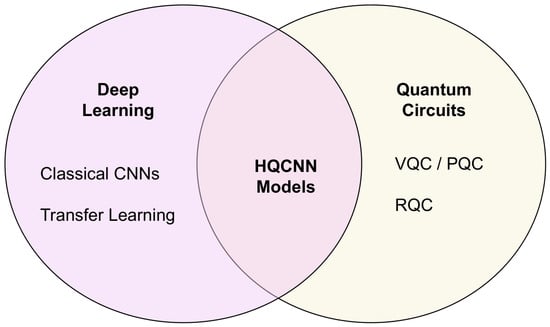
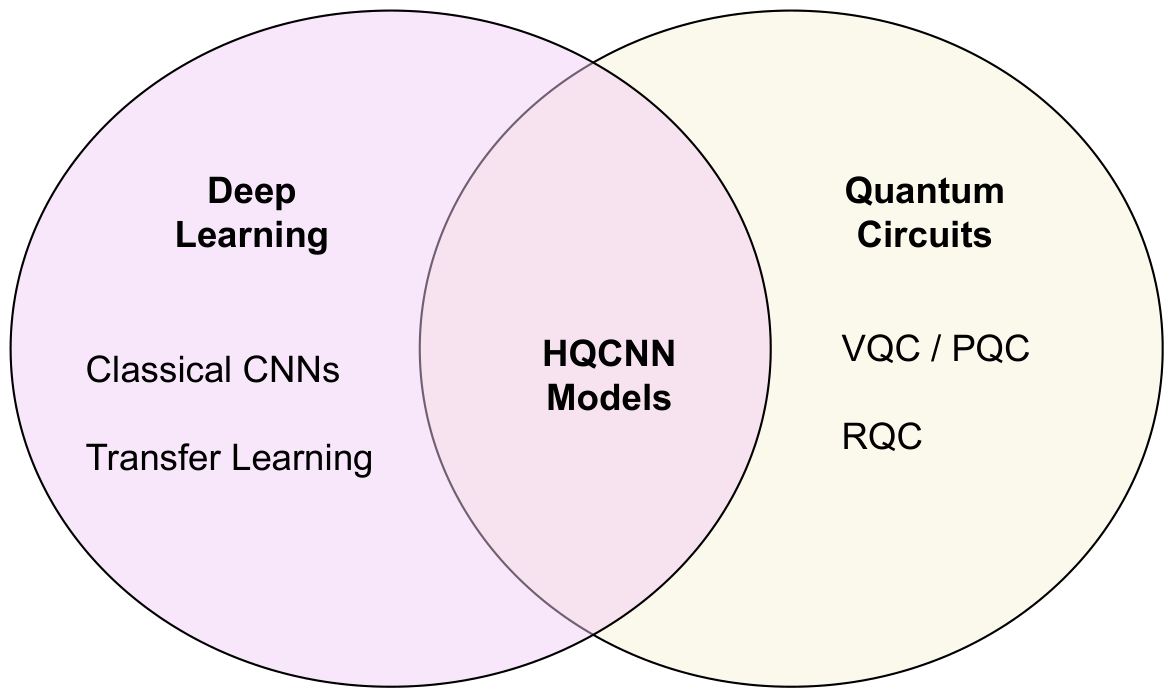
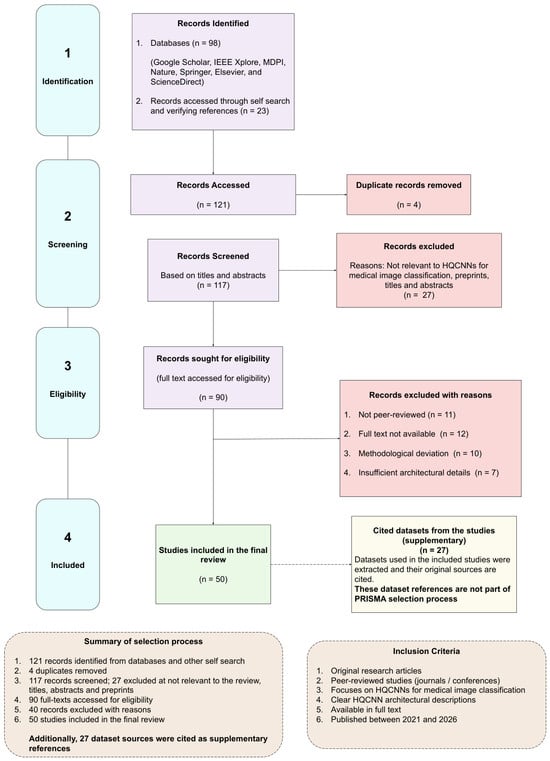
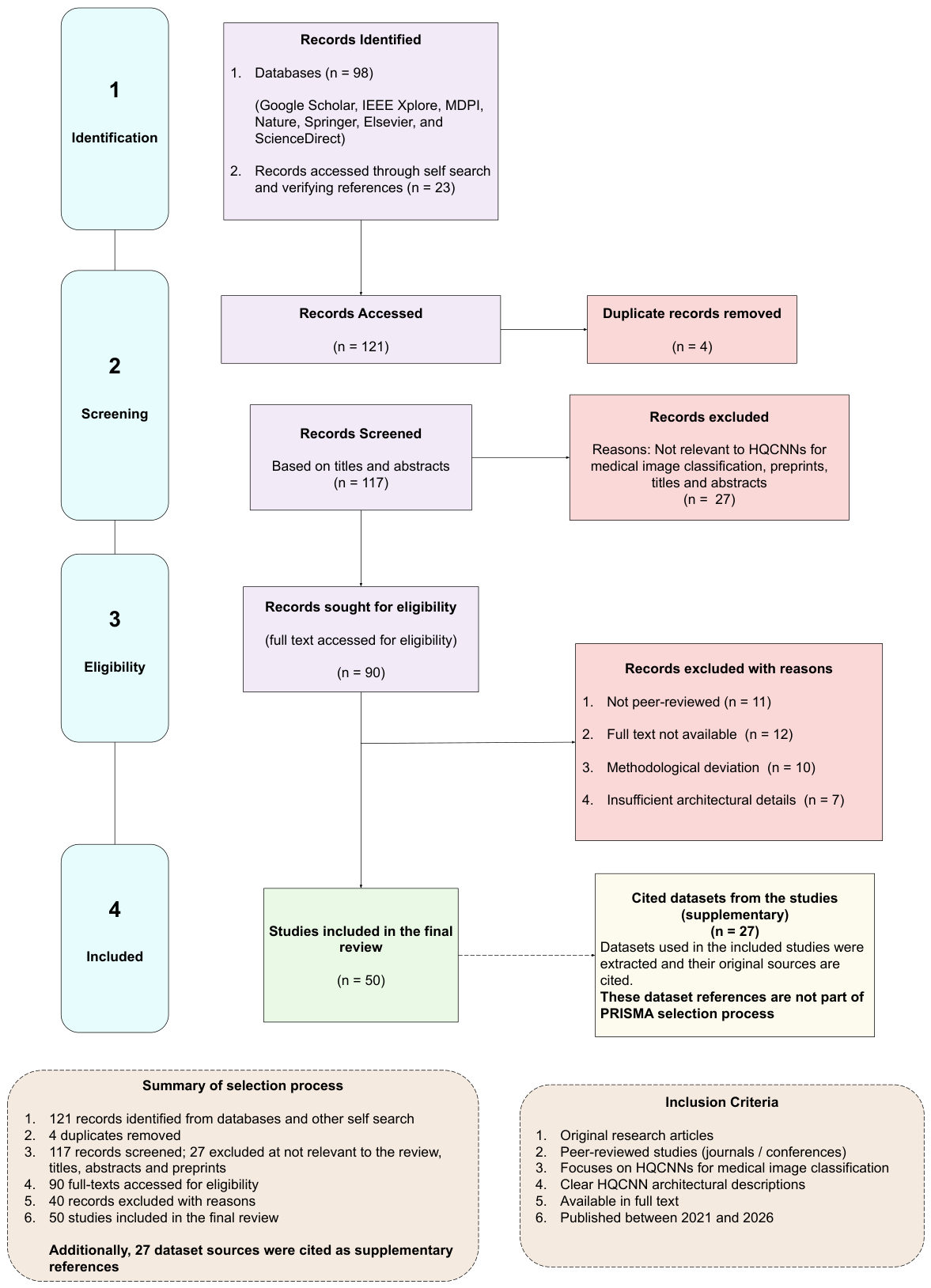
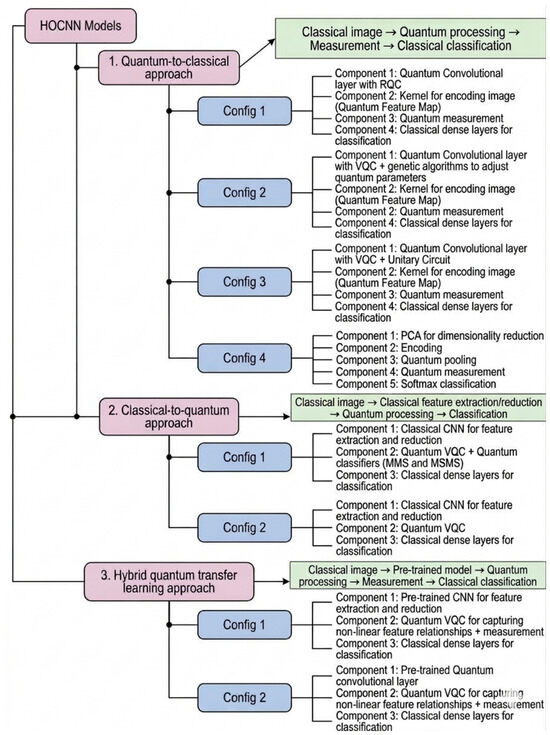
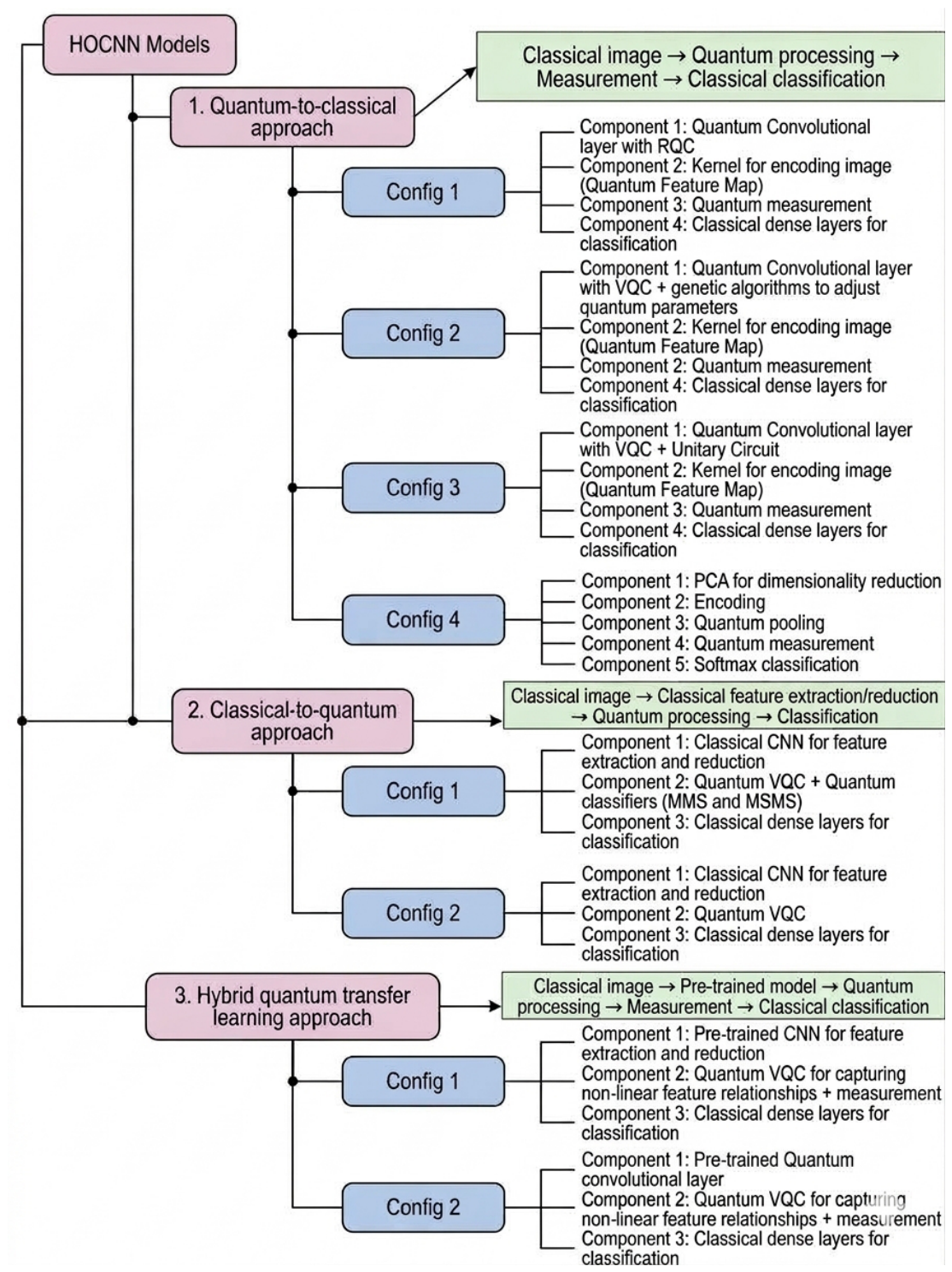
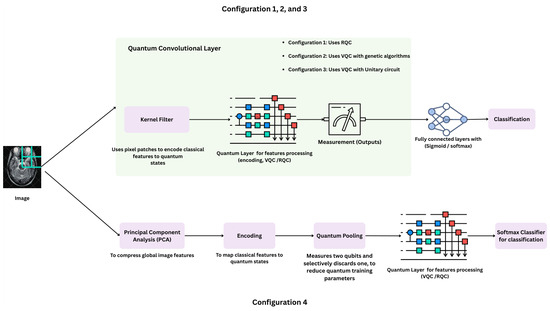
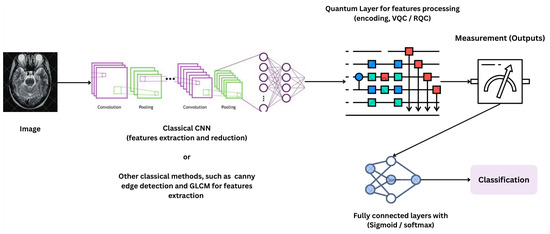
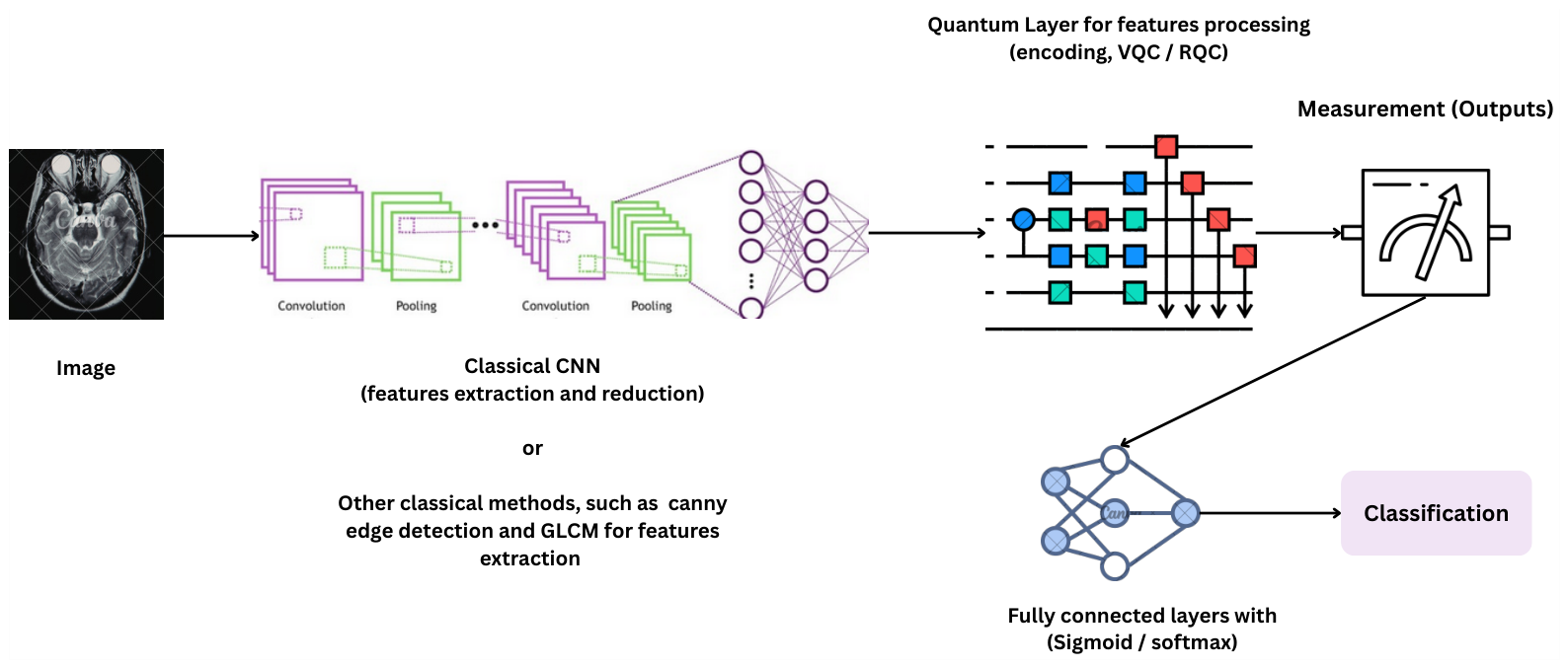
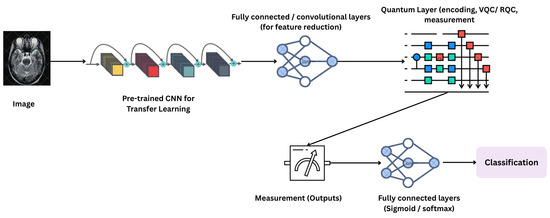
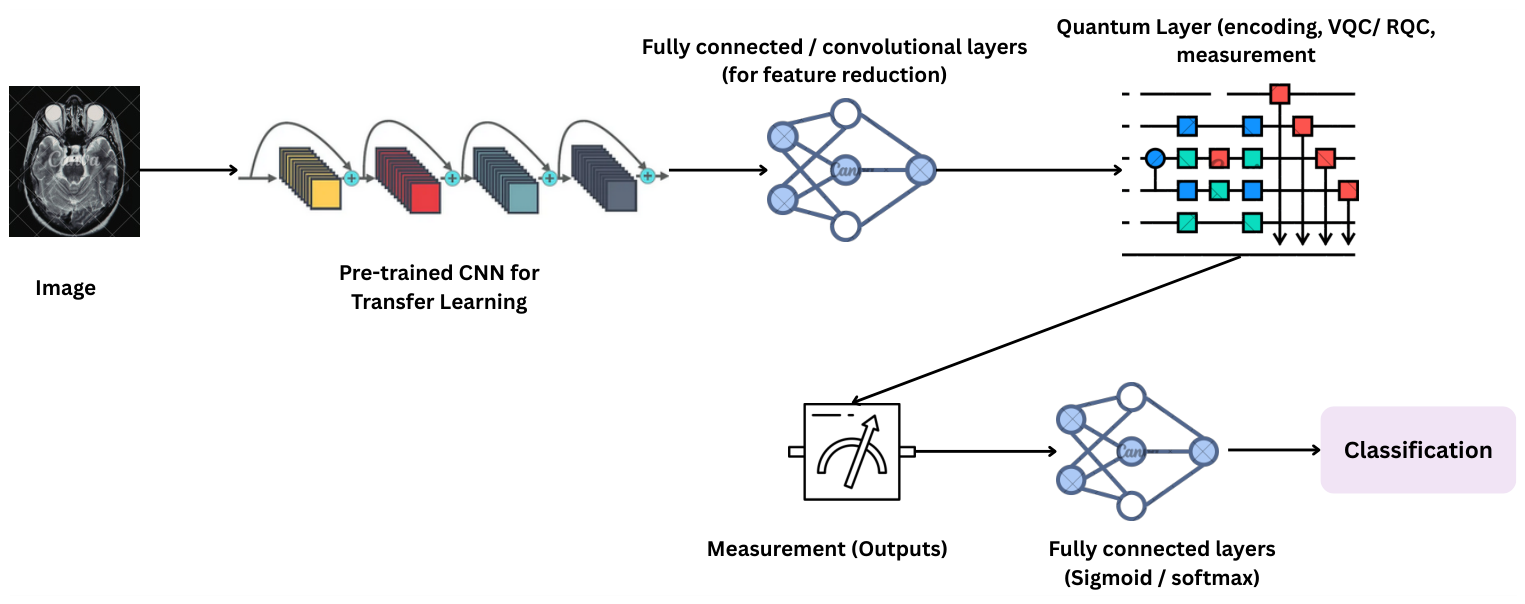
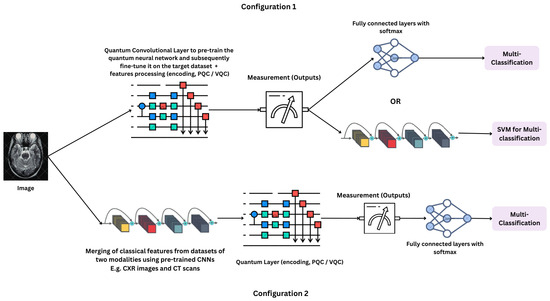
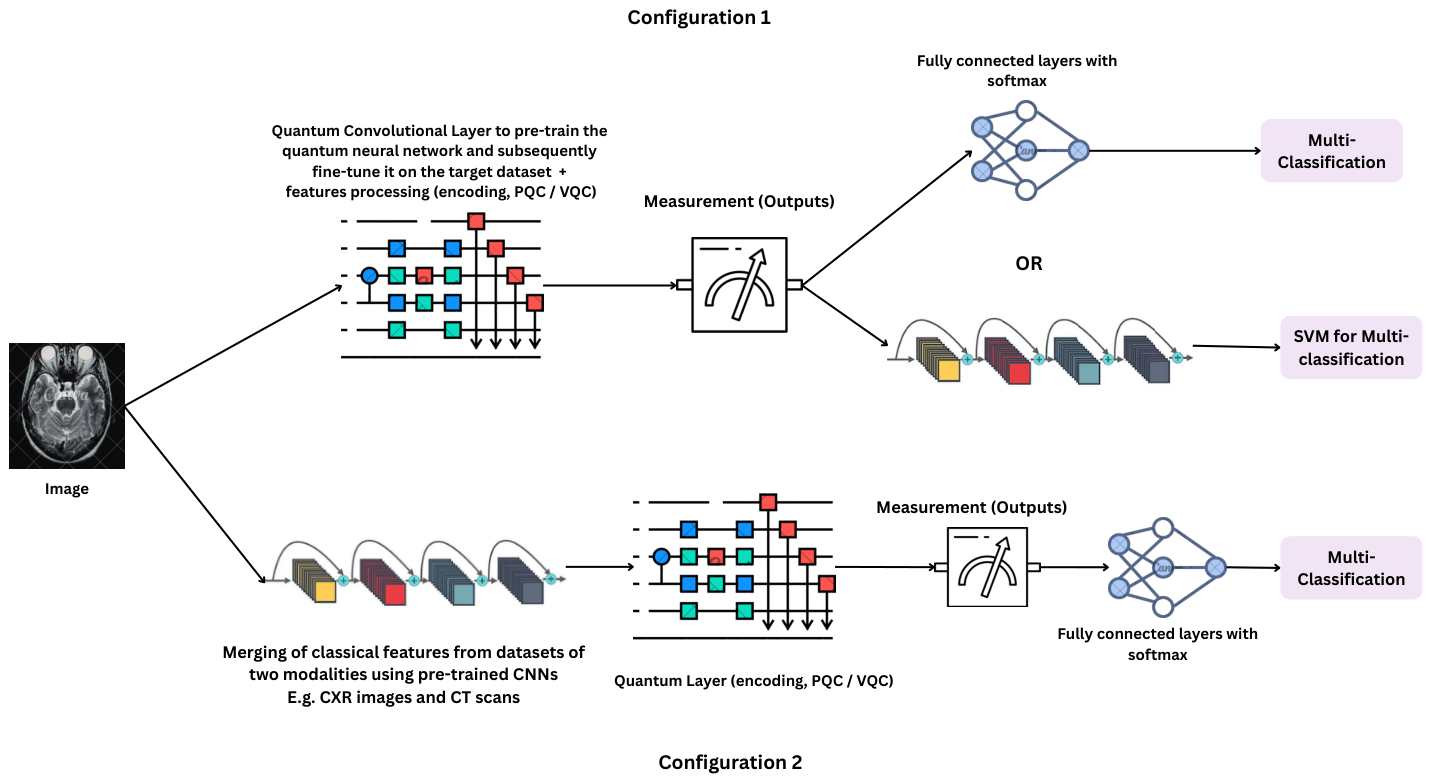

Disclaimer/Publisher’s Note: The statements, opinions and data contained in all publications are solely those of the individual author(s) and contributor(s) and not of MDPI and/or the editor(s). MDPI and/or the editor(s) disclaim responsibility for any injury to people or property resulting from any ideas, methods, instructions or products referred to in the content. |
© 2026 by the authors. Licensee MDPI, Basel, Switzerland. This article is an open access article distributed under the terms and conditions of the Creative Commons Attribution (CC BY) license.