


Abstract
The expected arrival of cryptographically relevant quantum computers requires Internet of Things (IoT) communication infrastructure to migrate to Post-Quantum Cryptography (PQC). However, it remains unclear how this migration affects protocol-level performance of IoT communication under controlled network degradation rather than algorithm cost alone. We used the PQC-IoTNet SITL framework to benchmark ML-KEM-768, the NIST-standardized post-quantum Key Encapsulation Mechanism, against RSA-2048 and ECC-P256 in MQTT-over-TLS 1.3 IoT-to-cloud communication across 20 network scenarios (five latency levels × four packet loss levels) and three algorithms (60 algorithm network configurations, 3000 trials). The principal finding is that network conditions, rather than cryptographic algorithm choice, dominate protocol-level performance. Under normal network conditions, ML-KEM-768 showed handshake performance comparable to the classical algorithms, while under degraded conditions, algorithm-level differences remained small relative to network-driven variance. Also, ML-KEM-768 showed an approximately 2.5 ms CPU-time advantage under congestion and an absolute peak Python-process RSS within 0.1 MB of the classical configurations, at the cost of 6.7% more bytes transmitted than RSA-2048 (1.3% fewer than ECC-P256). Connection reliability was 99.8% for ML-KEM-768 compared with 100% for RSA-2048 and ECC-P256. The only two unsuccessful connection attempts observed in the entire study occurred with ML-KEM-768 under high-impairment conditions. However, Fisher’s exact test indicated that this difference was not statistically significant at the present sample size (p = 0.50). These findings, within the evaluated SITL environment, indicate that ML-KEM-768 delivers protocol-level performance comparable to RSA-2048 and ECC-P256 under the tested network conditions while providing a standardized post-quantum key establishment mechanism for MQTT-based IoT communication. Further validation on resource-constrained hardware is required before generalizing these results to production IoT deployments.
1. Introduction
The Internet of Things (IoT) has become a foundational layer of modern critical infrastructure, connecting billions of resource-constrained devices across healthcare, energy, smart cities, and industrial control systems. Securing this infrastructure has traditionally relied on classical public-key cryptography, particularly the Rivest–Shamir–Adleman (RSA) algorithm and Elliptic Curve Cryptography (ECC). However, the anticipated arrival of cryptographically relevant quantum computers poses an existential threat to these algorithms. Using Shor’s algorithm, a sufficiently powerful quantum computer could efficiently factor large integers and compute discrete logarithms, rendering RSA and ECC obsolete and exposing the entire IoT ecosystem to retroactive decryption.
This risk is compounded by the “harvest-now, decrypt-later” (HNDL) threat model, in which adversaries intercept and store encrypted IoT data today with the intention of decrypting it once quantum capability matures [1]. For IoT systems, where devices often remain deployed for decades and transmit sensitive operational data throughout their lifecycle, the HNDL threat is particularly urgent. A sensor installed today in an energy grid or medical device may still be active when quantum computers capable of breaking RSA-2048 become available, meaning that the confidentiality of data captured today cannot be guaranteed under classical cryptographic assumptions.
In response, the global standardization community has accelerated the transition to Post-Quantum Cryptography (PQC). The National Institute of Standards and Technology (NIST) finalized its first PQC standards in August 2024, standardizing ML-KEM (derived from CRYSTALS-Kyber) under FIPS 203 as the primary federal standard for general-purpose key encapsulation [2]. CRYSTALS-Kyber is a lattice-based Key Encapsulation Mechanism (KEM) whose security relies on the hardness of the Module Learning with Errors (M-LWE) problem, which is believed to be resistant to both classical and quantum attacks [3]. However, standardization does not automatically imply deployability. PQC algorithms introduce performance trade-offs relative to their classical counterparts, including larger key and ciphertext sizes that are particularly consequential for resource-constrained IoT devices and bandwidth-limited communication links [4].
Although recent studies have demonstrated the computational feasibility of ML-KEM on embedded platforms and TLS implementations, most evaluations have been conducted under ideal, error-free network conditions and focus primarily on computational metrics such as execution time, memory consumption, and energy usage [5,6,7]. These studies establish device-level feasibility but do not capture how post-quantum protocols behave when deployed over the unreliable wireless networks that characterize real IoT environments. Links such as LoRaWAN, NB-IoT, satellite uplinks, and congested cellular networks routinely experience high latency, packet loss, and jitter. Under these conditions, the larger handshake payloads of PQC algorithms may interact with Transmission Control Protocol (TCP) retransmission mechanisms, potentially causing non-linear latency increases, handshake timeouts, and connection failures that are not predicted by computational benchmarks alone [8]. Consequently, little is known about the behavior of post-quantum key exchange in MQTT-over-TLS communication when network impairments dominate protocol performance, limiting practical deployment guidance for real-world IoT systems.
Our prior systematic review of the literature confirmed that this operational gap remains largely unaddressed [1]. Existing research is heavily concentrated on Transport Layer Security (TLS) in idealized settings, with limited attention given to the resilience of lightweight IoT protocols such as Message Queuing Telemetry Transport (MQTT) under challenging network conditions. To address the methodological barrier to studying this problem, we introduced PQC-IoTNet, a Software-in-the-Loop (SITL) framework for benchmarking end-to-end PQC protocol resilience and validated its measurement accuracy in a limited case study comparing CRYSTALS-Kyber (ML-KEM-768) and ECC-P256 across three representative network scenarios [9]. That work explicitly deferred a comprehensive performance evaluation to a dedicated follow-on study, noting that the validation results were intended to confirm framework sensitivity rather than to establish statistically conclusive performance rankings. The present study does not introduce a new methodology; rather, it applies the previously validated PQC-IoTNet methodology [9] to a substantially expanded empirical evaluation.
The present paper provides this replicated empirical evaluation under controlled conditions. Using the peer-reviewed PQC-IoTNet framework, we conduct a large-scale empirical comparison of CRYSTALS-Kyber against RSA-2048 and ECC-P256, integrated into MQTT-over-TLS 1.3 IoT-to-cloud communication. The experiment spans 60 algorithm–network configurations, covering normal operation, congestion, and high-packet-loss conditions, with 50 repeated trials per configuration, yielding 3000 observations. Five performance dimensions are evaluated: TLS handshake completion time, CPU processing time, peak memory consumption, transmitted data volume, and connection reliability. Continuous performance metrics were analyzed using two-way ANOVA at α = 0.05 with eta-squared effect sizes, while connection-success proportions were evaluated separately.
This scale-up from the validation study is deliberate and methodologically justified. The choice of 50 repetitions was a prespecified replication decision rather than the result of an a priori statistical power calculation. It increased within-cell replication relative to the 20-run framework-validation study [9] while maintaining a balanced design across all 60 algorithm–network configurations. Accordingly, the present analysis does not claim that n = 50 guarantees detection of a predefined effect size. RSA-2048 is added as a second classical baseline to provide a complete comparison against both dominant families of classical key exchange in use today.
The specific research questions addressed in this paper are:
- RQ1: Does CRYSTALS-Kyber (ML-KEM-768) introduce statistically significant performance overhead in TLS handshake completion time compared to RSA-2048 and ECC-P256 under normal, congested, and high-impairment conditions?
- RQ2: Does the choice of cryptographic algorithm or the state of the network have a greater practical influence on IoT communication performance metrics?
- RQ3: Can ML-KEM-768 maintain connection reliability comparable to classical algorithms across the evaluated network conditions?
The main contributions of this work are summarized as follows:
- A systematic protocol-level evaluation under controlled SITL conditions of ML-KEM-768 against RSA-2048 and ECC-P256 for MQTT-over-TLS 1.3 communication under systematically controlled latency and packet-loss conditions using the PQC-IoTNet SITL framework.
- A statistically rigorous performance analysis based on 3000 experimental observations, using two-way ANOVA and eta-squared effect sizes for continuous performance metrics and Fisher’s exact test for connection-success proportions, to distinguish the influence of cryptographic configuration from network conditions.
- Protocol-level deployment insights showing that network conditions dominate performance within the evaluated SITL environment, providing operational considerations for integrating ML-KEM-768 into MQTT-over-TLS 1.3 communication.
The rest of this paper is organized as follows. Section 2 reviews related work on PQC performance evaluation in IoT contexts. Section 3 summarizes the experimental methodology and framework. Section 4 presents results and statistical analysis across all five performance metrics. Section 5 provides a cross-metric synthesis and discussion of deployment implications. Section 6 concludes the paper and outlines directions for future work.
2. Related Work
Research on PQC for IoT systems has advanced across three partially overlapping domains: computational benchmarking on embedded hardware, integration of PQC into TLS-based protocol stacks, and lightweight protocol evaluation under network stress. This section reviews representative work in each area, identifies the gaps that persist, and establishes how the present study contributes to filling them.
2.1. Computational Benchmarking of PQC on IoT Hardware
A foundational body of research has established the device-level feasibility of PQC algorithms on embedded IoT hardware. Potlapally et al. provided early characterization of cryptographic energy consumption on resource-constrained devices, demonstrating that protocol selection has a measurable impact on battery life, a constraint that remains central to IoT deployment [5]. More recent work has focused specifically on NIST-standardized candidates. Fitzgibbon and Ottaviani evaluated the NIST PQC finalists on a Raspberry Pi 4, confirming that CRYSTALS-Kyber offers superior execution speed for key generation and encapsulation compared to other lattice-based alternatives tested under evaluated hardware conditions [10]. Similarly, Lopez et al. conducted a cross-platform performance analysis of ML-KEM and ML-DSA on both high-performance and ARM-based constrained platforms, finding that lattice-based schemes, notably ML-KEM, provide the most favorable trade-off between computational efficiency and communication overhead across device classes [11]. These hardware-focused evaluations provide an essential baseline: CRYSTALS-Kyber is computationally feasible on IoT-class devices.
However, a fundamental limitation shared across this research stream is that performance is evaluated under ideal, error-free network conditions. As Hanna et al. noted in their 2025 comprehensive evaluation of PQC for consumer IoT devices, most existing studies assess PQC viability through computational metrics alone, without accounting for how protocol behavior changes under the unreliable wireless conditions that characterize real IoT deployments [12]. Therefore, although computational feasibility has largely been established, these studies do not explain whether ML-KEM can maintain acceptable end-to-end communication performance under stress network conditions. This limitation motivates protocol-level evaluation in realistic IoT communication environments.
2.2. Post-Quantum TLS on Embedded and Constrained Systems
A second research stream has evaluated PQC performance at the TLS protocol level on embedded systems, moving beyond raw algorithmic benchmarks to measure end-to-end handshake behavior. Bürstinghaus-Steinbach et al. provided a foundational study by integrating Kyber and SPHINCS+ into mbed TLS and evaluating them on four embedded platforms, including ARM Cortex and Xtensa processors [13]. Their results showed that Kyber-based key establishment performs competitively with ECC variants in TLS on embedded devices, establishing an early proof of concept for PQC-TLS deployment in constrained environments.
Tasopoulos et al. extended this line of work with a systematic evaluation of PQ TLS 1.3 timing, memory, and network traffic for all NIST-selected algorithms on the ARM Cortex-M4 NUCLEO-F439ZI platform, which is the first study to do so comprehensively at this hardware level [14]. Their results revealed server-side handshake overheads ranging from 1.6× to 10.6× depending on algorithm and security level, with memory usage for PQC algorithms reaching 20–33 times greater than classical counterparts in the most constrained configurations. Tasopoulos et al. also evaluated energy consumption of PQ TLS 1.3 on constrained devices, finding that energy differences between PQC and classical algorithms during handshakes average around 2150 µA, suggesting that energy overhead is manageable but non-trivial [15].
At the network level, Sikeridis et al. assessed the overhead of PQC in TLS 1.3 and SSH under realistic network conditions, finding handshake latency increases of 1–300% depending on the algorithm [16]. Critically, they also demonstrated that even modest increases to the TCP initial congestion window can reduce observed PQC slowdown by up to 50%, highlighting the interaction between PQC packet sizes and transport-layer configuration as a key deployment variable. These findings are important context for the present study: in MQTT-based IoT communication, individual message payloads are small, meaning the handshake constitutes a disproportionately large share of total communication cost, amplifying the relevance of any handshake overhead.
The most recent industrial IoT deployment evidence is consistent with these findings. A 2026 Scientific Reports study on post-quantum authentication in IIoT environments found that PQ TLS 1.3 achieves comparable handshake latency to conventional TLS on gateway-class devices, identifying certificate chain size rather than key exchange computation as the dominant overhead factor [17]. These studies demonstrate the feasibility of PQC-enabled TLS but primarily evaluate embedded hardware or generic TLS traffic. They do not investigate MQTT-over-TLS communication under systematic combinations of latency and packet loss, leaving an important gap for IoT deployment studies.
2.3. PQC in Lightweight IoT Protocols
Despite the maturity of PQC-TLS research, the evaluation of PQC within lightweight IoT messaging protocols remains significantly underdeveloped. MQTT is the dominant communication protocol for IoT, with 56% adoption across IIoT deployments as of the 2024 Eclipse Foundation IoT Survey [18], yet its behavior under PQC has received limited systematic study. Kim and Seo addressed this gap in part by designing and evaluating an optimized PQC-MQTT protocol on 8-bit AVR sensor nodes [19]. Their work demonstrated that PQC key encapsulation can be instantiated within MQTT’s TLS layer on severely constrained microcontrollers using hand-optimized assembly, and that the KEM-based handshake can maintain the security properties of TLS 1.3. However, their evaluation framework explicitly excluded network performance metrics such as latency and packet loss, focusing exclusively on device-level computation. This omission is significant: their study characterizes how well a microcontroller can execute PQC operations, but not how well the resulting protocol performs across a realistic communication path.
Demir et al. reinforced this gap in their 2025 industry deployment analysis of PQC algorithms, which identified the lack of evaluations under unstable network links as a critical barrier to practical deployment guidance [8]. Similarly, a 2025 review by Liu et al. identified that PQC performance research in IoT contexts has concentrated on ideal laboratory settings, leaving the interaction between larger PQC key sizes and lossy wireless links largely unexplored [4].
The empirical performance of TLS-secured MQTT under adverse conditions has been studied in classical contexts. Thangavel et al. found that MQTT exhibits lower message latency than CoAP under low-packet-loss conditions, while in high-packet-loss conditions, MQTT’s TCP-based retransmission generates less overhead than CoAP’s UDP-based approach [20]. These findings underscore that MQTT’s performance is highly sensitive to the underlying transport behavior under stress, exactly the context that matters for PQC deployment, where larger handshake payloads increase both fragmentation probability and retransmission cost.
Collectively, the existing literature confirms that MQTT can support PQC, and that TLS performance has been extensively investigated. However, no prior study has systematically evaluated ML-KEM, RSA-2048, and ECC-P256 within MQTT-over-TLS communication under controlled combinations of latency and packet loss while applying rigorous statistical analysis. This gap forms the primary motivation for the present work.
2.4. Statistical Methodology in Protocol Performance Evaluation
A persistent methodological limitation in the PQC IoT literature is the absence of inferential statistics. The majority of the studies reviewed above report mean performance values and visual comparisons without formal hypothesis testing, effect size estimation, or systematic separation of algorithm effects from network condition effects. This limits their generalizability and makes it difficult to determine whether observed differences reflect algorithmic properties or experimental variation. Accordingly, this study adopts a balanced replicated experimental design based on 3000 observations, two-way ANOVA, and eta-squared effect sizes to distinguish algorithm-specific effects from those caused by network conditions.
2.5. Research Gap and Motivation
The reviewed literature demonstrates significant progress in PQC for IoT systems, including computational benchmarking on embedded hardware, integration of PQC into TLS implementations, and preliminary evaluations of MQTT-based communication. However, several important research gaps remain. First, most existing studies evaluate PQC under ideal or lightly impaired network conditions and therefore do not capture the effects of latency, packet loss, and retransmissions that characterize practical IoT deployments. Second, although MQTT is one of the most widely adopted communication protocols for IoT systems, relatively few studies investigate the protocol-level behavior of MQTT-over-TLS using post-quantum key exchange mechanisms. Third, prior work generally focuses on computational performance or descriptive comparisons without applying statistically rigorous methods to distinguish the effects of cryptographic algorithms from those of network conditions. Table 1 summarizes representative studies and highlights these remaining gaps. As shown, no previous work simultaneously evaluates ML-KEM against both RSA-2048 and ECC-P256 within MQTT-over-TLS 1.3 communication under systematically controlled combinations of latency and packet loss while employing formal statistical analysis. Addressing this gap provides the primary motivation for the present study. Building upon our previously validated PQC-IoTNet Software-in-the-Loop framework [9], this work conducts a balanced replicated experimental evaluation across 60 algorithm–network configurations and 3000 observations to quantify the relative influence of cryptographic algorithm selection and adverse network conditions on practical IoT communication performance.
Table 1.
Comparison of Related Work Across Evaluation Platform, PQC Algorithms, IoT Protocol Coverage, Network Stress Testing, and Statistical Rigor.
3. Materials and Methods
Evaluating PQC in constrained IoT environments presents a methodological challenge because both cryptographic computation and network impairments influence end-to-end communication performance. Existing benchmarking approaches typically isolate computational overhead under ideal network conditions, making them unsuitable for assessing protocol resilience in realistic IoT deployments. To address this challenge, this study employs the PQC-IoTNet SITL framework, which enables controlled evaluation of MQTT-over-TLS communication under reproducible combinations of latency and packet loss while executing production-grade protocol implementations.
The experimental environment used Ubuntu 22.04 LTS and included Python 3.12.3, OpenSSL 3.0.13, Eclipse Mosquitto 2.0.18, and Paho-MQTT 2.1.0. Post-quantum cryptographic support was provided through OQS Provider 0.10.1, built from source and integrated with OpenSSL as a provider module, enabling ML-KEM-based key establishment within the TLS 1.3 stack. Network impairments were configured using Linux Traffic Control with the NetEm module (iproute2 6.1.0). Process-level CPU time, resident memory usage, and network-interface byte counters were collected using psutil 7.2.0.
3.1. Experimental Framework
The experimental infrastructure used in this study is the PQC-IoTNet SITL framework, introduced and peer-reviewed in our prior work [9]. PQC-IoTNet implements a three-tier architecture comprising a Python-based simulated IoT client integrated with OQS-enabled OpenSSL, a Linux NetEm kernel-level network emulator, and an OQS-configured Mosquitto MQTT broker as the cloud endpoint. The post-quantum configuration employed the ML-KEM-768 parameter set through the Open Quantum Safe (OQS) provider. The TLS 1.3 key-exchange group was negotiated automatically between the client and broker rather than being explicitly specified in the application code. The framework executes real production-grade protocol code, Paho-MQTT and liboqs, rather than simulating protocol behavior mathematically, ensuring that measured timings reflect genuine system-level behaviors including socket handling, TCP retransmission logic, and memory management. Full implementation details, component specifications, and validation results are provided in [9], see Figure 1. The present study uses this peer-reviewed framework as its experimental foundation and extends it in scope as described below.
Figure 1.
Architectural Diagram of the PQC-IoTNet Experimental Model.
ML-KEM-768 was selected as the post-quantum key-establishment mechanism because it represents the intermediate standardized ML-KEM parameter set and provides NIST security category 3, offering a balance between security strength and communication/computational overhead. RSA-2048 was included as a widely deployed classical public-key baseline that remains common in existing TLS infrastructures. ECC-P256 was selected as a widely deployed elliptic-curve baseline providing approximately 128-bit classical security with substantially smaller key material than RSA. The objective was not to compare every available security level, but to evaluate representative post-quantum and classical mechanisms within a controlled factorial network experiment. The evaluated configurations were selected as representative deployment baselines and are not intended to represent security-strength-equivalent parameter sets. RSA-2048 provides approximately 112-bit classical security, whereas P-256 provides approximately 128-bit classical security. Accordingly, the present comparison should be interpreted as a comparison of representative deployed configurations rather than security-strength-matched alternatives. Comparison with RSA-3072/4096, ML-KEM-512/1024, and additional elliptic-curve configurations may therefore produce different absolute performance characteristics and is left for future work.
3.2. Experimental Design
The experimental design was developed to reproduce controlled communication impairments relevant to IoT deployments while maintaining full experimental repeatability. Rather than evaluating cryptographic algorithms under ideal laboratory conditions, the methodology systematically introduces latency and packet loss to isolate the relative influence of network degradation and cryptographic algorithm selection on protocol performance. The 20 experimental network scenarios were grouped into three operational tiers based on their latency and packet loss parameters. To test the end-to-end resilience of PQC protocols under controlled challenging network conditions, two independent variables were manipulated:
- Network Latency (L): 0, 50, 100, 300, and 500 ms.
- Packet Loss (P): 0%, 2%, 5%, and 10%.
For point-specific comparisons, the 0 ms latency and 0% packet-loss scenario was treated as the Normal Operation (Baseline) reference condition. The experimental platform and PQC stack used to generate all results are documented in Appendix A. For descriptive analysis, the 20 controlled network scenarios were grouped into three impairment tiers based on their latency and packet-loss parameters. These tiers are used only to summarize the experimental matrix and are not intended to define universal real-world network thresholds.
3.2.1. Low-Impairment Tier
The 0 ms/0% and 50 ms/0% scenarios were grouped as low-impairment conditions. These scenarios represent the least impaired communication conditions within the experimental matrix. The 0 ms/0% scenario additionally serves as the point-specific baseline reference condition throughout the analysis.
3.2.2. Network Congestion and Signal Degradation
At this level, L: 50–500 ms and P: 0–2% represent conditions typical of long-range wireless deployments, such as LoRaWAN, satellite uplinks, and overloaded cellular networks. This is where transmission delays are significant, but packet delivery remains mostly reliable.
3.2.3. High-Packet-Loss Control
This category includes scenarios with 5–10% packet loss across the evaluated latency range of 0–500 ms. The 5% and 10% packet-loss levels are used as controlled high-loss stress conditions within the experimental matrix. They are not intended to define universal thresholds for ‘extreme’ IoT operation, because real-world packet-loss characteristics depend on the underlying communication technology, channel conditions, topology, and application. These conditions are used to investigate TLS/MQTT behavior under substantial packet-delivery impairment. Packet loss at these levels may arise from congestion, poor wireless links, interference, queue overflow, or other network disruptions. The experiment does not model a specific Denial of Service (DoS) attack because NetEm packet-loss injection represents only one dimension of network degradation. Accordingly, these scenarios are referred to as the high-packet-loss regime rather than as DoS. The full set of tc netem commands used to emulate each scenario is provided in Appendix A.4, Table A4. Network impairments such as latency, packet loss, and jitter can be emulated using the tc framework with the netem module [21].
Five dependent variables were collected per trial:
- Handshake Completion Time (): Total elapsed time from TLS connection initiation until receipt of the MQTT CONNACK message, calculated aswhere denotes the timestamp immediately before initiating the TLS/MQTT connection, denotes the timestamp recorded upon receipt of the MQTT CONNACK message, and is reported in milliseconds.
- CPU Processing Time: Client-side CPU time consumed during the handshake process, isolated using Python’s resource measurement API
- Peak Memory Consumption: Maximum observed resident set size (RSS) of the client process during the monitored connection-establishment interval, reported in MB.
- Transmitted Data Volume: Total bytes sent and received by the client to complete the handshake
- Connection Reliability (R_success): Percentage of successful handshake completions per configuration
3.3. Statistical Analysis
To distinguish the effects of cryptographic algorithms from those introduced by adverse network conditions, a statistically rigorous analysis was required. Continuous performance metrics were analyzed using two-way analysis of variance (ANOVA) with cryptographic algorithm and network scenario as fixed factors. Connection-success proportions were analyzed separately using Fisher’s exact test. The significance threshold was set at α = 0.05. Practical significance was assessed independently of p-values using eta-squared (η2) effect sizes, interpreted according to conventional thresholds: small (η2 ≥ 0.01), medium (η2 ≥ 0.06), and large (η2 ≥ 0.14). This dual criterion, statistical significance plus effect size, ensures that findings are evaluated for both inferential validity and deployment relevance. All analysis was conducted in Python 3.11 using the Pingouin and SciPy.stats libraries. In addition to the effect sizes associated with the experimental factors, the residual component was examined to quantify variation not explained by cryptographic algorithms or network condition. This component provides an indication of remaining experimental variability across repeated trials.
Prior to conducting the ANOVA, the assumption of homogeneity of variances was assessed using Levene’s test. No statistically significant violation of variance homogeneity was observed across the algorithm groups (Levene’s test, p = 0.574). Although minor departures from residual normality were observed, the balanced factorial design (50 repetitions per experimental cell) provides robustness of the ANOVA to moderate deviations from normality. Consequently, the ANOVA was considered appropriate for evaluating the experimental factors.
3.4. Experimental Execution Workflow
The experimental evaluation was conducted on a dedicated system running Ubuntu 22.04 LTS. The experiment simulated the interaction between an IoT device and a cloud-based MQTT broker using two independent terminal sessions operating on the same host machine. This architecture allowed the experiment to isolate the two communicating components while maintaining full visibility of their execution and resource usage.
The MQTT broker represented the cloud-side service responsible for receiving and processing MQTT connections, while the Python client simulated an IoT device initiating a TLS-secured connection. Although both processes were executed on the same physical machine, separating them into independent terminal sessions ensured that the broker and client processes operated independently and could be monitored individually during runtime.
This architecture offers several experimental advantages:
- It enables clear observation of TLS handshake behavior from both sides of the communication channel.
- It allows real-time monitoring of broker logs, including TLS negotiation events and certificate validation.
- It simplifies resource monitoring, ensuring that CPU and memory measurements correspond primarily to the client-side handshake operations.
- It ensures repeatability of experiments, as both components can be restarted independently for each configuration.
Handshake Completion Time was calculated as defined in Section 3.2 and was used consistently throughout the subsequent analysis.
Peak memory footprint was computed as:
where represents the maximum observed resident set size of the client process in MB, and denotes the resident set size measured at each sampling point during the monitored connection-establishment interval. The initial RSS value measured immediately before the connection attempt was included as the baseline observation. Memory usage was sampled repeatedly during connection establishment, and the largest observed RSS value was retained as the peak-memory measurement.
The overall workflow followed during each experimental scenario is illustrated in Figure 2, showing the sequence of operations from network configuration through TLS handshake execution, resource monitoring, statistical analysis, and performance metric computation. Unlike conventional computational benchmarking, this workflow integrates protocol execution, controlled network impairment emulation using Linux NetEm, resource monitoring, and statistical analysis into a unified and reproducible evaluation process.
Figure 2.
Experimental workflow for TLS handshake performance measurement in the PQC-IoTNet framework.
By executing production-grade protocol implementations under systematically controlled network conditions, the framework enables researchers to evaluate not only computational overhead but also protocol resilience in controlled IoT communication environments, providing a practical methodology that can be readily reproduced and extended in future post-quantum IoT studies.
Moreover, connection-establishment latency was calculated only for successful MQTT-over-TLS connection attempts. Unsuccessful connection attempts, including timeout events, were excluded from the latency analysis because no valid connection-establishment latency exists when the protocol handshake is not completed. Connection success and failure were analyzed separately using the connection success rate reported for each algorithm and network scenario.
4. Experimental Results and Performance Analysis
This section presents a detailed, metric-driven evaluation of the experimental results, focusing on the comparative performance of ECC-P256, RSA-2048, and CRYSTALS-Kyber (ML-KEM-768) within a TLS-secured MQTT IoT-to-cloud communication framework. The analysis is structured to isolate the effect of cryptographic algorithm choice from the influence of network conditions, enabling a clear assessment of whether PQC introduces measurable operational overhead.
Results are analyzed across 20 controlled network scenarios spanning baseline, congestion, and challenging conditions. Each configuration was executed 50 times, yielding a balanced replicated dataset of 3000 observations. The evaluation covers five key performance dimensions: handshake completion time, CPU processing, peak memory consumption, transmitted data volume, and connection reliability.
A combination of descriptive statistics and two-way ANOVA is used to quantify both statistical significance and practical impact. This double-layer analysis ensures that observed differences are interpreted in terms of real-world deployment relevance rather than statistical artifacts.
The goal of this section is to provide a condition-by-condition breakdown of system behavior and to answer a central question: whether integrating ML-KEM-768 into IoT communication stacks maintains performance comparable to that of classical cryptographic mechanisms under both normal and degraded network conditions.
4.1. Handshake Completion Time
Handshake completion time is the total time spent from TLS connection initiation to receipt of the MQTT CONNACK message. It directly determines the connection setup latency experienced by IoT devices, which is one of the most important operational performance metrics.
4.1.1. Normal Operation (Performance Baseline)
Under ideal network conditions (0 ms latency, 0% packet loss), all three algorithms achieved closely clustered and low handshake times, as presented in Table 2 (see also Appendix A, Table A1 for the full per-scenario breakdown). ML-KEM-768 recorded a mean of 67.67 ms, compared to 66.82 ms for ECC-P256 and 65.59 ms for RSA-2048. The absolute difference between the fastest and slowest algorithm is only 2.08 ms, operationally minor for any IoT application.
Table 2.
Handshake completion time statistics at baseline (0 ms latency, 0% packet loss).
This clustering is compatible with CRYSTALS-Kyber’s theoretical characteristics as a KEM. Under TLS 1.3, ML-KEM-768 requires the same number of handshake round trips as the classical ECDHE-P256 key exchange used in ECC-based TLS configurations, and its computational operations, based on lattice polynomial arithmetic, complete in comparable time to classical operations at the measured network scale. This confirms that PQC handshake overhead is not noticeable under good network conditions.
4.1.2. Network Congestion (Uniform Degradation)
As the network entered the congestion tier (50–500 ms latency, 0–2% packet loss), handshake times grew substantially. The mean across this tier was 2612.86 ms for ECC-P256, 2621.32 ms for RSA-2048, and 2613.74 ms for ML-KEM-768, a spread of less than 9 ms. This uniformity occurs because, under pure latency without packet loss, handshake time scales approximately linearly with propagation delay multiplied by the number of round-trip times, which is not statistically significantly different across TLS 1.3 implementations regardless of key exchange algorithm.
4.1.3. High-Packet-Loss Regime
Under high-impairment conditions (5–10% packet loss), small inter-algorithm differences became visible. Table 3 summarizes handshake performance across all three tiers, including degradation multipliers relative to Normal Operation.
Table 3.
Mean handshake completion time by network scenario.
ML-KEM-768 exhibited a mean of 3085.89 ms under high-impairment conditions, which is 6.3% higher than ECC-P256 (2902.01 ms) and not statistically significantly different from RSA-2048 (3090.11 ms). The elevated Kyber latency relative to ECC under packet loss may reflect its slightly larger KEM ciphertext (1088 bytes vs. ECC’s point representation), which slightly increases the probability of retransmission-triggering packet drops. However, this represents less than 184 ms in absolute terms. Table 4 shows worst-case performance with 500 ms latency and 10% packet loss.
Table 4.
Handshake completion time at worst-case conditions (500 ms latency, 10% packet loss).
RSA-2048 showed the highest mean (7824 ms) and widest variance (σ = 3895 ms) at worst-case conditions, while ECC-P256 demonstrated the most consistent performance (σ = 2527 ms). ML-KEM-768’s variance (σ = 3452 ms) was intermediate, reflecting the slightly larger handshake payload interacting with packet loss.
Figure 3 shows the relationship between network latency and TLS handshake completion time for ECC-P256, RSA-2048, and ML-KEM-768. As network latency increases, the handshake completion time increases almost linearly for all algorithms. This occurs because the TLS 1.3 handshake requires multiple message exchanges between the client and server, meaning that overall handshake duration is strongly influenced by network round-trip time.
Figure 3.
Mean handshake completion time versus network latency. Lines are parallel, confirming no significant difference degradation rates.
The three algorithm curves remain closely aligned and nearly parallel across all latency levels, indicating that the choice of cryptographic algorithm has minimal impact on handshake latency under these conditions. Instead, the dominant factor affecting connection establishment time is network delay rather than cryptographic computation. The closely aligned trends are consistent with the ANOVA result showing no statistically significant overall algorithm effect on handshake completion time across the evaluated conditions.
Figure 4 illustrates the effect of packet loss on TLS handshake completion time for the evaluated algorithms. As packet loss increases, handshake duration grows gradually at lower loss rates but rises more sharply beyond approximately 5% loss. This behavior is caused by retransmissions of lost handshake packets, which increase the number of required communication exchanges between the client and server.
Figure 4.
Mean handshake completion time versus packet loss rate. The accelerating increase beyond 5% loss reflects retransmission overhead affecting all algorithms similarly.
All three algorithms show similar performance trends across the packet loss range, indicating that packet loss primarily affects network transport behavior rather than cryptographic computation. Although ML-KEM-768 shows slightly higher handshake times at the highest loss levels, the difference remains small and is likely related to its slightly larger handshake payload size. Overall, the results demonstrate that packet loss impacts TLS handshake performance similarly across all algorithms.
Figure 5 compares handshake completion time across the three defined network condition tiers: Low Operation, Network Congestion, and High Packet Loss. Under normal conditions, all algorithms achieve very similar handshake times with only minimal differences, confirming that the integration of ML-KEM-768 does not introduce measurable performance overhead.
Figure 5.
Handshake completion time grouped by network condition tier. Error bars indicate ±1 standard deviation.
As network conditions degrade, handshake completion time increases significantly for all algorithms due to higher latency and packet retransmissions. However, the differences between ECC-P256, RSA-2048, and ML-KEM-768 remain relatively small across all tiers. This indicates that network conditions, rather than the choice of cryptographic algorithm, are the primary factor influencing TLS handshake performance in IoT communication environments.
4.1.4. Handshake Time Statistical Analysis
Table 5 presents the results of the two-way ANOVA conducted to evaluate the effects of cryptographic algorithm, network condition, and their interaction on TLS handshake completion time.
Table 5.
Two-way ANOVA results for handshake completion time.
The ANOVA detected no statistically significant algorithm effect on handshake completion time across the evaluated network conditions (F = 1.73, p = 0.177). In contrast, the network condition factor is highly significant (F = 450.43, p < 0.001), demonstrating that network latency and packet loss have a dominant influence on TLS connection establishment time.
The interaction between algorithm and network condition is not statistically significant (F = 1.07, p = 0.347), indicating that the effect of worsening network conditions is consistent across all evaluated algorithms. In other words, all three cryptographic mechanisms show similar performance degradation patterns as network conditions worsen.
The effect size for the algorithm factor is extremely small (η2 = 0.0003), indicating that only 0.03% of the total variance in handshake completion time is attributable to the choice of cryptographic algorithm. This confirms that algorithm selection has a negligible practical impact on handshake latency, while network characteristics remain the primary determinant of connection establishment performance. Complete effect size calculations are provided in Appendix A, Table A3.
This finding extends previous TLS-level evaluations by demonstrating that the same conclusion remains valid for MQTT-over-TLS communication under systematically controlled combinations of latency and packet loss, thereby addressing an important gap identified in Section 2.
4.2. CPU Processing Time
CPU processing time captures the computational cost incurred during the TLS handshake, measured as the sum of user-mode and kernel-mode CPU time consumed by the client process. This metric is particularly relevant for resource-constrained IoT devices, where processing capacity is limited, and CPU overload can delay other system tasks.
4.2.1. Normal Operation
At baseline conditions (0 ms latency, 0% loss), all algorithms exhibited very low CPU consumption: 6.40 ms for ECC-P256, 5.00 ms for RSA-2048, and 5.60 ms for ML-KEM-768 as shown in Table 5. These differences are negligible and within measurement noise. The baseline CPU cost is dominated by TLS stack initialization, certificate loading, and MQTT protocol overhead rather than by algorithm-specific computation.
4.2.2. Network Congestion (Kyber CPU Advantage)
Under congestion conditions, CPU times increased as prolonged handshake sessions required active socket state maintenance and retransmission buffer processing. Mean CPU times reached 29.25 ms (ECC-P256), 29.27 ms (RSA-2048), and 26.75 ms (ML-KEM-768). Kyber showed a simple, consistent CPU advantage of approximately 2.5 ms compared to classical algorithms under this condition. This was most noticeable at 100 ms latency with 0% packet loss, where Kyber achieved 18.20 ms versus 22.60 ms for ECC-P256 and 23.20 ms for RSA-2048, a 21–22% reduction. CPU statistics for all 20 scenarios are available in Appendix A.
4.2.3. Convergence Under High Packet Loss
Under high-impairment conditions, CPU times converged across algorithms: 32.02 ms (ECC-P256), 33.24 ms (RSA-2048), 34.30 ms (ML-KEM-768). Kyber’s slight inversion under high packet loss, where it shows a bit higher CPU use than under congestion, is consistent with additional retransmission processing triggered by its slightly larger handshake payloads. Table 6 summarizes CPU performance across all tiers.
Table 6.
Mean CPU processing time by network condition tier.
Figure 6 illustrates the relationship between packet loss rate and CPU processing time during the TLS handshake for ECC-P256, RSA-2048, and ML-KEM-768. As packet loss increases from 0% to 10%, CPU processing time gradually rises for all algorithms. This trend occurs because higher packet loss leads to retransmissions and additional protocol handling, requiring the client process to maintain socket states and process repeated handshake messages.
Figure 6.
Mean CPU processing time versus packet loss rate.
Despite this increase, the overall CPU usage remains relatively low across all algorithms. RSA-2048 consistently shows the lowest CPU consumption across packet loss levels, while ECC-P256 exhibits the highest CPU usage at high packet loss. ML-KEM-768 demonstrates intermediate behavior, with moderate CPU requirements even as packet loss increases. The similarity in trends indicates that packet loss affects CPU processing time primarily through increased network handling overhead rather than differences in cryptographic computation.
Figure 7 presents the relationship between network latency and CPU processing time for the evaluated cryptographic algorithms. As network latency increases from 0 ms to 500 ms, CPU processing time rises significantly for all configurations. This increase occurs because longer handshake durations require the client process to maintain active network sockets, manage retransmission buffers, and handle delayed responses from the server.
Figure 7.
Mean CPU processing time versus network latency. CRYSTALS-Kyber (ML-KEM-768) exhibits a modest advantage under moderate latency (100–300 ms).
ML-KEM-768 demonstrates slightly lower CPU consumption at moderate latency levels (100–300 ms) compared with ECC-P256 and RSA-2048. This modest advantage suggests that Kyber’s lattice-based arithmetic operations may be computationally efficient during the key encapsulation process. However, at very high latency (500 ms), CPU usage across all algorithms becomes similar, indicating that network delays rather than cryptographic computation dominate processing overhead.
Figure 8 compares mean CPU processing time across the three defined network condition tiers: Low Operation, Network Congestion, and High Packet Loss. Under normal operating conditions, all algorithms show low CPU consumption, reflecting the minimal computational cost required for TLS handshake operations in stable network environments.
Figure 8.
Mean CPU processing time grouped by network condition tier.
As network conditions worsen, CPU usage increases due to longer handshake durations and increased retransmission handling. During the congestion tier, ML-KEM-768 shows slightly lower average CPU time compared with ECC-P256 and RSA-2048, indicating a small computational efficiency advantage. Under the most severe conditions represented by the high-packet-loss tier, CPU times converge across all algorithms. This suggests that network degradation controls system resource usage and reduces noticeable differences between cryptographic mechanisms.
4.2.4. Statistical Analysis for CPU Processing
Table 7 presents the results of the two-way ANOVA conducted to evaluate the effects of cryptographic algorithm, network condition, and their interaction on CPU processing time during the handshake.
Table 7.
Two-way ANOVA results for CPU processing time.
No statistically significant algorithm effect on CPU processing time was detected when averaged across the evaluated network conditions (F = 0.197, p = 0.821).
In contrast, network conditions have a highly significant effect on CPU processing time (F = 144.82, p < 0.001), indicating that latency and packet loss substantially influence the computational workload experienced during the TLS handshake. As network degradation increases, longer connection durations and retransmission handling lead to greater CPU processing time.
The interaction between algorithm type and network condition is statistically significant (F = 1.53, p = 0.020). This interaction suggests that the relative CPU performance of the algorithms varies slightly depending on the network environment. In particular, ML-KEM-768 demonstrates a modest CPU advantage under average congestion conditions, as previously observed in Figure 8, while this advantage diminishes under higher-impairment conditions where network effects dominate system behavior.
Unlike previous studies that primarily reported computational benchmarks under ideal conditions [22], the present analysis also quantifies the contribution of network conditions and within-cell variability. The variance decomposition provides additional context for the ANOVA results. Network condition accounted for 47.85% of the total CPU-time variance, whereas the cryptographic algorithm accounted for only 0.01% and the algorithm–network interaction accounted for 1.01%. The remaining 51.13% occurred within experimental cells and was not explained by the modeled factors. This relatively large within-cell component indicates that CPU processing time is more sensitive than elapsed handshake time to short-timescale system variability. Plausible contributors include operating-system scheduling, kernel activity, Python runtime behavior, cache state, and background process activity; however, these factors were not independently instrumented, and their individual contributions cannot be determined from the present dataset. Accordingly, the CPU results support the narrower conclusion that network condition has a substantially greater effect than cryptographic algorithm selection, rather than the broader claim that network condition explains the majority of all CPU-time variability (see Table A3).
4.3. Peak Memory Consumption
Peak memory consumption represents the maximum RSS of the client process during the TLS handshake. In IoT environments with constrained RAM (typically 256 KB to several MB for embedded devices), understanding the memory footprint of each cryptographic algorithm is essential for feasibility assessment.
4.3.1. Normal Operation
At baseline conditions (0 ms added latency, 0% packet loss), peak memory was 25.436 MB for ECC-P256, 25.516 MB for RSA-2048, and 25.559 MB for ML-KEM-768. The inter-algorithm spread is only 0.09 MB. The dominant memory contributor at baseline is the Python process and OpenSSL TLS stack rather than algorithm-specific key material, explaining the narrow range. This occurs because the TLS client runs within a Python runtime environment, which introduces a relatively large baseline memory footprint independent of the cryptographic algorithm.
The Python interpreter imported libraries (e.g., OpenSSL bindings and the MQTT client), and runtime objects consume tens of megabytes of memory before handshake operations begin. In contrast, the cryptographic key material used during the TLS handshake is very small, typically ranging from a few dozen bytes for ECC keys to a few kilobytes for Kyber structures.
Representative memory statistics across all scenarios are tabulated in Appendix A, Table A2. This indicates that cryptographic algorithm choice has minimal influence on memory consumption under stable network conditions.
4.3.2. Degraded Conditions
Memory consumption increased gradually across both degraded tiers (Congestion and High Packet Loss) as shown in Table 8, reflecting additional buffering requirements from delayed packet delivery and retransmission queuing. Under worst-case conditions (500 ms, 10% loss), peak memory reached approximately 27.2–27.3 MB across all algorithms, an increase of approximately 1.6 MB from baseline. The relative ordering of algorithms (ECC lowest, Kyber highest) remained consistent across all conditions.
Table 8.
Peak memory consumption by network condition tier.
Figure 9 illustrates the average peak memory consumption across the three defined network conditions. Although network condition accounted for most of the observed variance in peak RSS, the absolute magnitude of the variation remained small (approximately 1.6 MB). Therefore, the statistical effect should not be interpreted as indicating a practically significant increase in memory demand. This reflects additional buffering and retransmission management required during longer TLS handshake sessions. However, the increase is relatively small, rising from approximately 25.6 MB under normal conditions to around 26.5 MB under the most challenging conditions.
Figure 9.
Peak memory consumption by network condition tier. Note the narrow Y-axis scale (25–27.5 MB), emphasizing that there are no practical differences across algorithms.
Despite the statistical differences between algorithms, the overall variation in memory consumption remains extremely small across all configurations. ECC-P256 consistently shows the lowest peak memory usage, while ML-KEM-768 exhibits slightly higher values, though the difference remains below 0.1 MB. The narrow y-axis scale emphasizes that these differences are practically minor, indicating that the choice of cryptographic algorithm has minimal impact on memory requirements compared with the overhead introduced by the TLS stack and network buffering.
Figure 10 illustrates the variation in peak memory consumption across network scenarios, combining different levels of latency and packet loss. The results show a gradual increase in memory usage as network conditions get worse, with higher latency and packet loss leading to slightly larger memory requirements. This increase is primarily associated with extended TLS session duration, additional buffering of network packets, and retransmission handling during degraded communication conditions.
Figure 10.
Memory usage under varying network conditions.
Despite this gradual increase, the overall memory footprint remains very similar across the three cryptographic algorithms. ECC-P256 consistently shows the lowest memory usage, while ML-KEM-768 shows marginally higher values, though the difference between algorithms remains extremely small throughout all scenarios. Therefore, the figure reinforces the earlier observation that peak memory consumption is influenced more by network behavior and TLS stack overhead than by the choice of cryptographic algorithm. This confirms that the integration of ML-KEM-768 does not introduce significant additional memory requirements for IoT communication systems.
4.3.3. Memory Statistical Analysis
Table 9 presents the results of the two-way ANOVA evaluating the effects of cryptographic algorithm, network condition, and their interaction on peak memory consumption.
Table 9.
Two-way ANOVA results for peak memory consumption.
The algorithm effect was statistically significant (F = 7874.5, p < 0.001). However, this must be interpreted alongside practical significance: the observed algorithm’s difference is less than 0.1 MB, far below any deployment-relevant threshold. The extreme F-value reflects the very high repeatability of the 50-run experimental design (within-group variance σ2 ≈ 0.00013 MB2) rather than a meaningful algorithm difference. Network conditions were also significant (F = 343,883, p < 0.001), driven by gradual buffering increases over longer handshake durations. These findings confirm that ML-KEM-768 does not impose a memory burden that would preclude its deployment on modern IoT hardware platforms. The network conditions factor explains 99.7% of memory variance (η2 = 0.997), dwarfing the algorithm effect (η2 = 0.0023); see Appendix A, Table A3.
The ANOVA results indicate the following:
- Algorithm effect:
The type of cryptographic algorithm has a statistically significant effect on peak memory usage:
- 2.
- Network condition effect:
Network latency and packet loss also significantly affect peak memory consumption:
- 3.
- Interaction effect:
A significant interaction exists between algorithm type and network scenario:
This interaction indicates that the impact of network conditions on memory usage differs slightly among the algorithms, although the importance of these differences remains small. These observations complement previous embedded-system studies [23] by showing that the small memory differences reported for ML-KEM remain practically negligible even under stress network conditions.
4.4. Transmitted Data Volume
Transmitted data volume measures total bytes exchanged over the network interface during TLS handshake and MQTT connection establishment. This metric directly captures the communication overhead of each cryptographic algorithm’s key material, certificates, and ciphertext structures of particular relevance to bandwidth-constrained IoT links such as LoRaWAN, NB-IoT, and low-power mesh networks.
4.4.1. Normal Operation for Transmission Overhead
At baseline, transmitted bytes clearly differentiated the three algorithms. RSA-2048 produced the smallest volume (mean: 7611 bytes), followed by ML-KEM-768 (8124 bytes, +6.7% vs. RSA) and ECC-P256 (8231 bytes, +8.1% vs. RSA). Notably, Kyber transmitted 107 bytes (1.3%) fewer bytes than ECC-P256, meaning that a transition from ECC-based to Kyber-based TLS may slightly reduce communication overhead. This ordering reflects the structural properties of each scheme: RSA-2048’s compact encrypted pre-master secret versus Kyber’s ML-KEM-768 ciphertext (1184 bytes public key + 1088 bytes ciphertext), and ECC’s multiple Diffie–Hellman key exchange messages.
4.4.2. Degraded Conditions
Transmitted bytes increased across all tiers as retransmission of dropped packets and TLS recovery messages inflated total communication volume. Under higher latency and packet loss, the TLS handshake may require additional message exchanges and TCP-level retransmissions, which increases the number of bytes transmitted between the client and broker.
Despite this increase, the relative ordering between algorithms remained stable across all network conditions, as shown in Table 10. RSA-2048 consistently produced the smallest transmitted data volume, followed by ML-KEM-768 and ECC-P256; see Figure 11. This stability indicates that the structural differences in key exchange messages dominate the transmitted data size, while network degradation primarily increases the total volume through retransmissions rather than altering the relative communication overhead of each cryptographic scheme, see Figure 11.
Table 10.
Mean transmitted bytes by network condition tier.
Figure 11.
Mean transmitted data volume by network condition tier. ML-KEM-768 consistently transmits slightly more than RSA-2048 but slightly less than ECC-P256.
The 513-byte overhead of Kyber relative to RSA at baseline provides useful context for evaluating its impact on specific IoT link technologies. On LoRaWAN with a maximum payload of 51–242 bytes per frame, this represents 2–10 additional frames per connection establishment. For applications with infrequent reconnection (e.g., hourly sensor reporting), this overhead is minor. For applications with frequent reconnection under battery constraints, this cost should be factored into energy budget calculations, though it must be weighed against Kyber’s post-quantum security guarantee.
4.4.3. Transmitted Data Statistical Analysis
Table 11 presents the results of the two-way ANOVA evaluating the effects of cryptographic algorithm, network scenario, and their interaction on transmitted data volume during the TLS handshake.
Table 11.
Two-way ANOVA results for transmitted bytes.
The results indicate that the cryptographic algorithm has a statistically significant effect on transmitted byte volume (F (2,2940) = 1326.94, p < 0.001). This confirms that the three algorithms generate different amounts of transmitted data during the handshake process, reflecting structural differences in their key exchange messages and cryptographic payload sizes.
Network conditions also exhibit a highly significant effect on transmitted bytes (F (19,2940) = 482.65, p < 0.001). This effect arises because higher latency and packet loss increase the likelihood of TCP retransmissions and protocol-level recovery mechanisms, thereby increasing the total volume of transmitted data during connection establishment.
In contrast, the interaction between algorithm type and network scenario is not statistically significant (F (38,2940) = 0.80, p = 0.797). This indicates that the relative differences in transmitted data volume between algorithms remain consistent across all evaluated network conditions. In other words, although degraded network environments increase total transmitted bytes, they do not change the comparative communication overhead of the evaluated cryptographic schemes. Complete ANOVA workbooks for transmitted bytes and all other metrics are available in the GitHub repository described in Data Availability Statement section.
Although ML-KEM introduces a slight communication overhead relative to RSA-2048, the results indicate that within the evaluated SITL environment, this communication overhead did not significantly change MQTT-over-TLS connection behavior.
4.5. Connection Reliability and Success Rate Analysis
Connection reliability, the proportion of TLS handshake attempts that successfully completed, reflects the operational resilience of each cryptographic configuration under network stress. For IoT systems, failed connections may prevent data reporting, remote actuation, or security updates, making this metric operationally critical.
4.5.1. Overall Reliability Across All Conditions
ECC-P256 and RSA-2048 achieved a perfect 100.0% connection success rate across all 1000 trials each. ML-KEM-768 achieved 99.8%, with exactly two failed connections recorded across 1000 trials. Table 12 presents success rates across key network scenarios.
Table 12.
Connection success rate across key network scenarios.
The two unsuccessful ML-KEM-768 trials occurred at 300 ms/5% loss and 500 ms/10% loss. In the experimental client, connection establishment was subject to a 10 s handshake/connection timeout. Therefore, an attempt that did not complete within the configured interval was recorded as unsuccessful. The 10 s threshold was an experimental configuration used consistently across all algorithms and should not be interpreted as a universal MQTT/TLS or IoT deployment default. A longer timeout could potentially allow some delayed connections to complete; however, this was not experimentally evaluated. Consequently, the observed failures should be interpreted as failures under the configured 10 s timeout rather than intrinsic failures of ML-KEM-768.
A 0.2% failure rate at high network conditions should be contextualized: it occurs exclusively at combined high-latency and high-packet-loss scenarios that exceed the operational parameters of most practical IoT deployments. Production MQTT implementations may employ reconnection mechanisms; however, retry behavior was not evaluated in the present experiment, and no claim is made regarding whether the two unsuccessful attempts would have succeeded on subsequent retries. No failures were observed for ML-KEM-768 at 0–100 ms latency or 0–2% packet loss within the evaluated experimental matrix, as shown in Figure 12.
Figure 12.
Connection success rate heatmap across all latency and packet loss combinations. green indicates 100% success. Only CRYSTALS-Kyber (ML-KEM-768) shows any failures, exclusively at high-impairment conditions.
For the two unsuccessful attempts recorded in the dataset with was_successful = 0, the handshake time is set to zero by design, as no CONNACK was received. The remaining metrics (CPU time, peak memory, and bytes transmitted) reflect the resource consumption incurred during the failed attempt and are included in the dataset for completeness, but are excluded from all statistical analyses, which operate exclusively on successful connections.
4.5.2. Implications for IoT Resilience
The 99.8% overall reliability of ML-KEM-768, together with the absence of a statistically significant difference in overall success proportions, supports the conclusion that ML-KEM-768 did not exhibit a statistically detectable reliability disadvantage within the evaluated conditions. For deployments experiencing substantial packet loss, implementing adaptive TLS timeout tuning and exponential backoff reconnection logic is recommended, measures that represent best practice for IoT MQTT clients regardless of cryptographic algorithm selection.
To our knowledge, this study is among the first replicated experimental evaluations to examine ML-KEM connection reliability in MQTT-over-TLS communication under systematically controlled combinations of latency and packet loss.
4.6. Addressing the Deployment Challenge for Post-Quantum IoT Communication
4.6.1. Normal Operation: No Statistically Significant Difference Was Observed
At baseline conditions, CRYSTALS-Kyber (ML-KEM-768) is functionally similar to ECC-P256 and RSA-2048 across all five evaluated metrics. Handshake times differ by at most 2.08 ms, CPU times by at most 1.4 ms, and peak memory by 0.09 MB. Transmitted bytes are slightly higher than RSA (+513 bytes, +6.7%) but a bit lower than ECC (−107 bytes, −1.3%). All algorithms achieve 100% connection reliability. These results collectively confirm that deploying CRYSTALS-Kyber (ML-KEM-768) in IoT environments with reliable network connectivity introduces no noticeable performance penalty.
4.6.2. Network Congestion: Uniform Degradation with Kyber CPU Advantage
Under congestion conditions, all three algorithms degrade at statistically similar rates, confirmed by non-significant interaction terms in the ANOVA models for handshake time and transmitted bytes. ML-KEM-768 demonstrated a consistent CPU advantage of approximately 2.5 ms lower than classical algorithms, most pronounced at 100 ms latency. Memory consumption remained within a 0.06 MB inter-algorithm band. All algorithms maintained 100% connection reliability throughout this tier, supporting Kyber’s operational feasibility in congested but not badly degraded networks.
4.6.3. High Packet Loss: Robust Performance with Marginal Caveats
Under high-impairment conditions ML-KEM-768 performed comparably to RSA-2048 on handshake latency (within 0.1%) and showed slightly higher variance than ECC-P256. Two connection failures at 0.2% overall rate were observed exclusively under the high combined conditions. CPU times converged across all algorithms under high packet loss. These results indicate that ML-KEM-768 maintained high connection reliability under the evaluated high-impairment scenarios, although two timeout-defined failures were observed and retry behavior was not evaluated.
Collectively, within the evaluated desktop SITL environment, network conditions had a greater influence on MQTT-over-TLS performance than cryptographic algorithm selection. Across 3000 experimental observations, ML-KEM-768 showed no statistically significant algorithm effect for handshake completion time or CPU processing time, small absolute peak-RSS differences despite statistically significant memory effects, and no statistically significant difference in connection-success proportions, while transmitting more bytes than RSA-2048 and fewer than ECC-P256. These findings provide protocol-level evidence for ML-KEM-768 under the evaluated conditions; they do not establish device-level deployment on resource-constrained hardware.
5. Discussion
5.1. Network Conditions Dominate TLS Performance in IoT Communication
The results demonstrate that network conditions, rather than cryptographic algorithm selection, are the primary determinant of TLS handshake performance in MQTT-based IoT communication. Across the evaluated metrics, network-condition effects were substantially larger than the cryptographic-algorithm effect. For handshake completion time and peak memory, network conditions explained the dominant proportion of modeled variance. CPU processing time showed a more balanced variance structure, with approximately 47.85% attributed to network conditions and substantial remaining experimental variability. Nevertheless, the algorithm contribution to CPU-time variance was negligible.
These findings address a gap repeatedly identified in recent PQC-IoT literature. Previous surveys and deployment analyses have highlighted the lack of end-to-end evaluations that combine PQC with realistic network impairments, particularly in lightweight IoT protocols such as MQTT [22]. Most existing studies focus on computational benchmarking under ideal laboratory conditions and therefore cannot fully characterize how PQC-enabled communication behaves in operational environments affected by latency, congestion, and packet loss [22].
The present results suggest that concerns regarding the practical deployment overhead of ML-KEM may be overstated when considered within the context of a complete MQTT/TLS communication stack. While post-quantum algorithms introduce larger public keys and ciphertexts than many classical alternatives, their contribution to overall connection establishment time remains minor relative to delays introduced by network propagation, retransmissions, TCP processing, and protocol negotiation. Consequently, improvements in network quality are likely to yield substantially greater performance benefits than selecting between contemporary classical and post-quantum key establishment mechanisms.
5.2. Practical Feasibility of ML-KEM for MQTT/TLS 1.3 Deployments
A central objective of this study was to determine whether ML-KEM introduces a meaningful operational penalty when integrated into MQTT over TLS 1.3 communication. The experimental results indicate that it does not. Under baseline conditions, handshake completion times for ML-KEM, ECC-P256, and RSA-2048 differed only marginally, and these differences were not statistically significant. Even under severe congestion and packet-loss conditions, the observed performance differences remained small relative to the overall handshake duration.
These findings are consistent with prior computational and protocol-level evaluations of Kyber-based key establishment. Fitzgibbon et al. [10], Abbasi et al. [23], and Tasopoulos et al. [14] reported that lattice-based key encapsulation mechanisms show computational performance comparable to, and in some cases better than, classical alternatives on modern hardware and embedded systems. Similarly, Bürstinghaus-Steinbach et al. [13] demonstrated the feasibility of integrating Kyber into TLS on constrained platforms, while maintaining acceptable resource consumption.
The observed behavior can be explained by the architecture of TLS 1.3 itself. Previous studies have shown that TLS 1.3 significantly reduces protocol overhead through its streamlined handshake design, causing overall connection establishment time to be dominated primarily by network round-trip delays rather than cryptographic computation [10,14]. As a result, modest differences in algorithm execution time become largely invisible at the system level. This interpretation is supported by the near-parallel performance trends observed across all latency and packet-loss scenarios evaluated in this study.
Furthermore, ML-KEM maintained high operational reliability throughout the experiment. Connection success rates were not statistically different from those observed for RSA-2048 and ECC-P256, with only isolated failures occurring under the high combined stress conditions. These results indicate that ML-KEM can be integrated into MQTT/TLS 1.3 communication stacks without introducing performance barriers that would restrict practical deployment.
5.3. Comparison with Prior Research
The findings of this study extend and complement previous work on PQC in constrained environments. Prior research has largely focused on computational benchmarking and protocol integration. For example, Fitzgibbon et al. [10] and Abbasi et al. [23] evaluated execution time and resource utilization across heterogeneous computing environments, while Tasopoulos et al. [14] and Bürstinghaus-Steinbach et al. [13] investigated the integration of post-quantum algorithms within TLS implementations on embedded platforms. Collectively, these studies established the computational feasibility of Kyber-based cryptography but did not evaluate resilience under adverse network conditions.
At the application protocol level, Seo and Cheon [19] demonstrated the feasibility of implementing a post-quantum MQTT architecture on constrained sensor nodes. However, their evaluation focused primarily on cryptographic execution and excluded network-level performance metrics. Similarly, Blanco-Romero et al. [24] investigated the integration of PQC into MQTT-SN and CoAP environments but did not evaluate protocol behavior under controlled latency and packet-loss conditions.
The present study extends this body of knowledge by introducing adverse network conditions as a first-class experimental factor. While previous literature identified larger post-quantum key sizes as a potential source of performance degradation in lossy environments [4,8], the results indicate that such effects remain operationally small within MQTT/TLS 1.3 communication. Although modest latency increases were observed under intermediate packet-loss conditions, the overall impact was insufficient to produce statistically significant algorithm-level differences. These findings suggest that network quality, rather than the algorithm selection, remains the dominant factor governing end-to-end performance. Table 13 shows a quantitative comparison across ECC-P256, RSA-2048, and ML-KEM-768 for handshake completion time, CPU processing time, peak memory consumption, transmitted data volume, and connection reliability.
Table 13.
Quantitative comparison of ECC-P256, RSA-2048, and ML-KEM-768 across representative performance metrics.
5.4. Implications for IoT Security and PQC Migration
The practical implications of these findings are significant for organizations planning IoT deployments. Many IoT devices remain operational for extended periods, often exceeding a decade, making them particularly vulnerable to harvest-now, decrypt-later threats and future advances in quantum computing [25]. In response to these risks, NIST has standardized ML-KEM as the primary post-quantum key encapsulation mechanism for general-purpose key establishment [2], while ongoing guidance continues to support the migration of existing infrastructures toward quantum-resistant cryptographic solutions [26].
The findings address one aspect of the uncertainty surrounding post-quantum migration for IoT communication systems. Within the evaluated desktop-class SITL environment, ML-KEM-768 did not require changes to the MQTT-over-TLS protocol architecture and did not introduce a statistically significant handshake-time penalty relative to the evaluated classical baselines. These results support protocol-level feasibility, but they do not establish hardware requirements for resource-constrained devices, which require direct hardware validation.
Therefore, the results support a gradual migration strategy in which ML-KEM-768 can be incorporated into existing MQTT/TLS communication architectures at the protocol level without major modifications within the evaluated SITL environment. Given the limited performance impact observed in this study and the long operational lifetimes associated with many IoT systems, these findings provide additional protocol-level evidence supporting consideration of NIST-standardized PQC in future IoT migration planning [2,25,26]. Direct validation on representative resource-constrained hardware remains necessary before drawing device-level deployment conclusions.
5.5. Operational Considerations Across the Evaluated Network Conditions
The experimental results indicate that deployment decisions should primarily consider network quality rather than selection among the three evaluated key-establishment mechanisms. Under the baseline condition of 0 ms added latency and 0% packet loss, mean handshake completion times were 66.82 ms for ECC-P256, 65.59 ms for RSA-2048, and 67.67 ms for ML-KEM-768, representing a maximum inter-algorithm difference of only 2.08 ms. In contrast, under the 500 ms/10% packet-loss condition, mean handshake times increased to 7117 ms, 7824 ms, and 7631 ms, respectively. Therefore, degradation of the communication path increased connection-establishment time by several seconds, while algorithm-specific differences remained comparatively small.
For descriptive interpretation of the evaluated experimental matrix, the tested conditions can be discussed in three impairment ranges; these ranges are not intended as universal deployment thresholds. For low-impairment links (0–50 ms added latency and 0–2% packet loss), ML-KEM-768 can be introduced without a practically meaningful handshake-time penalty relative to the classical baselines. For moderate impairment (100–300 ms latency and 2–5% packet loss), network optimization and retransmission behavior become more important than algorithm substitution. For highly stressed links approaching 500 ms latency and 10% packet loss, connection timeout configuration becomes operationally important because handshake durations can approach or exceed several seconds.
Accordingly, deployments operating over high-latency or lossy links should configure connection timeouts based on observed path characteristics rather than assuming low-latency terrestrial conditions. The 10-s timeout used in this study should be interpreted as an experimental control rather than a universal recommendation. Implementations should also provision adequate buffers for ML-KEM-768 handshake messages and employ suitable MQTT reconnection policies.
Energy consumption was not directly measured because the present study uses a desktop-class SITL platform rather than instrumented embedded hardware. CPU time cannot be reliably converted into device energy consumption without hardware-specific measurements of processor, radio, voltage, power states, and communication-interface behavior. Consequently, quantitative energy evaluation is reserved for future hardware in the loop experiments on representative constrained devices.
5.6. Limitations and Future Research
Although the employed PQC-IoTNet SITL framework enables controlled evaluation of ML-KEM under adverse network conditions, several limitations remain. First, the experiments were conducted using a SITL framework operating on desktop-class hardware. While this approach provides strong experimental control and repeatability, performance characteristics may differ on highly constrained microcontrollers and specialized embedded platforms. Previous work has demonstrated that implementation-specific optimizations can significantly influence the performance of PQC on constrained devices [13,27,28].
Second, the evaluation focused exclusively on MQTT over TLS 1.3. Other IoT communication protocols, including CoAP over DTLS, MQTT-SN, and LwM2M, may exhibit different sensitivities to larger post-quantum handshake payloads and should be investigated in future studies [21].
Third, network impairments were introduced using the Linux NetEm framework. Although NetEm provides reproducible and widely used network-emulation capabilities, previous evaluations have identified limitations in the accuracy of certain impairment characteristics, particularly jitter [29]. Furthermore, the present study employed controlled latency and packet-loss configurations rather than trace-driven or physical-layer wireless channel models [30]. Consequently, the evaluated conditions represent controlled network impairments and do not reproduce all dynamic characteristics of real-world wireless environments. Future work should therefore incorporate trace-driven and field-based evaluations to further validate the generalizability of the findings.
Fourth, the statistical analysis was based on repeated measurements collected from a single experimental platform under controlled laboratory conditions. Although identical procedures were applied to all configurations, sequential execution may introduce dependencies among repeated observations arising from process state, operating-system scheduling, or cache effects. Consequently, the reported ANOVA results should be interpreted as characterizing overall performance trends within the evaluated SITL environment rather than as universally generalizable estimates. Future work should incorporate randomized trial ordering, independent process initialization, and more comprehensive statistical diagnostics, including residual normality, variance-homogeneity assessments, and mixed-effects or robust statistical models where appropriate.
Fifth, the experiment evaluates individual connection-establishment events and does not characterize cumulative lifecycle effects such as long-duration memory behavior, repeated reboot and reconnection cycles, firmware-update operations, certificate rotation, or persistent-session stability.
Finally, this study evaluated a pure ML-KEM deployment. Current migration guidance increasingly favors hybrid key establishment mechanisms that combine classical and post-quantum algorithms during the transition period [26,31,32]. Evaluating the performance and resilience of hybrid TLS configurations under adverse network conditions represents an important direction for future research. Future comparisons should also consider additional classical configurations. In particular, Ed25519 is a digital-signature algorithm rather than a direct key-agreement alternative to ECDHE-P256; X25519 would provide a more directly comparable Curve25519-based key-agreement configuration for future TLS experiments.
Overall, despite these limitations, the results provide protocol-level evidence that ML-KEM-768 can operate within MQTT-over-TLS 1.3 under the evaluated SITL conditions without a statistically significant handshake-time disadvantage relative to the evaluated classical baselines.
6. Conclusions
This study presented a systematic protocol-level evaluation of CRYSTALS-Kyber (ML-KEM-768), RSA-2048, and ECC-P256 in MQTT-over-TLS 1.3 communication using the PQC-IoTNet SITL framework across 20 controlled network scenarios and 3000 experimental trials. The results showed that network conditions had a substantially greater influence on protocol performance than cryptographic algorithm selection. ML-KEM-768 achieved handshake completion time and CPU performance comparable to the evaluated classical baselines, while differences in peak memory consumption and connection reliability remained small within the tested environment. ML-KEM-768 generated more transmitted bytes than RSA-2048 but fewer than ECC-P256. Overall, the findings provide protocol-level evidence that ML-KEM-768 can be integrated into MQTT-over-TLS 1.3 communication without a statistically significant handshake-time disadvantage under the evaluated SITL conditions.
The study is limited by its desktop class SITL environment, controlled NetEm-based latency and packet-loss conditions, and evaluation of a single post-quantum key-establishment configuration. The results therefore should not be generalized directly to resource-constrained hardware, energy consumption, or long-term device operation. Future work will extend the evaluation to representative embedded platforms, direct energy measurement, real wireless communication environments, additional ML-KEM and classical configurations, hybrid key-establishment mechanisms, and longer-term operational behavior.
Author Contributions
Conceptualization, M.G.A.; methodology, M.G.A.; validation, M.G.A. and F.T.S.; formal analysis, M.G.A.; investigation, M.G.A.; resources, M.G.A.; data curation, F.T.S.; writing—original draft preparation, M.G.A.; writing—review and editing, F.T.S.; visualization, M.G.A.; supervision, F.T.S.; project administration, F.T.S. All authors have read and agreed to the published version of the manuscript.
Funding
This research received no external funding.
Data Availability Statement
All raw data and validation results generated during the case study will be made available in a public GitHub repository upon publication at: https://github.com/mgalmutairi/PQC-IoTNet-Framework (accessed on 25 January 2026). The PQC-IoTNet framework orchestration scripts and system configuration files are available from the corresponding authors upon reasonable request to protect the ongoing doctoral dissertation research of the first author.
Acknowledgments
The authors acknowledge the administrative and technical support provided throughout this work. During the preparation of this manuscript, the author(s) used Gemini 3 for the purposes of troubleshooting implementation issues and improving language clarity. The authors have reviewed and edited the output and take full responsibility for the content of this publication.
Conflicts of Interest
The authors declare no conflicts of interest.
Abbreviations
The following abbreviations are used in this manuscript:
| IoT | Internet of Things | NIST | National Institute of Standards and Technology |
| PQC | Post-Quantum Cryptography | RSA | Rivest–Shamir–Adleman |
| ECC | Elliptic Curve Cryptography | CPU | Central Processing Unit |
| OQS | Open Quantum Safe | MQTT | Message Queuing Telemetry Transport |
| PQC-IoTNet | Post-Quantum Cryptography IoT Network Emulator | CoAP | Constrained Application Protocol |
| ipfw | IP Firewall | RAM | Random Access Memory |
| tc | Traffic Control | ||
| NetEm | Network Emulator | Cortex | A brand name for a family of processor cores developed by Arm. |
| M-LWE | Module Learning with Errors | SITL | Software-in-the-Loop |
| TLS | Transport Layer Security | OMNeT++ | a modular component-based C++ simulation library and framework for building network simulators |
| OpenSSL | Open Secure Sockets Layer | TCP | Transmission Control Protocol |
| DoS | Denial of Service | UDP | User Datagram Protocol |
| HNDL | harvest-now, decrypt-later | RSS | Resident Set Size |
Appendix A. Complete Descriptive Statistics
This appendix presents the complete descriptive statistics for all experimental observations, covering all 20 network scenarios (5 latency levels × 4 packet loss levels), 3 cryptographic algorithms, and all primary performance metrics. Each cell summarizes 50 repeated experimental runs. An asterisk (*) denotes scenarios in which CRYSTALS-Kyber (ML-KEM-768) recorded one failed connection (excluded from statistics).
Appendix A.1. Handshake Completion Time (ms)
Table A1 presents descriptive statistics for TLS handshake completion time across all tested conditions. Values represent successfully completed connections only.
Table A1.
Handshake Completion Time Descriptive Statistics (All Scenarios).
Appendix A.2. Peak Memory Consumption (MB)
Table A2 presents peak memory statistics for selected representative scenarios. The full 20-scenario dataset is available in the GitHub repository (see Data Availability Statement section).
Table A2.
Peak Memory Consumption (Representative Scenarios).
Appendix A.3. Effect Size Summary (η2)
Table A3 reports eta-squared (η2) values for each metric, quantifying the proportion of total variance explained by each factor. η2 < 0.01 is considered minor; 0.06–0.14 is medium; >0.14 is large.
Table A3.
Eta-squared (η2) effect sizes from two-way ANOVA.
Table A3 separates the variance attributable to the cryptographic algorithm, network condition, their interaction, and within-cell experimental variability. For handshake completion time, network condition accounts for 74.14% of the total variance, whereas algorithm selection accounts for only 0.03%. For peak memory, network condition accounts for 99.70% of the variance. Transmitted bytes show a larger algorithm contribution of 17.94%, reflecting differences in cryptographic message sizes, although network condition remains the largest contributor at 61.98%. CPU processing time exhibits a different variance structure: network condition accounts for 47.85%, while 51.13% remains within the error component. This indicates that CPU-time measurements are substantially more sensitive to run-to-run system variability than handshake-time or memory measurements.
Appendix A.4. Complete Scenario Command Reference
Table A4.
tc netem Commands for All 20 Experimental Scenarios.
References
- Almutairi, M.; Sheldon, F.T. Resilience of Post-Quantum Cryptography in Lightweight IoT Protocols: A Systematic Review. Eng 2025, 6, 346. [Google Scholar] [CrossRef] [Scilit]
- FIPS 203; Module-Lattice-Based KeyEncapsulation Mechanism Standard. National Institute of Standards and Technology: Washington, DC, USA, 2024. [CrossRef] [Scilit]
- Bos, J.; Ducas, L.; Kiltz, E.; Lepoint, T.; Lyubashevsky, V.; Schanck, J.M.; Schwabe, P.; Seiler, G.; Stehle, D. CRYSTALS—Kyber: A CCA-Secure Module-Lattice-Based KEM. In Proceedings of the 2018 IEEE European Symposium on Security and Privacy (EuroS&P); IEEE: New York, NY, USA, 2018; pp. 353–367. [Google Scholar] [CrossRef] [Scilit]
- Liu, T.; Ramachandran, G.; Jurdak, R. Post-Quantum Cryptography for Internet of Things: A Survey on Performance and Optimization. arXiv 2024. [Google Scholar] [CrossRef] [Scilit]
- Potlapally, N.R.; Ravi, S.; Raghunathan, A.; Jha, N. A study of the energy consumption characteristics of cryptographic algorithms and security protocols. IEEE Trans. Mob. Comput. 2006, 5, 128–143. [Google Scholar] [CrossRef] [Scilit]
- Miranda, P.; Siekkinen, M.; Waris, H. TLS and energy consumption on a mobile device: A measurement study. In Proceedings of the 2011 IEEE International Symposium on Computers and Communications; IEEE: New York, NY, USA, 2011; pp. 983–989. [Google Scholar] [CrossRef] [Scilit]
- Silva, C.; Cunha, V.A.; Barraca, J.; Aguiar, R. Hands-on evaluation of the cryptographic overhead on wireless sensor networks. In Proceedings of the 2021 8th International Conference on Future Internet of Things and Cloud; IEEE: New York, NY, USA, 2021; pp. 225–232. [Google Scholar] [CrossRef] [Scilit]
- Demir, E.D.; Bilgin, B.; Onbasli, M.C. Performance Analysis and Industry Deployment of Post-Quantum Cryptography Algorithms. arXiv 2025. [Google Scholar] [CrossRef] [Scilit]
- Almutairi, M.G.; Sheldon, F.T. Methodology and Architecture for Benchmarking End-to-End PQC Protocol Resilience in an IoT Context. IoT 2026, 7, 17. [Google Scholar] [CrossRef] [Scilit]
- Fitzgibbon, G.; Ottaviani, C. Constrained Device Performance Benchmarking with the Implementation of Post-Quantum Cryptography. Cryptography 2024, 8, 21. [Google Scholar] [CrossRef] [Scilit]
- Lopez, J.; Cadena, V.; Rahman, M.S. Evaluating Post-Quantum Cryptographic Algorithms on Resource-Constrained Devices. In Proceedings of the IEEE International Conference on Quantum Computing and Engineering (QCE), Albuquerque, NM, USA; IEEE: New York, NY, USA, 2025; pp. 655–656. [Google Scholar] [CrossRef] [Scilit]
- Hanna, Y.; Bozhko, J.; Tonyalı, S.; Harrilal-Parchment, R.; Cebe, M.; Akkaya, K. A comprehensive and realistic performance evaluation of post-quantum security for consumer IoT devices. Internet Things 2025, 33, 101650. [Google Scholar] [CrossRef] [Scilit]
- Bürstinghaus-Steinbach, K.; Krauß, C.; Niederhagen, R.; Schneider, M. Post-Quantum TLS on Embedded Systems: Integrating and Evaluating Kyber and SPHINCS+ with mbed TLS. In Proceedings of the 15th ACM Asia Conference on Computer and Communications Security; Association for Computing Machinery: New York, NY, USA, 2020; pp. 841–852. [Google Scholar] [CrossRef] [Scilit]
- Tasopoulos, G.; Li, J.; Fournaris, A.; Zhao, R.K.; Sakzad, A.; Steinfeld, R. Performance Evaluation of Post-Quantum TLS 1.3 on Resource-Constrained Embedded Systems. In Information Security Practice and Experience; Springer: Cham, Switzerland, 2022; pp. 432–451. [Google Scholar] [CrossRef] [Scilit]
- Tasopoulos, G.; Dimopoulos, C.; Fournaris, A.P.; Zhao, R.K.; Sakzad, A.; Steinfeld, R. Energy Consumption Evaluation of Post-Quantum TLS 1.3 for Resource-Constrained Embedded Devices. In Proceedings of the 20th ACM International Conference on Computing Frontiers; Association for Computing Machinery: New York, NY, USA, 2023; pp. 366–374. [Google Scholar] [CrossRef] [Scilit]
- Sikeridis, D.; Kampanakis, P.; Devetsikiotis, M. Assessing the overhead of post-quantum cryptography in TLS 1.3 and SSH. In Proceedings of the 16th International Conference on emerging Networking EXperiments and Technologies; Association for Computing Machinery: New York, NY, USA, 2020; pp. 149–156. [Google Scholar] [CrossRef] [Scilit]
- Shahid, A.B.; Mansoor, K.; Bangash, Y.A.; Iqbal, W.; Mussiraliyeva, S. Post-quantum cryptographic authentication protocol for industrial IoT using lattice-based cryptography. Sci. Rep. 2026, 16, 9582. [Google Scholar] [CrossRef] [Scilit]
- Harris, J. The Eclipse Foundation Unveils 2024 IoT & Embedded Developer Survey Results; The Eclipse Foundation: Brussels, Belgium, 2024. [Google Scholar]
- Kim, Y.; Seo, S.C. An Optimized Instantiation of Post-Quantum MQTT protocol on 8-bit AVR Sensor Nodes. In ASIA CCS’25: Proceedings of the 20th ACM Asia Conference on Computer and Communications Security; Association for Computing Machinery: New York, NY, USA, 2025; pp. 248–266. [Google Scholar] [CrossRef] [Scilit]
- Thangavel, D.; Ma, X.; Valera, A.; Tan, H.-X.; Tan, C. Performance evaluation of MQTT and CoAP via a common middleware. In Proceedings of the 2014 IEEE Ninth International Conference on Intelligent Sensors, Sensor Networks and Information Processing; IEEE: New York, NY, USA, 2014; pp. 1–6. [Google Scholar] [CrossRef] [Scilit]
- Gomez, J.; Kfoury, E.F.; Crichigno, J.; Srivastava, G. A survey on network simulators, emulators, and testbeds used for research and education. Comput. Netw. 2023, 237, 110054. [Google Scholar] [CrossRef] [Scilit]
- Rydecki, J.; Panwar, G.; Lavrova, O. Beyond the Breaker: Evaluating Post-Quantum Cryptographic Algorithms for Practical Smart Grid Deployment. In Proceedings of the 2025 1st ACM CCS Workshop on Quantum-Resistant Cryptography and Security; Association for Computing Machinery: New York, NY, USA, 2025; pp. 11–20. [Google Scholar] [CrossRef] [Scilit]
- Abbasi, M.; Cardoso, F.; Váz, P.; Silva, J.; Martins, P. A Practical Performance Benchmark of Post-Quantum Cryptography Across Heterogeneous Computing Environments. Cryptography 2025, 9, 32. [Google Scholar] [CrossRef] [Scilit]
- Blanco-Romero, J.; Lorenzo, V.; Almenáres, F.; Sánchez, D.D.; Campo, C.; García-Rubio, C. Integrating Post-Quantum Cryptography into CoAP and MQTT-SN Protocols. In Proceedings of the 2024 IEEE International Symposium on Computers and Communications (ISCC); IEEE: New York, NY, USA, 2024; pp. 1–6. [Google Scholar] [CrossRef] [Scilit]
- Kumar, A.; Ottaviani, C.; Gill, S.S.; Buyya, R. Securing the future internet of things with post-quantum cryptography. Secur. Priv. 2022, 5, e200. [Google Scholar] [CrossRef] [Scilit]
- Alagic, G.; Barker, E.; Chen, L.; Moody, D.; Robinson, A.; Silberg, H.; Waller, N. Recommendations for Key-Encapsulation Mechanisms; National Institute of Standards and Technology: Gaithersburg, MD, USA, 2025. [CrossRef] [Scilit]
- Kumari, S.; Singh, M.; Singh, R.; Tewari, H. Post-quantum cryptography techniques for secure communication in resource-constrained Internet of Things devices: A comprehensive survey. Softw. Pract. Exp. 2022, 52, e3121. [Google Scholar] [CrossRef] [Scilit]
- Mayes, K. Performance Evaluation and Optimisation for Kyber on the MULTOS IoT Trust-Anchor. In Proceedings of the 2020 IEEE International Conference on Smart Internet of Things (SmartIoT); IEEE: New York, NY, USA, 2020; pp. 1–8. [Google Scholar] [CrossRef] [Scilit]
- Jurgelionis, A.; Laulajainen, J.-P.; Hirvonen, M.; Wang, A.I. An Empirical Study of NetEm Network Emulation Functionalities. In Proceedings of 20th International Conference on Computer Communications and Networks (ICCCN); IEEE: New York, NY, USA, 2011; pp. 1–6. [Google Scholar] [CrossRef] [Scilit]
- Ottens, M.; Hielscher, K.-S.; German, R. TheaterQ: A Qdisc for Dynamic Network Emulation. arXiv 2025. [Google Scholar] [CrossRef] [Scilit]
- Giron, A.A.; do Nascimento, J.P.A.; Custódio, R.; Perin, L.P.; Mateu, V. Post-quantum Hybrid KEMTLS Performance in Simulated and Real Network Environments. In Progress in Cryptology–LATINCRYPT 2023; Springer: Cham, Switzerland, 2023; Volume 14168, pp. 293–312. [Google Scholar] [CrossRef] [Scilit]
- Jarvis, B. How to Tune TLS for Hybrid Post-Quantum Cryptography with Kyber. 2022. Available online: https://aws.amazon.com/blogs/security/how-to-tune-tls-for-hybrid-post-quantum-cryptography-with-kyber (accessed on 25 January 2026).
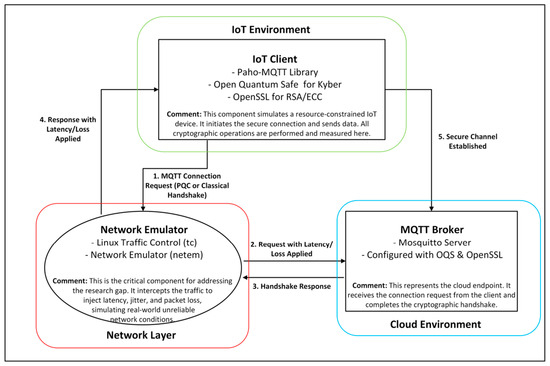
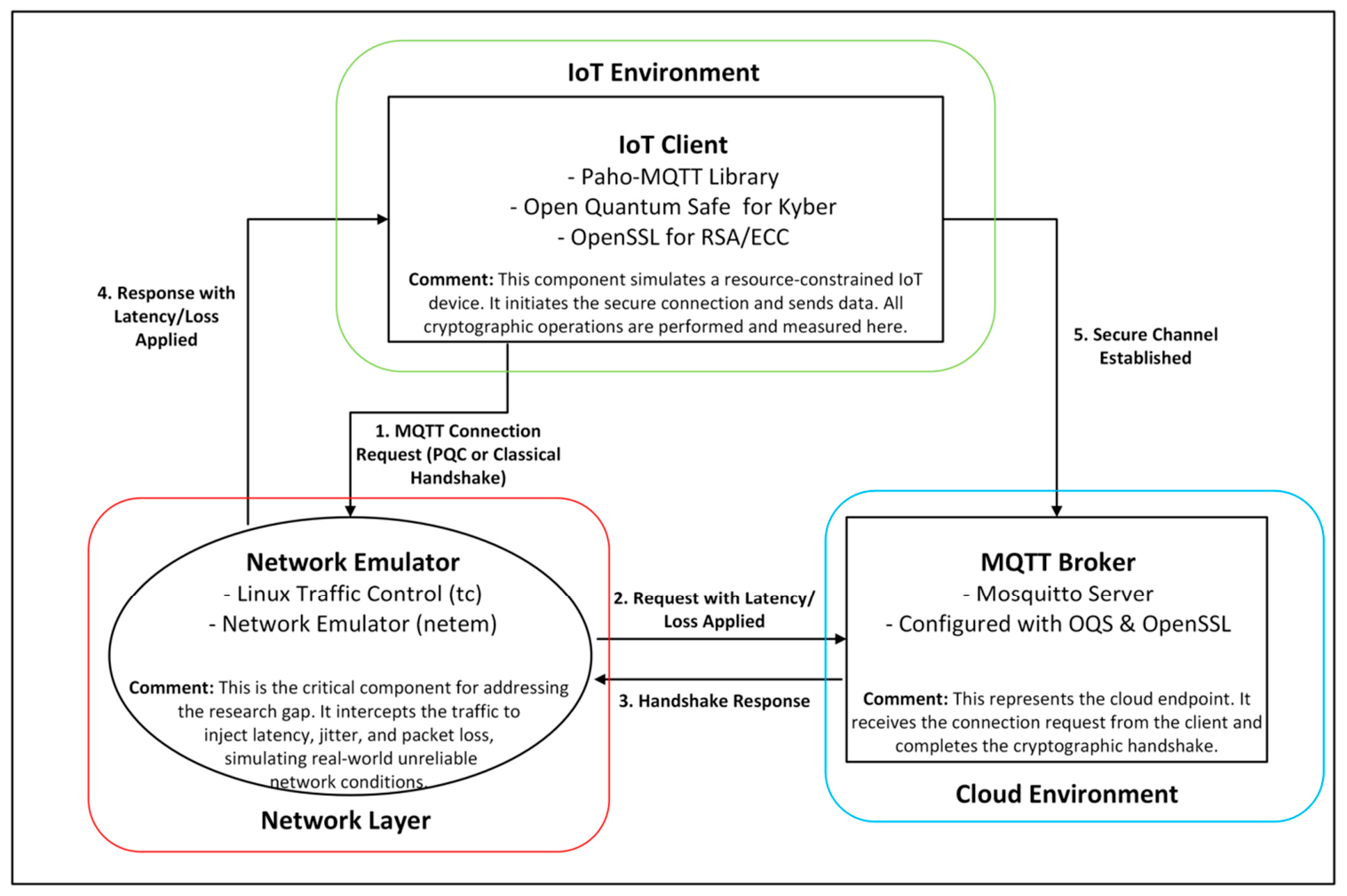
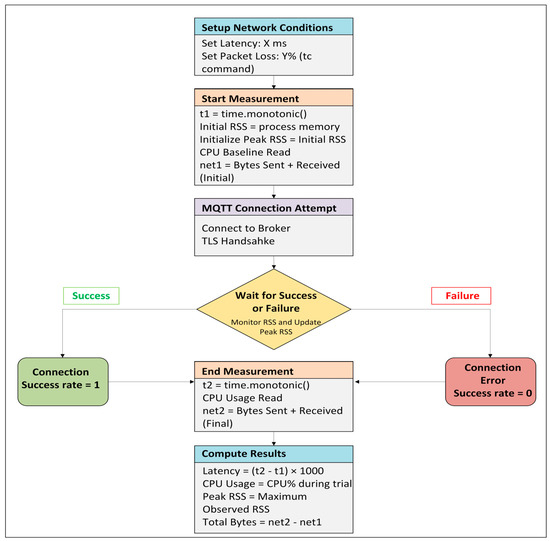
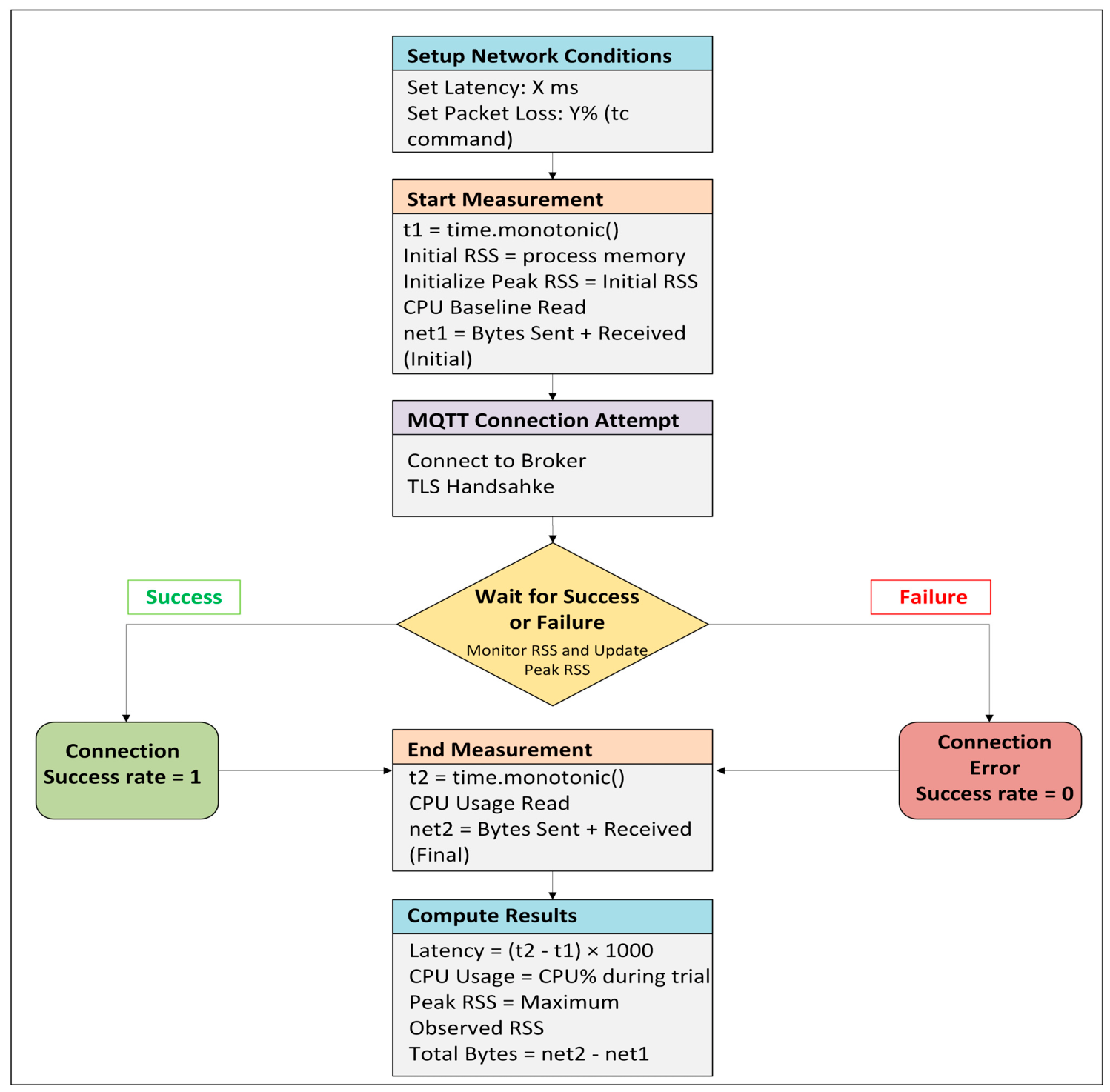
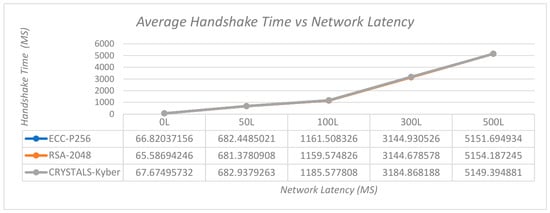
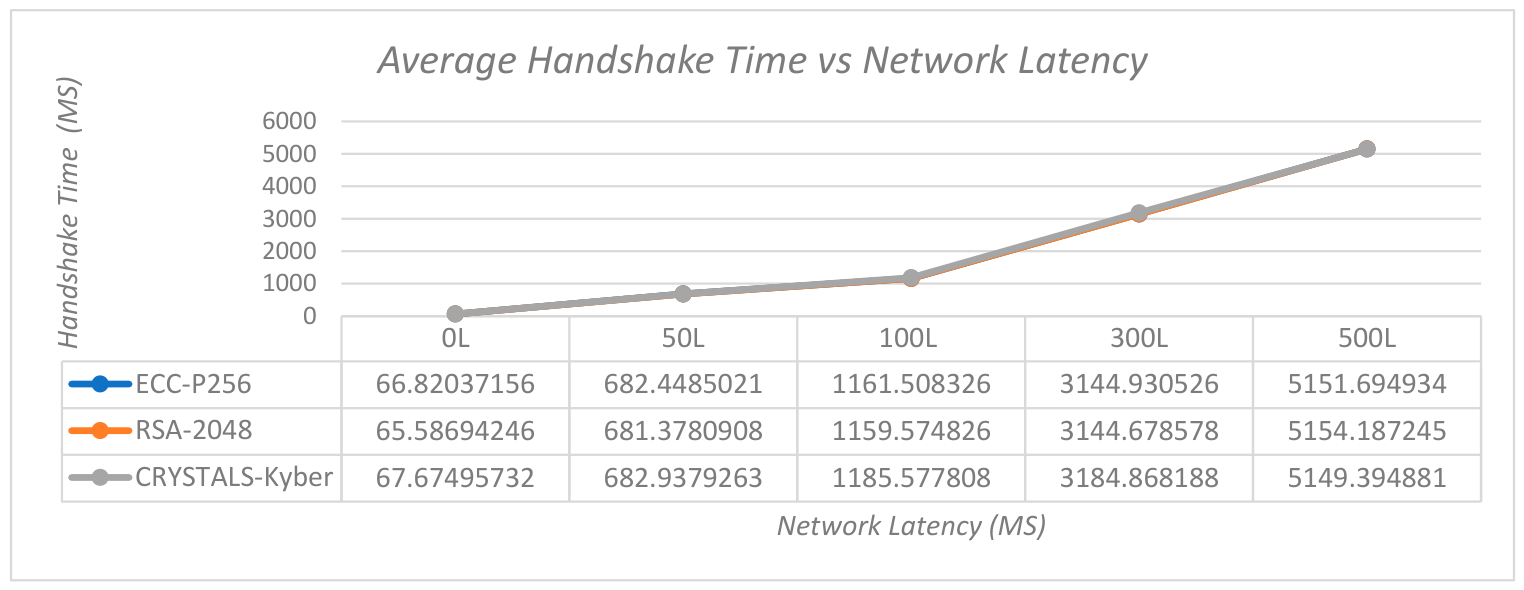
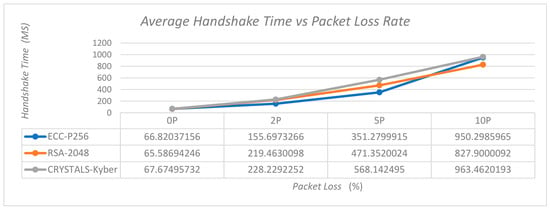
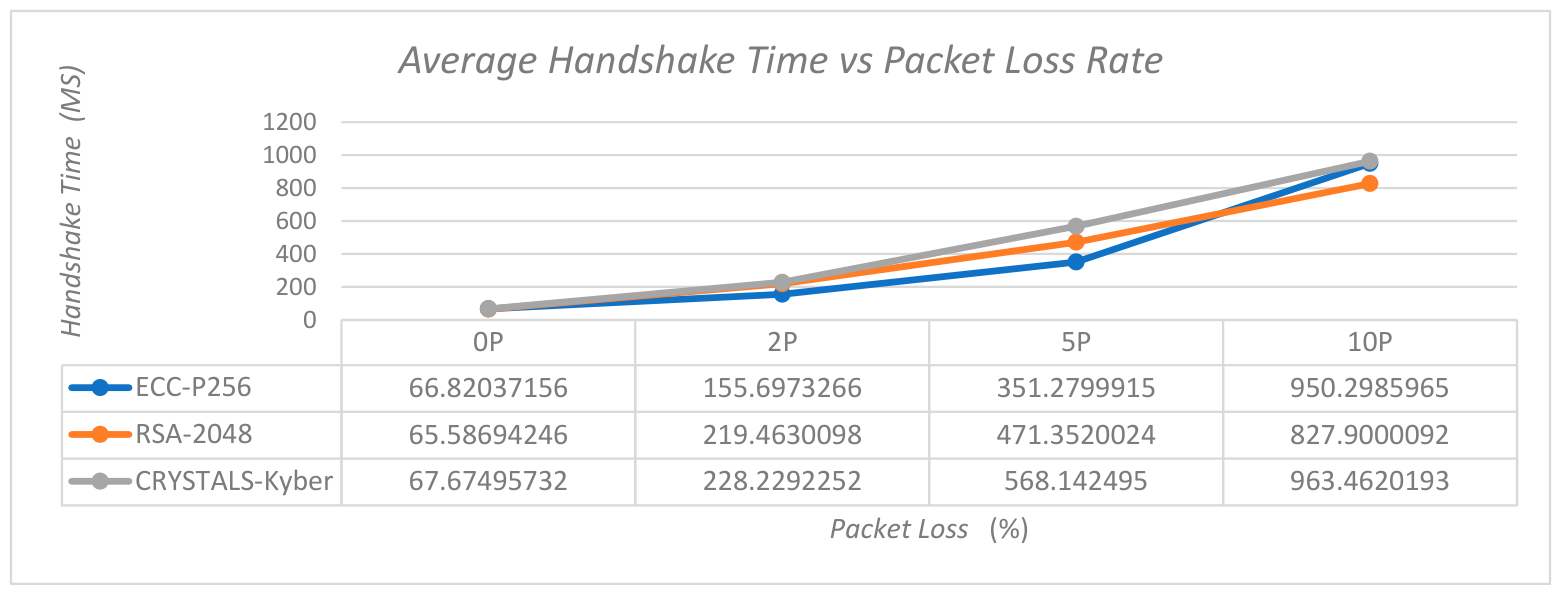
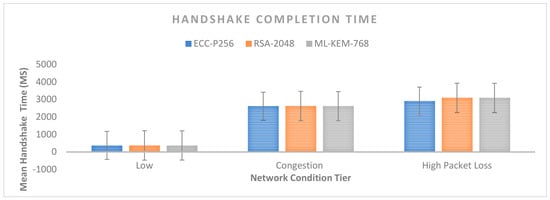
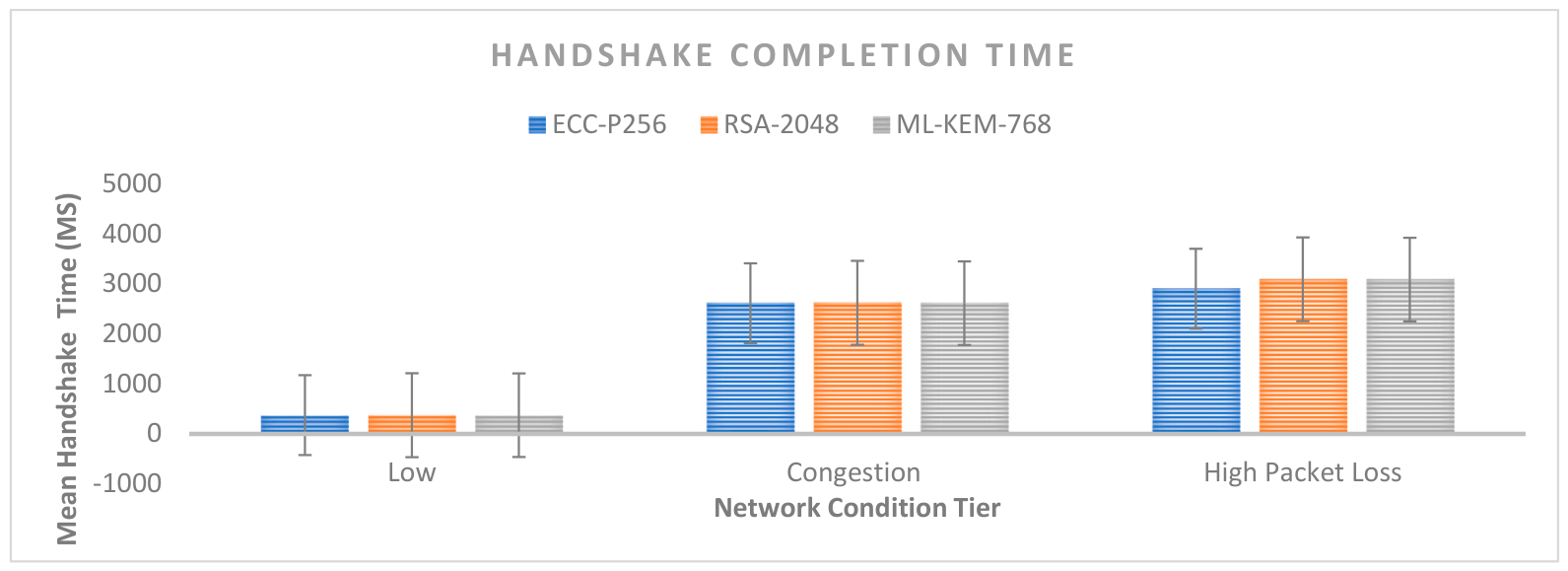
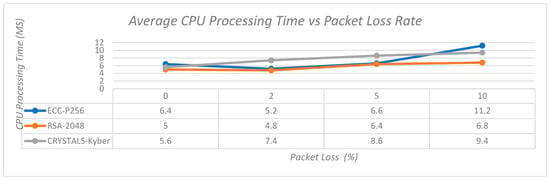
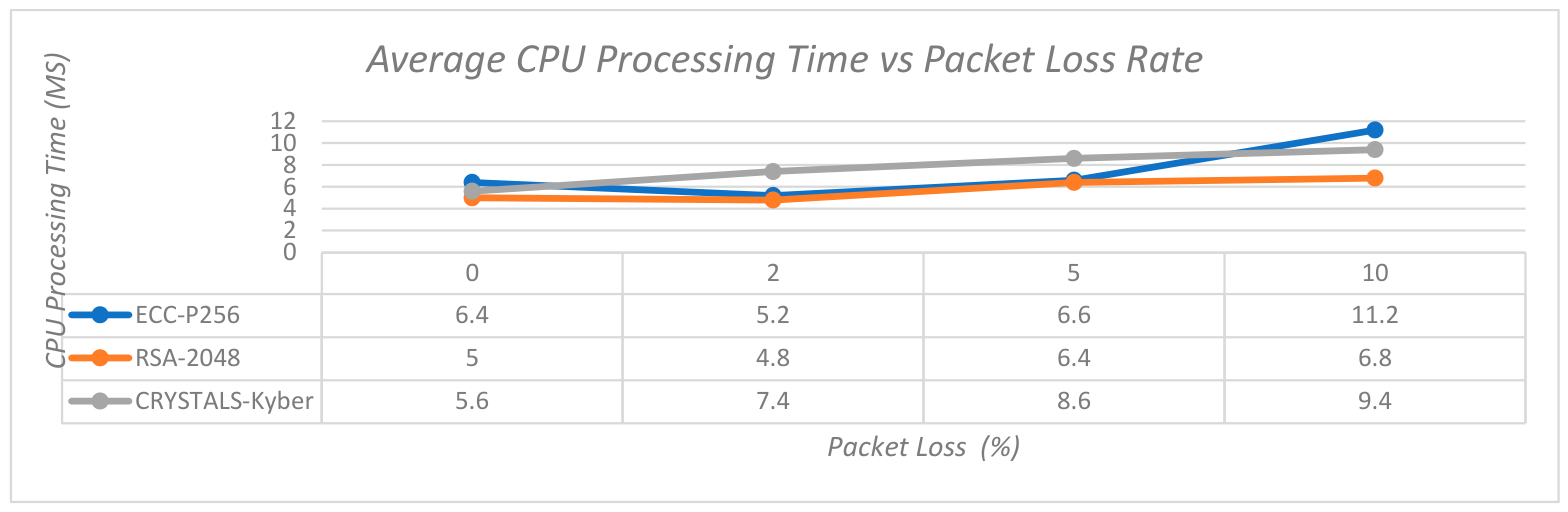
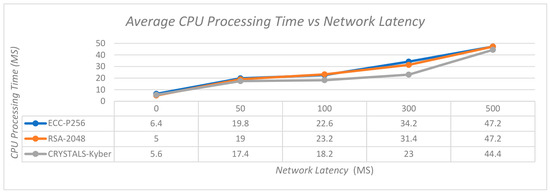
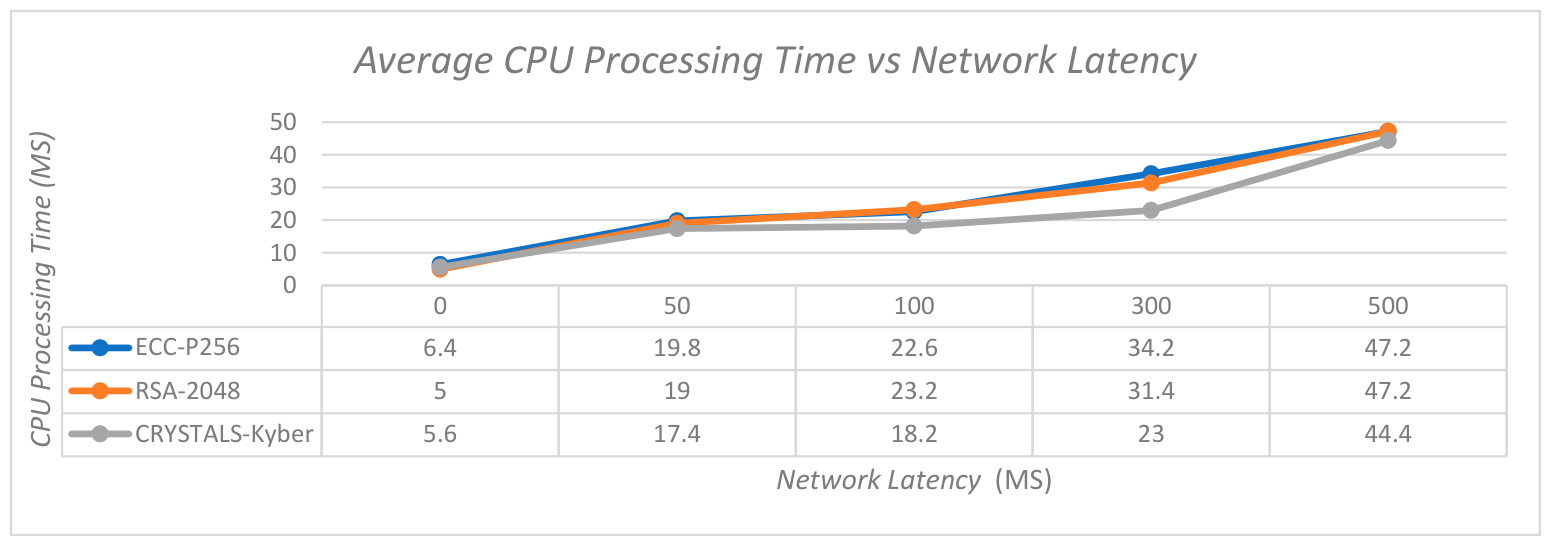
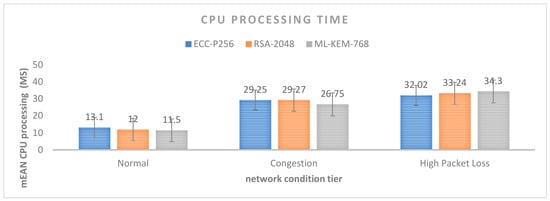
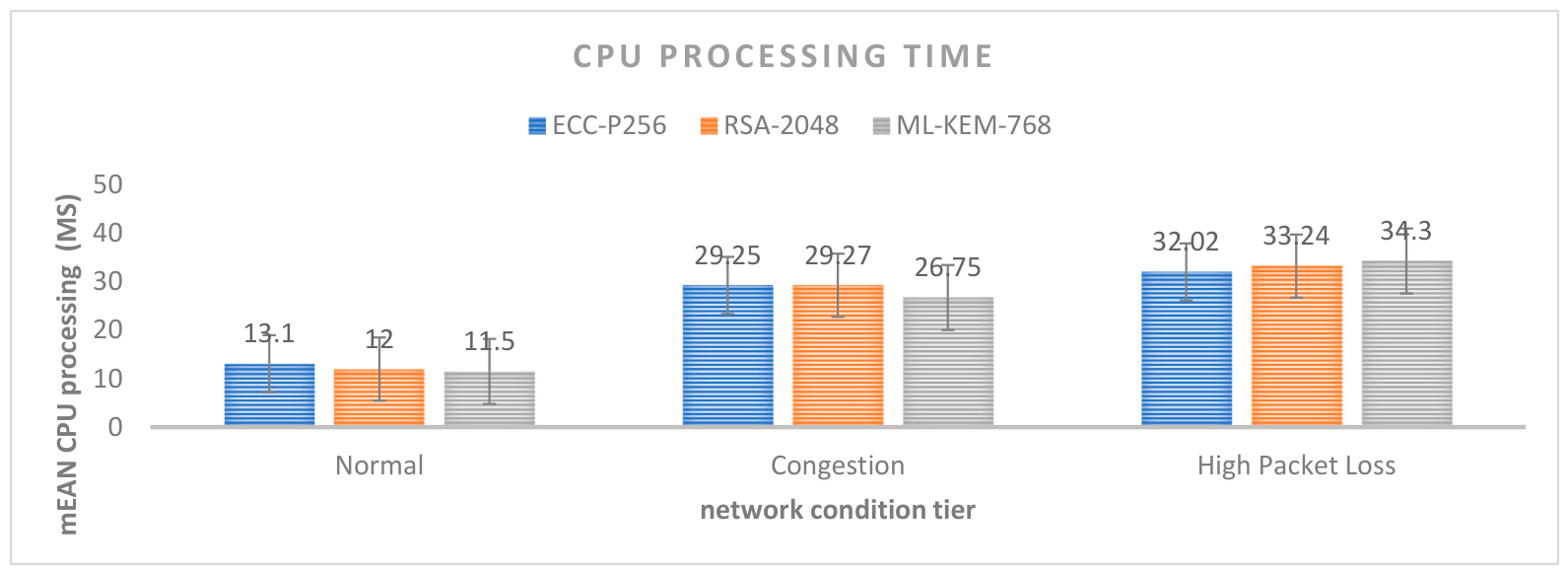
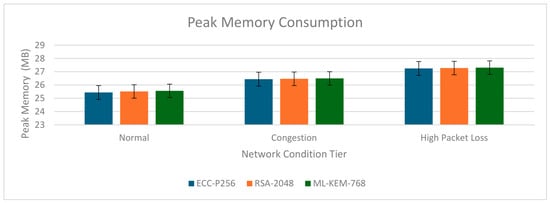
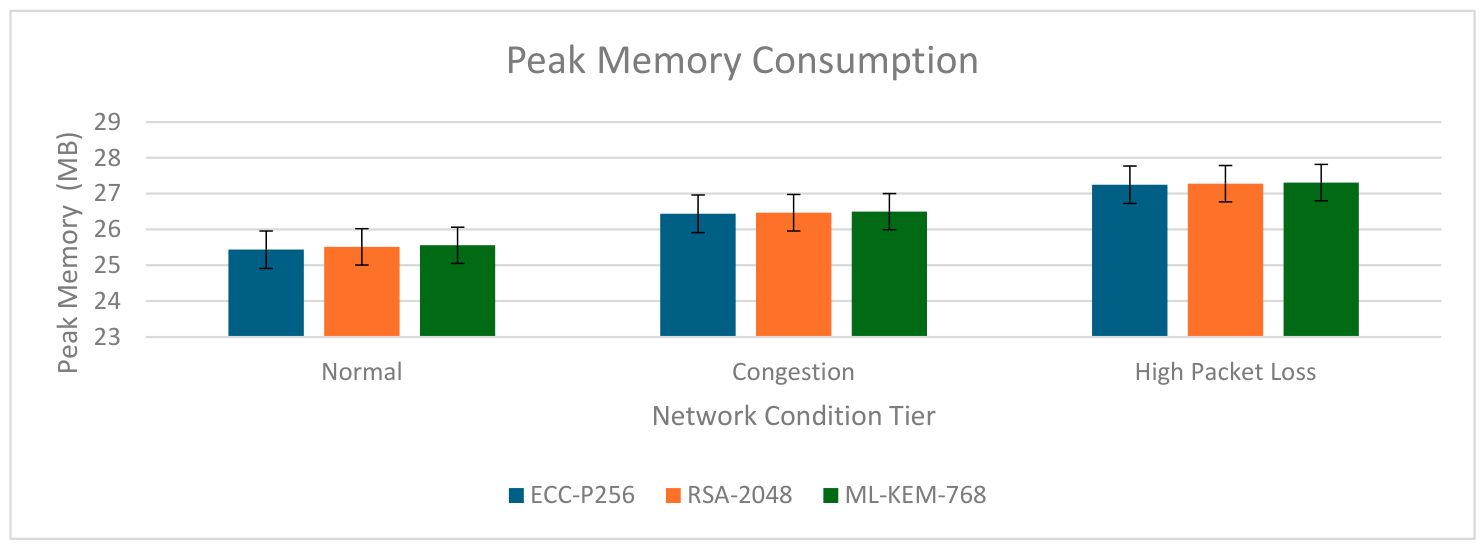
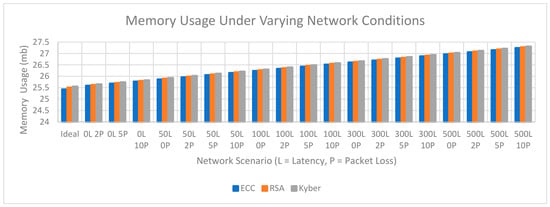
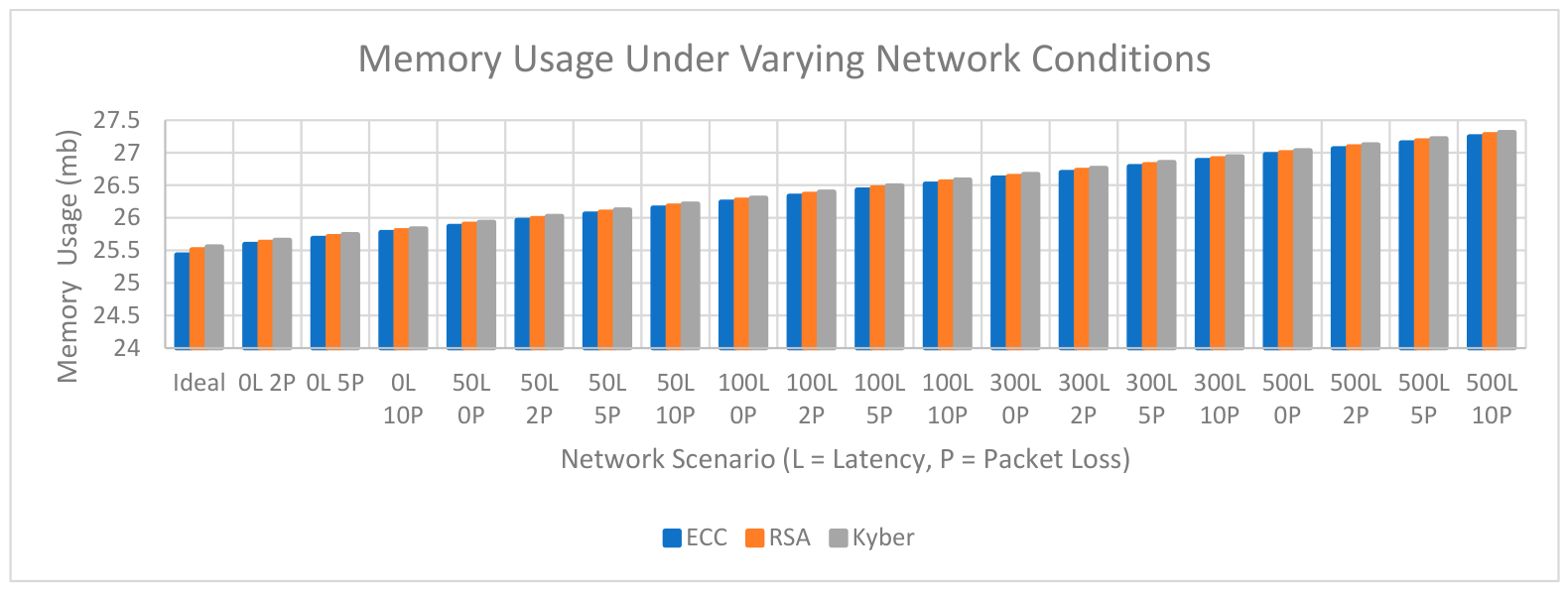
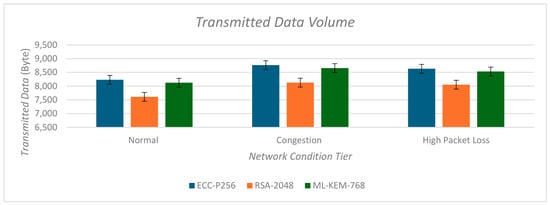
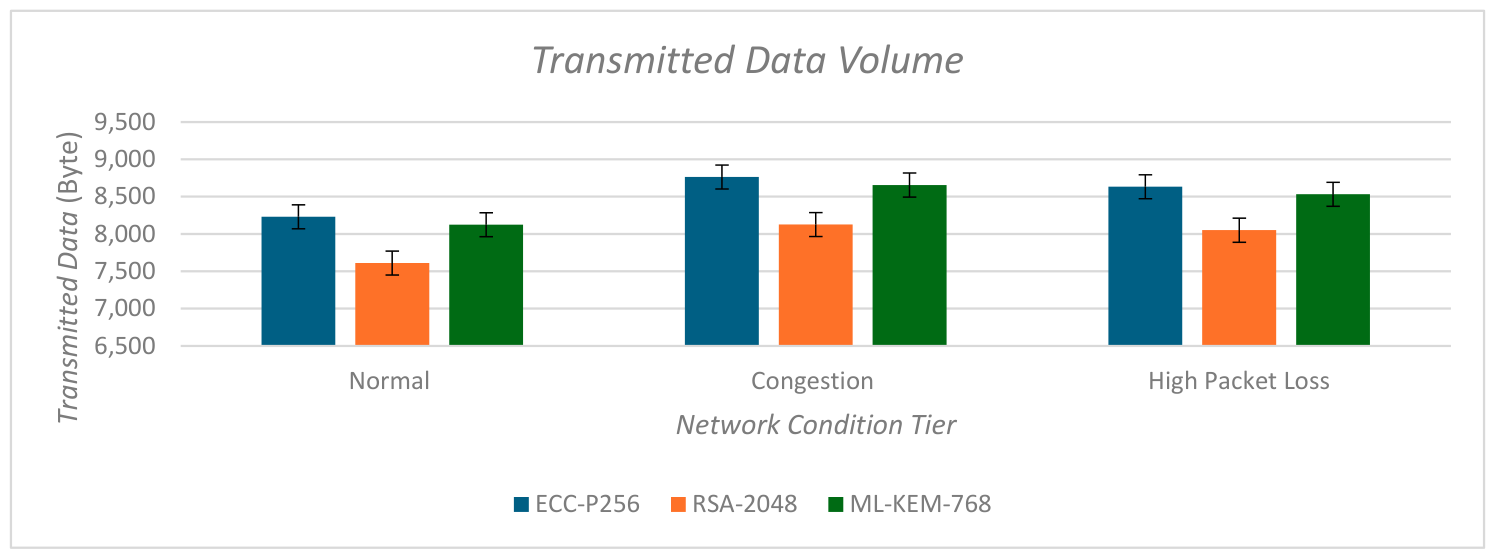
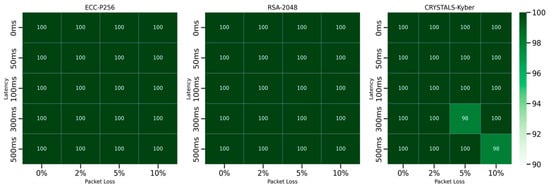
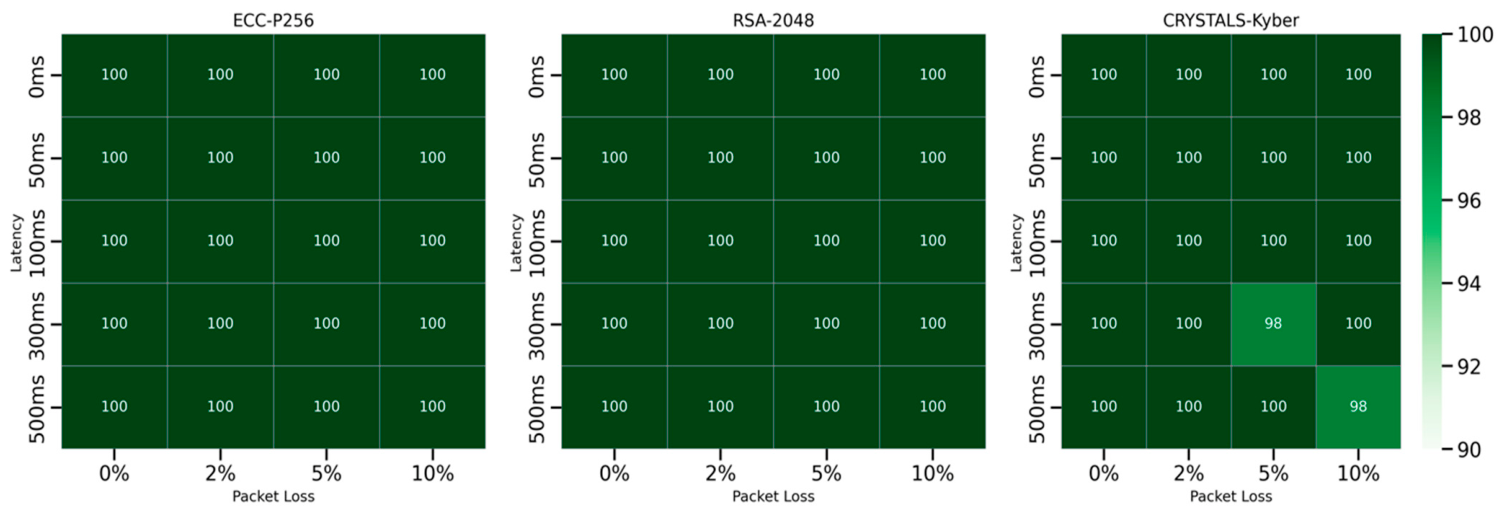

Disclaimer/Publisher’s Note: The statements, opinions and data contained in all publications are solely those of the individual author(s) and contributor(s) and not of MDPI and/or the editor(s). MDPI and/or the editor(s) disclaim responsibility for any injury to people or property resulting from any ideas, methods, instructions or products referred to in the content. |
© 2026 by the authors. Licensee MDPI, Basel, Switzerland. This article is an open access article distributed under the terms and conditions of the Creative Commons Attribution (CC BY) license.