


Abstract
Acne vulgaris (AV) significantly affects quality of life and is often treated with topical therapies. Gambir, a phytopharmaceutical with catechin as its primary compound, offers an alternative solution for mild-to-moderate AV, acting as an anti-inflammatory, antimicrobial, and astringent. This study investigates the efficacy of 1% gambir extract gel in treating AV, contributing to the exploration of novel dermatological interventions. The pilot study at the General Hospital of Mohammad Hoesin, Palembang, assessed the impact of a 1% gambir extract gel on individuals with AV. A total of 22 subjects, including those with sensitive skin, were enrolled in the study. Data analysis involved comparing the severity of AV before and after treatment with the gel, as well as skin analysis and dermatological quality of life index before and after treatment. Results indicated significant clinical improvement (p < 0.001) in 77.2% of subjects by week 8. Notably, 83.3% of moderate AV cases improved to mild, and 70% of mild AV cases showed improvement. Erythema and sebum levels decreased, and life quality, assessed by the Dermatology Life Quality Index (DLQI), improved in 72.7% of subjects (p < 0.001) by week 8. These findings suggest promising outcomes with 1% gambir extract gel and encourage further research for validation and refinement, emphasizing its potential in managing mild–moderate AV.
1. Introduction
Acne vulgaris (AV) stands as a chronic inflammatory condition affecting pilosebaceous follicles, characterized by polymorphic lesions such as comedones, nodules, pustules, papules, and cysts [1]. The etiology of AV involves increased bacterial colonization, follicular hyperkeratinization, sebum production, and inflammation [2]. AV lesions encompass non-inflammatory (open and closed comedones) and inflammatory (nodules, pustules, papules) types, often leading to various levels of scar tissue formation [3].
Ranked as the third most prevalent skin disease globally with a prevalence of approximately 9.4% of the world population, AV particularly affects adolescents and peaks around the age of 15, rapidly increasing until the age of 19 [4,5]. The prevalence is higher in regions with elevated temperature and humidity, making it a pervasive challenge for adolescents and young adults in tropical countries like Indonesia [6]. Studies in Indonesia have reported an AV prevalence of 80–100% among adolescents [7].
Not only does AV impact social and psychological functions, but it also diminishes the quality of life for affected individuals. Moderate-to-severe AV lesions can result in post-inflammatory hyperpigmentation and/or atrophic scars, influencing self-esteem, social interactions, and overall well-being. Moreover, AV has been linked to anxiety, depression, and other emotional traumas, posing additional threats to the overall quality of life [4,5].
For over thirty years, the management of AV has remained largely unchanged, despite significant advancements in other areas of dermatology [8]. This persistent stagnation presents a unique challenge for clinicians, researchers, and patients alike, especially given the high rates of treatment failure and the burdensome duration of conventional therapies. Conventional interventions for AV, particularly systemic antibiotics, are associated with failure rates as high as 80%. Even more potent treatments, such as isotretinoin, see post-treatment relapse rates hovering around 30–40%. These statistics underscore the pressing need for alternative strategies that can provide sustainable, long-term relief for individuals living with AV [3,5]. In response, there is a growing global interest in alternative and adjunctive therapies, especially those rooted in traditional medicine. Plant-derived compounds and herbal remedies are attracting attention for their potential to offer effective, safer, and possibly more sustainable management options. This surge in interest is not merely a trend but a reflection of dissatisfaction with current outcomes and a desire for more holistic, patient-friendly solutions [9].
Gambir (Uncaria gambir Roxb.) is an important herbal plant native to Southeast Asia, primarily Indonesia, historically used in traditional medicine for various ailments including diarrhea, wounds, and inflammation [9]. Gambir has been widely utilized by the community as an industrial raw material, food supplement, and traditional medicine. It has industrial applications in leather tanning and natural dye production [9]. Gambir contains chemical compounds such as flavonoids (catechins, epicatechins, and caffeic acid), tannins, quinic acid, quercetin, and prenyl resorcinol derivatives [10]. Catechins and polyphenols are the most abundant components found in gambir [11]. The plant’s key active component, catechin, exhibits strong antioxidant, anti-inflammatory, and antibacterial properties, inhibiting pathogenic bacteria and preventing cellular oxidation, which positions it as a potential candidate for drug development [12]. Research indicates that gambir extracts, particularly from West Sumatra, demonstrate notable antioxidant activity linked to catechin content. Besides catechin, gambir contains bioactive compounds such as flavonoids, tannins, and alkaloids, which show promise in pharmaceutical, cosmetic, and nutritional applications. Catechin in gambir has demonstrated anti-inflammatory, sebum-reducing, and antimicrobial effects, making it a promising candidate for AV treatment [13,14].
The search for effective and innovative treatments in dermatology continually drives scientific inquiry. One promising candidate is 1% gambir extract gel, which is being evaluated for its ability to treat AV and potentially other skin conditions. This study aims to shed light on the therapeutic value of gambir extract, offering a fresh perspective on alternative remedies in skincare. Initial findings suggest that 1% gambir extract gel may offer significant benefits, including decreased inflammation and enhanced skin healing, without many of the side effects associated with conventional therapies. If these results are confirmed, gambir extract could represent a valuable addition to the dermatological toolkit, particularly for patients seeking natural or plant-based alternatives to synthetic medications. As the demand for novel and potent skin treatments grows, studies like this pave the way for more inclusive and diverse therapeutic options. The continued exploration of botanical extracts such as gambir not only extends our understanding of natural medicine but also holds promise for improved patient outcomes in modern dermatology.
2. Materials and Methods
2.1. Plant Preparation and Gel Formulation
Firstly, 100 g of gambir powder was added to 500 mL of 96% ethanol and then macerated for 5 days, repeated 3 times, and then filtered. The filtrate was concentrated using a rotary evaporator and then dried. The gambir extract gel formula was made with an extract concentration using a gel base of carbopol 940 and triethanolamine (TEA), and distilled water. The gel preparation began by dispersing carbopol 940 into distilled water and letting it sit for 24 h at room temperature. Next, the carbopol gel base is homogenized using a homogenizer at a speed of 1500 rpm until a carbopol gel base is formed. Then, TEA is added to the gel base. Gambir extract is suspended after the gel has been formed. The gel formulation is homogenized at a stirring speed of 500 rpm for 15 min.
2.2. Survey Design
The study design of this research article involves a pilot study aimed at assessing the effects of a 1% gambir extract gel using a quasi-experimental one-group pre-test–post-test design on individuals with AV. The research was conducted at the Dermatology, Venereology, and Aesthetics Clinic of the Cosmetic Dermatology Division at the General Hospital of Mohammad Hoesin, Palembang. The study duration spanned from May 2023 to September 2023. The study underwent a thorough review by the Mohammad Hoesin General Hospital Ethics Committee with the reference number DP.04.03/D.XVIII.6.11/ETIK/52/2023; approval date: 30 April 2023), and following careful consideration, an ethical exemption has been issued for the study. Reporting of this study was guided by the TREND checklist [15], with selective application of relevant items. The study was retrospectively registered in the Indonesia Clinical Research Registry with identification code INA-19TMYO9B on 19 July 2023.
2.3. Participants and Recruitment
The population of interest comprises all AV patients seeking treatment at the DVE Clinic of the DKE Division at RSMH Palembang during the study period. The sample includes individuals from the population who meet the specified inclusion criteria. This study included 22 subjects, inclusion criteria encompassed new AV patients aged 16–24 years, willingness to participate in the study, and consenting to medical procedures and photographic documentation. Exclusion criteria involved individuals using other AV treatments in the past three months, while dropout criteria included non-compliance with research procedures and the occurrence of adverse effects during the study.
2.4. Informed Consent
Before initiating the procedure, patients received details about the study and were given electronic consent forms to express their agreement on how their data would be utilized. Participation was entirely voluntary, and as a component of granting consent, participants were made aware of their right to withdraw consent and discontinue their involvement at any point.
2.5. Treatments
All enrolled patients applied 1% gambir extract gel to the entire facial area twice daily. Patients were allowed to maintain their chosen skincare products, provided these had been utilized for a minimum of 30 days before enrollment. The simultaneous use of other medicated cleansers, moisturizers, or acne treatments was prohibited. Patients were directed to cleanse their faces 2–4 h before each study visit and to refrain from applying any topical facial products until the visit concluded.
Assessments were conducted at baseline throughout the treatment period until Week 8. Patients were advised to cleanse their face 2–4 h before their appointment and to refrain from using any topical facial products until the visit concluded. Sebum measurements were conducted at three locations on the forehead right, center, and left 2 to 4 h post face washing during each study visit. The conditions for sebum measurements were standardized across all visits. All patients acclimated to the room for 20 min before the sebum measurements were taken. Humidity was controlled within the range of 40% to 50%, while temperature was regulated between 70 °F and 72 °F. All measurements were conducted by the same investigator during each visit.
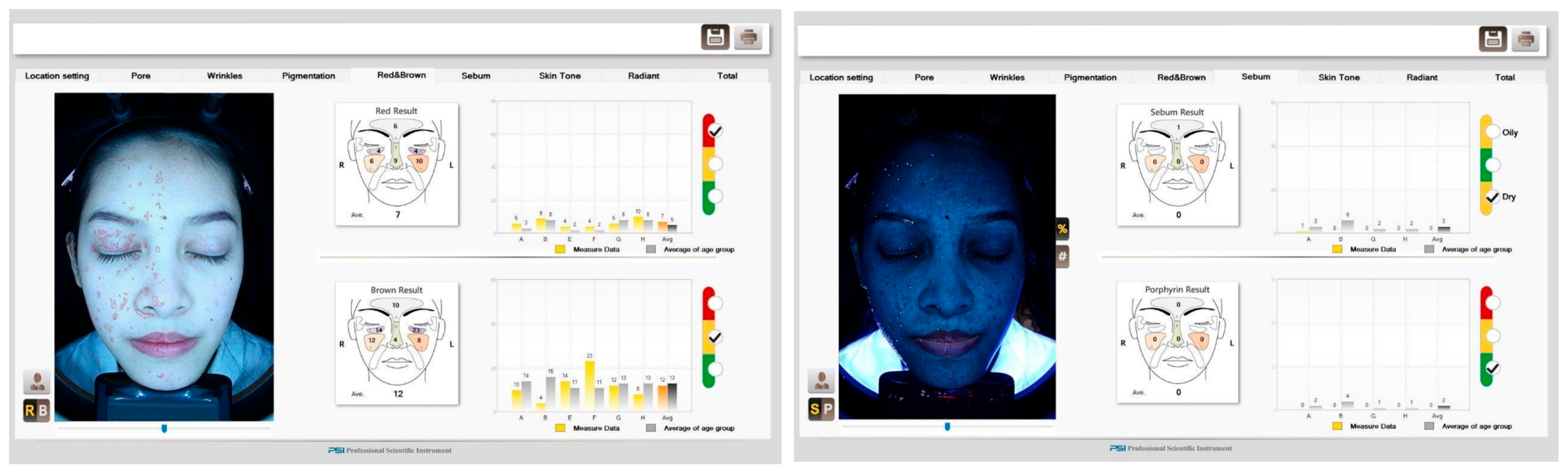
Data analysis was conducted using a marginal homogeneity test, comparing the severity of AV based on Lehmann criteria before and after treatment with 1% gambir extract gel. The severity of acne vulgaris according to the Lehmann’s Grading System classification is divided into three degrees, namely mild acne (0–5 lesions), moderate acne (6–20), and severe acne (21–50). Lesion counting based on the Lehmann criteria was performed by the same trained investigator, and all assessments were conducted in a standardized manner. We employed a skin analysis (using the Mark-Vu® skin analyzer PSI Plus Co., Ltd., Suwon-si, South Korea) and dermatological quality of life index (IKHD) for erythema levels and sebum content analysis. The Mark-Vu system comprises four distinct light-emitting diode sources (normal, specular, polarized, UV), an 18.0-megapixel complementary metal-oxide-semiconductor sensor, and integrated analytical tools. Two-dimensional photographs of the entire face were captured in a natural orientation (right lateral, right lateral 45°, frontal, left lateral 45°, left lateral).
2.6. Statistical Analysis
The normality of the data distribution was examined using the Shapiro–Wilk test. Comparisons of paired continuous data were analyzed using the paired T-test or Wilcoxon Signed-Rank test, depending on the data distribution. Paired ordinal data were compared using Wilcoxon Signed-Rank test. All analyses were performed using the statistical package for the social sciences (SPSS) version 26.0 for Windows. Statistical significance was defined as p ≤ 0.05. Results were presented as mean and standard error (mean ± SD).
3. Results
Among the 22 AV patients with mild to moderate severity included in the study, 72.7% were female (n = 16) and 27.3% were male (n = 6), with an average age of 21.41 ± 1.709 years. The majority were students (90.9%, n = 20), with 59.1% (n = 13) having completed high school and 40.9% (n = 9) having a bachelor’s degree. Clinically, 45.5% (n = 10) were classified as having mild AV, and 54.5% (n = 12) had moderate AV. Based on the Fitzpatrick classification, skin types ranged from III to IV, with 54.5% (n = 12) being type IV. The DLQI for AV patients showed varying values, with an average of 5.68 ± 3.329, indicating a mild to moderate impact on their lives. About 68.2% (n = 15) denied a family history of AV. The average onset of AV was 14.57 ± 1.397 years for those with a family history and 14.67 ± 1.877 years for those without.
3.1. Mark-Vu® Analysis
The field of dermatological evaluation has seen significant advancements with the introduction of technologies like the Mark-Vu® analyzer (Figure 1). This sophisticated device is transforming how clinicians and researchers quantify and visualize changes in specific skin regions, particularly in response to treatments. The Mark-Vu analyzer employs focused area analysis to optically assess specific regions, providing numerical values for these areas. Data collection and analysis occurred before and after treatment. Concurrently, digital images of the targeted area were captured under both natural and polarized UV light at identical time points.
Figure 1.
Overview of the skin analysis using Mark-Vu® skin analyzer.
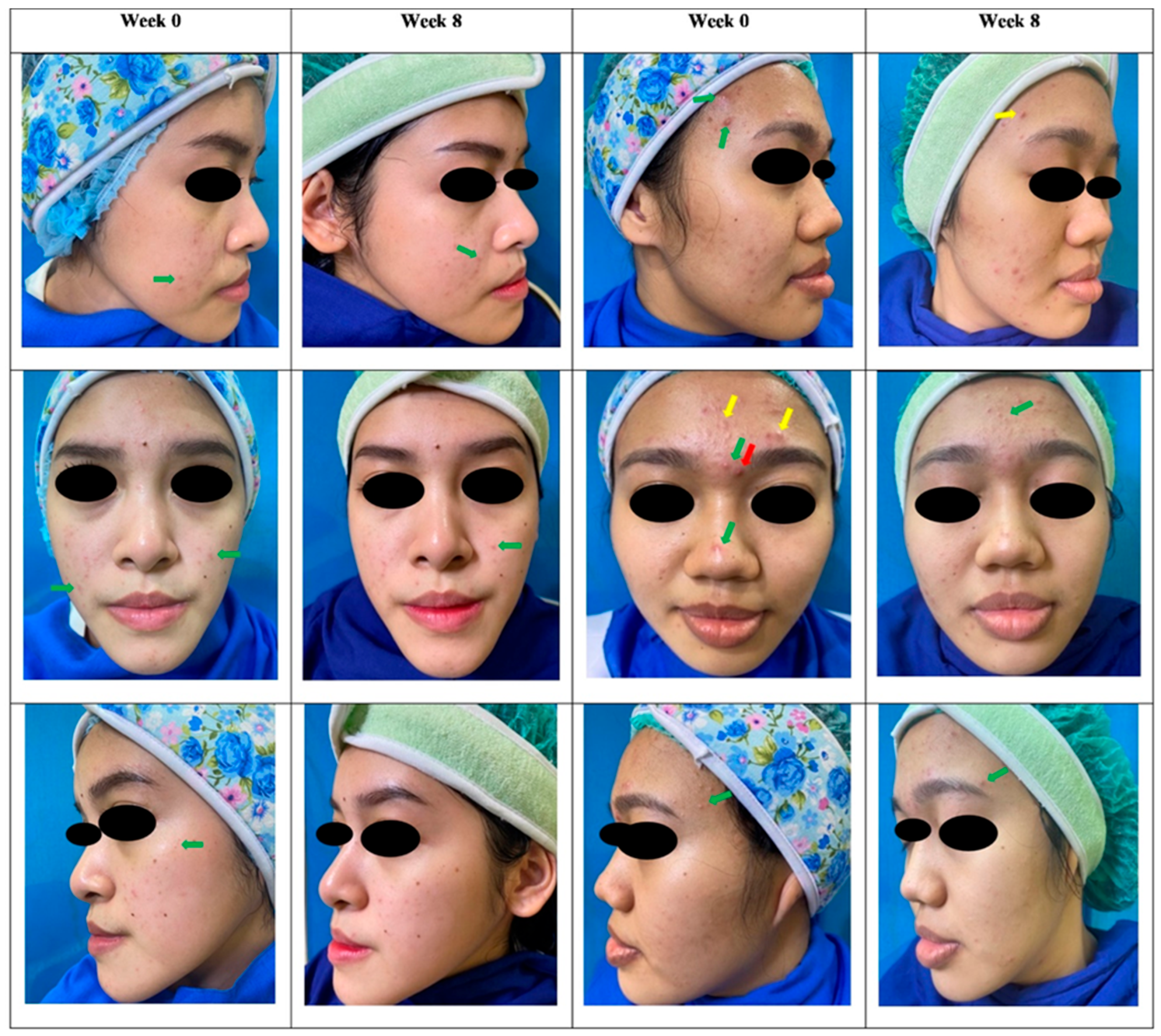
Assessment of clinical severity was documented in Figure 2. Four indicators were assessed, including erythema levels and sebum content, all expressed in percentage units. The mean data processing of skin analysis on three facial areas by the Mark-Vu® skin analyzer over 4 weeks of using the gambir extract gel showed no significant reduction in mean erythema and sebum percentage (p > 0.05). However, a significant decrease in the mean percentage of erythema and sebum was observed from week 4 to week 8 (p < 0.05). Furthermore, a significant reduction in the mean percentage of erythema and sebum was observed from baseline to week 8 (p < 0.05). This indicates that the use of 1% gambir extract gel leads to a decrease in mean erythema and sebum starting from week 4.
Figure 2.
Evaluation of patient’s clinical severity from week 0 to week 8 of treatment. Papule (→), Pustule (→), Nodule (→).
3.2. DLQI Score
The DLQI is a widely recognized tool for assessing the impact of skin disorders on a patient’s quality of life. In recent research evaluating the effects of a 1% gambir extract gel on patients with IKHD, notable improvements were observed following treatment. The data processing results for IKHD before and after the treatment with 1% gambir extract gel showed a p-value of 0.001 (p < 0.05), indicating a significant influence of the gambir extract gel on the DLQI for the study subjects. A decrease in DLQI scores at week 8 was observed in 72.7% (n = 16) of the study subjects, with only 27.3% (n = 6) reporting no change in IKHD values. The study supports the use of gambir extract gel as a promising adjunct in the management of IKHD, with significant, measurable improvements in patient-reported quality of life.
3.3. Clinical Severity of Acne’s Comparison
The analysis examined the relationship between the clinical severity of AV according to Lehman’s criteria and the distribution of mean values of erythema and sebum content measured by the Mark-Vu® skin analyzer in the study subjects before the application of 1% gambir extract gel, as presented in Table 1.
Table 1.
Comparison of mean erythema and sebum levels measured using the Mark-Vu® skin analyzer at baseline, week 4, and week 8.
Statistical analysis using the Wilcoxon Signed-Rank test indicated a similar distribution of mean values for each AV clinical severity level, suggesting no statistically significant relationship between AV clinical severity and the erythema and sebum values measured by the Mark-Vu® skin analyzer. These findings highlight the importance of a multifaceted approach in dermatology, combining both clinical observation and objective measurement. For clinicians and researchers, this underscores the need to look beyond surface assessments when evaluating skin health and to remain critical of the limitations inherent in both subjective and objective tools. As technology advances, further research may uncover more nuanced links between visual severity and skin biochemistry, ultimately improving personalized care for those affected by acne.
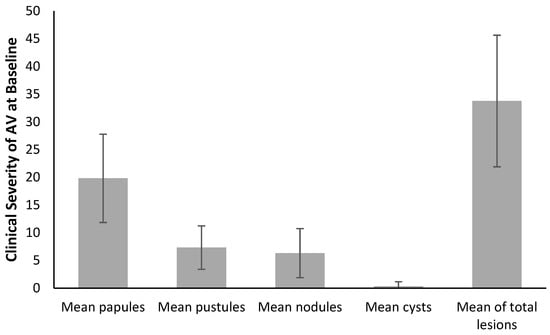
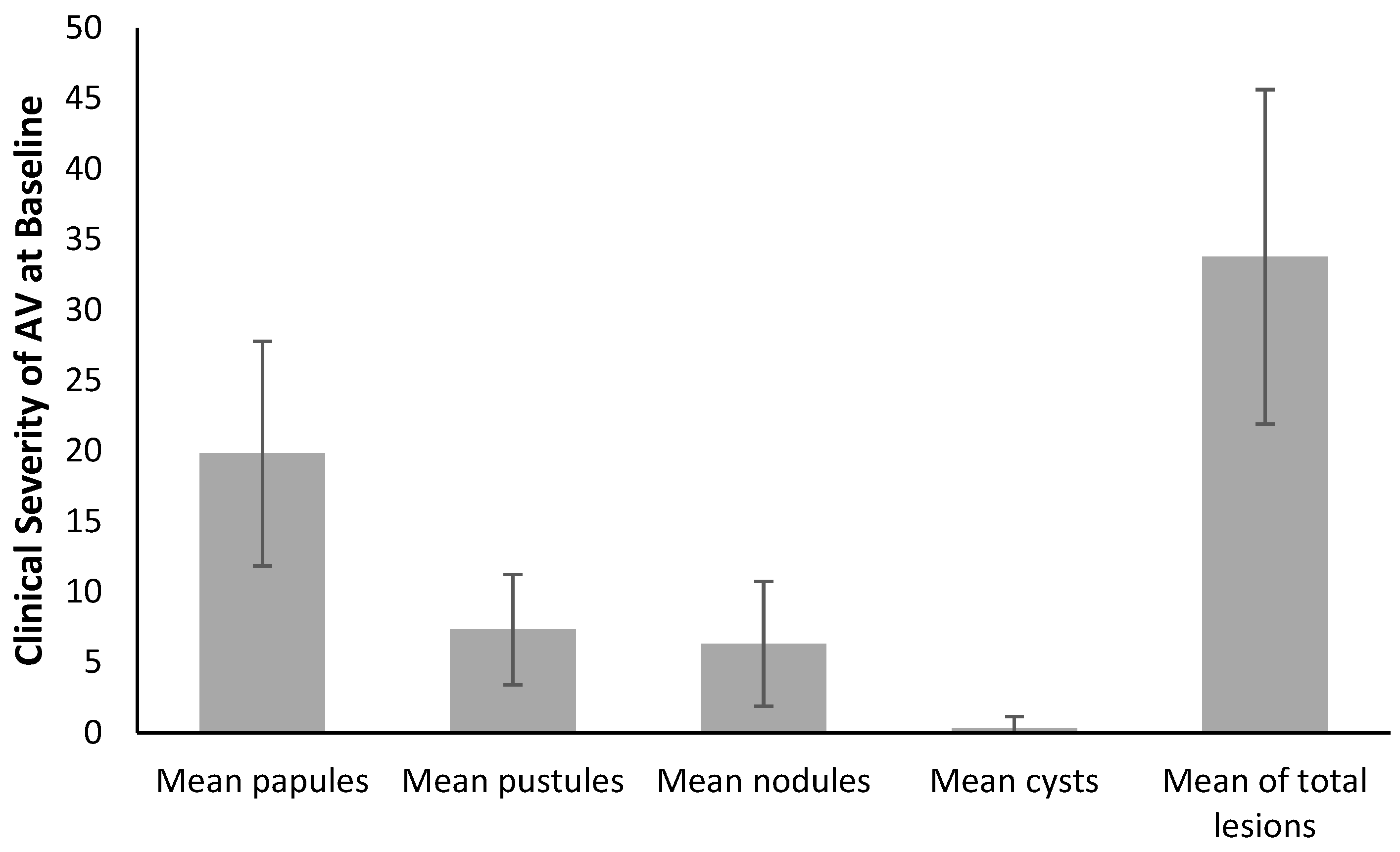
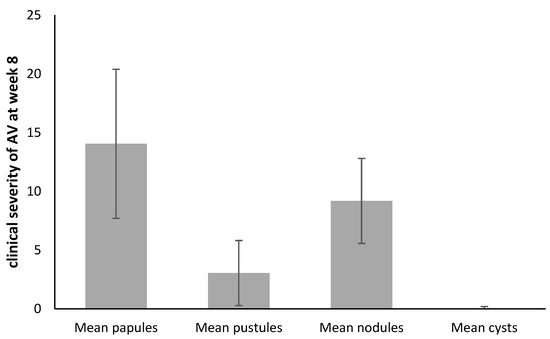
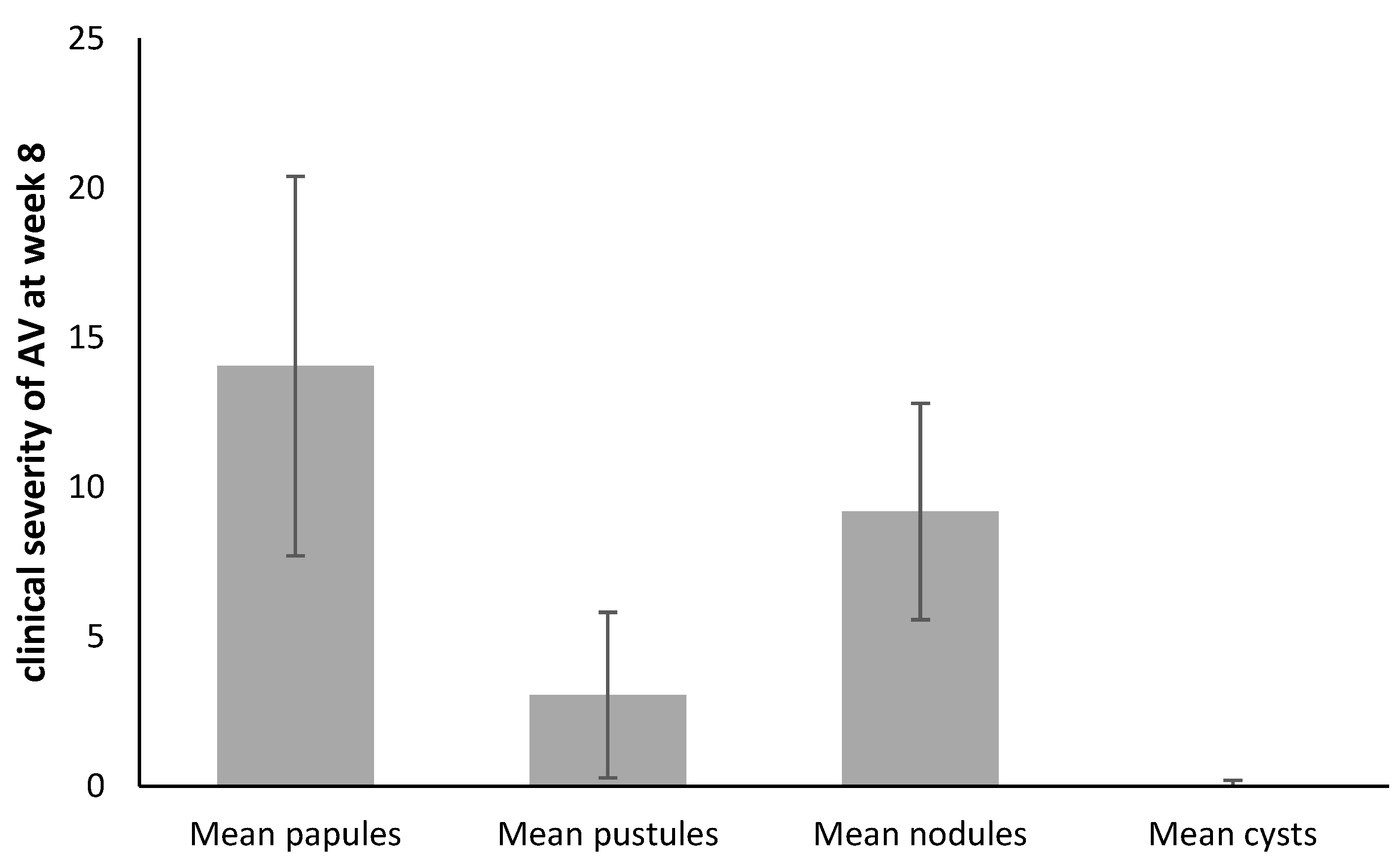
Figure 3 and Figure 4 show the mean lesion count for each AV clinical severity level at baseline and week 8. The mean lesion count for study subjects at baseline was 33.77 ± 11.868, decreasing to 25.456 ± 9.874 at week 8. Table 2 indicates clinical improvement in study subjects, marked by a reduction in moderate AV clinical severity overall. Clinical improvement occurred in 77.2% (n = 17) of the study subjects. The moderate AV group improved by 83.3% (n = 10) to mild AV, and the mild AV group improved by 70% (n = 7) to remission. About 22.7% (n = 5) of the study subjects did not experience clinical improvement. The analysis of AV clinical severity comparison yielded a p-value of 0.025 (p < 0.05) for the baseline to week 4 comparison and 0.001 (p < 0.05) after week 8, indicating a significant difference in AV clinical severity in the study subjects after the application of 1% gambir extract gel.
Figure 3.
Mean number of lesions for each clinical severity of AV at baseline.
Figure 4.
Mean number of lesions for each clinical severity of AV at week 8.
Table 2.
Comparison of the clinical severity of AV in the study subjects.
3.4. Adverse Effects
The evaluation of any new topical treatment requires careful monitoring for adverse effects to ensure participant safety and the reliability of study outcomes. In this context, the use of a 1% gambir extract gel was scrutinized for its tolerability among study participants. Findings revealed that 9.09% (n = 2) of the participants experienced erythema a mild redness of the skin during the first week of gel application. Importantly, this reaction was described as mild and did not interfere with the daily activities of those affected. This outcome underscores the importance of vigilant monitoring in clinical studies and demonstrates that while minor adverse reactions may occur, they can often be managed effectively without compromising participant involvement. Overall, the 1% gambir extract gel was well tolerated, with adverse reactions being infrequent and reversible, supporting its continued evaluation in dermatological research.
4. Discussion
AV is a common skin condition found in adolescents and young adults, occurring in the pilosebaceous unit [1]. This study involved 22 subjects, comprising 72.7% (n = 16) females and 27.3% (n = 6) males. These results align with a cross-sectional study by Tayel et al. in 2020, which found a higher clinically confirmed prevalence of AV in females compared to males [16]. The results were also consistent with Shah et al.’s 2021 research, reporting an 81.7% prevalence of AV in females out of 24,056 study subjects [17]. The etiopathogenesis of AV is multifactorial, mediated by the immune system, and triggered by hormonal activity [18]. Hormones, especially androgens, play a role in AV based on clinical observations of high levels of dehydroepiandrosterone sulfate (DHEA-S) before puberty, particularly in adolescent females. Androgen receptors in the skin have the highest concentrations in basal cells and differentiated sebocytes. The interaction between androgen hormones and these receptors stimulates sebum production, supporting the colonization of Propionibacterium acnes and directly contributing to the inflammation process of sebaceous glands through increased of pro-inflammatory cytokines production [19].
Gambir has bactericidal effects against Gram(+) and Gram(−) bacteria, including strains resistant to various antibacterials [14]. The catechins in gambir act as antibacterial agents by easily binding to other organic compounds, especially proteins. Proteins in bacterial cell membranes bind to form complexes through hydrogen bonds, leading to disturbances in bacterial cell wall function and permeability [20]. These molecules inhibit virulence factor activities, particularly toxins, and reduce the pathogenicity of several bacterial types. The therapeutic use of gambir is limited due to short storage times, limited material availability, and low stability [14]. One approach to improving the efficacy and user comfort is formulating the active ingredient into a gel dosage form [21]. Gel formulations were chosen for this study due to their advantages, including non-stickiness, easy application (easy absorption, uniformity, and cleanliness), and colorlessness (transparent) compared to other topical formulations [22]. Putri et al.’s 2022 [20] study showed that a 1% concentration of gambir extract gel was the most efficacious and stable formulation in Propionibacterium acnes therapy. This investigation has not yet been conducted on humans, underscoring its significance. These findings suggest promising outcomes with 1% gambir extract gel and encourage further research for validation and refinement, emphasizing its potential in managing mild–moderate AV.
The study noted that 7 out of 22 subjects had a family history of acne. Among the subjects classified as having mild AV, 30% (n = 3) of 10 subjects admitted to a family history of acne, and among those with moderate AV, 33% (n = 4) from the moderate AV group reported a family history of acne. Family history, especially in first-degree relationships, was associated with the onset and clinical severity of acne. Confocal microscopy in adult AV subjects revealed a larger number of follicles with enlarged infundibula compared to the control group, as well as a higher number of comedones, indicating a genetic predisposition to hyperseborrhea [23]. Zhang et al. (2023) [24] mentioned that genes associated with AV (such as IL, TNF, Resistin (RETN), cytochrome family (CYP) genes, MMP genes, and tissue inhibitor of metalloproteinase (TIMP) genes) were involved in sebaceous gland function and activity and inflammatory response. Anaba et al.’s 2021 [25] study showed a significant relationship between family history and the incidence of AV in adult females. A family history of AV could lead to earlier onset, more scarring, and the spread of AV lesions from the face to other parts of the body. This study found no significant relationship between the onset of AV and a family history of acne, with an average onset of AV in subjects with a family history of acne at 14.57 + 1.397 years and in subjects without a family history of acne at 14.67 + 1.877 years, with a statistical analysis value of p = 0.945 (p > 0.05).
The success parameters of this study included clinical improvement of AV based on Lehmann criteria, a decrease in mean erythema and sebum according to skin analyzer Mark-Vu®, and a decrease in DLQI scores according to subjects’ subjective reports. Lee et al. (2021) [26], utilized Mark-Vu for patient skin analysis in a retrospective study examining a microneedle patch combined with a triple cream and hyaluronic acid treatment for benign pigmented skin lesions. This study employed a Mark-Vu system, a skin analysis program that enhanced the objectivity of treatment effect assessments. It rendered intervention in numerical values unfeasible. The study demonstrated significant clinical improvement in acne at the 8th week of using 1% gambir extract gel compared to baseline. Clinical improvement occurred in 77.2% (n = 17) of study subjects. The moderate AV group experienced an 83.3% improvement (n = 10) to mild AV. The mild AV group experienced a 70% improvement (n = 7) in healing. A total of 22.7% (n = 5) of study subjects showed no clinical improvement. The mean number of lesions at baseline was 33.77 ± 11.868 and decreased to 25.456 ± 9.874 by the 8th week. The results of the comparison analysis of the clinical severity of AV in subjects before and after gambir extract gel 1% treatment showed a p-value of 0.025 (p < 0.05) at week 4 and 0.001 (p < 0.05) after week 8. These results indicate a significant difference in clinical improvement in subjects after using 1% gambir extract gel.
The main goal of AV management refers to the four processes involved in lesion formation: follicular epidermal hyperproliferation leading to comedones, increased sebum production, release of inflammatory mediators and immune response, and follicular colonization by Propionibacterium acnes [1]. Fahmi et al.’s 2022 [27] in vitro study showed that EGCG exhibited antibacterial activity by inhibiting Propionibacterium acnes growth and reducing inflammation caused by Propionibacterium acnes. Inflammation produces free radical compounds that can damage tissue and trigger the biosynthesis of arachidonic acid into prostaglandin as an inflammatory mediator [21,28].
The skin analyzer Mark-Vu® was used to assess mean erythema and sebum levels. The results showed a decrease in mean erythema levels from 43.478 ± 5.309% before treatment to 34.364 ± 4.483% after 8 weeks of using 1% gambir extract gel. The antibacterial effects of catechins can lead to a reduction in the inflammatory processes and inflammatory lesions caused by Propionibacterium acnes, contributing to a decrease in the percentage of erythema. The use of an extract containing 16% epicatechin gallate and 57% EGCG for four weeks has been proven to reduce inflammatory lesions of AV in the chin, perioral area, and nose [29]. Catechins also act as anti-inflammatory agents by inhibiting pro-inflammatory cytokines such as interleukin-6 (IL-6) and interleukin-1 beta (IL-1β) [21].
The decrease in mean sebum levels was from 79.091 ± 8.736% before treatment to 64.364 ± 6.987% after 8 weeks of using 1% gambir extract gel. The findings suggest that regular use of gambir extract gel may offer a safe and effective approach to reducing sebum production, potentially leading to improved skin appearance and comfort. For those interested in natural skincare solutions, gambir extract gel could represent a valuable addition to daily routines, especially when consistently applied over a period of several weeks. Sebum levels are closely related to the development of AV [1,30]. Epigallocatechin-3-gallate in gambir extract works on sebocytes, reducing sebum production. Epigallocatechin-3-gallate regulates the Adenosine monophosphate-activated protein kinase (AMPK)/sterol regulatory element-binding proteins (SREBP)-1 signaling pathway, reducing inflammation by inhibiting the Nuclear Factor Kappa-light-chain-enhancer of activated B cells (NF-κB) and activator protein (AP)-1 pathways. This leads to sebocyte cytotoxicity (SEB-1) and reduces the viability of Propionibacterium acnes [29]. A study by Rosalina (2021) found that catechins play a role in reducing sebum production by regulating AKT/MTor signaling and inhibiting the activity of the enzyme 5α-reductase, as well as testosterone [21]. A study by Detudom et al. in 2023 showed that a 5% EGCG cream caused a 41.36% reduction in sebum levels in 4 weeks of treatment for subjects with oily skin [31].
The study’s methodological weaknesses lack of a control group, flawed sample selection, and insufficient statistical rigor severely limit the reliability and applicability of its findings. For results to be trusted and translated into practice, studies must be designed with clear, consistent criteria and robust analytic strategies. This case serves as a reminder of the critical importance of methodological rigor in clinical research.
5. Conclusions
This study found that the use of 1% gambir extract gel was associated with improvements in acne severity, erythema, and sebum levels, and the formulation was generally well tolerated. These findings should be interpreted as preliminary. Given the study’s limitations, including the small sample size, lack of a control group, and possible effects of natural disease fluctuation or skincare practices, larger randomized controlled trials with longer follow-up are required to confirm these results and to further evaluate the role of gambir extract gel in acne treatment.
Author Contributions
Conceptualization, Y.K., M.A.R.S., and F.A.; methodology, Y.K., M.A.R.S., F.A., A.T., Y.F.Y., E.B., and S.S.; software, Y.K., M.A.R.S., and F.A.; validation, Y.K., M.A.R.S., F.A., A.T., Y.F.Y., E.B., and S.S.; formal analysis, Y.K., M.A.R.S., F.A., A.T., Y.F.Y., E.B., and S.S.; investigation, Y.K., M.A.R.S., F.A., A.T., Y.F.Y., E.B., and S.S.; resources, Y.K., M.A.R.S., F.A., A.T., Y.F.Y., E.B., and S.S.; data curation, Y.K., M.A.R.S., F.A., A.T., Y.F.Y., E.B., and S.S.; writing—original draft preparation, Y.K., M.A.R.S., F.A., A.T., Y.F.Y., E.B., and S.S.; writing—review and editing, Y.K., M.A.R.S., F.A., A.T., Y.F.Y., E.B., and S.S.; visualization, Y.K., M.A.R.S., F.A., A.T., Y.F.Y., E.B., and S.S.; supervision, Y.K., F.A., A.T., Y.F.Y., E.B., and S.S.; project administration, Y.K., M.A.R.S., F.A., A.T., Y.F.Y., E.B., and S.S.; funding acquisition, Y.K. All authors have read and agreed to the published version of the manuscript.
Funding
This research received no external funding.
Institutional Review Board Statement
The study was conducted in accordance with the Declaration of Helsinki and approved by the Mohammad Hoesin General Hospital Ethics Committee (approval number: DP.04.03/D.XVIII.6.11/ETIK/52/2023; approval date: 30 April 2023), and was retrospectively registered in the Indonesia Clinical Research Registry with identification code INA-19TMYO9B on 19 July 2023.
Informed Consent Statement
Written informed consent was obtained from all subjects involved in the study and/or from their legal guardians or authorized representatives.
Data Availability Statement
The original contributions presented in this study are included in the article. Further inquiries can be directed to the corresponding author.
Conflicts of Interest
The authors declare no conflicts of interest.
References
- Sewon, K.; Masayuki, A.; Bruckner, A.L.; Enk, A.H.; Margolis, D.J.; McMichael, A.; Amy, J.; Orringer, J.S. Fitzpatrick’s Dermatology; Edisi ke-9; McGrawHill Education: New York, NY, USA, 2019. [Google Scholar]
- Leung, A.K.C.; Barankin, B.; Lam, J.M.; Leong, K.F.; Hon, K.L. Dermatology: How to Manage Acne Vulgaris. Drugs Context 2020, 10, 1–18. [Google Scholar] [CrossRef] [Scilit]
- Tan, A.U.; Schlosser, B.J.; Paller, A.S. A Review of Diagnosis and Treatment of Acne in Adult Female Patients. Int. J. Women’s Dermatol. 2018, 4, 56–71. [Google Scholar] [CrossRef] [Scilit]
- Saeed Alanazi, M.; Mohamed Hammad, S.; Elwan Mohamed, A. Prevalence and Psychological Impact of Acne Vulgaris among Female Secondary School Students in Arar City, Saudi Arabia, in 2018. Electron. Physician 2018, 10, 7224–7229. [Google Scholar] [CrossRef] [Scilit]
- Layton, A.M.; Thiboutot, D.; Tan, J. Reviewing the Global Burden of Acne: How Could We Improve Care to Reduce the Burden? Br. J. Dermatol. 2021, 184, 219–225. [Google Scholar] [CrossRef] [Scilit]
- Legiawati, L.; Halim, P.A.; Fitriani, M.; Hikmahrachim, H.G.; Lim, H.W. Microbiomes in Acne Vulgaris and Their Susceptibility to Antibiotics in Indonesia: A Systematic Review and Meta-Analysis. Antibiotics 2023, 12, 145. [Google Scholar] [CrossRef] [Scilit]
- Sinaga, F. Gambaran Pemakaian Kosmetik Pada Pasien Akne Vulgaris Di Poliklinik Kulit Dan Kelamin Rsu Royal Prima Dan Murni Teguh Memorial Hospital Kota Medan. Nommensen J. Med. 2022, 8, 10–13. [Google Scholar] [CrossRef] [Scilit]
- Jaiswal, S.; Jawade, S.; Madke, B.; Gupta, S. Recent Trends in the Management of Acne Vulgaris: A Review Focusing on Clinical Studies in the Last Decade. Cureus 2024, 16, 56596. [Google Scholar] [CrossRef] [Scilit]
- Munggari, I.P.; Kurnia, D.; Deawati, Y.; Julaeha, E. Current Research of Phytochemical, Medicinal and Non-Medicinal Uses of Uncaria Gambir Roxb.: A Review. Molecules 2022, 27, 6551. [Google Scholar] [CrossRef] [Scilit] [PubMed]
- Anggraini, T.; Zakia, D.A.; Azima, F. Novelty of Research on Utilization of Gambir Extract (Uncaria Gambir) as Ink Raw Material: Bibliometric and Study Analysis. Int. J. Res. Sci. Innov. 2024, 11, 696–699. [Google Scholar] [CrossRef] [Scilit]
- Qin, N.; Lu, X.; Liu, Y.; Qiao, Y.; Qu, W.; Feng, F.; Sun, H. Recent Research Progress of Uncaria spp. Based on Alkaloids: Phytochemistry, Pharmacology and Structural Chemistry. Eur. J. Med. Chem. 2021, 210, 112960. [Google Scholar] [CrossRef] [Scilit]
- Dharsono, H.D.A.; Wibisono, L.; Hayati, A.T.; Apriyanti, E.; Satari, M.H.; Kurnia, D. Mode Action Prediction of Catechin from Uncaria Gambir Roxb. against UDP-N-Acetylenolpyruvyl-Glucosamine Reductase (MurB Enzyme) of Streptococcus Mutans: In Silico Study. J. Adv. Pharm. Technol. Res. 2022, 13, 197–201. [Google Scholar] [CrossRef] [Scilit]
- Mita, S.R.; Husni, P.; Putriana, N.A.; Maharani, R.; Hendrawan, R.P.; Dewi, D.A. A Recent Update on the Potential Use of Catechins in Cosmeceuticals. Cosmetics 2024, 11, 23. [Google Scholar] [CrossRef] [Scilit]
- Wu, M.; Brown, A.C. Applications of Catechins in the Treatment of Bacterial Infections. Pathogens 2021, 10, 546. [Google Scholar] [CrossRef] [Scilit]
- Des Jarlais, D.C.; Lyles, C.; Crepaz, N. Improving the Reporting Quality of Nonrandomized Evaluations of Behavioral and Public Health Interventions: The TREND Statement. Am. J. Public Health 2004, 94, 361–366. [Google Scholar] [CrossRef] [Scilit]
- Tayel, K.; Attia, M.; Agamia, N.; Fadl, N. Acne Vulgaris: Prevalence, Severity, and Impact on Quality of Life and Self-Esteem among Egyptian Adolescents. J. Egypt. Public Health Assoc. 2020, 95, 30. [Google Scholar] [CrossRef] [Scilit]
- Shah, N.; Shukla, R.; Chaudhari, P.; Patil, S.; Patil, A.; Nadkarni, N.; Goldust, M. Prevalence of Acne Vulgaris and Its Clinico-Epidemiological Pattern in Adult Patients: Results of a Prospective, Observational Study. J. Cosmet. Dermatol. 2021, 20, 3672–3678. [Google Scholar] [CrossRef] [Scilit]
- Rocha, M.A.; Bagatin, E. Adult-Onset Acne: Prevalence, Impact, and Management Challenges. Clin. Cosmet. Investig. Dermatol. 2018, 11, 59. [Google Scholar] [CrossRef] [Scilit]
- Branisteanu, D.; Toader, M.; Porumb, E.; Serban, I.; Pinzariu, A.; Branisteanu, C.; Vicovan, A.; Dimitriu, A.; Fartusnic, I.-A.; Boda, D.; et al. Adult Female Acne: Clinical and Therapeutic Particularities (Review). Exp. Ther. Med. 2021, 23, 151. [Google Scholar] [CrossRef] [Scilit] [PubMed]
- Putri, L.E.; Kamal, S.; Surya, S. Propionibacterium Acnes. CABI Compend. 2022, 7, 1–11. [Google Scholar]
- Rosalina, L. Masker gambir untuk wajah berjerawat. In Manfaat Gambir Untuk Kecantikan Kulit Wajah; Lipoeto, I., Ed.; Muharika Rumah Ilmiah: Padang, Indonesia, 2021; pp. 90–95. [Google Scholar]
- Green, L.J.; Lain, E.; Prunty, T.; Rhoades, R. Enhancing Topical Pharmacotherapy for Acne and Rosacea: Vehicle Choices and Outcomes. J. Clin. Aesthetic Dermatol. 2022, 15, 36–40. [Google Scholar]
- Kutlu, Ö.; Karadağ, A.S.; Wollina, U. Adult Acne versus Adolescent Acne: A Narrative Review with a Focus on Epidemiology to Treatment. An. Bras. Dermatol. 2023, 98, 75. [Google Scholar] [CrossRef] [Scilit]
- Zhang, H.; Zhang, Z. Genetic Variants Associated with Acne Vulgaris. Int. J. Gen. Med. 2023, 16, 3843–3856. [Google Scholar] [CrossRef] [Scilit] [PubMed]
- Anaba, E.L.; Oaku, I.R. Adult Female Acne: A Cross-Sectional Study of Diet, Family History, Body Mass Index, and Premenstrual Flare as Risk Factors and Contributors to Severity. Int. J. Women’s Dermatol. 2021, 7, 265. [Google Scholar] [CrossRef] [Scilit]
- Lee, K.H. Retrospective Analysis of Combined Treatment with Triple Combination Cream and Hyaluronic Acid Microneedle Patch for Benign Pigmented Skin Lesions. Biomed. J. Sci. Tech. Res. 2021, 33, 25652–25658. [Google Scholar] [CrossRef] [Scilit]
- Fahmi, A.; Syukur, S.; Chaidir, Z. Sri Melia the Antibacterial Activity Test Comparison of Green and Black Tea Ethanol Extract (Camellia sinensis) Against Propionibacterium Acnes. Sci. Midwifery 2022, 10, 1881–1885. [Google Scholar] [CrossRef] [Scilit]
- Yunarto, N.; Sulistyaningrum, N.; Kurniatri, A.A.; Elya, B. Gambir (Uncaria Gambir Roxb.) as A Potential Alternative Treatment for Hyperlipidemia. Media Penelit. Pengemb. Kesehat. 2021, 31, 183–192. [Google Scholar] [CrossRef] [Scilit]
- Čižmárová, B.; Hubková, B.; Tomečková, V.; Birková, A. Flavonoids as Promising Natural Compounds in the Prevention and Treatment of Selected Skin Diseases. Int. J. Mol. Sci. 2023, 24, 6324. [Google Scholar] [CrossRef] [Scilit]
- Kurokawa, I.; Nakase, K. Recent Advances in Understanding and Managing Acne. F1000Research 2020, 9, 792. [Google Scholar] [CrossRef] [Scilit]
- Detudom, P.; Kamanamool, N.; Paichitrojjana, A.; Udompataikul, P.; Udompataikul, M. Efficacy of Anti-Sebum Moisturizing Cream Containing 2% l-Carnitine and 5% Epigallocatechin Gallate in Seborrhea: A Randomized Clinical Trial. J. Cosmet. Dermatol. 2023, 22, 3058–3064. [Google Scholar] [CrossRef] [Scilit]

Disclaimer/Publisher’s Note: The statements, opinions and data contained in all publications are solely those of the individual author(s) and contributor(s) and not of MDPI and/or the editor(s). MDPI and/or the editor(s) disclaim responsibility for any injury to people or property resulting from any ideas, methods, instructions or products referred to in the content. |
© 2026 by the authors. Licensee MDPI, Basel, Switzerland. This article is an open access article distributed under the terms and conditions of the Creative Commons Attribution (CC BY) license.