


Highlights
- Coal gangue particle size and fly ash improved the substrate’s structure and water retention ability.
- The 5:5 coal gangue–fly ash ratio and a 1:2:1 fraction ratio (0~1.18, 1.18~2.36 and 2.36~4.75 mm) maximized alfalfa biomass.
- The substrate’s structure influenced alfalfa growth more than water retention, thereby supporting low-cost mine restoration.
Abstract
The dumping of coal gangue poses significant risks to human health and ecosystems, necessitating ecological restoration in coal gangue mining areas. This study investigates the physical properties and water-retention characteristics of coal gangue–fly ash (CG-FA) substrates under varying coal gangue volume ratios and particle-size distributions, and evaluates their effects on alfalfa (Medicago sativa L.) growth. Six CG-FA volume ratios (5:5, 6:4, 7:3, 8:2, 9:1, 10:0) and seven particle-size distributions (1:1:1, 2:1:1, 3:1:1, 1:2:1, 1:3:1, 1:1:2, 1:1:3) were tested in 3 L pot experiments. Results showed that reducing coal gangue content significantly improved substrate structure, decreasing bulk density by 3.8–28.9% and increasing porosity by 9.8–64.4%, accompanied by enhanced water-retention capacity. The 5:5 volume ratio combined with a 1:2:1 particle-size distribution resulted in the highest alfalfa biomass, providing the best balance of substrate structure and water availability. From a resource-oriented perspective, the optimized CG–FA substrate enables the in situ utilization of coal-based solid wastes, reducing dependence on external soil resources while improving water retention and plant growth. These findings suggest potential advantages in resource utilization, economic feasibility, and environmental performance, providing a sustainable alternative for mine land restoration.
1. Introduction
The proportion of coal in China’s total energy consumption decreased from 56.9% in 2020 to 55.3% in 2023, reflecting steady progress in reducing coal reliance amid the global energy transition and the advancement of carbon peaking and neutrality goals [1]. Nevertheless, coal continues to play an irreplaceable role in ensuring national energy security as a fundamental energy source. According to the Annual Report on Coal Industry Development (2024) [2], China’s raw coal production reached 4.78 billion tonnes in 2024, representing a year-on-year increase of 1.2%, and is expected to maintain a stable growth trend in 2025. Coal gangue, the primary solid waste generated during coal mining and washing processes, has an annual output of approximately 0.7–0.8 billion tonnes, accounting for 15–20% of total coal production, with cumulative stockpiles exceeding 7 billion tonnes [3]. The long-term accumulation of these solid wastes not only occupies large areas of land but also induces a series of ecological and environmental problems, including deterioration of soil physicochemical properties, degradation of water and atmospheric environments, and significant losses in biodiversity [4,5,6].
In response to these challenges, increasing attention has been directed toward the resource utilization of coal gangue, particularly its research and application as a reclamation substrate for ecological restoration of mine-degraded lands [7,8,9]. According to relevant theories, mining wastelands, due to intense anthropogenic disturbance, have developed into a novel type of ecosystem characterized by altered substrate properties, reorganized ecological processes, and the inability to be easily restored to their historical state [10,11]. This concept suggests that highly heterogeneous substrate physical structures can generate diverse microhabitats with contrasting moisture, aeration, and nutrient conditions, thereby naturally filtering species and driving spontaneous colonization processes [12,13]. This mechanism has been widely observed in the spontaneous vegetation succession of mine-degraded lands. Studies have shown that drought-tolerant grasses (e.g., Festuca arundinacea Schreb., Bothriochloa caucasia L.) and some deep-rooted legumes (e.g., Medicago sativa L.) often become dominant pioneer species on coarse-textured substrates [14], whereas more diverse herbaceous assemblages, including species from the Asteraceae (e.g., Artemisia ordosica Krasch.) and Chenopodiaceae (e.g., Salsola collina Pall.) families, tend to establish in areas with a higher proportion of fine particles and greater water-holding capacity [15]. In addition, substrate physical structure influences microbial colonization and diversity by regulating water–air distribution and habitat availability [16]. Furthermore, post-mining substrates are typically characterized by nutrient-poor mineral materials and strong environmental filtering. Although such oligotrophic conditions may constrain the establishment of many species, they can also provide refuge habitats for stress-tolerant and specialized organisms that are adapted to resource-limited environments [13]. Therefore, in novel ecosystems developed on mine-degraded lands, substrate physical structure constitutes a fundamental driver of spontaneous ecological succession, ecosystem functional development, vegetation establishment, and the long-term conservation of biodiversity, highlighting the importance of understanding how substrate texture regulates habitat conditions [17].
However, due to the coarse particle size and limited capillary pore development of coal gangue, its water-retention capacity is generally insufficient when used alone as a planting substrate, making it difficult to maintain an adequate water supply for plant growth [18,19,20]. Therefore, the incorporation of additional materials is necessary to improve its water-retention characteristics.
Existing studies have primarily focused on the co-utilization of coal gangue with soil, organic materials, or other industrial solid wastes for land reclamation and vegetation reconstruction. For instance, Jin et al. (2023) demonstrated that, in high-altitude mining areas, a soil cover thickness of approximately 10 cm markedly improved surface organic matter content and optimized the soil hydrothermal environment, thereby promoting the stability and diversity of microbial communities; this thickness represented an optimal balance between ecological restoration effectiveness and engineering cost under harsh alpine conditions [21]. Using indoor soil column experiments, Zhang et al. (2025) reported that decreasing coal gangue particle size significantly reduced water infiltration rates, while total porosity, saturated water retention, field capacity, and cumulative evaporation increased accordingly; under constant particle-size conditions, increasing coal gangue content accelerated infiltration and reduced evaporation [19]. Du et al. (2019) further identified optimal water-retention formulations by incorporating maize straw, fly ash, and water-retention agents into coal gangue–soil mixtures, showing that the addition of 50 g maize straw per kilogram of substrate significantly improved physical structure and enhanced natural water retention, saturated water retention, and field capacity, thereby exhibiting considerable potential for ecological restoration and vegetation growth in mining areas [22]. The synergistic utilization of coal gangue with other solid wastes has been shown to not only enhance the overall resource utilization efficiency of bulk industrial residues and reduce vegetation restoration costs [23], but also compensate for inherent limitations of coal gangue substrates, such as loose structure and poor capillary water-holding capacity [24]. Among various auxiliary materials, fly ash has attracted particular interest due to its fine particle size and porous structure, which confer strong modification potential [25,26]. Han et al. (2023) found that fly ash incorporation effectively optimized particle composition and pore structure in coal gangue substrates, with increasing fly ash proportions leading to significant improvements in field capacity and available water retention, thereby enhancing overall water-retention performance [18]. Fly ash is characterized by its low cost and wide availability. The incorporation of fly ash into coal gangue can modify the hydraulic properties of the substrate, thereby influencing plant growth performance [27]. Therefore, identifying the optimal coal gangue particle size and coal gangue–fly ash mixing ratio is essential for improving substrate quality and vegetation establishment. However, systematic investigations on the optimization of component composition in coal gangue–fly ash mixed substrates remain scarce.
Alfalfa (Medicago sativa L.) is a common leguminous plant widely used as a pioneer species in mine ecological restoration due to its strong tolerance to drought, cold, and high temperatures [24]. Although it has been extensively applied in the ecological restoration of mining areas, its growth response in coal gangue–fly ash mixed substrates still require further investigation.
Six coal gangue volume ratios (5:5 to 10:0) and seven particle-size configurations were designed to evaluate how substrate texture regulates physical properties, water-retention characteristics, and plant growth performance. Substrate physical properties, water-retention characteristics, and plant growth indicators were quantified to comprehensively evaluate the effects of coal gangue particle-size distribution and coal gangue–fly ash (CG-FA) volumetric ratio on substrate structure, water retention, and plant performance. The objectives of this study were to: (i) analyze the key characteristics (including physical and water-retention properties) of CG-FA substrates; (ii) evaluate their effects on alfalfa growth; and (iii) propose an optimized substrate mixture ratio for mine site ecological restoration.
2. Materials and Methods
2.1. Experimental Materials
The substrates in this study were composed of coal gangue and fly ash. Coal gangue was collected from the Sihe No. 2 Mine in Jincheng, Shanxi Province, China, and the fly ash was obtained from the China Coal Huajin Jincheng Thermal Power Co., Ltd. (Putou Power Plant), Jincheng, Shanxi Province, China. After pretreatment, the coal gangue was sieved through 4-mesh (), 8-mesh (), and 14-mesh () screens to obtain three particle-size fractions: coarse particles (), medium particles (), and fine particles (). The plant material used in this study was alfalfa (Medicago sativa L.), specifically a small-leaf purple alfalfa type. The seeds were obtained from a local supplier in Suqian, China. Prior to sowing, seeds were manually screened to remove shriveled and damaged seeds to ensure seed quality and uniform germination. The material compositions are presented in Table 1.
Table 1.
Compositions of materials.
2.2. Experimental Design
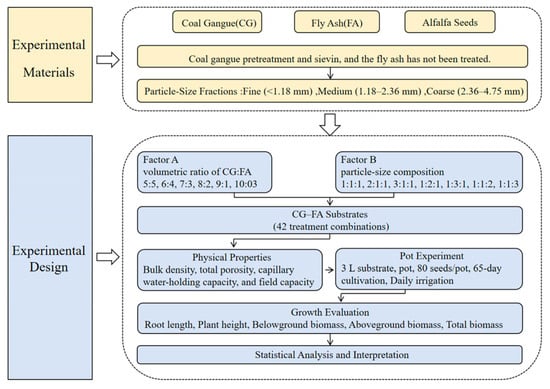
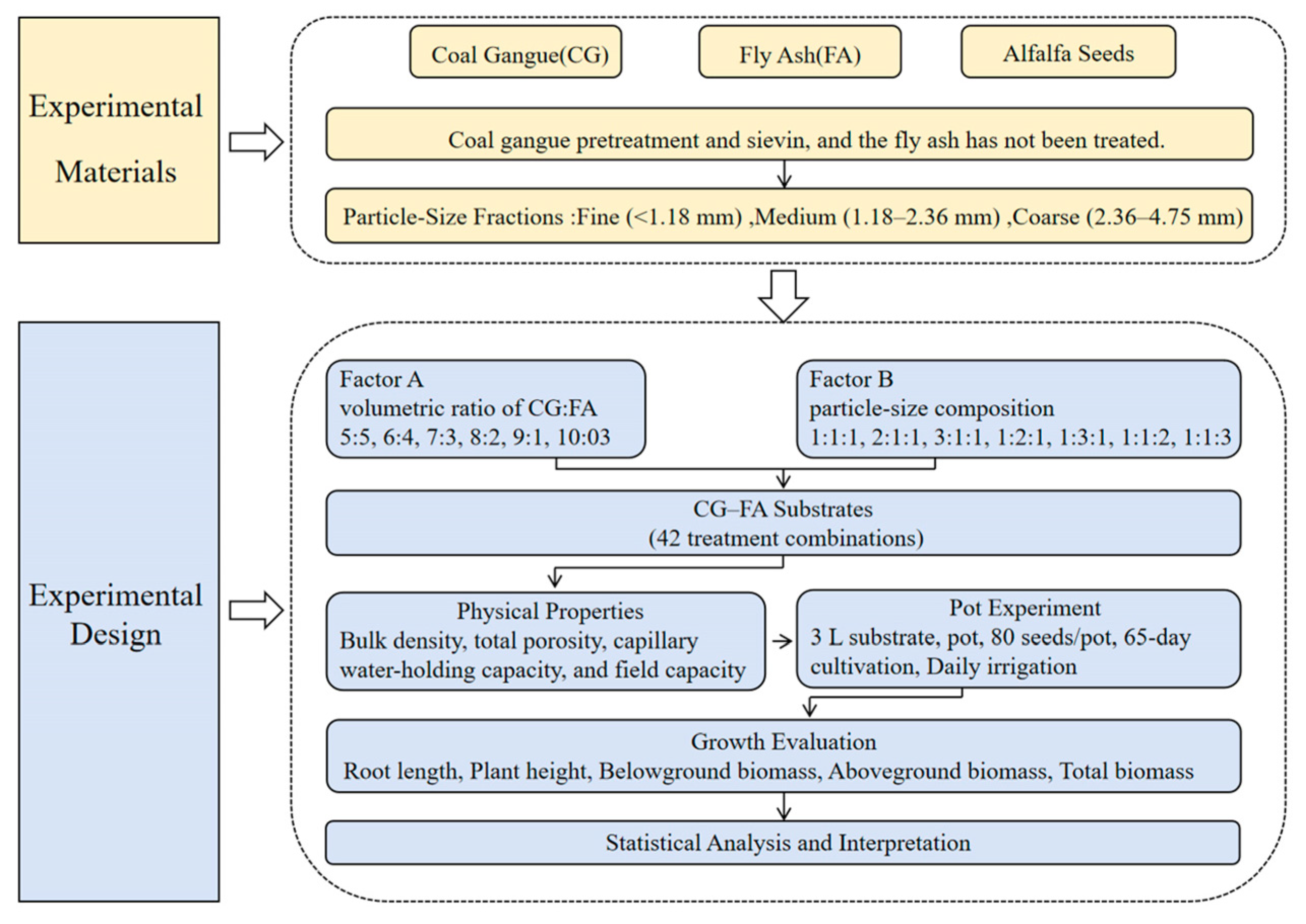
The effects of CG-FA ratio regulation on substrate physical properties and water retention were evaluated using a two-factor experimental design. The volumetric ratio of coal gangue was set at six levels (5:5, 6:4, 7:3, 8:2, 9:1, and 10:0), while the composition of fine, medium, and coarse coal gangue particles was arranged into seven volumetric proportions (1:1:1, 2:1:1, 3:1:1, 1:2:1, 1:3:1, 1:1:2, and 1:1:3). Bulk density, total porosity, capillary water-holding capacity, and field capacity of the amended substrates were measured. The effects of CG-FA substrate regulation on alfalfa (Medicago sativa L.) growth were investigated through pot experiments using plastic pots (21.2 cm in diameter and 14.4 cm in height), with each pot filled with 3 L of substrate prepared by thoroughly mixing coal gangue and fly ash according to the designated ratios. The pot experiment commenced on 18 June 2025 at the College of Water Resources Science and Engineering, Taiyuan University of Technology, Taiyuan, Shanxi Province, China. Eighty alfalfa seeds were sown per pot, and the substrates were irrigated to saturation prior to sowing. Thereafter, 50 mL of water was applied daily to maintain substrate moisture under natural ambient temperature conditions. After 65 days of growth, plants were harvested on 22 August 2025, and growth parameters including root length, plant height, and biomass were recorded. The detailed experimental scheme is presented in Table 2. The overall experimental procedure adopted in this study is summarized in Figure 1.
Table 2.
Experimental schemes.
Figure 1.
Schematic flowchart of the experimental design and methodology.
3. Experimental Methods
The chemical compositions of coal gangue and fly ash presented in Table 1 were determined using X-ray fluorescence spectrometry (XRF). Bulk density, total porosity, capillary water-holding capacity, and field capacity of the substrates were determined using the ring cutter method [28], with a ring volume of 100 cm3. Plant growth indicators included plant height, root length, aboveground biomass, belowground biomass, and total biomass. Plant height and root length were measured directly with a ruler, while aboveground and belowground parts were oven-dried at 65 °C to constant weight for determination of dry biomass. All measurements were conducted in triplicate, and mean values were used as the final results.
4. Statistical Analysis
Experimental data were organized and statistically analyzed using Excel 2021 and SPSS 26, and are expressed as mean ± standard deviation (Mean ± SD). One-way analysis of variance (ANOVA) was used to determine significant differences among treatments, while Pearson correlation analysis was performed to evaluate the relationships between substrate physical properties and plant growth parameters. Figures were generated using Origin 2024.
5. Results
5.1. Effects on Physical Properties of Substrate
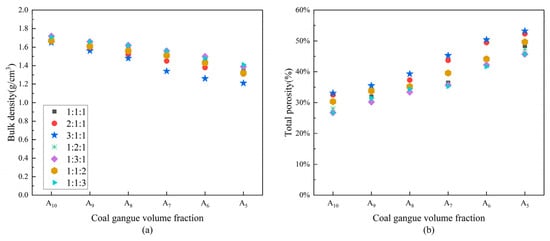
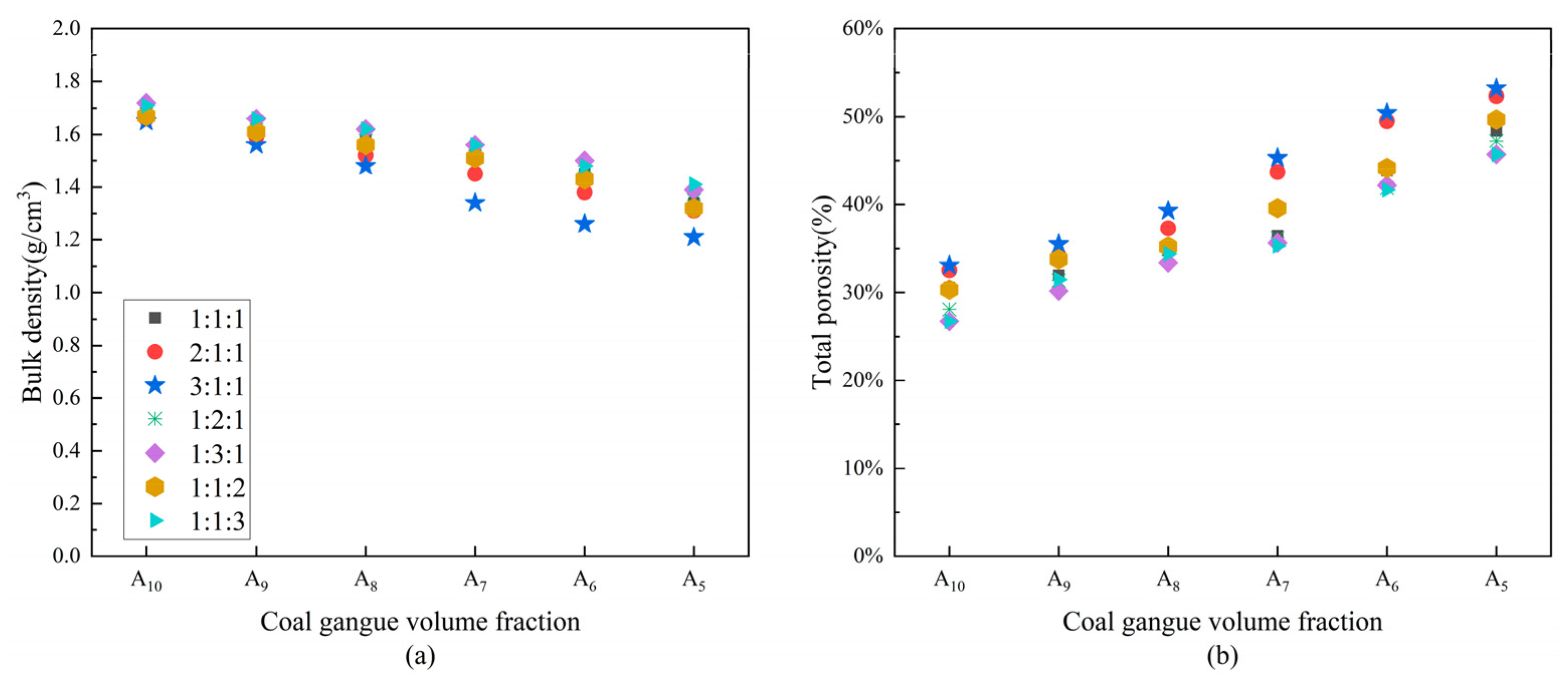
The CG-FA volumetric ratio significantly affected substrate bulk density and total porosity (Figure 2). With increasing fly ash content, bulk density gradually decreased from 1.72 to 1.21 g cm−3, whereas total porosity increased from 26.8% to 53.2%. Relative to the A10 treatment, fly ash incorporation reduced bulk density by 3.8–28.9% and increased total porosity by 9.8–64.4%.
Figure 2.
Effects of CG-FA volumetric ratio on substrate physical properties: (a) Effects of CG–FA volumetric ratio on substrate bulk density; (b) Effects of CG–FA volumetric ratio on substrate total porosity.
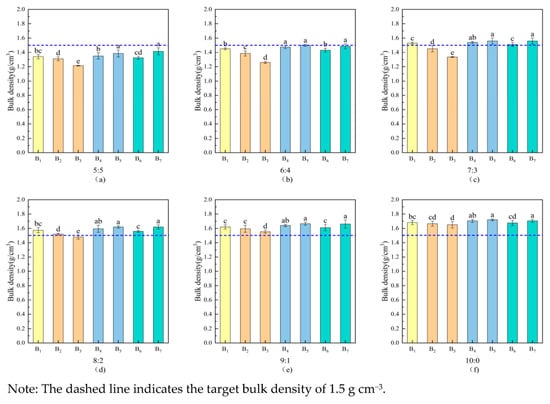
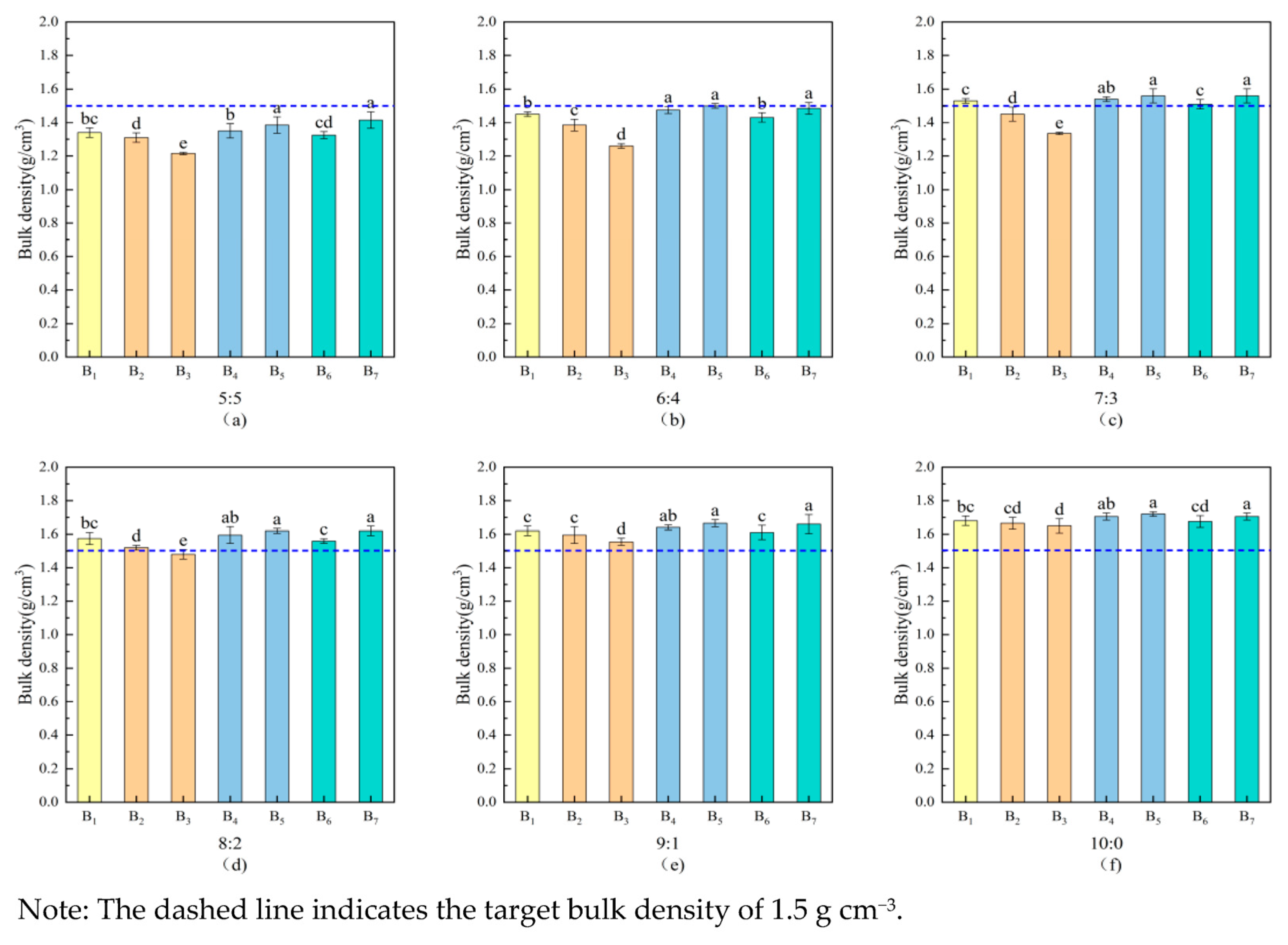
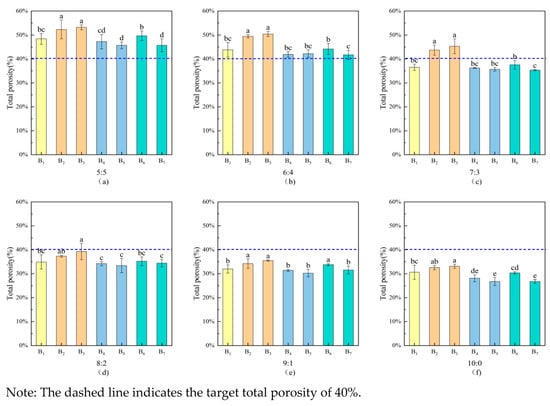
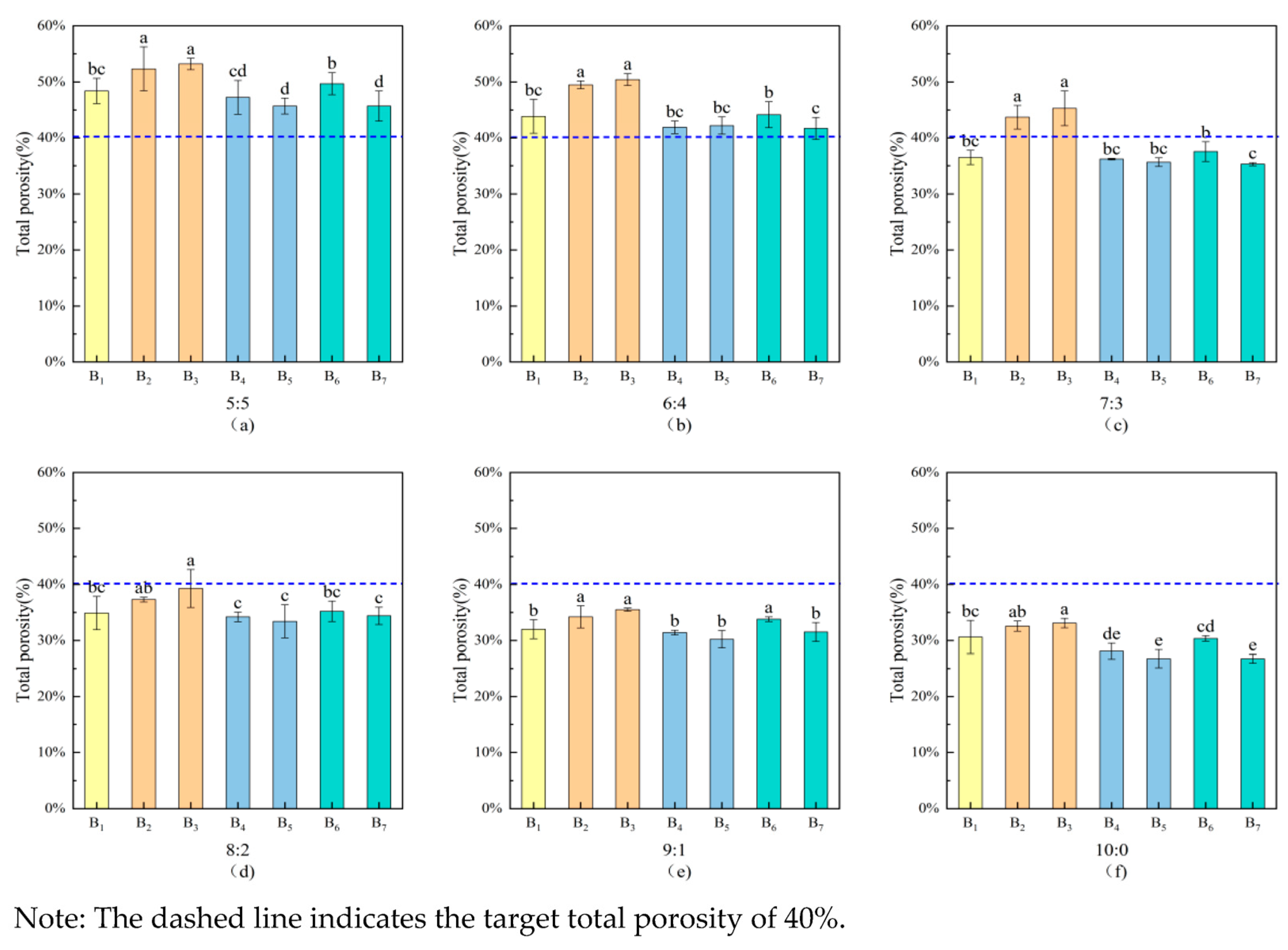
Particle-size distribution also significantly influenced substrate physical properties (Figure 3 and Figure 4). Across all CG-FA volumetric ratios, increasing the proportion of fine particles resulted in lower bulk density and higher total porosity. The B3 treatments consistently exhibited the lowest bulk density and highest porosity, whereas coarse-particle treatments (B7) showed the opposite trend. On average, bulk density decreased from 1.53 g cm−3 in B1 to 1.42 g cm−3 in B3, while total porosity increased from 37.7% to 42.8%. The mean bulk density of the medium- and coarse-sized particle groups increased by 2.0% and 0.8%, respectively, while total porosity decreased by 4.3% and 33.8%. Significant differences among particle-size treatments were observed under most CG-FA volumetric ratios (p < 0.05). However, when medium- and coarse-sized particles dominated the substrate composition, differences among treatments became less pronounced (p > 0.05). In addition, the influence of particle-size distribution on bulk density gradually weakened with increasing coal gangue proportion.
Figure 3.
Effects of particle-size distribution on substrate bulk density: (a) CG–FA volumetric ratio of 5:5; (b) CG–FA volumetric ratio of 6:4; (c) CG–FA volumetric ratio of 7:3; (d) CG–FA volumetric ratio of 8:2; (e) CG–FA volumetric ratio of 9:1; (f) CG–FA volumetric ratio of 10:0. Note: Different letters indicate significant differences among treatments (p < 0.05).
Figure 4.
Effects of particle-size distribution on substrate total porosity: (a) CG–FA volumetric ratio of 5:5; (b) CG–FA volumetric ratio of 6:4; (c) CG–FA volumetric ratio of 7:3; (d) CG–FA volumetric ratio of 8:2; (e) CG–FA volumetric ratio of 9:1; (f) CG–FA volumetric ratio of 10:0. Note: Different letters indicate significant differences among treatments (p < 0.05).
5.2. Effects on Water-Retention Characteristics
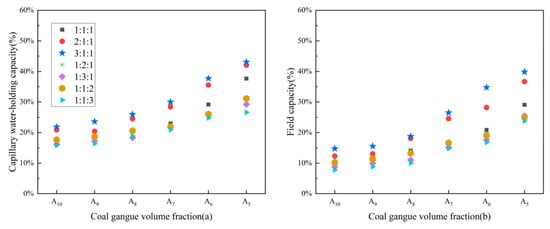
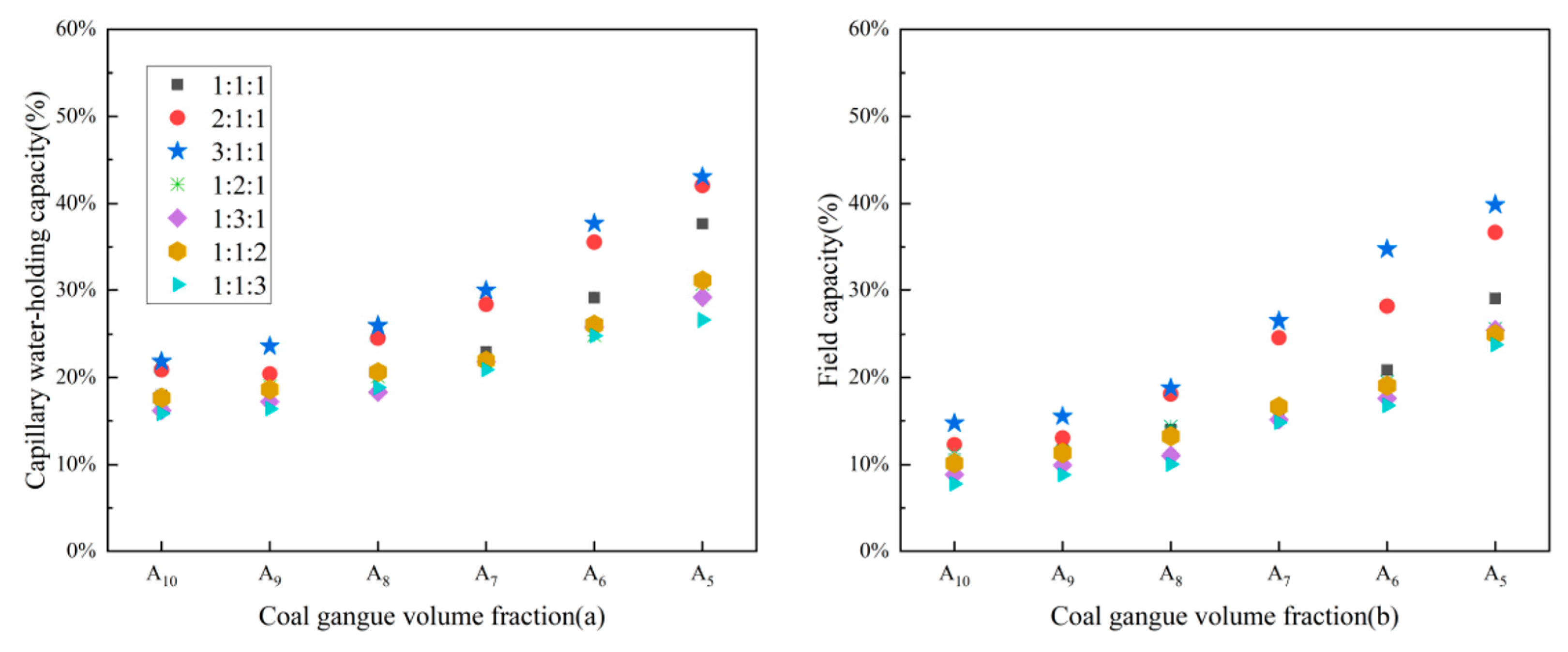
The CG-FA volumetric ratio markedly affected substrate capillary water-holding capacity and field capacity (Figure 5). With increasing fly ash content, both capillary water-holding capacity and field capacity gradually increased, following the order of A5 > A6 > A7 > A8 > A9 > A10. Relative to the A10 treatment, capillary water-holding capacity and field capacity in treatments A5–A9 increased by 4.8–88.1% and 9.0–173.5%, respectively.
Figure 5.
Effects of CG-FA volumetric ratio on substrate water retention: (a) Effects of CG–FA volumetric ratio on substrat capillary water-holding capacity; (b) Effects of CG–FA volumetric ratio on substrate field capacity.
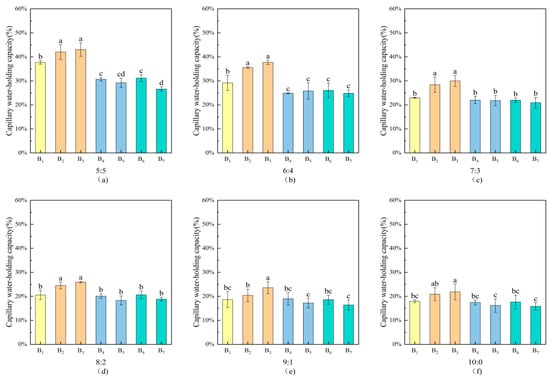
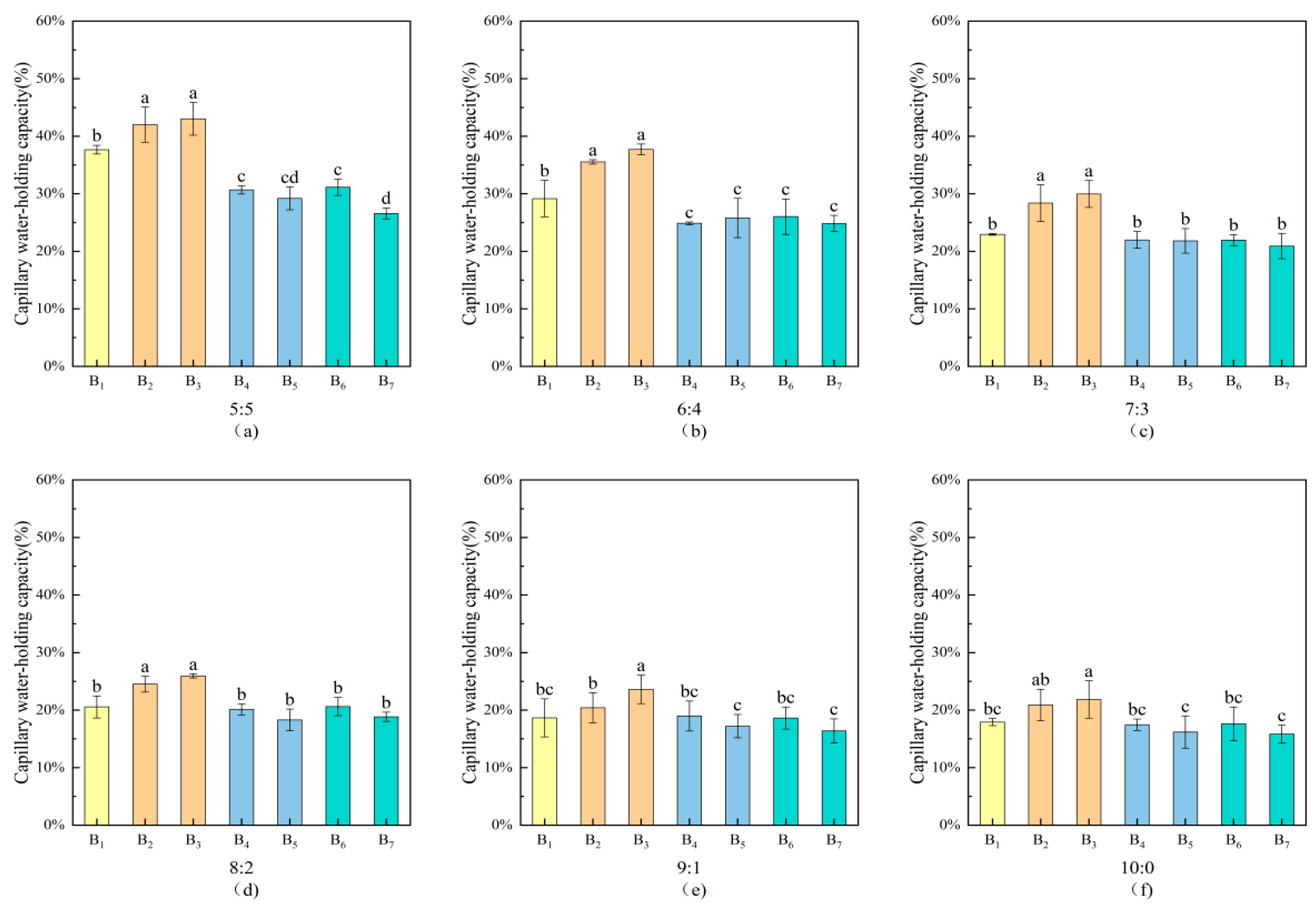
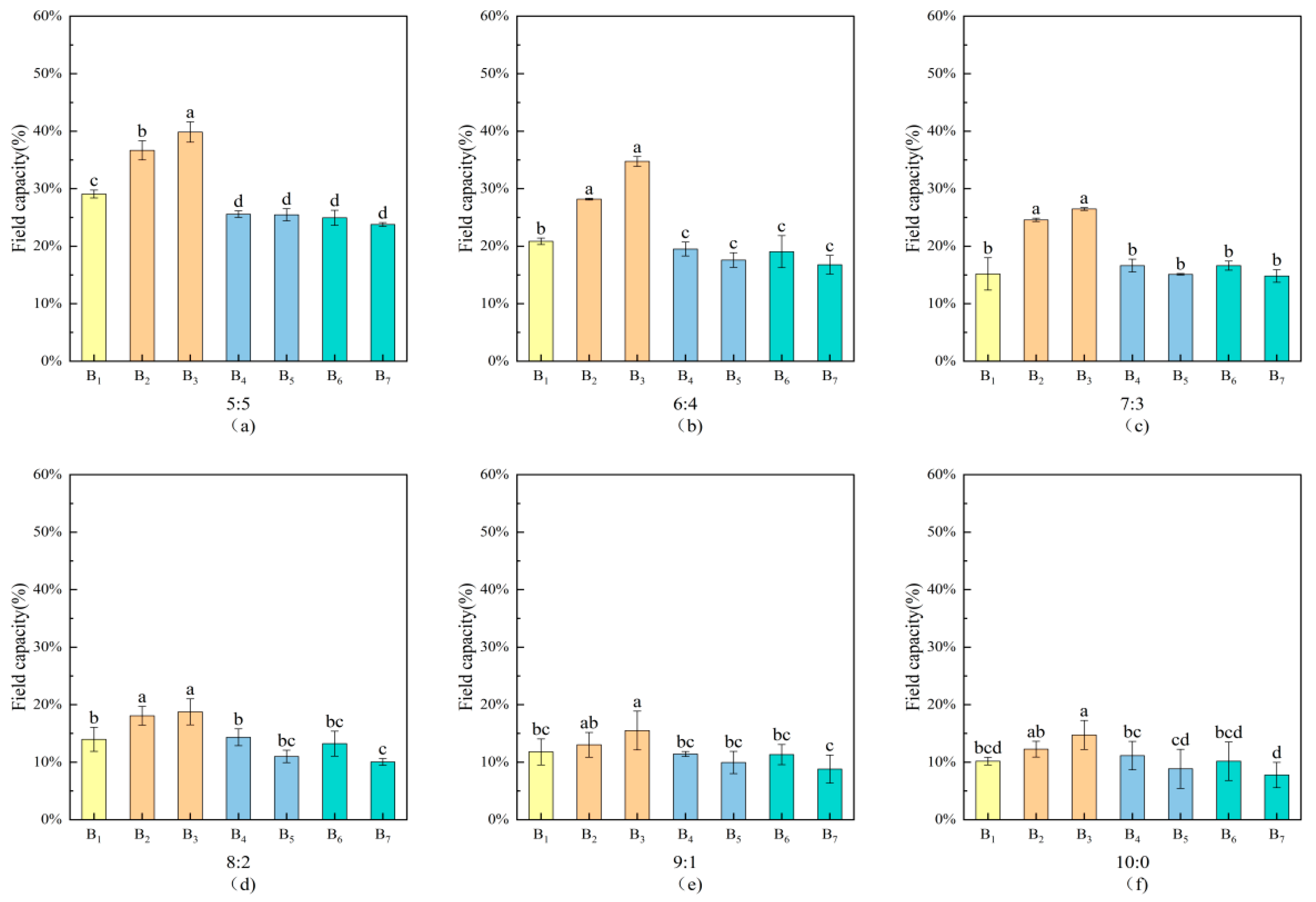
Particle-size distribution also significantly influenced substrate water-retention characteristics (Figure 6 and Figure 7). Substrate water-retention characteristics were also strongly dependent on particle-size distribution. Treatments dominated by fine particles (B3) generally exhibited the highest capillary water-holding capacity and field capacity, while coarse-particle treatments (B7) showed the lowest values. Compared with B1, treatments B2 and B3 increased capillary water-holding capacity and field capacity by 16.9–24.0% and 31.4–48.5%, respectively. Conversely, in the medium (B4, B5) and coarse-particle groups (B6, B7), the two indicators decreased on average by 10.6–11.7% and 7.7–12.2%, respectively. Significant differences among particle-size treatments were observed under most CG-FA volumetric ratios (p < 0.05). However, when medium- and coarse-sized particles dominated the substrate composition, differences among treatments became less pronounced (p > 0.05). In addition, the influence of particle-size distribution on substrate water retention gradually weakened with increasing coal gangue proportion.
Figure 6.
Effects of CG-FA volumetric ratio on substrate capillary water-holding capacity: (a) CG–FA volumetric ratio of 5:5; (b) CG–FA volumetric ratio of 6:4; (c) CG–FA volumetric ratio of 7:3; (d) CG–FA volumetric ratio of 8:2; (e) CG–FA volumetric ratio of 9:1; (f) CG–FA volumetric ratio of 10:0. Note: Different letters indicate significant differences among treatments (p < 0.05).
Figure 7.
Effects of CG-FA volumetric ratio on substrate field capacity: (a) CG–FA volumetric ratio of 5:5; (b) CG–FA volumetric ratio of 6:4; (c) CG–FA volumetric ratio of 7:3; (d) CG–FA volumetric ratio of 8:2; (e) CG–FA volumetric ratio of 9:1; (f) CG–FA volumetric ratio of 10:0. Note: Different letters indicate significant differences among treatments (p < 0.05).
5.3. Effects on Alfalfa Growth
Based on soil properties and field experiment studies, the substrate bulk density suitable for alfalfa growth generally ranges from 1.2 to 1.4 g cm−3, with an optimal total porosity of approximately 50% [29]. However, coal gangue is characterized by high bulk density, low porosity, poor structure, and weak water retention [30], making it challenging for amended substrates to reach these ideal soil ranges. Therefore, in order to ensure successful establishment of alfalfa in ecological restoration of coal gangue mounds, the bulk density of the planting layer was set below 1.5 g/cm3 and total porosity above 40% as minimum improvement targets. Further considering the water-retention characteristics of the prepared substrates, combinations with a field capacity greater than 25% were selected as recommended proportions for the alfalfa growth experiment.
5.3.1. Root Length
Root length varied significantly among treatments (p < 0.05) (Table 3). Treatments A5B1 and A5B2 exhibited the greatest root elongation, with root lengths of 9.5 and 9.4 cm, respectively, and no significant difference between the two treatments (p > 0.05). In contrast, treatment A5B3 showed the shortest root length (3.9 cm), significantly lower than all other treatments. Root lengths in the remaining treatments ranged from 5.5 to 8.0 cm. Overall, moderate particle-size combinations under the A5 CG-FA volumetric ratio were more favorable for root development, whereas treatments containing high proportions of fine particles exhibited shorter root lengths.
Table 3.
Effects of particle-size distribution on alfalfa growth characteristics under different CG-FA volumetric ratios.
5.3.2. Plant Height
Plant height differed significantly among treatments (p < 0.05) (Table 3). Treatment A6B3 exhibited the greatest plant height (8.5 cm), significantly exceeding all other treatments. Relatively greater plant heights were also observed in treatments A5B4, A5B5, A5B6, and A6B2, ranging from 6.9 to 7.2 cm, with no significant differences among these treatments (p > 0.05). In contrast, treatments A7B2 and A5B1 showed comparatively lower plant heights (<5 cm). The remaining treatments displayed intermediate values.
5.3.3. Biomass Accumulation
Biomass accumulation was significantly influenced by CG-FA volumetric ratio and particle-size distribution (p < 0.05) (Table 3). Belowground biomass was greatest in treatment A5B6 (6.0 mg), whereas treatments A5B3 and A7B3 showed the lowest values (<2 mg). Aboveground biomass and total biomass generally exhibited similar variation patterns. Treatment A5B4 produced the highest aboveground biomass (14.3 mg) and total biomass (18.3 mg), significantly exceeding all other treatments. Relatively high total biomass values were also observed in treatments A5B5 and A5B6, whereas lower biomass accumulation occurred in treatments A7B2, A5B1, and A5B3. Overall, substrates dominated by medium and coarse particles under the A5 CG-FA volumetric ratio were more favorable for biomass accumulation.
5.3.4. Correlation Analysis Between Substrate Physical Properties and Alfalfa Growth
Pearson correlation analysis was performed to further evaluate the relationships between substrate physical properties and alfalfa growth parameters under different CG-FA volume ratios.
Pearson correlation analysis was performed to further evaluate the relationships between substrate physical properties and alfalfa growth parameters under different CG–FA volume ratios (Table 4). Bulk density was significantly negatively correlated with plant height (r = −0.447, p < 0.01) and belowground biomass (r = −0.410, p < 0.01), whereas total porosity showed significant positive correlations with these parameters (r = 0.439, p < 0.01 and r = 0.402, p < 0.05, respectively). In contrast, capillary water-holding capacity and field capacity exhibited no significant correlations with any growth parameters. Root length, aboveground biomass, and total biomass were also weakly correlated with substrate physical properties. These results indicate that substrate structural characteristics, particularly bulk density and total porosity, exerted stronger influences on alfalfa growth than water-retention properties.
Table 4.
Pearson correlation coefficients between substrate physical properties and plant growth parameters.
6. Discussion
6.1. Impacts of Substrate Structure on Water Retention and Plant Growth
This response can be primarily attributed to the fine particle size and highly porous structure of fly ash [25], whose saturated water content is significantly higher than that of coal gangue [31]. The reduction in bulk density observed with fly ash incorporation was mainly associated with the porous structure and low particle density of fly ash. Similar trends have been reported by Y. Liu et al. [32], Shu et al. [33], Qiu et al. [31], and Fan et al. [27]. This pattern is primarily attributable to the increased proportion of fly ash, which optimized the pore structure and enhanced substrate porosity, thereby increasing capillary pathways and surface tension, enabling more effective water retention [18,26,34]. Consequently, with decreasing coal gangue content, field capacity and other water-retention indicators of the substrate increased significantly, which is consistent with the findings of J. He et al. [35], Nan et al. [36], Zhang et al. [37], and Y. He et al. [38].
In coal gangue–fly ash substrates, increasing coal gangue particle size increased substrate compactness and structural coarseness, resulting in pore spaces dominated by macropores, decreased total porosity, and increased bulk density [39,40,41]. In contrast, a higher proportion of fine coal gangue optimized capillary pore distribution, promoted a more compact pore structure, and increased the proportion of small pores [20]. Meanwhile, fine particles, with their larger specific surface area, retained more film water on the particle surface, thereby enhancing water adsorption capacity [36]. Although larger particles improved drainage performance, they reduced capillary water-holding capacity and field capacity. These results are consistent with the findings of Zhang et al. [19], Zhu et al. [20], Li et al. [42], and Sun et al. [43], indicating that decreasing coal gangue particle size effectively enhances substrate water-retention capacity. The improvement in substrate structure and water-retention properties directly promoted plant growth, as evidenced by enhanced root development and increased aboveground biomass. A well-optimized pore structure can not only provide favorable aeration conditions but also maintain a stable water supply, thereby creating a conducive environment for root expansion and nutrient uptake [18,22,36,43,44].
In addition to regulating pore structure and water retention, particle-size distribution may also influence nutrient availability within the substrate system. Previous studies have shown that smaller coal gangue particles possess larger specific surface areas, which enhance the contact between water and mineral surfaces, thereby promoting nutrient release and nutrient migration processes [45,46]. Fine particles may facilitate the accumulation of organic matter and increase the availability of phosphorus and other nutrients, while excessively coarse particles often exhibit lower nutrient retention capacity due to reduced surface area and weaker water–substrate interactions [37,46]. Moreover, particle-size composition could influence microbial activity by altering substrate aeration and moisture conditions, further influencing nutrient cycling and plant nutrient uptake [45]. Therefore, the improved plant growth observed under optimized particle-size configurations in this study may not only be associated with enhanced water retention, but also with potential improvements in nutrient availability and microbial habitat conditions.
Beyond their effects on water retention and nutrient availability, the observed responses also highlight the ecological significance of substrate heterogeneity in mine restoration systems [47]. The optimized particle-size configurations generated substrate environments with improved moisture retention, aeration conditions, and pore connectivity, which are key factors governing habitat suitability for both plants and microorganisms [48]. Such structural heterogeneity may facilitate the establishment of diverse biological communities during the early stages of ecological restoration. In the context of post-mining novel ecosystems, these conditions can promote spontaneous colonization processes and accelerate ecosystem functional development by providing a wider range of ecological niches [13,49]. Therefore, the benefits of optimized particle-size composition may extend beyond individual plant growth and contribute to the long-term development of self-sustaining restoration systems [50].
The correlation analysis revealed that bulk density was significantly negatively correlated with plant height and belowground biomass, which is consistent with the findings reported by Du et al. [24] and Nan et al. [36]. This relationship may be attributed to increased substrate compaction and reduced aeration conditions. Excessive bulk density can restrict root penetration, reduce oxygen diffusion efficiency, and impair nutrient uptake, thereby ultimately inhibiting plant growth. In contrast, higher total porosity improves substrate aeration and provides a more favorable environment for root activity, thereby promoting biomass accumulation and shoot growth [36]. The weak relationship between root growth and substrate structure may be explained by the fact that root elongation is influenced not only by macroscopic structural indicators, such as total porosity and field capacity, but also by pore-network characteristics, including pore connectivity, tortuosity, and particle-size distribution [51].
Although capillary water-holding capacity and field capacity were positively correlated with root length and plant height, consistent with the results reported by Nan et al. [36] and Fan et al. [27], these relationships were not statistically significant. This discrepancy may be attributed to the incorporation of different proportions of soil in the substrates used by Nan et al. and Fan et al. Moreover, plant growth is also affected by substrate chemical properties (e.g., pH and electrical conductivity), nutrient availability (N, P, and K), microbial functions, and heavy metal toxicity [51,52].
6.2. Comprehensive Assessment of Substrate Performance
From a resource-oriented perspective, conventional mine ecological restoration strategies often rely heavily on ex situ topsoil replacement. However, large-scale topsoil stripping not only consumes valuable land resources but may also induce secondary ecological disturbances and vegetation degradation in surrounding areas [33,50,53]. In addition, suitable topsoil resources are frequently limited and unevenly distributed in mining regions. Similar limitations also apply to organic amendments (e.g., composted manure and crop straw) and sewage sludge, whose large-scale application is often constrained by unstable supply, transportation requirements, and the uneven distribution of treatment facilities [54]. In contrast, coal gangue and fly ash, as co-generated by-products of coal mining and combustion processes [55], are widely available within mining areas and can be directly utilized for substrate reconstruction with relatively limited pretreatment requirements. Their granular and powdery physical characteristics are also compatible with existing mining engineering operations, thereby reducing engineering complexity and transportation dependence [56].
From an economic perspective, conventional topsoil replacement usually involves multiple engineering stages, including soil stripping, loading, transportation, and site redistribution, resulting in relatively high restoration costs [57,58]. Organic amendments and sewage sludge also require substantial investment for collection, pretreatment, and transportation, while unstable supply chains may further increase implementation uncertainty [59]. By contrast, the optimized CG–FA substrate proposed in this study may reduce dependence on externally sourced restoration materials and simplify substrate preparation procedures, thereby suggesting potential for improved cost-effectiveness in large-scale mine ecological restoration [60,61]. Future research incorporating a full cost–benefit analysis is needed to confirm this potential.
From an environmental perspective, conventional topsoil replacement may cause soil structure disturbance and vegetation destruction during soil extraction, potentially leading to additional ecological degradation risks [53,62,63]. Furthermore, large-scale transportation activities are associated with increased energy consumption and carbon emissions [64,65]. Although organic amendments and sewage sludge may improve substrate fertility, their long-term application may also introduce risks related to heavy metal accumulation and organic pollutants [66,67,68]. In contrast, the utilization of coal gangue and fly ash contributes to the reutilization of bulk industrial solid wastes and may alleviate environmental pressures associated with long-term gangue stockpiling, including land occupation and leaching risks [32]. The optimized particle-size composition and improved water-retention characteristics of the CG–FA substrate not only facilitate the establishment of pioneer vegetation but also contribute to the gradual development of stable novel ecosystems under resource-limited restoration conditions. Furthermore, post-mining substrates are typically characterized by low nutrient availability and strong environmental filtering [47]. Under such conditions, the development of structurally heterogeneous substrates may increase habitat diversity and provide suitable microsites for different plant and microbial communities [13,62]. Consequently, optimized CG–FA substrates may not only support vegetation establishment but also enhance ecological resilience and biodiversity conservation during the restoration process [13]. The previous studies have suggested that nutrient-poor and heterogeneous post-mining habitats may also provide refuge environments for stress-tolerant and specialized species, highlighting their broader ecological significance for biodiversity conservation [13].
Nevertheless, previous studies have indicated that coal gangue and fly ash may contain potentially mobile heavy metals and soluble salts, which could pose environmental risks under long-term weathering or leaching conditions. Guo et al. (2024) reported that some coal gangue materials contain elevated concentrations of sulfides and heavy metals, which may lead to acid generation and heavy-metal release during ecological utilization processes [69]. Similarly, field studies on fly ash application have demonstrated that excessive fly ash incorporation may increase soluble salt and boron concentrations in soils and leachates, potentially affecting plant and soil quality under certain conditions [70]. Therefore, although the CG–FA substrate proposed in this study exhibited favorable physical structure and vegetation-supporting performance, further investigations are still required to evaluate its long-term chemical stability, heavy-metal mobility, microbial responses, and environmental safety under field restoration conditions [69].
7. Conclusions
This study systematically investigated the effects of coal gangue–fly ash (CG–FA) volumetric ratio and coal gangue particle-size distribution on substrate physical structure, water-retention characteristics, and alfalfa growth performance. The results demonstrated that both CG–FA ratio and particle-size composition strongly regulated substrate bulk density, porosity, capillary water-holding capacity, and field capacity, thereby influencing vegetation establishment through changes in substrate pore structure and water availability.
Increasing the proportion of fly ash significantly improved substrate physical structure and water-retention capacity, while increasing the proportion of fine coal gangue particles further optimized pore-size distribution. Correlation analysis indicated that substrate structural characteristics played a more important role in regulating alfalfa growth than water-retention properties under the experimental conditions. Among the tested treatments, A5B4 exhibited the most favorable comprehensive performance and produced the highest alfalfa biomass, suggesting that appropriate optimization of substrate structure is essential for promoting vegetation establishment.
From the perspective of mine ecological restoration, the optimized CG–FA substrate demonstrated considerable potential as an engineered vegetation growth medium for post-mining landscapes. The utilization of coal gangue and fly ash not only improved substrate physical structure and vegetation-supporting capacity, but also promoted the resource reutilization of bulk industrial solid wastes while reducing dependence on externally sourced topsoil materials. Moreover, the heterogeneous substrate conditions generated by different particle-size combinations may facilitate early-stage vegetation establishment and contribute to the development of stable post-mining novel ecosystems under nutrient-poor and water-limited conditions.
Nevertheless, this study primarily focused on the physical structure and hydraulic characteristics of CG–FA substrates under controlled experimental conditions. Further studies are still required to evaluate long-term chemical stability, heavy-metal mobility, microbial responses, and field-scale ecological performance to comprehensively assess the environmental safety and practical applicability of CG–FA substrates in mine ecological restoration.
Author Contributions
X.S.: Writing—original draft, Data curation, Investigation, Conceptualization. J.L.: Writing—review and editing, Methodology, Funding acquisition. Y.J.: Methodology, Supervision. K.H.: Investigation, Data curation. All authors have read and agreed to the published version of the manuscript.
Funding
This research was supported by the Basic Research Program of Shanxi Province (202303021211048, 202203021222137), the Research Project Supported by Shanxi Scholarship Council of China (2023-051), and Shanxi Key Laboratory of Collaborative Utilization of River Basin Water Resources.
Data Availability Statement
The original contributions presented in this study are included in the article. Further inquiries can be directed at the corresponding authors.
Acknowledgments
The authors sincerely thank the anonymous reviewers and the editor for their valuable and constructive comments. We also express our gratitude to all the teachers and students in the research team for their support and assistance during the experiments.
Conflicts of Interest
The authors declare that they have no known competing financial interests or personal relationships that could have appeared to influence the work reported in this paper.
References
- Yuan, J. Development Achievements of Coal Energy in the 14th Five-Year Plan and Outlook for the 15th Five-Year Plan. Nat. Resour. Econ. China 2025, 38, 53–60. [Google Scholar] [CrossRef]
- Yu, N. Intelligent production capacity accounts for over half, coal output expected to maintain growth momentum. China Industry News, 28 April 2025; p. 8.
- Liu, C.; Gu, W.; Cui, F.; Zhang, Y.; Yang, Y.; Qiu, F.; Yuan, C.; Chen, H.; Li, M. Research Progress and Prospects on Resource Utilization of Coal Gangue for Soil Remediation in China. Coal Sci. Technol. 2025, 53, 125–140. [Google Scholar] [CrossRef]
- Bian, Z.; Miao, X.; Lei, S.; Chen, S.; Wang, W.; Struthers, S. The Challenges of Reusing Mining and Mineral-Processing Wastes. Science 2012, 337, 702–703. [Google Scholar] [CrossRef] [Scilit] [PubMed]
- Yang, D.; Qiu, H.; Ma, S.; Liu, Z.; Du, C.; Zhu, Y.; Cao, M. Slow Surface Subsidence and Its Impact on Shallow Loess Landslides in a Coal Mining Area. Catena 2022, 209, 105830. [Google Scholar] [CrossRef] [Scilit]
- Su, R. The Importance, Strategies, and Future Prospects of Mine Ecological Restoration. Resources 2025, 14, 105. [Google Scholar] [CrossRef] [Scilit]
- Kolodziej, B.; Bryk, M.; Slowinska-Jurkiewicz, A.; Otremba, K.; Gilewska, M. Soil Physical Properties of Agriculturally Reclaimed Area after Lignite Mine: A Case Study from Central Poland. Soil Tillage Res. 2016, 163, 54–63. [Google Scholar] [CrossRef] [Scilit]
- Joniec, J.; Gasior, J.; Voloshanska, S.; Nazarkiewicz, M.; Hoivanovych, N. Evaluation of the Effectiveness of Land Reclamation Based on Microbiological and Biochemical Parameters Assessed in an Ozokerite Mining and Processing Landfill Sown with Trifolium hybridum and Dactylis glomerata. J. Environ. Manag. 2019, 242, 343–350. [Google Scholar] [CrossRef] [Scilit] [PubMed]
- Martin-Moreno, C.; Martin Duque, J.F.; Nicolau Ibarra, J.M.; Hernando Rodriguez, N.; Sanz Santos, M.A.; Sanchez Castillo, L. Effects of Topography and Surface Soil Cover on Erosion for Mining Reclamation: The Experimental Spoil Heap at El Machorro Mine (Central Spain). Land Degrad. Dev. 2016, 27, 145–159. [Google Scholar] [CrossRef] [Scilit]
- Woźniak, G.; Chmura, D.; Dyderski, M.K.; Błońska, A.; Jagodziński, A.M. How Different Is the Forest on Post-Coal Mine Heap Regarded as Novel Ecosystem? For. Ecol. Manag. 2022, 515, 120205. [Google Scholar] [CrossRef] [Scilit]
- Hobbs, R.J.; Arico, S.; Aronson, J.; Baron, J.S.; Bridgewater, P.; Cramer, V.A.; Epstein, P.R.; Ewel, J.J.; Klink, C.A.; Lugo, A.E.; et al. Novel Ecosystems: Theoretical and Management Aspects of the New Ecological World Order. Glob. Ecol. Biogeogr. 2006, 15, 1–7. [Google Scholar] [CrossRef] [Scilit]
- Wozniak, G.; Kompała-Bąba, A.; Hutniczak, A.; Bierza, W.; Błońska, A. The Comprehensive Concept for the Management of Post-Industrial Sites Based on Natural Processes. Eur. Geosci. Union Gen. Assem. 2024, 2024, 6709. [Google Scholar] [CrossRef] [Scilit]
- Tropek, R.; Kadlec, T.; Karesova, P.; Spitzer, L.; Kocarek, P.; Malenovsky, I.; Banar, P.; Tuf, I.H.; Hejda, M.; Konvicka, M. Spontaneous Succession in Limestone Quarries as an Effective Restoration Tool for Endangered Arthropods and Plants. J. Appl. Ecol. 2010, 47, 139–147. [Google Scholar] [CrossRef] [Scilit]
- Evanylo, G.K.; Abaye, A.O.; Dundas, C.; Zipper, C.E.; Lemus, R.; Sukkariyah, B.; Rockett, J. Herbaceous Vegetation Productivity, Persistence, and Metals Uptake on a Biosolids-Amended Mine Soil. J. Environ. Qual. 2005, 34, 1811–1819. [Google Scholar] [CrossRef] [Scilit] [PubMed]
- Feng, F.; Xu, L.; Gu, Q.; Liu, Y.; Yang, Y.; Liu, R. Characteristics of Natural Plant Community and Its Relationship with Soil Physi-Chemical Properties in Ningdong Mining Area. Bull. Soil Water Conserv. 2021, 41, 48–56. [Google Scholar] [CrossRef]
- Thouin, H.; Norini, M.-P.; Battaglia-Brunet, F.; Gautret, P.; Crampon, M.; Le Forestier, L. Temporal Evolution of Surface and Sub-Surface Geochemistry and Microbial Communities of Pb-Rich Mine Tailings during Phytostabilization: A One-Year Pilot-Scale Study. J. Environ. Manag. 2022, 318, 115538. [Google Scholar] [CrossRef] [Scilit] [PubMed]
- Wei, Z.; Zhao, Y.; He, L.; Wang, G.; Hong, X.; Ashuo, K.; Zhou, S.; Li, M. Lithological Inheritance Governs Spontaneous Vegetation Succession on Contaminated Soils and Indirectly Regulates Soil-Plant Uranium Transfer in High-Altitude Mine Wastelands, Southwest China. Plants 2026, 15, 854. [Google Scholar] [CrossRef] [Scilit] [PubMed]
- Han, X.; Zhang, C.; Geng, Y.; Han, X.; Chen, L. Effect of Adding Fly Ash on Water Availability and Holding Capacity of Coal Gangue Matrix. J. Northwest A&F Univ. Nat. Sci. Ed. 2023, 51, 89–96. [Google Scholar] [CrossRef] [Scilit] [PubMed]
- Zhang, J.; Song, H.; Fend, Z.; Bazarjaw, M.; Jin, D.; Wei, J. Study on the Effect of Coal Gangue Particle Size and Ratio on Desertified Soil Improvement. J. Environ. Eng. Technol. 2025, 15, 780–787. [Google Scholar] [CrossRef] [Scilit] [PubMed]
- Zhu, L.; Zhang, X.; Li, J.; Wang, M.; Liu, Z.; Geng, M.; Liu, L.; Wang, R. The Influence of Coal Gangue Particle Size on Water Retention Characteristics. Adv. Civ. Eng. 2024, 2024, 4720940. [Google Scholar] [CrossRef] [Scilit]
- Jin, L.; Li, X.; Sun, H.; Zhang, J.; Zhang, Y.; Wang, R. Responses of Soil Microbial Activities to Soil Overburden Thickness in Restoring a Coal Gangue Mound in an Alpine Mining Area. Ecol. Indic. 2023, 151, 110294. [Google Scholar] [CrossRef] [Scilit]
- Du, T.; Wang, D.; Zhang, Z.; Zhao, X.; Zhang, Z.; Zhang, R. Effect of the Water-Retaining Property of Coal Gangue Planting Substrate on the Growth of Lolium perenne. Sci. Soil Water Conserv. 2019, 17, 75–84. [Google Scholar] [CrossRef]
- Li, F.; Li, X.; Hou, L.; Shao, A. A Long-Term Study on the Soil Reconstruction Process of Reclaimed Land by Coal Gangue Filling. Catena 2020, 195, 104874. [Google Scholar] [CrossRef] [Scilit]
- Du, T.; Wang, D.; Bai, Y.; Zhang, Z. Optimizing the Formulation of Coal Gangue Planting Substrate Using Wastes: The Sustainability of Coal Mine Ecological Restoration. Ecol. Eng. 2020, 143, 105669. [Google Scholar] [CrossRef] [Scilit]
- Ji, H.; Huang, M.; He, J.; Yang, F.; Xu, R.; Zhang, F.; Yan, D. Effects of Flyash on Promoting Soil Properties and Fertility: A Review. Soils 2017, 49, 665–669. [Google Scholar] [CrossRef]
- Shaheen, S.M.; Hooda, P.S.; Tsadilas, C.D. Opportunities and Challenges in the Use of Coal Fly Ash for Soil Improvements—A Review. J. Environ. Manag. 2014, 145, 249–267. [Google Scholar] [CrossRef] [Scilit] [PubMed]
- Fan, Q.; Zhang, C.; Geng, Y.; Han, X.; Chen, L. Effects of Fly Ash Application on the Properties of Coal Gangue Matrix and Plant Growth. Sci. Soil Water Conserv. 2022, 20, 85–92. [Google Scholar] [CrossRef]
- Chen, Y.; Liu, D.; Ma, J.; Jin, B.; Peng, J.; He, X. Assessing the Influence of Immobilization Remediation of Heavy Metal Contaminated Farmland on the Physical Properties of Soil. Sci. Total Environ. 2021, 781, 146773. [Google Scholar] [CrossRef] [Scilit] [PubMed]
- Lu, Y.; Song, C.; Yan, C.; Jin, Z.; Li, Y.; Lai, C.; Wang, D. The Use of Coal Gangue as a Planting Substrate in Arid Mining Areas. Glob. Ecol. Conserv. 2024, 56, e03328. [Google Scholar] [CrossRef] [Scilit]
- Jablonska, B.; Kityk, A.V.; Busch, M.; Huber, P. The Structural and Surface Properties of Natural and Modified Coal Gangue. J. Environ. Manag. 2017, 190, 80–90. [Google Scholar] [CrossRef] [Scilit] [PubMed]
- Qiu, J.; Zheng, L.; Cheng, X.; Cheng, Y. Effects of Fly Ash Incorporation on Hydraulic Characteristics and Air Permeability of Coal Gangue. Environ. Eng. 2021, 39, 131–137, 186. [Google Scholar] [CrossRef]
- Liu, Y.; Han, F.; Li, N.; Dong, F.; An, C.; Yang, W.; Li, T. Study on the Synergistic Preparation of Functional Soil from Multiple Coal-Based Solid Wastes. Front. Environ. Sci. 2025, 12, 1502552. [Google Scholar] [CrossRef] [Scilit]
- Shu, L.; Wang, H.; He, X. Physicochemical Properties and Planting Performance of Artificial Soil Developed from Multiple Coal-Based Solid Waste Materials. Sustainability 2024, 16, 1955. [Google Scholar] [CrossRef] [Scilit]
- Cheng, W.; Bian, Z.; Dong, J.; Lei, S. Soil Properties in Reclaimed Farmland by Filling Subsidence Basin Due to Underground Coal Mining with Mineral Wastes in China. Trans. Nonferrous Met. Soc. China 2014, 24, 2627–2635. [Google Scholar] [CrossRef] [Scilit]
- He, J.; Yan, Z.; Luo, R.; Cao, Y.; Wu, L.; Hu, Y.; Fan, Y.; Wang, J. Optimizing Soil Water Retention for Ecological Restoration of Loess Coal Mining Areas in China: A Study of Reconstruction Formulations Based on Coal Gangue and Fly Ash. Ecol. Eng. 2025, 219, 107707. [Google Scholar] [CrossRef] [Scilit]
- Nan, Y.-C.; Yang, Y.-G.; Wang, Z.-Q.; Zhou, Y.; Su, Q.-M. Effects of Coal Gangue on Soil Property and Plant Growth in Mining Area. J. Appl. Ecol. 2023, 34, 1253–1262. [Google Scholar] [CrossRef] [Scilit] [PubMed]
- Zhang, Y.; Song, Z.; Kong, T.; Zhao, D.; Wang, L.; Wang, Y. Amelioration Effect of Coal Gangue on Physical and Chemical Properties of Saline-Alkaline Soil. Ecol. Environ. Sci. 2021, 30, 195–204. [Google Scholar] [CrossRef] [Scilit] [PubMed]
- He, F.; Wang, G.; Wang, L.; Li, Z.; Tong, Z.; Wang, Y.; Li, X. Effects of Organic Base Fertilizer and Inorganic Topdressing on Alfalfa Productivity and the Soil Bacterial Community in Saline Soil of the Huanghe River Delta in China. Agronomy 2022, 12, 2811. [Google Scholar] [CrossRef] [Scilit]
- Wu, H.; Li, X.; Ji, Y.; Guo, A.; Ren, R.; Kang, J. Effects of Different Gangue Particle Size and Gangue Ratio on Soil Physicochemical Characteristics and Sprouting of Pakchoi. North. Hortic. 2023, 1–8. [Google Scholar] [CrossRef]
- Wang, J.; Zhang, M.; Bai, Z.; Guo, L. Multi-Fractal Characteristics of the Particle Distribution of Reconstructed Soils and the Relationship Between Soil Properties and Multi-Fractal Parameters in an Opencast Coal-Mine Dump in a Loess Area. Environ. Earth Sci. 2015, 73, 4749–4762. [Google Scholar] [CrossRef] [Scilit]
- Zhu, H.; Zhang, Y.; Li, Z.; Xue, X. Study on Crack Development and Micro-Pore Mechanism of Expansive Soil Improved by Coal Gangue Under Drying-Wetting Cycles. Materials 2021, 14, 6546. [Google Scholar] [CrossRef] [Scilit] [PubMed]
- Li, S.; Li, X.; Qiang, X.; Yu, Z.; Li, H.; Sun, Z.; Li, Q.; He, J.; Han, L.; Zhao, N. Improving Saline-Alkaline Soil and Ryegrass Growth with Coal Gangue Treatments. Plants 2024, 13, 3419. [Google Scholar] [CrossRef] [Scilit] [PubMed]
- Sun, Z.; Yang, J.; Shi, C.; Li, C.; Li, R.; Wang, X.; Yang, C.; Deng, M.; Yang, X.; Li, J. Effect of SOCO–SAP on Moisture of Different Graded Coal Gangue and Elymus dahuricus Growth in Alpine Mining Area. Meitan Xuebao/J. China Coal Soc. 2024, 49, 4915–4927. [Google Scholar] [CrossRef]
- He, Y.; Li, Y.; Li, H.; Guo, Q. Effects of Different Ratios of Coal Gangue and to Garden Soil Composite Substrates on the Growth and Physiology of Rhododendron delavayi Franch. Seedlings. J. Soil Sci. Plant Nutr. 2025, 25, 543–549. [Google Scholar] [CrossRef] [Scilit]
- Kong, T.; Zheng, S.; Zhang, Y.; Wu, D.; Han, Y.; Liang, B. Effects of Coal Gangue on Revegetation and Microbial Properties of an Alkali-saline Soil. J. Soil Water Conserv. 2018, 32, 321–326. [Google Scholar] [CrossRef]
- Ke, K.; Dong, X.; Zhou, J.; Jin, J.; Zheng, J. Evaluation of the Formula for Coal Gangue Ecological Substrate and Its Fertility Indexes. Soil Fertil. Sci. China 2021, 4, 308–317. [Google Scholar] [CrossRef]
- Ginocchio, R.; Leon-Lobos, P.; Arellano, E.C.; Anic, V.; Ovalle, J.F.; Baker, A.J.M. Soil Physicochemical Factors as Environmental Filters for Spontaneous Plant Colonization of Abandoned Tailing Dumps. Environ. Sci. Pollut. Res. 2017, 24, 13484–13496. [Google Scholar] [CrossRef] [Scilit] [PubMed]
- Jiang, X.; Zhong, X.; Yu, G.; Zhang, X.; Liu, J. Different Effects of Taproot and Fibrous Root Crops on Pore Structure and Microbial Network in Reclaimed Soil. Sci. Total Environ. 2023, 901, 165996. [Google Scholar] [CrossRef] [Scilit] [PubMed]
- Hobbs, R.J.; Higgs, E.; Harris, J.A. Novel Ecosystems: Implications for Conservation and Restoration. Trends Ecol. Evol. 2009, 24, 599–605. [Google Scholar] [CrossRef] [Scilit] [PubMed]
- Xu, H.; Qiao, X.; Gao, G.; Dou, H.; Waheed, A.; Aili, A. Advances in Ecological Restoration of Mining-Impacted Landscapes: Techniques, Case Studies, and Key Challenges. Environ. Res. 2026, 290, 123485. [Google Scholar] [CrossRef] [Scilit] [PubMed]
- Liu, X. Review of Coal Gangue Consumption and Utilization in Soil. Sci. Technol. Eng. 2023, 23, 1345–1356. [Google Scholar] [CrossRef] [Scilit] [PubMed]
- Li, X.; Pei, Y.; Han, Z.; Yang, J.; Gao, Z.; Zhen, L.; Lv, X. Effects of Different Proportion of Coal Ash and Gangue on Plant Growth and Bioremediation Effect of Medicago sativa. J. Henan Agric. Sci. 2017, 46, 69–73. [Google Scholar] [CrossRef]
- Zhou, H.; Xu, Z.; Bai, B.; Bao, Q.; Wang, M.; Cui, Y.; Zhu, K.; Zhi, T.; Lin, Q.; Wen, Y.; et al. Pilot Field Test of Manmade Soil and Land for Greening Coal Gangue Hill. Saf. Environ. Eng. 2023, 30, 260–266. [Google Scholar] [CrossRef]
- Miu, B.A.; Pop, C.-E.; Crăciun, N.; Deák, G. Bringing Life Back into Former Mining Sites: A Mini-Review on Soil Remediation Using Organic Amendments. Sustainability 2022, 14, 12469. [Google Scholar] [CrossRef] [Scilit]
- Wang, X.; Niu, X.; Zhang, X.; Ma, X.; Zhang, K. Computational Chemistry Insights into Pollutant Behavior During Coal Gangue Utilization. Sustainability 2025, 17, 7135. [Google Scholar] [CrossRef] [Scilit]
- Fan, J.; Chen, B.; Li, R.; Deng, L.; Hu, T.; Mao, Y. Soil Reconstruction Technology for Ecological Restoration of Mines: From Utilization of Solid Waste to Ecological Recovery. J. Environ. Eng. Technol. 2025, 15, 2077–2087. [Google Scholar] [CrossRef]
- Rodríguez-Espinosa, T.; Pérez-Gimeno, A.; Almendro-Candel, M.B.; Navarro-Pedreño, J.; García-Fernández, G. Technosols for Mine Restoration: Overcoming Challenges and Maximising Benefit. Appl. Sci. 2025, 15, 11664. [Google Scholar] [CrossRef] [Scilit]
- Klimkowska, A.; Dzierża, P.; Brzezińska, K.; Kotowski, W.; Mędrzycki, P. Can We Balance the High Costs of Nature Restoration with the Method of Topsoil Removal? Case Study from Poland. J. Nat. Conserv. 2010, 18, 202–205. [Google Scholar] [CrossRef] [Scilit]
- Mabrouk, O.; Hamdi, H.; Sayadi, S.; Al-Ghouti, M.A.; Abu-Dieyeh, M.H.; Zouari, N. Reuse of Sludge as Organic Soil Amendment: Insights into the Current Situation and Potential Challenges. Sustainability 2023, 15, 6773. [Google Scholar] [CrossRef] [Scilit]
- Tang, T.; Wang, Z.; Chen, L.; Wu, S.; Liu, Y. Opportunities, Challenges and Modification Methods of Coal Gangue as a Sustainable Soil Conditioner—A Review. Environ. Sci. Pollut. Res. Int. 2024, 31, 58231–58251. [Google Scholar] [CrossRef] [Scilit] [PubMed]
- Zhou, Z.; Wu, C.; Cao, Y.; Zhang, K.; Yan, Z.; Wang, Y.; Li, T.; Pandey, R. Soil Reconstruction Using Coal Industry Solid Wastes: Linking Pollution Control with Climate Variability across Scales. Environ. Res. 2026, 291, 123535. [Google Scholar] [CrossRef] [Scilit] [PubMed]
- Murawska-Wlodarczyk, K.; Kushwaha, P.; Stokes, O.; Rasmussen, C.; Neilson, J.W.; Maier, R.M.; Babst-Kostecka, A. Depth-Dependent Heterogeneity in Topsoil Stockpiles Influences Plant-Microbe Interactions and Revegetation Success in Arid Mine Reclamation. Sci. Total Environ. 2025, 1003, 180673. [Google Scholar] [CrossRef] [Scilit] [PubMed]
- Tseshkovskaya, Y.; Tsoy, N.; Tseshkovskiy, V.; Ibrayev, M.; Zamaliyev, N.; Akhmatnurov, D.; Mussin, R.; Ganyukov, N.; Zakharov, A.; Skrzypkowski, K.; et al. Research Progress of Environmental Studies of a Mining Facility for Land Restoration (Using the Example of a Mining Enterprise in the Karaganda Region). Resources 2025, 14, 144. [Google Scholar] [CrossRef] [Scilit]
- Wang, J.; Yang, M.; Liu, B.; Zhu, Q. Carbon Sources/Sinks and Emission Reduction and Sink Enhancement in Green Mining. Meitan Xuebao/J. China Coal Soc. 2024, 49, 1597–1610. [Google Scholar] [CrossRef]
- Setiawan, I.E.; Zhang, Z.; Corder, G.; Matsubae, K. Evaluation of Environmental and Economic Benefits of Land Reclamation in the Indonesian Coal Mining Industry. Resources 2021, 10, 60. [Google Scholar] [CrossRef] [Scilit]
- Zhang, H.; Teng, Z.; Jiang, X.; Yang, Y.; Li, T. Research Progress on Resource Utilization of Waste Coal Gangue. Environ. Chem. 2024, 43, 1778–1791. [Google Scholar] [CrossRef]
- Vítková, M.; Zarzsevszkij, S.; Šillerová, H.; Karlova, A.; Šimek, P.; Wimmerová, L.; Martincová, M.; Urbánek, B.; Komárek, M. Sustainable Use of Composted Sewage Sludge: Metal(Loid) Leaching Behaviour and Material Suitability for Application on Degraded Soils. Sci. Total Environ. 2024, 929, 172588. [Google Scholar] [CrossRef] [Scilit] [PubMed]
- Xiang, Y.; Gong, J.; Zhang, L.; Zhang, M.; Chen, J.; Liang, H.; Chen, Y.; Fu, X.; Su, R.; Luo, Y. Research Progress of Mine Ecological Restoration Technology. Resources 2025, 14, 100. [Google Scholar] [CrossRef] [Scilit]
- Guo, J.; Liu, G.; Zhang, C.; Niu, Z.; Niu, X. A Critical Review on the Ecological Restoration Utilization and Prevention and Control of Heavy Metal Pollution of Coal Gangue. China Min. Mag. 2024, 33, 18–27. [Google Scholar] [CrossRef]
- Gangloff, W.J.; Ghodrati, M.; Sims, J.T.; Vasilas, B.L. Field Study: Influence of Fly Ash on Leachate Composition in an Excessively Drained Soil. J. Environ. Qual. 1997, 26, 714–723. [Google Scholar] [CrossRef] [Scilit]

Disclaimer/Publisher’s Note: The statements, opinions and data contained in all publications are solely those of the individual author(s) and contributor(s) and not of MDPI and/or the editor(s). MDPI and/or the editor(s) disclaim responsibility for any injury to people or property resulting from any ideas, methods, instructions or products referred to in the content. |
© 2026 by the authors. Licensee MDPI, Basel, Switzerland. This article is an open access article distributed under the terms and conditions of the Creative Commons Attribution (CC BY) license.