


Highlights
Please indicate how your work links to systems science via your contributions to systems practice, theory, and/or methodology.
- An audience is treated as a complex adaptive system and observed from its first day, so the signatures the framework predicts—one regime shift in volume, era-structured registers, heavy-tailed attention, and coupling between registers—are measured while the system forms rather than inferred from one already at rest, and the emergent property is followed out of that system into the decision of a city.
- Comment records make the formation of collective meaning observable on a timetable, and this paper supplies the instruments for reading them: lexicons frozen before any outcome is computed, an ordering test disciplined by placebo dates, placebo places, a jackknife and a 36-specification multiverse, and an exact within/between identity separating a system that adapted from one that merely grew—which yields, for practice, a signal set an institution can monitor from public traces.
What are the main findings and/or the implications of the main findings?
- A place–brand association formed inside an audience’s own conversation with no place-directed campaign behind it: across a complete season, talk about one small city grew from a marginal presence into a defining register of a discourse otherwise dominated by joking, rose before any institution acted, and traveled with a person rather than with content about the place, and official recognition followed the association rather than preceding it.
- Place marketing may therefore gain more from detecting and amplifying associations a public has already built than from launching campaigns intended to create them, which recasts the institution from author to respondent; and because such an association thins as later arrivals fail to acquire it, a falling share signals dilution by growth rather than lost enthusiasm and calls for a different response.
Abstract
How does a place–brand association form when no institution is running a campaign? We analyze the complete first season of the personal YouTube channel of the leader of RESCENE, a five-member South Korean girl group that debuted in 2024—93 videos and 357,242 Korean-language comments from 127,939 commenters—as a complex adaptive system. Humor and memes dominate the discourse (34.4% of comments), yet a locality register built around one member’s home town was elaborated in that banter into a portable, repeatable form and was already rising well before the city concerned appointed the group its publicity ambassador. Daily place discourse rose beforehand and decelerated afterwards with no detectable level jump, an ordering in which an audience-elaborated trend was institutionally ratified rather than initiated. Place-oriented talk is positively associated with warmer video-level reception in the primary measure, with transformer evidence in the same direction but weaker, and is amplified by the audience’s own attention, and its later decline is mostly audience turnover rather than abandonment by the commenters who built it. The case shows a place–brand association forming in public, on a timetable, with the institution arriving late. We use place–brand association for what the record can carry: a place register that is measurably present, rising, person-carried, and amplified by the audience, and we reserve stronger senses of place brand for constructs these traces cannot certify.
1. Introduction
On 22 May 2026, the city of Geoje—a shipbuilding island off Korea’s southern coast—appointed a rookie K-pop girl group its publicity ambassador. The group’s leader was born there. Municipal ambassadorships are routine instruments of Korean place marketing and rarely merit study. What makes this one analytically interesting is the record that precedes it. The leader’s personal YouTube channel was created on 4 February 2026 and uploaded its first video the next day; by the time of the appointment, its comment sections had already produced, and we had already been collecting, a dense public trace in which her home town was named, joked about, chanted, and turned into a running meme—week after week, with no place-directed campaign on the channel. The meme itself was a throwaway exclamation, “Geoje, yaho!”—tossed off in a deflated, sing-song aside by the group’s Japanese member and met by the leader’s baffled expression, a two-beat exchange as quotable as the phrase itself [1]1 that the audience made portable. By season close (00:00 KST, 21 July 2026), the channel had published 93 videos and accumulated 375,726 comments, of which 357,242 Korean-language comments from 127,939 unique commenters constitute our analysis set. The appointment, in other words, did not initiate the region’s presence in this audience’s talk. It arrived in the middle of it.
That process has a legible chain, which we trace through this paper. The channel opens on the pairing it came from, two comedians and an idol, which the first episodes continue and which commenters discuss explicitly in 9.9% of opening-era comments; a comic persona and regional-dialect content keep the audience that arrives; a throwaway exclamation becomes a portable meme that the audience attaches to one member’s home city; the channel’s comment volume crosses a single tipping point; and a regional institution, arriving late, publicly recognizes what the public has already built. We use ratification throughout in that descriptive sense, meaning an institution acting on a discourse that measurably preceded it, and not as a claim that the municipality’s role was confined to recognition or that the appointment had no effect of its own. Our design can establish the order of events; it cannot partition the municipality’s contribution, and the text is worded accordingly. Most links in this chain are directly visible in the data; the one we infer rather than observe is the very first—how the opening audience arrived. Before this channel opened, the leader had appeared in a web-variety program alongside two comedians, and the rapport among the three was the format’s draw. That rapport carried over: both comedians later appeared as guests in long-form videos on the channel itself, and the channel’s own guest format is recognizably descended from it. The corpus cannot separate how much of the opening audience arrived by each route, so its composition is an inference rather than a measured fact; the comment record indexes the comedian route only through how often the origin is discussed, not through membership we can trace.
The case is worth a close single-case study because it is not a marginal curiosity. The “Geoje, yaho!” phrase circulated widely enough on Korean social platforms during the first half of 2026 for the municipality itself to build its announcement around it [2], and the personal channel’s subscriber count grew to rival, and then exceed, that of the group’s official channel, though the official channel retains substantially more cumulative views. Whether the breakout was audience-driven is the question this paper tests rather than a premise it assumes; what can be said at the outset is narrower: no place-directed campaign was running on the channel we observe. Releases and promotional activity continued through the window—the group issued a digital single in April and a remake single in July, and the city’s own announcements later referenced festival and short-form tie-ins—so the claim is about the absence of place-directed promotion on this channel, not the absence of marketing around the group. The label had been founded just over three years before the debut, and this was the first group it brought to debut, yet the audience momentum coincided with measurable outcomes beyond the channel. The relevant one for a paper about place is municipal: before the season closed, each of the four Korean-born members’ home municipalities had appointed the group in turn. The season’s chart and broadcast outcomes are recorded with the rest of the public record in Section 5.3. The episode’s public salience was independently registered outside the fandom: a teaching professor of sociology at Penn State, widely known in Korea for public lectures on Korean society, devoted a lecture segment to the group’s reversal, framing it as an underdog succeeding in a market dominated by major labels [3]. That lecture circulated after this study’s design was fixed and a first draft written, so it did not inform any construct, hypothesis, or specification here; we note it because independent commentary arriving at the underdog reading from outside the fandom corroborates that the case was publicly legible as audience-led, and we cite it as motivation rather than as evidence for any analysis below.
The ordering just described—discourse first, institution after—is the empirical heart of this paper. Place branding scholarship has long argued, mostly conceptually, that residents and audiences co-create place brands from the bottom up rather than simply receiving campaigns from above [4,5,6]. What the literature has lacked is a setting in which the entire formation process, from first mention to institutional ratification, is archived in public, timestamped, and measurable. A new idol channel provides one: a bounded system observed from its first day, whose audience writes its reception into a single public ledger of comments. We treat that ledger as the observable output of a complex adaptive system [7,8,9,10]—heterogeneous commenters interacting locally through replies and likes, producing macro-level regularities no individual intended.
Three features of the case make it a revelatory rather than a typical one [11]. First, completeness: we observe the system from its opening video, so there is no left-censoring of the discourse whose origin we want to date. Second, an externally observed institutional event lands mid-season, letting us ask whether the institution led or followed the audience. Third, the audience carries an unusual admixture. Girl-group publics are typically studied as young and predominantly female, organized around parasocial attachment [12,13,14], although the ages and genders of this audience are not observed. What is unusual is a visible group within this audience—commenters who introduce themselves by decade, call themselves uncle-fans or aunt-fans, and report watching with their children. These are self-descriptions, not measured ages, and they are rare in absolute terms; what matters is that a genre not usually associated with such self-presentation carries a measurable share of it and that the registers those commenters bring—banter, home-town talk, family viewing—bear on how place enters the conversation.
Two terms recur and are fixed at the outset. By a register, we mean a recurring, audience-shared way of talking—a vocabulary plus a stance; the locality register is the one built around place: home towns, region, dialect, and the stated wish to visit. Salience is simply the share of comments in which a register or aspect appears. Concretely, we ask five questions. RQ1: what does this audience foreground, which aspects of the group dominate attention, and with what affective valence? RQ2: how does the reception evolve—is change gradual or punctuated, and what happens around the two candidate events, the breakout in comment volume and the ambassadorship? RQ3: is place-oriented discourse associated with sentiment—do videos that draw more locality talk also draw warmer reception? RQ4, which carries the place–branding contribution: did the brand form bottom-up? We do not assume the bottom-up account; we state its observable implications and test each one. If the audience made the brand, place talk should rise before the institution moves, should be carried disproportionately by the member who embodies the place, should be amplified by the audience’s own attention allocation, and should not be reproducible by placebo places or placebo dates. Section 4.4 reports all four tests, including the one that runs against a campaign reading. RQ5: the accounting question that aggregate curves cannot answer: when the register receded after ratification, who changed—did the commenters who built it abandon it, or did ratification recruit a public that had not yet adopted it? We decompose the post-appointment change in the locality share into a behavioral term (within-author change among commenters active on both sides of the appointment) and a compositional term (audience turnover), because adaptation and turnover are different mechanisms that identical aggregates conflate.
Answering such questions from a Korean-language comment corpus is a measurement problem before it is a theory problem, and we treat it as one. Every result in this paper comes from one full-season run of a single pipeline whose lexicons were fixed before any outcome statistic was computed, and every headline claim is put through the same battery: Holm-corrected multiple comparisons, a lexicon jackknife, placebo dates and placebo cities, an in-time placebo for the interrupted time series, and a 36-specification multiverse [15,16]. Five of these checks came back against us, and the text reports each where it arises rather than burying it here. The link between place talk and warmer sentiment holds when videos are the unit of analysis but disappears when individual comments are: it is a property of which videos draw place talk, not of which comments do, and we say so wherever the association is used. Comparing sentiment before and after the appointment gives different answers depending on where the window is cut, so we do not rest any claim on that comparison. And the contrast between two of the five eras (E1 against E4) changes rank if the boundaries move by a week, so we do not read that particular pair. Two further checks run against us in the same way. The slope change at the appointment is large but not unique among admissible placebo dates, so we claim the ordering rather than the date; and the location of the largest break in the weekly locality series wanders as the window grows and is not distinguishable from a block-permutation null, so no inferential claim rests on a locality break date. Everything this paper concludes is what remained after these five were set aside.
One framing decision governs how every result below should be read. This is an exploratory single-case study, and we state that as a design commitment rather than as a disclaimer: there was no pre-registration, the lexicons were built by close reading of this corpus, the era boundaries were set after observing the channel’s output, and the case was selected because it was salient, which is the opposite of random. The interpretive work was correspondingly hands-on—to read the meme rather than simply count it, the author watched every video in the corpus repeatedly, before the lexicons were frozen, and wrote the narrative directly against those viewings rather than delegating the account to any automated summary. That procedure is a strength for description and a limit for inference, and we treat it as both; the robustness battery below is what disciplines it.
The contributions are threefold. First, to place branding, we provide what we believe is a rare end-to-end quantitative trace of bottom-up brand formation, with an explicit temporal-ordering test against the institutional response. Second, to the study of online reception, we document a punctuated-equilibrium trajectory (a single volume regime shift, era-structured registers, extreme attention inequality) consistent with complex-systems accounts of cultural markets [17,18,19]. Third, methodologically, we deliver a Korean-comment measurement pipeline validated against two independent human coders, and we show how placebo, jackknife, and multiverse designs can discipline claims about audience-driven phenomena that are otherwise easy to over-tell.
2. Literature Review and Research Questions
2.1. Reception as a Complex Adaptive System
Cultural markets are canonical complex systems: outcomes are path-dependent, inequality is extreme, and small early differences cascade [8,17,18]. Threshold and cascade models [19] predict punctuated rather than gradual adoption; cumulative-advantage accounts [20,21] predict that early attention forecasts later attention. Audience reception on platforms adds a textual layer to these dynamics: comments are not only reactions but artifacts that other audience members read, imitate, and vote on, so the comment section itself evolves—registers stabilize, catchphrases become templates, and the modal comment of month five can be unrecognizable from month one [22,23,24]. On this channel, the relationship is visibly two-way: the performers read comments closely and let audience requests shape subsequent content, tightening the audience–content–audience loop. We use “complex adaptive reception” to name this joint evolution of audience composition and audience language, and we operationalize it with measurable signatures: change-points in volume and register, era-structured composition of discourse, heavy-tailed attention, and contemporaneous coupling between registers. Throughout, complex-systems language is descriptive of these signatures; we claim pattern-consistency, not mechanism identification. The framework also supplies the bridge to our applied question, since cities themselves are paradigmatic self-organizing systems [25,26]: a place brand emerging unplanned from audience interaction is a small instance of the same logic. What that literature has largely lacked is a case in which the signatures are observed from a system’s first day rather than inferred from an established one and in which the emergent property leaves the system—here, into a municipal decision. Our contribution to it is a fully observed formation window with an external endpoint, not a new formalism.
2.2. Memes, Intertextuality, and Platform Vernacular
Internet memes are the audience’s unit of cultural production [23,27]: compressed, imitable forms that carry affect and identity. In idol reception, memes do double duty: they are jokes, and they are badges of insider knowledge [28,29,30,31]; K-pop’s transnational spread has itself been theorized as spreadable-media practice in which audiences do the distributive work [32,33], and what spreads is systematically the high-arousal rather than merely the emotional—awe, anger, and anxiety travel, while low-arousal states such as sadness do not [34]. The meme-culture literature adds the mechanism: what spreads is what invites imitation and variation, a unit built to be re-performed [23]. Two properties matter for our design. First, memes are recoding devices: outside material (an old trot song, a foreign cartoon, a comedian’s catchphrase) is imported and re-signified, so reception cannot be read off the surface content of the videos alone [22]. Second, meme talk is a register with its own affective signature—banter reads as deadpan or mock-negative even when the underlying stance is warm, which any lexicon-based sentiment measure will partially misread. This is why our design pairs a negation-aware Korean sentiment lexicon with a transformer cross-check (Section 3.5) and why we interpret comment-level and aggregate-level sentiment differently (Section 4.3): the platform vernacular [24] sits between the writer’s stance and the measured polarity.
Comment sections have their own research tradition, and locating this paper inside it is what makes its contribution legible. That tradition has established, first, that comments are analytically tractable at scale: sentiment and engagement can be measured across large multilingual samples [35], comment quality and rating behavior can be modeled and predicted [36], and content-analytic schemes exist for sorting what comments are about [37,38]. It has established, second, that a comment section is a social space rather than a feedback form—a site of publicly performed affiliation [39] whose civility and hostility are structural features of the venue [40]—and, third, that in K-pop specifically the comment record indexes fan labor and cultural contact [29].
Three limits recur across this body of work, and our design is built against them. It is typically cross-sectional: a sample of comments is characterized, and the object is the distribution rather than its motion, so a register can be described but not dated. Where it is longitudinal, the window usually opens on an established channel, which left-censors exactly the interval in which a register forms. And its outcome is almost always internal to the platform—sentiment, engagement, sorting behavior—so the question of whether comment-section discourse registers outside the comment section is left open. The present study inverts each. The corpus is a complete season observed from a channel’s first day, so the formation of a register is inside the window rather than before it; the analysis is explicitly temporal, with the register’s origin, tipping point, and recession estimated rather than assumed; and the outcome of interest is an event in the world—a municipal appointment—whose timing relative to the discourse is the object of measurement. What the tradition supplies is the instrument; what we add is a formation window with an institutional endpoint attached to it.
2.3. Place Branding from the Bottom Up
The participatory turn in place branding argues that place brands are co-created by residents, visitors, and audiences [4,5,6,41,42,43,44], and place–brand identity and stakeholder co-creation have well-developed frameworks [45,46,47,48]; in this view, publics act, among other roles, as ambassadors who lend credibility to a place’s communicated image [5]—a role the present case realizes literally when a fan public, and then four institutions, enroll the group as ambassador for four members’ home cities, and celebrity- and content-led destination effects are in any case well documented in tourism research [13,14,49,50,51,52,53]. Meaning-transfer theory [54] supplies the person-level mechanism our design tests directly: if cultural meaning moves from celebrity to object, a home town should travel through comments as an attribute of the member who embodies it—a prediction the member–place binding analysis of Section 4.4 operationalizes. Yet, empirical work typically enters after a brand exists, measuring attitudes or intentions toward an already-branded place; the formation window is usually unobserved. Our case observes the window. We also draw a conceptual line that the data will respect: naming a place is not the same as being attached to it. Place attachment is a rich psychological construct [55,56,57] that comment traces cannot certify; a standing observation in that literature is that its Person dimension has drawn disproportionately more attention than its Place and Process dimensions, a skew identified as a brake on theory development [57]; behavioral traces of the kind we analyze speak to the under-studied side of that divide; we therefore measure place-oriented discourse—mentions, identification markers, and attachment-language markers, reported separately (Section 4.4), and reserve “attachment” for the marker subset that carries its language, which turns out to be small (0.22% of comments; 2.6% of place mentions). The bottom-up claim we test is thus about discourse and its timing, not about certified inner states. The participatory literature has established that publics co-create place brands; what it has rarely been able to show is one doing so in a record dense enough to date, with the institution’s response arriving afterwards and on the clock. That ordering, and the person who carries it, is what this paper adds.
2.4. Research Questions and Analytic Crosswalk
Table 1 sets out the five research questions with the construct each one measures and the estimator used to answer it, so that a reader can see in one place what is being claimed and on what evidence. The questions run in the order the analysis does. RQ1 asks what this audience talks about at all—which aspects of the group are foregrounded, and whether the aspects written about most are also written about most warmly. RQ2 asks how that composition moves over the season: whether change is gradual or punctuated, and where the breaks fall relative to the two candidate events, the volume breakout and the ambassadorship. RQ3 asks whether place talk and warmth travel together, and at which level of aggregation any such coupling holds. RQ4 asks the question this paper is named for—whether a place–brand association formed from below, which we test through four observable implications: that place discourse rose before the institution acted, that it was carried disproportionately by the member who embodies the place, that the audience’s own attention amplified rather than buried it, and that the rise was specific to this place rather than a general lift in city names. RQ5 asks who changed after the institution acted, separating a register that its makers abandoned from one that a larger incoming audience diluted.
Table 1.
Research questions, the construct each measures, and the estimator used. Results are reported in Section 4.
3. Data and Methods
3.1. Setting and Corpus
The group debuted on 26 March 2024 under THE MUZE Entertainment, an independent label founded in December 2020, with this being the first group the label debuted—context that informs the “underdog” frame examined later. The five members’ stage names and home regions are given for reference in Table 2, in the group’s official introduction order; these home regions ground the place lexicon used later. The members were in their late teens to early twenties across the season, which is the sense in which the generational readings of Section 4.7 have a young object at their center. Members are referred to throughout by their public stage names; unaffiliated third parties appear descriptively. We make no member-level comparative or competitive claims anywhere in this paper.
Table 2.
Member roster of RESCENE for reader reference. Stage names and home regions are as listed in the group’s public artist profiles (label site https://themuze.kr/rescene (accessed on 10 June 2026); entries cross-checked against public artist databases, July 2026). The home regions ground the place lexicon of Section 3.5; no member-level comparative claim rests on this table. Each member carries one of the group’s five colors, with its lighter companion beside it; the pair is used for her consistently in every table and figure below, the primary for lines and marks and the secondary for fills.
The unit of study is Hello, I am Woni, the personal YouTube channel of Woni, the leader of RESCENE, a five-member K-pop girl group whose official concept is built around scent and fragrance imagery, over the channel’s complete first season. The channel—titled, in its self-introducing full form, “Hello, I am Woni, nice to meet you”—is run around Woni herself and is distinct from the group’s official channel, which we do not analyze.2 The scale of the study channel is best given by the platform’s own public counters, read off the channel page rather than produced by our pipeline: in early September 2026 the study channel stood at around 2.0 million subscribers and around 400 million cumulative views across just over 100 uploads, some of them published after the season analyzed here, against around 1.1 million subscribers and around 650 million views across around 1700 uploads on the group’s separate official channel. That the official channel had built so large a catalog matters for what follows: viewers arriving from the personal channel met a deep back catalog rather than an empty shelf, which is one route by which the personal channel’s growth returned to the group. Reach is concentrated in a handful of uploads: read on the same date, four long-form episodes and two Shorts have each passed 10 million views, the short-form cuts among them drawn from the first gyaru episode. All of these counters were still climbing when read, so they are dated readings rather than final values. We give them only to indicate the scale of the setting; none of the analyses below rests on these dated readings. The channel was created on 4 February 2026 and published its first video the following day, 5 February 2026; comment collection closed at 00:00 KST on 21 July 2026, so the corpus contains every comment posted up to and including 23:59 KST on 20 July 2026 and is right-complete for the season by construction. The channel published 93 videos (23 long-form, 70 Shorts) in this window and accumulated 375,726 comments and replies. Woni was born on Geoje island; other members’ home towns (Suwon; Goyang/Ilsan; Gyeongju; Chiba, Japan) enter the place lexicon below. Woni arrived at the channel from a comedians’ web-variety format, a provenance the audience discusses explicitly and which we measure in Section 4.2; the channel’s locality-meme surge drew contemporaneous trade-press notice [58].
Two candidate events structure the season. First, comment volume shifts regime on 1 May 2026 (estimated endogenously in Section 4.2); we refer to this as the volume break. That date is also the publication date of the channel’s first whole-episode dialect film, so the break is not programming-free; the upload-timing check of Section 3.6 asks whether comment volume per upload changes across it or only the number of uploads. Second, on 22 May 2026, Geoje city appointed the group its publicity ambassador; we refer to this as the appointment. The 21-day gap between them is what allows the ordering tests of Section 4.4.
All data are public comments on public videos, collected via the official YouTube Data API. We analyze text and public engagement counts only; no attempt is made to identify commenters, no demographic attributes are inferred about any individual, and examples quoted in this paper are paraphrased composites. Commenter identifiers are used solely as anonymous keys for repeat-behavior statistics.
Commenter ages are unknown and are not inferred: the platform does not expose them, and some commenters on a popular-music channel may be minors. We therefore treat the corpus throughout as one that may include minors—reporting only aggregate patterns, never quoting or reproducing an individual comment, never linking a comment to an identifiable person, and drawing no inference about any commenter’s age beyond the self-presented generational language they chose to write.
3.2. Collection and Integrity
Collection ran as a resumable crawler over the channel’s upload list, persisting a per-video completion manifest so that interrupted runs continue rather than restart and deduplicating on comment identifiers across runs. The final crawl on 21 July retrieved every video’s comment thread to exhaustion, collecting all 93 videos. Because the YouTube API returns the current state of a thread, comments deleted before a crawl are unobservable; our deletion exposure is therefore bounded by the inter-crawl interval, and we make no claims about removed content. One keyword in the locality list names the institution rather than a place, which would make the locality series partly circular with respect to the appointment if it carried weight. It does not. Recomputing the series over the ten place keywords alone moves the corpus share from 8.293% to 8.259%, a difference of 0.034 percentage points, and the two daily series correlate at ; every ordering result below is unchanged under either definition. We report the eleven-keyword version for continuity with the frozen lexicon and note the check here.
Comments also continue to be posted and deleted after collection, so the corpus is a snapshot of a state that keeps moving rather than a closed archive: an identical crawl run later would not return an identical set, and every count reported here is stated as of the collection window. The pipeline is deterministic, and the object it reproduces is this snapshot: given the archived corpus and the analysis code, the figures and tables recompute from the same inputs, whereas a fresh crawl would begin from a different corpus. Like counts are snapshot values at collection time; the sensitivity of inequality statistics to snapshot timing is checked in Section 4.7. The measurement layer is versioned and frozen before the analysis runs: the sentiment dictionary and every coding lexicon are fixed before any outcome statistic is computed, and all stochastic steps—bootstraps, permutations, placebo draws, validation sampling—run under a single global seed; the seed value itself is analytically arbitrary and was fixed to the group’s debut date.
3.3. Cleaning and the Analysis Set
Cleaning is deliberately minimal and fully mechanical; no comment is removed by topical judgment. From the 375,726 collected comments, we (i) strip URLs and collapse character runs of length three or more to two; (ii) drop comments whose cleaned text is shorter than two characters; and (iii) retain comments whose Hangul-syllable ratio is at least 0.30. Step (ii) leaves 374,445 non-trivial comments; step (iii) yields the Hangul-dominant analysis set of 357,242 comments, 95.4% of the 374,445 non-trivial comments, written by 127,939 unique commenters, where a commenter is a distinct channel identifier rather than a display name. The Hangul filter removes emoji-only and laughter-only strings while keeping short meaningful comments; no political, controversy, or advertising screen is applied—instead, contamination is measured. A rule-plus-fuzzy solicitation screen—built for the campaigns that flood Korean music comment sections with links to adult sites and other illegal services—identifies such content at 0.249% of the analysis set. These comments are left in place rather than screened out, since removing them shifts every headline share only in the third decimal; the incidence is therefore reported as measured contamination rather than acted on. Exact-duplicate texts are 3.88% of the corpus and are dominated by fan chant templates (88 templates; 1.84% of comments), a participation ritual we treat as signal, not noise.
The excluded non-verbal stratum is audited rather than ignored. The number of laughter-only strings is 2451, and the number of emoji/symbol-only strings is 2291—together 1.26% of the collected corpus and spread across eras rather than concentrated in one. Re-estimating the volume change-point with these comments restored returns the same break date (1 May), and their engagement is systematically lower than analysis-set comments (median 0 vs. 1 like; rank-biserial ). Counting every non-verbal comment as humor would move humor salience from 34.4% to at most 35.2%. The exclusion therefore neither creates the volume break nor drives the humor result.
3.4. Storyline Eras
We state how the era boundaries were made before using them: they were set by the author after observing the channel’s full output by a fixed rule—each boundary is the date of a production event in the upload log (the first gyaru episode, the gyaru live medley, the first home-town film, and the second home-town installment), never a judgment about comment tone, and they were not validated by independent coders. The comment series played no role in placing them, which is what the circularity check below verifies.
The channel’s content unfolds in five qualitatively distinct phases that we use as descriptive strata: E0 (opening; carry-over from that earlier program), E1 (persona experiments, including the gyaru3 arc), E2 (a live segment followed by the first dialect material), E3 (the Geoje arc: the first home-town film, which shares its publication date with the appointment), and E4 (post-breakout diffusion; new running formats). Era boundaries were fixed from content before the statistical analyses, and we treat the era partition as descriptive rather than inferential. Two checks discipline this use. First, boundaries are compared with change-points estimated from the data. Measured against the locality break of 22 March, the earliest break either series returns, the two early boundaries sit 16 and 18 days away and the two late ones 61 and 75 days; the volume break of 1 May sits 21 and 35 days from the two late boundaries. Eras and breaks are related but not circular restatements of one another, and no boundary coincides with a primary break. Second, shifting every boundary by days leaves the era-composition story intact where it matters: the locality peak era (E2) and the top-two ordering (E2 over E3) are stable under every shift; only E1 and E4 exchange rank at days, and no conclusion in this paper depends on that tail ordering (Section 4.1). Era sample sizes are 5904/6143/28,426/75,116/241,653 (E0–E4).
Setting the boundaries this way also fixes what the design can place. The ordering this paper tracks runs between three positions: what the channel put out, what the audience elaborated in the comments, and what institutions did in response. An utterance made inside the channel occupies the first position whether or not it was planned, which is what makes the central case tractable—the place expression here was not a production decision but an aside from one member, resting on the host’s repeated self-identification with her home town, that the audience then fixed into a repeatable form. An event originating with a third party outside those three positions has no place on that ordering and is therefore outside this paper’s scope. We note the rule here rather than at the point of application, since it is a property of the design and not a choice made after seeing the results.
The channel’s output falls into three recurring formats, and naming them makes both the era boundaries and the vocabulary results legible. The first is a solo explainer, short and scripted, in which the host answers a question of no consequence—what to do if you meet a bear, which animals kill the most people. The second is a guest format in which she sits down with someone from outside the group: two comedians, an academic, a peer idol from another company. The third, which comes to dominate, pairs the leader, Woni, with one bandmate at a time, and it is this format that generates most of the registers this paper measures. Each pairing has its own subject matter: with Minami, the group’s Japanese member, a performed gyaru character and, later, that member’s own home town and schooling in Chiba; with Zena, the youngest member, who is from Gyeongju, regional dialect; and with Liv and May, who join the channel in the diffusion era, two strong comic characters whose first appearance established their comedic range. Woni hosts throughout. The dialect is the one register with two principal carriers rather than one: Woni and Zena are the two members from Gyeongsang and the two the dialect episodes are built on, while the others pick the speech up in passing, which is why the referent is not the property of a single member.
The eras follow that progression. E0 opens not with the group’s concept but with the guest and explainer formats. The first upload is a meal with one of those comedians, and the other returns in E1 and again in E2, so the rapport that drove the earlier program (Section 1) is present in the channel’s own record from the first video. A director from Solfa Studio shapes the look and pacing throughout, so the season is the work of two comedians, one idol, and one production lead. E1 begins on 6 March with the first gyaru episode. What matters for RQ4 happens inside that arc and not in any episode about the island: on 20 March, a second gyaru episode closed with an aside naming the leader’s home town; the phrase appears in the comments the following day; a short-form cut of the exchange was published on 22 March; and the locality series breaks on that date. The break is not the island’s first appearance—the place name was already above 5% of daily comments on 6 March, carried by the leader’s own self-identification and by dialect jokes. What changes on 22 March is the form: a diffuse topic becomes a fixed, repeatable phrase, and the change-point detects the shift in level and slope that follows, not the arrival of the subject. The island had no episode of its own until 22 May.
E2 opens on 9 April with a gyaru live medley in which Minami performs in character for most of the episode. That the channel gave a whole upload to the character at this point indicates where viewer interest had settled. E2 also contains, on 1 May, the first whole-episode dialect film. That film pairs the leader with Zena, the Gyeongju-born member, with Minami featuring, and the two Gyeongsang home regions are compared directly throughout. Its effect on the corpus is immediate and double. Dialect vocabulary goes from a 0.16% mean to 14.0% of that day’s comments; and the nickname the audience gives Zena—after the ancient kingdom whose capital her home city was—enters the record the same day and peaks four weeks later on the sequel. The dialect turn therefore introduces a second place, and does so through a person, in the same movement.
E3 opens on 22 May with the first home-town film, which is also the channel’s most-viewed long-form episode of the season, and remains so. The plausible reading of that figure is a combination rather than a single draw: the leader in her home town and Minami in the gyaru character, two registers that had each found an audience separately. Two things fell on that date, and only one of them is in this corpus: the channel published the film, and the municipality separately released its ambassadorship announcement as a short-form video on its own and on the group’s official channels. That announcement was never posted to the channel we analyze, so the comment spike of 22 May is a response to the film, to the appointment, or to both, and our data cannot separate them. E4 opens on 5 June with a second home-town installment—the leader’s old school and the town center, not the appointment—published the same day the members made a separate visit to the city hall, again released on the municipality’s channel rather than this one. The two remaining members appear the following week in an episode built entirely around their arrival, and the way it is built matters for what follows. Liv and May carry it almost alone; the three members the audience already knew appear near the end, and the episode is built on the contrast between members the audience already knew and two who were new to it. It became the season’s second most-viewed long-form episode. What the audience took from it was character rather than place: these two arrived with comic personas and no regional material behind them. The place attachment came afterwards and by analogy—once every other member had a home town in circulation, the audience supplied these two with theirs, and Suwon and Goyang/Ilsan entered the conversation as the missing entries in a pattern rather than as subjects in their own right. The arc then turns to Minami’s own home town and schooling.
We set the arc out only to make the era boundaries concrete and to identify which registers have programming behind them. The analysis itself uses dates, not content judgments, and we describe video content in our own words rather than quoting it.
One feature of the setting deserves separate registration, because it bounds how far the bottom-up reading can be pushed. The channel is produced by an independent production house (Solfa Studio) working separately from the group’s label. What we can observe of that work is the material itself: a deliberately low-gloss, improvisational format that leaves spontaneity on screen, and—in the first home-town installment—an episode assembled as a short aesthetic film rather than as a promotional clip. In this paper’s vocabulary, the production team functioned as the system’s enabling architecture: casting that imported a bridge audience, formats that left room for the unscripted, and production values applied to fan-made moments. It did not author the meme, but it authored the conditions under which a meme of this kind could be caught, kept, and amplified—a form of authorship that bottom-up accounts should credit rather than obscure. What it did not supply, as the analysis below shows, is the meme or the place discourse that grew from it.
3.5. Measurement
One convention governs everything in this section and is stated before the instruments are described. Where a lexicon and a learned text representation are combined, the reported result is only as auditable as the instruments are fixed, which is why we freeze every list before any outcome statistic is computed, run every stochastic step under one seed, and make available the code that enforces both. The practice is not native to reception research; it is the reporting standard that has developed wherever such measurement carries substantive claims, including in applied prediction settings well outside media studies [59]. We adopt it here because the constructs below are built by close reading and would otherwise be unfalsifiable.
All lexicon instruments in this section were built in one loop and then locked: close reading of the corpus produced draft lists; matched and unmatched samples were inspected; over-broad stems were corrected and spaced or abbreviated variants added; the lists were then frozen, and no lexicon was revised after the reported statistics were computed. The freeze is enforced in the analysis code rather than left as an assurance: each lexicon file’s byte state is recorded at run time, and the run halts if it differs from the first recorded value, so any later edit is detected mechanically.
Sentiment comes first: comment polarity is scored with a negation-aware, greedy longest-match scorer over the KNU Korean sentiment lexicon [60], applied to Kiwi morphological tokens [61], with a three-morpheme negation look-back: for each matched token with lexicon valence and the set of matched tokens in a comment, the comment score is the negation-signed mean
the fixed negation set being (an, mot, eops, ani, byeollo, geudak, no, bichu). The scan is greedy (three-, then two-, then one-morpheme n-grams) and non-overlapping, so a morpheme is scored at most once. Averaging rather than summing keeps the score on a fixed scale that does not reward longer comments, and the three-way label from Equation (1) is positive above , negative below , and neutral in between. Two behaviors of the greedy cursor carry a stated cost: it does not backtrack, so a longer dictionary entry can pre-empt a shorter one a human reader would prefer; and no automatic spacing correction is applied at any stage, so unspaced comments are matched at the morpheme level rather than the phrase level, lowering recall for multi-word entries. Both are choices made for determinism, stated here rather than left implicit. Because comment Korean is non-standard, we audited the tokenizer’s behavior rather than assuming it: 71.0% of comments contain no lexicon hit at all and score exactly zero, so the corpus mean (0.206) is driven by the scored minority. Jamo runs are 34.4% of comments and collapsed elongations 37.5%; their zero-hit rates are given below. The cleaning step that collapses character runs means elongation is measured on the collapsed form. Two scoring variants—a slang/irony register correction and a correction for a dialect-form ending that the dictionary misreads as a negation—are carried through the robustness suite; under both, the video-level locality–sentiment association is attenuated but neither reversed nor lost ( and against ; Section 4.3), and the ordering of era means is unchanged. Zero-hit rates are close to the corpus average in every text class: 71.7% for jamo runs, 70.3% for collapsed elongation, 64.7% for Latin-mixed and 62.0% for emoji-bearing comments, against 71.0% overall, so the dictionary’s silence is spread across text types rather than concentrated in one.
For the thematic coding, nine aspects of the group (humor/meme, locality, song/concept, vocal/live, performance/dance, visual, narrative/growth, authenticity/intimacy, foreignness/Korean) are coded by frozen keyword lexicons built in a two-stage loop: candidate terms were harvested from era-stratified log-odds keywords [62] and manual reading of 1000 comments then frozen before any outcome analysis. Matching is whitespace-insensitive substring matching, so an aspect indicator is a surface-language measure, not a latent-topic estimate.
Four quantities recur below and are defined here so that the code and the text can be checked against one another. Write for comments, for the indicator, for the frozen lexicon of aspect a, and for the like count of comment c. The salience of aspect a is the share of comments matching any of its terms,
with the whitespace-stripped comment text. Because attention is heavily skewed, we also report the attention-weighted counterpart, in which each comment enters in proportion to the likes it received,
so that a comment enters in proportion to the attention it drew and one that drew none contributes nothing, which is what the weighting is for. The binding of a place p to a member m is the ratio of the place’s mention rate among comments naming that member to its rate among comments naming some other member and not m,
so is independence and means the place travels with the person. Co-mention between two members is measured the same way, against what independence predicts. Finally, concentration of attention is summarized by the Gini coefficient of the like distribution over the n comments of a video, with the sorted likes,
which is 0 when every comment draws equal attention and approaches 1 as attention collects on one.
Beyond the nine aspects, three further lexicon families measure the registers this paper is about. The place lexicon maps six referents (Geoje; Silla4/Gyeongju; Gyeongsang dialect; Japan/Chiba; Suwon; Goyang/Ilsan) tied to members’ home towns and the channel’s place material. It is a separate instrument from the nine-aspect coder’s locality category and does not agree with it by construction: the aspect coder marks 8.29% of comments and the place lexicon 12.60%. We use the aspect coder when locality is compared with the other aspects and the place lexicon when individual referents are at issue, naming which is in use at each point. The origin lexicon marks explicit references to Woni’s comedian web-variety provenance; its name terms were taken from the channel’s own upload titles rather than assumed. One of the two names it carries is a named guest from the guest format rather than the second comedian, whose name the frozen list does not include; substituting one for the other leaves the opening-era share at 9.9% and the monotone decline across E1–E4 intact—under the substituted list, the era shares are 4.6%, 2.2%, 1.6%, and 1.4%, against 4.4%, 2.1%, 1.6%, and 1.3% under the frozen one (Section 4.2)—so nothing in Section 4.2 turns on the choice. The generational lexicon marks self-presented age and family-viewing language (age self-identification; uncle/aunt-fan self-labels; family co-viewing); these are self-presentations in Goffman’s sense [63]—surface performances of identity, and we infer no commenter’s actual age. Because place attachment cannot be certified from traces, place discourse is decomposed into mention, identification-marker, and attachment-marker layers and reported separately (Section 4.4).
Because four instruments carry the word place or locality and return different shares of the same corpus, Table 3 names them once. Every locality figure elsewhere in this paper is tagged with the instrument that produced it.
Table 3.
The four instruments that measure place, and what each one counts. Shares are of the 357,242-comment analysis set. Instruments overlap and are not alternatives to one another; the choice at each point follows the question being asked.
3.6. Estimation and Inference
Each research question dictates a specific estimator, and the questions are answered in an order in which each step conditions the next. RQ1 is a question about composition, so every comment is first reduced to interpretable tags and their salience summarized with uncertainty; composition alone cannot tell us whether the pattern is stable or emergent. RQ2 therefore asks when the composition changed, locating structural breaks and testing their robustness by sweeping the penalty, because a complex-systems claim of tipping stands or falls on whether a break is a fragile artifact or a stable feature. RQ3 moves to the video level and asks whether locality co-varies with sentiment, using a rank correlation hardened by a bootstrap interval and a permutation test against the sharp null. Only then do the descriptive lenses—attention inequality, intertextual recoding, a transformer cross-check—probe mechanisms the complex-systems framing predicts, and RQ4 re-runs the salience, trajectory, and interruption analyses on the place instruments of Table 3, because the audience–institution loop is this study’s contribution to regional marketing and warrants its own, separately reported, estimates. RQ5 closes the chain with an accounting check on RQ4’s aftermath: an aggregate share can fall because people change or because the people change, and the decomposition separates the two.
Turning to dynamics, regime shifts in daily volume and in the daily locality share are estimated with PELT [64,65]—each series z-standardized, the volume series -transformed first, under an RBF kernel cost so that shifts in distribution rather than only in mean register—with a penalty sweep () reported in full rather than a single tuned value.
Throughout, p-values are given to three decimals below and two at or above it, with anything under reported as .
The RQ3 association is estimated at the video level on long-form videos (comments ; ) as the Spearman correlation between a video’s locality-aspect share and its mean sentiment, with a bootstrap CI and a 5000-draw permutation test. Because “the association holds” is level-specific, we estimate a full level-by-measure matrix (comment, video, weekly; lexicon and transformer) and apply Holm’s sequentially rejective correction [66] across the six cells for which both measures exist, reporting raw and adjusted p together. Three further designs probe the association’s dependence on analytic choices. (i) A lexicon jackknife re-estimates , dropping each of the eleven locality lexicon terms in turn. (ii) A specification-curve analysis [15,16]. Four defensible choices enter this estimate—which videos count, how many comments a video must have, which sentiment variant is used, which definition of locality—and reporting one of them invites the suspicion that it was chosen because it worked. The alternative is to run all of them and report the whole distribution of results so that the reader sees how much of the finding is the data and how much is the analyst. Crossing sample scope (long-form vs. all videos), minimum comments per video (10/20/30), sentiment variant (baseline, register-corrected, dialect-ending-corrected), and locality definition (aspect coder vs. place lexicon) yields 36 specifications, and we report the distribution of across all of them rather than a single preferred value. (iii) Engagement controls re-estimate the association against like-based outcomes to separate warmth from popularity.
The appointment’s dynamic effect is estimated on the daily locality share (days with comments; , 98 pre/60 post) with the standard four-term segmented regression [67,68]
where t is calendar day, is 22 May, is the pre-trend, the level shift, and the slope change; standard errors are Newey–West [69] with lag 7, with lags 3 and 14 as sensitivity. This daily model is the primary specification; 3-day and weekly aggregations of the same model are reported as sensitivity, with residual diagnostics (Durbin–Watson, Ljung–Box) at each grain. Identification receives its own battery: (a) placebo interventions over admissible dates, both across the full range and in-time (pre-appointment window only, so the true intervention cannot contaminate the placebo distribution); (b) pre-window sensitivity, in which windows too short to identify a pre-trend (under 42 pre-days) are declared non-estimable rather than interpreted; (c) a controlled series contrasting Geoje-specific with other-place locality talk, stacked into one panel and fitted with the series × intervention interactions
where , for the Geoje series, and are the quantities reported in Section 4.4; (d) placebo cities: the same four-term specification fitted to six large Korean cities absent from the place lexicon, to test whether the Geoje pre-trend is a specific-place phenomenon or a rising tide of city names. This comparison runs on single-referent series from the place lexicon rather than on the aspect-coder share used for the primary model of Equation (6), so its slopes are on a smaller base and are not comparable in magnitude with ; and (e) an upload-timing check that compares comment volume, upload rate, and per-upload comment yield across the volume break, since on an upload-driven channel any volume break coincident with an upload cluster is suspect. We emphasize throughout that a single-series ITS orders events; it does not identify causes, and the text claims only ordering.
For RQ5, the pre-to-post change in the locality share at the appointment is split with an exact two-term within/between identity,
where p is the locality-indicator share of comments, stay indexes the commenters active on both sides of 22 May, and w is the stayers’ share of post-period comments: the first term is change within a fixed population, the remainder is attributable to audience turnover. The identity is deterministic; it involves no model, no seed, and no tuning. The second term is a residual rather than a separately measured quantity, and reading it as turnover rests on the definition of a stayer. It is an accounting of who carried the change, not a causal attribution: stayer status is defined by the observation window, and the decomposition cannot say why new arrivals wrote what they wrote.
For attention and its inequality, like-count concentration is summarized by the Gini coefficient overall and per video; because a single like snapshot favors older videos, Gini is recomputed by video-age quartile and within-video normalization. Cumulative advantage is tested directly as the association between each video’s first-week and later attention [20,21].
Finally, as a transformer cross-check, every analysis-set comment is rescored with KOTE, a Korean classifier, over 43 emotions plus a NO EMOTION output [70], scored at full precision on CPU (quantization degraded the valence) and reduced to a signed valence
where is the classifier’s probability for emotion e and the partition excludes four affectively neutral labels together with the no-emotion output, so and a comment counts as positive when ; scores are written to an on-disk cache keyed by comment identifier, so the check is a frozen artifact auditable comment by comment rather than live model output, collapsed to a valence score. This is a convergent-validity instrument: agreement is assessed at comment, video, and weekly levels, and the locality–sentiment cell is re-estimated under KOTE within the Holm-corrected matrix.
Each estimator was chosen against a concrete alternative, and we record the choices once. Where the weekly design is short, heteroskedastic, and serially structured, the headline tests are permutation-based or HAC-corrected; asymptotic p-values are reported where noted. The regime shift is located under a penalty sweep rather than by fitting a single pre-specified break since the question posits one qualitative transition and the honest test is whether a detector free to return several breaks nevertheless returns the same one across penalties. Concentration is summarized by the Gini coefficient because it is scale-free across weeks of very different volume. The humor–locality relation is reported as a cross-correlation and kept explicitly descriptive: with a short series that is non-stationary at the tipping point, Granger-style vector models would rest on assumptions the data visibly violate. The remaining analyst constants (the Hangul-ratio cut-off, the sentiment band, the twenty-comment video minimum, and the penalty range) were chosen by inspection and then tested rather than trusted, with the dependence reported wherever a finding turns on one of them.
3.7. Manual Validation of the Lexicon Coders
Because every research question rests on lexicon indicators, the two categories that carry this paper’s headline claims—locality/place and humor/meme—were validated against blinded human annotation. A stratified sample of 400 comments was drawn from the analysis set, crossing the five eras with lexicon hit and non-hit on each category (twenty cells, twenty comments per cell), under a fixed seed. Four hundred was chosen for two reasons that can be stated numerically. At the agreement levels observed, it yields a 95% confidence interval on Cohen’s [71] of roughly , which is narrow enough to separate substantial from moderate agreement rather than merely to establish that agreement exceeds chance. And the stratified design guarantees a fixed quota of lexicon hits and non-hits per era in each category, which a simple random draw of the same size would not: locality positives are about 8% of the corpus, so an unstratified 400 would yield roughly 30 of them and leave recall poorly estimated. A total of 50 of the 400 were re-presented later in the same sheet, unannounced, so that within-coder reproducibility could be measured; the working sheet therefore ran to 450 items. All machine labels were stripped, and the order was shuffled before distribution.
Two human coders labeled that sheet independently. The first was the author, who had watched every video in the corpus repeatedly before the codebook was written and could therefore adjudicate references to specific on-screen events. The second was a Korean-native coder fluent in the platform’s meme vernacular, with no involvement in this study, no knowledge of its research questions or results, and no prior engagement with the channel, working from the instruction sheet and comment text alone. The two human passes are the basis of every coefficient reported below.
The design follows from what the corpus asks of a coder. Automated text measurement is warranted only by problem-specific validation against human judgment [72,73], and the load-bearing distinctions here are contextual rather than lexical: whether a kinship term addresses a member or an on-screen comedian, whether a place name is a home-town reference or an unrelated aside, whether a line is a catchphrase re-performance or a first-order statement. Case immersion is a validity asset for those judgments and a recognized source of confirmation pressure; where automated annotation has been proposed as a check on that pressure [74,75,76,77,78], the remedy adopted here is an independent second human [79].
Agreement between the two human coders is for locality (85% raw agreement, ; five items were set aside where a coder marked the place reference ambiguous rather than present or absent) and for humor/meme (80% raw agreement, ). Alongside agreement between coders, we report each coder’s agreement with their own earlier labels: the fifty items that were re-presented unannounced later in the same sheet give, for each coder separately, a kappa between the first and second labeling of the identical comments. This is a reproducibility figure, not a reliability one—it asks whether a coder applies the same rule consistently, which is the pre-condition for two coders agreeing at all. For locality, it is (coder A) and (coder B); for humor, (coder A) and (coder B). Locality reproduces well for both, as a semantic judgment should. Humor reproduces less consistently for coder A (0.55), which is the first sign of the definitional sensitivity discussed below. Table 4 scores the lexicons against each coder separately and against the 335 locality items and 321 humor items on which the two agree; on those agreed items, the locality lexicon returns and the humor lexicon . Performance is stable across the era partition (locality 0.81–0.94, humor 0.82–1.00), which matters because RQ2’s central claim is a change in the locality share across exactly those eras: a coder whose accuracy drifted with the eras could manufacture that change, and neither does. These per-era figures exceed the pooled agreement reported above because they are computed on the items the two coders agreed on, against which the lexicon is scored; they measure lexicon accuracy within each era and are not comparable to the coder-versus-coder .
Table 4.
Validation of the two headline lexicon categories against blinded human annotation (400-comment stratified sample; n is annotation positives). The lexicons are scored against each human coder separately and against the items on which the two coders agree. is Cohen’s kappa between lexicon and annotator labels. Precision and recall are computed on the stratified sample, in which lexicon hits are deliberately over-represented, so recall here is not corpus recall: re-weighting the cells to corpus prevalence gives a corpus recall of about 0.65 for locality and 0.85 for humor, which is why the true-prevalence estimates in Section 4.1 exceed the lexicon shares.
Two properties of the humor result require statement. First, the construct is definition-sensitive in a way locality is not. Korean YouTube comment threads are heavily meme-saturated: laughter tokens, catchphrase re-performance, and nickname play carry social meaning independently of whether the writer is making a joke, a feature of platform vernacular that has been noted across contexts [22,24]—so “is this humorous?” and “is this inside the channel’s joke register?” are different questions. The two coders agree at under the register instruction; under a stricter “joke act” wording applied to the identical items, agreement falls sharply. We report the register figure because it is what the frozen lexicon operationalizes, and we note the sensitivity because it bounds how precisely this construct can be measured at all. Second, that same fact makes part of the humor validation definitional: the lexicon keys on laughter tokens and meme terms and the codebook instructs coders to mark the same surface features, so the humor precision figures confirm that the lexicon recovers the marks it was built to find. Recall is the informative half there, and it is bounded at 0.76–0.91 by unmarked jokes, meaning wordplay and understatement that carry no surface cue and that no substring matcher can reach. The locality codebook carries no such overlap: it asks whether a real geographic place is being referred to, a semantic judgment, which is why the locality row is the load-bearing validation result.
Locality—the construct that carries RQ2, RQ3, and RQ4—validates well: when the lexicon fires, it is almost always a genuine place reference, and its recall against the agreed labels is 0.95. Its false negatives are concentrated in real-place references outside the lexicon’s six referents, so the locality counts used throughout are conservative. Humor validates well against the register definition, with the caveat entered above. The remaining seven aspect indicators are not covered by this exercise; they are used descriptively, and no headline claim rests on their absolute levels.
4. Results
4.1. RQ1: What the Audience Foregrounds
The audience did not foreground the label’s projected premium image. The two most salient aspects, humor/meme ( of comments) and locality (), stand an order of magnitude above the performance and vocal aspects the concept rollout emphasized ( each); locality is roughly three times song/concept () and humor more than twelve times it, and they map onto the channel’s two home-grown axes: a comic persona and Woni’s home town and dialect. The loudest signals and the warmest ones are not the same—a dissociation the temporal and attention analyses below make structural, and one we quantify shortly. Across eras, the contrast sharpens: humor is a constant (– in every era), and locality is the variable ( at the opening, a peak, as the diffusion era lengthens); the theme that carries the episode is not the largest one but the one that moved.
Two further readings frame the table that follows. Humor is the corpus’s default register rather than one topic among many: humor/meme language appears in more comments than all eight other aspects combined: 122,732 comments carry a humor marker against 75,920 carrying any of the other eight. And read with the transformer measure, which labels every comment rather than only those carrying a dictionary term, the corpus is warm overall, with 70.1% of comments on the positive side of the valence scale. Table 5 reports the nine-aspect salience (Equation (2)) and sentiment profile over the full season. The nine indicators are not mutually exclusive—a comment can carry several—so the column sums to more than the corpus, and 51.7% of comments carry no aspect marker at all. The two headline salience figures are conservative rather than inflated: re-weighting the validation subsample to corpus prevalence and scoring against the two coders’ agreed labels puts true locality discourse at roughly 11.5% of comments against the lexicon’s 8.3% and true humor/meme participation at roughly 40.0% against 34.4%, so the salience figures reported here are lower bounds. The gap follows from the sampling design rather than from any tension with Table 4: that table’s recall is measured on a stratified sample in which hits are over-represented, and the corpus recall implied once the cells are re-weighted is about 0.65 for locality and 0.85 for humor. The volume ranking and the valence ranking dissociate sharply (Figure 1): the aspects the audience writes about most are not the ones it writes about most warmly. Narrative/growth talk is only 4.0% of comments but sits high on both measures—third under the lexicon, tied with authenticity/intimacy, and fourth under the transformer (71.7% positive among scorable comments, 79.4% under the transformer)—whereas humor talk, for all its volume, sits in the lower half on both (69.1% and 73.0%)—short, repetition-heavy meme comments whose polite, neutral Korean register neither instrument reads as especially warm. Visual talk leads on both measures, at 81.5% and 90.7%. Song/concept talk is the scarcest of the six most frequent aspects (2.7%) and the coolest on the lexicon.
Table 5.
Aspect salience and sentiment over the full season (N = 357,242). The three middle columns partition the 29.0% of comments carrying at least one dictionary-bearing token; the remaining 71.0% are unscorable by the lexicon and are excluded from that partition rather than counted as neutral. The negative column is an upper bound and should not be read as a measure of negativity: a manual reading of the comments it selects finds mostly praise, wistful praise, and expressions of being moved, and the transformer scores 46.5% of them positive against 87.4% of the lexicon’s positives (Section 4.1). The final column gives the transformer’s positive share over all comments in the aspect, which is the measure the warmth claims rest on. Corpus baselines: 69.9%/7.3%/22.9% positive/neutral/negative among scorable comments, and 70.1% positive under the transformer.
Figure 1.
Aspect salience against transformer positive share (bubble area ). The vertical axis is the transformer’s positive share over all comments in the aspect, matching the final column of Table 5 rather than the lexicon columns, so that the figure and table report the same quantity; color carries the lexicon’s positive share among scorable comments. Volume and warmth dissociate: the humor register dominates volume at middling warmth, while the visual and narrative/growth registers are small and warm.
The absolute levels need reading with care, and Table 5 is arranged to make the care explicit. A dictionary assigns zero to any comment containing none of its terms, and 71.0% of this corpus contains none, so a raw positive share is diluted by a floor that reflects the instrument’s coverage rather than the audience’s mood. Restricting to the 29.0% the dictionary can score, 69.9% are positive—differing by about two-tenths of a point, at the precision reported here, from the 70.1% the transformer assigns when every comment is labeled (Section 4.6). Two instruments built on different principles agree on the level of warmth once the coverage gap is set aside, and that agreement is what the warmth claims in this paper rest on.
The agreement is a corpus-level one and does not hold aspect by aspect, which the final two columns of Table 5 make visible and which we flag rather than smooth over. Two aspects diverge sharply. Foreignness/Korean sits high on the lexicon (72.5%) and lowest of all on the transformer (58.8%), a reversal of 13.7 points; song/concept sits lowest on the lexicon (50.8%) and mid-table on the transformer (78.3%, fifth of nine), a gap of 27.5 points in the other direction. Both are registers in which the dictionary’s terms are a poor guide to what the sentence is doing—comparisons across languages and cultures in the first case, evaluative talk about music in the second—and where a model that reads whole sentences will diverge from one that counts words. Where the two disagree, we prefer the transformer, and no claim below rests on a single aspect’s lexicon share.
The negative column requires a stronger warning, and we give it here rather than in the limitations because it bears on how the table should be read at all. That column does not measure negativity, and we report it only as an upper bound. Reading a random sample of the comments it selects, most are not negative: they are praise (illustrative composite: I have rewatched it thirty times and it does not get old), wistful praise (it ends too soon), expressions of being moved, and encouragement. Three properties of the dictionary explain this. In this register, the tear and crying markers signal emotional intensity rather than sadness; a regretful form that means “I wanted more” is scored as complaint; and the dictionary has no negation scope, so constructions of the form does not get old and there is nothing off-putting about it are scored on their negative stems. The transformer confirms the diagnosis quantitatively: it scores 46.5% of the lexicon’s negatives as positive, close to a coin flip, against 87.4% of the lexicon’s positives. The negative class carries almost no discriminating signal, and no claim in this paper rests on it.
What the table does establish is that the discourse is broadly warm and on occasion seriously moved and that the valence ranking separates warmth of expression, not approval. One craft register is visible enough to count directly. Film and production vocabulary—yeonghwa (film), yeonchul (direction), pyeonjip (editing), dakyu (documentary)—appears in 6257 comments, 1.75% of the corpus, of which 1006 frame an episode as cinematic: a craft vocabulary the valence dictionary reads as flat is present at measurable scale. The reception, in short, runs on jokes, reserves its warmth for the growth story, and treats the music itself as background.
Because this paper turns on the humor and locality indicators jointly, their separability is a validity question, not a footnote. The two indicators overlap far less than the “locality-as-joke” reading would imply: of 29,625 place-tagged comments, 12,258 also carry a humor marker, so and—the direction that matters for discriminant validity—. A majority of place comments (58.6%) carry no humor marker at all; the Jaccard overlap is 0.088 and the association 0.044. Place talk lives near the joke economy but is not reducible to it; the two channels are correlated registers, not one register with two names.
The era composition of the aspects (Figure 2) previews the dynamics of RQ2. Locality salience moves more than any other aspect: 0.6% of comments in E0, 5.4% in E1, a peak of 13.0% in E2—a share roughly twenty times the opening era’s—then 12.6% in E3 and 6.7% in E4. Humor is high everywhere (25.0–40.1%) but peaks early (E1), and foreignness talk spikes with the persona experiments of E1 (7.5%). The audience did not arrive talking about place; it learned to. That composition is not an artifact of where the era boundaries fall: shifting every content-defined boundary by days leaves the peak era and the top-two ordering unchanged (Figure 3).
Figure 2.
Aspect salience by storyline era (column-normalized). The locality register grows from 0.6% (E0) to 13.0% (E2) before the ambassadorship era (E3); humor is ubiquitous but peaks in the persona-experiment era (E1).
Figure 3.
Robustness of the era composition in Figure 2: era locality shares under -day shifts of every content-defined boundary (Section 3.4). The peak era (E2) and the top-two ordering (E2 over E3) are stable under every shift; only E1 and E4 exchange rank at days.
4.2. RQ2: Punctuated Dynamics and the Turn to Place
Daily comment volume does not drift upward; it steps (Figure 4). PELT locates a single structural break on 1 May 2026 at every penalty in the sweep; the two loosest penalties () add a secondary break on 21 May, and no penalty relocates the primary one (Table 6). The step is enormous: mean volume rises from roughly 200 to over 4000 comments/day across the days before and after the break, a factor of about twenty. Because the channel controls its own upload schedule, we checked whether the break is a scheduling artifact: uploads are modestly denser near the break (7 uploads within days, roughly 1.9 times the elsewhere rate) and over the post-period (0.47→0.65/day, roughly two-fifths more), but the per-upload comment yield itself rises 14.9-fold. A rise of under half in supply cannot manufacture a 20-fold rise in response; the break marks a change in the audience, not the calendar.
Figure 4.
Daily comment volume on linear (top) and logarithmic (bottom) axes, with the PELT change-point (1 May) and the appointment (22 May) marked.
Table 6.
Change-point penalty sweep (PELT, standardized series). The 1 May volume break is present at every penalty; a secondary 21 May break appears only at the loosest penalties. The locality-share series breaks on 22 March at every penalty, with additional loose-penalty breaks shown in brackets.
The locality register turned first. The daily locality share breaks earlier still—22 March at every penalty, the day a short-form clip highlighting the “Geoje, yaho!” exchange was published. The gyaru material framing that exchange had entered the channel earlier the same month, and the break coincides with the moment it was cut into a portable, heavily circulated form. The weekly series makes the scale of the turn plain: the share rises from a 0.21% floor in the opening weeks to a 22.4% peak in the week beginning 27 April—the week that contains the first dialect film. The turn is visible in the vocabulary itself. Aggregated by era, the persona terms peak in E1 at 11.5% of that era’s comments and hand off to the locality terms of E2–E3—dialect talk, the “yaho” greeting, and Geoje itself—with the ambassadorship vocabulary appearing only at the end of the sequence. That vocabulary is measurable and late: it appears in 705 comments, 0.197% of the analysis set, is absent from E0 and E1 entirely, and first appears on 11 April, five weeks after the place name crosses 5% of daily comments. Its era shares are 0.000%, 0.000%, 0.070%, 0.535%, and 0.117%, and its own daily maximum is 22 May at 3.57%. The institutional register does not precede the audience’s; it arrives after it and peaks with the appointment. Figure 5 plots the same five terms week by week, where the hand-off is visible as a sequence of peaks rather than as era totals.
Figure 5.
Weekly share of comments carrying each of five storyline terms, with the volume break (1 May) and the appointment (22 May) marked. The imported persona vocabulary (gyaru) peaks first, at 22.2% in the week of 16 March; the locality vocabulary follows (the yaho greeting, 8.6% on 6 April; dialect talk, 9.7% on 27 April; the place name Geoje, 12.5% on 18 May); institutional vocabulary (ambassadorship) arrives last and stays below 1.6%.
Read day by day rather than week by week, the three vocabularies do not tell one story but two, and separating them matters more than the ordering does (Figure 6). Two of the three registers are made by the program. Regional dialect talk averages 0.16% of comments from the opening of E1 to the end of April and then reaches 14.0% on 1 May, the day the first whole-episode dialect film was published; its daily maximum is that upload date. The place name reaches its own daily maximum of 17.7% on 22 May, the date of both the first home-town film and the appointment. Neither peak is evidence of anything the audience did on its own, and we do not present them as such: a register that is absent until a film introduces it, and peaks on the day the film appears, is a register the production created.
Figure 6.
Weekly share of comments containing the imported persona vocabulary (gyaru), regional dialect talk (satoori), and the place name (Geoje). Each series is plotted at weekly resolution, which shows the sequence of the three registers but not the dates the argument turns on; those are daily and are given in the text, and readers checking them against this figure should expect a weekly bin to straddle them. At daily resolution, the dialect series is programming-made—near zero until the first dialect film of 1 May, which is also its peak—and the place name’s own peak is 22 May, the date of both the home-town film and the appointment. The place name is nonetheless present from early March, months before any home-town episode. The dialect series here matches a slightly wider term list than the one plotted in Figure 5 (it adds two regional synonyms and the formal word for “dialect”), so its weekly peak reads 9.8% against 9.7% there; the other two series are identical across the two figures.
The place name behaves differently before that, and this is the observation the bottom-up account rests on. Geoje is not introduced by home-town programming, because there is none until 22 May. It crosses 5% of daily comments on 6 March, holds a mean of 5.02%—an unweighted mean across days, on a base that ranges from tens to thousands of comments—from then to the end of April, and reaches 13.7% on 3 April—roughly three-quarters of the level it would reach on the day of the home-town film, and seven weeks earlier, with no episode about the island in the channel at all. Over the three weeks between the dialect film and the home-town film, it sits at 5.25%. What the 22 May film and the appointment met was an association already present and sustained for two and a half months with no episode on this channel to carry it. We do not read that as the audience having invented it; the association did not begin from zero here, for the reason set out in Section 4.4. What the record does show is that it was present at scale before any institution acted, and that its elaboration into a portable form happened in the comments.
The imported persona vocabulary sits with Geoje rather than with dialect on this test: its daily maximum, 25.5% on 22 March, falls on a day with no long-form upload, and the change-point in the locality share falls on that same date. We therefore read the vocabulary evidence narrowly. It does not show a clean audience-driven hand-off from one register to the next, because the dialect register is programming-made and its position in the sequence is an artifact of the upload schedule. It does show that the two registers whose rise was not upload-driven—the persona vocabulary and the place name—are the two that moved first, and that the place name was present long before any institution or any home-town episode addressed it.
One limit deserves flagging: an expanding-endpoint stability check on the weekly locality share finds that the location of its largest break wanders as the window grows and is not distinguishable from a block-permutation null (); a structural break in a short, strongly autocorrelated weekly series is a fragile object, and the daily-series break dates above are therefore treated as descriptive segmentation, and none of this paper’s inferential claims rest on a locality break date.
The channel had a mixed following from the start. Explicit references to Woni’s comedian web-variety origin (the two comedians’ names, the cross-generational familiarity of that pairing, references to the earlier program, and “came here from” statements) appear in 9.9% of E0 comments and decline monotonically thereafter (4.4%, 2.1%, 1.6%, 1.3% across E1–E4; Figure 7, left). The arc is not a lexicon artifact: under three nested lexicon widths (names only; adding kinship and format terms; adding crossover phrases), the E0 share runs from 8.5% to 9.9% and the monotone decline holds at every width. Origin-tagged comments also draw outsized attention (mean 67.9 vs. 39.1 likes), consistent with origin-story comments serving as orientation posts for newcomers. The breakout was therefore not a cold start. Recognition had been accumulating quietly through Woni’s appearances in the comedians’ web-variety format—known to those who followed it, not yet beyond—and it continued to build on the channel until the place register carried it past a threshold, at which point it broke. What the record shows is accumulation and then release, with a visible provenance for the base the later growth built on. The self-presented generational registers (Figure 7, right) move on the same schedule, peaking in E0 at 1.5% of comments before settling; we take up what those markers do and do not license in Section 4.7.
Figure 7.
(Left) comedian-origin references by era under three nested lexicon widths; the borrowed-audience signature (E0 peak, monotone decline) holds at every width. (Right) self-presented generational markers by era; the volume-break comparison is given in Section 4.5.
Affect moved with the story, not with the calendar. Era mean sentiment (Table 7) is lowest in the opening era (0.105), rises sharply at the persona turn (0.205), eases in the locality turn (0.188), and peaks decisively in the Geoje era E3 at 0.277 with a bootstrap CI [0.271, 0.282] separated from every other era—then relaxes to 0.188 in E4. A naive before/after contrast at the appointment (0.179 vs. 0.209 at the reported precision, Mann–Whitney ) points the same way but is fragile: the effect size is negligible (rank-biserial ) and the difference shrinks from to as the boundary shifts across days, so we do not rest any claim on it. The dynamic evidence is steadier: in the daily interrupted time series (Figure 8), sentiment shows a positive level shift at the appointment (, ) with a marginal negative slope change (, ), and the humor and locality registers move together day to day, with their cross-correlation peaking at lag zero ()—contemporaneous coupling, with no sign that one register systematically leads the other.
Table 7.
Era sentiment with bootstrap 95% CIs. The E3 (Geoje-era) peak is separated from every other era’s interval.
Figure 8.
Daily dynamics. (Left) the interrupted time-series fit for sentiment at the 22 May appointment (Equation (6)), with the daily locality share plotted alongside; sentiment shifts level upward while locality shows no level jump and a post-appointment deceleration in the fitted model of Section 4.4. (Right) the humor–locality cross-correlation peaks at lag 0 ().
4.3. RQ3: The Locality–Sentiment Association and Its Level Structure
Do the videos that draw more place talk also draw warmer reception? At the level at which the question is naturally asked, for the video, the answer is yes, on a positive but not tight estimate. Across the 23 long-form videos with at least 20 comments, a video’s locality-aspect share and its mean sentiment correlate at Spearman (bootstrap 95% CI [0.34, 0.88]; permutation over 5000 shuffles; Figure 9). The association is not an engagement effect in disguise: locality share does not predict a video’s like-based engagement (, ), and humor share predicts it even less (, )—place talk travels with warmth, not with popularity. The transformer runs in the same direction at this level but does not reach significance (, raw ), so the association is stated on the primary lexicon measure with convergent but weaker support from the second instrument (Table 8).
Figure 9.
Video-level locality share versus mean sentiment, long-form videos with comments (). Spearman , permutation .
Table 8.
Level-of-analysis × sentiment-measure matrix for the locality–sentiment association, with Holm correction across the six cells for which both measures exist. The all-formats video level is reported in the text but excluded from the family, since transformer scores were not computed at that level and an asymmetric family would make the correction depend on which cells happened to be available. Rows are grouped by level of analysis so that the two measures can be read against one another within each level; the Holm ordering runs across all six cells regardless of how they are displayed.
The association is level-specific, and saying where it does not hold is part of the result. Table 8 estimates the level-by-measure matrix with Holm correction across the six cells for which both measures exist. At the all-formats video level, the association runs in the same direction but is weaker (, raw ); it is reported here and excluded from the corrected family because no transformer score was computed at that level, and narrowing the family from seven cells to six changes no verdict. Two cells survive correction: the long-form video-level association above, and a comment-level contrast that runs in the opposite direction—individual place-tagged comments score slightly below other comments (; rank-biserial ; Holm ). There is no paradox here: individual place comments live in the neutral-register banter vernacular (Section 4.1), while videos that elicit much place talk also elicit the warm registers around it. The coupling is an emergent property of videos, not of sentences, and we claim it only at that level. The weekly lexicon cell () does not survive correction, and the all-format video cell, which lies outside the family, would not survive it either; the transformer cells are read together with the convergence check of Section 4.6.
The video-level association does not depend on how we built it. Three designs probe analyst degrees of freedom. First, a lexicon jackknife: the locality coder is an eleven-term lexicon, and dropping any single term, including Geoje itself, leaves the association intact, with ranging from 0.60 to 0.69 and every leave-one-out . Second, the sentiment variants: under the register correction and under the dialect-ending correction —attenuation, not reversal. Third, the 36-specification multiverse (scope × minimum-n × sentiment variant × locality definition): every one of the 36 specifications returns , 86% return , and the distribution has median 0.435 with range [0.17, 0.66]; the jackknife range quoted above lies partly outside this interval because it perturbs the lexicon while holding the reported specification fixed and is therefore not a member of this family; the weakest cells are the all-format, low-threshold specifications that dilute long-form videos with Shorts. The reported estimate is thus the strongest defensible specification of a uniformly positive family, not a cherry-picked corner of it; the reported estimate sits at the top of that family, and it is the family rather than the corner that supports the claim. Figure 10 shows the permutation null against the observed video-level together with the boundary-shift sensitivity check.
Figure 10.
(Left) sensitivity of the pre-/post-sentiment contrast to -day shifts of the appointment boundary (Section 4.2). (Right) the 5000-draw permutation null against the observed video-level .
4.4. RQ4: Bottom-Up Place Branding and the Ambassadorship
The place map is member-shaped, and yet reception re-territorialized the group onto one place rather than distributing attention evenly across the members’ origins. Table 9 reports the six-referent place map, and its shape is the first evidence for the bottom-up reading: the referents that appear are the members’ home towns, not a destination set any campaign would have chosen. One comment in eight (12.6%) names a place. Geoje leads (4.39%, n = 15,667), and the three Gyeongsang-region referents (Geoje, Silla/Gyeongju, and Gyeongsang dialect talk) carry a combined salience of 9.1%, a regional-identity cluster (referents overlap, so this sums shares rather than counting distinct comments); Geoje is also the hub of the co-mention network—conditional on naming any of the other three major referents, commenters co-name Geoje at 7.5–15.1%, the highest co-mention column in every such row (Table 10). Japan/Chiba (3.7%) rides Minami, the group’s Japanese member; the two capital-area home towns barely register (0.25% and 0.17%).
Table 9.
Place-referent salience and valence over the full season. Salience is the share of comments naming each referent; referents co-occur (Table 10), so the column sums to more than the 12.6% naming any place. The Gyeongsang cluster (Geoje, Silla/Gyeongju, dialect) sums to 9.1% on that basis. The final column is the positive share over all comments naming the referent, so its denominator differs from the positive column of Table 5, which partitions only the dictionary-scorable subset: for Geoje, 28.0% of comments are scorable and 72.6% of those are positive, giving 20.3% here.
Table 10.
Conditional co-mention among the six place referents. A row gives the share of comments naming that referent which also name each column referent (%). A generic local-terms class was dropped from this table: its matches come largely from a single guest episode with a professor of French, so it indexes that episode rather than any member’s origin. Geoje is the highest off-diagonal entry in every major-referent row shown (Silla/Gyeongju, dialect, and Japan/Chiba); the two capital-area home towns instead pair with each other most strongly (27–39%), their next-highest tie being Silla/Gyeongju (18–20%).
The asymmetry tracks how much of the season each place was given, and the upload log makes that concrete. Geoje is the only region with material of both kinds: two episodes filmed on the island and two dialect two-handers, shot in Seoul, that name it throughout. Japan has four episodes filmed there, two of them in the Japanese member’s home prefecture, but all four fall in the season’s final five weeks, so the referent has less time to accumulate. Gyeongju has no episode of its own and enters through the same two dialect two-handers, which is where its referent comes from. Suwon and Goyang/Ilsan have neither an episode nor a dialect premise, and nothing on screen gives the audience a handle on them. The ranking of the five home-town referents follows: 4.39%, 3.70%, 2.28%, then 0.25% and 0.17% (the dialect referent, at 2.47%, is set aside here because it is a way of speaking rather than a place). We report this as a correspondence the upload record supports, not as an estimate of how much attention an episode buys.
The one structure the capital-area referents do show is a pairing, and it is not a property of the cities but of the members who carry them. Measuring member co-mention against what independence would predict (Equation (4)), Liv and May are named together 18.5 times more often than chance—nearly five times the next-highest pair on the roster, which is 3.9. Nothing else in the co-mention structure approaches it. That the audience treats these two members as a unit is what the place table then shows at one remove: Suwon and Goyang/Ilsan are each other’s highest off-diagonal entry (27.0% and 39.1%), whereas each of the three other major referents co-names Geoje more often than anything else (Table 10). The two smallest place referents are small for the same reason they are joined—they enter the conversation through a member pair rather than through material of their own.
Three things account for the pairing. The two members were introduced together, in a single episode built on their double act, and continued to appear together afterwards, so the audience never had occasion to name them separately. Their home cities also give a viewer less to work with. Suwon and Goyang are capital-region cities of roughly 1.18 and 1.06 million as of mid-2026 [80], in a metropolitan area whose speech is the standard against which regional accent is defined, and neither had an episode of its own; Geoje and Gyeongju are far smaller, at roughly 230,000 and 240,000 on the same source, and lie in the Gyeongsang region whose speech the channel had already made a running subject. The two members do name their home towns, but the naming stays quiet because there is no linguistic difference for the conversation to catch on.
One of the two carries an additional complication that is specific to Korean urban naming and worth stating, because it affects what a referent even is. Goyang is the administrative city; Ilsan is the planned new town built inside it in the early 1990s, and, in ordinary speech, the new-town name is the one people use, to the point that many residents give their address as Ilsan rather than Goyang. The pattern is general in the Korean capital region—Bundang stands for Seongnam, Pangyo likewise—and it holds outside it as well, where Jeomchon stands for Mungyeong and Onyang for Asan. The corpus shows the same split. Scanning the analysis set for either term returns 705 comments, of which 266—37.7%—use Ilsan rather than Goyang, with only 18 using both. (That scan is looser than the frozen place lexicon behind Table 9, which requires the surrounding context its rules specify and returns 616 for this referent; the point here is the ratio between the two names, not the count.) Our place lexicon matches either term and treats them as one referent, which is the right decision for measurement, but it means the referent is a pair of names for a place whose inhabitants do not agree on what to call it. We report it as Goyang/Ilsan throughout for that reason.
A third asymmetry works the other way. Among idols from the Gyeongsang region, origins in the region’s large cities are the more familiar pattern; Geoje and Gyeongju origins are less often encountered, which may be part of why the audience remarked on them.
Place talk is not per-comment warmer than the rest of the corpus: on the place lexicon, its mean is 0.189 against 0.208 elsewhere, a gap carrying almost no rank information (Mann–Whitney ; rank-biserial ), since 71.0% of comments are unscorable and tie at zero. The comment-level cell of Table 8 uses the aspect coder instead, and there the same negative gap does register (; rank-biserial ; Holm ): the two figures differ in instrument and in effect size, not in direction. Either way, the comment level is uninformative about warmth, which is why the video-level coupling of Section 4.3 is the more informative result.
Mention, identification, and attachment are kept apart. Honoring the distinction of Section 2, the place register decomposes into mentions (8.29% of comments on the aspect-coder basis), identification markers (“our region,” home-town language; 0.53%), and attachment-language markers (wanting to visit, pride, longing; 0.22%—just 2.6% of mentions). Attachment language is rare but not static: it rises from 0.02% of E0 comments to 0.43% in the Geoje era before relaxing. This paper’s construct is therefore place-oriented discourse; the attachment layer is measured, small, and rising into the Geoje era, and we claim nothing stronger for it.
The association is carried by a person. If place branding here is bottom-up, its vehicle should be the member who embodies the place, and it is: comments that name Woni mention Geoje at 9.15%, against 2.87% for comments naming only other members—a lift of 3.2 (odds ratio 3.4, ).
That binding is not particular to one member, and testing it across the roster requires stating the estimand carefully. We restrict attention to comments that name exactly one member and at least one of the five home regions, because a comment naming two members has two “own” home towns and would inflate any match rate mechanically; dialect terms are excluded, since they do not belong to a single member. Within that set (10,314 comments), the referent named is the named member’s own home region in 84.1% of cases. The comparison is a permutation null that shuffles the member label across the same comments, preserving both the member marginal and the place marginal and destroying only their pairing: it puts the match rate at 33.3% (SD 0.4pp), so the observed binding is 2.5 times chance, and no draw in 5000 reached the observed value. Every member contributes in the same direction, with own-region rates running between 5.2 and 66.9 times the rate at which the same referent appears in other members’ comments. One member’s figures need reading with care rather than at face value: May’s own-region match rate is only 10.2%, because Goyang/Ilsan is seldom named even by commenters writing about her, and her large lift reflects that the referent is almost never named by anyone else. The place map is member-shaped throughout, but it is not uniformly dense.
The audience’s own attention also amplifies the register rather than burying it: weighting by likes raises the any-place share from 12.6% to 18.1% (Geoje 4.39%→8.2%), place-mentioning comments out-earn the rest (mean 56.8 vs. 37.0 likes, ), and 20 of the season’s 100 most-liked comments name a place. Place talk is not a niche; it is content the audience promotes.
The trajectory runs rise, ratify, recede. Figure 11 shows the weekly Geoje and any-place shares against the two events. The Geoje series climbs through the spring, peaks at 12.98% of weekly comments5 in the appointment week, and then recedes to a stable 2–3% plateau—for the rest of the season above its 0.6% opening weeks but far below its appointment-week peak. The rise is not attributable to this channel’s schedule, because the channel published no video about the island until 22 May; the daily series of Section 4.2 shows the place name present from early March and through April. Both of the season’s institutional and editorial interventions met a place association that was already in place.
Figure 11.
Weekly Geoje and any-place comment shares with the volume break (1 May) and the appointment (22 May) marked. The rise precedes the institution; the peak coincides with it; the recession follows it.
We are careful about what that does and does not license. It does not license saying the audience invented the association. The leader had identified with her home town in appearances pre-dating the channel, so a share of the incoming audience already knew where she was from, and part of the pre-May baseline is that prior awareness surfacing rather than an audience initiative. The share is not the whole, however: the channel’s audience grew by more than an order of magnitude across the season, so most commenters in the later eras arrived without that background and met the place inside the comment section itself. Our corpus can distinguish neither group, which is why we treat the baseline as unattributable and confine the claim to what happens after it. What the corpus can establish is narrower and still worth having. The association was present and non-trivial long before any institution moved; it was elaborated inside the comments into a portable form—a catchphrase, then nicknames, then a family of derived memes—that no source outside the channel supplied; and it reached its scale before, not after, the ambassadorship. The ordering test therefore bears on whether the institution amplified or started the register’s rise, and not the prior question of who first put the island into the conversation, which our design cannot reach. The formal ordering test is the interrupted time series of Table 11. Before the appointment, the daily locality share was already rising at percentage points per day (); at the appointment, there is no detectable level jump ( pp, ); after it, the trend decelerates ( pp/day, ), and the deceleration is stable across HAC lags 3/7/14, across daily, 3-day, and weekly grains (// pp/day), across formats, and after dropping the five most-commented videos. This coefficient pattern, a positive pre-trend followed by no detectable step and then a deceleration, is what an event that arrives near the crest of a trend it did not start would produce, and it is inconsistent with the simplest campaign-initiation pattern, a flat pre-trend followed by a discontinuous increase. Real launches need not print that simplest signature—a campaign can be timed onto a rising trend and ramped gradually alongside content—so we read the contrast as ruling out the simple case rather than campaigns in general. We report the pattern as discriminating between those two orderings, not as an estimate of what the appointment did: a level shift that is small relative to the day-to-day variance would not be detected here, and the appointment week carries programming of its own (Section 3.4). The absence of a jump is a null result, so its evidential value depends on what the design could have found. From the standard error behind the interval in Table 11, this specification has 80% power against a two-sided test at only for level shifts of about 7.8 percentage points of the locality share or larger. A jump of that size would be more than half the peak era share and would be unmissable in the daily locality series of Figure 8; a jump of two or three points would not be. The claim we make is therefore bounded: the appointment did not produce a large discontinuity, not that it produced none.
Table 11.
Interrupted time series for the daily locality share at the appointment (Equation (6); days, 98 pre/60 post; Newey–West lag 7). The slope-change row also reports the 3-day and weekly re-aggregations of the same model.
The identification battery licenses ordering and nothing more. Daily residuals are autocorrelated (Durbin–Watson 0.61; Ljung–Box ), hence the HAC errors, while the weekly aggregation is clean (DW 1.94, LB ) and returns the same slope change; full diagnostics are in Figure 12. Against placebo intervention dates, the slope change is large but not unique: 16% of admissible full-range placebo dates, and 29% of stricter in-time (pre-appointment-only) placebo dates—a stricter design under which the figure rises rather than falls—produce an as-large-or-larger slope change, while the null level shift is unremarkable everywhere (67–71% of placebos as large). We therefore do not claim the 22 May date is uniquely recoverable from the locality series; we claim the ordering, on which the placebo dates do not bear. Pre-window sensitivity behaves lawfully: starting the series at the locality break (22 March) preserves the deceleration (, ), while a window starting at the volume break leaves only 21 pre-days—too few to identify a pre-trend, and is reported as non-estimable rather than interpreted. Specificity checks pass in both directions. Fitting the identical model to six placebo cities absent from the lexicon yields pre-slopes of at most /day (Seoul; the rest ). These are all place-lexicon referent series, so the figures are compared with one another and not with the aspect-coder pre-trend of Table 11. The Geoje-referent series’ own pre-slope (/day) is 3.9 times the largest placebo and at least sixty times the rest, so the rise is a specific-place phenomenon and not a rising tide of city names. In a stacked controlled model of Equation (7), Geoje-specific talk decelerates significantly more than other-place talk after the appointment (interaction /day, ), with a marginal extra level (, ). That extra level is positive but not significant, so the two models agree: neither detects a level shift at the appointment, and neither rules out a small one. Finally, the appointment week is not programming-free—6 uploads fall within days (roughly 1.6 times the baseline rate), including the Geoje visit content itself, so the appointment-week peak confounds institution and content, which is one more reason our claim is ordering, not causation: the pre-trend that motivated the appointment pre-dates both.
Figure 12.
Interrupted-time-series diagnostics: residual autocorrelation (Durbin–Watson, Ljung–Box) and coefficient stability across HAC bandwidths (3/7/14) and aggregation grains (daily/3-day/weekly).
Two readings of the deceleration deserve equal standing, and the composition analysis of Section 4.5 adjudicates between them better than the coefficient can: under the decomposition of Equation (8), the post-appointment decline in locality share is 83% compositional (an influx of newcomers who talk place less) and only 17% behavioral. The tide going out after the appointment is mostly the audience changing, not the converted losing interest, and the register does not disappear: Figure 11 settles well above the channel’s opening weeks.
RQ4’s four stated implications—ordering, carrier (at the level of the single member who embodies the place, and across the roster), amplification, and placebo falsifiability—are therefore supported, except that the slope change is not unique among placebo dates—the one adversarial result, reported beside them rather than buried. What the four together license is a claim about sequence and carrier, not about the magnitude of any institutional effect. A further, weaker observation is entered as record rather than estimate: the appointment model was subsequently repeated by three further cities, and the corpus’s final weeks bear on that repetition (Section 5.3).
4.5. RQ5: Adaptation or Turnover—Who Changed After Ratification?
The trajectory analyses of RQ4 leave a question their aggregate curves cannot answer. After the institution ratified the register and the audience scaled, the locality share receded from its peak, but who receded? Two mechanisms produce identical aggregates: the commenters who built the register could have moved on (behavioral adaptation), or ratification could have recruited a public that had not yet adopted it (compositional turnover). A complex-adaptive reading treats these as different systems—one adapts, the other simply grows, so telling them apart is not bookkeeping but a test of what kind of system this is.
The decomposition answers cleanly. Around the 22 May appointment, the locality-indicator share falls from to of comments (−2.0pp). Of that change, the behavioral term contributes −0.34pp and the compositional term −1.67pp: five-sixths of the recession is turnover, not defection ( compositional). The 11,189 commenters active on both sides of the appointment—who write of post-period comments—kept the register at against their own pre-period , a relative decline of roughly one-sixth. The audience that made the meme, in short, went on using it; the share fell as a broader post-appointment public arrived that had not yet adopted the register. This is the accounting behind the mainstreaming reading of Section 4.5: era totals of locality-tagged comments rose while the share fell—totals that also reflect eras of unequal length—and the decomposition shows the falling share to be mainly a denominator phenomenon. Dilution by influx is consistent with what bottom-up branding at scale would look like from inside the comment stream.
The arrivals themselves can be inspected directly, which sharpens the account. For every commenter, we take the first comment they ever wrote and group those debuts by week. The place share of debut comments rises through the spring to a peak of 24.2% in the week of 27 April and falls to between 4.4% and 5.7% by the end of June: the people who found the channel during the locality turn wrote about place at four to five times the rate of those who arrived two months later. The post-ratification decline in the aggregate share is therefore compositional in a specific way, with later cohorts generally entering at lower place shares than earlier ones. What this cannot say, and we do not claim, is why later arrivals differed; the channel’s content, the platform’s recommendation surface, and the size of the audience all changed at once.
The limits are the design’s. Stayer status is defined by the observation window, so short-lived commenters near the boundary blur the two terms; the identity is exact but descriptive—it attributes the change, it does not explain the arrivals; and within-stayer change is a population-level quantity over a fixed cohort, not an observation of individual, interaction-level adaptation, which this design still does not deliver (a limit the limitations section states). What the decomposition does establish is the direction that matters for RQ4: the post-ratification recession is not the register’s makers abandoning it.
4.6. Transformer Convergent Validity
Every analysis-set comment was rescored with the KOTE 43-emotion classifier [70], collapsed to the signed valence of Equation (9). The two instruments agree where aggregate claims live and disagree exactly where a lexicon should: comment-level agreement is weak (Spearman 0.318; , only slight agreement on the conventional scale of Landis and Koch [81]), since KOTE reads 70.1% of comments as positive, seeing warmth in banter the lexicon scores as neutral—yet both instruments select the same era peak (E3), and video-level mean sentiment agrees strongly across all 93 videos (; Figure 13). For the RQ3 cell specifically, KOTE reproduces the direction with roughly half the magnitude (Section 4.3; Table 8). Three differences explain the divergence rather than one: the constructs differ (a 43-emotion distribution collapsed to valence discards intensity and pushes mixed-emotion comments toward neutral); the coverage differs (the lexicon is silent on the 71.0% of comments with no dictionary hit, while the transformer labels every comment, so the two are computed over different effective samples); and the variance differs (the transformer’s collapsed valence is markedly less dispersed across videos, so the same test meets less signal at the same n). We read this as convergence on aggregates with divergence on sentences: the lexicon under-reads positivity in slang-dense banter, the transformer over-reads it, and this paper’s aggregate claims sit where the two agree. Headline results use the auditable lexicon.
Figure 13.
Lexicon versus KOTE transformer valence on the full corpus: comment-level agreement is weak (), video-level agreement strong (, ), and both instruments select the same era peak (E3).
4.7. The Attention Economy and the Audiences Inside It
Attention is winner-take-most. Like counts concentrate to a degree that makes the mean a poor summary of a typical comment: the overall like Gini is 0.972 (per-video median 0.971; ; Equation (5); Figure 14). The concentration is not a snapshot artifact of like accrual: Gini is 0.966–0.976 in every video-age quartile and 0.979 after within-video normalization. Nor is a Gini itself evidence of cumulative advantage; tested directly, each video’s first-week comment attention predicts its later attention across the 92 videos with both windows (, )—an association consistent with rich-get-richer dynamics [17,20,21], though early attention may equally proxy content quality, so we report it as consistency, not mechanism. The place–humor boundary is quantified in Section 4.1, and that asymmetry runs in the direction the argument requires: the corpus’s largest register does not absorb the place indicator, since nine in ten humor comments say nothing about place, and a majority of place talk stands free of the joke that seeded it, which is what a regional-identity cluster broader than its meme requires. The two indicators are treated as distinct throughout and are never entered as competing predictors of the same outcome; pairwise overlap for all nine aspects is included in the materials available on request. Importantly for this paper’s headline claims, weighting by this concentrated attention changes little where it could have changed much: the like-weighted corpus mean sentiment is 0.201 against an unweighted 0.206, and the top-1%-most-liked comments average 0.220. The like-weighted mean falls slightly even though that top percentile is warmer because the weighting is dominated by a smaller group still: the top percentile carries 81% of all likes, and the most-liked tenth of it averages 0.197. The affective results are not the artifact of a handful of viral comments.
Figure 14.
Attention inequality (Gini ). (Left) the like distribution on a log scale. (Right) per-video Gini, sorted, against the median. The video-age-quartile check is reported in the text. The distribution’s extreme tail motivates rank-based tests throughout.
Authoring is far less concentrated than voting (author Gini 0.526; the most active 1% of the 127,939 commenters write 15.7% of comments), and excluding either the heaviest 1% of authors or all exact-duplicate texts leaves the pre-/post-locality pattern essentially unchanged (10.2→8.0% and 10.1→8.2%, vs. 10.1→8.1% in the full corpus)—no small cadre manufactures this paper’s aggregates. The locality turn is therefore not the product of a small core but of a broad, shallow authorship, which is what the self-organizing reading requires, and what the vote-Gini alone could not establish.
The audience also narrates. Comments reaching for the vocabulary of trajectory and effort—seosa (narrative), story, growth, effort, hardship, sincerity, the chart reversal, encouragement—appear in 11,904 comments, 3.3% of the corpus, and they cluster on the group’s own history rather than on individual releases. Read beside the narrative/growth aspect, among the warmer registers in Table 5 on both measures, this is where the audience treats the group’s work as a story with a direction. It is also a register the locality turn could draw on: a home town is a fact about a person, and it becomes usable material where an audience is already in the habit of talking about where someone came from.
The underdog frame is legible in the attention data: comments casting the group as underdogs (a frame lexicon broader than the single term counted in Section 5.3) draw 52.0 likes on average against 39.0 outside the frame and 0.43 replies against 0.21 (Mann–Whitney ), and root comments run warmer than replies (mean 0.241 vs. 0.070). Format matters too: long-form videos convert views into comments at ten times the Shorts rate (median comments-per-view 0.00298 vs. 0.00029, ), and 74.7% of commenters write only under long-form videos. The two formats host different conversations about the same group: narrative/growth talk concentrates in long-form (video-level means 4.6% vs. 2.0%, ) while locality talk is format-neutral (6.7% vs. 6.9%)—place talk was not confined to either format, and had spread beyond the format that created it. Both pairs are means over videos rather than shares of comments, so they do not reproduce the corpus shares of Table 5, which weight each comment equally.
The audience is a flow, not just a stock. Weekly author retention is shallow (34% return the following week, 25% four weeks on), so the audience is a through-flow whose composition changes matter. The post-appointment decline in the locality share is decomposed in Section 4.5: it is overwhelmingly compositional—newcomers talk place less than the cohort they join, so the register diluted as the audience scaled; earlier adopters did not abandon it. In absolute terms, the register did not vanish as its share fell: era by era, locality-tagged comments number 3708 (E2), 9475 (E3), and 16,074 (E4), although these era totals also reflect eras of unequal length—a pattern consistent with mainstreaming in a comment stream. The joke economy is not simply decorative in retention terms either: first-time commenters whose debut comment carries a humor marker return at 34.1% against 29.2% for humor-free debuts (lift 1.17; permutation ), while a warm debut adds little (lift 1.07, ). A humor-marked debut, more than a warm one, is associated with coming back.
Section 1 noted a visible generational admixture in this audience; the comment record lets us put numbers on it, and the numbers require care about what is being counted. Only two of the three markers state a generational position: a commenter who writes an age or a decade, and one who self-labels as an uncle-fan (samchon fan) or aunt-fan (imo fan). Age self-identification is the cleaner of the two and the most common (1306 comments, 0.366%), since it names the attribute directly rather than through a kinship idiom that can also be used affectionately by younger writers. The age-bracket self-label—samchon (uncle) or imo (aunt) fan, terms Korean speakers use to place themselves in an older age bracket and to signal friendly distance rather than any family resemblance—adds 584 comments. Family co-viewing—reporting that one watches with one’s children—does not state a generation at all; it states a viewing context from which one is usually inferred, and we keep it in a separate block of Table 12 rather than treat it as equivalent evidence. All three are rare, as surface self-descriptions must be (union 0.67% of comments). That composition was not a late accident of the Geoje meme: it was seeded at the channel’s inception by the comedian-anchored opening and carried forward (Section 4.2), and the age-bracket self-label rises more than two and a half times across the volume break (0.064%→0.169%). Marked comments draw more likes than the rest of the corpus (45.1 vs. 39.5; rank-biserial 0.135, ) and nearly twice the replies (0.39 vs. 0.22, ). These markers describe how commenters presented themselves; they carry no implication regarding any audience member’s relation to the performers.
Table 12.
Self-presented generational markers (surface self-descriptions; no demographic inference). The first two rows state a generational position directly; family co-viewing states a viewing context from which one is commonly inferred and is reported separately for that reason. The union row is the basis of the engagement comparison in the text.
The audience did not merely repeat one catchphrase; it ran a productive naming habit, and the place reference was re-minted through it: a Geoje nickname for Woni, a Silla nickname for Zena, a gyaru epithet for Minami. Seventeen recurring items are tracked in the run, selected from the frequent vocabulary by the author, who had watched every video in the corpus repeatedly before the list was fixed. They fall into three kinds. Greeting and reaction phrases carried over from Japanese by Minami—yaho, oide, matteruyo—together with a dance reference (parapara); dialect material belonging to the leader, most prominently a Gyeongsang pronunciation of oishii6, an ui! exclamation, and a recurring “do they feed you?” line; and personal turns of phrase that the audience took up, including Zena’s mwondeyeo (“what is it?”), Liv’s “you too? me too!”, and May’s geuripgam (“it has a good grip”), the last of which is why grip needed a lexicon entry of its own. Nicknames the audience minted for the members complete the set, some of them place-linked. Three of these need glossing for a reader outside the fandom. The leader, Woni, is called after the Pokémon character known in English as Charmander and in Korean as Pairi ([pha.i.ɾi]), on a resemblance the audience found funny. The youngest member, Zena, is the “Silla princess” because her home city was the capital of the Silla kingdom. And the two members introduced last, Liv and May, are called after Pat and Mat, the Czech stop-motion pair, because an episode built around them echoes that partnership. The largest single share of the tracked items attaches to Minami. Together, they appear in 30,372 comments, 8.5% of the analysis set, a share comparable to the locality register itself. The register grows and then persists rather than spiking: catchphrase-bearing comments rise from 0.19% of E0 to 11.26% at the E3 peak and settle at 7.80% in E4, so the vocabulary outlives the episodes that produced it (Figure 15).
Figure 15.
Share of comments in each era carrying at least one of the seventeen tracked catchphrases.
That habit is not by itself a carrier of place talk, and the data say so. Comments containing any tracked catchphrase mention a place at 20.0% against 7.2% for the rest of the corpus, a factor of 2.8 (, )—but the gap is produced by the three items that contain a place name or a place-derived nickname, since Geoje, yaho!, the Silla nickname, and the Geoje nickname each name a place inside the phrase itself. Excluding those three, catchphrase-bearing comments mention a place at 8.9% against 8.3% for the rest, a difference of well under one percentage point. The catchphrase register and the place register are adjacent, not nested: the phrase-making habit produced the vehicle in a few specific cases, and there is no evidence here that catchphrase use in general carries place talk with it.
The audience also supplied interpretive frames of its own, importing outside texts to name on-screen dynamics [22,27]: a Japanese pop-culture reference attached to the E3 birthday content and a Czech cartoon reference confined almost entirely to E4, each anchored to a single video and together 0.26% of comments. Recoding is a datable but minor component of this reception.
5. Discussion
The question this case speaks to is a practical one for regional and urban marketing: where does a usable place image come from, and what can a city do about one it did not commission? The season gives an unusually complete answer, because the whole formation is inside the observation window and it ends in a municipal decision. We read the record five ways below and then draw the marketing consequences, which are that a city can acquire a second image asset without commissioning it, that the asset depreciates, and that recognizing one is a different competence from launching one. The complex-systems signatures—the change-points, the heavy-tailed attention, the register turnover—are the means by which those consequences are established rather than the point of the exercise.
5.1. Five Readings of One Record
Culturally, this is a study of vernacular place-making. An audience took a performer’s offhand cheer, recognized in it a home town, and built around that recognition a shared vocabulary—pride, teasing affection, pilgrimage plans—until a locality most viewers had never visited became common property of the conversation.
The title states this paper’s argument rather than ornamenting it. The group’s concept is built on scent, and we use that vocabulary because our results have its structure, not because it is decorative. Three properties of a fragrance do analytic work here.
The first is that a scent is one object whose reading depends on the position of the perceiver—top, heart, and base notes are present from the start, and what changes is when one meets them. Iridescence transposes that relation from time to angle: one surface returning different colors according to where the observer stands, so the multiplicity is a relation between object and observer rather than a property distributed across parts. Our locality register behaves this way, and Table 8 is the measurement of it. The same register is warm at the video level () and slightly cool at the comment level (), and the discriminant-validity figures show that it is not the humor register under another name: most place-tagged comments carry no humor marker, and the overlap is slight (Section 4.1). Joke, identity marker, and civic asset are not three registers, and none is the correct reading the others approximate; they are what the same register returns at three angles of view—three levels of aggregation, and three institutional positions.
Before the second property, a note on who supplied the vocabulary. Scent turned out to be the right register in a sense the label did not intend, because the audience reached for a scent word of its own. Korean has the idiom saram naemsae—literally the smell of a person—for the quality of seeming unpolished and humanly present rather than manufactured. It is a compliment, and one that has to be earned by visible ordinariness. Comments reaching for it and its near neighbors—ingan-mi, human feeling; jeong, accumulated attachment; and the phrases for being unaffected or unfabricated—appear 1152 times, 0.32% of the analysis set. That is rare, as a specific idiom must be, but the comments carrying it behave unlike the corpus around them. They draw 72.5 likes on average against 39.4 elsewhere (Mann–Whitney ), they run 93.8% positive under the transformer measure against 70.0% for the rest, and they name places at 13.6% against 8.3%. Their share peaks in E3, at 0.69% against 0.10% at the opening—the era in which sentiment peaks, though the locality register itself peaks one era earlier.
The contrast some commenters draw is explicit: the phrase sets this reception against a more standardized mode of idol presentation, in which self-presentation is tightly managed and reactions are rehearsed across programs. That opposition is worth recording because it names, in the audience’s vocabulary rather than ours, the thing the measurements found: a public that rewarded the unscripted register and read the relaxed setting as evidence. The label marketed a fragrance; the audience returned a different scent word and meant something about authenticity by it. We report the convergence and do not claim the group set out to produce it.
The second is sillage, the trail a fragrance leaves after the wearer has passed. Two of the season’s outcomes have that shape rather than the shape of novelty. The locality register does not return to its opening level after the appointment-week peak but settles onto a plateau well above the channel’s opening weeks (Figure 11); and a track already two years old re-entered the charts, so listeners encountered as new a recording that had been available throughout. Neither is the arrival of something absent. Both are the recognition of something already present—which is what déjà vu names, and which is why the Conclusion states the residue as a testable prediction: associations formed by cueing should be cheap to re-activate and slow to extinguish, unlike campaign-built associations that decay with spend.
The third is fixation. Ambergris, the concept of the album that carried the re-entering track, is unremarkable alone and functions by making whatever it is combined with last longer and read stronger. That is a description of what the co-mention structure shows. The registers this season produced came from pairings rather than individuals: Liv and May are co-named far more often than independence predicts, by a wide margin over the next-highest pair, and their two home cities are consequently each other’s strongest tie despite having no material of their own (Table 10). Geoje performs the same function at the level of places, appearing as the highest off-diagonal entry in every major referent’s row: it is the referent the others attach to. The pairing, not the individual, is the unit that fixes a register—which is why the Conclusion proposes it as the unit for subsequent designs.
One further term is the audience’s rather than ours. Baekhwa yoran (bai hua liao luan, “a hundred flowers in riotous bloom”) entered the corpus when it was brush-written on screen in the late-June calligraphy episode; it appears in 156 comments, peaks on that episode’s publication date, and names Minami in 40% of them. We borrow it because it describes what Table 9 shows and what Section 5.3 traces: five home regions in play at once, none displacing the others, with the share of member-naming comments referring to the leader falling from 98.5% to 35.5% while total volume rose by more than an order of magnitude. Attention spread across the roster rather than collecting on one face. The title of the album that carried that track, SCENEDROME—the group’s scene compounded with syndrome—names the mechanism by which it spread, and RQ5 measures it: a syndrome propagates through a population rather than intensifying in one, which parallels the finding that five-sixths of the post-ratification decline in the locality share is compositional rather than behavioral—a change in who made up the audience rather than in those already inside it. We claim no foresight on anyone’s part. We note that the vocabulary the label began with and the vocabulary the audience settled on describe the same process, and that this is the process this paper measures.
The industrial backdrop gives the case its rarity value. Production in this sector has matured into a highly professionalized, globally competitive craft, and one structural side-effect is a widening capital gap between the largest companies and the rest of the sector [30,31], so breakouts traveling through regional color or a single audience-made moment have grown less common—not because such registers lost their appeal but because fewer debuts are positioned to attempt them. That scarcity is what makes the present case analytically useful: it documents, with unusual completeness, a pathway that has become uncommon, and it implies no deficiency in the premium model that surrounds it.
Read as a complex adaptive system, the season exhibits the signatures the framework predicts, and we found them where the framework says to look: punctuated rather than gradual growth (one volume regime shift, daily comments rising about twentyfold across it, surviving an upload-yield check); register evolution (a locality vocabulary elaborated in the comments rather than supplied by the channel, whose share rose from 0.6% to a 13.0% era peak and then diluted as the population turned over); extreme, snapshot-robust attention inequality with early-attention persistence consistent with cumulative advantage [8,17,18,19,20]; and contemporaneous coupling between the humor and place registers (lag-0 peak). The composition/behavior decomposition adds the systems-level nuance that a register’s decline at scale can be demographic rather than motivational: the place register diluted as the system grew rather than because its carriers defected. We stress the epistemic register of all this: these are pattern-consistencies with a complex-systems account, established descriptively; no generative mechanism is identified, and none is claimed.
Read through media and fandom studies, the audience is a mixed one, and the mixture is the point. Most of the record reads as a girl-group channel’s comments ordinarily would; what is unusual is a minority that announces itself as uncles, aunts, and co-viewing families and that discusses the comedians’ web-variety format as its point of entry. Since neither route can be separated from the other in the corpus, we treat the composition of the opening audience as an inference rather than a measured fact (Section 1). It is small—generational self-markers are 0.67% of comments—and it matters less for its size than for the registers, plausibly including home-town talk, that it may have brought into a conversation the rest of the audience took up. The corpus writes in a platform vernacular whose conventions flatten affect at the sentence level [24], so warmth registers in aggregate; it rewards orientation posts (origin-story comments out-earn the corpus by 1.7× in likes) and generational self-disclosure (marked comments out-earn the rest on both likes and replies, Table 12); and its retention is tied to the joke economy—a humor-marked debut is associated with returning more strongly than a warm one. The person-carried place association of Section 4.4 is naturally read through parasocial media theory [12,49]: the audience’s relation is to a person, and the place travels as an attribute of that person, which is what the 3.2× member–place binding measures.
Why could these registers form here rather than on the official channel? A Goffmanian reading is available. Goffman distinguishes the front region, where a person performs a role for an audience, from the back region behind it, where the performance is prepared and the effort of maintaining it can be set down [63]. The mainstream idol format is a disciplined front region; this channel operates as a back region that has itself been made public, so viewers watch the script being relaxed rather than executed. Audiences treat the relaxation as evidence [33], and contemporaneous press reported the channel’s reception in those terms—everyday-life documentary rather than idol content, and explicitly non-metropolitan within an industry centered on Seoul [58]. What unifies the cross-generational, underdog, and regional-pride strands is that none depends on the projected premium image; each rewards something the rollout did not supply. We offer this as an interpretation of the composition we measure, not a tested mechanism.
In place–branding terms, the participatory literature has argued for two decades that place brands are co-created from below [41,43]; what this case supplies is the formation window itself, with an ordering test at the moment the institution enters. Every implication of the bottom-up account that our design could test passed, except the uniqueness of the appointment date, which placebo dates do not support and which we therefore do not claim: place talk rose before the institution moved (pre-trend +, ); the institutional event added no detectable level of its own; the rise was specific to the embodied place (3.9× the best placebo city) and carried by the person who embodies it (3.2× member binding); and the audience’s own attention amplified the register (like-weighting raises the place share by nearly half). The account that fails against this record is the simple campaign-initiation model, whose signature—a large level jump on a flat pre-trend—is what the data do not show. What ratification bought the region is visible too: the appointment-week peak, and a late-season plateau several times above the channel’s opening—though the appointment’s own week carried Geoje-visit content (6 uploads within days), so peak-week magnitudes confound institution and programming, and we therefore claim ordering, not effects.
The account also implies something checkable after the fact—that other institutions continue to act once an audience has done the work—which Section 5.3 takes up, kept strictly apart from the estimates.
Sociologically, the case is a study in the sequencing of legitimacy: bottom-up place branding is often asserted, rarely timestamped, and here the order is in the ledger. Where recent social-media place–branding studies observe formations that are intentional, crisis-driven, or institutionally sponsored [48,51], the place association documented here arose without a place-directed campaign and is non-intentional. It emerges in an informal personal-channel space, with the institutions arriving afterwards to recognize rather than initiate it—a concrete realization of the “let-them-do-the-work” logic [6]—extended here even to brand measurement, since the momentum institutions later ratified was a publicly narrated dashboard, audience score-keeping legible to any institution reading the comment section, and an unusually literal realization of the resident-as-ambassador role [5], since the same public that elaborated the meme lent credibility that the four formal appointments later recognized. Set against top-down place marketing [4,45], the case suggests that some regional associations may be ones a public has already built, leaving the institution to recognize, protect, and steward rather than originate them. Three authorships are in play, and none reduces to the others: the label authored the group and its concept, the production studio authored the conditions—formats with room for the unscripted, a back region kept open at broadcast scale—and the audience authored the meaning. The outcome is consistent with all three having been needed.
5.2. Implications and Boundary Conditions
Read as a control problem, the episode is a loop a city did not start and could only join. Audience attention amplified place content (Equation (3)), the amplified register was followed by further place content, and the institution entered a loop already running, which is why the ordering tests matter more here than effect size. Two consequences follow for regional and urban marketing. The first is about image resilience: Geoje is a shipbuilding-concentrated economy, and what the season produced was a second, non-industrial image asset assembled without a commissioned campaign. Cities carrying concentrated industrial identities have an interest in such assets because they need not move with the industrial cycle. The second is a caution against reading them as self-sustaining. The decomposition of Section 4.5 says how such an asset comes apart: it dilutes before it dies. Most of the post-appointment decline is the audience changing rather than the converted losing interest, so the register thins as newcomers arrive who did not acquire it, while the people who built it largely keep it. A city reading a falling share as lost enthusiasm would be misreading the mechanism, and the remedy for dilution—giving later arrivals something to acquire the register from—is not the remedy for abandonment. The register also decelerated after the appointment (Table 11); on this record, an audience-made association behaves like a stock that depreciates, so a city that budgets against it as permanent infrastructure risks mis-planning. The instrument, finally, is the kind of thing an urban analytics function can actually run: the inputs are public API traces and the outputs are a trend, a carrier, and an amplification coefficient.
For destination marketers, the case reframes the listening problem. The actionable signal was not volume—place talk was 0.6% of comments when it began compounding—but structure: a place register with a positive pre-trend, bound to an identifiable person, and amplified by the audience’s own upvoting. All three are computable in near-real time from public traces. Together, they answer the question a city actually faces, which is not “are we being mentioned” but “is a brand forming that we could recognize.” The Geoje playbook—ratify near the crest, supply content the register can use (the visit videos), accept the post-appointment dilution as the cost of scale (a cost RQ5 prices)—is, on this record, a defensible model of institutional timing and a bottom-up counterpart to the myth-market timing that cultural-branding theory prescribes for firms [82]. For platform researchers, the methodological implication is that claims about audience-driven phenomena can and should be disciplined the way we disciplined this one: state the level at which an association lives (ours dies at the comment level and we say so), correct the family of cells one tests [66], and let jackknife, placebo, and multiverse designs [15,16] bound how much of a finding is the analyst’s choices. On this record the direction is invariant across all thirty-six specifications; the magnitude is not.
The boundary conditions are real. This is one channel, one season, one country’s platform vernacular, and an unusual audience; the case is revelatory, not representative [11]. The sequence we index—a borrowed comedy audience whose registers may have included home-town talk—may be a pre-condition, not an incidental: whether idol channels without such an audience generate place registers at all is an open comparative question the instruments described here can now ask cheaply.
What is case-specific here is a conjunction we would not expect to recur: a skilled independent production house, a label just over three years old at the group’s debut, a channel format that kept its immediate register, a prior web-variety format that may have seeded a cross-generational audience, a member whose home city was vivid enough to anchor a meme, and a city government willing to act on it. What may be transferable is the proposed sequence—an initial advantage from an adjacent community, amplified through cumulative advantage, crossing a tipping point, and attaching to a place an institution later recognizes—together with the method for observing it, which requires only data a city or regional body can already obtain. The scope condition is modest: a locality must have some public, observable digital discourse attached to it. We state these forward-looking claims as propositions rather than findings. Persistence would require longitudinal follow-up beyond a single season; relative durability against campaign-built images would require matched comparison cases, which we do not have; and the civic-sensing template earns the name only after multi-case application. This season shows that the mechanism can operate and can be audited; nothing here shows how long its products last.
5.3. The Public Record Beside the Corpus
The bottom-up account carries an implication that can be checked after the fact: if the audience built the association and the institution recognized it, other institutions facing the same public signal should act in the same direction. That implication is not testable inside the estimation window, so a run of institutional and market events from the season’s final weeks is recorded here, in a clearly separated subsection. None of it enters an estimate, and it is reported from press coverage and public counters rather than from data we model. We include it because each item is a further instance of the ordering this paper measures and because the carrier logic of RQ4—in which a person rather than a campaign transports the place association—predicts which institutions should act and in what sequence.
By the rule set out in Section 3.4, what is recorded below is confined to what the three positions of the design can hold—releases and promotion, and institutional responses to them; events originating outside them are not in scope, which is a boundary of the design rather than a judgment about what did or did not matter.
The first strand is municipal, and it is the one the corpus can speak to. The Geoje appointment did not remain a one-city episode: within six weeks, three further cities—each the home town of a different Korean-born member—appointed the group as ambassadors (Suwon, Liv’s home city, announced 24 June; Gyeongju, Zena’s, appointed 26 June and announced 29 June; Goyang on 2 July) so that every Korean-born member’s home town had separately ratified the group [83,84,85]. Each city performed the recognize-and-amplify move Geoje performed first, and press framed the series as a new type of “local-promotion idol”—a novelty claim we attribute to those sources rather than adjudicate.
Two details of the Geoje appointment are worth separating out, because they show the direction of borrowing running from the audience to the institution rather than the other way. First, the city took the audience’s phrase: its own announcement presents Geoje yaho as a civic catchphrase and builds the ambassadorship film around it, with the city’s landmarks entering as the setting for a line the comments had been repeating since March [2,86]. Second, the city took the audience’s format. Geoje dispensed with the conventional ceremony and conducted the appointment as a short-form video released simultaneously on the group’s and the city’s own channels, a choice the municipality justified in terms of how the relevant public already consumes content [87]. The city recognized the association in the same medium the audience had built it in, which is arguably a more substantive form of recognition than a certificate.
All four appointments fall inside the corpus, and the three later ones fall inside the post-appointment window of Section 4.4, which is a further reason that model is read as ordering rather than as an estimate of what any single appointment did; the corpus’s final weeks bear on them. Attention did not stay on one member. The share of member-naming comments referring to Woni runs 98.5% in E0, 51.6% in E3, and 35.5% in E4—not because she drew less notice, since comment volume rose by more than an order of magnitude across the same interval, but because the other four arrived in the conversation and took their own share of it. Attention spreading across a roster rather than collecting on one face runs against the winner-take-all pattern attention markets usually produce. Two different distributions are involved, and they move in opposite directions: attention across members became more even as the season went on, while attention across comments stayed extremely concentrated in a few highly liked posts throughout (Section 4.7). Neither observation constrains the other.
The place register spread with it and did so where the content does not put it. Geoje, Gyeongju, and Chiba each have regional material behind them, and in each case, a member carries it—the home-town films for Geoje, the dialect two-handers for Gyeongju, whose referent enters the corpus on the day of the first of them, and Minami’s own home-town episodes for Chiba (Section 3.4). Chiba is the clearest case that the carrier matters more than the episode: the Japan referent peaks at 10.9% of weekly comments in the week of 9 March, over three months before the channel’s Chiba episodes were published, riding the gyaru arc rather than any material about the place. A member can put a place into the conversation without the program going there at all. Suwon and Goyang/Ilsan have none, and the members whose home cities they are appear in material with no regional theme. They are raised regardless: both referents sit near zero for four months then move together in the week of 8 June—together, because the audience treats their two members as a pair (Section 4.4)—Suwon to 1.07% of weekly comments and Goyang/Ilsan to 0.48%, roughly seventeen and four and a half times their pre-peak means. That talk sits inside the wider place conversation rather than beside it: comments naming Suwon also name Geoje 13.6% of the time and Silla/Gyeongju 17.7%, with 12.3% and 19.8% for Goyang/Ilsan (Table 10).
The ordering of RQ4 then repeats at each remaining city. The Suwon spike precedes Suwon’s announcement on 24 June, the Goyang spike precedes Goyang’s on 2 July, and the Silla/Gyeongju referent peaks at 6.03% in the week of 25 May, a month before Gyeongju acted on 26 June. In every case, the referent’s weekly peak came before the city acted. We report these three as record rather than estimate—each rests on a single weekly series—but the direction is consistent across all four. Suwon and Goyang/Ilsan entered the conversation through the member pair rather than through material of their own, which is the carrier logic operating at its clearest: the place travels with the person even where the program supplies nothing about the place. Together, they say what the Geoje case alone could not: what the audience built was not one association between one member and one city but a template, applied across the roster once a home town had become a way of talking about a performer. The magnitudes stay small—Suwon and Goyang are 0.25% and 0.17% of comments against Geoje’s 4.39% (Table 9)—so we claim the four episodes share a shape, not a scale.
The second strand is the platform’s own. It supplied an institutional register to match. In its half-year review, the streaming service’s analytics unit named the group the representative artist of the first half of 2026 and reported that in-platform searches rose sharply from the date of the locality meme rather than from any release [88]—a platform-side reading consistent with the ordering this paper reports rather than with a release-driven one. The same review dates the spill-over of meme interest into the group’s music to the middle of May and the track’s return to the daily chart to the weeks that followed, and notes earlier, smaller ascents of the same track, giving the case a within-case contrast. By the start of June the ascent was visible across the domestic streaming services and the international platforms alike rather than on any one of them, and trade coverage attributed it chiefly to the channel’s own material rather than to a release [89]. The arc acquired a dated endpoint inside the season: on 8 July, almost two years after its release, LOVE ATTACK—the title track of the group’s first mini-album, issued in August 2024, and not the debut single—topped Melon’s TOP100 chart and placed third on its daily chart the same day [90]; on 14 July, the group took its first music-show trophy with a remake single released six days earlier [91,92]. We report the direction of these movements and the dated chart events rather than any view or stream counts, which come from public counters we cannot audit. Read against this paper’s argument, the release calendar closes the loop: the institution that began the story by projecting a concept ends it by responding—scheduling product into momentum the audience had already produced.
The commercial field moved in the same weeks and poses the same analytic question in a different key: what does an institution purchase when it licenses audience-made meaning? Two brand-model appointments in this window [93,94] are readable through the classical meaning-transfer account, in which what a brand buys in a celebrity is a configured bundle of cultural meanings [54]; here, the bundle—approachability, an underdog biography, a set of place associations—was assembled in the comment-section space this paper analyzes, and the buyers sort into a portfolio of registers, city halls licensing the register that was native, unforced, and recognizably themselves, while commercial partners took the polished and approachable ones [82]. From the municipalities’ side, the open question is conversion—visits, identification, retention, not reach. Every reading in this postscript is interpretation the data neither establish nor exclude.
The arc did not stop at the corpus boundary, and two later markers are worth entering in the same spirit. In August the group appeared at KCON LA 2026, an international K-pop convention and festival held in Los Angeles on 14–16 August, including a set on the convention’s M Countdown stage [95]; and at the K World Dream Awards of 27 August it took prizes for visual content and for fandom [96], in categories that are themselves informative. The last of these is the one that bears on this paper. An award in whose selection audience voting plays a part, given to a group whose breakout ran through an audience’s own conversation, is not evidence for anything we estimate here. But it is the kind of external marker the process described in Section 4.4 and Section 4.5 would be expected to leave, and it arrives from a body with no stake in our reading. We record it, as we record the four appointments, without entering it into any model.
Read together, the strands of this postscript describe a season in which the parties kept finding each other. A production team left room for the unscripted; a group filled that room in a way an audience found worth repeating; the audience elaborated what it found into a portable form; and four city halls, a streaming platform, two brands, and an awards electorate each arrived afterwards to name what was already there. None of those arrivals is evidence for the mechanism this paper estimates, and we have been careful not to treat them as such. What they establish is narrower and still worth stating: the register this paper measured did not stay inside the comment section it was built in.
One further reading closes the discussion, and we mark it as a proposition rather than a finding. The industry’s recent decade optimized for the global listener—English-forward lyrics, universally legible self-produced content, distribution at big-agency scale [28,30,31]—and that optimization left a distinctly domestic register under-served. The corpus is dense with language of effort and ascent (934 comments naming “effort,” 993 “hardship,” 1834 “working hard,” 51 “underdog” outright), a register with a long lineage in Korean narrative, and one already traced into K-pop storytelling [97], set against the sector’s move upmarket. K-pop performers now hold ambassadorships at the largest global luxury houses [98], a position that reflects how far the industry’s international standing has risen and that the field has earned; the interesting thing about this case is not that it stands against that trajectory but that it reached a comparable commercial outcome from the opposite direction, through a vernacular register rather than a curated one, which is what makes it unusual rather than contrarian. Read this way, the case is an early datum on a demand-side re-anchoring of the industry in its home market. One case cannot establish an industry turn, and we claim only that the demand was legible in ordinary comment sections and that instruments of the kind described here can measure it.
5.4. Limitations
The limits of this study follow its three layers—what the measures can see, what the design can identify, and where the corpus ends—and are stated in those terms. What the measures can see: every construct here is surface language, so traces are not minds—attachment in the psychological sense [56,57] is measured only as its vocabulary (0.22% of comments) and never certified, and the instruments that read that surface are first-order: 71% of comments contain no sentiment-bearing token and score exactly zero, the transformer cross-check converges on aggregates but not on sentences, and the validation of Section 3.7 bounds, rather than eliminates, coder error. It covers the two headline categories on a 400-comment sample; the remaining seven aspect indicators are unvalidated and used descriptively only. The humor row is additionally definition-bound—codebook and lexicon key on the same surface marks—so its precision confirms mark recovery rather than construct capture, and unmarked jokes stay outside the instrument’s reach at any threshold. More broadly, the choice of a frozen dictionary over a model-based classifier was made for a corpus of this size, where every comment must be scored identically and auditably; a language-model reading of the same corpus would recover irony, implicature, and unmarked humor that substring matching cannot and would very likely yield a richer aspect structure than the nine surface categories used here. We regard that as the natural next instrument rather than a correction to this one since the claims we make rest on registers that surface marking captures well. What the design can identify: the interrupted time series orders events and nothing more—the appointment week carries its own programming, placebo dates show the slope change is not unique to 22 May, and unobserved third factors such as press coverage and algorithmic recommendation could drive both discourse and institutional timing—while the record itself is bounded by the platform, since comments deleted between crawls are unobservable and like counts are a single snapshot whose sensitivity is checked but not eliminated. Where the corpus ends: the Korean-language filter defines the analysis set, so the comments removed by the Hangul filter, including the non-verbal stratum, are audited (Section 3.3) but not analyzed, and the international reception is out of scope; and the era partition is content-defined and descriptive, with one tail distinction (E1 vs. E4 locality rank) not robust to -day shifts and no inferential claim resting on it.
A limit of a different kind concerns the analyst. The author has followed this group since 2024 and built the lexicons after watching the season through, which is what made a frozen surface-language instrument possible at all—the catchphrase list and the place terms come from having seen where they arise. The same familiarity is a source of bias: an analyst who knows what to expect can build a lexicon that finds it. Three features of the design bound that risk rather than removing it. The lexicons were frozen before estimation, and their byte state is checked at run time; the validation in Section 3.7 scores them against two coders, one of whom was independent of the project and worked from an instruction sheet alone; and the era boundaries are upload dates rather than judgments about comment tone. Where the author’s own reliability is reported, it should be read with this in mind: a within-coder of 1.00 on the locality re-test is consistent with a stable rule but also with items that were recognizable on re-presentation, and we do not treat it as independent evidence.
One further limit sits underneath all three layers and bears on the ordering that is this paper’s central result. We assembled the sequence from publicly documented dates, but a video’s publication date is not its filming date and the interval is not disclosed, so an episode released after an event may have been shot before it. Where the record left the order underdetermined, we reasoned from the material and from the dates we could verify. That reasoning is not the same as knowing, and we therefore state the ordering as what the observable record supports rather than as a reconstruction of production. Nothing was set aside because it was inconvenient: where the evidence was ambiguous, we said so, and where a check ran against the reading, we reported it. Access to production schedules would sharpen several of these orderings.
Four inferential limits deserve to be stated plainly, since the central reading leans on them. First, the ordering claim rests partly on a null—the absence of a detectable level jump at the appointment, and a null is weaker than a positive finding; we therefore do not rest the claim on the null alone, and the load is carried by the positive evidence around it, the significant pre-appointment rise. Second, the place association has a source outside our window: the leader had identified with her home town in appearances pre-dating the channel, so part of the audience arrived already aware of it. The pre-appointment baseline is therefore not a pure measure of audience initiative, and we do not claim the audience originated the association—only that it was elaborated in the comments and reached its scale before the institution acted. Third, the comedian-origin link is measured by how often that origin is discussed, not by audience membership we can trace: the early-era salience shows the comedians were the channel’s opening subject, but since the corpus cannot separate the two routes, we do not say how much of the opening audience each side supplied, and we treat the composition of that audience as an inference rather than a measured fact. Fourth, two mechanism readings—that the cross-language familiarity of yaho helped the phrase spread, or that the meme became a civic relationship—are interpretations of the pattern, not quantities we estimate.
A further limit is external: the synergy this season drew from the members’ appearances outside the personal channel—a large body of videos across other channels and programs—could not be traced comment by comment within this design, and we leave that cross-channel coupling—together with an explicit multi-scale model of the reply network, which enters this paper only as a stratification—to future work.
6. Conclusions
We asked how a place–brand association forms when no institution is running a campaign, and the five research questions return one connected answer. What is foregrounded (RQ1) is humor—a third of all comments—yet the register that moves is locality, from 0.6% of comments in the opening era to a 13.0% peak. When it changed (RQ2) is a single volume tipping point on 1 May that survives an upload-schedule check in which per-upload yield rises 14.9-fold. Whether place talk carries warmth (RQ3) holds at the video level (; positive in all 36 specifications) while reversing sign slightly at the comment level, and we report both. What the institution added (RQ4) is a signature distinguishable from the simplest campaign-initiation pattern: a significant rise before the appointment, no detectable level jump at it, and a deceleration after it. Who receded afterwards (RQ5) was not the register’s makers: five-sixths of the decline is audience turnover, the accounting difference between a public that changed and a public whose people changed.
Read together, the five answers describe one sequence. Over a complete season, 357,242 Korean-language comments record it end to end: viewers who arrived from the leader’s earlier web-variety program became one documented stream of a larger and more ordinary public; the banter of that mixed audience turned a home town into a register the channel had not programmed, whose share of comments grew from 0.6% to a 13.0% peak before any institution acted; the register traveled through one member’s biography until her home town was part of the audience’s shared vocabulary; and the municipality’s appointment arrived near the crest of that rise rather than at its start. We state that as an ordering, which is what a single-series interrupted time series can support, and not as an estimate of what the appointment did. One link in the chain—how the opening audience arrived—is indexed by how often that origin is discussed rather than observed directly, and we mark it as an inference throughout.
For the systems reader, the case returns to the framework this paper opened with. The signatures we promised as measurable are all present—change-points in volume and register, era-structured composition, heavy-tailed attention, contemporaneous coupling between registers—and the discipline we promised held throughout: every mechanism word remained a consistency claim, the intervention estimate remained an ordering, and the RQ5 identity separated adaptation from turnover rather than letting aggregates blur two different systems into one curve. Cities are themselves paradigmatic self-organizing systems, so the season ends with one such system acting on an order that had assembled, unplanned, inside another.
One reading of this case would set the audience against the industry, and the data do not support it. The concept rollout, the production craft, and the channel’s format all preceded the breakout and shaped the material the audience worked with; what the audience supplied was the part a production plan cannot simply commission: the meaning. Bottom-up place branding, on this evidence, is one use to which professional production can be put rather than an alternative to it.
Before the contributions, the limits. The case is early rather than settled. At season close the group was roughly two years and four months from debut, and a single season cannot establish that a self-generated regional association endures. The trajectory did not, however, stop at the corpus’s edge: before season two began, all four Korean-born members’ home cities had appointed the group, and the group had taken its first music-show trophy (Section 5.3). A locality register that began as an offhand joke, crossed into four municipal governments inside five months, and did so without a place-directed campaign on the analyzed channel is an unusually complete instance of a process that place–branding research has mostly had to infer. Whether it generalizes is the question the next cases will answer; that it can happen, and can be measured while it happens, is what this record establishes.
Within those limits, the contributions are these. To place branding, this paper supplies an end-to-end quantitative trace of the formation window itself, with an explicit ordering test at the moment the institution enters—a window the participatory literature has argued about for two decades and rarely observed. To complex-systems work on cultural markets, it documents a punctuated trajectory with era-structured registers and extreme attention inequality, and it adds the within/between identity as a way of telling a register’s decline by adaptation from its decline by growth. Methodologically, it shows what placebo, jackknife, and multiverse designs can and cannot settle about an audience-driven claim on instruments whose two headline indicators are scored against independent human annotation. Against these stand the boundaries of Section 5.4: one channel, one season, one platform vernacular, and an unusual audience; surface language rather than inner states; an ordering rather than an effect.
We close on the question the case leaves open, because it names a testable prediction rather than a resemblance. The group’s concept is built on scent, and scent is the standard example of a cue that retrieves an experience involuntarily and as a whole rather than piecemeal [99,100]. A concept organized around that mechanism promises the return of a sensation rather than a new one. Our results have the same shape twice over. A two-year-old track re-entered the charts and climbed as a well-made new release would, reaching the top of a major domestic streaming chart it had not topped on release; and a home town became familiar to an audience the record gives no reason to think had mostly been there. In the Geoje case, we can see the cue itself, since the phrase entered the comments on the day after the episode that produced it and remained in circulation for four months (Section 4.2).
The prediction follows. If place associations formed by cueing behave like cued memories, they should be cheap to re-activate and slow to extinguish, which distinguishes them from campaign-built associations that decay with spend. Our own data give one weak sign in that direction—the register settles onto a 2–3% plateau that stays above its opening level for the rest of the season rather than returning to it (Section 4.4)—but a single season cannot separate slow extinction from continued exposure, and we offer the prediction as a target for subsequent cases rather than as a finding.
Two directions follow from what this design could not reach. The registers this season produced came from pairings rather than from individuals—the leader with Minami, Liv with May—and the co-mention structure of Section 4.4 measures that only as an outcome. A study that treated the pairing itself as the unit, varying who appears with whom, could ask which combinations generate which registers, which is a question about programming rather than about reception. The second concerns measurement. The frozen lexicons used here read surface markers, and the negative class of Table 5 is reported as an upper bound for exactly that reason. Measurement built on models that read context rather than count words would recover irony, implicature, and unmarked humor and would replace several quantities we could only bound with quantities we could estimate.
Funding
This research received no external funding.
Institutional Review Board Statement
The study is a non-interventional secondary analysis of publicly posted text. There is no interaction or intervention with individuals, no recruitment, no private or sensitive-category information, and no attempt to identify any person. On those design facts, the host institution advised before data collection began that the study was exempt from review, and the Institutional Review Board of Gachon University subsequently issued that determination in writing (Certificate of Exemption from Review, protocol 2026-200, approval number 1044396-202607-HR-200-01) on the grounds set out in Article 15(2) of the Bioethics and Safety Act and the exemption criteria prescribed thereunder by the Ministry of Health and Welfare. Commenter channel identifiers, and the display names attached to them in the collected data, are retained solely to count and link comments within the analysis, which keys on the channel identifier rather than the display name (Section 3.3). They are never reported or reproduced in this paper or its figures and are not used to identify any individual. On data handling: the corpus is stored on encrypted, access-controlled institutional storage; identifiers are held only in the working copy and are stripped from every released artifact; and no identifier is written to any output file, table, or figure. Collection used the platform’s official public API within its published quota and terms, retrieving only fields the API exposes publicly, and no scraping, no authenticated endpoint, and no circumvention of any access control were involved.
Informed Consent Statement
Not applicable. The study analyzes public comments already published by their authors on an open platform; no participants were recruited and no private information was obtained.
Data Availability Statement
No raw comment text and no commenter identifier is included in any public replication material. What is available is the analysis code, the frozen lexicons, aggregate tables, and comment-level records reduced to a surrogate key with the derived measures attached, from which the original text cannot be reconstructed and an individual cannot be traced by search. The aggregated statistics and de-identified records that reproduce all tables and figures, together with the full analysis code—the analysis modules, the collection and experiment notebooks, and the reproducibility manifest—are available from the author on request.
Acknowledgments
The author thanks RESCENE—Woni, Liv, Minami, May, and Zena—THE MUZE Entertainment, and Solfa Studio, whose public work made this study possible, and the audience whose open conversation constitutes the corpus, and who were lucide about this group long before any institution was. The author came to this group in August 2024 through a karaoke-room live performance of LOVE ATTACK by Liv and Minami. That song describes a scent no one had yet noticed spreading until it colors everything, which is, the author thinks, more or less what the record analyzed here shows happening—and which one may hope has not finished happening, here or elsewhere, though a season that binds a roster to its members’ home places may not be a thing that comes around often. The author is not a native speaker of English. Language models (Claude Fable 5 and Claude Opus 5, Anthropic) were used for language editing: correcting grammar, idioms, and register in text the author had already drafted so that the argument would not be obscured by non-native phrasing. An exploratory language-model annotation pass was also performed during manuscript development on the same validation sheet described in Section 3.7. It was not carried forward: the validation reported in this paper rests on the two human coders alone, and neither that pass nor any other language-model output enters the analysis, the validation coefficients, the results, or the conclusions. They were not used to generate data, to select specifications, to interpret results, or to produce any reported statistic, and every substantive claim, lexicon entry, and analytical decision is the author’s own.
Conflicts of Interest
The author declares no financial or institutional conflict of interest and has no financial or institutional relationship with the group, its label, or the production company. The author has been an audience member of the group studied since 2024; this non-financial interest is disclosed in full in Section 5.4, where its bearing on lexicon construction and the controls against it are set out.
Notes
| 1 | Geoje is an island city in Gyeongsangnam-do (South Gyeongsang Province) on Korea’s southeast coast and the leader’s home city. The yaho here is not the mountain-top shout: in Japanese, yahho is a casual, friendly hello used among close young friends, and that greeting sense appears to be how the group’s Japanese member voiced it. Korean has a same-sounding mountain call (of separate origin) and a same-sounding cheer of excitement, and this triple familiarity across registers and languages may be part of why the phrase spread—a conjecture we note rather than test. It is paired with the place name Geoje, which the broader channel content links to the southeastern (Gyeongsang) regional dialect, satoori. |
| 2 | Study channel: https://www.youtube.com/@helloiamwoninicetomeetyou (accessed on 2 September 2026). The group’s separate official channel is https://www.youtube.com/@RESCENE_official (accessed on 2 September 2026). |
| 3 | Gyaru (a Japanese rendering of English “gal”) is a Japanese street-fashion subculture and persona characterized by tanned skin, bold makeup, and flashy styling; here, it is performed as a recurring comic character by the group’s Japanese member. |
| 4 | Gyeongju was the capital of the ancient Silla kingdom (57 BCE–935 CE); the youngest member, Zena, is from Gyeongju, and the audience nicknamed her the “Silla princess.” |
| 5 | This is the place lexicon’s Geoje referent. Figure 5 and Figure 6 plot the storyline term list instead and read 12.5% in the same week; the two instruments differ in exactly the way Section 3.5 sets out. |
| 6 | The Japanese word for delicious, carried over from the channel’s Japanese-language material and spoken with Gyeongsang intonation; the joke is the collision of the two. |
References
- Han, H.S. RESCENE’s Woni: “A Chart Reversal Two Years After Debut—We Now Have Fans from Elementary Schoolers to People in Their Fifties” [Interview, in Korean]. Star News, 3 July 2026.
- Jeong, B.H. Geoje Appoints RESCENE Publicity Ambassador and Releases a “Geoje Yaho!” Short-Form Film. 2026. Gyeongnam Domin Ilbo, in Korean. Published 24 May 2026. Available online: https://www.idomin.com/news/articleView.html?idxno=2006395 (accessed on 2 September 2026).
- Richards, S. Lecture Segment Analyzing the Group’s Audience-Driven Chart Reversal as an Underdog Case. 2026. YouTube Video, Korean-Subtitled Excerpt. Available online: https://www.youtube.com/watch?v=ZUJGS617-IE (accessed on 2 July 2026).
- Kavaratzis, M.; Ashworth, G.J. City Branding: An Effective Assertion of Identity or a Transitory Marketing Trick? Tijdschr. Voor Econ. En Soc. Geogr. 2005, 96, 506–514. [Google Scholar] [CrossRef] [Scilit]
- Braun, E.; Kavaratzis, M.; Zenker, S. My city—My brand: The different roles of residents in place branding. J. Place Manag. Dev. 2013, 6, 18–28. [Google Scholar] [CrossRef] [Scilit]
- Zenker, S.; Erfgen, C. Let them do the work: A participatory place branding approach. J. Place Manag. Dev. 2014, 7, 225–234. [Google Scholar] [CrossRef] [Scilit]
- Holland, J.H. Hidden Order: How Adaptation Builds Complexity; Addison-Wesley: Reading, MA, USA, 1995. [Google Scholar]
- Arthur, W.B. Complexity and the Economy. Science 1999, 284, 107–109. [Google Scholar] [CrossRef] [Scilit] [PubMed]
- Miller, J.H.; Page, S.E. Complex Adaptive Systems: An Introduction to Computational Models of Social Life; Princeton University Press: Princeton, NJ, USA, 2007. [Google Scholar]
- Mitchell, M. Complexity: A Guided Tour; Oxford University Press: New York, NY, USA, 2009. [Google Scholar]
- Yin, R.K. Case Study Research and Applications: Design and Methods, 6th ed.; SAGE Publications: Thousand Oaks, CA, USA, 2018. [Google Scholar]
- Horton, D.; Wohl, R.R. Mass Communication and Para-Social Interaction: Observations on Intimacy at a Distance. Psychiatry 1956, 19, 215–229. [Google Scholar] [CrossRef] [Scilit] [PubMed]
- Chung, S.; Cho, H. Fostering parasocial relationships with celebrities on social media: Implications for celebrity endorsement. Psychol. Mark. 2017, 34, 481–495. [Google Scholar] [CrossRef] [Scilit]
- Tresna, K.A.A.D.; Sukamto, M.E.; Tondok, M.S. Celebrity worship and body image among young girls fans of K-pop girl groups. Humanit. Indones. Psychol. J. 2021, 18, 100–111. [Google Scholar] [CrossRef] [Scilit]
- Simonsohn, U.; Simmons, J.P.; Nelson, L.D. Specification Curve Analysis. Nat. Hum. Behav. 2020, 4, 1208–1214. [Google Scholar] [CrossRef] [Scilit] [PubMed]
- Steegen, S.; Tuerlinckx, F.; Gelman, A.; Vanpaemel, W. Increasing Transparency Through a Multiverse Analysis. Perspect. Psychol. Sci. 2016, 11, 702–712. [Google Scholar] [CrossRef] [Scilit] [PubMed]
- Salganik, M.J.; Dodds, P.S.; Watts, D.J. Experimental study of inequality and unpredictability in an artificial cultural market. Science 2006, 311, 854–856. [Google Scholar] [CrossRef] [Scilit] [PubMed]
- Watts, D.J. A Simple Model of Global Cascades on Random Networks. Proc. Natl. Acad. Sci. USA 2002, 99, 5766–5771. [Google Scholar] [CrossRef] [Scilit] [PubMed]
- Granovetter, M. Threshold Models of Collective Behavior. Am. J. Sociol. 1978, 83, 1420–1443. [Google Scholar] [CrossRef] [Scilit] [PubMed]
- Merton, R.K. The Matthew effect in science. Science 1968, 159, 56–63. [Google Scholar] [CrossRef] [Scilit]
- DiPrete, T.A.; Eirich, G.M. Cumulative advantage as a mechanism for inequality: A review of theoretical and empirical developments. Annu. Rev. Sociol. 2006, 32, 271–297. [Google Scholar] [CrossRef] [Scilit]
- Shifman, L. An anatomy of a YouTube meme. New Media Soc. 2012, 14, 187–203. [Google Scholar] [CrossRef] [Scilit]
- Shifman, L. Memes in a Digital World: Reconciling with a Conceptual Troublemaker. J. Comput.-Mediat. Commun. 2013, 18, 362–377. [Google Scholar] [CrossRef] [Scilit]
- Gibbs, M.; Meese, J.; Arnold, M.; Nansen, B.; Carter, M. #Funeral and Instagram: Death, Social Media, and Platform Vernacular. Inf. Commun. Soc. 2015, 18, 255–268. [Google Scholar] [CrossRef] [Scilit]
- Portugali, J. Self-Organization and the City; Springer: Berlin, Germany, 2000. [Google Scholar]
- Batty, M. The New Science of Cities; MIT Press: Cambridge, MA, USA, 2013. [Google Scholar]
- Jenkins, H. Convergence Culture: Where Old and New Media Collide; New York University Press: New York, NY, USA, 2006. [Google Scholar]
- Jin, D.Y. New Korean Wave: Transnational Cultural Power in the Age of Social Media; University of Illinois Press: Urbana, IL, USA, 2016. [Google Scholar]
- Sun, M. K-pop fan labor and an alternative creative industry: A case study of GOT7 Chinese fans. Glob. Media China 2020, 5, 389–406. [Google Scholar] [CrossRef] [Scilit]
- Lie, J. K-Pop: Popular Music, Cultural Amnesia, and Economic Innovation in South Korea; University of California Press: Oakland, CA, USA, 2015. [Google Scholar]
- Kim, S.Y. K-Pop Live: Fans, Idols, and Multimedia Performance; Stanford University Press: Stanford, CA, USA, 2018. [Google Scholar]
- Jin, D.Y.; Yoon, K. The social mediascape of transnational Korean pop culture: Hallyu 2.0 as spreadable media practice. New Media Soc. 2016, 18, 1277–1292. [Google Scholar] [CrossRef] [Scilit]
- King-O’Riain, R.C. ‘They Were Having So Much Fun, So Genuinely …’: K-pop Fan Online Affect and Corroborated Authenticity. New Media Soc. 2021, 23, 2820–2838. [Google Scholar] [CrossRef] [Scilit]
- Berger, J.; Milkman, K.L. What Makes Online Content Viral? J. Mark. Res. 2012, 49, 192–205. [Google Scholar] [CrossRef] [Scilit]
- Thelwall, M.; Sud, P.; Vis, F. Commenting on YouTube videos: From Guatemalan rock to El Big Bang. J. Am. Soc. Inf. Sci. Technol. 2012, 63, 616–629. [Google Scholar] [CrossRef] [Scilit]
- Siersdorfer, S.; Chelaru, S.; Nejdl, W.; San Pedro, J. How useful are your comments? Analyzing and predicting YouTube comments and comment ratings. In Proceedings of the 19th International Conference on World Wide Web, Raleigh, NC, USA, 26–30 April 2010; pp. 891–900. [Google Scholar] [CrossRef] [Scilit]
- Madden, A.; Ruthven, I.; McMenemy, D. A classification scheme for content analyses of YouTube video comments. J. Doc. 2013, 69, 693–714. [Google Scholar] [CrossRef] [Scilit]
- Schultes, P.; Dorner, V.; Lehner, F. Leave a comment! An in-depth analysis of user comments on YouTube. In Proceedings of the 11th International Conference on Wirtschaftsinformatik (WI2013), Leipzig, Germany, 27 February–1 March 2013; Volume 1, pp. 659–673. [Google Scholar]
- Lange, P.G. Publicly private and privately public: Social networking on YouTube. J. Comput.-Mediat. Commun. 2007, 13, 361–380. [Google Scholar] [CrossRef] [Scilit]
- Ksiazek, T.B.; Peer, L.; Zivic, A. Discussing the news: Civility and hostility in user comments. Digit. J. 2015, 3, 850–870. [Google Scholar] [CrossRef] [Scilit]
- Kavaratzis, M.; Hatch, M.J. The dynamics of place brands: An identity-based approach to place branding theory. Mark. Theory 2013, 13, 69–86. [Google Scholar] [CrossRef] [Scilit]
- Kavaratzis, M.; Kalandides, A. Rethinking the place brand: The interactive formation of place brands and the role of participatory place branding. Environ. Plan. A 2015, 47, 1368–1382. [Google Scholar] [CrossRef] [Scilit]
- Kavaratzis, M. The participatory place branding process for tourism: Linking visitors and residents through the city brand. In Tourism in the City; Springer: Berlin/Heidelberg, Germany, 2017; pp. 93–107. [Google Scholar] [CrossRef] [Scilit]
- Casais, B.; Monteiro, P. Residents’ involvement in city brand co-creation and their perceptions of city brand identity: A case study in Porto. Place Brand. Public Dipl. 2019, 15, 229–237. [Google Scholar] [CrossRef] [Scilit]
- Anholt, S. Competitive Identity: The New Brand Management for Nations, Cities and Regions; Palgrave Macmillan: Basingstoke, UK, 2007. [Google Scholar]
- Brown, T.J.; Dacin, P.A.; Pratt, M.G.; Whetten, D.A. Identity, intended image, construed image, and reputation: An interdisciplinary framework and suggested terminology. J. Acad. Mark. Sci. 2006, 34, 99–106. [Google Scholar] [CrossRef] [Scilit]
- Vargo, S.L.; Lusch, R.F. Evolving to a new dominant logic for marketing. J. Mark. 2004, 68, 1–17. [Google Scholar] [CrossRef] [Scilit]
- Li, X.L.; Alahmari, A.; Schivinski, B. Place branding: Religion in shaping the three-dimensional essence of a city brand through stakeholder engagement. PLoS ONE 2024, 19, e0296162. [Google Scholar] [CrossRef] [Scilit] [PubMed]
- Sokolova, K.; Kefi, H. Instagram and YouTube bloggers promote it, why should I buy? How credibility and parasocial interaction influence purchase intentions. J. Retail. Consum. Serv. 2020, 53, 101742. [Google Scholar] [CrossRef] [Scilit]
- Acuti, D.; Mazzoli, V.; Donvito, R.; Chan, P. An Instagram content analysis for city branding in London and Florence. J. Glob. Fash. Mark. 2018, 9, 185–204. [Google Scholar] [CrossRef] [Scilit]
- Feng, S.; Berndt, A.; Ots, M. Residents and the place branding process: Socio-spatial construction of a locked-down city’s brand identity. J. Place Manag. Dev. 2023, 16, 440–462. [Google Scholar] [CrossRef] [Scilit]
- Seo, J.H.; Kim, B. The “Hallyu” phenomenon: Utilizing tourism destination as product placement in K-POP culture. Tour. Econ. 2020, 26, 719–728. [Google Scholar] [CrossRef] [Scilit]
- Munar, A.M.; Jacobsen, J.K.S. Motivations for sharing tourism experiences through social media. Tour. Manag. 2014, 43, 46–54. [Google Scholar] [CrossRef] [Scilit]
- McCracken, G. Who Is the Celebrity Endorser? Cultural Foundations of the Endorsement Process. J. Consum. Res. 1989, 16, 310–321. [Google Scholar] [CrossRef] [Scilit] [PubMed]
- Hidalgo, M.C.; Hernández, B. Place attachment: Conceptual and empirical questions. J. Environ. Psychol. 2001, 21, 273–281. [Google Scholar] [CrossRef] [Scilit]
- Scannell, L.; Gifford, R. Defining place attachment: A tripartite organizing framework. J. Environ. Psychol. 2010, 30, 1–10. [Google Scholar] [CrossRef] [Scilit]
- Lewicka, M. Place attachment: How far have we come in the last 40 years? J. Environ. Psychol. 2011, 31, 207–230. [Google Scholar] [CrossRef] [Scilit]
- Seo, H.I. The “Geoje Ya-ho!” Craze: Why RESCENE’s Channel Took Off, 2026. Harper’s Bazaar Korea, in Korean. Published 10 June 2026. Available online: https://www.harpersbazaar.co.kr/article/1904188 (accessed on 2 September 2026).
- Choi, I.; Kim, J.; Kim, W.C. An explainable prediction for dietary-related diseases via language models. Nutrients 2024, 16, 686. [Google Scholar] [CrossRef] [Scilit] [PubMed]
- Park, S.M. KNU Korean Sentiment Lexicon (KnuSentiLex). Korean Sentiment Dictionary, Kunsan National University. 2018. Available online: https://github.com/park1200656/KnuSentiLex (accessed on 10 June 2026).
- Lee, M.C. Kiwi: Korean Intelligent Word Identifier. Korean Morphological Analyzer. 2023. Available online: https://github.com/bab2min/Kiwi (accessed on 10 June 2026).
- Monroe, B.L.; Colaresi, M.P.; Quinn, K.M. Fightin’ Words: Lexical Feature Selection and Evaluation for Identifying the Content of Political Conflict. Political Anal. 2008, 16, 372–403. [Google Scholar] [CrossRef] [Scilit]
- Goffman, E. The Presentation of Self in Everyday Life; Doubleday: Garden City, NY, USA, 1959. [Google Scholar]
- Killick, R.; Fearnhead, P.; Eckley, I.A. Optimal Detection of Changepoints with a Linear Computational Cost. J. Am. Stat. Assoc. 2012, 107, 1590–1598. [Google Scholar] [CrossRef] [Scilit]
- Truong, C.; Oudre, L.; Vayatis, N. Selective Review of Offline Change Point Detection Methods. Signal Process. 2020, 167, 107299. [Google Scholar] [CrossRef] [Scilit]
- Holm, S. A Simple Sequentially Rejective Multiple Test Procedure. Scand. J. Stat. 1979, 6, 65–70. [Google Scholar]
- Wagner, A.K.; Soumerai, S.B.; Zhang, F.; Ross-Degnan, D. Segmented regression analysis of interrupted time series studies in medication use research. J. Clin. Pharm. Ther. 2002, 27, 299–309. [Google Scholar] [CrossRef] [Scilit] [PubMed]
- Lopez Bernal, J.; Cummins, S.; Gasparrini, A. Interrupted time series regression for the evaluation of public health interventions: A tutorial. Int. J. Epidemiol. 2017, 46, 348–355. [Google Scholar] [CrossRef] [Scilit] [PubMed]
- Newey, W.K.; West, K.D. A simple, positive semi-definite, heteroskedasticity and autocorrelation consistent covariance matrix. Econometrica 1987, 55, 703–708. [Google Scholar] [CrossRef] [Scilit]
- Jeon, D.; Lee, J.; Kim, C. User Guide for KOTE: Korean Online That-gul Emotions Dataset. In Proceedings of the 2024 Joint International Conference on Computational Linguistics, Language Resources and Evaluation (LREC-COLING 2024), ELRA and ICCL, Torino, Italy, 20–25 May 2024; pp. 17254–17270. [Google Scholar]
- Cohen, J. A coefficient of agreement for nominal scales. Educ. Psychol. Meas. 1960, 20, 37–46. [Google Scholar] [CrossRef] [Scilit]
- Grimmer, J.; Stewart, B.M. Text as Data: The Promise and Pitfalls of Automatic Content Analysis Methods for Political Texts. Political Anal. 2013, 21, 267–297. [Google Scholar] [CrossRef] [Scilit]
- Pangakis, N.; Wolken, S.; Fasching, N. Automated Annotation with Generative AI Requires Validation. arXiv 2023, arXiv:2306.00176. [Google Scholar] [CrossRef] [Scilit]
- Gilardi, F.; Alizadeh, M.; Kubli, M. ChatGPT Outperforms Crowd Workers for Text-Annotation Tasks. Proc. Natl. Acad. Sci. USA 2023, 120, e2305016120. [Google Scholar] [CrossRef] [Scilit] [PubMed]
- Törnberg, P. Large Language Models Outperform Expert Coders and Supervised Classifiers at Annotating Political Social Media Messages. Soc. Sci. Comput. Rev. 2024. advance online publication. [Google Scholar] [CrossRef] [Scilit]
- Ziems, C.; Held, W.; Shaikh, O.; Chen, J.; Zhang, Z.; Yang, D. Can Large Language Models Transform Computational Social Science? Comput. Linguist. 2024, 50, 237–291. [Google Scholar] [CrossRef] [Scilit]
- Rathje, S.; Mirea, D.M.; Sucholutsky, I.; Marjieh, R.; Robertson, C.E.; Van Bavel, J.J. GPT Is an Effective Tool for Multilingual Psychological Text Analysis. Proc. Natl. Acad. Sci. USA 2024, 121, e2308950121. [Google Scholar] [CrossRef] [Scilit] [PubMed]
- Törnberg, P. Best Practices for Text Annotation with Large Language Models. Sociologica 2024, 18, 67–85. [Google Scholar] [CrossRef] [PubMed]
- O’Connor, C.; Joffe, H. Intercoder Reliability in Qualitative Research: Debates and Practical Guidelines. Int. J. Qual. Methods 2020, 19, 1–13. [Google Scholar] [CrossRef] [Scilit]
- Ministry of the Interior and Safety. Resident Registration Population Statistics. Republic of Korea, in Korean. 2026. Monthly Resident-Registration Counts by Administrative Division; the Figures Cited Here Are from the June 2026 Release. Available online: https://jumin.mois.go.kr (accessed on 2 September 2026).
- Landis, J.R.; Koch, G.G. The measurement of observer agreement for categorical data. Biometrics 1977, 33, 159–174. [Google Scholar] [CrossRef] [Scilit]
- Holt, D.B. How Brands Become Icons: The Principles of Cultural Branding; Harvard Business School Press: Boston, MA, USA, 2004. [Google Scholar]
- Moon, W.S. The Whole World Says RESCENE! After Geoje and Suwon, Appointed Gyeongju Ambassador. 2026. Star News, in Korean. Published 29 June 2026. Available online: https://www.starnewskorea.com/music/2026/06/29/2026062908122395163 (accessed on 2 July 2026).
- Kang, H.S. Suwon, Goyang, Geoje, Gyeongju “Yaho”… Municipalities Eye the RESCENE Effect, 2026. Joongboo Ilbo, in Korean. Published 30 June 2026. Available online: https://www.joongboo.com/news/articleView.html?idxno=363730150 (accessed on 2 July 2026).
- Lee, S.M. Four Home-City Ambassadorships: Geoje, Suwon, Gyeongju, Goyang, 2026. Sports Khan, in Korean. Published 3 July 2026. Reports the 22 May Geoje Appointment, Its 2.68 Million Combined Views in Six Days, the 24 June Suwon Appointment, and the 2 July Goyang Appointment. Available online: https://sports.khan.co.kr/article/202607030837003 (accessed on 2 September 2026).
- Bae, C.I. Geoje City Appoints Girl Group RESCENE as Publicity Ambassador, 2026. Gyeongnam Ilbo, in Korean. Published 25 May 2026. Available online: https://www.gnnews.co.kr/news/articleView.html?idxno=637532 (accessed on 2 September 2026).
- Jeong, D.J. Geoje City Appoints the Group RESCENE as Publicity Ambassador, 2026. Viva100, in Korean. Published 23 May 2026. Available online: https://www.viva100.com/article/20260523500039 (accessed on 2 September 2026).
- Kim, J.H. 2026 Half-Year K-Pop Review: Representative Artist RESCENE, 2026. In Korean. Melon Data Lab First-Half 2026 Chart Review, Released 9 July 2026; Reported by News1. Available online: https://www.news1.kr/it-science/general-it/6222430 (accessed on 2 September 2026).
- Lee, S.M. RESCENE’s Title Track Reverses onto Domestic and Global Charts Two Years after Release, 2026. Top Star News, in Korean. Published 1 June 2026. Reports the Track’s Simultaneous Ascent on Bugs, FLO, Genie, Melon, Apple Music, YouTube Music, and Spotify Korea, and Attributes It to the Channel’s Persona and Dialect Content. Available online: https://www.topstarnews.net/news/articleView.html?idxno=16076698 (accessed on 2 July 2026).
- Seo, H.H. Two Years after Release, the Title Track Tops the Melon TOP100, 2026. Kyunghyang Shinmun, in Korean. Published 9 July 2026, Reporting the Chart Position Reached at 22:00 on 8 July. Available online: https://www.khan.co.kr/article/202607091059001 (accessed on 2 September 2026).
- Kim, H.S. First Music-Show Win with the Remake Single on SBS Life’s The Show, 2026. Edaily, in Korean. Published 15 July 2026, Reporting the 14 July Broadcast. Available online: https://www.edaily.co.kr/News/Read?newsId=05621926645514848&mediaCodeNo=257 (accessed on 2 September 2026).
- Kim, S. Chart-Reversal Sensation RESCENE to Release Remake Single “Pretty Girl” on 8 July, 2026. MHN, in Korean. Published 20 June 2026. Available online: https://mhnse.com/news/articleView.html?idxno=1436003 (accessed on 8 July 2026).
- Park, S.K. An Idol Becomes the Face of a Convenience Store: RESCENE Named CU Brand Model, an Industry First, 2026. Hankyung, in Korean. Published 1 July 2026. Available online: https://www.hankyung.com/article/202607018400g (accessed on 2 July 2026).
- Lee, Y.W. RESCENE Fronts Casa Verdi’s First TV Commercial, 2026. Ilgan Sports, in Korean. Published 25 June 2026. Available online: https://isplus.com/article/view/isp202606250047 (accessed on 2 July 2026).
- Herman, T. The Best Moments from KCON LA 2026, 2026. Billboard. Reporting the 14–16 August 2026 Event at Crypto.com Arena and the Los Angeles Convention Center. Available online: https://www.billboard.com/lists/kcon-2026-la-best-moments-recap/ (accessed on 2 September 2026).
- Sohn, B.S. RESCENE Takes Two Prizes at the 2026 K World Dream Awards, 2026. Sports Khan, in Korean. Published 29 August 2026, Reporting the 27 August 2026 Ceremony at KINTEX, Goyang. Best Fandom Award and Best Visual Content Award. Available online: https://sports.khan.co.kr/article/202608290531003/ (accessed on 2 September 2026).
- Boman, B. Cultural amnesia or continuity? Expressions of Han K-Pop. East Asian J. Pop. Cult. 2020, 6, 35–50. [Google Scholar] [CrossRef] [Scilit]
- González Romo, Z.F.; Pérez Sena, L.D. K-pop and celebrity luxury brand endorsements: Influence on luxury goods purchasing intention among Spanish Gen Z K-pop fans. Rev. Commun. Res. 2024, 12, 49–64. [Google Scholar] [CrossRef] [Scilit]
- Herz, R.S. A naturalistic analysis of autobiographical memories triggered by olfactory visual and auditory stimuli. Chem. Senses 2004, 29, 217–224. [Google Scholar] [CrossRef] [Scilit] [PubMed]
- Chu, S.; Downes, J.J. Odour-evoked autobiographical memories: Psychological investigations of Proustian phenomena. Chem. Senses 2000, 25, 111–116. [Google Scholar] [CrossRef] [Scilit] [PubMed]
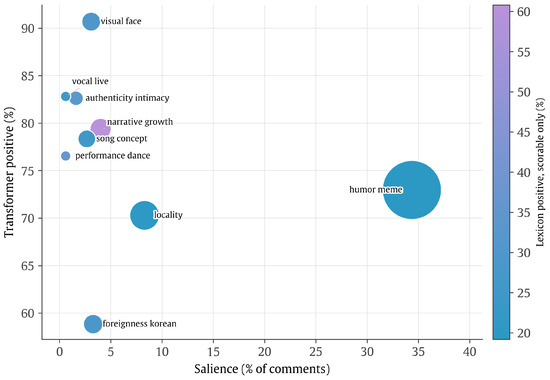
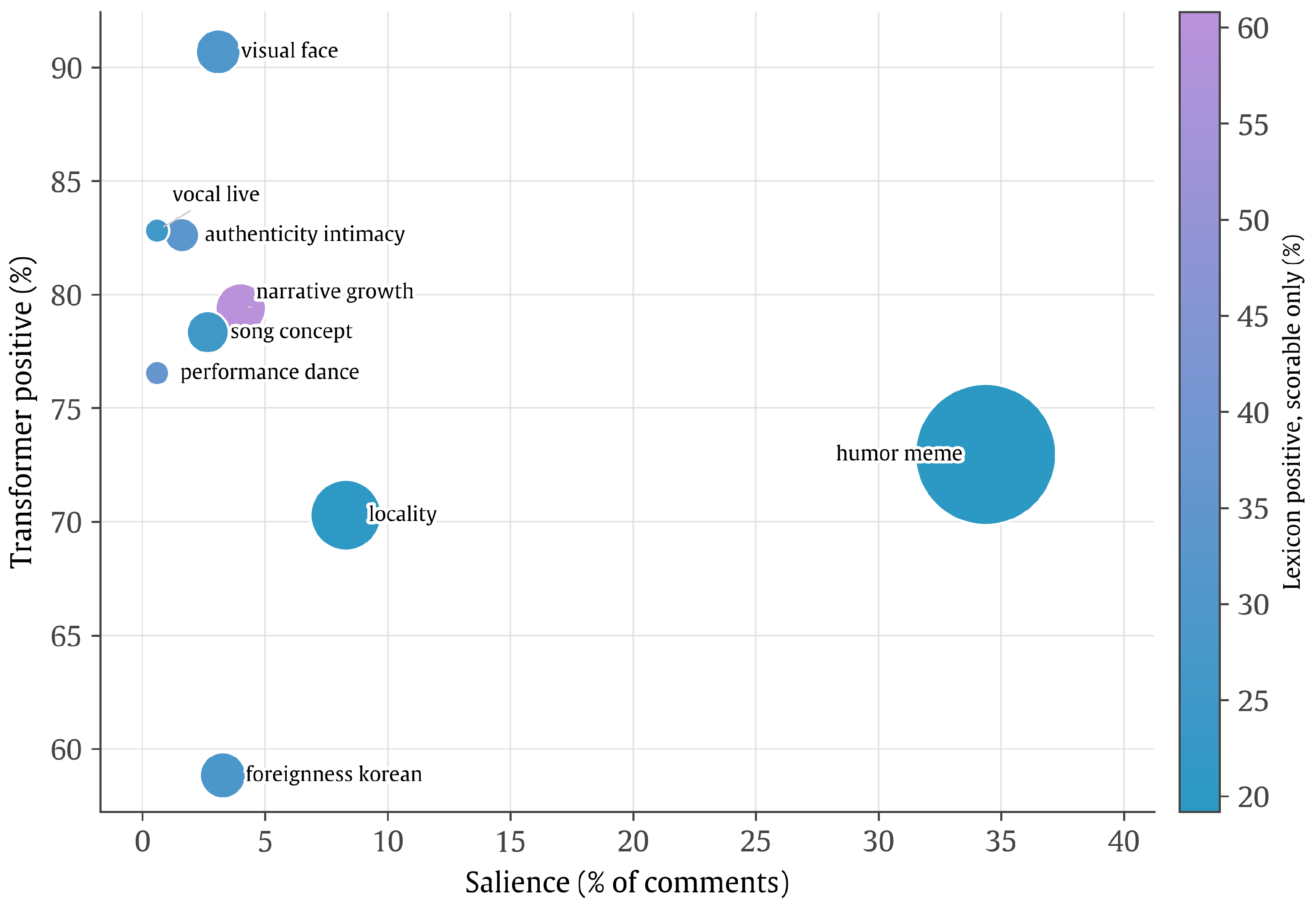
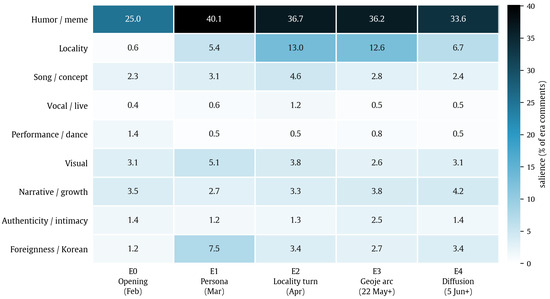
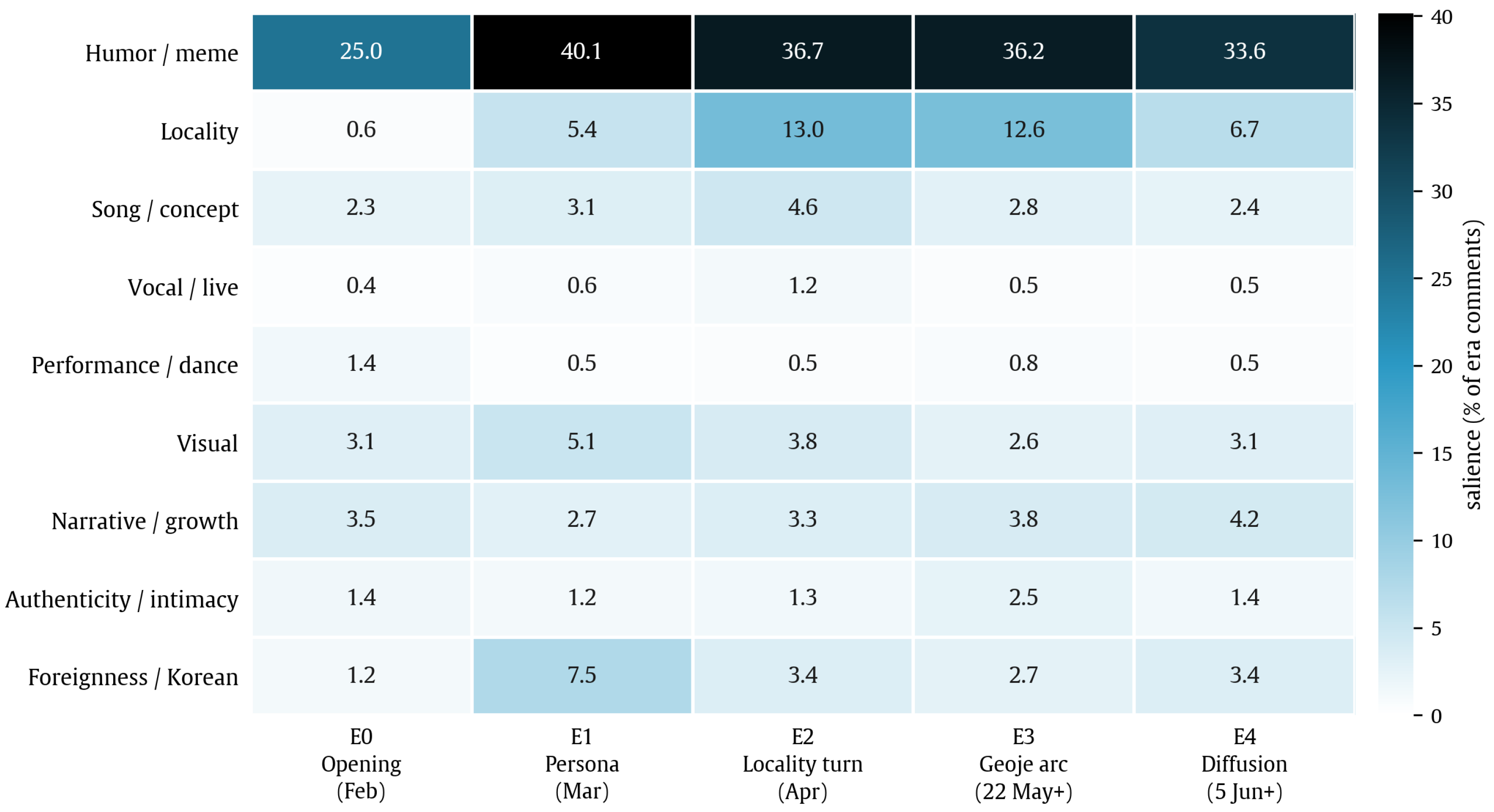
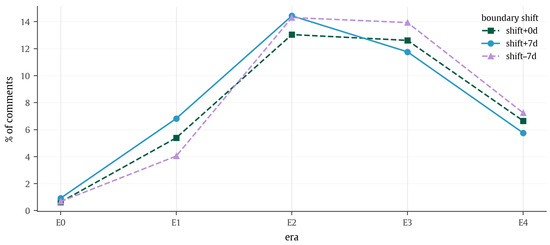
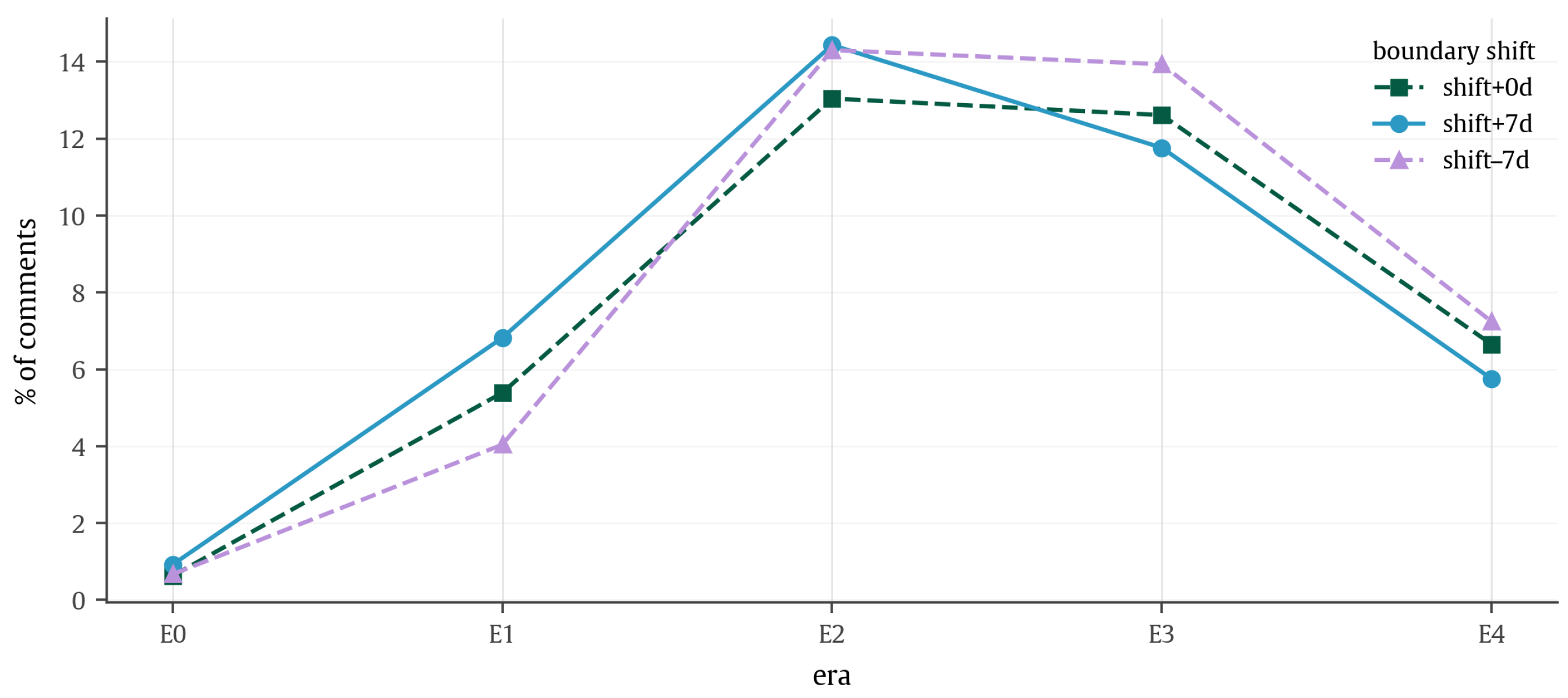
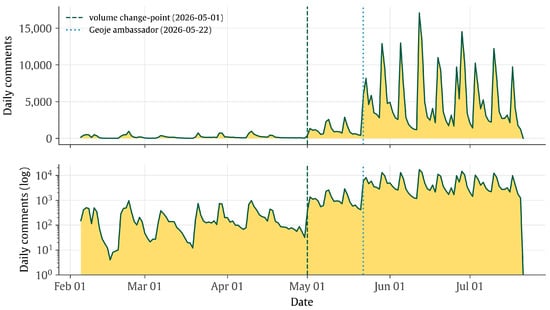
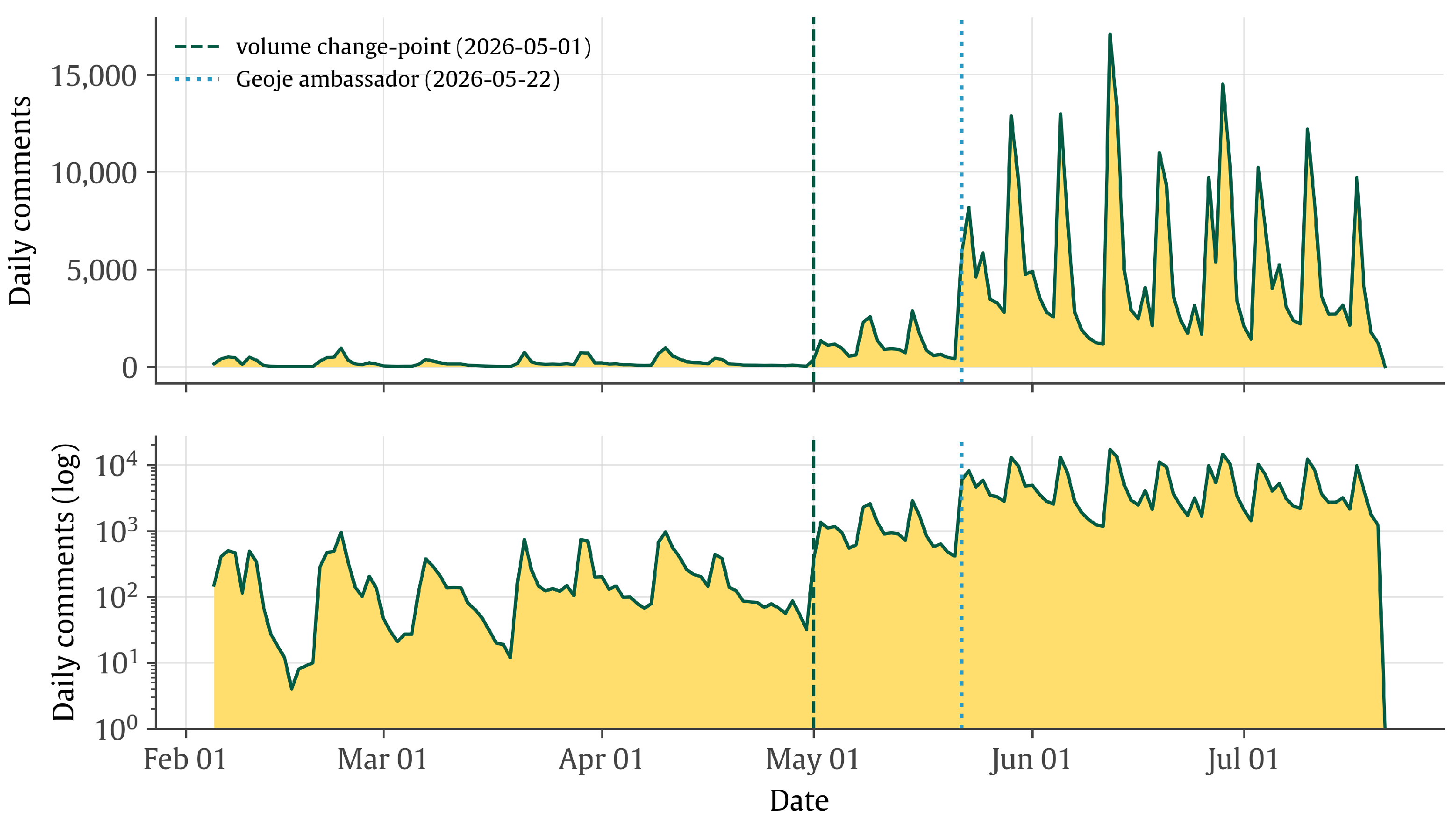
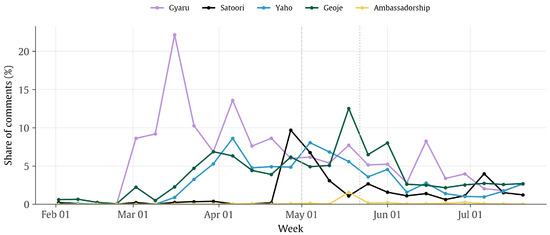
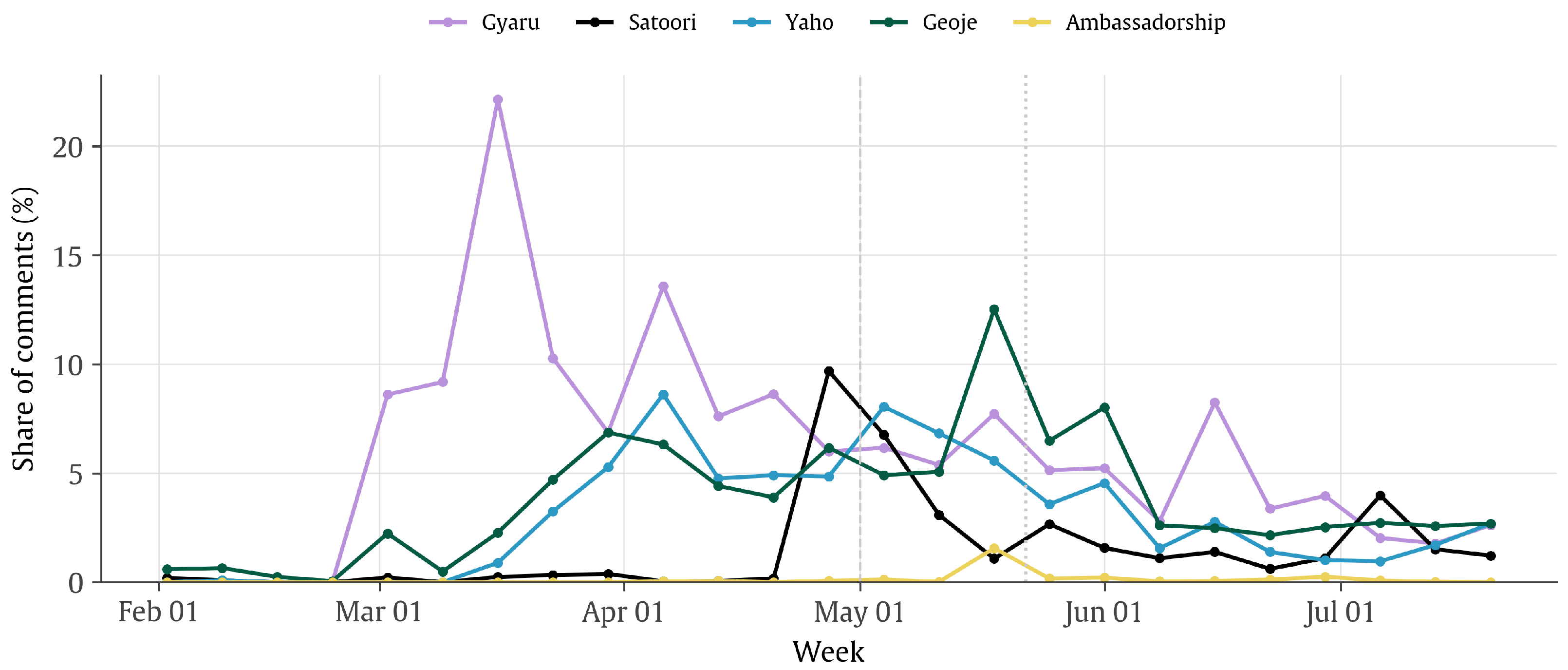
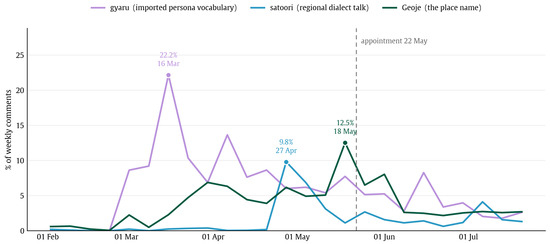
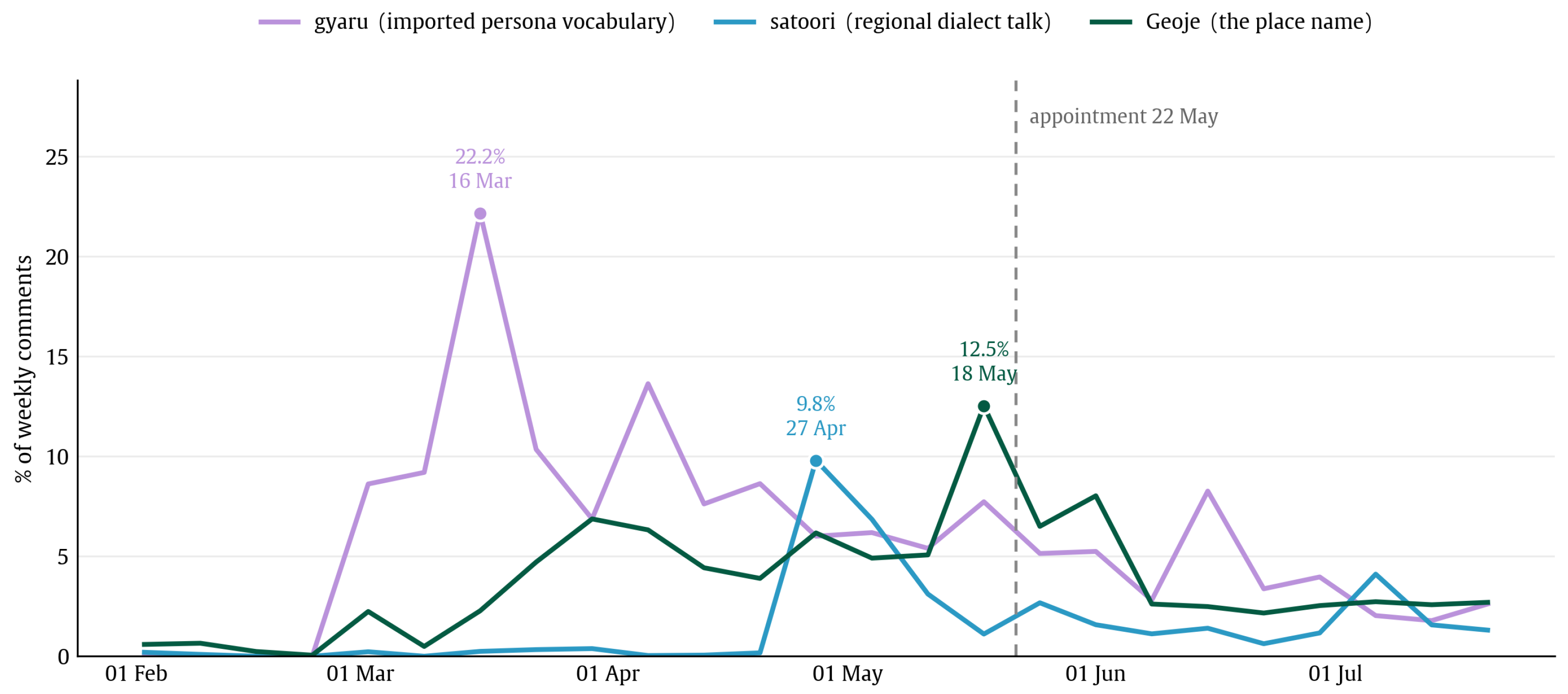
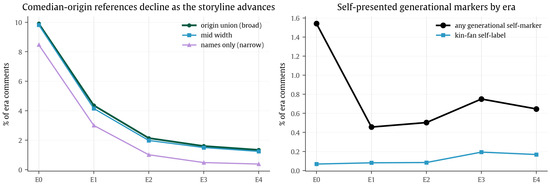
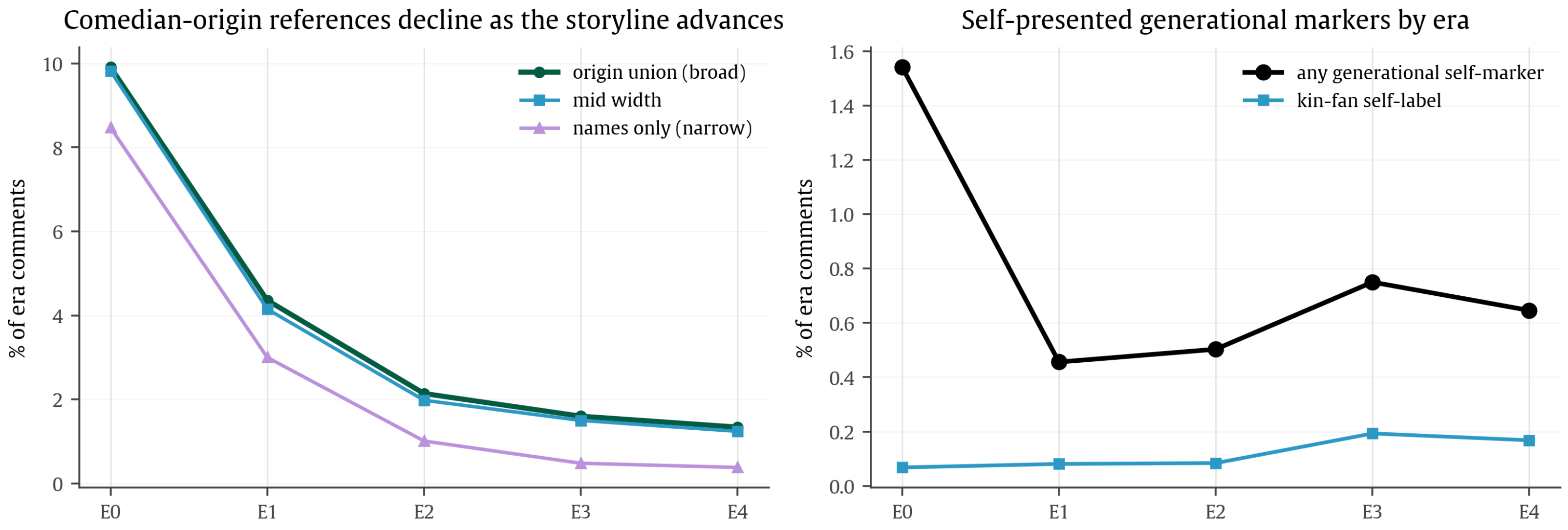
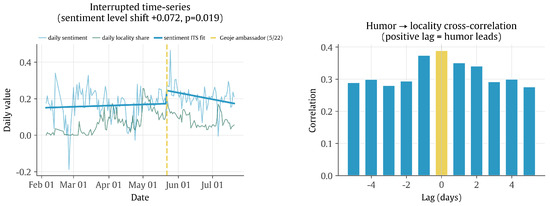
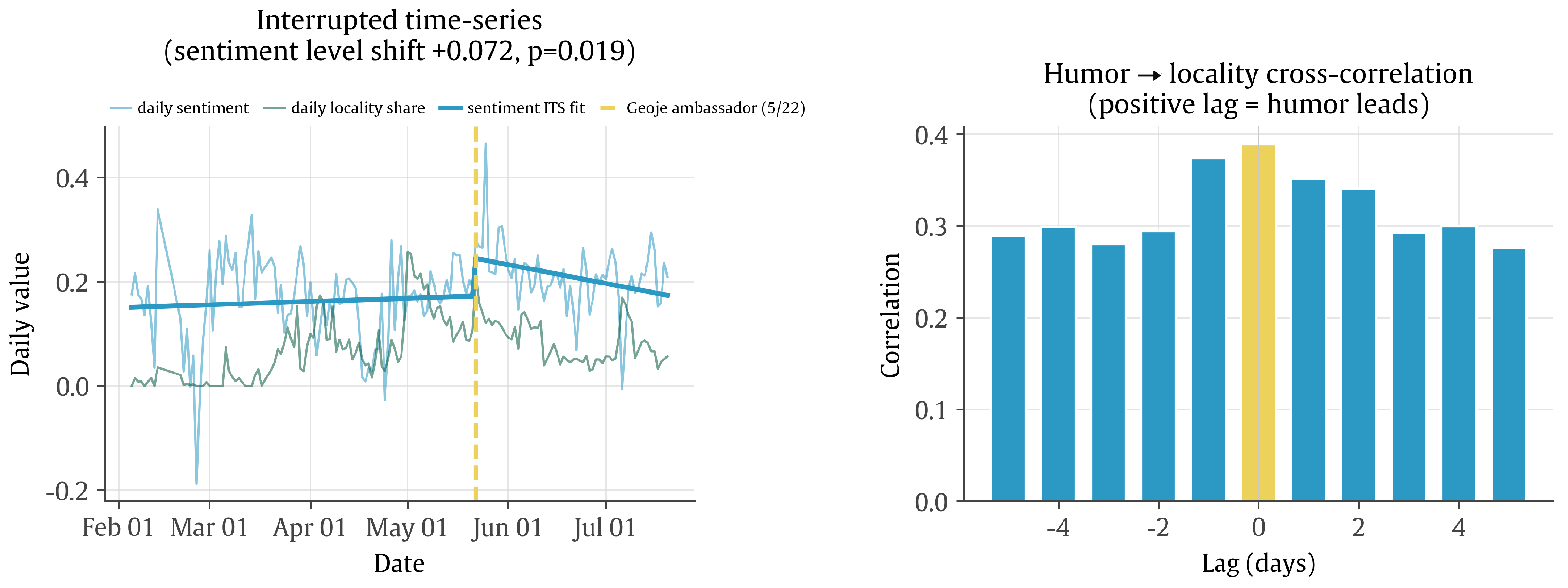
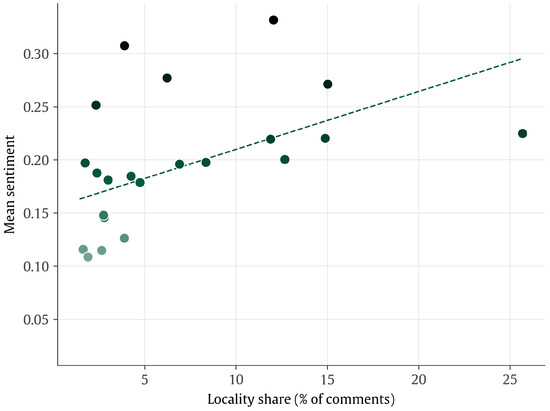
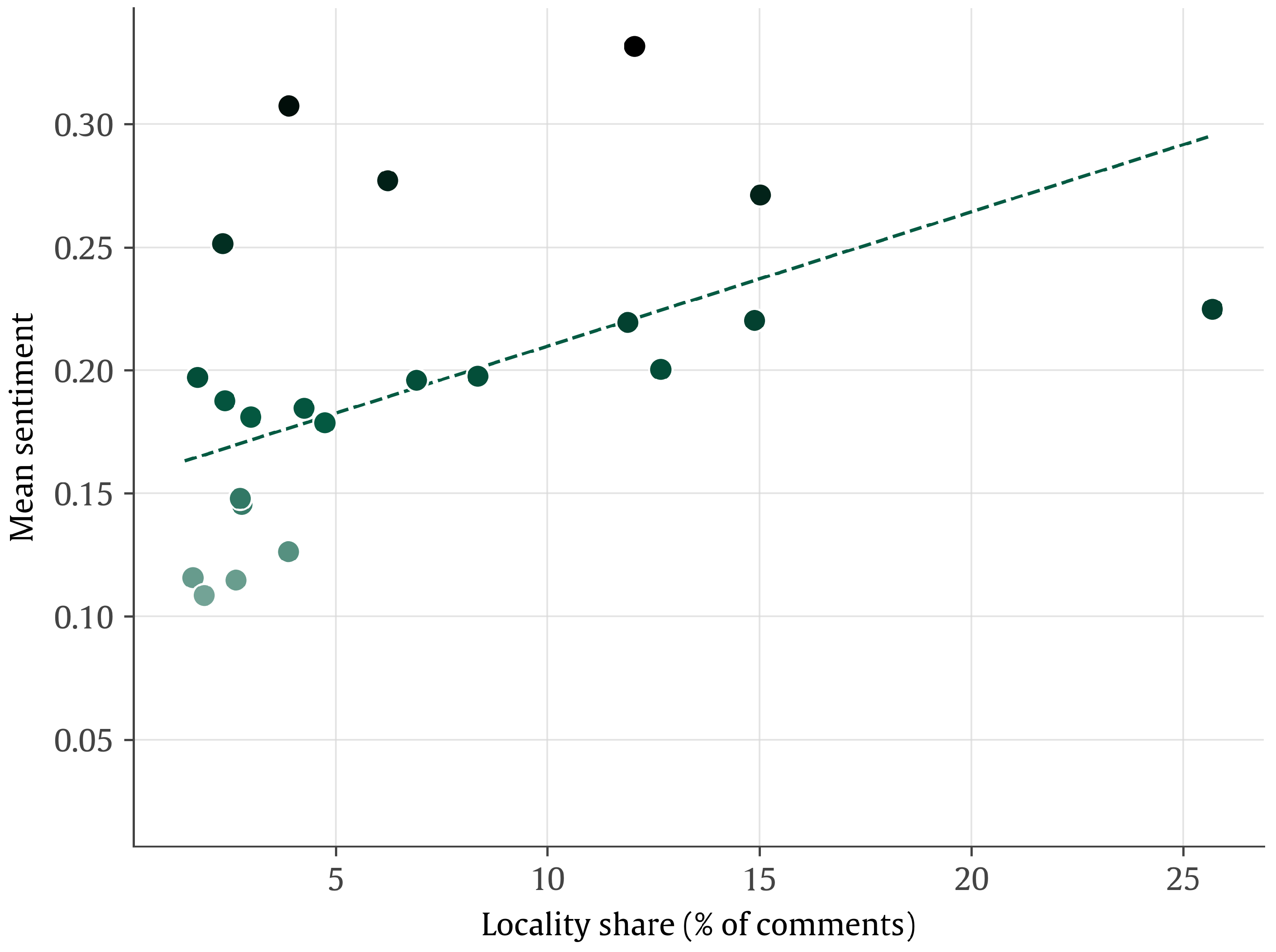
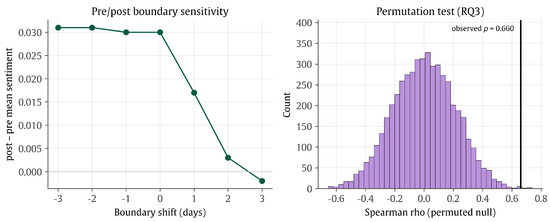
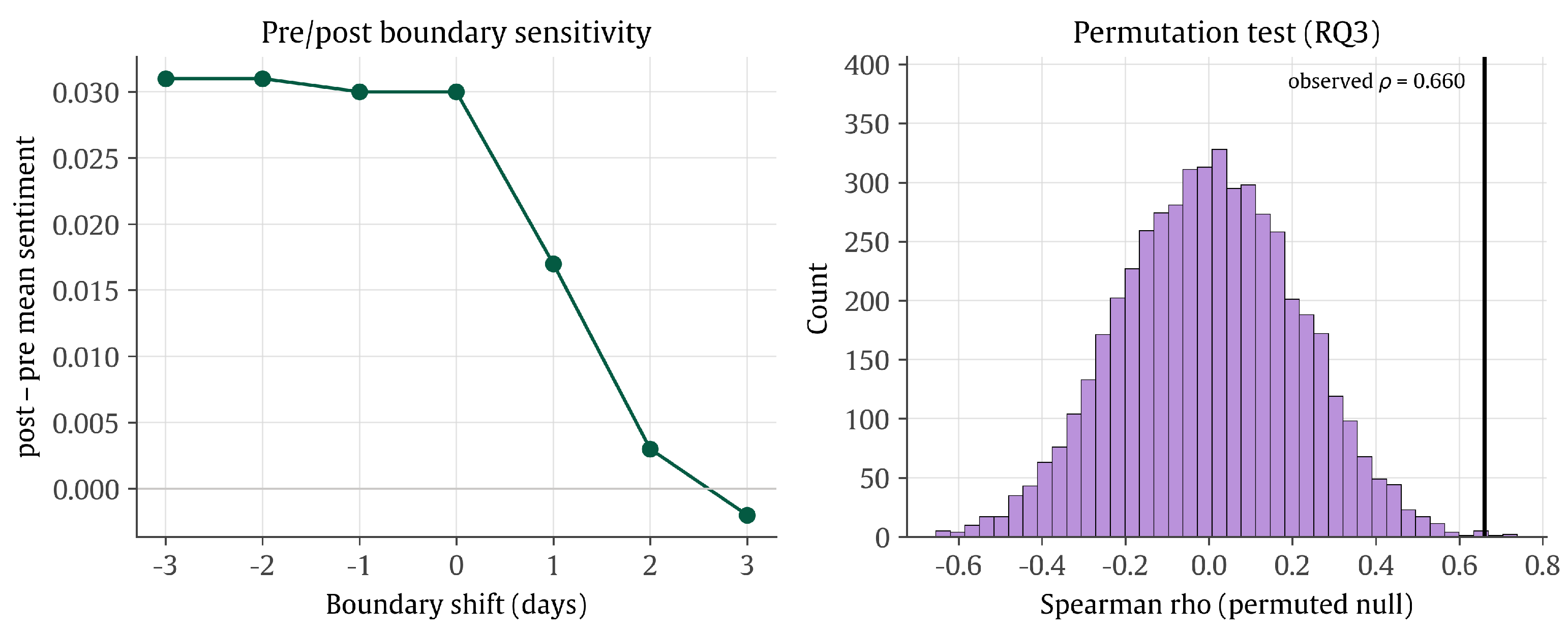
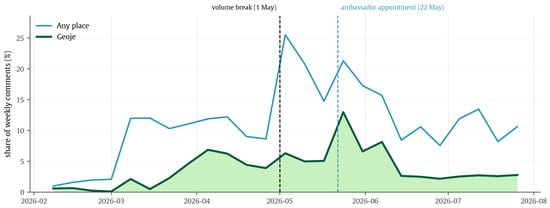
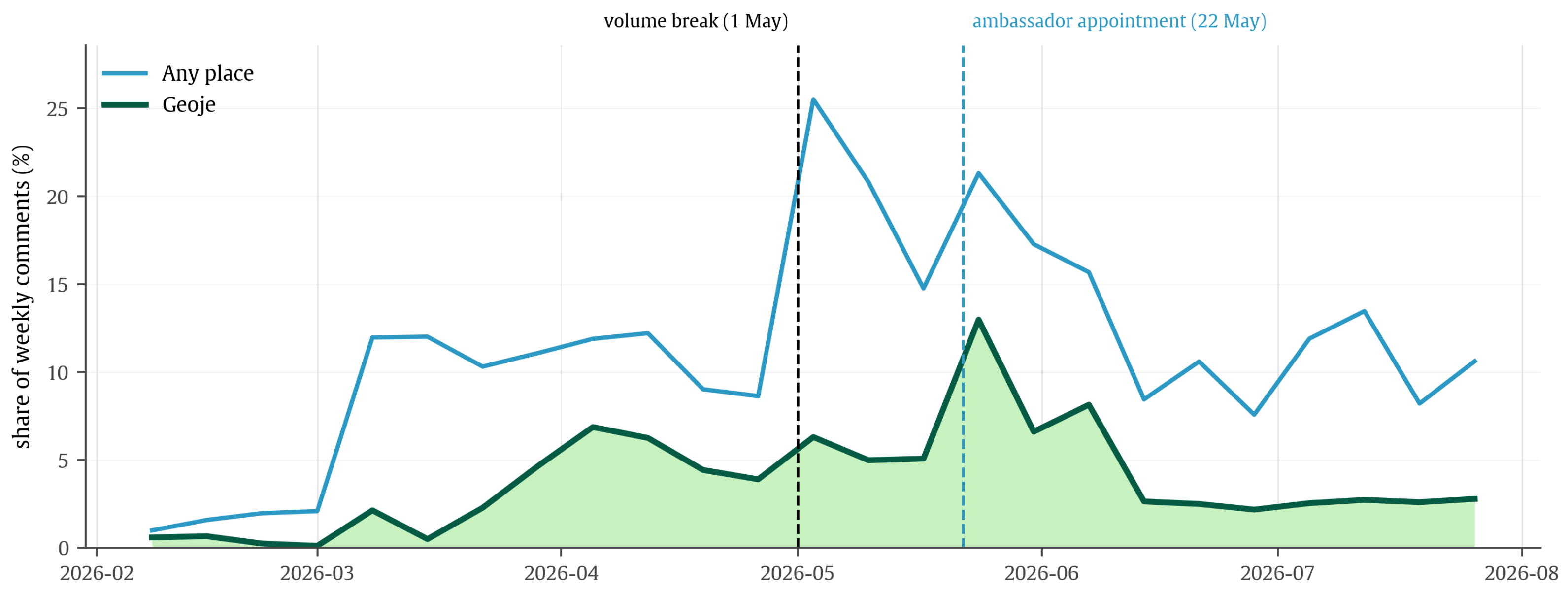
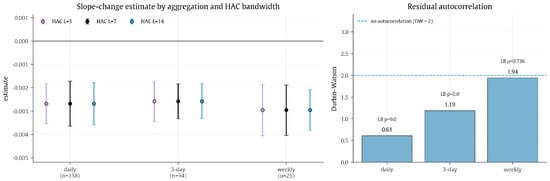
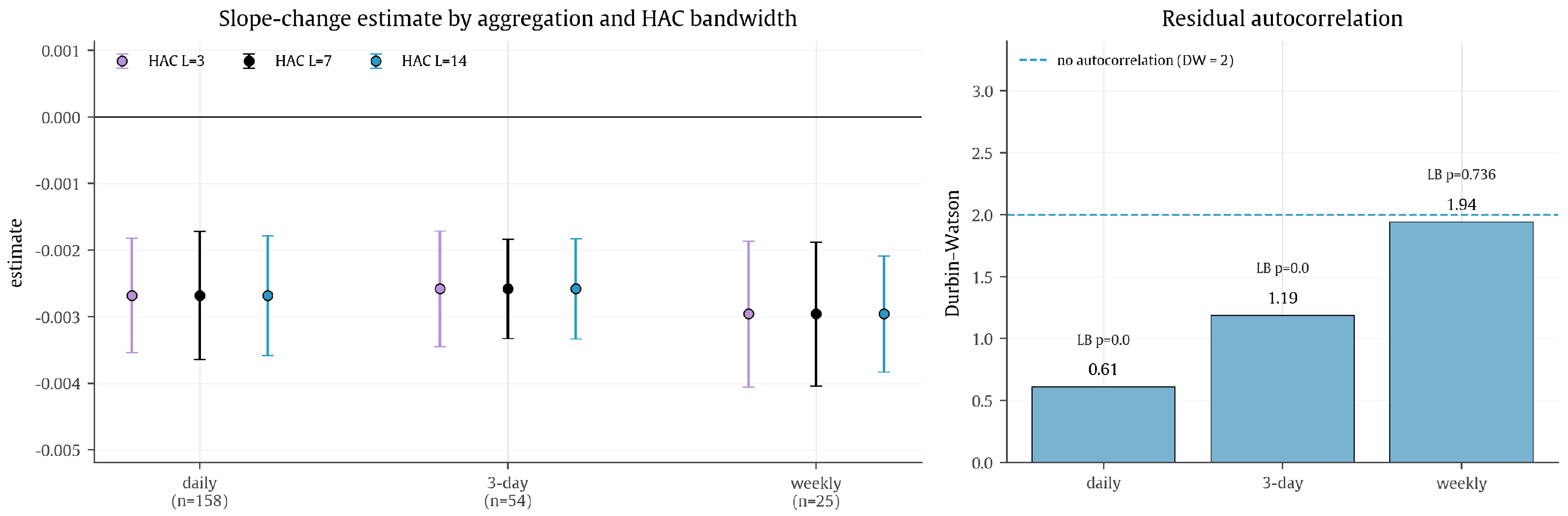
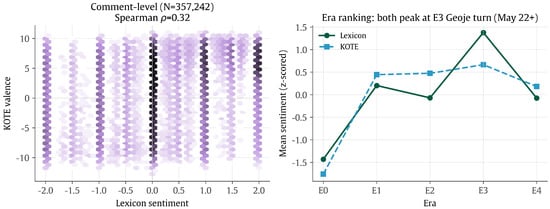
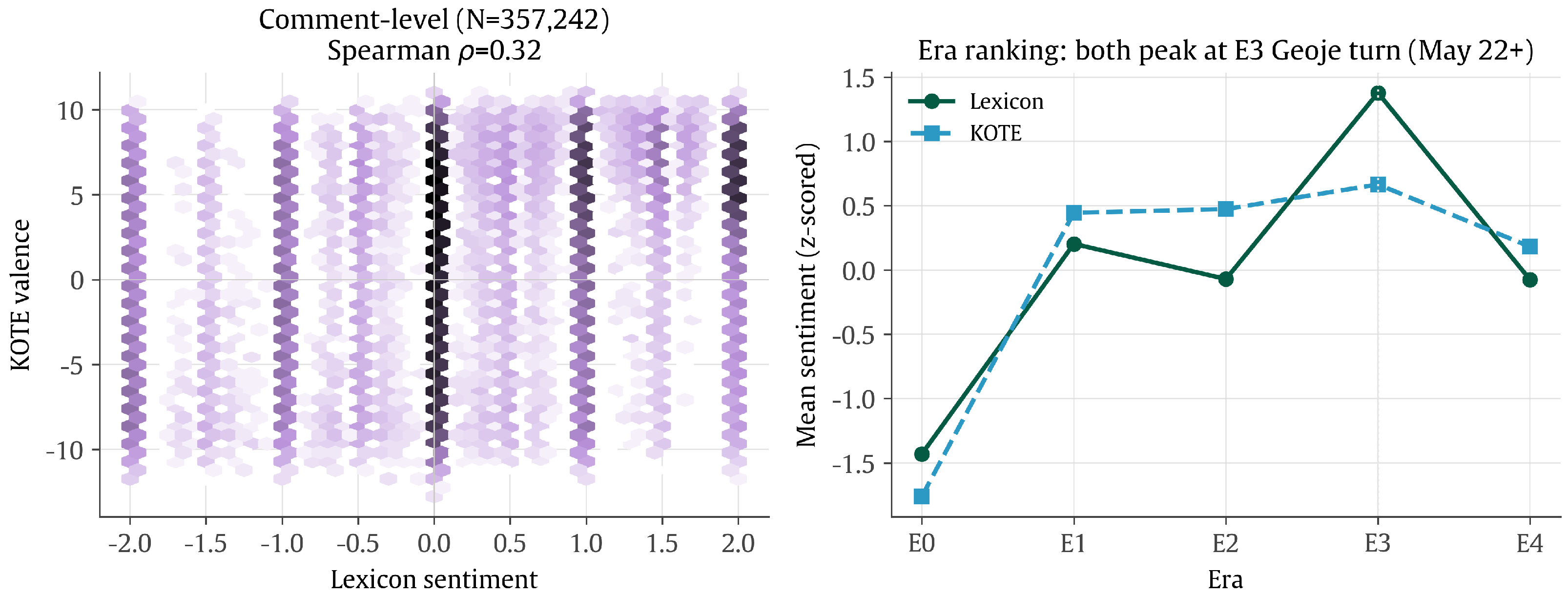
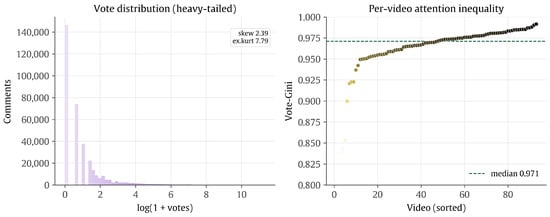
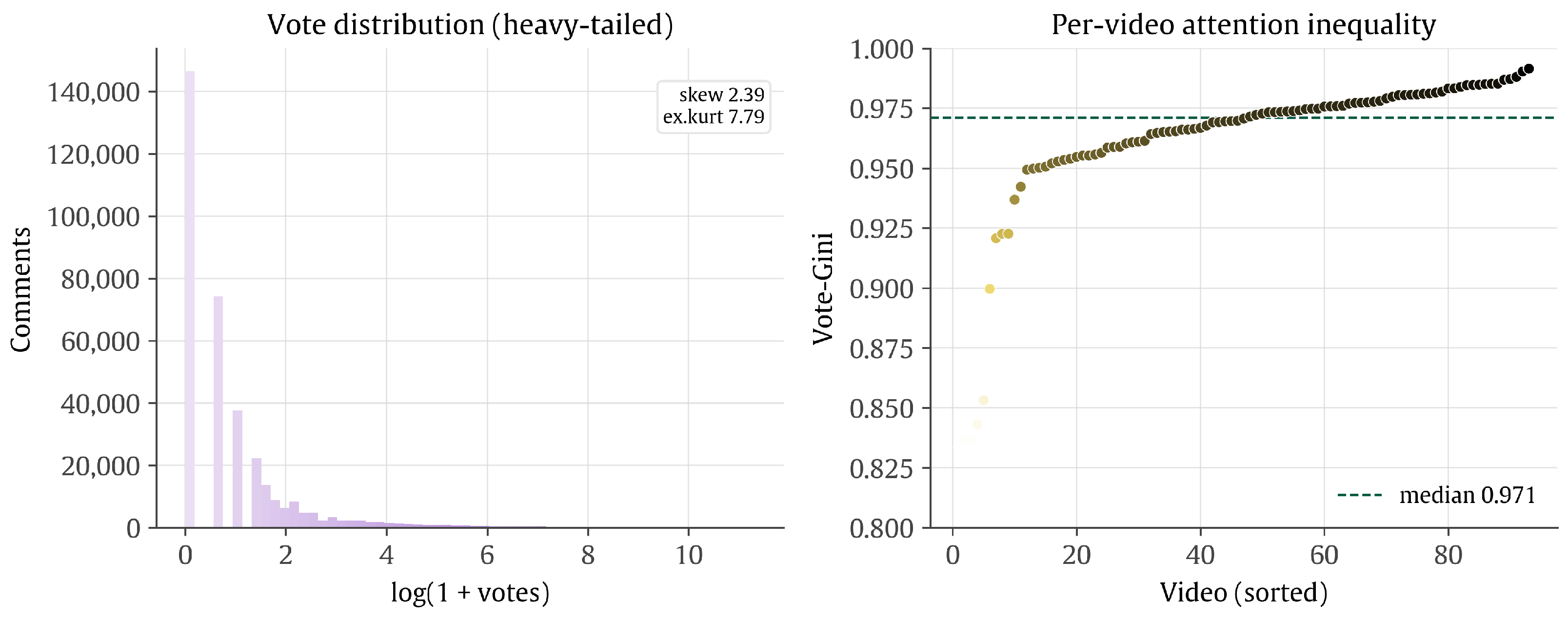
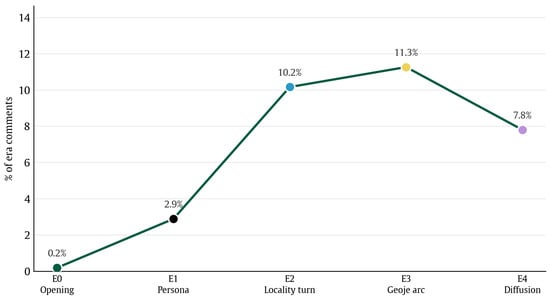
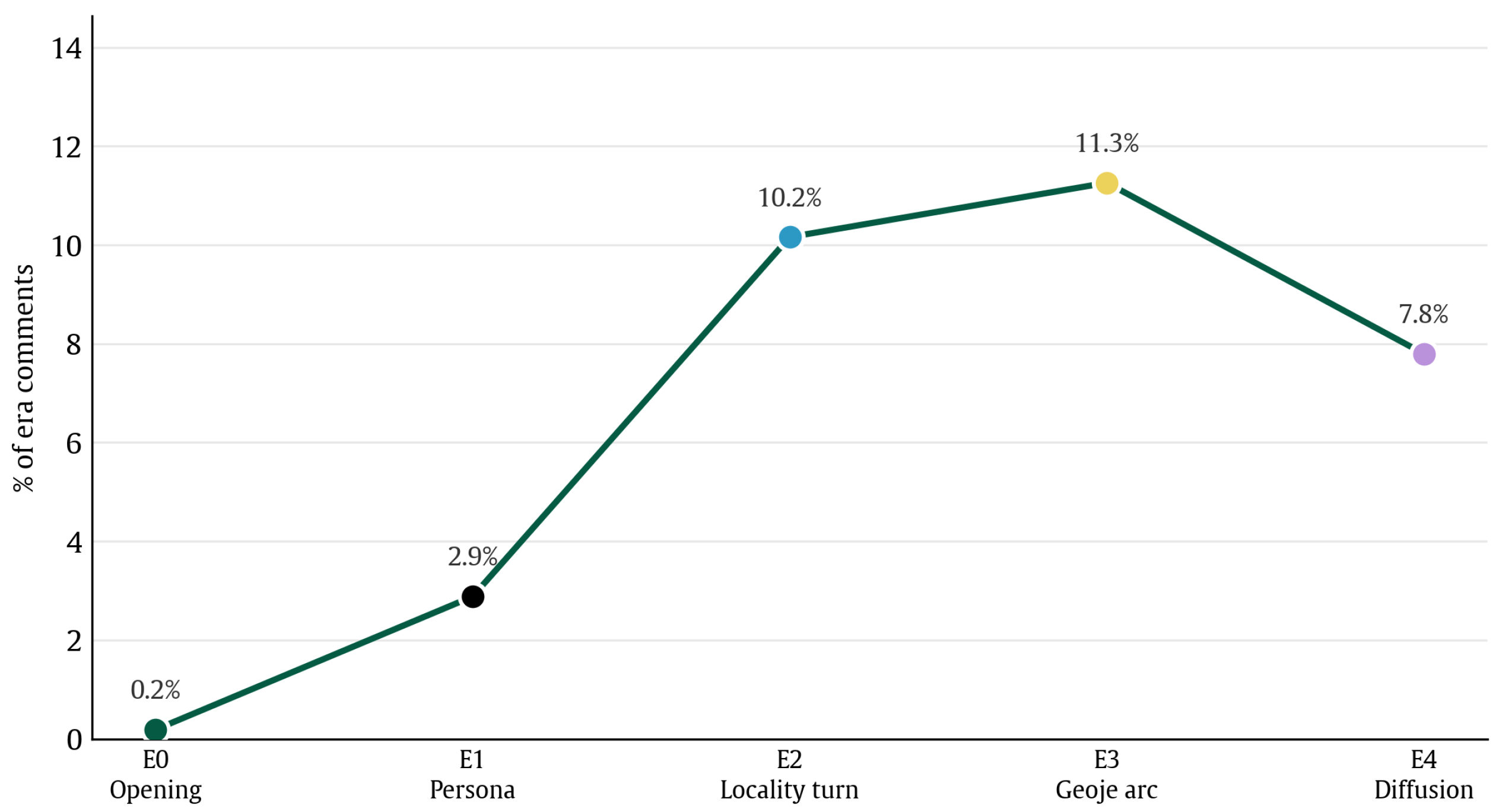

Disclaimer/Publisher’s Note: The statements, opinions and data contained in all publications are solely those of the individual author(s) and contributor(s) and not of MDPI and/or the editor(s). MDPI and/or the editor(s) disclaim responsibility for any injury to people or property resulting from any ideas, methods, instructions or products referred to in the content. |
© 2026 by the author. Licensee MDPI, Basel, Switzerland. This article is an open access article distributed under the terms and conditions of the Creative Commons Attribution (CC BY) license.