


Highlights
Please indicate how your work links to systems science via your contributions to sys-tems practice, theory, and/or methodology.
- This study specifies a socio-technical systems perspective within the designer–AI dyad by linking perceived AI tool features, designers’ Perceived Control and Perceived Collaboration, and Creative Self-Efficacy as interdependent technical–psychological elements of human–AI creative collaboration.
- Combining covariance-based structural equation modeling (CB-SEM) and fuzzy-set qualitative comparative analysis (fsQCA) connects average structural associations and indirect effects with conjunctural, equifinal, and asymmetric configurations, offering complementary evidence on how technical and psychological conditions jointly relate to creative outcomes.
What are the main findings and/or the implications of the main findings?
- Across survey data from 461 design professionals, Perceived Control and Perceived Collaboration were positively associated with Creative Self-Efficacy. Customizability was associated primarily with Perceived Control, Intelligent Feedback primarily with Perceived Collaboration, and Self-Learning Capability, Explainability, and Emotional Support with both evaluations; significant indirect associations involving Perceived Control and Perceived Collaboration were also observed.
- Five equifinal configurations were associated with high Creative Self-Efficacy, with Explainability appearing as a core condition in all five configurations. The findings support prioritizing explainability, retaining human intervention at key creative points, and providing task-relevant feedback and appropriately bounded adaptive support in AI-assisted design systems.
Abstract
As AIGC becomes increasingly embedded in design practice, the relationship between designers and AI is shifting from tool use toward sustained creative collaboration. Drawing on socio-technical systems theory, affordance theory, and self-efficacy theory, this study examines how five perceived AI tool features—Customizability, Self-Learning Capability, Explainability, Intelligent Feedback, and Emotional Support—are associated with designers’ Perceived Control, Perceived Collaboration, and Creative Self-Efficacy. Survey data from 461 design professionals with experience in AI-assisted design were analyzed using covariance-based structural equation modeling (CB-SEM) to test structural associations and indirect effects, and fuzzy-set qualitative comparative analysis (fsQCA) to identify configurations associated with high Creative Self-Efficacy. Perceived Control and Perceived Collaboration were both positively associated with Creative Self-Efficacy, but the five AI tool features exhibited distinct patterns. Customizability was associated primarily with Perceived Control, Intelligent Feedback primarily with Perceived Collaboration, and Self-Learning Capability, Explainability, and Emotional Support with both evaluations. The fsQCA results further showed that high Creative Self-Efficacy corresponded to multiple configurations rather than a single unique configuration and that Explainability was a core condition across multiple high-level configurations. These findings indicate differentiated relationships between AI tool features and designers’ control and collaborative experiences; these experiences were in turn associated with Creative Self-Efficacy. By distinguishing the functional roles of AI tool features, two related but distinct psychological evaluations, and multiple configurations, the study advances understanding of human–AI creative collaboration and complements existing human–AI team research from an individual-level perspective.
1. Introduction
The rapid adoption of artificial intelligence-generated content (AIGC) in design is reshaping designers’ workflows and professional roles [1]. AIGC can generate or assist in generating diverse forms of design content from textual descriptions and creative intentions, while also supporting concept visualization and design iteration [2,3,4]. Tasks traditionally performed primarily by designers—including ideation, generation, and iteration—are increasingly organized as continuous cycles of input, generation, evaluation, revision, and regeneration [5,6,7,8]. Within these cycles, designers not only use AI to complete specific tasks but also continually evaluate generated outputs, redirect creative development, and determine the extent of AI involvement. AI, in turn, contributes to the design process through content generation, solution expansion, explanation, feedback, and adaptive adjustment [4,7,8]. AI-assisted design is therefore evolving beyond one-off tool use toward human–AI creative collaboration characterized by sustained interaction, task-related feedback, and iterative adjustment.
Research on human–computer interaction (HCI), human–AI collaboration, and design creativity has begun to examine the technical features and interaction modes of intelligent systems, as well as users’ psychological experiences [7,8,9,10,11]. Within human–AI collaboration, AI’s generative, learning, explanatory, and feedback capabilities may alter how people participate in tasks and evaluate their relationship with the technology [6,7,9]. In open-ended creative design, however, examining only the overall extent of AI use or general evaluations of collaboration cannot explain how distinct AI tool features enter designers’ creative experience [8,12]. Designers may confront two different questions. First, after AI enters the process, can they still direct creative development, intervene in generation, and determine the final outcome [13]? Second, can AI-generated content, suggestions, and feedback be understood as collaborative resources that help advance the task [8,10]? These questions require distinguishing the relationships between specific AI tool features and different psychological evaluations rather than assuming that all AI capabilities improve human–AI creative collaboration in the same way.
Designers engaged in AI-assisted creative work must therefore make two distinct judgments: whether they can continue to direct and regulate the creative process after AI becomes involved, and whether AI can function as a collaborative resource for advancing the task. This study conceptualizes these judgments as Perceived Control and Perceived Collaboration, respectively. Prior research has examined control design and collaborative roles in human–AI collaboration [8,10,13,14]. It remains unclear, however, whether particular AI tool features are associated primarily with perceived control, primarily with perceived collaboration, or with both in creative collaboration.
Socio-technical systems theory provides an overarching framework for examining this issue. Its central premise is that technical capabilities produce specific work experiences and outcomes only when embedded in human tasks and interaction processes [15,16,17]. Accordingly, this study distinguishes between the technical and social-interaction features of AI tools and draws on affordance theory and self-efficacy theory to examine how these features are associated with designers’ perceived control, perceived collaboration, and creative self-efficacy. Rather than treating AI capabilities as a homogeneous technological input, the study tests whether different tool features exhibit distinct psychological associations. It also uses configurational analysis to examine how combinations of technical and psychological conditions are associated with high creative self-efficacy. In this way, the socio-technical perspective extends beyond classifying variables to examining differentiated feature–experience relationships and their configurational dependence.
Recent studies in the Special Issue ‘Human-AI (H-AI) Teams: Designing for Human-AI Interactions’ have examined human–AI teams through collaborative agency and role allocation [18], team-intention alignment [19], and explainability designed to support shared team understanding [20]. The present study complements this line of research by examining, at the individual level, how different AI tool features are associated with designers’ Perceived Control and Perceived Collaboration.
Based on this rationale, the study addresses two research questions:
RQ1: How are different technical and social-interaction features of AI tools associated with designers’ perceived control and perceived collaboration, and how are these two psychological evaluations associated with creative self-efficacy?
RQ2: Which configurations of AI tool features and psychological conditions are associated with high creative self-efficacy?
To address these questions, the study analyzed data from 461 design professionals with experience in AI-assisted design. Covariance-based structural equation modeling (CB-SEM) was used to test the hypothesized structural associations and indirect effects, and fuzzy-set qualitative comparative analysis (fsQCA) was used to identify conjunctural conditions, equifinal configurations, and configurational asymmetry between high and non-high outcomes. The empirical unit of analysis is the individual designer, with designer–AI interaction providing the collaborative context in which these psychological evaluations arise. Within this analytical scope, the study examines the relationships among AI tool features, Perceived Control, Perceived Collaboration, and Creative Self-Efficacy in human–AI creative collaboration.
2. Theoretical Framework and Hypotheses
Socio-technical systems theory holds that the functioning of a work system and its individual-level outcomes are not determined by technology or human behavior alone; they must be understood in relation to technical resources, human task activities, and their ongoing interaction [15,16,17,21]. In AI-assisted creative design, AI provides resources for generation, learning, explanation, and feedback, whereas designers define problems, make creative judgments, regulate the process, and retain final decision authority. These elements become interdependent through repeated cycles of generation, evaluation, revision, and regeneration [7,22]. This study therefore does not treat AI tool features as independent factors that directly and uniformly determine designers’ creative outcomes. Instead, it examines how different technical and interactional features are embedded in designers’ task processes and associated with their psychological evaluations of human–AI collaboration.
Within this framework, the technical and social-interaction features of AI tools are treated as antecedent conditions within the socio-technical system; Perceived Control and Perceived Collaboration represent designers’ psychological evaluations of the human–AI collaborative state; and Creative Self-Efficacy represents an individual-level creative outcome. Affordance theory explains how AI functions become recognizable to designers as resources that can be understood, acted upon, and used to advance a task [23,24,25]. Self-efficacy theory explains why these task and interaction experiences may be associated with designers’ judgments of their own creative capability [26]. The three theories thus serve distinct but complementary roles: socio-technical systems theory organizes the system, affordance theory explains the proposed relationships, and self-efficacy theory explains the focal outcome.
2.1. Creative Self-Efficacy in Human–AI Creative Collaboration
Self-efficacy refers to an individual’s judgment of their ability to organize and perform a particular task [26,27]. Creative Self-Efficacy focuses specifically on creative tasks and reflects a person’s belief in their ability to generate novel ideas, pursue creative exploration, and complete creative work [28,29]. In conventional design practice, this judgment rests largely on designers’ existing knowledge, skills, and creative experience. As AIGC becomes embedded in design, creative work increasingly unfolds through continuing cycles of generation, evaluation, revision, and regeneration, placing capability judgments within a context of human–AI interaction [5,30].
Existing research offers no fully consistent account of the relationship between AI use and beliefs about creative capability. On the one hand, AI can provide rapid generation, creative stimulation, and iterative resources, and designers may retain more positive capability judgments when AI is incorporated as a co-creative resource rather than as a passive substitute [5,14,30]. On the other hand, passive forms of AI use may weaken evaluations of one’s own capability, ownership of the outcome, and the meaning of the work [31,32]. This divergence suggests that the extent of AI use or a general evaluation of the technology is insufficient to explain designers’ creative self-efficacy. Greater attention must be paid to the technical and interactional features through which AI enters creative tasks and to how designers evaluate their control and collaborative relationship with AI.
This study defines Creative Self-Efficacy as designers’ judgment, in AI-assisted creative tasks, that they can generate creative solutions, direct creative development, and complete creative work. It is treated as an individual-level psychological outcome within a socio-technical collaborative system. Higher creative self-efficacy is generally associated with sustained exploration, creative engagement, and innovative behavior [28,29]. Examining how different AI tool features and corresponding interaction experiences are associated with creative self-efficacy can therefore clarify variation in designers’ capability beliefs after AI enters creative work.
2.2. Perceived Control, Perceived Collaboration, and Creative Self-Efficacy
Socio-technical systems theory emphasizes that effective alignment between technical resources and human work depends not only on what a technology can do, but also on how users understand their room for action within the system and the task relationship between people and technology [17,21]. In AI-assisted design, the subjective experience of this relationship is not a single evaluation. It includes at least two related but distinct judgments: whether designers can continue to direct and regulate the creative process, and whether AI functions as a collaborative resource for advancing the task.
Affordance theory further proposes that a technical function enters task practice only when users recognize it as a resource that can be understood, acted upon, or used for action [23,24,25]. This study therefore uses Perceived Control and Perceived Collaboration to represent designers’ two psychological evaluations of the socio-technical collaborative relationship, rather than treating them as interchangeable expressions of general satisfaction with human–AI interaction.
Perceived Control reflects the extent to which individuals believe that their own actions can influence task processes and important outcomes [33,34]. In human–AI creative collaboration, control does not require designers to perform all work independently. It concerns whether they can still set the creative direction, adjust how AI is used in the task, revise generated outputs, and retain final decision authority while AI contributes generation and feedback. Prior research associates choice, intervention capability, and process adjustability with more positive experiences of control [13,35]. In open-ended creative tasks, designers who can continue to set creative direction and actively revise AI output may be more likely to maintain creative self-efficacy [14,26,28].
Perceived Collaboration reflects designers’ subjective evaluation of the collaborative value of AI-supported interaction in advancing a task [10,36]. It does not concern whether the designer retains final control; rather, it concerns whether AI-generated content, suggestions, feedback, and adjustments remain relevant to design goals and are experienced as resources for continued exploration and problem solving [8]. Perceived Collaboration thus captures the collaborative value that designers assign to AI-generated outputs and responses within the task. Experimental evidence from creative collaboration indicates that placing a person in a genuine co-creator role, rather than asking them merely to edit an AI-produced artifact, can preserve stronger creative self-efficacy [14]. When designers view AI as providing meaningful solution expansion, feedback, and iterative support, the creative resources and problem-solving space available to them also expand, which may be associated with more positive judgments of creative capability.
Accordingly, the study proposes the following hypotheses:
H1.
Perceived Control is positively associated with Creative Self-Efficacy.
H2.
Perceived Collaboration is positively associated with Creative Self-Efficacy.
Although Perceived Control and Perceived Collaboration both arise from human–AI interaction, they do not represent alternative labels for the same psychological experience. Perceived Control concerns whether designers retain room for action and decision authority in the creative process [13], whereas Perceived Collaboration concerns whether AI is integrated as a collaborative resource that helps advance the task [10]. A strong sense of collaboration therefore need not come at the expense of control: designers may report high Perceived Collaboration while retaining creative direction. Distinguishing these evaluations provides the theoretical basis for testing whether different AI tool features exhibit different patterns of association with each.
2.3. Technical Features of AI and Perceived Control and Collaboration
Different technical features provide designers with different action resources in AI-assisted creative collaboration. This study distinguishes Customizability, Self-Learning Capability, and Explainability. Customizability captures designers’ ability to actively adjust AI behavior; Self-Learning Capability captures the system’s continuing adaptation to users’ needs and working practices; and Explainability captures the extent to which AI behavior and output logic can be understood [37,38]. From socio-technical systems and affordance perspectives, the study tests whether these features exhibit different associations with designers’ evaluations of control and collaboration [21,25,39].
2.3.1. Customizability
Customizability refers to the extent to which users can adjust the functions, parameters, processes, or output modes of an AI system to meet their needs [40,41]. In human–AI creative collaboration, its importance lies not simply in providing more functional options but in allowing designers to determine how AI enters a particular creative process. By adjusting input requirements, generation parameters, workflows, or output formats, designers can bring AI behavior into closer alignment with the current creative objective and improve the fit between the technology and the task.
With respect to Perceived Control, Customizability gives designers greater room and authority to intervene. When an AI system allows users to modify parameters, change modes of use, and reconfigure generation for a particular task, designers are more likely to view AI behavior as responsive to their own choices and actions. Prior research directly links customization to user agency and a sense of control [42], while research on business-process customizability also identifies a relationship between adjustable design and users’ experience of control [41]. Such adjustability is especially relevant to iterative creative design. More positive perceptions of Customizability may therefore be associated with stronger control judgments concerning creative direction and AI involvement.
Customizability may also be associated with Perceived Collaboration. Human–AI creative collaboration requires AI to accommodate changing objectives across stages of a design task rather than produce outputs in a fixed manner. When designers can adjust AI functions and responses to suit different stages, the system is more likely to remain aligned with the current workflow and reduce task mismatch. Existing research identifies customizability as an antecedent of collaborative affordances and associates it with the development of collaborative behavior [43]. Designers may therefore report stronger Perceived Collaboration when AI can be configured as a task resource that fits their current goals and working practices.
Accordingly, the study proposes the following:
H3a.
Perceived Customizability is positively associated with designers’ Perceived Control.
H3b.
Perceived Customizability is positively associated with designers’ Perceived Collaboration.
2.3.2. Self-Learning Capability
Self-Learning Capability refers to an AI system’s ability to adjust its behavior continually on the basis of prior interactions, user operations, and task feedback, and to demonstrate adaptation in subsequent tasks [44,45]. In human–AI creative collaboration, this means that AI does not always respond in a fixed manner but may gradually adapt to a designer’s working habits, task preferences, and modes of expression. Compared with one-off automation, Self-Learning Capability emphasizes dynamic adaptation across continuing interactions.
Self-Learning Capability may be associated with Perceived Control by increasing consistency between AI behavior and designers’ established working practices, thereby reducing uncertainty over continued use. As AI adapts to preferences derived from previous operations and feedback, designers may find its responses more predictable and be better able to judge when to adjust, correct, or redirect the system. Research on the sense of agency in human–AI interaction identifies the relationship between system adaptation and human control experience as an emerging issue, particularly because adaptation to dynamic human agency remains underexplored [46]. Human–AI teaming research also shows that preferences regarding an adaptive autonomous teammate’s level of autonomy vary across task stages and that dynamic adaptation is relevant to teammate acceptance and collaborative experience [47]. Although these studies do not directly test the relationship examined here, they suggest that designers may better maintain active regulation of the creative process when AI adaptation remains aligned with their goals and working practices, predictable, and open to redirection.
Self-Learning Capability may also be closely associated with Perceived Collaboration. Human–AI creative collaboration involves more than a single exchange of information; task alignment develops through continuing generation, feedback, and revision. When AI learns from previous interactions, adjusts its outputs, and improves its fit with current objectives, designers may spend less effort repeatedly explaining requirements and correcting the system. AI responses may consequently be experienced as better aligned with the designer’s working practices. Research on human–AI collaboration and co-creative systems identifies continuing learning and adaptation as important conditions for moving from coexistence to co-creation and for supporting dynamic collaboration [8,45]. Designers may therefore be more likely to view AI as a valuable collaborative resource when its learning is expressed as sustained adaptation to their needs and practices.
Accordingly, the study proposes the following:
H4a.
Perceived Self-Learning Capability is positively associated with designers’ Perceived Control.
H4b.
Perceived Self-Learning Capability is positively associated with designers’ Perceived Collaboration.
2.3.3. Explainability
Explainability refers to the extent to which users can understand the basis of an AI system’s outputs, its recommendation logic, or its generation process [48,49,50]. In human–AI creative collaboration, designers often encounter outputs characterized by uncertainty. Knowing only what the system produced is insufficient for subsequent judgment; designers also need to understand why the output was produced, the rationale behind a recommendation, and the likely implications of alternative adjustments. Explainability therefore provides not only transparency but also a cognitive basis for evaluating, revising, and continuing to use AI outputs.
Explainability may strengthen Perceived Control by reducing the opacity of AI behavior and helping designers determine why a particular output was produced and when to accept, modify, or reject a recommendation. When generation logic and recommendation rationales are clear, designers can evaluate outputs actively and determine the next direction for revision. When AI behavior is difficult to understand, formal permission to operate the system may not be sufficient for effective intervention. Prior research treats explanation and control as related but distinct design elements in human–AI collaboration: explanations provide the informational basis needed to understand and intervene in AI recommendations [13,51]. More positive perceptions of Explainability may therefore be associated with stronger process-control judgments in creative design.
Explainability may likewise be associated with Perceived Collaboration. Sustained human–AI collaboration requires designers not only to receive outputs but also to understand AI responses and use that understanding in subsequent input, evaluation, and adjustment. Explanations of recommendation rationales, generation criteria, or revision directions can reduce informational asymmetry and support continuity across repeated interactions. Previous research associates greater explainability with more positive trust, willingness to collaborate, and interaction evaluations in human–AI settings [32,52,53]. In iterative creative tasks, such understandability allows AI output to become a task resource that designers can interpret and continue to use rather than a result presented without a usable rationale.
Accordingly, the study proposes the following:
H5a.
Perceived Explainability is positively associated with designers’ Perceived Control.
H5b.
Perceived Explainability is positively associated with designers’ Perceived Collaboration.
2.4. Social-Interaction Features of AI and Perceived Control and Collaboration
Whereas Customizability, Self-Learning Capability, and Explainability primarily describe what AI can do, Intelligent Feedback and Emotional Support more directly describe how AI responds to designers. In this study, social-interaction features refer to the responsiveness and support conveyed through an AI system’s interface, feedback mechanisms, and response patterns during task interaction [6,54,55]. Intelligent Feedback centers on identifying task-related problems and providing revision advice and directions for improvement, whereas Emotional Support centers on encouraging, supportive, and stress-buffering responses [56,57].
2.4.1. Intelligent Feedback
Intelligent Feedback refers to an AI system’s ability to provide timely, relevant, and actionable evaluations, recommendations, or directions for improvement in response to the current task and user input [56,58]. Unlike simply generating a new solution, Intelligent Feedback responds to the existing state of a design by identifying potential problems, suggesting improvements, highlighting overlooked possibilities, or directing the next iteration. It therefore brings AI into designers’ evaluation and revision processes rather than limiting its role to content generation.
For Perceived Control, the value of Intelligent Feedback lies not in replacing designers’ judgment but in supplying information that supports their evaluation of a current solution and choice of subsequent action. Designers can compare alternatives and decide whether to accept, modify, or reject AI recommendations. Recent research on human-centered GenAI feedback shows that preserving users’ own evaluative judgment and revision decisions is more conducive to maintaining agency, evaluative judgment, and task ownership than having them directly accept AI-generated feedback [58]. Experimental research on the sense of agency also shows that people use external information to revise judgments about their control over action [59]. Although these studies do not directly test Intelligent Feedback and designers’ Perceived Control, they suggest that feedback is more likely to preserve agency and control when it functions as information for autonomous evaluation rather than as a substitute for human judgment. Intelligent Feedback may therefore be associated with stronger process-control judgments when it informs evaluation and adjustment while leaving subsequent decisions to the designer.
Intelligent Feedback may also be associated with Perceived Collaboration. Human–AI creative collaboration is not a one-way process in which designers issue commands; it involves continued information exchange through generation, evaluation, and revision. When AI-generated feedback offers specific recommendations, identifies potential problems, or expands the solution space in response to the current design, it can inform the next stage of the task. Research on human–AI collaboration and GenAI feedback indicates that feedback supporting subsequent action, judgment, and revision can foster a more active collaborative process [54,56,58]. Designers may therefore be more likely to experience AI as a practically valuable collaborative resource when its feedback consistently helps them understand problems and advance design iterations.
Accordingly, the study proposes the following:
H6a.
Perceived Intelligent Feedback is positively associated with designers’ Perceived Control.
H6b.
Perceived Intelligent Feedback is positively associated with designers’ Perceived Collaboration.
2.4.2. Emotional Support
In this study, Emotional Support refers to encouraging feedback, supportive prompts, creative guidance, or stress-buffering responses provided through the AI interface to create a more positive interaction experience and psychological support for continuing the task [57,60]. Designers may encounter impasses, repeated revision, and considerable uncertainty during creative work; how AI responds may therefore shape not only access to information but also evaluations of the interaction itself. Whereas Intelligent Feedback focuses on concrete advice concerning task content, Emotional Support emphasizes the supportive and encouraging quality of the response and the tone of the interaction.
Emotional Support does not directly increase designers’ authority to operate an AI system. Its association with Perceived Control is more likely to arise from helping designers maintain psychological resources and active self-regulation when creative work stalls or uncertainty is high. Experimental research on AI-delivered emotional support shows that supportive chatbot responses can reduce stress and concern by increasing perceived support [57]. Research on social support further identifies a relationship between emotional support and control beliefs, while also showing that the relationship is not unlimited: support may strengthen control within a certain range, whereas excessive support may weaken personal control beliefs [61]. This evidence suggests that supportive interaction is most compatible with control when it does not replace the individual’s own judgment and action. In human–AI creative collaboration, supportive prompts and stress-buffering responses may help designers maintain active regulation when they encounter difficulty, provided that designers continue to determine the direction and subsequent adjustments. The hypothesis therefore concerns whether positive perceptions of supportive AI responses are associated with Perceived Control, not whether ever-increasing support necessarily produces greater control.
Emotional Support may likewise be associated with Perceived Collaboration. Human–AI creative collaboration involves more than information exchange; the supportive quality of responses may also shape how designers interpret AI’s role in a task. Encouragement, supportive prompts, and constructive responses during impasses, evaluation, or repeated iteration can signal responsiveness to the designer’s current working state and foster a more positive evaluation of the interaction. Prior research associates supportive or emotion-related responses from AI or AI teammates with perceived support, interaction experience, and evaluations of collaboration [54,57,62]. Designers may therefore report stronger Perceived Collaboration when they experience supportive AI responses as interactional resources that help sustain creative exploration and task progress.
Accordingly, the study proposes the following:
H7a.
Perceived Emotional Support is positively associated with designers’ Perceived Control.
H7b.
Perceived Emotional Support is positively associated with designers’ Perceived Collaboration.
Figure 1 presents the proposed model. From a socio-technical systems perspective, the model tests the structural associations of different AI tool features with Perceived Control, Perceived Collaboration, and Creative Self-Efficacy, while comparing the distinct psychological association patterns exhibited by the five features.
Figure 1.
Research model of human–AI creative collaboration from a socio-technical systems perspective.
3. Research Design and Methods
3.1. Questionnaire Design
The initial items were developed from established scales and construct definitions, after which their wording and contextual framing were refined through team discussion, expert review, and pilot testing. The measurement framework comprised technical features of AI (Customizability, Self-Learning Capability, and Explainability), social-interaction features (Intelligent Feedback and Emotional Support), psychological evaluations (Perceived Control and Perceived Collaboration), and Creative Self-Efficacy. The questionnaire contained informed-consent information, demographic questions, and construct measures rated on a seven-point Likert scale. Twenty designers with experience in AI-assisted design completed the pilot test, and two subject-matter experts reviewed the items. The research team subsequently refined selected wording, construct explanations, and item order. The formal questionnaire and construct sources are provided in the Table 1 which lists the measurement items. Perceived Collaboration was operationalized as designers’ subjective appraisal of the collaborative value of AI-supported interaction, particularly the extent to which AI-generated outputs, feedback, and responses supported the progression of the design task.
Table 1.
Research constructs, measurement items, and sources.
The first page of the questionnaire explained the purpose and academic use of the research, the anonymity of responses, and the voluntary nature of participation. A screening question required respondents to have more than one year of experience in AI-assisted design. Eligible respondents who completed the questionnaire received RMB 20 as compensation for their time. The study was approved by the Medical Ethics Committee of Jiangnan University (Approval No. JNU202601RB035; approval date: 1 March 2026; project validity period: February 2026 to June 2028). The approved project was titled ‘User Behavioral Decision-Making and Cognitive Mechanisms in Human–AI Collaborative Environments.’ The research involved questionnaire data only and did not include human tissue, biological samples, physical examinations, or invasive procedures. All respondents participated voluntarily after providing informed consent. Data were processed anonymously, were accessible only to the research team, and were used solely for academic research.
3.2. Sample and Data Collection
Convenience sampling was used to recruit respondents through online designer groups, social-media platforms, and professional forums. After excluding questionnaires with incomplete responses, implausibly short completion times, or apparent duplicate submissions, 461 of the 566 collected questionnaires remained, yielding a valid-response rate of 81.45%. The sample included respondents in visual communication design (25.38%), digital media design (16.70%), industrial design (16.05%), fashion or apparel design (13.67%), product design (9.11%), environmental art design (8.24%), and other design fields (10.85%). Educational attainment comprised undergraduate or associate education (54.01%), master’s degree or above (36.01%), and high school or below (9.98%). Table 2 summarizes the sample characteristics.
Table 2.
Respondents’ demographic and professional characteristics.
All constructs were reported by individual designers; accordingly, the empirical unit of analysis was the individual designer. Designer–AI interaction provided the task context in which the focal psychological evaluations were assessed. Because the data were cross-sectional and self-reported, the structural paths, indirect effects, and configurations are interpreted as statistical associations or configurational relationships rather than evidence of temporal or causal order.
4. Data Analysis
CB-SEM and fsQCA were used as complementary analytical approaches, with data processed in SPSS 26.0, AMOS 26.0, and fsQCA 4.1. Because the model specifies theory-derived relationships among latent variables and the primary objectives were to test the proposed measurement and structural models and assess overall model fit, CB-SEM was selected rather than prediction-oriented PLS-SEM. The 461 valid cases were sufficient for parameter estimation, and item-level skewness and kurtosis showed no severe univariate non-normality; maximum-likelihood estimation was therefore used. CB-SEM estimated average structural associations and bootstrap indirect effects, whereas fsQCA identified conjunctural conditions, equifinal configurations, and configurational asymmetry between high and non-high outcomes. Both analyses describe statistical or configurational relationships and do not establish causal order.
4.1. Reliability Analysis
Reliability results are reported in Table 3. Cronbach’s α ranged from 0.750 to 0.847 across the latent variables, exceeding the commonly used threshold of 0.70 and indicating acceptable to good internal consistency [63]. The corrected item–total correlation (CITC) for every item exceeded 0.50, further supporting consistency between the items and their intended constructs. At the univariate level, absolute skewness below 2 and absolute kurtosis below 7 generally indicate no severe non-normality [64]; the observed distributions therefore met the basic requirements for the subsequent CB-SEM analysis.
Table 3.
Reliability, distributional characteristics, and multicollinearity results.
In addition, variance inflation factors (VIFs) were calculated to examine potential multicollinearity among the variables. The results show that the mean VIF values for all variables ranged from 1.030 to 1.531, and all tolerance values were greater than 0.2. These results indicate that the data do not exhibit severe multicollinearity.
4.2. Exploratory Factor Analysis
This study used exploratory factor analysis to assess whether the scale items clustered within the expected dimensions. The results show a KMO value of 0.846, above the recommended threshold of 0.60, while Bartlett’s test of sphericity was significant (p < 0.05), indicating that the sample data were suitable for factor analysis. Based on the theoretical specification, eight common factors were then extracted. The factors explained 9.202%, 8.972%, 8.947%, 8.888%, 8.838%, 7.494%, 7.261%, and 6.222% of the variance, respectively, with a cumulative explained variance of 71.836%, suggesting that the extracted factors accounted for a substantial proportion of item variance.
As shown in the rotated loading matrix (Table 4), the loading of each measurement item on its designated factor exceeded 0.40, and the primary loading on the corresponding dimension was clearly higher than the cross-loadings on other factors. These results indicate that the items clustered adequately within their expected constructs and that the constructs were distinguishable from one another. In addition, all item communalities exceeded 0.40, suggesting that the variance in each item was adequately explained by the extracted common factors.
Table 4.
Rotated factor loadings and communalities from the exploratory factor analysis.
In addition, this study used Harman’s single-factor test as a preliminary assessment of common method bias. All measurement items were entered simultaneously into an unrotated factor analysis without restricting the number of factors. Six common factors with eigenvalues greater than 1 were extracted. The first factor had an eigenvalue of 4.822 and explained 20.094% of the variance, clearly below the commonly used threshold of 40%. The result indicates that no single factor dominated most of the variance and provides preliminary evidence that severe common method bias was not evident in the data.
4.3. Confirmatory Factor Analysis
The confirmatory factor analysis results are shown in Table 5. Standardized factor loadings ranged from 0.628 to 0.878 and were all significant (p < 0.001), while composite reliability (CR) values ranged from 0.747 to 0.848 and were all above 0.70 [65]. Except for Creative Self-Efficacy, the average variance extracted (AVE) for each construct reached or exceeded 0.50. The AVE for Creative Self-Efficacy was 0.498, only 0.002 below 0.50; its CR reached the acceptable threshold, and all item loadings were significant. Considering CR, factor loadings, and the subsequent discriminant validity results, all items for this construct were retained, although its convergent validity is interpreted as marginally acceptable and with appropriate caution.
Table 5.
Confirmatory factor analysis and convergent-validity results.
Discriminant validity was further assessed using the Fornell–Larcker criterion and the heterotrait–monotrait ratio (HTMT). As shown in Table 6, the square root of the AVE for each construct exceeded its correlations with the other constructs. The HTMT values reported in Table 7 ranged from 0.028 to 0.638. These results provide additional support for the discriminant validity of the measurement model.
Table 6.
Discriminant validity: Fornell–Larcker criterion.
Table 7.
Discriminant validity: HTMT ratios.
4.4. Structural Model and Hypothesis Testing
After completing the measurement model assessment, this study used CB-SEM to test the hypothesized structural paths. Structural model fit was χ2 = 324.763, df = 287, χ2/df = 1.132, TLI = 0.989, CFI = 0.991, RMSEA = 0.017, and SRMR = 0.029. These indices indicate a high degree of fit between the model and the sample data, although good fit does not imply that the model is unique. Path estimates are shown in Table 8 and Figure 2.
Table 8.
Structural paths and hypothesis-testing results.
Figure 2.
Standardized path estimates for the structural model.
The path estimates revealed distinct association patterns between perceived AI tool features and the two psychological evaluations. Customizability was positively associated with Perceived Control (H3a: β = 0.622, p < 0.001), but its association with Perceived Collaboration was not significant (H3b: β = −0.035, p = 0.442). Emotional Support was positively associated with Perceived Control (H7a: β = 0.281, p < 0.001) and Perceived Collaboration (H7b: β = 0.272, p < 0.001). Explainability was likewise positively associated with Perceived Control (H5a: β = 0.186, p < 0.001) and Perceived Collaboration (H5b: β = 0.514, p < 0.001). Intelligent Feedback was not significantly associated with Perceived Control (H6a: β = 0.084, p = 0.071) but was positively associated with Perceived Collaboration (H6b: β = 0.146, p = 0.002). Perceived Control (H1: β = 0.427, p < 0.001) and Perceived Collaboration (H2: β = 0.485, p < 0.001) were both positively associated with Creative Self-Efficacy. Finally, Self-Learning Capability was positively associated with Perceived Control (H4a: β = 0.127, p = 0.010) and Perceived Collaboration (H4b: β = 0.322, p < 0.001).
To compare the theoretical model with a plausible alternative, five direct paths from Customizability, Self-Learning Capability, Explainability, Emotional Support, and Intelligent Feedback to Creative Self-Efficacy were added. The alternative model yielded χ2 = 322.480, df = 282, χ2/df = 1.144, TLI = 0.988, CFI = 0.990, RMSEA = 0.018, and SRMR = 0.029. None of the additional direct paths was significant, and the alternative model did not significantly improve overall fit (Δχ2 = 2.283, Δdf = 5, p = 0.809). The paths from Perceived Control and Perceived Collaboration to Creative Self-Efficacy remained significant. On the basis of model comparison, theoretical consistency, and parsimony, the original model was retained.
Specific indirect effects were examined using bootstrap confidence intervals (Table 9). The 95% confidence intervals for all reported indirect effects excluded zero. The indirect association of Customizability through Perceived Control was 0.180 (95% CI [0.131, 0.240], p = 0.001). The corresponding estimates for Emotional Support through Perceived Control and Perceived Collaboration were 0.092 (95% CI [0.059, 0.143], p < 0.001) and 0.101 (95% CI [0.061, 0.151], p = 0.001); for Explainability, 0.055 (95% CI [0.025, 0.094], p = 0.001) and 0.173 (95% CI [0.129, 0.230], p = 0.001); and for Self-Learning Capability, 0.040 (95% CI [0.013, 0.074], p = 0.004) and 0.114 (95% CI [0.073, 0.167], p = 0.001). The indirect association of Intelligent Feedback through Perceived Collaboration was 0.044 (95% CI [0.013, 0.081], p = 0.002). Although these indirect estimates were statistically significant, the cross-sectional self-report design does not establish a temporally ordered causal mediation process.
Table 9.
Bootstrap tests of indirect effects.
4.5. Fuzzy-Set Qualitative Comparative Analysis (fsQCA)
fsQCA was used to examine how combinations of Customizability, Self-Learning Capability, Explainability, Intelligent Feedback, Emotional Support, Perceived Control, and Perceived Collaboration co-occurred with high Creative Self-Efficacy. The set-theoretic method is suited to analyzing conjunctural conditions, equifinal configurations, and configurational asymmetry between high and non-high outcomes [66,67]. Whereas CB-SEM estimates average structural associations, fsQCA identifies configurations consistently associated with an outcome set. Because the study includes multiple interdependent technical, interactional, and psychological conditions, and different configurations may correspond to similar outcomes, fsQCA complements the average net associations by representing multi-condition configurational relationships.
4.5.1. Calibration and Necessary-Condition Analysis
Before the configurational analysis, this study used direct calibration to transform each condition and outcome into fuzzy sets. Because existing scale research does not provide external theoretical anchors that can be applied directly, this study considered the sample distribution of the seven-point scales and set the 95th, 50th, and 5th percentiles as the anchors for full membership, the crossover point, and full non-membership, respectively. The three anchors distinguish degrees of set membership based on the relative position of each construct in the sample. The 95th and 5th percentiles reduce the influence of extreme observations, while the 50th percentile represents the point of maximum ambiguity between membership and non-membership. The specific anchors vary across constructs, thereby retaining their actual distributional characteristics.
The calibration anchors for each variable are shown in Table 10. To prevent calibrated scores from being exactly 0.5 and therefore unclassifiable, the corresponding values were adjusted by 0.001, following established fsQCA practice [66]. After calibration, necessary condition analyses were conducted for high Creative Self-Efficacy and non-high Creative Self-Efficacy. A consistency score of 0.90 is generally required for a single condition to be considered necessary. The consistency and coverage results for each condition are shown in Table 11.
Table 10.
Fuzzy-set calibration anchors.
Table 11.
Necessary-condition analysis for high and non-high Creative Self-Efficacy.
The crossover points for the condition variables ranged from 5.000 to 5.333, reflecting generally moderate-to-high evaluations of AI tool capabilities and human–AI collaboration experiences in the sample. The full-membership and full-non-membership points varied to some extent across conditions, retaining the distributional characteristics of each construct. After calibration, this study examined the necessity of each condition and its negation for high Creative Self-Efficacy and non-high Creative Self-Efficacy [67].
The necessary condition analysis shows that the consistency scores of all conditions and their negations for CSE and ~CSE were below 0.90. PCL had the highest consistency for CSE (0.763), while ~PC had the highest consistency for ~CSE (0.775); neither reached the threshold for a necessary condition. Accordingly, no antecedent condition was identified as individually necessary for high or non-high Creative Self-Efficacy. This result indicates that no single condition is individually necessary for the outcome.
4.5.2. Sufficiency Analysis
The sufficiency analysis used a truth table to identify combinations of conditions consistently associated with the outcome set. With 461 valid cases, the seven antecedent conditions theoretically form 128 logical combinations. To avoid paths driven by only a few cases, the case-frequency threshold was set at 8. To impose a higher requirement for empirical consistency, the raw-consistency threshold was set at 0.90, and PRI consistency was used to check contradictory configurations. This specification balances sample coverage and path reliability; however, because the thresholds still involve analytical judgment, threshold sensitivity was further assessed by varying the case-frequency and consistency cutoffs. This study reports the intermediate solution and distinguishes core and peripheral conditions by comparing the parsimonious and intermediate solutions.
Table 12 reports five configurations associated with high Creative Self-Efficacy (CSE) and one configuration associated with non-high Creative Self-Efficacy (~CSE). The overall solution consistency and coverage for high Creative Self-Efficacy were 0.883 and 0.534, respectively, while those for non-high Creative Self-Efficacy were 0.943 and 0.302. The consistency scores for A1–A5 were 0.930, 0.916, 0.921, 0.921, and 0.913, respectively, all above 0.80, indicating stable sufficiency relationships between these configurations and the high Creative Self-Efficacy set. The raw coverage values for A1, A2, and A3 were 0.346, 0.347, and 0.346, respectively, and those for A4 and A5 were 0.271 and 0.280. Coverage represents the empirical scope of the outcome set covered by each configuration.
Table 12.
Sufficient configurations for high and non-high Creative Self-Efficacy.
Overall, Explainability (EX) and Perceived Collaboration (PCL) recur across the paths to high Creative Self-Efficacy and occupy relatively stable positions in the positive configurations in this sample. Emotional Support, Perceived Control, Self-Learning Capability, and Intelligent Feedback provide complementary contributions in different configurations. B1 shows that the joint absence of several key conditions is consistently associated with the non-high Creative Self-Efficacy set. High and non-high outcomes involve different combinations of conditions, reflecting configurational asymmetry.
To examine the sensitivity of the results to truth-table thresholds, this study varied the case-frequency and consistency cutoffs, with the results shown in Table 13. For CSE, after the frequency threshold was changed from 8 to 6 or 10, solution consistency remained between 0.877 and 0.895 and solution coverage ranged from 0.442 to 0.555. When the consistency cutoff was reduced to 0.853448, solution coverage increased to 0.605, while solution consistency declined to 0.841. Conditions including Explainability, Perceived Collaboration, Perceived Control, and Emotional Support continued to recur across multiple high-CSE configurations, suggesting some stability in the main configurational logic, although the exact number of paths and peripheral conditions varied with the thresholds. The number of ~CSE configurations was more sensitive to threshold adjustment and increased noticeably, particularly under lower frequency or consistency cutoffs. Accordingly, this study retains a frequency threshold of 8 and a relatively high consistency requirement as the baseline specification that balances parsimony and reliability, and limits the interpretation of the configurations to a summary of the core configurational logic.
Table 13.
fsQCA threshold-sensitivity results.
5. Discussion
5.1. Discussion of Findings
5.1.1. Perceived Control and Perceived Collaboration Are Both Associated with Creative Self-Efficacy
Designers’ Creative Self-Efficacy was positively associated with both Perceived Control and Perceived Collaboration, with a slightly larger standardized coefficient for Perceived Collaboration (H1: β = 0.427, p < 0.001; H2: β = 0.485, p < 0.001). In the extended alternative model, none of the five additional direct paths from AI tool features to Creative Self-Efficacy was significant, whereas the paths from Perceived Control and Perceived Collaboration to Creative Self-Efficacy remained significant. Bootstrap analysis also showed that the confidence intervals for multiple indirect estimates excluded zero. In this sample, the statistical relationships between AI tool features and Creative Self-Efficacy were therefore expressed primarily through indirect associations involving Perceived Control and Perceived Collaboration. The cross-sectional design, however, does not establish a causal mediation sequence.
Perceived Control reflects the extent to which designers retain leadership over design goals, generation processes, design revisions, and final outcomes after AI enters the process. AI can increase generation efficiency and expand the solution space, but designers still need to understand, adjust, and revise system outputs. This room for operation and judgment is consistent with more positive judgments of creative capability. This finding extends the attention paid in Creative Self-Efficacy research to sustained trial and error, design iteration, and innovative engagement [28,29] to the context of creative work involving AI.
Perceived Collaboration reflects whether designers regard AI-generated outputs, feedback, recommendations, and adjustments as resources that help advance the task. Compared with conventional tools, AI systems can support the creative process continuously through generation, feedback, recommendation, and adjustment. Existing research on AI collaboration in design has noted that the value of intelligent systems is closely related to whether they support task progression and iterative coordination [7,8]. The slightly stronger relationship with Perceived Collaboration in this study suggests that open-ended creative tasks require not only necessary process control, but also continuous alignment between AI responses and design goals. Perceiving AI outputs as aligned with designers’ intentions, responsive to revisions, and supportive of exploration is consistent with more positive judgments of creative capability.
The two perceptions thus form complementary psychological foundations. In the necessary condition analysis, the consistency scores for Perceived Control and Perceived Collaboration were both below 0.90, indicating that neither alone constituted a necessary condition for high Creative Self-Efficacy. In the high-level configurations, the two perceptions appeared in combination with Explainability, Emotional Support, Self-Learning Capability, or Intelligent Feedback. The structural paths reveal the average relationships of the two perceptions, whereas the configurational results show that these relationships need to be embedded within specific technical and interactional structures.
5.1.2. AI Tool Features Exhibit Distinct Association Patterns with Control and Collaboration
Different AI tool features were not related to designers’ psychological perceptions in the same way. Customizability was primarily associated with Perceived Control, whereas Intelligent Feedback was primarily associated with Perceived Collaboration. Self-Learning Capability, Explainability, and Emotional Support were associated with both perceptions, although their strengths and configurational positions differed. These differences suggest that the value of a tool characteristic depends on the kinds of room for action and interaction support it provides during the design process.
Customizability and Intelligent Feedback present a clear contrast. Customizability was significantly and positively associated with Perceived Control (H3a: β = 0.622, p < 0.001), while its relationship with Perceived Collaboration was not significant (H3b: β = −0.035, p = 0.442). Intelligent Feedback was not significantly associated with Perceived Control (H6a: β = 0.084, p = 0.071), but was significantly and positively associated with Perceived Collaboration (H6b: β = 0.146, p = 0.002). Customization functions allow designers to adjust generation granularity, style constraints, and the points at which AI becomes involved, thereby providing greater scope for control over processes and boundaries. Feedback supplies suggestions, prompts, and creative inspiration; accordingly, respondents who perceived stronger Intelligent Feedback also reported stronger Perceived Collaboration. Customizability is present in A4 and absent in A5, whereas Intelligent Feedback appears as a peripheral condition across multiple configurations, further suggesting that the roles of both characteristics vary with other conditions.
Self-Learning Capability and Explainability were associated with both psychological evaluations, but their associations with Perceived Collaboration were stronger. The standardized paths from Self-Learning Capability to Perceived Control and Perceived Collaboration were 0.127 and 0.322, respectively; the corresponding paths for Explainability were 0.186 and 0.514. Their indirect estimates through Perceived Collaboration were also larger than those through Perceived Control (Self-Learning Capability: 0.114 vs. 0.040; Explainability: 0.173 vs. 0.055). Self-Learning Capability enables gradual adaptation to designers’ practices and task contexts, while Explainability helps designers understand the basis of generation and feedback. Prior research likewise shows that explanations help users understand and manage AI recommendations [13,52]. In the configurational results, Explainability was a core condition in A1–A5, whereas Self-Learning Capability was core in A4 and A5, providing convergent evidence for these differentiated patterns.
Emotional Support was relatively evenly associated with the two perceptions (H7a: β = 0.281, p < 0.001; H7b: β = 0.272, p < 0.001), and its indirect effects through Perceived Control and Perceived Collaboration were also similar (0.092 and 0.101, respectively). Creative design involves considerable uncertainty. Supportive prompts, creative guidance, and stress-buffering responses can help designers adjust their pace and continue exploring; existing research has also linked supportive feedback to work pace and interaction evaluations [57,62]. Emotional Support appeared in all high-level configurations except A2, suggesting that it occupied a stable position in most configurations, while a task-matching path that did not depend on salient Emotional Support was also present.
Overall, the five AI tool features were not uniformly associated with the same psychological experience. Customizability provides room for intervention, Intelligent Feedback supports task progress, Self-Learning Capability reflects continuing adaptation, Explainability supports understanding and judgment, and Emotional Support shapes the interaction experience. They were associated with Perceived Control, Perceived Collaboration, or both in different ways. Optimizing AI-assisted design systems therefore requires attention to how functions work together and whether designers can recognize and use them as action possibilities.
5.1.3. High Creative Self-Efficacy Corresponds to Multiple Human–AI Collaboration Configurations
High Creative Self-Efficacy did not correspond to a single human–AI collaboration structure. The necessary condition analysis did not identify any condition that was necessary on its own, while the sufficiency analysis produced five high-level configurations. The baseline solution had a consistency of 0.883 and coverage of 0.534, and the main conditions continued to recur across multiple configurations after the frequency and consistency thresholds were adjusted. The results suggest that multiple combinations of conditions corresponded to similar judgments of creative capability.
A1 and A3 represent agency-preserving structures centered on Explainability, Emotional Support, and Perceived Control. Configurations combining system understandability, appropriate support, and retained process leadership were associated with high Creative Self-Efficacy. A2 likewise centers on Explainability and Perceived Control, supplemented by Customizability, Perceived Collaboration, and Intelligent Feedback, and exhibits a stronger task-matching orientation. Together, these three configurations suggest that a Perceived Control-centered path does not mean one-way control over AI; transparency, Perceived Collaboration, or feedback still needs to be embedded in the specific task structure.
A4 and A5 represent adaptive-collaboration configurations. Both include Explainability, Emotional Support, Self-Learning Capability, and Perceived Collaboration as major conditions; Perceived Control does not enter either configuration, while Customizability is present in one and absent in the other. H1 captures the average positive association between Perceived Control and Creative Self-Efficacy, whereas A4 and A5 show that high Perceived Control is not required in every high-CSE configuration. The two findings illustrate the complementarity of average associations and configurational relationships.
Explainability was the most stable core condition across the high-CSE configurations. It was associated with both Perceived Control and Perceived Collaboration, its indirect estimates through both evaluations were significant, and it appeared as a core condition in all five high-CSE configurations. This convergent evidence identifies designers’ ability to understand generation logic, recommendation rationales, and response mechanisms as an important basis for using AI in creative work. Other features may complement or substitute for one another across tasks; nevertheless, the necessary-condition analysis also shows that Explainability alone was not necessary for high CSE.
The non-high-CSE configuration B1 provides boundary evidence in the opposite direction. When Customizability, Explainability, Emotional Support, and Perceived Control were jointly absent, the presence of Self-Learning Capability still occurred within a configuration associated with the non-high outcome. B1 was not a simple mirror image of any high-CSE configuration, indicating different configurational logics for high and non-high outcomes. Whether AI is experienced as a collaborative resource or as a more system-dominant presence depends on the particular configuration of transparency, room for intervention, supportive interaction, and adaptability.
5.2. Theoretical Contributions
First, this study extends research on human–AI collaboration by differentiating the functional roles of AI tool features. Prior work has commonly examined the human–AI relationship through overall collaborative roles, interaction frameworks, trust, agency, or collaboration quality [8,10,13]. Research on human–AI teams has further addressed collaborative agency and role allocation, mutual intelligibility and adaptive support, team-intention alignment, and explainability that moves from individual understanding toward shared team understanding [18,19,20]. At the individual level, the present study shows that Customizability was associated primarily with Perceived Control, Intelligent Feedback primarily with Perceived Collaboration, and Self-Learning Capability, Explainability, and Emotional Support with both evaluations. The socio-technical perspective is therefore used not only to classify technical, social, and individual elements, but also to identify differentiated relationships between specific tool features and individual designers’ psychological experiences.
Second, the study distinguishes Perceived Control from Perceived Collaboration as related but conceptually different psychological evaluations. Perceived Control concerns whether designers retain room to direct creative development, intervene in the process, and make final judgments; Perceived Collaboration concerns whether AI is experienced as a resource that helps advance the task. Both were positively associated with Creative Self-Efficacy, but they do not constitute opposite ends of a single continuum. A positive evaluation of AI’s collaborative value can coexist with human room for action, and stronger collaborative experience does not necessarily require reduced control. Treating individual designers’ psychological experiences as a single overall evaluation of collaboration may therefore obscure meaningful differences between control and collaboration.
Third, the findings reveal configurational dependence among AI tool features, Perceived Control, and Perceived Collaboration. The average structural associations estimated by CB-SEM and the configurations identified by fsQCA jointly show that multiple technical–psychological configurations correspond to high Creative Self-Efficacy. Explainability was a core condition across multiple high-CSE configurations, but the necessary-condition analysis found that no condition alone was necessary for high CSE. AI functions and experiences of control and collaboration complemented or substituted for one another across particular configurations. The theoretical contribution of the socio-technical systems perspective therefore lies in the interdependence and configurational positions of technical features and individual designers’ psychological experiences, not in the combination of analytical methods itself. More broadly, the value of AI functions in human–AI collaboration is configuration-dependent and cannot be summarized by any single feature.
5.3. Design Implications for Human–AI Creative Collaboration
In practice, evaluations of AI-assisted design systems should consider generation speed, output quality, explanatory transparency, opportunities to intervene at key points, task-relevant feedback, and collaborative experience. Explainability can serve as a cross-functional design requirement, whereas customization, feedback, adaptation, and supportive interaction should be configured according to task complexity and designers’ experience. Retaining designers’ decision authority at key creative points while using AI generation and feedback for solution expansion and repetitive iteration can better align system functionality with actual creative processes.
6. Conclusions
6.1. Key Findings and Design Principles
Perceived Control and Perceived Collaboration were both positively associated with Creative Self-Efficacy, while different AI tool features exhibited distinct association patterns with the two psychological evaluations. The fsQCA results further showed that high Creative Self-Efficacy corresponded to multiple technical–psychological configurations. AI tool features are therefore not uniformly related to designers’ psychological experience in human–AI creative collaboration; control, collaboration, and the configuration of different functional conditions jointly provide empirical grounds for understanding designers’ Creative Self-Efficacy. These findings concern individual designers’ psychological experiences and provide micro-level evidence that complements research on member experiences in human–AI teams. Because the study used cross-sectional self-report data, the findings should be interpreted as statistical associations and configurational relationships rather than established causal mechanisms. On this basis, four design principles for human–AI co-creation are proposed:
- (1)
- The principle of transparency and comprehensibility: make generation logic and the basis for revisions traceable
Developers can provide explanatory information, such as generation trajectories, key parameters, and style-related factors, in AI tools for design, enabling designers to understand how keywords, weights, and reference samples are related to outputs. In common scenarios such as image generation, design development, and sketch transformation, explanation functions can be integrated into real-time editing, version-history comparison, and parameter-adjustment interfaces so that designers can judge, intervene in, and revise AI outputs in a timely manner.
- (2)
- The principle of human intervention: retain designers’ decision-making authority at key creative points
Tools should allow designers to configure the points of AI involvement, generation granularity, output formats, and intervention rights according to their professional fields, task types, and personal habits. For example, AI generation can be initiated only after layers are locked, a hand-drawn style is preserved, or a layout structure is fixed, allowing designers to direct the creative process, creative orientation, and final outcome.
- (3)
- The principle of collaborative responsiveness: support iterative design through task-relevant feedback
Developers should provide task-relevant, real-time feedback at the interaction level, including prompts about design shortcomings, inspiration for creative directions, checks of stylistic consistency, and suggestions for comparing multiple solutions. The system can also allow designers to discuss creative logic in natural language so that AI-generated responses can support solution development. Feedback needs to be combined with explanation mechanisms to help designers judge the basis of recommendations and the direction of revision while controlling information density.
- (4)
- The principle of context-sensitive support: maintain appropriately bounded assistance through adaptive responses
Based on interaction signals such as task progress, frequent undo operations, or prolonged periods without output, the system can provide lightweight prompts, reference directions, or suggestions for adjusting work pace. Such support should remain appropriately bounded, with options to disable, adjust, or obtain explanations, allowing designers to determine the extent of AI involvement.
6.2. Limitations and Future Research
This study has five limitations. First, convenience sampling and voluntary online participation may have increased the representation of designers who use AI frequently or are especially interested in the topic, thereby limiting sample representativeness. Second, all constructs were self-reported by the same respondents at a single time point. Although Harman’s test did not indicate severe single-factor dominance, common-source inflation, reverse relationships, and omitted variables may still have affected the findings. The study cannot establish temporal or causal order, and its structural paths and indirect effects represent statistical associations within the sample. Future research could use temporal separation, multiwave longitudinal data, or experiments to examine the direction of these relationships. Third, the questionnaire recorded respondents’ educational background and design field but not the specific AI tools used, frequency of use, or task type. The findings therefore reflect overall perceptions across tool-use experiences and cannot identify differences among products, versions, or task contexts. Fourth, the study examined individual designers’ perceptions and psychological outcomes within human–AI creative collaboration. It did not capture communication, coordination, joint decision-making, or collective performance in multi-person human–AI teams. Future research could combine data from multiple team members with interaction logs, task-process records, and team-performance measures to extend these individual-level findings to human–AI team processes. Fifth, the AVE for Creative Self-Efficacy was 0.498, slightly below the conventional 0.50 threshold. Although its CR and significant item loadings supported retaining the construct, its convergent validity warrants cautious interpretation. Future research should further refine and validate Creative Self-Efficacy items in AI-assisted creative design contexts.
The fsQCA results also raise more specific questions. Under what levels of task complexity is a configuration of Explainability, Emotional Support, and Perceived Control more conducive to maintaining Creative Self-Efficacy than a configuration of Explainability, Self-Learning Capability, and Perceived Collaboration? Does design experience alter the substitutive relationship between Perceived Control and Perceived Collaboration within configurations? Under what circumstances does Customizability shift from a control resource to a source of cognitive load? Do absences of key conditions in non-high-CSE configurations accumulate over long-term use? Future studies could examine these questions through multiwave QCA, between-group configurational comparisons, or contextual experiments.
Author Contributions
Y.Z. conceptualized the study, designed the questionnaire, conducted data analysis, and drafted the manuscript. R.Y. contributed to research design and methodology. Q.J. assisted with data collection and interpretation. All authors have read and agreed to the published version of the manuscript.
Funding
This research received no external funding.
Institutional Review Board Statement
The study was approved by the Medical Ethics Committee of Jiangnan University (Approval No. JNU202601RB035; approval date: 1 March 2026; project validity period: February 2026 to June 2028).
Informed Consent Statement
Informed consent was obtained from all participants involved in the study.
Data Availability Statement
The datasets used and analyzed during the current study are available from the corresponding author on reasonable request.
Conflicts of Interest
The authors declare no conflicts of interest.
References
- Lou, Y. Human Creativity in the AIGC Era. She Ji J. Des. Econ. Innov. 2023, 9, 541–552. [Google Scholar] [CrossRef] [Scilit]
- Fui-Hoon Nah, F.; Zheng, R.; Cai, J.; Siau, K.; Chen, L. Generative AI and ChatGPT: Applications, challenges, and AI-human collaboration. J. Inf. Technol. Case Appl. Res. 2023, 25, 277–304. [Google Scholar] [CrossRef] [Scilit]
- Wu, Y.; Ma, L.; Yuan, X.; Li, Q. Human–Machine Hybrid Intelligence for the Generation of Car Frontal Forms. Adv. Eng. Inform. 2023, 55, 101906. [Google Scholar] [CrossRef] [Scilit]
- Wang, Z.; Liang, X.; Li, M.; Li, S.; Liu, J.; Zheng, L. Towards Cognitive Intelligence-Enabled Product Design: The Evolution, State-of-the-Art, and Future of AI-Enabled Product Design. J. Ind. Inf. Integr. 2025, 43, 100759. [Google Scholar] [CrossRef] [Scilit]
- Huang, K.-L.; Liu, Y.; Dong, M.-Q. Incorporating AIGC into Design Ideation: A Study on Self-Efficacy and Learning Experience Acceptance Under Higher-Order Thinking. Think. Ski. Creat. 2024, 52, 101508. [Google Scholar] [CrossRef] [Scilit]
- Lee, S.-y.; Law, M.; Hoffman, G. When and how to use AI in the design process? Implications for human-AI design collaboration. Int. J. Hum.–Comput. Interact. 2025, 41, 1569–1584. [Google Scholar] [CrossRef] [Scilit]
- Shi, Y.; Gao, T.; Jiao, X.; Cao, N. Understanding Design Collaboration Between Designers and Artificial Intelligence: A Systematic Literature Review. Proc. ACM Hum.-Comput. Interact. 2023, 7, 1–35. [Google Scholar] [CrossRef] [Scilit]
- Zhou, J.; Li, R.; Tang, J.; Tang, T.; Li, H.; Cui, W.; Wu, Y. Understanding Nonlinear Collaboration Between Human and AI Agents: A Co-Design Framework for Creative Design. In Proceedings of the 2024 CHI Conference on Human Factors in Computing Systems, Honolulu, HI, USA, 11–16 May 2024; pp. 1–16. [Google Scholar]
- Amershi, S.; Weld, D.; Vorvoreanu, M.; Fourney, A.; Nushi, B.; Collisson, P.; Suh, J.; Iqbal, S.; Bennett, P.N.; Inkpen, K. Guidelines for human-AI interaction. In Proceedings of the 2019 Chi Conference on Human Factors in Computing Systems, Glasgow Scotland, UK, 4–9 May 2019; pp. 1–13. [Google Scholar]
- Rezwana, J.; Maher, M.L. Designing Creative AI Partners with COFI: A Framework for Modeling Interaction in Human-AI Co-Creative Systems. In ACM Transactions on Computer-Human Interaction; Association for Computing Machinery: New York, NY, USA, 2023; Volume 30, pp. 1–28. [Google Scholar]
- Vinchon, F.; Lubart, T.; Bartolotta, S.; Gironnay, V.; Botella, M.; Bourgeois-Bougrine, S.; Burkhardt, J.; Bonnardel, N.; Corazza, G.E.; Glăveanu, V. Artificial Intelligence & Creativity: A Manifesto for Collaboration. J. Creat. Behav. 2023, 57, 472–484. [Google Scholar] [CrossRef] [Scilit]
- Shneiderman, B. Human-Centered Artificial Intelligence: Reliable, Safe & Trustworthy. Int. J. Hum.–Comput. Interact. 2020, 36, 495–504. [Google Scholar] [CrossRef] [Scilit]
- Westphal, M.; Vössing, M.; Satzger, G.; Yom-Tov, G.B.; Rafaeli, A. Decision Control and Explanations in Human-AI Collaboration: Improving User Perceptions and Compliance. Comput. Hum. Behav. 2023, 144, 107714. [Google Scholar] [CrossRef] [Scilit]
- McGuire, J.; De Cremer, D.; Van de Cruys, T. Establishing the importance of co-creation and self-efficacy in creative collaboration with artificial intelligence. Sci. Rep. 2024, 14, 18525. [Google Scholar] [CrossRef] [Scilit] [PubMed]
- Bostrom, R.; Heinen, J. MIS problems and failures: A socio-technical perspective PART 1: The causes. Manag. Inf. Syst. Q. 1977, 1, 9. [Google Scholar]
- Mumford, E. The Story of Socio-technical Design: Reflections on Its Successes, Failures and Potential. Inf. Syst. J. 2006, 16, 317–342. [Google Scholar] [CrossRef] [Scilit]
- Clegg, C.W. Sociotechnical Principles for System Design. Appl. Ergon. 2000, 31, 463–477. [Google Scholar] [CrossRef] [Scilit] [PubMed]
- Dai, C.-P.; Yang, M.; Lee, S. Designing Human–AI Collaboration for Hybrid Intelligence in Immersive Learning Environments: A Conceptual Framework. Systems 2026, 14, 639. [Google Scholar] [CrossRef] [Scilit]
- Shaik, H.; Villuri, G.; Doboli, A. Embrace LLM-Based Cognitive Architecture to Boost Team Problem-Solving in Open-Ended Tasks. Systems 2026, 14, 313. [Google Scholar] [CrossRef] [Scilit]
- Turner, J.; Parvaneh Shirazi, H.; Kim, H.; Du, J.; Jung, Y.; Xu, X. X-AI Techniques for Human–AI Teams: The Implementation-Design Framework. Systems 2026, 14, 862. [Google Scholar] [CrossRef] [Scilit]
- Kudina, O.; Van De Poel, I. A Sociotechnical System Perspective on AI. Minds Mach. 2024, 34, 21. [Google Scholar] [CrossRef] [Scilit]
- Lee, J.H.; Ostwald, M.J.; Arasteh, S. Rethinking Architectural Design Education and Practice with AI: A Cognitive–Social–Technical Perspective. Int. J. Technol. Des. Educ. 2026. epub ahead of printing. [Google Scholar] [CrossRef] [Scilit]
- Gibson, J.J. The Theory of Affordances. In Perceiving, Acting, and Knowing: Toward an Ecological Psychology; Shaw, R., Bransford, J., Eds.; Lawrence Erlbaum Associates: Hillsdale, NJ, USA, 1977; pp. 67–82. [Google Scholar]
- Norman, D.A. The Psychology of Everyday Things; Basic Books: New York, NY, USA, 1988. [Google Scholar]
- Faraj, S.; Azad, B. The Materiality of Technology: An Affordance Perspective. Mater. Organ. Soc. Interact. Technol. World 2012, 237, 237–258. [Google Scholar] [CrossRef] [Scilit]
- Bandura, A. Self-Efficacy: The Exercise of Control; W.H. Freeman and Company: New York, NY, USA, 1997. [Google Scholar]
- Artino, A.R., Jr. Academic Self-Efficacy: From Educational Theory to Instructional Practice. Perspect. Med. Educ. 2012, 1, 76–85. [Google Scholar] [CrossRef] [Scilit] [PubMed]
- Tierney, P.; Farmer, S.M. Creative Self-Efficacy: Its Potential Antecedents and Relationship to Creative Performance. Acad. Manag. J. 2002, 45, 1137–1148. [Google Scholar] [CrossRef] [Scilit]
- Ng, T.W.; Lucianetti, L. Within-Individual Increases in Innovative Behavior and Creative, Persuasion, and Change Self-Efficacy over Time: A Social–Cognitive Theory Perspective. J. Appl. Psychol. 2016, 101, 14. [Google Scholar] [CrossRef] [Scilit] [PubMed]
- Ivcevic, Z.; Grandinetti, M. Artificial Intelligence as a Tool for Creativity. J. Creat. 2024, 34, 100079. [Google Scholar] [CrossRef] [Scilit]
- Lee, E.H.; Yin, Y.; Jia, N.; Wakslak, C.J. Relying on AI at work reduces self-efficacy, ownership, and meaning while active collaboration mitigates the effects. Sci. Rep. 2026, 16, 13583. [Google Scholar] [CrossRef] [Scilit] [PubMed]
- Romeo, G.; Conti, D. Exploring automation bias in human–AI collaboration: A review and implications for explainable AI. AI Soc. 2026, 41, 259–278. [Google Scholar] [CrossRef] [Scilit]
- Liu, J.; Ma, E.; Zhong, W.; Hu, B. Going Above and Beyond for Your Own Sake? An Integrated Model of Hotel Employees’ OCB, Workplace Thriving, and Perceived Control. Int. J. Hosp. Manag. 2025, 128, 104169. [Google Scholar] [CrossRef] [Scilit]
- Peng, C.; Peng, Z.; Lin, J.; Xie, J.; Liang, Y. How and When Perceived COVID-19 Crisis Disruption Triggers Employee Work Withdrawal Behavior: The Role of Perceived Control and Trait Optimism. Personal. Individ. Differ. 2025, 235, 112981. [Google Scholar] [CrossRef] [Scilit]
- Schwarz, K.A.; Klaffehn, A.L.; Hauke-Forman, N.; Muth, F.V.; Pfister, R. Never Run a Changing System: Action-Effect Contingency Shapes Prospective Agency. Cognition 2022, 229, 105250. [Google Scholar] [CrossRef] [Scilit] [PubMed]
- Kong, H.; Yin, Z.; Baruch, Y.; Yuan, Y. The Impact of Trust in AI on Career Sustainability: The Role of Employee–AI Collaboration and Protean Career Orientation. J. Vocat. Behav. 2023, 146, 103928. [Google Scholar] [CrossRef] [Scilit]
- Berente, N.; Gu, B.; Recker, J.; Santhanam, R. Managing Artificial Intelligence. Manag. Inf. Syst. Q. 2021, 45, 1433–1450. [Google Scholar] [CrossRef] [Scilit]
- Lee, J.; Park, J.; Mostafa, N.A. Artificial Intelligence Dimensions and Design Features for the Knowledge-Based Work of the Future: A Socio-Technical Perspective. Data Sci. Manag. 2026, 9, 100151. [Google Scholar] [CrossRef] [Scilit]
- De Bruijn, H.; Herder, P.M. System and Actor Perspectives on Sociotechnical Systems. IEEE Trans. Syst. Man Cybern.-Part A Syst. Hum. 2009, 39, 981–992. [Google Scholar] [CrossRef] [Scilit]
- Zhang, B.; Sundar, S.S. Proactive Vs. Reactive Personalization: Can Customization of Privacy Enhance User Experience? Int. J. Hum. -Comput. Stud. 2019, 128, 86–99. [Google Scholar] [CrossRef] [Scilit]
- Choudhary, P.; Mital, M.; Pani, A.K.; Papa, A.; Vicentini, F. Impact of enterprise mobile system implementation on organizational ambidexterity mediated through BPM customizability. Bus. Process Manag. J. 2018, 24, 1235–1254. [Google Scholar] [CrossRef] [Scilit]
- Sundar, S.S.; Marathe, S.S. Personalization versus customization: The importance of agency, privacy, and power usage. Hum. Commun. Res. 2010, 36, 298–322. [Google Scholar] [CrossRef] [Scilit]
- Suh, A. The physical body as a computing interface: Theoretical conceptualization of embodied affordances and empirical validation. Telemat. Inform. 2023, 82, 101997. [Google Scholar] [CrossRef] [Scilit]
- Lyre, H. The State Space of Artificial Intelligence. Minds Mach. 2020, 30, 325–347. [Google Scholar] [CrossRef] [Scilit]
- Waardenburg, L.; Huysman, M. From Coexistence to Co-Creation: Blurring Boundaries in the Age of AI. Inf. Organ. 2022, 32, 100432. [Google Scholar] [CrossRef] [Scilit]
- Legaspi, R.; Xu, W.; Konishi, T.; Wada, S.; Kobayashi, N.; Naruse, Y.; Ishikawa, Y. The sense of agency in human–AI interactions. Knowl.-Based Syst. 2024, 286, 111298. [Google Scholar] [CrossRef] [Scilit]
- Hauptman, A.I.; Schelble, B.G.; McNeese, N.J.; Madathil, K.C. Adapt and overcome: Perceptions of adaptive autonomous agents for human-AI teaming. Comput. Hum. Behav. 2023, 138, 107451. [Google Scholar] [CrossRef] [Scilit]
- Burkart, N.; Huber, M.F. A Survey on the Explainability of Supervised Machine Learning. J. Artif. Intell. Res. 2021, 70, 245–317. [Google Scholar] [CrossRef] [Scilit]
- Preece, A. Asking ‘Why’ in AI: Explainability of Intelligent Systems–Perspectives and Challenges. Intell. Syst. Account. Financ. Manag. 2018, 25, 63–72. [Google Scholar] [CrossRef] [Scilit]
- Vilone, G.; Longo, L. Notions of Explainability and Evaluation Approaches for Explainable Artificial Intelligence. Inf. Fusion 2021, 76, 89–106. [Google Scholar] [CrossRef] [Scilit]
- Rosenfeld, A.; Richardson, A. Explainability in human–agent systems. Auton. Agents Multi-Agent Syst. 2019, 33, 673–705. [Google Scholar] [CrossRef] [Scilit]
- Theis, S.; Jentzsch, S.; Deligiannaki, F.; Berro, C.; Raulf, A.P.; Bruder, C. Requirements for Explainability and Acceptance of Artificial Intelligence in Collaborative Work. In Artificial Intelligence in HCI; Springer: Cham, Switzerland, 2023; Volume 14050, pp. 355–380. [Google Scholar]
- Shin, D. The Effects of Explainability and Causability on Perception, Trust, and Acceptance: Implications for Explainable AI. Int. J. Hum.-Comput. Stud. 2021, 146, 102551. [Google Scholar] [CrossRef] [Scilit]
- Järvelä, S.; Nguyen, A.; Hadwin, A. Human and artificial intelligence collaboration for socially shared regulation in learning. Br. J. Educ. Technol. 2023, 54, 1057–1076. [Google Scholar] [CrossRef] [Scilit]
- Khosravy, M.; Gupta, N.; Pasquali, A.; Dey, N.; Crespo, R.G.; Witkowski, O. Human-Collaborative Artificial Intelligence Along with Social Values in Industry 5.0: A Survey of the State-of-the-Art. IEEE Trans. Cogn. Dev. Syst. 2023, 16, 165–176. [Google Scholar] [CrossRef] [Scilit]
- Jürgensmeier, L.; Skiera, B. Generative AI for Scalable Feedback to Multimodal Exercises. Int. J. Res. Mark. 2024, 41, 468–488. [Google Scholar] [CrossRef] [Scilit]
- Meng, J.; Dai, Y. Emotional Support from AI Chatbots: Should a Supportive Partner Self-Disclose or Not? J. Comput.-Mediat. Commun. 2021, 26, 207–222. [Google Scholar] [CrossRef] [Scilit]
- Ates, H. Human-centered GenAI feedback design in higher education: A multisite experiment on direct, reflective, and hybrid approaches to scientific argumentation. Int. J. Educ. Technol. High. Educ. 2026, 23, 38. [Google Scholar] [CrossRef] [Scilit]
- Baptista, A.; Jacquet, P.O.; Sidarus, N.; Cohen, D.; Chambon, V. Susceptibility of agency judgments to social influence. Cognition 2022, 226, 105173. [Google Scholar] [CrossRef] [Scilit] [PubMed]
- Liu, T.; Giorgi, S.; Aich, A.; Lahnala, A.; Curtis, B.; Ungar, L.; Sedoc, J. The Illusion of Empathy: How AI Chatbots Shape Conversation Perception. In Proceedings of the AAAI Conference on Artificial Intelligence, Philadelphia, PA, USA, 27 February–2 March 2025; pp. 14327–14335. [Google Scholar]
- Krause, N. Understanding the stress process: Linking social support with locus of control beliefs. J. Gerontol. 1987, 42, 589–593. [Google Scholar] [CrossRef] [Scilit] [PubMed]
- Mallick, R.; Flathmann, C.; Lancaster, C.; Hauptman, A.; McNeese, N.; Freeman, G. The Pursuit of Happiness: The Power and Influence of AI Teammate Emotion in Human-AI Teamwork. Behav. Inf. Technol. 2024, 43, 3436–3460. [Google Scholar] [CrossRef] [Scilit]
- Tavakol, M.; Dennick, R. Making Sense of Cronbach’s Alpha. Int. J. Med. Educ. 2011, 2, 53–55. [Google Scholar] [CrossRef] [Scilit] [PubMed]
- Kim, H.-Y. Statistical notes for clinical researchers: Assessing normal distribution (2) using skewness and kurtosis. Restor. Dent. Endod. 2013, 38, 52–54. [Google Scholar] [CrossRef] [Scilit] [PubMed]
- Ahmad, S.; Zulkurnain, N.N.A.; Khairushalimi, F.I. Assessing the Validity and Reliability of a Measurement Model in Structural Equation Modeling (SEM). J. Adv. Math. Comput. Sci. 2016, 15, 1–8. [Google Scholar] [CrossRef] [Scilit] [PubMed]
- Fiss, P.C. Building Better Causal Theories: A Fuzzy Set Approach to Typologies in Organization Research. Acad. Manag. J. 2011, 54, 393–420. [Google Scholar] [CrossRef] [Scilit]
- Ragin, C.C. Redesigning Social Inquiry: Fuzzy Sets and Beyond; University of Chicago Press: Chicago, IL, USA, 2009. [Google Scholar]
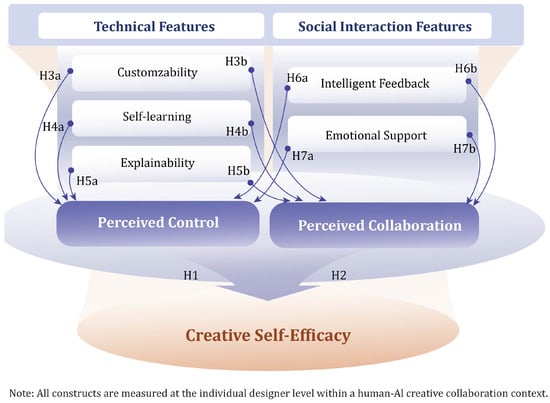
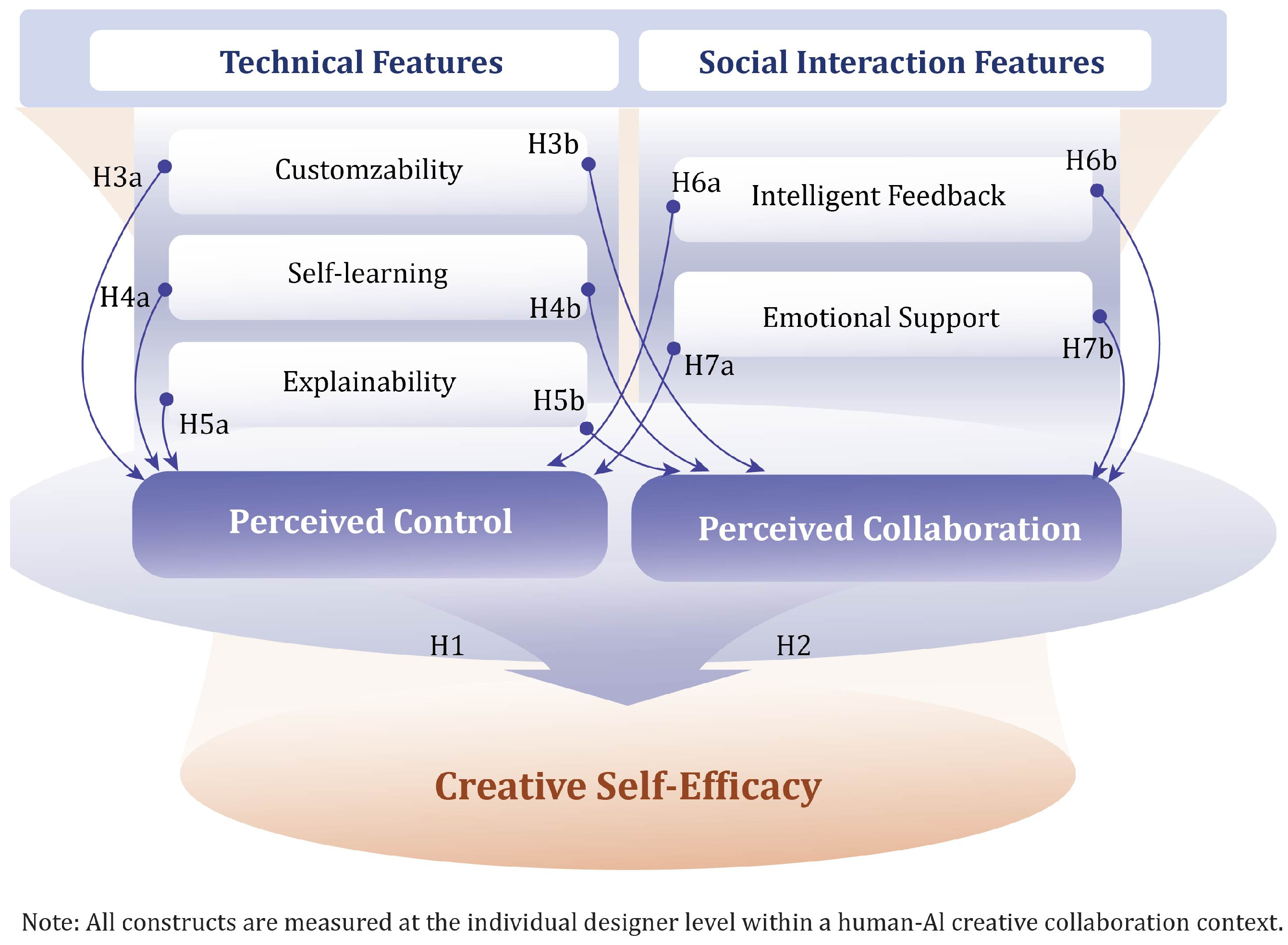
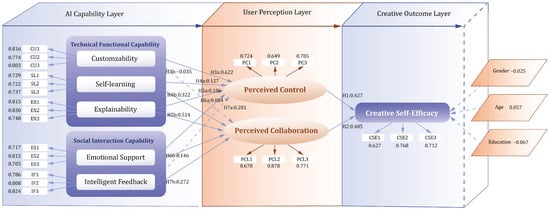
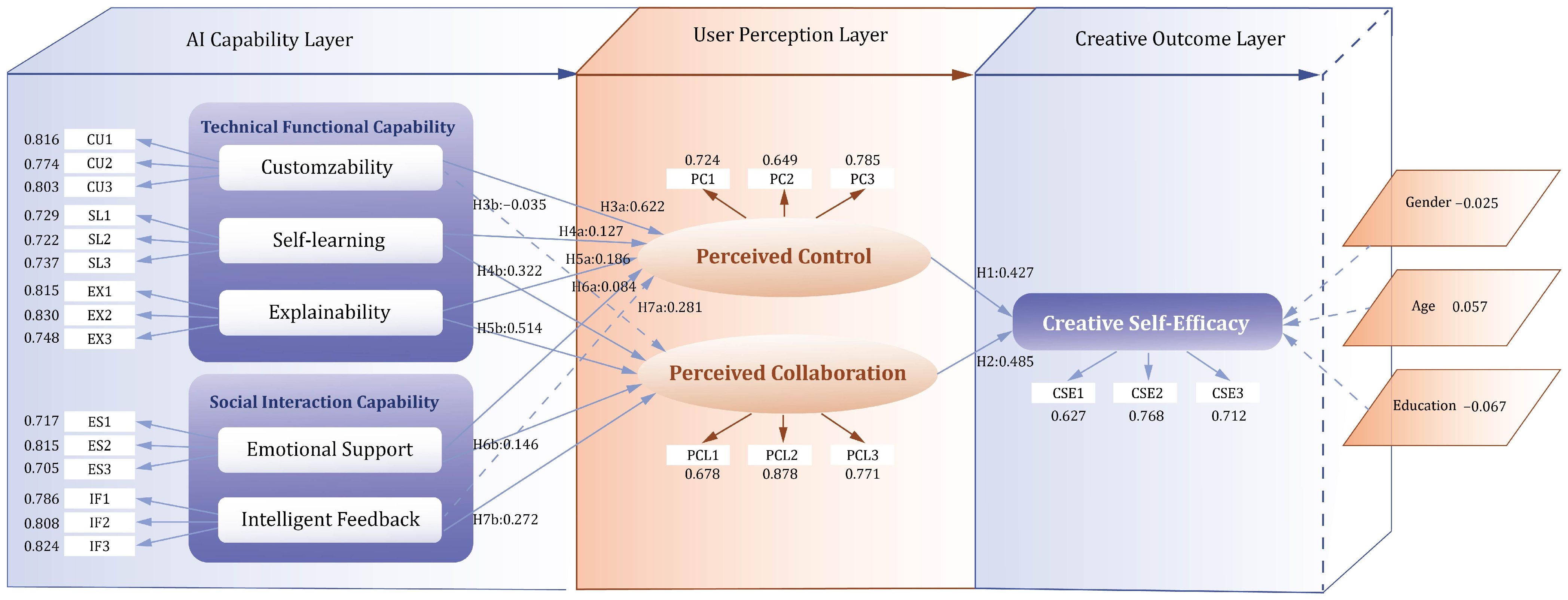

Disclaimer/Publisher’s Note: The statements, opinions and data contained in all publications are solely those of the individual author(s) and contributor(s) and not of MDPI and/or the editor(s). MDPI and/or the editor(s) disclaim responsibility for any injury to people or property resulting from any ideas, methods, instructions or products referred to in the content. |
© 2026 by the authors. Licensee MDPI, Basel, Switzerland. This article is an open access article distributed under the terms and conditions of the Creative Commons Attribution (CC BY) license.