


Highlights
Please indicate how your work links to systems science via your contributions to systems practice, theory, and or methodology.
- •
- The review synthesizes AI-enabled healthcare as a socio-technical configuration linking algorithms, data infrastructures, clinical work, organizational routines, governance mechanisms, and implementation processes.
- •
- The integrative systems schema connects AI functionality, data and interoperability infrastructure, human and organizational conditions, and governance, ethics, and regulation across implementation processes.
What are the main findings and/or the implications of the main findings?
- •
- Across 61 sources of evidence, reported applications included decision support, diagnostic classification, risk prediction, monitoring, workflow optimization, and documentation support; reported benefits were discussed alongside organizational and governance conditions.
- •
- The most frequently reported challenges involved validation and generalizability, data quality, interoperability, governance and accountability, privacy and security, explainability and trust, fairness, and workforce readiness.
Abstract
Artificial intelligence (AI) is embedded in healthcare through decision support, imaging, documentation, monitoring, digital twins, and smart-hospital infrastructures. This scoping review mapped technologies, healthcare contexts, socio-technical dimensions, governance mechanisms, and implementation conditions of AI-enabled healthcare systems. The review followed PRISMA-ScR. Scopus, Web of Science Core Collection, PubMed, and IEEE Xplore were searched on 1 July 2026 for English-language sources published from 2021 to 2026. All four authors participated in source selection; each record was assessed by two reviewers, and disagreements were resolved by consensus. Data were charted in matrices and synthesized descriptively and thematically. Of 2422 records, 426 duplicates were removed and 1996 were screened. Among 185 full-text reports, 124 were excluded, including 18 for insufficient methodological or empirical information, and 61 were included. Included sources then underwent a complementary seven-criterion cross-design appraisal scored from 1 to 3, without altering the final corpus. Technologies included machine learning, deep learning, decision support, explainable AI, natural language processing, large language models, interoperability frameworks, blockchain/IoMT, and digital twins. Challenges involved validation, data quality, interoperability, accountability, privacy, security, explainability, trust, bias, equity, and workforce readiness. Reported implementation facilitators included interoperable infrastructure, participatory design, lifecycle governance, continuous validation, and context-sensitive implementation.
1. Introduction
Artificial intelligence (AI) is becoming an increasingly important component of contemporary healthcare systems. Its use has expanded beyond isolated diagnostic algorithms to include clinical decision support, risk prediction, medical imaging, documentation, patient monitoring, workflow optimization, digital twins, connected-health technologies, and smart-hospital infrastructures [1,2,3,4]. In this context, an AI-enabled healthcare system can be understood as a configuration in which algorithms, clinical data, digital platforms, healthcare professionals, patients, organizational routines, and governance arrangements interact to support healthcare delivery. AI therefore does not operate as an autonomous technical artifact; its value emerges from its integration into a broader system of clinical work, institutional decision-making, and data-supported care.
The clinical potential of these systems is substantial. Machine-learning and deep-learning models have been developed for diagnostic classification, screening, risk prediction, and treatment support in areas such as digital pathology, osteopenia, chronic kidney disease, diabetes, cardiovascular disease, mental health, and opioid-use disorder [5,6,7,8,9,10]. Clinical decision-support systems have also been incorporated into care pathways for anticoagulation, hypertension, diabetes, and complex chronic conditions, illustrating how algorithmic recommendations may support guideline adherence, referral, task shifting, and care coordination [11,12,13]. More recent applications combine multimodal data, large language models, explainable AI, electronic health records, and wearable devices to produce predictive or personalized recommendations [3,14,15]. These developments suggest that AI may improve diagnostic accuracy, anticipate clinical deterioration, reduce administrative burden, and facilitate more timely and data-informed healthcare decisions.
Nevertheless, technical or predictive performance does not necessarily demonstrate that an AI application will remain safe, effective, or sustainable when introduced into routine practice. Models developed using controlled, retrospective, or institution-specific data may perform differently when applied to other populations, organizations, or clinical environments. Their usefulness may depend on data representativeness, external validation, local prevalence, workflow compatibility, and the capacity to identify performance deterioration after deployment [5,6,16,17]. High accuracy may therefore coexist with limited generalizability, insufficient transparency, or poor clinical integration. This distinction is important because healthcare decisions involve consequences for diagnosis, treatment, access to care, and patient safety that cannot be evaluated solely through computational metrics.
A related body of research examines AI as part of a broader digital and informational infrastructure. Smart-hospital ecosystems, electronic health record integration, FHIR-based architectures, semantic ontologies, learning health systems, and digital twins seek to connect heterogeneous sources of information with clinical workflows and continuous feedback processes [2,18,19,20,21]. These infrastructures may support data exchange, longitudinal analysis, organizational learning, and the scaling of AI applications across different services. However, fragmented databases, incompatible information systems, inconsistent clinical terminology, and uneven data quality can restrict model transportability, auditability, and implementation. Scenario-based evidence further suggests that automation introduced without adequate interoperability may merely relocate operational bottlenecks, whereas coordinated sequencing of data integration and AI deployment can improve system capacity and continuity of care [22]. Interoperability is therefore not only a technical property; it determines which data can be accessed, how their meaning is preserved, and whether AI outputs can be incorporated into healthcare decisions.
Healthcare delivery is also a complex socio-technical process. Clinical work depends on professional judgment, multidisciplinary coordination, patient relationships, time-sensitive workflows, organizational hierarchies, legal obligations, and resource constraints. Studies involving healthcare professionals, nurses, trainees, patients, managers, and implementers indicate that AI adoption is influenced by perceived usefulness, AI literacy, professional autonomy, trust, leadership, stakeholder participation, workflow fit, and clarity regarding responsibility [23,24,25,26,27,28,29]. These factors were reported as shaping whether technically functional systems were accepted, resisted, underused, or used inappropriately. Experiences with ambient documentation and AI-generated clinical alerts similarly show that outputs become useful only when professionals can understand, contextualize, and act upon them without losing meaningful control over care [4,30].
From a socio-technical perspective, implementation is not a final stage that occurs after an algorithm has been developed. It is a continuing process through which technical capabilities are aligned with professional roles, institutional routines, patient expectations, and organizational capacity. Co-design and complex adaptive systems research emphasizes the importance of involving end users, adapting technologies to local conditions, and using feedback to modify interventions over time [31]. Learning health system frameworks similarly position AI within recurrent cycles of data generation, evaluation, learning, and improvement rather than as a one-time technological acquisition [19,32]. This interpretation shifts the principal question from whether an AI model works under experimental conditions to how it can be integrated, governed, evaluated, and sustained within real healthcare systems.
The interpretation adopted in this review is informed by socio-technical systems thinking and complex adaptive systems. Socio-technical approaches emphasize the interdependence of technological components, people, workflows, organizational structures, external rules, and monitoring processes, whereas complex adaptive systems emphasize feedback, adaptation, emergence, and context-dependent interactions [31,33]. Learning health systems extend this logic through recurrent cycles of data generation, evaluation, learning, and improvement [19,32]. These perspectives provide interpretive lenses for the synthesis rather than eligibility criteria for study inclusion.
Governance has consequently become a central concern in healthcare AI. AI-enabled systems use sensitive personal and clinical data and may influence diagnosis, treatment, triage, resource allocation, and access to services. Their implementation raises questions concerning transparency, accountability, privacy, consent, cybersecurity, fairness, liability, regulatory adequacy, and human oversight [34,35,36,37]. Governance frameworks have been proposed to translate responsible-AI principles into organizational processes for model validation, documentation, ethical review, audit, risk management, and post-deployment monitoring [38,39,40]. Policy-oriented research also emphasizes that healthcare organizations require clear responsibility structures and coordinated regulatory arrangements capable of addressing technologies that may change after deployment or operate across institutional boundaries [41].
Security and data governance add further systems-level risks. AI models connected to electronic health records, digital platforms, wearable technologies, or Internet of Medical Things devices may be exposed to data poisoning, adversarial manipulation, unauthorized access, privacy breaches, and cyberattacks [34,42]. These risks can affect not only data confidentiality but also clinical reliability and patient safety. Similarly, the commercial use and secondary processing of health data create unresolved questions about consent, ownership, commodification, and public legitimacy [35]. Cybersecurity, privacy, and ethical governance should therefore not be treated as separate compliance issues; they form part of the conditions under which healthcare AI can be considered clinically trustworthy.
Several unresolved tensions remain within the field. One concerns the difference between technical development and real-world implementation. Numerous studies report promising diagnostic or predictive results, whereas implementation-oriented research identifies data-access constraints, organizational resistance, workflow disruption, integration costs, limited leadership support, and lengthy adoption processes [5,9,28,29,43]. A second tension concerns explainability. Explainable AI is frequently presented as a mechanism for improving transparency and trust, but explanations may provide little practical value when they are technically complex, unrelated to the clinical task, or presented without information about uncertainty and model limitations [30,40,44]. Explainability may therefore be necessary for some applications, but it is not sufficient to guarantee safety, accountability, or appropriate use.
A third debate concerns automation and human oversight. AI can reduce repetitive work and support clinical reasoning, but excessive reliance on automated outputs may weaken professional judgment or create ambiguity about responsibility when errors occur. Patients and healthcare professionals generally support AI more readily when it augments rather than replaces human decision-making and when meaningful oversight remains available [4,26,27,30]. A fourth tension concerns standardization and contextual adaptation. Common data models, interoperable architectures, and governance standards can facilitate deployment at scale, yet evidence from rural healthcare, telemedicine, public-health systems, and regions with different levels of digital maturity indicates that implementation must remain sensitive to infrastructure, organizational capacity, culture, population needs, and public trust [45,46,47]. A uniform implementation model may therefore be unsuitable for heterogeneous healthcare environments.
Despite the rapid expansion of the field, the available evidence remains fragmented across biomedical informatics, computer science, implementation research, organizational studies, ethics, law, public health, and health policy. Some publications examine specific models or clinical tasks, whereas others focus on professional readiness, interoperability, security, fairness, regulation, governance, or patient acceptability [19,34,37,38,39,41]. The evidence spans heterogeneous methodological and analytical approaches, including technical validation, implementation, organizational, governance, framework-development or framework-application, policy, and legal studies. Consequently, it does not form a homogeneous body from which a single pooled intervention effect can be estimated. Instead, the principal need is to map the range of technologies and contexts represented, identify how socio-technical and governance dimensions are conceptualized, and synthesize the barriers, facilitators, benefits, risks, and research gaps reported across different sources of evidence. These characteristics make a scoping review appropriate for examining the breadth, structure, and conceptual organization of this multidisciplinary field.
Previous reviews have addressed important but narrower aspects of healthcare AI implementation. Gama et al. examined frameworks used to support the translation of AI into healthcare practice and identified limited use of AI-specific implementation frameworks, whereas Chomutare et al. synthesized empirically reported barriers and facilitators using the Consolidated Framework for Implementation Research. These reviews established the importance of implementation context but primarily focused on implementation frameworks or barriers and facilitators rather than simultaneously integrating technological functionality, data and interoperability infrastructure, human and organizational conditions, governance, and implementation processes. Moreover, much of the evidence synthesized in these earlier reviews preceded the recent expansion of large language models, smart-hospital architectures, digital twins, and lifecycle-oriented responsible-AI governance. The gap addressed by the present review is therefore not the absence of prior reviews on healthcare AI, but the need for an updated systems-level synthesis connecting these interdependent dimensions within a common analytical structure [48,49].
Accordingly, this scoping review aims to map and integrate the literature on AI-enabled healthcare systems from socio-technical, governance, and implementation perspectives. In accordance with the Population/Participants–Concept–Context framework, the participants and stakeholders comprise healthcare professionals, patients, managers, implementers, healthcare organizations, and other actors represented in the evidence. The central concept is the development, deployment, governance, and use of AI-enabled healthcare systems. The contexts include hospitals, health services, clinical workflows, public health, telemedicine, digital health platforms, smart hospitals, and learning health systems. The review addresses the following questions: RQ1, which AI technologies, functions, and healthcare-system contexts are represented in the literature? RQ2, which socio-technical, governance, ethical, and regulatory dimensions are reported? RQ3, which implementation barriers, facilitators, benefits, risks, and future research priorities are identified? By integrating these domains, the review provides a systems-oriented synthesis of how technical, infrastructural, human, organizational, and governance conditions are represented across the evidence. The synthesis is intended to clarify their interdependence rather than to propose a validated causal model of implementation.
2. Materials and Methods
2.1. Study Design
A scoping review design was selected because the objective was to map the breadth, characteristics, and thematic organization of a heterogeneous evidence base rather than to estimate pooled intervention effects. The review was conducted and reported in accordance with the PRISMA Extension for Scoping Reviews (PRISMA-ScR) [50]. The identification, screening, eligibility, and inclusion process was documented using the PRISMA 2020 flow diagram [51]. The completed PRISMA-ScR checklist is provided separately as Supplementary Material.
The review was not prospectively registered. Review materials and supporting data are publicly available through the Open Science Framework at https://osf.io/d6ytz (accessed on 29 August 2026; OSF identifier: d6ytz) to support methodological transparency and reproducibility. The implications of the absence of a prospectively registered protocol are addressed in Section 4.10.
2.2. Review Questions and PCC Framework
For terminological clarity and scope delimitation, three levels were distinguished. AI technology refers to an algorithmic or computational method, such as machine learning, deep learning, natural language processing, or a large language model. An AI-enabled system refers to the integration of one or more AI technologies with data, software, devices, or clinical or organizational workflows. An AI-enabled healthcare system refers to the broader socio-technical configuration in which these components interact with healthcare professionals, patients, organizational processes, data infrastructures, and governance arrangements. This distinction defines the terminology and scope of the review; it was not used as a study-level analytical classification or as a measure of implementation readiness.
The review scope was operationalized using the Population/Participants–Concept–Context (PCC) framework. The population and participants component comprised healthcare professionals, patients, managers, implementers, healthcare organizations, and other stakeholders represented in the evidence. The central concept was the development, deployment, governance, and use of AI-enabled healthcare systems, including machine learning, deep learning, natural language processing, large language models, clinical decision support, explainable AI, digital twins, connected-health technologies, and governance or implementation frameworks. The context included hospitals, health services, clinical workflows, public health, telemedicine, digital health platforms, smart hospitals, and learning health systems.
The review addressed the following questions: RQ1, which AI technologies, functions, and healthcare-system contexts are represented in the literature? RQ2, which socio-technical, governance, ethical, and regulatory dimensions are reported? RQ3, which implementation barriers, facilitators, benefits, risks, and future research priorities are identified? The PCC components and review questions guided the eligibility criteria, data-charting variables, thematic coding structure, and synthesis of results.
RQ1 primarily operationalized the Concept and Context components of the PCC framework by mapping AI technologies, functions, and healthcare-system settings. RQ2 linked the Concept with Population/Participants by examining socio-technical, governance, ethical, and regulatory dimensions involving healthcare actors and organizations. RQ3 integrated the three PCC components by examining implementation barriers, facilitators, benefits, risks, and research priorities across stakeholders, AI-enabled systems, and healthcare contexts.
2.3. Information Sources and Search Strategy
The search was executed on 1 July 2026 in Scopus, Web of Science Core Collection, PubMed, and IEEE Xplore. The database-specific search equations reported in Supplementary Table S2 reproduce the searches originally executed and were retained unchanged.
Supplementary Table S1 separately reports a descriptive audit of Block 3 terms present in the charted Summary, Technology/Method, and Key Findings fields. This audit characterizes the terminology visible in the included evidence; it does not reconstruct database-specific indexing fields or identify the descriptor responsible for retrieval of an individual record.
The search architecture comprised three components. Block 1 (B1) represented AI technologies and functions, Block 2 (B2) represented healthcare-system contexts, and Block 3 (B3) delimited retrieval toward system-level issues relevant to the scope of the review. Unlike B1 and B2, the descriptors included in B3 were not intended to represent synonyms or interchangeable constructs. Rather, they constituted alternative retrieval signals across four related facets: socio-technical and organizational conditions; governance and responsible AI; implementation, adoption, and deployment; and system integration and interpretability. The functional organization of the three search components and the descriptors used within each component is summarized in Table 1.
Table 1.
Conceptual organization of the search descriptors.
In Scopus, B1 and B2 were linked using the W/7 proximity operator before combination with B3. The same conceptual architecture was adapted to the syntax supported by Web of Science and IEEE Xplore. PubMed combined Title/Abstract searching with the controlled vocabulary terms “Artificial Intelligence”[Mesh] and “Delivery of Health Care”[Mesh]. These database-specific implementations differed syntactically while preserving the same conceptual scope.
The searches retrieved 440 records from Scopus, 214 from Web of Science, 1649 from PubMed, and 119 from IEEE Xplore, yielding 2422 records before duplicate removal. No year or language limits were embedded in the search equations; these criteria were applied during eligibility assessment. No additional records were identified through citation searching, trial registries, organizational websites, grey-literature repositories, or direct contact with study authors. Complete database-specific equations, fields, operators, search dates, and retrieval counts are reported in Supplementary Table S2.
As a post hoc consistency check, the original search architecture was examined against selected included studies known to represent major dimensions of the review scope, including implementation studies applying NASSS [28] and CFIR [29], socio-technical analysis [37], governance and responsible-AI studies [38,39], and a learning-health-system approach [19]. The exercise confirmed the retrieval of known in-scope studies spanning these dimensions. Because the studies used in this check were already part of the retrieved corpus, the exercise was not used to assess search sensitivity, estimate recall, or demonstrate exhaustive search coverage.
2.4. Eligibility Criteria
Review articles whose primary purpose was to summarize or map an existing body of literature were excluded from the analytical corpus and, when relevant, were used only for conceptual positioning or comparison. Analytical or framework-oriented articles that drew on prior literature as source material remained eligible when they produced an original domain-specific analytical contribution relevant to the review questions. Under this operational distinction, sources [34,52,53] were classified as analytical articles rather than formal systematic, scoping, or narrative reviews. This wording clarifies the publication-type criterion applied to the final corpus and does not alter the 61-source corpus or the selection counts reported in Figure 1. Sources used solely for conceptual or methodological positioning did not contribute to study-level coding or frequency counts.
Figure 1.
PRISMA flow diagram for identification, screening, eligibility assessment and inclusion of studies.
Sources were eligible when they addressed AI-enabled healthcare systems or closely related AI applications in healthcare delivery, health services, hospitals, clinical workflows, digital health systems, public health, telemedicine, or smart-hospital contexts. To be substantively eligible, a source was required to contribute evidence concerning at least one of the following dimensions: AI technology or function; healthcare-system context; socio-technical configuration; governance, policy, ethical, or regulatory mechanisms; implementation barriers or facilitators; reported benefits or risks; or unresolved research gaps and future priorities.
The review considered English-language, peer-reviewed, full-text sources published between January 2021 and 1 July 2026. Eligible sources comprised peer-reviewed empirical or evaluative studies that provided evidence relevant to at least one review question, including observational, experimental, qualitative, quantitative, mixed-methods, implementation, case-based, simulation, framework-development or framework-application studies, and evidence-based policy or legal evaluations.
Records were excluded when they were not published in English; fell outside the defined publication period; represented an ineligible publication type; did not address the substantive scope of the review; or did not examine a healthcare-system or AI-implementation context. Reports were also excluded when the full text did not provide sufficient methodological or empirical information for reliable data charting and interpretation. Sources satisfying all eligibility criteria were included in the final corpus. A complementary cross-design appraisal was subsequently applied to the included sources and did not alter the study-selection counts.
The 2021–2026 publication window was established a priori, before final screening, to capture the contemporary phase of healthcare AI research, characterized by the expansion of generative AI, large language models, explainable AI, smart-hospital infrastructures, interoperability, lifecycle governance, and real-world implementation concerns. The English-language restriction was applied to ensure consistent full-text assessment, cross-design appraisal, and data charting by the review team. The peer-reviewed and full-text requirements were established to ensure that every source provided an identifiable and sufficiently traceable evidentiary basis for appraisal and synthesis.
2.5. Selection of Sources of Evidence
The selection process comprised duplicate removal, title-and-abstract screening, and full-text eligibility assessment. Retrieved records were organized using Mendeley Reference Manager, version 2.148.0 (Elsevier Ltd., The Boulevard, Langford Lane, Kidlington, Oxford OX5 1GB, United Kingdom), which supported bibliographic management and facilitated access to titles and abstracts during screening. The software was used as a support tool for record management and abstract review; it did not determine eligibility or make automated inclusion or exclusion decisions.
All four authors participated in source selection. Screening assignments were distributed so that each title-and-abstract record and each full-text report was assessed by two authors using the predefined eligibility criteria. Records requiring clarification or producing discordant decisions were re-examined against the eligibility rules and resolved through discussion and consensus. Cases that remained uncertain were discussed by the full author team. Reasons for exclusion were documented during full-text assessment. No automated screening classifier or prioritization algorithm was used to determine eligibility. Because reviewer-specific paired screening decisions were not retained as an independent dataset, no retrospective inter-reviewer agreement coefficient was calculated. The complete numerical selection process is presented in Figure 1.
2.6. Data Charting Process
A standardized data-charting form was developed from the PCC framework, the review questions, and the analytical domains established for the review. Before full data charting, the form was pilot-tested using five included studies representing different methodological and analytical designs. The four authors compared the pilot entries and clarified the variable definitions, coding instructions, and treatment of incomplete or ambiguous information before charting the full corpus.
For each included source, one author completed the initial data charting and a second author independently verified the extracted information against the full text. Charting and verification responsibilities were distributed among the four authors. Differences were resolved by returning to the relevant passages of the report and applying the operational definitions established in the codebook. Interpretations that remained unresolved were discussed by the full author team until consensus was reached.
Study investigators were not contacted to obtain or confirm additional information. Information not explicitly reported in a source was coded as “not reported” and was not inferred or imputed by the reviewers. The finalized matrices were cross-checked against the full texts, source metadata, review questions, and thematic codebook before the descriptive and thematic analyses were conducted.
The thematic coding framework combined deductive and inductive procedures. The principal analytical domains were defined deductively from RQ1–RQ3, while recurrent findings within these domains were refined inductively into more specific thematic categories. Categories were non-mutually exclusive; therefore, a source could contribute to several analytical categories but only once to the frequency of an individual category. Because coding verification was resolved through source re-examination and consensus rather than through a separately retained paired coding dataset, no retrospective inter-coder agreement coefficient was calculated.
The thematic coding categories were analytically distinct from the search descriptors: Block 3 delimited retrieval, whereas the thematic categories were developed from the review questions and refined from the content of the included sources. Consequently, the presence of a thematic code was not inferred solely from the search term through which a record could have been retrieved.
For the thematic categories reported quantitatively, binary study-level indicators were retained in the extraction matrix (1 = explicitly reported or assigned from the charted source evidence; 0 = not reported). Each source could contribute to multiple categories but only once to the frequency of an individual category. The thematic assignments generated during initial charting were verified against the corresponding source evidence before aggregate frequencies were calculated. Supplementary Table S1 permits direct reconstruction of the frequency counts reported in the Results. In addition, six non-mutually-exclusive evidence-stream indicators were coded at study level to support the evidence-stream synthesis presented in the Results. These assignments were based on the charted technological, healthcare-context, socio-technical, governance, and implementation evidence and are reported in Supplementary Table S1.
2.7. Data Items
The study-level charting form captured the internal reference number, title, authors, DOI, journal, publication year, geographical setting when explicitly reported, methodological or analytical approach, study objective, healthcare-system context, AI technology or method, principal findings, socio-technical dimensions, governance mechanisms, implementation barriers, implementation facilitators, reported benefits or outcomes, risks or ethical concerns, and research gaps or future directions. The matrix also retained binary indicators for the principal challenge and facilitator categories reported quantitatively in the synthesis, together with a separate indicator for scale-up and sustainability.
The thematic charting form captured nine analytical domains: (i) AI technologies and clinical functions; (ii) healthcare-system contexts; (iii) socio-technical dimensions; (iv) governance, policy, ethical, and regulatory mechanisms; (v) implementation barriers; (vi) implementation facilitators; (vii) reported or expected clinical, organizational, and system-level benefits; (viii) risks, limitations, and ethical concerns; and (ix) unresolved issues and future research priorities.
Country or geographical setting was coded according to the setting examined in the source rather than the institutional affiliation of its authors. Multicountry sources could be assigned to more than one geographical category. Source type was classified according to the methodological design described in the full text. AI technologies, healthcare contexts, and thematic domains were coded using non-mutually exclusive categories because one source could address multiple technologies, settings, barriers, facilitators, or governance concerns.
Missing information was not imputed. Frequency counts represented the number of included sources assigned to each category and did not represent participant-level prevalence, pooled effects, or comparative effect sizes.
Geographical setting was recorded only when it could be explicitly identified from the study context; otherwise, it was classified as not explicitly specified. Methodological and analytical approaches were recorded descriptively because several included studies combined more than one design or evaluative orientation. Funding information for individual included sources was not charted.
2.8. Critical Appraisal of Individual Sources of Evidence
Because the included studies employed heterogeneous empirical and evaluative designs—including quantitative, qualitative, mixed-methods, implementation, case-based, simulation, framework-development or framework-application, and evidence-based policy or legal approaches—a single design-specific risk-of-bias instrument was not applicable to the complete corpus. An adapted cross-design appraisal checklist was therefore used, drawing on principles of scoping-review methodology and structured evidence appraisal [50,54].
Seven criteria were assessed: QA1, clarity of the objective or research questions; QA2, adequacy and justification of the methodological or analytical approach; QA3, description of the healthcare context and evidence or data sources; QA4, transparency of data-collection or source-identification procedures; QA5, appropriateness and transparency of the analytical procedure; QA6, correspondence between the stated objectives and reported findings; and QA7, traceability between evidence, interpretation, and conclusions. The criteria were interpreted according to the methodological characteristics of each study rather than by imposing a single design-specific standard across the corpus.
The appraisal was designed primarily to assess reporting and analytical transparency and the traceability between evidence, interpretation, and conclusions across heterogeneous source types. It was not a design-specific risk-of-bias assessment and was not intended to compare methodological strength across designs. For conceptual and framework-oriented sources, QA4 referred to the transparency with which documents, evidence sources, cases, or other analytical inputs were identified rather than to primary data collection.
All four authors participated in the appraisal process. The same operational scoring criteria were applied to the included studies, and criterion-level disagreements were resolved through re-examination of the corresponding source evidence and consensus before the final appraisal matrix was consolidated.
Each criterion was scored as 1 = low compliance, 2 = partial compliance, or 3 = high compliance. After consensus, criterion-level scores were recorded in the appraisal matrix. The total appraisal score for report i was calculated as:
where represents the total appraisal score of source , and represents the final consensus score assigned to criterion . Total scores therefore ranged from 7 to 21 points. Scores of 7–12, 13–18, and 19–21 represented low, moderate, and high appraisal compliance, respectively. The appraisal classification was descriptive and was not used as an eligibility threshold or as a statistical weight in the synthesis. The operational criteria and scoring anchors used in the complementary appraisal are summarized in Table 2.
Table 2.
Complementary cross-design appraisal criteria and operational scoring anchors.
2.9. Synthesis of Results
Descriptive mapping was used to summarize publication year, source type, healthcare context, and AI technology. Thematic synthesis was conducted using non-mutually exclusive analytical categories aligned with RQ1–RQ3. One source could contribute to more than one category; consequently, category totals could exceed the 61 included sources. Initial thematic coding was verified against the full texts, and differences were resolved through application of the predefined coding rules and author consensus. Frequencies represented the number of sources assigned to each category and were not interpreted as pooled effects or participant-level prevalence. No meta-analysis, subgroup analysis, statistical sensitivity analysis, effect-size estimation, or certainty-of-evidence grading was performed. These frequencies represent patterns of reporting within the deliberately delimited corpus. They should not be interpreted as prevalence estimates for the wider healthcare-AI literature, measures of effect magnitude, indicators of evidence strength, or rankings of the relative importance of individual challenges.
Following study-level thematic coding, recurrent categories were consolidated into four higher-order domains: (i) AI functionality; (ii) data and interoperability infrastructure; (iii) human and organizational conditions; and (iv) governance, ethics, and regulation. Implementation-related barriers and facilitators were treated as cross-cutting processes connecting these domains. The resulting representation was used as an evidence-informed integrative synthesis of the reviewed corpus rather than as a statistically validated causal or predictive framework. Scale-up and sustainability were additionally coded as a cross-cutting implementation dimension when explicitly addressed; this dimension was identified in 25 of the 61 included studies.
3. Results
3.1. Selection of Sources of Evidence
The search identified 2422 records: 440 from Scopus, 214 from Web of Science, 1649 from PubMed, and 119 from IEEE Xplore. Before screening, 426 duplicate records were removed; no records were marked as ineligible by automation tools or removed for other reasons. A total of 1996 records were screened by title and abstract, and 1811 were excluded. The full texts of 185 reports were sought, and all were retrieved. After eligibility assessment, 124 reports were excluded: 36 were not in English, 31 were ineligible publication types, 22 were not aligned with the review scope, 18 provided insufficient methodological or empirical information, and 17 were outside the healthcare-system or AI-implementation context. Sixty-one sources of evidence were included in the final synthesis.
The complete identification, screening, full-text eligibility, and inclusion process, including the reasons for exclusion, is presented in Figure 1.
A descriptive audit of the charted fields in Supplementary Table S1 showed that 28 of the 61 included sources contained no explicit Block 3 descriptor. Explainable AI was identified in 14 sources and interoperability in 9; socio-technical, AI governance, data governance, and responsible AI terminology appeared in 3 sources each, while trustworthy AI, ethical challenge, and adoption challenge or barrier appeared in 1 source each. Organizational readiness, implementation science, algorithmic governance, deployment challenge or barrier, and governance challenge were not identified in the audited charted fields. These frequencies characterize terminology present in the included evidence and do not identify the database field or specific descriptor responsible for retrieval.
3.2. Characteristics of Included Sources
The final corpus comprised 61 included sources published between 2021 and 2026 and represented heterogeneous methodological and analytical designs. One study was published in 2021 (1.6%), three in 2022 (4.9%), five in 2023 (8.2%), seven in 2024 (11.5%), twenty-five in 2025 (41.0%), and twenty in 2026 (32.8%). Because the search was completed on 1 July 2026, the 2026 count represents a partial publication year and should not be interpreted as directly comparable with the complete preceding years.
The complementary cross-design appraisal showed a narrow score distribution: 49 sources (80.3%) scored 21 points, 11 (18.0%) scored 20, and one (1.6%) scored 19. The mean was 20.79, the median was 21, and the observed range was 19–21. Under the predefined scoring bands, all sources fell within the highest appraisal-compliance category. These scores reflect the reporting- and traceability-oriented criteria described in Section 2.8 and should not be interpreted as evidence of equivalent methodological strength. Study-level QA1–QA7 scores are reported in Appendix A (Table A1).
A specific geographical setting could be explicitly identified for 22 studies (36.1%), whereas 39 (63.9%) did not report a single geographical setting in the charted study context. Among the explicitly identified settings, Saudi Arabia was represented in four studies, Australia and the United States in three each, India in two, and the remaining national or regional contexts were represented individually. Study-level geographical information is provided in Supplementary Table S1.
The corpus represented heterogeneous methodological and analytical orientations. Based on the primary orientation assigned in Supplementary Table S1, 17 sources (27.9%) were empirical/evaluative, observational, or model-oriented studies; 12 (19.7%) involved framework development or application; 9 (14.8%) used qualitative approaches; 8 (13.1%) were case-based, implementation, intervention, or pilot studies; 6 (9.8%) were cross-sectional studies; 4 (6.6%) used analytical or legal-policy approaches in which prior evidence served as an input to a distinct analytical contribution; 3 (4.9%) used mixed methods; and 2 (3.3%) used simulation designs. These categories describe the primary methodological orientation of each source and do not imply equivalence in evidentiary strength.
The evidence was organized into six non-mutually-exclusive streams corresponding to the technologies, healthcare contexts, socio-technical conditions, governance mechanisms, and implementation concerns addressed by the review. Study-level assignments and aggregate counts were derived from Supplementary Table S1. The resulting evidence streams, their frequencies, and representative sources are summarized in Table 3.
Table 3.
Principal evidence streams represented in the included sources.
The six evidence streams can also be interpreted through the theoretical lenses adopted in this review. Clinical AI and prediction systems represent the technological subsystem; interoperability and digital infrastructure reflect the information and technical environment; professional readiness and human–AI interaction correspond to people and workflow dimensions; governance and regulation represent organizational and external-rule structures; and system-transformation studies emphasize feedback, adaptation, and learning. These relationships informed the higher-order synthesis presented in Figure 2 but should not be interpreted as causal pathways.
Figure 2.
Evidence-informed integrative systems schema for AI-enabled healthcare systems.
3.3. AI Technologies and Clinical Functions
The included sources addressed three broad groups of AI applications and supporting systems. The first comprised clinical decision-support and prediction systems, including models for diagnosis, screening, risk prediction, alert generation, and clinical classification. Explainable AI and deep-learning approaches were examined in digital pathology, pediatric osteopenia, chronic kidney disease, cardiovascular screening, opioid-use disorder risk, mental-health emergency returns, type 2 diabetes, arrhythmia detection, and AI-assisted medical imaging [5,6,7,8,9,10,14,15,16,17,52,55,56].
A second group addressed AI-enabled data and infrastructure environments, including digital twins, smart hospitals, EHR integration, FHIR-based interoperability, learning health systems, semantic frameworks, wearable data, and health-data platforms [1,2,3,18,19,20,21,22,32,53,57,65]. Vallée [1], for example, proposed a causal digital-twin framework for individualized counterfactual reasoning, while smart-hospital and learning-health-system studies emphasized the integration of heterogeneous data with clinical workflows and feedback processes [2,19].
A third group focused on governance and implementation-oriented frameworks rather than on individual predictive models. These studies examined responsible-AI capability, institutional governance, trustworthiness assessment, and implementation conditions relevant to healthcare organizations [38,39,40,43]. Across these groups, the evidence linked technical functionality with data infrastructure, organizational context, and governance requirements rather than treating AI applications as isolated computational tools.
3.4. Healthcare and System Contexts
The included evidence covered hospital-based care, health services, public health, telemedicine, rural healthcare, digital-health platforms, learning health systems, and patient-facing applications. Hospital contexts included diagnostic imaging, operating-room safety, clinical documentation, nursing practice, decision support, critical-care alerting, and organization-wide digital transformation [2,4,24,30,66].
Other sources examined healthcare delivery beyond the hospital setting, including public-health governance and responsible-AI capability [38,39,41], telemedicine and rural healthcare [45,47], and professional or student preparedness for AI use [23,60,61,62]. International research prioritization and broader health-system perspectives on the use of AI in healthcare delivery were also represented in the included evidence [67]. Chronic-disease management, mental-health care, and longitudinal data systems were also represented [12,13,25,32].
Across these contexts, AI was applied or proposed for risk prediction, screening, clinical decision support, documentation, data integration, monitoring, care coordination, and personalized recommendations [3,11,12,13,14,15,25,32]. The breadth of settings reinforces the need to interpret implementation findings in relation to the clinical, organizational, and infrastructural context in which each system is used.
3.5. Socio-Technical Dimensions
The reviewed evidence consistently situated AI use within interactions among professionals, patients, workflows, organizational routines, and digital infrastructures. Studies involving clinicians, trainees, nurses, and other healthcare personnel reported that AI literacy, perceived usefulness, confidence in algorithmic outputs, professional autonomy, and role clarity influenced attitudes toward adoption and use [23,24,25,26,60,61,62].
Patient-facing studies similarly identified trust, transparency, communication, and meaningful human oversight as recurrent considerations when AI informed diagnosis, treatment, or access to care [27,47]. At the organizational level, implementation studies reported the importance of workflow fit, leadership support, stakeholder involvement, and the capacity to incorporate AI tools into established care processes [28,29,43,46].
Implementation-oriented evidence therefore supports a socio-technical interpretation in which technical outputs gain practical value when users can understand, contextualize, and act on them within real clinical workflows [4,30]. These findings do not establish universal determinants of adoption; rather, they identify recurrent human and organizational conditions reported across the included sources.
3.6. Governance, Ethics, and Regulatory Concerns
Governance-related concerns were reported across clinical, organizational, and policy contexts. Recurrent issues included transparency, accountability, explainability, data governance, privacy, security, regulatory adequacy, fairness, and trustworthy AI. Studies of transparency and trustworthiness emphasized the need for documentation, interpretable outputs, and procedures for assessing whether AI recommendations can be used responsibly in clinical settings [40,44]. Security-oriented evidence identified data poisoning, adversarial threats, and cyberattacks as risks when AI systems are connected to clinical and digital-health infrastructures [34,42].
Institutional and policy studies emphasized operational governance structures, defined accountability, regulatory guidance, and mechanisms for ongoing evaluation [38,39,41]. The PEARL-PATHWAY and PH-RAIC frameworks, for example, address organizational capabilities for responsible AI governance [38,39], while policy analysis in the WHO European Region highlights coordinated oversight of health-data use and public accountability [41].
Ethical concerns were closely connected to patient rights and data use. Studies addressing health-data commodification, nursing perspectives, patient-facing systems, and palliative care reported concerns relating to privacy, consent, fairness, trust, and human oversight [24,35,63].
3.7. Implementation Barriers and Facilitators
Implementation barriers were multidimensional. Technical barriers included data quality, interoperability, external validation, generalizability, EHR integration, and reliability across clinical contexts [17,18,21]. Organizational barriers included limited implementation capacity, insufficient leadership support, unclear roles, workflow disruption, and weak planning for sustained evaluation [28,29,43]. Professional and patient barriers included limited AI literacy, uncertainty about accountability, low confidence in recommendations, concerns about loss of human oversight, and inadequate communication [23,27,62].
The study-level coding matrix showed that the most frequently reported challenge domains were validation and clinical safety (n = 56), data quality (n = 52), governance and accountability (n = 47), interoperability and workflow integration (n = 46), privacy and security (n = 39), explainability and trust (n = 38), bias and equity (n = 37), and workforce readiness (n = 35). Categories were non-mutually exclusive, and the underlying binary indicators are provided in Supplementary Table S1.
Reported facilitators included co-design, stakeholder engagement, transparent and explainable interfaces, targeted training, leadership support, digital infrastructure, data-governance capacity, staged deployment, and continuous monitoring [5,19,28,30,31,39]. The most frequently coded facilitator categories were monitoring and evaluation (n = 50), governance mechanisms (n = 33), stakeholder engagement (n = 27), training and capacity building (n = 25), infrastructure and interoperability support (n = 23), transparency and explainability (n = 21), and explicit use of implementation-science approaches (n = 10). Security-oriented studies also examined blockchain and hybrid deep-learning approaches for secure health-data transmission and management [58,59]. These frequencies indicate patterns of reporting within the corpus rather than causal effects or comparative importance. The principal analytical domains, recurrent challenges, and corresponding implementation implications are summarized in Table 4.
Table 4.
Thematic synthesis of AI-enabled healthcare systems.
To make the relationship between implementation problems and enabling responses more explicit, Table 5 pairs the principal challenge domains with the facilitators most directly associated with addressing them in the reviewed evidence. The pairings are interpretive correspondences and do not imply one-to-one causal relationships.
Table 5.
Correspondence between recurrent barriers and reported implementation facilitators.
3.8. Benefits, Risks, and Research Gaps
The reviewed evidence reported potential clinical, organizational, and system-level benefits of AI-enabled healthcare systems. These included support for diagnostic classification and risk prediction, more timely decision support, documentation assistance, integration of heterogeneous health information, and opportunities for continuous organizational learning [1,2,3,4,11,12,13,19]. Co-design studies further suggested that potential benefits were more likely to be operationally relevant when tools were aligned with local workflows and user requirements [31].
Recurrent risks included limited external validation and generalizability, fragmented or poor-quality data, privacy and cybersecurity threats, bias and inequitable outcomes, insufficient explainability, and unclear accountability [17,18,21,24,34,35,36,37,44]. Explainable interfaces may support clinical interpretation [5,30], but the reviewed literature did not support treating explainability as a substitute for validation, governance, or human oversight.
Important evidence gaps remained. Longitudinal evaluation of sustained real-world implementation, post-deployment performance, organizational adaptation, and unintended consequences was limited. Empirical evaluation of governance mechanisms was also less developed than normative guidance on responsible AI. Further research is needed in rural, resource-constrained, and underrepresented healthcare contexts and in comparative studies of implementation strategies across organizations [28,29,39,43,45,46,47].
3.9. Integrative Systems Synthesis
The thematic synthesis supports interpreting AI-enabled healthcare systems as configurations spanning four interdependent domains. The first concerns AI functionality, including machine learning, deep learning, natural language processing, large language models, digital twins, and clinical decision support. The second concerns data and interoperability infrastructure, including EHRs, interoperability standards, smart-hospital ecosystems, digital-health platforms, and connected medical devices. The third concerns human and organizational conditions, including professionals, patients, implementers, workflows, institutional culture, and workforce capability. The fourth concerns governance, ethics, and regulation, including accountability, transparency, privacy, security, fairness, regulatory oversight, and responsible-AI mechanisms.
Implementation operates across these domains by connecting technical validation with data integration, clinical work, organizational conditions, and lifecycle oversight. Figure 2 presents this evidence-informed integrative systems schema. It is intended as a structured synthesis of the reviewed corpus rather than as a validated causal, predictive, or implementation-readiness model.
4. Discussion
4.1. Principal Findings
This scoping review mapped AI-enabled healthcare systems across socio-technical, governance, and implementation perspectives. The included evidence extends beyond algorithmic performance to address the infrastructural, organizational, ethical, and regulatory conditions surrounding implementation. Applications included diagnostic support, predictive analytics, clinical workflow optimization, digital-health platforms, smart-hospital ecosystems, EHR integration, public-health governance, and patient-facing services.
The principal integrative contribution of the review is the organization of this heterogeneous evidence into four interdependent domains: AI functionality; data and interoperability infrastructure; human and organizational conditions; and governance, ethics, and regulation. Implementation operates across these domains, linking technical performance and validation with data integration, clinical work, organizational conditions, and lifecycle oversight. This structure provides the basis for the evidence-informed synthesis shown in Figure 2 and is consistent with the socio-technical and systems perspectives used to interpret the corpus.
The evidence also indicates a persistent gap between technical development and sustained use in routine care. Many sources addressed model development or short-term evaluation, whereas fewer examined long-term implementation, post-deployment monitoring, organizational adaptation, or accountability over time. Within the reviewed corpus, workforce preparation, stakeholder involvement, workflow integration, and governance capacity were repeatedly reported as conditions that may support implementation [29,43]. These patterns should be interpreted as recurring findings within a heterogeneous evidence base rather than as demonstrated causal determinants of implementation success.
4.2. AI-Enabled Healthcare Systems as Socio-Technical Systems
The findings support a socio-technical interpretation of AI-enabled healthcare systems in which algorithms operate within networks of clinicians, patients, managers, digital platforms, workflows, and institutional rules. Implementing an AI tool therefore involves more than inserting a computational model into an existing setting; it requires alignment between technical functions and the organization of care.
Studies involving professionals and patients reported that trust, perceived usefulness, transparency, clinical relevance, professional autonomy, and confidence in system outputs shaped acceptance and use [24,27]. This perspective is particularly important in clinical settings where decisions involve uncertainty, professional judgment, and ethical responsibility. AI systems may provide classifications, predictions, or alerts, but clinicians remain responsible for interpreting those outputs within the broader clinical context. Evidence from AI-generated alerts and clinical documentation suggests that these systems are most useful when they reduce cognitive or administrative burden without undermining meaningful professional oversight [4,30]. Socio-technical alignment was also context-dependent. Differences in workflows, patient populations, digital maturity, infrastructure, professional roles, and institutional capacity can affect how the same technology is used across settings [45,47]. The reviewed evidence therefore favors context-sensitive design, stakeholder participation, and post-deployment adaptation over a uniform implementation approach.
4.3. Governance as a Core Condition for Responsible AI
Governance in AI-enabled healthcare systems extends beyond general ethical principles or post-deployment compliance. The reviewed evidence supports lifecycle governance spanning data acquisition, model development, validation, deployment, monitoring, evaluation, and revision [38,39].
At the organizational level, governance mechanisms described in the literature included model documentation, validation across relevant populations, bias assessment, privacy and cybersecurity safeguards, explainability, accountability procedures, incident reporting, and structured trustworthiness assessments [38,39,40]. These mechanisms are especially relevant because healthcare AI may influence diagnosis, triage, treatment recommendations, resource allocation, and access to services.
Data governance adds further complexity. Research on health-data commodification and digital governance identified concerns regarding consent, ownership, secondary data use, and institutional trust [35]. Regulatory analyses also indicated that existing legal and institutional arrangements may be challenged by adaptive, data-intensive, or cross-organizational AI systems [36,41]. The reviewed evidence therefore supports governance approaches that combine regulatory clarity with ongoing oversight across the AI lifecycle.
4.4. Implementation Barriers and the Problem of Real-World Adoption
Technical implementation barriers included poor or inconsistent data quality, limited interoperability, inadequate external validation, and difficulty integrating AI into existing information systems and workflows [17,18,21]. Many healthcare organizations operate heterogeneous EHR environments, and inconsistent documentation or data standards can further constrain reliable deployment. Evidence using FHIR and semantic frameworks illustrates how interoperable infrastructure can support the integration of AI across clinical systems [18,20].
Additional contextual technical evidence illustrates how AI functionality can be connected to end-to-end operational pathways. Nainwal et al. [68] combined IoT-based data acquisition, adaptive feature extraction, heuristic optimization, and deep-learning classification in a multi-disease monitoring architecture. Lokhande and Chinnaiah [69] similarly integrated IoT-ECG preprocessing, hybrid deep-learning severity classification, and optimization of ICU resources. These studies are discussed as contextual literature and were not included in the 61-source analytical corpus or thematic frequency counts.
Organizational barriers were reported in relation to implementation capacity, leadership support, role clarity, workflow disruption, and planning for sustained evaluation [28,29,43]. These factors often interacted with technical constraints; for example, poor infrastructure may limit workflow integration, while weak governance can leave responsibilities for deployment and monitoring unclear. The evidence therefore suggests that implementation problems should be considered as interacting system conditions rather than isolated barriers.
Professional capability was another recurrent theme. Studies involving healthcare professionals, students, and implementers reported variation in knowledge, attitudes, and perceived competence related to AI use [23,60,61,62]. Training may therefore need to address not only how a tool functions but also its intended use, limitations, workflow implications, and ethical responsibilities. Patient-facing studies similarly identified transparency, human oversight, and clear communication as relevant to acceptability [27].
4.5. Interoperability and Data Infrastructure as System-Level Enablers
Interoperability emerged as both a technical requirement and a system-level enabling condition. AI applications often depend on data from EHRs, clinical workflow systems, public-health platforms, monitoring devices, and other organizational databases. Without interoperable infrastructure, these data sources may remain fragmented, limiting scalability, auditability, and integration into routine care. Studies of EHR integration and structured health data showed how semantic interoperability can support data exchange, clinical continuity, organizational learning, and monitoring [18,21].
Semantic interoperability is particularly important because healthcare data are heterogeneous, context-dependent, and clinically complex. Ontology-based frameworks and smart-healthcare transformation models emphasize the need for shared vocabularies, structured data models, and meaningful integration across organizational units [20]. These capabilities are relevant when organizations move from isolated AI pilots toward broader digital transformation.
Learning health systems provide a complementary systems perspective. In learning health systems, data, practice, and evaluation are linked through iterative feedback cycles. AI can contribute to these cycles by identifying patterns, predicting outcomes, and informing decisions, but its use also requires ongoing validation, monitoring, and governance [19].
4.6. Explainability, Trust, and Human Oversight
Explainability was recurrently discussed in relation to trust, transparency, and appropriate clinical use. The reviewed evidence indicates that explainability is not solely a technical property; explanations must also be understandable and relevant to the clinical task.
Studies of diagnostic models and AI-generated alerts reported that explanations may support clinician confidence when they clarify why a recommendation was produced and how it should be interpreted in context [5,30]. However, explainability alone does not address inadequate validation, weak governance, poor workflow fit, or insufficient human oversight. It should therefore be considered alongside accountability, documentation, training, and lifecycle monitoring.
This issue is particularly salient for large language models and other generative AI systems whose outputs may appear persuasive despite uncertainty or error. Evidence on AI-supported documentation suggests potential efficiency benefits but also highlights the need for verification, audit trails, and governance mechanisms that reduce inappropriate reliance on inaccurate outputs [4]. Across the reviewed literature, human oversight remained relevant to complex clinical decisions, particularly where AI was used to augment rather than replace professional judgment.
4.7. Equity, Safety, and Ethical Sustainability
Equity and safety emerged as cross-cutting concerns. AI systems may reproduce or amplify inequities when training data are incomplete, biased, or unrepresentative of the populations in which models are deployed. Relevant sources discussed differences in population characteristics, access to care, documentation practices, and social determinants of health, while simulation-based research showed that fairness outcomes can vary with both system design and implementation context [37].
Cybersecurity risks were also reported across connected healthcare environments. Integration with digital infrastructures, medical devices, and data-sharing systems can expose AI-enabled healthcare systems to data poisoning, intrusion, privacy breaches, and manipulation of model outputs [34,42]. These risks place cybersecurity within the broader governance and patient-safety discussion rather than treating it as an isolated technical issue.
Bhasha and Panda [70] provide an additional contextual example of an IoMT security architecture combining data sanitation, key generation, data restoration, and deep-learning-based authentication. This study is discussed for contextual interpretation and was not included in the 61-source thematic frequency counts.
Long-term ethical sustainability also depends on how AI affects professional roles, patient relationships, accountability, and public trust over time. Studies of telemedicine, patient-facing AI, and health-data governance reported that transparency, oversight, and legitimate stakeholder participation were relevant to maintaining trust [27,35,47].
4.8. Implications for Systems Theory and Healthcare Practice
The integrative schema should be interpreted in relation to, rather than as a replacement for, existing healthcare implementation and governance frameworks. NASSS emphasizes non-adoption, abandonment, scale-up, spread, and sustainability [28]; CFIR provides constructs for examining implementation context [29]; HALO positions AI within learning-health-system cycles [19]; PEARL-PATHWAY and PH-RAIC address governance and responsible-AI capability [38,39]; and ALTAI provides structured dimensions for assessing trustworthy AI [40]. The contribution of the present synthesis is to bring four domains that are often examined separately—AI functionality; data and interoperability infrastructure; human and organizational conditions; and governance, ethics, and regulation—into a single evidence-informed systems representation with implementation processes operating across them. The schema is integrative and is not presented as a newly validated implementation theory.
At a systems level, AI performance is one component of a broader configuration involving data flows, professional practice, organizational routines, governance structures, and patient trust. Systems thinking is relevant because it emphasizes feedback, adaptation, emergent behavior, and context-dependent interaction. AI implementation can therefore be examined as organizational and system change rather than solely as technology adoption.
For practice, the synthesis supports a structured pre-implementation assessment of the conditions relevant to the intended deployment context, including data quality and infrastructure, interoperability, workflow fit, workforce capability, governance capacity, patient communication, and ethical oversight. These considerations should be treated as context-specific implementation conditions rather than as a validated readiness scale.
Implementation may also benefit from staged deployment and stakeholder participation. Co-design and complex-adaptive-system studies suggest that involving relevant users during design and implementation may improve alignment between AI tools and local care processes [31].
For policymakers, the findings highlight the need for governance arrangements that support innovation while addressing accountability, validation, post-deployment monitoring, data protection, human oversight, and equity. Particular attention is warranted in resource-constrained, rural, and digitally fragmented settings, where infrastructure and institutional capacity may shape implementation differently.
4.9. Implications for Future Research
Longitudinal research is needed to examine how AI systems perform after deployment and how organizations respond to changes in performance, workflow, user behavior, and unintended consequences over time. Much of the current evidence concerns feasibility, accuracy, or perceptions at a specific point in time, whereas sustained implementation and post-deployment adaptation remain less frequently studied.
Future studies should also use implementation-science frameworks more explicitly when appropriate. CFIR, NASSS, and lifecycle-governance approaches provide constructs for examining context, workflow, leadership, stakeholder involvement, scale-up, and sustainability [28,29]. Comparative and theory-informed research could help determine how implementation strategies vary across clinical and organizational settings rather than assuming that the same approach will generalize across healthcare systems.
Governance mechanisms also require stronger empirical evaluation. The literature frequently recommends bias auditing, transparency documentation, human-oversight protocols, data-governance structures, and post-deployment monitoring, but evidence of their real-world effects on safety, trust, and accountability remains limited. Future research should therefore evaluate how these mechanisms operate in practice and under what conditions they achieve their intended functions.
Greater attention is also needed in rural healthcare, public-health systems, resource-constrained settings, and underrepresented populations. Existing evidence indicates that infrastructure, organizational capacity, culture, regulation, and public trust can shape implementation [45,47]. Research in more diverse contexts would improve understanding of how these conditions influence adoption, use, and outcomes.
4.10. Limitations of the Review
This review has several limitations. First, the searches were limited to Scopus, Web of Science Core Collection, PubMed, and IEEE Xplore and to English-language, peer-reviewed sources published between January 2021 and 1 July 2026. Relevant studies indexed elsewhere, published in other languages, or using terminology not captured by the search architecture may therefore have been missed. The publication window intentionally emphasized contemporary healthcare AI and excluded earlier foundational socio-technical and implementation literature from the analytical corpus, although earlier work was used for theoretical interpretation.
Second, record-level database provenance and the specific Block 3 descriptor responsible for retrieval could not be reconstructed retrospectively because those fields were not retained in a verifiable form after deduplication. The post hoc consistency check was based on studies already retrieved by the search and therefore could not identify potentially relevant studies that the search failed to capture. Accordingly, this exercise should not be interpreted as an assessment of search sensitivity, recall, or exhaustive coverage.
Third, the synthesis depended on the level of detail reported in the included sources. Variation in reporting of implementation context, governance mechanisms, and system integration limited direct comparison across heterogeneous designs. The complementary cross-design appraisal primarily assessed reporting and analytical transparency and evidence–conclusion traceability; its narrow score distribution indicates limited discriminatory capacity and should not be interpreted as evidence of equivalent methodological strength or risk of bias across sources.
Fourth, the review was not prospectively registered, which limits the ability to demonstrate that all eligibility and analytical decisions were specified in advance. Finally, as a scoping review, this study maps patterns within the included corpus rather than estimating pooled effects, intervention effectiveness, or certainty of evidence, and the rapidly evolving healthcare-AI literature may change after the 1 July 2026 search date.
5. Conclusions
This scoping review mapped 61 sources on AI-enabled healthcare systems across socio-technical, governance, and implementation perspectives. The evidence covered diagnostic and predictive applications, clinical decision support, digital-health platforms, EHR integration, smart-hospital infrastructures, professional and patient interaction, and governance mechanisms. Across these diverse settings, technical capability was consistently discussed alongside data, organizational, and governance conditions.
The synthesis organizes the evidence into four interdependent domains: AI functionality; data and interoperability infrastructure; human and organizational conditions; and governance, ethics, and regulation. Implementation operates across these domains. Technical performance remains important, but the reviewed literature also reported challenges relating to external validation, data quality, interoperability, workflow integration, human oversight, and accountability. The four-domain structure therefore provides a systems-oriented representation of the conditions discussed across the corpus rather than a validated model of implementation success.
Governance was recurrently addressed throughout the evidence base. Transparency, accountability, privacy, cybersecurity, fairness, regulatory oversight, and human oversight were reported in relation to responsible implementation, although their frequency and level of empirical evaluation varied. These findings support treating governance as a lifecycle concern extending from development and validation through deployment and post-deployment monitoring.
Implementation barriers included fragmented data infrastructures, limited interoperability, workflow disruption, unclear professional roles, limited AI literacy, patient trust concerns, and weak long-term evaluation. Co-design, stakeholder engagement, training and capacity building, interoperable infrastructure, governance mechanisms, transparent interfaces, staged deployment, and continuous monitoring were repeatedly reported as implementation facilitators. These categories should be interpreted as recurrent patterns in the reviewed evidence rather than as demonstrated causal determinants of successful implementation.
For practice, the synthesis supports evaluating relevant pre-implementation system conditions, engaging stakeholders throughout deployment, and establishing documented procedures for oversight, monitoring, and accountability. For policy, the findings highlight the need for governance arrangements that support innovation while protecting safety, equity, privacy, and public trust. Future research should prioritize longitudinal and comparative evaluations of AI use in routine care, particularly in rural, public-health, resource-constrained, and underrepresented settings, and should test governance and implementation mechanisms empirically.
Overall, AI-enabled healthcare systems are best examined as socio-technical configurations in which algorithms, data infrastructures, professional practice, organizational processes, and governance interact over time. A systems perspective helps clarify how these components are integrated, governed, monitored, and adapted in real healthcare environments.
Supplementary Materials
The following supporting information can be downloaded at: https://www.mdpi.com/article/10.3390/systems14091124/s1, Table S1: Study-level characteristics, methodological and analytical approaches, geographical settings, charted thematic domains, binary coding variables, Block 3 descriptor audit, evidence-stream assignments, and supporting evidence for the 61 included sources; Table S2: Complete database-specific search strategies, search dates, fields, operators, limits, and numbers of records retrieved; PRISMA-ScR Checklist, completed reporting checklist for the present scoping review.
Author Contributions
Conceptualization, A.B.G., A.G.-M. and W.E.Q.B.; methodology, A.B.G., A.G.-M., W.E.Q.B. and J.A.R.G.; validation, A.B.G., A.G.-M., W.E.Q.B. and J.A.R.G.; formal analysis, A.B.G., A.G.-M., W.E.Q.B. and J.A.R.G.; investigation, A.B.G., A.G.-M., W.E.Q.B. and J.A.R.G.; data curation, A.B.G., A.G.-M., W.E.Q.B. and J.A.R.G.; writing—original draft preparation, W.E.Q.B. and J.A.R.G.; writing—review and editing, A.B.G., A.G.-M., W.E.Q.B. and J.A.R.G.; visualization, J.A.R.G.; supervision, A.G.-M.; project administration, W.E.Q.B. All authors have read and agreed to the published version of the manuscript.
Funding
This research received no external funding.
Institutional Review Board Statement
Not applicable.
Informed Consent Statement
Not applicable.
Data Availability Statement
The data and materials supporting this scoping review are openly available in the Open Science Framework (OSF) at https://osf.io/d6ytz (accessed on 29 August 2026).
Acknowledgments
The authors acknowledge the academic and institutional support provided by their respective universities during the preparation of this manuscript. During the preparation of this manuscript, the authors used OpenAI’s ChatGPT (version GPT-4) for language refinement. The authors have reviewed and edited the output and take full responsibility for the content of this publication.
Conflicts of Interest
The authors declare no conflicts of interest.
Abbreviations
The following abbreviations are used in this manuscript:
| AI | Artificial intelligence |
| CDSS | Clinical decision support system |
| CFIR | Consolidated Framework for Implementation Research |
| DL | Deep learning |
| ECG | Electrocardiogram |
| EHR | Electronic health record |
| FHIR | Fast Healthcare Interoperability Resources |
| ICU | Intensive care unit |
| IoMT | Internet of Medical Things |
| IoT | Internet of Things |
| LLM | Large language model |
| ML | Machine learning |
| NASSS | Non-adoption, Abandonment, Scale-up, Spread and Sustainability |
| NLP | Natural language processing |
| OSF | Open Science Framework |
| PCC | Population/Participants–Concept–Context |
| PRISMA | Preferred Reporting Items for Systematic Reviews and Meta-Analyses |
| PRISMA-ScR | Preferred Reporting Items for Systematic Reviews and Meta-Analyses Extension for Scoping Reviews |
Appendix A. Study-Level Complementary Cross-Design Appraisal of the 61 Included Sources Using the QA1–QA7 Criteria
To provide study-level transparency of the complementary cross-design appraisal, Table A1 reports the scores assigned to each of the 61 included sources across the seven predefined criteria (QA1–QA7), together with the corresponding total score.
Table A1.
Study-level complementary cross-design appraisal of the 61 included sources using the QA1–QA7 criteria.
References
- Vallée, A. From Prediction to Intervention: Causal Digital Twins for Personalized Clinical Decision Support. J. Transl. Med. 2026, 24, 441. [Google Scholar] [CrossRef] [Scilit] [PubMed]
- Chow, W.; Venkataraman, N.; Oh, H.C.; Ramanathan, S.; Sridharan, S.; Arish, S.M.; Wong, K.C.; Hay, K.K.X.; Hoo, J.F.; Tan, W.H.L.; et al. Building an Artificial Intelligence and Digital Ecosystem: A Smart Hospital’s Data-Driven Path to Healthcare Excellence. Singap. Med. J. 2025, 66, S75–S83. [Google Scholar] [CrossRef] [Scilit] [PubMed]
- Fernandes Prabhu, D.; Gurupur, V.; Stone, A.; Trader, E. Integrating Artificial Intelligence, Electronic Health Records, and Wearables for Predictive, Patient-Centered Decision Support in Healthcare. Healthcare 2025, 13, 2753. [Google Scholar] [CrossRef] [Scilit] [PubMed]
- Sumner, J.; Lim, Y.W.; Tan, T.; Makmur, A.; Forbes, P.; Phua, J.; Quek, L.S.; Ngoh, C.L.Y. The MediVoice Implementation Journey: Ambient Artificial Intelligence for Clinical Documentation. Front. Digit. Health 2026, 8, 1764465. [Google Scholar] [CrossRef] [Scilit] [PubMed]
- Yang, P. Explainable AI for Classifying Vertebral Fracture Histology in Digital Spine Pathology. Front. Med. 2026, 12, 1726453. [Google Scholar] [CrossRef] [Scilit] [PubMed]
- Harris, C.E.; Liu, L.; Almeida, L.; Kassick, C.; Makrogiannis, S. Artificial Intelligence in Pediatric Osteopenia Diagnosis: Evaluating Deep Network Classification and Model Interpretability Using Wrist X-Rays. Bone Rep. 2025, 25, 101845. [Google Scholar] [CrossRef] [Scilit] [PubMed]
- Yin, Y.; Workman, E.; Ma, P.; Cheng, Y.; Shao, Y.; Goulet, J.L.; Sandbrink, F.; Brandt, C.; Spevak, C.; Kean, J.T.; et al. A Deep Learning Analysis for Dual Healthcare System Users and Risk of Opioid Use Disorder. Sci. Rep. 2025, 15, 3648. [Google Scholar] [CrossRef] [Scilit] [PubMed]
- Ahmed, A.; Saleem, M.; Alzeen, M.; Birur, B.; Fargason, R.E.; Burk, B.G.; Alhassan, A.; Al-Garadi, M.A. Explainable AI for Mental Health Emergency Returns: Integrating Large Language Models with Predictive Modeling. JAMIA Open 2026, 9, ooag065. [Google Scholar] [CrossRef] [Scilit] [PubMed]
- Zaferani, N.; Afrash, M.R.; Moulaei, K. Predicting and Classifying Type 2 Diabetes Using a Transparent Ensemble Model Combining Random Forest, k-Nearest Neighbor, and Neural Networks. Sci. Rep. 2025, 16, 1892. [Google Scholar] [CrossRef] [Scilit] [PubMed]
- Moreno-Sánchez, P.A. Data-Driven Early Diagnosis of Chronic Kidney Disease: Development and Evaluation of an Explainable AI Model. IEEE Access 2023, 11, 38359–38369. [Google Scholar] [CrossRef] [Scilit]
- Shah, S.; Switzer, S.; Shippee, N.D.; Wogensen, P.; Kosednar, K.; Jones, E.; Pestka, D.L.; Badlani, S.; Butler, M.; Wagner, B.; et al. Implementation of an Anticoagulation Practice Guideline for COVID-19 via a Clinical Decision Support System in a Large Academic Health System and Its Evaluation: Observational Study. JMIR Med. Inform. 2021, 9, e30743. [Google Scholar] [CrossRef] [Scilit] [PubMed]
- Jindal, D.; Sharma, H.; Gupta, Y.; Ajay, V.S.; Roy, A.; Sharma, R.; Ali, M.; Jarhyan, P.; Gupta, P.; Srinivasapura Venkateshmurthy, N.; et al. Improving Care for Hypertension and Diabetes in India by Addition of Clinical Decision Support System and Task Shifting in the National NCD Program: I-TREC Model of Care. BMC Health Serv. Res. 2022, 22, 688. [Google Scholar] [CrossRef] [Scilit] [PubMed]
- Román-Villarán, E.; Alvarez-Romero, C.; Martínez-García, A.; Escobar-Rodríguez, G.A.; García-Lozano, M.J.; Barón-Franco, B.; Moreno-Gaviño, L.; Moreno-Conde, J.; Rivas-González, J.A.; Parra-Calderón, C.L. A Personalized Ontology-Based Decision Support System for Complex Chronic Patients: Retrospective Observational Study. JMIR Form. Res. 2022, 6, e27990. [Google Scholar] [CrossRef] [Scilit] [PubMed]
- Huh, Y.; Noh, M.; Ji, D.; Oh, Y.; Sun, S. Multimodal PPG-Based Arrhythmia Detection Using a CLIP-Initialized Multi-Task U-Net and LLM-Assisted Reporting. Sensors 2026, 26, 2316. [Google Scholar] [CrossRef] [Scilit] [PubMed]
- Attai, K.; Ekpenyong, M.; Amannah, C.; Asuquo, D.; Ajuga, P.; Obot, O.; Johnson, E.; John, A.; Maduka, O.; Akwaowo, C.; et al. Enhancing the Interpretability of Malaria and Typhoid Diagnosis with Explainable AI and Large Language Models. Trop. Med. Infect. Dis. 2024, 9, 216. [Google Scholar] [CrossRef] [Scilit] [PubMed]
- Alhumaid, M.; Fayoumi, A.G. Hybrid CNN-Swin Transformer Model to Advance the Diagnosis of Maxillary Sinus Abnormalities on CT Images Using Explainable AI. Computers 2025, 14, 419. [Google Scholar] [CrossRef] [Scilit]
- Shayea, G.G.; Zabil, M.H.M.; Albahri, A.S.; Hamid, R.A.; Albahri, O.S.; Alamoodi, A.H.; Sharaf, I.M. Validation Framework for Robust and Explainable Machine Learning Models in Autism Spectrum Disorder Triage. Mesopotamian J. Big Data 2025, 2025, 448–475. [Google Scholar] [CrossRef] [Scilit] [PubMed]
- Amar, F.; April, A.; Abran, A. Integrating Unstructured EHR Data Using an FHIR-Based System: A Case Study with Problem List Data and an FHIR IPS Model. Electronics 2025, 14, 4134. [Google Scholar] [CrossRef] [Scilit]
- Zai, A.H.; Adibuzzaman, M.; McManus, D.D.; Walkey, A. The HALO Model: A Learning Health System Framework for Artificial Intelligence. Learn. Health Syst. 2026, 10, e70100. [Google Scholar] [CrossRef] [Scilit] [PubMed]
- Zhao, S.; Zhong, H.; Ge, B.; Zhao, X. The Ontology Framework and Challenges of Smart Healthcare System Transformation Using Natural Language Processing and Latent Dirichlet Allocation. Health Inform. J. 2025, 31, 14604582251381280. [Google Scholar] [CrossRef] [Scilit] [PubMed]
- Khan, S.; Akhtar, N.; Mushtaq, M.F.; Abdel Samee, N.; Mahmoud, N.F.; Ashraf, I. Towards Robust Electronic Health Record Systems: Integrating Formal Verification and Process Modeling Techniques. BMC Med. Res. Methodol. 2025, 25, 215. [Google Scholar] [CrossRef] [Scilit] [PubMed]
- May, P.; Brookman-May, S.D.; Garrahy, E.; von Büren, J. Sequencing AI Automation and Data Interoperability in Oncology Using a Scenario-Planning Framework Coupled with Discrete-Event Simulation: Proof-of-Concept Study. J. Med. Internet Res. 2026, 28, e92642. [Google Scholar] [CrossRef] [Scilit] [PubMed]
- Syeda, A.F.; Alriyami, F.; Alshebli, A.; Alketbi, M.; Rahma, A.; Al-Houqani, M. Preparing Tomorrow’s Physicians for AI-Driven Healthcare: Insights from a Study on Medical Students’, Interns’, and Residents’ Knowledge, Attitudes, and Educational Needs. Front. Med. 2026, 13, 1799061. [Google Scholar] [CrossRef] [Scilit] [PubMed]
- Rony, M.K.K.; Numan, S.M.; Akter, K.; Tushar, H.; Debnath, M.; Johra, F.T.; Akter, F.; Mondal, S.; Das, M.; Uddin, M.J.; et al. Nurses’ Perspectives on Privacy and Ethical Concerns Regarding Artificial Intelligence Adoption in Healthcare. Heliyon 2024, 10, e36702. [Google Scholar] [CrossRef] [Scilit] [PubMed]
- Alsalman, Z. Artificial Intelligence in Mental Health Care: Task-Specific Perspectives of Professionals in Saudi Arabia. Healthcare 2026, 14, 701. [Google Scholar] [CrossRef] [Scilit] [PubMed]
- Uygun Ilikhan, S.; Ülke, S.; Özer, M.; Perc, M.; Ayhan, Y. Optimistic and Ambivalent Attitudes toward Clinical Artificial Intelligence. Turk. J. Med. Sci. 2026, 56, 860–871. [Google Scholar] [CrossRef] [Scilit] [PubMed]
- Chandrasekaran, R.; Takale, L.; Moustakas, E. Listening to Patients’ Voices on the Use of AI in Health Care: Cross-Sectional Study. J. Med. Internet Res. 2025, 27, e77501. [Google Scholar] [CrossRef] [Scilit] [PubMed]
- Fernando, M.; Abell, B.; McPhail, S.M.; Tyack, Z.; Tariq, A.; Naicker, S. Applying the Non-Adoption, Abandonment, Scale-up, Spread, and Sustainability Framework Across Implementation Stages to Identify Key Strategies to Facilitate Clinical Decision Support System Integration Within a Large Metropolitan Health Service: Interview and Focus Group Study. JMIR Med. Inform. 2024, 12, e60402. [Google Scholar] [CrossRef] [Scilit] [PubMed]
- Janssen, A.; Shah, K.; Teede, H.; Shaw, T. Implementers Perspectives on the Routine Use of Artificial Intelligence in Health Services: A Qualitative Study Using the Consolidated Framework for Implementation Research (CFIR). Health Serv. Insights 2025, 18, 11786329251392423. [Google Scholar] [CrossRef] [Scilit] [PubMed]
- Rahman, J.; Delaforce, A.; Bradford, D.; Li, J.; Magrabi, F.; Cook, D.; Brankovic, A. The Role of Explanations in AI-Generated Alerts: Qualitative Study of Clinical Views on Explainable AI in Predictive Tools. JMIR Hum. Factors 2026, 13, e81460. [Google Scholar] [CrossRef] [Scilit] [PubMed]
- Pinero de Plaza, M.A.; Yadav, L.; Kitson, A. Co-Designing, Measuring, and Optimizing Innovations and Solutions within Complex Adaptive Health Systems. Front. Health Serv. 2023, 3, 1154614. [Google Scholar] [CrossRef] [Scilit] [PubMed]
- Santisteban, J.A.; Rotenberg, D.; Kloiber, S.; Maslej, M.M.; Ansari, A.; Amani, B.; Courtney, D.; Farrokhi, F.; Freeman, N.; Hassan, M.; et al. The BrainHealth Databank: A Systems Approach to Data-Driven Mental Health Care and Research. Front. Neuroinform. 2025, 19, 1616981. [Google Scholar] [CrossRef] [Scilit] [PubMed]
- Sittig, D.F.; Singh, H. A New Sociotechnical Model for Studying Health Information Technology in Complex Adaptive Healthcare Systems. Qual. Saf. Health Care 2010, 19, i68–i74. [Google Scholar] [CrossRef] [Scilit] [PubMed]
- Abtahi, F.; Seoane, F.; Pau, I.; Vega-Barbas, M. Data Poisoning Vulnerabilities Across Health Care Artificial Intelligence Architectures: Analytical Security Framework and Defense Strategies. J. Med. Internet Res. 2026, 28, e87969. [Google Scholar] [CrossRef] [Scilit] [PubMed]
- Al Qwaid, M. Perceptions of Health Data Commodification in AI-Driven Healthcare Systems in Saudi Arabia. Front. Artif. Intell. 2025, 8, 1559302. [Google Scholar] [CrossRef] [Scilit] [PubMed]
- Benneh Mensah, G. Examining Ghana’s Health Professions Regulatory Bodies Act, 2013 (Act 857) To Determine Its Adequacy in Governing the Use of Artificial Intelligence in Healthcare Delivery and Medical Negligence Issues. Mesopotamian J. Artif. Intell. Healthc. 2024, 2024, 20–27. [Google Scholar] [CrossRef] [Scilit] [PubMed]
- Stanley, E.A.M.; Tsang, R.Y.; Gillett, H.; Souza, R.; Vigneshwaran, V.; Kang, C.; McCradden, M.D.; Wilms, M.; Forkert, N.D. Connecting Algorithmic Fairness and Fair Outcomes in a Sociotechnical Simulation Case Study of AI-Assisted Healthcare. Nat. Commun. 2025, 17, 788. [Google Scholar] [CrossRef] [Scilit] [PubMed]
- Alsaigh, R.; Mehmood, R.; Katib, I.; Almuzaini, A.A.; Albouq, S.S.; Alshmrany, S. Evidence-Driven AI Governance for Healthcare: A PEARL-PATHWAY Analysis of Madinah. Int. J. Adv. Comput. Sci. Appl. 2026, 17, 198. [Google Scholar] [CrossRef] [Scilit]
- Zahid, A.; Sharma, R.; Ahmed, R. Public Health Responsible AI Capability (PH-RAIC) Framework: A Conceptual Model for Integrating AI into Public Health Agencies. Healthcare 2026, 14, 1364. [Google Scholar] [CrossRef] [Scilit] [PubMed]
- Rajamäki, J.; Gioulekas, F.; Rocha, P.A.L.; del Garcia, X.T.; Ofem, P.; Tyni, J. ALTAI Tool for Assessing AI-Based Technologies: Lessons Learned and Recommendations from SHAPES Pilots. Healthcare 2023, 11, 1454. [Google Scholar] [CrossRef] [Scilit] [PubMed]
- Adib, K.; Letchford, N.; Dunning, H.E.; Salama, N.; Tolias, Y.; De Barros, J.; Azzopardi-Muscat, N.; Kluge, H.H.; Novillo-Ortiz, D. Governance of Artificial Intelligence for Health Systems, WHO European Region. Bull. World Health Organ. 2026, 104, 374–385. [Google Scholar] [CrossRef] [Scilit] [PubMed]
- Benmalek, M.; Seddiki, A.; Haouam, K.-D. SNN-IoMT: A Novel AI-Driven Model for Intrusion Detection in Internet of Medical Things. Comput. Model. Eng. Sci. 2025, 143, 1157–1184. [Google Scholar] [CrossRef] [Scilit]
- Angelina, Q.; Begum, K.; Kim, H.-C.; Tripathy, S.; Singhal, D.; Singh, S. A Structural Analysis of AI Implementation Challenges in Healthcare. Algorithms 2025, 18, 189. [Google Scholar] [CrossRef] [Scilit]
- Fehr, J.; Jaramillo-Gutierrez, G.; Oala, L.; Gröschel, M.I.; Bierwirth, M.; Balachandran, P.; Werneck-Leite, A.; Lippert, C. Piloting a Survey-Based Assessment of Transparency and Trustworthiness with Three Medical AI Tools. Healthcare 2022, 10, 1923. [Google Scholar] [CrossRef] [Scilit] [PubMed]
- Cain, T.; Curtis, R.; Singh, B.; Smith, A.E.; Brinsley, J.; Maher, C.; Davis, A. Exploring Plausible Futures for Artificial Intelligence in Rural Healthcare: Insights from Participatory Foresight Methods. Front. Digit. Health 2026, 8, 1750172. [Google Scholar] [CrossRef] [Scilit] [PubMed]
- Wibowo, M.F.; Pyle, A.; Lim, E.; Ohde, J.W.; Liu, N.; Karlström, J. Insights Into the Current and Future State of AI Adoption Within Health Systems in Southeast Asia: Cross-Sectional Qualitative Study. J. Med. Internet Res. 2025, 27, e71591. [Google Scholar] [CrossRef] [Scilit] [PubMed]
- Binsar, F.; Hamsal, M.; Tenggono, E.; Abdurohman, M.; Hanafi, R.; Wahyudi, I. Public Trust in AI-Enabled Telemedicine: Affective, Cognitive, and Structural Dimensions Insights from Multi-Platform Big Data Analytics. Front. Med. Technol. 2026, 8, 1789495. [Google Scholar] [CrossRef] [Scilit] [PubMed]
- Gama, F.; Tyskbo, D.; Nygren, J.; Barlow, J.; Reed, J.; Svedberg, P. Implementation Frameworks for Artificial Intelligence Translation Into Health Care Practice: Scoping Review. J. Med. Internet Res. 2022, 24, e32215. [Google Scholar] [CrossRef] [Scilit] [PubMed]
- Chomutare, T.; Tejedor, M.; Svenning, T.O.; Marco-Ruiz, L.; Tayefi, M.; Lind, K.; Godtliebsen, F.; Moen, A.; Ismail, L.; Makhlysheva, A.; et al. Artificial Intelligence Implementation in Healthcare: A Theory-Based Scoping Review of Barriers and Facilitators. IJERPH 2022, 19, 16359. [Google Scholar] [CrossRef] [Scilit] [PubMed]
- Tricco, A.C.; Lillie, E.; Zarin, W.; O’Brien, K.K.; Colquhoun, H.; Levac, D.; Moher, D.; Peters, M.D.J.; Horsley, T.; Weeks, L.; et al. PRISMA Extension for Scoping Reviews (PRISMA-ScR): Checklist and Explanation. Ann. Intern. Med. 2018, 169, 467–473. [Google Scholar] [CrossRef] [Scilit] [PubMed]
- Page, M.J.; McKenzie, J.E.; Bossuyt, P.M.; Boutron, I.; Hoffmann, T.C.; Mulrow, C.D.; Shamseer, L.; Tetzlaff, J.M.; Akl, E.A.; Brennan, S.E.; et al. The PRISMA 2020 Statement: An Updated Guideline for Reporting Systematic Reviews. BMJ 2021, 372, n71. [Google Scholar] [CrossRef] [Scilit] [PubMed]
- Olusayo, A.V.; Afolalu, S.A.; Onaivi- Odusina, L.A.; Akpor, O.A.; Ekundina, V.O. The Role of AI in Enhancing Diagnosis and Treatment Monitoring of Viral Infections in Orphaned Children. NIPES J. Sci. Technol. Res. 2025, 7, 3258–3264. [Google Scholar] [CrossRef] [Scilit]
- Lăzăroiu, G.; Gedeon, T.; Halicka, K.; Szpilko, D. Generative Artificial Intelligence-Driven Medical Digital Twin Technologies in Blockchain Internet of Things Wearable Sensor and Computer Vision-Based Extended Reality Healthcare Metaverse. Eng. Manag. Prod. Serv. 2025, 17, 27–50. [Google Scholar] [CrossRef] [Scilit]
- Peters, M.D.J.; Marnie, C.; Tricco, A.C.; Pollock, D.; Munn, Z.; Alexander, L.; McInerney, P.; Godfrey, C.M.; Khalil, H. Updated Methodological Guidance for the Conduct of Scoping Reviews. JBI Evid. Synth. 2020, 18, 2119–2126. [Google Scholar] [CrossRef] [Scilit] [PubMed]
- Muneer, S.; Abbas, S.; Shah, A.A.; Alharbi, M.; Aldossary, H.; Fatima, A.; Ghazal, T.M.; Adnan, K.M. Responsible CVD Screening with a Blockchain Assisted Chatbot Powered by Explainable AI. Sci. Rep. 2025, 15, 11558. [Google Scholar] [CrossRef] [Scilit] [PubMed]
- Lu, C.; Zhang, J.; Liu, R. Deep Learning-Based Image Classification for Integrating Pathology and Radiology in AI-Assisted Medical Imaging. Sci. Rep. 2025, 15, 27029. [Google Scholar] [CrossRef] [Scilit] [PubMed]
- Benis, A.; Grosjean, J.; Disson, F.; Crisan-Vida, M.; Weber, P.; Stoicu-Tivadar, L.; Staccini, P.; Darmoni, S.J. Empowering Healthcare Education: A Multilingual Ontology for Medical Informatics and Digital Health (MIMO) Integrated to Artificial Intelligence Powered Training in Smart Hospitals. Health Inform. J. 2024, 30, 14604582241287010. [Google Scholar] [CrossRef] [Scilit] [PubMed]
- Kiruthikadevi, K.; Sivaraj, R.; Vijayakumar, M. A Blockchain and Hybrid Deep Learning for Secure and Efficient Healthcare Data Transmission and Management. Teh. Vjesn.-Tech. Gaz. 2024, 31, 2140–2145. [Google Scholar] [CrossRef] [Scilit]
- Ali, A.; Ali, H.; Saeed, A.; Ahmed Khan, A.; Tin, T.T.; Assam, M.; Ghadi, Y.Y.; Mohamed, H.G. Blockchain-Powered Healthcare Systems: Enhancing Scalability and Security with Hybrid Deep Learning. Sensors 2023, 23, 7740. [Google Scholar] [CrossRef] [Scilit] [PubMed]
- Kumar, R.; Singh, A.; Kassar, A.S.A.; Humaida, M.I.; Joshi, S.; Sharma, M. Adoption Challenges to Artificial Intelligence Literacy in Public Healthcare: An Evidence Based Study in Saudi Arabia. Front. Public Health 2025, 13, 1558772. [Google Scholar] [CrossRef] [Scilit] [PubMed]
- Khan, Z.; Adil, T.; Oduoye, M.O.; Khan, B.S.; Ayyazuddin, M. Assessing the Knowledge, Attitude and Perception of Extended Reality (XR) Technology in Pakistan’s Healthcare Community in an Era of Artificial Intelligence. Front. Med. 2024, 11, 1456017. [Google Scholar] [CrossRef] [Scilit] [PubMed]
- Alqaissi, N.; Qtait, M.; Farajalla, F.; Al-Tamimi, M. Knowledge, Attitudes, Practices, and Barriers toward Artificial Intelligence Integration among Nursing and Health Sciences Students: A Cross-Sectional Study. Digit. Health 2026, 12, 20552076261452364. [Google Scholar] [CrossRef] [Scilit] [PubMed]
- Qiu, M.; Wu, Y.; Zeng, L.; Zhang, F. Ethical Considerations of AI Integration in Palliative Care: A Qualitative Study. BMC Palliat. Care 2026, 25, 132. [Google Scholar] [CrossRef] [Scilit] [PubMed]
- Yang, J.; Kim, A.R. Prioritizing Strategic Fields for International Collaborative Research In Healthcare: A Focus on Korea-UK Partnership. Open Public Health J. 2025, 18, e18749445410222. [Google Scholar] [CrossRef] [Scilit]
- Bhar, A.; Sengupta, S.; Choudhury, S. A Knowledge-Driven Semantic Framework for Non-Functional Requirement Engineering in Intelligent Healthcare Systems. Discov. Artif. Intell. 2026, 6, 446. [Google Scholar] [CrossRef] [Scilit]
- Nguyen, N.A.A.; Holderread, B.; Lee, G.; Reddy, D.; Schwartz, R. Roberta Integrating Image-Based Artificial Intelligence in the Operating Room: Enhancing Safety and Efficiency While Navigating Ethical Considerations. Telehealth Med. Today 2025, 10, 1–7. [Google Scholar] [CrossRef] [Scilit]
- Shah, H.; Jayabalan, B.; Mery, A. The Utilization of Artificial Intelligence in Life Science Research and Healthcare Delivery. Salud Cienc. Tecnol. 2023, 3, 450. [Google Scholar] [CrossRef] [Scilit]
- Nainwal, M.; Madhu Sudhana Reddy, Y.; Dhaygude, A.D.; Ramesh, G.; Govindasamy, C.; Mouli, D.V.V.V.C.H. A Novel Framework of IoT-Based Multi-Disease Monitoring System Using Heuristic Improvement of Adaptive Dilated and Attention-Based Deep Learning Approaches. Cybern. Syst. 2026, 57, 1084–1129. [Google Scholar] [CrossRef] [Scilit]
- Lokhande, P.P.; Chinnaiah, K. Heart Disease Detection and Prognosis Using IoT-Based ECG Sensor Data with Hybrid Deep Learning Architecture and Optimal Resource Allocation. Cybern. Syst. 2025, 56, 1002–1052. [Google Scholar] [CrossRef] [Scilit]
- Bhasha, S.J.; Panda, S. Data Privacy Preservation and Authentication Scheme for Secured IoMT Communication Using Enhanced Heuristic Approach with Deep Learning. Cybern. Syst. 2026, 57, 939–980. [Google Scholar] [CrossRef] [Scilit]
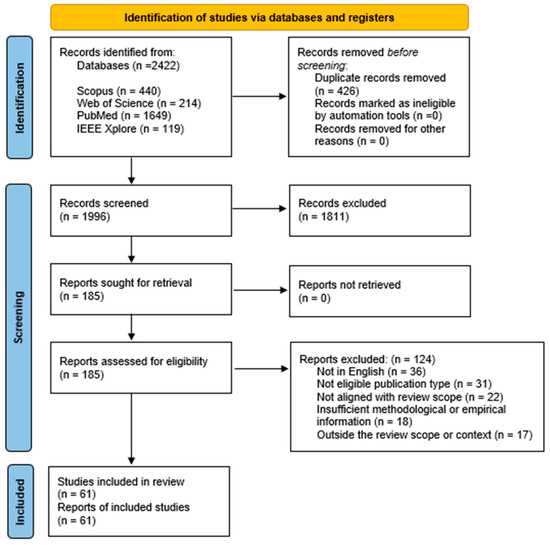
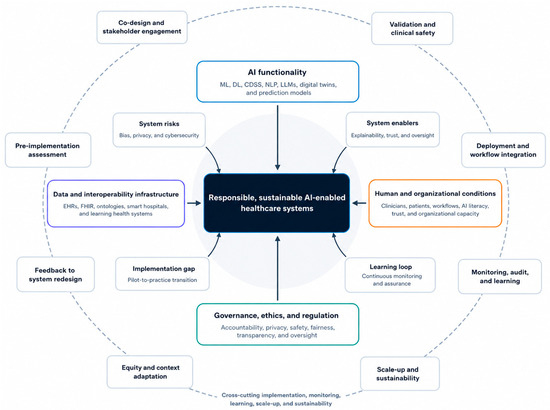

Disclaimer/Publisher’s Note: The statements, opinions and data contained in all publications are solely those of the individual author(s) and contributor(s) and not of MDPI and/or the editor(s). MDPI and/or the editor(s) disclaim responsibility for any injury to people or property resulting from any ideas, methods, instructions or products referred to in the content. |
© 2026 by the authors. Licensee MDPI, Basel, Switzerland. This article is an open access article distributed under the terms and conditions of the Creative Commons Attribution (CC BY) license.