


Abstract
Grounded in the knowledge-based view and the emerging logic of digital knowledge governance, this study investigates how blockchain adoption strategies reshape inter-firm knowledge-sharing and sustainable innovation. A game theory and decision-optimization model is developed to capture the interplay among blockchain cost, knowledge trust, and collaboration incentives under four adoption scenarios between knowledge creators and users. The results uncover a double-threshold mechanism: when blockchain costs are high, the technology suppresses collaboration by increasing coordination frictions; yet as costs fall below a critical level, blockchain shifts from a trust-reinforcing tool to a catalyst for co-creation efficiency and joint environmental performance. Interestingly, partial adoption can yield a trust paradox-enhancing local reliability but diminish system-wide innovation synergy. As adoption diffuses, the equilibrium dynamically evolves from non-adoption to asymmetry and eventually bilateral digital trust, producing higher social welfare and resilience. Among asymmetric modes, creator-led adoption consistently outperforms user-led adoption, underscoring the strategic value of upstream knowledge transparency. The findings extend the knowledge-based view to the context of digital trust architecture and provide actionable insights for policymakers and firms seeking to build trust-based, knowledge-driven, and digitally sustainable innovation ecosystems.
1. Introduction
In recent years, global enterprises have been undergoing an innovation wave centered on green transformation. From the eco-design of electric vehicles to the circular production systems in fashion and the vision of carbon-neutral cities, green innovation has become a driving force for sustainable development. Much existing research measures green innovation as a firm’s strategic outcome by coding dummy variables. It is often a systemic process built on cross-organizational knowledge-sharing and collaborative innovation [1]. However, cross-organizational knowledge-sharing in sustainable innovation is not entirely clear in the literature. For example, Tesla accelerates the diffusion of clean energy technologies by opening its patents. BMW and CATL share green manufacturing data for battery recycling. H&M co-develops low-carbon fibers with suppliers of recycled materials. These cases highlight that breakthroughs in green innovation depend on knowledge co-creation and resource synergy among firms [2]. Doing so would require cooperation and collaboration across organizations, thereby suggesting the need for an exploration of knowledge-sharing in sustainable innovation.
Yet, in such cross-organizational collaborations, a long-overlooked issue has become increasingly prominent: the lack of knowledge trust and information transparency [3]. While firms recognize the value of sharing green knowledge, they often face challenges such as unverifiable data authenticity, concerns over intellectual property protection, and information asymmetry [4]. In effect, such distrust drives firms to withhold core knowledge, undermining innovation efficiency. More importantly, green innovation knowledge is often tacit, cumulative, and highly context-dependent, which makes it difficult for it to be fully priced and transferred through a simple market-based one-time transaction. Unlike that of standardized products, its value usually depends on repeated interaction, mutual adaptation, and ongoing verification during the collaboration process. For instance, Prada’s recycled nylon series was once questioned for its “green authenticity”. Similar concerns arise among firms when no effective mechanism exists to verify the authenticity of partners’ green innovations, leading to reduced collaboration performance and weakened social trust [5]. Therefore, in cross-organizational green innovation, knowledge and new technologies are more effectively transferred through sustained collaborative relationships supported by robust social exchange mechanisms and trust, rather than through isolated one-time market transactions.
For achieving improved business performance in green innovation, some studies have turned to blockchain technology as a potential solution for cross-organizational trust [6]. In this endeavor, the decentralized, tamper-proof, and traceable nature of blockchain makes it a technological infrastructure for knowledge trust [7], enabling verification of key data and knowledge sources during innovation [8]. Studies have shown that blockchains can enhance information transparency and credibility in supply chains and open innovation platforms and inter-firm R&D collaborations [9,10].
However, three major research gaps remain. First, most studies focus on blockchain applications in product traceability or supply chain tracking [11], with limited attention to its governance role in knowledge-sharing and collaborative innovation. Second, prior research on inter-organizational cooperation has emphasized the role of repeated interactions in sustaining collaboration, showing that repeated games may foster cooperative behavior more effectively than one-shot interactions [12,13]. However, existing blockchain adoption models in green innovation often assume unilateral decision-making and pay limited attention to bilateral strategic adoption choices of collaborating partners in a static setting [14]. In this study, we focus on a single-period analytical framework to examine how the knowledge creator and the knowledge user strategically choose blockchain adoption under different trust and cost conditions, rather than modeling repeated-game dynamics. Third, the threshold relationship among blockchain costs, trust levels, and collaborative performance has not been systematically analyzed, making it difficult to explain why blockchains may reduce cooperation efficiency under certain conditions.
To bridge these gaps, this study develops an analytical framework based on game theory and decision optimization. It explores firms’ blockchain adoption strategies and their performance implications in cross-organizational knowledge-sharing. Four strategy scenarios are modeled: both parties do not adopt blockchain (NN), only the knowledge creator adopts (BN), only the knowledge user adopts (NB), and both adopt (BB). Through equilibrium analysis, we reveal how blockchain adoption motives evolve under varying cost and trust conditions, and how this affects economic, environmental, and social performance.
In seeking to address the above research inquiries, our study contributes to the literature on knowledge-sharing and sustainability innovation in three ways. First, this paper introduces blockchain as a trust mechanism in collaborative innovation and clarifies its role in knowledge verification and transparency from the perspective of inter-firm knowledge governance. Second, this study constructs a bilateral blockchain adoption model, illustrating the interactive effects and cost thresholds between upstream and downstream partners. Third, by comparing innovation performance, environmental impact, and social welfare across adoption strategies, it identifies the optimal collaborative pathway for blockchain-enabled innovation. Practically, the study provides policy insights for governments, strategic guidance for enterprises building digital trust systems, and decision references for promoting green innovation collaboration.
The rest of the paper is organized as follows. We begin by reviewing the literature on the theory of knowledge-based view, knowledge-sharing and green innovation, followed by blockchain applications. The next section explains our conceptualization and methods. The findings are followed by a discussion and conclusion where we state the implications of our findings being beneficial for knowledge-sharing and sustainable innovation.
2. Literature Review
2.1. Knowledge-Based View: Inter-Firm Green Innovation Collaboration and Knowledge-Sharing
Drawing on the knowledge-based view (KBV), this study extends it through a knowledge-sharing perspective to examine how organizations leverage digitalization to drive sustainability-oriented innovation. The knowledge-based view (KBV) posits that knowledge is the firm’s most strategically significant resource, underpinning its capacity to innovate, adapt, and achieve sustained competitive advantage [15]. The KBV focuses on how firms gather, integrate, and apply knowledge through their internal processes and structures [16]. It extends the Resource-Based View (RBV) by emphasizing knowledge as a key driver of innovation, efficiency, and adaptability in dynamic environments.
Ref. [17] posits that knowledge is “socially constructed” and is viewed as residing in “organizing of human resources”. Knowledge-sharing refers to “an exchange of experiences, facts, knowledge, and skills all through the organization” [18]. Knowledge assets of an organization, ranging from employee expertise and organizational routines to digital data and intellectual capital, build up the foundation for creating value in dynamic environments, particularly under conditions of digital and environmental transformation. Hence, knowledge is no longer confined within firm boundaries via digitalization and technological channels. The knowledge-sharing perspective extends the KBV by recognizing that knowledge is increasingly co-created through networks of digital platforms, partners, and stakeholders. Following this theoretical vein, firms participate in cross-connected systems of knowledge exchange, where digital technologies such as artificial intelligence (AI), blockchain, and big data analytics enable the capture, verification, and diffusion of sustainability-oriented knowledge across organizational and geographical boundaries. Within the knowledge-sharing process, knowledge management capabilities, such as green absorptive capacity, data governance, and organizational learning, become critical for aligning digital and sustainability strategies [19].
The advancement of green innovation relies heavily on inter-firm collaboration and knowledge-sharing [20]. Green technologies are complex and systemic. No single firm can complete the innovation process independently [21]. Further, green innovation mechanisms operationalize this knowledge to generate sustainable products, processes, and business models that contribute to environmental and social impact objectives [22]. Therefore, knowledge co-creation among enterprises has become a key pathway for achieving low-carbon transition and efficient resource allocation [7].
Through knowledge-sharing, firms can integrate technological expertise and innovation resources from different stages of production [23]. This enhances the efficiency of green R&D and the scalability of innovation outcomes [24].
Despite these advances, persistent challenges remain in establishing trustworthy environments for inter-firm knowledge-sharing. Early studies focused on the economic and environmental performance of collaboration [25]. Later work shifted attention to knowledge flow mechanisms and organizational coordination structures [26]. Joint innovation is now viewed as a source of synergistic effects in competitive environments [27]. Much of the existing research assumes that collaborative knowledge is freely accessible [28], overlooking the tacit, asymmetric, and often unmeasurable nature of sustainability-related knowledge [29]. Yet, such synergy depends strongly on trust and transparency between partners. These characteristics make knowledge-sharing not only a technical issue but also a problem of knowledge governance and trust among firms’ networks. When verification and disclosure mechanisms are weak, firms often protect their proprietary knowledge by reducing input, thereby negatively affecting overall innovation performance. As such, building mechanisms that ensure authenticity, transparency, and incentive compatibility in knowledge exchanges are critical to green innovation.
The absence of effective mechanisms for knowledge verification and information disclosure often leads firms to protect themselves by reducing knowledge input, weakening overall innovation performance [29]. Many theoretical models assume that knowledge in collaboration is fully accessible [28]. However, green innovation knowledge is often tacit, asymmetric, and hard to measure. These characteristics make inter-firm knowledge-sharing not only a technical challenge but also a trust and governance problem.
Overall, integrating the KBV with a knowledge ecosystem perspective provides a useful theoretical lens for understanding how digitalization, knowledge-sharing, and inter-firm collaboration jointly support sustainable innovation. It highlights that knowledge is not merely an internal strategic asset, but also a relational and digitally mediated process that can be co-created through trust-based networks and technological infrastructures, such as blockchains. However, the formal model developed in this study does not aim to operationalize the full range of KBV constructs. Instead, it focuses on a more specific mechanism within this broader perspective: how blockchain-enabled trust and transparency influence cross-organizational knowledge creation, knowledge application, and incentive alignment under information asymmetry. In this sense, the KBV serves as the overarching theoretical backdrop, while the mathematical structure captures a focused subset of KBV-related mechanisms that are most directly relevant to bilateral green innovation collaboration. Nevertheless, existing research confirms the importance of knowledge-sharing for green innovation but provides limited insights on how to build a trustworthy sharing environment. Most studies treat knowledge transfer as a unidirectional process, overlooking bilateral co-creation and the dynamic formation of trust. Particularly in multi-stakeholder collaborative innovation, validating authenticity, ensuring transparency, and achieving incentive compatibility in knowledge-sharing remain key theoretical gaps and practical challenges.
2.2. Blockchain Applications in Knowledge Governance and Innovation Collaboration
Recent advances in digital technology offer new solutions to organizational trust issues. Among them, blockchain, with its decentralized, traceable, and tamper-proof characteristics, has emerged as a crucial tool for rebuilding inter-organizational trust [30,31].
Blockchain enables the recording of knowledge transactions and innovation activities through distributed ledgers [32,33]. This ensures that shared information is verifiable and tamper-resistant, helping to mitigate distrust in knowledge collaboration.
In the fields of green innovation and sustainability, blockchain has been applied to improve supply chain transparency [34], track green production processes [35], and verify environmental performance [36]. Its potential value in knowledge governance has also gained increasing attention [37]. By establishing trustworthy data exchange and knowledge ownership mechanisms, blockchain serves as a digital trust infrastructure for inter-firm knowledge-sharing [38]. It not only improves information authenticity but also enhances traceability and fairness of knowledge incentives among partners [5].
However, blockchain’s application in knowledge governance remains at an exploratory stage. Most studies focus on product traceability [39] or transaction transparency [40], rather than on the governance logic of knowledge-sharing and innovation collaboration. Moreover, blockchain implementation involves significant costs and technical complexity, leading to divergent adoption decisions among firms [41].
In multi-party collaborations, blockchain adoption often reflects a strategic game. One firm’s investment may improve overall transparency but simultaneously increase its own costs [8]. The balance between cost, trust, and performance thus forms the core challenge in current blockchain governance research [42].
While blockchain adoption in real-world innovation ecosystems often involves multiple stakeholders, the present study deliberately adopts a bilateral baseline setting to isolate the core strategic interaction between the two focal collaborating firms. Specifically, we focus on the knowledge creator and the knowledge user, because they directly determine knowledge creation, transfer, application, and the resulting trust–performance trade-offs. This parsimonious setting allows us to identify the underlying cost–trust–performance mechanism before extending the analysis to more complex multi-stakeholder environments.
2.3. Research Position and Contributions
Building on the above gaps, this study examines the strategic value of blockchain in knowledge governance within inter-firm green innovation collaboration. The focus is not on whether blockchain is useful, but on when, by whom, and how it should be adopted to generate collaborative benefits under varying trust and cost conditions. In this study, “by whom” specifically refers to the two focal collaborating firms in cross-organizational green innovation—the knowledge creator and the knowledge user—rather than the full set of actors that may exist in broader innovation ecosystems.
More specifically, the formal model operationalizes a focused subset of KBV-related mechanisms. The knowledge creator’s effort captures the upstream generation of innovation-related knowledge, while the knowledge user’s effort captures the downstream application and commercialization of that knowledge. Blockchain is introduced as a governance mechanism that enhances the credibility and transparency of knowledge exchanged across organizational boundaries. Accordingly, the model is designed to explain how the value of collaborative knowledge-sharing is shaped by bilateral effort, trust conditions, and blockchain-enabled verification, rather than to directly operationalize the full range of KBV constructs, such as absorptive capacity, knowledge complementarity, or knowledge integration.
As shown in Table 1, this study integrates knowledge-sharing, green innovation, and blockchain governance into a unified framework. It offers a systematic perspective for understanding digital trust in sustainable innovation and provides theoretical support for firms seeking to build trust and create shared value in the digital era.
Table 1.
Comparison of studies on green innovation and blockchain knowledge governance.
This bilateral design should be understood as a foundational analytical step. It does not deny the importance of other stakeholders but aims to establish a clear baseline for examining how blockchain cost and trust affect adoption incentives between the two principal collaborating firms.
3. Model Construction
This study considers a cross-organizational green innovation collaboration system consisting of Organization A (the knowledge creator), Organization B (the knowledge user), and green market consumers. To maintain analytical tractability, the model focuses on the two focal firms directly involved in knowledge creation and knowledge application, together with market consumers. Other relevant actors, such as competing firms, regulators, consortium coordinators, and third-party blockchain service providers, are not explicitly incorporated into the present framework. Instead, their influence is treated as part of the broader institutional and competitive environment surrounding bilateral blockchain adoption.
From a KBV-informed perspective, the present model captures two core stages of inter-firm knowledge value creation: upstream knowledge creation and downstream knowledge application. It does not directly model broader organizational capabilities, such as absorptive capacity, knowledge complementarity, or knowledge integration, as separate state variables. Rather, these dimensions are reflected only indirectly through the bilateral effort structure and the blockchain-enabled trust governance mechanism, as shown in Table 2.
Table 2.
KBV concepts and model components.
Knowledge creator invests an effort level in green knowledge creation, such as developing eco-friendly materials or new green technologies. The created knowledge or intermediate innovation output is transferred to the knowledge user at a knowledge transfer price .
The knowledge user then engages in green innovation application. It improves production processes, optimizes manufacturing and assembly, and reduces carbon emissions in logistics. The effort level of the knowledge user is denoted by . The final green product or service is sold to market consumers at a price .
To enhance the credibility and market acceptance of green innovation outcomes, both the knowledge creator and knowledge user may choose to embed blockchain technology in their respective knowledge creation and application stages. The goal is to achieve knowledge transparency and cross-organizational trust enhancement.
The blockchain implementation cost includes two parts: a fixed setup cost and a unit usage cost. Since the fixed cost does not affect the comparative analysis, it is omitted. The unit cost of blockchain usage is denoted by . The system structure is illustrated in Figure 1.
Figure 1.
Cross-organizational knowledge management structure embedded in blockchain.
Figure 1 illustrates a simplified upstream–downstream knowledge-sharing framework. For analytical tractability, the present study assumes that innovation-related knowledge primarily flows from the knowledge creator to the knowledge user, who then applies and commercializes that knowledge in the market [43]. This stylized structure helps isolate the focal mechanism of blockchain-enabled trust and transparency in cross-organizational collaboration. Nevertheless, real-world knowledge-sharing and co-creation are often bidirectional. Reverse knowledge that flows from the knowledge user to the knowledge creator may provide application feedback, market intelligence, and adaptive learning signals, which can further shape innovation refinement and collaborative value creation. These feedback effects are not explicitly modeled in the present study and should be examined in future research.
Based on whether the knowledge creator and knowledge user adopt the blockchain, four strategic scenarios are considered:
NN: Neither A nor B adopts blockchain.
BN: Only A adopts blockchain.
NB: Only B adopts blockchain.
BB: Both A and B adopt blockchain.
The market perception of green innovation value consists of two parts: the basic value () and the knowledge trust value (). The basic value v is heterogeneous and uniformly distributed over the interval [0,1] with density . For analytical tractability, the consumers’ basic value is assumed to follow a uniform distribution over the interval [0,1]. This specification is adopted as a normalized representation of consumer heterogeneity, which allows the demand functions under the four blockchain adoption scenarios to be derived in a transparent closed form.
In inter-firm collaborative innovation, the knowledge trust value is jointly determined by the innovation efforts of the knowledge creator and knowledge user.
However, due to information asymmetry in cross-organizational knowledge-sharing, the market often lacks confidence in the authenticity of innovation attributes. The R&D investment of the knowledge creator requires market validation of the transparency of its research process. The innovation effort of the knowledge user requires market verification of the authenticity of its technological improvement and green application. Without an effective verification mechanism, market participants’ perception of innovation value becomes uncertain and ambiguous.
The introduction of the blockchain can significantly mitigate this problem. With its decentralized, tamper-proof, and traceable features, blockchain improves the transparency and credibility of knowledge-sharing across organizations.
Let the market’s trust level in a specific innovation stage be . If that stage adopts blockchain (denoted as B), the trust level increases to 1. Let the market sensitivity to green knowledge outcomes be . In the present model, both and are normalized parameters bounded between 0 and 1, representing the relative level of stage-specific market trust and the relative degree of market sensitivity to green knowledge outcomes, respectively. Accordingly, without blockchain adoption, the credibility of knowledge creation by the knowledge creator is ; with blockchain, it becomes . Without blockchain adoption, the credibility of knowledge application by the knowledge user is ; with blockchain, it becomes .
Thus, under the NN scenario, where both the knowledge creator and knowledge user do not adopt the blockchain, the market trust in both knowledge creation and application is limited—each reduced by a factor of . Therefore, the consumer’s net utility depends on “basic value + discounted knowledge value − price”.
Consumers with will purchase the green innovation product. The resulting demand function shows that market demand is positively related to the total knowledge investment. However, due to the lack of blockchain verification, this demand is discounted, leading to lower overall market acceptance. The corresponding market demand function is:
Similarly, the market demand functions for the BN, NB, and BB scenarios can be derived.
In the BN scenario, only the knowledge creator adopts the blockchain. The credibility of knowledge creation is fully restored, while the knowledge application by the knowledge user remains limited. As a result, market demand increases compared with the NN scenario, but the improvement is constrained by the knowledge user’s lack of transparency.
In the NB scenario, only the knowledge user adopts the blockchain. The credibility of knowledge application is fully restored, while knowledge creation by the knowledge creator remains constrained. The increase in market demand is similar to that in the BN scenario, but the bottleneck now lies in A’s limited knowledge transparency.
In the BB scenario, both the knowledge creator and knowledge user adopt the blockchain. The market’s trust in the entire process of knowledge creation and application is fully restored. As a result, market demand reaches its maximum level, and consumer recognition of the innovation outcome is the highest.
It should be noted that this distributional assumption is introduced to simplify the analytical derivation of demand and equilibrium outcomes. While it is useful for isolating the effects of blockchain cost and trust-related parameters, alternative distributional assumptions may change the quantitative form of the demand functions and constitute an important direction for future research. The model is developed based on the following assumptions.
Assumption 1.
Both the knowledge creator and the knowledge user are risk-neutral and fully rational decision-makers. This assumption is introduced to preserve analytical tractability and to isolate the strategic effects of blockchain cost, knowledge trust, and adoption incentives.
Assumption 2.
The model adopts a static and single-period game structure. Repeated interactions, reputation effects, and the dynamic evolution of trust are not explicitly incorporated. This assumption allows the analysis to focus on the one-shot strategic effects of blockchain adoption under different trust and cost conditions.
Assumption 3.
Knowledge creation and knowledge application are both R&D-intensive activities, and the associated innovation costs increase convexly with the level of green innovation effort. For analytical simplicity, the innovation cost functions of the knowledge creator and the knowledge user are specified as and, respectively.
Assumption 4.
Costs unrelated to knowledge-sharing or blockchain adoption are excluded from the model. Although such costs may exist in practice, including them would increase the complexity of the framework without changing the core analytical logic.
Assumption 5.
Innovation and pricing decisions are made at different decision levels. Innovation investment is treated as a strategic decision, whereas pricing is treated as a downstream technical decision. Accordingly, innovation decisions are made prior to product pricing.
In cross-organizational knowledge innovation collaboration, pricing and innovation decisions reflect different sources of strategic influence. The knowledge creator is assumed to lead in innovation decisions because that controls upstream knowledge generation and determines the scale and quality of knowledge output, which is a critical enabler of innovation [8]. By contrast, the knowledge user is assumed to lead in pricing decisions because that is closer to downstream market realization and directly responds to consumer demand. Based on this decision logic, the decision-making sequence in this paper is specified as follows:
Knowledge creator and knowledge user decide whether to adopt blockchain.
Knowledge user determines their knowledge application effort level ().
Knowledge creator sets the knowledge transfer price () and its knowledge creation effort ().
Finally, knowledge user determines the market price () of the green innovation product.
Another simplifying assumption is that blockchain adoption decisions are made by the two focal collaborating firms only. The model does not explicitly incorporate external stakeholders such as regulators, rival firms, or third-party platform operators. This assumption is adopted to preserve model clarity and to isolate the direct adoption incentives within bilateral knowledge collaboration.
4. Analysis of the Cross-Organizational Decision Model Under Blockchain Strategies
This section analyzes the four blockchain strategy combinations—NN, BN, NB, and BB. Using a backward induction approach, the equilibrium solutions for each strategy model are derived. The economic profits of the knowledge creator and knowledge user are also determined. For brevity, the main text reports the key equilibrium results, while the detailed derivation steps are provided in Appendix A.
Subsequently, sensitivity analysis and comparative analysis are conducted on the equilibrium outcomes and profits. Further discussion on knowledge creator’s equilibrium blockchain adoption strategies will be presented in the next section.
4.1. Scenario NN: Both Parties Do Not Adopt Blockchain
In the NN scenario, neither the knowledge creator nor the knowledge user adopt the blockchain. The market trust in green knowledge outcomes is therefore discounted, and the market demand function is given by Equation (2). At this stage, the profit objective functions of both organizations are defined as follows:
Profit Function of Knowledge Creator:
The first term represents the revenue from knowledge transfer, while the second term denotes the innovation cost.
Profit Function of Knowledge User:
The first term represents the net revenue obtained from knowledge applications and product sales, while the second term denotes the cost of knowledge application efforts.
For when neither the knowledge creator nor knowledge user adopt the blockchain, the equilibrium results of the model are shown in Table 3, Table 4 and Table 5.
Proposition 1.
Under the NN scenario, , , , , , , . That is, as the knowledge trust parameter (k) increases, the equilibrium levels of knowledge investment, transfer price, market price, market demand, and the profits of both organizations increase monotonically.
Table 3.
Green innovation investment under each model.
Table 4.
Price results under each mode.
Table 5.
Market demand and profit under each model.
Proposition 1 reveals an important mechanism: the “trust dividend effect”. In the absence of blockchain, the knowledge trust parameter (k) does not act merely as an external noise factor. Instead, it functions as a quasi-institutional constraint. When k is high, market skepticism toward knowledge creation and application is reduced. This encourages both the knowledge creator and knowledge user to allocate more innovation resources, leading to higher prices, stronger market demand, and a mutual increase in profits through a positive feedback loop. In other words, knowledge trust in the NN scenario plays a dual role—it serves as both an implicit governance mechanism and a positive externality amplifier. It not only substitutes for part of blockchain’s governance function but also enhances market recognition of knowledge value, thereby creating additional profit potential. The detailed derivation process for the NN scenario is provided in Appendix A.
4.2. Scenario BN: Knowledge Creator Adopts Blockchain While Knowledge User Does Not
In the BN scenario (), the market demand function is given by Equation (4).
The profit objective functions of the two organizations are defined as follows:
Profit Function of Knowledge Creator:
Here, represents the net revenue from knowledge transfer, defined as the knowledge transfer price minus the unit blockchain usage cost. denotes the market demand scale, which depends on the level of knowledge innovation and market pricing. represents the knowledge creation cost of knowledge creator, assumed to be a convex function that increases at an accelerating rate with higher investment.
Profit Function of Knowledge User:
Here, represents the unit profit of knowledge user in the market sales stage. denotes the market demand function, which depends on the knowledge creation and application efforts as well as the market price. represents the cost of knowledge application, where the cost coefficient () reflects the R&D difficulty on the application side.
When the knowledge creator adopts the blockchain and the knowledge user does not, the equilibrium result of the model is shown in the BN model in Table 2, Table 3 and Table 4.
Proposition 2.
Under the BN scenario,
(1) , , , , , , ;
(2) , , , , , ;
(3) If , ; else if , .
Proposition 2 shows that under the BN scenario, introducing blockchain in the knowledge creation stage by the knowledge creator can significantly enhance market trust in its knowledge outputs. This improvement has led to better market performance indicators, including innovation level, price, demand, and profits for both parties.
However, the unilateral adoption of the blockchain also generates an “asymmetric trust effect”. Since the knowledge user does not adopt the blockchain, the credibility of its knowledge application process remains limited. As a result, both parties face divergent cost pressures in their profit structures. When the blockchain cost (b) becomes high, the knowledge user’s profit is notably eroded, which may reduce their innovation incentive.
In addition, the relationship between blockchain cost and market price is conditionally dependent. When the knowledge trust sensitivity () is low or the trust parameter (k) is small, an increase in blockchain cost leads to higher prices, forming a “high-price, low-trust” equilibrium. Conversely, when the market already exhibits high trust, the knowledge user may lower their pricing to maintain competitiveness, partially offsetting the gains from improved consumer perception.
4.3. Scenario NB: Knowledge User Adopts Blockchain While Knowledge Creator Does Not
In the NB scenario (), the market demand function is given by Equation (5).
The profit objective functions of the knowledge creator and knowledge user are defined as follows:
Profit Function of Knowledge creator:
Here, represents the revenue from knowledge transfer, which is influenced by market demand. denotes the cost of knowledge creation.
Profit Function of Knowledge User:
Among them, is the net profit from market sales (after deducting the price of knowledge transfer and the cost of using blockchain), and is the cost of knowledge application.
When the knowledge user adopts blockchain and the knowledge creator does not, the equilibrium result of the model is shown in the NB model in Table 3, Table 4 and Table 5.
Proposition 3.
Under the NB scenario,
(1) , , , , , and ;
(2) , , , , and ;
(3) If ), ; Else if , .
Proposition 3 shows that under the NB scenario, an increase in the knowledge trust parameter (k) positively influences both knowledge creation and knowledge application efforts. It also expands market demand and raises the profits of both organizations. However, an increase in blockchain cost (b) exerts a significant inhibitory effect on these indicators. The effect of blockchain cost on market price is conditional. When the knowledge trust sensitivity () is low, higher costs can be passed on to the market through price increases. When is high, the knowledge user tends to lower their price to maintain competitiveness, thereby weakening the price transmission of blockchain cost. Compared with the BN scenario, the NB scenario differs in that blockchain adoption is led by the knowledge application organization. Since the transparency of knowledge creation remains unchanged, the overall market trust in the knowledge chain improves only marginally. This limitation constrains the spillover effect of trust.
This outcome reveals a “post-trust bottleneck”. In cross-organizational knowledge collaboration, when transparency is achieved only at the downstream stage, the ambiguity of upstream knowledge creation continues to limit market performance of the overall innovation outcome.
4.4. Scenario BB: Both Knowledge Creator and Knowledge User Adopt Blockchain
In the BB scenario (), the market demand function is given by Equation (6). The profit objective functions of organizations A and B are defined as follows:
Profit Function of Organization A (Knowledge Creator):
Here, represents the unit net revenue from knowledge transfer, defined as the knowledge transfer price () minus the unit blockchain usage cost (). This term reflects the knowledge creator’s direct revenue from transferring their knowledge output to the knowledge user, minus the additional expense incurred due to blockchain-based transparency. denotes the market demand scale, which depends on the joint innovation level of knowledge creation and application (), and is constrained by the market price (). represents the knowledge creation cost of the knowledge creator, assumed to follow a quadratic convex function, implying that the marginal cost increases as knowledge investment rises.
Profit Function of Knowledge User:
Here, represents the unit net profit of the knowledge user. It equals the market selling price (), minus the knowledge transfer price () and the unit blockchain usage cost (). denotes the market demand function, which depends on the joint innovation level of knowledge creation and application, as well as the market price. represents the knowledge application cost of the knowledge user, where the coefficient () reflects the difficulty or resource intensity of application-side innovation.
For when both the knowledge creator and knowledge user adopt the blockchain, the equilibrium results of the model and the conditions for the existence of the equilibrium solution are shown in Table 3, Table 4 and Table 5.
Proposition 4.
Under the BB scenario,
(1) , , , , and ;
(2) If , ; Else .
Proposition 4 shows that under the BB scenario, when both the knowledge creator and knowledge user adopt the blockchain, the market ambiguity toward knowledge outcomes is completely eliminated, resulting in a full-trust equilibrium. In this state, the unit cost of blockchain use exerts a negative effect on knowledge investment, market demand, and organizational profits. As the cost increases, both innovation effort and performance decline. Further analysis reveals two possible effects of blockchain cost on the market price. When the market’s sensitivity to knowledge trust is low, rising blockchain costs can be passed through to the market, leading to higher prices. In contrast, when the sensitivity is high, the knowledge user tends to lower prices to maintain competitiveness, creating a negative relationship between blockchain cost and price.
In summary, the BB scenario maximizes market trust in innovation outcomes but also exposes a “cost erosion effect”. High marginal blockchain costs may undermine its performance advantage in collaborative innovation. This pattern partially resembles the NB scenario, but since the trust level in the BB scenario is higher, the marginal improvements in market demand and profitability remain significantly greater than those under unilateral blockchain adoption.
5. Impact of Blockchain Adoption on the Equilibrium Performance of Inter-Organizational Knowledge Collaboration
In this section, the values of and used in Figure 2, Figure 3, Figure 4 and Figure 5 are selected as normalized analytical settings within their theoretical domains for illustrative purposes. They are intended to visualize the threshold effects and comparative-static patterns implied by the model, rather than to represent empirically calibrated values derived from specific industrial contexts.
Figure 2.
Threshold effects of BN relative to NN.
Figure 3.
Threshold effects of BB relative to NB.
Figure 4.
Threshold effects of NB relative to NN.
Figure 5.
Threshold effects of BB relative to BN.
Conclusion 1.
When comparing the BN and NN scenarios, the impact of blockchain adoption on the equilibrium performance of cross-organizational green innovation cooperation shows a clear threshold dependence and a layered effect.
- (1) Differences in knowledge creation and application investments: If , ; else, . If , ; else, .
- (2) Stability of the knowledge transfer price: Regardless of the blockchain cost level, always holds.
- (3) Boundary conditions of market demand: If , ; else, .
- (4) Conditional dependence of the pricing mechanism: When , . When , if , , else, .
Conclusion 1 and Figure 2 reveal that the BN scenario, compared with the NN scenario, also exhibits a clear threshold-dependent pattern in cross-organizational green innovation cooperation. However, its underlying mechanism differs from that of the BN scenario. In the low-cost range, blockchain primarily enhances the credibility of the knowledge user, motivating manufacturers to increase green innovation investment. This, in turn, improves the environmental quality of end products and stimulates market demand.
When the blockchain is adopted by the knowledge creator, information transparency and traceability at the knowledge creation stage are significantly enhanced. As a result, the BN scenario generally performs better than the NN scenario in terms of knowledge investment, market demand, and overall system efficiency, especially when blockchain cost remains within a relatively low range. The improvement in transparency helps strengthen trust between the two parties and supports more effective knowledge transfer and commercialization.
Moreover, compared with the NB scenario, the BN model exhibits a more stable advantage because blockchain is introduced at the upstream stage, where knowledge creation and transfer are initiated. This upstream adoption improves the institutional foundation of collaboration and can stabilize the knowledge transfer price. However, when blockchain cost becomes excessively high, the cost burden may gradually offset these benefits and weaken the performance gains. Overall, the BN scenario shows a stronger and more robust improvement effect than the NB scenario, particularly because it reinforces collaboration from the knowledge creation stage.
Conclusion 2.
When comparing the BB (bilateral blockchain adoption) and NB (blockchain adoption by the knowledge user only) scenarios, the equilibrium performance of cross-organizational green innovation cooperation exhibits the following characteristics:
- (1) Differences in knowledge creation investment: If , ; else, . Under low-cost conditions, bilateral blockchain adoption can significantly enhance the innovation incentives of the knowledge creator. However, under high-cost conditions, it suppresses innovation investment in that stage.
- (2) Differences in knowledge application investment: If , ; else, . Bilateral blockchain adoption drives the knowledge user to engage in greater green innovation when costs are low. However, when costs are high, it leads to a reduction in investment. Stability of the knowledge transfer price: Regardless of the blockchain cost level, always holds. Bilateral blockchain adoption consistently strengthens the knowledge creator’s bargaining power in the knowledge transfer process, placing it in a more stable position within the transaction relationship.
- (3) Boundary conditions of market demand: If , ; else, . Market demand is the most sensitive to blockchain cost, making it the first performance dimension to experience a negative impact.
- (4) Threshold effects of the pricing mechanism: When , , when , if , ; else . The behavior of the final market price depends not only on the blockchain cost but is also jointly influenced by the consumer’s sensitivity to green trust.
Conclusion 2 and Figure 3 show that the advantage of the BB model over the NB model depends strongly on the interaction between cost thresholds and trust sensitivity. In the low-cost range, bilateral blockchain adoption significantly improves knowledge creation, knowledge application, and market demand, showing a clear institutional spillover effect. In the high-cost range, however, the additional blockchain expenses weaken innovation incentives in both knowledge creation and application. They may also cause a dual disadvantage in market demand and pricing. In contrast, the NB model, which embeds blockchain only in knowledge application, does not strengthen the bargaining power in knowledge creation. Yet, it carries a lighter cost burden. Therefore, under certain high-cost conditions, the NB model may demonstrate relative advantages over the BB model.
Conclusion 3.
When comparing the NB model (where the knowledge user adopts blockchain) with the NN model (where neither organization adopts blockchain) in cross-organizational green innovation cooperation, the following conclusions can be drawn:
- (1) Boundary condition for knowledge creation and market demand: If , , , ; else, if , , , . Blockchain adoption by the knowledge user can enhance the innovation and market demand of the knowledge creator only under low-cost conditions. When the blockchain cost is high, the trust efficiency cannot compensate for the cost increase, and thus the NB model performs worse than the NN model.
- (2) Boundary condition for knowledge application input: If , ; else, . The adoption of blockchain by the knowledge user directly strengthens its own innovation input. At low costs, blockchain stimulates greater innovation investment, while at high costs, it triggers a negative response and reduces input.
- (3) Price condition and dependence: When , ; when , if , . Else, . The price advantage in the NB model is not only affected by blockchain cost, but also jointly influenced by consumer sensitivity to green trust.
Conclusion 3 and Figure 4 show that the NB model, compared with the NN model, exhibits a clear boundary-dependent pattern. In the low-cost range, the blockchain-based trust mechanism enhances the knowledge application investment of the knowledge user. This effect is then positively transmitted upstream, improving both the knowledge creation efforts of the knowledge creator and the market demand. Under these conditions, the NB model performs better than the NN model.
In the high-cost range, however, the cost effect replaces the trust effect as the dominant factor. Both innovation and market demand are suppressed, and the overall performance of the NB model may fall below that of the NN model. Regarding the knowledge transfer price, the NB model consistently maintains an advantage due to the transparency requirements imposed on the knowledge user. This indicates a long-term positive influence on the bargaining power of the knowledge creator.
In summary, the institutional value of the NB model depends strongly on the cost–trust balance. At low cost, it demonstrates clear superiority; at high cost, it may lead to a “high-cost backlash”.
Conclusion 4.
When comparing the BB model (where both the knowledge creator and knowledge user adopt blockchain) with the BN model (where only the knowledge creator adopts blockchain) in cross-organizational green innovation cooperation, the following conclusions can be drawn:
- (1) Boundary condition for knowledge creation and market demand: If , , and ; else, , and . Under low-cost conditions, bilateral blockchain adoption strengthens knowledge creation investment, enhances its value creation capability, and drives market expansion. When the cost is too high, however, dual blockchain adoption may reduce overall efficiency.
- (2) Boundary condition for knowledge application input: If , ; else, . In the knowledge application stage, blockchain adoption enhances innovation only under low-cost conditions. When costs rise, its innovation-driving effect is reversed and suppressed.
- (3) Pricing condition and dependence (threshold + trust sensitivity): When , ; when , if , ; else, . In the BB model, product pricing depends jointly on blockchain cost and consumer sensitivity to green trust. The price advantage emerges only when the blockchain cost remains moderate, while excessive costs weaken this advantage.
Conclusion 4 and Figure 5 show that the comparison between the BB and BN models closely mirrors that between the NB and NN models. In the low-cost range, the dual blockchain system, through bidirectional information transparency and trust accumulation effects, enhances knowledge creation and application investment, while also improving market demand and price performance.
In the high-cost range, however, blockchain costs offset the trust gains, causing the overall performance of the BB model to fall below that of the single-blockchain model (BN).
Compared with this, the BN model’s advantage is more concentrated in knowledge creation, while the BB model’s effectiveness depends on the joint participation of both knowledge creator and knowledge user. As a result, the BB model is more cost-sensitive. Therefore, the marginal value of the BB model relative to the BN model depends on the interaction between blockchain cost and trust sensitivity—it is not inherently superior.
6. Analysis of Balanced Blockchain Adoption Strategies in Cross-Organizational Green Innovation Collaboration
Conclusion 5.
To analyze the economic motivation of whether the knowledge creator adopts blockchain (by comparing the knowledge creator’s profits under the BN vs. NN and BB vs. NB models), two threshold values are identified.
- (1) When , then , . Regardless of whether the knowledge user adopts blockchain, the knowledge creator tends to adopt blockchain to improve their innovation and transaction outcomes.
- (2) When , then , ; in this case, the incentive for the knowledge creator to adopt blockchain depends on the decision of the knowledge user. If the knowledge user adopts blockchain, the knowledge creator benefits indirectly through improved transparency and trust; otherwise, the knowledge creator’s adoption incentive weakens.
- (3) When , then , . When blockchain cost (b) exceeds the threshold, the knowledge creator will abandon blockchain adoption, regardless of whether the knowledge user adopts it.
Conclusion 5 and Figure 6 indicate that the blockchain adoption motivation of the knowledge creator is jointly influenced by blockchain cost and knowledge trust benefits. When the unit blockchain cost is low (), adopting blockchain enables the knowledge creator to enhance market trust in their green knowledge. It also increases profitability through higher market demand and knowledge transfer prices. In this case, even if the knowledge user does not adopt blockchain, the knowledge creator will still actively adopt it—a phenomenon referred to as the “independent benefit effect”. When the unit blockchain cost is high (), the trust gains brought by blockchain are insufficient to offset the cost. As a result, the knowledge creator’s optimal decision is not to adopt blockchain, reflecting the “cost crowding-out effect”. In the intermediate range, the knowledge creator’s adoption decision is highly dependent on the knowledge user’s choice. If the knowledge user adopts blockchain, the combined effects of information transparency and trust accumulation strengthen the creator’s motivation to adopt—forming a “synergistic effect”. If the knowledge user does not adopt, the knowledge creator’s marginal benefits cannot cover the cost, leading to non-adoption.
Figure 6.
Threshold regions of blockchain adoption incentives under different blockchain cost and trust levels.
Moreover, both and are negatively correlated with consumer trust sensitivity (k). This means that the more sensitive consumers are to green trust, the more likely the knowledge creator is to adopt blockchain even under higher-cost conditions.
Conclusion 6.
To analyze the economic motivation of the knowledge user to adopt blockchain in cross-organizational green innovation cooperation (i.e., comparing profits across the NN, NB, BN, and BB models), two threshold values are identified as follows:
- (1) When , then , ;
- (2) When , then , ;
- (3) When , then , ;
Conclusion 6 and Figure 7 show that the motivation of the knowledge user to adopt blockchain is also strongly affected by the unit blockchain cost. When the blockchain cost is low (), the knowledge user is more likely to adopt blockchain. In this case, blockchain enhances credibility in knowledge transformation and product development, leading to a significant profit increase. When the blockchain cost is high (), the knowledge user’s motivation weakens and may even turn to non-adoption. The reason is that excessive blockchain cost erodes the returns from green innovation investment, making traditional cooperation relatively more beneficial.
Figure 7.
Threshold effects of blockchain cost and knowledge trust level (k = 0.25).
When the blockchain cost is in the moderate range, the knowledge user’s motivation becomes highly dependent on the knowledge creator’s blockchain adoption decision. This reflects a clear interaction and dependency effect.
In addition, due to different trust transmission pathways between the knowledge creator and knowledge user, and their unequal influence on the knowledge transfer price, the knowledge user’s blockchain adoption motivation exhibits a layered pattern across different threshold ranges.
Overall, Conclusion 6 reveals that the blockchain adoption motivation in cross-organizational green innovation cooperation shows dual dependency: it depends both on cost constraints and on the partner’s adoption behavior, reflecting strong interaction effects and clear critical threshold characteristics.
Conclusion 7.
To analyze the equilibrium blockchain strategies of the knowledge creator and the knowledge user in cross-organizational green innovation cooperation, the following results are obtained:
- (1) When , the equilibrium strategy is BB, meaning that both the knowledge creator and knowledge user adopt blockchain;
- (2) When , the equilibrium strategy is BN, meaning that the knowledge creator adopts blockchain, while the knowledge user does not;
- (3) When , the equilibrium strategy becomes NN, meaning that neither the knowledge creator nor knowledge user adopt blockchain.
- (4) Within the non-NN equilibrium range, blockchain adoption by either or both organizations may generate a “win–win” outcome, allowing both the knowledge creator and knowledge user to benefit simultaneously from enhanced trust, transparency, and innovation performance.
Conclusion 7 and Figure 8 show that equilibrium blockchain strategies of the knowledge creator and knowledge user are significantly influenced by the unit blockchain cost. Since the knowledge creator’s adoption threshold is usually higher than the knowledge user’s abandonment threshold, when the cost is high (), both organizations abandon blockchain adoption. The equilibrium strategy becomes NN, meaning no organization is willing to bear the blockchain investment.
Figure 8.
Equilibrium regions of blockchain adoption strategies under different blockchain cost and trust levels.
In the moderate-cost range, due to the spillover effects of knowledge trust and the increase in the knowledge transfer price, the knowledge creator still has incentives to adopt blockchain. In contrast, the knowledge user, whose direct benefits are more limited, chooses not to adopt. The equilibrium strategy in this case is therefore BN. Here, blockchain adoption by the knowledge creator enhances the credibility of upstream knowledge generation and strengthens market demand, while the knowledge user can still benefit indirectly through improved knowledge transfer and downstream commercialization, thereby forming an asymmetric but mutually beneficial equilibrium. This also explains why NB does not emerge as an equilibrium strategy. When blockchain is adopted only by the knowledge user, the credibility of downstream knowledge application may improve, but the upstream knowledge creation stage remains unverifiable. As a result, the trust gain under NB is incomplete, whereas the knowledge user must still bear the blockchain cost directly. Compared with NB, BN generates broader trust spillovers and a stronger transfer-price effect. Therefore, whenever unilateral adoption is sustainable in the equilibrium, BN dominates NB.
When the cost is low (), blockchain adoption significantly enhances cross-organizational transparency and knowledge credibility. Its cumulative effect fully offsets the negative influence of cost and price increases, leading both organizations to adopt blockchain. The equilibrium strategy thus becomes BB. In this case, cross-organizational green innovation exhibits a clear synergistic gain: blockchain not only strengthens the bargaining power of the knowledge creator but also generates additional benefits for the knowledge user, resulting in a typical win-win outcome.
Overall, in cross-organizational green innovation cooperation, the equilibrium blockchain adoption strategy demonstrates both threshold dependence and cooperative interaction. When costs are high, both organizations abandon blockchain; when costs are moderate, blockchain adoption is primarily undertaken by the knowledge creator; and when costs are low, both organizations adopt blockchain and achieve mutual benefit.
7. Extension
The preceding model primarily focuses on firm-level payoffs and equilibrium decisions, without fully capturing the broader impacts of blockchain adoption on consumers, the environment, and social welfare. To address this limitation, this study extends the analytical framework by introducing three indicators—consumer surplus (CS), environmental benefits (EB), and social welfare (SW). Consumer surplus reflects the market’s acceptance and perceived value of green innovation outcomes; environmental benefits represent the modeled environmental value generated by green innovation in the present analytical framework; and social welfare integrates consumer utility, the environmental benefit indicator, and firms’ innovation returns to reveal the overall economic and social outcomes of cross-organizational green innovation.
This paper defines consumer surplus as:
Therefore, under the four modes, consumer surplus can be expressed as:
, , , .
EB refers to the modeled environmental benefit indicator generated by cross-organizational green innovation investment, and is defined as:
Therefore, this paper obtains the environmental effects under the four modes as follows:
, , , .
In the present model, EB is a stylized proxy for environmental performance derived from green innovation effort and realized demand, rather than a direct measure of actual carbon emissions or ecological impacts.
The total social welfare SW is composed of the sum of consumer surplus, environmental effects and the profits of both organizations, that is:
Therefore, we get:
,
,
,
.
Conclusion 8.
If , then blockchain-based cooperation (BN or NB) outperforms the traditional mode (NN). In this range, blockchain adoption begins to generate positive welfare gains, indicating that its trust and transparency effects outweigh implementation costs. However, when , the cost of blockchain becomes excessively high, and the traditional mode or single-sided adoption becomes more efficient. Beyond this boundary, dual blockchain adoption (BB) no longer provides additional marginal advantages, as the increasing implementation cost erodes the collaborative benefits originally derived from trust enhancement and information transparency.
- Where ,
- ,
- ,
- .
As shown in Figure 9 and Conclusion 8, the increase in unit blockchain cost (b) leads to a consistent decline in CS under all blockchain strategies except NN. This indicates that the cost of blockchain adoption in cross-organizational cooperation is partially transmitted to end consumers through the knowledge transaction pricing mechanism. In other words, while blockchain enhances the authenticity and transparency of knowledge exchange, its economic burden is ultimately shared by consumers.
Figure 9.
Consumer surplus under various blockchain strategies.
From a strategic preference perspective, when b is low, the green trust effect of blockchain dominates. In this case, the BB strategy—where both knowledge creator and knowledge user adopt blockchain—yields the highest consumer surplus, while the NN strategy produces the lowest. As b increases, the cost erosion effect gradually outweighs the trust enhancement effect, leading to a reversal in ranking: NN achieves the highest consumer surplus, and BB the lowest. Furthermore, Figure 10b shows that the initial green trust level (k) significantly moderates the marginal impact of b on consumer surplus. When b is low (e.g., b = 0.05), increasing k can shift the consumer surplus under the NN strategy from being lower than BB to higher than BB. However, when b becomes high, the NN strategy consistently outperforms BB, regardless of k.
Figure 10.
Environmental effects, EB under various blockchain strategies.
Among the two single-sided blockchain strategies, the BN strategy, where the knowledge creator adopts blockchain, always produces a higher consumer surplus than the NB strategy, where only the knowledge user adopts it. This suggests that consumers value the transparency of knowledge creation and the disclosure of green attributes more than the knowledge application process. Notably, when b is moderate and k is low, the BN strategy can even outperform both BB and NN, highlighting the potential advantage of unilateral knowledge creator adoption under certain conditions.
The parameter values and threshold intervals used in this section are illustrative normalized settings derived from the analytical model and are intended to visualize the comparative statics and threshold effects, rather than to represent empirically calibrated estimates from a specific industry context.
Figure 10 illustrates how EBs respond to variations in unit blockchain cost (b) and initial green trust level (k) across four adoption strategies—NN, BN, NB, and BB. The results reveal that blockchain’s environmental impact is both nonlinear and condition-dependent, shaped by the interplay between technological cost and trust dynamics. When blockchain cost is low, dual adoption (BB) generates the highest EB through enhanced transparency and coordination, whereas at moderate cost levels (0.3–0.6), single adoption by the knowledge creator (BN) achieves a better cost–benefit balance. At higher costs, blockchain’s environmental advantage diminishes, and traditional cooperation (NN) becomes more efficient. As green trust (k) increases, all strategies exhibit improved EBs, yet the growth rate varies substantially: NN shows the steepest rise, underscoring the independent role of social trust in promoting environmental outcomes, while BN and NB display moderate gains, with BN consistently outperforming NB due to the greater environmental leverage of knowledge creation transparency. In contrast, BB remains nearly flat, indicating a trust saturation effect, where full transparency renders additional trust improvements ineffective. Overall, the findings suggest that blockchain and trust act as partial substitutes in enhancing environmental sustainability: blockchain strengthens trust-based collaboration under low-cost or low-trust conditions, but when either cost or trust becomes dominant, its marginal ecological contribution declines.
Figure 11 shows that the effect of the unit blockchain cost (b) on social welfare SW exhibits a clear threshold pattern. Overall, SW decreases with the rise in b across all four blockchain strategies (NN, BN, NB, and BB), but the rate of decline and relative advantages differ significantly. Based on the simulation results, two key thresholds are identified, and , corresponding to three regions with distinct economic implications.
Figure 11.
Total social welfare SW under each blockchain strategy.
In the low-cost region (), the trust and coordination effects of blockchain dominate system dynamics. Blockchain adoption effectively enhances social welfare, with the BB strategy (both knowledge creator and knowledge user adopt blockchain) yielding the highest SW, followed by BN and NB, while NN remains the lowest. This indicates that under low-cost conditions, full blockchain adoption leads to optimal social resource allocation and the strongest green synergy.
In the moderate-cost region (), the social benefits of blockchain’s trust mechanism are gradually offset by its operational and maintenance costs. Consequently, the fully adopted BB strategy ceases to be optimal, while partial adoption strategies (BN or NB) deliver higher social welfare. Among them, the BN strategy, where the knowledge creator adopts blockchain, shows a more pronounced advantage, suggesting that partial adoption can better balance trust gains and cost burdens when blockchain costs are moderate.
When the cost enters the high-cost region (), the economic burden of blockchain rises sharply, and the trust-induced benefits are no longer sufficient to compensate for the additional expenses. In this case, the NN strategy (neither party adopts blockchain) yields the highest social welfare, while the other three strategies exhibit varying degrees of efficiency loss. This finding indicates that, in high-cost scenarios, blockchain adoption may reduce overall welfare rather than enhance it.
In summary, social welfare displays a U-shaped optimal pattern with respect to blockchain cost: full adoption (BB) is optimal when costs are low, partial adoption (BN or NB) is preferable when costs are moderate, and non-adoption (NN) becomes most efficient when costs are high. This result provides important managerial insights for firms making blockchain investment decisions in cross-organizational green innovation collaborations.
8. Discussion and Conclusions
Cross-organizational green innovation has emerged as a critical pathway for advancing sustainable development. Through the joint processes of knowledge creation and knowledge application, firms can accelerate the diffusion of green technologies and the realization of environmental value. However, consumers often hold ambiguous perceptions regarding the authenticity of green knowledge sources, technological processes, and product attributes, which undermines their trust and constrains the potential value of green innovation. Leveraging its decentralized, tamper-proof, and traceable features, blockchain technology offers a promising mechanism to enhance transparency and trust in cross-organizational knowledge collaboration. Nevertheless, its operational performance, strategic dynamics, and economic effects within joint innovation systems remain insufficiently understood.
This study develops a bilateral green innovation cooperation model consisting of a knowledge creator and a knowledge user. This bilateral setting is intended to capture the core strategic mechanism of blockchain adoption between two directly collaborating firms. Therefore, the conclusions of this study should be interpreted within a focused inter-firm setting, rather than as a complete representation of all stakeholder interactions in broader innovation ecosystems. Four blockchain adoption strategies are analyzed: no adoption by either party (NN), blockchain adoption by the knowledge creator only (BN), adoption by the knowledge user only (NB), and adoption by both parties (BB). Using equilibrium derivation and performance comparison, the study systematically examines the effects of blockchain cost and initial trust level on organizational decisions, market outcomes, environmental performance, and social welfare. The key findings are as follows:
Once either organization adopts blockchain, higher-unit blockchain costs simultaneously suppress knowledge innovation investments by both parties, leading to reduced product demand and bilateral profit losses. The direction of price adjustment depends on consumers’ sensitivity to green trust.
Under single-sided adoption, when the knowledge creator adopts blockchain, the improvement in knowledge credibility is most pronounced, followed by knowledge application and market demand. Owing to asynchronous trust thresholds, paradoxical scenarios may arise—such as enhanced innovation with stagnant market response, or dual innovation improvements accompanied by declining demand. Conversely, when the knowledge applier adopts blockchain, improvements are concentrated in the application stage, with other variables showing consistent trends.
When blockchain costs are moderate, adoption incentives exhibit strong interdependence. As costs decline, equilibrium strategies evolve sequentially from NN → BN → BB. Both BN and BB configurations can achieve win–win outcomes, yet their likelihood decreases as consumers’ initial trust level increases.
From the perspective of consumer surplus, environmental benefits, and social welfare, the BB strategy performs best under low blockchain costs, whereas the NN strategy dominates under high-cost conditions. Across all scenarios, BN consistently outperforms NB, indicating that blockchain integration in the knowledge creation stage is more robust and socially beneficial than in the application stage.
Overall, this study reveals the nonlinear and threshold-dependent nature of blockchain’s role in cross-organizational green innovation. It should be noted that these findings are derived under the simplifying assumptions of risk-neutral and fully rational decision-making and should therefore be interpreted within this stylized analytical setting. It offers insights for focal firms’ adoption decisions and provides a conceptual basis for future studies examining how policymakers and other institutional actors may reshape blockchain-enabled innovation ecosystems.
9. Implications for Theory and Practice
Our study has several implications for both theory and practice. Based on model analysis and statistics simulations, this study reveals the complex relationship between trust mechanisms, cost constraints, and performance outcomes in blockchain-enabled cross-organizational green innovation. This study extends the knowledge-based view (KBV) by advancing a knowledge-ecosystem-management perspective that situates sustainable digital innovation within cross-organizational, digitally enabled blockchain networks. Our conceptual model of cross-organizational knowledge management structure embedded in blockchain reconceptualizes knowledge as a co-created and relational asset rather than a purely internal resource, emphasizing the role of blockchain digital technologies in facilitating knowledge flow, verification, and collaborative sustainability innovation. By integrating insights from knowledge management and green innovation literature, the study highlights trust and transparency as key governance mechanisms that enable effective co-creation among knowledge creators and knowledge users for sustainability. This theoretical framing contributes to ongoing debates on the convergence of digitalization and sustainability, positioning knowledge-sharing as a dynamic, digitally networked capability that drives collective learning, green technological advancement, and long-term organizational sustainability. While theoretical framing adopts a knowledge ecosystem perspective, the formal analysis in this study remains deliberately bilateral. This distinction is important, because the ecosystem perspective motivates the research context, whereas the bilateral model serves as the analytical vehicle for isolating the focal adoption mechanism.
Accordingly, the following practical and actionable managerial implications are proposed:
(1) Build a digital trust governance system for joint innovation. Although these actors are not explicitly modeled, the results suggest that external institutional arrangements may play an important enabling role in reducing coordination frictions and supporting blockchain-based trust governance. The results show that under low-cost conditions, blockchain can significantly enhance knowledge transparency and market trust, thereby improving overall performance in joint green innovation. Managers should recognize that green innovation relies not only on technological collaboration but also on knowledge trust. Enterprises should integrate blockchain into key processes, such as joint R&D, technology transfer, and carbon management, to achieve data traceability and innovation verification. Meanwhile, policymakers should establish “Green Digital Trust Pilots” or “Trusted Innovation Alliances” to encourage organizations to disclose R&D inputs, energy consumption, and carbon reduction data on shared platforms. Such institutional arrangements can reduce information asymmetry, promote knowledge co-creation, and strengthen collaborative resource allocation.
(2) Optimize blockchain investment and manage cost-threshold risks. The formal analysis identifies blockchain cost as a critical threshold variable affecting adoption incentives, equilibrium strategy selection, and green innovation performance. As shown in Conclusions 6 and 7, when blockchain cost is high, adoption incentives weaken and the equilibrium tends toward NN; when the cost is moderate, unilateral adoption by the knowledge creator (BN) is more likely to emerge; and when the cost is sufficiently low, bilateral adoption (BB) becomes sustainable. In addition, Conclusion 8 indicates that the performance and welfare advantages of blockchain-based cooperation depend on whether the trust gains generated by blockchain can outweigh the associated implementation costs. Therefore, enterprises should avoid full-scale blockchain deployment when the effective cost remains high, and instead adopt phased, selective, or modular deployment strategies that are consistent with the threshold-dependent logic identified in the model.
In practical terms, firms may reduce the effective blockchain cost through several implementation approaches, such as co-developing consortium blockchains with partners to share system construction and maintenance costs, optimizing consensus mechanisms and data storage, implementing lightweight node designs that retain verification only in critical stages, or utilizing third-party Blockchain-as-a-Service (BaaS) platforms to reduce fixed investment costs. In the present study, third-party BaaS providers are not modeled as strategic players. Rather, they are discussed here as practical infrastructure enablers that may lower adoption cost and thereby shift the effective threshold conditions identified in the bilateral model. These measures should therefore be understood as practical implementation options derived from the model’s cost-threshold logic, rather than as direct analytical outputs of the formal framework.
From a policy perspective, governments may also support blockchain applications in green innovation through subsidies, tax incentives, and cost–trust performance evaluation mechanisms. These recommendations should likewise be understood as broader practical extensions informed by the model’s cost-threshold logic, rather than direct equilibrium results.
(3) Prioritize blockchain adoption by knowledge creators. The results indicate that adoption by the knowledge creator (Organization A) yields better performance than adoption by the knowledge user (Organization B). The trust spillover generated by the creator can drive sustainability across the entire innovation chain. Hence, in collaborative innovation projects, blockchain embedding should be prioritized in the knowledge creation stage. Managers can apply blockchain in R&D design, intellectual property management, and green certification to ensure knowledge verification and process transparency. The knowledge user can then connect through shared interfaces to access verification functions, thereby improving coordination efficiency and market trust at a lower cost.
(4) Implement differentiated trust strategies aligned with consumer cognition. The findings show that the marginal value of blockchain trust depends on consumers’ sensitivity to green trust. When the market trust level is low (e.g., in online platforms or global networks), blockchain adoption significantly improves consumer confidence and market demand. When trust levels are already high, the marginal benefit diminishes.
Therefore, firms should tailor blockchain strategies to different market contexts:
- ①
- Invest heavily in blockchain when targeting low-trust or information-opaque markets;
- ②
- Adopt lightweight or partial verification models in high-trust markets to avoid unnecessary costs.
This targeted approach helps prevent overinvestment in technology and achieves an optimal balance between trust enhancement and economic performance. The managerial implications of this study emphasize that the value of blockchain in cross-organizational green innovation does not increase indefinitely with adoption. Its effectiveness depends on the dynamic balance among cost thresholds, trust levels, and coordination mechanisms.
To improve the practical applicability of the model, we provide a set of suggested empirical proxies and estimation approaches for the key parameters. As shown in Table 6, firms may approximate blockchain cost, stage-specific trust, and market sensitivity to green knowledge outcomes using observable organizational and market data.
Table 6.
Practical guidance for empirical estimation of key model parameters.
10. Limitations and Future Research
Although this study provides important insights into the role of blockchain digitalization in knowledge-sharing, organizational sustainability, and green innovation, it is not without limitations, which also open up several avenues for future research. First, the present study adopts a bilateral analytical framework and does not explicitly incorporate other relevant stakeholders, such as competitors, regulators, consortium coordinators, or third-party blockchain platform providers. In practice, these actors may substantially influence blockchain adoption incentives, implementation costs, disclosure rules, and coordination efficiency in cross-organizational innovation. Second, this paper focuses primarily on the role of blockchain in enhancing trust in green attributes. Future studies could further explore its potential in verifying product authenticity and reducing quality uncertainty, particularly in contexts where greenwashing or information asymmetry is prevalent. Third, the analysis assumes that all participating organizations are risk-neutral. Future research could relax this assumption by incorporating behavioral factors such as risk aversion, fairness concerns, or bounded rationality in order to better capture real-world decision dynamics in cross-organizational collaboration. Fourth, given the research objective of this study, the analysis relies on quantitative modeling to address the research questions. As a result, it does not include qualitative evidence that would allow knowledge creators and knowledge users to express their motivations for knowledge-sharing or knowledge-hiding. In addition, the parameters for the knowledge trust level and market sensitivity to green knowledge outcomes are theoretically specified and normalized, but not empirically calibrated. Future research could therefore combine interviews, case studies, experiments or survey data to provide richer evidence and further validate the knowledge management mechanisms proposed in this study. Fifth, the present study adopts a static and single-period analytical framework. As a result, it does not capture reputation effects, learning dynamics, or the evolution of trust over repeated cross-organizational interactions. In practice, however, blockchain adoption and knowledge-sharing behavior may unfold over time, and trust may accumulate, erode, or be strategically adjusted across repeated collaboration cycles. Relatedly, another limitation of the present study is that it adopts a one-directional knowledge flow structure and does not explicitly model reverse knowledge transfer from the knowledge user to the knowledge creator. In practice, such reverse flows may strengthen co-creation through feedback learning, absorptive processes, and iterative innovation. Future research could therefore extend the present model to dynamic or repeated-game settings and incorporate bidirectional knowledge exchange to examine how blockchain adoption incentives, trust relationships, and feedback loops evolve over time. Sixth, the model does not explicitly consider potential free-rider problems associated with asymmetric blockchain adoption. When one party adopts blockchain and generates trust spillovers, the non-adopting party may still benefit indirectly from improved market credibility or enhanced knowledge transfer without bearing the full adoption cost. This issue may affect the long-term stability of unilateral adoption equilibria. Future research could incorporate free-riding incentives, opportunistic behavior, and cost-sharing arrangements to further examine the governance challenges of blockchain-enabled collaboration. Seventh, knowledge-sharing is a dynamic process that takes time to generate sustainable innovation outcomes. More nuanced future studies should therefore employ longitudinal data to examine how these dynamics evolve over time. Finally, while this study focuses on blockchain as the focal digital technology in knowledge-sharing, future research could also explore other digital technologies, such as artificial intelligence, to determine whether the knowledge-sharing patterns proposed in our conceptual model remain valid in broader and more continuous innovation contexts.
Author Contributions
Conceptualization, J.Z. and G.W.; methodology, H.M.; software, J.Z.; validation, G.W., H.M. and J.Z.; formal analysis, G.W.; investigation, G.W.; resources, H.M.; data curation, G.W.; writing—original draft preparation, H.M.; writing—review and editing, J.Z.; visualization, G.W.; supervision, J.Z.; project administration, H.M.; funding acquisition, H.M. All authors have read and agreed to the published version of the manuscript.
Funding
Shandong Women’s University 2023 High-level Talent Attraction Program (2023RCYJ22); Shandong Provincial Social Science Planning Research Project: A Study on the Mechanism and Path of Artificial Intelligence in Promoting High-Quality Development of Manufacturing (NO.23DRWJ02); Shandong Provincial Natural Science Foundation: Robust Control Method for C2M Manufacturing and Service Process (ZR2022QG030).
Data Availability Statement
The data used in this article can be obtained from the corresponding author.
Conflicts of Interest
The authors declare no conflict of interest.
Appendix A
Derivation of the Equilibrium under the BB Scenario
Under the BB scenario, both the knowledge creator and the knowledge user adopt blockchain technology. This setting represents a fully transparent and traceable knowledge collaboration system, in which blockchain simultaneously enhances information credibility and coordination efficiency. The equilibrium in this case is obtained by solving the sequential decision process between the two organizations.
- 1.
- Model formulation. The profit functions of the knowledge creator and the knowledge user are given respectively as:where b denotes the unit blockchain cost, λ represents the degree of trust sensitivity, and es, em are the green innovation efforts of the Creator and the Applier, respectively. Parameter f captures the cost coefficient of green knowledge creation, and r denotes the effort sensitivity of knowledge application.
- 2.
- Optimal pricing decision of the user. The user determines their optimal retail price by maximizing . Setting the first-order condition yields the optimal price: . This expression indicates that the equilibrium price increases with blockchain adoption, as transparency and traceability enhance perceived green value in the market.
- 3.
- Determination of the optimal wholesale price. By substituting back into the joint profit system and differentiating with respect to w, the equilibrium wholesale price is obtained as: . The result suggests that when blockchain cost is low and trust interaction is high, the creator is willing to offer a more favorable wholesale price to enhance coordination and market efficiency.
- 4.
- Optimal innovation effort of the user. Similarly, from the Applier’s first-order condition , we have: . The existence of equilibrium requires the following condition to hold: . This condition implies that the Applier’s knowledge transformation cost must not be excessively high relative to the trust benefits generated by blockchain.
- 5.
- Equilibrium solution and interpretation. Combining the above results, the equilibrium outcomes under the BB scenario are expressed as: , , , , , ,
The same logic applies to the rest of the cases.
Table A1.
Green innovation investment under each model.
Table A2.
Price results under each mode.
Table A3.
Market demand and profit under each model.
Proof of Conclusion 1.
1. Preliminaries and Parameter Definitions. According to Table 1, Table 2 and Table 3, the following equilibrium differences are obtained:
The goal is to determine the feasible region of b under which all required inequalities hold.
2. Derivation of Boundary Conditions
(a) From , we require which implies . Hence, .
(b) . Similarly, we require which gives .
(c) From , we have Rearranging yields, . Since , we obtain . Thus, this condition always holds.
(d) From , the inequality implies .
(e) Analysis of : The sign of depends on .
From the structure of the difference expression, it can be seen that the sign of depends crucially on the signs of the two inner terms and , and :
When , we obtain . Because , has always been established.
When , and , has always been established.
When , and . According to , we obtain . Hence, Conclusion 1 is proved. □
Proof of Conclusion 2.
The expressions of the variables in NB and BB in Table 1 are obtained by using the difference method:
The subsequent proof is similar to Conclusion 1 and the details are omitted. □
Proof of Conclusion 3.
According to Table 1, variables under regimes NN and NB are defined as follows. By direct substitution and algebraic manipulation, we obtain:
Determining the Critical Values of b. We determine the threshold values of b for which the sign of each difference changes.
(a) From , Since and , this inequality holds when . Hence, for , we have , ,
(b) From , .
For ; for , the inequality reverses.
For , the key term determining the sign is
Let , then . If both and , then when ·If both and , the inequality reverses, yielding .
Note: The signs of c and d depend on the parameter : for , both c and d are positive if . Hence, , when . For and , both c and d are negative, and holds when . □
Proof of Conclusion 4.
Using the difference method from the expressions of the variables in BN and BB in Table 1, Table 2 and Table 3, we can get:
The subsequent proof is similar to Conclusion 3. □
Proof of Conclusion 5.
To compare profits, three comparisons are needed: . The threshold values of b determine when each profit inequality reverses.
Case (1): . We first consider when the knowledge creator adopts blockchain while the knowledge user does not, i.e., the comparison between BN and NN models. From , we have . Solving for b, we obtain the threshold: . Thus, when , we have .
Case (2): .
Next, we analyze the intermediate region of b. This corresponds to a scenario where blockchain cost is moderate, and adoption incentives depend on mutual participation. Comparing again, we find: . However, for the threshold is obtained from . Solving yields . Hence, for , we obtain: . Finally, when blockchain cost exceeds both thresholds, we have: . □
Proof of Conclusion 6.
1. Setup. Based on Table 3, the knowledge user’s equilibrium profit under each model is given by:
| i | |
| NN | |
| BN | |
| NB | |
| BB |
The goal is to identify the threshold values of b that determine when the knowledge user prefers to adopt the blockchain.
We proceed by comparing profits across models:
Case (1): . Compare the user’s profits under NB and NN: . That is, . Solving for b, we obtain: . In this region: .
Case (2): . From , we find: . Meanwhile, comparing BB and BN models: leads to . Therefore, for , we have: . □
Proof of Conclusion 7.
From Conclusion 5 and Conclusion 6, we can know that:
a. When : , , , ; therefore, the knowledge creator always chooses blockchain, and the knowledge user always chooses blockchain. The equilibrium blockchain strategy is the dominant equilibrium BB.
b. When : , , the knowledge creator always chooses blockchain; , both the knowledge creator and knowledge user choose blockchain; therefore, the equilibrium blockchain strategy is a pure strategic equilibrium BB.
c. When : , , , , the knowledge creator always chooses blockchain, and the knowledge user always gives up blockchain. The equilibrium blockchain strategy is the dominant equilibrium BN.
d. When : , , the knowledge user abandons blockchain; , that is, when the knowledge creator abandons the blockchain, the knowledge user also abandons the blockchain, so the equilibrium blockchain strategy is a pure strategic equilibrium {NN}.
e. When , , , , , both parties always give up the blockchain. The equilibrium blockchain strategy is the dominant equilibrium NN. □
Proof of Extension.
,
,
,
.
According to the four social welfare functions mentioned above, this paper defines the threshold point as: . First threshold: . Therefore, we get: .
Where
.
Therefore, we get: . Second threshold: . Therefore, we get: . Where
We obtain , so . □
References
- Yang, J.; Zhang, L.; Cao, Y.; Wu, X. The impact of multidimensional proximity on enterprise cooperative innovation performance: The moderating role of governance mechanisms. Manag. Decis. 2025, 7, 1–29. [Google Scholar] [CrossRef] [Scilit]
- Lyu, C.; Dong, H.; Wan, P.; Liu, J. Ambidextrous learning and green competitiveness of manufacturing enterprises: The role of green value co-creation and green strategic orientation. Corp. Soc. Responsib. Environ. Manag. 2025, 32, 7161–7179. [Google Scholar] [CrossRef] [Scilit]
- Cheng, Q.; Peng, C.; Dai, Y.; Zhang, S. Unlocking interorganizational knowledge sharing: The mediating role of knowledge digitization in the age of digital innovation. J. Knowl. Manag. 2026, 30, 69–89. [Google Scholar] [CrossRef] [Scilit]
- Duan, K.; Pang, G.; Lin, Y.; Lonsdale, C. Unlocking blockchain’s potential in collaborative remanufacturing and data sharing: A case study on electric vehicle batteries. Ind. Manag. Data Syst. 2025, 125, 2321–2347. [Google Scholar] [CrossRef] [Scilit]
- Duan, Y.; Zhu, Q. Blockchain empowerment: Enhancing consumer trust and outreach through supply chain transparency. Int. J. Prod. Res. 2025, 63, 5358–5382. [Google Scholar] [CrossRef] [Scilit]
- Zhang, R.J.; Tai, H.W.; Cao, Z.X.; Cheng, K.T.; Wei, C.C. Innovation ecosystem based on low-carbon technology: Value co-creation mechanism and differential game analysis. Technol. Forecast. Soc. Change 2025, 210, 123852. [Google Scholar] [CrossRef] [Scilit]
- Zhang, S.; Zheng, X.X.; Jia, F.; Liu, Z. Pricing strategy and blockchain technology investment under hybrid carbon trading schemes: A biform game analysis. Int. J. Prod. Res. 2025, 63, 5336–5357. [Google Scholar] [CrossRef] [Scilit]
- Zhang, T.; Lu, T. Forging a magic chain with your allies: Blockchain-based governance in interorganizational business cooperation. J. Bus.-Bus. Mark. 2026, 33, 167–186. [Google Scholar] [CrossRef] [Scilit]
- Yang, Q.; Su, Q.; Qiao, J.; Zhang, Z. Realizing supply chain benefits through technological-development-oriented supply chain innovation: The mediating role of supply chain transparency and supply chain embeddedness. IEEE Trans. Eng. Manag. 2025, 72, 3215–3235. [Google Scholar] [CrossRef] [Scilit]
- Zhu, J.; Feng, T.; Lu, Y.; Jiang, W. Using blockchain or not? A focal firm’s blockchain strategy in the context of carbon emission reduction technology innovation. Bus. Strategy Environ. 2024, 33, 3505–3531. [Google Scholar] [CrossRef] [Scilit]
- Liu, J.; Jiang, P.; Zhang, J. A blockchain-enabled and event-driven tracking framework for SMEs to improve cooperation transparency in manufacturing supply chain. Comput. Ind. Eng. 2024, 191, 110150. [Google Scholar] [CrossRef] [Scilit]
- Axelrod, R.; Hamilton, W. The evolution of cooperation. Philos. Biol. 2010, 34, 347–357. [Google Scholar] [CrossRef] [Scilit] [PubMed]
- Hui, L. The Review of Cooperation Mechanism of Repeated Game. In 2022 7th International Conference on Social Sciences and Economic Development (ICSSED 2022); Atlantis Press: Dordrecht, The Netherlands, 2022; pp. 635–641. [Google Scholar]
- Shakiba, H.; Belitski, M. A game theory analysis of regional innovation ecosystems. J. Technol. Transf. 2025, 50, 797–820. [Google Scholar] [CrossRef] [Scilit]
- Grant, R.M. Toward a knowledge-based theory of the firm. Strateg. Manag. J. 1996, 17, 109–122. [Google Scholar] [CrossRef] [Scilit]
- Felin, T.; Hesterly, W.S. The knowledge-based view, nested heterogeneity, and new value creation: Philosophical considerations on the locus of knowledge. Acad. Manag. Rev. 2007, 32, 195–218. [Google Scholar] [CrossRef] [Scilit]
- Kogut, B.; Zander, U. Knowledge of the firm, combinative capabilities, and the replication of technology. Organ. Sci. 1992, 3, 383–397. [Google Scholar] [CrossRef] [Scilit]
- Malik, M.S.; Kanwal, M. Impacts of organizational knowledge sharing practices on employees’ job satisfaction: Mediating roles of learning commitment and interpersonal adaptability. J. Workplace Learn. 2018, 30, 2–17. [Google Scholar] [CrossRef] [Scilit]
- Makhloufi, L. Do knowledge sharing and big data analytics capabilities matter for green absorptive capacity and green entrepreneurship orientation? Implications for green innovation. Ind. Manag. Data Syst. 2024, 124, 978–1004. [Google Scholar] [CrossRef] [Scilit]
- Cheng, X.; Xu, Y.; Li, F. Simmelian ties for SMEs’ green-innovation improvement in manufacturing industries: Mediating and moderating effects. Eur. J. Innov. Manag. 2024, 27, 2522–2544. [Google Scholar] [CrossRef] [Scilit]
- Wang, M.; Li, Y.; Wang, Z.; Shi, Y.; Zhou, J. The synergy impact of external environmental pressures and corporate environmental commitment on innovations in green technology. Corp. Soc. Responsib. Environ. Manag. 2024, 31, 854–878. [Google Scholar] [CrossRef] [Scilit]
- Shehzad, M.U.; Zhang, J.; Dost, M.; Ahmad, M.S.; Alam, S. Knowledge management enablers and knowledge management processes: A direct and configurational approach to stimulate green innovation. Eur. J. Innov. Manag. 2024, 27, 123–152. [Google Scholar] [CrossRef] [Scilit]
- Mata, M.N.; Moleiro Martins, J.; Inácio, P.L. Collaborative innovation, strategic agility, & absorptive capacity adoption in SMEs: The moderating effects of customer knowledge management capability. J. Knowl. Manag. 2024, 28, 1116–1140. [Google Scholar] [CrossRef] [Scilit]
- Thomas, A. Digitally transforming the organization through knowledge management: A socio-technical system (STS) perspective. Eur. J. Innov. Manag. 2024, 27, 437–460. [Google Scholar] [CrossRef] [Scilit]
- Sahoo, S.; Kumar, A.; Upadhyay, A. How do green knowledge management and green technology innovation impact corporate environmental performance? Understanding the role of green knowledge acquisition. Bus. Strategy Environ. 2023, 32, 551–569. [Google Scholar] [CrossRef] [Scilit]
- Brennecke, J.; Coutinho, J.A.; Gilding, M.; Lusher, D.; Schaffer, G. Invisible iterations: How formal and informal organization shape knowledge networks for coordination. J. Manag. Stud. 2025, 62, 706–747. [Google Scholar] [CrossRef] [Scilit]
- Hayat, K.; Zhang, Q. The synergistic effects of green innovation strategies on sustainable innovative performance with the mediation of green innovative competitive advantage. Corp. Soc. Responsib. Environ. Manag. 2024, 31, 4172–4189. [Google Scholar] [CrossRef] [Scilit]
- Mohaghegh, F.; Zaim, H.; Dzenopoljac, V.; Dzenopoljac, A.; Bontis, N. Analyzing the effects of knowledge management on organizational performance through knowledge utilization and sustainability. Knowl. Process Manag. 2024, 31, 261–272. [Google Scholar] [CrossRef] [Scilit]
- Liu, G.; Wang, W.; Duan, Y.; Chin, T.; Mirone, F. How entrepreneurial orientation influences innovation performance? The effect of knowledge coupling. J. Knowl. Manag. 2025, 29, 247–258. [Google Scholar] [CrossRef] [Scilit]
- Große, N.; Möller, F.; Schoormann, T.; Henke, M. Designing trust-enabling blockchain systems for the inter-organizational exchange of capacity. Decis. Support Syst. 2024, 179, 114182. [Google Scholar] [CrossRef] [Scilit]
- Manzoor, R.; Sahay, B.S.; Singh, S.K. Examining the factors that facilitate or hinder the use of blockchain technology to enhance the resilience of supply chains. IEEE Trans. Eng. Manag. 2024, 71, 10626–10649. [Google Scholar] [CrossRef] [Scilit]
- Fukawa, N.; Fisher, G.J. Managing digital transformation with blockchain: Distributed ledger innovation platforms. J. Prod. Innov. Manag. 2025, 42, 766–788. [Google Scholar] [CrossRef] [Scilit]
- Zhu, P.; Hu, J.; Li, X.; Zhu, Q. Using blockchain technology to enhance the traceability of original achievements. IEEE Trans. Eng. Manag. 2021, 70, 1693–1707. [Google Scholar] [CrossRef] [Scilit]
- Jan, A.; Salameh, A.A.; Rahman, H.U.; Alasiri, M.M. Can blockchain technologies enhance environmental sustainable development goals performance in manufacturing firms? Potential mediation of green supply chain management practices. Bus. Strategy Environ. 2024, 33, 2004–2019. [Google Scholar] [CrossRef] [Scilit]
- Khan, S.A.R.; Godil, D.I.; Jabbour, C.J.C.; Shujaat, S.; Razzaq, A.; Yu, Z. Green data analytics, blockchain technology for sustainable development, and sustainable supply chain practices: Evidence from small and medium enterprises. Ann. Oper. Res. 2025, 350, 603–627. [Google Scholar] [CrossRef] [Scilit]
- Dong, X.; Hao, X.; Cai, C.; Li, X.; Wang, K.; Zhang, J. The impact of blockchain adoption in supply chain systems on corporate performance: A technology–organization–environment framework. Prod. Plan. Control 2025, 36, 1431–1452. [Google Scholar] [CrossRef] [Scilit]
- Truong, B.T.T.; Nguyen, P.V.; Vrontis, D. Enhancing firm performance through innovation: The roles of intellectual capital, government support, knowledge sharing and knowledge management success. J. Intellect. Cap. 2024, 25, 188–209. [Google Scholar] [CrossRef] [Scilit]
- Li, S.; Zhou, Q.; Lei, R.; Zhao, X. The impacts of structured and unstructured information sharing on supply chain performance: The roles of information system connectivity, relationship commitment, and demand uncertainty. Int. J. Logist. Res. Appl. 2025, 28, 2006–2033. [Google Scholar] [CrossRef] [Scilit]
- Lu, Q.; Liao, C.; Shi, V.; Xu, Z. Implementation mode selection for blockchain technology in green product traceability. Int. J. Prod. Econ. 2024, 276, 109372. [Google Scholar] [CrossRef] [Scilit]
- Cui, Y.; Gaur, V.; Liu, J. Supply chain transparency and blockchain design. Manag. Sci. 2024, 70, 3245–3263. [Google Scholar] [CrossRef] [Scilit]
- Marku, E.; Di Guardo, M.C.; Patriotta, G.; Allen, D.G. Technology emergence as a structuring process: A complexity theory perspective on blockchain. J. Manag. 2025, 51, 2916–2945. [Google Scholar] [CrossRef] [Scilit]
- Jiang, Y.; Ji, X.; Wu, J.; Yue, X. Decency or devilment: The impact of blockchain technology on product line design. Int. J. Prod. Res. 2025, 63, 5383–5401. [Google Scholar] [CrossRef] [Scilit]
- Seleim, A.A.; Khalil, O.E. Understanding the knowledge management-intellectual capital relationship: A two-way analysis. J. Intellect. Cap. 2011, 12, 586–614. [Google Scholar] [CrossRef] [Scilit]
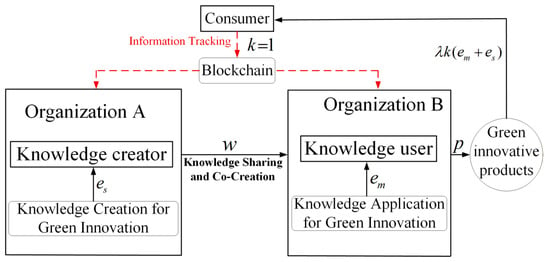
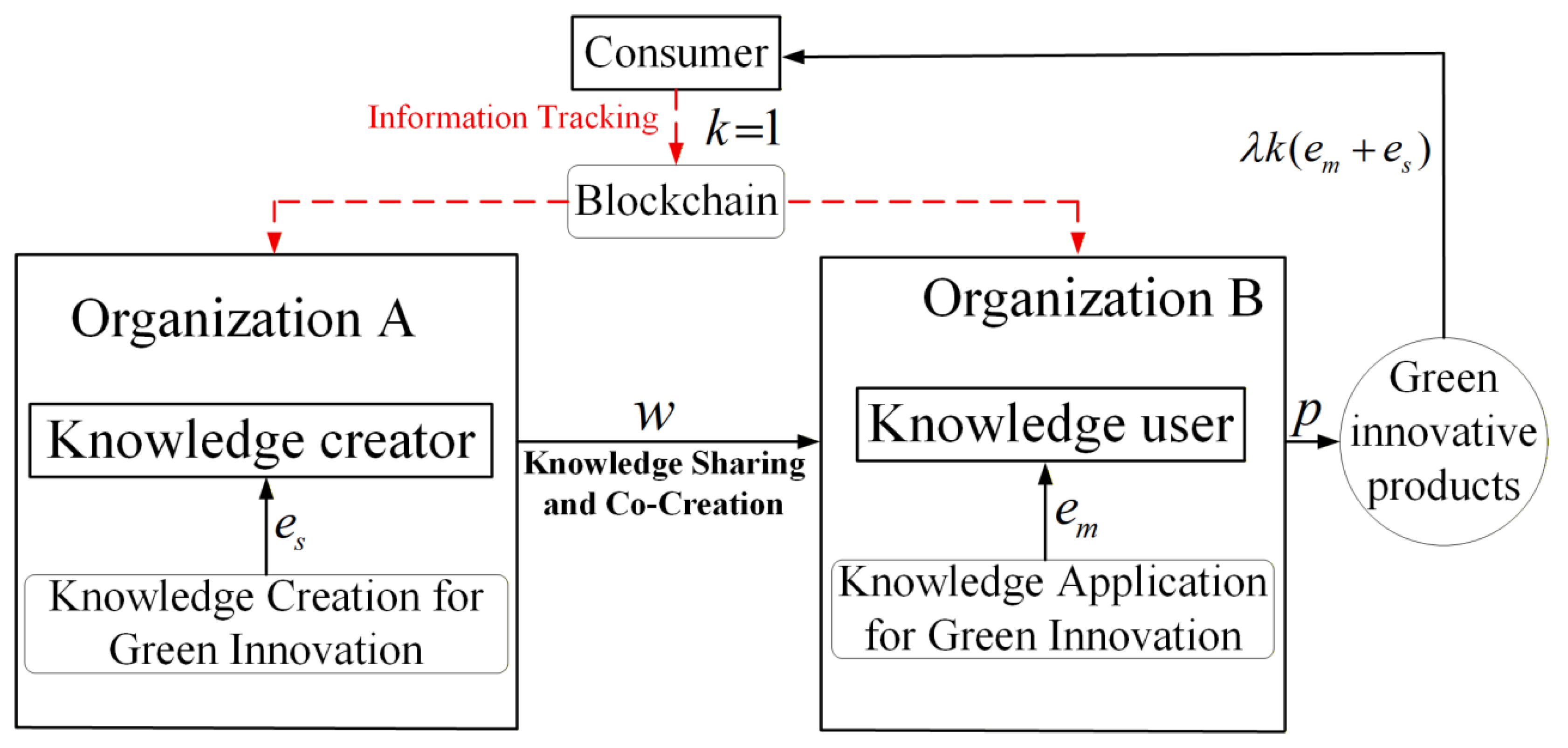
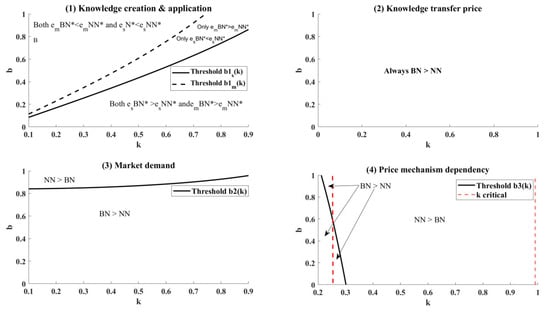
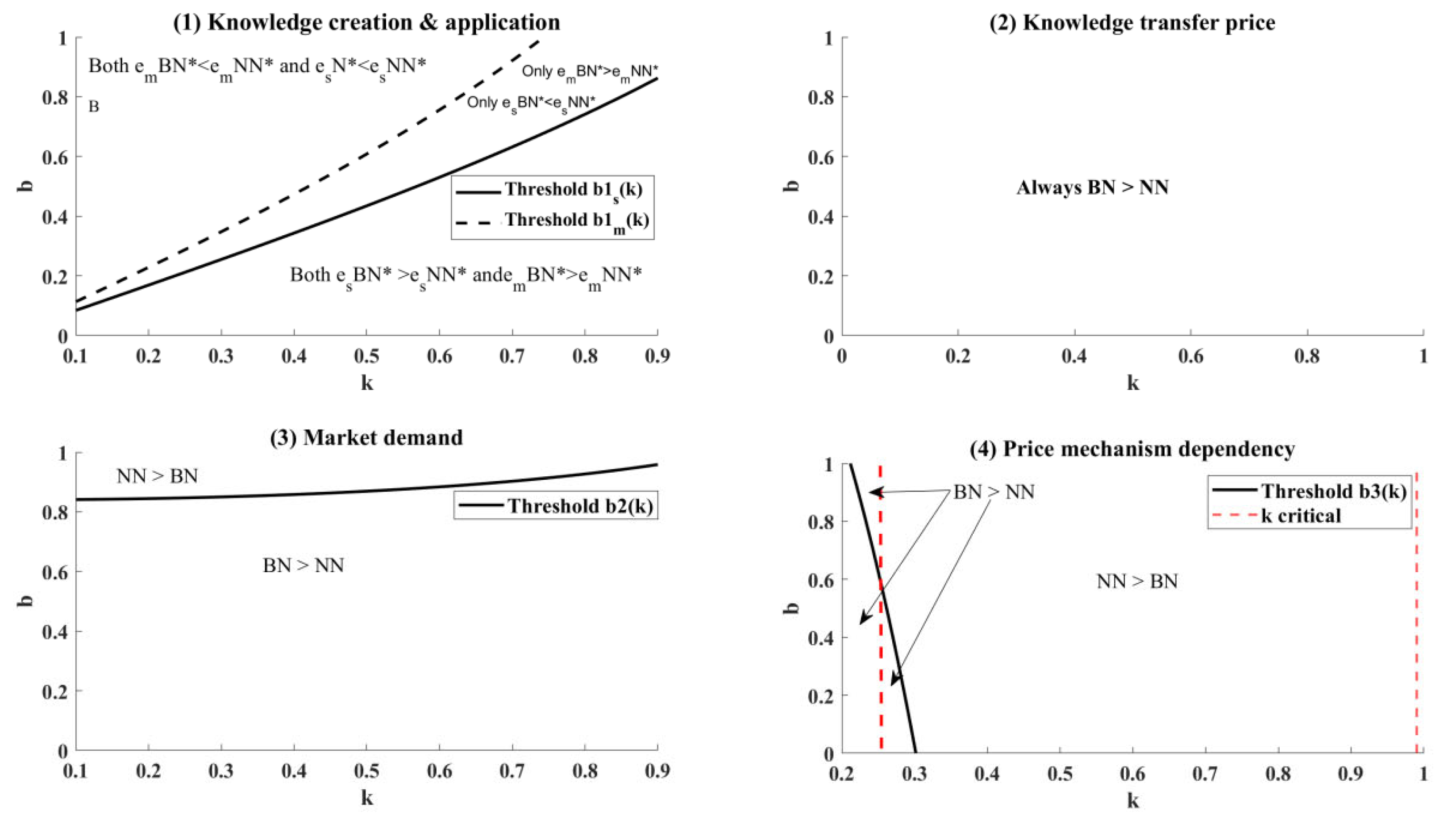
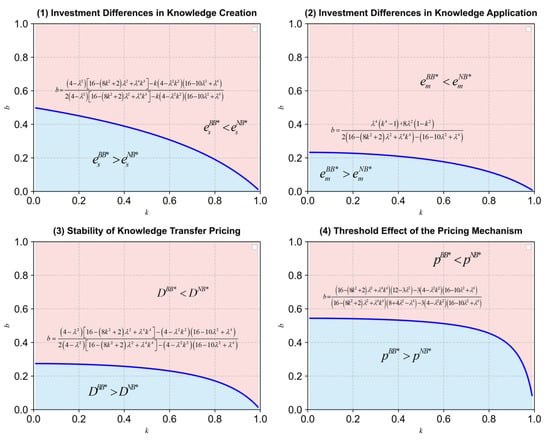
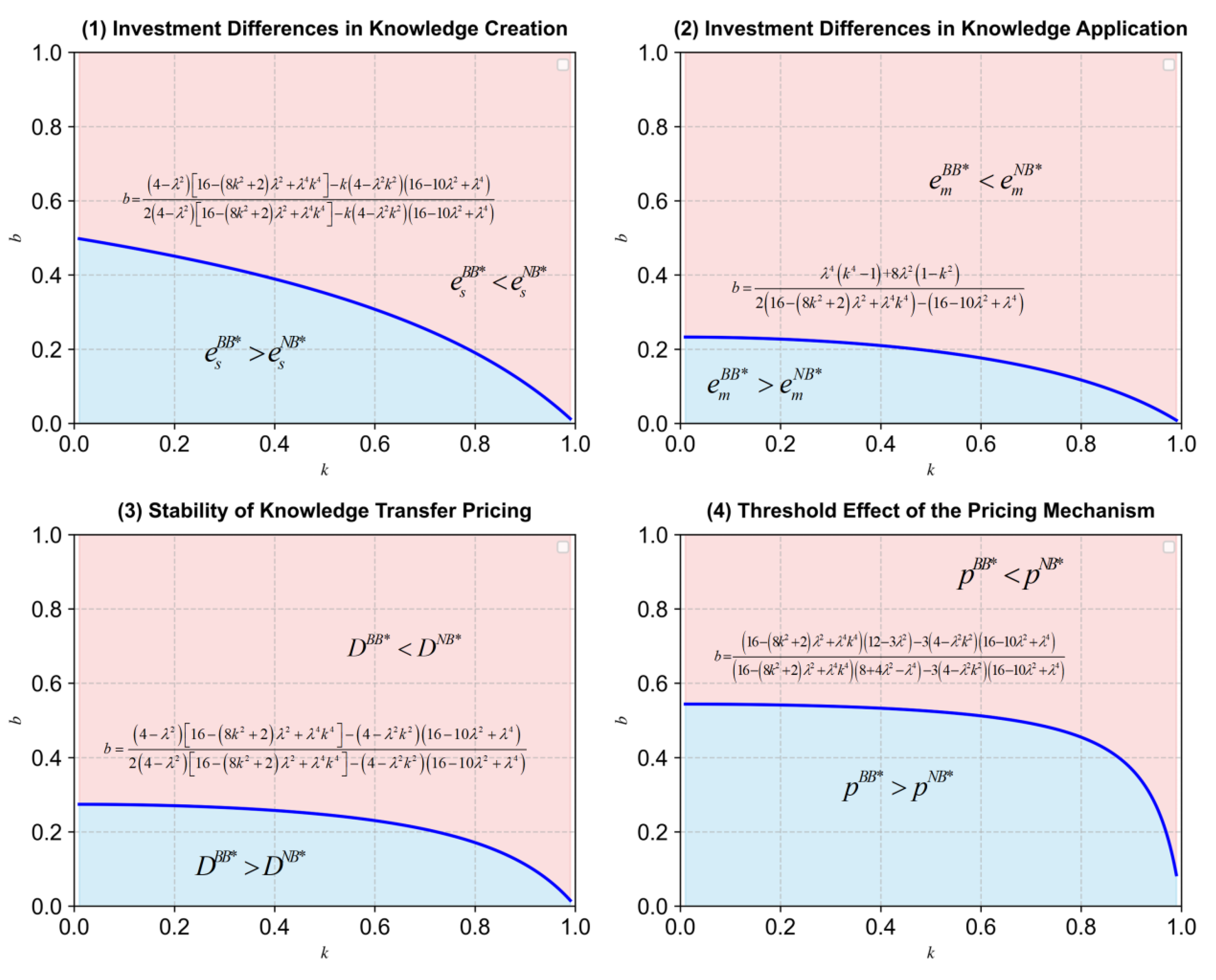
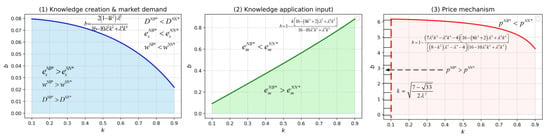
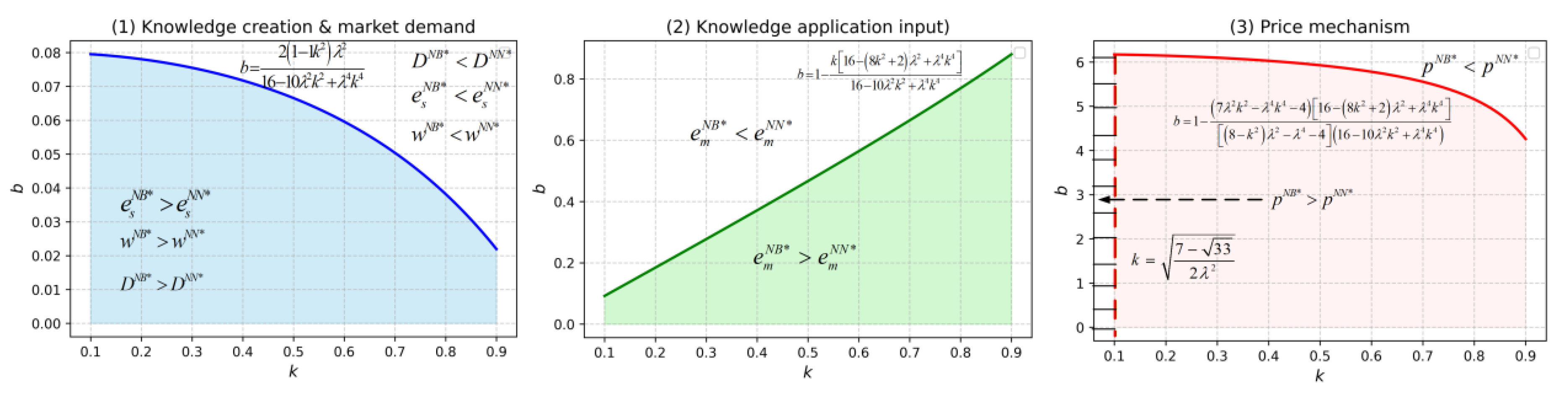

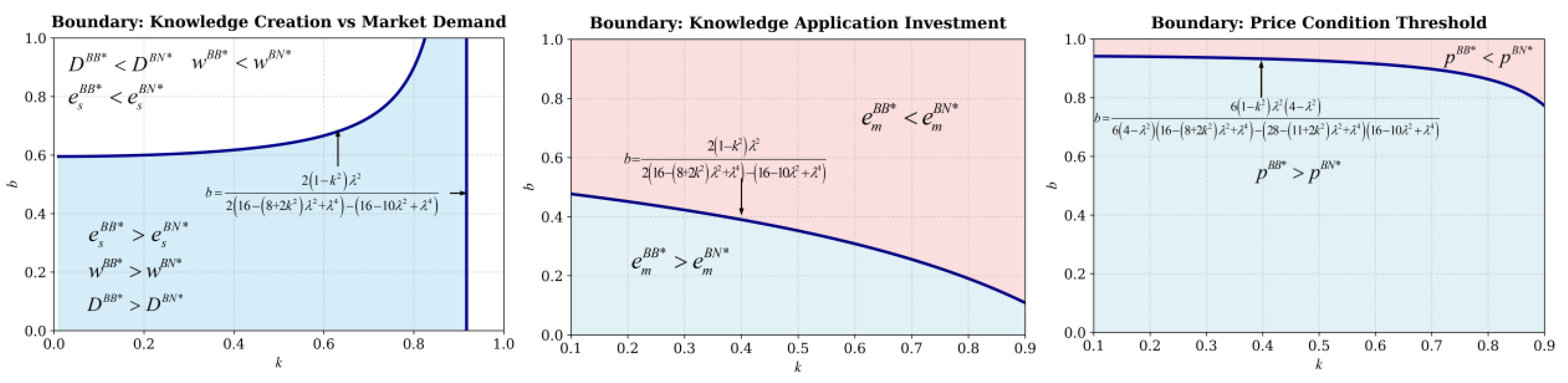
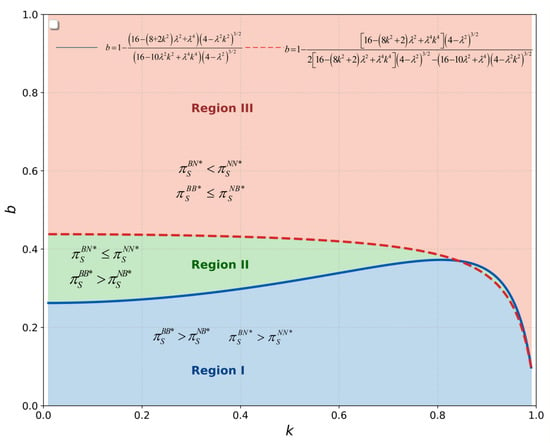
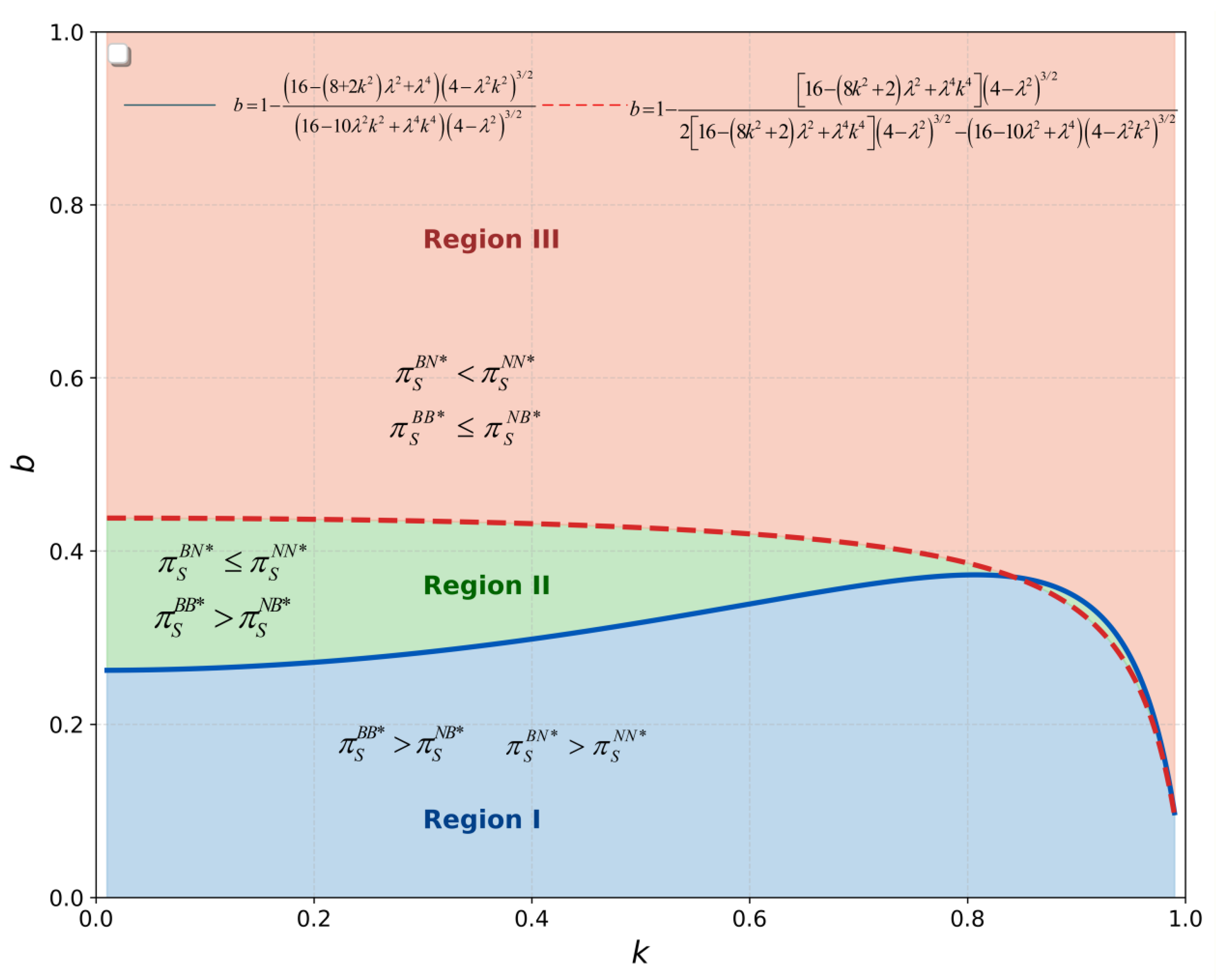
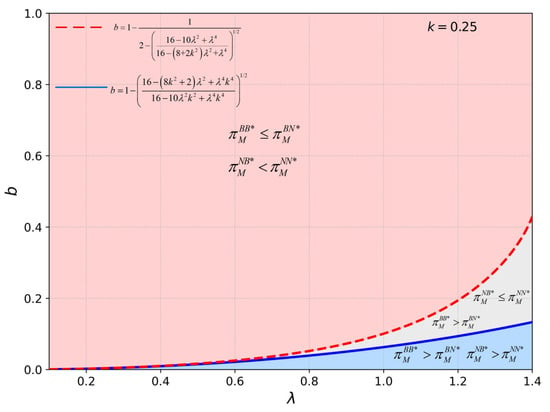
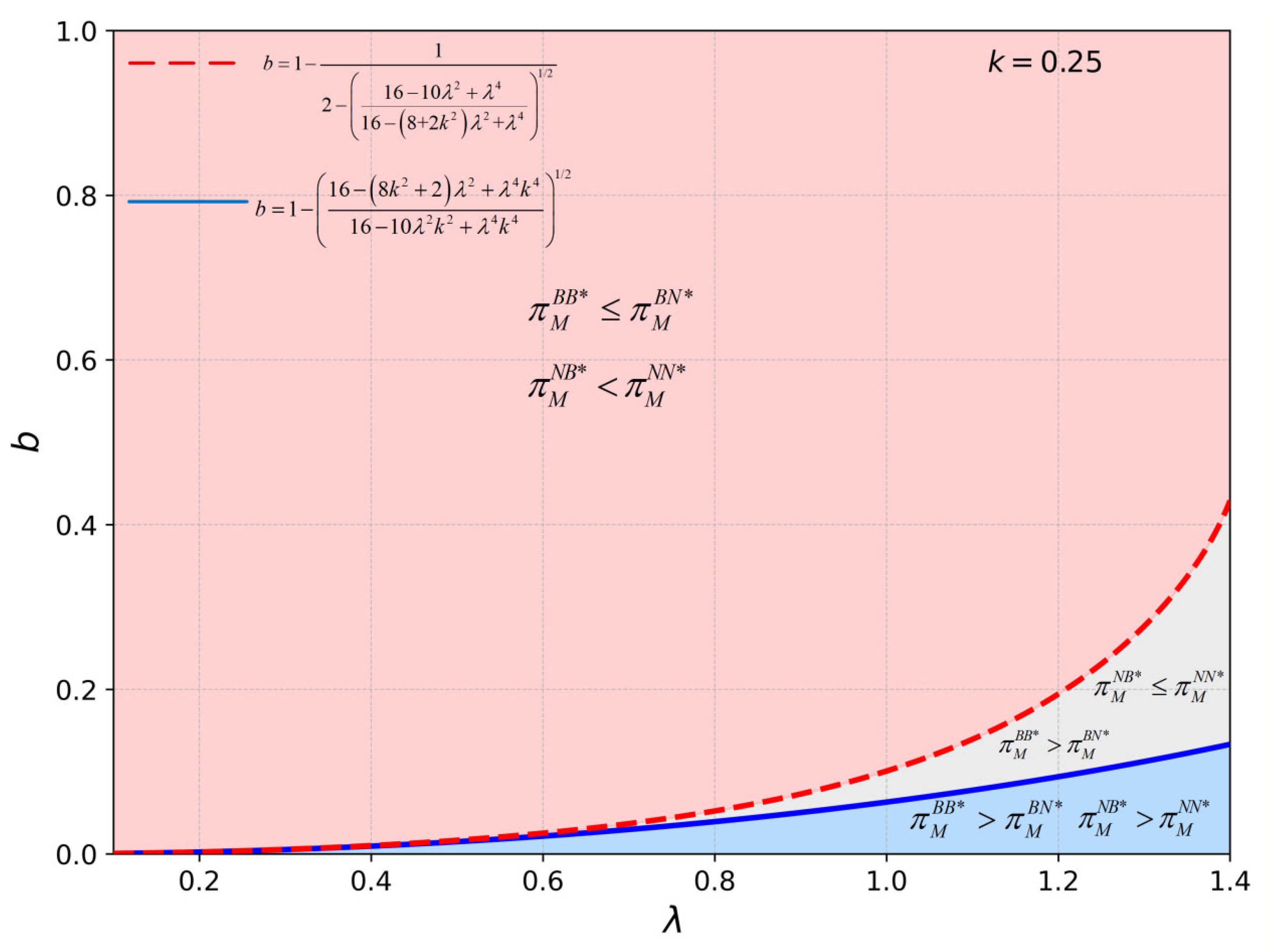
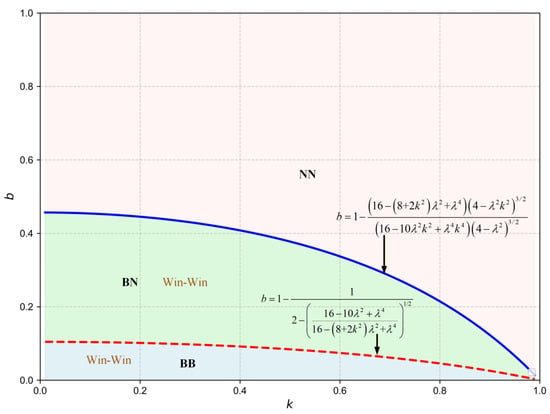
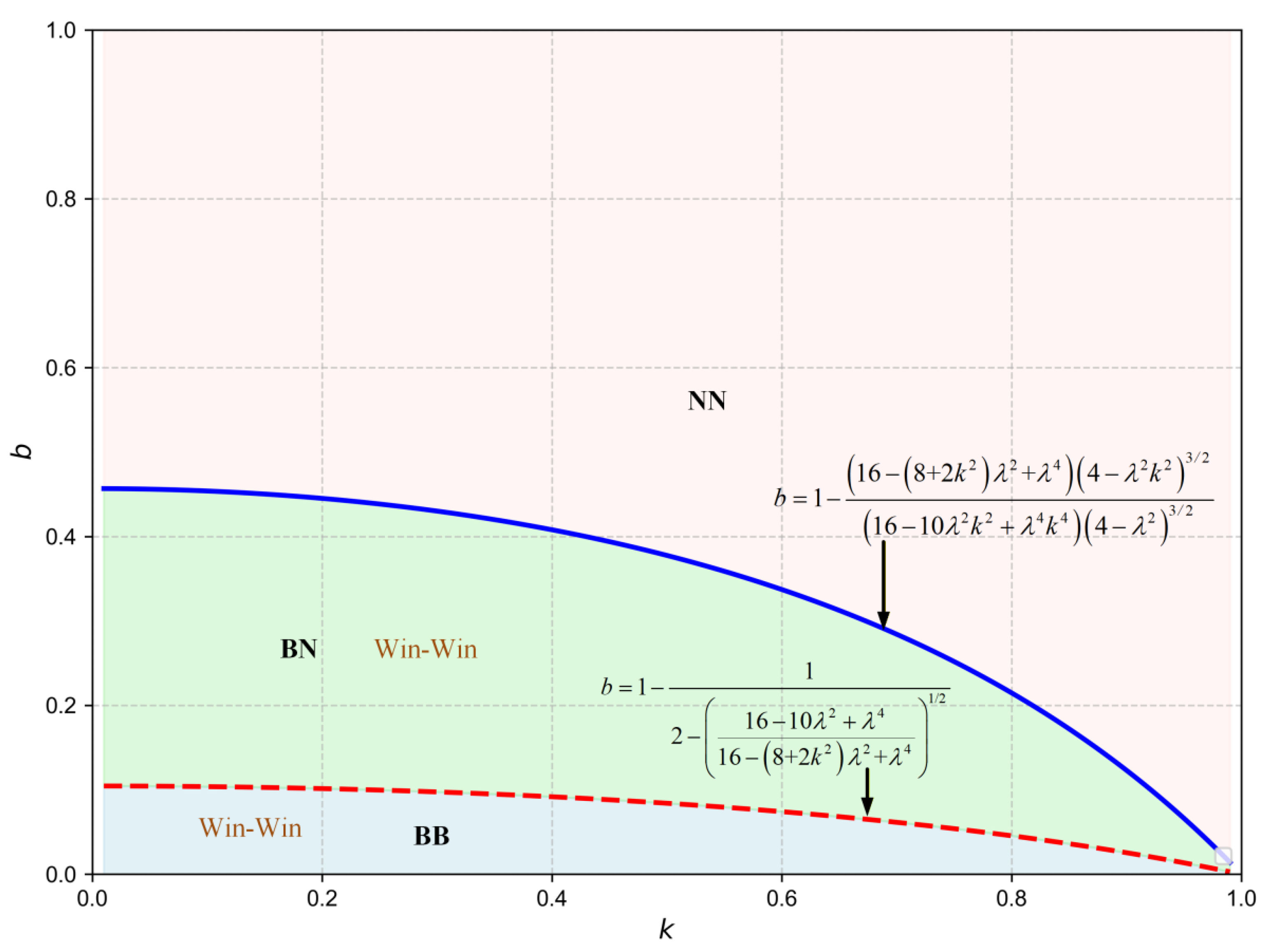
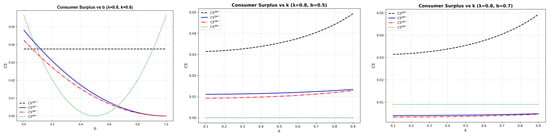
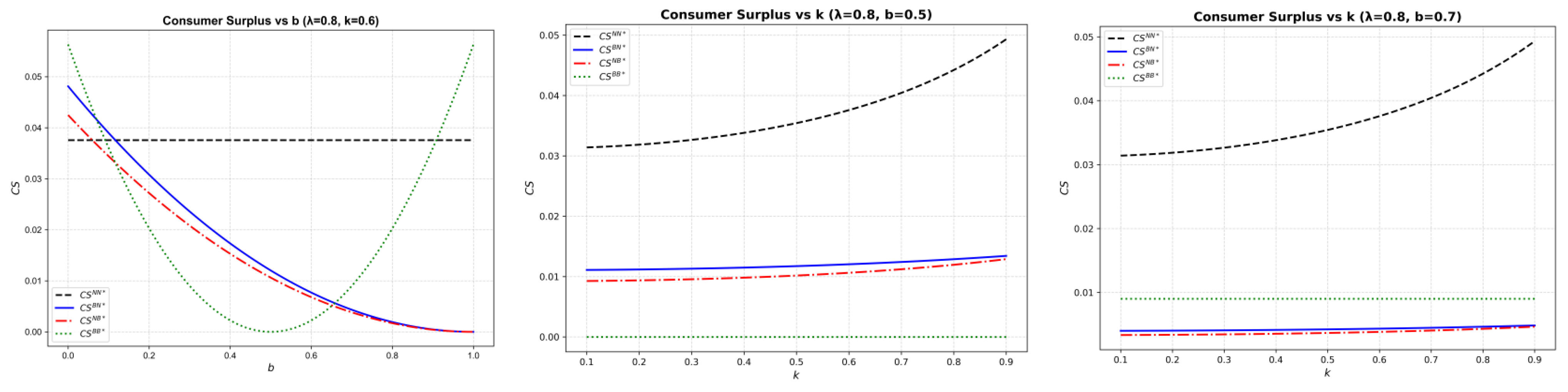
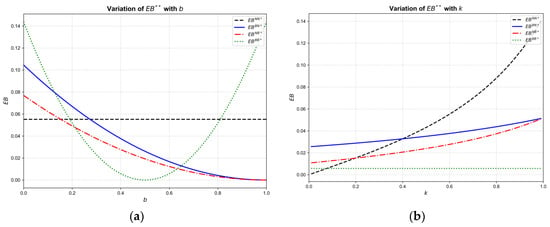
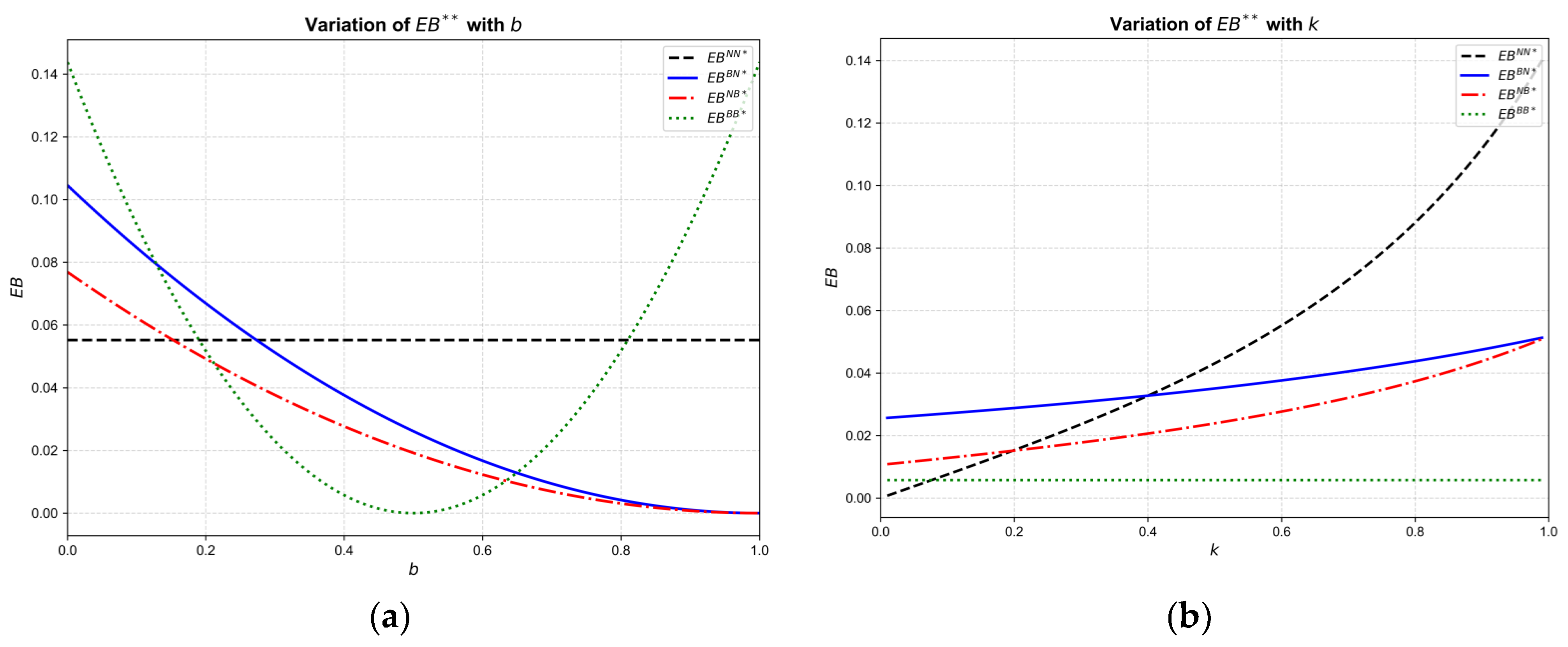
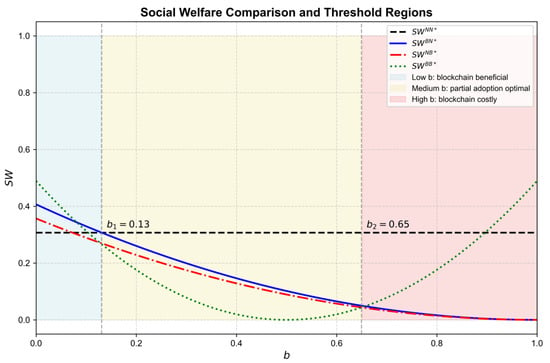
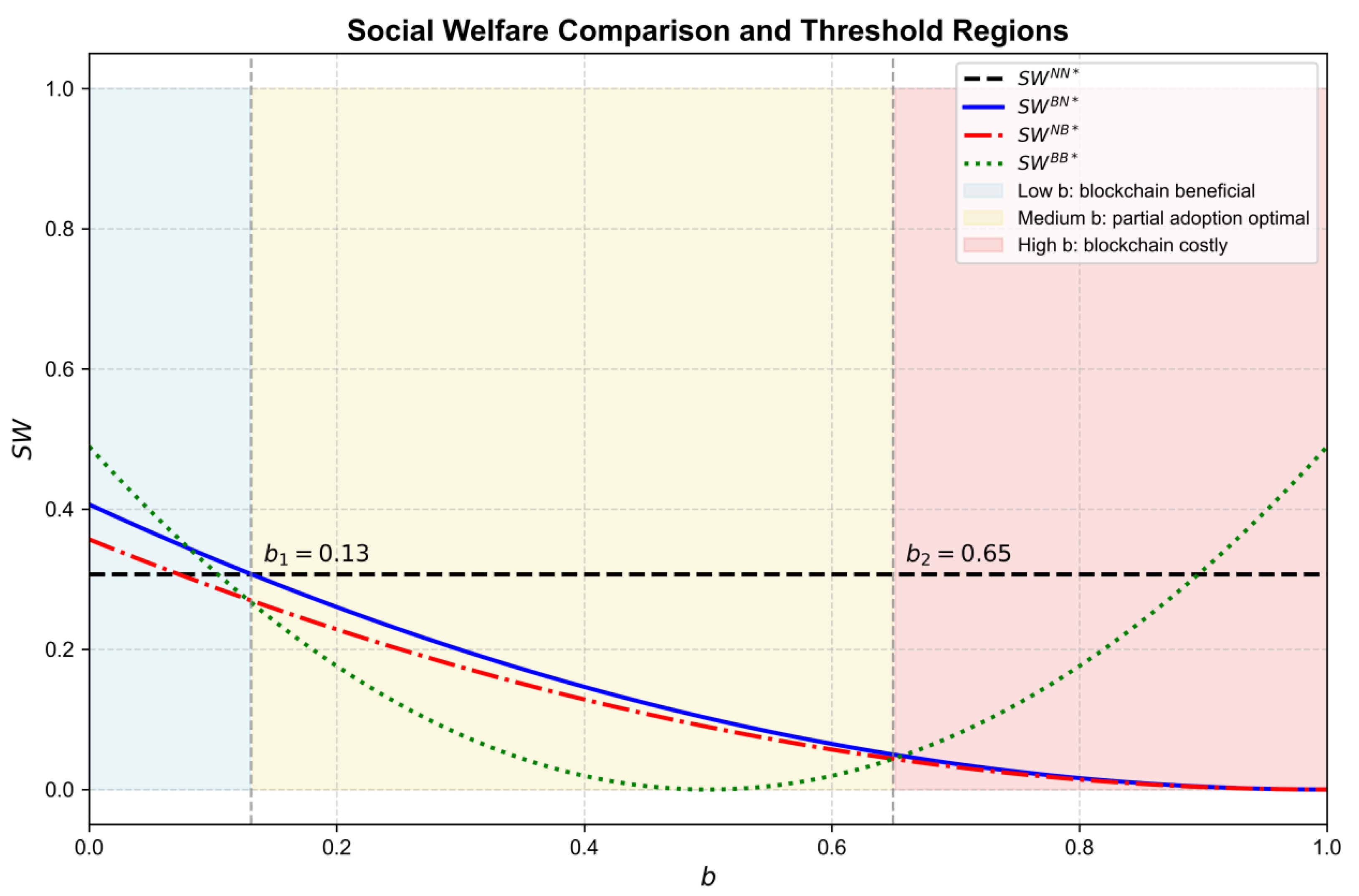

Disclaimer/Publisher’s Note: The statements, opinions and data contained in all publications are solely those of the individual author(s) and contributor(s) and not of MDPI and/or the editor(s). MDPI and/or the editor(s) disclaim responsibility for any injury to people or property resulting from any ideas, methods, instructions or products referred to in the content. |
© 2026 by the authors. Licensee MDPI, Basel, Switzerland. This article is an open access article distributed under the terms and conditions of the Creative Commons Attribution (CC BY) license.